2025-26
JOHN NEAR GRANT Recipient
What is with the Program?: The Decline of Women’s Participation in Computer Science in the 1980s
Ananya Pradhan
NearScholar
Ms.GilbertandMs.Hollin
April12,2026
Section1
Section1.1:AnUnprecedentedDecline
Duringandafterthepeakofsecond-wavefeminism,womenincreasedtheiroverall participationinlaw,medicine,andothersciencefields.However,computersciencestandsoutas adistinctoutlier.Inhisbook, Gender Codes, ThomasJ.Misaarticulatesthat,basedonan analysisofthefourdecadesbefore2010,participationincomputerscienceactuallydeclinedin themiddleofthe1980s.1 Ajointshiftinbothintermsofacademicinvolvementandindustry numbers,thedeclineofwomenincomputinginthe1980sisunparalleledinanyfield:women stopped“enteringcomputing”andthenumbersofwomenstudyingthesubjectitselfalso declinedconsistently.2 Explaininghownootherhistoricalchangecancomparetotheshiftin computingfromfemaletomalelabor,Misastatesthatthis“lopsidedchangeincomputing’s genderbalance”is“withouthistoricalprecedent.”3
Despitesecond-wavefeminismpeakinginthe1970s,thecultureofcomputingshiftedin theeightiestobecomemoreexclusionarytowardswomen.Thispaperexploreshowthedecline offemalecomputerscienceparticipationintheeightiesinAmericaoccurredasaresultof materialinstancesofsubtlediscriminatorybehaviorthathinderedwomen’sopportunitiestolead independentcomputingprojectsandtocollaboratewithpeersandmentors.
1 ThomasJ Misa, Gender Codes (IEEEComputerSocietyPress–Wiley,2010),3-4,accessedMarch27,2025, https://wwwtjmisacom/papers/2010 Wiley-GenderDefiningpdf
2 Misa, Gender Codes,5
3 Misa, Gender Codes,7.
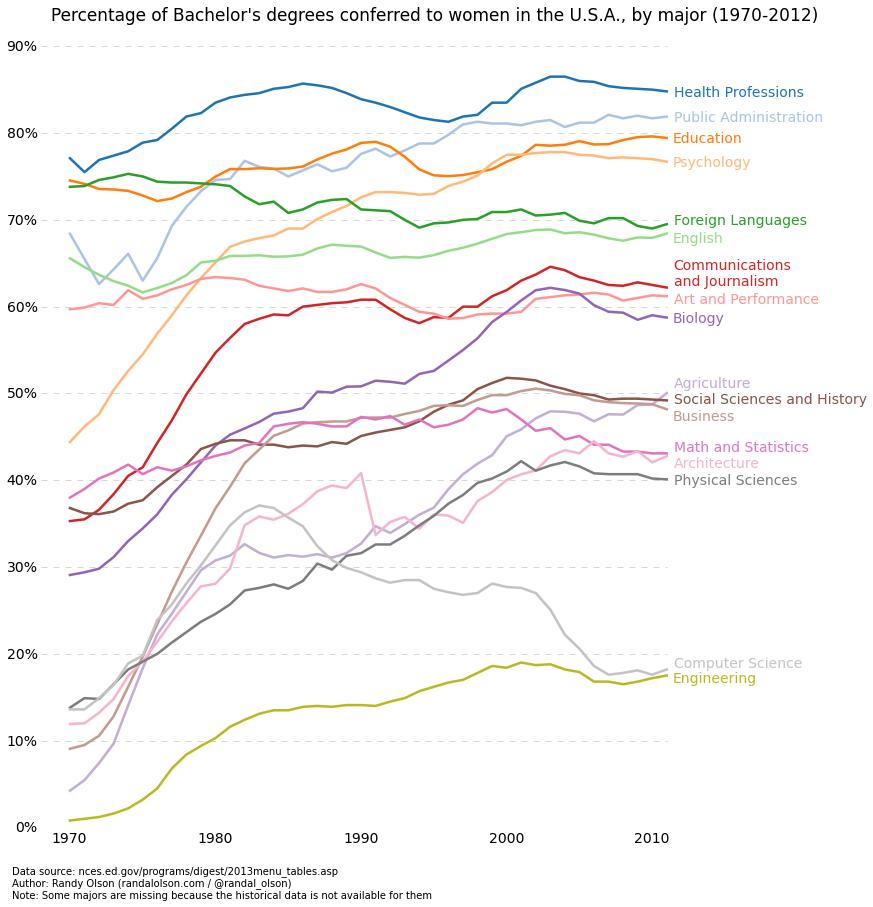
Figure1.GraphShowingtheDeclineofWomen’sParticipationinComputerScience(GreyLine).Randal S.Olson,"PercentageofBachelor'sdegreesconferredtowomen,bymajor(1970-2012),"chart, https://randalolson.com/2014/06/14/percentage-of-bachelors-degrees-conferred-to-women-by-major-1970 -2012/.
Advertisementsandpublicmediaaboutwomenincomputerscienceintheeightiesand thedecadespriorcreatedtheideathatwomenwerelessskilledwithcreatingtheirownprograms, andwomenwererelegatedtomoreclericalrolesincomputing.Asmensoughttocreateaspace
forthemselvesincomputerscience,theyreinforcedtheideaofcodingasexclusive.They employedlanguagewhichelevatedprogrammingaseliteandformedtraditionswhichexcluded womenincomputercenters.Additionally,thispaperusesareportpublishedbyfemalegraduate studentsandresearchstaffattheMassachusettsInstituteofTechnology(MIT)asakeycase study.Ananalysisofthisreportunveilsthepersonalfactorsthatinfluencedthepivotaldecision forwomentoleavethefieldofcomputerscience:manyofthewomen’stestimonialswere curatedtodemonstratetheenvironmentofthedepartmentingeneral.
Thesubtlecausesofwomen’sexclusionincomputingmanifestedthroughtwo predominantstrandsofbehavior.Thefirstofthesewasacultureofsurveillanceofwomenin computingandtheimpossibledoublestandardstowhichtheywereheld,whichledtofeelingsof discomfortandexhaustionforfemaleprogrammers.Theyhadtoworktirelesslytonotonly performintheirresearchoreducationbutalsotomaintainanacceptableidentityforthose aroundthem.ThetestimonialsfromthewomenatMITilluminatehowwomenwereeither perceivedbytheirpeersastoomasculineornotsufficientlymasculinetothriveincomputing. Thesecondcauseforwomen’sexclusionincomputingmanifestedthroughanenvironmentof isolationforwomen.Mentorsandpeersoftenactedinapatronizingmanner,notofferingwomen opportunitiesforindependentresearchprojects.Theyreliedonexistingassumptionsabout women’scomputerscienceskills.
Section1.2:TheDynamicArtofProgramming
Thecontextualperiodfromthefortiestotheearlyeightiesstronglyinfluencedtheculture ofcomputing.Associationsbetweenfemininityandoperationalworkincreased,despitewomen joiningthecomputingworkforceforcomplexandinvolvedtasksliketheconstructionofthe ElectronicNumericalIntegratorandCalculator(ENIAC).Oneperspectivefocusesonexamples
likelimitedrepresentationoftheENIACgirlsandsimilarfemaleprogrammerstoexamplehow computingbegantoexcludewomen.Forexample,analyzinghowcomputing“Became Masculine,”LaurenBalserexploreshow“thelackofcoverage”oftheENIACgirlsandthe “ColdWaremphasisontraditionalgenderroles”compelledpeopletodismisswomen’spotential contributionstothefield,concludingthattheyshouldleavethecomputingspace.4 Whilethe contextofthelackofrepresentationoftheENIACgirlsiscertainlyimportant,thesharpdecline ofwomen’sparticipationoccurredintheeighties.Thisdeclinewasshapedbyamultitudeof factors bothattheleveloftheindividualexperienceofwomenandofthefield.These cumulativefactorsculminatedinthelateseventiesandearlyeighties,severaldecadesafterthe initiallackofmediacoverageoftheENIACprogrammers.
Ratherthanbeingastaticenvironmentwhichnecessarilyexcludedwomenorperpetuated certainconventionsandnorms,thelandscapeofcomputersciencewasaconstantlyevolving terrain.Thedynamicshiftsincomputingcultureinthesixtiesandseventiescontributedtothe declineintheeighties.Computersweredifficulttouseandrequiredpunchingcardsintheearly 1960s.Inaddition,informationwasoftencentralizedacrossmanyclients.5 Initially, programmingwasoftenequatedtoacareerforwomenbecauseofhistoricalviewsofwomenas “humancomputers.”6 Publicperceptionofthesymbioticrelationshipbetweenwomenand computersmanifestedthroughthedivisionoflaborintheconstructionoftheENIACcomputer inthe1940s:whilemenconstructeditshardware,itssoftwarewasdecidedly“femaleterritory.”7
4 LaurenBalser,"HowComputingBecameMasculineintheColdWar,"Confluence,NewYorkUniversity,last modifiedSeptember21,2021,accessedMarch3,2025, https://confluencegallatinnyuedu/sections/research/how-computing-became-masculine-in-the-cold-war
5 "ComputerScience:BasicKnowledge,"in American Decades,ed JudithS Baughman,etal (Detroit,MI:Gale, 2001),7,GaleinContext:US History
6 Balser,"HowComputing,"Confluence
7 Balser,"HowComputing,"Confluence
Amajorityofthe“twohundredpeople”whowereworkingashuman“computers” forthe “AmericanMinistryofDefense”werewomen.8 Sixwomen KathleenMcNulty,FrancesBilas, BettyJeanJennings,ElizabethSnyder,RuthLichterman,andMarlynWescoff werepartof thefirstteamof“ENIACprogrammers,”contractedtoworkatthecutting-edgeofcomputation.9 However,whenJeanJenningsreceivedtheopportunitytoapplyforthejobofworkingonthe ENIAC,oneofheradvisors,Dr.J.W.Hake,departmentheadforphysicsandmathathercollege, cautionedheragainstbeing“justoneofmanydoingarepetitivetask,”reflectingthesincere beliefbymostpeople,includingscientificallytrainedprofessors,thatsoftwareworkwaspurely mechanicalandnotinnovative.10
Thecompositionofpeoplewhoservedas“computers,”thatis,“peoplewhodid computing”was“essentiallyall”female,especiallyintheearly1940s.11 Transitioningtoactual softwareprogramming,womenwerestillseenbyothersasoperatorsdoing“clerical”tasks which“didnotmatchtheimportanceofconstructingtheENIAC.”12 However,womenactually acquiredacomplexunderstandingoftheENIACcomputer,whichisevidencedbytheir familiarityofbothsoftwareandhardwareofthemachines.13
8 SilviaBenvenutiandLindaPagli,"FromtheEarthtotheMoon:TwoStoriesofWomenandMathematics,"in Faces of Geometry,2nded,ed PaolaMagnaghi-Delfino,etal,LectureNotesinNetworksandSystems(Springer Cham,2021),172:17,accessedApril10,2026,https://doi.org/10.1007/978-3-030-63702-6 2.
9 W.BarkleyFritz,"TheWomenofENIAC," IEEE Annals of the History of Computing 18,no.3(1996):13, accessedMarch2,2026,https://coursescswashingtonedu/courses/csep590a/06au/readings/00511940-fristpdf
10 Fritz,"TheWomen,"18-19
11 Fritz,"TheWomen,"13
12 JenniferS Light,"WhenComputersWereWomen," Technology and Culture 40,no 3(1999):469, http://wwwjstororg/stable/25147356
13 Light,"WhenComputers,"471.
Thisfundamentalcontradictionofwomenbothbeingrecruitedandemployedfor complexcomputationalproblem-solvingandalsoofbeingtreatedanddiscussedasinstrumental orclericalcomponentsoftheprocessmanifestedconcretelyinmemosreleasedabouttheir recruitment.Inherarticle“WhenComputersWereWomen,”authorJenniferS.Lightlabelsthis contradictorybehaviorasatypeof“widespreadambivalenceaboutwomen’swartime contributions”andpresentsamemosentbythe“deanoftheMooreSchool,”HaroldPender,to the“UniversityofPennsylvaniaprovost.”14 TheENIACwasthe“offspring”ofcollaboration betweenthe“MooreSchoolofElectricalEngineering”attheUniversityofPennsylvaniaandthe “U.S.ArmedForces.”15 Assuch,Penderhasapositionofpowerinoneofthemajor collaboratorsforthisproject,andasdean,hiscommunicationlikelyreflectssomeifnotallofthe attitudesheldtowardsfemaleprogrammersintheengineeringschool.Inamessagediscussing therecruitmentofwomenfortheENIACtask,womenwerebothreferredtoas“specially selected”and“individuallypicked”whilebeing“nottrainedpersons’”who“couldnotenter ‘fully’intotheBRL’swork.”16 Thisefforttolimitintegrationofwomenontheproblem-solving frontoftheENIAC’sdevelopmentwasimpermanent.Itbecamequicklyapparentthatthewomen obtainedadetailedunderstandingoftheENIACcomputer,whileinterfacingwithboththe “applicationandthemachine.”17 Infact,theyweresowellinformedthatJenningsalsoattests thatthey“learnedtodiagnosetroublesaswellas,ifnotbetterthan,theengineer.”18
17 Fritz,"TheWomen,"20 16 Light,"WhenComputers,"465 15 Light,"WhenComputers,"462 14 Light,"WhenComputers,"464-5
18 Fritz,"TheWomen,"20.
Asanovelrealizationofthecomplexityofprogrammingtasksdawnedinthesixties, computerprogrammerswereinhigherdemand.Approximately,thedemandforprogrammers increasedtobefivetimesofwhatitpreviouslywashalfwaythroughthe1960s.Accompanying thisacknowledgement,thesalariesofprogrammersincreased.19 Comingfromadjacentbusiness andscientificbackgrounds,aninfluxofmentrickledintothecomputingspace.Theyrecognized theenticingcareerprospectsthatacodingprofessionoffered.However,forthesemen, accustomedtocertainstructuresinternaltotheirpreviousworkspaces,thefemale-dominated computingindustryposedathreattotheirsenseofcontinuityandstability.20
MuchliketheLavenderScare,whenLGBTQ+employeeswereatriskbecausetheywere perceivedbyothersascommunistfortheiridentities,manymaleprogrammerswouldhavebeen concernedaboutothersconsideringthemascommunistsor“anti-American[s]”iftheyworkedin thecomputingspace.21 Theassociationoffemininitywithprogrammingworkwouldhavelinked aman’sjobasaprogrammertobeingafailure,especiallyintheyearsaftertheColdWar.22 After ananalysisof“thecourseofthe1960sand1970s,”NathanEnsmengerexplainsin““Beards, Sandals,andOtherSignsofRuggedIndividualism”:MasculineCulturewithintheComputing Professions,”computinghadtobeactively“mademasculine.”23 Toassuagetheircareeranxiety andestablishprogrammingasavalidandrespectableprofessionforthemselves,malecoders tookanactiveroletodemotefemalelaborasclericalworkwhileupliftingtheirownasunique
19 NathanEnsmenger,"“Beards,Sandals,andOtherSignsofRuggedIndividualism”:MasculineCulturewithinthe ComputingProfessions," Osiris 30,no.1(2015):46,https://doi.org/10.1086/682955.
20 Ensmenger,"“Beards,Sandals,"47
21 Balser,"HowComputing,"Confluence
22 Balser,"HowComputing,"Confluence
23 Ensmenger,"“Beards,Sandals,"1,44.
andarcaneinbothclassroomandbusinesscontexts.24 Forexample,inordertoadvertisethe simplicityoftheir“high-levellanguages”forprogramming,companieschosetopresentvisual depictionsoftheirlanguagebeing“usedbyafemaleprogrammer”or“afemalesecretary.”25 Theyhelpedconstructtheideaofsometypesoflanguagesas“sissystuff,”notusedby“real programmers.”26
Apartfromprogramminglanguagesspecifically,theskillofcodingitselfwasdescribed bymaleprogrammersasanelite,mysteriousart,connectedalsoto“Tinkering”which“haslong beengenderedasamasculineapproach.”27 Forinstance,JohnBackus,developerofthe FORTRANlanguage,wroteinthe1980saboutprogramminginthefiftiesashistoricallya “blackart,aprivatearcanematterinvolvingonlyapro-grammer,aproblem,acompiler,and perhaps”someothertechnicalcomponents.28 Backuspresentshowprogrammerslikehimsaw themselvesasmembersofa“priest-hoodguardingskillsandmysteriesfartoocomplexfor ordinarymortals:”apriesthoodthatavoidedandlookeddownonthe“clericaldrudgery”also involvedinprogramming.29 Backusexplicitlypresentsthatthispriesthoodmentalityblocked innovationandprogress,buthedescribeshowcodersactivelyconstructedandreinforcedthe ideaofthiselitesphereofprogrammingduringthetime.30 WhileBackuswritesthathepresents “definitelybiasedimpressionsandobservations,”thisdepictionofprogrammingisgroundedin
24 Ensmenger,"“Beards,Sandals,"65.
25 Ensmenger,““Beards,Sandals,"49.
26 Ensmenger,““Beards,Sandals,"49.
27 Ensmenger,““Beards,Sandals,"49.
28 JohnBackus,"ProgramminginAmericainthe1950s SomePersonalImpressions," A History of Computing in the Twentieth Century,1980,126,https://doiorg/101016/b978-0-12-491650-050017-4
29 Backus,“Programmingin,”127-128
30 Backus,“Programmingin,”128.
his“ownexperience”andoffersilluminatinginsightonhowprogrammingwasperceivedinits purestformbysomeoneactivelyinvolvedinthespace.31 Thissamesentimentabouttheunique natureofprogrammingismirroredintherecordedopinionin1988fromJoe,anMIT programmerwhodroppedoutbutcontinuedtoworkwiththecomputersattheuniversity Using thelanguageofsubstanceswhilehighlightinghisperceptionofthesecretiveandelitenatureof discipline,Joestatesthattheallureofcomputersciencetohimwastheopportunitytosolve thingsin“somereallyesoteric,unusualway,”andthisprocessgavehima“high”thatnothing elsecancompareto.32 Reshapingpublicperceptionofthedisciplineservedasaclearwayin whichtheyelevatedthestatusoftheirworkandmadethemselvesmorecompetitivefor programming,whichnowheldadistinctsetofassociations.
Regardlessoftheirtechnicalcompetence,womenwereblockedfromthefieldduetoa feedbackloopeffectwheremalecandidatesbecameoverrepresentedincomputerscience. Specifically,hiringtechniquesprivilegedmaleswithaloof,mathematicallyproficient personalities.Accentuatingtheunconventional,idiosyncraticnatureoftheidealengineer,male programmershighlightedtheassumptionsaboutthembeingunique,unabletosustain relationships,andbeinginherentlygiftedtodifferentiatethemselvesfromfemaleprogrammers.33 Asmoreofthistypeofpeoplewerehired,thestereotypeofthealienatednerdfigureincomputer sciencewasfurtherreinforced.34 Forexample,forthe1968ACM(AssociationforComputing
31 Backus,“Programmingin,”127
32 SherryTurkle,"ComputationalReticence:WhyWomenFeartheIntimateMachine,"in Technology and Women's Voices: Keeping in Touch,ed.CherisKramarae(Routledge&KeganPaulInc.,1988;Taylor&Francis,1986),36, accessedMarch20,2026, https://frauenkulturcouk/wp-content/uploads/2020/05/Technology-and-Womens-Voicespdf#page=45
33 GuilhermeOrlandiniHeurich,"ComputingGender,"in Coderspeak: The Language of Computer Programmers (UCLPress,2024),129,https://doiorg/102307/jj881615316
34 Ensmenger,"“Beards,Sandals,"51.
Machinery)NationalConference,DickH.Brandonwritesthatthe“selectionmethodology”for programmersunevenlyskewedthedistributionofthecomputingworkforcetowardsindividuals withacertaintypeof“egocentric”anduniquelymasculine-codedattitude,characterizedby “beards,sandals,andothersymptomsofruggedindividualism.”35 Thestereotypeaboutgood programmersbeinggeniusintrovertswasreifiedwith“personalityprofiles”thatwereusedinthe hiringprocess.36 Employershelpedreinforcethemaledominatedprogrammingculture,astheir reviewcriteriaprivilegedmenwhofittheidealhackerstereotypeandmadewomenseem “marginal”or“exceptional.”37
Oneabstractionfurtherawayfromtheleveloftheindividualsapplyingforjobs,the entiredisciplineof“programming”wasrenamedtocreateadistinctionthatomitted “self-directedmisfitsandwomen”fromthecomputingworkforce.38 Inherbook Broad Band,a pieceinvestigatingthelandscapeandseveralwomeninvolvedincomputingfromtheVictorian Agetothe1990s,ClaireL.Evansdescribestheband-aidfixusedtoresolvethe“softwarecrisis” andthe“massiveshortageofskilledprogrammers.”39 Ratherthanattributingthecrisistoan accelerationinhardwareinnovationora“personalityclashbetweenprogrammers,”sheoffersan alternateviewofthecauseofthecrisis:themassexodusofwomeninthefield.40 Evansproposes thatlackofchildcareaccommodationsandpayinequitycouldhavecontributedtothesoftware
35 DickH Brandon,"TheProbleminPerspective,"in Proceedings of the 1968 23rd ACM National Conference (ACM,1968),333,accessedMarch14,2026,https://doi.org/10.1145/800186.810594.
36 Heurich,"ComputingGender,"129.
37 Ensmenger,"“Beards,Sandals,"51.
38 ClaireLisaEvans, Broad Band: the Untold Story of the Women Who Made the Internet (Portfolio/Penguin,2018), 77
39 Evans, Broad Band, 76
40 Evans, Broad Band, 77.
crisis.41 However,sheexplainsthatNATOorganizedaninternationalconferencetosolvethe hiringcrisisinprogrammingin1968wherenowomenwereinvited.Thesolutiondevelopedat theconferencewasa“semantic”one:renamingthe“programming”disciplineto“software” engineering toassociateitwithformalizededucationandseparateitfromfemininity 42
Section1.3:What’sInaName?
Namesareoftentiedtoidentityandautonomy Byrefusingtoproperlyattributethe effortsofwomentoindividualsbyname,thecomputerscienceindustryaidedtheerasureoftheir efforts.Whilethisisnotthesolecauseforthedeclineinwomen’sparticipationincomputingin theeighties,itsystematicallyreinforcedtheideathatwomendidnotmakeuniqueintellectual contributionstothecomputingspace.
Previously,thenamesofcomputersthemselveswereoftenassociatedwithwomen. ComputerswerenamedELIZA,SUSIE,BETSIE,andSADIE.43 Afterthe1960s,inacademic andresearchspheres,malelableaders’namesstoodattheforefrontofwomen’spublished contributions.Photographsforpublicityalmostignoredtheeffortsofwomenaltogether.44 One woman,HoméMcAllister,statesthatshewasactually“workingontheENIAC”whenpublicity photosofthemachineweretaken,but“widely-circulated”photos“werecroppedtoeliminate” her.45 Researchersreferredtowomen’sworkasaunitorbyreferencingtheirmalelableader.
41 Evans, Broad Band, 77
42 Evans, Broad Band, 77-78
43 GuilhermeOrlandiniHeurich,"ComputingGender,"in Coderspeak: The Language of Computer Programmers (UCLPress,2024),127,https://doiorg/102307/jj881615316
44 JenniferS Light,"WhenComputersWereWomen," Technology and Culture 40,no 3(1999):459, http://wwwjstororg/stable/25147356
45 Fritz,"TheWomen,"25.
SpecificexamplesofthisphenomenonincludenamessuchasCecil’sBeautyChorus,John Holberton’sgroup,theENIACgirls,andscannergirls.46
Acasestudythatdemonstratesthisisthe1967article“TheComputerGirls”whichwas publishedinCosmopolitan.DianeJohnson,asystemsengineeratVassarisintroducedtoreaders assomeonewho“couldeasilybeahigh-fashionmodel.”SallyBrown,anotherprogrammeris firstprincipallydefinedasa“redhead.”47 Eventhetitleofthearticle,“TheComputerGirls,” obscurestheindividualnamesofanywomenintheworkforce.Inthearticle,womenare repeatedlyreferredtosimplyas“girls”orlabeledbytheirphysicalattributes.48 Thearticleaims toincentivizewomentojointhecomputingworkforce,butevenwiththiswell-intentionedgoal, thelanguageusedtorefertowomenreinforcesthelogicofexclusionandassumptionsthat womenwerenotcapableinthespace.Describingthemotivationofafemalecomputerscientist whocontinuedtocodeafterworkhours,theauthorofthearticleinsinuatesthatsheonlyworked latebecausethere’s“sometimesanicemaleprogrammeraroundtotakeagirlhome.”49 The authorquotes“oneofthoseonehundredsixtythousandmeninthefield”whosays,“Welike havingthegirlsaround,”since“they’reprettierthanus.”50 Thissentenceisoneofthelastlines oftheentirearticle.Despitelistingrealincentivesforwomentogetinvolvedincomputingsuch thatit“paysbetter,”thearticleendswiththesuperficialcommentaboutwomen’sappearances,
46 Light,"WhenComputers,"459
47 LoisMandel,"TheComputerGirls," Cosmopolitan Magazine,April1967,2,accessedMarch3,2025, https://archive.org/details/the-computer-girls-cosmopolitan-magazine-april-1967/The%20Computer%20Girls%20-% 20Cosmopolitan%20magazine%20%28April%201967%29%20%5Bocr%5D/
48 Mandel,"TheComputer,"3
49 Mandel,"TheComputer,"2
50 Mandel,"TheComputer,"3.
elucidatinghowevenadvocatesforwomenincomputingcontinuedtominimizetheir contributions.51
Paradoxically,whilemachineshadbecomefeminizedinthe1940sand1950s, simultaneously,inthedecadesafter,womenwerebeingdistancedandseparatedfromtheactof usingcomputers.Anangletoreconcilethisdisconnectisthattheincreasedassociationof womenwithmachinesthemselvesmadetheirlaborseemoperationaloradministrativerather thanintenselycomputational,whichwashowmen’sworkwasshown.
Section1.4:WomeninComputinginThePublicEye
Theperceptualtransformationofwomenfromprogrammerstooperatorsoftechnology alsomanifeststhroughadvertisementsforcomputers.Glaringly,anadvertisementforthe Honeywell“KitchenComputer”publishedina1969Neiman-Marcuscatalogfeaturesawoman usingthecomputerandthecaption:“IfshecanonlycookaswellasHoneywellcancompute.”52
51 Mandel,"TheComputer,"3
52 Neiman-Marcus,"Neiman-Marcusadvertisement,"advertisement, The Neiman-Marcus Christmas Book,1969,84, accessedApril12,2026,https://www.computerhistory.org/revolution/minicomputers/11/362/1955.
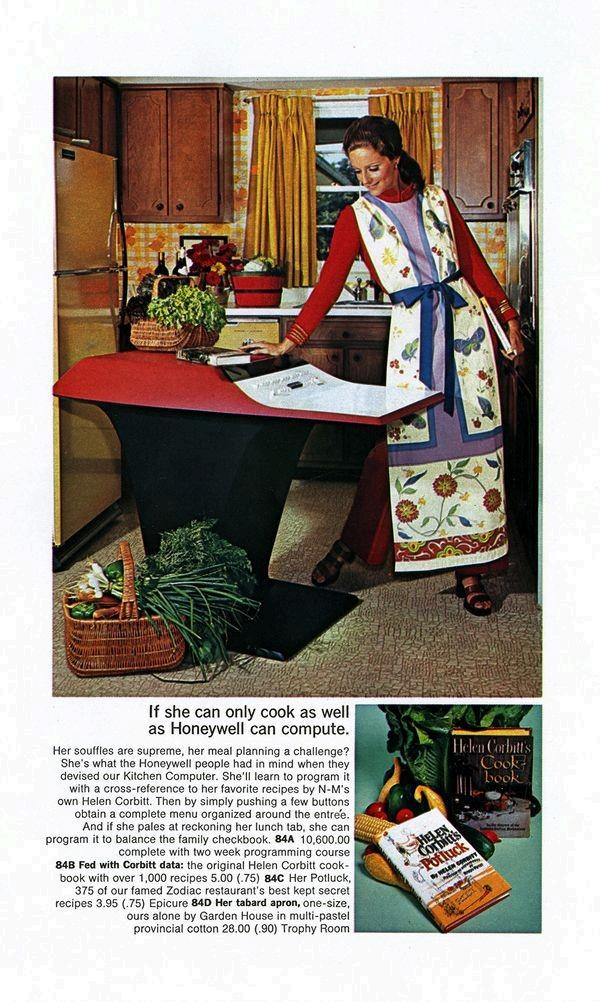
Figure2:HoneywellKitchenComputerAdvertisement Neiman-Marcus,"Neiman-Marcus advertisement,"advertisement, The Neiman-Marcus Christmas Book,1969,84,accessedApril12,2026, https://wwwcomputerhistoryorg/revolution/minicomputers/11/362/1955
Whilethemanufacturerslikelywantedtoadvertisetheeaseofuseoftheirproduct,they implicitlycommunicatedthelackofskillnecessaryforafemaleprogrammerwiththespecific wordstheyusedwhendescribinghowwomenusetheKitchenComputer.Neiman-Marcusdoes includethatthewomanmust“learnhowtoprogramit,”butherskillandagencyis de-emphasizedbyhighlightinghowshe“simplypush[es]afewbuttons”whilethemachineitself
doesthemajorityofthecomputationalwork.53 InordertooperatetheKitchenComputer,the womanmusttakea“twoweekprogrammingcourse.”54 Inreality,theinsideoftheKitchen Computercontaineda“standardHoneywell316minicomputer”with“binaryswitchesand lights,”whichwasactuallya“successortothe516computerthatpoweredthefirstnodeofthe ARPANET,whicheventuallybecametheInternet.”55 Assuch,effectivelyusingand programmingtheKitchenComputerwouldhavebeenataskbyitself,anactiveprocessthatthe womanwouldhavetolearn,whichisdiminishedbythepresentationofthewomaninthe advertisement.
Moredirectly,somepositivedepictionsof“femalecomputerworkers”didexistinthe earlyseventies.56 However,adsaboutcomputationordataentrystillreinforcedtheviewthat womenweresolelybridgestousetechnology,withlimitedautonomyorcreativeskillsoftheir own.Forexample,thejournal Datamation (acomputingjournalreadbynearlyhalfofthedata processingindustry)featuresa1970adwherethecompanyEntrexstatesthattheytaughttheir “dataentrysystemtospeakanewlanguage:dumbblonde.”57 Highlightingthelackofskill neededtousetheirsystem,theyclaimthat“ifagirlcantype,”shecanfunctioneffectivelyby consideringthedataentrysystemasa“typewriter”witha“niftylittletvscreen.”58 Theuseofthe
53 Neiman-Marcus,"Neiman-Marcusadvertisement,"advertisement,84.
54 Neiman-Marcus,"Neiman-Marcusadvertisement,"advertisement,84.
55 "BytesforBites:TheKitchenComputer,"ComputerHistoryMuseum,accessedApril12,2026, https://wwwcomputerhistoryorg/revolution/minicomputers/11/362/1955
56 WilliamF Vogel,"'TheSpittingImageofaWomanProgrammer':ChangingPortrayalsofWomenintheAmerican ComputingIndustry,1958–1985," IEEE Annals of the History of Computing 39,no 2(2017):52, https://doiorg/101353/ahc20170013
57 Vogel,"'TheSpitting,"51-52
58 Vogel,"'TheSpitting,"52.
59
word“nifty”servestofurtherunderminethecompetencenecessaryforthetaskofusingthe computer.
Evenwiththelimitationsofthe“ComputerGirls”article,itwasstillmetwithopposition fromestablishedcomputingcompaniesforitsstancetoincludewomenincomputing.Apotent exampleofthisoppositionmanifeststhroughanadfromtheComputerSciencesCorporation, whichwasknowntobe“oneofthelargestemployersofcontractprogrammers”atthetime.60 In Datamation,theypublishedatestforreaderstodecideifthey“belongatCSC,”whichwas intendedtobecomedic.61 Inthistest,outoftenincludedquestions,twoexplicitlyaddressand satirize“TheComputerGirls.”Addressingtheiraudienceofprogrammers,theyaskfor programmers’opinionsofthepropositionofwomenjoiningthecomputingworkforce.Allfour optionsinthemultiplechoicequestionarenegative,alludingtostereotypesaboutwomen.For example,theypreemptivelycomplainaboutwomenpotentiallykeeping“lipstick”and“nail polish”on“flowcharts”and“tapes.”62
59 Vogel,"'TheSpitting,"52.
60 Ensmenger,"“Beards,Sandals,"49
61 ComputerSciencesCorporation,"Incaseyoumissedourfirsttest,here'sanotherchancetofindoutifyoubelong atCSC," Datamation 13,no 9(1967):9,https://bitsaversorg/magazines/Datamation/196709pdf
62 ComputerSciencesCorporation,"Incase,"9.
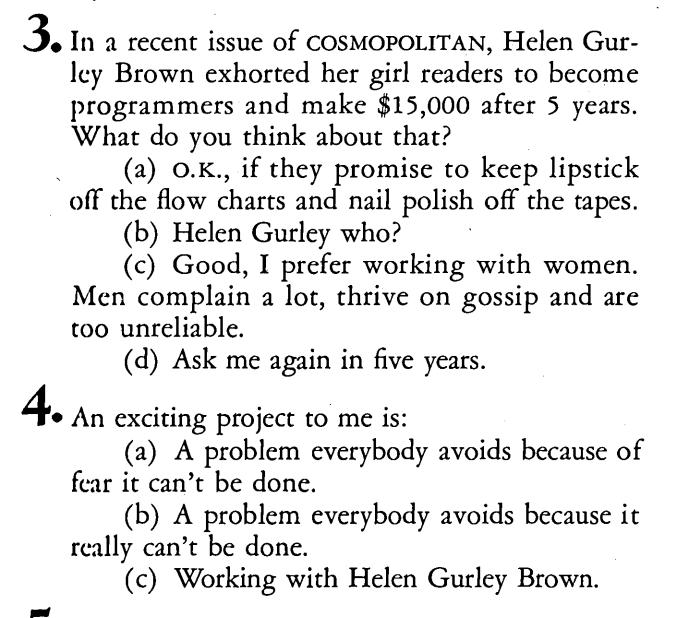
Figure3:Questionsabout“TheComputerGirls”ComputerSciencesCorporation,"Incaseyoumissed ourfirsttest,here'sanotherchancetofindoutifyoubelongatCSC," Datamation 13,no 9(1967):9, https://bitsaversorg/magazines/Datamation/196709pdf
After1975,adswerelessovertlysexist,insteadoftenfeaturingwomen,achangeinpart spurredbysecond-wavefeminismandtheworkofthe“SocietyofWomenEngineers”andother professionalorganizations.
63 Nonetheless,advertisementsfromcomputercompanieswithwomen presentdidnotnecessarilyserveassilverbulletstoworkplacediscriminationorcultureissues.
63 Vogel,"'TheSpitting,"54.
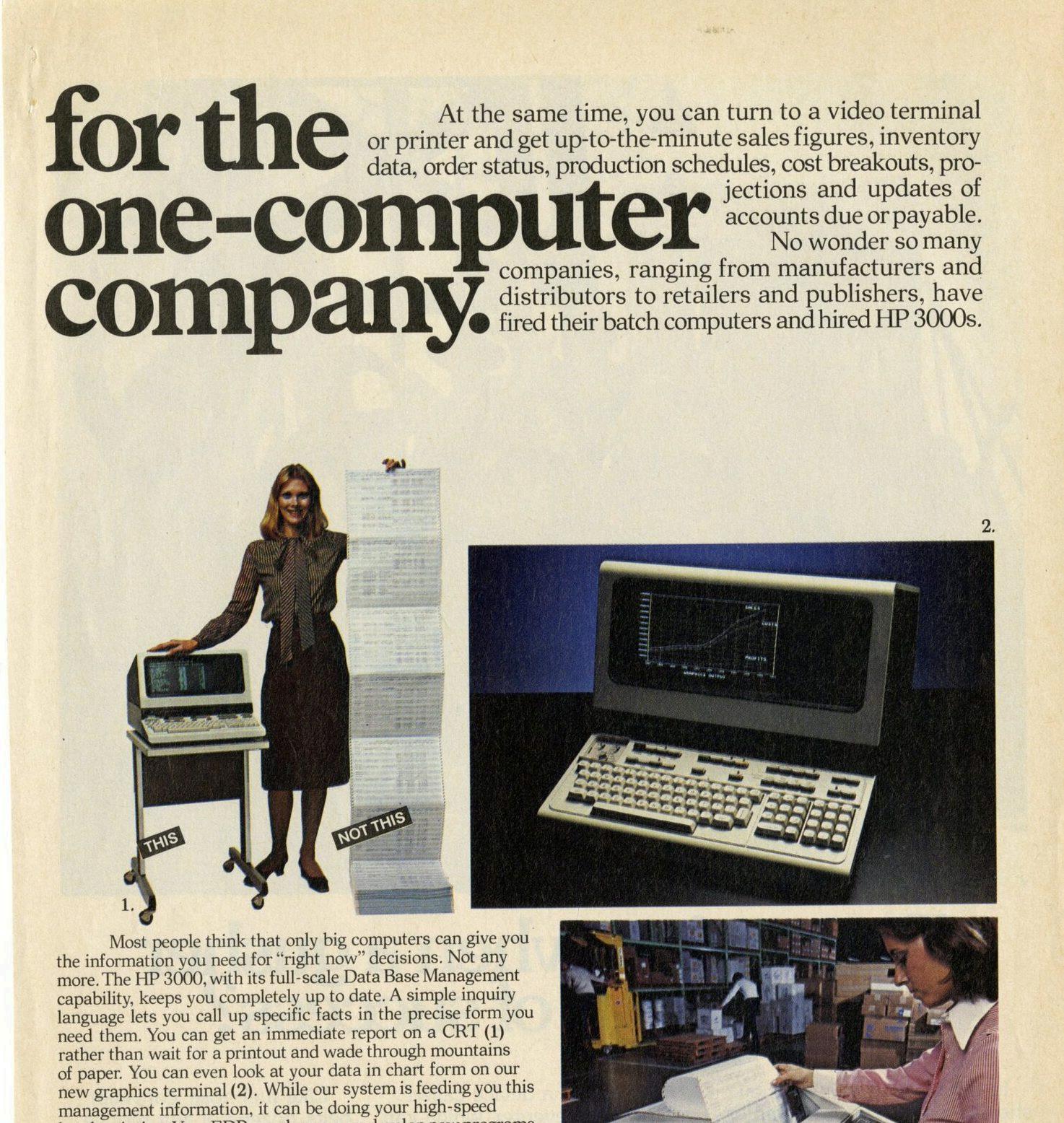
Figure4 AdvertisementfortheOne-ComputerCompanywithWomanHoldingTwoOptionsfor Computing Personal Computers,1978-6c1,photograph, https://sitesdukeedu/womenandadvertising/exhibits/tech-ads-and-women/advertisements-for-technology/ onecomputercompany/
Inaposteradvertisingfora“one-computercompany”in1978,awomandressedsmartly isholdingtwothings:alongpaperrepresentingoldwaysofdataprocessingandsecretarialwork andacomputer.Herpositionholdingthetwoalternativesreducesviewers’perceptionofher autonomyandskillrequiredforthejob.64 Anadforanewfilingunitinthe1960sclaimsthat newtechnologycan“makeanygirlinyourfilingdepartmentworththreetimesasmuch!”
64 Personal Computers.
Technologyaddstothevalueofwomen,buttheirskillatoperatingthesemachinesisnot mentioned.Furthermore,theirexpertiseandprevioustalentisusedasanexampleofefficiency.65

Figure5.AFilingUnitwhich“makesanygirlinyourfilingdepartmentworththreetimes”more. Office Equipment,1960-4c.1,photograph, https://sites.duke.edu/womenandadvertising/exhibits/tech-ads-and-women/advertisements-for-technology/ everywhereatonceremingto1960/.
Aphotowithawomandressedelegantlywithalargehatholdingacomputerfeatures largetextatthetopsaying,“LifecanbebeautifulwithMonroe.”Theuseofthiswomanasa
65 Office Equipment,1960-4c1,photograph, https://sitesdukeedu/womenandadvertising/exhibits/tech-ads-and-women/advertisements-for-technology/everywher eatonceremingto1960/.
displaypiece,justholdingthemachinehintsthatfemalelaborwasdevaluedandappreciationfor itwassuperficialatbest,withthead’sinvocationof“beautiful”todescribethewomanand machinecombined.66
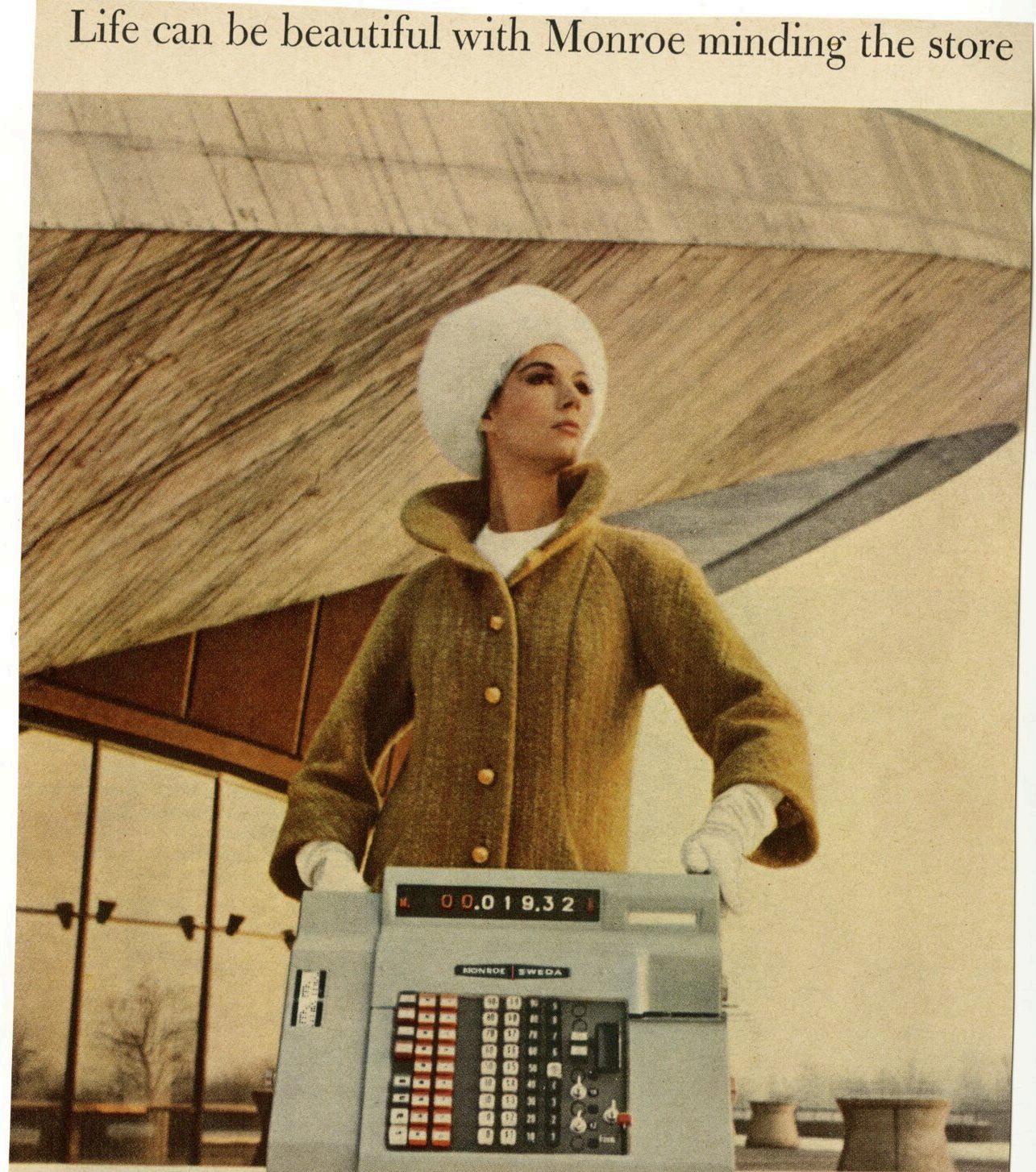
Figure6 “Lifecanbebeautiful”MonroeAdvertisement Office Supplies and Equipment 1 of 3,1964-5 c1,photograph,accessedMay19,2025, https://sitesdukeedu/womenandadvertising/exhibits/tech-ads-and-women/advertisements-for-technology/ officesup1/
Someresearchersspotlighttheideathattheseventiesandeightieswereaneraofprogress andactivelypositiveremediationoftheharmsofpreviousmediarepresentationsofwomenin computing.67 However,itisimportanttonotethattheseoveralltrendsfromcertainjournalslike Datamation andeventhequantitativestatisticsaboutwomendonotreflect“thelivedrealityof womenintheindustry”necessarily.68 Analyzingthepresentationoffemaleprogrammersfrom
66 Office Supplies and Equipment 1 of 3,1964-5c1,photograph,accessedMay19,2025, https://sitesdukeedu/womenandadvertising/exhibits/tech-ads-and-women/advertisements-for-technology/officesup1 /
67 Vogel,"'TheSpitting,"58
68 Vogel,"'TheSpitting,"58
1958to1985,researcherWilliamF.Vogelcautionsagainstrelyingonthesesweeping industry-levelaccountsaloneandencouragesanexplorationofwomen’sactualrealitiesthrough othermeansaswell.69
Section2
Divingintowomen’sexperiencesandthecultureofcomputingatthelevelofthe individual,the1983report Barriers to Equality in Academia: Women in Computer Science in M.I.T featuresexperienceatthelevelofindividualformanywomeninvolvedincomputer scienceinMassachusettsInstituteofTechnology’sDepartmentofComputerScience.Thisreport wascompiled,edited,andpublishedbymultiple“femalegraduatestudentsandresearchstaffin ComputerScience.”70 Theintentofthereportwastoilluminatesubtlebutinsidiousproblems thatwomenfacedatMIT.Thefemalescientistsandresearchstaffwhopreparedthereport soughtnottodenouncetheUniversityortheirdepartment:rather,theycreditandacknowledge thepeopleacrossthedepartmentwhoactuallyoffered“supportandencouragement”tothese womenintheirtask.71 Withagoaltoinform,educate,andtransformthedailynormsinboth socialandprofessionalcontexts,thesewomennotedandpresentedanonymizedtestimonialsand experiencesoftheirfemalecolleagues.Thecontributionsandreportproducedbythesewomen elucidatessomekeyfactorsthattriggeredthereasonswhymanywomenwho“startgraduate workatMITchoosetoleavebeforefinishingtheirdegrees.”72 Additionally,theseexperiences
69 Vogel,"'TheSpitting,"58.
70 FemalegraduatestudentsandresearchstaffintheLaboratoryforComputerScienceandtheArtificialIntelligence LaboratoryatMIT, Barriers to Equality in Academia: Women in Computer Science in M I T (Cambridge,1983), 1,accessedNovember6,2025,https://hdlhandlenet/17213/196207
71 FemalegraduatestudentsandresearchstaffintheLaboratoryforComputerScienceandtheArtificialIntelligence LaboratoryatMIT, Barriers to Equality,2
72 FemalegraduatestudentsandresearchstaffintheLaboratoryforComputerScienceandtheArtificialIntelligence LaboratoryatMIT, Barriers to Equality,1
andassumptionsaboutthecultureofcomputingarereasonswhyeveniffemaleapplicantshave notyetstartedstudyingatMIT,they“donotcomewhenaccepted.”73 Asaprimarysource exploringthefactorsthatinfluencedfemalegraduatestudentsdecisionstopursueorabandon computerscienceatacriticalpivotpointintheirlives,thisreportunveilshowthesharpdecline infemaleparticipationincomputingwasinfluencednotonlybypublicmedialike advertisementsorculturalarchetypesbeingformedaspresentedinSection1,butadditionally perpetuatedbysubtlephysicalandsocialbehaviorsintheworkplacewhichtheyencountered repetitively.
Section2.1:TheCocoonofTheComputerCenter
Onecategoryofthissubtleexclusionmanifestedthroughthephysicalenvironmentand constraintsthatwomenencounteredinlabsettings.Namely,womenwereoftenexcludedornot encouragedtoparticipateinpredominantlymalesocialgatheringsorlabsettingsduetoaculture ofbelligerenceandaggression.
Womenworkingincomputingfacedabarrierofinvisibilityintheirworkplaces.Inthe reportfromMIT,inasubsectiontitled“Invisibility,”onewomandescribestherelativefrequency ofbeingignoredingroupdiscussionsandmeetings:shestatesthat“twopeoplewithwhomIwas tryingtohaveameetingpull[ed]theirchairstogetherandstart[ed]talkingtoeachotherasif they’dforgottenIwasintheroom.”74 AnotherwomancitesintheMITreportthatshehasbeen “ignored,constantlyinterrupted,andtalkedoverinmeetingsasif[shewasn’t]there.”75 The
73 FemalegraduatestudentsandresearchstaffintheLaboratoryforComputerScienceandtheArtificialIntelligence LaboratoryatMIT, Barriers to Equality,1
74 FemalegraduatestudentsandresearchstaffintheLaboratoryforComputerScienceandtheArtificialIntelligence LaboratoryatMIT, Barriers to Equality,8
75 FemalegraduatestudentsandresearchstaffintheLaboratoryforComputerScienceandtheArtificialIntelligence LaboratoryatMIT, Barriers to Equality,8
repetitionofphraseslike“forgottenIwasintheroom”and“asifIweren’tthere”elucidatethe sharedsentimentofmanywomenthattheydidnotfeelseenasequalsorcollaboratorsintheir workplaces.76 Physicalmanifestations,likedrawingchairsacrossaroom,elicitedthisfeeling, butitissignificanttonotethateventheactofbeinginterruptedisalsorepetitivelydescribedasa factorinwomen’sfeelingofexclusion.
DeborahButler,whoexploredgenderandcomputingresearchintheeightiesand nineties,addsanotherlayertothissocialexclusion:behaviorwithinaclassroomsetting.She describesinstancesofhostilityinthesocialenvironmentwhichledtogirls'negativeassociations withthefield.Forexample,inclass,whenmalestudentstriedtofindacomputertouse,they wouldtrytotakeonebeforeotherstudentsduetothe"first-come,first-servedsituation."Butler claimsthatthisbelligerentcompetitiondiscouragedfemalestudents,andfurthermore,many womenpreferredtheopportunitytoworkinteamsorwithwomen,asopposedtoalone.77 Asa result,manyfemalestudentsfoundthattheenvironmentandattitudesheldbycomputerscience labswereunwelcomingtotheirvaluesandperspectivestowardssocialinteraction.78
Apartfromformallabenvironments,normsininformalsocialspaceslikecomputer centersalsocontributedtoadecliningparticipationrateforwomenincomputerscience.
ResearcherNathanEnsmengerinvestigateshowmale“camaraderie,”consistingof“all-night codefests”and“insidejokes”incomputercenterswasabarriertoentryforwomenincomputer science.79 Studyingthehistoryofthecomputerhackersubculture,Ensmengeranalyzeshowthe
76 FemalegraduatestudentsandresearchstaffintheLaboratoryforComputerScienceandtheArtificialIntelligence LaboratoryatMIT, Barriers to Equality,8
77 DeborahButler,"Gender,Girls,andComputerTechnology:What'stheStatusNow?," The Clearing House 73,no 4(2000):226,http://wwwjstororg/stable/30189551
78 Butler,"Gender,Girls,"226
79 Ensmenger,"“Beards,Sandals,"60
structureoftheuniversitycomputercenter,namely,itsisolationandovernightaccessibility helpedcreatethehackercultureassociatedwithmasculinitytoday.Unlikecorporatecomputing spaces,universitycomputercenterscouldoftenbeaccessedbystudentsduringlatehours,where theywouldgetpersonaltimetotinkerandunderstandcomputers.80 Despiteoftennotattendingto theirownhygieneorwellbeingorbeingportrayedas“disinterestedinpeople,”malecomputer sciencestudentsformedessentialsocialconnectionsandlearnedbyinteractingwithothersinthe “shelteredwombofthecomputerroom.”81 Ensmengerarguesthateventheactofmakingcode moreefficientandelegantwascodedasmasculineintheethosofthesecenters:itwasameans of“establishingdominancewithinthecommunityhierarchy”andaformof“masculine competition.”82
80 Ensmenger,"“Beards,Sandals,"56.
81 Ensmenger,"“Beards,Sandals,"58.
82 Ensmenger,"“Beards,Sandals,"57.
83 Ensmenger,"“Beards,Sandals,"59.
Anotherformofthiscompetitionoccurredthroughphysicaltests,called“sportdeath,” whereprogrammerswouldpurposefullystayawakeaslongastheycouldastheyworked, “push[ing]thelimitsofsleepdeprivation.”83 Highlightingthecompetitiveandextremenatureof sportdeath,astudentatMITnamedAnthonydescribesitasa“masochistic”challengewhich “womenarenotsointo”becausetheyare“morebalancedintheirpriorities.”84 Whilethis statementisageneralization,itilluminateshowmalecomputerprogrammersusedtestsand challengesatcomputercentersasachancetodemonstratewhattheyperceivedasanessentially masculinepartoftheiridentity.Pushing“yourmindandbody”throughsportdeathand overnightworkwithacomputerisultimatelyatestformalebraveryandrisk-taking,withthe 84 Turkle,"ComputationalReticence,"45.
ultimateriskbeing“burnout”andphysicalatrophywhichtheseprogrammersconceivedas fundamentallymasculine.85 Anthonyexplicitlystatesthatwomenoptoutofthisactivitybecause womenaregenerally“lessself-destructive.”86
Section2.2:TrappedintheFishbowl:ADetrimentalDouble-Bind
Inadditiontothecultureofmaledominatedcomputercentersandsocialinteractionin computerscience,womenfacedanothersubtlefactorthatcontributedtotheirexclusion:constant surveillance.Subjecttoconstantobservation,thissurveillancecreatedanenvironmentof isolationandanxietyformanycompetentfemaleprogrammers.IntheMITreport,onewoman describesalwaysfeeling“asif”sheis“beingpursued;”asifsheisin“aspotlight”whereallof her“actions”intheworkplaceare“underclosescrutinyconstantly.”87 Thechoiceoftheword “spotlight”illuminateshowthisglaringandobsessivefocusonherasapersoninadditiontoher workincomputingmakesherfeel“extremelyself-conscious.”88 Thislineisjustoneofmany testimonialsinanentiresubsectionofthereporttitled“TheFishbowlSyndrome,”describingthe phenomenonwherewomenfeltlikefishinafishbowl,trappedandunderconstantobservation.
Evenwhenthereisno“verbal”or“physicalinteraction,”this“unwantedattention”isdescribed inthereportassomethingjustasmuchifnotmoreinsidiousasitissomethingthat“thecasual viewer”wouldnotevenbeabletonotice,allowingittospreadandperpetuate.89 Notably,the
85 Turkle,"ComputationalReticence,"45.
86 Turkle,"ComputationalReticence,"45.
87 FemalegraduatestudentsandresearchstaffintheLaboratoryforComputerScienceandtheArtificialIntelligence LaboratoryatMIT, Barriers to Equality,18
88 FemalegraduatestudentsandresearchstaffintheLaboratoryforComputerScienceandtheArtificialIntelligence LaboratoryatMIT, Barriers to Equality,18
89 FemalegraduatestudentsandresearchstaffintheLaboratoryforComputerScienceandtheArtificialIntelligence LaboratoryatM.I.T., Barriers to Equality,18.
MITreportitselfisorganizedaftercompilingandpresentingalistof“representativecomments andincidents”preparedbythewomenofthedepartmentofComputerScience90 Theanonymized quotesintheMITreportarenotisolatedinstances,rather,theyembodyanddepictthelived realitythatmanywomenmayhaveencounteredasdenotedbythekeyword“representative.”
Underthesurveillanceoftheirpeersandmentorsineveryspacespanningfromthe “office,”“elevator,”“lecture,seminar,ormeeting,”womenwerewatchedconstantly.91 Theyalso faceda“doublebind:”theyeithercouldformsocialrelationshipsandcollaborateattheriskof the“communityatlarge”assumingthatrelationshipswere“romantic,”ortheycould“alienate themselves”atthedetrimentoflosingoutonlearningandimprovementwithothers.92 Beyond thedilemmabetweenbeingisolatedormisperceivedintheirrelationshipswithothers,theMIT report’sauthorsalsoexplainthatinordertobetakenseriouslyinthecomputerscience classroom,womenneededtospeakandactinademandingormasculinemanner.Thisapproach tolearningwasthemannerthatwasacceptedandcommonplaceforotherprogrammersintheir space.However,whentheyactedthisway,femalecomputerscientistswereperceivedas belligerentanddisruptive.
93 Theywereoftencalleddemeaningnamesforthisbehavior,either behindtheirbacksortotheirface:forexample,oneinsultincludedbeingcalled“Mrs.Attilathe Hun.”94 Simultaneouslywhilebeingcriticizedforadoptingmasculinebehaviors,alternatively,if
90 FemalegraduatestudentsandresearchstaffintheLaboratoryforComputerScienceandtheArtificialIntelligence LaboratoryatMIT, Barriers to Equality,4
91 FemalegraduatestudentsandresearchstaffintheLaboratoryforComputerScienceandtheArtificialIntelligence LaboratoryatM.I.T., Barriers to Equality,18.
92 FemalegraduatestudentsandresearchstaffintheLaboratoryforComputerScienceandtheArtificialIntelligence LaboratoryatMIT, Barriers to Equality,18
93 FemalegraduatestudentsandresearchstaffintheLaboratoryforComputerScienceandtheArtificialIntelligence LaboratoryatMIT, Barriers to Equality,12
94 FemalegraduatestudentsandresearchstaffintheLaboratoryforComputerScienceandtheArtificialIntelligence LaboratoryatM.I.T., Barriers to Equality,12.
theyactedinwaysdeemedtraditionallyfeminine,theywereseenasprogrammerswhowould “nevermakeitthroughMIT”becausetheywerenot“aggressiveorpushyenough.”95
Thisdifficultconstraintposedaseriouschallengetowomen.Manyfemalestudentschose toisolatethemselvesasaresultofthisuntenablestandardandfelt,asonewomandescribed,as thoughtheycould“neverhaveanyfriendshere”andliketheycould“neverfitin.”96 Shestates thatshehas“neverfeltsoisolatedin[her]life.”97 Theauthorsofthereportstatethatthis“one woman’scomment”“summarized”theeffectofthedouble-bindfor“manyofus.”98 This summativestatementelucidateshowthefeelingofextremeisolationwasexperiencedbyawhole communityoffemaleprogrammers.Thesentimentsofisolation,insecurity,andincompetence fosteredbytheconstraintsonfemalebehaviorandtheirpeers’constantobservationliterally limitedtheirlearningandgrowth,contributingtotheexodusofwomenincomputersciencein theeighties.Learningthroughcollaborativediscussionandcollectiveproblemsolvingis indispensablewhengrowingasacomputerscientist.Manywomenfeltcompelledtoisolate themselvesfromanuncomfortableandimpossiblesocialenvironmentinthecomputerscience classroomevenwhilecontinuingtheireducation.Starvedofpositivereinforcementorguidance whichwasabundantlyofferedtomalepeers,femaleprogrammersoftenvoluntarilyoptedoutof uncomfortablesocialsituationsandsimultaneouslylostaccesstoavitalcomponentoftheir learningprocess.Cyclically,thisbehaviorcouldhavenegativelyaffectedtheirexecutionoftasks
95 FemalegraduatestudentsandresearchstaffintheLaboratoryforComputerScienceandtheArtificialIntelligence LaboratoryatM.I.T., Barriers to Equality,12.
96 FemalegraduatestudentsandresearchstaffintheLaboratoryforComputerScienceandtheArtificialIntelligence LaboratoryatMIT, Barriers to Equality,18
97 FemalegraduatestudentsandresearchstaffintheLaboratoryforComputerScienceandtheArtificialIntelligence LaboratoryatMIT, Barriers to Equality,18
98 FemalegraduatestudentsandresearchstaffintheLaboratoryforComputerScienceandtheArtificialIntelligence LaboratoryatM.I.T., Barriers to Equality,18.
assignedtothem,astheywereforcedtospendmoreoftheirenergytotacklethechallengesin theirenvironmentsfromthosearoundthem.99
ItissignificanttonotethatthewomenwhopublishedtheMITreportspecificallysingled outthisprocessofdealingwiththe“problemofinequality”inbothsocialandprofessional contextsasareasonforwhywomen“leaveMIT,”oftenpartingwiththeircomputerscience education.100 Thisstatementprovidesanexplicitdelineationofonekeyfactorinvolvedinmany femaleprogrammers’decision-makingcalculuswhenleavingcomputerscience.Presenting authenticandrawreasonsbehindthemonumentaldecisiontoleaveMITandcomputing,the authorsofferanexplanationforwhywomenwithhighcaliberleave“withoutcompletingtheir studies”basedon“privateconversations”abouttheirmotivations.101
Section2.3:PatronizationandMentorship
Inadditiontoculturalnormsinthesocialspherethatwomenincomputerscience inhabited,anessentialfactorwhichcontributedtothedeclineinwomen’sparticipationwasthat theywereoftenlimitedfromtakingonchallengingandindependentresearchinquiries.Whileby nomeansareweclaimingthatwomenwerenotinvolvedinresearch,itisnecessarytorecognize thatfemalecomputerscientistswereoftennottrustedwithmoreindependentprojectsdueto preconceivednotionsabouttheirdegreeoftechnicality.IntheMITreport,theauthorsisolate how“someresearchsupervisorsbelievethatwomendonotexamineproblemstoasufficient
99 FemalegraduatestudentsandresearchstaffintheLaboratoryforComputerScienceandtheArtificialIntelligence LaboratoryatMIT, Barriers to Equality,13
100 FemalegraduatestudentsandresearchstaffintheLaboratoryforComputerScienceandtheArtificial IntelligenceLaboratoryatMIT, Barriers to Equality,13
101 FemalegraduatestudentsandresearchstaffintheLaboratoryforComputerScienceandtheArtificial IntelligenceLaboratoryatM.I.T., Barriers to Equality,13.
levelofdetail”andthese“broadgeneralizations”causethemtonot“givethemcriticaltasks”to theirfemalementees.102 Connectingtotheestablishedtraditionofpresentingwomenassimple operatorsoftechnology,whetherthroughlanguageorpublicmedia,theideaspreadinthe classroomaswell.Mentorsandpeersoftenbelievedthatwomencouldnotrisetothechallenge ofinterestingresearchinquiriesandinturn,limitedtheirgrowth.OnewomanintheMITreport offerspersonalevidenceforthisphenomenon.Shestatesthat“itseemslikeallIhavetodoisask onesimplequestion”andhercolleagues“trytotakeovermyentireresearchproblemandsolveit forme.”
103 Evenwiththecaveatthattheymaybebenignly“tryingtobehelpful,”thewoman explainsfranklythatit“doesn’thelp”herifsheis“neverallowedthechancetodo[her]own project.”
104 Particularlyintheclimateoftheeighties,whentheMITreportwaspublished,the cultureofpatronizationposedagravethreatforwomenstrivingtogrowinthecomputingspace. Itwassometimesgenuinelytheresultofaneffortofwell-meaningcolleaguestobe“helpful”so itcouldlikelynotbelabeledorevenrecognizedasapparentdiscrimination.105 Thebenign appearanceofthispatronizationcouldfosteritsspreadthroughthedomainofcomputinginthe eightiesandbeyond.
Thisdispersionofpatronizationwasparticularlypathogenicforwomenincomputing becauseofthenatureofthediscipline.Inheranalysis“Women’sVoices/Men’sVoices: TechnologyasLanguage”inthebook Technology and Women’s Voices: Keeping in Touch,
102 FemalegraduatestudentsandresearchstaffintheLaboratoryforComputerScienceandtheArtificial IntelligenceLaboratoryatMIT, Barriers to Equality,11
103 FemalegraduatestudentsandresearchstaffintheLaboratoryforComputerScienceandtheArtificial IntelligenceLaboratoryatMIT, Barriers to Equality,9
104 FemalegraduatestudentsandresearchstaffintheLaboratoryforComputerScienceandtheArtificial IntelligenceLaboratoryatM.I.T., Barriers to Equality,9.
105 FemalegraduatestudentsandresearchstaffintheLaboratoryforComputerScienceandtheArtificial IntelligenceLaboratoryatM.I.T., Barriers to Equality,9.
MargaretLoweBenstonexplainswhythebehaviorofwomen’speersandmentorsmaterially constrainedtheirlearningandgrowth.106 Benstonexplainsthatinsubjectsdealingwith technology,“theeducationprocess”is“heavilydependentonlearningfromfellowstudents”and the“asymmetry”posesaseriouschallengeforwomen.107 Whiletheirmalepeersreceived welcomecollaborationwhentheyhadquestionsorchallenges,womenwhoaskedquestionswere perceivednegatively.Thepeoplesurroundingthemoftentookquestionsasasignifierofthe lowercompetenceorskilloffemaleprogrammers.108 Iftheytriedtodiscuss“technicalproblems” or“experimentalones,withmalepeers,”womenencounteredmalestudentswho“either condescend”orwho“simplydowhateveritisforyou.”109
Thisattitudedidnotstayconfinedtomalepeers.Asubtlecultureofpatronizationand condescension,evenifunwitting,transformedintoasharper,systematicformofexclusionwhen itmanifestedinresearchinstitutions’normsandinthebehaviorofwomen’smentors.What mighthavebeenpresentedorperceivedasalimited,socialissuedevelopedinto“actual limitationsplaced”onthe“professionaldevelopment”ofwomen.110 Notonlyweretheir supervisors“reluctanttosupervisethem”orto“providefinancialsupport,”theyalsowere
106 MargaretLoweBenston,"Women'sVoices/Men'sVoices:TechnologyasLanguage,"in Technology and Women's Voices: Keeping in Touch,byCherisKramarae(Routledge&KeganPaulInc,1988;TaylorandFrancis,2005),21, accessedMarch25,2026, https://frauenkultur.co.uk/wp-content/uploads/2020/05/Technology-and-Womens-Voices.pdf.
107 Benston,"Women'sVoices/Men's,"21.
108 Benston,"Women'sVoices/Men's,"21
109 Benston,"Women'sVoices/Men's,"21
110 FemalegraduatestudentsandresearchstaffintheLaboratoryforComputerScienceandtheArtificial IntelligenceLaboratoryatM.I.T., Barriers to Equality,12.
hesitanttogivewomenaccessto“workoninterestingandimportantproblems,”complexand impactfulresearchprojects.111
Apotentialobjectiontothisobstaclemightbetosuggestthatwomenworkwithother groupmembersorprofessorswhenfacedwithdiscrimination.112 However,formanywomen whose“interestscoincidewiththoseofaprofessor”whodoesnot“provideasupportive environmentforwomen,”thereare“noeasyalternatives,”accordingtotheMITreport:they wouldhavetomoveto“anothergroup,school,orfieldofwork.”113 Forwomenpassionateabout certainsubsetsofcomputingorwithparticularresearchinterests,itisreasonabletoconcludethat thisdrasticresearchshiftcouldhaveledtowomenleavingcomputingandthe“fieldofwork,”as suggestedbythereportquote.114 Inaddition,womenmaynotfindinclusivegroupmembersin labswherethereisan“unsupportiveprofessor”becausetheprofessor’s“attitudesoftenaffectthe researchgroup’sattitudes.”115
Forexample,afemalecomputersciencestudentintheeightiesatJohnsHopkins University,PatriciaOrdóñezdecidedthatshe“wouldstudycomputerscienceorelectrical engineering”becauseofheraptitudeinmath.116 WhenOrdóñezcouldnotansweraquestionin class,herprofessor“stoppedandlookedat[her]andsaid,‘Youshouldknowthatbynow,”
111 FemalegraduatestudentsandresearchstaffintheLaboratoryforComputerScienceandtheArtificial IntelligenceLaboratoryatMIT, Barriers to Equality,12
112 FemalegraduatestudentsandresearchstaffintheLaboratoryforComputerScienceandtheArtificial IntelligenceLaboratoryatM.I.T., Barriers to Equality,12.
113 FemalegraduatestudentsandresearchstaffintheLaboratoryforComputerScienceandtheArtificial IntelligenceLaboratoryatMIT, Barriers to Equality,12
114 FemalegraduatestudentsandresearchstaffintheLaboratoryforComputerScienceandtheArtificial IntelligenceLaboratoryatM.I.T., Barriers to Equality,12.
115 FemalegraduatestudentsandresearchstaffintheLaboratoryforComputerScienceandtheArtificial IntelligenceLaboratoryatMIT, Barriers to Equality,12
116 Planet Money,"WhenWomenStoppedCoding,"writtenbySteveHenn,airedOctober21,2014,onNPR, https://www.npr.org/sections/money/2014/10/21/357629765/when-women-stopped-coding.
causinghertodoubtherownability,asshe“thought,‘Iamnevergoingtoexcel.’”117 Despiteher mathematicalcompetence,Ordóñez“eventuallydroppedtheprogram,”initiallyleavingthefield ofcomputerscienceandinstead,majoring“inforeignlanguages.”118 Women’squalificationsand motivationstostudycomputersciencewerealsoquestioned,furtheringtheassumptionthatthey couldnottakeonindependentandchallengingproblems.Thereportofferstheexampleof “Commentslike“JanecametoMITonlytogetahusband”whichmade“womenfeelthattheir academicandcareergoalsarenottreatedwithrespect”equaltothoseoftheirmalepeers.119 Both peersandmentorsoftenquestionedwomen’sambitions,theirmotivations,theirskills,their background,andtheirindependence.
Anotherfactor,notdirectlyimposedonwomenbyotherpeople,butratherafacetofthe systemsthatpeopleputinplaceincomputing,thatlimitedwomen’sparticipationincomputing wasthelackoffemalementorship.Inthreewords,theMITreportputsthisdilemmaasan“acute role-modelingproblem,”wherewomenwatchedpeoplesimilartothemface“subtle discrimination.”120 Thisimplicitdiscriminationbecomesnormalizedandcyclicalforwomen,as theyfrequentlyseeotherwomen“putdownorignoredbytheirsuperiors.”121 Theauthorsofthe reportstatethatinmost“workenvironments,”femalerolemodelsoftenarethepartofthe “clerical”and“hourlyworkers”who“mostfrequentlyreportsubtlediscrimination.”122
117 Planet Money,"WhenWomen"
118 Planet Money,"WhenWomen."
119 FemalegraduatestudentsandresearchstaffintheLaboratoryforComputerScienceandtheArtificial IntelligenceLaboratoryatMIT, Barriers to Equality,2
120 FemalegraduatestudentsandresearchstaffintheLaboratoryforComputerScienceandtheArtificial IntelligenceLaboratoryatM.I.T., Barriers to Equality,39.
121 FemalegraduatestudentsandresearchstaffintheLaboratoryforComputerScienceandtheArtificial IntelligenceLaboratoryatM.I.T., Barriers to Equality,39.
122 FemalegraduatestudentsandresearchstaffintheLaboratoryforComputerScienceandtheArtificial IntelligenceLaboratoryatMIT, Barriers to Equality,39
Additionally,almost“all”woman“atonetimeoranother”are“assumedtobeclerical workers.”123 Thisexhaustivecycleofbeingputdown,ignored,orquestionedforeverythingas practicalastheirtechnicalskillstoaspersonalastheiraspirationsandgoalscontributedto womenleavingthefieldofcomputing.124 IntheMITreport,a“youngfemaleengineersays“Iam constantlybeingtakenforwhatIamnot.”125 Concretely,thepersonaleffectthatthishasonthis engineerwho,byvirtueofbeingyoung,islikelyearlyinhercareerjourney,istodiminishher enthusiasmandcreateasenseofpersistentchallenge,aconstant“struggletodevelop[her]own selfimage”whichis“notaffirmedbymostoftheworldaround[her,]asitisfor[her]male colleagues.”126 Notonlyishercomputingskillbeingdoubted,butherentireidentityis scrutinized.Thephrase“developmyownselfimage”elucidateshowformanywomen,aprocess ofcreationandmaintenanceofanacceptableidentityandcharacterwasnecessarytogrowand surviveincomputerscience.127
Womenfacedcontradictoryandnearimpossiblestandardsincomputing,forcingthemto leavecomputerscience.Theywereexpectedtohavestrongtechnicalandexperimental competence,butalsooftendiscouragedfromaskingchallengingquestions.Theywerelooked downuponasaggressiveandcompetitiveiftheyactedsimilarlytotheirmalepeers,butsimilarly
123 FemalegraduatestudentsandresearchstaffintheLaboratoryforComputerScienceandtheArtificial IntelligenceLaboratoryatMIT, Barriers to Equality,39
124 FemalegraduatestudentsandresearchstaffintheLaboratoryforComputerScienceandtheArtificial IntelligenceLaboratoryatMIT, Barriers to Equality,39
125 FemalegraduatestudentsandresearchstaffintheLaboratoryforComputerScienceandtheArtificial IntelligenceLaboratoryatMIT, Barriers to Equality,39
126 FemalegraduatestudentsandresearchstaffintheLaboratoryforComputerScienceandtheArtificial IntelligenceLaboratoryatM.I.T., Barriers to Equality,39.
127 FemalegraduatestudentsandresearchstaffintheLaboratoryforComputerScienceandtheArtificial IntelligenceLaboratoryatM.I.T., Barriers to Equality,39.
chidedforbeingtoofeminineiftheydidnot.Theywereseenasunabletotakeonindependent researchtasks,butalsoinfrequentlyofferedchallengingandinterestingresearchproblems withoutfacingthepatronizationoftheirpeersandmentors.Thislistisnotall-encompassing,and neitherdoesitholdasabsolutefactforeverycomputerscienceenvironment.However,the behavioranalyzedandpresentedinthissection,notonlyfromtheMITreportbutalsofromother institutionslikeJohnsHopkinsUniversity,doilluminatethetypeofculturalnormsentrenchedin thesystemsofcomputingresearchandeducationintheeighties.
Thepurposeofhighlightingtheseinstancesisnottodenounceanyoftheseinstitutions: rather,thesecasestudieshelpilluminatehowademographicshiftofextremesignificancein computingoccurredduenotonlytopublicmediaportrayalsorobviousdiscriminationwhich manifestedphysicallyorverbally Theinsidiousvectorsofexclusioncouldevenpropagatefrom attemptstohelpothers:theyarearesultoftheassumptionsformedduetotheportrayalof womenasnontechnicalinadvertisementsandmediarelatedtocomputinginthesixtiesand seventies.Theycanbeinvestigatedthroughtheeffectsofthebehaviorandsocialnormsbuilt intocomputercentersandtraditionslike“sportdeath.”Practically,thesefactorsleadingto exclusioncanbeseeninlearningspaces,wherewomenwereoftendiscouragedfromasking questionsandfacedadversitywhentryingtocollaboratewiththeirpeers.
Ratherthanresigningtocrueloptimismthatallfactorswhichexcludedwomenarebuilt intothesystemswithwhichwomeninterfaceortakingthepathofleastresistanceand concludingthatapparentsexismanddiscriminationwasthesolecauseforthedeclineof women’sparticipationincomputingintheeighties,wecantakeanalternativeviewofthecauses ofthisdecline.Ifthecausesofwomen’sexclusionweresubtlebehaviorsencodedindailylife, whetherthroughimagecompositionofadvertisements,gamesandtraditionsincomputercenters,
orattitudesheldinlabs,thereiscertainlyadepthofcurrentpotentialformembersofcomputer sciencetocontributeareversaloftheseexclusionaryfactors.
Inaddition,thispaperalsohighlightstheimportanceofdocumentationandpersistent criticalthoughtaboutone’sownbehavior,likehowthefemalegraduatestudentsandresearch staffsenttheirreportinternallytotheircolleaguesandlatercollaboratedtorebuildthecultureof theirdepartment.Forexample,ProfessorDavidP.Reed’sreactiontotheMITreportincluded himacknowledginghisbiasandstatingthatevenifsomereactionstothereportwere “misunderstanding,insensitive,oruncaring,”thewomen’sactofdocumentingandanalyzingthe factorsthataffectedwomen’sexclusionhad“brokentheice”andallowedhimtolearn“alot” abouthowhecouldalsoplayaroleincreatinganinclusivecultureasagroupleader 128 In addition,severalmeninMIT’scomputersciencedepartmentwroteabouttheirperspectiveson thereport.Theyalsodeclaredthatthereportcompiledbythewomenforcedpeople,including themselves,to“thinkmoreseriouslyaboutdiscriminationin[their]workplace”andtorecognize that“sexismencompassesmorethanactive,intentionaldiscrimination”andalsoincludes “inadvertently”harmfulactions.129 Inaddition,thesecolleaguesclearlystatedthatthereport illuminatedpreviouslyacceptedbehaviorsasexclusionary,astheylearnedto“perceive gender-basedbiasesandotherprejudicesmoreclearly.”130
Afterananalysisofthedetailedfactorsbehindthedramaticdeclineofwomen’s participationincomputing,theevidence,fromadvertisementsanddetaileddescriptionsofsocial
128 FemalegraduatestudentsandresearchstaffintheLaboratoryforComputerScienceandtheArtificial IntelligenceLaboratoryatMIT, Barriers to Equality,41
129 FemalegraduatestudentsandresearchstaffintheLaboratoryforComputerScienceandtheArtificial IntelligenceLaboratoryatMIT, Barriers to Equality,43
130 FemalegraduatestudentsandresearchstaffintheLaboratoryforComputerScienceandtheArtificial IntelligenceLaboratoryatM.I.T., Barriers to Equality,43.
traditionsincomputingcenterstotestimonialsfromseveralwomeninvolvedincomputinginthe eighties,pointstotheexclusionofwomenbeingamalleableproblem,notafixedone.
Understandingthat“subtlediscriminationcandoasmuchdamageas,ifnotmoredamagethan isolatedincidentsofovertdiscrimination,”thechallengeofworkingtoavoidinstancesof exclusionarynorm-settingincomputerscience,oranyfield,maybeconceivedaslessofa dauntingtask.131
131 FemalegraduatestudentsandresearchstaffintheLaboratoryforComputerScienceandtheArtificial IntelligenceLaboratoryatMIT, Barriers to Equality,1
Bibliography
Backus,John."ProgramminginAmericainthe1950s—SomePersonalImpressions." A History of Computing in the Twentieth Century,1980,125-35. https://doi.org/10.1016/b978-0-12-491650-0.50017-4.
Balser,Lauren."HowComputingBecameMasculineintheColdWar."Confluence.NewYork University LastmodifiedSeptember21,2021.AccessedMarch3,2025. https://confluence.gallatin.nyu.edu/sections/research/how-computing-became-masculine-i n-the-cold-war#easy-footnote-20-20468.
Benston,MargaretLowe."Women'sVoices/Men'sVoices:TechnologyasLanguage."In Technology and Women's Voices: Keeping in Touch,byCherisKramarae.Taylorand Francis,2005.Firstpublished1988byRoutledge&KeganPaulInc.AccessedMarch25, 2026.
https://frauenkultur.co.uk/wp-content/uploads/2020/05/Technology-and-Womens-Voices. pdf.
Benvenuti,Silvia,andLindaPagli."FromtheEarthtotheMoon:TwoStoriesofWomenand Mathematics."In Faces of Geometry,2nded.,editedbyPaolaMagnaghi-Delfino,Tullia Norando,andGiampieroMele.Vol.172.LectureNotesinNetworksandSystems. SpringerCham,2021.AccessedApril10,2026. https://doi.org/10.1007/978-3-030-63702-6_2.
Brandon,DickH."TheProbleminPerspective."In Proceedings of the 1968 23rd ACM National Conference.ACM,1968.AccessedMarch14,2026. https://doi.org/10.1145/800186.810594.
Butler,Deborah."Gender,Girls,andComputerTechnology:What'stheStatusNow?" The Clearing House 73,no.4(2000):225–29.http://www.jstor.org/stable/30189551.
"BytesforBites:TheKitchenComputer."ComputerHistoryMuseum.AccessedApril12,2026. https://www.computerhistory.org/revolution/minicomputers/11/362/1955.
"ComputerScience:BasicKnowledge."In American Decades,editedbyJudithS.Baughman, VictorBondi,RichardLayman,TandyMcConnell,andVincentTompkins.Vol.7. Detroit,MI:Gale,2001.
https://link-gale-com.harker.idm.oclc.org/apps/doc/CX3468302493/UHIC?u=harker&sid =bookmark-UHIC&xid=2529d144.
ComputerSciencesCorporation."Incaseyoumissedourfirsttest,here'sanotherchancetofind outifyoubelongatCSC." Datamation 13,no.9(1967). https://bitsavers.org/magazines/Datamation/196709.pdf.
Ensmenger,Nathan."“Beards,Sandals,andOtherSignsofRuggedIndividualism”:Masculine CulturewithintheComputingProfessions." Osiris 30,no.1(2015):38-65. https://doi.org/10.1086/682955.
Evans,ClaireLisa. Broad Band: the Untold Story of the Women Who Made the Internet. Portfolio/Penguin,2018.
FemalegraduatestudentsandresearchstaffintheLaboratoryforComputerScienceandthe ArtificialIntelligenceLaboratoryatM.I.T. Barriers to Equality in Academia: Women in Computer Science in M.I.T Cambridge,1983.AccessedNovember6,2025. https://hdl.handle.net/1721.3/196207.
Fritz,W.Barkley."TheWomenofENIAC." IEEE Annals of the History of Computing 18,no.3 (1996):14-28.AccessedMarch2,2026.
https://courses.cs.washington.edu/courses/csep590a/06au/readings/00511940-frist.pdf.
Heurich,GuilhermeOrlandini."ComputingGender."In Coderspeak: The Language of Computer Programmers,125-32.UCLPress,2024.https://doi.org/10.2307/jj.8816153.16.
Light,JenniferS."WhenComputersWereWomen." Technology and Culture 40,no.3(1999): 455–83.http://www.jstor.org/stable/25147356.
Mandel,Lois."TheComputerGirls." Cosmopolitan Magazine,April1967,52-56.Accessed March3,2025.
https://archive.org/details/the-computer-girls-cosmopolitan-magazine-april-1967/The%20 Computer%20Girls%20-%20Cosmopolitan%20magazine%20%28April%201967%29%2 0%5Bocr%5D/.
Misa,ThomasJ. Gender Codes.IEEEComputerSocietyPress–Wiley,2010.AccessedMarch 27,2025.https://www.tjmisa.com/papers/2010_Wiley-GenderDefining.pdf
Neiman-Marcus."Neiman-Marcusadvertisement."Advertisement. The Neiman-Marcus Christmas Book,1969,84.AccessedApril12,2026.
https://www.computerhistory.org/revolution/minicomputers/11/362/1955.
Office Equipment.1960-4c.1.Photograph.
https://sites.duke.edu/womenandadvertising/exhibits/tech-ads-and-women/advertisements -for-technology/everywhereatonceremingto1960/.
Office Supplies and Equipment 1 of 3.1964-5c.1.Photograph.AccessedMay19,2025. https://sites.duke.edu/womenandadvertising/exhibits/tech-ads-and-women/advertisements -for-technology/officesup1/.
Olson,RandalS."PercentageofBachelor'sdegreesconferredtowomen,bymajor(1970-2012)." Chart.
https://randalolson.com/2014/06/14/percentage-of-bachelors-degrees-conferred-to-wome n-by-major-1970-2012/.
Personal Computers.1978-6c.1.Photograph.
https://sites.duke.edu/womenandadvertising/exhibits/tech-ads-and-women/advertisements -for-technology/onecomputercompany/.
Planet Money."WhenWomenStoppedCoding."WrittenbySteveHenn.AiredOctober21, 2014,onNPR.
https://www.npr.org/sections/money/2014/10/21/357629765/when-women-stopped-codin g.
Turkle,Sherry."ComputationalReticence:WhyWomenFeartheIntimateMachine."In Technology and Women's Voices: Keeping in Touch,editedbyCherisKramarae.Taylor& Francis,1986.Firstpublished1988byRoutledge&KeganPaulInc.AccessedMarch20, 2026.
https://frauenkultur.co.uk/wp-content/uploads/2020/05/Technology-and-Womens-Voices. pdf#page=45.
Vogel,WilliamF."'TheSpittingImageofaWomanProgrammer':ChangingPortrayalsof WomenintheAmericanComputingIndustry,1958–1985." IEEE Annals of the History of Computing 39,no.2(2017):49-64.https://doi.org/10.1353/ahc.2017.0013.