







HAI’s Rural Family Homes campaign is in full swing. Following stakeholder research earlier in the year and a media campaign we are now talking to Government about the recommendations from the report. Thank you to all HAI members who participated. Hopefully we will see this part of the market open up again and thousands of new rural family homes built.
The Rural Family Homes report is the third in a trilogy of reports looking for opportunities in the marketplace. It follows on from our Empty Homes campaign in 2023 and the Above the Shop campaign from last year. We will be hosting a series of roadshows on housing with a focus on each of these solutions. The first took place on June 11th in Athlone. We had some expert speakers on the topics highlighting the benefits and the grants and incentives on offer. They also advised on the regulatory, physical and financial challenges involved. More roadshows are planned. For details, please visit www.hardwareassociation.ie
We feature some details of the report in this issue on page 8.
While the market itself is fairly healthy, continuing increases in costs are still a factor.
And there are some new regulations coming down the line. EUDR (page 16) and CBAM focus on timber and steel and with PPWR we will have new regulations on packaging. While each of these regulatory changes are well-intentioned and laudable they do make business more complex. In this issue Howard Mulligan, on page 17, talks about what businesses need to know now about PPWR (packaging).
Recruitment and retention is still a major challenge, and Dave Gavin on Page 36, takes an in-depth look at how best to onboard new employees. During the summer HAI will conduct our annual Wage Rate Survey, and we plan to host a seminar

in the autumn looking at the results and the best way for members to put their best foot forward when it comes to recruiting and retaining staff.
Last year there were 3,066 empty homes brought back to life throughout the country. This year we would expect to see 5-6,000. Peter Cox, on page 60, looks at the questions that people need to ask before taking on a project.
The conflict in the Middle East is still ongoing with no immediate cessation. The consequent price increases have impacted. At this point already priced projects are going ahead though members are expressing concern about the pipeline. It depends how quickly and to what level it is resolved. In our last edition of The Hardware Journal, we were hoping that it may be old news by now, unfortunately not.
Work is well underway on our Autumn training schedule, which will include the return of many of our popular, practical workshops for the hardware & building materials sector. HAI have just completed a survey to find out what topics our members would like covered in our Autumn schedule. More information to come soon, watch this space.
Since our last issue HAI have moved office from Rathcoole to Baggot Street. The intent behind the move is to upscale our branding and also to be nearer to some of the key government policy decision-makers. HAI members are most welcome to visit.
Over the summer months the team here at HAI will be visiting members around the country. Looking forward to meeting you in person then.
Martin Markey Chief Executive Officer - HAI


129 Lower Baggot Street, D2 D02 HC84
t +353 1 298 0969 e info@hardwareassociation.ie w www.hardwareassociation.ie @hardwareassoc
Published by: Hardware Association Ireland
Editor: Jim Copeland, editor@hardwareassociation.ie
Editorial/Feature Contributor: Aoife Kinsella O’Reilly, Aoife@hardwareassociation.ie
Advertising Manager: Jim Copeland, jim@hardwareassociation.ie
Design and Production: Marty Maguire, minus 6, minus_6@icloud.com
Printers: GPS Colour Graphics Ltd, Belfast.
Distribution: MMS Mailing Services, Dublin.
ADVERTISING ENQUIRIES:
To advertise in The Hardware Journal and reach the key decision makers in the industry please contact Jim Copeland at 01-298 0969; email jim@hardwareassociation.ie



42 Dulux Heritage collaborates with Sculpted by Aimee.
44 Make the switch this summer with Fleetwood Weather Clad.
46 Sandtex introduces 'The new warm welcome'.
48 Surface Protection: The unsung hero of site efficiency.
49 Portwest is built for the professional decorators.
50 Whatever the weather: Whiteriver Composite Exteriors are engineered for the Irish climate. Discover Ultrashield® Composite Cladding Range, built to last.
52 Enjoy a greener BBQ season with Calor Patio Gas.
53 Workwear that lets painters get on with the job.
54 Fill it right with FILLTITE.
56 Elka Flooring: Where style meets innovation.
57 Make the most out of your outdoor space.
3 A MESSAGE FROM THE CEO Martin Markey introduces the latest issue of The Hardware Journal
32 HAI GOLF SOCIETY HAI’s golf season kicks off with a visit to West Waterford Golf Club.
38 CORPORATE PARTNERS A look at HAI’s corporate partners and the services they offer.
34 INNOVATIVE STORE DESIGN: Peter Rigney, Founder and Creative Director of Rigney Forge, identifies the Three Levels of Retail Communication, and how thoughtful signage can make a positive impact.
36 INSIDE INDUSTRY VIEW: Retail & merchanting consultant Dave Gavin explores why the cost of a bad hire doesn’t show on the P&L, and what it’s quietly doing to your margin.
58 A VIEW FROM EUROPE: Thierry Coeman tells us how “A Belgian pilot store points the way forward”.
60 HOUSING OPPORTUNITIES: In traditional buildings understanding the challenges when converting Empty Homes and Above the Shops into suitable and comfortable homes
62 LUMBER & BUILDING MATERIALS USA: Mike McDole compares the housing market challenges in Ireland and the United States.
64 STEVE COLLINGE: UK Home Improvement expert Steve Collinge explores the growing disconnect between Inspiration & Execution inside today’s DIY & Garden stores.

66 LANTRA Director for Ireland, Paula Smyth, explains how Lantra works with Providers and Instructors across Ireland to support the delivery of practical, industry-led training.
67 STUDIOFORTY9 Sales Lead, Brad Kearns, asks retailers: Is your online store growing your business, or just your costs?
68 LEANBPI Consultant, John O’Shanahan, continues his reflection on Lean, and explores what a robot lawn mower can teach us about its future.
69 TURBO INVENTORY COO Catherine Lockhart, shares the Goldilocks solution for ERP, software that’s just right for the scale and economics of an Irish hardware business.



How hybrid products, complete solutions and specifically engineered systems are streamlining roofline, rainwater, cladding and drainage systems and services.
Dulux Weathershield continues 'Happy Homes’, its captivating 'Happy Homes' TV campaign, showcasing the remarkable transformation capabilities of Weathershield paint. The campaign highlights how Weathershield can 'Make your home happy, in any Irish weather,' featuring beautiful colours made specially for Irish weather, superior coverage for maximum value, and a durable, mould and algae-resistant formula.
New colours launched for 2026 include Woven Willow, Farraige, Fethard Fog, Glendalough, Fanore Sands, Gormu and Egyptian Cotton. Tinting is now available to offer even more colour choice for Ireland`s leading exterior paint.
The campaign promises that lasting change starts with Dulux Weathershield. It will have a high-impact presence across TV, VOD, digital, and social platforms throughout the summer. This always-on strategy will highlight Weathershield's renowned quality credentials and leadership in colour and hopes to inspire consumers to refresh their home’s exterior.



Super Garden & Bloom Powered by Dulux Exteriors
Dulux Exteriors returned as a sponsor of Super Garden 2026 on RTE One. This popular show featured five aspiring garden designers from across the country, each given an identical garden as a blank canvas to create their showpiece. The winning designer Sean Melia won the prestigious opportunity to showcase their garden at Bord Bia Bloom 2026, which was also proudly sponsored by Dulux Exteriors.
This partnership offers Dulux a fantastic platform to highlight its extensive Exteriors portfolio, including Weathershield, Cuprinol, and Hammerite. Super Garden has become a top five watched show on RTE One, consistently attracting over 289,000 viewers per episode.

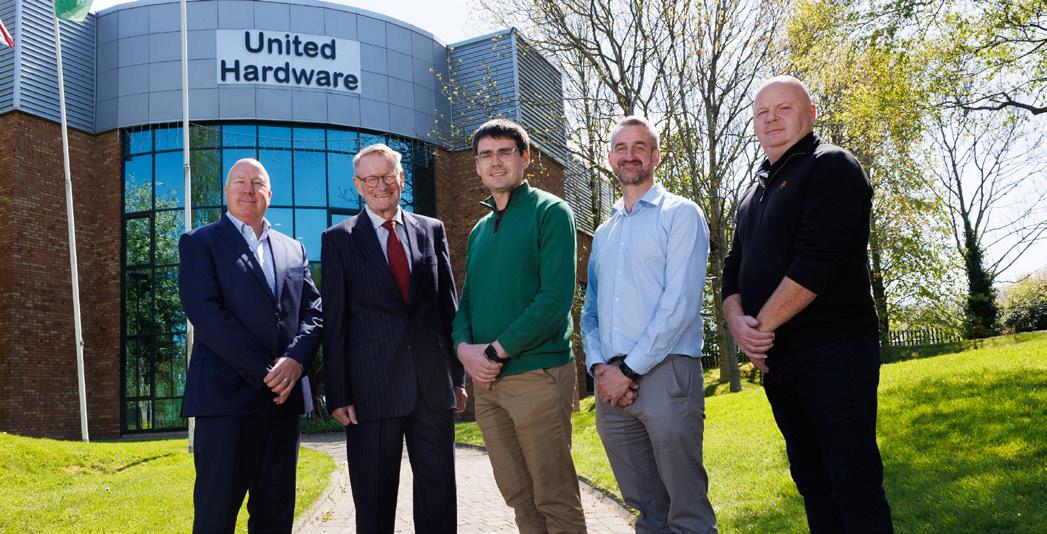
United Hardware has recently announced the proposed appointment, subject to member ratification at the next AGM, of three new directors to the United Hardware DAC Board.
The new appointees are:
– Eamonn Kerr, Ferdia Homevalue, Ardee, Co. Louth
– Conall Quinn, Quinn Building Supplies, Dungannon, Co. Tyrone – Keith Cronin, Cronin’s Homevalue, Ballylickey, Co. Cork
These appointments further strengthen the voice of the Group’s independent members at board level as United Hardware advances its plans for continued growth, network development and strategic acquisitions in 2026 and beyond.
Together, the three appointees represent a broad cross-section of United Hardware’s nationwide membership, with backgrounds spanning long-established builders’ merchants, multicategory hardware retailers and community focused Homevalue stores. Their experience serving both trade and DIY customers across Louth, Tyrone and West Cork ensures that the board continues to be shaped by the realities and opportunities facing independent merchants on the ground.
Commenting on the proposed appointments, Eoin McGettigan, Chair of United Hardware, said: “Our board is at its strongest
when it reflects the diversity, ambition and experience of our member base. Eamonn, Conall and Keith each bring a deep understanding of their local markets, as well as a proven track record of building resilient, customer-focused businesses.
As we look ahead to 2026, we see significant opportunities to further grow our network through targeted member recruitment, selective acquisitions, strategic partnerships and an overwhelming focus on supporting the performance of our valued members. These appointments will play an important role in guiding that next phase of growth and ensuring we continue to deliver for independent retailers and the communities they serve.”
United Hardware, which supplies and operates the Homevalue retail brand on behalf of its members, now supports a network of over 170 independently owned and affiliate stores across Ireland, employing approximately 2,000 people, and catering to a diverse base of trade and DIY customers.
As an indigenous, locally owned and Guaranteed Irish accredited business, United Hardware remains focused on empowering local retailers with enhanced purchasing power, marketing and digital support, logistics and business advisory services, while continuing to invest in its central distribution infrastructure and brand-building activity nationwide.
In Spring this year Hardware Association Ireland, (HAI), decided to conduct some research into the market for Rural Family Homes. This part of the housing market has collapsed from over 23,250 units in 2006 to 5,900 in 2025. It has been bumping along at 5-6,000 for a number of years.
We had heard several anecdotes about planning decisions, all of which were negative. However, anecdote isn’t data and cannot be used to forge policy.
The survey had three objectives.

The third issue is the impact on rural communities, and the findings are very stark. Without new homes and people living in an area the social fabric of rural communities breaks down.
What will happen if these homes are not built?
– Firstly, we wanted to find out if there is a market for rural family homes.
– Secondly if there is, why aren’t more built, especially in a housing crisis.
– And thirdly, what would be the impact if these homes are not built.
We spoke to 240 stakeholders in the marketplace and below are some of the findings.
On the first question - that of demand - demand far outstrips supply in 90% of responses.
Shortfall?
Is there a shortfall between demand for one-off houses and the completion of one-off houses in your area?
Source: All - 239
On the second question – why are more not built Overwhelmingly the answer is in Government planning policy and how it is applied. The focus is on the housing need/local need regulation. This was named by almost all participants as a major block to rural family homes. Simply put, this regulation means that you have to prove that you need a house and that you have strong ties to a local area. The absolutist application is resulting in even farmer’s families often denied planning permission to build on their own land.
Meanwhile, the price of housing increases. Since the report was published the implications of the lack of rural housing was highlighted in a conversation with a merchant in the Southwest. In his area several young trades professionals have emigrated as they could not find or build houses where they wanted to live. This just compounds the negative spiral caused by the acute shortage of rural housing.
The full report is available on at https://hardwareassociation.ie/rural-family-homes/

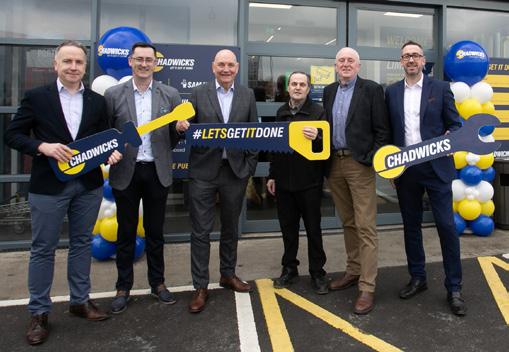
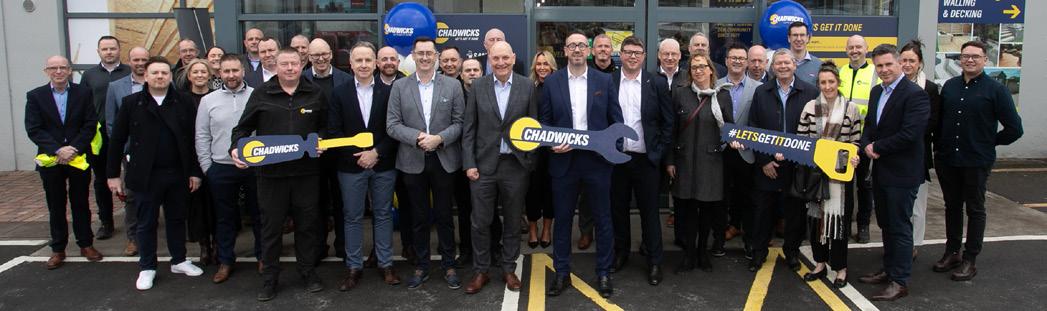
Chadwicks has recently announced the relaunch of its Limerick branch following complete refurbishment. Local colleagues John Keating and Michael O’Malley had the honour of cutting the ribbon at the official store reopening. John has completed 46 years while Michael has spent 42 years as part of the team at Chadwicks Limerick, a testament to the strength and loyalty of the local team.
The Limerick refurbishment is part of Chadwicks’ ongoing nationwide branch upgrade programme, which began in 2018 and has seen 34 out of 38 branches revamped to date.
Chadwicks Limerick located on Ballysimon Road has been serving the needs of the local community for 48 years. While the branch has been upgraded with a new look and feel, customers can expect the same level of service and dedication they have come to know from the 42-strong team of highly trained specialists.
Chadwicks’ first ever one-stop-shop for building needs
Chadwicks Limerick is now home to a new Build Centre, unique to the branch. The Centre brings together The Panelling Centre, a go-to destination for kitchen and wardrobe solutions, Sitetech, providing concrete and brickwork accessories, and Proline, stocking architectural hardware including door handles, cabinet hardware, hinges, locks and more.
Designed for the customer
Chadwicks Limerick is now fully equipped with Sam Hire, Heiton Steel, Baumit, a Paint Centre and a new key cutting service. A new state of the art bathroom, doors, and floors showroom completes the branch, as well as an Adman Shed display of the latest sheds, greenhouses and garden rooms.
Among the 2,000 new product lines are Geberit Aquaclean Alba shower toilets, Quooker boiling water taps, Dewalt hand tools, Roughneck demolition tools and PVC bathroom and paneling tiles.
As part of the refurbishment, customers can also explore a new Smart Home display, which showcases a range of advanced smart home security solutions. This display features products that provide 24/7 monitoring and full control of door locks, doorbells, and outdoor lighting through the easy-to-use Yale Home App.
Brian Doherty, Chadwicks Limerick Branch Manager, said: “The team at Chadwicks Limerick is excited to unveil our newly refurbished branch. We have been part of the local community since 1977, and it is a fantastic day for our colleagues who are looking forward to introducing customers to our new and improved branch. Chadwicks Limerick is now the only branch to have a Build Centre in the country, and with the addition of our new displays and over 2,000 new product lines, I am confident that we are fully equipped for each and every project.”
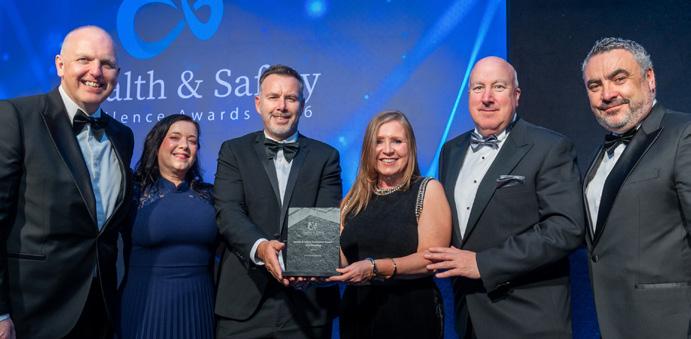
United Hardware has again been recognised for its outstanding commitment to workplace safety, taking home the Excellence in Warehousing Award at the Health & Safety Excellence Awards 2026.
This marks a significant milestone for the organisation, representing its second consecutive win in this category and its third Health & Safety Excellence Award for Warehousing overall.
The award recognises United Hardware’s continued focus on maintaining the highest standards of health and safety across its warehouse operations, particularly during a period of strong business growth and increased operational demand.
This achievement is a testament to the dedication of the warehouse team and the wider organisation, whose daily commitment ensures a safe and efficient working environment.
Building on previous successes, including multiple awards in 2025, this
latest recognition highlights the company’s ongoing investment in safety processes, training and culture. United Hardware continues to prioritise the wellbeing of its people, embedding safety as a core part of its operations and long-term strategy.
Speaking following the awards, United Hardware noted that while the recognition is a proud achievement, it
also reinforces the importance of remaining vigilant and continuously improving safety standards across all areas of the business.
As the organisation continues to grow, its focus remains firmly on fostering a strong safety culture, ensuring that all employees return home safely each day while delivering operational excellence for its members and customers.
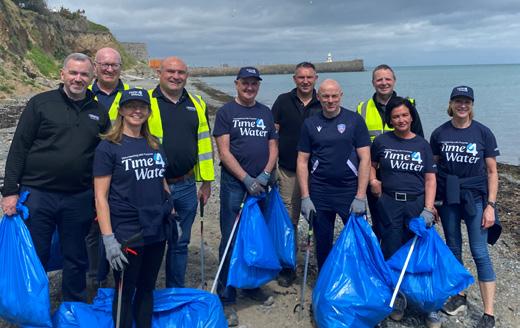
As part of a global volunteering initiative, Time4Water, a campaign that mobilises Orbia employees to take action around water stewardship, the team at Wavin Ireland recently undertook a Beach Clean at the local Balbriggan Beach. They cleared 10 bags of rubbish from this beautiful local amenity.
Time4Water, which celebrated World Water Day, saw participation from thousands of Orbia employees across more than 30 countries, and in 2025 won an International CSR Excellence Award for outstanding social impact. The initiative urges us all to think about water, the most essential resource for life on earth, which is under significant stress due to numerous factors including climate change, urbanisation and population growth. See www.wavin.ie for more.
Chadwicks Group is pleased to announce the appointment of Billy Browne as Managing Director of HSS Hire Ireland, part of its Specialist Products Division. HSS Hire Ireland is a tool and equipment hire specialist operating from nine branches and offering an extensive range of conventional hire products, as well as specialist equipment with a particular focus on powered access.
In his role as Managing Director, Billy will set the strategic direction for HSS Hire Ireland and lead the overall performance of the business. He will oversee day-to-day operations across a business employing more than 125 colleagues, with a focus on operational efficiency, enhanced customer offering and long-term market relevance.
Billy joins Chadwicks Group with extensive senior leadership experience across general management, sales and finance. Most recently, he served as Managing Director of PERI Ireland, where he oversaw a period of strong market share growth and the successful
introduction of multiple new business streams. Prior to that, Billy held a number of senior leadership roles with Hilti Group, including Commercial Director for Hilti Ireland, where he led the direct sales, retail and operations teams and delivered three consecutive years of strong revenue growth and Director of Finance, where he was part of the leadership team that returned the Irish business to profitability.
Billy is a Fellow of Chartered Accountants Ireland and holds a bachelor’s degree from the University of Galway. Speaking on the appointment, John Paul O’Reilly, Managing Director Specialist Products Division of Chadwicks Group, said: “We are delighted to welcome Billy to Chadwicks Group. He brings a strong combination of commercial, operational and financial leadership, along with a proven track record of driving growth and leading change. Billy’s experience across construction-related businesses and his ability to build high-performing teams make him exceptionally well placed to lead HSS Hire Ireland.”

Billy Browne added: “I am delighted to join Chadwicks Group and lead HSS Hire Ireland at such an exciting time for the business. HSS Hire Ireland is an iconic brand in the Irish construction sector and plays an important role in supporting customers across our industry. I look forward to working with the highly experienced HSS team to build on the strong foundations already in place, continue enhancing the customer offer and drive sustainable growth across the business.”

At GenetiQ (previously Intact), they believe Enterprise Resource Planning, (ERP), implementation should feel structured, supported and manageable. It’s a process they work through together to help set your business up for long-term success. In the below Q&A The Hardware Journal speaks with Stephen Jackman, Migration and Integration Consultant at GenetiQ, about what the process actually looks like in practice.
Further information is also available at www.genetiqsoftware.com
Q&A: What to Expect When Implementing a New Business System?
Replacing the systems you use to run your business is never a small decision, but there comes a point where the old way of doing things just isn’t working anymore. While ERP implementation can seem daunting, the process is often far more manageable than you might think.
What worries businesses most about changing ERP?
Usually, it’s the fear of disruption. Your ERP or business management software touches everything - stock, pricing, orders, accounts, deliveries. So naturally, you worry about what changing it could mean day to day.
But implementation is much more staged than people expect. You’re not switching everything overnight and hoping for the best. We phase projects carefully, hitting key milestones along the way so the process feels controlled from start to finish.
What’s the first step when changing systems?
The first thing we do is understand how your business works today.
We’ll look at your stock structure, customer accounts, pricing, suppliers
and any systems connected around your ERP, things like websites, couriers or payment platforms.
This stage is less about software features and more about understanding what you need from the system. We also like to challenge your thinking so together we can work out the most efficient way of doing things for your business.
Is data migration the biggest challenge?
It’s definitely one of the biggest parts of the project, but it’s rarely as daunting as people think.
A lot of businesses assume migration happens once, but the process happens in stages. We’ll bring your customer accounts, products, stock and pricing into the new system early so your team can start testing day-to-day tasks before anything goes live.
The first cut is really about helping you recognise your business inside the new system. Seeing your customers, products and stock in there early on makes the whole process feel much more real and manageable.
What’s the biggest thing businesses uncover as they implement a new system?
Usually, it’s how many workarounds have developed outside their current system over the years.
You often discover processes people have simply adapted to over time, whether that’s duplicate customer records, overcomplicated pricing structures or manual spreadsheets sitting alongside your ERP.
Implementation gives you the opportunity to step back and clean those things up rather than carrying them into the new system. It can feel like a big

task at first, but it usually leaves the business with simpler processes and far more reliable data going forward.
What about go-live itself?
By the time you reach go-live, your team should already have worked through the key processes several times using your own data.
Orders have been tested, stock movements checked and integrations run through properly before the final switch happens.
Go-live is always busy, but it’s usually far less dramatic than people expect because the preparation has already been done.
At GenetiQ, we believe ERP implementation should feel structured, supported and manageable. It’s a process we work through together to help set your business up for long-term success. www.genetiqsoftware.com




Smyth’s Homevalue in Enniscorthy was proudly selected as Ireland’s representative at the prestigious Global Innovation Awards (GIA), with the international ceremony taking place in Chicago as part of The Inspired Home Show 2026.
Organised by the International Housewares Association, the Global Innovation Awards programme recognises outstanding home and housewares retailers from more than 30 countries worldwide. The judges described the Smyth’s Homevalue store as “a perfect example of what a destination homewares store can be - a cornerstone of the community it serves and so much more.”
At the ceremony, all nominees were presented with a recognition award, acknowledging their achievement in reaching this global stage among the very best in the industry. The awards formed part of the annual GIA Gala, held during The Inspired Home Show, a leading international event for innovation, product design and retail excellence.
The Kavanagh family has been a cornerstone of the local retail community since the 1950s. Today, Dermot and Betty, alongside their son Jack, continue to lead the family business with pride. They are supported by a dedicated team, many of whom have been serving the local community for over 40 years, reflecting a longstanding commitment to quality service and strong community ties. The store has built a strong reputation for its extensive home and DIY offering, expert advice and excellent customer service, while continuing to evolve to meet changing customer needs.
The nomination followed a particularly successful year for the business. At United Hardware’s 2025 United in Excellence Awards, Smyth’s Homevalue was recognised as Best Paint

Store in Leinster and Overall Best Paint Store in Ireland, reflecting the store’s high standards in retail, customer experience and store presentation.
Last autumn also saw the launch of DID Essentials at the Enniscorthy store, introducing a dedicated home appliances concept and further strengthening Smyth’s Homevalue’s position as a one stop shop for home, DIY and everyday household needs.
United Hardware congratulates Dermot, Betty, Jack and the entire team at Smyth’s Homevalue on representing Ireland on the global stage and on this well-deserved recognition.

The response to this year’s Octabuild Awards has been outstanding, with merchants across the country taking the time to recognise the people who make a real difference every day. Commenting on the nominations for the Rising Star and Unsung Hero Awards, Mike Glennon, Chairperson of Octabuild, said “They highlight an industry powered not just by strong businesses, but by exceptional individuals at every level.”
“Our Rising Stars are a clear reflection of the future of the sector,” he said, “bringing energy, fresh ideas and a willingness to take on new challenges. They represent the next generation of talent, already making their mark and helping to shape what comes next.”
At the same time, the Unsung Heroes remind us of the vital role played by those working quietly behind the scenes. “These are dependable, committed individuals who keep everything running smoothly,” said Glennon, “with a contribution felt across the business every day.”
“Together, both groups highlight the strength and depth of talent across the industry. As the industry continues to evolve, it is this combination of emerging talent and enduring dedication that will drive it forward.To all those nominated, congratulations! Your contribution has not gone unnoticed, and this recognition is very well deserved.”



Coverguard, a leading player in the Personal Protective Equipment (PPE) market, announces that it has entered into exclusive negotiations for the acquisition of LMA, the iconic French company founded in 1880.
With more than 140 years of industrial heritage and recognised expertise in the design and distribution of technical garments, workwear and body protection equipment, LMA holds a leading position in the French market.
A well-established player in the workwear sector since 1880, the LMA brand protects professionals across all industries through a portfolio of 450 products and more than 3,000 references.
The combination of COVERGUARD and LMA is built on strong complementarities in product ranges, expertise and product culture. It brings together COVERGUARD's multi specialist approach to PPE with LMA's longstanding expertise in
workwear and body protection. This new milestone further strengthens COVERGUARD's ambition to become a leading European player in the PPE market.
This complementarity creates new opportunities for growth, particularly in terms of product innovation, portfolio expansion and enhanced services for distribution partners.
Committed to a responsible approach to business development, Coverguard and LMA share strong sustainability values. Coverguard has achieved the highest level, "Exemplary", under the “Engagé RSE” certification framework, while LMA has been awarded an EcoVadis Platinum rating.


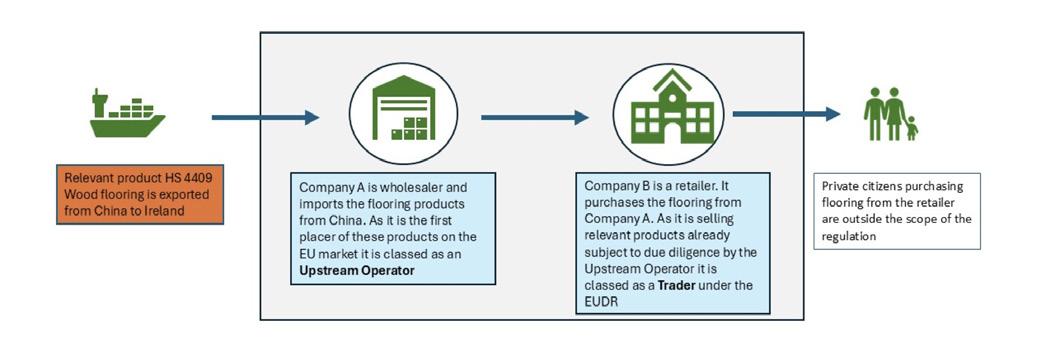
The EU Deforestation Regulation (EUDR) will enter into application on 30th December 2026, with its potential to impact those trading in relevant wood products in Ireland. Key to understanding if and how the regulation applies to your business begins with knowing if the products you’re trading in are covered by the EUDR. The full list of products can be found in Annex I of the regulation which includes wood products such as fuel, wood, furniture, sawn wood, particle board, OSB, plywood, wood flooring, and sheets of veneer.
If you are trading in these products, then knowing your position in the supply chain can help determine your obligations. If you are the first company in the supply chain to bring the product to the EU market (e.g. by importing from a third country) your company is classified as an “Upstream Operator”. Upstream operators are responsible for carrying out due diligence before placing these products on the market or exporting them from the EU. They must also submit a due diligence statement (DDS) with key product information to the EUDR’s online Information System. In the case of imports and exports, a DDS reference number or exemption code will be required on the customs declaration to demonstrate compliance with the regulation.
Those trading in relevant wood products that have already undergone due diligence by an Upstream Operator are classified as a “Downstream Operator” or “Trader”. Downstream operators are usually those who process one relevant product into another and place them on the market or export them. For example, a company buying wood products (HS 4403) from an Operator (who has already conducted due
diligence) and processing them into fuel wood briquettes (HS4401). Downstream operators are responsible for collecting and keeping certain information on their suppliers and their buyers for at least five years and notifying competent authorities if they discover that their product might not comply with the regulation. They do not have to carry out due diligence or submit a DDS to the Information System.
However, the first downstream operator, who is the first buyer of a relevant product from an upstream operator is subject to some additional requirements. They must collect and keep a record of the DDS reference numbers passed to them by Upstream Operators for five years. This is a passive role to an extent, as they do not need to ask their supplier for the numbers. The obligation lies with the Upstream Operator to pass these numbers on.
Consumers, for example, private citizens purchasing wood products from a retailer are at the end of the supply chain and do not have any responsibilities under the EUDR.
For more information on how the EUDR applies to you, read the Supply Chain Infographics, the FAQs and the Guidance document, or email eudrwoodproducts@agriculture.gov.ie
For more information, please visit the European Commission’s website by scanning the QR code or visit www.gov.ie/EUDR or contact eudrwoodproducts@agriculture.gov.ie

The European Union’s Packaging and Packaging Waste Regulation (PPWR) is one of the most significant updates to packaging legislation in decades. Introduced as part of the EU’s circular economy and sustainability strategy, the regulation aims to reduce packaging waste, improve recyclability, and encourage greater reuse of materials across member states.
For businesses operating in Ireland and across the EU - including hardware suppliers, importers, distributors, and retailers - the PPWR introduces new compliance requirements while also creating opportunities for innovation and more sustainable business practices.
Unlike the previous Packaging and Packaging Waste Directive introduced in 1994, the PPWR is a regulation, meaning it applies directly across all EU member states without the need for separate national legislation. This is intended to create greater consistency across the European Market and simplify compliance for companies trading internationally. Most provisions will apply between 2026 and 2030, giving businesses time to review packaging systems, supply chains, and reporting processes.
A central objective of the PPWR is reducing packaging waste across Europe with a reduction targets of 5% by 2030. To support these goals, businesses will be encouraged to minimise unnecessary packaging, reduce empty space and improve packaging efficiency.
For hardware retailers and importers, where products are often shipped in protective transport packaging or
grouped packaging formats, this may involve reassessing packaging design to balance product protection with sustainability requirements.
The regulation also introduces stricter recyclability standards. Packaging placed on the EU market must increasingly be designed for recycling and assessed according to recyclability performance criteria. By 2030, packaging will need to meet minimum recyclability thresholds, while by 2035 it must also be recyclable “at scale” through established collection and recycling systems.
In addition, the PPWR introduces recycled content targets for certain plastic packaging materials. Depending on the packaging type, businesses will need to include minimum levels of post-consumer recycled plastic. These requirements also apply to imported products, meaning importers and distributors sourcing goods outside the EU will need to work closely with suppliers to ensure compliance.
Another key aspect of the regulation is improved transparency for consumers. Harmonised labelling requirements will provide clearer information on recyclability, disposal methods, and material composition. Environmental claims made by businesses must also be supported with evidence, helping to reduce misleading sustainability messaging and improve consumer confidence.
The PPWR also expands Extended Producer Responsibility (EPR) obligations through the Repak Packaging Compliance Scheme, meaning businesses will continue to contribute to the collection and


recycling of packaging waste. Companies that adopt recyclable or reusable packaging solutions will benefit from reduced compliancerelated costs over time.
While the PPWR will require businesses to review existing packaging practices and reporting obligations, it also presents an opportunity to strengthen sustainability efforts and improve operational efficiency. For hardware importers, suppliers, and retailers, durable and practical packaging will remain essential, but there is increasing scope to combine functionality with environmentally responsible design.
Businesses that adapt early can strengthen customer trust, enhance brand reputation and position themselves competitively in an increasingly sustainability-focused market.
For further information please contact Howard Mulligan, HM Environmental, howard@hmenvironmental.ie Howard Mulligan, HM Environmental.
The former Sales and Marketing Director at Ames True Temper and Sales Director at McLoughlinsRS, Niall Nugent, has recently announced his new venture into consultancy.
After having spent more than 40 years in the hardware, homewares and gardening sector, Niall felt the time was right to create something fresh and exciting in the industry. Niall explains, “Having worked closely with both retailers and suppliers alike over these decades, I've developed a deep understanding of both the supply chain challenges and retail opportunities unique to this industry”.
Niall went on to say “My new venture will focus on connecting these two sides, helping both suppliers and retailers collaborate more effectively. In my humble opinion, I feel with a lot of transactional relationships in our industry, it can easily become very much a one-way street from both the supplier’s side as well as the retailer’s side, so where possible, I try identifying some common ground where both parties can recognise the true benefits of working together. The world of hardware retail and distribution has experienced seismic changes since 2020, and consumer expectations have also changed so it’s time for
these one-way streets to become superhighways. I truly believe there is enormous potential here and I look forward to using my experience to create meaningful partnerships. If you're in the industry or just curious, feel free to reach out”.
In conclusion, Niall says “On a personal note, the name AJL holds a special meaning for me as it's inspired by my three grandchildren - Alex, Jacob and Luca - reminding me every day why I'm passionate about building something lasting”.

You can contact Niall at ajl-consulting@outlook.ie or call 00353 87 096 9118
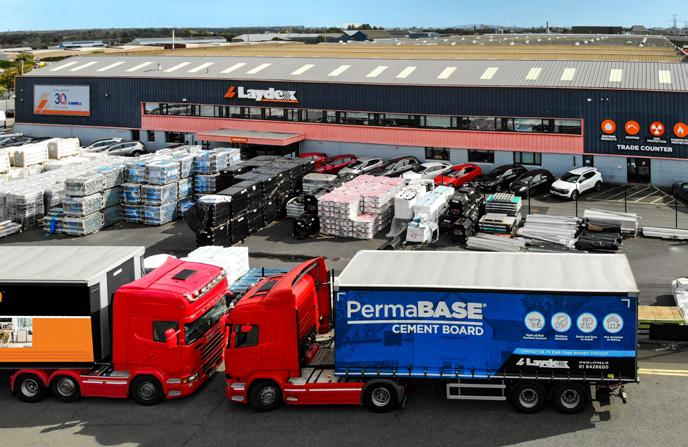
Laydex has announced that it has joined the Salix Group, marking a significant milestone in the company’s continued growth and development.
Founded in 1995, Laydex has grown to become one of Ireland’s leading suppliers of building products and solutions, recognised for its expertise, extensive product range, and commitment to customer service. Joining the Salix Group will support the next phase of Laydex’s growth by expanding its reach, strengthening its product offering, and enhancing service to customers across the region.
The partnership is expected to drive innovation, support market expansion, and further reinforce Laydex’s position as a trusted partner within the hardware industry.
Peter Woods will continue as CEO, alongside Alan Donohoe as Commercial Director and the wider team, ensuring continuity of leadership and a continued focus on delivering value to customers
and partners. Together with Martin Hansson, Marcus Ahlstedt, and the wider Salix Group team, the leadership group is aligned on ambitious plans to grow the business and create long-term value for customers, suppliers, and the wider industry.
Peter Woods, CEO, Laydex Building Solutions, commented “I’m delighted to continue leading Laydex as CEO as we move into this exciting new chapter with Salix Group. We look forward to building on our success and achieving great things together in the years ahead.”
The Hardware Journal has asked Gabriela Vavrova, Director of Operations & Business Development at Activate Vision and Social Media partner of Hardware Association Ireland at The Hardware Show, to give her thoughts on how Hardware & Building Materials companies can practically harness the power of social media.
Social media is no longer only about posting products. I know that's not what you want to hear, but it's the single biggest mindset shift separating the brands growing online from the ones stuck shouting into the void.
I've been working with Irish businesses on their social media for years and the pattern is always the same. Great product. Amazing story. Real expertise. But no consistent way of telling that story online.
The fix isn't more content. It's a smarter system for the content you already have. That system is what I call a Content Playbook.
Storytelling Is Now a Trade Skill
People don't just buy products. They buy connection. In the hardware and building materials trade sector, that connection is right in front of you: at the trade counter, on the shop floor, in the expertise your team shares every day without thinking about it.
This is irreplaceable. You already have the story and the personality. The Content Playbook is the tool that helps you use it consistently.
What a Content Playbook Actually Is A Content Playbook is your strategic content toolkit, a structured library of ready-to-use formats built around what works for your business and your audience.
I have built these around six pillars tailored specifically to hardware and building materials businesses.
Expert Knowledge: tips and product advice that positions your team as the people who know their stuff.
Product in Action: products being used on real jobs, not just sitting on a shelf.
Meet the Team: the people behind the counter, because trade relationships are built on trust.
Customer Stories: a contractor who solved a problem using your product is worth ten promotional posts.
Industry News and Trends: regulations, new products, seasonal demand signals that keep customers informed.
Offers and Promotions: done with context, not just a price and a shout.
Different pillars. Different purpose. One goal: giving customers a reason to follow, trust, and buy from you.
Work Smarter, Not Harder
One piece of content, multiple uses. A supplier visit, a new product landing in store, a staff member demonstrating the right tool; any one of these fuels a week of content. A short video on Facebook, photos on Instagram, a LinkedIn post, a line in your email newsletter. Same raw material, multiple touchpoints.
Your Playbook builds this repurposing logic in from the start, so your team always knows what to capture and where it goes.
The Factors That Make It Work Start with your most-used formats and grow from there. Plan repurposing upfront: every format needs a clear

Gabriela Vavrova, Director of Operations & Business Development at Activate Vision.
path across platforms without being recreated from scratch. Review every six months: your Playbook should be a living document, not a filing cabinet.
Consistency Beats Perfection. Every Time.
The businesses winning on social media aren't the ones with the biggest budgets. They're the ones showing up week after week with content that feels real and relevant.
A Content Playbook makes that achievable even without a dedicated marketing resource. It removes the blank-page problem, cuts production time, and keeps your brand voice consistent across every platform and everyone posting on your behalf.
You don't need more content ideas. You need to see the content in what you already do, and a Playbook is what helps you capture it.
For further information visit www.activatevision.ie or email gabriela@activatevision.ie
Cost and Time Savings
GLORY Ireland help businesses save time and money by streamlining payment acceptance and cash handling processes.
Enhanced Productivity
Their solutions improve staff productivity and operational efficiency in hardware and DIY retail environments.
A Trusted Partner
GLORY Ireland supports businesses from small retailers to large chains, providing reliable payment and cash management solutions.
Success in Practice
Transformative Cash Automation
Across multiple tills - effectively and securely.
Increased Productivity and Security
Minimising cash losses - accurate & secure cash handling.
Improved End-of-Day Processes
Start and end of day processes - faster and more efficient.
Staff Satisfaction
A quick, easy to use payment solution - that simplifies cash.
Implementing automated cash management or payment acceptance is shaping the future for hardware retailers -
– Stay Competitive
– Improve Colleague Morale
– Deliver Superior Customer Experiences
Improve your cash handling processes or payment acceptance - front of house or back office - contact GLORY Ireland today.
Contact Donal Clavin, Sales Manager on +353 87 332 9653 or email donal.clavin@ie.glory-global.com


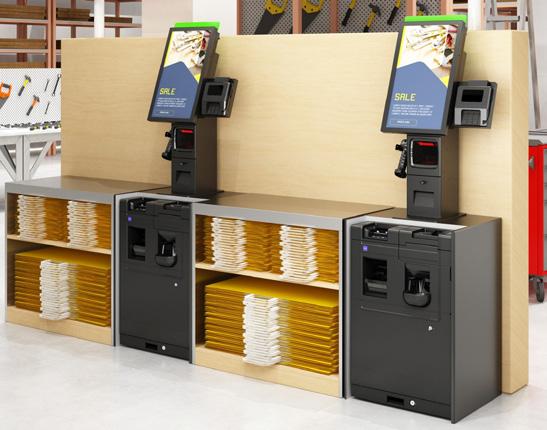
“lnstalling GLORY’s cash automation devices or our front of house payment points has been transformative. Not only do we now have a payment device for managing cash across multiple tills, but we have a completely secure, accurate, and cost-effective cash handling solution which has increased staff productivity and minimised our cash losses.”
Ruairi Harpur, General Manager at Wallaces Homevalue, Wellingtonbridge.

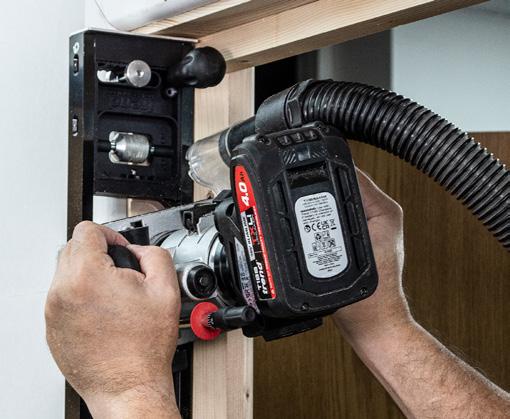
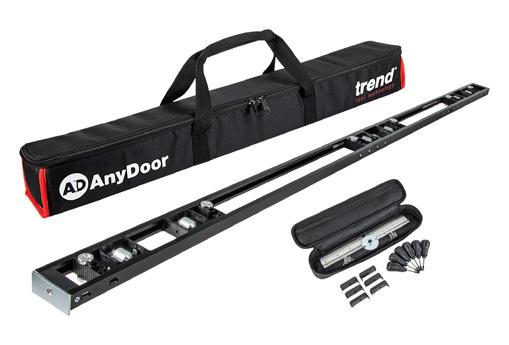
Trend Tool Technology`s Colin Bustard, Country Sales Manager Ireland, tells The Hardware Journal that “ The company as a result of their success at The Hardware Show are proud to present their AnyDoor Hinge Jig Kit, a fully-adjustable, modular router jig designed to quickly and accurately recess square and radius (10mm) hinges in timber doors and frames. The jig accommodates all hinge sizes, hinge positions, and door heights, making it a versatile and reliable solution for any hinge installation needs”
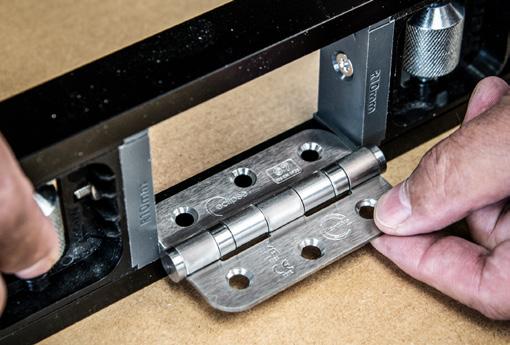
The AnyDoor Hinge Jig Kit is perfect for the installation of hinges on both door and door frame/lining, with unrestricted hinge positions that are ideal for new and repair projects. The kit covers all standard door sizes (up to 2040mm as standard out of the box) and is compatible with square and 10mm radius hinges. It also features a unique design that allows for ultra-small, non-standard doors to be easily accommodated –from as little as 600mm.
One of the key features of the AnyDoor Hinge Jig Kit is its modular rail construction, which allows the jig to be adjusted from 600mm to 2040mm. The attachment options enable the jig to be secured with either bradawls (included) for speed or no.6 woodscrews for maximum stability. The twin-rail system provides unlimited hinge positions within the rail, making the jig perfect for both new and replacement installations.
The kit's radius hinge compatibility allows fast and accurate installation of both square and 10mm radius hinge profiles. The tough carry bag stores pre-built jig sections to minimise assembly time. Lightweight anodised aluminium rails offer optimum strength, durability, accuracy, and a smooth router running surface. Adjustable edge guides accommodate hinges with up to 35mm leaves - with either four present positions or custom widths (for non-standard hinges).
The AnyDoor Hinge Jig Kit is also incredibly easy to use. Simply set the hinge length, set the hinge width, 'zero' the cutter, set the cut depth, rout the door, and rout the frame. The kit contains all the necessary accessories, including eight bradawls, 16mm guide bush, and carry bag with an accessory pouch.
The AnyDoor Hinge Jig Kit is a game-changing product that will revolutionise the way your trade customer will approach hinge installation. Its versatility, accuracy, and ease of use make it the ultimate solution for any hinge installation needs.
For more information, visit www.trend-uk.com or contact Chris Carter, Marketing Director, +44 (0) 7376394791 or email chris.carter@trend-uk.com
Chadwicks Group has celebrated the graduation of 40 colleagues from its Leadership Development Programme and Sales Academy, following an investment of over "300,000 in professional development and career progression across the business. The programmes were delivered in partnership with the Irish Management Institute, McKernan Training, KinchLyons and Chadwicks Group subject matter experts and supported by Midlands Border East Skillnet.
The graduation ceremony took place at the Killashee Hotel in Naas, bringing together colleagues from across the business who have completed structured development programmes designed to strengthen leadership capability, sales excellence and foster long-term career pathways within Chadwicks Group.
The Leadership Development Programme, an intensive 18-month programme delivered in partnership with the Irish Management Institute, Chadwicks Group subject matter experts and KinchLyons, saw 23 colleagues graduate. The programme is designed to support colleagues with leadership potential and to build capability in areas including people management, collaboration, commercial thinking, resilience and strategic leadership.
Since beginning the programme, seven participants have already been promoted within Chadwicks Group. The programme also supports Chadwicks Group’s focus on developing a more diverse leadership pipeline, with female participation in the Leadership Development Programme reaching 35%, compared with 21% female representation across the business overall.
The Sales Academy, a 12-month programme delivered in partnership with McKernan Training and Chadwicks Group subject matter experts, saw a further 17 colleagues graduate. Delivered onsite at the Group’s Support Office, the programme focused on strengthening sales capability, customer service, product knowledge and commercial confidence.
Almost a quarter (24%) of participants were female, and three Sales Academy colleagues have already been promoted since the course began.
Eimear O’Reilly, HR Director at Chadwicks Group, said: “At Chadwicks Group, we are deeply committed to enabling our colleagues to grow, develop new capabilities and build meaningful, longterm careers within the business. The graduation of 40 colleagues from our Leadership Development Programme and Sales Academy is a significant milestone and a powerful demonstration of our continued investment in talent and capability across the organisation. Balancing professional development alongside day-to-day responsibilities requires focus, resilience and commitment. We are immensely proud of everyone who has completed these programmes. Initiatives such as these are fundamental to how we strengthen our leadership pipeline, support sustainable career progression and ensure Chadwicks Group continues to thrive through the development of our people.”
The Leadership Development Programme and Sales Academy form part of Chadwicks Group’s wider people development strategy, supporting colleagues to build the skills, confidence and experience required to progress within the business and deliver for customers across Ireland.

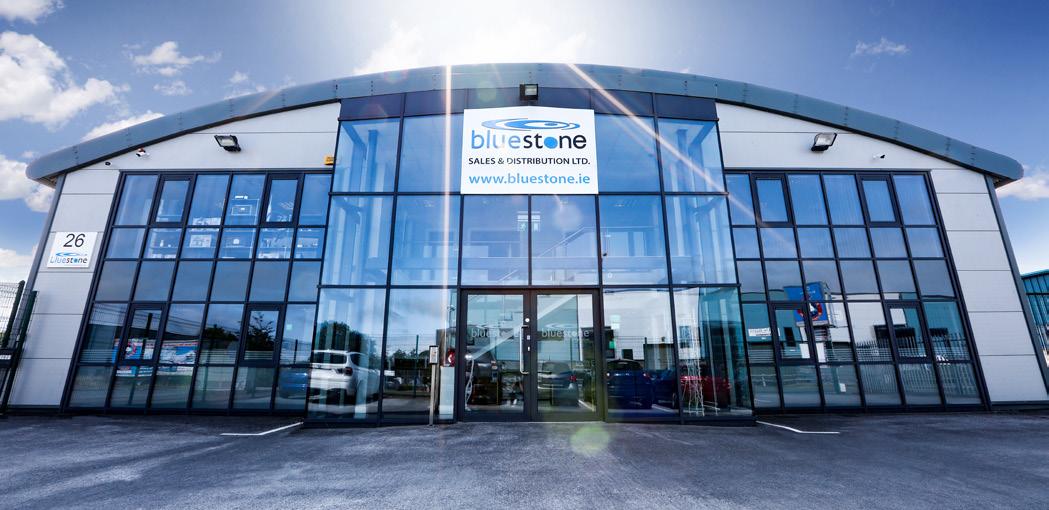
In the fast-paced world of wholesale and homeware supply, local distributors are more than just intermediaries, they are the backbone of retailer markets. From ensuring timely product availability to supporting local retailers with expertise, distributors like Bluestone Sales & Distribution Ltd. play a vital role in keeping the industry resilient and responsive to community needs.
Local distributors contribute significantly to regional economies. By employing regional staff and partnering with nearby retailers, they stimulate business activity and maintain robust supply chains that smaller retailers could not sustain independently.
Retailers benefit from distributors who understand the local market dynamics. A close connection with the distributor means faster responses to demand shifts, seasonal spikes, or urgent product needs, helping businesses stay competitive and customers satisfied.
Supporting Retailers with Expertise Distributors bring more than products - they bring knowledge. Bluestone’s experienced sales team guide retailers in selecting the right items for their markets, provide support, and share insights on emerging trends.
As demand grows for smart homeware solutions, energyefficient materials, and sustainable products, distributors help
retailers stay ahead of customer expectations. By offering both advice and access to the right products, distributors empower retailers to compete in increasingly sophisticated markets.
Fostering Community Connections
As a distributor, Bluestone is deeply embedded in the communities that they serve. They cultivate relationships with local businesses, sponsor local initiatives, and actively participate in industry events.
When local businesses thrive, regional markets remain vibrant, and communities benefit from improved access to products and expertise.
Conclusion
The impact of local distributors extends well beyond delivery schedules. Companies like Bluestone Sales & Distribution Ltd. illustrate how distributors strengthen retailer markets, support economic development, and provide unparalleled service to retailers and communities alike by combining product availability, technical expertise, and community engagement.
In short, local distributors aren’t just suppliers - they are partners in the growth and success of the retail industry.
For further information please contact Darren Shigginsdshiggins@bluestone.ie Tel: +353 (0)46 94 83100 Web: www.bluestone.ie
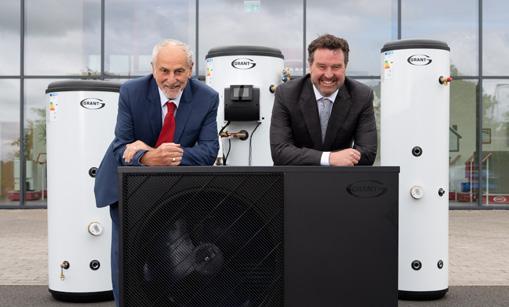
Leading manufacturer of sustainable home heating solutions, Grant has launched a new generation of hot water cylinders, designed to optimise the performance of modern heat pump systems.
Designed and manufactured at Grant’s state-of-the-art facilities in Birr, Co. Offaly, the new Quick Recovery Cylinder range is backed by an "8 million investment in product development and a significant expansion of the company’s production facilities. This investment strengthens Grant’s manufacturing capability, while supporting growing demand for high-performance, heat pump-ready hot water solutions in Ireland, the UK and Europe.
Designed specifically for heat pump performance
Unlike standard cylinders adapted for renewable systems, the new Grant Quick Recovery Cylinder range has been developed specifically for low-temperature operation, enabling installers and specifiers to maximise the efficiency and output of air source heat pumps, including the Grant Aerona R290 heat pump range.
Featuring high-efficiency heat exchange coils and optimised internal design, the cylinders are engineered to deliver rapid heat-up times and consistent hot water availability, even under demanding usage profiles. The range also supports faster recovery and improved system responsiveness - key requirements for modern, wellinsulated homes.
Performance-led engineering
The new Grant Quick Recovery cylinders have been developed to meet the practical and technical requirements of today’s heating professionals, combining strong thermal performance with longterm reliability.
Key technical features include:
– High surface area heat exchange coils to maximise heat transfer from low-temperature heat sources
– Large internal coil constructed from DN25 stainless steel tubing to support rapid recovery performance
– Advanced insulation to minimise standing heat loss and improve overall system efficiency
– Duplex stainless steel inner shell for enhanced durability and corrosion resistance
– Optimised for integration with renewable heating systems
The Quick Recovery Cylinder range is available in capacities from 150 - 300 litres, with standard, slimline, smart pre-plumbed and smart integrated configurations to suit a wide variety of installation requirements. Suitable for both new build and deep retrofit applications, the cylinders provide flexibility across a broad range of residential projects.
Installer-focused design
Ease of installation has been a key consideration throughout the development of the new range. The cylinders incorporate practical, installer-friendly features designed to streamline handling, positioning and system integration on site.
Smart pre-plumbed models further simplify installation through factory-fitted components, helping to reduce time on site and support consistent system set-up.
Combined with Grant’s established technical and training support, the new cylinders provide a dependable, straightforward solution for specifying and installing heat pump systems.
Supporting a fully integrated heating solution
The launch further strengthens Grant’s integrated approach to home heating, offering installers a complete system solution including heat pumps, cylinders and controls - all designed to work seamlessly together.
This single-manufacturer approach simplifies specification and installation while helping to ensure optimal system performance.
Commenting on the launch, Stephen Grant, Founder of Grant said, “As heat pump adoption continues to grow, the role of the cylinder in overall system performance has never been more important. Our new Quick Recovery cylinders have been specifically developed to work in harmony with low-temperature systems, delivering the recovery performance, efficiency and reliability that installers and homeowners expect. Our investment in design and manufacturing reflects our long-term commitment to innovation and to supporting the heating industry with high-quality, future-ready solutions.”
Visit www.grant.ie for more information on Grant’s range of innovative heating solutions.
Follow Grant on Facebook @GrantIRL, Instagram@grant_irl, LinkedIn @GrantEngineeringULC and YouTube @GrantengineeringIE

Introducing the new Grant Quick Recovery cylinder range - designed for seamless integration with the Grant Aerona R290 heat pump.
Designed to support e cient low-temperature heating performance.
- Rapid heat recovery
- Optimised for low-temperature systems
- Smart pre-plumbed options available
- Seamless Aerona R290 heat pump integration
- Backed by Grant technical support

Discover the QR Cylinder Range

An interview with Dragoslav Jozic, Consumer, Signify, Market Leader Benelux & UK & Ireland.
For 135 years, lighting innovation had one defining mission: bringing light into darkness. From a factory in Eindhoven in 1891, to the homes of millions - the story of Philips lighting, today known as Signify, is the story of light as human progress.
According to Dragoslav Jozic, the industry now faces a different, and in many ways “more exciting complexity”.
“Light became so normal, so efficient and so accessible that people stopped thinking about what it can actually do for their lives.”
As lighting evolves from utility into experience, Drago believes the next era is not going to be defined less by specifications than by emotion, atmosphere and what it means to feel at home.
135 years of light is a remarkable milestone. What does it represent?
For me, 135 years represents much more than technology or innovation, which is important of course, yet it is a true representation of human progress.
Gerard Philips, founder of Philips Lighting, had a conviction that now seems simple but was then radical: that electric light belonged in every home. That belief extended the day, improved safety and transformed lives across the world.
You speak about making light inspiring again. What do you mean by that?
I think the industry became very functional over the years, and in a way for understandable reasons. We focused on efficiency, specifications, energy savings, and cost optimisations. Those innovations were important and moved the industry forward enormously.
But somewhere along the way, lighting became almost invisible. Most people today only think about light when something stops working or when they move into a new home. And yet light affects us constantly. It shapes atmosphere. It influences how we feel, how we focus, how we relax, how we spend time together.
How is the role of lighting changing inside the home?
The home itself has changed. It is less and less just a place where we live. It became a place where we work, relax, entertain, recover, connect and express who we are. And light sits at the centre of all of those moments.
Think about the atmosphere during a family dinner - the warmth that draws people together. Watching a match with friends. A child finding focus while studying. The calm that descends at the end of a long day.
Lighting can completely transform each of those experiences. And the tools to do this exist today, across a wide range of technologies - from high-efficiency LED solutions that simply perform better, to connected systems that adapt to people and moments.
What is the biggest misconception about lighting today?
That it is just functional. When lighting works well, people almost do not notice it consciously. But the moment you experience the right lighting in the right moment, you feel the difference immediately. The atmosphere changes. The emotion changes. The experience changes.
Light is one of the very few things in a home that can completely transform a space in an instant - without physically changing the room itself. That is an extraordinary power. And most people are not yet aware they have access to it.


How should the industry evolve from here? We need to move beyond product thinking. The future of lighting will be defined by atmosphere, wellbeing, immersion, personalisation, simplicity and meaningful design. And the companies that succeed will be the ones capable of inspiring consumers - not overwhelming them with complexity, but helping them imagine possibilities.
We have an enormous advantage here; 135 years of trust. The Philips brand that generations of families have associated with quality and reliability. In a category where consumers are being asked to genuinely invest in their homes - and in how those homes make them feel - that heritage is not a small thing. It is everything.
To learn more about the possibilities and innovations in lighting, get in touch with Signify at signify.uki.communications@ signify.com or contact Ghislaine Byrne ghislaine.byrne@signify.com

135 years of light
Boost, the All-Purpose Liquid Plant Feed, and Resolva, from Westland Horticulture, returned to TV screens this May across Ireland and the UK as part of a major seasonal media investment designed to drive consumer demand and increase footfall into hardware stores and garden centres at peak trading time.
Boost is celebrating its fifth consecutive year of national TV advertising, helping cement its position as a trusted plant feed delivering visible results for gardeners. This spring, the dedicated 20-second advert will run across high-reach channels including RTÉ and Virgin Media in Ireland and Channel 4 and Sky in the UK, targeting lifestyle and gardening audiences. The campaign is expected to reach almost 30 million consumers and will be supported by video-on-demand activity and influencer-led social media throughout the season, ensuring sustained visibility at the point when gardeners are actively feeding plants and refreshing containers.
The advert highlights Boost’s standout promise: 4x more blooms*, plus more fruits and vegetables, thanks to its unique formulation. Featuring PLANTSENSE™ technology, Boost delivers an ideal balance of nutrients and enhanced water management. The campaign is designed to drive repeat purchase behaviour and support strong in-season sales momentum for retailers.
Resolva Xtra Fast Weedkiller Ready To Use will also return to TV screens this May, marking its 16th consecutive year of national advertising investment, highlighting the problem of nuisance weeds and reinforcing itself as the simple solution for fast results.
This sustained investment continues to drive category participation and strengthens Resolva’s position as the trusted solution for gardeners looking for fast, effective weed control, helping retailers capture demand during peak weed-treatment periods.
Keith Nicholson, Marketing Director, at Westland Horticulture, commented: “We continue to invest in our brands to support our retail partners and drive consumers into the categories during the key spring/summer selling window. With strong national TV coverage behind both Boost and Resolva, retailers can stock with confidence knowing there is significant consumer demand being generated at exactly the right time in the season.”

Boost All Purpose Liquid Plant Feed and Resolva Xtra Fast Weedkiller Ready To Use are available to order 24/7 via Westland Live, https://trade.westland.com, with convenient in-season top-ups to help retailers maximise availability and sales opportunities throughout the peak gardening period.
For further information visit www.trade.westland.com

Klipboard, a leading provider of sector-specific business management solutions, have recently announced a global partnership with its newest Gold Partner, Netstock, a leader in inventory optimisation and supply chain planning for small and mid-sized businesses (SMBs). Netstock aligns with Klipboard’s strategy of leveraging the latest technology to power customer businesses and enhance decision-making.
By integrating Netstock’s advanced, AI-driven inventory planning and optimisation capabilities directly into its ERP solutions, Klipboard enables organisations to maintain optimal stock levels for parts, components, equipment and critical assets - supporting smoother operations, reduced downtime and more effective planning across the business.
The combined solution enables businesses to:
– Maintain the Right Stock for Assets & Operations: Netstock’s demand forecasting ensures the right parts and materials are available for asset upkeep, calibration, component replacement, and operational continuity.
– Reduce Asset Downtime Through Predictive Stock Alignment: By linking inventory planning to asset requirements within the Klipboard ERP solution, organisations can ensure critical components are always available when upcoming maintenance or operational activities require them.

– Gain Real-Time Visibility Across Inventory & Operations: Unified data from inventory, asset records, usage history, and operational activity allows teams to make decisions more confidently and proactively.
– Improve Cost Control & Working Capital: Optimised inventory reduces unnecessary procurement, while accurate stock availability avoids expensive last-minute sourcing that disrupts operations.
– Streamline Compliance & Operational Readiness: Assets that require regulated inspections, replacements, or maintenance benefit from guaranteed availability of the parts needed to stay compliant and operational.
“Klipboard ERP solutions are designed to give businesses a single source of truth for their operations and assets. Our customers manage complex assets, equipment and compliance requirements - and inventory plays a central role in keeping their operations running. Partnering with Netstock brings predictive, intelligent inventory planning into our platform, ensuring our customers achieve new levels of operational stability and efficiency,” stated Alexis Gorton, Global Alliance Partner Manager at Klipboard.
Learn more about the Klipboard and Netstock integration at www.klipboard.com/partner-integrations/netstock
Klipboard have also recently announced the latest release of ERP One, introducing embedded artificial intelligence designed specifically for merchants, wholesalers and distributors – businesses that depend on the seamless flow of products from supplier to customer.
With AI built directly into ERP workflows, ERP One is redefining how these businesses operate – helping teams move faster, reduce manual effort, and make more confident decisions in real time.
ERP Built for the Realities of Distribution ERP One (formerly known as K8) is designed for companies that source, stock, sell and service products, where speed, accuracy and coordination across
operations are critical. It has supported complex wholesale, distribution and retail operations for decades, helping hundreds of businesses manage sourcing, stock, sales and service across connected operational workflows.
Klipboard AI enhances these workflows by allowing users to:
– Ask operational questions in plain language.
– Receive instant, structured answers.
– Take action immediately - within the same workflow.
Uses can range from checking stock and pricing to managing orders and customer accounts.
The introduction of embedded AI into ERP One marks a shift from traditional ERP systems designed primarily to record transactions, towards intelligent operational platforms that actively support decisions and actions in real time.
By focusing on the needs of merchants and distributors, Klipboard continues to maintain ERP One’s leadership. The first embedded AI capabilities are available as part of the latest ERP One release, with further enhancements planned in following releases.
To learn more about Klipboard AI visit www.klipboard.com/products/erp-one
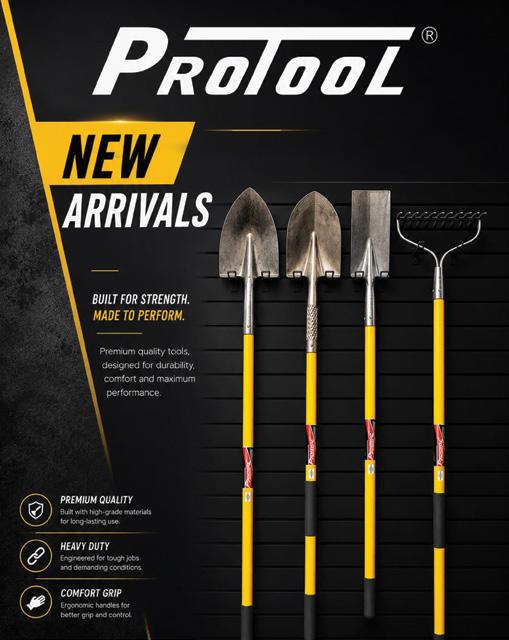
For generations, John Stafford and Sons / Stafford.ie has built its reputation on supplying dependable, high-quality tools trusted by professionals, contractors, farmers and gardeners throughout the country. Continuing this long-standing commitment to quality and reliability, the company is pleased to introduce the new Protool Fibreglass Range of shovels, spades and rakes.
Engineered for strength, comfort and durability, the new Protool Range has been developed to meet the demands of modern working environments. Featuring robust fibreglass handles, the range delivers enhanced resilience, improved grip and greater user comfort, making it ideally suited for everyday use across agriculture, landscaping, construction and gardening applications.
Designed with practicality and performance in mind, each tool in the range reflects Stafford.ie's continued focus on providing hardworking, reliable solutions that customers can depend on day-after-day. The launch marks another important addition to the expanding Stafford.ie product portfolio, with further products already planned as the Protool Fibreglass Range continues to grow in the months ahead.
In addition, customers can now take advantage of Stafford's new lower retail prices across the John Deere garden tools range, delivering even greater value on products renowned for their quality, durability and performance.
Looking ahead, Stafford.ie is also pleased to announce the forthcoming launch of the new Truper and TruPro Garden Range in July 2026, further strengthening the company’s offering across the gardening and outdoor categories with an expanded selection of high-quality professional and consumer products.
By combining competitive pricing, dependable products and continued innovation, Stafford.ie remains committed to supporting the hardware and agricultural sectors with tools built to perform season after season.
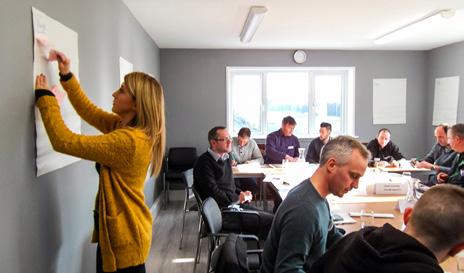
Hardware Association Ireland will soon launch its Autumn Training Schedule, featuring the return of a wide range of industry-focused courses designed specifically for hardware retailers, builders merchants, Suppliers and Manufacturers.
This autumn’s programme will once again deliver practical, relevant training to help businesses strengthen team performance, improve customer engagement and stay competitive in a changing marketplace.
Keep an eye on www.hardwareassociation.ie and HAI’s social media channels for course details, dates and booking information, and contact aoife@hardwareassociation.ie for more details.
CILT Mobility & Supply Chain Skillnet officially launched its 10-Year Network Impact Report at a special industry event marking a decade of industry-led workforce development across Ireland’s mobility, logistics and supply chain sectors.
Hosted as part of Ireland’s Mobility & Supply Chain Skills Forum - on Wednesday, 13 May - the event brought together industry leaders, employers, policymakers and educators to reflect on 10 years of collaboration, innovation and skills development supporting one of Ireland’s most strategically important sectors.
Since its establishment in 2016, by The Chartered Institute of Logistics and Transport Ireland (CILT Ireland) in partnership with Skillnet Ireland and collaborating companies, the network has supported more than 6,000 professionals through subsidised, enterprise-led training programmes, designed to strengthen operational capability, improve compliance, drive sustainability and future-proof the workforce. Over 2,000 companies nationwide have engaged with the network during the past decade.
The newly launched report highlights the network’s significant contribution to workforce resilience and competitiveness, including its rapid response to Brexit through the nationally recognised Clear Customs initiative, its transition to digital and hybrid learning during COVID-19, and its growing focus on sustainability, AI, digitalisation and leadership development.
Speaking at the event, James Kearney, Network Manager of CILT Mobility & Supply Chain Skillnet, said: “The past decade has demonstrated the value of industry-led workforce development. Our focus has always been on delivering practical, relevant and future-focused training that directly responds to the evolving
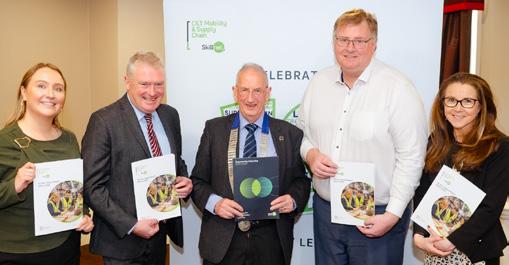
needs of employers and employees across the sector. This report reflects the collective commitment of industry, education and government partners working together to strengthen Ireland’s mobility and supply chain capabilities.”
The impact report evidenced strong outcomes for both learners and employers. It highlighted measurable improvements in operational performance, workforce capability and organisational resilience, with some companies achieving annual savings of between "20,000 and "40,000 through in-house customs expertise developed via CILT Mobility & Supply Chain Skillnet supported training.
Additional findings from the report include:
– More than 15,000 training days delivered nationwide over the past decade.
– Nearly 60% employer co-investment in training initiatives, demonstrating strong industry buy-in.
– 97% of learners reported increased knowledge following training participation.
– 69% of participants said learning would have an immediate impact within their organisation.
– 45% of learners reported receiving a pay rise following programme completion, while 24% reported securing a promotion.
The network’s programme portfolio has expanded significantly in recent years to include advanced areas such as AI in supply chain management, sustainable logistics, EV technology, customs compliance, leadership development and stackable microcredentials designed for operational teams.
The Mobility & Supply Chain Skills Forum featured a series of high-level panel discussions exploring some of the sector’s most pressing opportunities and challenges. Discussions included talent attraction, recruitment and retention in an increasingly competitive labour market, alongside reflections on how the supply chain and logistics sector has evolved over the last decade, and what the next decade may hold.
The event concluded with a strong message around the importance of continued collaboration between industry, education and government to ensure Ireland’s mobility and supply chain sectors remain resilient, innovative and globally competitive in the years ahead.
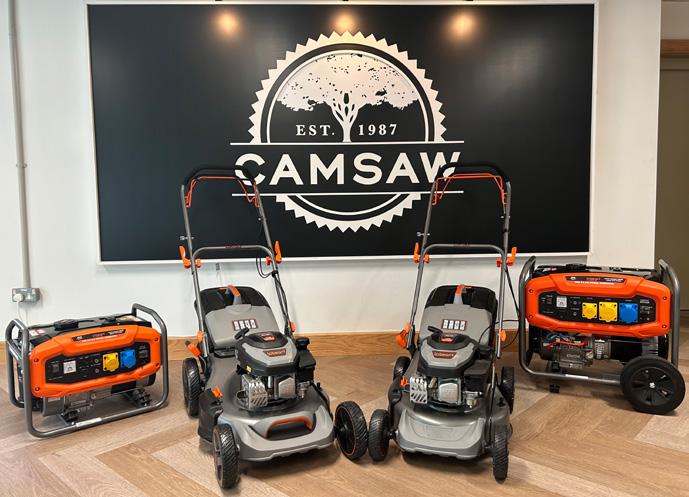
Camsaw Distributors has introduced Integri, a new outdoor power equipment brand developed for the DIY and hardware retail channel. The launch range includes petrol lawnmowers and open-frame petrol generators, giving retailers a clearly positioned offer across lawncare and portable power.
Created with hardware stores, cooperative retailers, garden machinery outlets and DIY-focused retail environments in mind, Integri is designed for customers seeking dependable performance, straightforward operation and long-term value from their outdoor equipment. The brand combines robust engineering, practical features and ease of use, helping users tackle everyday tasks with confidence.
Built around the principles of precision, durability and power, Integri reflects demand for outdoor power equipment that performs reliably while remaining accessible and user-friendly. Whether maintaining a lawn, powering equipment on-site, supporting agricultural tasks or providing back-up power during outages, Integri products are designed to deliver dependable performance when it matters most.
The launch collection includes five petrol lawnmowers designed to cater for different lawn sizes and user preferences. The Integri i43P-D5 is a 43cm push mower, while the Integri i43SP-D5 offers the same cutting width with self-drive operation. The Integri i46SP3in1-D5 adds a 46cm cutting deck and 3-in-1 functionality, while the Integri i51SP3in1-D7 provides a wider 51cm deck for larger lawns.
Completing the mower line-up is the Integri i51SPES3in1-D7, a 51cm selfdrive model with electric start for added convenience.
Across the mower range, features such as durable steel decks, single-lever height adjustment, generous grass collection capacities and selected mulching, side-discharge and rear collection functions reinforce Integri’s focus on convenience, durability and cutting performance.
Complementing the lawncare range is a selection of open-frame petrol generators for domestic, agricultural and site-based applications. The range includes the compact Integri i35G 3.5kVA Generator, the higher-output Integri i80G 8kVA Generator and the powerful Integri i100G
10kVA Generator, giving users practical options for general use, demanding applications and back-up power.
The addition of generators broadens Integri’s appeal, positioning the brand as a complete outdoor power equipment solution rather than a single-category offering. For retailers, the range provides straightforward options across lawncare and portable power, helping staff guide customers towards the right product based on their requirements, usage demands and budget.
Retailers interested in stocking Integri are invited to contact Camsaw Distributors’ National Retail Sales Manager, Tom Christle, via email at tom.c@camsaw.ie
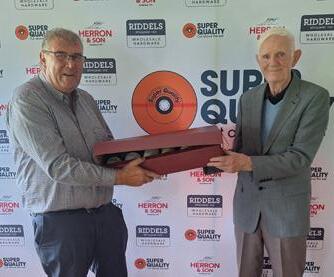
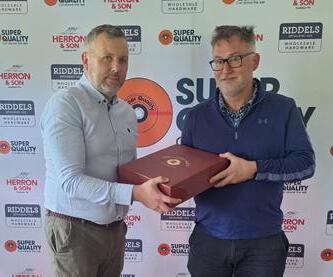
The Hardware Association Ireland Golf Society's first outing of the year coincided with its first visit to West Waterford Golf Club in Dungarvan. Judging by the positive comments, it won't be the last time many will play this superb 18-hole parkland course set amid the beautiful West Waterford countryside. Kindly sponsored by Herron & Son, the course offered a rewarding challenge for golfers of all abilities, alongside a warm and welcoming atmosphere for all our members and guests.
OVERALL
First
CLASS 1
First
CLASS 2
First place
Golf Society Captain Neil Parks welcomed the large group and presented prizes to Mens first place winner William Dixon with a score of 36 points and Ladies first place winner Aine Parks, Neil's wife, with a score of 38 points.
Ashley Molloy, Sales Manager, Hardware Division, Sanbra Group representing Heron & Son sponsor of the event presented the impressive array of additional prizes on the day. Ashley was delighted to see such a large group of colleagues playing on the day and confirmed their continued sponsorship of the Captain's Prize in the years ahead.

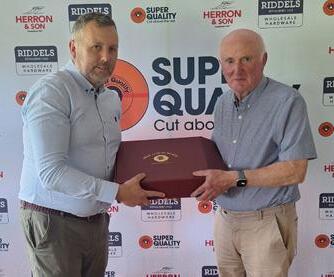
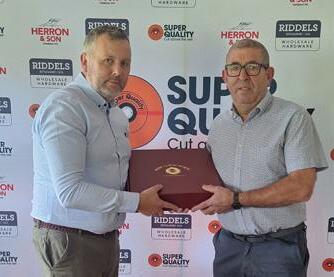

22nd May 2026 - West Waterford Golf Club - Sponsored by Herron & Son
CLASS 3 First
LADIES
First
VISITORS
Outdoor improvement projects continue to be a strong driver of sales for retailers, with homeowners investing in practical, weather-resistant solutions for their gardens and exterior spaces. Brett Martin’s Marvec corrugated PVC sheet range is ideally positioned to help merchants and retailers capitalise on this demand.
Marvec’s versatility makes it a dependable choice for a wide range of everyday applications, from carports and canopies to gazebos, lean-tos and general cladding projects. Its lightweight construction and ease of handling mean it appeals to both DIY customers and trade professionals, reducing installation time while maintaining performance.
Marvec PVC sheet is available in the popular Iron profile - in 1.1mm and 1.3mm thicknesses with two sheet width options and up to eleven sheet lengths - and a 0.7mm thick Miniature profile also available in nine lengths. The Marvec range offers flexibility for multiple economical rooflight and sidelight glazing solutions, particularly suited to cooler, temperate climates. It delivers excellent light transmission while maintaining strong weather resistance, good fire performance and longterm durability - key considerations for customers looking for reliable, cost-effective materials.
Ease of installation
From a retail perspective, the ease of installation is a clear selling point. Customers value products that simplify their projects, and Marvec delivers this with a complete system approach. A comprehensive range of compatible accessories - including wall flashing, foam fillers, fixings and ridge pieces - ensures customers can source everything they need in one place. This improves convenience and also creates valuable upselling opportunities and increases basket spend.
To support product performance and minimise returns, it’s important to highlight correct storage guidance to customers. Marvec PVC sheets should ideally be stored indoors on flat, dry wooden bearers in a cool, well-ventilated area. Where outdoor storage is unavoidable, sheets should be fully covered with an opaque tarpaulin or plastic sheeting to protect them from solar gain and prevent distortion.
With strong consumer demand for outdoor living improvements and a product range that combines durability, affordability and ease of use, Marvec corrugated PVC sheets are a smart stocking choice for hardware retailers looking to boost seasonal sales and customer satisfaction.
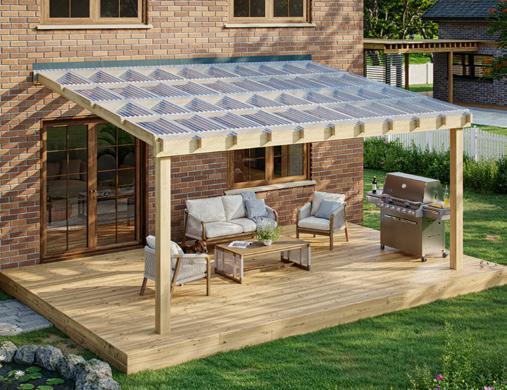

For further information, speak to your local sales representative, email sales@brettmartin.com or call Brett Martin on 048 9084 8999
How thoughtful signage can guide customers naturally while bringing your brand personality to life.
This article explores how thoughtful retail communication can improve customer flow, navigation and the overall store experience in independent hardware retail. If customers constantly have to ask where something is, there is usually an opportunity to improve in-store communication.
Good retail communication is not simply about adding more signs. It is about creating a clear hierarchy that helps customers move confidently through the environment while expressing your business’s personality.
Retail communication is not just functional; it’s an opportunity to bring your brand to life in-store.
Building a Retail Communication Framework
When we begin a retail design project, we first look at the client’s brand, their customers, and how people naturally move through the store. The goal is to create a retail environment that feels intuitive to navigate and reflects the business's personality. This becomes the foundation for the retail communication framework.
The most effective stores communicate on three levels: highlevel, eye-level and buy-level signage. Each layer helps customers navigate, explore and purchase with confidence while consistently reinforcing the brand throughout the store.
Most importantly, your tone of voice (what your signage says) and brand values (what your brand stands for) should remain consistent across every in-store touchpoint. Whether your business is expertise-led, community-focused, or more conversational, the signage should feel aligned with the brand's personality.
That consistency does two things.
1. It builds familiarity, trust and a stronger customer experience from the moment people walk through the door.
2. It creates a design language that customers can ‘decode’ so they can easily navigate the signage in store.
High-Level Signage: Helping Customers Navigate High-level signage sits above head height and is visible throughout the store. Its role is to help customers immediately understand the store's layout.
This is the first layer of communication customers encounter when they walk through the door.
Typical examples include:
TOOLS
PAINT & DECOR
TIMBER
GARDEN CENTRE
PLUMBING
At Homevalue stores for example, we designed the overhead department signage to help customers instantly orientate themselves within the space. Large, clear departmental markers allow shoppers to quickly identify key areas and move confidently through the store.
Good high-level signage should be clean, bold and easy to read from a distance. Its role is not to sell products, but to guide movement, create clarity and reduce confusion.
One of the biggest challenges in hardware retail is either too much signage or signage without a clear purpose. When every message competes for attention, customers stop processing the information.
Good wayfinding should feel effortless.
Eye-Level Signage: Where Personality Meets Function
Once customers enter a department, eye-level signage takes over. Positioned within the customer’s line of sight, this layer of communication helps shoppers explore categories, compare products and better understand what is available. This signage is commonly placed on end caps, shelf headers, mid-aisle displays and product bays.
Typical messaging might include:
– “Professional Grade Tools”
– “DIY Tips”
– “Trade Quality”
– “Staff Recommendations”
– “Need Help? Just Ask”
This is where your retail communication becomes more conversational and customer focused. The signage still serves a practical role, but it also reflects how your business speaks to customers, whether that’s professional, expertise-led, warm or community-focused.
Thoughtful eye-level signage helps customers feel more confident as they browse, while reinforcing the business’s personality throughout the store.
Digital signage can work well here, too, but like all signage, it should have a clear purpose. Whether promoting an event, showcasing staff picks or highlighting seasonal offers, it should add clarity rather than distraction.
When fonts, colours and messaging remain consistent, customers can quickly understand the environment and navigate the store more intuitively.
Buy-level signage operates at shelf and hand level, where final purchasing decisions are made.
This is often the smallest signage in the store, yet it can be one of the most important commercially.
Its role is to help customers quickly compare options and commit to a purchase with confidence.
Typical examples include:
– “Only "9.99”
– “Trade Pack”
– “Waterproof”
– “Best Value”
– “Recommended for Outdoor Use”
At this stage, customers are no longer asking, “Where do I go?” They are asking, “Which one should I buy?”
Clear pricing and product communication are critical here. If information is unclear or hard to find, customers can become uncertain at the final hurdle and walk away without buying.
Effective buy-level signage removes hesitation, reinforces value and supports conversion by making the decision process feel quick and straight forward.
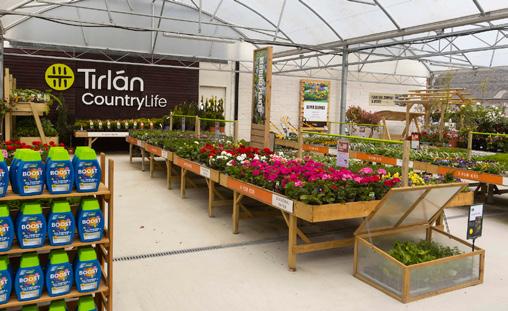
Good retail communication does more than help customers navigate a store. When signage, branding and the physical environment work together consistently, they create a seamless retail experience that builds trust and connection with customers.
At Tirlán Garden Centres for example, the environment was designed to reinforce the Tirlán brand throughout the customer journey. Wall colours, materials and signage were all designed to reinforce the Tirlán identity throughout the customer journey.
Layered throughout the store, high-level wayfinding signage helped customers easily navigate departments, and eye-level messaging reinforced expertise and service. At the buy level, product information panels supported purchasing decisions directly at the shelf.
When these layers work together, the store feels more considered, more inviting and more memorable. That personality is often what keeps customers coming back.
Peter Rigney is Founder and Creative Director of Rigney Forge, a retail design studio based in Co. Westmeath. With experience across hardware, grocery, garden centres and hospitality, Peter and his team specialise in creating high-performing retail environments that combine commercial strategy with strong brand identity. Rigney Forge works with independent and multi-site retailers across Ireland, helping businesses modernise and strengthen their in-store experience through structured, insight-led design. Peter can be contacted at Peter@rigneyforge.ie or visit www.rigneyforge.ie for more information.

Why the cost of a bad hire doesn’t show on the P&L - and what it’s quietly doing to your margin.
When a hire doesn’t work out, the conversation is almost always about the person. They weren’t the right fit. They didn’t have the attitude. They just didn’t get it.
What rarely gets asked is the harder question: what did we put in place to give them a chance?
In Merchants, Hardware Stores, DIY stores, and Trade Counter operations onboarding is a process that is widely understood to matter and widely neglected in practice. New hires are handed a staff handbook if they’re lucky, shown where the kettle is, and pointed towards the counter. What happens after that is largely left to instinct, observation, and whoever happens to be working alongside them.
The cost of that gap is real. It doesn’t appear as a line item. It doesn’t trigger an alert in the ERP. It shows up three months later - in the margin report, the stocktake, or the customer complaint log.
This is the onboarding debt. And most businesses in our sector are carrying it without knowing.
Wayne Cascio’s foundational research on workforce costsdeveloped across several decades and widely cited in management literature - established a framework for calculating the true cost of employee turnover. His model goes well beyond recruitment fees and training hours.
The fully loaded cost of replacing a frontline employee, when you account for separation costs, advertising, interviewing time, reduced productivity during the vacancy, the learning curve of the replacement, and the drag on surrounding colleagues, typically runs to somewhere between 50% and 200% of that employee’s annual salary. For a trade counter hire earning "32,000, that is a replacement cost of anywhere between "16,000 and "64,000.
Most owner-managers, if asked, would put it at a few hundred euro and a day of management time. The rest of the cost is invisibleabsorbed into the business without anyone noticing. In a small to medium-sized merchant with high turnover in seasonal or entry-level roles, the cumulative figure over a year is significant. It just never appears on the P&L in a form that anyone can act on.
The Three Things a New Hire Needs to Succeed
The most cited academic work on this topic comes from Bauer, Bodner, Erdogan, Truxillo, and Tucker (2007), who conducted a large-scale meta-analysis of onboarding research published in the Journal of Applied Psychology. Their findings identified three factors that consistently predict whether a new hire will stay, perform, and engage:
– Role clarity - do they understand what is expected of them?
– Self-efficacy - do they believe they are capable of doing it?
– Social acceptance - do they feel they belong in the team?
When these three conditions are met, new hires adjust faster, perform better, and are significantly less likely to leave within the first twelve months.
When these conditions are absent - which in most trade counter environments they are, at least partially - the new hire is operating in a state of low-level anxiety. They are unclear on where the line is, uncertain whether they are doing a good job, and feeling disconnected from those around them. Under those conditions, the easiest behaviour is to default to whatever reduces conflict. Give the customer what they want. Avoid holding price. Don’t escalate.
Sound familiar? This is not a personality problem. It is a structural one. And structure can be fixed.
What We See in Practice
I have walked into stores where the onboarding process consists of being shown the till, given the PIN, and told to ask if you’re not sure. In those environments, no one is sure of anything - and nobody wants to ask, because asking signals weakness.
I have met staff members who had been working in the same branch for eight months and still did not know the margin on the top twenty product lines. They could not tell you whether a 5% discount was costing the business or the customer. They had no way of knowing. No one had ever explained it.
I have seen new hires serve their first day on a busy trade counter, handling product queries, processing transactions, and managing customer expectations - with no one beside them and no brief on what they were authorised to do.
In every case, the manager’s view was that the new person was ‘learning on the job’. In every case, the business was quietly absorbing the cost of that learning in discounts given, errors made, and time lost.
The Invisible Cost Centre
McKinsey & Company’s 2022 research into frontline employee retention found that the top reasons people leave are not primarily financial. Career development, meaningful work, inspiring leadership, and a sense of wellbeing rank alongside compensation as the primary drivers of departure.
This matters for merchants and hardware operators because the levers people assume are not available to them - a promotion ladder, a structured training programme, a mentorship system - are actually among the most powerful retention tools available.
You do not need a learning management system or a dedicated HR team to offer role clarity, a sense of belonging, and honest feedback. You need intention and about three days of structured investment at the start of employment.
The businesses that are losing staff most frequently are, in most cases, also the ones that are spending the least on keeping them. The cost of that decision never appears on a management account. It is spread invisibly across the year in recruitment, lost productivity, discounts, errors, and margin that nobody can quite account for.
What Actually Works
None of what follows requires significant investment. What it requires is a decision to treat the first week of employment as seriously as the first month of a new customer relationship.
– Define the role in writing before they arrive.
Not a job description pulled from the previous hire. A current, honest account of what the person will do, what success looks like, and what authority they have. A new hire who knows from day one what they can and cannot do is less likely to overstep on pricing and more likely to escalate correctly.
– Pair them with someone for the first two weeks. Not just for product knowledge - for pricing instinct, for reading a customer, and for knowing when to hold and when to escalate. The informal transfer of knowledge that happens in a good buddy system is worth more than any induction document. It also solves the social acceptance problem. People stay where they feel connected.
– Spend two hours on your top forty product lines. That is not a training course. It is a conversation: what these products are, what they do, what the margin looks like, and what a fair price holds at. A new hire with that context is a fundamentally different proposition to one who is guessing.
– Remove pricing authority until it is earned. System access is authority. Giving a new counter hire the ability to apply discounts without context is not neutral - it is an invitation to use them. Lock it down at the start. Explain why. Bring it back once the person has demonstrated pricing confidence.
The most common version of this I see is senior management handing a new counter hire their own password to override pricing on day one. It is done with good intentions - keep things moving, don’t leave them stuck. But what it actually does is far more damaging.
A new hire who is given an override from the start has no reference point for what the screen price represents. They do not know whether it is competitive, generous, or somewhere in the middle. What they do know is that they have been given the ability to go lower - and so they assume, reasonably, that the screen price is not the real price. It makes them insecure in the system. And that insecurity, left unaddressed, produces a quiet but consistent guilt: a sense that they are overcharging the customer every time they hold a price.
The same pattern runs in the back office. A new accounts or purchasing hire hits an invoice query they cannot resolve. They go to a colleague or manager for guidance. The answer, far too often, is: “It’s fine, just override it.” No explanation of what the correct process should be. No understanding of why the discrepancy exists. Just a workaround, handed down, now embedded as the way things work.
These are not bad staff. They are not even badly hired, in most cases. They are staff who have been placed in an environment where the informal signals - the override password, the “just fix it” instruction, the absence of any framework - teach them from day one that
process is optional and price is negotiable. The bad habit does not come from them. It is handed to them.
When a business later describes these people as bad hires, the question worth asking is whether the problem was in the hiring - or in the environment they were hired into. More often than not, it was the latter. The hiring mechanism did not fail. The onboarding mechanism did not exist.
Have a check-in at two weeks and again at six weeks. Not a formal review. A conversation: how are you finding it, what are you uncertain about, what do you need? Most new hires who are struggling will not say so unless someone asks directly. Most who leave in the first three months decided to go within the first six weeks.
The Ownership Problem
I ran my own business for a long time. Sixteen staff, multiple moving parts, every day a new fire. I know exactly how easy it is to tell yourself that someone will find their feet, that there’s no time this week, that they seemed fine on the day they started.
The problem is that the cost of that decision does not land in the same week you make it. It lands six weeks later when the person hands in their notice, or three months later when the September Gross Profit report doesn’t add up, or twelve months later when you are having the same conversation about a different new hire.
We are good at seeing costs that arrive with an invoice. We are poor at seeing costs that arrive as absence - the margin that was not protected, the customer that was not retained, the institutional knowledge that walked out the door.
The onboarding debt is real. It compounds quietly. And unlike most debts in a business, it charges no interest and sends no reminders. It just quietly reduces your returns.
Structured onboarding has been shown to reduce first-year turnover by 25–50%. In a sector where replacing a single frontline hire can cost the equivalent of six months of their wages, the commercial case for investing the first week properly is straightforward.
David Gavin is a retail and merchanting professional based in Dublin. He has extensive experience in builders’ merchants, DIY stores and plumbing supply operations, with a focus on improving operational processes, stock accuracy and margin performance.
If you’d like a chat about any operational challenges you may face, please contact him at david.gavin@dazo.ie or call 086 6004812.

CASH MANAGEMENT

Brink’s Cash Services






Customer Services 0818 111 330 nationalservicecentre@brinks.com www.brinks.com
GLORY Ireland
David O’Meara 086 383 0650
David.OMeara@ie.glory-global.com www.glory-global.com
CREDIT & FINANCIAL MANAGEMENT
Credit Risk Brokers
James Riordan 01 491 6007
james.riordan@creditriskbrokers.com www.creditriskbrokers.com
PKF Brenson Lawlor
Ian Lawlor 01 668 9760 ian@pkfbl.ie www.pkfbrensonlawlor.ie


Agility Software Ltd
David Malcolm 01 253 0282 david@agility-software.com www.agility-software.com
Core Tech
Geraldine Quinlan Burke 025 41400
geraldine.quinlan@coretechnology.ie www.coretechnology.ie








Galvia AI Karina Kelly 083 0905945 karina@galvia.ai www.galvia.ai
GenetiQ Software



Mark Gurney 042 933 1742 mark.gurney@genetiqsoftware.com www.genetiqsoftware.com
.ie
Seán Tobin 01 236 5400 stobin@weare.ie www.weare.ie
Klipboard 01 5457100 hello@klipboard.com www.klipboard.com
Magico
Paul Montwill 065 6864580 pmontwill@magico.com www.magico.com
Premio eCommerce

StudioForty9
Gerard Keohane 021 239 2349
ger@studioforty9.com www.studioforty9.com

Michael Morrissey 021 245 5022 michael.morrissey@premio.ie www.premio.ie




Katie Kirwan 01 295 4844 katie@digi.ie www.digi.ie
DCS Group
Caroline Sugrue 066 7181836 carolinesugrue@dcsgroup.eu www.dcsgroup.eu
Michelle McKenna 087 383 7301 michelle@pinergy.ie www.pinergy.ie
CPM Ireland


akelly@cpmire.com www.cpmire.com
WASP Technologies
Richard Baird 086 2857843 richard.baird@wasptech.com www.wasptech.com




Brown & Brown
David Lombard 021 4730005 david.lombard@bbrown.com www.bbrown.com/.ie
Margin Investments Ltd t/a NFP
Kevin Whelan 01 6672644 kevin.whelan@nfpireland.ie www.nfpireland.ie


Dachser Ireland
Melissa Barr 01 401 3333 melissa.barr@dachser.com www.dachser.ie
Woodland Group
Lee McMullen / Shauna Dunne 01 8111500 lee.mcmullen@woodlandgroup.com shauna.dunne@woodlandgroup.com www.woodlandgroup.com

Peninsula Business Services (Ireland) Limited
Michael Gombart 1800 719 215 michael.gombart@peninsula-ie.com www.peninsulagrouplimited.com/ie
TSA Consultants
Tommy Smyth 021 4634154 tommy@tsaconsultants.ie www.tsaconsultants.ie
Clearlift
David McCullough 01 5267 411 sales@clearlift.ie www.clearlift.ie
Combilift
Anthony Rooney 047 80500 anthony.rooney@combilift.com www.combilift.com
Henley Forklift Group Ltd
Mark Kenny 01 6209200 sales@henley.ie www.henley.ie
Elavon Merchant Services
Peter Cooke 0818 202 120 peter.cooke@elavon.com www.elavon.com
Tactical Talent
Vinny Kelly 01 9079192 info@tacticaltalent.ie www.tacticaltalent.ie



CSC Covert Security Consultants
Declan Cassin 0818 273274 info@cscsecurity.ie www.cscsecurity.ie
SeaChange
Eamonn Condell 045 856028 / 085 2524679
Eamonn.condell@seachange-intl.com www.seachange-intl.com
Securitas Technology Ireland
Denise McCarthy 086 1916327
denise.mccarthy@securitas.com www.securitastechnology.com/ire
By becoming a Corporate Partner, you can link your organisation to the pursuit of excellence and quality in the Hardware, Building Materials & DIY sector.
Hardware Association Ireland will help you to promote your company to all key decision makers in the sector with;
– A listing on the HAI website, www.hardwareassociation.ie
– The use of the widely recognised HAI Corporate Partner logo and a Corporate Partnership Certificate
– A free listing with logo and contact details on the Corporate Partners Pages in each issue of The Hardware Journal
– A preferential member rate for advertising in The Hardware Journal, plus three free classified advertisements




OHRA Racking Solutions
Seamus Coyle + 44 28 8224 7858 coyle@ohra.de www.ohra.ie
Shop Equipment Ltd.
Padraig Downey 087 8135242
Padraig_downey@sel.ie www.shopequipment.ie
Storefit Shopfitters Limited
Eamonn Brien 021 4344544
eamonn.brien@storefit.com www.storefit.com
Store 2000
Paul Bennett 087 2332402
Paul@store2000.ie www.store2000.ie

Turbo Inventory
Catherine Lockhart 01 204 8300 clockhart@bigredbook.com www.turboinventory.com

IP Telecom Sales Team 01 6877777 sales@iptelecom.ie www.iptelecom.ie
– Preferential rates and early access to event sponsorship and networking opportunities
– A preferential rate for exhibitor space at The Hardware Show
– Positioning your company as a solution-provider for the hardware, building materials and DIY sectors
– Access to all the latest industry news via regular emails & updates.
Want to find out more?
Contact us today to become a HAI Corporate Partner info@hardwareassociation.ie or phone 01 2980969

This year, Dulux Heritage continues to invest in driving brand awareness. As proud sponsors of this year’s Great House Revival, the show reached 500,000 viewers weekly over its six-week. Additionally, the collaboration between the Irish Times and Aimee Connolly featured a complete transformation of Aimee’s Content Room. As a recent homeowner of a formerly rented property, Aimee availed of the complementary Dulux Colour Consultation service. Aimee chose gorgeous Heritage colours that compliment her own brand, Sculpted by Aimee. This transformation was showcased on her Instagram channels and highlighted in a full article and editorial feature in The Irish Times and online, beautifully displaying the range of Heritage colours.

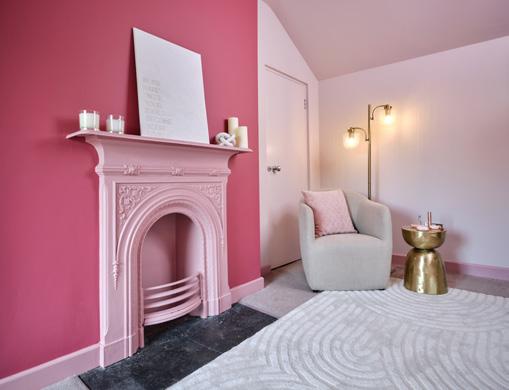
Coming next, Dulux Heritage will collaborate with The Irish Times and two other prominent Irish influencers. This partnership kicks off in June and runs through October, aiming to reach over two million people across various platforms. The journey and impact of Heritage will be showcased and supported across multiple touchpoints, including high-impact print ads, captivating editorial video transformations, and targeted digital display advertising.
Dulux Heritage will be exhibiting at the Ideal Homes Exhibition at the RDS in October 2026. The Dulux Colour consultants will be available every day.
Your customers can explore the range and discover the lighting tool at www.duluxheritage.ie
This year’s new colours bring a subtle touch of sophistication to your home. An inviting range of neutrals will help to shape your rooms into calm and welcoming spaces. Available in both matt and soft sheen, these tasteful tones will elevate your hall, living room, bedroom, or dining room.
White Mist is an ultra-pale grey with a smoke-like quality. It is ideal for combining with other cool neutrals either on the ceiling or to create a light, open space. Choose this colour if you are looking for a cool, natural white.
Just Walnut is an elegant warm neutral with just enough colour to make it interesting and pale enough to ensure it works in just about any room. This neutral is a chic and relaxing alternative to cream.
Pocket Stone is a green toned beige. This medium depth colour is a modern neutral for any living space. This versatile colour will bring a warm relaxed atmosphere to the room.
These colours are available in the “Walls & Ceilings” range in the Matt or Soft Sheen finish.

Dulux Heritage Stone Green conjures feelings of magical a ernoons enlivened with long awaited visitors.
A feeling as welcome as family and friends.
After months of unpredictable Irish weather, summer offers homeowners the perfect opportunity to refresh and protect their home exteriors. While brighter days may have arrived, Irish homes still face a mix of sunshine, rain, coastal winds and changing conditions throughout the season. That’s why more homeowners are choosing Fleetwood Weather Clad, an exterior paint specifically developed to withstand everything from strong summer UV exposure to harsh Irish weather year-round.
Developed in County Cavan and proudly family-owned, Fleetwood has spent more than 75 years creating paints designed specifically for Irish homes and Irish weather conditions. With decades of expertise behind every tin, Weather Clad has been developed to deliver long-lasting protection through every season, helping homes retain their colour and finish during brighter summer months while continuing to defend against rain, wind, mould, algae and dirt build-up.
Fleetwood Technical Manager and Paint Expert, John Hetherton, has shared his top tips to ensure every homeowner knows how exactly to prepare their house over the coming weeks. “The Weather Clad range has been tested to withstand the rugged Irish weather we have experienced in recent years.”
“Fleetwood looks after the crucial parts, ensuring their exterior paint offers UV protection, resists mould, algae, and dirt buildup, and is long lasting. However, the prep ahead of painting is another important element to consider before tackling the paint refresh:”
– Give yourself a window of dry weather before starting on the project.
– Treat the walls by power-washing with Fungicidal Wash. Allow 2-3 days to allow this to work.
– Power wash the exterior walls.
– Use Masonry Primer to bind all friable material, if the surface appears chalky after power washing.”
Homeowners Cathriona and Sean Sweeney, along with Frank and Adam Early, have already made the switch to Weather Clad after experiencing the realities of Irish weather first-hand.
Painting your exterior is an investment so you need it to last. Cathriona explains: “Living on the Atlantic coast in County Mayo, our home is exposed to every type of Irish weather throughout the year. We wanted a paint that not only protects during the wetter months but also keeps our home looking fresh and vibrant through the summer. Since switching to Weather Clad, we’ve had peace of mind knowing our exterior is protected season after season.”
Adam Early was recommended Weather Clad by his Dad Adam explains “It was important for us to choose an Irish made paint because it’s specifically developed for the Irish weather conditions and we knew we required something reliable and made to stand the test of time. We made the switch to Weather Clad, based on dad’s expertise, he knew it was the right paint to choose, given it protects our home from the exposure to wind and rain all year around.”
Backed by 18 years guaranteed protection and available in 35 expertly selected shades inspired by the Irish landscape,
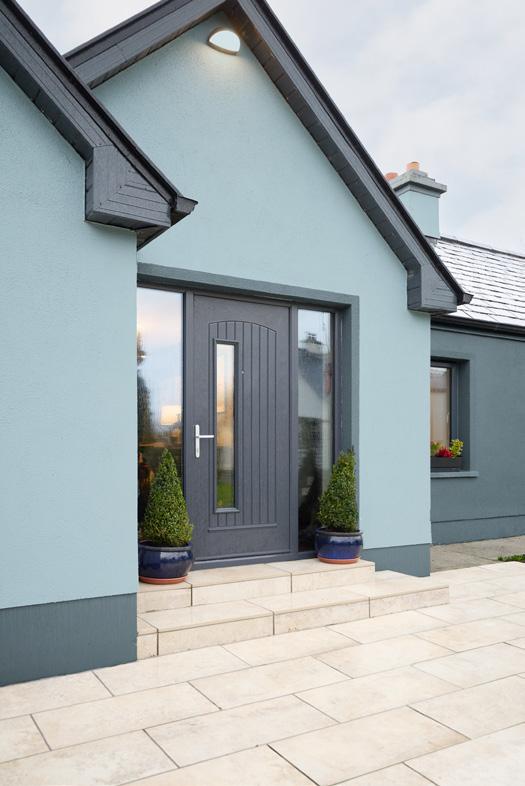











A fresh wave of exterior colour trends is sweeping across Irish homes - and it’s wonderfully warmer, earthier and more natureinspired than ever. After years of crisp whites and cool greys dominating neighbourhoods from Cork to Cavan, homeowners are now embracing tones that feel grounded, characterful and deeply connected to Ireland’s natural beauty. Think soft greens echoing rolling fields, muted blues inspired by Atlantic skies, and rich stone shades that sit effortlessly against natural materials and coastal light.
Sandtex’s new Microseal Masonry Paint shades capture this shift perfectly. Anthracite, Bay Tree®, and Silver Blue each offer a modern twist on natural neutrals while delivering the longlasting protection Irish weather demands.
Earthy, Nature Led Shades for Irish Exteriors
– Anthracite - A bold, contemporary grey that adds depth without feeling stark. It pairs beautifully with natural stone, slate roofs and lush planting.
– Bay Tree® - A soft, organic green that blends seamlessly with leafy gardens and rural surroundings. It’s calming, versatile and effortlessly stylish.
– Silver Blue - A gentle, coastal inspired blue that brings serenity and subtle character, perfect for seaside towns or homes that want a hint of coastal charm.
These shades reflect the growing appetite for colours that feel warm, welcoming and rooted in nature - a trend that’s transforming kerb appeal across the nation.

Why Microseal Masonry Paint is Made for Irish Weather
Sandtex’s Microseal technology delivers:
– Weatherproof protection built for Ireland’s varied climate
– Breathable coverage for long-lasting colour with up to 15 years trusted durability
– Flexible, crack resistant performance to keep exteriors looking fresh
A beautifully maintained exterior doesn’t just lift a home’s mood - it can also enhance perceived value and create a lasting first impression.
Complete the Look with Upgraded Exterior Detailing
To finish the transformation, Sandtex’s 10 Year Exterior Multisurface Satin / Gloss offers a tough and durable finish for wood, metal, UPVC, brick, concrete and stone - ideal for doors, gates, trims, railings, furniture, planters, window frames and more. It’s weatherproof, flexible and designed to resist cracking and flaking for up to a decade.
Pair with Sandtex’s Microseal masonry shades for a cohesive, modern and naturally inspired exterior that feels right at home in the Irish landscape.
For more information, visit www.sandtexpaints.com



Surface protection rarely gets the attention it deserves, right up until something goes wrong. A scratched floor discovered at handover, paint splashes across newly fitted carpets, mud and dust tracked through finished rooms by multiple trades all racing the same deadline. It’s a familiar story across construction and DIY alike.
And the real cost goes far beyond the repair itself. There’s the delay to completion, the difficult conversation with the customer, the need for return visits and replacement materials, and the pressure of putting things right at the very end of a project, when time and budget are already stretched.
For years, surface protection on site was often improvised, an old cotton dust sheet, leftover cardboard, a few sheets of newspaper, or whatever happened to be in the van that morning. And in many cases, that approach just about did the job.
Today’s builds, however, are a different story. Modern properties feature highervalue materials, tighter tolerances, and finishes that mark, scratch, or stain far more easily. What once passed as “good enough” protection is now far more likely to fall short, leaving surfaces exposed and projects vulnerable to costly last-minute damage.
Walk onto modern projects now and you’ll see protective films covering carpets, hard floors, windows, doors and countertops from relatively early stages in the project right through to final handover.
Carpet protection films have become particularly common during decoration, and final fit-out stages, especially in residential work where completed rooms often remain exposed while work continues elsewhere in the property. Hard surface protection films serve a similar role across timber flooring, tiles, laminates, vinyl surfaces and stairs / walkways.
Glass and window protection has become increasingly important, modern glazing is costly to replace, and even minor scratches can lead to expensive issues. Protective films help minimise that risk while still allowing light into working areas.
Where flexibility is key, multi-surface protection products have gained traction. Many contractors now opt for a single solution that can cover countertops, cabinets, appliances, tiles, and finished fittings, rather than carrying multiple products.
In terms of the wider commercial opportunity for builders’ merchants, surface protection products tick a number of important boxes. They are compact, easy to stock, and relevant across a wide range of trades, from decorators and flooring installers to kitchen fitters, window installers, plumbers, general builders and maintenance teams. Crucially, they also drive repeat purchases throughout the lifecycle of a project, rather than being treated as a one-off capital spend.
To learn more about ProSolve’s range of surface protection films, checkout www.prosolveproducts.com or contact their team enquiries@prosolveproducts.com
When it comes to trusted, high-performance workwear, one name continues to be a leader in the industry, Portwest. The Irish brand continues to reinforce its position as the go-to choice for professionals across multiple trades, including the demanding world of painting and decorating.
For professional painters and decorators, workwear must deliver far more than appearance alone. Comfort, durability, flexibility and protection are essential throughout long working days on site. Understanding these demands, Portwest has developed a dedicated range of garments specifically designed to meet the needs of the painting and decorating trade.
Leading the collection is the Portwest Painters Trousers, a bestselling style designed with practicality in mind. Featuring layered thigh pockets for mobile phones and brushes, alongside side, kneepad, hip and rule pockets, these trousers are built to support every aspect of the job. An elasticated waistband ensures all-day comfort, making them a firm favourite among trade professionals.
Another standout product is the Portwest Painters Bib and Brace, offering enhanced protection and functionality. Manufactured from 100% pre-shrunk cotton to help protect against paint spills, this garment includes a secure zipped bib pocket, spacious front pouch pocket, kneepad pockets, hip and rule pockets, plus an elasticated back section and non-corrosive
plastic buckles for added comfort and flexibility throughout the working day.
For decorators seeking a modern layering solution, the Portwest Eco Softshell Bodywarmer continues to grow in popularity. Made using sustainably produced softshell fabric with a fleecebacked lining for additional warmth and comfort, this versatile gilet also incorporates stretch fabric panels to allow unrestricted movement on the job. Multiple internal and external pockets provide excellent storage options, combining practicality with everyday comfort.
Portwest’s commitment to innovation, quality and wearer comfort remains at the forefront of its offering. Alongside its extensive product range, the company continues to support retailers through strong merchandising solutions and enhanced in-store presentation, helping to drive visibility and sales across hardware and trade outlets nationwide.
Whether supplying individual tradespeople or supporting retailers with complete workwear solutions, Portwest continues to set the benchmark in professional workwear. With a relentless focus on quality, performance and the evolving needs of today’s workforce, Portwest has every professional covered.
Available in all good hardware stores and for more information visit www.portwest.ie
Whatever the weather: Whiteriver Composite Exteriors are engineered for the Irish climate.
Discover Ultrashield® Composite Cladding range, built to last
Premium, low maintenance composite cladding combining contemporary design, hidden fix installation, and long-lasting outdoor performance.
As outdoor spaces continue to become natural extensions of Irish homes, exterior materials are expected to combine visual appeal with long term reliability. Whiteriver’s Ultrashield® Composite Cladding range is designed to do exactly that - delivering a premium, contemporary look and feel whilst being engineered for low maintenance and lasting performance against the unpredictable Irish climate.
Built for the Irish Climate
Each Ultrashield® board features a protective outer layer fully wrapped around it’s composite core. This durable shield helps resist moisture, fading, and everyday staining, making the Ultrashield® range particularly suited to Ireland’s changing weather conditions.
Unlike traditional timber cladding, Ultrashield® requires no painting, staining, or sealing. The boards are designed to maintain their appearance with minimal upkeep, helping you create a modern outdoor living space without the ongoing maintenance associated with traditional natural timber cladding.
Contemporary & Traditional Designs
Whiteriver’s Ultrashield® Cladding collection includes both contemporary and traditional profile options, offering flexibility across a wide range of residential and commercial projects. Both ranges are available in a selection of modern décors, while matching trims and accessories help create a sleek, seamless finish throughout the installation.
Hidden Fix Installation
Ultrashield® Cladding uses a concealed fixing system to create a seamless exterior finish with no visible screws or face fixings. The lightweight board construction and integrated fixing system also support efficient installation and a clean modern finish.
Discover the complete Ultrashield® Composite Cladding collection, including technical specifications, profile options, and décors online at www.wrg.ie
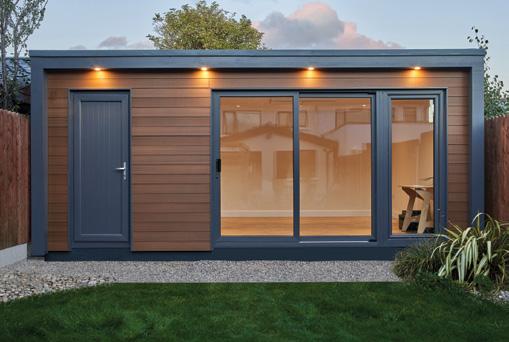
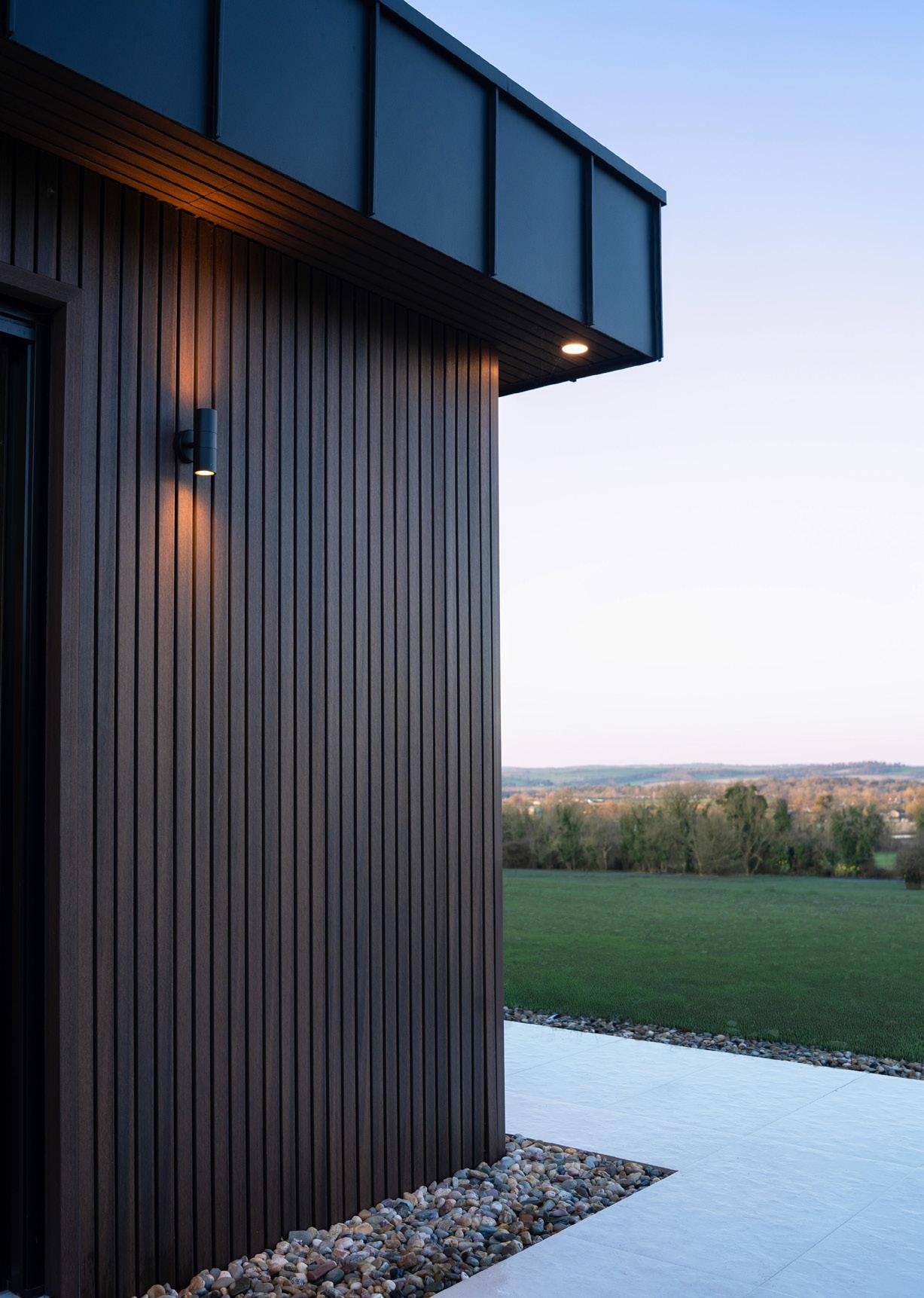

With summer in full swing, Calor is supporting outdoor living through its seasonal BBQ campaign, placing a strong spotlight on its compact 6kg patio gas cylinder - the ideal choice for barbecues and smaller patio heaters. Lightweight, portable, and easy to store, the 6kg cylinder is designed for convenience, making it perfect for everyday outdoor use at home or on the go.
Alongside the 6kg option, Calor also offers its larger 11kg cylinder for extended use. Both sizes are now available with a renewable fuel blend that includes 20% BioLPG, making them one of Ireland’s first and only renewable patio gas cylinders available to consumers.
Calor BioLPG is a certified renewable gas made from

Dermot Hurley, Head of Calor Cylinder Sales, says: “Our 6kg cylinder is a key part of our patio gas range, offering a practical, easy-to-handle solution for customers who want flexibility when cooking or entertaining outdoors. Combined with our renewable BioLPG blend, it also provides a more sustainable option, helping retailers meet growing demand for lower carbon products.”
Using the globally recognised mass balance approach, each cylinder contains 20% BioLPG and 80% conventional LPGdelivering reduced carbon emissions without compromising performance.
Consumers can continue to enjoy summer favourites with the convenience of the compact 6kg cylinder leading the way. Learn more at www.calorgas.ie
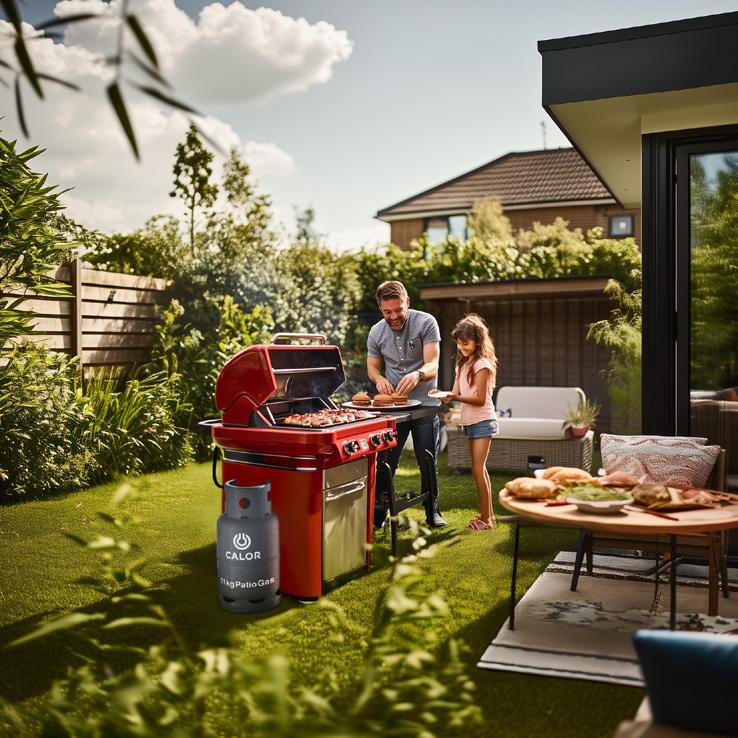


For painters and decorators, good workwear is rarely about one single feature. It is about the working day as a whole. Reaching, bending, climbing, kneeling, carrying tools, moving between rooms, sites, ladders and vans, and still looking professional when the job is done.
That is where purpose-built painter’s workwear makes a real difference.
Blåkläder’s painter range has been developed with the practical realities of the trade in mind, with trousers, shorts, tops, and accessories designed to support both comfort and function. For painters and decorating contractors, that means clothing that can work across a broad mix of jobs, from residential interiors and commercial fit-outs to renovation projects and construction sites.
The details matter. Painter trousers need to move naturally with the body, especially around the knees, crotch, seat and calves. Stretch panels, carefully placed pockets, and knee pad solutions help reduce restriction during long days on the job.
Blåkläder’s range also includes painter-specific storage for tools such as brushes, filling knives and painter’s knives, keeping the essentials close to hand and reducing unnecessary trips up and down ladders.
Durability is just as important. Painting and decorating may not always look like the harshest trade from the outside, but dust, fillers, sharp edges, repeated kneeling, washing and daily wear put garments under constant pressure. Fabrics with high cotton content, reinforced details and hard-wearing constructions help the clothing stay comfortable and functional over time.
For businesses, this can support a more consistent, professional appearance across teams, while also helping workers feel properly equipped. For sole traders and end users buying directly, it offers a simple way to choose workwear designed for their specific trade rather than adapted from a more general-purpose garment.
Blåkläder’s painter range also includes options for different preferences, working conditions and users, including stretch models, shorts and women’s fits. The result is a complete painter’s workwear offering that does not overcomplicate the job. It simply helps painters and decorators move better, work smarter and stay comfortable through the day.
Because when the clothing does its job properly, the professional can focus on theirs.
For further information visit www.blaklader.ie

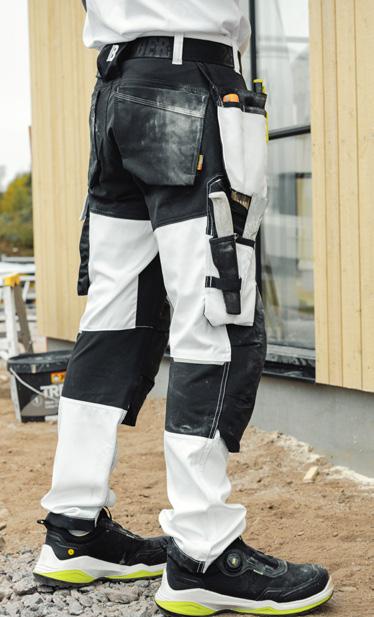
Filltite is bringing its premium decorative range to the Irish market, offering professional-grade fillers and accessories. It is manufactured in France to the highest standards. Designed to meet the demands of today’s decorating industry, the range combines durability, smooth application and a superior finish to help decorators achieve outstanding results on every project.
Built for both professional tradespeople and serious DIY users, Filltite products are formulated to deliver reliable performance across a wide range of interior and exterior applications. From surface preparation to final finishing, there is a product for every job.
The Filltite product range includes:
– Lightweight fillers for quick and easy repairs
– Fine finishing fillers for ultra-smooth surfaces
– Ready-mixed solutions that save time on site
– Interior, exterior and wood filling products for every job
– Facial protection and filling accessories
What makes Filltite stand out is its commitment to premiumquality formulas. Manufactured in France using advanced







production methods, the products are designed to provide excellent adhesion, minimal shrinkage and a clean, professional finish every time.
Whether you are repairing cracks, preparing walls for painting or carrying out detailed finishing work, Filltite products are designed to make the job faster, easier and more efficient. The range is quickly gaining attention from trade professionals across Ireland for its ability to combine high performance with user-friendly application, making Filltite products suitable for projects of all sizes.
Head on over to their website www.filltite.com to view the full range of fillers and invest in quality products you can rely on.
For order enquiries, get in touch with Tony White via his email tony.white@tembediy.com or phone: +353 85 288 7393









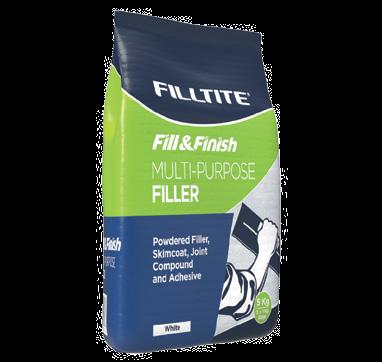







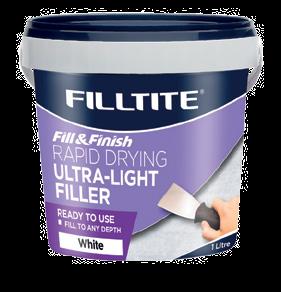

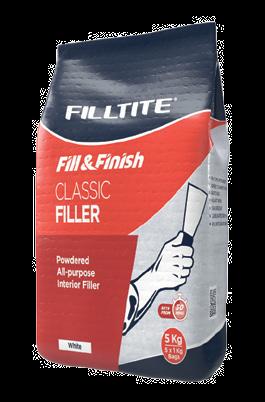














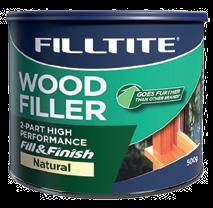























Lowe Paint chemically binds to rust, neutralises corrosion, and protects metal for up to 10 years when applied correctly.

Primer paint in one inimal surface preparation
Suitable for old or new metal rush, roller or spray application

Satin finish in a ran e of colours
Trusted by customers for 0 years Restore. Protect. tend. No.1 in Ireland for Long Term Rust Protection

In the world of home interiors, few products combine beauty, practicality, and performance as effortlessly as Elka flooring's recently introduced 13mm Waterproof Real Wood Engineered range. The range showcases Elka’s commitment to innovation, offering homeowners the confidence of highend flooring that stands up to everyday life.
The 13mm engineered boards deliver the timeless warmth and texture of real wood, while being 100% waterproof, making them ideal for kitchens, bathrooms, hallways, and open-plan spaces where resilience is essential. Engineered with real wood layers topped with a genuine hardwood surface, the flooring resists expansion and contraction caused by temperature and humidity, all while maintaining the authentic character of solid wood. The range comes with a 25-year domestic warranty, truly standing by the products durability.
Beyond its impressive performance credentials, the Elka 13mm Waterproof Real Wood Engineered range is designed with everyday comfort in mind. Its robust construction helps reduce noise underfoot, creating a quieter and more relaxing living environment. The low-maintenance surface makes cleaning simple, allowing homeowners to enjoy the beauty of real wood. Compatible with underfloor heating systems, the range also provides added warmth and comfort throughout the year. Combining practicality, durability, and sophisticated style, Elka continues to set new standards in flooring for today’s modern homes.
Available in a selection of six colours, each plank carries its own unique grain patterns, giving every installation a distinct, natural charm. The 13mm thickness adds substantial presence underfoot, combining a luxurious feel with long-term resilience. Designed with the Uniclic installation system, with no glue down necessary, means that the Elka 13mm real wood engineered flooring installation is fast and flawless.
From contemporary open-plan homes to classic interiors, Elka’s 13mm Waterproof Real Wood Engineered flooring merges award-winning innovation with timeless design. It proves that function and elegance can coexist seamlessly, offering homeowners a stylish, practical foundation for modern living.
To learn more about the range, checkout www.elkaflooring.com and contact the team for more information at orders.uk@unilin.com



As homeowners are moving away from neutral garden colours in favour of bolder shades and with summer providing an ideal time to take on garden DIY projects, now could be the perfect time for your customer to consider a garden refresh, allowing them to make the most of their outdoor space.
Amid the growing popularity of garden makeovers, DIY giant Ronseal continues to provide homeowners with high-quality, easy-to-apply options across its garden and decking ranges. Designed to make outdoor projects easier, the range includes fastdrying, multi-surface paints and stains that help effortlessly refresh gardens for the summer months.
How Ronseal Garden Paint can transform the garden
Available throughout the country, Ronseal Garden Paint is a staple for home DIYers thanks to its versatility and durability. It can be used to add colour to almost anything in your customer's garden, including wood, brick, terracotta and metal, making it easy to refresh everything from back walls to old plant pots.
Alongside its versatility, the water-based paint takes just an hour to become rainproof, meaning there’s no need to worry about unpredictable weather conditions. It works fast and is tough too, thanks to its strong protection against weathering, with colour lasting up to ten years.
Ronseal Garden Paint is available in a range of 29 shades, including Rainforest Green, Cornflower Blue, Pink Jasmine and
Moroccan Red, meaning decorators can explore a whole world of colour when it comes to painting their gardens.
Here are some ways your customer can use Ronseal Garden Paint to inject colour into their outdoor space:
Country garden: Greens, blues and creams will help give your customers garden a country-inspired look. Great combinations include Elderflower on wood, Cool Breeze on metal, and Sapling Green on wood. Urban living: For a modern garden, use darker greys with a mix of bright colours, such as Daisy on brick, Blackbird on wood, Sun Dial on terracotta, or Lime Zest on wood.
Classic style: Use deep, rich colours for a timeless look, such as Bramble on stone, Beetroot on wood, or Midnight Blue on brick. Colour splash: Add a bit of fun with a splash of colour. This is a great way to use leftover paint. Why not try Purple Berry on terracotta, or Pink Jasmine, Summer Sky and Lime Zest on wood, paired with Slate on wood. Kids' corner: Give children a fun place to play with vibrant, bright colours such as Pink Jasmine, Cornflower, Bluebell and White Ash on wood.
Ronseal’s decking range: Alongside its Garden Paint, Ronseal offers everything you need to strip, clean, nourish and protect your customer`s decking with its market-leading decking care range.
If your customer`s decking needs a refresh, Ronseal offers products that can take it from a tired, weathered deck to a bright, colourful, brand-new-looking outdoor space.
The Decking Cleaner and Reviver is ideal for cleaning old decking and preparing new wood. It’s perfect to use before treating the deck, as it opens the pores of the wood to help new treatments soak in and stick, keeping the deck looking great for longer. It’s also ideal as a general cleaner, helping to brighten and enhance decking all season long.
Your customer can pair this with Ronseal’s Decking Stripper, which completely removes oils, stains and paints from wooden decking, leaving it looking brand new. Best of all, it only needs one coat.
With your decking stripped and cleaned, it’s time to give it a new lease of life using Ronseal’s decking oils, stains and paints.
Should you choose decking oil, stain or paint?
Deciding whether to use decking oil, paint or stain depends on the look and level of protection you are aiming for.
Ronseal’s Ultimate Protection Decking Oil soaks into the wood to help protect it from moisture, cracking and UV damage while keeping a natural finish. It enhances the grain of the timber and lasts twice as long as standard decking oil, making it a popular choice for newer decking.
Meanwhile, Ronseal’s Ultimate Decking Stain adds colour while still allowing the wood grain to show through. It offers longerlasting protection than oil and is a good option for refreshing older decking without completely changing its appearance.
For those looking to make their decking stand out, Ronseal’s Ultimate Decking Paint creates a solid colour coating over the wood, making it ideal for covering worn or weathered decking boards.
Ronseal also has a host of ‘How To’ content on their website, featuring tips and tricks on upcycling outdoor furniture, painting decking and fences, and many tips for any exterior project on the horizon. For further information visit www.ronseal.com
Our colleague Thierry Coeman tells us how “A Belgian pilot store points the way forward”.
Operating a garden centre has become more demanding than ever, whether as an independent entrepreneur, a franchisee or as part of a larger retail organisation. Economic pressure, unpredictable weather and changing customer expectations are forcing the sector to redefine its role. The renewed Aveve Store in Bornem, Belgium shows how a locally rooted garden centre can evolve into a centre of knowledge, advice and inspiration.
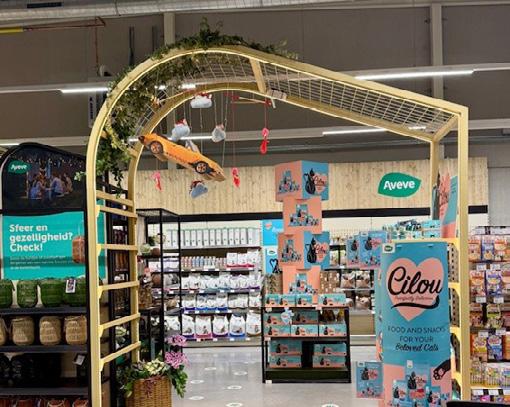
These challenges apply equally to independent operators, franchisees and stores embedded in broader retail organisations. The market has become more complex, customers more demanding and competition more diverse.
Several factors, both visible and less visible, are having a growing impact on the successful operation of garden centres. Harsher economic conditions, geopolitical uncertainty and a sharper competitive environment are all putting pressure on turnover and profitability. Climate change is making the weather more erratic and less predictable. At the same time, the sociodemographic structure of society is changing, bringing new expectations around convenience, sustainability, safety, advice and experience.
As consumers increasingly display what could be described as a ‘fortress mentality’ when shopping, seeking reassurance, comfort, protection and a greater sense of control, garden centres need to be designed with sufficient space for hobbying and leisure, while strengthening the connection to nature.
They should become places that offer the right solutions as well as legitimate, nature-based mood boosters for personal well-being.
For many entrepreneurs in this specific retail segment, the future still often feels like a matter of reading tea leaves. The recurring question remains: which store concept will keep me relevant in the market?
That question cannot be answered around the boardroom table alone, nor can it be solved in isolation by a marketing department or a creative campaign. Relevance only emerges when vision, mission, strategy, store design, assortments, services and local anchoring are seamlessly aligned and mutually reinforcing.
In the garden sector too, the post-Covid period increased the temptation to cherry-pick from other retail segments. Step by step, an average garden store became, all at once, a plant and flower shop, a pet store, a home store, a decoration outlet, a gift shop and even a hospitality destination. Some players deliberately positioned themselves as destination stores, often built around a coffee shop.
Yet the fundamental question too often remained unanswered: is this really the right direction?
The strongest formulas in the market show that success does not come from trying to be everything at once, but from consistently translating a clear and credible concept across the entire store footprint.
Kremer Naturtalente in Siegen, Germany, remains a strong reference in this respect.
The German formula rests on two solid foundations: a distinctive family DNA and one clear driving idea that can be felt throughout the store, bringing nature back into living spaces. The result is a powerful concept, but not one that can simply be copied.
With considerable patience, I went to search for garden centres in the Netherlands (Intratuin), France (Botanic) and Belgium that were willing to give their store formula fresh momentum. That search led me to Aveve Bornem, www.aveve.be/nl, a city between Brussels and Antwerp.
In March of this year, one of their pilot stores opened there, through which parent company Arvesta aims to reposition itself more sharply in the market.
Jeremy Vanneste, Store Concept Manager at Aveve, explains how Arvesta has been developing its vision for a new generation of garden centres. “From the very beginning, that vision was driven by one key word: local. For Aveve, with its network of 190 stores, that is not a random choice,” he explains. Over the years, Aveve has built a finely meshed network of stores across the whole of the Belgian territory.
The word “concept” is often used rather loosely in retail, and certainly in the garden segment.
Jeremy Vanneste points precisely to the underlying pitfall: a new store concept must never be a cosmetic exercise. That is why the Aveve formula was once again questioned in a structured way, returning to its core of Garden, Pets and Baking. These three words now form the guiding thread to the new concept.
With 190 garden centres and a high Net Promoter Score (NPS), Aveve clearly occupies a leadership position.
Yet the number of outlets represents more than scale alone. It is a distinctive strength: geographic proximity and, by definition, local anchoring. “It is precisely around that distinctive strength that we continued to shape the store formula of the future,” Jeremy emphasises.
Understanding the Local Customer
The process started with an in-depth socio-demographic analysis of the catchment area around Bornem, a low-lying river region marked by agriculture and nature.
That local analysis became the basis for defining four customer segments:
– The Self-Assured Gardener: the more experienced, results-orientated garden enthusiast who acts from knowledge and confidence
– The Sustainable Shopper: the environmentally conscious consumer seeking harmony with nature and the immediate surroundings, with attention to biodiversity and responsible gardening
– The Explorer: the socially orientated garden lover who sees outdoor space primarily as an oasis of calm and relaxation, shared with friends and pets
– The Life Enjoyer: the convenience-driven fun shopper looking for simple solutions that make it easier to enjoy the garden and pets to the fullest
From these profiles, Aveve translated customer needs into a store layout that better responds to different expectations. Assortments, focal points and services were reconsidered and supported by digital and technological tools. As a result,
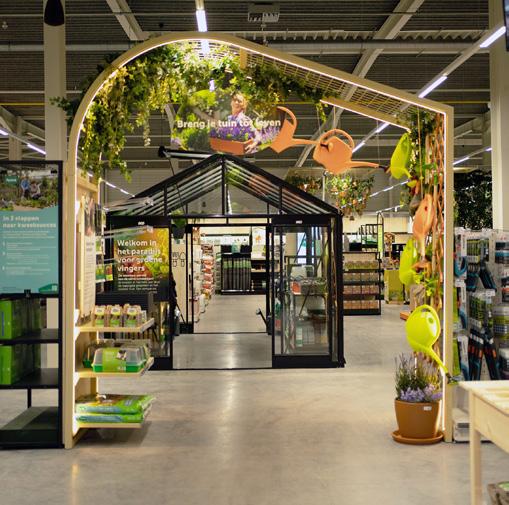
the store now offers clear points of connection that speak directly to customer motivations: the vegetable garden, the greenhouse, the world of pets, baking pleasure and other recognisable lifestyle worlds.
Entry into the store takes place through a semi-open area that immediately places the seasonal experience centre stage. The offer is aligned with the renewed positioning, with specific attention for local growers and local raw materials. In this way, ‘local’ is not merely a communication message, but a visible and tangible part of the store experience.
The Store as a Centre of Knowledge and Inspiration
The test phase is currently running in four stores, located in Flanders: Bornem, Mechelen and Bree. Following a thorough evaluation in the autumn, Aveve will determine how, and to what extent, the renewed formula will be rolled out further.
The new generation of garden centres is thus evolving from a traditional store selling plants and garden products into centre of knowledge and advice, a place of inspiration, a carrier of local identity.
Key Learning
Aveve Bornem shows how relevance in the garden segment can be rebuilt: not by adding ever more categories, but by making sharper choices, standing closer to the customer and translating the company’s DNA more consistently onto the store floor.
Jeremy Vanneste summarises their 1,800sqm store concept succinctly from the customer’s perspective: “Customers experience and live their visit to Aveve Bornem through two core values: pleasure and a tailor-made customer approach. That is the essence of garden retail”.

“Understanding
Buildings constructed prior to 1945 are traditionally built which generally means they are constructed of a solid wall and porous building materials such as stone, brick or early concrete. As a result, their structure allows moisture to be absorbed and released. Since WW2 cement has been commonly used in construction and cement render or cement pointing was used on or in porous building materials often in an effort to address damp or leaks. However, cement being non-porous, stops moisture being released. So, if in a typical pre 1945 house a porous wall is sandwiched in non-porous cement this almost always ensures that any moisture moving through the structure gets trapped, causing an epidemic of moisture-related problems. This can contribute to the deterioration of many of these buildings.
And a new threat has now arisen. The introduction of “Energy Efficiency Measures” is adding to this problem by recommending a closed insulation to the external faces of our older buildings. This mimics the cement issue and exacerbates the moisture related challenges.
This maladaptation of older buildings creates mold and other biological growths making some buildings at best expensive to rejuvenate and at worst making some completely unhabitable.
The recent “Living over the Shop” initiative while very welcome is going to put more pressure and risk of maladaptation on buildings which are typically pre-1950’s.
Some of the additional challenges in the “living over the shop” concept are access, fire exits (an occupant cannot simply walk through a shop to get to their home upstairs), noise and fire protection.
So, what can we do?
Understand your Building. Firstly, it is important to know and understand the age of your building and whether it is traditionally built and of what materials. Many of our town & village centres are Georgian or Victorian which means they are centuries old. These buildings were originally well constructed, but they may have seen changes introduced over the life of the building which may or may not be good for the original building fabric.
It is a myth that heritage or traditional built buildings are often impossible to energy upgrade, renovate and/or are more costly. We need to break the myth and misinformation and put forward a practical, cost effective and sensible approach to
refurbishing and improving the energy efficiency and comfort of these empty homes turning them into comfortable living homes. This will have a positive consequence by improving the number of people living in our towns, villages, and city centres - reducing homelessness - creating more affordable homes while reducing and meeting our low carbon commitment.
Empty homes, whether an individual building, part of a larger complex or a vacant premises over an empty or a working shop can be easily and successfully converted to suitable and comfortable homes. A holistic approach using suitable and compatible materials can achieve this effectively and affordably.
Of course, there are issues particularly with living over the shop. Many of these buildings are two or more storeys over ground which introduces conservation, universal access, reasonable energy retrofit and fire considerations. It is necessary that the related enforcement bodies under the auspicious of the Department of Housing Local Government & Heritage be brought together to identify a satisfactory approach and a set of solutions could be worked out to release this enormous potential to produce new homes while adaptively reusing.
When evaluating a suitable candidate building:
– Have a proper professional assessment made of the current condition, performance, and heritage significance of the building.
– This professional should give a holistic approach to renovating the building to a satisfactory level and with compliance.
– The professional should be able to guide you to the available grants through either conservation, empty homes, and/or energy grants/above the shop. There are many grants available which help towards the costs involved.
– Choose a builder that has experience in working with older traditionally built buildings.
– Sequence the tasks to ensure ongoing damage is arrested and then, as the building begins to dry the real work of renovation can begin.
– Retain the professional as they will keep the project on track and on budget.
– While BER values are an important aspect of our drive towards energy efficiency, the most important thing is to improve the existing value rather than aim for the highest. Research shows that the envelope of a building can be improved by a minimum of 30% with a good heat loss indicator, a heat pump will work and this alone should achieve a very comfortable and economic new home.
A study some years ago showed that by taking this simple approach to renovating traditionally built homes the reduction in our CO2 emissions will be significant. Most traditionally built buildings are from the pre-1960’s therefore the embodied carbon from the original construction is at neutral (i.e., it has “stored” carbon over so many years that its carbon “debt” is paid). Demolishing that building and building a new one to the same size, footprint and volume will take 63 years to pay back the carbon from the disposed embodied carbon and the carbon cost of building a new build using modern high-carbon building products.
We in the construction sector should be aiming to reduce our carbon footprint, which stands at 40% of the world’s carbon emissions.
There is a need to educate all professionals, construction workers, building owners and building managers to understand the correct methods of renovating our existing empty homes into comfortable and livable spaces. This will go some way to reducing the housing crisis, giving life back into our villages, towns, and city centres which in turn will regenerate into the commercial centres they once were.
There is even a greater need to upskill all elements of the construction workforce. They need to understand traditionally built buildings, to learn how to conserve traditional skills, to choose and use low carbon solutions where possible and to achieve a realistic level of energy efficiency whilst not compromising or putting at risk the original fabric of the buildings. As a process this solution will safeguard the health of future occupants of these buildings.
Peter Cox FRSA, Carrig Conservation International Limited.
Peter Cox is the founding member of Carrig Conservation International Limited and has gained over thirty-five years international experience of stone conservation in historic buildings and all types of porous building materials. He has a primary degree in Chemical Engineering and a masters in material science and has worked in the analysis of decay of masonry, the treatment of stone and mortar in conservation of historic buildings.

At opposite ends of the Atlantic, the United States and Ireland operate vastly different housing systems in terms of scale, structure and geography. One is a continental-sized market with more than 330 million people and dozens of high-growth regions. The other is a smaller (~5.4 million people), highly concentrated economy where housing performance is heavily influenced by a handful of urban centres.
Yet strip away the differences in size, and a striking reality emerges: both countries are facing many of the same housing challenges - and neither has found an easy solution.
For Irish developers, contractors, policymakers and investors, understanding what is happening in the U.S. housing market is more than an academic exercise. It offers a real-time case study of how supply constraints, cost pressures and policy decisions play out in a large, complex system. In many ways, the U.S. experience reinforces a central lesson: housing shortages are rarely caused by a single issue, and they are never solved by a single fix.
In both the United States and Ireland, demand for housing remains strong. In the U.S., population growth, internal migration, and years of underbuilding following the 2008 financial crisis have created a persistent need for new homes. Household formation has continued, even as affordability has tightened.
Ireland faces its own version of sustained demand, driven by population growth, inward migration, and a backlog of unmet need. Younger households, in particular, have faced prolonged delays in accessing homeownership.
The key takeaway is simple: in both markets, there is no shortage of people who need housing. The constraint lies in the system’s ability to deliver supply at scale.
Affordability has become the defining issue in both countries, though the mechanics differ slightly. In the United States, the rapid rise in mortgage interest rates over the past several years has significantly increased monthly payments. 30-year fixed mortgage rates in the U.S. are currently around 6.4%. Even where house price growth has moderated, the cost of financing has pushed many buyers to the sidelines. This has had a direct impact on housing activity, particularly among first-time buyers.
In Ireland, affordability pressures stem from a combination of high purchase prices, elevated rents and deposit requirements. While lending rules have helped prevent excessive risk, they have also highlighted the gap between income levels and housing costs. Current fixed mortgage rates in Ireland are around 3.5%. In both countries, affordability challenges are delaying household
formation, extending reliance on rental accommodation, and increasing political pressure for intervention.
Both markets are struggling with insufficient supply, but the reasons behind that constraint differ in important ways. The United States has a large housebuilding industry capable of producing significant volumes of housing when conditions allow. However, output is constrained by factors such as high interest rates, labour shortages, zoning restrictions and land availability. According to the U.S. Census Bureau, total housing starts in 2025 was 1.4 million (1m Single Family and 416,000 Multi-Family).
Ireland’s supply challenge is more acute due to its smaller scale and more concentrated development pipeline. Financing, planning delays and infrastructure limitations can have a disproportionate impact on national output. According to Central Statistics Office, Ireland’s housing completions for 2025 was 36,300.
What both markets share is a fundamental imbalance: demand continues to outpace supply, and the system has not been able to close that gap consistently.
Planning and
Different Systems, Similar Outcomes
Planning systems play a critical role in shaping housing supply in both countries.
In the United States, zoning laws are typically controlled at the local level. Many cities and suburban areas maintain low-density zoning, limiting the construction of apartments, townhouses or smaller-format housing. Community opposition to new development - often referred to as “Not In My Back Yard” (NIMBY) - can further delay or block projects.
Ireland operates under a different planning framework, but the challenges are familiar. Developers frequently cite lengthy approval timelines, appeals processes, judicial review risks and infrastructure constraints as barriers to delivery.
In both markets, delays translate into higher costs, increased uncertainty and reduced housing output. The specifics may differ, but the impact is the same.
Rising construction costs have become a major issue on both sides of the Atlantic. In the U.S., builders continue to face elevated costs for materials such as timber (due to transportation costs), steel, concrete, mechanical systems, appliances, and more. Labour shortages in key trades - carpentry, electrical, plumbing and HVAC - have also pushed wages higher and extended build timelines.
Ireland is experiencing many of the same pressures. The cost of materials, labour and compliance has increased significantly in recent years. In addition, the availability of skilled trades remains a major constraint, particularly given competition from infrastructure and commercial projects. For developers, the combination of high costs and constrained labour supply limits how quickly projects can move from planning to completion.
Land availability is another shared challenge, though it manifests differently in each market. In many U.S. metropolitan areas, developable land near employment centres, transport links and established communities has become scarce. This drives up land prices and often forces builders to focus on higher-value homes to maintain profitability.
In Ireland, land constraints are particularly acute in Dublin and other high-demand urban areas. The cost of land, combined with infrastructure requirements and planning uncertainty, can make it difficult to deliver lower-cost housing. In both markets, land economics play a critical role in shaping what gets built - and at what price point.
The Impact of Interest Rates and Financing Financing conditions are a key driver of housing activity. In the United States, the prevalence of long-term fixed-rate mortgages means that many existing homeowners are locked into lower rates secured in previous years. This has reduced resale activity, as households are reluctant to move and take on higher borrowing costs.
Developers, meanwhile, are facing higher costs for construction and development loans, which can limit new project starts.
Ireland operates under a different mortgage structure, but the influence of European Central Bank rate movements has similarly affected affordability and financing conditions. In both markets, higher interest rates have acted as a brake on housing activity.
Rental markets in both countries are under strain. In the United States, rents surged in many regions before moderating in some areas due to increased apartment supply. However, affordability remains a concern, particularly in high-demand urban markets.
Ireland’s rental market continues to experience significant pressure, with limited supply and strong demand driving high rents and low vacancy rates. The lack of available rental accommodation has become a central political issue.
For both countries, the rental sector is no longer a secondary consideration - it is a core component of the housing system that requires careful policy attention.
One of the most significant differences between the two markets is flexibility. The United States benefits from geographic diversity and mobility. Population and investment can shift between regions in response to affordability, job growth or regulatory conditions. Builders can allocate capital to faster-growing markets, helping to balance supply and demand over time.
Ireland has less flexibility. Its smaller size and concentrated urban structure mean that supply constraints in key areas, particularly
Dublin, have a more immediate and widespread impact. This makes coordinated planning and regional development strategies especially important in Ireland.
Despite their differences, both markets offer valuable lessons. The United States demonstrates the importance of scale, a strong private-sector building industry and the ability to respond to regional demand shifts.
Ireland highlights the role of coordinated policy, the importance of infrastructure investment and the need to treat housing as a critical component of economic development.
Both markets would benefit from:
– Faster and more predictable planning processes
– Increased investment in skilled labour and training
– Greater use of modern construction methods, especially components
– Improved alignment between policy objectives and market realities
– A stronger focus on delivering entry-level and affordable housing
The housing markets in the United States and Ireland are very different in size, structure and operation. However, they are confronting the same fundamental challenge: strong, sustained demand colliding with limited, constrained supply.
In both countries, the barriers to increased housing delivery are complex and interconnected. Interest rates, construction costs, labour availability, land economics and planning systems all play a role.
For Irish industry professionals, the U.S. experience offers a valuable perspective. It shows that even in a large, well-developed housing market, increasing supply is not straightforward.
Ultimately, the lesson is clear: solving housing shortages requires more than demand - it requires a system capable of delivering supply efficiently, consistently and at scale.
Mike McDole has 40+ years’ experience in the Lumber & Building Materials Industry in the USA and is the principal of Firing-Line LBM Advisors (outside of Boston, Massachusetts). He helps LBM dealers of all sizes with management strategies, sales strategies, salespeople, gross margin improvement, profit improvement, and more. He can also help Hardware and LBM Dealers in Ireland.

Mike can be reached at Ph. 001.774.372.11367 or at Mike@FiringLineLBM.com
There is a growing contradiction inside modern DIY and Garden stores. Across the sector, retailers are talking more than ever about inspiration, customer experience and the need to create engaging shopping environments. Conversations about younger homeowners, social media influence, lifestyle merchandising and experiential retailing are now commonplace and customer expectations around home and garden retailing have shifted significantly over the past decade. And yet, despite all of this, the reality inside many DIY stores remains remarkably familiar.
Large-format environments are still heavily organised around system-driven product categories rather than customer projects. Shopping journeys continue to reflect operational structures-built decades ago, with layouts designed primarily around replenishment efficiency, category management and internal retail logic rather than how customers actually approach projects to improve their homes and gardens.
The challenge facing DIY and Garden retail is an extremely difficult one. Physical retail is expensive to change properly, reconfiguring store layouts, redesigning customer flow, moving major categories and rebuilding operating models involves significant investment, with questionable return on investment, huge disruption and commercial risk.
As a result, many retailers have understandably focused on improving the visual layer of the store without fundamentally changing the structure underneath it. The consequence is that many DIY and Garden stores today have become cosmetically more inspirational without becoming structurally any easier to shop.
Displays may look more contemporary, decorating departments may feel more aspirational and outdoor living areas may appear more lifestyle-led, but the customer journey underneath often remains fragmented, unnecessarily complicated and often broken. Increasingly, that really matters because customers themselves are changing.
The modern DIY customer does not think in categories. Customers do not wake up on a Saturday morning thinking about paint aisles, decorating accessories, adhesives or lighting departments. They think about transforming a spare bedroom into a home office, modernising a tired kitchen or redesigning an outdoor space for entertaining friends and family.
Their thinking is emotionally driven, project-focused and outcomeled. The problem is that many stores are still organised around how retailers manage products and categories internally, rather than how customers manage projects; and that disconnect is becoming one of the defining challenges facing the sector.
One of the biggest shifts affecting DIY and Garden retail is that inspiration and influence increasingly happens long before the customer enters the store. Platforms such as Instagram, TikTok and Pinterest have fundamentally changed how consumers engage with home and garden improvement. Customers now spend huge amounts of time-consuming aspirational content, watching room and garden transformations, following influencers renovation journeys and building highly curated visions of how they want their own homes and gardens to look and feel.
In many ways, home and garden improvement retail has become part of a broader inspiration economy.
Historically, DIY retail was often functional and always necessity driven. Customers visited stores because something needed repairing, replacing or maintaining. Today, however, many projects begin with aspiration rather than necessity. Consumers are not simply purchasing products; they are buying into an idea of a lifestyle, an aesthetic or a version of their home that feels more contemporary, personal and emotionally rewarding and this has fundamentally changed the role of the store.
Customers increasingly arrive at the store already inspired. They have seen the colours they like; the wall finishes they want and the room concepts they aspire to recreate. Their expectations have been shaped not only by other retailers, but by interiors brands, boutique furniture retailers, social media creators and digitally native lifestyle businesses that understand visual storytelling exceptionally well.
As a result, DIY retailers have been forced to respond by improving presentation standards, investing in stronger merchandising and introducing more inspirational displays and room sets. In some areas of the market, particularly decorating and outdoor living, genuine progress has been made.
However, while retailers have become better at creating aspiration, many still struggle to support what comes next, and that is where the real problem begins to emerge.
One of the most interesting developments within DIY & Garden retail over recent years is the growing gap between inspiration and conversion. Retailers have become increasingly skilled at creating visually engaging environments: contemporary room sets, coordinated merchandising and lifestyle-led displays undoubtedly help capture customer attention and create emotional engagement.
Customers can now more easily visualise what products may look like inside their own homes, which is an important step forward for the sector, but visual inspiration alone does not necessarily complete a sale.
In many stores, customers still encounter operational friction almost immediately after the moment of inspiration. A beautifully merchandised room set may successfully create aspiration, but if the journey that follows feels confusing, frustrating or intimidating, conversion begins to weaken very quickly.
This becomes particularly evident within categories such as decorating, bathrooms and kitchens, where the visual presentation of the finished result has improved dramatically, while the practical execution journey often remains overly complex.
A customer may stand in front of a contemporary room display featuring acoustic wall panels, coordinated paint tones, decorative lighting and carefully selected accessories and immediately imagine something similar within their own home. Emotionally, the display has done its job extremely well.
The difficulty begins when the customer tries to move from aspiration to action. Questions quickly emerge around product location and availability, installation complexity, required tools, preparation materials and overall project confidence. Customers begin trying to calculate how products fit together, whether they are capable of completing the work themselves and what happens if mistakes are made along the way. At this point, the emotional momentum and motivation created by the display quickly begins to erode.
The sector often underestimates how intimidating DIY projects can feel for less experienced consumers. Unlike many other forms of retail, home improvement carries perceived risk. Customers worry about wasting money, damaging their homes, buying incorrect products or starting projects they may not be capable of finishing successfully. This is why inspiration without enablement can sometimes create anxiety rather than conversion.
The confidence gap
Modern consumers are often highly motivated to improve their homes, but significantly less confident in their practical ability to execute projects themselves. Social media has democratised inspiration far more quickly than practical capability. As a result, many customers now arrive inspired but uncertain, ambitious but anxious.
This profoundly changes the role of DIY and Garden Retail.
Increasingly, customers are not simply shopping for products. They are searching for reassurance, clarity and confidence that a project is achievable. In many ways, confidence has become one of the most commercially important assets inside modern retail because confident customers begin projects while uncertain customers often postpone them indefinitely.
Retailers therefore face a very different challenge from the one they faced twenty to thirty years ago. Historically, the objective may have been to provide range, availability and competitive pricing. Today, however, retailers must also simplify complexity, reduce customer anxiety and make projects feel achievable for less experienced audiences. And many current store environments are simply not designed around those objectives.
Why friction still exists
Most stores still fundamentally operate around disconnected product categories that reflect internal retail structures rather than customer journeys.
Customers are often required to move between multiple departments, mentally connecting products, accessories and materials together themselves in order to complete even relatively straightforward projects.
For example, think of a Decking Project. The basket of products required to complete the project are rarely located together: the decking planks in the outdoor timber area, the screws, lighting and decking stain each located in completely separate parts of the store.
The customer inspired by the Decking display is suddenly required to navigate exterior paint departments, hardware, building, lighting and installation materials spread across multiple disconnected areas of the store.
The burden of assembling the project effectively falls onto the customer themselves and in many cases, the customer becomes the systems integrator.
This creates friction, uncertainty and cognitive overload at precisely the point where retailers should be building confidence and momentum.
This is particularly important because home improvement projects carry emotional pressure that many other retail categories simply do not. A poor purchase decision in fashion retail may result in returning an item. A poor decision in DIY retail can potentially lead to wasted weekends, damaged homes, unfinished projects and significant financial frustration.
Retailers that fail to understand this psychology risk creating stores that inspire visually while intimidating operationally.
The next battleground
The retailers that succeed over the next decade will not simply be those with the most visually impressive displays or the broadest ranges. They will be the businesses that most effectively simplify projects, reduce customer anxiety and create confidence throughout the shopping journey.
The DIY store will not ultimately be defined by how inspirational it looks; it will be defined by how effectively it helps customers move from aspiration to execution and that represents a profound shift for the sector.
– From product-led retail to project-led retail.
– From operational efficiency to customer enablement.
– From simply selling products to actively removing uncertainty.
The retailers that thrive over the next decade are unlikely to be those with simply the largest ranges or biggest stores. They will be the retailers that best connect inspiration with execution and make home improvement projects feel achievable rather than intimidating.
Because in the end, customers are not really buying paint, tools or wall panels, they are buying the confidence to transform their homes.
Steve Collinge is an international speaker, influencer, retail commentator and executive editor of Insight DIY. You can follow Steve on LinkedIn and X.

Across Ireland’s construction, utilities and wider land-based sectors, one thing is consistent - people need the right skills to do their job safely and well.
As workloads increase and expectations rise, it’s not just about getting the job done anymore. It’s about making sure the people doing it are competent, confident and properly trained. That’s where Lantra makes a real difference.
Working with Providers and Instructors across Ireland, Lantra supports the delivery of practical, industry-led training that reflects how work actually happens on the ground. It’s not just about getting a certificate; it’s about building skills that hold up in real-life situations.
Lantra is known for its structured approach with training delivered to clear standards and backed up by quality assurance. For employers and clients, that recognition matters. It gives them confidence that the training is consistent, credible and aligned with current industry standards and expectations.
Supporting the skills that really matter In sectors where safety and competence are critical, training must be right. Employers are increasingly expected to show that staff are properly trained, particularly in areas like warehouse operations, manual handling and other safety-critical roles. Lantra helps make that easier by ensuring training is built around real job requirements and delivered consistently across its network.
For Providers, that means they’re not starting from scratch. They’re working within a recognised framework that supports quality delivery and strengthens their credibility in the market. It also reassures clients. The Lantra name is well recognised across many sectors, which helps build trust, whether they’re working with new customers or long-standing ones.
A trusted partner
Trust is something many Providers talk about. Alan Mooney, Director of AM Site Solutions, has seen it first-hand: “Working as a Lantra Provider has been a really positive experience and a huge asset to my business. The courses are practical, well designed, widely recognised and trusted by employers, which gives clients real confidence in the training we deliver. The support from Lantra has always been excellent, helping us maintain consistently high-quality, compliant training that genuinely improves safety and skills on site.”
For businesses like AM Site Solutions, this mix of practical training and recognised standards really works. It allows them to focus on delivering great training, knowing the structure, quality and recognition is already there behind it.

One of the big strengths of working with Lantra is consistency. Training is delivered in accordance with defined standards, supported by quality assurance processes that help Providers maintain those standards in practice. For clients, such reliability is important. Wherever training is delivered, there’s a clear expectation of what it includes and the level it meets. That consistency builds confidence, both in the training itself and in the Provider delivering it.
Industry perspective
Ann William from IASIS shares a similar view: “As a Lantra Provider, we find Lantra a pleasure to work with. Their team are proactive and always on hand, working with Providers and industry to identify gaps in training and develop high-quality solutions that meet both legislative and industry requirements. They regularly review training materials, which gives learners confidence that what they’re being taught is up to date, relevant and fit for purpose.”
For many Providers, this balance between clear standards and practical support is the differentiating factor in making the relationship work. It strengthens what they already do, rather than changing it.
In a competitive market, credibility is everything. Being able to offer recognised, industry-aligned training can really open doors, whether that’s strengthening existing relationships or reaching new sectors.
For businesses already delivering training, becoming a Lantra Provider adds another layer. It brings recognised courses and a clear framework to support growth.
And with increasing focus on skills, safety and competence across supply chains, demand for this kind of training is only going one way.
Strengthening the future workforce
Ultimately, Lantra’s role goes beyond individual courses. By working closely with Providers, employers and industry, it helps build a more skilled, confident and safer workforce.
For Providers, it’s not just about delivering training, it’s about being part of something that raises standards across the sectors in which they work and in industries where safety, reputation and trust matter, that’s what really makes the difference.
For further information on Lantra`s services, contact Paula Smyth, Director All Ireland, +447867908171/ 024 7669 6996, Ext 3337, DDI +442879639290, Email paula.smyth@lantra.co.uk

BRAD KEARNS Sales Lead, StudioForty9
A pattern we see repeatedly with retailers is this: revenue is climbing, order volumes are up, but the bottom line is flat or declining. It’s one of the most common, yet frustrating positions to be in. For hardware retailers investing in their online presence, it’s a risk worth understanding before it becomes your reality.
At our annual Excellence in Ecommerce 2026 conference, held at IMMA in Dublin this April, we put this challenge at the centre of the conversation. The insight that came back, consistently, was the same: most businesses try to scale before they’ve diagnosed the constraint. The result is that you don’t scale a success. You accelerate an inefficiency.
What does ‘the constraint’ actually mean?
Sometimes it can be difficult to identify what these constraints look like. It could possibly be increasing your Google ad spend without understanding your true cost per acquisition or expanding your product range online without the warehouse or logistics capacity to fulfil orders efficiently. Whatever it is, putting more money behind growth before fixing it simply means losing money faster.
The question to ask is not “How do I grow faster?” but “Where is the constraint in my business, and am I fixing it?”
Four things to get right before you scale
At the conference, we discussed a framework we call “Foundational Readiness”, built across four pillars:
– Unit Economics: Do you know the true margin on each product category online, once fulfilment, returns, and packaging are factored in?
– Customer Economics: What is your average customer’s lifetime value, and how much can you afford to spend acquiring a new one?
– Operational Readiness: Can your stock management, picking, and delivery processes handle a significant increase in online orders reliably?
– Strategic Priority: Are your ecommerce investments focused on the areas that will deliver the greatest return for your business right now?
For hardware and builders’ merchants, operational readiness is often where growth plans come unstuck. A busy trade counter is already a complex operation. Adding online order volume without the systems in place to handle it cleanly will create problems faster than it creates profit.
Your website might be a stockroom, not a shop
One of the most useful challenges we put to retailers is this: visit your own website as a customer. Does it feel like a shop, or does it feel like a well-organised stockroom? A stockroom has everything listed and categorised but there’s no sales assistant, no context, no reason to buy from you rather than anyone else.
In your physical store, a knowledgeable member of staff can show how a product works, suggest what else a customer might need, and build trust through expertise. Your website needs to do the same. Three questions that should be answered clearly on every page:
– Who is this customer and what are they trying to achieve?
– Which product solves their specific need?
– Why should they buy it from you, rather than anyone else?
Your proposition must highlight your expertise, range, service, and knowledge. Customers keep coming back because they trust you, value your expertise, and find the experience consistently good. Remember, if that proposition is not visible throughout your website, your customer cannot see it either.
We’d recommend beginning with an honest audit of your current online performance. That data will tell you where your constraint is. From there, fixing the right thing in the right order will do more for your bottom line than any increase in ad spend.
We work with hardware and home retail businesses across Ireland to build eCommerce strategies grounded in exactly this approach, profitable growth, not just growth.
To find out how StudioForty9 can help your business grow online, call +353 (0) 21 239 2349, email brad@studioforty9.com or visit www.studioforty9.com
In my last piece, I spoke about how Lean is evolving, from improving how work is done to questioning whether the work needs to exist at all. That shift is becoming more relevant every day, and sometimes simple analogies bring it to life best.
Take the humble lawn mower. Petrol lawn mowers have been around for decades, and they have improved over time. We’ve seen self-propelled versions reduce effort, mulching options remove the need to collect cuttings, and ride-on mowers increase speed and comfort. All useful advancements.
But these are incremental. The core process hasn’t really changed. Someone still needs to be there. The mower still needs fuel, maintenance, storage, and timing. The work is still fundamentally the same. As a Lean consultant, if you gave me a petrol mower process, I’d start improving it. And I did.
I made sure there were always two petrol cans, so we never ran out mid-job. I scheduled an annual service before the season started. I built a compost heap close to the garden. I even designated a specific spot in the shed, so everything was easy to access.
All classic Lean thinking, reduce waste, improve flow, make the job easier. And it worked.
Cutting the grass became quicker and somewhat easier. But even with those improvements, there were still parts of the process that were hard to fix.
Timing, for example.
If you were going on holiday, you had to cut the grass beforehand, otherwise you’d come back to something resembling a meadow. If you didn’t, the first job when you returned was a heavy cut. The process still depended on you being there at the right time. The work still existed.
Now introduce a robotic lawn mower, such as the Eufy one I use. Everything changes.
There’s no weekly mowing job. The mower runs continuously, little and often. There’s no panic before the holidays. No catch-up when you return. The lawn is just maintained.
Many process steps disappear:
– No petrol management
– No setup and pack-away – No manual mowing – No dependency on timing or weather
Instead of improving the process, the process is largely removed. And what’s left is a different type of work, setup, occasional maintenance, and oversight. This is exactly what is happening in Lean today.
Traditionally, Lean has focused on improving workflows, making tasks faster and more consistent. That still has value. But increasingly, the bigger opportunity is to ask: why does this work exist at all?
In many small businesses, there is still a huge amount of “petrol mower” work, but it often shows up as legacy processes or working around systems that were never quite right.
We get used to this. We improve processes. We become comfortable with the new process. But like the petrol mower, even a well-optimised process can still be inefficient because it exists in the first place. Modern digital tools, automation, integration, and AI are the robotic mower equivalent. They remove the need for large parts of the work altogether.
The challenge is this: what motivates us to change?


JOHN O`SHANAHAN Consultant, LeanBPI
Most of the time, it’s external. A neighbour gets a robotic mower. A colleague mentions a new system. You see something working differently and realise there’s another way.
The same applies in business. Are we aware of the “robot mower equivalents” in our own processes? Often, we’re not. Because we’re busy improving what we already have. So how do we find better ways? We have to get out of our own processes. Talk to other business owners. Attend events. Share experiences. That’s where new ideas come from.
In my experience, the biggest breakthroughs come when we move beyond traditional improvement and into what I’d call advanced process improvement - the equivalent of a robot mower, where the focus shifts from improving the work to removing it altogether. But that kind of change rarely starts inside the business. It’s usually driven by people who are willing to challenge the status quo - often through conversations, exposure to others, and seeing different ways of working. When someone questions not just how a process is done, but whether it needs to exist at all, that’s what drives real change.
Lean hasn’t changed in its principles. It’s still about maximising value and minimising waste. But the tools available today allow us to go much further than before.
Sometimes, the best improvement isn’t another refinement of the process.
It’s realising there might be a completely different way of doing it altogether.
For further information contact John O'Shanahan at joshanahan@leanbpi.ie, ph. 087 7444 887 or visit www.leanbpi.ie


CATHERINE LOCKHART
COO, Big Red Cloud Group and Turbo Inventory
In the hardware industry, one key driver of success lurks behind every box in the warehouse and each item on the retail floor.
It’s good inventory control.
How best to manage stock has, historically, felt like a binary choice for most hardware businesses. On one side are spreadsheet superheros, who keep everything running on Excel, caffeine, and sheer institutional memory. And on the other?
Enterprise Resource Planning (ERP) software that sometimes comes with more features than some Irish SMEs require.
Retailers, distributors, and manufacturers increasingly feel caught between the two. The manual processes that held stock management together in the past are stretched beyond their limits.
‘Good
The thousands of Irish accounting and bookkeeping practices who use our products point out that, when stock control is weak, it creates a profit vs. cash gap. Businesses might see healthy profits in management accounts but find that cash flow is under constant pressure because too much capital is tied up in stock that hasn't moved in 180 days.
These aren't just accounting issues. They’re commercial bottlenecks. Think of a client who demands proof of completed fieldwork on their invoice before making payment. Or the frustration of an omnichannel retailer, when a large online order includes products that actually sold out over the counter ten minutes earlier.
When software is too complex, no-one in the business wants to use it. When it’s too simple, your service quality suffers. The goal is what we call a Goldilocks ERP: software that is just right for the scale and economics of an Irish hardware business.
I saw our customers struggling with inventory management frustrations. And so, we spent the last few years learning how we could deliver an accurate, flexible, low-cost solution that would integrate seamlessly with existing software. I have the scars to prove it!
Turbo Inventory is our Goldilocks, providing an easy-to-use, reliable alternative to manual processes, while retaining the simplicity that SMEs need. It’s an inventory and business management platform designed for growing Irish hardware, and
builders’ merchants who need an efficient and cost-effective system that can keep track of parts, stock, and jobs, and scale up with them.
We’ve worked especially hard to develop a swift onboarding service for Turbo Inventory, meaning that customers can now be up and running with it in as little as four weeks.
Our Local Edge
It goes without saying that the Irish hardware trade has unique requirements, particularly regarding revenue compliance and the specific way trade accounts and supplier relationships are managed.
I also believe that for merchants, proximity matters. When a sync error occurs or a VAT report doesn't look right, the last thing you need is a support query that disappears into a different time zone.
Knowing that your inventory system integrates seamlessly with your accounting software gives you a competitive advantage - as we’ve ensured with the link between Turbo Inventory and Big Red Book, AccountsIQ, Xero, Quickbooks, Shopify and WooCommerce.
From Fairytale to Fulfilment
If you feel that your business is hitting a ceiling because of manual processes that can no longer keep pace, the answer should be tailored specifically to your needs, from a provider who offers support throughout the transition from manual to automated - and beyond.
This isn’t a process that has to happen overnight, it starts with getting the basics of stock accuracy right, then layering in mobile barcode scanners, and eventually moving toward full integration of your sales, finance, and workshop processes.
With Turbo Inventory, we aren't just installing software. We’re giving hardware industry owners the clarity and control they need to scale with confidence.
Visit www.turboinventory.com/merchants/ or feel free to call me on 01 204 8300 to learn more.
Catherine Lockhart is the COO of Big Red Cloud Group and Turbo Inventory, providing accounting and inventory solutions to over 10,000 SMEs across Ireland and the UK.



Let’s be honest, the days of selling five different tubes to do one job are numbered. Trades want one product that just works and that’s exactly why hybrid adhesives and sealants are flying off shelves.They’re fast, strong, versatile, and easy to recommend. No fluff. No confusion. Just results.
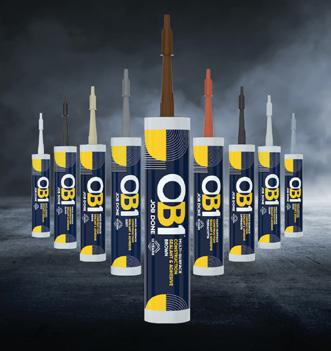
So, What’s the Big Deal with Hybrids? Hybrids bring together the best of silicones, acrylics, polyurethanes and epoxies in one reliable solution. They stick, seal, flex and last. From bathrooms to roofs, windows to floors, they cover more jobs with less hassle, a clear win for busy trades.
Built for Real-World Jobs
Trades don’t need delicate, specialist products that only work in perfect conditions. They need something that performs first time, every time.
Hybrids deliver:
– Serious grab
– Long-term flexibility
– Durability in harsh conditions
– Resistance to weather, chemicals and movement
The result is fewer call-backs, less stress & better results on site.
Over the last few years, hybrids have gone from “nice to have” to essential kit. They perform in heat, cold and damp, stay flexible for movement joints, resist UV and
weather, and save time by reducing the number of products needed. They’re also cleaner to use, cutting down on mess and waste.
Merchants See It Too
This isn’t just a trend; it’s backed by demand. Hardware Retailers & Builders' Merchants are seeing hybrid adhesives and sealants outperform traditional products. According to GFK, in the U.K. the category has doubled in size since 2019, making it the fastest-growing segment in the market. Trades ask for them because they trust them.
OB1® – Making Its Mark in Ireland
OB1® Multi-Surface Construction Sealant & Adhesive is now one of the fastestgrowing hybrids in Ireland and the UK.
It’s built for versatility and performance:
– Bonds to almost anything, even underwater
– Suitable for lead, PVC, glass, mirrors, fibreglass and timber
– No odour, shrinkage or cracking
– Paintable and food-safe
– Resistant to UV, fungi and bacteria
– Performs from -40°C to +120°C
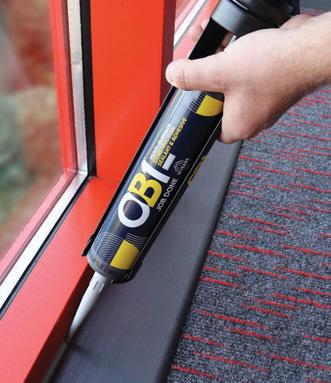
Performance Without the Price Pain
With rising material costs, trades are watching every euro. OB1 delivers highend performance at up to 25% less than comparable brands, helping maintain margins without compromising on quality.

OB1 Expands the Range with HeavyDuty Cleaning Wipes
No job ends when the adhesive goes down, and OB1 is addressing that final step too. The introduction of OB1 HeavyDuty Cleaning Wipes expands the range into clean-up, offering a practical solution for everyday site conditions.
Designed for tough environments, the wipes cut through sealants, paints, oils, grease and grime with ease. They’re suitable for hands, tools and a wide range of surfaces, making them a versatile addition to any van or toolkit.
Key features include:
– Powerful cleaning action for stubborn residues
– Removes wet paint, sealants, oils, grease and bitumen
– Multi-use across hands, tools and surfaces
– Strong, durable material that holds up during use
– 100% biodegradable, without compromising performance
The benefit is straightforward: faster clean-up, less downtime, and a more professional finish.


Pipelife are one of Ireland’s leading manufacturers and providers of plastic piping systems. They specialise in the extrusion of polyethylene (PE) pipes and offer industry-leading products for the heating and plumbing, water pressure, electricity, cable ducting, gas and agricultural sectors.
They have expanded their product portfolio and market footprint in 2021 with the acquisition of Cork Plastics. The product lines of Cork Plastics were a great fit for Pipelife Ireland's extensive catalogue, and as a result of this acquisition, they have increased their sales presence in the building industry in Ireland, the UK, and Mainland Europe for roofing, rainwater, and exterior cladding systems.
With its extensive selection of rainwater systems, Pipelife is the go-to brand for premium PVC-U roofing products for new construction and home renovation projects. Due to their reputation for high-quality finished products, technical excellence and competitive pricing, the company has become one of the leading suppliers of PVC-U plastic building products.

Their selection of fascia boards is used to cover existing timber in new construction projects, complete replacements, and renovations. Their PVC-UE Cladding Systems can be installed vertically, horizontally, or diagonally over brick, block, masonry, and timber-framed walling to provide a stylish and protective external facing for structures.
uPVC fascia, soffit, window boards, external cladding, and gutter systems are just a few of the many products they provide. Their materials come in a broad range of profiles and colours to fit any construction project and provide homes, businesses, and industrial structures with character and unique identity.
Pipelife carry an extensive range of rainwater systems - Xtraflo, Niagara, Hi-Cap, Half Round, Square and MiniFlo - with a wide choice of traditional and modern profile designs, as well as a range of colours to suit all tastes and applications. Some examples of these are:
– Hi-Cap, a semi-elliptical profile with a high capacity suitable for large roof areas.
– Niagara Ogee, a traditional Ogee-style profile - probably the highest capacity domestic PVC-U Rainwater System on the market.
– XtraFlo, a 170mm semi-elliptical System, for large Commercial/Industrial buildings, which links to a 110mm downpipe system.
The Pipelife Roofline product line is rounded off with a wide variety of rigid PVC-UE construction profiles and co-extruded cellular foam.
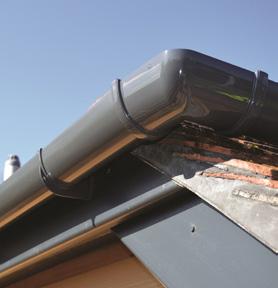

With the initial capital investment of "30m now well underway to expand and upgrade their existing production facility at Little Island, Cork. When completed, it will be one of the most modern facilities within the Pipelife Group. A total of 35 state-of-the-art extrusion lines with the newest automation technology will be operational this year, with an annual production target of over 45,000 tons.
This substantial expenditure on new machinery and equipment, staff, and services is unprecedented in our industry and will establish their Irish operations as a world-class manufacturing facility for many years to come.
The investment further demonstrates Pipelife's long-term dedication to the Irish market, and the company's size, modernity, and range of products will continue to make it a highly desirable supply chain partner for the nation's main builders, installers, and merchant groups.
Contact Pipelife
If you would like more information from a member of their team, please call: +353 (0) 21 451 0600 / 021 488 4700 or email them at: ireland@pipelife.com. You can discover their full product range at: www.pipelife.ie and www.pipelifeeco.ie
In 2026, your clients are demanding measurable sustainability actions...
In 2026, your clients are demanding measurable sustainability actions...
We understand the pressures you face to design lower-carbon buildings to meet client and regulatory requirements.
We understand the pressures you face to design lower-carbon buildings to meet client and regulatory requirements.
In a world full of misleading green credential claims, there‘s often a lack of clarity when it comes to specifying low-carbon materials.
In a world full of misleading green credential claims, there‘s often a lack of clarity when it comes to specifying low-carbon materials.
Pipelife Ireland has secured Environmental Product Declarations (EPDs) for its PVC, HDPE & MDPE Product Range — the frst Irish‑made pipes to feature independently verifed embodied‑carbon data.
Pipelife Ireland has secured Environmental Product Declarations (EPDs) for its PVC, HDPE & MDPE Product Range — the frst Irish‑made pipes to feature independently verifed embodied‑carbon data.
When you specify Pipelife, you can do so with confdence. Our newly published Environmental Product Declarations (EPDs) provide transparent, independently verifed data on environmental impacts across the entire product life cycle.
When you specify Pipelife, you can do so with confdence. Our newly published Environmental Product Declarations (EPDs) provide transparent, independently verifed data on environmental impacts across the entire product life cycle.
Pipelife supports your sustainability journey with high‑quality products and independently verifed data you can trust.
Pipelife supports your sustainability journey with high‑quality products and independently verifed data you can trust.
Our EPDs will help you:
Our EPDs will help you:
• Make informed product selection choices early.
• Make informed product selection choices early.
• Justify product selections with verifed documents.
• Justify product selections with verifed documents.
• Meet your project sustainability targets.
• Meet your project sustainability targets.
• Enhance clarity with unambiguous, measurable environmental product data.
• Enhance clarity with unambiguous, measurable environmental product data.


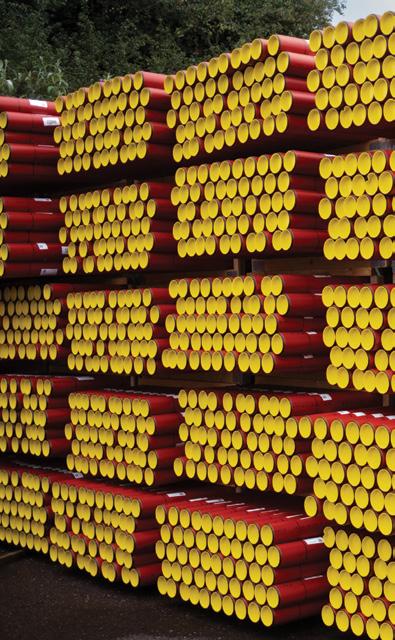

No two projects are exactly the same. That is why choosing the right rainwater system matters, and why merchants can play an important role in helping their customers select the best solution for the job.
To support these conversations, Wavin Ireland has created a practical Rainwater Selection & Installation Guide, now available on the Wavin Ireland website. Designed as a quick-reference resource, the guide helps merchants and installers identify the most suitable Wavin rainwater system based on project type, roof area, rainfall requirements, appearance and installation needs.
Wavin Rainwater systems are engineered to ensure reliable performance across Irish residential, commercial and industrial projects. The range includes RoundLine, SquareLine, StormLine and DeepLine for domestic and residential applications, with SuperLine and RoofLine suited to industrial and commercial projects.
The guide sets out the key questions to consider when selecting a system including:
– What type of building is involved?
– What roof area needs to be drained?
– What level of rainfall must the system manage?
– Are there existing drainage connections?
– Is the project a replacement and have there been issues with the previous system?
These are important considerations, particularly given Ireland’s weather conditions. Wavin Rainwater systems are engineered to handle up to 30% more rainwater than similarly sized systems, thanks to features including the hydrodynamic running outlet.
Other design details include concealed sockets to hide roughly cut downpipe ends; wide retained seals to allow for thermal expansion and Wavin’s Flexclip jointing mechanism, which helps create a secure, watertight fit.
For merchants, the new guide provides a useful way to support customers and help ensure they have enough information to select the correct system and accessories for their project. It includes clear selection guidance, system capacity information, roof area calculations, installation advice, bracket spacing, downpipe requirements and practical tips for installers.
To download the Wavin Ireland Rainwater Selection & Installation Guide and find out more about Wavin’s rainwater systems, visit: wavin.com/ie/solutions/rainwater-guttering


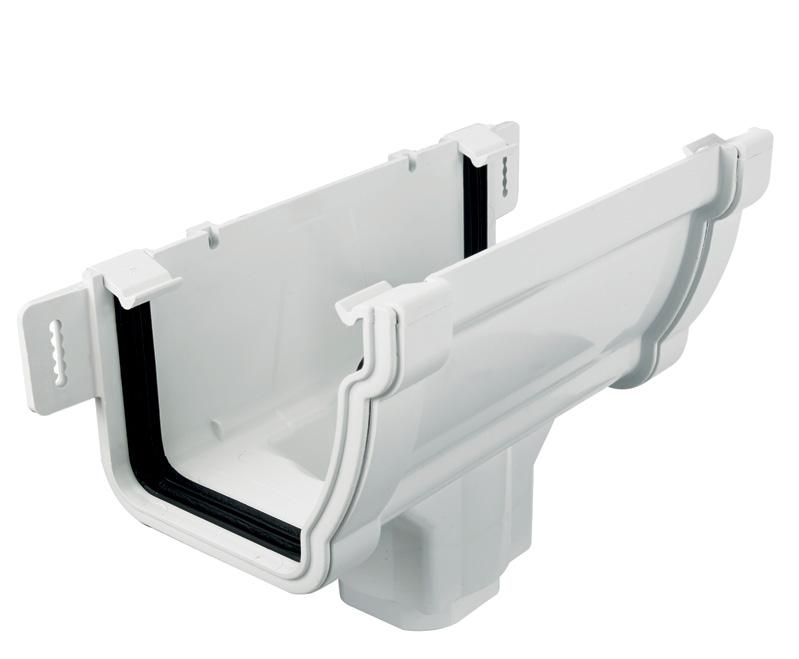



Based near Carrick on Shannon, Co. Leitrim

















Our Business Electricity Plans are designed for you and your business
We can help you better manage pricing volatility in a way that suits your business.
Choose energy that saves, protects and sustains with Pinergy.ie/business-electricity/ Powering energy transition


Save time, money and reduce risk by having Brinks Cash Services collect your lodgements directly from your store
Our Services include:
• Low Cost Cash Processing feesmake significant savings on bank charges
• Secure Cash/Cheque Collections directly from your premises
• Free Delivery of Coin/Note floats with collections
• Full range of smart safe-end to end solutions supplied
Avail of a brand new A nity Deal for HAI members
For further information contact Brinks Cash Services Ireland
Customer Services
T: 0818 111 330 E: nationalservicecentre@brinks.com





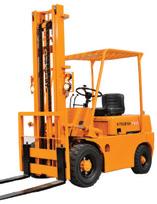
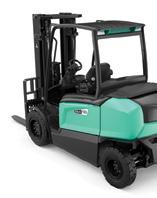



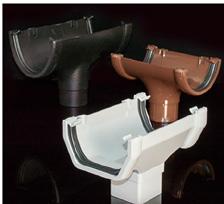



We o er a comprehensive range of products including uPVC fascia, so t, window boards, external cladding, and gutter systems. Our products add style and de nition to domestic,
We o er a comprehensive range of products including uPVC fascia, so t, window boards, external cladding, and gutter systems. Our products add style and de nition to domestic, commercial and industrial buildings, and are available in a wide variety of pro les and colours to suit any construction project.
and industrial buildings, and are available in a wide variety of pro les and colours to suit any construction project.
external cladding, and gutter systems. Our products add style and de nition to domestic, commercial and industrial buildings, and are available in a wide variety of pro les and colours to suit any construction project.
Our range of rainwater systems – Xtra o, Niagara, Hi-Cap, Half Round, Square and MiniFlo
Our range of rainwater systems – Xtra o, Niagara, Hi-Cap, Half Round, Square and MiniFlo
o er a wide choice of pro le design, both traditional and modern, in a range of colours to suit all tastes and applications.
o er a wide choice of pro le design, both traditional and modern, in a range of colours to suit all tastes and applications.
Our range of rainwater systems – Xtra o, Niagara, Hi-Cap, Half Round, Square and MiniFlo
o er a wide choice of pro le design, both traditional and modern, in a range of colours to suit all tastes and applications.