
GW confirms FY2027 budget cuts, citing enrollment decline
GW’s budget will see cuts for the second fiscal year in a row as the University bears the brunt of enrollment declines and a structural budget deficit, officials said at Friday’s Faculty Senate meeting.
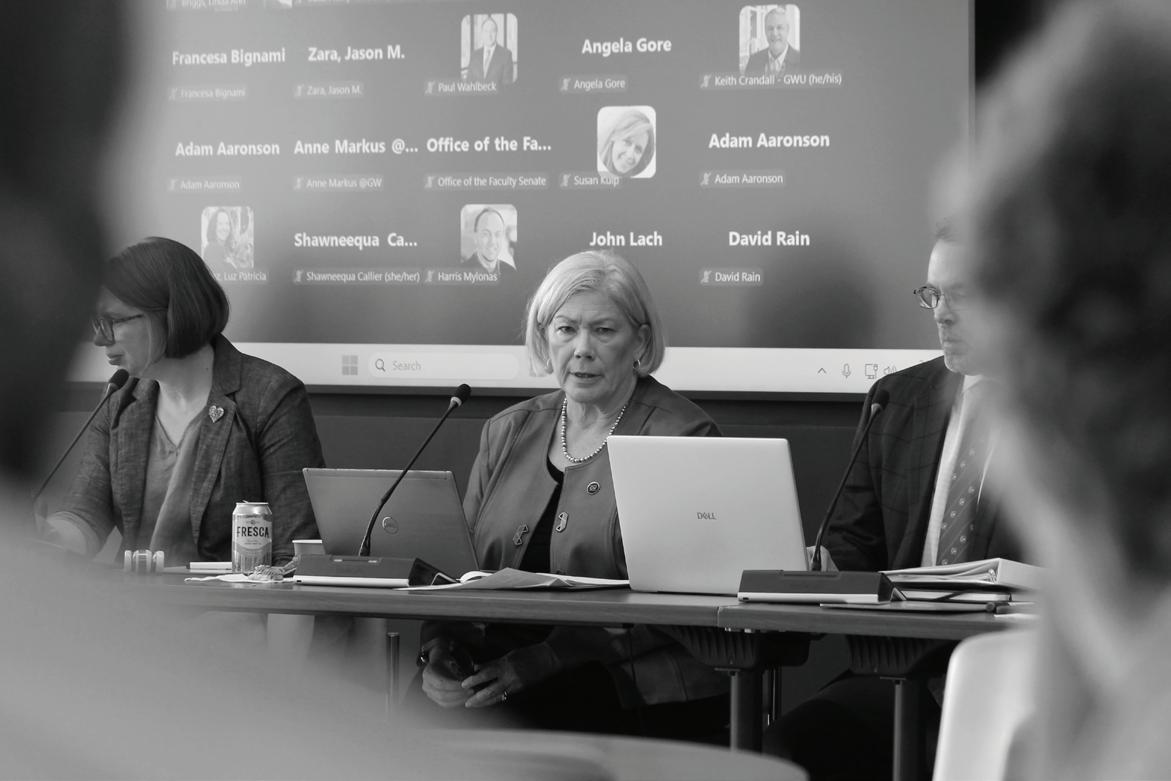
Interim Provost John Lach told senators that officials gave deans their “margin targets” for FY2027 and directed them to engage students, staff and faculty, where appropriate, about potential budget cuts ahead of the Board of Trustees’ May approval of the FY2027 budget. He said projections remain a “moving target” and that officials’ January directive to model 5, 10 and 15 percent cuts was only to “get ideas on the table” and did not reflect the final budgets schools would be operating under.
The looming cuts follow the 3 percent reductions officials made to the FY2026 budget — which resulted in the University laying off 43 staff members, implementing a hiring freeze and making significant cuts to student services — to address a structural deficit.
Lach’s statement marks the first time officials confirmed they would make cuts to the FY2027 budget after officials teased reductions in January by instructing school and unit leaders to craft contingency plans.
University President Ellen Granberg said in January that the directive, led jointly by Lach and Chief Financial Officer Bruno Fernandes, would help officials plan ahead if international application rates continued to lag amid President Donald Trump’s travel bans and visa policy changes as GW’s preliminary applicant data indicated.
Lach at the Friday meeting said GW is continuing to see the impacts of declining enrollment in “many programs,” and
the trend of the past few years has been “turbulent” as enrollment declines have continued, which required officials to set up contingencies for the upcoming fiscal year so they could make adjustments “late in the game” if they fail to meet revenue targets.
GW’s international student population fell by more than 10 percent in 2025 due to Trumpera visa restrictions, travel bans and changes to federal funding eligibility for certain graduate programs, resulting in a decline
in revenue across schools as international students typically pay the full cost of attendance. Granberg in January said the University had received about 50 percent of the total graduate applications officials expect for fall 2026, noting that international applications are down overall for both undergraduate and graduate programs, which she said could impact net tuition revenue in FY2027.
Sophomore MJ Childs rides outsider wave to claim SGA presidency as voter turnout swells
ELIJAH
EDWARDS ASSISTANT NEWS EDITOR
Students overwhelmingly elected sophomore and Student Government Association outsider MJ Childs as their next president on Saturday after he campaigned on a platform demanding transparency from administrators about GW’s rising cost of attendance.
Childs, a creative writing and marketing major, captured 57.13 percent of the vote in the first round of ranked-choice voting, surpassing SGA Vice President Liz Stoddard’s 31.59 percent and junior Alfred Lewis Jr.’s 7.75 percent of the vote, according to the Joint Elections Commission’s unverified election results. Childs pledged to
work with officials to make University communications more empathetic amid federal uncertainty from President Donald Trump’s administration, boost campus engagement through new student committees and combat cuts to student services as GW’s cost of attendance nears $100,000. “I want to thank my amazing team,” Childs said. “You guys really pushed us throughout the whole entire way.” Childs is the first SGA outsider to clinch the presidency since students elected Residence Hall Association President Arielle Geismar in 2023. He is the first sophomore to win the presidency since 2024, when then-SGA Senator Ethan
Faculty and students said GW’s undergraduate GWTeach program is in limbo after three of four program leaders received imminent termination notices amid the school’s restructuring, leaving the program with one remaining tenured program director.
Graduate School of Education and Human Development’s Interim Dean Lionel Howard notified GWTeach’s three contract faculty — master teachers SuJin Choi, Meghan Hollibaugh Baker and co-director Jonathon Grooms — in a January email obtained by The Hatchet that said GSEHD would not be renewing their contracts due to “financial barriers” at the end of the spring semester. Five GWTeach students and two faculty members said administrators have not communicated any information about the program’s future besides the email, adding that the faculty departures could signal the program’s end.
prevailed in the vice presidential race,
securing 1,377 votes, or 52.61 percent, defeating her opponent
Alum sues GW alleging discrimination, defamation after graduation speech
A 2025 alum filed a lawsuit against GW, several of its senior officials and her former employer Wednesday, alleging retaliation and discrimination after she used her graduation speech to urge the University to divest from companies tied to Israel.
Cecilia Culver, who officials barred from all GW campuses and Universitysponsored events last May after she deviatedfrom her preprepared graduation speech at one of the Columbian College of Arts & Sciences undergraduate ceremonies, is suing the University, her former employer Ernst & Young and a dozen GW and EY officials in the D.C. District Court for defamation and violating her civil rights. Culver alleges that GW and EY violated the Civil Rights Act of 1964, the D.C. Human Rights Act and D.C. common law, claiming University officials disseminated false statements about her following her speech and that EY terminated her employment over her association with and advocacy for Palestinians, Arabs and Muslims.
Culver is seeking financial compensation for the economic and emotional harm she has experienced over the last year, acknowledgment from the University and EY that they violated the law and an end to her ongoing ban from campus. She is also seeking restoration of her CCAS Distinguished Scholar status, from which she says she lost the unspecified “full benefit of” as a result of the University’s response, termination of the University’s alleged ongoing investigation into her conduct at the ceremony and punitive damages against GW and three officials.
Culver filed the 167-page suit, which details 19 charges for instances of racial discrimination, civil rights conspiracy, breach of contract, breach of confidential relationship and defamation, in the U.S. District Court for D.C. on April 15. In addition to GW and EY, she is also suing University officials in their individual capacities, including University President Granberg, Board of Trustees Chair Grace Speights, former Provost Chris Bracey and CCAS Dean Paul Wahlbeck. The suit also names CCAS Associate Dean of Undergraduate Students Rachel Riedner, Vice Dean for Programs & Operations Kim Gross and University spokesperson Kathy Fackelmann. Culver also named Jason Morrissey, Andrew Phillips, Andrea Stempel, Anthony Jordan and Robert Carroll, all employees at EY, as defendants in the suit. A University spokesperson declined to comment. None of the named GW or EY officials, nor EY’s press contact, returned a request for comment.
GW moves previously public documents behind login walls
GW has moved several types of previously public documents behind login walls over the last few weeks, restricting access to materials on enrollment, faculty compensation and student conduct.
A University spokesperson declined to confirm officials’ non-renewals of the three individuals’ contracts and said GW has not made a final decision on the future of the program. The spokesperson said officials are focused on continuing instruction and student support as GWTeach undergoes a “period of change.”
“Any adjustments will be made with careful attention to academic quality and student progress, and will be communicated as decisions are finalized,” the spokesperson said in an email. They said the University is
“continuing to work” with GWTeach leadership by holding discussions with faculty, staff and students. Howard’s notification comes after GSEHD officials sent possible termination notices to 25 percent of the school’s contract faculty in June as part of restructuring.GSEHD Interim Academic Dean Jennifer Clayton sent out an email in March to the contract faculty detailing two attachments with information to leave.
The University in recent weeks has moved certain public files containing data about enrollment, faculty compensation and student conduct — like its Core Indicators report, Faculty Senate agendas and the Student Organization and Hazing Transparency report — from publicly accessible PDF links to Boxprotected files, requiring viewers to sign into their GW accounts before accessing the information. University spokesperson Julia Garbitt said officials moved certain materials to Box as part of a routine review of how they store and share institutional data and documents based on their sensitivity, purpose and intended audience.
Box is the University’s main filesharing and cloud-storage service, available for free to all faculty, staff and students. The University’s datagovernance and data-classification guidance encourages community members to share regulated and restricted data through Box sharing.
The guidance defines regulated data as information protected by local, national or international law and that could pose a severe risk to the University if inappropriately accessed, like student academic records, individuals. Restricted data is deemed confidential due to University policies but may be accessed by appropriate faculty, staff, students or other users, including payroll and tax information, legal contracts and facilities records, per the guidelines.
Garbitt declined to comment on why officials began using Box to store the Core Indicators report, Faculty Senate agendas and the Student Organization and Hazing Transparency Report and what other University documents officials have put under Box protection.
Garbitt said sharing files through Box allows the University to ensure information remains current and accurate, provide access to documents based on the data that’s involved, reduce reliance on outdated or duplicated copies of documents and support appropriate use by audiences.
“The University remains committed to transparency and continues to make a wide range of information publicly available, while also using tools like Box to help maintain accuracy and appropriate access,” Garbitt said.
Fitzgerald narrowly won. SGA Sen. Aicha Sy (CCAS-U)
SGA Sen. Cheydon Naleimaile-
Evangelista (CCAS-U) by a 7.72 percent margin, according to the unverified results.
PARIS ALBRECHT STAFF WRITER
RYAN SAENZ ASSISTANT NEWS EDITOR
TYLER IGLESIAS SENIOR NEWS EDITOR
NICHOLAS WARE | STAFF PHOTOGRAPHER
A GW logo.
CARSTEN HOLST | STAFF PHOTOGRAPHER
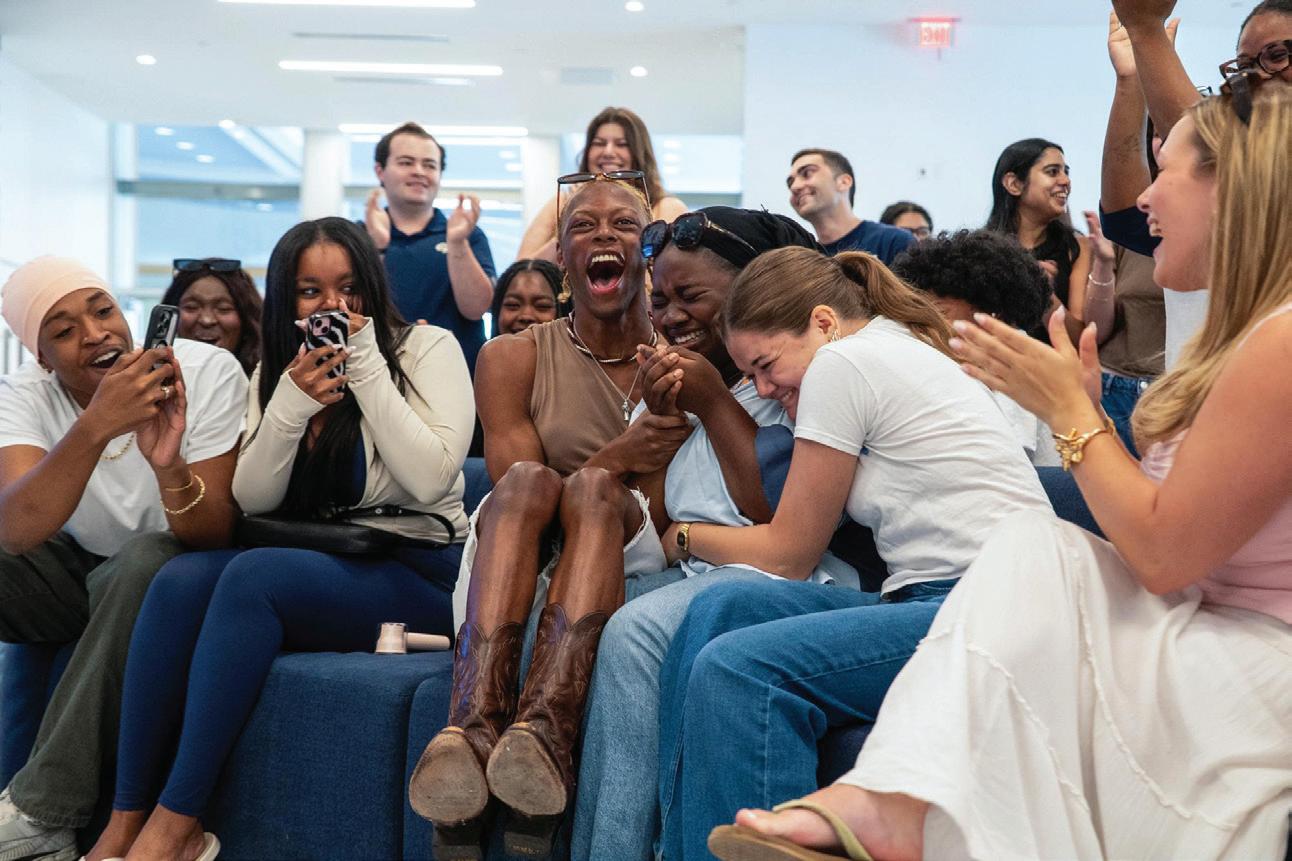
Student Government Association President-elect MJ Childs and Vice President-elect Aicha Sy celebrate their victories on Saturday.
ERIKA LOPEZ-CEPERO | PHOTOGRAPHER
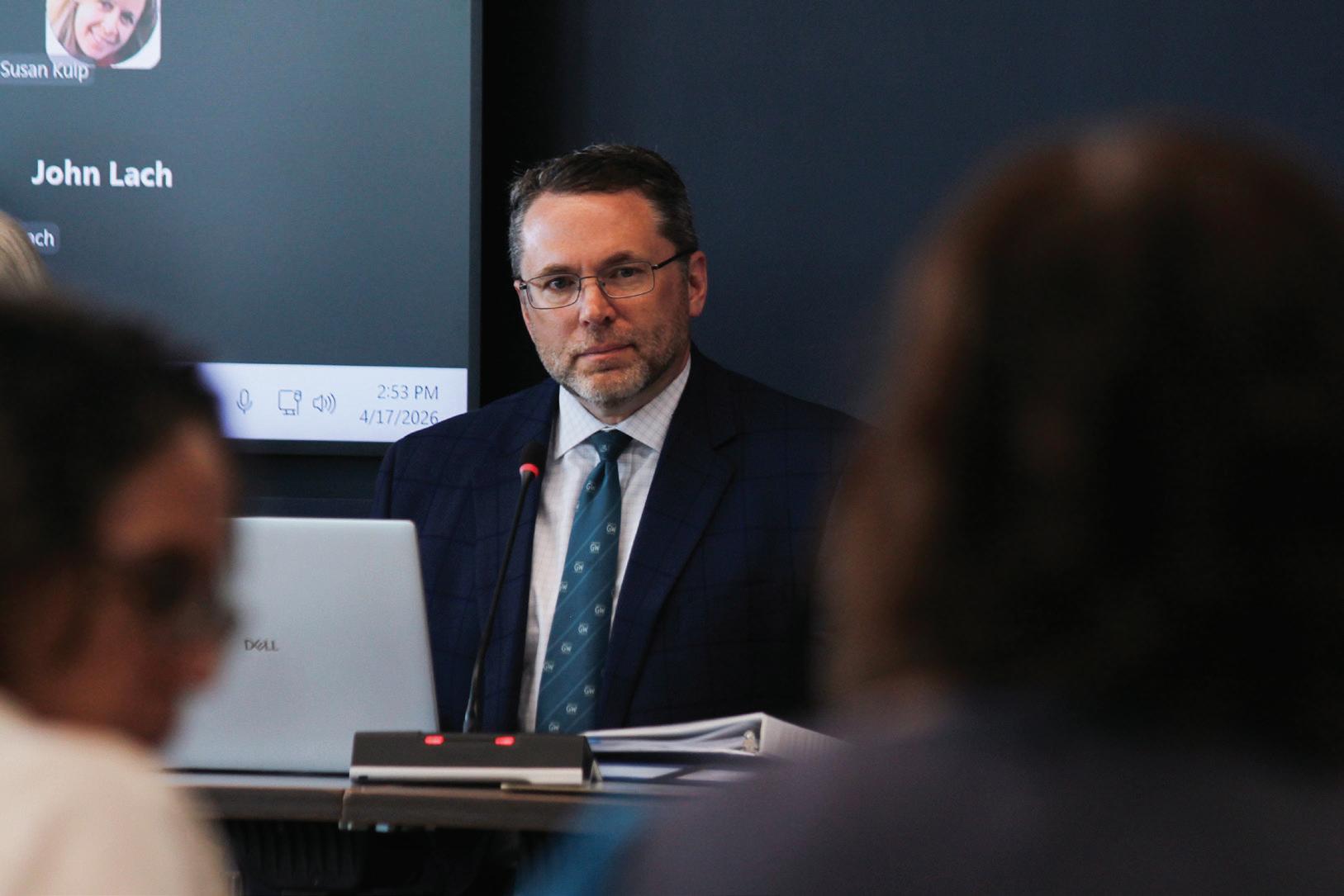
Interim Provost John Lach at a Faculty Senate meeting Friday.
Restaurant industry leader fills West End seat on ANC after yearlong vacancy
Rob Gifford joined the Foggy Bottom and West End Advisory Neighborhood Commission this week, filling a seat former Commissioner May Yang vacated in July 2025.
Gifford, who spent nearly two decades leading the Michigan Restaurant Association before serving as president of the National Restaurant Association Educational Foundation for five years, was sworn in by Ward 2 Councilmember Brooke Pinto on Monday and will represent the northwest corner of the ANC — covering a bulk of the West End — which has gone nearly a year without representation. Filling one of four vacant seats across the nine-member commission, Gifford said he hopes to bring stability to a body that has struggled with infighting and vacancies and to build consensus among commissioners with divergent interests.
“First and foremost, it was to give the West End a voice on the ANC that it hadn’t had,” Gifford said, describing why he ran.
His district runs from Rock Creek on the west to 23rd Street on the east, and from P Street on the north to L Street on the south, including Francis Field, the Park Hyatt and Trader Joe’s, as well as the Westbridge Condominiums — where Gifford lives.

those of the ANC.
CRIME LOG
DRUG LAW VIOLATION
Shenkman Hall
4/11/2026 – 8:45 p.m.
Closed Case
The GW Police Department and an administrator on call responded to a report of an odor consistent with the smell of marijuana. The AOC made contact with a GW student and several non-GW-affiliated individuals. One of the non-GW-affiliated individuals claimed ownership of the contraband, after which officers escorted them off GW property and issued a bar notice. Officers transported the contraband to a secure location. Case closed. Referred to Conflict Education & Student Accountability.
PUBLIC DRUNKENNESS
Shenkman Hall
4/12/2026 – 12:56 a.m.
Gifford said he discovered the vacancy while reading about a Georgetown ANC district and decided to start collecting signatures to give his community a say in local governance.
Gifford’s membership drops the number of vacant seats to three out of nine single-member districts, offsetting a former commissioner’s resignation early this month, which brought the commission to five members, the lowest number of members the ANC can have without losing a quorum. Commissioners and civic leaders have said for years the body’s infighting deters recruits from filling its nine seats, leaving large swaths of the neighborhood without direct representation. He said the commission’s mix of constituents, including
students, unhoused residents at the Aston, renters and residents of high-end condominiums, complicates identifying and working towards shared goals.
“We have incredible diversity in this ANC,” Gifford said. “And sometimes with that type of diversity, it’s harder to find commonality.”
Gifford said his roughly 15 years leading the National Restaurant Association’s charitable arm and his leadership of the 158-unit Westbridge Homeowners Association will guide him as he seeks to build consensus on the commission. He said many of the HOA’s activities and concerns, like public safety, trash collection and transportation, overlap with
Officials unveil Office of Equal Opportunity
PARIS ALBRECHT STAFF WRITER
GW created a new office set to open May 1 dedicated to simplifying the discrimination, harassment and bias complaint process, officials announced Thursday.
Interim Provost John Lach and Chief of Staff Scott Mory announced in a community-wide message officials will launch the Office of Equal Opportunity, which will comprise of the Title IX office, parts of the Equal Employment Opportunity and Access office in GW’s Human Resource Management and Development and the Office of Access and Opportunity, to serve as the comprehensive manager of discrimination, harassment and bias complaints. Asha Reynolds, the current assistant provost and University Title IX coordinator, will serve as the office’s associate vice president for equal opportunity, while Jessica Tischler, the current assistant vice president of EEO and employee relations, will enter the role of assistant vice president for equal opportunity and compliance, per the release.
The office aims to streamline complaint oversight while maintaining the University’s compliance with federal and local civil rights laws, the release states.
All staff from the Title IX office will move to OEO, with staff from the EEAO migrating based on their roles.
“OEO is designed to enhance GW’s response to complaints of discrimination, bias and harassment by centralizing the various streams for such complaints, which are currently handled by several different offices,” Lach and Mory said in an email.
The University established OAO last May along with the launch of new antidiscrimination policies following GW’s January 2025 voluntary resolution agreement with the Department of Education Office for Civil Rights, where GW committed to centralize its intake, review and referral process of all potential discrimination, harassment and related retaliation reports.
The Office for Diversity, Equity and Community Engagement previously housed both OAO and the Title IX office, though officials’ release Thursday moves the two offices to OEO.
The release said the University’s current equal opportunity policies and procedures are not changing — but officials will review them during the University’s policy review process — even though OEO will now assume responsibility for the offices.
Driver fatally strikes pedestrian in West End hit-and-run

“It’s kind of a microcosm of a lot of what the ANC is and what it does,” Gifford said..
Gifford said he wants to ensure office-to-residential conversions happening in the commission’s boundaries — like at the Watergate — do not erode the Foggy Bottom and the West End’s mix of housing price points and building types. He said he does not want the area to become so expensive that GW students, professors or lower-income residents are priced out.
“I would not want to see this area become so pricey or so developed in such a way that the cost of living is just unapproachable,” Gifford said.
Closed Case GWPD and the GW Emergency Medical Response Group responded to a report of an intoxicated student. EMeRG conducted a medical evaluation of the student and transported them to the GW Hospital emergency room for further treatment. Case closed. Referred to CESA.
DESTRUCTION OF PROPERTY/VANDALISM
University Student Center 4/12/2026 – 10:08 p.m.
Open Case
A GW staff member reported several campaign posters belonging to several Student Government Association candidates had been vandalized. Case open.
—Compiled by Isaac Harte
President Ellen M. Granberg and Interim Provost John Lach congratulate this year’s Outstanding Academic Achievement Awardees and Distinguished Scholars
The George Washington University recognizes dedication to excellence in learning with its highest undergraduate academic honor, the Outstanding Academic Achievement Award. It is given to students who are approximately the top 2% of their schools, by GPA, who have earned at least 60 credits towards their degree, at least 30 of which were earned at GW.
Additionally, each participating school with undergraduate students selects at least one Distinguished Scholar.
President Granberg and Interim Provost Lach will recognize this community of scholars at the Academic Honors Ceremony on Wednesday, April 22.
For a complete list of this year’s honorees, please visit https://provost.gwu.edu
CARSTEN HOLST | STAFF PHOTOGRAPHER
Incoming Advisory Neighborhood Commissioner Rob Gifford poses for a portrait.
ARWEN CLEMANS | SENIOR PHOTO EDITOR Metropolitan Police Department cars parked on L Street on Saturday.
Student group urges GW to reform waste management, enforce plastics policy
Students in the GW Environmental Justice Action Network are calling on GW to reform the University’s waste management system after students in the group observed the improper rollout of sustainability initiatives by officials and mixing of waste by custodial staff.
Seven EJAN members drafted a petition this semester urging officials to phase out the new reusable takeout containers in the University Student Center in favor of composting, suspend mixing of waste and recyclables, bolster custodian training surrounding waste management and enforce GW’s single-use plastic policy. EJAN members said the demands stem from student accounts of finding reusable containers in waste bins, video evidence of custodians mixing waste with recyclables and compost in District House and photos of single-use plastic littered around campus.
EJAN members said
they circulated the petition via posters around campus starting Sunday night and are posting it on Instagram Monday for students to sign to show officials student support for their proposals. The petition proposes a number of changes to the University’s waste management system and dining facilities, including creating clearer signage to help students properly sort their waste, making containers compostable across all oncampus dining facilities and increasing waste collection training for custodial staff. The petition also calls on officials to better communicate with the Office of Sustainability, which GW created to coordinate “sustainability performance improvement” on campus, according to the office’s website.
First-year EJAN member Juliette Travassos, who helped draft the petition, said the organization began working on its petition this semester after EJAN members noticed how much the campus eateries violate the University’s single-use plas-
tics policy and how often custodial staff mix waste. She said the petition then expanded to include issues the writers observed with Dispatch Goods, a reusable container program that officials rolled out at the USC in January, like students improperly disposing of them.
Travassos said officials need to boost training for custodians who may be mixing waste with recyclables because sorting lapses mean individual student actions to increase sustainability, like sorting their waste into the right bins, have no impact when staff are combining the waste and taking it all to the landfill.
“We’re all very dedicated to the environment, sustainability, and that’s horrible to realize that even the smallscale action that you’re taking as an individual is not going anywhere at the end of the day because an institution doesn’t have the infrastructure to properly sort waste,” Travassos said.
EJAN Co-President Elias Theofilopoulos said he and the other petition writers
documented through photos in the petition multiple instances of Dispatch Goods plastic containers littered around campus or thrown away in garbage bins. Theofilopoulos said GW Dining officials should have added return bins in every residence hall to make it easier for students to return containers.
Officials touted the Dispatch Goods program as a sustainability initiative on the GW Dining website, which states the containers will help reduce the environmental impact of the USC’s dining operations by using five times less water and avoiding thousands of pounds of waste.
Theofilopoulos said petitioners were also struck by the fact that Panda Express, Sushi Do, Chaat House and District House serve students with single-use plastics, which he said violates GW’s single-use plastics policy.
The policy states the University is committed to eliminating single-use plastics on campus, specifying people
should not procure singleuse plastics using University funds for use in operations and activities on GW property, if alternatives are available.
University spokesperson Claire Sabin said the University has received EJAN’s proposal and is evaluating the recommendations with the relevant teams across campus, like the Office of Sustainability.
Sabin said GW Dining incorporates student input through the GW Dining Advisory Panel, a forum for students to advocate for change within the dining halls to GW Dining leadership, which EJAN representatives typically attend.
Sabin said GW Dining has taken a “collaborative” approach to sustainability initiatives, including the Dispatch Goods program, and worked with the Office of Sustainability. Sabin declined to comment on how officials enforce the singleuse plastics policy.
EJAN Co-President Sonia Lerner said EJAN has documented many instances
where custodial staff mixed waste during the collection process, negating any recycling or composting environmental benefits, which they included in their petition. However, Lerner said, custodial staff are not at fault because they have not had proper training from officials.
“This is a failure of the infrastructure and a failure of implementing safeguards to prevent this from happening,” Lerner said. The petition recommends waste management training for all custodial staff be overseen by the Office of Sustainability and that officials introduce color-coded trash bags which the petition states would make waste collection easier.
Sabin said the University recognizes opportunities for it to strengthen practices within its waste management system. Sabin also said staff is trained to move recycling and compost to the waste bin if they find it to be contaminated with items that are not compostable or recyclable.
Officials appoint interim vice provost for faculty affairs to permanent role
AMELIA NELSON STAFF WRITER
Officials selected Emily Hammond, the current interim vice provost for faculty affairs, for the permanent post Thursday.
Hammond, a former Department of Energy official and GW Law professor, served as the interim vice provost managing faculty personnel since September 2025 and previously held the permanent position from 2022 to 2023. The announcement concludes a nearly semester-long search for a permanent official following former Rumana Riffat’s departure from the post sometime last year to become interim associate dean of academic affairs for the School of Engineering & Applied Science after Jason Zara became the interim dean of the school in June.
The vice provost of faculty affairs oversees the hiring, tenure and retirement of GW faculty, and also manages the Technology Commercialization Office, the Society of the Emeriti, the GW Academic Leadership Academy and the annual Faculty Honors Ceremony.
As interim vice provost for faculty affairs, Hammond presented the University’s annual faculty salary equity review report in February, which identifies outliers in faculty salaries to adjust and make faculty pay more equitable across the University. They have also “led engagement” in the Faculty Senate on protection of academic
freedom and federal issues affecting GW, according to a Thursday release. Granberg also appointed Hammond in January to cochair the search committee for the University’s next general counsel after Vice President and General Counsel Charles Barber announced he would step down in June. Hammond said in the Thursday release they are excited to lead faculty and continue
implementing GW’s strategic framework, which officials launched in October to guide the University’s direction over the next seven to 10 years.
“I’m delighted to be returning to this role in a permanent capacity,” Hammond said in a release. “Serving the faculty and GW is an honor, especially as we implement the strategic framework, cultivate a community of belonging and contribute to the greater good as world
citizens.”
Interim Provost John Lach said at a Faculty Senate meeting in December he planned to launch a formal search for a vice provost of faculty affairs in coming weeks, months after Hammond entered the interim role, and said all tenured faculty who were full professors were eligible to apply.
Lach told the Faculty Senate in January the Faculty Senate Executive Committee voted to
submit a list of faculty members the Faculty Senate nominated to serve on the search committee. Forrest Maltzman, former provost and political science professor, chaired the committee.
“Emily’s wisdom, patience and institutional knowledge have enabled them to excel in their interim role,” Maltzman said in a release. “Their appointment to permanent vice provost reflects faculty trust in their leadership and will help to ensure that our new provost can hit the ground running.” Hammond joined GW Law in 2014 and has a background in energy law, environmental law and administrative law, also formerly serving as senior associate dean for academic affairs, inaugural faculty director of academic sustainability programs for the GW Alliance for a Sustainable Future.
Hammond’s permanent appointment follows officials’ announcement earlier this month that Duke University historian and administrator Edward Balleisen will take on the permanent provost role on July 1, following former Provost Chris Bracey’s June departure. Lach will return to his prior role as dean of the SEAS.
The vice provost of faculty affairs is one of 14 seats in the Office of the Provost’s senior leadership, which the provost leads, according to the office’s website. Both Hammond and Balleisen will oversee the recruitment and hiring of faculty members.
AAPI groups urge more coordination during, beyond monthlong programming
MICHAELA GONZALEZ
REPORTER
The Multicultural Student Services Center is marking their 22nd annual Asian Pacific Islander Heritage Celebration this April as GW’s slate of Asian American and Pacific Islander organizations aims to strengthen collaboration between the groups throughout the year.
Leaders of student organizations like the Asian American Student Association and the Japanese Cultural Association said they appreciate the intent behind the MSSC’s celebration month but want more programming year round, and leaders of groups like the GW Hawai’i Club and the Philippine Cultural Society are calling for greater collaboration among AAPI organizations during the month. Despite APIHC taking place in April rather than the nationally recognized AAPI Heritage Month in May, a shift the University made to allow a full month of programming before summer, all leaders said they hope to see greater collaboration among GW’s AAPI organizations in the coming years.
Cheydon NaleimaileEvangelista, a sophomore and GW Hawai’i’s chief of staff, said attending APIHC events is a learning experience for students as it allows AAPI student organizations to acknowledge and show-
case their diverse roots with other students who may not be aware of the wide-ranging cultural traditions.
“It’s important to come together as a community to really just showcase the diversity and showcase how we are still a vital part of this, of our GW community,” Naleimaile-Evangelista said.
Naleimaile-Evangelista said his fellow executive board members have attended events hosted by other AAPI organizations during this heritage month, including those held by PCS or AASA, to show support for the time and effort each organization put in to host these events.
“We really do a lot of collaborations with those sorts of orgs,” Naleimaile-Evangelista said. “Not only to attract a larger audience who may not be from Hawaii but just to show who we are here at GW.”
Erika Braun, president of JCA, said JCA has reached out to the MSSC asking them for a place to hang their handcrafted senbazuru — a Japanese tradition of crafting 1,000 origami cranes to symbolize good fortune — which this year they made in collaboration with The George Washington University Museum and The Textile Museum.
Braun said the MSSC was “very open” to hanging the senbazuru for APIHC month, but that the group
has not collaborated with the MSSC to offer further collaborative programming.
She said that, with further coordination and support from the MSSC, the JCA would be willing to collaborate with other organizations represented in APIHC in the future, after they featured other.
“It would be great to do something a little bit larger with the other Asian orgs on campus,” Braun said.
MSSC Director Venice Antrum said in an email the center had reached out earlier in the year to student organizations seeking a point of contact to amplify event marketing and support programming for APIHC 2026 but received no response from those organizations. She said MSSC staff followed up with the same organizations in April and received responses from two student organizations who shared their event information but did not further respond to the opportunity to be featured in GW Today.
Antrum said that the MSSC’s primary role during cultural heritage months is to display decorations in the MSSC’s space in the University Student Center and to feature student leaders in GW Today to announce the month’s events.
Charlie Basa, president of the Philippine Cultural Society, said many students this year appear “tapped out” from ongoing political

issues affecting Asian and Pacific Islander communities, with limited awareness of topics such as continued anti-Asian sentiment stemming from the COVID-19 pandemic and the deportation of Filipino seafarers from the United States. He said he wants to ensure advocacy for the AAPI community remains at the forefront of students’ attention.
“There are a lot of ongoing issues in our respective communities, both here and abroad, that we really want to uplift and make it aware to the general population,” Basa said. “We think we
could all use a little more.”
Karan Reina, the advocacy coordinator for AASA, said AASA has hosted events throughout the semester, but doesn’t want to participate in APIHC. She said the group has disagreements with the term “AAPI” to begin with, believing it neglects Native Hawaiians and other Pacific Islanders, so they choose not to host events specifically as part of APIHC.
“We like when other people do cultural programming for the event, and if we get to be uplifting that month, that’s great,” Reina
said. Reina said AASA has not felt any neglect from the MSSC this academic year in promoting their events because the organization holds special events throughout the year, not just in April, explaining the group would rather have ongoing recognition from the University throughout the year instead of being limited to a month.
“As much as it is good to be uplifted for a month and get special attention for a month, we try our best not to make that the only time people pay attention to Asian Americans,” Reina said.
COURTESY OF AUTUMN CARPENTER Japanese Cultural Association members fold good-luck cranes at The George Washington University Museum and The Textile Museum in March.
MATHYLDA DULIAN | ASSISTANT PHOTO EDITOR
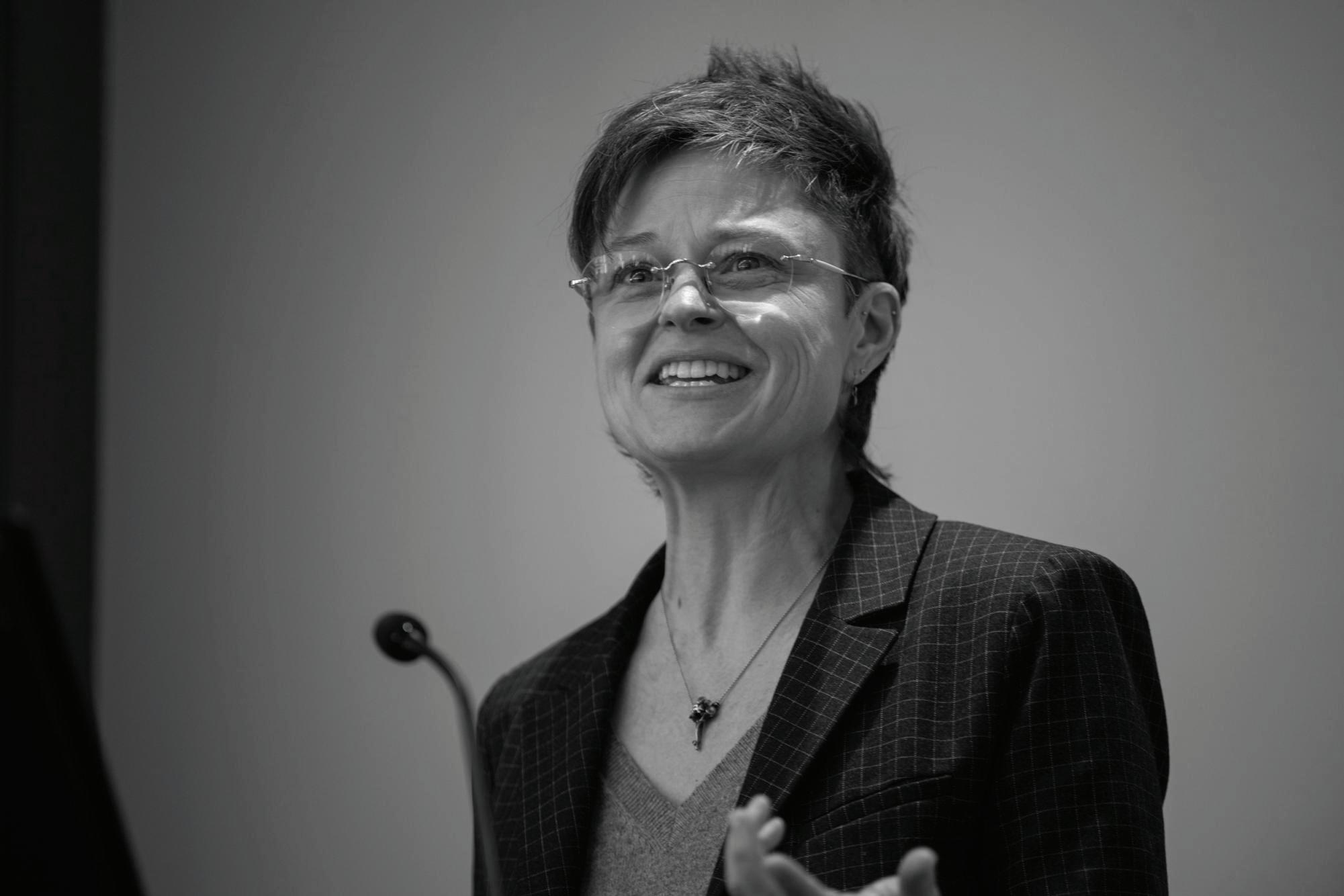
Vice Provost for Faculty Affairs Emily Hammond at a Faculty Senate meeting in Feburary.
Foggy Bottom firefighters say proposed city budget overlooks rising cost of living
ISAAC HARTE
LEANNA JOJU
Firefighters at the Foggy Bottom Engine Company 23 firehouse and other DC Fire and Emergency Medical Services personnel are unlikely to see a pay increase until at least sometime next year under Mayor Muriel Bowser’s budget proposal for fiscal year 2027.
The proposal, which Bowser presented to members of the D.C. Council earlier this month, includes $469 million in cuts and will save the city $127 million by forgoing funding for future raises in a new collective bargaining agreement for FEMS personnel, which has been under negotiation since 2024. Current and former firefighters said they want the city to revisit the budget, which is set to be passed in June, because a lack of a wage increase would further contribute to cost of living issues for D.C. FEMS personnel and could cause some to leave their companies for other fire depart-

ments in the greater DMV area that offer higher pay. In their unveiling of the budget before the Council
earlier this month, officials with Bowser’s office said the cuts were necessary because of a $1.1 billion dollar
Jack Evans exits Council chair race after Board of Elections finds signatures invalid
Former Ward 2 Councilmember Jack Evans withdrew from the race for D.C. Council chair April 16 after the Board of Elections found he fell short of the required number of signatures.
A BOE staff review found April 12 that while Evans had submitted 2,632 signatures — well over the 2,000 required — only 1,352 were valid because of flaws like signers not appearing on voter rolls, address mismatches and duplicate entries, leaving him 647 short of ballot qualification.
Evans’ withdrawal leaves current D.C. Council Chair Phil Mendelson, who has held his seat since 1998 and served as chair since 2012, as the sole candidate in the race for the District-wide seat.
Evans said in an interview he expected to win the race and was “surprised” by the BOE’s determination that his signatures were invalid. Evans said the people he deployed to gather his signatures were not doing their job properly, which resulted in the invalid entries.
“It was clear to me that we just didn’t have them, so I would not have been certified,” Evans said. “So I withdrew.” Evans said because he had a small campaign he did not have the resources to check the validity of each signature, and in his time in public office he has seen mistakes in petitions before from candidates that were allowed to remain on the ballot. He said he finds it “unfortunate” that Mendelson will run unopposed, depriving constituents of discourse between candidates.
“My argument is they should have erred on the side of keeping people on the ballot, not kicking them off the ballot,” Evans said. “That’s a fair approach, but they didn’t see it my way.”
Evans faced three challenges to the validity of his
signatures prior to his expulsion, one from Mendelson’s former campaign manager Eric Rogers, one from D.C. mayoral candidate Ernest Johnson and one from ANC 5F06 Commissioner Joe Bishop-Henchman.
Evans said he withdrew after BOE’s general counsel told him at pre-hearing conferences on April 14 and 15 the board would rule solely on whether his valid signature count cleared the 2,000 threshold and confirmed he did not have enough valid signatures for the board to certify his candidacy.
BOE scheduled a hearing to discuss the challenges for April 17 that would have taken place if Evans continued his campaign. Bishop-Henchman wrote in a presentation he planned to give to the BOE at the hearing that some petition sheets contained clusters of entries in the same handwriting and one page’s names appeared to match real addresses but had the wrong last names.
Johnson said he filed the challenge, which he said included “serious concerns” about Evans’ compliance with D.C. law, to “ensure the integrity” of the ballot access process, but ultimately decided to withdraw it to avoid forcing the BOE to address duplicate challenges.
“After the registrar’s report and in light of additional challenges filed by other parties that ultimately addressed the threshold issue, we made the decision to withdraw our challenge,” Johnson said.
Evans tried to stifle Rogers’ challenge earlier this month, claiming Mendelson violated D.C. campaign law by printing forms related to the challenge at his council office. But the BOE upheld the challenge, finding Rogers filed the document properly. Evans said he filed complaints with the Office of Campaign Finance, the BOE and the U.S. Attorney’s Office over the printing.
The Office of Campaign Fi-
nance confirmed it opened an investigation into the printing in a letter it sent to Evans. Evans said Mendelson’s conduct constituted a willful violation of D.C. law, which should have led the BOE to throw out the challenge.
“He willingly and knowingly used his council office for campaign purposes, which is a criminal law violation,” Evans said.
Mendelson and Rogers did not respond to requests for comment.
Evans announced a comeback bid for Council chair in January, six years after resigning from the Council amid an ethics investigation into his use of a private consulting firm he founded while in office to solicit clients with business before the Council, and his use of his Washington Metropolitan Area Transit Authority board chairmanship to push out a parking contractor while collecting $50,000 a year from its competitor.
Evans served on the Council of the District of Columbia from 1991 until 2020, representing Ward 2 neighborhoods that include Foggy Bottom, the West End, downtown and Georgetown.
Federal investigations into Evans never led to criminal charges, but a D.C. Council investigation found he had received $400,000 and did not properly disclose his clients, which led the body to unanimously vote to recommend his expulsion in 2019.
Evans said when his campaign launched he wanted to restore discipline to the Council by strengthening agency oversight and reining in spending while pursuing what he called a more “strategic” approach to protecting the city’s home rule as President Donald Trump and Congressional Republicans implement policies and pass laws encroaching on D.C.’s autonomy.
The Democratic Primary is set for June 16.

said union leadership was surprised when Bowser did not include money for future collective bargaining agreements in the budget because she had supported them in disputes with the city in the past.
Union officials said the city either didn’t respond to their proposals or made offers too low for the union to negotiate with, according to a June IAFF 36 press release. A spokesperson for the Office of the City Administrator said in July the District did not have “sufficient funding” to reach a deal with the union at the time.
Chisholm said the union has maintained a “great relationship” with Bowser and endorsed her each of the three times she ran for mayor largely because she was “receptive” to their concerns about pay, like with the $45 million settlement.
Local 36 and a firefighter for nearly 29 years at Foggy Bottom’s Engine Company 23 before he retired in 2019,
“We’re not asking for the moon, but we are asking for a piece of the pie,” Chisholm said. “And she’s been, in the past, real receptive, making sure everything that we ask for we get at least all or some of it.”
Low-cost interventions can reduce parole violations: study
LAKSHMI DEV STAFF WRITER
A GW professor led a study on parole supervision aiming to inform policymakers on how to design criminal justice programs to reduce repeat offenses at a low cost.
Assistant Professor of Public Policy Michael LaForest-Tucker led a group of researchers from Princeton University and the Universities of Chicago and Pennsylvania to conduct a randomized study of individuals on parole supervision in the United States to test whether low-cost crimedeterrence initiatives can discourage recidivism — when individuals are rearrested after release. LaForest-Tucker said the study found low-cost parole interventions can reduce parole violations that lead to re-incarceration but have a limited impact on how often individuals reoffend or overall crime rates, showing that tackling recidivism requires larger scale efforts.
Parole supervision occurs when incarcerated individuals are released prior to the end of their sentence, and the individuals can be sent back to prison for violating parole conditions like obeying laws and reporting to their parole officer. Seventy-one percent of individuals leaving prison are rearrested in the next five years, the study states, showing law enforcement still lacks a consistent mechanism to keep people from reoffending despite decades of investment.
LaForest-Tucker’s study required multiple groups of 15-20 individuals recently released into parole after being convicted of violent crimes in the state of New York to attend a one-hour forum, which combined warnings about consequences of future offenses with messages of support from community supervision staff and access to community resources, according to the study.
“We still don’t have a great set of tools to help individuals and steer them away from violent crime and reduce those burdens and costs of violent crime in the community and on society,” LaForest-Tucker said.
Participants who attended the forum had a 15 percent reduction in parole violations compared to the control group, the study found, and a 25 percent reduction in absconding violations, where a parolee intentionally avoids supervision by failing to report to their parole officer or changing their address without permission. But the study did not find significant reductions in reoffending or arrest rates among those who attended the forum.
“That extra hour, we think, did potentially increase the salience for individuals that it’s important for them to abide by those rules of parole,” LaForest-Tucker said.
LaForest-Tucker said he wanted to conduct the study to explore ways to reduce violent crime using approaches that are less expensive than currently used methods, like intensive probation and other court-mandated programs that require continuous staffing and enforcement resources. He said since the intervention consisted of a single meeting, law enforcement programs could implement it with relatively few resources.
“One of the main rationales for this paper was trying to think about ways to deter crime, typically violent crime at a low cost,” he said.
Participants in the forum heard presentations from law enforcement, social service providers and community members, with speakers highlighting the cost violence has on the community and the potential consequences of reoffending to deter
the participants from future crime. The study combined this approach with having the speakers also share motivational stories from formerly incarcerated individuals who have reintegrated themselves into the community, showing there are resources like drug treatment and counseling available for prior offenders.
LaForest-Tucker said the findings are crucial for how federal, state and local policymakers think about crime prevention because they add evidence that even small, low-cost measures can influence behavior in meaningful ways, particularly in how people comply with parole requirements after release from prison.
“This type of low-effort intervention does seem to be at least helping individuals avoid some of those roadblocks, get over some of those barriers,” he said. “Reducing parole violations that result in re-incarceration have a notably positive impact on the individual who has been paroled.”
LaForest-Tucker said he believes the study did not show a significant decrease in arrests because the people who attended the forums were individuals who already had extensive interactions with the criminal justice system and were already aware of the consequences of committing crimes. He said the study shows the one-time interventions are not a perfect solution for reducing crime, but they can have meaningful impacts on the margins.
Michelle Kelso, an assistant professor of sociology and director of the human services and social justice program at GW, said she thought the research was carefully designed but believes the researchers need to consider broader social conditions like systemic inequalities when interpreting results.
“What we do know is that people coming out of prison have a hard time reintegrating back into their communities and with their families,” she said. “Finding a job can be hard, especially if you’ve been incarcerated for longer periods of time, and you did not have a social network.”
Kelso said the study does not address the deeper structural drivers of crime, including inequality and lack of economic opportunity. She said people turn to crime when they feel blocked from conventional paths to success and begin to see illegal behavior as an alternative means of achieving those goals.
Kelso said incarceration often receives more political and financial support than prevention-focused programs because it is much easier to incarcerate than to solve the range of social issues that contribute to criminal behavior.
“Every state has to make its decisions on what they want to fund,” she said. “Do they want to fund education and programming, or do they want to keep funding prisons, and so far, it looks like prisons are winning.”
Fran Buntman, an assistant professor of sociology at GW, said the research is a valuable step toward understanding which criminal justice interventions actually yield results.
She said the critical takeaway from the study for future legislation is the necessity of ongoing evaluation in the field of evidence-based crime prevention. She said by working with researchers, policymakers can refine their outreach to include even more tangible resources for those on parole.
“One of the most important lessons for policy is the need not just to keep trying new things but to work with researchers to study them, so you can learn from them,” she said.
budget gap. Joe Chisholm, vice president of the International Association of Fire Fighters
KRIS PARK | STAFF PHOTOGRAPHER
Retired D.C. firefighter Joe Chisholm poses for a portrait at the Engine 23
Faculty senators back student rebuke of officials’ conduct code revisions
From Page 1
Faculty senators in February pressed officials for greater transparency around the budget-cut decision process and the broader impacts those moves could have on GW’s academic mission, and senators in January said deans needed to consult faculty before making decisions like potentially eliminating programs.
Lach said the budget margins officials gave to deans included instructions to engage faculty, staff and students in their school when making “key decisions” about budgets. Lach also said GW is using a “balanced” approach to preserve and enhance the University’s academic mission by cutting the central administration and nonacademic unit budgets.
Faculty Senator Jamie CohenCole asked whether officials will evaluate deans on the accuracy of their budget forecasting, pointing out that they might be motivated to over-project their budgets in hopes of bolstering their academic resources. Cohen-Cole also said further budget reductions would cause a “major disruption” for students, since they are already enrolled in classes for the fall.
“Any cuts that would have happened needed to happen in February, not in May or June or July, if our students are going to be able to get the educational experience they’re coming here and paying for,” Cohen-Cole said.
Lach said officials would not
cancel courses with sufficient enrollment because they bring in revenue. He added that he has been working with Fernandes to increase collaboration between schools and the finance division in order to avoid unit leaders misrepresenting school revenues and expenses.
In the question portion after the Granberg’s report, senators Phil Wirtz, Angela Gore, Siobhan Rigg and Cohen-Cole rebuked officials’ final proposed Code of Student Conduct, backing students who have criticized officials’ move to remove students from conduct panels and narrow appeal pathways.
The revised code officials unveiled in November removed student-moderated conduct panels, moving to a single-adjudicator model where a student affairs administrator decides the outcome of a student’s case. Rather than appealing to a new student, faculty or staff panel as per the current code, students can only appeal their case decisions to another student affairs official in the proposed code — a move students said gives CESA staff broad control over student discipline and removes clarifying language about prohibited conduct.
Wirtz said officials should not remove students and faculty from student disciplinary hearings because limiting hearings to an “administrative” responsibility to determine outcomes makes the process unfair for students when administrators may be biased against them, like during the pro-
Palestinian encampments.
Vice President for Student Affairs and Dean of Students Colette Coleman said officials created the new code of conduct based on community feedback to ensure a consistent process for anyone undergoing student conduct procedures. Coleman said officials will publish the finalized code within the next week, adding that she understands community members have advocated for officials to keep the panels, but didn’t comment further.
“We went through this process and really tried to be thoughtful about how and where we engage the voices of our students, and how do we keep a consistent process for everyone that’s going through a process with the Code of Student Conduct,” Coleman said.
In response to ongoing negotiations between University Health Services and GW over the future of the Medical Faculty Associates, former SMHS Dean and faculty senator Jeffrey Akman said “seismic” changes are coming to the School of Medicine and Health Sciences. He said former SMHS Dean Barbara Bass reduced a third of medical degree students in the school without faculty input, and the school will experience significant cuts to residency programs and faculty.
He said these changes, combined with GW’s ongoing negotiations between UHS to end GW’s financial support of the MFA, means officials will need to evaluate their vision for the school’s future.
“I’ve been here since 1977, it’ll
be 50 years next year, in some capacity, and I’ve been through a lot of things here — nothing like this,” Akman said.
He encouraged Interim SMHS Dean and Vice President for Health Affairs Andrew Artenstein, who Granberg said began his role in March and will serve in the role for the next 18 to 24 months, to have discussions with faculty about their vision for the school and how SMHS fits into the University’s strategic framework.
Granberg told Artenstein, who was present at the meeting, to think about Akman’s comments and talk to SMHS chairs and potentially the Faculty Senate when he thinks the “time is right” to formulate his vision for the school.
Assistant Vice President for
Campus Development Adam Aaronson said officials plan to file the 2027 campus plan with D.C. by the end of 2026, and officials plan to release a campus plan proposal draft this summer, which will involve considering enrollment targets as GW weighs negotiating a higher enrollment cap.
The 2027 campus plan is GW’s long-range blueprint for how the Foggy Bottom campus can grow and change over the next 20 years.
“We’re going to be engaging both internally and externally with our neighbors to get feedback on the framework,” Aaronson said.
A 20-year agreement between the D.C. government and GW limits the University to 16,553 on-campus students, with GW filling 99.66 percent of those slots in 2016.
GW’s response to graduation speech spurred alum’s termination, lawsuit claims
From Page 1
The suit alleges GW and EY violated the 1964 Civil Rights Act, D.C. Human Rights Act and the District’s common law, claiming GW officials’ “coordinated institutional response” to Culver’s speech damaged her professional reputation and suppressed her speech, which she says also prompted EY to terminate her employment five days later.
Culver, an economics and statistics graduate, used her speech at one of last year’s CCAS undergraduate graduation ceremonies to condemn the University for suppressing pro-Palestinian activism related to the war in Gaza and urge graduates to withhold donations from GW until officials disclose all financial investments and divest from companies tied to Israel.
She says in the suit her speech at the CCAS ceremony “unmistakably associated” her with Palestinians, Arabs and Muslims, and her termination from EY violated Title VII of the 1964 Civil Rights Act, which protects employees from discrimination on the basis of race, color, religion, sex and national origin, including by association.
Following the speech, Fackelmann said the Uni-

versity was investigating whether Culver violated the University’s events protocol or Code of Student Conduct, adding that her remarks were “materially different” than the speech she submitted to officials for approval ahead of the ceremony.
Three days after the speech, the University announced in a statement that it had barred Culver from all GW campuses and sponsored events.
Culver alleges in the suit that EY heard of her speech and moved to terminate her
employment, first placing her on administrative leave less than 24 hours after delivering her remarks and ultimately ending her employment five days after the ceremony. She says in the suit no EY officials disclosed the policy violation that
prompted her termination but confirmed that her placement on administrative leave was related to the speech.
The suit marks the second filed against GW by former students in the last year related to their handling of campus protests since the
onset of the war in Gaza. A group of current and former students sued the University in May, accusing officials of allowing “pervasive and severe” harassment of Jewish and Israeli students since Hamas’ Oct. 7, 2023, attack on Israel.
Culver alleges officials’ decision to bar her from campus was a “predictable output” of the University’s “hostile environment” toward pro-Palestinian expression, citing instances of alleged hostility dating back to 2015. Culver says in the suit that the first five paragraphs of her speech were the same as her draft, which the University approved. She says officials never specified what policy she violated.
Culver alleges the University’s response to the speech was an act of “institutional retaliation,” including the statements Fackelmann gave to media outlets, like The Hatchet, labeling her speech as “materially different” from what she submitted before the ceremony and apologizing to attendees for the disruption caused by her remarks. She says GW disseminated these statements widely, and EY leadership likely read them.
“The characterization of Ms. Culver’s address as a ‘disruption’ to the ceremony was false and defamatory,” the suit reads.
GWTeach faculty say program will be ‘eradicated’ if officials proceed with cuts
From Page 1
“Will the students in the pipeline get the education and the experience they deserve? I say they will not,” GWTeach co-director and physics professor Gerald Feldman, who was the sole GWTeach faculty member who did not receive the notice, said. “If those people are gone, they will not.” Feldman — who is not impacted by the contract non-renewals because he is tenured — said he emailed interim Provost John Lach in February and asked to speak with him after Howard sent GSEHD contract faculty follow-up termination emails, though Lach did not offer to set up a meeting. Feldman said GSEHD launched GWTeach in 2015 as a replication of the UTeach model, a nationwide STEM teacher preparation and licensure program that originated at the University of Texas at Austin, and aims to expand the pipeline of secondary math and science teachers with a goal of producing more than 8,300 teachers by 2023. GW received a $1.45 million grant to implement the model and later sustained the program through donations and increased enrollment after the grant expired in 2023.
Feldman said GWTeach has consistently increased enrollment for “several” years — now with 116 students enrolled for the fall semester and 171 students enrolled this spring — despite GSE-
HD’s decline in graduate program enrollment.
“We are in a self-sustainable mode currently, and we’re about to be eradicated,” Feldman said.
Feldman said Choi and Hollibaugh Baker coordinate students’ volunteer teaching in D.C. public schools and are independent auditors of students’ candidacies for teacher licensure, serving as the final approval of students’ teaching portfolios and licensure exam scores. Feldman said he believes GSEHD faculty outside of GWTeach would be tasked with those extra responsibilities if GW does not renew the master teachers’ contracts, which he said would strain those faculty because they would take on extra work outside of their normal research and teaching commitments.
“You make the master teachers go away, the program goes away,” Feldman said.
Feldman said Howard and Clayton hosted a town hall on March 31 that left students who attended the forum “confused” because officials did not answer their questions about the fate of the GWTeach program, instead saying that “talks” about the program’s future were underway, also suggesting they email GSEHD with any feedback.
“I thought the information flow from the deans was almost non-existent,” Feldman said. “There was nothing useful coming from those people.” Two of the three impacted
master teachers did not return multiple requests for comment.
The third GWTeach faculty member, who spoke on the condition of anonymity, said there are ongoing planning conversations about the future of the program between GWTeach faculty, GSEHD leadership and the Office of the Provost. The faculty member said they feel officials are not fully considering the solutions to GWTeach faculty presented regarding the program’s viability — including models based on enrollment projections, GWTeach’s current stability and context about the program’s structure and goals — because of a lack of dialogue in the planning conversations.
The faculty member said it is uncertain whether the program will continue as normal or enter a phase-out process, which would involve fewer class offerings and pausing minor declarations and new student enrollment, since officials have not provided further updates since Howard’s January email.
“My understanding is that there has been little evidence of negotiation,” the faculty member said in an email. “GSEHD leadership has not responded with counter proposals, requested revisions to meet specific targets or engaged in a back-and-forth process around viable solutions.”
The faculty members who received non-renewal notices are still listed as instructors for the majority of the courses according
to the schedule of classes, with two of the five fall 2026 GWTeach classes full and waitlisted with students.
The faculty member said officials’ slow decision-making timeline has meant faculty feel unsupported even though they said they believe GSEHD leadership values the program.
“Preventing further harm requires recognizing that core faculty are essential to the program and should not be viewed as expendable due to their status as contract faculty,” the faculty member said.
Morgan Pyzynski — a senior studying public health with minors in disaster management and STEM teaching — said Howard and Clayton’s vague answers about the future of the program during the March town hall left her frustrated because they did not provide a timeline on when officials would make decisions about the program’s future.
“I’d rather have the University be honest about their stance and the actions that are going to happen going forward than leaving a lot of students in limbo,” Pyzynski said.
Pyzynski said Howard and Clayton confirmed at the town hall that students who have already declared a minor in STEM teaching would have the opportunity to finish the program, but did not name any specific information about the fate of the program — only that conversations between Howard, Clayton and program
leadership are underway. She said it is unclear which remaining GSEHD faculty could step in and teach the GWTeach curriculum, given the UTeach program model relies on teachers who have experience teaching in K-12 classrooms — a background she said many GSEHD faculty do not possess.
The University spokesperson declined to comment on who would replace the current GWTeach leadership to teach the GWTeach program courses in the fall and what specific changes regarding course offerings, class sizes and reducing program requirements would be implemented.
“The quality of the program is contingent on the support that students receive from master teachers and being able to understand why they might be giving certain advice beyond just what literature says,” Pyzynski said.
Jack Vore, a senior majoring in history with a minor in STEM teaching, said he was “saddened” by the impending faculty departures because GWTeach has been the highlight of his time at GW. Vore said GW often feels lonely and transactional, but GWTeach is the opposite by giving him a sense of community and deep connections with faculty.
“I was going to transfer out of this University before I became fully involved with GWTeach, and it really turned my life around,” Vore said.
KARSYN MEYERSON | STAFF PHOTOGRAPHER
Student speaker Cecilia Culver called on the University to divest from companies tied to Israel at a spring 2025 graduation ceremony.
ERIKA LOPEZ-CEPERO | PHOTOGRAPHER
University President Ellen Granberg at a Faculty Senate meeting Friday.
As an editorial board, we’ve been tough on the University this year. We’ve criticized its communication around budget cuts, staff layoffs, perceived rollbacks to diversity initiatives and the strategic framework. We’ve argued that GW’s vague and overly cautious communication leaves its community uninformed and undermines trust and that when officials fail to clearly explain decisions — or acknowledge when they can’t share details — they create confusion and signal a lack of transparency and accountability. We stand by those critiques. But while we’ve discussed internally the moments when GW later took steps we had previously criticized officials for not taking, we haven’t actually published follow-up pieces acknowledging those changes. At the end of The Hatchet’s 122nd volume, we would like to take a moment to do so.
We are part of a community that expects a great deal from officials because we believe strongly in the University’s power and potential. GW attracts faculty, staff and students who are deeply invested not just in being part of the institution but in actively shaping and improving it. We pour our hearts into covering this University because we want to equip stakeholders with the information and perspectives they need to drive change. We ask a lot of the University because we believe it can meet those expectations. Increasingly, it seems GW is picking up those calls.
A frequent critique we’ve had of officials is their failure to explain why they are unable to share additional information with the community when they choose not to do so. We have urged them to be more upfront when legal or confidentiality constraints limited what they
We’ve been calling on GW. It’s starting to pick up
STAFF EDITORIAL

could disclose. In recent months, we have seen GW do just that, explicitly citing confidentiality as the reason it could not share further details about the Virginia Science and Technology Campus sale. Previously, we interpreted these moments as refusals to provide information, which left us and many in the community confused and frustrated. We urge GW to continue communicating in this way moving forward.
In December, we argued that GW was not being sufficiently transparent about the future of its diversity, equity and inclusion commitments amid growing Trumpera pressures. We asked GW to be
transparent and explicit about its DEI-related decisions and the reasoning behind them. Earlier this month, Interim Provost John Lach sent a campus-wide email reaffirming GW’s commitment to DEI and stating that the University is not retreating from those values. We appreciated that step toward clarity and hope to see this more transparent and direct communication from officials moving forward.
In February, we wrote about GW’s lack of public response to federal actions and other global events affecting students and communities, which marked a departure from its previous practice of
GW’s ‘Revolutionary Promise’ prioritizes the future, not the present
As part of GW’s strategic framework, officials on Wednesday announced they will cover the full cost of tuition for students with a household income of less than $100,000. In the first paragraph of the newsletter announcing the decision, however, officials caveated that their “Revolutionary Promise” will apply only to the incoming class of 2030 and onward. Current undergraduates — who are preparing for a 3 percent rise in tuition, bringing estimated total costs over $98,000 — are excluded from the initiative. By excluding continuing undergraduates from the new aid, the University is failing to meet its responsibility to the current student body.
GW’s investment in its future is important, but officials should not place the full burden of tuition increases and budget cuts on current students for changes they are unlikely to benefit from. The OneGW Path to Preeminence appears to be coming at our financial expense. Officials did not pledge additional aid or relief to low-income students, besides extending GW’s scholarships for current students from five to six years. If GW wishes to remain in the good graces of its future alumni, officials must do better financially for these students too. With the cost of attend-
ance nearing $100,000, many students are finding that the GW experience is not worth the price tag. The irony of GW raising tuition on the current student body for an education that doesn’t match the price tag — to fund a better experience for incoming students — is rich. The students who will have better access to campus resources and better financial assistance will enjoy these things at the expense of soaring attendance costs for current undergraduates. The school cannot ignore the financial stress placed on current lower-income families.
One of the main factors behind my decision, and the decision of many other students, to attend GW was the generous financial-aid package they offered. It was over $25,000 cheaper for me to attend school here in D.C. than my home state of New York. But I am not receiving any additional aid to offset the 3 percent rise in tuition, which my family and I had not planned for when I decided to attend. Free tuition would have been life changing for my family, but instead, we are met with tuition hikes and worse resources. GW has a responsibility to ensure that students have as little financial stress as possible, while ensuring they have the best college experience the school can offer. As someone from a middle-class family, I understand the burden placed on students when demonstrated need is not met. Merit scholarships, University awards, Pell Grants, Federal Work-Study and loans cover
the majority of my college expenses, but the remaining out-of-pocket $5,000 per semester demanded by the University for my first year was not easy to muster up. It is not an unreasonable ask of the University, therefore, to offer some form of need-based assistance for the many hardworking families left out of the strategic framework — to lighten the load of financial stress. I understand the strategic framework is forward thinking, but GW must prioritize taking care of its current students.
I understand it may be fiscally irresponsible for the University to offer its Revolutionary Promise to all families making under $100,000. Still, there exists a multitude of options for GW to address the concerns of these students besides leaving them in the dark. For one, the school could offer fixed tuition — something GW used to offer students — to ensure the financial security of current financially vulnerable undergraduates. GW could narrow the scope of the initiative for current undergraduates, while still addressing the student body. While I recognize the persistent budget deficit GW faces, there is still no excuse for abandoning the hardworking people who are the backbone of this institution — the students and families that enroll here. For GW to “Raise High” more than just my tuition, officials cannot treat current students as a cash cow for the future.
—Ethan Vargas, a firstyear majoring in political science, is an opinions writer.
issuing messages of support in the wake of crises. We emphasized the importance of the University publicly acknowledging these moments and providing resources for those impacted. Shortly after, when federal agents from the Department of Homeland Security entered a Columbia University building, Dean of Students Colette Coleman sent an email recognizing student concerns and reminding the community of the legal limits on federal agents entering non-public spaces without a warrant.
That same week, following cartel-related violence in Mexico, GW reached out directly to students
whose families or communities may have been affected, including me. A member of our editorial board received a message primarily directed to parents or guardians explaining that GW had contacted students it believed might need additional support, and in the student email they received a follow-up from Coleman titled “We are here for you: Support and Resources Available.” It was notable to see how quickly the University appeared to respond in ways aligned with what we had called for in our staff editorial, even if we cannot confirm whether all affected student groups received similar outreach. Being on the receiving end of those messages was both encouraging and validating, and is something our editorial board had pushed officials to do. GW has taken meaningful steps in recent months to better support and connect with its community, and for that, we are grateful. Still, the University must continue to improve how it communicates and how it incorporates students, faculty and staff into decision-making processes that directly affect them. Calls for stronger shared governance have been consistent across campus, reflected in this year’s SGA elections and raised frequently in Faculty Senate meetings. For shared governance to be real, GW must not only invite feedback but also ensure that stakeholders are equipped with clear, timely and accessible information about what is happening across the institution. Officials still have substantial work to do on communication and consultation, but we recognize and appreciate the progress they’re making. At its core, this is a University that aspires to be better and is taking steps that reflect that aspiration.
SGA leaders must understand GW’s finances to deliver effective advocacy
As another Student Government Association election season comes to a close, I’ve spent time reflecting on the power and potential this body has to drive change at the University. Candidates’ campaign platforms this year largely centered on GW’s response to Donald Trump-era policies and budget cuts. I’m very excited to see this advocacy play out. But as the newly minted president and vice president — MJ Childs and Aicha Sy, respectively — enter office, I urge them to take time to familiarize themselves more with GW’s finances, budget issues, the power of the Board of Trustees and where officials are limited in their ability to act on or communicate about pressing issues. If they don’t, they will risk failing to deliver on the meaningful advocacy they ran on.
Andrea
MendozaMelchor Opinions Editor
In reading the platforms and interviewing candidates for our editorial board’s endorsements, we didn’t feel like any of the presidential or vice presidential hopefuls had a complete grasp on the state of GW’s finances. Most of my time is spent reading about GW’s actions and their issues with their budget — as well as the nuances of their decision-making. Understanding these issues and constraints in which they operate allows for more informed arguments and conversations with the GW
administration.
As The Hatchet’s editorial board has argued in the past, the SGA has direct access to the GW administration. They are some of the only people in the student body who get the chance to advocate for students to officials — this exacerbates the need for our top SGA representatives to spend that time wisely and efficiently with officials. It would be unfortunate for the SGA president and vice president to spend their limited time with officials advocating for something that would not be possible to implement, given GW’s current financial situation or to approach officials without having a comprehension of what exactly they are asking for.
Part of the reason it’s so important that the SGA’s top leaders have this understanding is so they don’t propose policies that are infeasible. For example, they must understand how and where officials can use the endowment because asserting that officials can use these funds to prevent budget cuts likely makes the University less willing to engage with student leaders on these issues. While neither Childs nor Sy mentioned using the endowment freely, it is still crucial to understand some of these details of GW’s finances. The same can be said for other initiatives like dining. Spending time advocating to fully open District House and the University Student Center dining spaces, when these places were more than likely
closed because they are used much less frequently during the weekends and having a full staff would make the University lose money, is probably not the most efficient use of the SGA’s time with officials.
Staying informed and seeking to understand GW’s limitations can also lead to asking officials the difficult questions that many students do not get answered. When there are concerns about GW being vague or making changes about a community or institutional matter, like the Department of Justice investigating GW, the SGA president and vice president should be able to question officials on their reasoning and ask them for more transparency and information.
Now is when we need the main student advocates to learn to prioritize which conversations and questions need to be had and answered. This is not the time to be unprepared or unknowledgeable; this upcoming year needs to be productive and efficient in order to address student concerns and create meaningful change in the community. I am confident that Childs and Sy have the students best interests at heart and will help address many of the students concerns, but remember it is necessary to take the time to truly understand the GW administration.
—Andrea MendozaMelchor, a senior majoring in journalism and mass communication and creative writing, is the opinions editor.
CAROLINE MORRELLI | STAFF CARTOONIST
Ethan Vargas Opinions Writer
THE SCENE CULTURE
Rest in Peet’s: Cherished campus cafe brews its final memories before May farewell
DIANA ANOS CULTURE EDITOR
SACHINI ADIKARI SENIOR STAFF WRITER
Alum Tess Klugewicz was “shocked” when she looked down at her phone to her group chat of past and present Peet’s Coffee baristas last week and received the news that her former place of work, where she made a trove of coffeefilled memories, is closing.
“It’s who I spent every day with during college and where I got a lot of my identity, it was like, ‘I’m the Peet’s barista,’ and everyone in class knew me as the Peet’s barista,” Klugewicz, who graduated from GW in 2024, said. “It was really sad. It felt like a chapter closing that I didn’t have any control over.”
Located on the first floor of District House, Peet’s Coffee is a steady student hotspot where long lines form throughout the day for caffeine boosts and quick favorites like the horchata cold brew latte and bacon and cheddar brioche breakfast sandwich. After 10 years in operation, Peet’s will shutter its doors on May 30 after the shop declined to renew its lease.
No stranger to the daily rush of caffeine-seeking students between classes or the rhythm of pulling espresso shots for regulars, Klugewicz worked as a Peet’s barista from her sophomore year through the year after graduating from the University, where she built a close-knit community with fellow student baristas and often worked alongside the same group of students.
While working at Peet’s, she said she and her fellow barista friends lived together on and off campus for three
years, forming a tight-knit community where work and friendship were deeply intertwined and where the cafe became a shared space that felt like a second home. Over time, she said they built lasting relationships with regular customers, sometimes even future boyfriends, and spent early 6 a.m. shifts together opening the shop and starting the day in a rhythm that made Peet’s central to their college experience.
Klugewicz said she and her fellow barista friends have stayed in touch beyond GW through a group chat called “No Managers,” a joke about running the shop themselves without much supervision during their college years.
Looking back on her experiences, Klugewicz said working as a barista for 30 hours a week while juggling internships and a full course load was difficult, but the bond she developed with her fellow baristas went deeper than just friendships — they understood that they each needed to work to support themselves to afford groceries, books and daily expenses.
Ellie Neal, a fall 2025 graduate who is in her fourth year of working at Peet’s Coffee, said she didn’t expect to be there for its closure but ultimately saw it as “inevitable.” She pointed to reduced foot traffic after the University restricted public access to the District House dining entrance due to “safety concerns” and closed nearby spots like Chick-fil-A in 2021, which she said left fewer nonstudent and non-employee customers in the area. She also said the University’s shift from dining dollar-focused meal plans to primarily meal swipe-based plans
led students to spend less at Peet’s Coffee, since they had fewer dining dollars available for purchases there.
Sonia Lerner, a sophomore doublemajoring in public health and computer science and a frequent Peet’s customer, said they found out about Peet’s upcoming closure at a book club, where everyone was heartbroken at the news.
Lerner said they prefer Peet’s to other on-campus cafes, like Starbucks and Tatte, because of the lower prices and faster turnaround. They said they usually order an iced lavender matcha latte at Peet’s and hang around the cafe with friends.
“I’m very sad about it, and I’m very sad because employees are now unemployed,” Lerner said.
Anna Krantz, who graduated last spring and has worked at Peet’s for the last four years, said the coffee shop’s upcoming closure is a loss of community for both her and Foggy Bottom coffee lovers. She said she’ll miss the people most — both her fellow baristas and the student customer base. Though she was upset about the closure, she said she was already planning on moving back home to New York to attend graduate school.
After years of countless coffee creations and daily customer interactions, Krantz said the baristas at Peet’s Coffee have built up a trove of memories, from incidents like a customer stealing $20 from the tip jar to Krantz once hiding in the back after skipping class when her professor walked in, as well as sheltering in place during a 2023 campus lockdown after a murder suspect escaped from GW Hospital.
Krantz said the
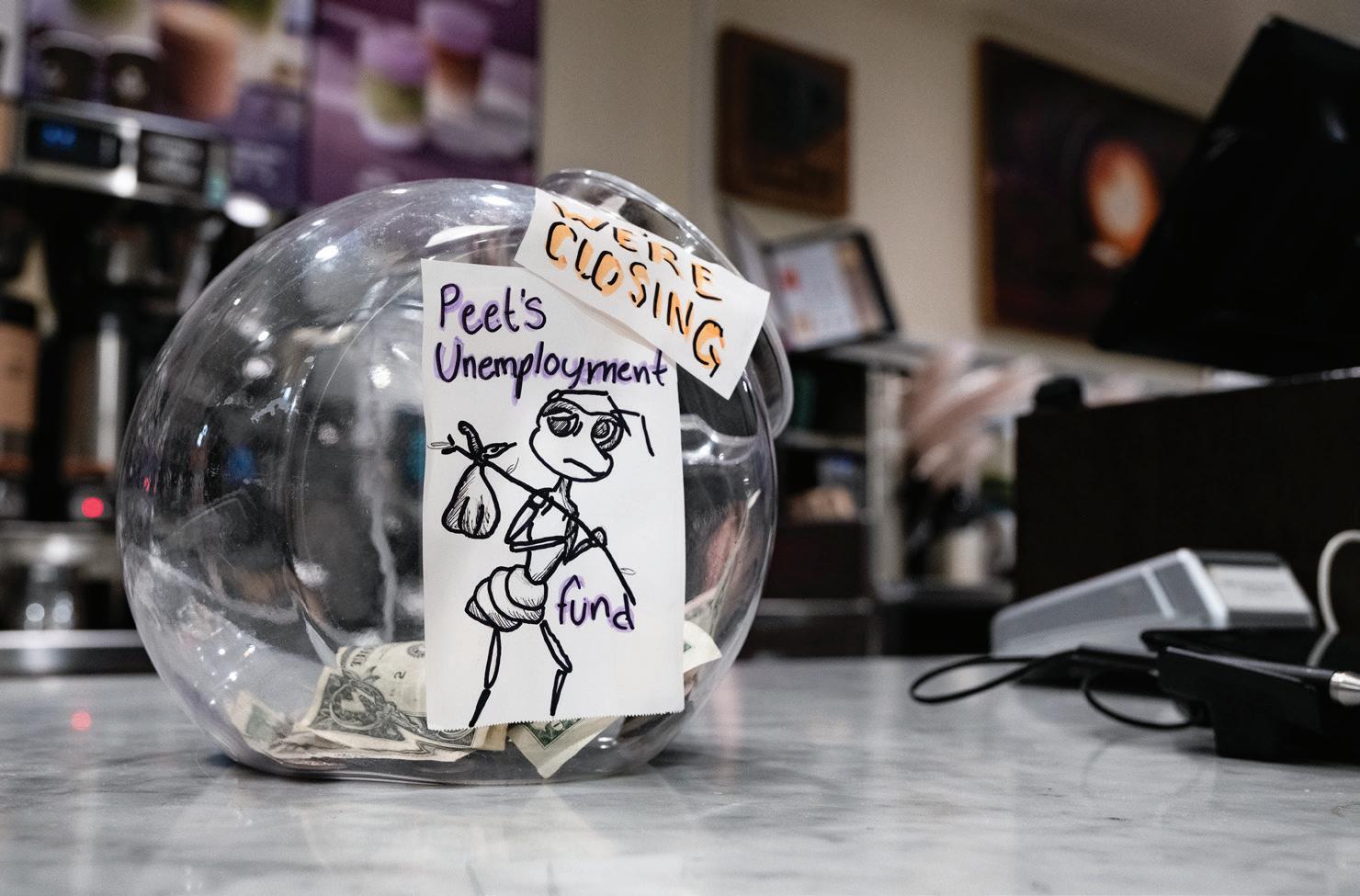
student response to Peet’s upcoming closure has been heartwarming for her, with some students offering to create petitions to fight
From memorabilia to the Freedom Train, The Hatchet looks back on America’s bicentennial
“Prepare yourself, America,” reads Hatchet archives from Feb. 9, 1976. “It’s the Bicentennial.”
As America enters its semiquincentennial, or its 250th year, The Hatchet took a look back on the nation’s past celebrations to learn about how GW and the District honored the country 200 years after its founding. From the Freedom Train to special course offerings to endless celebrations, The Hatchet examined the paper’s and the University’s archives to see how the nation honored achievements and advancements through academia, organizations and celebrations.
Students form a club to collect the “worst” Bicentennial memorabilia
In a year where students were “crushed” by advertisements urging them to buy items ranging from Bicentennial whiskey bottles to coffins for “the sake of patriotism,” a group of GW students banded together to create the “Worst of the Bicentennial Club,” which met each Wednesday in Building P, one of the current American Studies townhouses. Director of the American Studies program, Professor and founder of the club Howard F. Gillette Jr. said the club collected bicentennial posters, mugs, plates, newspaper articles and took photographs to document items that they couldn’t physically store, like the Rockville, Maryland, McDonald’s that was painted red, white and blue. The club divided materials into four categories, including news items, advertisements, GW artifacts and miscellaneous items, like a starspangled lollipop and a Betsy Ross doll.
“We’re trying to interpret what the Bicentennial means to the American way of life,” Widell said. Hatchet reporter attends a star-studded Kennedy Center celebration
“The cold cuts were O.K., the booze was fine,” wrote Hatchet reporter Walter Winnick in January 1976 about his experience at the Kennedy Center’s bicentennial

celebration.
The Hatchet received an invitation to one of the Kennedy Center’s many bicentennial celebrations that year, and Winnick was cleared to attend after “haggling” with the White House, the Secret Service and the Kennedy Center, with the help of Editor in Chief Mark Toor.
Winnick wrote that attendees looked in awe when Jackie Kennedy Onassis entered the front door of the Hall of Nations promptly at 6 p.m., with photographers swarming the former first lady. Rose Kennedy, the family’s matriarch, and brother Teddy Kennedy were also in attendance. Only when President Gerald Ford arrived did the show begin.
Actor Henry Fonda hosted the show that included performances from vocalist Pearl Bailey, violinist Issac Stern and ballet dancer Edward Villella. But, Winnick wrote, it was the star-studded audience who truly stole the show that night.
George Washington painting boards the Freedom Train
William Coblenz, assistant director in the Department of Justice’s Public Information Division had the idea in 1946 that people shouldn’t have to trek all the way to the District to see impressive artifacts and exhibits,
BY
and instead, the museums could become mobile and travel to them.
An earlier version of the American Freedom Train, containing founding documents and other exhibits about American history, sponsored by the American Heritage Foundation and the Department of Justice, traveled cross country for over 33,000 miles in 1947.
The University announced in a press release in April 1975 that a portrait of George Washington, which hung in the Board of Trustees room, would board the Freedom Train. GW acquired the portrait by Rembrandt Peale in 1955 from American art collector Walter P. Chrysler Jr. Vice President of the Artifacts Collection at the American Freedom Train Foundation Ruth Packard wrote former University President Lloyd Elliott that the portrait was “strong and fine” and that they wanted to display the painting in car nine with the fine-arts gallery. Packard assured Elliott that the Foundation would assume shipping and packing costs as well as “wall-to-wall” insurance coverage. The foundation was also in contact with GW arts professor, Donald Kline, to work out the loan agreement. Elliott responded to Packard that he was “delighted to cooperate” with the Foundation to get the painting on board.
A senior thesis turns G Street Park into Greek theater
NOOMAH UDDIN REPORTER
PRUDENCE FREIN REPORTER
Ryan Gilhuly did not want to just write his senior thesis on the transcendent comedy of ancient Greek theater. He wanted to show it on the stage.
On Friday night, G Street Park transformed into a stage where over 40 people gathered on lawn chairs and blankets to see Gilhuly, a senior majoring in archeology and classical and ancient near eastern studies, unveil his production of “The Frogs,” an ancient Greek comedy written by Aristophanes.
While most students write a research paper for their senior thesis, Gilhuly wanted to use his love for theatrical directing and experience with the GW Shakespeare Company to show how he could translate comedy from 2,000 years ago for a modern audience.
With that goal in mind, Gilhuly was drawn to “The Frogs,” which follows the Greek god of wine, Dionysus, and his journey to Hades, the Greek underworld, to bring a playwright back to life to save Athens. Gilhuly said much like today’s art, ancient Greek comedy reflected societal issues, and satirical shows were and still are used to bring awareness to the general public
about societal issues.
Gilhuly said he began planning “The Frogs” last October, fusing his love for theater with his need to finish his thesis after attending a capstone presentation information session in his department, where he learned he wasn’t restricted to a research paper and could take more creative routes.
Creating the production with the GW Shakespeare Company was a full-circle moment for Gilhuly, because he said it’s been a through line of his college career — performing Shakespeare’s “Twelfth Night“ during his freshman year to now directing this production in his last semester at GW.
First-year Savanna Jones, an international affairs and Asian studies major who is also a performer in the play, said the cast was able to translate the humor and context of the ancient Greek work for a modern audience through extensive research on the play and by using body language, blocking and facial expression to help clarify focus lines.
“Your body shows the context,” Jones said. “It also carries that context to the audience members who might not be as familiar with Greek comedies, Greek plays. So making sure that you know what you’re doing as an actor is really important, so you can carry the meaning across to them.”
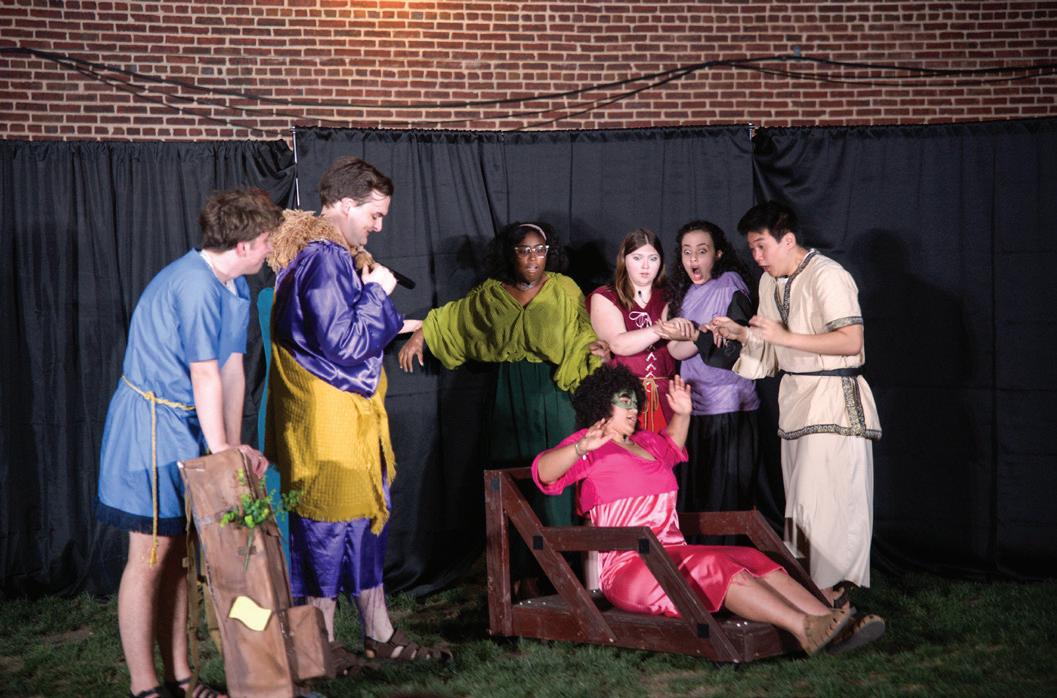
against the closure in hopes of keeping the baristas’ jobs intact and the coffee institution alive for years to come.
“A silver lining, in that it’s nice to feel appreciated and knowing that we have done something for the GW community,” Krantz said.
COLLAGE
NICHOLAS WARE Hatchet archives of America’s bicentennial.
NICHOLAS WARE | STAFF PHOTOGRAPHER Rain falls on the awning outside of Peet’s Coffee in District House.
DIANA ANOS CULTURE EDITOR
NICHOLAS WARE | STAFF PHOTOGRAPHER
The tip jar at Peet’s Coffee after the cafe announced its closure.
ADNAN MASRI | STAFF PHOTOGRAPHER
GW Shakespeare Company actors perform “The Frogs” at G Street Park Friday.

A breakthrough season is step one in Adeduntan’s revolutionary rebuild
MADELEINE PHILLIPS
STAFF WRITER
SOPHIA CAPUTO STAFF WRITER
Women’s basketball Head Coach Ganiyat Adeduntan isn’t interested in letting a turnaround season paper over her deeper expectations for her program.
After finishing 18-18 overall and 7-11 in the Atlantic 10, the Revolutionaries surged late, stringing together a seven-game win streak in December and pushing all the way to the Great 8 of the Women’s National Invitation Tournament. But even as the wins piled up, Adeduntan said her focus never shifted to results alone.
“I don’t care if we win, I’m finding the ways that we can continue to get better,” Adeduntan said. For Adeduntan, that growth starts with the team’s identity, something she’s tried to build long before this season’s late push.
Before taking over as head coach in March 2025, Adeduntan spent four seasons in Foggy Bottom as an assistant from 2017 to 2021, helping guide the Revs to an A-10 Championship title before heading to New York to take a head coaching position.
But stepping into the lead role required more than leaning on past
success. It meant redefining expectations for a roster she said had to learn how to meet a new standard.
Adeduntan said one of the biggest challenges in taking over the
program was getting players to fully “buy into” a new culture and identity. Breaking old habits — while consistently enforcing stricter standards — initially came across
as “nitpicking,” she said, but she remained firm in her approach. She emphasized reminding players at every practice of the responsibility to represent the program at a high
level and said she “didn’t budge” when it came to holding them to those expectations.
“I show up in practice every single day with a certain level of focus and intensity,” Adeduntan said. “But to get them to play at a high level, to get them to play consistently, I would say we’re still not there, but we took huge, huge strides as the season was going.”
Individual development mirrored that progress too, particularly with sophomore guard Gabby Reynolds, who led the team in scoring with 12.9 points per game on average. Adeduntan said Reynolds entered the program as a “one-sided” player who was best on offense and that she pushed to expand her defensive presence and overall consistency.
Reynolds is among a core group set to return, alongside sophomore guards Jaeda Wilson and Tanah Becker and junior forward Kamari Sims. Adeduntan said their decision to come back reflects the environment the staff has built — one centered on accountability, development and a shared “hunger” for more wins.
“I’m hoping that we have a good core returning that’s going to help us kind of just keep moving forward,” Adeduntan said. “I don’t want to start from scratch. I want to just elevate from where we are.”
Underclassmen surge boosts lacrosse standings ahead of A-10 tournament
SOPHIA CAPUTO STAFF WRITER
Fueled by an influx of standout underclassmen, lacrosse (9-6, 4-4 Atlantic 10) has climbed two spots in the conference standings to sixth place as it makes a final push toward the A-10 tournament in May.
With 11 freshmen and eight sophomores on the 31-person roster, the team’s young talent has pushed them into 4-4 in conference play with two regular-season games remaining and kept them in the top half of standings all spring — a tre-
mendous leap from their last year’s eighth-place 2-8 conference finish. Head Coach Colleen McCaffrey said the team’s new crop of players has driven its improvement this season, delivering the energy she expected during fall ball in September by strengthening their core fundamentals, strengthening the offensive attack and embracing a “100% all in” mentality.
“The difference being that this year, there is not one single person who doesn’t believe in how their role impacts the group,” McCaffrey said. Among the team’s
young contributors making their presence felt across the A-10 are freshman attacker Mia Milkowski, who secured her third A-10 Rookie of the Week honor and sophomore goalkeeper Gabi Greth, who earned A-10 Defensive Player of the Week earlier this month. The two A-10 accolades for Milkowski and Greth came after the Revolutionaries’ 12-9 win over George Mason on April 4. Their 8-0 scoring runs in the second and third quarters of the game cemented their control of the field in which
Milkowski scored three goals on five shots made, and Greth made 10 blocks from the Patriots’ offense.
McCaffrey said she is confident in her next two recruiting classes for the next two seasons that she’s already selected, and the coaching staff is trying to bring in, “even better, bigger, stronger players.” “I’m excited for what they bring, but I’m really focusing on the right now and just embracing the time that we have left with this senior class because they’ve done an amazing job,” McCaffrey said.
Tennis wraps up regular season with dominant win over Delaware State
MILO ROSENZWEIG STAFF WRITER
Tennis (10-8, 3-2 Atlantic 10)
defeated Delaware State 5-2 on Saturday, recording a third consecutive win as the Revolutionaries head into the A-10 Championship this week.
The Revs won all three doubles matches and four of six singles matches to easily defeat the Hornets, a cherryon-top finish to the Senior Day pregame ceremony, which honored senior Katya Balin and Graduate Assistant Coach Stella Wiesemann. Saturday’s game marked the team’s third consecutive win after sweeping the University of New Haven and taking down Rhode Island in early April.
“I saw a great effort, a great fight, great focus and playing for our senior today, Kat,” Head Coach Jackie Calla said postgame. “It’s been great.”
The Revs started the match with a shutout 6-0 doubles finish from juniors Solange Skeene and Victoria Sasinka, finishing 9-8 in doubles competition on the season.
Their victory was quickly followed by a 6-3 doubles finish from No. 1 pair junior Madison Lee and sophomore Karen Verduzco, who improved to 12-6 on the season. Freshmen Devika Manu and Alexandra Lindqvist, ranked No. 3, won the final doubles set 6-4.
In singles competition, Lee walked away with the first win after her opponent, Delaware State’s Sia Mahajan, experienced injuries preventing her from continuing a second set. Skeene, Lindqvist and Verduzco then tacked on three more singles wins, securing the Revs’ victory and forcing Delaware State to 3-11-1 on the season.
The late-season hot streak has been shepherded by Calla, in her first season with the Revs after leaving her post as an assistant coach at Syracuse University. Calla inherited a program that finished last year 6-12 and lost to No. 8 Dayton in the first round of the A-10 Championship last April.
Skene said she prioritized teamwork and creating a harmonious partnership with Sasinka throughout their success this season.
“Doubles has been a priority for us
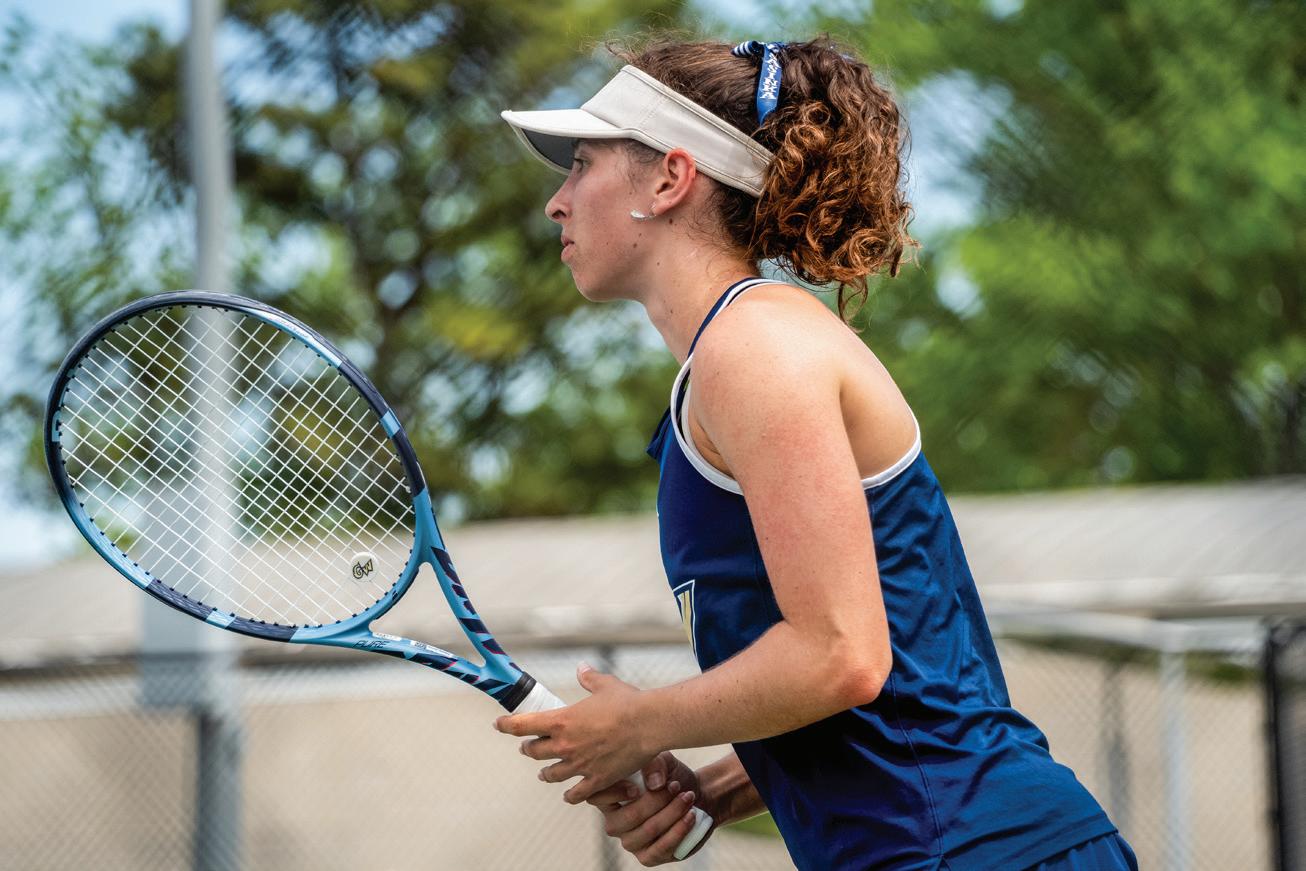
from the beginning, and it’s just nice to see the hard work paying off when it counts,” Skeene said. With the A-10 Championship on the horizon, Skeene said the team was hoping to continue to incorporate the disciplined training Calla and her staff have been instilling all year.
“She’s just been teaching us so much about the game and so much about how to compete, that it’s really easy to try and implement what we’ve been learning,” Skeene said. The A-10 Championship will kick off on Wednesday in Orlando, Florida, with seeds yet to be announced.
Men’s basketball has strengthened its frontcourt depth with the addition of University of Georgia junior forward Dylan James, a move first reported by CBS Sports’ Jon Rothstein. James spent three seasons with the Bulldogs, where he averaged 4.5 points, 3.8 rebounds and 0.5 assists in 15 minutes per game as a junior while providing consistent size and physicality in the paint. The 6-foot9 forward recorded 253 career rebounds at Georgia, including 159 on the defensive end, giving the Revolutionaries a proven presence on the glass.
The former Bulldog joins three former Power Five conference players who have announced their transfers to Foggy Bottom ahead of next season, including guards Omari Witherspoon and Felix Kossaras and forward Terrance Arceneaux.
The Winter Haven, Florida, native appeared in 33 games for Georgia last season and started in two. He had a seasonhigh 16 points in the Bulldogs’ 92-77 loss to the previous national champion University of Florida Gators in January. In Georgia’s NCAA Tournament first-round loss to Atlantic 10 foe
Saint Louis, James started and played 17 minutes, scoring 5 points. During his sophomore campaign, the big man averaged 3.2 points per game and 2.2 rebounds per game in 13.6 minutes. He started eight of the team’s 32 games, including the final seven games counting the team’s first-round March Madness matchup with the Gonzaga University Bulldogs. He also had a career-high five blocks in the Bulldogs’ 66-63 victory over St. John’s University in November. In his freshman year, he appeared in 22 games and averaged 4.0 points and 2.6 assists in mostly sheltered minutes. Down the stretch, he started the final eight games. James was a fourstar recruit coming out of Winter Haven High School, according to 247Sports. He was the 87th-ranked player nationally and the ninth in the state of Florida. In his career at Winter Haven, he notched 57 double-digit scoring performances and 24 double-doubles.
James looks to pair in the frontcourt with Arceneaux as the Revs continue to add through the transfer portal to replace many of their departing big men including Rafael Castro, Bubu Benjamin, Garrett Johnson and Tyrone Marshall Jr.
Michael Bohlke’s 1500-meter time at track and field’s meet last weekend, a men’s program record.
RYAN JAINCHILL BASKETBALL EDITOR
ADDY OSBORN | STAFF PHOTOGRAPHER Tennis players high five during their doubles match against the University of Maryland Eastern Shore on Saturday.
KRIS PARK | STAFF PHOTOGRAPHER
Head Coach Ganiyat Adeduntan during a game against Richmond in February.
JESSIE ZHAO | STAFF PHOTOGRAPHER Freshman attacker Mia Milkowski moves the ball during a game against Duquesne on Saturday.
ADDY OSBORN | STAFF PHOTOGRAPHER
Junior Victoria Sasinka prepares to volley during a match.