HATCHET The GW

GW announced Sat urday that the Board of Trustees elected Vice Chair Mark Chichester as its next chair, succeeding longtime leader Grace Speights as the University navigates strate gic planning and financial strains.
Chichester, co founder of healthcare consulting firm Atlas Research, has served as vice chair since May 2022 and will lead the University’s top governing body for three years beginning June 1 as
GW implements University President Ellen Granberg’s strategic framework, works to reverse the structural defi cit and grapples with Trump era policies reshaping higher education. The Board also elected Trustee Todd Klein to a three year term as vice chair and reappointed Sec retary Jeffrey Flaks — who began serving in the role last June — to a three year term. The Board voted last March to extend Speights’ and Chichesters’ terms for an additional year — made pos sible by a 2024 bylaw amend ment that permits trustees to
extend an officer’s term for a year. Before the amendment, bylaws mandated that Board officers could not serve more than six years in the same position.
Speights is no longer al lowed to serve on the Board given she is leaving her offi cer role, and the bylaws have a 12 year trustee term limit.
Chichester has served on the Board since 2013 — ex ceeding the bylaws’ 12 year limit for trustees — but the document permits trustees to surpass that limit if they are serving in an officer role. Speights, who is now
serving her seventh year as Board chair, will step down on June 1 after leading the University through a con sequential period including the contentious tenure of former University President Thomas LeBlanc, Interim University President Mark Wrighton’s tenure and the Board’s selection of Universi ty President Ellen Granberg. Speights also oversaw the body’s controversial decision to arm select GW Police De partment officers, retire the Colonials moniker.
DYLAN EBS
ASSISTANT NEWS EDITOR
GIANNA JAKUBOWSKI
ASSISTANT NEWS EDITOR
Faculty and staff oper ating out of the Virginia Science and Technology Campus say the Univer sity’s decision to sell the property without con sulting them or outlining relocation plans has left them in the dark about how exactly officials will use the profits and the fu ture of their programs.
Half a dozen faculty and staff say the sale will help combat GW’s struc tural deficit and support University President El len Granberg’s new stra tegic framework, but of ficials so far have failed to detail how exactly they will use the money or account for the campus’ more than 850 employees, 20 degree and certificate programs and 17 research labs. These faculty and staff, alongside Loudoun County officials, say GW failed to consult them on the decision to sell the property to Amazon for data center development, which could significantly disrupt education and research and will con tribute to environmental degradation.
“Quite frankly, they have much more work to do,” Ellen Scully Russ, an associate professor of human and organization learning at the Graduate School of Education and Human Development, said. “As a faculty mem ber, I would much rather
GIANNA JAKUBOWSKI
ASSISTANT
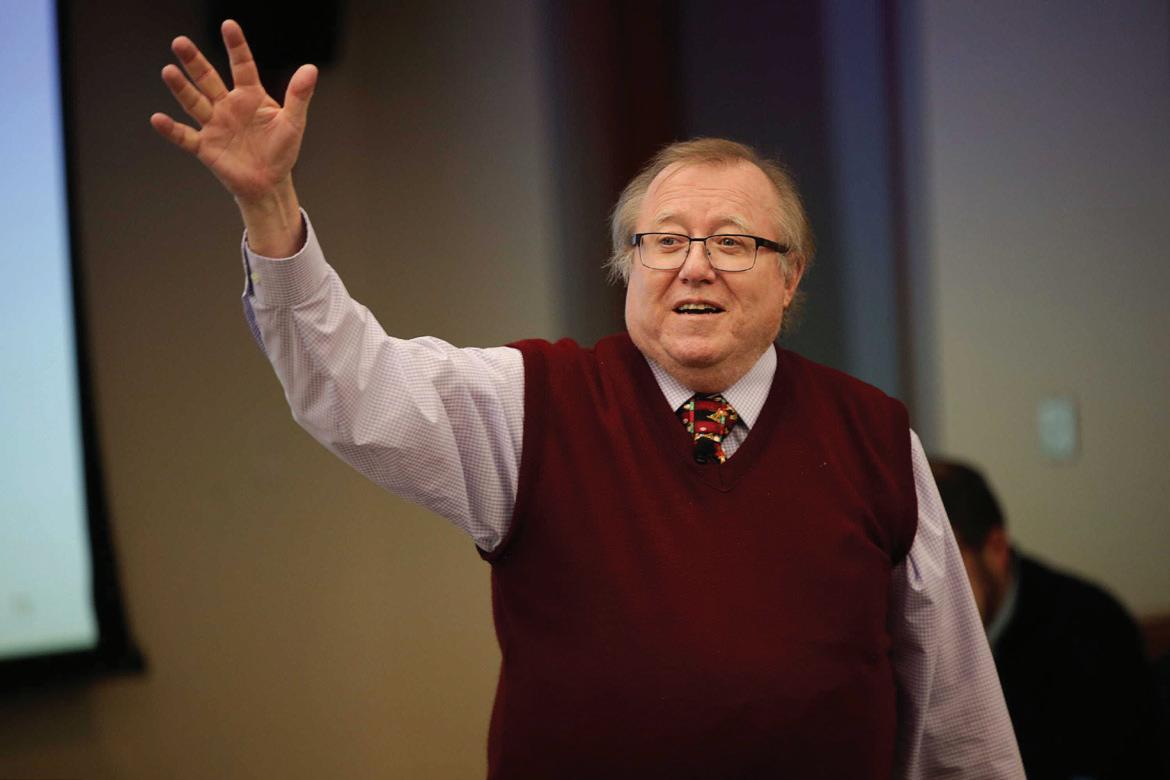
Joseph Cordes, a longtime economics professor, co direc tor of the Regulatory Studies Center and faculty senator, died on Feb. 26 after more than 50 years at GW. He was 76.
Cordes held several faculty appointments and leadership roles in his five decades at the University, including professor of economics, public policy and public administration and in ternational affairs, chair of the economics department, faculty senator and one of the founding members of the Trachtenberg School of Public Policy and Pub lic Administration. Colleagues, students and family remember
Cordes as a generous, enthusi astic leader who eagerly shared his knowledge of economics with everyone he met.
“Joe Cordes was one of a kind, and so we just can’t have the idea that we can find a re placement for him,” said Steven Balla, who serves as the Regula tory Studies Center’s co direc tor and described Cordes as a mentor. “That would be an im possibility, but what we can do is move forward and honor his spirit.”
Cordes was born on April 16, 1949, in San Francisco, Califor nia. He earned his bachelor’s de gree in economics from Stanford University in 1971 and his Ph.D. in economics from the Univer sity of Wisconsin Madison in
1977, according to his LinkedIn. He began his career as an eco nomics professor at GW in 1975.
Sarah Cordes, his daughter, described him as a “brilliant” and “incredibly kind” person who never got angry. She said he loved his grandchildren and often took them on walks and to the playground when they came to visit.
She said her father never bragged about his accomplish ments, recalling how she didn’t know GW was holding a 50th anniversary celebration for him until one of his colleagues emailed her, saying they knew Cordes wouldn’t tell her him self.

see a conversation around how this money is going to be invested and spent to support the growth of the University.”
GW last month sold the VSTC campus, locat ed in Loudoun County, for $427 million to Ama zon Data Services, which plans to develop the site into a data or informa tion technology center. Chief Financial Officer Bruno Fernandes told The Hatchet last month that officials hadn’t spo ken to community mem bers about the sale before they publicly announced it, though University spokesperson Julia Garb itt said officials would now consult VSTC cam pus leaders and com munity members as they navigate the sale’s impact on campus programs. Garbitt reaffirmed of ficials’ commitment to a smooth and well planned process of moving the campus’s operations in a way that ensures the con tinuity of VSTC programs and services and engage ment of the “entire” GW community, but she cited confidentiality provisions in the sales agreement as officials’ reason for not sharing specific details with Loudoun County’s Board of Supervisors or VSTC employees. Garbitt said officials are in the process of fi nalizing a timeline and structure for a “coordi nating group” that will help transition campus operations.
Officials reopened student organization applications earlier this month after a 10‑month freeze that students said stifled community building and pushed some to form unofficial groups, operating without funding or campus resources. The Division for Student Affairs reopened applications after comparing their approval process to peer schools’ and updating its evaluation rubric to include anticipated financial needs and potential safety risks, a University spokesperson confirmed. DSA implemented the pause at the end of the spring 2025 semester to “improve the support structures” for current student organizations, which prompted students to unofficially form new organizations on campus without access to resources like University funding and campus spaces.
A University spokesperson confirmed that DSA received 13 applications by last Monday’s priority deadline — which would allow new groups to apply for Student Government Association funding for the fall semester — and expects to receive additional applications ahead of the extended Thursday deadline. They said the DSA does not have a cap on the number of applications they will approve.
“While work on this front continues, DSA was committed to opening the process so that, if interested, approved organizations would be eligible for the SGA budget allocation request process for fall 2026 funding,” the spokesperson said in an email.
The spokesperson said during the pause, officials reviewed student organization approval processes at GW’s peer schools, which prompted them to improve support structures for student groups.

Students and faculty with famil ial connections to the Middle East said they are cautiously optimistic about the end to an oppressive Iranian regime four weeks into the war but fear Presi dent Donald Trump hastily launched the United States into a poorly planned Middle Eastern conflict.
More than half a dozen community members said the United States’ and Israel’s targeting of Iran’s authoritarian government, which has clamped down on civil rights and liberties in the coun try for decades, could help foster a freer society if the United States topples the regime. Still, they reported that their op timism is tempered by uncertainty over the Unites States’ objectives for the war as Trump has offered conflicting state ments about how long he expects the conflict to go on for and whether regime change is an official objective.
The United States and Israel launched joint strikes against Iran in what Trump dubbed “Operation Epic Fury,” starting early in the morning Feb. 28, killing the country’s Supreme Leader Ayatollah Ali Khamenei — who led a repressive regime beginning in 1989 character ized by tense relations with the West — within a matter of hours. The war has expanded over nearly four weeks to a broader Middle Eastern conflict.
The death toll in the conflict is ap proaching 3,000 as of Sunday, including 13 American service members and over 1,500 in Iran, according to the country’s health ministry.
Jadon Ghermezian, an Iranian American sophomore majoring in ac counting and finance, said he celebrated the death of the Ayatollah but added that he is weary about Trump’s decision to launch the military campaign with out approval from the branch of govern ment who is responsible for declaring war. “It was so emotional, I couldn’t stop crying,” Ghermezian said, referring to the moment he heard about the Ayatol

lah’s death. “The whole morning it took a good three hours to stop crying.”
Ghermezian said he and his family, whStill, Ghermezian expressed outrage at Trump’s decision to launch the strikes and embroil the United States in conflict without congressional approval, saying that while the Trump’s operation could yield a net positive for Iran, his subver sion of the Constitution cannot be ig nored by citizens.
“When waking up that morning and having him say in a speech, point blank, this is a war, it changes entirely in my head because that truly isn’t okay,” Gh ermezian said. “You should have gotten Congress’s approval.”
Aidan Seewer, an Iranian American junior majoring in political science, said he wants to see Khamenei’s regime out of power but said he believes it is up to the Iranian people to decide the future of the country, which will give them the chance to have their country reach its full potential. He said the war feels simi lar to Italian dictator Benito Mussolini’s invasion of Ethiopia in 1935, in the sense that an unpopular leader — Trump’s ap proval ratings have hovered around 40
percent — is chasing after an “easy vic tory” against an adversary.
“[Iranians] want to walk and have the wind blowing through their hair and not have to cover it, to end their period of isolation really and just be an equal in the world stage, have the coun try develop and reach its full potential,” Seewer said.
Nate Neustadt, president of GW for Israel, said he felt
“cautiously optimis tic” that the strikes could contribute to regime change in Iran, which would take out a government that’s been hos tile to Israel and the United States.
Neustadt said the conflict is in re sponse to years of Iranian aggression against the West, including targeting Israel and the United States. He said the campaign represents the West standing up to the “state funded terrorism” and “anti Western ideals” Iran’s government promotes, including Hamas’ Oct. 7, 2023, attack on Israel.
“I believe that this was the circle clos ing off after the terrorist attacks on Oct. 7, and after Iran constantly, constantly threatening to destroy Western interests and Western values,” Neustadt said.
Off Campus
3/16/2026 – Unknown
Closed Case
A male GW student reported befriend ing an unknown person on the Bumble app, who then recorded unspecified acts without consent and threatened to release the recordings publicly unless the student made a cash payment. Case closed. Referred to the Arlington County Police Department.
THEFT II/OTHER
District House lobby
3/15/2026 – Unknown
Open Case
A female GW student reported her package stolen from the District House lobby delivery rack. Case open.
Academic Center Garage
3/11/2026 – 2:45 p.m.
Closed Case
The GW Police Department reported a thumbtack stuck in the rear left tire of their vehicle. Case closed. No suspects or witnesses.
THEFT II/FROM BUILDING
Amsterdam Hall 3/10/2026 – 7:06 p.m.
Closed Case
A GW student reported their Door Dash order stolen from the lobby. GWPD reviewed footage and identi fied a GW student as a suspect. Case closed. Referred to Conflict Education & Student Accountability.
—Compiled by Bryson Kloesel
DYLAN
A top University official urged the Department of Education to revise a proposed rule that would restrict certain graduate programs’ access to higher loan caps as the federal government overhauls the graduate student loan system.
Vice President and Dean of En rollment Management and Student Success Jay Goff wrote in a March 2 memorandum that the depart ment’s January proposal to tighten what qualifies a program as “pro fessional” would exclude most GW graduate programs from that classification, limiting students’ ac cess to federal loans and potentially worsening job shortages in some in dustries. Goff wrote that 84 percent of GW graduate students would not qualify for the higher borrowing limits under the proposal, accord
ing to 2023 graduation data, which he said would “severely” restrict access to professional graduate edu cation and “weaken” the nation’s workforce pipeline.
The proposal follows the chang es that President Donald Trump’s
One Big Beautiful Bill Act made to the federal loan system. The law eliminated the Grad PLUS program effective July 1, which allowed graduate students to borrow up to the full cost of attendance.
Under the law’s new program, graduate students can instead bor row up to $20,500 annually for most graduate programs and $50,000 for programs designated as “profes sional.” The Education Department is required to identify professional degree programs eligible for higher federal lending limits under the act, according to an agency release.
About 650 programs nation wide in 11 “legacy licensure fields,”
including law and dentistry, would qualify for higher federal loan limits under the rule, according to Goff’s letter. Goff wrote that the new definition would exclude grad uate programs in fields, like public health, education, engineering and nursing, which he said should be considered professional degrees because they are “essential” to na tional “prosperity and public well being.”
“Restricting their borrowing ca pacity would mean fewer students able to pursue graduate study, fewer researchers driving innovation, and fewer skilled professionals entering critical fields,” Goff wrote.
Senior Vice Provost for Academ ic Affairs Terry Murphy also used the federal rulemaking comment period in September when she wrote to the Department of Home land Security arguing against the department’s proposal to limit in
ternational student visas to four years. The Higher Education Act de fines a professional degree as a degree that signifies both comple tion of the academic requirements for beginning practice in a given profession and a level of profes sional skill beyond that normally required for a bachelor’s degree. Ex amples included under federal law are pharmacy, dentistry, veterinary medicine, chiropractic, law, medi cine, optometry, osteopathic medi cine, podiatry and theology, but the law describes as not binding.
The proposed Department of Education rule defines professional degrees as the ones listed in the Higher Education Act and adds clinical psychology, but Goff argues in the memo that those examples are “clearly” not intended to be a complete list.
The department has said in the
Federal Register that the profes sional designation does not reflect a judgment by the department re garding whether a borrower gradu ating from a program is considered a “professional” and is only used to determine whether a program is eligible for higher borrowing limits. Goff said under the proposed rule, 160 nursing graduates, 613 engineering and applied science graduates, 347 education and hu man development graduates, 24 art therapy graduates, 56 speech language pathology graduates and more than 850 public health gradu ates would not be deemed pursuing professional degrees, according to 2023 enrollment data. Goff wrote all of them complete advanced profes sional training that prepares them to fill “critical” roles in health care, infrastructure, education and tech nology and would no longer qual ify for the higher borrowing limits.
LEANNA JOJU
REPORTER
SHIVU SATHE
REPORTER
The number of students who graduated with double majors hit 19.8 percent this past academic year — the highest since at least 2013, ac cording to GW’s core indica tor report.
The figure marks a 5.1 percent increase since 2013 and a 2.4 percent rise from 2024, with the report also noting a decade high 5.91 percent of undergraduates double majoring across more than one school. Half a doz en higher education experts said the increase mirrors a national trend of students who want to follow their academic interests while also creating a diverse portfolio of skills for future employ ers, with the percentage of students with two majors na
tionwide increasing from six percent in 2014 to 11 percent in 2024.
Xuechao Qian, an assis tant professor of economics at Ball State University, said having two sets of skills can open students up to more opportunities when the job market is not doing well, like during a recession, as double majors can diversify their “human capital,” or the economic value of a worker’s experience and skills. Qian said the recession the COVID 19 pandemic caused contributed to job loss, and after the pandemic, people with double majors are “performing better” na tionally than those with a single major because they can tap into more skills. She said her 2024 study found that the salary of a person with a double major is less exposed to unexpected wage drops caused by a labor mar ket shock compared to some
body with a single major.
“If I only do a computer science major, and then ver sus my classmate does com puter science plus economics major, my classmates poten tially can go to some kind of some job sectors that require both understanding of the economic theory and also some data kind of coding skill,” Qian said.
Drew Hanks — a pro fessor of consumer science at The Ohio State Univer sity, said students benefit the most when they select majors that are not similar to each other, as this will help them gain a wider range of skills.
Hanks also said there has been an increase in the num ber of students entering col lege already having credits due to sources like Advanced Placement high school class es. He said this flexibility has given students more op portunities to more classes if they transfer enough credit.
ELIJAH EDWARDS
ASSISTANT NEWS EDITOR
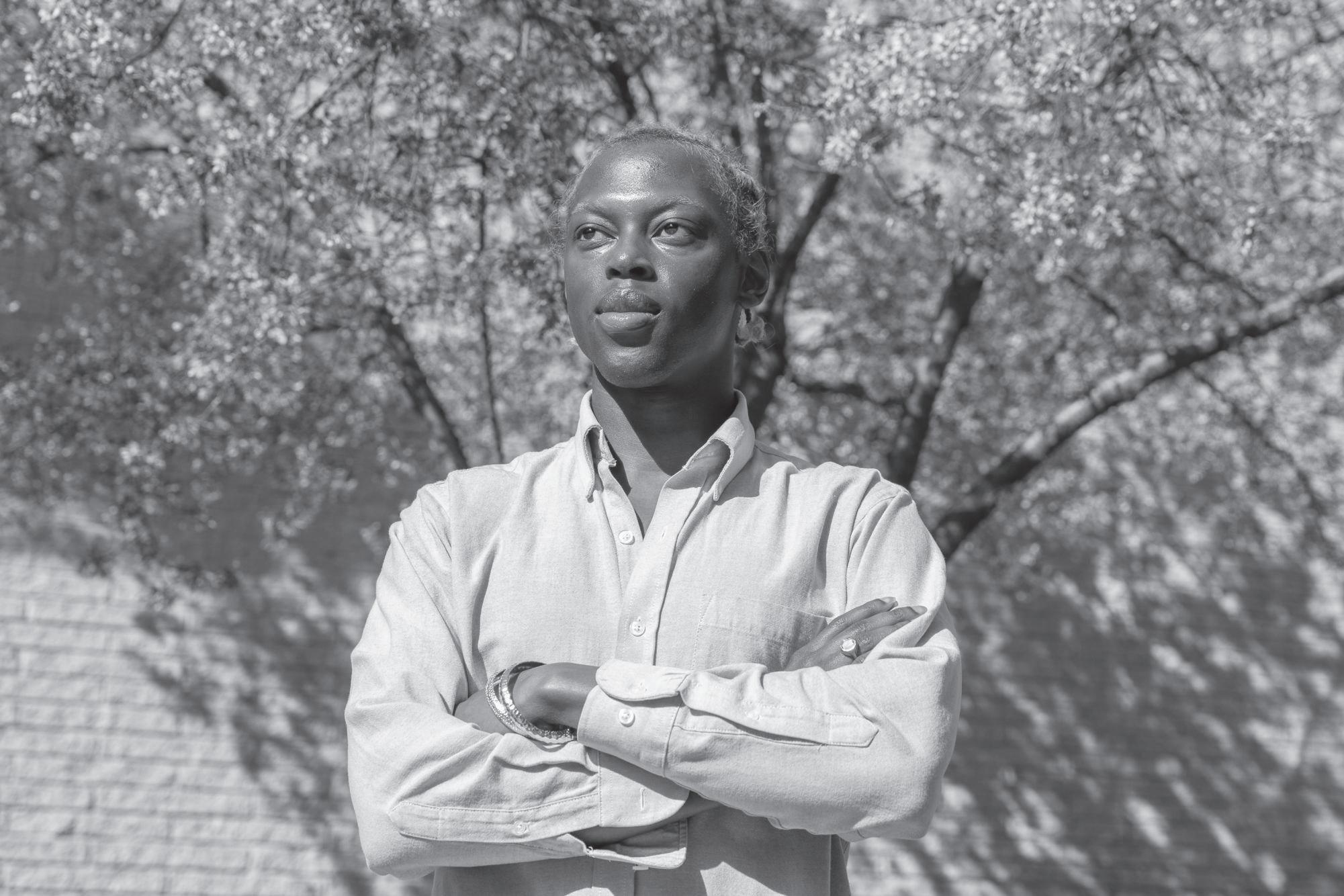
First year Zain Masood launched his campaign for Student Government Association president Thursday, aiming to lower tuition and advocate for officials to sell the Mount Vernon Campus.
Masood, an international affairs major with a concentration in secu rity policy from Miami, said if elect ed president he would make “bold moves” in the role by advocating for officials to lower tuition, sell the Vern and switch to local providers for higher quality food in dining halls. Masood said although he’s a first year with no previous SGA ex perience, he is just as qualified for the role as sophomores and juniors, since he has already experienced GW for a full year and has previous organizing experience on political campaigns in Florida.
Masood said since students pay tuition and are the Univer sity’s main source of revenue, they have the most power and potential to make change at the University. When asked how he would accom plish his broad goals as SGA presi dent, including selling the Vern and convincing officials to lower tuition, Masood repeatedly said he would work to build student pres sure on the administration to meet students’ demands, though did not specify what a specific pressure campaign would look like.

“We just need to be active,” Masood said. “We need to be active members of our campus commu nity, we need to show our voice and we need to unify together.” Masood said his top priority as president would be lowering un
dergraduate tuition, which officials raised to $69,780 last year and have hiked every year since 2019. He said he would work to pressure admin istrators, like University President Ellen Granberg and the Board of Trustees, by “uniting students” to
demand they make changes.
Masood said students are most directly affected by cuts to cam pus services, like reduced library hours and the halved frequency of Mount Vernon Express shuttles, and should be more involved in the
decision making process with Uni versity officials when they decide where to make cuts.
Masood said he is co president of GW’s chapter of the Collegiate In stitute for Middle East Affairs — a national organization that works to advance students’ understanding of the Middle East. The GW chap ter, an unaffiliated student organi zation formed earlier this year, has been unable to gain official status due to the University’s pause on forming new organizations this academic year.
Masood said the current SGA has made some positive changes, like advocating for officials to re open Gelman Library 24/7 and re lease final exam schedules on the first day of classes, but the initia tives are all “very small” compared to the broad changes he wants to see on campus, like lowering tu ition.
Masood said officials’ recent sale of the Virginia Science and Technology Campus for $427 million was a “good move,” and as president he would advocate for officials to further consoli date the University’s assets onto Foggy Bottom, including selling the Vern. He said selling the Vern could also help officials cut costs as they face budget pressure be cause they could eliminate ser vices like Vex shuttles between campuses and paying staff on the Vern.
AMELIA NELSON
STAFF WRITER
MJ Childs, the Black Stu dent Union’s vice president of marketing, became the first to announce his bid for Student Government Asso ciation president last week. Childs, a sophomore from Philadelphia studying creative writing and market ing, said if elected, one of his top priorities would be in cluding student perspectives in University policies by cre ating advisory committees that work with GW officials on topics like diversity and responsible artificial intel ligence usage. Childs, who has not previously served in the SGA, said he sees the SGA president as an advo cate for community mem bers, and his experience with advocacy, especially through running BSU’s Instagram — which he has used to speak
out against President Don ald Trump’s administration’s perpetuation of racial stereo types — qualifies him for the role.
“At the end of the day, all of us are students, and I think that I’m very involved in campus, and I also talk to so many people every single day, so many different types of people, and I am presented with new information all the time,” Childs said.
Childs said he plans to increase campus safety through advocating for more detailed and frequent alerts notifying students of law en forcement and immigration enforcement presence, say ing the current updates often lack detail, and officials do not always issue them when law enforcement is present on campus. He said he would also ask officials to provide more specific language about how certain federal actions will directly impact GW in
their weekly federal updates emails, which he said can be “very vague.”
Childs said he wants GW officials to engage in more “honest communication” with students by explaining their reasoning for making budget cuts. University Presi dent Ellen Granberg sent an email to community mem bers in October discussing recent challenges facing the University, marking the first time the University publicly discussed layoffs and reduc tions in campus services with the full community.
“The throughline was that students are not con nected to the governing bod ies of the University, not just SGA, but also Board of Trust ees, President Granberg, and so I really wanted to be that force and that connection, as in bridge that gap,” Childs said.
He said he also plans to create a 20 to 50 person co
The School of Medicine & Health Sciences signed onto a nationwide Department of Health and Human Services initiative earlier this month to add mandatory nutrition education to school curricula starting next fall.
The SMHS joined 52 other medical schools in the initiative on March 5, part of Health Secretary Robert F. Kennedy Jr.’s “Make Ameri ca Healthy Again” program aimed at addressing the root causes of chronic diseases in children. As part of SMHS’s voluntary commitment to the program, the school agreed to a new mandate requiring students complete at least 40 hours of nutrition education throughout their educational career, a mini mum that SMHS students already exceed.
The HHS agreement also requires schools to nomi nate a “faculty champion” for nutrition education and mandates officials to create a public website stating the school’s plan to meet federal requirements, with schools that join the initiative receiv ing access to a $5 million pool of funds that the program will distribute during an up coming nutrition education challenge.
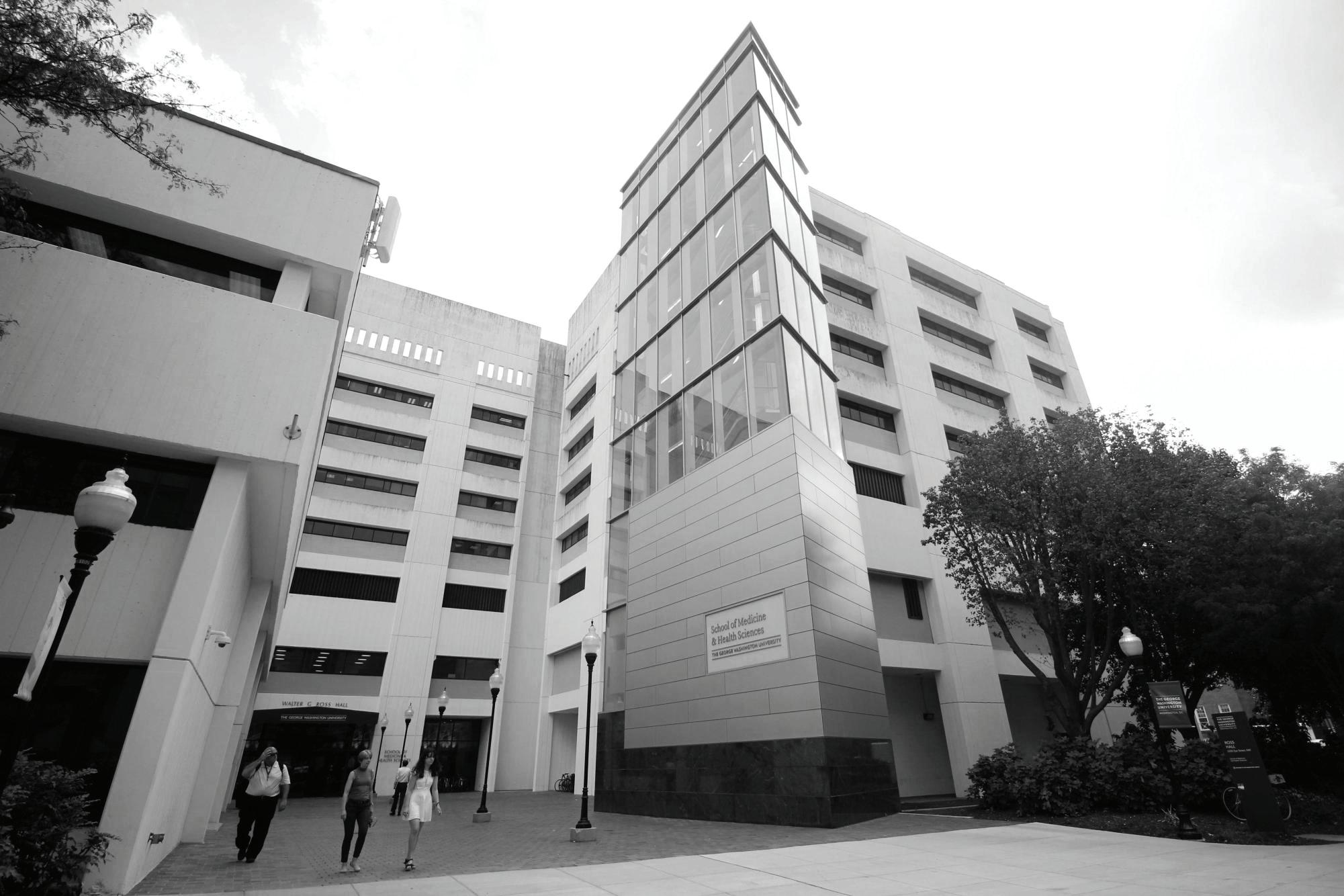
A University spokesper son said the new initiative was a “natural extension” of SMHS’s previous curriculum guidelines, as the school’s MD programs already in cluded nutrition require
ments that exceed the new 40 hour federal minimum, which requires schools to embed education into exist ing classes as well as create new ones focused on nutri tion. The spokesperson also
PARIS ALBRECHT STAFF WRITER
Student groups organized a month of programming to celebrate South Asian culture, explore its vibrant and lesser known traditions and chal lenge generational and cultural stereotypes within the commu nity.
The South Asian Society and six other student groups launched programming on Feb. 21 under this year’s theme, “Unraveling the Past,” with the Indian Student Association’s South Indian Cultural Night set to conclude the celebration on March 27. Student leaders said the theme aims to showcase the diversity of cultural traditions across South Asia’s countries and religions while challeng ing common stereotypes, giv ing students the opportunity to explore the full breadth of their own heritage and that of others.
The SAS, a student organi zation comprised of students with ties to the eight coun tries that make up South Asia, spearheads the celebration every year. This year’s month of programming has included discussions on colorism in the community, a themed iftar to celebrate Ramadan and a mov ie screening of RRR, a film set in pre independent India.
Maansi Chandra, a senior studying public health and SAHC co chair, said she hopes this year’s celebration and events will build on the work of younger South Asian commu nity members to move beyond generational stereotypes and challenge “patriarchal” norms within their community.
“I think we’re the genera tion that’s going to make the change, that’s going to have these hard discussions, that’s going to make these ideas prev alent and fight to make them less of a prevalent part of our society, and really work to kind of change the way people think about South Asians,” Chandra said.
enhanced case based mod ules that highlight chronic disease prevention, nutrient dense foods, and evidence based dietary patterns,” the spokesperson said.
said SMHS integrates nu trition education into their undergraduate curriculum through the culinary medi cine program, which helps students become more “cul turally responsive” when

Chandra said this year’s keynote speaker — actor Karan Brar, best known from Disney Channel’s “Jessie” — fits the theme by defying stereotypes through his successful acting career, an example she said is important for South Asian community members pursu ing careers in diverse indus tries. She said Brar is an ex ample of breaking stereotypes that most South Asian people work in STEM related fields, like medicine.
“South Asian people are not really seen a lot in Hollywood,” Chandra said. “They’re your doctors, they’re your engineers, they’re your IT people.”
Chandra said SAHC’s uni fying and supportive atmo sphere has made a huge impact on her time at GW by connect ing her with the entire South Asian community, allowing her to explore the region’s cul tural diversity in a way she was previously unable to do. She said SAS’ academic advisor — the Multicultural Students Services Center Director Van ice Antrum — has been very supportive of SAHC through helping plan events.
During SAHC’s Feb. 27 “Mango Juice and Master pieces” event — a “paint and sip” with a discussion of South Asian art, moderated by art history professor Mika Natif — Chandra said the The George
Washington University Mu seum and The Textile Museum provided painting supplies and offered tours of the exhib its that feature South Asian art.
Saanvi Padaki, a sopho more studying public health and SAHC’s other co chair, said South Asian students of ten feel “boxed in” by societal expectations, with specific religions or countries defin ing their identity. She said this year’s theme helps expand cul tural perspectives by highlight ing the intersectionality of the region’s heritage.
“If you ask me what it means to be South Asian, and you ask someone else, our an swers are not going to be the same,” Padaki said.
She said SAHC plays a “vi tal” role in combatting national hatred against South Asians that has increased since the start of the Trump administra tion’s second term — evidenced by heightened immigration enforcement, a crackdown on diversity, equity and inclusion policies in higher education and the federal government’s targeting of H 1B visas, which South Asian immigrants fre quently use.
“We are not what the Trump administration por trays us to be and to celebrate our culture, in spite of the fact that there’s so much hatred and discourse,” Padaki said.
counseling.
“Medical students re ceive more than 40 hours of nutrition related instruction embedded throughout foun dational and organ system–based courses, including
The Make America Healthy Again initiative, es tablished by President Don ald Trump through an execu tive order in February 2025 and led by Kennedy, aims to identify the cause of Ameri ca’s “chronic disease epidem ic” and reform various food, health and scientific systems through methods, like reduc ing the number of “highly chemically processed” foods and merging five different HHS agencies into a new Administration for a Healthy America agency. Kennedy first began pushing for more nutrition education in medicine in June, saying he would with hold federal funds from schools that do not offer nu trition courses. In August, he and Secretary of Education Linda McMahon demanded medical education organiza tions submit written plans detailing the scope and time line of a proposed nutrition curriculum by September, but did not mention with holding funds from schools that did not comply and have not yet done so.
HHS did not return a re quest for comment.
ANC condemns Pepco’s price hikes, repeated Ward 2 outages
The Foggy Bottom and West End Advisory Neighborhood Commission criticized the Potomac Electric Power Company’s repeated widespread out ages and climbing electricity bills at their meeting on Wednesday.
Commissioners, alongside resi dents, said that monthly bills this winter — sometimes exceeding $1,000 — are increasingly unaffordable and unjustified, particularly as residents endured power outages throughout the last year. 2A03 Commissioner and ANC Chair Trupti Patel said rising utility prices over the past year are putting additional pressure on seniors living on fixed incomes, while outages continue to endanger tenants at the Aston unhoused shelter and residents across the West End.
“How is a senior on a fixed income going to afford a $1,000 bill?” Patel asked at the meeting. “We are placing very, very vulnerable populations in situations where they’re going to lose their housing.”
She said it is “unacceptable” for D.C. residents to face soaring electric ity bills while also enduring multi‑day outages and poor communication from Pepco. Trupti and the ANC’s comments come after customers across D.C. in February reported a
surge in prices amid subfreezing tem peratures.
Here are some highlights from the meeting:
Commissioners and community members press Pepco officials on price spikes, outages
Pepco Governmental and External Affairs Manager Travoris Culpepper said growing demand, driven by data centers and insufficient supply, has raised electric bills. He said Pepco of fers cash relief programs, including the D.C. Customer Relief Fund, which provides up to $300 in one time as sistance for eligible limited and mod erate income customers to help offset rising bills.
Culpepper said Pepco’s parent company, Exelon, launched the “Ex elon Promise” in February to respond to spiking bills. The initiative attempts to shield residents from the costs of the artificial intelligence boom by dis tributing $60 million in emergency aid while lobbying for regulations that would force data centers to pay for their own grid infrastructure up grades, its webpage says.
“We do know that bills have in creased due to an increase in demand and not enough supply, and part of our Exelon Promise is to be part of the solution,” Culpepper said.

ISAAC HARTE STAFF WRITER
A report the Office of the District of Columbia Auditor released earlier this month showed that federal work force cuts, government shut down risks and federal pol icy uncertainty have created a “volatile” District economy with a worsening five year revenue outlook. The report found the District has experienced a 13 percent reduction in the federal workforce — about 24,500 jobs — and a 4 per cent decrease in overall em ployment — 28,700 jobs — which, combined with slow recovery from the COVID 19 pandemic and lasting im pacts of the October govern
ment shutdown, has slowed tax revenue growth. Experts in the District economy said the report reflects a risk for widening wage disparities as jobs in high paying sec tors decline and highlights the lasting impact of Presi dent Donald Trump’s mass layoffs of federal workers.
Compared with the audi tor’s 2025 forecast, this year’s report projects roughly $26 million less in gross revenue in FY2026, $191 million less in FY2027, $667 million less in FY2028 and $946 million less in FY2029, even as tax revenue is still expected to grow $829 million, or about 6.8 percent. In FY2024, D.C. clocked in a gross revenue of just under $11.9 billion, which
rose to about $12.47 billion in FY2025. The report fore casts modest growth, with revenue expected to reach about $12.2 billion in FY2026 and $13.5 billion by FY2030, but the projections fall short of last year’s forecast of about $12.5 billion in FY2026 and about $14.2 billion by FY2029.
The report says federal workforce cuts and broader economic weakness could keep employment in the District stagnant through 2028 and drive net outward migration from 2026 to 2030, shrinking the city’s popula tion tax revenue through weaker resident and visitor spending and softer com mercial property values. It also warns that agency re locations outside D.C. could
further reduce income tax revenue if workers move out of the District to live closer to their new workplaces. The DMV leads the na tion in job losses a year af ter Trump took office and reduced the size of the fed eral workforce by nearly 238,000 workers. The Dis trict’s unemployment rate also jumped to the nation’s highest at 6.7 percent in De cember, from 5.3 percent in January 2025. Director of Economic Pol icy for the D.C. Fiscal Policy Institute Shira Markoff said the decline in federal em ployment within the District is a “concerning trend” for its economy. She said D.C. workers must now choose between more low wage jobs
and new pathways that help low income workers enter the middle class.
“Federal jobs really have been the backbone of D.C.’s economy, both jobs in federal agencies and then jobs affili ated with the federal govern ment as well,” Markoff said. Markoff said growing employment in lower paying leisure and hospitality jobs — like restaurant, hotel and tourism related positions — could widen D.C.’s wage gap. She said white workers hold most of D.C.’s highest paying jobs, while Black workers are concentrated in the lowest paid positions, meaning an expansion of low wage work will likely widen the wage gap. Leisure employment, or
jobNicole Cooper, the Chief External Affairs & Transfor mation Officer for United Way of the National Capi tal Area, which provides health, education and job re sources primarily for people with working families, said Trump’s cuts to the federal workforce threaten to undo some of the economic prog ress that Black residents of the DMV have made. “We were able to see great strides for African Americans, having represen tation and leadership ranks within the federal sector in many ways, having a higher percentage of African Amer icans who are senior leaders in the federal workforce and in the private sector at large,” Cooper said.
From Page 1
Speights said in a release she is confident the trio will bring “deep experience” and “sound judgment” to their new positions.
“Their leadership and partner ship with the administration will be important as the University seeks to elevate its trajectory as an AAU member and advance the goals of the strategic framework,” Speights said in a release. “I am confident the board will be in excellent hands un der their leadership.”
Chichester graduated from GW with a bachelor’s of business administration degree in informa tion systems in 1990, and earned a law degree from the University in 1993. After leaving Atlas Research in 2021, he joined consulting firm Ageis Group before the U.S. Depart ment of Veterans Affairs tapped him to serve as a senior advisor to the Under Secretary for Health from 2023 to 2025.
As a trustee, Chichester chaired the Board’s 2019 task force that con sidered changing GW’s moniker and renaming the student center. Chichester previously served on the Medical Faculty Associates’ Board of Trustees while simultaneously holding a position on GW’s board from July 2022 to April 2025, though he resigned from the MFA’s board last February after officials moved to disentangle the two bodies in February 2025.

Klein, who is not a GW alum, joined the Board in July 2018 and currently serves as chair of the Board’s Finance and Investment Committee. He is also a managing partner at Revolution Growth, an investment firm, and previously served as the interim operating
chief of Anonymous Content, an entertainment company.
Klein’s promotion to the Board’s leadership marks a departure from a long standing tradition of elect ing GW alumni to officer positions, including chair, vice chair and sec retary. At least the past three of
Scully Russ, whose GSEHD program is housed on VSTC and is a Loudoun County resident, said the sale was “disappointing,” both because officials did not con sult her or others in GSEHD about the decision, and because she has been “active in the opposition” to the rise of data centers in the area.
Loudoun County, known as the “data center capital of the world,” has seen an explosion of interest in its land from tech gi ants, like Amazon, Meta, Google and Microsoft over the last de cade.
She said she was not surprised about the sale to a data center considering the booming market in Northern Virginia, but she is sad to see the campus go, which opened in 1991 and she worked at for 15 years.
“We have a long history there, our alum have a long history there,” Scully Russ said. “It was home, it was our home for our alum, our students. It’s a great fa cility.”
Scully Russ said she knows GW is under a lot of “financial pressure” and profit from the sale could allow GW to fund part of the University’s agenda, but it is unclear how officials plan to do so considering the strategic frame work officials launched in Octo ber is still “fairly conceptual.”
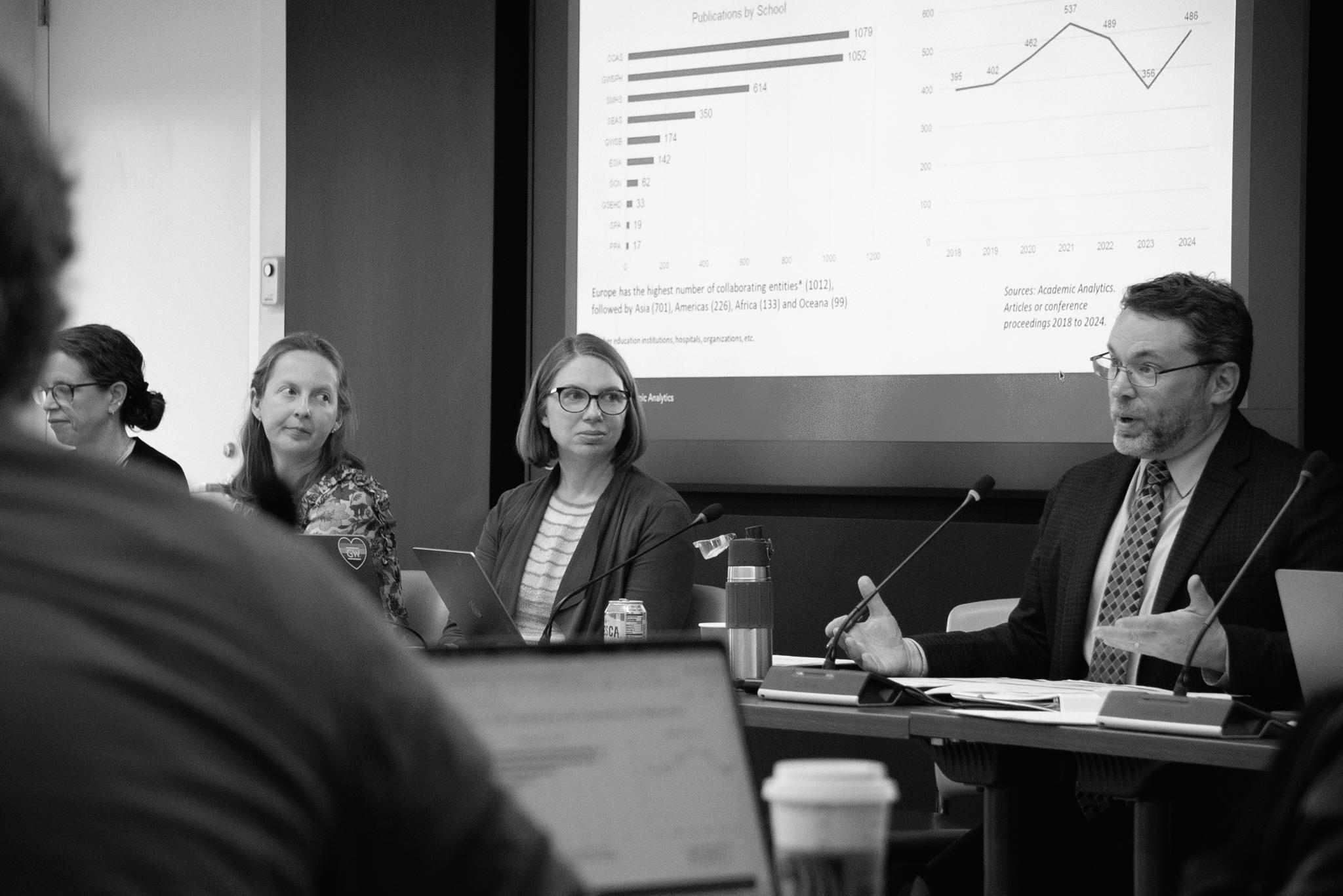
Fernandes said the deal will help fund Granberg’s new strate gic framework officials launched in October and strengthen GW’s fiscal health as it navigates a peri od of financial instability, though he said the sale “won’t solve” the University’s structural deficit.
Granberg told the Faculty Sen ate earlier this month the sale will get officials a quarter of the way toward officials’ strategic frame work goal of meeting the full demonstrated financial need of residential undergraduates. She said Vice President for Univer sity Advancement David Unruh is also working on a fundrais ing campaign to entice donors to match what’s currently in the en dowment, which would further
help officials’ strategic framework financial aid goals.
“How open and transparent are they going to be with the use of those funds to fund those ini tiatives, right?” Scully Russ said. “Whose initiatives are they?”
Scully Russ said officials had opportunities to further develop the campus by moving more pro grams out to VSTC and develop ing a more “strategic presence” in the region, but the sale shows officials did not have the commit ment to make it happen.
Juli Briskman, a Loudoun County supervisor whose district includes the VSTC campus, said officials did not consult local gov ernment officials prior to the sale, which is not something an “hon est” broker would do.
Briskman said the surge in data centers in her area has led to power constraints, dampened the aesthetics of the neighborhood and raised concerns about pol lution. She said she knows there was at least one housing develop er that approached the University wanting to buy the land, though they realized they couldn’t pay the price GW was looking for, which she assumes means Ama zon was the highest bidder.
Fernandes said late last month that several interested buyers ap proached GW roughly 18 months ago about purchasing the proper ty, which officials started to “seri ously consider” amid rising land prices in Loudoun County.
The deed states the property’s assessed value sat at $107.3 million prior to the sale, though Loudoun County’s Commissioner of Rev enue appraised GW’s holdings in the county at about $207 million this year at fair market value.
“I’m already getting emails with concerned residents around that area saying that they would rather move than live next to a data center,” Briskman said.
Three staff members at the George Washington University Museum and Textile Museum said they had no prior knowledge of officials’ plans to sell the cam pus, which made them feel even more surprised when officials
announced it. The VSTC campus houses the Avenir Foundation Conservation and Collections Resource Center, which supports the Textile Museum’s collections, GW’s fine art collection and the Albert H. Small Washingtoniana collection.
Katrina Orsini, a program as sociate for the museum, said mu seum staff were not involved in the decision making process, but received an email saying there was an embargo around the sale, meaning they could not know or be involved in the process, and added that staff received an email from director John Wetenhall “two or three hours” before the University formally announced the sale Feb. 27.
Orsini said officials have promised to give the museum “at minimum” a space that matches the quality of their VSTC research center. She said she hopes officials are more transparent about next steps in the transition process so staff can adequately prepare.
Gennifer Majors, an associate conservator for the museum, said many people don’t like knowing that Amazon Data Services will use the land for a data center, es pecially from a “giant” corpora tion like Amazon.
“Our building was custom built and brand new built for us, therefore it feels like it’s perma nent and going to last forever,” Majors said. “And just kind of surreal to have something that’s relatively so brand new be like, okay, and now it’s sold.”
Majors also said in some ways the sale is exciting because she hopes the new space for the mu seum could include classrooms and a better photography studio.
“There’s lots of things that we would love to have done a little bit differently with the space that we currently have,” Majors said.
The Hatchet reached out to 47 School of Nursing faculty who work on the campus. Eight de clined to comment or said it was too early to understand the im pact of the sale, and the others, with the exception of one, did not return a request to comment.
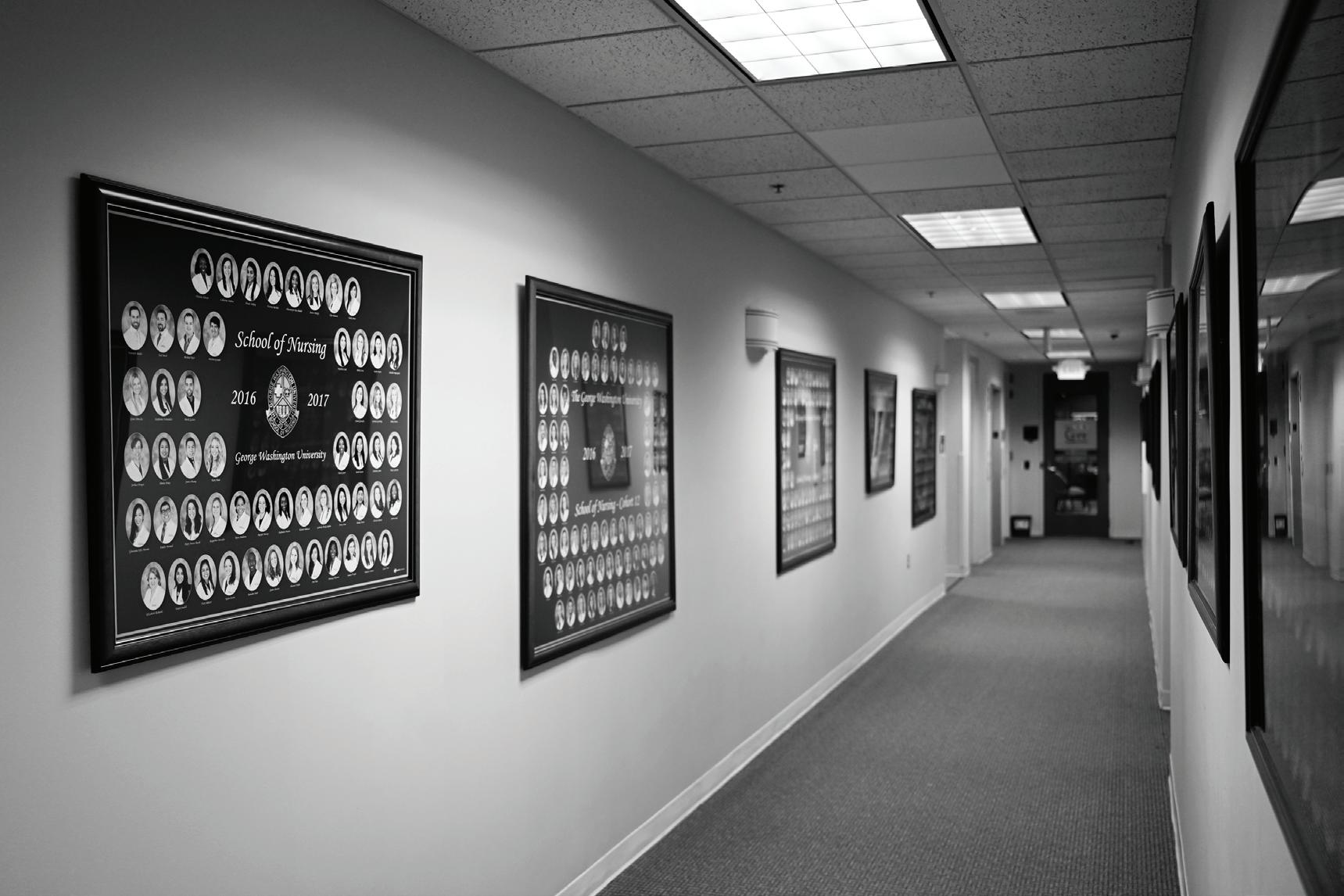
ated a task force to improve shared governance at the University — a 12 person group of trustees, faculty and administrators that Chichester and Klein were members of, which led to the Board’s approval of shared governance principles in May 2022. The principles asserted that faculty should have a meaningful role in “key decision making” at GW and have primary authority over “spe cific areas” of academic policy.
Speights’ leadership spanned a period of heightened tensions across campus, including pro Pal estinian students’ spring 2024 en campment in University Yard that called on officials and the Board to disclose investments and divest from companies supplying arms to Israel, something GW declined numerous times to do, explaining they wouldn’t commit to financial transparency.
ficers for each role have graduated from GW — including chairs Spei ghts, Nelson Carbonell and Russell Ramsey, vice chairs Chichester, El len Zane and Carbonell and secre taries Jeffrey Flaks, Ave Tucker and Allan From. Speights during her tenure initi
The community throughout Speights’ tenure has also criticized the Board for insufficient shared governance, notably condemning their lack of consultation with fac ulty and other community mem bers before they voted to arm some GWPD officers, which a third party investigation last year confirmed reports of gun safety concerns and disregard for community input. Faculty have also called for height ened consultation under the shared governance principles surrounding discussions of the MFA’s recurring losses and officials’ handling of the pro Palestinian encampment.
Colleagues remember Cordes as fair-minded leader
ulty members,” Khilji said in an email.
She said she cherishes the time after her junior year in college when she and Cordes traveled to Vienna to learn about classical mu sic, a genre he deeply cherished.
“At the time, I also appreciated it, but at this point in my life, I really appreciate that we had that time to gether,” Sarah Cordes said. Paul Cordes, his son, said he and his father bonded over going to the lake and fishing when he was a child. He said Cordes was very involved in his Boy Scout troop, where he served as the counselor for badges related to citizenship and money management.
He said Cordes recruited him to design GW’s economics depart ment website when he was in high school. Now working in cyberse curity, Paul Cordes said his father didn’t quite understand his interest in computers until he was hired by the Bureau of Labor Statistics — which coincidentally was also his father’s first federal job.
Alongside his roles at GW, Cordes worked as a financial econ omist at the U.S. Department of the Treasury in the 1980s, deputy assis tant director for tax analysis at the Congressional Budget Office from 1989 to 1991 and an affiliated schol ar at the Urban Institute’s Center on Nonprofits and Philanthropy since 2000, according to his LinkedIn.
Director of the Trachtenberg School of Public Policy and Public Administration Kathy Newcomer said Cordes loved working with students, adding that he was “femi nist to the core” and cared deeply about women’s rights.
“He was really my partner, and I looked to him for good advice as we established the Trachtenberg School,” Newcomer said.
She said the school in Septem ber will host a reception in his hon or, coinciding with a conference the Association for Budget and Finance — a group he was active in — is hosting at GW, which she expects will attract people he worked with from other universities.
Cordes also served on the Fac ulty Senate for over 20 years, rep resenting the Columbian College of Arts & Sciences. He previously served on the Senate Committee on University & Urban Affairs and co chaired the Fiscal Planning and Budgeting Committee, where he gave annual presentations to fac ulty on the state of the University’s budget.
Faculty Senator Phil Wirtz said Cordes was one of the most genu ine and caring people he’s met, al ways going the extra mile to listen, offer support, share a laugh and work together to solve issues at GW. He said Cordes would some times “chide” him for being pessi mistic, and Wirtz would respond that he should respect his elders — though Wirtz said he was only four days older than Cordes.
Shaista Khilji, chair of the hu man and organization learning department, said she met Cordes several years ago when she be came a faculty senator. She said she worked with him on GW’s shared governance task force, where she described him as a voice of reason that balanced differing perspec tives.
“He was gentle in his approach and always complimentary in his interactions with other junior fac
Arthur Wilson, who led the Fac ulty Senate Executive Committee during the task force, said the facul ty’s negotiations with the Board of Trustees over shared governance at GW could have failed, but Cordes, who represented the faculty along with Wilson, Khilji and Christine Pintz, greatly aided the discus sions.
“Joe Cordes’s diplomacy, thoughtful questions and calming presence on the faculty side helped us get to a good result,” Wilson said in an email. “We will miss him.”
FSEC Chair Guillermo Orti said he always had “huge respect” and admiration for Cordes. He said they may have had different per spectives on issues at times, though Cordes was always transparent and consistent in his arguments.
Faculty Senator Susan Kulp said during this month’s meeting, Cordes was an economist by train ing, but to her, his kind nature and storytelling skills stood out the most. She said he was always curi ous about other people, like their ideas and stories, which she said made him “unforgettable.”
Faculty Senator Jennifer Brinkerhoff said during the meet ing that Cordes’ 50 year celebration in December was notable because alumni traveled long distances to deliver testimonials about how Cordes had impacted them. She added that his first doctoral student came to the celebration, and many of the former students who attend ed were women.
“Thanks would never be enough to fully recognize the many contributions Joe Cordes made to our students and alumni, our academic communities and the University as a whole, and over 50 years of service,” Brinkerhoff said at the meeting.
Anthony Yezer, a professor of economics and former Faculty Senator, said he chaired the search committee that hired Cordes in 1975 and feels like Cordes never worked a day in his life because he loved the work he did so much.
“It was obvious to us that he was the best fit for GW,” Yezer said.
Jane Gravelle, who began her Ph.D. program at GW the same year that Cordes started teaching in 1975, said Cordes was a couple of years younger than her, but despite being new to teaching, he was the best professor she’s ever had. She said Cordes later served as her dis sertation advisor for her research on taxes, decades later, and also served on her daughter’s Ph.D dis sertation committee.
“He was just so enthusiastic, so organized,” Gravelle said. “He kept us all focused. He kept us all interested. It was really a good ex perience having him teach those classes.”
Erica Walls, a Ph.D. student at the Trachtenberg School from 2014 to 2019, where Cordes was her dis sertation chair, described him as a brilliant man who made topics like budgeting, finance and economics so approachable and easy to under stand.
“I told him, ‘You are the most kind economist I have ever met,’” Walls said.
Cordes is
by
Faculty are the backbone of any university, and the prevalence of conversations about salaries and benefits among GW community members reflects the reality that the quality of teaching determines what a student gets out of their time at the University. Many of those conversations are elevated by the Faculty Senate, comprised of full time, tenured and tenure track faculty. But 53.4 percent of faculty at GW are part time. In 2025, part time faculty taught 40.2 percent of course sections on campus and 56.1 percent of online sections. Con cerns about their pay aren’t often raised at meetings or by top offi cials — GW’s annual core indica tors report excludes most part time salary information — but students are aware it is an issue. Members of our editorial board shared multiple recent instances where their ad junct professors mentioned receiv ing really low compensation and noted that their friends have had similar experiences. The frequency with which this issue is raised in classroom settings should signal to officials that it warrants sustained and serious attention and commu nication.
Education is the core function of a university, and faculty ultimately shape what students take away from their classes. If there is a wide spread understanding that adjunct faculty — who make up more than half of all instructors — are not paid enough, it raises concerns about the quality of classes, faculty com mitment and the ability to build lasting academic relationships. We understand the part time faculty union over the summer secured a 4.5 percent minimum pay increase through 2026, and we’re heartened to know the University took this step in the right direction. But given
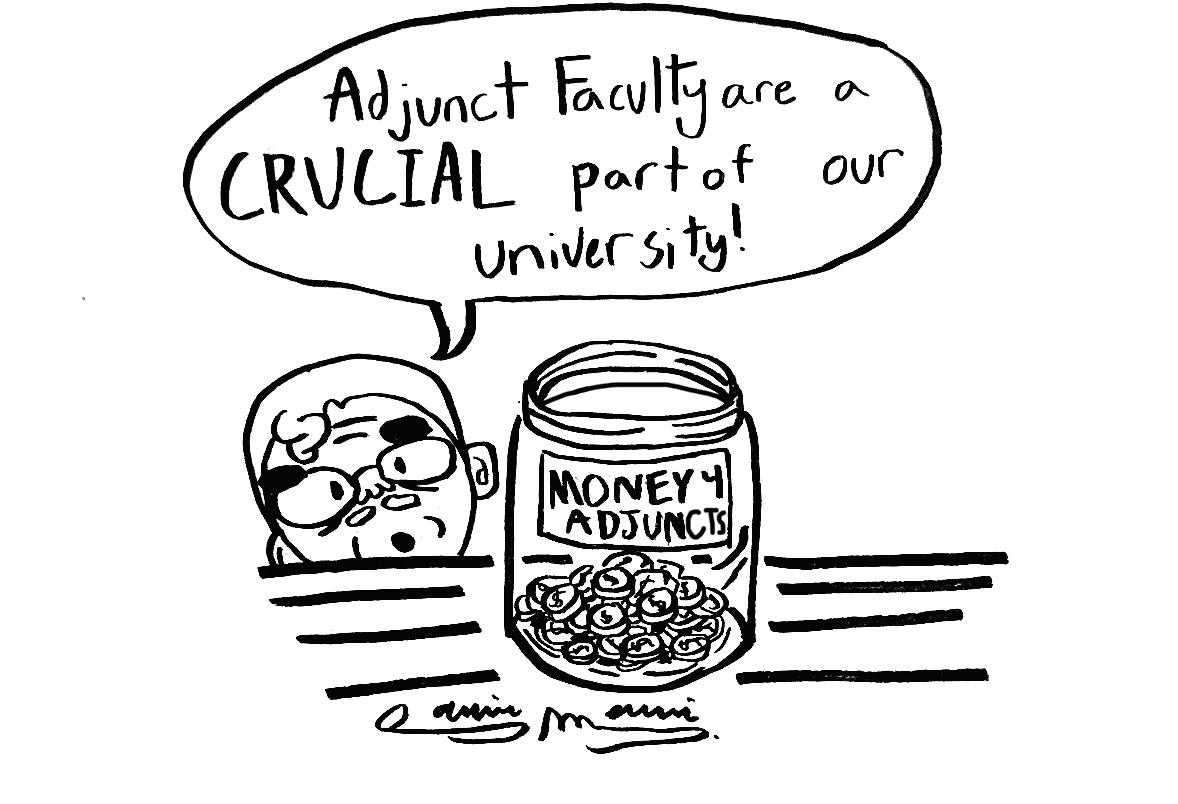
the integral role these faculty mem bers play in the university’s success, officials should be more transpar ent and more proactive about how they plan to raise pay over time. Persistent adjunct faculty sal ary concerns come amid broader conversations about full time fac ulty pay. Earlier this month officials shared that during the 2024 25 aca demic year associate and assistant professors earned, on average, 0.33 and 5.75 percent less than their counterparts at peer schools. The gap is most pronounced for assis tant professors, who made $108,100 on average compared with $114,691 at peer schools. We understand of
ficials are working to understand the reasoning for these disparities and grappling with University wide budget cuts. But we expect to see officials commit to remedying this issue in the long run and re flect these efforts in budget strate gies and the strategic framework. One of University President Ellen Granberg’s goals over the next few years is to make “strategic” invest ments in faculty, which is heart ening. We urge the University to publicly detail their plans for doing this. Under the current collective bargaining agreement for part time faculty, in effect from June 17, 2025, through the end of 2026,
GW’s administration is not complicit in the rise of campus
On Feb. 20, a group of GW students testified before the U.S. Commission on Civil Rights, detailing their expe riences with antisemitism on campus. As members of GW for Israel’s executive board, we commend these students for sharing their stories and shedding light on a major problem facing Jewish students across the country. Speaking up about antisemitism is essential to ensuring that future Jewish students feel safe on cam pus. But we strongly disa gree with their claims that the GW administration is complicit in the rise of anti semitism at the school.
Nate Neustadt, Joshua Horwich, Jeremy Bach, Alan Sukharev and Leonardo Viola Guest Contributors
In our capacity as lead ers of GW for Israel, we have had the opportunity to work closely with University President Ellen Granberg, Dean of Students Colette Coleman and countless oth er University officials since Oct. 7, 2023, and can attest to the care, support and com passion they have shown for Jewish students at GW in recent years. Across the country, Jew ish students have been let down by their administra tions’ failures to take action against antisemitism. In our experience, GW has a different story to tell. GW took more explicit ac tion to support Jewish stu dents compared to other
schools. When students from GW organized their own pro Palestinian en campment in University Yard, Granberg immediate ly called on the Metropoli tan Police Department to re move demonstrators, which D.C. Mayor Muriel Bowser did not act on until the pro test reached day 14. Cole man has consistently stood beside Jewish students at Shabbat dinners at both Hil lel and Chabad, provided support for Jewish students planning events on campus and continues to meet with Jewish leaders on campus to address antisemitism.
On the second anniversary of Hamas’ Oct. 7 attack on Israel, Chief of Staff Scott Mory joined GW for Israel at a vigil, where he shared words of encouragement for Jewish students in a time of need. No university admin istration is perfect, but we, as GW students, are lucky to have leaders who will stand with the Jewish community when Jews at other schools feel isolated.
As members of GW for Israel’s executive board and leaders in the Jewish com munity at GW, we know addressing antisemitism requires both accountability and partnership with others at the school. Our experi ence has shown that GW’s leadership is committed to supporting Jewish students and engaging with our con cerns — they have sat beside us in events and held meet ings with us to discuss se curity measures. We thank the GW administration for their steadfast support and continued work to ensure their commitment translates
into a campus where Jew ish students feel secure and supported.
At a time when Jewish students across the country have felt abandoned by their universities, it matters that GW’s leadership has cho sen a different path. That does not mean every deci sion has been perfect or that they have resolved concerns to everyone’s satisfaction. It does mean that when Jew ish students have asked for meetings, officials have al ways granted them.
As this debate continues, we should be careful not to erode the very relationships that have allowed Jewish students to effectively ad vocate for themselves. The fight against antisemitism is too serious to be reduced to misplaced blame. GW’s administration did not cre ate the hatred we have seen, and they have not ignored it. Moving forward, our campus will be strongest if we pair moral clarity about antisemitism with intellec tual honesty about who is responsible for it. Jewish stu dents deserve both account ability for those who target us and institutional part ners who stand with us. At GW, we have the latter, and that is worth saying plainly.
—Nate Neustadt is a sophomore and the president of GW for Israel, Joshua Horwich is a sophomore and the political affairs director of GW for Israel, Jeremy Bach is a junior and the education director of GW for Israel, Alan Sukharev is a sophomore and the cultural director of GW for Israel and Leonardo Viola is a first-year and the freshman representative of GW for Israel.
adjunct professors make a mini mum of $30,906 per year — up from $29,575 — and adjunct instructors make at least $27,327 a year, up from $26,150. For teaching stand ard three or four credit courses, professorial lecturers make at least $5,225, and lecturers make at least $4,509 — an increase from $5,000 and $4,315. This is lower than other D.C. universities, like Georgetown University, where adjuncts who teach three credit standard courses make at least $7,000, and just short of American University, where professorial lecturers made a mini mum of $5,400 last year for teaching a three or four credit course.
We understand that the Univer sity is making cuts across the Uni versity, and we don’t expect that of ficials would be able to significantly raise minimum compensation in the short term. But we would like officials to talk more openly and frequently about their plans to raise faculty salaries in the long run and acknowledge that conversations about low pay are persistent across campus. As students, many of us and our friends have heard our pro fessors talk about GW underpaying them. This is not a conversation we imagine officials want to have con tinue.
Many members of our edito rial board also said their favorite professors have been adjuncts be cause they simultaneously worked in fields students are interested in pursuing. Many adjunct professors have full time jobs and teach classes related to their careers on the side, meaning they’re likely working at companies GW students would be interested in joining. These connec tions can be incredibly valuable for students as they consider their ca reers after graduation. To sustain these relationships, it’s important that officials make adjunct profes sors feel like valuable members of the community and compensate them at rates that encourage them to remain at the University and form connections with students. It’s not a good look for the tui tion paying student body to feel that the University isn’t allocating enough money to the people who shape their educational experience — the key reason we attend GW. We urge officials to recognize that constituents across the University believe adjunct faculty are under paid and contribute to the conver sation by sharing plans to further improve salaries in the long run.
GW late last month sold the Virginia Science and Technology Campus for $427 million to Amazon Data Services, which plans to use the land for a data or information technology center. While GW stresses the favorable terms of the agreement, I find the implications of such an exchange to be entirely unjustifiable for many reasons — most notably the harmful environmental impacts GW is helping advance, which officials failed to take accountability for when announcing the deal.
Ethan Vargas Opinions Writer
A new data center in Virginia — often recognized as “the data center capital of the world” — will harm the environment and Loudoun County community members, contrasting efforts of many in the community to implement on campus, eco friendly policies for the student body and sponsor environmental research. Moreover, bargaining with the Amazon corporation in itself sets a bad precedent for GW, considering the multiple allegations of labor rights abuses workers have made against the company.
In recent years, GW has significantly ramped up its on campus sustainability initiatives and earned a STARS platinum rating — the highest
sustainability rating granted by the Association for the Advancement of Sustainability in Higher Education. GW has helped community members implement a great deal of sustainability initiatives, like the Mount Vernon Campus vegetable garden, which provides fresh vegetables and herbs for the community through farm friendly practices. Future continues to further research in eco friendly innovations. GW seems to have fully immersed itself in sustainability practices as officials successfully reached their 2025 fossil fuels divestment goals. But their recent sale to Amazon contradicts current efforts. GW can’t claim it’s eco friendly or mindful of the environment while actively contributing to data center development. Despite these impressive measures, the negative impacts selling land to Amazon for a data center will have on the environment and Loudoun County community goes against these efforts. These sites are known to use upward of five million gallons of water per day, straining necessary water resources in nearby townships. They are also known to drastically increase the presence of air pollutants, leading to higher rates of asthma, lung cancer and other health impacts that cost the general public millions of dollars. This impacts everyone in the country, not just Virginia residents. Residents across Northern Virginia — the
location of the VSTC — have consistently protested against data centers being built near their homes, citing health concerns and noise pollution. Loudoun County residents will be directly impacted by GW’s decision. To simply ignore the concerns of local Loudoun County, whose leaders say they consistently engaged with the University until they stopped returning their calls, is a violation of what should be GW’s primary concern — to protect the welfare of all in its community. After all, the purpose of sustainability is to preserve a healthy environment for everyone. Not only is the decision devastating for local communities, but dealing with the Amazon corporation — which employees allege has suppressed unionization attempts and maintained poor working conditions — is a morally questionable choice to begin with.
Moving forward, GW must prioritize the financial, environmental and moral future of the University and the student body above all else — most importantly in its actions, not just its words. GW is an institution whose students, faculty and staff care and depend on a just and sustainable future, and the University cannot hypocritically abandon these goals to gain financially from 21st century robber barons. —Ethan Vargas, a firstyear majoring in political science, is an opinions writer.
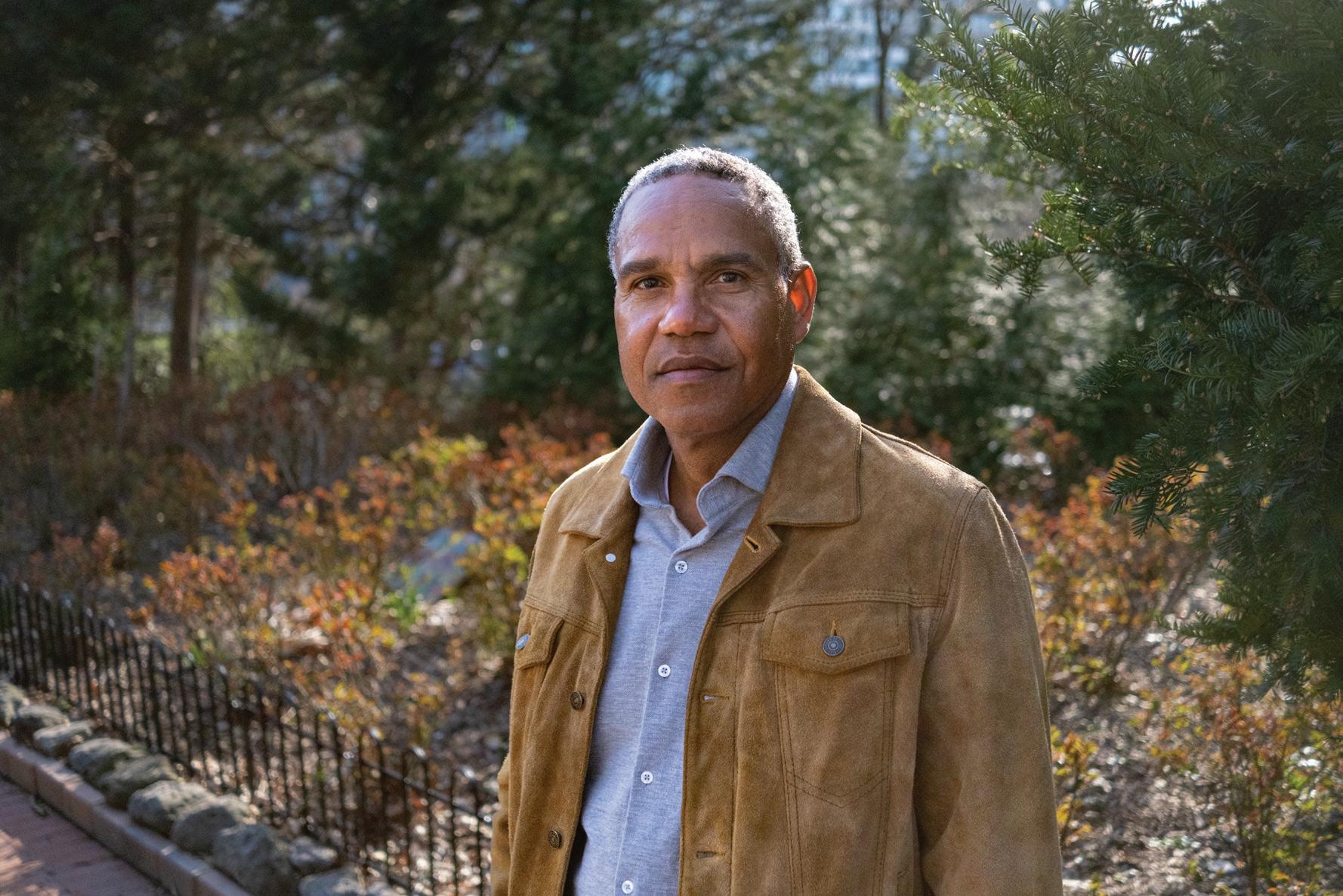
Foggy Bottom Association Garden Committee Director Peter Maye tends to his neighborhood one bloom at a time, watching even the smallest patches of soil come to life.
Since joining the Garden Com mittee — which three Foggy Bot tom neighbors founded in 2005 — Maye has helped carry its mis sion beyond private yards and into public spaces, where flowers now line sidewalks and cluster beneath lampposts on nearly every block. He echoed the words of fellow committee members who say their work has grown into more than beautification, drawing residents together and turning gardening into a shared investment in the neighborhood’s identity.
Committee members and vol unteers work year round, Maye, who has helmed the committee for nine years, said. Spring is for plant ing, mulching and weeding, while summer relies on rain to keep the gardens alive. In the fall, members rake leaves when city crews fall behind, and the committee spends winter planning for the next sea son. Snow provides natural mois ture for the dirt, Maye said, helping plants survive the heat of summer.
Maye said the committee is cur rently trimming overgrown areas, clearing excess leaves and replac ing an evergreen tree on 26th and
I streets throughout the neighbor hood that didn’t survive the winter.
The group is also continuing its an nual routine of fertilizing gardens and mulching green spaces, he said, also pointing to the committee’s work cleaning up Triangle Park, lo cated across from the 7 11 on New
Hampshire Ave, where litter has built up. They are also working to add more drought tolerant plants to the park like knockout roses, he said.
Denise Vogt, a Garden Commit tee volunteer and co founder of the FBA’s History Project Committee,
said she has lived in Foggy Bottom for more than 30 years and joined the group to beautify the neigh borhood, connect with nature and build relationships with neighbors.
As a longtime resident, she said gardening has long been part of the community’s identity, with resi
dents finding creative ways to add color to small yard spaces despite limited room.
She said D.C.’s limited space — often narrow, three foot wide curb side plots — forces residents to be intentional about what they plant.
She said she saw her student neighbors starting their own gar dens, planting perennials in their own small plot of rented land just last week, making it a small, yet no ticeable bright spot for the commu nity to see when they pass by. Vogt said the Garden Committee brings people of the neighborhood togeth er from all different backgrounds, careers, interests and age groups.
Foggy Bottom resident Sadie Cornelius, who volunteers with the committee, said she noticed the neighborhood’s gardens and pub lic spaces soon after moving from Shaw in 2021, with flower beds lin ing nearly every block. Although the committee has shrunk over time as residents move in and out, she said a strong sense of pride and community remains in maintain ing the neighborhood’s greenery.
Compared to her experience in Shaw, where residents were more independent, Cornelius said Foggy Bottom’s gardening efforts foster a shared sense of responsibility for public spaces.
“That explained why there were so many beautiful spaces in the neighborhood, because of the peo ple behind it,” she said.
LISA YANG REPORTER
RAINA PAWLOSKI
REPORTER
Students leaving Gelman Library on Friday walked straight into a flea market in Kogan Plaza, where more than 20 vendors lined the quad selling vintage sweat shirts, upcycled denim and handmade jewelry as music played, and students stopped between classes to browse.
The GW Fashion Busi ness Association partnered with D.C. based pop up marketplace Get Flee to host the event, a collaboration that ran annually for over three and a half years before transitioning last year to a once per semester schedule.
Proceeds from the market fund FBA’s spring publica tion, The George, and the event highlights how stu dents are shaping a growing campus fashion community focused on sustainability, lo cal businesses and personal style.
FBA Co Vice President Isabella Kelly, a senior ma joring in international busi ness and Chinese, said her longtime interest in vintage shopping led her to partner with Get Flee after meeting co founder Darius Stanton at a Georgetown flea mar ket during her first year. Kelly has since spearheaded the partnership, organizing more than six pop up events on campus that spotlight lo cal vendors and give GW students direct access to vin tage and upcycled clothing
— work she said she enjoys.
“I love vintage clothing. It’s the best way to find re ally interesting and unique pieces,” Kelly said. “That was kind of my really exciting as pect about Get Flee.”
Kelly said Stanton cu rates most of the vendors, which makes each event feel distinct and gives GW stu dents access to clothing they would not typically find in traditional retail settings. She added that the event show cases a range of fashion inter ests while helping students engage with sustainable fashion.
“We have a lot of great vendors,” Kelly said. “They’re all curated by [Stan ton], but he always brings in a lot of really interesting, cu rated vendors.”
Stanton, who co founded
Get Flee in 2020 to support small businesses and pro mote sustainability through fashion focused events, said the organization sets itself apart by carefully curat ing each market with its audience in mind. He said the team selects vendors based on how their style and products will resonate with attendees, particularly students. For the GW event, Stanton said he aimed to at tract a younger, college aged crowd, including students from nearby universities.
“We’re doing the market ing and flyer material,” Stan ton said. “We’re choosing and selecting all the vendors, and all the new pieces really kind of help bring it together as cohesively as possible, which is what I think makes us stand apart. We’re very


involved in the inspiration of the entire experience, and just make sure that it’s suc cessful but also that it’s meet ing the audience to target.”
Stanton described Get Flee as a “vendor first” or ganization that prioritizes building relationships with small businesses and en couraging them to return for future events. He said the markets often help ven dors grow their brands, with some going on to host their own events across D.C.
“A lot of vendors from our market have transitioned to starting their own markets in different parts of D.C.,” Stanton said. “And I think the inspiration as well as the success is inspiring for folks, so I would say one building a community. I think we built such a strong community
that folks really look forward to seeing returning vendors and almost, you know, as friends, now and then.”
Stanton said Get Flee partnered with the FBA be cause both groups empha size sustainability, creativ ity and community. He said college campuses provide a good environment for these markets as students seek out trend driven, social experi ences and form connections with vendors who share their interest in locally sourced fashion.
“College students are the perfect space to not only in spire people’s fashion expe rience but also a place that people can come together and feel like they’re growing together,” Stanton said. “So I think it’s a perfect place for community.”

BEN
MANAGING
RYAN
Men’s basketball (19 16) fell to the University of New Mexico (25 10) 86 61 on Sunday, ending their season and short National Invitational Tournament run.
The Revolutionaries’ usually potent offense went ice cold in the Albuquerque desert, connecting on just 21 of 64 field goal attempts — a 34% clip that highlighted their struggles. Ball security proved an issue as well, with the team committing 14 turnovers, including seven from redshirt senior forward Rafael Castro, the team’s offensive centerpiece, who managed only 6 points in the contest.
GW played a truncated seven man rotation, with redshirt senior forward Luke Hunger out due to an injury and redshirt junior Garrett Johnson, who battled an injury to close the regular season, not logging any minutes. The game was the team’s second in the NIT, after they narrowly pulled out a win against Utah Valley University on Wednesday.
Redshirt sophomore Christian Jones led the Revs with 16 points on six of 15 shooting, while graduate guard Tre Dinkins added 14 points on five of 14 from the field and a team high four of 10 from three.
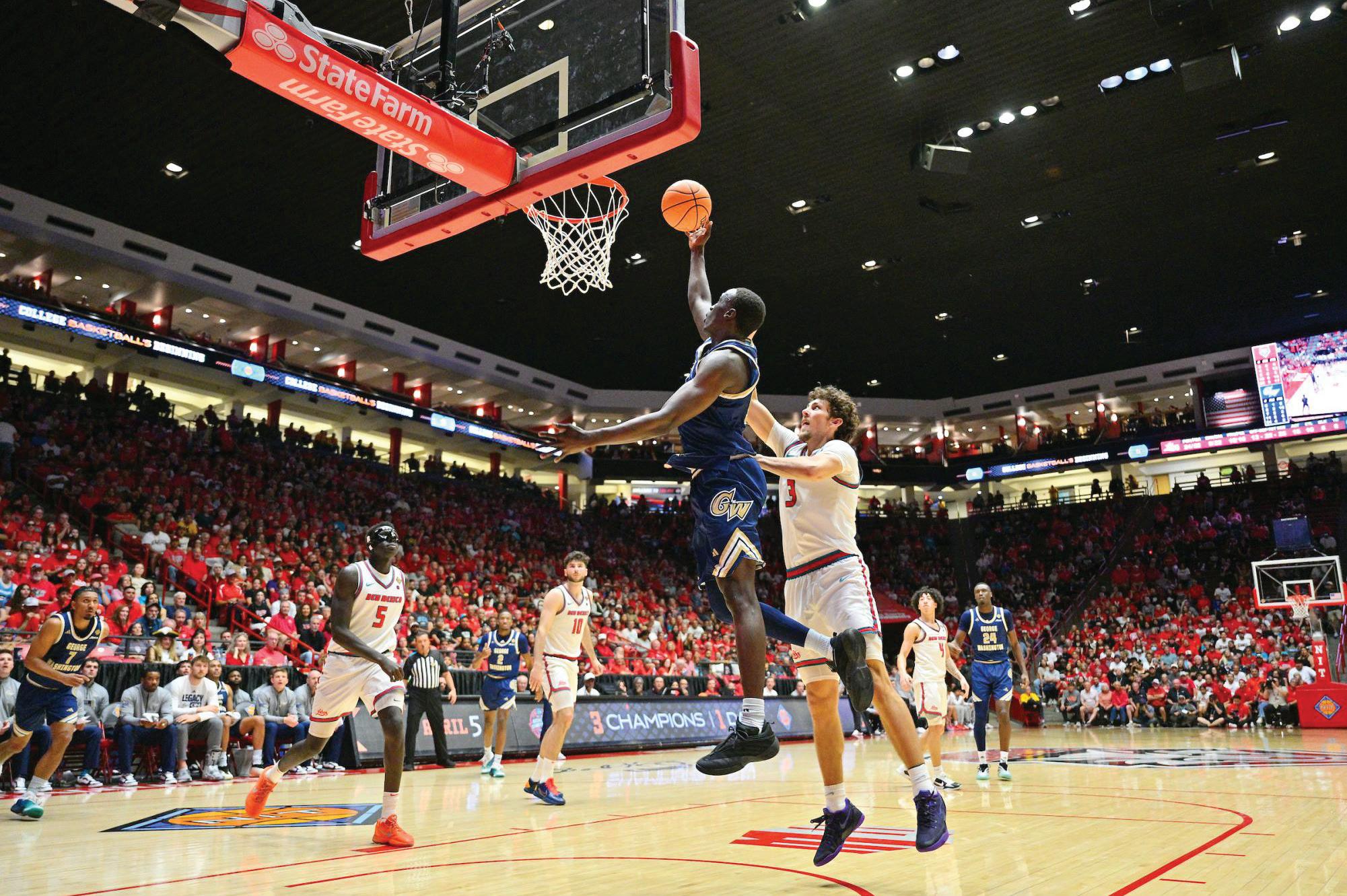
Beyond those two, however, many of the players who had carried the team this far had a quiet night, including junior guards Trey Autry and Jean Aranguren, who had 8 and 7 on Sunday night, respectively.
The Revs didn’t score their first field goal until nearly three minutes into the game, when redshirt sophomore Christian
Flawed men’s basketball season was a matter of execution, not fortune
SYD
Between St. Patrick’s Day and March Madness bracket drafting, luck was in the air this week. Maybe that’s why, while digging through the Revolutionaries’ KenPom stats ahead of their NIT opener against Utah Valley on Wednesday, one metric felt almost too fitting to ignore: luck — GW’s lowest ranking.
That’s right. KenPom doesn’t rate GW lowest in free throw shooting or close game execution, though they’re graded poorly in these columns too. They rate them lowest in luck, placing the Revs 363rd out of 365 Division I teams in the gap between expected and actual win percentage.
When things feel uncertain, some people turn to numbers for answers while others lean on fate. I’ve always trusted the former. It’s hard to chalk this season up to the likes of a curse on Head Coach Chris Caputo or the chance that Trey Autry saw a black cat. Luck implies that this statistic is a reflection of a team’s overall quality and that any deviation from expected wins is simply random variance.
I disagree. While star forward Rafael Castro’s midseason injury was a misfortune for the team, three recurring problems that have nothing to do with luck hampered GW’s performance this season: failing to close tight games, squandering big first half leads and expected contributors going stale.
How do I know? Behind luck, the Revs’ next lowest ranking is in winning close games, where they sit in 298th place. GW went 5 9 in games decided by six points or fewer. Seven of those nine losses were to conference teams, including 3 point defeats to Atlantic 10 foe and top ranked Saint Louis and third ranked St. Joseph’s. If even GW could flip a few of those outcomes, we would be looking at a different postseason.
And while their double digit loss total brought them well out of postseason contention, GW’s proficiency at dropping these opportunities held them far away from the top tier of A 10 teams, despite talent to match them, especially in an environment where mid major teams can’t afford many losses.
A confounding variable in these setbacks is GW’s failure to grasp onto strong leads. Game after game, we’ve seen the team go up as many as 20 points on an opponent in the first half before
letting that safety net fall away in the second half. This puts the team in late game frenzies that trigger hasteful play and often lead to disappointing losses.
Let’s look at GW’s two matchups against the highly respected Billikens this season as an example. Robbie Avila and Saint Louis most recently stunned the Revs by erasing a 21 point deficit in the GW A 10 tournament last week, killing their final March Madness hopes. That game was an opportunity for GW to surprise fans who have been consistently disappointed this season and make a postseason run. But old habits die hard, and GW’s failure to hold onto their double digit lead only proved their late game execution struggles are not just a bug, but a plague.
On top of close losses, several players who were expected to be centerpieces struggled this season, stretching the roster thin.
Redshirt sophomore Christian Jones looked like a potential powerhouse in a strong first season after redshirting in 2023 24. While his points per game number jumped from 8.7 to 9.8, it was the other facets of his game that did not excel. As the Revs’ top ball handler for much of the year, he didn’t rack up the assists that usually come with that role, only averaging 3.1 a game. Despite being tied for 10th best in the conference in assists, he was outshone in that role by junior guard Jean Aranguren, who took Jones’ role and performed more consistently throughout A 10 play.
Despite an overall disappointing season, the Revs still delivered some bright spots. Take Autry, for example, who has steadily improved as a player during his time in Foggy Bottom and has stepped up from the 3 point line when tournament time rolls around. And despite missing five games to an injury, Castro took the step up that he needed this year and was one of the best players in the conference, finishing top ten in points, rebounds and blocks per game.
Autry and forward Luke Hunger — who took charge in Castro’s absence — are good building blocks for next year, and I hope they’ll stay in Foggy Bottom for another season. Beyond them, however, I encourage Caputo and his staff to focus on some intangibles that I think they were missing. By finding players that can face pressure on the court and make rotations variable, next season the Revs may have more luck.
Jones knocked down a floater to bring the score to 4 2. GW, who failed to hold the lead throughout the entire game, kept its deficit mostly within single digits throughout the first, but they never found an offensive rhythm.
The team logged just 12 points at the halfway point of the first half, but a mini barrage
of 3 pointers, led primarily by Dinkins, helped close the gap to just 4 points to enter the break at 36 32.
Ahead just two possessions, the Lobos started the half 10 0 to quickly pull away. After knocking down just three 3 pointers in the first half, New Mexico made 8 in the second.
Leading their scoring effort was
freshman guard Jake Hall, who finished with 19 on the night and made three of six 3 point attempts.
The Revs’ frontcourt, a seasonlong strength led by Castro and Hunger, struggled against New Mexico, with active forwards Castro and Marshall combining for just 8 points and eight turnovers. Defensively, the Revs also faltered, giving up 36 points in the paint and allowing the Lobos 15 offensive rebounds.
After the Revs fought to keep the game in reach for much of the second half, the Lobos’ lead reached 20 points with less than five minutes left in the game. The game ended with both teams trading 3 pointers with less than a minute left, the final belonging to junior guard Jean Aranguren.
New Mexico will play the winner of A 10 foe Saint Joseph’s and the University of California early this week for the opportunity to make the NIT semifinals.
This game marks the end of a Revs season marked by high expectations and key early season wins but better defined by crushing losses and missed opportunities. While the squad reached a postseason tournament for the second consecutive year, it’s now been 12 years since their last trip to March Madness — the team’s longest gap since before the 1993 season, which brought the team to Sweet 16 play.
GRANT PACERNICK SPORTS EDITOR
Softball (14 12, 5 4 Atlantic 10) picked up its first conference se ries loss of the season at Dayton (12 10, 4 5 A 10) this weekend, losing the final two games of the weekend.
Despite trouncing the Flyers 9 2 in the opening game of the series on Saturday, the Revolutionaries dropped the second game of the double header 3 6 and squan dered an early lead in the series finale, losing 5 4. The Revolutionar ies stand firmly in the middle of the pack in the A 10 as they’re cur rently tied for fourth out of nine teams, nine games into the confer ence season. This season is Head Coach Matt Klampert’s first season at the helm, taking the job last sum mer after former coach Chrissy Schoonmaker resigned in June to take the same role at the University of Houston. The A 10 pre season poll predicted the Revs would finish fifth in the conference, but Klampert said in August that his goal each year is to hoist the A 10 trophy at the end of the season.
The top six teams qualify for the A 10 tournament at the end of the season, so while the Revs would cur rently be in the field if the season ended today, they’ll need to stay there to have a shot at Klampert’s championship goal.
While Fordham was the preseason favorite to repeat as conference champions, they have stumbled early with a 4 5 record in the con ference so far, pushing them to tied for sixth. Saint Joseph’s current ly claims the outright conference lead at 7 2, two games ahead of the Revs. The Revs will face off against both teams in their next two conference series this weekend and April 11 12, respectively. Here’s a recap of this weekend’s action:
Game 1: GW 9, Dayton 2
In the opening game of the series on
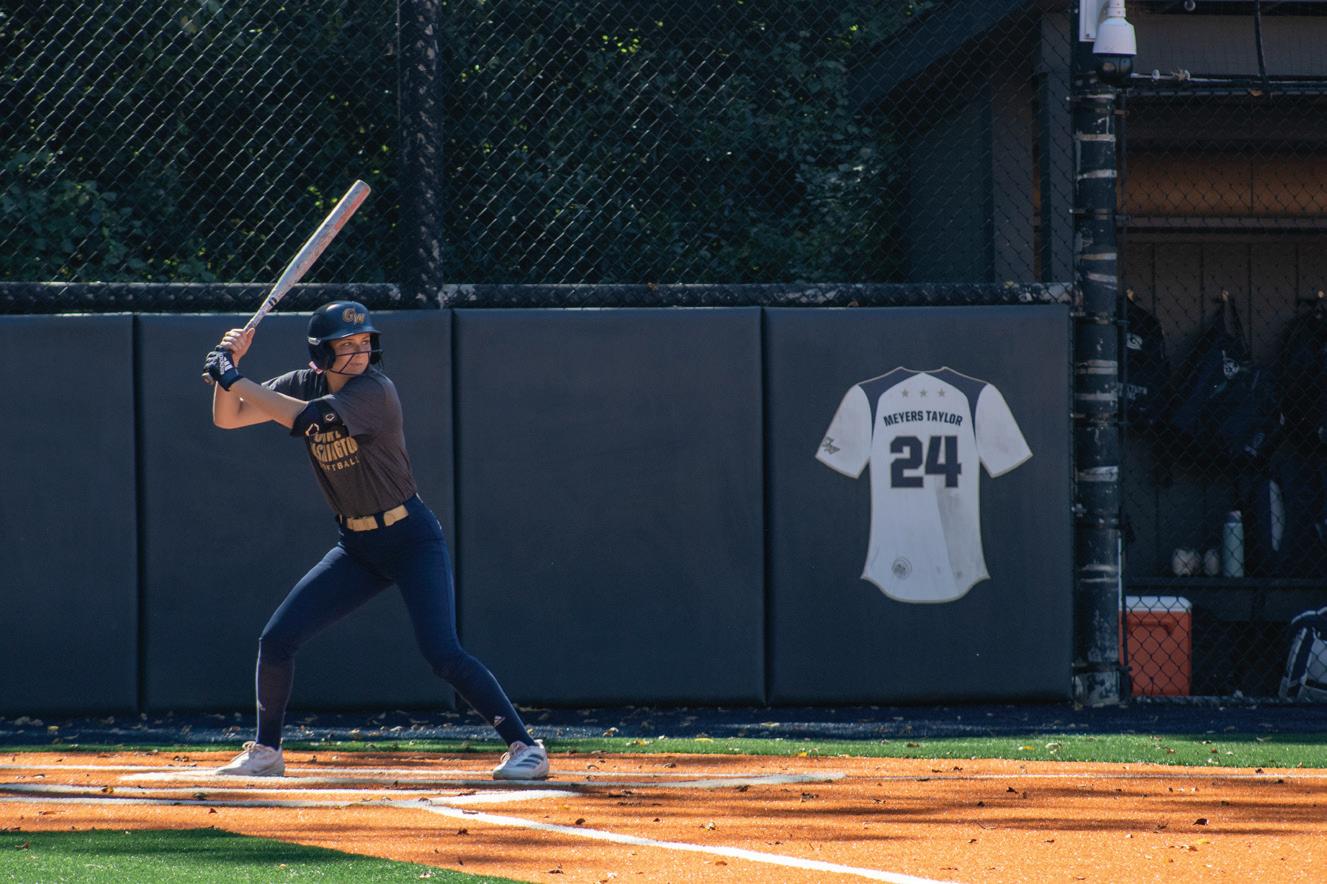
Saturday, the Revs re lied on junior pitcher Cece Smith on both sides of the field. Smith got the start on the mound, pitching a complete game and conceding just two earned runs.
Smith didn’t just take care of business on the mound though, she went three for four at the plate, batting in three earned runs — more than she gave up. She got the scoring go ing for the Revs with a two run homer.
Sophomore infield er Emi Todoroki im mediately homered in the next at bat, extend ing the GW lead to 3 0. Senior outfielder Ash ley Corpuz and fresh man infielder Sydney Hogue kept the hom ers going yard in the second and third in nings, respectively, ballooning the lead to 5 0. The Flyers respond ed with their first run of the game in the fourth and scored an other in the fifth with Smith’s last RBI sand wiched in between, cutting the lead to 4 at 6 2. The Revs posted another three run in ning in the sixth to finish the game in a dominant 9 2 start to the weekend.
Game 2: GW 3, Dayton 6
In the second game of the doubleheader, neither team could get going offensively as neither scored in the first four innings. In the bottom of the fifth,
the Flyers began to find success off junior pitcher Sophia Tores so, homering and then batting in two more runs for a three run inning.
They carried the momentum into the sixth inning, scoring three more runs and extending the lead to 6 0. The Flyers hit ef ficiently, turning two hits into three runs thanks to a two run shot with two outs.
The Revs put to gether a rally late in the final inning sparked by a Corpuz homer and followed up by a two RBI dou ble from junior out fielder Paige Heyward. Still, the Revs came up short, falling 6 3 in the second game of the doubleheader.
Dayton junior pitcher Izzy Kemp pitched a complete game, denying the Revs an early series victory. Kemp pitched six innings without a hit and notched 17 strikeouts in last sea son’s meeting between the Revs and the Fly ers in the 2025 A 10 tournament.
Game 3: GW 4, Dayton 5
In the third and deciding game of the series on Sunday, the Revs took an early lead but squandered it late, dealing them their first conference series loss of the season.
Hogue singled up the middle in the first inning to bat in the first run of the day.
The Flyers responded with an RBI single of their own off Smith to tie the game at one. The Revs had an other three run in ning in the second inning powered by a two RBI single from Smith and an RBI sin gle from Hogue. The Revs kept their offen sive momentum going in the third inning but stranded runners on second and third base, keeping their lead at 3, or 4 1. Smith gave up a two run shot in the bottom of the third, cutting Dayton’s defi cit to 1. Locked into a full count, Smith con ceded the game tying home run, exiting the game with the Revs tied 4 4. The Revs missed a key chance to retake the lead, leav ing the bases loaded in the top of the fifth in ning. Dayton eventu ally capitalized on the Revs’ stagnant offense, securing the walk off fly out to take the 5 4 win and give the Fly ers a series victory. Earlier in the week, the team took the Uni versity of Maryland — a power conference team — to extra in nings on Wednesday but ultimately fell short losing 7 11 in 10 innings. Next up, the Revs will host Morgan State Wednesday at 3 p.m. for a game on the Mount Vernon cam pus. A 10 play will continue with a series at Fordham this week end.