Staff Council urges officials, Board of Trustees to resist federal pressure
ALYSSA WISMAR
REPORTER
ARUNMOY DAS
REPORTER
The Staff Council called on officials and the Board of Trustees Friday to reject federal agreements and resist preemptive compliance with President Donald Trump’s policies that could impose ideological or structural changes undermining the University’s mission.
The council at its Friday meet-
ing adopted a proclamation declaring that the University must reject any federal mandate or agreement that would undermine its academic foundations — like freedom of expression, academic freedom and commitment to diversity — and resist altering policies in the event of a settlement offer. The move comes as GW faces two Justice Department probes into diversity practices in admissions and campus antisemitism, echoing probes at other universities that prompted their officials
Students, alum criticize GW’s response to campus antisemitism in testimony
JENNA LEE
IGLESIAS
Two students and an alum testified before the U.S. Commission on Civil Rights Friday, detailing their experiences of antisemitism at GW and criticizing the University’s insufficient response to their reports.
GW alum Sabrina Soffer, who graduated in 2025 and sued the University in May for not adequately responding to antisemitism on campus, junior Archer Berenson and sophomore Mara Riegel testified that persistent antisemitism from fellow students, antiIsrael comments from faculty members and a lack of University response have made them feel unsafe on campus. Their testimony was part of the public comment portion of a hearing on rising campus antisemitism following the outbreak of war in Gaza on Oct. 7, 2023, and came at a moment when GW could face punitive measures after the Department of Justice’s August findings that GW acted deliberately indifferent to campus antisemitism.
“Violent, atavistic antisemitism on GW’s campus is not rare, not abstract and not confined to the margins,” Berenson said at the hearing. University Spokesperson Julia Garbitt said GW condemns antisemitism in the “strongest terms” and has long maintained and enforced anti-harassment and anti-discrimination policies. She also said officials launched the Office of Access and Opportunity in June to man-
age discrimination and harassment complaints.
“We have made it clear to our GW community that we prioritize fostering an environment that is respectful, accountable and safe for all and that behavior that is disruptive, harmful or does not comply with GW policies will not be tolerated,” Garbitt said in an email.
Berenson, Riegel and Soffer all cited heightened antisemitism on GW’s campus since the start of the war in their testimonies. Berenson said a student told his friends not to spend time with him after they discovered he was Jewish, and a professor in a class he took on human rights said Hamas was a “creation of Israel.”
Berenson said he did not testify in the hope that the federal government will retaliate against GW or any other universities, but he felt it was necessary to tell the truth about what is happening on campus, which he said is “darker than most people imagine.”
Riegel, who is also a Hatchet opinions writer, said students harassed her during a protest last spring, and she filed a complaint with the Office of Conflict Education & Student Accountability and received “not a shred of justice.”
“The pervasiveness of antisemitism on this campus has made me not feel, but know, that I cannot be my full self in front of my peers, and it’s made me feel very scrutinized, and it’s made me feel like I’m under a microscope in a way that other people aren’t,” Riegel said in an interview after the hearing.
to dismantle diversity, equity and inclusion initiatives and reach financial settlements.
“At a minimum, the proclamation presents an opportunity to reaffirm the University’s commitments to its community and to articulate, with clarity and confidence, the values that guide us, particularly at a moment when higher education itself is under sustained critical examination,” Staff Council Justice, Equity, Diversity and Inclusion Committee Chair Tricia Greenstein said in an
email after the meeting.
Greenstein, who presented the proclamation, said councilmembers drafted the document after noting parallels between President Donald Trump’s Compact for Academic Excellence in Higher Education and settlement agreements the federal government has offered to institutions in the Association of American Universities — a consortium of leading research universities that includes GW. According to the proclamation, both the compact and the federal agree-
ments seek to curtail community members’ rights to free expression and academic freedom.
Greenstein said Brown University, the University of Pennsylvania and the University of Virginia — all universities that Trump’s administration directly offered the higher education compact to — declined but had already reached separate settlements with the federal government with similar terms.
In Castro’s absence, Luke Hunger seizes his moment
RYAN JAINCHILL
BASKETBALL EDITOR
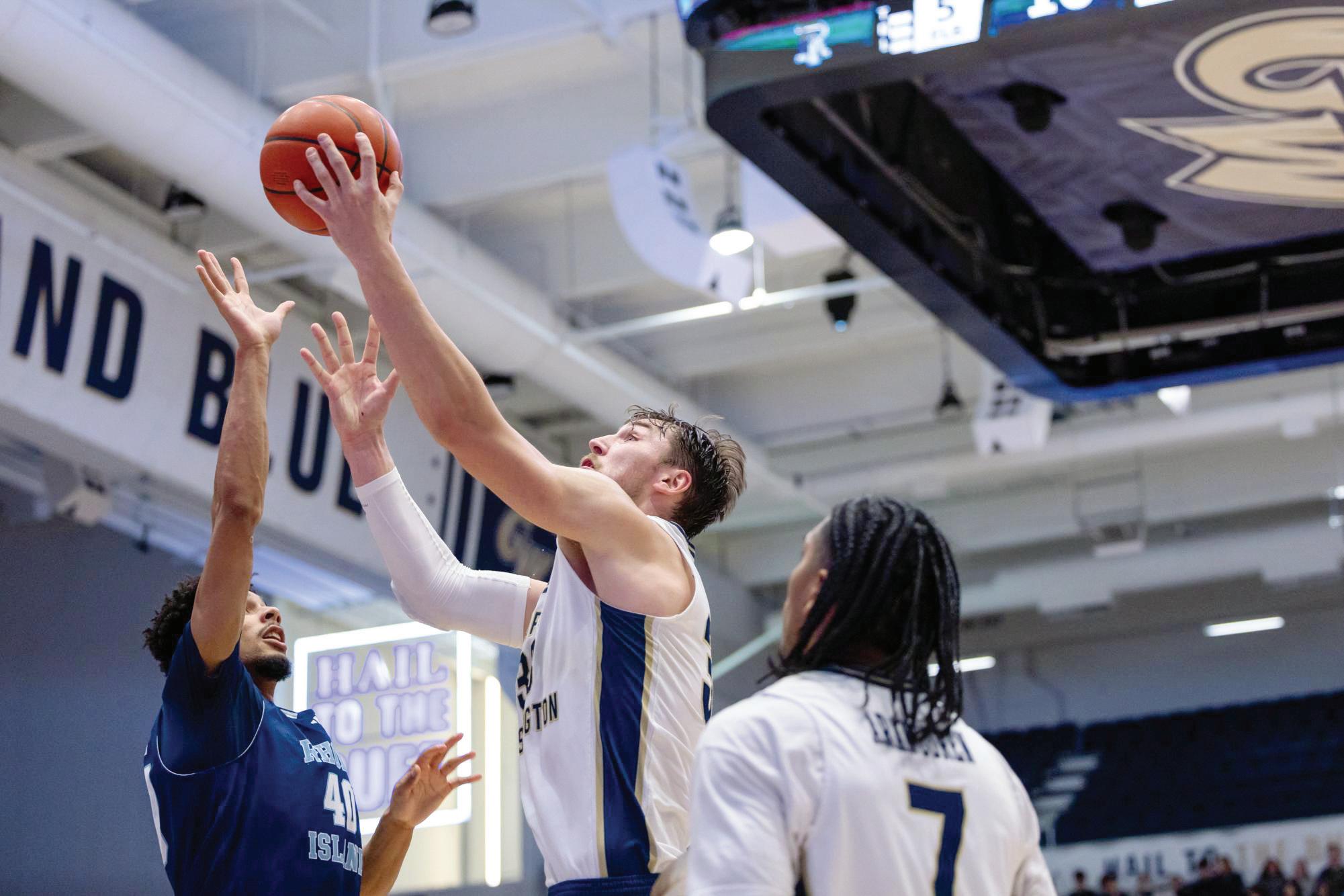
Graduate student forward Luke Hunger’s role on the team felt decided in mid-January.
Brought in to transform the frontcourt and form a towering, two-big lineup alongside redshirt senior center Rafael Castro, Hunger instead found himself confined to brief, sheltered minutes off the bench — a contrast to the vision Head Coach Chris Caputo laid out in July. By the time the Revolutionaries faced the then-unbeaten Saint Louis Billikens on Jan. 28, he was averaging just 6.0 points and 4.1 rebounds per game with only one start, struggling to deliver the impact the team expected him to make.
Meanwhile, Castro — an Atlantic 10 Player of the Year contender coming off a breakout 2024-25
season — was thriving, further cementing his role as the focal point of the frontcourt, averaging 14.20 points and 8.9 rebounds per game, which relegated Hunger deeper into the background.
But that trajectory would shift in the days after the loss to Saint Louis. In the days that followed, Castro suffered a foot injury in practice, sidelining the Revs’ anchor and suddenly elevating Hunger from a complementary piece to the team’s primary presence in the paint.
The adjustment was abrupt. Hunger’s minutes climbed to 22 in the first game without Castro, then to a season-high 31 in the next as his responsibilities expanded in real time. But the increased workload did not immediately translate to team success — the Revs dropped both contests despite being
favored, still searching for stability without their star center.
That tide would begin to turn in the third game of the team’s stretch without Castro during a road game against Duquesne, when Hunger logged a career-high 38 minutes and delivered 17 points and 13 rebounds for his third double-double of the season. The 6-foot-10 forward was beginning to morph into the player Caputo saw he could be.
“It definitely took some time to adjust, but once I kind of got settled in and realized that I wasn’t going to come out of the game too much, it helped me get in a rhythm and helped me be able to make shots and get my teammates open,” Hunger said.
Game after game, Hunger began turning opportunity into production. In the Revs’
Meet the candidates vying to lead GW Law’s student government
ELIJAH EDWARDS
ASSISTANT NEWS EDITOR
Law students will elect the Student Bar Association’s next president and executive vice president on Wednesday, following a term marked by tightened budgets, advocacy against federal immigration activity and heightened collaboration with the Student Government Association.
Candidates for SBA president and executive vice president said they hope to boost transparency between law school officials and students surrounding broader University challenges, like federal investigations and budget constraints, and raise law school student awareness of SBA’s existing resources, like funding for professional conferences. Two presidential candidates and one executive vice presidential candidate are running to take the helm of the SBA’s next term, which begins in April. All law students can vote in the election using a Google Form sent to their emails, which will open on
Wednesday from 8 a.m. to 8 p.m.
Candidates for SBA president:
SBA Sen. Juliana Fernandez Juliana Fernandez, a secondyear law student originally from Venezuela, said serving as an SBA senator for the last two years and taking over as SBA President Amanda Hichez’s chief of staff in January taught her how to coordinate between the body’s branches and with law school officials to accomplish her goals. Fernandez said, if elected, her top priority would be strengthening communication between GW Law officials, SBA leaders and students by pushing administrators to provide more regular updates on issues affecting the law school community, like budget cuts, federal investigations and University policy changes. She said this year officials have not been fully transparent with students about pressures facing the law school and the University, including how internal budget cuts and federal
pressures could affect GW Law’s funding, programming or operations.
The SBA took a nearly $50,000 — or 25 percent — budget cut at the beginning of this academic year, which leaders attributed to
broader University budget strain. GW Law officials also laid off the school’s assistant dean for environmental law studies in October amid University-wide budget cuts. “I would like for the students
win over Rhode Island that snapped a four-game losing streak, Hunger set a career-high in points with 21 in 36 minutes, including some big baskets as the Rams tried to get back into the game.
The surge was impressive, but Hunger’s breakout was only just beginning.
After that win on Feb. 10, the Revs hosted the George Mason Patriots in the season’s second edition of the Revolutionary Rivalry, a team that, in the first leg, they had lost to just a month before. In need of a big performance in Castro’s absence, Hunger stepped up, scoring a career-high 31 points and hauling down 10 rebounds to give the Revs a 72-53 statement victory in a game in which the 6-foot-10 forward could not miss a shot.
to know what is going on with their school,” Fernandez said. “I want to make it transparent for students to know if there’s information that they need to know.”
KAIDEN J. YU | STAFF PHOTOGRAPHER
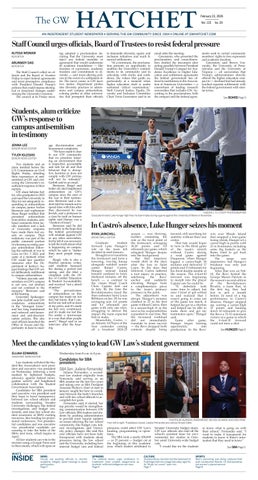
Graduate forward Luke Hunger high fives his teammates during a game against the University of Maine in November.
PHOTOS BY AURORA UNDERWOOD, NICHOLAS WARE AND KRIS PARK
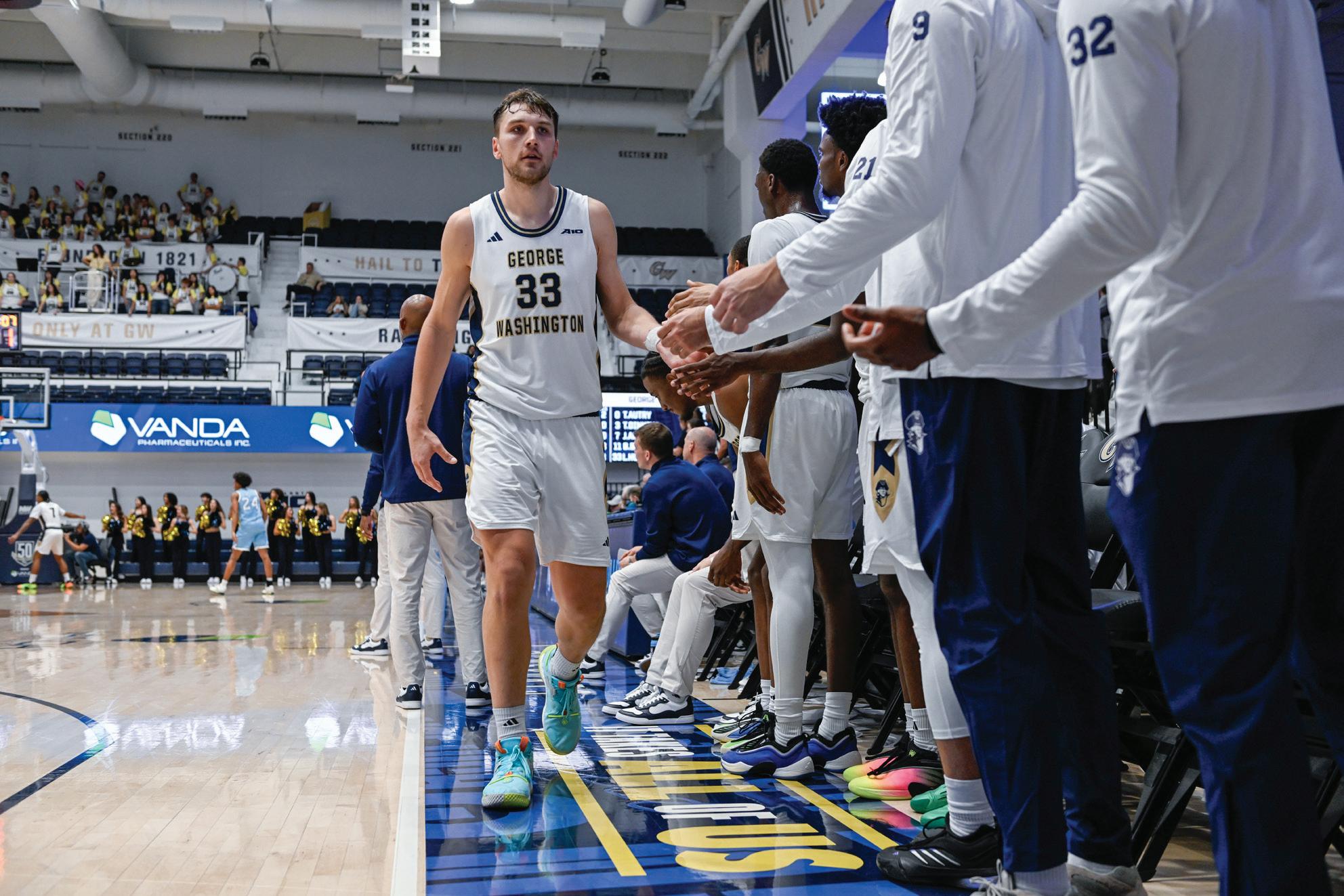
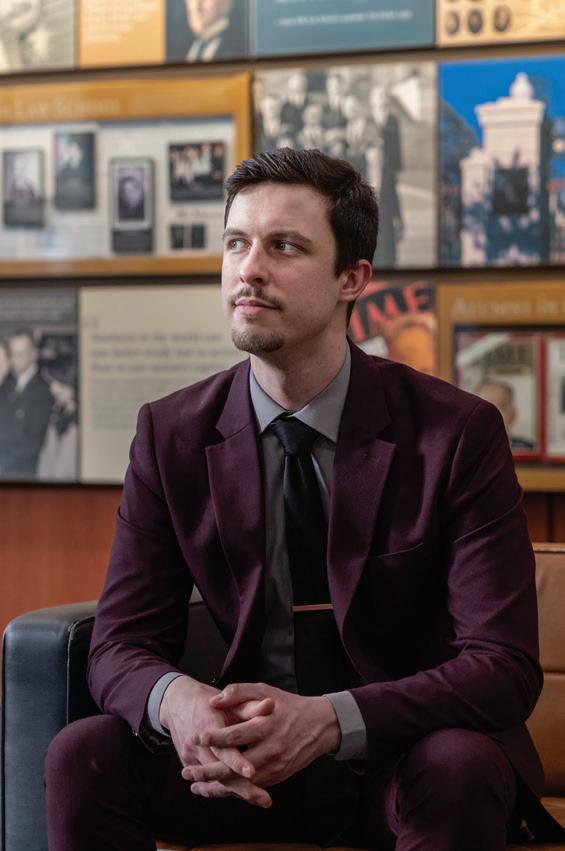
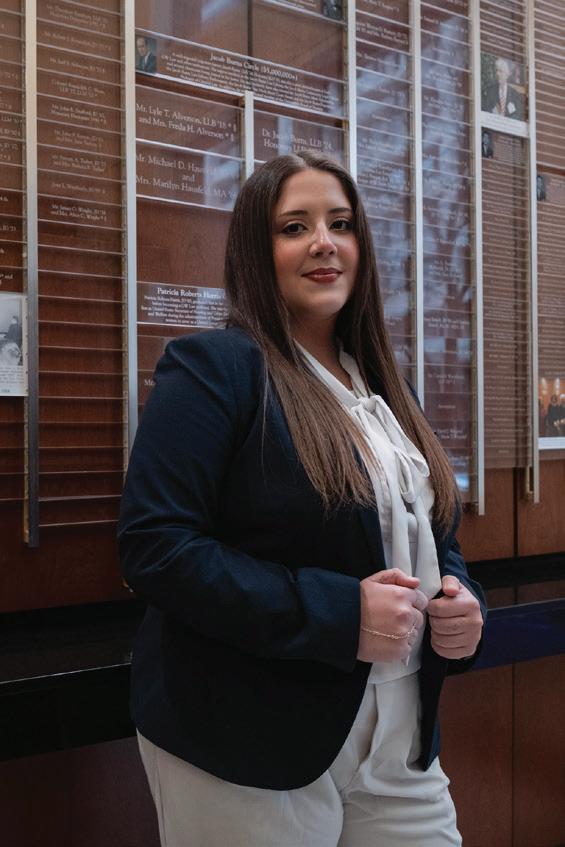
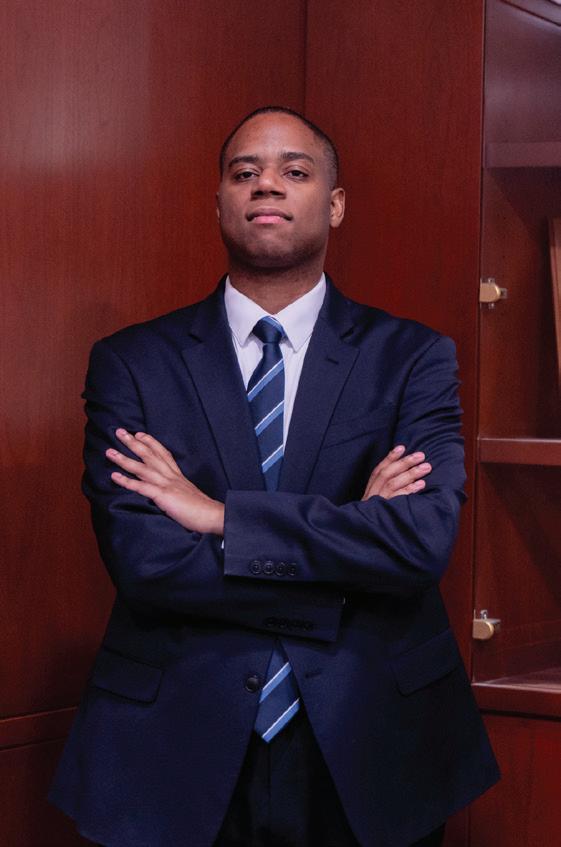
From left to right: Thaddaeus Canuel, Juliana Fernandez and Jaimon Graves Cater.
CRIME LOG
UNLAWFUL ENTRY
The Dakota 2/11/2026 – 12:40 p.m.
Open Case
The GW Police Department responded to a report of a female non-GW-affiliated person following a student into the building. A staff member escorted the non-GW-affiliated person off GW property. A GWPD canvas of the area for the person failed to locate them. Case open.
FRAUD 1D/FRAUD
Science and Engineering Hall
1/28/2026 – Multiple times
Open Case
A GW student reported receiving an email from an organization soliciting money for an event and shortly afterward received another email notifying her that the solicitation was fraudulent. Case open.
LIQUOR LAW VIOLATION
Potomac House
2/15/2026 – 1:11 a.m.
Closed Case GWPD and the GW Emergency Response Group responded to a report of an intoxicated female student. EMeRG conducted a medical evaluation of the student and transported the student to the GW Hospital Emergency Room. Case closed. Referred to Conflict Education & Student Accountability.
—Compiled by Bryson Kloesel
DSA to replace Engage with new platform this summer following student complaints
JUWON KIM REPORTER
Officials will switch GW’s organization management platform over the summer following student complaints that the platform makes it difficult for student organizations and Student Government Association leaders to advertise events and manage funding.
The new platform — CampusGroups by ReadyEducation, which officials will give a GW-specific name before its August launch — has new features, like a mobile app, a more streamlined financial system for student organizations and an artificial intelligence-powered event recommendation algorithm, per the platform’s website. The switch comes after complaints from students and SGA leaders about frustration with Engage’s outdated user interface and cumbersome organization finance system.
Engage — the current platform, which officials launched in fall 2019 — allows student organizations to advertise their organization’s events and manage funding and students to discover organizations and fill out required forms. Engage also houses the student organization finance system, where leaders can see their group’s balance and spend and request funds from the SGA, though organization leaders said they have trouble navigating the system and have to go through unnecessary steps to complete purchases.
University spokesperson Skyler Sales said student reports of difficulty using Engage were a “primary driver” that prompted officials to shift to CampusGroups. She said student leaders consistently gave officials critical feedback about Engage lacking features they desired in an organization plat-
form, like more streamlined financial management.
Division for Student Affairs officials in the fall provided demos for and solicited feedback on various platforms from a “range of student leaders,” including the SGA, before finalizing CampusGroups as their choice, according to Sales. She said DSA will communicate more specific details about the transition with organization officers this spring and develop “comprehensive and multi-modal training” to aid the transition.
SGA President Ethan Lynne, who said he’s pushed for officials to switch away from Engage since he chaired the SGA’s Finance Committee his sophomore year, said he hopes the change will streamline the finance system with a simpler layout and fewer redundant steps. He said when he served on
the finance committee, they faced constant complaints from student organization leaders about difficulty using Engage’s finance system and having to repeat steps to spend funds.
“They always complained about it, and it was hard for us to analyze, and there was always confusion and miscommunications, I think just due to how badly the platform is laid out,” Lynne said.
Audrey Cheng, the communications chair of the GW Chinese American Student Association, said Engage is “overstimulating,” citing frequent technical glitches and scheduled events not appearing on the calendar.
“A lot of the time we need to request funding that requires us to make a contract, and it’s going through all these processes, which can get to be a lot and very overwhelming,” Cheng said.
Faculty say financial incentives would up academic integrity panel participation
DAVIS
REPORTER
ISAAC HARTE
REPORTER
Faculty are urging officials to shorten required academic integrity panel trainings and provide financial incentives to boost participation after a year of declining faculty involvement.
Faculty are advocating for shorter trainings and monetary incentives after the Faculty Senate passed a resolution earlier this month to extend a temporary decline in the number of Academic Integrity Review Panel members until at least May of next year — a move they deem necessary to combat years of backlogged cases from low faculty participation. Faculty who have sat on panels and faculty senators who approved the resolution said the decrease in faculty panel members restricts the number of perspectives present during complex cases and places a larger amount of
work on faculty who choose to participate.
Educational Policy & Technology Committee CoChair Thomas Choate presented the committee’s report during this month’s Faculty Senate meeting, which found that while academic integrity violations stabilized in spring 2025, they remained higher than spring 2023 — prior to the widespread rollout of large language models, like ChatGPT, that promoted the initial backlog in cases in spring 2024.
The resolution extends another one the Senate made in March 2024 that reduced the number of panel members from five to three and dropped the number of required faculty on panels from two to one, a change made to combat a backlog of cases that built up due to the popularization of generative artificial intelligence programs in late 2023 and early 2024.
University spokesperson Claire Sabin said faculty training is primarily asyn-
chronous, with only one live personal training session required. She said there are currently 30 eligible faculty panelists, and the average turnaround time to complete a case is 30 days from the receipt of the complaint to the completion of the hearing.
Despite the University decreasing the size of the panels to expedite cases in 2024, the number of cases that overran the spring semester increased by 55 percent in academic year 202425, Choate said during the senate meeting.
Dwayne Wright, who currently serves on a panel, said the required training could be a barrier for faculty, but the main issue is an “increasingly greater” workload for the small group of professors who do choose to participate, because others are opting not to join.
He said tying service on the panels to a monetary reward, like a cash payment, could increase faculty participation. He also said the training for the panels could
the compulsory Title IX training faculty take annually, both by making it mandatory for merit increases and by turning it into an online module.
said when faculty don’t serve on panels, they’re effectively indicating a disinterest in the concept, which could prompt officials to abolish the system.
“I would really hate for this to go from five to two to one or zero, because then I think that we’re just not doing what we need to do as a faculty,” Wright said.
Anonymous trustee, GW gifts to fund Gazafocused internships
ELIJAH EDWARDS ASSISTANT NEWS EDITOR
Matching donations from an anonymous member of the Board of Trustees and the University will fund 14 internships supporting humanitarian aid efforts in Gaza this summer, with contributions from fellow trustees.
The $200,000 initiative, part of the University’s Humanitarian Internship Program, will pay for ten students to work at World Central Kitchen’s D.C. office and four in its Jordan location — barring security constraints — where they will support the organization’s operations and coordinate the distribution of food and humanitarian supplies bound for Gaza. A gift to the Humanitarian Internship Program from an anonymous trustee is
supporting the fund, which the University is matching and other Board members are helping supplement, according to a Thursday release. The donation comes after years of student protests over the war in Gaza, which targeted both GW and the Board for not divesting from companies tied to Israel. Demonstrations directed at the Board have included alleged spray-painted messages at trustees’ homes and protests both during meetings and outside their office.
“This initiative allows our students to apply their knowledge in real-time to support humanitarian efforts in Gaza,” University President Ellen Granberg said in the release. “It will also further strengthen GW’s long-standing legacy of leadership in public service.”
model
Wright
PHOTO ILLUSTRATION BY MATHYLDA DULIAN
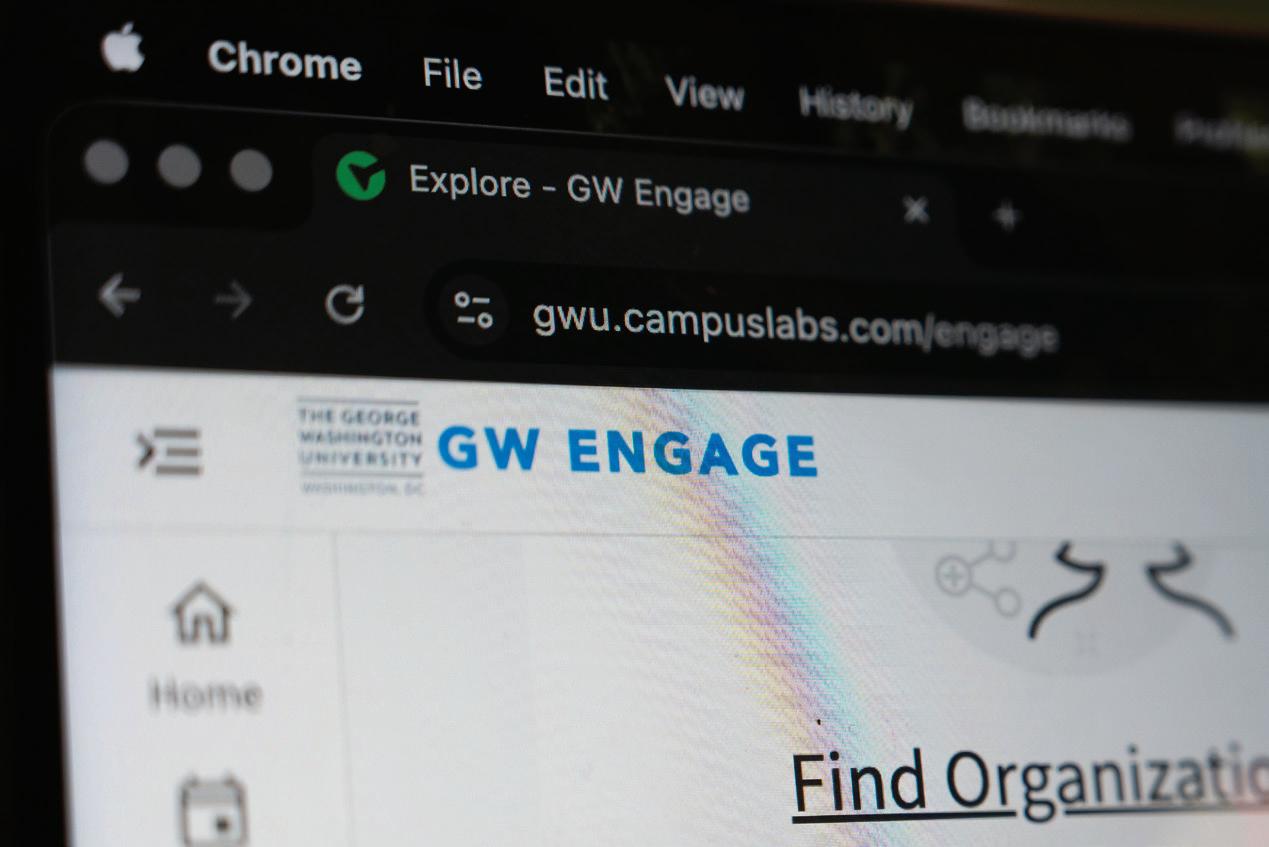
The GW Engage website.
MATHYLDA DULIAN | ASSISTANT PHOTO EDITOR
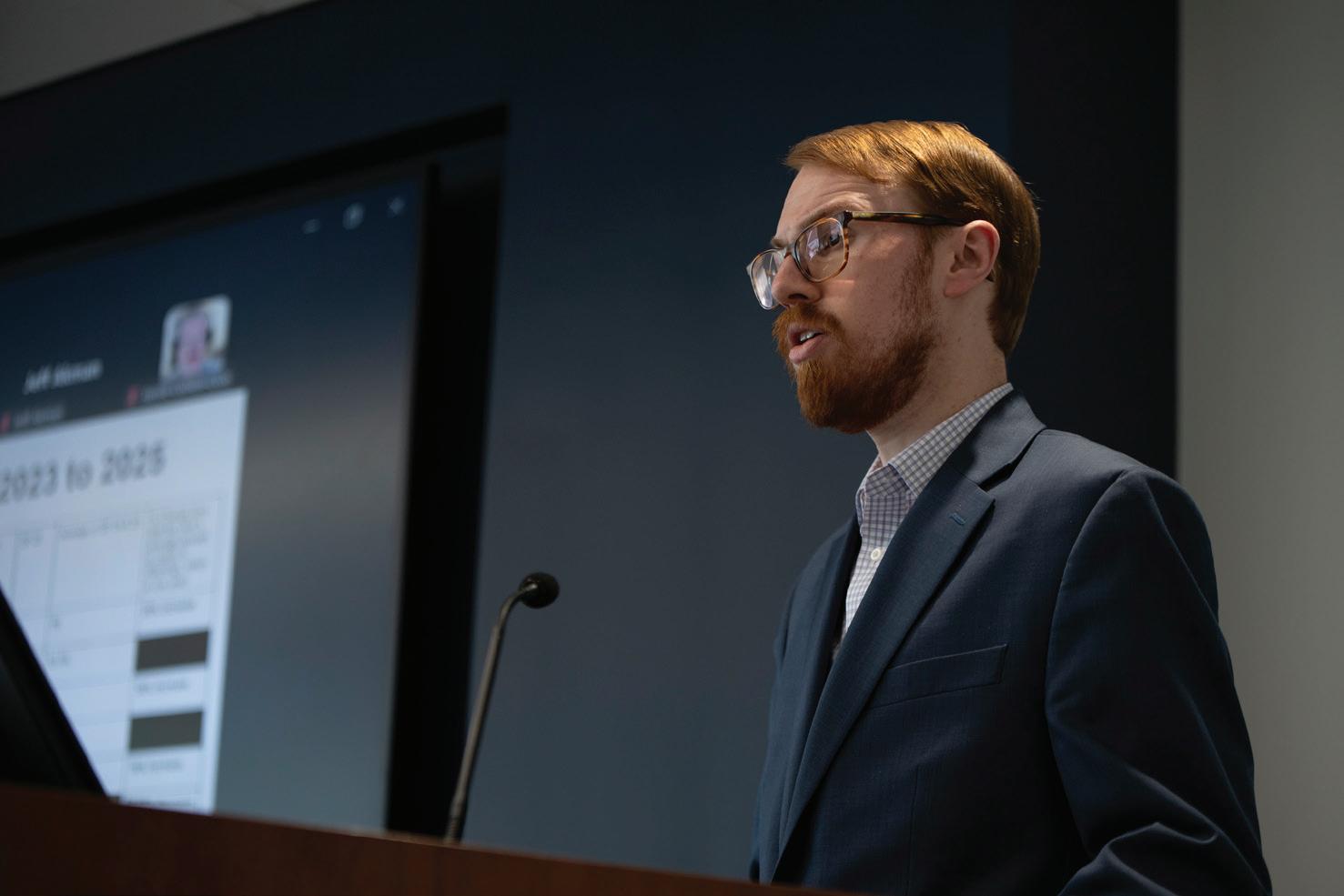
Educational Policy & Technology Committee Co-Chair Thomas Choate at this month’s Faculty Senate meeting.
JESSIE ZHAO | STAFF PHOTOGRAPHER
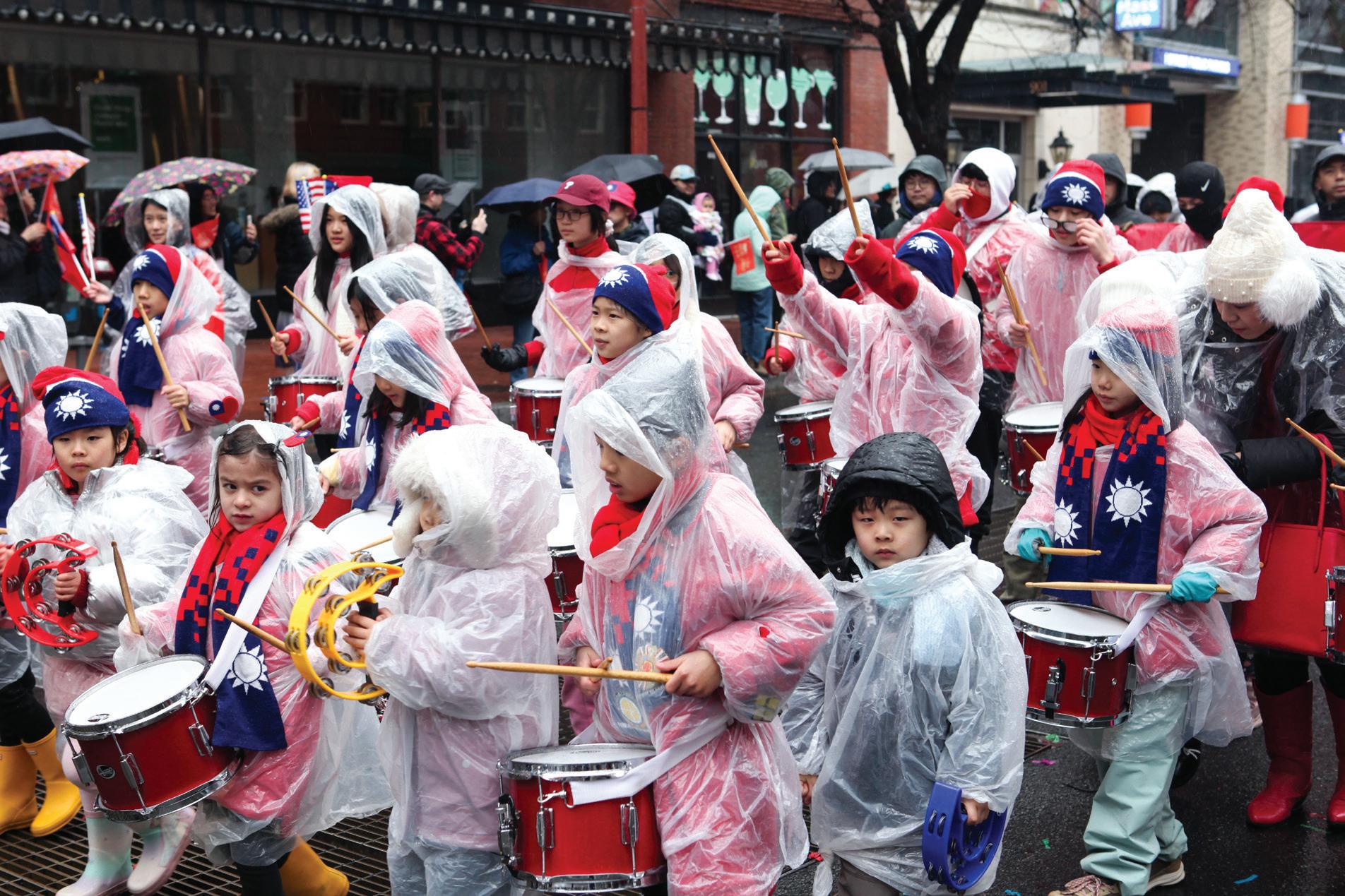
People participate in the annual D.C. Chinese Lunar New Year Parade in Downtown Chinatown on Sunday,
South Hall residents report persistent hot water outages
More than a dozen of South Hall residents said they have experienced frequent hot water outages this semester as D.C. faces one of its coldest winters in decades, which officials said have strained the building’s water system. Residents of South Hall reported facing repeated disruptions to their hot water supply this winter, with five unexpected outages and two scheduled interruptions since Jan. 15. The outages, some lasting several hours, have left students unable to plan showers, forcing them to wait late into the night or endure freezing water amid one of the coldest winters in years.
South Hall residents have received more than half a dozen emails from facilities services this semester communicating outages. An outage in South Hall on Feb. 5 lasted for about seven hours, though it is unclear how long every outage has lasted as facilities does not always email with an update when water is restored.
The emails alert students that maintenance workers
are aware of the outage and working to address, also instructing students not to submit FixIt tickets for hot water issues until after the issue is resolved. The emails do not share the reasoning for the outages.
University spokesperson Nadia Payne said officials are unable to “definitively confirm” what has caused the frequent hot water outages, but it is likely due to the frigid temperatures that the District has experienced this winter. She declined to comment on if other residence halls have experienced hot water outages.
D.C. saw nine days of subfreezing temperatures at the beginning of the month, the longest cold snap since 1989, in addition to a historic snowstorm which dropped several inches of snow on the city at the end of January.
Components of all residence halls on campus are monitored as they age, Payne said. She said officials are analyzing South Hall to determine what upgrades officials can incorporate into the University’s deferred maintenance plans.
Jocelyn Conder, a senior living at South Hall and a biology major, said the un-
certainty of when there will be issues with the hot water has also disrupted her daily routine. Officials gave two days notice before the most recent planned outage and encouraged students to utilize the University Student Center for a “warm space” if needed, but the majority of outages in the past month have been unplanned and without prior notice.
“I would have rather known from the beginning that there was a problem I would have taken a while to fix,” Conder said. South Hall resident and senior Mace Hood said he has been showering at the office where he interns when the hot water is out in the morning, which has thrown off his morning routine. Hood, an international affairs major, said residents received an email almost every week alerting them there is a hot water outage in the building.
“It’s annoying,” Hood said. “I don’t know what the issue is, right? It’s supposed to be a brand new building.”
D.C. Water warned in early January that the extreme cold could impact water lines and pipes throughout the District, causing leaks and outages. Last month’s
cold snap left residents in a Northeast high rise without heat and hot water, and multiple pipes burst as a result of the cold caused flooding at the GW Hospital earlier this month.
South Hall resident Anna Beltran, a political communications major, said she has ventured off campus so she can find hot water.
Pro-Palestinian students, protesters denounce Trump’s Board of Peace
ADELAIDE PETRAS
STAFF WRITER
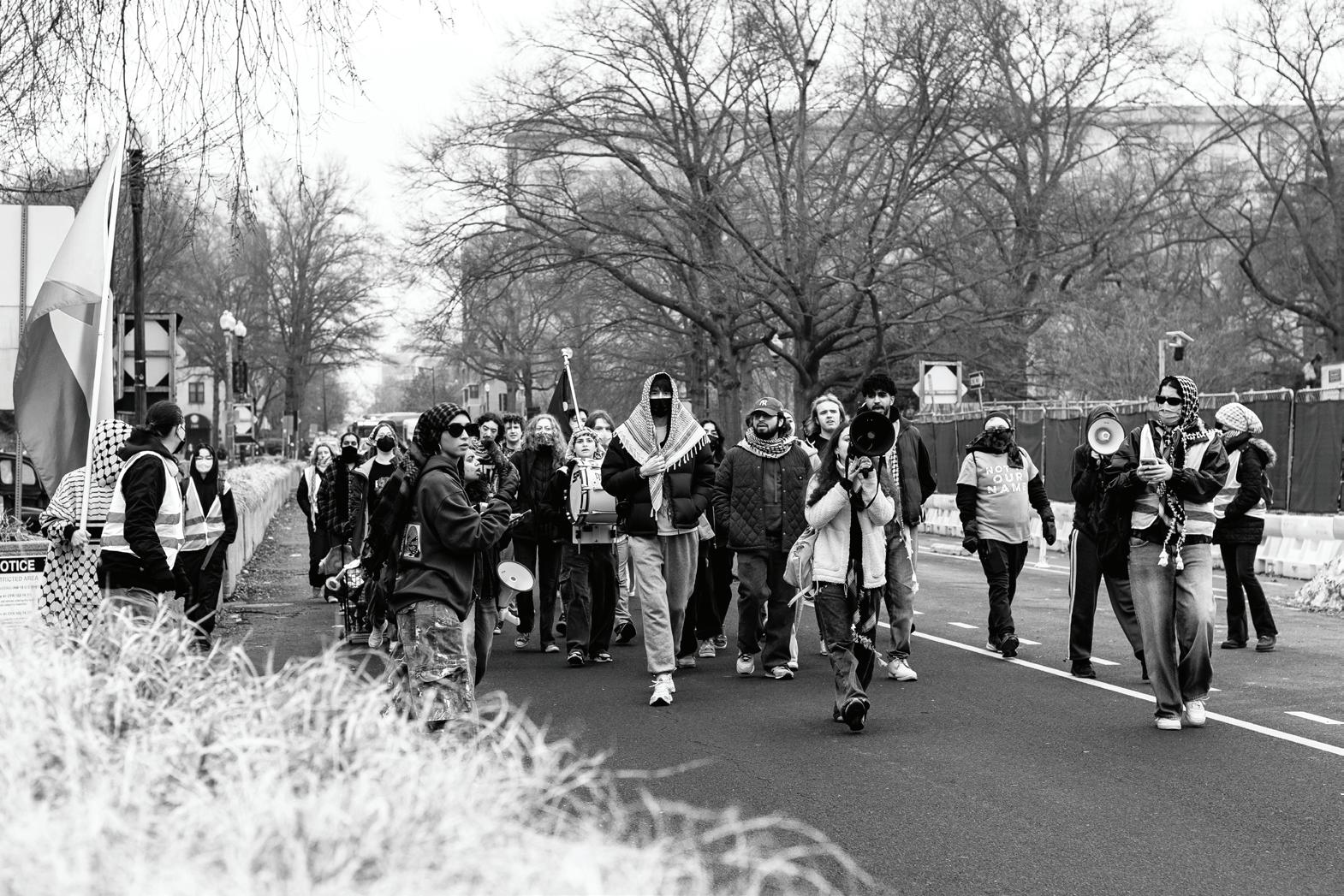
A group of more than 75 pro-Palestinian students and other community members protested the inaugural meeting of President Donald Trump’s Board of Peace on Thursday, with 25 students holding a demonstration on campus before joining a larger group at the U.S. Institute of Peace.
Members of Students for Justice in Palestine first met and demonstrated outside Kogan Plaza before joining a rally organized by the D.C. Palestinian Youth Movement to protest the Board of Peace meeting — an international organization founded and chaired by Trump in January — during which members pledged $7 billion for Gaza’s reconstruction and committed troops to a stabilization force. Demonstrators, including students, de-
nounced the board’s intentions and reiterated their call on officials to fire Joseph Pelzman, an economics professor who authored a plan for economic redevelopment in Gaza, which was sent to Trump’s advisors in July 2024.
Trump established his Board of Peace in January at the World Economic Forum, with the goal of carrying out the rest of his peace plan to redevelop Gaza after more war have left much of it in ruin. The U.S. brokered a ceasefire deal with Israel in October, which has offered a shaky stability to the region, though Israel has killed at least 600 Palestinians since the ceasefire, and Hamas has not agreed to lay down its weapons.
Just under two dozen students convened outside Kogan Plaza at 10 a.m., with speakers criticizing GW for keeping Pelzman employed and the federal government for funding
Israeli operations. A speaker from SJP — who did not identify themself to the crowd — shared the group’s demands and drew a parallel between GW’s Board of Trustees and Trump’s Board of Peace, criticizing the trustees for playing no part in education and the community, while focusing solely on investing.
“In most cases, the Board of Peace and the Board of Trustees are the ‘Board of Butchers,’ working to eradicate our people from their land,” the representative said.
A representative for SJP, who requested anonymity due to fear of retaliation from the University, said the U.S. is exerting more control over the region and the conflict than they should, and many Americans have forgotten about the conflict and will no longer care as much as they did in the past few years since the ceasefire has held.
She said she visited a friend who lived in Rosslyn to have a hot bath to get relief from the freezing temperatures outside.
“One of the times there was no hot water was during the snowstorm, and I was like, ‘I can’t, it’s so cold outside. I literally cannot take a cold bath, I’m gonna die,’” Beltran said. Sophia Lynn, a senior who lives in South Hall, said she takes showers at night and has been frequently unable to get the water to warm up, forcing her to adjust her routine.
“I started moving my scheduling later and later into the night to one, try to shower at a time where nobody else is showering so at least the water would be lukewarm, or something like that,” Lynn said.
Faculty back lawsuit challenging CDC vaccine schedule changes
ALLISON MAURY REPORTER
LEANNA JOJU REPORTER
More than 40 faculty joined five public health organizations in filing an amicus brief earlier this month, warning that Health and Human Services Secretary Robert F. Kennedy Jr.’s May changes to the childhood vaccine schedule endanger public health.
The brief supports a lawsuit filed last July by public health organizations, including the American Academy of Pediatrics, and spearheaded by GW Law professor Richard Hughes IV, challenging Kennedy’s decision last May to roll back COVID-19 vaccine recommendations. The brief — signed by 43 GW faculty, including 39 from the Milken Institute School of Public Health — urged the judge to weigh the consequences of abandoning routine vaccine recommendations for serious childhood diseases, citing lower vaccination rates, added strain on pharmacies and weakened protections for immunocompromised individuals.
“Defendants’ actions will depress vaccination rates and cause increased vaccine-preventable outbreaks, preventable hospitalizations, and unnecessary deaths,” the filing states.
Kennedy, who has expressed skepticism of COVID-19 vaccines, in May announced that the CDC would stop recommending routine COVID-19 vaccines for healthy children and healthy pregnant women, citing a lack of “clinical data” to support giving the boosters to children. The lawsuit alleges Kennedy did not consult with the CDC’s Advisory Committee on Immunization Practices before ordering the change, violating the Administrative Procedure Act and requesting the judge pause the order.
The brief expands on the lawsuit’s argument by denouncing Kennedy’s subsequent changes to the pediatric vaccine schedule, like removing the vaccines for hepatitis A and B, influenza, rotavirus and meningococcal disease from the routine schedule. HHS now designates the vaccines as shared clinical decision-making vaccines as opposed to routine vaccinations as
recommended by the ACIP. Vaccines on the ACIP’s routine schedule are recommended by a physician at pediatric check-ups for all children, but the CDC only recommends SCDM vaccines to some children based on risk or other factors.
Over 110 public health professors and leaders across the country signed the brief, along with five organizations — the American Academy of Allergy, Asthma & Immunology, Robert Wood Johnson Foundation, American College of Chest Physicians, American Thoracic Society and Network for Public Health Law.
An amicus curiae, or “friend of the court,” brief is an additional filing by an outside party to support one side of a case by providing relevant information before a ruling, sometimes sharing expert knowledge. Foley Hoag LLP is representing the amici.
The brief argues these changes go against scientific evidence of the vaccines’ safety, efficacy and public health benefits and that the changes will reduce pediatric vaccination rates and endanger public health, and the changes did not consider the effects on parents, providers and state and local governments.
Sara Rosenbaum, former professor emerita of health law and policy at Milken, led the development of the brief as part of the Public Health Deans and Scholars Amicus Briefs and Public Comments Project. The project, Rosenbaum says, aims to ensure that public health information is available to courts in significant national cases.
“This case raises such essential issues that an amicus brief was more than necessary,” Rosenbaum said.
Rosenbaum, who signed the brief herself, said the changes to the vaccine schedule pose a threat to vaccine access and will make it harder for children to get appropriately vaccinated while causing greater difficulty in the decision-making process for parents because the SCDM is time consuming for doctors and patients.
“They have injected mass confusion into millions of families,” Rosenbaum said. “Life is already confusing, now because of the reclassification of vaccines from routine to shared clinical decision making.”
Officials slash journal subscriptions as part of FY2026 budget cuts
GIANNA JAKUBOWSKI
ASSISTANT NEWS EDITOR
Officials reduced academic journal subscription costs at GW Libraries & Academic Innovation by 6 percent and at Himmelfarb Health Sciences Library by 10 percent as part of fiscal year 2026 budget cuts, LAI Dean Geneva Henry confirmed Friday. Henry said GW Libraries canceled some “highly used” subscriptions and is now relying on the interlibrary loan system, leveraging open access content and utilizing its partnerships and affiliations to connect community members to scholarly resources. She said librarians launched a qualitative assessment in August 2025 of their online subscriptions, considering factors like its relevance to curriculum and research, overlap or comparison with other databases or resources
and the impact of their cancellation.
“The exorbitant cost of annual journal subscriptions is a long-term problem that will continue to strain the budgets of research universities world-wide,” Henry said in an email.
Henry did not say how many journal subscriptions officials reduced as a result of the budget reductions, and GW Libraries’ webpage outlining the cuts does not specify which subscriptions officials let go.
The webpage says officials expected the price of general subscriptions to increase by 5.5 to 6.5 percent, and health sciences journals to increase by 6 to 8 percent in 2026. Those price hikes come as GW’s library budgets have remained “flat” over the last decade, and staffing levels have decreased due to turnover and staff retention issues, LAI’s webpage says.
GW’s cuts to library journal subscriptions are part of officials’ plan to slash the University’s budget by 3 percent this fiscal year, which has prompted officials to implement a series of cuts to campus operations, programs and resources.
Officials told the Faculty Senate in December they expect GW to operate at or near breakeven in FY2026 after operating expenses exceeded revenue by $75 million in FY2025.
GW LAI’s webpage states librarians could not rely solely on usage data to make cuts to subscriptions, adding that they had to cancel access to resources that were popular, though they don’t specify which.
It also states librarians underwent a comprehensive review of their online subscriptions, and Himmelfarb Library evaluated how specific resources supported
SAM MASCHI | PHOTOGRAPHER
Members of Students for Justice in Palestine march to the Institute of Peace on Thursday.
LOGAN ROTUNNO | STAFF PHOTOGRAPHER
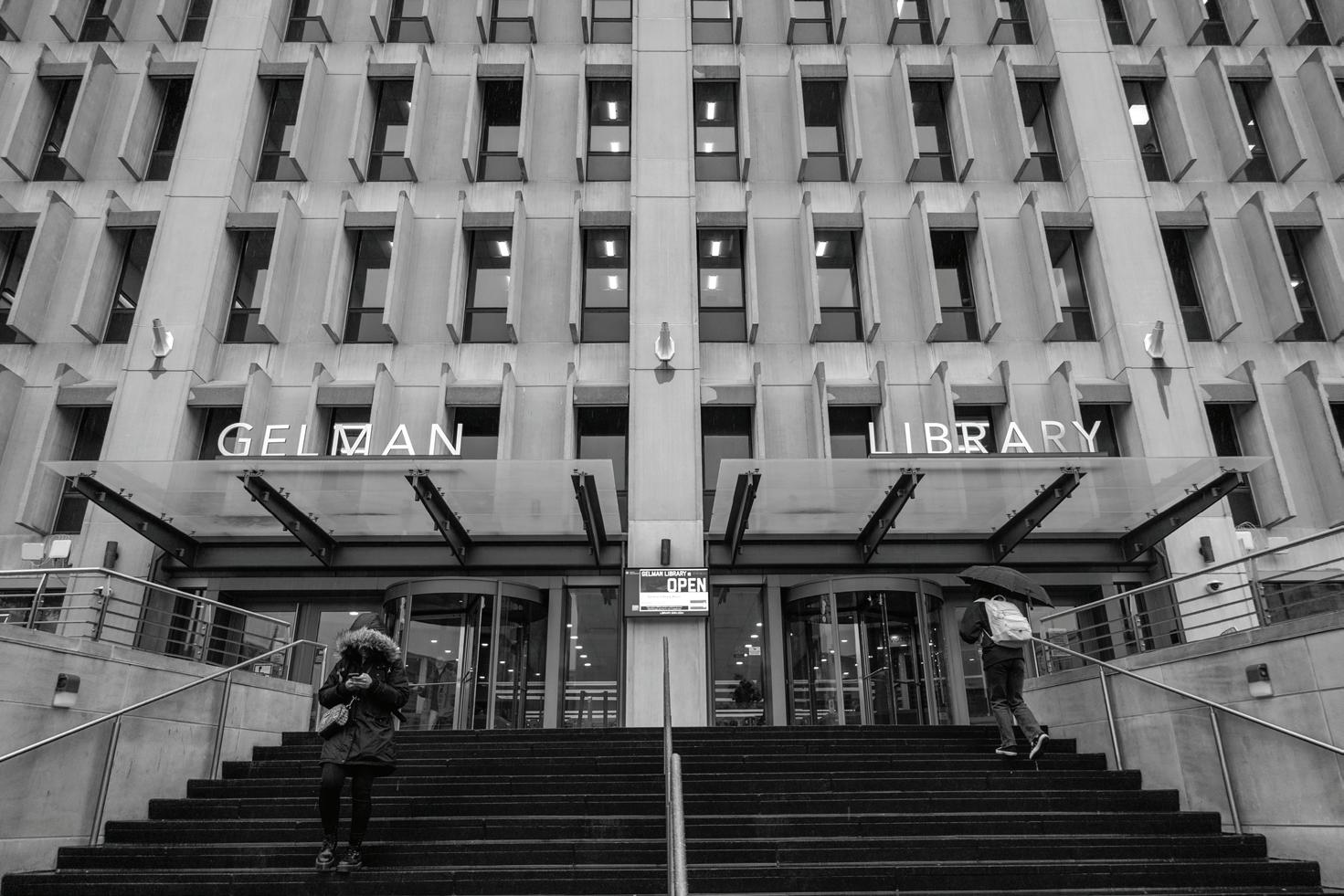
The front entrance of Gelman Library.
SEAS students join forces to build electric boat ahead of national competition
LOUISA HANNOUCENE STAFF WRITER
A group of mechanical engineering students are working together to create an electric boat to take part in an electric watercraft competition this semester.
GW Electric Yacht, an unofficial student organization, is designing and manning a speedboat that will compete in an electric watercraft competition this spring in Virginia, hosted by the American Society of Naval Engineers. Kaya Alper-Nocera and Adam Newman, junior mechanical engineering majors, said they had been toying with the idea of forming the organization since fall 2024 to give School of Engineering & Applied Science students the opportunity to work in naval engineering, since GW already has off-roading carand rocket–building teams.
Newman said when he and Alper-Nocera submitted their club’s constitution to the University to become an official student organization in fall 2024, they were told by officials the club would not be approved because of safety concerns and that it was “unrealistic and expensive.” After the group rewrote the constitution and applied to become an organization a second time this past summer, Newman said officials denied their applica-
tion amid GW’s yearlong pause on the formation of new student organizations. Since SEAS itself cannot form new student organizations without the approval of the Division for Student Affairs, Alper-Nocera said that he and Newman approached SEAS faculty for alternative options to get the group up and running. That’s when SEAS Interim Dean Jason Zara pledged financial backing for the organization, Newman said, adding that Erica Wortham, the director of the GW Innovation Center has, too, pledged her support.
“The administrative offices really showed no enthusiasm for helping us,” Newman said. “But what did help was Dr. Wortham then stepped in, saw this as an opportunity to promote sustainability. And with her help, we were able to get this building space by the Innovation Center.”
He said Electric Yacht is a unique offering because it gives undergraduate students access to designing marine transportation outside of academic projects.
“It’s a huge industry,” Newman said. “It’s one of the three main modes of transportation — ground, sea and air. You need engineers to do that, and students are interested in that. GW doesn’t of-
fer any classes in that, other than basic fluid mechanics.”
He said the American Society of Naval Engineers hosts an annual competition every April in Virginia where participants build electric boats to show support for the future for alternative fuel options in the maritime industry.
The competition, Promoting Electric Propulsion, sponsored by the U.S. Navy’s Office of Naval Research and ASNE, will take place from April 14 to 16 at Portsmouth City Park, Virginia. The competition is divided into six races based on distance and whether or not the vehicle is manned.
In its first year, Newman said Electric Yacht will participate in the crew planning division, which requires crew members on board to navigate the boat. Crew planning teams will complete a five-mile race with one person piloting the boat, and they are prohibited from purchasing a premade motor or using a gasoline engine or sails.
Newman said they chose the crew planning division because Electric Yacht is a new organization, and having the opportunity for students to man the craft will excite potential new members.
“It’s difficult to get people interested, especially when
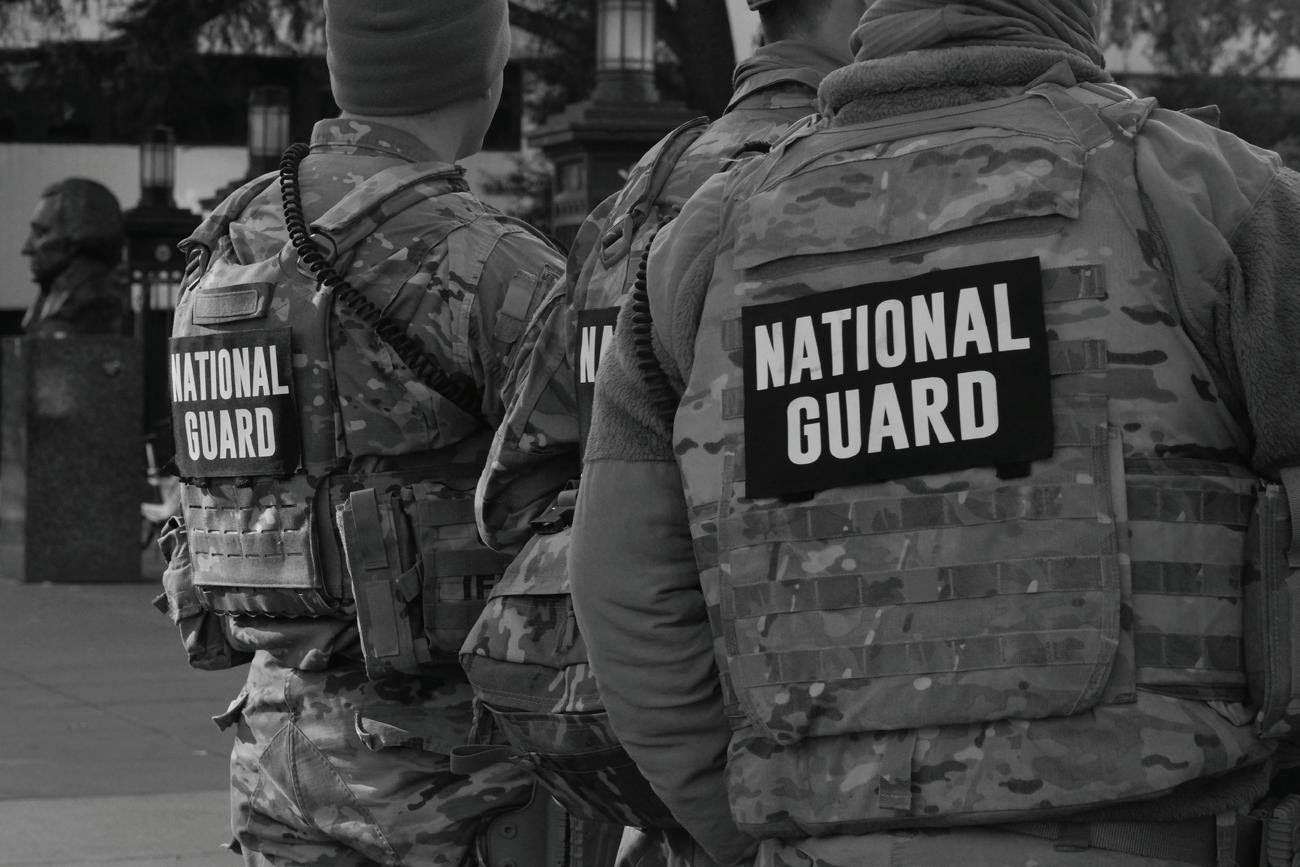
Members of the National Guard stand outside the Foggy
National Guard deployment lacks clear goals, experts say
BRYSON KLOESEL CONTRIBUTING NEWS EDITOR
As President Donald Trump’s National Guard deployment in D.C. approaches six months, security experts say the mission’s unclear objectives and the guard’s use of online surveillance have undermined its effectiveness in deterring crime and risk infringing on citizens’ civil liberties.
Shortly after Trump’s January announcement that National Guard troops would remain in D.C. through the end of the year, Senate Homeland Security Democrats published a report stating that despite the ongoing deployment costing D.C. taxpayers $1.65 million each day, the mission has proved ineffective at tangibly reducing crime and has used social media monitoring tools that put residents’ First Amendment rights in jeopardy. Experts in policing and online security said the report highlights flaws in the deployment’s focus on relatively low crime areas in the District, reveals accountability gaps in measuring the success of the deployment and raises questions about protecting citizens’ privacy amid online surveillance.
Trump first ordered 800 D.C. National Guard troops to the District on Aug. 11 to help suppress what he called a “crime emergency.” Around 2,400 troops from nine states and D.C. remain in the District with the mission of “restoring law and order” in the District, according to the report.
Lawmakers wrote that the Joint Task Force-District of Columbia concentrated guard units in heavily trafficked areas, deploying none southeast of the Anacostia River, where much of the District’s gun violence occurs. Metropolitan Police Department crime data shows violent crime remains concentrated east of the river — in 2025, Ward 8 had recorded 38 homicides by August, compared to four in Ward 2.
The committee’s ranking members who spearheaded the report did not return a request for comment.
A JTF-DC spokesperson said the mission’s objective is to support MPD and federal law enforcement agencies by reducing crime and ensuring safety. The spokesperson said guard personnel serve in a support role focused on monument security, safety patrols and traffic control and cannot arrest people, conduct searches or direct law-enforcement actions. MPD declined to comment. Stephens said measuring the mis-
there’s nothing to show from the past. And so our idea was basically to make it as exciting as possible,” Newman said.
Alper-Nocera said Electric Yacht has about 30 members — primarily sophomores and first-years — who help for two hours each week, either taking parts off the boat for improvement or cleaning it.
He said first-years are sometimes “isolated” by team leads in other design clubs and are unable to make
decisions or contribute to the project but said Electric Yacht is trying to change that by offering students greater input on the boat’s construction.
“People are definitely very interested in the idea that they can produce something themselves and see it, compete and see it win, which unfortunately is not to be said for a lot of other design teams,” Alper-Nocera said.
Without the ability to become an official organization, Alper-Nocera said they
decided to become a subsidiary of the GW chapter of the American Society of Mechanical Engineers, which students formed before the pause.
“These design teams are really the lifeblood of the engineering school,” AlperNocera said. “People don’t come here to get a Harvard engineering education. They come here because students are running all of these teams, and they’re able to take a more hands-on project.”
SGA calls for greater flexibility in University Honors Program requirements
The Student Government Association Senate passed five pieces of legislation at a meeting Thursday, including a resolution calling on officials to improve the University Honors Program experience by adding more class times and making it easier to study abroad.
sion’s success is difficult because the District hosts so many law-enforcement agencies that it’s hard to determine whether the National Guard specifically contributed to any drop in crime.
Trump has credited the deployment with the drop in crime D.C. experienced in 2025, but the report states crime was already dropping in 2024 ahead of the deployment. D.C. saw a 30-percent reduction in violent crime in 2025, according to MPD data, and in 2024 violent crime in the District hit a 30-year low, according to Department of Justice data.
“If anything changes, it’s very difficult to sort out what the National Guard contributed, if anything, versus what was being done and continue to be done during the deployment,” Stephens said.
The report states the mission can also hinder normal crime deterrent operations in the District by straining MPD staffing. Guard officials told committee staff that 38 guard service members are also MPD officers, per the report. Those officers do not operate as police when they’re on guard missions and must take leave from the department, which has faced staffing shortages in recent years.
Stephens said it would have been more strategic for the guard to excuse MPD officers from activation during the deployment and let them continue their normal police duties so as not to strain local resources.
“You’ve taken a resource particularly suited to dealing with crime and safety and that kind of thing and put them in a position where you can’t use the skills and training and knowledge that they have developed to its best use,” Stephens said.
The report states the administration has been unable to show a measurable decrease in crime directly attributable to the presence of the National Guard, instead focusing on measuring the results of their beautification efforts.
President of the National Policing Institute Jim Burch said in order to prove mission success, officials could provide block-specific numbers showing if police calls have decreased in specific areas and examine officer performance in specific areas, including the number of stops they make.
“But importantly, if officers are assigned to an area that is not experiencing significant crime concerns, the measures need to reflect the purpose or goal of the deployment,” Burch said.
The resolution, sponsored by SGA Sen. Sophie Munson (CCAS-U), asks the honors program to offer more time slots for required honors courses, allow honors students studying abroad to take courses that count for honors credit and hold mandatory advising sessions for students with double majors or plans to study abroad to ensure they will meet the program’s requirements in four years. The resolution states firstyear students in the program have expressed concerns that its required courses overlap with other core curriculum requirements, and honors students face challenges studying abroad because the program’s credit requirements limit flexibility in their schedules.
All honors program students are required to take 10 additional honors courses on top of the coursework for their major, according to the program’s website. The resolution asks officials to collaborate with advisors from schools like the Elliott School of International Affairs, the School of Engineering & Applied Science and the School of Business to develop comprehensive four-year plans for students that include possibilities of studying abroad while also meeting the program’s requirements.
The honors program currently offers a four-year plan template on its website, but provides no specific guid-
ance on which classes students should take in specific semesters, or how students could arrange their schedules to study abroad and still meet the program’s requirements.
Senators also approved a measure, sponsored by SGA Vice President Liz Stoddard, which fully opens Finance Committee meetings to the public with an “open door” policy. The Finance Committee held its first public meetings last fall, but required students to RSVP and for the committee’s chair to approve them to attend, leading to low student turnout at its initial public meetings. The bill removes the RSVP requirement and allows any member of the public to attend meetings.
“Switching from a barrier system to a come and walk in and hear what the finance senators are talking about, I think is much more helpful,” Stoddard said. “Especially for treasurers who are coming to present and maybe want the ability to sit in on the discussion around their allocation.”
Senators also approved a bill that allows senators to fill vacancies in any Joint Elections Commission office with a current member of the SGA, a change from a bill they passed at their previous meeting, which only allowed senators to appoint an SGA member to fill a vacancy in the role of JEC commissioner.
The JEC faced a brief period of instability earlier this year after the commissioner senators appointed in the fall to lead the body abruptly resigned, leaving the commission without a leader months before the April elections, until senators appointed a new commissioner to fill the role in February.
The JEC still faces several vacancies, with only three of the commission’s five members appointed. The commission also still lacks a chief
investigator, who investigates and reports any misconduct during the election process. The senate also approved a bill transferring the power to convert school-specific vacant seats to University at-large seats from the full senate to the Governance and Nominations Committee. SGA Senate Pro Tempore José Dalmau (CCAS-U), who sponsored the bill, said it will “streamline” the process for filling senate vacancies, so the committee can bring more nominees before the full senate instead of waiting for the full senate to convert them.
The bill also shortens the timeline for SGA officials to advertise vacancies to the campus community from five days after a seat becomes vacant to three and allows the Governance and Nominations Committee to bypass consideration of nominees and send them to the full senate if there is only one applicant.
“The bill directly addresses avoidable delays that can leave students underrepresented,” Dalmau said. “It strengthens the efficiency and predictability of our appointments process while preserving rigorous candidate evaluation.”
Senators also filled several vacancies by approving the appointments of Paul Lee to an undergraduate School of Medicine and Health Sciences seat, Rodrigo Ganem and Klara Walny to undergraduate School of Business seats, Stephen Garvey to an at-large graduate seat and Alayna Kadarusman and Kaesar Grewal to undergraduate Elliott School of International Affairs seats.
The SGA Senate will hold its next meeting on March 2 at 7 p.m. in the University Student Center Grand Ballroom.
ELIJAH EDWARDS ASSISTANT NEWS EDITOR
NICHOLAS WARE | STAFF PHOTOGRAPHER
Bottom-GWU metro station..
KYRA WOOD | ASSISTANT PHOTO EDITOR
Electric Yacht Club co-founder Adam Newman shows off the boat.
Community leaders push DC to boost funding for Main Street program
A year after the Foggy Bottom West End Main Street Association received funding from the District to support local businesses, community leaders say they need more funds to expand and improve their current operations.
Leaders from the Foggy Bottom Association, Advisory Neighborhood Commission 2A and West End Citizens Association are urging Ward 2 Councilmember Brooke Pinto to boost Main Street’s funding by up to $35,000 in the upcoming city budget.
FBA President John George, who also serves as chair of Main Street’s advisory board, said the increase would help expand smallbusiness grants and provide branding and consulting support as local businesses face mounting pressures tied to federal actions in D.C.
The D.C. Department of Small and Local Business Development established D.C. Main Streets in 2002, seeking to bring new businesses into vacant storefronts and assist brick-andmortar businesses with resources and grants.
After FBA established the Foggy Bottom West
End Main Street in 2025, the program received $175,000 from D.C., which they used to distribute grants with an average value of $4,000 to nine businesses to support and improve their brick and mortar locations.
Ben Sislen, executive director of Main Street, said the program recently began receiving its funding for fiscal year 2026 after spending the entirety of its $175,000 in funding in FY2025. Sislen said while the organization’s advisory board manages the budget, and he executes it, he expects that if the city approves the additional $25,000 to $50,000 in funding, the board would use it to expand the work they are already doing — like offering larger grants and awarding them to more businesses.
“If we have a $4,000 grant, and there’s a need for something that’s $5,700 from a restaurant or bar, that will go in front of the grant committee, and they’ll be able to review that and possibly approve it,” Sislen said. “It would be easier to make those approvals if we had another $50,000 in the bank.”
Businesses reported using the grants for new signage, pointof-service computer systems and product
purchase in August.
The organization’s fiscal year 2025 annual report also said 10 new businesses have opened in the business corridor — including areas of the West End and Foggy Bottom closest to Washington Circle and the New Hampshire Avenue Northwest corridor from the Kennedy Center to the Circle and along Virginia Ave Northwest — including Taco Cat, Streetbird and Maman, though none of them received grants.
Main Street distributed nine grants to businesses in its first year, according to the report.
A 2023 study sponsored by the D.C. government recommended the District establish the Foggy Bottom Main Street program and found 63 percent of stores in the neighborhood reported sales below pre-pandemic levels and that storefront vacancy rates remained higher — topping 60 percent in parts of Foggy Bottom — than the rest of the city.
The study by Jon Stover & Associates attributed lagging business activity in Foggy Bottom to remote work among GW faculty and government workers, along with specific issues Columbia Plaza and Watergate face due to
the heavy car traffic on Virginia Avenue and the Potomac River Freeway. Their stores are also less visible than those that face the street directly.
George said at the forum that the Main Street group’s funding request is also a response to new economic uncertainty facing Foggy Bottom businesses caused by federal actions affecting the neighborhood, including the National Guard presence and disruptions at the Kennedy Center. He said the organization needs a larger budget to help businesses absorb those disruptions while continuing its corridor support work.
“Foggy Bottom West End Main Street is moving forward, but it does suffer pressures from what’s going on with the federal administration, whether it’s DOGE, the National Guard or the now the closure of the Kennedy Center, there are significant impacts on our local business, and we’d like to increase the Main Street budget,” George said at the meeting.
Foggy Bottom restaurant owners said in October the presence of the National Guard and federal immigration enforcement in the District has slowed sales.
SBA candidates hope to grow body’s student engagement
From Page 1
Fernandez, the president of the Criminal Law Society and copresident of the Latin American Law Student Association, said her experience interacting with students from different backgrounds across the law school has given her the opportunity to hear and understand GW Law’s diverse student body, which would help her craft effective policies. She said as president she would also work to increase the SBA’s outreach to students, many of whom she said are not aware the body exists or do not understand what it does because of its poor student engagement, by regularly tabling in law school common areas and spreading information on how the body can help.
“I think that the president of SBA is kind of like the bridge between the school, like deans and the administration, and the students,” Fernandez said. “So if the students want their voices to be heard, I am going to hear their voices.”
First-year law student
Jaimon Graves Cater
Jaimon Graves Cater, a firstyear law student from Missouri, outlined three core priorities he would implement as SBA president — forging a “dialogue” between law students and deans, creating a form to collect SBA feedback and boosting student engagement with faculty. He said he would make sure law students and deans are having an ongoing “two-way conversation” about law school priorities and open a 24/7 SBA feedback form where leaders could collect student ideas to improve the SBA and law school. He said he would also work to create more opportunities for students to interact with faculty beyond classes, like a video series where different professors explain their areas of focus to help new law students figure out what they want to study.
Graves Cater said his background in federal service, from his experience serving in the U.S. Air Force to working at the Pentagon, State Department and FBI have taught him how to advocate effectively with higher-ups, whether it’s for federal funding or on behalf of law students.
“That background of public service really touched on the exact values that we hold in a law school where we want to help people that can help themselves and deliver a capability of advocacy that you want to do on behalf of people,” Graves Cater said. Graves Cater, a first-year who has not served in the SBA, said he doesn’t think having prior experience on the body is necessary because he’s learned advocacy skills in roles he’s held prior to coming
to GW Law.
“The capability of a president isn’t predicated on the knowledge that they may have for the role,” Graves Cater said. “I think it’s the ability to respond to students about who they are and where they’ve gone and who they want to be.”
Candidates for SBA executive vice president: SBA Sen. Thaddaeus Canuel
Thaddaeus Canuel, a secondyear evening law student from Phoenix, Arizona, said his central campaign focuses include expanding the Jacob Burns Law Library’s hours, improving the SBA’s internal procedures and continuing to advocate for student safety on campus as law students express concerns about federal immigration activity.
Canuel, who is running uncontested, said he will work with officials to start a pilot program during the law school’s reading period to open its library to students 24/7, which will hopefully show administrators that students would use the space past its current 11:45 p.m. closing time Sunday through Thursday and 9:45 p.m. closing time on Friday and Saturday.
“There’s a lot of us who study late at night or study on the weekends and things like that, and I think that they deserve to have access to these resources,” Canuel said.
Canuel, an SBA senator for the past two years and chair of the Rules and Constitution Committee, said he aims to raise awareness among students about what to do if they encounter Immigration and Customs Enforcement agents or in other emergencies, like an active shooting — processes he said currently are not “clearly defined” for law students.
Canuel was one of two SBA senators who sponsored a resolution the senate passed in January endorsing a student petition urging Law School Dean Dayna Bowen Matthew to disinvite ICE from a public interest career fair jointly hosted by GW Law and Georgetown University Law Center, though Matthew ultimately did not disinvite the agency. ICE agents raided the restaurant Circa at Foggy Bottom in September, with University officials confirming federal agents detained “a number of individuals” but not specifying how many and said they had no evidence any GW community members were affected.
“With the Trump administration, and with actions by DHS and ICE, students have brought up concerns to us that I think are valid and deserve to be heard and deserve to be taken seriously,” Canuel said.
Board of Trustees moved toward corporate structure in recent years, Post
From Page 1
Officials confirmed in October they were not considering adopting Trump’s 10-point compact, which he initially offered to nine universities but eventually opened up to all higher education institutions. The compact would have granted GW priority access to federal funding in exchange for meeting a list of demands, including requiring that applicants submit standardized test scores, adopting institutional neutrality and capping the percentage of international student enrollment.
The compact also called for ending the consideration of race, gender and other demographic factors in admissions and hiring, defining gender based on reproductive function and requiring “fair competition” in sports — provisions that some universities have separately agreed to in settlements with the Trump administration.
“It won’t change policy on its own, I don’t expect it to,” Greenstein said. “But my hope is that it opens the door, especially with our peer shared governance groups.”
This request mirrors concerns students have raised over the last few months that GW has failed to adequately respond to Trump-era policies targeting higher education, diversity and immigration. They cited DEI rollbacks, GW Law’s refusal to disinvite ICE from a career fair and insufficient responses to heightened immigration enforcement near campus, cuts to federal research and student loans and Trump’s continued deployment of National Guard troops across the city as evidence that officials are tailoring their actions to the University’s priorities.
Student Government Association senators passed a resolution in October calling on officials to ramp up resistance to Trump’s “unconstitutional federal interference” in
higher education. In September, the Foggy Bottom and West End Advisory Neighborhood Commission passed a resolution urging GW to resist capitulating to the Trump administration as the University remained “in contact” with the DOJ over its finding that officials acted deliberately indifferent to campus antisemitism.
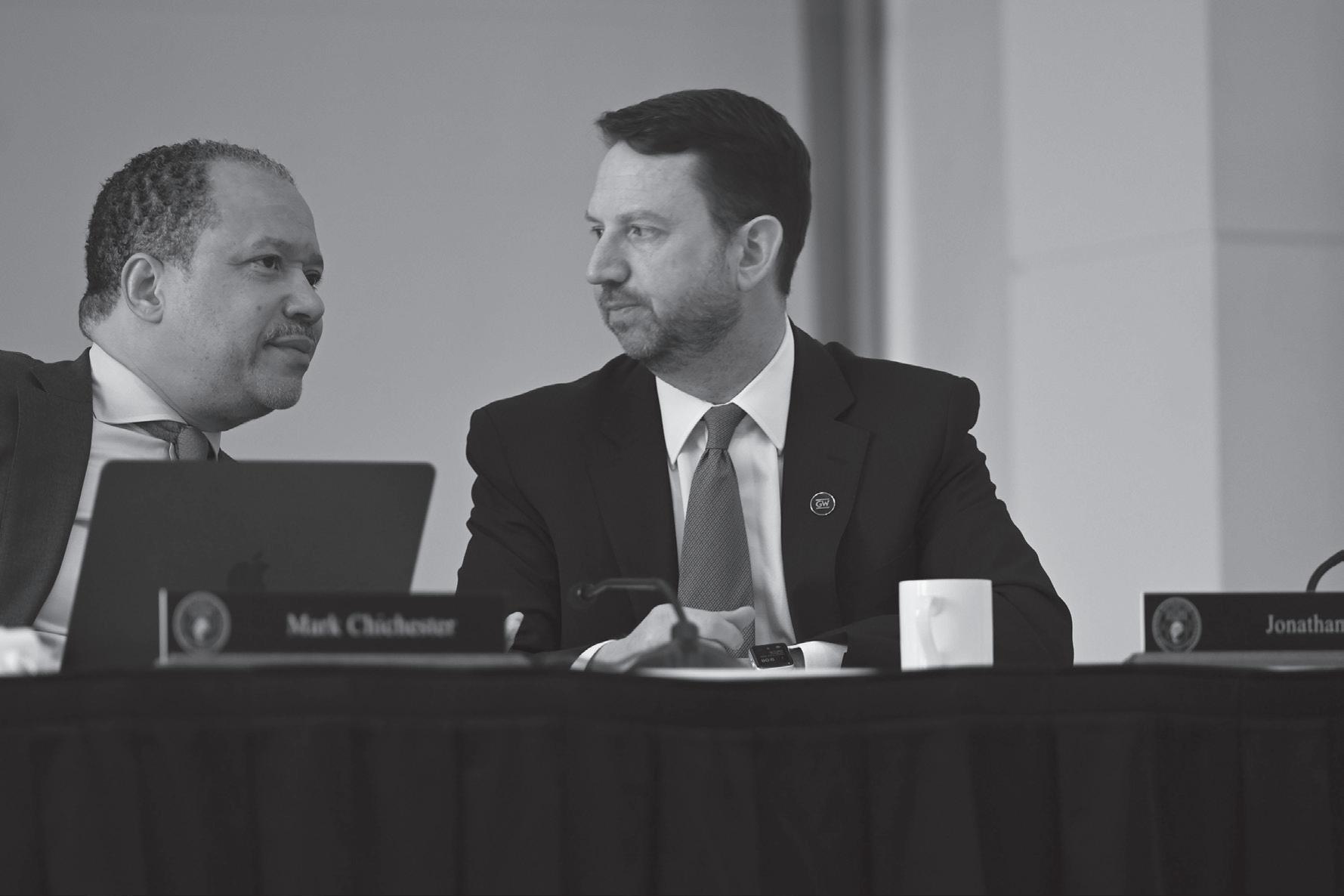
Vice President for Board Relations and Secretary of the University Jonathan Post also gave a presentation to the Staff Council and fielded questions from members about how the Board of Trustees functions, which he said gave him the opportunity to “demystify” the individuals that serve as trustees and their role at the University. Staff Council President Mindy
Galván asked Post, on behalf of a fellow staff member, who holds the Board accountable for its decisions. Post said the D.C. attorney general legally oversees the Board under nonprofit law in the event of intentional wrongdoing, while the Board is also informally held accountable by the community when it solicits stakeholder feedback. He said community members have disagreed with the Board about the direction of the University in recent years, though he did not specify which community members or on what issues. He said GW’s culture, despite these disagreements, allows for community members to engage in constructive dialogue with the Board in a respectful and responsible manner.
The Board’s bylaws require trustees to hold an annual meeting each May and at least two additional regular meetings, with retreats optional at the chair’s discretion. The Board will hold its March meeting entirely behind closed doors, departing from its practice of keeping portions of its three meetings open to the public.
The bylaws do not mandate that the meetings be partially public or disclosed on the governing body’s calendar, but web archives over the last decade show the Board has routinely listed at least three meetings, including any retreats, online.
“The Board may not necessarily agree with what some other people are saying, but we have to be a community that can have that construc-
says
tive dialogue together,” Post said. Post said the Board has made a “strategic shift” in recent years to reduce the number of trustees, making its structure “more corporate,” rather than philanthropy-focused, like other universities that have far more trustees. He said the Board has now “rebalanced” and reached its ideal number in the mid-20s, currently at 23 trustees, including University President Ellen Granberg.
Over the last decade, officials have worked to downsize the Board, bringing the number of trustees from 43 to 21 members between 2013 and 2018 in an effort to strengthen the body’s productivity and communication among members.
Post said the trustees still prioritize philanthropy, adding that charity will play a “more integral” role overall in supporting GW in the future. He said each trustee is expected to make GW one of their top two donation priorities — a commitment the Board’s Committee on Governance and Nominations considers when selecting individuals for nomination to the Board.
Galván asked Post how the Board actively supports the University’s mission and strategic framework and how they have contributed to securing and strengthening resources to affirm GW’s long-term success. Post said the Board wants to keep track of officials’ and the community’s work toward achieving the strategic framework’s goals as they’re currently considering restructuring their five standing and two strategic committees to better reflect the framework.
Galván also asked whether the Board has financial concerns about implementing the framework, given GW’s budget deficit. Post said the Board is thinking about how to operate within its means amid GW’s financial constraints, while considering broader trends in higher education.
NICHOLAS WARE | STAFF PHOTOGRAPHER
Charm Thai on L Street NW.
ARWEN CLEMANS | SENIOR PHOTO EDITOR
Vice President for Board Relations and Secretary of the University Jonathan Post at a Board of Trustees meeting last February.
RYAN J. KARLIN SENIOR STAFF WRITER
As GW works to develop a campus-wide artificial intelligence strategy, it is confronting a dilemma playing out across higher education over how to preserve academic integrity as AI ripples across writing, teaching, learning and research.
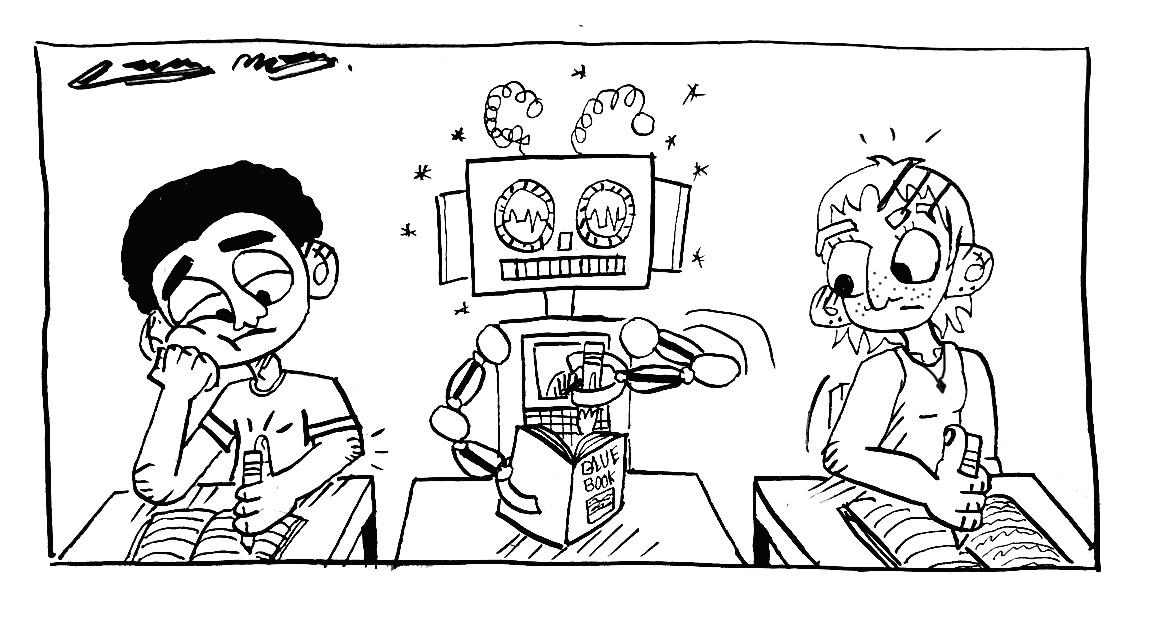
GW’s current policy — which officials last updated in April 2023 — predates much of the rapid mainstream adoption of generative artificial intelligence tools in classrooms. Since then, universities nationwide have scrambled to respond, with some investing in AI literacy initiatives and others tightening academic misconduct codes. At GW, the outdated policy has left individual professors to determine what usage is permissible in their classrooms, which has triggered a growing reliance on bluebook exams and in-class testing.
Professors’ instinct is understandable. Timed, handwritten assessments prevent students from using generative AI and give faculty confidence that they produced the work. But a widespread return to bluebooks, which members of our editorial board have noticed in recent months, feels less effective than the at-home work we’ve grown accustomed to over the last few years. Across political science, public health and business, professional work increasingly integrates AI-assisted research, drafting and data analysis. Testing students as if those tools don’t exist risks widening the gap between the classroom and workforce.
Back in fall 2022, when AI first became widely accessible to the public, officials and professors were still figuring out
GW can’t bluebook its way out of the AI era
STAFF EDITORIAL
how to navigate this new landscape, uncertain how it might reshape teaching and learning. Over the last year, AI has become increasingly prevalent in academic spaces, with more students turning to it for assignments.
At GW, guidance on its use has been limited. The university rarely weighed in publicly as student reliance on generative AI grew. It wasn’t until April 2023 that GW issued formal guidelines, stating that students cannot use generative AI for content submitted for evaluation or present generated work as their own, and professors
GW must combat the homogenization
As an Argentine, when I watched Bad Bunny’s Super Bowl halftime show and saw people’s reactions online, it reminded me of the generalizations people in the United States make about Latin America. Bad Bunny was both performing for entertainment and to juxtapose and confront narratives imposed by the current administration on issues like immigration and diversity. The artist wanted to portray the United States as a “land of immigrants,” where people are open and welcoming. This is a noble and necessary message, but I could not help but feel a certain uneasiness when watching the show, as I believed it helped progress many of the stereotypes surrounding Latin America.
There is, without doubt, a banalization of this culture, which is inherently so rich and diverse. Many think that Latin American culture is only Mexican or Caribbean, or that accents between regions do not diverge. We, the GW community, must actively work to push against these stereotypes by asking people about their cultures and being open and empathetic to different perspectives. Latin American culture is deeply ingrained in the United States, but it is not always acknowledged by citizens in its entirety.
must communicate in advance what use is permitted in their courses. In August 2023, the University followed up with additional guidance, offering tips to professors on spotting generative AI use and reminding students that submitting AI-generated work as original constitutes cheating or plagiarism. For the most part, GW has left the implementation of rules and policies up to individual professors, allowing them to tailor expectations to the specific needs and content of their classes.
We encourage the University to explore ways professors
of Latin America
I recently learned that the master’s program in Latin American Studies at GW had been canceled in 2023, which both saddened and concerned me, in part because the termination left many graduate students with uncertainty about the future of their education.
The loss of such a learning space is tragic. Not having programs or classes like these strengthens the stereotyping and generalizations often present in conversations about the continent.
The responsibility of higher education institutions is to offer nuance and battle the stereotypes that may be accidentally progressed by community members. GW regional programs should be supported and encouraged by the administration, professors and students alike.
Open-mindedness, curiosity and respect for other cultures are all essential to accomplish this task. Fighting cultural homogenization is a long and arduous process. It is not easy to go beyond assumptions and the images the media shows us of the continent, but it is necessary. It is crucial to understand that America is a continent in itself and not a country. If Latin American culture is often stereotyped in the United States, it is not entirely the fault of students or citizens but of an educational system and media environments that favor a specific image of the region. This year, the federal government has decided to put on hold initiatives, like the National Museum of the
American Latino, prioritizing other areas in its annual budget. If possible, these initiatives should always be incentivized and supported by government officials and civil society. As we see, budgetary decisions, cuts or delays in funding have incredibly negative impacts on culture. Reducing support for this initiative, I am sure, will help to strengthen the stereotypes and banalization of Latin-American culture, or at least make it more difficult for people to start understanding the nuances of Latin America.
Yes, we Argentines are Latin Americans, and we are proud to be it too. We should all be proud of our identity without others reducing it to a simplistic caricature. Identities are diverse and complex and should not be used as a political weapon or target by any administration. Our task as university students is to refuse labels and instead embrace this complexity. We should all be trying to engage with culture more deeply and make a conscious effort not to reproduce stereotypes. The best way to fight cultural homogenization is through knowledge and education, and that is why universities play such an essential role in shaping the society that we want to live in: one that is diverse, open and knowledgeable as opposed to closed off, judgmental and identitarian.
—Santino Bernacchi, an exchange student from Sciences Po Paris majoring in social and political science, is an opinions writer.
could adapt their curriculum to address AI without relying on bluebook exams. As students, we don’t have a solution to the issue, but we hope this type of exploration could open the door to more creative approaches, like project-based learning, assignments that simulate real-world work or tasks that are inherently difficult for AI to complete. Officials, school deans and department chairs can play a critical role by implementing policies tailored to the needs of their programs, drawing on their expertise in specific courses and disciplines. By evolving alongside AI and
Classes
aren’t
Lupdating its policies accordingly, GW has the opportunity to design a diversified curriculum that challenges students while preparing them for the realities of a technology-driven world. Professors can take this chance to find more creative ways to challenge their students beyond an in-person paper or exam. Generative AI can do a great deal of things, like writing 1,000-word essays and answering questions, but it also has limitations. Generative AI is a machine, which means it struggles a lot with communicating human emotion and creativity. We hope officials can start giving faculty more guidance, so they can then focus on making assignments that AI is more likely to generate poorly, like assessments that ask students to produce creative work or integrate personal experiences. Our location in the capital also opens a door for faculty to create more in-person assignments, like sending students to museums or talks that require direct engagement. This isn’t to say professors have to completely ditch bluebook assessments, but professors shouldn’t rely on them as the only way to test their students.
As generative AI evolves and becomes more integrated into daily life, the University must adjust the ways it designs tests and assignments beyond blue books. Opinions across the country remain divided over whether AI ultimately undermines or enhances education. But for a higher education institution, the priority should remain constant ensuring that students develop critical thinking and creativity.
connecting Trump to authoritarian trends
ast week, President Donald Trump disinvited two democratic governors from a historically bipartisan National Governors Association meeting at the White House. This decision clearly signifies an unwillingness to cooperate with opposing political viewpoints, adding to the list of actions Trump has taken to consolidate power in the Republican Party. But in the context of more shocking news in the country, like the Jeffrey Epstein files or the aggressive expansion of U.S. Immigration and Customs Enforcement detention centers, media outlets often place less emphasis on actions like these, leading fewer people to talk about them. Even at GW, a highly political university, I have heard almost no discussion from professors and students alike about this latest shift in political norms.
In my political science classes at GW, democratic erosion is a common topic of discussion. Many professors will detail the characteristics of authoritarian regimes but avoid making an explicit connection between these identifiers and the changes in current U.S. politics. In courses aimed at teaching students how to recognize the implications of national decisions and cultivate political awareness, it
is a disservice to avoid the conversation about how these patterns are manifesting in America. It is the responsibility of a higher-education institution to expose students to information they may not get anywhere else and encourage them to make connections they may not otherwise make so that they can understand the true ramifications of national developments.
In many historical instances of transition toward authoritarianism, administration eroded democracy slowly. Even in one of the most wellknown autocracies today, Vladimir Putin’s Russia, the transition toward autocracy began slowly by dismantling institutions and undermining the opposition. What we are witnessing now in America heavily mimics those beginning stages of transition, similar to what we have recently seen in Hungary under Viktor Orbán or in El Salvador under Nayib Bukele.
Political competition is essential for a functioning democracy, and when certain politicians or political groups are excluded, that element of democracy weakens, making it easier for a select few to consolidate power.
The exclusion of democratic governors from the White House meeting is just one example of how the Trump administration is carrying this out in America. Additionally, a few weeks ago, Trump said in an
interview that Republicans should nationalize future elections, meaning the party would oversee the voting process and the counting of votes, despite the fact that Article I of the Constitution delegates election regulation to the states. Often, Americans write off these actions as trivial in comparison to the severity of other national issues, but these seemingly small instances collectively work to erode the constitutional framework that can be used to address the most pressing issues in the country. We are not looking at a coincidental series of poor decisions by the Trump administration but rather an ongoing power grabbing scheme that resembles historical instances of transitions to authoritarianism.
The GW community must be aware of the broader implications of the Trump administration’s actions — especially those that don’t receive extensive news coverage. Part of GW’s appeal is its location in the heart of D.C., which must be capitalized on by discussing the actions of the federal government in class. This can take many forms, from reaching out to representatives, protesting and educating ourselves and others. We must stop viewing Trump’s actions as isolated but rather as part of a systemic tactic and insist that democratic representatives do the same.
—Willow Harrington, a sophomore majoring in political science and psychology, is an opinions writer.
Willow Harrington Opinions Writer
CAROLINE MORRELLI | STAFF CARTOONIST
Santino Bernacchi Opinions Writer
CULTURE
BOOK TALK WITH SAM
DALRYMPLE: SHATTERED
NICK CAVE: MAMMOTH Tuesday, Feb. 24
NEW SONG: “CA$INO” BY BABY KEEM RELEASED THIS WEEK:
Shoebox Music turns residence halls into a ‘home’ for student performers
ORI ROSMARIN
REPORTER
RAINA PAWLOSKI
REPORTER
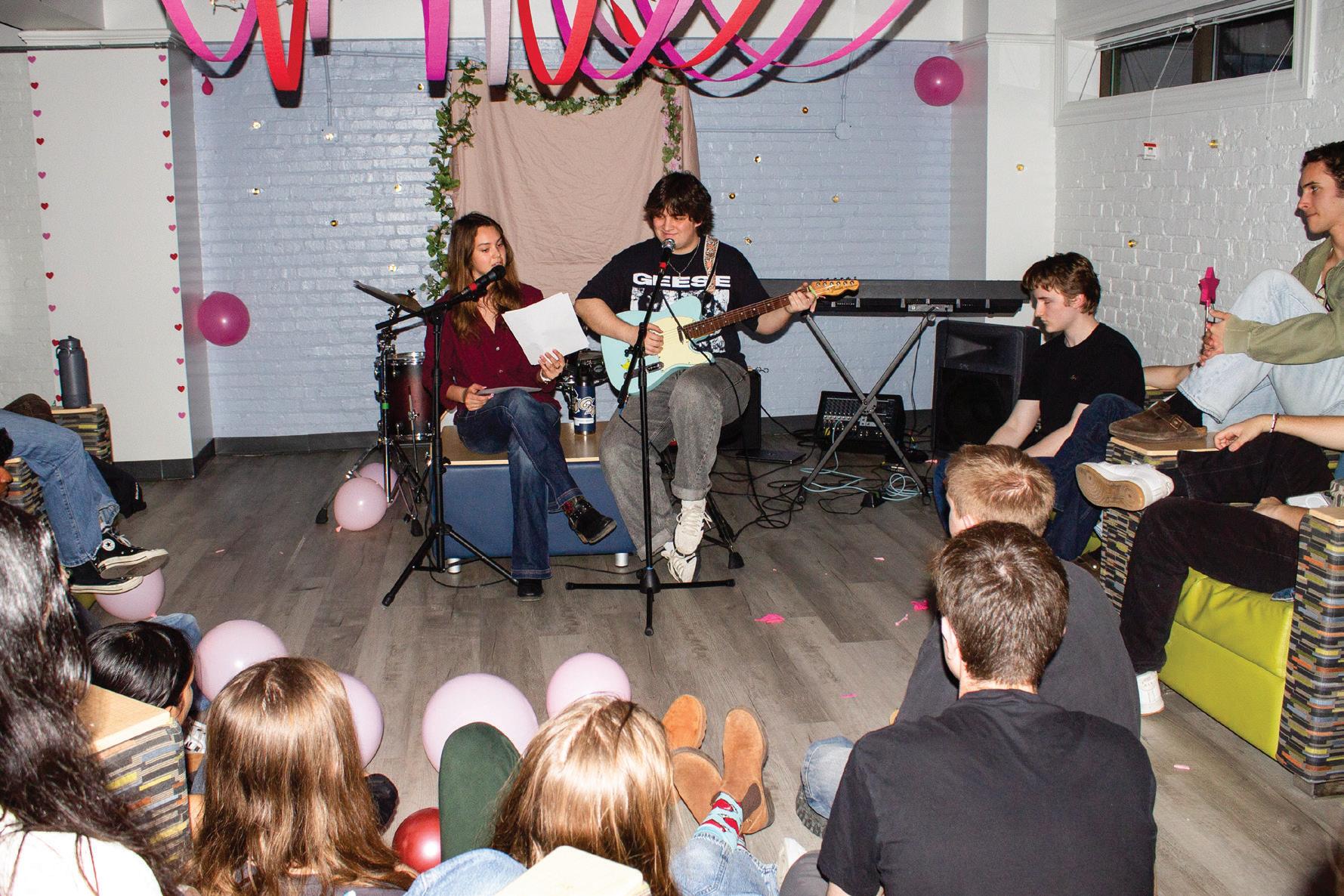
Bathed in bright fluorescent lights and framed by peeling paint, Shoebox Music turned the basement of Guthridge Hall into a whimsical, romantic hideaway on Saturday night, setting the stage for student musicians to serenade the audience with a range of lovethemed songs.
Shoebox Music, an unofficial student organization, hosted eight performances with musicians spanning across different genres, grades and majors Saturday night at its “Music for Lovers” open mic event. Since its founding in 2019, Shoebox has made a name for itself, hosting galas, alumni weekend shows with WRGW and even pandemic-era Zoom performances, creating a vibrant platform where both budding musicians and seasoned performers can shine, hosting performances every other month.
Under pink and red streamers and balloons, around 30 people gathered in Guthridge Hall’s cramped basement to watch student musicians put on a show under the glow of minimal lighting, making for a cozy place on a gloomy February evening. For about an hour and a half, students performed, ranging from impromptu raps from firsttime attendees to multi-instrumentalist soft jazz performances from seasoned players.
Sophomore Izzy Starr, who performed at the open mic, said she joined Shoebox Music last year after her orientation leader mentioned she was involved with the
organization, adding that she now handles a lot of administrative responsibilities and acts as a spokesperson for Shoebox during their events.
Starr, an environmental studies and Spanish double major, said Shoebox used to be called Tiny Dorm Concerts — a reference to NPR’s popular Tiny Desk Concert series.. But Starr said the club changed its name in the fall after they heard NPR had issued a cease and desist to all Tiny Dorm organizations and student groups at collegiate institutions for using the Tiny
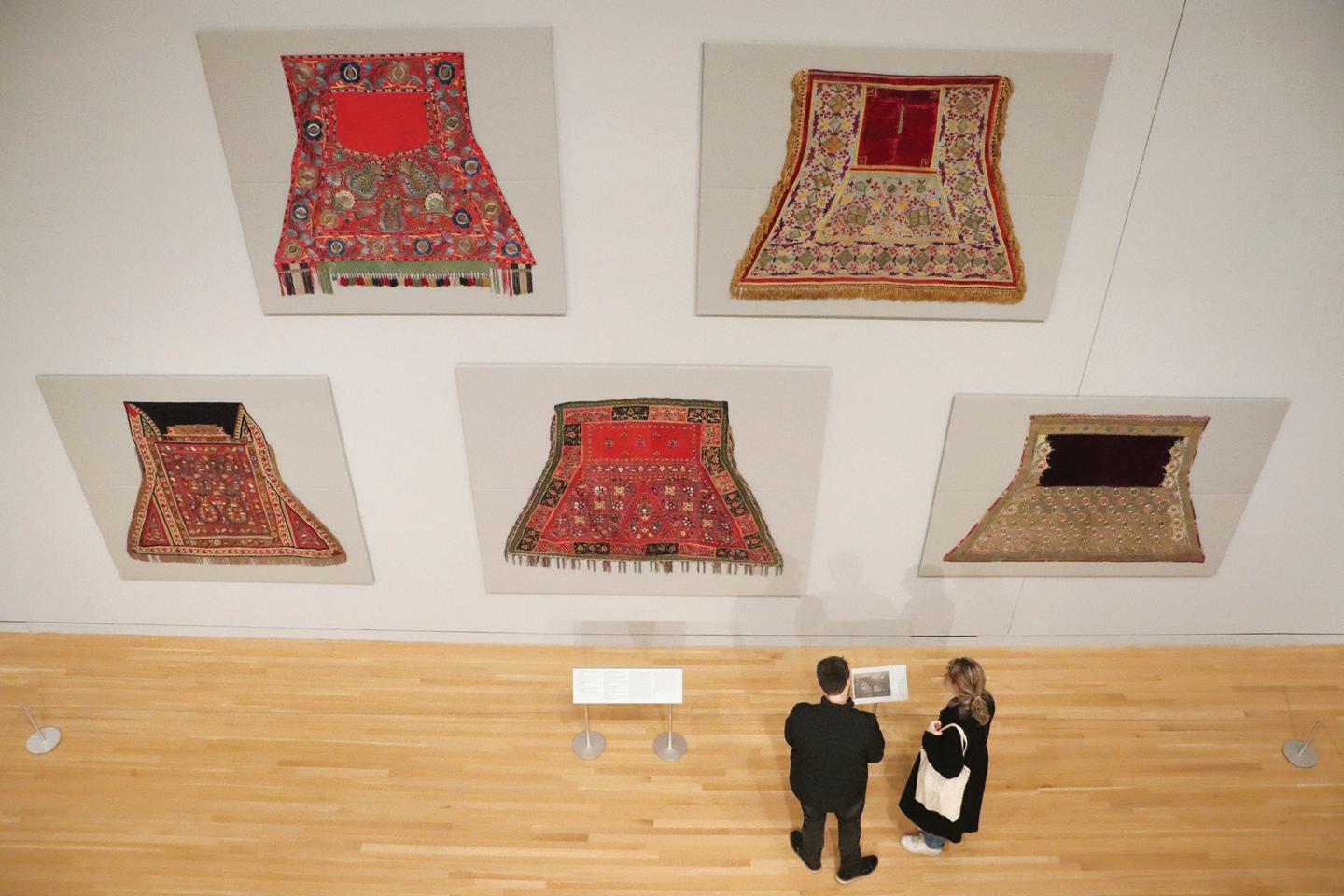
GW Textile Museum debuts equestrian
textile exhibit
PRUDENCE FREIN REPORTER
Surrounded by richly patterned horse textiles draped over saddles, visitors at The George Washington University Museum and The Textile Museum are ringing in the Lunar New Year with hands-on activities and a vibrant cultural dance celebrating the museum’s newest exhibit.
The exhibit, titled “Adorning the Horse: Equestrian Textiles for Power and Prestige,” opened Saturday and explores 60 equestrian textiles across various cultures in history, ranging from Iran to Japan from the past 1,300 years. From gilded saddles to intricately woven blankets, the exhibit, which is on display until June 20, showcases the use of textiles and the value of horses in societies, featuring grand patterns and bright colors to adorn them.
Chief Curator Sumru Krody said the museum received a donation of about 100 equestrian textiles in 2021 from Judy Brick Freedman, a collector and former trustee of the museum, which included saddles, blankets and decorative adornments, and later received a donation in 2021 with an endowment to care for the collection to prepare them for exhibition and educational purposes. While working on the
exhibit, Krody said her geographic specialty is the central and west Asian textiles and noted that each textile is reflective of the artisanship of different cultures and indicative of what role horses played around the world throughout different time periods, from the humans beginning to ride them for trade to their domestication.
Krody said that understanding inspired museum staff to put on a large exhibition, which took roughly five years to fully put together, and decided to settle on opening it in 2026 after learning it was the Year of the Horse.
Krody said the process of deciding which textiles will be included in the exhibition itself took a lot of deliberation, deciding which 60 textiles to feature out of the over 100 that were donated due to the different size of each piece, many of which were “humongous,” and also wanting to build a storyline to increase understanding for visitors. There are two life-sized plastic horse models in the museum, she said, to accurately display pieces as they were meant to be — on the horse itself.
Lee Talbot, the curator responsible for the East Asian section of the exhibit, said the effort of curating and maintaining these pieces is highlighted by how few horse-related textiles remain
Desk name.
Out of concern for legal action, Starr said the organization announced the change from Tiny Dorm to Shoebox Music in November because a shoebox is slang for a tiny room. Starr said Shoebox aims to bring the “casual” music community together at GW, and they hope the organization creates a space where students can share original songs and attend musical events for free.
Starr said Shoebox is not an official organization at GW because they did not want to be beholden to
preserved today. He said the process to the exhibition’s opening was a long one, a culmination of five years of research, photography and conservation.
He said conservation for equine textiles is often difficult because a lot of them do not last due of the wear they endure, which makes the exhibit all the more enjoyable to share with the public.
Talbot said that the exhibit attempts to convey the importance of horses throughout history in commerce, war and the spread of information, especially as horses do not play as integral a role in society as they used to, now being more of a hobby.
The textile museum will host programming throughout the exhibit’s display, including a virtual roundtable on Global Equine Cultures on Thursday and Friday and an International Film Series featuring The Horses of Fukushima on March 28 as a part of the National Cherry Blossom Festival.
Museum visitor Kelly Smith, who is also a large animal veterinarian and often works with horses, said she visited the museum to see the exhibit and found each of the pieces “phenomenal” due to their intricate decorations.
“This stuff that looks so decorative, and then this stuff that looks so functional, it’s all beautiful,” she said.
guidelines that organizations have to follow when affiliated with the University. She said all the members of Shoebox are “equal,” and they do not have a set executive board, adding that their weekly meetings consist of brainstorming ideas and drafting marketing materials for their events.
Samuel Hoover — who played the bass with his jazz band, Easy Lovers, at the concert — said having performed in venues of all sizes, the homey atmosphere of the open mic events provides a “fun format” for him and his band.
He said because GW has a “pretty small” music community, he takes advantage of opportunities to get involved and play as well as support other students.
Sophomore Christian Laskody, a sustainability and environmental science major, performed songs including “Take It With You” by Cameron Winter and “Perfect Day” by Lou Reed with Starr. The pair also acted as emcees, announcing the next performers and encouraging attendees to sign up to step up to the mic and perform.
He said he has been involved with Shoebox Music since being a first-year, being attracted to the organization’s “friendly and welcoming” environment radiating from members at each Open Mic event, including last Autumn’s Halloween-themed night.
Sophomore and political science major Rose Badiey was the third performer of the night, playing a cover of “Linger” by The Cranberries on her guitar on her own. She said she loved performing in high school and wanted to “put herself out there” in college after seeing open mic nights advertised on the organization’s Instagram account.
First-year Carson Davies — who performed “This Must be the Place” by The Talking Heads and an original song called “Loveless” with his friend — said he has stuck to smaller “DIY venues” like small cafes in his hometown, as performing can feel more “intimate and welcoming” in a smaller space.
“This feels like home,” Davies, a political science major, said. “I like how I’m on the same level as everyone else. I don’t like being on stage and feeling above anyone. I like being close and personal with the audience.”
Students gather for Lunar New Year event showcasing Asian cultures
JESSICA ROWE CONTRIBUTING CULTURE EDITOR
Vibrant traditional dress, high-energy K-pop and dynamic dance performances transformed Kogan Plaza Wednesday afternoon as students celebrated the annual Lunar New Year, showcasing traditions from across Southeast and East Asia as part of a weeklong series of festivities.
The Department of East Asian Languages and Literatures, Chinese Arts and Humanities Initiative, the Institute for Korean Studies and the Sigur Center for Asian Studies collaborated to organize Wednesday afternoon’s festivities, greeting students, faculty and staff who exited Gelman Library with dance performances and traditional games, like gonggi and ddakji. At GW’s annual Lunar New Year celebration, hundreds of students explored organization tables, trying Chinese calligraphy, Korean games, writing their names in Hangul, sampling egg rolls and kimbap and watching a J-Pop performance by the Japanese Cultural Association.
Wednesday’s event was a highlight of GW’s weeklong Lunar New Year celebrations, bringing students and faculty together for an afternoon of performances and offering the first chance to collectively explore all three Asian Studies programs and their cultural practices.
Lunar New Year marks the arrival of spring and the new calendar year, or the first new moon of the lunisolar calendar among many Asian countries. The holiday began this year on Feb. 18, ringing in the Year of the Horse. The holiday celebrates new starts through traditions like wearing new clothes, gifting money to ancestors, cleaning homes to remove bad luck and eating traditional meals, like rice cake soup, kimbap and rice.
Ko said he wanted to continue his favorite Lunar New Year traditions, like wearing Hanbok, traditional Korean clothing and reuniting with and honoring family, even while celebrating away from them. For Ko, getting together with his family, showing love and re-
spect to older family members and sharing blessings with younger family members is a significant part of the celebration.
Ko helped represent the Korean studies department by facilitating traditional games and teaching attendees how to write their names in Hangul, Korea’s writing system. Ko said he hopes the event will encourage GW students to better appreciate Asian culture by allowing them to engage with and participate in Lunar New Year traditions.
The celebration also featured a traditional lion dance, performed by Master Chua’s Martial Arts, a martial arts school in Maryland, a staple of all Lunar New Year celebrations, signifying fortune for the new year and good luck. After the lion dance, District K, GW’s Korean dance team, performed a community-based performance — a traditional method of dance that brings people together in Korea. Finally, the Japanese Culture Association at GW performed a fun and upbeat Japanese-pop dance routine to the song “Golden” from K-Pop Demon Hunters.
Immanuel Kim, the chair of East Asian Languages and Literature who helped plan the event, said the most important goal of the event was spotlighting each culture’s distinct traditions with tables dedicated to hands-on activities representing how different communities mark the New Year. More than 10 East and Southeast Asian countries celebrate the holiday, each with its own customs and rituals, she said.
The Chinese table show-
cased calligraphy, while the Korean and Japanese tables offered various games and activities. This year’s celebration moved from the University Student Center to Kogan Plaza for the first time, allowing for greater visibility, more tables and a noticeably larger crowd of students.
Collaborating with different departments, Kim’s goal was to create a festival that incorporated every country’s tradition of the Lunar New Year through different performances and activities.
First-year and political science and international affairs major Haneul Soto joined in on the celebrations as a student volunteer for the Korean studies department, which they take classes in. Without their family, Soto wanted to get involved in the event to share their Korean heritage and the Korean studies department with students at GW. They explained that their professors had reached out asking them to volunteer, as someone with a Korean background, helping students learn how to write their name in Korean and advertise the Korean studies classes available.
Being away from home, Soto said they wanted to get involved to continue the traditional celebrations at college.
“We celebrate every year, and this is my first year celebrating without my mom,” Soto said. “So having a community of people around me is really amazing. I didn’t know this would happen even instantly as a firstyear, but it was so wonderful to see so many people gathered together.”
ERIKA LOPEZ-CEPERO | PHOTOGRAPHER Students celebrate the Lunar New Year in Kogan Plaza.
ERIKA LOPEZ-CEPERO | PHOTOGRAPHER
Sophomore Christian Laskody plays his guitar during the Shoebox concert.
SPORTS
Hunger’s journey from Canadian rinks to the
Smith Center court
From Page 1
His performance garnered attention, including from former Indiana Pacers star Roy Hibbert, the game’s color commentator, who compared him to the NBA’s all-time leading scorer and current Los Angeles Laker LeBron James on live television.
Hunger’s stellar performance would push him to win the A-10 Player of the Week last week, becoming the first Rev since Castro in early January to win the award — an honor he attributed to his teammates and coaching staff for believing in him.
“I think it’s just an accumulation of how hard we played this year,” Hunger said.
Long before he was anchoring the paint and carrying the frontcourt, Hunger’s world revolved around a rink in Montreal. Raised in Quebec — where, outside of French, hockey is the first language — he had skates on before he could tie his own shoes.
The ice, not the hardwood, was home. With both sports occupying the winter calendar, Hunger chose hockey over basketball, training on the ice nearly every day and developing to the point where he said he was on track to become an NCAA Division I hockey player.
By age 15, Hunger had a change of heart. The grueling demands of hockey — six practices a week, both physically and mentally — began to take their toll, and he realized
the ice was no longer where he wanted to invest his energy. Basketball, by contrast, ran in his blood.
His father, Rich, had played four seasons at Providence College from 1977 to 1981 and was a member of the Friars’ 1977-78 squad that reached the NCAA tournament, making the court a natural home for Hunger’s own ambitions.
“I never took our basketball seriously until I was 15 years old, when I decided that hockey wasn’t for me,” Hunger said. “I was falling out of love for the game and all the practices and that kind of stuff.”
Hunger’s parents understood that ambition and enrolled him in a boarding school in Gill, Mass., to pursue that passion. There, Hunger thrived, taking home the 2021-22 New England Preparatory School Athletic Council Player of the Year award and earning AllNEPSAC honors. That season, he averaged 17 points per game and 9.7 rebounds, sharing a front court with current Brooklyn Nets power forward Danny Wolf.
Two years after his move to Massachusetts, Hunger committed to Northwestern University, a Big Ten school, making his collegiate debut in the 2022-23 season though he appeared in just six games as a true freshman. Still, he worked his way up, and he saw an uptick in playing time as the second-tallest Wildcat in his sophomore season, with him appearing in 31 games and starting 10. At the time, he was averaging 3.8 points
and 2.1 rebounds per game.
During the 2024-25 season — his final year in Windy City — Hunger appeared in fewer games than the prior season, in part because the Wildcats added another 7-foot-0 forward. Hunger did not start any games and averaged 2.8 points and 2.4 rebounds in 12.5 minutes per game.
In light of limited opportunities for growth at Northwestern, Hunger sought a program where he could showcase his abilities fully, which led him to GW — a school he knew of through a family friend, Patrick Steeves, who had played for the Revs in 2016.
Hunger’s strong stretch of play has salvaged what looked like another lateseason breakdown, similar to what happened in 202324 when the team lost 12 straight league games en route to finishing 4-14 in the A-10. With four games remaining before the A-10 Championships, the Revs are 6-8 in conference play and hold the 10th overall seed, a far cry from their preseason projected finish of fourth.
Even with that, Hunger said the message from coach Caputo and his staff is to continue responding to adversity.
“The key to our success is holding our energy and making sure that we’re always playing hard, no matter what the result,” Hunger said. “It’s really how you play and how you approach the game is what’s important. The key for us is to just stick to what’s our what’s been working for us, which is our energy.”
MATTHEW CINQUE STAFF WRITER
Women’s basketball (14-15, 6-10 Atlantic 10) lost 67-52 to George Mason (19-8, 14-2 A-10) in Fairfax on Saturday, getting outscored in every quarter as the Patriots rode to victory.
Hopes were high following an impressive overtime victory over Richmond — a top contender in the A-10 — but the magic was unable to be replicated as George Mason took a commanding lead starting in the second quarter. Despite a respectable 7-of-19 3-point shooting performance, the Revs only mustered 35% from the field.
The game started slow with junior forward Kamari Sims opening the scoring with a jumper and a free throw from sophomore guard Tannah Becker giving the Revs a 3-0 lead in the opening three minutes. The Patriots started firing as they scored 7 points by the six-minute mark, scoring on three straight possessions. At this time, George Mason implemented a 2-3 zone defense, which the Revs struggled with. Following a timeout halfway through the quarter, the offense looked slightly more comfortable, but quality shots remained sparse throughout the game.
Zone defenses generally have a difficult time contesting 3-point attempts, which the Revs were able to capitalize upon as sophomore guard Gabby Reynolds and
NUMBER CRUNCH .414
Men’s swim and dive capture sixth straight A-10 title, women snap streak
GRANT PACERNICK SPORTS EDITOR
Men’s swimming and diving won their sixth Atlantic 10 championship in a row at the Hampton Virginia Aquaplex this weekend, while the women placed second, ending their streak of four A-10 championships in a row.
The men’s team, powered by sophomore Holden Thomas and freshman Andres Brooks, led throughout most of the competition and racked up 784.83 points over four days of competition — nearly 200 points higher than the second-place team, George Mason, who scored 585.66 points. Richmond narrowly topped the women’s field with 600 points, besting the Revolutionaries’ 572.5 points, which marked the first time in Head Coach Chico Rego’s first two years in Foggy Bottom that one of his teams failed to take home the conference crown.
The conference named Brooks the Most Outstanding Rookie of the Year after his victory in the 400-yard individual medley with a time of 3:47.60. He also raced to second-place finishes in the 200-yard butterfly and 200-yard individual medley with times of 1:46.34 and 1:47.52 respectively, scoring 54 points for the team.
Last year’s Most Outstanding Rookie of the Year sophomore Shae Stratton — also a Rev — won this year’s 200-yard backstroke in 1:43.53. Prior to the tournament’s first day of racing on Wednesday, Rego said he thinks the team’s freshmen would handle the pressure well given many
of them have competed on the world stage before.
“Good thing that a good amount of our freshmen have been on very big stages, from junior Pan American Aquatic Championships, World Aquatics Junior Swimming Championships and that type of level of competition,” Rego said ahead of the meet.
Despite winning the men’s 200-yard medley relay to open the competition in a season-best time of 1:25.84, the Revs squandered an opportunity to put even more points on the board as sophomore Gage Boushee and senior Ganesh Sivaramakrishnan took off early in the 800-meter freestyle and 400-yard individual relays, respectively.
Still, Sivaramakrishnan gained a bit of redemption in the final race of the championships as he contributed to the men’s 400yard freestyle relay win along with Seniors Daniel Nagy and AJ Wood and sophomore Matija Rednejovic who combined for a time of 2:53.72.
The men also swept the individual breaststroke events as junior Benjamin Sosnowski defended his title from last year in the 200 yard in 1:57.02 and redshirt freshman Allesandro Borsato hit the wall first in the 100 yard in 53.08.
Thomas qualified for the NCAA championships next month en route to a victory in the men’s 100-yard backstroke, clocking in a time of 46.24, after tying former Rev Gustav Hokfellt’s program record of 45.99 in the preliminary round. Thomas placed second in the 50-
freshman guard Mia James made their shots following the timeout. Their efforts led the Revs in a competitive position going into the second quarter, only trailing by 4 as George Mason led 21-17. To start the second quarter, the Revs looked to continue their success from three, attempting
three 3-point shots in the opening three minutes, but only sophomore guard Jaeda Wilson’s first attempt went in. Nevertheless, her jumper gave the Revs their second and final lead of the game at 22-21. From then on the Patriots started to pull ahead, mostly with drives to the rim, scoring three layups in the
quarter. George Mason found much of their success in the paint, having a 16-8 advantage for points in the paint for the entire first half, which allowed the Patriots to lead 37-26 going into the second half. The Revs made some defensive adjustments, closing the lane on drives more effectively, but they still
yard freestyle in 19.50 and led off the silver medal winning Revs’ 200-yard freestyle relay. The NCAA instituted a new system of qualifier bids this season allowing swimmers who win their event in their conference championship meet with an NCAA cut time, which uses a three-year average of times to automatically qualify for the NCAA championships. In addition to Thomas, senior distance specialist Ava Topolewski also secured an automatic qualifying bid in the 1650-yard freestyle, winning the event in a time of 16:23.28. Sophomore Natalie Sens was the only other woman to win a race for the Revs, winning the 100-yard backstroke in a time of 1:01.29. The women didn’t win any of the relay races, allowing Richmond to pull ahead and ultimately claim victory. On the diving board, senior Olivia Paquette took home a pair of podium finishes, placing second in the three-meter dive with a score of 296.85 and 277.40 in the one-meter dive, which was good for third. Last year, Paquette won the onemeter conference championship and placed second in the three meter. While most of the swimmer’s competition seasons have come to an end, Thomas and Topolewski will begin preparing for the NCAA Championships next month in Atlanta. Five Rev divers will also compete for a chance to join Thomas and Topolewski at NCAA Zone A at the U.S. Naval Academy.
struggled as the Patriots continued to dominate in the paint.
George Mason redshirt junior forward Zahirah Walton scored 7 points as she finished her third field-goal attempt of the quarter with a layup and 1, leaving George Mason with a 12-point advantage to conclude the third. Walton would finish as the game’s highest scorer with 22 points.
The fourth quarter was relatively less competitive than the prior three, as they entered already trailing by double digits at 54-42.
The Revs only got their first point three-and-a-half minutes into the quarter.
With four minutes to go, freshman guard Payton Dulin had an and-1 play, and senior forward Emma Theodorsson had a 3-point jumper, but their efforts were only a consolation as the game was effectively over. The Patriots were the victors as the game ended 67-52, continuing their win streak to three, as the Revs failed to start their own.
The Revs played George Mason earlier in the season, which ended with the same result in a 59-46 Patriots win. The loss on Saturday marks the Revs sixth consecutive defeat to George Mason, with their last win against them coming in the 2022-2023 season.
The Revs will play their second-to-last conference game of the season and final home game of the regular season against St. Bonaventure at the Smith Center on Wednesday at 6 p.m.
Bobsled Olympic gold medalist Elana Meyers Taylor’s batting average during her standout softball career at GW.
KRIS PARK | STAFF PHOTOGRAPHER
Graduate forward Luke Hunger shoots the ball during a game against Rhode Island earlier this month.
LEXI CRITCHETT | STAFF PHOTOGRAPHER
Members of the swimming and diving team cheer in a huddle before a meet in October.
RACHEL KURLANDSKY | STAFF PHOTOGRAPHER
Sophomore guard Gabby Reynolds looks to pass during Saturday’s game against George Mason.