Cedar Hill staffing crisis linked to GWUHS MFA negotiations: DC leaders
FIONA RILEY
IN CHIEF
EDITOR
HANNAH MARR
MANAGING EDITOR
D.C. leaders say severe staffing shortages at Cedar Hill Regional Medical Center GW Health are tied to ongoing negotiations between GW and Universal Health Services over the debt-ridden Medical Faculty Associates.
Elliott School quietly scrubs online diversity references
ARJUN SRINIVAS
CONTRIBUTING NEWS EDITOR
DYLAN EBS
ASSISTANT NEWS EDITOR
The Elliott School of International Affairs over the last three months quietly took down the webpage for its annual diversity action plan, renamed a scholarship for underrepresented students and edited student testimonials to remove references to diversity and equity.
to support students from historically underrepresented groups — the Elliott Student Opportunities Fund and revised and deleted student testimonials to remove references to diversity and equity.
Just under a year after the city opened Cedar Hill — a $434-million facility in Ward 8 staffed by MFA physicians and operated by UHS, which also runs GW Hospital — union and city leaders say it has yet to deliver on its promise of highquality care for a historically underserved Black community. Ward 7 and 8 residents say long wait times, diverted care and subpar patient experiences have plagued the hospital since its opening, which leaders linked to uncertainty over the future of negotiations between GW, UHS and the MFA — the arms responsible for staffing the hospital.
Late-game
MANAGING DIRECTOR
Those concerns come amid reports that Cedar Hill is short almost 500 employees, a deficiency
they say compromises the purpose of the new facility to provide critical healthcare — including trauma care and obstetrics — to a predominantly Black community that has long experienced poorer health outcomes and limited local care options.
The diversity plan’s webpage, which officials launched in 2019 to outline the school’s goals and strategies for advancing diversity, equity and inclusion, now says it “cannot be accessed,” and University spokesperson Julia Garbitt confirmed officials deactivated the page. The school also renamed the Elliott Equity Fund — a scholarship officials established in 2022
Garbitt declined to comment on when officials implemented the changes, but web archives show the Elliott School lifted the diversity plan from its website sometime after Jan. 5. Officials changed the name of the scholarship online between Nov. 14 and Dec. 8, according to website archives.
Officials edited or removed three alumni testimonials from the Elliott Student Opportunities Fund webpage to take out mentions of the scholarship’s former name and direct references to diversity and equity or the school’s Diversity, Equity
lapses send men’s basketball down A-10 standings
When the clock hit zero Saturday at Duquesne’s UPMC Cooper Fieldhouse, the crowd rose to its feet as junior guard Trey Autry’s buzzer-beating 3-point attempt hung in the air, then rattled off the rim, sealing the Revolutionaries’ heartbreaking 88-86 loss.
It was a valiant effort from Autry and the Revs, who raced the ball down the floor and generated a clean look with just 2.5 seconds remaining. But the fact that the night came down to a miracle throw was no coincidence and instead was the latest symptom of a season-long flaw that has plagued the team: their inability to execute and close out games when the margin is razor thin.
Late-game lapses that force GW into last-second heroics have become the norm. The Revs have now lost six conference games by single digits, a trend underscored by the fact that the team has yet to win a game when
trailing at halftime and hasn’t secured a single victory since early November.
That pattern is reflected in KenPom’s “Luck” rating, which measures the gap between a team’s record and its expected winning percentage and ranks GW dead last among 365 Division I programs. In other words, for a team as talented as the Revs, they should have a much, much better record than 13-11.
While the injury to star forward Rafael Castro, the team’s leading scorer, has hampered the Revs over the past three games, the issue runs deeper than his absence. As was the case against Duquesne, prolonged scoreless stretches in the final minutes of games have plagued GW all season.
In the team’s Jan. 19 loss to George Mason, the two squads were knotted at 60 with just four minutes left, but the Revs only scored 4 more points to close the game as the Patriots closed out a 69-64 win.
and Inclusion Council. The changes mark another instance of GW scaling back its use of terms like “diversity” and “equity” in public documents and events, coming off the heels of GW’s decision to rename the annual Diversity Summit the OneGW Community Summit. Students over the last few months have pointed to recent actions, like officials’ decision to leave the University’s top DEI post vacant and remove GW Law’s DEI page, signal an institutional rollback as evidence that the University is backing down on its commitment to DEI policies. The Department of Justice last month opened an investigation into GW related to DEI practices in its admissions and “related matters.”
Washington Post’s ‘bloodbath’ layoffs hit GW alumni across publication
ELIJAH EDWARDS ASSISTANT NEWS EDITOR
GW alumni laid off by the Washington Post on Wednesday said they fear the cuts will weaken coverage built on close source relationships they forged over decades, leaving gaps in accountability reporting and community trust. The Post laid off over 300 employees — about a third of its staff — Wednesday, eliminating its sports, photo and books sections and significantly scaling back its local and international coverage in a move Post executive editor Matt Murray deemed a “painful” but necessary step as the paper bleeds money and subscribers. Alumni and professors with ties to The Washington Post said the layoffs signal a steep decline for one of the nation’s most prestigious newsrooms, warning that remaining staff may be stretched too thin to hold officials accountable, maintain reader trust or retain subscribers.
The Post laid off at least five GW alumni on Wednesday, according to an analysis of LinkedIn profiles.
Billionaire owner Jeff Bezos’ early stewardship of the Post after his 2013 purchase helped expand its digital reach and boost profits during major political news cycles, like the 2016 election. But in recent years, the paper has struggled financially, reportedly losing around $100 million in 2024 as traditional advertising revenue and subscriptions continued to decline. Richards, who worked at the Post from 2001 until Wednesday, said the “writing has been on the
“It’s such a huge loss for our city, for our society, for our democracy, and I’m just absolutely devastated for everybody and for all the people who put their lives into building this thing, to have it kind of taken apart this way,” said Chris Richards, a 1999 visual arts graduate who served as the Post’s pop music critic for the last 17 years until the paper laid him off Wednesday. Before Wednesday’s layoffs, the Post employed at least 46 GW alumni, making the University fourth in alumni representation at the paper, behind the University of Maryland, Northwestern University and Columbia University, according to LinkedIn.
wall” for months with speculations about layoffs coming from managers, staff and The Washington Post Guild — the paper’s employees union, but the “sweeping massacre” of staff took everyone by surprise. Richards said he received the email Wednesday telling him the Post was eliminating his position as he was driving his kids to school.
“I found this to be an incredibly inhumane way to treat people who have given their lives to this place, so impersonal and just deeply, deeply upsetting,” Richards said. He said the staff cuts have “almost completely” destroyed arts coverage, with only two arts critics remaining out of what used to be a team of at
least 12. He said the paper’s management “leveled” arts coverage just as they did to the sports, metro and international sections.
Rachel Weiner, a 2007 GW graduate who spent 16 years as a local transportation reporter at The Washington Post before they laid her off Wednesday, described the cuts as deeply hurtful to her and her colleagues, who worked to cover consequential local stories and hold officials accountable.
She said the Post slashed the metro desk, where she had worked since 2014, from 32 reporters and five editors to just 11 reporters and two editors, effectively gutting the newsroom’s capacity to cover the region.
GW Hospital diverts emergency medical care after severe flooding
Freezing temperatures and plumbing issues at GW Hospital caused major flooding in the last two weeks, forcing the hospital to divert emergency medical services until further notice.
Multiple pipes burst across the hospital beginning on Jan. 26, flooding the intensive care unit, operating rooms and the emergency department, Executive Director of the District of Columbia Nurses Association Edward Smith said. Smith said flooding has forced the hospital to close 24 percent of its beds, affecting every unit.
Smith said the first major leak flooded a stairwell, following a snowstorm that brought seven inches of snow and four inches of sleet to the District. That was exasperated by a sprinkler pipe burst on Monday, which Smith said primarily impacted the operating rooms.
A GW Hospital spokesperson did not return multiple requests for comment about the flooding and its impact on the hospital’s operations.
A D.C. Health spokesperson said the agency is on EMS diversion, meaning they are requesting ambulances take emergency patients to other facilities.
“The Department is in close
contact with hospital leadership and tracking impacts to patients and staff,” D.C. Health said in an email. “To ensure patient safety and expand capacity for remediation, the facility has been placed on EMS diversion until further notice.”
Smith said GW Hospital experienced heating issues since early November, which the persistent below-freezing temperatures in the District have exacerbated. He said many hospital staff have had to wear layers under their scrubs, hats, gloves, scarves and outdoor jackets while working to stay warm. He said hospital management has been aware of the cold temperatures inside the hospital since the issues began but only took action when a patient complained about the temperature.
Social media posts show videos of brown water flooding stairwells of the hospital, with some employees posting pictures of thermostats in the hospital with temperatures as low as 46 degrees.
Smith said D.C. Health officials confiscated space heaters hospital management had installed after health officials and the fire marshal deemed them “unsafe.” GW Hospital must pay a $2,000 fine if D.C. Health officials find any more space heaters in the hospital, he said.
BEN SPITALNY
MATHEW REIS | PHOTOGRAPHER
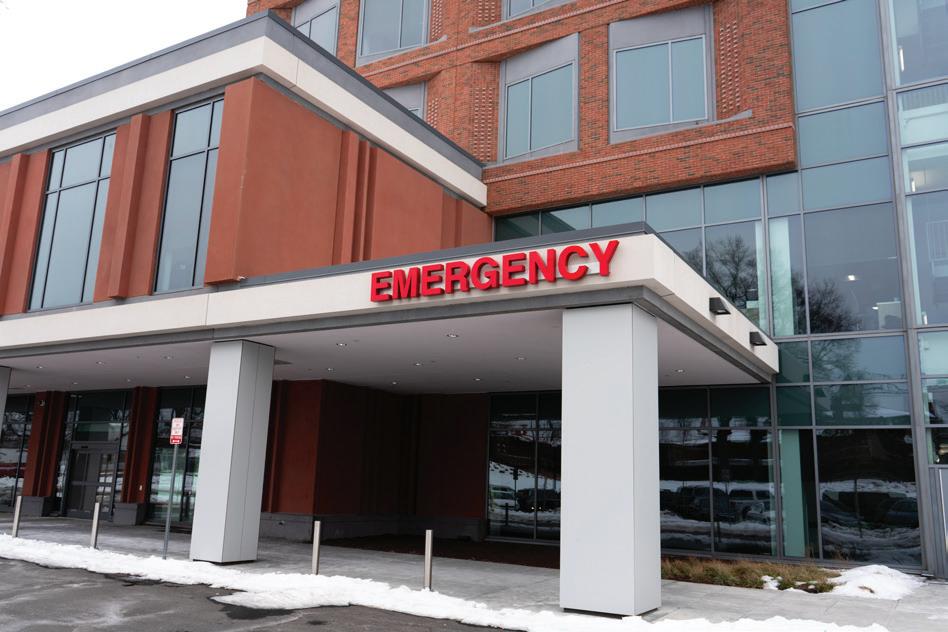
The Cedar Hill Regional Medical Center GW Health.
ARWEN CLEMANS | SENIOR PHOTO EDITOR
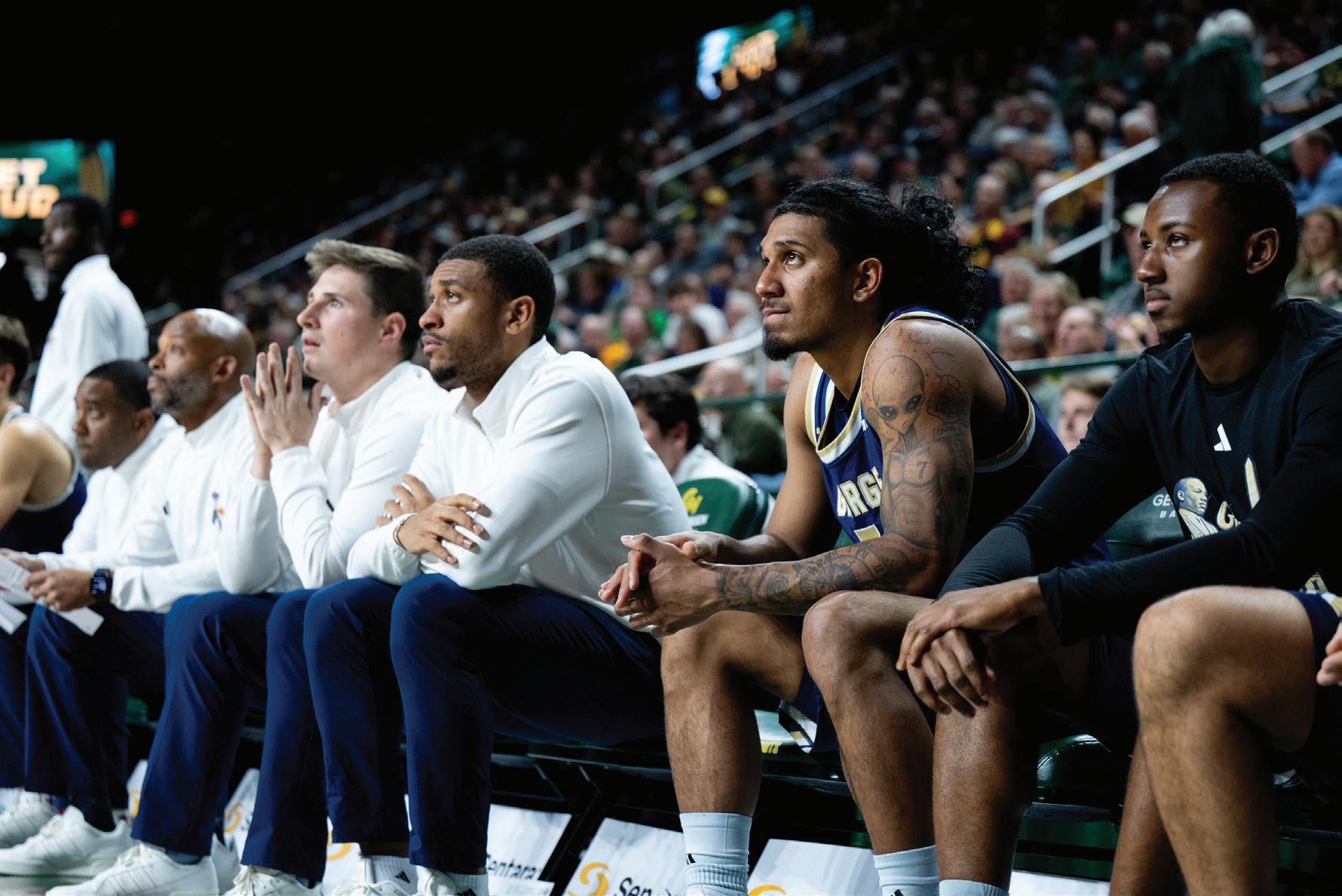
Junior guard Jean Aranguren watches from the bench during a game against George Mason in January.
See DC Page 5
See OFFICIALS Page 5
See BASKETBALL Page 5
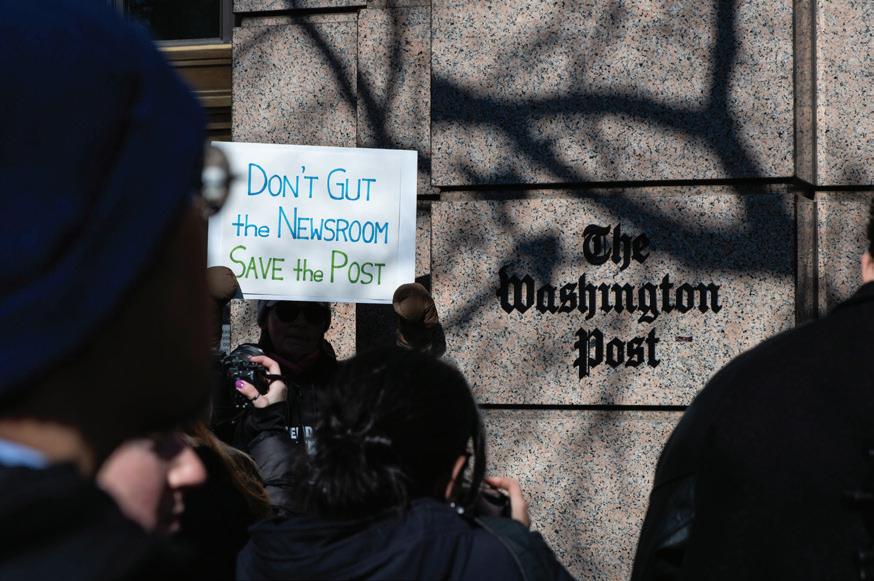
NICHOLAS WARE | STAFF PHOTOGRAPHER Protesters outside the Washington Post Headquarters Thursday.
Longtime sustainable tourism scholar, beloved professor dies at 89
DYLAN
SHIVU SATHE
Donald Hawkins, a professor who specialized in tourism studies for over 40 years and the co-founder of the School of Business’ Master of Tourism Administration program, died on Dec. 31. He was 89.
Hawkins — a professor emeritus of management, tourism studies and international affairs — spent over 40 years at GW, where he played an instrumental role in establishing the University’s International Institute of Tourism Studies and led organizations promoting sustainable tourism before retiring in 2016. Colleagues and friends remember Hawkins as a generous and go-getting person who went out of his way to support students while also playing a crucial role in building the University’s tourism studies program into a robust facet of academia at GW.

“He was one of the best people I know in my world,” said Seleni Matus, director of the International Institute of Tourism Studies. “He really embodies the best from a professional and personal standpoint, very down to earth, giving, such a steady person to have there and was so, so gracious with his time.”
Hawkins was born Nov. 9, 1936, in Ashley, Pennsylvania, and he earned his B.A. in sociology from King’s College in 1958, while obtaining his M.A. in counseling in 1960 from Lehigh University and his doctorate of education from New York University in 1967.
Hawkins joined GW in 1972 after early work in national parks and sustainable tourism, helping launch the University’s first tourism course before founding the International Institute of Tourism Studies in 1988, according to his resume. He later earned the
United Nations World Tourism Organization’s Ulysses Prize in 2003 — the field’s top academic honor — for his contributions to tourism policy and was elected first vice president of the organization’s Board of Affiliate Members in 2017.
The institute will host a formal remembrance in April and establish a lectureship in his honor to celebrate his legacy and commitment to education and tourism.
Hawkins founded and led several external organizations related to sustainable tourism, including the SAVE Travel Alliance,
a nonprofit that promotes sustainable tourism, according to a remembrance post from the Tourism and Society Think Tank.
Larry Yu, a professor of hospitality management, said he met Hawkins at the 1995 White House Conference on Travel and Tourism, where Hawkins was among the leading figures working on mobility and infrastructure issues related to tourism.
“Trusted advisor, devoted mentor, bridge builder, and then, most importantly, moral compass for the tourism field. That’s his legacy,” Yu said.
CRIME LOG
BURGLARY II/NONFORCIBLE
Media and Public Affairs Building
Reported – 2/3/2026
Open Case GW staff members reported camera equipment stolen. The GW Police Department has identified one male suspect and believes this burglary to be connected to a similar incident at the Smith Center. Case open.
BURGLARY II/NONFORCIBLE
Charles E. Smith Center
2/2/2026 – 2:12 a.m.
Open Case GW staff members reported camera equipment stolen. GW Police have identified one male suspect and believe this burglary to be connected to a similar incident at the MPA Building. Case open.
THEFT II/FROM BUILDING
University Student Center
2/2/2026 – 12:57 a.m.
Open Case A GW contractor reported their coat stolen after leaving it on a table in the USC. GW Police have identified one male suspect. Case open.
SGA’s advocacy office rebukes proposed Code of Student Conduct changes
ELIJAH
NICOLE
The Student Government Association’s advocacy office submitted a letter late last month outlining objections to proposed revisions to the Code of Student Conduct, including the elimination of student conduct panels, limited appeal options and expanded administrative authority.
The Student Advocate’s Office, which aids students navigating the Conflict Education and Student Accountability process, sent a 20-page letter to Associate Vice President and Deputy Dean of Students Rachel Stark on Jan. 21 detailing a list of concerns with proposed changes to the code, like giving administrators broad control over student discipline and removing clarifying language about prohibited conduct. The letter’s authors and members of activist student organizations said proposed changes to the code will hurt students’ rights in the conduct process and grant officials too much authority over student outcomes. Stark in November said the revisions, including removing panels, will improve “objectivity and timeliness” in the conduct process, and continued to defend officials’ plans at an SGA meeting last Monday,
indicating they would not make sweeping changes to the code in response to community feedback. Officials released a draft of the revised code in November and launched a two-month period seeking student, faculty and staff feedback on the changes — eventually extending the feedback deadline to Feb. 13.
The SAO’s letter raises issues with nearly every aspect of the proposed changes, including proposals, like expanding the definition of prohibited conduct, adding the ability for University officials to hold individual students accountable for the actions of unregistered student organizations and giving case managers complete authority over the conduct process without student or faculty oversight. The letter recommends officials retain student panels, “clearly and precisely” define prohibited conduct and add language clarifying students can only be held accountable for their individual actions, not those of an organization.
“The code as currently written is procedurally and substantively flawed,” the letter reads. “The amendments currently put forth by the University will leave each student more confused about what constitutes impermissible conduct and less able to challenge allegations made against them.”
The Hatchet directed questions
to Stark about the revised code, but a University spokesperson returned the request. They said officials are continuing to carefully review and consider feedback from community members in all areas of the draft code and do not plan to finalize changes until they have considered all the feedback.
The spokesperson confirmed officials will not seek the Board of Trustees’ approval for the code’s revisions, despite officials seeking it for the last major revisions in 2019 and 1996, but will present the changes to the Board this spring.
Ben Wieser, the SGA’s chief student advocate who leads the SAO and signed the letter, said the proposed elimination of studentinvolved conduct panels in favor of a professional “case manager” model will strip students of key safeguards in the disciplinary process, like the input of their professors and peers.
Administrators propose removing panels — which usually consist of three to five students and a faculty member or administrator in cases of potential suspension or expulsion — from the new code and moving to a solely case manager model, where a full-time student affairs official decides a student’s case and sanctions. Students can only appeal case manager decisions to another student affairs administra-

tor under the new code, rather than to a new student, faculty and staff panel as the current code allows.
“Instead of it going to a panel of your peers, it goes to an unknown administrator who, at the worst case, you can appeal to another administrator,” Weiser said.
Following the April 2024 proPalestinian encampment in University Yard, officials charged nine student groups with violations of the code for their alleged involvement in the encampment, all of which opted to have their cases heard by student panels.
The University spokesperson said officials guided their decision to remove panels with the goals to “strengthen consistency, objectivity and timeliness” in resolving conduct cases. Officials state on the proposed revisions website that multi-person panels previously accounted for 1 to 2 percent of resolution pathways.
The spokesperson declined to comment on which specific revisions to the proposed code, if any, officials are planning to implement based on the collected feedback.
Zainab Abdi, the SAO’s deputy student advocate for conduct and safety who signed the letter, said the vagueness of the new code’s language is a major problem with the revisions. She said removing the word “reasonable” from a requirement that students follow officials’ “reasonable directions” and a clause saying students must follow instructions from officials “acting in performance of their duties” makes it unclear which directives students must follow.
Abdi said the revisions appear to target prominent student groups that have disaffiliated from the University, including Students for Justice in Palestine and the AntiZionist Jewish Student Front, both of which cut ties with GW following the encampment, as the current
code does not allow administrators to punish individuals for the actions of unregistered organizations.
“These changes are happening at a period post encampment, where University officials have been recorded saying that they wish they could have just expelled students that participated in mass political engagement,” Abdi said.
A representative from SJP, who asked to remain anonymous due to a fear of retaliation from University administrators, said the group is preparing to handle more University “repression” if officials adopt the draft code in its current form. The representative said after a March 2025 incident in which administrators sought to enter a Universityapproved private event without citing an authorizing policy, a student conduct panel ruled officials added rules granting themselves access to all campus events after the fact, allowing the organizers to avoid charges.
“I can’t know this for a fact, but all of the evidence seems to suggest that the motivation for these changes is the ways that they allow the administration to crack down on organizations like SJP,” the representative said.
An executive board member of the Arab Student Association — one of the nine groups that faced sanctions after the encampment — who asked not to be named out of a fear of retaliation from University administrators, said the organization feels officials are attempting to remove due process and concentrate power within CESA by ending student-involved panels. The member said if officials enact the changes as is or with minimal changes, it could allow University administrators to unfairly target student activists on campus.
“We expect high end repression against our demographic, our community,” the member said.
—Compiled by Bryson Kloesel and Natalie Note
COURTESY OF CHRIS SEEK
Professor Donald Hawkins.
KRIS PARK | STAFF PHOTOGRAPHER Zainab Abdi and Ben Wieser pose for a portrait.
Student Health Center partners with SGA to launch advisory council
The Student Health Center plans to launch a student advisory council later this month to boost student input and engagement, following months of complaints from Student Government Association leaders about limited care, short operating hours and poor communication from the center.
SGA leaders said the Student Health Advisory Council will provide the SHC with more information on student experiences and advise officials on changes students would like to see them act, like expanded SHC access on the Mount Vernon Campus, more resources for students with chronic health issues and better advertisement of the services the center offers.
SGA President Ethan Lynne pledged in his presidential campaign to launch a student advisory board to provide the center with regular feedback to address issues he heard from students and experienced himself, like poor quality of care and the center’s limited hours.

the council. They said the council will consist of five chairs — consisting of three SHC officials and two SGA representatives, who at their meetings will look through feedback, plan how to solicit more and discuss recommendations.
The spokesperson said SHC officials will then look over the council’s recommendations to assess their “feasibility and effectiveness.”
Pratham Bhamare, a senior majoring in neuroscience and the SGA health policy co-director who is working with Lynne and the SHC to create the council, said the SGA may adjust the number of seats on the council based on the number of student interest forms they receive. He said he thinks having a large number of council positions will make it more effective by accounting for more demographics and student groups.
Lynne, who over the summer successfully advocated to adjust the SHC’s hours starting this semester, said creating a council dedicated to receiving feedback, surveying the student body about their experiences and sharing that information with officials will make the center more responsive to student needs. Students for years have voiced concerns with the SHC, including limited appointment availability, inconsistent quality of care and dissatisfaction with treatment options, and said they want the council to advocate for expanded hours, clearer pathways to care and better communication about the services and resources the center offers.
veys, open forums, emails and targeted outreach and hold internal meetings once a month. Each semester, the council will release summaries of student feedback and recommendations for SHC officials along with updates on their progress implementing initiatives, Lynne said.
Lynne said the council will regularly collect student feedback through sur-
He said fewer than five seats on the council — which will total between 15 and 20 students — are reserved for
SGA members he is nominating, with the rest open for the entire student body to apply through an application that will open this week for a “few weeks.” Lynne said he and SHC officials will collaborate to select the students outside the SGA to serve on the council.
Lynne said he plans to reach out to premedical and medical students, health-related student organizations,
like Chronic Health Advocates and Students Against Sexual Assault, and share information in newsletters and on social media to encourage students to apply for council positions.
A University spokesperson said the first monthly meeting is set to take place Feb. 20, which nominated SGA members and accepted applicants will attend even if they haven’t entirely filled
Bhamare said the council will advocate for changes to the SHC’s website, like more clearly displaying the resources the center provides and information on how to access them. He said he has heard student complaints about not knowing how to schedule appointments with the SHC or access information on the center’s resources.
“It goes back to the communication gap,” Bhamare said. “I think the overarching thing we’re trying to fix is making sure that there’s an easy line of communication between students and the health center.”
Jack Evans campaigns on need to defend DC autonomy in race for Council chair
BRYSON
KLOESEL CONTRIBUTING NEWS EDITOR
Six years after resigning from his D.C. Council seat, former Ward 2 Councilmember Jack Evans is launching a bid to chair the body, framing his campaign as a strategic response to mounting federal oversight of D.C.’s governance.
Evans — who represented Ward 2 for 29 years before resigning in 2020 during multiple ethics investigations — said he would restore discipline to the Council by strengthening agency oversight and reining in spending while pursuing what he called a more “strategic” approach to protecting the city’s home rule as President Donald Trump and Congressional Republicans implement policies and pass laws encroaching on D.C.’s autonomy. Evans’ return sets up a June primary match against AtLarge Councilmember and Chair Phil Mendelson, who has held his seat since 1998 and served as chair since 2012, as the Council heads for a shake-up this election, with several members resigning and others seeking higher offices.
Evans said in light of recent federal intervention in District policymaking — like a White House-endorsed bill to reverse a D.C. tax law — Council leaders need to avoid making controversial changes that invite retaliation and weaken home rule.
“The District of Columbia is going through some kind of difficult times right now,” Evans said. “We have some severe problems on the finance side, affordable housing, education, public safety and really
those issues are not really being addressed the way it would want them to be.”
He said the Council’s push to adopt a revised criminal code — a rewrite that reduced some penalties and changed many other criminal-law provisions — and its move to separate parts of D.C.’s tax code from federal law to fund expanded tax credits were “bad policy thinking” that invited congressional intervention and risked deeper federal control over the city.
Evans said he would instead focus on clarifying what kinds of legislation are likely to trigger federal intervention and weighing that risk before advancing major bills, especially measures pushed through on an emergency basis with a less extensive public input process.
“That’s the leadership that I would bring,” Evans said. “Understanding where, really, the lines are, and not doing things to quote, ‘poke the bear.’”
Evans served on the Council of the District of Columbia from 1991 until 2020, representing Ward 2 neighborhoods that include Foggy Bottom, the West End, downtown and Georgetown. During his three decades on the body, many constituents viewed him as a fiscal power broker — he chaired the Council’s finance and revenue committee for years, which steers tax policy and makes budget decisions.
Evans pointed to his extensive experience serving on the Council as proof he is fit to tackle the challenges the city faces. He mentioned that he was on the Council when Congress established the D.C. Fi-

nancial Control Board in 1995 to oversee the District’s finances after the city’s budget fell into disarray. He said he knows what it’s like to have the federal government step in and govern District affairs, and that is where the Council is heading if they continue to provoke the Trump administration.
“I think the Congress and the president could go and put the Control Board back in place again, and that’s the kind of just bad poli-
cy thinking that this Council is doing,” Evans said.
Scrutiny of Evans’ work outside the Council intensified in 2019, as investigators examined whether he used government time, staff or the prestige of his office to solicit or conduct private business and whether he took official actions affecting the financial interests of paying clients without proper disclosure or recusal.
Councilmembers may hold outside employment, but District ethics law prohibits work conflicting or appearing to conflict with official duties and requires disclosure and, when a member deems it necessary, recusal.
Evans, who was never charged with a crime, said he made “mistakes” but did not act corruptly. He declined to specify what conduct he was referring to and said people could review the investigative documents and records for details.
Officials likely bracing for fiscal hit, policy changes amid DOJ probes: experts
ARUNMOY DAS
REPORTER
KAVYA KARTIK
REPORTER
As GW faces two Justice Department probes into campus antisemitism and diversity, equity and inclusion in student admissions, higher education experts say officials are likely weighing the potential fiscal and policy consequences of a settlement and whether to push back. The DOJ last month launched its second probe into the University since the start of President Donald Trump’s second term, which higher education experts warned will likely force the University to implement significant policy changes, absorb financial penalties or both. They said officials are likely gathering information to show compliance with federal law, while also tightening budgets and liquidating assets in anticipation of a potentially costly settlement — preparations that come as GW grapples with a budget
deficit and declining tuition revenue from international students.
In August 2025, the Justice Department found GW violated civil rights law by acting deliberately indifferent to campus antisemitism, threatening punitive action if officials did not enter into a voluntary resolution agreement. Five months later, in January, officials announced the DOJ opened another probe into GW for a Title VI compliance review related to diversity, equity and inclusion in student admissions practices and “related matters” — a probe University spokesperson Julia Garbitt said officials will cooperate with and demonstrate their compliance with federal civil rights law.
News of the second probe came days after officials met with the DOJ to discuss the department’s investigation into complaints of antisemitic discrimination on campus that took place during the spring 2024 proPalestinian encampment. University President Ellen
Granberg said last month officials shared with the DOJ a “full array” of measures GW has employed to combat antisemitism.
Granberg in September said officials developed a three-part plan to engage faculty in conversations about the DOJ, including creating a faculty work group on federal matters, a workshop for Faculty Senate subcommittees on DOJ-related issues and a special meeting with Board of Trustees Chair and the Faculty Senate Executive Committee.
Officials in September launched a faculty work group on federal matters that Granberg said would review and provide feedback to officials on recently signed resolution agreements between Brown and Columbia universities and the Trump-era policies that relate to their alleged violations of federal anti-discrimination laws.
Granberg, in September, saiGarbitt said officials do not have additional information to share on the DOJ’s investigations into GW as of
Friday, but officials will share updates when new information becomes available. She said officials may not share information for legal or business reasons.
Garbitt said the Federal Matters Working Group’s discussions included gaining general input from community members, though the group did not develop specific recommendations. She said that the discussions are under privilege as officials worked in confidence to openly discuss issues.
Garbitt declined to comment on the working group’s involvement in preparing for the University’s meeting with the DOJ last month and did not specify whether the group will make recommendations to officials in the future.
Robert Kelchen, a professor of educational leadership at the University of Tennessee-Knoxville, said if GW is anticipating having to pay a settlement to the DOJ, they are likely to have cash on hand. He said universities facing DOJ investigations
should secure more liquid assets from their endowment funds, like real estate, to prepare for settlements.
GW’s real estate holdings comprised 40 percent of its $2.6 billion endowment portfolio as of fiscal year 2024 — a significantly higher allocation than is typical for higher education institutions — which Moody’s Investors Service and S&P Global Ratings suggested in their reports last year could hinder the liquidity of GW’s portfolio and pose a risk of loss if the market depreciates.
“The drawback, however, is, on average, those other investments, like real estate, have a better return than cash,” Kelchen said.
“So you’re losing money, in all likelihood, by having that cash available. But if you need it, you need it.”
Marybeth Gasman, a professor of education at Rutgers University, said GW can better financially prepare for a potential settlement with the DOJ by playing out scenarios and understanding the ramifications of each decision officials can make. She added officials should be tightening their budget, especially during what she called “times of crisis.”
Gasman said many universities have settled with the Trump administration instead of fighting, so they could get back pulled funding, mitigate reputational damage and avoid retaliation from the government. But she said settlements can be costly, deepening deficits and leading to cuts to academic and student programs — which officials must consider when making settlement decisions.
Garbitt declined to comment on how officials are assessing and preparing for the potential financial impact of the DOJ’s investigations.
Garbitt declined to comment on whether officials have considered tapping its endowment or liquidating assets, like real estate holdings, to address potential financial effects related to the DOJ’s investigations or in preparation for a potential settlement.
NICOLE LIPPMANN | PHOTOGRAPHER
Former Ward 2 Councilmember Jack Evans on Friday.
AMELIA
CARSTEN HOLST | STAFF PHOTOGRAPHER
Pratham Bhamare, Ethan Lynne and Aarohi Khamar pose for a portrait.
Performers look for alternatives as Trump plans Kennedy Center closure
ISAAC HARTE REPORTER
Artists and unions representing Kennedy Center employees are calling for more information about President Donald Trump’s plan to close the venue for two years, saying the administration has not shared a detailed scope or timeline for the project.
Trump said last week that he plans to close the Kennedy Center for two years beginning July 4 for a $200 million renovation, pending approval from a board he handpicked and chairs, a move that would extend his efforts to reshape the institution’s leadership and direction. Artists who have performed at the center say they are already searching for alternative venues for future programs, bracing for a prolonged closure that would displace choirs, orchestras and smaller groups that have long depended on the Kennedy Center as a central performance space.
Executive Director of the Choral Arts Society of Washington Maria Mathieson said the society has partnered with the Kennedy Center since it opened and held its Christmas concerts there, but the group is now weighing other venues as it plans future seasons amid uncertainty tied to the Trump administration’s takeover and the planned two-year closure.
“We were making the decision to make that move to look at other venues beyond the Kennedy Center,” Mathieson said.
Mathieson said a two-year closure would ripple beyond major headline performances by shrinking opportunities for smaller organizations and artists that use the Kennedy Center’s stages, while also threatening work for the staff and backstage crews that support productions. Mathieson added that even though Choral Arts performs at multiple venues,
losing the Kennedy Center will force the group to reshuffle major concerts because comparable halls book far in advance and can’t always absorb displaced programming on short notice.
“We’ve felt the pain of particularly the folks who we call friends, who work backstage, the staff, all of those types of things,” Mathieson said.
Trump has sought to remake the center and its board in his image since his return to office, dismissing several members and appointing himself as chairman last February.
Trump then fired Deborah Rutter, the Kennedy Center’s longtime president, and replaced her with Richard Grenell, who served as Trump’s ambassador to Germany during his first term.
Trump’s takeover of the Kennedy Center — which culminated in him renaming the institution the Trump-Kennedy Center in December — has triggered a wave of cancellations and a drop in ticket sales, as more than two dozen artists and productions withdrew and patrons purchased fewer and less expensive tickets, according to a Washington Post analysis.
Rola Zaarour — a D.C. comedian and producer who hosted “Funny Arabs” and staged her standup show “Traumedy” at the Kennedy Center — said she disagreed with artists withdrawing from scheduled performances after the name change, arguing they should have kept their bookings and used the stage to speak out publicly about the changes.
“I’ve performed at the nation’s Cultural Center several times and produced shows with unique musicians,” Zaarour said in a message. “Since the name change, many artists canceled and patrons stopped going. Wish they had stayed and spoken their truth. Adversity is the best time to share
your art.” Zaarour also said celebrities who have received the center’s marquee honors should publicly defend the institution and use their visibility to rally support to “save” the center.
“As a D.C. resident and independent artist, the demolition of the center is devastating,” Zaarour said. “Hope it comes back as an iconic artistic haven for all, not a casino.”
The Washington National Opera also announced last month it will no longer perform at the center, where it has staged productions since 1971, instead moving two of its spring productions to Lisner Auditorium last month.
WNO General Director Tim O’Leary said the shift forced WNO to scale back its performance schedule because Lisner could not accommodate all of the dates the company had planned.
“Treemonisha, we’re doing three performances at Lisner Auditorium,” O’Leary said. “Whereas we had six performances scheduled originally and contracted for artists.”
Neither the White House or the Kennedy Center responded to requests for comment.
Kennedy Center Arts Workers United — a coalition of unions representing performers, makeup artists, stage directors and other theatrical stage employees at the center, including the National Symphony Orchestra and WNO — issued a joint statement last week calling for the Trump administration to provide more information about the closure.
“A pause in Kennedy Center operations without due regard for those who work there would be harmful for the arts and creative workers in America,” the statement said.
Trump said he would overhaul the building during his first visit in March 2025 and blamed the center’s condition on David Rubenstein’s tenure as board chair.

Black Heritage Celebration rings in 20th anniversary
LOUISA HANNOUCENE STAFF WRITER
MICHAELA GONZALEZ REPORTER
GW’s Black Heritage Celebration kicked off last Monday, launching a monthlong series of events honoring and celebrating the University’s Black communities, past and present, as the celebration marks its 20th anniversary.
More than 20 events organized by 21 student and national groups will bring GW’s annual BHC to life this year, from a drag brunch at the University Student Center to an appreciation dinner for Black men and programs hosted by the University’s Black Greekletter organizations. Organizers said this year’s theme, “The Empire: We Were, We Are, We Will Be,” is meant to celebrate the Black community’s history at GW while underscoring its continued growth and influence on campus.
David Tennant, a senior and cochair of the BHC Committee, said this year’s theme centers on the presence of the Black community at GW, which has a rich past and hopeful future.
“We always focus on either the past or the future,” said Tennant. “But we haven’t really focused on what we’re doing now and how we have established ourselves and remain very present on campus and in the culture itself.”
Marking the University’s 20th annual BHC, Tennant said the committee is excited to celebrate how far the Black community at GW has come since the yearly celebration’s establishment at the University in 2006. He said the BHC focused this year on offering more events, increasing student attendance and ensuring students leave feeling proud of their Black heritage and culture — something he said he feels the group has done well this year.
“I hope they leave feeling like they just experienced the most Black thing in their life,” Tennant said. “You shouldn’t have to leave feeling like there was any missing piece to that because the whole month is about being unapologetically Black.”
Tennant said the Black community at GW has grown more unified and established on campus since the first BHC 20 years ago. He said leaders of Black student organizations across campus have collaborated more on events to build back a sense of culture among the Black community since the
COVID-19 pandemic as much of that was lost in the immediate aftermath of the pandemic, given students had been away from campus for over a year.
“We’ve been able to build the momentum, and now we’re starting to create a cycle with the younger classes, so they can take it and keep it going,” Tennant said.
Tennant said the BHC committee this year sought to involve more Black student organizations that might not have hosted events in past celebrations, encouraging individual organization leadership to organize and run events rather than the BHC taking a larger role in the planning process.
The celebration kicked off Monday night with a keynote address from Baltimore Mayor Brandon Scott, who discussed his experience leading his native city, detailing how community and heritage shaped him both before and throughout his time as mayor.
Bayush Getachew, senior and copresident of the Ethiopian-Eritrean Students Association, said this year’s Black History Month theme highlights excellence in the Black community. She emphasized the importance of being “intentional” in every space and embracing one’s Black identity.
“The Empire is a symbol of strength, and I feel like that’s what EESA does for the student body that they represent,” Getachew said.
Getachew said events during BHC, like EESA’s Solidarity Within the Diaspora event, help demonstrate that the Black community and its cultures are diverse, as seen in the array of cultural and Black student organizations participating in the month’s programming.
“Because Black people are so diverse, and there’s so many different types of Black people and Black culture, EESA represents leaders and excellence among the Ethiopian-Eritrean student body,” Getachew said.
Niomi Glover, a sophomore who attended EESA’s discussion-based event Thursday, said it’s important for Black students to lead events to help foster connections and enrich campus life, given that the Black community at GW is “very small.”
“Speaking from a Black woman, it’s easy for us to get lost in the sauce,” Glover said. “So having these events to cater to a minority of students is very important so that we can bring the community, and people who may have never seen each other before can see each other, connect and make those meaningful bonds.”
IFC spring recruitment halves after winter weather impacts programming
This year’s spring Interfraternity Council recruitment dropped by 50 percent compared to last spring after blustery winter weather conditions limited the week’s usual operations, and a changed IFC rule had more students going through rush in the fall as opposed to the spring.
University spokesperson Claire Sabin said out of 57 students who participated in IFC recruitment late last month, 45 students accepted 46 bids that were offered by one of GW’s eight fraternities — a drop from the 91 students who accepted bids last spring. IFC President Trex Jones said lower spring recruitment numbers could have to do with the fact that the council had to adapt its recruitment week schedule to work around the unexpected campus closures after a severe snowstorm shut the University down for six days.
“Given the fluid schedule because of the snow, we were skeptical about turnout,” Jones said in an email.
Recruitment week typically consists of five days of events, including interviews, dinners and multiple house visits. But Jones said this semester’s recruitment consisted of just three days of events in the wake of the snowstorm, where potential new members first visited at least four houses, then attended an invite-only dinner before bid day on Jan. 31. Changes included cutting the number of interviews with
current fraternity members and lowering the number of required house visits, according to Jones.
He said because officials weren’t able to clear the snow quickly, staircases and sidewalks were still covered, creating slippery and dangerous conditions that led to IFC leaders’ decision to cancel the first two scheduled days of recruitment.
“The sidewalks were not cleared, and therefore did not provide an easy and safe path to each fraternity house,” Jones said.
Jones added that the IFC considered delaying recruitment to the following week but decided against it because of the potential for more winter weather.
“We decided to shorten it in order to avoid further delays and the possibility of inconveniencing PNM’s and fraternity chapters due to the reports of snow occurring within the next week,” Jones said.
The spring drop also comes after the IFC saw a surge in new members rushing in the fall after it removed the 12-credit minimum required of students to pursue membership at a GW fraternity, which broadened recruitment to students in their first semester for the first time since 2017.
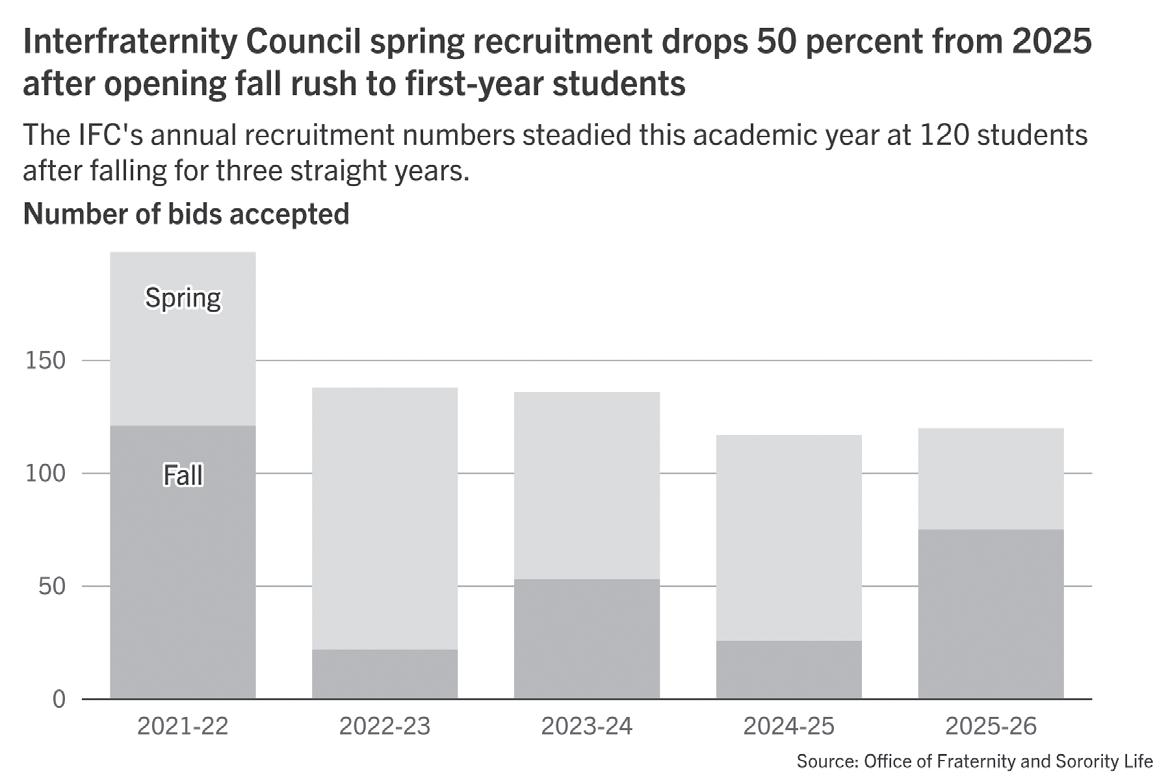
IFC leaders announced they were dropping the 12-credit rule in August in an effort to offer the most rush opportunities to first-years. As a result, 75 students accepted bids from fraternities in the fall of 2025 compared to 26 who accepted bids in the fall of 2024. Even with the unexpected snowy conditions and a trial-and-
error recruitment cycle, overall recruitment numbers for the academic year remained steady for the IFC with 120 students joining fraternities, just inching above last year’s total.
Since the end of the COVID-19 pandemic, students accepted bids at fewer numbers each year, the lowest being last year’s 117 total accepted bids — 26 in the fall and 91 in the spring — after the 202122 academic year’s high of 198 accepted bids. The high after the pandemic was attributed to officials’ temporary pause on the 12-credit minimum requirement for rushing in the 2021-22 academic year to allow students more opportunities to connect with people on campus after a year of distance learning.
While the first-year run without the 12-credit minimum didn’t shoot up recruitment numbers in the way IFC leaders may have hoped, it did halt the downward spiral in new members that fraternities have been experiencing for the last few years. “The Division for Student Affairs will work with the incoming IFC executive board to review 20252026 recruitment efforts and identify opportunities to strengthen this process for the 2026-2027 academic year,” Sabin said in an email.
Myles Wasserman, a sophomore and the recruitment chair of Delta Tau Delta, said this year’s recruitment process was difficult because of the snow, forcing the typically weeklong recruitment process to be condensed into just three days. He said the group still
had a successful recruitment process, even with the last-minute changes. “We couldn’t do much about it,” Wasserman said. “We couldn’t push it off till this week because it’s the weather doesn’t look very good this week either.” Wasserman said he had a smaller-than-normal budget to put toward spring recruitment this year because the group expected to have a smaller pool of potential new members than the fall. Despite this, Wasserman said he was pleased with the results of the recruitment cycle as he had hoped to recruit six to eight new members and was glad to end the cycle with seven accepted bids — two sophomores and five firstyears. Wasserman said Delta Tau
BY AN NGO
Delta is now looking forward to continuing recruitment through the ongoing open bidding process, where students who did not participate in the initial recruitment can vie for a spot in a fraternity outside the formal process.
Wasserman said potential new members also seemed to be more familiar with the rush process than in past cycles because they were recruited by friends who had acted like “guinea pigs” in the fall cycle, allowing them to envision what the process would look like before committing to it. “It wasn’t a lot of people that are new to Greek life or anything like that,” Wasserman said. “It was a lot of people that I heard about it or heard from friends and who were kind of convinced by their friends.”
MATHEW REIS | PHOTOGRAPHER
A person stands in front of the Kennedy Center.
PETER PARK | PHOTOGRAPHER
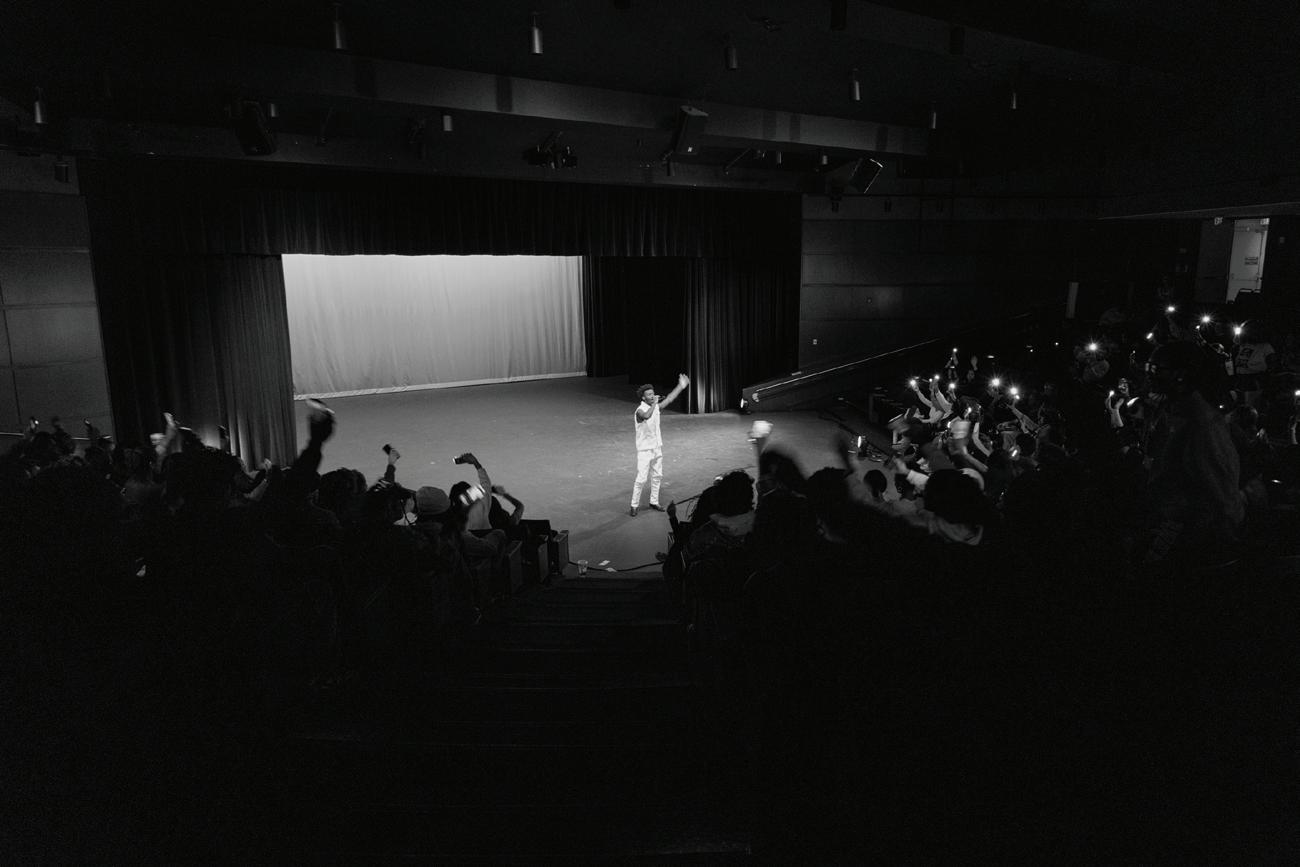
Students perform at the Black History Collective’s Soul Revue event on Saturday.
DIYA JHAWAR STAFF WRITER
GRAPHIC
Many new mothers miss out on care despite Medicaid expansion, study finds
BRIEANA SAMANIEGO
ALKILANI REPORTER
MAHDI ATAIE
REPORTER
While expanded Medicaid coverage helped more mothers stay insured, a lack of standardized contracts means they often still do not receive quality postpartum care, researchers at the Milken Institute School of Public Health found in a study published in late January.
Milken Department of Health Policy and Management Chair Anne Markus led the study, which analyzed managed care organizations — private companies states contract with through Medicaid agreements to determine what care people receive — to discern if states that extended postpartum care from 60 days to 12 months proceeded to strengthen their contracts to improve requirements for care. The study found variability and a lack of uniform language in contracts from state to state continue to stop many mothers from getting proper care, which health care experts said would especially hurt rural communities that already have fewer resources.
“The statistics about maternal mortality during the postpartum period are clear and consistent,” Markus said in an email. “Deaths occur more often between one week after labor and delivery and
12 months. The majority of these deaths are also preventable.”
The number of maternal deaths per 100,000 live births rose from 16.8 in 2003 to 18.7 in 2023, according to a study published in the Commonwealth Fund, a private institution that promotes higher quality health care. Over half of maternal deaths in the United States happen after birth, according to the National Committee for Quality Assurance, and more than a third of women worldwide experience lasting health problems after childbirth, according to the World Health Organization.
The American Rescue Plan in 2021 gave states the option to expand postpartum Medicaid coverage from 60 days to 12 months to help improve maternal health care outcomes. The plan was set to last five years, but the Consolidated Appropriations Act of 2023 made the change permanent, and 48 states and D.C. have since extended their coverage.
Researchers analyzed whether MCOs in 39 states and D.C. fulfilled nine domains and 30 subdomains of “best practices” of quality postpartum care, like case management, home visits, mental health screenings and provider training on implicit bias, in order to find out if new mothers received high-quality care.
The study found while many states have strengthened their contracts to include at least one new
best practice of postpartum care in their 2024-25 contracts, gaps remain in the quality of care mothers receive due to a lack of standardized language in contracts, which means the health outcomes for new mothers are highly variable across states.
Thirteen states added doula care, or the inclusion of non-medical support staff to provide emotional and physical care, to their contracts, nine states added implicit bias training for their caregivers and eight states added requirements for postpartum case management, a personalized service that provides care to mothers and infants after childbirth, according to the study.
“I was not so much surprised as delighted to see that a little over half of the states with Medicaid managed care at the time of the study had indeed strengthened their contractual expectations for postpartum care,” Markus said in an email.
However, out of the 20 states studied that require postpartum case management, 11 required it for all patients while nine only require it for “high-risk” patients. The contracts defined the criteria for a “high-risk” patient differently from state to state, leading to patients getting varying levels of care in different states, according to the study.
Markus also said maintaining the gains made in Medicaid expansion, a provision in the Affordable Care Act that gives states the ability to allow more low-income residents to qualify for Medicaid, is critical at
DC, union leaders say ‘shameful’ understaffing plagues Cedar Hill operations
“I don’t know how they’re able to serve the public at all when you don’t have adequate staff. No one has been able to answer that,” Ward 8 resident LaJoy JohnsonLaw, who waited for an ambulance for nine hours before Cedar Hill transferred her and her daughter to a second hospital for care, said.
Johnson-Law brought her daughter to Cedar Hill’s emergency room for severe stomach pains, but upon arrival staff said they were unable to provide care and recommended transferring her to Children’s National Hospital. She said she and her daughter waited between 2 p.m. and 11:30 p.m. before an ambulance arrived to take them to the second facility, adding nurses didn’t provide her daughter any treatment or medication during the wait.
Johnson-Law, who also serves as the Ward 8 representative on the D.C. State Board of Education, said Cedar Hill’s challenges are rooted in chronic staffing shortages, which she said limits the hospital from providing timely and adequate care.
Johnson-Law’s observations echo concerns leaders began raising about staffing at the hospital across the Anacostia River ahead of its April opening. They warned in March that the MFA’s financial instability could undermine hiring at the new facility — comments that came as the MFA was working to renegotiate its original Cedar Hill staffing contract with UHS. At the time, the practice had closed the fiscal year prior with $107 million in losses, leaving it more than $272 million in debt to GW and other entities.
Since then, the MFA’s debt has reached $444 million, losing an additional $100 million in fiscal year 2026. GW is in negotiations with UHS to cut its financial support for the medical enterprise, reaching a preliminary co-funding agreement in October as they continue to make progress towards a finalized deal.
D.C. leaders involved in the hospital’s oversight have fielded
concerns from residents and union leaders who have said low staffing numbers and the delayed expansion of ambulatory services is eroding their trust in the new facilities’ ability to meet community needs.
Those leaders are closely watching the GW-UHS negotiations as they see its success instrumental in resolving Cedar Hill’s staffing constraints.
Deputy Mayor for Health and Human Services Wayne Turnage — the sole D.C. official on the hospital’s board, though city officials are working to fill the two other vacancies — told the D.C. Council’s Committee on Health last week that ongoing GW-UHS negotiations slowed workforce buildout on the hospital’s outpatient side to the point where UHS did not begin staffing the service lines it had promised to deliver under the original operational agreement until December.
UHS’ staffing shortages hindered the MFA’s ability to staff Cedar Hill with their physicians as the medical enterprise wouldn’t send their employees if the hospital didn’t provide nurses to support them, he said.
Leyla Adali, a 1199 Service Employees International Union spokesperson, said chronicle understanding at the facility has made it very hard for nurses and doctors to provide high-quality care, which puts both staff and patients at risk. Those concerns prompted Lisa Brown, the executive vice president of 1199 SEIU in Maryland and D.C., to call on the D.C. Council last week to hold hearings investigating Cedar Hill’s operations.
“This is nothing short of shameful, and 1199SEIU is calling on the D.C. Council to hold a hearing investigating Cedar Hill’s operations,” Brown said in a release.
“Hospital administrators must answer for their shortcomings for their patients and for the taxpayers of D.C., who footed a $434 million bill to get the facility up and running.”
At-Large Councilmember Christina Henderson, who chairs
the Committee on Health, said she believes UHS is treating the Cedar Hill and MFA agreements as interconnected, with staffing shortages and delays in opening ambulatory services tied to ongoing negotiations rather than a lack of available personnel at MFA. She said Cedar Hill’s staffing shortages have left Ward 7 and 8 residents waiting hours for care, and it will be an “uphill battle” to rebuild trust with the community.
Henderson echoed Turnage’s understanding that the MFA would not send doctors if Cedar Hill didn’t have sufficient nurses and technicians to support them, a staffing concern she said “bled over” into the ambulatory side.
“A hospital cannot survive on an emergency room alone, which is what Cedar Hill has been trying to do for the last year,” Henderson said.
A UHS spokesperson acknowledged the staffing shortages but maintained the company is committed to ensuring the D.C. community has access to “highquality” health care. They said UHS believes the pending MFA agreement will result in “stability” and a “strengthened alignment” that will enable an expansion of health care services available at Cedar Hill.
An MFA spokesperson said the medical enterprise continues to work with UHS collaboratively to meet the physician and advanced practice practitioner needs of the hospital and ambulatory care center in Cedar Hill. They said the MFA is up to date on staffing commitments for the ambulatory care center.
The spokesperson declined to comment on whether the MFA has fulfilled its overall Cedar Hill staffing obligations, how many physicians it has deployed and how ongoing negotiations between UHS and the MFA have impacted the hospital’s operations.
GW declined to comment on the impact ongoing negotiations with UHS have had on the MFA’s staffing obligations and role the University would play in future role in Cedar Hill staffing.

the moment for low-income mothers. She said expansion helps the mothers to get access to care before, during and after the pregnancy, which significantly reduces maternal mortality during the postpartum period.
“The availability of maternity care providers who are trained to provide the care needed remains a key challenge,” Markus said in an email. “The fact that some regions of the country are particularly affected by this is even a bigger challenge.”
Markus said state Medicaid agencies can use the information found in the research to push changes to policy and health services. She also said health services and health policy researchers can use the study to identify what kinds of contracts help to ensure mothers get adequate care.
“Knowing which contractual approach works best in ensuring appropriate utilization of recommended services remains an important question to answer for payers like Medicaid, but also commercial insurers,” Markus said in an email.
Peiyin Hung, the co-director at the University of South Carolina Rural Health Research Center, said the study’s findings that most MMC agreements fall short of best practices apply especially to rural families. She said these families often face structural barriers, like limited specialists,
fewer facilities, wealth disparities and literacy struggles that make gaps in MMC contracts particularly harmful.
“When we look at literature, even among people who have full comprehensive coverage, rural pregnant individuals are less likely to get timely prenatal care, are less likely to follow up for postpartum care, have worse quality of intrapartum care,” Hung said. Hung said issues like maternal mortality and unnecessary cesarean section rates are getting worse nationwide, and while increasing care helps, the only way to solve the issue is through regulations standardizing MMC contracts..
Urban Institute Principal Research Associate Jennifer Haley said she led a similar study examining the postpartum Medicaid extension in May, which found while researchers view the extension as the groundwork for better care, problems, like administrative issues and a lack of outreach, hampered effectiveness. She said the information in GW’s study shows MCOs are beginning to change and take greater advantage of the extensions.
“We were very excited to see that a number of states are, in fact, it seems, adding in some contractual language to make sure that the managed care companies are leveraging these extensions to improve the care that postpartum people are getting,” Haley said.
Officials edited Elliott testimonials mentioning DEI
The Trump administration has been cracking down on DEI at universities since the start of his second term, signing multiple executive orders terminating all DEI activities in federal agencies, prohibiting DEI programs tied to federal contracts and restricting funds for universities promoting “gender ideology.”
Garbitt said officials archived the latest version of the diversity plan, released in December 2024 for the 2024-25 academic year, as part of recent changes to a number of pages on the Elliott School website, including some that focus on diversity initiatives. She said the updates reflect GW’s desire to “clarify” its commitment to diversity and inclusion in compliance with the law, adding that officials routinely update and change Elliott School webpages. Garbitt added that the Elliott School will continue to develop priorities and actions that foster an inclusive and respectful community in alignment with the strategic framework, which calls for a “fully inclusive environment.”
“The University and ESIA reaffirm our commitment to recruiting, retaining, and supporting students, faculty and staff with diverse perspectives, backgrounds and experiences while abiding by University policies and applicable laws on non-discrimination and equal opportunity,” Garbitt said in an email. Garbitt declined to comment on whether someone from the University directed the Elliott School to remove the diversity plan website and rename the scholarship and if the Trump administration’s policies against DEI impacted the decision to remove the website.
All eight members of the DEI council, which drafts and reviews the diversity action plans, either declined or did not return a request for comment. A University spokesperson said Elliott’s DEI council still meets but did not specify how often.
Faiqa Khan, a 2023 alum and former member of the Elliott School’s DEI council, said in a testimonial that appeared on the scholarship’s webpage in November — the last time the page appears in archives — that the fund allowed her to build her skills and knowledge “in international development, specifically in gender.” Her current testimonial took out her reference to gender, and officials removed a sentence about her service on the school’s DEI council. Khan said in an interview that she
was “shocked” and unaware that officials had changed her testimonial as GW did not reach out to her.
“I understand the political climate, but it’s also very sad to hush things that are really important, especially for an academic institution that truly pictures itself as diverse, as international,” Khan said.
Khan, who helped develop past diversity action plans in her role on the DEI Council, said the plan allowed for the sharing of diverse ideas while providing the assurance that officials were upholding the principles of DEI.
She said archiving the plan sends a message to underrepresented groups that GW will not always support them.
“It’s in short, creating and just giving a very subtle signal to shut up because you’re appreciated only to a certain extent, not beyond that,” Khan said. “It’s a very rigid boundary you’re creating.”
Officials also removed 2016 alum Brooke Pearson’s testimonial from the scholarship’s website, which stated that despite ongoing progress, the national security industry still struggles to achieve equitable representation among students from underrepresented backgrounds. Officials edited the testimonial of Anthony Hu, a 2024 alum, to update it with the new scholarship name and removed a sentence outlining how the scholarship helped him, though it did not originally mention diversity or equity initiatives. Officials have edited or removed student testimonials in the past, though the replacements didn’t remove mentions of DEI. Elliott first published the Inclusive Excellence action plan in 2019, with the intent that every September, officials would publish a new plan detailing how the school would work to improve diversity, equity and inclusion. The goals outlined in the 2024-25 plan included increasing the number of underrepresented groups in the school, improving the “climate” of inclusion, integrating DEI into class curriculums and creating and sustaining an “organizational infrastructure” that supports DEI. Officials did not release a plan for the 2023-24 academic year, saying they were reworking it in January 2024 after the Supreme Court’s 2023 decision to end affirmative action. Each year, the plan would be drafted and reviewed each summer by Elliott’s Office of Diversity, Equity and Inclusion and the school’s Diversity, Equity and Inclusion Council.
ARWEN CLEMANS | SENIOR PHOTO EDITOR
D.C. Councilmember Christina Henderson speaks at the Cedar Hill Regional Medical Center GW Health ribbon-cutting ceremony.
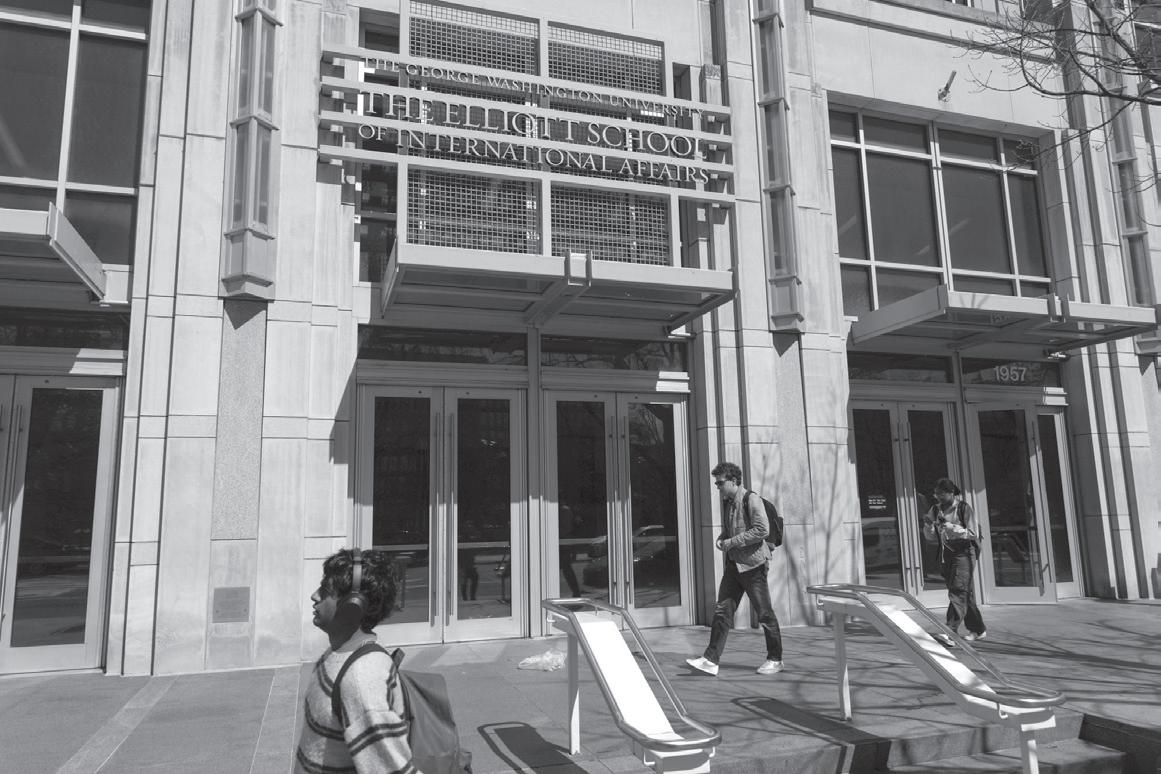
COOPER TYKSINSKI | ASSISTANT PHOTO EDITOR Students walk past the Elliott School of International Affairs.
From Page 1
From Page 1
OPINIONS
The Washington Post layoffs should terrify you
The first time Washington Post staff photographer Marvin Joseph spoke in my class, all I remember thinking was that I wanted to be that cool someday. As a portrait photographer, the way he is able to walk into a room when he’s photographing and instantly connect with people showed me his work is grounded in telling people’s stories honestly and with empathy. From that day on, I dreamed of joining the Post, telling stories and photographing people the same way he approached his work.
Arwen Clemans Senior Photo Editor
On Wednesday morning, the Washington Post laid off the entire photo staff. It eliminated the sports and books sections and made deep cuts across its metro and international desks. In total, 300 journalists — more than 30 percent of the Post’s news team — lost their jobs on a single day. It is a decision that’s going to destabilize journalism for years to come, reshaping how the public receives information and altering career prospects for future journalists. It was the Post photojournalists who spoke in my classes as a first-year that inspired me to become the journalist I am today. For my classmates and
me, these photojournalists showed us the impact this work can make, how a single image can impact a person’s life. Visuals are the backbone of any good newspaper. A photo, video or graphic says what words can’t. They make the reader feel the weight of a story before they read a word. Now, it feels like I’m watching a pillar of democracy crack in real time.
Supporting journalism means supporting accountability and the truth. Losing so many journalists is not just bad for business, it’s a civic and democratic disaster. Journalism exists to hold people in power accountable and to give the public access to information. Without us, communities lose their ability to know what’s happening in their town, their neighborhood. They lose their watchdogs. As a younger journalist, I’m worried. If the world continues to lose us, it’s my generation that will be uninformed. It’s my generation and the ones after me that will be affected by this change because when no one is watching, decisions still get made — just without accountability. Newspapers are not just valued by the quality of breaking news they can give. I think about students, like me, jumping into a journalism world that’s dying quicker than we can count — jumping into a career that people minimize the value of and forget the importance of.
The nation should be devastated this week. We should be angry. We should be screaming. As the Post has always said, “democracy dies in darkness.” Turns out, it actually dies in broad daylight. Democracy dies without a full staff of journalists. It dies without visual journalists. It dies with billionaires.
To everyone laid off on Wednesday, thank you. Thank you for sharing your truth with us for all these years. Thank you for the stories you chased, the hundreds of games you went to, the meetings you sat through and the moments you captured. Your work matters — it still does. This loss will not go by unnoticed.
I mourn for the people laid off this week, but mostly, I mourn for the generation after me that will not view the Washington Post the way I did. I am the 22-year-old whose dream job was at the Post. I was the 18-year-old who looked at the Post photos and wondered how I could ever compare. I am the 15-year-old who saw those photographers and thought, maybe one day, I could be like them too. Now, there’s no photo section to look up to, no sports section or even a book section to look up to. My heart breaks for the next generation now, knowing they won’t live with the greatness we once did.
—Arwen Clemans, a senior majoring in photojournalism, is the senior photo editor.
Why I’m worried about the future of sports journalism
This past week, the Washington Post eliminated its sports section and laid off dozens of the team’s accomplished journalists, another signal that prominent newspapers are retreating from sports journalism. This shift comes as college and professional sports continue to see rising popularity and viewership, creating a widening gap between audience demand and coverage. As experienced, dedicated sports journalists I deeply admire exit newsrooms, the lack of coverage leaves fans disserviced.
Ben Spitalny Managing Director
After four years of writing and editing for The Hatchet’s sports section, I’ve seen firsthand that sports journalism extends far beyond wins and losses. At its best, the coverage explores deeply personal stories of triumph and hardship and connects communities through shared passion. For D.C. at large, losing its biggest and most accomplished source of sports journalism is a major loss for a city whose strong appreciation for sports helps combat a culture that can often feel cold and divided. There are and will be other outlets reporting on D.C. sports, and is keeping a few sports reporters in their feature section, but
GW’s silence on ICE contradicts its history of leadership
STAFF EDITORIAL
The community must scrutinize GW’s inadequate response to the expanding presence of Immigration and Customs Enforcement in the context of the University’s prior communications during moments that threatened the safety of people across the country. Prior administrations have publicly addressed events that profoundly affected community members, offering support and resources to those impacted. GW’s silence on the ICE raids in Minneapolis, which have left many students anxious and afraid, is deeply disappointing and stands in stark contrast to this pattern of engagement. As an editorial board, we understand the University is navigating a cascade of threats under President Donald Trump’s administration. We are not asking officials to condemn ICE or use the same language that former presidents did when discussing gun violence. But during moments when the safety and well-being of people across the country were threatened, GW leadership has historically taken a public and active role in ensuring impacted community members felt supported. The lack of a comparable response to ICE’s expanding presence stands out sharply against this precedent.
The University attracts diverse and politically engaged students, and officials must provide resources and guidance to support them. Some GW schools have taken steps in this direction, posting “Know Your Rights” posters for ICE and outlining the risks and protections associated with protesting and activism. This is a good start, but officials must disseminate these materials more broadly and actively communicate the information to
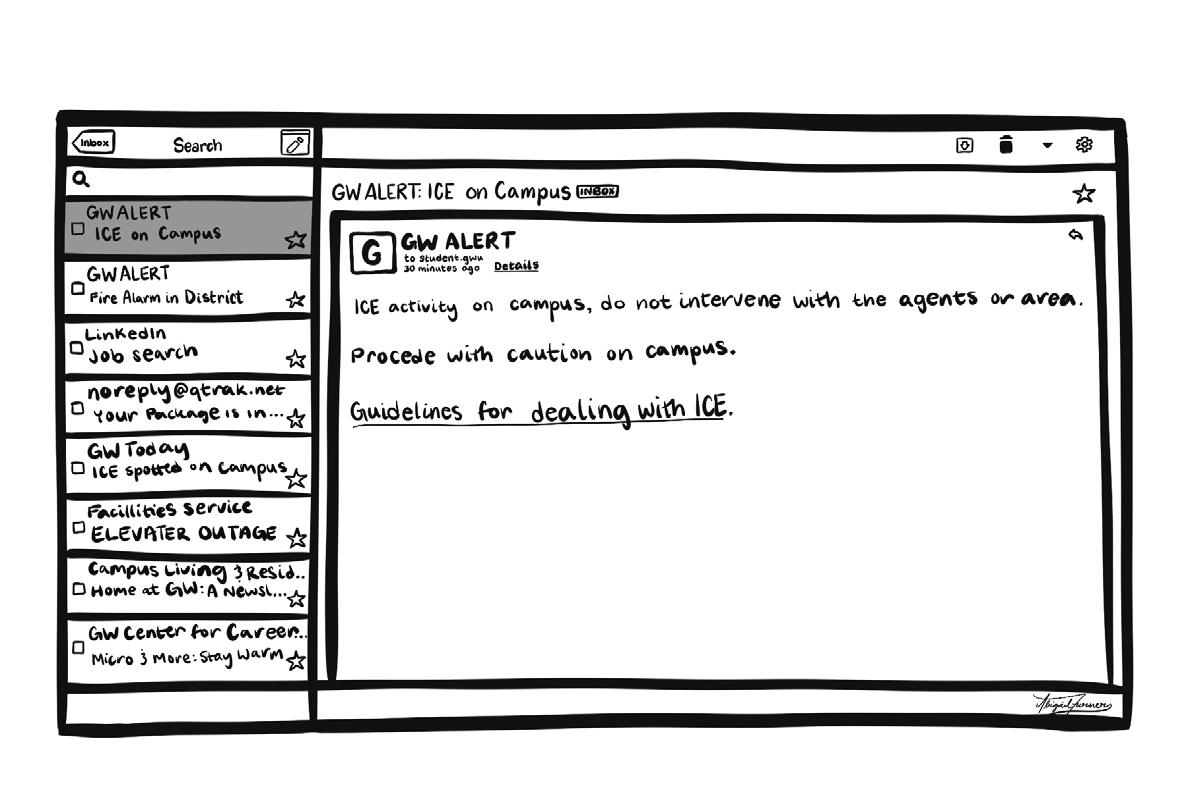
ABBY TURNER | STAFF CARTOONIST
the community. This could take the form of direct messages from Granberg’s office or the provost’s office, clearly explaining students’ rights and the resources available for those concerned about immigration enforcement policies under the Trump administration. GW should also clarify how it supports students in real-time scenarios, like interactions with ICE agents. We also ask that the University implement a specialized alert to notify GW of federal activity on campus, which would better protect the community and give students a chance to respond. To do this, the University could expand its existing GW Alert platform to send targeted text messages and emails when ICE agents or other federal officers are operating near campus, advising students to avoid certain areas or refrain from interfering with federal actions.
We recognize that ICE enforce-
ment is a highly charged political issue. We are not asking GW to take a side. But officials must also consider the reputational damage they could face if ICE or other federal authorities appear on or near campus and the community is unprepared. GW is a politically engaged student body located in the nation’s capital, meaning these situations are not unforeseeable. The University cannot afford to be caught flat-footed The University must recognize that this type of leadership in moments of national uncertainty is crucial. GW has historically responded to crises with clear communication, empathy and resources, and its silence on expanding ICE enforcement leaves students vulnerable and anxious. Providing guidance, legal resources, alerts and clear protocols is not a political stance but efforts that align with GW’s responsibility to keep the community safe.
the loss of a sports desk like theirs should concern D.C. residents and sports fans.
The Washington Post’s talented staff, resources and credibility positions it well to hold these powers to account by investigating and revealing improprieties. In choosing not to do so, they are leaving fans in the dark as corruption and criminality permeate throughout sports.
What’s also concerning is what will fill the void left by legacy outlets like the Post in today’s sports media landscape. Clickbait social media accounts, gambling companies and glorified fan accounts are dominating sports content, leaving fans without a place for in-depth, impartial coverage of their teams.
From my perspective as a student journalist in D.C., even before this week’s announcement, I’ve seen dwindling legacy media coverage leave the city’s fans high and dry. Over the past few years, I’ve heard GW men’s basketball head coach Chris Caputo decry his team’s lack of coverage, and media rooms and post-game press conferences stocked with only a handful of other student journalists, even as his team ranked near the top 50 best college basketball teams earlier in the season.
This has more significant consequences than team visibility and content. As an influx of money into college sports and conference realignment helps nationalize athletics,
particularly basketball and football, schools not in power conferences, like GW, are left out if they can’t tap into their local market. This, in turn, hurts fan turnout and team revenue. into professional sports, too. If the Wizards, Nationals, Mystics and other D.C. teams continue to lose coverage from beat reporters writing for major papers, fans will lose opportunities to learn about and connect with their teams as larger franchises take up what’s left of the media ecosystem. Fans and locals will be left in the dark of the stories that AI can’t generate — the in-depth, personal features that need the time and attention a beat reporter can provide.
With D.C. fans joining the ranks of people around the country left with dwindling options for professional, high-quality sports journalism from local sources, it feels like another sign of a cultural outpost losing a personal, community-based touch as ticket prices grow unwieldy, and streaming complicates live broadcasting. There’s still plenty of sports journalism worth consuming in D.C. and other cities, but I can’t help but feel like the intelligent, unmissable pieces that drew me to sports and sports journalism will soon be few and far between.
—Ben Spitalny, a senior majoring in political science, is The Hatchet’s managing director and former sports editor.
GW is taking apart the Student Code of Conduct
Officials’ proposed changes to the Student Code of Conduct — which include removing panels and implementing broad and discretionary clauses to define violations — eviscerate due process, replacing reasonable rules with unchecked administrative power. If you are a GW student, this should terrify you.
Luke Clark Moody Guest Contributor
The code outlines the rules we must adhere to as members of the GW community and the procedures by which the administration determines guilt and punishes students. Those punishments can be as severe as suspension, expulsion and removal from housing — consequences that threaten the significant financial investments students and their families make in GW, along with future employment and educational opportunities. The severity of these consequences cannot be overstated.
The procedures that deUnder the current code, students facing the most serious consequences — suspension, expulsion and removal from housing — face a panel comprised of students, faculty and staff. This process ensures no individual has the power to levy consequences, and any student facing severe penalties can present their evidence and story to a panel of peers.
Under the proposed code, administrative case managers would handle the entire case. They do not require the involved students’ input at all. That means an administrative case manager would gather evidence, determine guilt, assign the consequences and ensure they are appropriately carried out. They would literally be the detective, prosecutor, judge, jury and executioner.
The proposed code does not include an explanation for what standard of evidence applies, what evidence can and can’t be used, how much evidence is required for a decision or how much weight is given to different pieces of evidence. Without these questions answered, it is impossible for students to adequately defend themselves. If you believe in the dignity of your fellow students and wish to maintain your rights to free speech, protest, dissent and due process, please fill out the official feedback form and email the administrators responsible for these changes your thoughts at rachael.stark@ gwu.edu, nhershberger@ gwu.edu and students@gwu. edu. You can find a template for feedback here. If you’re interested in taking a more active role in fighting for students’ rights at GW, please apply to be a student advocate at the newly formed SAO. Freedom is not guaranteed. It requires vigilance and action. What will your action be?
—Luke Clark Moody is a senior majoring in international affairs.
CULTURE
From newsroom to presidency, Granberg has learned to lead under pressure
ELIJAH EDWARDS ASSISTANT NEWS EDITOR
Long before she stood atop a sprawling University budget and led more than 25,000 students and 6,600 employees, University President Ellen Granberg learned what leadership looked like in the basement newsroom of her college paper. As a 21-year-old junior and history major at the University of California, Davis, Granberg said she was thrown into the role of editor in chief of The Aggie, Davis’ independent daily student newspaper, after her predecessor suddenly departed midyear. When she took the paper’s helm in January 1983, Granberg inherited a host of issues — an $86,000 deficit, community backlash over the paper’s decision to move printing out of Davis and departures of the several of the paper’s editors — but left the paper 18 months later with a stable financial footing, a satisfied staff and a rebuilt reputation.
Those challenges would become one of Granberg’s first sustained test of leadership, forcing her to navigate finances, personnel and public trust all at once.
“I learned how important relationships are when you are in a leadership position and that it takes creative and collaborative problem solving to move forward,” Granberg said in an email. “This was my first introduction to management and administration and the first glimmer that I had potential in this area.”
Facing a sudden mid-year resignation of the paper’s current editor in chief, The Aggie’s academic advisor appointed Granberg to fill the interim role after speaking with
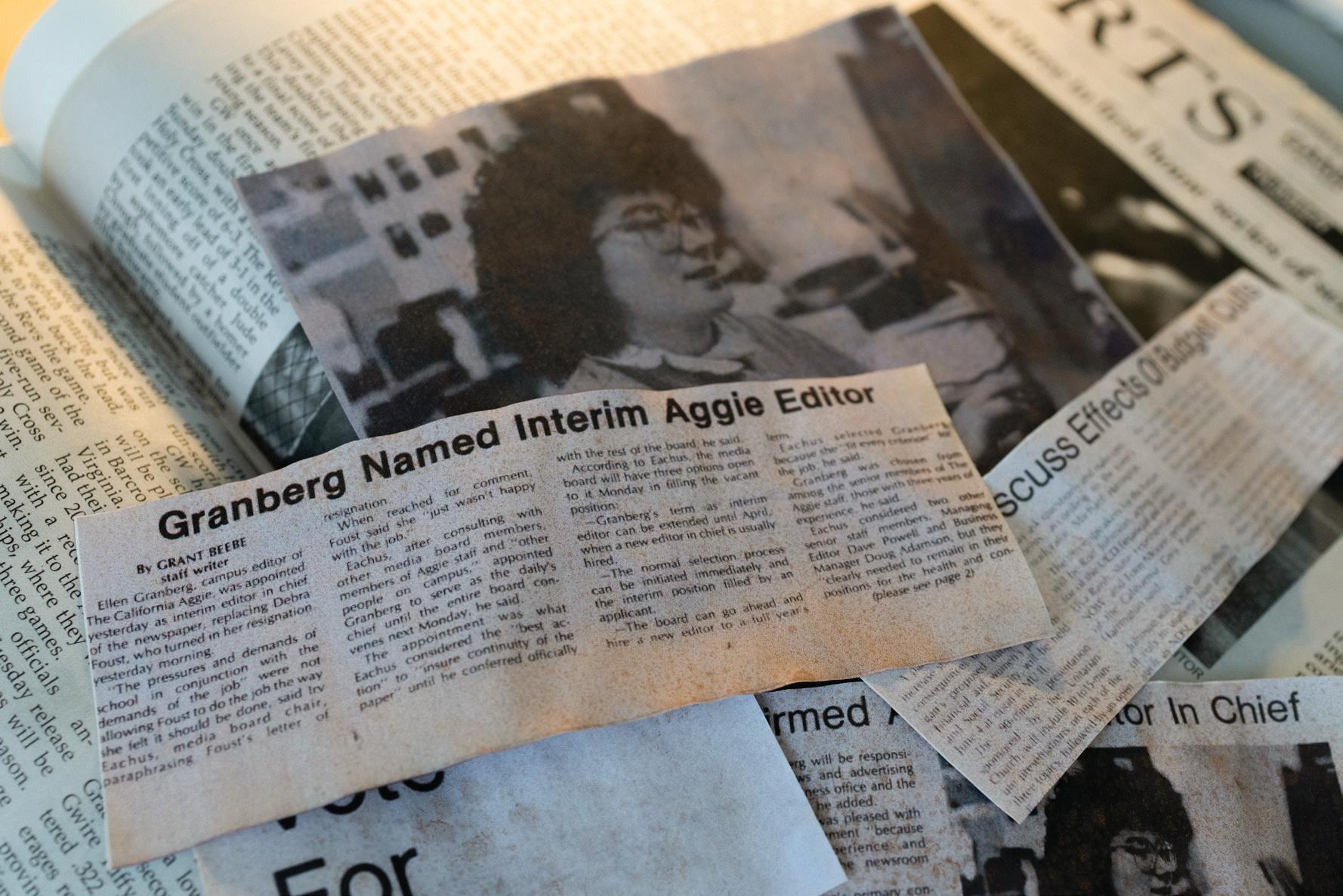
staff members who kept suggesting her as the person who’d be right for the job. The advisor, Irv Eachus, told The Aggie in 1983 that Granberg “fit every criterion” for the role, and the paper’s staff agreed, approving her appointment to the full role a month later and later for a full term as editor during her senior year.
Today, Granberg said she draws on the lessons she learned at The Aggie as she and top officials navigate GW’s own set of challenges — including a yearlong structural
deficit that has led to budget cuts, layoffs and changes to campus operations. Across fiscal year 2026, officials slashed the University’s total expense budget by three percent, paused merit-salary increases and implemented a hiring freeze as they attempted to balance expenses that consistently outpaced revenue.
But decisions about budget cuts are familiar territory for Granberg. Before she took control of The Aggie, the paper’s previous management made a series of missteps placing it in financial jeopardy.
National Zoo welcomes first Asian elephant calf in over 25 years
JESSICA ROWE
CONTRIBUTING CULTURE EDITOR
The Smithsonian’s National Zoo welcomed a female elephant calf Monday, the zoo’s first elephant birth in more than 25 years.
Born after a 21-month gestation to mother Nhi Linh and father Spike, the calf is the result of a carefully planned breeding effort to increase genetic diversity among Asian elephants, a species threatened by deforestation and habitat loss. GW professors who study captive and wild animal populations said the birth represents meaningful progress and a positive sign for the species’ future, as the National Zoo and other organizations work to protect existing populations while expanding conservation and elephant-care efforts.
Currently nameless, members of the public can donate $5 to vote on a name for the new calf. Voters can choose from four Vietnamese names reflecting the species’ origin — Linh Mai, Thảo Nhi, Tú Anh and Tuyết.
Tony Barthel, the director of animal care at the National Zoo and former curator of elephant trails, the zoo’s elephant exhibit and conservation program, has worked at the Smithsonian Zoo for 23 years and said the birth of the calf is significant
because neither of the parents’ genes is well represented in the North American elephant zoo population. With an already declining population, “genetic diversity” also falls, making the elephant population more disease-prone and lowers birth rates as smaller herds have difficulties adapting to environmental stresses and recover from losses of poaching and habitat loss.
Barthel said after a “surprisingly quick” labor process, the animal care teams directed a neonatal examination, measuring her heartbeat and lungs, conducting an eye and ear test, testing the mobility of her limbs and taking a blood sample. The calf weighed in at 308 pounds and stood 38.5 inches tall — average numbers for newborn Asian elephant calves. The team will now look closely over the next few months at how the calf bonds with the rest of the herd — comprised of seven adult elephants. They first introduced her to grandmother Trong Nhi and aunt Bozie, and she’ll gradually meet the other elephants, ending with her “sire” Spike, meeting last due to the matriarchal structure of elephants, with males only interacting with females during mating season.
Director of GW’s Computational Biology Institute Keith Crandall said that
the new calf is significant because zoos and other captive facilities have “low fecundity,” meaning that the animals struggle to produce offspring.
Crandall said the research he conducted with the National Zoo and Conservation Biology Institute found the new calf may face learning and socialization differences as it will grow up in an environment without a wild population.
Janine Brown, head of the endocrinology lab at the National Zoo, primarily researches behavior, reproductive endocrinology and relationships among animals, having worked at the zoo for 40 years.
The majority of Brown’s research comes from hormone monitoring, allowing her team to predict and track key stages of elephant reproduction. This was a vital tool throughout Nhi Linh’s gestation period, helping the staff anticipate labor and coordinate care in the days leading up to delivery as the birthing process is very quick.
During Nhi Linh’s pregnancy, Brown closely monitored both parents, conducting weekly blood tests to track hormone levels.
“We continued to track the progesterone in both elephants after they conceived,” Brown said. “Nhi Linh’s pregnancy was textbook.”

Mistakes included The Aggie’s former business manager moving the paper’s printing contract from the Davis Enterprise — a local newspaper who would print both their own paper and The Aggie — to a printer in Sacramento because they offered a cheaper per-paper rate.
Advertisers began to pull out, and soon the paper faced a towering budget shortfall, leaving The Aggie operating at a $86,000 deficit — about $280,000 today when adjusted for inflation — when she became editor in chief.
Instead of downplaying the paper’s issues, Granberg came clean with her staff and her readers. Decades later at GW, she’d pen a familiar sounding letter, this time to the GW community.
At The Aggie and GW, Granberg said she has the same guiding philosophy when facing budget pressure — setting “strategic priorities” and making decisions that don’t stray from an institution’s core values or compromise its principles. Officials in October rolled out a new strategic framework and largely won community support as they blueprinted plans to boost student success and expand GW’s research enterprise over the next five-to-seven years.
Granberg and her leadership team responded to The Aggie’s deficit by tightening finances across the paper and changing the ratio of advertising to articles, from 35 percent ads to, at times, half and half. The Aggie also eventually renewed its printing contract with the Davis Enterprise under Granberg, hoping slowly to rebuild community trust lost under former management.
Now, decades removed from the basement offices at Davis, Granberg said what stays with her most were the moments between crises, like the satisfaction of getting the paper out, the exhaustion that followed and the camaraderie that formed when everyone stuck it out until the end.
“I have fond memories of getting dawn breakfasts at the local Denny’s before we all went home for some sleep,” Granberg said. “Of course, The Aggie staff also had great parties, which helped me break out of my shell as a shy firstyear and grow into someone ready to take on the world.”
Independent museums boost Black history preservation in Trump era
DIANA ANOS CULTURE EDITOR
As President Donald Trump’s administration dismantles parts of D.C.’s public tributes to Black history, independent museum leaders said they are continuing their work preserving the city’s heritage, adding they feel empowered to protect and celebrate it as independent stewards.
In his first year back in power, Trump — much to the chagrin of historians and former staff — has directed the Smithsonian to conduct a “comprehensive” audit of eight of its museums and replace “divisive or ideologically” driven language with “unifying, historically accurate and constructive” descriptions and ordered crews to remove the yellow “Black Lives Matter” painted on the street one block from the White House. But independent museum organizers said Trump’s efforts will not erase the District’s history, adding that they’ve expanded preservation and public education programming efforts by launching initiatives like concerts and community archiving days.
Trump specifically targeted the National Museum of African American History and Culture in his March 2025 executive order, claiming the museum has “proclaimed that ‘hard work,’ ‘individualism’ and ‘the nuclear family’ are aspects of ‘White culture,’” which is “indoctrination” and “distorting” American history.
Black Georgetown Foundation Executive Director Lisa Fager said the organization, which manages two of D.C.’s oldest Black cemeteries, said Trump’s actions have only pushed people to research, preserve and document it more vigorously. She also said there has been a “swell of people” who have been empowered to engage in uncovering history and are now expanding the Georgetown Neighborhood Library’s “thin” archives on Black residents to ensure the history of those buried in the cemeteries is fully told.
Fager said her tour titled “Resting in Resistance” has
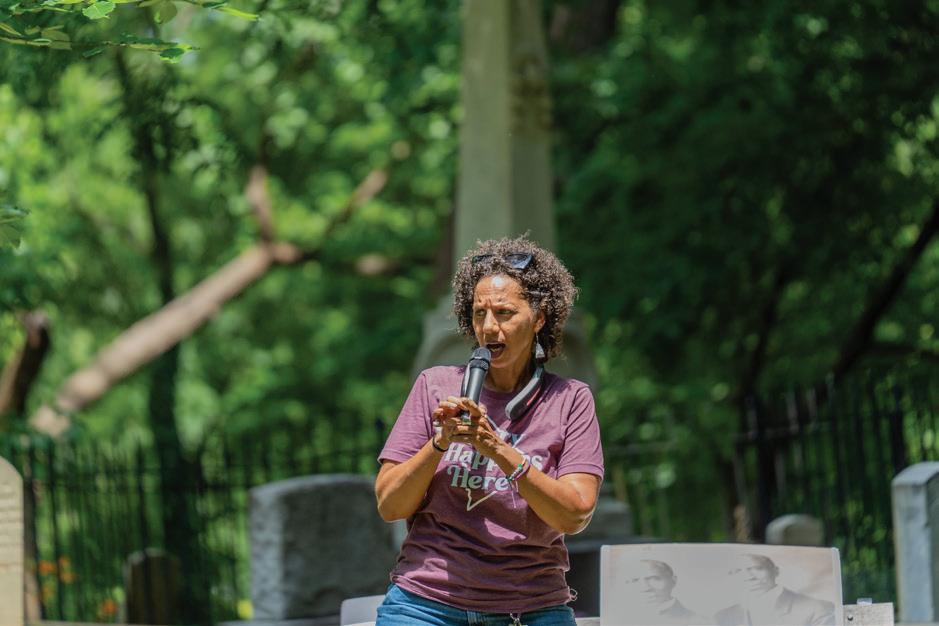
seen an increase in interest amongst college students, high schools and middleschool students in recent years, which has allowed her to explain history from different perspectives for younger age groups. She said the tours educate visitors about both the people buried there and the challenges the cemetery faces, including the organization’s struggle to launch a stormwater management program essential for preserving the headstones and remains, connecting people to not only Black history but American history at large.
Although Fager said she wouldn’t attribute the increase in visitors to one political figure or administration, she has seen a “moment” where people want a more honest understanding of American history, especially when they sense history is being minimized. Fager said the cemetery serves as a tangible, documented space of those who have shaped D.C.’s history.
CEO and founder of D.C.’s Go-Go Museum & Cafe Richard Moten said the Trump administration canceled some of the museum’s federal grants it received through the National Endowment for the Arts in their move to shutter the agency, though he added they’ve been able to support themselves through community fundraising efforts. Moten said the museum’s independence is important, especially in today’s day and age, as it allows them to freely educate visitors without fears of getting funding pulled. He also said Black history is deeply tied to the District, pointing to D.C. histo-
rian Carter G. Woodson’s founding of “Negro History Week” in 1926, which later became Black History Month, and the city’s “Chocolate City” nickname because of its predominantly Black population.
Go-Go Museum’s chief curator Natalie Hopkinson said every inch of the museum, from the floors to the bathroom walls, is packed with information about the music, for both tourists and “go-go heads” to learn as much as they can in a space where federal funds and power do not affect the content. Hopkinson — who is also a professor of media, democracy and society at American University — said concerts and festivals, where the museum hosts go-go “creative makers,” from merchandise vendors to independent creators, have helped the community grow and increase exposure to the genre, especially in “elite cultural institutions,” like the Kennedy Center.
She said she’s confident the “imperfect institutions,” like the Kennedy Center, will survive, but people cannot rely on the way that power has shifted in the Trump administration as checks on power are not the same as they used to be.
“Part of the work of democracy is just shaking the trees and making sure that you negotiate your power, and it’s something that you have to do on a daily basis,” she said. “And when you think you’ve won, it doesn’t mean that you’ve won, it means that it’s just for today, that means you still have to go with it again tomorrow.”
ADNAN MASRI | STAFF PHOTOGRAPHER Lisa Fager speaks during a Juneteenth celebration at the Mount Zion Cemetery over the summer.
COOPER TYKSINSKI | ASSISTANT PHOTO EDITOR
University President Ellen Granberg’s tearsheets from the California Aggie, the student newspaper at University of California, Davis.
SPORTS

Men’s basketball falls 88-86 to Duquesne as Castro remains out with injury
ETHAN TSAI STAFF WRITER
SAMANTHA BURCHARD REPORTER
Men’s basketball (13-11, 4-7 Atlantic 10) extended its losing streak to four after a close 88-86 loss to Duquesne (14-10, 6-5 A-10) in Pittsburgh.
The loss against Duquesne marks a continued downward slide for the Revolutionaries, who have been unable to close out three of their last four games effectively. With senior forward Rafael Castro out with an injury for the third game in a row, the Revs relied on 3-pointers from junior guards Trey Autry and Jean Aranguren to make up for a lack of points in the paint.
Aranguren led the team in scoring, finishing with 18 points, along with ten assists and shooting 3 for 3 at the 3-point line. The performance marked the team’s second triple-double in program history and first since 2007, with the 6-foot-3 guard also grabbing 10 rebounds. Senior forward Luke Hunger, who has stepped up to replace Castro, shot 7 for 11 from the paint and put up 17 points for the Revs in 38
minutes on the court. Hunger also led the team in rebounds, grabbing 13 off the board, including seven on defense. The Revs collectively performed well in their free-throw shooting, converting 17 for 19 of them into points on the board.
The Revs started strong with a 42.1% 3-point percentage, sinking eight and contributing heavily towards their offensive effort in the first half. But the shooting issues that have plagued the team in recent games came back in the second half as they converted only 31.3% of their 3-pointers, while also attempting six fewer than in the first half.
Autry made up the bulk of the Revs’ 3-point attempts but missed five out of his six attempts in the second half.
The Revs also suffered from repeated turnovers, losing the ball 16 times compared to the Dukes’ four, allowing their opponent to score 21 points off of recovered turnovers.
The game opened with the Dukes pulling ahead by 4, but the Revs quickly responded with a layup by redshirt sophomore Christian Jones and two 3-pointers from Autry, putting them ahead 8-4 within the first three minutes.
The Revs continued to hold the lead for most of the first half as the teams traded baskets, as a variety of players continued to make layups and sink 3-pointers to maintain a point differential with the Dukes.
The gap began to close as the half ended, as the Dukes went on a 7-point run to take the lead 3330 with 5:33 remaining in the half. However, several free throws and a couple of 3-pointers helped the Revs push back against the Dukes, tying them up 40-40 to end the first half.
The second half opened with a series of fouls on both sides, sending Hunger and Aranguren to the free-throw line early. After Hunger converted and Duquesne split a pair at the line, Aranguren knocked down a three to give GW a brief lead.
Redshirt sophomore guard Christian Jones followed with a layup at 16:09, and Aranguren added back-to-back baskets over the next minute, scoring 7 points in the first five minutes of the half after going scoreless in the first half.
The teams continued to trade fouls and three throws as the pace slowed, with multiple stoppages disrupting the flow of
Women’s basketball snaps three-game win streak with 68-58 loss to Davidson
Women’s basketball (13-12, 5-7 Atlantic 10) fell 68-58 to Davidson (16-10, 8-5 A-10) on Saturday, unable to compete with the Wildcats’ defensive pressure in the second half.
Junior forward Sara Lewis led the Revolutionaries with a careerhigh performance, scoring 25 points by dominating the paint and capitalizing at the free-throw line, shooting seven for nine from the charity stripe. Lewis was responsible for almost half of the Revs’ total points, though her push was not enough to secure the win for the Revs, snapping their threegame conference win streak.
Opening the game with energy from both teams, the Revs relied on strong ball movement and 27 rebounds to control the offensive end, building their largest lead of five after the first quarter. Despite an 11-2 run in the third quarter that kept them close, they fell behind late and couldn’t recover.
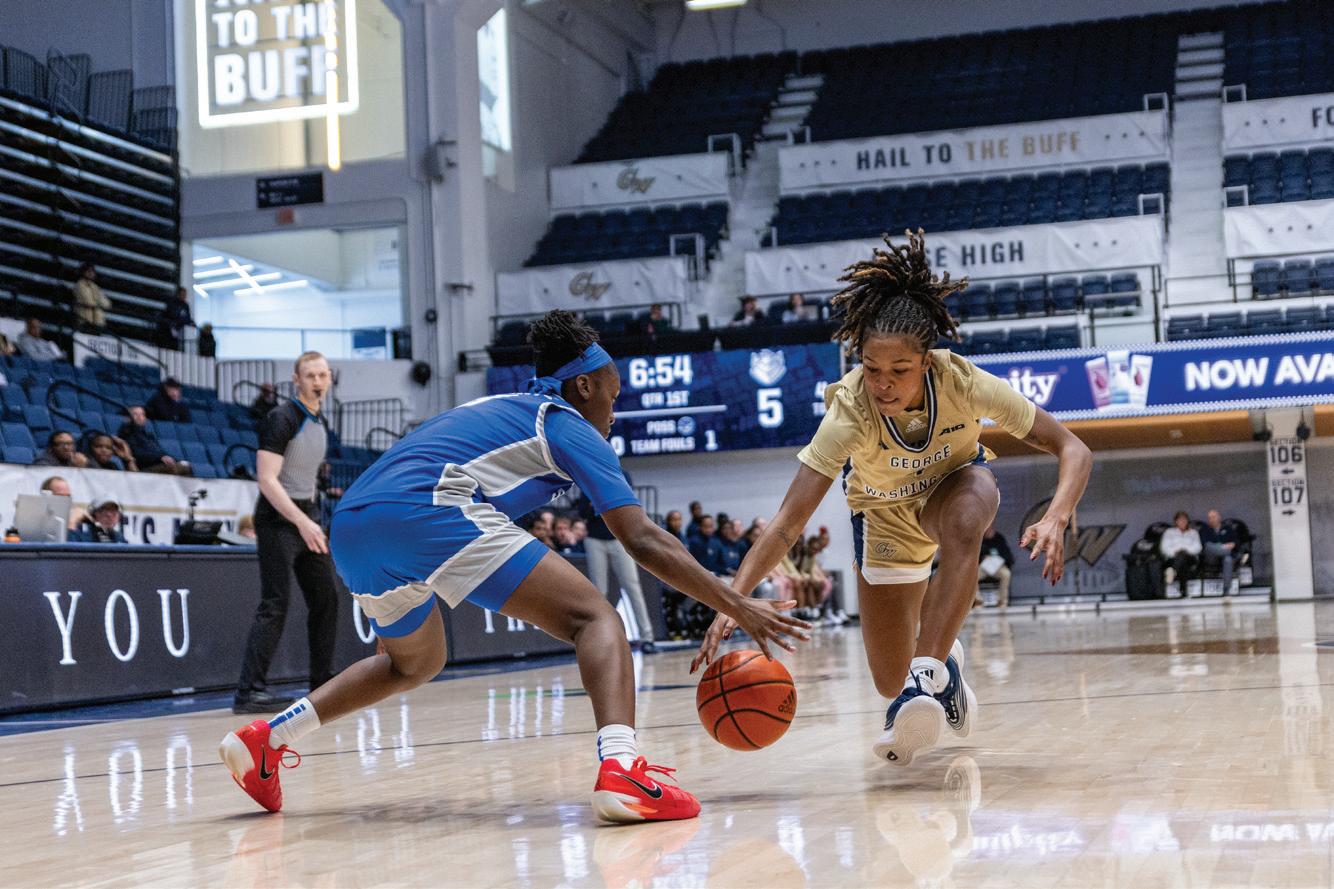
The Revs dominated the first quarter, scoring 14 points in the paint and attacking the rim with urgency. Despite two missed 3-pointers in the first half, sophomore guard Gabby Reynolds bounced back, scoring 22 points overall. In the second quarter, Davidson picked up its full-court presence, disrupting the Revs’ communication and forcing many rushed shots early in the shot clock. Tying the game early in the third quarter, the Wildcats gained an offensive rhythm, led by Charlise Dunn. With 19 defensive rebounds and 12 out of 15 free throws, the Revs held their own, trailing by between 2 and 5 points for the majority of the second and third quarters. Reynolds sank another buzzer 3-pointer to go
into halftime, but Davidson’s surge in baskets was able to give them the 37-33 advantage going into the second half.
Both teams entered the second half with momentum, and the Revs were even able to tie up the game at 39-39 with a small run.
Despite many foul exchanges between her defender, sophomore Tanah Becker endured the aggressive pressure and battled for rebounds to serve the team. This earned her seven rebounds of the team’s 27.
Turnovers particularly proved to be costly for GW, committing 13 overall. Head coach
Ganiyat Adeduntan encouraged the team from the sideline to pick it up defensively, but they were unable to answer the call, giving up a 7-0 run to enter the final quarter trailing 54-46. The Wildcats’ defense continued to trap the Revs in the fourth quarter, pressuring the team into errors.
After their loss, the Revs now sit at ninth in the conference with just two games separating the sixth and 12th place teams in the conference. They’ll now enter into the final six-game stretch of conference play, continuing their road trip at St. Joseph’s on Wednesday, Feb. 11.
play. At the 14:49 media timeout, GW held a narrow 53-52 lead. Duquesne responded at the line and reclaimed the lead before GW answered again through free throws and interior scoring.
Hunger tied the game at 5757 with a basket at 12:58, leading into another television timeout as neither team was able to create separation.
Midway through the half, Duquesne began to take advantage of GW turnovers and limited scoring in the paint, converting trips to the freethrow line into points. Despite this, GW remained within one possession, relying on Hunger and Aranguren to keep the score close.
Aranguren continued to convert from the line, while Hunger added multiple baskets inside, including a 3-pointer and consecutive layups to keep the Revs within striking distance. With six minutes remaining, Arangure hit a 3-pointer to make it a 1-point game at 73-72 heading into the final media timeout. Duquesne extended its lead through free throws, while GW continued to struggle with ball security and interior scoring. Still, the Revs remained close
due to their efficiency at the line, shooting 90% on free throws in the final five minutes. The final minute featured several late fouls and quick possessions. Aranguren scored a layup with 53 seconds remaining before converting another three at the 30-second mark. After a Duquesne free throw, Autry responded with a three at 0:16 to cut the deficit to two.
Duquesne closed the game at the line in the final seconds and despite a last free-throw opportunity for GW, the Revs were unable to regain possession as time expired.
GW’s limited rotation continued to show late in the game, with only seven players seeing extended minutes compared to Duquesne’s 10. Combined with 16 turnovers that led to 21 points for the Dukes, these factors contributed to the narrow 88-86 loss as the Revs fell just short in the final seconds in Pittsburgh.
The loss drops GW to 13-11 overall and 4-7 in A-10 play as the Revs continue conference competition. GW now returns home to the Smith Center, where they’ll face Rhode Island on Tuesday.
Lacrosse newcomers spark 22-7 rout of Howard in season opener
Lacrosse blew out Howard University 22-7 on the Mount Vernon Campus in their season opener Friday, powered by a pair of freshman attackers.
The Revolutionaries lost draw control 23-8 but relied on a dominant attack to control the game and avoid trailing after an early 1-0 deficit. Freshmen drove that offensive success, offering early evidence that Head Coach Colleen McCaffrey’s 11-player freshman class can reshape the lineup in her third season and provide a foundation for climbing the conference standings after a 10th-place finish last year.
“The class is really strong,” McCaffrey said on Wednesday before the game. “This is my second recruiting class, so I am really proud of the group that I’ve put together.”
The team’s offensive rhythm came from a trio of attackers — senior Grace Curry, last season’s leading goal scorer, and freshmen Parker Febo and Mia Milkowski — who found their flow early. McCaffrey said that the chemistry between Curry, Febo and Milkowski in the attack emerged as a key development throughout the preseason.
“Mia and Parker Febo have absolutely been a fantastic one-two punch, as well as Grace Curry, the three of them have been working really well together,” McCaffrey said.
The combination proved lethal in the game against Howard on Friday. Milkowski
Men’s basketball roster has potential to dig team out of losing slump
From Page 1
After a 3-pointer from Autry just before the 4:00 minute mark, the Revs had two trips to the line but knocked down just one shot each, leaving 2 points behind. George Mason responded with a 3-pointer to take a lead and the Revs had no answer, turning the ball over on their next possession. Down 3 points with 17 seconds left, the Revs never got a shot off, turning the ball over once again.
These frustrating losses have become commonplace. Poor execution have beset the Revs as they’ve lost six of their last seven games. While KenPom might call it luck, this pattern is far from a coincidence.
On Jan. 27, the Revs faced off against Saint Louis, who, with their now-23-1 record and No. 19 AP poll placement, looks like the best A-10 team this side of the pandemic. The Revs had the opportunity to rewrite the fortune of their season with a major road win and, for a while, looked like they would pull it off. Up 1 point with two minutes
left, the Revs allowed Billikens star Robbie Avila to knock down two late 3-pointers, including one with just three seconds left while only scoring 2 points themselves. An opportunity to prove themselves as an A-10 contender and pick up their first ranked win since 2015 became another would’ve, could’ve, should’ve moment.
Now at ninth in A-10 standings — five spots below their preseason poll placement — GW is in a difficult position, but not all hope is lost.
As was shown against Saint Louis and in the first few months of the season, there’s real talent on the roster, with a dominant big man in Castro and versatility and experience surrounding him. And that belief isn’t rooted solely in Castro’s presence. Autry has proven to be a hardy offensive guard, while redshirt junior forward Garrett Johnson is one of the conference’s best shooters.
If these late game issues can be cleaned up, especially once Castro returns, the prospect of entering March’s championship with a winning record isn’t gone yet.
and Curry scored four goals each, leading as the team’s top scorers, while Febo and freshman midfielder Daisen Iwan each scored four goals. Iwan led the team with four draw controls, but the Revs struggled all game against Howard’s taller draw-taker, Sawyer Walker. Despite losing the draw repeatedly, the team forced early turnovers to regain possession, winning the turnover battle 15-5.
Despite tripling Howard in goals, the Revs struggled with their draw controls, losing the game-opening draw to the Bisons. McCaffrey said draw control is a skill the team focused on in the offseason because it led to numerous close conference losses last season. The Revs finished 8-9 overall and 2-8 in the conference last year, including a 7-13 loss to American University, who they face next week, and an 18-1 win over Radford University, also on next week’s schedule. Their only A-10 victories came against George Mason and La Salle, both teams in the bottom third of the conference.
In the A-10 preseason poll, the conference coaches picked the Revs to finish in eighth place out of 10 teams — the same position as last year’s poll. McCaffrey said although she understands the ranking because of the team’s performance last year, she’s confident her team will finish with a higher ranking, adding that the ranking is “just a number.”
The Revs will face off against the College of William & Mary on Feb. 10 at 2 p.m. on the Vern.
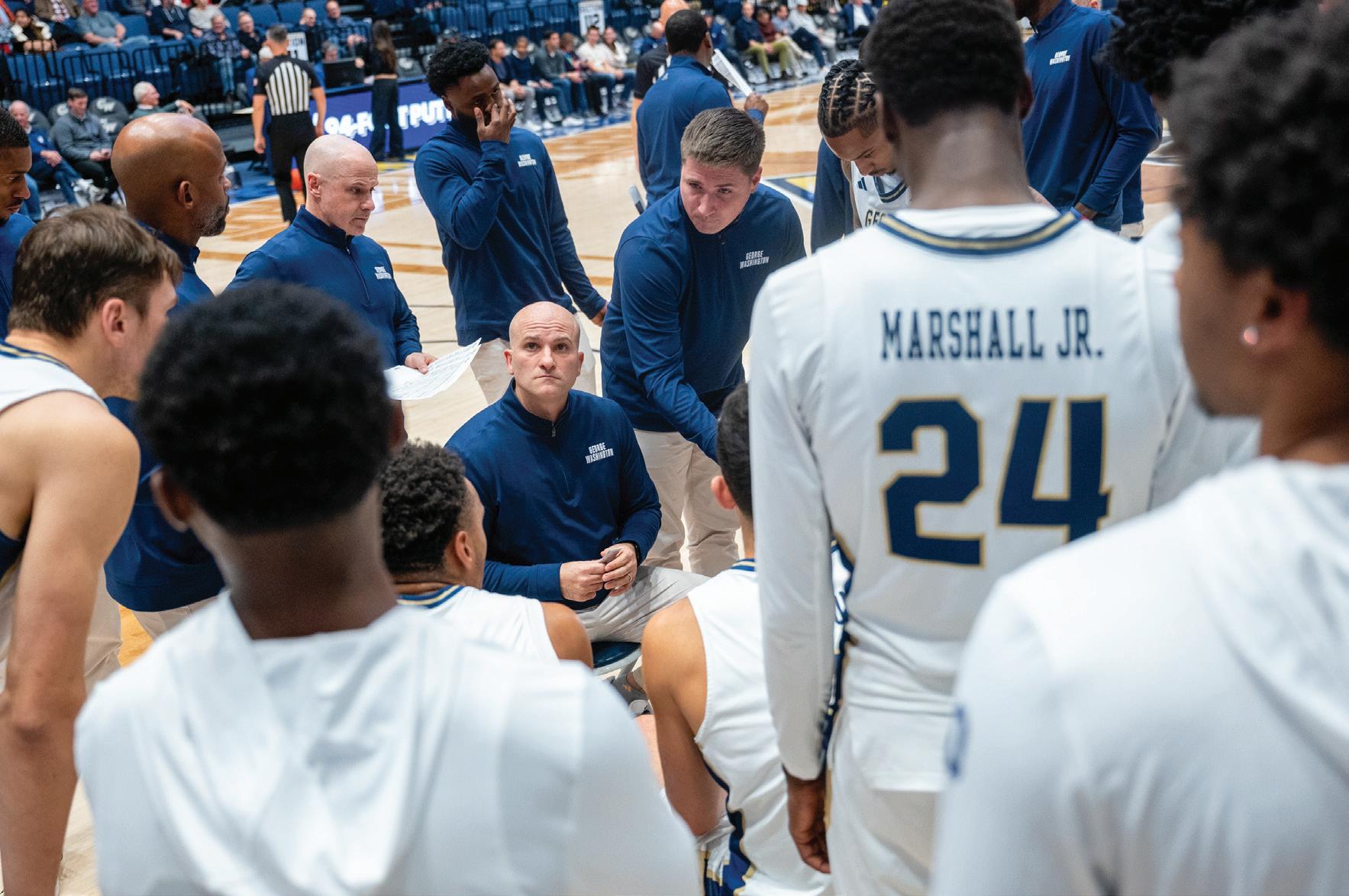
ARWEN CLEMANS | SENIOR PHOTO EDITOR
Head Coach Chris Caputo sits in the middle of a team huddle during a game against the University of Delaware in December.
LEXI CRITCHETT | ASSISTANT PHOTO EDITOR
Junior forward Sara Lewis attempts to keep control of the ball during a game against Saint Louis in January.
SOPHIA CAPUTO STAFF WRITER