HATCHET The GW


NIDHI NAIR
REPORTER
SACHINI ADIKARI
CONTRIBUTING NEWS EDITOR
After tenured and tenure-track status for regular faculty dropped to a decade low this academic year, faculty said the steady decline in the number of tenured and tenure-line faculty could harm the University’s research mission.
Provost Chris Bracey presented data at this month’s Faculty Senate meeting that showed a steady reduction in tenure status for all regular faculty, falling from 77.8 percent of faculty in fall 2014 to 70.7 percent in fall 2024. Professors said tenured positions are “critical” to GW’s research mission because they provide job security to faculty, warning that officials’ replacement of tenured and tenure-line facul-
ty with specialized faculty masks the waning tenure lines across the University that could stifle relationships between students and professors.
Regular faculty are fulltime faculty with the titles of University professor, professor, associate professor, assistant professor and instructor, that are tenured or tenure-track, according to the Faculty Code. Academic tenure provides faculty with an academic freedom safeguard, according to the American Association of University Professors.
Specialized faculty are faculty on a renewable contract that do not hold a regular or tenured appointment at another university, according to the Faculty Code. Specialized faculty have a nine-or-12month appointment at GW and have “contractual responsibilities” for research,
teaching or service.
University spokesperson Julia Garbitt said “personnel head counts” in a given school are linked to a “variety of financial factors” and that schools with “strong” enrollment can financially support additional tenure or tenure-track faculty.
“As the University is a tuition-driven institution, strong enrollments within our schools can support additional investment, but it is important that the University does not over-invest in order to avoid future financial roadblocks,” Garbitt said in an email.
The University made $1.781 billion in operating revenue in fiscal year 2024, with tuition revenue making up 46 percent of the total operating revenue, according to a 2024 financial report.
See FACULTY Page 5
NATALIE NOTE
STAFF WRITER
VICTORIA SMAJLAJ
REPORTER
The number of undergraduate students studying across multiple schools rebounded this year after a dip in 2023, reaching the highest number recorded since 2013, according to the University’s annual core indicators report.
The report — which Provost Chris Bracey presented at the Faculty Senate meeting earlier this month — states that 17.6 percent of undergraduate students at GW’s five residential colleges declared a major or minor in more than one school in 2024, compared to 15.8 percent of undergraduates in 2023. The number tops the previous highest record of cross-school students at 17.5 percent in 2020, as well as the amount
ARJUN SRINIVAS
REPORTER
DAVIS LENHARDT
REPORTER
The University’s fulltime staff-to-student ratio was the second-lowest out of its 12 peer schools in 2023, a dip that experts warn may heighten staff burnout and impede student and faculty support.
GW’s ratio of fulltime staff to students sat at roughly 21.5 to 100 in 2023, which Provost Chris Bracey said at a Faculty Senate meeting earlier this month demonstrates officials’ need to prioritize hiring additional staff, given that student success hinges on the support that staff bring to different departments. Bracey said the University is in the process of hiring additional staff, which education experts say will help mitigate staff burnout and
improve the student experience.
Last year, GW ranked third-to-last on its fulltime staff-to-student ratio in comparison to peer schools in 2022, landing above Northeastern University, with a staff-student ratio of almost 20 to 100, and New York University, with an average of just over 21 staffers per 100 students.
In the 2023 data, NYU’s ratio rose to almost 22.5 staff for every 100 students and Northeastern’s ratio increased to roughly 21 to 100. GW’s ratio remained relatively unchanged, moving from 21.49 staffers per every 100 students in 2022 to 21.73 in 2023.
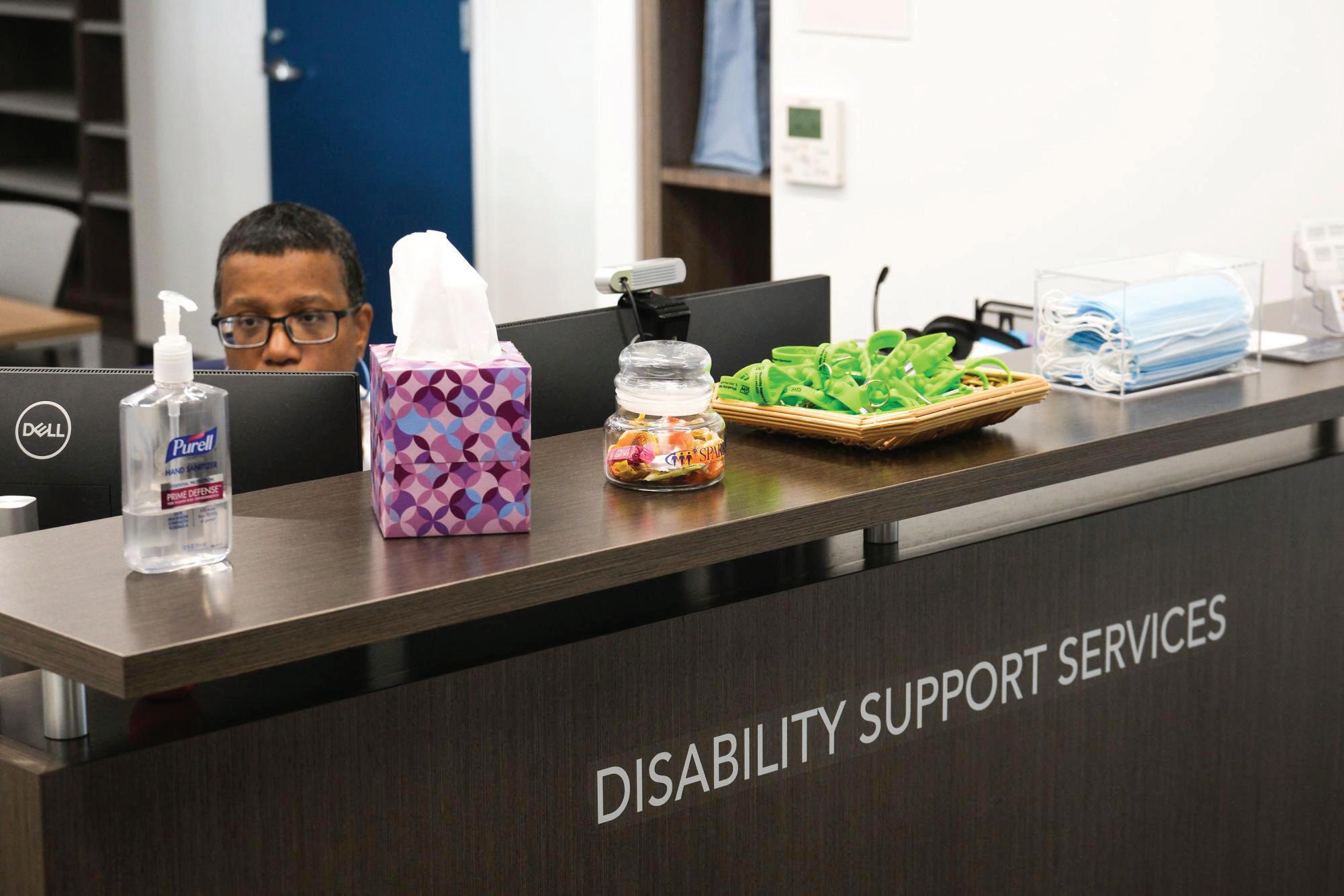
The University of Rochester had the highest staff-student ratios in both the 2022 and 2023 data sets at 44 to 100. Tufts University took second place both years, with 38 staffers per every 100 students in 2023. Bracey said at the meeting that the University will focus on increasing staffing at student and faculty facing offices like IT, “building services” and Disability Support Services. DSS staffing this year grew from seven personnel in June to 14 by November after a period of high turnover, which students said limited support last year.
“The good news is that we’re staffing up to restore some of those key functions that are needed to advance our academic enterprise,” Bracey said at the meeting. “We’re going to continue to do that to ensure that the experience of our faculty and students meets the expectations established by our reputation and, perhaps more importantly, by our price tag.”

of cross-school students on a given academic year at GW dating back to at least 2013, the first year of available data, when just 9.5 percent of students studied across schools.
University spokesperson Julia Garbitt said the
University evaluates and adjusts program offerings to meet student demand and the University’s strategic goals. She said the University plans to continue to “focus on and prioritize” ensuring students may participate in multiple academic programs.
JENNA LEE ASSISTANT NEWS EDITOR
The National Institutes of Health has canceled at least five GW research grants this month, according to data from the Department of Health and Human Services.
In March, the NIH canceled the five grants — totaling more than $3 million in lost funding — for studies by GW researchers that examined the effects of HIV on racial minority populations in the United States, according to a list of terminated grants published by HHS on March 21. The Trump administration last month ordered federal agencies to flag grants for studies on issues considered to relate to diversity, equity and inclusion — initiatives that President Donald Trump has called “discrimination programs.”
A total of 338 grants totaling more than $127 million have lost NIH funding at universities across the country since the start of the Trump administration, according to the HHS data.
Because many of the canceled grants were in progress when they
were terminated, the HHS website lists the total award amount of the grant and the total “unliquidated obligations” of the grant or the money the grant had not yet used as of termination and will lose.
The Trump administration has flagged grants with purported links to DEI by flagging those that contain words like “diverse,” “gender” and “oppression.” The NIH capped coverage for universities’ overhead and administrative costs at 15 percent, which a federal judge blocked last month. HHS halted grant review panel announcements on the Federal Register last month, leading federal agencies to cancel dozens of panels and delay funding for projects.
The NIH on March 20 terminated a grant led by Lisa Bowleg, a professor of applied social psychology. The grant was an award of $3.7 million for a study aimed at reducing the drug use and associated mental and physical outcomes for gay and bisexual Black men. The NIH’s website tags the study as relating to HIV and AIDs, as well as sexuality and race, and states that the grant will lose $30,233.

JENNIFER IGBONOBA NEWS EDITOR
The chairman of the Senate Health, Education, Labor and Pensions Committee sent University President Ellen Granberg a letter Wednesday demanding information about Students for Justice in Palestine at GWU a day before a hearing on antisemitism on college campuses.
Sen. Bill Cassidy (R-LA) demands Granberg respond by April 9 to questions about SJP’s on-campus activities, funding sources and whether the University investigated flyers calling for the firing of an economics professor linked to President Donald Trump’s Gaza redevelopment plan. Cassidy launched an investigation into American Muslims for Palestine — a nonprofit which aims to educate and mobilize people about Palestinian rights — for its alleged ties to Hamas and SJP chapters at GW, the University of California, Los Angeles, Barnard College and Columbia University.
University spokesperson Shannon McClendon said officials received the letter Wednesday.
A representative from SJP — who requested anonymity due to concerns of doxxing and retaliation — said the organization did not receive any communications with the University regarding the inquiries and found the letter independently.
Cassidy announced the investigation during a committee hearing Thursday to address antisemitism on college campuses after the onset of the war in Gaza. Rabbi Levi Shemtov, the founder of Chabad GW, also testified at the hearing.

At the hearing, Shemtov said Jewish students have been increasingly harassed and ostracized because of their ancestry or support for Israel since the onset of the war in Gaza with some reported being spat on, verbally accosted and physically threatened. Shemtov said the pro-Palestinian encampment in University Yard last spring disrupted campus life under the “guise of political activism.”
Administrators failed to take “sufficient decisive action” to ensure the safety of Jewish students even as some professors joined the encampment, Shemtov said.
Cassidy’s letter states that the flyers are “the most recent in a chain of concerning events” at the University, refer-
encing SJP’s projections onto Gelman Library in October 2023 and the organization’s suspension in August 2024 for its involvement in the encampment.
He asked Granberg to provide a “detailed account” of incidents on GW’s campus involving SJP and “all information” about whether members of SJP participated in campus protests in 2024 and 2025 and how the protests were organized. Cassidy also asked Granberg to answer if SJP ever received funding from GW and if campus policy requires SJP to have a faculty representative.
Cassidy also requested information from the DOJ, the FBI and the four other universities about AMP and its influence on college campuses.

STALKING Off Campus
Reported 3/20/25 – Multiple Dates and Times Open Case A female student reported being stalked by her ex-boyfriend. Case open.
LIQUOR LAW VIOLATION
Townhouse Row
3/22/25 – 1:15 a.m.
Closed Case
GW Police Department officers responded to a report of a drunk student. GW Emergency Medical Response Group arrived on scene and conducted a medical evaluation. They transported the female student to the GW Hospital Emergency Room for further treatment. Referred to Division of Conflict Education and Student Accountability.
Lerner Health and Wellness Center
3/22/25 – 8:30 a.m.
Open Case
GWPD officers responded to Lerner for a report of damaged property. Upon investigation, officers determined a vehicle trying to gain entry into the parking garage crashed into the card reader and fled the scene. Case open.
—Compiled by Ella Mitchell
Undergraduate tuition will increase by 3.5 percent next academic year, bringing the cost of tuition to just under $70,000, the University announced Friday. The increase will raise GW’s undergraduate tuition to $69,780, bringing the total cost of attendance for the 2025-26 school year to over $94,000. The release states that the University is committed to making a GW education a “realistic” option for students and encourages them to apply for financial aid through GW’s Open Doors need-based aid program.
Officials have raised GW’s tuition annually since the Board of Trustees announced in 2019 that they were ending the University’s long-standing fixed tuition policy, which had guaranteed students a single, fixed tuition rate for up to 10 con-
secutive semesters. Officials raised GW’s tuition by 2.1 percent in 2021, 4.5 percent in 2022, 4.3 percent in 2023 and 4.2 percent in 2024, making this year’s 3.5 percent increase the first time since 2021 that the increase has been under 4 percent. The University also announced it was increasing its base rate for housing and dining to $17,600, a $680 increase from the previous year. The base residence hall room rate is $11,300, and the dining rate is $6,300 for the academic year, the release states. The increase places GW’s tuition cost in the middle out of six of GW’s 12 peer schools who have announced their 2025-26 tuition prices. The University of Miami—whose estimated tuition clocked in this year as the least expensive of the peer schools—will cost $63,452 next year, while the University of Southern California, the highest estimated tuition, will cost $73,260.
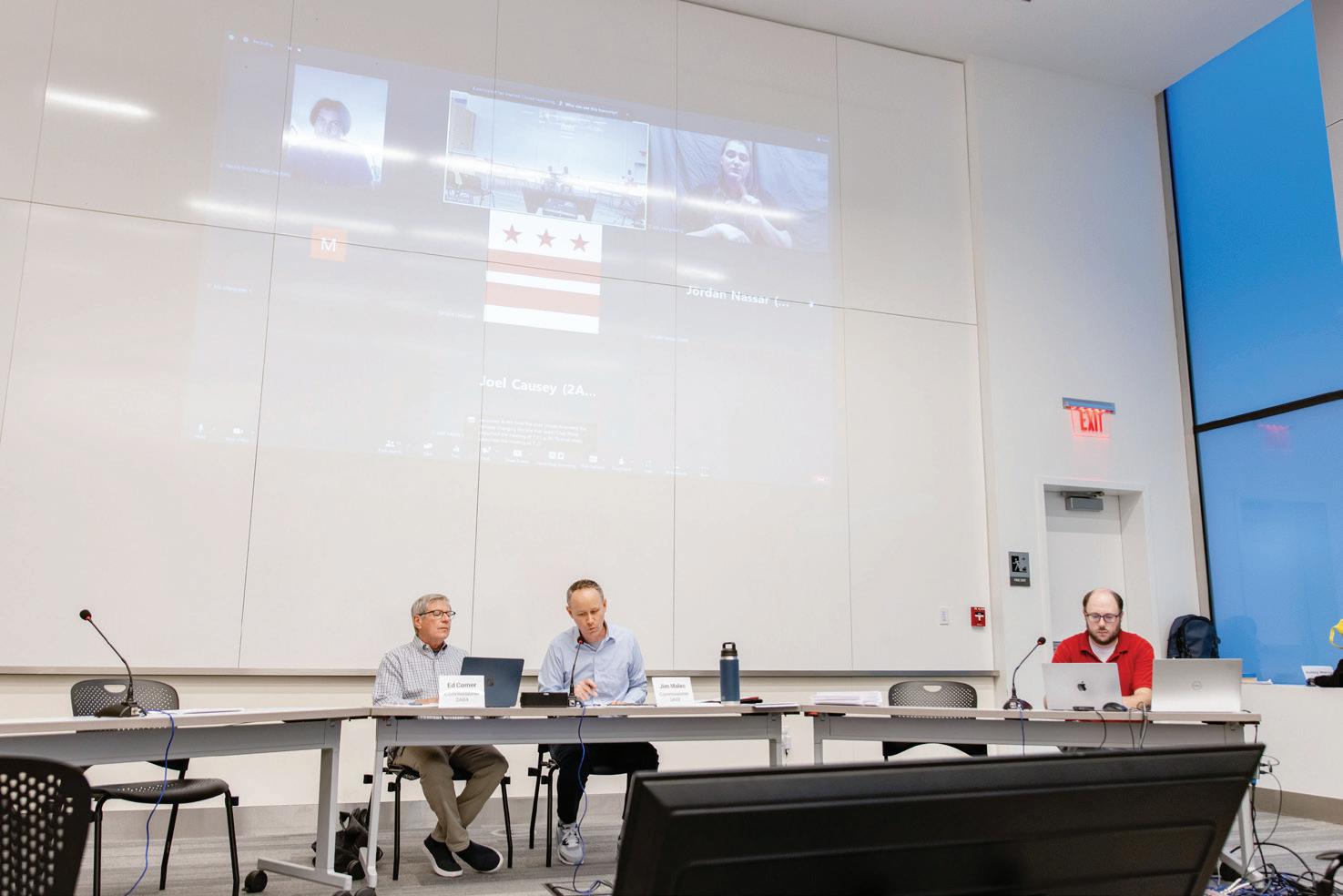
A local governing body is weighing making its return to hybrid meetings a year after it began exclusively meeting virtually, citing the benefits of face-to-face interactions with constituents and the online format’s technological challenges.
The Foggy Bottom and West End Advisory Neighborhood Commission transitioned to virtual meetings for its April 2024 meeting due to challenges setting up the meeting’s audio system in the West End Library, which 2A08 Commissioner Jim Malec, the body’s chair at the time, said was meant to be a temporary change. But issues hiring an executive director — an administrative ANC position in charge of organizing meetings and outlining agendas — coupled with technological hurdles, like setting up microphones and difficulties finding a location, have prevented the ANC from returning to hybrid meetings for the last 11 months.
Commissioners are now considering transitioning
back to hybrid meetings, with some saying that community members should have the opportunity to meet their elected officials face to face. The decision is pending whether the body can find a meeting spot that will accommodate their long, late-night meetings and overcome technological troubles.
Before April 2024, the ANC held its meetings in a hybrid format, giving community members and commissioners the option to join a Zoom call or attend in person at the West End Library since transitioning back in July 2022 after a pause to inperson meetings during the pandemic. Of the District’s 46 regional ANC bodies, 16 hold hybrid meetings, 28 hold virtual meetings and two hold in-person meetings, according to the Office of ANC’s website.
Malec said he is a “firm believer” that every resident should have the opportunity to come before government officials in an in-person setting. He said the dynamic is different in a virtual setting where constituents can’t look commissioners in the eye while raising community
concerns.
Malec said representatives from the D.C. government who make announcements and collect feedback at meetings often don’t turn their cameras on during the Zoom meetings, which he finds “disrespectful” to constituents. He added that when constituents are in the same room as representatives from the D.C. mayor’s or D.C. Council’s offices, they can have side conversations, but on Zoom, every question and answer is on the record, which can prompt a more “vague” response from District government officials.
Malec said the ANC’s former long-time executive director, Peter Sacco, designed a hybrid meeting model “from the ground up” years ago that worked with the West End Library’s sound system and allowed those on the Zoom call to hear all inperson comments, even if the person wasn’t near the laptop hosting the call.
Malec said Sacco went outside his responsibilities as executive director to set up the hybrid meetings, arriving two to three hours early to set up the sound system.
But when Sacco left his role in February 2024 after serving in the role since 2016, Malec said the ANC struggled to keep up with the “complicated” setup.
Malec announced at the March 2024 meeting that the ANC would hold meetings virtually until the body hired
a new executive director. He said the ANC had a difficult time hiring for the position before it hired its current executive director, Shelem Celis, in September. Still, he said, the former hybrid model was too time consuming to set up, so it didn’t seem “reasonable” to ask or expect a new executive director to implement it, as it would require them to work beyond their dedicated hours. He said if the commission were to hold hybrid meetings, they would likely need to find a new meeting spot.
Students launched a weekly podcast earlier this month discussing current events and political issues facing the Democratic Party co-hosted by a member of Congress. The pilot episode of “Who Dem?” aired March 18, with the first three episodes focused on getting to know the personalities of Democratic leaders beyond their politics. Rep. Gil Cisneros (D-CA), who co-hosts the podcast alongside GW senior Max Katz, said the show focuses on platforming Democratic political leaders figures and breaking down their views on current issues to advance political understanding among listeners.
Cisneros, who earned a bachelor’s in political science from GW in 1994, said he called Junior Damian Galvan, the show’s executive producer, in September and expressed interest in starting a podcast due to his struggles of getting “bumped” in media coverage. He said he was a guest in fall 2023 on Galvan’s first podcast, “PolitiTeen,” in which teenagers and young adults discussed current events and politics, so he knew Galvan had previous experience in producing and creating a show.
Cisneros said in creating the podcast, he wanted to create a platform where he and other politicians could promote their ideas and discuss any political issues, like the recent threats posed to public education by the Trump administration’s sweeping cuts within the Department of Education.
“It was really to be able to get my voice out there,” Cisneros said. “To be able to talk about issues, to be able to talk about what’s going on, and not only in my life, but in my political life and kind of really discuss things too.”
Cisneros said the podcast is “evolving” as it hosts natural, unscripted conversations about is-
sues and concerns for the Democratic Party, like the dramatic cuts by the Department of Government Efficiency as well as light-hearted topics, like baseball. He said there are no bounds to the topic of discussion in a given episode as he and Katz are choosing not to limit the conversation to just one topic.
“We want to be able to discuss many things and talk about many different issues and not always trying to keep it about the hard stuff but kind of maybe let it be a little light and kind of funny, too, at times,” Cisneros said.
Galvan, a junior studying sociology and political science, said the first five episodes of the podcast will feature just Cisneros and Katz to allow the audience to get to know the hosts, and then the pair will invite guests like other politicians and celebrities onto the show. He added that the podcast is working with Simpson Street — a network founded by GW alum Kerry Washington to foster and distribute ideas of democracy — to connect with A-List celebrities who could be featured on the podcast.
“Wherever we can find a guest, where we can have those candid conversations, if we feel like it’s a good opportunity for people to get to know the representative, get to know Katz and get to know the guest more, then we’re going to take it because there’s no shortage of conversations to be had at this very moment,” Galvan said.
Galvan said “Who Dem?” stemmed from Cisneros’ interest in creating his own platform and took about six months to organize from when Cisneros initially proposed the idea in September. He added that in those six months, he and the podcast team worked to familiarize the hosts with the recording equipment in their studio downtown and coordinated the “aesthetics” of the shows, like cover art, thumbnails and introduction music, as well as ensuring compliance with the Federal Election Commission and the House

Ethics Committee.
Galvan said he formed a working relationship with Cisneros as a scholar of the Cisneros Hispanic Leadership Institute, an academic leadership program for undergraduate students which the congressman founded in 2015. Galvan said the podcast is the newest show produced by the Ox Institute, an organization founded by him and Max Calman, a junior, during their first year at GW that produces and distributes media oriented toward social justice.
“The Ox Institute always had this, what we’re doing right now, as its core vision, facilitating a conversation between politicians but people that are politically inclined and the general population, making conversations like these accessible to the common American,” Galvan said.
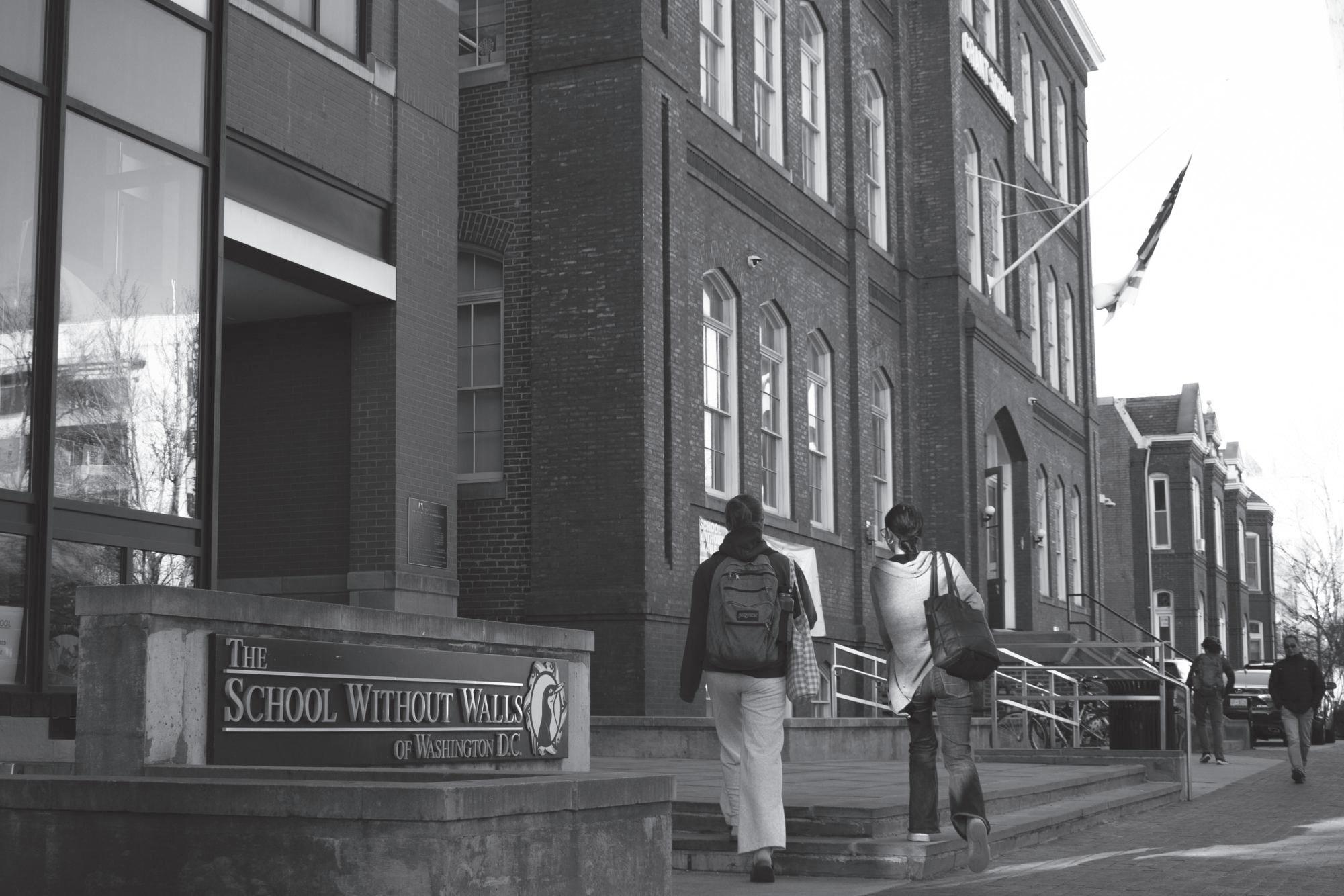
A School Without Walls senior developed a resolution adopted by the D.C. State Board of Education last month to fix faulty heating, ventilation and air conditioning systems in public schools across the District after enduring fluctuating temperatures in her classrooms.
Anna Mayer, a student representative for the state board and a SWW student, proposed a resolution in February that called on city officials to better maintain public schools’ HVAC systems and boost temperature regulation system repairs. In adopting the resolution, the SBOE called for D.C. Mayor Muriel Bowser, the D.C. Council and the Department of General Services to allocate “sufficient funding” to repair broken HVAC systems in District public schools, including SWW, to improve indoor air quality standards.
The state board advises the Office of the State Superintendent of Education on educational matters and regulations proposed by the mayor or the Office of the State Superintendent of Education. When the state board adopted the resolution Feb. 19, it became an official state board policy recommendation for Bowser’s office and the D.C. Council to adopt and enforce.
Mayer said SWW classrooms can get too hot or too cold, and the lack of
consistent temperatures is a “pretty big” concern among students, which she said is compounded by health and environmental concerns with HVAC systems.
“It’s just ridiculous,” Mayer said. “It’s outrageous to have to be a student and work in a classroom that is either 20 degrees too cold or 20 degrees too hot. It can be really frustrating.”
DGS as of March 29 has more than 87 high-priority open HVAC orders in public schools, including 4,000 total open work orders across D.C. public schools, according to the DGS HVAC dashboard. DGS considers heating and cooling issues high-priority HVAC orders, according to the dashboard. DGS completed 15 HVAC work orders in 2024, the dashboard states.
The resolution, which heard public SBOE testimony from students, parents, educators and experts on Nov. 20 and Jan. 15, recommends that Bowser, D.C. Council and DGS modernize HVAC systems, conduct biannual inspections and report indoor air quality monitoring.
It is now up to Bowser and the D.C. Council to act upon the recommendations presented in the resolution to see if Mayer and the state board’s efforts to improve DCPS’ HVAC systems can come to fruition. The resolution requests that Bowser, D.C. Council and DGS inform the SBOE in writing by May 31 the cost associated with their requests.
Bowser’s office and the D.C. Council did not return requests to comment on if they plan to enact the resolution’s recommendation into law. DGS did not return a request for comment on if they have plans to conduct biannual inspections and report indoor air quality monitoring.
Mayer said she’s proud of the work the state board put into the resolution, and she hopes legislators will heed the resolution’s recommendations to modernize HVAC systems.
“It’s not like there’s a roadmap that we have going forward, but I do think that this was a really good first step to establish the priorities and what we’re looking for,” Mayer said.
Before her work on the resolution, Mayer — one the co-founders of the School Without Walls Sunrise Movement hub, a branch of the national climate justice initiative — worked to help pass on Jan. 17 the D.C. Green New Deal, a resolution that addresses green initiatives in DCPS.
Mayer said she visited DCPS schools for the Green New Deal initiative, including McKinley Tech, Anacostia and Jackson-Reed high schools, to gather more information about sustainability issues facing the schools. She said at many of the schools she heard complaints about fluctuating temperatures in the HVAC systems, which prompted her to focus on HVAC in her next resolution.
Katz said he agreed to co-host the podcast last December because he was “upset” about the results of November’s presidential election. He added that the Democrats lost the election due to their lack of new media presence, which he said is the “driver” of the podcast.
Katz, the executive producer of Left-Middle-Right, a social media account that promotes multipartisan dialogue through man-onthe-street-style interviews, said the public wants to see elected officials for “who they really are.” He said the podcast provides a form of entertainment to the audience and allows them to foster connections between the hosts and listeners.
“It’s not just about fitting the right points on a policy sheet,” Katz said. “It’s about your character.”
Junior Ava Dufault, an execu-
tive producer for “Who Dem?” and “PolitiTeen,” said last academic year, the “PolitiTeen” team decided to “pass the torch” to younger college students in order to better serve its initial goal of providing younger students with a platform. She said they worked with Samuel Goldman, an associate professor of political science, to recruit a cohort of students to take over the “PolitiTeen” podcast. “Podcasting is the new face of media,” Dufault said. “It is how the dissemination of information happens, and if we have the ability to give young people, or just anyone in general, a representative, a GW student, whoever, the knowledge and expertise of how to get into this space, so that they don’t have to figure it out themselves from scratch. It’s just such an amazing opportunity.”
Some students began supporting a nationwide economic boycott in January against major chain corporations to protest the companies’ repealing diversity, equity and inclusion programs.
After President Donald Trump issued an executive order Jan. 21 targeting DEI practices in public and private sectors, dozens of companies terminated their diversity practices and programs, leading some students to abstain from purchasing from them.
Junior Shawn Conley, the president of the Gamma Alpha Phi chapter of Phi Beta Sigma Fraternity, Inc., said his chapter posted about the movement on Instagram to get people’s attention about the ongoing initiative and to stand in solidarity with calls for a boycott by civil rights leader Al Sharpton, an alum of the fraternity.
“We decided that it would be beneficial for us to use our platform to spread the word, at the very least, get people to pay attention because this is something that affects them, even if they don’t necessarily see that immediate impact,” Conley said.
Target and Walmart were some of the first Fortune 500 companies to announce in January and November, respectively, that they would end DEI initiatives. Other major companies, like McDonald’s and Amazon, have also been a target for boycotts after removing certain DEI programs. The corporations’ decisions have received backlash from consumers — particularly those in the Black community — with Black faith leaders, like Pastor Jamal Harrison Bryant in Georgia, calling for a 40day fast or boycott of Target.
A grassroots startup, The People’s Union USA, launched a series of “economic blackouts” against companies that have complied with the president’s DEI rollback efforts on a weekly basis.
Conley said he’s completely stopped shopping at Target but did not shop at Walmart before the boycott, so it was an easy switch for him. He said he continues
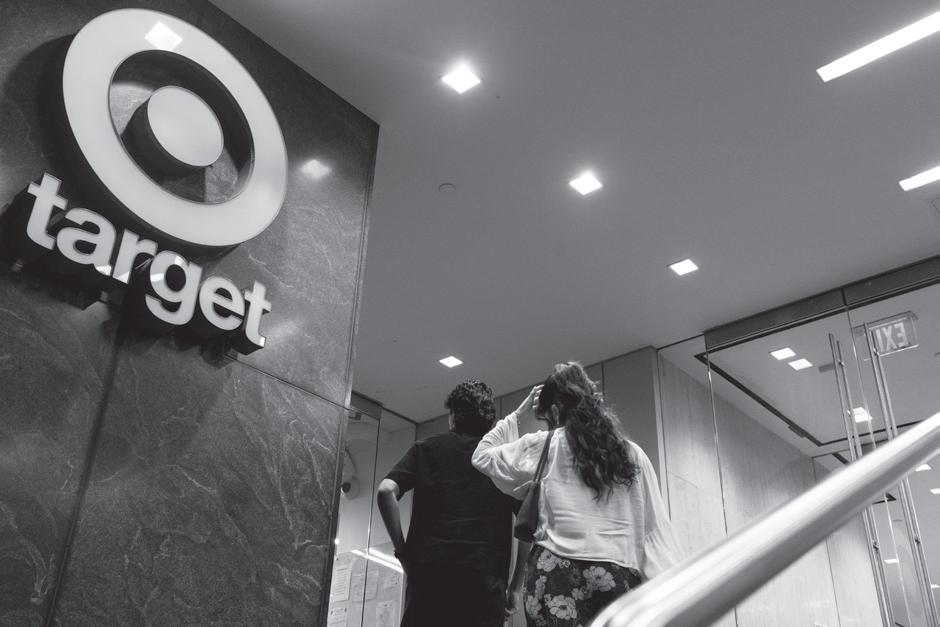
supporting Black-owned businesses and plans to shop at CVS to substitute his Target purchases amid the boycott.
Conley said he’s not certain that the boycotts will have a long-term financial impact on the targeted companies but that he believes they serve as an awareness campaign to get others to integrate DEI as a core component of society.
Conley said Phi Beta Sigma is planning an event that will explain to students what DEI is and the issues it is meant to address, like discriminatory practices in organizations, for people to know how to get involved and be “solution-focused.”
“Most people, I think, are generally aware of the basics regarding DEI, it’s just a matter of, well, why is this important to me? And how can I get involved” he said.
He said older grassroots movements, like the LGBTQ+ and civil rights movements have been successful, and it’s the work that starts “on the ground” that changes societal norms.
“It’s important to remember that when parties do change and when things change in the government, normally, it’s something that change within society first, so going around, getting involved in ways that you’re helping to change people’s minds on the ground, that’s a powerful thing that can lead to change on the national scale,” Conley said.
Junior Jennifer Martinez Perez, a political science student from the Atlanta area, said it was “disheartening” as a first-generation Mexican American to learn about companies removing DEI policies. Martinez said it’s “hard
to say” if she’s actively participating in the boycott because most of the targeted companies aren’t on campus, but some of her family members no longer shop at Walmart, which is a major shopping center in her hometown because of the company’s shifted stance on DEI.
Walmart announced in November that the company would not renew a racial equity center established through a five-year, $100 million philanthropic commitment to address root causes of inequity in the Black community. The company also said it would pull out of a gay rights index and not prioritize suppliers based on race or gender.
“Now my family goes shopping to farmer markets and other small Mexican stores, so they don’t really go to those places anymore,” Martinez said.
Martinez said she supports the sentiments of the boycotts, but people will eventually “lose the energy” to participate because it could inconvenience them by spending more time going to a different company.
Martinez said people who can’t participate in the boycott can find other ways to express their disapproval for the policy changes, like calling their representatives in Congress.
“Reflecting back on, what are the things that I as an individual can do and not being afraid to continue showing your support for DEI if you support it because there’s currently a lot of noise against it and that can be disheartening for people that don’t look like the traditional person, whenever you’re trying to reach these others spheres of society,” Martinez said.
Government
LOUISA HANNOUCENE REPORTER
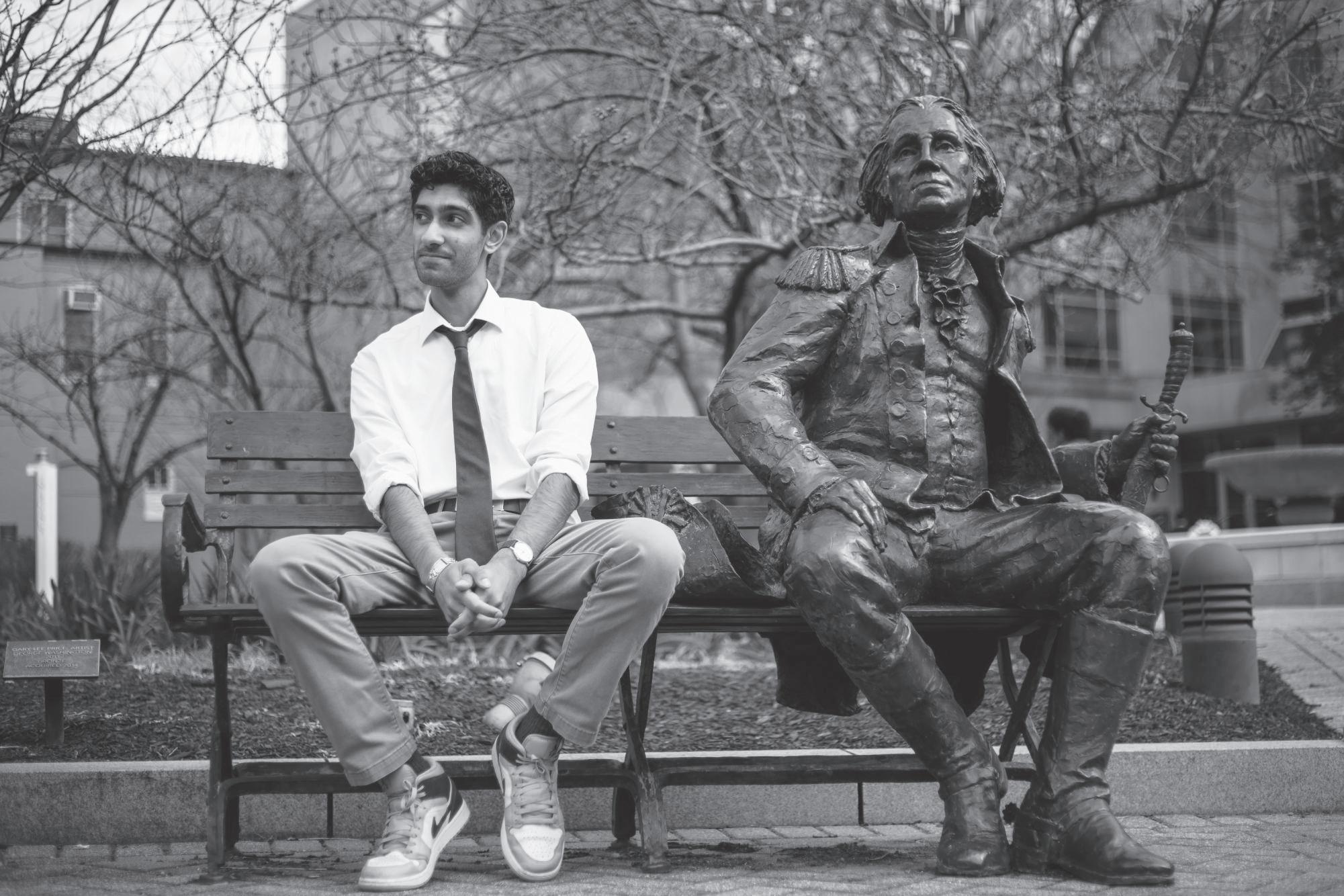
Dan Saleem, a former Student Government Association senator and 2024 presidential candidate, staged his second bid for the presidency last week.
Saleem, a junior studying political science and history, said if elected he’ll press officials to open the Mount Vernon Campus Student Health Center more than one day a week, solicit student input on the SGA finance allocations process and create a GW program and “recipe book” that encourages students to cook healthy meals. He said his slogan, “It’s Time to Do Better,” reflects his objective to work entirely for the students as he embarks on his second-consecutive SGA presidential campaign.
“My slogan, “‘It’s Time To Do Better,’ isn’t just about our student government, it’s about us as a community, and my personal journey,” Saleem said in a text message. Saleem lost the SGA presidential election last year to Ethan Fitzgerald after receiving only 13 percent of the vote in the first round of ranked-choice voting. He said after taking a break from the SGA for a few months following the election, he realized there is more to life than the SGA and spent the year learning more about what students want from the governing body.
Last year, Saleem pleaded guilty to a quartet of campaign violations for campaigning prior to the official campaign period.
The Joint Elections Commissions initially issued Saleem six penalty points, enough to disqualify him from the election but ended up dropping one of the charges, which allowed Saleem to remain on the ballot.
Saleem said he will have an open door policy at all SGA Finance Committee meetings, noting that the past three SGA administrations have held all finance meetings closed off to the public to discuss student organizations’ requests before presenting the final budget at a public SGA Senate meeting. He said he would issue an executive order to make the meetings public.
Saleem said he believes nothing has changed over the past three SGA administrations’ approaches to issues, like reproductive health care, dining and free speech. He said former leaders haven’t been able to have “tough conversations” about the SGA presidency and communicate with University administration.
Saleem said the main issue he hopes to tackle during his presidency is oncampus dining. He said his experience as a member of the Student Advisory Panel will help him revive the SGA Senate Committee on
Dining, which he pushed forward in 2023 to ensure that students don’t have to “gamble” with their dining options and risk issues, like food poisoning. He said the current committee has “no teeth” because they come to the SAP meetings and fail to discuss issues that affect the greater GW community, like the continuity of food offered at GW dining locations.
Saleem said he wants to make communication between the executive and legislative branches within the SGA a “top priority” by ensuring the president and vice president sit in on all executive cabinet and senate committee meetings, which he said they currently don’t do.
Saleem posted Instagram stories last week where he denied Title IX allegations made against him during last year’s election. In a story post, he wrote that he never had official charges brought against him, stating that none of the claims made against him were “legitimate or fact based.” Saleem added a screenshot of an email from the Title IX office, which read that there is no “disciplinary record” associated with his name at GW.
Saleem has collected the needed 379 petition signatures and received verification from the Joint Elections Committee to appear on the official SGA election ballot on April 10 and 11.
ADELAIDE PETRAS REPORTER
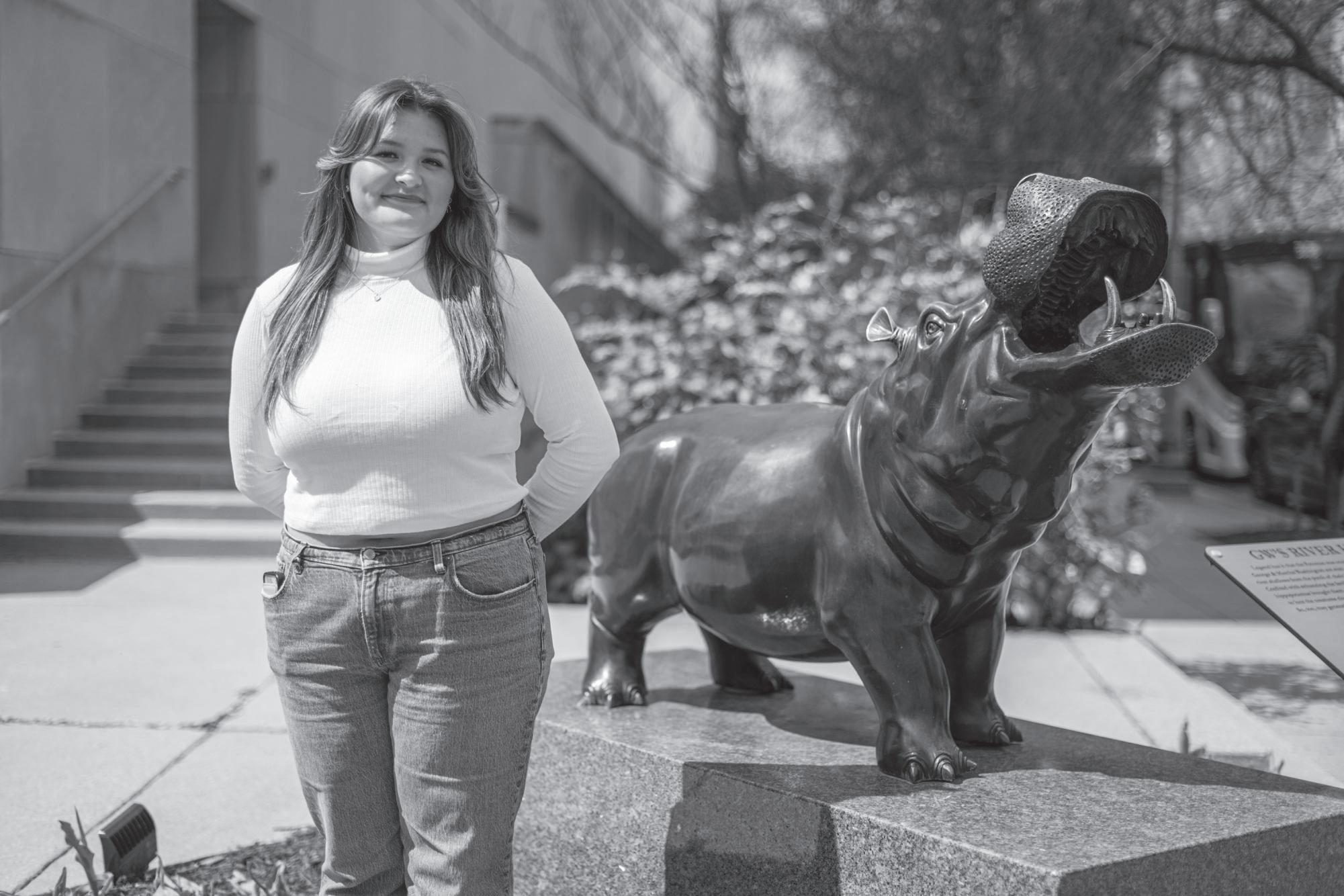
Student Government Association Senator Claire Avalos became the first to announce her bid for the SGA vice presidency Thursday.
Avalos, a sophomore studying political science, said if elected she’ll work to increase funding for multicultural student organizations, expand free speech protections for students and push officials to remove the permanent fences they installed around University Yard following last spring’s pro-Palestinian encampment. She said her leadership experience in the SGA and membership in both the Organization of Latin American Students and the Cisneros Hispanic Leadership Institute demonstrates her passion for diversity, which she said makes her an ideal candidate to represent the student body as SGA vice president.
“I’m not willing to back down or take no for an answer, and I feel like that’s a really important quality to have in a leader, especially as vice president who oversees the senate and who oversees the legislative budget office and all the funding for orgs on campus,” Avalos said.
Avalos said as a Latina woman she has felt underrepresented in the SGA Senate, citing an overall lack of diversity in the body.
ANNA MENNUTI REPORTER
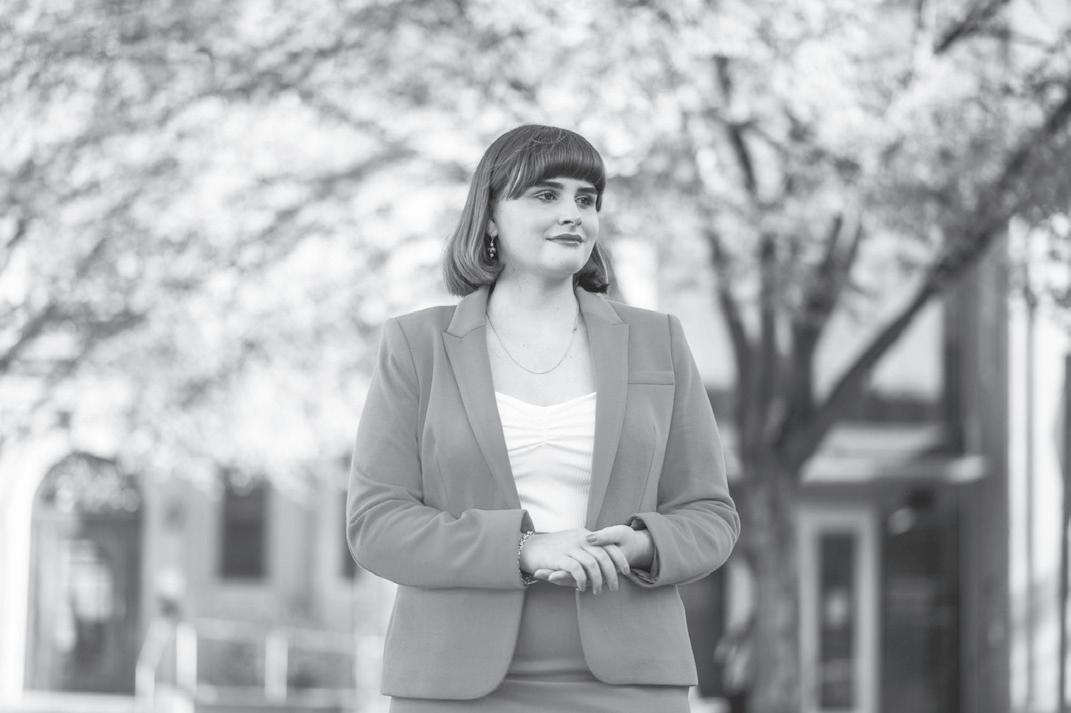
Student Government Association Senate Pro Tempore Liz Stoddard announced her candidacy for the body’s vice president Sunday.
Stoddard, a sophomore studying political science and religion, said if elected she will increase the number of annual student organization fairs, require GW staff to provide a specific time they will address FixIt requests and expand the number and type of food vendors that accept GWorld payment. Stoddard said her experience as the SGA Senate pro tempore, the thirdhighest ranking member in the SGA, has prepared her for the technical, administrative and collaborative responsibilities demanded of the SGA vice president.
Stoddard said she was initially hesitant to run for SGA vice president because of the “grueling” campaigning process female candidates have historically endured. She said female candidates are typically subject to sexist and misogynistic comments from the student body and internally in the SGA, but she ultimately decided to run because she wants to drive change both within the governing body and for the broader GW community.
“Judgment is always going to happen, but it’s about how you handle it,” Stoddard said.
“And I think for me, I care about what’s happening here, and I care about the school, and there’s a lot of things that I feel like people aren’t standing up for that I think, at the end of the day, it’s worth it.”
Stoddard said she wants to expand transparency to student organizations about the SGA allocations process by compiling and presenting a re-
port to student organizations that explains why the SGA cut or denied funding for each individual organization.
Stoddard said she wants to create a presentation for student organizations about what is important to include in their finance presentations to the SGA Senate Finance Committee so they can receive the funding necessary to their organization. She said a lack of SGA transparency about the funding process leaves many organizations unaware of what SGA senators are looking for in budget requests.
“I think doing a little course on that is exponentially important, especially for orgs who feel really defeated by the process because they’re going time and time again, and they’re not getting or hitting the key points,” Stoddard said. If elected, Stoddard said she would ensure that the Title IX office is accurately promoting services they offer because students are currently unaware of resources, like free transportation to Washington Hospital Center for victims of rape. She said she wants to launch a “Know Your Rights” campaign to further advertise Title IX resources to the student body so that students don’t have to go through Title IX reporting processes to access support resources.
“I know it can be quite scary for those who choose not to report to Title IX, but that shouldn’t stop them from receiving resources and benefits to solve it how they choose to, and I think that’s up to Title IX to advertise that better,” Stoddard said.
Stoddard sponsored the Survivors Bill of Rights, which the SGA Senate unanimously passed in November. The bill consolidated information about mental health and medical services available to
She said this year she has worked as an SGA senator to boost diversity and inclusion efforts for fellow Latino students by helping organize a town hall for community members to talk with SGA representatives during Hispanic Heritage Month in September.
“I felt admittedly intimidated at first by the idea of being vice president, the responsibility of never seeing myself reflected in those types of roles,” Avalos said. “But as an advocate within SGA and my time as senator, I felt like this would be a great opportunity to continue to advocate for students.” Avalos said she’ll advocate for an increased proportion of the annual SGA budget to go toward multicultural student organizations by encouraging students to submit requests through the UniversityWide Program Fund, a funding allocation process that student organizations can use for school-wide and multicultural events. She said funding is a “tangible change” that can benefit students of color and other underrepresented communities by supporting their events on campus.
“GW is a predominantly white institution, and there has been that lack of understanding that some of these clubs may need more funding than they are given and may be sometimes overlooked,” Avalos said. Avalos said her platform
victims of sexual assault into a single document and urged the Title IX office to distribute the legislation in emails to students who have filed cases.
“A lot of students don’t know that there’s a hotline you can call to get a free Uber to the MedStar Washington Hospital Center if you have been raped. They don’t know that that’s accessible,” Stoddard said. “We just got them to put it on their website, I want them to make it as loud as possible.”
Stoddard said she wants to require that all professors use Blackboard for submissions and class assignments. She said classes that don’t have a Blackboard are disproportionately challenging for Disability Support Services students who rely on Blackboard Ally, an extension of the platform, which makes navigating courses on the platform more accessible for disabled, blind and deaf students.
“That is the software for which we have accommodations for and that should be the standard across the board, especially for academics,” Stoddard said.
If elected, Stoddard said she would create a graduate
student caucus where students can meet to talk about their ideas with representatives from the SGA outside of the biweekly SGA Senate meetings. She said the caucus would expand opportunities for graduate students to be involved in SGA who often have a hard time participating due to class scheduling.
Stoddard said she also wants to provide child care resources for graduate students by working with Bright Horizons — an early education center located in D.C. — to receive a discount for students who need care for their children during class times. Stoddard said GW provides family care benefits through Bright Horizons for GW faculty and wants to see the resource expanded for graduate students.
“Right now there’s no help for grad students who have children and a lot of grad students have families and it’s really, can be, very unfair for them,” Stoddard said.
Stoddard has collected the needed 379 signatures and been verified by the Joint Elections Committee to appear on the official SGA election ballot on April 10 and 11.
heavily focuses on expanding free speech protections for students by bringing student organizations’ representatives into conversations with officials about University policy decisions. She said students have shared their upset about the lack of student inclusion in administrative decisionmaking processes. She said the disciplinary action the University took toward pro-Palestinian protesters during last year’s encampment has driven her advocacy for free speech protections for students. Avalos sponsored an SGA Senate resolution last year to issue an Instagram statement to support students’ rights to free speech and condemn officials’ decision to discipline demonstrators at the pro-Palestinian encampment in U-Yard. She said she’ll continue to advocate for “stronger” free speech protections to ensure students have the right to organize without fear of retaliation from the University. Avalos said she wants officials to take down the fences officials installed in U-Yard in December, citing complaints she has heard from students who said they do not find the fences necessary for their safety. Avalos has collected the needed 379 signatures and has been verified by the Joint Elections Committee to appear on the official SGA election ballot on April 10 and 11.
SGA presidential contender will not appear on election ballot
MOLLY ST. CLAIR ASSISTANT NEWS EDITOR
Henry Scriven-Young, the first candidate to announce his bid for the Student Government Association presidency, did not receive verification from the Joint Elections Committee to appear on the official SGA election ballot, according to the JEC’s verified candidate list.
The JEC did not include ScrivenYoung, who announced his candidacy on March 18, on the verified list of presidential candidates, which includes Ethan Lynne, Dan Saleem and Emily-Anne Santiago. Scriven-Young did not return a request for comment on why he did not receive verification to appear on the ballot for the April 10 and 11 election.
Following candidates’ collection of the needed 379 signatures to appear on the ballot, all candidates must submit their petitions to the JEC to confirm their compliance with the JEC rules for valid petitions, which require petitions to be collected in one manner — either virtually or manually — and contain signatures complete with a students’ first and last name, GWID and class year. Michael Ubis, the chair of the JEC, declined to comment on why Scriven-Young did not receive verification and whether or not he is still eligible to run a write-in campaign, a process candidates have taken part in during past elections when they did not register their candidacy during the allotted JEC time period.
“Every individual who submitted a statement of candidacy to the JEC during candidate registration received an email on Friday evening notifying them of the outcome of candidate verification,” Ubis said in a text message. “Those who did not make the ballot received individualized reasoning for their disqualification and information on their eligibility to run as a write-in candidate.”
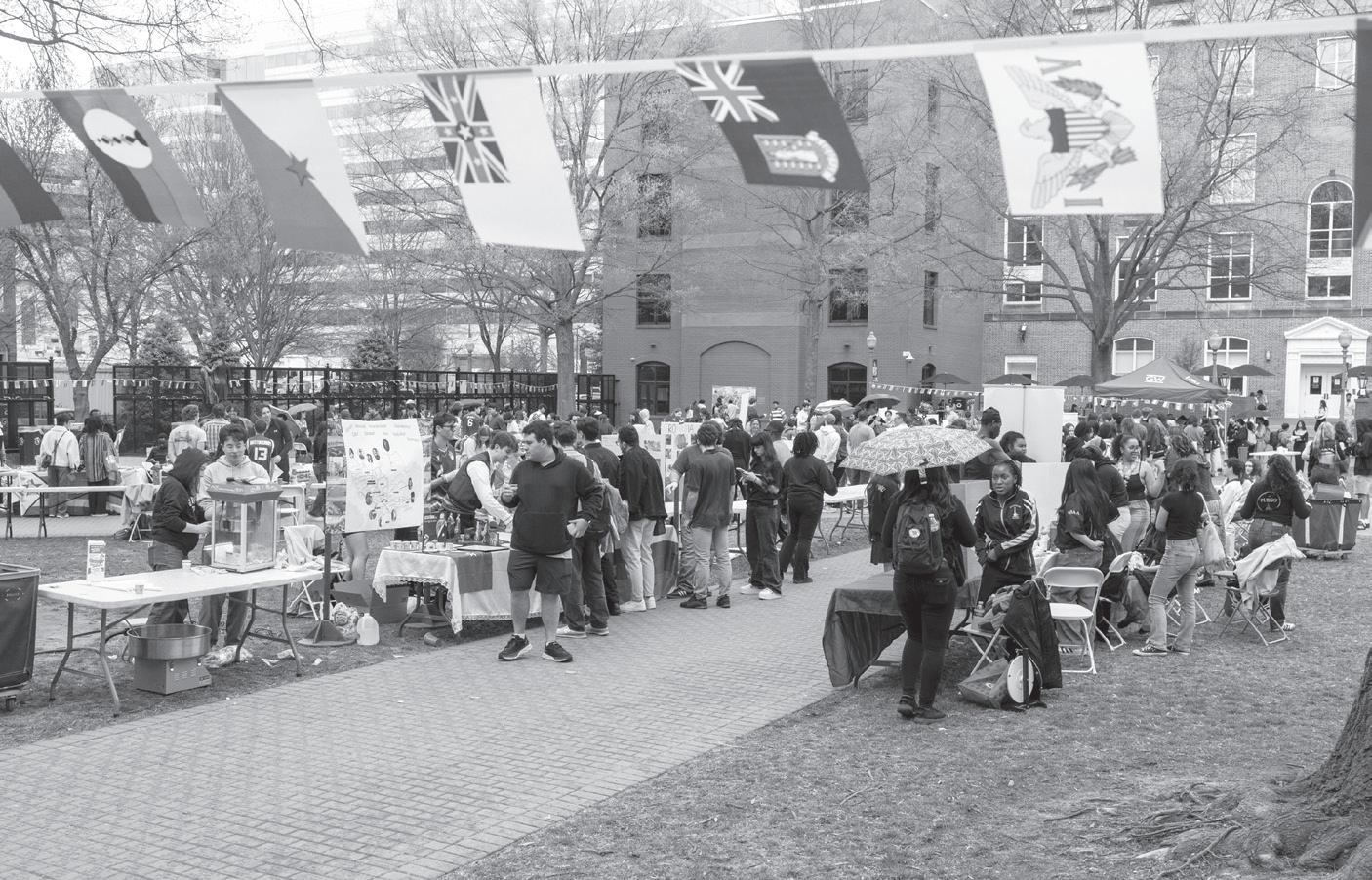
The Student Government Association hosted its first annual Day for the Nations event on Friday afternoon, where more than 50 cultural student organizations set up tables in University Yard, handed out food and showcased traditional cultural dances and music.
More than 300 student attendees and 50 student organizations, including the Bengali Student Association, GW Folklorico, the Philippine Cultural Society and GW Irish Dance, attended the event, which was hosted by the SGA and Multicultural Student Services Center. SGA Deputy Director of Student Experience Myra Goke, who helped coordinate the event and initially proposed the idea to SGA President Ethan Fitzgerald over the summer, said she has always enjoyed learning about other people’s cultures and wanted to give students an opportunity to do the same.
“I’m very proud to be Ghanaian, I’m very proud to be Nigerian, and I just love learning about other people’s cultures and having the time and the space to also talk about mine,” Goke said.
Colorful flags from countries around the world hung on the fences surrounding U-Yard, displaying the variety of cultures represented at the fair. Student organizations’ tables and a larger tent with catered food filled the concrete pathway of U-Yard where students chatted and waited in lines to try cuisines from a diverse set of cultures.
Janae Russell, the SGA’s executive secretary of organizations, said she worked with Goke to develop the idea for the event over the summer after they both recognized students need more multicultural events on campus. She said they wanted
to help educate students who aren’t in cultural organizations about other cultures.
“I feel like it was July, we sent over the proposal and starting working on it, and we’ve had biweekly meetings together with the MSSC up until this week,” Russell said. “So it’s been a long process.”
David Lopez, a sophomore studying international affairs who tabled for the Organization of Latin American Students, said events that promote visibility for different cultures help foster cross-cultural understanding on campus. The OLAS table featured a poster board describing the organization for attendees, which focuses on empowering and promoting awareness of the Latin American community.
“I think visibility for different cultures is important when you have a diverse student body, I think it’d be a shame to not show it off,” Lopez said.
In addition to tabling, student organizations, like GW Argentine Tango, performed dance routines on a stage located on the south end of the yard. Attendees watched as students from the organization donned tango attire and danced to Argentino music that amplified throughout the yard.
Marli Hansen, a sophomore student studying international affairs who tabled for the Japanese Student Union, said she was happy to share Japanese culture with the larger student body beyond those who come to the JSU’s events throughout the year. The student organization hosted a table mirroring a miniature convenience store, which featured an array of Japanese snacks and iced tea for attendees to enjoy.
“It’s really important to portray culture from the perspective of the culture it is, especially since Asian culture, and Japanese cultures specifically are popular in a way that doesn’t necessarily align with real Japanese people,” Hansen said.
AIDAN FARRELL REPORTER
More than 40 faculty members filed an amicus brief with the U.S. Supreme Court earlier this month in support of maintaining Medicaid coverage for Planned Parenthood in South Carolina.
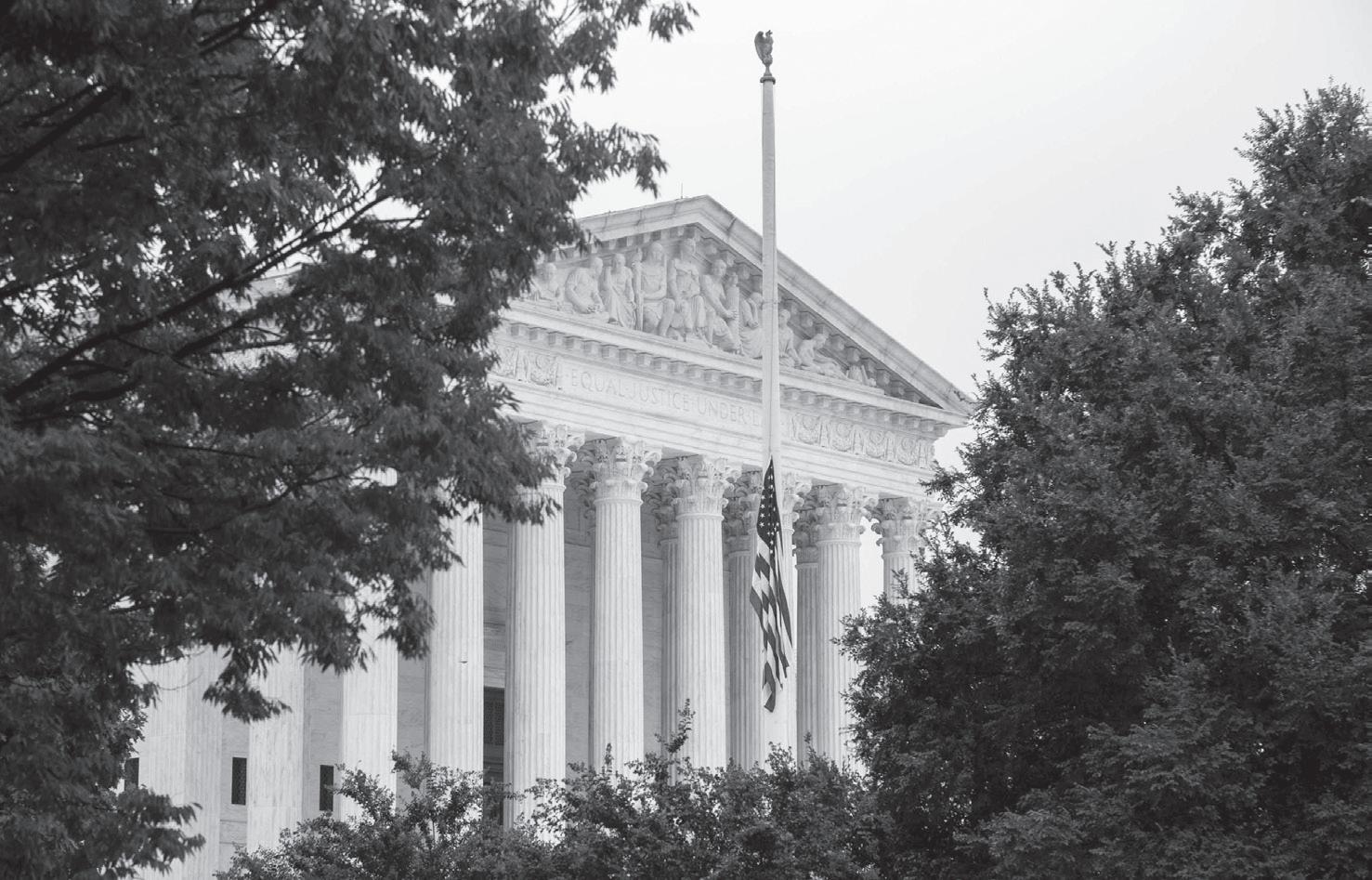
The U.S. Supreme Court will hear oral arguments Wednesday for Medina v. Planned Parenthood South Atlantic, which will determine if the state of South Carolina’s 2018 decision to deny Medicaid funding to Planned Parenthood infringes on Medicaid beneficiaries’ right to choose their health care providers. In response, 490 public health deans, organizations and professors — including 40 GW faculty members from the Milken Institute School of Public Health and the School of Medicine and Health Sciences — submitted an amicus brief urging the U.S. Supreme Court to rule to protect Medicaid coverage for providers.
An amicus brief, Latin for “friend of the court,” is a legal brief submitted in a court case by an uninvolved party to relay relevant information that the court may not have
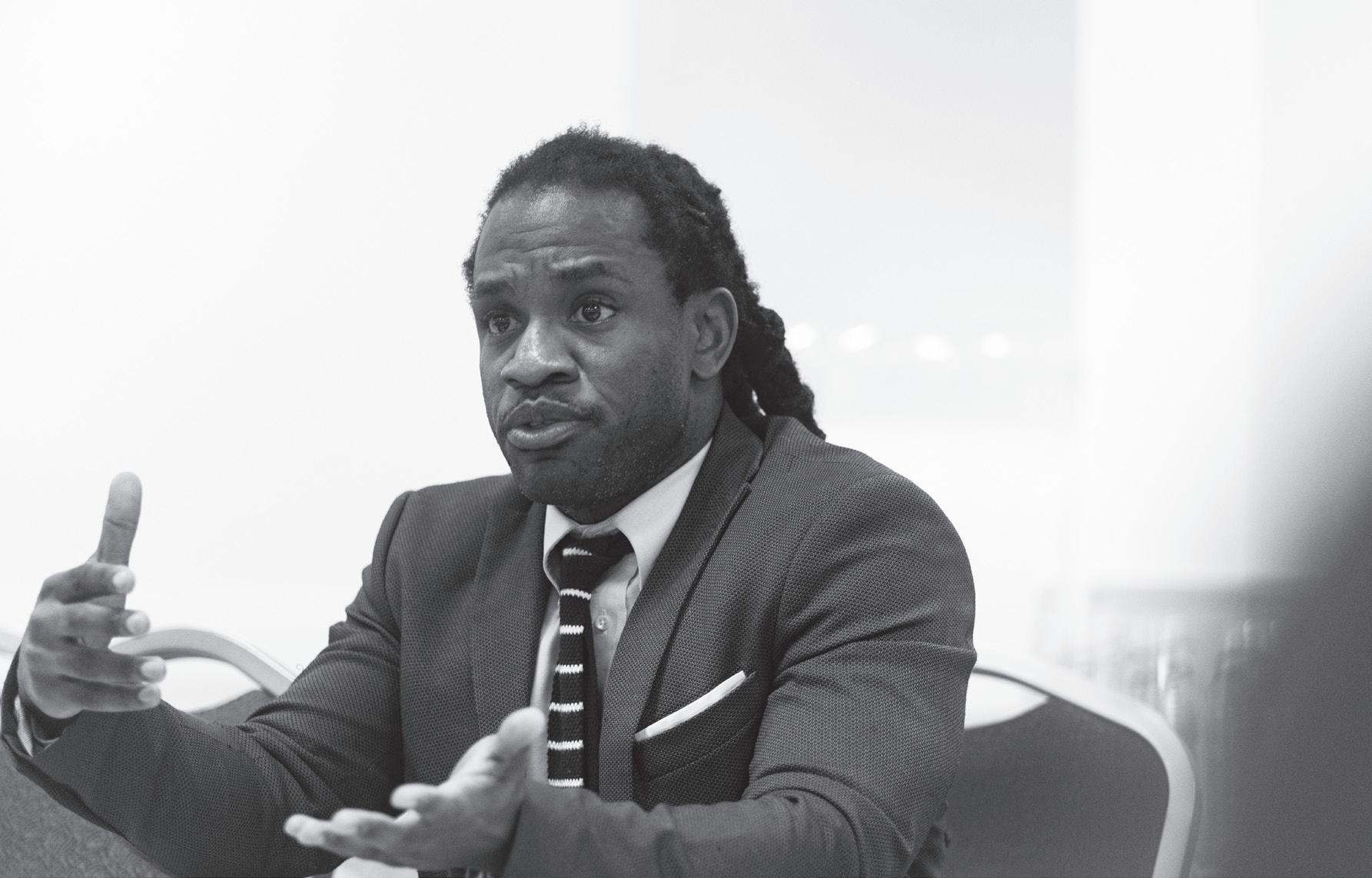
considered. MaryBeth Musumeci, a professor of health policy and management who coordinated the creation of the amicus brief, said faculty signed on to provide the perspective of professionals in public health on Planned Parenthood and underscore the benefits of family planning services.
“Failure to preserve Medicaid beneficiaries’ free choice of provider protection as a privately enforceable right would allow states, acting for ideological reasons, to strip women of access to qualified and trusted providers for reasons wholly unrelated to the provider’s ability to offer high-quality covered services,” the brief states.
As the leading provider of reproductive health care services in the United States, conservatives have targeted Planned Parenthood since the overturning of Roe v. Wade in 2022.
In 2018, Republican South Carolina Governor Henry McMaster issued an executive order removing abortion clinics from the list of Medicaid providers in the state, including Planned Parenthood. The Fourth Circuit Court of Appeals has repeatedly blocked the decision, and now the Supreme Court
will make a final ruling to determine whether Medicaid beneficiaries can choose their health care providers. Abortion is banned after six weeks of pregnancy in South Carolina.
Musumeci said she organized the creation of the brief by reaching out to professors and deans around the country who in 2022 had signed on to an amicus brief regarding the Dobbs v. Jackson and asked if they would sign onto this case since it also deals with issues related to reproductive health care.
Musumeci said the South Carolina governor’s blockage of Medicaid coverage for Planned Parenthood violates federal law due to the court basing the block on Planned Parenthood’s provision of reproductive services instead of the quality of all of the organization’s services. Musumeci said amicus briefs are beneficial because they add context from professionals in the industry that the judges may not be aware of in complex cases.
“Our group’s goal is to be able to amass that evidence and expertise and present it to the court so that they can be informed about the consequences of their decisions,” Musumeci said.
From Page 1
The Faculty Code clause states that regular faculty in nontenure track positions should not exceed 25 percent in any school and that officials should tenure 50 percent of regular faculty in a given department. The requirement does not apply to the School of Medicine & Health Sciences, the School of Nursing, the Milken Institute School of Public Health and the College of Professional Studies, according to the clause.
The Faculty Code does not present a consequence for departments or schools that fail to meet the minimum threshold for tenured or tenure-track faculty.
The Columbian College of Arts & Sciences fell short of meeting the 75 percent tenure rule for the seventh year, according to the annual core indicators report presented earlier this month. The Graduate School of Education and Human Development met the 75 percent tenure threshold for the first time within the last decade, according to the report.
In 2024, there were 7,702 total students enrolled in CCAS, the largest school at the University, and 958 total students enrolled in GSEHD, according to the enrollment dashboard.
Tenure status for all regular faculty fell from 71.5 per-
cent in fall 2023 to 70.7 percent in fall 2024.
Garbitt said the “strategic addition” of tenure-track faculty lines across the University is a “critical consideration” for GW’s fiscal plans and scholarly endeavors. She said the University completes “analyses” each year to determine compliance with Faculty Code.
“Tenured faculty are crucial to the success of our GW community, and are at the heart of the University’s aspirations of achieving preeminence as a comprehensive global research institution,” Garbitt said in an email.
The last time the percentage of tenured or tenure-track regular faculty within CCAS
met the threshold set by the clause was in fall 2017, with exactly 75 percent of regular faculty being tenured or on a tenure-track. In fall 2024, 73 percent of the school’s regular faculty were tenured or on a tenure-track.
The School of Business, the Elliott School of International Affairs, GW Law and the School of Engineering & Applied Science have all met or exceeded the 75 percent threshold every year for the past decade.
Faculty senators earlier this month raised concerns about the continued decline of tenured and tenure-track faculty and said the trends could ultimately shrink the group to zero.
Similar conversations occurred during a Faculty Senate meeting in March 2024, where faculty senators said tenure-line faculty are essential for continuity within departments.
Heather Bamford, a faculty senator, said officials are replacing tenure-track positions with “contingent” faculty who she said are “inadequately compensated.” She added that officials may not be creating new tenure lines because of “perceived cost savings” for the University.
“Tenure-track positions, which require work in the three areas of research, teaching, and service, are relatively expensive and are increasingly being replaced by
From Page 1
Bracey’s comments came two weeks after officials announced that GW is implementing a “position management review process,” meaning promotions and hiring require an extra “level of review” by University leadership before approval. The new process aims to ensure GW stays within its budget in response to the headwinds in higher education posed by President Donald Trump’s recent executive actions, officials said.
Since taking office in January, Trump and his administration have worked to dismantle what they see as a liberal bias in higher education, threatening or pulling funding from institutions that do not align with the administration’s curriculum, staffing and admission priorities. The Staff Council released a statement in response to the announcement in late February, where they said staff members are “deeply concerned” about the position review’s implications, adding that the language raised concerns about potential job cuts.
University spokesperson Julia Garbitt said officials have made “many efforts” to address “employ
contingent positions at many universities,” Bamford wrote in an email. For the 2023-24 academic year, the law school offered the highest average salary for tenure-status faculty with the title of professor at $290,812, according to the 2025 core indicators report. GSEHD had the lowest average salary for tenure faculty with the title of professor at $141,708. CCAS had the lowest salary for nontenure status faculty holding the title of professor, with an average salary of $143,312 in the 2023-24 academic year. Milken had the highest average salary for nontenure faculty with the professor title at $180,521.
support the community. She said it’s important the University stays prepared for any “financial difficulties” in the road ahead.
Higher education experts said low staffing feeds staff fatigue, hampering student and faculty experiences. But they warned that hiring additional staff is “very difficult” and uncertain under the Trump administration, especially as the federal government continues to strain universities’ financial resources.
Robert Kelchen, who heads the Department of Educational Leadership and Policy Studies at the University of Tennessee, Knoxville, said GW’s staff-student ratio means “there are questions” about whether students can access support when they need it. Kelchen said additional staffing decisions would go through the “highest levels of University administration” and likely take up to two years to do “strategic hiring.”
KC Culver, an assistant professor of higher education administration at the University of Alabama, said hiring more staff will help students and employees feel more supported, providing extra resources to students while also lowering the workload on individual staff members.
To move forward from the pandemic, we must look back
No one wants to think about March 2020.
That month, we were all socially distancing, wearing masks and wiping down our groceries. It was the first month when the world shut down, the beginning of the millions of deaths from the COVID-19 pandemic, school and business closures, employment declines and social isolation. The whole period was, in a word, dire. It’s fair to not want to reflect back on that time.
But maybe we should. The tribulations of everything that happened five years ago are easy to block out, but by doing that we just keep ourselves and our society in the stasis of summer 2020. Those first six months of the pandemic, when it seemed like the whole world was falling apart, also brought small wins on issues where the country is currently flailing, like widespread activism and a focus on mental health. Five years out, if we want to move on from the pandemic and take any good away from the time, we have to talk about all the lows. If we look back at our staff editorials from this semester alone, COVID-19 fanned the flame of so many of the issues that have emerged as the most pressing within our community. The pandemic drove us apart and made us lonelier. Isolation drove us online and away from the real world, polarizing how we talk about politics. Distrust in govern -
Why I
ment, particularly scrutiny of our health institutions whose handling of the pandemic have faced increasing questions, soared. Months of classes over Zoom hurt student learning and attention spans, particularly among those just entering school, and now generative artificial intelligence dominates our classrooms.
Thinking we can solve any
problem without acknowledging what caused it isn’t realistic. If we want to take on the most pressing worries in our society, we need to start reflecting on everything that happened five years ago when the pandemic started, even though we might have blocked out the hardships of that time. Take our editorial board meeting this past week. As we
ike many students, I have been contemplating for the past couple of months my internship during President Donald Trump’s administration. After mulling it over, I decided that working at the Kennedy Center is not aligned with who I am.
The Kennedy Center public relations internship was my dream opportunity. I’ve spent countless nights at the Kennedy Center attending shows and sometimes just hanging out on the roof. After seven semesters of rejection, I finally got the internship during my senior spring. The stars had aligned, and working there was magic. Walking through the Hall of Nations to the internal offices felt surreal. I even left behind Broadway star Alex Brightman heading to his Watergate apartment — without fangirling because I wanted to seem cool. It was everything I’d dreamed of. Disaster struck on Feb. 7. Trump announced at the end of the day that he would be removing David Rubenstein as the chair of the Kennedy Center board and instating himself. We had no idea if what was happening was real, legal or even true. By Feb. 12, catastrophe: An all-staff meeting announced Trump’s appointment as board chair. Trump loyalists had gutted and replaced the center’s whole leadership team. The afternoon after
the news broke, the Kennedy Center PR inbox was filled with outrage, calling us weak and spineless and wishing us the worst. Seeing the emails took me back to a mental space I had long tried to suppress. It transported me back to my Capitol Hill experience in fall 2023. Working for a congressman whose Israel-Palestine views contradicted mine, I endured being called horrible names by constituents while dutifully taking notes. It wasn’t just the name-calling that got to me, it was the claims that I was complicit, that I was spineless and so many horrendous things to say to a 19-year-old girl. On the Hill, I felt subhuman — selling my soul for less than minimum wage and a resume line. I went home daily in tears. The voices of the people who called the office crying, screaming and begging haunted me for months afterward. I still regret staying to this day, but back then I didn’t think I could’ve left.
My resume needed this, I told myself daily. I needed this job. In many ways, that internship opened doors to Amtrak, eventually the Feminist Majority Foundation and the Kennedy Center, so I justified it as a necessary evil. I still maintain that asking myself to walk away from my first internship as a junior was too big of an ask and that without it I would not have had the opportunities that I ended up receiving.
My circumstances were completely different when Trump took over the Kennedy Center. As a graduating senior with full-time job interviews lined up, I wasn’t
trapped. I could walk away, and I was privileged enough to do so. I couldn’t work for someone who stifles voices he disagrees with, not while working in PR with a political communication degree. My training and education has taught me better.
I kept thinking that nothing, not even post-graduate plans, was more crucial than doing the right thing and standing up to Trump.
I am not here to tell anyone to quit their jobs — I’m not an idealist in this way. Instead, I am asking everyone to ask themselves what they believe in. I call on every person interning in places making decisions they don’t agree with to ask themselves: How far is too far? When am I complacent about this organization’s wrongdoings, and how long will I be okay with that?
Take time to draw your ethical boundaries. Think about the books, movies, music and philosophers that have shaped you and your beliefs and write down what that moral compass is. Then, memorize, study and know it better than anything else. As you venture into the world of work and internships, ensure that everything you do aligns with these boundaries. I’m proud of my decision to leave the Kennedy Center. Now, weeks since my last day, I can say it hurt to walk away but knowing I refused to participate in something I fundamentally oppose keeps me going — even with a smaller coffee budget until June.
— Aaliyah Guzman, a senior majoring in political communication, is an opinions writer.
Lall talked about the pandemic, repressed memories from early 2020 started to resurface. We hadn’t wanted to remember those bitter and almost hardto-believe moments, like standing outside a COVID-19 testing site, 6 feet apart, waiting to get a swab up our nose. Reflecting on all that happened in the first months of 2020 helped us see some con -
nections between then and now, highlighting how the pandemic drove so many of our present concerns. But it also let us see the rare bright spots from that period. Protesters nationwide took to the streets to decry cases of police brutality and demand reform to our law enforcement systems. We explored new forms of learning and working — taking classes outside and adapting to working from home. And we set a precedent to prioritize self-care and mental health during our countless hours alone with ourselves — a trend that has carried over to discourse and policies today.
But life goes on, and the lessons that once served as the bedrock of our daily routines are washed over by political and societal shifts. For example, D.C. has uprooted its Black Lives Matter plaza in response to funding threats from Trump, our classes and workdays have returned to inperson formats and mental health conversations still tend to fall through the cracks. But remembering the realities of our days masked and socially distanced is crucial to understanding how we got to where we are now.
Memories from five years ago might not totally count as “history,” but the classic saying still applies: Those who forget history are doomed to repeat it. If we forget everything that happened when the COVID-19 pandemic started, we can’t fix the issues that arose from the time or benefit from any of the era’s good.
Our post-pandemic world lacks respect
ast week marked five years since the World Health Organization declared COVID-19 a global pandemic, businesses shut down and people went into isolation. Socialization changed overnight. Children went from seeing their friends and teachers every day in person to not seeing them for months. Many employers moved jobs online, and people who couldn’t transition to remote work lost their jobs. Since then, our world has transitioned back to a new normal where people have maintained their isolation tendencies by acting antisocial and forgetting they are a part of a larger community.
Many students, whose
days used to be filled with classroom discussions, hanging out with friends or participating in student organizations, lost their social skills after living in lockdown for at least three months and having limited in-person interactions for over a year. I was in eighth grade when the pandemic started, and I experienced some social isolation issues when it ended in my sophomore year of high school. I found it hard to make friends once I had started high school because I was so used to being at home all day. I developed antisocial
habits like cancelling plans last minute or not responding to text messages. When you are locked in your house, you only have to think about yourself and anyone you live with. When returning to normal society, it is understandable that thinking further than yourself can be difficult.
Ever since we have come back from COVID, I have noticed people are wrapped up in their own worlds more than they used to be prior to March 2020. Before the pandemic, people would take punctuality very seriously, always arriving on time or having a sense of urgency when it came to their academic or social responsibilities. Now, I see students sitting in class on their phones and not paying attention to their professor or leaving in the middle of class, which I wouldn’t see as often before the pandemic. In college, I’ve noticed many of my peers walking in late to classes and acting as if it isn’t disrespectful to the professor.
Before the pandemic, people would use headphones if they were listening to music or watching a video on public transportation, and if they took a call, it wouldn’t be on speakerphone. But after the pandemic, some people tend to blast audio from their phone at full volume in public. The pandemic isolated us, and because of the solitude we have had trouble respectfully interacting with others. Social media use was
rampant during the pandemic to stay connected with people outside of our households and contributed to the antisocial culture. But social media has restricted our ability to return to full normalcy after the pandemic by allowing people to hide behind screens and refrain from socializing.
Despite the decrease in interaction, I do not feel empathy is dead. Some people have actually grown more empathetic during the pandemic, volunteering for charitable causes like natural disasters and getting involved in activism like the Black Lives Matter movement. But since the pandemic ended, it’s become harder to get people more willingly involved in their community. People should be able to lean on the people around them for support. It will take years for our society to realize that living antisocially is not going to benefit anyone in the long run because right now people are content with thinking only about themselves. It is crucial for people to get involved with their communities and shift selfishness to selflessness. We can remind society what a community can do to benefit everyone and help build respect and empathy toward each other.
—Alexia Green, a firstyear majoring in journalism and mass communications, is an opinions writer.
KHANH DANG REPORTER
While college basketball players are busy hitting threes in the latest March Madness matchups, students watching from home are praying for their parlays to hit.
Deregulation and app developments have propelled sports betting to new heights in recent years, driving many college students to spend their time winning and losing money by placing bets from the digital comfort of their phones. From high rollers to casual bettors to gambling critics, students say sports betting has hooked many college students and urge young adults to educate themselves about the mental health consequences and addiction risk posed by gambling.
Sports betting is currently legal in 38 states and the District. Legalization of sports betting expanded across the country in the wake of a 2018 Supreme Court decision that allowed for legal sports gambling outside of Nevada, leading to the proliferation of apps in the United States.
The same year, the D.C. Council legalized sports betting for all residents and visitors 18 years or older, making the District one of the only places — besides Kentucky, New Hampshire, Rhode Island and Wyoming — where the legal age for sports betting is 18.
A 2023 NCAA study found that more than two-thirds of 18 to 22 year olds on college campuses have bet on sports. This year, Americans are expected to collectively bet an estimated $3.1 billion in legal wagers on the March Madness tournament.
“I’d say it started from the peer pressure and then thinking that I’m smarter than them,” said Iko Kontselidze, a first-year studying finance.
He said he started sports betting at the age of 17 when he felt persuaded by his close friends who were already dabbling in online gambling. Kontselidze’s friends would ask him for money to bet on a game together, but he’d often disagree with their gambling decision-making — leading him to make solo bets, he said. Now, Konteslidze said he
mostly bets on soccer games once or twice a month, focusing on championship games. He said he typically uses a VPN to hide his IP address and access the banned cryptocurrencybased prediction market app Polymarket, which allows users to bet on the outcome of a variety of sport games and other real-world events, from whether or not the United States would ban TikTok to when Taylor Swift will get engaged.
Polymarket has blocked access to American consumers since 2022, following a settlement in which Polymarket paid the Commodity Futures Trading Commission $1.4 million dollars due to allegations that the app ran an illegal, unregistered platform for trading options contracts tied to real events.
The app has drawn criticism in recent months for allowing users to bet on the 2024 presidential election and the number of acres of land that would burn in the Palisades fire in January.
Kontselidze said his biggest win and biggest loss occurred on back-to-back weeks earlier this month, when he bet $40 on a Liverpool and Paris Saint-Germain matchup, won $200, put down the same $200 on another Liverpool and Paris Saint-Germain game the next week and lost the $200 altogether.
This experience taught Kontselidze about the “rabbit hole” sports betting can become when you don’t place value on the money used to place bets, he said.
“You don’t think about your losses. You think about your wins,” Kontselidze said. “When you win 20 bucks then you feel like that 20 bucks is now free, so you’re gonna bet that.”
He said his back-to-back win and loss was a “learning experience” to be more responsible with his betting and to know when it’s time to cash out. He said he has not personally experienced sports betting addiction and tries to keep an optimistic perspective when his bets don’t work out.
“I try not to think about mental health that much,” Kontselidze said. “So I would say, I could be sad for two minutes, but then I would say, life moves on. It’s just a game. It’s just money.”

Last call for karaoke: Hill Country takes its final bow
BROOKE
BROOKE
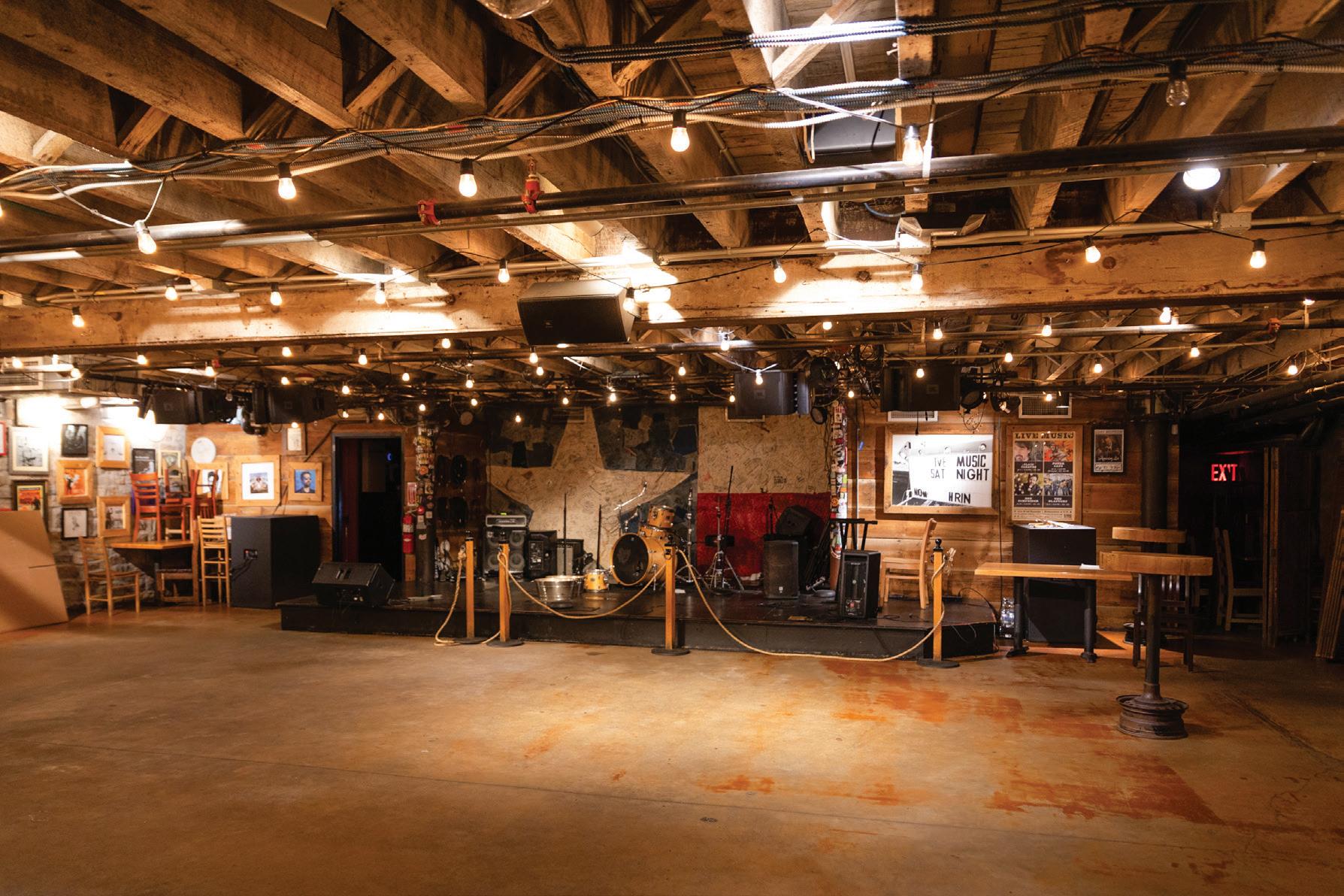
The floor of Hill Country Barbecue Market pulsed with the booming bass of Carrie Underwood’s “Before He Cheats” as a packed room of 20-somethings drunkenly sang along for the bar’s last-ever Wednesday Night Karaoke.
The Texas-inspired barbecue restaurant has long been a staple for college students and District staffers looking to crack open a cold one and warm up their vocal cords as a midweek reprieve. For one last time before the location’s closure on Thursday, revelers flocked to Hill Country’s basement karaoke bar to sing “Bye Bye Bye” to a mainstay of D.C. nightlife.
Behind a glass window with neon red signs, the final Wednesday night saw a crowded room of faux Texans and students clad in black Tshirts and denim trying to steal glances at an iPad with lyrics in the center of the room where performers queued up songs. The patrons said goodbye to Hill Country with a performance of “Don’t Stop Believin’” at the night’s end, saying goodbye to the massive Texas stars on the wall and wooden tables that filled the room.
For some alumni present at the farewell karaoke like Perrin Brown, a 2019 Elliott School of International Affairs gradu-
ate who now works on Capitol Hill, Wednesday karaoke did not end after receiving a diploma. Since Brown’s junior year, he was a consistent presence at karaoke nights, having been about 30 times over the past seven years, he said.
“It just became a natural place to see people you know and to sing with them,” Brown said.
Hill Country called Penn Quarter home for 14 years and permanently closed its doors Thursday night after giving only about a week’s notice for regulars to gear up for its final days, a closure first reported by PoPville on March 19. The Eater later reported that the restaurant operated on a monthto-month lease, and the building’s agent, Marx Realty, terminated the lease this month, despite the restaurant’s efforts to extend their stay long term.
Replacing Hill Country is a New York Citybased bitcoin bar, Pubkey Bar and Media House, offering patrons a menu ranging from waffle fries and wings to hot dogs and sandwiches, according to PoPville.
Hill Country was the setting of Brown’s wedding rehearsal dinner with his wife in 2023, he said. Brown said he and his now wife, who is also a GW alum, also went to Hill Country as one of their first dates after they both turned 21.
“My wife and I are both from the South,” Brown said. “We were told that there’s this place
that has live music, country music, karaoke, and we went with a bunch of friends, and it was one of the best nights ever, and we started dating soon after, and so it was always kind of a special place for us.”
As “frequent flyers” at the bar, Brown said the band started recognizing him and his wife and invited them backstage multiple times to “hang out.” By the time the couple was poised to tie the knot, Brown said they decided to pay homage to their southern and GW roots by booking Hill Country for their rehearsal dinner.
“We did the dinner and then we had the band do the live music afterwards with everybody for the welcome party, and everyone was like, ‘This is the most fun wedding party thing we’ve ever been to,’” Brown said.
On Wednesday night, Brown said he and his wife, who was already downstairs dancing as he waited in line to get into the crowded bar, pulled together a group of D.C.based GW alums to make one final night of memories at Hill Country’s last karaoke night.
“It’s kind of a dark time in D.C. depending on your politics, but for me at least, and I’m sad that a place that kind of brought a lot of folks together for good memories is closing,” Brown said.
The District is also home to a handful of other karaoke bars, like Chinatown’s Wok and Roll and Downtown’s Re-
As cherry blossom petals drift down into the Tidal Basin, the remnants of the flowers can also be found sprinkling District cuisine. Whether it’s a cherry filling inside a doughnut or the design of the blossoms onto the foam of a latte, many of the city’s food and beverage locales have introduced an array of treats inspired by the prettypink flowers. Here are a few that we’ve indulged in, ranked from the just-okays to the must-trys — rated, naturally, from 1 to 5 cherry blossoms.
Astro Doughnuts & Fried Chicken’s Cherry Blossom Doughnut: 3.5 out of 5 blossoms
Diana Anos | Staff Writer




Sandwiched on G Street be-
the Alcohol and Tax Trade Bureau and oil magnate Chevron’s lobbying building, Astro Dough-
nuts & Fried Chicken is serving up their annual Cherry Blossom Doughnut. The Cherry Blossom Doughnut ($6.05) has a thin layer of cream cheese glaze veiling the squareshaped dough, with a dark chocolate frosting tree branch and cherry buttercream blossoms painted on top. The doughnut itself is thick and is filled with a cherry jam. As someone who steers clear of jamfilled doughnuts because of texture issues, this was where some points fell off. The sections with filling were somewhat bearable, but the doughnut part stayed strong in flavor.
Georgetown Cupcake’s Cherry Blossom Cupcake: 3.5 out of 5 blossoms
Carly Cavanaugh | Staff Writer
Georgetown Cupcake has become a world-famous dessert destination, boasting a three-season reality show and consistent wraparound lines stretching down the block. Their Cherry Blossom Cupcake ($3.95) — a vanilla cupcake with baked-in maraschino cherries,
a cherry cream cheese frosting and a fondant cherry blossom — was a doughy take on the Washingtonian cherry-blossom-treat frenzy. The baked-in cherries added texture and a sweet, fruity flavor, but the cake itself was fairly dry and lacking in a strong vanilla flavor.
Pearl’s Bagels’ Foggy Blossom Latte: 4 out of 5 blossoms Diana Anos | Staff Writer
Known for their bagels and French Bulldog logo, Pearl’s Bagels also offers an awkwardly named Foggy Blossom Latte ($5.25), their seasonal take on a London Fog with a floral cherry blossom flavor. The cherry blossom vibes were high in the shop, with sticker decals on the windows and fake flowers lining the ceilings. Paired with a savory bagel sandwich, the sweet drink was a great escape from the endless cycle of coffees during midterm season. While the taste of the floral tea was quite lovely, every few sips the drink started to taste like floral perfume.
cessions, but Hill Country had set itself apart for its live band accompaniment and country aesthetics, regulars said. Hill Country’s 10-member HariKaraoke Band, which will now play at nearby bar Penn Social, has a repertoire of more than 500 songs for karaoke hopefuls to select.
Kenny Lewis, the drummer and manager of HariKaraoke, said the band has been accompanying Hill Country singers since the bar’s booking manager approached them 14 years ago. He said the bar’s closure is “sad,” but he is satisfied with the band’s tenure there.
“I understand these things happen,” Lewis said, “We had a long, successful run, so I don’t have any regrets.”
Lewis said he knew a karaoke night was successful when the basement looked like a “disaster” at the end of the night, with broken bottles scattering the wood floors. He said the band is especially appreciative of the GW students, who consistently showed up and showed out for Wednesday karaoke.
“That was one of our best nights because you guys all came in before classes started,” Lewis said. “You were, I think, our best customer, our best fan.”
Sophie Blackman, a senior studying psychology, said she said she was saddened to learn the restaurant was closing its doors for good because the Penn Quarter institution and its fans “deserve to be here.”







NOLAN GREJDA REPORTER
Club sports team leaders said new University rules for club sports teams, including uniform regulations and a transition to a new online administrative platform, has sparked adjustments for players.
Associate Director of Programming Erik Strouse informed all 44 club teams in an email in October of a string of new policies, like standardizing uniforms and placing guardrails for club-related travel plans, and the teams were required to transition to using an administrative online platform. Five club sports student presidents said the new rules have added onto their workload and in some cases triggered a loss of team identity.
Club leaders said that all participants must create an account on Do Sports Easy, the campus recreation management system used to manage events, after club teams previously used GW Engage to handle events. Officials are also requiring teams to submit event and travel requests at least 30 days in advance of programming, and teams must also follow new driver policies when traveling to and from events.
Officials also now require all teams to use licensed GW logos and text for uniformity, according
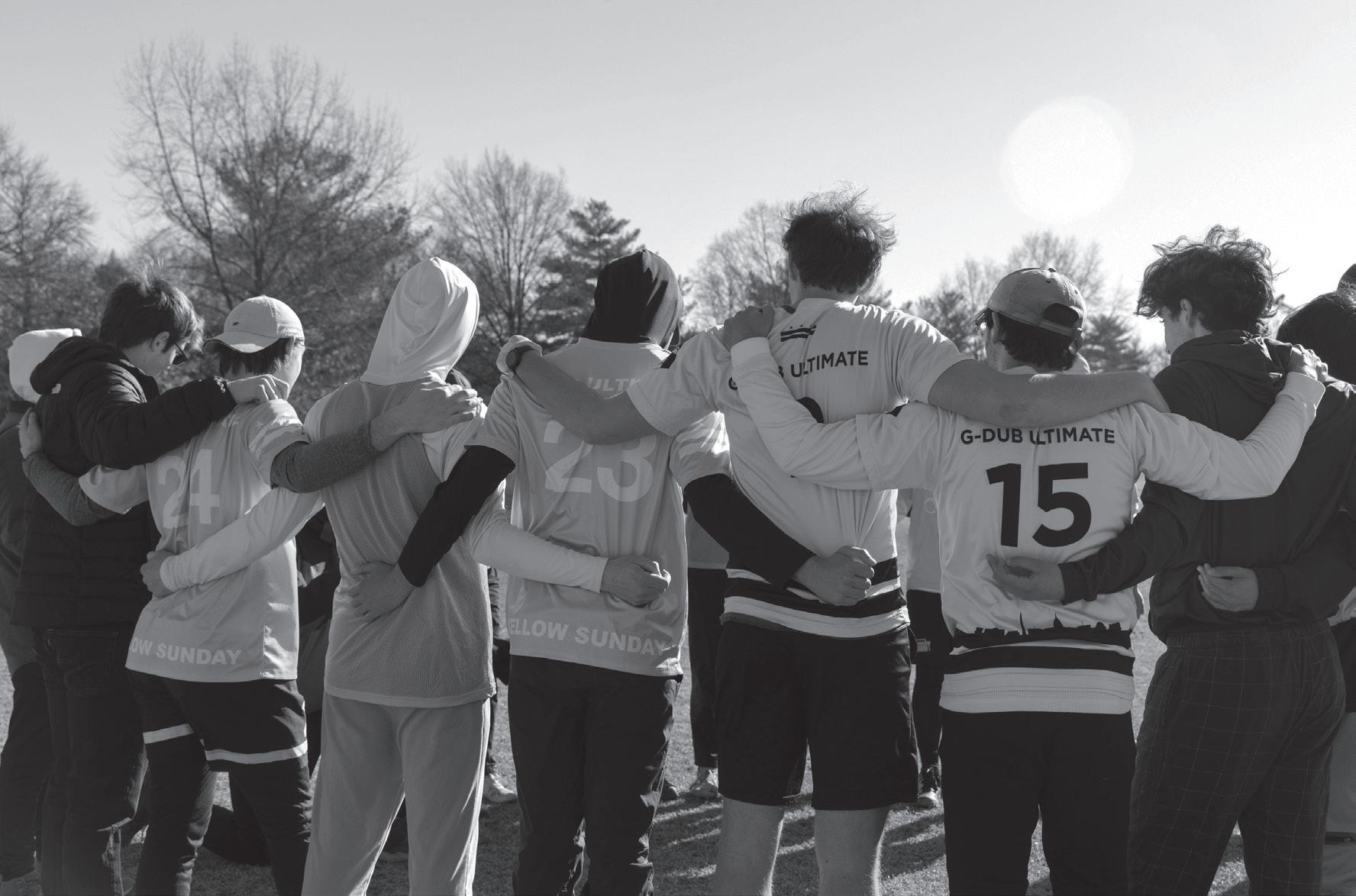
to club sports members, while the previous policy allowed club teams to wear club-made or general University gear, distinguishing themselves from varsity teams.
University spokesperson Shannon McClendon said officials
put in place Do Sports Easy — a “commonly used” platform that manages all campus recreation operations and programming — to help ensure that GW Club Sports is a “fun and organized experience” for members across many teams
and sports.” GW Men’s Club Ultimate Frisbee
President Andrew Horton said the updated rules and guidelines, specifically the transition to DSE and are “frustrating.” He said his team has always been the “GW Hippos,” a
WIDJAJA
KRISTI
STAFF WRITER
Softball (22-10, 8-1 Atlantic 10) swept Dayton (15-12, 5-4 A-10) in a threegame series at home over the weekend and stands at first place in the A-10.
The Revolutionaries won the first game of a Saturday doubleheader 2-0 and bested the Flyers 4-1 in the second. The Revs managed a seventh-inning rally in the final game Sunday, with freshman infielder Emi Todoroki walking it off with an RBI double to win 5-4 after trailing 4-0 earlier in the match.
After finishing last year seventh in A-10 standings with an 11-14 conference record, the Revs have catapulted to the top of the conference and are the only team with just one conference loss, which came in a March 22 game against Massachusetts.
Cece Smith dominated her seven innings. The Revs’ offense was rolling, however, including graduate student catcher Allison Heffley, who homered in the team’s first
at bat.
Heffley said winning a series against a top team like Dayton is a positive sign for the team.
“They’re a good team and just knowing that we’re able to band together and figure out a way, no matter what the runs on the board and about scoring them, it’s really huge,” Heffley said after the doubleheader.
Both teams’ offenses sparked in the first inning of the first Saturday game, with the Flyers’ senior outfielder Emma Schutter stealing home to mark their first run and the Revs bringing in three, including Heffley and junior outfielder Ashley Corpuz. Though the Flyers held off the scoreboard for the final six innings, Corpuz added one more GW run in the sixth to bring the score to 4-1.
Smith pitched the final 1.2 innings of this game, not allowing any Flyers on base. After Saturday’s games, she has pitched 71.1 innings this season, including three complete games.
Dayton jumped out to a
4-0 lead in Sunday’s game as the Flyers managed five hits in the fourth inning, three of which came off Smith. The Revs answered back as Corpuz knocked a home run over the center field wall to bring in three runners in the fifth.
Entering the seventh down 4-3, Corpuz homered yet again, tying the game up at four apiece. After graduate student infielder Madi Mays doubled to left center, Todoroki batted in a pinch runner with a double that bounced off the left-center wall to cement the sweep. After junior infielder Daniella Lew crossed home plate, the team rushed to the infield to swarm Todoroki and celebrate her heroics.
Both Heffley and Corpuz are tied for 94th of the top 100 Division I players in batting, with an average of .420. Schoonmaker said having multiple strong hitters in the lineup is key for the team to bat in runners “[Allison] and Ashley, individually, are having outstanding seasons,” Schoonmaker said. “They
moniker used since the introduction of the club sport decades ago, but players can no longer use the name due to the new guidelines — instead formally switching the team’s name to “George Washington University Men’s Club Ultimate.”
Club sports members said the transition from GW Engage to DSE means teams must now create accounts for all players and additional participants and spend extra time doing day-to-day tasks, like logging practices and travel.
“Thankfully, we had our captains on top of things, and they were able to upload all the practices and our events we’re going to be attending this semester,” Horton said. “Again, the uniform update really messed with us.”
Club Tennis President Rory Smith said the new rules involving the DSE transition have been hard to adjust to since the changes are usually expressed in “newsletters that nobody reads,” and it’s taken time for the teams to learn new expectations.
“Much of my frustration with the administrative side of club sports is that little consideration is placed on how these changes would inconvenience students, especially when it seems like the rules change two or three times a year,” Smith said in a message. “It’s not my fulltime job to be the president of club tennis.”
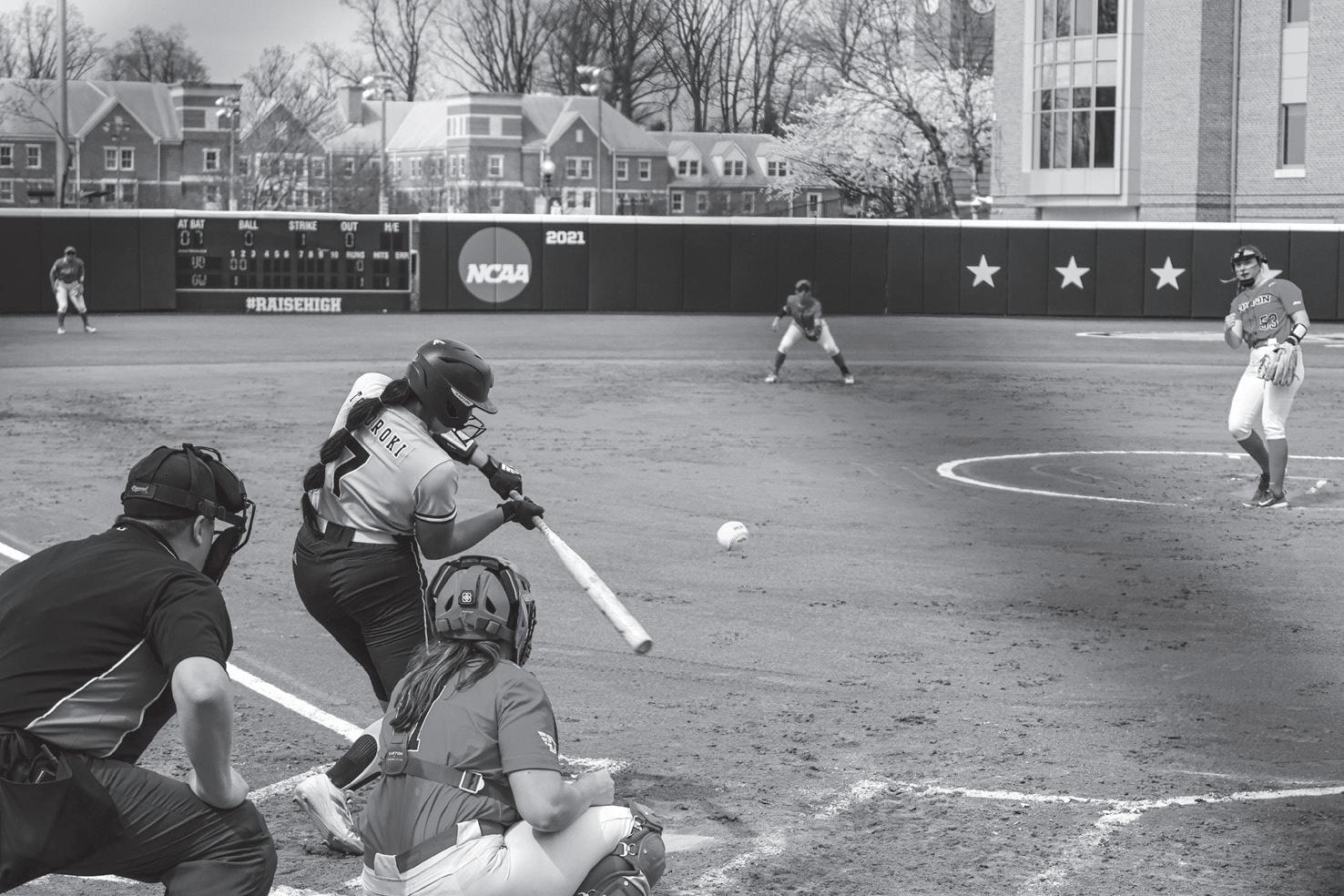
watch a lot of film, they take extra reps, they put in the work in the weight room, and I think you’re seeing the fruits of their labor, but they’re both students of the game, and it certainly is a joy to coach them.”
The first win against Dayton marked
Schoonmaker’s 100th win as a head coach, which she said is a credit to the “remarkable” players she’s had on her teams.
“It’s a privilege of my career to be their head coach and to lead these young women,” Schoonmaker said. “These are remarkable young student-athletes, and
I’ve never pitched a ball here, made an out here, scored a run here and these guys have, so this is a testament to the awesome studentathletes that I get to lead.” The Revs will continue their A-10 conference play in a doubleheader against George Mason on April 2 at 2 and 4:30 p.m.
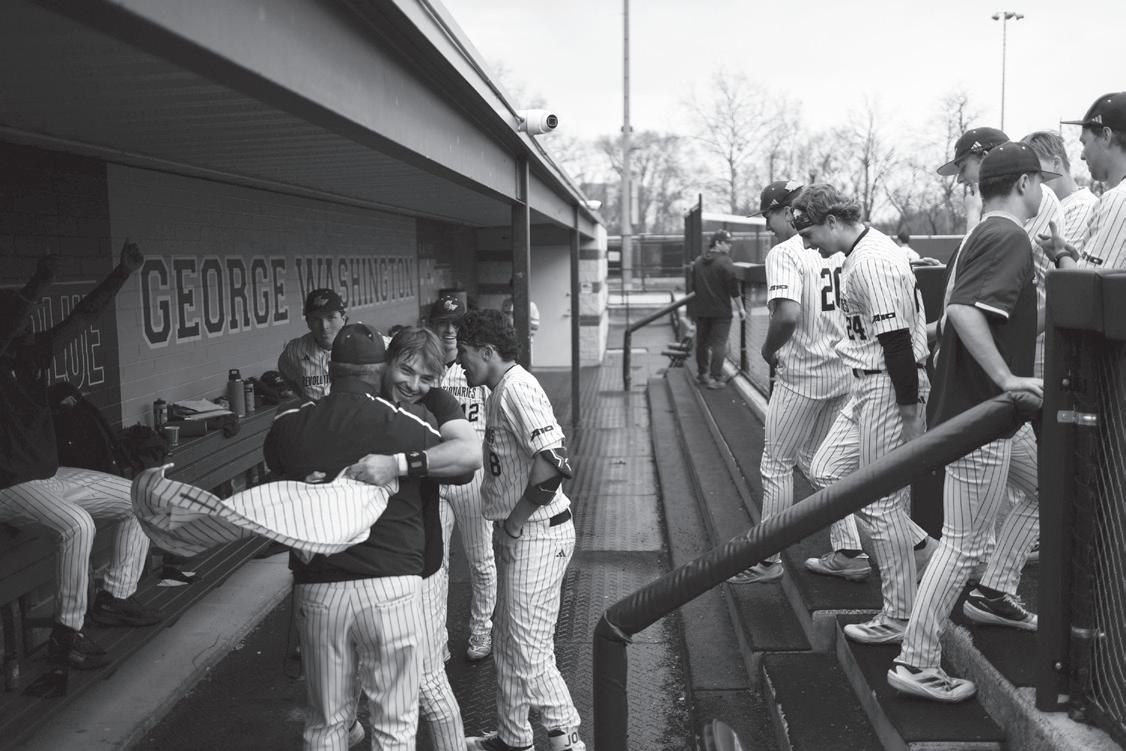
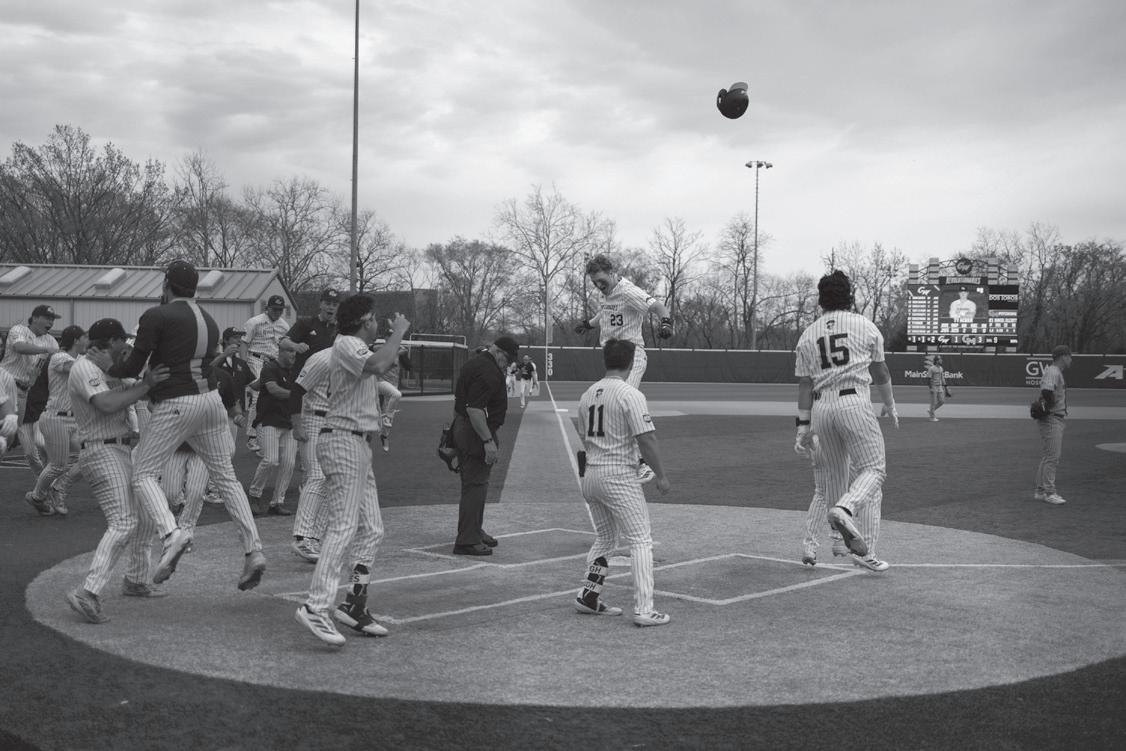
Baseball (15-12, 5-4 Atlantic 10) bested George Mason (17-11, 5-4 A-10) in a three-game series this weekend, winning the first two games before dropping the third on Sunday to end their five-game winning streak.
The Revolutionaries clinched both wins narrowly, with a threerun walk-off home run by senior third baseman Ty Acker delivering a 4-3 win on Friday, and a close 8-7 victory closing out the second game on Saturday. The Patriots pushed back on Sunday, beating the Revs 11-1 in just eight innings, invoking the conference’s 10-run mercy rule.
After Sunday’s game, Head Coach Gregg Ritchie said emotional control has been a key for the team’s success this season, urging players to hone in on their performance despite the tally on the scoreboard.
“We really focused on, whether it was on the pitching side, defensive side or whether it was on the offensive side,” Ritchie said. “We really focused on that but really captivating, compartmentalizing the inning. It is just this inning. The score is 0-0 every single inning we play.”
Friday’s game began as a pitcher’s duel, with both teams struggling offensively. The Revs’ starting pitcher, graduate student
Michael Foltz Jr., pitched six innings, allowing three runs and four hits while striking out six. After a threerun home run by George Mason in the sixth, sophomore catcher Robbie Lavey drove in a run of his own.
With two outs in the ninth, the Revs found themselves down 3-1 at the bottom of the inning. A single and a hit-by-pitch brought two runners on base for Acker, who drilled the ball over the rightcenterfield wall to win the first game 4-3.
Ritchie said Acker’s “clutterfree” mindset at the plate helps him focus during key moments, like the game-winning walk-off.
“Talk about hitters like Acker, it’s a big moment, right?” Ritchie said. “It’s a big moment, you got multiple runners on, the tying run’s at first, the winning run’s at the plate. You can have a lot of things going through your head. And for somebody like him, you got to keep him clutter free.”
The Revs’ momentum carried into Saturday, when they started hot with a strong offensive showing in the first inning. Lavey blasted a three-run home run to right field GW continued their scoring in the third as Marmo doubled to right-center, driving in Gates, followed by an RBI single by Lavey that scored Marmo. Acker added another run with a fielder’s choice RBI, extending the Revs’ lead to 6-1. In the fifth inning, George Mason landed six men on base,
scoring three runs. After a run apiece for GW in the sixth and seventh innings, the Patriots notched three more runs in the eighth, off an RBI double and a tworun home run.
Junior Cade Davis held it down on the mound to close the game, picking up his first save as George Mason failed to tie the match in the ninth inning. With the series clinched in GW’s favor, the Patriots came alive in Sunday’s game, scoring five runs in the second inning alone.
After falling behind 5-0, save for one run in the second, GW failed to match George Mason’s scoring output. The game remained 5-1 until the seventh inning, when the Patriots added two more runs. They piled on four more runs in the eighth, and when GW failed to score in the bottom of the inning, the game ended by mercy rule.
Ritchie said that despite the tough loss on Sunday, he was encouraged by the team’s dogged attitude.
“Our guys just never, ever, ever, ever quit,” Ritchie said. “They just don’t. Even today, when we weren’t really at our best, the vibe in the dugout was still, ‘Let’s go do it, we can still find a way. Let’s find a way.’”
The team will look to take back their victory streak in their face-off against Mount St. Mary’s in Emmitsburg, Maryland, on Tuesday at 3 p.m.