‘Fear in the air’: Student, local groups launch outreach to protect immigrant community
in the District.
GW student groups and community organizations launched training sessions and educational programs in the wake of President Donald Trump’s anti-immigration executive orders to support refugees and prepare for potential raids.
Trump over the last two
months issued a blitz of sweeping immigration orders to carry out his campaign promise of mass deportations and intensified border security, including expanding Immigration and Customs Enforcement arrests, opening a migrant detention center in Guantanamo Bay and halting U.S. entry to refugees.
In response, student and community groups have organized know-your-rights trainings and outreach to refugee students, aiming to mitigate safety concerns among immigrants
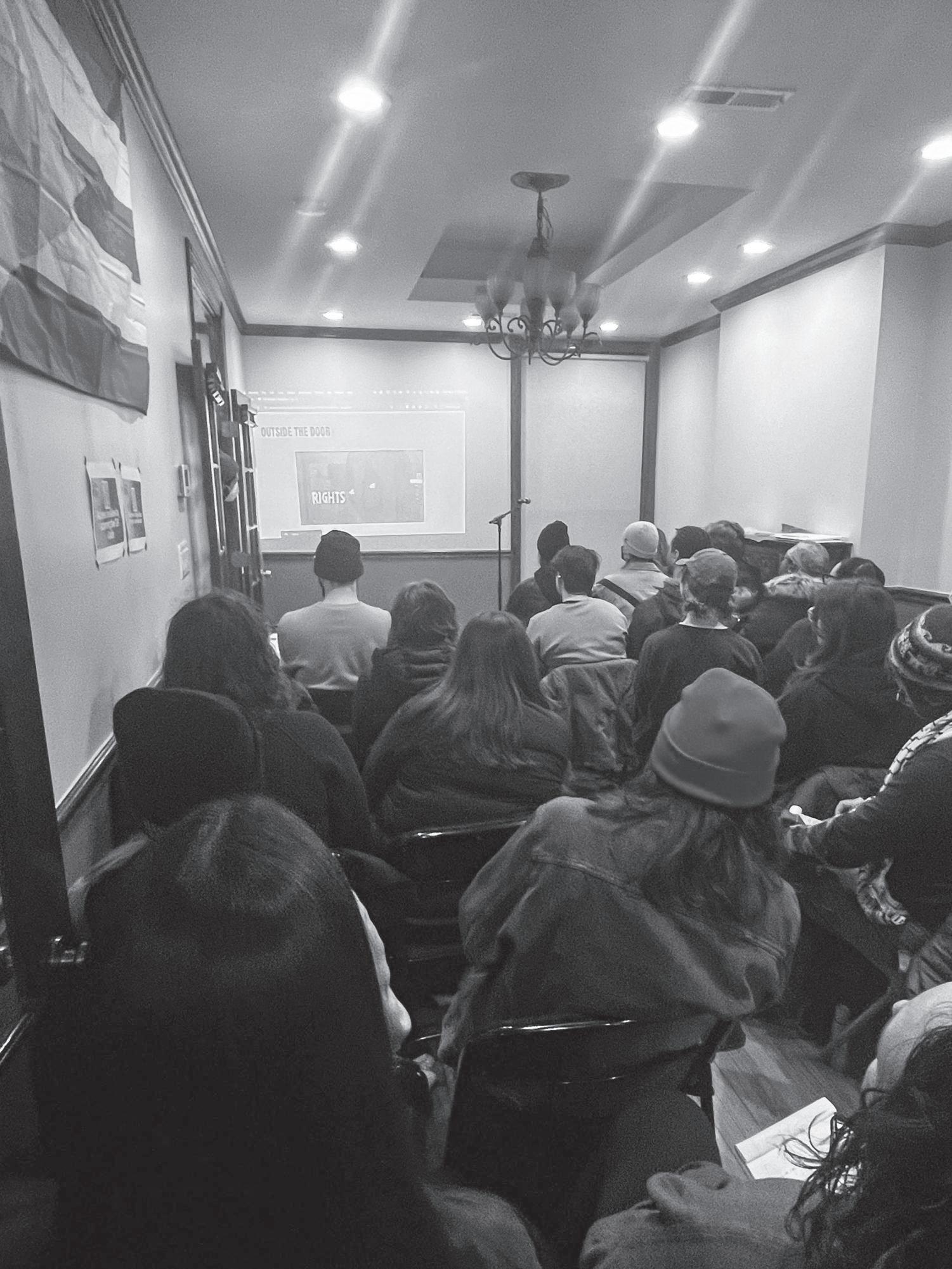
Alfredo Castro — the founder of Son La Lucha, a D.C.-based organization that blends workers’ rights and immigration advocacy with Mexican folk music performances — said the group began organizing trainings following Trump’s inauguration, including one on Feb. 8 at the D.C. Justice Center, to teach community members the legal basics of responding to immigration officers in their homes, cars or workplaces.
He said the trainings aim to help people remain calm and remember their rights in the event of a confrontation with an immigration officer. Castro said there have been “very low” levels of ICE presence in D.C. but that immigration officers have made arrests in Northern Virginia and Maryland.
“Our goal is to decrease fear and decrease panic when this situation is happening,” Castro said.
Officials will add another step to the approval process for faculty and staff hiring and promotions on Monday to protect GW’s “limited” resources amid the impacts of the executive branch’s recent actions to federal funding.
Provost Christopher Bracey, CFO Bruno Fernandes and Chief of Staff Scott Mory said in an email Friday that GW is implementing a “position management review process” in which promotions and hiring require an extra “level of review” by University leadership before approval. The officials said the new process aims to ensure GW stays within its budget in response to the headwinds in higher education posed by President Donald Trump’s recent executive actions.
The officials said the review process would be in effect through fiscal year 2025 and could be extended.
“We want to be clear that GW’s financial position remains strong,” the email states. “However, our resources are more limited than other large research universities, and we must take steps now to anticipate difficulties that lie ahead in order to avoid significant disruptions to our community and the University’s stability.”
The officials said the new review process is not a hiring freeze and that they will continue to hire faculty and staff that are “critical” to advancing the University. The officials said they plan to share more details about the review process with administrative and academic leadership involved in hiring.
“We recognize that this measure, and others we may be forced to take in the future, will require the cooperation and flexibility of all our colleagues,” the email states.
Black Heritage Celebration honors Black culture amid federal attacks on DEI
This year’s Black Heritage Celebration commemorated and highlighted the Black community’s influence through history this month, sparking conversations about retaining representation amid President Donald Trump’s recent threats to end diversity, equity and inclusion programs.
This year’s Black Heritage Celebration, titled “The Blackprint: It’s Been Us,” kicked off Feb. 1 with a keynote speech from former Vine influencer Demetrius Harmon, followed by 21 events from student organizations throughout the month, including a “hairitage” showcase platforming natural hairstyles and an event celebrating The National Association for the Advancement of Colored People’s 116th Founding Day. Student leaders said this
year’s programming emphasized the value of honoring the legacy of the Black community in the wake of the Trump administration’s recent attacks on diversity, equity and inclusion programs nationwide.
BHC Co-Chair Clarke Gilmore, a senior, said the theme of “The Blackprint” aims to incorporate history into BHC programming to add an educational dimension to the celebrations and reflect on the impact of earlier generations through events like panel discussions with GW alumni.
“It’s not just fun celebratory events because we definitely want to emphasize that too, but you’re also truly taking away maybe a new bit of knowledge with it and a new appreciation for Black culture when you attend these events that incorporate our theme,” Gilmore said.
Gilmore said all people of color are affected by the Trump administration’s threats on DEI. Trump issued several executive orders during his first month vowing to cease federal DEI programs and terminate funding for schools who use “racial preferences” as a factor in hiring, admissions and financial aid.
Gilmore said the goal of BHC is to unite Black student organizations on campus to showcase a shared sense of Black community, given that GW is a predominantly white institution.
“It is important that when there is an attack on any marginalized group that that group band together and celebrate one another in the face of adversity,” Gilmore said in a message. “This is why BHC is so crucial.”
Programming included events like Service Day at DC Central Kitchen, the annual Soul Revue
Meet the five students running for top seats on GW Law’s student government
Candidates
As the Student Bar Association nears the end of a term defined by its leaders navigating budget constraints and mending relationships with GW Law officials, law students will elect the body’s next president and executive vice president Monday.
The five students running for the roles campaigned on boosting resources offered through the law school’s career center, strengthening ties with officials and preserving a balanced budget through SBA fundraising. All law students are eligible to vote in the election via a Google Form from 8 a.m. to 8 p.m. Monday. This year, three presidential candidates and two executive vice presidential candidates are running to lead the SBA through its next term, which begins in April.
for SBA president: SBA Executive Vice President Nigel Walton Nigel Walton, a secondyear law student from Georgia, said his experience serving in multiple roles on the SBA has prepared him to take on the role of president, particularly after he assumed the SBA executive vice president role for the 2024-25 term.
place and appoint Walton to executive vice president.
As a SBA senator last year, Walton advocated for continuing the body’s professional development fund, which finances students’ attendance of law conferences. This year, Walton said he was set to assume the role of legislative director until former SBA President Raisa Shah stepped down from the position, leading current SBA President Cherissa Lindsay to assume the role in her
Walton said he will meet
Walton said he will meet monthly with law school officials to improve the SBA’s relationship with administration after he said problems with a member of SBA this year contributed to a law school dean’s refusal to supplement the SBA budget if the body did not meet his funding requirements. “We want a candidate who knows how to talk to the administration,” Walton said. “In the past, our communication with them has been — and I’ll just say it — it’s piss poor.”
Walton said his time on the SBA has taught him how the body’s senate operates. He said his term as vice president during the body’s budget shortage strengthened his ability to work well with senators.
Walton said he will work with the law school Career Development Office to bring an “individualized approach” to the career search by connecting students with alumni who can help them obtain jobs postgraduation.
Vice President of Finance Amanda Hichez: Second-year law student Amanda Hichez said her thorough knowledge of the SBA finance system after a year of managing the body’s limited budget makes her the best candidate for president. Hichez started as the SBA’s deputy vice president of finance last year, where she said she learned the ropes of the body’s budget and placed order requests for student organizations. Lindsay named
Hichez the SBA’s vice president of finance at the start of the fall semester where she has overseen the SBA budget and worked closely with the law school Finance Office to process funding requests.
“hands on” in the budget process because she did
As SBA president, Hichez said she would look forward to helping her predecessor work through the difficulties of handling the SBA budget. She said this year, Lindsay was not as “hands on” in the budget process because she did not originally plan to take on the role of president and work closely with SBA finances. This year was the first time the SBA operated without a surplus budget of funds leftover from unused funds during the COVID-19 pandemic, forcing the SBA to operate with a smaller budget than previous years.
talent showcase and the culminating Finale, which will be held on Feb. 28 at the Gathering Spot
DC — a Black-owned event venue.
COLLAGE BY LEXI CRITCHETT
SAGE RUSSELL | SENIOR PHOTO EDITOR
Kyle Balfour, the president of Young Black Professionals in International
Two-day power outage leaves West End residents without heat, electricity
ELLA MITCHELL
NEWS EDITOR
CONTRIBUTING
RORY
QUEALY
EDITOR
NEWS
Hundreds of residents of West End and parts of Dupont Circle went without power for more than two days this weekend after a fire broke out in a manhole at New Hampshire Avenue and M Street early Friday morning.
Potomac Electric Power Company restored power to residents at about 11 a.m. on Sunday after crews worked on Friday and Saturday to repair damaged energy cables, according to the electric company. The power outage left both tenants and local properties — including apartment buildings, hotels, businesses and The Aston unhoused shelter — in the dark, prompting people to relocate to nearby hotels with power and sparking calls from local governing body leaders for more direct communication from city officials.
“There were a lot of people who just didn’t know what was going on,” said Alex Marshall, a commissioner for Dupont Circle’s Advisory Neighborhood Commission. “They thought this was going to be a few hours.”
Pepco crews responded to a manhole fire at New Hampshire Avenue and M Street at around 5 a.m. on Friday morning, which caused the outage, the company said in an email to local governing body leaders. By about 12:30 p.m. on Sunday, Pepco posted that power had been restored to “all” customers impacted in West End but followed up with a post stating that “a few customers” remain connected to temporary generators and may experience a brief outage as Pepco makes a “transition to perma -
nent solutions.” Marshall said constituents didn’t know the extent of the outage because there was no centralized communication from D.C. officials, with the exception of Ward 2 Councilmember Brooke Pinto who chronicled updates from West End on X, formerly known as Twitter. He said only those who hired Pepco directly could access the updates about the outage, leaving many tenants in nearby apartments without information.
“I think the overall point is a lot of work happened to fix this, but not a lot happened to talk to people about this, and people in the neighborhood really felt like they were kept out of the loop,” Marshall said.
In an email to members of the Community Advisory Team, the group overseeing The Aston, Ward 2 Councilmember Brooke Pinto asked
The Aston’s Assistant Director Natasha Charles and the Department of Human Services to ensure Aston residents had access to “the resources they need.” She said because the power outage persisted overnight, she worked with DHS to transport and move residents to “alternative accommodations.”
“I want to also thank all of the Aston staff and security who have been in the building all day without power or heat,” Pinto said in the email.
The West End Library, which retained its power, remained open until 9 p.m. on Saturday, three hours later than its stated closing time, and opened at 10 a.m. on Sunday, three hours early, for anyone who needed to use the restroom or access charge docks or a warming area, according to emails from Pepco and the Executive Office of the Mayor sent to ANC commissioners.
CRIME LOG
ROBBERY, PICK POCKET/ LARCENY, CREDIT CARD
FRAUD
University Student Center
2/15/25 – 5:50 p.m.
Open Case
GW Police Department officers responded to a report of a robbery. Upon arrival, officers made contact with a female student who said their credit card had been used to make multiple Visa gift card purchases. Case open.
THEFT II/FROM BUILDING
Science and Engineering Hall
2/16/25 – 12:20 p.m.
Closed Case
A female student reported her leather jacket stolen after she left it unattended. GWPD officers recovered the jacket from a GW contractor who was then barred from campus. Subject barred.
THEFT II/FROM BUILDING
Ames Hall
Reported 2/18/25 – Unknown Date and Time
Open Case
A female student reported her clothing delivery stolen. Case open.
A male GW Hospital staff member reported damages to his parked vehicle following a hit-and-run accident. Case open
—Compiled by Ella Mitchell
Students gather to mourn slain hostages returned to Israel in ceasefire deal
Students and community members gathered in Kogan Plaza on Friday to mourn the lives of four Israeli hostages killed while in Hamas captivity whose bodies were returned to Israel last week.
At least 35 students attended the vigil hosted by GW for Israel and cosponsored by GW Hillel and six Jewish student organizations to honor the lives of four hostages whose remains Hamas returned to Israel this week as part of its ceasefire agreement that paused fighting in the Gaza Strip. Students said the return of the hostages’ bodies — the first time
that hostages’ remains were brought back to Israel since Hamas and Israel solidified the ceasefire agreement in mid-January — ignited new pain in the Jewish community.
The Israeli military confirmed Thursday that two of the slain hostages were Ariel and Kfir Bibas, who were four years and nine months old, respectively, when Hamas first kidnapped them Oct. 7, 2023. Hamas claimed that the third body was Shiri Bibas, the mother of the children, but the Israeli military said it could not identify the remains as hers.
The Bibas family confirmed Saturday that Hamas ultimately returned Shiri’s
remains to Israel on Friday, after initially returning the wrong remains. The body of Oded Lifshitz, who was 83 when kidnapped, was also returned to Israel. Hamas has claimed that Israeli airstrikes killed all four hostages, while Israeli officials said they determined using testing that Hamas captors killed Lifshitz and the two children.
“Hamas stole their ability to live their lives,” GWI said in an Instagram statement Friday.
The ceasefire agreement, which Israel and Hamas entered on Jan. 15 after more than 15 months of war, requires Hamas to release the remaining Israeli hostages
in exchange for Palestinian prisoners, along with the withdrawal of Israeli forces and the return of Palestinian civilians to the region. Since then, Hamas has released 25 hostages, along with the remains of the four hostages last week.
More than 600 Palestinians imprisoned in Israel were set for release last Saturday, but the Israeli government delayed the move after the return of the unidentified body that was initially believed to be Shiri.
Hamas attacked Israel on Oct. 7, 2023, killing more than 1,200 Israelis and taking 250 hostage. More than 46,600 Palestinians have been killed in the Israeli military’s coun-
teroffensive, according to Palestinian health authorities.
Students and community members gathered around the Kogan Plaza clock tower at about 4 p.m. on Friday. GW for Israel President Sean Shekhman began the roughly 20-minute vigil by introducing multiple students and community members and delivered the Shema, a Jewish prayer affirming faith in God.
Ariela Zweiback, a graduate student at the School of Nursing, said she learned about the vigil through Instagram and decided to attend after learning about the killing of the Bibas children. She said the loss struck the Jewish community in a way not
felt since Hamas’ Oct. 7, 2023 attacks against Israel. Zweiback said since Oct. 7, the Jewish community has “proven time and time again” what it means to gather and support one another.
“It was just a renewed pain,” Zweiback said. “I know the importance of community, and I know that standing together shows our strength and our pride in who we are and in our people.”
Zweiback said as an undergraduate at the University of Wisconsin-Madison, she participated in vigils mourning hostages and those killed after the Oct. 7 attacks. She said the Jewish community is “not going anywhere,” despite the brutality and prejudice many individuals continue to face internationally.
“That says everything about our community, and you see it today,” Zweiback said. “You see it before, standing together, being together, holding each other up, being proud of who we are. If anything, I’m more proud to be Jewish today than I ever have been. I’m more proud to be an Israeli today than I ever have been, and that’s something I’m super grateful for and consider a blessing.” Toward the end of the vigil, one attendee released about seven orange balloons into the sky as the rest of the crowd lifted their heads to watch the balloons float away.
First-year Nate Neustadt, GWI’s co-director of outreach, said the orange balloons represented the Bibas children’s ginger hair, and releasing them into the sky symbolized the beautiful, but short lives they had.
Neustadt said he felt relieved when former President Joe Biden announced the ceasefire agreement because it meant innocent Israeli hostages would return to their normal lives and the return of hostages’ bodies so they could have a proper burial.
Neustadt said he worries that fighting between Hamas and Israel will continue after the ceasefire if Hamas remains in power but holds hope that both Israeli and Palestinian civilians will
A team of Special Olympics athletes dressed as Rilakkuma the Bear jump into a pool at the 2025 D.C. Polar Plunge.
ANN DUAN | STAFF PHOTOGRAPHER
Readers lounge at tables in the West End Library.
Kennedy Center evacuated for bomb threat, none found
MITCHELL
ELLA
CONTRIBUTING NEWS
EDITOR
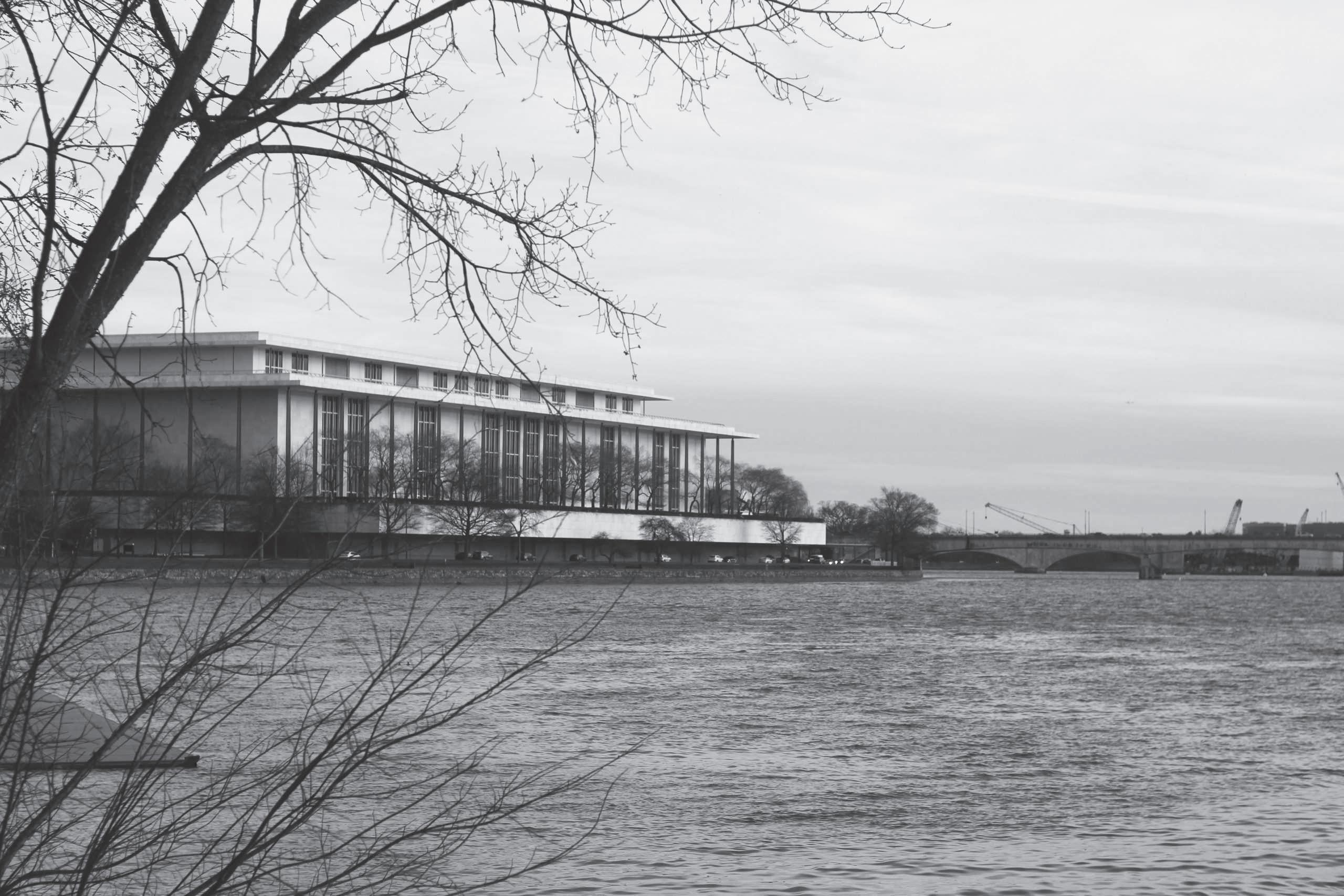
Security personnel evacuated the Kennedy Center Thursday morning after a bomb threat targeting Shen Yun performances, a Kennedy Center spokesperson said.
A police spokesperson told the Washington Post that D.C. police received a call reporting a bomb threat at the Kennedy Center at 10:44 a.m. The department’s Explosive Ordnance Division assisted the U.S. Park Police in responding to the threat, the spokesperson told the Post.
The Metropolitan Police Department confirmed that the Explosive Ordnance Disposal unit has since cleared the scene. No hazardous material was found, a MPD spokesper-
son said. The investigation earlier shut down the Rock Creek Parkway between Virginia Ave NW and the Roosevelt Bridge. The parkway has reopened, according to WTOP Traffic. U.S. Park Police deferred comment to the Kennedy Center.
Shen Yun is a classical Chinese dance group that has faced controversy, including a November lawsuit accusing the group of forced labor and trafficking. The group was scheduled to perform at the Kennedy Center Feb. 20 through Feb. 23.
The Kennedy Center recently drew national attention after President Trump ousted several board members and had the new board install him as the center’s chair.
Claridge House evacuation fuels community concerns over 911 dispatch delays
GIANNA JAKUBOWSKI
STAFF WRITER
More than 200 Claridge House Cooperative residents evacuated the Foggy Bottom apartment building on Feb. 8 after a tenant spotted smoke in the elevator and a front desk agent dialed 911 — only to be put on hold for a half hour, a resident of the building said.
Trupti Patel, a Claridge House resident and the chair of the Foggy Bottom and West End Advisory Neighborhood Commission, said the front desk staffer’s call to 911 wasn’t put through for almost 30 minutes, noting that the Office of Unified Communications is responsible for routing the call to the appropriate emergency services. D.C. Fire and Emergency Medical Services declared there was no fire and attributed the smoke to a motor malfunction in the elevator, but the 911 delay reflects persistent reports of long response times in Foggy Bottom and across D.C., which OUC has worked recently to mitigate.
“They are deeply disturbed that how could it take so long for 911 for what was a clear emergency,” Patel said, referring to her fellow Claridge House tenants. “Now, once FEMS arrived on site, they did everything appropriately.”
OUC did not return request for comment about the office’s response to reports of delayed dispatch in Foggy Bottom on Feb. 21.
The OUC in August compiled a 22-step plan to focus on changing 911 protocol and replacing computer equipment that failed to reduce 911 call delays over a three-month period. The percentage of 911 calls OUC answered in 15 seconds or less rose from 71.8 percent in August to 87.7 percent in February, according to OUC data.
The OUC was not going to implement about $2.5 million of technology upgrades until the start of the fiscal year in October 2024, but public outcry over incidents, including a five-month-old infant dying in August during a computer outage at the call center, prompted it to move up the timeline to August.
In March, a community member who attended a Foggy Bottom ANC meeting said they were concerned about the OUC’s lack of coordination when multiple residents placed 911 calls following a break-in in the Columbia Plaza apartment complex. The member of the public said they were the fourth person to call 911 about the break-in, but the operator acted as if they were the first caller. The community member said
this interaction made them feel like the call wasn’t urgent.
“That’s very frightening in your place of residence,” the meeting attendee said.
Patel said dispatch officials have instructed 911 operators not to disclose records of previous phone calls about the same incident.
Lauren Hines, who identified herself as a constituent of the Foggy Bottom ANC at its July meeting, said she encountered a man who had been “prowling the streets” of the neighborhood that made her feel “threatened and unsafe.” She said she immediately called 911 after seeing the man days later but it took police about two hours to arrive after she called.
The D.C. Judiciary and Public Safety Committee conducted oversight hearings in September to check the OUC’s operation, led by Ward 2 Councilmember Brooke Pinto, who represents the area encompassing Foggy Bottom. At a September committee meeting, the director of D.C.’s 911 call center pointed to staffing shortages when asked by councilmembers about delays in services, computer outages and confused addresses.
Nearly nine in 10 shifts in July did not meet the agency’s minimum staffing goals, according to a public dashboard maintained by the District. A release by Pinto in December states that OUC still needs to fill six open positions, down from 36 in June 2024.
In December, the OUC answered an average of 91 percent of 911 calls in 15 seconds or less, besting June’s 62 percent and topping the national standard, according to a press release. This month, personnel answered 87.7 percent of calls in 15 seconds or less.
This means a call taker at the OUC answered the call within 15 seconds or less before transferring emergency services to the scene.
Calls that require a fire or emergency are “immediately” transferred to dispatchers within the call center, according to OUC’s website. For emergencies that require police presence, the call taker records the caller’s information and forwards it to police dispatchers within the call center via computer. The call center’s Computer-Aided Dispatch assists with the dispatch of fire responders.
“No matter what neighborhood you live in, work in, or visit, you have the right to be safe in our city. I know that the work continues in 2025 to ensure this reality is true for everyone,” Pinto said in the press release.
Honors students criticize housing move from Amsterdam Hall to District House
ANN DUAN REPORTER
RYAN SAENZ REPORTER
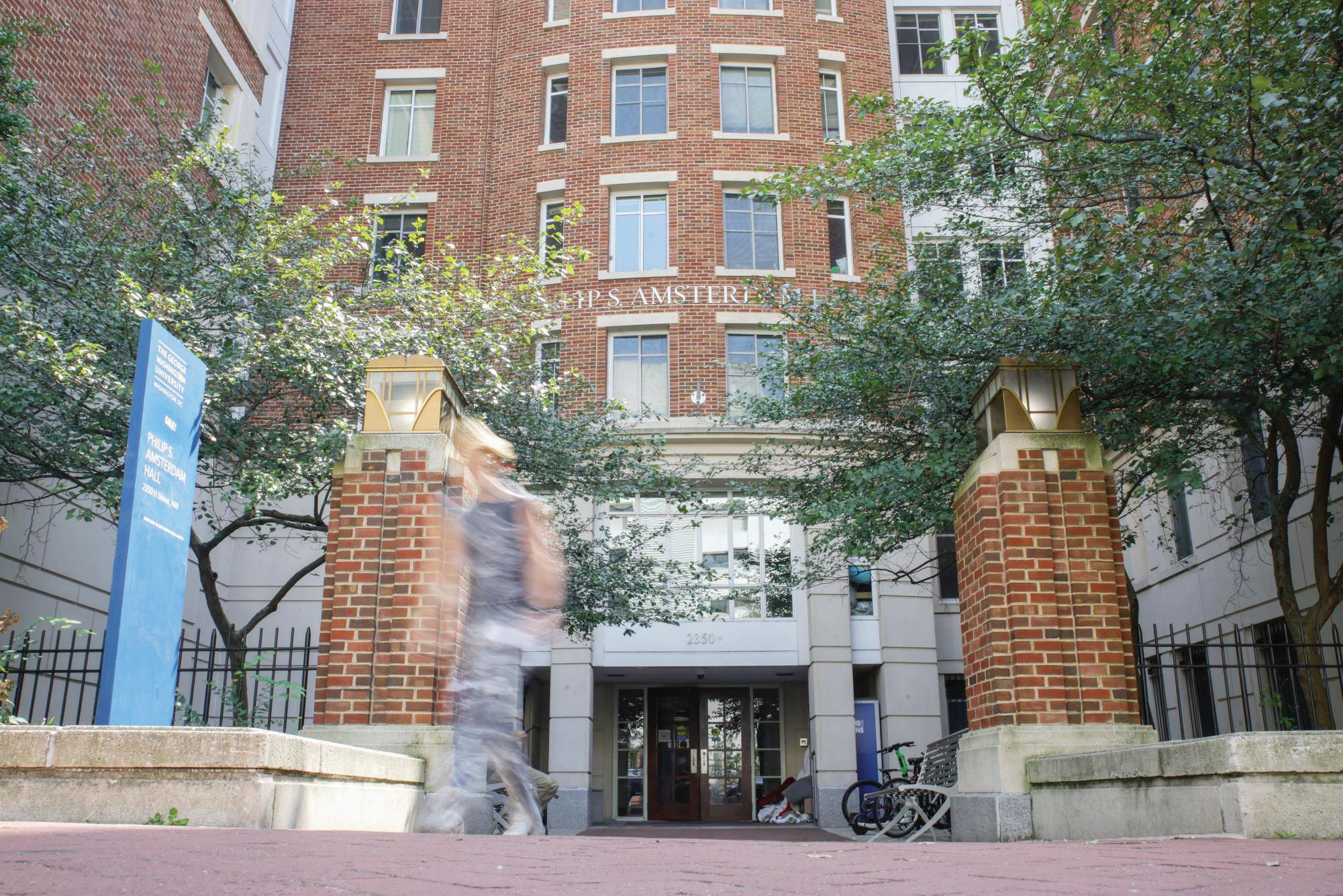
Officials are relocating the University Honors Program’s upperclassmen housing from Amsterdam Hall to District House next year, which honors students say forced them to dismantle their planned four-person living arrangements weeks before the housing registration period.
Officials announced in a newsletter to honors students on Feb. 4 that they would guarantee housing for UHP members planning to live in the Honors LivingLearning Community next year in District House twoperson studio units instead of Amsterdam four-person units — the arrangement since 2021. Students in the UHP who had planned to live in four-person roommate groups in honors housing said they fear they’ll lose a sense of community within the program as many have opted out of the LLC after the location change.
UHP students currently living in Amsterdam also won’t have the option to renew their rooms, as officials made the residence hall exclusive to rising sophomores for the 2025-26 academic year. The UHP housing change came about two weeks before housing registration opened on Thursday, which spurred disappointment among some first-years who had hoped to move into Amsterdam next year.
University spokesperson Julia Garbitt said the Campus Living & Residential Education department moved the UHP to District House because its affinity housing is a “better programmatic fit.”
“Periodically, we reassess group placements and make modifications to better align with programmatic needs and desired outcomes,” Garbitt said in an email.
Garbitt declined to comment on whether officials would make exceptions for students to live in Amsterdam for those with preplanned four-person roommate groups.
First-year UHP student Harry Crowley sent an email to the CLRE department on the same day officials announced the change, saying officials made the decision to move honors housing to District without explanation, forcing some roommate groups to break up.
He also said the changes were “unfair” to the firstyear UHP class who, after living on the Mount Vernon Campus this academic year, no longer have priority access to Amsterdam’s “amenities and luxuries,” like dishwashers and living rooms.
A CLRE staff member replied in an email later that day, stating that the program’s move to District House is “final,” though they did not address officials’ reasoning.
The staff member also said UHP students who wish to live in Amsterdam next
year would have to opt out of UHP housing and place Amsterdam at the top of their ranking in the general housing registration, though there wouldn’t be any guarantee that they’d obtain rooms in Amsterdam if they chose to do so.
“The only dorm assignment guaranteed to UHP students is District House double style dorms,” the CLRE staff member wrote in the email.
Three UHP students said they’re concerned about their housing options for the upcoming year because they want to opt out of UHP housing to try to secure an Amsterdam room but don’t want to risk getting a less favorable option.
Tessa Hitchcock, a firstyear student in the UHP, said officials were “in their right” to make the change, but the timing of the announcement added extra stress onto UHP students who had to rearrange their roommate groups for next year.
She said in West Hall, where the University requires all first-year UHP students to live, it’s common for the students to develop “casual connections,” which she said are now put in jeopardy by the change because the UHP community will be more split up as students opt out of the District housing.
“You make little friends with people that you see in the hallways or who are in your classes, who you invite over for a movie or something,” Hitchcock said. “I think that will make it way harder for those connections, those very casual connections, to stay connections at all.”
B.C. Sommerfield, a firstyear student in the UHP, said he was “disheartened” by the change because he had grown close to his three suitemates over the past year, and now they’re no longer guaranteed housing together. He said he and his roommates don’t plan to live in LLC housing next year because of the change and will pursue other four-person housing options.
“I do not think I will be because then I would be leaving my three suitemates or two suitemates behind, and that’s not something I want to do,” Sommerfield said.
Sommerfield said he also believes there will be fewer opportunities for UHP students to foster a sense of community now that they no longer have priority housing
in Amsterdam since fewer UHP first-years will opt to live in District to instead pursue four-person rooms.
“Seeing as Amdam is no longer the direct honors dorm and a second-year dorm, I don’t think there’s going to be as much community within the honors kids outside of their classes,” Sommerfield said.
First-year UHP student Daniella Gavalas said while was not upset with the District doubles plan, she was disappointed that the update came just weeks before housing registration opened because it left UHP students scrambling to adjust their roommate groups from four people to two.
“People were thinking of rooming with their current roommates into Amdam, so plans have really been really hard to reconstruct for everyone,” Gavalas said.
Gavalas said living in West Hall again has become an alternative option for UHP upperclassman students hoping to live in fourperson groups since honors housing switched to District, but she said this would be unfair because UHP firstyears are already required to live on the Vern.
“Now we have to think about what other quads are options, and now some people are even worried they might have to be at West Hall again,” she said.
Gavalas also said the University’s guarantee of upperclassmen honors housing in Amsterdam was an incentive for her to continue participating in the program. She said she is leaning toward living in honors housing in District but continues to keep options open in case rooms are available in Amsterdam.
“It wasn’t part of my decision to join honors, but it was part of my decision to continue participating in honors because Amdam is very nice housing,” she said.
Lily Shaw, a second-year student living in Lafayette Hall, said she didn’t feel strongly about the policy changes. She said she was not concerned about the honors program losing priority housing in Amsterdam because District House was a fair adjustment.
“I think District House is a good location,” Shaw said. “And the District House affinity, one of my friends lives in one right now and really enjoys it. So I like that they’re making it a honors affinity in District House.”
HATCHET FILE PHOTO
The Metropolitan Police Department said the Explosive Ordinance Disposal unit has since cleared the scene at the Kennedy Center.
KAIDEN J. YU | ASSISTANT PHOTO EDITOR
The exterior of District House
Women’s health champion, beloved health policy researcher dies at 66
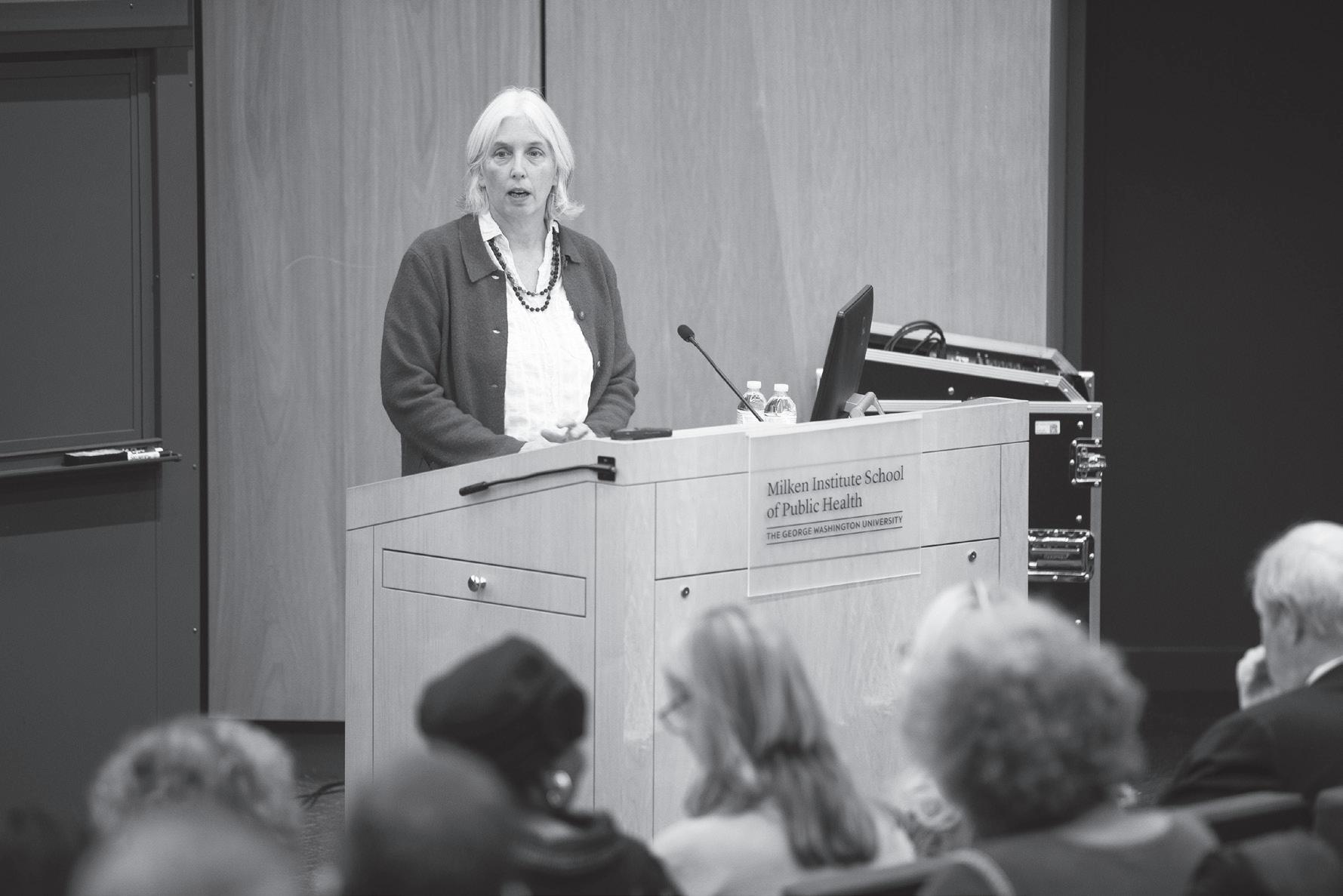
Susan F. Wood, a professor emerita of health policy and management and the former director of the Jacobs Institute of Women’s Health, died of brain cancer on Jan. 17. She was 66. Wood taught and researched at GW for 16 years in the Milken Institute School of Public Health after her resignation from the federal government in protest against the Food and Drug Administration’s decision to prevent access to Plan B, a form of emergency contraception in 2005. Her colleagues remember her as a courageous advocate for women’s health and reproductive rights and a caring mentor for her students and colleagues.
Wood was the assistant commissioner for women’s health at the FDA during former President George W. Bush’s administration, when an FDA advisory panel voted unanimously in 2003 that Plan B was safe and effective for use.
In August 2005, then-FDA Commissioner Lester M. Crawford announced the agency would put off a decision to approve the pill since they were not sure how to restrict its sale to women under the age of 17 despite its safety, according to the Washington Post.
Wood resigned from her post at the FDA in protest of Crawford’s decision after five years at the agency, garnering national attention.
“I can no longer serve as staff when scientific and clinical evidence, fully evaluated and recommended for approval by the professional staff here, has been overruled,” Wood wrote in an email to her colleagues, per the Washington Post.
In 2006, the FDA approved the pill to anyone over the age of 18 before former President Obama’s HHS secretary overruled the FDA’s decision to allow women under 17 to acquire Plan B in 2011. Plan B One-Step, a refined version of the Plan B pill, was approved by the agency without age restrictions in 2013.
When the pill was approved, Wood told the Washington Post that it was both a victory for women’s health initiatives and an opportunity for the FDA to move forward past having politics influence decision-making.
“It’s a real win for women to have all access to emergency con-
traception,” she said to the Washington Post. Wood graduated from Rhodes College in 1980 where she earned a bachelor’s degree in biology and psychology. She graduated with her doctorate in biology from Boston University in 1989, according to her LinkedIn.
Before her time at the FDA, Wood worked at the Office on Women’s Health in the U.S. Department of Health and Human Services and as a science advisor and deputy director for the Congressional Caucus for Women’s Issues.
Diana Zuckerman, the president of the National Center for Health Research, said she worked with Wood on Capitol Hill in the early 1990s as part of a small group of women tackling women’s health issues at the federal level. She said Wood was a board member at the National Center for Health Research and the institution has an internship in her name.
It makes me very sad that the internship is now in her memory, but I’m proud that we are training future professionals in her name to continue her legacy,” Zuckerman said in an email.
Wood joined Milken’s Department of Environmental and Occupational Health in 2006 as an associate research professor. In 2008, she was appointed as the director of the Jacobs Institute, which studies aspects of women’s health care and public health issues and publishes Women’s Health Issues journal, and became an associate professor of health policy and management.
Jacobs Institute Director Julia Strasser, an assistant research professor, said Wood “firmly cemented” her legacy when she resigned from the FDA but left a larger impact on the people she mentored and inspired to enter public service or reproductive health.
“Since her passing, I have heard from so many colleagues across reproductive health research and advocacy about how important she was to their work and their career development,” Strasser said in an email.
When Wood retired in 2022 and stepped down as director of the institute, Strasser tried to build on the “strong foundation” that Wood had established, she said. She said one of her fondest memories of Wood is how she enjoyed a mug of tea with milk and
often had a few extra mugs sitting on her desk.
“When she moved to Scotland and cleaned out her GW office, she passed along some of those mugs to me, which felt like a great honor and I’m happy to have a little piece of her to hold onto now,” Strasser said in an email.
Liz Borkowski, a senior research scientist in the Department of Health Policy and Management, said Wood was an “amazing” person, and she first met her in 2006 when she came to GW after her resignation from the FDA. She said she was excited to work with Wood because she had been an admirer of her work.
“She just always treated everyone like she was glad to see them and interested in their contributions and just always made everybody feel comfortable and welcome,” Borkowski said.
Borkowski said she worked on the Scientific Knowledge and Public Policy Project, which studied how scientists interact with legal and regulatory systems, including a project for the DC Department of Health to research conflicts of interest between doctors receiving gifts and payments from insurance companies. She said when the Jacobs Institute became part of GW, Wood became its director
Former Michigan congressman talks bipartisan leadership, impeachment votes
VICTORIA SMAJLAJ REPORTER
Former Rep. Fred Upton (R-MI) gave insights into the value of bipartisan politics, the increasingly polarized modern political climate and his reasoning for voting to impeach two presidents in the Jack Morton Auditorium on Thursday.
Upton, who voted to impeach both former President Bill Clinton and President Donald Trump, talked about serving constituents from both political parties as the keynote speaker for the Graduate School of Political Management’s 2025 Paul O’Dwyer Endowed Forum for Political Ethics. Upton said in his experience representing Michigan, a swing state, he realized the necessity of working with both political parties to serve the broader population.
GSPM Program Di-
rector Angela McMillen Ayres introduced Upton and said recognizing bipartisanship is crucial for democracy.
“We’re talking about today’s political landscape. Bipartisanship is not considered something that’s very important anymore, and it’s important for us to underscore the importance of working across both sides of the aisle,” Ayres said. “And these principles are part of a vibrant democracy and something I’m hoping that we can bring back someday.”
GSPM Public Relations and Communications Director Lesley Lopez led the forum with questions for the former representative and said Upton worked across the aisle to solve problems that were “plaguing us” and that his experience makes him “uniquely qualified” to speak about political ethics.
When asked about his decision to vote to impeach Trump in 2021, Upton said during the Jan. 6, 2021 insurrection he was sheltering with Rep. Dan Kildee (D-MI) in his office in the Rayburn Building, right across from the Capitol Building. He said after the chaos subsided, Upton went to the balcony and watched as people left the Capitol grounds. Prior to the insurrection, Trump made a speech to his supporters before they marched to the Capitol and said if they don’t “fight like hell” they won’t “have a country anymore.” Many point to this passage as an example of him inciting the riot that would eventually become an insurrection on the Capitol.
Upton said he chose to vote to impeach Trump because the day after the Jan. 6 insurrection, Trump said he had done “everything totally
appropriate.” He said the insurrection wasn’t right and “there should be some different leadership.”
Upton said he voted for the 1992 North American Free Trade Agreement, and a senior Democratic office holder told him that if he voted against NAFTA, he would have a “free ride” to reelection and would not have a Democrat opponent in the next election. Upton said after speaking with union workers he understood the influx of jobs NAFTA created in Michigan, and he voted for NAFTA.
Upton said he liked representing a swing district because he knew he had to represent and work with people from all political parties.
He said a part of representing a swing district was that he had to find people willing to work alongside both parties.
and asked her to join the institute with her. She said she has learned how to get things done in government agencies, like HHS, and how to work in collaboration with people that have different expertise from Wood. She said Wood was always determined to do something when it came to injustices in women’s health.
“When some of us were upset with the way things were going and starting to feel sort of despondent, she would always help us see that we need to keep fighting and we can accomplish something,” Borkowski said.
Health Policy and Management Department Chair Anne Markus said Wood was a “feisty” advocate for women’s health and reproductive rights who will be “sorely” missed.
“During her time at GW, she was instrumental in growing the academic offerings for students interested in women’s health policy and a sought-after mentor by masters and doctoral students alike,” Markus said in an email.
David Michaels, a professor of environmental and occupational health, said Wood was a “courageous” advocate and a “treasured” friend. He said he hired Wood in 2005 to work on the SKPP
project at GW after her resignation from the FDA, with her first work on the project focused on improving the FDA’s regulatory program.
“Her steadfast voice and thoughtful counsel will be missed by many, especially now,” Michaels said in an email.
Amita Vyas, a professor of prevention and community health, said Wood was a “brilliant, witty and supportive” colleague and professor. She said Wood’s dedication to women’s health made a lasting impact and motivated others in the health industry to advocate for equality and justice in health care.
“Her legacy continues through her students, who carry on her work with passion and dedication,” Vyas said in an email. “I am deeply grateful to have been guided by such a remarkable mentor.”
Patricia Pittman, a professor of health policy and management, said Wood was an “extraordinary” scholar who was willing to make sacrifices to make advancements in women’s health due to her resignation from the FDA.
“I often used Susan’s story as an example when I taught ethics in my Advanced Health Policy class,” Pittman said in an email. “She was a giant.”
IFC recruitment upticks by 8.3 percent after increase in promotions, participation
BROOKE FORGETTE
CONTRIBUTING NEWS EDITOR
MAX JACKSON STAFF WRITER
Interfraternity Council recruitment numbers increased slightly this spring, compared to last year’s process, which a council leader attributed to potential new member retention.
Assistant Dean of Student Life Brian Joyce said 132 students registered and attended recruitment events, and 91 students accepted bids from fraternities out of the 93 offered this spring, marking an 8.3 percent increase from last spring’s 84. IFC President Henry Lau said the council focused on promoting recruitment through tabling and social media posts to boost the number of new members.
“We’ve focused more of our efforts into marketing as well as promotion and heavily encouraged and communicated to our chapters to do the same,” Lau said in an email.
Lau said the IFC retained potential new members throughout the weeklong recruitment process last month. He added that the council established guidelines regarding recruitment and promoted events through tabling and social media posts to ensure
the process guaranteed all participating chapters had an equal opportunity to get to know each potential new member.
“Recruitment went pretty well this semester with no challenges and went smoothly with every chapter doing their part to contribute to a successful and fair recruitment cycle,” Lau said in an email.
Joyce said the increase can be attributed to this year’s larger number of initial participants compared to the fall’s 51, as well as higher retention from Orientation Day to Bid Day. Joyce said Kappa Sigma had the highest number of accepted bids with 16, while Sigma Alpha Epsilon was the only fraternity with zero accepted bids.
Joyce said 10 students accepted bids from Alpha Epsilon Pi, seven from Beta Theta Pi, 15 from Delta Tau Delta and two from Phi Gamma Delta. He added that 15 students accepted bids from Sigma Chi, 11 from Tau Kappa Epsilon and 15 from Zeta Beta Tau. The IFC’s boost in recruitment came in the wake of a dip of almost half last semester compared to fall 2023, due to scheduling conflicts and a lack of communication between IFC and chapters.
COURTESY OF LIZ BORKOWSKI
Susan Wood speaks at an event hosted by the Milken Institute School of Public Health in 2019.
Local, GW groups organize workshops to support immigrants, refugees
community members can refuse to cooperate with immigration officers on public transportation, like buses, which he said could prompt the officers to vacate the bus.
There are more than 98,000 foreign-born residents in D.C., making up 14.7 percent of the District’s population, according to the American Immigration Council. The Pew Research Center found in July that D.C. has more than 25,000 undocumented immigrants, using most recently available data from 2022. Castro said Son La Lucha is advising community members to record video, remain silent and remember they have the right to ask for a lawyer’s presence before answering questions from ICE officers.
He said the group has told locals to ensure that the warrant an officer claims they have grants them access to their homes before allowing them to enter because a warrant for removal or deportation, or Form I-205, doesn’t permit them to arrest or enter someone’s home, unlike a judicial warrant.
He said Son La Lucha is also encouraging immigrants in D.C. at the trainings to establish “safety plans” with their children and coworkers in case an officer comes to their home or workplace, which could include intentions to record video or remain silent.
“We want to make sure, like whatever happens, they are making the right decisions for their best interests,” Castro said.
He said the trainings also aim to teach nonimmigrant community members about legal information on encounters with immigration officers so they can step in and defend a person’s rights if they witness such altercations.
He said these nonimmigrant
“This is an important time for allies and community members to build stronger relationships with the people that build the city and around the city,” Castro said.
Senior Stephanie Animdee, a member of Alianza — a student organization that promotes AfroLatinx unity — said she is a firstgeneration immigrant who moved from Ghana to the United States when she was six months old. She said there is a “fear in the air” among immigrant communities after Trump assumed office and that people like herself who were “fortunate” to have become American citizens at a young age should encourage everyone to help those who are undocumented, even in little ways like listening to their fears.
“In the past, like, the U.S. was always coined as the land of opportunity, but now it doesn’t really exemplify that,” she said. “I think it’s quite sad.”
Senior Alex Dawson, the codirector of professional partners for No Lost Generation GW, a student organization that supports refugees, said the group typically fundraises twice annually for local groups like Dar Al Hijra, an Islamic center in Northern Virginia that helps Afghan refugees with settlement but that it is unclear what that money would do now that refugees aren’t entering the United States.
He said the student group is looking to shift fundraising efforts toward international organizations that can support refugees elsewhere.
“And, you know, there are no
more refugees coming into the country, obviously,” Dawson said. “So what will that money do? We’re having these debates right now. Is it more worth it to fundraise for international organizations that might be able to do more, given that not much is going on in the U.S. right now?”
Trump signed an executive order on Jan. 20 halting the U.S. Refugee Admissions Program until further notice, stating that entry of refugees under the USRAP would be “detrimental to the interests” of the country.
The program has existed since the 1980 Refugee Act, and the federal government manages the program, working mainly with the United Nations Refugee Agency to resettle refugees in the United States.
Dawson said this executive order has made his work for his student group difficult, as part of his role entails implementing a program named Welcome Corps on campus, a State Department initiative to accept refugee students to universities and allow eligibility for federal student aid through FAFSA. But Trump signed an order halting it for 90 days, until April 27.
Dawson said NLG GW is developing a “resource bank” for refugee students already on campus, collecting feedback via a social media survey, connecting them to mental health professionals specializing in support for refugees and clarifying if the U.S. government would allow people with refugee status back into the country if they left voluntarily.
“We’re trying to get feedback from the community of people in refugee or other displacement backgrounds and get their feedback on what they believe would be the best
solutions, what problems they’re facing, so that we can enact that change better and more effectively,” Dawson said. NLG GW Director of Government Relations Amina Iman, a junior, said the drastic change in
American
about the future of children of immigrants and refugees in the United States.
2025 BHC theme uplifts Black community amid DEI crackdown: students
From Page 1
Gilmore said holding dozens of events through February provides students and staff an opportunity to attend at least one event hosted by BHC during Black History Month.
“We always try to have every single day of February filled with at least one event just so that everyone has something to go to every single day and really just have that repetitive nature of our theme being really spread to different Black orgs,” Gilmore said.
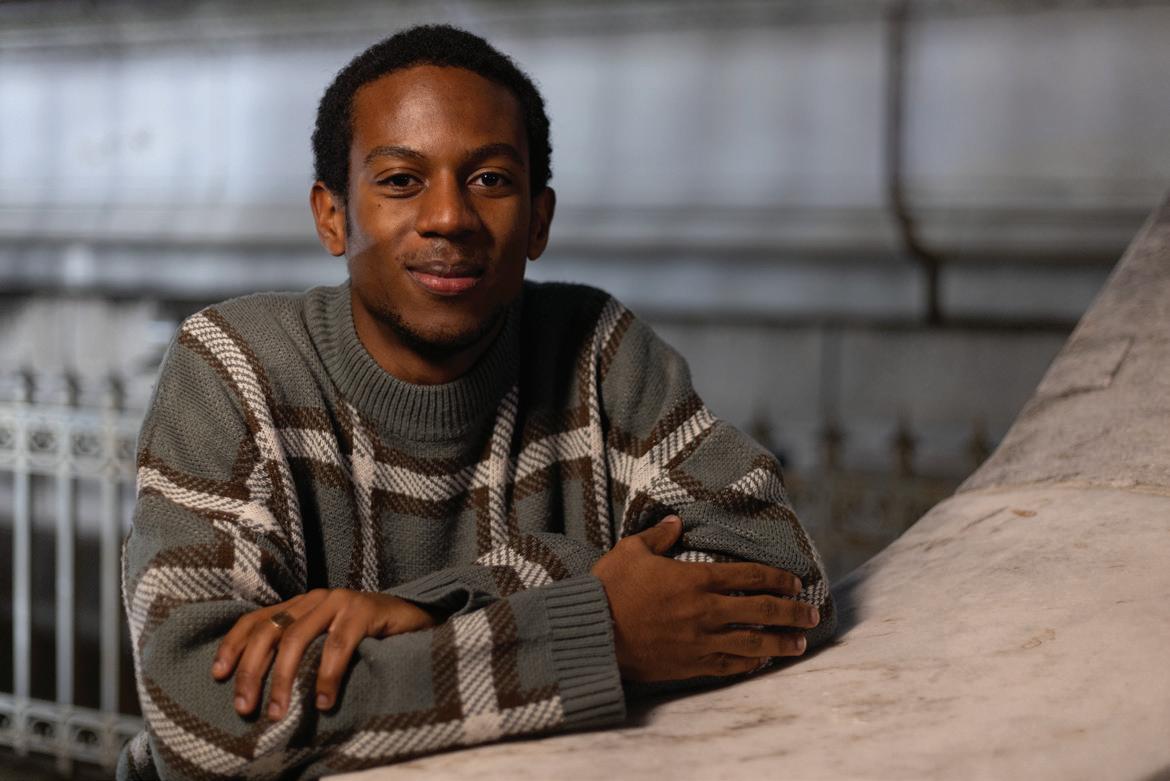
Senior Kyle Balfour, the president of Young Black Professionals in International Affairs, said the Trump administration’s DEI crackdown has taken a toll “mentally and emotionally” on stu-
dents of color at GW who were hoping to work in the public sector and see guaranteed representation of all identities in the workforce under the previous administrations’ former DEI policies. He said this year’s BHC theme counters antiDEI discourse by reminding students of the Black community’s crucial contribution to American culture and lasting presence like in pop culture, entertainment and politics.
“No matter what is happening, you can’t remove the people that have been there from the beginning, and that is really Black people, members of the African diaspora,” Balfour said.
The organization hosted a panel with professionals in international affairs Thursday about different career opportu-
nities in the public and private sectors. Balfour said the panel aimed to offer guidance to students affected by the “recent political climate” under the Trump administration and emphasize the Black community’s ability to “persevere and thrive” within their fields no matter what obstacles are thrown at them.
“I think this is showing that it’s like kind of reigniting something in a lot of us, showing that we have the ability to go out there and make change,” Balfour said.
BHC’s Co-Chair Ryan Titus said this is the first year that BHC held a student contest to determine its logo. She said this year’s logo, designed by BHC first-year representative Jude Poisson, focuses on hair and its ability to tell stories and illustrate the struggles
the Black community has faced. The logo shows braids spelling “The Blackprint” woven on the back of a person’s head, accompanied with gold hoop earrings reading “It’s been us.”
“He created this because he knows that hair has been an essential element of Black culture,” Titus said. “Back in the day when slavery was happening, people would do braids as escape routes. That’s also another one of my favorite parts of the Black Heritage Celebration, the logo.” Poisson said the hair in the logo symbolizes the use of natural hair as an expression of heritage and identity in the Black community.
“The biggest thing for me was just capturing one of those big elements of Black culture and encapsulating it,” Poisson
said. The Black Girl Mentorship Program, a student group aimed at easing Black students’ transition to a primarily white university through mentor-mentee relationships, hosted an event on Feb. 6 titled “The Origins of BGM: Legacy Unwritten.” Junior Kalah Neal, the president of the program, said they invited organization alumni spanning from the group’s founding in 2017 through 2020 to share their experiences of what life at GW was like during their time as students.
“It’s really important that we see that a lot of trends and fads are coming from the Black community and recognizing what kind of influence and power we have as a collective,” Neal said.
Co-President of the Black Women’s Forum
Priya Kelly said the organization is collaborating with the GW chapter of the NAACP to commemorate the 116th anniversary of the civil rights organization’s establishment. The event, which is on Feb. 26, will function as a “meet-and-greet” between the NAACP’s new executive board and organization members, she said. Kelly said the event demonstrates BHC’s theme of “The Blackprint” because the NAACP is one of the oldest and most renowned civil rights organizations in the country.
“It really just points to the fact that Black culture is American culture as well, and the event’s gonna be a lot of learning about more of the history of NAACP as well and focusing on that,” Kelly said.
SBA candidates hope to strengthen budget, student resources in next term
From Page 1
Hichez said she plans to create a “comprehensive” budget guide for law school student groups, which will include organizations’ previous allocations and information about the annual SBA budget so they are not confused going into the allocations process.
“It was hard having to do it all by myself, and I’m just excited for next year because the person who takes on my job isn’t going to be as burdened,” Hichez said.
Hichez said she wants to increase the number of recurring events for law students, like Weekend Windup — an SBAsponsored event for law students to socialize outside of a school environment — and other SBA social events the body cut this year due to the limited budget.
stepped down from the presidency to serve as SBA vice president of student affairs, a role in which she registered new student organizations at the law school. She said her experience as a senator during her fi rst year and in the SBA cabinet has given her ample “institutional knowledge” of the SBA and how to communicate with officials.
“You have to walk the line and have a friendly enough relationship with the dean of students to get them to work with you and be sympathetic to your cause, even when they may not agree,” Slaughter said.
Slaughter’s platform outlines her plans to increase the SBA’s transparency with students by including a budget update in the weekly SBA newsletter and requiring the vice president of fi nance to hold monthly office hours to address student budget concerns.
onstrated that they can spend less money and still hold successful events,” Slaughter said. “We should continue with that tighter budget while bringing in more money that can then kind of be a nest egg for student orgs.”
Candidates for executive vice president: SBA Finance Chair Omer Turkomer
SGA senator representing the law school, said involvement with both bodies has exposed inefficiencies in some SBA practices, like the absence of “proxies,” a procedure used in the SGA where absent senators can select another senator to represent them during meetings.
process. Biever said ensuring identity-based organizations, like the Black Law Students Association and Lambda Law, receive funding is a top priority for him.
Omer Turkomer said his experience as the current chair of the SBA Finance Committee and Student Government Association senator helped him serve as a “mediator” on the body.
Vice President of Student Affairs Jo Slaughter
Hichez said she also wants to collaborate with the SBA faculty adviser to discuss expanding the Jacob Burns Law Library from its current weeknight closing time at 11:45 p.m. to a 24/7 operation.
As a public interest secondyear law student, Jo Slaughter said her studies in the sector of labor laws, unions and advocacy for “those without a voice” will assist her in working with law school officials to put students fi rst. Slaughter said Shah appointed her before she
Slaughter also said she wants the SBA to “fundraise aggressively” through hosting more events and selling SBA merchandise to allot student organizations larger budgets to plan events throughout the semester. She said she would enact a fundraising requirement that aligns the requirement for student organizations to host one fundraising event per year to become eligible for SBA funding the following year.
“Programming has dem-
Turkomer, a secondyear law student from Istanbul, Turkey, said he hopes to mend the relationship between the SBA vice president of fi nance and law school officials through increased communication about the state of SBA funds. He said last year’s SBA “mismanaged” funds, leading GW officials to lose trust in the body’s ability to handle funding this year.
“Playing the blame game isn’t going to help anybody,” Turkomer said. “So my idea is, let’s start fresh.”
He said there is a “separation” between the SBA and the student body because students are unaware of SBA Senate operations. He also said he wants the SBA to boost transparency by recording its meetings for students to watch if they are unable to attend the 8:50 p.m. biweekly senate meetings.
Turkomer, who is also an
This term, Turkomer sponsored an act that added fi nancial security measures to the SBA — like restricting access to the SBA credit card to the vice president of fi nance — to avoid the executive branch overstepping their power. He said he wants the Dean of Students Office to attend the SBA Finance Committee and senate-at-large meetings to improve the clarity of the SBA budget process to administration.
“Especially with sort of the political climate that we’re in, there are certain identity groups that it’s really important that students, law students and people that will someday be very important people in this world have a place,” Biever said. He said he decided to run for executive vice president after noticing this year how communication between the SBA and the student body has “dropped off” and lacked open dialogue. He said the SBA needs to actively post on their website and table weekly. SBA bylaws require senators to table biweekly, but Biever said they did not carry out the requirement this year.
SBA Sen. Quinn Biever SBA Sen. Quinn Biever, a second-year law student from Bloomington, Illinois, said he has spent his fi rst year in the SBA learning how it works and now wants to strengthen the body’s accountability. Biever said he will work closely with the incoming SBA president to appoint a vice president of fi nance who will prioritize law student organizations in the funding
“We’re students just like you, we’ve been given the authority that comes with being a representative of student government and we want to make sure that that representation is in line with your desires as a student community,” Biever said.“We’re students just like you, we’ve been given the authority that comes with being a representative of student government, and we want to make sure that that representation is in line with your desires as a student community,” Biever said.
politics since Trump’s inauguration has sent immigrants and refugees back into a “mode of survival” instead of “dreaming,” which creates questions
COURTESY OF ALFREDO CASTRO Community members gather for a training hosted by Son La Lucha.
This term, Turkomer
OPINIONS
“With the scant amount of resources available, offering single rooms seems to be much more urgent.”
GW’s higher education support shouldn’t end with NIH lawsuit
President Donald Trump’s executive orders have put higher education in the crossfire.
Earlier this month, Trump’s administration announced it would cap indirect funding from the National Institutes of Health at 15 percent, which usually aids universities in covering research costs related to laboratories and equipment. This sparked outcries across higher education institutions in fear that funding of health and medical research would severely decline. Earlier this month, GW joined a lawsuit alongside other research universities across the country to fiercely push against the proposed cuts, saying the move was unlawful and would harm medical research.
The University’s effort to protect research funding is a pragmatic step toward protecting its community from the fallout of the Trump administration. But the presidency has barely begun. GW must continue these efforts, whether it’s through litigation or guiding the community through the changing political landscape as we settle into the next four years.
The NIH cuts are just the latest in the saga of federal funding cuts implemented by the Trump administration, in an effort to cut indirect funding to use taxpayer money “better.” These costs keep research institutions like GW alive, covering essential tools, like equipment, maintenance and staff. In fiscal year 2024, 82 percent of research funding at GW came from federal sources, totaling around $150 million.
Countless students, faculty members and researchers would be seriously hit by these cuts: GW research has explored the effects
STAFF EDITORIAL
of the COVID-19 vaccine uptake and tobacco use, linking cardiac tools to heart failure and researching the effectiveness of ultrasound application on the pancreas, with these projects potentially directly hinged on federal funding. We applaud the University’s move to join the lawsuit.
But we can’t ignore the fact that GW’s interests are tied directly to the lawsuit, especially after joining the ranks of the prestigious Association of American Universities and relying on its research prestige to attract prospective students. The battle to preserve high-
er education is just beginning, and GW must go further than offering support only when its interests as an institution are threatened.
It’s clear what Trump’s plans for education are: aimed at defunding education and exerting influence on what’s being taught in schools. GW must commit to responding to future actions just as forcefully as they did with the NIH cuts publicly — or privately — reassuring students and professors that they’ll be supported by the University once a policy or executive order is enacted.
GW has already taken strides
Let’s remember to question political science studies
Walter Lippmann ruined political science for me.
It’s a tad ironic because Lippmann, the predominant left-wing intellectual of the mid-20th century, is probably my favorite writer I’ve read in my undergraduate career. I’d argue I have a good reason for it — in his 1913 book “A Preface to Politics,” Lippmann wrote the two sentences that changed how I look at university classes.
“Marx saw what he wanted to do long before he wrote three volumes to justify it. Did not the Communist Manifesto appear many years before ‘Das Kapital’?”
In other words: Every writer has their ideas that they can condense into a couple pages but then, like Marx, they go out and write thousands of pages stuffed full of stats to justify them. I don’t think there’s anything wrong with the long format. But his point got to an issue I hadn’t realized had plagued me in college: the idea that just because a social science study has some backing doesn’t mean it’s not influenced by one person’s preconceived ideas.
As a political science major, so many of my class readings in my chosen field were these sorts of studies, where a given researcher argued that a political system worked in a certain way and
justified their findings with a study or history. The expectation in that class then became that these studies were right. Rather than having a discussion about the pros and cons of the ideas, the findings of a given work were expected to be dogmatically accepted. After all, there was a study backing up those ideas, so they must be right. Right?
But in reality, the fact that someone penned a study doesn’t make that study good. Take one of the foundations of most American political science essays: the idea that Congress has an institutional interest in its own power and thus will act beyond party lines to prevent the president or Supreme Court from encroaching on legislative territory. Political scientists use that idea to spin off all sorts of concepts about how the three branches of government limit each other’s power. Even the most passing glance at how President Donald Trump has been able to steal away core legislative abilities like the power of purse, Congress’ exclusive ability to tax and spend, without so much as an attempt by congressional Republicans to stop him should put those theories to rest.
It’s entirely possible that some political scientists will take the findings of the early parts of Trump 2.0 and create a brilliant study that recontextualizes the role of Congress. But who’s to say that a decade from now senators might stop acting based on their party and instead based on what college
football team they root for?
That example is so apolitical that it seems silly, but if you told the political scientists behind those studies that senators would act based on party and not institutional loyalty, well that’d seem just as ridiculous. All these writers are people with ideas about how the world works. They just happen to be good at arguing in favor of their ideas, but we should all take the time to think about how we’d counter their cases instead of just blindly embracing them. There’s been times when we’ve debated topics in classes, but for the most part the key to success has been an ability to repeat what a study says on a test.
I’m not saying we shouldn’t read these works. I’m saying we need to approach them as what they are: theories that might have good evidence but still should be debated and discussed. That’s especially true when it’s so easy to plug a few words into Google and find any study that proves a point you’re trying to make when it’s just as easy to find a different study that makes the opposite point.
Source: a 2021 Nature article I found as the first thing that popped up when I Googled searched “study on availability of studies.”
I’ve written in these pages before that “Almost everything I’ve learned in college I’ve read.” Let’s just remember to think and question when we’re doing those readings, too. —Nick Perkins, a senior majoring in political science, is the culture editor.
Otoward this goal in recent weeks. Officials launched a website earlier this month tracking federal actions and how they may affect the community, informing others of what to do if Immigration Customs Enforcement comes to campus and notifying students of their individual rights. These small steps in bracing for Trump’s actions are vital in preserving the security of our community. As the editorial board argued recently, we must filter out the chaos of the current administration and zero in on the concrete actions in our power to combat these harmful policies.
The University should also brace for shake-ups in other realms of the District. Following Trump’s self-promotion as the chairman of the Kennedy Center, prompting sweeping exits and firings of artists and board members, GW could open campus spaces like Lisner Auditorium to performers to throw a life vest to the local cultural landmark. In the wake of Robert F. Kennedy Jr.’s appointment as Health and Human Services secretary and his history of vaccine skepticism, GW should broaden its vaccine clinics to once again include the COVID-19 shot and increase advertising for its offerings. And for a swath of politically minded graduates looking to enter the federal workforce this spring, the University could ease their transition amid the current federal hiring freeze by harnessing the ample alumni network and bolstering career events, as GW Law already has.
The University can’t exactly shield its students from the impacts of the Trump administration. We all must eventually leave the comfort of the Foggy Bottom bubble, for better or for worse. But GW should continue its dialogue with students about the impacts of the current administration’s actions and guide the community on how to adapt.
Last November, our editorial board commended GW for not adopting institutional neutrality and urged the University to use its voice as an institution to support and stand up for its community. Now that officials have taken a significant step toward doing so, we again applaud the University. But we’ve got 47 more months of this administration, and GW needs to keep taking action accordingly.
What I learned from being computerless
ne of the most essential things for every college student is their laptop. So when my laptop keyboard started malfunctioning in early January, I spiraled, predicting the chaos it would usher into my academic life. But having a laptop with a broken keyboard actually invited more organization and structure to my life while I learned how to get through my day. In our hectic lives as students, we have difficulty separating our student and personal lives but being sort of computerless can help with work-life balance.
Before the spring semester even started, my laptop keyboard was slowly giving out, and by the first week of school, I found myself copying and pasting singular letters, punctuation and numbers.. I decided that, for the time being, I would handwrite notes for almost all of my classes. I would also set aside about eight to 12 hours a week at the library to use its computers to get the rest of my class assignments and Hatchet work done.
At first, it was somewhat frustrating to heavily rely on the library to get my work done during an allotted period of time. It meant having to wake up earlier or go straight to the library
to do work right after class and staying there for hours. It felt especially exhausting when I just wanted to do work from the comfort of my room.
But since I had such a strict schedule to follow, work-life balance entered my routine. It was a relief to just focus on work at the library and then not have to work on my computer or see a screen once I got home. I live on-campus and never really feel the difference between school and my personal spaces.
Self-imposed deadlines for my schoolwork meant I was a lot more efficient and felt less stressed. I had the most time during the beginning of the week to get all my assignments done, when I usually waited for the weekend to get my work done.
Also, because I was trying to avoid getting to my dorm so late, usually leaving the library around dinnertime, that meant I was also falling asleep earlier since my work was done for the day. And if an assignment did appear in the evening, it was easier for me to just go to bed early and focus on it early in the morning. My dorm became a place where I could relax, creating a separation between my living space and my working space.
A rigid schedule helped with my eating habits as well. I have always had the bad habit of skipping meals or eating dinner at midnight since my schedule was all over the place. I was spending long periods of
time at the library, I would have to eat breakfast or eat before heading there, so I wouldn’t get hungry while studying. And by the time I left, I was famished, so I would eat right after the library, no longer having midnight dinners — only midnight snacks. It was a blessing for my dorm to feel like a “home,” instead of just an extension of school. The keyboard inconvenience didn’t only help me outside of class but also during class. I was horrified over the fact I wouldn’t be able to type in my classes While it was slightly inconvenient not being able to type on my laptop during class, I found myself getting a lot less distracted than I usually do because I was taking handwritten notes. Which allowed me to be much more engaged in my class lectures or class discussions. But now my frustrations with my keyboard are over after getting a new laptop, a bittersweet moment. I am glad I can finally stay working in the comfort of my dorm. However, I worry if my days at the library and my balanced schedule are over. There will be times when I prefer the chance to respond to an email during class or to work from my dorm after taking a nap. But I do hope that I will keep the habits I curated when my laptop didn’t work.
—Andrea MendozaMelchor, a junior majoring in journalism and mass communication, is the opinions editor.
Andrea MendozaMelchor Opinions Writer
CAROLINE MORRELLI | STAFF CARTOONIST
Nick Perkins Culture Editor
CULTURE
Hatchet staff’s hopes, predictions for the 97th Academy Awards
Frankly, there’s no one more qualified to give Oscar predictions than student journalists.
Okay, maybe that’s slightly too favorable to the editors and writers of The Hatchet. But that didn’t stop the paper’s staff from offering its best guesses of what we’ll see Sunday at the Academy Awards. .
Best Picture
Should Win: “Conclave”
Will Win: “Anora”
Caitlin Kitson | Contributing Culture Editor
Scandals have marred the 2025 awards season. The issues that plague the nominees vary in severity, from “Emilia Pérez” star Karla Sofía Gascón’s bigoted comments toward multiple marginalized groups to criticism from artists regarding the use of generative artificial intelligence in the production of “The Brutalist.” Among a gaggle of films dogged by controversies, there is no better choice for Best Picture than the one about unearthing secrets during a cutthroat papal selection.
“Conclave” is a political thriller that follows the College of Cardinals in the Catholic Church as they struggle to elect a new Pope. Based on that brief synopsis alone, I expected a film as snooze-worthy as the Sundays I spent in my local Catholic Church growing up. But watching the cardinals gossip and scheme their way through the Vatican is as captivating as when your friend asks, “Can I be mean for a second?” before divulging their unfiltered thoughts about someone. And as the 88-year-old Pope Francis continues to battle double pneum-
nia, a real-life conclave could be on the horizon.
The performances are ultimately what make “Conclave” such a gripping watch, from Isabella Rossellini’s simmering intensity to Sergio Castellitto’s epic vape rips.
Best Actor Should Win: Adrien Brody
Will Win: Brody
Jackson Lanzer | Sta Writer This year’s best actor race isn’t just a duel between performers. It’s a judgment on AI’s presence on the
silver screen. In the making of “The Brutalist,” the film’s editors used an AI voice generator called respeecher to edit star Adrien Brody’s Hungarian accent during scenes with Hungarian dialogue.
Regardless, Brody is a front runner for the Oscar, having already won a Golden Globe and Critics Choice award for his role.
And it’s deserved. Brody’s performance was an embodiment of Toth’s entire life — and the postwar generation’s experience, including Brody’s own family.
The unsung heroes, overrated stars of GW residence halls
KITSON
NICK PERKINS CULTURE EDITOR
In the “Dance Moms” pyramid of GW residence halls, undergraduates have a clear consensus on which buildings are the Maddie Zieglers and which are the Paige Hylands.
Undergraduates typically vie for spots in South and Shenkman halls to take advantage of spacious quarters and competitive amenities, but the stars of GW’s housing are not always what they are cracked up to be. And while some Abby Lee Miller types in the student body may disagree, the residence halls that often fall to the bottom of the pyramid deserve their flowers as much as those that dominate the top spots. Since the housing registration process for the next academic year launched Thursday, here are our hottest takes on the GW residence halls.
JBKO Hall is good, actually Caitlin Kitson | Contributing Culture Editor
Living in JBKO Hall during my first year at GW was a biblical experience. From a
mold outbreak to floods and kitchen fires, there appeared to be some divine intervention at play in fall 2021, utilizing the forces of nature to send me an ominous message of what my college experience would be like — hazardous.
But after GW plopped me in JBKO again for my second year against my wishes, I grew a soft spot for the residence hall. Despite its past proclivity for smallscale environmental disasters and the outdated appliances of its bathrooms and kitchens, JBKO makes up for any drawbacks through spacious walk-in closets, close proximity to the Foggy Bottom-GWU Metro station and a rooftop ideal for catching sunsets and a glimpse of the monuments. Like any other college dorm, JBKO is ultimately what you make of it. JBKO can be the launching pad for sophomores to maximize their college experience.
South Hall is bad, actually Nick Perkins | Culture Editor
One of the joys of college is having a roommate — you might become friends or you might get a whole lot of funny horror stories for years to come. Isolating yourself in a solo South room takes away from that quintessential experience, the same way having a laundry machine in your own room means you don’t get
to regale relatives with the tales of long hours spent sitting in a laundromat corner. College is a time to be 20. South, as nice as it may be, takes that away and forces juniors and seniors to be middle-aged suburbanites.
International House is good, actually Nick Aguirre Zafiro | Video Editor
Anyone who complains about living in International House is clearly too used to having everything easy when it comes to housing. For one of the cheapest dorms on the Foggy Bottom Campus, starting at $6,910 per semester, sophomores get their own kitchen and bathroom, a solid room setup achievable with some creativity and stellar window views. The rooms are on the smaller side, but the walk-in closet makes up for it — it’s recommended to bunk the beds to make space, and trust, the bunk beds are not as bad as they seem. The building is also an optimal place to throw ragers, once you bunk your beds and stuff your dining table into the walk-in closet to clear room for a dance floor. If you live in a residence hall with too much space, everyone flocks to the kitchen, and if you live in a shoebox, it gets real musty real fast. But at International House, you can throw a packed party and still have enough space to breathe.
Best Actress Should Win: Demi Moore
Will Win: Mikey Madison
Nick Perkins | Culture Editor
This race is a toss-up between Demi Moore’s bold transformation in “The Substance” and Mikey Madison’s Brooklyn-accented turn as a stripper in “Anora.” While Madison’s stubbornness and joyful charm is entertaining as the titular Anora, one only needs to look at the 2025 film “Love Hurts,” a brutally reviewed rom com starring two
former ingénue Oscar winners, to see that the award should go to the more experienced Moore.
Best Supporting Actor
Should Win: Kieran Culkin
Will Win: Culkin
Faith Wardwell | Managing Editor For Succession fanatics, the fight for Best Supporting Actor is just a rematch between the brothers of television’s most cutthroat dynasty. Kieran Culkin and Jeremy Strong, more well known for their roles as Roman and Kendall Roy in the HBO hit drama series, will go head-to-head for the Oscar in the star-studded category, nominated for their respective roles in “A Real Pain” and “The Apprentice.” Culkin’s witty yet poignant performance in Jesse Eisenberg’s “A Real Pain” makes him a shoo-in for the award. Playing the role of Benji Kaplan, a slightly disordered maverick joining his cousin for a trip through Poland to honor their late grandmother, Culkin embodied the freespirited spunk of his character.
Best Supporting Actress Should Win: Ariana Grande
Will Win: Zoe Saldaña
Brooke Shapiro | Sta Writer In “Wicked,” anyone who hoped to step into Glinda’s silver slippers and voluminous ball gown had to be prepared to fully embody one of musical theater’s most beloved roles, and Ariana Grande, who’d been dreaming of floating in Glinda’s bubble since she was 10 years old, did just that. Her masterful portrayal of Glinda’s complex character, from unwitting humor to intense compassion, deserves to be awarded by the Academy.
ARWEN CLEMANS | ASSISTANT PHOTO EDITOR
Oscar-nominated movie posters are framed in Landmark’s E Street Cinema.
Baseball opened up their home slate this weekend, beating Holy Cross two times in a three-game series.
After being swept in a three-game series out west against University of Southern California, the Revolutionaries handed Holy Cross two losses this weekend before losing the latter game of Sunday’s doubleheader. They dominated the Crusaders in the first two games, winning a combined score of 14-3 with both hitting and pitching on point.
GW recorded an 8-0 shutout against Holy Cross on Saturday, with junior Michael Foltz throwing 96 pitches and only allowing six hits over the course of seven innings. Junior pitcher Max Haug relieved Foltz in the eighth inning and also pitched a two inning shutout of his own, preventing any Holy Cross batters from putting runs on the board.
The Revs slowly built a lead over the course of the game, ending the fifth inning with a 4-0 advantage, stalling until the eighth inning saw a sudden surge in runs, with senior outfielder Sam Gates and sophomores Conlon Walker, Cristino Tufano and Robbie Lavey all crossing home plate. This doubled the Revs’ runs to a final score of 8-0, cementing the team’s first win of the young season.
GW once again took the win in the first game of their Sunday doubleheader against Holy Cross, with a more competitive score of 6-3. The Revs took an early lead of 3-1 in the first inning off of a double by sophomore catcher Jude Clough, followed by a homer by graduate student outfielder Ellis Schwartz.
Tufano helped account for the final three runs, with one run from Schwartz’s RBI in the fifth inning and two more from Tufano’s own homer in the fifth inning, giving GW a 6-2 lead. Holy Cross was only able to notch one more run in the eighth inning but was unable to take back the lead, handing the Revs the game.
In the second game of the doubleheader, a five-run seventh inning from Holy Cross helped deliver them a 8-2 win. A solo home run by redshirt sophomore first-baseman Charlie Rogan tied the game in the bottom of the second, after Holy Cross got on the board in the first. Entering the seventh inning up 3-2, the Crusaders blew the game open, bringing home five runs off four hits and one error from the Revs. Despite nine total hits
Women’s basketball (11-16, 4-12 A-10) fell 73-54 to Davidson (17-11, 12-4 A-10) on Sunday, marking their third consecutive loss. Despite holding a 32-30 lead at the half, the Revolutionaries were the victim of an onslaught from the Wildcats, being outscored 43-22 in the second half. This included a 28-point third quarter by Davidson, which propelled their squad to victory.
Leading the way offensively for the Revs was sophomore forward Sara Lewis, who recorded 11 points with four rebounds. Freshman guard Gabby Reynolds and graduate student forward Paige Mott both scored in double figures, with Mott adding 10 rebounds for her fifth double-double of the season. In the first quarter, Davidson took an early 6-0 lead and maintained it for the first 10 minutes, holding a 16-11 lead at the end of one. The teams traded bas-
from GW, they couldn’t keep up with Holy Cross’ explosive run-scoring.
GW has 30 home games on the schedule, all of which will be played at Tucker Field in Barcroft Park, in Arlington, Virginia. Last spring, the Revs had their first winning season since 2021, ending the season with a record of 31-26 and making it to the A-10 Championships, where they won one of their three games.
Athletics officials announced in a Tuesday release that all home games will be free leading up to this season.
“This fan-friendly change aligns baseball with all other GW sports that compete
kets for the first eight minutes of the second quarter, with the Wildcats finding themselves up by 10 with 3:13 to play in the first half. But a free throw from senior forward Maxine Engel jump-started a quiet Revs offense into a 12-0 run to take a 32-30 lead at the half.
Revs’ Head Coach Caroline McCombs said she was impressed with her team’s first half because they played to their strengths in rebounding and getting to the freethrow line.
“I thought that our team played a great first half. I loved how we attacked. I loved how we attacked for the whole game, got to the free throw line 29 times, I believe had 16 offensive rebounds,” McCombs said.
But the Wildcats bounced right back, taking a 42-40 lead at the 6:22 mark on a 3-pointer from junior guard Charlise Dunn. This would launch the Wildcats into an 18-5 run to conclude the quarter, with Dunn draining two more shots from beyond the arc to give David-
outside the Charles E. Smith Center and are also free of charge,” an athletics department spokesperson said.
The team was ranked in fourth place by the A-10 preseason poll, only behind Virginia Commonwealth, Richmond and Saint Louis.
Several top performers returned for the 2025 season, such as pitching ace Foltz, who finished the season with a 5-1 record and holding opposing batters to a low .176 average. Graduate second-baseman McGwire Tuffy and Lavey registered .322 and .259 batting averages respectively last season, proving themselves as valuable offensive weapons. Tuffy gradu-
ated and Lavey is back for his second year in the Buff and Blue.
Head Coach Gregg Ritchie hired a trio of new coaches last fall: Tanner Sinicki from Wilkes University and Adam Dofflemyer from University of Mary Washington, both hired as directors of pitching and player development, and Franklin Jennings from Army, hired as an offensive coordinator and director of defense. The team also welcomed 11 new recruits, four of which were ranked in the top 500 nationally.
GW will look to build on this series win in a standalone game against Georgetown at Tucker Field on Tuesday at 2:30 p.m.
son a 58-45 lead heading into the final 10 minutes of play. McCombs said postgame that Dunn, who is 18th in the A-10 in scoring per game, is an excellent shooter and that the Revs could not contain her.
“She has a really good job of setting you up like she’s back cutting to come off of that hand cut. And again, we weren’t close enough, and we got to go back and look at the film. But she’s an elite shooter,” McCombs said. Davidson rode the momentum of a 28-point third quarter into a strong final quarter, outscoring the Revs 15-9 in the fourth to hand GW their third straight loss and 12th loss of league play. The Revs still sit at 12th in the conference, trailing 11th-place Saint Louis by two games. The Revs will play their final home game of the season on Wednesday when they host the University of Massachusetts (15-13, 10-7 A-10), with tipoff set for noon.
Men’s basketball blows out UMass 74-52, secures statement win
Men’s basketball (18-10, 7-8 Atlantic 10) overcame Massachusetts (11-17, 6-9 A-10) 74-52 on Saturday, marking GW’s first win at home this month.
With both GW and UMass coming into action at 6-8 in the standings, the win puts the Revolutionaries in a tie for seventh in the A-10 conference and moves the Minutemen to 12th. GW’s leading scorers were redshirt freshman guard Christian Jones with 17 points and redshirt junior forward Rafael Castro with 13. Castro recorded his 12th double-double of the season, the most in the A-10 this season and tied for 14th in Division I.
“The guy’s a really good player,” Head Coach Chris Caputo said regarding Castro. “I wish I had him for more years.”
The Revs began the game with a baby hook from graduate student forward Sean Hansen, which was quickly answered by a UMass layup on the other end.
After a few back-and-forth possessions where neither team managed to gain an edge, sophomore guard Trey Autry fired an extremely contested 3-pointer over two defenders, hitting the shot and bringing the crowd to its feet. The Minutemen responded with a 3-pointer of their own, bringing the score to 9-8 UMass.
With a little more than five minutes played in the first half, four fouls were called on GW within the same possession. The unpopular fouls led to a cold streak by the Revs, lasting nearly five minutes. UMass senior guard Rahsool Diggins took advantage of the scoreless period to rack up 7 points on 3-5 shooting.
The Revs forced two straight steals off a trap by Castro, leading to a breakaway three by Jones. The Minutemen attempted to respond with their own three but were blocked by Castro, leading to a second consecutive 3-pointer by Jones.
The Revs used the momentum to go on an 8-0 run, forcing a swift UMass timeout. Following a quick foul on Castro, where he made one of two free throws, Autry swished a deep 3-pointer, making a 12-0 run for GW and forcing a second timeout by the Minutemen.
GW continued the onslaught following the timeout, returning to a 19-4 run with a graduate student guard Gerald Drumgoole Jr. three going into the final five minutes of the first half.
In the final seconds of the half, Jones sized up his opponent and shot a side-step 3-pointer to beat the buzzer, but it just barely bounced off the rim. The Revs lead the Minutemen 74-52 at the half.
The second half picked up right where the Revs left off. On the first possession, GW forced a backcourt violation and a turnover. After three scores from Castro, Hansen and Autry, the Revs returned to harassing the Minutemen’s ball-handlers, forcing a shot-clock violation on the next possession.
“I’ll just say those are energy plays, the energy is contagious,” Castro said. “We keep making highenergy plays and that just feeds off into everybody.”
Graduate guard Gerald Drumgoole Jr. defends the ball during yesterday’s game against UMass. (Addy Osborne | Photographer)
The Revs continued to score at will, with a thunderous dunk by Castro and an Autry and-one fast break layup to build on the growing lead. GW went on an 11-2 run, interrupted by a UMass floater, bringing the score to 53-35 Revs.
In the final minutes of the game, redshirt sophomore forward Darren Buchanan Jr. punched a poster dunk into the rim off of an assist by Jones, securing the highlight of the night.
Back-to-back 3-pointers by sophomore guard Jacoi Hutchinson secured the lead for the Revs in the game’s final minute to allow the starters to watch the rest of the game from the bench.
“It also gives us a motivation to try to keep our foot on the opponent and beat them good,” Autry said. “We can get our friends in because they matter to this team just as much as we do.” The Revs will travel to face Loyola Chicago (18-9, 9-5) on Wednesday at 8 p.m.
LILY SPEREDELOZZI | STAFF PHOTOGRAPHER
Freshman guard Gabby Reynolds moves the ball down the court during a game against Davidson on Sunday.
ARWEN CLEMANS | ASSISTANT PHOTO EDITOR
Pitcher Teddy Brennan throws the ball during the second game of the Holy Cross series.
JOSHUA HONG STAFF WRITER
ARWEN CLEMANS | ASSISTANT PHOTO EDITOR
The baseball team celebrates after a home run hit by redshirt sophomore first baseman Charlie Rogan during the second game.