Graduation gap between Pell and non-Pell students closes
IANNE SALVOSA NEWS EDITOR
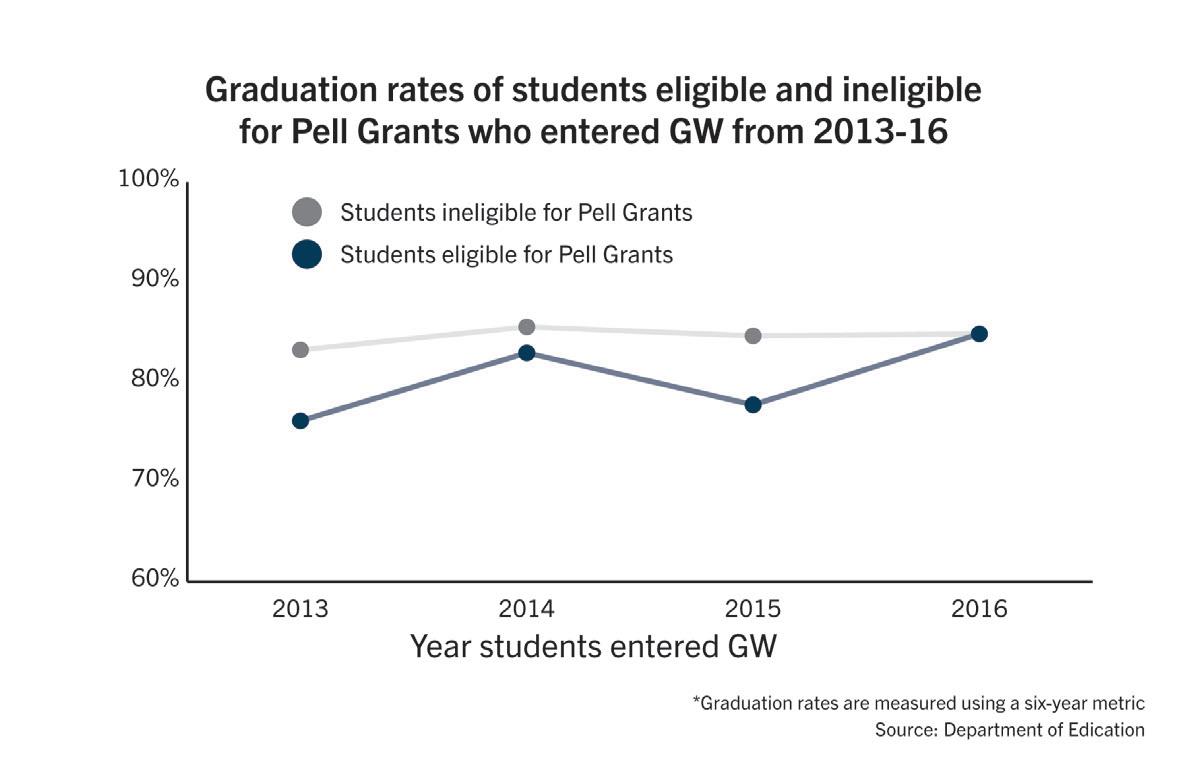
Students who entered GW in 2016 and received Pell Grants graduated at the same rate as those who did not, according to new institutional data.
Students who entered the University in 2016 had a six-year graduation rate of 84.8 percent, closing the gap in graduation rates between students eligible and ineligible for the Pell Grant, according to the Department of Education. DOE data shows the lack of a gap between Pell-eligible and nonPell-eligible students is an improvement from students who entered GW in 2013, which showed students were 7 percent more likely to graduate if they were not eligible for the grants.
Pell Grants are federal aid awards given to students with high financial need, which is calculated from their expected family contribution toward tuition and a university’s cost of attendance. The six-year graduation date is a common measurement point for academic metrics since it’s the average time taken to earn a bachelor’s degree.
The graduation rate gap between Pell-eligible and non-Pell-eligible students at GW shrunk to 2.6 percent for students who entered in 2014 — when 85.5 percent of non-Pell students graduated, compared to Pell students’ 82.9 percent graduation rate — and swelled to 6.9 percent for 2015’s entrants.

University spokesperson Julia Metjian said GW supports Pell students through programs like a new summer recovery academy for students who were not meeting their “academic progress goals” and “success coaches” for students who are struggling academically.
See PELL-ELIGIBLE Page 4
Student organizations celebrate Hispanic Heritage Month
 FIONA BORK
LIZZIE JENSEN STAFF WRITER
FIONA BORK
LIZZIE JENSEN STAFF WRITER
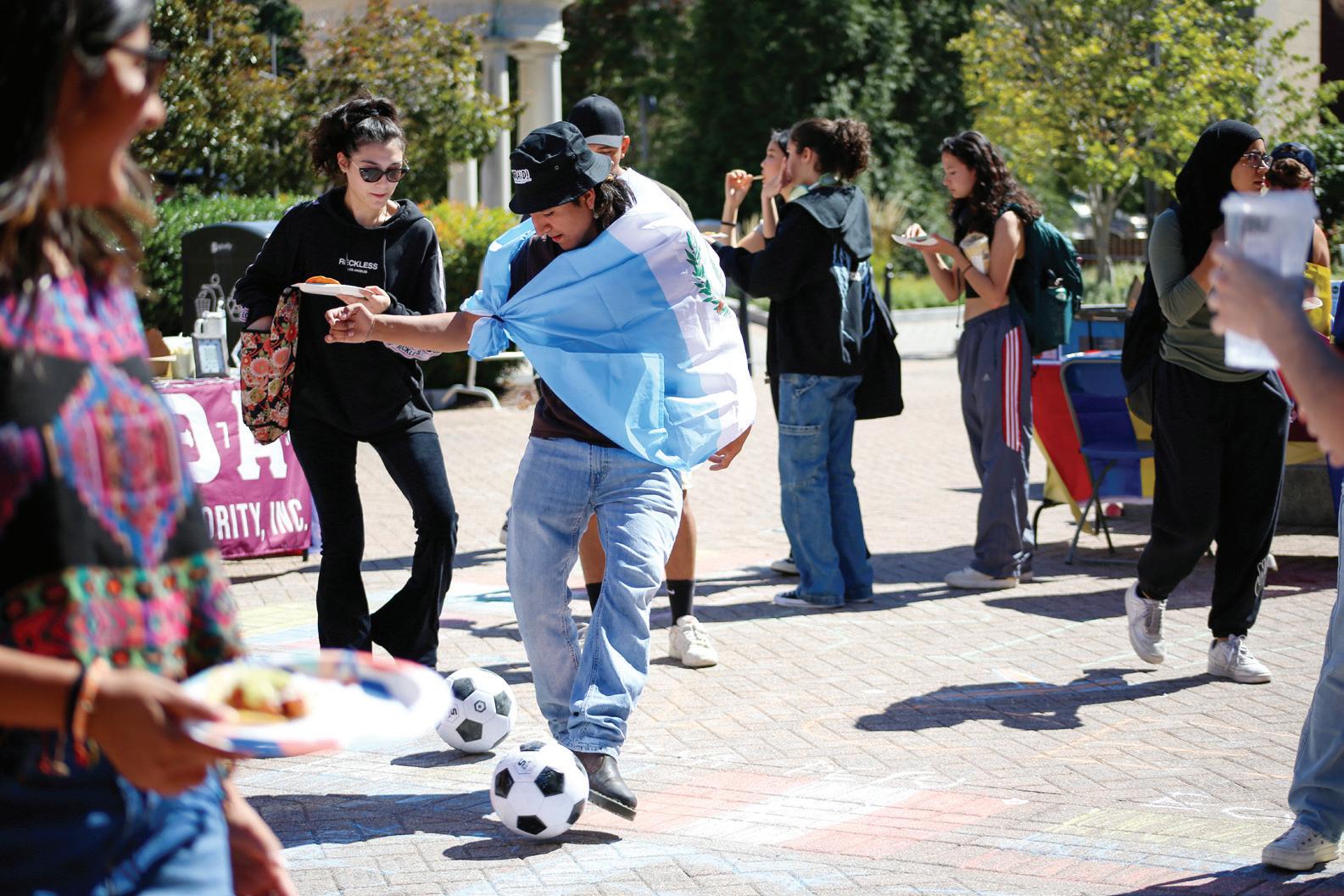
Latin American and Hispanic student organizations said they plan to commemorate Hispanic Heritage Month this year through events celebrating their culture’s music, food and traditions aimed at bringing community members together.
The annual monthlong celebration, which began Sept. 15 — the day several Latin American countries won their independence
Officials close Public Health Lab after COVID national emergency ends
RORY QUEALY ASSISTANT NEWS EDITOR
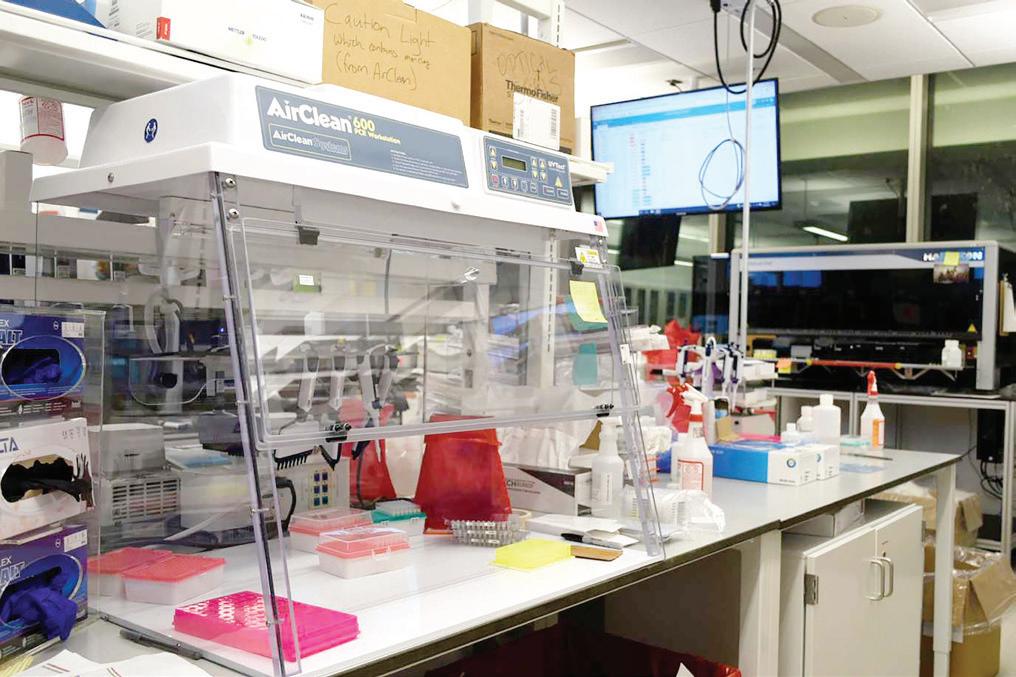
Officials shut down GW’s Public Health Lab in June, ending on-campus COVID testing operations and halting the development of at-home sexually transmitted infection test kits.
University spokesperson Julia Metjian said officials closed the lab following the cancellation of on-campus COVID testing and contact tracing protocols, which were wound down in May in response to the federal government ending the national COVID public health emergency. The lab’s closure puts a potential end to a project of developing free at-home STI kits, which the lab was fundraising for earlier this year.
Metjian said the Milken Institute School of Public Health incorporated the lab’s remaining equipment into its facilities. In March 2021, officials used $9.2 million in federal stimulus funds to offset the cost of GW’s COVID testing apparatus.
“Equipment has been absorbed into the SPH Labs shared infrastructure,” Metjian said in an email. “It will be used in support of ongoing projects, and
Lack of prehealth advisers leaves students feeling lost
RACHEL MOON CONTRIBUTING
EDITOR
The University no longer employs an adviser assigned to students preparing for graduate and professional education in health care, leaving prehealth students feeling lost while developing course schedules and seeking career opportunities.
University spokesperson Julia Metjian said GW is working to “expedite” its search for an adviser after employing two last semester. In the meantime, the shortage has reduced the availability of advising appointments and pre-health information sessions, causing students to worry they will miss out on crucial guidance when preparing to apply to medical school.
— honors the community’s achievements and contributions within the United States. Student organizations said they will celebrate the month with programming that embrace the Multicultural Student Services Center’s theme, Ritmos y Raíces — rhythms and roots — by highlighting music in Hispanic culture.
The MSSC is hosting Latin Heritage Celebration events to include all people from Latin American countries in programming in addition to Hispanic people, who are from Spanishspeaking countries.
Executive board members of the GW Organization of Latin American Students said celebrating the month each year provides a chance for the Latino community to come together and celebrate accomplishments in the U.S.
“We’re part of this community in the United States that we’ve contributed so much in through our accomplishments, our culture as well as our pride in being Latino,” said sophomore Axcel Sanchez, the director of event programming for OLAS.
See LATINO Page 4
Metjian said the director of undergraduate advising is currently working as an interim pre-health adviser. Students can schedule a “general” appointment with an unnamed adviser through the pre-health advising website after it previously offered one-on-one virtual and in-person appointments with individual advisers last semester.

The website, which encourages students to meet with pre-health advisers to prepare to apply for postgraduation health programs and plan their undergraduate coursework, does not have any appointments available through October.
Pre-health students said there is limited availability for advising appointments this fall and that there has been a lack of timely responses to emails they send to the pre-health advising office. Students reported feeling worried that the lack of pre-health advising could hurt their chances of getting into medical school post graduation.
GW ‘monitoring’ impact of potential government shutdown

will be accessible to researchers at GW that may wish to use it.”
The Public Health Lab opened in August 2020 to process GW community members’ required regular COVID tests, but as time passed, officials began dialing back COVID-related restrictions on campus, including required testing. In May, the lab was fundraising to develop free at-home STI tests as the number of COVID tests the lab processed dropped from 3,000 per day in the 2021-2022 academic year to 300 per week last academic year, according to former lab staff.
Metjian didn’t specify what will happen to the STI kits after the facility’s closure.
The Hatchet scheduled an interview with former Public Health Lab manager Jack Villani to discuss the lab’s closure, but Milken officials postponed the interview due to internal media procedures. When asked to comment further, Villani said Metjian’s statement to The Hatchet reflected any information he would’ve shared in an interview.
Metjian did not specify why the lab closed and declined to comment on what happened to the lab’s staff members after its closure.
GW will “operate normally” if the government shuts down, officials said Friday. Officials said in an email to community members that they are monitoring a federal spending bill that if not passed by Sept. 30, will trigger a partial shutdown of the federal government. The email states that the shutdown will not affect students’ financial aid but may delay “military-affiliated” students’ education and tuition assistance packages, which are offered through the Department of Veterans Affairs and the Department of Defense.
In response to hiccups related to the shutdown, GW’s Office of Military and Veteran Services will contact students and can provide “emergency funding,” the email states.
“In the event of a government shutdown, other impacts to the University community would vary depending on the length of a shutdown,” the email states. “The University will monitor and continue to provide updates in the coming days.”
The government will continue
“essential” services in the case of a shutdown, including the postal service, some Social Security benefits and the IRS. Government employees considered essential would also keep working but would not be paid during the shutdown. Employees considered “non-essential” could be furloughed and would not work or be paid.
During the 2018-19 shutdown,
which lasted 35 days, students reported they were out of work at their government internships. A shutdown would also cause the closure of federal museums in the D.C. area. A near-shutdown in 2021 nearly disrupted the fall Commencement meant to honor the Classes of 2020 and 2021, but lawmakers reached a funding deal in time to prevent a shutdown.
difficulties
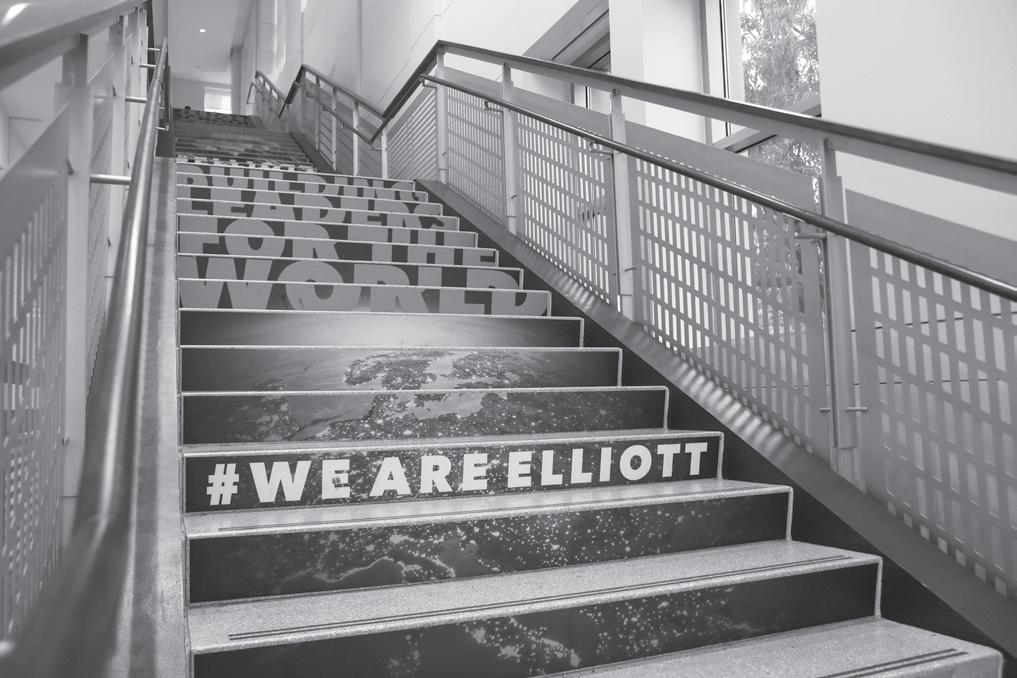
The Elliott School of International Affairs will eliminate a pair of stand-alone master’s degree programs.
Officials will phase out the European and Eurasian Studies and Latin American and Hemispheric Studies programs over the next two academic years and will stop accepting new applicants this fall, according to emails from Elliott School Dean Alyssa Ayres that were obtained by The Hatchet. An email states that officials are discontinuing the programs due to low enrollment, narrow financial viability and difficulty retaining full-time faculty. “The direct and indirect costs of such expansive service obligations,
as well as the fact it disproportionately falls upon our contract faculty colleagues raising issues of equity and fairness, has to be weighed against the large number of programs we administer,” Ayres said in an Aug. 18 email to faculty that was obtained by The Hatchet.
Students currently enrolled in the programs may complete the remainder of their degrees or transfer into a master of arts in international affairs, or MAIA, where they can concentrate on specific regions, including Latin America or Europe, Eurasia and Russia, according to the email. After the programs phase out, new students will no longer be able to earn region-specific degrees. Instead, they will have to earn the umbrella MAIA degree with concentrations in their preferred region.
Students pursuing the MAIA degree must complete a 12 credit concentration with either a thematic specialization — like democratic studies and global health — or a region-specific focus, including Latin America; Europe, Eurasia and Russia; the Middle East; Africa; and Asia. The former stand-alone programs required 40 credits that largely had a region-specific focus.
“This shift in our administration of these specializations will not lead to personnel changes nor will it degrade our teaching in these areas,” Ayres said in the email. “We will continue to offer our students the opportunity to study these regions in depth through our MAIA program, led by our world-class faculty.”
INDEPENDENT STUDENT NEWSPAPER • SERVING THE GW COMMUNITY SINCE 1904 Monday, September 25, 2023 I Vol. 120 Iss. 6 WWW.GWHATCHET.COM What’s inside
JENNIFER IGBONOBA | STAFF PHOTOGRAPHER
Students toed soccer balls across the bricks of Kogan Plaza last week during the Organization of Latin American Student’s kick-o for Hispanic Heritage Month.
NEWS
ASSISTANT NEWS EDITOR
Culture Teashi finds a new home after being ousted from Shenkman Hall. Page 7 Opinions The editorial board argues GW’s dining system is complicated and needs a clear vision. Page 6 Sports Men’s club ice hockey fell 0-3 to Georgetown Sunday. Page 8 See PRE-HEALTH Page 5
MARR ASSISTANT NEWS EDITOR
HANNAH
Officials to discontinue two Elliott master’s programs amid low enrollment, hiring
FILE PHOTO BY DANIELLE TOWERS | SENIOR STAFF PHOTOGRAPHER The Public Health Lab opened in August 2020 to process community members’ required COVID tests.
FIONA RILEY ASSISTANT NEWS EDITOR
See FACULTY Page 5
FILE PHOTO BY ALLISON ROBBERT | STAFF PHOTOGRAPHER
The government will continue “essential” services in the case of a shutdown, including the postal service, some Social Security benefits and the IRS.
GW alum hopes to usher in new generation of leaders to US House
CADE MCALLISTER EVENTS EDITOR FIONA BORK ASSISTANT NEWS EDITOR
A recent GW alum is hoping to bring in a new generation of young people to the House of Representatives after launching his campaign in May.
Democrat Joe Vogel, a 2018 graduate and a Maryland General Assembly delegate representing Gaithersburg and Rockville, announced in May that he would run for the Democratic nomination in Maryland’s 6th Congressional District against nine other Democrats. The 26-year-old Vogel said he believes his generation will bring action on issues like climate change and gun control and hopes to be part of a new era of young leaders as the second Gen Z representative to be elected to Congress.
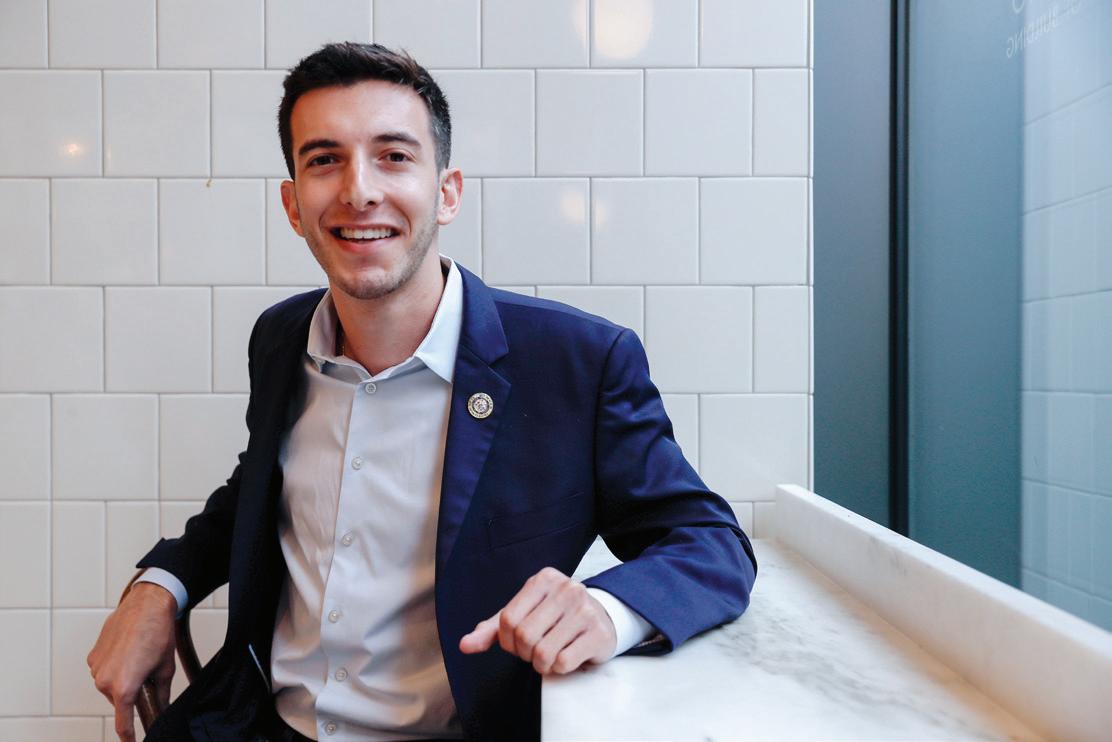
Vogel returned to campus to speak at a Shabbat dinner at GW Hillel on Friday.
Vogel said, if elected, he hopes to continue to advocate for the same issues he’s pushed to solve in the state legislature, including the mental health crisis, the fentanyl overdose epidemic, climate change and adding more jobs. Vogel — who is Jewish, an Uruguayan immigrant and gay — said he brings perspectives to Congress that have been missing from the chamber.
“We need not only a new generation of leaders, but we need leaders that reflect this community and aren’t just coming in from a different district trying to buy this election,” Vogel said in an interview with The Hatchet.
During his time as a state delegate, Vogel has sponsored bills to recruit and retain more mental health professionals for public schools, help boost startups working to end climate change and passed legislation that requires hospitals test for fentanyl when treating overdose patients.
“Those are examples of issues that I’ve led on, I’ve showed that I have a record on, and now I get to run for Congress with those priorities in mind with that record to
prove that I have what it takes to deliver,” Vogel said.
Vogel said he was 15 years old when a gunman killed 20 students and six school employees in the 2012 Sandy Hook Elementary mass shooting in Newtown, Connecticut. He said this shooting, and the lack of action thereafter for enhanced gun control, inspired him to major in political science at GW and then enter politics.
“I remember feeling this, at that moment, this frustration, that even after something like that happens, right, five- and sixyear-olds get shot in their schools, nothing changes,” Vogel said.
After graduating from GW, Vogel received his master’s in public policy from Harvard University and began working on his campaign for state delegate, eager to start his political career. He said when he first joined the legislature, he was always the youngest person in a room. Now, Vogel said he can help spark the change that has been lacking in an aging Congress.
If elected, Vogel would be the second Gen Z member of Congress after Rep. Maxwell Frost (DFL) was elected last year. He said young people should have a “seat at the table” in making decisions that could impact them for the rest of their lives.
“There is an entire genera-
tional perspective that’s missing right now in Congress as these life changing decisions are being made,” Vogel said.
Vogel said he believes service is “instilled” within GW’s values, which were further cemented in classes that helped him realize his drive to serve. He added that the best education he received was not from GW or Harvard but from his experience in the legislature where he got hands-on involvement in Maryland communities.
“The experience that I’ve had getting involved in community service in the community, right, with people in the community, that has really been the best education that I’ve had,” Vogel said.
Vogel said he has always felt the need to help his community, recalling his time at GW as a senator in the Student Association.
In January 2018, 22 of the SA’s 29 senators voted to remove Vogel from the senate for missing committee meetings. But he said he believed the impeachment was related to his leadership in the GW Together movement, which rallied against the Boycott, Divestment and Sanctions Movement, an initiative to end international support of Israel.
“It’s something that I think has in some ways been seared in my memory, right,” Vogel said. “But I try to think fondly about the impact that I was able to make.”
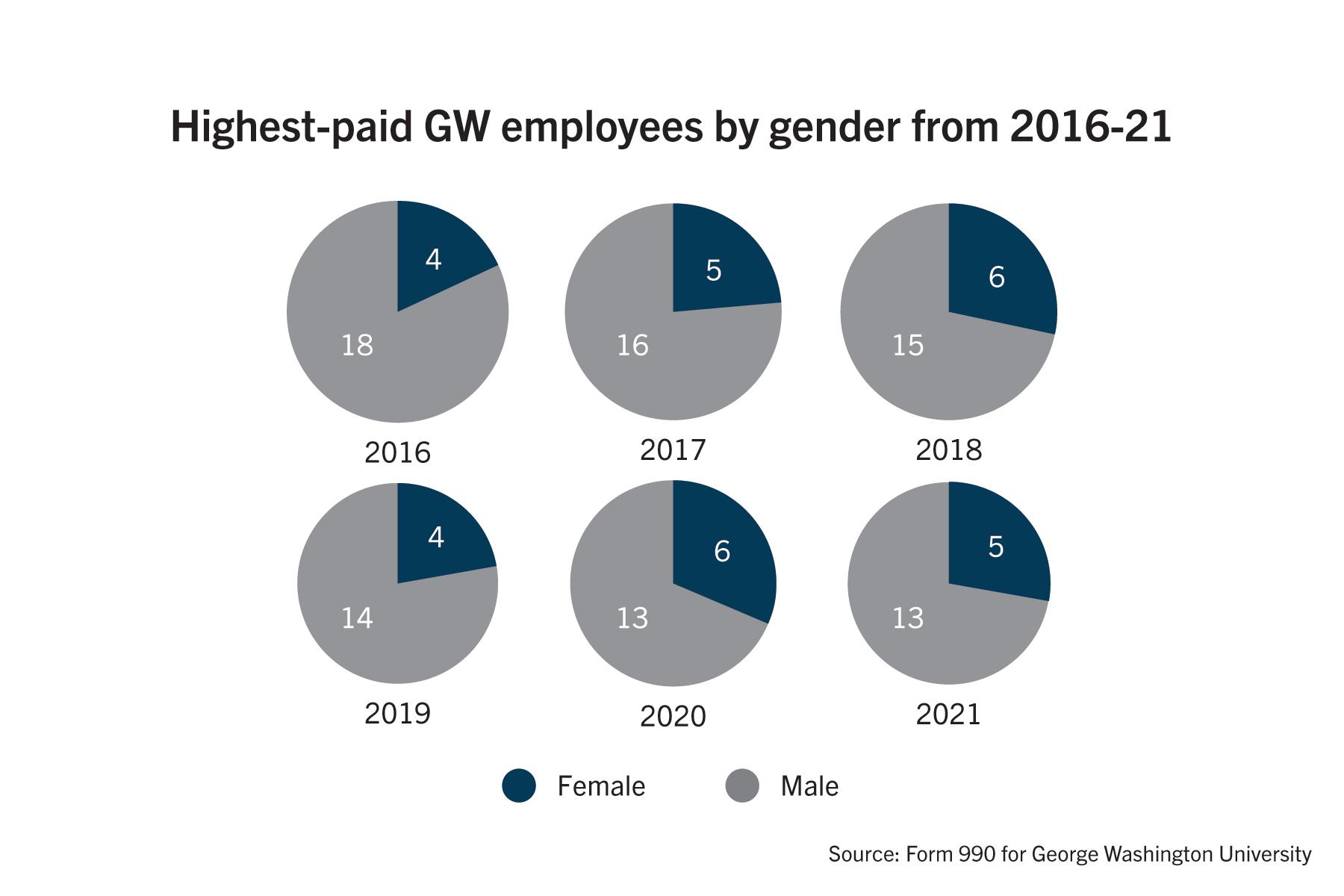
Five of GW’s 18 topearning employees in 2021 were women, according to University tax forms.
The bump in representation is a slight increase from seven years ago, when four of the top 22 earners in 2016 were women, according to the University’s Form 990 — a tax form for nonprofit institutions that lists the organization’s officers, directors and highest compensated employees. Experts in higher education administration diversity said women are underrepresented in top university roles across the country due to a lack of pay equity and a low prioritization of hiring women.
“Institutions may have made more of an effort, but it hasn’t had as much of an impact,” said Lynn Pasquerella, the president of the American Association of Colleges and Universities. “In fact, the situation for women has gotten worse as a result of COVID-19, when many women had to serve as caregivers for children or for other family members in ways that stalled their careers.”
The number of employees reported on the form fluctuates each year because organizations are required to report current and former officers, directors, trustees and “key employees”
— the five current highest-compensated employees.
The University’s gender disparity among its highest-compensated employees has remained largely consistent since 2017, when five of 21 were women. Women accounted for six of GW’s 21 top earners in 2018, four of 18 in 2019, and six of 19 in 2020.
Barbara Bass, the vice president for health affairs and the dean of the School of Medicine and Health Sciences; Beth Nolan, the senior vice president and general counsel; Dana Bradley, the vice president and chief people officer; Donna Arbide, the vice president for development and alumni relations; and Lynn Goldman, the dean of the Milken Institute School of Public Health, were the five top-earning female
employees listed on the 2021 form.
The form reveals that Bass received the highest compensation of the women — receiving $1,324,917 in 2021 — with Nolan coming in second with a compensation of $825,497. All five women fall into the top-10 highest-earning employees of the 18 employees listed, according to the form.
Pasquerella said faculty and staff may not be aware of gender pay disparities, and women tend to not negotiate for higher pay.
The number of female faculty members decreased from 646 faculty members in 2019 to 604 in 2021. Faculty said female professors left the University when the pandemic put stress on their familial roles.
“It’s not that institutions are unaware of the problem,” Pasquer-
AN NGO | GRAPHICS EDITOR
ella said. “It gets back to the hidden barriers and biases that militate against women taking on leadership roles.”
Ann Marcus, a professor of higher education and director of the Steinhardt Institute of Higher Education Policy at New York University, said universities need to be proactive about seeking women out when positions open for hire.
Last spring, GW announced the hiring of Ellen Granberg, the University’s first female president, amid a national wave of female university president hirings.
“They have to bring the issue to the forefront of the consciousness of people who do the hiring,” Marcus said. “There’s been some progress because institutions will be more intentional about how they recruit people.”
NEWS THE GW HATCHET September 25, 2023 • Page 2 News THIS WEEK’S EVENTS MAKING WAVES IN INTERNATIONAL AFFAIRS Tuesday, Sept. 26 | 5 p.m. Elliott School of International Affairs Attend a conversation with a panel of experts concerning how Latinx individuals are using their artistic expression to raise awareness for climate challenges. KERRY
IN CONVERSATION WITH TONY GOLDWYN Wednesday, Sept. 27 | 7 p.m. | Lisner Auditorium Watch a discussion with actress and GW alum Kerry Washington about her new memoir, “Thicker Than Water,” with her “Scandal” co-star Tony Goldwyn.
WASHINGTON
THIS WEEK IN HISTORY Sept. 29, 1994
LILY SPEREDELOZZI | SENIOR STAFF PHOTOGRAPHER
Domino’s Pizza launched the “Staying Slim with Pizza” program for first-years in which employees weighed students in store and rewarded them with a free pie if they maintained or lost weight.
PHOTO ESSAY
SAGE RUSSELL | ASSISTANT PHOTO EDITOR
Democrat Joe Vogel, a 2018 graduate and a Maryland General Assembly delegate representing Gaithersburg and Rockville, would be running for Maryland’s 6th District in the House of Representatives.
ISABEL BOZARTH | PHOTOGRAPHER
TOM RATH | PHOTOGRAPHER
ISABEL BOZARTH | PHOTOGRAPHER
ISABEL BOZARTH | PHOTOGRAPHER
TOM RATH | PHOTOGRAPHER
Five of GW’s 18 highest-paid employees in 2021 were women, tax forms show
LAUREN SIMON REPORTER
Students celebrate cultural organizations at 19th annual MSSC Block Party
LANA KHALAF REPORTER PRAVINA KHADKA REPORTER
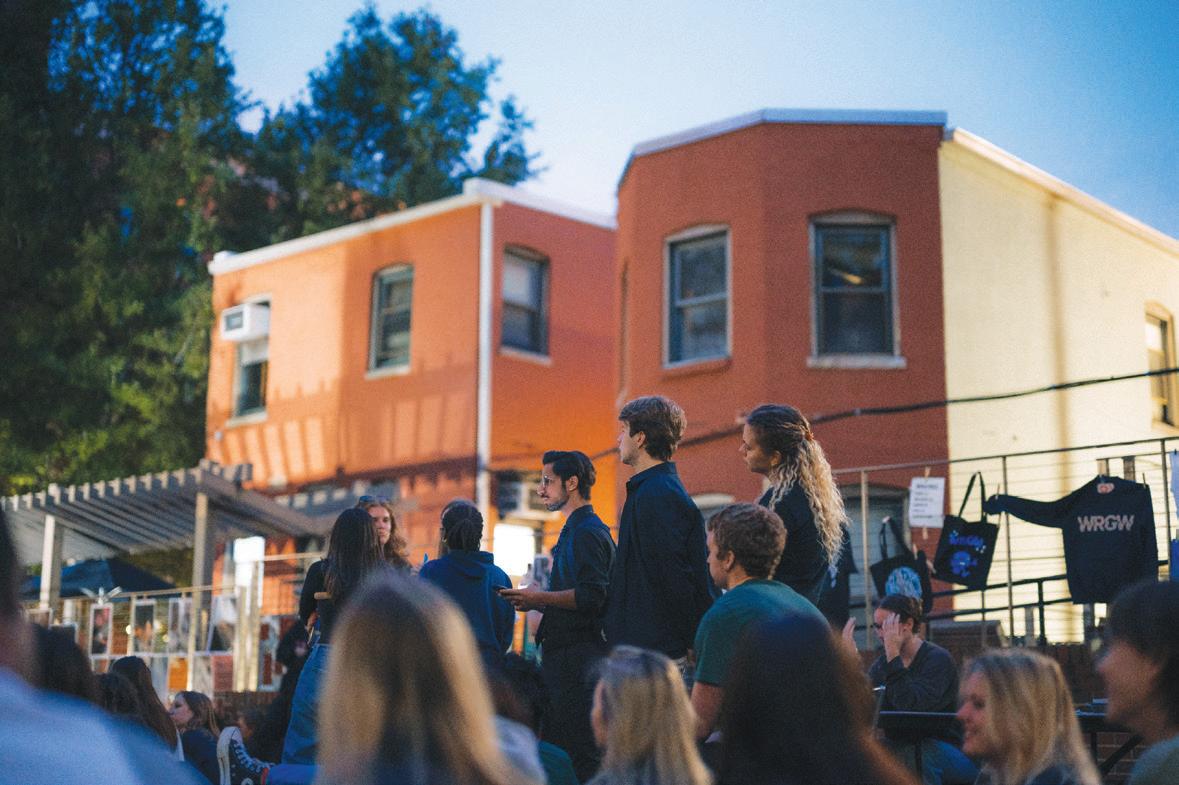
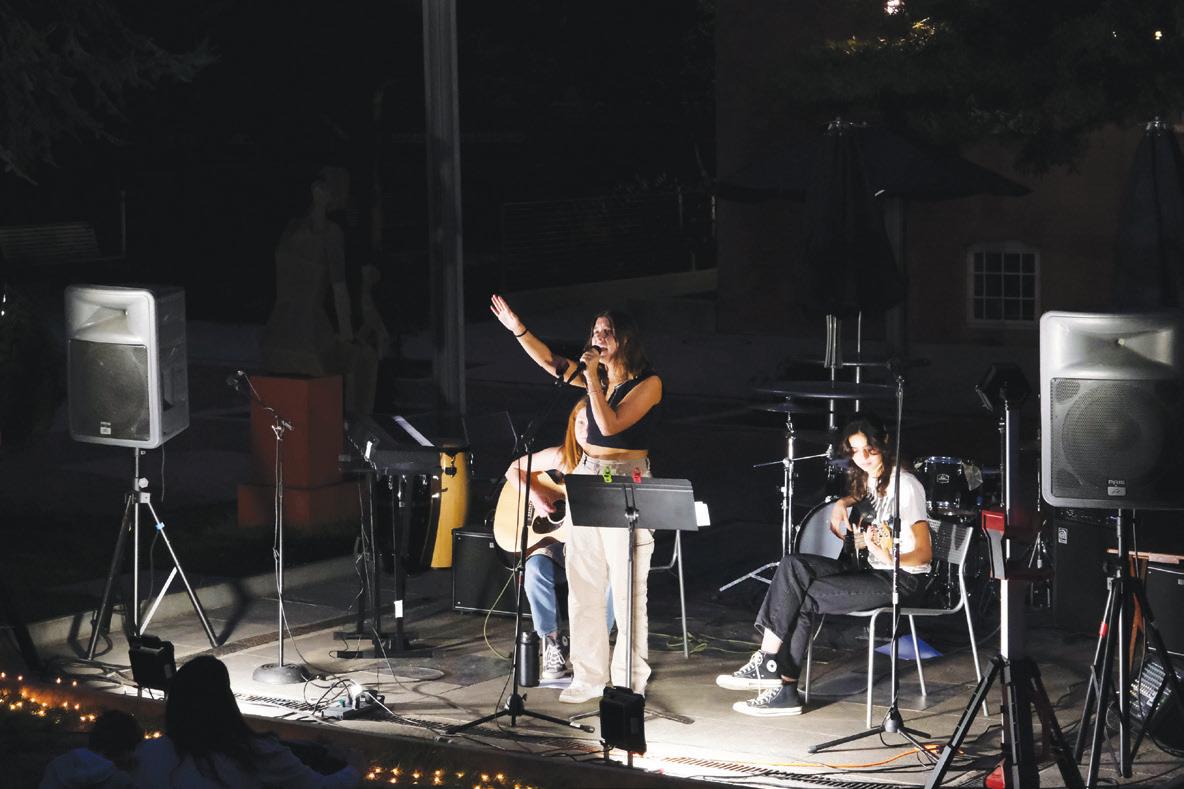
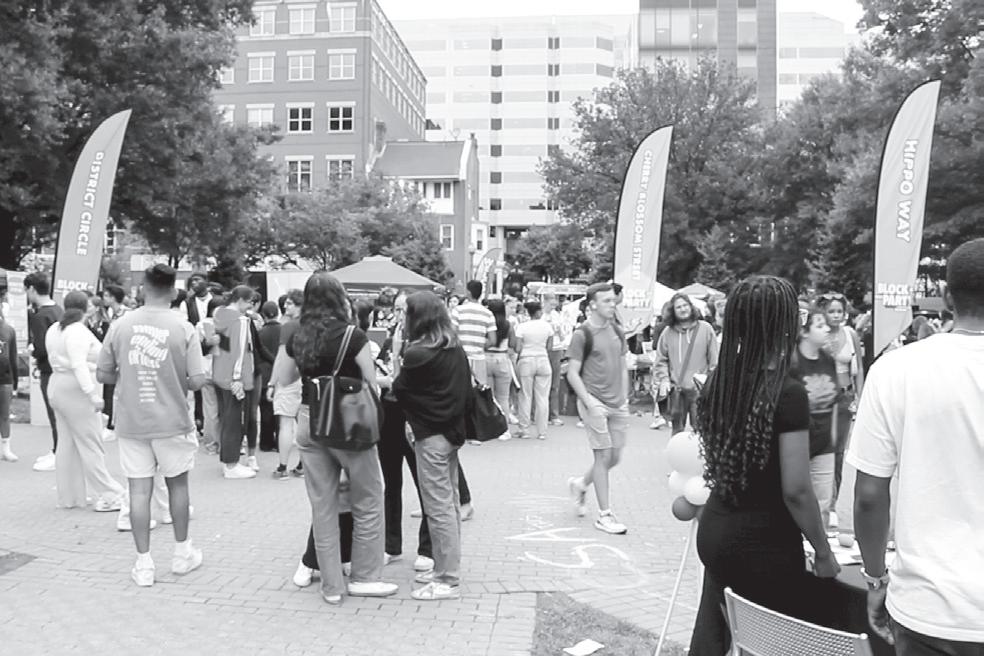
Savory scents wafted through the air as students in traditional cultural garb danced the salsa and spun to international melodies at the Multicultural Student Services Center’s 19th annual Block Party on Friday.
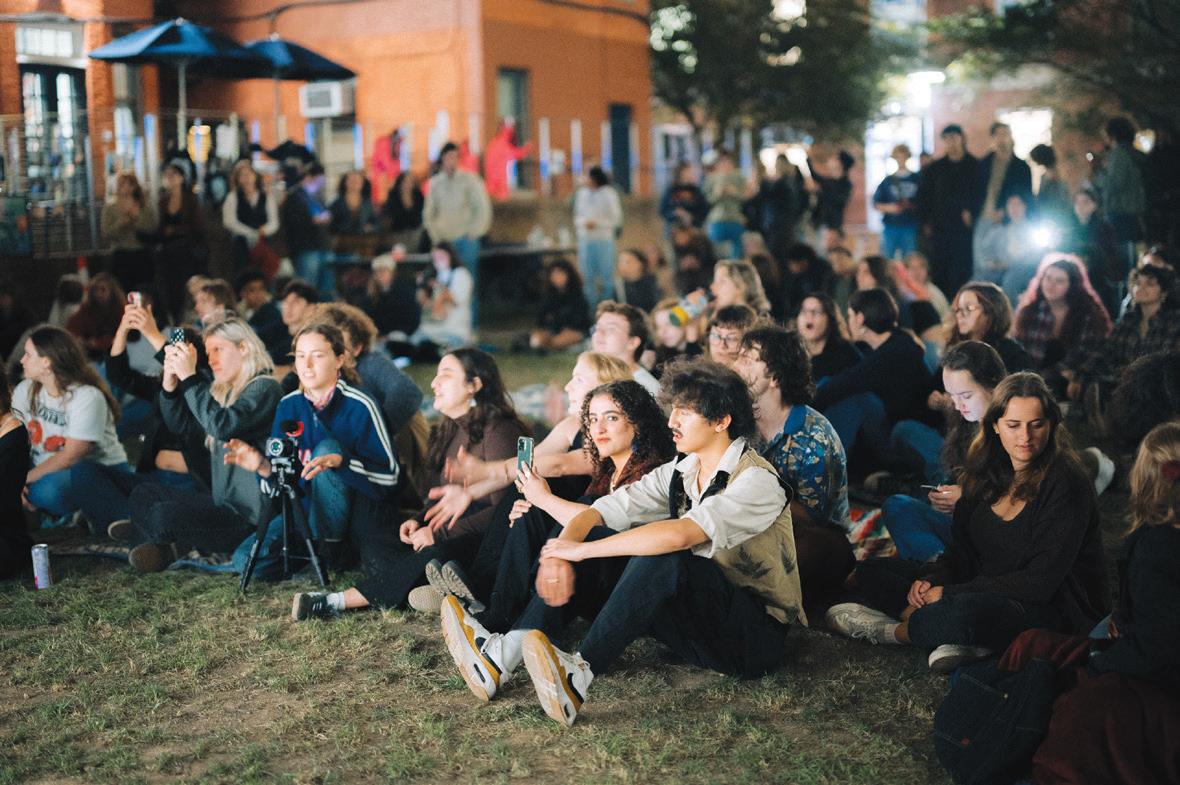
More than 150 students, alumni and community members attended the celebration of cultural organizations at GW in University Yard, an event that featured more than 20 performances from student groups like the Ethiopian-Eritrean Students Association, District K and National Pan-Hellenic Council. Students circled the stage to catch a glimpse of the dance routines as others scouted out the student organizations tabling at the party.
Music ranging from the Spanish song “Ateo” by C. Tangana and Nathy Peluso to “MOVE” by Beyoncé blared through U-Yard as performers danced in cultural outfits and performance costumes that varied from classic black tops and blue jeans to traditional ballroom attire.
Marella Bordewyk, the president of Latin dance team GW Fuego, said she interacted with a lot of Spanishspeaking people at the event, which she said doesn’t occur often for her on campus. She added that, as a native Spanish speaker, her teammates asked her to communicate with event attendees who felt more at ease speaking in Spanish when discussing the organization.
Bordewyk said she talks about her organization with “more passion” when she speaks Spanish because of
the cultural connection she shares with students who speak Spanish.
“That made me feel connected to my home because it doesn’t happen usually,” Bordewyk said.
Shaved ice company Kona Ice gave out free snow cones to attendees from their truck while University employees distributed Domino’s Pizza. The MSSC also awarded attendees with gift bags and raffle prizes — including two tickets to Kerry Washington’s Thicker than Water book tour that’s taking a stop in Foggy Bottom — to audience members who correctly answered questions about the MSSC throughout the evening.
Sneha Burle, a first-year majoring in psychological and brain sciences and political science, was the first winner of the giveaway after she correctly answered 2004 as the debut year of the MSSC Block Party. Burle said her gift bag included two shirts and a hippo stuffed animal.
Burle said she loved learning about different cultural organizations and watching performances, es-
pecially GW Raas — a competitive South Asian dance team — because her roommate performed.
“I really like how it’s more set up like a party, too, instead of a fair,” Burle said.
Coralis Acevedo-Vargas, the co-vice president of AfroLatinx student group Alianza, said she noticed a few changes to the block party this year, including more student organizations and the addition of sign language interpreters on stage.
“It’s more inclusive, more representation,” AcevedoVargas said. “Overall, I see a lot of stuff going on. I think it’s really good.”
Krish Dani, a captain for GW Bhangra — the oldest competitive collegiate Punjabi-style dance team in the U.S. — said he hoped to set the energy for the team’s upcoming competition season with their performance at the block party.
Dani said GW Bhangra combined last year’s choreography from the block party with new moves for their first performance of the season.
“This is the first time we
can actually show people our dancing, which is super exciting because this sets the tone for the rest of the year and the rest of our gigs,”
Dani said.
Olivia Starz, the president of the Queer and Trans People of Color Association, said the Block Party has become an essential part of the promotion of smaller organizations on campus because awareness of their organization usually spreads through word of mouth. Starz said the Block Party displays the University’s diversity, which people may not see every day.
Starz said QTPOCA looked to attract different types of students during the block party, including seniors and international students.
“It’s a visibility for the smaller orgs,” Starz said. “Breaking it off by weekends is also wonderful because, although it was a little unfortunate that we were last because we missed a whole month and a half, people are going to be even more eager to participate and show up.”
Dina Grossman, the president of Kehila GW — a student organization for students who identify as Jewish and part of the LGBTQ+ community — said the block party builds itself on representing multicultural, religious and LGBTQ+ organizations.
“We fall into two of those three buckets as a religious org and a queer org,” Grossman said. “It’s really important for us to be able to represent that to the broader community and for people who experience or are part of these multiple marginalized identities to feel like this is a space for them and to celebrate that at a block party because that’s fun.”
GW wins in lawsuit from fired library employee
A District Court judge ruled in GW’s favor after a former employee of 29 years sued the University for allegedly violating his right to leave.
Trevor McFadden, a judge for the U.S. District Court for D.C., granted the University’s motion for summary judgement Friday in a memorandum opinion, ruling that officials did not violate the Family and Medical Leave Act — which requires employers to allow workers to take time off for familial and medical reasons — when they fired Abdulkadir Mohamed, a Gelman Library assistant, in 2019. In a memorandum order on Sept. 15, McFadden sided with GW’s argument that Mohamed didn’t provide basic discovery in the suit — a pre-trial stage in which parties can obtain evidence from one another — by raising “nonsensical objections” in interrogatory meetings and failing to provide requested documents.
McFadden, who previously sanctioned Mohamed for “inadequate discovery responses” and “flouting the court’s orders” in the memorandum order, said Mohamed didn’t follow the court’s order to provide evidence and documents by April 10. He ordered Mohamed to pay GW’s legal costs associated with GW’s letter to him requesting “lacking” information for their discovery request, (I’m confused what costs could stem from a letter?
can we cut or simplify this – probably very minimal, like maybe taxes and stuff, but they still want him to pay, your decision whether you think we should keep or not keep) the discovery teleconference, 25 percent of the deposition and the University’s briefing of the sanctions motion.
Lincoln National Corporation, a third-party the University uses to administer FMLA benefits, approved Mohamed for conditional leave in early September 2019 after he filed for leave from Sept. 24 to Nov. 29 in 2019 to visit his “seriously ill” father in Italy. But on Oct. 9, LNC denied his leave request because Mohamed failed to provide medical certification within 15 days, (of his father’s illness? – doesn’t explicitly say, seems like father’s but don’t know if I want to assume though) and Mohamed proceeded to leave for Italy in late October without providing the proof.
In November 2019, the University fired Mohamed after he failed to respond to a warning letter from the University for “weeks” that said officials would perceive a nonresponse as job abandonment.
“Mohamed was approved for conditional leave, shirked his duties, got his leave denied, and then went AWOL for weeks on end while ignoring his employer,” McFadden said. “The University did not interfere with his FMLA rights when it fired him for that.”
Attorneys representing the University and Mohamed didn’t respond to
requests for comment.
In November 2021, Mohamed sued the University for allegedly violating his equal rights under the law and the Family and Medical Leave Act, with McFadden dismissing his equal rights under the law violation allegation in August 2022.
McFadden said in the memorandum opinion that the University “did nothing” to interfere with Mohamed’s ability to take FMLA leave because he knew he needed to submit medical certification to go on leave.
McFadden said the University had a legitimate, non-retaliatory reason to fire Mohamed. He said one of Mohamed’s arguments that his medical certification was the “pretext” for his termination is a “dud” because the University started the termination process on November 6 before Mohamed finally submitted the certification on November 7.
“The man says that the employer interfered with his rights under the Family and Medical Leave Act and retaliated against him too,” McFadden said. “The employer did neither.”
While he was employed, Mohamed also filed complaints against the University through the Equal Employment Office, including after he was denied a promotion in 2008 and demoted in 2013. He alleged his direct supervisor was verbally aggressive to him and that an EEO employee was “hostile and inappropriate.”
FONDLING
Public Property on Campus (2000 Block of I Street)
9/17/2023 – Unknown
Closed Case
A female student reported she was the victim of sexual assault by an unknown male subject who rode past her on a bicycle. No further action.
THEFT I/OTHER
Public Property on Campus (2000 Block of H Street NW)
9/18/2023 – Unknown
Open Case
A male student reported their moped stolen. Case open.
THEFT I/BICYCLES
Private Property Within Campus Bounds (2300 Block of H Street) 9/18/2023 – Unknown
Open Case
A male student reported their bicycle stolen. Case open.
HARASSMENT: E-MAIL AND ELECTRONIC MEDIA, THREATS TO DO BODILY
HARM
Various Locations
9/18/2023 – Multiple
Closed Case
A female contractor reported being the victim of harassing text messages and threats to do bodily harm by a former male coworker. Referred to Title IX Office.
DISORDERLY CONDUCT
Academic Building (Mount Vernon Campus)
9/19/2023 – 8:30 a.m.
Closed Case
GW Police Department officers responded to a female professor’s report that a male student was being disorderly during class and refused to comply with her instructions. Referred to the Division for Student Affairs.
MISDEMEANOR
SEXUAL ABUSE
Public Property on Campus (2200 Block of I Street) 9/20/2023 – 10 a.m.
Open Case
A female student reported she was the victim of sexual assault by an unknown male subject who rode past her on a bicycle. Case open.
ATTEMPTED ROBBERY
Public Property on Campus (600 Block of 23rd Street)
9/20/2023 – 3:40 p.m.
Open Case
A male student reported that an unknown male subject asked him for money, which he declined. The subject then produced a weapon and threatened the student before fleeing the scene. Case open.
Officials welcome Class of 2027 at sparsely attended Convocation
 CADE MCALLISTER EVENTS EDITOR
FIONA BORK ASSISTANT NEWS EDITOR
CADE MCALLISTER EVENTS EDITOR
FIONA BORK ASSISTANT NEWS EDITOR
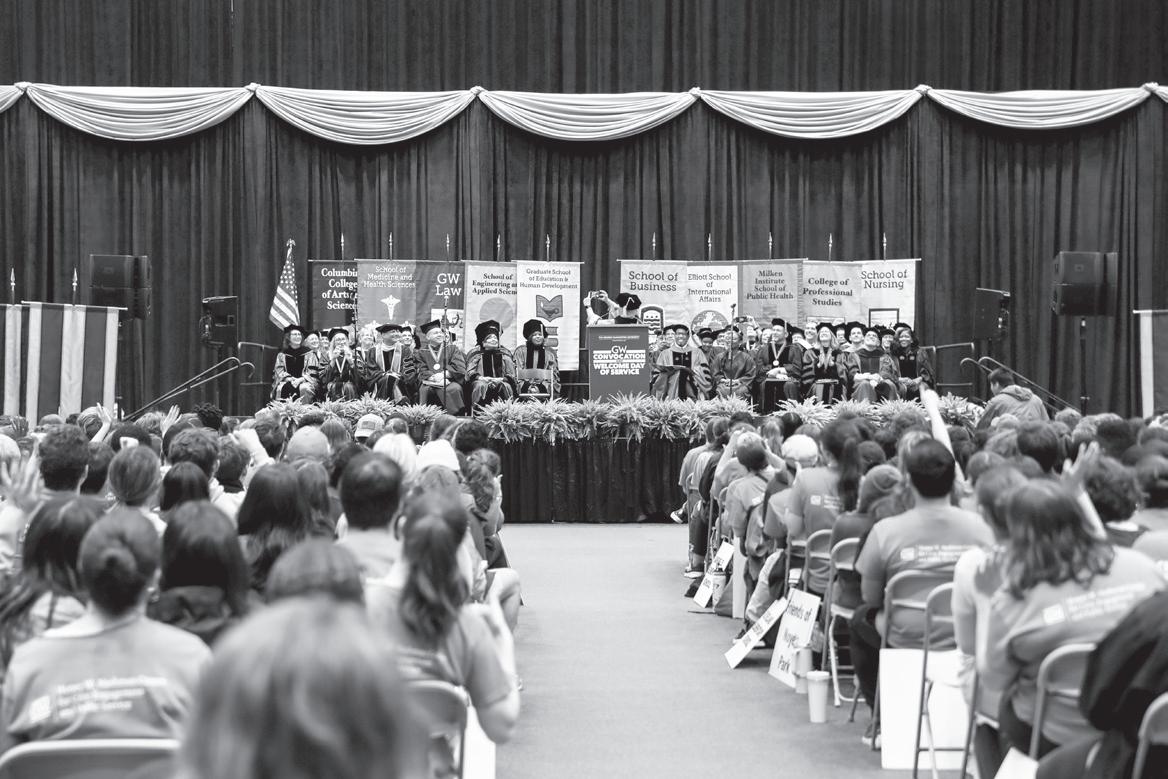
Officials encouraged the Class of 2027 to seize every opportunity in their academic endeavors at the University’s annual Convocation ceremony at the Smith Center on Saturday.
About 800 of the 2,500 firstyear and new transfer students attended the annual ceremony, held roughly a month later than its usual date, according to Amy Cohen, the executive director of the Honey W. Nashman Center for Civic Engagement and Public Service. University President Ellen Granberg, Provost Chris Bracey and senior Dasia Bandy addressed the class, encouraging students to pursue community service and welcoming them to GW.
Convocation coincided with the Welcome Day of Service, where students are bussed to various service sites in the D.C. area to participate in community service projects, some of which were
canceled due to Saturday’s rainy weather.
Cohen said the Convocation’s delay was due to holidays like Rosh Hashanah and construction at the Smith Center. Officials replaced the venue’s floor, a transformation shown in a video tweeted by GW Sports.
Cohen said the event’s postponement and poor weather contributed to the low turnout this year, which she said is usually about 1800 to 2000 students. She said Convocation will return to its usual time at the end of Orientation next academic year.
Bracey delivered introductory remarks and said the postponement of the ceremony gave him more time to get to know the firstyears, unlike previous years.
“I’ve had a little extra time to get to know some of you, and I’ve seen firsthand your excitement to be here, your desire to take full advantage of the many benefits of living and learning,” Bracey said.
Granberg, who began her term as University president July 1, said Convocation is the beginning of a “remarkable journey” for students to develop their aca-
demic interests.
“You will not only have the opportunity but will be wholeheartedly encouraged to engage with your passions, to develop new interests and to discover things that really matter to you, the things that motivate you and the things that inspire you,” Granberg said. “This is the time in your life to openly explore who you are and the world that you occupy.”
Granberg encouraged students to reach out to staff and faculty who can guide students through their academic and extracurricular pursuits. She said students should learn from their peers’ various perspectives to make change.
“When you came to GW you joined a community of individuals who all have the same intellect and curiosity and desire to have an impact as you,” Granberg said. “You and your peers have all come to GW to achieve a shared goal — to learn to change the world, and each of you will develop very different perspectives on how to do this. That is what makes us revolutionary.”
Granberg said she wants to hear from students and urged them to share their experiences and opinions about GW at her website, which gives students a space to express any questions and concerns they may have, because students’ voices are a “valuable” part of the University.
“I wanted to hear from you, I
want to know what you think are our GW strengths, our challenges and our opportunities,” Granberg said. “I would love to hear what brought you to GW and how your experience has been so far.”
Granberg said the Welcome Day of Service is emblematic of the University’s dedication to service.
NEWS September 25, 2023 • Page 3
CRIME LOG THE GW HATCHET
—Compiled by Max Porter
SAGE RUSSELL | ASSISTANT PHOTO EDITOR About 800 of the 2,500 first-year and new transfer students attended the annual ceremony on Saturday.
MAX PORTER CONTRIBUTING NEWS EDITOR
STILL VIA SAHER MIRI | VIDEOGRAPHER
More than 150 students, alumni and community members soaked in cultural performances and tasted international delicacies during the Block Party on Friday.
Social media campaigns boosted COVID vaccination rates in Nigeria: study
A professor in the Milken Institute School of Public Health found that a social media campaign reduced hesitancy toward COVID-19 vaccines and increased vaccination rates in Nigeria.
Doug Evans, the study’s lead author, said researchers studied the effectiveness of two social media campaigns on Facebook and Instagram to promote COVID vaccinations launched in 2022 and found that vaccination rates among the study’s participants increased by roughly 6% and 9% after the first and second campaigns, respectively. He said officials can use social media campaigns like the ones in his study — in which trusted community figures promoted vaccinations as a social norm — in other countries to appeal to local audiences and boost vaccination rates.
“We have kind of a confirmation of our theory that if you get people to think differently about how normal it is to get vaccinated, they’re more likely to get vaccinated later,” Evans said.
Evans said local Nigerian organizations delivered the
first campaign in January and February of 2022, which focused on normalizing COVID vaccination by having community members post personal testimonies, depictions of the benefits of vaccination and explain the “costs” of not being vaccinated. He said the second campaign, which ran May to September 2022, used a social influencer model, where influential people in Nigeria like local celebrities, religious leaders and health care providers promoted COVID vaccinations.
“There needs to be considerable thought given to what kinds of content people are used to consuming and how to present it,” Evans said. He said researchers recorded participants’ information and followed up with respondents to measure how their responses changed over time. He said researchers sampled participants in regions where people likely saw the campaign and in regions where researchers did not deliver the campaign as a control, which allowed the researchers to determine how the campaigns affected vaccination rates and social norms about vaccination.
GW partners with Reston Limousine, orders new fleet of Vex shuttles
ERIKA FILTER NEWS EDITOR
GW began a new partnership with a local rental transportation provider to supply new shuttles to the Mount Vernon Campus this semester.
University spokesperson Julia Metjian said Reston Limousine received the University’s shuttle contract over the summer, sunsetting the former vendor’s old shuttles. Metjian said Reston Limousine ordered 30-passenger, propane-fueled shuttles “to reduce emissions and engine noise.”

“We anticipate these will be in service within the next year,” Metjian said in an email.
Metjian declined to say why the University partnered with Reston Limousine to provide shuttles.
She said Mount Vernon Express shuttles depart from both campuses at peak times — between 8 a.m. to 7 p.m. — every five minutes, as they did last semester. She added that nine shuttles that carry between 24 and 28 passengers operate at peak times. Metjian said officials are aware of reports of long wait times and will continue to look for ways to improve.
“Unfortunately, D.C. traffic is variable each day and by the hour, but alternate routes are sometimes used if necessary,” Metjian said.
After the first campaign, the number of vaccinated study participants in states that likely saw the campaign was 31.7 percent, compared to 25.3 in control states. The second campaign resulted in 44.1 percent of vaccinated participants in states where researchers delivered the campaign and 35 percent in control states.
He said each campaign had to be “culturally relevant” because of Nigeria’s diversity. The researchers accounted for the fact that northern Nigeria is predominantly Muslim while southern Nigeria is largely Christian by customizing posts based on cultural differences — including different recognizable figures with varying styles of dress — to be more familiar to each local audience.
Evans said researchers used Virtual Lab — a software that simulates a lab environment — to recruit more than 1,000 participants from all 37 Nigerian states, including the six states where researchers delivered the campaign, to the study via social media. He said researchers used a chatbot to send survey questions to participants on Facebook
Messenger and that the chatbot asked participants a series of questions about their COVID vaccination status, like if they were vaccinated
and if they received one or two shots.
He said researchers began the social media campaign in December 2021,
when Nigeria received an “influx” of COVID vaccines from Europe. That same month, more than one million vaccines in Nigeria expired without being used. Nigeria has the largest number of cumulative COVID cases in West Africa since 2020, according to data from Johns Hopkins University. He said researchers began the first campaign with the hopes of building enough demand for the vaccines among Nigerian people to meet the provided supply. He encouraged other researchers to use the benefits of vaccination and detriments of remaining unvaccinated when deploying vaccination campaigns because it was effective in increasing vaccination rates among the study’s participants. Experts in infectious diseases and public health said social media campaigns promoting vaccination are necessary to counter rising antivaccine misinformation. The experts said public health officials should use social media more to promote vaccination and other public health initiatives because the information would reach a wider audience.
FIONA RILEY ASSISTANT NEWS EDITOR
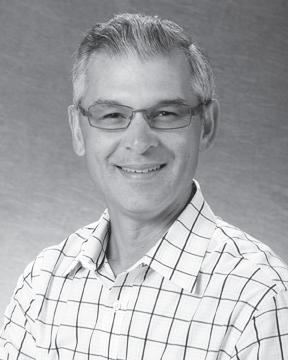
Richard “Dick” Cooter, an associate professor emeritus and the co-developer and former director of GW’s forensic psychology masters program, died from cancer last month. He was 75.
Cooter received a doctorate of psychology from GW in 2004 before returning to the University in 2012 to co-launch the forensic psychology master’s program, an initiative that studies legal questions using social and cultural lenses. His colleagues and students described him as a dedicated and brilliant advocate for justice.
“Anybody who knew him was struck by just how genuine and funny and honest he was,” said Rocio Lopez-Sharifi, the director of graduate studies and Cooter’s co-developer of the forensic psychology program.
Cooter started teaching forensic psychology in 2007 at a branch of Argosy University and left in 2012 to launch GW’s Master of Arts in Forensic Psychology program. He served as the program director until he retired in June 2022 and joined the Society of the Emeriti, a network of retired faculty that organizes events like luncheons to maintain contact with
each other and the University.
Lopez-Sharifi said after meeting Cooter while teaching at another university, she and Cooter pitched the master’s program at GW because they both received their doctorate degrees from GW and knew what resources it could provide to faculty and students. She said Cooter “worked tirelessly” toward his goal of providing students with a quality education.
“He was a wonderful partner, every step of the way,” Lopez-Sharifi said. “He was tireless, he was dedicated and he was so passionate about bringing about a quality and student-centered master’s program to GW.”
Lopez-Sharifi said his colleagues and students knew he was “highly dedicated” to providing students with all the support and resources they needed to learn. She said he frequently spoke with students to offer help and make sure they received all the education needed to pursue a career in forensic psychology at the end of the program.
“So much of his life in the last 10 years was all about making sure that the program was where he thought it needed to be and what it needed to bring to the students,” Lo-
Pell-eligible students are more likely to succeed at selective schools like GW: experts
From Page 1
The Office of Student Success’ Summer Academy is an invite-only program for students on academic probation or behind on earning credits toward graduation and offers to cover housing costs for some students based on financial need. Students, faculty and staff can refer a student to the CARE Team, a group within the Division for Student Affairs that provides resources for students to stay and succeed at the University.
“Financial support has been provided to help students coming from families with lower adjusted gross income levels,” Metjian said. “Additionally, active use of the early alert and CARES notification system has allowed for expedited engagement with students experiencing varying stress levels both in and outside of the classroom.”
Then-University spokesperson Tim Pierce said in 2022 that roughly 14 percent of first-year students have qualified for Pell Grants since 2017.
Experts in college access and affordability said it is “easier” for selective schools like GW to close the gap between Pell-eligible and nonPell-eligible students’ graduation rates because their student bodies tend to have fewer educational bar-
riers to overcome. Jeremy Wright-Kim, an assistant professor of education at the University of Michigan, said Pelleligible students at most universities graduate at a lower rate than non-Pell-eligible students because many Pell-eligible students have to work to financially support themselves during college, limiting time for their studies. He said many Pell recipients are also first-generation college students who have to navigate higher education without support from parents who have experienced it firsthand. He added that universities
should provide cultural programming because many Pell students are racial minorities, which would allow them to ease into a culturally supportive college environment.
Wright-Kim said many Pell-eligible students attend less-selective universities because of inequity that starts in their youth. He said some Pell-eligible students’ high schools are less likely to offer Advanced Placement courses and extracurricular activities that would boost their college applications, leading more students to end up at less-selective universities with lower graduation rates.
pez-Sharifi said.
Annette Allgood, the retired director of GW’s Arlington and Alexandria Graduate Education Centers, helped Lopez-Sharifi and Cooter figure out some of the administrative aspects of setting up the master’s program, which is taught at the Alexandria center, and said the students he taught were his “complete and total focus.”
“Dick Cooter was simply a force of nature,” Allgood wrote in a statement. “A truly great man. He was tireless in his student advocacy. He was brilliant. Honest. Humble. Hilarious.”
Allgood said Cooter came from “humble beginnings” and achieved everything in his professional life through hard work and ambition. She said the two of them frequently spoke about law and ethics and personal topics like his love for his family.
“He often spoke of mistakes he had made,” Allgood said. “Changes to his thinking and his passions. Debts he felt he needed to repay. Dick was his own biggest critic, and it genuinely mattered to him to make things right.”
Cooter was born in Syracuse, New York, on Aug. 28, 1948, where he grew up with his twin brother. He received a bachelor’s
degree at the State University of New York at Fredonia and worked full time as the youngest chief of labor relations for the Federal Bureau of Prisons while studying for his law degree from Georgetown University, which he earned in 1975.
After graduating from law school, Cooter worked in private practice law with licenses to practice in D.C., Virginia and Maryland for roughly 30 years before returning to school for his doctorate degree. He completed the Clinical Psychology Program at GW in 2004 and started a career as a clinical psychologist in Virginia where he worked as a nursing home consultant and therapist, a clinician at the James Madison University Counseling Center and an emergency services clinician.
Cooter’s obituary states he was passionate about community safety, fair treatment of individuals with mental health issues and representing “vulnerable populations.” These interests led him to start working with mental health facilities, courts and police in southwest and central Virginia to provide evaluations and testimony in criminal trials after graduating from GW with his doctorate, his obituary states.
Latino students exchange food, music at celebrations
From Page 1
Maria Pita, a senior and the director of communications for OLAS, said the group hosted its first event of the month last week, Meet La Familia, where community members shared food like pupusas — a traditional Salvadoran dish of thick corn tortillas stuffed with various fillings — horchata and fruit served with chamoy and tajin. Pita said event attendees listened to salsa, bachata and cumbia music and learned about Latino and Hispanic heritage.
“You can really learn about our people, our countries via music so I feel like it’s very important,” Pita said.
Monica Carty, a sophomore and the group’s director of finance, said OLAS and LATAM@GW, a professional and research group for students interested in Latin America and the Caribbean, also held the Latinx Professors Dinner on Friday, where GW professors spoke about their experiences in higher education in the City View Room, offering students the chance to build relationships with faculty and receive career advice.
“It’s also a chance for students to think that, ‘Oh, if [they] did it, then I can do it too,’ like everything is possible,” Carty said.
Sophia Martinez Tohmi, a junior and the president of GW Casa Blanca — which aims to create a safe space for Latinx students — said Latino and Hispanic organizations on campus, in conjunction with the MSSC, have made an effort to allocate more time and resources into Latin Heritage Celebration this year than in past years to highlight the work of the community on campus. She said last year, the month was less organized and funding limited students’ ability to put on as much programming as this year’s month of events.
She said Casa Blanca is planning an event Oct. 6 in the MSSC, Bailando por Género Latines, or dancing through the genres, that follows the theme Ritmos y Raíces by offering a space for community members to dance to different genres of music, like merengue, salsa, bachata, reggaeton, norteñas and dembow. She said music often “transcends” borders between Latin American countries, acting as a symbol of multinational unity.
NEWS THE GW HATCHET September 25, 2023 • Page 4
Co-founder, former director of forensic psychology master’s program dies at 75
COURTESY OF DOUG EVANS
Doug Evans, the study’s lead author, said officials can use similar social media campaigns in other countries to appeal to local audiences and boost vaccination rates.
RORY QUEALY ASSISTANT NEWS EDITOR
AN NGO | GRAPHICS EDITOR
CHUCKIE COPELAND | STAFF PHOTOGRAPHER University spokesperson Julia Metjian said nine shuttles that carry between 24 and 28 passengers currently operate at peak commute times.
GW Red Cross earns national award for blood drives, fundraising
The GW chapter of the Red Cross earned recognition for its campus blood drives from the national organization this month, the group’s third award in the span of a year.
GW Red Cross earlier this month won the Collegiate Club Spotlight from the American Red Cross, a nonprofit organization that provides aid to victims of disasters, for its monthly blood drives and regular fundraisers.
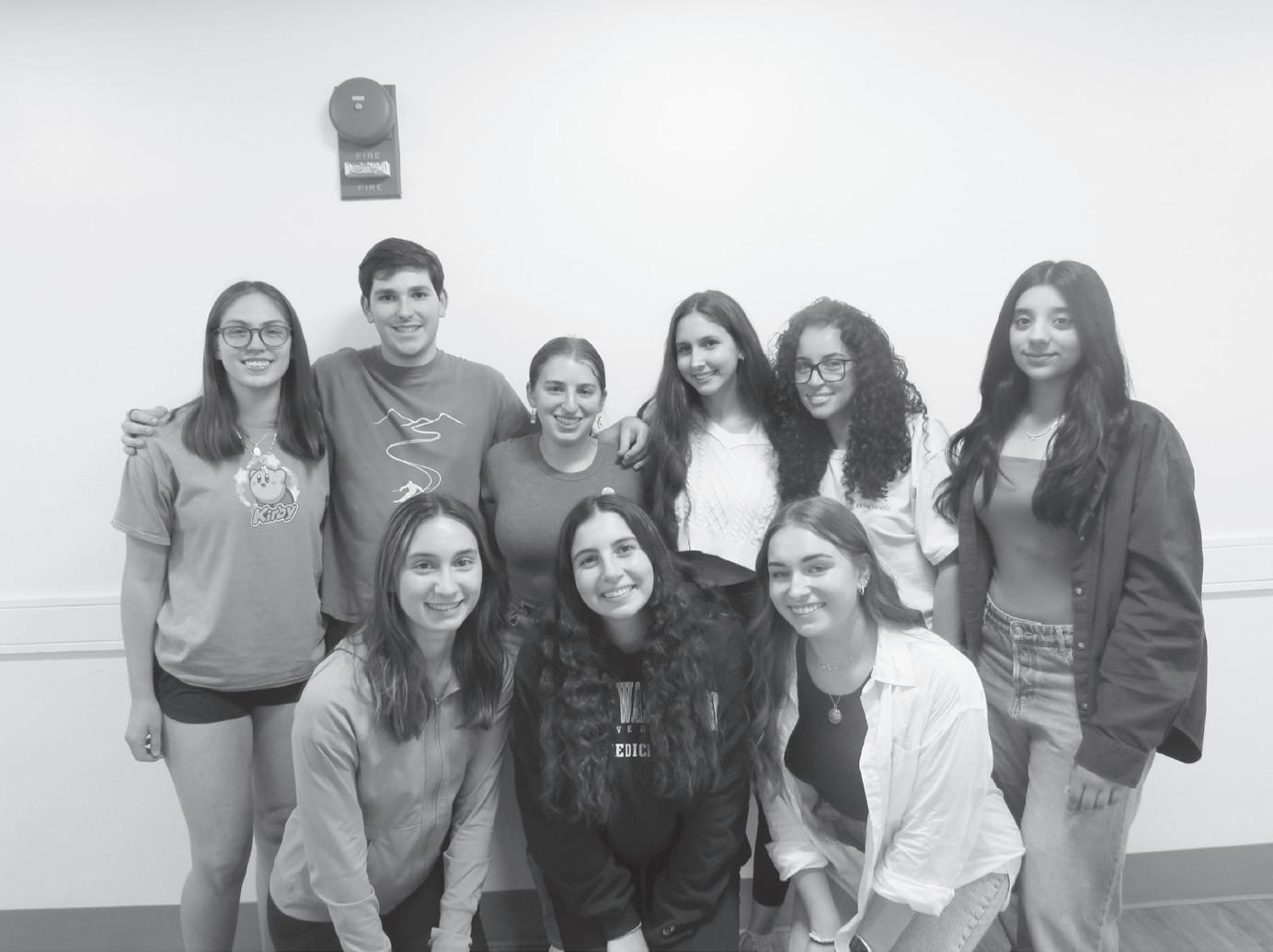
GW Red Cross executive board members said they are proud to receive the commendation after collecting two other awards from the organization last year, which honor the chapter’s commitment to community service.
Jordyn Milou, a senior and one of the co-presidents of GW Red Cross, said the group was highlighted for the Collegiate Club Spotlight Award this month because of their contributions to the national organization last year, including more than 270 units of blood from monthly blood drives last year and 290 units in the 2021-22 academic year.
Milou said she was specifically proud of Vaccinate a Village last year, which was a campaign in December 2022 where the Red Cross would vaccinate one child for measles and rubella for every dollar donated. She said GW
Red Cross fundraised for the campaign using bingo games, a Krispy Kreme sale and a bake sale, which raised a total of $500.
Milou said she joined the organization her sophomore year and has taken up projects and positions each year that have sparked her interest, like becoming one of the group’s blood drive coordinators last year. She said the chapter has helped students applying to medical school earn necessary volunteer hours.
“It is a great community that we have built and
continue to build, which is my favorite part,” Milou said. “I have made a lot of friends through GW Red Cross, and pulling people in has been a really good experience.”
Gloria Coliton, a senior volunteer engagement specialist at the American Red Cross who oversees the GW chapter, said the Red Cross chose GW for National Capital Area Chapter’s Club of the Year in May. She said the award highlights the club’s hard work and “openness” to new fundraising methods, like the Vaccinate a Village initiative.
Faculty remain hopeful after officials sunset Elliott masters’ programs
From Page 1
Despite officials announcing the end of the programs in an email to faculty Aug. 18 and students Sept. 6, the program’s website continued to advertise the two programs until Sept. 21, when officials updated the listing to indicate they will no longer accept new students.
regions through concentrations but did not specify what classes within the programs will still be available for students to take through the concentrations.
Coliton added that the chapter’s former copresident, Dana Woodruff, last year received the National Capital Area Young Humanitarian of the Year award for her work organizing blood drives and her “inspirational” want to make a difference. Coliton said GW Red Cross was the only regional collegiate club to host a blood drive last year, including student organizations at Johns Hopkins University and the University of Maryland, and is also the only collegiate club that hosts monthly blood drives.
Pre-health students go solo with career prep as GW looks to hire designated adviser
From Page 1
Pre-health students said there is limited availability for advising appointments this fall and that there has been a lack of timely responses to emails they send to the pre-health advising office. Students reported feeling worried that the lack of pre-health advising could hurt their chances of getting into medical school post graduation.
A sophomore studying public health — who requested to remain anonymous for fear of retribution — said after her original pre-health adviser stopped responding to her emails, she began to receive responses from different advisers’ email addresses this year. The student said pre-
health advisers assist students with all the “moving parts” of being on a prehealth track — like course planning, preparing to take the MCAT or the entrance exam for medical school and clinical experience planning.
The student said that without an adviser, she must plan her course schedules and seek prehealth career opportunities independently.
“Others and myself are so frustrated with the advising that we just kind of neglected it altogether and just started doing our own thing, which is not something I think we expected to do when we went to college,” the student said. “We expected the school to be able to provide advising for pre-meds, especially since
it’s a very daunting task to do on your own.”
The student added that having good relationships with pre-health advisers can help students develop strong committee letters, which are part of medical school applications and highlight students’ accomplishments during college.
“If they have more information about you, they’re gonna write a better letter about you and that goes directly to the med schools,” the student said.
Karishma Pandya, a senior majoring in biology, said when she checked the pre-health advising office website this semester, there were no ways to contact individual advisers and appointments were only available on a two-week basis on the website’s cal-
endar. Pandya said she couldn’t book any of the few available appointments because they were during her classes.
Pandya said in past years, she went to her adviser for advice when building her schedule and pursuing opportunities to volunteer and shadow in medical practices, which she can no longer receive without a consistently available adviser.
“It’s a disservice to a lot of students that come here because they should be able to be advised on whatever career path they want to go to and that should be accessible and available,” Pandya said. “I think that my application is not going to be as good because I didn’t have access to an adviser regularly.”
A student in the Latin American and Hemispheric Studies program who spoke under the condition of anonymity for fear of retribution from the University, said they feel the program’s termination “devalues” their degree. The student said the concentration option for MAIA only allows students to take a couple of classes about the region, which limits the more specialized education students could be seeking.
“You’re never going to receive the well rounded and very comprehensive understanding of the trials and tribulations of the region without this masters,” they said.
In the dueling emails, Ayres told professors that students in the program could transfer into the MAIA but did not specify in her email to students that transferring was an option, leaving some enrolled students unsure about their academic futures in the program, or outside of it.
“I think that that lack of information, that lack of transparency is very unfair,” the student said.
University spokesperson Julia Metjian said the standalone master’s programs “consistently experienced” low enrollment, with seven students enrolling in each program this year. She said placing the studies “under the umbrella” of the MAIA degree will allow students to continue studying the
SMHS researcher finds many omega-3 supplements are rancid
AVRIL SILVA REPORTER
A GW medical student found that many omega-3 supplements are rancid and may not offer the health benefits that companies claim.
Jacob Hands, the lead author of the study and a second-year medical student at the School of Medicine & Health Sciences, said his study examined 72 omega-3 supplements and found that almost 68 percent of flavored and 13 percent of unflavored omega-3 supplements were not fresh and considered rancid by standards set by the Global Organization for EPA and DHA Omega-3s, or GOED. Hands said the supplements aren’t a hazard to consume, but consumers should be aware that they may not be receiving the health advantages, like bolstered heart and brain health, that are often promised by the supplement manufacturers.
“The biggest takeaway is just that there’s a lot of impurities in a lot of supplements and the supplement industry writ large is kind of a sh*t show,” Hands said.
Omega-3 fatty acids, largely derived from seafood and algae, are popular among supplement consumers because they support cardiovascular health and pregnancy and potentially lowers the risk of agerelated macular degeneration — an eye disease that
can blur the central vision — according to the Cleveland Clinic. A 2012 National Center for Complementary and Integrative Health study found that more than 18 million American adults took omega-3 supplements.
Hands said he tested 72 consumer-available omega-3 supplements from 2014 to 2020 with Leigh Frame, an associate professor of clinical research and leadership at SMHS and the study’s senior author. He said he quantified the supplements’ rancidity by measuring their oxidation level. Hands said high oxidation levels within supplements could reveal that ingredients used to make the omega-3 supplements may be old or of poor quality.
Hands said the Food and Drug Administration does not approve all omega-3 supplements before they become available for purchase. Hands said companies that sell non-FDA-approved supplements should be held liable amid some “dishonesty” about the quality of omega-3 in supplements sold on the market, and consumers should use the results of his study to start questioning the freshness of supplements available on the market.
“Being very mindful of what you’re consuming and not blindly trusting what anybody, especially a nonFDA regulated industry, is telling you is contained within a supplement,”
Hands said. Mark Anderson, the vice president of research at ConsumerLabs.com, was a researcher on Hands’ study and gave him the collection of supplement data and testing used in the study. Anderson said GOED guidelines state that flavored supplements are not included in GOED’s oxidation testing due to potential inaccuracies.
Anderson said his goal with the results of the study is to “steer people to good products” by testing even the flavored omega-3 supplements that GOED has excluded from its testing.
“It’s a big issue for the GOED group to not just dismiss flavored products and say they’re not applicable, which is what they have in there now, but to take into consideration that some flavored products should be tested,” Anderson said.
GOED experts said the findings of this study can help the supplement industry by bolstering trust in the efficacy of omega-3, which holds various health benefits.
Gerard Bannenberg, the director of technical compliance and outreach at GOED, said flavored products pose a challenge to GOED and testing because they may skew results by interfering with oxidation testing. He said GOED’s accountability of companies and manufacturers should ease consumer misconceptions around
deregulation.
“There are many products on the market, produced by brands that are not a member of GOED, so these companies don’t have to adhere to our limits,” Bannenberg said. “There are no regulatory requirements for oxidative quality for these types of supplements.”
Bannenberg said this study could prompt researchers to expand their studies to include new testing methods, especially when looking into the impact of flavored supplements on oxidation testing.
“This type of research is important to get this aware-
Last academic year, 23 students enrolled in the European and Eurasian Studies program — a drop from the 30 enrolled a decade prior in 2012, according to the University’s enrollment dashboard. The Latin American and Hemispheric Studies program enrolled 19 students in 2022, compared to 22 in 2012. A total of 745 students enrolled in all Elliott graduate programs in 2022, the lowest number since at least 2012.
Diego Abente Brun, the director of the Latin American and Hemispheric Studies program and a professor of practice of international affairs, said officials are “redesigning” how students focus on the region by directing the same “quality” offerings provided in the program to the concentration.
“We are confident that we’re going to be offering our students in the future an opportunity to have a very strong Latin American concentration within MAIA and the students that are here in the program right now will continue to have the courses and the quality of learning that they deserve,” Brun said.
Hope M. Harrison, the former director of the European and Eurasian Studies program and a professor of history and international affairs, said while the elimination of the stand-alone program is a loss, the remaining regional concentration will allow students to express their interest in the areas of study on their transcripts.
“I do think it’s unfortunate that it won’t be as it has been with its own program,” said Harrison, who directed the program between 2008 and 2009.
ness,” Bannenberg said. “It also shows us that we might want to consider developing new methods to understand the state of quality of such flavored products. I can tell you from a chemical point of view, this is actually quite a challenge.”
Kaitlin Roke, GOED’s director of scientific communication and outreach, said there is “strong” research that backs up omega-3’s value in supporting heart and brain functions as well as prenatal health and pregnancy. Roke said she is hoping consumers can see omega-3s for their long-term benefits, rather than as an in-
stantaneous solution to heart and brain health as research into omega-3s expands to find links with heightened physical performance and memory retention.
Roke said although she does not deem rancidity to be a prime issue in omega-3 supplements, consumers should be aware of the quality of the supplements they choose.
“Personally, as a consumer, I’m just a little bit skeptical of the ones that have just made a big splash and are kind of really new,” Roke said. “I want to know what is the research being said about those nutrients.”

NEWS THE GW HATCHET September 25, 2023 • Page 5
JORDAN TOVIN | ASSISTANT PHOTO EDITOR
Omega-3 fatty acids are popular among consumers because of medical benefits like the support of cardiovascular and eye health.
ELLIE VASKO | PHOTOGRAPHER
GW Red Cross organizers said they are proud to receive the commendation after collecting two other awards from the national organization last year.
ELLIE VASKO REPORTER
SAGE RUSSELL | ASSISTANT PHOTO EDITOR
A total of 745 students enrolled in all Elliott graduate programs in 2022, the fewest since at least 2012.
WHAT THE UNIVERSITY WON’T TALK ABOUT THIS WEEK
The employment status of the workers of the now-closed Public Health Lab p.
FROM GWHATCHET.COM/OPINIONS
“Any student who receives a positive pregnancy test deserves to know that GW is ready to provide support no matter what decision they make.”
—MEGAN CLANCY on 09/18/2023
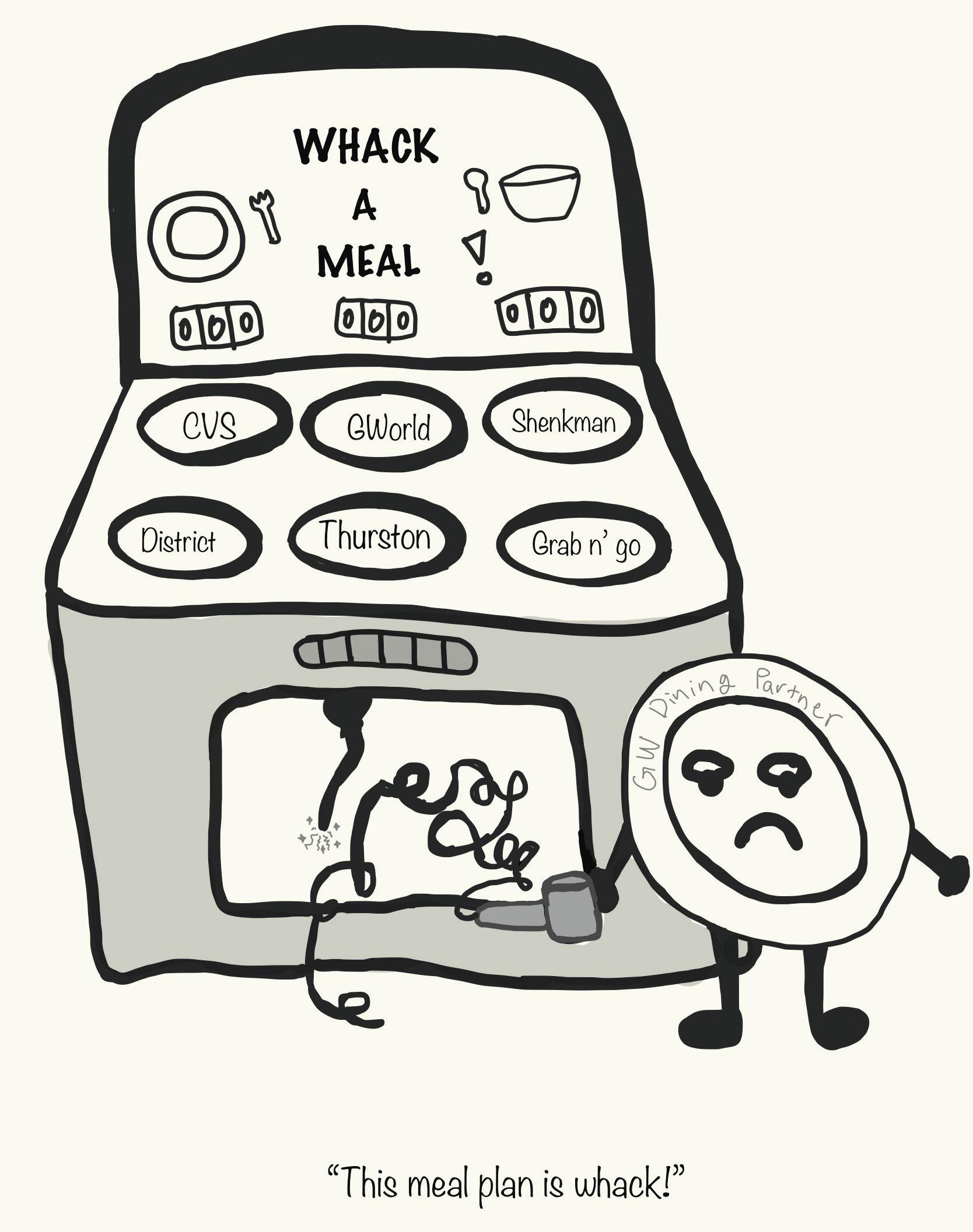
Our status with GW Dining? It’s complicated
For better or for worse, a single word can sum up an institution: look no further than GW’s moniker, “Revolutionaries,” as an example. For the University’s dining program, that word isn’t affordable, flexible or convenient — it’s “complicated.”
With five meal plans, four different payment systems and dozens of GWorld vendors, finding a bite to eat around Foggy Bottom feels like an accounting exercise. Is it better to pay with meal swipes or dining dollars, cash or card?
And just how much is one meal swipe worth?
The answer is that it depends on your meal plan. Mandatory for on-campus students, the plans run between $2,060 to $2,800 and come with several different combinations of meal swipes and dining dollars. Was dining always this complex? It certainly wasn’t as expensive before GW unveiled a trio of eateries in Thurston Hall, District House and finally Shenkman Hall over the last year. There’s a lot of money at stake here, and students deserve bang for their buck.
Granted, the University’s new dining venues and vendors have a value of their own. They’re modern, vibrant community spaces and a selling point for prospective students. But they’re not always great places to dine in — and they’ve come at a literal cost for students.
Officials increased the entry fee students without meal swipes pay at dining halls this semester by between $2 and $5 for breakfast, lunch and dinner. They also nearly doubled the price of District House’s Meal Deals program from $8 to $15.
Skipping out on food to save money is
DC residents need help to cope with scorching temperatures
My return to Foggy Bottom in late August was a painful reminder of how insufferable D.C.’s heat and humidity can be. Between the incessant sweating, dehydration and sunburn, I was just about ready to never leave my room again, especially after a straight week of temperatures above 95 degrees Fahrenheit in September.
But as hot as it felt in Foggy Bottom, not all D.C. neighborhoods have it equal when it comes to summer heat — some parts of the District known as “heat islands” can get up to 17 degrees warmer than others. While D.C. can’t control the weather, city officials can and should address dangerously high temperatures.
Heat islands generally affect neighborhoods that lack shade or greenery but have lots of concrete or paved dark surfaces. These materials absorb and radiate more heat back into the environment than grassy parks or green trees — just think about the difference between standing in Kogan Plaza and University Yard on a sunny afternoon.
One map of ambient temperatures in D.C. shows that the hottest parts of the city are in Wards 1, 4 and 5 — between Rock Creek in the west and the Anacostia River in the east. Among these areas, the neighborhoods of
Shaw, Brightwood, Manor Park, Brookland and Trinidad stand out as heat islands.
Those located in the hottest areas of D.C. also have more difficulty coping with or recovering from the heat, whether from a lack of air conditioning, access to green space or underlying medical conditions. Heat waves disproportionately affect people of color, those experiencing homelessness and medically vulnerable groups like babies and elderly people.
In a warming world where summer temperatures come earlier and stay later, the problem of heat islands will likely only become worse — and it’s time for the city to act. The 2023 District of Columbia Emergency Heat Plan already outlines the use of cooling centers, recreational facilities, public pools, parks and libraries throughout the District to help people take refuge from the heat.
These centers can help D.C. residents cool off, but they’re separate from the goal of reducing the city’s temperature in the long term. To do so, the city has plans to maintain and expand green spaces, revise building codes and plant more trees to provide shade — the District received more than $34 million in recent federal grants for local tree planting earlier this month. But for D.C. to succeed, these measures can’t just be future strategies. We need to be implementing them now with tangible, deliverable goals to match.
Through low-cost, high-impact methods, other major cities across the country are addressing extreme heat. In New York City, city planners have begun painting the roofs of buildings with light-colored reflective paint, which reduces the amount of heat absorbed and can lower the temperature of the building without air conditioning. The rooftops themselves reduced peak roof temperatures by between 42 and 43 degrees compared to a typical black roof during a summer 2011 trial, and they can play a part in reducing temperatures in urban heat islands if widely implemented. Los Angeles applied a similar treatment to some of its roads in 2018, aiming to reduce the amount of heat the city traps.
From paint to parks, there are plenty of ways to bring D.C.’s temperatures down. But the point is that we need to act now. The phenomenon of urban heat islands is not a problem we can afford to put off to the future — dragging our feet on it risks the health and wellness of our fellow residents.
This summer proved that each summer is only going to feel hotter than the next. City officials owe everyone in this city the same level of protection from extreme heat.
—Anaya Bhatt, a sophomore majoring in political communications, is The Hatchet’s contributing social media director and a staff writer.
hardly new at GW — food insecurity has been a persistent problem since the University closed its former dining hall, J Street, in 2016. These higher prices could be the difference between grabbing something to eat or missing a meal for cost-conscious students.
In a word, it wasn’t supposed to be like this. The shift from GW’s free-forall, open campus system to an all-youcare-to-eat dining plan seemed poised to address food insecurity on campus. Instead of scrambling around for a meal, students could swipe in, grab a quick bite to eat and get back to their business. But so long as they balk at high prices, ration their dollars or swipes for the future or struggle to find appetizing dishes that meet their dietary needs, some students will continue to go hungry.
Meal plan or not, every student still has to budget their finances. Adding more GWorld or meal swipes to students’ accounts seems like a simple solution, but it’d only increase the cost of attendance — and wouldn’t help students stretch their funds further.
Officials should work with Chartwells Higher Education, which operates GW’s dining halls, to keep food prices at an affordable level. That may be a difficult decision to make — GW is likely looking to recoup some of its investment and Chartwells is a for-profit contractor — but it’s the right decision both for students and for the University’s future.
GW may be keen on marketing itself as apart from the crowd, but it shouldn’t be known as the school where students go hungry. Creating spaces for students to eat was the easy part. Now, it’s up to officials to ensure they can do so affordably.
Stop shrugging off evidence-based policies for community safety
Eli McCarthy is a professor of peace studies and a member of the faculty organizers for the GW Community Safety Coalition.
GW’s leadership is continuing to move ahead with its plan to lethally arm GW Police Department officers despite robust, research-based evidence that such a policy makes a campus community considerably less safe and more at risk of trauma, hostility, harm and killing.
There has been major, persistent resistance since the Board of Trustees decided and simply announced to the GW community in April that this was the plan “to be implemented” by GW leadership. And yet, the GW leadership moves forward in spite of this. Why?
After student demonstrations in the wake of the announcement last spring, more than 500 people have signed a letter and recent petition calling for the pause and reversal of this decision, urging officials instead to follow the actual evidence of what cultivates community safety. Alumni have organized a petition to refrain from donations to GW until it stops this implementation. And more than 230 faculty members have also called for the pause and reversal of the decision to arm GWPD officers. In the midst of this, students, alumni and faculty have formed a GW Community Safety Coalition.
In a meeting with GW leadership, faculty were told the majority of comments given through
Paige Baratta editorials assistant* Auden Yurman, senior photo editor Florence Shen, assistant photo editor –features Sage Russell, assistant photo editor news Jordan Tovin, assistant photo editor –culture Sandra Koretz, sports editor Ben Spitalny, contributing sports editor Nick Perkins, culture editor Jenna Baer, contributing culture editor* Nicholas Aguirre Zafiro, video editor Ava Thompson, assistant video editor Charlie Mark, assistant video editor Cristina Stassis, copy chief Faith Wardwell, publishing assistant Shea Carlberg, senior copy editor Lindsay Larson, assistant copy editor Anna Fattizzo, research assistant
the “community feedback”
GWPD portal about the implementation plan were actually against arming the police. Faculty representatives met with then-University President Mark Wrighton in May. He told us that there was “no relevant data” used by the Board to make the decision to arm GWPD. We met with Chief Tate in June, and he said that he was “not aware of any relevant research data” the Board used.
If we are committed to evidence-based policies, we should be looking at data. Would we create other policies in contradiction to the evidence — or make a habit of going along with particular policies the board or an office want in spite of the evidence?
University President Ellen Granberg, it is (y) our moment now. We have a chance to chart a better course and become cuttingedge leaders in evidencebased community safety.
At a minimum, it is time to pause the “implementation” until a multi-stakeholder task force, including students and faculty, investigates and can report on research and data about arming campus police in relation to community safety and alternative approaches. This report may include recommendations, and key stakeholders and the broader GW community should further discuss it.
GW’s leadership should also share the 2009 Witt Associates Report, which the Board of Trustees received and which was the rationale for their decision not to arm the campus police at that time. We seek copies of the consulting reports the current Board of Trustees used to make its decision to arm the police.
social media director* Anaya Bhatt, contributing social media director* Max Gaffin, contributing social media director * denotes member of editorial board Business Office Eddie Herzig, business manager
Officials should share the disaggregated data from the “community feedback” portal, like the number of comments, how many remarked on the decision itself, how many for what position or suggestion, etc. And there ought to be an inperson community forum(s) to discuss the issue.
We also urge GW leadership to support and regularize de-escalation and bystander intervention training, initially for a core set of leaders and stakeholders in the GW community as a central aspect of holistic community safety. The University should support and invest in an unarmed, civilian Community Safety Unit that would be trained to respond to various types of calls often sent to the police.
Sadly, we already have examples of the impact of armed police on other college campuses. wIn 2018, a Portland State University police officer shot and killed Jason Washington, a Black father of three who was trying to break up a bar fight off campus. The university also had liability issues and had to pay $1 million to Washington’s spouse.
And in 2017, campus police at the Georgia Institute of Technology killed the president of a LGBTQ+ campus group who was experiencing a mental health crisis. This is all in the context of a broader pattern of gender-based violence by campus police, which only becomes more likely with lethal power added to such policing.
We can do better. We can be and become a better community. Orienting our community safety policies around evidence is a critical step in this process of transformation.
STAFF EDITORIAL OPINIONS THE GW HATCHET September 25, 2023 • Page 6
Eli McCarthy Guest Contributor
Anaya Bhatt Opinions Writer
eic@gwhatchet.com news@gwhatchet.com opinions@gwhatchet.com photo@gwhatchet.com sports@gwhatchet.com culture@gwhatchet.com copy@gwhatchet.com multimedia@gwhatchet.com 609 21st St. NW Washington, D.C. 20052 gwhatchet.com | @gwhatchet Submissions — Deadlines for submissions are Friday 5 p.m. for Monday issues. They must include the author’s name, title, year in school and phone number. The GW Hatchet does not guarantee publication and reserves the right to edit all submissions for space, grammar and clarity. Submit to opinions@gwhatchet.com Policy Statement — The GW Hatchet is produced by Hatchet Publications Inc., an independent, non-profit corporation. All comments should be addressed to the Board of Directors, which has sole authority for the content of this publication. Opinions expressed in signed columns are those of the authors and do not necessarily reflect the view of The GW Hatchet. All content of The GW Hatchet is copyrighted and may not be reproduced without written authorization from the editor in chief. Cost — Single copies free. Additional copies available for purchase upon request. Zach Blackburn, editor in chief Hatchet The GW Nick Pasion, managing editor Jaden DiMauro, managing editor Grace Miller, managing director Nicholas Anastacio, community relations director Grace Chinowsky, senior news editor Erika Filter, news editor Ianne Salvosa, news editor Fiona Bork, assistant news editor Fiona Riley, assistant news editor Hannah Marr, assistant news editor Rory Quealy, assistant news editor Jennifer Igbonoba, contributing news editor Max Porter, contributing news editor Rachel Moon, contributing news editor Nikki Ghaemi, features editor Cade McAllister, events editor Ethan Benn opinions editor* Riley Goodfellow, contributing opinions editor* Brooke Forgette, research assistant Dylan Ebs, research assistant Annie O’Brien, podcast host – culture Lizzie Jensen, podcast host – news Isabella MacKinnon, design editor Maura Kelly-Yuoh, contributing design editor An Ngo, graphics editor Ishani Chettri, web developer Peyton Rollins, contributing web developer Ethan Valliath,
JENNA BAER | STAFF CARTOONIST
Opinions
1
Culture
NORA FITZGERALD SENIOR STAFF WRITER
Comedy mixed with magic once again Thursday for a night of laughter and awe at the new and improved “A Third Floor Variety Show.”
Comedians Ritika SinhaChaudhuri, Margaret Korinek and Will Roberts joined magician Max Davidson onstage in Tonic’s third-floor lounge for a sold-out night of stand-up comedy and mentalist magic. This fall’s show was a modified version of GW Comedy Nights’ spring show, where people voted on who “won” between magicians and comedians while the updated edition focused on individual showcases of talent.
The first event’s success, where three out of four shows sold out, inspired the group to convene a second time, with Davidson’s StandUp Magic company producing this iteration.
Upon entrance to the venue, with spacious couches to the left and a bar and chair seating to the right, the audience members were tasked with writing down a vivid and specific memory on a small notecard that was then sealed and placed in a clear bowl near the front of the stage to be used at the end of the show for the magic act. Once the crowd got situated with drinks and food from the bar, the show kicked off.
NICK PERKINS CULTURE EDITOR
The basement of Shenkman Hall is now home to a bustling dining hall, a maze of buffets that are corporate both in taste and aesthetic.
But the operators of one family-owned restaurant are learning to love their new home after they were forced to leave the basement of Shenkman after GW ended its lease to build the dining hall.
Traditional Chinese eatery Teashi, run by married owner Lisa Lin and chef Steve Yuan, was forced to leave campus in February 2022 and has since moved to a cozy spot in Dupont Circle. Known as a Shenkman staple for the restaurant’s bubble tea and rice and noodle bowls, Lin said they were disappointed when GW informed them they would have to leave campus.
Ritika SinhaChaudhuri, Comedian
Parked where economic policy meets sexual innuendos
Sinha-Chaudhuri, a junior majoring in political science and economics, kicked off the show with a lively set filled with jokes that bridged the gap between her academic and social life. She poked fun at her pretend stock investments and Khan Academy lessons while also joking about praise kinks and the sexual nature of college students.
She captivated the audience with relatable college material, at one time joking about the frequent interruptions of ambulance sirens on campus, only to be interrupted minutes later by a wailing ambulance passing by.
Margaret Korinek, Comedian
Everyone’s favorite cool aunt
Korinek, a senior majoring in political communication, followed the first act with a candid set that energized the crowd. Her act was a well-developed mix of jokes about the dire state of dating in D.C. and the strug-
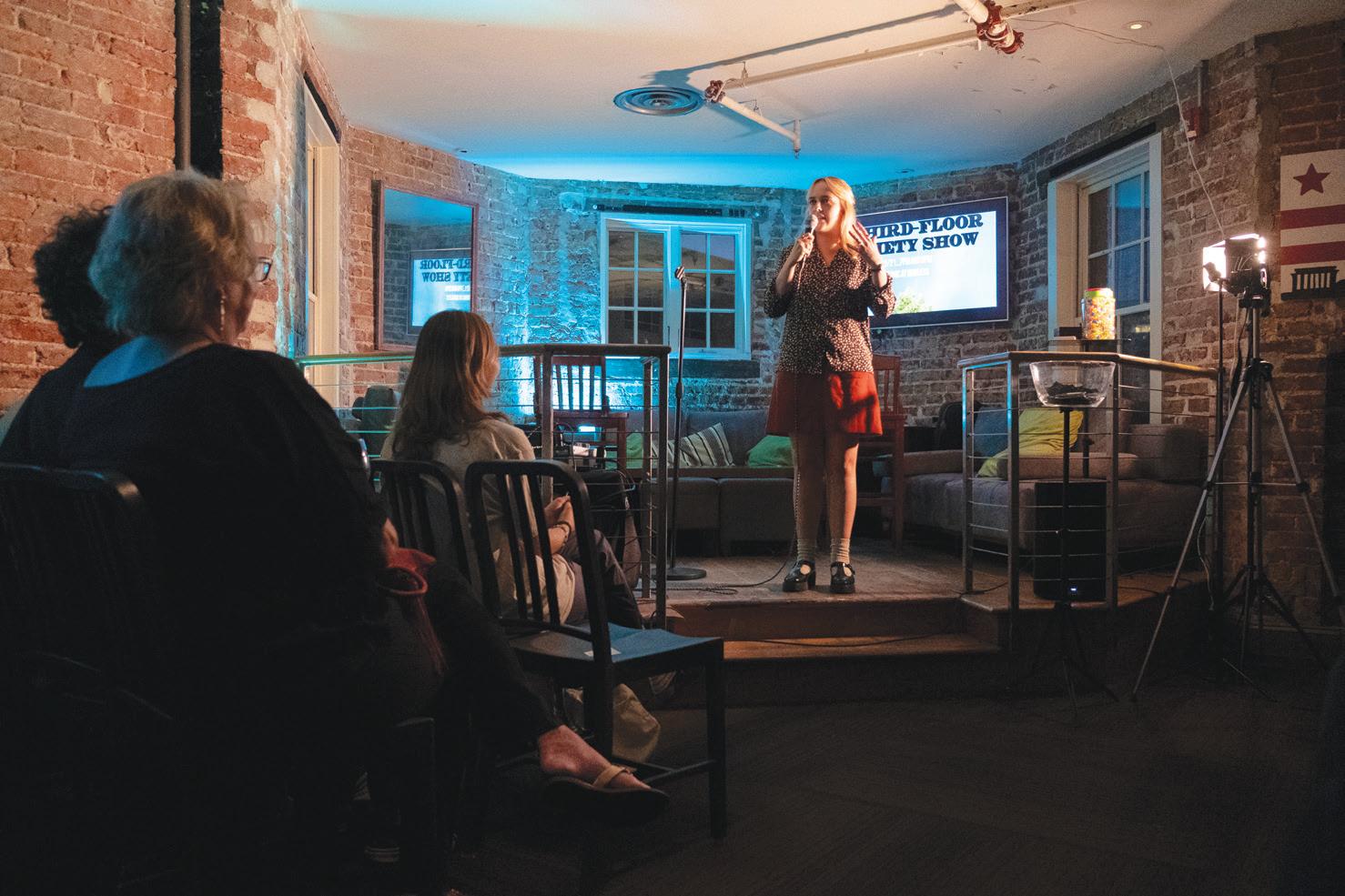
gles that come with your ex getting together with a girl who owns a boat. Her ability to laugh at herself was more than entertaining, and it was empowering to see a female comic not shy away from any topic.
Korinek is the founder and director of GW Comedy Nights, where she has worked to add female voices to a male-dominated field.
“I’m going to talk about girly things for 15 minutes, and I’m going to have everyone in the room laugh, to show that just because
Ousted from Shenkman Hall, Teashi finds new home in Dupont Circle
once lived.
Yuan said the family initially struggled to find a new location for Teashi after leaving GW’s campus, as they wanted to stay near their regular customer base, but many of the available spaces were too big for the family-owned business’ needs, with rents too high. He said after diving deep into internet listings, they eventually found their current, cozy space just about a 15-minute walk from campus near Dupont Circle.
After a bit of maintenance to get the shop up and running, Teashi reopened at the end of July. Yuan said his excitement about reopening the restaurant has been fueled by the large number of repeat customers they have gotten.
“What I really appreciate is many people come back again, again, again,” he said.
“Black-mirror, surprising, funny” Max Davidson, Magician
“We were very sad because students really loved us,” she said.
Lin said she and Yuan opened Teashi in 2017. She said her dramatic career pivot came about because her husband studied teamaking during his time at university.
Yuan said the couple chose to set up shop at GW because they both worked at a university when they lived in China and felt the environment at GW was a mirror image of where they
Yuan said unlike most other Chinese restaurants in the U.S., Teashi offers customers traditional Chinese food as opposed to an Americanized version of a meal. He said he personally enjoys items like the spicy chicken rice bowl ($9.95) and pork rice bowl ($9.95) and wanted to share the meals with eager students.
“So this food, actually, I and my daughter eat almost every day,” he said.
Yuan said his time in school pouring over the intricacies of tea taught him how tea, milk and sugar can
combine to create particular flavors, like their taro bubble teas. He said that while the most common type of taro people encounter is purple, the taro that comes with Teashi’s boba-filled concoctions is white because it is fresh.
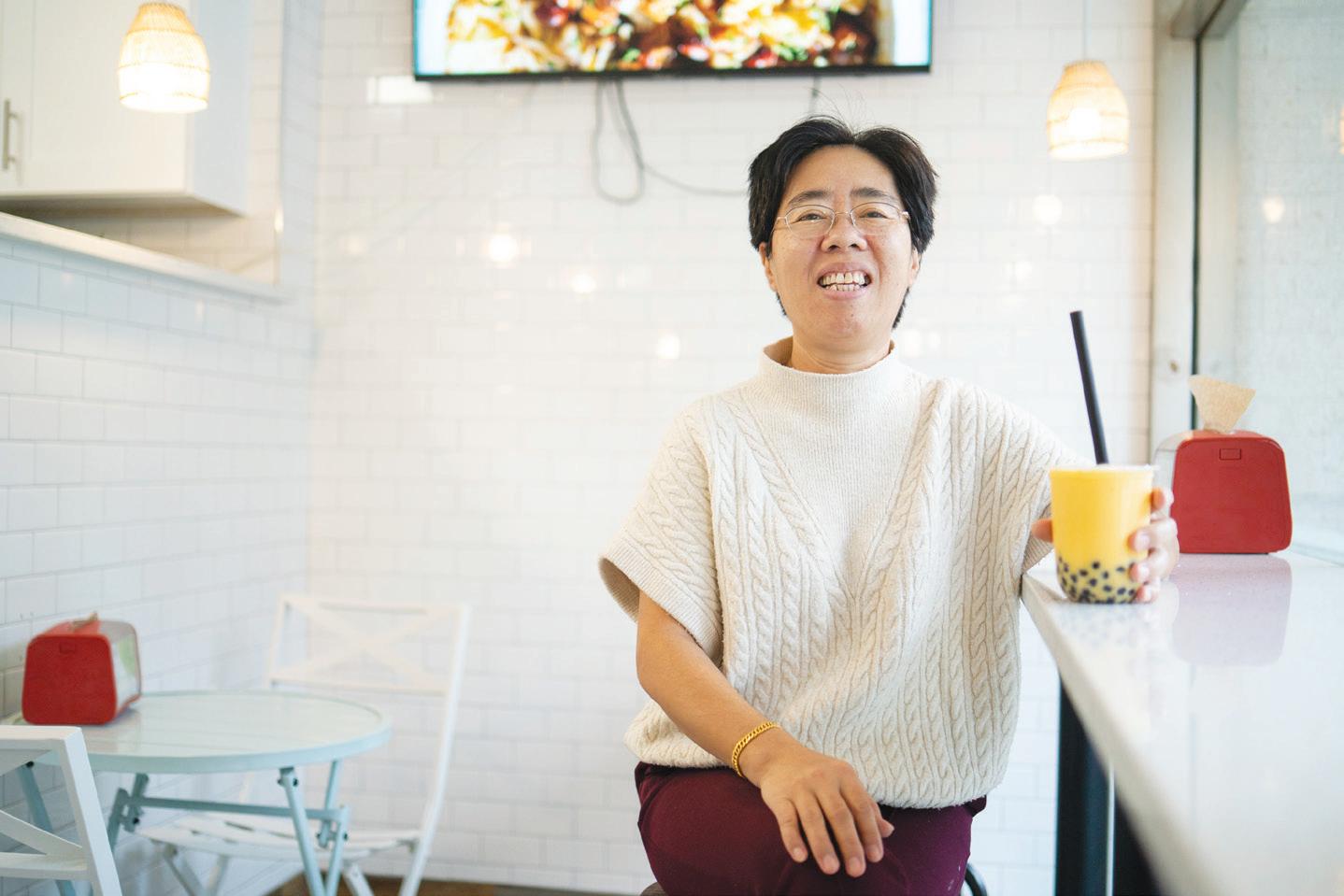
Lin said on their final day of working in Shenkman, Feb. 28, 2022, students poured out of the woodwork to get one last bubble tea.
In an effort to reconnect with GW students, Lin said they are trying to get the restaurant back on GWorld. She said she wants to let GW students know that Teashi is back.
But despite the troubles in spreading awareness about the new spot, Lin said some loyal GW students have managed to find their way back to Teashi, with one student recently coming in with a crumpled-up coupon for the restaurant back when it was open at GW where if they bought five bubble teas, they would get the sixth one free. She said other students have made the trek to the restaurant, even unknowingly.
“Some students, they saw outside the sign, they just walk by and then they saw it was Teashi,” she said. “They run in, and they say ‘Oh I found the Teashi!’”
1234 19th St. NW. Open Monday to Saturday from 10 a.m. to 9 p.m. and Sunday from 10 a.m. to 9 p.m.
something isn’t directly relatable to you doesn’t mean that it can’t be funny,” she said.
Will Roberts, Comedian
Five out of five stars, he should have his own Netflix show Roberts, a senior majoring in journalism, rounded out the comedy section of the show with a knee-slapworthy final act. From start
to finish, he commanded the stage and captured the hearts of the audience. His facial expressions and mannerisms were goofy and lovable, and his jokes spread across an array of topics, from Osama Bin Laden to fifty-year-olds with Elf Bars. His set was a hysterical mix of self-deprecating self humor and politically inspired jokes — poking fun at his emerging bald spot and his lack of success in the dating field.
Hybrid comedy-magic show brings mentalism, bad dating stories to Tonic GW
A mind-boggling crossover between comedy and magic Davidson, a GW alum who majored in political communication, was the sole magic act of the night, but he left the audience satisfied. Davidson, a full-time professional magician in New York City, specializes in a type of magic called mentalism, a form that relies on the magician’s interpretation of audience member behavior. Davidson started with a mathematical trick that shocked the crowd when he initially seemed to incorrectly guess the numbers people were thinking before he revealed that if you added and multiplied the numbers together, they equaled his answer. He then moved on to an even more awe-worthy game of mind-reading, correctly detailing audience members’ selected memories, birthdays and even phone passwords. Every single stunt defied reality — and the crowd loved it. He said that a large reason for his performing on campus again was the chance to reunite with friends and perform on his old stomping grounds.
“It’s so, so fun to get to do a show with your friends,” he said.
Sundown on Sept. 24 commenced one of the holiest days on the Jewish calendar, and students around GW observed in their own ways, whether that meant preparing to fast when the sun set Sunday or simply using the day as a period of reflection.
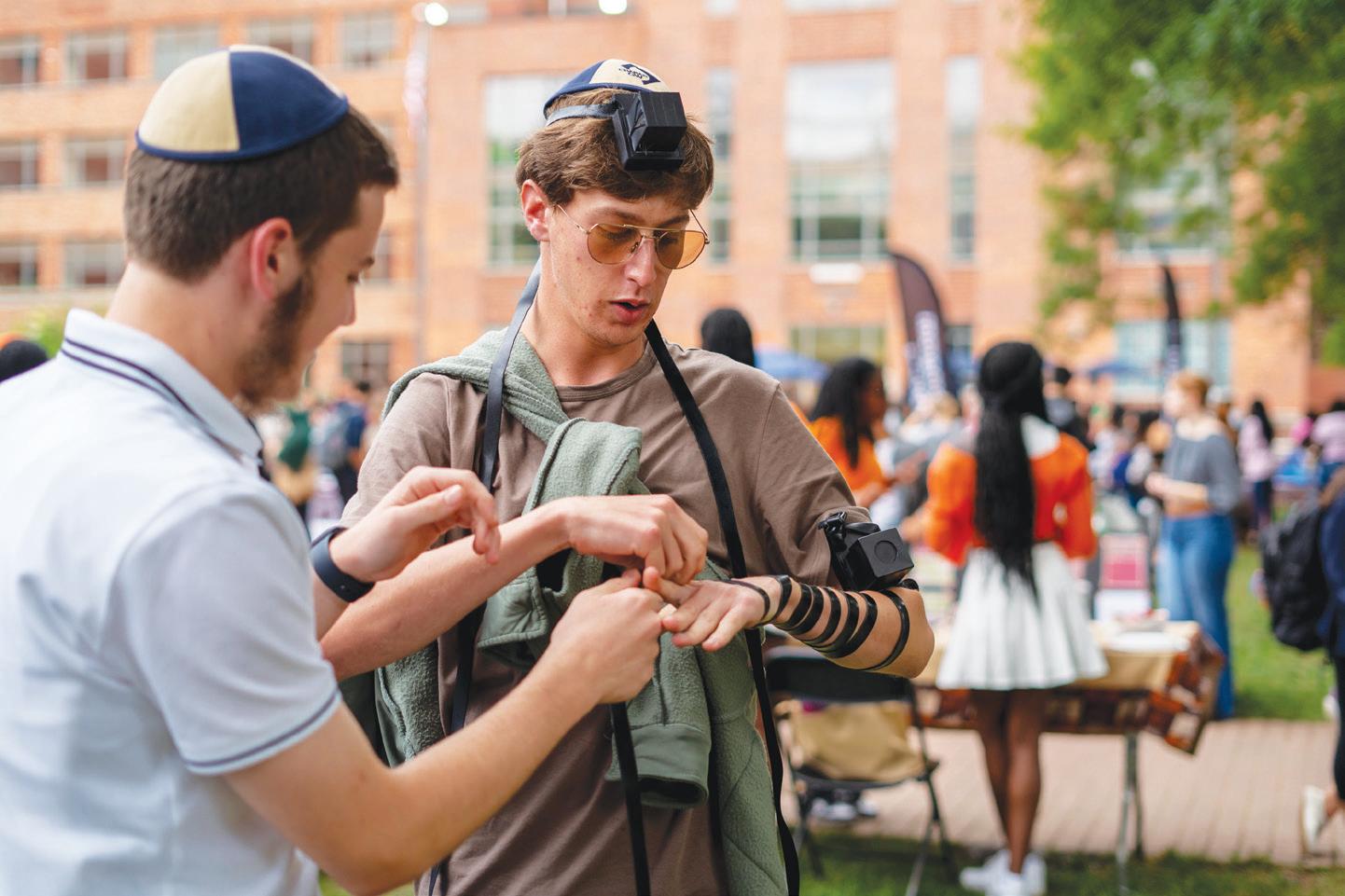
Yom Kippur, the Jewish day of atonement, is a day where Jewish people fast and seek forgiveness from God and their peers for their wrongdoings in the previous year. Like so many other traditions and holidays, the busy schedules of college can make observing Yom Kippur harder — but that hasn’t stopped Jewish students from finding ways to take time to observe the High Holiday.
For some students — like Kyle Lim, a senior and an international affairs major — coming to college hasn’t changed much about the way they plan to observe Yom Kippur. Lim, the D.C. coordinator for Lunar, an organization for Jewish Asian Americans, said that he plans to attend services hosted by both GW Hillel and GW Chabad throughout the day.
“For Yom Kippur, I usually participate a lot,” Lim said. “I spend a lot of time with the Jewish community here on campus.”
Both GW Hillel and GW
Chabad offer evening services when Yom Kippur begins and three services the following day.
Lim said he has found lots of ways to be as involved as he can with the Jewish community on campus, like joining Jewish student organizations and serving on their executive boards.
Roommates Max Monson, a junior studying political science and American studies, and Noah Shapiro, a sophomore studying organizational science, said coming to college has changed how they observe the holiest day of the Jewish year. The pair said they have had the chance to explore different paths with their faith since moving in together in their District House studio double.
Shapiro said his experience since arriving at GW is the different from Monson’s. He said when growing up, he observed Yom Kippur very diligently by staying home from school, fasting, attending services throughout the day and spending most of the day at his synagogue. Since starting college, he said he has made some adjustments to continue observing Yom Kippur in a way that works for him.
Both Shapiro and Monson said they don’t plan to attend classes Monday, a change of course for Shapiro, who went to class on
Yom Kippur last year. They said they were initially worried about what missing class might look like, but all of their professors have been very accommodating.
Isabella Marias, a sophomore studying political science and a programming chair of the Jewish Student Association, said she uses Yom Kippur to think about what she hopes to improve upon during the year ahead. But because of her more secular upbringing, she said doesn’t find herself drawn to many of the other practices Jewish people turn to during Yom Kippur.
Marias said that ultimately, every Jewish person observes Yom Kippur differently and that is part of what makes it such an important day for the Jewish community. She said the observance of Yom Kippur is a deeply personal and individual experience for each person who chooses to observe it, and there is no way that is right or wrong.
“I think the idea of, ‘There are so many ways to be Jewish’ is absolutely true,” Marias said. “Especially at GW, there are so many people here who are Jewish who don’t practice at all or you may not know are Jewish, but there are also people at GW who observe the Shabbos and who wrap tefillin and go to different synagogues, so there are absolutely so many ways to be Jewish.”
CULTURE THE GW HATCHET September 25, 2023 • Page 7
NEW TV SHOW: “STILL UP” ON APPLETV+ THE SCENE RELEASED THIS WEEK: FALL COMEDY SHOW Friday, Sept. 29 | Smith Center | $30$60 Bring your parents to see stand-up comedian Jimmy O. Yang at Program Board’s Fall Comedy Show. WORLD CULTURE FESTIVAL Friday, Sept. 29 | National Mall | Free Head over to the National Mall for this cultural festival complete with music, art, food, dance and meditation experiences from more than 180 countries.
students observe Yom
Kippur with services, reflection
“Genuine, academic, irreverent”
“Vulnerable, redeeming, not-balding”
“Honest, silly, balding”
JORDAN TOVIN | ASSISTANT PHOTO EDITOR Teashi owner Lisa Lin sips a bubble tea in the Chinese eatery’s Dupont Circle location – the business’s new post after vacating Shenkman Hall in February 2022.
JORDAN TOVIN | ASSISTANT PHOTO EDITOR
Two students wrap tefillin, a Jewish practice of strapping black leather boxes containing Hebrew scrolls to one’s head and arm to bring oneself closer to God during prayer.
JEREMY KOHLER REPORTER
JORDAN TOVIN | ASSISTANT PHOTO EDITOR Comedian Margaret Korinek, a senior studying political journalism, followed the first act with a candid set that energized the crowd.
Women’s soccer extends winless streak to five games in Friday loss to La Salle
Women’s soccer fell 0-3 to La Salle as they struggled to stop the Explorers’ strong offense and were unable to bypass their defense Friday.
The Revolutionaries (3-5-3, 0-3-1 A-10) were unable to gain offensive momentum and get past the Explorers (4-5-2, 2-1 A-10) rock-solid defense throughout the game, firing only nine shots with zero corner kick opportunities. Coupled with the Explorers’ strong offense, the Revolutionaries were unable to close the gap, extending their winless streak to five-straight games.
The Explorers were aggressive on offense from the start of the game, attempting nine shots in the first 10 minutes of the game. The Revs garnered just one shot in the same period.
By the 22nd minute, the Explorers earned the first corner kick of the game. Although the possession didn’t lead to a score, it helped set the tone for their offense.
The Revolutionaries didn’t get a single shot off until the 28th minute, when sophomore midfielder Aoi Kataoka fired off a ball that went out of bounds to the left, bringing her season total to 31 shots attempts with a .029 shot percentage. Despite the miss, the attempt triggered a boost of energy, giving the Revs the momentum to defend the Explorers’ next possession.
At the 38th minute mark, the Explorers launched two back-toback corner kicks with the first one missing and deflected out of bounds. On their second attempt, sophomore midfield Elizabeth Estrada passed the ball to junior forward Haley Gschrey, who sent it into the back of the net, notching her her sixth score of the season on a .375 shot-on-goal percentage.
After the Explorers’ goal, the Revolutionaries made a substitution, bringing out freshman midfielder Addi Verdon for Kataoka. The team was hoping to find their offensive tempo while solidifying their defense before halftime.
As the second half began, there was high energy from the Revolutionaries, seen through their three attempted shots and five defensive stops. Assistant Coach Bill Reno thought that the team had done a great job in this second half.
“We were doing exactly what we wanted to do [although it didn’t] go our way but like, we’re going to put ourselves on the spot to compete, which I was happy with,” Reno said.
In the 58th minute, a foul was called to the Revolutionaries’ freshman defense Hope KuDipietro which led to a penalty kick for the Explorers. Senior midfielder and defender Alyssa Gargiulo took the shot and scored.
Despite the Revolutionaries best efforts, the Explorers tough defense helped keep the ball on
GW’s side, allowing La Salle to attempt seven shots within 10 minutes. By the 83rd minute, the shots from La Salle were overwhelming, and an assist by senior forward and midfielder Caitlin Donovan allowed graduate student forward and midfielder Emily Banashefski to score another goal, the last of the match.
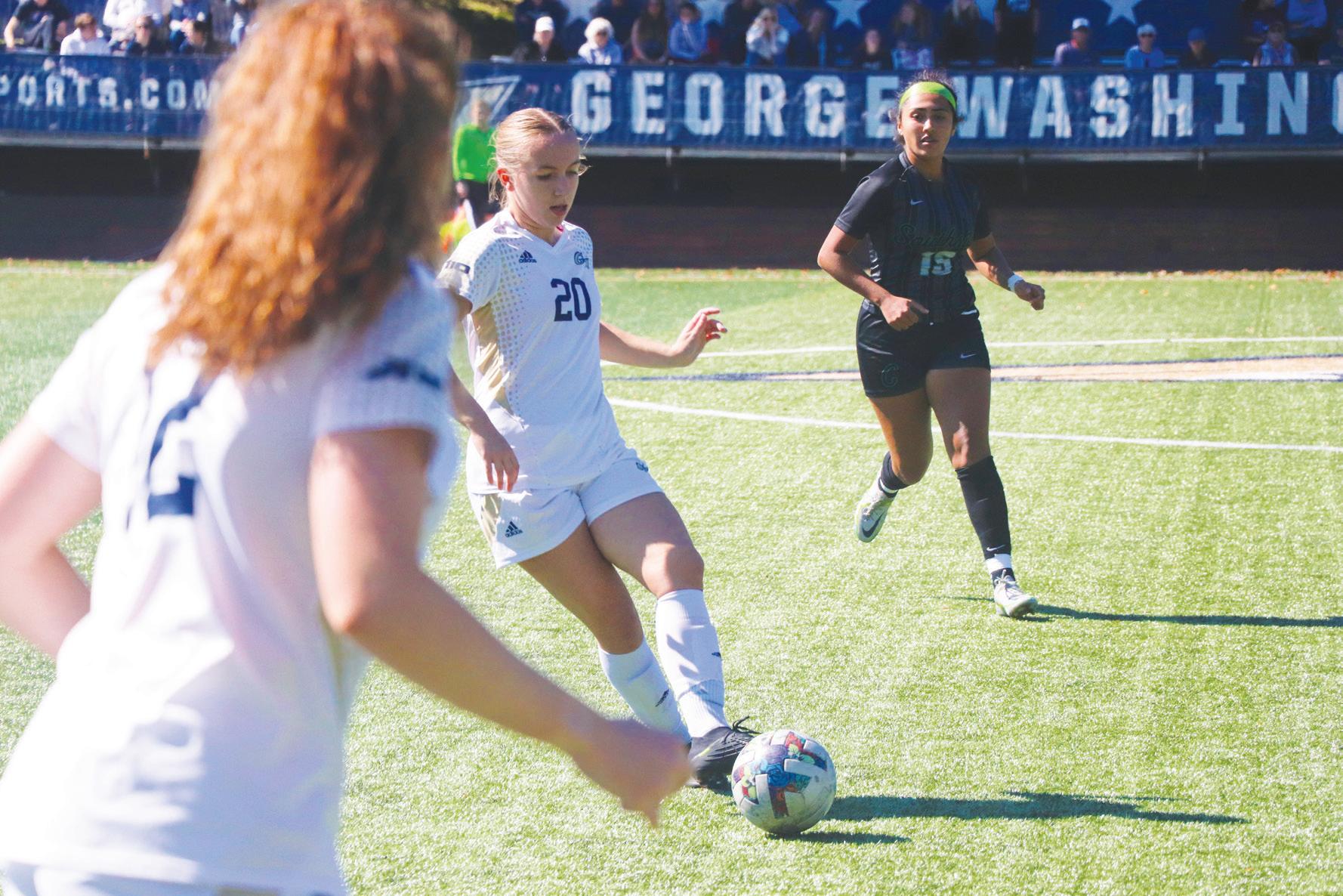
Reno said despite the loss, if GW team sticks to playing with their own style of offense and defense, they could win their next games.
“This is kind of the tug of war with soccer, so if you can get their team to play your style or their own, you’re gonna find success,” Reno said. “So for us, it’s like
Men’s club rugby looks to cultivate community, on-field success
MARGOT DIAMOND REPORTER
Men’s Rugby Football Club is looking to grow their roots within GW’s international student community while improving their on-field performance in its 56th season.
This fall, the squad is staring down a schedule that features three of the nation’s top 10 teams. But despite the daunting strength of their opposition, players say the club prides itself on having a spot for every type of player, utilizing players’ skill sets from other athletic experiences and highlighting players’ natural physical attributes, like speed or size, to help coach them into rugby players.
And while the club is built on athletic competition, junior team president Cass Hough said the club’s culture fosters a sense of community among its players, many of whom are international students.
“A lot of the one semester or the one-year transfers kind of come into it, it’s not struggling to make
friends, but it’s an awkward environment,” Hough said.
“So joining the rugby team is kind of a quick way to make friends. Because especially if you’re good at rugby and you show up, everyone’s happy to have you.”
Fly-half junior Sam Ogden, who is from Hong Kong, said the team attracts many international students and provides a home for them while also sharing new playing techniques with one another.
“I’m from Hong Kong, there’s also two more kids from Hong Kong,” Ogden said. “On the team, there’s another kid from Japan, someone from China, so there’s like just a different culture blend that really adds to the diversity of the team and the playing styles, which is good for us both on and off the field.”
The club toured internationally four times in the last 20 years, including a trip to Ireland last spring.
Ogden, who went on the trip last semester, said the trip allowed for myriad learning opportunities and fun experiences for the team.
“We played an exhibition match against a local Irish team and it was a lot of fun,” Ogden said. “They were admittedly a lot better than us, but it was just an exhibition match trying to get an understanding of Irish culture and Irish rugby and it was a really good time.”
With the historically international sport rapidly growing in popularity across U.S. college campuses, Head Coach Andrew MacWilliams said the rugby team is attracting new members from all experience levels. MacWilliams estimates that out of approximately 30 players on the team, two out of three new members have no prior experience in the sport.
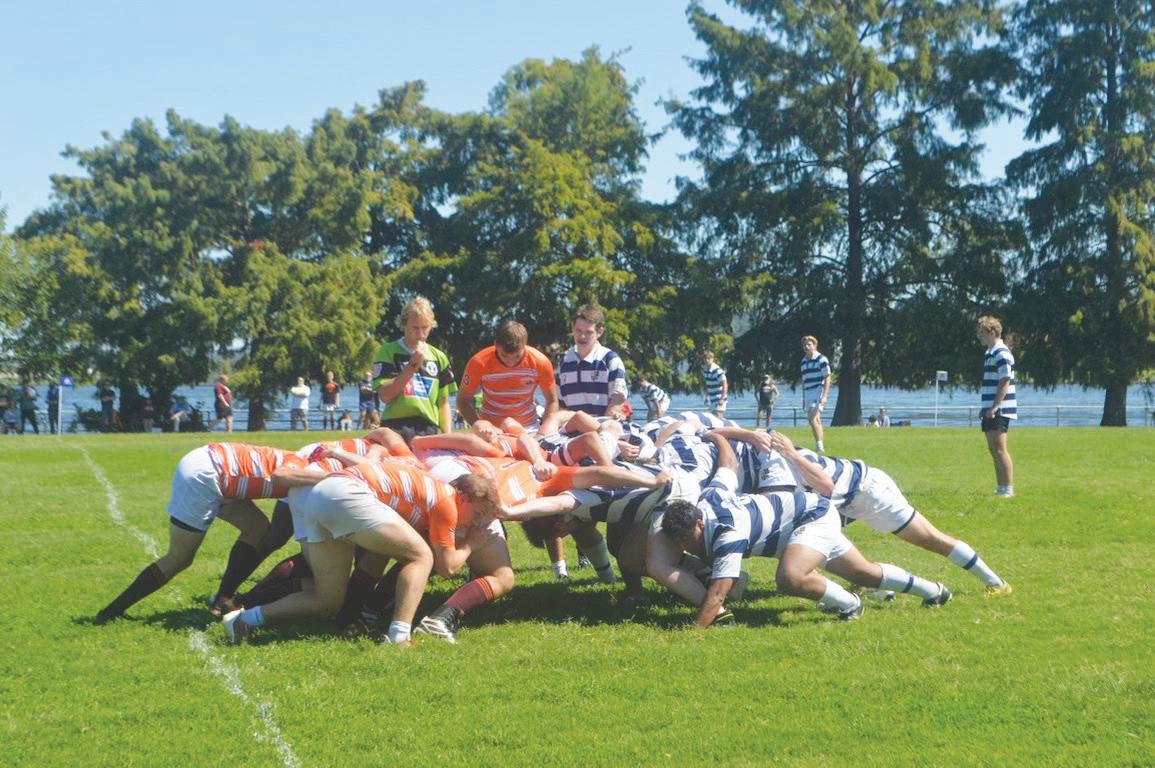
Although they fell 11-21 to nationally ranked No. 6 Susquehanna on Saturday, the club said they were proud of their ability to compete with an elite squad.
“We managed to put some points on the board against them.” Ogden said. “We’re really proud of that and we’re continuing to
work at practice on drilling a certain play style and something that we think could work in the future and help us win games.”
Hough said it is often difficult for players on the team to feel confident going into games against strong
sticking with what works for us [on both sides of the field] and keep getting the ball on the ground.”
The Revolutionaries played against Loyola Chicago (5-5-2, 1-1-2 A-10) on Sunday, losing the match 0-4. GW will look to win their next match against Saint Joseph’s on the Mount Vernon Campus on Sept. 28 at 3 p.m.
opponents, but he is excited to see the team’s abilities in action this year.
“This is the first time in my three years where we’ve had a group of guys that are probably able to compete with our oftentimes superior schedule,” Hough said.
Men’s club ice hockey shut out by Georgetown at Capital One Arena
the Hoyas leading offensively.
Men’s club ice hockey fell to Georgetown 0-3 in a rowdy game between crosstown rivals at the Capital One Arena on Sunday.
Right after face-off, the physicality and hostility of the game were evident; as the Hoyas received penalties, the Revs alternated between backchecking and applying pressure to their opponents. The Hoyas were fined two penalties minutes apart, while the Revs maintained a clean score sheet.
Georgetown opened the scoring in the second period with just over 12 minutes remaining, with sophomore forward Teddy Dyer knocking in a goal while GW had a player in the penalty box. Dyer was assisted by sophomore defenseman Peter Korn.
GW opened the second period with sophomore defenseman Sawyer von Jess receiving a penalty, followed by two consecutive penalties for sophomore forwards Tally Jervis and Alexander Cleveland. With over six minutes remaining in the second, two GW penalties made the tally five to three with
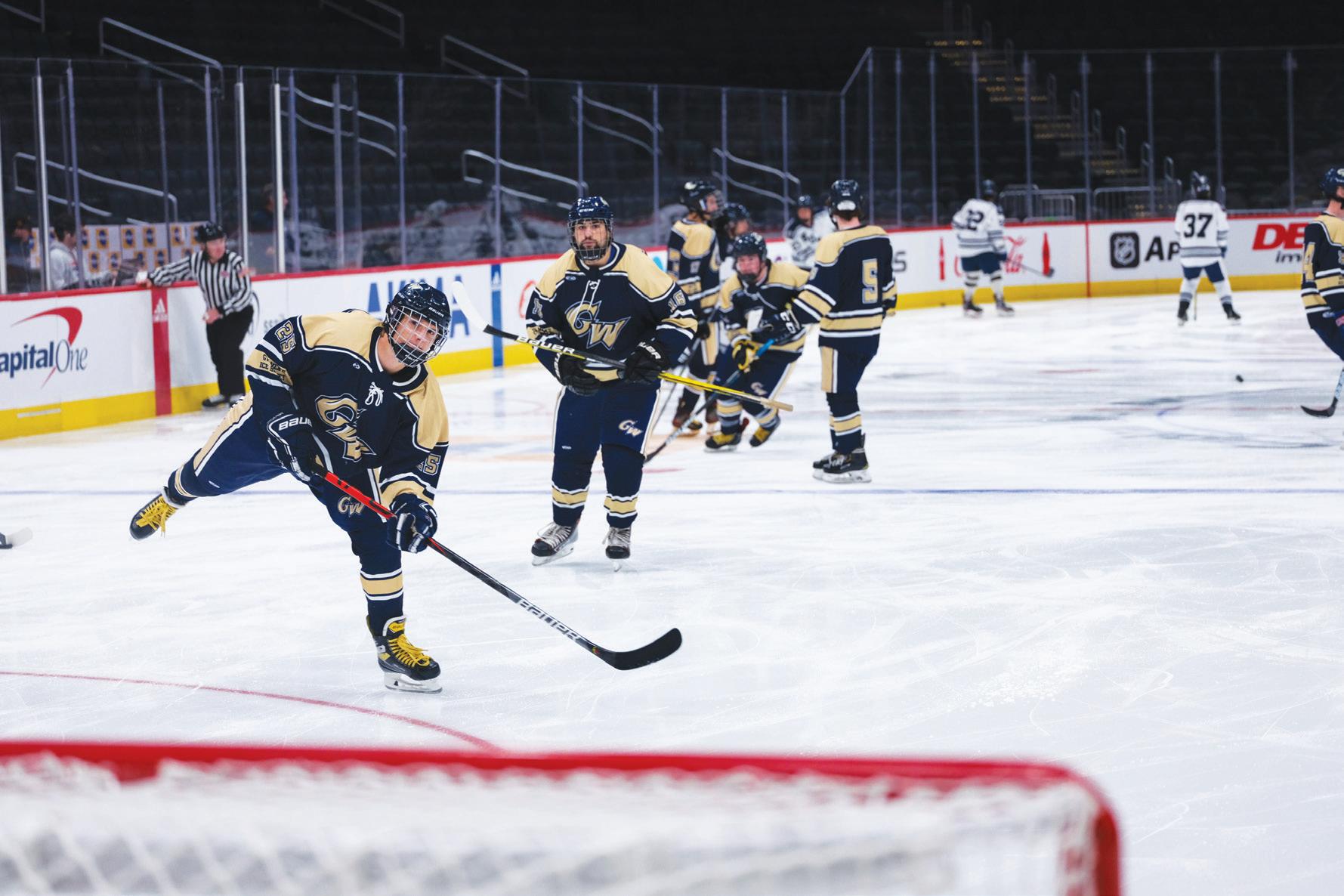
The Revolutionaries were not able to hold the Hoyas off for long, with Georgetown scoring another goal with five minutes remaining as one Rev remained in the box, making the score 2-0.
“There were a lot of penalties on both sides,” sophomore forward Jacob Bergeman said.

“But we really just couldn’t get the offense going.”
Junior defenseman and team captain Cade Llewellyn said he was proud of the determination his team came into the game with. Llewellyn, who has collected 14 assists and goals throughout the season, contributed strong defensive skills and led his team to offensive breakouts.
“I honestly thought we worked really hard in the corners and every battle,” Llewellyn said. “I was really proud of how we played, in a sense that we were the first guys to get the pucks every time there was a loose one. And I think we really tried to play for the crowd and for the people that came, so I think we can hold our heads high about that.”
After a skirmish-filled third period, Georgetown was able to score once again, finally getting the puck in the net after several
GW shutdowns. With just over three minutes remaining in the game, GW nearly ended their shutout, but a shot on goal was blocked by the Hoya goalie.
“There’s more to play for without a doubt,” Llewellyn
said. “When we’re playing Georgetown, it’s a rivalry that’s old as time basically. It’s a ‘daddy’s money’ versus ‘safety school’ kind of issue. But we love it. And we get so up for these games. We’ll go back
“We have three opponents in our schedule that are consistently ranked in the top 10 in the nation. So it’s a struggle usually, but this is one of those years where you look at the group of guys and feel very confident going into those games.”
to practice this week and get everything back on the drawing board and be ready Friday to take it to them.”
The Revs will play Georgetown this Friday at The St. James at 8:10 p.m.
Sports
NUMBER CRUNCH
0.95 GAMES OF THE WEEK
Blocks per game for volleyball graduate student Kelsey Watkins, good for fifth in the A-10.
SPORTS THE GW HATCHET September 25, 2023 • Page 8
COURTESY OF CLOVIS DE RASPIDE ROSS
ISAAC
Although they fell 11-21 to No. 6 Susquehanna earlier this month, the Men’s Rugby Football Club said they were proud of their ability to compete with an elite squad.
GREEN | PHOTOGRAPHER
The Revolutionaries set up for a shot during warm-up against Georgetown on Sunday, before losing to the Hoyas 0-3.
KRISTI WIDJAJA REPORTER FILE PHOTO
MAYA NAIR | STAFF PHOTOGRAPHER Junior defender Alicia Window crosses the field during a match against Chicago State University last fall. BEN SPITALNY CONTRIBUTING SPORTS EDITOR SANDRA KORETZ SPORTS EDITOR MEN’S WATER POLO vs. Johns Hopkins Friday | 7 p.m. Men’s water polo faces Johns Hopkins at Long Bridge Park on Friday at 7 p.m. MEN’S SOCCER vs. Delaware Monday | 3 p.m. Men’s soccer welcomes the Delaware Blue Hens for a Monday game on the Mount Vernon Campus.
BY
