
GW failed to act against alleged antisemitism: complaint
CAITLIN KITSON ASSISTANT NEWS EDITORA Jewish and pro-Israel advocacy organization filed a Title VI complaint Thursday with the Department of Education alleging that a professor was antisemitic toward Jewish and Israeli students in a graduate-level psychology course during the fall semester.
StandWithUs filed the complaint with the Office for Civil Rights, alleging Lara Sheehi, an assistant professor of clinical psychology, created a “hostile environment” for Jewish and Israeli students within her Diversity I course, part of GW’s Professional Psychology Program. The complaint alleges faculty and administrators “retaliated” with “disciplinary proceedings” against students who raised concerns about hostile conduct from Sheehi throughout the fall and a guest speaker and course materials that addressed the Israel-Palestine conflict.
The complaint alleges that the University violated Title VI, which prohibits discrimination on the basis of race, color or national origin in any “educational program or activity” that receives federal funds like GW.
CAITLIN KITSON ASSISTANT NEWS EDITORFaculty are “optimistic” about the selection of Ellen Granberg as GW’s 19th president, a conclusion to the presidential search process that they said signals a commitment from the Board of Trustees to shared governance.

Officials named Granberg, who serves as the provost and senior vice president for academic affairs at the Rochester Institute of Technology, as the next University president Wednesday following a monthslong presidential search conducted by a 17-member Presidential Search Committee with five faculty members. More than 10 professors said Granberg’s experience in higher education administration gives her the skills to create a strategic plan that
unites the GW community and promotes shared governance between the Board, administrators and faculty.

Kim Roddis, a professor of environmental and civil engineering, said Granberg’s decadeslong work in higher education administration demonstrates that she will be able to lead GW’s future strategic planning.
Prior to joining Rochester Institute of Technology in 2018, Granberg served as a faculty member, department chair, associate provost for faculty affairs and senior associate provost at Clemson University over the course of two decades, according to her LinkedIn.
GW has lacked a strategic plan since November 2020, when officials labeled former University President Thomas LeBlanc’s five-
year plan as “obsolete” due to the COVID-19 pandemic. LeBlanc’s plan, which included an enrollment strategy to increase the number of students majoring in STEM fields by 30 percent and cut undergraduate enrollment by 20 percent, drew backlash from faculty members who said the plan lacked input from the GW community.

“She did a major effort in strategic planning at Clemson and then also some at RIT,” she said. “So she understands the importance of doing it in an inclusive way, that strategic plans are living documents and that we have to keep updating them with how things change.”
Roddis said Granberg’s undergraduate degree in history from the University of California, Davis and her research on the inter-
section of sociology and health care show that she can navigate and bolster GW’s diverse academic offerings.
Officials announced a set of academic priorities, including academic medicine, equity and social justice, data science and sustainability and climate change in September in the absence of a strategic plan. Some faculty senators said the priorities and investments in the academic medical enterprise demonstrated a continued lack of support from the administration for humanities fields.
“I just feel that she’s somebody that understands the breadth of GW, so I am looking forward to being able to have the diverse parts, all of our little GW quirks that add to our strengths, so we can be the best GW we can be,” she said. “Instead
of trying to mimic some other university, we’re going to be the best for us.”
Roddis, who also served as the chair of the Faculty Consultative Committee – a committee of faculty members who advised trustees on the presidential search process, said the search displayed shared governance between faculty, trustees and administrators. She said the Board selected four faculty members from the committee to serve on the Presidential Search Committee after the Faculty Consultative Committee requested they pick at least one of their members.
“The Board reached out, and basically, by picking members off the FCC, they were giving faculty a voice,” she said.
Norton, advocates renew D.C. statehood push despite Congressional GOP opposition
CADE MCALLISTER REPORTER MOKSHA AKIL REPORTERFacing legislation from a new Republican majority in the U.S. House of Representatives that may impose on D.C.’s crawl toward statehood, Del. Eleanor Holmes Norton and local advocates are gearing up to ride growing national support through a long fight for state recognition.
Norton, a Democrat and the District’s nonvoting representative in the House, introduced the Washington, D.C. Admission Act for the third time last Monday before the newly instated members of the chamber – a bill that would grant the District full voting representation in Congress. Norton said despite the growing political division in Congress that has limited vital bipartisan support, she will work with senators to safeguard D.C.’s voting rights amid mounting legislative threats to D.C.’s self-governance from the House GOP.
The bill would admit D.C. as a new state named Washington, Douglass Commonwealth, granting citizens full federal voting representation in Congress and local selfgovernance while shrinking the federal district land to the U.S. Capitol, the White House, the Supreme Court, the “principal federal monuments” and the National Mall. The District has no voting members in the House or Senate, and Con-
gress can also block any bills proposed by the D.C. Council under the D.C. Home Rule Act – a bill passed in 1973 granting D.C. citizens the right to vote in presidential elections, a city council and a mayor.
Under Democratic control, the House voted to declare D.C. a state for the first time in its history in June 2020 and again in April 2022, a docket that Norton said proves the bill’s momentum toward the Democratic Senate floor. Norton said despite the “record” 165 original cosponsors sup-

porting her bill upon introduction, with six more as of Sunday, she has “no doubt” the bill will be stalled in the House this session, where Republican representatives hold a nineseat majority.
She said securing co-sponsors and introducing the legislation a third time despite its probable inability to pass the House pushes the statehood fight forward, citing increased national attention from social media about the movement.
“You can’t get statehood without Republicans and Dem-
that’s
I’m
ocrats being for it,” Norton said in an interview. “But you can’t get statehood without moving it every single year, and that’s why I’m going to move it this year, despite the fact that we have a Republican House.”
Norton said to rally support for D.C. statehood legislation, she will work with the Senate to prevent new “radical” Republican representatives from blocking or repealing bills concerning the District’s voting representation.
“Jewish students informed the University about the harassment and discrimination they were experiencing,” the complaint alleges. “George Washington, however, failed to take prompt and effective steps to end the harassment and eliminate the hostile environment.”
The complaint calls on the University to null the “disciplinary proceedings” against the students who raised concerns and provide them with an alternative method of receiving course credit “out of Sherri’s orbit and influence.” The complaint also urges GW to investigate the discrimination allegations, institute mandatory bias and sensitivity training and use the International Holocaust Remembrance Alliance’s working definition of antisemitism to identify discrimination claims.
Sheehi, who has worked at GW since 2016, also taught a section of the Third Year Psychotherapy course in the Professional Psychology Program during the fall semester, according to the University’s schedule of classes. Sheehi is not scheduled to teach any classes this spring, according to the schedule of classes.
Sheehi did not return a request for comment.
Interim University President Mark Wrighton issued a statement to the GW community Friday saying a “third party” will investigate the claims, but he did not comment on the details of the allegations.
“I want to be clear that we reaffirm that the George Washington University strongly condemns antisemitism and hatred, discrimination and bias in all forms,” Wrighton said in the statement. “We remain committed to fostering a welcoming and inclusive environment where all feel safe and free of harassment, hostility or marginalization.”
University spokesperson Julia Metjian declined to comment on Sheehi’s employment status. She also declined to comment on StandWithUs’ allegation that students who complained about Sheehi were subjected to “disciplinary proceedings” or what the third-party investigation of the complaint’s claims will entail.
Metjian deferred to Wrighton’s public statement in response to The Hatchet’s questions.
Progressive organizations, like Jewish Voice for Peace, have criticized StandWithUs for its reported ties to the Israel government through its work with the government’s Ministry of Foreign Affairs on the country’s marketing materials.
“They are allegations and reflect the advocacy group’s perspective,” officials said in a now-expired Instagram story posted Thursday on GW’s official account. “The University will respond to OCR regarding any complaint it may receive from OCR.”
The complaint states that after a student said she was from Israel on the first day of the fall semester when Sheehi asked students in the course to share where they were from, Sheehi responded by saying, “It’s not your fault you were born in Israel.”
The complaint alleges that students continued to experience discriminatory actions at the Professional Psychology Program’s speaker event in September featuring a presentation from Nadera Shalhoub-Kevorkian, the chair of law at the Hebrew University of Jerusalem. During the presentation, Shalhoub-Kevorkian said Israel uses its humanitarian aid to distract from its “oppressive power,” a statement that students believed played into antisemitic stereotypes of Jewish people “using money for nefarious purposes,” according to the complaint.
INDEPENDENT STUDENT NEWSPAPER • SERVING THE GW COMMUNITY SINCE 1904 Tuesday, January 17, 2023 I Vol. 119 Iss. 16 WWW.GWHATCHET.COM What’s inside
LILY SPEREDELOZZI | ASSISTANT PHOTO EDITOR
More than 10 professors said Granberg’s experience in higher education administration gives her the skills to create a strategic plan that unites the GW community and promotes shared governance.
The editorial board reacts to the appointment of Ellen Granberg as GW’s first female president.
Page 6
Take note of these performing arts shows to add to your calendar this spring.
Page 7
Get to know James Bishop, the senior guard leading GW as the Colonials vie for the A-10 Championship.
Page 8
COURTESY OF ELIJAH MEARS
“You can’t get statehood without Republicans and Democrats being for it,” Del. EleanorHolmes Norton said in an
interview. “But you can’t get statehood without moving it every single year, and
why
going to move itthis
year, despite the fact that we have a Republican House.”
Faculty say they are ‘optimistic’ about Granberg’s presidency as promising sign of shared governance
See ORGANIZERS Page 3 See STAFF Page 2
See GRANBERG Page 3
CRIME LOG
UNLAWFUL ENTRY
Media and Public Affairs Building
12/21/2022 – 11:18 p.m.
Closed Case
During routine patrol, GW Police Department officers observed a previously barred male subject in a classroom and issued an updated bar notice. Subject arrested.
THEFT II/FROM BUILDING
Ross Hall
1/03/2023 – Unknown
Closed Case
A male staff member reported stolen money from a thank you card left in a classroom over winter break. No suspects or witnesses.
THEFT II/FROM BUILDING
Science and Engineering Hall
1/03/2023 – 2:30 p.m.
Closed Case
A female contractor reported her cell phone was stolen from the SEH lobby, which she had left unattended on the lobby desk prior to the theft. No suspects or witnesses.
MISDEMEANOR SEX
ABUSE
I Street Mall
1/05/2023 – 11:00 p.m.
Closed Case
Metropolitan Police Department officers requested GWPD assistance with an incident of misdemeanor sexual abuse by an unknown male subject involving a non-GW-affiliated female victim.
Referred to MPD.
DESTRUCTION OF PROPERTY/VANDALISM
Gelman Library 1/11/2023 – Unknown
Open Case Staff reported vandalism stating “F Israel” in small lettering in a men’s bathroom stall on the seventh floor during routine cleaning. Case open.
DESTRUCTION OF PROPERTY/VANDALISM
Mitchell Hall (7-Eleven Store) 1/11/2023 – 7:43 p.m.
Open Case GWPD officers responded to a report of destruction of property by an unknown male subject. When officers arrived on the scene, a female delivery driver reported the subject became agitated and damaged a display case. Case open.
DESTRUCTION OF PROPERTY/VANDALISM
Gelman Library
1/11/2023 – Unknown
Open Case Staff reported they found vandalism in a men’s bathroom stall on the sixth floor during routine cleaning, including expletives condemning a GW fraternity. GWPD officers are withholding the name of the fraternity while the investigation remains open. Case open.
— Compiled by Peyton GallantSNAPSHOT
GW preparing disciplinary response to AI programs as faculty explore educational use
EÓIGHAN NOONAN CONTRIBUTING NEWS EDITOR OWEN AVERILL REPORTEROfficials are discussing how to expand the Code of Academic Integrity to include violations for students who use AI programs to complete their assignments after a surge in the public’s use of AI.
Provost Chris Bracey said during a Faculty Senate meeting Friday officials will deliver a statement this week on how the academic integrity code will account for AI programs including ChatGPT, a program launched in November capable of writing code, academic papers and responses to simple prompts. But a handful of faculty said that instead of prohibiting the program from the classroom, they plan to incorporate AI tools like ChatGPT into their curriculum this spring to prepare students for a future with AI use rising across industries.
After signing up with a name and email address, users of ChatGPT can enter prompts that generate poems, stories, essays, emails and more, enabling students to enter their assignment instructions for the program to automate a completed paper in return.
“We are trying to figure out whether our existing code prohibits the use of this AI software that can respond to a prompt to generate an essay,” Bracey said.
“Our general sense is that this does not qualify as plagiarism but rather falls under the general category of cheating.”
The Code of Academic Integrity defines cheating as the use of unauthorized materials during an academic exercise, while plagiarism is defined as the misrepresentation of ideas as one’s own.
ChatGPT’s popularity has spread rapidly across social media because of its ability to mimic human conversation patterns and text, with more than one million users already writing papers, articles, emails and more with the program. ChatGPT has also sparked debate in the academic world between some who fear that the bot’s ability to produce human-like writing will enable widespread cheating and others who see it as an opportunity to restructure teaching and encourage students to learn how to write better than the AI system.
OpenAI, the company behind ChatGPT, is reportedly close to releasing a more powerful model called GPT-4 with new multibillion-dollar investments from tech giant Microsoft.
Faculty said because students have open access to ChatGPT online, professors should teach students how to best use the technology instead of banning it from their classrooms. They said they will encourage students to use the program to build on critical skills like
Shenkman Hall dining facility opens Sunday as GW implements new meal plan
GRACE CHINOWSKY ASSISTANT NEWS EDITOROfficials opened the doors of the new dining space in Shenkman Hall for dinner Sunday after supply chain issues pushed back its reopening for months.
Douglas Frazier, the executive director of dining services, said the new space will include a breakfast station that includes cereals, bagels, self-serve waffles and other options that can be accessed throughout the day, as well as a “unique” Bowl Life, an allergy-free Pure Eats station, Teaching Kitchen, Carvery/Innovate, Grill, Sweet shop and a salad bar in a Friday email. According to documents obtained by The Hatchet last spring, a 54-seat market and juice bar will replace the space where Potbelly Sandwich Shop was previously located on
Shenkman’s ground floor.
“Thank you for your patience and understanding as we transitioned these past couple of months through construction delays towards a full on-campus dining program,” he said in a statement last week. “We are excited that this spring that you will be able to experience a daily variety of healthy, convenient and, most importantly, affordable meal choices.”
Frazier said in the email that the dining hall can seat a total of 450 students and serve 1350 per meal period via a variety of table sizes in the email.
Officials originally planned to open the Shenkman and Thurston dining halls in the fall but delayed the reopening of both to winter and late in the fall because of “global supply chain issues.” Upon Shenkman’s reopening, student meal plans will transition
from the current Dining Dollars program to a meal swipe program with unlimited and block plans based on a student’s class year in the spring.
Frazier said officials will be implementing a new meal swipe program upon the opening of Shenkman Hall that they originally planned for and announced in spring 2022 before temporarily shifting all residential students to using Dining Dollars for the fall 2022 semester during the delays opening Shenkman and Thurston vendors. He said a meal swipe allows students to enter a dining hall via a “swipe” of their GWorld card and eat as much as they want from various offerings before departing.
He said students can “swipe” into District House and order a “complete meal” from one of five in-house dining vendors using their GWorld card as well.
research and an enhanced style of writing.
Lorena Barba, a professor of mechanical and aerospace engineering, said faculty should avoid the “fearmongering” associated with the rapidly advancing technology. She said faculty should design “authentic” and “relevant” assignments that students could not complete by cheating with AI tech.
“Faculty need to rethink their assessments to account for the fact that this tool is available to students, and, even better, teach students how to use it effectively,” Barba said in an email. “A few students will always seek to cut corners, and their learning will suffer. I will do my best to convince them otherwise, but, in the end, it’s their choice.”
Alexa Alice Joubin, a professor of English, said she has “embraced” AI in the classroom and taught students “prompt engineering,” a way of designing the most suitable prompt to provide the most ideal answer with ChatGPT to build on skills like designing research questions.
Joubin said ChatGPT would provide enhanced learning opportunities in her English classes through exercises where students can critique AI essays without the “uncomfortable” elements of critiquing another student’s writing in class.
“Here is an essay, and it’s not written by a human, so we can do anything we want so you wouldn’t be
afraid of offending,” Joubin said. “It’s like a lab for the humanities, it’s brilliant.”
Tadeusz Zawidzki, an associate professor of philosophy, said while papers that ChatGPT generates can “cause panic” among humanities professors, limitations exist in the program’s inability to convey personal human experiences.
Zawidzki said the University should teach students to specialize in academic writing with content unique to personal human experiences in the future as ChatGPT becomes more widespread.
“Perhaps we should focus on skills at rendering experiences in language when teaching students to write since it seems like something that will always, truly distinguish human from GPT-3 writing,” he said.
Katrin Schultheiss, an associate professor of history, said the University should give professors guidance on how best to move forward with incorporating artificial intelligence into their classes.
Schultheiss said despite its advantages, ChatGPT has also raised some concerns for its occasional errors displaying factually incorrect information due to its “limited knowledge” of current events.
“People use this stuff all the time, and sometimes it’s wrong,” Schultheiss said. “But it looks right. You know, that can be problematic too.”
Staff, faculty retaliated against students facing antisemitism, civil rights complaint alleges

From Page 1
In the class following the speaker event, one Jewish student told Sheehi the presentation made her feel “vulnerable and unsafe” because she believed it “targeted” Israeli and Jewish people, according to the complaint. Sheehi allegedly replied by saying “in no uncertain terms, anti-Zionism is not antisemitism.”
The complaint states that students in the program received an email from a Columbian College of Arts and Sciences vice
dean Oct. 22, which stated officials were aware of the criticism of Shalhoub-Kevorkian’s presentation and planned to host a discussion between students and faculty to address students’ concerns.
The complaint states the Jewish students also raised concerns to Sheehi about three class readings, which the students said portrayed Israel and Jewish people in a negative light “within the greater context of antisemitism in the class,” according to the complaint.
The complaint al-
leges that Jewish students from the course shared their criticisms of Sheehi with a staff member from the Professional Psychology Program in early October.
The complaint alleges the program’s faculty voted to subject the students who shared criticism of Sheehi with program staff members and the dean to “disciplinary proceedings.” A staff member from the psychology program refused a student’s request to appeal the disciplinary proceedings, the complaint states.
NEWS THE GW HATCHET January 17, 2023 • Page 2 News
THIS WEEK’S EVENTS THIS
LUNAR NEW YEAR CELEBRATION Wednesday, Jan. 18 | Noon EDT | Kogan Plaza Join a Lunar New Year celebration in the heart of campus hosted by CCAS Global featuring a Lion Dance and snacks. AI IS IN YOUR CLASSROOM EVEN IF YOU DIDN’T KNOW IT! Wednesday, Jan. 18 | 3 p.m. EDT | Gelman Library Join a group of GW experts discussing recent developments in artificial intelligence like technologies that can write
and
The Faculty Senate adopted a resolution to amend the University policy on equal opportunity to add the words ‘sexual orientation.’
WEEK IN HISTORY Jan. 17, 1991
essays
poems.
DANIELLE TOWERS | ASSISTANT PHOTO EDITOR
Hundreds of attendees marched down Martin Luther King Jr. Avenue at the annual Martin Luther King Jr. Parade Monday in Anacostia in celebration of MLK Day.
Students anticipate collaborative future with Granberg’s incoming presidency
Smith Center.
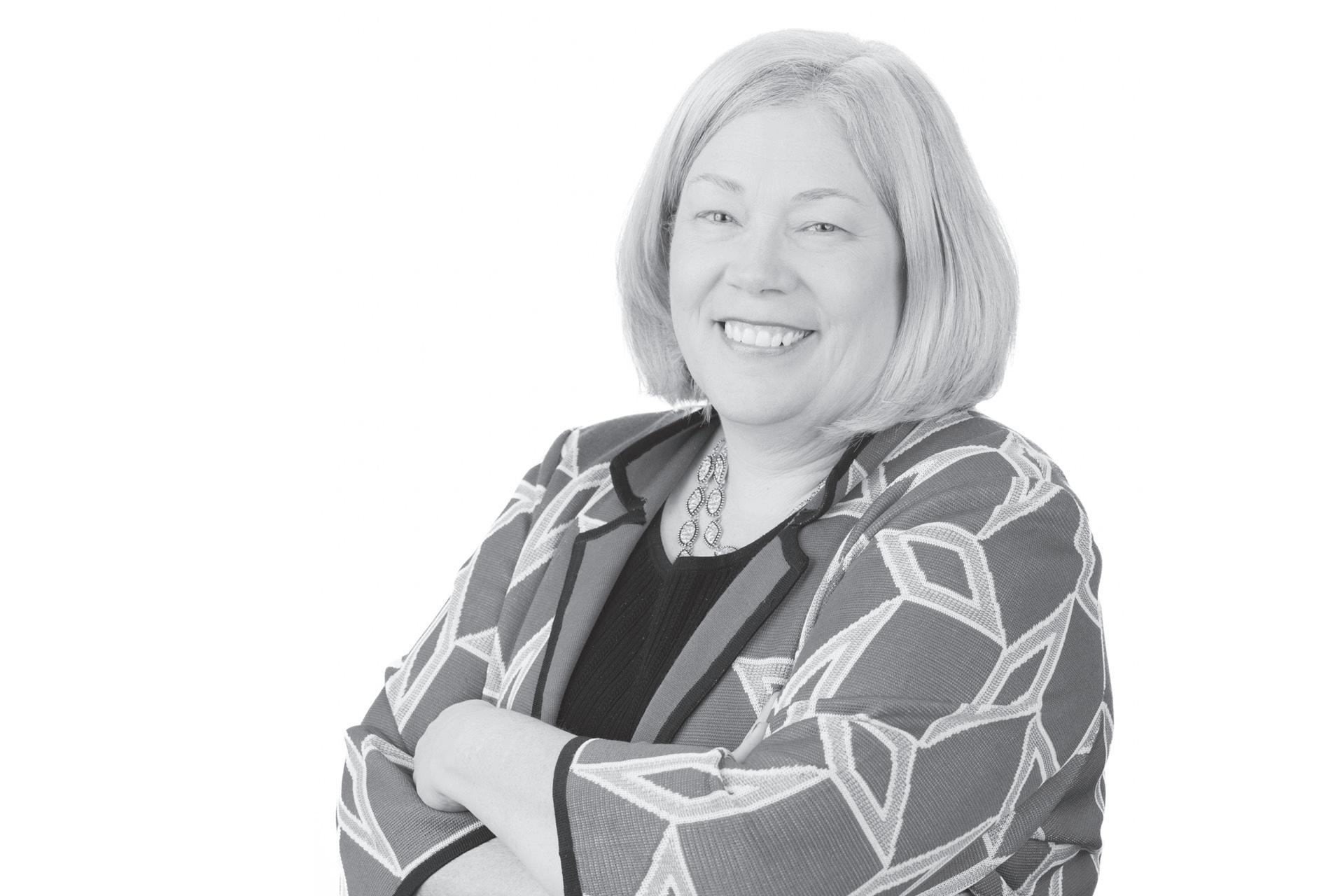
Students are embracing the July arrival of Ellen Granberg as GW’s next president and first female leader who will look to continue building students’ trust in the administration a year and a half after the most recent permanent president stepped down.
Since officials and trustees introduced Granberg to the GW community Wednesday, more than 20 students have said they feel optimistic about her appointment to the role, expecting her experience in diversity, equity and inclusion to improve GW’s response to acts of discrimination on campus, enhance relationships between students and officials and make GW’s policies and programs more transparent. Students said they are hopeful Granberg will prioritize regular personal communication with students after former University President Thomas LeBlanc’s tenure ended with a series of controversial student interactions and administrative decisions.
After LeBlanc exited office at the end of 2020, interim University President Mark Wrighton has led GW thought the past year, aiming to expand the University’s financial aid resources, reform IT and fill vacant administrative positions.
In her welcome address at the event announcing her selection Wednesday at the Jack Morton Auditorium, Granberg said she hopes to continue advancing the University’s academic reputation during her term. She said once she and her wife Sonya Rankin move into F Street House, the on-campus residence for the University president, she plans to attend University events like women’s basketball games at the
“As Sonya and I are already quickly learning, this community is one of warm and welcoming people working together to have a positive impact on society and to create a more just and equitable University, nation and world,” Granberg said in her welcome address. “Your commitment to this work and your ambition to achieve preeminence as an institution together is inspiring.”
Student Association President Christian Zidouemba, who served on the Presidential Search Committee that selected Granberg, said Granberg’s experience in academia and business – combined with her commitment to collaborate with students, faculty and staff on issues facing the University – impressed the committee. Zidouemba said he’s confident in Granberg’s ability to listen to the GW community’s opinions and integrate them into her administration’s initiatives.
Granberg currently serves as provost and senior vice president for academic affairs at the Rochester Institute of Technology, where she helps lead strategic planning efforts, according to a University release.
“One of the things that I think that she’s done well is that she understands that to be able to be an effective leader, one must be able to listen,” Zidouemba said.
Granberg’s focuses include educational innovation, diversity, equity and inclusion, academic reputation and research and scholarship, according to the release. The release states she is a nationally recognized scholar of the sociology of identity and mental health.
Zidouemba said he hopes Granberg will work to connect GW to the greater D.C. area with local government engagement and invest in the University’s academic reputation by securing a spot in the prestigious Association of American Universi-
ties.
“Interim President Wrighton has positioned the University for the next president to be able to take all of those things that we already have and to make them excellent,” he said.
Gianna Cook, the president of the Black Student Union, said she attended the University’s event Wednesday and is hopeful for GW’s future after hearing her speak with a “warm” and “welcoming” presence. Cook said she hopes Granberg will lead with a positive attitude, an “open-door” approach for students to meet with her, consistent office hours and regular attendance at University events.
“I think it’s very easy when you’re president to have all these ideas, all well and good, but I think it’s also important to listen to the community and see what they need first,” Cook said. “And she was definitely open in that aspect, as she voiced that in her speech.”
Cook said she hopes Granberg doesn’t repeat mistakes of LeBlanc, whom she said simply reacted to harmful incidents on campus instead of taking proactive measures to lead with transparency about University decisions and connect with students.
“I think that that’s something the last administration was lacking, or sometimes if it was offered, it was
always after something terrible happened,” Cook said. “And so even if it might have been genuine, it was branded as saving the University.”
Raven McAuliffe, a junior majoring in women’s, gender and sexuality studies, said Granberg should acknowledge and address petitions about student issues during her term. McAuliffe said she hopes Granberg, as the University’s first openly LGBTQ+ president, makes an effort to connect with LGBTQ+ students on campus.
“I hope she has a relationship with the queer community here because there’s such a big community at GW,” she said. “It’d be nice to see her try to take initiative.”
Granberg positioned to develop financial priorities, research initiatives: experts
FIONA RILEY REPORTER JACKSON RICKERT REPORTERExperts in higher education administration said incoming University President Ellen Granberg can usher in a “cultural shift” at GW and develop external partnerships across D.C.
At a public event in the Jack Morton Auditorium Wednesday, officials introduced Granberg – the provost and senior vice president for academic affairs at Rochester Institute of Technology – who will take over as GW’s first female president starting in July. Experts in higher education administration said new presidents often rebrand a university with their own set of personal values, and GW could shake up its financial priorities with greater investment in campus facilities and research initiatives as a result of the transition to Granberg’s leadership.
During her tenure at RIT and Clemson University, Granberg led diversity, equity and inclusion efforts to close achievement gaps between students who are Black, Indigenous and people of color and non-BIPOC students and supported faculty and staff through shared governance, according to a University release.
Mark Stern, an associate professor of educational
studies at Colgate University, said presidential priorities can materialize into fundraising for new buildings like residence halls or gymnasiums depending on the preferences of the president. He said introducing new presidents can reshape an administration’s values, which will be visible through how they address students, staff and faculty.

“They each have a certain kind of rhetoric that they bring with them,” Stern said. “And that rhetoric can be about excellence, diversity, equity and inclusion, research and so on. So you begin to feel like the school is getting a little bit of a rebranding.”
Stern said university presidents have typically tried to bring out students’ strengths in the past, but since smaller boards have started managing the hiring of presidents over the past 50 years, their role has shifted to ensure their institution remains “fiscally viable.”
Trustee and alumna Roslyn Brock and Faculty Senate Executive Committee Chair James Tielsch led the 17-member committee’s search for a new president, which included nine members from the Board of Trustees, five faculty, one staff member and the respective presidents of the Alumni Association and the Student Association. Officials hired Education Executives, a national higher education
consulting firm, in June to collect input from the GW community, create a presidential profile and develop an application process for the role of University president.
“A lot of what they do today is set an agenda,” Stern said. “They hire people to enact that agenda, and they are there to make sure the institution remains fiscally viable.”
Michelle Boettcher, a professor of higher education student affairs at Clemson University, said as universities undergo leadership changes, new presidents must create and foster relationships on campus with students and off campus with “key partners” like government legislators. He said bringing in partners with different expertise, like crisis management or academic excellence, can help build an administrative team that can excel in all areas.
She said the issues that president-elect Granberg must prioritize might include “urgent” necessities like improvements to campus safety or infrastructure, depending on the needs of the University at the time of her transition.
Officials developed a list of academic priorities in September, including academic medicine, equity and social justice, data science and sustainability and climate change and invested $50 million in 14 new, endowed
Granberg could prioritize humanities, collaboration in presidency: faculty
Harald Griesshammer, a professor of physics, said there was a “huge difference” between the community involvement in the presidential searches for Granberg and LeBlanc. He said officials chose Granberg through a more collaborative process that took GW community members’ input into account.
The Presidential Search Committee hosted a series of community forums in September for faculty, staff, alumni and students to share what they wanted to see in the next University president.
“I think people really wanted to make this work and look at the best candidate for the community as a whole and not necessarily look at a designated candi-
date to get a certain specific agenda done, but really, to bring GW forward,” he said.
Griesshammer said navigating the financial status of the Medical Faculty Associates will be one of Granberg’s biggest challenges as president. The MFA is currently more than $200 million in debt, and GW CFO Bruno Fernandes estimates it will lose up to $65 million by the end of the current fiscal year, which will derail officials’ plans for the MFA to break even by July.
“We just can’t have a medical enterprise from a deficit,” he said. “No other university does that, so that’s a humongous challenge.”
Denver Brunsman, an associate professor of history, said Granberg exhibited a desire to listen to faculty members and learn more about the University in her
address to GW community members Wednesday.
“I think faculty, above all, just want to be part of the governing process of the University, and the different constituencies want to be listened to,” he said. “And she seems, by all accounts, to be a very good listener, so I think that bodes well.”
David Rain, an associate professor of geography and international affairs, said Granberg’s career in higher education administration shows that she is a “firm and compassionate leader” whom the GW community can trust. He said he attended the announcement of Granberg’s presidency Wednesday and saw the “delight” on the faces of search committee members and officials.
“They feel they made the right choice, and I think they’re right,” he said.
professorships to bolster GW’s medical enterprise. But faculty senators said the new priorities are not unique to GW, and officials should focus on improving academics across all schools and departments, not just the STEM-related academics.
Boettcher said some university presidents started leaving their positions in 2020 due to numerous factors like COVID-19 and a divisive political climate, which pressured others to decide if they wanted to continue working in academia.
“We really are asking a lot of our leaders, and I think the ideal leader is someone who has some of those skills and knows how to build,” Boettcher said. “There are people out there who are smart, strategic thinkers who can build teams to achieve in all of those areas.”
Boettcher said she felt “inspired” by Granberg’s more than two decades at Clemson, where she served as senior associate provost, sociology professor, department chair and associate provost for faculty affairs. She
said Granberg led a panel on navigating the promotion process for professors when Boettcher was a new faculty member and reassured her that she wanted Boettcher and other new faculty to be successful at the university.
“Her generosity with time and advice was an important part of how I began to see myself as a faculty member, but more importantly, how I saw myself as a part of a university community that was invested in, supportive of and welcoming to me,” Boettcher said.
Organizers say GOP House control won’t stifle statehood efforts
Rep. Andrew Clyde, R-GA, teased introducing a bill repealing D.C.’s Home Rule in July. Last week, Republican representatives banned Mayor Muriel Bowser from the House floor and began allowing unlimited amendments on federal spending bills as part of their new rules package. The spending move has previously been used to block the District from using its tax dollars to fund abortions for lowincome residents in 2017 and restricted D.C. from legalizing the sale and tax of cannabis two years before that.
Republican lawmakers also introduced resolutions opposing a bill allowing noncitizens to vote in D.C. last week, which the D.C. Council passed 12-1 in October. The resolutions are un-
likely to pass the Democratic Senate or be signed into law by President Joe Biden, but it signals GOP resistance toward expanding voting representation in the District.
“It has to do with Republicans opposing whatever the District of Columbia does, largely because it’s a large Democratic jurisdiction,” Norton said.
When members of the Democratic-majority House voted on Norton’s statehood bill in 2021, it passed 216 to 208 – split down party lines.
Patrice Snow, the communications director for statehood advocacy organization DC Vote, said the group has ramped up its lobbying efforts since Republicans took control of the House last week, focusing on senators who they hope will advocate for statehood and block GOP House representatives from interfering
with local D.C. legislation.
“Their favorite play thing is the 700,000 tax-paying residents of Washington, D.C.,” Snow said. “They have this kind of unhealthy obsession with them, and it’s starting to manifest itself as we speak.”
Robinson WoodwardBurns, an assistant professor of political science at Howard University and a D.C. resident, said the movement is closer to enactment than ever before because of the bills’ previous success in the House which has sparked national support.
“It’s a very long fight, it’s an old fight, and a lot of people outside of D.C. don’t think or care about it a lot,” Woodward-Burns said. “So, I’m really surprised and personally pretty happy to see it garnering national attention and to see people thinking about us.”
NEWS THE GW HATCHET January 17, 2023 • Page 3
FAITH WARDWELL ASSISTANT NEWS EDITOR NIKKI GHAEMI CONTRIBUTING NEWS EDITOR
COURTESY OF ELLEN GRANBERG
Granberg has worked to close achievement gaps between students who are Black, Indigenous and people of color and non-BIPOC students and supported faculty and staff through shared governance, according to a GW release.
FILE PHOTO BY RAPHAEL KELLNER | STAFF PHOTOGRAPHER
Incoming University President Ellen Granberg said once she and her wife Sonya Rankin move into F Street House, the on-campus residence for the University president, she plans to attend events like women’s basketball games at the Smith Center.
From Page 1 From Page 1
Pell Grant increase will fall short for GW recipients: experts
IANNE SALVOSA ASSISTANT NEWS EDITORThe maximum Pell Grant award is set to increase by $500 in the next academic year, but experts said the rise will pay little dividends for recipients who attend GW as tuition continues to rise to an all-time high.

housing has also strained families’ finances, so an increase in Pell Grant awards could ease those burdens.
“Having an increase in Pell Grants certainly will help with some of those inflationary pressures,” Delaney said. “It’s helping increase purchasing power as well. But this is a good step to supporting the most vulnerable, low-income students nationwide.”
actually have to go through all the paperwork to be able to qualify for Pell that’s just automatically there is immensely helpful,” Delaney said.
The maximum Pell Grant award increased by $400 last academic year from $6,495 to $6,895. Biden proposed to double the Pell Grant maximum to about $13,000, according to his budget proposal for fiscal year 2023.

Rebecca Natow, an assistant professor of educational leadership and policy at Hofstra University, said the rate of tuition increases has outpaced the rate of maximum Pell Grant award increases over the past decade. She said Pell Grants currently cover a small percentage of the cost of attendance at most universities, and lawmakers should agree on how to address rising tuition costs in policymaking.
MFA to
NICK PASION SENIOR NEWS EDITOR SOPHIA GOEDERT ASSISTANT NEWS EDITOROfficials said Friday that the Medical Faculty Associates will lose up to another $65 million by June, losses that will derail their plans for the ailing medical practice to break even by the end of June.
Interim University President Mark Wrighton walked back GW’s earlier projection for the MFA to recover from $200 million in debt and break even by the end of fiscal year 2023 during a Faculty Senate meeting Friday, pushing the target back until the following fiscal year. The MFA’s estimated losses this fiscal year directly counteract plans that MFA CFO Barbara Bass outlined in a report to the senate in October to increase the MFA’s revenue by more than $60 million and decrease its expenses by $2 million to break even before the year is over.
“By the end of FY 2024, we will be at breakeven,” Wrighton said at the meeting Friday. “However, I need to share, and the Board is understanding of this, that there is no guarantee that financial success will be achieved.”
Wrighton said the Board of Trustees loaned the MFA $15 million in December and approved another $45 million loan to the MFA last week, which pile on to the staggering $140 million that GW loaned to the MFA in 2021.
up

this fiscal year, spoiling break even goal
CFO Bruno Fernandes said the MFA’s losses this fiscal year will range between $55 million to $65 million. He said most of the losses were “front-loaded” at the beginning of FY 2023.
Officials restructured the MFA in August to improve its financial standing through yearly payments from Universal Health Services to GW, “trademark royalties” and a “fair market rent repayment” on GW property to help the MFA break even after officials sold their minority stake in the GW Hospital. MFA CEO Barbara Bass said at the October Faculty Senate meeting that the sale of GW’s 20 percent minority stake in the GW Hospital will create a “modern funds flow arrangement” and help redirect clinical revenue to the MFA, which partially staffs the hospital.
Wrighton said as the GW Hospital continues to grow under the new arrangement with Universal Health Services, the MFA will also “thrive” with the new partnership with the hospital. He said the new arrangement will better position the MFA for success in clinical programs.
“This is why it’s important to know that the George Washington University Hospital, our principal hospital relationship, needs to thrive also,” Wrighton said.
Faculty senators passed a resolution at Friday’s meeting proposing a plan for officials to issue quarterly updates to the Faculty Senate Executive Committee and the Faculty Senate
Fiscal Planning and Budgeting Committee on issues including the MFA’s cash flow, GW’s loans to the MFA and outside creditors’ loans to the MFA that GW would be expected to fulfill if the MFA is unable to repay.
Joe Cordes, a faculty senator and the co-chair of the senate’s Fiscal Planning and Budgeting Committee, said the regular updates would hand the senate information they need to create a financial “plan B” in case the MFA doesn’t break even by FY 2024. He said the resolution is “step number one” to better understand the financial standing of the MFA and will help the committee determine if “midcourse corrections” to the medical institution are necessary going forward.
“The financial health of this particular entity has implications for the rest of the University, as President Wrighton has noted,” Cordes said at the meeting. “So I think the two things are very much connected on this, and our hope is obviously that the updates will show a favorable trajectory.”
The MFA’s net profits have fallen by $91.1 million since 2019, according to a report from Fernandes on the financial standing of the MFA in October.
Fernandes said at the senate meeting in October that the University granted the MFA a $140 million loan in 2021 and expect $120 million to be repaid with interest in the next 15 years, while the other $20 million can be used for operating costs.
President Joe Biden signed an increase to the maximum award available to Pell Grant recipients in a spending package last month, elevating the maximum from $6,895 to $7,395 – the award’s largest increase in 14 years. Experts in college affordability said federal lawmakers should further raise the maximum Pell Grant award to match tuition at public and private universities and make higher education more affordable for students from low-income backgrounds as tuition prices climb across the country.
Jennifer Delaney – an associate professor of education policy, organization and leadership at the University of Illinois, UrbanaChampaign – said the $500 increase to the Pell Grant maximum is a “huge” step to removing financial barriers for low-income students, but the grants still fall short of fully covering college tuition at public and private universities. She said Pelleligible students may still experience “sticker shock” from expensive, private universities like GW – a pattern among higher education institutions with a high cost of attendance that deters prospective students from applying.
Delaney said current inflated prices for food and
The University joined 1,200 organizations in March 2021 to sign a letter in support of doubling the maximum Pell Grant award.
Students are eligible to receive a Pell Grant if they display “exceptional” financial need through the Free Application for Federal Student Aid, according to the Department of Education.
Delaney said the formula to determine Pell Grant awards has been “very complicated” due to the 108 questions on the FAFSA, but the Department of Education is working to reduce that number to 36 to simplify the application process. She said the government can calculate aid eligibility with existing family data, like residence in public housing or registration for Supplemental Nutrition Assistance Program benefits, which are offered through a government-provided card that individuals can use to purchase food.
“Things where you don’t
The total cost of tuition, fees and room and board at private, nonprofit universities increased by an average of $2,350 from the 2012-13 academic year to the 202223 academic year, according to a 2022 report by CollegeBoard. The maximum Pell Grant award increased by $1,345 in the same period.

Pell Grant recipients at GW received an average of $4,843 in the 2020-21 academic year, according to the National Center for Education Statistics. The average grant covered 8.3 percent of the $58,550 tuition that academic year.
GW’s undergraduate tuition for the 2023-24 academic year rose to an all-time high of $62,110, pushing the total cost of attendance over $80,000.
“The reason why we’re seeing the largest increase we’ve seen in 10 years is increased recognition by policymakers, I think on both sides of the aisle, that tuition is high and that it does require that policy attention,” Natow said.
Indigenous student organization amplifying education, culture after revival
FAITH WARDWELL ASSISTANT NEWS EDITORA student organization dedicated to amplifying campus education and awareness about Native American rights and heritage will relaunch this semester following a year-long hiatus.

Students for Indigenous and Native American Rights, originally founded in 2017 before becoming inactive last school year due to a lack of central authority after remaining members graduated, returned as a student organization in November with a focus on Indigenous education, awareness and community at GW. SINAR leaders said they hope to host guest speakers like GW history professor David Silverman, book club discussions and heritage celebrations to achieve an improved understanding of Indigenous culture and issues like expanding health care and voting access in Tribal communities in 2023.
Senior Olivia Gower, a copresident of SINAR, said she
joined the organization as a freshman in 2019 before taking a break in 2020 due to the pandemic. Gower and fellow co-president Riya Sharma revived SINAR during the fall 2022 semester after discussing their mutual interest in bringing Native American rights to the forefront of campus conversations at GW. She said she searched for a way to continue involvement with SINAR when she returned to campus in the fall of 2021 but found the organization dormant.
Gower said the organization hopes to lead several events over the next semester, like a guided tour of the National Museum of the American Indian and continuations of past SINAR projects, such as a petition to urge officials to include a land acknowledgement during GW’s commencement ceremony on the National Mall in May, a step that Gower says is overdue for the University.

Vanessa Chen, a secondyear graduate student, said as part of an initiative she is leading at GW, the University
projects a land acknowledgement onto the H Street side of Lisner Auditorium every night to acknowledge the Piscataway and Nacotchtank tribes’ previous ownership of the land where GW’s campus now lies. The land acknowledgement is part of a projected slideshow that includes other University announcements and news.
Gower said finding community on campus is a significant challenge for Native American students at GW because of the small community on campus – 48 Native American students currently attend GW, according to enrollment data.

Allee Herron, a senior studying history and a copresident of SINAR, said now is a “critical time” for GW to have an Indigenous presence on campus as officials replace century-old traditions like the Colonials moniker.
SINAR leaders helped lead the fight against the moniker during their time on campus, denouncing the name for its roots in colonialism and racial discrimination and
launching petitions for its replacement.
“I think that that’s a great moment because there’s going to be a heightened awareness on campus towards
Indigenous issues,” Herron said. “Native Americans and Indigenous people around the globe and people on campus are going to be more aware that there are
NEWS THE GW HATCHET January 17, 2023 • Page 4
people
that are still here, that still have a voice, that you still have to care about. You can’t just push Indigenous people under the rug and forget about them.”
lose
to $65 millionRACHEL SCHWARTZ | ASSISTANT PHOTO EDITOR CFO Bruno Fernandes said the MFA is expected to lose between $55 million and $65 million by June, losses that were “front-loaded” at the beginning of the fiscal year. LILY SPEREDELOZZI | ASSISTANT PHOTO EDITOR
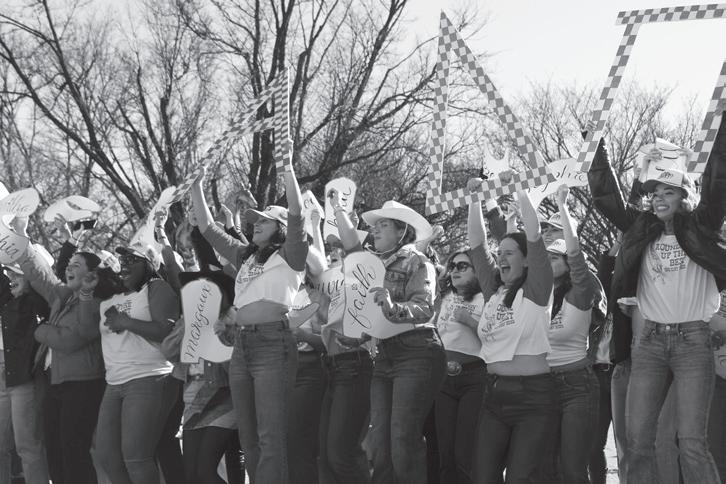
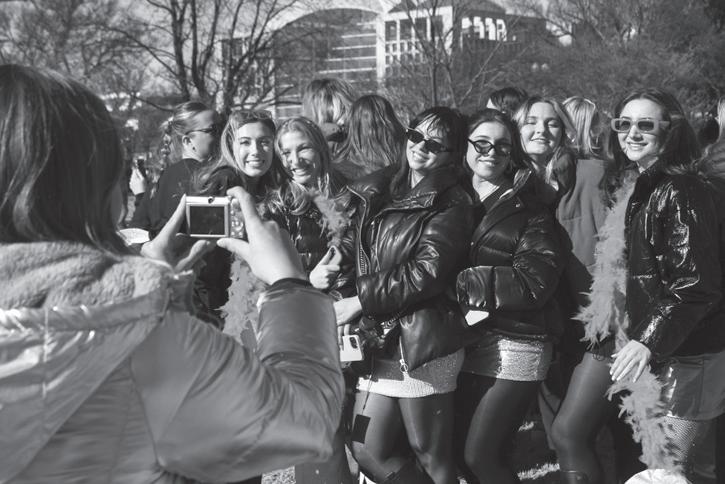
SCENES FROM BID DAY
SINAR leaders said they hope to organize several events over the next semester, like a guided tour of the National Museum of the American Indian.
ERIN LEONE | STAFF PHOTOGRAPHER
NICHOLAS ANASTACIO | GRAPHICS EDITOR
research funding from NIH decreased about $32 million since

The amount of money awarded to University research projects from the National Institutes of Health has dropped by 28 percent in the past three fiscal years, a decline worth roughly $32 million.
The NIH granted GW less than $80 million for research last fiscal year compared to $111,931,263 in FY 2019, according to the NIH’s public records website. Among the share of research funds GW received in FY 2022, which lasted from July 2021 to June 2022, the Schools of Medicine and Health Sciences, the School of Nursing, the School of Engineering and Applied Sciences and the Milken Institute School of Public Health earned 92 percent of the funds in 2022.
While receiving nearly $112 million from the NIH in FY 2019, GW researchers used the funds to conduct notable studies about platinum resistance in ovarian cancer cells and unknown
genes that cause branchiootorenal spectrum disorders – malformations of the outer, middle and inner ear that can lead to hearing loss.
“For more than a century, NIH scientists and supported scientists have paved the way for important discoveries that improve health and save lives,” the NIH website states.
GW ranks ninth out of 13 among its peer schools in annual research funding from the NIH. The University of Pittsburgh earned the most NIH funding among GW’s peer schools in FY 2022 with about $675 million in research grants, according to the NIH website. New York University falls into second place in the peer school rankings with about $461 million awarded in research grants.

University spokesperson Julia Metjian declined to disclose how much money the University requested from the NIH in FY 2022. Metjian also declined to say why GW’s research funding has decreased since 2019 and how officials are work-

ing to increase research funding in the coming years.
Experts in higher education research said requesting money from the NIH can be “risky” because the time between submitting a grant application to the NIH and receiving the grant takes about six months – a wait that can upset financial aspects of research projects.
Evan Facher, the vice chancellor for innovation and entrepreneurship for the University of Pittsburgh, said obtaining a research grant from the NIH is very “difficult” because of the high number of grant applications and rejections.
The NIH awards grants to individual scientists, institutions and foreign organizations while also offering financial support in the form of cooperative agreements and contracts. It looks for projects of high scientific caliber, NIH-requested research, unsolicited and unique research.
In FY 2021, the most recent year of data, the success rate for new research
NICHOLAS ANASTACIO | GRAPHICS EDITORproject grants by the NIH totaled 19 percent, a one percent decrease from FY 2020, according to the NIH. The NIH also spent about $32 billion of their nearly $43 billion budget on research awards in FY 2021.
Facher said research
grants from the NIH typically don’t cover the full budget for research projects, so researchers typically source grants from other outside organizations like the Department of Defense.
“It’s not a short process, and it’s a highly risky pro-
cess,” Facher said. He said the University of Pittsburgh funds some research projects on a case-bycase basis, but most funding for research projects is from outside sources like foundations or other government agencies.
Plurality of SA legislation last semester filled vacancies


 ERIKA FILTER ASSISTANT NEWS EDITOR
The Student Association Senate passed 33 pieces of legislation last semester, filling vacancies, allocating finances and planning spring semester events – an uptick from the 26 legislative items passed during the previous fall.

skills that they bring to the table.”
GW researchers develop two vaccines for malaria using mRNA technology
AIDAN ENGLISH REPORTER AUDREY SCOTT REPORTERResearchers in the Milken Institute School of Public Health developed two vaccines using messenger RNA technology that could be the first to limit the infection and transmission of malaria, according to a December release.
Nirbhay Kumar, the lead researcher and a professor in the department of global health, said his teams’ vaccines improved mice’s ability to resist malaria infection and transmission during initial trials, which will hopefully transfer over to humans during the inhuman trials in the next few years. He said the use of mRNA technologies that transcribe DNA into proteins helped researchers develop the vaccine, which produced a 95 percent efficacy rate at limiting transmission during the trials, which is almost 25 percent more efficient than the currently approved malaria vaccine.
Kumar said previous vaccine creation efforts in the last decade stagnated until recent technological advances in vaccine development in the last few years, like the methods used to create the COVID-19 mRNA vaccine, inspired the use of mRNA technologies. He said the proteins in the mRNA vaccine have a high success rate in improving the immune system’s response against malariacausing P. Falciparum parasites.
“Vaccines are going to be absolutely central to the process of malaria elimination,” Kumar said.
He said the use of a vaccine cocktail, a combination of two vaccines in a single dose, led to the most improved response – blocking infection and transmission during the mice trials. Kumar said he hopes the vaccine will help lead to the eventual elimination of the disease, a goal of researchers for decades.
Kumar said the next step
in the trials is to seek funds from the National Institutes of Health to test the safety, toxicity and effectiveness of the vaccines on larger animals before moving the trials onto humans. He said the continued testing on animals and humans could be as fast as two to three years.
“A combination of the two vaccines would be much more effective or likely to be much more effective than a single vaccine alone,” Kumar said.
The World Health Health Organization reported 247 million cases of malaria worldwide in 2021, the most recent year of data, with 95 percent of the cases reported in Africa. Children under five account for 80 percent of malaria-related deaths in Africa, and the continent accounts for 96 percent of all malaria-related deaths, according to the WHO data.
Plasmodium parasites transmitted through the bite of a mosquito cause malaria, a disease characterized by headaches, vomiting and fever. About 2,000 cases of malaria are diagnosed each year in the United States, making up a small fraction of the estimated 247 million cases worldwide in 2021, according to the Centers for Disease Control and Prevention.
Kumar said the R21 vaccine, a shot developed in 2021 that uses a protein to control immune responses, has an efficacy rate 25 percent lower than his team’s vaccines. He says by both targeting infection and transmission, the mRNA vaccine is able to work together at different stages of the parasite’s life to eliminate infection more effectively than the R21 vaccine, which does not incorporate mRNA technology.
The World Health Organization has only approved the RTS, S/AS01 malaria vaccine for children in regions with moderate to high malaria transmission like sub-Saharan Africa in 2021, according to the WHO.
GlaxoSmithKline – a global biopharma company – researched and developed the vaccine and found it reduc-
es the risk of death and hospitalization by 70 percent.
“We are proposing to combine a vaccine that targets infection with a vaccine that also targets the transmission of malaria,” Kumar says.
Experts in medicine and biochemistry said the vaccines developed by the GW researchers explore new antigens – foreign substances that induce an immune response in the body – and allow researchers to study their effects on malaria and eventually its effects on humans.
Andrea Berry, an associate professor of pediatrics and medicine at the University of Maryland School of Medicine, said the everchanging, malaria-causing parasites posed significant challenges to the creation of an effective malaria vaccine. She said the parasite goes through different cycles of life in the body, making it harder to target the disease because the shape and number of proteins can change weekly.
She said mRNA vaccines allow for researchers to experiment with different antigens faster, which can increase vaccine development times. Berry said with the help of vaccines, eradication of malaria needs to be a “concerted effort” with awareness campaigns, foundations and resources.
“If we want to eradicate malaria, we have to have a campaign,” Berry said. “I think the way we just poured our resources into COVID is the way that we might be able to achieve eradication.”
Manuel Llinás, a distinguished professor of biochemistry and molecular biology at Penn State University, said creating a vaccine for malaria has been difficult in the past because scientists are still working to understand the immune response to the disease and how to achieve long-term protection. He said the main defense against malaria that currently exists continues to be antimalarial drugs like Artemisinin, which helps the body to attack malariacausing parasites.
Fourteen of the 33 bills that the senate passed last semester approved nominees to the executive cabinet, senate and other positions, like senate staff members and a Student Court justice. Among its other major legislative highlights, the senate distributed a total of more than $240,000 to nearly 300 student organizations for the spring’s general allocations and voted to organize a career fair in February.
After the senate approved 16 cabinet members since May, SA President Christian Zidouemba said he has completely filled his cabinet positions, with the exception of three vacancies that senators will consider at their next meeting Monday.
“My term overall started with trials and tribulations,” he said. “I started on the wrong foot.”
Following a presidential power struggle in July that began with an executive cabinet vote to remove Zidouemba, seven members of his cabinet resigned within the next two days. The senate confirmed senior Andrew Harding in late August to replace Zidouemba’s former legislator general, who stepped down during the wave of resignations.
Harding resigned in late October to pursue a fulltime job, and Zidouemba nominated freshman Adam Galland, who previously served as the director of inventory in the executive branch, to replace Harding in December. Senators will vote on Galland along with the appointment of two other cabinet members at their meeting Monday.
“Overall, I’m satisfied with the cabinet members that I have and the people that I have,” Zidouemba said. “Because each and every one of them has different experiences and different
Zidouemba said his cabinet spent the fall working on projects, like planning the installation of contraceptive vending machines and coordinating school spirit events, like Raise High Wednesdays, which feature weekly tabling in Kogan Plaza, and a midterm stress relief event, which Zidouemba said drew more than 3,000 students.
The senate filled each of its 47 seats for the first time since October 2017 last semester. The senate now must replace Alex Erickson, who represented the Graduate School of Education and Human Development, and Nate Safford, who represented graduate students in the Elliott School of International Affairs, after the pair graduated last semester.
The senate passed two resolutions of appreciation in late May for former Dean of Students Cissy Petty and former Executive Vice President and CFO Mark Diaz, who both left their positions last summer – largely symbolic gestures that thanked the former administrators for their service to the University.
Ten pieces of the senate’s passed legislation reformed the internal processes of the legislative body. The senate amended its bylaws to allow senators to hold multiple committee leadership positions and removed the requirement for the chairperson of the Sustainability Committee to be a member of the Physical Facilities and Urban Affairs Committee.
In its final meeting of the fall semester in December, the senate approved general student organization allocations for the spring, divvying up more than $240,000 among 296 student organizations.
The Senate Legal Counsel accused Ian Ching, the former chair of the Finance Committee, in November of delaying the allocations process by about two months and displaying preferential treatment toward select student organizations, like GWU Esports.
Ching resigned three days after the report was
published, and SA Sen. Linsi Goodin, CCAS-G, took his place as Finance Committee chair.
The senate published its internal budget for the first time in late August, totaling $12,750 for the current fiscal year. More than $7,000 funded town halls and meetings, and $4,000 covered food at senate meetings.
Vice President Yan Xu said the budget decreased from the previous year’s, which totaled $19,254.48.
Senators also passed the executive budget, which allocated the executive branch $29,450 to spend on events, payments to office staff and costs for subscription services. The senate confirmed the executive branch’s request in December to modify the budget to $29,950, remove funding for online subscription services and reallocate funding from the Cookout with the President to “all unexpected necessary costs,” providing flexibility so the executive branch could run events on short notice.
Senate Chairperson Pro Tempore Demetrius Apostolis, the executive director of the event’s planning committee, said between 80 and 90 employers will host exhibits during the fair’s second day. Apostolis said the expo will consist of a panel and a brunch with alumni during the other two days.
Senators passed the Fairness Advocacy and Inclusion Reform Act in late November, which created the Commission on Student Equity and Advocacy, a group that will advise University offices like the Title IX Office, the Office for Student Rights and Responsibilities and the Office for Diversity, Equity and Community Engagement on how to assist with Title IX and discrimination cases. SA Sen. Henry Deng, CCAS-U, who sponsored the bill, said he is implementing feedback on the FAIR Act from meetings with University staff to maintain transparency.
“We will have to continue to talk to them, to work with them, trying to make a way that can help the commission to actually get to work with each other,” he said.
NEWS THE GW HATCHET January 17, 2023 • Page 5 GW’s
data SOPHIA GOEDERT ASSISTANT NEWS EDITOR
2019:
HATCHET FILE PHOTO
Nirbhay Kumar, the lead researcher of the trials, said the vaccines improved mice’s ability to resist malaria infection and transmission, immunization that will hopefully transfer over to humans.
NICHOLAS ANASTACIO | GRAPHICS EDITOR
Opinions
GW’s 19th president can learn from the past to outline its future
STAFF EDITORIAL
The crowd in the lobby of the School of Media and Public Affairs shuffled into the Jack Morton Auditorium Wednesday and took their seats to await the introduction of GW’s next president. But they wouldn’t be sitting for very long. Officials introduced Ellen Granberg as the University’s 19th president to a standing ovation and raucous applause at the public event, signaling the start of a new chapter in GW’s history.
After 200 years and 18 presidents, Granberg will be GW’s first female and first openly LGBTQ+ president in the University’s history. So as the University’s next president embarks on an official transition process that ends with her and her wife, Sonya Rankin, moving into F Street House later this year, allow us to impart our own advice as well.
Officials chose Granberg – a former Clemson University sociology professor, department chair, associate provost for faculty affairs, senior associate provost and the current provost and senior vice president for academic affairs at Rochester Institute of Technology since 2018 – after a presidential search process that began in earnest last spring. But the effort to find GW’s next permanent president dates back to spring 2021, when then-University President Thomas LeBlanc announced he would step down from his position at the end of the year after years of tension with faculty, students and staff.
With Granberg’s takeover later this year making her GW’s third president in three years, LeBlanc’s presidency can seem like a distant memory. But a whirlwind tour of LeBlanc’s time at GW serves as a what not-to-do list for Granberg.

The consistent erosion of trust between faculty, the administration and the Board of Trustees marred his time at the helm of GW. A $300,000 partnership with the Disney Institute to assess GW’s culture in 2018 earned the criticism of faculty for failing to accurately measure their feedback and exemplifying arbitrary and top-down decision making. Likewise, LeBlanc’s plan to increase STEM enrollment while decreasing the number of students enrolled across the entire University, particularly within the humanities, divided the Board of Trustees and faculty, who con-
Though I graduated from GW last semester, this University has a special place in my heart. Yet, GW community members are missing the problem in front of them. In 2022, I was one of the only 779 Black men in GW’s total student population of 25,939, just three percent of the student body.
The inclusion of Black men in the University community is key to fostering a much more equal society, but GW’s population of wealthy, privately educated and suburban students has likely had limited experiences with Black people. In spring 2020, a freshman told me I was her first Black friend – we’d only known each other for two weeks. I have been confused for other Black men on campus by other students, some of whom I don’t share a resemblance with at all. It can be isolating when you look around and no one looks like you. And while I as a Black man have been accepted and welcomed the majority of the time by other students, my peers have also greeted me with awkward smiles or an air of nervousness. Subconsciously, I know some people might stereotype me as violent, aggressive and even as a sexual predator. These stereotypes have led to many Black men and boys dying, like in the case of 17-year-old Trayvon Martin, whom a neighborhood watch member named
CAMELLIA GENOVESE | CARTOONISTtested the plan would lower the diversity of the student population and harm the University’s revenue.
But issues with shared governance remain even into Wrighton’s tenure, including in the same presidential search process that selected Granberg. Despite unanimously passing a set of shared governance principles in May, the 17-member Presidential Search Committee had one staff representative, Caroline Laguerre-Brown, the vice provost for diversity, equity and community engagement, and one student, Student Association President
Christian Zidouemba. And Laguerre-Brown’s upper-level administrative role did not reflect GW’s staff as a whole, noted one staff member who participated in the community feedback forums held last September.
Nor were things much better with the student body whom LeBlanc never seemed to get along with during his presidency. In 2020, LeBlanc announced then later apologized for the decision to hire Heather Swain – a former Michigan State University official criticized for her involvement in the investigation of Larry Nassar, the MSU doctor and USA Gym-
nastics coach sentenced to decades in prison for multiple sex crimes. Most notably, LeBlanc compared support for fossil fuel divestment among students to hypothetical support for shooting “all the Black people here” in a hamfisted, racist analogy in 2020.
Respecting the University’s culture and avoiding insensitive remarks are minimum expectations that Granberg must aspire to surpass. For as much as we have discussed LeBlanc’s many shortcomings, it is now finally time to move on from him. This University needs a leader who can guide it into its third century and the 21st century – one defined by cooperation and communication, not antagonism and authoritarianism.
On shared governance, diversity, equity and inclusion and her own strategic vision, Granberg must transform principles and statements into actual reality. But the core of GW’s identity, a world-class education in the nation’s capital, must remain intact. Granberg must enhance and enrich what this University already offers, like its financially challenged medical enterprise or long-suffering humanities department. A focus on transparent and honest communication and a mindset that values the student experience as much as GW’s financial health would be a marked departure from previous administrations, too.
Granberg’s identity as GW’s first woman and first openly LGBTQ+ president also sets her apart from the University’s past 21 permanent or interim presidents, all of whom have been straight, white men. Though who Granberg is cannot tell us how she will lead GW at this early stage, we hope she will be more attuned to the sensitivities of the University community than previous presidents.
We hope Granberg and her wife will be a visible presence around campus, stopping by events in University Yard and attending games in the Smith Center. If they don’t have a pet already, we suggest following the lead of the Wrightons and finding a furry friend who can also appear throughout Foggy Bottom.
For our part, The Hatchet’s editorial board will strive to offer a firm but fair analysis of both Granberg’s performance and Wrighton’s remaining time as president. Good luck to them – and to you – this semester.
Idaho murders showcase that true crime is not entertainment
crime with entertainment.
George Zimmerman shot and killed 30 minutes away from my home in Florida in 2012.
All of these subconscious fears can be frustrating and stressful, but as a Black man, you sadly learn that this is the status quo in predominantly white spaces like GW. But Black men who make it to college are the lucky ones. Black families, who have lower median household incomes than Asian, white and Hispanic families, can’t always afford the cost of college. We can end up entangled in the criminal justice system, and victims of gun violence are mostly young, male and Black.
I have heard white students discuss their desire to be changemakers, but that doesn’t always pan out in reality. In a class discussion about a proposal from Georgetown University students to pay a $27 semesterly fee in reparations to the descendants of the slaves Georgetown sold in 1838 to avoid bankruptcy, my classmates got mad that other students would have to pay the fee instead of Georgetown as an institution. How do these students think they’re going to make change and help people when they won’t put their money where their mouth is, let alone venture to the Target in Columbia Heights because it’s “shady”?
Considering that 45.8 percent of D.C. residents are Black as of 2022 according to Census data, GW should start making more inroads to predominantly Black public high schools in the area, like Dunbar High
School and Jackson-Reed High School. In 2022, only 66 undergraduate students out of GW’s 1,690 students from D.C. were Black men.
At Howard University, D.C.’s illustrious historically Black university, 2,418 students were Black men and 2,238 students were from D.C. out of a population of 12,886 students in 2022.
To its credit, 18.7 percent of GW’s faculty is Black, while Black faculty make up only six percent of college faculty nationwide. But hiring more Black professors along with other minority groups can only help improve GW with a more diverse range of perspectives. Seeing accomplished men who look like me has made me feel comfortable and like I belong at GW. And Vice President Charles Barber and Provost Chris Bracey, both of whom are Black men, hold high positions within GW’s administration. The brotherhood and connection that I felt with other Black men on this campus feeds into that sense of belonging as well. To see people who look like me gives me hope that I can reach such heights.
From professors to students to staff, the people I met at GW for the most part have made an effort to make this University feel like a home away from home for me. I did feel at home at GW, but this home was not always perfect. Yet working to improve your home is all that matters. GW has a bright future ahead if it can close the gap for Black men.
—Kamau Louis is a member of the class of 2022 and former opinions writer for The Hatchet.
Twenty-eight-yearold Bryan Kohberger appeared in court for the first time last week after being charged in late December with the murder of four University of Idaho students, granting closure to the victims’ families. Kohberger’s arrest also brought a sense of relief to a different crowd struck by the effects of the killings – the multiple individuals accused of murder by true crime content creators on TikTok.
Julia Koscelnik Contributing Opinions EditorThe Nov. 13 murder of Kaylee Goncalves, 21, Madison Mogen, 21, Xana Kernodle, 20, and Ethan Chapin, 20, left millions with unanswered questions about why and how these senseless killings occurred. But instead of leaving the investigating to the detectives, true crime content creators accused several innocent people of murder without any evidence, gaining notoriety and followers in the process. Media does not exist in a vacuum – true crime content creators’ posts impact the real lives of the individuals involved in this horrific situation, and they must act with sensitivity, not harassment, toward the victims and families involved.
Fellow Idaho student Jack Showalter, Goncalves’ ex-boyfriend Jack DuCoeur and University of Idaho history professor Rebecca Scofield have each been the target of endless online
harassment and threats in the midst of this ongoing investigation, with some content creators persisting even after Kohberger was charged.
The last decade has seen an insurmountable rise in true crime as an entertainment genre. Podcasts like “Crime Junkie” have cult-like followings, while controversial series like Netflix’s “Dahmer” have amassed billions of views. While there is nothing wrong with being interested in true crime, the behavior of self-proclaimed internet sleuths demonstrates how our cultural obsession with true crime has gone too far.
The public’s response to 19-year-old Dylan Mortensen – one of the two surviving roommates, has been most shocking. Mortensen came face to face with the murderer before locking herself in her room fearing that he might return. Thousands of strangers on the internet have vilified Mortensen for her decision not to call 911 immediately and even suggested she has something to do with the murder of her best friends.
No one commenting on Mortensen’s actions knows how they would have behaved in her situation. But we can assume that Mortensen acted in a state of shock after realizing she was just seconds away from becoming a murder victim herself. To continue to torment a young woman who has just gone through an unimaginably horrific event instead of blaming the suspect in custody is unspeakably vile. This desensitization is the product of conflating true
The oversaturation of true crime in our media landscape has resulted in a complete disconnect from the individuals at the center of these viral cases. When true crime commentators and internet sleuths begin to view the victims and near victims of this crime as characters in a TV show, they become desensitized enough to spread damaging rhetoric like the insults hurled at Mortensen.
While it is human nature to be curious and even fascinated by criminology, our wildest speculations about this case must end there – in private. Broadcasting bizarre theories on TikTok for the world to see only further traumatizes the family members involved.
There is no ethical way to create social media content theorizing and sleuthing this early into a developing case. In rapidly unfolding cases like the Idaho murders, we should leave the detective work to the detectives assigned to the case. Theorize, wonder and research privately instead of demonizing and defaming innocent individuals online. It’s time we come to a serious cultural reckoning about the dire effects of how we approach true crime. We need to draw the line between meaningful curiosity and mindless entertainment to avoid becoming desensitized to these nationally captivating cases.
—Julia Koscelnik, a senior majoring in political science and minoring in journalism and mass communication, is the contributing opinions
WHAT THE UNIVERSITY WON’T TALK ABOUT THIS WEEK “Disciplinary proceedings” against students who
about alleged antisemitism p. 1
complained
“Schlepping back and forth to Sharon Springs every few months is my civic duty. What would happen if I didn’t fulfill it?”
ETHAN BENN on 12/05/2022
I was one of 779 Black men at GW in 2022. GW should raise that number.
OPINIONS THE GW HATCHET January 17, 2023 • Page 6
21st St. NW
D.C. 20052
| @gwhatchet Submissions — Deadlines for submissions are Friday 5 p.m. for Monday issues. They must include the author’s name, title, year in school and phone number. The GW Hatchet does not guarantee publication and reserves the right to edit all submissions for space, grammar and clarity. Submit to opinions@gwhatchet.com Policy Statement — The GW Hatchet is produced by Hatchet Publications Inc., an independent, non-profit corporation. All comments should be addressed to the Board of Directors, which has sole authority for the content of this publication. Opinions expressed in signed columns are those of the authors and do not necessarily reflect the view of The GW Hatchet. All content of The GW Hatchet is copyrighted and may not be reproduced without written authorization from the editor in chief. Cost — Single copies free. Additional copies available for purchase upon request.
eic@gwhatchet.com news@gwhatchet.com opinions@gwhatchet.com photo@gwhatchet.com sports@gwhatchet.com culture@gwhatchet.com copy@gwhatchet.com multimedia@gwhatchet.com 609
Washington,
gwhatchet.com
Hatchet The GW Jaden DiMauro, managing editor* Abby Kennedy, managing director Abrigail Williams, community relations director Nick Pasion, senior news editor Zach Blackburn, senior news editor Caitlin Kitson, assistant news editor Erika Filter, assistant news editor Faith Wardwell, assistant news editor Grace Chinowsky, assistant news editor Sophia Goedert, assistant news editor Eóighan Noonan, contributing news editor Ianne Salvosa, contributing news editor Nikki Ghaemi, contributing news editor Tara Suter, events editor Ethan Benn, opinions editor* Julia Koscelnik contributing opinions editor* Auden Yurman, senior photo editor Danielle Towers, assistant photo editor
Porter, podcast host Grace Miller, design editor* Isabella MacKinnon,
*
Jarrod Wardwell, editor in chief
Max
design editor Maura Kelly-Yuoh, contributing design editor
Nicholas
Anastacio, graphics editor
Ishani
Chettri, web developer
Ethan
Valliath, contributing social media director*
Max Gaffin, contributing social media director
denotes member of editorial board
Business Office Eddie Herzig, business manager
Jordyn Bailer, assistant photo editor Lily Speredelozzi, assistant photo editor Rachel Schwartz, assistant photo editor
Nuria Diaz, sports editor* Gabe Lopez, contributing sports editor Clara Duhon, culture editor* Julia Koscelnik, contributing culture editor - entertainment* Nora Fitzgerald, contributing culture editor Amanda Plocharski, video editor Cristina Stassis, copy chief Shea Carlberg, senior copy editor Salmoncain Smith-Shomade, assistant copy editor
FROM GWHATCHET.COM/OPINIONS
Annie O’Brien, research assistant Luke Wienecke, research assistant Zac Bestwick, research assistant* Sarah Sachs, podcast host Sejal Govindarao, podcast host
Kamau Louis Alumnus
Students share their New Year’s resolutions and techniques to stay committed
habits like eating a lot of sweets to look after her physical health.
SHEA CARLBERG STAFF WRITERFor some, the tradition of making New Year’s resolutions may seem to be more of a symbolic routine, but for college students in a trial and error phase of discovering their interests and aspirations, it’s an opportunity for a fresh reset.
This new year, GW students are committing to small, viable resolutions instead of attempting loftier, unmanageable goals that will overwhelm them as the year commences. From newfound prioritization on their mental health to broadening their exploration into the District’s vibrant neighborhoods, students are redefining how they measure accomplishment to set their resolutions up for success.
Spotting the goal for you
For sophomore Elizabeth Weiner, the commitment to New Year’s resolutions felt “overwhelming” in the past because she was unsure what she wanted to accomplish. This year, she’s turning to “achievable” steps to navigate and reach her goals. She said she aims to find more opportunities to get out of the Foggy Bottom bubble and up her involvement with student organizations like GW TRAiLS, an outdoor adventure program, to exercise in a more “fulfilling” way and expand
her social circles.
Aspiring academically
Sophomore Emma Hearns, who is majoring in psychology, said she aims to invest more time into her academics after getting “swept away” in the social scene during her last few semesters at GW. She said following study habits – like utilizing
Notion, a productivity application used for organizing and tracking work completion – and starting assignments when she receives them instead of procrastinating will help her prioritize her classes.

awareness is on the rise, students are also focusing on ways they can improve their well-being, especially through a focus on self-care.
On the flip side, sophomore Sarah Renbaum, an organizational sciences and marketing major, said she has deleted several social media apps to get rid of the negative effect they had on her mental health.
Resetting the clock
Sophomore Lucy Pfeiffer, an international affairs major, said she aims to complete 60 minutes of physical activity every day, a goal that drew inspiration from the NFL and American Heart Association’s initiative PLAY 60. She said she’s looking to pursue “versatile” workouts, which could range from a bike ride to Roosevelt Island to a walk with friends into Georgetown.
With daily goals like the 60-minutes a day routine, Pfeiffer said she feels more secure with each day resetting and she hasn’t “lost progress” if she misses out on one day.
Reacquainting with D.C.
ABRIGAIL WILLIAMS STAFF WRITER2023 is the year of closet couture.
Investing in the new year’s fashion trends doesn’t mean you have to overhaul your wardrobe. In fact, everything you need to stay in style might already be in your clothing collection.

From repurposing preloved denim to raiding your family and friends’ closets – with their permission of course – there are many ways you can sustainably embrace this year’s resurging trends while still sporting the tried-and-true items that make up your personal style. Here are some of 2023’s upcoming fashion trends and ways you can partake in them without spending a dime.
No more mini’s
Chances are you’ve become accustomed to the shorter hemlines and shrinking sizes of accessories during the past few years, but 2023 promises to embrace the opposite.
Inspired by the convenience of canvas totes, many trendsetters are styling their going-out outfits with bigger purses instead of the tiny shoulder bags of late. You may have a medium-sized or even oversized purse from the early 2000s or 2010s lying in your closet waiting to be dusted off and reused.
Decked out in denim
Similarly, the mini hemline finds itself a competitor in 2023. You’ve probably already seen a revival of
longer skirts and dresses, but the maxi denim skirt is making a comeback this year.
And beyond the maxi skirts, denim is resurging in a magnitude of looks. The beauty of this trend is that denim is both sturdy and timeless, making it one of the most reliably stylish fabrics of all time, easy to be repurposed year after year. And lucky for us, jagged patchwork and exposed seamlines only add to the spunk of 2023 trendy denim pieces. So if you’re up for reworking an old pair of jeans into a long denim skirt or putting together an oversized Canadian tux, this trend may be for you.
On Wednesdays we wear black
Our tendency to pick up trends from popular entertainment isn’t new – just think of the 2020’s sudden corset obsession following the release of “Bridgerton,” “Emma” and other regency era films released in the past few years. So it’s no surprise that after Netflix’s success with its recent Addams Family reboot series, “Wednesday,” the show’s modern gothic style would venture off-screen and into our closets.
To lean into this trend, center your concept around the darker-colored clothes in your closet. The character Wednesday wears a range of gothic styles inspired by aesthetics from dark academia to oversized streetwear and even upscale glam. Pay a subtle homage to the dress in her distinct, viral dance
Prioritizing
mental and physical health
At a time when mental health
AN NGO REPORTERFor sophomore Julia DeRiso, an art history major, viewing prevalent self-care content on social media has inspired her to craft resolutions surrounding her to practice meditation or yoga and nix bad
As junior and political science major Nicky Danilich takes out his planner for the new year, he works to build back the pages that remained empty during COVID isolation with a more resilient mindset. Since overcoming his initial anxieties around the pandemic, which limited his impetus to go to new restaurants and areas of the city, he said he intends to go beyond the tourist attractions like the monuments he was accustomed to and branch out to sites like Navy Yard and the Postal Museum Tower.
scene with a sheer top accessorized with a dark choker.
Carrying in cargo
For those who jumped on the cargo pants bandwagon after it regained popularity last year, you’re in luck, because the functional attire’s popularity has yet to dwindle. Keep sporting your cargo this year in every color from the beige browns to the army-style forest greens and camo, or whatever version you have in your closet.
And cargo pants’ versatility doesn’t end with its ability to carry the contents of your entire backpack, they also go with a variety of tops. Match a fitted tank top or cropped shirt with the baggy pants to achieve a more balanced look, or pair the pants with an oversized graphic tee to achieve a skater-inspired outfit.
Oversized everything
In line with the cargo look, the oversized streetwear trend still reigns supreme in 2023. Taking inspiration from the popular 90’s style, you can follow this trend with ease.
If you have any oversized items in your closet, try matching baggy jeans with oversized t-shirts or hoodies. Glam up with stacked jewelry, a sleek pair of glasses and kitten heals. You can also opt for a fitted top like a corset or a crop top to elevate the outfit. If you want to lean toward the relaxed version of the trend, try wearing your favorite beat up sneakers or a pair of chunky platform kicks.
Don’t miss out on the theatrical, musical and comedic events happening this spring and attend our recommended shows around the District.
We’ve compiled a list of performing arts shows to catch in D.C. this spring including experimental theater, stand-up, ballet and opera. From classical dance at a gilded opera house to comedy at a local pub, find an event to suit every evening, ranging across all prices and levels of formality.
Seven Methods of Killing Kylie Jenner
The drama Seven Methods of Killing Kylie Jenner explores cultural appropriation, race, gender and the relationship between how our online discourse seeps into our real lives through daily conversation, memes and trends. It chronicles the story of two best friends and how a tweet about Kylie Jenner digs up old wounds. The show will have two “Pay What You Will Performances” when ticket-buyers may choose what to pay for their tickets on Feb. 5 and Feb. 7.
Woolly Mammoth Theatre Company, 641 D St. NW. Feb. 4 to Feb. 26. Find ticket information here.
The Nosebleed
The Nosebleed is a play about grief, portrayed through a daughter processing the loss of her father while having a child of her
own and facing some of the regrets she has about their relationship. The show will have two “Pay What You Will Performances” on Mar. 31 and Apr. 1, with tickets available online the week prior.
Woolly Mammoth Theatre Company, 641 D St. NW. Mar. 31 to Apr. 23. Find ticket information here.
United Ukrainian Ballet: Giselle
The United Ukrainian Ballet company will perform its interpretation of Giselle, a classical romantic ballet about love, betrayal and death. Most of the 60 Ukrainian dancers that make up the ballet company have fled their homes to escape the Russian invasion, and the company is based in the Netherlands.
The John F. Kennedy Center for Performing Arts. 2700 F St NW. Feb. 1 to Feb. 5. Tickets start at $29.
Shear Madness
After 13,500 shows at the Kennedy Center, Shear Madness, an interactive whodunit comedy, is still going strong as one of the longest running nonmusical plays in the country, first seen in 1963. Set in a hair salon in present-day Georgetown, the play calls upon audience members to guess who the killer is from the suspects which range from a hairdresser to an older man who is an antique dealer.
The John F. Kennedy Center for Performing Arts, 2700 F St NW. Runs through Oct. 1. Tickets are $58.
Cafritz Young Artists performance
The Washington National Opera’s Cafritz Young Artists, a resident training program for young singers and pianists on the verge of their careers, will perform operatic pieces during an afternoon of music and drama for visitors at the Smithsonian American Art Museum. The musicians will perform pieces from classical works like the opera La Bohème and modern works including the opera Blue.
Smithsonian American Art Museum, 1661 Pennsylvania Avenue NW #1. Feb. 11. Entry is free and registration is encouraged.

Underground Comedy
Attendees can catch a laid back night of comedy featuring stand-up comics for free at the Wonderland Ballroom, a cozy gastropub located in Columbia Heights.
Wonderland Ballroom, 1101 Kenyon St NW. every Sunday at 8 p.m. Entry is free, and you must be 21+.
Jazz Jam Sessions
Based in a refurbished train car, metrobar is a modern outdoor bar in a casual lively environment to enjoy music with friends. Horn player Abe Mamet will lead a vibrant jam session every Wednesday evening until April at metrobar beginning Jan. 18.
metrobar, 640 Rhode Island Ave NE. Jazz Jam sessions every Wednesday at 7 to 10 p.m. Entrance is free, and you must be 21+.
CULTURE THE GW HATCHET January 17, 2023 • Page 7
Culture
THE SCENE
NEW SINGLE: "FLOWERS" BY MILEY CYRUS
RELEASED THIS WEEK:
SHANGELA Friday, Jan. 20 | Warner Theatre | $27.50 Enjoy a performance from one of the stars from "RuPaul’s Drag Race" and "Dancing with the Stars."
YEAR
Center |
LUNAR NEW
Saturday, Jan. 21 | Kennedy
Free
Celebrate the new year with dance and song performances at the Kennedy Center.
Look no further than your wardrobe to follow 2023's top fashion trends
Chances are you’ve become accustomed to the shorter hemlines and shrinking sizes of accessories during the past few years, but 2023 promises to embrace the opposite.
PHOTO
ILLUSTRATION
BY AUDEN YURMAN | SENIOR PHOTO EDITOR
Break into the performing arts with these live shows this springERIN LEONE | PHOTOGRAPHER The drama Seven Methods of Killing Kylie Jenner at the Kennedy Center explores how online discourse seeps into our real lives through daily conversation, memes and trends. LAUREN GRAUER REPORTER MARYN LARSEN REPORTER PHOTO ILLUSTRATION BY LILY SPEREDELOZZI | ASSISTANT PHOTO EDITOR Sophomore Emma Hearns said maintaining manageable study habits like utilizing Notion, a productivity application for organizing and tracking work completion, will help her prioritize her classes.
Senior guard James Bishop rises to leading scoring role in final season
NURIA DIAZ SPORTS EDITORLooking back on his first year at GW as a sophomore transfer, senior guard James Bishop IV describes his sophomore-year self as quiet.
But now Bishop – who’s dropped at least 40 points twice this year and averaged 21.7 points per game this season, solidifying him as a top-ten scorer in Division I basketball – has taken a leadership role with the team as a member of a strong corps of senior players, a role in which he hopes to express himself on and off the court with his performance by improving his understanding of the game and making quick, in-game decisions for the team.
“Coming into GW I was more on the quiet side,” Bishop said. “And I still am kind of quiet, but I’m just using my voice more to express not only myself, but then especially my teammates, and just being more of a leader vocally.”
Bishop said he’s looking to cement his legacy with a relentless work ethic to inspire the team both on and off the court – and he’s off to a good start, as the Colonials’ 3-2 record in-conference play is the team’s best start since the 2015-16 season.
With his performance both on and off the court for the Colonials as they roll to a 3-2 conference record, the team’s best start to conference play since the 2015-16 season, the year GW won the NIT. Bishop leads the Atlantic 10 in scoring and ranks second in assists per game, and the point guard became the first Colonial to drop 40 points in multiple games in a season since 1969, when GW Athletics Hall of
Fame guard Bob Tallent achieved the feat.
In a career game against Hofstra on Nov. 14, Bishop totaled dropped a ferocious career high of 44 points on 15 field goals while also securing five assists, four rebounds and a steal.
Bishop said one of the biggest challenges the team faced this season has been staying healthy, as two of his teammates – graduate student guard EJ Clark and sophomore forward Daniel Nixon –underwent season-ending surgery, leading to a skimmed roster with just eight players earning regular playing time. He said the team has focused on maintaining morale and building resilience in practices to continue their success.
He said he is positive about the team’s performance since every player has moved the ball consistently and maintained fastpaced play, freeing lanes for Bishop and other shooters to hit open shots. Bishop said he has also become a more effective passer, earning 94 assists over 18 games and learned to read the floor to predict the opposing defense’s tendencies and exploit the weaknesses for scoring opportunities.
Bishop said Head Coach Chris Caputo has helped him hone in on areas where he can improve, like decision imaking, by having the team watch film on previous games and encouraging the team to play fluidly and unselfishly to open up the floor.
Off the court, Caputo describes Bishop as a “kind of a laid-back guy, quiet with a sense of humor,” saying he’s enjoyed spending time with Bishop and that he’s a fun
player to coach due to his relaxed attitude.
Caputo said Bishop has earned the trust of his coaching staff and teammates during critical situations like scoring opportunities at the free-throw line and his ability to make plays at the end of the game when opponents look to make runs.
Bishop has been an example for his younger teammates, taking transfer players like redshirt freshman forward Max Edwards
Women’s basketball drops second A-10 game to George Mason
NURIA DIAZ SPORTS EDITORWomen’s basketball suffered its second consecutive loss in A-10 conference play against George Mason in Virginia Monday 67-57, tainting their conference record.
The Colonials (11-8, 3-3) whittled a 20-point deficit down to just 8 points, but a secondquarter, game-low 28 percent shooting from the field kept GW from taking control of the game in the final frame. The Patriots were met with little resistance from GW, connecting on more than 50 percent of shots from the floor and shooting at a .667 percent clip from behind the 3-point line.
The Colonials held their lowest 3-point shooting percentage in 19 games, only hitting four of their 25 shots, a stark reminder of last season’s jarring beyond-the-arc average that amounted to .343 percent.
Three Colonials scored in double digits, led by graduate student guard Mia Lakstigala who netted 14 points for a spectacular showing off the bench. Senior guard Nya Lok chipped in 12 points and five boards while redshirt senior forward Mayowa Taiwo scored 10 points.
GW opened the
game with a quick 8-4 scoring run while the Patriots faced a twominute scoring drought as the Colonials’ defense kept them from taking possession with frequent turnovers that turned into points in the paint for GW. A layup by Patriots senior forward Nalani Kaysia ended the dry spell and kickstarted a 9-point run that tied the game 17-17 heading to the second quarter.
Lakstigala made her mark early in the game, scoring 4 points to go along with a turnover prior to the first stoppage on her way to a 14-point, fiverebound performance that suffocated George Mason’s interior offense.
The second quarter was a back-and-forth battle with five lead changes in just the first six minutes, but the Patriots took advantage of the 3-point line to establish a 9-point differential. The Colonials were only able to shave 4 points off the Patriots’ lead with a jumper from graduate student guard Jayla Thorton and two layups from Taiwo.
Junior guard Asjah Inniss dished out one assist and picked up a steal in the second quarter to help the GW offense settle back into the game. The Patriots finished the half off with
a layup, extending the lead to 35-30 while the Colonials continued to fall behind on both sides of the court.
The Patriots stifled the Colonials’ offense in the third quarter, recording a 21-12 run after missing eight 3-pointers throughout the quarter that cost them any chances of regaining their lead. George Mason took advantage of their defense to increase their turnover ratio by five after multiple missed attempts at the arc from GW.
In the fourth quarter, the Colonials set a 12-6 run looking to gather a final boost to outscore the Patriots as Lakstigala netted in 6 points from the paint. GW kept the Patriots from entering their paint by taking advantage of offensive rebounds and blocking shots from the 3-point line.
The Colonials were only able to net in 2 points in the final minute of the game leading to the 67-57 loss since they could only cut down the differential by 10 points.
The team’s shooting average was due in large part to the team’s shot selection in addition to quick, steady ball movement that found open players in the paint that helped them keep the 12-point run in the fourth quarter.
under his wing and talking to him about his own experience as a transfer when he came to GW after a year at LSU.
“He’s such a skillful player who is also always under control, very poised and allows him to feel like the game is happening very slow for him, which is why you make great decisions,” Caputo said of Bishop. “Usually when guys are sped up they make mistakes, James is so mistake-free because of how
I think his skills combined with his perception action ability is just incredible.”
Caputo said the coaching staff has high expectations of Bishop due to his efficient playing style, and he expects him to be at the top of every opponent’s scouting report. He said he hopes to see Bishop turn the program around with the current improved conference record so he can be remembered as “the guy that got it started.”
Here’s what you missed from GW basketball over winter break
and 5-for-8 from beyond the arc while going 11-for12 on free throws.
Men’s and women’s basketball kicked off the Atlantic 10 Conference run over winter break, climbing to sixth place and fourth place in the conference, respectively.

Men’s Head Coach Chris Caputo and women’s Head Coach Caroline McCombs have injected new life into their programs, paving both teams’ offenses by quickening their transitions and the men’s team making .475 from beyond the arc.
Men’s basketball:
The men’s team opened A-10 play with an away game in Chicago on New Year’s Eve, facing off against A-10 newcomer Loyola Chicago, which joined the A-10 in November 2021, notching a 97-87 win.
The Colonials (3-2, 9-9) opened the game with 10 straight buckets from long range that set the rhythm for their 64 percent shooting from the field on the game while shooting 10-for-17 deep balls. The game marked the team’s first 90-point performance in any game since 2018, when the Colonials downed the Richmond Spiders 103-77.
Senior guard James Bishop dropped 40 points for the second time this season on 12-for-18 shooting from the field
In their second A-10 matchup on Jan. 4, the Colonials took on Richmond in Virginia, where the Spiders, the reigning A-10 champions, pumped up their defense in the second quarter to ensure a 73-63 victory.
Bishop dropped 16 points in the first half, with all 16 of them coming from the paint.
GW played their first home game of the A-10 cycle three days later, ousting UMass 81-73 and pushing their record in the Smith Center to 7-2. The Colonials have outperformed their opponents at home by an average of 11.1 points per game.
Bishop was once again an integral player for the game, notching 15 points before halftime on his way to a total of 26 points, shooting 8-for-13 from the field and dishing out five assists.
The Colonials took advantage of their trips to the free throw line, sinking 20-of-25 with Bishop recording 6-of-7. GW is currently ranked second in the A-10 and 64th in the NCAA with a 74.3 percent at the free throw line.
The Colonials resumed conference play at the Smith Center Saturday, where they lost against Saint Louis 81-74 after the Billikens took advantage of
the 3-point line, shooting 7-for-16 from beyond the arc to cement their win.
Women’s basketball:
The women’s basketball program kicked off their first conference game against Richmond Dec. 31, who cost the Colonials their first A-10 matchup in their face-off last season. GW locked down their opponent with their tough defense, leading them to a 65-63 win.


The Spiders shooting gave them an early 24-19 lead entering the second quarter, but the Colonials responded with an 8-2 run in the final three minutes of the quarter to make it a 3231 game at halftime.
GW recorded its fourth consecutive win – their longest win streak under McCombs’ leadership and the first victory to open the A-10 stretch since the 201617 season.
The Colonials took on Saint Joseph’s on Jan. 4 at the Smith Center, where they hoped to extend their overall winning streak to five games. Instead they suffered a tough 77-61 loss.

The Colonials headed to New York for their first road game on Jan. 8, where they edged out St. Bonaventure with a 6553 GW after the Colonials struggled to make space in the paint to shoot.
The Colonials will continue their A-10 run looking to maintain their fifth-place rank as the tournament looms.

Sports NUMBER CRUNCH
WOMEN’S BASKETBALL vs. VCU Sunday | Noon EDT
back
GAMES OF THE WEEK MEN’S BASKETBALL vs. Dayton Saturday | 1 p.m. EDT
Women’s basketball’s points per game this season, up from its five-year average of 55.
65.6
GW looks to bounce
from
two
straight losses with a home victory over the Rams.
The
Colonials look for their fourth conference victory as they welcome the Flyers to the Smith Center.
ERIN LEONE | STAFF PHOTOGRAPHER
In a career game against Hofstra Nov. 4, Bishop totaled a career-high 44 points on 15 field goals along with five rebounds.
JENNIFER IGBONOBA | PHOTOGRAPHER
The Colonials will continue their A-10 run looking to maintain their fifth-place rank as the tournament looms.
NURIA DIAZ SPORTS EDITOR
MAYA NAIR | PHOTOGRAPHER
GW drained 10 3-pointers. SPORTS THE GW HATCHET January 17, 2023 • Page 8
The Hawks’ shooting deficiencies behind the 3-point line, with just one deep ball, made the difference as