The Guardsman
College Student Mental Health Has Been Declared A Crisis – What CCSF Brings to the Table and How Students and Faculty Are Coping

Kyra Young kyrajyoung@gmail.com
Mental health challenges have become increasingly pervasive on college campuses over the past decade. City College offers a myriad of resources for students to utilize, but these support services must meet an ever-increasing demand.
Experts have declared a mental health crisis amongst college students in America and nearly every metric suggests a worsening trend. According to the Healthy Minds Survey 2021-2022 Data Report, which collected data from 373 campuses nationwide, more than 60% of college students met the criteria for at least one mental health problem – a nearly 50% increase since 2013.
The Healthy Minds Survey also found some 44% of students reported symptoms of depression; 37% of students screened positive for symptoms of anxiety; and 27% of students reported they had felt emotional or mental difficulties had hurt their academic performance within the past four weeks. A report produced by Gallup and the Lumina Foundation found 64% of enrolled students who considered withdrawing from their studies named emotional stress or mental health concerns as significant reasons why.
With the surge of challenges comes an increased demand for support services, putting pressure on the resources of college wellness centers and their respective counselors. In response, campuses across the country have made efforts to not only increase access to such resources, but diversify the support being offered.
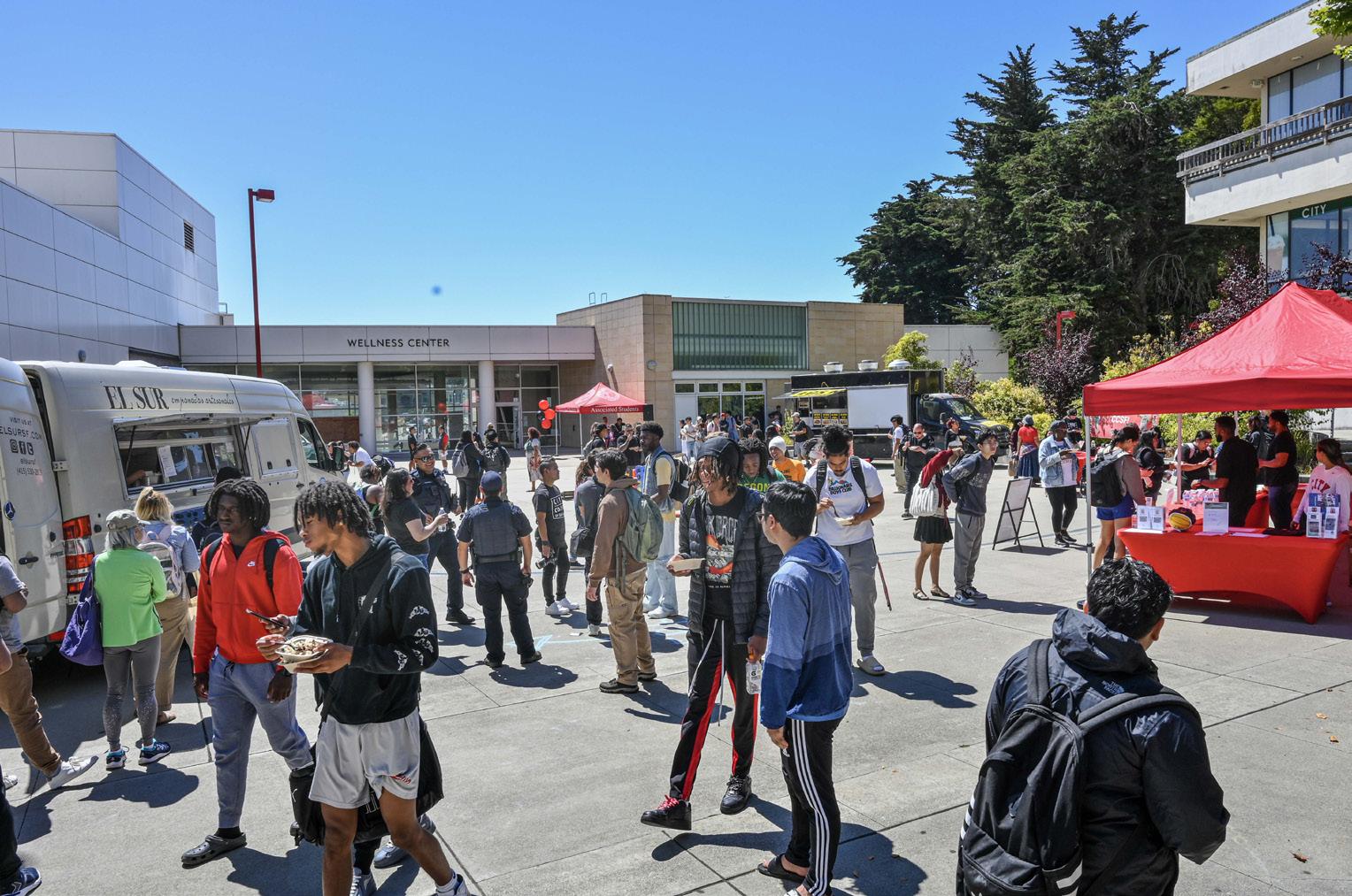
City College’s Health Center includes their Mental Health Services (MHS), which offers the opportunity for personal counseling with a Licensed Clinical Social Worker (LCSW), as well as a number of workshops and support groups for enrolled credit students.
As a mental health provider with Student Health Services, LCSW Felicia King said the office becomes busier as the semester progresses, but there are typically a handful of openings for an appointment. Occasionally a waitlist accumulates, but it varies based on staff availability.
“Once students get up and running with their classes and

start hitting those barriers where they need support, that’s when we start getting pretty full – usually by week four or five,” King said. However, King added a busy office or waitlist is not the end of options – urgent care services are also available to perform a mental health assessment and provide assistance depending on the student, the moment and their needs.
According to King, City College’s MHS follows a “brief treatment model,” with an initial assessment for students who have paid the student health fee, followed by the practitioner’s best recommendation for treatment. Treatment options include a series of appointments with Psychological Services at no cost, or a referral to another resource if it feels as though the individual’s needs will not be adequately addressed by the department’s services.
Alongside personal counseling, MHS offers couples therapy, workshops and support group sessions every semester. One of these group sessions, “Feeling overwhelmed and looking to get “Unstuck?” Try RIO! [Recognition, Insight, Openness]” will be facilitated for three weeks by King via Zoom every Wednesday beginning Sept. 18.
Student Health Services and MHS have been making more efforts toward outreach and exposure to let students know what’s available, but there are a number of other resources available through City College for students to create support systems around them, take care of one another and themselves.
City College’s various support programs aim to help students of all backgrounds and ages succeed in their academics, while the resource centers provide students with safe spaces and individualized services on campus.
Katie Dalla, coordinator for the Queer Resource Center, sees a number of students pass through the center seeking a safe space and support on a regular basis. With no immediate staff or coworkers, Dalla manages the center almost independently and argues more funding is needed for students to get the adequate support they deserve.
“City College has more resources than most community colleges – we’re truly more of a ‘community college’ than the former term, a junior college,” Dalla said, adding, “We’re really resource

Mayor Breed’s New Budget Puts Free City Funding on the Chopping Block
By John R. Adkins jradproduction@gmail.com
OnMay 31, Mayor London Breed proposed a new budget for the 2024-25 and 2025-26 fiscal years that threatens the Free City program. Free City currently provides free college tuition for all San Francisco residents.
The new budget boasts progress made on the city deficit by making budget cuts that reduced expenses where possible, all while maintaining over $860 million in reserve funds.
However, one significant budget cut came at the expense of San Francisco’s agreement to fully fund the ‘Free City’ program at City College until 2029.
The city’s new budget indicates that, as early as 2025, “only certain courses will be eligible for free enrollment, including those that contribute to the fulfillment of student educational plans.”
The proposal would reduce Free City College funding from $18.9 million in 2023-24 to just $9.3 million in 2024-25 and $7.15 million by 2025-26.
Mayor London Breed’s spokesperson, Jeff Cretan, called it “right-sizing” the program.
The progressive tuition assistance program began in 2016, when San Francisco voters adopted Proposition W, an increase on a municipal tax on property transfers worth over $5 million that promised to fund Free City for all San Franciscans. This tax generates over $30 million for the city.
In 2017, a Memorandum of Understanding (MOU) between the City and County of San
Ballot Beat: Ruth Ferguson, Luis Zamora, and Leanna Louie Lay Out Their Visions as Potential Trustees
By John Schneider jt.wildfeuer@gmail.com
OnNov. 5 San Franciscans will choose four of eight candidates to join Trustees Vick Van Chung, Anita Martinez, and Susan Solomon for four-year terms on the Community College Board.
The Guardsman interviewed three more candidates for this issue. Ruth Ferguson spoke to the disproportionate drop in City College enrollment compared to national trends through the lens of her experience as a public policy analyst. Luis Zamora described the unique value of City College for transferring students and lifelong learners and outlined what is needed to ensure its long term success. Leanna Louie detailed her qualifications to improve the college’s budget and cooperation between the Board and its community and administration.
Ruth Ferguson
Ruth Ferguson described herself as a community college graduate “from a long line of community college graduates.”
Her father arrived in California at age 18 and worked as a painter at a slaughterhouse. He’d had a “difficult childhood … and nearly flunked out of high school,” and had been told “he should never try college, that he wouldn’t be able to get in.” After graduating from Santa Rosa Junior College and transferring to University of California Santa Barbara he applied to veterinary school. He has been a veterinarian for over 30 years. Ferguson said, “he broke a cycle of poverty through community college.” Mental health continued on page 2 Board candidates continued on page 3


focused
students just need to know it’s available – it’s understaffed, but it is
Dalla went on to acknowledge the quality of services available through Health Services and the campus as a whole, but noted that the counseling services are not enough for some individuals.
“Some people need more support to get through a whole semester. And therapy in general is really expensive out there – we have resources to refer people to, but it’s hard to find something sustainable. I think we’d need more funding for regular, consistent support here on campus.
There’s just not enough staff hired,” Dalla said. Angelica Campos, an active member of the Women’s Resource Center and in pursuit of a Sexual Health Educator Certificate, stressed how unique the City College community truly is.
“City College students are a bit more vulnerable,” Campos Said. “Some of them are formerly incarcerated, some are homeless or at risk of homelessness. They might not know how or feel safe enough to ask for help. Sometimes going out to a counselor or therapist in another part of the city, or finding a new one, can be really intimidating.”
Campos went on to add that outsourcing
Francisco and the San Francisco Community College District was signed to move forward with a two-year pilot program for Free City College.
The following negotiations in 2019 led to the second iteration of the MOU, which included an agreement to fund the program for a decade, with annual increases based on inflation.
“Expanding access to higher education for all is an incredibly important part of our work to make San Francisco a more equitable city,” Breed said in 2019 regarding the MOU.
Since the revelation of these potential cuts to Free City and the greater City College community, the Board of Trustees has made public their support in maintaining tuition-free enrollment for all classes and preserving the agreed-upon funding levels in the current MOU.
“We need to save the Free City program so that we can continue to provide accessible quality education for San Franciscans from all walks of life wanting to advance themselves,” said Board President Alan Wong.
“Retracting on Free City College in the middle of the agreement will disrupt the educational plans of our students. We will strongly advocate to protect the Free City College program from cuts and maintain stability for our students,” Wong added.
In 2023, City College received an independent financial audit without any negative findings
support can be difficult for working students. “A lot of people don’t have the time to leave campus and find support – I’m one of those people. I work a lot and am taking classes. It can be really hard to outsource, and away from a space that’s comfortable – for some students, this is their safe space.”
Brandon Castro, a program coordinator for the Homeless At-Risk Transitional Students Program (HARTS), brought awareness to the stigma of having a mental health problem, which can make asking for assistance rather daunting.
“I myself work with a lot of individuals who are at risk of homelessness, and their backgrounds are really heavy,” said Castro, adding “We have a lot of resources here, but there’s still the expectation for students to reach out and ask for help, and I think that can be really hard for individuals to do given their previous circumstances.”
Castro suggested the college could create designated safe spaces on campus for students who need to have these conversations, but may not feel comfortable enough to do so otherwise.
When grappling with any mental health issue, both Campos and Dalla recognized the important role of community as support.
“Finding and creating community, like in the resource centers, has been really important for
for the first time since 1997. Despite this and the recent uptick in enrollment, accreditors have warned the college of the fiscal challenges to come, including a revenue freeze in the 2025-26 fiscal year that will remain until the college can significantly increase enrollment.
“Cutting the Free City program now would disrupt the good progress we have made and destabilize the college,” warned Wong.
Wong has noted his gratitude for City College having provided him and his family access to higher education and stated his view that a threat to Free City is a threat to the transformative effect City College can have on San Franciscans.
Also engaged in the fight to save Free City is the teachers union AFT2121. The union organized a rally at City Hall with the help of the People’s Budget Coalition on June 24 to tell the Mayor and the Board of Supervisors: “Don't balance the budget on the backs of our community!”
“To move forward with such substantial cuts without engaging with those who understand the program’s value and impact is both disappointing and alarming” stated AFT2121, adding, “We urge the city to reconsider these reductions and involve the community, students, and college in discussions about the future of Free City. Increasing educational opportunities is a public responsibility and an investment in our collective future.”
On June 27, the Board of Trustees discussed the adoption of a “Resolution Supporting the Preservation of Free City College and the
me,” said Campos. “Friends, peers and community building is definitely my first way to deal with stress and anxiety.”
“I think friends is a good place to start,” said Dalla. “Talk with them about what they do to cope, and then maybe access resources on campus or in the classroom. Depending on the topic, a teacher might have the answers, or a resource coordinator like myself. I think going online and doing some personal research also helps, and you can maybe find what’s available in the area.”
Student Health Services will be hosting four different support groups throughout the fall semester, open to all City College students and free of charge. The support groups include “Stress and Worry: Exploration of Techniques” beginning Sept. 10; “Feeling Overwhelmed and Looking to Get ‘Unstuck?’ Try RIO” beginning Sept. 18; “Self-Talk for Wellness” beginning Sept. 23; and “Building Connections: Combating Isolation Together” beginning Oct. 1.
Appointments can be made for psychological counseling with Student Mental Health Services by calling (415) 239-3110, or stopping by the front desk during regularly scheduled clinic hours. The Health Center is located at HC100 on Ocean Campus.
Memorandum of Understanding Between the City and County of San Francisco and the San Francisco Community College District.”
At the SF Board of Supervisors meeting on July 16, Myrna Melgar introduced a resolution “Urging the Department of Children, Youth, and Their Families to Expeditiously Negotiate an Updated MOU for the Free City College Program.”
The resolution was officially adopted by the Board on July 23. Supervisors Melgar, Chan, Ronen, Peskin, Safai, Preston, Stefani, and Walton were all listed as sponsors.
The Board’s continued commitment to the value of the Free City program is now on record, having stated that despite recent budget changes, “The City is still obligated to fulfill its commitment to the purpose and vision for Free City College, which is based on the premise that every San Franciscan should have access to advancing their educational and career goals.”
Interim Chancellor Mitchell Bailey said the unspent Free City funds reported by the city could be old numbers disproportionately impacted by the pandemic, and hopes to work with the city to ensure they have updated and accurate information moving forward.
The resolution urges the city to negotiate with the college in good faith and acknowledges City College’s already increasing enrollment and the importance of Free City to the future of the college and the future of San Francisco.


She credits her community college education with helping to make it possible for her to attend a four-year university and save thousands of dollars in the process.
She has since completed a bachelor’s degree in political science from the University of Washington and a master’s in public policy from University of California, Berkeley. Prior to applying to the master’s program at Berkeley, Ferguson returned to community college to complete several prerequisite classes. “I would not have gotten into my grad program,” she said, “if I hadn’t had access to that sort of affordable education.”
In the last five years, she has worked as a field representative for the California State Assembly, conducted a policy analysis for State Senator Dave Cortese, and co-founded Stop Sexual Harassment in Politics (SHIP). Now, after participating in Emerge California’s six-month training program for Democratic women to run for office, Ferguson is seeking a seat on the Community College Board “to bring stakeholders together and find reasonable, common sense solutions” to issues facing City College.
These issues include a possible decrease in funding for the Free City program from the city, an ongoing search for a longterm chancellor, a warning from the accreditation commission, and pressure to increase enrollment in anticipation of the effects of California’s Student Centered Funding Formula (SCFF). The latter fits into more complex efforts to maintain a balanced budget and avert a funding freeze in FY 2025-26, which would lead to the withholding of cost of living adjustments to the college from the state.
“Enrollment, to me, is a really interesting issue,” Ferguson said, adding that while decreasing enrollment is a national trend, “at City College it’s been quite dramatic.”
In the time since the Free City program began at City College in 2017, national enrollment in two-year public colleges decreased by 23%, while City College’s enrollment decreased by 38%. These numbers were adversely affected by the COVID-19 pandemic, but the 15% difference between them suggests that other factors were at play. This last year has seen modest increases from fall 2023 to spring 2024 both nationally (by 2.5%) and at City College (by 1.3%).
Ferguson posited that while Free City “is an incredible program and … a resource that is needed,” the disproportionate decline in City College enrollment suggests that other barriers remain. She cited the “sharp increase in cost of living in San Francisco” and the “astronomical price of childcare” as potential avenues for research when trying to understand “what’s keeping people from utilizing Free City.”
City College’s arrangement with the City and County of San Francisco over funds generated by Proposition W, a 2016 transfer tax increase, is such that earmarked money can only be used for costs associated with Free City. An estimate in The Chronicle pegs currently untapped funds at $23 million. Between the threat of a funding freeze and the promise of subsidized units, the Free City program appears to be an important piece of the enrollment puzzle.
Ferguson also points to the college’s history of accreditation issues, especially as they pertain to public confidence. She said she spoke with one San Francisco resident that did not consider City College years ago when pursuing her education because “she was afraid that her credits wouldn’t be able to transfer.”
City College has maintained its accreditation for nearly 90 years. In fact, the most serious threat to it, the 2012 “show cause” order from the Accrediting Commission for Community and Junior Colleges, ended in a judicial ruling critical of how the commission handled its case and provided the college with a way forward. This, however, can be difficult to explain to a public that has gotten used to hearing about cuts and cliffs, many of whom work while attending college classes leaving them little
time to unpack the nuances of a site visit or a warning from a commission.
As a public policy analyst, Ferguson’s approach is to seek out “models of schools that have faced decline or … even more severe accreditation issues than the one the college is in currently,” adding, “the Board should be a convener to some degree … for those conversations and that sort of bridge building.”
In terms of increasing enrollment, she said this may include “finding meaningful pathways to increase dual enrollment … increase the pipeline between SFUSD and City College.” She also suggested adopting policies that reduce barriers to entry for parents by providing free childcare citing Mission College’s lab school program for enrolled students.
“With meaningful collaboration,” Ferguson said, “the college can be in a much stronger state than it is today.”
Luis Zamora
Luis Zamora is a first-generation college student who said he is running for the Community College Board to ensure that a resource that was “transformative” for him as a student “remains available for others like me for years to come.”

His experience pursuing higher education was challenged by the constraints of limited resources, his family was “just above the cut-offs where significant financial aid would be available.”
In order to ensure the City College’s longevity, Zamora plans to prioritize accountability, improve enrollment numbers, and “right the financial ship.”
Zamora is the Director of Community Relations and Executive Affairs for the City Attorney of San Francisco. He has also served as Commissioner of the Immigrant Rights Commission for San Francisco, and District Director in the California State Assembly, and volunteers as Vice President and Chair of Public Policy for the Golden Gate Business Association, the world’s first LGBTQ+ Chamber of Commerce.
City College is “special,” Zamora said, in part because of its role as a “community builder, offering not just courses for students looking to transfer or earn a degree, but also … courses for life-long learners.”
Marketing, Zamora said, is one area in which the college can improve its efforts. It’s advertising, he said, “needs a refresh.” He suggested increased BART advertising and taking a closer look at how course catalogs are delivered. The latter suggestion, he said, would help the college “stay true to our commitment supporting a green new deal, and not waste valuable resources the district does not have.”
He cited the Free City program as an important facet of City College’s legacy and “enduring commitment to accessible education and its economic impact,” describing the college’s economic contributions to the Bay Area as an “unsung hero.”
Consequently, Zamora said Free City “should continue to provide universal free tuition to San Franciscans regardless of full- or part-time status, course of study, educational goals, age of students, or past academic success.”
As the college approaches the 90th anniversary of its charter next year, Zamora said he would like to see the college continue for “decades to come.” That long term vision includes “growth for both students and faculty” and working with the current trustees who “love City College” to make good on their campaign mission to hire back laid off faculty.
“I will champion common sense solutions and transparency,” Zamora said, “to steer CCSF toward stability and regain the trust of our community.”
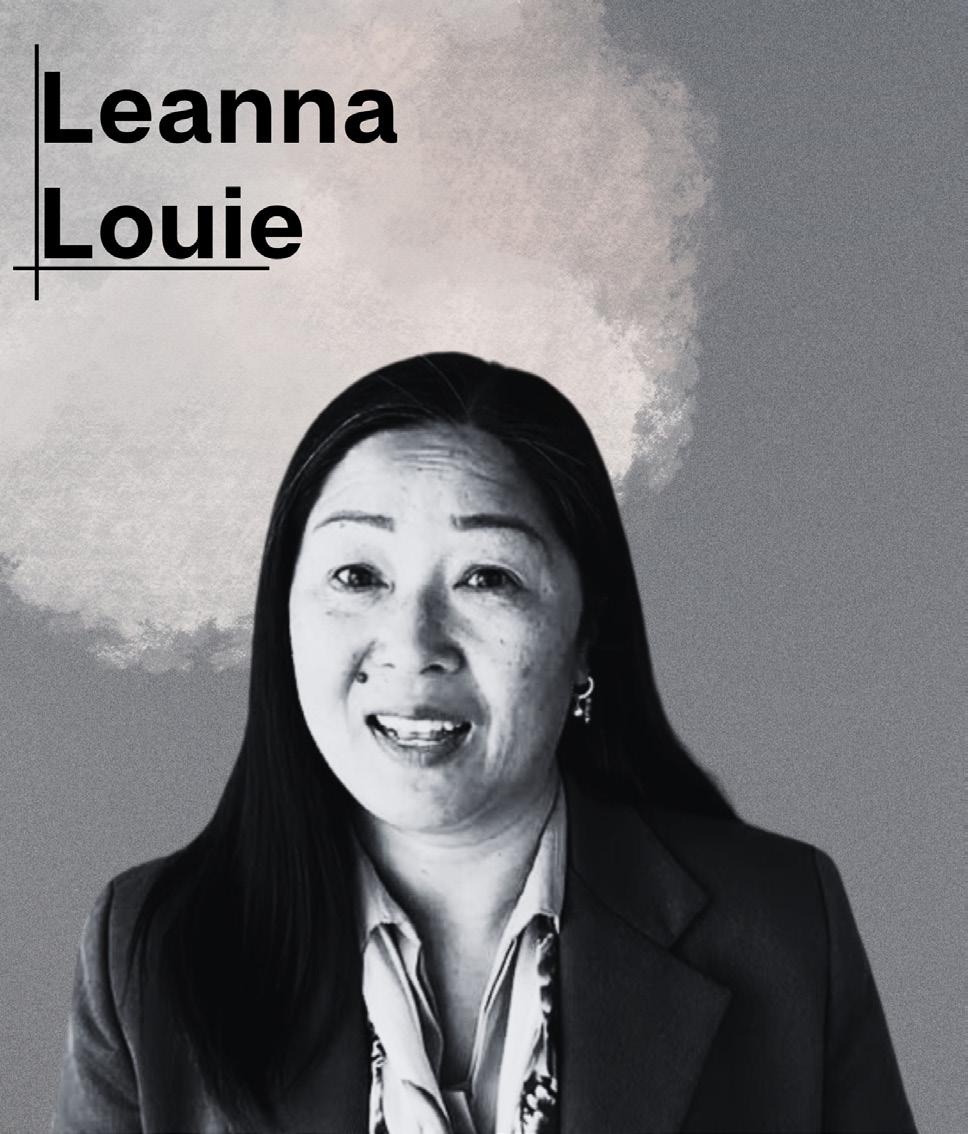
Leanna Louie
Army veteran, administrative analyst, community organizer, entrepreneur, and restaurateur Leanna Louie was encouraged to run for the Community College Board by her teenage son
who recently enrolled at City College, his friends and fellow students, “community members and leaders.” After reading reports of the college’s accreditation warning she said she “did not want to sit on the sidelines and wait for the worst to happen without doing something about it.” Louie, whose father was a City College Culinary Arts instructor, described her family as “three generations entrenched in City College of San Francisco.”
After more than a decade as an administrative analyst running the budget for the Sacramento Fire Department's Emergency Medical Services Division, army veteran Leanna Louie co-owned and managed the Mission’s Melody Cafe. Since its closure, she has patented a cleaning solution for her company Glim All, and founded the United Peace Collaborative with partner Robert Lowe, a community organization formed to respond to an increase in crime and vandalism in San Francisco’s Chinatown during the COVID-19 pandemic. While she spoke positively of the college’s course offerings and outreach through course catalogs, Louie described City College’s accreditation warning as “a crisis in leadership and collaboration.” She said the accrediting commissions report’s mention of the need for the Board to allow the Chancellor to “implement and administer Board policies without Board interference” represents a failure of the Board to “get consensus on a three- to five-year budget plan.”
As an administrative analyst, Louie said she managed the budget “without deficit spending and borrowing from other departments.” She said she will use that knowledge and experience as a Board member “to draft, finalize, and get a three- to five-year budget plan approved before the next … audit.”
While collecting more than 1,200 signatures to qualify for the ballot, the candidate met with many people with a connection to City College. While interacting with these students, teachers, deans, and support staff, Louie said she saw “how many lives City College has touched in San Francisco,” citing 49 City College certifications. She supports keeping the Free City Program because “it is important for low-income, and moderate-income families to access education.” Her son, a recent graduate from Washington High School, attends the college with the benefit of Free City.
Her priorities are threefold: fix the college’s budget “so that instructors are paid on time and correctly,” ensure that requirements are met to maintain “full accreditation from accrediting agencies,” and increase enrollment so that more students can “achieve their education and career goals.”
While she does not have “a personal opinion” about current trustees, she notes that the accreditation commission reports represent “a disconnect” between the Board and the college’s administrators that she finds concerning.
“I have the leadership skills,” Louie said, “to get CCSF out of the budget crisis, accreditation crisis, and enrollment crisis.”
Two Months
Election day is less than two months away, when San Francisco voters will add their voices to the rest of the country in choosing their federal representatives. Locally, elections like the Community College Board could have a meaningful impact on the city, both how it makes use of funds like those generated by Proposition W and the future of its historic institutions and programs: City College and Free City.
There are eight candidates running for the four seats opening up on the Community College Board: Aliya Chisti, Ruth Ferguson, Ben
The
will continue to interview candidates and provide data and context for voters and the
community leading up to the


Members of the folkloric group from Asociación Mayab perform Jaranera dances in traditional Yucatec Maya a during the closing ceremony of the Maya Festival.
The annual Bay Area Maya Festival celebrates the vibrant cultural heritage of the Maya community, offering workshops, art exhibitions, and traditional dances.

Cathy Mendoza (top left) answers questions about traditional Maya Mam weaving to participants in the workshop 'The Art of Weaving the History of Women.
Attendees of the Maya Festival admire an exhibition of contemporary Maya paintings from Guatemala, presented by Rita Moreno of Maya Women in