The Guardsman, Vol 181, Issue 6, City College of San Francisco
by
Photo story
Abby Sigler
Chef
Staff Editor-in-Chief
John Adkins
Managing Editor
Abby Sigler
News Editor
Marrion Cruz
Culture Editor
Karla Lopes
Op-Ed Editor
Lev Farris Goldenberg
Sports Editor
Henry Crowell
Social Media Editor
Evelyn Sassus
Visuals Editor
Karim Farahat
Design Editor
Tiffany Lam
Copyeditor
Gabrielle Chagniot
Writers
Ahmad Aimaq
Alejandra Cardenas
Daniela Villegas Jovel
Diana Chuong
Ellen Yoshitsugu
Jocelyn Wong
Kiyoka Valdes
Patricia Baldwin
Qi Mai
Tom Whitehead
Photographers
Alejandra Cardenas
Franchon Smith
Isaac Ortiz
Teresa Madrigal
Illustrators
Cindy Chan
Emily Yee
Graphic Designers
Cindy Chan
Sebastien Thugnet
Freelancers
Bob Kinoshita
Faith Gabrielle Zapata
Joan Walsh
Advisor
Juan Gonzales jagonzal@ccsf.edu
Contact us
info@theguardsman.com 415-239-3446
Mailing Address
50 Frida Kahlo Way, Box V-67
San Francisco, CA 94112 Bungalow 615
Follow us
@TheGuardsmanCCSF
For even more articles, stay up to date at www.theguardsman.com
Accreditor Pressure Forces City College to Overhaul Broken Student Complaint System
Vice Chancellor Wilkins informed the Executive Council that student grievances went unaddressed until ACCJC stepped in
Patricia Baldwin Staff Writer
After City College's Title IX coordinator left, student complaints continued to flow into an email inbox that no one was reading. It took pressure from the college's accreditor to force the administration to act.
Lisa Cooper Wilkins, Vice Chancellor of Student Affairs, updated the Associated Students Executive Council on March 20 about the student grievances that had gone unaddressed and the new platform for submitting grievances that will be available in fall 2026.
In the fall of 2025, as in previous semesters, City College students submitted complaints to the Title IX coordinator. Title IX prohibits sex and gender discrimination by education programs or activities that receive federal financial assistance. However, Tony Brown, J.D., who served as the compliance officer, Title IX coordinator and Section 504 coordinator, had left City College. Student complaints continued to go to an unmonitored email account. Students whose complaints were not being addressed (or even read) decided to take action with outside partners. According to Wilkins, some students directed their complaints to the ACCJC.
The Accrediting Commission for Community and Junior Colleges (ACCJC) is the body that oversees City College's accreditation. City
College found itself in hot water with the ACCJC in 2012, triggering an accreditation crisis.
“This has been a recurrent problem — when someone leaves their position at City College, there is not a plan to keep the service up,” said Student Vice Chancellor Malinalli Villalobos.
After ACCJC brought the issue to City College's attention, the administration started working on a new Student Complaints and Grievances Process.
The district administration has decided on Maxient, a workflow solution, as the platform for student
complaints going forward.
Wilkins explained that students can submit multiple types of concerns or complaints — academic, non-academic, Title 5, Title IX — to Maxient. Therefore, the student won't need to hunt for how to submit their particular type of complaint.
“This is clearer than [the process] we had before,” said Student Trustee Angelica Campos.
During the initial contact, the complaint will be considered informal, but can immediately be recategorized as formal. The onus will no longer be on the student
to resolve the issue informally on their own.
The complaint can then move through the process without student action. If, for example, a complaint started as an academic issue but was later determined to be administrative, the complaint could be recategorized in the system without the student having to take additional action.
Since records would be centralized in the system, the student would not have to meet with a new individual or committee. The new individual or committee could access the records.
The appeals process would remain the same, with the Chancellor adjudicating. And, as a last resort, students could reach out to outside partners if they were not satisfied with the appeals process or outcome.
VC Wilkins was presenting the new process to the Executive Committee for feedback. Formal Administrative Policies (APs) and Board Policies (BPs) will come later.
The new Student Complaints and Grievances Process through Maxient could be available during the summer term. However, the target date for the full process and policies to be in place is the fall of 2026.
Student- at-large Lydia Hernandez asked what was happening with “the students' emails that had been sent into the black hole?” Wilkins said that they had been collected and that Academic Affairs had reviewed and begun addressing them.
Patricia can be reached at byebyebaldwin@gmail.com
Bus to Nowhere: New Shuttle Service Falls Flat
Ocean Campus has a new parking lot and shuttle, but they've gone mostly unnoticed
Henry Crowell Sports Editor to put posters up on campus.”
In fact, the ridership number should actually be nine.
City College launched a new service to address the parking problem at Ocean Campus but it doesn't seem like anyone knows about it or cares.
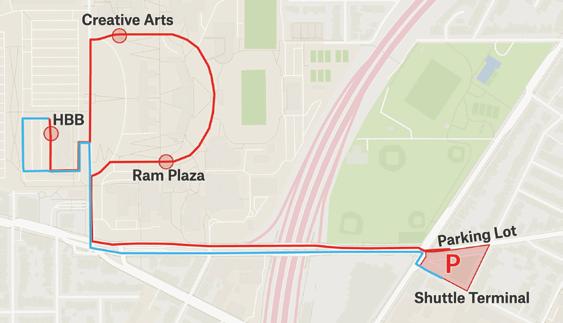
In an attempt to mitigate the glaring issue of parking on campus, City College has established a satellite lot at Ocean and San Jose avenues. An accompanying shuttle bus takes students and faculty from their parked cars to campus and vice versa, leaving the lot every 30 minutes. The shuttle makes three stops around campus before returning to the lot.
Unfortunately, it seems as though students and faculty are unaware that the lot and shuttle even exist. Across the first nine days of its existence, the shuttle had a total of nine passengers, a paltry amount for the 60 stalls that the lot holds, as well as the bus used to run the shuttle, which seats 23.
City College's Police Department was chosen to head the operation of the shuttle.
Chief of Police Mario Vasquez said he's not sure why the shuttle hasn't seen too many people. “I just advertise on the emails district-wide,” Vasquez said, “I don't know if I need
The Guardsman tried to take the college's new form of transit on March 16 and then again on March 18 to no avail. While the shuttle's listed hours are 9 a.m.-3:45 p.m., this reporter arrived at the Daring Faith Church at 2 p.m. on both days to find the gates locked and no shuttle in sight.
This is all the more alarming when you consider the price tag of the lot and shuttle. With funds from the Diego Rivera Performing Arts Center Bond Project, the college is paying $33,750 to Daring Faith Church for the use of the parking lot and $35,200 to EPIC Limousine for the operation of the shuttle from March 9 to May 21 of this year.
Per the parking lot agreement, the college can renew the contract after each semester from now until after Spring 2029, although the all-butconfirmed parking garage would certainly put an end to any continuation of the shuttle. Vasquez said that while they will review ridership and other factors, the shuttle bus and satellite parking lot will likely be back next semester.
“Many students, they don't know about it,” said the driver of
the shuttle, James Widjaja. “That information is important. [People] ask ‘Does this go to Bart?’ and I have to explain [that] I can only go to the church [parking lot] and the stops.” Widjaja, who is employed by EPIC Limousine, and Vasquez both said that there was little to no ridership, with Widjaja mentioning that he's
the Harry Britt Building, in the Student “Q” Lot.
Illustration by Tiffany Lam
Map of the parking shuttle route. P indicates the Daring Faith Church parking lot. Red line indicates the inbound route. Blue line indicates the outbound route. Red circles indicate shuttle stops. Map made with Felt by Henry Crowell.
had a total of zero pick-ups or dropoffs at the stop located behind
STUDENT GOVERNMENT
Associated Students Pass Resolution Supporting Downtown Center
The Executive Council passed a resolution backing efforts to save the Downtown Center after the administration moved to pull classes without student input
At the Executive Council meeting on Friday, March 20, student leaders discussed actions students can take to push back on the administration's decision to stop holding classes at the Downtown Center (DTC).
The Executive Council, which includes Associated Student Council (ASC) members from each of City College's campuses/centers, meets weekly from 1:10-4 p.m. on Friday afternoons to tackle issues that affect students. On March 20, the council agendized Downtown Center - Updates & Impacts.
Like many students and community members, Executive Council members were surprised to learn about the administration's plan to close the DTC when it was announced on March 6.
ASC Ocean President Dahlia Gonzalez, who learned of the closure through Instagram, raised questions: “I need more information: Why is this happening? How will it affect students?”
What's Happening
Chancellor Messina's email from March 6 states that her “leadership team has made the difficult decision not to schedule classes at the Downtown Center for the
Fall semester.”
Student Vice Chancellor Malinalli Villalobos clarified that right now the administration is “not officially closing the DTC; they are moving the classes out of the DTC.”
There is a process that must be followed to close a campus or center, including a vote by the Board of Trustees, which would allow for public comment, according to Villalobos. However, without classes, the center would effectively be closed even if the doors to the building were to remain open.
Closure by Design
In her letter, Chancellor Messina writes, “enrollment at the center has fallen below the 1000 FTEs threshold.” FTE stands for FullTime Equivalent and is a standard unit of measurement in district funding formulas.
Student Trustee Angela Campos said, “There's been a lot of talk from the institution about FTE's and low enrollment. However, this is closure by design.”
Daniel O'Connell, ESL teacher and ASC Downtown Advisor, said that the FTE's have been removed from DTC through program cuts and relocations.
O'Connell listed the programs that the administration had previously cut or relocated from the DTC — business classes, the fashion
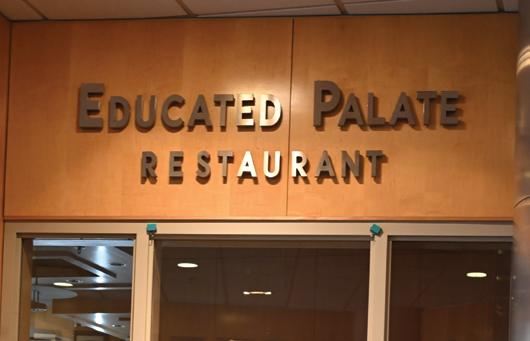
program, the Educated Palate restaurant, foreign language classes — leaving only ESL and the pastry program.
Student-at-Large Lydia Hernandez asked, “How many FTE's were available at the DTC with so few class/program offerings?”
Villalobos identified the administration's lack of transparency as a “tactic.” “Less information shared results in less pushback,” Villalobos said.
According to Villalobos, approximately 15 months ago, the Executive Council heard a budget presentation from Dr. Yulian Ligioso, Interim Vice Chancellor for Finance and Administration, which included information about the funding pressure that the DTC faced.
Since then, budget concerns about DTC have not been raised with the Executive Council. According to Villalobos, no students were involved in the administration's decision to close the DTC, and executive leadership was not consulted.
On Jan. 28, at a DTC town hall, the chancellor said that City College wanted to offer more classes at the DTC, according to Anderson Cortes, former ASC Downtown Vice-President ('24-'25).
According to Cortes, students believe they were misled at the town hall; DTC students learned of the plan to remove all the classes
in March, just before the media announced the closure plan.
The first meeting between administration and students at the DTC occurred just two weeks ago, after the closure announcement. According to Malinalli, during that meeting, student leadership recommended that the administration partner with non-profits and/or City Hall to allow them to continue offering classes at the DTC.
Moving Forward
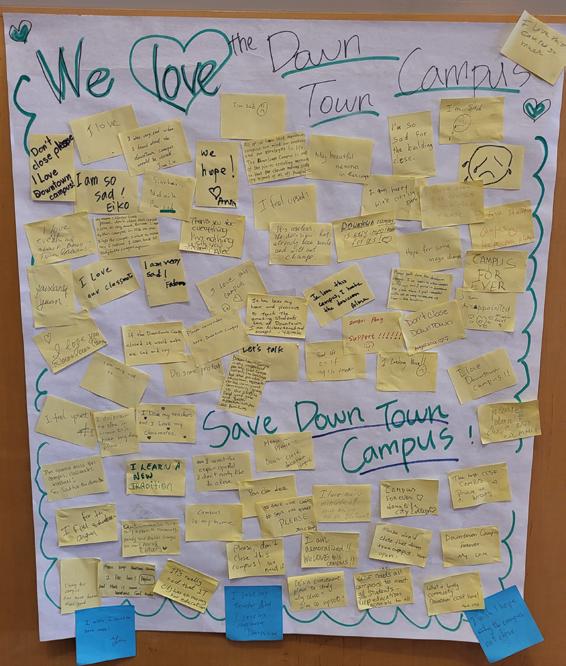
DTC students are already taking action to pressure the administration to reverse course and bring back classes to the DTC. They include a “post-it” writing campaign
displayed in the lobby of the DTC building, speaking out at the Board of Trustees meetings, writing letters to the Mayor and Board of Supervisors, submitting an opinion piece to The Guardsman and planning a rally.
The Executive Council officially took a stand via a resolution.
ASC Downtown President Maria Caroliny moved “to endorse and fully support the efforts to Save Downtown Center, have its doors open, and [offer] a plethora of courses and programs.” The motion was seconded, voted on and passed at approximately 4:07 p.m.
Downtown Center Culinary and English Programs to Be Relocated Next Fall
With the Downtown Center closure, City College culinary and English departments work to relocate programs, students and faculty to other campuses
City College departments, still at the Downtown center this semester, are set for redistribution throughout other campuses starting in Fall.
While the only culinary class at the center temporarily moves to Ocean Campus for two semesters, the English department's 20 courses face a significant schedule restructuring and a more complex plan to move to other centers.
Baking and Pastry
Earlier this semester, longtime instructor at the Downtown Center, Elizabeth Riehle, announced her retirement.
“We realized that we were at a good point to pause the program at the Downtown Center,” Jennifer Rudd, Culinary Arts and Hospitality Studies department chair, said. Even before the center closure announcement, she shared Riehle's departure and much needed repairs to the Downtown kitchen led to a planned relocation of the program.
“I can't do anything until the college assures me that it's okay to hire someone — even on an emergency
basis,” Rudd said. The department will hire a new instructor once cleared with the college.
The advanced pastry class will be in the afternoons, with earlier start times on Fridays because of Ocean Campus' early closure.
“This is not gonna be a huge financial burden by any means,” she said about the planned Chinatown kitchen revitalization.
Rudd noted that a retailed cafe on the first floor of Chinatown/
North Beach Center has never been used, and hopes to have the program settled at the site's kitchen within a year, and utilize the cafe for culinary pop-ups.
Future students can contact the program advisor, Lona Shea, who will explain the new schedule and the changes.
ESL Classes
While the culinary department's one class has a set redistribution,
another department faces similar reduced funding without a linear redistribution plan.
The ESL program usually receives initial grants under general fund then requests additional funding to expand class offerings.
This [the cut of supplemental funds] change will force the program to shrink the overall schedule.
“There are other [ESL] programs at other locations where students will find ESL classes throughout
the day, afternoon, evening and even Saturdays,” ESL Department Chair Jessica Buchsbaum said.
Chinatown will receive an additional five to eight sections, while Mission and Ocean Campus will continue to offer their respective ESL and other English courses. Online classes will be available, as well.
“We are not taking the whole Downtown Center schedule and moving it somewhere else,” highlighted Buchsbaum. She said that although some students may struggle to access other campuses or adapt to online learning, the department is working to make this transition manageable for them.
“It is hard to know ahead of time how many students will enroll in each campus,” said Buchsbaum. Faculty will also be affected by the transition and restructuring, however “layoffs are not expected,” said Buchsbaum.
“I wish this weren't happening,” she said. “But we are going to do the very best that we can to make sure students feel supported and comfortable in finding the other locations.”
Patricia Baldwin Staff Writer
Patricia can be reached at byebyebaldwin@gmail.com
Karla Lopes Culture Editor
Karla can be reached at
One panel of DTC students' love notes for DTC. March 20, 2026 (Patricia Baldwin/The Guardsman)
Terry Ku scores baguettes before sliding them into the oven during her baguette practical, a solo skills test each student completes for every technique in the baking program. March 19, 2026 (Abby Sigler/The Guardsman)
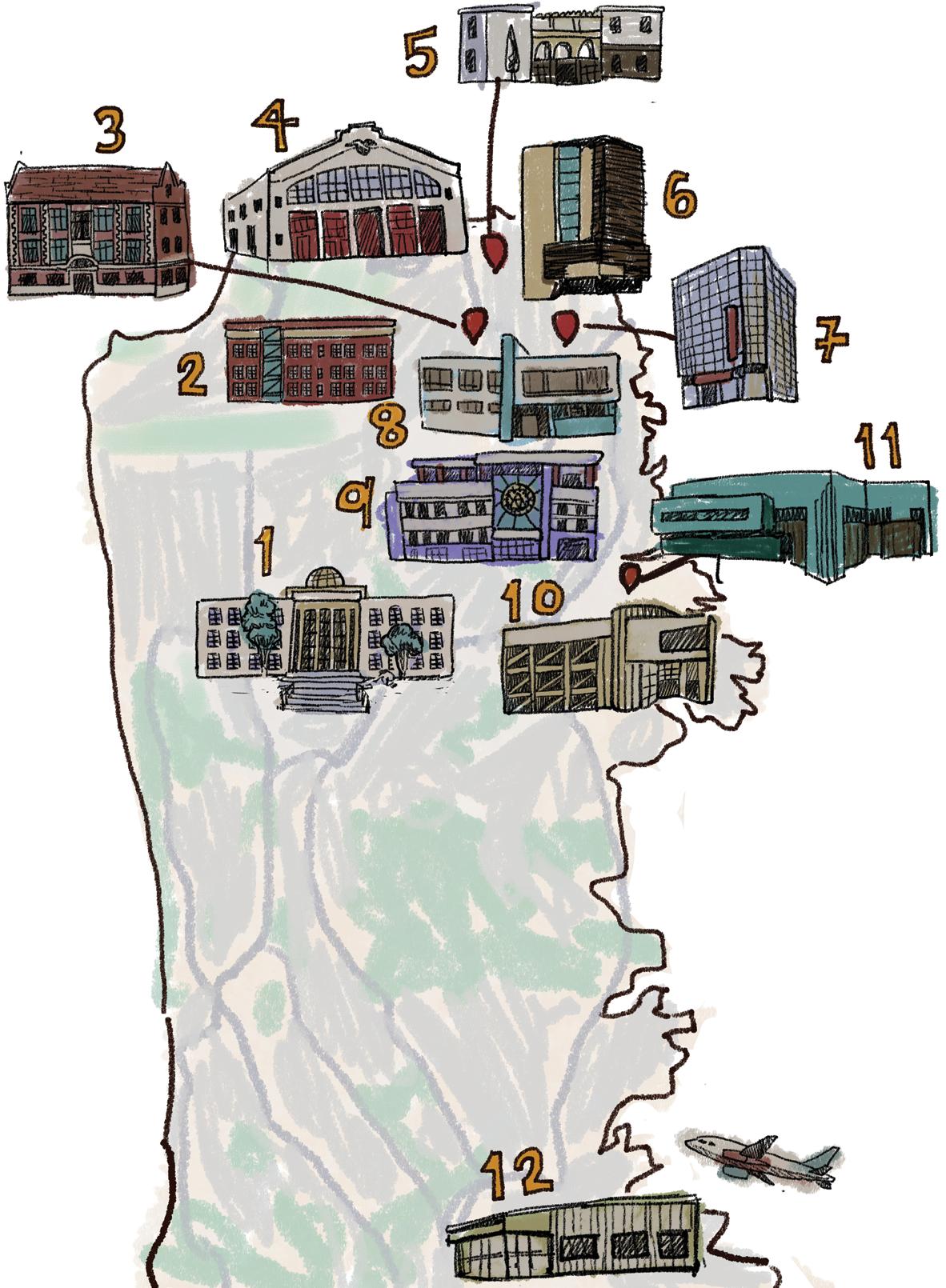
City College Centers: Then and Now
With the news of Downtown Center's folding, The Guardsman looks back at other City College’s defunct centers to examine what was learned, lost or gained from their closures
Henry Crowell Sports Editor
Henry can be reached at hcrowell@theguardsman.com
3 ALEMANY/ CIVIC/750 EDDY
1970s-2020
Departments: English as a Second Language (ESL)
First called Alemany when it opened, later renamed Civic Center and eventually known as 750 Eddy, this former elementary school in the Tenderloin provided ESL classes for nearly 45 years. It was closed in 2015 for renovations that included a seismic retrofit and remodel. The renovations never came to pass, and the center closed in 2020 when the college ended its lease on the building.
4 FORT MASON
1975-2020
Departments: Art
Fort Mason Center was opened following a “special lease agreement” by the Golden Gate Recreation Area and the Community College District in 1975. This center was the partial home of the Art Department, offering classes on sculpture, painting, photography, printmaking and ceramics. However, 2020 spelled the end for this center, with the Board of Trustees declining to renew the lease on the building amid attempts to mitigate what was at the time a projected budget deficit and loss of state funds.
5 GALILEO HIGH SCHOOL
1935-1940
Galileo High School was one of the many places around the city that held courses before an actual campus was established. After its opening, City College quickly realized the immense need for a campus of its own.
6 CHINATOWN/ NORTH BEACH
2012-Present
Departments: Citizenship, Anthropology, GIS, ESL
The Chinatown/North Beach Center has a pretty close history to Mission, with classes here and there throughout the neighborhood for years. Finally completed in 2012, City College's newest center features a bevy of courses, from anthropology to mathematics.
7 DOWNTOWN
1979-2026
Departments: Culinary Arts, ESL
Our most recent closure, Downtown, was completed in 1979, offering around 300 classes that first semester. After nearly 50 years at this site, it was announced that the campus would be closed, a move that seemingly blindsided the Educated Palate, the popular bakery on the bottom floor, and the other culinary classes, as well as ESL courses being taught here.
8 GOUGH
1970-2016
2 JOHN ADAMS
1971-Present Departments/Classes: Health Care, Nursing, Fire Science
What is now John Adams Center initially opened in 1911, housing Lowell High School for 51 years before it moved to its current site in 1962. In 1971, City College took over to provide adult education, nursing and healthcare classes, taking on the Fire Science program upon the Airport Center's closure in 2020.
1 OCEAN
1940-Present
Departments: A wide range of disciplines
Ocean was City College's first campus, established in 1940 with Science Hall. Built as a central location, it grew slowly at first, then expanded quickly in the 1960s and '70s to meet a growing student body. Ocean has remained the college's main campus since.
12 AIRPORT/SFO
1970-2020
Departments: Aeronautics
The Airport Center, once held at the former Pan-Am Terminal at SFO, moved to its permanent home in 1977: a large hangar with classrooms, a shop and an audiovisual center. The facility's unique collection included two helicopters, three small planes and a Boeing-747, all owned by City College. In 2020, SFO refused to renew its lease on the building, spelling the end for the center.
Established as administrative offices for the college, 33 Gough St. played that role for 45 years. In a similar story to Alemany, the building was closed in 2015 due to seismic concerns and the fact that City College was cashstrapped, with the site eventually sold to real estate developers in 2016. As of 2026, the site has become a homeless shelter.
9 MISSION
2008-Present
Departments: A wide range of programs
After years of classes scattered throughout the neighborhood, the Mission Center opened in 2008 to much fanfare. While classes had been offered piecemeal at locations such as Everett Middle School, the new and improved building served to pull these previously scattered courses together. The center is home to several departments and courses.
10 SOUTHEAST
1986-2023
Departments: Fashion, Nursing, ESL
Instruction began here in 1986, offering a wide range of classes that included “Bridge to Biotech,” Fashion and Nursing. Seismic viability struck again, although this time it was San Francisco’s Public Utilities Commission that killed the lights. All employees were ordered to vacate the premises on a day’s notice. According to PUC, repairs would've cost more than the value of the building, effectively totaling the center.
Evans Center is home to City College's School of Applied Science and Technology, with classes on motorcycle and auto repair, construction and custodial jobs, as well as workshops covering a wide array of topics. When the Southeast Center closed, the Evans Center took on many of its former classes.
by Emily Yee
Illustration
At CCSF's Downtown Center, a Pastry Class Savors Its Last Semester
Before the ovens go cold on Fourth Street, Chef Betsy's final cohort of students will host one last sale at the Educated Palate on April 16
Aly Yee leaves her home in Livermore at 5:20 a.m. She drives to the Lafayette BART station, rides into the city, and walks to the Downtown Center — over an hour each way. Last May, Yee graduated from Cal High, and now she's only weeks away from completing her baking and pastry training at City College. “No student debt for me,” she said.
Upon arriving at the Downtown campus, lab aide Shirley Chan is already at the entrance. The building isn't officially unlocked for another hour, so Chan opens the door and greets each student.
Down in the basement kitchen, stations are wiped down, sanitation buckets are filled.
this spring, the introductory class was cancelled, leaving the advanced cohort with the kitchen to themselves and too few people to run their beloved weekly pop-ups. On April 16, the class will host one final sale at the Educated Palate Cafe downtown.
In the Kitchen
On a Wednesday in mid-March, the kitchen's industrial fans are battling a heat wave. It's 86 degrees outside and 85 in the basement.
Despite the heat, everyone wears crisp white chef coats with their names embroidered in black thread.
Chef Betsy wears the hat you picture when you think of a chef: comically tall, with paper pleats.
“I cannot get this from anybody else. There's no other place I'd rather be.”
The Advanced Baking and Pastry class starts at 7:10 a.m., but most students arrive well before then. By 6:45, nearly everyone is there. By 7:45, the baking is underway.
The class runs six hours a day, five days a week, and students who complete both the introductory and advanced courses receive more than 1000 hours of training. Graduates have gone on to work at Jane the Bakery, the Ritz-Carlton, the Fairmont, Devil's Teeth, Bourbon Steak and many more. One is an instructor at the SF Baking Institute.
Next semester, everything changes.
Chef Elizabeth “Betsy” Riehle, who built the program and has led it for 20 years, is retiring to spend more time with her family. The program will move from the Downtown Center to Ocean Campus in the fall.
Two days before classes began
Riehle spent 25 years in the industry before coming to City College, and she doesn't like to talk about herself much beyond that. What she will talk about is the work and her students, but she'd rather show you than tell you.
Mid-sentence in our conversation, she spots something across the room, breaks away, and is suddenly at a student's station with her hands in the dough. She is left-handed, and she works methodically, delicately.
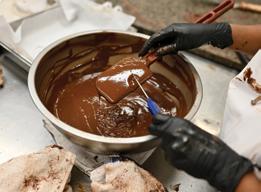
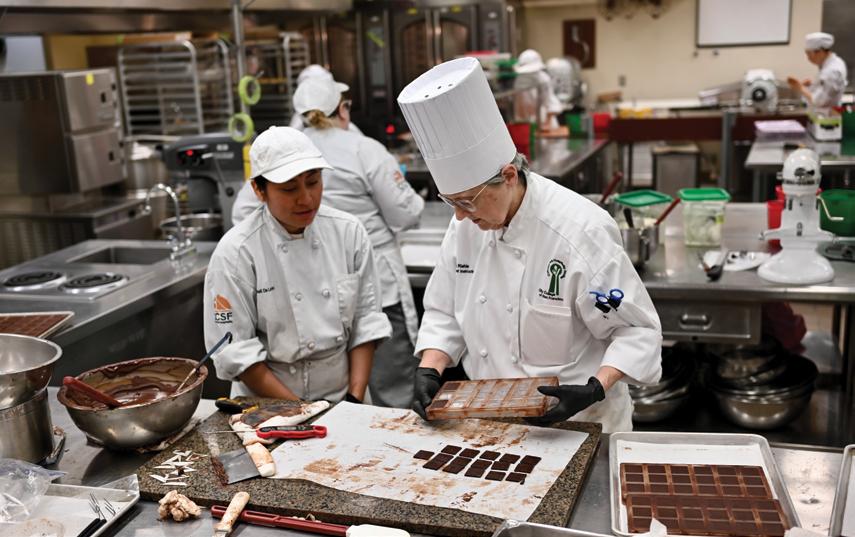
She moves this way all morning, station to station. She coaches Irene Edgai on tempering chocolate — “I'll do it as a demo, but you need to narrate what I'm doing” — then zips across the room to help Yee model a chocolate rose. Yee gazes at Riehle's hands as she shapes each petal.
Butter gets rolled out for lamination. Delicate croissant dough is shaped into crescents and loaded into the oven, where it spins and grows golden. Notes of melted chocolate, almond syrup and sourdough
starter permeate the kitchen.
When Terry Ku pulls her baguettes from the oven and frowns at the one that came out shorter than the rest, Riehle tells her, “Don't look at the sixth one you don't like. Look at the other five that are perfect.”
Riehle quotes Eminem: “This is your one chance, your one opportunity.” The Pointer Sisters: “I'm so excited, and I just can't hide it.” She tells the class to do it with passion, to be themselves while they're baking.
“She's like a radio,” Yee said. “It makes the kitchen goofy and fun.”
Maria Sandoval, who is considering a move to New York to create plated desserts, feels lucky to have had the opportunity to learn under Riehle. “Chef Betsy makes everything that sounds difficult feel very possible, even easy,” she said. “She makes me believe in myself.”
With fewer than 15 people and no intro class, the group has grown
close. Maddison McCauley, who has a 3-year-old and a 6-year-old at home, started a Discord server for everyone to connect outside the kitchen. “Aly [Yee] was born when I graduated high school, and now we're besties,” McCauley said.
Gloria Pouncil first enrolled during COVID. She got her certificate online but never touched an industrial oven or weighed ingredients on a commercial scale. So she came back. Then came back again — this is her third time through. “I cannot get this from anybody else,” she said. “There's no other place I'd rather be.”
At the chocolate station, Edgai is making cigarettes. The thin, rolled pieces of tempered chocolate require specific pressure, speed and precise measurements. On a normal day, it's exacting. In a heat wave, it's adversarial.
Edgai's hands hurt from the pressure. She tries different angles, waits for Riehle to check her most recent batch, and prepares to temper at least two more times before the day is done. “I've had many teachers in my life,” Edgai said. “She is amazing. City College is losing a very valuable person.”
The Educated Palate
The pop-ups started in 2023, when in-person classes returned after the pandemic. Before COVID, the Downtown Center housed the Educated Palate, a restaurant run by students in food technology and dining services. That program ended, and the space sat empty for three years.
“When we returned post-COVID, it was bleak,” Riehle said.
She claimed the empty dining room and reimagined the space as a cafe, and each Thursday, students sold reasonably priced baked goods to the downtown community. “It caught on,” Riehle said. “It generated
positive energy for this corner.”
An SFGate article compared the pastries to those at Tartine and highlighted the prices. Lines formed. The Educated Palate Cafe had become the best deal in the neighborhood.
When the intro class was cancelled this spring, the advanced cohort lost more than half its usual workforce. The students voted: with fewer than 15 people, running a weekly pop-up wasn't feasible.
Production continues — pastries and breads travel to Ocean Campus, and extras go to the nonprofit Food Runners — while the bakeshop sits empty.
But Riehle wanted to give the students this semester one more shot, one more opportunity, so they're bulking up production for a final pop-up on April 16. “We are so excited,” Pouncil said. “It really takes a village to pull it off.”
As for the program's location, Culinary Department Chair Jennifer Rudd said that she couldn't, in good conscience, put a brand-new instructor alone in the Downtown Center. Instead, the classes will run in the afternoons at Ocean for roughly two semesters while the Chinatown campus kitchen is fitted out.
As an evangelist for the program, Pouncil worries about what comes next. “I just don't want the program to get lost in the shuffle,” she said.
There's a small retail cafe on the first floor of the Chinatown building that has never been used. “The dream is,” Rudd said, “a year from now, year and a half, we'll have pop-ups happening at that little cafe.” Until then, Riehle will shepherd this final group to graduation. While class was winding down, she tuned her internal radio to Sarah McLachlan, calling out to the room: “We're fumbling towards ecstasy!”
Abby can be reached at abby.sigler@gmail.com
Abby Sigler Managing Editor
Aly Yee poses with a tray of freshly baked croissants. Outside of class, Yee bakes commission orders for her community. March 19, 2026 (Abby Sigler/The Guardsman)
Elizabeth "Chef Betsy" Riehle, right, instructs student Araceli De La Cruz at the chocolate station. De La Cruz, who started at City College in the ESL program at the Downtown Center, plans to find work at a bakery. March 19, 2026 (Abby Sigler/The Guardsman)
Gloria Pouncil Advanced Baking and Pastry Student
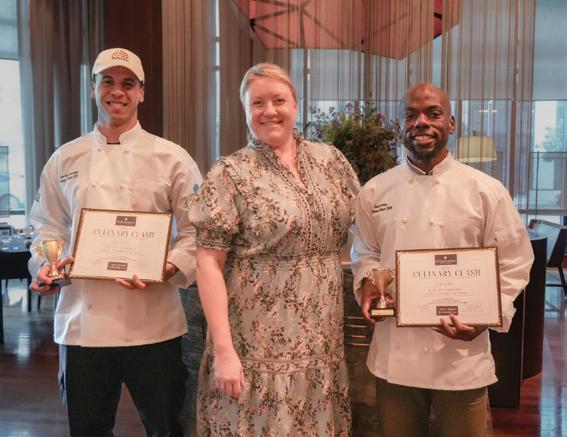
City College Students Named Winners of 15th Annual Culinary Clash
On March 15, City College students Jake McCambridge and Quis White competed in the final day of a three-week contest. On March 19, they were announced winners of the 15th Annual Culinary Clash
Tom Whitehead and Karla Lopes
On the evening of March 15, two ambitious student chefs, Jake McCambridge and Quis White, teamed up to bring forth a threecourse menu to 82 guests on the final day of the culinary competition — held on March 1, 8 and 15.
The Culinary Clash is a student culinary competition launched by InterContinental San Francisco 15 years ago, partnering with City College Culinary Arts and Hospitality Studies Department since 2019.
“The program was born to give local culinary students an opportunity to gain real world culinary experience,” shared InterContinental Communications Consultant Keelin Marcoux in an email.
This year's competitors were City College student chefs Ed Castorena, Maliah Chin, Logan McGovern, Sonal Ruperal, Quis White and Jake McCambridge.
According to Norma Whitt, Director of Food & Beverage and Culinary Operations at InterContinental San Francisco, the student chefs are responsible for choosing the menu, designing the recipes, selecting the wine pairings, prepping the dishes and serving.
“For the majority of the prep, they are on their own,” Whitt said.
Days of Preparation
The days before the Sunday of March 15 were filled with hard work
and preparation. McCambridge and White started prepping Friday morning 8 a.m. sharp. Working vigorously through Saturday, the team had to stay overnight , and continued until the end of the event on Sunday.
The meal began with an amuse bouche complimentary of the restaurant, followed by a lovely 2023 sparkling Pinot Noir from Kivelstadt Cellars, pairing with the chicken liver mousse starter.
“The experience keeps coming back to how much you want something and how far you'll go for it.”
The starter exemplified what White described as “rustic but containing a remarkable complexity of flavors.” The piquant toasted fennel had been dressed in hot oil placed over the mild mousse and garnished with Sweet Alyssum blossoms — all carefully constructed to allow each component to be seen and tasted.
“We wanted to keep things simple, but not boring,” said White.
Next came a smoked black cod with heirloom yellow eye bean ragout followed by a 2023 red “Sibling Rivalry” Pinot Noir. Though a little risky, the wine turned out to be an excellent choice to pair with the delicately sauteed fish.
The dessert, named “Le QuisQuis” by the team, was a play on Chef White's name and the marquis chocolate cake at the center of the dish. The delicate and rustic confection of chocolate was constructed of an array of textures. This included chocolate mousse, the cake, caramel whipped cream, macerated berries, chocolate ganache and espresso crumble. Amazingly complex and not too sweet.
Were the chefs happy with the outcome?
McCambridge recalled looking out at the dinner tables with satisfaction seeing the guests smiling and enjoying the moment.
In the end, all their hard work paid off.
Winners Announcement
On March 19, in a very intimate ceremony at Bistro 888, this year's Culinary Clash finalists were announced, with McCambridge and White taking the win.
“For me it was a huge moment,” said McCambridge.
He recalled all the hard and good work the other competitors did in the two previous nights. “I'm super happy and proud of what everyone accomplished for their own meals,” he added.
“It definitely felt like an honor,” said White. “Everybody did such a great job. I couldn't believe that we were the ones — to win.”
Both expressed the importance of team work during the entire process — highlighting InterContinental team support. “Having such a reliable team [was] such a huge thing
for us,” said McCambridge.
“Everybody was so supportive… it rounded out the whole experience for us,” he added.
“For me,” said White, “the experience keeps coming back to how much you want something and how far you'll go for it.”
McCambridge shared that experience of working as a professional to build a menu from scratch — while serving a whole restaurant — helped keep his dream of becoming a chef alive.
“I want to continue to keep reaching new goals for myself and continue to grow,” he added.
Supporting Students
Culinary Clash holds an important role in supporting students in
the program at San Francisco by fundraising scholarships and highlighting talented student chefs. A portion of the sold tickets from each dinner is used to support the City College Culinary Department. All of the three nights had between 80 to 85 guests — all sold out.
Whitt said that the big incentive for the students, beyond having this experience on their resumes, and beyond any prizes, is the pride. “I see a lot of pride in what they are doing,” she said on the day after the event.
Note: You can read about the other two Culinary Clash nights at theguardsman.com
L-R: Quis White and Jake McCambridge plate their dishes. Their three-course menu featured a chicken liver mousse, smoked black cod and a chocolate dessert named "Le QuisQuis." Photo courtesy of Leo Lin
Staff Writer and Culture Editor
L-R: Jake McCambridge, Norma Whitt and Quis White at Bristo 888. McCambridge and White are the winners of the 15th Annual San Francisco Culinary Clash. Photo courtesy of InterContinental San Francisco.
Quis White City College Culinary Student
Student Presidents Protest College's Closure Plan
Maria Caroliny de Oliveira and Anderson Cortes ASC Downtown President and former ASC Downtown Vice President
The Downtown Center (DTC)
is more than just a building — it is a lifeline for City College students and the community. It has been one of CCSF's most diverse and vibrant campuses, with students that speak more that 42 different languages, yet the administration is gutting programs and announcing a shut down.
Located in the heart of San Francisco, the DTC offers accessible, affordable education to working students, immigrants, multilingual learners and low-income families. Its closure would abruptly cut off the only realistic educational pathway for many of us, at the exact moment when our city says it wants to support equity and downtown revitalization.
City College's administration keeps making the same wrong decisions: they claim that cutting current enrollment protects future enrollment.
The past decade has felt like a concerted effort to dismantle City College. The Gough Street, Civic Center, Oakdale and San Francisco Airport campuses are all gone now, closed one-by-one to supposedly save City College. The same pattern is evident in the closing of the DTC. The business program was moved out of the DTC, followed by the fashion program. The on-site restaurant, the
Educated Palate, was closed and the Culinary faculty moved to Ocean. About a year ago, the decision to remove foreign language classes from the DTC was made. Now, it is the pastry program and ESL classes that will be going.
Geisce Ly, dean of the DTC, also oversaw the closing of the Civic Center campus. There is little evidence to suggest efforts from the college to build programs or community partnerships. Instead of closure, the college could be recruiting students from downtown hotels and restaurants with evening ESL classes, or expanding offerings in small business administration. Similarly, there has been no effort to serve small businesses, large businesses or students in the service industry.
Vulnerable populations who may only be able to access the DTC will be left behind.
The administration seems wedded to an enrollment fallacy, telling us that all the students will move from the DTC to other campuses and bump up their full-time equivalent students. However, some students will be unable or unwilling to move. We know of several Muslim women who are able to attend classes at the DTC because they are dropped off by their husbands who work nearby. Other centers are not located as close to the downtown service industry, making travel more time consuming. Vulnerable populations who may only be able to access
DOWNTOWN CENTER
the DTC will be left behind.
The administration's misleading claims make this pill even harder to swallow. At the Jan. 28 Town Hall, the administration and Chancellor Messina claimed there was no plan to close the DTC, and promised more classes. Now we are all being told the exact opposite. This sudden reversal has filled our DTC community with fear, anger, and profound sadness. People are crying in the hallways, wondering if they will have to drop out, move away, or abandon their dreams.
The story of DTC could have been
different if decision-makers enacted a growth plan instead of an austerity plan that slowly bled the DTC dry.
If the administration does complete its DTC removal plan, downtown revitalization efforts will be negatively impacted. The 400-plus DTC students provide customers to local businesses and an influx of support to the area as downtown has slowly come back to life.
The DTC adds character to the neighborhood, too. The DTC hosts cultural events that bring students together, drawing students from other campuses and building
connections across the city. Consider the bakery, which has been extending a warm, irresistible invitation to local residents and passersby on Thursdays, with cheap croissants and other offerings.
Despite shrinking class options every year, the DTC has remained an important and special place for students, staff, and the surrounding community. The administration has decided to strip all that away. Imagine if the college were to finally make good on its promise to offer more classes and opportunities, instead of fewer?
City College Should Be Investing in Downtown Instead of Leaving
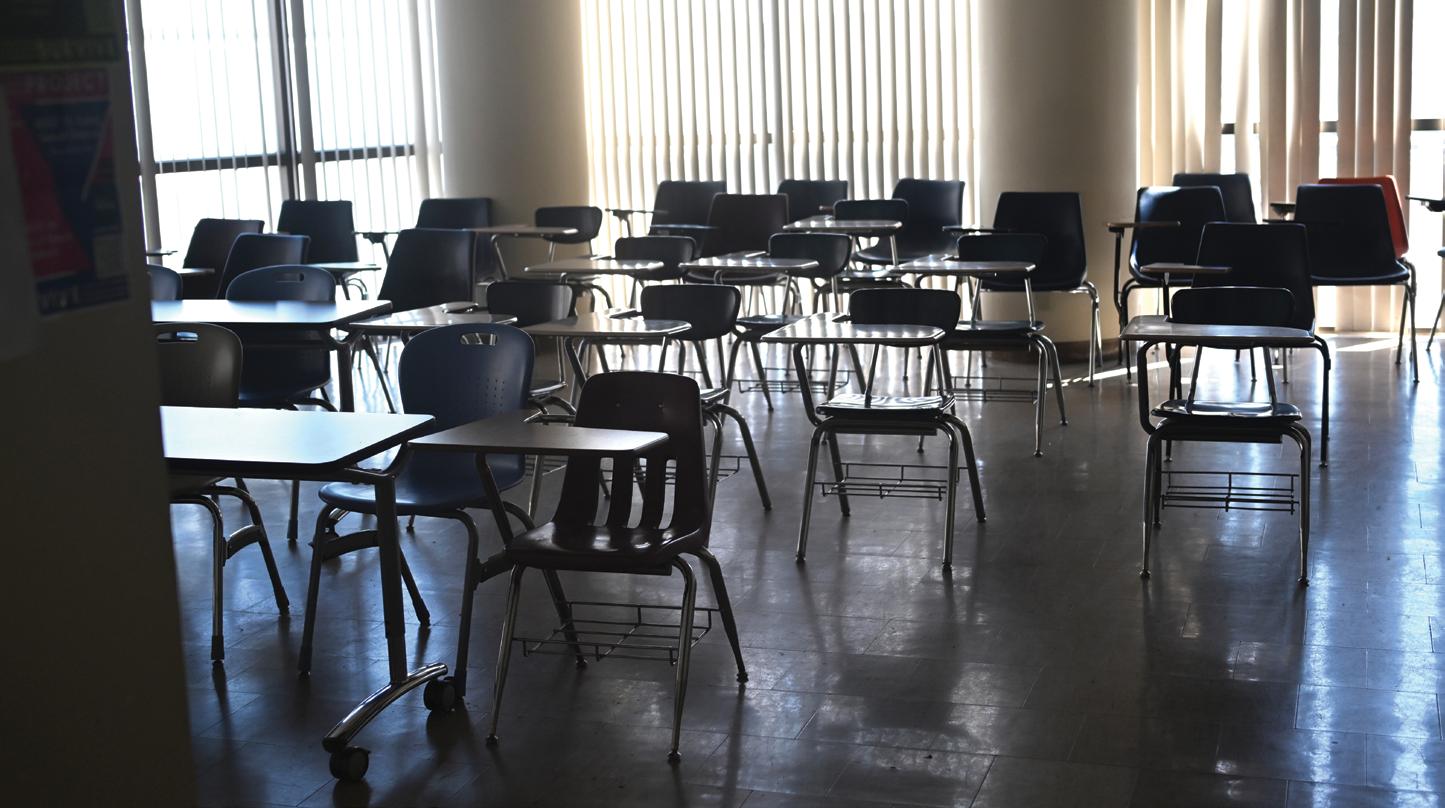
I have lived in SoMa for three years, and I watched as the neighborhood's educational institutions struggled to recover from the pandemic. On the corner of Fourth and Market, City College's Downtown Center stood, as it has since 1979, welcoming fewer students each semester, but at least the lights were still on. This fall, it will go dark.
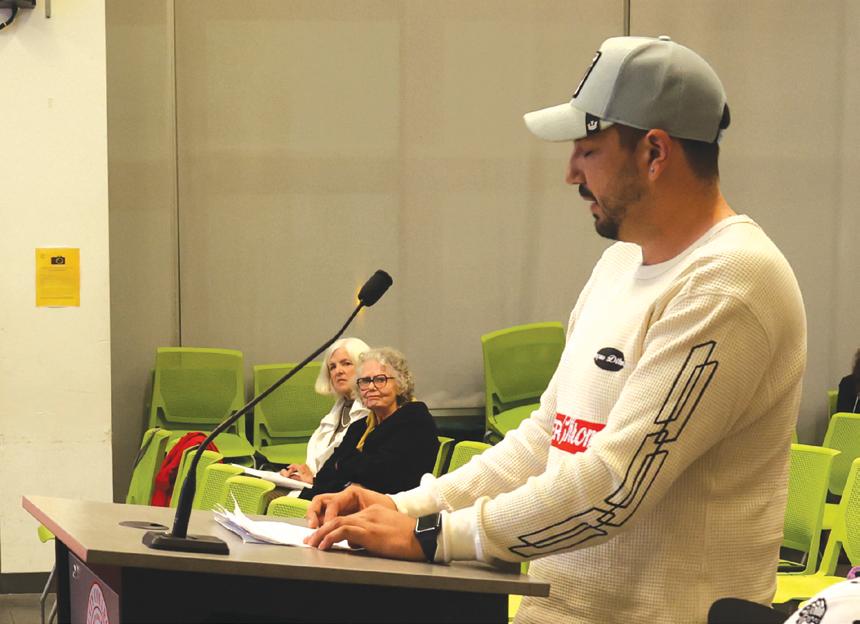
During the most recent Board of Trustees meeting on March 26, a crowd of 30 current and former faculty and students attempted to persuade the administration to reverse their decision to close the DTC. The meeting ran long — over seven hours — as the community decried the removal of the college's presence from the most central part of the city.
City College says the Downtown Center must move its classes because it is set to lose $2.2 million in state funding. Pandemic-era protections such as Hold Harmless delayed that loss, but are set to expire on July 1. Currently, the campus enrolls the equivalent of 152 full-time students, far below the 1,000 FTEs required for continued state support. But this loss is bigger than moving
A study by the Colorado State Higher Education Executive Officers Association found that students affected by closures were 71.3% less likely to reenroll in another college after one month and 50.1% less likely to complete a credential than similar students who did not experience a closure.
Students affected by closures
San Jose State's impact page says it creates 9,900 Bay Area jobs, and local reporting during the pandemic described downtown businesses waiting for students to return because the university generated hundreds of millions in local economic output.
71.3% less likely to reenroll
some programs to other campuses. And I would argue that SoMa is one of the San Francisco neighborhoods where the college is needed most.
The city's own downtown directive, issued by Mayor Daniel Lurie in September 2025, says the future of the city center should include learning opportunities. At a time when the city is trying to revive the neighborhood, it seems wrong that the Downtown Center — accessible, public and free — will stop providing classes to the community by the end of this semester.
City Hall's “Heart of the City” directive imagines downtown as a place where people can “live, work,
play, and learn.” The directive also calls on the city to secure commitments from academic institutions to open or expand campuses and programs downtown, and says the new financing district could support housing for 10,000 additional residents.
Yet downtown's only free public college, which could be used to draw new residents to the area, is being shuttered just as the economic recovery begins to take off.
While city officials talk about rebuilding downtown, one of the few institutions explicitly devoted to public access and upward mobility is being pushed out of it.
When New England College shut its Manchester city campus, New Hampshire Public Radio reported that the campus had shrunk to 126 students. Only 80% of affected students chose to move to classes at the main campus instead, and local arts leaders said the loss left “a bruise.”
The Manchester community said the campus' students and staff were part of the city's fabric and that even the few hundred students moving through downtown had a major local economic effect, NHPR reported.
Colleges in the heart of city centers can play crucial roles in economic recovery efforts. Other cities seem to understand this more clearly than San Francisco does.
Georgia State says its $107 million “College Town Downtown” plan is meant to reinvigorate downtown Atlanta.
Sacramento State's official downtown project says a new capital campus is meant to “accelerate downtown economic activity” and put education, housing, workforce development and cultural vitality in the city core.
Last year, the Chronicle identified nearly 13,000 in-person students across a dozen downtown SF colleges and universities, and reported that those schools were urging the city to invest in the institutions already in place.
Closing the Downtown Center may seem like a simple cost-saving maneuver, but it is hard not to take the decision as a quiet contradiction. At a time when the city is actively investing in downtown's recovery, City College is divesting from the community by closing the area's only free, public, centrally located educational institution.
Marrion can be reached at mcruz88@mail.ccsf.edu
Former ASC Downtown Vice President Anderson Cortes speaks at the Board of Trustees meeting on March 26 in support of the Downtown Center. (Patricia Baldwin/The Guardsman)
Marrion Cruz News Editor
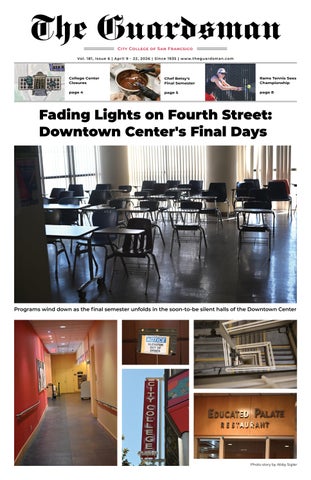
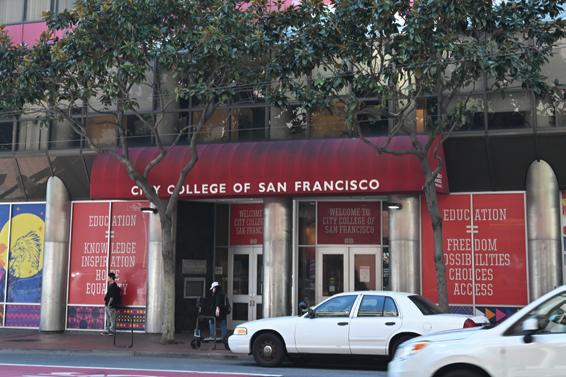
The Fourth Street entrance of Downtown Center watches its last year of operation pass by. March 19, 2026 (Abby Sigler/The Guardsman)
Rams Tennis Wraps Up Near Perfect Season
The rams are ready to take on Ojai and the State Championships after finishing off a stellar season
Rams Tennis won decisively in their final home game of the year on March 24, beating West Valley 7-2, and then went on to finish their season with wins against Chabot and Cabrillo. Next on the to-do list is to mosey on down to Ojai and compete for the State Championships, which start on April 23.
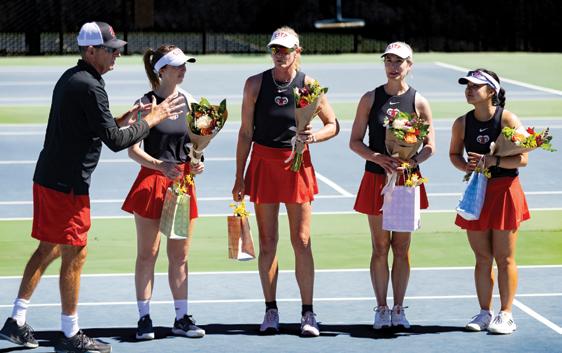
That last home game also had a special meaning for the team. The game was part of their sophomore send-off, a moment to recognize players who have spent years representing the program.
Former Head Coach of the Rams, Mary Graber, was in attendance. Graber, who retired last year after 35 years with the Rams, was there to cheer on and congratulate her former players.
“They've done such a great job for us, and it's sentimental to see them leave,” said Coach Peter Bartlett. “We certainly thank them for all they've done, especially because of how they've helped me as a new coach.” Bartlett joined the team this season after nearly 30 years in various roles with USF's tennis program.
One of the biggest themes of the season was court awareness and consistency. Players constantly adjusted their positioning, reading the opponent's shots and reacting quickly. Even when points looked lost, they fought to keep rallies alive.
Bartlett said that another key to the season was controlling what they could control, and remaining consistent throughout, explaining, “Team culture is a big one, the commitment to your teammate, that there's a connection between the players. At the beginning of the season, we were
MEN'S BASKETBALL
talking about the difference between [just working together] and what's known as a team.”
Throughout the season, sophomore Rita Williams stood out with an aggressive style that dominated the court. She attacked the ball with confidence, stepping forward and applying pressure early in rallies. Her energy and intensity showed out, and she controlled the pace of the game with authority.
Sophomore Vanessa Chi also delivered a powerful performance on Sophomore Night despite dealing with a back injury. Even while managing discomfort, she continued to show impressive power in her shots. Her determination to stay in the match demonstrated the kind of resilience that defines many college athletes. Every point she played showed both effort and mental toughness.
Another key presence throughout the match was Coach Bartlett, who offered encouraging words from the sidelines. During changeovers and between points, the coach provided quick advice and motivation,
helping players stay focused and confident. Those small talks during the match reminded the team that they were not competing alone.
Freshman redshirt Rachel Yim said, “I'm so glad Coach joined the team [this year] because I don't think I would be where I'm at without all his amazing help.”
The Rams are ready to take on the rest of California after securing their third conference title in as many years. Bartlett said of the three-peat, “We were going for our third in a row, but this one we got outright; we didn't have to share it. That was a big accomplishment for the team, and we went undefeated in conference play.”
The team finished out the season with just one loss on the year, carrying a 10-1 record into the State Championships in Ojai. The Rams are full throttle in preparation for state championships, with Bartlett saying, “I think we're just trying to be consistent with training… making sure everyone is dialed in.”
Daniela can be reached at dvilleg4@mail.ccsf.edu
Rams Fall Just Short in Quest for Back-to-Back State Title
City College lost
I
n their third straight game in as many days, the Rams missed out on back-to-back state titles, losing to Fullerton College by a mere three points in the 3C2A championship game on March 15.
Despite the Rams putting up 33 points in the first half to lead by nine, the Fullerton Hornets closed the margin and poured in 43 points in the second to City College's 31. This onslaught proved to be too much for the Rams to handle, especially on a cold-shooting night from several players.
City jumped out to an early 12-4 lead, with contributions from Kenyon DeMuynck, Vitor Oliveira and Jaylen Wheeler. A Wheeler defensive rebound led to an Oliveira three-pointer, back-to-back DeMuynck and Wheeler layups (the latter assisted by Oliveira), followed by a DeMuynck block and Wheeler three (assisted by DeMuynck).
The Rams put in a new rotation after going up by eight points. This may have allowed Fullerton to close
game, the Rams lost a nail
in their final
of
the gap, as the team ended up down by only one point with 12:49 to go in the first half. With DeMuynck inserted back into the game, his defensive board led to an Oliveira layup, as the two North Coast Conference co-MVPs connected to make the score 18-15.
In the first half, the OliveiraDeMuynck duo dished dimes to
their
each other and their teammates. City led 29-21 with 4:30 left in the first.
Oliveira accumulated five assists by the end of the first 20 minutes of play, helping the Rams lead 33-24 at the half. DeMuynck had 13 points at the half to go along with four rebounds, three blocks, and an assist.
Fullerton fired on all cylinders after the halftime break, going on
a 7-0 run to close the Rams' lead to 33-31. With 11:08 to go in the game, Fullerton took its first lead — 40-39, having gone on a 16-6 run.
City and Fullerton were quite evenly matched throughout the rest of the game, with both teams failing to build a lead of more than four points. With a minute to go, Fullerton led 60-59.
After a Fullerton layup with 35 seconds remaining, Head Coach Justin Labagh called a 30-second timeout. An Oliveira-missed three led to a Fullerton rebound, followed by a Moore foul on Fullerton.
Fullerton's made free throws stretched the lead to 64-59, the Rams' largest deficit of the game. Free throws from DeMuynck and Oliveira led to a two-point margin, 64-62, with 10 seconds left.
However, Fullerton made its next pair of free throws after the Rams fouled. An Ahmaree Muhammed layup brought the Rams a bit closer with just four seconds left, 66-64, but Fullerton made a free throw with one second left, ensuring that only a miraculous Rams four-point play could defeat the Hornets.
Shane Lincoln put up a final three-point heave, but Fullerton ended up winning its third state championship versus City since 2019. The Rams' title last year cemented Labagh into the record books with five state championships; however, this season, City was unable to complete the historic, elusive back-to-back title.
The defeat stings all the more considering the recent history between Fullerton and City College. Since 2019, the two teams have faced each other in the State Championship four times, with the Hornets coming out on top in 2019 and 2023 before being bested by the Rams in last year's final game.
In response to the loss, DeMuynck shared: “Gotta lose to learn how to win.”
This loss is sure to fuel the Rams in their offseason workouts and practices. Fans can look forward to watching a hungry City team next season, ready to bring the title back to Ocean Avenue.
Jocelyn Wong Staff Writer
Despite a hard fought
biter
game
the season, ending
quest for back-to-back championships. Photo courtesy of Chris Mora
Jocelyn can be reached at jwong@theguardsman.com
City College player Erin Shaw-Meadows returns a backhand shot against her opponent from West Valley College on Tuesday, March 24, 2026, in San Francisco. (Bob Kinoshita/The Guardsman)
Daniela Villegas Jovel Staff Writer
City College players celebrate their last home game against Cabrillo College with a 6-3 win. March 25, 2026 (Alejandra Cardenas/The Guardsman)