The Guardsman


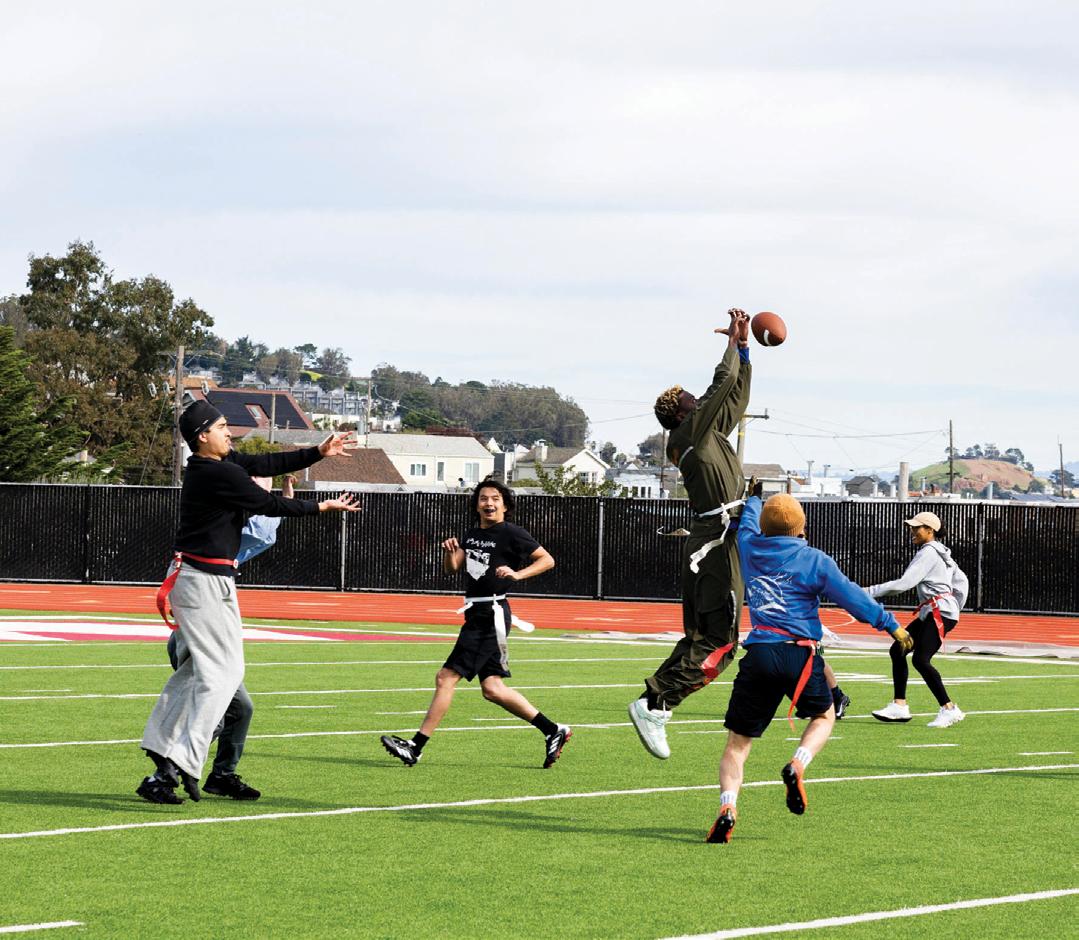
For now, it's a new course at City College. This time next year, Women's Flag Football could be in the midst of its first official season.
FLAG FOOTBALL on page 8
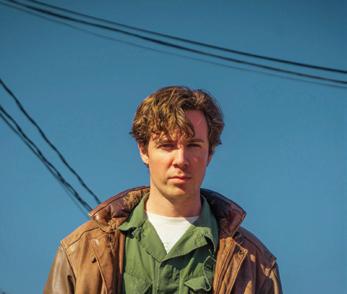
By John R. Adkins
jradproduction@gmail.com
've crashed-landed here.
I
Devoid of any prior exposure to the West Coast, I arrived in this city just over two years ago, a stranger in a strange land. On my first trek in this uncharted land, I hiked over the hill south of Ocean Avenue, jogged down past the Whole Foods, and slipped through the gap in the fence beneath Balboa Reservoir.
Long before I knew who London Breed was, or had any idea how to navigate the transit system, I walked down a street renamed in honor of a Mexican painter. Before I'd had even a window into the city's unique political culture, I stood at the foot of Saint Francis, shaped from melted guns, an ebony statue standing like a cross beneath the stairwell to City College. And there, sitting upon huge stone pillars, were the words carved into the face of the college's old Science Hall: “The Truth Shall Make You Free.”
This was no school motto — this was a calling. Struck by this divine ordination to hit the books, I threw open the doors of the Harry Britt Building with nothing but the clothes on my back and yelled, “I'm
here! Show me what's possible and my path to liberation!” The desks in Administration fell quiet before I was nudged over towards the guest computers to click aimlessly through an outdated registration portal.
Miraculous intervention put my life on hold, and now two years later, I'm still hanging on. Ninety years later, and the college is hanging on, too.
Define “Community”
In 1970, when the junior college severed from the San Francisco Unified School District, it became its own publicly funded education category. This uniquely American conception
of “community” college reflected a growing need for local, affordable education that was accessible to anyone. Junior colleges were no longer limited to university prep work; their mission encompassed community service, adult education and vocational training.
Unique among community colleges, however, City College is inseparable from the city of San Francisco. Its charter is cityspecific, and its trustees are publicly elected officials potentially gunning to become city supervisors. The chancellor makes $350,000 a year, only marginally less than the mayor. For all intents and purposes, City College should be just as beloved a municipal entity as the Muni.
So far, it has survived budget cuts, threats to accreditation and a global pandemic. And yet, the fire still burning on the City College hill is its newfound reputation for political instability. Thirteen chancellors in 11 years kept the hierarchy disorganized, leaving core positions vacant for years. At a school where the tug-of-war over the budget often manifests as union disputes, the teachers' union is punching so far above its weight that you could chart a trustee's political aspirations by the strength of their relations with AFT.
Low enrollment results in a $2.2 million state funding cut, directly resulting in Downtown Center’s closure.
By Marrion Cruz mcruz88@mail.ccsf.edu
Facing a $2.2 million state funding cut tied to low enrollment, City College will close its Downtown Center after 47 years, marking the first major campus impact of the district's fiscal strain.
Shifting programs from the Downtown Center to other sites, such as the John Adams and Chinatown centers, could protect the state funding potential by increasing enrollment at those locations. The reorganization is intended to strengthen the college's longterm fiscal stability while continuing to serve students through other centers, Chancellor Kimberlee Messina said in an email.
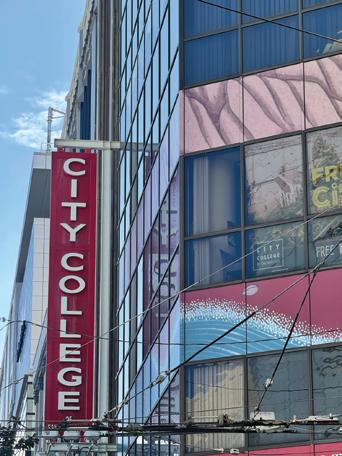
The Culinary Arts and Hospitality Studies Department requested to move locations from Downtown Center to Ocean Campus following the recent retirement announcement of its department head, Elizabeth Riehle. The email from Chancellor Messina framed Downtown's low enrollment as a result of the culinary department's move.
Chinatown/North Beach Center, on Kearny Street, equipped with a never-before-used kitchen, demonstration and retail areas, is still considered a future site for the department. Since the Downtown Center has fallen below the 1,000 full-time students threshold required by the state, it is no longer financially viable to sustain. State funding is based on the number of full-time equivalent students.
Downtown ESL English as a Second Language and noncredit ESL programs will move to Chinatown, said Messina, describing the center as the closest alternative for many students.
Staff
Editor-in-Chief
John Adkins
Managing Editor
Abby Sigler
News Editor
Marrion Cruz
Culture Editor
Karla Lopes
Op-Ed Editor
Lev Farris Goldenberg
Sports Editor
Henry Crowell
Social Media Editor
Evelyn Sassus
Visuals Editor
Karim Farahat
Design Editor
Tiffany Lam
Copyeditor
Gabrielle Chagniot
Writers
Ahmad Aimaq
Alejandra Cardenas
Daniela Villegas Jovel
Diana Chuong
Ellen Yoshitsugu
Jocelyn Wong
Kiyoka Valdes
Patricia Baldwin
Qi Mai
Tom Whitehead
Photographers
Alejandra Cardenas
Franchon Smith
Isaac Ortiz
Teresa Madrigal
Illustrators
Cindy Chan
Emily Yee
Graphic Designers
Cindy Chan
Sebastien Thugnet
Freelancers
Bob Kinoshita
Faith Gabrielle Zapata
Joan Walsh
Advisor
Juan Gonzales
jagonzal@ccsf.edu
Contact us
info@theguardsman.com 415-239-3446
Mailing Address
50 Frida Kahlo Way, Box V-67 San Francisco, CA 94112 Bungalow 615



By Ahmad Aimaq aaimaq@mail.ccsf.edu
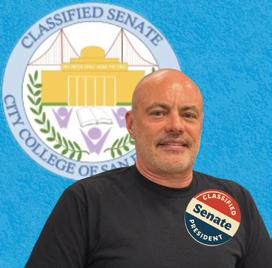
In the City College system of “participatory governance,” decision-making is not limited to administrators. Students, faculty, and staff each have representatives who play a role in policymaking, planning, and the college's future. Within this structure, the Classified Senate is the body that represents non-instructional employees, e.g. groundskeepers, janitors, librarians and financial aid specialists.
Michael Medina-Snider, president of the Classified Senate, explains that their mission is to represent “the needs, concerns, and viewpoints of classified professionals within the district's participatory governance system,” but excludes matters related to collective bargaining.
Whereas “the union focuses on collective bargaining wages, workplace safety, and working conditions, the Classified Senate is about having a voice in governance, sitting at the table with students, faculty, and administration as part of shared decision making.”
That is, the Senate does not negotiate salaries and wages; rather, it offers its opinion on major college decisions and serves on important committees. “We are represented on budget, planning, accreditation, health and safety across participatory governance committees,” Snider said.
Edward H. Tang, first vice president of the Senate and a staff member in the Counselling Department, said the body belongs to all non-teaching workers. “The Senate represents all classified professionals, whether they are union-represented or not.”
The main goal, he said, is to ensure that non-teaching workers have a seat at the table, just like other groups. “It's about making sure we are part of shared governance and that our perspectives are included,” Tang said.
Tanya Clarkson, Classified Senate treasurer and senior clerk in the English Department, describes the body's role in a more tangible way.
“Classified professionals have a seat at the table where critical decisions are made. If we're not part of those conversations, it can feel like we're invisible and our voices deserve to be heard,” she said. “Many key decisions directly impact the daily work of classified staff.”
“It can be difficult for classified professionals to participate because we work full-time schedules, typically eight to five,” says Tang. “If we step away to attend a governance meeting, the work doesn't disappear — it's still waiting for us.”
Many employees, they say, are not fully aware of the Senate's role and its impact on decision-making.
“Sometimes people don't fully understand what the Senate does, so outreach and communication are essential,” Clarkson said.
The Senate highlights accomplishments with the creation of the Governance Spotlight Award, a program designed to recognize employees who are active on governance committees. “We created the Governance Spotlight Award to recognize classified professionals who actively participate in governance,” Medina-Snider says.
The main goal ... is to ensure that non-teaching workers have a seat at the table, just like other groups.
The recognition includes a formal letter of appreciation and a small gift and is intended to encourage participation.
“Supporting student parents has been one of our proudest accomplishments,” Clarkson said.
Snider added that the initiative has been their most successful effort in helping student parents. The program is implemented in collaboration with other college entities and reflects the Senate's social role beyond formal meetings.
Another major achievement for City College's Classified Senate has been the institutionalization of the annual membership cost at the state level. “Now we no longer have to secure that funding every year,” Snider said, adding that it stabilized the Senate's finances and allows it to focus on other programs.
All three board members highlight a common challenge: low participation due to staff time constraints.
continued from page 1
“No one knew about this move, but it was feared,” said Mary Bravewoman, president of the American Federation of Teachers union. Classes currently held at the center were asked to hold off on finalizing their fall schedule without explanation, Bravewoman said.
“It means the faculty will be relocated, and some classes will not be
taught in the same capacity due to the smart classrooms at Downtown Center,” she said, adding that faculty layoffs during earlier financial turmoil under former Chancellor David Martin have left labor leaders worried about it happening again.
When asked about the college's intent for the property, Messina said they are “exploring options for it to
One of the Senate's most important initiatives has been the December Toy Drive for students' children.
“Ultimately, everything we do should benefit students,” Tang said. “If students are not succeeding, then we haven't done our job.” In their view, non-teaching staff have a vital role to play in student success, even if their work isn't always visible.
be used by community-based organizations, where it could support immigration and working families, or be a part of the city's revitalization of downtown.”
The college has owned the building since 1979 and has no intention of selling the property at this time, she said.
Bravewoman hopes the current
college administration has a concrete plan, but adds that this time around, it at least appears the college is “taking action.”
The college has not yet announced a full transition plan for all programs affected by the closure, but has assured that staff, such as the center's librarians, will instead be relocated across campuses starting in the fall.
By Ellen Yoshitsugu ellenyoshi@gmail.com
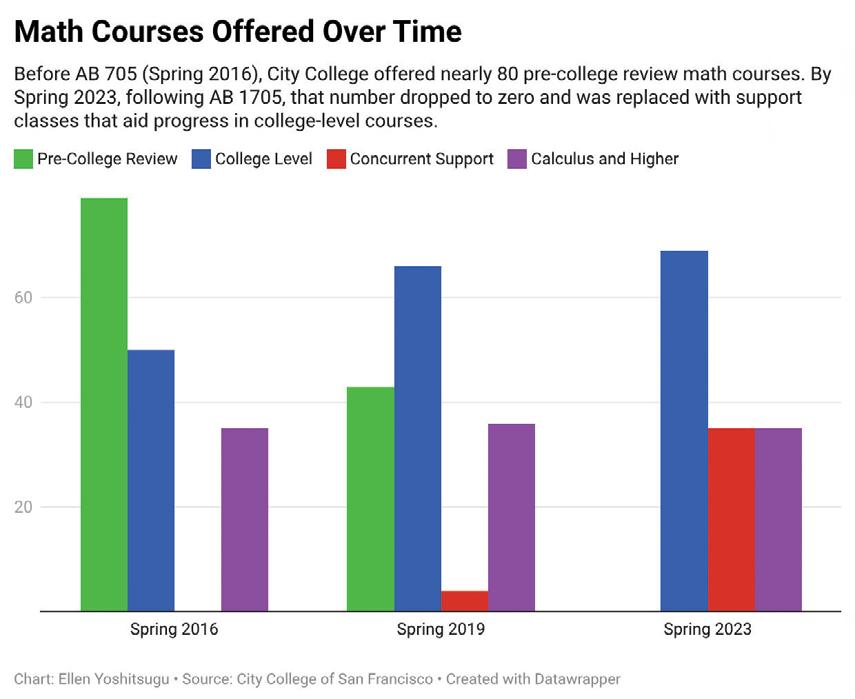
Changes to addressing incoming students' college-level skills came in the form of California laws AB 705 and AB 1705, passed in 2017 and 2022.
Before AB 705, mandatory placement tests determined incoming students' eligibility for college-level classes and placed the students in review courses. While AB 705 reduced the number of review courses, AB 1705 eliminated them entirely and replaced them with concurrent support classes.
The “calculus clause” in AB 1705 calls for the elimination of all calculus prerequisites, such as precalculus and trigonometry, arguing that offering such classes holds students back. Colleges must comply by Fall 2027, according to the state chancellor's office.
Students and faculty have criticized the evidence and logic behind this policy and have protested across the state.
Student
By Ellen Yoshitsugu ellenyoshi@gmail.com
D
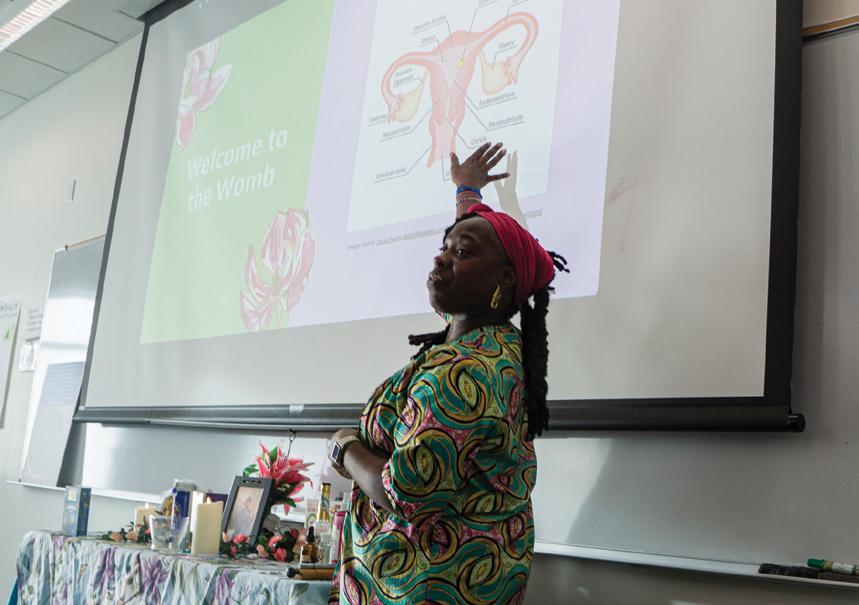
emonstrating how a newborn passes through the birth canal, Asatu Hall, also known as Mama Tutu, used a doll and model of a pelvis in front of a room full of diverse, attentive women.
Hall, a certified nurse-midwife and doula instructor, explained why fetal position matters during labor; whether a baby is headfirst, feet first or butt first, before a short video showed the tissue layers of the abdomen involved in a Cesarean section.
City College, along with SisterWeb, a network of San Francisco community birth workers, launched a new doula training course this semester, giving students a low-cost or free pathway into a growing field of maternal health work that supporters say can help address racial inequities in birth outcomes.
SisterWeb was created to address the “dire pregnancy and birth-related healthcare inequities experienced by Black women and birthing people.”
The three-unit course is fully accredited and transferable to UC and CSU campuses. Students can currently earn a certificate through the Community Health Worker Department, and supporters hope the training will eventually connect to other health-related programs at City College, including Nursing and Women's and Gender Studies.
First of Its Kind
In December 2024, Brianna Smith, a student leader, called together a group of departments and resource centers to try to bring an existing local Black-centered doula curriculum to City College.
It garnered support from Interim Chancellor Mitchell Bailey and the Curriculum Committee.
The course arrives as doula care becomes a more visible part of California's health care system.
Medi-Cal has reimbursed for doula services, turning what was once largely community-based support work into an increasingly important form of workforce training since 2023.
The course is based on the Blossoming Birth Doula Curriculum, developed by SisterWeb.
“We very much focus on the culture of doula work, and how it's very indigenous to a lot of cultures, specifically to African cultures and Black American Southern cultures,” said Nyomi Zinga, a workforce and outreach director for sister web.
The program will teach participants to navigate the medical system and how to interact with medical professionals, Zinga said. Participants will be taught to use healing herbs and natural remedies.
“Although we're not medical professionals, we still have enough knowledge to be able to advocate for our clients,” Zinga said.
“It's these sacred skills of being empathetic and supporting one another, sharing the literal work of childbirth,” said Maggie Harrison, Women's and Gender Studies Department Chair. “But it's also our students are learning a broader set of social and emotional skills that I think are going to be vital for this really uncertain future that we are facing as a nation — as a world.”
“Over the past 10 years, Black/ African American mothers had about 4 out of 100 births, but experienced 5 out of 10 maternal deaths,
and 15 out of 100 infant deaths,” according to the San Francisco Health Improvement Project.
“Doula work helps because it improves the conditions of the person who is having a child,” said Smith. “Most important is how a child comes into the world, how the mother is treated when she is carrying life, how the family is held when new life comes into the world.”
“It reduces the risk of trauma that women face when they go into the medical system, specifically women of color, having somebody there to be your cheerleader … to be there to remind you of your power and your voice.”
Twenty years ago, Smith met Mama Tutu (Hall) while serving
on the board of the first national Black doula organization. Later, she reconnected with birth workers through becoming a mother herself and began working with SisterWeb.
Today, Smith is the president of the City College Black Student Union, a peer educator with Project Survive and a student worker with the Women's Resource Center.
She previously helped facilitate private doula trainings, led by Hall and hosted at the college.
Turning the training into an accredited course required collaboration between SisterWeb and the college. Beth Freedman, chair of the college's Community Health Worker program, did a lot of the legwork.
“[Hall] has a background in public health, she's a midwife, and she's the doula instructor,” said Freedman, “We're so excited to be able to hire her.”
Recruitment for the course is handled by the resource centers, the BSU, and SisterWeb.
Freedman said the new doula training course at City College will help expand access to maternal care for minorities across the Bay Area.
“There's just going to be a lot more doulas available, well-trained doulas,” she said. “And that's really going to have a tremendous impact on African American, Native Hawaiian, Pacific Islander and Native American communities.”
The people of Iran have long grown tired of the Islamic Republic's political violence and constraints against its own people.
By Ahmad S. Aimaq aaimaq@mail.ccsf.edu
T
he recent nationwide protests in Iran are not just a reaction to rising food prices and economic isolation but also a reflection of decades of deeper dissatisfaction with the country's political structure and governance.
In recent weeks, cities across Iran have witnessed some of the largest and most bloody demonstrations in history, which many see as the result of years of economic pressure, political constraints, and a lack of government accountability.
According to published reports, more than 3,000 people have been killed in various waves of protest repression in recent years, a figure that human rights activists say reflects the extent of the violence against protesters.
“I am very disappointed. So many young people have been killed, and
many more have been arrested. And still, there has been no real change,” Fahime Farschi Roehl said.
Farschi Roehl left Iran after the Iranian Revolution in 1979. The revolution lasted two years between 1978 and 1979, and ended in the Islamic Republic taking control of the country.
“Sometimes they give a little bit of freedom, but after a short time, restrictions return,” Farschi Roehl said.
Economic Pressure
In recent years, the economic crisis in Iran has affected the daily lives of many citizens. High inflation has caused a sharp increase in the prices of food and basic goods, reducing people's purchasing power. In some areas, power outages and water supply problems have also fueled public discontent. These problems have fueled public anger, Farschi Roehl said.
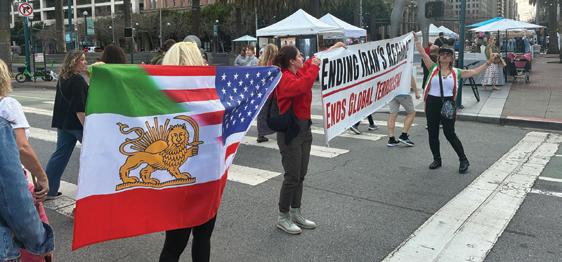
“People are tired of not having a real political voice.”
Mitra Sapienza, an English professor at City College, believes that the situation in Iran is a mix of hope, concern and disagreement about the country's future. “There is pride in Iranian history and culture, but people are divided. Many want change, but they don't agree about what system should replace the current one.”
“My worry is that people will fight each other instead of coming together,” Sapienza said.
Dr. Maziar Behrooz, a history professor at San Francisco State University, believes it is difficult to predict the outcome of these protests. Behrooz emphasized that historical experience shows that sudden revolutions often lead to instability.
“My hope is that change from this government, from this state system, from the Islamic Republic to anything in the future is going to be done gradually and peacefully.”
Gradual changes, he said, may increase the likelihood of a more stable military. “Out of revolutions, the outcome is usually chaos and then dictatorship.”
In addition to domestic crises, recent military developments have also affected Iran's political landscape. In recent weeks, military strikes in the region have killed several senior Iranian officials, including Ali Khamenei, considered Iran's most powerful political figure for decades, who was killed in an airstrike. His death further complicates the country's political landscape and raises new questions about the future of Iran's leadership and political direction.
Students, faculty and community members gathered at City College on Thursday evening to celebrate the 4th Annual Community Iftar, sharing food, conversation and the spirit of Ramadan.
By Qi Mai qmai10@mail.ccsf.edu
A s the sun began to set on the west side of the STEAM building on March 5, the first-floor lobby was filled with quiet excitement. Near the door of Conference Room 101, Chancellor Kimberlee Messina greeted every guest as they arrived. She shook hands warmly, offered hugs, and quietly said “Ramadan Mubarak.”
The fourth Annual Community Iftar, organized by the Office of the Chancellor and the Office of Student Equity, was about to begin.
On the left, City College staff sat at a table helping guests sign in. On the right, long tables stretched along the hallway, holding large plates of food waiting to be served. Mario Vasquez, the Chief of Police, stood nearby with a friendly smile.
Inside the room, a long table displayed colorful halal desserts and snacks. At the front stood a small stage with a large blue background that read “Ramadan Mubarak.”
The seats were filled by 5:48 p.m., Maghrib prayer time. The evening was designed not only to break the fast but also to bring people together and strengthen the campus community.
In a short speech, Messina said she was happy to celebrate Ramadan and share the meal with students, faculty, administrators, staff and community members. The event helped build connections across cultures and backgrounds, creating a stronger sense of unity and belonging on campus.
Board of Trustees President Aliya Chisti, the first Muslim woman to hold an elected position in San Francisco's history, helped host the event and introduced speakers throughout the evening.
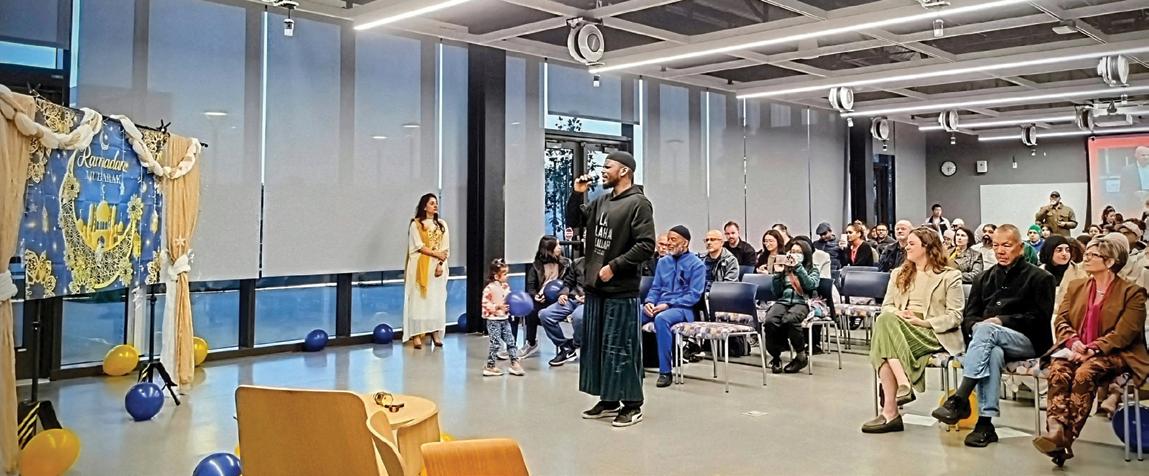
Several speakers noted that Ramadan is not only about abstaining from food during the day, but also about practicing patience, generosity and empathy — values they said are especially important today and that they hope more Americans will embrace.
During Ramadan, many Muslims increase charitable giving, and meals are often shared not only with family but also with neighbors and strangers. For many non-Muslim attendees, the event offered a chance to learn more about the traditions and meaning of the month.
More Than a Meal
Iftar is the meal Muslims eat at sunset during the holy month of Ramadan. From dawn till sunset, Muslims abstain from food and drink, focusing instead on prayer, reflection and acts of charity.
At sunset, the fast is traditionally broken with dates and water. After that comes a full meal and the
evening prayer known as Maghrib.
But iftar is more than physical nourishment. It is also a moment of spiritual reflection. Fasting teaches discipline and reminds people of those who experience hunger every day.
Ramadan began on the evening of Feb. 17 and will end on the evening of March 18, depending on the sighting of the moon.
As the time for prayer approached, the room gradually grew quiet. An imam — the person who leads the prayer — walked to the stage and guided the moment. Attendees gently reached for dates and cups of water while the imam led the prayer.
After breaking the fast, some guests walked to Room 103 to perform the evening prayer.
Soon, the meal began. The smell of food filled the room as trays were uncovered. Plates of chicken biryani offered fragrant rice and tender spiced meat. Bowls of warm lentil soup carried hints of turmeric and
Dozens of City College students and faculty gathered at Ram Plaza on March 11 to celebrate Unity Day.
By Patricia Baldwin byebyebaldwin@gmail.com
On March 11, Ram Plaza was teeming with all the opportunities offered by City College's clubs, organizations and resource centers.
At Unity Day, presented by the Associated Students' Inter-Club Council, students could get a square on their bingo card filled in for each booth they visited. The bingo cards could then be redeemed for free ice cream.
Along the way, students could learn about the Rams Garden Club. Abraham Hall, City College student, said that gardening has improved his mental health.
At the Burmese Student Society table, Thant Phyu Sin Oo discussed celebrating Burmese culture, food and traditions, such as the annual
Thadingyut Festival. Students could try hot Burmese tea, a traditional black tea similar to Thai tea.
CCSF Students 4 Justice offered a letter-writing campaign to save Free City funding. Dejon Chopin provided information about the Student Worker Union, “to increase student workers' salaries and raise the limit on hours worked, especially in light of the new work requirement for SNAP benefits,” said Chopin.
“Unity Day is fun and helpful to students,” said Freslinn Mejia Sanchez, who was tabling for the Family Resource Center. “It can be hard to get information on websites, and the in-person interaction allows students to get more information,” Sanchez said.
She'd already talked with at least 10 students who hadn't known about the FRC.
Chancellor Kimberlee Messina joined in the fun, learning how to do the Heimlich maneuver at the City College Nursing Student Association table.
Patrick Cassidy said that “FLEX [Finance Leadership Economics eXchange Club] offers students opportunities to attend networking events, as well as company visits, like our visit to Intel, and speaker events, like International Women's Week at Stanford.”
Students could also visit booths to learn about UMOJA — the African American Scholastic Program, the Anime & Manga Club, the Writing Success Project, City Dream, She Who Codes Club, the Queer Resource Center, and approximately 20 other organizations.
“With everyone being in Ram Plaza together, it also allows
garlic. Sweet pastries such as baklava, fatayer and cakes were also served.
Children moved excitedly among the tables. Two young girls happily helped serve their mother and grandmother, smiling as they carried plates of food.
Moustafa Arafa, the father of the two girls, began studying computer science at City College in 2020. After earning his associate degree, he transferred to San Francisco State University.
During the past two weeks, he and his wife have woken up around 5 a.m. to eat before sunrise, then continued their work and studies until about 6:10 p.m. He later learned about the event from Student Chancellor Heather Brandt, and Arafa decided to attend along with his wife, children and mother.
Arafa said fasting did not strongly affect his daily routine because he has learned to balance his faith with
work and study. He said he was glad to break the fast at City College.
“I feel like I am returning home, and it is meaningful to me,” Arafa said.
Many attendees were former City College students who returned from other universities or communities to take part in the celebration.
The Community Iftar at City College was both a religious gathering and a moment of connection. People waited for sunset side by side and reached for dates at the same time. Hunger gave way to a shared meal. Strangers embraced, shared tables and talked late into the evening.
As the event ended, the scent of spices and sweets still lingered in the air — a quiet reminder of Ramadan's message: after a long day of patience and reflection, the glow of sunset always returns.
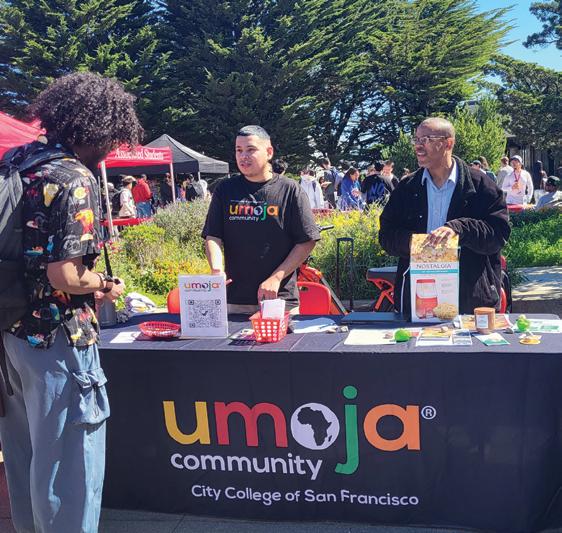
people to connect across programs,” Sanchez said.
City College faculty Sabrina Edelen and Rhythm Luk were enjoying the sunny day and sharing information about Math Club, which provides peer tutoring in
math and has partnered with data science to present a speaker series.
“More students attended this Unity Day than in the fall, and there is more engagement,” Edelen said, chalking it up to the good weather and free ice cream.
The Student Union buzzed with delicious food and lively performances on the evening of March 2 for the college's second annual Black History Month and Lunar New Year celebration.
By Jocelyn Wong jwong@theguardsman.com
Students and community members filed into the room, donning their Sunday best and red attire in honor of the cross-cultural event.
Jing Shi, a mental health peer advocate and multi-hyphenate, and Brianna Smith, president of the Black Student Union, organized the event, ensuring there was enough food for everyone.
“It was absolutely a team effort,” Shi said.
Shi highlighted the contributions of the many volunteers who helped organize the event, as well as the students and community members who signed up to perform, making the night unforgettable.
CCSF Students 4 Justice brought together different student clubs and unions, such as Black Student Union (BSU), Chinese Culture Club, English Together, and Anakbayan — a Filipino youth and
student organization for democracy — to host the event.
“Brianna from BSU contributed the stellar flyer art. And we have much to thank our fellow City College student and Professor Chen for the Chinese calligraphy station she put on,” Shi said.
Students from various groups attached information to tables and adorned the space with posters. Anakbayan taped their flag to the wall as the mics were being set up for the event.
The food was also secured from a Chinese-owned local business, “Do Eat,” and a Black-owned business. When the rice, tofu, green beans, broccoli, catfish and fries ran out, Smith brought boxes of pizza. There were egg rolls as well.
“The Black History Month and Lunar New Year event was a powerful piece of connection and solidarity,” student Malaya Redondiez shared.
“In a country that has used migrants and then thrown us away,

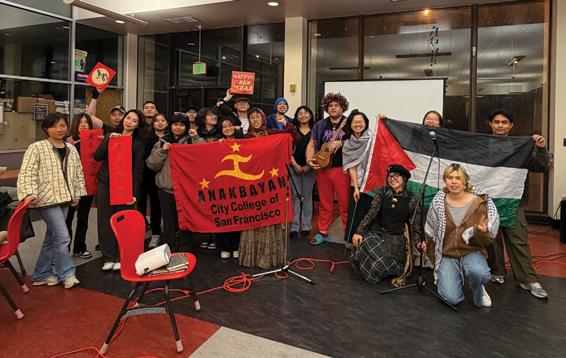
taking our culture for profit, this event was refreshing,” they said.
Redondiez highlighted the family-like nature of the event by sharing meals and cultural traditions with City College's Black and Asian communities.
adding that Anakbayan CCSF is always open for more collaboration.
“The Lunar New Year and Black History Month were a delightful, spectacular event,” shared Abraham KaLā Hall, a Native Hawaiian student who performed in the event.
“Everyone was delighted with pride and joy and a sense of purpose,” he added.
“Anakbayan practiced our song day-of, but we also understand that we share music to share the story and not a perfect song,” Redondiez said.
“I hope to attend more events like this in the future,” they shared,
In addition to food, the attendees could also enjoy creative, lively performances.
Kalā Hall reflected on the solidarity in supporting voices that are often silenced and in using poetry to contribute to a broader musical and melodic cause. Everything from spoken word to a ukulele performance to karaoke occurred during the celebration, in addition to the different organizations tabling. Next year's third annual joint celebration will build on the progress and success of the past two years.
“This event should happen every year if not more often throughout the year to continue to heal and make the bonds of our communities stronger,” Kalā Hall said.
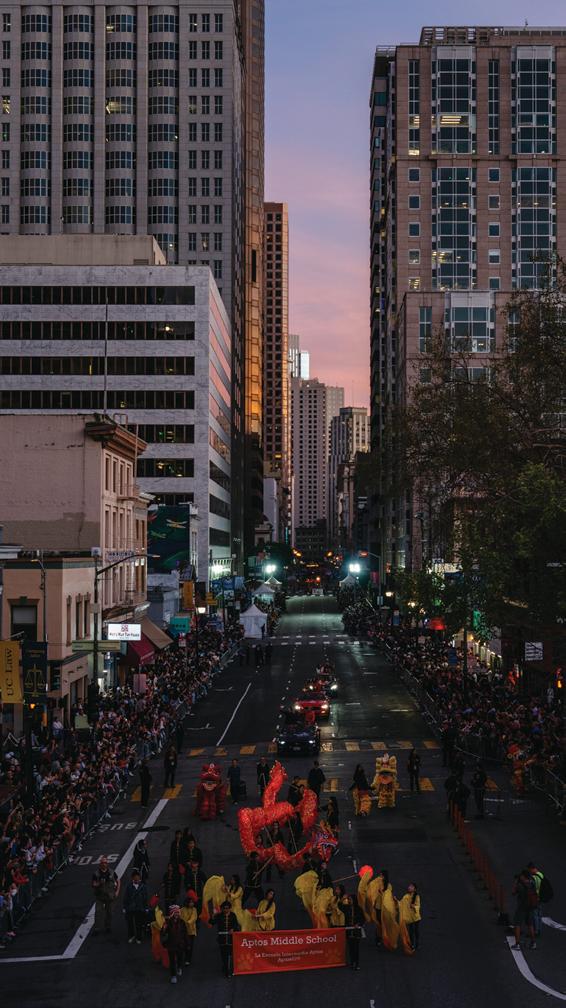
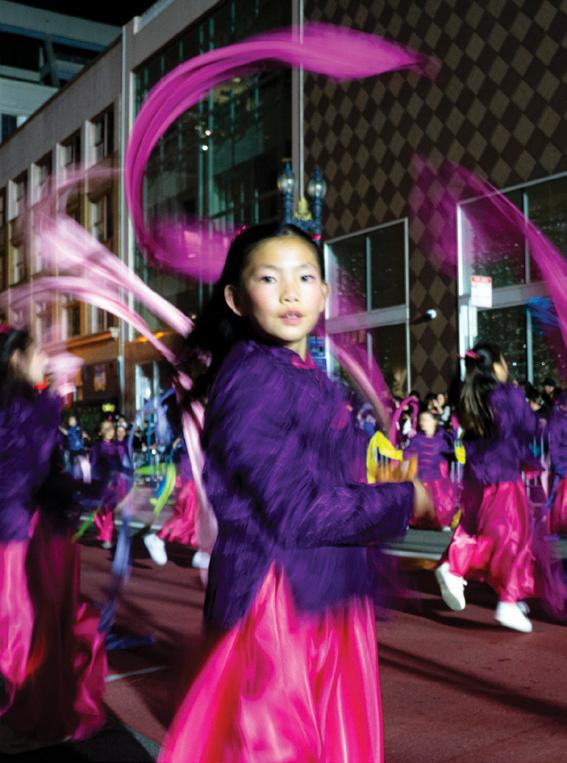
Thousands of people filled San Francisco streets on March 7 to celebrate the Chinese New Year Parade. Featuring a 1.3-mile route, the annual parade is the largest Lunar New Year celebration outside of Asia.

City College
By Kelvin Eckman keckman@mail.ccsf.edu
I am being evicted for being a fulltime college student. That may sound absurd, yet it is my current reality — and I am quite sure the same is true for many low-income students trying to stay housed while navigating higher education.
For more than 20 years, I have experienced chronic homelessness.
I am a first-generation college student, a former foster youth, formerly justice-impacted, and a student living with HIV/AIDS. I am also a participant in the Disability Services Programs for Students (DSPS) program.
Two years ago, after decades of instability, I decided to return to college. I secured housing in a Low-Income Housing Tax Credit (LIHTC) apartment in San Francisco right as I began my studies, believing that this would provide me the foundation I needed to complete my education and end my chronic homelessness once and for all.
This is my third attempt at college over a span of 24 years, with each prior attempt derailed by housing instability. When I enrolled at City College of San Francisco in June 2024, I began taking classes part-time.
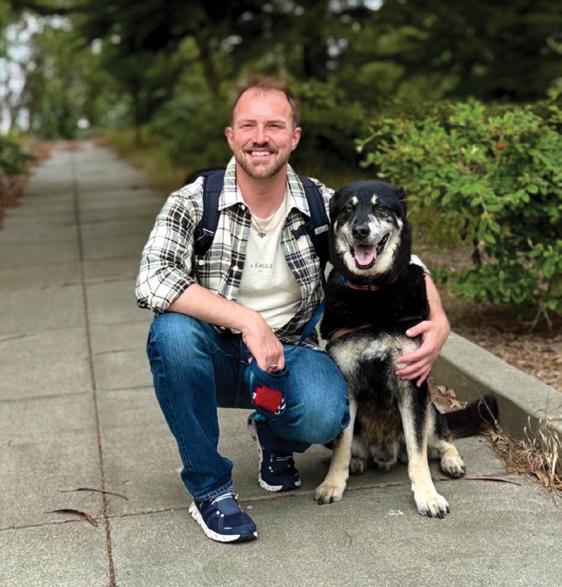
City College student Kelvin Eckman and his service dog, Rosco, are facing eviction from low-income housing because Eckman is a full-time college student. (Photo courtesy of Kelvin Eckman)
At no point when I moved in was I informed by my apartment manager that enrolling as a full-time student — 12 units or more — could disqualify me from LIHTC housing under the IRS “Full-Time Student Rule.”
continued from page 1
With long-standing vacancies in the marketing department and an administration that turns over faster than its students, the lack of cohesive vision at the helm is starting to show.
Alas, there are no clean answers. Community colleges, by their very definition, are cursed with ambiguity, always straddling definitions of what they are. Are they catered towards transfer students, or is it a vocational school? Do they retain as many full-time faculty as a university, or rely on part-timers working second jobs to be here for the love of the game? Up until now, the answer has always been “all of the above.”
One thing's for sure, no one's coming to save us. Hold Harmless provisions from the state have run out, the city has enough sinking ships to plug up with parcel taxes as it is, and the Department of Education surely won't be coming to the rescue. We're on our own, folks. Will we choose to sit around and wait to be graced by the mayor's remembrance, or will we be an institution so impressive that the city will not be able to get City College out of their minds when they think of municipalities to partner with?
Change takes time, but the vision to bring the “city” to City College starts here. Layoffs and course cuts can't stave off enrollment losses forever. We have to know what it is the college is trying to be, which, judging by enrollment, cannot be what it used to be.

to San Francisco State University — I was accepted in mid-February — to pursue a bachelor's degree, I have consistently been enrolled in 15-plus units.
At my annual low-income housing recertification in October 2025, management informed me that I was in violation of federal LIHTC regulations solely because I am a fulltime student. My case was referred to their attorney, and I was issued a 30-day eviction notice. As of March 1, I began eviction proceedings.
I have had to find a pro-bono attorney, who has helped me navigate the eviction. But most likely, I will have to find housing elsewhere or face a forced moveout. In effect, I am being evicted for pursuing higher education.
Pell Grant recipients, students living with disabilities and those emerging from chronic homelessness.
In high cost of living regions like San Francisco, stable housing is a necessity; it is the difference between continuation or dropping out.
Housing instability is one of the strongest predictors of educational attrition. Without housing security, academic performance, mental health and completion rates decline and suffer. We cannot claim to value educational equity while enforcing housing policies that disincentivize full-time enrollment.
Gonzales at 415-517-4426
Yet to qualify for financial aid, a former foster youth grant and other essential support programs, I must stay enrolled in at least 12 units. And in order to complete my education in a reasonable timeframe and transfer
The system is broken. It should be lifting low-income individuals out of poverty instead of forcing students like me into an impossible choice: reduce course loads and lose financial aid eligibility, or maintain full-time status and lose housing. Either path undermines any chance at long-term stability.
The IRS policy disproportionately harms the very populations California community colleges are meant to serve — former foster youth, justice-impacted students,
The IRS Full-Time Student Rule under the LIHTC program must be amended to include categorical protections for financially vulnerable students who depend on full-time enrollment for financial aid and degree progression.
Students should not be forced into part-time status to remain housed. Nor should they be pushed into homelessness for seeking to accelerate their education.
Expanding access to higher education — such as through programs like Free City College — is crucial. But without addressing systemic barriers such as the Full-Time Student Rule, many underprivileged students will be left behind.
Rams are headed to the 3C2A State Finals after blowing out Columbia College.
By Daniela Villegas Jovel dvilleg4@mail.ccsf.edu
City College has punched its ticket to the State Finals with a decisive 84-59 win over the Columbia Claim Jumpers.
As the Rams took the court on March 7, Brad Duggan Gym felt electric. The stands were packed with students, families, and fans wearing school colors, all waiting to see if the Rams would continue their incredible season. The men's basketball team has been incredibly dominant all year, including this game against Columbia College.
From the opening tip, the energy in the gym was intense. Both teams started aggressively, diving for loose balls and pushing the pace up and down the court. Early on, Columbia tried to keep the game close by attacking the basket and forcing tough shots from the Rams, and for a few minutes, it looked like the underdogs might actually challenge San Francisco. The crowd got quieter each time Columbia scored, waiting for the Rams to respond.
It didn't take long for the Rams to find their rhythm. Midway through the first half, they began moving the ball faster, setting hard screens, and attacking the paint with ferocity. Every time the Rams scored, the noise in the gym grew louder. By halftime, the momentum had clearly shifted in favor of City College.
The second half felt like a Baseball
statement. The Rams came out with even more intensity on defense, forcing turnovers and turning them into quick points. Columbia struggled to keep up with the pace, and every mistake they made seemed to turn into another scoring opportunity for San Francisco. Players on the Rams' bench were standing and cheering after every big play, feeding off the excitement of the crowd.
By the final minutes, it was clear that the Rams were in control. The crowd started to relax, relishing every possession as the clock ticked down.
The Rams on the court chemistry is something to behold. Freshman Eliot Conley explained that while it starts off the court, “It just kind of [becomes] infectious on the court through that… hanging out after games, during downtime. It's an offcourt thing that's helped us match well on the court.”
The win was another huge milestone in what has been an incredible season for the Rams, who entered the game with one of the best records in the state and an undefeated conference run. More importantly, it secured their place in the next stage of the postseason and kept their championship hopes alive.
Vitor Oliveria, who was a standout down low this season for the Rams and was named co-MVP of the team, said, “This win means a lot for us, we just put in a lot of hard work this year. We had everybody focused on the same goal.”

The Rams were not able to fend off an offensive assault by the College of San Mateo.
By Henry Crowell henrycrowell5@gmail.com
City College was on the receiving end of a thrashing by the Bulldogs on March 10, with the Rams plating only one and surrendering 19 in their first conference game of the season.
The Rams held it relatively close through the first six innings, entering the top of the seventh down 5-1. CSM had different plans, putting up seven runs on three hits, profiting from three errors by the Rams. They then continued the barrage until their last out, posting an additional five runs in the next inning, and two in the ninth.
On the City College side, freshman leftfielder Malachi Washington singled twice, and sophomore utility man Horacio Bucio was able to get on base twice with a single and a walk. Overall, the Rams scattered six hits throughout the game.
This loss is their 15th straight, giving them a 1-19 record on the season in what has been a down year for the Rams. Head Coach Mario Mendoza says that despite this, the team has

persevered, saying “[It's been a] tough season… the thing I admire about this team is that while the results haven't been what we want, the attitude is still great. We're still working hard.”
Despite adding another one to the loss column, the game wasn't all bad. Sophomore centerfielder Max Silicani was a bright spot, saving more than a couple of hits from
dropping for San Mateo and playing stellar defense overall, especially when factoring in the amount of ground one must cover when playing any outfield position at the expansive Maloney Field.
Silicani said his catch in the seventh inning, which prevented extra bases for CSM's Elijah Ward, had the highest degree of difficulty, “Going to my left was the hardest
because it was a lefty [batter] and we had a righty [pitcher] on the bump, so this ball had some slice going away from me.” Silicani ranged over 150 feet to reel the ball in at the warning track.
Although the Rams' outfield defense and contact hitting have been solid this season, their pitching has left something to be desired. Following their game on March 12,
in which they were battered 29-0 by the Bulldogs, their run differential (runs scored vs runs allowed) sits at a cool -259, as they have let 318 opponents cross the plate, and scored 59 themselves. Admittedly, the offensive environment of their conference and 3C2A at large skews heavily towards high run scoring, but this has not been a recipe for success for City College's nine.
“Same thing as any branch of life, [you need] consistency,” said Mendoza. “When things go right, we're pretty good. When things go wrong, we still haven't learned how to handle the adversity that's gonna hit us, especially in our conference.”
In terms of the rest of the season, Coach Mendoza said he just wants to compete. “[I want us to] keep getting better every day, limit these mistakes we're making, play with no fear, and play baseball the right way.”
They followed this game up with the aforementioned 29-0 loss to CSM, dropping another one to the Bulldogs the very next day, March 13, in a 12-0 finish. They faired slightly better on March 17, losing 8-2 to Chabot College.
continued from page 1
By Diana Chuong dchuong@mail.ccsf.edu
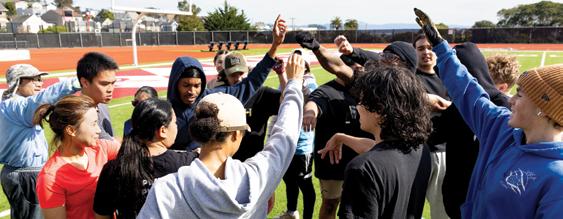
After a week of harsh rain, the sun had appeared. The new flag football class was finally able to gather at the George Rush Stadium again. “Get On Up” by James Brown blared across the field as students began to line up for warm-ups and drills under the tutelage of Coach Socrates Vergara Jr.
While the flag football class is open to anyone, the creation of the course stemmed from the growing popularity of Women's Flag Football across the country. As of 2026, all three associations of college athletics, the NCAA, NAIA and NJCAA, have added the sport at the varsity level. Additionally, the sport will be making its debut on the world stage at the 2028 Los Angeles Olympic Games, with events for both men and women.
“We hope to bring a female flag football team to the school next spring,” says Vergara. “Right now, the process ties in with seeing if there's any interest from our regular students. We have a great turnout in terms of enrollment for this semester's class.”
For many of those enrolled in the class, this is the first time they've played gridiron football in any capacity. Despite that, the environment has proved welcoming to newcomers. “I was nervous, but we have a really great coach,” Zama Mncwango said.
Even for those who do have a background in athletics, it has been an elevating experience: “I run, and I'm a swimmer as well, but after each scrimmage it feels like I belong on the field,” explained Luying Wu.
Despite the obvious similarities between football and flag football, they can be very different games. The latter usually requires the ability to play any position at any time, and many teams' playstyles are much faster-paced and run-oriented, as opposed to the pass-heavy offenses seen in the NFL today.
Though there's no tackling or contact off the line, the game is still quite physical. While passing is less common, “50/50” balls are still prevalent, as players crash into each other trying to gain possession.
“I always feel uplifted and energized after each class,” student Nina Williams said. “I'm able to channel the excitement and tackle the rest of my day. There's also the team. It's a competitive environment, but everyone rallies together.”
Coach Vergara is excited for his students and the future of the sport at City College. “It feels great to see my students enjoy the class. It's a fast-growing sport and will open up great opportunities for students to enroll in City College. They'll be able to experience both the academic and athletic sides of college.”

Folsom Lake defeated City College 82-56 in a disappointing end to their season.
By Jocelyn Wong jwong@theguardsman.com
T
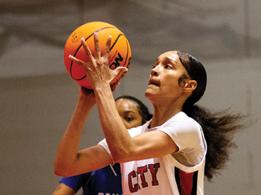
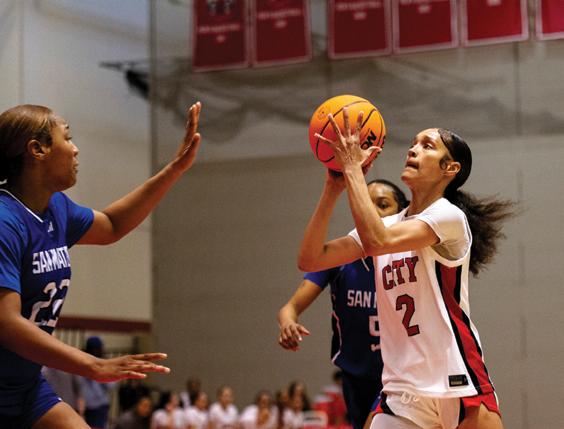
he Rams fell to Folsom Lake College on Saturday, March 7, ending their playoff run. The Falcons got out to an 8-0 start, and City College was never able to close the deficit.
Despite coming within eight points at the half, Folsom kept their foot on the gas pedal. Anytime the Rams would make a run, the Falcons would respond with a timely 3-pointer or force a turnover, keeping the momentum in their favor.
“I feel like we got off to a rocky start at the beginning of the game, but we also stayed strong and didn't give up, which helped us cut a 19-point lead down to 9 points,” said North Coast Conference MVP Patriceia “Trice” Walsh. “The game had many ups and downs, but overall we fought until the end.”
About midway through the first
quarter, First-Team All-Conference center June Lumumba banked in a shot from short range to break City College's scoring drought. Despite the Rams making efforts to cut into the lead, Folsom Lake had jumped out to a 21-4 lead with 2:20 left in the first.
However, City College came roaring back. Walsh hit a free throw with 2:14 left, followed by a layup from freshman guard Tayrn Nasol. On the next possession for Folsom Lake, Walsh stole the ball and went back and forth between her and AllConference guard Caelan De Vera before downing the bucket.
“One thing we did well was sticking together,” said Walsh, who has recently been named Second-Team All-State freshman guard. Even when times got hard, and people made mistakes, we stuck together and rode it out as a team, instead of getting upset with one another.”
The Rams' leap into the double
digits allowed them to finish the first quarter down 25-11. City College kept its foot on the gas in the second quarter, outscoring Folsom 17-11.
The Rams' defensive intensity led to several steals and secondchance opportunities, and by halftime, City College pulled within
eight points — 36-28 Folsom.
However, Folsom kept their foot on the gas, scoring a whopping 31 points in the third. This led to a deficit too large for the Rams to overcome, as City College scored just 21 and 7 points in the third and fourth frames.
“The game could have [gone] better,” said sophomore standout Stephanie Salazar. “We all weren't really in the right [mindset] to begin with.”
“Even during the game, no one was communicating on defense or offense, so we were just all over the place. Then we started throwing up shots instead of making the extra pass, which we needed to do,” Salazar said.
The young Rams squad boasts nine freshmen on the roster. Their playoff experience has already fueled the squad in their offseason practices, so fans can expect a hungry team next season.