THE GRYPHON

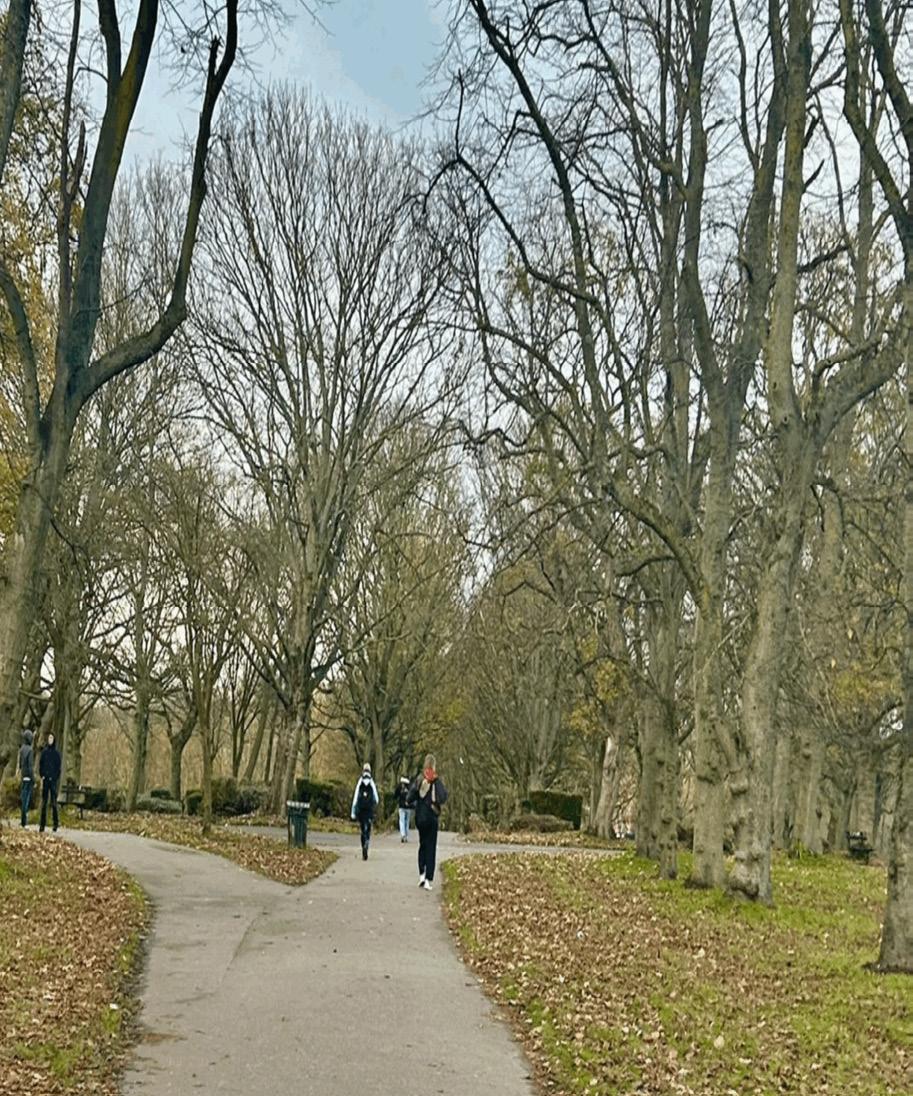
Sexual offences in Hyde Park and Headingley remain disproportionately targeted at women, new police data reveals.
One resident commented:
Following a series of assaults reported in Hyde Park, The Gryphon submitted a Freedom of Information request to West Yorkshire Police to investigate the scale of the issue in the area The figures show that 107 sexual offences were recorded in 2024 across Hyde Park and Headingley. Of the 108 victims identified, 86 were women - 79% of all victims - and 23 were men. So far in 2025, police
have recorded 94 sexual offences involving 91 victims. Women accounted for 71 victims - 77% of cases - while 17 victims were men. Although men and boys are affected by sexual violence, the data indicates that women and girls remain disproportionately targeted.
Age-specific data illustrates student vulnerability. In 2024, 47 victims were aged 18–24, representing 44% of that year’s total. Police confirmed this same age group also accounts for the highest number of victims in 2025.
SASHA (Students Against
Sexual Harassment and Assault), a student-led organisation at the University of Leeds said that: “These figures reflect what students in Leeds have been saying for years. Sexual violence isn’t an isolated incident; it’s part of a wider culture that enables harm.” They added that students, particularly women, continue to carry the burden of staying safe: “Students have repeatedly asked for simple measures, like better lighting in Woodhouse Moor, yet the burden is still placed on us, especially
How working in a kitchen made me better at essays and love this city
Ineeded to make money, that much was clear. About to embark on my fourth and final year of a language degree, I should have had more academic problems on my mind than how I was going to afford my daily sustenance, but a combination of bad luck and questionable decisions made balancing the books seem impossible on my student loan. I had to do the unthinkable. Get a job.
The places to which I could apply was determined by the decision
at the tender age of sixteen that waiting tables and pouring pints wasn’t for me. Admitting in my Wetherspoons interview that I regularly drank there using a fake ID probably didn’t help in my bartending career, but it landed me a job washing dishes in the kitchen. With this twist of fate began a long saga of kitchen jobs which funded my continued existence through my late adolescence and early 20s. It was to this old, reliable source of cash that I returned this September when, out of 40 or so applica-
tions, I received one callback, one interview, and one job.
I won’t give exact details on where it is. This is partly to protect the anonymity of my coworkers, and partly to stop any of you degenerates from complaining about me directly when your plate comes through smudgy. All you need to know is it’s in central Leeds and it’s more high-end than a McDonald’s. You’ve probably been there, or at least walked past, but what goes on behind the scenes will be the same as any other restaurant
on the big high streets of a city like Leeds.
I was offered a job as Kitchen Assistant; a job formerly known as Kitchen Porter, and most accurately called Dish Monkey. I like washing dishes. It’s easy, satisfying, and takes one far enough away from the action that you’re relatively unlikely to be on the business end of an 80-hour-aweek chef’s ritual daily crashout. What it also gives you is time to think.
Read about what several other uni’s are up to on Page 3
Vans in Leeds
Read about the latest development in police presence on Page 4 Skinniness for sale
Arts & Cultures editor Rosie Nowosielski explores adverts and the damage of ‘thinspo’ Read more on Page 7
Photography editor Jack Norris discusses the discourse around street graffiti. Read more on Page 19
We’ve centred our games around the festive season this time! Play them at Page 24

Editor-in-Chief
Gabriel Morrissey-Limb
Newspaper Associate Editors
Lana Conway
Momnah Shahnaz
Emma Wilkinson
Shakeal Zaman
ITM Associate Editors
Jess Cooper
Bethany Dunn
Arabella Wright
News Editors
Aliza-Kayan Ahmed
Raya Boycheva
Mishika Gupta
Zara Lake
Charlotte Prescott
Emma Wilkinson
Opinion & Features Editors
Sarah Al-Battat
Hannah Chohan
James Kendrick
Hattie Murdoch
Em O’Reily
Maja Wasielewski
Amelia Whatley
Shakeal Zaman
Sport Editors
Jake Crapper
Mina Jigau
James Morgan
Mrinalini Pretish
Science & Climate Editors
Cassia Bennett
Lucile Harvey
Anna Jackson
Rory O’Dwyer
Ruby Smith
Longoae Tembwa
Music & Clubs Editors
Daniel Brown
Millie Cain
Francesca Lynes
Arabella Wright
Arts & Culture Editors
Oleksandra Buryma
Bethany Dunn
Sophie Fowler
Jessica Hill
Jude Mcann
Rosie Nowosielski
Momnah Shahnaz
Scarlet Sheehan
Fashion Editors
Christelle Al Abbasi
Jess Cooper
Sofia Garapetian
Selma Lingemann
Amba Tilney
Lifestyle & Blogs Editors
Romilly Anderson
Alaina Charles
Raechel Duddle
Jacqueline Wong
Heads of Photography
Jiayi Du
Aidan Goddard
Charlotte Sollars
Jack Norris
Heads of Design
Erin Gascoigne-Jones
Phoebe Andre-Watson
So, this is Christmas?
E d i t o r ’ s L e t t e r
Hello again! Feels like no time at all has passed since I last saw you! Greeting my typo filled editor’s letter in the Fresher’s Guide, and now look at you!
All grown up, you’ve (hopefully) gone from a mischief merchant to Book Club, you can find your way around campus, and you should by now know your housemates names, courses and pet’s maiden names.
Joking of course! I hope this semester has been kind to you if you’re a first, second third, or whatever year! I know it’s been pretty decent to me! What are your holiday plans? I bet they’re what you need.
Enough small talk though, welcome to the 4th and final issue (for this semester) of The Gryphon! We’ve once again updated our front page, I can’t stop it’s becoming a real problem, and we’ve made sure that our final issue of the year is jam packed! Some of my favourite articles are
in this one, as well as designs! Music have, as ever, knocked it out of the park alongside every other section!
We’ve been busy this year, a new logo, new schedule, more socials, and even more planned for next semester! we’ve got some great, and some important, news this issue, a fascinating feature on being a potwash, something i can relate as it was my first job at 15! We’ve also got recommendations for books and films, a writer’s personal Live at Leeds awards, updates on the quality of our water, updates from other unis, and so much more!
This is my favourite issue so far, and again I hope you enjoy it as much as we have! Now go on, you don’t want to miss the last Fruity of the year!
Yours always, Gabe















Gayatri Alexandra Eaton
The Leeds city councils have dropped plans for a new park and ride facility on Harrogate road.
On 3 November, plans to create ‘parking up to 500 cars and a single-storey bus terminus building’ located at Alwoodley Gates off Harrogate Road, was officially withdrawn.
The project was announced as part of the Leeds Public Transport Improvement Programme for 2017-2022. It was expected that Leeds City Council would find ways of being able to fund it. The council said:
“it was paused late in the programme due to funding being prioritised for other schemes and slow public transport recovery post-pandemic.”
They added:
“a number of environmental surveys required to support the application have expired, necessitating that the application be withdrawn.”
The proposal was popular as it aimed to create ease for commuters traveling to Leeds from Harrogate and along the A61. It planned to help reduce traffic congestion through reducing the amount of cars on the road.
Although the plan has now been official-
>>Continued from Page One
...and marginalised students, to keep ourselves safe.”
Leeds Police said they are working closely with partners to raise awareness of the Violence Against Women and Girls (VAWG) strategy. More than 2,200 officers have received specialist training across four strands - prepare, protect, pursue, and preventaimed at improving reporting and response to sexual violence.
These officers also engage directly with universities to explain reporting pathways and the stages of a police investigation.
Police emphasised that they “recognise all victims as individuals and tailor our response to their needs” and remain “committed to creating an environment where women and girls can feel safe, and free from harm, fear and harassment.”
ly withdrawn, the council has claimed that they will still be ambitious in seeking other sources of funding to reboot this project.
Some local stakeholders expressed mixed opinions on the decision. Some transport campaigners were in full support of the measures. Nevertheless, to some, these concerns lacked focus on the problem of the withdrawal of this plan.
One resident commented:
“Leeds needs a proper transport system. This solves very little. All gone very silent on the Tram system. Leeds is the only major city in Europe to not have trams.”
And another frustratingly commented:
“Build the… tram you cowards!.”
Across Leeds there are other park ride sites such as ones at Temple Green, Elland Road and Stourton. As the project will not go ahead, there will continue to be only three park and ride sites in Leeds with free parking and direct city centre bus links creating frustration amongst locals.
Meanwhile, the council has stated that there will be more observant towards funding opportunities, helping the development and aspiration for the Alwoodley location.
SASHA’s president argued that structural change is still urgently needed:
“We need meaningful, preventative action, not more responsibility shifted onto victims. There is a strong student community for survivors and allies, and groups like SASHA are here to support and advocate for them. But lasting change requires universities, police and local partners to work proactively and transparently to address the root causes of this violence.”
West Yorkshire Mayor Tracy Brabin reiterated her commitment to tackling gendered violence, stating: “Ensuring the safety of women and girls is a key pledge of mine,” and emphasised the importance of “working together” to address the disproportionate harm experienced by women and girls in the region.
Image credit: Zara Lake
Warwick
Marking the start of a busy News week at Warwick, our campus was lit up with a Global Illuminations Procession on 19 November as part of the ‘One World Warwick’ events, which celebrated the University’s diverse campus population and culminated birthday events in the University’s 60th anniversary year.
Later that night, emergency services were called to an accommodation block on campus after a fire broke out on the second floor of the building, devastating two flats and leaving several more damaged. No injuries were reported, but students were forced out of their rooms and have since been temporarily housed in emergency accommodation nearby.
And, in more accommodation-adjacent news, an intruder was found to be ‘squatting’ in the storeroom of another accommodation block on campus. Students found a prison ID card, a duvet, and food waste in the storeroom and alerted security staff, with the University later confirming that a squatter, who now posed no risk to others, had indeed gained access to the Cryfield accommodation block.
Aberdeen
We have welcomed a new principal at the University of Aberdeen, with Professor George Boyne’s tumultuous seven-year reign coming to an end. Professor Pete Edwards assumes control after 37 years of various positions within the institution, with the initial
task of bolstering senior management after roles were vacated. A fractious student’s union AGM occurred in mid-November, where a reduction in library hours at our law facility was passionately debated between attendees and a damming suggestion was made that post-graduate students are unfairly treated and offered little academic support. The University also held a memorial event for Denis Law, which saw football legends including Sir Alex Ferguson, Ruud Van Nistelrooy and Gary Nevile attend to pay their respects to Scotland’s greatest ever player, who passed away earlier in the year.
In Mancunian news, asylum seekers housed in hotels in the Greater Manchester area have issued a statement saying they feel “unsafe” and “want to contribute”, seeking to “stop the spread of misinformation”. The statement, issued via the Greater Manchester Immigration Aid Unit, comes as protests have broken out in front of hotels housing them. MGM Andy Burnham, speaking to the BBC Radio Manchester, has stated “there must be a better way” to address the issues.
In further news, Ian Murray, a Department for Culture minister has praised Andy Burnham’s plans for education in Manchester, describing them as ‘a good thing’. This comes as the mayor launched the Greater Manchester Baccalaureate on a trial basis, which aims to establish pathways into technical education. In the past, Burnham has stated that the DfE has a ‘long-running resistance to devolution’.
Prescot
Leeds is now home to one of the world’s most viral coffee shop chains, Blank Street, with the opening of its 49th UK store on Albion Street.
With doors set to officially open to the general public on Saturday, 22nd of November.
Blank Street has built its reputation from its matcha. The store arrives just in time for Leeds matcha and coffee lovers to try the new Winter menu which consists of the Blondie Matcha, Espresso Martini Latte and an Earl Grey Matcha, the public of Leeds are able to
A key part of Blank Street’s further appeal is the option for customers to enjoy their drink with oat milk at no additional cost – proving
optimal for students.
On Thursday 20th of November, The Gryphon were invited to their exclusive press release. One of our News Editors, Charlotte, got the opportunity to experience the new store.
The star of the winter menu was the Blondie Latte – a blend of caramel notes, cookie butter and a hint of miso for a unique decadent taste – which is also available as a matcha version.
For tea lovers, The Earl Grey Matcha stood out as a sophisticated take on their classic matcha. Pairing perfectly with these drinks was the sea salt and milk chocolate cookie.
Blank Street’s chosen local
supplier of baked goods is Leeds very own Laynes cafe.
The Albion street store combines the original listed features of the building with the familiar Blank Street aesthetic fans expect. Albeit this Leeds location is unique in its most experiential design to date.
The ground floor houses a drinks station with pouring counters for customers to watch their beverages being crafted.
Upstairs, the public can experience a serene atmosphere, with music, comfortable lounge seating – creating an immersive experience that expands beyond the drink itself.
As we approach halfway through the first semester of the academic year, many final year students are applying for post graduate jobs as they start to think about what life after university might have to offer.
For many, the postgraduate job hunt has proved to be tricky. Students can find themselves applying for hundreds of job advertisements without receiving anything as much as a standardised rejection email. Research from the job-hunting website ‘Indeed’ shows that in the twelve months leading up to June 2025, graduate job postings has fallen thirty-three percent compared to the previous year.
The fall in postgraduate jobs has been coupled with higher numbers of university leavers. The 2023/24 academic year saw over one million graduates compared to 828,000 five years before.

Postgraduates aren’t the only ones struggling in the UK labour market figures published by the Office for National Statistics last week showed that unemployment rose to 5% in the three months to the end of September, the highest level in four years.
The issues in the postgraduate job market are symptomatic of a much more systemic issue facing younger people in the job market. Figures from the ONS showed that in September
2025, 12.7% of all people aged 16 to 24 were not in education, employment or training. In an interview with a University of Leeds graduate who, after four years of completing a degree and a full-time role in her desired career path, has spent six months struggling to find another job in the same sector and is currently working in hospitality.
The graduate said “I thought I’d have found another role in my desired industry by this point, especially after having worked
incredibly hard on a unique skill set alongside a degree for four years”
She went on to say that “Each [job] rejection is difficult to take as it means one step back for every two steps forward via applications, interviews or other opportunities.”
She commented how she felt “lucky to have a job”, given that this was not the reality for many of her peers and noted that she tries her best to stay grateful and optimistic in a “very challenging job market for young people.”
A spokesperson for the University of Leeds said, “The Careers Service provides a variety of ways for students to work with the team. These include oneto-one online appointments, which are available for graduates unable to make it to campus and appointments outside of typical office hours. The dedicated graduate support team is committed to developing the employability of our students by running a variety of focused graduate events, including ones outside of office hours, to help with the transition between student and graduate life.
New facial recognition vans were deployed for the first time on Tuesday the 11th November, and have been met with both praise and resistance
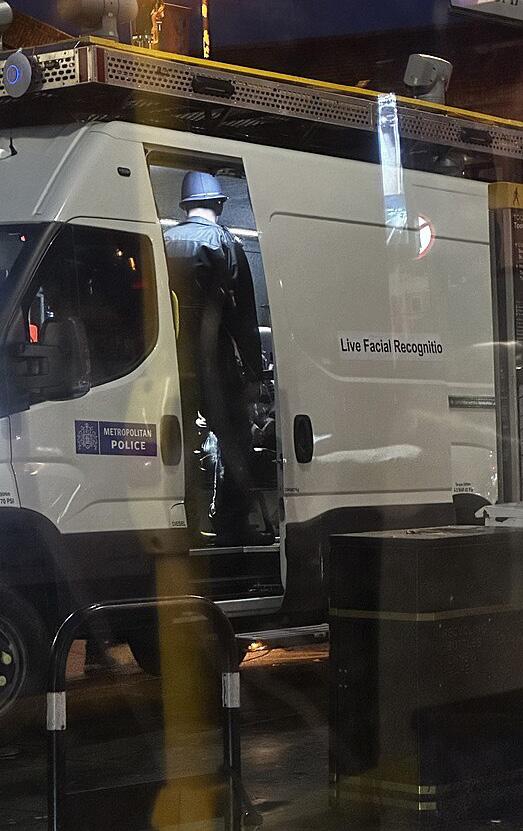
The vans scan the public faces in real time and compare them against the database of wanted individuals. If a match is found, the system generates an alert for police to act on. The facial recognition will be used to identify offenders and locate missing people.
West Yorkshire Police said ‘Launched last week, Live Facial Recognition is a new tool used by the force to target wanted offenders. It can also be used to help locate missing people. Use of the technology is part of our ongoing commitment to keeping our communities safe and bringing offenders to justice.’
The first arrest aided by the facial recognition vans was made on Friday, after the technology generated an alert for a man that was wanted for theft.
Officers subsequently approached the man and when searched the stolen items were in his possession. He was arrested and taken into custody. Concerns from the public have been raised over false recognitions, criminals avoiding recognitions using techniques such as balaclavas to cover their faces, and improper deleted data.
Chief inspector Dan Tillot said ‘It’s important for me to say now this isn’t about mass surveillance. The system doesn’t
store images of anyone walking by. It is only looking for matches against a specific watch list and if there is no match, the data is instantly deleted. You will see it where there is a higher risk and known offenders are present. Its just another tool to help us do our job more effectively’
Taking to social media to ‘bust myths’ around the facial recognition technology, Inspector Tillot said, ‘we want people to know about it, it’s certainly not a secret’ Further he said, ‘the system has been tested thoroughly and it is performing really well, plus we have safeguards in place to make sure it operates fairly and accurately. The tech doesn’t make arrests, officers do and every real alert is checked by a trained officer before any action is taken.’
West Yorkshire is not the only area trialling this technology to take the streets, it is part of an extensive pilot programme with vans being rolled out across Greater Manchester, Bedfordshire, Surrey, Sussex, Thames Valley and Hampshire. Speaking to The Gryphon, one student said, “I don’t mind at all that they are using technology and scanning our faces, especially if it means catching criminals. Sometimes I don’t feel safe in the city centre especially at night so if the vans will be there then I think I will feel safer, even just with a larger police presence.”
it
James Childs
This week, politicians and the media have reverted to one of their favourite pastimes, attacking the BBC.
A great British institution, having existed for more than a century, is now under attack by those posing to have concerns over impartiality and journalistic integrity, but in truth would happily see the destruction of the corporation in pursuit of a personal agenda.
Those attacking the BBC this week are no friends of both the corporation or defenders of the truth. Rather, they are hostile actors who fear an independent and free public service broadcaster.
The scandal this week involving a Panorama documentary which misleadingly spliced together two different parts of President Trump’s speech on January 6th 2021 was shocking and warranted the utmost scrutiny of the broadcaster. In a world of misinformation, the BBC exists to uphold the highest standards of journalism, and on this occasion, failed to do so.

However, this mistake must be placed into context and has been blown out of all reasonable proportions. In a corporation which employs over 21,000 people and produces hundreds of thousands of hours of content a year, errors are inevitable. When they occur, they should be dealt with swiftly, yet on this occasion, those who have an agenda against the BBC have spotted this as an opportunity to undermine the broadcaster.
The BBC must take a large portion of the blame for this scandal reaching the heights which it has. The failure to swiftly respond to The Telegraph’s publishing of the leaked internal

memo, showing the mistake in the Panorama editing, contributed to the frenzy which ensued. The resignation of Tim Davie (the Director General) and Deborah Turness (CEO of BBC News) allowed many of the BBC’s opponents to claim victory for what should have been a simple apology and withdrawal of the documentary.
Naturally, those already with an axe to grind in relation to the BBC have wasted no time whatsoever in Image credit: GoodFon.com
transforming this as a means for their own campaign against the BBC.
Is the BBC perfect? Absolutely not, but it is far too important to lose. I rarely see people, not least the BBC itself, set out its stall. The BBC should go further in promoting all the great work it does, from television to radio, news to sport. There is something on the BBC for everyone and that should be truly cherished and protected.
Despite the objectives of the BBC, as set out by the first ever Director General Lord Reith, being to inform, educate and entertain. It has now instead become a conversation around the BBC that has been dominated purely around its news output.
The BBC provides four television channels, six main radio stations, over 20 local radio stations, a news website, a sport website, and the iPlayer with thousands of hours of content and BBC sounds.
Not least to mention the World Service, an incredible output of the world’s single largest external broadcaster, transmitting to 200 countries, in 42 languages, reaching 318 million people a week. The soft power that the United Kingdom receives from the World Service is invaluable, and it should continue to have its funding protected by the Foreign Office for the foreseeable future.
The idea that we should replace the license fee with a subscription model is simply unworkable and would destroy everything the BBC is meant to be. It would cease to be a public service as it would be forced to chase commercial revenue, leading to less commercially viable output to be
scrapped.
What’s more is, despite what the Daily Mail would have you believe, the BBC is incredibly popular.
On Christmas Day last year, the BBC took all 10 spots on the most watched shows live on the day, far outstripping its commercial rivals.
The BBC’s news output still remains one of the most trusted across the world, it is the most trusted in the UK and the second most trusted in the United States, second only to the Weather Channel.
The attacks on the corporation from politicians at home and abroad has been a disgrace. A mistake has been made, and leaders have been held to account, that should be the end of it. The idea that a foreign leader is able to hold a British public service to ransom is preposterous.
The Government should take a stronger stance; to defend the BBC domestic and abroad and show it is here to stay, whether they like it or not.
The Cost of The Longest U.S. Government Shutdown on 42 million SNAP Recipients
Jeshna Arya
Everyone will remember the headlines about the longest government shutdown in U.S. history, fewer will remember the empty fridges and dinner tables it left behind.
42 million Americans faced decisions no one should have to make. Freya Gillette was forced to choose between diapers and food for her two-year-old son. “It breaks my heart, and stresses me beyond my limits,” she told TIME. Kat Bogdon, another SNAP recipient, said: “Daily things that are normal feel like luxuries.” For people like them, the shutdown was not just another political debate in Washington; its impact was felt through impossible choices and anxiety over basic human rights like meals.
Before the financial year ended on September 30, 2025, Congress failed to pass a budget, triggering a government shutdown, the first since 2019. Dispute over funding led to a stalemate. Democrats insisted on protecting healthcare sub sidies and social programs, while Republicans rallied for spending cuts. The 43-day shutdown from October through November became the longest in U.S. history. The impact was immediate: 1.4 million federal employees went unpaid for weeks, thousands of flights were disrupted, and SNAP benefits for 42 million Americans were suspended.
Outside those pristine marble halls of Capitol Hill, the debate was measured in milk and bread, in diapers and dinners. Parents skipped meals so their children could eat. For 42 million Americans, SNAP was not a conveni ence but a lifeline.
Ellen Mei, a USDA program specialist, was fired after she told PEOPLE, “anxious because we’re hearing about the risk potentials and office closures that are looming over USDA as this shutdown kind of drags on,” warning of the impact on SNAP recipients. In Pittsburgh, grocery store owner Ryan
>> Continued from Page One
...In between the sisyphean task of washing the dishes and making sardonic chit-chat with the floor staff, it’s just me and my thoughts. I am not exaggerating when I say that the majority of my dissertation so far was written in the back of my mind while I was scrubbing god-knowswhat from the bottom of a saucepan. It’s like how the best ideas come in the shower, but what I’m washing actually serves a purpose (I’m just kidding, fourth year’s going GREAT).
The other great joy of the job is the characters I’ve had the pleasure of meeting. As lovely as Leeds’ student population is, we’re hardly a representation of the true soul of the city. The ability to step through the staff room doors, put on chef’s blacks, and be entirely removed from student life is a privilege that I truly miss in less lean times. There’s something about panicking your way through an understaffed Saturday dinner rush that makes conversation flow freely and turns former strangers into rocks to cling to.
I remember early on in my time at the restaurant, when we were flooded with customers and I was given a precious 10-minute breather. Lucy, a veteran of the front of house team, burst through the back doorway onto the stairs where I was getting some fresh air, an already-lit cigarette hanging from the corner of her mouth. “You’re the new KP right?”. I replied in the affirmative. “I’m going to break up with my boyfriend,” she said with a far-away look. Doing my best to sound concerned, I asked why. I won’t repeat exactly what she said, but it involved him being unwilling to engage in some pretty spe-
Sprankle stated bluntly: “You can’t take away from the most needy people in the country. It’s inhumane.” Food banks reported demand surging by as much as 1,800 per cent, with volunteers identifying queues that stretched down streets and families arriving in tears. Human Rights Watch stated, “Continued failures by the US government to adequately fund food assistance forced families into difficult decisions to make ends meet and posed serious threats to the human rights of tens of millions of people.”
As the shutdown dragged on, the fairness of SNAP became impossible to ignore. Those opposing it argued that the program encourages dependency and suggested that food aid

cialist acrobatics with her and his best friend. At the time, I was still unsure of her name.
The camaraderie of the kitchen goes even further. Leeds being a diverse city, we get people from all parts of the world working behind the grill. Miguel, a sous chef from Senegal with an excellent taste in Afrobeats and proficiency in every language this side of the Prime Meridian, has become a true confidant. Initially stoic and quiet, upon learning I speak Spanish, Miguel has taken to telling me everything and anything, ranging from his time on the other side of the law in Andalucia to when so-and-so spilled an entire plate of food down the front of a Tory MP’s freshly ironed suit. Maybe I’m just getting old, but it beats someone telling you in a Hyde Park basement how they’re not really into Civil Engineering and are going to try to make it big as a DJ.
None of this is to cast any aspersions of the value of a purely student experience in Leeds. We’re all very lucky to be studying here, and I have met some of the most interesting, kind, and driven people on this campus. Arguably it is better to write a final year project in the library, and it is for that reason I fear my time behind the dishwasher may be running short. All I dare suggest is that if you find yourself needing extra cash, a manual job doesn’t need to be a painful chore. Even without the obvious financial benefits, I have found my time spraying leftovers from the bottom of plates to be a truly enriching experience, and one that I would genuinely recommend. Then again, I’m yet to set up an OnlyFans. That sounds way easier.
came a public predicament. For most, the debate was less about figures and more about survival, with supporters emphasising the moral obligation to aid those in need. The shockwaves of the US SNAP crisis sparked reflection globally.In the UK, food insecurity has skyrocketed. The Trussell Trust reported distributing 2.9 million emergency food parcels in a year, a 51% rise in five years. Campaigns like the Food Foundation’s Feed the Future pushed to expand free school meals to all children on Universal Credit, warning that hunger sabotages education. Research showed that most people who claimed Universal Credit went without meals for days. Just as families relying on SNAP benefits in the U.S. struggled to make ends meet, British households are facing similar choices, a reminder that food insecurity is not confined to the US but is a shared challenge for communities across the UK and globally.
Ultimately, the debate over food aid goes beyond mere figures and spreadsheets. In both Washington and Westminster, it exposes the instability faced by millions. Food insecurity is not an isolated problem, it is a shared vulnerability. One must argue that welfare systems are not abstract policy tools but lifelines, and when misgoverned, the impact on the quality of human life is immediate and quite substantial. What began as a political deadlock became a shocking reminder that the fairness of food aid is ultimately measured not in numbers or budgets, but in the meals that reach a child’s plate.
The shutdown may be over, but the important question still remains: Is food a human right or just another numerical bargaining chip?

One Week Left to Have Your Say and Win Big!
The LUU Strategy Survey is live, and you have just one week to shape the future of your union and win a share of over £4,000 in prizes, including a MacBook Air, iPad, Spotify Premium, VIP Leeds Ball tickets, and amazing experiences.
Your ideas can make real change on campus. Past student feedback has helped us to create: a free Essentials Hub, social and gaming spaces like Crossroads, a postgraduate study lounge, free sanitary products, drug safety kits, 24/7 library access, and subsidised club and society memberships. Imagine what YOUR VOICE could do!
It only takes a few minutes to complete. Don’t miss your chance to have your
voice heard and win big. Scan the QR Code, take the survey, and help shape the LUU you want to see.

Rosie Nowosielski explores the weight loss epidemic Rosie Nowosielski
“Hi, my name is Lutifah Thomson-Lowe, I’m 39, I’ve been with Juniper for four months now, and I’ve lost 27.5 kilos”.
This Juniper weight loss advert, with various others like it and the occasional Numan campaign, were all I saw when I clicked on YouTube videos earlier this year. For months, I was bombarded with before-and-after thinspiration images, testimonies of how much weight these women had lost, and reasons why you shouldn’t be ashamed to try weight loss medication. In the height of January’s exam period, I’d go on YouTube to decompress and take my mind off the looming pile of work. It worked, I was distracted. I was no longer thinking about my stance on Catalan nation alism or whether language was viewed through a nationalist lens in early modern Europe. Instead, I was thinking about how much I was eating, my weight, my body. No matter the creator or subject matter of the video, which were never gym, lifestyle, or diet focused, I was always forced to endure thirty seconds of weight loss promotion and my thoughts would loop back round to diet and what I was seeing in the mirror. I noticed my lunches get smaller and my appetite for sweet treats diminish.
After a while, the ads went away. As suddenly as they came. But their message of ‘weight loss at all costs’ didn’t leave me. I have not recovered my former status of sweettooth snacker.
Those ads weren’t made specif ically for me. I wasn’t the only one who saw them and I wasn’t the only one who was relent lessly fed them.
Alice received several ads a day from a PT selling a pack age on YouTube.
“The ad was targeted at ‘women over 40’ if I recall correctly. There was an assumption that everyone must be worried about their weight at that age. It all felt like an enormous stereotype”.
of control, self-doubt, and helplessness”.
tion of larger bodies. Now, the space that was

“At first I just thought ‘who’s this young guy acting like he knows the concerns a woman in her 40s might have about weight’? Later I found it irritating.”
“However well-intentioned, the ad could undoubtedly make women feel bad about themselves, or as if they need to look or be a certain way”.
“That could be disastrous for people with eating disorders of course, especially seeing it repeated so frequently”. succeeded.
On YouTube, there is no quick fix. In order to block all weight-related ads, the change needs to be made within the Google account.
Research conducted by Liza Gak, Seyi Oloji, and Niloufar Salehi at UC Berkeley has found that “online content which promotes the ‘thin ideal’, like weight loss ads, promote behaviours associated with eating disorders”. From their study, they concluded that “after seeing the ads, participants reported feeling frustration, annoyance, and disgust”. “It reinforced low-self esteem, a feeling of a lack
to lose weight. I grew up seeing fatphobic content everywhere I turned and I feel like it’s coming back round again”.
“Everyone, even people who aren’t overweight, are getting their hands on Ozempic or something similar because God forbid we just treat our bodies as what they are: just our bodies, and not our whole selves”.
Nova, like others, has noticed that the body positivity movement, in its prime in the late 2010s, is well and truly over. Thin is back. It never went away completely, but from 2017 to 2020 there was acceptance and representa-
these advertising barrages from happening in the first place. At worst, incessantly seeing the same adverts (on personal issues such as weight) for months on end, on every video, is deeply damaging. At best, it’s just boring.
Editor’s note:
If this topic resonates with you, help is always available. You can talk in confidence to an adviser from eating disorders charity Beat by calling the Beat helpline on 0808 801 0677.
Image credit: Hers
Esmée Huizinga
Allow me to set the scene for you: me and my girlfriends are in a pub, a regular occurrence whilst we are studying here in Leeds for a semester. We ask the woman sitting next to us if she could take a picture of us. She looks at the vintage little camera that she is handed and chuckles. My friend starts explaining that she needs to press the round button on top, and to please do a half-click first to make sure it focuses right. The woman reassures her. “Don’t worry darling, I know how to handle one of these!” she tells us, still laughing. I think she finds us endearing, going out of our way to get a ‘retro’ look on our pictures by pulling out some ancient relic of the pre-smartphone era which she has consciously lived through and we havenot. We are not unique though, not in the slightest. Just step one foot into the nearest pub or club and you will see it too: digital cameras being pulled out left and right by people who look like they weren’t even born yet when these things experienced their prime.
As was to be expected, I personally became inspired on TikTok a few years ago to search through the boxes in my parents’ attic on the hunt for some vintage device ready to take over the heavy picture-duty that my phone was carrying. I got lucky: what I found was an old and retro-looking silver Olympus camera, just waiting there to be discovered. It was a wedding gift my parents received in 2004 but apparently had not been able to stand the test of time, as it had seemingly been forgotten in a dusty old moving box somewhere.
Getting it to work was a whole different challenge on its own; the TikToks had conveniently forgotten to remind me that an old camera also requires an old charger and whatnot. My parents were glad to be of service helping me figure it out, though. Although a bit confused about this sudden interest in a device with the photographic capacity of about 3 megapixels, my dad quickly started a speech about how this thing was the crème de la crème ‘back in the days’.
Ultimately, getting it to work may have taken some scrambling around, but taking my first photo with this camera felt like I was quite literally seeing the world through a new lens. Naturally, I carried it everywhere in the following months, snapping candid pictures ofanything and anyone. What I quickly noticed, though, is that I was not even remotely ‘special’ for doing this.
Every event I went to, every night out or Sunday afternoon walk was accompanied by the flash of at least one vintage camera. It made me wonder, why was this such a trend? And why now? What was it about the post-lockdown zeitgeist that required everything to be coated with an aura of nostalgia? There are many possible explanations for this sudden comeback of the digicam,
and one could rightly point out that many other ‘retro’ things such as Y2K fashion or record players have come back in style too. However, I would argue that the resurgence in popularity of the digital camera stems
making scrolling-movements on a piece of metal… Now naturally, this idea is alarming to most. Although it is often difficult to implement any real change due to how ingrained these devices are in our daily lives,
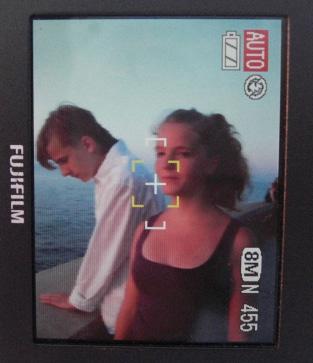
from more than just the existence of trend cycles. Rather, it is the circumstances, characteristics and expectations of our current digital landscape which have given the final push to make specifically these types of cameras see an unprecedented popularity spike.
First of all, many people are simply fed up with being on their phone all day, every day. As more and more research shows the addictiveness of these devices, many have started to look at their own screen time and started to realize how many hours a day they are really losing to their smartphones.
It is truly scary to count out, but if you were to spend an average of five hours a day on your phone from the age of 15 to the age of 75, you will have spent 12,5 years of your life on that phone. More than twelve years of
through baby steps, changes can actually be made. The digital camera is one of such baby steps. On of the biggest issues of the smartphone is the endless amount of functions it has: when you are done checking your mail, your texts and the weather, you can resort to a game, to LinkedIn or to TikTok. Conversely, the camera has only one function: to takepictures. Your mind won’t be tricked into spending more time on this device because there are no other ways in which this device can provide you with stimuli than to just take the picture and then put it away.
This also leads us to the following benefit: using an actual camera requires some sense of intentionality. Anyone who has ever been to a concert in the past few years must have noticed the amounts of phones in the air, not recording specifically one part of their favourite song, but rather filming half of
the concert just to be able to watch it back. Well trust me, experience tells that you will never watch most of those videos back. They will just be eating up your storage space and gathering dust in the depths of your memory card, similar to how my parents’ camera was gathering dust in the depths of our attic. My point? It has become so easy to photograph and film anything that we are not constantly photographing and filming everything. There is zero intentionality involved, we just click a thousand times and hope that somewhere in there will be the perfect shot. Cameras don’t work like that, they need to be turned on, pointed, focussed, clicked, processed and then you have one picture. You look at this one picture, consider whether it is good enough, and either move on with your day or take one more. To me, this seems not only healthier in terms of being present and enjoying the moment, but it also leads to more special pictures.
Speaking of special, it is a well-known fact that the age of social media has instilled into our generation’s collective mindset that everything needs to be perfect. I think this collective mindset is starting to crumble under the pressure of its own weight, and the rise of digital cameras is simply a symptom of that downfall. The endless filters, the content created in perfectly well-lit rooms, the curated backgrounds and the constant stream of symmetrical faces on our ‘for you’ pages have become tiring, they have become fake. It can be seen in many aspects of the digital sphere: take the TikTok ‘rat girl summer’ trend (a counter- movement to the clean girl aesthetic) or the popularity of posting ‘photo dumps’ on Instagram. People want to see personality, authenticity, realness now, and nothing captures that better than the digital camera. Its quality reminds us of a time where candid was chosen over curated.
Many would love to see that come back, and though we still have a long way to go, the digicam girls are pioneering this movement. I still carry a digital camera around here in Leeds, you will find it in my bag 9 out of 10 timesyou check. Funnily enough though, I don’t pull it out as often as I used to. At times, it has started to feel like deadweight, not because I have started to dislike the pictures it takes, but because I am trying to become less reliant on any device for making memories.
Ultimately, whether you use your phone, your camera, or even live painting, these only representfragments of the moment they depict. They can serve as keepsakes or be shared, but the real memories are yours and yours only. In other words: make sure to see them through your own eyes too!
Image credit: Caspian Rehbinder



ISSUE #4 - 01/12/2025




In 1992, Michael Caine portrayed Ebenezer Scrooge with the gravitas and sincerity of a Shakespearean performer, surrounded by an ensemble of muppets. In 2009, Scrooge came to life as an uncanny motion-capture creation in Robert Zemeckis’ computer-generated fever dream of a film. Now, this festive season, the same character gets called a wasteman during a song and dance sequence.
Christmas Karma is the latest rendition of Charles Dickens’ A Christmas Carol, this time – a Bollywood-inspired musical set in modern-day London. The film stars Kunal Nayyar in the role of Eshaan Sood, an ‘Indian Tory who hates refugees’, as described by writer and director Gurinder Chadha. Her adaptation of Scrooge embarks on a journey of self-discovery with the three otherworldly ghosts. In her first foray into the fantasy genre, Chadha mixes Dickens’ classic story with her own tender approach of highlighting Indian British stories (with Blinded by the Light and Bend it Like Beckham as incredible career highlights). However, the final product leaves more to be desired, with the tone and direction feeling all ove the place.
Sood is not just tired and grumpy; from the second he waddles on screen, Nayyar portrays him with the intensity of a supervillain, scowling at everyone he comes across with furious rage. Throughout the film, there is a pantomime-like quality to his performance: always over the top, but never boring. Sood is tortured from
way that feels cartoonish. Although the messages of the original text are not subtle, it is often hard to see him as a real, believable character. That said, Nayyar shines during the film’s quieter moments, where he delivers a convincingly melancholy and thoughtful performance during dramatic scenes.
At times a comedy - other times a serious drama - other times a musical, Christmas Karma suffers from trying to be everything at once and not mastering any of these genres. While the plot and structure closely follow its source material, its biggest changes can be found during the ‘Ghost of Christmas Past’ segment, in which Sood looks to his childhood. He is shown to have been born and raised in Uganda, displaced from his home and best friend after President Idi Amin’s order for the expulsion of Indians in year 1972. Grainy archival footage is used here to demonstrate the plight of the situation and it does feel both educational and upsetting.
Although, following the scene of a drunken passer by projectile vomit 15 minutes prior, gives the film a wicked sense of a tonal whiplash. In another scene, Sood, along with the Ghost of Christmas past, visit a flashback to when he is racially attacked during Christmastime, while a soft version of Silent Night plays in the background. It is a harrowing scene (especially for a PG rated Christmas flick) and one that shows the Indian/British dysphoria that writer/director Chadha usually excels at. However, all emo-
somewhat listenable, are weighed down by the poor lip-syncing, autotune and uncreative writing. The cinematography does not do any favours; rather than feeling like a whimsical extension of reality, the numbers are filmed so plainly it is hard to get excited by them. There are standout scenes: a number depicting a blossoming relationship utilises a soundstage to create striking silhouettes; a Bollywood inspired house party feels fun and wild; and a scene where Bob Cratchit empathetically sings to his family about Sood genuinely feels touching and intimate. Apart from these, however, the rest of the numbers fail to justify the movie’s existence as a musical. Hours after leaving the cinema, I tried to recite any of the songs from the movie (excluding the new rendition of Last Christmas that plays during the credits) and, unfortunately, could not follow through.
Perhaps I am too optimistic or maybe, it is the fast-approaching Christmas season. Whatever the reason, I wish I could feel more positively about Christmas Karma. The film showcases interesting ideas and does feel like a fresh interpretation of a timeless classic at times. But ultimately feels like a jumble of tones and musical numbers that mostly feel bland.
Unfortunately, this may not be a yearly festive re watch.
My rating: 2.5/5
Words By Paul Evangelista Image Credit: Wikipedia Commons


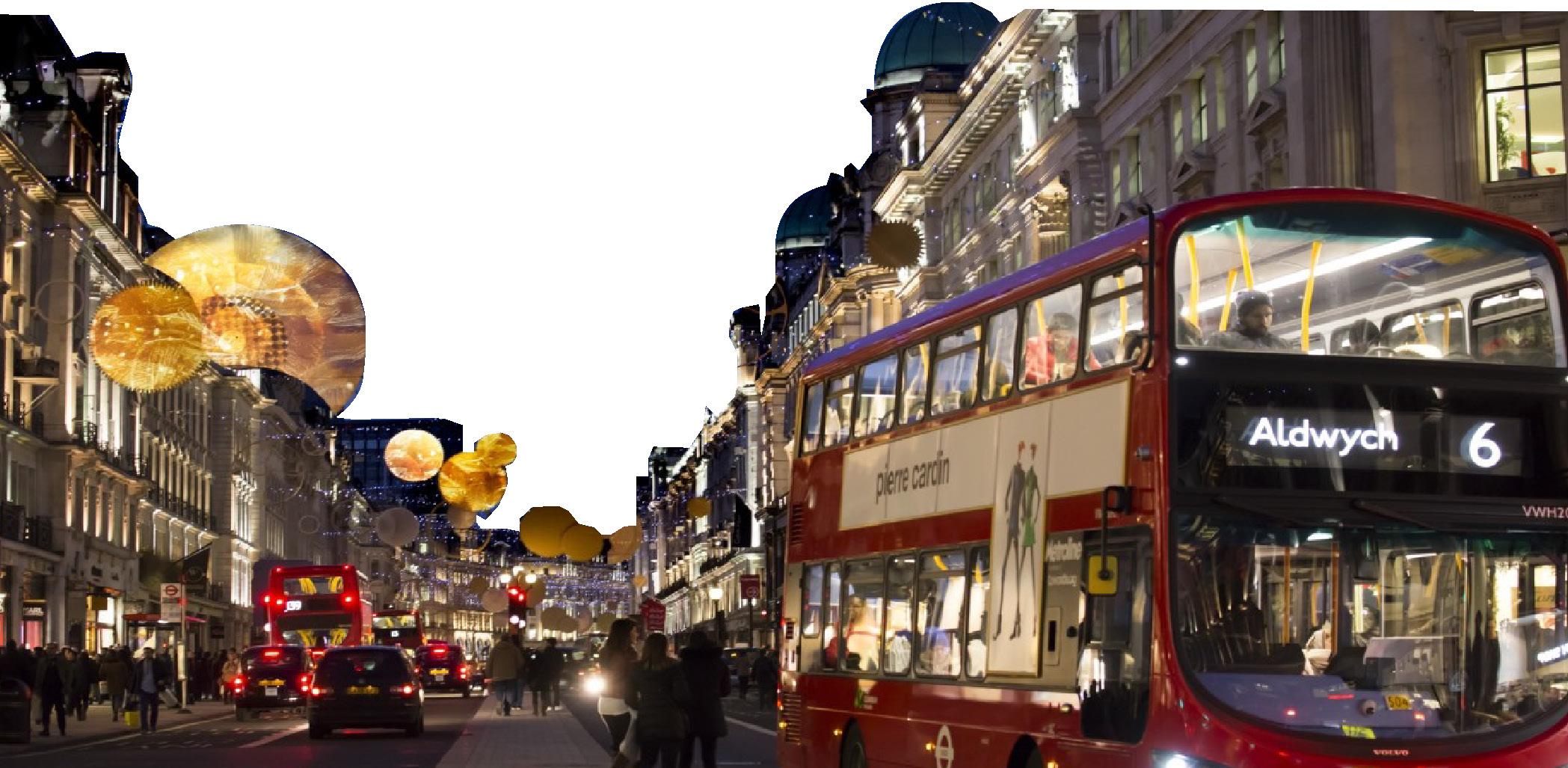

As much as I hate to admit it, winter is upon us: umbrellas turned useless in the wind, walking back from campus in the dark, and wearing every scarf you own
To stave off any premature watching of Christmas films, I start my book recommendations with Romance. If you’re in search of an ‘and they skipped off into the sunset together’ kind of ending, I warn you, these are not what you’re looking for. I don’t think you would be reading this article if you hadn’t already read Normal People (2018) by Sally Rooney, but the adaptations of it and of Conversations with Friends are also incredible, and truly part of the Sally Rooney experience. Nothing can beat Normal People, but Intermezzo (2024) comes close. Love in these novels is such a difficult and painful, yet beautiful and vital thing. Still on the theme of love is One Day (2009) by David Nicholls. Again, I’m sure that by now you have watched the series that came out last year, but you should let Anne Hathaway in the 2011 film adaption break your heart too. And, if you have man aged to escape spoilers up until now, One Day book to read this winter.
A personal favourite is The Pursuit of Love Nancy Mitford. Austen-esque, it follows the of a wealthy English woman in the interwar elements of both tragedy and comedy. The ries is one of many adaptations of the book of only three-parts, is more than manage evening by the telly.
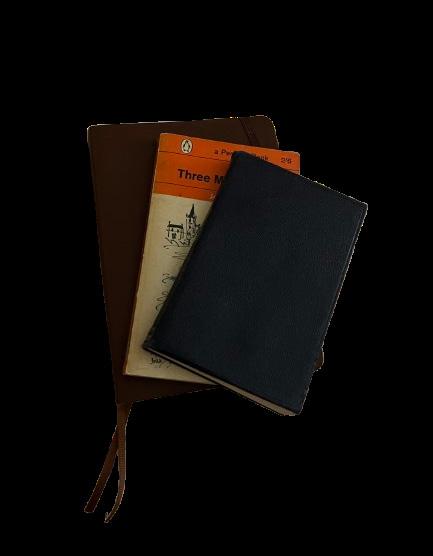

Claire Keegan, a contemporary Irish author, focuses less on romance than on human relationships more broadly, and for this reason I admit that I prefer her to Sally Rooney. Writing novellas and short
stories, I love that Keegan’s works allow for an uninterrupted read from beginning to end. In so few pages, her books are shatteringly impactful, and such a brief glimpse into their lives somehow makes the characters even harder to leave behind. I have loved Small Things Like These, So Late in the Day and Antarctica, and I have a copy of Foster on my bookshelf that I cannot wait to read soon. Set

In any conversation about books, including this one, I have got to insist upon the brilliance of Fitzcarraldo Editions. I am not exaggerating when I say that every single book I have read from this publisher has changed my worldview in some way. They often publish translations, offering insight into parts of the world that English literature often does not touch. As a continuation of Claire Keegan, I will start with John Fosse’s Aliss at the Fire (2010), a visionary work exploring love, loss and grief. Originally written in Norwegian, and set by a fjord, the bitter bleakness of the descriptive passages is of Keegan’s works and will make Leeds feel balmy in comparison. Also enclosed in the recognisable Fitzcarraldo covers are two of my favourite books: Simone de Beauvoir’s A Very Easy Death (1964), and Annie Ernaux’s Happening (2000). Beauvoir talks about the death of her mother and her process of grief, and Ernaux opens up about an illegal abortion she had in 1963 - the intimacy of the autobiographical genre is part of what makes these books so poignant. Again, the short length of both
Over the course of writing this it has become dark outside, and as miserable as that is I am looking forward to spending the next couple of hours reading, followed by watching the new Frankenstein. I am about to make a cup of tea and do the only thing that, in my opinion, winter is good for.
Words by Lila Frost

Streets swept clean by baggy jeans and raucous foot races between Leeds’ well-loved venues to catch the most raucous and suave new music in the city.
All Image Credit: Arabella Wright


Like every other day in November, it was wet, cold, and oh so dreary. My Adidas zip up: completely drenched, my hair ruined within minutes of being outside, and water was seeping through my boots. After hours of running around town all day, I was yearning to get to my last destination. So, as I passed by the Otley Runners, forgetting it was just a regular Saturday for them, I finally made it to the Lending Room where we were waiting for Stockport’s very own to take to the stage.
The Rolling People, not to be confused with fan favourite tune by The Verve, made another Leeds appearance, and I am taken back to my first year of university, November 2023. I had gotten two tickets and dragged Anna (hey, shoutout) along with me to stand front and centre of their gig at Oporto. We had a brilliant time, granted we were also a few pints in, but I knew I had to see them again. That I did, last year at their mega O2 Ritzs gig in Manchester. No doubt, I was thrilled to see their name announced for Live at Leeds in the City 2025.
As I got to The Library Pub, I walked up the stairs to the Lending Room, first bev of the day in hand (glorious by the way), and I observed them set up their kit. It was then show-time, front man McNichol leads the band onto stage, followed by McGovern on lead guitar, Knighton on bass, and Clark on drums. It is no surprise why they are gaining attraction rapidly; they emulate such passion and intensity from the moment they are under the stage lights.
They opened with ‘Reign’, pulling the crowd in with a vigorous riff almost immediately. There is such grit in McNichol’s voice, setting the energy and pace for the rest of the gig.
Following that, they play their first unreleased tune of the evening, ‘State of Things’, a powerhouse of a tune I might add. There was so much vibrancy from everyone, the crowd was really starting to feel it.
‘Edge of the Knife’ is up next, a single from earlier this year, they enter a new chapter with this song. With the storytelling-like lyrics, there is such a raw and real recklessness about this tune. Get to know.
Now, I cannot express how enthusiastic I am about this next song, another unreleased anthem, ‘Coming Down’. I’d say it is quite different to the rest of the discography yet so authentically *them* at the same time. The harmonies from McNichol and Clark are nothing short of angelic, I have no words other than fucking world-class.
They then gave us another two unreleased songs and before we knew it, we were nearing the end. Next, they play an all-time favourite, ‘I’ll Be There’, the first track on their second EP Before It’s Gone (2024). The bridge and build up is electric, and the crowd anticipated the final chorus by clapping along with the tune. Unfortunately, we reached the end, and they closed their set with yet another unreleased song, ‘Your Take’.
After that performance, I believe that Leeds will always show a warm welcome when it comes to The Rolling People. Surely by now I’ve managed to convince you, if so, catch them this December as they embark on their 2025 UK Tour, or at New Century Hall in Manchester next April (might see you there). Words by Emma-Jayne Bennett.
Calling all indie kids - polish your Doc Martens, don your finest vintage band tee, and strut down the red carpet to the Great 2025 Live at Leeds in the City Award Ceremony. All awards are based entirely on Ruby Smith’s opinion, of course.
Best Use Of A Violin Bow: Roscoe Roscoe (Honourable Mention: Divorce).
Playing the guitar with a violin bow was a thread in the sparkling tapestry of sound woven by Roscoe Roscoe, as they flooded Brudenell with lush harmonies and ethereal shoegazey, psychedelic sweetness. The London-based six-piece also sported some banging knits. Honourable mention in this category goes to Divorce, who employed similar playing-guitar-with-a-bow tactics for several of their songs. The alt-country band from Nottingham enthralled the crowd with a playful and unpretentious performance that brought their stellar songwriting to life.
Best Name: Clothesline From Hell
Admittedly, I went to this set purely because I liked the name. What I didn’t know was that I was about to discover a new favourite artist. Clothesline From Hell is the moniker of Toronto-based multi-instrumentalist singer-songwriter Alex LaFramboise. He produces endlessly creative songs featuring raw and distorted choruses that surface over textured instrumentals, only to sink back into a constant ebbing and flowing of chaos as quickly as they appeared. Packing Santiago Bar to full capacity, and decked out in a
quintessentially North American baseball cap and flannel shirt combo, LaFramboise delivered an exquisite performance balanced on a tightrope between intimate and explosive.
Jalen Ngonda’s extraordinary vocals mesmerised the entire audience at Beckett Student Union. The sense of awe rippling through the crowd was palpable. The sheer power of his voice, combined with his masterful songs and incredibly groovy band, was definitely worth missing Adult DVD for (award for the most devastating set clash!).
further from the truth. Featuring choreographed squatting and playing guitar while bent backwards (half upside down!), their spiky punk-rock songs and witty lyrics soundtracked the highest energy performance of the festival. The raucous energy of the all-female line-up from Cardiff was matched tenfold by the fervent moshing of the crowd. I also have to give an honourable mention in this category to Westside Cowboy! They filled Belgrave to capacity with enthusiastic fans who danced ardently throughout their set, and could later be overheard raving to their friends about how amazing the band is.
The Coolest: Cherry Seraph.
Most Environmentally Friendly: Radio Free Alice. All four members of Radio Free Alice were reading set lists scrawled on paper plates - how eco-conscious to repurpose lunch leftovers. Aside from reducing, reusing, and recycling, the band delivered a phenomenal performance. If they hadn’t greeted the crowd as “cunts” in drawling Australian accents, you would never have guessed they were from Melbourne; with ghostly pale skin and matching indie-darling uniforms of baggy grey jeans and navy long-sleeve shirts (top button done up), they assimilate into the UK seamlessly. What makes Radio Free Alice stand out is their music: melodic guitar licks and punchy riffs, commanding basslines, driving rhythms, and distinctive vocals colliding in indie-rock songwriting perfection. I can’t help but feel this band is going to become huge in the coming years.
Descending out of the rain into the tender pink glow of Sela bar’s basement venue, and immediately being enveloped by layered synths, spacious vocal effects, and brain-scratching loops, felt like a warm hug. This welcoming embrace was thanks to Sophie Russell, the solo artist crafting alt-pop electronic music under the name Cherry Seraph. Her low-key yet intricate performance was interspersed with friendly Yorkshire chatter and ended with a dreamy improvisation, cementing her as the coolest of the festival.
Words by Ruby Smith.
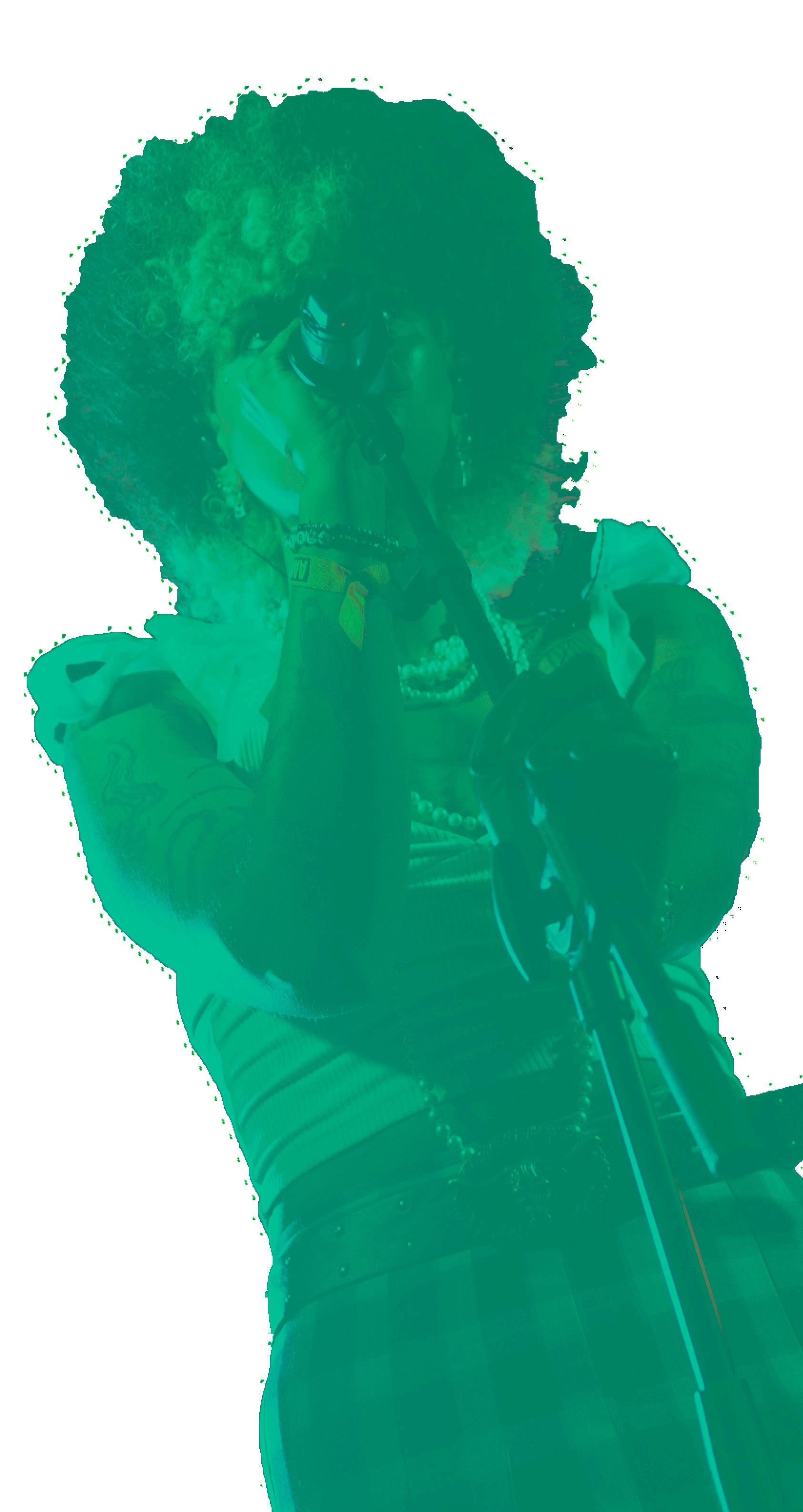
Wildest Crowd: Panic Shack (Honourable Mention: Westside Cowboy).
Panic Shack sang “I’m lazy and I like it / I stand up just to sit back down” but that couldn’t be
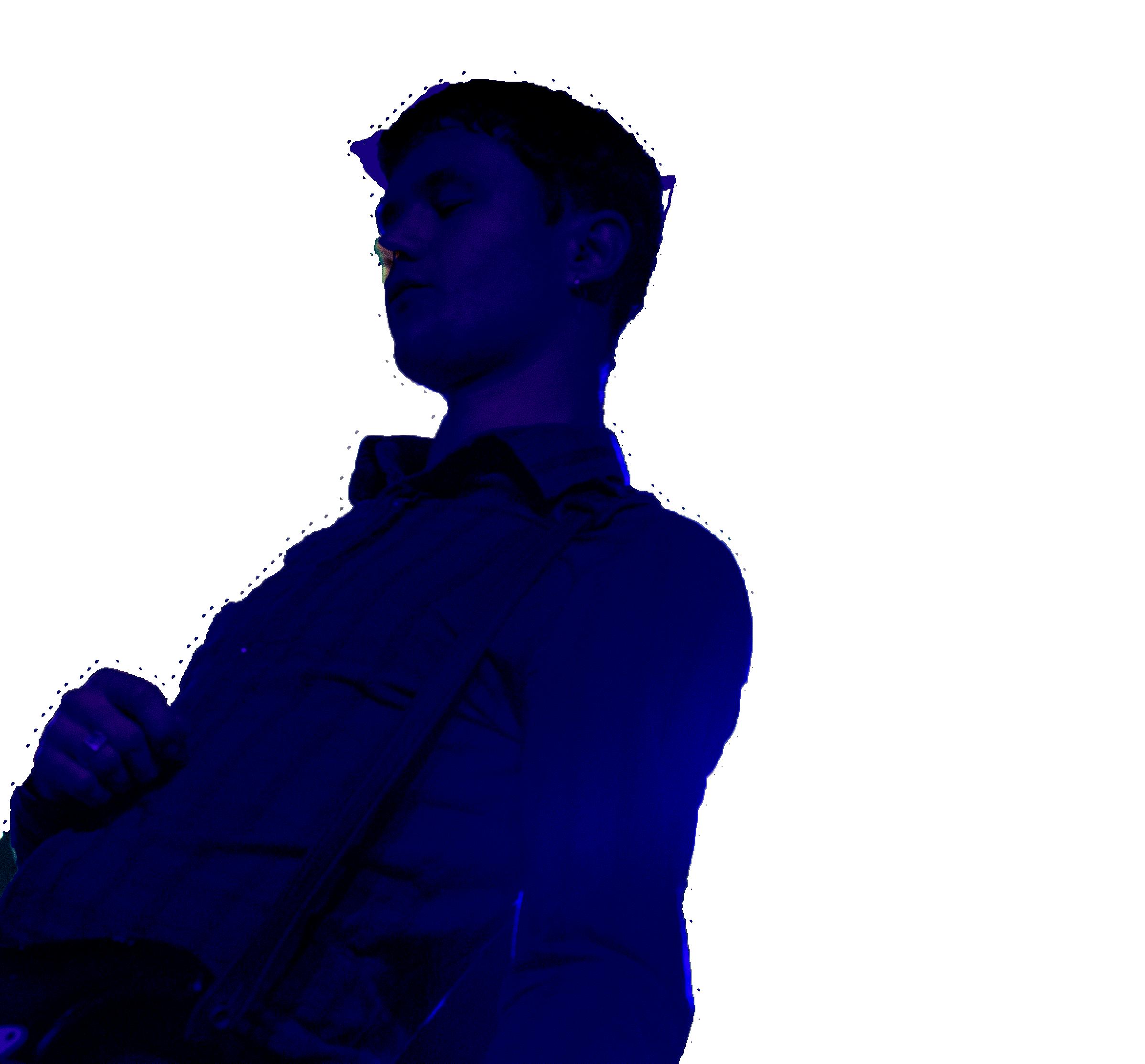




“Comparison is the thief of joy”, of course, once famously uttered by Theodore Roosevelt. A Nobel Peace Prize winner, a US president, and a man whose face is quite literally etched into history (and the side of a somewhat celebrated mountain).
But I ask you this, dear reader, did ol’ Teddy bear ever catch a 2pm Sela Bar DJ set? Did he ever crowd surf at The Wardrobe? Did he ever attend Live at Leeds in the City? If he had, he’d have known comparison is irrefutably not the thief of joy, as this year the festival’s city edition blew any of its predecessors or competitors out of the water.
12pm. Wristband attached (and squeezing the life from my grip), press credentials acquired (and plastered over my face with a smug grin, picture-perfect for queue-jumping), we enter the belly of the beast (basement of The Wardrobe). Nxdia opens the day, her magnetic stage presence brimming with intrigue and confidence.
Live at Leeds thrives on its ability to stun you when you least expect it. Clothesline From Hell (yes, a real band name, and an awesome one at that) were rhythmically tight, the eclectic drumming pairing with the resonant guitar work to gift us a wonderful surprise at 1pm. Shortly after, Cherry Seraph (another top name by the way) was another more-thanpleasant shock. The electronic alt-pop producer and master mixing mogul put on a clinic in the sunken Sela Bar, siphoning delectable noises from her assorted catalogue right in front of our very eyes to produce gorgeous soundscapes, finished by an even more gorgeous voice.
Honeyglaze, a London trio specialising in ornate post-punk with a glowing edge (and another delicious name, of course), were next on the menu. The spoken elements paired with intricate musicianship evoked Leeds-fan-favourites English Teacher, a musical sisterhood warmly embraced by the Yorkshire crowd.
Radio Free Alice have garnered quite the reputation as one of the most-must-see upcomers in the scene. Championed by a legion of fans in the UK, ten thousand miles from their
home of Melbourne, expectations were high. Ultimately, their set was nothing shy of magnificent; from the eccentricities of frontman Noah Learmonth’s drunken-sailor-esque performance, to the welcomed smattering of saxophone lines littered throughout the performance.
Keo filled this year’s slot as the fan-favourite indie rockers. Their grunge-leaning tendencies of their craft served as blaring sirens that enveloped the adoring crowd, many of whose voices only added to the shearing volume of the set (glad I had my earplugs in for this one).
Divorce (continuing the theme of brilliant branding) exhibited unrequited musical beauty, a true standout for the day. Seamless harmonies between co-lead vocalists Tiger Cohen-Towel and Felix Mackenzie-Barrow polished off their country-infused indiepop in what was arguably the most talent-filled set of the entire festival.
Poetically, we return to where we began. Man/Woman/ Chainsaw (wow, I mean, potentially the pick of the bunch for names) were a revelation for the brief moment we caught them. Pianos. Violins. Headbanging(?). What more do you want??? Finally, Adult DVD (do I even have to comment at this point?) were an absolute revelation to draw our day to a close. Admittedly, I was apprehensive going in. My only prior knowledge was that of a friend saying, “It’s synths and fellas crowd surfing”. However, upon my exit, I had been enlightened. Pounding synths whirred around The Wardrobe as drums crashed, guitars cranked and humans smacked, melodically mind you, into one another. A showstopper to stop all shows.
Whilst the branding for all the Live at Leeds acts was nothing shy of supreme, the colour of the festival’s content was also at an all-time high. The day was action-packed with the finest upcoming music the UK has to offer, both the bigger names and the fresh-faced independents, a celebration of the scene in all its glory. The Live at Leeds guarantee of finding your new favourite artist has never been so easy to achieve than at ‘in the City 2026’.
Words by Daniel Brown.

Revenues may be falling and the pressure rising, but McQueen’s French parent group Kering is adamant: the house is not for sale. Instead, the group has put in place ambitious plans to restructure, including a shift in McQueen’s market positioning, strategic store closures, and consequently the elimination of as many as 20% of its roles at its London headquarters. This aims to “return the business to sustainable profitability over the next three years” after a sharp 14% drop in revenues in the first half of 2025. Having parted ways with the likes of Stella McCartney and Christopher Kane in the past, Kering is placing its bets on McQueen—hoping that restructuring, not divestment, is the way to reclaim its place at the forefront of global luxury.
The restructuring is extensive. McQueen is recalibrating its market positioning towards a younger luxury consumer, channeling the brand’s rebellious heritage to engage this lucrative market, adjusting prices to increase accessibility. Menswear has been cut from runways, allowing the house to focus on its more profitable womenswear operations. Job cuts are also underway to streamline the workforce. Regardless of the dramatic financial changes underway, the brand insists that this restructuring is a “cultural” and “creative” reset, rather than solely a cost-cutting exercise.
The year 2023 marked a drastic shift at McQueen: after 13 years of Sarah Burton’s creative direction, the house handed its creative reins to Irish CSM graduate Seán McGirr. McGirr’s highly anticipated March 2024 debut divided critics and fans alike with its bold yet unresolved nature, marking a decisive departure from the romanticism of Burton’s direction. Since his debut, McGirr’s vision for McQueen has steadily deepened its connection with the DNA of the brand and injected a new energy into the house, while he also navigates the challenge of translating that creative vision into a commercially viable and future-facing identity for a brand still un-

Regardless of this period of creative transition and losses, Kering remains confident that McQueen can return to profitability if nurtured, insisting that the sale of the brand in its current state would not be the most prudent route to take financially.
The group is also rightfully mindful of McQueen’s cultural significance and rich heritage. The late Lee McQueen, who founded the brand in 1992, is one of the most celebrated designers of his generation. The challenge now lies in executing a restructuring that restores profitabilty without compromising the legacy that defines McQueen.

The question is, can McQueen forge a future as daring as its past— and still command attention in the global luxury market?
MollyBeardsley

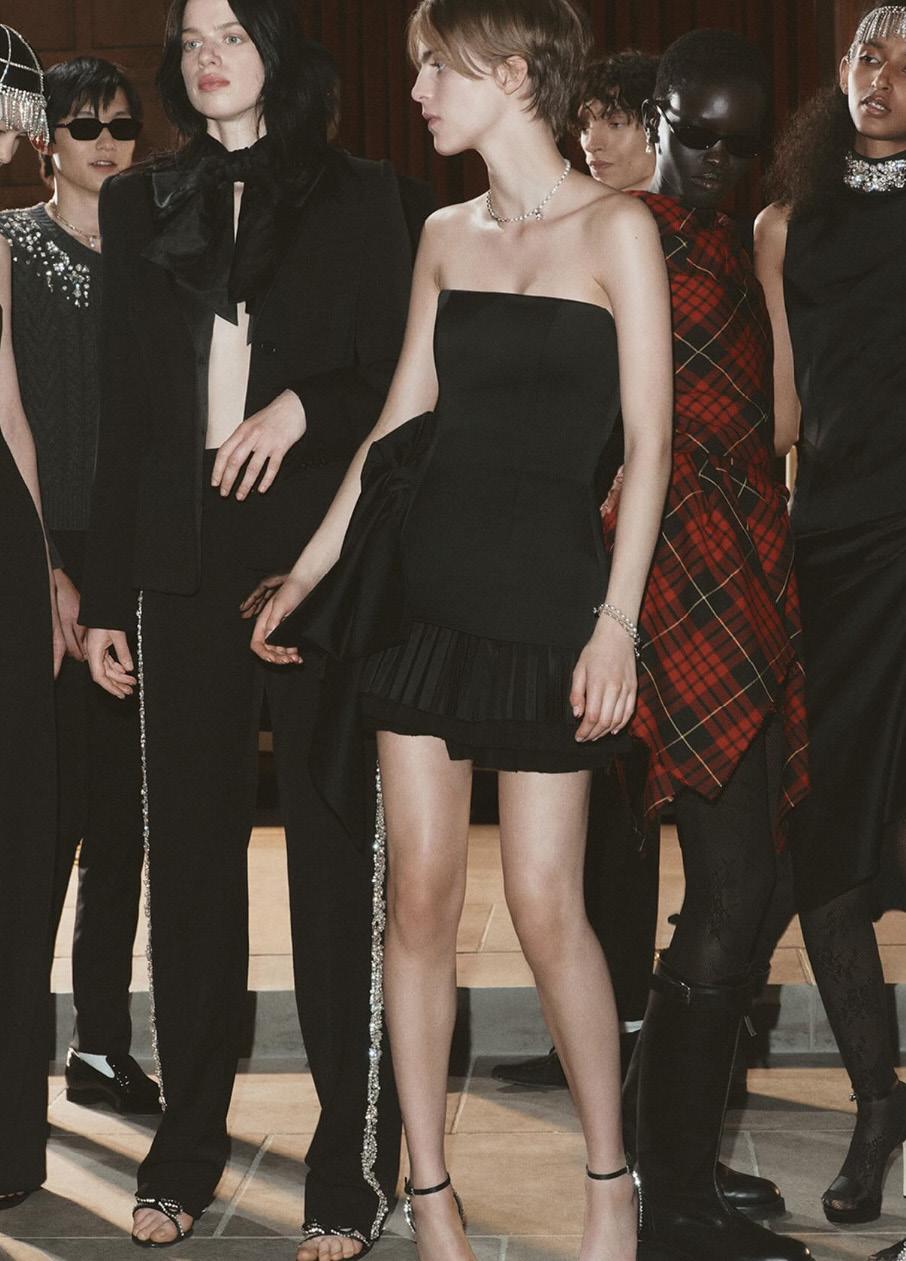
If you’re anything like me, the original Devil Wears Prada is more than an (excellent) movie: it’s a legacy, a turning point, and the ultimate inspiration. Between Miranda Priestly’s icy glamour, Andy’s unforgettable transformation, and Patricia Field’s iconic styling, we’re left with the dreamiest Y2K pop-culture canon. Naturally, when the sequel was announced, I was foaming at the mouth with excitement. But the first trailer and leaked on-set photos have me questioning: will Devil Wears Prada 2 recapture that same sartorial elegance, or is it struggling to dress for the decade?
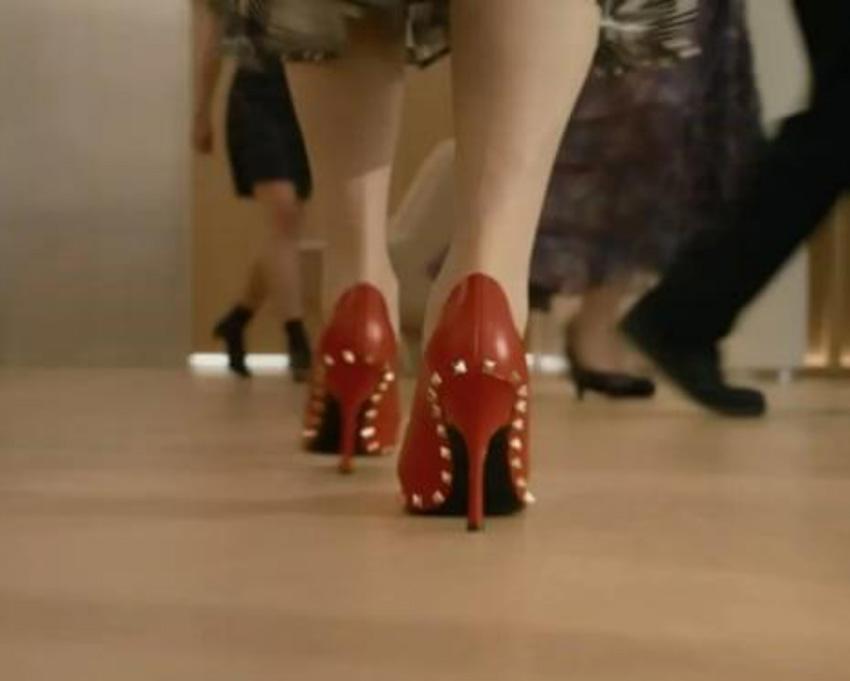
The 52-second teaser opens with an immediate cause for concern – why is the man, myth, and legend Miranda Priestly wearing infamous 2013 Valentino Rockstud heels? While there is evident devilish symbolism in the red studs, I can’t imagine a dictatorial fashion editor

Next, let’s look at some of Andy’s outfits so far. First and foremost, her Jean Paul Gaultier pinstripe two-piece; structured trousers, a tailored waistcoat, black heeled boots, and a layered pearl necklace complete this utilitarian look. In the first film, Andy’s ‘power moment’ was a dark neutral tone layered blazer and skirt with thigh-high Chanel boots. Professional but not stiff, the newer outfit may indicate the character’s evolution. A contrast-stitch blazer is traded for a different play on office wear. She’s no longer an outsider trying to fit into Runway’s world – she’s someone established, blending practicality and stability with elegance.
Finally, I couldn’t not talk about one of the most controversial choices I’ve seen: a Gabriela Hearst vibrant, geometric flowing maxi dress with a neutral bucket hat, and oversized black sunglasses. While I’ve been hating on the lack of boldness so far, let me explain why I don’t love this one either (no, not because it’s something your primary school art teacher would wear). This dress is a major department from Andy’s original wardrobe; bohemian, intensely colourful, and very relaxed, this loose silhouette indicates a major character progression. It seems Andy is no longer seeking approval – which is good, because this outfit doesn’t have mine. Perhaps it will make more sense when the movie is released (the suitcase must be hinting at something, right?), but currently there’s a major dichotomy between this Emily In Paris style dress and the other neutral, structured outfits we’ve seen leaked. While it is entirely too early to judge the full runway of Devil Wears Prada 2, the initial wardrobe choices have us all a little bit nervous. It seems we’ve gone from cerulean to confusion, making me wonder how this legacy of a film will be translated into 2026.
That’s all.

Hannah Williams
This summer, whilst Season 12 of Love Island was airing, my grandma rang me very confused, wanting to know what the difference between being exclusive and being boyfriend and girlfriend. I tried to explain what a situationship was and why labels mattered but struggled, because like many of us I hardly understand it myself. After my best attempt at an explanation, she simply declared it was sad. I couldn’t argue with that.
I’ve been trying to piece together for a while now why this generation is so okay with semi-permanent relationships and hollow encounters and my best guess yet is a com bination of high expectations, ego and fear of commitment.
We grew up being told love stories in songs, movies and books. Love is placed on a pedestal, and for many of us, is the end goal. However, due to a shift in societal norms, we also grew up witnessing a higher divorce rate and people being more open when partners betrayed them. We’ve grown up knowing the risk of love. Now people fear getting hurt, we’re scared of being vulnerable, scared no one will live up to our expectations and scared of becoming one of those horror stories you hear about... or see unravel live at a Coldplay concert.
on the downlow so if their partner deceives them, they can save face. Being broken-hearted can feel embarrassing and no one wants to be embarrassed so to avoid being broken-hearted people avoid love and commitment. We set our standards high so when we eventually take this risk that is love, we’re satisfied we’ve done enough damage control and can truly trust them.
So, if we have higher expectations for a relationship why have we created a whole new category? Why not just avoid a label altogether? This is where I think ego comes into it. Naturally people want to feel wanted, needed and admired. It’s almost innate. So does a situationship give us enough constant validation to fuel our egos without having to commit completely? I think so. Even if one person is willing to take that next step to commitment and the other can’t quite face it. Neither leave because both their egos are getting fuelled.

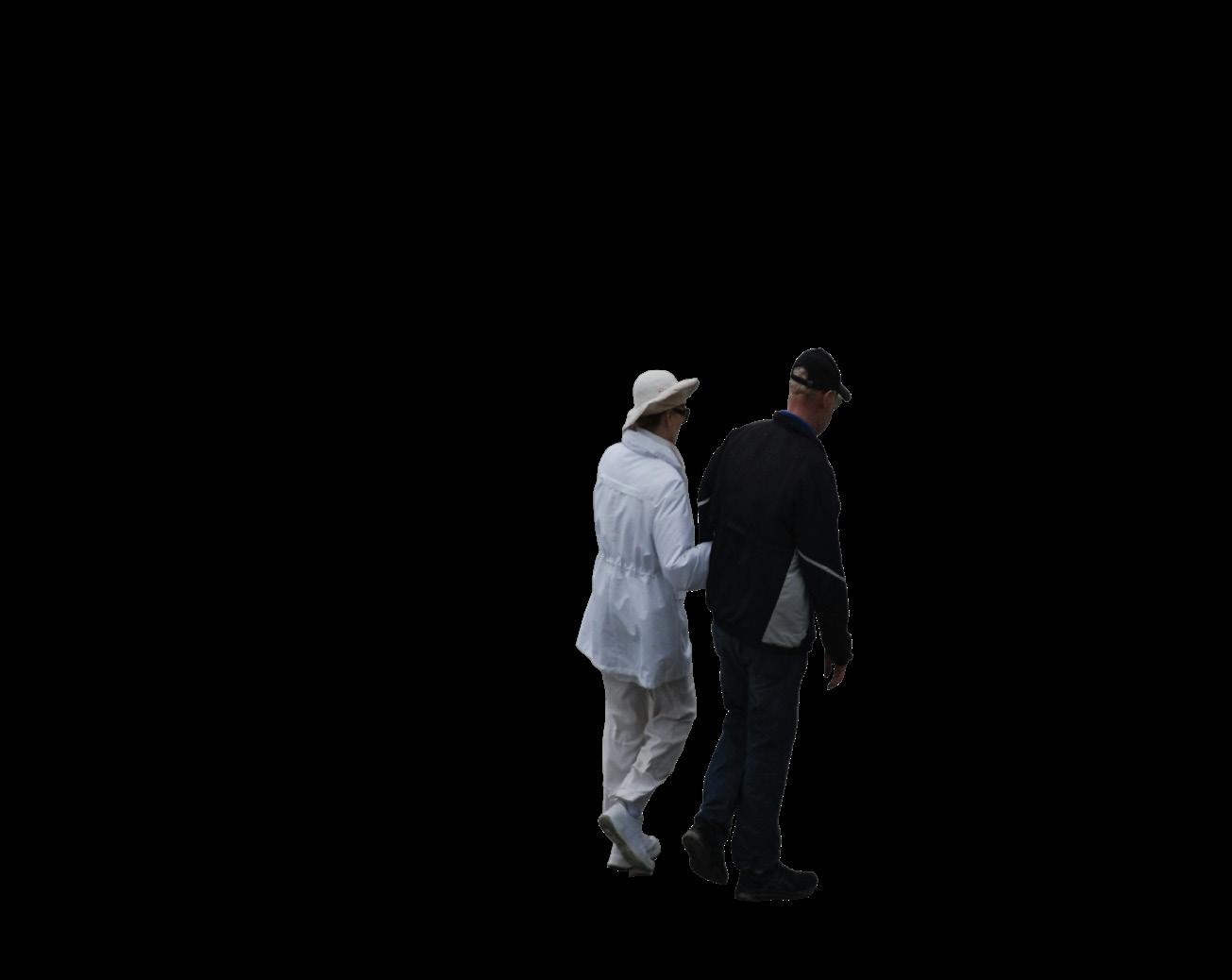
Expectations are higher because there’s new aspects to a relationship in the digital age. Following models on Instagram, not blocking an ex, taking longer than 2 hours to reply, even losing a streak- these are all things I’ve known couples to argue about that older generations didn’t have to deal with whilst dating in their early 20’s. Now that there’s more reasons to argue with a boyfriend or girlfriend there’s also more reasons to break up. This is the risk people aren’t willing to take. Even British Vouge has done an article on how having a boyfriend is embarrassing, highlighting how woman feel the need to keep relationships
When it fizzles out it’s almost always down to one person not wanting to commit- Fear of commitment: the virus intercepting most young adults. Whether they’re scared of getting hurt, of hurting someone else, of wasting their youth in a relationship or whatever else it might be, the fear of commitment is most likely the leading factor in the “it’s complicated” era. We don’t want to tie ourselves down and have someone else rely on us especially if we can’t even

Ultimately a situationship gives us the benefits of emotional and physical intimacy without the risk of having to be vulnerable. It’s an easy and reliable way to feed our need for validation whilst avoiding responsibility and heartbreak. And if, like mine, your grandparents think it’s sad, they’re likely grieving the spontaneity societies lost thanks to overthinking killing casual dating.
Words by Lola Stokes
Something I learnt in ballet that my teacher prob ably never meant as life advice somehow stayed with me anyway. She taught us to balance, but rather than asking us to stand still, she told us to lean at first. If you tip too far left, try leaning right next time, be cause the only way to find the centre is to feel the edges.
In ballet, steadiness is the illusion. Behind that one poised moment is an entire network of muscles working as hard as possible to make you look effortless. Balance is strength shown as grace.
At the start, I just saw balancing as another technical cue, but the more I wobbled and occasionally fell over in the most ungraceful way possible, the more I reframed my understanding of balance as a series of tiny experi ments. You don’t learn or earn it in one go but by being a little off before you get steady, and you locate stability by starting with being a wobbling penguin.
And honestly? Students do this constantly, whether we realise it or not.
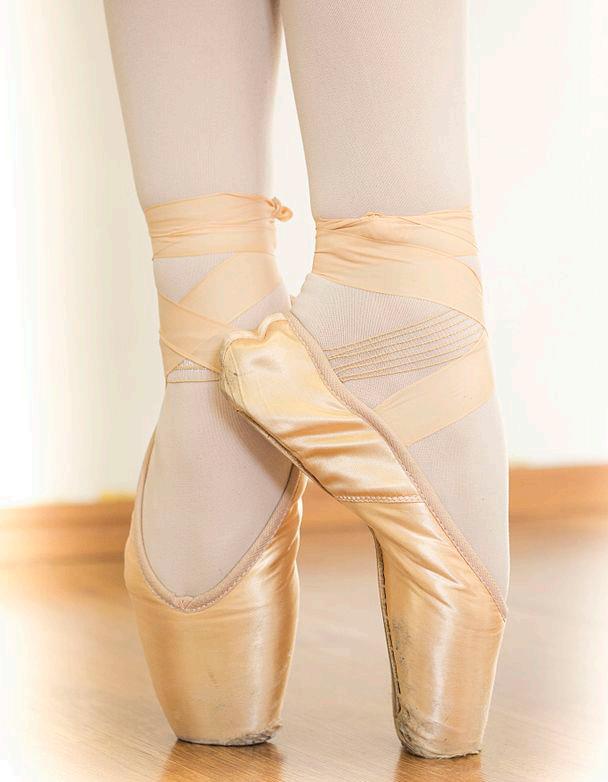

We try to look put-together like we know what we are doing. From the outside, it might look “balanced,” as if we effortlessly manage our studies, society commitments, parttime jobs, and friendships all at once. But inside, it can feel like the tiny stabiliser muscles firing all day just to keep us
Real balance is dynamic — it wobbles and demands constant recalibration. Just like dancers adjust on the fly, students adjust without even noticing: adding more work one week, pulling back the next; trading a night out for sleep, trading sleep for a deadline. We’re all running prototypes and have ourselves tested in different directions until something starts to hold. Balance is something we prototype into existence. Each version we attempt leaves traces and teaches us our limits.
Whether you’re standing in ballet shoes or trying to survive Week 10, balance isn’t about holding everything without moving, but becoming sensitive to the shifts, knowing when to lean, release, and hold. A dancer finds their centre by moving, experimenting, and trusting their
Words
by Jacqueline Wong
Image Credit: Wikimedia Commons
It’s week five of first year, and I’m counting down the minutes until the end of my philosophy seminar. The tutor’s speaking Latin, my mouth is unbelievably dry, and another student seems to think it’s their life’s mission to play devil’s advocate. My reading notes consist of a mangled mess of copied and pasted quotations, and the sheer amount of academic jargon being thrown around is making me dizzy. I feel confused and frustrated as to why I’m the only one who doesn’t seem to understand anything, and I can’t help but wonder: do I deserve to be here?
Three years on, I’ve managed to shake the feeling of academic imposter syndrome. It can be really disheartening to feel like things are slipping away from you in the classroom, especially when other aspects of uni life might also feel unstable. Luckily, there are ways to get over this feeling. If I could give one piece of advice to first-year me, it would be to take a step back from the seminar scenario and give herself a bit of grace.
Aside from that, here are a couple of really important things you can do to alleviate academic imposter syndrome:
Remind yourself you’re readjusting
It's important to remind yourself of external factors that might contribute to you feeling like an academic imposter before you internalise it and stop going to seminars altogether. Going from structured school lessons to mostly independent university work can be jarring, and it’s difficult to adjust to the sometimes conversational nature of seminars when you’re used to being spoken at rather than to.
Ignore the jargon!
This way of teaching also tends to give way to particular people dominating the classroom — usually those who are very confident in themselves and their academic ability. From my experience, some people who use really obscure academic terminology do it solely for the purpose of making themselves look and feel smarter. If this is the case, then you shouldn’t feel insecure about your own understanding of


the topic; having a larger vocabulary doesn’t make anyone’s ideas more important.
Adopt a different perspective
It can also be liberating to reshape the way you perceive not understanding. Instead of viewing it as a setback, try and see it as an opportunity to learn even more. You’ve probably heard it before, but it’s true: if you’re the smartest person in the room, then you’re in the wrong room. Learning should be uncomfortable. If you’re in a place where you can constantly deconstruct and rebuild what you know, then you’ll walk away a much smarter person.
The main thing to remember is that, like everyone else, you have earned your place here. Feeling like an imposter, though sometimes inevitable, is completely pointless. You can wallow in self-doubt, but who does that benefit? Certainly not you. Who cares whether you feel like you deserve to be here? The fact is, you are, so make the most of it!
Words
by
Romilly
Anderson Image Credit: Wikimedia Commons

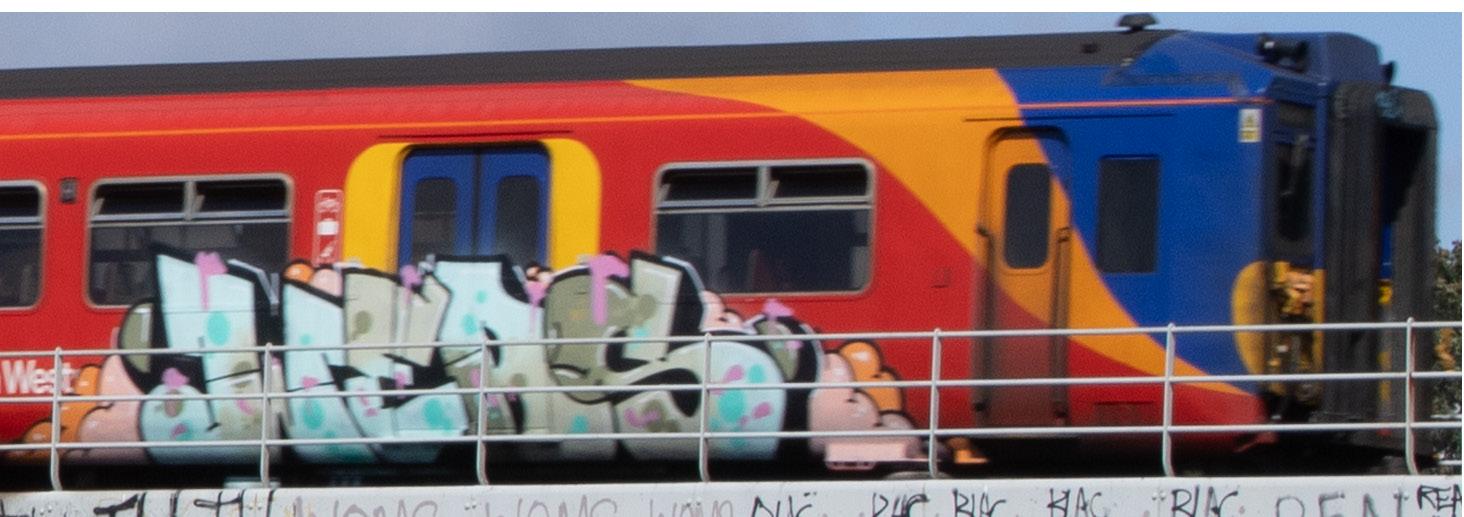
(Disclaimer: while this article discusses graffiti as an art form it does not encourage the practice of vandalism as that is a crime). Graffiti is something you’re probably very familiar with especially if you live in a city or urban area. While frowned upon by many who outside of Banksy view graffiti as simply vandalism, for the longest time I’ve always had a fascination with it from seeing tags in tunnels, abandoned buildings or on the side of trains. I always thought I was alone in this fascination however that changed recently when I watched Martha: A Picture Story at Hyde Park Picturehouse, a documentary that followed Martha Cooper, a photographer who became famous for taking some of the earliest photos of graffiti in New York as featured in her book Subway Art published in 1984. This documentary really opened my eyes to the world of graffiti culture and made me feel less alone with my fascination of the style. As such, I want to analyse graffiti culture to understand whether it should be more appreciated as a legitimate art form or just be seen as a form of vandalism.

Contemporary graffiti started appearing during the 1970s in New York, with it mainly being influenced by hip hop culture. This involved writers asserting their dominance through tagging (originally called bombing) their names and accompanying visuals onto different surfaces using spraypaint. Typically subway cars were used as these would allow their art to be seen by thousands of people from bridges and train stations. This process was then discovered by Martha who was working as a photographer for the New York Post at the time, taking photos of children playing in the slums of New York. One day a young boy suggested she should photograph graffiti and showed her his notebook containing graffiti sketches of his nickname “H3” alongside explaining how he had painted one of them onto a wall. Martha was inspired by H3 and felt that the people spraypainting these walls were very talented and through H3 she met Dondi, a supposed graffiti legend who taught her graffiti terminology and introduced her to other graffiti writers in New York. From this Martha started taking photos of graffiti writers and spraypainted trains that would wind up becoming some of the most iconic photos of New York during the late twentieth century. This all correlated with Martha collaborating with another graffiti photographer, Henry Chalfant and publishing Subway Art, a collection of their photos of graffiti and graffiti culture in New York during the seventies and eighties. Their book would go on to become one of the most famous records of graffiti with it being referred to as “the bible of graffiti” and introduced many cultures to different forms, techniques and styles of spraypainting. While the process of graffiti is illegal especially in New York during the late twentieth century and it having many negative associations, Martha’s work showed that there was more to the practice than that and there was genuine artistry that went into spray painting rather than it simply being vandalism.
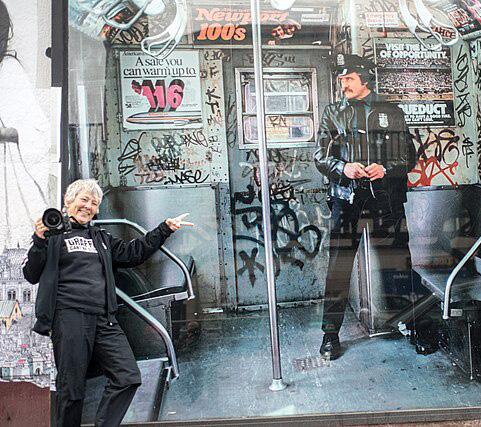



When Subway Art was released in the UK, it became one of the most stolen books at the time alongside it contributing to the rise in graffiti writing. Of course, the spread of graffiti culture has had many consequences. While graffiti often has negative associations it's definitely hard to deny it as a legitimate art form in my opinion. The act of spraypainting your name onto a surface whether it be on an abandoned building, wall or train is no small feat and requires lots of planning and preparation to do, as a graffiti writer would need to plan out what they’re writing ensuring their art is visually distinct enough to gather attention alongside working out how to actually tag the surface without getting caught. In this sense, graffiti writing is not far off most traditional art forms as both require lots of planning and persistence in order to create their work. There’s also an anti-capitalism element to graffiti that other artforms lack since graffiti is typically done in free public spaces meaning anyone can view the art and it can’t easily be sold or distributed elsewhere. As such, graffiti writers have complete creative freedom in their work meaning they can depict whatever they want such as spreading awareness on political issues that may be overshadowed in more corporate art forms.
However it’s impossible for me to discuss the act of graffiti writing without mentioning the obvious downsides that come with doing it. There are many negative associations that come from tagging a surface as it can make buildings appear more run down and impoverished. While it’s easy for me as an outsider from a privileged background to appreciate graffiti writing, for those who actually live in areas that frequently get tagged it can definitely make their environment feel less safe and comfortable to live in. Furthermore there’s places where graffiti shouldn’t belong but have still been victims of taggings. A recent example that caught my eye occurred on the Spa Valley Railway, a non profit heritage railway in Kent, where one of their historic trains was tagged causing £30,000 in damage, money that would’ve been spent on the railway, which is especially bad considering heritage sites like the Spa Valley are struggling due to rising costs.
In closing, I feel while controversial, the act of graffiti writing is a practice that should be more recognised as a legitimate art form. This article isn’t trying to glorify the act of graffiti writing but rather share how it can be seen as an art form. It’s hard to deny the flaws and consequences that come from graffiti writing especially when it’s done in places it shouldn’t be, however it’s also impossible to deny the artistry and creativity that goes into it. I feel learning about Martha and the different processes that go into graffiti writing has helped me appreciate it more as an art form rather than just vandalism.
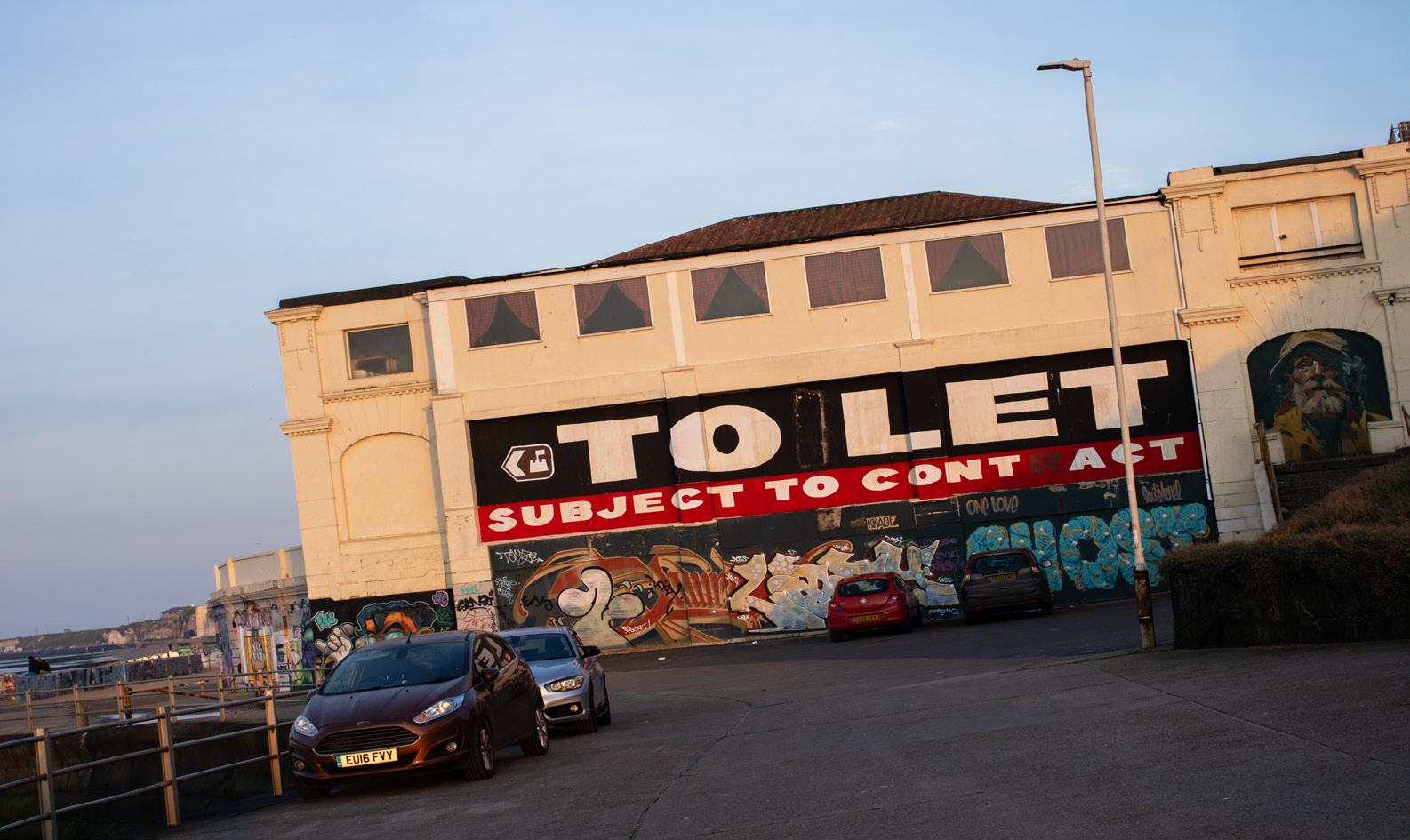
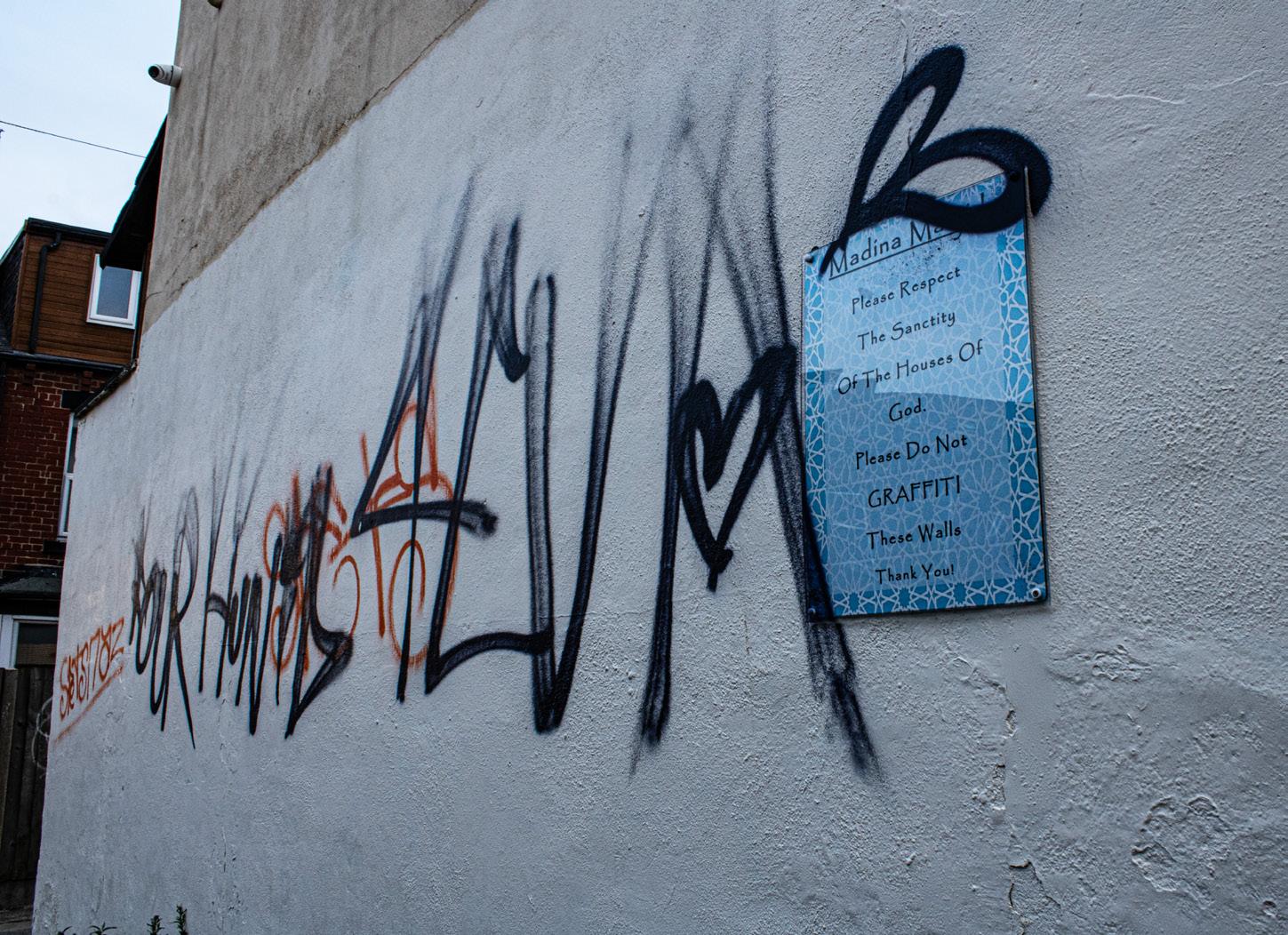




Gabriel Morrissey-Limb
The amount of monitored bathing sites in England meeting the minimum standards for water quality has risen from last year, according to new figures from the Environment Agency.
Of of the 449 sites regularly tested this summer, 93% met the minimum standards for levels of bacteria in the water, linked to sewage, agricultural pollution and other factors. This is a number of roughly 418. This marks a 1% increase from 2024, where 92% met the minimum standards.
The government has said that its reforms to bathing water rules will further help this,
however campaigners have argued that swimming in England’s water is still too risky to the health of the general population. Speaking on this, Water Minister Emma Hardy said: These changes sit alongside our wider action to clean up our waterways so communities across the country can enjoy the places they care about most.”
The Environment Agency is responsible for monitoring the levels of bacteria at bathing water sites in rivers, lakes and the sea across England, working between May and September each year by taking thousands of samples for analysis.
TA spokesperson for industry body Water UK said that the quality of England’s bathing water remains high, and that companies have a plan in place to reduce sewage spills.
More bathing sites have been added in recent years, requiring more places to meet the standards required for people to swim. Interestingly, bathing sites within rivers performed much worse than those found in the sea, where most bathing sites can be found.
Of the 14 monitored river sites, only 2 met the minimum standards, however several of these sites were added in 2024, meaning that there has not yet been enough time for them to reach the required standards. The environmental Agency has explained that part of the reason that water quality is poorer in rivers is because the seawater can act as a disinfectant, and the sea dilutes pollution faster - rivers of course do not have this option. Rivers are often located closer to sources of pollution as well.
Despite this, the water has improved significantly since the 1990s, where according to a spokesperson from Water UK, less than a third of bathing waters would have met the standards required today.
Image Credit: Wikimedia Commons
Gabriel Morrissey-Limb
Ultra-processed food (commonly referred to as UPF) has been linked to harm in every major organ system of the human body and can pose a threat to the glob al population’s health, a new study has concluded.
UPF’s, such as pepperami’s, fridge raiders etc has been rapidly replacing fresh food in the diets of both children and adults all over the globe. This is due to both the rising cost of living and the aggressive tactics used by corporations to drive consumption, and lobbying to prevent further regulation. The rise in UPF is associated with an increased risk of several health conditions, including obesity, diabetes, heart disease and more.
In the UK and US, more than half of the average diet now consists of UPF, with those coming from disad vantaged backgrounds having upwards Evidence reviewed by 43 of the world’s suggests that for those with diets high in UPF, there is a link to overeating, poor nutritional quality and higher exposure to harmful chemicals and additives.

A systematic review of 104 long-term studies conducted for the Lancet series found that 92 reported greater associated risks of one or more chronic diseases, and early death. One of
cifically to displace fresh food and traditional meals, whilst maximising corporate profits.
“The growing consumption of ultra-processed foods is reshaping diets worldwide, displacing fresh and minimally
processed foods and meals,” Monteiro warned.
Other researchers have argued as a result of the findings that UPFs should come with cigarette and tobacco packet style warnings on their packets. This has been backed by University of Leeds researchers, who say that the UK’s HFSS nutrient-classification system is a positive step towards this issue. However, experts have also warned that current labelling still fails to reflect the risks of UPFs, leaving gaps in preventing long term diet-related diseases.
Researchers not involved with the series have broadly welcomed the findings but have also called for more research into UPFs, arguing that correlation does not equal causation.
James Morgan
Mark Wood’s historic battle against his own body returned this week as he warmed up in the nets prior to the small matter of the first Ashes Test in Perth on Friday. Ahead of what promises to be a spectacular Ashes series, injury woes are frequenting the headlines and Australia’s depleted and aging squad has left many, mostly English, pundits believing that that England win the Ashes on Australian soil for the first time in 15 years. The fighting talk has already begun with former Australian quick Glenn McGrath backing Aussies to win 5-0, whereas former English all-rounder David ‘Bumble’ Lloyd said England can win by the same scoreline. With all this speculation and uncertainty, one thing is sure: it will be another nail-biting series. Here’s all you need to know:
England captain Ben Stokes will be keen to maintain England’s good form in Tests after a highly entertaining summer series against India which finished 2-2, including a 5-wicket vic-tory at Headingley. Less than a month ago, however, England’s ODI side lost 3 nil at home to New Zealand. Worse still, many key Test players struggled against the Kiwis such as opener Ben Duckett, who scored just 11 runs across the series. Even Joe Root scored less than 30 in total, leading to England’s batting coming under heavy scrutiny in what was, for many players, their last competitive action before the Ashes. By contrast, most of the Australian side have been playing in the Sheffield Shield in the first couple weeks of November – get-ting competitive Test action in Australian conditions – and doing very well. Marnus La-buschagne, who was dropped from the Australian Test side not so long ago, is back with a vengeance having scored 5 centuries in his last 8 matches for Queensland. Similarly, Scott Boland took 8 wickets for Victoria against New South Wales in a game in mid-October, and the seam-bowler averages just 12.63 in Tests held in Australia. TMS commentator Simon Mann has said that ‘England will be under serious
pressure’ if Boland keeps this form up.
It isn’t all doom and gloom for England, with their bowling attack of Jofra Archer, Chris Wood, Brydon Carse, Gus Atkinson and spinner Shoaib Bashir all fit for the first Test and se-lected in the squad for the game. With Australia missing both Cummins and Hazelwood from their ‘Big Three’ alongside the omnipresent Mitchell Starc, much of the hard yards will be covered by Boland, the uncapped Brendan Doggett, all-rounder Cam Green, and 37-year-old spinner Nathan Lyon. But the stats don’t lie, Lyon’s ability to tie up an end will be crucial: he has taken 110 wickets in 30 Tests against England and will be looking to continue this form in what will probably be his last Ashes. Similarly, the now 35-year-old Mitchell Starc will be hoping to maintain his good record against England – the left-arm pacer famously bowled Rory Burns in the first ball of the 2021-22 series. Starc has dismissed Ben Stokes 9 times in Ashes series; however, questions still remain over this aging Australian side with only 1 player, Cam Green, being under 30. Hopefully Perth has enough space in its retire-ment homes when England bring out their infamously aggressive ‘Bazball’ in the 1st Test…
Question marks still loom over Zak Crawley’s place in the England side with the Kent batter averaging the lowest of any opener who has played as many Tests as he has. Yet, the contro-versial stroke-maker contributes when it matters, and has a style suited to Australian condi-tions – he actually averages more against faster bowling. Not to mention, he makes up half of the most successful opening partnership in Test cricket alongside Ben Duckett since they first opened together in 2022. England fans will be hoping to see more of Crawley’s ele-gant shot selection, and less of his somewhat attention-seeking outside edge. England will want a no doubt reprise of his masterful 189 in
the 2023 top run series.
England come under per-formanc innings, scoring in a warmup game Lions may suggest when it count. A final England’s talisman, took a 6-fer against Lions and proving so much more than shot selection for each wickets really wouldn’t look out of place in an under-14s 10 over game.
So, what-ifs, and speculation, there really of knowing which way will go. If you’re any me then the only way out is by staying up all sleep schedule and MIA 2.20am, Friday 21st ning of a 3-1 Ashes
Jake Crapper
Contrary to our previous report, an official announcement has been made that Jake Paul will now be facing British boxing legend Anthony Joshua in a professional heavyweight bout, scheduled for the evening of December 19th.
Paul was previously billed to be fighting WBA lightweight world champion Gervonta Davis in a catchweight exhibtion scheduled for this month, however this fight was cancelled due to legal allegations ledged against Davis by an ex-girlfriend. The Gryph on reported that an agreement had been reached for Paul to take on MMA legend Nate Diaz as a replacement, and while Diaz had agreed to the rematch, no contract had been signed. This left the door open for Joshua to be approached by Paul’s team, and to the shock of many in the industry, he accepted terms to officially be come Jake Paul’s next opponent.
Speculation on why Joshua
agreed to the fight, and, more importantly, how much he was offered by Most Valuable Promotions, have been subsided by sources such as the Daily Mail reporting that the fight purse will be around £140 million, with both fighters taking a 50/50 split of approximately £70 million each.
The fight is billed as a professional bout, and while many would expect a relatively easy win for Joshua, experts such as promoter Eddie Hearn have warned of previously unencountered challenges to the heavyweight legend. Most notably, Joshua will need to shed at least a stone to meet the required 245lb limit, and with a string of victories under Paul’s belt, some may see the fight as an unnecessary risk for the former unified heavyweightworld champion.
For British football fans, the November international break represents an unwelcome pause in league action, quelled only by one or two fairly low-stakes games. For England fans, who had already topped ther group and qualified for World Cup football next summer, this is was no different - two 2-0 wins against Albania and Serbia the only comfort in the absence of Premier League football.
For their British and Irish peers, however, this couldn’t be further from the truth. While Northern Ireland resorted to their Nations League campaign to guaruntee a playoff draw agaisnt Italy, Wales, Scotland and Ireland all found themselves in must-win games.
Wales bagged a spot in the playoffs thanks to an emphatic 7-1 win against North Macedonia, their biggest victory in nearly 50 years, but the real drama came in Ireland and Scotland’s escapades.
Ireland, needing two wins from two against strong teams in Portugal and Hungary, first took home a huge three points against Portugal. While Troy Parrott scored a brace, the 2-1 win was somewhat overshadowed by a lash-out from Ronaldo which saw him sent off. Not wanting to have the headlines stolen, Parrott then went on to score a hat-trick against Hungary which included a last-gasp winner, securing them a play-off semi-final against Czechia.

Scotland also found themselves in an equally important group decider against Denmark following a loss 3-2 loss to Greece. While the Danes looked the better team at times, a Balon d’Or contender bicycle kick from Scott McTominay opened the affair and set the tone of the game, leading to a last minute winner from Tierney in the 93rd that was topped off by a halfway-line goal from McLean with the last kick, owing to a 4-2 win that saw Scotland guaruntee a world cup spot for the first time since 1998.

2. Santa’s preferred from of transportation (6)
3. The Bird traditionally eaten on 14 Across (6)
5. Plant associated with this time of year (4)
6. Item of clothing one wear around their neck (5)
7. Part of the home that Santa is known to enter through (7) 10. Plant that you kiss underneath, has a Justin Beiber song named after it 11. Built to melt (7)
13. Winter Festival that has been married with 14 Across (8) 14. Christian holiday, takes place on December 25th (9) 18. Falls to the ground during winter, each one is unique (9) 19. Plant often hanged on front doors during the festive period (6)
20. Ornament that is placed atop 5 Across (4)
1. Last name of the singer of ‘I’ll be home for Christ mas’ (6)
2. Book character visited by three ghosts (7)
4. Songs often performed as a part of a service during the festive season (6)
8. Jewish holiday that occurs over multiple days during December (8)
9. A beauitful sight to be sure, you can sing about it during winter (10)
12. Something people make a lot of this time of year, used as a part of a festive saying (5)
15. Technically a Christmas movie, technically (7)
16. An African-American winter celebration of culture (7)
17. Item of clothing that keeps your hands warm (6)
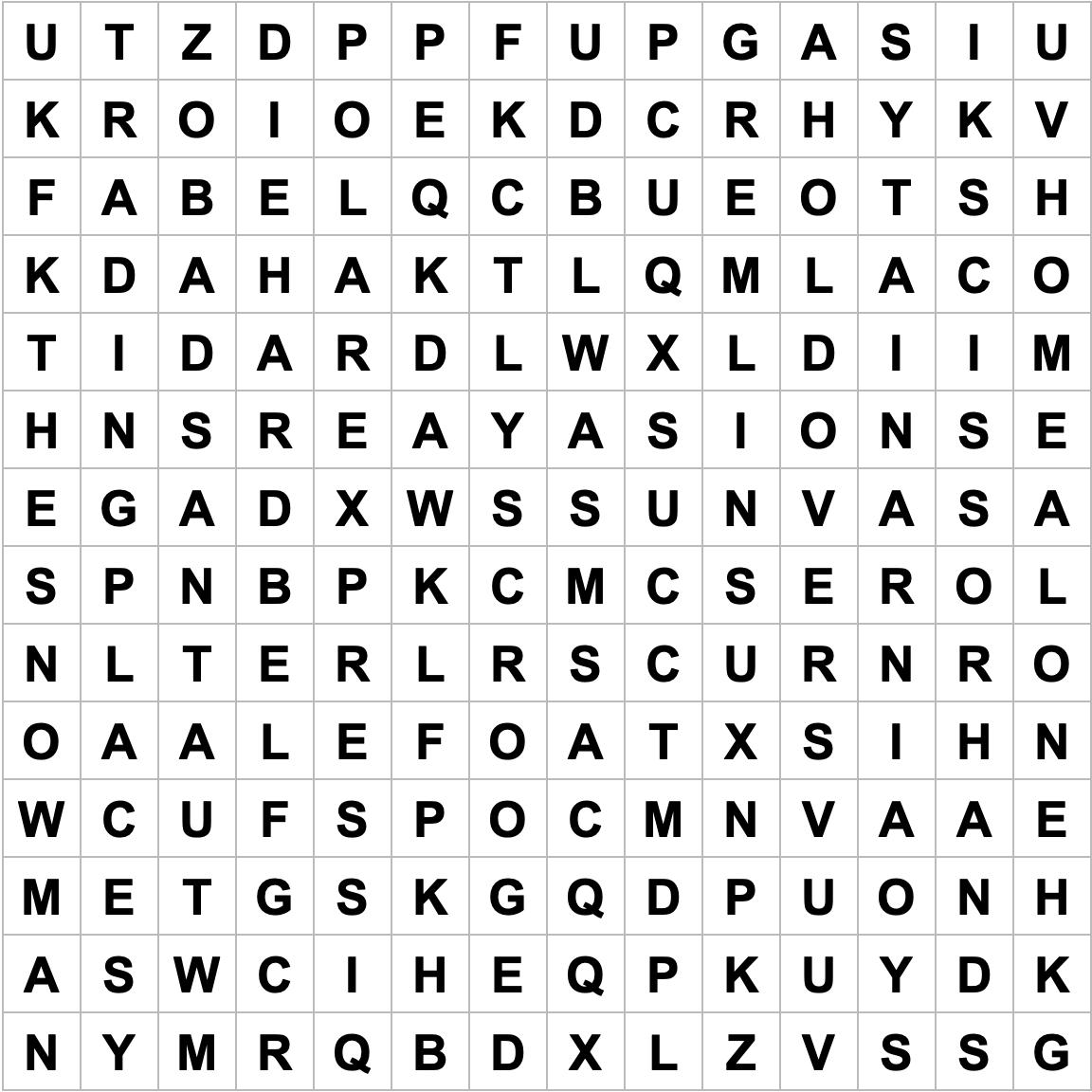
Words: Trading
Holdovers
Krampus
Klaus
Narnia The
Scrooged
Scissorhands
Gremlins
Aquarius - 20.01 - 18.02
Something is set into motion that pushes you to make more daring emotional and financial investments, and gives you a more oxygenated, more colourful version of life.
Pisces - 19.02 - 20.03
Venus’ timing suggests a climate that has the risk of demoralising you if you do not understand the usefulness of it. Now is the time to strengthen ties to your friends and your coursework, giving them substance and longevity.
Aries - 21.03 - 19.04
Meetings are marked by depth and duration, your mind is filled with ideas - utilise both of these to ensure your coursework is as good as it can be.
Taurus - 20.04 - 20.05
This is a week marked by change that may make you want to modify plans or agreements, and talk to those close to you.
Gemini - 21.05 - 21.06
Remain attentive to new developments, keep only useful ideas you have the opportunity to fulfil your wishes this week.
Cancer - 22.06 - 22.07
Relax, and don’t feel stressed about delegating group work!
Leo - 23.07 - 22.08
The arrival of Venus illuminates your love life and your finances, you’ll encounter exciting opportunities during this time period.
Virgo - 23.08 - 22.09
Your mind is all over the place rehashing old ideas and arguments that you can’t let go of. Staying focused on these is not productive or good for you, reflect and move on.
Libra - 23.09 - 23.10
The entry of Mars makes you more adventurous and forgiving, try and see things from another perspective, maybe your flatmate really did need to use your pan.
Scorpio - 24.10 - 21.11
Your mind and body are working as one, this is the ideal week to set things up for success later.
Sagittarius - 22.11 - 21.12
Venus entering your sign will showcase the darker, more daring sides of your personality. Careful, your charm will be more effective but the atmosphere will be different.
Capricorn - 22.12 - 19.01