
![]()


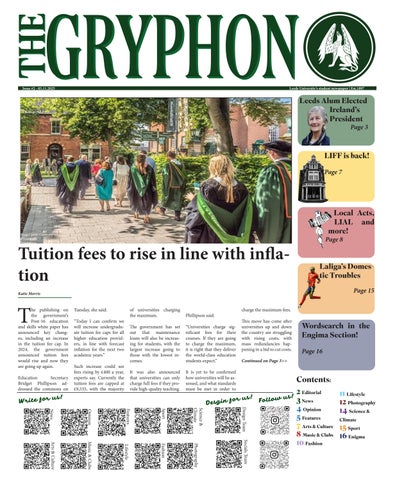
The publishing on the government’s Post-16 education and skills white paper has announced key changes, including an increase in the tuition fee cap. In 2024, the government announced tuition fees would rise and now they are going up again.
Education Secretary
Bridget Phillipson addressed the commons on


Tuesday, she said:
“Today I can confirm we will increase undergraduate tuition fee caps for all higher education providers, in line with forecast inflation for the next two academic years.”
Such increase could see fees rising by £400 a year, experts say. Currently the tuition fees are capped at £9,535, with the majority


of universities charging the maximum.
The government has set out that maintenance loans will also be increasing for students, with the largest increase going to those with the lowest incomes.
It was also announced that universities can only charge full fees if they provide high-quality teaching.


Phillipson said:
“Universities charge significant fees for their courses. If they are going to charge the maximum, it is right that they deliver the world-class education students expect.”
It is yet to be confirmed how universities will be assessed, and what standards must be met in order to


charge the maximum fees.
This move has come after universities up and down the country are struggling with rising costs, with mass redundancies happening in a bid to cut costs.
Continued on Page 3>>


Editor-in-Chief
Gabriel Morrissey-Limb
Newspaper Associate Editors
Lana Conway
Momnah Shahnaz
Emma Wilkinson
Shakeal Zaman
ITM Associate Editors
Jess Cooper
Bethany Dunn
Arabella Wright
News Editors
Aliza-Kayan Ahmed
Raya Boycheva
Mishika Gupta
Zara Lake
Charlotte Prescott
Emma Wilkinson
Opinion & Features Editors
Sarah Al-Battat
Hannah Chohan
James Kendrick
Hattie Murdoch
Em O’Reily
Maja Wasielewski
Amelia Whatley
Shakeal Zaman
Sport Editors
Jake Crapper
Mina Jigau
James Morgan
Mrinalini Pretish
Science & Climate Editors
Cassia Bennett
Lucile Harvey
Anna Jackson
Rory O’Dwyer
Ruby Smith
Longoae Tembwa
Music & Clubs Editors
Daniel Brown
Millie Cain
Francesca Lynes
Arabella Wright
Arts & Culture Editors
Oleksandra Buryma
Bethany Dunn
Sophie Fowler
Jessica Hill
Jude Mcann
Rosie Nowosielski
Momnah Shahnaz
Scarlet Sheehan
Fashion Editors
Christelle Al Abbasi
Jess Cooper
Sofia Garapetian
Selma Lingemann
Amba Tilney
Lifestyle & Blogs Editors
Romilly Anderson
Alaina Charles
Raechel Duddle
Jacqueline Wong
Heads of Photography
Jiayi Du
Aidan Goddard
Charlotte Solaire
Jack Norris
Heads of Design
Erin Gascoigne-Jones
Phoebe Andre-Watson
E d i t o r ’ s L e t t e r
It’s that time again! Already! If you can’t tell the fact that it’s been two weeks since our last issue - the Gryphon is bi-weekly now, isn’t that exciting!
When I came in this was my main goal, news gets old very quickly, as does relevance on other things like film, albums, opinions etc. Therefore, bi-weekly printing it is! What a start it’s been, launch parties, workshops, training, industry talks and more; something each person who contributed and made that possible should feel a sense of pride for.
Now then, the clocks have gone back, I go to bed at a time my first year-self would be mortified by and Baba O’Reily by the Who is playing as I write this little letter detailing what’s in this all killer no thriller edition of The Gryphon.
News covers some pretty sad stuff this time, those pesky tuition fees have risen again, and the climate crisis is worsening. But on the other hand, a Leeds alumni has been elected President of Ireland, and and museums across Leeds have been granted £3.5 million in funding! We don’t only put you down here.
Opinions & Features has articles on the Online Safety Act. Reform being less than apt for office, and an interview with Leeds Uni

Boob Team!
ITM, our fantastic magazine section features the return of Leeds International Film Festival, poetry, Live at Leeds, local musicians, adbivce on moving, coverage of Light Night and a review of Dior’s show! Isn’t that a whole load to sink your teeth into!
Science discuss waste and how to be better, whilst music comments on LaLiga’s domestic issues! Finally we’ve re-jigged the engima section to have a crossword (how exciting)!
That’s all from me this time, I’ve got the sacred Annual Leave coming up where I’m meeting my girlfriend’s parents for the first time!
Stay safe, see you soon.
Your always, Gabe


>> Continued from Page 1
It was only last week that the University of Derby announced they would be looking at plans seeing more than 200 members of their staff being made redundant.
Experts say that increasing funding to universities should not come at the cost of putting students in further debt, but rather from government grants.
Speaking to the Gryphon, one Leeds Student says:
“I think the rise in tuition fees is awful considering the already extortionate fees to attend higher education. I think it may deter future students in their choice to attend university. If the government claim to want more people to attend university, this is just reducing accessibility.”
Another said:
“It’s crazy that tuition fees are increasing again, alongside the cost of living it would definitely put me off if I was leaving school this time around. A lot of employers are even looking for Masters and PhD qualifications now so you almost don’t have an option.”
The raise of the tuition fee cap could affect those that have come to university this year, with their final years being more expensive. Speaking to the gryphon, a first-year student said:
“It’s definitely stressful as it’s already an extreme amount to be paying back and now knowing it’s going to raise even more when I’m already at university means I have to worry about the future and if I will be able to pay that off”
According to UCAS, universities in Britain saw a record number of UK 18-year-old applicants by the 30th June 2025, despite the tuition fee increase in the previous of November, showing prospective students were not put off by the increasing costs. However, international student applications did see a decrease.
Alongside the Tuition fee increase the government has announced new V- levels, that students can take alongside A-levels as a different alternative to accessing higher education.
Gayatri Alexandra Eaton
Museums across Leeds stand at a pivotal moment having obtained around £1 million from the Arts Council England’s Museum Renewal Fund – a £20 million government initiative led by the Arts Council England and the Department for Culture, Media and Sport (DCMS). The scheme aims to support museums under financial strain while enhancing their long-term sustainability, accessibility, and community value.
The funding forms part of the £3.5 million allocated to Yorkshire museums and is intended to help cultural institutions strengthen their role in society, from preserving artistic heritage to improving visitor experience and stimulating local economies.
Leeds Museums and Galleries led by Leeds City Council, is the largest museum service across England and Wales. With establishments such as the Leeds Art Gallery and Henry Moore Institute being renowned for their contemporary 20th century art and modern sculpture collection. The institutions host a diverse range of artists including Emii Alrai, David Nash, John Hillard, Edward Armitage and Quentin Bell.
Since opening in 1888, Leeds Art Gallery has served not only as archives of the past, preserving heritage, but also as supporting emerging artists thus expanding educational services for young people.
David Hopes, Head of Service at Leeds Museums and Galleries, said:
“These development projects will see us make long-term plans with the people of Leeds for the sustainability of their museum service, as well as providing fantastic visitor experiences and meaningful engagement for the people of the city and beyond.”
Cultural investment in Leeds continues to yields high returns. According to a BBC News report, every £1 invested in the city’s
Raya Boycheva
Researchers from the University of Leeds have joined an international team warning that the world has reached the first of several critical climate tipping points, with irreversible damage already unfolding in key ecosystems unless urgent action is taken.
The findings are published in the new Global Tipping Points report, published on October 13 ahead of the COP30 summit in Brazil. It brings together 160 scientists from 87 institutions across 23 countries in one of the most comprehensive climate assessments ever undertaken.
museums and galleries generates £9 for the local economy, factoring in spending on and off sites, employment, and local goods ands services. Leeds City Council further revealed that museum and gallery activity has provided a £47.3 million boost to the local economy over the past year.
The Museum Renewal Fund will support ten major development projects across Leeds focusing on accessibility improvements, sustainable infrastructure, visitor flow, and public engagement. Beyond preserving cultural heritage, the initiative is expected to create new opportunities for curators, educators, artists, and museum staff, driving both creative and economic resilience across the city.
Gabriel Morrissey-Limb
University of Leeds Alumni Catherine Connolly has been elected as the president of Ireland after a landslide victory. Connolly has become the 10th president of the republic of Ireland.
Connolly pledged to be a “president for all” after securing 63% of the first preference votes, this result has come as a shock to some as Connoly was a left-wing independent candidate.
nolly was seen as a fringe candidate when she first announced her intention to run for the role in July, with only small parties such as the Social Democrats backing her initially. Labour and Sinn Féin then proceeded to endorse her and threw their considerable resources into her campaign.
Professor Viktoria Spaiser from the University of Leeds’ School of Politics and International Studies (POLIS) contributed to the report, focusing on governance, social responses, and “positive social tipping points” that could help trigger large-scale, lasting change.
The study warns that other major Earth systems are also nearing dangerous thresholds. The Amazon rainforest faces a growing risk of large-scale dieback, threatening the livelihoods of over 100 million people and destabilising global weather patterns. Meanwhile, the Atlantic Meridional Overturning Circulation (AMOC), a key ocean current that regulates weather
The report reveals that warm-water coral reefs, which are vital to nearly a billion people and home to a quarter of all marine life, have already crossed their thermal tipping point. As global temperatures approach 1.5°C above pre-industrial levels, reefs are undergoing mass bleaching and widespread dieback. Without immediate action to curb global warming, most coral ecosystems could vanish entirely, leaving only a few isolated refuges.
across the planet, could collapse with less than 2°C of warming, causing severe global climate disruptions.
Despite the stark warnings, the report also highlights reasons for hope. Rapid progress in renewable energy, electric vehicles, and heat pumps shows that “positive tipping points” are already underway, where clean technologies become cheaper and more accessible, permanently replacing polluting systems.
Leeds researcher, Dr Danielle Young also contributed to the report, examining governance and emerging climate technologies. The University’s involvement underscores its growing role in global climate research and its commitment to finding solutions that bridge science, policy, and community action.
Speaking at Dublin castle Connolly stated that she would be “a voice for peace, a voice that builds on our policy of neutrality, a voice that articulates the existential threat posed by climate change”. Connolly’s policies seemed to have swayed young voters, and was also backed by an alliance of leftwing opposition parties.
Of 1,442,698 valid votes cast, Connolly won 914,143. The role is largely seen as a cer emonial role, however it is a blow to the Republic of Ireland’s centre-right gov ernment caused by anger over housing, the cost of liv ing and more. Artists such as Kneeecap endorsed Connolly en-route to her election victory. Con
Critics have depicted Connolly as radical due to her anti NATO views and have predicted friction with the country’s government, particularly since Connolly plans to use her platform in a more visible manner, following previous presidents such as Mary Robinson.
Northern Ireland’s First minister Michelle O’Neil said that the win marked “an era of hope”, and that it is a “clear pathway to a better, united future”.


Lucy Eason
For those born after the early noughties, a world not dominated by the internet is almost completely unimaginable. In today’s digital age, we are all online more than ever before, with Ofcom reporting in 2024 that 18-24 year olds spent over 6 hours a day on average on laptops, smartphones and tablets.
However, the internet- a convenient hub of easily accessible information and social networking sites can also become a dangerous echo chamber. For the young and impressionable, it is easier than ever to be lured in by damaging content. In fact, with platforms like TikTok pushing pro- anorexia videos onto users’ For You pages and Twitter’s laissez-faire attitude when it comes to content regulation, it seems almost unavoidable.
In particular, concerns over children’s exposure to pornographic videos have risen in recent years. A government-commissioned report led by Children’s Commissioner Dame Rachel de Souza, published in January 2023, was the first to seriously propose putting in place barriers to restrict access. When reading the report’s findings, it is not difficult to see why.
According to the survey, the average age at which children are first exposed to porn is just 13 years old. Pornography has quietly become a powerful but unregulated form of sex education for young people, often offering them their very first exposure to sexual behaviour. Even more concerning is the revelation that 79% of those surveyed had seen violent pornography- depicting acts such as airway restriction and slapping, among others- before the age of 18.
Exposure to such content at a young age (particularly repeated exposure, as was the case for many) risks normalising behaviour that is neither safe nor acceptable. Harrowingly, de Souza recounted speaking to a 12-year-old girl who was strangled non-consensually by her boyfriend during their first kiss- an act that he had seen depicted in pornography and had thought normal. The more recent version of this report, also by the Children’s Commissioner, throws this fact into stark perspective. In the survey, 44% of respondents agreed with the statement “Girls may say no at first but then can be persuaded to have sex”. Among those surveyed, minors who had seen pornography were more likely to agree than those who had not.
In response to mounting pressure, the government passed the Online Safety Act in 2023, which gave online platforms the legal duty to protect underage users from accessing harmful content online. This includes content that encourages selfharm, suicide or eating disorders, and in particular, pornography. While many aspects of the Act were not implemented right away, companies were given a deadline by which to make the necessary changes. As of 25 July this year, online pornography sites such as PornHub and XVideos have added robust age verification systems that require users to upload photo ID or submit their photo to facial recognition software. Gone are the days of simple tick boxes, confirming that “Yes, I’m eighteen years old.”
The consequences of the changes have been almost immediate, with traffic to major porn sites dropping considerably in the subsequent months. This has been hailed as a victory by some who believe that the new regulations have succeeded in
preventing minors from accessing such content. However, it may also indicate that they are simply turning to less regulated sites, or more covert means of accessing pornography. As Daniel Card of the British Computer Society puts it, “That’s the uncomfortable truth: people will take risks to get what they want online.”
It has quickly become clear just how easy it is to bypass age verification requirements. In the days after the new regulations came into effect, the BBC reported that half of the top ten free apps on the Apple app download charts were for Virtual Private Network (VPN) services. One company, Proton VPN, even reported a 1800% spike in downloads- a statistic that is certainly not a coincidence. VPNs can be used to disguise an internet user’s location via a remote server, making it appear as if they are accessing online content from another country. This provides a cheap and easy way for minors to circumvent age restrictions on sites in the UK.
As well as providing access to the content blocked under the Online Safety Act, VPN usage can also come with risks of its own. Card states that, “Some [VPN providers] act as traffic brokers for data harvesting firms, others are so poorly built they expose users to attacks.”
It isn’t just minors’ privacy at risk, either. Due to many sites’ requirements that users show photographic ID to gain access, the new regulations effectively create a database of those who consume pornographic content.
Read the rest of this artilce on www.thegryphon.co.uk
Sarah Al-Battat
Igrew up in Britain as a migrant, and as the child of a migrant. A single mother who worked with every ounce of energy she could muster so her children might find stability in a country that promised that opportunity. What we found instead were governments after governments that treated families like ours as an afterthought, dumped into hostels, temporary accommodations, and underfunded schools - to keep it brief. Still, among the immigrants I knew in my local community, there was no bitterness; only resilience. People who had genuinely built their lives from scraps, who proudly kept Britain running despite all the challenges thrown their way, being told they were the reason it was falling apart.
That’s why watching Reform UK gain ground feels less like politics and more like déjà vu. It’s the same old story, retold with new slogans that reword the same idea: blame those who’ve already carried the weight of a country that refuses to see them.
Reform doesn’t want to fix Britain. It wants to feed on it. On fear, on resentment, on nostalgia for a country that never truly existed. Its message is simple, and that’s what makes it dangerous; your struggle isn’t systemic, it’s someone else’s fault. When wages stagnate, blame migrants. When our healthcare system collapses, blame “outsiders”. When people start asking who’s really responsible, deflect by igniting culture wars. That’s not politics, it’s performance.
Farage’s real talent isn’t leadership - it’s his striking ability to provoke. He’s mastered the craft of turning anger into identity, and in a country exhausted by years of broken promises, ping-ponged by a broken two-party system, that anger feels like clarity, packaged as an “alterna-
tive” party. That way, it’s easy to miss how corrosive it is to the country. Reform’s rise isn’t a protest against power. It’s proof of how easily we can be convinced to turn on each other, mistaking division for liberation and strength.
In my first-year I did a politics module, and in the first seminar a student said their favourite political speech was Enoch Powell’s Rivers of Blood. They called it brave, describing it as relevant in the current day and age. I remember sitting there, surrounded by silence as the only visible ethnic minority in the room, ironically enough, and realising that the most chilling thing about Powell’s legacy isn’t that people once agreed with him; it’s that many still do now, and are gradually becoming louder about it. The language has changed, but the sentiment hasn’t across UK politics. Powell talked about “floods” of migrants, while Farage talks about “taking back control.” Powell talked about how people were “made strangers in their own country,” and now even Starmer warns of “an island of strangers.” Both sentiments turn people into threats, and dress fear up as patriotism.
Yet, the people I grew up with, the ones who supposedly “don’t integrate,” are the same people who have shown more faith in this country than it’s ever shown in them. These people are Britain, in all its struggle and resilience as they carried on believing the idea of Britain long after it began to reject them. The irony is that the same nation that questions their belonging was built on their endurance. This is what makes Reform’s politics so corrosive. It doesn’t just divide voters; it convinces a nation to hate the hands that hold it up.
What makes Reform so dangerous isn’t just Farage’s rhetoric, it’s how
easily it spreads, infecting political discourse in this country. In a country exhausted and alienated by political failure and a party system that is frankly not good enough, anger masquerades as clarity, and division masquerades as strength and bravery.
It’s no secret that Britain is tired, and anger is easier to stir-up and sustain than hope. However, when a nation begins defining itself by who it resents rather than what it stands for, democracy stops being a conversation. Fear replaces dialogue, scapegoats replace actual solutions, and even those with good intentions fall into this trap. Polarisation doesn’t just distort debate, but also reshapes society itself. It teaches people to see their neighbours, communities, and even fellow citizens as threats, just for being different to them. When innocent, and often vulnerable individuals are recast as villains, the country doesn’t just divide; it risks losing the very trust and empathy that has kept it together.
I’ve seen what this country looks like when people have nothing, and still give everything. The mothers who work double shifts so their children could have it better than them. The kids who grow up believing, against all the headlines and policies that attack them, that the country can still be kind. That’s the Britain I had the chance to get to know. Not the one that sneers at people’s hardest struggles, or scapegoats the most powerless individuals. Reform wants us to forget that, to see each other as enemies so they can channel the anger into political support for their party. Here’s my take: the people Nigel Farage vilified are the same people who have kept Britain alive through all its struggle. The real threat to Britain isn’t immigration; it’s the politics that thrives on tearing it apart.

Amelia Whatley
It’s super easy to push your health aside at uni – I know I do it. It always seems like there’s something more important and it can be scary to admit that you’re not quite right. I push through colds for the sake of a seminar, rely too heavily on sugar and coffee, and convince myself that the FOMO is worse than my chronic pain. Mum, I know you’re reading this – really, I’m fine; I’m being dramatic. This month has really got me thinking about my health for several reasons. One of those being that I have a TERRIBLE cold right now and it’s really getting on my tits. Another one being that my Instagram feed is full of posts about tits.
October is Breast Cancer Awareness Month. I recently learned that breast cancer is the most common cancer in the UK. This scared me and made me realise that I don’t take my health or my boobs seriously enough. So I decided to talk to Saanvi, the president of the Leeds Uni Boob Team, to find out more about breast cancer and what their amazing society is up to.
What does your society and CoppaFeel! do to raise awareness and educate about breast cancer?
CoppaFeel! is a pioneering UK charity leading the fight against late breast cancer diagnoses by transforming how people think about, talk about, and check their bodies. Their mission is clear and urgent: to ensure that every person, regardless of age, gender, or body type, knows their chest and feels confident spotting changes early, when treatment is most effective.
but actively shifting attitudes and creating lasting habits. How can people get involved with your society?
There are so many ways for people to get involved with our society, and we try to make sure there’s something for everyone. During October, we visit almost every society on campus to deliver talks, share resources, and start important conversations about chest-checking and early detection.
If you notice something unusual during a self-check, the most important thing is to stay calm but take it seriously. The first step is to book an appointment with your GP and describe exactly what you’ve found. It can help to make a few notes about what you’ve noticed and when it started, so you can share that information clearly at your appointment. Even if it turns out to be nothing, acting quickly is always the right choice and gives you peace of mind.

Why is it so important that everyone checks their chests?
As a student society partnering with CoppaFeel!, we bring this mission directly to campus by hosting educational events, inviting speakers with lived experience, and organising peer-led sessions that empower students to understand their bodies and take control of their health. Together, we aim to dismantle stigma, close dangerous awareness gaps, and build a generation for whom self-checking isn’t an afterthought, it’s a life-saving habit.
Why did you decide to get involved in the society?
I chose to get involved because, as a psychology student, I’m passionate about turning knowledge into action, and there’s nothing more powerful than using what I’ve learned to save lives. People often know they should check their chests, but psychological barriers like stigma, fear, or a false sense of invulnerability stop them from doing it. This society allows me to use my understanding of behaviour change and health psychology to drive real impact, not just raising awareness
We also organise a variety of creative and engaging events throughout the year to keep the conversation going. One of the most impactful things we do is invite Boobette speakers, individuals with lived experience of breast cancer, to share their stories and answer questions, which always leaves a lasting impression on students. We also host fun, inclusive socials like speed friending events where people can connect, make friends, and feel part of a supportive space.
Where can people go for information on how to check their chests and what to look for?
The best place to start when learning how to check your chest is the CoppaFeel! website, which offers clear, step by step guides designed to make the process simple and empowering. The most important thing to remember is that there’s no “perfect” technique, it’s about getting to know what’s normal for your own body so that you can quickly spot when something changes. When checking, keep an eye out for anything unusual such as lumps or thickened tissue, changes in size or shape, dimpling or puckering of the skin, nipple changes like inversion or unexpected discharge, persistent pain, or anything that just feels different from usual. You can sign up for free monthly text reminders by texting UBT LEEDS to 82228, so you never forget to prioritise your health.
It’s essential that everyone checks their chest regularly, because breast cancer does not only affect one group of people; it can develop in any body, at any age. In the UK, around 55,500 women are diagnosed with breast cancer every year, but so are roughly 400 men. For non-binary and gender-diverse people, checking regularly is just as important, as breast tissue exists across all bodies and everyone deserves access to early detection. Almost 40% of 18–24-yearolds believe they are unlikely ever to get breast cancer, and only 23–25% check their chests monthly. This false sense of security can delay early detection, which is when treatment is most effective and survival rates are highest.
Ultimately, chest-checking is about looking for signs of illness, taking control of your health, challenging stigma, and recognising that every single body deserves vigilance, awareness, and care.
Cancer is brutal, unfair, and scary. But we must confront scary things. Everyone knows or loves someone who has been affected by cancer. We must stop only thinking about it as an old woman’s illness and start doing as much as we can to catch it early. Donate if you can. Get to know your body. Inform yourself – go and check out Leeds UBT!
Studies can wait. Yes, they’re important. But our bodies are so precious and we must give them the attention they deserve. We must prioritise them because we would be nothing without them. A quick appointment is more important than a missed lecture. So this week I’m going to rest, do my best, and check my chest. You should too.
The Gryphon would like to thank Leeds Uni Boob Team for their time and their cause.
The Leeds International Film Festival is an annual film festival that comes around every November, and is one of the largest film festivals in the UK. Established in 1987, this is the 39th LIFF and as a festival this is one of the longest running, happening over 18 days from the 30th October to 16th November in venues across Leeds, West Yorkshire.
Constellation, Cinema Versa, Fanomenon, LIFF Shorts, LIFF Spotlights
On Thursday 9th of October the Leeds International Film Festival officially launched its program for this year. This year’s selection is filled to the brim with an awesome variety of films; there looks to be something for every flavour of cinephile out there. I went to the launch night at the Hyde Park Picture House, which is just one of the venues across Leeds that will be hosting the over 300 screenings for the festival. With a brief introduction from some of the program curators, they highlighted a few must-see films...
These included Yala Parkour and Celtic Utopia from the documentary-focused ‘Cinema Versa’ section, and The Mysterious Gaze of the Flamingo from the ‘Constellation’ section for exciting upcoming films. Other sections include ‘Fanomenon’ for fantastic genre films, ‘LIFF Shorts’ which celebrates all kinds of shorter films, which includes 9 separate competitions. Not to forget ‘LIFF Spotlights’ for rarely screened gems!

.
After the quick introduction, they dimmed the lights and let us enjoy the trailers for some of the upcoming films. There was an impressive variety, and honestly, I would happily watch most of them (if I had enough free time and money that is!)
However, I think people coming out to support events like this is super important, especially now. Streaming services and the internet have made it easy for us to just stay home and see movies, but there’s still something magical about going to the cinema. I’ve noticed more and more people showing up to watch movies on the big screen again in recent years, particularly at smaller independent cinemas.
Hopefully this trend continues, and we can keep this amazing tradition alive.
the cat sniffs his tooth
it’s bloodied, stained from its submersion in gums. to sooth it’s coming out it had sunken into my skin a tent hook buried in the earth of my arm
and again round my ankles, then my thighs — a rock climbers effort — he was a real bastard for a while.
but he inspects it
as if remembering the coppery, meaty scent of his own mouth i think for a minute he’s going to eat it to put it back in his body
i get ready to chastise, my fingers already the exact width of his jaw, the precision of a dentist’s tool (though far gentler), but he contemplates it as if it’s a detached thing
and not the baby fang he tried to gnaw into us when we first picked him up and out of the cold
Words by Amelia Rawcliffe
Live at Leeds in the City, the annual one-day event hosted across your favourite venues in Leeds, think Brudes, Hyde Park Book Club, Oporto, Belgrave, Headrow House and more. This is my guide to the bands and acts that you should be looking out for. Save the date and grab your tickets, 15th of November 2025, see you there!
Adult DVD
Representing Leeds, we have our very own six-piece, Adult DVD. Think indie-rock mixed with acid-house, they are a dance-rock band who turn any venue into an eclectic haven. Building a name for themselves at our favourite locations like Brudenell Social Club and Belgrave Music Hall, Adult DVD clearly values their Leeds roots. So naturally, I will be looking out for them at LAL in the City. Their most recent EP ‘Next Day Shipping’ is a modernistic take on the 80s synth-pop instrumental. With incredible rock-style rave tunes, you do not want to miss the chance to boogie during their set.
The Rolling People

they have captivated mega crowds at Tramline Festival and Isle of White Fest. They are professionals at building an authentic crowd connection (genuinely being in the crowd at their O2 Ritz’s gig was insane, there was so much going on). The bass, drums, and guitars all work alongside each other to elevate frontman Charlie McNichol’s striking voice. They have put their name on the map and are only moving up, turning into the powerhouse of the North-West.
Leonie Biney
Let’s shift the tone with some acoustic guitar melodies, introducing Leonie Biney. With over 3 million streams, her 2024 EP ‘It Could Have Been Nice’ is such a poignant piece of art filled with emotion. Influenced by artists such as Beabadoobee and Rachel Chinouriri, Biney sings songs of love and the hurt that comes with it over an orchestral instrumental backing. With most of her demos being recorded in her bedroom, she is now taking the stage at Live at Leeds in the City!
Florence Road

This won’t be the first time I’ve seen TRP, certainly not the last either. Stockport’s very own are turning heads in the indie-rock scene. Selling out their hometown headline gig at the O2 Ritz in Manchester last year,
I present to you, the Irish rock girl-band: Florence Road. You might know them from those 0.5x high camera angle videos on TikTok (please tell me you get the reference). I cannot express this enough; I am elated to be seeing them live. They have spellbound the world
whilst making a name for themselves, from their debut EP success and opening for Olivia Rodrigo during her Ireland shows and London’s Hyde Park festival. With bewitching lead vocals from Lily Aron, the band sings of ‘leaving your teenagehood’, Aron says with The Rolling Stone. If that sounds like a bit of you, snag a ticket before they run out.
Another band I’ve seen before, Keyside, Liverpool’s very own four-piece are heavily influenced by bands like The La’s, The Smiths, Blossoms, all our favourites! ‘Michael (What’s Your Call)’ is their most recent EP, filled with jangle-pop instrumentals yet Dan Parker’s voice truly helps build the song with the raw and real emotion behind it. With more than 38,000 monthly listeners on Spotify, after their set at, you might become one of them.
Have I convinced you? I hope I have. So, with that, as they say, who will you discover next?
emories of a favourite childhood film, the smell of my grandparents’ house, runs in old tights, and a room littered with postcards and letters. I am a sentimentalist. Once remembering the shy eightyear-old girl who thought her emo older sister was the coolest; I dreamt of the day I could wear platforms and eyeliner. Naturally, as soon as My Chemical Romance announced two nights at Wembley Stadium, I knew it was my lawful duty to secure those tickets. The band which inspired years of pop-punk and alt-rock indoctrination had forged a connection between my older sister and I and catalysed the tender affection which music provides. If any band could take me back to my childhood, My Chemical Romance dominates the list. After a tedious hour in ticket queues, a phone thrown across the room, and an incredibly resolute boyfriend, six tickets were secured. Despite both mine and my family's absolute elation at winning the ticket war, I could not help but notice how an entire nation was reduced to London. Yet, this was not an isolated incident. From Radiohead’s London shows this coming November, to LCD Soundsystem’s residency in Brixton. MCR are not the only perpetrators of the London-centric music narrative. The question nagged at me: When will my favourite bands stop treating London as the entirety of the UK?
It is no secret the UK’s music scene is suffering. Grassroot venues constantly verge on closure, arts funding is irregular if existent, and ticket prices are extortionate. Gigs have become increasingly inaccessible in the postCOVID economic landscape. Further accentuated by more London-centred tours, fans are expected to travel hundreds of miles, pay inflated travel fares and book overpriced accommodation. Meanwhile, regional venues are left to starve. The iconic Leadmill in Sheffield, Old Red in Leeds and Retro in Manchester are only a few examples of northern closures. Other venues like Cosmic Slop, a Leeds venue supporting MAP

pushed with dynamic pricing, and resale markets are littered with scammers and bots. It seems like fans are pushed out of a scene which only thrives because of

Image Credit: JoaquinCarfagna
Two months after my ticket debacle, I opened Instagram to find that My Chemical Romance had announced both a show at Liverpool Anfield and Glasgow Bellahouston. Whilst it was at least nice to see the band finally acknowledge the UK past London, my frustrations towards missing out on the Liverpool show was raw. The entirety of the UK was reduced to fit into Wembley Stadium, only to later be absolved by two measly shows for a band with over 18 million monthly listeners. Tours are not completely dictated by management and touring companies, big artists retain agency over touring schedules. The damage to our bank accounts had already been done, but could artists implement better planning to prevent this in the future? Should we hope and pray artists grace us with their presence outside of London? Do we continue paying extortionate fees for tickets and travel? Or maybe, with better planning and accessible venues, fans up North would have better opportunities to experience what they love.
Whilst I have asked a lot of questions about the current state of our music industry, I do not know the solution. I do not know how we navigate an increasingly hostile and inaccessible scene. But I do know that our continued support for independent venues keeps the heart of local music scenes beating. I do know that we should all get involved with independent arts and community organisation. I do know that we should also be able to watch our favourite big bands live. And I do know that next July I will be on my way to London, sporting heavy eyeliner and platform shoes.
Evie McCann


hen I looked them up beforehand, Silver Gore’s online presence was mysterious: no music released on streaming, and generally little information available about the band. So I was going in blind when I saw them earlier this year at Project House, opening for the (always excellent) Mount Kimbie. But I immediately knew that I loved their sound: celestial synthpop with a playfully off-kilter energy, and clear talent in both vocals and production.
Silver Gore is the new project of Ethan P. Flynn – an established producer who has worked with big names including FKA twigs and David Byrne – and Ava Gore, a classically trained singer-drummer. They’re a real and on stage they complement each other well: Flynn is a stolid presence in a heavy coat, hardly moving, has an almost aggressive energy, throwing herself around the stage with a determined intensity.

It’s immensely satisfying to re-listen to songs that you’ve only ever heard live. So I was counting down the days when Silver Gore announced , which came out on September 12. There’s another dimension of polish, without losing the raw energy of a live performance, especially in the vocals. Gore has impressive control over her voice, hitting achingly high notes, and songs such as the titular ‘Dogs in Heaven’ really showcase her range. But I appreciate the fact that, while evidently very competent at what they do, these musicians aren’t afraid to have some fun.
‘All the Good Men’, probably the most ‘pop’ song on the EP, is equal parts sunny and caustic. The cheerful refrain ‘I just keep trying ’cause I’m confident’ feels anthemic and life-affirming, yet when followed by ‘All the good men died on the continent’ it takes on a more wry, cynical tone. Apparently this song is about the Sisyphean horrors of online dating. Yes, possibly there are no good men left on the planet, or at least not on Hinge.
It’s a shame that the opening track, ‘A Scar’s Length’, was probably my least favourite – the twinkly, chipper synth and jangly guitar feel a little out of character compared to the intense, reverberating choruses of other tracks such as ‘Forever’. But there’s still something intriguingly obscure about the lyrics. ‘I haven’t listened to a song since 2021’ – what does this cheerfully opaque declaration mean? A monk-like abstinence from music? A rough patch with songmaking? Perhaps her Spotify subscription went up and she couldn’t justify renewing it?
Elsewhere, ‘elephant’ becomes ‘ele-phone’ as Gore playfully rhymes with ‘on my own’. It’s possible that some might find this grating, but to me it comes across as pleasingly tongue-in-cheek. The more downtempo ‘Celestial Intervention’, which has an almost lullaby-like quality, is about some kind of disastrous meteorite heading for Earth. There’s a delightful mix between bizarre and sensitive songwriting on this EP, and I can see Silver Gore sitting comfortably alongside other ‘weird’ pop such as that from Wet Leg or CMAT.
The final track, ‘25 Metres’ was one that I’d found especially entrancing live – a song about standing on the edge of a swimming pool, afraid to dive in, which becomes a powerful rumination on the support of loved ones in the face of uncertainty. Flynn rarely sings on this EP, but his deep, resonant voice feels enveloping at the end of the song, sonically, this feels like a moment where everything is coming together.


Dogs in Heaven feels fleeting at only six songs, half of which are under three minutes long. But it doesn’t overstay its welcome.


If there’s one Leeds artist (or artist in general) that you should be listening to this month, it’s Rhiannon Hope. Liverpool-born folk and jazzinspired singer, Hope flits across and beyond genres to compliment her honest lyricism. Hope’s live performances connection and communication with the audience, mirroring her equally human and pensive songwriting. Hope is part of Private Regcords alongside other Leeds-based talent such as Bathing Suits, Kiosk, and Private Reg (of the label’s founder, James Vardy). As she told me in a recent interview, Hope ‘admires weird women’ like Lianne La Havas or Clarissa Connolly - two artists she cites as influences. This element of admirable strangeness comes through in Hope’s self-assured passion. She plays the accordion, she handstitches all her artwork, and chooses to stay seated for live performing. Hope is a musician in control of her creativity, displaying an artistic maturity, confidence and playfulness that usually appears after several albums in the industry, let alone fresh off the release of her first EP, All Things Rising and Returning (2025). After touring as support for Gal Go (of King Krule), Hope has begun her own tour. Keep up to date with Hope’s music news (gigs and the like) on Instagram @rhiannonh0pe. Francesca Lynes

The next big thing in Leeds perhaps? I couldn’t put it better myself. Twinsize are our most promising act sweeping through Leeds’ venues, and now headed to cult independant venue Oporto on the 31st. To miss it would be idiotic! Do you fancy yourself fool? After their spiralling run of shows over from Royal Park Cellars, to now being on the absolutely stellar Live of Leeds lineup this November, their progression, not just in popularity, but sonically is only growing. Playing with bands such as Clitspit,Until Joy, and Hylur.
Their debut single ‘Something That Bites’ the shoegaze genre, and is a true lesson in the angsty, yearning genre. Let’s say it swam laps in the pools of mind “I guess I’ll never learn”, whether it’s on the topic of love (naturally) or in having our ears on Leeds’ noisy grassroots ground,

Twinsize have a knack for hitting you right in the heart, or the teeth, or smack bang in the chest when you see them live and you’re quite simply stuck down. Keep an eye on their socials, stalk their lives & live sessions, buy their tickets, hear their single, get involved in all the works, you’ll see them coming regardless.

An exploration of how Anderson’s artistry reshapes Dior’s timeless elegance
Aclinically white tent encloses an upside-down pyramid, hovering over a small open shoe box. Paris, Tuileries Garden, beckons fashion, media, music and TV personalities to catch the first look at Dior as we’ve never seen it before. Will Anderson catapult the brand into haute couture headlines, or will it fade away into another fashion week past?
Since Dior appointed Jonathan Anderson as creative director for both menswear and womenswear, marking the first time the brand has had just one director since its founder, fashion lovers have been left wondering what his interpretation of the new Dior will be. Known for his groundbreaking creativity at Loewe before opening his namesake ‘J.W. Anderson’, there’s no doubt the Northern Irish-born designer felt immense pressure to revive Dior whilst honouring its legendary history. Notorious for combining craftsmanship and fine art imitations with surrealism and experimental silhouettes, Anderson was surely expected to infuse this sense of tailored mischief into a classic brand like Dior. But did big expectations lead to big disappointment?
The collection no doubt had successes, involving blossoming co-ords, floral bubble skirts, with a dropped waist silk dress hanging in wonderful memory of early 1930s Dior, perhaps most notable. There was a definite floral motif across the collection, which, though it bloomed on some designs, perhaps died a brown-ish death on others. These hyper-feminine silhouettes and patterns were a homage to traditional womenswear trends: even pussy-bows made a comeback, which screamed ‘I’m classic, not old!’, and although some beautiful waist-focused designs hung, bounced and flowed well, the same cannot be said for the other half of the collection.
The vision of raw-hemmed denim skirts was one I wish I saw less of; maybe because I can catch a glimpse of them in any high street shop of my choosing between April to August. The use of grunge denim somewhat clashed with the alternate use of silks, cashmeres and lace, which worked so well. And yes, Anderson is known for his experimental attitude towards surrealist silhouettes, but the under-sized skirt/blazer combos were perhaps my least favourite of the entire collection; jacket arms above the wrist bone, hems bulging out at the in of the waist, skirts resting above the ribcage: they felt awkward. You know when you’re in the final year of school, and your parents refuse to buy a new blazer for the last few months, so you squeeze into it for the last picture day and parents evening, when you go to raise your arms and it’s almost ripped across the back imitating some kind of hulk transformation: yes, unfortunately, that’s what I’m reminded of.

But, I will admit, the looks which focused more on timeless luxury were quietly captivating. Dark wash jeans with knitted ponchos, dramatic neck bows just peeking from beneath, paired with leather goods that the everyday woman (or man) could just dream of owning. There’s something to be said for Anderson’s interpretation of classic female fashion, with looks such as this, suggesting he has an eye for emulating the everyday in an elevated manner. What we’re seeing here is a collection that maybe just lacks cohesion. Runway collections tell one story, every model a chapter which pieces together a curated message. And though there were undeniable triumphs for Anderson, found between lace gowns with wing-like structures and pleated trousers with cashmere sweatshirts, the inclusion of pieces that muddied the show’s thematic clarity left me checking the front cover of the book I thought I was reading. As for Dior’s future, there’s hope that Anderson will continue to draw from the brilliance of the house’s heritage whilst providing it a new surrealist aesthetic. All eyes remain firmly on the designer, whilst I remain curious to see how the next collection reads in the story of Jonathan Anderson’s Dior.
Ruby Tanner


Jacqueline Wong
Have you ever felt like you have lived through three versions of yourself in one day, just for different occasions? There’s the classroom version of us, alert and articulate; the social one, fun and at ease; and the unfiltered self that finally gets to show up when the day ends. There are so many places that quietly ask us to adapt and perform in life. We constantly move between these zones and shape-shift to meet expectations.
Yet, what happens when those zones overlap? When you pass a group of old coursemates in the library, when you walk into a society meeting you haven’t been to since last semester and suddenly forget how to act like you are a part of them, when you bump into someone who remembers you from a version of yourself you’ve since outgrown? For a moment, your thoughts are frozen, and you pause. You smile, maybe wave, but there’s a flicker of internal panic, a question to yourself – “Do they still see me as who I was?”
The discomfort of seeing a season one character appearing in season five actually has a name: identity dissonance. It is what happens when the world remembers an older version of you that you’ve already outgrown. And for those who are socially anxious, it amplifies the fear of being seen in a way they no longer recognise.
Yet, it’s not the end of the world when this happens to you. There are gentle ways to move through these zones.
Pause before performing
When you feel that rush of self-consciousness, take a breath. You don’t owe the world an updated version of you on demand.
Create your own anchor points
Maybe it’s journaling during your break, joining a society where curiosity matters more than confidence, or carrying something small that reminds you of continuity – a bracelet, playlist, a scent. These things tether you to
yourself when everything else feels like a costume change.
Reframe the question
Instead of wondering, “Do I belong here?”, ask, “What am I learning from being here now?” Nothing is permanent, and sometimes being present is the simplest way to find joy and peace, even in transition.
And most importantly, give yourself credit for noticing the dissonance at all! The moment you recognise that you’ve stepped into a new zone, you’re already growing. We’re all learning how to live between versions of ourselves – past and present, from one place to another… The beauty of it is that each zone, awkward as it may feel, is the exact space where we grow as we dare to keep moving anyway.
Despite the constant corridor chatter in the first week of term about student housing, I assure you there is no need to rush into things. After all, a cockroach-infested house may have been my fate if I had signed that dotted line earlier! What is more important, is ensuring you find a house that you feel happy spending the next year in. If you can imagine those memorable movie nights in the living room, Sunday roasts in the kitchen and outdoor birthday bashes, you know you have found the one!

Despite making it sound like a marital agreement, the search for a student house should be less overwhelming. Ultimately, it is oneyear contract, not a lifetime commitment! However, there are many important things to look out for to ensure a comfortable living situation:
The first thing is damp. If you are like me and have sensitive nostrils, you can detect damp through its musty smell alone. Other, more obvious signs are mould on windows, corners and ceilings. Just remember, look up as well as ahead! Living in a damp house can lead to
health problems so be sure not to be trapped in these conditions.
It is also important to inquire about the inventory of the house. Whilst a 55-inch flatscreen TV may be your priority, having a suitable mattress and desk is often a necessity as a student. Personally, having a sink in each room in a house of 7 girls was a key selling point for my house as it prevents the long queue of getting ready before a night out!
Another tip worth mentioning is talking to the current tenants. Since they lack any financial motivation, their brutal honesty can be particularly helpful. In one house, I recognised a girl in one of the pictures and consequently received a lot of insight into the property after reaching out. Once they revealed the previous cockroach-infestation and reoccurring mould issue, we decided against the house!
Ultimately the safety of the property is a major part of the decision-making process. In areas like Hyde Park with higher crime rates, it is crucial to ask about the house’s alarm system and the security of its doors. There
Imogen Farmer
are sometimes less obvious safety concerns to watch out for: this is coming from a girl who got electrocuted by a light switch at her first house viewing!
Finally, it's useful to come prepared with a list of questions when viewing a house, the key ones being ‘Are bills included in the rent for this property?’, ‘Is there a deposit and how would this be paid?’ and ‘What furniture and appliances are included?’. It is likely that renting a house is one of your first big decisions and is a much weightier decision than which meal to cook or club to go to! Therefore, it is important that all these questions are covered to ensure you have made the right choice.
As your home away from home, you should ultimately feel not just safe but happy in your student house. No student house is perfect, but a few fairy lights and photographs can mask any marks or cracks - after all, home is where the heart is!

Image credit: Unsplash, publicdomainvectors


As crowds of upwards of 200,000 visitors scatter around the city, from the University Zone to the boulevard of the Headrow and the narrow stretches of Briggate, light consumes the people.
However, is this annual display hosted by Leeds City Council worth all the fuss?
The University Zone hosted a series of inanimate glowing, thingies, which can only really be described as spiky blobs, all the while a lone DJ blasted Cardi B from his solitary set.
After being sufficiently unimpressed, I moved forth to the city centre upon which we encountered the masses of people gathered at Millennium Square. The animated display, projected onto the front of the Civil Hall, was visually impressive, coupled with a decent sound design. It was a piece in collaboration with The British Library, featuring imagery from the works of HG Wells and Jules Verne.
Secondly, an AI-generated love story at a French metro station had all the chic of a cliché student film, with the only notable point being the end scene, which featured illuminated train windows rushing along the building. The scene was fitting, I found, with the projection being hosted on the famous Queen’s hotel, which many commuters see as simply a side entrance for the station.
Nonetheless, the other displays didn’t seem to impress. They appeared few and far apart, with many being nothing more than static glowing decorations, something you’d expect to encounter in an eccentric person’s front garden.
I was not alone in my mild disappointment as well. A commenter on the @Leedsplussocial instagram account asked ‘anyone else feel a little underwhelmed this year?’ Others cited the use of AI rather than promoting real artist’s works.
I am sure the council can do much better.
Any free public event is much appreciated, and if anything offers a valued event for many families. The organisation has a donate section on their website, indicating they value any additional support from the public.
At the moment, the city council and Arts Council England (ACE) assist in funding the two nights, yet evidence of corporate sponsorship suggest the event isn’t meeting it’s full funding needs.
If this event wishes to become a truly nationally recognisable event, it will likely need the sponsorship of even larger companies, yet this only starts when Leeds city council truthfully values it’s cultural events and opts to scale them up.
In a time of growth for the city, it must avoid the superficial splendour. From the novel student skyscrapers rising from the earth to the AI animations plastered on the walls of an iconic hotel, the city mustn’t be diverted from the objective of honest progress.
Words by Aidan Goddard


Ella Hardcastle
As Halloween approaches on campus, students are embracing preparations, from snapping up club night tickets before they sell out to assembling a multitude of costumes spanning the weekend. Often, however, the environmental consequences of our Halloween overindulgence, costumes, decorations, sweets, and more, go unnoticed.
A 2019 study of 324 Halloween costumes sold online found that 83% contained oil-based plastics, generating waste equivalent to the weight of 83 million Coca-Cola bottles! Moreover, with 63% of costumes containing plastic polymers, which take 20 to 200 years to break down, Halloween’s environmental cost is reaffirmed.
However, costumes are just the beginning. The surge in individually wrapped sweets and chocolates contributes to our escalating crisis of plastic pollution through mountains of non- recyclable packaging, much of which ends up in landfill. When combined with the single-use decorations discarded immediately after the festivities, a trail of waste is left behind, lingering long after the celebrations have ended.
You may be asking: Why should this matter to me?
We all share a responsibility to protect the environment we depend on. When costumes, decorations and food waste end up in landfill, they do not simply disappear. They slowly break down, releasing toxic substances that seep into nearby water sources, contaminating both drinking and irrigation supplies.
Moreover, as landfill waste decomposes, it emits carbon dioxide and methane, a potent greenhouse gas which contributes to trapping heat in the atmosphere and accelerating global warming. Although these examples only represent a

fraction of Halloween’s environmental toll, they underscore the gravity of the issue.
Greener Ways to Celebrate: What role can I play?
While tackling environmental issues requires a united effort, each of us can make a difference. You could start by reusing costumes or shopping second-hand to both save money and reduce waste. Once the celebrations are over, donate or resell your costume so it can be enjoyed again! When buying sweets and chocolate, look for brands switching to paper packaging. Smarties, KitKat, and Quality Street are leading the way in reducing plastic waste. Lastly, for decorations, gather your housemates and get creative!
This Halloween, I challenge you to take a simple yet important step to reduce the waste that harms our planet.
Leon Roscoe
In a world of packaging and disposability, concrete is the plastic equivalent. So what is being done by constructors in the fight against climate change?
In recent years, the construction industry has made significant efforts to develop environmentally friendly and sustainable buildings. New materials, methods and design philosophies have culminated in ‘sustainable architecture’. Sustainable architecture aims to produce buildings that are energy efficient, long lasting and integrated with the environment.
Cross Laminated Timber (CLM), which is made by glueing panels of wood, is a material that has been very beneficial to this form of architecture. It is renewable and sustainable provided that wood is taken from managed forests. The material also captures carbon and reduces carbon emission. By designing long lasting buildings with CLT, carbon can be removed from the atmosphere and stored efficiently.

In Milan, the residential skyscraper Bosco Verticale offers another great example of climate considerate construction. Designed as a ‘vertical forest’, for which the skyscraper takes its name, the buildings are covered by greenery. An urban forest of biodiversity is created by firstly designing ‘A house for trees’.
This concept is regarded as ‘biophilic design’, a philosophy that often comes under sustainable architecture. Maggie’s centre, here in Leeds, uses CLT to create a living greenspace in the middle of St. James’ Hospital. A healthy and natural space is created by integrating greenery throughout the building. And this is another benefit of sustainable architecture. By bringing in greenery and creating greenspaces, environments are made less harsh and more welcoming.
Here at Leeds, we have many greenspaces on and around campus. The Sustainable Garden, next to Roger Stevens, features a space where staff and students can relax in a quaint garden. Every Wednesday between 1PM and 3PM gardening sessions are hosted here, that anyone can take part in. As sustainable architecture grows, we will doubtless see more buildings integrated within nature. These projects and spaces are just a small selection of many similar initiatives across the world.

Xingzhi Dai
Tebas was not the only president feeling relieved, as Gabriele Gravina, the president of the Italian FA and UEFA vice-president, finally got his reward for serving as the indispensable ally of Aleksander Čefer in, the president of UEFA.
His scheme of playing AC Milan vs Como in Austral ia was approved by UEFA in a hilarious statement claiming that they “oppose domes tic league matches being played outside their home country, but two requests approved on an exceptional basis amid regulatory gaps at global level.”
Football has always been – and should continue to be – a part of their local community. However, if a breaka way game is allowed, it would mean the sport shifts from largely community-oriented to more reve nue-driven.
made with UEFA, alongside with their withdrawal from the European Super League and rejoining the European Football Clubs,
EFC. Although, this is not the first time in recent years that UEFA has

The sport should be glo -

balised, but a carnival-like game won’t bring much to global fans everywhere else, as it aims more to make the team leaders money than to serve a social role similar to their domestic leagues.
However, as Gravina had contributed so much to stopping the European Super League, a more devastating plan that would tear apart the very foundation of European football and bring an end to the very existence of UEFA, Čeferin didn’t have the heart to flatly refuse.
FC Barcelona’s ability to play games abroad is believed to be part of the deal
will never be satisfied. UEFA must have considered this outcome, but they decided to follow the experience of their predecessors, from Silvio Berlusconi’s lobbying to reform the European Cup to UEFA’s long-term negotiations with G-14. Compromising seems to be everybody’s favourite practice in dealing with this kind of pressure, not only for UEFA but also for the whole football world.
Nevertheless, not everyone has this kind of preference. Just as this article was being reviewed, La Liga cancelled the plan under pressure from fans and players. However, it is foreseeable that this idea will probably revive in the future. Who will be there to stop it?
The English Football Supporters Association once published this sentence when they were encountering the threat caused by

If La Liga and Serie A can, why can't they do the same? Once Pandora’s box is opened, it cannot be easily closed.
After all, history tells us that big clubs
James Morgan
Are you tired of monthly international football breaks where we cast aside the thrill and drama of league football for a fortnight to trudge through cup qualifying games that probably ‘could’ve been an email’?
Some bad news, then, is coming your way as England’s men have a 3rd international break in 3 months between the 13th – 18th November as they face Serbia and Albania in the final 2 games of World Cup Qualifying. Of course, with the Three Lions’ place in next year’s competition already secured, many football fans will be looking for arguably more meaningful games to watch. As if through mystical clairvoyance, the National League (the 5th tier of English football, and first step on the non-league pyramid) have arranged a special 3UP day on the 15th of November as part of their 3UP campaign. With a full dozen fixtures of the finest English non-league football has to offer, all starting at 15:03 to honour the campaign, the league will be hoping to lure in those stranded Premier League fans whose teams are off for the international break. But what is the 3UP campaign all about, and why does it matter?
The 3UP campaign was launched by the National League in February 2025 with the aim of changing the system of promotion and relegation between the National League (the 5th tier) and League 2 (the 4th tier). Currently, only 2 teams are relegated from League 2 each season, allowing for 2 clubs from the National League to be promoted; however, this is often seen as causing a bottleneck for larger, upcoming clubs who find themselves in the 5th tier. Recent examples include York City, who scored 96 points only to come 2nd and end up losing in the playoffs to Oldham, and Wrexham’s heart-breaking playoff loss in their first season under the Hollywood ownership of Ryan Reynolds and Rob McElhenny. The National League playoffs are
notoriously unpredictable –as the league itself is – and so finishing 2nd in a league of 24 teams often means your promotion hopes end up boiling down to chance.
The 3UP campaign is trying to change this issue, and many fans support it. A survey from around the start of 2025 showed that 93% of fans agree to the principle of three up, three down; with 83% of fans who support an EFL club saying they support the idea. One question in the poll asked fans if they believe that 3 up, 3 down would enhance the sporting attractiveness of the pyramid - 90% agreed. Nonleague football is so much more than a ‘tinpot’ collection of semi-pro and amateur clubs competing week-in, week-out in turf wars against molehills. When he launched the campaign as then National League CEO, Mark Ives highlighted that ‘we are lucky to have one of the best domestic football structures in the world but hopefully there is now the opportunity to make it even fairer’.
Implementing 3 up, 3 down would increase the growth of local community clubs that, while smaller than those in the Premier League, have just as much, if not more, heart, soul and character. They often provide pathways for young English talent to rise up through the leagues with big names such as Callum Wilson, Jamie Vardy and Joe Hart all rising via the top-flight of non-league football.
From Leeds there are several clubs such as Halifax, Scunthorpe, York, Rochdale and Oldham all within roughly an hour on the train, not to mention an abundance of smaller teams further down the pyramid that are in and around the Leeds area. So, if you’ve never been to a National League football game and don’t fancy waiting 2 weeks for your team to play during the next international break, look no further than the National League.


Across
2 Sheffield based band that has changed its sound over the years, head lined Leeds Fest in 2009
4 American punk band that headlined Leeds Fest in 2004
6 Influential emo band, features pete Wentz
7 Band that met whilst studying in Leeds, their love is tainted
10 Artist that sang the James bond theme for ‘No Time to Die’
11 Hit singles include ‘Ruby’, ‘I Predict a Riot’ and ‘Everyday I Love you less and less’
13 Indie-pop band that have collaborated with Marshmello, first hit was ‘Pompei’
14 Rapper that switched to country, has many tattoos and is a Leeds Fest regular
15 American band that everyone thought was British
18 Artist known for being Short and Sweet, as well as Man’s Best Friend
1 He’s a loser, so why don’t you kill him?
3 A band that loves California and Can’t Stop
5 Similiar in name to 8 Down an American hip-hop artist married to 12 Down
8 Member of the Spice Girls that grew up in Hyde Park
9 Band called The
12 Hits include ‘Love on Top’, ‘Formation’ and ‘Halo’
13 Brit-pop band that famously played a football match against 16 Down
16 Brit-pop band that recently ended a serious rivalry,
17 Music collective known for being twisted fire start ers
19 Stockport’s biggest export, named themselves after their favourite pub
20 Band dealing in misery business
21 Hugely influential band that every male-manipula tior has a vinyl of

Words:
RogerStevens
EstherSimpson
Parkinson
Brotherton
EddyB
Wavybacon
ECStoner
RileySmith
Stylus
HenryBragg
Laidlaw
Helix
LUUnion
WestWing Stage
Word Search created by Erin Gascoigne-Jones
Aquarius - 20.01 - 18.02
Get a pizza.
Pisces - 19.02 - 20.03
Do your readings for the last time.
Aries - 21.03 - 19.04
Join a society there’s no use sitting at home bored.
Taurus - 20.04 - 20.05
Do whatever you want you’ve earned it.
Gemini - 21.05 - 21.06
That Diss proposal isn’t going to write itself!
Cancer - 22.06 - 22.07
Check out the annex of brotherton, it’s your vibe.
Leo - 23.07 - 22.08
You need to go to Fruity it’s written all over your face.
Virgo - 23.08 - 22.09
Chill out!
Libra - 23.09 - 23.10
Kepp going, it might seem hard but it’s worth it!
Scorpio - 24.10 - 21.11
Get a hot chocolate to deal with these cold nights.
Sagittarius - 22.11 - 21.12
Get a new jacket, you need one!
Capricorn - 22.12 - 19.01
Stop skipping your lectures, it isn’t worth it.