
Growing older means growing smarter and more productive
KAREN DAVIDSONThe Canadian Census of Agriculture is a beast of information, its belly ready to be dissected. Tired headlines read that farmers are getting older – and yes, the cohort of farmers aged 55-plus now numbers a high-water mark of 158,790 according to the 2021 statistics. Put another way, 60 per cent of Canadian farmers are in the silver-haired club.
But they are definitely not falling asleep at the wheel. In 2021, Canadian farmers eclipsed the federal export target of $75 billion with a record $82 billion in farmgate sales. Agriculture is being transformed with data-driven insights and automation and Canadian farms are becoming more productive in the process. And although this fact might not be captured in the headlines, farming is increasingly attracting a younger age demographic and female farmers.
Take Chris Sopuch for example. Putting a positive spin
on conditions during the pandemic, the 29-year-old came back to farm with his dad Dan at Bradford, Ontario. Sopuch’s undergraduate degree in forestry had stood him in good stead as an employee of the Alberta ministry of agriculture, forestry and rural economic development. For four years he drew on his passion for the land, working with ranchers. But in the end, he was drawn back to farm 200 acres of carrots, onions and celery at Marshland Gardens.

“I’m a farmer,” says Sopuch. “I’m a grower, a manager, a plumber, a sprayer – whatever the day demands. Automation is making farming easier, especially with the challenge of accessing labour. We are actively looking at weeding robots in the Holland Marsh.”
With a mobile phone in his pocket, Sopuch literally has the world in his hands. Recent global events – the pandemic and Russia’s invasion of Ukraine – have upended traditional norms of how agricultural inputs are sourced and when they are to be delivered. He’s ordering inputs earlier to pin down prices so that he can forecast his
production costs.
“It might mean there’s less money for capital investments,” says Sopuch, “But it’s better to know in advance. I’m in farming for the long haul, so it’s important to look beyond the farm.”
That’s why he was all in to apply for the Advanced Agricultural Leadership Program. He sees the executive program as a gateway to impact the future of agriculture. During the group’s travels throughout Ontario, Washington DC and Louisiana, he notes common themes: land loss due to urban encroachment, difficulties in accessing labour and ever-rising input costs.
“There’s no simple solution to get paid properly for what we do except to tell our story to consumers,” says Sopuch. “We’re stronger in telling that message through organizations such as the Holland Marsh Growers’ Association.”
Chris Sopuch is one of the 22,735 farmers that’s identified in the 35 and under category in the 2021 Census of Agriculture. He moved back to the Marshland Gardens’ family farm in Bradford, Ontario at the onset of the pandemic. He’s one of the new generation of farmers committed to horticulture. Photos by Glenn Lowson.Continued on page 3 OCTOBER 2022 CELEBRATING 143 YEARS AS CANADA’S PREMIER HORTICULTURAL PUBLICATION THEGROWER.ORG
Volume 72 Number 10 P.M. 40012319 $3.00 CDN @growernews Homegrown Innovation Challenge PG 6 Lunching with orchard workers PG 10 Containers & packaging PG 12
KAREN DAVIDSON
The news that American berry giant, Driscoll’s, is collaborating with Canadian growers has piqued the interest of CBC.ca. Not only did a broadcast crew interview Sebastien Dugré, co-owner of Massé Nursery at Saint-Paul-d’Abbotsford, Québec, but a print story followed on its website in mid-September.

California’s severe drought is incentivizing Driscoll’s to search for alternative water-rich regions that might sustain its volumes and brand. Québec’s Dugré is testing tunnel-grown blackberries and raspberries.
The Grower shares a Q & A with Driscoll’s and the company’s response.
Q. How many growers are you working with in Quebec? In Ontario? In what crops? Under what growing conditions?
Long-cane tunnel raspberries? Table-top strawberries? Any work in blueberries?
A. Driscoll’s is testing commercial production of berries with a small number of independent growers in Ontario and Québec. The focus right now is blackberries and raspberries. We are assessing a variety of growing methods.
Q. What quality and quantity specifications are you achieving with Sebastien Dugré in your second year of trials with raspberries? Blackberries? How do they compare with California, southern U.S. standards?
A. While we cannot share a specific amount, we can assure customers and growers that Driscoll’s berries are grown on family farms throughout the world using our exclusive berry varieties – which come from years of breeding to naturally produce the best-tasting berry for consumers – so they get only the finest berries no matter where the berry is grown.
Q. It appears from the screen shots from the CBC News item that you have sold Québec raspberries commercially under the Driscoll’s banner. What has the grocer and consumer response been? Have these been sold in Québec only?
A. Driscoll’s is pleased with our Canadian grower volume that is servicing Canada exclusively.
Q. Are you looking for more collaborators in what crops/what regions for 2023?
A. Canada has ample water access, a favourable immigration framework for farm workers and it’s a strong market – in fact, more than half of all Canadian households buy raspberries. We look to similar markets and conditions as we expand to new growing regions.
Q. Are you growing Driscoll’s proprietary varieties under Ontario/Quebec environmental conditions? And are you changing any other growing practices to adapt to this northern climate?

A. Growing in these newer regions supports Driscoll’s innovative growing methods, like above ground growing, and indoor growing. We’ll continue looking into new growing methods and using partnerships with organizations like Climate AI to adapt to new climates.
NEWSMAKERS
The Grape Growers of Ontario have named Benjamin (Ben) Froese, a third-generation grape grower from Niagara-on-theLake, Ontario to be its ambassador as 2022 Grape King. He took over the family business at age 20, converting the entire farm of peaches, strawberries and wine grapes to vineyards. It has doubled in size to 40-plus hectares. As an Arterra grower for the past 20 years, he continues to grow several different varieties of wine grapes, including ice wine. Congrats! Photo by Denis Cahill.

Okanagan Specialty Fruits, the developer and grower of Arctic apple varieties, is expanding its executive team. Daryl Johnston has joined the company as vice president of sales and business development, and Don Westcott was promoted to the post of senior vice president to be more active in strategic business matters. Daryl Johnston brings more than 32 years of food and beverage experience including work with Dole Fresh Vegetables, Southern Specialties, and most recently, Titan Farms Sales and Palmetto Processing Solutions.
AgScape Ontario has announced that Mira Lyonblum has joined the team as executive director. She will be delivering on AgScape’s mission: empowering Ontario youth and educators to understand their relationship to the agriculture and food system and igniting interest in related careers through experiential and science-based programs. She replaces the vacancy left by Taylor Selig, who moved in June 2022 to become chief marketing officer/ COO for Take It Easy Group. He had been with AgScape in various roles for almost eight years.
The Potato Growers of Alberta welcomes Rebecca Wieler as the new ag relations coordinator. She will be in charge of government and regulatory programs such as environmental farm plans and CanadaGAP as well as continuing to build relationships between growers, industry and the research community. She joined the team on September 6, 2022.

Congrats to Delhi market gardeners David & Jennifer VanDeVelde, Wholesome Pickins Market and Bakery! They are the Ontario winners of Canada’s Outstanding Young Farmers competition. They grow more than 200 acres of crops: strawberries, asparagus, raspberries, pumpkins, rhubarb, tobacco and a variety of field and cover crops.

Stephanie Vickers is the new horticulture sustainability specialist in the Agriculture Development Branch at OMAFRA. She will be coordinating projects to assess the applicability of new practices, products, and technologies that address sustainability issues in Ontario’s horticulture sectors including labour uncertainties, nutrient inputs/outputs, and water and waste management. She is based out of the Vineland Station office (Province of Ontario/ Rittenhouse building).
The International Fresh Produce Association (IFPA) has announced its 2022-23 board of directors to take stage at The Global Produce & Floral Show in October which includes leadership of the executive committee and its next chair-elect for 2023-24 — assuming both roles is Oppy’s chair, CEO and managing partner John Anderson.
Driscoll’s is working with Canadian berry growers Jennifer & David VanDeVelde Stephanie Vickers Benjamin FroeseTHE GROWER AT PRESS TIME… PAGE 2 –– OCTOBER 2022
Growing older means growing smarter and more productive
Continued from page 1
He’s not alone in committing to farming. Alison Davie, a potato grower near Taber, Alberta returned to the family farm a decade ago. She, too, spent four years away, but in her case, it was to get an education in New Zealand. Upon return with her husband Michael, she took up the reins to farm 2500 acres of potatoes, timothy hay, seed canola and grains.
Over the years, Davie has worked on improving nutrient use through the 4R practices, which in turn have improved yields. Telemetry has been set up on the irrigation pivots to improve water efficiency and uniform sizing of the 600-acre potato crop.


“The biggest challenge is being young,” Davie shares. “There’s lots of agronomic knowledge to be built, but it also takes time to establish relationships with industry partners.”
Like building soil tilth, it seems a slow organic process, but after several years, she has learned to mitigate risks. She’s strong in agronomy, not so much in
Characteristics 2021
Total number of farms 189,874
Total number of farm operators 262,455
Sex - male 182,655
Sex - female 79,795
Age - under 35 years 22,635
Age - 35 to 54 years 81,040
Age - 55 years and older 158,790
Age - average 56.0
Age - median 58.0
Source: Statistics Canada.
mechanics. So she hires the expertise to operate the extensive equipment required for several crops. She also plays a human resources role, managing five full-time employees and two seasonal staff. Not surprisingly, life is most intense during the three weeks of harvest leading up to Thanksgiving.
“With two kids, aged three and six, it’s important to stop for those harvest dinners at the picnic table,” she says. “All the kids are interested in is sitting together at mealtime. They need their mom.”
Davie reaches out through Facebook and Instagram to tell the farm’s story to broader audiences. Through pictures, she’s
Statistics Canada is working on AgZero
The Census of Agriculture always arrives in May, one of the busiest and most anxious times of the year. Statistics Canada is working on alternative ways to reduce the need for surveys. Here are some.
1. Tracking how many people help put food on our plates
Canadian farmers depend on temporary foreign workers and locally hired employees to help put food on our plates. In May 2021, AgZero launched the Agriculture and Agri-food Labour Statistics program, which was designed to produce detailed employment estimates in
the agriculture and food manufacturing sectors. These estimates were produced with zero direct contact with farmers. AgZero is a project that uses alternative data sources and advanced technologies, such as Earth observation data and machine learning, to reduce the response burden on farmers to as close to zero as possible by 2026.
2. Estimating seeding intentions without using a survey Statistics Canada is currently working towards estimating the seeding intentions of farmers in March without using a
showing the technology, ongoing crop status, and the labour that goes into bringing food to table. That unvarnished portrayal of 21st-century farm life is also important in attracting service providers. Truckers come to mind.
“There’s an old school of thought about what farming is,”
says Davie. “I’m showing that the modern farm is an exciting place to be.”
And for most young farmers, it didn’t take a pandemic to show them that working hard at home is where the heart is.
The Grower is “Digging Deeper” with Chris Sopuch, Marshland Gardens, Bradford, Ontario. He’s a participant in the Advanced Agricultural Leadership Program, an example of the cohort aged 35 and under that’s embracing trends and technology far beyond the farm gate. This podcast is sponsored by UPL. STORY

survey. To do this, its researchers are using administrative data and machine learning algorithms. This alternative method of producing reliable data on seeding intentions will result in one less survey for farmers to complete.
3. Creating a window into greenhouse farming Statistics Canada is looking at supplement ing or replacing parts of the agricultural surveys by using innovative methods and satellite imagery to detect greenhouses and identify the different produce grown within them and their cover type. The agency also
uses open source software to note when greenhouses are in operation.
4. Tracking renewable energy on farms Starting in 2018, Statistics Canada has been using experimental high-resolution satellite imagery and advanced modelling techniques to automatically identify solar panels, mainly on farms, to estimate total solar output and replace parts of the renewable energy questions in the agricultural survey.
Alison Davie pauses for a moment before the 2022 potato harvest on her Taber, Alberta farm. She’s one of 79,795 female farm operators according to the 2021 Census of Agriculture. She sees a lot of promise in southern Alberta agriculture thanks to expanding irrigation infrastructure. Chris Sopuch says that automation is making farming easier, especially with the challenge of accessing labour. He’s checking out robotic weeders. 2021 Census of Agriculture Data for all farmsOCTOBER 2022 –– PAGE 3 THE GROWER COVER
For the full chart, link here: https://bit.ly/3S2SZ0f
CROSS COUNTRY DIGEST
Growers invest $30,000 for STARS Air Ambulance
Peak of the Market, based in Winnipeg, has announced a significant contribution to STARS Air Ambulance, serving Manitoba newborns and their families.

Peak of the Market growers recognize the important work STARS Air Ambulance does in rural communities in Manitoba, the place where growers conduct business, support their staff and raise families of their own.
The purchase of a specialized incubator mount will allow STARS’ new Airbus H145 helicopters to safely transport neonatal patients who require an incubator, ensuring the new helicopter can be fully integrated with the Child Health Transport teams in Manitoba.
“Peak of the Market believes in giving back to our community. Whether it is through our yearround food produce donations or
NOVA SCOTIAimportant financial contributions like this one, Peak of the Market growers value commitment to community and family,” said Peter Loewen, chair of the Board of Directors, Peak of the Market.


“When families need immediate care, STARS provides it – no matter the location. Being in a rural location can sometimes prove to be challenging but growers recognize and appreciate the fact that STARS will be there when the need and circumstances arise.”

“STARS is very grateful for the contribution made by Peak of the Market Growers,” said Colleen Mayer, director of donor relations and development, STARS Air Ambulance. “Our new Airbus H145 is the most advanced air ambulance helicopter in western Canada and will be further enhanced with the addition of this important piece
of onboard equipment. Providing the best possible care for our patients is at the heart of every
Pilot project means greater availability of local raspberries

A project testing a new way to grow raspberries could extend the local growing season from three weeks to up to four months, meaning Nova Scotians could enjoy local raspberries for a longer period annually. This could decrease the reliance on imported berries, as well as help farmers address the increasing effects of climate change on locally grown crops.
The Provincial Long-Cane Raspberry project has been piloted by Vital Berry Farms in Sheffield Mills and Webster Farms Ltd. in Cambridge and is led by Horticulture Nova Scotia and Perennia. The Nova Scotia Department of Agriculture funded this project, which included the construction and planting of tall, caned raspberry plants in soilless pots in large semi-permanent tunnels. This production method is a cost-effective option to grow new varieties and control the environment for plants without the expense of a permanent greenhouse.
“As the industry association focused on supporting and growing our horticulture sector, leading projects like these is vital to our industry’s next chapter,” says Marlene Huntley, executive director, Horticulture Nova Scotia. “They help farmers diversify into new markets, increase revenue, and address the ongoing issues of climate change.”


The tunnels extend the berries’ growing season by allowing for warmer temperatures in the spring and fall and protect plants from rainfall that can
spread disease and reduce quality. The season for traditional field raspberries averages three weeks, from mid-July through the first week of August. Long-cane raspberries grown in a tunnel, however, can provide fruit for up to four months, from early July through the end of October.
This system helps mitigate the impact of climate change by allowing for the collection of rainwater for irrigation and allows for precise control over the amount and timing of nutrient delivery to the plants. As the berries are not grown in traditional soil there are fewer risks associated with soil-borne diseases that accumulate year-to-year.

Perennia specialists have been collecting data and working with the cooperating farms on technical support and monitoring and have also contracted with a leading expert in this production system from the Netherlands to be an advisor for this two-year project that ends in 2022.
The Province of Nova Scotia invested more than $300,000 in the project over two years.
“This is an example of how the province and industry are working together to address real-world issues and opportunities,” says Greg Morrow, Nova Scotia minister of agriculture. “The province is aiming for Nova Scotians to spend 20 per cent of their annual grocery spending on locally produced foods by 2030, and a longer local raspberry season supports this goal in an innovative, and delicious, way.”

thing we do at STARS and, with this amazing gift, our allies at Peak of the Market will truly be
riding along with us on every neonatal transport.”
In the photo & to the right of cheque, Pamela Kolochuk, CEO and Peter Loewen, chair of the Board, present the donation to STARS Air Ambulance. Members of the Shared Health Child Health Transport Team also shown. Talia Plaskett, Perennia’s protected crop specialist, (pictured) and Sonny Murray, berry specialist, for Perennia, are passionate about long-cane raspberries. Photos by Perennia.PAGE 4 –– OCTOBER 2022 THE GROWER
MANITOBA
Leah Erickson (BC/AB) 604-957-2359 Marc André Laberge (QC) 514-984-4589 Bridget Visser (ON) 905-715-8595 Paul Banks (ON/NS) 905-688-4300 Darcy Leiter (AB/MB/SK) 306-491-6485 Rob Hovius (ON/PEI/NB) 519-580-3231 ~ Quality Seed Since 1881 ~ www.stokeseeds.com T: 1-800-263-7233 F: 1-800-272-5560 OUR EXPERTS ARE HERE TO HELP! Alexandre Bisson (QC/ON) 438-334-1996 Phil Stoffyn (ON) 519-359-2759
GREENHOUSE GROWER
Innovation in tracking energy costs
David Arkell knows the appetite for local food produced year-round is only getting bigger.
The president and CEO of 360 Energy, a thought leader in energy and carbon strategies, also knows the greenhouse industry is poised to grow to sate our collective hunger in a corner of the world that doesn’t have a long growing season.
Problem is, production of food under glass is an energy-intensive endeavour that’s both costly for a grower’s bottom line and the planet with increased carbon emissions. Arkell is determined to provide relief in both cases with a secure cloud-based software that can collect energyrelated data directly from green house control systems and analyze the data for growers, accountants, and investors so they can increase the profitability and sustainability of their business.
“If you can get data, analyze it and put it in front of clients so they can understand it, clients can do great things,” Arkell says.
The challenge is getting the data – and, ultimately, the 360 Energy software – to greenhouse growers, owners, and investors. He’s turned to Niagara College’s Agriculture & Environmental Technologies Centre (AETIC)
for find out what growers want and need in such software, so they’ll be compelled to use it.
“We know in the past growers have been the missing element,” Arkell says. “In the greenhouse industry, it’s the growers who have a tremendous amount of authority when growing a crop. But if we don’t have them involved in what we’re doing, they won’t do it or they will think
it’s in conflict with what they do.”
360 Energy has been working for the past six months with a handful of AETIC researchers led by Kimberley Cathline to determine how to make the software appealing to greenhouse growers around the world. That includes those in southwestern Ontario, which is home to the largest greenhouse sector in North America and where energy
is an operator’s second-biggest expense. It’s the first time the company has worked with Niagara College, but not the first time it’s turned to post-secondary researchers for help.
There’s a reason for that, Arkell says. “We have been working with colleges and universities for years because they have the expertise we don’t have. You get outside perspective,” he
Increasing amber-blue lights to increase carotenoids
Research scientists at Agriculture and Agri-Food Canada (AAFC) have recently found that amber LED (light emitting diode) lights can play an important role in boosting antioxidants in indoor-grown microgreens, a discovery that can lead to the production of microgreens and other produce with enhanced nutritional qualities.

While field-grown produce uses natural sunlight, those grown in greenhouses also use supplemental lighting, known as “full spectrum” light using LED lights – however, it was unknown if LED light produced the same nutrients in food crops as natural light. Until now.
AAFC researcher scientists at the Guelph and Harrow Research and Development Centres recently discovered that by
increasing amber-blue lights and decreasing red light, the total carotenoid content in eight Brassica microgreens increased from 20 to 44 per cent and
individual carotenoids increased from 10 to 55 per cent.
Carotenoids are nutrients that include a type of vitamin A found only in plants as well as
Nature Fresh Farms to expand in Ohio
Headquartered in Leamington, Ontario, Nature Fresh Farms has never regretted its 2014 decision to grow 45 acres of greenhouse tomatoes in Delta, Ohio. The greenhouse grower is now doubling the footprint to grow organic strawberries.

Production is expected to come onstream in the fall of 2023, with supplemental lighting enabling strawberries to be supplied continuously from October through July.

It’s the only organically grown greenhouse strawberry crop in North America according
Matt Quiring, senior vice president, sales & marketing, Nature Fresh Farms.
Source: Nature Fresh Farms September 19, 2022
explains. “To be clear, we are not growers. We don’t have that knowledge base to know what’s required for growers so it’s been very helpful.”
Arkell chose Niagara College this time because of its connec tion to the horticulture industry through its academic programs.
Work recently wrapped up on this particular project and as well 360 Energy has also worked with another team in the College’s Research & Innovation arm to identify market opportunities and competition for their software.
360 Energy, greenhouse soft ware utilizes the data generated from the climate control system installed within the greenhouse along with current daily/hourly energy market pricing to produce recommendations generating energy and carbon-emission sav ings for the greenhouse grower.
Simple graphing and what-if scenarios of energy consumption within specific climate areas and timing of energy rates by day and hour are novel features of climate control systems. Niagara College noted that this software has the potential to equip growers and owners with a novel tool to mitigate increasing energy costs and reduce the carbon footprint of the industry.
• Red, blue, and amber LED lights play an important role in increasing the yield and nutrition al quality of greenhouse-grown plants. Increasing amber-blue lights and decreasing red light specifically has shown to increase carotenoid production in Brassica microgreens, resulting in antioxidant-rich plants.
• This discovery could lead to the production of microgreens and other produce with increased antioxidants, a molecule that helps inhibit oxidative cell damage in the human body.
antioxidants that are crucial in helping reduce age-related macular degeneration (eye disorder causing vision problems).
Why does this matter?
• The potential for LED lights to improve the nutritional quality of plants could lead to increased options for growers, consumers and northern communities that depend on indoor agriculture.
OCTOBER 2022 –– PAGE 5 THE GROWER
Berry time all the time in Canada
KAREN DAVIDSONExtreme weather. Expensive transport. Exacting consumers.
These intersecting trends have inspired the Weston Family Foundation to search for more grown-in-Canada berries. The time is ripe for innovation in a country that imported $948 million of strawberries and raspberries in 2020. It’s such a long-term venture that the family who owns Loblaw Companies Ltd.is putting up $33 million to spur novel automation and greenhouse growing practices.
Launched in February 2022, the Homegrown Innovation Challenge has identified 15 teams, each of whom have received up to $50,000 grants of seed funding to support development of their concept, build their team and finesse their application for the next phase. Some of these lead researchers are new names to the sector, while others are familiar in the agricultural realm.
Here are more details of seven of the 15 teams which span the country.
Berry Integrated Plant Production System. Dr. Praveen Saxena, University of Guelph is the investigator along with co-applicants/collaborators: York University, Upper Canada Growers, EZ Grow Farms Ltd.
The crucial but currently missing step for achieving Canadian self-sufficiency in berry production is the availability of disease-free and vigorous planting material for berry growers. This team plans to develop an Integrated Plant Production System (IPPS) that will provide virus-free micro-propagated strawberry plants of desirable cultivars for greenhouse, hydroponics, and the field production systems. The plants will also be acclimatized under controlled environments with optimal light, nutrients, and stress mitigating compounds to ensure best berry yields for growers.
This project will also initiate a permanent germplasm repository to provide stock plants facilitating biotechnology and a breeding program for new cultivar development. The IPPS will be cost effective, allow year-round production of locally adapted varieties, and ensure a stable home-grown supply chain of quality plant materials for growers to enhance the productivity, sustainability and profitability of Canada’s agri-food sector.
Year-Round Greenhouse Production of Highbush Blueberries. Dr. Jim Mattson is the lead investigator from Simon Fraser University along with co-applicants/ collaborators: BC Blueberry Council and Sky Blue Horticulture Ltd.
The goal is to develop a year-round production system for blueberries in Canada using greenhouses, a more complex challenge with a woody perennial species versus simpler systems using strawberries. Innovative production systems (ex. high tunnels, growing in substrate) exist in southern countries, but Canada will require different solutions due to its colder climate. The team will combine plant genetics and production system innovations to solve the challenge of year-round production of blueberries in Canada. That means selecting plant varieties that are more suited to indoor environments such as greenhouses, and
that have characteristics enabling the highest production volume and best quality. This will ensure a sustainable, secure source of premium fresh blueberries for Canadians and increased profit for Canadian blueberry farmers.

A Hybrid Approach to Addressing Seasonal Challenges of Strawberry Production and Food Security in Canada. The lead investigator is Dr. Mike Dixon, University of Guelph along with co-applicants/collaborator: Mucci Farms, Mucci International Marketing Inc.
Fresh strawberry imports into Canada account for nearly $475M annually. Given the short shelf life and favourable margins, there is a considerable opportunity for domestic producers. Mucci Farms is already operating a successful strawberry greenhouse in southern Ontario. However, berry yield in the winter is significantly reduced due to lower sunlight. The cost of production is also higher in the winter due to higher heating and labour costs.
The team proposes to develop a hybrid strawberry production system utilizing current state-of-the-art Uof Guelph Controlled Environment Agriculture (CEA) technology that is adaptable to greenhouse and indoor growing. The development of lighting and hydroponic production systems that improve winter berry greenhouse yields will empower Canadian companies to close, or potentially reverse, the strawberry trade gap.
Innovative Technologies for Out-of-Season Production of Berries in Canada: The lead investigator is Dr. Yves Desjardins, Université Laval along with co-applicants/ collaborators: Kwantlen Polytechnic University, Fraises de l’lle d’Orléans Inc, Star Produce.

This project will produce high yields of top-quality strawberries and blackberries in state-of-the-art green houses to supply Canadian consumers year-round. Low electricity rates for lighting (0,05$/kwh), combined with low-cost energy for heating (0,01$/kwh) and other energysaving practices (e.g., double energy screens, clean energy, waste energy recovery, automated climate management, etc.) will enable the team to create an entirely carbonneutral environment partnered with an industry-producing waste heat.
Biocontrol of disease and insects, combined with sensor-based, automated pest management monitoring, will improve quality and advance Integrated Pest Management toward pesticide-free berries. Recuperation and recycling of fertilizers and growing substrates, complemented by compostable packaging, will eliminate negative environmental impacts. Worldwide evaluation of genetic selections will result in very high yields of tasty and health-promoting strawberries and blackberries. Robotics, artificial intelligence, and automated processes will be selected and implemented to reduce labour costs.
Innovative, Integrated, Indoor Vertical Production System for Year-Round Strawberries. Dr. Rajasekaran Lada, Dalhousie University, is the lead investigator along with co-applicants/collaborators: VerFa Agrifood Innovations Inc, Brilliant Photonics Inc, EZ Grow Farms Ltd., Fenwick Berry Farm.
This multi-disciplinary team will design and develop a CAD drawing and prototype of an innovative, integrated,
indoor vertical production system (3I-VPS) for efficient strawberry production. This system will include a multispectral, energy-efficient LED lighting system with heat capture and recirculation; sensor and imaging technologies, data capture and computation for growth and yield maximization; a temperature-controlled, UV and ozonation-integrated root aeroponic system; precise CO2 application system; and a “sonic bee” to facilitate pollination.
The entire system can be modularized in an innovative environment regulated, HVAC enabled, geo-thermal flooring (where available) under a double-layered shell or an insulated building that utilizes renewable energy sources. The geo-thermal and solar energy will be captured to run various energy-dependent systems. A bioresourcebased media will be used as plugs/growth media and biostimulants will enhance flowering, yield and fruit quality.
Automation and Autonomy for Growing Strawberries in Greenhouses. The lead investigator is Dr Medhat Moussa, University of Guelph collaborating with the Ontario Ministry of Agriculture, Food and Rural Affairs (OMAFRA).

Out-of-season production of greenhouse strawberries is currently a niche crop in Ontario’s vegetable greenhouse sector counting for around 1 per cent of the overall sales. Widespread adoption faces multiple challenges such as labour costs/availability, different infrastructure and management practices, and lack of grower knowledge specific to strawberries. We propose developing an integrated automation system for greenhouse strawberry production that will address these barriers.
The system consists of two components:
1. a mobile harvesting robot that also acts as a scouting robot
2. a decision support and autonomy system that control the robot operation and process collected data to provide recommendations for best management practices.
This generates a multi-faceted value proposition that not only reduces labour cost but also enables nearautonomous operation. This is important to reduce barriers for small and medium-sized growers to adopt the technology and allow implementation in parts of Canada’s north where skilled labour and expertise are difficult to find.
Developing an Innovative Long-Cane Raspberry Production System. The lead investigator is Dr. Tony DiGiovanni, Ontario Horticultural Trades Foundation along with co-applicants/collaborators: Vineland Research and Innovation Centre, OMAFRA, Berry Growers of Ontario, Fenwick Berry Farm, First Green Energy, Roxul Inc.
This project will develop a high-yielding, energy-effi cient, fully integrated and scaled long-cane raspberry pro duction system under protected environments. Solar panels will be incorporated into the production infrastructure that will shorten the return-on-investment period of the new system by offsetting capital infrastructure costs through income generation by net metering opportunities.
Continued on next page
THE GROWER PAGE 6 –– OCTOBER 2022 HOMEGROWN INNOVATION CHALLENGE
Berry time all the time in Canada

Continued from page 6
The most appropriate strategy for increasing raspberry production in Canada is to develop production infrastruc ture that can be combined with existing infrastructure through retrofit packages (i.e. integrated with high tunnel


or retractable roof). The fully integrated controlled envi ronment production is comprised of the following parts:
1. Production infrastructure (retrofit options to high tun nel, RRG, and new standalone system) including solar panel integration
2. Raspberry varieties optimized for protected culture
Next round of applications due December 20
As the Homegrown Innovation Challenge moves into the Shepherd phase, organizers are actively soliciting more individuals and teams to sign on—there are few boundaries to the potential innovations welcomed to the table. The deadline for applications is December 20, 2022. In this phase, 10 teams will be awarded $1 million each to develop proof-of-concept over an
18-month period, leading to more funding in the Scaling phase, commencing January 2025.
“We value all kinds of collaboration and our applicants do not require previous experience in agriculture,” says Adamo. “But after the December 20 deadline, the door closes to new applicants. Revolutionary ideas need funding to be
3. Crop management of varieties
4. Containerized production practices
5. Integrated pest management (IPM)
Details on all funded projects can be found: https://homegrownchallenge.ca /spark-award-projects/.
realized, and we don’t want anyone to miss this significant opportunity.”
• Applications for the Shepherd phase of the Challenge are being accepted from October 1 to December 20, 2022. In March 2023, 10 teams will each receive up to $1 million to develop proof-of-concept for their ideas in the Shepherd phase.
• The Weston Family Foundation and
partners are well-connected and can offer support in finding team members and creating strategic partnerships. Potential applicants are urged to contact challenge@westonfoundation.ca.
• Visit www.homegrownchallenge.ca and follow on Twitter: @HomegrownIC

OCTOBER 2022 –– PAGE 7 THE GROWER
HOMEGROWN INNOVATION CHALLENGE
PERSPECTIVE
Bringing the perspective to crop protection
I farm with my family in Chatham-Kent on the shores of Lake Erie. My kids are the fifth generation on the farm, where our major crops are tender fruit –peaches, nectarines and pears –but we also grow cherries, straw berries, tomatoes, melons, apples and processing squash. In the past, we’ve also grown crops such as cauliflower, onions, peppers, field and processing tomatoes and pumpkins.
It’s a subject I find extremely interesting, and I’m continually intrigued at the depth and breadth of its possibilities.
I believe strongly in taking a multi-pronged approach to a healthy agro-system. To safe guard soil and plant health, water and air quality, growers need a variety of tools and technologies, from beneficial pests, mating disruption and weather stations to crop protection products.
Protection Advisory Group at Fruit & Vegetable Growers of Canada (FVGC) – and together with FVGC, we’re involved in a number of ongoing issues.

For most growers, one of the biggest worries every growing season is what the weather will do. That’s followed closely by a seemingly never-ending battle to keep our crops healthy, thriving and protected against pests and diseases.
It’s certainly a big part of what we do on our farm, but since this past February 2022, it’s also a job I’ve now taken on at an organiza tional level as the Ontario Fruit and Vegetable Growers Association’s (OFVGA) new Crop Protection section chair.
That means I’ve managed to gather quite a bit of first-hand experience in crop protection approaches over the years, but I didn’t start to expand that involvement beyond my own farm until I became a director with the Ontario Apple Growers in 2014 and attended my first Minor Use Priority Setting meetings in Ottawa.
I also served as the first chair of the Ontario Apple Growers’ (OAG) Young Apple Grower group, and after taking on the role of chair of the organization’s research committee, I was elected vice-chair of the OAG in 2020. I have a special interest in crop science and technology, though.
Since February, I now work on behalf of all Ontario growers as chair of the OFVGA Crop Protection section. I admit to being a bit concerned about the workload at first, but there is strong staff support at the OFVGA in the form of crop protection advisor Chris Duyvelshoff. And at the end of the day, growers need a strong voice at the table to make sure that on-the-ground perspective from the orchard, field and green house is part of the discussion and the decision-making process.
As I’ve quickly learned, crop protection is an active file both provincially and nationally –Ontario is also part of the Crop
The Pest Management Regulatory Agency (PMRA) is currently undergoing a modernization process with a targeted re-assessment of the Canadian pesticide regulatory system. This includes working on a better way to handle product re-evaluation, from what data they need and how they gather it to putting information into laymen’s terms to make the science easier to understand. To me, that’s a positive development for growers and one OFVGA has been encouraging for some time.
Another part of the PMRA transformation is establishment of a national water quality monitor ing program. This will ensure that we’re sampling water the same way across the country, and although we may be testing those samples for different things, the approach will be consistent across the country. This means there will be better information to make decisions about the health
and safety of products, and when combined with actual use pattern data, which we’ll need grower help to gather, should help keep more crop protection products available to us.
We’re also urging the Pest Management Centre (PMC) to bring the Minor Use priority setting meetings back in-person, and we’ve been making a strong case to government for more funding to the PMC so they can tackle more of the industry’s minor use priorities.
Crop protection is a federally regulated issue, however, and one that affects growers across the country. So we work very closely with our national counterparts at FVGC; together we take a collaborative approach to ensure growers are well represented and we continue to have access to a diverse range of tools to help us grow fruits and vegetables in Canada.
Brian Rideout is chair of the Crop Protection Section, Ontario Fruit & Vegetable Growers’ Association.
 BRIAN RIDEOUT
PAGE 8 –– OCTOBER 2022 THE GROWER
grower
STAFF Publisher: Ontario Fruit and Vegetable Growers’ Association Editor: Karen Davidson, 416-557-6413, editor@thegrower.org Advertising: Carlie Melara 519-763-8728, advertising@thegrower.org The Grower reserves the right to refuse any advertising. Any errors that are the direct result of The Grower will be compensated at our discretion with a correction notice in the next issue. No compensation will be given after the first running of the ad. Client signature is required before insertion. The Ontario Fruit and Vegetable Growers’ Association is the sole owner of The Grower. All editorials and opinions expressed in The Grower are those of the newspaper’s editorial staff and/or contributor, and do not necessarily reflect the view of the association. All rights reserved. The contents of this publication may not be reproduced either whole or in part without the prior written consent of the publisher. OFFICE 355 Elmira Road North, Unit 105 Guelph, Ontario N1K 1S5 CANADA Tel. 519-763-8728 • Fax 519-763-6604 The Grower is printed 12 times a year and sent to all members of the Ontario Fruit and Vegetable Growers’ Association who have paid $30.00 (plus G.S.T.) per year for the paper through their commodity group or container fees. Others may subscribe as follows by writing to the office: $30.00 (+ HST) /year in Canada $40.00/year International Subscribers must submit a claim for missing issues within four months. If the issue is claimed within four months, but not available, The Grower will extend the subscription by one month. No refunds on subscriptions. P.M. 40012319 ONTARIO FRUIT AND VEGETABLE GROWERS’ ASSOCIATION BOARD OF DIRECTORS 2022 MANAGEMENT COMMITTEE Chair Charles Stevens, Newcastle Vice-chair Shawn Brenn, Waterdown Grapes Matthias Oppenlaender, NOTL Tender Fruit Fred Meyers, NOTL Asparagus Mike Chromczak, Brownsville BOARD OF DIRECTORS Apples Charles Stevens, Newcastle Fresh Veg other Joann Chechalk, St Anns Tender Fruit Fred Meyers, Niagara-on-the-Lake Asparagus Mike Chromczak, Brownsville Grape Matthias Oppenlaender Fresh Veg muck Quinton Woods, Cookstown Potato Shawn Brenn, Waterdown Small Fruit Morris Gervais, Springwater Ginseng Glen Gilvesy, Tillsonburg Greenhouse Jan VanderHout, Waterdown Greenhouse George Gilvesy, Tillsonburg Processing Vegetables Ron Van Damme, Wallaceburg OFVGA SECTION CHAIRS Crop Protection Brian Rideout Environment and Conservation Jan VanderHout Labour Ken Forth Safety Nets Mike Chromczak Energy, Property, Infrastructure and Food Safety Brian Gilroy WEATHER VANE Thank goodness for field days! Farm & Food Care Ontario organized a recent event for food influencers from the Greater Toronto Area. One of the hosts was Strawberry Tyme, Simcoe, Ontario. One attendee remarked: “I can’t recall an FFCO tour that left me with so many thoughts and feelings. Thanks to the brave men and women that make such significant personal sacrifices to put food on our tables.” Photo courtesy of Farm & Food Care Ontario.
Tough times from the front lines of California’s drought
water and agriculture is losing the fight. We’re stonewalled and roadblocked by environmental groups no matter what we do, and food production is being regulated out of the state. When that happens, we’ll end up getting food from places where production is less regulated. I don’t think that’s what people want.”
San Francisco, but in the regional economy like we have here, if you’re not planting or harvesting, a lot of people are affected,” says Yerxa. “And right now, people are scrambling to find work because in agriculture, it’s not there.”
It wasn’t until March 2022 that fifth-generation California grower Mitchell Yerxa was told the state was slashing water allocations for irrigation to his family’s 3,500-acre operation by a whopping 85 per cent.

He could hardly believe it -- in the winter, growers near the Yerxa’s farm in Colusa (about 80 miles north of Sacramento), were optimistic that exceptionally intense snowfall from the winter would fill their many irrigation reservoirs to the brim.
Unfortunately, though, although the snow was plentiful, it was also brief. Then, spring rains didn’t follow. And summer is always bone dry. So authorities issued their edict, and growers just had to deal with it.
Many of them, like the Yerxas, severely cut back acres and turned crop land into summerfallow . . . even though they’re in one of North America’s most significant farming regions. Farms within 100 miles of nearby Fresno produce nearly half of America’s fresh fruit, nuts and vegetables –about 250 different varieties -- on just one per cent of the total land mass in the U.S. Much of that production is shipped to the densely populated northeast U.S., as well Canada. But this year, more than 530,000 acres went unplanted there, representing 35 per cent more fallow acres than in 2021.
Worse, to Yerxa, no one seems to care. Environmentalists are controlling public policy in California – witness its extreme Farm Animal Confinement Proposition (Proposition 12), so restrictive that it shook the whole county’s livestock industry. As well, legislators turned the automotive industry upside down by banning new gas-powered car sales by 2035. Agricultural production is vital to the state, not only for GDP, but because there are so many mouths to feed there. And although population has doubled since the 1970s, no new water reservoirs have been built.
Rural-urban tension is running high.
“Homes, lawns, garden, they all need water,” says Yerxa, “but so does farming. We’re all fighting for the same amount of
Yerxa and his family are members of Western Growers, a nearly century-old organization of local and regional family farmers growing fresh produce in California, Arizona, Colorado and New Mexico. To highlight the drought’s devastation, Western Growers recently pro duced a five-documentary video series called Water For Farms. It details how, in its words, “con sumers will suffer because of drought cutbacks California farm ers have been forced to make . . . the current drought has exposed what happens when we fail to prepare.
California farmers are now facing drastic cuts in water. Without water, there will be less food on our grocery store shelves.” The videos include farms that have reduced cantaloupe production by three million pounds, and that have ripped out dozens of orange and plum trees.
Of immediate interest is the state’s tomato production.
California grows 95 per cent of America’s tomatoes. At press time, another 30 or so days remained in the harvest. And overall production numbers are expected be grim. River Vista Farms’ yield held steady, but across the state, production is down 25 per cent, about 2.5 million tonnes less than last year. Yerxa was able to eke out a bit of irrigation water from a well and from an unrestricted river. He’s also taken water-saving measures such as installing subsurface drip irrigation throughout much of his farm, to make the best use of available water.

But of the 15 crops he grows, including prunes and pecans, none of them are anywhere near normal annual production levels. Many of these crops are permanent – they need to be maintained and can’t simply be put in fallow during a dry year, putting additional pressure on growers like Yerxa to take care of them even if they’re not productive . . . or rip them out.
There’s only so much water to go around. “Some growers are choosing not to plant rice or row crops in order to keep whatever water is available for their trees,” he says.
Production cuts are taking a toll on the rural economy. Less production means fewer input sales and transportation, both of which are huge sectors in the area. “Some effects of the drought might be felt in Los Angeles or

When will it come back? Yerxa’s not sure. He’s farmed full time with his family for 10 years, after graduating from Cal Poly. And climate-wise, during that decade he’s only seen two years that he’d consider normal or usual, from a farming perspective.
Growers can handle ups and downs. But the combination of this year’s drought and soaring input prices make 2022 particularly ugly. Says Yerxa: “I’m the fifth generation on our farm, and I’m sure hoping to make it six generations for my kids, but it’s tough. With California climate-change forecasts calling for hotter and drier conditions, the outlook for farmers is uncertain. You can’t conserve your way out of a drought. You need to plan, and California’s not doing it.”
Owen Roberts is a past-president of the International Federation of Agricultural Journalists and a communications instructor at the University of Illinois. Photo courtesy of Mitchell Yerxa. OWEN ROBERTSTHE GROWER OCTOBER 2022 –– PAGE 9 THE URBAN COWBOY
FARM & FOOD CARE ONTARIO
Food influencers meet migrant workers on Norfolk farm tour
A group of approximately 36 Toronto-area food influencers came away with new understanding and awareness of seasonal farm workers in Ontario following a day-long tour of farms in Norfolk County.

Organized by Farm & Food Care Ontario (FFCO) and supported by the Ontario Fruit & Vegetable Growers’ Association (OFVGA) through the More than a Migrant Worker initiative and the Ontario Apple Growers, the tour was designed, in part, to give participants a better understanding of international farm workers in Ontario and the critical role they play in the province’s fruit and vegetable sector.
At the onset of the day, which started at the Ontario Food Terminal in Toronto, although many had recently heard or read negative stories in the media about migrant farm workers in this province, only a couple had been exposed to positive information on that subject.
En route to Norfolk County, participants heard from OFVGA’s senior policy advisor on the labour file, Stefan Larrass, as he described the two main employment programs for international farm workers in Ontario – Seasonal Agricultural Worker Program (SAWP) and the agriculture stream of the Temporary Foreign Worker program (TFWP). This was followed by a lively question and answer session where Larrass answered questions on everything from what countries workers come from and how much they earn to who pays for their food and how many migrant farm workers might be undocumented in Ontario.
For many, the day made a difference in their perceptions of seasonal workers and how they view Ontario farmers who employ an international workforce – as evidenced in the comments they left with tour organizers at the end of the day: “I feel more knowledgeable about the tightly regulated labour laws that support foreign workers.”
“I’ve learned so much about seasonal foreign workers, their impact on our food supply, how our food is grown, and overall just want to buy local produce from now on.”
“The stories from the workers and their relationships with the owners.”
“I can’t recall an FFCO tour that left me with so many thoughts and feelings. Thanks to the brave men and women that make such significant personal sacrifices to put food on our tables.”
The first stop of the day was Strawberry Tyme Farms near Simcoe, where raspberry and strawberry growers John Cooper and son Dalton talked about the evolution of the family’s farm and the ups and downs of being in the berry business. A particular focus for participants was learning about day-neutral strawberries and a transition of production from the field to tables in tunnels – a practice widely used in Europe.
From there, the group visited Suncrest Orchards, owned by Amanda and Hayden Dooney. The high light of the day was a gourmet Taste of Ontario lunch in the orchard with 15 seasonal agricultural workers from Jamaica. Many lively conversations sprang up between the tour participants and the workers, who had the chance to get to know each other a bit over a lunch of Caribbean favourites prepared by a local caterer from nearby Simcoe.
The tour was also an opportunity to showcase OFVGA’s More than a Migrant Worker project, which has been actively – and proactively – collect ing and sharing the stories of migrant farm workers from across Ontario on social media and in more traditional media such as the National Post and the Toronto Star.
“It is really important for our sector to be speaking up about the important role international workers play on our farms and in growing many of the fruits and vegetables Canadians love,” says OFVGA executive director Alison Robertson.
“There is a lot of misinformation out there about international worker programs in horticulture, and our goal is to address misconceptions and prejudices, and make sure that there are sources of credible information available for people who want to know more about workers, their lives here and at home, and why they come to Canada.”
The food influencer tour was supported by More than a Migrant Worker, Farm & Food Care Ontario, Ontario Apple Growers, Berry Farmers of Ontario, the Greenbelt Foundation, the AgriCompetitive Program through Agriculture and Agri-Food Canada and the Ontario Produce Marketing Association.
Lilian Schaer is the proprietor of Agri-Food Project Services. Kelly Daynard is executive director of Farm & Food Care Ontario.
COMING EVENTS
Oct 3-9 Ontario Agriculture Week
Oct 5-6 Canadian Greenhouse Conference, Niagara Falls, ON
Oct 18-20 World Ag Robotics Forum, Fresno, CA
Oct 25-26 Canadian Centre for Food Integrity Public Trust Summit, Toronto Public Library, Toronto, ON
Oct 27-29 The Global Produce Floral Show, Orlando FL
Nov 1 Ontario Pest Management Conference, Victoria Park East Golf Club, Guelph, ON
Nov 2-4 Grow Our People Summit, Sheraton Fallsview, Niagara Falls, ON
Nov 3 Best of CAMA, Niagara Falls, ON
Nov 2-4 Asia Fruit Logistica, Bangkok, Thailand
Nov 4-13 Royal Agricultural Winter Fair, Toronto, ON
Nov 5 Canadian Agricultural Hall of Fame induction ceremony, Liberty Grand, Toronto, ON
Nov 14-16 CPMA & FVGC Fall Harvest Advocacy Event, Ottawa, ON
Nov 15-17 Alberta Potato Conference and Trade Show, Cambridge Hotel and Conference Centre, Red Deer, AB
Nov 17 Farm & Food Care Ontario Harvest Gala, Delta Hotel, Guelph, ON
Nov 17-19 Interpoma, Fiera Bolzano, Italy
Nov 18 Ontario Produce Marketing Association Gala
Nov 20-21 Ontario Federation of Agriculture Annual General Meeting, RBC Place, London, ON
Nov 21-22 Advancing Women Conference East, Sheraton Fallsview, Niagara Falls, ON
Nov 24 PEI Potato Board Annual General Meeting & Banquet, Charlottetown, PE
Nov 29-Dec 1 Grow Canada Conference, Westin Ottawa Hotel, Ottawa, ON
Dec 6-8 Great Lakes Expo, Grand Rapids, MI
Dec 7 Ontario Potato Board Annual General Meeting, Delta Hotel, Guelph Conference Centre, Guelph, ON 2023
Jan 4-5 Potato Expo, Aurora, CO
Jan 23-29 Guelph Organic Conference & Trade Show, University of Guelph Campus
Feb 8-10 Fruit Logistica, Berlin, Germany
Feb 15 Canada Ag Day
Feb 21 Ontario Fruit and Vegetable Growers’ Association Annual General Meeting, Niagara Falls, ON
Feb 21 Berry Growers of Ontario Annual General Meeting, Niagara Falls, ON
Feb 22-23 Ontario Fruit & Vegetable Convention, Niagara Falls Convention Centre, Niagara Falls, ON
Mar 7-10 North American Strawberry Growers Association Meeting and Strawberry Symposium, San Luis Obispo, CA
LILIAN SCHAER & KELLY DAYNARD A Caribbean-themed lunch was hosted at Suncrest Orchards, Simcoe, Ontario for the food influencer tour.THE GROWER PAGE 10 –– OCTOBER 2022
2022
RETAIL NAVIGATOR
The food value chain has endured a lot of change through the pandemic. As the world returns to pre-pandemic activities, we will continue to see change in the food industry.
Recently, Metro announced some retirements in its senior management. The silver tsunami – the aging of the population and the exit of seasoned managers –will continue to profoundly affect all players in the food chain. For producers, it is easy to gloss over these announcements, unless you know the people involved. If you supply Metro, chances are they are not people you interact with in your day-to-day conversations. However, the changes to the structure -- and vision -- could impact your business.
We have also seen a significant shift in product sourcing at Costco. During the summer months, Costco members could find an assortment of locally grown berries in each warehouse. In the past, Costco would be importing berries from outside Canada for value, consistent supply and quality. Working with a number of local growers across Canada is more challenging for Costco, but the company obviously sees this move as the right decision. If you produce berries, this shift in strategy could have a direct impact on your business and if you produce products in another category, you might see change soon.
Think about the changes
When you see changes like these in our industry, it is always a good exercise to ask: what is causing the change?
The structural changes at Metro are the result of people retiring. People will always come and go. It’s also an opportunity for the executive suite to shift strategy and focus. Metro’s introduction of new titles such as executive vice president, national supply chain and procurement, and executive vice president and chief operating officer of food are significant. In the past, Metro has operated its business with distinct groups in Ontario and Québec. These new titles could indicate that the status quo might be changing.
The role of executive vice president national supply chain and procurement implies Metro will be looking at sourcing and procurement for the entire business, as opposed to one province or another. The other large retailers are doing this and Metro does have to consider the economies of scale. The person in the role of executive vice president and chief operating officer of food is now responsible for operations in Québec and Ontario. It appears Metro is shifting to more of a national structure to compete more efficiently and effectively.
Costco’s changes in the berry category could be happening for a number of reasons. We know consumers are more interested in where their food comes from. Perhaps their members were telling them they see local berries in other stores and they want some in Costco. At the core, it could also be the relentless pursuit of value Costco is known for.
Drought in U.S. growing regions is impacting the production of berries. It is costing more to produce them and in some cases yields are down. We also know logistics are considerably more expensive this year. All of these factors could be impacting Costco’s procurement strategy.
Consider the impact on your business

If Metro moves to one merchandising and procurement team for both Québec and Ontario, this will impact growers who supply Metro. The grocer might choose to keep two separate groups reporting to one senior position. Suppliers who work with Metro should be watching its business. It is possible you might have to develop relationships with new people or in a different location.
The change in operations structure at Metro could also impact growers. The company might decide to make changes in store layout or merchandising fixtures to be more consistent.

If you do supply Metro and start to see that changes are happening, it is worthwhile to discuss these with the people you work with on a day-to-day basis.
Costco’s strategy of sourcing berries from Canada during the summer months could disrupt

normal pattern of berry move ment. For growers, there could be potential to sell into Costco or if you sell to its competitor, you might lose some volume. Costco members that are now able to buy local berries will not make the stop across the street for these products. Also, look for the potential of other produce items coming into Costco from Canadian growers. If the company sees positive results, it will probably look for other opportunities.
Be proactive
Our industry and your customers are constantly evolving, responding to the marketplace. You can learn from visits to stores, reading industry news, talking to your customers and others in the industry. Change happens for a reason.
Watch what is happening and if you perceive a different structure or strategy, this might be an opportunity for your business to take action. Often there is a limited window for the
opportunity. Costco only needs a finite number of berry suppliers so if your business is a good fit with them, now is the time to act.
Peter Chapman is a retail consultant, professional speaker and the author of A la Cart-a suppliers’ guide to retailer’s priorities. Peter is based in Halifax, N.S. where he is the principal at SKUFood. Peter works with producers and processors to help them get their products on the shelf and into the shopping cart.
The silver tsunami that’s causing one of the waves of changePETER CHAPMAN Masters of Québec-grown strawberries clearly labelled Île d’Orléans – from the island in the St. Lawrence to the east of Québec City – were observed in Ontario grocery stores in August 2022.
The silver tsunami – the aging of the population and the exit of seasoned managers – will continue to profoundly affect all players in the food chain.
THE GROWER OCTOBER 2022 –– PAGE 11
An update on the Plastics Packaging Working Group
DAN DUGUAY
~ DAN DUGUAYRecognizing the focus on plastic packaging, both in Canada and globally, including the federal commitment to address plastic waste, the Canadian Produce Marketing Association (CPMA) members formed the Plastics Packaging Working Group (PPWG) in 2019.

The PPWG is working to advance efforts based on sound science and business best practices that allow the opportunity for the produce industry to identify, prioritize and implement systems-wide changes that mitigate the environmental impacts of plastics packaging.
The PPWG has focused on three pillars of activity focus: establishing and distributing industry guidelines, standards, and best practices; engage ment and dialogue with relevant ecosystems and stakeholders; and member awareness and education of key industry, technological and regulatory trends, developments and activities.
Since 2019, a series of key information products have been developed to help guide the industry members in their packaging and related decision making. These have included:
• Technical Report - A landscape review of plastics in the Canadian fresh produce sector (November 2019)
• Produce Packaging Executive Framework (Roadmap Overview) (November 2019)
• CPMA Plastics Packaging Roadmap (Complete Roadmap) (November 2019)
• CPMA Preferred Plastics Guide (June 2020)
• CPMA Packaging Materials Selection Guide (November 2020)
• CPMA Plastic Packaging webinar (February 2021)
In addition to keeping prior information products up-to-date and relevant to the industry, additional information products are currently under develop ment, guided by the PPWG members, or through the establishment of activity sub-groups, including:
• Golden Design Rules for Produce Packaging (Fall 2022)
• Industry guidance document to address environ mental concerns of PLU stickers (Fall 2022 est.)
Supporting public sector advocacy is also an important activity of the PPWG, who have provided input to several public consultation responses, including:
• CPMA Letter to the Prime Minister regarding the government’s plan to reduce plastic use (October 2020)
• New Producer Responsibility Regulation for Blue Box - Ontario (November 2020)
• CPMA Submission to federal plastics consultation-ECCC (December 2020)
• Advocacy support is ongoing, with current engagements being supported by the PPWG including the Federal Government’s consultation on the labelling of recyclable or compostable packaging, being submitted in the fall of 2022.

During the COVID pandemic, the focus of the PPWG was primarily tactical in nature, focusing on providing members with information updates on key related packaging developments, and continuing to promote mindshare amongst the membership. However, with the pandemic moving on, the focus returned to a mix of tactical and strategic activities.
A key strategic activity, in partnership with Food and Beverage Canada, was securing financial support from Agriculture and Agri-Food Canada in April 2022, under the Canadian Agricultural Strategic Priorities Program (CASPP), to support the transition towards more sustainable food and produce packaging.

With the funds received under CASPP, the CPMA is undertaking a national pilot project that explores effective ways for industry to migrate to using sustainable packaging design and material options that enhance recyclability or compostability. The funds are being used to develop a strategy and enable steps towards the migration. The project will help industry better understand and characterize the food and produce packaging system in Canada, assess the impacts of various packaging options and create a deployment plan. Key stakeholders including manufacturers, packaging producers, retailers and recycling facilities will be engaged in the development of viable sustainable packaging options.

Since the launch of the CPMA’s PPWG in 2019, the working group’s activities have reflected the ever-increasing complexity of produce decision making – finding that elusive balance between mitigating environmental impacts such as plastic pollution or contributions to carbon emissions, and the array of packaging outcomes including ensuring food safety, keeping produce affordable, and minimizing food waste. The CPMA PPWG’s efforts going forward, be they information products, developing packaging roadmaps, or promoting mindshare within the industry, will continue to provide value-added insights to industry in Canada facing increasingly challenging food and produce packaging decisions in an ever changing regulatory, technological, and social environment.
 Dan Duguay is packaging specialist for the Canadian Produce Marketing Association.
The CPMA trade show in April 2022 featured a display of the latest innovative packaging.
FOCUS:
Dan Duguay is packaging specialist for the Canadian Produce Marketing Association.
The CPMA trade show in April 2022 featured a display of the latest innovative packaging.
FOCUS:
“
It’s about finding that elusive balance between mitigating environmental impacts such as plastic pollution or contributions to carbon emissions, and the array of packaging outcomes including ensuring food safety, keeping produce affordable, and minimizing food waste.
THE GROWER PAGE 12 –– OCTOBER 2022
CONTAINERS & PACKAGING
“
KAREN DAVIDSON
Any random packinghouse visit will reveal that corrugated packaging is replacing plastic and even clamshells.
“Our grocer vendor wants us to get out of plastic, so that’s what we have moved to for three-litre peaches and a fair percentage of our smaller-count apples,” says John Feenstra, Mountainview Orchards, Beamsville, Ontario. “We can pack faster


into plastic polybags but if that’s what the customer wants, we provide it.”
Feenstra points out that labour costs per unit are about 50 per cent higher with the corrugated format. “You really need to know your labour costs,” he adds, “in quoting prices to the vendor.”
Plans for 2023 are already underway with consideration to smaller unit sizes. Family households are smaller these days, with more single dwellers. So instead of 13 apples per box, the format may be six or
even four apples. A new Greefa packing line offers fhe flexibility with optical sizing to pack both peaches and apples in the right size for the right box.
“Together with retailers desiring less enviromental impact, we have pushed into more corrugated packaging,” says Feenstra. “Plastic packaging used to take 12 weeks across the ocean but the lead times rose to 32 weeks. Since we have two Ontario corrugated suppliers, we have moved to local people for better delivery times.”

It’s not too early to be pre-ordering for 2023. Once apple harvest is finished, the Finestra’s will be putting their heads together with another packer to decide on a volume order.
Stewardship at Mountainview Orchards is a daily practice that’s communicated on every corrugated box: From His land to your hand.
Photos by Marcella DiLonardoOCTOBER 2022 –– PAGE 13 THE GROWER FOCUS: CONTAINERS & PACKAGING
Back to the future with corrugated packaging It’s more than just a box. It’s Food Safe. It’s Reliable. It’s Recyclable. It’s a Billboard. The Grower 8.223” x 6” 11-2016 For these reasons and more, the corrugated box is your safe bet. Proud supporter of the Paper & Paperboard Packaging Environmental Council (PPEC) www.ppec-paper.com visit us at www.cccabox.org to learn more Together with retailers desiring less environmental impact, we have pushed into more corrugated packaging. ~ JOHN FEENSTRA “ “
FOCUS:
Jupiter fresh grapes trialled in corrugated packaging
KAREN DAVIDSON
The Fresh Grape Growers of Ontario held a tasting event at Vineland Research & Innovation Centre in mid-September, inviting stakeholders to see the advancement of several varieties in the vineyard. One of them is Jupiter, a blue fresh grape in select Metro and Loblaw stores this fall.

Sarah Marshall, manager, Fresh Grape Growers of Ontario, explains that the UPC-coded, biodegradable bag used last year lacked efficiency for packing. Through an application to the International Fresh Produce Association, a Jupiter-specific PLU code has now been approved and can provide an option for random-weight purchases by consumers. Improvements to the
The European Carton Excellence Awards honour striking packaging concepts that are already successful on the market. The sponsor is Pro Carton, the European Association of Carton and Cartonboard manufacturers.
At a September 15, 2022 event in Poland, the Carton of the Year award was presented to Rutgers Printing & Packaging Solutions for its General/Snack Tomatoes. The company is based in Leiderdorp, Netherlands. Made

out of cardboard from Stora Enso, this packaging is not only about aesthetics, functionality also persuaded the jury.
Satkar Gidda, chair of the jury, shared: “The judges look to see where a pack has certain advantages or benefits in either reduction of material, structural design, touch and feel, merchandising, and of course, consumer understanding and benefit. This year, we noted that whilst some years ago we had many entries focused on print
finishes, new print techniques and emboss/textures, we now see more and more sophisticated, clever cartons; the structures of which are very carefully thought through.”
In conclusion, the jury commented on the winning Carton of the Year:

“This design integrates the motion of a human hand in a natural way, for incredibly genuine use. It has a locking mechanism with an audible
original biodegradable bag design have also been completed.
For the 2022 season, a pick-up box with cardboard handle was trialed and has received positive feedback from a packing standpoint. Surveys continue this season to get valuable feedback from consumers on packaging perceptions and preferences.
The Jupiter grape, testing 19 brix on event day, is a sweet snacking blue grape that promises to extend the fresh grape season and hopefully reach a new following of consumers in Ontario and beyond.
Green and red seedless grapes continue to be a priority for stakeholders in the table grape industry and a promising green seedless selection has been identified to move to next stage: larger grower plantings.
“click”, giving the consumer the assurance that the pack is locked. We also liked its overall presenta tion, which ensures high shelf performance anywhere at the POS and even at home. Airflow is structurally enhanced by the cherry-tomato-shaped punched holes, prolonging shelf life. And it is a single piece construction. For all these reasons, we felt that this pack deserves to be the Carton of the Year.”
The Carton of the Year Award goes to a snacking tomato box
This design integrates the motion of a human hand in a natural way, forincredibly genuine use. It has a locking mechanism with an audible “click”, giving the consumer the assurance that the pack is locked.
“
“
THE GROWER PAGE 14 –– OCTOBER 2022
CONTAINERS & PACKAGING
Things to consider before purchasing garlic planting stock
TRAVIS CRANMERThere is a lot of enthusiasm around growing garlic in Ontario. There are a few things that should be considered before starting this crop to ensure years or even decades of successful production.

Commercially-grown garlic is an asexually-propagated crop, meaning that each generation is a genetic clone of the previous generation. Asexually propagated crops can also pass along diseases to the next generation; pathogens that were in the mother plant are planted as daughter cloves the following season.
Here are some things to consider before purchasing new planting stock or trying garlic as a new crop.
1. Start small and go through the entire process of planting, grow ing, harvesting and selling a crop before investing in large
equipment.
2. Test planting stock for stem and bulb nematode before planting. The nematode lives in the clove and often is not noticed until their populations reach high levels in the third or fourth year of growing. A nematode test conducted at the lab could save you from crop failure three to four years from now.
3. Ask the planting stock seller if they have ever had white rot (Sclerotium cepivorum) on their farm. This pathogen is very destructive and makes the plants unmarketable. There are no pesticides or management strategies that can control white rot other than prevention and spores can persist in the soil for at least 40 years.
4. Hardneck cultivars are the most common cultivar with ‘Music’ being the one that tends
to be grown the most. A list of Ontario planting stock providers can be found on the Garlic Growers of Ontario marketplace webpage.

5. Most growers plant in September-October. Planting early could allow the plant to bolt and not overwinter while planting late limits adequate root growth before winter that is required for optimum yields.
6. Plant only cloves that appear in good condition and rogue out cloves with nicks, bruises, lesions or holes caused by insects.
7. Planting density depends on tractors/equipment/weed control methods and whether bulb size or yield is valued more. An average of 1200 lbs/acre of planting stock is required with rows being 18” apart and 6” between plants within the row.
Types of garlic planting stock. While ‘garlic seed’ is commonly used in place of ‘planting stock’, the term ‘seed’ is normally used to describe sexually-propagated plants with true seeds. While true seeds can be produced through garlic breeding, planting stock is a more accurate term to describe the asexually-propagated crop of bulbs producing cloves.
8. Irrigation is key in drier years. A dry year can result in an average yield loss of 35 per cent without irrigation, while a year with average rainfall could result in a 10 per cent loss in potential yield.
9. Scapes in hard neck cultivars are best removed in early June by hand to increase bulb size at harvest.
10. Harvest when 40-60 per cent of the plant’s leaves turn yellow (often 2nd-3rd week in July) and remove harvested bulbs from
New disease report: Anthracnose of garlic scapes
 KATIE GOLDENHAR
Anthracnose of garlic has been reported to infect only garlic scapes and bulbils. This disease has been observed in multiple northern U.S. states including New York, Maryland and Indiana. In the early summer of 2022, lesions were seen on garlic scapes in Ontario (Figure 1). These lesions were orange, and sunken and spores were seen as a mat on the lesion surface as weather conditions were conducing to
sporulation. The disease was confirmed using microscopy (Figure 2).

This is the first confirmed report of anthracnose of garlic scapes in Ontario. The disease is caused by the fungal pathogen Colletotrichum fioriniae, which has a wide host range. This pathogen can cause disease in apples and pears (bitter rot) and celery (leaf curl). Colletotrichum fioriniae has also been reported to infect and survive on numerous common weed species.
Temperatures from 25°C–30°C are optimum for disease development.
Sporulation is triggered when at least 12 hr of leaf wetness have occurred. Spores are moved by splashing during rain or irrigation. Driving winds can move spores, but in general, spores do not travel well in wind. People and equipment can easily spread spores across fields and to other fields. Colletotrichum fioriniae can overwinter as mycelium on infected plants. Bulbils can be infected and result in the spread of disease. Overwintered mycelium can infect scapes the following spring.
Anthracnose of garlic does not seem to
direct sun once dug from the field.
11. Cure by reducing humidity until the outer skins are dry and crispy, the centre of the cut stem is hard, and the neck is constricted at the bulb.
12. Avoid planting garlic in the same area for at least four years to reduce the chance of pests and pathogens building to high levels in the soil.
Travis Cranmer is a vegetable crop specialist for OMAFRA.
affect bulbs. If scapes are removed for consumption, scape yield may be reduced. The disease will negatively affect bulbil production for propagation.
If you have concerns about anthracnose of garlic scapes, please contact Travis Cranmer - travis.cranmer@ontario.ca; 519-835-3382 or Katie Goldenhar katie.goldenhar@ontario.ca; 519-835-5792.
Katie Goldenhar is horticulture pathologist for the Ontario Ministry of Agriculture, Food and Rural Affairs.
Figure 1. Orange, sunken lesions with salmon-coloured spores (A), and multiple lesions on garlic scape (B). Figure 2. A close-up of lesion on garlic scape with a mass of salmon-coloured spores visible (A) and conidia of Colletotrichum fioriniae under magnification (B).OCTOBER 2022 –– PAGE 15 THE GROWER
Two -5 hp. Compressors - 208V 3 phase with condensers and six evaporators. 20 HP. Compressor - 208 3 phase - with condenser, refrigerant/water heat exchanger and three large Ref Plus evaporators w/ hot gas defrost. Equipment located in Muskoka. Blake Johnston, 902-847-1411 blake@cranberry.ca
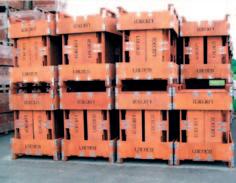


Apple bins. 18 bushel, plywood 5/8” walls and 2x4” runners. New condition. $80 each. Call Kevin at 905-807-9419


Vertical growing set up. 288, 5 ft. Zipgrow towers, extra media and wiking strips, headers and gutters, inline plumbing, Introversion lights, seed starter area, climate control autogrow, CO2 plumbing kit with IBC, and autogrow controls, dehumidifier, reverse osmosis, steel frames for existing towers plus frames for 2 more rows of new towers, com postable clamshells, plus an assortment of boxes. This system has been in use for 5 yrs. intro version lights 3 yrs. All in good condition, well used and has worked great for us. $30,000.00 obo. lorhillfarm@gmail.com

People Moving Wagons and Irrigation Pumps for sale: 2 people moving wagons for sale. Horst tandem axel. 9 ton under carriage. Carry 40-50 people each. Pressure treated decks with 6”x8” fir sills. Stored indoors. Cost $3000 each. Also two 1000 PTO water pumps (Caprari and other) for sale. $1500 each pump. Contact applewoodfarm@ hotmail.com or 905-640-4890 for inquiries.


PAGE 16 –– OCTOBER 2022 MARKETPLACE WORKS advertising@thegrower.org 866-898-8488 x 221 EQUIPMENT LOGISTICS SEED, NURSERY & ROOTSTOCK TURBO-MIST - NEW & USED DON ARTHUR ORCHARD EQUIPMENT (519) 599-3058 donarthur3@gmail.com Thornbury, ON Now is the best time to buy, lease, or trade for the best pre-season pricing and more time to recondition, advertise and sell your trade. Turbo-Mist 400-Teejet electric controls - a nice one! $16,300 Turbo-Mist 500 centrifugal, hydraulic, nice clean $17,900 Turbo-Mist 500 centrifugal, tall spray tower, nice clean $19,750 PERFECT KG220 H.D. flail mower, nice cond. (new $15,000) $8,750 PERFECT ORCHARD MOWERS & FLAIL MULCHERS ENJOY A SAFE & BOUNTEOUS HARVEST THE GROWER GROW TRAYS !"##"$%&#'&()*+,(-.(/&#"%"*,/ WITH 15 LOCATIONS 4 LOCATIONS OPEN 24/7 SHIPPING PARTNERS WORLDWIDE IN 150 COUNTRIES HEAD OFFICE – TEL: (905) 673-2222 toronto@rutherfordglobal.com www.rutherfordglobal.com CANADA & U.S. CUSTOMS BROKERS INTERNATIONAL FREIGHT FORWARDERS NOVEMBER SEED & ROOTSTOCK BOOK BY OCT 16 advertising@ thegrower.org GREEFA Apple/Pepper Grader 6 lanes with 16 automatic drops and 3 semi-automatic drops. Comes with 6-person quality inspection table and macro bin tipper by BURG. Located in Abbotsford, B.C. Phone: 778-809-1568 Email: armand@thevdmgroup.com CONTAINERS & PACKAGING CLASSIFIED ADS
Crown Storage Corp owned by Don & Marg Sheridan, manufacturer of fir bins for over 20 years, is pleased to announce that Mike & Mary Lynn Sheridan of Crown Bin & Pallet Inc have purchased the Bin Company from his parents. We are taking orders for delivery in 2023. It is our intention to offer the same services to our industry, at the same location, using the same staff for a seamless transition. Please do not hesitate to contact us. ROWN ROWN BIN & PALLET INC. 519-599-3656 mike@crownbin.ca
2022 Ontario ginseng crop looks promising midst market downturn
Ontario’s ginseng industry has been hard hit with poor market prices over the past few years.
Rebecca Coates, executive director, Ginseng Ontario, says that international events led to a downturn commencing with protests in Hong Kong, then worsening with poor relations between Canada and China. Finally, the markets came to a complete standstill when COVID-19 hit China and buyers were unable to come to Canada to view the crop.
“Many of our growers still have their barns full of inventory with another crop soon to be harvested,” says Coates. “Some of our growers have been forced to sell their crops below the cost of production to maintain cash flow and keep concurrent crops maintained. Ontario agriculture minister Lisa Thompson recognized this and came to the table with a new loan program for our farmers helping them in the
short term.”
To date, many traditional buyers from Asia are still held to strict travel restrictions and are unable to visit Canada as per usual to purchase the crop. Logistics, due to lockdowns in China, have resulted in extreme delays to market and to consumers.
Increased costs for labour, inputs, building and energy further crimp ginseng growers.

“Mother Nature has been relatively kind to our farmers and this year’s crop does look good,” says Coates.
Other than localized damage from summer storms, weather conditions to this point of the season have been ideal for Ontario ginseng production with seasonable temperatures and timely rains, which is in contrast to the excessive rains in 2021.
Sean Westerveld, specialty crops specialist for OMAFRA, says the biggest issue growers are dealing
with is root phytophthora issues left over from 2021.
Alternaria is a constant battle, but outbreaks of disease are often a result of poor spray coverage, lack of timely fungicide application, or improper choice of fungicide. No major insect issues have been reported over the past few weeks.
Due to this mix of circum stances, Coates anticipates reduced plantings in the coming years as growing ginseng becomes less and less profitable.
‘We are optimistic about the industry’s sustainability and growth as we are seeing increased interest from new markets and new buyers who are planning to visit for this year’s harvest season. Also as lockdowns recede and our markets open back up there is increased demand as the con sumer looks for immune boosting health ingredients.”
Photo by Glenn LowsonOntario Ministry of Labour starts inspections
Every year, more than 20,000 Temporary Foreign Workers come to Ontario to work on farms and in greenhouses. These workers play a vital role in the industry and in the communities of Ontario. Due to their temporary and new worker status, language barriers and inconsistent levels of familiarity with Ontario’s occupational health and safety system, Temporary Foreign Workers are considered vulnerable.
To help protect workers, the Ministry of Labour, Immigration, Training and Skills Development (MLITSD) will be inspecting farm operations that employ TFWs from September 14, 2022 through November 30, 2022.
What are inspectors focusing on?
The focus of the strategy is to determine if:
• workers understand their rights under the Occupational Health and Safety Act (OHSA)
• a copy of the OHSA posted
• the workplace has a health and safety policy and program
• workers have access to health and safety information in the language of the majority of employees on-site
• workers are aware of the hazards in their work and how to perform the work safely
• basic occupational health and safety awareness training has been completed for workers/supervisors (O.Reg. 297/13)
Looking to prepare for a possible inspection?


Workplace Safety & Prevention Services (WSPS) has resources and information available, including:
• Agriculture & Horticulture resources: www.wsps.ca/resource-hub/agriculture
• Greenhouse resources: www.wsps.ca/ resource-hub/greenhouse-growers
• Spanish Language Resources: www.wsps.ca/ resource-hub/spanish
Looking for support in building your health and safety program?
WSPS can help you get started, provide guidance, answer questions, and review your program components. Visit WSPS.CA to get in touch.
Specific resources for training temporary workers:
• Tailgate Talks: wsps.news/tailgatetalk
• New Worker Orientation: Seasonal Agricultural Workers: wsps.news/seasonalorientation
• Orientation on Health & Safety for New Agricultural Workers: wsps.news/neworientation
• Temporary Foreign Agricultural Workers – Safety Resource List: wsps.news/TFAW
Source: Workplace Safety & Prevention Services

OCTOBER 2022 –– PAGE 17 MARKETPLACE advertising@thegrower.org 866-898-8488 x 221 @growernews THE GROWER REFRIGERATION INNOVATION EFFICIENCY PERFORMANCE 519-983-6995 info@heye.ca Premium fruit and vegetable refrigerated cold storages DESIGN - SUPPLY - CONSTRUCT - MAINTAIN BITS AND BITES
CROP

Rapidly spreading plant virus threatens the viability of British Columbia’s blueberry sector
disease, let alone whether yet another virus, that is present in the U.S., is now present in BC.
Horticultural crops are vulner able to various pests and diseases that reduce plant health and yields, limiting productivity and reducing profitability. In British Columbia (BC) blueberries, Blueberry scorch virus (BlScV) is the disease of greatest economic impact. While not being a risk to human health, the virus reduces yields and, due to its accelerating rate of spread across fields, threatens the viability of the highbush blueberry sector.
Originally called Blueberry Sheep Pen Hill disease in the 1970s in New Jersey, U.S., and first detected in the Pacific Northwest in Washington in the 1980s, the causal virus was not identified until the 1990s. First detection of the virus in BC was in 2000, and it is now present throughout all major production regions in the province’s south western coastal Fraser Valley where most of Canada’s highbush blueberries are grown. With the rate of new infections accelerating in recent years, infected plants can be found on most farms in the Fraser Valley, but the number of infected plants varies by field.
After a latency period of one or more years, BlScV symptoms vary considerably across blueberry varieties, ranging from little to no symptoms in somewhat tolerant varieties (e.g., ‘Bluecrop’) to severe blighting/necrosis of flowering and vegetative shoots causing twig dieback.

Intermediate symptoms include leaf-margin chlorosis, leaf reddening and more subtle shoot necrosis. In most cases, blighting progresses over years to affect more of the plant’s tissues, which can eventually result in the
complete loss of yield as plants never recover from the disease. As the pathogen spreads through a field, yields decline progressively to the point where farming becomes uneconomical, necessi tating field removal. Moreover, infected plants that are not removed from the field, as recommended, serve as a reservoir for the virus and the rate of spread can increase rapidly over a few years.
The virus is moved from plant to plant within and between fields by aphid vectors, and the presence of winged aphids results in more rapid and further spread. Due to the geographic concentration of the regions approximately 30,000 acres of blueberries, area-wide control of aphid vectors is as important as control of aphids within individual fields. Without adequate efforts to remove infected plant material, the level of virus inoculum has reached
levels that will make regional efforts to control the disease a daunting challenge.
To complicate the situation, there are both diagnostic limitations and gaps in the under standing of viral spread that are currently under investigation through applied research. First, another virus called Blueberry shock virus (BlShV) presents similar blighting symptoms. Infection with BlShV initially results in yield loss, but plants usually recover within a couple years. This virus is spread via pollen, so the only effective control method is for growers to plant varieties that are slow to become infected. A laboratorybased test called an EnzymeLinked Immunosorbant Assay (ELISA) can differentiate between BlScV and BlShV leaf samples.
The BC Blueberry Council (BCBC) assists growers by
coordinating testing of samples by a third-party lab based in Saanich, BC. However, in recent years, testing of seemingly virus-infected plants has yielded inconclusive results in a considerable proportion of samples, pointing toward either new viral strains or the presence of novel viruses that may or may not contribute to plant disease. As a primary research effort to unravel this complex situation, improving the diagnostic tools available to growers relies on identifying new strains of BlScV and BlShV and determining whether novel viruses are also present in the region While on-going, this research recently identified new strains, which should lead to improved diagnostics, as well as the presence of a novel virus recently discovered throughout the U.S. It is not yet known whether this new virus is contributing to
Second, the taxonomy of the aphids responsible for the spread of BlScV is currently in question. Research is underway to resolve these taxonomic issues, which is essential to understanding the spatial and temporal dynamics of BlScV in the region. Further, it is possible that there is an evolving interaction between viruses and viral strains, aphid populations, and a range of plant genetic responses to infection. These shifting interactions may be contributing to the accelerated spread of viral symptoms in the region.
Third, there are no known sources of true resistance to BlScV in blueberry plant genetic resources, making long-term efforts to breed better varieties a challenging proposition. However, the potential to develop varieties that are either tolerant of the virus or that are relatively resistant to the aphid vectors are two options for the industry’s breeding program. In any case, varietal solutions for a perennial crop such as blueberries are too far off to provide any immediate assistance to growers.
Therefore, the industry’s current emphasis is on advocating for what can currently be done to slow the spread of BlScV via diligent aphid control and routine application of diagnostic tools to direct removal of infected plants. For many fields, the level of infection has reached a point of no return, and these fields must be removed to reduce the inoculum in the region. Growers have difficult decisions ahead as replanted fields are at risk of re-infection from nearby fields and there are limited alternatives for crop diversification on the Fraser Valley’s high-value agricultural lands.
 Dr. Eric Gerbrandt is the research director for the BC Blueberry Council, BC Strawberry Growers’ Association and the Raspberry Industry Development Council.
DR. ERIC GERBRANDT
Typical symptoms of blueberry flower bud blighting due to Blueberry Scorch Virus (BlScV) infection.
Dr. Eric Gerbrandt is the research director for the BC Blueberry Council, BC Strawberry Growers’ Association and the Raspberry Industry Development Council.
DR. ERIC GERBRANDT
Typical symptoms of blueberry flower bud blighting due to Blueberry Scorch Virus (BlScV) infection.
Photo courtesy Carolyn Teasdale. many fields, the level of infection has reached a point of no return, and these fields must be removed to reduce the inoculum in the region.
THE GROWER PAGE 18 –– OCTOBER 2022
PROTECTION
For
“ “
CROP PROTECTION
Spotted lanternfly detected in Buffalo, NY, 45 km from Canadian border
The New York State Department of Agriculture is asking for the public’s help in reporting spotted lanternfly (SLF) with the discovery of more than 100 adults in Buffalo, New York since September 9, 2022.

“This destructive agricultural pest attacks a wide range of native hardwood trees, grapevines, and fruit trees and threatens industries, such as fruit orchard, beer, wine and grape product industries, so it is a big concern for Canada,” said Sarah Rang, executive director of the Invasive Species Centre. SLF is an invasive insect native to parts of Asia that was initially detected in the United States in 2014 in Pennsylvania, eventually spreading to 14 U.S. states. This spotted lanternfly detection is one of an increasing recent number of invasive species pressures facing Ontario.
Canadians can help prevent an infestation by identifying and reporting signs of SLF. Adults are present from July to
December and can begin laying one-inch long, muddy-looking egg masses as early as September on any hard surface outdoors. So check tree trunks, vehicles, patio furniture, firewood, railings, and stone and metal surfaces for egg masses. Adults are often found
swarming at the base of trees.
This news has piqued the concerns of Ontario growers. The Ontario Ministry of Agriculture, Food and Rural Affairs has been monitoring for several years now.
Dr. Wendy McFadden-Smith, Horticulture IPM specialist at the
Ontario Ministry of Agriculture, Food and Rural Affairs (OMAFRA), will be leading two workshops to provide Ontario stakeholders with information and tools to identify and report spotted lanternfly and its pre ferred plant host, tree-of-heaven.
This in-person workshop is free of cost and is being delivered on two different dates (as the same content will be covered in both, it is not necessary to attend both workshops). Advance registration is required at the links below. Capacity is 45 people per workshop so secure your place as soon as possible.
• Wednesday, Sept. 21, 6-8 p.m.
EDT - Register at https://conta.cc/3DzTdHE
• Wednesday, October 5, 6-8 p.m. EDTRegister at
https://conta.cc/3RU4FSQ
Location: Meeting Room, Lincoln Pelham Public Library (Rittenhouse branch), 4080 John Charles Blvd., Vineland
Source: Grape Growers of Ontario September 16, 2022 newsletter, Invasive Species Centre, September 15, 2022 news release
Canada’s weed hunters set their sights on natural alternatives to herbicides

Researchers are tackling herbicide resistance in weeds with a new technique called The abrasive or projectile weed control.” It was first developed by University of Nebraska researchers for weeds affecting corn crops.
Using a sandblaster, the university research team “shot” natural materials such as corn grit, corn gluten meal, and walnut shells directly at weeds. They found this alternative to herbicides was an effective way of killing the weeds or severely damaging them in corn crops while reducing costs and environmental impacts.
In an effort to bring this concept to reality, Agriculture and Agri-Food Canada (AAFC) scientists across Canada have teamed up to form the northern chapter of weed hunters” as part of the Alternative Pest Management Solutions project to reduce pesticide and herbicide use. At the helm is Harrow Research and Development Centre scientist, Dr. Robert Nurse.
To prove the projectile weed
control concept, AAFC scientists recently embarked on a new two-year project. They chose four high-value crops whose common weeds have fewer herbicide options available for farmers and are becoming increasingly resistant to the available herbi cides. They are targeting the five most common broadleaf weeds, or non-grass weeds, in each crop.
Dr. Nurse is hunting weeds in dry bean fields in Harrow, Ontario while Dr. Andrew McKenzie-Gopsill is tackling potato weeds at the Charlottetown Research and Development Centre on Prince Edward Island. Dr. Marie-Josée Simard, Saint-Jean-sur-Richelieu Research and Development Centre in Québec, and Dr. Jichul Bae, Agassiz Research and Development Centre in British Columbia, are targeting common vineyard and blueberry weeds, respectively.
Each scientist is equipped with a commercial sandblaster attached to an air compressor to shoot corn grit, walnut shells, in fine and coarse sizes, and a mix of both materials at a rate of 480
kilograms per hectare, amounting to a couple grams per square metre. In small plots, some fields will be treated with projectile materials only while others will be treated with projectiles in combination with a reduced rate of herbicide to see if the same weed control can be achieved without any herbicide.
“It’s all about the right timing,” says Dr. Robert Nurse. “We plan to shoot weeds at the same time that farmers might use a herbicide, so it fits into their regular schedule. It also lines up to when the weeds are just emerging from the soil and are most susceptible. They can absorb damage from the projectiles better when they get older.”
By 2024, the team hopes to find the best projectile material, including its ideal size and application rate, with weed control of more than 80 per cent without causing significant crop injury and yield loss. The researchers also want to see if air-propelled abrasives can reduce overall herbicide application in potatoes, dry beans, vineyards and blueberries.
Corteva Agriscience exits 35 countries

Corteva Agriscience has announced plans to exit 35 countries to shave costs, while maintaining focus on the United States and Canada, two of its 20 core countries.
Headquartered in Indianapolis, Indiana, the seeds and crop protection company has
announced plans to lay off roughly five per cent of its global workforce as part of the company’s cost-cutting plans. A surge in inflation this year to four-decade highs has forced corporate America to slash planned spending and roll out measures to shield their margins
from rising raw material costs.
“We don’t think that (inflation) is abating,” said chief financial officer Dave Anderson at Corteva’s annual investor meeting.
Cost pressure will ease in 2023 from levels seen this year, but it will still be significant, he added.
In order to efficiently apply the materials over farm fields, researchers at the University of Nebraska developed a modified crop sprayer to push projectile materials with compressed air through a nozzle over the top of and beside the crop. Dr. Andrew McKenzie-Gopsill explains that a
granular fertilizer spreader would work as well. Both options are simple to modify and would be easy for farmers to implement.
Source: Agriculture and Agri-Food Canada August 25, 2022 news release
Corteva plans to reduce focus to about 110 markets, honing in on 20 core countries, including the United States, Canada, Brazil, India and Western Europe. The
non-core regions make up less than five per cent of the company’s annual revenue, Anderson said.
Source: Reuters
Dr. Jichul Bae takes photos of damaged blueberry crop weeds after spraying projectile materials.OCTOBER 2022 –– PAGE 19 THE GROWER
CROP PROTECTION
Kanemite miticide label expanded to manage two-spotted spider mite
The Pest Management Regulatory Agency (PMRA) recently announced the approval of a minor use label expansion registration for Kanemite miticide for control of two-spotted spider mites on Crop Subgroup 13-07B (Bushberries). Kanemite miticide was already labeled for management of insects on a wide range of crops in Canada. This minor use proposal was submitted by the British Columbia Ministry of Agriculture, Food, and Fisheries as a result of minor use priorities established by growers and extension personnel.
The following is provided as an abbreviated, general outline only. Users should be making insect management decisions within a robust integrated insect management program and should consult the complete label before using Kanemite miticide.
TOXIC to aquatic organisms. Observe buffer zones specified under DIRECTIONS FOR USE. For reduced runoff from treated areas into aquatic
habitats, consider the characteristics and conditions of the site before treatment. Site characteristics and conditions that may lead to runoff include, but are not limited to: heavy rainfall, moderate to steep slope, bare soil, poorly draining soil (e.g. soils that are compacted or fine textured such as clay). Avoid application of this product when heavy rain is forecasted. Contamination of aquatic areas as a result of runoff may be reduced by including a vegetative strip between the treated area and the edge of the water body. Follow all other precautions, restrictions, and directions for use on the Kanemite miticide label carefully.
For a copy of the new minor use label contact Erica Pate, berry crops specialist OMAFRA, Simcoe (519) 410-0624, your regional supply outlet, or visit the PMRA label site http://www.hc-sc.gc.ca/ cps-spc/pest/registrant-titulaire/toolsoutils/label-etiq-eng.php
Source: Josh Mosiondz, OMAFRA minor use coordinator
Joint statement on proper use of FMC acronym
A statement, issued jointly by FMC Corporation and Farm Management Canada, acknowledges publicly that FMC Corporation is the owner of the registered trademark “FMC”.
FMC Corporation (FMC) is an agricultural sciences company that advances farming through innovative and sustainable crop protection technologies. The product offerings in Canada include Authority brand herbicides, Aim EC herbicide, Express brand herbicides and Coragen brand insecticides.
From its industry-leading discovery pipeline to unique application systems and modern biological productions, FMC is passionate about bringing new and unique solutions to growers around the world. For more than 130 years, FMC has been rooted in agriculture and innovation, and continues to earn the trust of growers and
industry partners to maximize their productivity, profitability and sustainability.
Farm Management Canada is passionate about farm business management and committed to developing, delivering and connecting Canada’s farmers and farm management enthusiasts with leading-edge farm business management resources, tools and information to help foster resilience and prosperity on Canada’s
2.07 Allow a minimum of 21 days between applications of KANEMITE 15 SC MITICIDE and apply only when thresholds are reached as determined through monitoring. Thorough spray coverage is required for optimum control. For control of Twospotted spider mite (Tetranychus urticae) mix KANEMITE 15 SC MITICIDE in a maximum 1000 L of water per ha of water and apply as a full coverage spray to the foliage to drip. Actual spray volume will vary depending on the size of plants being sprayed. Application should be made as soon as the mite population reaches economic infestation levels
farms. For more than 30 years, Farm Management Canada has been a national champion for farm business excellence and a leader in bringing a farm management lens to Canada’s agricultural sector to ensure sustainable growth and competitive ness for Canada’s agricultural sector.
Through this statement, we jointly acknowledge and advise to the general public that “Farm Management Canada”
ADAMA shifts production of 2,4-D to North American plant
ADAMA has responded to ongoing crop protection product shortages by starting production of 2,4-D at its Georgia plant, a move that is helping Canadian farmers, By moving 2,4-D production to North America for the first time, ADAMA is helping ensure the product is available in the fall of 2022 for farmers who need it.

“Supply chain issues continue to plague the global crop protection industry, so we’re doing what we can within our worldwide network of facilities to ensure continuity of supplies to Canadian farmers,” said Cornie Thiessen, general manager, ADAMA Canada. “It’s much easier for us to guarantee supply when we can ship within North America by road or rail.”
This is the first time ADAMA has produced 2,4-D at its Georgia plant, though the plant has for many years made other popular ADAMA products. Manufacturing in North America
lessens the impact of overseas production and shipping uncertainties. Thiessen said its Canadian retailers have already started to receive the North American-made 2,4-D.
Following the successful 2022 launch of MCPA, this is another important building block in ADAMA’s cereal herbicide strategy. Securing our position and supply chain in these key active ingredients will enable the development of the more complete mixtures in our pipeline.
While some supply chain challenges have persisted for multiple years, new risks are further challenging the industry.
“The knock-on effects of the war in Ukraine raise important questions about European- based crop protection production this winter. We’re doing our best to stay a step ahead of these major industry-wide issues,” said Thiessen.
2,4-D is a Group 4 liquid herbicide providing effective
control of difficult weeds in cereals, field corn, pastures and non-crop land. Always read and follow registered product label instructions. It is an offense under the Pest Control Products Act to use these products in a way that is inconsistent with the directions on the label.
ADAMA Canada has been supplying the Canadian agricultural community with crop protection products for more than a decade. The company offers an innovative approach to agriculture and proactively seeks opportuni ties to listen to what customers, experts and colleagues have to say, taking their inputs and learn ing from their experience. The company’s employees combine these insights with internal expertise and responds with new products, solutions, services, tailored commercial policies, or information that is relevant.
“We are passionate about agriculture and approach what we do as much more than just a job.
shall not be shortened to “FMC” in any written, printed or online publication going forward except when coupled with “GAC” (representing the French translation of Farm Management Canada to Gestion agricole du Canada) as used in Farm Management Canada’s website URL and social media channels (e.g., www.fmcgac.com).
FMC Corporation may, at its own discretion, enforce its rights to the “FMC” trademark against any third parties for improper or unauthorized use. We thank you for your understanding and look forward to continuing to serve the agricultural sector in our unique ways.

Source: FMC Corporation and Farm Management Canada September 19, 2022 news release
globally with sales in 100 countries and has the largest portfolio of any company with more than 270 active ingredients.
Our straightforward, get-it-done attitude helps us stay focused on what we care about most: helping our customers create more sustainable, profitable businesses.”
ADAMA is the seventh largest crop protection companySource: ADAMA Crop(s) Target Rate (L product / ha) Application Information PHI (days) CG 13-07B (Bushberries) Control of Two-Spotted Spider Mites “In the future, please only use FMC to refer to FMC Corporation.”
OCTOBER 2022 –– PAGE 20 THE GROWER
September 21, 2022 news release
1