the financial case for a new packing line
KAREN DAVIDSON
Turns out that the year the Feenstra brothers John and Rich and their wives Laura and Sarah officially took over the family farm, they made their boldest move yet: investing in a new Greefa packing line that optically sorts external and internal defects for both peaches and apples.
“The purchase was years in the making,” says John Feenstra, operations manager, Mountainview Orchards, Beamsville, Ontario. “There were constraints on the old packing line, parts were breaking down and the labour cost per unit was going up.”
Harvest is stressful at the best of times, but all the emotion of the growing season becomes compressed – or maybe expressed! -- on the packing line. Too many small-sized fruit? Signs of scab? Bruises? The packing line exposes the good, the bad and the ugly when it comes to nature’s gifts. Every apple serves as a callout to orchard management, Rich Feenstra’s domain.
Weather patterns and cycles such as drought, temperature fluctuations as well as crop load can have a big impact on the internal qualities of apples,” says John Feenstra. “Honeycrisp apples are particularly sensitive to temperature changes. There’s not always an ideal crop load after a drought. There’s a fine balance in managing crop loads.”
When it came to improving the packing line, the brothers had to crunch the numbers together to prove that purchasing expensive new equipment would provide a return on investment within an acceptable length of time. And there were many factors to consider in this process. Near the top was the ability to gather more detailed data to enable better orchard management decision-making. Also, the enhanced ability on the line to pack right-sized apples into right-sized packaging was important to support the specific needs of individual retail clients and to ensure that the exact weight was being packed into each box.
The Feenstra brother’s pitch to Farm Credit Canada, the farm’s lender since 1980, described two scenarios. The
least expensive scenario proved labour reduction on a per unit basis, a major plus since labour is one of the biggest costs on the horticultural ledger. With the first bite taken, their banker went on to give them two thumbs-up on the more expensive plan. “You’ve got to have the dryer,” he said, convinced that it would eliminate a bottleneck in the old system.
Father Peter Feenstra sat in on the pitch meeting but didn’t actively participate. Although he’s “sorta-kinda” retired, he still plays an important role pinch-hitting as needed. He vividly recalls that with his wife Marg, they made a farm purchase in 1980 when interest rates on operating loans were at a crippling 23 per cent. Forty years later, after endless trips to farmers’ markets and the Ontario Food Terminal, and meetings with key chain store buyers, he’s content to watch his sons make their own decisions.
Continued on page 3 NOVEMBER 2022 CELEBRATING 143 YEARS AS CANADA’S PREMIER HORTICULTURAL PUBLICATION THEGROWER.ORG THE WINNING PITCH Making
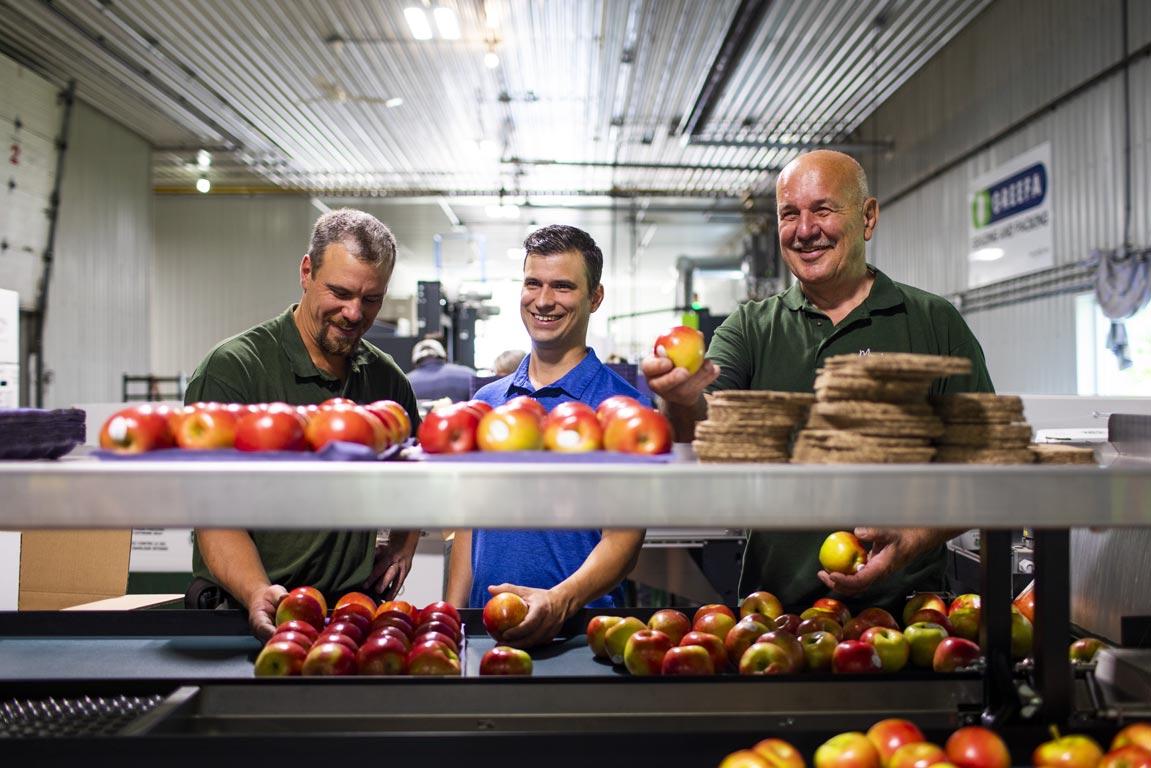
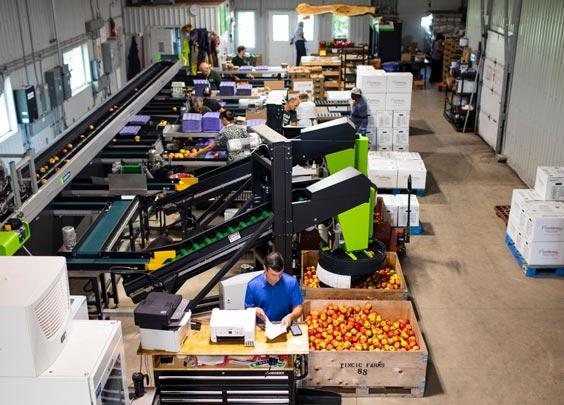
Would you lend money to this farm family? Turns out that Farm Credit Canada signed off on the pitch for a new packing line in record time. Installed for the 2022 season, it’s flexible enough to optically sort both peaches and apples for external and internal defects. L-R: Rich, John and
father Peter Feenstra near Beamsville, Ontario. Photos by Marcella DiLonardo.
Volume 72 Number 11 P.M. 40012319 $3.00 CDN @growernews Post Hurricane Fiona recovery PG 5 Greenhouse Grower PG 6 Seed & rootstock PG 12
Loblaw announces price freeze, supplier fees

Loblaw Companies Ltd CEO Galen Weston announced in mid-October that Canada’s leading grocer will be freezing the prices of No-Name brand products until January 2023.
The same month, a letter to suppliers dated October 3, said that supply chain handling fees would go up January 1, 2023 to cover higher freight costs. Distribution centre delivery charges are increasing to 1.17 per cent and direct-to-store delivery charges are rising to 0.36 per cent.
“Growers need to cover the rising costs of production and getting their product to market, including buyers’ fees, in order to stay in business,” comments Rebecca Lee, executive director, Fruit & Vegetable Growers of Canada (FVGC). “They deal daily with tremendous risk just to be able to offer their product, and

have very small margins as it is.
For them to be able to continue offering Canadian product, the whole agri-food supply chain, including consumers, needs to understand that the suppliers cannot be asked to bear more of the brunt of inflation. Many are already at their breaking point.”
The Fruit and Vegetable Growers of Canada are invested in the creation of a Canadian Industry Grocery Code of Conduct. If enacted and enforced, the hope is that it will provide the conditions for transparency, certainty and fair dealings across the value chain.

For the horticulture sector to be sustainable, operations need to be profitable.
“We have seen increased costs for almost all of the inputs required to grow and sell fruits and vegetables, and growers are feeling the pinch,” said Lee. “In recent conversations with some of our members, they have reported that many growers are losing money and unable to reinvest in
their business this year.”
Growers saw significant price increases in gasoline, fertilizer, propane, and packaging in the last year. For example, in Ontario, between May 2021 and May 2022, the price of nitrogen fertilizer increased by 121 per cent, and the price of diesel fuel increased by 100 per cent.
The Parliamentary Standing Committee on Agriculture recently passed a motion that will prompt an investigation into grocery store profits. The House of Commons also passed a unanimous motion to have the Government ask the Competition Bureau to investigate grocery chain profits. FVGC looks forward to these proceedings.
Jan VanderHout, the president of FVGC said, “As a consumer myself I appreciate the challenges of escalating grocery bills while as a producer I experience the need to cover our rising costs of production in order to maintain financial viability for producers.”

NEWSMAKERS
John Barlow, Alberta MP (Foothills), will continue to serve as shadow minister for agriculture, agri-food and food security in the Conservative Party of Canada and Official Opposition. In a state ment on his Facebook account, Barlow said, “The importance of agriculture to our national interest cannot be overstated. I will continue to fight for our farmers, farm families, producers and all agri-food workers to ensure their voice is represented in Parliament.”
Pierre Poilievre, leader of the Official Opposition, also announced on October 12, 2022 that Lianne Rood, Ontario MP (LambtonKent-Middlesex) would act as shadow minister for the Federal Economic Development Agency for eastern, central and southern Ontario.
André Lamontagne, MNA, retains his role as Québec’s minister of agriculture, fisheries and food in the new cabinet of the Coalition avenir Québec. Nate Horner also reprises his role in Alberta but with a twist. What used to be the Alberta ministry of agriculture, forestry and rural economic development has been renamed: Agriculture and Irrigation. He’s been in the role since November 5, 2021. Alberta’s new premier Danielle Smith, who does not have a seat in the legislature, will run in a by-election in Brooks-Medicine Hat on November 8.
The World Potato Congress has named Ellen Kouwenberg, a native of Prince Edward Island (PEI) and daughter of potato and beef farmers, as its new executive director. Educated at the University of UPEI and a student of International Business at the University of Copenhagen, she has travelled extensively throughout Europe and Russia exploring various business models. The next congress is slated for 2023 in Adelaide, South Australia.
Agriculture in the Classroom Canada (AITC-C) elected four new board executive officers during its 8th Annual General Meeting. Rebecca Sooksom of Agriculture in the Classroom Nova Scotia takes on the role of chair. She is joined by Mathieu Rouleau of École-O-Champ as vice-chair, Charlotte Flores of Agriculture in the Classroom New Brunswick as secretary, and Luree Williamson of Agriculture for Life as treasurer.
Audrey Boulianne, general manager, Québec Parmentier Inc, has announced that she is joining Medicago as director of biomass technology. “Being able to combine my passion for greenhouse cultivation with the desire to make a difference for people’s health motivates me to the highest degree,” she said. She was with the potato company for seven years.
CanAgPlus is inaugurating the Sheri Nielson Auditor Recognition Award to a deserving CanadaGAP auditor who has shown extraordinary heart, dedication and commitment to their role. The recipient will be an auditor who has made a significant contribution to the program, the growers and the industry that CanadaGAP serves. The award honours the memory of Sheri Nielson who passed unexpectedly earlier this year. Nominations for the award will be accepted until November 18, 2022. For more details, contact info@canadagap.ca or 613-829-4711.
The Grower is proud to announce that Karen Davidson won second place in the Technical Feature category of the Canadian Farm Writers’ Federation 2022 annual awards.
“Riding the berry revolution” was the cover story of the July 2021 issue profiling the research and development of several berry innovators in Ontario and Québec: Dusty Zamecnik, Christine and Dave Klyn-Hesselink and Joey Boudreault. As always, thanks to the growers for their generous time in sharing their stories.
THE GROWER AT PRESS TIME… PAGE 2 –– NOVEMBER 2022
John Barlow
Rebecca Sooksom
Making the financial case for a new packing line
Continued from page 1
John and Rich Feenstra’s packing line investment this year is all the more remarkable because it’s being carried by a 40-acre, high-density apple orchard with an additional 10 acres of peaches. Theirs is a small to medium-sized enterprise that has consistently grown in its ambition to deliver the finest quality fruit to local retailers meeting consumer demand for local product that continues unabated, especially since the pandemic.
By mid-October 2022—the evitable learning curve hiccups
behind them -- the Feenstra’s can confidently state they are packing 25 to 35 per cent more fruit per day with the new system. Having purchased the Greefa equipment through Provide Agro, a nearby supplier, they’re assured access to technical support when needed.
“We need to feel confident that what we’re packing is not only up to Mountainview Orchards’ standards, but up to Ontario apple industry standards,” says John Feenstra.
Contrary to the secretive nature of the apple industry in the past, the Feenstra’s are fierce advocates of sharing growing practices and observations with
Overcoming price objections
What are the biggest obstacles to selling new equipment? Sean Bartlett, business unit manager for Provide Agro, has encountered his fair share of quibbles about pricing. He’s most often asked about the return on investment.
Surprisingly, he answers, “Only the individual grower can pencil out the return on investment because inevitably all of this equipment is custom-designed for the client.
fellow apple growers.
“We have to look at the industry as a whole,” says John Feenstra. “If we’re all pushing the Ontario brand, the Foodland Ontario brand, we will be stronger against imports. Certainly in the last two years, we can see that retailers are looking for Ontario product because the supply chains have come under so much pressure.”
Ontario growers currently provide enough apples to fill 45 per cent of Ontario’s consumer demand, so there’s an opportunity to supply more, especially as freight continues to add costs to imports.
In keeping with the practice of sharing knowledge, Peter Feenstra has one more nugget to share with fathering farmers like himself. “Don’t wait to hand over the reins of the farm,” he says.
“My wife and I love having the opportunity of seeing the next generation taking over the business with enthusiasm and energy.”
The Grower is “Digging Deeper” with Rich and John Feenstra, Mountainview Orchards, Beamsville, Ontario. They share the process by which they pitched the bank for a gamechanging packing line that will

make their apple and peach farm more efficient while improving the working environment for their current employees. This podcast is sponsored by Cohort Wholesale.
What I can say is that most clients tell me afterwards that they wished they had made the purchase three to five years earlier.”
For horticulture, November and December are decision time for new equipment. That’s because at least six months of lead time are required to deliver from Europe. Even that time frame is still getting squeezed by logistics from the ports of Antwerp to Montreal.
Bartlett says that freight costs which used to be $6,000 for a 40-foot container have risen to $15,000 to $20,000 per container. And then the Port of Montreal continues to be a pain point due to lack of rail and truck capacity from there to points in Ontario. Demurrage fees also add to the tab.
“There’s absolutely nothing I can do,” says Bartlett. “It’s a big problem and it’s not getting any better.”
NOVEMBER 2022 –– PAGE 3 THE GROWER COVER STORY
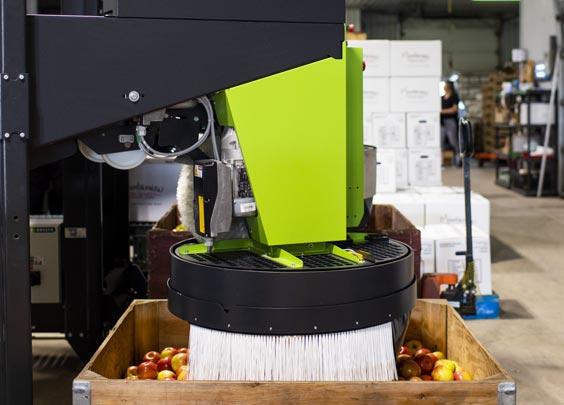
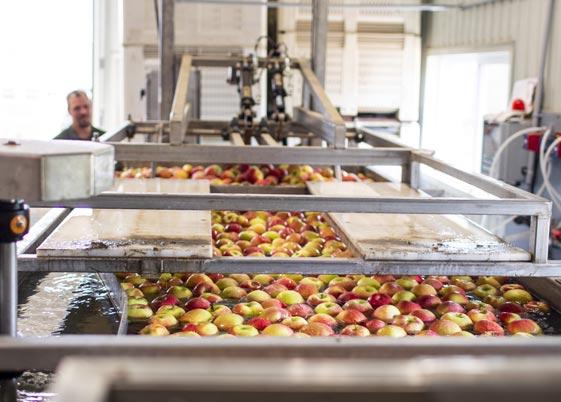
Rich Feenstra unloads a bin of apples in the washing area at the start of the packing line.
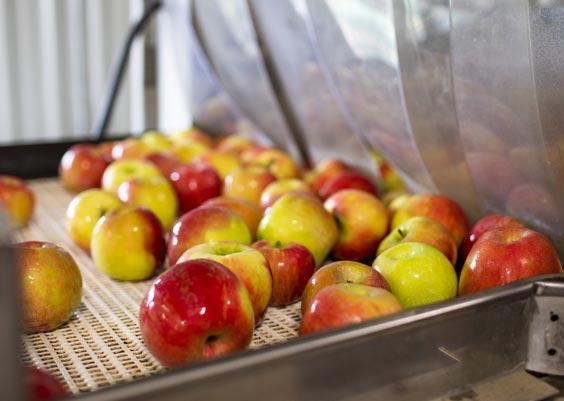
The gentle bin filler delivers pre-sorted apples from the packing line.
Next, the apples are waxed with an edible coating to preserve shelf life and are directed into a dryer.
An overhead view of the packing house floor shows the streamlined efficiency of a Greefa packing line that can handle both peaches and apples. washer, sizer, sorter and dryer at Mountainview Orchards. John Feenstra is seen in the foreground.
Fruit growers talk directly with BC deputy minister of agriculture

The British Columbia Fruit Growers’ Association (BCFGA) recently reported on its August 8, 2022 farm tour with the provincial deputy agriculture minister, Peter Pokorny in Summerland. President Peter Simonsen has followed up on September 7 and October 15 with consistent messaging about the advantages and strengths of tree fruit production in the Okanagan.
First, the climate is one of the best in the world, even with climate change issues. Secondly, new variety adoption and replanting programs have resulted in more Ambrosia plantings and late-season cherries. There’s a high level of renewal in BC orchards compared to the U.S., although that gap is narrowing.
Thirdly, the Agriculture and Agri-Food Canada research station is home to world-class researchers supporting the interior and national horticultural sectors. And lastly, the Sterile Insect Release Program is the foundation of organic production,
BRUNSWICK
an unrealized marketing advantage.
The BCFGA has actively communicated with the province about all the financial stresses on all growers of apples, cherries, soft fruit and grapes. For example, a recent survey of growers showed that 62 per cent of grape growers, 83 per cent of cherry growers and 58 per cent of apple growers were not generating enough profit to make necessary investments in their operations. That means 60 to 80 per cent of growers were either planning to exit, losing money or unable to fund essential investments in their operations.
The association has three priorities to move forward:
• Replant, as a vote of confidence in the tree fruit sector
• Enable transitional funding, to match the funding received by the Washington state apple and cherry growers in their trade war with China
• Create a ‘New Deal’ for market ing to ensure that BC apples at
the wholesale level receive a premium over imported apples, rather than the current discounted price compared to competitors
McCain Foods and McCain Foundation support hurricane

Community values are at the core of McCain Foods, and in keeping with The McCain Foundation’s mission to help rural communities in which the company operates, the two enti ties are donating $1 million each to relief efforts on the East Coast.
The total of $2 million will be donated to the Canadian Red Cross to support those suffering
through enormous hardship and loss.
“Our company started in a small community in New Brunswick, similar to many of the places that have endured the worst impacts of Hurricane Fiona,” said McCain Foods president & CEO Max Koeune.
“We know from our own experience how strong the sense
of community is throughout Atlantic Canada, and we, along with The McCain Foundation, are committed to supporting our employees, farmers, friends, families and neighbours during this difficult time.”
Source: McCain Foods and McCain Foundation October 3, 2022 news release
In other unrelated BCFGA news, it was announced that Li Ni (pronounced ‘Lee Nee’) is the new plant pathologist working

out of the BC Ministry of Agriculture office in Kelowna.
Potato growers welcome good harvesting conditions




“In summary, the 2022 growing season has provided a potato crop that is variable across the country, and even regionally within provinces,” reports Victoria Stamper, general manager, United Potato Growers of Canada (UPGC).

“Overall production is estimated to be slightly lower than 2021, which is not unexpected when we take into consideration Canadian acreage remained almost flat and yields in 2021 provided a
‘bumper crop’ in most of Eastern Canada which is not the case this year.”
She notes that the figures are “projections” based on history. More precise numbers will be known in a few weeks.
Hurricane Fiona tore through Prince Edward Island (PEI) before harvest started in earnest. As of press time, October 21, PEI growers have about 85 per cent of their crop harvested and many expect to
finish up by end of October. There have been some delays due to the damage inflicted by hurricane Fiona. Although not harvesting last year’s bumper crop, most are reporting average, to even aboveaverage yields in certain areas this year. The conditions for harvest have been very good overall, although moisture level differences between the western and eastern parts of the island have caused some variability in the crops. With planted
acreage for PEI down by more than 5,000 acres, production is estimated to be lower than last year’s bumper crop by 5-10 per cent, however about 5 per cent above the five-year average.
Watch for the UPGC Crop Summary after Statistics Canada releases its estimate of Canadian potato production in early December.
PAGE 4 –– NOVEMBER 2022 THE GROWER CROSS COUNTRY DIGEST
NEW
BRITISH COLUMBIA
CANADA Leah Erickson (BC/AB) 604-957-2359 Marc André Laberge (QC) 514-984-4589 Bridget Visser (ON) 905-715-8595 Paul Banks (ON/NS) 905-688-4300
Darcy
Leiter (AB/MB/SK) 306-491-6485
Rob
Hovius (ON/PEI/NB) 519-580-3231 ~ Quality Seed Since 1881 ~ www.stokeseeds.com T: 1-800-263-7233 F: 1-800-272-5560 OUR EXPERTS ARE HERE TO HELP! Alexandre Bisson (QC/ON) 438-334-1996 Phil Stoffyn (ON) 519-359-2759
relief efforts
CROSS COUNTRY DIGEST
NOVA
Rebuilding is underway post-Hurricane Fiona
Nova Scotia’s premier Tim Houston announced financial supports on October 14, with a one-time grant of $2,500 for registered farms in central, northern and eastern Nova Scotia which experienced infrastructure or crop damage or extended power outages. No application is needed.
The provincial government is also providing $6 million through the Agricultural Response Program to cover extraordinary operational costs incurred because of the storm. A simplified application process will be announced soon to ensure funding is disbursed quickly. Up to $9 million more will be available if needed in the weeks and months ahead to help with costs to rebuild that are not covered by any other programs.
Provincial insurance and loan programs are also offering farmers relief. The Nova Scotia Crop and Livestock Insurance Commission is waiving interest on overdue accounts for the month of September. The Nova Scotia Farm Loan Board is offering clients deferrals on payments and making working capital loans with lower interest available.
Federal agriculture minister Marie-Claude Bibeau toured Nova Scotia’s Antigonish and Pictou counties along with provincial ag minister Greg Morrow to see the storm damage first-hand. Federal-provincial cost-shared relief programs for the agriculture sector include:
• The new On-Farm Electrical Interruption Program is providing $500,000 in federal and provincial funding through the Canadian Agricultural Partnership. It helps offset costs to farm owners who installed a backup electrical generator immediately before Hurricane Fiona or during the extended power outages that it caused. The program can cover up to 100 per cent of the cost of purchasing and installing a generator for on-farm use.
• AgriInsurance provides crop insurance for naturally occurring production losses Hurricane damage is an insured event for those enrolled in the program.
• AgriStability provides protec tion for income losses of more than 30 per cent. Farm businesses enrolled in the program can apply for an interim payment of 75 per cent of their estimated benefit.

To help support producers impacted by the storm, Nova Scotia and Agriculture and Agri-Food Canada have opened AgriStability to farmers who did not enroll in 2022 so they can take advantage of this important income support. As well, any producers who have not
submitted their claims for 2021 are now able to submit without penalty until October 30.
• The AgriRecovery Framework focuses on extraordinary costs producers face in recovering from disasters. Nova Scotia has requested an AgriRecovery assessment to determine what support is needed to help agricultural businesses recover as quickly as possible from the storm.
• AgriInvest is a governmentmatched producer saving program. Producers can access any accumulated funds in their AgriInvest accounts at any time to address immediate needs. Discussions are also underway on the immediate and long-term support farmers need to recover. This includes how best the Disaster Financial Assistance Arrangements program can help and Nova Scotia’s recent request to launch a joint AgriRecovery assessment.
Source: Nova Scotia’s Premier’s Office Oct 14, 2022 news release
NOVEMBER 2022 –– PAGE 5 THE GROWER
SCOTIA
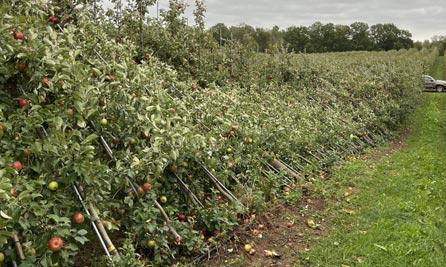
This apple trellis system was downed by Hurricane Fiona in Nova Scotia’s Annapolis Valley. Photo courtesy Emily Lutz.
Smart irrigation collaboration results in new grower-trained watering technology
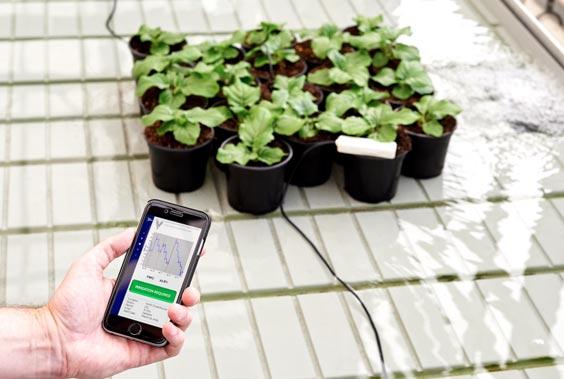
This can directly help growers by reducing crop losses and demands for labour and highly refine their watering needs.”
Growers spend an average of 240 hours per acre to manage and monitor their irrigation systems. This manual process leads to costly crop management, inconsistent yields or even crop loss.
“For the past three years, Vineland has worked closely with LetsGrow.com to develop a machine learning algorithm to complement the LetsGrow.com software suite to directly address this challenge,” says Hussam Haroun, director automation, Vineland.
“Combined with greenhouse environmental data, this new software innovation is able to learn the grower irrigation strategy and provide decisions to create irrigation consistency, as well as optimize water usage and consumption.
“Data-driven decision making is an imperative for growers to optimize their resources and make their operations more sustainable in an increasingly competitive market. Our collaboration with Vineland allows for an important expansion in our platform technology to further collect, refine and analyze water usage data that is crop specific,” says Ton van Dijk, global head of sales and operations, LetsGrow.com.
“This data is collected in real-time and has implications for long-term growing strategies. Overall, we’re empowering growers by leveraging data that can result in a more profitable business strategy.”

This international collaboration serves to advance Vineland’s mandate to facilitate cooperation and create partnerships that expand innovation and commercialization in horticulture both in Canada and abroad.
Based in the Netherlands with more than 20 years serving the horticultural
sector, LetsGrow.com’s world-leading data platform provides growers, crop advisers and suppliers worldwide with real-time insights into their cultivation data, supporting their decisions so they can
make the right choices for a lucrative, sustainable crop.
Source: Vineland Research & Innovation Centre, September 19, 2022 news release
Walmart Canada to carry Mastronardi strawberries year-round
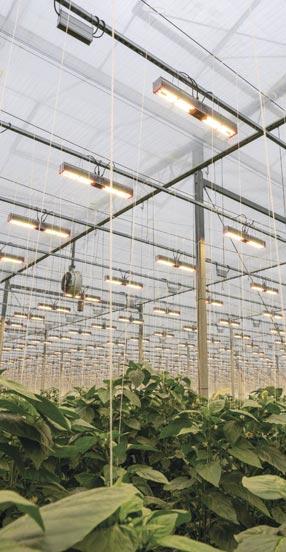
Walmart Canada has noted that the average Canadian consumer eats about three kilograms of strawberries annually. To meet that need, the retailer will be sourcing greenhouse-grown strawberries from Mastronardi Produce, based in Kingsville, Ontario.
“We are excited to be launching Your Fresh Marketbranded, greenhouse-grown strawberries exclusively at Walmart Canada,” said Kimberly Roberts, senior director, floral and produce, Walmart Canada. “This new strawberry greenhouse will enable us to offer a Canadian-grown strawberry all year long.”
“We care about the environment and the good thing
about growing in a greenhouse is we use about onetwentieth of the water and one-tenth of the land of field farming,” said Paul Mastronardi, president and CEO, Mastronardi Produce, said in a Walmart-produced video.
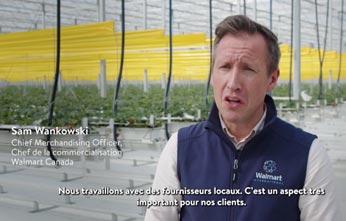
“Customers have told us that local is really, really important to them,” said Sam Wankowski, chief merchandising officer, Walmart Canada. “It means we can get that product quicker to the customer, which is going to mean fewer trucks on the road and, ultimately, a better product for customers.”
Source: Walmart Canada October 13, 2022 news release
BY NATURE®
Solara, the strategic investment in
board,” added Moracci.
Like Solara, Alonna canary melons are available in both bulk and multiple packaged formats. Personal in size, weighing approximately 700-800gr, the Alonna’s lunar-like interior provides a refreshing yet crisp and ambrosial experience with every bite.
“Canary melons are not your ordinary melon; we spent a great deal of time exploring the various product traits of the Alonna canary melon to ensure that we crafted the appropriate brand position,” said Chris Veillon, chief marketing officer. “We quickly discovered that it was the melon for every meal; breakfast –snack – lunch – snack – dinner –snack which fits into our brand product strategy. We need to ensure we are part of every eating occasion -- Alonna checked all the boxes. It’s all about creating more mouth-watering moments for our products,” said Veillon.
Source: Pure Flavor October 24, 2022 news release PAGE 6 –– NOVEMBER 2022 THE GROWER GREENHOUSE GROWER SETTING THE STANDARD IN DYNAMIC GROW LIGHTS Plug & Play: SUN ALL DAY Full spectrum output that dynamically recreates Sunlight from anywhere in the world. Fully Dynamic Remote and real-time dynamic light control directly from growers’ PC or by the Sollum team Real-time control Cost-efficient with automatic dynamic dimming and spectral compensation. Energy efficiency Unlimited dynamic lighting zones equipped with custom light recipes. Multi-zone light management LED
sollum.tech©2022 Sollum Technologies. All rights reserved. SUN as a Service, LED by nature, SF-ONE, SF-PRO, SF-MAX and the Sollum logo are registered or trademarks of Sollum Technologies. With 70 per cent of all freshwater withdrawals accountable to agriculture, combined with worldwide population growth pressures and the subsequent increase in food demand, sustainable water consumption has become increasingly important to horticultural growers and suppliers.
Pure Flavor unveils its second greenhouse-grown melon
SW Ontario greenhouses incentivized to upgrade LED lighting
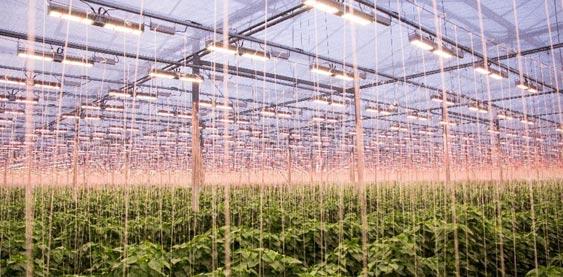
The Ontario ministry of energy has announced a series of conservation and demand management programs to alleviate current pressure on the electrical grid and to plan for the future. One specific program is targeted at southwestern Ontario greenhouses, incentivizing growers to install LED lighting, non-lighting measures or behind-the-meter distributed energy resources (DER), such as combined solar generation and battery storage.
Joe Sbrocchi, general manager of the Ontario Greenhouse Vegetable Growers (OGVG) says the funding shows that the government recognizes that greenhouses
are one type of “farming of the future.”
LEDs use less energy, costing less to operate. They offer flexibility in how they programmed to follow specific lighting recipes for the crops they illuminate.
Traditional greenhouse use highpressure sodium (HPS) lights. They require more electricity to operate, though they do also help keep the greenhouses warm.
The program is expected to be available in the spring of 2023.
Source: Ontario Ministry of Energy October 4, 2022 news release
New video showcases A.M.A. Horticulture vision for the future
A.M.A. Horticulture Inc. (A.M.A.) has launched a new video as part of its 40th anniversary celebrations. Titled Always Learning, Always Growing, the video features members of the A.M.A. team, together with customers and partners, providing candid perspectives on the horticulture supplier’s values, culture, approach to business and vision for cultivating the future of horticulture.

“Horticulture is a challenging, dynamic and ever-changing industry. Learning and collaboration play a pivotal role in evolving with those changes,” says Connie Bradt-Monsma, who serves as managing director of A.M.A., together with her husband, Rick Bradt.
“We’re grateful to have had the opportunity to serve this industry for so many years, and we’re looking ahead at the next 40, always keeping in
mind what we want our legacy to be for the next generation.”
The video also spotlights partners from Vineland Research & Innovation Centre, Orchard Park Growers and EZ Grow Farms, who opened their greenhouses allowing film crews to capture a glimpse of their operations.
“We want to extend a big thank you to these three groups and to all of our partners and customers who have trusted A.M.A. for so many years,” says Rick Bradt. “We wouldn’t be where we are today without them, and it’s their innovation, curiosity and dedication to always learning and growing that keeps us moving forward.”
Link to the new video: youtu.be/6veaAO9Imq4
Source: AMA Horticulture October 18, 2022 news release
THE GROWER GREENHOUSE GROWER NOVEMBER 2022 –– PAGE 7
Food inflation doesn’t mean growers are getting more
It’s certainly an issue near and dear to my heart, and I firmly believe that you can’t fix a problem unless you know what’s causing it. Food pricing, however, is a complex issue because there are so many factors that contribute to increases: supply chain instability and shortages, higher energy and fuel costs, and even seemingly far-away events such as the war in Ukraine.
every price increase to our businesses makes it that much harder for growers to stay profitable or competitive.
We compete in a global marketplace, which makes it easy for buyers to source produce from anywhere in the world. And although there is growing concern over the carbon footprint of food miles, it’s still about dollars and cents at the end of the day.
demand for Business Risk Management programming that is essential to helping farmers make it through challenging times. Ultimately, though, our true desire is not to have to rely on those programs but rather to be sustainable, profitable, and competitive through the market place.
makes up our food production sectors.
Food inflation has been mak ing headlines here in Canada –and in many countries around the world – for most of this year. It’s an issue that affects everyone; so much so that the Parliamentary Standing Committee on Agriculture and Agri-Food will be tackling the issue in the com ing weeks and months to shed some light on the causes behind the rapidly rising cost of food.
Out of all the sectors of agriculture, produce is the most vulnerable. Our products are highly perishable, and most can’t be stored for any length of time the way other commodities can.
Delivery delays, for example, impact the quality of fruits and vegetables, shortening their shelf life and increasing the likelihood they’ll end up as food waste instead of being eaten.
Fruit and vegetable growers are, and always have been, price takers without the ability to recoup cost increases from the marketplace. That means that
For growers, the costs of all of our inputs – the products and equipment we use to grow our crops – have been increasing rapidly over the last couple of years in particular, and although food prices have been going up for consumers, this hasn’t translated into higher prices for most growers. It has not been uncommon for me to hear from growers that they are receiving essentially the same price as last year, and in some cases lower prices, despite production costs having escalated significantly.
This invariably leads to higher
This leaves us searching for solutions at the farm level too. For some growers, innovative partnerships with other sectors that encourage circular economy approaches might be an answer. Others may find opportunity in new technologies or new product development.
There are no easy answers to food inflation, but I do know that as a country and as a society, we need to be placing a higher priority on domestic food production. It is critical that we don’t lose our ability to feed ourselves; once we do, it will be difficult if not impossible to rebuild the complex networks and infrastructure that
There is a risk in relying too strongly on other countries to grow our food. As we’ve seen as recently as this year, geopolitical situations can change in the blink of an eye, for example, turning longstanding agreements and relationships upside down. Pandemics can shut borders and extreme weather events can damage or wipe out crops. We all have a role to play in supporting domestic food production, from growers and everyone along the supply chain to governments and consumers –and we need to work together to find solutions that will keep food affordable for Canadians while also ensuring stability and prof itability for those who produce that food.
Charles Stevens is chair, Ontario Fruit & Vegetable Growers’ Association.
The contents of this publication may not be reproduced either whole or in part without the prior written consent of the publisher.
OFFICE 355 Elmira Road North, Unit 105 Guelph, Ontario N1K 1S5 CANADA Tel. 519-763-8728 • Fax 519-763-6604
The Grower is printed 12 times a year and sent to all members of the Ontario Fruit and Vegetable Growers’ Association who have paid $30.00 (plus G.S.T.) per year for the paper through their commodity group or container fees. Others may subscribe as follows by
Subscribers
the
HST)
submit
the
The Grower
within
within
extend the subscription by one month.
PAGE 8 –– NOVEMBER 2022 THE GROWER
CHAIR’S PERSPECTIVE STAFF Publisher: Ontario Fruit and Vegetable Growers’ Association Editor: Karen Davidson, 416-557-6413, editor@thegrower.org Advertising: Carlie Melara 519-763-8728, advertising@thegrower.org The Grower reserves the right to refuse any advertising. Any errors that are the direct result of The Grower will be compensated at our discretion with a correction notice in the next issue. No compensation will be given after the first running of the ad. Client signature is required before insertion. The Ontario Fruit and Vegetable Growers’ Association is the sole owner of The Grower. All editorials and opinions expressed in The Grower are those of the newspaper’s editorial staff and/or contributor, and do not necessarily reflect the view of the association. All rights reserved.
writing to
office: $30.00 (+
/year in Canada $40.00/year International
must
a claim for missing issues
four months. If
issue is claimed
four months, but not available,
will
No refunds on subscriptions. P.M. 40012319 ONTARIO FRUIT AND VEGETABLE GROWERS’ ASSOCIATION BOARD OF DIRECTORS 2022 MANAGEMENT COMMITTEE Chair Charles Stevens, Newcastle Vice-chair Shawn Brenn, Waterdown Grapes Matthias Oppenlaender, NOTL Tender Fruit Fred Meyers, NOTL Asparagus Mike Chromczak, Brownsville BOARD OF DIRECTORS Apples Charles Stevens, Newcastle Fresh Veg other Joann Chechalk, St Anns Tender Fruit Fred Meyers, Niagara-on-the-Lake Asparagus Mike Chromczak, Brownsville Grape Matthias Oppenlaender Fresh Veg muck Quinton Woods, Cookstown Potato Shawn Brenn, Waterdown Small Fruit Morris Gervais, Springwater Ginseng Glen Gilvesy, Tillsonburg Greenhouse Jan VanderHout, Waterdown Greenhouse George Gilvesy, Tillsonburg Processing Vegetables Ron Van Damme, Wallaceburg OFVGA SECTION CHAIRS Crop Protection Brian Rideout Environment and Conservation Jan VanderHout Labour Ken Forth Safety Nets Mike Chromczak Energy, Property, Infrastructure and Food Safety Brian Gilroy
WEATHER
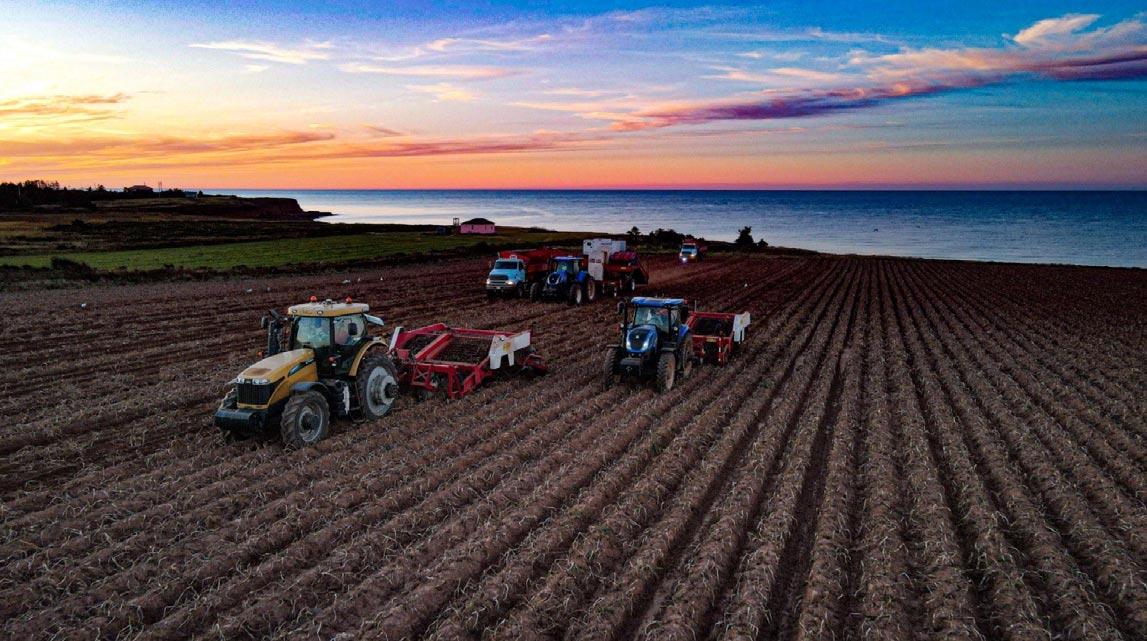
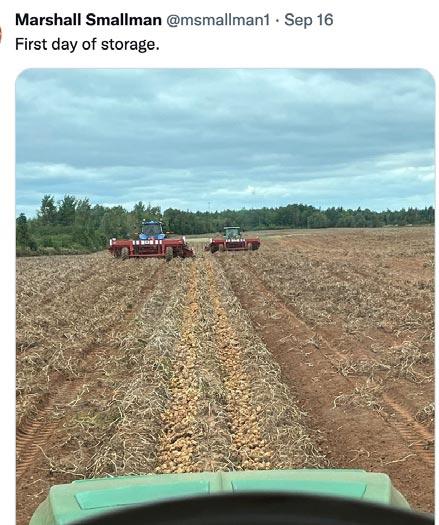
VANE buildings. But potato growers such as Boyd Rose and his East Point Potato’s crew mustered their courage for fall harvest. And carried on. Photo courtesy of Dylan Cornwall.
CHARLES
STEVENS
U.S. moonshot success sets precedent for growers, says industry



You must be pretty sure of yourself to proclaim the arrival of a “precedent-setting moment,” particularly in an era where social media makes everything a frontpage story.

But according to International Fresh Produce Association (IFPA) CEO Cathy Burns, there’s no other way to describe the declaration by U.S. President Joe Biden that food’s connection to health is a national priority.
The president made the statement at the White House Conference on Food, Nutrition and Health, September 28, 2022, after listening to a wide range of interest groups.

Leading up to the conference, some observers said the dialogue was too focussed on hunger as a political issue. Agriculture, in fact, loudly protested that it was initially being ignored, which had not been the case in previous conferences. That was odd, given how much support Biden has been giving Agriculture Secretary Tim Vilsack and the United States Department of Agriculture.
In the end though, Biden advisors found a sweet spot that certainly has grassroot support from fruit and vegetable producers: that is, the intrinsic connection between good food and good health. Burns said “moonshot recommendations” by her organization -- along with steady lobby efforts in which she
underlined to Biden what she called the “urgent need to increase fruit and vegetable consumption” -- helped fashion the President’s determination to put heathier food on American plates.
The new approach has five pillars: integrating nutrition and health, empowering consumers to make healthy choices (including more liberal health-related labelling and health claims), supporting physical activity, improving food access and affordability, and enhancing research.
“Seeing our fruit and vegetable moonshot recommendations represented in the nutrition blueprint is a powerful step forward for our industry,” said Burns. “Now it’s time for the industry to continue the work to make these policies a reality and produce healthcare outcomes for every American and across the globe.”
That’s ambitious. Right now, America is the antithesis of health, and Food and Drug Administration (FDA) officials readily admit it. Following the President’s edict, FDA officials were on the road selling the aggressive approach to health.

Commissioner Robert Califf told attendees at the Consumer Federation of America’s annual food policy conference that U.S. life expectancy has fallen five years behind that of other high-income countries.
He blamed poor food choices. And he wondered aloud . . . what are Americans thinking?
“It’s disturbing to say the least that in a nation as knowledgeable and wealthy as ours, millions of Americans continue to suffer from diet-related disease and lack the basic nutrients for a healthy diet,” he said.
The Biden mandate should bode well for Canadian fruit and vegetable producers. We know the value of the U.S. market for our exports. We’re already exporting mountains of produce there. The door’s open, and I’d like to think all that scrumptious, fresh Canadian produce could help America with its betterconsumption strategy.
That’s especially timely now, given the struggles that traditional domestic suppliers are having, such as drought-ravaged












California. We’re even seeing forays into Canada by berry giants Naturipe Farms and Driscoll’s to determine whether growers here can fill a climate-driven gap.
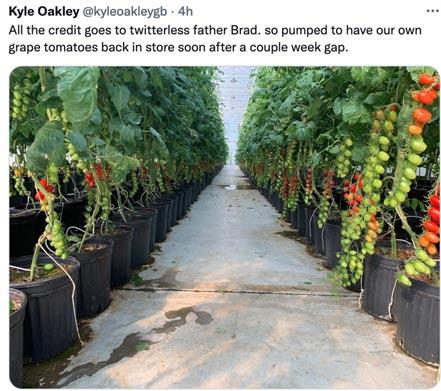
The next step is waiting. Of course, protectionism could derail the whole thing, and we know the U.S. is moving towards greater domestic capacity in many sectors.
But just imagine something like a co-marketing campaign with U.S. distributors where interests there aren’t threatened, in so-called unhealthy states in the south in particular -Alabama, West Virginia, Kentucky, Louisiana and Mississippi. Eat healthy, eat what our Canadian neighbours have to offer. What an opportunity,


especially since it would be driven by the Biden food and nutrition policy.
That sounds bold. But I go into a grocery store in Illinois and see almost nothing but Canadian mushrooms. People buy them and don’t think twice. So why not other commodities too, especially now? I know it’s not simple, but it’s timely. With Biden’s push towards food and nutrition, Canada could enter yet another golden export era.
Owen Roberts is a past-president of the International Federation of Agricultural Journalists and a communications instructor at the University of Illinois.

Photo courtesy of Mitchell Yerxa.



THE GROWER NOVEMBER 2022 –– PAGE 9 THE URBAN COWBOY
OWEN ROBERTS FOR DECADES The headline says it all. With a long legacy of reliable & consistent performance, we are confident that Ground Force will be YOUR rodent brand. New to Ground Force? Start a legacy of your own and visit our website or contact a sales rep today. SOLVING YOUR RODENT PROBLEMS Ground Force Paraffinized Pellets* is labeled for the control of Voles, Ground Squirrels, Rats & Mice *Commercial Product Only: Only to be used by certified pest control operators, farmers and persons authorized in government pest control programs. For Nearest Dealer: 905.563.8261 • bartlett.caDistributed by: liphatech.ca • 888.331.7900 For Technical/Label Questions: PROTECTING YOUR ORCHARD LEARN MORE SCENE ON TWITTER I go into a grocery store in Illinois and see almost nothing but Canadian mushrooms. People buy them and don’t think twice. “ “
The Royal returns for 100th anniversary
The venerated Royal Agricultural Winter Fair returns for an in-person experience to celebrate its 100th anniversary. The Ontario Fruit & Vegetable Growers’ Association (OFVGA) is hosting a booth for the 10-day fair, November 4- 13.
Here’s the schedule at the OFVGA booth at the Royal.
Nov 4-5 – Ontario Apple Growers
Nov 6 – OFVGA
Nov 7 – Fresh from the Farm school fundraising
Nov 8 – More than a Migrant Worker
Nov 9 – Ontario Potato Growers
Nov 10 – Fresh from the Farm school fundraising
Nov 11-12 – Ontario Greenhouse Vegetable Growers
Nov 13 – OFVGA
Take a survey on use of fluazinam fungicide
COMING EVENTS 2022
Nov 1 Ontario Pest Management Conference, Victoria Park East Golf Club, Guelph, ON
Nov 2-4 Grow Our People Summit, Sheraton Fallsview, Niagara Falls, ON
Nov 2-4 Asia Fruit Logistica, Bangkok, Thailand
Nov 3 Best of CAMA, Niagara Falls, ON
Nov 3-4 2022 Nova Scotia Minister’s Conference for Agriculture, Halifax Convention Centre, Halifax, NS
Nov 4-13 Royal Agricultural Winter Fair, Toronto, ON

Nov 5 Canadian Agricultural Hall of Fame induction ceremony, Liberty Grand, Toronto, ON
Nov 14-16 CPMA & FVGC Fall Harvest Advocacy Event, Ottawa, ON
Nov 15-17 Alberta Potato Conference and Trade Show, Cambridge Hotel and Conference Centre, Red Deer, AB
Nov 17 Farm & Food Care Ontario Harvest Gala, Delta Hotel, Guelph, ON
Nov 17-19 Interpoma, Fiera Bolzano, Italy
Nov 18 Ontario Produce Marketing Association Gala, Blue Mountain Village Conference Centre, Town of Blue Mountains, ON
Nov 20-21 Ontario Federation of Agriculture Annual General Meeting, RBC Place, London, ON
Nov 21-22 Advancing Women Conference East, Sheraton Fallsview, Niagara Falls, ON
Nov 23-27 Canada’s Outstanding Young Farmers Program National Event, Delta Hotels Bessborough, Saskatoon, SK
Nov 24 PEI Potato Board Annual General Meeting & Banquet, Charlottetown, PE
Nov 29-Dec 1 Grow Canada Conference, Westin Ottawa Hotel, Ottawa, ON
Dec
Dec 4-7
The Fruit and Vegetable Growers of Canada is gathering on-the-ground input from growers who use fluazinam fungicide on a wide range of
fruits and vegetables.
Before conducting its next risk assessment on fluazinam, the active ingredient in Allegro 500F, the PMRA will consider grower
use information received from the Fruit and Vegetable Growers of Canada (FVGC) for the following crops: Apples, Beans, Blueberries (highbush and lowbush), Berries (currant, elderberry, gooseberry, huckleberry), Head and stem Brassica Leafy Brassica greens, Carrots, Cucurbit Vegetables (field-grown), Ginseng, Grapes (except table grapes), Grapes (wine), Onions (bulb crop subgroup), Peppers (field)
Grower input on how the product is actually used is essential. In the absence of this additional information, PMRA must use the most conservative scenario during the risk assessment process (e.g., 100% crop treated, maximum possible application rates, etc.).
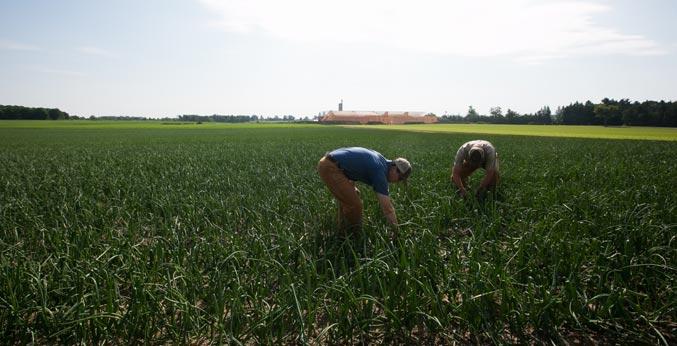
Responses to this survey, which are anonymous, are requested by no later than Wednesday November 2, 2022. The survey can be found at: surveymonkey.com/r/VF2L78T
CanAgPlus Annual General Meeting VIRTUAL
VitiNord 2022, Burlington, VT
Dec 6-8 Great Lakes Expo, Grand Rapids, MI
Dec
Dec 14
Ontario Potato Board Annual General Meeting, Delta Hotel, Guelph Conference Centre, Guelph, ON
Fresh Vegetable Growers of Ontario Annual General Meeting, Henk Droogendyk’s farm, Harley ON 2023
Jan 4-5 Potato Expo, Aurora, CO
Jan 23-29 Guelph Organic Conference & Trade Show, University of Guelph Campus
Feb 8-10 Fruit Logistica, Berlin, Germany
Feb 12-15 International Fruit Tree Association Annual Conference & Tour, Amway Grand Plaza, Grand Rapids, MI
Feb 15 Canada Ag Day
Feb
Ontario Fruit and Vegetable Growers’ Association Annual General Meeting, Niagara Falls, ON
THE GROWER PAGE 10 –– NOVEMBER 2022 BITS & BITES
1
7
21
SCENE ON TWITTER
Photo by Glenn Lowson
Coast to coast, storms-of-thecentury have bruised the produce chain twice in the last year.

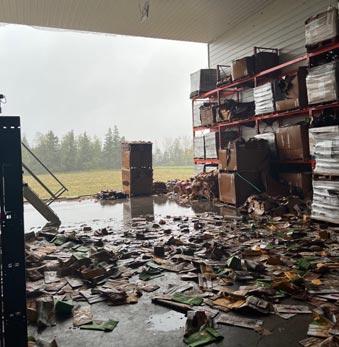
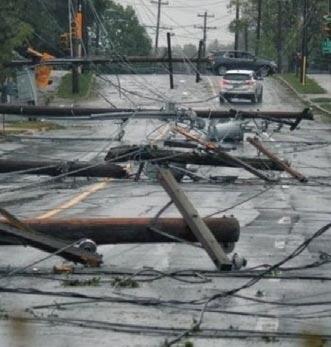
In late September 2022, we had Hurricane Fiona rip through many communities in Atlantic Canada. I am sure you have seen the images on the news of homes being swept out to sea and hundreds of thousands of people with no power for days. In November 2021, British Columbia suffered one of Canada’s largest flooding disasters when the Nooksack River overflowed, breached its dyke and sent floodwater to Sumas Prairie near Abbotsford.
Every region of the country has faced severe weather that reduces suppliers’ ability to service customers. These damaging weather events are in the news as the crisis is unfolding, but only for a short period. The impact to local residents and producers can continue for days and weeks. Some dairy farmers in Prince Edward Island, for example, have lost barns and silos that will take months to re-build.
When these generational storms are forecasted -- which seem to be happening every year- it is an opportunity to reinforce your relationships with your customers. You have to prepare your own business and do what is right for your employees. You should also consider what needs to be done to take care of your customers.
Before the weather event
Many of your customers could be located in different regions and they may or may not be aware of the forecast. If we use Hurricane Fiona as an example, people in Atlantic Canada were probably much more aware of the impending storm than people in other regions of Canada. When you start to see the forecasts, it is always good to let your buyers and merchandisers know there is something on the horizon. Weather forecasting is not a perfect science, but when it is clear your business and theirs will be impacted, it is a good idea to communicate with your customers.
It is good to tell them some thing is happening, but it is better
to be proactive in telling them what are you doing to prepare. Examples of this could be packing orders in advance, in case you lose power or even asking if they want orders moved ahead. Some retailers in Atlantic Canada appreciated suppliers who could move extra product to Newfoundland in advance of the storm. Ferry service is often interrupted, so if extra product is shipped, out of stocks are less likely.
If your buyers are located in other parts of the country, they might not be aware of the region al geography. In Atlantic Canada, the bridge to Prince Edward Island and the narrow stretch of highway between New Brunswick and Nova Scotia --called the Tantramar Marsh -- can be closed with high winds. Moving product in advance across these two potential choke points can reduce issues. Every region of the country has unique challenges to moving product.
Communicate with your logistics partners to see what they have planned. They have to protect their equipment and employees so they might be changing routes or schedules. This might benefit you or hurt you, but you and your customers need to be aware.
Check order history during similar events from the past. Your customer cannot check all 35,000 SKUs, but you can check your items. This is even more important for perishable items. In the case of Hurricane Fiona, people in some places lost all of the food in their fridge and freezer. This might reduce shortterm demand because they have no power, but then once it comes back they will need to replace items. Any help you can give the buyers is usually appreciated.
Let your customers know what you are doing in your business to prepare. If I think back to my days at Loblaw, it was good when I could share what our suppliers were doing to protect the product we were expecting and reduce the disruptions. I did not take credit for it, but it was more of a partnership and they like some insights into what you are doing.
Let them know you will communicate during the storm. If they do not hear from you, that is a message to them you have no power and/or Internet. You do not want them to reach out and get no answer, because they might assume you are focused on something else.
During the weather event
If the weather event is really bad, there is not much you can do while the storm is happening. If you do still have power and Internet, you can send them a brief update. Send them a picture or two if you can.
Be realistic. They are trying to make plans so the more accurate you are the better.
Once you can assess the damage and your situation, give them an update. Power outages and damage to buildings and equipment are beyond your control. Let them know, if you can, what your business is facing in the upcoming days. Will you be able to ship product if needed? Also, you can let them know about any of the issues we mentioned previously such as a bridge closure to PEI. They might not be aware.
After the weather event
Once you do have a chance to assess the state of your business, send them an update with photos, if possible. Some challenges might be short term and others
might be more long term. An example would be in PEI where some potato packers suffered barn damage. This will not impact shipments immediately, but it is a hurdle for producers and processors to overcome. Often the industry will come together to help each other out and these are the types of things retailers do want to hear about. It is knowledge about the value chain.
Once you know your capabilities, try to understand what the customers need. They will have their own issues in the market such as power outages or reduced road access. If they have stores closed, they might want to reduce orders in the short term, then increase them once stores are re-opened and consumers get power back.
Good relationships are dependent on good communica
tion. Your commitment to keep your customers informed before, during and after these weather events can improve your customer’s impression of your business. You might not see an increase on the next order. In fact it might get cut in half but in the long term, you will see a payback. We can’t change the weather but we can control how we respond and your customers will appreciate your focus on their business while doing what you need to for your business.
Peter Chapman is a retail consultant, professional speaker and the author of A la Cart-a suppliers’ guide to retailer’s priorities. Peter is based in Halifax, N.S. where he is the principal at SKUFood. Peter works with producers and processors to help them get their products on the shelf and into the shopping cart.

RETAIL NAVIGATOR How to brace for weather events … and build better customer relationships
PETER CHAPMAN
THE GROWER NOVEMBER 2022 –– PAGE 11
On September 24, 2022, Hurricane Fiona interrupted business as usual in Atlantic Canada knocking out power lines and damaging packing sheds.
NOTICE OF MEETING Register online at www.freshvegetablesontario.com or call the FVGO office, 519-674-1500 Ext 63592 or email mmcdonal@uoguelph.ca Notice is hereby given that the ANNUAL GENERAL MEETING of the FRESH VEGETABLE GROWERS OF ONTARIO will be held In-Person at Droogendyk’s Market Garden 314 8th Concession Road, Harley, ON N0E 1E0 December 14, 2022 9:30 a.m. – 3:00 p.m Election of Directors of the Association, discussion of financial reports and any other business that may arise will take place. A virtual option will be offered for those not able to attend In-Person. Lunch will be provided to In-Person attendees. Registration for the meeting is required. Meeting details will be posted to the FVGO website as they become available.
Alberta seed potato industry continues to grow
KAREN DAVDSON
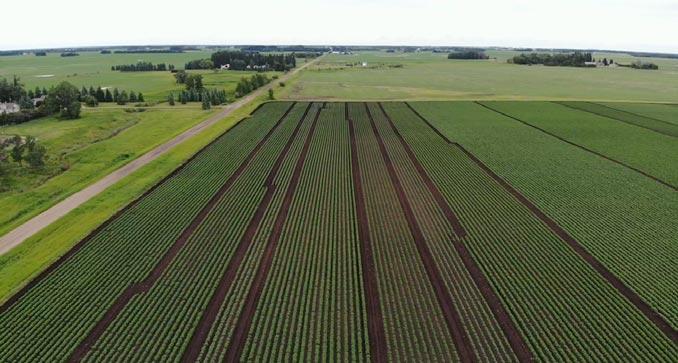
Despite a droughty year, Alberta’s 55 seed potato operators managed a harvest close to fiveyear averages from 14,000 acres.
Not surprisingly, Alberta is often viewed as a processing province with seven processing facilities in southern Alberta operated by companies such as Cavendish Farms, Lamb-Weston and McCain Foods. Beyond that, a potato seed industry flourishes in northern Alberta, concentrated around the Lacombe and Edmonton areas.
In 2022, Alberta seed potato growers grew 212 different potato varieties supplying fresh and home and garden specialty markets in addition to the processing cultivars. Alberta seed potatoes are shipped across North America with Manitoba and the Pacific Northwest U.S. being the largest customer regions outside of the province.
The Potato Growers of Alberta (PGA) are headquartered in Taber. Stacey Bajema, seed coordinator, PGA, is stationed at a satellite office five hours north in Edmonton. Alberta is unique in that most commercial produc tion is in the south while the majority of seed potatoes are grown in a segregated area of both irrigated and dryland acres in northern Alberta. The PGA North office runs out of the Alberta Agriculture’s Crop Diversification Centre North site which is also home to the Alberta Plant Health Lab and the Alberta Seed Potato Repository.
“Relationship building has been a cornerstone of our success in Alberta, and we are privileged to work with great commercial partners both within our province and beyond,” says Bajema.
Alberta specializes in high generation seed potato production, she explains. The provincial potato repository houses varieties locally. Three private tissue labs can be contracted by growers to multiply plantlets for the greenhouses. There are about 14 Alberta seed
farms that operate Canadian Food Inspection Agency (CFIA) certified greenhouses to produce mini-tubers. The majority of these will grow mini-tubers for their own production while three farms grow mini-tubers to supply other high generation producers. This high generation capacity ensures that growers limit pathogens from outside sources and prevents disease from entering their seed program.
In addition to the CFIA program, all potato growers in Alberta report their seed sources to the PGA’s traceability program so that seed can be tracked moving into the province. The competitive advantage of the Alberta Seed Potato program has been readily available, vigorous seed with low virus and disease levels.
Seed potato growers in Alberta use a variety of tools for postharvest testing to ensure the quality of their seed lots prior to sale. Every seed lot sold off the farm in Canada undergoes testing for Bacterial Ring Rot.

Growers also do lab testing and/or participate in the Hawaii Grow-Out. Growers in western Canada can send samples to the PGA North office in October where samples are dipped and gassed to break dormancy. The samples are shipped to Hawaii including samples from partnering seed farms in Washington State where they are planted and grown out under the trained supervision of a program agronomist. These samples are given two CFIA visual inspections and are checked for signs of virus, chemical damage, varietal purity, germination as well as any other visual signs of concern. All expenses for this program including travel costs for inspectors are fully funded by the growers who use the program.
About 10 other American states also operate similar seed programs in Hawaii. The program ensures that lots sold out of western Canada undergo the same scrutiny as other North American jurisdictions and is a useful tool to ensure plant health
Quality and quantity are variety-specific in 2022
Alberta seed potato producers have enjoyed the warmest harvest temperatures in recent memory reports Jeff Ekkel, chair of the seed committee.
Where he farms, near Lacombe, the “sets were good” but “size is a little smaller” due to lack of rain. That means 1 l/2 to two ounce profiles. Across the northern Alberta growing region, quantities depended on whether the land was irrigated or not.
Nearly 50 per cent of the province’s seed production goes to U.S. markets with the
remainder to Alberta, Manitoba and Ontario markets.
“Increased processing capacity in Alberta, Manitoba and Washington state means more demand for seed,” says Ekkel. “With more irrigated land coming on stream in southern Alberta, the demand for seed will increase.”
He’s hesitant to be too bullish on the market, having witnessed the ups-and-downs of cycles. The mainstay varieties continue to soldier on and processors like their own proprietary varieties.
THE GROWER PAGE 12 –– NOVEMBER 2022
FOCUS: SEED & ROOTSTOCK
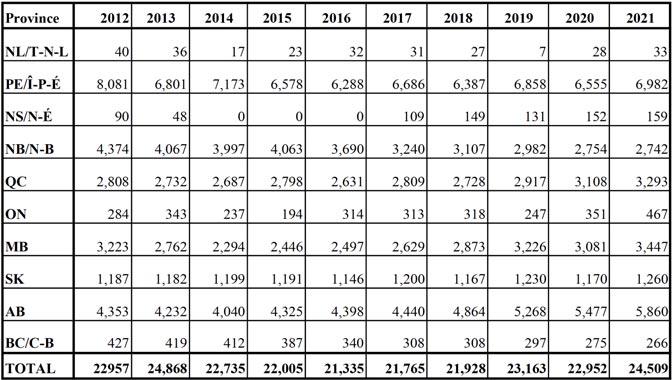
Canadian Seed Potato Certification Program / Hectares certified by province 2012 - 2021
Editor’s note: The Canadian Food Inspection Agency is expected to release updated statistics in mid-November for hectares of seed potatoes in 2022. The Grower will post this update on its website.
THE GROWER
FOCUS: SEED & ROOTSTOCK

New insight on selecting heat-stress tolerance in potato varieties
Helping producers find potato varieties that are more resistant to the potential disruption to growth caused by extreme heat is critical for ensuring the sustainability and profitability of potato production in Canada, which averages 4.5 million tonnes per year.
Recognizing this need, Dr. Xiu-Qing Li, an Agriculture and Agri-Food Canada (AAFC) research scientist with the Fredericton Research and Development Centre, has been studying heat stress in potatoes for years, leading to a number of breakthroughs, In 2018, he teamed up with the University of New Brunswick and international collaborators to examine the response to heat-stress in 55 different varieties of potato, the first large-scale study of its kind.
In most of the varieties studied, heat stress decreased leaf size, but increased leaf greenness and plant height, while severely reducing potato formation and mass. This study also identified which varieties were most heat-tolerant: Eramosa, Chieftain, AC Belmont, and Superior.
Identifying these varieties was an important first step, but even these potatoes did not fare particularly well in the heat, so it was clear that more research was needed. In 2020, Dr. Li collaborated with AAFC colleague Dr. Benoit Bizimungu, along with researchers from Queen’s University, on a study that went on to be recognized with an Outstanding Paper Award from the American Journal of Potato Research.
Their publication, “Effects of earliness on heat stress tolerance in fifty potato cultivars,” deter mined that potato varieties known
for reaching maturity early in the field grew at similar rates to latermaturing varieties when these were placed under heat stress in greenhouses, but the heat actually slowed down their maturation process. The research conducted by Dr. Li and his colleagues sought to pinpoint the specific potato genes that might help explain why that is, and the mechanisms that determine whether a potato variety will be early or late to mature.
“Heat stress causes potatoes to react by changing how long it takes them to mature – with more heat actually slowing down their growth. This creates a challenge for farmers in choosing which varieties to grow, determining when they can harvest, and know ing when they can expect to have products ready for market. More certainty about maturation rates
could help them select the best variety to produce,” says Dr. XiuQing Li, research scientist, AAFC.
On the heels of this awardwinning study, Dr. Li launched and led a new research project to learn still more, taking a deeper dive into the genomic mechanisms of potato responses to heat-stress. In 2020, he identified genes that regulate heat-induced sprouting. Potatoes grown during hot and dry summers often exhibit a defect called “pre-harvest sprouting” or “heat sprouts”, which may take away nutrients, change the chemical composition, and reduce the overall quality and marketability of a potato.
In this study, 18 different varieties were used to investigate whether heat-stress conditions alone were responsible for the troublesome sprouts. This project confirmed that heat alone was indeed the culprit, and that the natural earliness or lateness of the variety in question had no bearing on whether or not it developed sprouts under stress.
To reach this conclusion, researchers working with Dr. Li dove into the transcriptomic responses of heat-stressed potatoes. Transcriptomic studies involve looking at the genes, gene interaction networks, and mRNA features of a cell to see how they behave when confronted by environmental factors or illnesses,
providing a very deep and detailed look into cell behaviour and function. Their study found that genes associated with dormancy reduced activity in heat-stressed potatoes, just as they did in potatoes that developed postharvest heat sprouts, indicating that plant hormone metabolisms play a key role in heat sprouting. This information will prove useful when it comes to genetically improving potato varieties for tolerance to heat-sprouting.
“What we’ve found will be able to help farmers and processors make the best decisions about how to store and process their heat-stressed potatoes. This is a challenge facing producers around the world, and it has been very heartening to be able to contribute our understanding of the issue and to be able to make evidence-based recommenda tions,” said Dr. Li.
The study generated important insight into selecting potato varieties for farming, how to best plan for storage and utilization of heat-stressed potatoes, as well as knowledge that will help in breeding heat-tolerant varieties in the future.
Since climate change threatens to bring still hotter, more erratic weather, Dr. Li proposes to conduct more characterization of the varieties under hot summer conditions, and continue to develop integrated strategies in mitigating heat stress risk. This type of research is an invaluable part of mitigating the risk to potato production in Canada, and around the world.
NOVEMBER 2022 –– PAGE 13
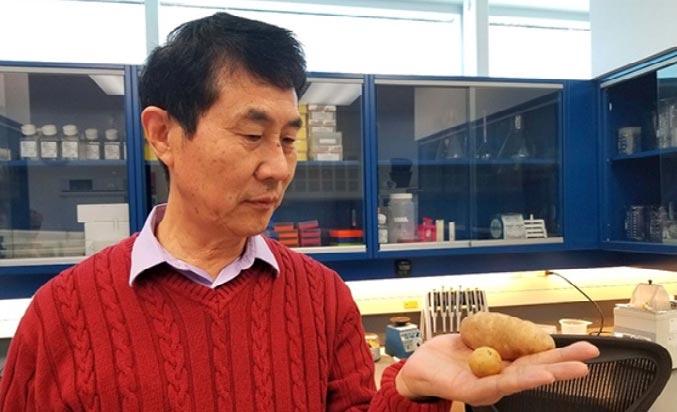
Dr. Xiu-Qing Li, holding potato tubers.
SCENE ON TWITTER
FOCUS: SEED & ROOTSTOCK
New
NORSECO SEEDS
SEMINOVA
2023
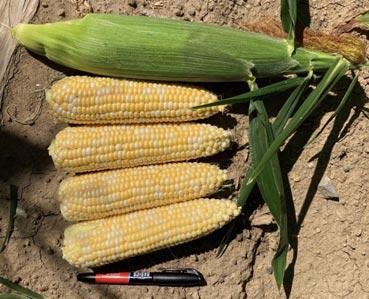
QUICKSTART SWEET CORN - A 68-day bicolour SeSH2 hybrid. Similar to sweetness with a higher cob placement and slightly earlier. Excellent seed vigour and has done very well in early-season plasticulture and early open-field plantings.
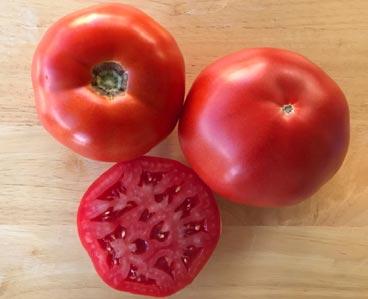
THUNDERBIRD TOMATO - A high yielding, hot set, determinate, round variety with a strong plant and good general disease resistance. The plants have a good balance of cover and ease of harvest. Fruit are extra-large in size, very firm, with good shelf-life. The colour is deep red. Variety shines in mid-to-late season plantings.
STOKES SEEDS
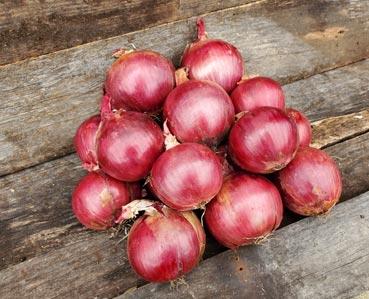
RED MARLEY ONION - An early maturing 100 day red onion that produces large, uniform, round bulbs with a small neck. It has good internal colour and medium-term storage potential. Works from both transplant and direct seed.
For more information visit www.norseco.com
For more information visit www.agrocentre.qc.ca
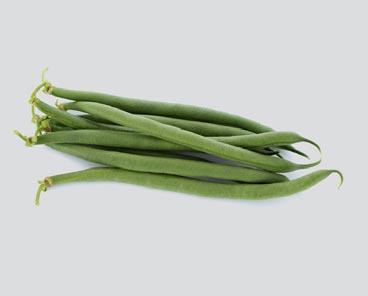
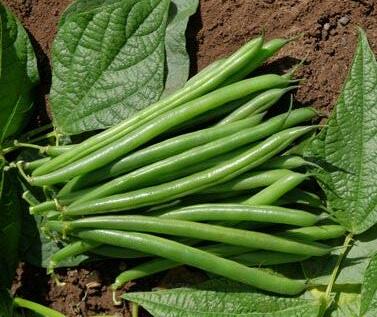
NYQUIST GREEN BUSH BEAN - 55 days maturity. A high-quality fresh-market bean. Pods are very uniform, 5 in/13 cm long, straight, and very dark green in colour. Plant has a robust disease package and a high pod set.
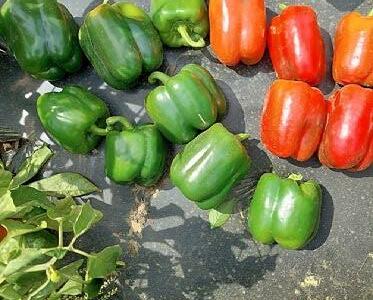
REGULATOR F1 PEPPERS - Attractive and widely adaptable variety. Plants put out a high rate of four-lobed L-XL fruit with consistent sizing throughout the growing season. The plant is sturdy with good leaf cover and a robust disease package. Green variety, but produces a nice red as well.
For more information visit www.stokeseeds.com
ADONIS PUMPKIN - Main- season maturing. Tall 1415” H x 13-14” W, 25-40 lbs, handsome pumpkin with impressive shoulders and medium ribbing. Strong vine with thick, firmly attached handle.

THE GROWER PAGE 14 –– NOVEMBER 2022
seed varieties for
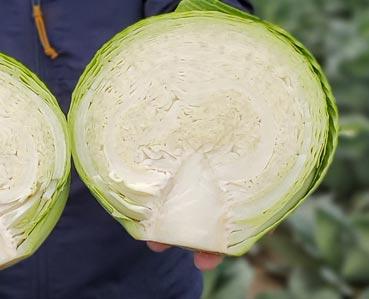
EXPECTATION Y.R. F1 CABBAGE - CMS version of Expect. Same maturity, same weight, same clean look. Tolerant to thrips. For long-term storage. Maturity: 92 days
KESTREL F1 BEANS - Very prolific variety that produces dark green, straight and uniform pods on a solid and erect plant. Concentrated set, even in heat. Very nice quality.
APPALACHES
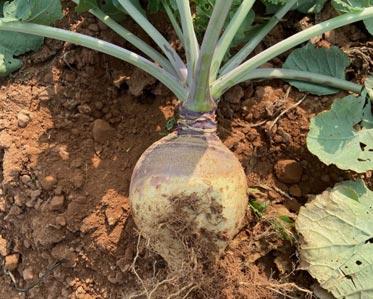
F1 RUTABAGA - Laurentian-type rutabaga, with better tolerance to cabbage maggot. Bulbs of larger size than York with foliage attached higher for easier cleaning. Does not have a hollow heart. Same beautiful purplish colour as Laurentian.
THE GROWER
FOCUS: SEED & ROOTSTOCK
RUPP SEEDS
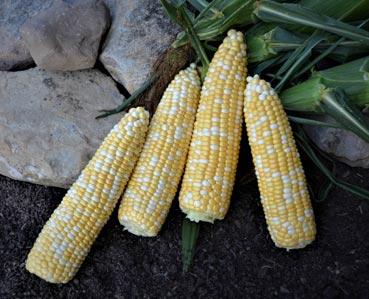
BOLT XR – SWEET CORN - Bolt XR is an early planting, bi-colour fresh market hybrid, with first-class eating quality. This 67-day sweet corn has excellent husk coverage and tip fill. A dark green husk package and sound ear size make Bolt XR an ideal hybrid for roadside stands.
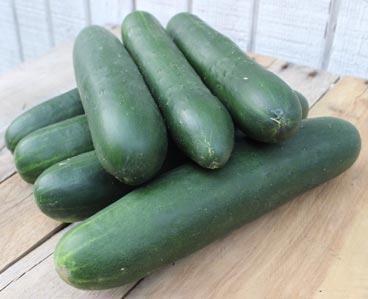
RACEWAY – CUCUMBER - Raceway is a dark green cucumber that grows on vigorous vines. With a high multi-virus resistance package, it will work well for lateseason planting. A 54-day variety, Raceway will maintain its length even when heat stress might be a factor.
For more information visit www.ruppseeds.com
AGROHAITAI
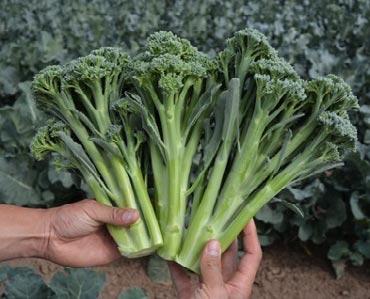
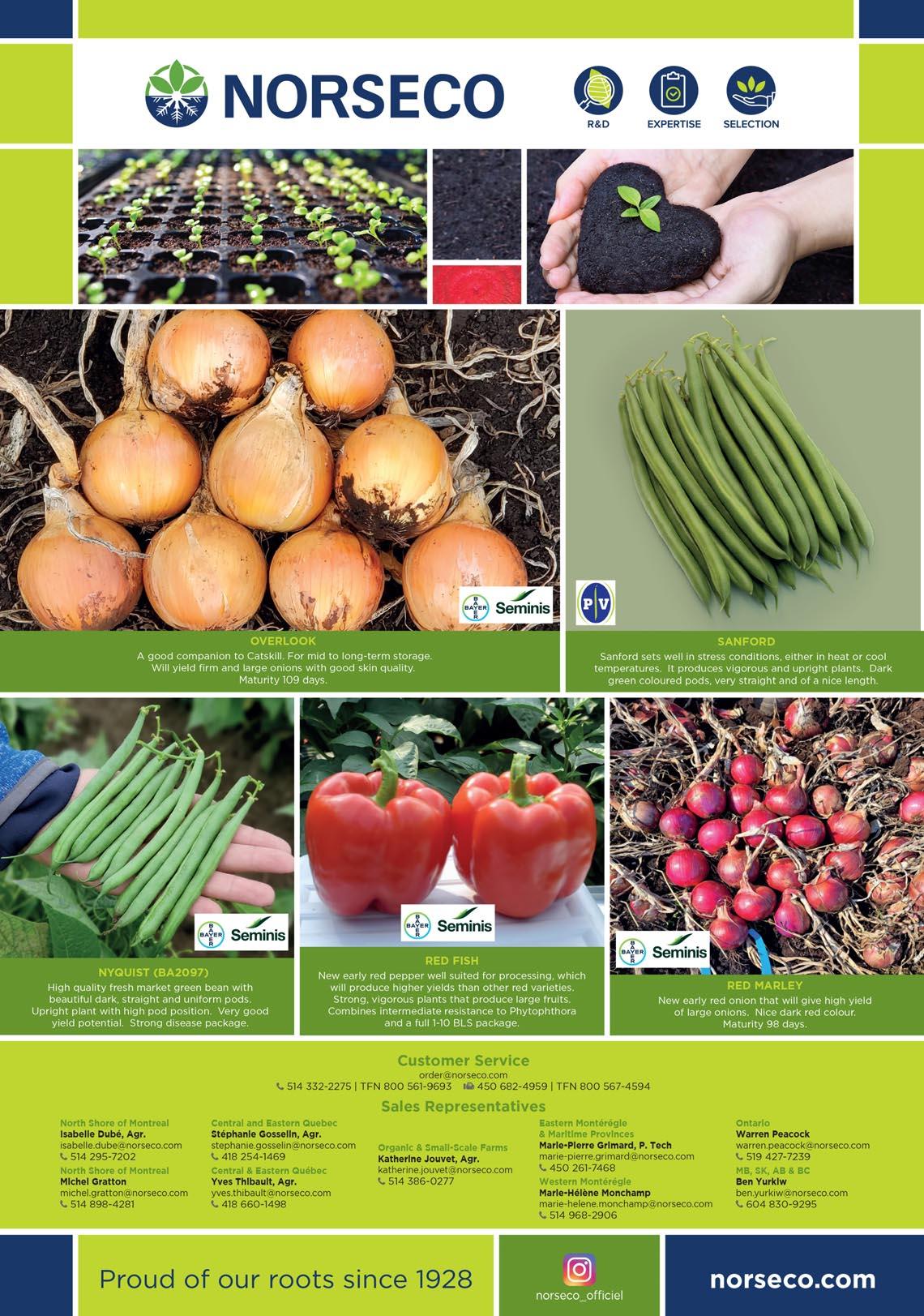
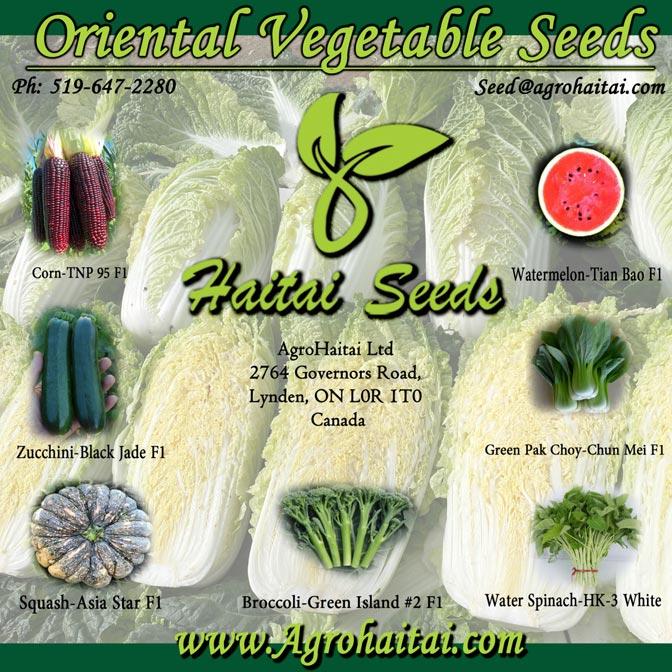
BROCCOLI-GREEN ISLAND #2 F1: A hybrid between broccoli and Chinese kale. The main head can be harvested 55~60 days after transplanting. Continue producing mini broccoli for over one month. Sweet, tasty, and excellent for stir-fry, BBQ, etc.
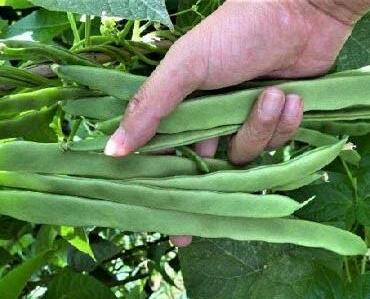
POLE BEAN- QING BIAN NO.9: Romano type, medium maturity. The flat pods are 10~ 12 “ long. The pods are stringless with thick flesh , and stay tender for a long period without fibrosis. White flowers and white seeds. The plants yield high, are vigorous, tolerant to cold and diseases.
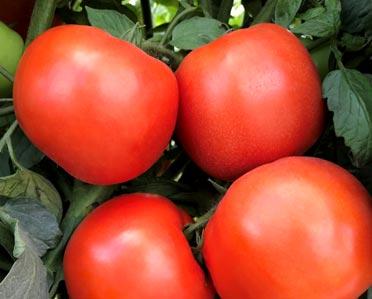
RAMBLER – TOMATO - Rambler is an adaptable, high-quality, determinate salad variety featuring high yields of jumbo and extra-large fruit. Fruit size, colour, quality, and firmness are excellent. Suited for both mature green and vine ripe markets. This 68-day plant benefits from light to no pruning.
For more information visit www.agrohaitai.com
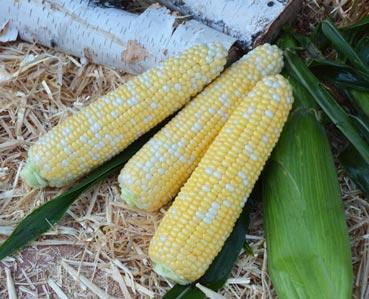
TEMPO XR – 76 DAY BICOLOR SH2 SWEET CORN - Adapted over many environments. Tempo has excellent husk protection and consistent tip fill. Great ear size for mid-season roadside markets. HR: Ps (Rp1G)
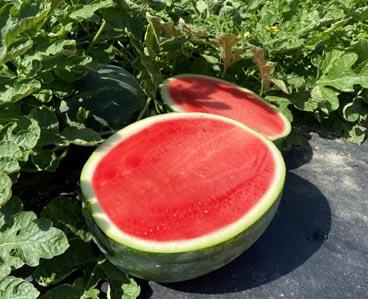
CRACKERJACK – SEEDWAY EXCLUSIVE – 80 TRIPLOID SEEDLESS WATERMELON Consistent yields over wide range of growing conditions. Very uniform fruit shape, firm flesh and deep red interior. Time and time again customers rate this our best tasting watermelon. Have your customers ask for this variety by name. IR: Co1, Fon1
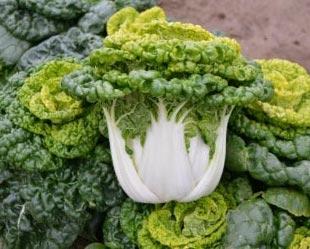
WHITE PAK CHOY- GOLDEN HEART F1Popular in central China, it’s called Huang Xin Wu meaning “yellow heart.” The seeds are sown in the fall season. The central leaves turn yellow from green to yellow in cool weather. Compact plants with yellow interiors. Dark green leaves. Pure white and fat petioles. Slow bolting and cold resistant.
more information visit www.seedway.com
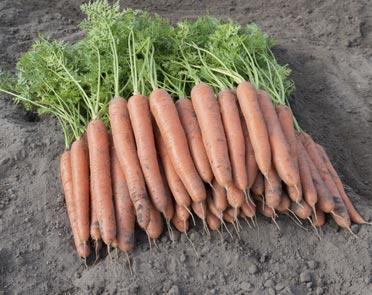
NAVEDO – 63 DAY FRESH MARKET SLICER CARROT - Slicer/fresh market late nantes, new variety showing good results as a slicer. Also good for fresh market bunching, 8-10 inch length root.
NOVEMBER 2022 –– PAGE 15
New seed varieties for 2023
SEEDWAY For
Two new pepper varieties introduced to greenhouse sector
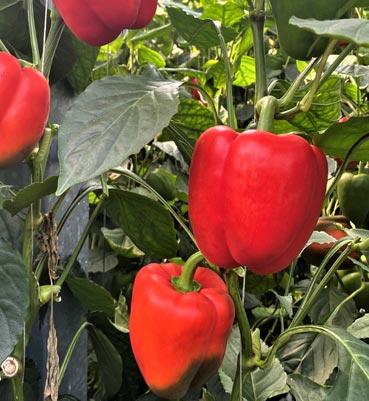
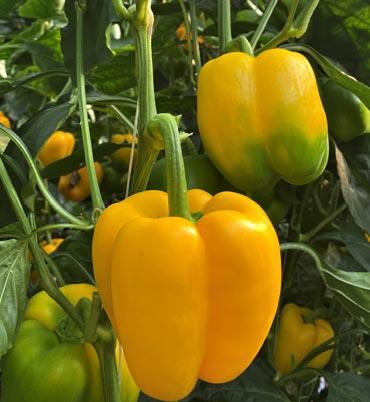
Cameron Lyons (L), product development specialist, Syngenta Seeds and his U.S. colleague Greg Heredia staffed a booth at the recent Canadian Greenhouse Conference. They were part of a New Variety Showcase that is accessible on the conference website until March 2023. Link here: www.canadiangreenhouseconference.com /attendee-information/new-variety-showcase
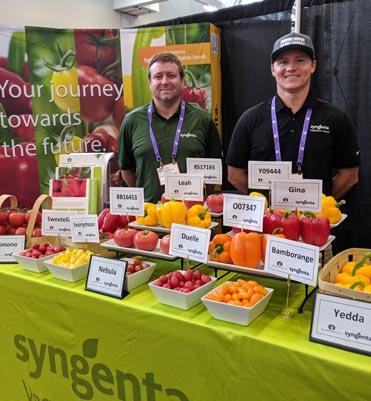
High interest was expressed in two of their most recent introductions in the greenhouse pepper category.
Yedda:
• Consistent setting throughout the season resulting in high production
• Maintains high fruit weight for market demand in
summer temperatures
• Strong against powdery mildew

Ridona:
• Exceptional fruit setting giving superior yields
• Consistent blocky fruit shape
• Fast colouring

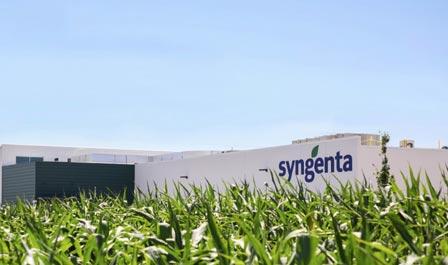
Syngenta Vegetable Seeds are part of the Syngenta Group, one of the world’s leading agriculture companies. As such, the company has deep resources including its new $15 million Global Vegetable Seeds Quality Control Lab. The facility officially opened in July 2022 in Nampa, Idaho. This site has the capacity for
bacterial, fungal and disease testing to ensure only highquality seed is provided to growers. The 37,000-square-foot quality control facility features state-of-the-art contained environment growth areas and precision testing that will enhance seed health in the global vegetable industry and for vegetable seed
customers. In turn, work at the quality control lab in
“We’re excited to spotlight our Nampa facility,” said Stacy Woodruff, global head of vegetable seeds production, Syngenta Seeds. “We have a global footprint, and this further expands our ability to bring the highest quality vegetable seed products to growers around the world. It expands our quality control capabilities, increasing efficiency and capacity.”
Nestled in the Treasure Valley region of Idaho, the Nampa facility serves growers around the world. This new strategic addition to the site increases Syngenta’s flexibility and speed in which products go to market.
Syngenta’s investments also bring new technology and methodologies to improve turnaround times and accuracy for pest testing, such as:
• Grow out trials – Provides an additional check for seed quality and can be required in certain regulatory processes.
• Protein sampling – Analyzes samples for the presence of bacteria with precision and a two- to three-day result turnaround.
• Molecular testing – Uses PCR-type technology to provide evidence of the presence or absence of DNA related to seed-borne pests with a one- to two-day window for results.

“We’re striving for global harmonization at our seed facilities,” Johnston said. “This means regardless of where seed is processed, we have the flexibility to move from lab to lab and
country to country.”
The harmonized approach for seed production allows Syngenta to meet regulatory requirements for markets around the world, meaning growers worldwide can have access to an upgraded supply chain.
Why Idaho? With hot summers and frigid winters, Idaho is an optimal location for seed production and research.
At Nampa, there’s capacity to process more than 90,000 seed packets. In addition, Syngenta partners with growers who specialize in 250 different crop varieties on 3,000 acres in Treasure Valley to provide seed for about 30,000 acres globally.

Idaho is a critical producer of sweet corn, peas and garden beans for global consumption and grower fields. Fact: it’s the No. 1 state in garden bean seed production.
The state’s Department of Agriculture is also widely respected around the world for its phytosanitary standards and programs regarding seed production. An Idaho stamp of approval carries weight globally, and along with seed testing and trialing, means clean seed from Syngenta can travel around the world.
THE GROWER PAGE 16 –– NOVEMBER 2022 FOCUS: SEED & ROOTSTOCK
Syngenta debuts $15 million Global Vegetable Seeds Quality Control Lab !"#$%#$%&'()&*+,&-,.*&/,%,*0-1,&.,,23& -045,2&-'&()"&#$$(/0*#($&0$2&,67,"*#.,8 !"#$%$&$'("')"!*+',-(.+-"/-+.$0-,"1(, !"#$%&#'&#()*+'%,-$.&/#0121#345"/# 67.+-89:;./#<0#=">#!>" ?@>>#A9BBC#D8EFF833F8E5!3 2-+-34"5,6'.&37("895,"!*+ @+-7$.G#67(&,#9&H$&,&+-7-.I& F"J#5358F!K! !"#"$%&'()*+'$,-.,/#*0"#+12"(&(*$
Yedda
Ridona
NOVEMBER 2022 –– PAGE 17 THE GROWER
FOCUS: SEED & ROOTSTOCK
Advanced peach/nectarine rootstocks and planar orchard systems
 DR. GREGORY LANE
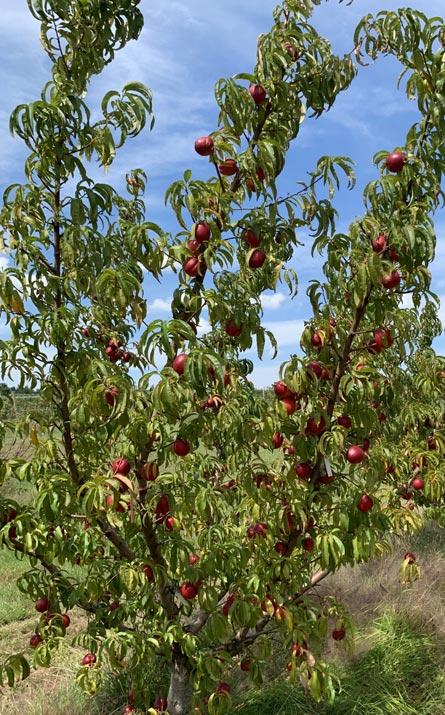
The overall objective of this project has been to develop, refine, and evaluate two complementary orchard technologies, fruiting wall canopy architectures for stone fruit production and high tunnel protective covering structures, to examine their potential for improving Midwest growers’ ability to sustainably produce and market high-value specialty stone fruit crops such as peaches and nectarines. In 2017, trials were established with ‘Cresthaven’ peach on vigor-controlling root stocks, and precision canopy training systems for nectarines on standard vigor seedling root stocks, at the MSU Southwest Michigan Research and Extension Center (SWMREC).
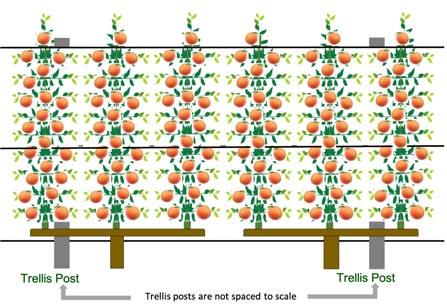
The overarching goal is to simplify stone fruit canopy structure to optimize 1) canopy light distribution for the improvement of fruit ripening uniformity and quality, 2) spray coverage while reducing drift, and 3) labour efficiency and/or partial mechanization for fruit thinning and harvest. A separate objective is to investigate potential benefits of climatic modification strategies for stone fruits, such as protective orchard covers or high tunnels.
The vigor-controlling peach rootstock trial is part of the North American NC140 coordinated regional rootstock research project. The trees are perpendicular V-trained on
rootstocks that include Lovell and Guardian as standards, and Controller 6, Controller 7, Controller 8, Rootpac 20 (Densipac), Rootpac 40 (Nanopac), and MP-29 as experimental. Based on trunk cross-sectional area (TCSA) vigor data after five years and one crop, Rootpac 40 and MP-29 are dwarfing (~25-30% of the vigor of trees on Lovell); Controller 7 is dwarfing-to-semi-dwarfing (~40% of Lovell;) Controller 8 is semi-dwarfing (~55% of Lovell); Rootpac 20 is on the lower end of semi-vigorous (~65% of Lovell); and Controller 6 is on the upper end of semi-vigorous (~78% of Lovell). Guardian is highly vigorous (~128% of Lovell).
Yields per tree tended to follow tree vigor, as would be expected, with the exception of yields on Controller 7 and Rootpac 40 being higher and lower than proportionally expected resulting in the highest and lowest yield efficiencies after one year of cropping. Several more years of yield data, as well as canopy vigor, shade, fruit wood renewal, etc. are needed to begin drawing strong conclusions for inherent rootstock traits under Southwest Michigan growing conditions and soils. However, it is likely that two-leader Perpendicular V training is inappropriate for trees on the lower vigor rootstocks, and thus may not reflect inherent rootstock
cropping traits. Average fruit size and soluble solids content were very good across all rootstocks. Root suckers were significant on Guardian and Rootpac 20.
The precision canopy training trials for ‘Fantasia’ nectarines utilize Super Slender Axe (SSA) training to reduce stone fruit vigor through severe annual pruning and root competition at higher densities, creating simplified vertical fruiting structures as the basis for planar orchard canopy architectures. The five experimental training system treatments, 1, 2, 4, 6, and 8 leaders (spaced at 1, 2, 3, 2.75, and 3.7 m, respectively) were established and completed the filling of their allotted orchard space in 2020. Vigor as reflected in TCSA values is proportional to the number of leaders and inversely proportional to tree spacing. Using the TCSA of single leader trees for relative vigor comparison, vigor increased by 24 per cent for two-leader trees, 41 per cent for four-leader trees, 62 per cent for six-leader trees, and 105 per cent for eightleader trees.
However, the individual leader cross-sectional area (LCSA, at five ft above the ground) is a better comparative indicator of the vigor of the canopy’s fruitbearing structure and LCSA decreased proportionally with
leader number. Using the LCSA of single leader trees for relative fruiting wood vigor comparison, two leaders reduced vigor by 26 per cent, four leaders by ~43 per cent, six leaders by 61 per cent, and eight leaders by 63 per cent. These data clearly demonstrate that diffusion of fruiting structure vigor by manipulating leader number (even given greater tree spacing for less root competition and more root acquisition of water and nutrients) can be as powerful an orchard design and management tool as dwarfing, semi-dwarfing, or semi-vigorous rootstocks. This has important implications for reducing excessive vegetative growth and shading of fruit-bearing wood as well as potentially reducing pruning and fruit-thinning costs. Ongoing and future research will continue to examine these factors and refine crop and shoot management strategies for stone fruit growers to shift to simplified, narrow leader canopy training systems that will be more labour efficient and produce more consistent high-quality fruit.
Dr. Gregory Lang is professor, Department of Horticulture, Michigan State University. This project was funded by the Michigan State Horticultural Society and the International Fruit Tree Association Research Fund.
THE GROWER PAGE 18 –– NOVEMBER 2022
Fantasia nectarine with SSA-pruning to bear 20-30 fruit per vertical narrow leader in the multi-leader nectarine training systems trial (the leader at left had already been harvested for data).
Upright Fruiting Offshoots (UFO) training of peach/nectarine tree canopy structure, with Super Slender Axe (SSA) pruning of the uprights to bear a single fruit each on 20-30 short lateral shoots per upright to achieve precision in a simplified, standardized narrow fruiting wall orchard.
THE GROWER
FOCUS: SEED & ROOTSTOCK

New York State: approved source for grapevine and fruit tree material
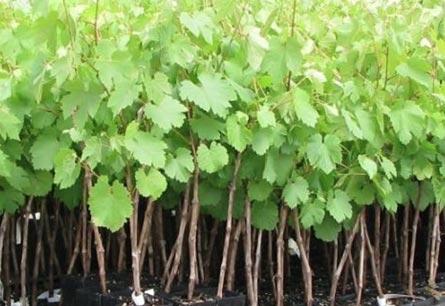
The Canadian Food Inspection Agency (CFIA) has updated Appendices 1 and 2 of directive D-94-35: List of Sources Approved to Export Fruit Tree and Grape Propagative Material to Canada to reflect recent changes to the approval of certified propagative material of apple (Malus spp.) and grapevine (Vitis spp.) originating from the United States.
Effective immediately, any certified variety and rootstock of apple and grapevine may be imported from New York State, provided the material is produced and exported by a facility autho rized by the New York State Department of Agriculture and Markets as a participant under the CFIA-accepted New York State Virus-Tested Plant Material Certification Program. How it works
New York’s Virus-Tested Plant Material Certification program is nursery-focused. Nurseries bring in foundation, virus-tested, clean budwood (scion) and cutting (rootstock) material (called “G1” material) from foundation sources that are part of the National Clean Plant Network (NCPN) in the United States. The G1 plants are the “cleanest of the clean,” and many are derived from tissue-cultured material produced after therapeutic treatments eliminated existing viruses.
Certain nurseries bulk up this material to produce the desired planting stocks. This is done in increase blocks (referred to as “G2 blocks”). Staff from the New York Department of Agriculture collect leaf samples for regular ongoing testing of the increase block (G2) at the nursery to catch any virus introductions. New York has established a system to test 25 per cent of all vines in the increase block each year. Over four years 100 per cent of the vines in the increase block will be tested. Samples are submitted to the Fuchs’ virology lab at Cornell University, in Geneva, New York. New York currently certifies Virus-Tested Vitis sp. (grapes) and Malus sp. (apple).
Standard import conditions also apply. For the complete list of CFIA import requirements, please refer to the Automated Import Reference System (AIRS). The New York State Department of Agriculture and Markets has published some information about its certification program, including a list of participating nurseries: agriculture.ny.gov/plantindustry/virus-tested-certification.
Wendy McFadden-Smith, tender fruit and grape IPM specialist, OMAFRA, reported these developments in her ONFruit blog and included more advice. The Canadian nursery or individual importing the material is responsible for applying for the
Permit to Import, which can be done through their MyCFIA account. The applicant/importer in possession of the permit is then responsible for providing this information to the exporter or broker. Typically it would then be up to the exporter to request the phytosanitary certificate (including any required additional declarations).
Additional information on the import process can be accessed here: Plant and Plant Products Import Primer.
As for spotted lanternfly, in
2021, CFIA introduced measures requiring that all woody plant material imported into Canada from the continental United States for the purposes of propagation must be accompanied by a phytosanitary certificate that includes an additional declaration confirming that preventative measures to mitigate the risk of spotted lanternfly introduction have been met. Those requirements will be outlined on the import permit, and can also be found in any of the relevant AIRS entries.
NOVEMBER 2022 –– PAGE 19
FOCUS: SEED & ROOTSTOCK
The secret to improved rootstock is buried in the soil biome
KAREN DAVIDSON
Underfoot and underappreciated, the soil biome is one of the most diverse microbial ecosystems in the world. These communities, reported to have signalling systems of their own, harbour bacteria as well as fungi and viruses. Some are critical to plant health, resisting stressors such as drought and parasites. But others are simply not welcome.
Red blotch virus in grapevines is one such example. If researchers could better understand the central nervous system of the soil biome, as they
now understand dendrites in the human brain, then wouldn’t it be advantageous to identify the culprits that infiltrate genetic rootstock?
Upper Canada Growers is working on those problems in what has become the country’s largest tissue culture laboratory. The company is expanding at a dizzying rate, doubling its capacity in 2022 with plans to double again in 2023. While the headquarters are in Niagara-onthe-Lake, Ontario, president and co-founder Rob Haynes has moved to Harrow to be close to the tissue culture laboratory.
“We’re growing faster than we
expected,” says Rob Haynes, “propagating one million, virusfree apple rootstocks per year.
“With climate change, we’re learning that some of the standard rootstocks from Holland and the U.S. aren’t performing as well as expected. We learned that a certain endophyte – a fungus in the root system –has been slowing down growth of trees. By removing this endophyte, we’re finding much better results.”
Growth Trajectory
This is a new era of exploration. As Haynes remembers, his grandparents’ soil
knowledge consisted of a measured dose of nitrogenphosphorus-potassium (NPK) in the orchard and if they didn’t get the hoped-for response, then they sprinkled a little more. Decades ago, no one realized that micronutrients such as boron were critical for the uptake of the three major fertilizer ingredients.
“Today, we’re discovering that the living structure of the roots is specific to each crop,” says Haynes. “Some fungi are beneficial and others are not. We’re learning to get that biome back to fight disease, suck up fertilizers more efficiently and to capture carbon better.”
What is tissue culture?
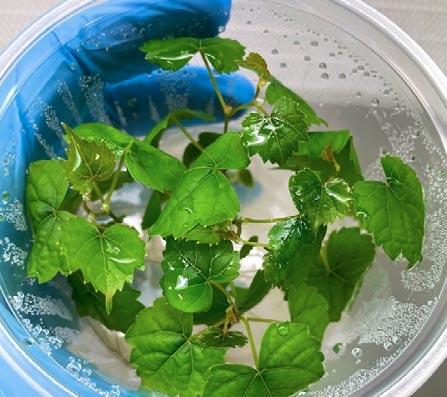
Micropropagation techniques use meristem and shoot culture to produce large numbers of identical individuals. The process does not depend on the seasons and therefore, can be achieved throughout the year in a sterile laboratory explains Richard Robbins, agronomist, Upper Canada Growers.
His colleague, Kash Behravan, lab production manager, is working to identify symbiotic bacteria for apple rootstocks which can improve growth of apple trees. “We’re also hoping to improve hardening of the wood- which enhances photosynthetic capacity,” says Behravan. “If we can preserve the water more efficiently within the root system and develop a more dense root system, we’ll have a stronger rootstock.”
A breakthrough would be finding the cocktail recipe of beneficial bacteria for apple roots that can then be transferred to the next generations. The next step is to study the apple root system biome. The key questions are: What is best for the tree? How can we improve it?
The microscopic research is
compelling enough, but when growers look long-term, they can see the environmental benefits of these developments: decreased use of pesticides and fertilizers, improved carbon uptake of the plant, and increased quality and yield of fruit trees.
Right now, the biggest demand is for apple rootstocks, says Haynes, but the grape business is growing rapidly too. That’s due to the need for rootstock that’s free of two kinds of leafroll virus and red blotch virus, now plaguing much of the grape sector. Heavy losses of grapevines in the Niagara region in 2022, due to a January deep freeze event, means more demand for replacement, virus-free vines.
New clients
That’s not the only area of growth. Haynes explains that Asparagus Farmers of Ontario is now a client. Potential remains to add services for vegetative propagation of potatoes.
Forty staff currently work at Upper Canada Growers. They have collaborated closely with the University of Guelph, Cornell University and Brock University to establish protocols. One of the challenges is to recruit more staff overseas, likely in Turkey and India.
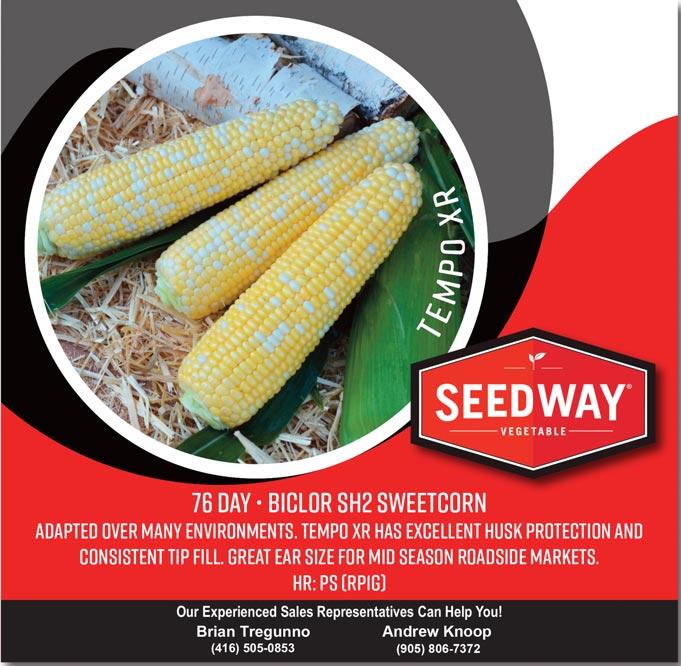
Today, most of the rootstocks are shipped to British Columbia, Ontario, Québec, Nova Scotia and Prince Edward Island. There’s demand from the U.S., but Haynes is fulfilling only Canadian orders at present.
Upper Canada Growers has built on its 2019 purchase of Mori Nurseries, a company founded in 1950 by Leno Mori. Now 94, he is amazed at his legacy.
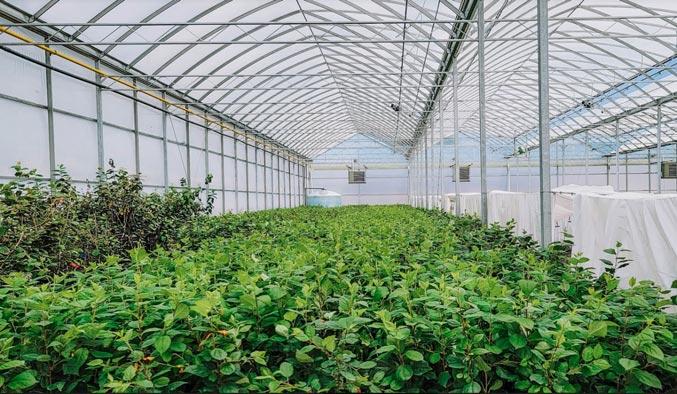
THE GROWER PAGE 20 –– NOVEMBER 2022
Some of the plants currently in the research pipeline include new apple rootstocks, new varieties of grapes, plums, peaches, strawberries, sweet cherries, hazelnuts, and asparagus. This photo shows Geneva 202 apple rootstock.
Upper Canada Growers is developing mass-production protocols for the micropropagation of plants. This photo shows grapevine in tissue culture, ready to be sent to the greenhouse for acclimatization.
WORKPLACE
How to prepare for farm inspections by labour ministry
Ontario has a robust agricultural sector that employs more than 20,000 temporary foreign agricultural workers each year.
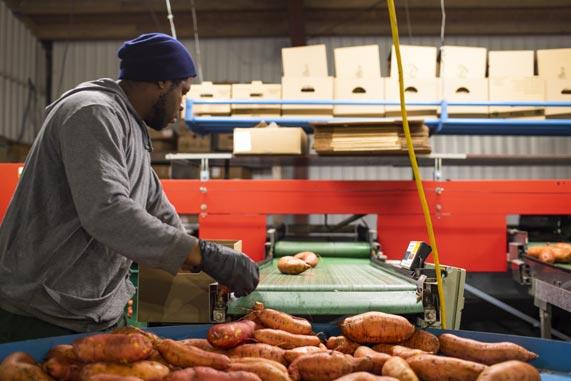
“There is often a misconception that workers who come to Ontario on work permits do not have the same rights under the Occupational Health and Safety Act (OHSA) as any other worker,” says Suzanne Thornham, provincial specialist with the Ministry of Labour, Immigration, Training, and Skills Development (MLITSD). “Temporary foreign workers are absolutely entitled to same rights and protections as any other worker in Ontario.”
From September 14 to November 30, 2022, MLITSD inspectors will visit Ontario farms and greenhouses to look for evidence that workers have received proper training on the physical, chemical, and biological hazards they may face.
Inspectors will also look for evidence that workers understand their rights and responsibilities under OHSA, including their rights related to workplace violence and harassment.
“Because of the barriers temporary foreign workers often face, such as language and unfamiliarity with Ontario’s laws, they could be at higher risk for injury and illness,” says Thornham, “The purpose of this strategy is to ensure that workers know how to access assistance and resources if needed. We also want to ensure that the farm operators understand their obligations under the OHSA and that workers know their rights as well.” Living quarters are not part of this strategy
because they do not fall under the jurisdiction of OHSA.
Inspectors will look at how temporary foreign agricultural workers are being trained, particularly looking to see if an employer has resources available in the language spoken by the majority of workers. They will also evaluate the communication methods being used.
“Inspectors will want to see communica tion beyond a poster on the wall,” says Thornham. Some farm operators hire translators to ensure training and other information is understood. Videos can be a useful tool as well. Ultimately, inspectors will expect to see evidence that workers have understood and retained the health and safety information provided to them.
Prepare for inspections
Dean Anderson, strategic advisor for agriculture with Workplace Safety and Prevention Services (WSPS) says, “The controls are in the training.” Farm operators must ensure that their workers not only understand the hazards they will encounter, but also how they are going to protect themselves from getting hurt.
“It’s not just about doing the training,” says Anderson. “You also have to document it. Having a sign-in sheet is one way to do that, but another method we recommend is taking a photo. Have the workers who are present for training gather together and take a picture.”
When asked how farm operators should
Ontario Pesticide Safety Certification fees are rising
growers, the Ontario Ministry of Agriculture, Food and Rural Affairs, the Ontario Ministry of the Environment, Conservation
and Parks, pesticide manufacturers and retailers.
prepare for the MLITSD’s inspection strategy, here’s what Anderson advised:
• Worker Health and Safety Awareness in 4 Steps —This worker awareness training is critical. It explains the worker’s rights and responsibilities and who to go to for help.
• Hand Signal Training—Tractors and other heavy equipment require signally for safe use. Ensure workers are trained on the signals commonly used at the farm.
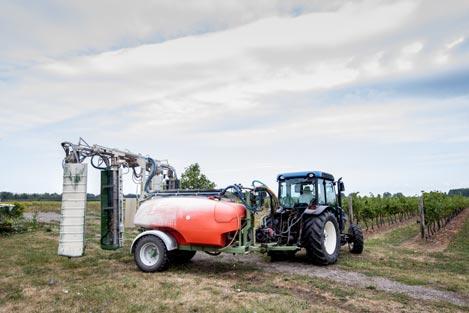
• Noise Training—If workers are working in proximity to noise-generating machinery (e.g., a diesel tractor or conveyor), make sure they have appropriate PPE and have been trained in its use. Another way to address noise is to rotate workers, so they are not exposed to the hazard for long periods.
• Site-Specific Hazard Identification
The employer must provide workers with training that is specific to their workplace. Ensure workers are trained on the equipment that they are using (i.e., manu facturer’s instructions). An understanding of the safety features is imperative.
• Joint Health and Safety Committee (JHSC)—Knowledge of the JHSC or Health and Safety Representative (HSR) is key to understanding how to access assistance on health and safety issues. Train your workers on the JHSC, how it works, and who its members are.
Source: University of GuelphRidgetown October 13, 2022 news release
Ontario farmers and vendors who need to become certified in pesticide safety have paid the same certification fee since 2008.
To maintain the sustainability of the Ontario Pesticide Education Program which offers certification courses, the OPEP Steering Committee has approved nominal fee increases.
Effective November 1, 2022, the following fees will apply:
• Grower Pesticide Safety Course: $135
• Pesticide Vendor Certification Course: $235
• On-Farm Instructor Course: $75
• Farmer Assistant training: $30
The Ontario Pesticide Education Program has many options for growers and vendors to become certified in the next 2022-2023 training season.
Options include the very popular online course, which offers information and assessments that can be completed at the learner’s convenience, as well as in-person courses and test sessions led by experienced instructors. These options are available to growers and vendors requiring first time certification or re-certification. Sign up on opep.ca or call 1-800-652-8573.
The Ontario Pesticide Education Program has offered courses since 1987. The courses focus on pesticide safety, health and environmental risk manage ment, pesticide application and integrated pest management. Currently more than 22,000 growers, 1,300 vendors and nearly 300 on-farm instructors are certified through the program. The program is supported by
NOVEMBER 2022 –– PAGE 21 THE GROWER THE
Putting strawberries to bed
ERICA PATE
Pre-mulch herbicides:
Late fall is an important window for weed control in matted-row strawberries. The time frame is before mulch is applied in November or December, but after plants are dormant. Herbicides applied at this timing will prevent weedseed germination next spring. The herbicide you choose depends on the spectrum of weed control, soil type, previous applications, and herbicide tolerance of the varieties in your fields. Growers now have multiple choices for this late fall dormant application:
• Sinbar (G5)
• Chateau (G14 )
• Authority (G14). Notes: Do not tank-mix with Chateau or other products containing sulfentrazone.
• Reflex (G14). Notes: Apply with surfactant if weeds have emerged. Do not apply Reflex more than once every two years.
• Goal (G14)
• Devrinol (Group 15) Note: Incorporation by rainfall, irrigation or cultivation is essential.
Note that each of these herbicides has a maximum of one application per year, except for Sinbar, which can be applied three times a year on new plantings or twice a year on established plantings. Remember that each of these herbicides has residual soil activity that will affect germination of cover crops
for some months after application. If next year will be the last harvesting year for your planting, see the product label for plant-back restrictions. Always read and follow the label.
Mulch
Strawberry plants are begin ning acclimation, the process of developing cold tolerance, when days begin to shorten, and will be able to tolerate temperatures as cold as -2°C or -3°C. Strawberry leaves are still photosynthetically active into late autumn, and leaves need photosynthesis to complete acclimation, so make sure to not apply straw too early and compromise the process. Plan to apply mulch before snow fall and when temperatures are low enough to cause injury (injury usually begins when crown temperatures reach -5°C), but late enough in the fall that the plant has fully hardened-off. This is typically after several frosty nights but before snowfall, sometime from mid-November to mid-December. As plants become dormant, strawberry growth slows down and foliage flattens out. Colour is not always an indication of strawberry plant dormancy, but some varieties will turn red in the fall when they are dormant.
Mulch protects the plants from damaging temperatures and desiccating winds through the winter, keeps soil temperatures more consistent and prevents the freezing and thawing that can break the roots. Straw mulch should be free of weed seeds, not
treated with glyphosate before harvest, dry, and not frozen for easy spreading. Apply the straw to a 5-8 cm thickness. If straw is used to overwinter raised beds, apply more than 5-8 cm. Wheat, rye, miscanthus, and switchgrass straw are all suitable options.
A few Ontario growers tried miscanthus and switchgrass during a mulch trial in 20172018, following promising results from a trial on Québec strawberry fields. The miscanthus and switchgrass went on evenly and easily. This trial found little difference between plant overwintering survival and all three straw options maintained
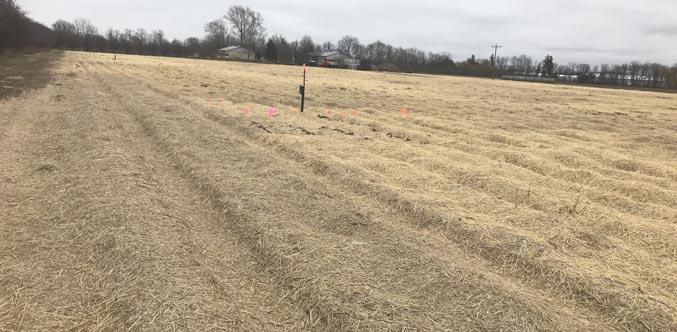
similar soil temperatures through out the winter. We are continuing this trial this winter of 2022/23 to evaluate a new harvest system for switchgrass. In the initial trial the switchgrass was harvested in the fall, and baled in the spring, then applied to the strawberries the following fall. This is a standard method for switchgrass producers but results in the straw losing some physical structure and a duller colour by the time it is applied to strawberries. In Québec, growers use a ‘just-intime’ system, harvesting the switchgrass and applying it to strawberries in the same fall. This is the system we are using for
Mites vs mites: biocontrol options for cyclamen mites
ERICA PATE
As many strawberry growers know, cyclamen mites have become a more challenging pest in the last few years (Figure 1.). There are limited effective miticides available, and the mites are protected in the folded young leaves and the crowns of plants, making them difficult to reach with what miticides are available (Figure 2). This means recent research has been focusing on alternative management practices, including biocontrol.
Predatory mites including Neoseiulus cucumeris, Neoseiulus fallacis, and Neoseiulus californicus have been studied for cyclamen mite control in many regions around the world. Some of this research has found N. cucumeris to be an effective predator, however, none of this work had been conducted in Canada -- until recently. A study in Québec led by Stéphanie Patenaude et al. (2020) (Cyclamen mite (Acari: Tarsonemidae) monitoring in eastern Canada strawberry (Rosaceae) fields and its potential control by the predatory mite Neoseiulus cucumeris (Acari: Phytoseiidae) looked at the performance of N. cucumeris in our climate. N. cucumeris is sensitive to cold temperatures, so with the previous research conducted in other countries and climates, this research is important to understand how mites could perform in Canadian strawberry systems.
This study found that following regular releases of N. cucumeris from June to August, cyclamen mites were effectively controlled in August. Control was less effective early and later in the season. This could be due in part to the sensitivity of N. cucumeris to cold temperatures, combined with the short growing season and cool climate
found in Québec. However, despite no N. cucumeris being found the following spring in the treatment plots, marketable yield was higher in these plots treated with N. cucumeris compared to the control plots.
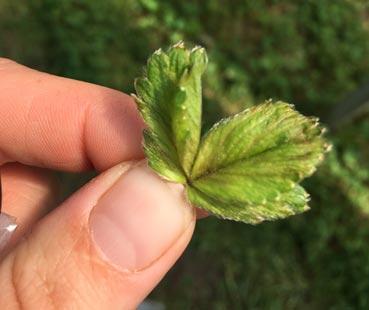
More research is needed on the potential of biocontrol options for cyclamen mite control in Canada, including research on N. cucumeris in different regions in Canada, but this research shows that N. cucumeris is a potential bio control option for strawberry growers in eastern Canada.
N. cucumeris could be a good fit in protected systems, where temperatures warm up earlier in the spring and stay warmer into the fall, which could allow for successful
strawberry growers this year, to evaluate the potential of switch grass as a viable strawberry mulch for winter protection.
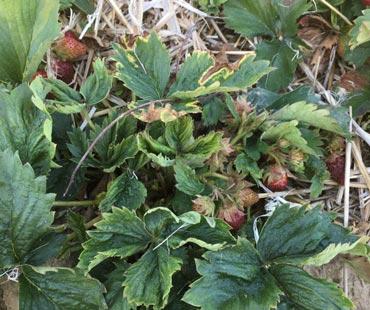
There are many options for strawberry growers to choose from to overwinter strawberry fields. Regardless of mulch choice, it is important to use good quality straw (clean and free of weed seeds, no glyphosate) and to apply mulch at the right time, to protect next year’s crop!
Erica Pate is fruit crops specialist for the Ontario Ministry of Agriculture, Food & Rural Affairs.
release of Iearlier. These systems are also annual systems, eliminating the need for overwintering survival.
To hear about other research on alternative cyclamen mite control, join us at the Berry Growers of Ontario annual meeting and the Ontario Fruit and Vegetable Conference in Niagara Falls in February, 2023 when Justin Renkema, Agriculture & Agri-Food Canada, is speaking on his recent work on cyclamen mite control. Watch the onfruit.ca blog for the final agenda.
Erica Pate is fruit crops specialist for the Ontario Ministry of Agriculture, Food & Rural Affairs

THE GROWER
Figure 1. Plots of switchgrass mulch applied to a strawberry field in the 2017-2018 trial.
Figure 1. Cyclamen mite damage in straw berries: crinkled, toughened leaves and stunted plants.
Figure 2. Cyclamen mites are found in young, folded leaves.
PAGE 22 –– NOVEMBER 2022
Vineland innovation team working on long-cane raspberries
increasing the sustainability and competitiveness of the out-of-sea son berry industry in Canada. Led by the Ontario Horticultural Trades Foundation, Vineland in collaboration with a number of partners including the Ontario Ministry of Agriculture, Food and Rural Affairs (OMAFRA), Berry Growers of Ontario, Fenwick Berry Farm, First Green Energy and Roxul Inc. has been awarded the first of three phases of the challenge – the Spark Award.
The $50,000 seed funding will support the team’s project
Developing an innovated long-cane raspberry production system in producing a highyielding, energy-efficient, fully integrated and scaled long-cane raspberry production system under protected environments. Solar panels will be used to shorten the return-on-investment

period of the new system by offsetting capital infrastructure costs through income generation by net metering opportunities.
Results are expected by December 2022, at which time the team will apply to the Shepherd phase. If successful, there is a potential to advance the project with further research and funding of up to $1 million to develop proof-of-concept of the system within 18 months.
The Homegrown Innovation Challenge was launched in February 2022. Full details on the challenge and Spark Award can be found at: homegrownchallenge.ca/sparkaward-projects/
Source: Vineland Innovation and Research Centre September 29, 2022 news release
Vineland Research and Innovation Centre (Vineland) is one of 15 teams granted a Spark Award, the initial award phase of the Homegrown Innovation Challenge. The challenge aims to discover innovative tools and technology solutions to enable Canadian growers to cultivate a
wide variety of fruits and vegetables.
Qinglu Ying, PhD, Vineland’s research scientist, Plant Production was one of the successful grant recipients who led Vineland’s project application.
“Vineland is well-positioned to take on this project, being a
leader in applied research in Canadian horticulture,” says Ying. We also have a strong legacy of working closely with growers, not only in Niagara but across the country.”

The Homegrown Innovation Challenge, funded by the Weston Family Foundation, aims at
Blueberries continue to expand globally
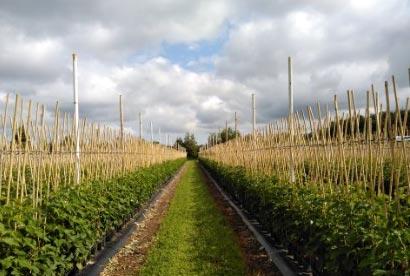
The blueberry industry is becoming truly global, with fast-growing supply and/or demand in most continents. The latest Rabobank Blueberry Report says that per capita availability is set to continue an upward trend in the U.S. the EU-27+UK, China, and other markets, driven by continued production expansion.
David Magaña, senior fresh produce analyst for Rabobank, says that Peru is marching on and Mexico, as well as other up-and-coming exporters, are expanding shipments. Going forward, industry trends include: the probability of declining unit prices for Peruvian exports, stagnation in Chilean production, and an increase in substrate-grown berries in Mexico.
In North America, product availability remains a top priority for the blueberry industry. Since 2016, U.S. blueberry imports have outpaced exports.
Harvested acreage in selected states has doubled over the last 15 years. Organic blueberries now account for about 12 per cent of the U.S. fresh blueberry exports.

Magaña predicts that as the blueberry industry faces increasing input costs, labour issues, and logistical challenges, companies will be pushed to become more productive and efficient, and to consistently provide high-quality fruit. The adoption of improved cultivars and technologies such as the use of substrates, protected culture, and mechanical harvesting will help growers solve a number of supply-side challenges.
For more, link here: https://bit.ly/3rrtOZH
Source: RaboResearch Report October 4, 2022
NOVEMBER 2022 –– PAGE 23 THE GROWER MORE BERRY NEWS
Long-cane raspberries are shown in a nursery at Fenwick Berry Farm, one of the Vineland project collaborators.
Willmes grape press 3 ph. Wottle crusher destemer 3 ph. HDP 4 head semi auto wine or cider bottle filler. Lainox tanks, 3 by 3200L, 1 by 4200L, 7 by 1500L, several small floating lid tanks 300-750L. 300 plastic picking crates. Full 860L carbonation tank system. 40 wooden apple bins. Contact Gary at Hoity Toity Cellars 519-889-0714, garyhoitytoity@gmail.com

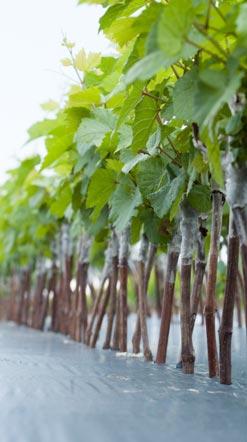
Cadman 4500 wide body. $30000 Humi fresh cooler unit. $17500 Den Boer family farm 519-9830615
Two -5 hp. Compressors - 208V 3 phase with condensers and six evaporators. 20 HP. Compressor - 208 3 phase - with condenser, refrigerant/water
three large Ref Plus evaporators w/ hot gas defrost. Equipment located in Muskoka. Blake Johnston, 902-847-1411 blake@cranberry.ca



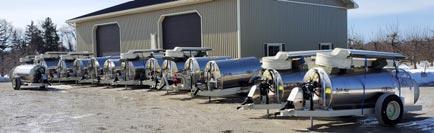
heat exchanger and
PAGE 24 –– NOVEMBER 2022 MARKETPLACE WORKS advertising@thegrower.org 866-898-8488 x 221 EQUIPMENT SEED, NURSERY & ROOTSTOCK TURBO-MIST - NEW & USED DON ARTHUR ORCHARD EQUIPMENT (519) 599-3058 donarthur3@gmail.com Thornbury, ON Now is the best time to buy, lease, or trade for the best pre-season pricing and more time to recondition, advertise and sell your trade. Turbo-Mist 400-Teejet electric controls - a nice one! $16,300 Turbo-Mist 500 centrifugal, hydraulic, nice clean $17,900 Turbo-Mist 500 centrifugal, tall spray tower, nice clean $19,750 PERFECT KG220 H.D. flail mower, nice cond. (new $15,000) $8,750 PERFECT ORCHARD MOWERS & FLAIL MULCHERS INTEREST FREE TERMS AVAILABLE GOOD CLEAN TRADES NEEDED THE GROWER GROW TRAYS JANUARY GRAPES, VINEYARDS & BERRIES BOOK BY DEC 14 advertising@ thegrower.org DECEMBER SOIL HEALTH & CROP NUTRITION BOOK BY NOV 16 advertising@ thegrower.org CONTAINERS & PACKAGING CLASSIFIED ADS Place a classified ad. advertising@thegrower.org Have you moved? Update your mailing address to ensure delivery advertising@thegrower.org Crown Storage Corp owned by Don & Marg Sheridan, manufacturer of fir bins for over 20 years, is pleased to announce that Mike & Mary Lynn Sheridan of Crown Bin & Pallet Inc have purchased the Bin Company from his parents. We are taking orders for delivery in 2023. It is our intention to offer the same services to our industry, at the same location, using the same staff for a seamless transition. Please do not hesitate to contact us. ROWN ROWN BIN & PALLET INC. 519-599-3656 mike@crownbin.ca
Well-known
VEGETABLE SEED SALES REPRESENTATIVE
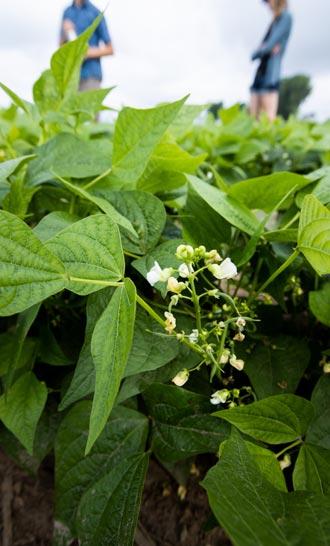


company
seeking a contractor to sell seed and related products within an assigned
for the purposes of cross-selling to customers and
RESPONSIBILITIES INCLUDE:
• Conducting seed sales calls with targeted customers, landscape contractors, sports fields, golf courses and retail outlets, while implementing company goals and objectives that will grow the seed business and develop profitable relationships with customers. Implementing seed sales strategies to generate pricing strategies and profitable sales.
• Providing leadership for the development and/or implementation of all seed training and seed support needs.
• Participating in selected sales activities, i.e. customer meetings, trade shows, sales meetings to keep abreast of sales trends and sales environment.
• Making seed and erosion control recommendations to ensure they meet the appropriate agronomic conditions.
• Maintaining a current knowledge of products – seed, erosion control blankets, hydromulching supplies and soil amendments.
• Quoting prices, and preparing sales contracts for orders obtained. Working with Microsoft Office products and other proprietary software to enhance business processes and maximize efficiency.
• Maintaining industry and university contacts to keep informed on developing trends and product introductions in assigned product areas.


REQUIREMENTS
Normally requires a minimum of a Bachelor’s Degree in Turf Management, Marketing, or other related discipline and a minimum of 4 years seed selling experience, or an equivalent combination of education and experience to demonstrate strong reasoning ability to solve practical problems and handle customer and/or operational issues. Must have and maintain a valid driver’s license and satisfactory driving record. Must be able to travel independently and overnight as needed, and be willing to work hours beyond those considered “normal”.
Interested? Please send your resume to: bbtregun@cogeco.ca or fpennington@seedway.com
& BITES
Fresh Vegetable Growers of Ontario to hold AGM
KAREN DAVIDSON
Henk Droogendyk’s Market Garden will be the venue for the annual general meeting of the Fresh Vegetable Growers of Ontario (FVGO) on December 14, 2022. The Harley, Ontario grower will welcome the board of directors from a diverse range of commodities. Up to 60 crops are included from carrots, onions and beans to the more unusual: artichokes and horseradish.
In preparation for the meeting, Mark Wales and a three-member governance committee have updated the by-laws.
“The challenge is to get people involved,” says Wales. “We think a good start is by including commodities such as garlic and rutabaga.”
The by-law proposals, to be voted on at the annual general meeting, waive the current member ship fee of $150/annum. There is no minimum acreage limit to become a member – only a valid business number. An option has been created for corporate members such as processing companies for a fee of $100.
Part of the by-law package clarifies term limits for directors and their alternates. Details also include who is eligible to be a representative to various farm groups. For example, the representative to FARMS must be an active grower who employs temporary foreign workers. Another example is that two representatives are sent to the Ontario Fruit & Vegetable Growers’ Association. One must be a grower from muck soils, the other from mineral soils.
Currently, the
NOVEMBER 2022 –– PAGE 25 MARKETPLACE WORKS advertising@thegrower.org 866-898-8488 x 221 @growernews THE GROWER REFRIGERATION EMPLOYMENT OPPORTUNITY INNOVATION EFFICIENCY PERFORMANCE 519-983-6995 info@heye.ca Premium fruit and vegetable refrigerated cold storages DESIGN - SUPPLY - CONSTRUCT - MAINTAIN
seed
is
territory, working closely with the sales manager
dealers.
BITS
FVGO is most active in funding research, an important asset for the 35 members that grow several thousand acres of fresh vegetables.
CROP PROTECTION
Be safe and cover up!
For many years I’ve been involved in crop protection, speaking about Integrated Pest Management (IPM), reducing use of pesticides, scouting and how to protect the environment. There is a point I think we never talk about enough and that is the health protection of the growers using and spraying pesticides. Each time I have the opportunity, I take time to refresh or discuss with growers their safety regarding pesticides.
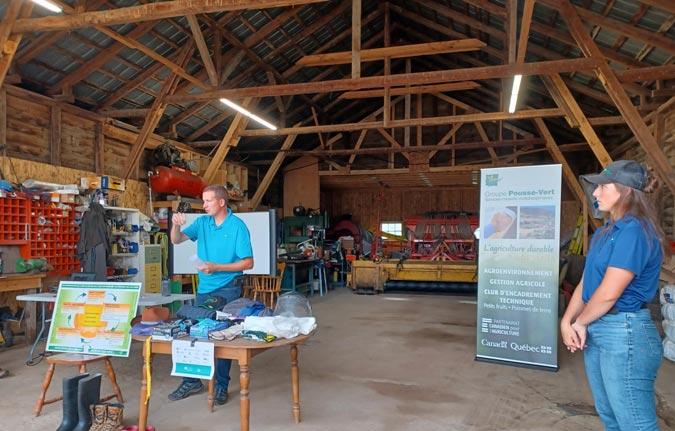
With the recent reform of Québec’s occupational health and safety system, Bill 59, the Québec government has formally recognized the link between occupational exposure to pesticides and the development of Parkinson’s disease. That means a person developing Parkinson’s symptoms – for example, tremors, muscle stiffness or difficulty in swallowing, chewing or speaking—could be compensated if there’s proof of occupational exposure to pesticides. This legislation is a good thing, but I think we need to work harder on prevention and make sure that growers protect themselves properly.
In 2016, I investigated the IPM/pesticide practices specific to potato growers. In the analysis, all aspects of IPM and environment protection were covered as well as health protection of the growers. At the end, a very bad conclusion about health protection appeared: Personal Protective Equipment (PPE) use was inadequate or missing in all of the 12 farms investigated. That means a score of 100%, but in the wrong way!
Results showed three types of growers. First, those who don’t wear any PPE at any step of
pesticide application. Second, those who wear incomplete PPE for appropriate protection. Example: wearing gloves and waterproof boots but with a single shirt and no mask during preparing and mixing. Finally, people using appropriate PPE but with wrong cleaning and storage habits of the equipment.
At the same time, l’Institut National de Santé Publique du Québec (INSPQ) surveyed other potato growers and scouts in potato fields. The institute conducted an analysis of the level of ETU, a metabolite of mancozeb, in the urine of the surveyed people. Data were collected on types of PPE, their actions (spraying, mixing, cleaning, scouting) and the delay of exposure after spraying. The results showed that everyone had been exposed to mancozeb, but at different levels. In all cases of growers, PPE was missing or misused.
Considering these poor results,
I decided to put more time and efforts on grower education about PPE. And, there are seven aspects of protection to keep in mind.
1. Time
Ok! Time is money but taking some minutes to put on appropri ate PPE won’t make weeds grow much more. Protecting yourself should never be a time issue. If you are taking time to do things right the first time, you will not have to take time to do it again. At the end, you are saving time and it is true with safety.
2. Knowledge Know what the appropriate PPE is for your needs. Read pesticide labels which inform about what PPE is needed. Know how to wear and remove PPE to prevent exposure. Get familiar with the equipment and know its limits.
3. Protect Protect your PPE. Don’t wear torn gloves or clothes that can let
pesticides seep through. Store your PPE in a safe place away from pesticides and things that could alter them. Protect your environment from contamination. If re-entering your sprayer, be sure you don’t bring residues and contaminate the cabin.
4. Layers
Wearing multiple layers of clothes and PPE will protect you better than only one. Wearing three layers will reduce exposure by 90% compared to wearing a single layer of clothes.
5. Clean Clean your gloves thoroughly before taking off PPE and keep them to manipulate and thoroughly clean PPE. Always wear PPE when cleaning your sprayer. You are exposed to spills that can contain pesticides. After a spraying session, change your clothes and wash them separately. Finally, taking a shower shortly after spraying to remove any
residues on your body is a very good habit.
6. Direct exposure
Filling the sprayer and mixing products are critical moments for exposure to concentrated pesticides. Wearing complete PPE is essential at these moments. Manipulating and eliminating pesticide containers requires suitable protection. Unclogging a nozzle is a common way of exposure. Entering your storage facility exposes you to vapours, so you need to properly ventilate or wear a respirator mask.
7. Indirect exposure
These unanticipated moments of exposure are often not in the action of spraying. Washing the exterior of the sprayer can expose you to spills. Fixing the sprayer after a session can expose you to pesticides. If you are using a tractor to pull a sprayer, remember that tractor might be used for other work and then be a source of contamination for the operator.
Finally, protecting oneself against pesticide exposure is not difficult but needs a constant awareness. There is a lot of information about PPE on the web. Take time to familiarize yourself with PPE. Identify what are the critical watch points in your working habits and make the needed adjustments to ensure proper protection. If you won’t let your child do the work with the clothes you are wearing, stop everything! That means you are not well protected.
Luc Bérubé is a 1997 graduate in agronomy from Laval University, specializing in phytology. Since then, he’s been a member of the ‘’Ordre des Agronomes du Québec.’’

Since 1999, Bérubé has worked as a consultant with producers within the Pousse-Vert Group which supports nearly 200 agricultural businesses. Advising 30 companies, he specializes in all aspects of potato and berry production. He is a part of the plant protection mentor team for club advisors across Québec.
Additionally, he is a trainer for certification for the application of pesticides.
THE GROWER PAGE 26 –– NOVEMBER 2022
LUC BÉRUBÉ
Luc Bérubé is pictured leading a workshop about PPE during a field day this past August near Rivièredu-Loup, Québec.
With the recent reform of Québec’s occupational health and safety system, Bill 59, the Québec government has formally recognized the link between occupational exposure to pesticides and the development of Parkinson’s disease.
“ “
Crop(s) Target Rate (mL product / ha) Application Information
CG 3-07B (Green Onion subgroup) Control of Two-Spotted Spider Mites
500 – 600
Apply specific dosage of Oberon® Miticide as needed for control. Good coverage of the foliage is necessary for optimal control. For best results the treatment should be made when whitefly or mite populations begin to build and before a damaging population becomes established. Minimum application volume: 100 L/ha – ground application. Apply in adequate water for uniform coverage with ground or aerial application equipment. Repeat applications at listed intervals if monitoring indicates the need. Maximum allowed per 7-day interval: 600 mL/ha. Maximum allowed per crop season: 1,800 mL/ha. Maximum number of applications per crop season: 3.
(days)
JOSH MOSIONDZ
The Pest Management Regulatory Agency (PMRA) recently announced the approval of a minor use label expansion registration for Oberon miticide for control of two-spotted spider mites on Crop Subgroup 3-07B (Green Onion subgroup).
Oberon miticide was already labeled for management of insects on a wide range of crops in Canada. This minor use proposal was submitted by the Agriculture & Agri-Food Canada, Pest Management Centre (AAFC-PMC) as a result of minor use priorities established by growers and extension personnel.
The following is provided as an
abbreviated, general outline only. Users should be making insect management decisions within a robust integrated insect management program and should consult the complete label before using Oberon miticide.
For Ontario growers who wish a copy of the new minor use label, contact Travis Cranmer, vegetable crops specialist
OMAFRA, Guelph (519) 835-3382. Or you can contact your regional supply outlet, or visit the PMRA label site www.hc-sc.gc.ca/cps-spc/pest/ registrant-titulaire/tools-outils/labeletiq-eng.php
Josh Mosiondz is minor use coordinator, OMAFRA.
Fontelis fungicide now labelled to manage sclerotinia stem rot on cucurbits
Rate
Crop(s)
Crop Group 9 (Cucurbit Vegetables) Suppression of Sclerotinia Stem Rot
JOSH MOSIONDZ
The Pest Management Regulatory Agency (PMRA) recently announced the approval of a minor use label expansion registration for Fontelis fungicide for suppression of sclerotinia stem rot caused by Sclerotinia sclerotiorum on Crop Group 9 (Cucurbit vegetables). Fontelis fungicide was already labeled for management of diseases on a wide range of crops in Canada. This minor use proposal was submitted by the Ministère de l’Agriculture, des Pêcheries et de l’Alimentation du Québec as a result of minor use priorities established by growers and extension personnel.
The following is provided as
an abbreviated, general outline only. Users should be making disease management decisions within a robust integrated disease management program and should consult the complete label before using Fontelis fungicide.
Ontario growers who want the new minor use label may contact Elaine Roddy, vegetable crops specialist, OMAFRA, Ridgetown (519) 401-5890. Or you can contact your regional supply outlet, or visit the PMRA label site http://www.hc-sc.gc.ca/ cps-spc/pest/registrant-titulaire /tools-outils/label-etiq-eng.php
Josh Mosiondz is minor use coordinator, OMAFRA.
Photo by Marcella DiLonardo.
Information
1.25 - 1.75 Begin applications prior to disease development and continue on a 7- to 14-day interval. Use higher rate and shorter interval when disease pressure is high. Make no more than 2 sequential applications of Fontelis Fungicide before switching to a fungicide with a different mode of action. Maximum seasonal use rate is 4.9 L/ha.
per row. The operator pulls seedlings from trays and feeds a custom designed carousel
plugs. A “root ball” is required to orient the seedling correctly in the ground engaging system.
Both include an automatic leveling system, propane torch which burns a specific size hole in plastic mulch row cover, and a water injection system that dispenses about a quarter cup of water, or liquid fertilizer on each hole. One, two, three and six row configurations are available for flat, or raised beds. Custom built to order please allow four to six weeks lead time, depending on your configuration.
NOVEMBER 2022 –– PAGE 27 THE GROWER CROP PROTECTION
Oberon miticide can help manage two-spotted spider mite on green onions Renaldo Sales & Service, Inc. North Collins, NY | USA www.renaldo.org | 800-424-5564 DOWN TO EARTH TECHNOLOGY PRECISION AGRICULTURAL PLANTING EQUIPMENT MANUFACTURED IN THE USA PNEUMATIC METERED SEED PLANTER Capable of planting 10,000 hills per hour, per row, on plastic mulch covered seed beds. Using a custom drilled seed plate, the planter can achieve one seed per hole with approximately 90% accuracy. SEMI-AUTOMATIC TRANSPLANTER - One operator per head required and capable of planting up to 3,600 plants per hour,
with
PHI
7
Target
(mL product / ha) Application
PHI (days)
1
Farmland value increases override concern over higher interest rates
Average farmland values continued to increase in most parts of Canada, despite higher interest rates in the first half of 2022, according to a mid-year review by Farm Credit Canada (FCC).
“Strong farm cash receipts, buoyed by robust commodity prices, have managed to quell some of the profitability challenges from higher interest rates and farm input costs,” said J.P. Gervais, FCC’s chief economist. “Producers are still making strategic investments in their operations and buying farmland, which is in short supply and high demand. This healthy farmland market is a good indication there is confidence and optimism in the future of the industry among producers.”
The highest average farmland value increases were reported in Ontario (15.6 per cent), Prince Edward Island
(14.8 per cent) and Québec (10.3 per cent), followed by Saskatchewan (8.4 per cent), which was closest to the national average increase of 8.1 per cent. More modest increases were reported in the rest of the provinces.
There were insufficient transactions in the Yukon, Nunavut, Newfoundland and Labrador to fully assess farmland values.
Most land transactions were agreed to prior to the most significant interest rate increases. However, Gervais believes the more recent increases will not completely deter some producers from making land purchases that make sense for their operations.
“There’s little doubt that higher borrowing costs will slow the demand for farmland,” he said. “But the fact that the supply of farmland available is limited and farm
The Canadian dollar sinks against

dollar
The Canadian dollar sank like a rock on September 26 and is treading water in a nervous foreign exchange market, according to Baystreet.ca.
USDCAD climbed from 1.3470 on Friday to 1.3809 Monday September 26 on a wave of negative risk sentiment that sent investors stampeding into U.S. dollars. Investors were panicked by Russia threatening to use nuclear weapons in Ukraine and after a slew of Fed
policymakers repeated calls for sharply higher rates for a prolonged period.
The Canadian currency is growth sensitive, closely linked to the resource export-oriented economy, Adam Button, ForexLive told the Toronto Star.
“If the global economy weakens and underperforms, that’s reflected in our currency,” he said.
Growers importing new equipment and technology
Provinces with a higher percentage of arable land, such as Saskatchewan and Alberta, seem to experience a slower pace of increase in land values, according to the mid-year review. Ontario’s average increase was bolstered by the central regions of the province, where competition for arable land is strong but supply is limited.
Gervais recommends operators maintain a risk manage ment plan to protect their businesses against unforeseen circumstances, such as increases in borrowing costs and unfavourable movements in commodity prices.
Source: Farm Credit Canada
4,
AgroPages has released its Top 20 Global Agrochemical Companies of 2021. All top 20 companies achieved growth amidst the repercussions of the COVID-19 pandemic and the complex international situation. On the list of top 20 companies, 17 achieved double-digit growth while nearly half achieved a 30 per cent growth in business turnover.
The total pesticide sales of the top 20 companies in 2021 reached $72.569 billion, up 18.68 per cent
with $61.145 billion in
first-tier agrochemical giants -Syngenta,
CropScience, BASF and Corteva -
accounted for 54.71 per cent of the total sales in
top 20.
the business turnover of 16
exceeded $1 billion, accounting for a
95 per cent of total sales.
12 of the top 20 companies are
in China.
Source: Agropages Oct 10, 2022 news release
have noted that the euro is now at a 20-year low. As of September 27, the euro is valued at $1.32 Canadian.
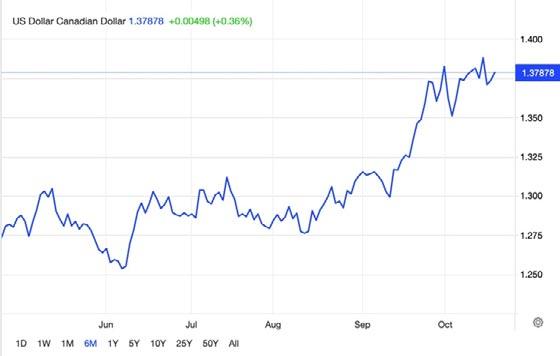
The euro is under pressure due to Russia’s squeeze on energy flows to Europe and ongoing maintenance issues with the Nord Stream pipeline.
Source: Baystreet.com/Toronto Star
NOVEMBER 2022 –– PAGE 28 THE GROWER ECONOMIC NEWS
incomes are trending in the right direction could offset the impact of interest rates increases.”
October
2022 news release
U.S.
year-on-year, compared
2020. The
Bayer
-
the
Meanwhile
companies
nearly
Of note,
headquartered
Top 20 crop protection companies earn more than $72B in sales % Change in farmland values Average % change Jan 2022 - June 2022 (6 months) Average % change July 2021 - June 2022 (12 months) B.C. 6.5 15 Alta. 5.9 5.8 Sask. 8.4 14.9 Man. 6 13.6 Ont. 15.6 27.7 Que. 10.3 13.5 N.B. 3.4 8.1 N.S. 6 14 P.E.I. 14.8 26.4 N.L. N/A N/A Canada 8.1 13.1 Top 10 Crop Protection Companies (2021) 1. Syngenta Crop Protection 2. Bayer Crop Science 3. BASF 4. Corteva 5. UPL 6. FMC 7. ADAMA 8. Sumimoto Chemical 9. Nufarm 10. Jiangsu Yangnong
