“Get Up Stand Up” reggae spirit will be on full display this year as Jamaicans celebrate the 60th anniversary of their countrymen coming to Ontario farms. It’s an important milestone honouring growth in a relationship that’s delivered $1 billion in wages to date.
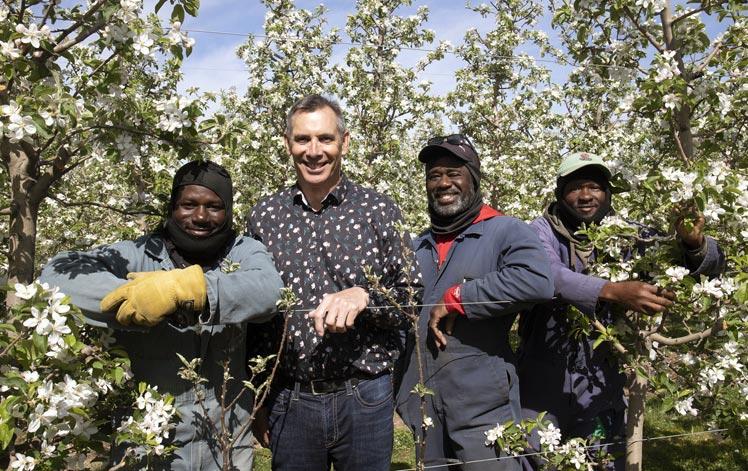
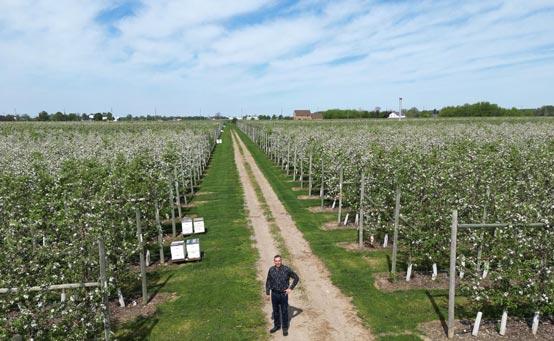
At the other end of the spectrum, Robert Shuh is just marking his first anniversary as president of the Foreign Agricultural Resource Management Services (FARMS). That’s the Ontario-based, non-profit agency responsible for managing 32,826 temporary foreign workers coming and going last year. In addition to Jamaica, FARMS has branched out to include workers from other Caribbean countries and Mexico under the Ag Stream, and Seasonal Agricultural Worker Program (SAWP). Although Shuh was appointed president after only a year as a director, he’s personally been hiring Jamaicans for his 50-acre,
high-density apple farm near Elmira, Ontario through the agency since 2014.
Shuh has come to lead FARMs at a pivotal time. The organization has been under some pressure in recent years, dealing first with the COVID pandemic and then with negative media coverage about on-farm conditions for workers. Navigating past this maelstrom brings Shuh’s many skills to the fore. Central to his re-organization of the agency was adopting a co-leadership model with FARMS vice-president Andy Vergeer, a tobacco grower farming near Delaware, Ontario.
Quickly recognizing the depth and breadth of the file, they split the responsibilities. Together they present a united voice in dealings with the Ontario and federal governments. Vergeer leads on housing issues and negotiations with source countries while Shuh, working closely with the FARMS management team, represents the agency at the Canadian Federation of Agriculture and chairs FARMS board meetings.
Step one has been meeting with the executive directors and chairs of the various Ontario commodity groups to identify immediate needs and determine future goals.
“We were quick to listen and slow to speak,” Shuh quips. “We need to build an organization that can adapt.”
Highlighting his approach, Shuh shares a personal anecdote from time spent working on economic development in Honduras. The government at the time wanted a bridge over the Choluteca River that could withstand extreme weather and Japanese engineers were then hired to build it. When Hurricane Mitch landed in 1998, the architectural wonder survived the storm admirably but what wasn’t envisaged was the monumental flooding that followed. The rising water caused the river to change its course and it subsequently flowed well beyond the end of the bridge. Unfortunately, this bridge over troubled water became known locally as the bridge to nowhere.
Continued on page 3
elected president of the Foreign Agricultural Resource Management Services (FARMS) a year ago, reflects on the milestone and what’s ahead for the non-profit organization. He’s pictured with Jamaican workers: L-R: Orane Walters, Dave Brown and Maxroy Messam at Shuh Orchards near Elmira, Ontario. Photos by Jeff Tribe.
AT PRESS TIME…
Feds set interest-free limit under the Advance Payments Program at $250,000
Hon. Heath MacDonald, Minister of Agriculture and AgriFood, announced April 1 that the Government of Canada will set the interest-free limit of the Advance Payments Program at $250,000 for the 2026 program year, for all non-canola advances. This is the portion of advances on which the Government of Canada pays the interest on behalf of producers.
The Advance Payments Program gives producers easy access to low-cost cash advances of up to $1 million, based on the expected value of their agricultural products. Under the program, producers typically receive the first $100,000 interest-free. The higher limit announced on April 1 will result in interest savings for producers, reducing the cost of the program and increasing access to cash flow to help cover costs until they sell their products.
With this support at the beginning of the production cycle, farmers will be able to use their advances to purchase essential inputs and cover their costs to support production this growing season. More importantly, the program offers marketing flexibility, enabling producers to sell their agricultural products when it is most advantageous, rather than being forced to sell for immediate cash needs, which is especially crucial in times of uncertainty.
Quick facts
• In September 2025, in response to the imposition of tariffs on Canadian canola products, the Government of Canada increased the interestfree portion of the Advance Payments Program to $500,000 for canola advances, for the 2025 and 2026 program years.
• Under the Advance Payments Program, cash advances are calculated based on up to 50% of the anticipated market value of eligible agricultural products that will be produced or are in storage.
• The program is delivered through 24 industry-led associations across Canada.
• Advances are available on more than 500 crop and livestock products, as well as honey, maple syrup and other commodities.
• This measure is expected to provide approximately 8,618 producers with a combined $37.4 million in additional interest savings for the 2026 program year, with average incremental savings of around $4,340 per producer.
• Producers also have access to a suite of business risk management (BRM) programs to help them manage significant risks that threaten the viability of their farms and are beyond their capacity to manage. The suite includes the core programs of AgriInsurance, AgriStability and AgriInvest.
Source: Agriculture and Agri-Food Canada April 1, 2026 news release
How will $1B be distributed to U.S. specialty growers?
April 24 was the deadline for American specialty crop growers to report 2025 planted acres by commodity for their share of $1 billion set aside for bridge financing from the federal government. The USDA listed more than 50 fruits, vegetables, nuts and beans which are eligible for assistance. Specific payment rates for specialty crops will be announced after the April 24 reporting deadline. Stay tuned to our website.
Cathy Burns, CEO for the International Fresh Produce Association, has been quoted by American agricultural media that $1 billion is insufficient for current and ongoing needs. She’s on the record that the sector needs $5 billion.
In other news, USDA has pledged more than $275 million in grant funding in FY2026 for the specialty crop industry.
The National Institute of Food and Agriculture is tasked with delivering funding for research and extension projects to address the most critical challenges faced by the domestic specialty crop industry. For the first time ever, $20 million will be set aside to fund research and development into mechanization and automation technologies for the specialty crop industry to help reduce labour costs.
NEWSMAKERS
The Fruit and Vegetable Growers of Canada welcomes Carla Ventin as an interim executive director. She will focus on advancing the recommendations that emerged from FVGC’s strategic review and will work collaboratively to implement priorities to strengthen the organization for the future.
Congratulations to Paul Catania Jr., president and CEO of Catania Worldwide, named the 2026 Canadian Produce Marketing Association (CPMA) Lifetime Achievement Award recipient. His successful career spans more than five decades at his family’s business, Catania Worldwide, which was founded in 1929. He has played a pivotal role in carrying forward the company’s legacy of hard work, integrity, and commitment to quality, while shaping the Canadian produce industry globally.
The Canadian Produce Marketing Association has announced its 2026 board of directors. They include:
• Yan Branco, Sobeys
• Gary Cabral, Walmart Canada
• Michelle Loucks, Whole Foods Market
• Justin McGregor, Save-On-Foods
• Ezio Bondi, Bondi Produce & Specialty Foods
• Kendra Mills, PEI Potato Board
• Jennie Coleman, Equifruit Inc.
• Jennifer Harris, Island Growers Cooperative
• Domenico Procopio, Courchesne Larose
• Chris Sarantis, Canadawide Fruit Wholesalers Inc.
• Michael Catalano, POM Wonderful
• Amanda Knauff, Taylor Farms
• Jeff Madu, Windset Farms
Matthias Oppenlaender has stepped down as chair of the Grape Growers of Ontario after 10 years at the helm. Based at Niagara-onthe-Lake, he has dedicated a total of 20 years on the board, in various capacities. He leaves on a positive note with sales of Ontarioproduced VQA wine up 12 per cent from a year ago to 20.4 million litres. The 2025 crop had a farmgate value of $124.715 million, the highest number in five years.
Grape Growers of Ontario has elected its 2026-27 Board of Directors, with former Grape King Kevin Watson serving as chair and Jeff Duc as vice-chair. Watson farms about 100 acres of certified sustainable vineyards with his family near Niagara-on-the-Lake.
The board is completed by: Steve Pohorly, Dan Lambert, Will George, Joe Schenck, Brock Puddicombe and Robert Peck
Grape Growers of Ontario has announced the 2026 Award of Merit, recognizing the significant contributions of longtime IPM specialist Margaret Appleby. She has worked closely with growers and researchers to advance practical, research based approaches for grape production. Her leadership was especially impactful in Prince Edward County, where her technical guidance and IPM initiatives helped establish the region as a respected wine growing area.
Canada’s Outstanding Young Farmers Program welcomed Katrina Finke as the new program manager on April 1. She follows in the footsteps of Carla Kaeding, who held the role for 11 years. The national event will be held in Vancouver from November 26-29.
The Office of the Grocery Sector Code of Conduct (OGSCC) has announced the 2026 board of directors after its virtual annual general meeting on March 31. Michael Graydon, CEO, at Food Health & Consumer Products of Canada, will continue as interim chair while a search is undertaken for an independent chair. The board includes:
• Iain McRuvie, Burnbrae Farms
• Steve Roosdahl, BC Fresh Vegetables
• Pierre Morin, Boulangerie Humanité
• John Danyluk, Earth’s Own Food Company
• Martin Payant, Unilever Canada
• Rhonda Mitchell, The Clorox Company of Canada Ltd
• Stacey Kravitiz, UNFI Canada
• Giancarlo Trimarchi, Vince’s Market
• John Pritchett, Powell’s Supermarket
• Rob Allsop, Empire Company Ltd
• Jodat Hassain, Loblaw Companies Limited
• Marc-Andre Bally, Costco Wholesale Canada
Kevin Watson
FARMS: embracing hands that cross the border
Continued from page 1
FARMS will no doubt continue to face head winds in the days to come, but keeping the Choluteca Bridge lesson in mind, Shuh intends to build governance and infrastructure that will allow the agency to adapt as needed. One such need will be the imminent replacement of long-time executive director Sue Williams, due to retire in May 2027. Also on the 2027 horizon is the federal government’s expected announcement on new housing regulations and its impact on Ontario’s 1,136 farm employers, and those elsewhere in Canada. And unfortunately, ongoing scrutiny of the temporary foreign workers (TFWs) file by media is more than frustrating and troublesome when photos of farm workers are used to illustrate stories about problems in industries outside of agriculture.
Restructuring
While organizational restructuring is underway and to be fine-tuned by a consultant’s report expected in June 2026, it remains to be seen how the new org chart will flesh out, and what the final governance model will look like going forward. As Shuh points out, although FARMS itself is a non-profit agency, it works closely with its subsidiary CanAgTravel, the for-profit business with responsibility for fares and flights for TFW return travel between Canada and home countries: Barbados, eastern Caribbean, Jamaica, Mexico, Trinidad and Tobago.
Oversight of the logistics involved in brokering charter airline flights and consolidating TFW transfers through 2026 and beyond could perhaps experience some turbulence. Airlines may choose to assert the right to surcharge fares in view of skyrocketing fuel prices caused by the Israel/U.S. war on Iran. Although CanAgTravel airfare costs have been negotiated and are thought to be locked in for this year, there’s no guarantee the airlines won’t hijack the current budget.
FARMS’ drive for self-improvement has already fostered exchange with the two other Canadian agencies bringing TFWs for agricultural work: Québec-based FERME led by Fernando Borja, and British Columbia-based WALI led by Veronica Moreno. A case can be made that sharing best practices builds better bridges.
“On the topic of technology, we see tremendous value in the possibility of FARMS’ own software being able to communicate easily with each of the source countries along with FERME and WALI,” says Shuh.
Shuh notes that FARMS’ technology is also delivering improved communication and service to clients. A private and secure QR code can be obtained via the website’s client login portal that enables the status of a client’s Labour Market Impact Assessment (LMIA) application to be downloaded to a mobile device. The ability to provide up-to-the-minute worker transit information online is time saving for both growers in the field and telephone staff at FARMS.
“I’ve adopted the phrase of radical collaboration,” he continues, “not for the purpose of high-fives, but for candid conversations.” When an important Zoom
Source: FARMS, April 2026.
“
We recognize that housing is under a provincial mandate. There’s nothing definitive at the national level, rather the discussion there is more about housing principles.
~ ANDY VERGEER
meeting with Mexico yielded unsatisfactory answers, representatives from the three organizations flew to Mexico City for faceto-face meetings to recalibrate the business relationship.
Collaborating
On the ground here in Ontario, FARMS and organizations such as the Jamaican Liaison Service and the Mexican consulate, are developing a housing inspection template that will be available for use in Ontario and, ideally, beyond. As Andy Vergeer explains, Ontario’s various health units do not use a standardized template for housing inspections.
Currently, a grower in one health region operates under different rules than a grower in a different region. Another hurdle will be the eventual outcome of ongoing discussions in Ontario regarding the ratio of workers to washrooms and laundry facilities.
“We recognize that housing is under a provincial mandate,” says Vergeer.
“There’s nothing definitive at the national level, rather the discussion there is more about housing principles.”
That said, at the federal government
level, Employment and Social Development Canada (ESDC) is working hard on housing standards with one eye fixed firmly on the larger picture: food security is national security.
“I forecast small increases in the number of temporary foreign workers that we’ll need,” says Vergeer. “I see a trend towards more employers favouring the Ag Stream program which has a two-year commitment. But then again, as much as innovation and automation are revolutionizing horticulture, there will always be the need for an experienced human hand.”
Significantly, these policy discussions are not taking place in silos, but instead are engaging broader, on-the-ground perspectives. An example is Bill George, chair of the labour committee for the Ontario Fruit and Vegetable Growers’ Association (OFVGA) who is an invited observer to FARMS’ negotiation meetings with Caribbean source countries. This presents George an opportunity to hear about concerns before they turn into grievances. In turn, Andy Vergeer attends
OFVGA labour committee meetings and gets grower feedback firsthand. Such dialogue helps to inform, at a granular level, ongoing industry conversations with local politicians and stakeholders.
Forecasting
As FARMS adapts to meet future challenges head on, the central aspect of its mandate is undeniable – temporary foreign workers are an indispensable part of growing produce in Ontario. Often overlooked in media coverage is the fact that farmers invest heavily in this relationship. Bill George has been involved on the front line of farm politics for decades so when he states that improved modular housing for workers is estimated to cost $40,000 per worker, that’s an informed number.
With so much mutual gain, and potentially so much at risk, when FARMS and OFVGA partner with Jamaican farm workers to celebrate their 60th anniversary on July 26 in Simcoe, Ontario, it’s not only good business, it’s being a good friend.
Aerial view of Shuh Orchards
Andy Vergeer, vice-president of FARMS, is a tobacco grower near Delaware, Ontario.
CROSS COUNTRY DIGEST
Canadian Private Potato Breeders’ Network meets in Guelph, Ontario
The Canadian Private Potato Breeders’ Network (CPPBN) met on March 4 in Guelph, Ontario. Led by president Darin Gibson, Gaia Consulting, the network focuses on breeding for disease resistance (late blight, PVY, PLRV), processing quality, and global market potential.
The group of private breeders from across Canada are working together to develop and register new, high-performance potato varieties. They are from Prince Edward Island, Québec, Ontario, Manitoba and Saskatchewan.
All members:
Dr Maher Alsahlany and Newton Yorinori at Cavendish Farms Research Center, PEI (French Fries); André Gagnon and Dr Sam Gagnon of Progest
BRITISH COLUMBIA
in Québec (table potatoes); Hugo Martorell with Seed Change, Québec (organic potatoes); Derek Pearson at Earth Fresh Ontario (table potatoes); Dr Duane Falk at Mimosa Breeding and Research, Ontario (organic potatoes); Dr Robert Coffin and Joyce Coffin, Privar, Ontario (French fries and various other types); Dr Peter VanderZaag at Sunrise Potato, Ontario (chip potatoes); Darin Gibson and Debbie Jones, Gaia Consulting Breeding Program, Manitoba (dark red skin with white flesh); Joel VanderShaaf, Dr Rahul Chaturvedi and Dr Baljeet Singh of Tuberosum Technologies Inc, Saskatchewan (little potatoes including TPS).
Secretary Dr. Peter Vander Zaag shared some highlights. Private breeders sowed 250,000 seedlings in 2025! Cavendish is the largest program with 100,000 seedlings followed by Earth Fresh and Tuberosum Technologies. Each private breeding program has a narrow focus that leads to success in varieties being evaluated by partners across Canada. Collaboration leads to success!
There’s good progress in working with the Canadian Food Inspection Agency (CFIA) CFIA on getting a clear acceptable protocol for evaluating and determining immunity to potato wart in new selections. Collaboration with Agriculture and Agri-Food Canada is expanding with two private
programs now in agreements.
“CPPBN was a key partner in providing critical input into the New Modernization of the Seed
Sun-Rype announces closure of beverage packaging in Kelowna
Following a review of its manufacturing footprint, Lassonde is transitioning certain operations at its Kelowna facility, specifically beverage packaging, to other facilities within its Canadian network, including Calgary, Toronto and Rougemont. Approximately 80 employees will be impacted by this decision. The transition will take place in phases through December 2026.
“This was a tough decision to make, and we fully understand how difficult it will be for our employees, their families and the communities impacted,” says Isabelle Nadeau, director of communications, Lassonde. “We want to be clear: Lassonde will keep producing snacks and processing apples at the Kelowna
facility, and we will continue buying local apples. The Okanagan valley produces among the best apples in the world, and we want to keep them in our juice. As a proudly Canadian company with more than a century of history, Lassonde will continue to invest in and strengthen its Canadian manufacturing network.”
The BC Fruit Growers’ Association (BCFGA) is deeply concerned by the decision of Lassonde Industries to end Sun-Rype’s beverage packing operations at its Kelowna facility — the same plant that the association helped found in 1946 as BC Fruit Processing Ltd. to capture value from Okanagangrown fruit.
“We acknowledge that apple
processing and snack production will continue, retaining approximately135 jobs at the site,” says Deep Brar, president, BCFGA. “However, the relocation of juice packing operations to facilities in Alberta, Ontario and Québec represents a potential significant loss of local processing capacity — and raises serious questions about the longterm outlet security for BC tree fruit growers.
Without sufficient local juicing capacity, process-grade fruit that would otherwise have moved through these channels now has limited alternatives. In the near term, that could mean increased volumes directed to lower-value uses — or worse, landfill.
BC growers are already navigating a globally competitive
Potato certification program of CFIA,” concludes Vander Zaag.
market, rising input costs, labour pressures, and increasing climate volatility.
Source: Lassonde Industries April 16, 2026 news release, BC Fruit Growers’ Association April 17, 2026 newsletter
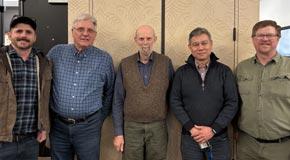
L-R: Derek Pearson, vice-president; Dr. Peter Vander Zaag, secretary; Dr. Duane Falk, member; Newton Yorinori, pastpresident; Darin Gibson, president.
CROSS COUNTRY DIGEST
Nortera shutters processing plant in Lethbridge
KAREN DAVIDSON
For the second time in six months, Nortera has announced the closure of a vegetable processing plant in Canada. First, the Saint-Césaire, Québec plant was mothballed and now the Lethbridge, Alberta plant will close in June 2026.
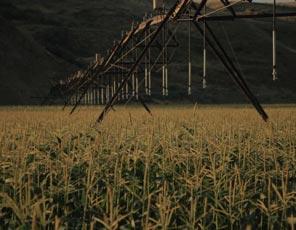
Citing challenges from international imports, the North American frozen and canned vegetable processor is consolidating its footprint to remain competitive. The latest closure in Alberta affects 6,000 irrigated acres of sweet corn and peas – about 40 million pounds of produce -- with a 2025 farmgate value of about $12 million. The company says that production volumes and certain equipment from the Lethbridge plant will be transferred to several of the company’s other frozen facilities.
“The announcement was a big surprise on short notice,” says James Johnson, one of the contract growers from Barnwell, Alberta and a director of the Alberta Vegetable Growers.
“There’s not much optimism in other commodities as alternatives.”
Johnson explains that the announcement is a “big blow” to the Lethbridge area since Nortera had invested $8 million in a freezer tunnel and a cooler expansion in recent years. The plant has been accepting processing vegetables since the 1950s under several owners.
But global shifts in trading patterns are biting hard.
According to a Globe and Mail report, imports of Chinese frozen and canned vegetables increased by 25 per cent in 2025 to $66 million. The changing landscape has spurred the creation of the Canadian Association of Vegetable Growers and Processors which has lobbied the Canadian International Trade Tribunal. A hearing will be held on June 15, 2026. A report is due to the federal Minister of Finance by September 9, 2026.
“This is an important first step,” says the Canadian Association of Vegetable Growers and Processors through its Ottawa-based lobby firm.
“Canada’s frozen and canned
vegetable sector has been facing a sudden surge of low-priced imports that is disrupting the Canadian market. Temporary, rules-based safeguard measures will restore fair competition and allow Canadian growers and processors to compete on equal terms. These measures will help maintain a stable, reliable, and affordable supply of vegetables for Canadians.”
Nortera has not confirmed if it is a member of this newly created association. However, its CEO Hugo Boisvert commented, “Closing a facility is never an easy decision, especially given the dedication of our Lethbridge team. Current market pressures have made it essential for us to consolidate our operations. By optimizing our manufacturing footprint, we are securing the future and the competitiveness of Nortera.”
Part of the Nortera restructuring is closing one plant in Québec, while investing $28 million to upgrade its SaintDenis-sur-Richelieu, Québec plant. Nortera is North America’s leader in frozen and canned vegetables. It operates in Canada
and the United States, processing and marketing more than 400,000 tonnes of vegetables each year with nearly 550 agricultural partners. The company employs nearly 3,000 people across the continent.
Nortera produces for major private labels and retail brands while marketing its own brands, including Arctic Gardens and Del Monte in Canada.
While the food chain adjusts, growers face immediate decisions with spring planting imminent.
Built narrow for the rows. Built strong for the work.
growers such
and
on how to manage their crop rotations within the St. Mary River Irrigation District (SMRID). With no options on the processing side, they may move to a few more acres of fresh sweet corn. One spot of good news is that SMRID has allocated 14 inches of water at the farmgate for the 2026 growing season.
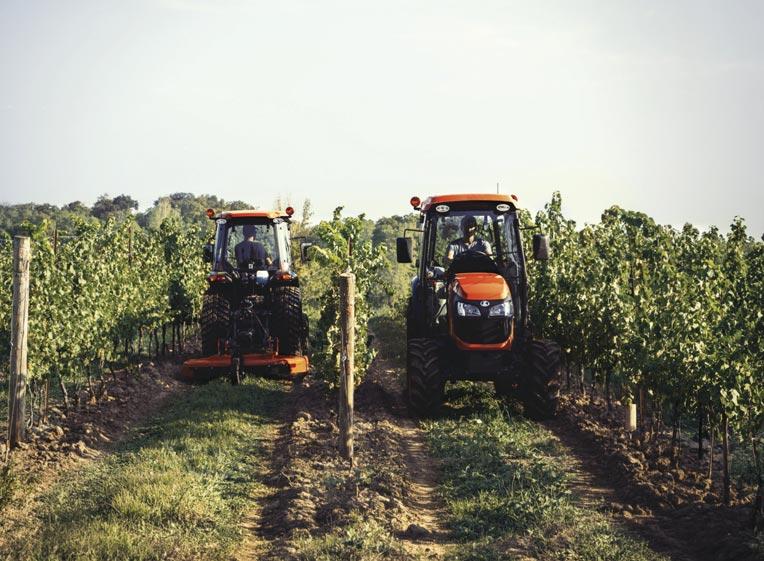
The M4N is made to move confidently through vineyards, orchards, and other tight working environments without giving up the power, hydraulic performance, and durability demanding jobs require. With features like Bi-Speed turning providing a tighter turning radius, Work Cruise delivering constant engine speed during load fluctuations, and a redesigned cab with flat floor and smartly placed controls to maximize operator comfort, it brings serious capability to places where space is limited. The M4N: all the strength of an M-Series tractor, shaped for the narrow way through.
Alberta
as Johnson
his brothers must pivot
ALBERTA
SCENE at CPMA’s New Product Showcase
1 2 3 4 5 6
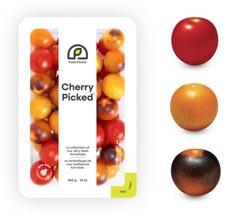
The Canadian Produce Marketing Association annual convention and trade show highlighted a New Product Showcase with many entries from the greenhouse sector. Here are a dozen of the stand-outs at the April 29 and 30 event.
1. Mastronardi Produce, Kingsville, ON, under the Sunset brand, is pioneering on-the-vine, micro grape tomatoes.
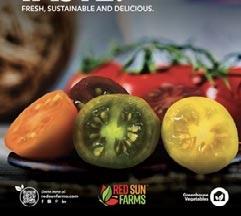
2. Red Sun Farms, Kingsville, ON, is highlighting their snacking lineup of peppers and tomatoes.
3. Serres Greenhouses, Québec, is launching its crunchy salad kits.
5. Windset Farms, Delta, BC, is spotlighting Sweet Brilliance tomatoes.
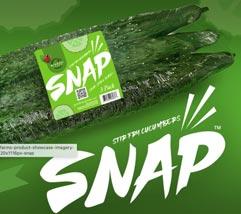
6. Windset Farms, Delta, BC is showcasing stir-fry cucumbers.
7. Little Leaf Farms, Devens, Massachusetts, is rolling out baby romaine lettuce.
8. GoodLeaf Farms, Guelph, ON, is introducing micro greens.
10.
11. Haven Greens, King City, ON, is proud of its customized salad kits.
12.
ON is spotlighting its
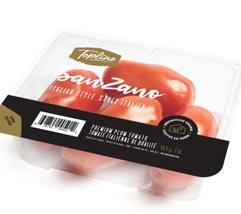
4. Topline Farms, Leamington, ON is debuting SanZano premium plum tomatoes.
9. Pure Flavor, Leamington, ON, is highlighting Cherry Picked tomatoes.
Nature Fresh Farms, Leamington, ON is savouring its Sauci sauce-making tomatoes.
Mucci Farms, Kingsville,
snacking Cutecumber poppers.
CANADIAN PRODUCE MARKETING ASSOCIATION
CPMA reports strong growth and global advocacy at 2026 AGM
The Canadian Produce Marketing Association (CPMA) held its 2026 Annual General Meeting (AGM) on April 8, bringing members together to reflect on a year marked by strong governance, member engagement, and meaningful advocacy outcomes for Canada’s fresh produce sector.
During the meeting, CPMA leadership outlined key accomplishments delivered over the past year, despite ongoing cost pressures, regulatory complexity, and global trade volatility. The association remained focused on delivering value beyond its flagship Convention and Trade Show through year-round advocacy, industry development, and practical tools that support members’ businesses.
CPMA 2025 chair, Steve Bamford, shared with members key achievements which included:
• Continued member growth, with CPMA now representing more than 900 companies across the fresh produce supply chain, reinforcing its role as the national voice for the sector.
• Strong convention outcomes, with CPMA’s Montreal Convention & Trade Show marking the association’s largest show to date and donating more than
46,000 pounds of fresh produce to local food banks.
• Major advocacy wins, including the adoption of Bill C-280 (the Financial Protection for Fresh Fruit and Vegetable Farmers Act) into law and the removal of select retaliatory tariffs that were adding cost and uncertainty for members.
• Expanded international engagement, with CPMA supporting trade missions, market development initiatives, and buyer outreach across key global markets, while continuing to advocate for predictable, tariff-free trade ahead of the upcoming CUSMA/USMCA review.
• Practical leadership on food safety and sustainability, supported through targeted research, education programs, and guidance designed to align regulatory compliance with commercial realities.
CPMA also reported a strong financial position, underscoring the importance of face-to-face engagement, disciplined governance, and prudent investment in member-driven programs.
President Ron Lemaire shared results from its recent member Pulse Survey, providing timely insight into members preceptive from 2025 on business conditions and outlook across the fresh produce supply
chain for 2026. The survey highlighted three clear and consistent themes:
• Cost pressures are structural, not temporary. Members reported that energy, freight, labour, and input costs continue to place sustained pressure on margins, limiting the sector’s ability to absorb additional shocks without downstream impacts on availability and pricing.
• Trade certainty is now a core business requirement. With the upcoming CUSMA/USMCA review, respondents identified the preservation of tariff-free, predictable trade conditions as the single most important factor influencing investment, contracting, and long-term planning decisions.
• The sector’s adaptive capacity is increasingly policy-dependent. While in 2025 produce businesses have demonstrated resilience and innovation in the face of volatility, members emphasized that future performance will depend less on operational agility alone and more on stable, science-based, and commercially grounded policy frameworks.
CPMA leadership emphasized that these findings reinforce the association’s advocacy focus on trade stability, regulatory predictability, and efficient
SCENE at CPMA’s New Product Showcase
supply chains as essential components of food affordability and food security for Canadians.
During the AGM, leadership committee chair, Angela Santiago, announced the new directors to the Association’s Board following a transparent and competitive nomination process. The following individuals were elected to the CPMA Board of Directors:
• Yan Branco, Sobeys
• Gary Cabral, Walmart Canada
• Michelle Loucks, Whole Foods Market
• Justin McGregor, Save-On-Foods
• Ezio Bondi, Bondi Produce & Specialty Foods
• Kendra Mills, PEI Potato Board
• Jennie Coleman, Equifruit Inc.
• Jennifer Harris, Island Growers Cooperative
• Domenico Procopio, Courchesne Larose
• Chris Sarantis, Canadawide Fruit Wholesalers Inc.
• Michael Catalano, POM Wonderful
• Amanda Knauff, Taylor Farms
• Jeff Madu, Windset Farms
Source: Canadian Produce Marketing Association April 9, 2026 news release
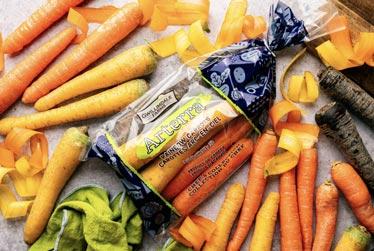
Gwillimdale Farms, Bradford, Ontario, introduces Arterra Rainbow carrots, with diverse colours and flavours. These nutrient-rich carrots deliver a restaurant-worthy experience for home meals.
This program is vertically integrated through a single BC family farm. Crops are transplanted with on-farm-raised seedlings to ensure uniformity. Harvested heads are processed in a dedicated, certified on-farm facility. Packaging uses proprietary atmosphere-control film.
Maison de la Pomme de Frelighsburg, Québec, introduces the Orléans apple. It’s a cross between Honeycrisp and Empire.
Little Potato Company, Edmonton, Alberta, introduces microwave-oven mini potatoes with a flavour pack of Classic Ranch.
Getting the next policy framework right for horticulture – and Canadians
As conversations ramp up around the next policy framework for agriculture, I’ve had the opportunity to participate in roundtables in Ottawa and London recently with government and industry leaders. What’s clear is this: the decisions being made now will shape our sector for years to come, and for horticulture in particular, it’s critical we get this right.
This next framework isn’t just another program cycle. It’s an opportunity to rethink how we support primary production and to recognize that agriculture — especially food production — is foundational to Canada’s economic strength and long-term
security.
One of the most pressing areas for improvement is Business Risk Management (BRM). Growers have been clear that current programs don’t always reflect the realities on the ground regarding the risks growers face, and that programs such as AgriStability are often too slow, too complex and don’t always provide support when it’s needed most.
There is a need to revisit how BRM programs are structured, including how federal, provincial and territorial governments make decisions. The current process can make it difficult to implement meaningful changes, even when there is broad agreement and we’ve seen that in ongoing discussions around the AgriStability trigger level.
At the same time, we need to recognize that horticulture faces unique challenges — from high labour requirements to perishability and market volatility — that aren’t well served by onesize-fits-all programming. That’s why we believe tailored solutions will be essential if we want our sector to remain competitive.
As Canadian growers, we operate in a global marketplace, often competing directly with
producers in the United States and elsewhere who benefit from significantly higher levels of support. We face many of the same challenges as our U.S. counterparts, but don’t always have comparable tools. That uneven playing field affects our ability to invest, expand and maintain a strong domestic food supply.
This is where we need to think more broadly about the role of agriculture in Canada.
Investments in primary production and our agri-food system should be seen as nationbuilding. That includes not only support for farmers, but also investments in processing capacity, transportation, ports, and research infrastructure.
Recent years have shown how vulnerable global supply chains can be and it’s becoming increasingly clear that food security is also national security. Ensuring Canada has a strong domestic production base is essential, and that means giving growers the tools they need to succeed.
Innovation is part of that equation, but current programming isn’t keeping pace. Technology is advancing quickly,
and the cost of adopting new tools — from automation to precision agriculture — is significant.
Too often, programs are underfunded or move too slowly to respond to real-world needs. If we want to drive adoption and improve productivity, programs need to be better resourced and more responsive.
Another area where we can make a meaningful improvement is the Advance Payments Program (APP). This is a program that works. It’s efficient, widely used, and delivers value to farmers when they need it.
The interest-free portion is currently capped at $250,000 for this growing season, and there is a strong case to permanently increase that limit to $350,000 to reflect today’s cost realities. Input prices have risen, as have costs for things such as labour, equipment, insurance and operations have grown.
A higher limit would give growers a practical tool to manage cash flow and reduce borrowing costs up front, instead of delivering payments after the fact like BRM programs do. The APP is straightforward to access, without tying up land as collateral
or adding unnecessary complexity and supports farm margins without distorting markets or raising trade concerns.
To me, the next policy framework represents a significant opportunity. It will set the tone for investment and support over the next five years during a time of uncertainty and global change, and shape how well our sector can respond to ongoing challenges.
For horticulture, the priorities are clear: more effective risk management, tailored programming, stronger support for innovation, and a renewed focus on competitiveness.
To put it simply, we need a framework that recognizes the strategic importance of food production in Canada. Yes, it’s about supporting farmers but it’s also ultimately about ensuring Canadians have access to a stable, secure and high-quality food supply and that matters to every one of us from coast to coast.
Mike Chromczak, an asparagus and watermelon grower, is chair, Ontario Fruit & Vegetable Growers’ Association.
MIKE CHROMCZAK
Photo by Jeff Tribe.
URBAN COWBOY
Brazil’s biologicals leadership is on our doorstep
Warm, luscious, productive Brazil has long been a global leader in biological pest control, dating back to the early 1970s. That surprises people who associate the country with images of unbridled pesticide and fertilizer applications. But the reality is that Brazil was thinking about reduced inputs long before any other agricultural superpower, and long before the organic movement arrived.
Now, with geopolitical events and erratic weather forcing the agri-food sector to reconsider conventional inputs and traditional markets, Brazil’s leadership in biocontrol is getting a second look.
“In Brazil, biological products have moved beyond being a trend and have become a necessity to sustain productivity,” says Brazilian agronomist Ana Paula Silva.
“For fruit and vegetable production systems in other regions, especially under intensive production, biological inputs can contribute to greater system stability. They help reduce pressure on chemical inputs and support more sustainable and balanced production over time. In practice, biologicals can replace chemical inputs in certain situations, but the best results are achieved when they are integrated.”
Integration
In many vegetable production systems in Brazil, biologicals are applied throughout the entire crop cycle, starting at planting to support root establishment and continuing during the season to assist in disease management.
Silva says a common mistake is to expect biologicals to solve problems on their own or to deliver immediate results.
“Success depends much more on how biologicals are positioned within the production system than on the product itself, she says.
“Consistent programs consider soil biology, crop stage, environmental conditions, and interactions with conventional inputs.”
A key figure in Brazil’s biocontrol movement is soil microbiologist Dr. Mariangela Hungria. She’s worked for 40-
plus years with the country’s state-owned agricultural research corporation Embrapa, which was a host for 50 international agricultural journalists earlier this year, eager to learn about how Brazil has become so dominant in global agriculture.
Researcher Hungria is Brazilian agriculture’s shiniest star. In 2025, she was awarded the $500,000 World Food Prize, an acclaim often referred to as the Nobel Prize for agriculture.
The award was a nod to the researcher’s work in developing dozens of biological seed and soil treatments that improve wheat, corn, rice and soybean yields.
Just last month, Hungria again made waves on the global stage when she was named one of Time magazine’s most influential people for 2026, alongside such luminaries as Pope Leo XIV, country music star Luke Combs and fashion designer Ralph Lauren. Hungria’s citation in Time noted how environmental problems arise with synthetic fertilizer overuse, then explained how she’d developed soil microbes that allow crops to more naturally pull nitrogen from the air.
“Her scientific innovations, used around the world, have helped Brazilian farms save an estimated $25 billion a year and avoid releasing 230 million tonnes of carbon-dioxide equivalent emissions,” it says.
Research is widely credited with Brazil’s lofty standing. Embrapa, established in 1973, is one of the world’s largest agricultural research organizations. It employs close to 10,000 people and more than 2,400 researchers and university graduate students at 32 research centres.
To succeed agriculturally, Brazil was forced to become expert at managing pest and disease pressure, which is among the highest in the world, directly linked to the country’s tropical and subtropical climate conditions. High temperatures and humidity for much of the year create an ideal environment for rapid insect multiplication and plant pathogen proliferation.
“We had to develop a biological control model with our own characteristics,” says Dr. José Roberto Parra, Embrapa’s principal research for macrobiologicals (such as parasites). “It was impossible to copy a model from another country.”
Starting in 1971, Brazil implemented a program using Cotesia flavipes to control Diatraea saccharalis, the main pest of sugarcane. The parasitoid Cotesia flavipes was imported from Trinidad and Tobago and later from Pakistan, eventually being released in more than three million hectares.
Trichogramma galloi was later introduced, currently used on more than five million hectares, making it the largest biological control program using macroorganisms in tropical regions. Parra and other researchers helped teach the agricultural sector about insectrearing methodologies through courses and lectures. Today, these techniques are widely used throughout Brazil, not only for insect rearing but also for fungi and bacteria.
For Canada, the conditions are different, of course. But the principle – that is, using biological agents to control pests- is similar. Just like Brazilian farmers, producers here are looking for ways to use less synthetic fertilizer, too. They’re hamstrung by soaring costs and shrinking availability. And at the same time, consumers are pressuring them for more natural alternatives and management approaches, such as biocontrol.
Internationalization
Brazil is aware of this interest, and it’s doing something about it. For example, just as researcher Hungria’s Time magazine accolade was announced, Brazil’s fruit and vegetable export organization, Abrafrutus, issued a news release about an “internationalization” mission to Canada, scheduled for the last week of April 2026.
This mission was designed to strengthen trade relations with
importers, distributors and retail chains in Canada through a targeted agenda focused on market development and commercial promotion. It included technical visits to distribution centers and supermarkets in Toronto, as well as participation in the CPMA Convention and Trade Show and SIAL Canada, two of the country’s leading industry events.
Abrafrutas technical manager Jorge de Souza says Canada has already established itself as a key market for Brazilian fruit exports. In 2025, the country imported about 31,800 tonnes of Brazilian fruit – mainly mangoes, watermelon and grapes – worth a little over US$39.1 million.
“These figures point to a well-established trade relationship,” he says, “with further room for growth driven by increasing demand for tropical fruits in a market largely dependent on temperate-climate production.”
So don’t be surprised to see more of Brazil in Canada –produce, practices and technology. As new global partnerships strengthen, this is one that seems destined to evolve.
Owen Roberts is a Guelph-based agricultural journalist. He participated in a tour of Brazilian agriculture earlier this year, coordinated by Rede Agrojor (the Brazilian guild of agricultural journalists) and the International Federation of Agricultural Journalists.
OWEN ROBERTS
Brazilian graduate student Hannah Lobarinhas Menezes researches predatory insects that can control stinkbugs, at one of SPARCbio research facilities near Sãn Carlos, Brazil. Photo by Owen Roberts.
Seeing SAWP from the other side
LILIAN SCHAER & BEN MURRAY
For Ontario fruit and vegetable growers, the Seasonal Agricultural Worker Program (SAWP) is essential to keeping farms running and fresh, locally grown produce on store shelves.
A recent behind-the-scenes visit to Jamaica by the Ontario Fruit and Vegetable Growers’ Association (OFVGA), as part of efforts to mark the program’s 60th anniversary, offered a different perspective — one that underscored just how important SAWP is beyond Canada’s borders.
In Jamaica, the first country to send seasonal workers to Ontario in 1966, SAWP is widely known simply as “the Programme,” and it carries national significance.
“Every Jamaican has interaction with farm workers and they want that opportunity. The workers have told us that they are learning new skills (in Canada), such as crop protection, irrigation and working with equipment,” said Dione Jennings, Permanent Secretary at the Jamaica Ministry of Labour and Social Security. “Many workers become the bedrock of their communities here.”
Across the country, the program is seen as a vital economic engine and a source of opportunity that reaches well
beyond the individual participants who travel to Canada each season. The scale of that impact is significant.
Approximately 91 per cent of SAWP workers who come to Canada every year from the Caribbean are from Jamaica. Within the island nation, the program supports a much broader network of jobs, from government staff and liaison officers to drivers, medical professionals and social workers who help prepare and support participants and their families.
The history behind that partnership adds to its importance. Jamaican government representatives emphasized the mutual benefits it provides: supporting Canadian food production while offering stable, well-paying employment that workers can bring home to their families and communities.
For Jamaican officials, that broader economic and social footprint is a key reason the program remains a national priority.
“SAWP has seen so many Jamaicans contribute to Canadian agriculture but also be exposed to modern agriculture skills and work ethics that they bring back to Jamaica,” said Jamaica’s Minister of Labour and Social Security Pearnel Charles Jr. “The demand to get into the program is strong and we’ve developed a process to train and
support our workers – when a Canadian farm is successful, the worker is successful.”
That demand is visible across Jamaica. Recruitment sessions regularly draw hundreds — and sometimes more than a thousand — prospective applicants. The selection process is designed to ensure workers are well suited to the demands of the job, with a focus on readiness, reliability and a clear understanding of what the work entails.
While the program is open broadly, successful applicants often have some agricultural experience or ties to farming. Literacy and numeracy are also important and where gaps exist, training is provided to ensure workers can meet the expectations of the role.
“We want to ensure workers are ready in terms of literacy and numeracy so they’re able to communicate and read and follow instructions,” said Jennings.
Preparation does not stop once workers are selected. Before travelling, participants receive guidance on workplace expectations, living conditions and daily life in Canada, alongside support in completing required documentation. Government staff are involved right up to departure, helping ensure workers arrive on time and ready to begin their placements.
Support continues while workers are in Canada. A network of social workers remains available to assist families at home, while also helping workers navigate practical matters such as filing Canadian tax returns, accessing the Canada Pension Plan, or addressing medical concerns.
Shortly after Minister Charles assumed his current role, he came to Canada to visit farms and meet with Jamaican workers and farm employers, which has helped bolster many of the program’s supports in Jamaica and Canada.
For most workers, SAWP is a pathway to support their families, invest in education and contribute to their communities. Income earned in Canada often supports multiple households, amplifying the program’s impact well beyond the individual worker.
“The large percentage of workers are doing this for their children, confronting new challenges and a new environment to create opportunities they didn’t have,” said Charles Jr., “Education is an equalizer that opens opportunities to be or do whatever you want.”
Lilian Schaer is
COMING EVENTS 2026
May Census of Agriculture
May 7 AgScape Annual General Meeting, The Arboretum, Guelph, ON
June 6 Garlic Growers of Ontario Field Day, Great Lakes Family Farms, Grand Bend, ON
June 9-11 GreenTech, RAI Amsterdam, NL
June 13 Breakfast on the Farm, Binbrook, ON
June 14 Ontario Agricultural Hall of Fame Induction Ceremony, Grand Way Event Centre, Elora, ON
June 22-24 British Columbia Agriculture Forum, Penticton Lakeside Resort & Conference Centre, Penticton, BC
June 23 4th Annual Ontario Potato Board Industry Social Golf Tournament, Hockley Valley Resort, Mono, ON
July 15-17 Potato Sustainability Alliance Summer Symposium, Plover, WI
July 16 Federal-Provincial-Territorial Agriculture Ministers’ Meeting, Halifax, NS
July 19-22 International Fruit Tree Association Summer Study Tour, Hudson Valley, NY
July 26 60th Anniversary of Jamaican TFWs, Strawberry Tyme, Simcoe, ON
Aug 1 Food Day Canada
Aug 5 Nova Scotia Fruit Growers’ Association Summer Orchard Tour, Kentville, NS
Aug 11-12 North American Strawberry Growers’ Association Summer Tour, Spokane, Washington
Sept 23 Ontario Produce Marketing Association Golf Tournament, Lionhead Golf Course, Brampton, ON
Sept 23-24 GreenTech North America, Philadelphia Convention Center, Philadelphia, PA
Sept 28-Oct 1 Tri-National Agricultural Accord, Calgary, AB
Oct 6-7
Canadian Agri-Food Policy Institute, Exchange Conference, National Arts Centre, Ottawa, ON
Oct 6-7 Public Trust Summit, Westin Toronto Airport Hotel, Toronto, ON
Oct 7-8
Canadian Greenhouse Conference, Niagara Falls Convention Centre, Niagara Falls, ON
Sign up for Ontario garlic field day
The Garlic Growers Association of Ontario is hosting the 2026 field day Saturday, June 6th at Great Lakes Family Farms near Grand Bend, Ontario. Equipment from multiple manufacturers will be on display, along with products from fertilizer and pest control product suppliers. The agenda includes a tour of a new garlic curing and storage facility.
Registration starts at 8:30 am and the agenda starts at 9:00 am and goes until 4:30 pm. Lunch will be provided. Great Lakes Family Farms is located at 70748 B Line, Grand Bend, Ontario, and all are welcome to join, rain or shine. Ticketed event. For more information about the field day, go to www.garlicgrowersofontario.com or E-mail garlicgrowersofontario@gmail.com.
Jamaican Minister of Labour and Social Security Pearnel Charles Jr. addresses the crowd at the announcement of the Ontario Fruit and Vegetable Growers’ Association scholarship launch in Jamaica. Photo by Simon Brothers.
FOCUS: IRRIGATION & WATER MANAGEMENT
Irrigation management: the art and science of when and how much to water crops
MICHAEL KEHOE
Irrigators and their advisors are bombarded with technology promising to improve the accuracy of irrigation. Providing exactly the right amount of water at precisely the right time is the dream. But how realistic is this dream?
Irrigators need to anticipate when they will need water; they cannot wait until plants are wilting or soil is too dry because that means yield has already been lost. This necessitates “guesstimating” the future and that makes it a probabilities game. The best an irrigator can do is play to the odds and be aware when the future is more certain or more unpredictable. Lethbridge Polytechnic and the University of Alberta are developing tools and conducting analysis to help irrigators determine what those odds are and improve their “guestimate”.
It is a trivial but important observation that there is no data coming from the future. We depend on our knowledge and prior data to make educated guesses as to what might happen tomorrow and the days after in terms of weather, crop development, and precipitation (which is rainfall plus irrigation). Our knowledge of processes in irrigated fields is captured in the water balance model. This model, like all models, makes errors because reality is more variable, more complex, and more uncertain than we think.
To make the water balance model more useful, we need to compare what it predicts about the future with what ends up happening (i.e. with observations from people or sensors). This is the world of data assimilation, and it is the technology that
Water on tap
works behind GPS, helped get humans to the moon, and nowadays includes AI and other machine learning techniques. It is not often used in practical irrigation tools yet, but a new project at Lethbridge Polytechnic hopes to change that.
Our water balance model takes the best weather forecasts in Canada and integrates them with regionally and site-specific parameters to construct a model of soil moisture for different field crops. This model is then assimilated with sensor data streamed from locations in different fields. Information collected includes all precipitation, soil moisture and tension, actual evapotranspiration, as well as hand-feel available water. The sensor observations are used to “nudge” or correct the model towards the data. So similar to how NASA guided Apollo 11 with telemetry, we will keep our model on the right track with sensor data. As you step through time, the assimilation algorithm can learn how to be more accurate, and information from one crop or field can be used to run forecasts for future crops.
With the newly developed water balance model with data assimilation, we then develop a decision support system that will allow users to learn how forecast models of crop moisture stress can be used to compare different management actions. For example, if an irrigator is thinking of irrigating on Wednesday, they can see if that would alleviate possible crop moisture stress by Friday. Users will also be able to turn off sensors and see how this affects not only the average forecast but also how certain the system is in that forecast. By doing this, we can learn which combination of sensor types is
Allotments of water are encouraging for the 2026 growing season in southern Alberta. That’s where most of the potatoes and field vegetables are grown. For participating irrigators, water is available at the farmgate as of May 1, 2026.
most useful and in which configuration.
Finally, this will not be a product testing exercise, but we can artificially add noise to our scientific grade sensors to imitate what happens when a sensor is faulty or just plain bad. From all of this, we will provide irrigators on the ground with practical advice on how to navigate the sensor market but also a tool for managing irrigation decision making.
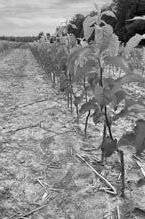
The project is measuring crops that include many common ones grown in southern Alberta. They include various cereals, field peas, canola, potatoes, and sugar beets. The project was conceived by Lethbridge Polytechnic researchers who reached out to different grower groups to gauge what was required or desired for irrigation management research. We identified a gap in the existing approaches, namely the lack of rigorous forecasting and data assimilation when using models and sensors.
Research results in the first year included a comparison of sub-surface drip irrigation versus center pivot irrigation on field peas and durum. Crops were planted on the same day and monitored for water usage. Preliminary results confirmed the greater water use efficiency of sub-surface drip with small differences between the yields under the two irrigation methods, but substantial differences in
irrigation water required to obtain those yields. This summer we will make a similar comparison with barley. This research is part of ongoing research on sub-surface drip irrigation at Lethbridge Polytechnic in partnership with Southern Irrigation.
Michael Kehoe, PhD is a research scientist with Lethbridge Polytechnic.
Editor’s note: Dr. Michael Kehoe leads this forecasting project at Lethbridge Polytechnic, working for the Mueller Irrigation Research
Group led by Dr. Willemijn Appels. He has extensive experience in environmental mathematics with a particular focus on forecasting and prediction. Dr Willemijn Appels is an expert on soil hydrology and measurement of the water cycle. The development of the data assimilation techniques is led by Professor Jinfeng Liu and his team. Dr Liu has extensive experience with developing models and control systems for center pivot irrigation management. Funding for the project lasts for three years and is jointly funded by Results Driven Agricultural Research (RDAR) and Alberta Innovates.
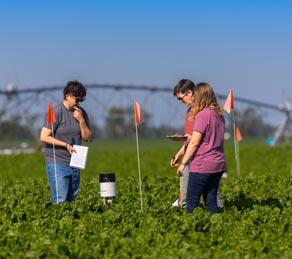
Dr. Willemijn Appels (middle) and field staff are inspecting a field site of sugar beets near Lethbridge, Alberta. photo by Tanner Fletcher
FOCUS: IRRIGATION & WATER MANAGEMENT
How to leverage weather station data to manage irrigation costs
KAREN DAVIDSON
In a year when soaring diesel prices will drive up costs of irrigation, growers will be looking for an edge to get the most timely water to critical growth stages of their crops. How to know how much is enough for your commodity and your soil type?
“It’s a good question,” says Gerad Vanden Bussche, vice president and inventory manager for Vanden Bussche Irrigation, Delhi, Ontario. “There’s new technology that’s customizable for various sensors that can offer data in real time.”
As of 2025, the company has been selling the Metos weather station as an accessory to irrigation equipment. Weather stations are not new, but the newest models have customizable sensors that include air temperature, humidity, precipitation in millimetres, wind speed, solar radiation, leaf wetness and so on. Importantly, probes can measure soil moisture in increments of several centimetres that can show if moisture is reaching the root zone.
“Historically, it’s nice to look back over the year at the charts to compare precipitation events and irrigation events,” says Vanden Bussche. “The data will show to what extent water is being retained. The data will show if you’re overwatering. And yes, overwatering can happen.”
Data alert
depth for irrigation.
Those data points could be very valuable in stewarding water and managing irrigation costs this year. Vanden Bussche suggests that just one weather station could easily pay for itself. The decisions are about how much water to apply and for how long. Consider that a weather station placed on a field farthest from farm headquarters – could be miles away – can offer insight that’s different from a weather station in the farm yard.
“A decrease in irrigation run time could easily lead to as much as 20 per cent less fuel cost,” says Vanden Bussche.
The other consideration is that over-watering can cause leaching of fertilizer and nutrients. A soil monitor works best at different depths, for example, 35 cm, 60 cm and 90 cm.
Volumetric water content is an important measure of capacity of soil to retain water. Obviously, sandy soils don’t retain water like clay soils. And that means your calculations for how much water is needed will differ. Volumetric water content is the volume of water per unit total volume of soil expressed as a percentage. This number represents the fraction of the soil space occupied by water, so that you can calculate water
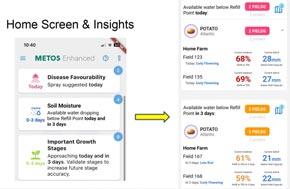
The value of a Metos weather station is that you can be notified when conditions reach the thresholds you’ve set. When the alarm is sent to your smart phone, you can decide when and if to irrigate. Or alternatively, when to shut the pumps off. Interestingly, Vanden Bussche’s expertise in irrigation is being employed in Prince Edward Island where recent years of drought are prompting big investments in irrigation systems for potatoes.
“We’re not agronomists, so we’re encouraging growers to contact their local experts for advice that’s tailored to specific areas and soils,” says Vanden Bussche. “Integration of technologies is what’s important now.”
When it comes to weather stations, there are a lot of options available. There are pros and cons to various systems. Do your research on what will work best for you.
A Metos weather station
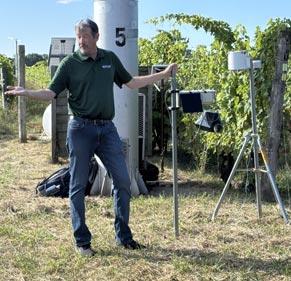
David Simard, marketing manager for Metos, demonstrates how the Metos weather station works at a grape event in Niagara-on-the-Lake, Ontario.
FOCUS: IRRIGATION & WATER MANAGEMENT
Stormwater issues bubble at the municipal level
KAREN DAVIDSON
Sudden surges of stormwater are stressing the infrastructure of cities across the country. Think of Calgary, Toronto and Montréal. The topic is also stressing some growers as a case study shows in the City of Hamilton, Ontario.
For the last couple years, councillors of Steeltown have focussed on rectifying a situation where major retailers with expansive roofs and parking lots are not paying their fair share of managing stormwater runoff. For instance, shopping centres with significant rainwater discharge pay a proportionally small amount on their water bills. In an effort to equalize assessments, the city hired a consultant to develop a fair share plan. Unfortunately, that plan caught up Beverly Greenhouses on the outskirts of Hamilton.
The proposed assessment? Over $90,000.
Jan VanderHout, co-owner of Beverly Greenhouses and chair of The Ontario Greenhouse Alliance (TOGA), took umbrage
with the city’s proposal that would egregiously charge his agricultural operation while not offering any access to infrastructure. His current stormwater is managed on site and then flows into a nearby creek. He points out that all greenhouses and other large farm operations within the City of Hamilton boundaries would be impacted by the stormwater fee.
A lobbying campaign has ensued with some success. The current proposal is to spare farmers with a deduction that would reduce the assessment to around $10,000. Yet that still doesn’t sit well with VanderHout.
“These are charges for infrastructure that we don’t use,” he says. “I understand that cities are looking for revenue but even a flat charge of $250 per residential property owner isn’t right.”
The City of Hamilton has postponed any final decision on implementation until after municipal elections on October 26, 2026.
Coincidentally, nearby farmer Drew Spoelstra is chair of the City of Hamilton’s Agricultural
Advisory Committee and the president of the Ontario Federation of Agriculture. He has taken the issue to provincial minister of agriculture Trevor Jones and provincial minister of municipal affairs and housing, Rob Flack.
Collaboratively, efforts between the Ontario Federation of Agriculture, the Ontario Fruit & Vegetable Growers’ Association and The Ontario Greenhouse Alliance have yielded fruit. On April 20, the provincial government announced a regulatory change that will limit how municipalities apply stormwater fees, ensuring farms are not charged for services they do not use.
The limit on municipal fees and charges powers will exempt portions of properties classified by the Municipal Property Assessment Corporation (MPAC) as farm or managed forests. They typically include large areas of permeable land that naturally absorb rainfall and reduce runoff.
In many cases, these properties are not connected to municipal stormwater infrastructure at all, meaning they
Stormwater research survey underway
The conflict that greenhouse grower Jan VanderHout has experienced points to the bigger need for research on water use. That’s where the expertise of Dr. David McCarthy comes in. He’s a Canada Excellence Research Chair in the School of Environmental Studies at the University of Guelph.
McCarthy and his team are currently developing a framework that puts farmers at the forefront of stormwater management. The project is supported by a grant from the Ontario Agri-Food Innovation Alliance and taps into collaborators with
place little to no demand on those systems.
The regulation also clarifies what constitutes a connection. A property is considered connected where stormwater from that property is discharged through a storm sewer into a municipal system. Storm sewers include pipes, drains and related infrastructure used to collect and transport stormwater, but do not include agricultural drainage features such as ditches, culverts
OMAFA, Ausable Bayfield Conservation Authority, Upper Thames River Conservation Authority and Land Improvement Contractors of Ontario. The University Guelph is conducting a survey about stormwater management. The survey is brief and should take no
or works carried out under Ontario’s Drainage Act.
“This is about aligning costs with actual use; where farms are not connected to municipal systems, it makes sense that they should not be paying into infrastructure they don’t have access to or rely on,” says Mike Chromczak, chair of the Ontario Fruit and Vegetable Growers’ Association.
more than 10-15 minutes to complete. Best Practices for Water Management and Reuse on Farms Survey, Ontario Agricultural College – Fill out form https://shorturl.at/DsqTL
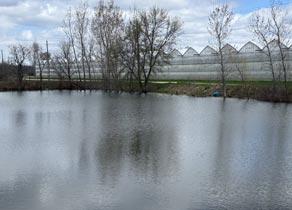
Stormwater pond at Beverly Greenhouses, Dundas, Ontario.
Management of blueberry anthracnose and fungicide resistance survey participants needed for 2026
Fungicide management:
ERICA PATE, JASON LEMAY AND KATIE GOLDENHAR
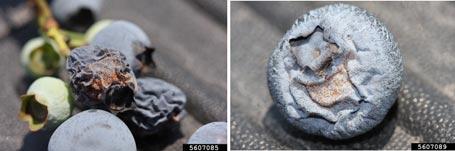
Blueberry Anthracnose, primarily caused by Colletotrichum fioriniae, causes fruit rot, and to a lesser extent blossom rot and shoot blight. The fungus overwinters on old fruiting spurs and infected twigs and spreads in the spring and summer by rain and wind to infect blooms and fruit. Fruit infections remain latent, and symptoms often show up after harvest once berries are ripe. Infected fruit may begin to soften and shrivel on the bush near harvest time and sticky, orange or salmon-coloured spore masses (Figure 1) will develop on the fruit, reducing yields, marketability, and shelf-life. While fruit rot is the biggest issue, anthracnose can also cause blossom rot and shoot blight. Shoot blight is more common on rapidly growing shoots and on more susceptible cultivars including Bluecrop. In a 2023 survey of twig blights in Ontario highbush blueberries, 14% of symptomatic shoots were identified as Colletotrichum fioriniae. Twig infections can serve as inoculum for fruit rot infections.
Most fruit infections occur during bloom to green fruit, especially when weather is warm and wet; there needs to be a minimum of 8 h of leaf wetness at 25°C for infection. Longer leaf wetness is required for infection at lower temperatures. Infections remain latent until the fruit begins to ripen.
Like disease management on other crops, fungicide resistance is also a concern for anthracnose management on blueberries. Colletotrichum fioriniae isolates collected from blueberries in Michigan have been confirmed resistant to group 11 fungicides (Adaskaveg et al., 2025) as well as multiple other US states (Oliver, 2024). No surveys have investigated the presence of fungicide resistance in blueberry anthracnose in Ontario but for 2026, OMAFA is leading a survey for detection of the G143A mutation in Ontario blueberry anthracnose.
If you are a blueberry grower and are interested in participating in this survey, please contact Katie Goldenhar, PathologistHorticulture (katie. goldenhar@ontario.ca) or Jason Lemay, Berry Specialist (jason.lemay@ontario.ca).
• Begin with a preventative spray program in fields with a history of anthracnose fruit rot, applying fungicides starting at pink bud.
• Apply fungicides every 7-10 days during bloom, especially during warm, wet weather.
• Rotate with products from different fungicide (FRAC) groups.
• Do not apply more than 2 consecutive applications of the same FRAC group.
• Fungicides at the fruit ripening stage are not necessary if good control was achieved earlier.
• See registered fungicides and efficacy on the Ontario Crop Protection Hub or in the table below.
Cultural management:
• Choose cultivars with resistance, including Elliott, Draper, Legacy or Liberty. Susceptible cultivars include Bluecrop, Blueray, Patriot, and Toro.
• Prune bushes during dry weather to remove infected twigs and increase airflow and improve drying and pesticide coverage.
• Remove and destroy pruned twigs and canes.
• Use drip irrigation instead of overhead irrigation. If using overhead irrigation, adjust the timing to minimize wetnessirrigate early in the day when dew is already present.
• Harvest regularly to ensure over ripe fruit are not spreading spores.
• Cool fruit as soon as possible after harvest (2°C).
• Avoid harvesting during rain or wet periods.
• Work in areas with known infection last to prevent spreading the disease.
• Disinfect flats and totes between uses.
References:
Adaskaveg, A., Neugebauer, K. A., Oudemans, P. V., Hu, M., Gillett, J., & Miles, T. D. (2025). First Report of 129-L and 143-A alleles of cytB Conferring QoI Resistance in Colletotrichum fioriniae From Highbush Blueberry in the United States. New Disease Reports, 52(1). https://doi.org/10.1002/ndr2.7005 8 Oliver, J. (2024). Blueberry disease management: fungicide resistance findings and tools for managing fruit rot. Online presentation: https://extension.uga.edu/content/da m/extension-county-offices/bacon-county/anr/Blueberry-Disease-Update.pdf
Infected fruit may begin to soften and shrivel on the bush near harvest time and sticky, orange or salmon-coloured spore masses will develop on the fruit, reducing yields, marketability, and shelf-life.
Table 1. Fungicides registered in Canada for blueberry anthracnose fruit rot. Always read and follow the label.
Resistant isolates to group 11 fungicides identified in nearby jurisdictions. Use caution when using these products.
29 Allegro, Vantana fluazinam 2 30 Suppression only
M Bravo, Echo chlorothalonil 3 54
NC Cyclone Plus citric and lactic acid Unknown 0
P6 LifeGard Bacillus mycoides isolate J 2 0
P7 Aliette fosetyl al 3 1
P5 Regalia Maxx Reynoutria sachalinensis extract 1 ½ 0 These products work by activating the plant’s defense mechanism and are most effective when applied before infection occurs or when added to a rotation where disease control has been maintained by an effective fungicide program. Suppression only
P7 Confine Extra mono- and dipotassium salts of phosphorous acid 1 1
Figure 1. Blueberry anthracnose (Gerald Holmes, Strawberry Center, Cal Poly San Luis Obispo, Bugwood.org).
Ag advocacy groups to receive $518,000 in federal funding
The Farm & Food Care Ontario (FFCO) annual conference on April 9, marked a pivotal moment for the organization with the appointment of new leadership, the celebration of agricultural advocacy, and a major federal investment. Key highlights included the appointment of three new directors, the presentation of the 2026 Food & Farming Champion Award to egg and pullet farmer Tonya Haverkamp, and a $518,210 funding announcement from Agriculture and Agri-Food Canada.
During the annual business meeting, FFCO welcomed three new members to its Board of Directors:
• Tracey Arts, nominated by Ontario Federation of Agriculture
• Bryan Fieldhouse, nominated by Chicken Farmers of Ontario
• Alan Kruszel, nominated by Grain Farmers of Ontario
Horticultural representatives on the 2026 board are potato grower
Nicki Scott and grape grower Augusta Van Muyen.
In a video address, Dominique O’Rourke, MP for Guelph, announced funding for three Farm & Food Care organizations through the Sustainable Canadian Agricultural Partnership’s AgriCompetitiveness Program. Spanning from April 1, 2026, to March 31, 2028, up to $518,210 in funding will support four national initiatives shared by the Ontario, Saskatchewan, and Prince Edward Island offices including:
• The Agri-Communicators’ Network: A national hub for industry advocates
• Faces Behind Food: Expanded outreach on Facebook and Instagram
• The Real Dirt on Farming:
Production of the publication’s seventh edition
• FarmFood360.ca: Development of four new national Virtual Reality tours Janelle Cardiff, chair of FFCO, called the funding “fundamental” to the collective mission of the three groups. “This investment allows us to move beyond provincial borders and scale our agricultural advocacy to a truly national level,” Cardiff said.
Source: Farm & Food Care April 9, 2026 news release
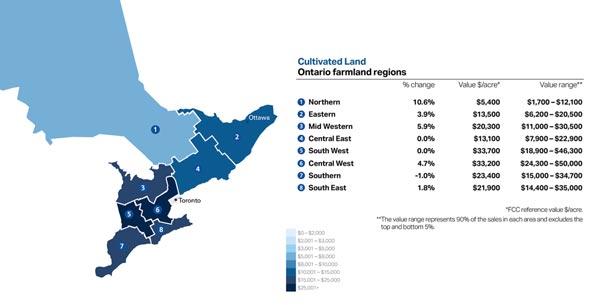
Canada’s farmland values continued to climb in 2025
The average value of Canadian farmland continued its steady climb in 2025, increasing by 9.3 per cent, according to the latest FCC Farmland Values Report. The Prairie provinces drove much of the year’s average increase, while the Maritimes followed with continued growth. In contrast, Ontario and Québec’s increase in average values eased from the stronger gains recorded in previous years.
In Ontario, average cultivated farmland values increased by 2.2 per cent in 2025. This modest increase followed a 3.1 per cent increase in 2024 and a 10.7 per cent increase in 2023.
Manitoba recorded the largest average farmland value increase at 12.2 per cent, followed by Alberta at 11.4 per cent and Saskatchewan at 9.4 per cent. In Atlantic Canada, New Brunswick showed a 9.1 per cent gain and Prince Edward Island rose by 8.5 per cent, while Nova Scotia recorded a more modest 1.6 per cent increase. Farmland values in Québec increased by 4.8 per cent, reflecting steady demand across a diverse agricultural base, while Ontario saw a slower pace of growth at 2.2 per cent following several years of stronger
gains. Four provinces reported higher growth rates in 2025 than 2024: Alberta, Manitoba, New Brunswick and Prince Edward Island.
British Columbia recorded a decline in the average value of 1.7 per cent, yet the province has the highest farmland values on average. There were insufficient
publicly reported sales in Newfoundland and Labrador, Northwest Territories, Nunavut and Yukon to fully assess changes in farmland values in those regions.
“Demand for farmland remained robust, supported by long-term confidence in Canadian agriculture, lower
THE GROWER’S LOGISTICS & TRANSPORT FOCUS JUNE 2026
BOOK AD SPACE MAY 16, 2026
advertising@thegrower.org
borrowing costs, strong livestock prices and the limited supply of land available for sale,” said J.P. Gervais, ag production executive vice-president at FCC. “The ongoing uncertainties related to trade and tariffs, high input costs and low commodity prices did not deter buyers’ interest in farmland. These factors
combined with varying local market conditions will influence future trends in farmland affordability.” For more information and insights, visit fcc.ca/Economics.
Source: Farm Credit Canada March 24, 2026 news release
THE GROWER’S FARM BUSINESS MANAGEMENT FOCUS
JULY 2026
BOOK AD SPACE JUNE 15, 2026
advertising@thegrower.org
Keeping Ontario farms safe for workers and crops
CHRIS DUYVELSHOFF & BEN MURRAY
Pesticides can be essential in protecting crops and ensuring the harvest of healthy, delicious fruits and vegetables we’re fortunate to have in Ontario. While they are important for maintaining healthy crops, their use also comes with a responsibility: to protect the workers who handle them and work around them.
This includes proper training, clear safety guidelines and the use of protective equipment to minimize any risks and ensure a safe working environment.
Mandatory training is required for working with pesticides
Proper training is an essential part of using pesticides safely and effectively. In Ontario, it is mandatory for all individuals who purchase, handle, mix and apply pesticides to receive specific training and become certified under the Ontario Pesticide Education Program (OPEP). This includes international agricultural workers who are working with pesticides.
This essential training covers the safe handling and application of these products, which helps minimize risks and ensures that workers are equipped with the knowledge they need to be safe.
Certification includes taking a course and completing an exam to receive the “Certified Farmer” designation or may include on-farm instruction by certified trainers to become a qualified
“Farmer Assistant”. To facilitate training, in addition to English and French, on-farm instruction for farmer assistants is currently also offered in Spanish, Low German, and Thai.
It is the responsibility of the certified pesticide applicator to ensure safety of all workers and the public during and after application. This includes communicating any entry or work restrictions that may be required following the application. Employers must ensure that their workers have access to appropriate personal protection equipment (PPE) as required on product labels. Safety information for both workers who use pesticides, along with those who may work nearby are found on the label of each product.
Product labels: A key source of information
Registered pesticide products come with detailed health and safety information on their labels which can be found with the product itself and also available online. These labels are a resource for workers handling pesticides, providing clear guidelines on how to protect themselves and those around them. The information covers all workers, including safety instructions for workers mixing and applying the products, any precautions for workers working in treated crops after application and any harvest delay required for consumers who will eat the treated produce.
Product labels are available in English and French – the two
languages in which certified farmers are eligible to write their exams. It is the certified farmer’s responsibility to ensure that anyone on the farm who requires label information, such as certified farmer assistants, understands these instructions. This extensive labeling system is designed to protect both agricultural workers and consumers, ensuring that potential risks are mitigated appropriately.
Ongoing education
In addition to the training workers receive on the farm, there are many opportunities for continued learning from external organizations. Groups such as OPEP regularly visit international
agricultural worker events to discuss pesticide safety. Resources available through OPEP include general pesticide safety information for farm workers who are not applying pesticides, including a basic safety manual also available in Spanish. Other organizations, such as Occupational Health Clinics for Ontario Workers (OHCOW), also provide similar resources to support the safety and well-being of workers on the farm.
Keeping everyone safe on the farm
Every job carries certain risks, and agriculture is no different. From operating machinery to working around pesticide-treated crops, safety is a key part of farm
Pest Management Regulatory Agency changes name
Effective April 1, 2026, the Pest Management Regulatory Agency will join the Healthy Environments and Consumer Safety Branch (HECSB) and will operate as the Pesticides Regulatory Directorate (PRD) within that Branch of Health Canada. What this means for the regulation of pesticides and its stakeholders:
• The organization’s mandate and authorities remain unchanged. PRD (formerly PMRA) will continue to deliver its core regulatory responsibilities under the Pest Control Products Act, including the evaluation, registration, and re-evaluation of pest control products.
• Day-to-day operations and service standards are expected to continue as usual. Stakeholders should not experience disruption to ongoing files, submissions, or engagement activities.
• The change is administrative in nature.
Joining HECSB is intended to gain economies of scale around corporate and policy activities, and will strengthen alignment with related environmental and consumer safety programs while maintaining PRD’s core scientific and regulatory integrity.
Over the coming months, look for updates on how the organization appears on Health Canada websites or in official
life. By following proper procedures and ensuring clear training in multiple languages, Ontario farms are working to create a safe and supportive environment for everyone. With proper gear, good training and clear safety guidelines, farms can stay safe and productive. These efforts help make sure everyone can enjoy working on the farm while growing the healthy food we all depend on.
Chris Duyvelshoff is crop protection advisor for the Ontario Fruit and Vegetable Growers’ Association (OFVGA). Ben Murray is communications advisor for OFVGA.
materials to reflect this change. GCdirectory will be updated to reflect the change; the Pesticides Regulatory Directorate will be found under HECSB.
Source: Health Canada April 1, 2026 communiqué to stakeholders
Cimegra insecticide label expanded to help manage cabbage maggot in Brassica head and stem vegetables
JOSH MOSIONDZ
The Pesticides Regulatory Directorate (PRD), formerly known as the Pest Management Regulatory Agency, has approved a minor use label expansion for Cimegra insecticide for management of cabbage maggot on CG 5-13 Brassica head and stem vegetables: broccoli, Brussels sprouts, cabbage, cabbage (Chinese, napa), and cauliflower in Canada. Cimegra insecticide was already labelled for management of insects on a wide range of crops in Canada. This minor use proposal was submitted by the Saskatchewan Ministry of Agriculture as a result of minor use priorities established by growers and extension personnel across Canada, and in response to several years of Emergency Use Registration requests.
The following is provided as an abbreviated, general outline
Control of Cabbage maggot 250* * - 1.9 mL/100 m of row for 76 cm (30”) row spacing. For a different row spacing, adjust the product rate using the following equation: (row spacing (cm) / 90) x 2.3 mL = mL per 100 m of row.
only. Users should be making insect management decisions within a robust integrated insect management program and should consult the complete label before using Cimegra insecticide.
NOTE: The use of Cimegra on broccoli, Brussels sprouts, cabbage, cabbage (Chinese, napa), and cauliflower is intended only for domestic markets due to a lack of export MRLs being established in other trading partner countries. If exported, detection of residues on these crops could lead to rejection or destruction by the appropriate officials.
Application Information PHI
Apply 250 mL/ha* of Cimegra insecticide post-planting as a drench banded spray, 10 cm on each side of the plant targeting the soil and base of plant to control cabbage maggot. For best results apply at peak egg laying. Use a minimum water volume of 1000 L/ha. Allow a minimum of 10 days between applications. Monitor pest population and reapply if necessary once thresholds are reached.
DO NOT apply more than 2 applications per year. DO NOT apply more than 50 g active ingredient per hectare per year total. This includes all application types (i.e., seed treatment, soil and foliar). Toxic to bees. DO NOT apply during the crop blooming period.
Follow all other precautions, restrictions, and directions for use on the Cimegra insecticide label. For a copy of the new minor use label contact your local crops specialist, local regional supply outlet, or visit the PRD label site http://www.hc-sc.gc.ca/ cps-spc/pest/registrant-
titulaire/tools-outils/label-etiqeng.php
Josh Mosiondz is minor use coordinator, Ontario Ministry of Agriculture, Food and Agribusiness Guelph, Ontario.
AIM herbicide label registered to help manage labelled weeds on lavender
JOSH MOSIONDZ
The Pesticides Regulatory Directorate (PRD), formerly known as the Pest Management Regulatory Agency (PMRA), has approved a minor use label expansion registration for AIM herbicide for control of labelled weeds on lavender flowers in Canada. AIM herbicide was already labeled for management of weeds on a wide range of crops in Canada. This minor use proposal was submitted by
Agriculture and Agri-Food Canada’s Pest Management Centre as a result of minor use priorities established by growers and extension personnel.
The following is provided as an abbreviated, general outline only. Users should be making weed management decisions within a robust integrated weed management program and should consult the complete label before using AIM herbicide.
This product contains an active ingredient and aromatic petroleum distillates, which are
toxic to aquatic organisms. Toxic to non-target terrestrial plants. Follow all other precautions, restrictions, and directions for use on the AIM herbicide label carefully.
For a copy of the new minor
Pyganic insecticide registered for Nesidiocoris
Apply with hooded sprayer to control labelled weeds between the rows of emerged crop. Apply in a minimum of 100 L of water per hectare. DO NOT harvest fresh or dry lavender leaves for human consumption. Hooded sprayers must be designed, adjusted and operated in such a manner as to totally enclose the spray nozzles, tips and pattern and to prevent any spray deposition to green stem tissue, foliage, blooms or fruit of the crop being treated. Crop injury will occur when spray is allowed to come in contact with the green stem tissue, leaves, blooms or fruit of the crop.
use label contact your local extension specialist, regional supply outlet, or visit the PRD label site http://www.hc-sc.gc.ca /cps-spc/pest/registranttitulaire/tools-outils/label-etiqeng.php
tenuis in Ontario greenhouse tomatoes and cucumbers
JOSH MOSIONDZ
The Pesticides Regulatory Directorate (PRD), formerly known as the Pest Management Regulatory Agency (PMRA), recently approved an Emergency Use Registration (EUR) request for Pyganic insecticide for management of Nesidiocoris tenuis, “Nesi”, on greenhouse-grown cucumbers and greenhouse-grown tomatoes in Ontario. This EUR request can be used only in Ontario from April 17th, 2026, until April 16th, 2029.
The request marks the first agricultural related EUR request to be granted a multiyear term on the grounds of preventing the establishment of a new invasive species. Pygantic insecticide was already labelled for management of insects on a wide range of crops in Canada. This minor use proposal was submitted by the Ontario Ministry of Agriculture, Food, and Agribusiness and sponsored by the Ontario Fruit and Vegetable Growers’ Association in response to increasing crop damage severity from “Nesi” in recent years. There are currently no other pest control
products registered for management of this pest in Canada. Research projects at the most recent National Priority Setting Workshops were elevated for capacity analysis considerations to secure a full label for both uses in the future if selected.
For a copy of the new minor use label contact Cara McCreary, greenhouse vegetable crops specialist OMAFA, Harrow (519) 981-2851, Josh Mosiondz, provincial minor use coordinator, OMAFA, Guelph (226) 971-3407, your local regional supply outlet, or visit the PMRA label site
Josh Mosiondz is minor use coordinator for the Ontario Ministry of Agriculture, Food and Agribusiness, Guelph, Ontario.
Josh Mosiondz is minor use coordinator for the Ontario Ministry of Agriculture, Food and Agribusiness, Guelph, Ontario.
MARKETPLACE WORKS
Duke and Patriot blueberry plants for sale, 3 yr old in 1 gallon pots. Healthy, established stock. Call 5195741488 or email good.ben.lee@gmail.com
New FMC 4-lane weight grader, Four 6ft packing tables. $10,000. Also, steel stakes (1/4” x 4ft long). Ideal for grapes/vegetable plants, $1.00 each OBO, 905-570-3395
For Sale: 20 lb pails of frozen raspberries. 2025 crop. $95 per pail. Located in Simcoe. Call 519-426-3099.