Heritage apples are pressed into the service of hard cider
KAREN DAVIDSON
Alone, a Dabinett apple offers a mouth-puckering, bittersweet experience. But when deftly fermented and blended with other red-fleshed, bittersharp varieties such as Geneva Red, the end product is drinking pleasure.
This is the land of hard cider, with a vernacular all its own. For orchardists used to growing “eating” apples, it’s a hard transition to “drinking’ apples, requiring years of commitment.

That’s the story shared by Doug Balsillie and his wife, Leslie Huffman, now in their 39th season of operating The Fruit Wagon near Harrow, Ontario. Their bucolic setting near Lake Erie comprises a 35-acre, high-density apple orchard, 2,000 trees per acre. Part laboratory, but fulltime enterprise, this farm has been a beacon for veteran and young growers alike.

“We decided to be intensive growers,” recalls Doug Balsillie, “and not get too big.”
Back in 2012, the couple converted to a trellised fruiting wall system. It was a forward-thinking move, but one that didn’t imagine the unique requirements of cider apples.
Their wide-ranging travels through the International Tree Fruit Association and beyond, had opened their eyes to the pitfalls of cider apples. In northern Europe, for example, cider apples are grown as a discount product. As Leslie recounts, “These apples tend to bloom later in warmer temperatures and thus are more susceptible to fire blight. In Wales, the orchards are very pastoral, but didn’t appear very productive.”
But as Doug Balsillie explains, American consumer trends showed a rising demand for hard ciders, those that are fermented with a range of 4.5 to 7 per cent alcohol. With the American Apple Association’s prediction that as much as 10 per cent of apple production might be channelled to hard cider, the lure of a niche market was too great to ignore.
Continued on page 3
MAY 2023 CELEBRATING 144 YEARS AS CANADA’S PREMIER HORTICULTURAL PUBLICATION THEGROWER.ORG NICHE MARKET
A 35-acre farm dedicated to apples, tender fruit and vegetables has served as a working laboratory and full-time income for Doug Balsillie and his wife Leslie Huffman, now retired since 2015 as Ontario apple specialist. Their interest in niche markets, particularly cider apples, is now picked up by daughter Janelle. She’s opening Carolinia Cidery this month on the picturesque farm near Harrow, Ontario. Photo by Reece Early.
Volume 73 Number 05 P.M. 40012319 $3.00 CDN @growernews Spotted lanternfly update PG 12 Irrigation & water management PG 17 Berry News PG 22
Geneva Red is a mainstay of cider makers. Its May blossoms are almost fuchsia-pink. Developed from an open-pollinated seedling during the early 1900s at the Central Experimental Farm in Ottawa, Ontario, it was introduced to growers in 1930.
AT PRESS TIME…
Mart chain. Salling Group earned $13 billion in revenue last year compared to Loblaw’s $56.5 billion. Bank is a numbers man –he’s also a board member of Denmark’s National Bank, providing perspectives on consumer behaviour.

For insight into the retail executive, look no farther than his LinkedIn page. He writes:

Loblaw Cos. Ltd goes abroad for a new president and CEO

Galen Weston, the marketing face and CEO of Loblaw Cos. Ltd., will be stepping back from frontline operations to focus on his role as controlling shareholder and chair of the board. He has gone global to find Per Bank, a well-known figure in Denmark who will trade his CEO’s cap of Salling Group A/S for the CEO’s suite at Loblaw Cos. Ltd.
A production engineer by training, Bank has headed Denmark’s largest retailer by market share since 2012. The Salling Group has the country’s largest private-sector workforce, operating about 1,700 multibanner supermarkets across three countries: Denmark, Germany and Poland. As such, he is used to navigating different cultures, a trait that will serve him well in Canada’s five distinct regions.
For context, Salling Group operates 1,700 grocery stores as well as department stores, whereas Loblaw operates more than 2,400 stores across several banners as well as Shoppers Drug
“As CEO at Salling Group, I work together with 53,000 colleagues from Denmark, Poland and Germany to improve everyday life. Our choices make a difference to our customers, employees, suppliers and the societies surrounding us. This is a great privilege – but also an important responsibility that we take very seriously. My colleagues and I are not afraid to lead the way and introduce initiatives to reduce our energy and plastic consumption, to source responsible products, to support healthier life styles and to reduce our food waste even further.”
Galen Weston adds his own take on Per Bank, as reported in the Globe and Mail:
“He (Per Bank) has been leading an organization that has an outsized cultural and financial place inside his country, and that’s the case for Loblaw,” Weston said. “We’re a big company in a small country, and that comes with different leadership challenges and opportunities.”
From an organizational perspective, Weston has announced that he will continue as chair and CEO of parent company George Weston Ltd,
overseeing the vision, strategy and capital allocation of the family-controlled companies. Bank is expected to arrive in the first quarter of 2024. He will report to the board.
Effects of federal worker strike
Depending on how long the federal workers’ strike lasts, there may be consequences for the arrivals of foreign workers says the Canadian Agricultural Human Resources Council (CAHRC). April 2023 arrivals are not expected to be affected. The impact for May arrivals could, however, be considerable.
The impact of the labour disruption on producers relying on the Seasonal Agricultural Worker Program (SAWP) and Temporary Foreign Worker Program (TFWP) will likely depend on the process and timelines of each producer and the duration of the strike.
Also note that the labour disruption could affect delivery of certain federal agriculture programs, including AgriInvest, AgriStability, the Poultry and Egg On-Farm Investment Program, Youth Employment and Skills Program, and programs under the new Sustainable Canadian Agricultural Partnership. More information on service impacts is available on Canada.ca/labour-disruptions and will be updated regularly.
NEWSMAKERS
The Canadian Produce Marketing Association has honoured Sam Silvestro with the 2023 Lifetime Achievement Award. The fresh produce veteran of 40 years is currently an executive consultant for national brands and has previously held senior roles at Sobeys and Walmart Canada, including special projects manager, director of produce, and director of merchandising. He has been involved in a number of government committees on food safety and import and export of food products.
Charles Stevens, past chair of the Ontario Fruit & Vegetable Growers’ Association and apple/blueberry grower from Newcastle, has been appointed to the Greenbelt Foundation by the Ontario ministry of environment, conservation and parks. His three-year term runs until March 2026. The Foundation oversees activities such as the promotion of agriculture and viniculture, research, public education, land stewardship and land acquisition across the Greenbelt.
Cathy McKay, chair of the Ontario Apple Growers, is now the representative to the board of directors of the Ontario Fruit & Vegetable Growers’ Association. She’s an apple grower from Port Perry. Dave Enns, Niagara-on-the-Lake, has joined the board as tender fruit representative.
The Keystone Potato Producers’ Association (KPPA) Board has announced that Susan Ainsworth will be the next general manager effective September 1, 2023. Until then, there’s a transition with outgoing general manager Dan Sawatzky. Ainsworth has a Bachelor of Science in Agriculture from the University of Manitoba and recently completed a Masters in Business Administration (MBA) from the Shannon School of Business at Cape Breton University. She has worked in various roles within the potato industry in Manitoba during the past 26 years and has experience at numerous levels including retail, government, post-secondary education, industry, and on farm.
Berry Growers of Ontario’s 2023 board of directors will be chaired by Alex Chesney. Supporting her is Dalton Cooper. Directors include: Tom Heeman, Nick Vranckx, Alexandre Henrie, Dave Klyn-Hesselink, Phil Moddle, Andrew Phillips, Tyler Nightingale
MOON STACKER
White skinned pumpkin with a super-thick, bright yelloworange 昀esh. Very oblate shape with ribs, perfect for staking as its name implies. Pairs beautifully with blue, pink and red stacking varieties. High eating quality 昀esh. Long storage capacity.


Sales Representatives
Eastern Montérégie & Maritime Provinces Marie-Pierre Grimard, P. Tech marie-pierre.grimard@norseco.com
The Cool Climate Oenology and Viticulture Institute, based at Brock University, welcomes Dr. Malkie Spodek, scientist in entomology and Dr. Jennifer Kelly as scientist in oenology, effective May 1, 2023. Spodek is a Hemipteran specialist, which includes scale insects, psyllids, whiteflies, aphids, cicadas and leafhoppers.
A shout-out this month to Glen Lucas who is marking his 25th anniversary as general manager of the BC Fruit Growers’ Association. Climbing a ladder comes naturally, even when it’s taking down the annual meeting posters. Photo by Myrna Stark Leader.

514
Central and Eastern Quebec Stéphanie Gosselin, Agr. stephanie.gosselin@norseco.com
418 254-1469
Central & Eastern Québec Yves Thibault, Agr. yves.thibault@norseco.com
418 660-1498
Organic & Small-Scale Farms Katherine Jouvet, Agr. katherine.jouvet@norseco.com
514 386-0277
450 261-7468
Western Montérégie Marie-Hélène Monchamp marie-helene.monchamp@norseco.com
514 968-2906
Ontario Warren Peacock warren.peacock@norseco.com
519 427-7239 MB, SK, AB & BC Ben Yurkiw ben.yurkiw@norseco.com
604 830-9295
Canadian Steve Hawkins has been appointed president and CEO of crop protection company ADAMA, effective May 1, 2023. He has spent his entire career in agriculture, beginning in sales with GROWMARK in Canada before joining one of Syngenta’s legacy companies, ICI Canada, nearly three decades ago. As ADAMA’s senior vice president, Americas since 2021, he has overseen its North American and Latin American businesses.
Heartfelt condolences to the family of Peter and Kate Vander Zaag, Alliston, ON who lost their youngest son Jonathan, 24, in a fatal farm accident on their potato farm on March 31, 2023. A mechanical engineering graduate of University of Western Ontario, he is remembered as a charismatic young man who embraced agriculture’s newest technology.
THE GROWER
PAGE 2 –– MAY 2023
of our roots since 1928
Customer Service order@norseco.com 514 332-2275 | TFN 800 561-9693 450 682-4959 | TFN 800 567-4594
Proud
norseco.com
North Shore of Montreal Isabelle Dubé, Agr. isabelle.dube@norseco.com
295-7202
KNIGHT
blocky oblate pumpkin with moderate ribbing and a unique deep grey-green colour. Trailing vines set excellent yields and carry a tolerance to powdery mildew and ZYMV. Perfect for ornamental display or as an edible with thick bright yellow 昀esh. For a different take on fall decor. Stacks very well.
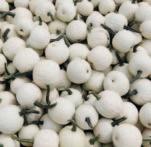
round white pumpkins that set on medium vines an impressive number of fruits per plant. Strong dark green stems that contrasts the bright white colour that stays white throughout the season. Pair Snowdrop with novel varieties like Hot Chocolate for warm fall colour palette.
norseco_of昀ciel JADE
The
SNOWDROP Miniature
Sam Silvestro
Susan Ainsworth
Glen Lucas
Heritage apples are pressed into the service of hard cider
Continued from page 1
Balsillie admits that it was challenging to get the right cider varieties that have the architecture to perform at economically rewarding levels in a trellis system and meet consumer expectations. It wasn’t until they took a trip to Rougemont, Québec, that they tasted pink ciders from heritage apple varieties. Dabinett, for instance, is an old English variety producing bittersweet juice – a standard ingredient for any cider maker. Red Heart and Geneva Red are red-fleshed varieties that provide the rose colours when blended. In 2016, Doug and Leslie decided to commit to 1.5 acres of mostly Dabinett.
“I can afford to have someone pick these apples and put them in a bin,” says Doug Balsillie. “But it’s been a real learning curve.”
“We are looking to produce cider apples that yield 2,200 apples per bin,” says Balsillie. “That’s a little more than Ambrosia apples which would yield 2,000 per bin – just for context.”
Fortunately, daughter Janelle Balsillie has picked up the cidery bug. For starters, she studied wine-making and viticulture at Niagara College. During the last seven years, she’s honed her orchardist skills in several of Ontario’s apple-growing regions, learning to appreciate how different soils affect the taste of apples. Most recently in 2023, she graduated from the American Cider Association’s certification program and is now one of four pommeliers in Canada.

A pommelier is a certified cider expert who can assign apples to region and style, and can classify them as to tastes of bittersharp, bittersweet, sweet or sharp. These are terms that will become more prevalent as the Canadian food and beverage industry catches up to smallbatch craft ciders.
Janelle Balsillie already has her hands full as full-time cider-maker for Heeman’s Cidery & Meadery at Thorndale, Ontario. She is fleshing out her schedule with the launch of her own Carolinia Cider Company at the home farm in May 2023. All of the cider came from fruit grown, pressed, fermented, blended and filtered on the farm. With an emphasis on quality, she’s devoting 5,000 litres to the current sales season.
Goldrush, the driest cider, consists of 84 per cent Goldrush apples and 16 per cent blend of English and French cider varieties: Dabinett, Muscadet de Dieppe and Kingston Black.

‘It's a great blend of earthy and tropical notes with a fresh apple finish,” says Janelle.
Pink, consists of 50 per cent Red Heart apples, a Québec red-fleshed variety and 50 per cent aromatic, culinary varieties. Pink is a big-flavour cider with lots of "red notes" of cherry and cranberry with fruity apple notes on the finish.

‘Off-Dry is my ode to Dougie,” says Janelle, referring to her dad. “This blend is full of tried-and-true varieties that my dad and I have been playing with for the last 10 years of cider-making at a hobby level. This is our sweetest cider with lots of apple
notes to it, balanced and full of flavour. This will be a great patio sipper after a long day in the orchard.”

Janelle says that there are two worlds right now when it comes to cider. ‘The Liquor Control Board of Ontario is promoting sweet apple ciders. But in my opinion, there’s another world of single varietals with unique tasting profiles.”
This pommelier has foretold the future.
The Grower is “Digging Deeper” with Doug Balsillie, The Fruit Wagon, Harrow, Ontario. He shares the journey of several decades of establishing an apple orchard, converting to high-density production and re-orienting part of it towards heritage apples to press hard cider. This podcast is sponsored by Cohort Wholesale.

MAY 2023 –– PAGE 3 THE GROWER COVER STORY
Red-fleshed apples such as Geneva Red and Red Heart lend a pink cast to hard ciders.
These Red Heart apples are destined for pink cider.
Janelle Balsillie’s business card reads: Orchardist. Cidermaker. Winemaker. Add pommelier to the list. She’s one of only four Canadians holding certification from the American Cider Association. Janelle, R, is pictured with her sister and business partner, Megan.
CROSS COUNTRY DIGEST
BRITISH COLUMBIA
Pilot project could give small-sized growers
access to TFWs
The British Columbia Fruit Growers’ Association (BCFGA) has released a 36-page report analyzing the Temporary Foreign Worker (TFW) programs H-2A in the United States and Seasonal Agricultural Work Program (SAWP) in Canada. The research author concludes that a potential pilot project could reduce costs and barriers of SAWP employers, particularly for producers on small farms.
The Single-Employer-Specific Model of SAWP currently in place creates additional barriers for small farms in Canada. With the goal of expanding the defini-

MANITOBA
tion of “employer,” within the existing TFW program, the pilot project would create more flexibility, affordability, and accessibility for both employers and workers.
“The BCFGA seeks to remove or reduce the employment barriers for small growers by developing a proposal for a pilot program that mirrors the successful employer group model in the H2-A program in the U.S.,” said Sukhdeep Brar, vicepresident of the BCFGA.

At present, owners of small-sized Canadian farms face barriers in participating in the
SAWP. They are:
• The ability to be eligible for TFW, as the amount of work on the farm is less than the minimum required for a single employer.
• The ability for TFWs to transfer employers more than twice.
• Added costs for producers due to fewer work days to spread the seasonal costs of housing and transportation
“Finding more ways for smaller growers to participate in SAWP, while maintaining protections for workers and the program integrity is a good
Canada Water Agency to be located in Winnipeg
project,” said Reg Ens, general manager of Western Agriculture Labour Initiative.
The adjustment to allow a group of employers to participate as a single entity could have major benefits to employers utilizing SAWP in British
Columbia and enhance the program for the future.
For the entire report, link here: https://bit.ly/3ZD6aI6
Source: British Columbia Fruit Growers’ Association March 31, 2023 news release
COMING EVENTS 2023
May 3 Ontario Produce Marketing Association’s Young Professionals Network, The Parlour, Toronto, ON
May 12 Blue Mountain Fruit Company Open House, 10:30 am - Thornbury, ON
June 1-2 Dispute Resolution Corporation Annual General Meeting, Whistler, BC
June 5-11 Ontario’s Local Food Week
June 7 Ontario Produce Marketing Association Annual General Meeting & Summit, Rockway Vineyards, St. Catharines, ON
June 10 Garlic Growers Association of Ontario Field Day, Farm of Felix Furmanek, Arthur, ON
June 11 Ontario Agricultural Hall of Fame Induction Ceremony, GrandWay Event Centre, Elora, ON
June 13-15 GreenTech, RAI Amsterdam
Canada has a particularly fractured approach to water management that is failing with every flood, drought, harmful algae bloom and drinking water advisory. That’s the opinion of John Pomeroy, Canada Research Chair in Water Resources and
Climate Change, Distinguished Professor of Geography at the University of Saskatchewan. He recently co-authored an opinion piece for The Globe and Mail, “Spring is coming – where is our Canada Water Agency?”
His question was answered in
the federal government’s 2023 budget which has earmarked $83.1 million for establishing the agency over the next few years and then $21 million in annual operating costs. Its goal is to “work with the provinces, territories, municipalities and indigenous groups to manage our precious freshwater resources,” said Terry Duguid, the Winnipeg Member of Parliament who has been pushing for the agency for years.
“We need more data and research about soil, groundwater, wetlands, as well as water conservation and soil conservation,” said Jake Ayre, vice-president of Keystone Agricultural Producers, in an interview with The Western Producer.
Four years ago, Manitoba’s government converted its water conservation districts into 14 watershed authorities. Those organizations have been delivering federally funded water and environmental programs for agriculture.
June 15-16 United Potato Growers of America Crop Transition Conference, Minneapolis, MN
June 27 Ontario Tree Fruit Technology Day, Simcoe, ON
June 27 – July 3 International Federation of Agricultural Journalists World Congress, Olds, AB
June 28 First Annual Ontario Potato Board Industry Social Golf Tournament, Nottawasaga Inn Resort & Conference Centre, Alliston, ON
July Federal-Provincial-Territorial Agriculture Ministers’ Meeting, Fredericton, NB
July 23-25 International Fruit Tree Association Summer Study Tour, Nova Scotia www.ifruitree.org
July 23-27 Potato Association of America 107th Annual Meeting, Delta Hotel, Charlottetown, PE
August 5 Food Day Canada
August 9 Nova Scotia Fruit Growers’ Association Summer Orchard Tour, www.nsfga.com
Sept 6-8 Asia Fruit Logistica, Hong Kong
Sept 20 Ontario Produce Marketing Association Annual Golf Tournament, Lionhead Golf & Country Club, Brampton, ON

PAGE 4 –– MAY 2023 THE GROWER
CROSS COUNTRY DIGEST
PRINCE EDWARD ISLAND
Slow-release fertilizers reduce greenhouse gas emissions by 30 per cent
Precision agriculture is helping farmers be more exact with inputs, such as fertilizer, to help reduce excess nitrogen and greenhouse gas emissions without sacrificing yields. The concept uses precise scientific data and new technologies to help farmers pinpoint what their crops need so that they can use the right product in the right amount, in the right place, at the right time.
Steve Watts of Genesis Crop Systems recently wrapped up a precision agriculture research project with support from Prince Edward Island (PEI) farmers, Agriculture and Agri-Food Canada (AAFC), and researchers from Dalhousie University and the PEI Department of Agriculture and Land. Watts and the team studied the use of an enhanced efficiency dual inhibitor fertilizer product, called Superu, in potato crops.

This modern fertilizer provides nitrogen to plants as they need it over a period of time and reduces nitrogen loss from plants and soil. The research is part of Living Lab — Atlantic, a collaboration between AAFC, farmers and environmental organizations on PEI. Together, they address
several key areas impacting farmers, including soil health, water quality management and crop productivity. The farming practices they are studying and expertise gained will be shared with farmers across Canada to increase adoption.
“Enhanced efficiency fertilizers provide nutrients to crops little by little and that can provide more efficient levels of nutrition over an extended period of time rather than the crop getting everything at once. It’s like giving crops three square meals a day instead of every meal at breakfast,”

says Watts.
From 2019 to 2021, Steve set up several treatments including the grower standard fertilizer type and others with varying mixtures of standard and enhanced efficiency fertilizers.

Soil sampling and field results such as greenhouse gas emissions were measured by Watts, Kyra Stiles and her team from the PEI Department of Agriculture and Land at six participating farmer’s fields on a weekly basis before planting and throughout the season. Further analysis of greenhouse gas emissions was
completed by Dr. David Burton and his team at the Dalhousie University Faculty of Agriculture and additional analysis by AAFC scientists at the Charlottetown Research and Development Centre.
The project revealed that farmers adopting the use of enhanced efficiency fertilizer could maintain their current potato yields and profitability at the same input costs, while reducing greenhouse gas emissions by 30 per cent or more.
Living Lab — Atlantic participating farmer, Vernon
Campbell, of Mull Na Beinne Farms Ltd is now a firm believer after having several of his fields involved in the research trials.
“Enhanced efficiency fertilizers are the way of the future and a win-win product for farmers and the environment,” says Campbell. “The first win is that it’s better for crop production getting nitrogen to plants when they need it throughout the season and the second win is in the reduction of greenhouse gas emissions."
Source: Agriculture and Agri-Food Canada
MAY 2023 –– PAGE 5 THE GROWER
Steve Watts of Genesis Crop Systems
Pepper plant signals and what do they mean?


 DR. MOHYUDDIN MIRZA
Greenhouse peppers are one of the most difficult crops to grow because firstly it takes almost 120 days from seeding to first harvest. Then, making it vegetative or generative becomes a challenge because of the day and night temperatures, 24 hours average temperature and the way fruit load is managed. It is worth mentioning that pollination with bumble bees or honey bees reduces the days from fruit set to harvest, increases the percentage of extra large and larger fruit.
Here are a few pictures of flowers and fruits to understand plant signals. All pictures are courtesy of Schriemer Family Farm, Manitoba.

Flowers bent away from the stems are a signal of good balanced vegetative and generative growth. They are a signal to bees to perform pollination. Such flowers also indicate a very good climate, especially the Vapour Pressure Deficit (VPD) in the range of between 3 and 7 grams/m3 of air.
If flowers are large, over vigorous and tending to grow upright, the plant is vegetative and requires higher 24 hours average temperature. This can be accomplished by increasing the temperature during the peak light period from 11:00 to 14:00 hours. Remove any deformed “bottom fruit.”
These flowers are well spaced. If they are located too close to the head, then try to steer plants towards generative direction. Flowers which have been pollinated will show petals losing their lustre and fruit can be seen inside.
A good internodal length indicates good balance. Very short internodes and a compact plant indicate very strong vegetative direction.
Dr. Mohyuddin Mirza is a greenhouse industry consultant based in Edmonton, Alberta.

PAGE 6 –– MAY 2023 THE GROWER
GREENHOUSE GROWER
GREENHOUSE GROWER
Vertical farming replaces some lettuce imports from U.S.
By the end of 2023, Goodleaf Farms will be fully operational in Calgary and Montreal each with a 100,000-square-foot vertical farm that will produce 1.9 million pounds of microgreens and baby greens for grocery stores.

GoodLeaf Farms, founded in Halifax in 2011, has its flagship operation in Guelph, Ontario.

“Agricultural technology and innovation can make Canada fully self- sufficient in a range of leafy greens — despite the fact our open-field farms are largely dormant through autumn and winter,” says Barry Murchie, CEO, GoodLeaf Farms. “We have the technology and are expanding the capacity to grow the food Canadians need right here in Canada, no matter the season and no matter the weather. Continued investment and support for agricultural innovation and technology can help Canada avoid future food shortages like the one it is currently experiencing with lettuce and leafy greens.”
Canadian consumers are once again facing inflated lettuce prices because of extreme weather events in California — but the solution can be found in Canadian agricultural innovation and indoor, climate-controlled
farming.
During the spring of 2023, flooding in key growing regions in California are threatening lettuce crops that are typically destined for Canada. Last year, it was a severe drought. In both cases, the result for shoppers is higher prices at the grocery store. But Canada has a growing vertical farming sector — in which local produce can be grown year-round — that can replace the imports on which Canada has historically relied.

GoodLeaf Farms is first and largest commercial indoor vertical farm operation, annually harvesting up to 40 crops of microgreens and 20 crops of baby greens every year, including pea shoots, micro radish, micro broccoli, spinach, arugula and spring mix at its 50,000-square-foot flagship farm in Guelph, Ont.
Climate-controlled indoor vertical farms are game changers. They are immune to extreme weather events — such as floods, extreme heat or a typical Canadian winter — and are designed to maximize crop yields in a fraction of the space required for open-field farming, with only five per cent of the water needs. The controlled environment means there is no need for pesticides, herbicides or fungicides, and the advanced system of hydroponics and LED lighting replicates ideal growing conditions for plants, maximizing yields and improving quality. The process is fully automated, from planting the seed through harvest and packaging. All irrigation goes directly to the roots of the plants — nothing ever touches the plant canopy that is harvested. The first
hands to touch the greens consumers buy will be their own.
Not having to rely on the southwestern United States for leafy greens also removes thousands of food miles from the road, which gives Canadiangrown leafy greens a much smaller carbon footprint.
“The crops from an indoor vertical farm replace those we typically import,” says Murchie.
GoodLeaf’s expansive and

growing portfolio of baby greens and micro greens — including premium fresh options of GoodLeaf’s unique Spring Mix, Micro Asian Blend and Micro Spicy Mustard Medley are currently available in most leading retailers in Ontario, including Loblaws, Sobeys, Metro, Longo’s, Whole Foods and many independent retailers and food service operators.

THE GROWER
MAY 2023 –– PAGE 7
GREENHOUSE GROWER
Anti-viral technologies can reduce pathogen transmission in the greenhouse
Three new anti-viral technologies could help prevent the transmission of both COVID19 and an economically significant plant virus affecting tomatoes inside commercial greenhouses. That’s according to a recent Ontario Greenhouse Vegetable Growers (OGVG) research project to refine and apply technologies used in other industries to greenhouses. The project included three approaches developed by service provider PRODIGie – Innovation Evolved Inc.
For the last several years, Ontario’s greenhouse vegetable growers have been dealing with COVID-19 as well as Tomato Brown Rugose Fruit Virus (ToBRFV), which was first detected in Ontario in 2019. ToBRFV causes mosaic and distortion of leaves, as well as brown, wrinkly spots on the fruit, making them unmarketable.
A big challenge for growers is that ToBRFV can survive for long periods on surfaces away from tomato plants and can be easily picked up by people, tools and equipment – increasing the chance of infection and spread throughout the greenhouse. COVID-19 has been a leading threat to human health, food security and business continuity since it emerged on the global stage early in 2020.
With both pathogens, time was of the essence to keep spread and impact to a minimum. Funding from the Greenhouse Competitiveness and Innovation Initiative (GCII) helped OGVG test the suitability of various anti-viral technologies as possible tools to control the spread of both pathogens.
“The rugose virus appeared
almost in tandem with COVID and commonly used disinfection tools such as rubbing alcohol, for example, don’t work on either of these viruses,” explains Niki Bennett, OGVG’s innovation, adaptation and plant protection lead. “Biosecurity is about keeping things out and preventing transmission and this project gave us a unique opportunity to go after both pathogens.”
The first anti-viral technology tested, Novel Composite Cold Spray Coatings, can be applied to static objects such as door handles and other high-touch areas. According to Bennett, it performs like a barrier, preventing microbial adhesion to surfaces and offers some antimicrobial activity, which can be used to protect against many different viral pathogens. As well, since it’s not a chemical and not being applied to plants, regulatory approval is not required in order to be approved for sale.
These studies demonstrated up to a 97 per cent reduction in ToBRFV on surfaces where the Cold Spray Coatings were applied. This was a 10-fold increase in effectiveness compared to current copper benchmarks.
“We don’t know of anyone doing this; that’s what sparked our interest in this solution,” Bennett says. “It’s a barrier method that provides passive, preventative protection.”
The second technology that was evaluated was a non-alcohol, oil-based hand rub with antimicrobial properties. It can inactivate pathogens on the hand and also does not need regulatory approval since it is considered a personal care product.
Currently, many greenhouse
workers use nitrile gloves to minimize risk of spread of ToBRFV, but the virus could still adhere to the gloves so changing them often is critical. This hand rub has potential to provide longer protection and reduce the overall spread by workers’ hands. The third solution that was tested was an ozone treatment that contains very powerful oxidizers that can kill microorganisms or inactivate viruses when applied to surfaces. There was a 98 per cent reduction in ToBRFV after three minutes of contact with aqueous ozone, which is a shorter contact time than what is necessary for many commercially available
disinfectants. Although efficacious, work is still underway to determine the best and most critical uses for this product.
All three solutions, which can be used together or separately, have a good chance of being adopted by the industry, notes Bennett. The next step is determining how they can be best commercialized. There has been initial interest by growers, but grower trials are needed to validate that interest.
“We have some pretty unique techniques here that we haven’t seen anyone else using in the greenhouse industry – and they could help us with future issues too, not just the issues of today
such as COVID and rugose,” she says. “They challenge the traditional way of addressing viral and bacterial issues, which is usually reactive, and move us into the proactive and preventative space. That’s where the cost savings are, in reducing disease transmission and keeping people and plants healthy.”
This project was supported through the Greenhouse Competitiveness and Innovation Initiative, a cost-share program funded by the Ontario government and delivered by the Agricultural Adaptation Council, on behalf of the Ontario Ministry of Agriculture, Food and Rural Affairs (OMAFRA).
Appointment made to Metro Vancouver Agricultural Advisory Committee
Dr. Saber Miresmailli, CEO and co-founder of ecoation, has been appointed as a member of the Metro Vancouver Agricultural Advisory Committee. The appointment is effective immediately and will run through December of 2027.
The committee provides recommendations to the Metro Vancouver Board on matters related to agricultural land use, soil conservation, and farm practices within the Metro Vancouver region. As a member of
the committee, Dr. Miresmaili will bring his expertise in the field of indoor agriculture and his commitment to sustainable agriculture practices to help guide the development of policies and programs that support local farmers and promote food security in the region.
As the CEO and founder of ecoation, a company that provides cutting-edge technology to improve crop yields and reduce waste in the agriculture industry,
Dr. Miresmailli brings a wealth of knowledge and expertise to the committee. He is a leader in the field of agricultural technology and has extensive experience working with growers and producers to improve their operations.
Dr. Miresmailli was a member of the BC Minister of Agriculture Advisory Council and a member of the Vancouver Food Policy Council. He has developed projects in collaboration with the Bill &
St. Clair College to launch Greenhouse Technician Program
Based in Windsor, Ontario, St. Clair College is launching a new program aimed at filling the labour gap in the greenhouse sector.
A two-year Greenhouse Technician program will launch in September 2023, with capacity for 25 students to learn about all of the variables that affect greenhouse operations such as crop cycles, light requirements and pest control.
The program is designed for students
interested in a career in the greenhouse sector. Students will learn through a combination of in-class lectures, laboratory work and greenhouse visits in Essex County. The program is designed with two areas of specialization that students can select in their second year of study. As part of the program, the students will be responsible to complete a capstone course where they will draw from knowledge and experience gained in all courses and their
placement.
This program will provide students with the knowledge necessary to work as Greenhouse Technicians. These operations could include vertical or container farms where vegetables, flowers, fruits, microgreens and other crops are grown and harvested. Graduates are expected to find work in greenhouse production, assistant and head growers, pest management specialists, supervisors, or
Melinda Gates Foundation in West Africa. He sits at the Climate Technology Center and Network at the United Nations and is part of the United Nations High Forum to make Sustainable Development Goals a reality.
Source: ecoation April 12, 2023 news release
managers as well as opportunities in the logistics team. The graduates may be employed in Ontario’s greenhouse sector or the support services such as suppliers (fertilizers etc.), manufacturers, logistics and government positions (production technicians).

THE GROWER PAGE 8 –– MAY 2023
Prodigie/OnTech Cold Spray Antimicrobial Coating Scanning Electron Microscopy. Photo courtesy of PRODIGie – Innovation Evolved.
GREENHOUSE GROWER
GreenTech Amsterdam 2023 announces program for June 13-15

GreenTech Amsterdam will take place from June 13-15 13 at RAI Amsterdam Convention Centre. The knowledge program will be all about ‘Your connection to sustainable food and flower production.’ Specific topics such as smart lighting, plant health, resilient cultivation and robotics are covered. But also themes like partnering in the value chain, supply chain integration, biodiversity and sustainability challenges in the horticulture sector are on the agenda at the Vision-, Technology- and Plant Compound/ Vertical Farming Stages. In total 525 exhibitors and 11,000 visitors will be expected at the show floor.
Highlighted topics
• Fossil free-cultivation concepts; the road to a zero footprint greenhouse
• Challenges and opportunities to move vertical farming forward
• Collecting data, how much is enough?
• Cultivation planning with algoritm
• Leafy, lettuce and hers greenhouse
culture
• How robots are conquering horticulture
• Optimal use of limited CO2 in production process
Pavilions
At the show floor visitors will find several country pavilions but also pavilions with exhibitors specialized in industry fields such as Vertical Farming, Plant Compounds (Cannabis), AI & Robotics and new this year Renewable Energy. But also a Start-up pavilion with the newcomers of the horticulture industry. Live demonstrations and the latest innovations will be showcased at the Robot Arena and the new Renewable Demo area. More information at: www.greentech.nl/amsterdam/.
Oppy and Randhawa Farms celebrate 10 years of partnership
Oppy. the global grower, marketer, and distributor of fresh produce, is celebrating its 10 years of partnership with British Columbia-based greenhouse pepper and cucumber grower Randhawa Farms, owners of the Perpetual Vegetable Co. brand.
“Over the past 10 years, the Randhawa family has continued to grow with increased acreage and market share,” said Randhawa Farms’ business director Vijay Randhawa. Together, Oppy and Randhawa Farms launched the Perpetual Vegetable Co. brand in 2019, with a focus
on positive energy and sustainability, conveyed by the brand positioning line “Life grows on.”
Most notably, their high-tech greenhouse control systems allow for the conservation and recycling of water, carbon dioxide and other valuable nutrients. Randhawa shared, “We have always been committed to doing things the right way, because the food we grow for our consumers is the same fed to our own family. We believe that good food fuels better quality of life for all.”
The season is underway with topquality long English and mini cucumbers, as well as sweet bell and mini peppers. “This season is projected to have very strong volume and quality from both cucumbers and peppers,” Randhawa said.
Oppy’s vice president of categories and strategy Jason Fung shared, “We’re extremely proud of our partnership and appreciate the friendship that has developed between us. It’s something special to work closely with a family operation as engaged in the business as
they are — they truly care about the quality that they produce.”
Looking to the future, the Randhawas plan to expand over the next five to six years, including increased pepper acreage to continue serving the growing market. Randhawa concluded, “A decade is just the beginning. We are excited about our future with Oppy, we work together as one team with a common goal to provide top quality produce and customer service.”
High Resistance (HR) to ToBRFV: adding value to the whole supply chain
An international symposium on Tomato Brown Rugose Fruit Virus (ToBRFV) was held in Toronto, Ontario in August 2022 bringing together experts to talk about what’s known to date about this devastating disease. Enza Zaden, the global vegetable breeding company, had representatives in the audience.
Headquartered in the Netherlands, the company has been reaching out to stakeholders about its breeders’ work on intermediate resistance and high resistance. At the end of 2020, Enza Zaden announced the discovery of a high-resistance gene to ToBRFV.
Why is high resistance so important? An intermediate level of resistance (IR) slows down the multiplication and spread of the virus, but it nevertheless gets into the tomato plants, causing symptoms and affecting the quality, as well as the final crop yield. Conversely, plants and fruits with a high level of resistance (HR), do not act as hosts for the virus, therefore they are no longer a source of its spread. High resistance paired with sanitary precautions are key in the fight against the virus.
Since the discovery of the ToBRFV high-resistance gene, Enza Zaden breeders have
IR or HR. What is the difference?
What's the difference between IR & HR?
Our tomato breeding team identified a gene providing high levels of resistance against the devastating ToBRFV. In this infographic, you will see the difference between no resistance (left), intermediate resistance (center) and high resistance (right).

No Resistance Intermediate Resistance
•Virus multiplies to a high level in the plant.
•Yellow spots and wrinkled patches on plant & fruits.
•Presence of virus particles in the plant or fruits.
•Yield can be affected.
worked hard on introducing it in the elite parent lines. Currently, there are high-quality parent lines with the ToBRFV resistance. This helps to make highresistance tomato varieties.
Enza Zaden has a long history in breeding tomatoes. “We have a very wide range of tomato
•Virus propagation is delayed.
•Presence of virus particles in the plant or fruits.
•The crop can show symptoms of the virus in the leaf and/or fruits.
•Yield can be affected.
varieties, from large beef tomatoes to tasty vine tomatoes (truss tomatoes) and from baby plum tomatoes to pink tomatoes. This basis of high- performing varieties combined with the gene we discovered, will enable us to deliver the high-performing varieties with high resistance to
High Resistance
•Highly restricts the accumulation of the virus.
•No spread of the virus in the crop.
•Yield is unaffected under normal disease pressure.
enzazaden.com/tobrfv-hrez

ToBRFV,” explains Kees Könst, tomato crop research director at Enza Zaden. “Trials with highly resistant varieties have been placed in all targeted areas. The results are reassuring; high resistance has proven to deliver high-performing crops with top fruit quality.’
Eliminating the ToBRFV virus as a major cause of losses remains top priority for Enza Zaden. The company is collaborating with geneticists all the way through to the final consumers.
MAY 2023 –– PAGE 9 THE GROWER
here to learn more about HREZ
Scan
CORPORATION
Grade standards have multiple uses
As we review questions from our members, we find they often forget the published grade standards have multiple uses that serve to minimize misunderstandings. Whether you specify a grade (US#1, Canada#1, etc.) or not the standards establish a lexicon, or recognized language, for describing fruit and vegetable commodities and associated defects. This common lexicon is necessary for buyers, vendors, government inspectors, private inspection firms and others to communicate in a common language in the same way we all know an inch, a foot, a centimeter, or a meter is always the same. Fruit and Vegetable Standards ensure terms like bruising, injury, damage, discoloration, watery scales have that same universal meaning.


The terms and definitions in the standards can be used to verbally define parameters for shipping and arrival expectations. This is important as fresh fruit and vegetables are generally purchased unseen from distant shipping point. The defined terms provide clarity to the contract specifications and in turn are the basis for establishing a failure to meet those agreed specifications (FOB Good Arrival as an example.)
When the Commodity Standard is used along with a specific grade (US#1, Canada#1, as examples) the agreement then is based on the defect limits of that published specified grade. The grade standards represent an overview of the
quality, condition, generally appearance of the item, including the presence of defects (damage, insects, disease), size, shape, and colour. The standards also include the maximum tolerance of defects allowed to meet that specific standard.
While parties may create their own contract specifications outside of the established grades, they must ensure their agreement complies with any applicable minimum grade and condition standards that have been established by the importing or exporter country. Many commodities are traded based on “no grade good delivery” terms. Such contracts are still subject to individual country requirements for such things as maximum permanent defects, and sugar (soluble solids) content.
Our members and trading partners are very often surprised to find out the impact of grade standards when we are contacted to help resolve a problem transaction. What happens when one of the parties in a produce transaction believes that a commodity was purchased with a specific grade standard (US#1, CAD#1, CAT 1, etc.), but there is no written evidence that shows that this was discussed, understood, and agreed upon by both of the Parties?
Verbal communications are contractually binding if both parties agree on and understand the terms discussed. However, when there is a disagreement, or there is no meeting of the minds as to what was discussed verbally, the documents and
written communications related to the transaction will determine the contract between the parties.
Where no specific grade requirement can be documented, the calculation of defects to support a breach of contract changes. Condition defects (those which change over time like decay and bruising) will be counted toward any breach of contract. Permanent defects (those such as scarring and off size) will not be counted toward any alleged problems on arrival.
In the absence of an agreement, the calculation of conformance to the contract
will default to the DRC Good Arrival Guidelines. Remember, without an agreement only the condition defects may be counted to establish a breach of contract. Hence, when you are establishing the terms of the transaction and you are buying or selling based on a grade standard, making sure a grade standard is agreed, preferably in writing, is highly important.
Source: Dispute Resolution Corporation March 29, 2023 blog
THE
PAGE 10 –– MAY 2023
GROWER
DISPUTE RESOLUTION

THE GROWER MAY 2023 –– PAGE 11
High alert: spotted lanternfly respects no borders
will be targeting railyards, campgrounds, conservation areas, provincial parks, rest stops, forests near the U.S./Canadian border, particularly those in proximity to major transportation corridors. The perimeters of grape and fruit production will be of interest with emphasis on neighbouring forest stands.
In the event of a suspect find of egg masses or nymphs in May/June, growers should report as soon as possible to CFIA (cfia.surveillance-surveillance.acia@inspection.gc.ca) and include the following information:

• Contact information: phone number and email
• Date the pest or suspect signs/symptoms were observed
• Location the pest was found – address and latitude/ longitude coordinates, if possible.
KAREN DAVIDSON
As recently as September 2022, adult spotted lanternfly was positively identified in Buffalo, New York – whistling distance from Ontario’s vibrant vineyards and orchards. It’s a destructive pest which can seriously damage the soft tissues of trees and vines. A wide range of plants will satisfy its voracious appetite, although tree of heaven is its preferred host.
The discovery is no surprise to Brian Walsh, an extension educator with Pennsylvania State University. Since the insect was first identified in his home state in September 2014, he’s been working to understand the biology of the planthopper. Known by entomologists as Lycorma delicatula, the invasive species can hitchhike long distances. More than 100 adults were found on an active rail line in Buffalo, a pattern that matches Walsh’s tracking experience.
The northward movement is worrisome because spotted lanternfly is a regulated quarantine pest for Canada says Diana Mooij, senior specialist, invasive alien species, Canadian Food Inspection Agency (CFIA). Areas at highest risk, she says, are southern Ontario, parts of Québec, New Brunswick, Nova Scotia and British Columbia. The largest impact is expected in the grape, wine and fruit industries.
“It’s not a matter of ‘if’ but ‘when’ spotted lanternfly arrives in Canada,” Mooij told an audience at the Ontario Fruit and Vegetable Convention in February 2023. “Prevention efforts will not be entirely successful. Limited treatment options are currently available and the industry is relying on visual surveillance.”
Given these facts, the Fruit & Vegetable Growers of Canada has been instructed by its members to work with CFIA on pre-emptive emergency uses of pesticides to manage spotted lanternfly in the event it’s detected on Canadian farms.
As of January 2023, a minor use submission has been put forward for Danitol for pome and stone fruits. As of February 2023, a minor use submission has been put
forward for KOPA for pome fruits, stone fruits, grapes and ornamentals. Sivanto Prime is currently being considered for grapes and ornamentals. No products are currently registered for control.
Mooij also reports that an emergency use application is in progress for flupyradifurone for nymphs and adults and is being considered for dinotefuran. Oils are available for use on egg masses when physical scraping is not feasible.
In 2023-24, CFIA plans to ramp up inspections for the pathways that spotted lanternfly may enter Canada. These include: nursery stock, plants for planting, branches, logs and non-plant cargo and conveyances. Targeted CFIA surveillance activities will include mapping tree of heaven and other preferred hosts and focussing on areas of travel/tourism from the United States.
With the learnings from Penn State University, CFIA
• An image of the pest (one or two clear, close-up images) A sample of the pest should be sealed in a container, where possible, for the CFIA to collect.
What are the consequences if confirmed on a grower’s farm? Will they be quarantined? Given that spotted lanternfly is a regulated quarantine pest for Canada, should spotted lanternfly be detected within Canada the CFIA would consider implementing localized regulatory control measures to reduce the immediate risk of spread to the local environment and mitigate the risk of establishment of the pest in Canada. Measures may include controlling or prohibiting the movement of potentially infested things out of an area where the pest has been detected. Treatments such as physical controls (eg. egg mass removal) or chemical applications may be ordered to render the pest non-viable. This would depend on the approved treatment options available at the time of the detection.
How to scout for all stages of spotted lanternfly
Penn State Extension has published a Spotted Lanternfly Management Guide which offers a visual of the life cycle: https://extension.psu.edu/spotted-lanternfly).

There is one generation of SLF per year in Pennsylvania (Figure 1 above). The eggs are laid in the fall, roughly September to November and hatch in the spring, late April to June. Egg masses are laid on many surfaces, including trees, decks, outdoor equipment. They are distinguished by
mud-like covering (Figure 2 above). Each egg mass contains about 30 to 50 individual eggs.
After hatching and before reaching adulthood, SLF goes through four nymphal stages called instars. Newly hatched nymphs are small – less than 1/8 inch – and can be hard to find, often being mistaken for small ticks and spiders. With each molt to the next instar, the nymphs double in size. The first three instars are black with white spots. The fourth instar is
red with white dots and black stripes and are about ½ inch long. SLF nymphs are strong jumpers. Adults are the most obvious and easily detectable stage because they are about one inch in size and are highly mobile.
Adults have black bodies with forewings which are gray with black spots. The tips are black with gray veins, while their hind wings are red, black and white. Only the adults have wings and can fly. However, because SLF adults walk more than fly,
their wings often remain closed, leaving only the forewings visible. This makes them more difficult to identify in low numbers or from a distance, when they are high in a tree.
This spring, scouts in at-risk areas will be arduously looking for egg masses. If found, they should be scraped and sent for laboratory analysis.
THE GROWER PAGE 12 –– MAY 2023 INVASIVE SPECIES
Figure 2. Egg masses. Credit: Heather Leach and Emelie Swackhamer, Penn State.
Figure 1. Spotted lanternfly life cycle. Illustration © Emily S. Damstra.
It’s not a matter of ‘if’ but ‘when’ spotted lanternfly arrives in Canada.
“
~ DIANA MOOIJ
The power of insulation in potato storages
 DR NORA OLSEN
Reliance upon storing a potato crop in a controlled environment is vital in supplying a consistent year-long supply of potatoes. This means potatoes are stored in climates that may vary in weather patterns or at least conditions different than what is inside the potato storage.
Insulating walls and ceilings specific to the climate allows you to manage desired conditions within the storage. If it is cold outside, insulation helps keep potatoes from losing heat from the storage, and if it is warm outside, insulation keeps the potatoes from warming up. It is not only about maintaining temperature, but since potatoes are stored at high humidity, proper insulation will minimize condensation inside the storage.
Condensation occurs when the surface temperature (e.g., ceiling) reaches the dew point temperature of the surrounding air. The dew point temperature is when water saturates the air and at that point water vapour will condense and drop out as water droplets. It is a function of both temperature and humidity, which is calculated using a psychometric chart. Insulation lessens the temperature differential, or gradient, between the outside and inside of the storage and can keep the inside surface from reaching the dew point temperature, thereby lessening the chance for condensation to occur.
Condensation equates to free moisture on potatoes, which increases the risk of disease developing in those areas.
Condensation can elevate the incidence of silver scurf and superficial growth, but of greater concern, is the risk of soft rot especially in areas of the pile that already have diseased potatoes. Consistently wet potatoes increase the potential of breakdown.


The level of insulation or R-value is dictated by the temperature extremes of the area. Initial construction of the storage took these temperature extremes into consideration and used insulation, vapour barriers, and building materials appropriate for the location. Looking at older storages may prompt a question about whether the expectations of the insulation have changed since the building was constructed and if additional insulation is needed.
As buildings age, areas with insufficient insulation or gaps in building materials, or leakiness, can occur. In these areas there is a greater chance for temperature gradients and condensation to occur. Or in cases of extreme leakiness, the outside temperature coming in can impact the quality of the stored crop. This is especially important since cold outside air and high inside relative humidity can cause
condensation to form on inside surfaces.
Unfortunately, it is difficult to see beyond the walls to identify if there are areas in the storage with failing insulation until you see areas of free moisture on the potatoes. The use of an infrared camera or thermometer can help identify areas where temperature differences are occurring. This can be especially helpful to pinpoint areas of insufficient insulation.
Photos 1 and 2 show examples of using a Flir infrared camera attached to a smartphone to take photos inside a potato storage. The purple/blue colour indicates a cooler surface temperature, red is moderate, and the yellow colour is a warmer temperature.


Photo 1 clearly shows a lack of insulation on the door (red coloured) and leakiness around the door and seams with warm air seeping in (yellow coloured).
Photo 2 shows an area where two walls are coming together, showing the outer wall is warmer than the other, possibly indicating an insulation issue. In the case of these photos, it is warmer outside than inside the storage building. But if these were taken in the middle of winter, it would show the risk of colder temperatures, increasing the risk for condensation.
Both photos show areas that could benefit from additional insulation or adding material to minimize leakage from the door seams. Regardless, using an infrared camera can be beneficial to identify areas not easily seen with the human eye to make upgrades to insulation or areas that could be prone to temperature differentials and condensation issues.
Condensation equates to free moisture on potatoes, which increases the risk of disease developing in those areas.



MAY 2023 –– PAGE 13 THE GROWER POTATO PRODUCTION
Dr. Nora Olsen is professor and potato specialist, University of Idaho.
Photo 1. Infrared photo taken with a Flir camera—shows warmer surface of the door and leakage around the doors.
Photo 2. This photo may look abstract, but it depicts the corner area of where two walls adjoin. The colours are showing differences in surface temperature of the walls.
“
CHAIR’S PERSPECTIVE
Many questions remain unanswered regarding the Underused Housing Tax
include farm businesses.
industry associations including Fruit and Vegetable Growers of Canada (FVGC), the Canadian Federation of Agriculture (CFA) and others continue to push for an exemption from the legislation for agriculture.
Here’s why.
In late winter 2023, the federal government announced that it is effectively extending the filing deadline of its new Underused Housing Tax (UHT) by an extra six months to give affected property owners time to comply with the new legislation.
While this temporary reprieve is a step in the right direction,
Announced in the 2021 budget, the UHT became law last year and now applies for the first time for the 2022 tax year. It was designed to address Canada’s shortage of rental housing by imposing an annual one per cent tax on Canadian housing that the government deems to be vacant or underused.
Private corporations and partnerships as well as individuals who aren’t Canadian citizens or permanent residents must file a UHT return even if they don’t have to pay the tax. What is causing concern and frustration for agriculture is that private corporations and partnerships
A separate return must be filed every year for each property a farm corporation owns, and the penalties for not filing are substantial: up to $5,000 for an individual and $10,000 for a corporation. And we’re hearing reports from growers that they’re being quoted costs from accounting firms that are as high as $1,000 per return to prepare the required government paperwork. For fruit and vegetable growers, there is also the additional question of seasonal and temporary worker housing if those facilities are owned by a corporation or partnership.
Currently, the Canada Revenue Agency (CRA) offers no clear guidance on this and while tax professionals are awaiting additional information from the federal government, they are advising farm corporations and partnerships to file the UHT out
of precaution in the interim.
Farm corporations generally acquire more than one residence because they’re buying additional farmland to expand their businesses and that land happens to have a house on it. This new filing requirement places an onerous burden on farmers who mostly own their additional residences in rural areas and don’t contribute significantly to Canada’s rental housing market –or who have additional housing in place specifically for their international farm workers, as is the case in horticulture.
It must be noted that this new UHT requirement is not sector specific and applies to all Canadian corporations and partnerships. Agriculture just happens to be one sector particularly impacted by the unintended consequences from the legislation.
Resolutions directing farm
organizations to lobby the Canada Revenue Agency for a filing exemption for agriculture were passed in recent weeks at both the FVGC and CFA annual general meetings, and advocacy efforts have been ramping up to address the issue.
Until there is resolution, growers are encouraged to consult with their tax professionals on how to proceed with respect to their potential UHT requirements for the 2022 tax year. More information is also available on the Ontario Federation of Agriculture (OFA) website at www.ofa.on.ca, including a webinar OFA hosted this past winter in partnership with accounting firm BDO on the issue.
Shawn Brenn is chair of the Ontario Fruit & Vegetable Growers’ Association

Enough water? Brothers Chris (L) and Shawn Brenn review the irrigation plans for their potato acreage near Waterdown, Ontario. Photo by Glenn Lowson.

STAFF
Publisher: Ontario Fruit and Vegetable Growers’ Association
Editor: Karen Davidson, 416-557-6413, editor@thegrower.org
Advertising: Carlie Melara 519-763-8728, advertising@thegrower.org
The Grower reserves the right to refuse any advertising. Any errors that are the direct result of The Grower will be compensated at our discretion with a correction notice in the next issue. No compensation will be given after the first running of the ad. Client signature is required before insertion.
The Ontario Fruit and Vegetable Growers’ Association is the sole owner of The Grower. All editorials and opinions expressed in The Grower are those of the newspaper’s editorial staff and/or contributor, and do not necessarily reflect the view of the association. All rights reserved. The contents of this publication may not be reproduced either whole or in part without the prior written consent of the publisher.
OFFICE 355 Elmira Road North, Unit 105 Guelph, Ontario N1K 1S5 CANADA
Tel. 519-763-8728 • Fax 519-763-6604
The Grower is printed 12 times a year and sent to all members of the Ontario Fruit and Vegetable Growers’ Association who have paid $30.00 (plus G.S.T.) per year for the paper through their commodity group or container fees. Others may subscribe as follows by writing to the office:
$30.00 (+ HST) /year in Canada
$40.00/year International
Subscribers must submit a claim for missing issues within four months. If the issue is claimed within four months, but not available, The Grower will extend the subscription by one month. No refunds on subscriptions.
P.M. 40012319
ONTARIO FRUIT AND VEGETABLE GROWERS’ ASSOCIATION BOARD OF DIRECTORS 2023 MANAGEMENT
PAGE 14 –– MAY 2023 THE GROWER
Chair Shawn Brenn, Waterdown Vice-chair Mike Chromczak, Brownsville Grapes Matthias Oppenlaender, NOTL Tender Fruit Joann Chechalk, St Anns Small fruit/Berries Morris Gervais, Springwater BOARD OF DIRECTORS Apples Cathy McKay, Port Perry Fresh Veg other Joann Chechalk, St Anns Tender Fruit Dave Enns, Niagara-on-the-Lake Asparagus Mike Chromczak, Brownsville Grape Matthias Oppenlaender Fresh Veg muck Quinton Woods, Cookstown Potato Shawn Brenn, Waterdown Small Fruit/Berries Morris Gervais, Springwater Ginseng Glen Gilvesy, Tillsonburg Greenhouse Jan VanderHout, Dundas Greenhouse George Gilvesy, Tillsonburg Processing Vegetables Tracy Gubbels, Mount Brydges
Crop Protection Brian Rideout Environment and Conservation Jan VanderHout Labour Bill George Safety Nets Mike Chromczak Energy, Property, Infrastructure and Food Safety Brian Gilroy
COMMITTEE
OFVGA SECTION CHAIRS
WEATHER VANE
SHAWN BRENN
For now, Mexican fruit growers have reason to smile

pursuing...and pursuing well. The United States Department of Agriculture says American consumers, who comprise his biggest market, want greater consistency in supermarket produce.
imagine why farmers would switch, unless corn prices rose significantly.

Jalisco, Mexico native Vivian Ibarra studied to be a dental hygienist – it’s steady work, decent pay and rife with opportunities to get in and out of the workforce to start a family. But upon graduation, she decided to forgo the dentist office. Instead, she returned home to help run the family berry farm…which these days, with the Mexican fruit sector in high gear, also means steady work and decent pay.
Heriberto Ibarra Gonzalez, her father, smiles when he talks about having his 26-year-old daughter home. The busy export market, along with a Driscoll’s production contract, means his 30-hectare operation is busier than ever. The only downside, he says, is sacrificing an annual holiday.
“You need to work, to be sustainable and productive,” he says. But the upside is that thriving markets mean this family farm is well-positioned to stay in the family.
In fact, Gonzalez’s next move – one that he also considers his biggest challenge – is transitioning to organic in the next three years, to further meet global trade demands. Despite pressure on consumer prices, he’s confident organic is a niche worth


SCENE ON INSTAGRAM
And that’s where farmers such as Gonzalez come in. Mexican producers’ commitment to quality, along with aggressive and imaginative marketing, has doubled fresh vegetable exports from the country in the past decade. Avocados are the big success story here, but berries are enjoying a bump too . . . although not as much as agave, from which tequila is made.
In fact, farmers are replacing corn fields with agave, an irony that makes it even more difficult to imagine how Mexico is going to replace the 18 million tonnes of corn it will lose if it proceeds with plans to cut off GMO corn imports from the U.S. The Mexican government has been convinced by anti-technology activists that GMO corn can breed with native varieties and contaminate entire fields. So it’s decreed a ban on yellow corn imports from the U.S. by 2025, even though the country doesn’t grow enough to meet its own demands. Mexican farm groups, including the National Agricultural Council representing 1.8 million producers, have warned against doing so. But plans are going ahead.
Perhaps success on the agrifood export front has created a sense of bravado in Mexico. Ana
Lucia Camacho Sevilla, secretary of the Ministry of Agriculture and Rural Development of Jalisco, told an International Federation of Agricultural Journalists’ meeting that Mexican farmers have time to start planning to grow more corn. But currently, no government financial incentives exist, so it’s hard to
However, higher corn prices could drive up the cost of food. And in Mexico, that would be a particular hardship. Corn is a big part of the diet, but also, it’s central to their culture: teosinte, corn’s wild ancestor, originated about 10,000 years ago in what is now Mexico.
While all this is getting sorted out, Mexico is walking a fine line. Much of its export produce, like the berries produced by the Ibarra Gonzalez family, is headed for the U.S. But retaliatory measures, such as challenges based on the USMCA agreement, are all but assured if Mexico proceeds to shut out U.S. corn.
At the same time, though, the U.S. has come to rely on Mexican produce. Erratic weather and ceaseless droughts –at least until this year – have been tough on traditional domestic suppliers of winter fruit and vegetables in the U.S. Mexico – and others -- have filled the gap.
North America truly needs a
continental trade culture, one that respects each country’s unique differences. Science is a good foundation for trade. But this whole episode speaks to the fact that genetically modified crops have yet to gain universal acceptance, even when evidence shows they’re safe.
MAY 2023 –– PAGE 15 THE GROWER THE URBAN COWBOY
Owen Roberts is a past-president of the International Federation of Agricultural Journalists and a communications instructor at the University of Illinoi
OWEN ROBERTS
BC Agriculture Council: We are ready for blossom season! �� Check out these blooms from an orchard on the bank of Okanagan Lake in Penticton.
Vivian Ibarra
The role of certified claims in building public trust

Every time you consider a claim for your products, you must decide if your customers and consumers understand the claim and put value in the claim itself.
There are many options
Some claims are a must-have and some are a nice-to-have.
Angus Reid shared results from a recent poll that nearly 7 in 10 Canadians do not believe sustainability claims made on products and services.* Greenwashing is such a major concern that Canada’s Competition Bureau has warned consumers about terms such as ‘eco-friendly,’ ‘all-natural,’ or ‘green.’
Given this insight, how does a producer gauge if putting a claim on packaging will be believed by customers and the end consumer?
One word that does differentiate claims is certified. For responsible producers and processors, using the word certified indicates that a third party ensures that the supplier meets or exceeds some criteria. When food and beverage businesses make claims that are not substantiated or certified, it erodes consumer confidence in our entire industry.
Claims can differentiate your products and have a positive impact on your selling price.
Claims look impressive on packaging, but they must also be realistic for your business and deliver a return on the investment of meeting certification requirements. You should give serious consideration to the effort and investment required. Ask the following questions:
A) Will it differentiate the product in its class?
B) Is it something you want or something customers and/or consumers require or want?
C) Will you be able to recoup the investment in your selling price?
D) Is this realistic, given your current capabilities?
E) Will you lose sales if you do not have the claim?
F) Is it critical to the positioning of your business or your brand?
Retailers do have certain standards they expect suppliers to meet or exceed. For example, Whole Foods Market requires suppliers to meet one of the following third-party audited certifications if they are going to claim non GMO:
• Non-GMO Project

• NSF Non-GMO
• USDA Organic (or equivalent international program)
Many large retailers require
confirmation of Canada GAP certification for fresh produce to go through their distribution network. This gives them peace of mind that your products are up to standard. You should always research and understand the minimum requirements of your existing and potential customers. Do not assume they are all the same. Trends change, so you also have to stay up-to-date on their expectations.

Three different types of claims
We can put claims into three categories:
1) Product characteristics which would be claims that are directly associated with the product. Examples of these claims would be gluten-free, lactose- free, trans-fat free, certified, nonGMO.
2) Production characteristics which would be claims that are more aligned with how the product is produced or the labour that produces it. They can impact the product itself too. Examples of these claims would be certified organic, upcycled, fair trade, kosher, Equitable Food Initiative (EFI), certified, grass-fed, freerange or animal welfare.

3) Sustainability characteristics such as compostable packaging, packaging made from recycled material or Perfluoroalkyl and polyfluoroalkyl substances (PFAS) free. These are known as “forever chemicals” because they can last
thousands of years in nature.
Each of these claims can have an impact on your product positioning and sales. Some target markets will respond more or less to specific claims. Overall, younger consumers will be more interested in sustainability claims whereas older consumers will gravitate to more product characteristics.
Do your due diligence
Once you determine a claim is going to benefit your business, you will need to understand the criteria you must meet or exceed to actually make the claim. There can be lead time and third-party audits to consider. When certain claims are popular, the resources of auditors can be stretched which impacts timing.
Claims related to product characteristics have been around the longest. As consumers became more aware and interested in how and where food was being produced, the claims related to production characteristics gained traction. These do continue to evolve with trends such as EFI and upcycled being recent additions. Fair trade has been a term used for some time and more often related to production in other countries. The EFI certification ensures consumers that the product was produced in an environment focused on employee wellbeing and sustainability.
The newest category of claims is related to the environment and sustainability. We know consumers and regulators are more interested than ever to understand the impact food products have on the environment. This can include everything from production processes to packaging. Given the results from the Angus Reid poll, it is apparent industry needs to focus on credible claims and
build consumer confidence. For every claim you make on your products, do the work to ensure you meet or exceed the requirements. You also need to be very familiar with labelling and advertising regulations to communicate claims legally. This can be a complicated endeavour and if you are forced to re-print packaging it is expensive. Get the guidance from experts to ensure claims are represented properly.
Credibility of our industry is important
We need customers and consumers to have confidence in their food and the companies who produce it. Only make claims you can substantiate and deliver. Every time consumers determine a claim is not accurate, baseless -- or worst case, false -it erodes the trust in our entire industry.
Unfortunately, there is not a simple or precise mechanism to challenge false claims. There are regulators but it is really dependent on industry to selfmonitor these situations.
Claims can be a great addition to your product, your packaging and your overall brand. Talk with your customers and consumers. If you get the sense they don’t care, then it might not be the right claim in your category.
*The Angus Reid poll sampled the opinions of 1,506 Canadians in an online survey that ran from Feb. 22 and 24, 2023. It carries a margin of error of plus or minus 2.5 per cent.
Peter Chapman is a retail consultant, professional speaker and the author of A la Cart-a suppliers’ guide to retailer’s priorities. Peter is based in Halifax, N.S. where he is the principal at SKUFood. Peter works with producers and processors to help them get their products on the shelf and into the shopping cart.
THE GROWER PAGE 16 –– MAY 2023
RETAIL NAVIGATOR
PETER CHAPMAN
IRRIGATION & WATER MANAGEMENT
Water concerns surface in Québec
NICOLAS MESLY
Canada and the U.S. share the Great Lakes and St. Lawrence River watershed, which drains 25 per cent of the world's freshwater resources. Water quantity and quality have the potential to redefine the future of domestic and international agri-food trade.
In a report for the Canadian Agrifood Policy Institute (CAPI), it’s stated that Québec accounts for 12 per cent ($10 billion) of Canada’s agri-food exports. But those contributions to rural communities and domestic food security may be jeopardized by the effects of climate change: deluges from rainstorms and intense heat waves.
For example, the Québec Vegetable Growers’ Association (l’Association des producteurs maraîchers du Québec, APMQ) foresees infrastructure such as pipelines to bring water from the St. Lawrence River or adjacent rivers to deficit areas. At present, there is a lack of leadership and financial resources allocated to the management of watersheds. This leads to conflicts between municipalities, agricultural production, industry, and environmental protection. As in other jurisdictions in Canada, the greatest threat to water supplies is urban sprawl.
The price of water is a concern for the province's agricultural producers, but in addition, the price of electricity is a major concern for members of the Québec Food Processors’ Association (le Conseil de la transformation alimentaire du Québec, CTAQ).
It’s easy to imagine that the abundance of water would give Québec’s 27,500 agricultural businesses a competitive advantage. What’s more, thanks to its network of hydroelectric dams, Hydro-Québec provides clean, renewable energy to the 550 agri-food processors who are part of the Conseil de la transformation alimentaire du Québec (Québec Food Processors’ Council).
The potatoes are getting thirsty
Francis Desrochers, producer and president of the Québec Potato Growers’ Association (PPTQ) fears there will be conflicts between producers over water use in the context of climate change.

"I’m afraid there’s going to be a water war," says Francis Desrochers, a producer and president of the Producteurs de pommes de terre du Québec. The union represents some 200 producers who generated $214 million in 2021 sales.
Francis Desrochers cultivates 126 hectares in the sandy soil of
Québec’s Lanaudière region, an area previously used for intensive tobacco farming.
Since 2008, his yields have risen from 33.6 t/ha to 50.45 t/ha, well above the provincial and even the Canadian average (36.9 t/ha). He attributes this improved performance to the genetic improvement of varieties—he grows a dozen of them— as well as improved soil management— including crop rotation and the use of green manure—and the use of phytosanitary products. But above all, he says, the improvement has come from better water management. It takes a lot of water to grow the most popular vegetable in North America, especially in sandy soil.
Francis Desrochers invested $2 million in a variety of irrigation systems (pivot, boom, sprinkler). He has a dozen ponds on his land that collect water from rain, snowmelt and two adjacent rivers. To satisfy his thirsty crop, he draws water from the Assomption and Saint-Jean Rivers, which feed the Tourbière-de-Lanoraie ecological reserve. This vast natural environment of 415 hectares, with its rich biodiversity, operates as a filter for the water before it flows into the St. Lawrence River, the eastern Canadian province’s main river artery.
However, Desrochers is not the only farmer who irrigates his land by pumping water from these and other rivers. Some 200 agri-business owners in the region cultivate 3600 hectares of crops under irrigation, including potatoes, cranberries, strawberries, but also sod farms and horticultural businesses. This array of businesses generates $28 million in annual sales.
But climate change is taking its toll, and record dry years in 2020 and 2021 have exacerbated tensions among water users.
“Which company will have priority of use over others? Is it going to be a toss-up between producing potatoes, grass or horticultural plants?” wonders the grower who supplies table potatoes to the major Canadian grocery chains Loblaws, Metro and Wal-Mart, and exports some of his production to the U.S.
The discussion echoes what has been happening at a state level in California.
As Québec’s Ouranos Consortium on Regional Climatology and Adaptation to Climate Change reports, the year 2021 was the second warmest on record in 107 years, with temperatures exceeding the 20th-century average for the 24th consecutive year. In 2021, Francis Desrochers had to pump 20 million extra litres of water from the Assomption and Saint-Jean rivers to ensure a harvest. But that same year, he got a nasty surprise.
“My neighbour was drawing water from one of my ponds!
Users absolutely have to be made aware of the consequences of poor water management, not only for themselves, but for others as well,” he says.
Agricultural businesses in Québec are subject to several laws and regulations concerning water quantity and quality, as well as the protection of wetlands such as peat bogs. Under Québec’s Water Withdrawal and Protection Regulation, in force since 2014, agri-businesses have been required to declare any withdrawal of surface water (from rivers, lakes or streams) and groundwater that exceeds 75,000 litres per day.
“We don’t know if our water permits will be renewed in 2024,” says Francis Desrochers.
But the potential conflicts over protecting this water reserve are not limited to agricultural producers. The reserve is bordered by seven municipalities whose growing populations will create additional demands for drinking water, both for residents and industries.
“The water law stipulates that the needs of the population have priority over all other sectors— industrial, agricultural and natural habitats—for the use of drinking water. This is a growing source of conflict in many Québec municipalities in the context of climate change,” notes Isabelle Charron, agronomist and president of Groupe AGECO, a consulting firm mandated by Quebec’s Ministry of Agriculture, Fisheries and Food (MAPAQ) to conduct participatory research
with key institutions.
Water issues related to the Lanaudière ecological reserve are now part of a large multidisciplinary research project called SCELANEAU,7 which is funded with a $150,000 contribution from MAPAQ. The project brings together experts from various institutions and is spread over three years from 2021 to 2024. Researchers in the project have already considered drawing water from the groundwater trapped in a layer of clay beneath the reserve, but this water is salty, a legacy of the Champlain Sea that covered the entire Lower St. Lawrence region some 10,000 years ago.
“One avenue being explored is building a pipeline from the St.
Lawrence River with pumping stations that will supply the region with 12 billion litres of water,” says Dominic Brochu, agri-environmental officer and project manager at the Lanaudière Federation of Quebec’s Union des producteurs agricoles (Union of Agricultural Producers, UPA).
The cost of building such a pipeline, and the question of who will foot the bill is not known.
Nicolas Mesly is a journalist (member of Fédération professionnelle des journalistes du Québec) and an agronomist (member of l'Ordre des agronomes du Québec). This article is excerpted from his report to the Canadian Agri-food Policy Institute, published in March 2023.
THE GROWER MAY 2023 –– PAGE 17
FOCUS:
Francis Desrochers is president, Quebec Potato Growers’ Association/Producteurs de pommes de terre du Québec.
Photo by Martin Chevalier.
FOCUS: IRRIGATION & WATER MANAGEMENT
Pumped up, southern Alberta lays miles of water pipelines underground

KAREN DAVIDSON
Consider this epic milestone. The St. Mary River Irrigation District (SMRID), engineered and managed in southern Alberta, is now the largest in North America. And that’s no “tall hat” talk.
Spanning more than 500,000 acres, it covers a swath of land south of the Oldman and South Saskatchewan Rivers between Lethbridge and Medicine Hat. It’s at the heart of $933 million in historic upgrades to irrigation
infrastructure with underground pipelines to be serviceable by 2025 and reservoirs to be buttoned up by 2028.
The first-in-class statistic -- the number of acres irrigated -- is confirmed by David Westwood, general manager, SMRID, based in Lethbridge. He’s been tracking the water woes in California, noting that the Imperial Irrigation District, once the largest in the United States bordered by the Colorado River to the east, is shrinking in its capacity to service growers.
“The Colorado River Basin is
really challenged,” says Westwood. “Here in southern Alberta, we’ve been fortunate that about $1 billion of improvements has already been made to our irrigation infrastructure in past decades.”
That’s due to the crosscollaboration of the provincial government and the irrigation districts and in the case of the recent Horsefly Regional Emergency Spillway project, multiple entities – counties, towns and volunteer committees. The Alberta Irrigation Modernization program upgrades are thanks to

funding from the provincial government as well as favourable loans from the Canadian Infrastructure Bank with contributions from the irrigation districts.
George Lohues, SMRID chair, adds to that story, pointing out achievements at the recent April 5, 2023 annual general meeting:
“The bottom line is that farmers are paying 70 per cent of these modernization and reservoir projects. It is time to recognize the courage and foresight of our irrigators who are willing to make such an investment.”
SMRID expanded this past year, amalgamating with Taber Irrigation District. In turn, the new entity voted to expand irrigation within its borders, from 504,200 to 584,200 acres. The first phase of this growth will see 15,000 eligible acres added to the district roll. For new irrigated acres, registered irrigators will pay a one-time, upfront capital asset charge of $4,000 per acre. SMRID opened applications with a maximum of 150 acres granted per parcel owner.
“We received applications for 32,000 acres, double the acres that will be released in this first phase,” says Westwood. “There is strong demand for irrigation.”
That demand is in no small part due to McCain Food’s announcement to double the capacity of its Chin potato processing plant, a historic amount of $600 million. Its needs could mean an additional 12,000 to 15,000 of potato acres.
This is bullish news for SMRID director Mike Wind whose sons are now operating Windiana Farms near Taber. He explains that potato growers can extend their rotations, with in-demand alternative crops, everything from dehydrated hay to cereals to seed canola. The

southern Alberta area is also an epicentre of cattle feeding, so growers have access to composted cattle manure to improve soil tilth. All of these factors, combined with consistent access to Rocky Mountain snowmelt, add up to a positive growth environment.
SMRID has announced that the 2023 farm gate allocation will be 15 inches. If in-season precipitation improves, that allotment may be increased. Irrigators will be billed an annual operating cost of $25 per acre. These reasonable water rates are partially underwritten by the Irrigation Canal Power Cooperative Ltd (IRRICAN). The hydro power projects are located at several sites along the St. Mary Main Canal. As Lohues underlines, “Irrican was a great news story in 2022. Power generation revenue has climbed from $4.7 M in 2020 to $23.6M in 2022. This revenue stream will allow Irrican to cover the increasing cost of operating the main canal and maintaining our reservoirs.”
In addition, growers are looking forward to the insurance effects of the Horsefly Regional Emergency Spillway Project which will divert overland floodwaters and stormwater runoff to the Oldman River. Diversion capacity will be expanded from 7.6 m3/s to 40 m3/s.
Just as California growers have discovered, changes in weather patterns can mean drought one year and a rainfall deluge the next. Southern Alberta is prepared to mitigate these risks of climate change.
Growers are pumped up with their benchmarks. In 2022, total water use for the newly amalgamated district was 683,400 acre feet.
THE GROWER PAGE 18 –– MAY 2023
Whissell Contracting aerial view of Bow Island Lateral 10 Contract 1 triple pipeline installation.
Mike Wind, a director on the board of the St. Mary River Irrigation District, checks on just-emerging potatoes near Taber, Alberta.
Potato growers can extend their rotations, with in-demand alternative crops, everything from dehydrated hay to cereals to seed canola.
“
~ MIKE WIND
FOCUS: IRRIGATION & WATER MANAGEMENT
Still lots to learn from soil moisture monitoring
KAREN DAVIDSON
Precision agriculture and irrigation start with careful observation of each agricultural field during the growing season with a variety of sensors below, on, and far above the ground.

That’s the day-to-day business of Willemijn Appels, the senior research chair, Mueller Irrigation Group at Alberta’s Lethbridge College. She and her team have just completed a four-year study of the potential benefits of variable rate irrigation (VRI) for southern Alberta potato growers. The 19 sites range in topography and soil types from Lethbridge to Bow Island across two irrigation districts.
All modern pivots have electronic control panels, however variable rate pivots have the ability to turn sets of sprinklers on/off based on their position in the field. Data obtained by sensors need to be analyzed to create an irrigation

prescription. Growers can upload their prescriptions to the control panel, which then applies water accordingly.
“We use existing and new sensors to obtain a suite of observations to get a better, timely and quantitative picture of soil water availability and crop water demand during the growing season,” says Appels.


Examples of tools are: in-situ soil moisture sensors, weather stations, portable probes, a UAV (drone), remote sensing imagery.
“In addition to hands-on experimenting, we develop plant-soil-water models to simulate the effects of new irrigation techniques and adaptive scheduling on yield of the crops found in southern Alberta,” she adds.
The use of computer models allows an analysis of these effects over the entire range of soil types and topographic features found in the region. Findings from the lab and field experiments are used to calibrate the models. The results of the
computer simulations and the map visualizations help guide field experimental programs. They are also inputted to financial calculations to evaluate return on investment of variable rate irrigation systems.
Findings
Appels’ findings confirm the instincts of local growers. There wasn’t much consistent variability of soil moisture in fields in this region, which limits the benefits to be gained with variable rate irrigation. In the Bow Island area, where study fields were more “hilly” by prairie standards, there were larger differences in water availability in the root zone for longer parts of the growing season.
Most farms are doing a very good job of irrigating and crop water demands were generally met without the need for implementation of VRI.
As Appels says, “We found that soil moisture levels in potato hills varied less
with topography than soil moisture levels in the furrows. VRI may therefore be useful to guarantee field accessibility throughout the growing season. However, this also means that you cannot rely on static maps for VRI management.”

“All of this to say that there’s a relatively small opportunity to boost yields by implementing variable rate irrigation,” says Appels. “There may be an 8-9 per cent potato yield difference which can be attributed to soil moisture – and that may be worthwhile in a high-value crop, especially when a field contains more ‘hilly’ features. But these statistics imply that there is not a one-size-fits-all approach to the implementation of VRI in southern Alberta.”
The next question may be what criteria are needed to set up irrigation zones. That’s what Appels will be pursuing in 2023.

MAY 2023 –– PAGE 19 THE GROWER
GET MORE CROP FROM EVERY DROP Maximize Yields Reduce Costs Guaranteed! MaxH2O.com learn more at:
FOCUS: IRRIGATION & WATER MANAGEMENT
How to schedule drip irrigation for berry crops
REBECCA SHORTT
For those who missed the drip irrigation workshop at the Ontario Fruit & Vegetable Convention, here is a summary, giving a step by step that you can use to calculate your approximate run time for your drip system.

Plant water use is driven by the weather. It depends on the temperature, relative humidity, wind speed and solar radiation. These weather parameters can be measured by a weather station and then used to calculate the potential water use called the potential evapotranspiration (ET) in mm. The actual plant water use is moderated by the size of the plant canopy and the “thirstiness” of the crop. This can be described by a number called the crop factor (Kc). Crop factors for berries are listed in the table right.
Early in the spring the canopy is very small so the water use is much lower; you can estimate the Kc by considering the % canopy coverage (bare soil, use 0.2 and partial canopy use 0.4 or a percentage of the full Kc). Multiply the ET x Kc to calculate the potential plant water use. Finally, plants will not use as much water if the soil is getting dried out and the plants are stressed (but hopefully that’s not the case in your field!).
ET data can be found at www.farmwest.com and click on the Evapo-transpiration button, where they calculate it from Environment Canada weather
station data and also provide a five-day forecast. Historical average data can be found in the Irrigation Management BMP book at https://bmpbooks.com /publications/irrigationmanagement/ page 45.
Note that before full canopy/flowering/sizing, the crop water demand may be lower but this doesn’t mean lack of water won’t affect yield/quality. Before full water demand, carefully calculate the crop needs and apply the small amounts regularly. For overhead irrigation, the water demand should be applied once a week or, when the roots are small, split into two applications per week. For drip irrigation, water should be applied daily or every other day.
For overhead irrigation, use a rain gauge in the field to make sure you applied what you think you applied.
The calculation of plant water demand should also include a soil factor which slightly reduces the water needs because the soil acts as a water storage reservoir. The calculation should also include an irrigation system efficiency factor which slightly increases the water needs because the irrigation system isn’t perfectly even and in order to get the minimum amount of water to every plant, we need to over irrigate a bit. Since these two factors typically balance each other out (in Ontario production systems), we can leave them out and use a “quick” method as shown in the examples below.
Strawberry example in Woodstock for hottest week (Peak ET)
Step 1
ET = 4.9 mm
(from table right, using “London”)
Kc = 0.75 (from table right)
Area of each plant (use your actual plant and row spacing)
= 1’ x 4’ = 4 ft2
Convert area to metric
= 4 ft2 ÷ 10.764 = 0.37 m2
Plant Water Demand
= ET (mm) x Kc x Area (m2)
= 4.9 mm x 0.75 x 0.37 m2
= 1.4 Litres/Plant/Day
Step 2
Look on your drip line for the emitter spacing and the emitter flow rate. This example uses a drip line with emitters every 1 ft and flow rate of 1.6 litres per hour.
# Emitters/plant = plant spacing ÷ emitter spacing
= 1 ft ÷ 1ft = 1
Flow rate of Emitter = 1.6 lph (litres per hour)
Daily Run Time = Daily Plant Water Demand ÷ (# Emitters/plant x Flow Rate) = 1.4 Litres/Plant/Day ÷ (1 x 1.6 lph) = 0.88 hours per Day
Peak Evapotranspiration (ET) for Trickle Irrigation Design
From the Ontario Irrigation Management BMP book https://bmpbooks.com/publications/irrigation-management/
From the BC Trickle Irrigation Manual by Ted Vander Gulik, BC Ministry of Agriculture and Food and the Irrigation Industry Association of British Columbia, 1999 www.irrigationbc.com/product/bc-trickle-irrigation-manual
Blueberry example in Delhi for hottest week (Peak ET)
Step 1 ET = 5.6 mm (from table above, using “Simcoe”)
Kc = 0.8 (from table above)
Area of each plant (use your actual plant and row spacing)
= 5’ x 10’ = 50 ft2
Convert area to metric = 50 ft2 ÷ 10.764 = 4.6 m2
Plant Water Demand = ET (mm) x Kc x Area (m2) = 5.6 mm x 0.8 x 4.6 m2 = 21 Litres/Plant/Day
Step 2
Look on your drip line for the emitter spacing and the emitter flow rate. This example uses a drip line with emitters every 1.5 ft and flow rate of 2.0 litres per hour.
# Emitters/plant = plant spacing ÷ emitter spacing = 5 ft ÷ 1.5 ft = 3.3
Flow rate of Emitter = 2.0 lph (litres per hour)
Daily Run Time = Daily Plant Water Demand ÷ (# Emitters/plant x Flow Rate) = 21 Litres/Plant/Day ÷ (3.3 x 2.0 lph) = 3.2 hours per Day
* Use your own values to calculate the water needs of your berry crop.
** Use the ET data from www.farmwest.com in your calculations during the growing season. You can use a ratio so you don’t need to go through the whole calculation again. See example for early August 2022 below.
Blueberry example in Delhi for Aug 5-11, 2022
Peak ET = 5.6 mm (from example left)
Peak run time = 3.2 hours (from example left) Aug 5-11 ET = 3.9 mm (from www.farmwest.com)
Aug 5-11 Run time = Peak run time x Aug 5-11 ET Peak ET = 3.2 hours x 3.9 mm 5.6mm = 2.2 hours
This is how long to run the drip lines for that example field and drip system when the weather was cooler in early August of 2022.
Rebecca Shortt is engineer, water quantity for the Ontario Ministry of Agriculture, Food & Rural Affairs.
THE GROWER PAGE 20 –– MAY 2023
Crop Coefficient (Kc) Location Peak ET mm/day Windsor Ridgetown London 5.4 5.2 4.9 Simcoe Vineland Toronto Mt. Forest 5.6 5.3 4.9 5.3 Trenton Ottawa North Bay Thunder Bay 5.1 5.0 4.2 5.1 Plant Crop Coefficient Approximate plant spacing Blueberries 0.8 5’ x 10’ Raspberries 0.7 2.5’ x 10’ Strawberries 0.75 1’ x 4’
Grape Growers of Ontario publish strategic plan
The Grape Growers of Ontario has re-elected Matthias Oppenlaender as chair and Kevin Watson as vice-chair for 2023. Will George, Beamsville, is the newest member. The remainder of the board comprises: Steve Pohorly and Erwin Wiens of Niagara-on-the-Lake, Joe Schenck of St. Catharines, Doug Funk Jr. of Lincoln, Brock Puddicombe of Winona, Robert Peck of Prince Edward County and Murray Wilson of Harrow.
The organization represents all of Ontario’s processing grape growers in the three designated viticulture areas of the province: Niagara Peninsula, Lake Erie North Shore, Prince Edward County and emerging areas.

The duly elected board has released its 2023-2028 strategic plan. It includes six areas of focus:
• Create equal market opportunities – identify and respond to the various retail channels, including parity with other provinces’ tax structures
• Increase collaboration –establish a Grape and Wine Industry-Government Network and hold regular industry executive in-person meetings to increase collaboration across stakeholders and create a unified industry plan
• Enhance marketing – increase market share of VQA and 100% Ontario-grown wine profitability through a consumer-focussed
Ontario identity and common market message
• Encourage sustainable growth – encourage sustainable growth for grape growers through negotiated grape pricing, enhancing relevant data and establishment of an industry long-term varietal plan
• Influence government policy –influence and evaluate the impact of government policy on the domestic industry
• Ensure industry succession –succession planning to ensure long-term future
Source: Grape Growers of Ontario April 14, 2023 newsletter
BASF Canada announces Cevya fungicide label expansion
Cevya fungicide recently received label registration from the Pest Management Regulatory Agency for its use on certain bushberries (including high bush and low bush blueberry), low growing berries (including strawberry), cucurbit vegetables, certain bulb & fruiting vegetables, and lettuce.
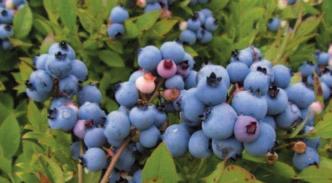

Cevya containing Revysol, is a new tool for Canadian horticulture growers that offers broad-spectrum disease efficacy. With greater disease control, and a rotational option as a solo group 3 fungicide, growers can produce higher-quality fruit and vegetable crops, helping to ensure maximum yield.

MAY 2023 –– PAGE 21 THE GROWER BITS & BITES
Digging into nematodes and their presence in Ontario blueberry fields
Dr. TAHERA SULTANA AND ERICA PATE
Many plant-parasitic nematodes (PPNs) are pests to blueberries, feeding on or within the roots. This feeding reduces root volume and function, with above-ground symptoms including poor, weak areas of the field, slow-growing plants, and lower yields. In addition, nematodes can also vector viruses, including necrotic ringspot and tomato ringspot; which has always been a concern to blueberry growers because of major yield loss.
Nematode damage can be difficult to distinguish from other issues, such as fertility challenges, so soil samples need to be analyzed to accurately identify nematode pests. The occurrence of PPNs associated with blueberries has been assessed in some blueberry-producing regions of North America but our knowledge of association of these nematodes in southern Ontario is limited.
Therefore, a study was conducted in 2019 to better understand the frequency of occurrence, prominent value (predominant species), and population density of plantparasitic nematodes in selected blueberry fields at Dr. Tahera Sultana’s lab at Agriculture and Agri-Food Canada (AAFC) facilities. From this initial survey, 92 per cent of samples were positive for at least one of the
plant parasitic nematodes tested (Pratylenchus sp., Mesocriconema sp., Xiphinema sp., and Paratylenchus sp.). One of the major plant parasitic nematodes that we found was Dagger nematode (Xiphinema sp.), a well-known vector for several nepo-viruses, and presence of these viruses and nematode together can cause key decline in blueberry production.
Our initial data indicated that southern Ontario is witnessing an increase in the population of plant-parasitic nematodes associated with blueberry.
Focusing on this trend, Tahera Sultana from AAFC and Erica Pate from OMAFRA have taken a long-term action plan since 2021 with Berry Growers of Ontario to monitor different blueberry fields to characterize nematodes associated with this crop. Several fields have been sampled in 2021 and 2022. Soil samples were collected from each field following a zigzag style from randomly selected plants. At least five cores of 2.5 cm X 25cm deep samples were collected around each plant (within 1 meter square diameter). Nematodes were extracted from 50gm of mixed cores of each sample by both Baermann pan extraction method and sugar centrifuge procedure.
In 2021, a total of 22 samples were collected from seven counties from July to October.
Plant parasitic nematodes in each sample were identified and counted using inverted microscope following
BRITISH COLUMBIA BERRY PRODUCTION
morphological characteristics. While using Baermann Pan extraction method, PPNs were identified to genus and 82 per cent of these samples were found positive for at least one of the plant parasitic nematodes tested. Of note, 69 per cent of samples were als positive for at least one of the plant parasitic nematodes using sugar centrifuge procedure of nematode extraction. For both, most samples were positive for more than two of the nematodes tested (Pratylenchus sp., Mesocriconema sp., Xiphinema sp., Paratylenchus sp. and Tylenchorhynchus sp.).
2021 result summary:
• 50% of samples had root lesion nematodes (Pratylenchus sp.)
• 32% of samples have been found to contain ring nematodes (Mesocriconema sp.)
• 23% of samples had dagger nematodes (Xiphinema sp.)
• 5% of samples had pin nematodes (Paratylenchus sp.)
• Stunt nematode (Tlyenchorhynchus sp.) were not found in any of the samples
In 2022, a total of 10 samples were collected from three different counties within southern Ontario through May-June. Plant parasitic nematodes in each sample were identified and counted using inverted microscope following morphological characteristics as well. While
using Baermann Pan extraction method, PPNs were identified to genus and 76 per cent of these samples were found positive for at least one of the plant parasitic nematodes tested. In these samples, 68 per centtested positive for at least one of the plant parasitic nematodes using sugar centrifuge procedure of nematode extraction. Similar to the previous year, most samples were positive for two or more of the nematodes tested.
2022 result summary:
• 60% of samples had root lesion nematodes (Pratylenchus sp.)
• 30% of samples had dagger nematodes (Xiphinema sp.)
• 50% of samples had pin nematodes (Paratylenchus sp.)
• No Ring (Mesocriconema sp.) or Stunt nematode (Tlyenchorhynchus sp.) were found in any of the samples
Many of the samples over the last two years are very high in nematode count. This result found that plant parasitic nematodes are a significant concern for Ontario blueberry growers. Presence of PPNs in growers’ fields may lead to a major impact to blueberry plant’s health and susceptibility to other pathogens. However, not all the common plant parasitic nematodes have been tested in this study and sample numbers were also relatively low.
Therefore, with one more year of the survey, a larger sampling will continue this spring and fall of 2023. Efforts are ongoing to generate awareness among growers about the presence of plant-parasitic nematodes in their fields and potential yield loss. Our goal at the end of this final survey year is to have a better understanding about the effect plant parasitic nematodes are having on Ontario blueberry production, and to identify what further research is needed to help manage this pest.
If any blueberry growers suspect nematodes are causing damage to their blueberries, or are interested in participating in the final year of this survey please contact Erica Pate (erica.pate@ontario.ca). The initial 2019 survey was voluntarily supported by AAFC researcher Dr. Tahera Sultana within her nematology lab at AAFC Vineland Station, and the current 2021-2023 project is funded in part by the Berry Growers of Ontario.

Dr. Tahera Sultana is a research scientist with Agriculture and Agri-Food Canada, based in Vineland, Ontario. Erica Pate is fruit crop specialist with the Ontario Ministry of Agriculture, Food & Rural Affairs, based in Simcoe, Ontario.
Phytophthora root rot and wilt: a serious saboteur of raspberry production
DR. RISHI R. BURLAKOTI & DR. SANJIB SAPKOTA
Canadian raspberry growers, mostly situated in British Columbia, have been facing several challenges, particularly production decline due to unexpected weather patterns and emergence of diseases and pests.
Phytophthora root and wilt (PRRW), primarily caused by an oomycetes pathogen (water mould) Phytophthora rubi, is the most damaging one.
The disease is responsible for declining raspberry plant vigour and fruit yields. Moreover, the lifespan of the raspberry plantings in BC has declined from 10 to 12 years to five to seven years. BC raspberry growers consider their single largest non-labour expense to be the control of PRRW. The disease is also a major production challenge for raspberry growers in the Pacific Northwest regions of the United States as well as in
Chile, UK and several other European countries.
Although P. rubi is considered as a major causal agent of the disease, multiple species of Phytophthora such as such as P. gonapodyides, P. cryptogea, P. citricola, etc. were sporadically reported to infect raspberry from different countries. Phytophthora is a soil-borne pathogen and can survive in soil up to 10 years by producing thick-walled sexual spores, ‘oospores’. The pathogen also persists as mycelia in infected raspberry plant tissues. When the soil is wet either from precipitation or irrigation, the pathogen produces plenty of motile spores ‘zoospores’ which can swim in water and ultimately are able to move among plants and fields. The pathogen can spread within and among fields via infected propagating materials, contaminated soil materials stuck to farm machinery, tools and human wares.
Motile spores infect plants via
root, colonize the root tissue and ultimately move to stem base and above-ground plant tissue. Multiple cycles of infection can happen in a single growing season. Root infections cause lesions and discolouration in roots, crown and stem base (Fig.1A). Once the disease progresses, scorching, chlorosis, and necrosis appears on leaves and ultimately causes wilting and dieback of stems and the entire plant (Fig.1B & C). Frequent and high amounts of rainfall and moderate temperature (15 to 22°C) favour root rot infection and disease progress. Disease is more problematic in heavy clay soil than the sandy loam or loam soils.
Management of PRRW is very challenging, requiring integration of several management methods during both pre- and post-raspberry planting. Most common raspberry cultivars are susceptible to the disease and have a very low level of resistance. Only a few
cultivars of raspberry ‘Cascade Bounty’, ‘Cascade Harvest’, and ‘Squamish’ are moderately resistant to the disease, but their level of resistance in fields has been shown to be inconsistent.
Judicial use of cultural practices, such as selecting loam or sandy loam sites, use of raised beds and plastic mulch etc. can help in reducing the disease, but these practices are difficult to use and also are not sufficient to control disease.
Foliar fungicides (fosetyl-Al, Fungicide Resistance Action Committee, FRAC group 33) and soil application of metalaxyl (FRAC group 4), oxathiapiprolin (FRAC group 49), and cyazofamid (FRAC group 21) are registered in Canada for controlling root rot and wilt of raspberry. However, proper rotation, tank-mix and application timing is required for the fungicide application.
With funding support from the Canadian Agricultural
Partnership (CAP) AgriScience Program and Raspberry Industry Development Council and BC Blueberry Council, a five- year (2018-2023) research project led by Dr. Burlakoti was conducted in Agassiz Research and Development Centre, AAFC. The aims of the project were to: (i) survey the disease, identify the causal agents and understand the pathogen diversity; (ii) develop reliable disease screening tools to support the breeding program; and (iii) evaluate multiple fungicides groups and their application timing to reduce the disease. We revealed that PPRW is a serious problem in raspberry in BC, as Phytophthora infection was found in 55 per cent to 100 per cent of fields monitored during 2018 to 2020. Disease was found in most commonly grown cultivars: ‘Chemainus’, ‘Rudi’, and ‘Meeker’.
Continued on next page
THE GROWER PAGE 22 –– MAY 2023
BRITISH COLUMBIA
BERRY PRODUCTION

Phytophthora root rot and wilt: a serious saboteur of raspberry production


Continued from page 22
We confirmed that 85 per cent of the pathogen strains isolated from diseased samples were P. rubi. Interestingly, we also found P. gonapodyides as a new Phytophthora species infecting moderately resistant cultivar ‘Cascade Bounty’.
We also identified reliable screening assays which can be used for conducting pathogen diversity studies and screening raspberry cultivars, germplasms and breeding materials for response to PRRW, which ultimately assist Raspberry Breeding Program to develop the disease-resistant cultivars.
We also selected 44 strains of P. rubi collected from diverse raspberry cultivars, fields, and locations in BC’s Fraser Valley and evaluated their sensitivity to the fungicide metalaxyl-m (Ridomil Gold), the most commonly used fungicide to control PRRW. Strains of pathogen population were sensitive to this fungicide; however, continuous monitoring of the pathogen population is required in the future.

From field studies conducted over three years, we identified that application of a tank mix of oxathiapiprolin (Orondis) and metalaxyl-m (Ridomil Gold) alone or in rotation with cyazofamid (Torrent) were effective to reduce the PRRW.
For in-depth research findings from this project, look to the following manuscripts.
• Sapkota S. Burlakoti R.R. et al. 2022. Can. J. Plant Pathol. 44:323-344.
https://doi.org/10.1080/07060661. 2021.2011420
• Sapkota S., Burlakoti R. R. et al. 2022. PLoS ONE 17(11): e0275384.
https://doi.org/10.1371/journal.pon e.0275384
• Burlakoti R. R.. Sapkota S., et al. 2023. Plant Dis. https://doi.org/10.1094/PDIS-0822-1940-PDN
• Sapkota S., Burlakoti R. R., et al. 2023. Can. J. Plant Pathol. https://doi.org/10.1080/07060661. 2023.2175912
• Sapkota S., Burlakoti R. R., et al. 2023. Plant Dis. 107:784-793 https://doi.org/10.1094/PDIS-0422-0931-RE
Dr. Burlakoti is a research scientistplant pathology, Agassiz Research and Development Centre (ARDC), Agriculture and Agri-Food Canada (AAFC) and Dr. Sapkota is a PhD student at Simon Fraser University and ARDC-AAFC.
MAY 2023 –– PAGE 23 THE GROWER
Fig. 1. Symptoms of Phytophthora root and wilt of raspberry.
A B C
A. Root rot symptoms, B. Foliar symptoms, and C. Severe disease symptoms in field.
EQUIPMENT
FINALLY!!
FREEDOM “75”
After 35 years as a dealer, my orchard sprayer business has been acquired by ORCHARD & VINE EQUIPMENT SOLUTIONS. Best wishes for success to Wayne Riddle. As always, I will be happy to assist my long-time loyal customers by phone during spray season to offer advice through shared experiences relating to sprayer issues.



Turbo-Mist 400 (2014) Teejet controls, nice clean low-hours $17,300
Turbo-Mist 500 (NEW) diaphragm, electric, tower - Last one at a very special price Perfect KG-220 (7’ 4”) nice clean, recent new hammers $8,750 NEW PERFECT ORCHARD MOWERS & HD FLAIL MULCHERS
DON ARTHUR ( cell) 519-374-7621 donarthur3@gmail.com
Thornbury, ON
Providing quality apple trees for 40 years.
• Bench graft
• 9 month bench
• KNIP tree
• Call to enquire about the new variety Wild Pink. Call sooner and get what you want with better savings . . . contract work available.

BRIAN VAN BRENK 31760 Erin Line
Fingal ON, N0L 1K0 519‐902‐6353 www.vanbrenk.ca brian@vanbrenk.ca
TURBO-MIST SPRAYERS

Apple or Grape growers: Looking for a Multirow Sprayer? They available. 4 or 6 row!
Herbicide sprayers 50-200-Gal, electric controls. New only. Starting at $3,950
Turbo-Mist 50-150-Gal - 3PT Hitch, electric. New only. Starting at $9,900
Turbo-Mist 400-Gal - Diaphragm pump, electric controllers. Starting at $15,000
Turbo-Mist 500-Gal - Diaphragm or Centrifugal pump. Electric. Starting at $23,500


Turbo-Mist 600-Gal - Diaphragm or Centrifugal pump. Electric. Starting at $32,500
Save 10% - 30% on chemicals through correct application?
Retro fit a “Rate Controller” call us. DEAL OF THE MONTH!
Turbo-Mist 500-Gal, clevis hitch, electric controls, cab pressure adjust, orchard head. $27,000.00. Call for details.
OUR BUSINESS IS SPRAY BUSINESS: Parts & sevice avalaible. Accepting trades.



Contact Wayne Mobile 289 213 6855 Email: sales@oves.ca Locations: St Catharines & Thornbury www.oves.ca

FOR SALE: TWO LANE GREEFA SORTER
9 drop, (12 capable) size and color sorter. Comes with 7 round tables, 2 gravity tables and a labeler. Completely upgraded to Windows. Seasonal maintenance done by Provide Agro and is in great shape. Ideal for tomatoes, apples, peaches etc. Asking $45,000. Can also purchase a bin dumper, conveyor and washer separately. Email debackerefarms@gmail.com or call 519-476-4623.
LOGISTICS
!"##"$%&#'&()*+,(-.(/&#"%"*,/

CANADA & U.S. CUSTOMS BROKERS INTERNATIONAL FREIGHT FORWARDERS

WITH 15 LOCATIONS 4 LOCATIONS OPEN 24/7 SHIPPING PARTNERS WORLDWIDE IN 150 COUNTRIES HEAD OFFICE – TEL: (905) 673-2222 toronto@rutherfordglobal.com www.rutherfordglobal.com

scan code to sign up

JUNE SUPPLY CHAINS

BOOK BY MAY 15 advertising@thegrower.org


Helmet
(800)
PAGE 24 –– MAY 2023
WORKS advertising@thegrower.org 866-898-8488 x 221
MARKETPLACE
HELMET RESPIRATORS
SEED, NURSERY & ROOTSTOCK
THE GROWER
461-4299
www.thestgeorgeco.com
respirators that
while
and handling herbicides and
give you protection
spraying
pesticides.
Formerly Don Arthur Orchard Equipment
MARKETPLACE
CLASSIFIED ADS
Beaver Hortiblock 72/95ml 72 cell trays, approximately 900 available, $2.50 each. Call or text 519-428-2989.
Pneumatic pruning system. Complete with new reels/hoses and Campagnola pruners. Enough for ten workers. Compressor powered by Honda. Strong unit. $10,000/offers. 905-932-8777.
TOW & BLOW PORTABLE
WIND MACHINE. Protect your crop against frost with a movable, efficient, quiet, effective machine (25HP twin Honda gas engine). Purchased new in 2016. Used less than 85 hours. Stored indoors. Mint condition. Call Peter at 1-905-379-0735, or email: petervanbrugge2@gmail.com
TESSO FRUIT GRADER.
Used for apple grading. Includes: hydraulic bin dumper, brush machine, feeding belt, 2-lane weight grader with 6 measure/weighing sections. Best offer. Call Peter at 1-905-379-0735, or email: petervanbrugge2@gmail.com
Classified Ads
advertising@thegrower.org

519-983-6995
DESIGN - SUPPLY - CONSTRUCT - MAINTAIN
LIVE
POLLINATION SERVICES
Serving Chatham Kent & surrounding areas.
Bees for pollination
Mike & Pamela Davidson
1-226-627-6262
summersgoldhoney@yahoo.com
www.summersgoldhoney.ca

GROW TRAYS
AUCTION
AUCTION SALE
Punch Bowl Market and Bakery (property sold)
Wednesday, May 17th at 12:00 Noon
(Preview Tuesday 12:00 to 3:00 p.m.)
Located at 136 Ridge Rd (Stoney Creek). From QEW take Centennial Parkway south approximately 3 miles then east on Ridge Rd. (Watch for signs)
Consisting of – 25’ x 80’ Greenhouse – 20’ Sea Container – Walk-in Cooler and Freezer
– Display Counters some refrigerated, Reach in 3 door coolers, qty of speed racking – outside steel shade structure 48’ x 16’ – 2-Electric Garland – 1 Blodgett electric oven

– Hobart mixers – Universe 18” sheeter – Comtec Pie Press
– Qty of S.S. work tables – S.S. sinks – Baking trays – Pots
– Picnic tables – Salad Bar – Qty of Rubbermaid containers and lids
– Armagh Cash System – Pass through doors – Patio items
– Selection of Antique decorative items (etc.)

Terms: Cash – Cheque (with proper I.D.) – Interac® – 3% premium on VISA® and MC Owner or auctioneer are not responsible for any accidents or property loss.
For Some Photos Check: www.theauctionadvertiser.com/jmccartney ∙ www.auctionsontario.ca/mccartney
Jim McCartney Auction Service Ltd.
(905) 516-3202 or (905) 689-8778 (Waterdown)

Email: mccartneyauctions@gmail.com

MAY 2023 –– PAGE 25
WORKS
@growernews THE GROWER REFRIGERATION INNOVATION EFFICIENCY PERFORMANCE
advertising@thegrower.org 866-898-8488 x 221
info@heye.ca Premium fruit and vegetable refrigerated cold storages
Tank mixing update – implications for users of pest control products
including Directions For Use, Precautions, Restrictions, Environmental Precautions, and Spray Buffer Zones are followed for each product. In cases where these requirements differ between the tank mix partner labels, the most restrictive label must be followed. Do not tank mix products containing the same active ingredient unless specifically listed on this label.
Sprayer operators can continue their current tank mix practices during 2023 and 2024 seasons. The new PMRA policy will come into full effect on December 22, 2024.
Tank mixing, a practice commonly performed by growers across the agricultural spectrum, is an important practice used to reduce the number of sprayer passes per season, prevent resistance development, and to improve product performance.

Health Canada’s Pest Management Regulatory Agency (PMRA) recently announced clarifications to the tank mixing policy in a new guidance document on December 22nd, 2022, entitled “PMRA Guidance Document Tank Mix Labelling”.
Previously, products could be tank mixed if there were no restrictions on any of the partner labels. Under the updated policy, a tank mix can only be applied if the partner labels specifically allow tank mixing. This could appear on the label in one of two forms given below. Additional instructions such as mixing order, or instructions for performing compatibility testing such as the jar test method may also be included in these statements.
Option 1: The label specifically identifies permitted tank mix partners (e.g., “Product X may be tank mixed with products A, B, and C” …); OR


Option 2: The label includes a general tank mixing statement (see below) which permits tank mixing as long as both tank mix partner labels include the statement. Note that product labels may contain both the general tank mixing statement and a specific list of tank mix partners.
“This product may be tank mixed with (a fertilizer, a supplement, or with) registered pest control products, whose labels also allow tank mixing, provided the entirety of both labels,
In some cases, tank mixing pest control products can result in reduced pesticide efficacy or increased host crop injury. The user should contact [insert registrant name] at [insert contact information] for information before applying any tank mix that is not specifically recommended on this label”.
PMRA’s generic tank mixing label statement as per Tank Mixing Labelling Guidance Document 2023.
It is also important to note that some product labels might have an exclusionary statement that specifically does not allow tank mixing (e.g., Do not mix or apply this product with any additive, pesticide or fertilizer except as specifically recommended on this label). If a product’s label contains this type of exclusionary statement, then it can only be tank mixed with the specific tank mix partners appearing on its label. To help guide interpretation of the label statements related to tank mixing, the guidance document includes a table to describe various scenarios and whether or not tank mixing would be allowed (see table 1 right).
Registrants are required to update their labels to align with these changes within two years of the publication date of the guidance document (i.e., by December 22, 2024). Likewise, according to a March 17, 2023, update to the guidance document, sprayer operators can continue their current tank mix practices during the two-year transitional period. On December 22, 2024, the PMRA policy will be in full effect; All practices, labels, marketing materials and educational materials must then be consistent with the new policy.
For growers, and other users of pest control products, this effectively means they may continue to tank mix as previously done for the 2023 and 2024 field seasons. However, when ordering and purchasing


EFFECTIVE FLEXIBLE CONVENIENT
product in late fall 2024 and winter 2024-2025, users will need to ensure that desired tank mix partner labels permit tank mixing with each other to ensure their pest control product sprays applied in 2025 comply with the new guidelines.
Parties affected by this new policy change are encouraged to review the guidance document in
its entirety for a full explanation and further detail on these changes. For any outstanding questions you may have regarding these new guidelines after reviewing the guidance document, please contact the PMRA Info Service at pmra.info-arla@hc-sc.gc.ca. Further information on tank mixing practices can also be found on
the Sprayers101 website. Josh Mosiondz is minor use coordinator, Ontario Ministry of Agriculture, Food and Rural Affairs (OMAFRA).

Dr. Jason Deveau, application technology specialist, OMAFRA, has contributed to this article.

• Extremely systemic & highly unique phosphite fungicide
• Direct & indirect effect on harmful oomycete diseases on a broad range of crops
• Effective, convenient & flexible preventative protection against downy mildew, late blight, root rots & septoria leaf spot

THE GROWER PAGE 26 –– MAY 2023 CROP PROTECTION
BELCHIM CROP PROTECTION CANADA www.belchimcanada.com
JOSH MOSIONDZ
Product X label says Product Y label says Can I tank mix? (Y/N) Nothing (silent on tank mixing) Nothing (silent on tank mixing) N General tank mix statement Nothing (silent on tank mixing) N Nothing (silent on tank mixing) General tank mix statement N General tank mix statement General tank mix statement Y General tank mix statement Tank mix with Product X Y Tank mix with Product Y General tank mix statement Y Tank mix with Product Y Nothing (silent on tank mixing) Y Nothing (silent on tank mixing) Tank mix with Product X Y Tank mix with Product Y Tank mix with Product X Y Tank mix with Product Y Exclusionary statement (and label does not include a specific Product X tank mix) N Exclusionary statement (and label does not include a specific Product Y tank mix) Tank mix with Product X N
“
Robust water monitoring program supports science-based, decision-making for pesticides
cancellation of uses and the discontinuation of products. In many cases, had real-world monitoring data been available, the PMRA would have made much different decisions that would have maintained access to important tools for growers.
As an industry committed to sustainability, the agriculture sector is focused on protecting the waterways in and around the areas where crops are grown. Water is essential to agricultural production and protecting water is critical to preserving our collective license to operate. When it comes to the use of pesticides, the goal is always to ensure that these products are applied when and where necessary, and that they remain where they can be effective.
CropLife Canada and the plant science industry has long advocated for a national water monitoring program in Canada. In order for a pesticide to be approved for use in Canada, it must pass the rigorous safety standards set by the Pest Management Regulatory Agency (PMRA), which include considerations of the impact of a product on both surface and ground water.
Canada has not historically had a consistent national water monitoring program to assess pesticide occurrences in water. As a result, the PMRA has often had to use modelling data that has led to overly conservative approaches in risk assessments and resulted in negative regulatory decisions, including reduced use patterns,
To address the challenge of a lack of access to high-quality water monitoring data, the PMRA is currently developing a national water monitoring program for pesticides in water. This program is an important step towards building our collective capacity as an industry to address regulatory needs, such as refining risk assessments, confirming the effectiveness of mitigation measures and enhancing public trust in the scientific rigour of Canada’s pesticide regulatory system.
A two-year pilot program of the National Water Monitoring Program for Pesticides (NWMPP) began in 2022. Led by the PMRA, the program is also supported by Environment and Climate Change Canada and Agriculture and Agri-Food Canada. The stated goals of the program are to inform the development of a larger national program; inform the development of a water monitoring framework; and generate data to better inform future pesticide reevaluations and special reviews by the PMRA.
In the first year of the program, 89 surface water sites across the country were sampled approximately twice weekly for more than 190 pesticides. In the second year of the pilot program, the PMRA plans to add more sampling locations, including many in Ontario’s fruit and vegetable growing regions.
As an industry, we collectively benefit from taking all the available measures to minimize off-target movement of pesticides.
Growers should continue to be
In the first year of the National Water Monitoring Program for Pesticides, 89 surface water sites across the country were sampled approximately twice weekly for more than 190 pesticides. In 2023, the PMRA plans to add more sampling locations, including many in Ontario’s fruit and vegetable growing regions.

diligent in following the label directions on products to ensure their appropriate use and adherence to any required mitigation measures. Ontario growers should also continue to follow best management practices for pesticide application as outlined in the Ontario Pesticide Education Program.
CropLife Canada is continuing to closely monitor the
implementation of the pilot national water monitoring program to ensure that it is science-based and will support improved regulatory decisionmaking. The more high-quality data we have as an industry, the better we can quickly respond to any issues that occur and develop appropriate mitigation measures.
We believe that through robust data collection and industry-
government collaboration that growers can benefit from sciencebased regulatory decisions that provide them with timely access to safe and effective crop protection products while ensuring the protection of human health and the environment.
Dr. Justine Taylor is director of stewardship and sustainability, CropLife Canada.

UAP introduces new fungicide technology for Canadian potatoes

AZteroid FC 3.3 fungicide produced by Vive Crop Protection is now available in Canada.
“We are excited to work with Vive Crop Protection to offer a new and unique technology to the Canadian market,” says Janet Porchak, general manager with UAP. “AZteroid fungicide will be an excellent tool for potato farmers, giving them ease of use in their operations.”
This new Azoxystrobin-based fungicide is labelled in Canada for in-furrow use on potatoes to combat Black scurf, Silver scurf and Rhizoctonia disease.
“In-furrow use of AZteroid will give your potatoes a boost to help develop a stronger root system for faster emergence, higher quality yield,” says Adam Sheppard, manager of agronomy services with UAP.
AZteroid FC 3.3 is the first fungicide to be fully compatible with liquid fertilizers making it easier to get both the benefits of early-season disease control and fertility by allowing you to do more at once.
“AZteroid is enhanced by Vive’s Allosperse Delivery Technology, enabling single pass applications and targeted disease protection,” continues Sheppard.
The Allosperse Delivery Technology found in AZteroid optimizes Azoxystrobin’s performance to ensure compatibility with your other crop inputs and delivering superior performance right at plant. To learn more, visit UAP.ca.
Source: UAP April 18, 2023 news release
MAY 2023 –– PAGE 27 THE GROWER CROP
PROTECTION
DR. JUSTINE TAYLOR
“
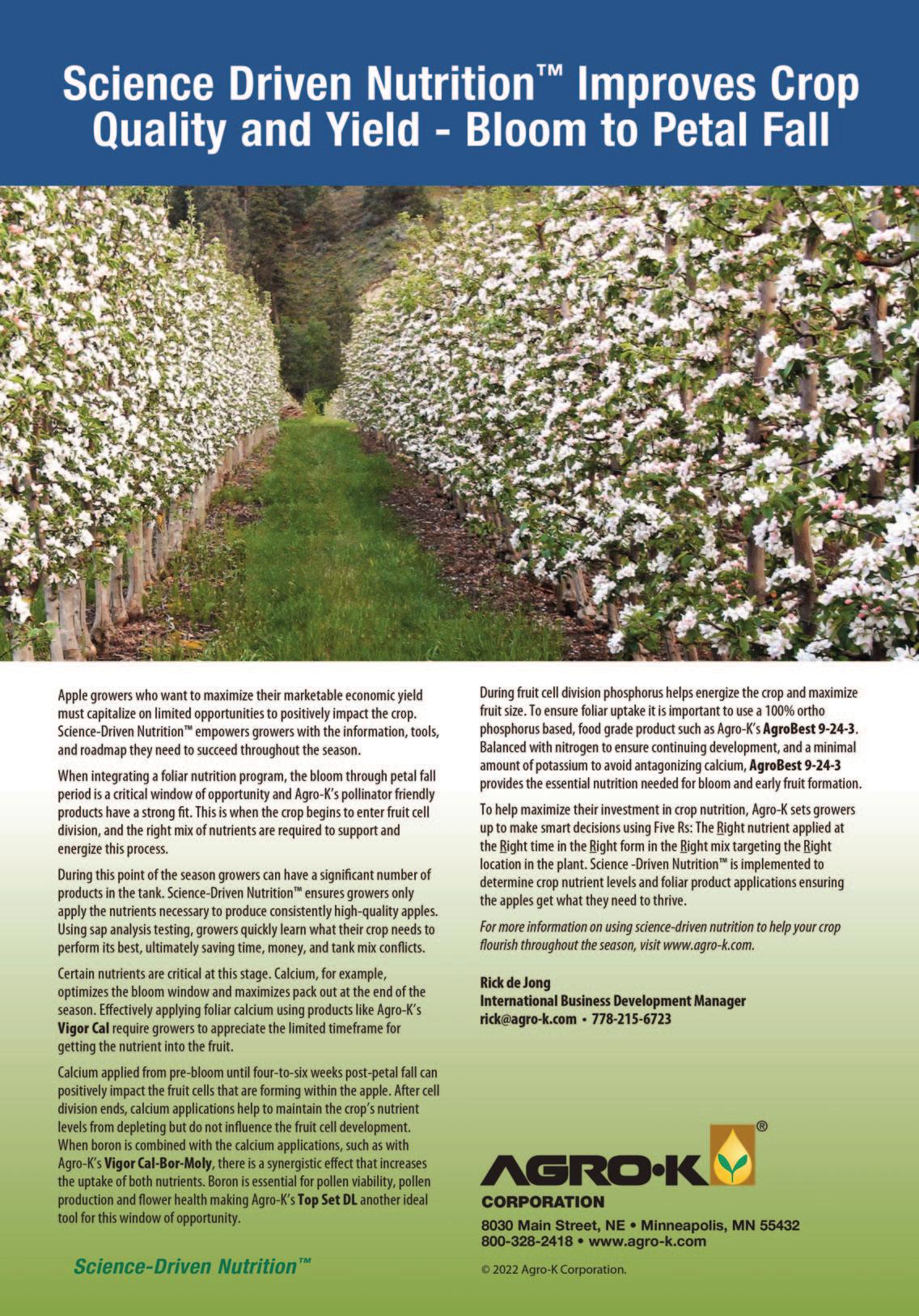
MAY 2023 –– PAGE 28 THE GROWER
