Water pipelines: a natural resource infrastructure goal
or drought. The
KAREN DAVIDSON
The Kuhl family of Winkler, Manitoba may not farm directly within the flood path of the mighty Red River but that doesn’t mean they don’t understand and respect the power of water.
“The Red River Valley has dark, fertile soil,” explains Marlon Kuhl, who shares management responsibilities with his brother Jeremy at Southern Potato Co Ltd. “The challenge is that there is a clay base underneath and more often than not, our crops would have wet feet if it weren’t for extensive tile drainage. In my entire career, I’ve only seen a couple bad droughts.”
Farming 11,000 acres of canola, corn, wheat, soybeans, edible beans and potatoes in rotation affords a yearly allocation of approximately 2,500 acres which produce fresh, chip and seed potatoes. They are sold under the
of
Southern Potato Co banner.
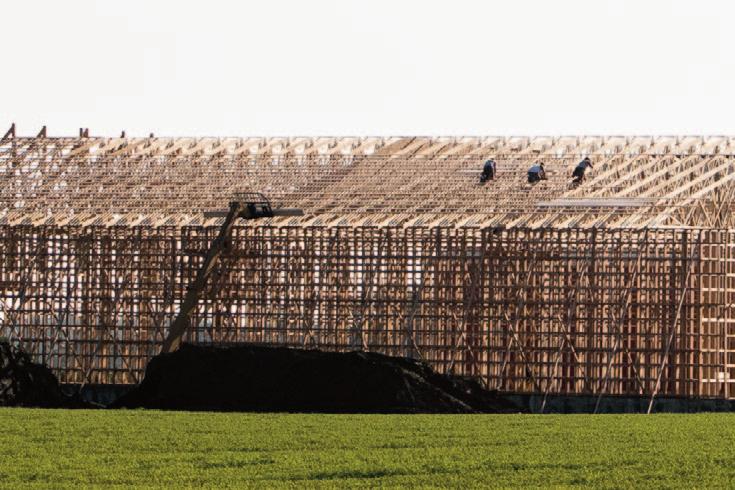
Exploring ways to de-risk the farm’s exposure to occasional drought, an increasing worry in light of climate change pressures, they decided to build two water reservoirs, six miles apart, on farm property. A four-year project that started in 2015 was supervised by local engineer Bruce Shewfelt, PBS Water Engineering Ltd. He managed the permitting process with municipal and provincial authorities. At the same time, he partnered with other technical specialists to choose suitable sites for a combined total of 500-acre feet of water storage.
As Shewfelt explains, portions of southern Manitoba were originally submerged beneath Lake Agassiz, an ancient glacial lake that produced a heavy clay base in the soil today. This type of geological formation is advantageous for building water storage, but requires diligent testing to determine the exact location where the clay core is closest to the surface. Once the two sites were
identified, the reservoirs were built with a four-metre dike above ground to safely store the water.
“There are two pump stations -- one at each reservoir at different points in the pipe network,” says Shewfelt. “Jointly, the pumps deliver close to 5,000 gallons per minute.”
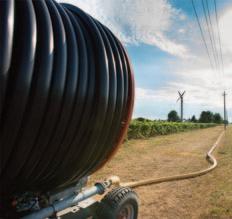
Water is syphoned from the reservoir through variablespeed electric pumps capable of drawing water at up to 90 psi pressure. Miles of pipe, ranging from 10-inch to 15inch diameter, create an irrigation network that delivers water to above ground pivot and linear sprinkler systems. The entire network is fully automated, enabling the Kuhls to turn it on and off without having to enter the field.
Environmental permit considerations included setbacks from municipal roads and directional boring to install leak-proof pipe underneath rural roads and the creeks that intermittently flow during spring runoff.
Continued on page 3
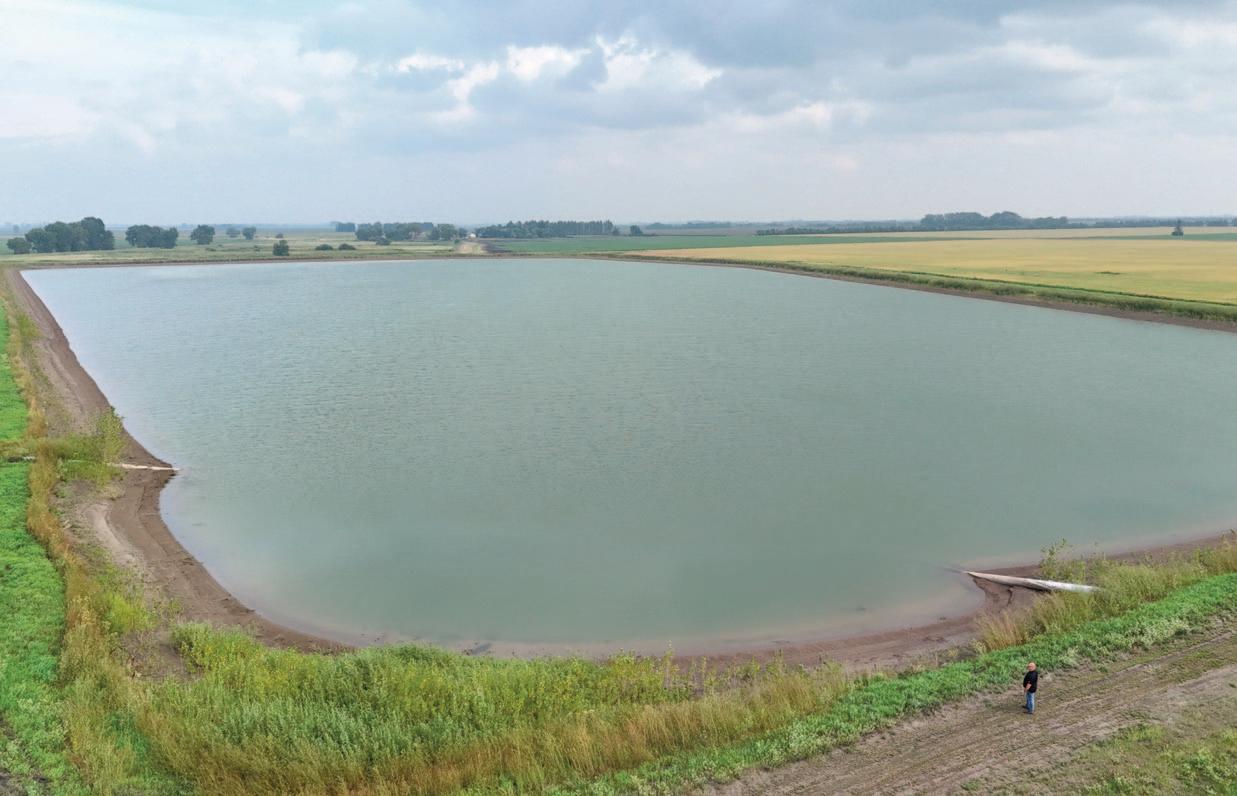
Flood
prairies have had their fair share
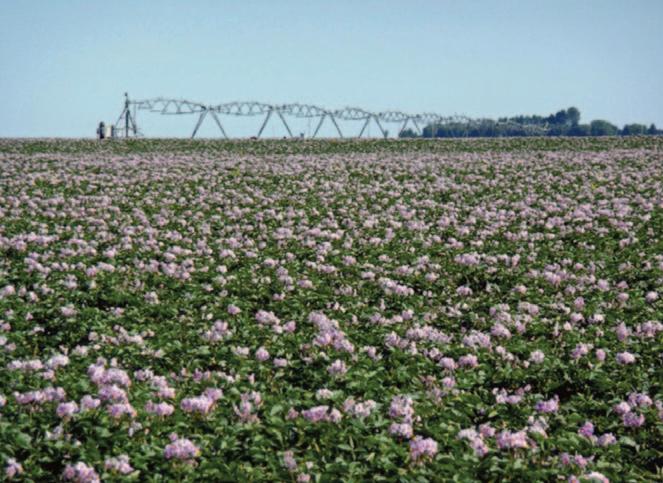
Biblical times. At Southern Potato Company Inc. some of that risk is being managed with a massive water storage and irrigation system for 2,500 acres of fresh, chip and seed potatoes. The Kuhl family is committed to that conservation effort near Winkler, Manitoba. Marlon Kuhl can be spotted in the bottom right-hand corner of the photo taken by Steve Langston.
AT PRESS TIME…
The impacts of ending the Destination Inspection Service
The fresh fruit and vegetable sector was taken by surprise when the Canadian Food Inspection Agency (CFIA) announced in late January 2026 its intent to phase out the Destination Inspection Service (DIS). While no end date has been announced, the agency confirmed that mandated budgetary cuts are to blame.
For background, DIS was created in 2006 to provide impartial, post-arrival inspections of imported fresh fruits and vegetables as well as for interprovincial trade. The third-party service, operated on a cost-recovery basis, provides the credible paperwork for any disputes on grades that go to the Dispute Resolution Corporation.
This service supports fair trading practices within Canada by verifying grade claims, ensuring market transparency and providing an impartial mechanism to settle disputes between Canadian buyers and sellers. The industry is concerned that if domestic oversight weakens, international partners will receive a signal that Canada is less rigorous in its quality controls.
Guy Milette, a former chair of the Canadian Produce Marketing Association, has gone on record saying that the DIS cost-recovery mechanism has changed in recent years. It’s been based on cost of living rather than the real cost of the service. In his view, the
industry would prefer a direct conversation about cost increases, rather than lose the service.
The announcement comes at a fraught time when the CUSMA trading relationship with the United States is under review. And it’s counter-productive given that Bill C-280, the Financial Protection for Fresh Fruit and Vegetable Farmers Act, was passed in December 2024. The removal of DIS would damage the ability to obtain reinstatement of reciprocal protection for Canadian produce sellers under the U.S. Perishable Agricultural Commodities Act (PACA). Under this legislation, the U.S. maintains a fully developed destination inspection program, paired with licensing, bankruptcy and solvency protections. The establishment of bankruptcy protection under Bill C-280, for which implementing regulations are in development, was the last remaining piece of Canada’s efforts to create the system needed to regain reciprocity.
The Canadian Federation of Agriculture has weighed into the conversation. Keith Currie, president, has written to the federal
minister of agriculture:
“We would appreciate any information on how CFIA intends to manage the transition and ensure that the critical functions provided by DIS continue to be met for all stakeholders. In addition, we encourage the Government of Canada to work with the fresh produce industry to provide clear guidance on alternative inspection options and to maintain continuity, reliability and fairness throughout this transition. This includes consideration of maintaining DIS as a fully cost-recovered, tradeenabling service.”
The bottom line is clear, states Ron Lemaire, president, CPMA.
“The Destination Inspection Service is one of the core pillars that keeps Canada’s fresh produce supply chain fair, stable and predictable. Eliminating it would not only destabilize the market and raise costs but would also weaken trade continuity with the U.S. and global partners, reduce confidence in Canada’s regulatory credibility and put both Canadian producers and consumers at a significant disadvantage.”
NEWSMAKERS
The Ontario Agricultural Hall of Fame has announced five inductees: The 2026 Inductees are:
Hon. Robert Black, Dr. Helen Fisher (posthumous), Scott Graham, Percy Hodgetts (posthumous), Brian O’Connor
Dr. Helen Fisher, known as “The Grape Doctor” was a pioneer in Ontario’s 1980s transition from labrusca to vinifera grapes. She was an influential figure, both as a researcher, educator and mentor.
Percy Hodgetts, who passed in 1966, was considered the “father of Ontario’s modern fruit industry.” During 41 years with the provincial department of agriculture, he championed the Fruit Pests Act, introducing inspection and spraying systems that protected orchards from devastating pests. He spent decades on the executive committee of the Ontario Fruit Growers’ Association. The formal induction ceremony will take place on June 14 at the GrandWay Event Centre in Elora, Ontario.
The Ontario government has announced that Cameron McWilliam has been appointed vice-chair of the Ontario Farm Products Marketing Commission. His term is from January 15, 2026 to January 14, 2028. The turkey, beef cattle and cash crop producer from Dutton, Ontario has served as a commission member since 2019. Ralph Dietrich also serves as vice-chair.
Rhonda Driediger has sold her Langley, British Columbia berry farm and IQF processing plant for $23.3 million to Berryhill Foods Inc., known for its frozen raspberry and blueberry business. The purchase means that Berryhill is moving into fresh production. Driediger will be supporting the new owners as they transition in the 2026 growing season.
After the Nooksack River flooded in December 2025, the second time in four years, British Columbia blueberry and vegetable farmers have called for stronger action. The BC-Washington State Interparliamentary Group will be co-chaired by BC House speaker Raj Chouhan and Washington State Lt-Gov Denny Heck Flooding in the Sumas Prairie region resulted in $74 million in insured property damages in December 2025 compared to $675 million in 2021.
Ontario Warren Peacock warren.peacock@norseco.com
After a successful January 29th annual general meeting, Nova Scotia Fruit Growers’ Association (NSFGA) has announced its 2026 board of directors. Jeffrey Walsh is the new president, supported by Ryan Swanson, Eisses Farm, vicepresident and Doug Nichols, Apple Lane Farm, treasurer. The Board consists of: Cassian Ferlatte, Lutz Family Farm; Naeem Khan, Eco-Pond Farm; Kourtney Stirling, Stirling Fruit Farms; Tim Stirling, Stirling Mountainside Farms, Travis Pearson, Kimberlea Farms, Dwaine Kinglocke, Noggins Corner Farm, Willem Schep, Apple Lane Farm, Janet Parker, CAP Farms (FVGC representative); David Parrish, Scotian Gold; Stephen Van Meekeren, Van Meekeren Farms.
NSFGA’s Golden Apple Award was given to Erika Bent, APM Consulting for her technical guidance through hurricanes, frosts and fireblight outbreaks. As the industry is continually challenged with new issues, she has been an essential part of identifying economic thresholds and tweaking spray programs. Well done!
NSFGA’s Honourary Membership Award went to Waldo Walsh, a long-time grower who first joined the NSFGA board in 1993. He’s lauded for his encouragement of orchard renewal, and particularly how to grow the Honeycrisp variety for export. Jeff Franklin, plant physiologist technician at Agriculture and Agri-Food Canada also received the award for his sought-after weather summaries in the Orchard Outlook newsletter.
Hon. Robert Black
Erika Bent
Jeffrey and Courtney Walsh
Water pipelines: a natural resource infrastructure goal
Continued from page 1
And of course, Manitoba’s minus 30°C weather in the winter requires proper draining of the pipeline network to prevent bursting, a job the farm contracts out to local service providers.
Southern Potato Co, like many farmers in the area, doesn’t have access to aquifer water to irrigate. Hence their decision to capture spring snowmelt into the reservoirs for just-in-time supplementary irrigation. Potatoes generally require one to two inches of water per week to maintain consistent soil moisture, particularly during the critical flowering and tuber-setting stages. Depending on soil type, total seasonal needs are typically about 18 inches. On average, Kuhl estimates that five to six inches of water are irrigated onto his potato crop during the growing season. That means irrigation is providing up to one-third of the potato crop’s water requirements.
“Yield results range by variety, but the reds, yellows and specialties such as fingerlings are showing improvements in overall quality,” says Kuhl.
Watershed initatives
As a member of Winnipeg-based Peak of the Market, Southern Potato participates in the Potato Sustainability Alliance (PSA), a North American group that tracks metrics that range from soil health to biodiversity. Dr. Tracy ShinnersCarnelley, vice-president, research, quality and sustainability for Peak of the Market, is a leader in these efforts as chair of PSA.
“In my time working with growers in Manitoba, they have always invested in managing risk,” says Shinners-Carnelley. “In transitioning to irrigation capacity, they have recognized the need for reliable access to water.”
PSA’s 2024 reporting, the latest available, shows that 474 American and Canadian potato growers, representing 640,000 acres, were members of the Alliance. Impressively, that’s half of the total potato acres harvested in North America. From a water impact perspective, PSA data reveals that 99 per cent of growers utilize a crop production irrigation plan that, over time, has been optimized for long-term water availability challenges within their region. Of the participating growers, 58 per cent, up from a meagre six per cent in 2023, collaborate on watershed or aquifer initiatives with others in their community to improve water quality.
Water quantity and quality are too often viewed in a silo separate from soil health. But upon reflection, Kuhl says that the farm’s drainage efforts have played a large part in reducing soil compaction. When it’s go-time in spring, equipment can roll into the field having minimal impact on soil.
Micro-zone irrigation
Other Manitoba potato growers also participate in the Potato Sustainability Initiative. Under The Hill Farms and Over The Hill Farms in Cypress River, situated in the Central Assiniboine, Redboine, and Pembina Valley sub-watersheds, are part of the PSA’s Lake Winnipeg Basin Project. Supporting 3,000 acres of processing potatoes, irrigated by drawing from
groundwater, partner Chad Berry has recently adopted low-volume, pivot sprinkler nozzles to improve water uptake by the soil.
“We have no run-off of water,” reports Berry, who appreciates the environmental savings.
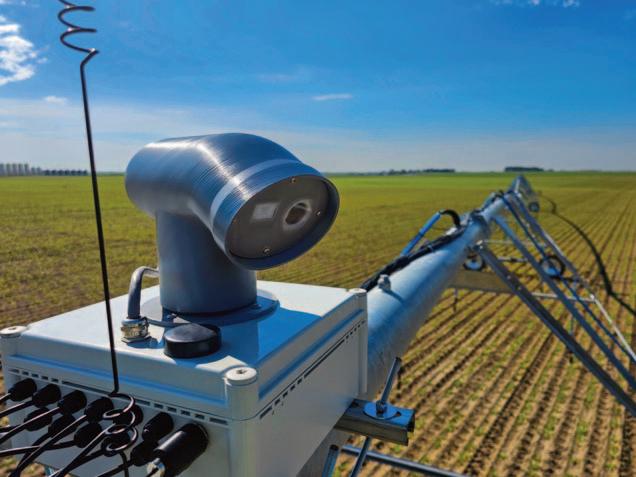
Berry also adopted the InteliRain system in 2025 to deliver micro-zone precision irrigation. The Calgary, Alberta company provides automated pivot irrigation sensing and control capabilities using soil sensors, robotics, machine learning and long-range wireless communication. The soil sensors measure air and soil temperature, electrical conductivity, pH, humidity and availability of nitrogen, phosphorus and potassium.
“We’re really happy with the technology,” says Berry.
He has further honed water management by irrigating cover crops for establishment. Once potatoes are harvested in early to mid-fall, he’s able to sow fall rye that then holds the soil in place over winter. The next season, that crop is harvested for either cattle feed or grain. This practice is the connector between water and building up soil tilth.
“As a grower, I see firsthand how water connects everything we do – our soils, our crops, and our communities,” said Berry.
Mega water project
In the neighbouring province, Saskatchewan plans to start on the Westside Irrigation Rehabilitation Project (WIRP) in late 2026 to expand irrigation near Lake Diefenbaker. Potato grower Harry Meyers, Barrich Farms Ltd., Outlook, SK is in favour. He irrigates 1,500 acres of seed and fresh potatoes, thanks to access to the South Saskatchewan River.
“Without that access, we wouldn’t be here,” says Meyers, located about 30 minutes north of Lake Diefenbaker. “The year before last, Lake Diefenbaker had worrying low water levels. It’s not OK to run out of water even once in 10 years.”
The Water Security Agency says the project will build a pump station and reservoir as well as restore a canal built in the 1970s. This proposed infrastructure would facilitate 100,000 acres of new irrigation. KPMG LLP did the final economic analysis and found the areas forecasted to see major economic impacts were the crops, livestock, land and food manufacturing sectors.
The study points out that Saskatchewan has 431,000 irrigated acres compared to Alberta’s 1.8 million acres. Just as southern Alberta has expanded its potato production, there’s opportunity to grow more specialty crops in Saskatchewan. The final economic analysis for WIRP shows a $12.9 billion gross domestic impact while creating 80,000 jobs.
As Canada pursues greater selfsufficiency amidst the looming threat of economic upheaval, political debate has intensified over major infrastructure priorities. What better time for agriculture to step up and shine a light on water access and sustainability needs. In the long history of politicians being commemorated across Canada with airports, highways, and bridges, only one, John Diefenbaker, left his legacy on water. Such an important natural resource deserves more.
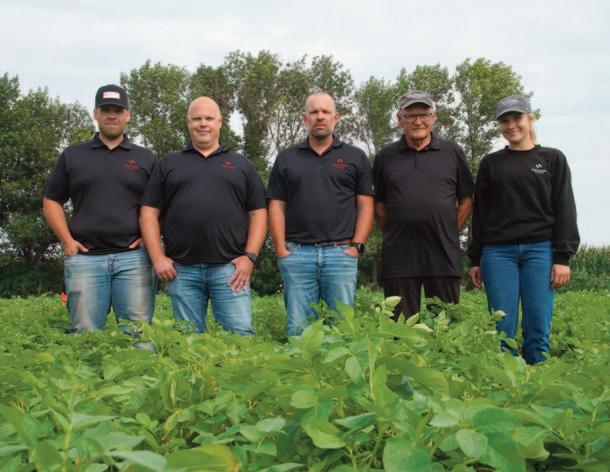
The Southern Potato Company Inc is owned by three generations of the Kuhl family. L-R: Nolan, Marlon, Jeremy, Keith and Brooke.
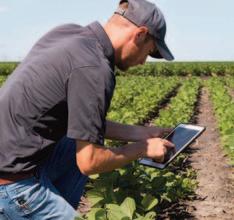
This InteliRain multi-spectral robotic sensor scans the potato field in real-time to determine soil moisture.
Outlook is called the Irrigation Capital of Saskatchewan. It’s located on the South Saskatchewan River, about 30 minutes north of the Lake Diefenbaker project. That’s where Harry Meyers, Barrich Farms Ltd., grows 1,500 acres of seed and fresh potatoes.
BRITISH COLUMBIA
Judge rules that former members of BC Tree Fruits should share in post-bankruptcy assets
KAREN DAVIDSON
The remaining assets of the bankrupt BC Tree Fruits Cooperative totalling $12 to $15 million are to be shared between current and former members, according to the British Columbia Supreme Court. These funds are surplus after creditors were paid from the sale of assets of the Okanagan-based cooperative when it collapsed in August 2024.
Justice Miriam Gropper ruled on February 12, 2026 on a petition from former members of the BC Tree Fruit Cooperative seeking to prevent current members from holding a special meeting to amend Rule 125 of the governing rules
BRITISH COLUMBIA
of the cooperative. That rule states that current and former members are entitled to a share of those funds based on the tonnage shipped to the packinghouse over the last six years of operation. If that amended resolution had passed, it would have prevented any distribution of the remaining assets to former members.
Under Rule 125, the current members are entitled to 68 per cent of the surplus funds and the former members to 32 per cent. There are $4 million in funds that would be distributed to former members.
Amarjit Singh Lalli represented the current members. Steve Day represented the former members.
In her concluding statements, the justice wrote: “Having found that the
special general meeting has been requisitioned with the express object of considering and voting on the proposed resolution, which I have found to be oppressive and unfairly prejudicial conduct of the current members to the obvious detriment of the former members, I grant the relief sought by the former members.”
She directed the receiver Alvarez and Marsal Canada to make any future distributions to current and former members.
Since September 2025, B.C. Tree Fruits has been operating under the ownership of Wildstone Construction Group and under the management of Ontario-based Algoma Orchards.
For the court proceedings, link here:
bccourts.ca/jdb-txt/sc/26/02/ 2026BCSC0229.htm
Source: BC Supreme Court February 13, 2026 posting
Bumper 2025 cherry crop revealed challenges in packing capacity
The British Columbia Fruit Growers’ Association and British Columbia Cherry Association held a town hall on January 26 to reflect on the 2025 cherry season. More than 60 growers, packers, marketers, and industry partners attended. Discussions acknowledged that while the 2025 season delivered a large
Participants emphasized the importance of respectful dialogue, transparency, and shared accountability across the value chain. Growers shared varied experiences with packers and marketers, underscoring the need for clearer communication around packing standards, percentage culls, costs, and
clear expectations, and advance coordination to manage large volumes during a short season. Labour emerged as one of the most critical constraints facing the sector. The scale of the 2025 crop strained labour availability, housing capacity, and administrative processes such as LMIA and housing approvals.
Data limitations were repeatedly identified as a barrier to effective planning. The lack of accurate information on planted acreage and production potential limits the industry’s ability to forecast volumes, plan labour needs, and assess infrastructure capacity. Efforts are underway to leverage crop insurance data to
Looking ahead to 2026, stakeholders agreed that planning must assume another large crop. Early field assessments, preharvest engagement with brokers and packers, improved use of decision-support tools, and proactive market planning, particularly in domestic and emerging export markets, were identified as priorities. The meeting concluded with a shared commitment to constructive dialogue, coordinated planning, and continued advocacy to
competitive BC cherry industry.
Insufficient packing capacity
Labour shortages and housing
Limited access to effective disease management tools
• Data gaps affecting production and labour planning
• Reputational risk from negative media coverage
Key opportunities
• Improved capacity with new packing lines coming on stream
• Enhanced domestic marketing, particularly in Eastern Canada
• Potential new export markets (Mexico initially; Brazil and Australia also being explored)
• Better data utilization through coordination with the Ministry of Agriculture and Food
• Stronger collaboration across the value chain
Key action items
• Plan for a large 2026 crop and engage packers/brokers early
• Improve transparency and communication across grower–packer–marketer relationships
• Support and participate in labour strategy development
• Advocate for improved approval timelines and fair compliance processes
• Invest in research, decision tools, and disease management solutions
• Engage in market development and promotional initiatives
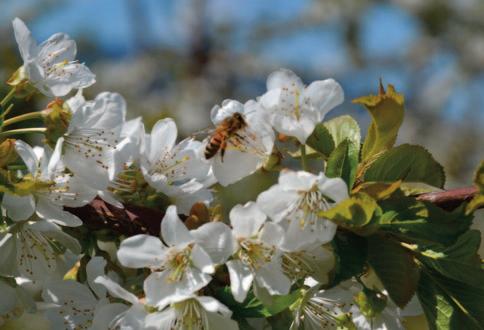
Lavington cherries in bloom. Photo courtesy of Jealous Fruits.
CROSS COUNTRY DIGEST
Québec apple growers worry about severe price pressures
JÉRÔME-ANTOINE BRUNELLE
The Annual General Meeting (AGM) of the Producteurs de pommes du Québec (PPQ) was held on January 27, 2026, in La Prairie, Québec. The event brought together apple growers from across the province, along with industry partners and stakeholders, for a full day of presentations, exchanges and formal proceedings.
The program included conferences and updates on market trends, sector challenges, research initiatives and regulatory issues affecting the Québec apple industry. Following annual tradition, the AGM also fulfilled its essential governance role, with the presentation of activity and financial reports, discussions on strategic priorities, and the opportunity for growers to directly engage with their growers’ association and marketing board.
Above all, the AGM remains the key moment for Québec apple growers to review the outcome of the most recent marketing season. In this case, discussions focused on apples harvested in fall 2024 and marketed between August 1, 2024, and July 31, 2025.
Record crop, record volumes marketed
As announced in fall 2024, Québec experienced its largest apple harvest in the past 15 years. This exceptional crop is clearly reflected in commercialization data. A total of 6,055,721 bushels (42 lb per bushel) of Québec apples were marketed during the season.
Fresh apple shipments reached 2,574,844 bushels, representing a seven per cent increase compared with the five year Olympic average. Volumes of apples downgraded and diverted to processing totaled 1,295,116 bushels, a sharp 50 per cent increase over the five year Olympic average. Apples destined directly for processing amounted to 2,185,761 bushels, up 21 per cent from the same benchmark.
These figures highlight the scale of the 2024 crop but also underline the pressure such volumes placed on market balance.
Producer prices under severe pressure
The abundant supply resulted in a significant drop in prices paid to growers, well below production costs — a situation widely acknowledged as unsustainable.
For fresh apples, the average price received was $0.46/lb ($19.33 per bushel), down 15 per cent from the 2023–2024 season and 14 per cent below the 10 year Olympic average. Processing apples averaged $0.09/lb ($3.95 per bushel), a decline of 22 per cent year over year and 32 per cent below the 10 year Olympic average.
These results were a central concern raised during the AGM, reinforcing the need for better alignment between production volumes, market demand and long term economic viability.
Variety mix: transition underway, but gaps remain
The breakdown of fresh apple varieties marketed in 2024–2025 shows a relatively balanced share among traditional varieties — McIntosh (25%), Cortland (21%), Spartan (15%) and Empire (14%) — which continue to play a dominant role in the Québec market.
At the same time, newer varieties such as Gala (5%), Honeycrisp (5%) and Ambrosia (2%) are gaining ground. However, their combined share remains limited given the strong and sustained consumer demand observed in domestic and export markets. This gap between
market interest and available volumes continues to be clearly a strategic issue for the sector and future orchard planning.
In summary, the 2026 PPQ AGM highlighted both the strength of Québec’s production capacity and the economic challenges created by exceptional harvests, while reaffirming the importance of strategic variety development to better meet
NS Fruit Growers’ Association refreshes board of directors
At the 162nd annual general meeting of the Nova Scotia Fruit Growers’ Association (NSFGA), Jeffrey Walsh from Walsh Farms was welcomed to the role of president. He is a thirdgeneration apple farmer whose father Michael and grandfather Fred also both served as president of the association. With the support of his wife Courtney, he will serve until January 2028.
In reviewing the 2025 growing season, NSFGA executive director Emily Lutz expressed the disappointment of growers when
drought curtailed a promising crop. Talks are ongoing with the province for industry support. Lutz noted that of $18 million in crop insurance claims in the province, $12 million were from fruit growers.
“We want to assess the trees in spring 2026 to see if any long-term damage has occurred,” said Lutz.
Striking a forward-looking note, the association plans its annual orchard tour for August 5, 2026.
market expectations and development.
Eric Rochon remains president of the association.
Jérôme-Antoine Brunelle is general manager, Producteurs de pommes du Québec.
NOVA SCOTIA
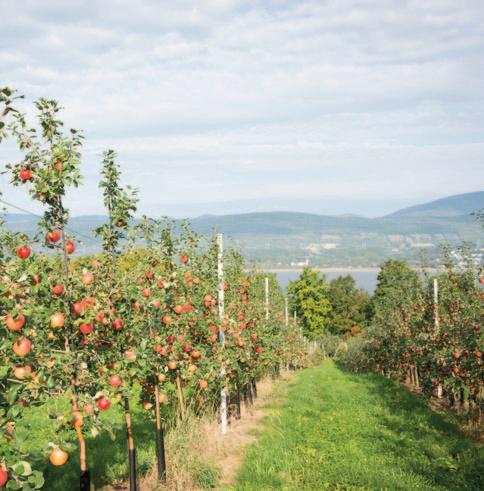
Apple orchard, Île d’Orléans, Québec.
All four living female NSFGA past-presidents attended the kitchen party on January 28th at the Old Orchard Inn Heritage Barn. The association salutes their leadership throughout the years! (L-R) Joan Hebb, Mary Lou Power, Gail Parker and Janet Parker.
IUNU and Priva partner to deliver one-to-eight week yield forecasting
IUNU and Priva have announced a partnership that combines climate execution data from the Priva One platform with continuous plant-level insights from IUNU’s LUNA AI system to deliver reliable yield forecasting and prognosis capabilities to commercial greenhouse growers. The integration, available now to joint customers globally, addresses one of the industry’s longeststanding operational challenges: achieving reliable, week-over-week yield forecasts.
“What truly impacts profitability is not whether a forecast is off by a small percentage. Growers can manage small deviations,” said Adam Greenberg, CEO of IUNU. “What causes real damage are the big swings. Unexpected peaks or gaps in harvest volume arrive too late to adjust labour, logistics, or commercial commitments. This partnership gives growers evidence-based forecasts that evolve as their crop responds to real conditions.”
The approach is already delivering results in commercial operations. In one multi-hectare, high-wire vine operation, the grower entered the season confident in the climate strategy and historical yield models. Early in the crop cycle, subtle acceleration in the fruit set began to emerge in specific zones. Because the system continuously monitored plant-level data and tied it directly to executed climate conditions, it flagged a future harvest peak nearly three weeks before it would have been visible in harvest data.
That early signal gave the operations team time to adjust labor plans, smooth commercial volumes, and align logistics before the swing arrived.
“The value was not knowing the final number earlier,” the grower said. “The value was having time to adjust before the swing hit.”
Growers cannot build reliable yield forecasts from a single source of data. Constantly shifting interactions between climate execution, plant behaviour, labour decisions, and timing shape yield outcomes. The variation of outside radiation has an influence on plant development. Inside the greenhouse, climate control operates dynamically. Growers adjust setpoints based on energy prices, weather forecasts and crop stage. At the plant level, individual plants grow at different rates, and different sections respond differently to the same conditions.
The Priva One platform provides deep visibility into climate execution. Not what was planned, but what actually happened inside the greenhouse. IUNU’s LUNA AI system adds continuous plant-level insight at scale, capturing real variability across plants, zones, and conditions. Because this learning is automated and continuous, it scales across entire commercial operations without increasing labour or relying on manual crop registration. Unlike forecasting systems that rely on historical variety performance, average conditions, or manually gathered data, this approach learns continuously from the specific
facility, genetics, and executed climate strategy.
“When climate execution data and plant-level learning are combined, prognosis shifts from experience-based to evidence-based,” said Meiny Prins, CEO of Priva. “The model adapts as the crop responds. If plant development accelerates or slows, if climate strategies shift, or if labour actions alter plant balance, the system incorporates those effects before they turn into costly volume swings.”
The integrated system enables rolling one-to-eight-week yield forecasts that
Ontario Greenhouse Vegetable Growers supports federal affordability measures
Ontario Greenhouse Vegetable Growers (OGVG) welcomes the January 26 announcement by Prime Minister Carney outlining new federal measures intended to make groceries and other essential goods more affordable for Canadians. These initiatives recognize the importance of strengthening domestic food production and improving the resilience of the national food system.
At the same time, OGVG is calling on federal decision makers to ensure that these new measures are supported by a stable and predictable Canada / United States trade relationship. The greenhouse vegetable sector relies heavily on export markets and deeply integrated cross-border supply chains, and long-term affordability cannot be achieved without strong and reliable trade conditions. Ontario’s greenhouse vegetable sector is one of the most trade-reliant segments of Canadian agriculture, with more than 85 per cent of production exported to the United States. Fresh greenhouse vegetables grown in Ontario move across the border every day, supplying American consumers while supporting thousands of Canadian jobs and billions of dollars in economic activity in both countries.
“This is a truly symbiotic relationship,” said Richard Lee, executive director. “Ontario greenhouse growers depend on reliable access to the United States market, and American retailers and consumers depend on our ability to deliver highquality fresh produce throughout the year. When trade barriers or tariffs disrupt that relationship, both countries feel the impact
immediately.”
Trade volatility creates real risk for growers
Recent trade discussions and ongoing market uncertainty have created new challenges for growers operating in a capitalintensive and energy-dependent sector. Even the possibility of tariffs, retaliatory measures, or administrative barriers can delay investment, disrupt planting decisions, and threaten long term competitiveness.
Ontario greenhouse operations cannot easily redirect product to other markets on short notice. Sudden changes in trade conditions can result in product losses, higher costs, and reduced production that ultimately undermine food affordability and supply chain resilience.
“Trade instability does not only affect exporters,” added Lee. “It directly affects workers, communities, and consumers in both Canada and the United States. Greenhouse vegetables do not wait for policy clarity.”
Strengthening trade is essential to food security and affordability
Growers emphasize that policies intended to improve food affordability and strengthen domestic food security must fully recognize Canada’s export-oriented food production model. Measures that overlook trade exposure risk weaken sectors that are already delivering reliable and affordable food at scale.
update as conditions evolve, reducing uncertainty and giving growers time to act. Decisions around climate strategy, labour planning, and harvest timing can be made with confidence rather than reaction. Yield forecasting shifts from a report that explains what has already occurred to a decision-support tool that helps prevent those moments from occurring in the first place.
Source: IUNU and Priva January 28, 2026 news release
• Strengthen and reaffirm Canada / United States agricultural trade relationships, recognizing their shared economic and food security benefits
• Prevent the introduction of new tariffs or trade barriers on greenhouse vegetables and essential production inputs
• Address existing non-tariff barriers that add cost, delay shipments, or create uncertainty for cross-border trade
• Engage directly with export-reliant producers when developing food security, affordability, and competitiveness strategies
A call for collaboration and predictability
Ontario’s greenhouse vegetable sector, along with farms across Canada, stands ready to work with federal and provincial governments to support policies that reinforce competitiveness, protect market access, and strengthen the North American food system.
“A resilient food system depends on strong trade relationships,” said Lee. “For greenhouse growers, protecting access to the United States market is not optional. It is fundamental to our ability to operate, invest, and continue supplying fresh and affordable vegetables to consumers on both sides of the border.”
Source: Ontario Greenhouse Vegetable Growers January 27, 2026 news release
Ontario greenhouse growers are urging the federal government to:
Priva and IUNU team working together at the PROOF Research & Development Centre at HortiTech. Photo courtesy of IUNU.
Photo by Dax Melmer
GREENHOUSE GROWER
MechaTronix unveils the CoolStack ULTRA PRO
Designed for high-tech greenhouses pursuing premium crop quality and maximum energy performance, the ULTRA PRO delivers up to 6,150 µmol/s of photosynthetic photon flux. It provides a fully flexible four-channel spectrum (red, blue, white/green, far-red). The company promises precision control for crop steering, energy management and dynamic lighting strategies. The system offers optimal light distribution with the lowest shade footprint in its class.
With independent dimming for each channel, growers can fine-tune morphology, compactness, flowering, and crop speed, all while reducing unnecessary energy use. The result: maximum photons per watt, exactly when and where crops need them.
“The ULTRA PRO is built for growers who want full power and control, not just more light, but smarter ligh,t” said Koen
Vangorp, CEO at MechaTronix. “We’ve combined extreme photon output with unprecedented precision. This is the tool professionals have been waiting for.”
Also of interest to growers is that the fixture is optimized for utility rebate programs, ensuring growers achieve the highest rebate per lamp relative to installed footprint and efficiency. Combined with its durable cooling architecture and long service life, the ULTRA PRO delivers both immediate performance and long-term cost advantages.
For more information on technical specifications, photometric data and rebate documentation visit www.horti-growlight.com or horti@mechatronix-inc.com.
Source: MechaTronix February 9, 2026 news release
CanadaGAP food safety manuals updated for 2026
Updated versions of the CanadaGAP Food Safety Manuals have now been released and will take effect on April 1, 2026. They are Fresh Fruit and Vegetables Manual, version 11.0 and Greenhouse Product Manual, version 11.0. A corresponding update to the CanadaGAP audit checklist will be issued before that date.
To help with the transition, the following resources can be found on the CanadaGAP website.
• Updated manuals (free download)
• Document outlining the main changes to the manuals
• Revisions documents tracking the changes from the previous version of the manuals
• Chart outlining which sections of the manual are applicable to different types of operations (i.e., production, packing, storing, repacking, wholesaling, brokerage)
• PowerPoint presentation on the main changes
What are some of the main changes?
• Glossary: New definitions added for laundered and lubrication water.
• Section 8: Additional wording added (for both production site and building equipment) to ensure the requirements for cloths used for wiping product are clear.
• Section 15: New requirements have been added for water for lubrication and water used for the application of wax
• Section 17: A change was made to outline that this section does apply to wholesaling operations (but only for packaging accessories).
• Form C: Additional requirements added to mitigate possible risks associated with jewellery and other personal effects in the production site. These requirements are the same as those found in Form D.
The list above is not exhaustive; all
types of operations should refer to the revisions documents and main changes documents found on the CanadaGAP website. Due to the fact that a new version of the CanadaGAP manuals has not been released for three years, there are a number of changes for Version 11.0. Changes were made based on user requests, to align with changes in Global Food Safety Initiative (GFSI) benchmarking requirements, and to clarify interpretation of existing requirements. Re-benchmarking against GFSI Benchmarking Requirements (v2024) is currently underway for Version 11.0 of CanadaGAP Program normative documents.
In the coming weeks, growers can expect detailed communication explaining how to update your manual.
CanadaGAP maintains seven separate generic HACCP models, which are available to members on the CanadaGAP website. These HACCP models will also be updated for 2026.
If you have any questions, write to: info@canadagap.ca or call 613-829-4711.
CanadaGAP January 29, 2026 news bulletin
Source:
Photo by Dax Melmer
GREENHOUSE GROWER
Levente variety is setting new bar for yellow peppers
In a market previously challenged by weak roots and inconsistent quality, Levente by Enza Zaden is rapidly becoming the yellow pepper of choice for North American greenhouse growers. With a highly productive, compact and open plant architecture, Levente delivers premium fruit quality throughout the growing cycle, even under extreme heat stress. Experienced growers report that Levente offers exactly what they need: a reliable blocky shape, consistent weight, uniform fruit size, vibrant colour, and a strong resistance package that supports healthy, year-round production with high-yield potential.
“Levente has been the biggest payoff we’ve had yet. I can see Levente being our main yellow variety for the next decade,” says Frank Neufeld of Lebo Farms, Leamington, Ontario.
Levente’s compact, open plant habit allows for efficient harvesting with excellent fruit visibility. Harvested while
still showing a touch of lime green, fruits reach full yellow colour within two days, allowing the plant to preserve energy while continuing to produce. With AFW of 200250g, consistent blocky shape, and uniquely vibrant skin help distinguish it from other yellow peppers.
Production confidence is further strengthened by Levente’s strong root system and excellent resistance to powdery mildew, Tobamovirus (Tm:0-2) and Tomato Spotted Wilt Virus (TSWV:0). Its ability to maintain stable yields and uniform fruit quality under heat stress add to its reliability, especially in challenging conditions.
“Levente is a standout among yellow peppers,” says Erica Bistratini, sales representative & product developer, Enza Zaden. Its compact, open and generative plant, it maintains consistent fruit size, enables efficient harvesting, and produces blocky fruits ideal for all types of packing. With the added support of a resistance package that
Roelands Plant Farm expands vine crop propagation
Roelands Plant Farms, one of the largest and most trusted propagators in Ontario, has selected Sollum’s advanced dynamic LED lighting solution for a 12-acre expansion at its Lambton Shores facility. The company specializes in the high-performance propagation of vine crops, including tomatoes, cucumbers and peppers.
On the agronomic performance front, Sollum’s 360 Support team collaborated closely with Roelands Plant Farms throughout the evaluation. Together, they observed plant responses, adjusted strategies and ensured that the lighting aligned with the day-to-day challenges of
propagation by responding to changing conditions, and by adjusting the spectrum, intensity, timing and daily light integral (DLI) with unmatched precision and in real time. The results confirmed that lighting plays a decisive role in establishing strong healthy plants prior to transplanting, and that Sollum’s advanced dynamic control supports uniformity, vigour and predictable growth conditions across trays.
“Propagation requires a high degree of precision and responsiveness,” said Sollum Technologies’ chief horticulture specialist, Abhay Thosar. “Roelands Plant Farms carefully assessed how dynamic lighting influences morphology, how it responds to
daily lighting variations, as well as how agronomic guidance translates into earlystage consistency. Their decision to expand reflects their confidence in our advanced technology and our team.”
“Our goal is to provide our customers with healthy, consistent-quality young plants that are ready for success and as a business, we need to achieve this in a profitable manner,” said Edward Thoren, head grower at Roelands Plant Farms. “During the trial, we saw the benefits of dynamic in the early stages, and we appreciated Sollum’s presence and support throughout. This, coupled with significant cost savings, made the decision to move
forward a natural one.”
Sollum’s advanced dynamic LED lighting is designed to support growers, even during the most critical stages of the growing process. Its unmatched flexibility and real-time responsiveness, coupled with robust technical and agronomic support and long-term economic benefits, help propagators maintain quality and confidence throughout all growing seasons.
Source: Sollum Technologies February 11, 2026 news release
minimizes waste, growers are genuinely excited about Levente.
Source: Enza Zaden
Mexico sends more tomatoes to Canada
Mexican tomato exports to Canada surged in the latter half of 2025 as producers and exporters redirected shipments following the 17.09 per cent antidumping tariff imposed by the United States on July 14. Canada became a key alternative market.
According to data from Banxico and the Ministry of Economy (SE), Mexican exports of fresh or chilled tomatoes to Canada totaled US$8.1 million between January and November 2025, a 134% increase compared with the same period in 2024.
The rebound contrasts with 2024, when Mexican tomatoes lost ground in the Canadian market. That year, exports reached US$4.1 million, a 24.5% decline from 2023. While Canada still accounts for a small share of Mexico’s tomato trade, its importance has grown. In the first 10 months of 2025, Canada represented 0.34% of Mexico’s total tomato exports, up from 0.11% a year earlier. Over the same period, the United States’ share fell by 8%.
The timing of the increase is notable, as 74% of those exports were concentrated between August and November, after the US antidumping tariff took effect, signaling a rapid adjustment in commercial strategy.
On July 14, 2025, the US Department of Commerce withdrew from the Tomato Suspension Agreement, imposing an antidumping tariff ranging from 17% to 21% on fresh Mexican tomato exports. The measure came after years of pressure from Florida tomato producers and had an immediate impact on shipments, reference prices and planting plans.
Total Mexican tomato exports to the United States fell by about 16% between January and November 2025 compared with the same period in 2024. The sector responded by setting minimum export prices for different tomato varieties, aiming to protect producers and stabilize the market.
Tomatoes are a central pillar of Mexico’s agri-export
sector, generating thousands of direct and indirect jobs and contributing about US$3 billion in annual export revenue. Roughly 99.7% of Mexican tomato exports, an industry exceeding US$2.8 billion a year, traditionally go to the United States, a concentration that has heightened vulnerability to policy shifts.
“This concentration almost entirely in one market, while it made us leaders there, now makes us extraordinarily fragile, subjecting the fate of thousands of producers and jobs to the political swings of our northern neighbor,” said José Gerardo Tajonar, President, National Association of Importers and Exporters of the Mexico (ANIERM).
Tajonar said the US tariff directly affects producers in Sinaloa, Sonora and Baja California and makes market diversification an imperative rather than an option. “This is where diversification stops being an option and becomes a strategic imperative, and Canada emerges as the most logical alternative,” he said.
Canada consumes about 780,000t of tomatoes annually and offers tariff-free access to Mexican products under the USMCA. Despite that, Mexico supplies only about 0.3% of the Canadian market, according to industry estimates, underscoring significant room for growth.
SaveFruit Corp, an agricultural solutions company, has identified Canada as a clear diversification opportunity. The company notes that while the sector faces lower production, added costs from tariffs and less predictable international demand, expansion into markets such as Canada or Asia, combined with investments in agricultural innovation and post-harvest solutions, could strengthen industry resilience over the medium term.
Logistics have historically limited that expansion. Transporting a perishable product across North America posed challenges in cost, time and border friction. Tajonar said that has begun to change with the consolidation of a rail network offering, for the first time, a single, direct rail
line linking Mexico, the United States and Canada.
“This steel backbone, which directly connects Mexico’s production zones with Canada’s consumption centers, offers intermodal transport services with refrigerated railcars capable of moving large volumes more efficiently, economically and with greater certainty than ever before,” he said.
Tajonar added that infrastructure was the missing piece to make diversification viable and profitable. He called for a coordinated national strategy, with the ministries of Economy and Agriculture leading trade missions to connect exporters with major Canadian retailers, and for producers to forge direct partnerships with rail operators to develop refrigerated hubs and negotiate volume-based rates.
Leveraging USMCA’s preferential access and the new rail corridor, Tajonar said, “is not a betrayal of the U.S. market, but an act of economic sovereignty and basic business prudence.”
Source: Mexico Business News January 28, 2026.
American agriculture groups join forces to call for USMCA renewal
Forty American farm and agricultural groups have launched the Agricultural Coalition for the United-States-Mexico-Canada Agreement, underscoring the accord’s vital role as an economic engine for the U.S. farm economy and calling for its renewal with targeted improvements.
As part of the launch, the group unveiled a new website and kicked off an aggressive ad campaign in the nation’s capital, all of which is designed to promote the benefits afforded to the U.S. food and agriculture sector under the USMCA as the administration approaches the 2026 mandatory review.
“USMCA is one of President Trump’s signature achievements and one that has significantly propelled the ag economy,” said Bryan Goodman, a spokesperson for the new group. “We are not saying it’s perfect, as some changes are warranted, but we are saying it is of paramount importance to farmers that all three countries renew the agreement.”
USMCA was signed by the United States, Mexico and Canada in 2018 during President Trump’s first term and was implemented in 2020 to replace the North American Free Trade Agreement.
The agreement has significantly increased U.S. agriculture exports to Canada and Mexico, provided more certainty between the three nations and created a mechanism for resolving trade disputes.
Under the agreement, leaders of all three nations must begin a formal review by July 2026 to determine whether to renew. If renewed, the agreement would remain in effect for an additional 16 years, with another review scheduled in 2032. If the countries fail to reach an agreement and move to terminate, USMCA will expire in 2036. The review could also enter a period of annual consultations with no clear path forward, creating significant uncertainty for the farm economy.
The Trump administration, while indicating the renewal of
USMCA is not guaranteed, has acknowledged it has been successful to a certain degree.
“Our farmers make decisions a
year or more in advance,” Goodman said. “They need the certainty of knowing USMCA is here to stay.”
Source: Agricultural Coalition for the United-States-Mexico-Canada Agreement February 5, 2026 news release
Ontario farmers support scholarships for children of Jamaican seasonal workers
A new program has been launched by the government of Jamaica to provide scholarships to the children of Jamaicans working on Ontario fruit and vegetable farms through the Seasonal Agricultural Worker Program (SAWP).
The scholarship program, supported by a $10,000 grant from the Ontario Fruit and Vegetable Growers’ Association (OFVGA) as part of efforts to help mark the 60th anniversary of SAWP this year, will help 10 Jamaican students pay for costs associated with attending high school, from accommodation and transportation to books and uniforms.
“Education is the one thing that can equalize and it levels the playing field to unlock potential,” said Jamaica’s Minister of Labour and Social Security, Pearnel Charles Jr., during the launch in Kingston, Jamaica on February 6. “When you give a child that leg up, it helps not just that child but also their family and their community.”
“The idea for this scholarship came during a conversation in Canada in 2025 and today, we are moving from talking about helping to providing a program that will help – that’s the best reflection of a legacy partnership,” he added.
In 1966, Jamaica became the first country to provide seasonal workers to Canadian fruit and vegetable growers, when 264 Jamaicans arrived in Ontario to help with apple harvest. This launched a strong partnership between Jamaica and Canada, and laid the foundation for SAWP, one of Canada’s longest-running and most respected labour programs.
Today, more than 30,000 workers from Mexico, Jamaica, Trinidad & Tobago, Barbados, and the Eastern Caribbean Islands come through SAWP to support Ontario’s horticulture sector each year.
One of the strengths of the program is an annual review process that involves the governments of the workers’ home countries, the Canadian government and Canadian farm employers; this has led to consistent and ongoing positive improvements to SAWP.
Shortly after Minister Charles assumed his current role, he came to Canada to visit farms and meet with Jamaican workers and farm employers.
“We came on an observation tour and we saw where there was need for improvement – and since then, we have seen significant improvements. We are always working together to create an optimal environment for workers,” Charles added. “This milestone of celebrating 60 years of SAWP reminds us of the thousands of families who have been transformed through this program.”
Over the last several years, federal and provincial governments, with the support of employers and workers’ home country governments, have introduced a series of new measures to strengthen worker protections and support, including:
• Open work permits for vulnerable workers — giving workers the ability to change employers if they experience unsafe or unfair treatment.
• Expanded mobility — allowing workers to apply for new work permits while already in Canada and, for those in the Seasonal Agricultural Worker Program (SAWP), to transfer between approved employers through their home country liaison offices without a new work permit.
• Stronger protections from reprisals — ensuring workers can raise concerns about working conditions without fear of retaliation.
• Dedicated supports and funding — including a 24/7 federal multilingual
Dione Jennings (Permanent Secretary, Jamaica Ministry of Labour and Social Security); Pearnel Charles Jr. (Minister of Labour and Social Security); Benjamin Murray (Communications Advisor, Ontario Fruit and Vegetable Growers’ Association); Justine Bailey (Public Relations Manager, Jamaica Ministry of Labour and Social Security); and Donovan Williams (Minister of State, Ministry of Labour and Social Security) at the scholarship announcement ceremony.
support line, and nearly $50 million in federal funding for worker advocacy and support organizations to ensure workers are aware of their rights, and have the tools and resources to exercise them.
• Improved workplace injury coverage — Ontario has updated how the Workplace Safety and Insurance Board compensates injured farm workers to better reflect the realities of seasonal farm work.
• Better housing — employers are making ongoing investments to improve and expand housing for their seasonal workers.
“These positive changes are the result of years of collaboration between employers, governments, and worker support groups,”
says Bill George, chair of the OFVGA Labour Committee. “We are proud to have committed partners such as the government of Jamaica as we continue to work together to strengthen this longrunning and well-respected program. The workers’ contributions are critical to both the Jamaican economy and Canada’s food supply.”
Through its More than a Migrant Worker initiative, the OFVGA gives a voice to the thousands of seasonal and temporary workers who come to Ontario each year, empowering them to share their stories and highlighting what these jobs mean to them and the essential role they play in feeding Canadians.
As part of its More than a Migrant Worker initiative, the Ontario Fruit and Vegetable Growers' Association travelled to Jamaica in early February 2026 to interview four participants in the Seasonal Agricultural Worker Program (SAWP). The in-depth conversations will be developed into short, documentary-style videos showcasing the program’s meaningful impact on workers
and their families.
Pictured here are Denvil Anderson (on the left) and his extended family at his home in St. Elizabeth, Jamaica. For more than a decade, Denvil has returned each season to work at McGregor’s Produce near Ottawa, where he helps plant, grow, and harvest Ontario fruits and vegetables.
Brothers.
Photo by Simon
OFVGA AWARD OF MERIT
Ontario fruit and vegetable growers honour Bill George with Industry Award of Merit
Long-time agricultural leader and Niagara grape grower Bill George Jr. has been named the 2026 recipient of the Ontario Fruit and Vegetable Growers’ Association (OFVGA) Industry Award of Merit, recognizing his decades of leadership and service to Ontario’s fruit, vegetable, and wine sectors. He was presented with the award at the organization’s annual banquet in Niagara Falls on February 17.
Over the course of his farming career, George has held numerous senior leadership roles across the sector, including chair of OFVGA from 2019 to 2022 and chair of the Grape Growers of Ontario from 2007 to 2016.
“Bill George has been a leader in Ontario’s edible horticulture sector for more than three decades, expertly serving growers in many different capacities with thoughtful, proactive leadership,” says OFVGA chair Shawn Brenn. “As chair of the OFVGA during the COVID-19 pandemic, he led us through one of the most challenging periods facing our industry in recent memory and provided tireless advocacy for the needs of our sector to government of all levels, media and the broader community.”
Currently, George chairs the Labour Issues Coordinating Committee, is a member of the Farm Products Marketing Commission and sits on the board of
Workplace Safety and Prevention Services. Following his retirement from the OFVGA board in 2022, he returned to the organization shortly thereafter as an ex-officio to take on the role of chair of the Labour Committee.
“Labour without a doubt is one of the most critical pillars of Ontario’s fruit and vegetable sector and Bill continues to lend his leadership and expertise to this file provincially, nationally and even internationally, ensuring the voice of growers is part of policy discussions on labour issues,” adds Brenn. “He’s a strong and well-respected advocate for our sector and we appreciate his ongoing willingness to represent growers – he truly is a deserving winner of this award.”
George’s past service also includes roles with the Vintners Quality Alliance, the Niagara Grape and Wine Festival and Fruit and Vegetable Growers of Canada.
In addition to his advocacy work, he remains actively involved in farming as president and owner of George II Farms, where he and his wife, Lesliann, grow 160 acres of wine grapes and harvest and process icewine juice on a farm that has been in the family since 1796. In 2001, he was named Grape King, an honour recognizing excellence in vineyard management and industry knowledge. He is a graduate of the University of Guelph with a diploma in horticulture.
The Industry Award of Merit is presented annually by the OFVGA to an individual or organization that has made outstanding contributions to Ontario’s fruit and vegetable sector in strategic leadership, technical input or innovation, and/or dedication to the industry.
Recent award winners include George Gilvesy (2025), Don Brubacher (2024), Brian Gilroy (2023), Ontario Food Terminal (2020) and Ken Linington
Cover More Ground. Faster.
(2019). The award was not handed out in 2021 or 2022.
The OFVGA is the voice of Ontario’s 3,500 fruit and vegetable farmers on issues affecting the horticulture sector. The sector grows produce in fields and greenhouses across the province for fresh and processed consumption.
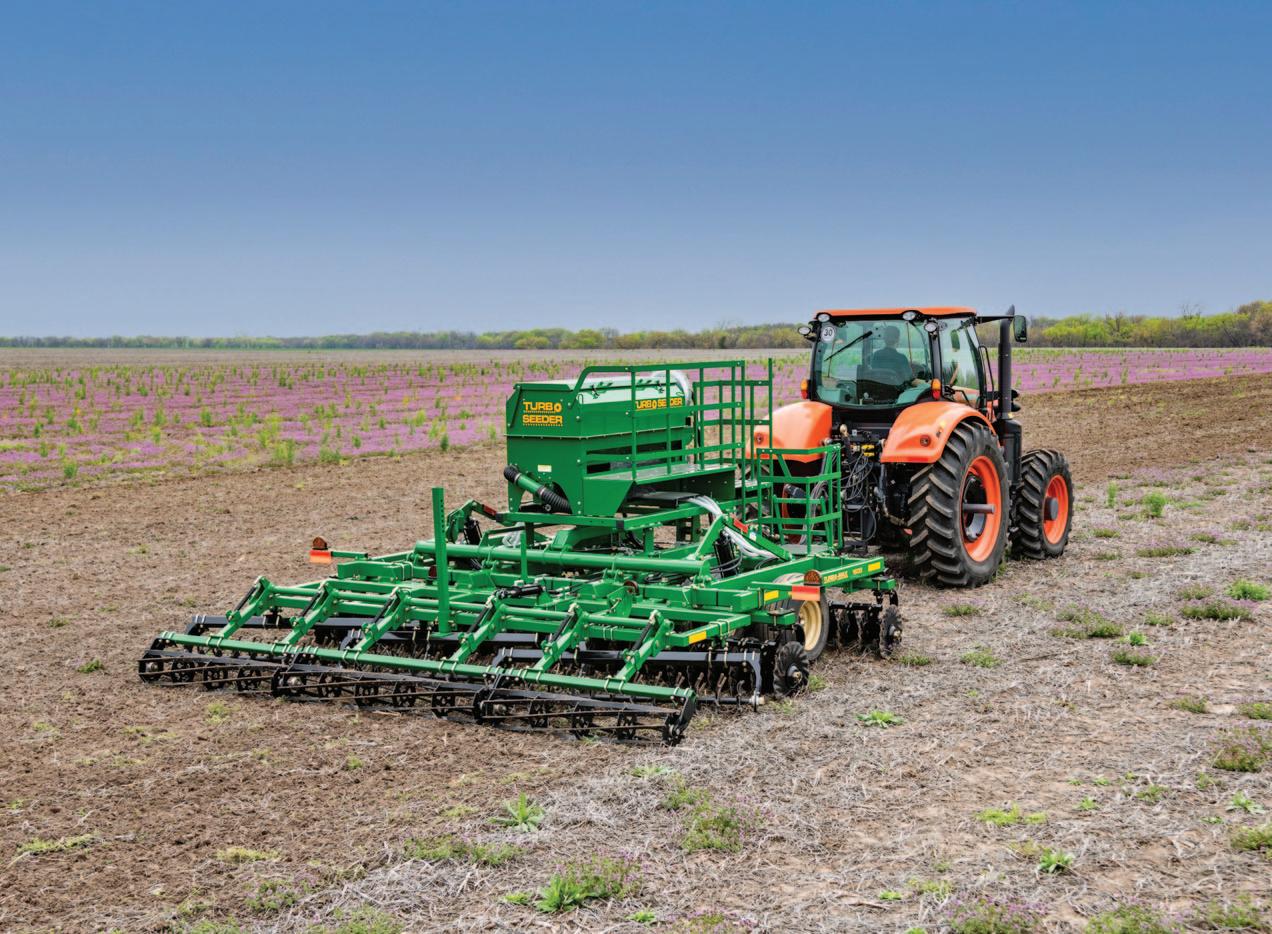
Go farther between fills and get more done in a single pass. The TS9100 Series Turbo-Seeder PLUS—whether mounted or carted—combines high-capacity tanks, efficient metering, and easy hydraulic control to boost your productivity. Mount the TS9105 to your tillage tools or pull the TS9110 behind with six tons of seeding power. Available at your local Kubota dealer.
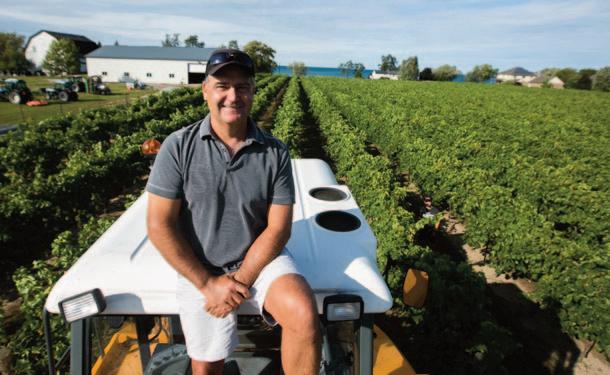
Bill George is pictured atop his grape harvester with Lake Ontario in the background. The farm, which has been in the family since 1796, is near Beamsville, Ontario. Photo by Glenn Lowson.
EXECUTIVE DIRECTOR’S PERSPECTIVE
OFVGA sets course for the next five years with member-driven strategic plan
After a year-long process that put grower voices front and centre, the Ontario Fruit and Vegetable Growers’ Association (OFVGA) has released its new strategic plan, outlining how the organization will advocate, collaborate, and deliver value for members through 2030.
The plan provides a clear roadmap for how OFVGA will respond to growing pressures on Ontario’s fruit and vegetable sector — from labour and regulatory
WEATHER VANE
challenges to climate risk, food security, global competition and more — while strengthening our role as the trusted voice of edible horticulture in our province.
The process
Just as important as the plan itself is how it was developed, so here’s a summary of how we got here.
Throughout 2025, OFVGA’s board and member organizations were actively engaged in shaping the strategy through a series of facilitated sessions led by external consultants. Growers, commodity leaders, and policy committee chairs were asked what was working, where the gaps were, and what OFVGA needed to prioritize to remain effective and relevant in a rapidly changing environment.
It’s been our goal to ensure that this is a member-driven plan, and we believe the priorities reflect what we heard from growers about what they need
most from their provincial organization.
At the core of the plan are four strategic priorities: advocacy; partnerships; governance and member engagement; and communications.
Advocacy
Advocacy remains OFVGA’s central focus. We will work to further strengthen our influence at municipal, provincial, and federal levels, ensuring fruit and vegetable growers are front and centre in policy decisions that affect competitiveness, sustainability, and food sovereignty. A key initiative under this pillar will be the development of an economic impact study to provide data-driven evidence of the sector’s contribution to Ontario’s economy, food system, and rural communities. That evidence will underpin future government relations and communications efforts.
Partnerships
Closely linked to advocacy is the priority on partnerships. The plan recognizes that the complexity of today’s policy and market environment requires coordinated action. OFVGA will work to clarify roles, reduce duplication, and strengthen collaboration with national organizations, allied agricultural groups, and government partners, while ensuring Ontario growers’ specific interests remain clearly represented.
Governance and member engagement
This priority reflects feedback from members who stressed the importance of strong leadership, transparency, and long-term continuity. The plan commits OFVGA to continuous governance improvement, leadership development, and succession planning for both board members and senior staff. It also
grandkids. Photo by Glenn Lowson.
emphasizes the need for better alignment of resources to ensure the organization is delivering tangible value back to growers and member associations.
Communications
This pillar is now a strategic priority for the organization rather than a supporting function. OFVGA plans to review and modernize how it communicates with growers, member associations, policymakers, media and the public. This includes building on existing strengths — such as its long-standing connection with growers through The Grower — while exploring new tools and approaches to reach a more diverse and evolving membership. A stronger, more proactive media strategy is also intended to ensure fair and accurate representation of the fruit and vegetable sector in public discourse.
The final product
Taken together, the strategic plan is designed to be both practical and flexible. While it sets clear priorities and actions, it also allows OFVGA to adapt as new issues emerge over the next five years – and we know they will, even if we don’t know what they’ll be.
For members who participated in last year’s consultation sessions, the final document should feel familiar. Many of the themes raised during those discussions — from the need for stronger advocacy to better communication and leadership renewal — are embedded throughout the plan, and we appreciate everyone who took the time to be part of this process and make contributions to the betterment of our organization and our industry.
OFVGA is encouraging members to review the strategy and stay engaged as implementation moves forward. After all, as the plan itself emphasizes, our strength comes from an active, committed grower community working together to shape the future of Ontario’s fruit and vegetable sector.
Alison Robertson is the executive director of the Ontario Fruit and Vegetable Growers’ Association.
ALISON ROBERTSON
Issues intensify for latest farmers’ mental health survey
A decade has gone by since Canadian farmers’ landmark mental health study quantified the undercurrent of anxiety and depression facing producers. So, over the past 10 years, has the situation improved? Become worse? That’s what new research aims to find out.
Prof. Andria Jones of the University of Guelph and her team are leading the study. This will be their third such survey; back in 2016, they surveyed 1,110 farmers across Canada, mostly from Ontario, to determine their mental wellbeing, then followed up in 2021.
The 2016 study revealed that stress, anxiety, depression, emotional exhaustion and burnout were all higher among
farmers than among other populations. Inside and outside of agriculture, the findings were jolting and downright alarming.
The very people that Canadians count on for food production, one of the country’s most essential services, were struggling mightily.
The research results prompted a flurry of discussions designed to figure out what was going wrong and how to address it. The follow-up study that took place in 2021 had a similar number of participants.
Again, the findings were alarming. This time, they were further accelerated by COVID: farmers with moderate to severe scores for any outcome before the pandemic reported worsening symptoms. As well, statistics for women were gathered for the first time. Results showed women fared significantly worse than men across all measures. More than twice as many women reported seeking mental health or substance use support during the pandemic than men.
The two studies succeeded in sparking momentum for change, and action. Most lately, that’s resulted in the Canadian Centre for Agricultural Wellbeing and the National Farmer Wellness Network Crisis Line 1-866FARMS01) unfolding. These
measures have direct ties to the research findings.
Now, with five more years having passed since the 2021 study, Jones and her team are again measuring farmers’ mental health status. They’ll be asking about depression, anxiety, burnout, suicidal thoughts, societal pressures and resilience, and more.
Results from this online study, which takes under 30 minutes to complete and runs until the end of March 2026, will reflect how the current state of world affairs is impacting Canadian producers. She’s anticipating a challenging situation.
“How do management decisions on the farm impact mental health, given specific sources of stress like extreme weather, emerging pests, politics, tariffs and upcoming trade negotiations and the pressure on supply management, among other realities that have piled on since our last survey?” she asks. “These are all on top of traditional stressors like workload, dealing with bureaucracy, finances and machinery challenges.”
New to this study is the mental health status of upcoming farmers, specifically Ontario Agricultural College students who
are from a farm.
“They represent part of the next generation of farmers,” says Jones, “and we want to know their mental health status as they prepare for succession, and how issues like extreme weather are affecting their anxiety levels.”
This portion of the study is being conducted with support from the Students Federation of the Ontario Agricultural College, and its president Josephine Meyers. And as an example of how the topic itself is becoming more mainstream, under Jones’s supervision this portion of the survey is being conducted by six students from colleges outside of agriculture or veterinary science, including the colleges of biological sciences and computer science.
As always, Jones and her team will make the results of the study available to provincial and federal
decision-makers, to prompt support for mental health programs for farmers.
“We’ve been hearing farmers talk about how the issues have grown, and how they’re having to make management decisions on the fly to accommodate change,” she says. “We’ve even heard fruit and vegetable producers say extreme weather has changed the nutrient content of their produce. That requires adaptation, that can cause stress, and we want to find out what’s going on.”
Visit ajresearch.ca/ to participate in this study.
Owen Roberts is a Guelph-based agricultural journalist and a pastpresident of the International Federation of Agricultural Journalists.
OWEN ROBERTS
Office of Grocery Sector Code of Conduct to strengthen relationship with fruit and vegetable grower associations
As part of its outreach work, the Office of the Grocery Sector Code of Conduct (OGSCC) is strengthening its engagement with fruit and vegetable primary producer associations. Stephanie Blondin, deputy director of OGSCC, will be leading this work, with a focus on better understanding the systemic issues
faced by fruit and vegetable growers in their interactions with retailers and ensuring that these realities are reflected in the OGSCC’s oversight and guidance activities.
The OGSCC continues to encourage fruit and vegetable primary producers who sell directly to retailers to become
Members of the Code, as membership provides access to OGSCC resources and the Code’s dispute resolution processes. Engagement with associations complements this direct relationship with Members by helping the OGSCC better understand systemic issues affecting growers.
As a first step, the OGSCC has reached out to fruit and vegetable grower associations to share a document outlining possible options to establish regular lines of communication and create opportunities for structured input on Code-related issues. The OGSCC will convene a group discussion with interested fruit and vegetable grower associations in February 2026 to explore these options and discuss next steps.
This work complements the
Put safety first with farm machinery
When operating farm machinery, injuries can happen in an instant. Incidents such as rollovers and runovers can lead to life-altering injuries – or worse. Every year, the lives of too many Canadian adults and children are lost or irreparably changed due to incidents involving farm machinery. That’s why it’s crucial to stay vigilant
about safety when using farm machinery.
That includes never allowing extra riders on machinery, keeping bystanders – especially children – at a safe distance, adhering to manufacturer guidelines on towing restrictions, and using rollover protection structures and seatbelts.
It’s important to keep in mind
that while injuries related to farm machinery are often severe, they are also preventable.
This Canadian Agricultural Safety Week, let’s make farm safety a part of our everyday. For more information, please visit agsafetyweek.ca.
OGSCC’s ongoing engagement with associations across the sector. Associations play an important role in supporting their members and in identifying systemic issues related to the application of the Code, and the OGSCC welcomes ongoing dialogue with associations on these types of issues.
The OGSCC is always open to engaging with associations that
represent groups eligible under the Grocery Code. Associations interested in connecting with our team or learning more about how we support sector wide engagement are invited to contact us at info@canadacode.org.
Source: Office of the Grocery Code of Conduct January 2026 Bulletin
March 4 50th Annual Tomato Day, Deer Run Golf Course, Blenheim, ON
March 5 Ontario Potato Conference, Delta Hotel & Conference Centre, Guelph, ON
March 6 British Columbia Cherry Association Annual General Meeting, Trinity Church, Kelowna, BC
March 8-10 Advancing Women Conference West, Hyatt Regency, Calgary, AB
March 9-12 Fruit and Vegetable Growers of Canada Annual General Meeting, The Westin, Ottawa, ON
March 15-21 Canadian Agricultural Safety Week
March 19 Ontario Hazelnut Association Annual Symposium, Arboretum, University of Guelph, Guelph, ON
March 23-25 PMRA Minor Use Priority Setting Meeting, Gatineau, QC
March 26 Canadian AgRobotics and AI Summit, The Grove at Western Fair, London, ON
March 30 Ontario Processing Vegetable Growers Annual Meeting, Sheraton Four Points Inn, London, ON
April 1 Grape Growers of Ontario 78th Annual General Meeting, Club Roma, St. Catharines, ON
April 9 Farm & Food Care Ontario Annual General Meeting and Conference, Grandway Events Centre, Elora, ON
April 10-11 Maritime Wild Blueberry Growers’ Annual General Meeting, Hotel Beausejour, Moncton, NB
April 15 Canadian Centre for Food Integrity Annual General Meeting, VIRTUAL
April 22 Garlic Production and Pest Management Workshop, OMAFA building, Conference Rooms 2 & 3, 1 Stone Road West, Guelph ON
April 28-30 Canadian Produce Marketing Association Convention & Trade Show, Toronto, ON
May Census of Agriculture
June 9-11 GreenTech, RAI Amsterdam, NL
June 14 Ontario Agricultural Hall of Fame Induction Ceremony, Grand Way Event Centre, Elora, ON
June 22-24 British Columbia Agriculture Forum, Penticton Lakeside Resort & Conference Centre, Penticton, BC
June 23 4th Annual Ontario Potato Board Industry Social Golf Tournament, Hockley Valley Resort, Mono, ON
FOCUS: CROP PROTECTION, SPRAYING & POTATOES
Sustainable approaches for managing leaf diseases of potato
KAREN DAVIDSON
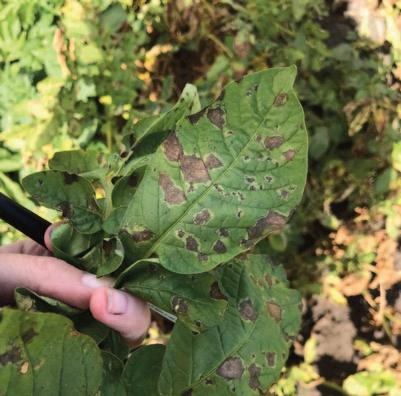
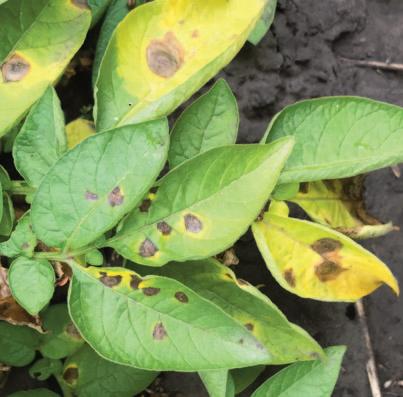
Diseases such as early blight, brown spot and black dot are commonly found in potato fields each year, Together, they make up a leaf lesion complex and can be tough to manage.
These trial results were delivered on January 28 at Manitoba Potato Production Days by Dr. Tracy ShinnersCarnelley, vice-president, research, quality and sustainability, Peak of the Market.
“Over 20 years ago, the strobilurin group of fungicides was introduced and worked well on these pathogens,” recalls Shinners-Carnelley. “They raised the bar of expectations on control. Over the years, production practices have changed the growing environment and fungicide programs have evolved too.”
Background
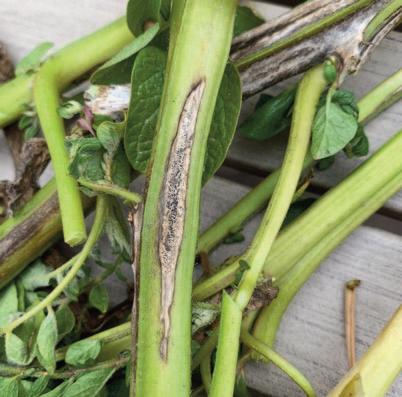
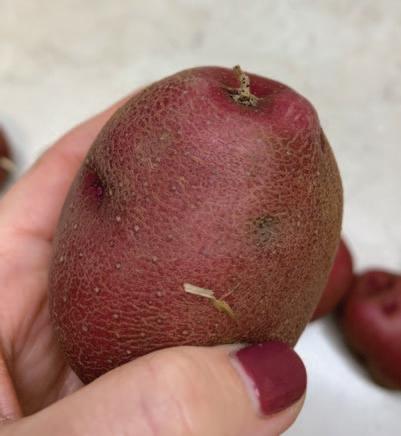
The leaf lesion complex includes early blight, brown spot and black dot. The predominant foliar pathogens are Alternaria solani, Alternaria alternata and other small-spored Alternaria app While considered a foliar pathogen, Collectotrichum coccodes (black dot) predominantly causes wilt, stem and tuber infections.
Preventative fungicides are a core element of an integrated disease management strategy combined with crop rotation, water and nutrient management.
Fungicides from groups 3, 7, 9 and 11 have been registered for early blight, brown spot and in some cases, black dot. These fungicides provided excellent control when first introduced, but some isolates of Alternaria spp have developed reduced sensitivity or resistance to some of these fungicides.
Labelling restrictions, or recommendations, for resistance management further complicate decision-making about a treatment program. Things such
as limits on the number of applications in a season, sequence of applications of the same fungicide group, seasonal maximum amount of active ingredient allowed, tank mix partners and premixed fungicides.
The challenge, according to Shinners-Carnelley, is managing the leaf lesion complex when there may be multiple pathogens involved.
“It’s not possible to identify the specific pathogens in real time,” she says. “Fungicides may have different levels of efficacy depending on the pathogens present and/or their susceptibility to the fungicide. For growers and agronomists, real-time decisionmaking tools are not available for either of these factors. Plus, there are no established economic thresholds for these pathogens.”
Another challenge is managing the cost of season-long fungicide programs. The question becomes whether it’s necessary to use a high-cost product for perfect control or whether a lower-cost product suffices for adequate control of early blight, brown spot and black dot.
“The message is that you’re not a bad grower if leaf lesions are spotted in your potato fields,” says Shinners-Carnelley. “We can tolerate some of these leaf lesions in the potato canopy.”
In the test plot
Peak of the Market and the Manitoba Horticulture Productivity Enhancement Centre (MHPEC) initiated a three-year trial in 2024. To date, the trials have focussed on impact to foliar disease development and the consequences on yield and quality. The treatments for the trial were designed to represent fungicide strategies and include the incremental addition of up to four fungicide groups (3, 7, 9 and 11), and multiple applications in some cases, targeting the leaf lesion complex. Representative fungicides were selected from each group.
Shinners-Carnelley reported on the fresh market aspect of the trial and noted that disease pressure was low in both 2024 and 2025, at the Winkler site. However excess moisture was experienced in 2024 and ideal growing conditions were recorded in 2025. In both years, no significant differences were
observed in total yield or size profile, but there were significant differences in disease incidence and severity. In many of the fungicide programs it was noted that the inclusion of a group 7 fungicide significantly reduced foliar disease.
The trial in Winkler, managed by Peak of the Market and Gaia
Consulting, focused on the Sangre variety. In addition to yield, tubers from the trial were assessed for marketability according to Canadian grade standards. The incidence of black dot tuber blemishes was an interesting finding from the trial so far.
Continued on page 16
formulation. Give crops the nitrogen they need, when they need it.
These are examples of the leaf lesion complex that include early blight, brown spot and black dot.
Sustainable approaches for managing leaf diseases of potato
Black dot stem incidence was much higher in 2025, with the untreated control having significantly more stem infections. Black dot reduced the marketable yield by 7 to 43 per cent. Photo 1: see the microsclerotia on the stolon. Photo 2: another clue for the presence of black dot is how the stolon doesn’t let go. It has a straw-like appearance. Photo 3: watch for a magenta-purple colour near the bottom of the stolon.
Continued from page 15
While there were no significant differences in 2024, the 2025 results showed that all treatments significantly reduced black dot blemishes compared to the control. Overall, black dot reduced the marketable yield by 7 – 43 per cent. In conclusion
Anecdotally, black dot seems to be on the rise. Shinners-Carnelley has three theories about why the incidence of black dot is increasing. Black dot can persist for years in the soil. “It may be the case that there is an
increasing amount of inoculum in the soil. Or maybe the reduction of group M fungicides is allowing the emergence of black dot. The last thought is that the pathogens may be developing resistance to the fungicides.”
Plans are to repeat the project in both Winkler and Carberry sites in 2026. With three years of data, the hope is to identify
some key aspects of building an effective fungicide program and to characterize the impacts of these diseases on both fresh market and processing potato sectors.
“There is a complex relationship between disease pressure in the field and how that relates to gross yield, tuber quality and marketable yield,” ShinnersCarnelley concludes.
Potato production in perspective for Canada, U.S. and Mexico
Combined American, Mexican and Canadian potato production declined in the most recent reporting period, based on previously published national statistics, according to USDA. The figures are drawn from a joint compilation by Dirección
General del Servicio de Información Agroalimentaria y Pesquera, Statistics Canada, and the U.S. Department of
1/ Beginning in 2019, total includes all potatoes. Previous years were fall potato totals.
Agriculture's National Agricultural Statistics Service. The report consolidates official data from the three agencies and does not introduce new estimates.
For 2025, combined potato production in the United States and Canada is estimated at 539 million cwt, a decrease of two per cent compared with 2024. U.S. potato output is estimated at 413 million cwt, also down two per cent year on year. Canadian growers harvested an estimated 126 million cwt, representing a decline of one per cent compared with 2024.
Looking at the previous season, combined potato production in the United States, Canada, and Mexico for 2024 totaled 595 million cwt, down three per cent from 2023. U.S. production in 2024 is estimated at 421 million
cwt, a decrease of four per cent compared with the prior year. Canada's potato harvest reached 127 million cwt in 2024, slightly higher than in 2023. In Mexico, potato production for 2024 is estimated at 46.8 million cwt, an increase of seven per cent from 2023.
All figures referenced in the publication are based on data previously released by the respective national statistical agencies. No adjustments or revisions beyond those in the earlier publications are included in the combined report.
Source: USDA February 6, 2026 news release
Common scab can be mitigated in potatoes with biopesticides
Cumulative results:
KAREN DAVIDSON
Biopesticides are increasingly part of integrated pest management programs. For growers to gain confidence in efficacy, they need to see real-life demonstrations in their area.
That is the case with in-furrow applications of Minuet biopesticide in 12 trials in Prince Edward Island (PEI) over three
years, 2023-2025.
“There is justification to use Minuet biopesticide as a tool to suppress the incidence of common scab,” says Ryan Barrett, research and agronomy specialist with the PEI Potato Board. He presented the in-depth results at the 2026 International Potato Technology Expo in Charlottetown on February 26.
Common scab is an old enemy caused by Streptomyces bacteria which creates a phytotoxin that causes lesions on potato skins. There are no potato varieties in common use that are truly resistant, but they do range in susceptibility. There are various management tools but some – biofumigation for example -- are costly. Other practices such as reducing highcarbon inputs remove the food source for bacteria but can result in declining soil organic matter. That’s how tricky it is to address common scab.
Bayer CropScience has introduced an in-furrow biological fungicide called Minuet, a new concentrated formulation of Serenade Soil.
The Bacillus subtilis strain QST 713 protects against Rhizoctonia and provides activity against Pythium, pink rot and Fusarium root rot. The product was tested as part of the National Potato Cluster project on common scab in Manitoba in 2020 along with other products where it showed some potential for control.
In PEI, the Agronomy Initiative for Marketable yield (AIM) is grower-directed, onfarm research. In 2023, there were three field trials: two fields with Ranger Russet, one with Kennebec. In 2024, there were five field trials: three fields with Prospect, one with Ranger Russet and one with Alverstone Russet. In 2025, there were four field trials: two fields with Prospect, two fields with Alverstone Russet. Barrett explains that these were split field trials: 10 acres with Minuet, 10 or more acres without. No other changes were made to the fungicide program. Producers applied the label rate
of 379 mL/acre, in-furrow, at planting. Harvest samples were graded for yield and tuber skin blemishes.
In 2023, Barrett observed similar levels of scab reduction at two farms – approximately 60 per cent. There was no difference in total or marketable yield.
“I didn’t see the same response at the third farm, but it had the lowest average level of scab,” reports Barrett. “There was a slight trend for a higher percentage of 10 ounce potatoes on two farms, but not a significant difference.”
The 2024 trials generally had a lower level of scab with less than 0.5 per cent scab in four fields. However, there was a highly significant reduction in one field with lots of scab pressure. Overall, there was no difference in scab severity. But there was a significant reduction in black scurf in two fields and overall. Again, there was no difference in total yield.
In 2025 trials, there was only a significant reduction in one field. Overall, there was no difference in scab coverage or scab severity. And there was no difference in total or marketable yield.
When combining data from all three years of trials, Barrett says there was significantly lower per cent common scab coverage (47% reduction) and significantly lower common scab severity in the Minuet treatment compared with the non-treated control. There was also a significantly lower percentage Rhizoctonia coverage (24% reduction). He also noted a trend toward higher percentage of 10-ounce tubers.
“There are additional infurrow biopesticides that are worthy of investigation with similar modes of action,” Barrett says.
Here’s the evidence of how Minuet biofungicide worked on Ranger Russets in 2024.
Common scab
Table 1. Yield quality comparison across potato fields from 2023 to 2025:
Table 2. Percent coverage and severity of tuber blemishes across potato field 2025:
Nine years of pesticide savings using crop-adapted spraying in highbush blueberries
DR. JASON DEVEAU
This case study is taking place on a 15-acre highbush blueberry operation in southern Ontario. In 2016, considerable pressure from spotted-wing drosophila (SWD) prompted the growers to make changes to their crop management practices and their spray program. They employed a three-pronged approach to improving crop protection:
1. Significant changes to canopy management and picking / culling practices
2. Investing in a new sprayer
3. Adopting the Crop-Adapted Spraying (CAS) method of dose expression
We have been tracking pesticide use, water use and yield compared to historic values. We also monitored spotted-wing drosophila catches both in crop and in wild hosts along the border of the operation for three years.
Canopy management
In 2016 the operation made the following changes to canopy management practices:
• They performed their firstever heavy pruning and planned to maintain an ideal crop density by removing ~30% plant material annually. This more-or-less took place.
• They regularly collected and buried culled and dropped berries.
• They picked cleanly and more frequently.
There were initial concerns that such dramatic pruning would reduce production per acre and require trellising to prevent berries weighing down the smaller bushes. However, in 2017 (and thereafter) they found that the quality of the berries was greatly improved and noted fewer hours spent culling berries during packing. Financially, the growers felt they came out ahead.
Application technology
In 2018 they replaced their old, inefficient KWH sprayer with a low-profile axial with conventional hydraulic nozzles to permit greater control of the spray. The KWH design was intended for standard fruit trees. It produced >100 mph air and an Extremely Fine spray quality and was therefore a bad fit with the planting architecture and canopy morphology of highbush blueberry.
They considered a cannonstyle sprayer hoping to spray multiple rows in a single pass but given the desire for improved coverage and reduced waste, they elected to drive every row using a low-profile axial.
The new sprayer was more reliable, quieter, and more fuel efficient. Further, the old sprayer leaked and the air-shear nozzles did not respond when shut down at the end of rows. Eliminating these sources of waste represented a savings of ~20% of the spray volume traditionally used per acre.
Crop-adapted spraying (CAS)
The redundancy inherent to product label rates for threedimensional perennial crops has long been recognized. In response, rate adjustment (or dose expression) methods have been developed to improve the fit between rate and canopy coverage (e.g. Tree-Row Volume, PACE+, DOSAVIÑA). Each has value, but their adoption has been slow because they are region- or crop-specific and they can sometimes be quite complicated.
CAS lends structure and repeatably to the informal rate adjustment methods already used to spray three-dimensional perennial crops (e.g. Making pro rata changes by engaging/ disengaging nozzles in response to canopy height or altering
travel speed in response to canopy density).
The CAS method relies on the use of water sensitive paper to confirm a minimal coverage threshold of 85 deposits per cm2 as well as 10-15% area covered throughout a minimum of 80% of the canopy. Using this protocol, we calibrated air energy and direction, travel speed and liquid flow distribution. This process is covered in the new edition of Airblast101. In that first year we reassessed coverage every few weeks between April and June using water-sensitive paper.
Spray volume / pesticide
By matching the sprayer calibration to a well-managed canopy, the growers were able to go from ~1,000 L/ha to ~400 L/ha of spray mix. The ratio of formulated product-to-carrier remained the same, but less spray was warranted per acre. Stated differently, the grower mixed the spray tanks per usual, but drove further on a tank.
This also saved an estimated 15 hours of filling/spraying time per year, which translates to reduced operator fatigue and
exposure as well as reduced manhours and equipment hours. The decision of what and when to apply was at the growers’ discretion. Chemistry was rotated and applications were made according to IPM in early morning (if there were no active pollinators) to avoid potential drift due to thermal inversions.
Continued on page 21
Most years, bushes were pruned ~30% to maintain an ideal size and shape. Fore: An old KWH air shear sprayer. Rear: Low profile axial sprayer with conventional hydraulic nozzles.
Nine years of pesticide savings using crop-adapted spraying in highbush blueberries
Continued from page 20
SWD monitoring
Spotted Wing Drosophila (SWD) represents a serious economic threat to blueberry operations. Traps were placed in the operation (three in the crop and one in an unmanaged wild host along a treeline) and monitored weekly. Traps were also placed in surrounding horticultural operations which were employing standard pest control practices. This not only provided regional information about SWD activity but allowed us to compare the level of SWD control from the Crop-Adapted Spraying approach.
• In 2018 the comparison included up to 16 other sites that were berry and tender fruit.
• In 2019 the comparison included 10-12 sites (depending on the week) and they were berry and tender fruit sites.
• In 2020 the comparison included 4 other sites (blueberries, raspberries and cherries).
2020 & 2021 – COVID-19 and heavy rain
In agriculture, every year is an adventure, but 2020 and 2021 were exceptionally difficult and the circumstances should be considered when deciphering the results.
In 2020, fearing a reduction in the availability of seasonal labour, the operation pruned their bushes heavily. This was done to reduce the yield in order to make harvest manageable.
In 2021, labour was once again secure. Given the heavy pruning the year previously there was no need to prune again, so the crops densified. This coincided with abnormally high levels of precipitation to create significant anthracnose issues. Additional fungicide applications took place that raised costs, but the grower maintained CAS-
optimized rates and sprayer settings.
Quantitative
results
Prior to replacing their sprayer, and adopting CAS, the operation sprayed about 78,260 L/yr. Their average savings in spray volume (water) has been 54,720 L/yr, or 70%.
In terms of pesticide savings, we compare each year to the 2017 baseline. In order to make for a fair comparison, we update pesticide prices each year using current costs. Therefore, the 2017 total has increased by about $2,600.00 (wow). Their average savings represents $5,575.00 CAD/yr or 62.5%.
Yield is more difficult to interpret due to mitigating circumstances in 2019 and 2020:
• In 2016, prior to any changes, they harvested 12,076 flats (about 9lb of fruit each).
• In 2017, following the canopy management changes, harvest increased to 18,335 flats (~50% increase).
• In 2018, using CAS, harvest was essentially unchanged compared to 2017, which was excellent.
• In 2019, harvest started a month late compared to previous years. Further, blueberry prices were low, and the operation elected to stop harvesting a month early. However, when those issues are factored in, the harvest was comparable.
• 2020 was particularly challenging for agriculture and with the possibility of reduced labour due to the pandemic, the operation elected to prune heavily and reduce their yield.
• 2021 saw unpruned bushes (following the heavy pruning in 2020) and abnormally high levels or precipitation which created anthracnose issues. As a result, more applications were made than any other year on record, but maintained the CASoptimized rates and sprayer settings.
• 2022 was (thankfully) fairly typical. Low SWD, average anthracnose and no drama.
• 2023 was very much like 2022 with low SWD, average anthracnose and no drama.
• 2024 saw a LOT of rain. The season started and ended early, but yields were par. “Pivot” replaced “Tilt”.
• 2025 was pretty average all things considered. No drama whatsoever. “Inspire-Super” was added to product list.
Trap counts for SWD were only performed during three years of the CAS study, so we are only able to present 2018-2020 data. It should also be noted that while the presence of SWD in an operation represents an impact on yield, there is not necessarily a correlation between the number of SWD captured the amount of
damage.
Qualitative results
Beyond the quantifiable results, the growers reported qualitative benefits:
• Customers of the U-pick portion of the operation regularly enquire about pesticides. The operation’s reduction in pesticide use became a positive speaking point and aligned with the grower’s philosophy about reduced environmental pesticide loads.
• While many blueberry growers experienced a market shortage of certain fungicides in 2018, this operation returned unused product to the distributor.
• Growers reported less earlyseason disease damage, which saved considerable time on the
packing line because there was less fruit to cull. Disease levels rose to typical levels later in the season, but there was still a net savings in labour.
Conclusion
The success enjoyed in this berry operation was a result of several canopy management and crop protection changes. This is a situation where the whole equaled more than the sum of its parts – it could only be achieved by making holistic changes to the operation.
Dr. Jason Deveau is the application technology specialist for the Ontario Ministry of Agriculture, Food and Agribusiness.
SWD monitoring tools for berry growers: stick with yellow!
MATTEO GIRARDO, HANNAH FRASER & ERICA PATE
Spotted Wing Drosophila (Drosophila suzukii), an invasive vinegar fly (Family Drosophilidae), can cause significant injury and yield loss in soft skinned-fruits, particularly berry crops. Fruits are at risk of infestation as they begin to ripen and through harvest. Regular monitoring is important for growers to time control measures, as initial SWD activity varies year-to-year. Baited liquid traps (drowning jars) are effective for tracking male and female SWD, but they are timeconsuming to process, and some find them impractical for on-farm use.
Recently, sticky cards baited with commercially available lures have been recommended, which are easier to use and require less maintenance than liquid traps. Both yellow and red sticky cards can be used. Though various commercial traps for this pest are available, there is contradiction surrounding which monitoring tools and sticky cards are most effective.
In trials in 2025, three monitoring tools were compared to determine which trap is more effective at identifying 1) first capture, 2) sustained capture, and 3) upswing in adult numbers.
Traps were placed at four farms growing raspberries, cv. ‘Nova’, ‘Prelude’, and ‘Algonquin’ (all early cultivars), across southern Ontario. Each site had
four replicates, and each replicate contained one of each of the three treatments; red sticky card (TRÉCÉ Dual panel liner), yellow sticky card (TRÉCÉ Dual panel liner), and liquid trap. Each trap or card was paired with a commercial grade volatile lure (TRÉCÉ PHEROCON SWD
PEEL-PAK Broad Spectrum lure). Cages (mesh size 5 mm) were placed around sticky cards to prevent large insect and small vertebrate bycatch, particularly birds, and help to keep the foliage away from the sticky card surface. Previous work done by OMAFA indicated cages do not affect SWD catch numbers.
Traps and lures were placed at sites on May 27 (unopened buds) and were collected ~ twice a week until July 14 (harvest underway), with lures being replaced once on June 23. Males from each trap were counted following collection. While males are easily identified by a single black dot on their forewings, identification of females is often labour intensive, time consuming, or near impossible when desiccated on sticky cards.
There were no significant differences between traps for detecting initial field presence.
Yellow sticky cards caught significantly more SWD males than both the liquid and red sticky traps, with liquid traps capturing the least (Fig. 2), and yellow sticky cards showed increased sensitivity to upswing in numbers, which occurred midJune (Fig. 3). SWD males are also easier to see on yellow sticky
cards compared to red sticky cards. All three trapping systems accurately predicted population upswing, although higher numbers captured on yellow sticky cards coupled with ease of use / contrast suggests these are the most user-friendly. Though we did not track females on sticky cards, they are relatively easy to identify on yellow sticky cards when freshly captured (not dessicated), as the ovipositor is visible using a hand lens or other magnification.
The use of SWD traps is critical for growers to time insecticide applications. Yellow sticky cards paired with a commercial lure such as the TRÉCÉ PHEROCON SWD
PEEL-PAK lure used in this trial are effective, easy-to-use traps for
Ontario berry growers and consultants to monitor SWD. If possible, growers should have their own on-farm monitoring to time insecticide applications:
• Use 4-6 traps around your farm, placing the traps in the canopy of a ripening crop, near the fruiting zone.
• Focus on the earliest varieties / crop and move traps as required.
• Place 1-2 traps in wild hosts for early detection.
• Place traps during bloom or green fruit, before fruit ripening.
• Check sticky cards weekly.
• Replace sticky cards every 1-2 weeks.
• Replace lures after 4-6 weeks.
• Once SWD is identified and ripe fruit is present it is time to spray; traps can be removed as SWD will remain a threat to fruit through harvest therefore tracking numbers is no longer necessary.
Traps and lures can be purchased from multiple IPM suppliers, including:
• Solida (solida.quebec/?lang=en)
• Trécé Inc. (www.trece.com/)
• Plant Products (plantproducts.com/us-en)
• Great Lakes IPM (www.greatlakesipm.com/)
• Bartlett’s (www.bartlett.ca/) .
This assessment was funded by the Ontario Ministry of
Agriculture, Food and Agribusiness (OMAFA). Thank you to Leah Ritcey-Thorpe who assisted with the data visualization as well as the grower participants who graciously let us use their sites to conduct treatments.
Matteo Girardo is summer research assistant. Hannah Fraser is entomologist- horticulture, OMAFA. Erica Pate is fruit crop specialist, OMAFA.
2. Mean adult male count per trap for each trap type over the course of the field trial. Different letters indicate a statistical difference (significance at p<0.05).
Figure 3. Mean adult male count for each trap type over the course of the trials overlayed with the observed respective crop phenology for that time. Date of first capture for each trap type across all the sites is noted in addition to the major abundance influx and efflux dates occurring June 16 and June 26. The efflux event on June 26 is theorized to be a result of the unfavourable hot and dry conditions that had persisted that week followed by an influx upon the arrival or wetter and cooler conditions.
Figure 1. yellow sticky card (TRÉCÉ YELLOW Dry Touch (30 x 15 cm) / Trap) with a cage to reduce by-catch.
Figure
Low tunnel production: impact on disease incidence and yield in day-neutral strawberries
Anthracnose fruit rot (Fig. 1) is a challenging fungal disease for strawberry growers, caused primarily by Colletotrichum nymphaeae. Resistance to commonly used fungicides is present in Ontario, and there are limited alternative anthracnose products available to growers. Anthracnose is spread mainly from splashing rain and irrigation. Infection requires extended duration of leaf wetness. Growing strawberries under plastic low tunnels can be a tool to reduce rain-induced leaf wetness, potentially reducing disease and increasing yields, in addition to providing season extension.
In Maryland, low tunnel systems increased marketable yield by 313 per cent compared to open beds, and fruit rot was 12 per cent less under low tunnels compared to open beds (Lewers et al., 2017).
In 2025 day-neutral strawberries were grown under low tunnels at the Ontario Crops Research Centre-Simcoe. The objective of this project was to demonstrate the impacts of low tunnels on strawberry yield, marketability, and disease severity in Ontario.
Strawberry (cv. 'San Andreas') bare-root transplants were planted in raised, white plasticulture beds on 20 May, 2025. Plots consisted of 24 plants, spaced 30 cm apart in a staggered double row and were arranged in a randomized complete block design with five replicates. Plots were 1m apart within rows and rows were on 1.5m centers.
Treatment list:
1. No tunnel
2. Tunnel with sides always up (“sides up”) (sides remained raised throughout the season)
3. Tunnel with sides raised and lowered (“sides up & down”)
Tunnels were installed at planting. Low tunnel hoops, anchor pipes, and bungee cords from Dubois Agrinovation were used to build the tunnels. The plastic film for the low tunnels was 6 mm 25% light diffusion from Gintec Shade Technologies. Three hoops placed 1.5m apart were used per plot (Fig. 2).
No fungicides were applied to any of the plots. Tunnel sides were lowered and raised eight times when any rainfall was forecasted.
Plots were harvested twice a week from 25 July to September 26, 2025. Marketable yield, unmarketable yield and disease presence (% incidence) was recorded and analyzed using R Studio.
Only anthracnose was present in significant levels during the trial. Botrytis fruit rot was present at very low levels (data not shown). Using low tunnels reduced anthracnose incidence (% infected berries) when averaged across all harvest assessments (Fig. 3).
Although it was a dry season with little rain (approximately 181 mm from planting to last harvest) which reduced overall disease pressure, differences between the tunnel use was still apparent and became more evident in September, following multiple rain events (Fig. 4). On the last harvest, 45 per cent of berries in the no-tunnel treatment was infected with anthracnose, compared to only 16 per cent with the low tunnels sides always up and 2.6 per cent when low tunnel sides were moved up and down due to rain. The proportion of marketable berries was affected by tunnel treatment (Fig. 5). On multiple harvest dates the use of low tunnels, with the sides up and the sides up and down, significantly increased the proportion of marketable berries compared to the no tunnel treatment.
• Low tunnels with the sides always raised and the sides raised and lowered due to rain reduce anthracnose incidence and improve marketable yield compared to no tunnels.
• Although not as effective at reducing anthracnose as raising and lowering the tunnel sides with rain, installing low tunnels with the sides always raised still improved disease management and fruit quality and requires less labour compared to regularly raising and lowering the plastic.
• Tunnels require significant labour but could be considered in a small acreage system where growers are looking to reduce fungicide inputs.
• Growers can use the Low Tunnel Strawberry Production Guide from the University of New Hampshire to build their own system.
Figure 3. Incidence of anthracnose in plots with no tunnels, when the tunnel sides were always up, and when the tunnel sides were moved down during rain events. Different letters indicate significant differences between treatments (p<0.05).
Figure 4. Incidence of anthracnose in plots with no tunnels, when the tunnel sides were always up, and when the tunnel sides were moved down during rain events from 25 July to September 26. Different letters indicate significant differences between treatments (p<0.05).
Figure 5. Proportion of marketable berries to unmarketable berries (abiotic and disease) over time with no tunnels, when the tunnel sides were always up, and when the tunnel sides were moved down during rain events from 25 July to September 26. Different letters indicate significant differences between treatments (p<0.05).
This project was funded by Horticulture Crops Ontario. Thank you to OMAFA summer research assistants Kendra Workman and McKenzie Susil who harvested and maintained the plots. Thank you to Leah Ritcey-Thorpe who performed the data analysis.
References: Lewers, K.S., Fleisher, D.H., and Daughtry, C.S.T. 2017. Low tunnels as a strawberry breeding tool and season-extending production system. International Journal of Fruit Science. 17:233-258.
Orde, K., B. Sideman, M. Pritts, and K. Demchak. 2018. Low Tunnel Strawberry Production Guide. University of New Hampshire Cooperative Extension Publication. https://extension.unh.edu/resources/files/Resourc e007429_Rep10703.pdf
Erica Pate is fruit crops specialist. Caio Correa is pathologist-horticulture. Katie Goldenhar is pathologist-horticulture. Josh Mosiondz is provincial minor use coordinator. All are with the Ontario Ministry of Agriculture, Food and Agribusiness (OMAFA).
Figure 1. Anthracnose fruit rot.
Figure 2. Low tunnels with sides always raised (a,b) or lowerered for rain protection (b).
MARKETPLACE WORKS
ROWN ROWN
MARKETPLACE
THE GROWER’S STORAGE, CONTAINERS & PACKAGING
APRIL 2026
BOOK AD SPACE
MARCH 17, 2026
AD COPY DUE
MARCH 20, 2026
advertising@thegrower.org
THE GROWER’S LOGISTICS & TRANSPORT
JUNE 2026
BOOK AD SPACE
MAY 16, 2026
AD COPY DUE MAY 20, 2026
advertising@thegrower.org
FCC convenes a $5 billion coalition to accelerate investment in Canadian agriculture
GROWER’S IRRIGATION & WATER MANAGEMENT
MAY 2026
BOOK AD SPACE
APRIL 17, 2026
AD COPY DUE APRIL 20, 2026 advertising@thegrower.org
Credit Canada (FCC) today announced it has convened a coalition of more than 20 investment organizations collectively prepared to deploy up to $5 billion into Canadian agriculture and food innovation by 2030. This milestone reflects a generational investment opportunity in Canada’s agriculture and food sector.
This new coalition pledge builds on the momentum of the May 2025 commitment by FCC’s investment arm, FCC Capital, which pledged $2 billion by 2030 to drive innovation across the agriculture and food industry. As part of this commitment, FCC Capital is already on track to deploy $325 million in new capital during its fiscal year ending March 31, 2026. With the pledge announced on February 10, 2026, combined with FCC’s commitment in May 2025, this represents $7 billion of new investment into Canadian agriculture and food by 2030.
These commitments will bring new innovation to Canadian farmers through investments in innovative Canadian businesses, construction and project finance opportunities, and early-stage ag-tech companies.
This announcement marks a major step in expanding Canada’s capacity to scale world leading agriculture and food innovation. In 2021, total estimated investment in agricultural innovation stood at $270 million annually according to RBC Thought Leadership. Today’s coalition helps position Canada to dramatically increase this figure and accelerate commercialization of breakthrough technologies and productivity across the entire value chain.
Together, FCC Capital’s pledge and the commitments made by this coalition of investors represent a clear and meaningful statement to the strength and long term potential of the Canadian ag and food industry at a pivotal moment for the sector.
“Canada’s farmers, producers, and processors are already among the most innovative and entrepreneurial in the world,” said Darren Baccus, executive vice-president, Agri Food, Alliances and
FCC Capital. By bringing this coalition together, we’re crowding in the capital needed to scale breakthrough solutions and deliver the next generation of innovation directly to Canadian producers. This work strengthens our food security at home while accelerating Canada’s rise as an ag and food superpower. FCC remains rigorously focused on supporting Canadian farmers and ensuring our work delivers tangible, measurable impact for them.”
“Agriculture is one of the most important and investable sectors of our economy,” said Minister of Agriculture and Agri-Food, Heath MacDonald.
“This landmark investment will strengthen Canada’s leadership in agriculture and agri-food innovation, while charting a course for long-term growth, competitiveness, and resiliency for generations to come.”
Investment organizations that are part of the coalition include:
Area One Farms
Arterra Growth
Bonnefield Financial
District Ventures Capital
Emmertech
Glengarry Farm Finance Corporation
InvestEco Capital Corp.
Maverix Private Equity
Nàdarra Ventures
Northleaf Capital Partners
NYA Ventures
Power Sustainable Lios
Radicle Growth Food and Agriculture Venture
Capital
Royal Bank of Canada (RBC)
S2G Investments
Seminal Capital Holdings, LLC
SVG Ventures
Tall Grass Ventures
Tikehau Capital
Yaletown Partners
Source: FCC February 10, 2026
JULY 2026
BOOK AD SPACE
JUNE 15, 2026
AD COPY DUE JUNE 19, 2026 advertising@thegrower.org
Farm
Minor use: a low-cost win for government in Next Ag Policy Framework
As discussions get underway in 2026 for the next federalprovincial agricultural policy framework, which will shape government agricultural programming from 2028-2033, a cheap and highly impactful policy option is available at the fingertips – enhanced support for the minor use program.
In the world of crop protection, one will encounter the term “minor use” crops. Crops that fit this definition span most fruits, vegetables, floriculture, nursery, ginseng, Christmas trees, forage, pulses, and less common field crops such as flax. Essentially, if it is not barley, canola, corn, soybean or wheat, it likely falls under the umbrella of a minor use.
Minor use crops are not given this term for their economic value, rather the smaller area of production they occupy compared to the major field crops. The consequence of the relatively smaller footprint is a lack of commercial interest from crop protection companies to develop solutions for these crops. Instead, crop protection companies, who sell products based on acres treated generally focus on major field crops where the big acres are.
However, minor use crops do generate major economic activity. In 2024, collectively these crops produced more than $17 billion in farm cash receipts nationally. Minor use crops represented a full third of the $51 billion in total crop receipts overall. While total crop receipts grew 23 per cent from the period of 2020 to 2024, some minor crop sectors grew at a much faster pace. Cash receipts over the same period for potatoes were up 54 per cent, greenhouse vegetables increased
49 per cent, while Christmas trees grew by 36 per cent. They represent some of the fastest growing components in the agriculture sector overall.
To sustain a thriving minor crop sector, Canadian farmers require effective solutions to manage crop health and reduce losses from insects, disease, and weeds which threaten crop yield, quality and value. While growers of major field crops can rely on the private sector to discover, commercialize, and complete regulatory submissions for crop protection tools on their crops, minor use crop growers have fewer tools resulting from the lack of private sector interest.
To fill the gap, the federal Minor Use Pesticides Program –typically referred to as the minor use program – assists growers with access to crop protection technology for minor use crops where manufacturers are reluctant to obtain registration themselves. The responsibility of undertaking the necessary scientific research is conducted by Agriculture and Agri-Food Canada’s (AAFC) Pest Management Centre (PMC) and the Pest Management Regulatory Agency (PMRA) completes the required regulatory reviews. It has been operational since 2003.
While small in scale, the program has an outsized impact. In 2016, AAFC completed a study of the economic impact of the minor use program. The study looked at potential crop losses that were likely to have been avoided by the availability of crop protection tools provided through minor use. It also compared the value of the benefits to society from government investment in the program and estimated impact to Canada’s GDP from minor use activities.
During the period of the study, access to crop protection tools through the minor use program were estimated to contribute to the prevention of $653 million to $998 million in crop losses annually. Looking further into economic analysis, the 2016 study also compared the level of government investment to the expected benefits and concluded that for every $1 of government cost into the program, $42 of benefit is accrued to society.
Following the original
With a slower pace of new crop protection tools hitting the market from companies, and the regulatory removal or voluntary withdrawal of older products from the marketplace, a robust minor use program is needed more than ever.
methodology, the Ontario Fruit & Vegetable Growers’ Association (OFVGA) recently updated the figures using data from the 20202024 timespan. We estimated during this period that the minor use program helped to prevent $1.6 billion in annual crop losses, contributed an additional $1.6 billion in GDP to the economy, and supported more than 12,000 jobs. Meanwhile, government investment during this period averaged $12.2 million, while the societal benefit ratio per dollar of government investment climbed to 111:1 – a strong signal this program is suffering from underinvestment.
Despite its tremendous impact, the minor use program has been quite simply neglected.
Government funding hasn’t changed over the lifetime of the
program, and thanks to two decades of inflation, the stagnant funding is now worth roughly 60 per cent of the value it had in 2003. Not surprisingly, declining purchasing power has led to reduced program outcomes over time. The average current output of the minor use program is now approximately half of what it was during the Growing Forward framework, which ran from 20082013, when the program had found its groove after the initial startup years. With minor use crops worth more than ever, the effective support level from the minor use program has been contracting. With a slower pace of new crop protection tools hitting the market from companies, and the regulatory removal or voluntary withdrawal of older products
from the marketplace, a robust minor use program is needed more than ever.
Negotiations are now beginning on the content of the next agricultural policy framework, which funds the minor use program. Government has a golden opportunity to support a strong future in crop protection tools for minor use crops by finally enhancing the support level for the minor use program. With an estimated benefit of more than $100 per public dollar, it is an opportunity that cannot be missed.
Chris Duyvelshoff is crop protection advisor, Ontario Fruit and Vegetable Growers’ Association.
A newly registered post-bloom chemical thinner for apples is one example of the work conducted by the Pest Management Centre.
CHRIS DUYVELSHOFF
Kenja fungicide label expanded to help manage rusty root disease on ginseng
JOSH MOSIONDZ
The Pest Management Regulatory Agency (PMRA) recently approved a minor use label expansion registration for Kenja fungicide for control of rusty root disease in Canada. Kenja fungicide was already labeled for disease control on a
Ginseng
Control of Cylindrocarpon root rot (Rusty Root Disease) (Ilyonectria morspanacis syn. Cylindrocarpon destructans)
1.46 (584 g a.i./ha)
Initiate applications within 2 weeks of plant emergence and/or prior to disease development and continue at 7-day intervals if conditions continue to be favorable for disease development. Use 1000 to 1870 L/ha of spray volume to ensure runoff into the soil and root zone. Do not make more than 2 sequential applications of KENJA 400SC FUNGICIDE or other Group 7 containing fungicides before rotating to a fungicide with a different mode of action. Do not apply more than 3 applications per year.
wide range of crops in Canada. This minor use proposal was submitted by Agriculture & Agri-Food Canada, Pest Management Centre (AAFC-PMC) as a result of minor use priorities established by growers and extension personnel.
The following is provided as an abbreviated, general outline only. Users should be making disease management
decisions within a robust integrated disease management program and should consult the complete label before using Kenja fungicide.
Follow all other precautions, restrictions, and directions for use on the Kenja fungicide label carefully.
For a copy of the new minor use label, contact your local specialty crops specialist,
Intuity fungicide label expanded to help manage
The Pest Management Regulatory Agency (PMRA) recently approved a minor use label expansion registration for Intuity fungicide for control of black rot on sweet potato in
Canada. Intuity fungicide was already labeled for disease control on a wide range of crops in Canada. This minor use proposal was submitted by Agriculture & Agri-Food Canada, Pest Management Centre (AAFCPMC) as a result of minor use priorities established by growers
Sweet Potato Control of Black Rot (Ceratocystis fimbriata)
and extension personnel.
The following is provided as an abbreviated, general outline only. Users should be making disease management decisions within a robust integrated disease management program and should consult the complete label before using Intuity fungicide.
your regional supply outlet, or visit the PMRA label site www.hc-sc.gc.ca/ cps-spc/pest/registrant-titulaire/ tools-outils/label-etiq-eng.php
Joshua Mosiondz is minor use coordinator, Ontario Ministry of Agriculture, Food and Agribusiness.
black rot on sweet potato
658 (314 g a.i / ha)
Make application in-furrow spray at planting. Apply by placing the sweet potato slips into the open trench, directly spraying into the open trench and covering the sweet potato slips with soil. Do not apply more than one application per year. Do not apply more than 658 mL/ha per year.
Follow all other precautions, restrictions, and directions for use on the Intuity fungicide label carefully.
For a copy of the new minor use label, contact your local specialty crops specialist, your regional supply outlet, or visit the PMRA label site
New guide for training and pruning tender fruit trees
The Ontario Ministry of Agriculture, Food and Agribusiness has released a new guide, Publication 814A, for training and pruning tender fruit trees. As Kathryn Carter writes in the ONFruit newsletter, this guide replaces the discontinued Publication 392: Training and Pruning Fruit trees. Features of the new Training and Pruning Guide include:
• Overview of training and pruning tender fruit trees (peaches, plums, cherries, pears)
• Pruning and training impacts on labour efficiency, crop load management, disease management and fruit production
• Basic principles of training and pruning
• Highlight training systems used in tender fruit orchards
A digital copy of the
publication can be downloaded. Printed copies of the publication will be available for purchase at the OMAFA booth at the Ontario Fruit and Vegetable Convention, February 18-19, 2026 at the Niagara Falls Convention Centre. The publication will be available for FREE to those that fill out a survey.
Alternatively, publications can
be purchased for a discounted price of $20 (HST included). Payment by cash or cheque will be accepted. Only one copy per client, no bulk orders.
If you are unable to make the Ontario Fruit and Vegetable Convention, print copies will also be available through Publications Ontario in late spring 2026 after the convention. Go to Publications Ontario and search
Joshua Mosiondz is minor use coordinator, Ontario Ministry of Agriculture, Food and Agribusiness.
“Training and Pruning Tender Fruit Trees”.
Shipping charges and HST will apply when ordering through the Publications Ontario website.
Source: ON Fruit newsletter February 11, 2026
JOSH MOSIONDZ
Produce industry pushes back on plastics ruling
The Canadian Produce Marketing Association (CPMA) is calling on the Government of Canada to consult with the industry on future plans to regulate packaging following today’s Federal Court of Appeal decision, which ruled in favour of the Government of Canada’s listing of plastic manufactured items under the Canadian Environmental Protection Act (CEPA).
The Government’s previously proposed 2023 recycled content regulations and the Pollution Prevention Plan (P2P) Notice, published in 2023, were both enabled through the designation of plastic manufactured items (PMI) as “toxic” under CEPA. As such, today’s ruling raises the risk that the federal government may return to the regulatory intentions it set out in 2023 – regulations which would significantly harm fresh produce supply chains in Canada.
“CPMA urges the government to fully consider the extensive industry engagement and consultations that have taken place over the past 20 months since the Federal Court of Appeal hearing in June 2024,” said CPMA president Ron Lemaire.
“The Government must also take into account the findings of its own commissioned research, when determining next steps. Its 2024 and 2025 studies highlighted the essential role that functional, safe, and efficient packaging plays in protecting fresh produce, reducing food loss and waste, and maintaining
affordability for consumers.”
CPMA strongly encourages the federal government to provide clarity as soon as possible on its intentions following the January 30 decision, and to engage closely with the industry to ensure that any regulatory actions arising from the decision do not impose undue harm on the fresh produce sector.
“Given the current North American and global trade environment, it is critical that today’s decision does not contribute to trade disruptions or result in negative impacts on food availability, affordability, and the reliability of fresh produce supply chains,” said Lemaire. “Ongoing uncertainty has already hindered investments in innovative packaging solutions, waste mitigation strategies, and other essential infrastructure, largely due to concerns that future federal plastics regulations could become overly restrictive or harmful to the fresh produce industry. Today’s decision must not exacerbate this uncertainty.”
CPMA will engage actively with Environment and Climate Change Canada (ECCC) and federal officials to understand the government’s intentions following today’s ruling and will work closely with industry partners to help mitigate risks to the fresh produce supply chains arising from today’s Federal Court of Appeal decision.
Source: Canadian Produce Marketing Association January 30, 2026 news release
Cohort Wholesale strengthens partnership with Andermatt Canada
Cohort Wholesale is advancing its partnership with Andermatt Canada, assuming the exclusive national distribution rights for Virosoft CP4, a trusted biological crop protection product in Andermatt’s global portfolio. As a leader in biological crop protection, Andermatt Canada focuses on delivering practical, science-driven solutions that support sustainable agriculture. This expanded agreement reflects the companies’ shared commitment to delivering high performance biological solutions to growers across Canada.
Cohort Wholesale is a trusted Canadian wholesale distribution partner within the horticulture and specialty crop sectors and has played a pivotal role in supporting retailers and growers nationwide. The company’s deep market presence and strong technical expertise make it uniquely
positioned to accelerate the adoption of Andermatt’s biological solutions designed to support a healthier food system and environment through innovation, sustainability, and practical on-farm performance.
This strengthened collaboration builds on Cohort Wholesale’s existing distribution of Andermatt Canada’s biological offerings, including Biopolin and CeraSulfur SC. Together, these products provide growers with proven tools for pollination enhancement, disease management, and integrated pest management (IPM) programs. The expanded agreement ensures consistent availability, robust technical support, and seamless distribution of these industryleading biological technologies at a time when growers are navigating evolving pest pressures, regulatory changes, and
increasing demand for environmentally responsible inputs.
“Our partnership with Andermatt Canada has always been rooted in shared values and a shared vision for the future of biological crop protection,” said Trevor Latta, national commercial manager of Cohort Wholesale. “This expanded collaboration allows us to deliver even greater value to Canadian growers and support the rapid adoption of sustainable tools that truly make a difference on the farm.”
Virosoft CP4 has been a trusted, organically certified solution for Canadian growers for many years. Using the Cydia pomonella granulosis virus (CpGV CP-4), it targets codling moth larvae before they enter the fruit, leaving no residues and supporting strong, reliable yields.
“Andermatt Canada’s mission has
always been to support growers with practical, science driven biological tools— and that work happens most effectively when we’re standing shoulder to shoulder with them in the field. Cohort Wholesale is an exceptional partner in this effort,” said Kathleen Ireland, director of domestic sales at Andermatt Canada. “Their teams are deeply trusted by growers across the country, and they serve as the critical access point for bringing biologicals into more IPM programs. By working together, we can accelerate adoption, strengthen on-farm support, and ensure growers have the guidance they need to integrate biological solutions with confidence.”
Source: Cohort Wholesale January 26, 2026 news release
DRC to manage Canadian Fresh Fruit and Vegetable Grade Requirements
On February 6, 2026, the Fruit and Vegetable Dispute Resolution Corporation (DRC) assumed responsibility to manage the Canadian Fresh Fruit and Vegetable Grade Requirements (FFVGR). It outlines the grade requirements for certain fresh fruit and vegetables sold in Canada. Access to this document is now available on the DRC’s website, www.fvdrc.com/ffv-flf. The FFVGR does not include grade requirements for apples, onions, and
potatoes, which are being retained by the Canadian Food Inspection Agency (CFIA). Those requirements are found in the Canadian Grade Compendium: Volume 2 – Fresh Fruit or Vegetables held by the CFIA.
As the designated responsible third party for FFVGR, DRC is committed to stakeholder engagement and transparency in reviewing and implementing updates.
DRC will lead and coordinate a process to
periodically review and amend specific requirements or create new standards as the need arises.
DRC encourages all members and stakeholders with an interest in the FFVGR to visit the website and subscribe to receive updates related to the FFVGR, including notices of proposed amendments and public consultations.
DRC, the Canadian Produce Marketing Association (CPMA), Fruit and Vegetable
Growers of Canada (FVGC)and CFIA have worked together for many years to achieve this milestone transfer, which was enabled through a regulatory amendment.
DRC thanks the CPMA, FVGC, the numerous individual industry participants and the CFIA for their valuable contributions to this initiative.
Source: Dispute Resolution Corporation February 6, 2026 member note