
The big stride to adopting biologicals
 KAREN DAVIDSON
Big acres, big boom. That’s the equipment needed to cover the needs of Mike Chromczak who farms asparagus, watermelon and row crops near Brownsville, Ontario.
While a sprayer might be hard at work in the field, it’s not necessarily spreading fungicide for Stemphylium leaf blight. It might be foliar fertilizer to boost plant health and stimulate flower growth.
That’s the big paradigm shift that’s under way says Brian Rideout, chair of the crop protection section, Ontario Fruit and Vegetable Growers’ Association (OFVGA). Rather than a crop protection program, he thinks in terms of a plant health program.
“The learning curve is not gentle,” says Rideout, who manages Manitree Fruit Farms, 400 acres of apples, tender fruit, strawberries and vegetables near Blenheim, Ontario. “It’s a whole-farm approach, not a spot approach. It used to be that you’d pick a target acreage
and use that as a model for the farm. That no longer works.”
Rideout’s transition to integrating biologicals with chemicals has been 20 years in the making. With the registration of more single-site, crop protection products with specific modes of action, Rideout has turned to more biological products that have broad-spectrum control or at least suppression properties.
“This is how you build resistance management on the farm,” Rideout explains. “I’m now using fewer conventional products. The building block of plant health is with nutrient management – phosphorus and potassium – to strengthen the immune response of plants.”
He realizes that growers aren’t confident yet about a system that requires deeper understanding of the biology of their crops and soil. That in turn requires more awareness of life cycles of disease and insects. He admits that crop scouting is required every two or three days rather than once a week. And the timing of spraying must be well considered, in sync with what’s actually happening

in the orchard or field. In the case of the farm’s strawberry production, the number of chemical sprays has been reduced from six to three by increasing soil and foliar nutrition.
These mindset changes are no surprise to Jouke Sypkes, horticultural product manager for Belchim Crop Protection since 2015.
“The transition we are in favours a more balanced approach to crop health: where biology and chemistry both play significant roles,” he says from his base in Guelph, Ontario. “In crop health programs, we talk about the grower option of bio-priority where biologicals are prioritized in the short term. If there is interest in developing a biology-first approach, we’ll recommend inserting specific bio-stimulants to achieve a specific goal. Bio-pesticides are added to target specific pests on a preventive schedule and/or conventional chemistries are used as targeted, precision applications when thresholds are reached.”
Continued on page 3
MARCH 2024 CELEBRATING 145 YEARS AS CANADA’S PREMIER HORTICULTURAL PUBLICATION THEGROWER.ORG
Volume 74 Number 03 P.M. 40012319 $3.00 CDN @growernews
with the UN rapporteur PG 10 Crop protection, spraying & potatoes PG 16 ON Berry News PG 24
rotational crops of corn, soybeans and wheat near Brownsville, Ontario. Photo by Glenn Lowson.
Meeting
Agricultural job vacancies expected to surpass 100,000 by 2030
At a time when Canadian agriculture continues to struggle with a chronic worker shortage, new data from the Canadian Agricultural Human Resource Council (CAHRC) has found that by the year 2030, there will be more than 100,000 vacant jobs to fill in the industry.
This labour market supply and demand forecast is a study conducted by The Conference Board of Canada, on behalf of CAHRC.
CAHRC found a 15 per cent increase in job vacancies compared to the number of jobs in 2022 that could not be filled by Canadians and residents of Canada. The report, titled Sowing Seeds of Change, states this is due in part to Canada’s aging population as more than 85,300 people - 30 per cent of the workforce - are expected to retire over the same period. The labour market information report says temporary foreign workers (TFW) will play an important role in narrowing the domestic labour gap. However, even with a projected increase in TFW employment by 2030, an estimated 20 per cent or 22,200 positions will remain vacant.
“Labour shortages are one of the most serious issues in agriculture because they have a direct impact on local food security, economic development and the sustainability of the sector,” says Jennifer Wright, executive director of CAHRC.

“CAHRC’s labour market data offers the necessary insight to inform how we will tackle current and future challenges so our industry and its workforce can reach their full potential.”
The report, which also offers an in-depth analysis by provinces and subsectors, makes a suite of recommendations to attract and retain more agriculture workers. This includes public education to improve perceptions of agriculture, developing and updating HR management practices, and adopting new technology and automation.
In the horticulture sector, the report says that there were 126,00 domestic and foreign workers in 2022. Due to seasonality of work and peak demands for labour, there were vacancy rates of eight to 12 per cent, or 10,700 people. In the next eight years, strong growth is predicted in the greenhouse sector, further driving demand for labour.
The labour market forecast is a key data source that informs CAHRC’s National Workforce Strategic Plan (NWSP). The
NWSP exists as a national framework to address labour shortages and skill gaps throughout the sector. To date, more than 100 stakeholders, including primary producers, food and beverage manufacturers, educational institutions, producer groups, industry associations, and government officials, have participated in the development of this strategic plan. This research and its publication were made possible through Employment and Social Development Canada’s (ESDC)
Growing the Agriculture Workforce of the Future:
Cultivating Canada’s PostPandemic Recovery initiative. This funding is part of Government of Canada’s Sectoral Workplace Solutions Program (SWSP), which helps key sectors of the economy implement solutions to address their current and emerging workforce needs.
Source: Canadian Agricultural Human Resource Council February 15, 2024 news release

NEWSMAKERS
Ontario’s tender fruit industry has lost a leader and innovator. Fred Meyers, 69, president, operations of Meyers Fruit Farm, Niagara-on-the-Lake, Ontario passed February 13, 2024. He represented his sector as a director on the Ontario Tender Fruit Growers’ board and a grower committee member of Ontario Fresh Grape Growers’ board. Mostly recently, he sat on the board of directors, Ontario Fruit & Vegetable Growers’ Association. Sincere condolences to the family.


The Star Group has promoted long-time produce leader, Colin Chapdelaine to president, Whole Leaf Ltd. based in Lethbridge County, Alberta. Most recently, he was president of the Berry Division based in British Columbia and before that, president of BC Hot House Foods. He is the current chair of the Canadian Produce Marketing Association which is having its annual convention and trade show in Vancouver, BC from April 23-25.
Congratulations to Don Brubacher, winner of the 2024 Award of Merit given by the Ontario Fruit and Vegetable Growers’ Association for his significant contributions to horticulture. He was the Ontario Potato Board’s field representative from 1989-1999 and then became general manager until his retirement in 2016.
This year’s Ontario winner of the Golden Apple Award is Kelly Ciceran, general manager of the Ontario Apple Growers since January 2008.

The Nova Scotia Fruit Growers’ Association has announced its 2024 slate of directors. Joan Hebb of Scotian Gold Co-op is president, supported by Jeffrey Walsh, Walsh Farms, vice-president. Janet Chappel (CAP Farms) is past-president. Directors for three-year terms are: Cassian Ferlatte (Lutz Family Farm); Kourtney Desroches, Stirling Fruit Farms; Naeem Khan, Eco Pond Organics. Congrats to Golden Apple Award Winners for Grower of the Year: Andrew and Tim Stirling from Stirling Mountainside Farms.

BC Fruit Growers’ Association general manager Glen Lucas, retires in March 2024 after 35 years of dedicated service to the sector. He is the recipient of the British Columbia Ag Council Excellence in Agriculture Leadership award, lauded for his open and honest dialogue in support of growers. His stability and calm demeanor will be missed.
The Québec Produce Marketing Association has appointed Mario Lalancette as executive director. Most recently the association’s director of strategy and communications, he is recognized for his ability to maintain strong relationships with regulatory and government authorities and Québec agri-food industry opinion leaders. He succeeds Sophie Perreault, who held the position for the past 20 years.
The Ontario Agricultural Hall of Fame has announced six leaders to be inducted on June 9. Three of them -- Bert Andrews, Grant Howes and Verner Toews – contributed significantly to the horticultural sector. The other three are: Ron Bonnett, Bill Gray and Tina Widowski. As the owner/operator of Andrews Scenic Acres, Bert Andrews was a leader in agriculture and food education. Annually, the business hosted more than 15,000 students and approximately 60,000 visitors north of Milton, Ontario. He served in leadership roles with the Ontario Fruit and Vegetable Growers’ Association, Ontario Berry Growers, Farmers Markets Ontario and Country Heritage Park, among others.
THE GROWER AT PRESS TIME… PAGE 2 –– MARCH 2024
L-R: Joan Hebb, Janet Chappel, Emily Lutz.
Fred Meyers
Don Brubacher
The big stride to adopting biologicals
“Science has become a major part of the farm.~ BRIAN RIDEOUT
Continued from page 1
Sypkes has observed a trend of biologicals adoption over the years. Early in his career, he witnessed first-hand how quickly a small genetic pool of insects developed resistance to chemicals in closed environments. That’s why greenhouse growers adopted biological controls so early in their evolution. These growers now have 30+ years of experience. The next sector to adopt are growers of high value horticulture crops such as grapes, apples and berries. Some tree fruit and grape growers, for example, are using root dips and soil drenches when planting new trees to ensure strong root formation and a healthy root microbiome. The company’s root inoculant, BioCult, is showing good results.
New environmental issues –climate change, invasive pests and viruses -- are pressuring growers to consider a more nuanced approach. Biological products offer another set of tools to help set crops up for success in increasingly difficult conditions.
For growers, it can be a difficult transition. The payoff isn’t always immediate. But Sypkes points out that there are many bio-stimulants readily available to boost plant health and resilience in the current season. For example, a silicon product, Kazoo, is a foliar spray that strengthens plant infrastructure improving nutrient use efficiency and increasing the physical barrier to disease and insects. A calcium product, Inca, improves calcium mobility in fruit, improving plant health and crop quality parameters. Biopesticides, such as Double Nickel can simply be alternated with existing chemistry in current programs to reduce overall reliance on good conventional tools and reduce the risk of their resistance.
“This paradigm shift is more complex but also more engaging for growers because it’s a systems approach to growing,” says Sypkes. “The farm is an ecosystem.”
Increased on-farm adoption of biological crop protection solutions also reflects the trend towards a growing share of new


registrations in recent years says Chris Duyvelshoff, crop protection advisor for the Ontario Fruit and Vegetable Growers’ Association. Since 2020, the Pest Management Regulatory Agency (PMRA) has registered a total of 34 new active ingredients in Canada. More than half of these new registrations – a total of 19 –are considered to be biological products.
“While growers are still learning to adopt more biological solutions into their conventional crop protection programs, there are also a lot more available than five or 10 years ago,” says Duyvelshoff.
A smaller share of new conventional active ingredients registered also reflects the ever increasing cost of bringing a new
conventional active ingredient to market. A 2023 survey on behalf of CropLife International estimated this at more than $300 million U.S. dollars - increasing from $184 million in 2000. While spending on biological research and development was higher than ever, it still represented only a small fraction (7%) of the total R&D spending of the five biggest crop protection companies participating in the survey. It may also reflect the fact some biologicals may not require the same number of studies compared to conventional active ingredients. Regardless of how you slice it, companies are spending a lot on crop protection R&D – conventional or biological.
“Science has become a major
part of the farm,” says Rideout. “Fortunately, farmers are citizen scientists who are ultra-observant. They can tell you exactly what the conditions were in any given year over a lifetime of farming.”
That’s what Rideout is living today in his evolving awareness of what’s happening on the farm. The spray program he used in 2023 is likely not the template for 2024.
“Your Sunday afternoon is gone because that’s when you’re experimenting with a small block,” Rideout concludes.
The Grower is “Digging Deeper” with Brian Rideout, Manitree Fruit Farms, Blenheim, Ontario. He shares his perspective on integrating biologicals with chemistry and his strategic approach to a plant health program. This podcast is sponsored by Cohort Wholesale.

MARCH 2024–– PAGE 3 THE GROWER COVER STORY
At Manitree Fruit Farms, Jillian Rideout is becoming proficient in orchard spraying. Videos are taken of her work so that the playback can be used for finetuning operational details.
AgbioInvestor for CropLife International, February 2024 Report.
CROSS COUNTRY DIGEST QUÉBEC
Conventional growers on learning curve with tabletop strawberries

short-day,
According to the Fresh Forward
website, it’s a large, round, orange-red coloured fruit. The plant produces fewer runners than other varieties, so that the plant’s energy is directed towards the fruit and flower trusses.
In the Québec environment, the harvest rates were 15 kg/hour, not as high as what is achieved in the Netherlands at 40 kg/hour notes Joey Boudreault, the farm’s business development manager, based at Saint-Jean-de-l’Île-d’Orléans. In trials, the strawberry plants averaged 500 grams of berries per plant, but in the commercial environment, the farm averaged 386 grams per plant.
“We will learn. The workers will learn. Everybody will get better over time,” said Boudreault, who has just finished his term as president of the North American Strawberry Growers Association.
“I think we need to set expectations higher for 2024,” he says.
He shares some history of the Onésime Pouliot Farm which grows 150 acres of field strawberries and 25 acres of
Extreme cold event devastates BC cherries
Cherry growers in British Columbia are reeling following the January 12 deep freeze event that threatens to dramatically reduce the 2024 BC cherry crop.
On February 8, 2024, the BC Cherry Association convened its membership for a crucial meeting to discuss the impact of an unprecedented ‘polar vortex’ that hit all cherry growing regions of British Columbia. Sukhpaul Bal, president of the BC Cherry Association (BCCA) outlined the
association’s response and held an open forum for industry stakeholders to discuss this devastating event.
“This is the most challenging season our growers have seen in our lifetime,” said Bal.
Damage to a large percentage of developing cherry buds occurred when temperatures across the southern interior fell well below -25°C on the night of January 12, with some weather stations recording readings as low
-31°C. What made this event so destructive for cherry growers was the fact that less than a week earlier the temperatures were well above freezing. Cherry trees had no time to develop the necessary winter hardiness, and fruit buds were unable to cope with the sudden drop in temperature in such a short period of time.
Immediately following the period of extreme cold that gripped the BC interior in January, the BCCA board of

raspberries. The challenge for all growers is that short-day strawberries surge in production in June and then again, with day-neutral varieties in August.
“Our main goal is to fill that gap between conventional and day-neutral strawberries,” says Boudreault. “Otherwise we have frustrated customers between mid-July and first of August.”
His strategy is to grow short-day, highyielding strawberries under tunnels to fill the hole in July. To that end, the farm grew 85,000 tray plants of the variety Jive in 2023. Production was significant for three weeks, with lighter harvests at the shoulder ends of the season.
“That works perfectly to fill the gap that we had in our production,” Boudreault said. Perfecting the production cycle will be a key goal in 2024.
With Québec’s minimum wage rising to $15.75 per hour, May 1, Boudreault has his sights on another innovation: robotic harvesting.

directors held an emergency meeting to assess the situation, and growers began collecting cuttings from orchards to evaluate the damage in the following days. The analysis of the buds on those branches is almost complete, and it is already clear that this was a climate change event that will impact the cherry crop more than any the industry has experienced before.
This comes on the heels of back-to-back yearly climate change events that have had successive impacts on the cherry industry in Western Canada. In the summer of 2021, BC was hit by the now infamous ‘heat dome’ with temperatures in cherry orchards reaching upwards of 47°C. Growers faced enormous challenges and crop losses resulting from that, but the BCCA can confirm that 2024 will be much worse in terms of lost crop. And the effect may extend beyond the upcoming season.
“It is too early to say what the
impact will be on crops in 2025 and beyond, but it is certainly possible that trees in the worst hit areas have suffered long-lasting damage with a recovery that could take years,” said Bal.
BCCA executives are planning to meet with both provincial and federal government officials in the coming weeks to discuss the situation and develop a plan to support the growers, packinghouses, and marketers who have operated together to drive the success of the BC cherry industry over the past two decades. Bal acknowledges the collective efforts of the BCCA’s members, government officials, and other cherry industry stakeholders in the face of this unprecedented set of circumstances.
“We remain steadfast in our commitment to ensuring the long-term sustainability of this vital industry,” Bal said.
Source: BC Cherry Association February 12, 2024 news release
PAGE 4 –– MARCH 2024 THE GROWER
Onésime Pouliot Farm continues to gain experience with 10 acres of tabletop strawberries grown hydroponically under tunnels. In 2023, three of those acres experimented for the first time with
June-bearing strawberries. The specific variety was Jive, which originates from the Netherlands’ Fresh Forward breeding program.
BRITISH COLUMBIA
ALBERTA
Drought worries persist in western Canada
Although the majority of snowfall is not received in the Rocky Mountains until the February-April period, the St. Mary River Irrigation District (SMRID) was warning its irrigators to make drought preparedness plans in midFebruary. This southern Alberta region is home to large-acreage potato growers and processing plants. In 2022, there were just under 40,000 irrigated acres of potatoes.
“We continue to strongly advise each member to commence planning their crops accordingly considering the possibility of not receiving a full allocation of water per acre for the 2024 irrigation season,” reported George Lohues, chair of the board of directors, SMRID.
In 2023, the irrigation season started with a 15-inch farm-gate allocation but ended the season
MANITOBA
at 13 inches. This downward trend is not good news for growers of high-value specialty crops.
“As farmers we know that when it comes to the weather, we can only hope for the best and plan for the worst. We are grateful for recent snowfalls and are hopeful that the mountains in our watersheds will receive the significant snowfalls in late February, March and April that we need to bolster our snowpack.”
Lohues reported that 47 Alberta water license holders met in early February to work towards development of water sharing agreements in the event that drought conditions continue through the 2024 irrigation season. The goal is to develop four voluntary, collaborative water sharing agreements for the Red Deer, Bow, Oldman and Southern Tributaries (Waterton,

Belly and St. Mary) River sub basins. The sub basins comprise the larger South Saskatchewan River water basin. Two more workshops are planned.

The status of water supplies will be reported by Alberta Agriculture and Irrigation on an ongoing basis. SMRID will be posting updates on March 15 and April 3, the
Pilot launched for small farm acreage loss insurance
In mid-January 2024, Manitoba’s agriculture minister Ron Kostyshyn announced an insurance pilot that will support vegetable growers with small acreages. As the Manitoba Agricultural Services Corporation reports, these changes will allow producers who grow crops under the Vegetable Acreage Loss (VAL) minimum of a half-acre to combine crops into a basket for small farm coverage.
To be eligible, participating producers must select all crops eligible under VAL. And the application must be selected by April 2, 2024. Combined crops selected for this pilot program must exceed a combined halfacre minimum. All crops insurable under VAL (broccoli, cabbage, cauliflower, carrots, parsnips, rutabagas, sweet corn, cooking onions, other onions, leeks, peppers, pumpkins, winter squash) are eligible for the pilot program. Additional crops include beets, garlic, lettuce and
QUÉBEC
potatoes.
If potatoes are selected under the AgriInsurance Contract for production insurance, they are not eligible for the pilot program. Vegetables must be adequately irrigated. Landlords are not eligible.
The coverage value for each eligible crop under Vegetable Acreage Loss Insurance and Small Farm Acreage Loss Insurance is based on cost of production.
• The basketed coverage value for this pilot program is based on the weighted average coverage value of the crops in the basket.
• July 2, 2024 is the last day to file Seeded Acreage Reports. Due to the later deadlines for broccoli, cabbage, cauliflower, beets and lettuce, producers who grow these crops must file a supplementary Seeded Acreage Report by July 31 to declare the final acreage planted.
• Crops seeded during the extended coverage direct seeding
date of its annual general meeting.
Source: St. Mary’s Irrigation District February 15, 2024 report

period will have coverage reduced by 20 per cent.
• The grade guarantee is ‘Marketable Production’.
• Coverage ceases when the crop is harvested or when normal harvesting should have occurred.
Québec’s minimum wage to rise May 1
Québec’s minimum wage will increase by 50 cents to $15.75 an hour beginning May 1.
The Labour Department says it is hiking the minimum wage by a little more than three per cent because of the economic uncertainty in the retail and restaurant sectors.
The government doesn’t want to raise the minimum wage too quickly because doing so could have a negative effect on employers, notably in restaurant and retail.
The government says the three per cent raise will keep the minimum wage to about half the average hourly pay for workers in Québec.
The premium cost is shared 40 per cent by the producer, 36 per cent by the Government of Canada, and 24 per cent by the Province of Manitoba. For all details, go to: www.masc.mb.ca
Source: Manitoba Agricultural Services Corporation

MARCH 2024–– PAGE 5 THE GROWER CROSS COUNTRY DIGEST
Plant Products winds down distribution of Syngenta greenhouse vegetable seeds

Syngenta Vegetable Seeds Global and Plant Products have concluded their 15-year North American greenhouse vegetable seed supply and distribution partnership.
Beginning in February 2024, Plant Products will no longer be involved in those activities -- new product development, demand creation, technical support, complaint management, logistics, import permitting, or accounts receivable -- in support of the Syngenta greenhouse vegetable seed business in Canada or the United States. But the company is actively pursuing a partnership agreement with other greenhouse vegetable seed suppliers in the future.
Wearable tech removes physical strain
Himbert, a Germany-based fruit and vegetable wholesaler recognized that the physical strain of carrying and palletizing heavy product boxes can take a toll on workers’ health. With more than 100 employees, Himbert faces the challenge of moving between 3,000 - 6,000 banana boxes per day (42 lbs each), resulting in an unsustainable strain on their employees’ backs. Seeking a solution, managing director Johannes Himbert turned to German Bionic and its ‘Apogee’ AI-
powered e-exoskeletons, also known as smart power suits.
Wearing German Bionic’s Apogee suits not only compensates for approximately 30 tons of weight daily for Himbert’s workers, but also enhances operational efficiency through real-time data analysis. By providing instant insights into key performance indicators, the connected e-exoskeletons enable precise evaluation and optimization of tasks. Moreover, the positive impact on employee health and morale is evident,
with packers eagerly embracing the devices for daily use—often engaging in friendly competitions to don the innovative wearable tech first.
The German Bionic company exhibited at Fruit Logistica in Berlin, Germany and was nominated for the Technology Award. The Apogee is available for purchase in Canada directly or through distributor partner, Telus. Customers such as Canadian Tire have adopted this wearable tech.
“We’re very proud of the results Plant Products has produced on behalf of Syngenta since our collaboration began,” noted Chris Stickles, president of Plant Products. “Together, we were able to bring value to and support Plant Products’ customers.” Plant Products remains committed to participating in the greenhouse vegetable seeds business going forward.
Photo left: Andrew Dick (L) and Mike Dooley will continue to lead Plant Products’ vegetable seeds efforts going forward.
Source: Plant Products February 2, 2024 news release

Canadian greenhouse grower wins four PAC Global Awards
Mastronardi Produce, headquartered in Kingsville, Ontario collected four awards at the prestigious PAC Global Awards in New York. The event celebrates excellence in package brand design and innovation. With five nominations across multiple categories, Mastronardi Produce was among the top nominated brand owners. The greenhouse leader took home both of the Best in Class awards given out in the category for its Queen of Greens Salad Kits and SUNSET Angel Sweet & Dip and Qukes & Dip Club Packs.
Mastronardi Produce also received two Awards of Distinction: one for SUNSET WOW Berries in Brand Revitalization and another for Queen of Greens Salad Kits in Brand Extension.
“We have a passion for marketing our greenhouse-grown produce,” says Paul Mastronardi, president and CEO of Mastronardi Produce Ltd. “We put as much creativity and innovation into our
design process as we do into the careful cultivation of premium, high-flavour varieties. Our in-house marketing and packaging teams do a phenomenal job of breathing inspiration into the produce section, and these awards are a reflection of their talent and effort.”
The winning products are part of a long lineage of brand success stories for Mastronardi Produce. Starting in 1995, the greenhouse grower launched Campari — the world’s first branded tomato — to make a unique cocktail tomato variety stand out among bulk no-name produce. Today, Mastronardi Produce holds a robust portfolio of internationally recognized products that have paved the way for marketing in the produce industry.
This marks 19 PAC Global Awards in 12 years for the company. The awards program received a record-breaking number of submissions for 2024 with hundreds of entries hailing from 42

countries and scored by 104 expert judges.
Mastronardi Produce was honoured to be the top-nominated produce brand at this year’s competition.
Leamington Grower Summit set for March 6
The ACT Group, a collaboration of four industryleading providers, is set to host its second Leamington Grower Summit on March 6. Grodan, Philips Horticulture LED Solutions, Priva, and Svensson are inviting local greenhouse growers to learn about research and technology applications. The goal is to help enhance greenhouse operational excellence and drive costeffectiveness.
This year’s program is Growing Beyond Limits: Plant Health, Crop Diversity, and Energy Optimization. The program includes a presentation by a representative from the Ontario Soil & Crop Improvement Association. She will discuss greenhouse products and facility’
improvements’ that are eligible for financial support under Ontario’s Environmental Farm Plan.
The summit also includes a panel discussion, Maximizing Yields and Profits through Crop Diversification. This concerns a discussion between four ACT crop specialists and Laust Dam (crop consultant). The discussion aims to equip growers with knowledge about crop diversification and crop environment optimization.
The summit is held at the Roma Club in Leamington (Ontario) on March 6 from 11:30 AM-5:00 PM. A complimentary lunch buffet will be available for attendees at 11:30 AM.

PAGE 6 –– MARCH 2024 THE GROWER
GROWER
GREENHOUSE
Source: Mastronardi Produce February 7, 2024 news release
GREENHOUSE GROWER
Red Sun Farms tests benefits of far-red lighting
Recent advancements in greenhouse technology have sparked considerable interest among growers, especially regarding the use of far-red light in crop cultivation. Far-red light, which is part of the light spectrum just beyond visible red light, has been shown to influence plant behaviors such as flowering and growth patterns. Seizing this opportunity, Red Sun Farms Ontario is undertaking an innovative project to evaluate the potential benefits of far-red and dynamic lighting.
The company is conducting comprehensive tests comparing Sollum’s smart LED grow light fixtures and SUN as a Service platform, known to work together to adjust light spectra to plant growth stages, against traditional fixed spectrum lighting. This initiative aims to scientifically measure improvements in crop yield, quality and growth efficiency, thereby setting new standards in precision agriculture.
Located in Kingsville, Ontario, Red Sun Farms Ontario is a state-of-the-art, 1.2 million square foot greenhouse. Embarking on its fourth growing season, cultivation includes 21.5 acres of several different tomato varieties grown conventionally and six acres of mini cucumbers grown under LED lights. In a bold move to further elevate quality standards, Red Sun Farms Ontario is initiating cutting-edge mini-cucumber growth trials. This research will compare the effectiveness of LED fixed spectrum lighting against the innovative capabilities of Sollum’s dynamic lighting technology.
Recent studies have demonstrated the significant role of far-red light in certain growth stages, particularly in enhancing desirable traits such as stem elongation. This aspect is crucial for vining crops such as cucumbers, where longer stem internodes can markedly improve airflow and
overall plant health. By exploring these advanced lighting techniques, Red Sun Farms Ontario aims not only to optimize cucumber growth but also to spearhead a new era in precision-driven greenhouse cultivation.
“We are excited to partner with Sollum on this trial as we are on the cusp of expanding our facility and looking for the best LED lighting solution available to grow efficiently and sustainably. Our research and development projects are an essential part of our success as a greenhouse producer,” says general manager Sarah Lombardi of Red Sun Farms Ontario.
“Current science is saying that changing the red to far-red ratio in supplemental lighting has a significant impact on plant morphology and we want to see those impacts for ourselves in our own greenhouse,” she continues. “While other lighting solutions allow us to look at the effects of including far-red in fixed spectrum LEDs, Sollum’s solution gives us the additional capabilities of observing how dynamically changing that ratio over time might provide added benefits to our crops. Not to mention, having the flexibility of adjusting the fixture’s intensity when needed means electrical cost savings for the farm when installed on a larger scale.”
Frank Peters, master grower at Red Sun Farms Ontario, adds, “This is an exciting next chapter for me, furthering my knowledge in supplemental lighting. I’ve experienced growing crops under HPS and standard LED lights, but dynamic lighting is a new venture. The prospect of developing data-driven lighting recipes tailored to different stages of plant growth is fascinating.”
“Many studies have been and are currently being conducted on the benefits of manipulating the red to far-red ratio for crop yield, harvest time, fruit production

and many other growth indicators,” says agronomist Rose Séguin for Sollum Technologies. “These research studies are often finding that the positive impacts of adding far-red are timing dependent ― i.e., it should be added at a higher ratio during specific times of the day or specific growth stages in order to produce the desired result,” she continues. “Only a dynamic LED lighting solution such as Sollum’s allows growers such as Red Sun Farms to manipulate the red to far-red light ratio over time in order to maximize benefits.”
For more information about Sollum’s LED grow light solution and the science behind far-red light, visit the company’s website and read the white paper Photoreceptors and Red/Far-red Impacts.
Source: Sollum Technologies February 5, 2024 news release
Strawberries from gene-edited single cells completed successfully
Hudson River Biotechnology (HRB), based in Wageningen, The Netherlands, has successfully regenerated strawberry plants from gene-edited single cells using its proprietary CRISPR workflow (TiGER).
The global berry sector faces challenging times and has shifted from a focus on quantity to a focus on producing better quality with fewer resources and less environmental impact. Traditionally, breeding to improve strawberry fruit quality and disease resistance has been a lengthy process of several years due to the fruit’s genetic complexity. Strawberries have eight sets of chromosomes – as compared to the two sets that humans have –significantly complicating conventional breeding efforts toward realizing the right combination of traits. Gene
editing technology offers a promising solution for quickly introducing desired genetic traits into strawberries. The industry previously lacked an effective gene editing workflow that does not introduce foreign DNA or lead to plants with inconsistently edited cells (chimeras)– until now.
The TiGER workflow, which generates new plant varieties derived from a single, gene-edited cell, includes automated screening for thousands of regeneration conditions to identify the right combination for each crop/variety, and it is proven to be both a scalable and effective method for fast-tracking the market introduction of valuable traits for different crops. The dedication and expertise of HRB’s R&D team have been key in reaching
this breakthrough that marks a world-first for strawberry, and finally unlocks the potential for rapidly improving fruit flavour, nutritional value, and sustainability.
“Our success with strawberries is a significant advancement in agricultural biotechnology, paving the way for improved breeding and cultivation practices for berry crops. Moving forward, HRB is keen to collaborate with industry partners to translate these scientific breakthroughs into practical solutions for farmers and consumers alike, “ says Ferdinand Los, co-founder and CEO of HRB.

THE GROWER MARCH 2024–– PAGE 7
CPMA lobbies for more understanding of sustainable produce packaging

“Stop pushing zero plastic and consult with us on zero plastic waste.
KAREN DAVIDSONSustainability – as it applies to the fresh produce supply chain –is a global issue. This theme was prominent at the mid-February Fruit Logistica 2024 show in Berlin, Germany.
As it turns out, the Europeans are as perplexed as Canadians on how their governments are proceeding on plastic packaging. Their message: stop pushing zero plastic and consult with us on zero plastic waste. The nuance is crucial because it reflects the need for a circular economy.
The big worry for Canadian growers, shippers and packers is
that the Canadian government, specifically the ministry of environment and climate change, has proposed that 75 per cent of fruits and vegetables be sold without plastic packaging by 2026 – increasing to 95 per cent by 2028. That near-horizon deadline does not reflect any understanding that there are jurisdictional differences and regulatory interactions that put the supply chain at risk. Furthermore, the proposed measure pays no respect to packaging that is economical in transport, enhances food safety and reduces food waste.
Deloitte Canada conducted studies for the Canadian Produce Marketing Association (CPMA) in
the fall of 2023 to quantify the effects of the environment minister’s proposed regulations. Reduced food affordability could be up to 34 per cent while increased food loss and waste could be up to 50 per cent. Adverse environmental impacts could increase greenhouse gas emissions by more than 50 per cent. In the current economic environment, consumers are more worried about the cost of food, the majority indicating that they are unwilling to sacrifice cost, availability or shelf life.
Dan Duguay, CPMA sustainability specialist, argues that non-regulatory actions must be given more importance over

SCENE ON LINKEDIN

regulations.
“Identify and address gaps in the circular economy infrastructure with a focus on food-grade materials,” he says. “Advance and support international standards while also supporting food packaging innovation. This plan includes the development of life-cycle analysis methodologies for food packaging. And finally, consumer awareness must be improved so that there’s more understanding of the critical functions of primary food packaging. Unfortunately, consumers are not aware that 90 per cent of what packaging does, it does before the consumer sees it on the store shelf.”
The aggressive push-back from the CPMA and its partners is based on the Deloitte study as well as the success of nonregulatory measures in the last five years. Ron Lemaire, CPMA president, says, “There has been a 17 per cent reduction in plastic use in the Canadian produce industry since 2019. To move forward, today’s produce industry requires a portfolio of sustainable packaging solutions.”
These perspectives were put forward to high-level officials in the federal ministries of environment and climate change, agriculture, health, innovation, science and economic development, as well as the Canadian Food Inspection Agency in November 2023. One of the under-appreciated aspects is that the new proposed regulations would undo the entire traceability structure that’s been built over the last 20 years to protect food safety.
Banning non-compostable plastic PLU stickers is one hurdle. Going to “bulk” presentation of fruits and vegetables would put the produce industry back decades, to an era of spoilage, food waste and reduced shelf life. In the greenhouse sector, investment would dry up in new
varieties because there would be no ability to differentiate with marketing messages on the packaging.
Lemaire is optimistic that government officials are more aware of the unintended consequences of the regulatory proposals. Right now, there’s a window of intense lobbying until the end of June 2024 when the Federal Court of Appeal reviews a legal challenge to the single-use plastic ban.
“One of the key objectives is to change the regulatory mindset of the government,” says Lemaire. “At the moment, they are acting as if the only hammer they have is a ban. Furthermore, they are also overlooking a key point: a produce packaging decision is a sustainability decision, as illustrated by the key findings of our studies in late 2023.”
In the meantime, Lemaire encourages growers to keep working on sustainable packaging with suppliers right through to retailers. What works for berries might be different for potatoes or for greenhouse produce.
“Sustainability is a bigger issue than plastics,” says Lemaire. “How we move forward is an industry challenge.”
To that point, Lemaire says that efforts are underway with the International Federation for Produce Standards with several CPMA staff members leading key committees. This is the organization that brought PLU stickers to the produce universe.
The tipping point appears to be in 2024. In Europe, a respected leader in green initiatives, the produce industry is complaining about lack of consultation and unfair targeting of the sector while meat and other food commodity groups are not under the microscope. Perhaps a turn-around in regulatory approaches in Europe will lead to a rethink in Canada.
PAGE 8 –– MARCH 2024 THE GROWER
SUSTAINABILITY
FINANCE
Have you talked to your banker lately?
KAREN DAVIDSONAs a former dairy farmer and a current 4-H leader, Matthew Clark owns the boots and the hat to carry on an informed conversation about agricultural banking. He’s the senior manager of TD Agricultural Services based in Ottawa, Ontario, leading a team of 11 account managers.
As such, he’s eager to talk about the economic importance of agriculture to Canada’s economy and its role in the social fabric of rural communities.
“It’s truly amazing what projects are underway across the sector,” he says. “From apple orchardists to wineries to farmers in the greenhouse space, we deal with everyone. And we are here to help your business grow.”
For Clark, a good day at the office is actually sitting at a kitchen table listening to the hopes and dreams of farmers as they share their passion for what they do. TD bank is there to talk about operating loans, mortgages and capital expenditures.
“Labour is such a big topic these days,” he says. “When I talk to farmers, I ask if a future investment will make the
operation more efficient in terms of saving time or saving money. Controlling time is an important aspect of mental health, the ability to step back to rest and recharge.”
The big question for farmers today is how to finance innovation and automation for labour-saving efficiencies. If a farmer goes to TD Agricultural Services, they can expect a thorough review of financial statements that may go back several years to take account of any material changes due to due to adverse events including weather. TD’s assessment of risk is based on these statements as well as an evaluation of management capabilities.
“It’s an art to make this assessment,” says Clark. This is the point in the interview where the farmer must make the pitch with all the rationale behind the financing request and why the expansion will benefit the operation. It helps the banker to understand the vision of the farmer and build an ongoing relationship with the farmer before a multi-million dollar request is approved.
In the future, farm expansion will depend on millions of dollars

“I have a client who talks to me monthly about trends in the marketplace. It’s about building a long-term relationship.~ MATTHEW CLARK
– whether it’s for tractors, packing lines, sprayers or irrigation. “I have a client who talks to me monthly about trends in the marketplace,” says Clark. “It’s about building a long-term
relationship.” Clark won’t reveal the value of the TD’s agricultural portfolio but confirms that the 160-yearold bank “looks at the full spectrum of agriculture and very
large deals.”
Horticulture is in the habit of inviting politicians, food writers, dietitians, industry associations to farm tours. Perhaps it’s time to put bankers in the mix.

THE GROWER MARCH 2024–– PAGE 9
Photo by Glenn Lowson
In dialogue with the UN Special Rapporteur on Contemporary Forms of Slavery
“Growers were dismayed about the media coverage because it felt like a personal attack on their character.
~ BILL GEORGE JR.BILL GEORGE JR.
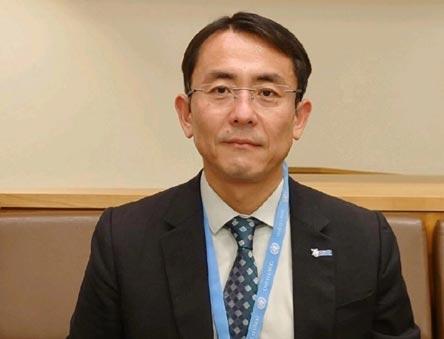
When Tomoya Obokata arrived for a 14-day tour of Canada, his name was unknown in agricultural circles. However, by early September 2023, his role as UN special rapporteur and his quotes were stamped in the collective memory of farmers because he effectively compared them to slave owners.
“I am deeply disturbed by the accounts of exploitation and abuse shared with me by migrant workers,” he said, pointing squarely at the Temporary Foreign Worker (TFW) program.
The Japanese scholar of international law and human rights used his role to amplify the sensational and unsubstantiated notion that the TFW program is modern day slavery. In Ontario, growers employ more than 20,000 workers from Mexico, Jamaica, Trinidad & Tobago, Barbados and the Eastern Caribbean islands. In Québec, a similar number of workers are employed. And in British Columbia, about 7,500 workers

arrive every year. The rapporteur used his brush to tar thousands of farm employers.
Growers were dismayed about the media coverage because it felt like a personal attack on their character. The report linked a design element of the TFW program, namely the closed work permit, to modern day slavery.
The headlines were an insult to growers who spend energy, time and money to follow relevant labour laws and regulations. The comparison was most hurtful to employers who go above and beyond for their workers out of compassion and genuine care.
Negative media coverage such as this underscores why the More than a Migrant Worker (MTAMW) campaign was launched by the Ontario Fruit & Vegetable Growers’ Association (OFVGA) almost three years ago.
As chair of the OFVGA Labour Section, I responded to media interviews as well as Stefan Larrass, OFVGA senior policy advisor.
We recognize there is always more that can be done to ensure all workers have the opportunity
for a positive and safe working experience while they are here, but assigning hateful and broad labels to all the hardworking farmers and their employees in the program is not the solution.
While the headlines may have faded, they are still only a Google search away, fueling the misconceptions of anyone who is researching the topic of labour. That’s why several organizations have followed up with the UN rapporteur.
Nancy Healey heads the federal government’s Office of the Employer Commissioner for the Employment Insurance program. Following the headlines generated by the rapporteur’s comments, OFVGA and other organizations provided her office with facts, figures, and key information about the TFW program.
Most recently, her office arranged a virtual meeting between the author of the UN report, Tomoya Obokata (UN Special Rapporteur on Contemporary Forms of Slavery), and the members of the task team including OFVGA and the Fruit and Vegetable Growers of




!"#"$%&'()*+,$-.&/0'(&12# !"#$%&'()$*+,(-+.%+,+"#$#&/+ 012(34350676 !"#"$%&'()*+'$,-.,/#*0"#+12"(&(*$

!"#$%$&$'("')"!*+',-(.+-"/-+.$0-,"1(, 23"+4-"#-"561(#4&.+$-7"89:9";<=37" >?$(.@ABC$7"D8"E3F"2F3 GHFF"/AIIJ"K@LMM@;;M@L=2;

#$$(/0*#($&0$2&,67,"*#.,8
Canada represented by labour chair, Beth Connery. Together, we provided facts around the safeguards in place for the TFW program, the avenues available to TFWs to leave unsatisfactory or threatening workplaces, and the importance of the program to employers as well as the TFWs and their home communities.
In addition, numerous examples were provided of how employer associations such as OFVGA are committed to the well-being of the TFWs employed in their sector, including:
• Working with OMAFRA and health and safety associations to develop COVID resources for TFWs during the pandemic;
• Providing personal support for Spanish-speaking TFWs arriving at Toronto’s Pearson airport to help them navigate the panextra procedures, in particular the vaccination clinics being offered to TFWs upon arrival, and to make sure they knew their rights and made an informed decision;
• Working with regional community health clinics to help raise awareness among TFWs and their employers of available free-of-charge health services
• Regularly working with federal and provinvial government to arrange educational sessions e.g. in person or virtual, on employer obligations and workers’ rights and promoting the importance of compliance and treating workers well
• Launching the More than a Migrant Worker initiative which raises public awareness of the TFWs’ tremendous importance to our food system and to our province and the sacrifices that they make to work here; The initiative has interviewed 150 workers allowing them to share their story with Canadians
• Working with the Canadian Agricultural Human Resources Council (CAHRC) to develop training resources for Canadian farm employers and supervisors of TFW employees, with a focus on improving compliance and promoting a positive workplace culture.
• Partnering with government to make millions of dollars in investments through the EAWPP program into TFW worker housing to improve worker health with respect to COVID risks and quality of life
• Working with provincial government’s Ontario Immigration Nominee Program department to equip farm employers with the knowledge and tools to help support their TFW employees navigate the process towards permanent residency
The UN rapporteur acknowledged during the meeting that most of the information provided to him during our conversation was new to him. However, he appeared unwilling to accept that his choice of words implied that Canada’s TFW program was linked to slavery; he attributed this notion to the ensuing media coverage. We did not accept his deflection, underlining that his own comments clearly linked the two.
Tomoya Obokata, the UN expert, committed to incorporating the information provided by employer associations in the Canadian task team. In his words, he seeks to have a “balanced perspective” in his final report which is expected in September 2024.
Bill George Jr. is labour section chair, Ontario Fruit & Vegetable Growers’ Association.
THE GROWER PAGE 10 –– MARCH 2024 THE LABOUR FILE
!"#$%#$%&'()&*+,&-,.*&/,%,*0-1,&.,,23&-045,2&-'&()"&
Tomoya Obokata was appointed special rapporteur for contemporary forms of slavery, including its causes and consequences, in March 2020. He is a Japanese scholar of international law and human rights, specializing in transnational organized crime, human trafficking and modern slavery.
Richelieu: filming fiction as reality
KAREN DAVIDSONCanadian-made Richelieu may not make it to main street movie houses in Abbotsford, Brandon or Wolfville. But it’s worth noting that the 90-minute movie by Quebeçois film-maker Pier-Philippe Chevigny was featured at the Tribeca Film Festival last year in New York City. This was his debut into the cinematic big leagues on an international stage.
Pushing global themes set to local scale, Chevigny’s film opens with protagonist Ariane heading back to her hometown near the Richelieu River in southern Québec to reverse her flagging fortunes. She lands a job as the Spanish interpreter for Guatemalan temporary foreign workers at the local sweet-corn cannery. Once there, she befriends Manuel, an illiterate worker supporting a young family back in Guatemala with the money he earns in Canada. Ignoring an onus of neutrality, Ariane begins advocating on behalf of workers’ rights after witnessing ongoing employee abuse.
Video surveillance in the workers’ private quarters, workers sent back to Guatemala as punishment for offduty altercations in over-crowded living quarters, and in one incident, an employee being refused compassionate leave to attend his father’s funeral all fuel her outrage. When she confronts her employer about perhaps hiring local replacements, his response is “No Canadian would shovel corn husks for $10 an hour.”
Spoiler alert. The film’s climax comes as Manuel, despite having injured his back, continues working overtime hours with the help of painkillers supplied by the employer, along with the advice: “Make these your friend.”
A week into this regimen, Manuel is rushed to hospital vomiting blood, the result of a perforated stomach. Adriane, having already been fired because her advocacy had impacted the plant’s profitability, is called to the
hospital by Manuel’s co-workers to help with the emergency.
Manuel survives the health crisis, finishes out his contract, then while boarding the bus for the airport is shown to be requesting a letter of recommendation so that he can come back to work in Canada next season. Wash, rinse, repeat. The implication is that this is a cycle controlled by employers.
At the end of the film there was a Q & A session with the filmmaker, who had driven from Montreal to attend the Milton Film Festival screening. Chevigny worked on this film for a decade, following production of his first short film, “Tala,” about a Filipino domestic worker in Québec. While answering questions, he revealed some insight into his creative process: how he travelled to Guatemala to interview workers, how he found the Québec actress of Guatemalan descent to portray Ariane, how he wove the real-life anecdotes from the agriculturally rich Richelieu River valley south of Montreal into his script, and how he tapped his Guatemalan actors to make up songs for the film’s soundtrack.
Choosing to release Richelieu in June 2023 was opportune given the media’s current interest in the foreign agricultural worker story. Radio-Canada said in its review that this is “a film with empathy” and Vancouver’s Georgia Straight reported that “Meticulously crafted Richelieu unearths iniquities rooted in Canada’s Temporary Foreign Worker Program.” Such coverage is but part of a river of recent negative media for agricultural employers, wide as the Richelieu itself. Case in point: the UN Special Rapporteur invoked “modern-day slavery” in his September 2023 report assessing Canada’s worker program.
Tellingly, when asked by a woman in the audience if conditions had improved in Québec since filming, Chevigny revealed his bias by saying “Even more workers are being brought in. Conditions are getting worse.”
Richelieu is likely to catch many in Canadian

horticulture off guard and, no doubt, most will deny the existence of the collective abuses it depicts. However, there’s no denying the emotional resonance of the message given the film’s over-the-shoulder, documentarystyle of filming and its interview-driven dialogue.
Canada’s agricultural food system needs to pay heed to such stories being told. When false, they should be strongly refuted. Horticulture currently employs 60,000 temporary foreign workers each year. To ignore unfavourable coverage by media is short-sighted. In a social media world, influencers tell visceral stories that enter the bloodstream of our body politic.

THE GROWER MARCH 2024–– PAGE 11 OPINION EDITORIAL
EXECUTIVE DIRECTOR’S
Building rural bridges

As a provincial organization representing growers, the Ontario Fruit & Vegetable Growers’ Association (OFVGA) has long focused the bulk of its advocacy efforts on the Ontario government. We regularly engage and meet with elected officials, political staff and bureaucrats with respect to files and issues that affect fruit and vegetable growers right across our province.
Many of those issues, such as labour, crop protection and even safety nets, are national in nature and although the provincial
WEATHER VANE
government has a role to play, ultimate jurisdiction lies with the federal government. We’ve always relied on and supported the efforts of our national organization, Fruit & Vegetable Growers of Canada (FVGC), but in recent years, we’ve also increasingly been initiating federal government outreach as pressure on growers continues to increase.
There is a third pillar of government that also affects growers and their businesses, and that’s the municipal level. It was during the COVID-19 pandemic when pandemic-related rules and restrictions at times varied widely between jurisdictions that our sector first got a true picture of the significant impact local governments and agencies can have on fruit and vegetable operations.
Municipalities also govern a wide range of other issues, policies and regulations ranging from storm water management to approval for worker housing and more. The province is a patchwork of inconsistent approaches, and agriculture and food
production aren’t officially part of many municipal policies and plans. That’s even though the majority of Ontario’s 444 municipalities are either rural or border on rural communities.
The Ontario fruit and vegetable sector grows 125 different crops, generates more than $4.2 billion in annual economic activity, including more than one third of Canada’s total fruit and vegetable production, and supports almost 100,000 direct and indirect jobs.
Despite that, even fewer local jurisdictions are aware of the unique needs of the fruit and vegetable businesses in their communities, particularly related to the seasonal and temporary foreign workers that are an integral part of so much local production.
This leaves growers frustrated and unable to expand their businesses or move ahead with improvement projects or forced to incur additional costs to meet municipal requirements – and they’ve increasingly been reaching out to OFVGA with their concerns.
Although OFVGA does not become involved in local or regional issues – as an organization we work on issues that affect all fruit and vegetable growers regardless of geography or commodity – there is a role for us to play in building relationships with municipal stakeholders and raising awareness of the unique needs of our sector.
After participating in the Association of Municipalities of Ontario (AMO) conference last summer, OFVGA for the first time in January 2024 had a booth at the Rural Ontario Municipal Association (ROMA). The goal: starting to navigate how to interact with this new audience.
These conferences provide a unique opportunity to introduce delegates to the OFVGA, help raise awareness of the sector and its needs and opportunities, and build relationships with municipal stakeholders to help shine a light on the issues impacting growers. Our team had a steady stream of interested visitors pass by our booth during the two-day trade show, and we took every opportunity to engage with those
visitors about our sector, what we grow, where our production is located, and how municipalities and growers can work together for mutual benefit.
There was also significant interest in our More Than A Migrant Worker initiative. Seasonal and temporary foreign workers have a significant presence in various Ontario municipalities, and this was an opportunity to highlight their contributions as well as draw attention to the many benefits of the program, its local economic impacts and ongoing work by industry and government to increase worker benefits and protections and address myths and misconceptions.
Our ROMA participation was a valuable introduction for our team into the world of municipal government and administration and we look forward to continuing that engagement and building new relationships as we move forward.
Alison Robertson is the executive director of the Ontario Fruit & Vegetable Growers’ Association.

PAGE 12 –– MARCH 2024 THE GROWER
PERSPECTIVE STAFF Publisher: Ontario Fruit and Vegetable Growers’ Association Editor: Karen Davidson, 416-557-6413, editor@thegrower.org Advertising: Carlie Melara 519-763-8728, advertising@thegrower.org The Grower reserves the right to refuse any advertising. Any errors that are the direct result of The Grower will be compensated at our discretion with a correction notice in the next issue. No compensation will be given after the first running of the ad. Client signature is required before insertion. The Ontario Fruit and Vegetable Growers’ Association is the sole owner of The Grower. All editorials and opinions expressed in The Grower are those of the newspaper’s editorial staff and/or contributor, and do not necessarily reflect the view of the association. All rights reserved. The contents of this publication may not be reproduced either whole or in part without the prior written consent of the publisher. OFFICE 355 Elmira Road North, Unit 105 Guelph, Ontario N1K 1S5 CANADA Tel. 519-763-8728 • Fax 519-763-6604 The Grower is printed 12 times a year and sent to all members of the Ontario Fruit and Vegetable Growers’ Association who have paid $30.00 (plus G.S.T.) per year for the paper through their commodity group or container fees. Others may subscribe as follows by writing to the office: $30.00 (+ HST) /year in Canada $40.00/year International Subscribers must submit a claim for missing issues within four months. If the issue is claimed within four months, but not available, The Grower will extend the subscription by one month. No refunds on subscriptions. P.M. 40012319 ONTARIO FRUIT AND VEGETABLE GROWERS’ ASSOCIATION BOARD OF DIRECTORS 2023 MANAGEMENT COMMITTEE Chair Shawn Brenn, Waterdown Vice-chair Mike Chromczak, Brownsville Grapes Matthias Oppenlaender, NOTL Fresh Veg Joann Chechalk, St Anns Small fruit/Berries Morris Gervais, Springwater BOARD OF DIRECTORS Apples Cathy McKay, Port Perry Fresh Veg other Joann Chechalk, St Anns Tender Fruit Dave Enns, Niagara-on-the-Lake Asparagus Mike Chromczak, Brownsville Grape Matthias Oppenlaender Fresh Veg muck Quinton Woods, Cookstown Potato Shawn Brenn, Waterdown Small Fruit/Berries Morris Gervais, Springwater Ginseng Glen Gilvesy, Tillsonburg Greenhouse Jan VanderHout, Dundas Greenhouse George Gilvesy, Tillsonburg Processing Vegetables Tracy Gubbels, Mount Brydges OFVGA SECTION CHAIRS Crop Protection Brian Rideout Environment and Conservation Jan VanderHout Labour Bill George Safety Nets Mike Chromczak Energy, Property, Infrastructure and Food Safety Brian Gilroy
Here’s a rare bird’s eye view of a grower inspecting his sprayer tank. This is Mike Chromczak, asparagus and watermelon grower, Brownsville, Ontario wearing protective gloves. It’s a timely reminder for Canadian Agricultural Safety Week, March 10-16, 2024. Practise #FarmSafetyEveryday. Photo by Glenn Lowson.
ALISON ROBERTSON
URBAN
Brazil’s agri-food exports snag global attention
 DANIEL AZEVEDO DUARTE & OWEN ROBERTS
Jaws dropped earlier this year when export figures showed Brazil was becoming the global top exporter in grain and oilseeds, surpassing the U.S. in the likes of soy. And now, as 2024 unfolds, it’s clear there’s even more to come in other commodities from the South American powerhouse.
In January, the public entity called The National Supply Company, which operates under the Ministry of Agriculture, Livestock and Food Supply, announced that Brazil exported a record US$1.2 billion worth of fruit and vegetables in 2023. That’s nearly 27 per cent more than 2022.
Fruit exports to Canada –Brazil’s seventh biggest export market -- reached more than 23,715 tonnes, up a whopping 18.7 per cent. This tonnage comprised mostly mangoes and melons, as well as grapes, watermelon, lemons and apples. The United States, Brazil’s third largest export destination, imported 94,140 tones, 22 per cent more than 2022.
Some industry observers wondered if this spike was tied to poor weather-related production last year in Chile and Peru, Brazil’s competitors. And while that’s true to an extent with certain crops, particularly grapes, the story’s much deeper, says Guilherme Coelho, president of Abrafrutas, the Brazilian Association of Producers and Exporters of Fruits.
“Brazilian food is valued internationally for its quality, flavour, and diversity,” says Coelho. “Sustainable production and responsible agricultural practices contribute to the attractiveness of our fruits on the global market. We are optimistic about the future of fruit exports from Brazil.”
Indeed, Brazil’s taken a methodic approach to exports, one that’s been watched closely by industry observers. Five years ago, media outlets such as The Grower published stories about the country’s aggressive plans to promote its fruit and vegetable sector, to reach agreements with importers around the globe and to compete with other growers on

the world stage . . . just like it did for grain.
The numbers tell the tale.
Since 2000, Brazil’s had an eightfold increase in agricultural exports, from US$20 billion to US$165.5 billion. Most of that growth has been in grain, meat, coffee, sugarcane and oilseeds. But surpassing the US$1 billion mark in fruit and vegetable exports is a significant milestone too.
Coelho says increasing productivity using modern tropical agriculture techniques such as irrigation and developing climate-adapted varieties was a key.
Another backstory is land use. Brazil is often accused of destroying the Amazon rainforest to produce crops. But Coelho and others point to a huge increase in production with only a minor increase in cultivated land in the last 45 years. As he notes, Brazil has 850 million hectares of land –the fifth largest in the world –and owing to favourable climate it can produce three harvests a year.

Yet Brazil only uses 82 million hectares for what it calls perennial crops such as fruit and coffee, and for “temporary” crops such as grains, oilseeds, sugar and cotton. Another 140 million hectares are dedicated to livestock production.
Marketing is another factor fueling this Brazilian leap forward. Coelho says besides the growing global demand for high-quality fruits, the sector has focused on strengthening its international marketing activity, promoting the ‘Frutas do Brasil’ brand.
It’s also set out to improve infrastructure and quality, to meet global demand. Brazilian fruit exporters are distinguished by certification such as Global G.A.P. and Rainforest Alliance.
“That gives credibility to our fruit and vegetables, and opens doors to demanding markets,” says Coelho, particularly in Europe, which has been highly critical of Brazil’s alleged disregard for the rainforest.
But there are two sides to that story. Researchers at the

University of Wisconsin-Madison reported back in 2015 that Brazil's Soy Moratorium (SoyM) was the first voluntary zerodeforestation agreement implemented in the tropics. They say it set the stage for supplychain governance of other commodities, such as beef and palm oil . . . which is music to Coelho’s ears.
“We implement policies aimed at environmental preservation, the social well-being of the communities involved in the production, and high standards of governance throughout the production chain,” he says.
For example, Abrafrutas, which he represents, is working with the national government on public policies and public-private partnerships. Its goal is to improve the structure of ports and airports, the efficiency of customs and maintain export fruit quality.
Coelho points to the construction of the FTrade Logistics Distribution Center in Petrolina, which opens this year, as an encouraging development.


The region of Petrolina, in northeast Brazil, is home to the Vale do São Francisco fruit cluster, one of the important areas for fruit exports in Brazil.
In addition, Abrafrutas participates in international fairs such as Fruit Logística and Fruit Attraction, which have been fundamental in expanding the reach of its fruits in global markets.
“These events are strategic to consolidate the position of Brazilian fruits in selected countries,” he says. “Additionally, we are exploring new markets in Asia, the Middle East and Africa, identifying promising opportunities to expand our global presence.”
Based on its performance so far, further expansion shouldn’t be a problem.
Daniel Azevedo Duarte is a Brazilian agricultural journalist based in Sao Paulo. Owen Roberts, a regular columnist with The Grower, travelled to agriculture centres in Brazil in 2019 and monitors market developments there.


MARCH 2024–– PAGE 13 THE GROWER
COWBOY
PR2500 Plastic Mulch Lifter-Wrapper
OWEN ROBERTS
Vegetable Equipment
to 5", Two drip
attachme 4' to 5' bed width, Lay beds from 5" to 10", 45 Hp min Combines lifting and wrapping of plastic mulch into ONE EASY PASS. Helping Helping Farmers Farmers Grow ! Grow ! PA1600 Pick Assist Solar Powered, Variable Speed ,Canopy, Easy Height Adjustment, Perfect for Planting and Picking
Available
ML4600 Plastic Mulch Layer
The ML4600 adjustable bed height 10"
tape
Financing
Guilherme Coelho, president of Abrafrutas, the Brazilian Association of Producers and Exporters of Fruits.
FARM SAFETY WEEK
Knowing your limitations

Farming is incredibly rewarding, but no one has ever called it easy.
The constant challenges, long hours, and physical labour can put a lot of strain on farmers. And that can lead to farmers ignoring their own well-being.
Farmers put a lot of pressure on themselves, which is why it’s essential to be mindful of limitations. It’s important to understand and be aware of your limitations for your physical and mental well-being. Take time to prioritize tasks by looking
LETTER TO THE EDITOR
at what will benefit you and your farm the most. Ignoring your limitations can make it difficult to cope with stressors and put you at risk of illness or injury.
Remember that your farm’s success is dependent on your well-being.
This Canadian Agricultural Safety Week, we celebrate Your Farm, Your Family, Your Success. For more information on how Safety is Our Heritage, visit agsafetyweek.ca.
Nay to proposed BC apple marketing commission
Your article in the February edition portraying BC apple growers as in favour of an apple marketing commission could not be further from the truth. Well over half the apple growers in the Okanagan valley in BC are adamantly opposed to this commission, especially in the south where it is virtually unanimous in opposition. I know your information comes from the BC Fruit Growers’
Association but they are the ones pushing this scenario. This response is to let you know that your information is strictly one sided.
Billy Potash President,Cawston Cold Storage Ltd. Cawston, British Columbia

COMING EVENTS 2024
Mar 5 Tomato Day, Bradley Centre, Chatham, ON
Mar 5-7 Fruit & Vegetable Growers of Canada Annual General Meeting, Westin Hotel, Ottawa
Mar 12-14 GreenTech Americas, Santiago de Querétaro, Mexico
Mar 17-23 Canadian Agricultural Safety Week
Mar 18-20 Minor Use Priority Setting Meeting, Gatineau, QC
Mar 21 Ontario Hazelnut Association Annual Symposium & Annual General Meeting, Tillsonburg Legion, Tillsonburg, ON
Mar 26 Ontario Tender Fruit Growers’ Essex, Kent, Lambton Annual General Meeting, Colasanti’s Tropical Garden, Kingsville, ON
Mar 27 Ontario Tender Fruit Growers’ Haldimand, Norfolk Annual General Meeting, ZOOM
Mar 28 Ontario Tender Fruit Growers’ Niagara Annual General Meeting, Hilton Garden Inn, Niagara-onthe-Lake, ON
Mar 28 Ontario Processing Vegetable Growers Annual General Meeting, Four Points by Sheraton, Chatham, ON
April 3 Grape Growers of Ontario Annual General Meeting, Club Roma, St. Catharines, ON
April 3-4 Grower Information Days, Muck Crops Research Station, Bradford, ON
April 11 Farm & Food Care Ontario Annual General Meeting, Grandway Events Centre, Elora, ON
April 23-25 Canadian Produce Marketing Association Convention & Trade Show, Vancouver, BC
April 26 Canadian Produce Marketing Association Sustainability Summit, Vancouver, BC
May 28-30 Grow your People Unconference, Queen’s Landing Hotel, Niagara-on-the-Lake, ON
May 30 International Potato Day
June 11-13 GreenTech Amsterdam, RAI Amsterdam, Netherlands
June 19 Ontario Potato Board Industry Social Golf Tournament, Hockley Valley Golf Resort, Mono, ON
June 23-26 12th World Potato Congress, Adelaide, Australia
Aug 15-16 U.S. Apple Outlook Conference, Ritz-Carlton Hotel, Chicago, IL
Sept 19-21 Quebec Produce Marketing Association 77th Convention, Fairmont Tremblant, Tremblant, QC
Oct 1-5 International Plowing Match & Rural Expo, Lindsay, ON
Oct 9-10 Canadian Greenhouse Conference, Niagara Falls Convention Centre, Niagara Falls, ON
Nov 1-10 Royal Agricultural Winter Fair, Toronto, ON
2025
Mar 11-13 Fruit & Vegetable Growers of Canada Annual General Meeting, Québec City, QC
THE GROWER PAGE 14 –– MARCH 2024
RETAIL NAVIGATOR
What you see in other markets can help your customer relationships
 PETER CHAPMAN
Travelling for work? Going away on a family vacation? Use this opportunity to visit a few stores and share your learnings with your customers.
The photos or videos you take of new merchandising ideas are new reasons to interact with your customer and keep building the relationship. What you see when you travel is one more chance to move the relationship forward.
When you are looking for ideas, you should also consider where you think your customer should be moving. You might be trying to convince them to move to a bigger pack size or a new form of packaging. There is nothing wrong with sharing insights from other markets that reinforce the position you are trying to advance.
Keep the ideas realistic
Remember the segment of the market your customers are serving. When you are in a different market – city, region, country -- focus on store formats that occupy a similar position in the market. For example, if you supply discount formats, it is not much help to share ideas from a Sprouts or Eataly store. These stores are trying to do something very different. The labour they have is much more abundant and fixtures are probably very different from a discount store.
Before you travel, ask your category manager or other contacts within the retailer if they can recommend some stores to visit. Some retailers work with stores in non-competing markets. Or do your research in advance and tell your client that you’re going to visit four stores. Ask them how they would prioritize the list and if there are any others in the market they are familiar with.
Start with the overall store positioning
I always take a few pictures of the outside of the store. There could be some consumer messages that are interesting but more importantly, it helps me identify which store the interior photos are from. After a few store visits, it can be difficult to remember which store you were in.
Your inclination might be to run to your category, but take the time to understand the total store positioning and look at different departments. You should know the overall issues your customers are working on. These could be pricing messages, value statements, private label or perhaps sustainability.
Investigate these initiatives in the total store. You might find some signage or shelf programs that would be interesting to your customer. If possible, take some photos and pick up any point-ofsale materials. Grab a flyer if printed copies are available.
Retailers do not always merchandise products in the same departments as your customers do at home. Make sure you look in different spots for your products and for cross-merchandising ideas. An example of cross merchandising is putting mushrooms and onions in the meat department beside the steaks. Some of these can be great ideas for you to share back home. Trader Joe’s in the U.S. do this a lot.
Your department might deliver some gems
Once you have checked out the overall store positioning, spend time in your department and your category. Think about what your customers are working on and how this store is implementing that vision.
Your customers might be bolstering their image of how they support local growers. So find ideas and examples of how this is playing out in far-fromhome stores. This could be a signage program that identifies a grower on the sign or pictures of the farm beside the display. There are many different “buy local” initiatives.
Merchandising -- how products are displayed -- is a combination of art and science. Look for new ideas or fixtures that might be interesting to your customers. These could be multi-shelf berry displays that do a better job keeping product refrigerated or a simple shelf such as a basket for tomatoes beside refrigerated lettuce. These ideas should lead to incremental sales.
Packaging is a huge issue in our industry. If you are travelling in markets that are more advanced in the shift to compostable materials, you can learn a lot. Consider buying some product to bring the packaging home. We know in Canada there is a lot of discussion around selling more product in bulk or compostable packaging. Learn as much as you can to share with your customers.
If possible, talk to the staff in the stores about the ideas you see. It is one thing to see an interesting idea, but it is so much better if they tell you it resulted in a 20

per cent increase in sales. Your customer will be much more interested if you can quantify some of the benefits for them. They are probably not the final decision maker, so the more facts you can supply the better chance they have to convince their bosses.
Organize the ideas and spread them out
Too much information can be a bad thing. It is great if you have 20 photos you want to share with a customer but don’t do it all at once. Group the photos into

themes. Start with the obvious opportunities or photos from stores they suggested you visit. They will not spend the time to look through huge numbers of photos.
Follow up with other ideas after you have had a chance to do some homework. If you saw some great compostable packaging, do your due diligence to see if you can use it with your equipment or what investments would be required. It really does not do you or your customer much good to share an idea that is never a reality for you. Sometimes it can even hurt the relationship

because they want you to execute it and you can’t.
Share the ideas over time. Some ideas might be better for certain customers and not others. Time is valuable. Especially when you’re sharing your best insights from your working vacation!
Peter Chapman is a retail consultant, professional speaker and the author of A la Cart-a suppliers’ guide to retailer’s priorities. Peter is based in Halifax, N.S. where he is the principal at SKUFood. Peter works with producers and processors to help them get their products on the shelf and into the shopping cart.

MARCH 2024–– PAGE 15 THE GROWER
YORK U.K.
NEW
CALIFORNIA
FOCUS: CROP PROTECTION
Bringing a new active ingredient to market costs more than $300 million
 KAREN DAVIDSON
The five major crop protection companies have participated in a black box study that analyzes the costs of developing a new active ingredient. The study estimates a $300 million cost, double that of the year 2000, and a 12.3 year cycle from initial product synthesis to first product sale. The development cycle is going in the wrong direction, lengthening from 8.3 years in 1995, partially due to much higher registration costs.
The report was conducted by AgbioInvestor on behalf of CropLife International and its members. It is titled: The Cost of New Agrochemical Product Discovery Development and Registration. As fascinating as the data is, it’s already five years outof-date because it covers the 2014-2019 period.
With that background, the study shows that the average cost of the discovery, development and registration of a new conventional chemical crop protection active ingredient increased by 5.7 per cent to $301

million in the 2014-2019 timeframe compared to 2010-2014. A detailed breakdown of each stage is available in the report.
Similarly, the average time required to facilitate this process increased by one year to total 12.3 years. The study also details the breakdown of R&D budget; CODEX MRL costs; and re-registration costs.
The development phase, the most expensive part of the overall process at $133.1 million, accounted for 51per cent of the total process. This represents a decline (-8.5%) from the prior timeframe; however, these lower costs in the development phase were more than offset by greater expenditure in the research and registration phases. Research expenditure increased (+18.9%) to reach $126.6 million, representing 42.0% of the total process.
The expenditure needed to complete the registration process increased by the greatest rate, rising (25.9%) to $41.8 million, representing 13.9% of the total process.
The black box survey was conducted with BASF Agricultural Solutions, Bayer


Crop Science, Corteva Agriscience, FMC, and Syngenta.
The April 2023 survey focused on the time and costs associated with discovering a new crop protection active ingredient and the subsequent process of product development through to product registration.
The data collected was anonymised and averaged to
demonstrate the current situation according to four main categories:
• Cost of each part of the discovery, development, and authorisation process
• Time involved to bring a new active ingredient to the market
• The cost of CODEX MRLs
• Re-registration costs For the full report, link here:
https://agbioinvestor.com/newagrochemical-product-study/ or CropLife International https://croplife.org/ourwork/ensuring-regulatoryintegrity/regulatory-integrity -in-crop-protection/
Source: AgbioInvestor February 12, 2024 news release


THE GROWER PAGE 16 –– MARCH 2024
Visit us at Horticulture.corteva.ca TM ® Trademarks of Corteva Agriscience and its aliated companies. © 2024 Corteva Solutions you can trust to protect your leafy vegetable and brassica crops. Trusted technologies and innovative solutions for Canadian leafy vegetable and brassica crop growers.
Pesticide safety starts with the label
CANADIAN AGRICULTURAL SAFETY ASSOCIATIONPesticides, commonly known as crop protection or pest control products in Canada, play an important role on farms across the country. Using any pesticide product comes with a responsibility to ensure it’s used correctly and safely.
“When it comes to pesticides, the crop protection industry works to support products being made, transported, and used in a safe way,” says Erin McGregor, stewardship and policy manager for Syngenta Canada. “Ensuring that pesticides are used correctly is a priority and integral to the protection of not only the health and safety of farm workers and the public, but also the environment. Syngenta is committed to the responsible and ethical management of our products throughout their life cycle.”
So, what’s the critical first step in safely using pesticides? Reading and understanding the pesticide product label.
A pesticide product label is a legal document that must be followed. That means products should not be used in any way
other than outlined on the label. A pesticide label includes vital information on a specific product, such as the degree and nature of hazard posed by the product, the application rate, first aid procedures, required personal protective equipment (PPE), and more.
According to Health Canada’s Pest Management Regulatory Authority, the authority responsible for pesticide regulation in Canada, pesticides can be used safely by following the label directions. The text on the label reflects the results of the scientific evaluation that the product has undergone and specifies the correct use of the product to prevent unacceptable risks to human health and the environment.
Even when working with a product that you’ve used before, review the label before use. It’s not uncommon for labels to be updated, for example with changes to a product’s directions for use, precautions, or pre-harvest intervals.
There’s a lot of information on a pesticide label but for good reason – to support the safe use of the product. That’s why it’s critical to carefully review the label and understand each section

before working with a product to ensure you use it correctly. If you have questions or difficulty understanding the label, reach out to your local agronomic representative or pesticide specialist or contact the pesticide manufacturer for help.
Health Canada’s Pest Management Information Service (1-800-267-6315) is also available for questions.
Some of the information found on a pesticide label includes:
• Precautionary shapes, signal words, and hazard symbols
• First aid instructions
• Precaution statements
• PPE requirements
• Directions for use
• Restricted entry intervals, pre-harvest intervals, and other restrictions
• Storage and disposal instructions
• Registration number
• Product company’s name and address
It is important to note the Pest Control Product Act’s registration number. This unique five-digit product identifier, which Health Canada issues, will help a medical professional provide the necessary treatment in an emergency.
For more detailed information about understanding a pesticide product’s label, check out this video: https://www.youtube.com /watch?v=mEPJPfrR5ro

When recycling ag containers, every one counts
Great job recycling your empty pesticide and fertilizer jugs, drums and totes. Every one you recycle counts toward a more sustainable agricultural community and environment. Thank you.
2024 COLLECTION SITES OPEN APRIL 1.
Ask your ag retailer for an ag collection bag, fill it with rinsed, empty jugs and return jugs, drums and totes to a collection site for recycling. Details at cleanfarms.ca

MARCH 2024–– PAGE 17 THE GROWER
FOCUS: CROP PROTECTION Find a collection location near you at cleanfarms.ca LET’S MAKE IT TO 100% info@cleanfarms.ca @cleanfarms
NEW! Return empty seed, pesticide and inoculant bags for environmentally safe management.
A new collaboration spreads the word on minimizing spray drift

As spray season approaches, several agriculture organizations in Ontario are joining forces to help reduce the off-target movement of crop protection products in the province. They are putting the finishing touches on a new campaign – Be Drift Aware –to promote the use of best application practices by farmers and spray operators.
The downside of spray drift isn’t limited to the farm - there’s impact to crop yield, crop quality and input costs when products don’t stay where they are applied. Drift can also have negative
impacts on neighbouring fields and residences, livestock, sensitive natural habitats such as trees, open water and pollinators, and can cause tension with neighbours.
There are many resources and best practices aimed at reducing the risk of drift. That’s what the new Be Drift Aware campaign will focus on – bringing together existing resources and tools to encourage farmers and spray operators to pay extra attention to reducing the possibility of pesticide spray drift when making application decisions.


Watch for a new website that will be the centrepiece of the awareness campaign with easy-toaccess information on how to

reduce spray drift and what to do if drift is suspected. Best practice tips and tools will also be shared by participating organizations at industry events, through social media and other communication tools.
Be Drift Aware is expected to officially launch in March 2024,
and was created by Grain Farmers of Ontario (GFO), Ontario Federation of Agriculture (OFA), Ontario Fruit and Vegetable Growers’ Association (OFVGA), the Ontario Ministry of Agriculture, Food and Rural Affairs (OMAFRA) and CropLife Canada.
Spotted Lanternfly Summit to be held in Pennsylvania

The U.S.-based National Plant Board is hosting the 8th annual Spotted Lanternfly Summit from February 27-29, 2024. This meeting is designed to provide research and regulatory information to those interested in learning more about spotted lanternfly. The 2024 meeting will be the first hybrid meeting offered.
One hundred positions are available for the in-person portion of the meeting. Those attending in-person will be coming to Harrisburg, PA. Pennsylvania was the first state known to have spotted lanternfly and since 2014 has openly provided information to researchers, federal and state agencies regarding what they observe in the field and in management. The virtual meeting will have 250 spots available. Agenda is subject to change depending on availability.
For virtual tickets, link here: www.eventbrite.com/e/2024-spottedlanternfly-summit-tickets-784523359487
To review past years SLF Summits and SLF 101 recordings please visit: www.stopslf.org/research-updates/meeting-reports-andpresentations/
Editor’s note: By the time this newspaper reaches you, the event may have passed. However, in the interests of information sharing, past reports and presentations are available.
THE GROWER PAGE 18 –– MARCH 2024 FOCUS:
PROTECTION
CROP
FOCUS: CROP PROTECTION
EU abandons plan to reduce use of pesticides by half
The head of the European Commission, Ursula von der Leyen, has announced plans to scrap a proposal halving pesticide use across the European Union (EU).
The move is an apparent concession to farmers who have been protesting in many EU countries against regulations including the planned reduction in pesticide use.
She said the proposal had become a “symbol of polarization.”
The reversal still needs to be formally approved.
Pesticide reduction is among a number of grievances that farmers in countries including France, Belgium and the
EU: gene editing
Europe has long been a bastion of skepticism about genetically engineered organisms, but in early February 2024, the European Parliament voted to lessen regulatory oversight of crops created through one type of DNA manipulation: gene editing.
Euroseeds, a trade organization of plant breeders, called the vote a “significant step forward” that would increase innovation and agricultural sustainability. Gene-edited plants can produce higher yields and better resist pests and pathogens, reducing the need for pesticides, for example. Yet Greenpeace and some opponents criticized the decision, saying it could lead to more powerful agricultural monopolies.
The legislation passed by a relatively narrow margin of 307 to 263, with 41 members abstaining.
The measure must still be agreed to in negotiations with the European Union’s member states, which remain divided about whether to allow the patenting of gene-edited plants and require labels on food made from such crops.
Nevertheless, plant research advocates hailed the vote. “This is really encouraging for the scientific community,” says Oana Dima, managing director of European Sustainable Agriculture through Genome Editing (EU-SAGE), a network of more than 150 European research institutes, universities, and associations.
EU-SAGE began to advocate for regulatory reform in 2018, when the European Court of Justice ruled that plants created with the genome editor CRISPR and similar methods that alter existing DNA—referred to as “new genomic technologies” (NGTs)—should be considered genetically modified organisms (GMOs) under EU law.
Netherlands have been demonstrating against in recent weeks. They argue that reducing the amount of pesticide they are allowed to use will negatively impact their crops and therefore put food production in the EU at risk.
“Our farmers deserve to be listened to,” Von der Leyen told the European Parliament on February 6.
“I know that they are worried about the future of agriculture and their future as farmers.”
Von der Leyen also said the issue of pesticide use had not gone away and that further conversations would be needed
before a new proposal to reduce them can be put forward. The EU had aimed to halve the use of the chemicals by 2030 as part of its Green Deal, which is aimed at tackling climate change.
Nevertheless, Spain and Bulgaria witnessed hundreds of their farmers take to the streets, blocking roads and causing severe disruption to motorists. Like farmers elsewhere, they demand more flexibility from the EU, tighter controls on the produce of non-EU countries and more help from their government.
Source: BBC News February 12, 2024


MARCH 2024–– PAGE 19 THE GROWER
Ursula von der Leyen, head of the European Commission
FOCUS: POTATOES
How to ensure best results for insecticide treatment of wireworm
KAREN DAVIDSONPotato growers are well acquainted with wireworm, the soil-dwelling larvae of click beetles that nibble the spuds growing in the underground neighbourhood. There are approximately 20 pest species across Canada including invasive species such as Agriotes obscurus in British Columbia (BC) and Agriotes sputator in Prince Edward Island (PEI). In 2018, damage from blemished potatoes was estimated at $10 million in PEI alone.
Wim van Herk, research scientist for Agriculture and AgriFood Canada, Agassiz, BC has been doing wireworm research for 20 years, with his research published in a 2022 edition of Journal of Economic Entomology. He recently presented to the Lower Mainland Horticultural Conference in Abbotsford commenting on what could go wrong with at-planting treatments for controlling wireworms in potatoes. His lesson is applicable to the efficacy of any chemical applied at planting.
Until the registration of broflanilide (Cimegra) in 2021, there were several control options but they required high rates of active ingredient. Thimet 20 G, for example, is applied at the rate of 3,200 grams of active ingredient/hectare whereas Cimegra IFS is applied at a rate of 25 grams of active ingredient/hectare and is equally effective. (See chart)
The research plot preparation at AAFC’s Agassiz research station consists of a Roundup application in March followed by field disking. Note that plowing traps wireworms in the sod beneath the soil surface and is not recommended. Clods are removed and furrows are opened manually. Seeding is also done by hand. Harvest is done at around 100 and 120 days after planting. Compared to other insecticides such as Thimet, Capture and Titan, research trials found that in-furrow applications of Cimegra resulted in 80 per cent reduction in potato skin blemishes from wireworm feeding and 90 per cent reduction in wireworms.
Some growers have noted that the Cimegra label rate didn’t


From September through March, the adults overwinter below the soil surface. From May to June, the females lay eggs just below the soil surface. From June to July, the eggs hatch. The larvae feed for up to four years. When a soil sample is taken, several sizes of larvae may appear, ranging in age from one to four years. Photo courtesy of Wim van Herk, AAFC, Agassiz, BC.
Relative application rates/hectare
*based on 100 rows/ha, 333 potatoes /row, 80-120g seed pieces
Why are some years worse for wireworms than others?
The population size differs from year to year, depending on field history and climate. If the wireworms didn’t feed in the fall of 2022, they would have started feeding earlier in the spring of 2023, given conditions in British Columbia.
A late potato planting that year would mean that wireworms were done feeding in the spring and didn’t contact the seed-piece treatment. At harvest time in the fall, the damage increases sharply the longer the spuds are in the ground as wireworms feed. Harvest your potato field early if it has a high wireworm risk. Wireworms need to contact chemical in the spring to die.
work as expected with one grower reporting a lot of culls. What went wrong?
Nailing down the reason is hard, but van Herk goes back to the label instructions:
“Use 250 mL/ha of Cimegra insecticide in-furrow to control
wireworm in potato. Apply at planting as a dilute spray in water. Apply the in-furrow spray to uniformly cover the seed pieces and surrounding soil. The spray pattern should be 10-20 cm (4-8 inch) band -- van Herk stresses that the 20 cm is better -- that is
applied to the open seed piece furrow prior to being covered with soil. Dilute Cimegra insecticide product in a minimum of 50 L of water per hectare and apply the dilute mixture into the furrow. For some growers, not using enough water was the
Soft rot bacteria on the Ontario Potato Conference agenda
EUGENIA BANKS
Ken Frost, a professor and plant pathologist from Oregon State University, will speak at the Ontario Potato Conference in Guelph on February 29, 2024. He directs an extension program to provide research-based improvements in vegetable disease management.
I first dealt with Ken in 2022 when
tuber soft rot seemed more aggressive than usual in Ontario. He identified Pectobacterium parmentieri, a more aggressive and “better tuber rotter” than the old strain. P. parmentieri is not a new pathogen. It was first identified in Europe in the 1960s but given a different name. He will discuss the “Management of Soft Rot Bacteria.” This includes tuber sot rot, blackleg, aerial stem rot and Dickeya dianthicola. His talk will provide invaluable
information to reduce the impact of soft rot bacteria on your potato crop.
Eugenia Banks is a consultant to the Ontario Potato Board.
cause of poor results.
It turns out that improper field preparation has resulted in less than stellar protection against wireworms for a few growers. This is true for any chemical applied. A complete understanding of wireworm feeding habits explains why. Growing plants emit carbon dioxide (CO2), an attractant for wireworms. If the field has not been properly prepared and sprayed, then wireworms will feed in the fall on the outward fringes of the crop developing in the furrows.
“I understand that growers are under constraints,” says van Herk. Rented land, for example, presents issues because the grower may not have control over how the land was treated the previous fall. In this case, topkill as early as possible, mid-March if possible, once soil temperatures move to around 10°C. Then cultivate, don’t plow.
He considers a high-risk field to be one that has been in grass or cereals for at least one out of the last four years. These are crops that favour wireworm survival and beetle egg-laying. Or it might be a field that has a history of wireworm damage. In these instances, keep the field fallowed, weed and grass-free, over the winter. As soon as the soil temperature reaches 10°C, plant an insecticide-treated wheat ‘trap crop’ – Teraxxa works best- about two to three weeks before planting potatoes. Plant two- to three-inch wide rows of densely planted wheat (4-5 seeds/inch) in rows spaced one metre apart. Most wireworms in the field will move to it, feed and die.
Then, spray out the wheat –and any weeds – and plant the potatoes in the same rows as the now-killed wheat. Any remaining wireworms should then move to the treated areas in rows of mother tubers. Treat the potatoes with your insecticide of choice.
Van Herk recommends cereal clean-up crops with Teraxxa seed treatment. It’s effective at low rates (5 g AI/100 kg wheat seed). Unlike most chemicals, this treatment offers both stand protection and wireworm mortality, killing all wireworm stages. Since many of these pest species live three to five years, cereal cleanup crops would reduce the risk to potato crops for several years.

THE GROWER PAGE 20 –– MARCH 2024
&&'(')*+,+-. !"#$%&"#$'()(*+,'" !!" #$%& '#$ #$%& (%$ #$%& )"& #$%&
Product Application Rate AI/HA Thimet 20G 32gAI/100m 3,200g AI/ha Capture 2EC 3.0g AI/100m 300g AI/ha
600 12.5g
Poncho
AI/100 kg seed
330-495g
Cimegra IFS 0.25g AI/100m 25g AI/ha
AI/ha
PEI growers turn to digital technology to track potato movement
KAREN DAVIDSONWhen potato wart was confirmed in two Prince Edward Island fields in October 2021, the Canadian Food Inspection Agency (CFIA) shut the borders both domestically and to the United States for seed potatoes. Shipments of fresh potatoes were also barred to the U.S. It was a multi-million-dollar crisis.
Two growing seasons later, growers have dug deep to stabilize business relationships with multiple partners –provincially, federally and with the U.S. Shipments of fresh potatoes were restored in April 2022 to the U.S., a market valued at $120 million. The conditions were that all tablestock potatoes be washed and sprout-nipped, graded to U.S. number one standard and that Canadian inspections meet USDA requirements. Growers checked all the boxes.
At the time, the federal agriculture minister indicated that seed exports would not likely be restored until 2023. Since then, the months have been a blur of meetings and now all growers are set for the 2024 planting season. After all that talk, the U.S. border is still closed to PEI seed potatoes.
“Restoring seed potato sales to the U.S. will be a long-term process,” says Greg Donald, executive director, PEI Potato Board. “We’ve had to work hard to regain trust. But I think we are adopting testing, surveillance and record-keeping protocols to assure our customers that we are producing the safest potatoes ever.”
The PEI Potato Board along with the Canadian Potato Council are working with the CFIA on the criteria for testing, surveillance and a biosecurity plan that envisions digital records to meet the requirements for movement of all PEI potatoes. A consultant has been hired to visit growers about their wish list for planting records, spray records and so on. What they want to build is a system that can generate reports for any customer, anywhere, to satisfy regulatory requirements. Most importantly, says Donald, the objective is to have a plan that’s accepted by colleagues across Canada.
“I’m convinced we can put technology to work,” says Donald. “As bad as this crisis has been, I think we’re in a position to tout our strengths.”
The goal is to return parts of PEI to a Pest-Free Area designation.
“The 2021 investigation has shown detections are in a tight geographical area,” continues Donald. “The results of the CFIA 2023 soil survey of unrestricted fields in PEI, as well as ongoing visual surveillance activities, have shown no new detections.”
CFIA recently released three potato wart Risk Management Documents for public consultation. Feedback on these documents as well as information in the report of the International Advisory Panel submitted to CFIA in December 2022 and the report of the Canadian LongTerm Management Plan Review Working Group submitted in April 2023 will be used to develop the new CFIA National Response Plan for Potato Wart. A draft of that plan is expected to be shared in spring 2024.
Having confidence in your seed source is an important part of any disease management plan and fortunately, the PEI Potato Board owns the Elite Seed Farm at Fox Island, a propagation facility that is the origin of up to 40 per cent of the Island’s commercial potato production in any given year.
“Our own Fox Island Elite Seed Potato Farm was fully soil tested for potato wart in 2001 to 2003, and operated before and since that time as a closed system,” explains Donald. “The
only propagative material that comes on to the farm is in the form of nuclear tissue culture plantlets from approved nuclear facilities.”
The Elite Seed Farm is one of two certified seed operations on PEI that has been approved by CFIA to sell seed potatoes off the Island. “The fact that Fox Island has been tested, runs as a closed system and has a strict biosecurity program in place means we have been able to demonstrate there is no risk of transmitting wart from our farm,” said Donald.
The Board has been working with individual growers over the past year to help them prepare biosecurity plans for their own farms to finetune safety protocols and to protect future sales.
In Prince Edward Island, a government study in 2020 pegged the potato sector’s economic value at $1.3 billion and estimated 5,000 full-time jobs attributed to farms and ancillary service suppliers. That’s an industry worth future-proofing.

MARCH 2024–– PAGE 21 THE GROWER FOCUS: POTATOES
Improving management of Colorado Potato Beetle with semiochemicals
KAREN DAVIDSONUntil now, Colorado potato beetles (CPB) have been managed by insecticides, an increasingly frustrating approach due to the insect’s notorious development of resistance. Could it be possible to use pheromone traps, a non-toxic approach? Entomologist Rebecca Hallett is eager to find out with Ontario field tests poised to start in 2024.
Based at the University of Guelph, she and her team have already conducted laboratory trials to develop semiochemicalbased management tactics for this voracious insect. They have evaluated the attractiveness of synthetic CPB aggregation pheromones and Solanaceous plant volatiles. And secondly, they have evaluated the repellency of cannabis volatiles to CPB. If successful, this research represents a novel push-pull pest management system. The push would be the cannabis barrier. The pull would be the pheromone trap.
“We were aware of aggregation pheromones more than 20 years ago,” says Dr. Rebecca Hallett, professor and associate dean, research and
graduate studies, University of Guelph. “An aggregation pheromone is one that attracts both males and females.”
Semiochemicals are an umbrella term for chemical substances that carry messages between organisms, such as pheromones that carry messages between individuals of the same species. Kairomones are a type of semiochemical that carry messages between individuals of different species. For example, potatoes emit volatiles that are used by pests as kairomones to locate plants on which to feed to the detriment of the plant. The premise of Hallett’s research is to use this knowledge and semiochemicals to manipulate the insect’s behaviour for pest management.
The first “push” would be the development of a repellent mulch barrier consisting of cannabis volatiles that repel CPB as they move into fields. The mulch substrates which have been evaluated are straw, corn cob sorbent and potting mix compared to a no barrier control. The thought is that Ontariogrown cannabis waste would be available for this barrier. The results, to date, show that straw and potting mix were effective at

impeding CPB movement towards its host and have potential for use in combination with cannabis tissue as a barrier.
Most CPB remained in the straw barrier, suggesting straw may also have potential as an attract-andkill barrier.
Ongoing research will assess the effects of cannabis on egg laying and feeding by CPB.
Another research objective is to evaluate the effects of the cannabis mulch barrier on movement of CPB to host plants. There is future potential to evaluate the repellent effects of hop tissues.
The second “pull” of the
strategy would be improving a lure to attract and trap CPB that might get past the repellant barrier. Research to date has shown that a blend of three potato volatiles are attractive to both sexes of the insect.
As Hallett explains, “We need to do more work on the purity of the pheromone to optimize the lure. We’re working on identifying the best compounds and the best combination.”
To continue the 2024 research, Hallett is looking for potato growers near Guelph who would be willing to offer trial sites. Organic growers who are experiencing high levels of CPB
Potato storage holdings are well above the five-year average
Seed sector (‘000 cwt)

VICTORIA STAMPER
Total Canadian potato storage holdings on February 1, 2024 totalled 74,031 million cwt which is up 8.2% over February 2023 and well above the five-year average.
Again this month, Québec, PEI and New Brunswick are all showing lower stocks compared to the same month last year. The lower stocks in these provinces seem to be mostly due to good disappearance in January, however it is important to note there are reports of higher cull rates in the eastern provinces due to the wet growing season and harvest causing some issues in storage.
The higher stock levels still seem to be in the western provinces and mainly in the processing sector. Although Ontario, Alberta and British Columbia did show higher stocks in the fresh sector, in overall numbers, fresh inventories are down by
five per cent for the country and if the current rate of disappearance continues, we estimate very little carryover in this sector. However, it is still early in the season.
We are still keeping an eye on the high levels of processing potatoes, with some growers concerned a part of the pile may end up in the fresh sector. However, to date there continues to be movement from west to east to use up the surplus and balance out shortages in some of the eastern provinces.
The seed sector
The seed sector also saw a decrease in overall stocks of 226,000 (2.3%), with extra seed in Alberta, PEI and Ontario offset by reduced inventories in Québec, Manitoba, New Brunswick and British Columbia.
With just over 9.8 million cwt of seed potatoes in inventory in Canada on February 1, we are showing a decline
would benefit from this research.
The objectives are to finetune different concentrations of pheromone and to determine release rates and spacing. Results will establish the economics of the lure.
Thanks to ongoing funding from the Fresh Vegetable Growers of Ontario, the Ontario Potato Board and the Ontario Agri-Food Innovation Alliance, these trials will move forward in 2024. The research is timely as potato growers have access to fewer pesticides and pesticide timing is tighter to control Colorado Potato Beetle.
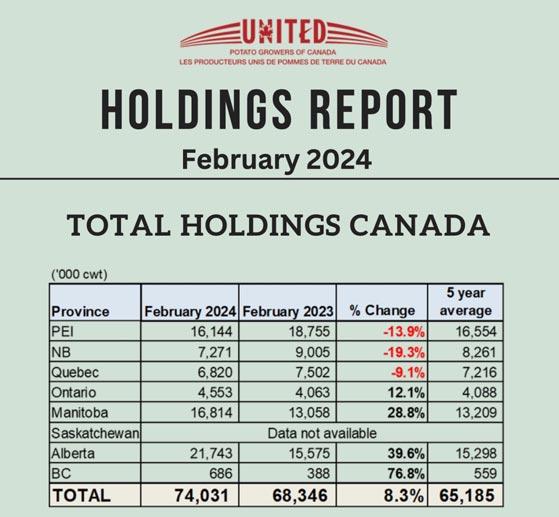
(2.2%) when compared to February of 2023. However, we should note that 2023 was the highest February inventory on record and the current stock level is still above the five-year average. Saskatchewan, Alberta and British Columbia all reported good crops this year. However, crops in New Brunswick and Québec were not quite as good as originally anticipated. Disappearance in the seed sector has been slower than usual in December and January but according to producers, they are expecting the pace to pick up in
February. Until contracts are signed in the Pacific Northwest, growers will be hesitant to commit to 2024 seed purchases. Last year’s prolific harvest in that region left processors with a surplus of product. The pressure to book seed early is not as great this year.
Victoria Stamper is general manager, United Potato Growers of Canada.
THE GROWER PAGE 22 –– MARCH 2024 FOCUS: POTATOES

MARCH 2024–– PAGE 23 THE GROWER
What is the Soil Health Assessment & Plan?

 JAKE MUNROE, SEBASTIAN BELLIARD, CHRISTINE BROWN & DANNY JEFERIES
Soil health describes how soil functions respond to applied management practices interacting with inherent soil properties. Healthy soil functions contribute to improved crop productivity and resilience. Measuring soil health enables farmers and farm advisors to identify areas for improvement. A comprehensive approach has been developed to assess soil health in Ontario. The simple answer SHAP is a new tool from OMAFRA that allows you to measure soil health on your farm. At its core is a laboratory soil health test (SHAP Test) that evaluates key physical and biological indicators of soil functions. Optional modules can be added to further evaluate


management and assess risks, including compaction, erosion, tillage intensity, living roots, and soil structure. SHAP guides users through sampling, evaluation, and interpretation of results to come up with a tailored soil health management plan.
A little more information
While samples can be sent to the lab along with a simple paper submission form, SHAP is designed to be completed through Survey 123, which can be used as an app or through a browser.
Survey 123 simplifies data entry, performs calculations, and can automatically pull information from soil maps based on a GPS location (Figure 2).
SHAP is divided into two parts. The Soil Management Survey collects background information about the soils, current management practices, soil health issues and goals for the field to be tested. The In-field

Data Collection form guides the sampling process and collects information on the time, specific location, and texture of the sample.
In the field, composite samples from 15-20 regular 6” (15 cm) cores are collected within a threemeter radius of the point selected for assessment. Point sampling is recommended over zone or traditional composites for better consistency with future resampling. Inherent soil
characteristics such as texture and drainage are automatically collected by the Survey 123 app from soil map data of the sample location, or paper submission forms can be used instead. The soil sample is then sent to a laboratory using the standard SHAP package, which includes:
• Soil organic matter (SOM)
• Active carbon (POXC)
• Soil respiration
• Potentially mineralizable nitrogen (PMN)
• Aggregate stability
Soil health indicators from each sample are scored (0-100) according to how they compare to ???. The laboratory measured values are scored against other similar textured soils in a growing database of more than 1500 results from samples of fields across southern Ontario (Fig. 3).
Continued on next page
THE GROWER
PAGE 24 –– MARCH 2024
Figure 1. Soil sampling tools: soil probe, bucket, sample container.
Figure 3: Example SHAP test measurements from a good yield vs poor yield region and their corresponding score (100 = Best)
Figure 2. Yields of potatoes treated with a combination of bioproducts in 2023.
Figure 4. An example of a soil being evaluated using the visual evaluation of soil structure (VESS) within the soil structure assessment module.
Good yield region
Poor yield region
What is the Soil Health Assessment & Plan?
Continued from page 24
Choose your own adventure
The modular design of SHAP makes it possible to use it as a simple test, a comprehensive assessment, or to select only the evaluations most relevant to your situation. Your own goal(s) for performing SHAP will determine how and where to sample, and which modules to add. Common goals include:
• setting a benchmark to compare to future assessments for identifying trends
• understanding the most important limitations and risks to soil productivity
• comparing zones or good and poor areas in a field
Add-on modules
There are several optional modules which can be added on top of the SHAP Test. These provide additional information and a more in-depth view of soil health challenges and options for improved soil management. Current modules include:
• Tillage disturbance index –rates the tillage system by the intensity of soil disturbance •Living roots index – measures
the proportion of the year with living roots in the soil
• Water erosion risk assessment –calculates risk of water erosion across a field based on landscape, tillage, and cropping factors
• Compaction risk assessment –estimates risk of subsurface compaction based on equipment and soil characteristics
• Soil structure assessment –scores the quality of the soil surface and of topsoil structure in the field (Figure 4) These modules will require additional user inputs. They provide different types of information, different ways to assess soil health, and different spatial scales than the SHAP Test. Combined, they address soil health issues that can’t be evaluated in a lab and allow for greater detail and specificity in the management recommendations resulting from SHAP.
Interpreting and using results
The Soil Health Management Plan (Figure 5) is the key to providing value from the results of SHAP to the farm operation. It recommends specific management actions that should be taken in the immediate, short, and long-term to address any
Grey mould: Botrytis v. Botrytis
ERICA PATE & KATIE GOLDENHARBotrytis grey mould is a widespread fungal disease affecting strawberries in both field and covered production in Ontario. Botrytis grey mould causes blooms to turn brown and causes fruit to develop small, firm brown lesions, which will eventually soften and develop a grey, fuzzy mould (Fig. 1).
Infected berries eventually become dried and mummified. Botrytis grey mould can be caused by multiple species of Botrytis, with B. cinerea being the most dominant species infecting strawberry in eastern North America. Botrytis cinerea has a very large host range affecting more than 200 crop hosts along with many weed species.
Recently, a new species of Botrytis, B. fragariae, was identified on strawberry in the United States including South Carolina, North Carolina, Virginia, Maryland, Georgia, and Ohio. Botrytis fragariae is host-specific to strawberry, only infecting strawberry plants, and seems to cause blossom blight, as opposed to B. cinerea which is detected more as fruit rot. Additionally, B. fragariae differs in fungicide susceptibility from B. cinerea, and fungicide resistance has been reported in both species, which could affect the level of
disease control and management options.
Since B. fragariae has been
Soil Health Management Plan
Refer to this table for management practice recommendations to address your most-limiting soil health factors.

concerns identified over the course of the assessment. A good plan integrates knowledge of the operation’s current management and objectives, and includes enough detail in the considerations to ensure
identified in multiple regions with different growing conditions, it is likely that B. fragariae is present in
successful implementation. For more information
A SHAP Guidebook has been published by the OMAFRA Soil Team, containing detailed information and step-by-step instructions for conducting
other countries as well. It is important to learn more about this species and if it is present in
SHAP. Access on the SHAP landing page on fieldcropnews.com.
Jake Munroe, Sebastian Belliard, Christine Brown, & Danny Jefferies are members of the OMAFRA Soil Team.
Ontario to inform management decisions.
Continued on page 26

MARCH 2024 –– PAGE 25 THE GROWER
NEWS
ONTARIO BERRY
Figure 5. An example Soil Health Management Plan derived from interpretations of SHAP.
Grey mould: Botrytis v. Botrytis


Continued from page 25
To date, this species has not been reported in Ontario or Canada. Current management practices were developed for B. cinerea, which may not be sufficient for B. fragariae.
Botrytis grey mould
INTERNATIONAL
management includes multiple strategies, including physical, cultural, biological, and chemical control. Growers should keep rows narrow and encourage air flow. Avoiding excessive use of nitrogen will also help, as lush growth is more susceptible to infection.
Chemical control includes
regular fungicide applications before and during bloom, before an infection period. Single-site fungicides are becoming more common in disease management programs. Make sure to reduce the risk of resistance by rotating fungicides with different modes of action. Broad-spectrum fungicides have multiple modes
of action and are excellent tools to include in your management program to reduce selection pressure on single-site fungicides.
The OMAFRA berry team is conducting a survey this season to determine what Botrytis species are present in Ontario field and covered production strawberries, which will inform
Peru's blueberry industry attracts global attention
In a significant gathering set for March in Lima, Peru, the XXIX International Blueberry Seminar will convene, spotlighting the Peruvian blueberry sector's resilience and innovation amidst climatic adversities. The event, scheduled for March 20 and 21 at the Lima Convention Center, will draw international investors, major fruit trade companies, and 20 global delegations, underscoring its status as a premier international forum on Peruvian soil. Representatives from diverse nations, including Mexico, Chile, Portugal, the U.S., Italy, Morocco, New Zealand, Spain, China, England, India, Hungary, Sri

Lanka, Germany, Italy, and the Netherlands have confirmed their attendance. The seminar will delve into critical issues such as abiotic stress effects, varietal sensitivity to climate, genetic advancements, and the physiological and productive responses of blueberries to climatic conditions, with insights from esteemed researchers Reinaldo Campos (University of Chile), Patricio Muñoz, and Gerardo Núñez (University of Florida, U.S.).


future management decisions. If you are interested in participating in this survey please contact Erica Pate (erica.pate@ontario.ca), Cara McCreary (cara.mcreary@ ontario.ca ) or Katie Goldenhar (katie.goldenhar@ontario.ca).
References
Amiri, A., A.I. Zuniga, and N.A. Peres. 2018. Prevalence of Botrytis cryptic species in strawberry nursery transplants and strawberry and blueberry commercial fields in the eastern United States. Plant Disease. 102: 398–404.
Dowling, M.D., M.-J. Hu, and G. Schnabel. 2017. Identification and characterization of Botrytis fragariae isolates on strawberry in the United States. Plant Disease. 101:1769–1773.
Rupp, S., C. Plesken, S. Rumsey, M. Dowling, G. Schnabel, R.W.S. Weber, and M. Hahn. 2017. Botrytis fragariae, a new species causing gray mold on strawberries, shows high frequencies of specific and efflux-based fungicide resistance. Appl. Environ. Microbiol. 83 (9)
Erica Pate is fruit crop specialist and Katie Goldenhar is pathologist-horticulture for the Ontario Ministry of Agriculture, Food and Rural Affairs (OMAFRA).


THE GROWER PAGE 26 –– MARCH 2024
NEWS
ONTARIO BERRY
aquatic-aeration-solutions.com | 905-269-6518 | aquatic.aeration.solutions@gmail.com Aerated Sta琀c Pile Compos琀ng will: Eliminates o昀ensive odours, parasites, and pathogens, Reduces water runo昀 Improve soil quality, recycles soil nutrients, balances pH levels Hosts bene昀cial microbes, and retains soil moisture Compost piles do not require frequent turning Provides an easy and cost e昀ec琀ve method for your waste management Improve Your Compos琀ng For more information contact: STORAGE, PACKAGING & CONTAINERS APRIL 2024 BOOK AD SPACE MARCH 15, 2024 AD COPY DUE MARCH 19, 2024 advertising@thegrower.org
Figure 1- Botrytis grey mould on strawberry.
Advice on withholding payment of undisputed amounts
The Fruit and Vegetable Dispute Resolution Corporation (DRC) has noticed that, from time to time, a buyer may choose to withhold payment of the undisputed amount when a disagreement on a transaction occurs.
It is not uncommon to see this practice in our industry especially when the parties disagree on a return after the product has failed to meet contract terms and the load has been handled to minimize the loss. It also happens when there is more than one transaction between the parties, one of the invoices is in a dispute, and the other invoices are not paid until the disputed invoiced is resolved.
Here’s what the DRC recommends to buyers and sellers in this situation:
As per the DRC Trading Standards, all members must fulfill their financial obligations by paying their invoices within the agreed payment terms or follow DRC Trading Standards when no payment terms have been agreed. Undisputed invoices cannot be withheld unless the buyer and seller agree otherwise.
In regards to payment of undisputed amounts, the DRC Trading Standards Section 19 subsection 10 states: “(11) … If there is a dispute concerning a transaction, the foregoing time periods [paragraphs (1) through (10)] for prompt payment apply only to payment of the undisputed amount.”
Paying the undisputed amount is a good business practice and can help you have better customer relationships. Here are some of the benefits:
1. The disputed amount may become significantly less.
2. The smaller the amount of a dispute, the easier it is to negotiate a settlement.
3. Helps avoid situations where the supplier feels like they are being held for ransom. When buyers withhold money that do not belong to them, suppliers may become more reluctant to negotiate a settlement.
4. Paying the undisputed amount can alleviate financial

Undisputed invoices cannot be withheld unless the buyer and seller agree otherwise.
strain on the seller.
5. The buyer’s reputation avoids being tarnished in the market.
6. In the event a dispute reaches an arbitration process, and the arbitrator awards interest, the losing party will pay less interest.
If you want to learn more about payment terms and practices, feel free to contact DRC’s Trading Assistance staff through the Help Desk.
Source: Dispute Resolution Corporation February 9, 2024 newsletter

BITS & BITES MARCH 2024–– PAGE 27 THE GROWER
“
ORCHARD OPERATIONS MANAGER
Location: Remote/Summerland, BC
Status: Full-time
POSITION SUMMARY
The Orchard Operations Manager, in conjunction with other senior staff of the company, will be responsible for overseeing OSF orchard operations in Washington State.
EDUCATION AND EXPERIENCE
Bachelor level degree in horticulture, agricultural sciences, or other related fields.
For more information and to apply, email MKeehn@OSFruits.com

Hortiblock® Trays
Vegetable Production for Greenhouse and Field Transplants.

Auction Notice
CLASSIFIED
2015 Lipco 2 row apple orchard sprayer. Good condition, drift recycling, 1500L, works for row spacing 10-12ft. $32000. New Netafim drip line. 83x1000’ rolls, 36” spacing, 0.92 GPH. $12000 Reconditioned Arkal irrigation filter system on trailer. 4”, 3 filters, alextronic 3 stat controller with fertigation. $8000. Call Joe 519-410-0029
Frost cloth – 25 plus acres, PG40 cover, 28 ft wide. 25% of cloth never used. Includes reels and hydraulic winder. Will consider selling separate. $28,000. 519-427-4594
ORCHARD EQUIPMENT FOR SALE: *TOW & BLOW PORTABLE WIND MACHINE. Protect your crop against frost with a movable, efficient, quiet, effective machine (25HP twin Honda gas engine). Purchased new in 2016. Used less than 85 hours. Stored indoors. Mint condition.
$29,000.00 OBO
*TURBOMIST ORCHARD SPRAYER. 500 gallon stainless steel tank. great condition.
$10,000.00 OBO. Located in Brant County. Pictures for both pieces of equipment can be emailed on request. Call Peter 1-905-379-0735, or email: pkvanbrugge@gmail.com
classified ads
519-763-6160 x 221
Live Clearing Retirement Auction For Fred Nyland Produce (905-741-9755) (fgnyland@rodgers.com)
Saturday, April 6th at 10:30 a.m. (Preview Friday 11:00 to 4:00 p.m.)
Located at #64 – 7th Concession East, Millgrove, 1/4 mile east of hwy 6, approximately 3 miles north of Clappison’s Corners, 10 miles South of 401 Hwy (Watch for signs)
Consisting of Tractors – Planting & Tillage equipment – Packing Line – Seeding – Hoop greenhouses – Cadman Traveller – Approximately 200 pcs of Wade Rain pipes, Irrigation pumps, 36 ft aluminum Cauli Harvest Aid with 2-18’ wagons, Mulch Layer and Lifter, Pallet jacks manual and electric, qty of cartons waxed and plastic – Plastimar flats, GP Pallets – Chain Saws, 18” x 18” concrete pavers, Refrigeration equipment – Contents of Bunk House, Scales, Welder etc
– This is a very clean offering regularly serviced and shedded
For Full Listing and Photos Check: www.theauctionadvertiser.com/jmccartney ∙ www.auctionsontario.ca/mccartney
Jim McCartney Auction Service Ltd. (905) 516-3202 or (905) 689-8778 (Waterdown)
Email: mccartneyauctions@gmail.com
advertising@thegrower.org
866-898-8488 x 221 EQUIPMENT


EFFICIENT RATE CONTROLLERS THAT DELIVER RESULTS.
Seamless Mobile Management: Harness the power of any iOS device to effortlessly set application rates, ensuring precise and accurate control.
Simplified Calibration Process: Streamline machine calibration and define operating limits with ease before equipment leaves the yard.
Optimize Fleet Management: Gain insights into sprayed rows to avoid skips or double applications. Download daily spray data or monitor spraying data live for enhanced control and real-time decision-making.

www.oves.ca

289 213 6855
CHINOOK WIND MACHINES: FROST-FREE FOR ORCHARDS & VINEYARDS!
Don't let frost take a toll on your harvest! Introducing Chinook Wind Machines – your ultimate frost-fighting solution!
✅ Extended Coverage: Our blades generate superior air movement, providing wider coverage for extended periods, resulting in increased protection
✅ Compatibility & Retro-fitting: Upgrade your existing units with Chinook blades for enhanced coverage. Seamless integration for superior frost prevention.
✅ Early Season Discounts: Act now and save! Take advantage of exclusive early season discounts to fortify your orchards and vineyards against frost damage.
✅ Proven Results: Last year, farmers battled hard losses. Choose prevention over loss – Chinook Wind Machines keep your crops thriving.


PAGE 28 –– MARCH 2024
MARKETPLACE WORKS
THE GROWER
AUCTION
GROW TRAYS
EMPLOYMENT OPPORTUNITY
ORDER ONLINE!
www.koolmees.caPh. 519-468-3356 The Vario Rain Advantage!! “we irrigate the world for over 50 years“ Sales - Service - Parts Reels, Booms & Diesel Pump Units Call us to find out more about HELMET RESPIRATORS (800) 461-4299 www.thestgeorgeco.com Helmet respirators that give you protection while spraying and handling herbicides and pesticides.
sales@oves.ca Mobile 289 213
www.oves.ca
6855
✅ New & Refurbished Equipment: Ready for immediate installation! Explore our range of new and refurbished units to suit your needs. sales@oves.ca Mobile





MARCH 2024–– PAGE 29 MARKETPLACE WORKS advertising@thegrower.org 866-898-8488 x 221 CONTAINERS & PACKAGING SEED & ROOTSTOCK THE GROWER REFRIGERATION INNOVATION EFFICIENCY PERFORMANCE 519-983-6995 info@heye.ca Premium fruit and vegetable refrigerated cold storages DESIGN - SUPPLY - CONSTRUCT - MAINTAIN Providing quality apple trees for 50 years. • Bench graft • 9 month bench • KNIP tree • Call to enquire about the new variety Wild Pink. Call sooner and get what you want with better savings . . . contract work available. BRIAN VAN BRENK 31760 Erin Line Fingal ON, N0L 1K0 5199026353 www.vanbrenk.ca brian@vanbrenk.ca Visit us at booth 1206 at the Ontario Fruit and Vegetable Convention. Hope to see you there! ROWN ROWN BIN & PALLET INC. Please, do not hesistate to contact us! Office: 519-599-1224 Mike’s cell: 519-270-1145 mike@crownbin.ca ASPARAGUS ROOTS Guelph Millennium Wrightland Farm RR 1 • 1000 Ridge Rd. Harrow, ON N0R 1G0 Keith: 519-738-6120 Fax: 519-738-3358 wrightland@hotmail.ca CALL US FOR ALL YOUR ORCHARD SUPPLIES & NURSERY NEEDS WARWICK ORCHARDS & NURSERY LTD 7056 Egremont Rd. R.R. #8 Watford, Ontario N0M 2S0 warwickorchards@brktel.on.ca Tel: (519) 849-6730 Toll free: 877-550-7412 Fax: (519) 849-6731 west@nnz.ca | F:+1-778-785-1128 | T: +1-778-819-1139 | www.nnz.ca NNZ offers a broad portfolio of materials for retail packaging of agricultural products. ‘‘A tasty choice of produce packaging" adejonge@nnz.ca | F:+1-519-863-5784 | T: +1-519-863-5782 | www.nnz.ca NNZ Inc Canada | 136 Main Street West | Unit 3, Norwich Ontario, N0J 1P0 NNZ Inc. Western Canada | Unit 107 -2076 | 192 Street, Surrey | BC, V3S 3M3 FV NNZ 2024Calendar MLD indd 1 2023-11-02 10:50 AM
Minor use: A global challenge

I am writing this column freshly returning from the fourth Global Minor Use Summit held in Madrid, Spain in the first week of February. The summit attracted more than 160 participants from more than 40 countries, representing each continent on Earth containing a farm. While participants came from all corners of the world, we shared a common challenge: obtaining minor use registrations for our crops.
There are various definitions of minor use crops around the world, but the common thread is crops where manufacturers find the sales potential is not sufficient to justify investments required to register that particular use. Minor use crops often include fruit, vegetables, herbs, and greenhouse crops, as well as nursery and landscape plants, flowers, and ornamentals. What may be considered minor use crops in one country – such as rice or peanut in Canada – can be, in fact, major uses in other countries around the world.
While these are called "minor uses" because they are grown on significantly smaller areas of land compared to the large-acreage crops such as corn, soybeans, and wheat, they are often high value. From 2018-2022, crops that would be considered minor use in Canada accounted for an average of $9 billion a year (22%) of the total national gross farm receipts for crops. They are big business. Minor use crops also play a key nutritional role – just see the half your plate recommendation from Canada’s Food Guide.
Regardless of their importance, it can be a challenge to obtain registrations for minor use crops around the world. Crop protection companies will often register new active ingredients


only on the major crops as data to prove efficacy, crop safety, and importantly residue levels cost significant time and money, no matter where you are located in the world.
Improving the ability of minor use growers to obtain regulatory approval for crop protection products on their crops has been a work in progress for decades.
Recognizing this challenge, the US IR-4 project was the first minor use program in the world launched in 1963 to help facilitate grower access to crop protection materials by funding the trials necessary to obtain the data for their registration. Canada followed a while later, launching the Pest Management Centre in 2003.
Similar programs are starting to exist around the world to varying degrees such as in Australia, while some are very nascent, or lack any defined budget such as the European Union Minor Use Coordination Facility.
Recognizing the challenges facing growers globally, organizers hosted an initial Global Minor Use Summit in
2007 in Rome, with follow-up summits in 2012 and 2017. There has been significant progress in the almost two decades since the first summit, notably in the acceptance of crop groupings and common residue/efficacy trial zones.
Crop groupings have now been adopted by many countries where crops are allocated to a group based on botanical and taxonomic criteria as well as on cultivation practices. Residue data can then be used from a small list of representative crops in the group to replace the need for generating data for each crop. It is a far more efficient process for generating registrations for a large number of related crops.
Common residue and efficacy zones establish geographic regions where trials in the region are considered to be representative and exchangeable for regulatory purposes. For example, much of Ontario and Québec are considered to be zone 5 in the North American field trial regions, along with many midwestern states. This makes data from Michigan exchangeable for Ontario and vice versa.

Similarly, Western Europe is divided into four zones. Exchangeability of data between zones greatly improves ease of registrations between countries sharing similar geographies.
Despite the significant progress, there is still lots more to be done. Fortunately, we see regional cooperation occurring across a number of continents. But what about countries that don’t share borders or may not even be on the same continent?
Enter the Minor Use Foundation (MUF), a non-profit organization that endeavors to achieve global minor use development through collaborative data generation projects. Currently the MUF has 32 ongoing projects across four continents to achieve product registrations and establishment of maximum residue limits at a global level. With a limited budget, the MUF has currently prioritized efforts to assist projects in developing countries due to more acute need. However, fostering improved collaboration between developed countries is also an important objective.
Ultimately, many attendees of
the fourth Global Minor Use Summit all shared the same question: do you need to generate new data at all? With so many common crops, pests, and solutions around the world, there must be ways to be more efficient and share trial data not only across regions but on a global scale.
Arguments have been made that results have shown it may not matter that much exactly where field trials are conducted for residue purposes and that simply having enough trials around the world should get the job done. Similarly, do we need efficacy data from every region or country or could field trials in Germany or New Zealand cover the needs for Canada? A global field trial database is a good start, and something the MUF is working towards.
Ideally, this is the future evolution of minor use – one collective effort – as we have much more commonalities than differences around the world when it comes to the minor use challenge.

THE GROWER PAGE 30 –– MARCH 2024 CROP PROTECTION
CHRIS DUYVELSHOFF
L-R: Chris Duyvelshoff, crop protection advisor, Ontario Fruit & Vegetable Growers’ Association (OFVGA) and Brian Rideout, chair, crop protection section, OFVGA, attended the Global Minor Use Summit, Madrid, Spain.
Koppert wins prestigious innovation award
Koppert’s revolutionary release system for its biological solution, Mirical, has won the first prize of the prestigious international Fruit Logistica Innovation Award Technology. The award presented by Messe Berlin GmbH and Fruitnet Media International in Berlin on February 9, honours outstanding innovations in the entire fruit and vegetable supply chain, from production to the point of sale.
Accepting the award on behalf of Koppert, product manager Tim Bossinga said that innovation lies at the core of Koppert’s DNA and is a result of its continuous product development. He thanked the multidisciplinary team for its consistent achievements.
Game-changing innovation
Changing product packaging from a plastic bottle to specially designed corrugated cardboard strips that form a natural habitat for the Mirical beneficial bugs, has created a highly efficient and sustainable release system that is much easier to use.The cardboard strips are fully compostable resulting in 99% less plastic.
The cardboard corrugations provide a shelter for the predatory bugs, enabling them to ‘hide’ and better distribute themselves during transportation. As a result, the predatory bugs are protected during transportation and arrive at their destination in optimal condition. The
packaging also reduces clumping and improves the distribution of the bugs in the crop. This results in improved performance and maximum result of whitefly control.
The Mirical strips are easy to distribute and are hung over a stalk in the fully-grown plant. Apart from being labour-saving and making dosing more accurate, the strips can now also be located with ease for monitoring purposes.
Generalist pest predator
Mirical is a generalist predator with a preference for greenhouse whitefly (Trialeurodes vaporariorum), tobacco whitefly (Bemisia tabaci), eggs and caterpillars of tomato leaf miner moth (Tuta absoluta) and other moths. They also feed on two spotted spider mites (Tetranychus urticae), aphids and leaf miner larvae (Liriomyza spp.). Since its successful launch in France in 2023, Mirical has been lauded by growers for its improved performance and ease of use, with some growers reporting a reduction in application time of 50%.
For more information: https://www.koppert.com/ mirical-optimal-whitefly-control-with-revolutionairyrelease-system/
Source: Koppert February 9, 2024 news release
Ontario Herbicide-Resistant Weeds Database
KRISTEN OBEID
An online repository of all herbicideresistant weed testing results since 1998 can be found here: Resistant Weeds Dashboard (arcgis.com). Users can search for herbicide- resistant weed species and create distribution maps. Below is an example for Canada fleabane.
Testing
services for herbicide-resistant weeds
There are two testing solutions available in Ontario. The plant bio-assay service offered by the Tardif lab at the University of Guelph requires that mature seed is collected in the fall and submitted. Plants are then grown from that seed and sprayed at various doses of the herbicide(s) suspected. Results are provided typically by

March -- the service is provided at no cost to Ontario farmers. The molecular testing service requires plant tissue that is roughly “quarter sized”, so a single leaf is often adequate. Results can be obtained within a couple of weeks, but it is a fee-based service. Fortunately, there is a funded surveillance project that will process samples at no cost. A sampling protocol for this project 2023-Sampling-Protocol-forGenetic-Herbicide-Resistance-Testing-
002.pdf (fieldcropnews.com)
• Free plant bioassay testing by the University of Guelph Weed Submission for Herbicide Resistance Testing | Plant Agriculture (uoguelph.ca)
• Molecular testing by TurnKey Genomics (private lab) Home (turnkeygenomics.ca)
Confine Extra fungicide labelled to manage downy mildew on radishes
JOSH MOSIONDZThe Pest Management Regulatory Agency (PMRA) has approved the minor use label expansion registration for Confine Extra fungicide for suppression of downy mildew in Canada. Confine Extra fungicide was already labeled for disease control on a wide range of crops in Canada. This minor use proposal was submitted by Agriculture & Agri-Food Canada, Pest Management Centre (AAFCPMC) as a result of minor use priorities established by growers and extension personnel.
The following is provided as an abbreviated, general outline only. Users should be making disease management decisions within a robust integrated disease management program and should consult


1
in a minimum of
the complete label before using Confine Extra fungicide.
To reduce runoff from treated areas into aquatic habitats, avoid application to areas with a moderate to steep slope, compacted soil, or clay. Avoid application when heavy rain is forecast.


visit the PMRA label site www.hcsc.gc.ca/cps-spc/pest/registranttitulaire/tools-outils/label-etiq-eng.php Josh Mosiondz is minor use coordinator, OMAFRA.

MARCH 2024–– PAGE 31 THE GROWER CROP PROTECTION
Amélie Lepage (QC) 514-984-0662 ~ Quality Seed Since 1881 ~ www.stokeseeds.com T: 1-800-263-7233 NEED SEED? OUR TEAM CAN HELP! Leah Erickson (BC/AB) 604-957-2359 Marc André Laberge (QC) 514-984-4589 Bridget Visser (ON) 905-715-8595 Paul Banks (ON/NS) 905-688-4300 Darcy Leiter (AB/MB/SK) 306-491-6485 Rob Hovius (ON/PEI/NB) 519-580-3231 Alexandre Bisson (QC/ON) 438-334-1996 Emily Robins (ON) 905-308-4396 FOLLOW US:
Crop(s) Target Rate (L of product / ha) Application Information PHI (days) Radishes Suppression of Downey Mildewpotassium salts of fatty acids 3 - 7 Apply
Contamination of aquatic areas as a result of runoff may be reduced by including a vegetative filter strip between the treated area and the edge of the water body. For a copy of the new minor use label contact your local vegetable crops specialist, local regional supply outlet, or 100L water/hectare.
Use a maximum of 6 foliar applications of CONFINE™ EXTRA Fungicide per year in a preventive program for disease suppression. Begin applications when conditions are favourable for disease development and continue on a 7–14-day interval. Shorter interval and higher rate when disease pressure is expected moderate or severe.
#1 workplace risk? Musculoskeletal disorders related to manual material handling

When workers and employers from the food and beverage wholesale distribution industry came together earlier in 2023 to determine their top risks, it was a reminder of how much can be accomplished when pooling all experiences. The workshop was facilitated by Workplace Safety and Prevention Services (WSPS).
While these identified risks are specific to the wholesale distribution industry, many primary producers will recognize the similarities to their own operations.
The food and beverage wholesale distribution industry is an integral part of Ontario’s food system. Almost everything
purchased from a grocery store has passed through a wholesale food and beverage distributor before it appears on the store shelf. They are the link between manufacturers and retail outlets.
Considering how important the food and beverage wholesale distribution industry is to daily lives, it was concerning to see that in 2022 it had a much higher lost-time injury (LTI) rate (1.22) than the general services sector (0.67). These numbers showed that wholesale distribution workers were getting hurt more often than workers in the other sectors WSPS serves. Because of this, WSPS decided to apply the proven risk assessment and root-cause analysis methodology, introduced by the Ministry of Labor, Immigration, Training and Skills Development (MLITSD).
“Food and beverage wholesale distribution was chosen for this initiative because it had the highest subsector risk rating in the service sector and the third highest across the three sectors WSPS serves, based on WSIB premiums and LTI rates,” said Rishma Brenner, Health and
Safety Consultant with WSPS.
“This process has proven to be a systematic way to rank industry-specific risks as identified by the workers, supervisors, and employers who are working with and have the most knowledge of these hazards,” said Jody Young, president and CEO of WSPS. “This process moves participants away from pinning responsibility for safety on one group or another within an organization to collectively identifying ‘what keeps everyone up at night’ regarding their safety in the workplace.” It leverages the collective experiences of all involved to identify risks, rather than relying on lagging indicators.
For food and beverage wholesale distribution, WSPS invited workers, supervisors, and employers from companies of various sizes to participate in the risk assessment. These representatives volunteered their time to identify, discuss, and analyze the leading risk factors in their industry. In advance of the workshop, they submitted their top health and safety concerns.
The top ten identified
1. Musculoskeletal Disorders –manual material handling (including when consolidating trailers)
2. Employee behavior – low risk perception
3. Slips, Trips and Falls
4. Struck Against Racking –head impacts on racking
5. Pedestrian Safety (indoor) –struck by material handling equipment
6. Fatigue and Stress
7. Temporary Workers – 3rd party agency employees
8. Motor Vehicle Incidents –during transportation of goods
9. Moving Pallets in and out of racking
10. Powered Material Handling Equipment Collisions – with fixed structures/objects
To access complete study results, a downloadable infographic and resources to address the risks in your workplace, visit: https://wsps.news/food-bevwholesale
Source: Workplace Safety & Prevention Services
Canada is falling behind for sustainable innovations in agri-food

To remain globally competitive with sustainable innovations in agri-food, both the public and private sectors in Canada must increase investment in the industry. That’s the conclusion of a new report, Sustainable Innovation in the Canadian Agri-food Sector: Past, Present & Future, by Dr. Jared Carlberg, University of Manitoba.
Unfortunately, studies reveal that both sectors’ support for agri-food innovation has declined in recent years with Canada’s support for agricultural innovation ranking seventh globally,at 0.046 per cent of GDP, which is considerably below historical averages. Private-sector investment has also declined, with Canada ranking 25th globally in 2014, down from 18th place in 2008.
As a world leader in building a sustainable, profitable and safe agri-food system, Canada can be a pre-eminent hub for innovation. However, senior levels of government must commit to developing Canada’s potential and to creating an environment that encourages private investment.
CanadaGAP publishes 2023 Annual Report

CanadaGAP has published its 2023 Annual Report, which:
• provides a summary of the year’s activities
• highlights the program audit and participation trends
• offers a preview of objectives and plans for 2024 A copy is available for download at: www.canadagap.ca/publications/annual-report/
About CanadaGAP
CanadaGAP is a national, voluntary food safety program consisting of standards and a certification system for the safe production and handling of fresh fruits and vegetables. The program is officially recognized by the Government of Canada and by GFSI (Global Food Safety Initiative). Two manuals,
The Simpson Centre for Food and Agricultural Policy at the School of Public Policy, with author Dr. Jared Carlberg, examines the interlinkages between innovation and sustainability in the Canadian agricultural sector with solid policy recommendations about sustainable agricultural innovation policy in Canada.
First, invest in Canadian agri-innovation at the rate of 0.10 per cent of GDP.
Second, stimulate private sector investment in innovation.
Third, enhance the protection of intellectual property rights.
For the report, Sustainable Innovation in the Canadian Agri-food Sector: Past, Present & Future, link here: www.policyschool.ca/publications/
Source: Simpson Centre for Food and Agricultural Policy January 30, 2024 news release
one specific to greenhouse operations, the second for other fruit and vegetable operations, have been developed by the horticultural industry and reviewed for technical soundness by Canadian government officials. The CanadaGAP manuals are designed for companies implementing Good Agricultural Practices (GAPs) in their fruit and vegetable production, packing and storage operations; for repackers and wholesalers implementing Good Manufacturing Practices (GMPs) and HACCP programs; and for produce brokers following supplier management and traceability best practices.
Source: CanadaGAP February 9, 2024 news release
MARCH 2024–– PAGE 32 THE GROWER BITS & BITES
Autonomous sprayers are an example of investment in innovation.