Why more precision is required to protect apple crops
KAREN DAVIDSON
It’s a good practice to test your brakes on an icy road to prevent an emergency stop that sends you into the ditch. Such practical thinking is driving Manus Boonzaier’s crop protection program as changing regulations now impose new limits on group M fungicides, restrict others such as captan in 2022, and narrow mancozeb use in 2023.
The 33-year-old farm manager has a lot at stake directing operations for more than 1,500 acres of high-density apples at Algoma Orchards near Newcastle, Ontario.

“In 2022, I tried to play with some options,” says Boonzaier. “I’m still crossing my fingers that using half the labelled rates will get approved.”
The Pest Management Regulatory Agency (PMRA) previously allowed eight applications of some group M fungicides per season, labelled as specified amounts of active ingredient per acre. That has now been changed to
just four per season.
“We are hoping the manufacturers can get the label amended to four full rates or eight half rates per year,” says Boonzaier. “Eight half rates will help us a lot as we don’t use full rates when we use a group M with a SDHI product.” (SDHI refers to FRAC group 7 fungicides known as succinate dehydrogenase inhibitors.)
Deciphering this regulatory labyrinth falls to Kristy Grigg- McGuffin, Horticulture IPM specialist for the Ontario Ministry of Agriculture, Food and Rural Affairs (OMAFRA). As she explains, “Currently, half rates are not permitted as per the label. To have half rates for mancozeb would require new data package submissions from the manufacturers. Crop protection companies are working with PMRA to change the current wording to allow flexibility in interpreting the maximum allowable amount so that half rates could be used if that’s common practice for a grower.”
All of this to say that spray timing needs to be targeted with maximum efficiency. Most of Boonzaier’s group M
fungicides will be employed from bloom through to petal fall. These products are intended to control apple scab, the most economically damaging disease, but also other diseases that affect quality.
The fungus that causes apple scab overwinters as perithecia in dead apple leaves on the orchard floor. With spring rains, ascospores, the primary inoculum, are released from the perithecia. Apple trees become susceptible at the green tip stage which can occur as early as April in the Newcastle area.
Understandably growers need to plan their spray programs very early in the year allowing for alternate plans that take into account changing weather scenarios. To become more flexible, Boonzaier subscribes to RIMpro, a British modelling system that forecasts ascospore release scenarios. Analyzing localized information on rainfall, leaf wetness, and relative humidity, RIMpro calculates the best time to spray for spores.
Continued on page 3
MARCH 2023 CELEBRATING 144 YEARS AS CANADA’S PREMIER HORTICULTURAL PUBLICATION THEGROWER.ORG GROUND ZERO
Volume 73 Number 03 P.M. 40012319 $3.00 CDN @growernews Innovation zone debuts at CPMA PG 9 Latest in potato production PG B1 Trends in crop protection PG B8
What to put in the spray tank? Decisions are harder than ever this spring as growers seek alternatives to group M fungicides, the ones with multi-site modes of action. Label rates are changing and the amount of active ingredient allowed per acre is diminishing. Manus Boonzaier, farm manager at Algoma Orchards, Newcastle, Ontario, has been testing his options for more than 1,500 acres of apples. Photo by Eric Forrest.
Both Canada and the U.S. increased agri-food exports in 2022
In Canada, agri-food exports topped $91 billion for the first time, buoyed by impressive 2022 exports of canola oil, non-durum wheat, canola seed, lentils, durum and dry peas. This achievement far surpasses the federal government’s target of $85 billion by 2025. In analysis shared by Farm Credit Canada, the dollar value of horticulture’s exports rose by more than 19 per cent. (More analysis will be provided in future issues.)

According to the American Farm Bureau, 2022 was also a record year for U.S. agricultural trade, topping $196 billion. Despite an 11 per cent increase from 2021, it wasn’t all good news for America’s farmers.
For only the second time in a decade, the U.S. recorded an
agrifood trade deficit. Imports of agricultural goods increased by $28 billion, creating a trade deficit of $3 billion for 2022.
While U.S. export values increased, overall export volume decreased (-6%). Part of the reason is the persistent drought in key food-producing regions of the country.
Farm Bureau Federation economists analyzed the trade numbers in their latest Market Intel report in mid-February 2023. Cotton, soybeans, poultry meat, beef and tree nuts experienced export volume growth. Hay, coarse grains, fresh vegetables and wheat declined in export volume and value in 2022. A volatile global market contributed to rising costs for wheat.
“It’s encouraging to see the value of America’s agriculture exports increase, but America’s farmers and ranchers still face challenges from the weather and competition from other
countries,” said AFBF President Zippy Duvall. “The 2022 agricultural trade deficit demonstrates that there is more to be done by the Administration.
The enforcement of current trade agreements and pursuit of new trading partners will enable America’s farmers to meet the growing needs of families here at home and abroad.”
In 2022, U.S. exports remained concentrated in the top six markets, led by China, Mexico and Canada. Export value to China had the largest major market year-over-year increase, at 16 per cent. Despite that, U.S. market share in the Chinese market remained almost unchanged.
Fresh vegetables declined in volume by 10 per cent while export value was up (+3%). Fresh vegetables encompass a large number of crops, which makes it harder to summarize the root causes, but there were large declines in export volume for both potatoes and sweet potatoes, while export value was up significantly for lettuce.

Finally, four of the included product categories – pork and pork product, fresh fruit, corn and rice -- declined in both export volume and export value. The fresh fruit category encompasses a large number of crops, making a summary of the primary culprits for decline more difficult, though exports by both value and volume were down to the top five markets.
Back in November 2009, Brian Gilroy graced the cover of The Grower at an apple give-away event with elementary school children in Toronto. He’s still making news as one of 11 inductees to the Ontario Agricultural Hall of Fame, cited for his determined consensusbuilding. Congratulations, Brian!

For more details, see page A15
Pure Flavor has announced that Joe Sbrocchi has joined the Leamington, Ontario greenhouse operation as senior vice-president, business development and strategy. Mostly recently, he was executive director of the Ontario Greenhouse Vegetable Growers.
Potato grower Keisha Rose Topic, is the new chair of the PEI Federation of Agriculture. She’s farms at R.A. Rose & Sons, North Lake. Key issues to tackle this year are climate change, public trust and potato wart.

Derek Sturko is the new chair of the British Columbia Vegetable Marketing Commission.
Dave Hope, chair of the Ontario Processing Vegetable Growers welcomes Ron VanDamme, Port Lambton and Carl Merrick, Strathroy as vice-chairs for 2023. Farmgate value for Ontario processing crops topped $154 million in 2022.
Best wishes to Johanne Ross, Agriculture in the Classroom –Canada who is stepping back after seven years as the founding executive director. She raised the profile of Agriculture in the Classroom at the national level and secured significant financial support from Agriculture and Agri-food Canada as well as many sector partners, to support the critical mission of creating agriculture and food literate citizens.
Congratulations to Leslie Huffman, former apple specialist at the Ontario Ministry of Agriculture, Food and Rural Affairs from 2008 to 2015. The International Fruit Tree Association has honoured her with its Outstanding Extension award at the mid-February meetings in Grand Rapids, Michigan. She continues to operate an orchard near Harrow, Ontario with her husband Doug Balsillie

The Canadian Food Innovation Network’s CEO, Joe Lake, will be departing the organization in early March as he assumes a new role as global VP, applied technology and innovation, at McCain Foods.
Nova Scotia Fruit Growers’ Association has honoured David Power, Power Farms, Pereaux, winner of the Golden Apple Award for “Outstanding Contribution to the Apple Industry.” He’s pictured with NSFGA president Janet Chappel. In other awards, the NSFGA Honourary Member was Doug Nichols, Apple Lane Farms, Morristown a past-president of 20 years.
Janet Chappel remains president of the 2023 NSFGA board of directors, supported by Joan Hebb, vice-president and executive committee member Peter Eisses. The board of directors adds Alex Sarsfield. Remaining directors are: Doug Nichols, Stephen Van Meekeren, Cassian Ferlatte, Kim Thiessen, Starr Best, Jeffrey Walsh, Travis Pearson and David Parrish (Scotian Gold Representative)
In the Leamington-centred greenhouse industry, the need for talent continues. Nature Fresh Farms is adding three key account managers: Tom Coleman, Dale Millison, Thomas Matier Coleman, most recently with Del Monte Fresh Produce, brings an extensive understanding of the retail, food service and sales landscapes. Millison is an experienced account manager with 14 years in the produce industry. Matier is assuming a new position, building on his previous roles including sales and category, commodity and quality management.
NEWSMAKERS THE GROWER
PAGE 2 –– MARCH 2023
AT PRESS TIME…
Brian Gilroy
Keisha Rose Topic
David Power and Janet Chappel
Why more precision is required to protect apple crops

Continued from page 1
The system algorithms are based on simulation models that are developed, tested and regularly updated by scientists in apple and grape-producing regions around the world. Spaying recommendations are updated every 30 minutes, based on local weather data. Using five systemcompatible weather stations strategically located throughout the farm, Boonzaier will have the ability to micro-manage spray applications based on the localized need.
Manitree Fruit Farms, another Ontario apple grower near Blenheim, Ontario, is also experiencing protection complexities multiplying with the loss of some uses of group M fungicides and others.
“I saw the writing on the wall in 2017 when I attended a minor use priority setting meeting in Ottawa,” recalls Brian Rideout, farm manager. “The trend in product registrations was moving away from broad-spectrum fungicides to single-site fungicides. And the alternatives were clearly in biologicals.”
This was a wake-up call for directing forward-looking crop protection strategies for his 400 acres of tree fruits – peaches, pears, tart cherries, apples – as well as vegetables. Located on the north shore of Lake Erie, he’s in a micro-climate that favours a multitude of crops. Fortunately, given his role as chair of the crop protection section of the Ontario Fruit & Vegetable Growers’ Association (OFVGA), Rideout is a guy who questions the status quo and teases out the strands of complex problems.
In the last two years, PMRA has stipulated that many fungicide products must be used more sparingly in quantity, less frequently in timing and with more limits for the pre-harvest interval and re-entry interval. Mancozeb, for example, is now labelled for a 77-day pre-harvest interval and a 35-day re-entry interval for hand thinning.
Backtracking from harvest date it’s easy to see that application windows have become narrower.
“In the past, group M fungicides formed the backbone of our crop protection programs,” explains Rideout. “If you think of a pyramid, they have been the base because you could use them more than once and on more than one crop.”
Decreasing reliance on these products has a cascading effect on farm decisions, from warehouse inventory to the cost of more biological products and management of orchard workers. The bottom line ends up taking a double hit through an increase of about 10 per cent in upfront costs and through a higher risk of disease outbreaks.
Activity of Fungicide s on Apple Diseases
Apple Disease Efficacy Table
Use fungicides only for the disease listed on the product label for the crop. The information provided in this table is inten ded to assist the grower in choosing the best fungicide for control of pests listed on the product label, while managing resistance and avoiding unnecessary sprays for non -target pests. Efficacy can be affected by rate of the product or by the presence of resistant populations.
Apple Disease Efficacy Table available on the Ontario Crop Protection Hub. https://cropprotectionhub.omafra.gov.on.ca/
As Rideout has determined through several years of on-farm trials, biologicals and chemistries together have their strengths. But removing the umbrella control offered by group M fungicides invites the return of heretofore little-seen diseases such as sooty blotch, flyspeck and frog-eye leaf spot. Clearly, no grower wants to apply expensive crop protection products from early spring to August only to find cosmetic blemishes on apple crops come harvest.
Given a reduced application window of group M fungicides occurring earlier in the season, apple growers need to develop new protection strategies for the
rest of the summer. Like many other growers, Rideout uses Buran, a liquid formulation containing garlic extract to protect his harvest. It may not be the perfect bullet, but it helps.
For extension workers such as Katie Goldenhar, plant pathologist, OMAFRA, the relatively inexpensive group M fungicides have been a critical component of resistance management for single-site fungicides. She agrees with Rideout that there’s an outstanding question. “How and when do we use the tools that are left to manage apple scab and summer diseases?”
“In my opinion,” she continues “the reduction of uses
and cancellations of group M products are leading the horticulture industry towards increased disease management costs: increased disease outbreaks, increased resistance to single-site fungicides and increased emergency use registrations.”
For Boonzaier, Rideout and many other growers, micro-management of each orchard block is fast becoming the new orderseven days a week, all season long.
The Grower is “Digging Deeper” with Brian Rideout, Manitree Fruit Farms, Blenheim, Ontario. He talks about the complexities of managing apple
orchards with more limited access to group M fungicides. This podcast is sponsored by Cohort Wholesale.

MARCH 2023 –– PAGE 3 THE GROWER COVER STORY
The storm clouds look menacing to this high-density apple orchard at Manitree Fruit Farms, Blenheim, Ontario. Photo by Brian Rideout.
Group Fungicide Apple scab Powdery mildew Fire blight Rust Black rot Bitter rot Sooty blotch Fly speck Type of Activity M Copper 53 W 1 2 1 2* 1 1 1 1 1 Contact M Copper Spray1 2 1 2* 1 1 1 1 1 Contact M Cosavet DF Edge 2* 2 – 3* 1 1 2 1 – 2 1 – 2 Contact M Cueva 2* 2* Contact M Dithane Rainshield 3* 0 3* 3 3 2 – 3 2 – 3 Contact M Follow WDG 2* 2* 2* 2* Contact M Folpan 80 WDG 2* 2* 2* 2* Contact M Kumulus DF 2* 2 – 3* 1 1 2 1 – 2 1 – 2 Contact M Maestro 80 WSP 3 – 4* 0 0 3 – 4* 3 – 4* 3* 2 – 3* Contact M Manzate Max 3* 0 3 – 4* 3 3 2 – 3 2 – 3 Contact M Manzate Pro-Stick 3* 0 3 – 4* 3 3 2 – 3 2 – 3 Contact M Microscopic Sulphur WP 2* 2 – 3* 1 1 2 1 – 2 1 – 2 Contact M Microthiol Disperss 2* 2 – 3* 1 1 2 1 – 2 1 – 2 Contact M Parasol Flowable 2 1 2* 1 1 1 1 1 Contact M Penncozeb 75 DF Raincoat 3* 0 3* 3 3 2 – 3 2 – 3 Contact M Sharda Captan 48 SC 3 – 4* 0 0 3 – 4* 3 – 4* 2 – 3* 2* Contact M Supra Captan 80 WSP 3 – 4* 0 0 3 – 4* 3 – 4* 2 – 3* 2* Contact
“The trend in product registrations was moving away from broad-spectrum fungicides to single-site fungicides. And the alternatives were clearly in biologicals.”
~ BRIAN RIDEOUT
“Mantengo” supports wellness among B.C.’s Spanish-speaking agricultural workers

AgSafe has developed a collection of wellness resources and materials in support of British Columbia’s Spanishspeaking agricultural workers titled “Mantengo.” It’s a verb that means “I hold” or “I maintain.” These resources are part of AgSafe’s larger Mental Wellness in Agriculture initiative.

“B.C.’s guest workers face many emotional challenges while working here,” says Wendy Bennett, AgSafe executive director. “Loneliness, anxiety and depression often occur as a result of being so far away from their
families and community. We developed Mantengo to make supportive mental and physical wellbeing resources more easily accessible for Spanish speaking workers and their employers.”
Supported by the Canadian Agricultural Partnership, a federal-provincial-territorial initiative, Mantengo is a collection of inter-related videos and resources in Spanish and English to help improve the mental and physical wellbeing of agricultural workers in B.C., as well as those guest workers who have traveled from outside of
Canada and are working in various agricultural sectors throughout the province.
Mantengo resources include information, links to additional resources, and posters about fitness, nutrition and building community. A series of videos features personal stories and “Mantengo: The Journey” music video.
In English, the sentiment of Mantengo is to maintain your wellness. AgSafe encourages employees and employers to use the Mantengo resources jointly as a team, and to incorporate the
BC Tree Fruit Cooperative partners with Sandhu Fruit Farm
BC Tree Fruit Cooperative (BCTFC) and Mangal Capital Inc (Sandhu Fruit Farm) are partnering for the packing of export cherries grown in the Okanagan, Creston and Similkameen Valleys.
With the Sandhu Fruit Farm installation of Unitec’s worldclass Cherry Vision 3.0 sorting and packing technology, cooperative growers who grow export-quality cherries will have even more opportunity to maximize their returns. Shared volume and technology will
enable greater access to markets by air and ocean.
Sandhu Fruit Farm, an independent grower and packer of cherries in the Okanagan Valley, has been exporting cherries to customers located in North America, Europe, Middle East and Asia for 14 years.
“The opportunity for both organizations to utilize their collective strengths to maximize returns for cherry growers is exciting,” says Chanpreet Sandhu, CEO, Sandhu Fruit Farm, headquartered in Summerland.
“The Unitec technology is second to none. Customers around the world are keenly aware of the quality cartons this technology generates which has resulted in strong prices for fruit packed on this line.”
“The strategic partnership with Sandhu Fruit Farm is an opportunity for the Cooperative’s export-oriented cherry growers to have their product packed on one of the best lines in the world,” says Warren Sarafinchan, president and CEO, BCTFC.
“Our BCTFC brand is
resources into everyday workplace health and wellness programs.
Employers will find the Mantengo resource user guide helpful.
Mantengo resources can be
found on AgSafe’s website at www.agsafebc.ca/mental-wellness/mantengo. For more information about AgSafe visit www.AgSafeBC.ca
extremely strong in Asia and this opportunity will maximize returns for our export growers. We look forward to a strong season as we
BRITISH COLUMBIA
pool our collective knowledge and resources to bring high quality BC cherries to the world.”

Pairing BC blueberries with BC wines
The BC Blueberry Council is partnering with Wines of British Columbia to showcase a carefully curated selection of blueberry recipes paired with local wines.

The campaign runs during February and March 2023, featuring award-winning cookbook author Jennifer Schell. She’s prepared a special dessert made from frozen BC blueberries and paired it with BC VQA wines. Watch Schell in action by googling: Perfectly Paired: BC Blueberry Limoncello Tiramisu with BC dessert wines.
To bring this partnership to the people, British Columbians
can enter to win a Wines of BC & BC Blueberries gift basket (retail value of prize will not exceed $450). The contest launches on Instagram on March 1, 2023. Follow @winesofbc and @bcblueberries for updates on how and when to enter.
The BC Blueberry Council represents more than 600 growers of premium quality highbush blueberries located in some of Canada’s richest and most fertile farmland in BC. With more than 26,000 acres under cultivation, British Columbia is one of the largest highbush blueberry growing regions in the world.
PAGE 4 –– MARCH 2023 THE GROWER CROSS COUNTRY DIGEST
BRITISH COLUMBIA
COLUMBIA
BRITISH
CROSS COUNTRY DIGEST
NOVA SCOTIA
Multi-year recovery expected after cold snap severely injures Nova Scotia vineyards

A perfect storm of a mild winter then temperatures that plummeted to -25°C for a sustained eight hours in early February has dampened spirits for the Grape Growers Association of Nova Scotia (GGANS).
All varieties in Nova Scotia were affected. About 1,500 acres are under vine with 1,200 in production.

Steve Ells, GGANS president said that members are still assessing the vines, but they likely won’t understand the extent of damage until summer. Vinifera is predicted to be the most
MANITOBA
significant loss at 90-100 per cent and hybrids have also taken a hit with some of the most hardy varieties predicted to suffer a 50 per cent loss based on early bud survey results.
“We’re very concerned about structural damage with trunks cracking from the cold,” he said, adding that if a vine’s trunk is cracked, not much can be done to save the plant.
“In that case it would be a pull out and replant situation … We could be seeing a three-year rebuilding situation before we see really any significant amount of
vinifera (grapes) back,” Ells said. Only about 10 per cent of the GGANS members carry crop insurance.
“It’s early days yet, however, our MP Kody Blois is encouraging an application to AgriRisk, a disaster relief program administered through the federal government,” says Ells.
As they always have, local wineries will need to reassess production decisions, including those around the Tidal Bay brand. However, it’s too soon to know what that plan will look like.
U of Manitoba to establish research chair in potato sustainability
Industry stakeholders have been working with the Faculty of Agricultural & Food Sciences to create this new position at the University of Manitoba.
Dr. Tracy Shinners-Carnelley reported to attendees at the Manitoba Potato Production Days that this is an opportunity for the potato industry to partner with the University of Manitoba.
“Our vision is to be a world leader in cutting-edge potato research, education and extension to support a thriving and resilient potato industry in Manitoba and beyond,” said Shinners-Carnelley.
The benefits of such an undertaking are multifold. First, it’s an opportunity to leverage funding from a wider variety of sources. Secondly, more training and
capacity-building opportunities will be created for students. And lastly, the industry will be positioned to respond to sustainability challenges such as: soil productivity, fertility and health; irrigation and water management; disease and pest management; variety evaluation; storage.
The goal is to raise $1.5 million to establish the position.
“So far, we have donations committed from 12 different funders representing all aspects of the industry,” reported ShinnersCarnelley.
Donations can be made on a one-time basis or spread over the five-year term of the chair. For more details, go to: https://give.umanitoba.ca/PotatoChair
MARCH 2023 –– PAGE 5 THE GROWER
A portion of the Grand Pre Winery is shown in this March 2022 photo taken by Eric Wynne.
Early alert system tested in pepper greenhouse for fungal pathogens
 KAREN DAVIDSON
Outdoor technology – used to detect spores of late blight in Ontario potato fields -- is now moving indoors to test for fungal pathogens in greenhouse peppers. In the spring of 2022, the Spornado company installed its spore samplers in one bay at Twin Creeks Greenhouse, Watford. Ontario. In total, the facility owned and operated by Mike and Danielle Cornelissen grows 40 acres of bell peppers.

“We want to detect disease before it’s visually present on the leaves,” explains Mat Tyhurst, head grower. “The idea is to treat the affected area based on a positive from the air sampler.”
Currently, the funnel-shaped sampler is placed in one bay (0.25ac) of the greenhouse to trap airborne spores on specialized cassettes. Testing is for powdery mildew and Botrytis, which can be two of the most economically damaging diseases. The cassettes are sent to a laboratory once a week for analysis. Within 24 hours, the results are available.
A positive for either disease warrants an immediate intense investigation of the area and could result in a treatment. As Tyhurst explains, the research is limited on what an economic threshold is.
“I want to take an IPM approach,” Tyhurst says. “If we can use information from the sampler to make quicker and more informed decisions it’s a win for the greenhouse. Reducing treatment frequency and having a healthier crop during the season is a goal for Twin Creeks.”
Since initial trials in potato crops, Spornado samplers have been used for a wide array of fungal pathogens including Phytophthora infestans in tomato, Sclerotinia sclerotiorum in canola Fusarium graminearum in wheat and other grains, as well as downy and powdery mildew in grapes.
“Entry into the greenhouse market is a significant opportunity for Spornado,” says
Kristine White, CEO. “The greenhouse produce industry in the U.S. and Canada is worth more than $2 billion annually and has been steadily growing over the past decade.”
The Spornado system is a seasonal subscription, which includes use of the sampler, disposable cassettes, and sample analysis from a partner laboratory. The costs depend on the number of samplers, duration of testing and number of diseases being monitored for. Up to three pathogens can be analysed on one cassette.
The question to be determined in greenhouses is how many Spornado samplers are needed. Tyhurst would like to use one in each quadrant of the 40 acres.
That means if a positive was found in one quadrant, he’d manage the entire 10 acres.
Tyhurst is committed to
Network established to better connect stakeholders in greenhouse sector Success tied to grower-identified challenges and opportunities
The inaugural Canadian Greenhouse Excellence Network Summit (CGEN) an initiative of the Fruit and Vegetable Growers of Canada (FVGC), brought together experts and stakeholders from various fields, including greenhouse vegetable growers, allied industry and solution providers, government, and academia to explore new ideas at the intersection of climate change, food security, economic growth and trade. It was held in Ottawa on February 14, 2023.
The CGEN Summit was a platform to inform the design of the network based on a strong public-private model, or central hub that aims to provide expertise and better ways to connect, collaborate, validate, and commercialize from the basis of grower-identified challenges and opportunities. Attendees had the opportunity to hear a Roundtable report from the CGEN PowerHour sessions which took in 100 participants over 100+ days of powerful stakeholder engagement, as well as hear from leading experts and participate in interactive discussions, workshops, and networking sessions.
“For the last year, CGEN has been driven by the need for a
unique roadmap for the greenhouse vegetable sector,” said Linda Delli Santi, chair of the FVGC Greenhouse Vegetable Working Group. “Canadian greenhouse vegetable growers are dedicated to excellence and are known for their early adoption of new technology and sustainable practices. CGEN will help bring stakeholders together to ensure that the greenhouse vegetable industry can be successful in the future while also supporting GHG emissions reduction targets and promoting food security for all Canadians.”
Jan VanderHout, president of FVGC, added, “CGEN is an excellent opportunity for Government to collaborate with the Canadian greenhouse sector to encourage ongoing investment in our thriving sector.”
"The Canadian Greenhouse Excellence Network Summit was a resounding success," said Rebecca Lee, executive director of FVGC. "The summit provided a unique platform to engage with senior public officials as partners, and we are confident that CGEN will result in a strong Canadian approach, ready to bridge the gap between today’s realities, emerging research and
technologies, and the policies, resources, and investments required for implementation.”
Dr. Rupp Carriveau, director of the Environmental Energy Institute brings unique expertise and a passion for the sector, that FVGC’s greenhouse vegetable working group has identified as critical to mobilizing CGEN.
“We are at an interesting intersection in Canadian food production, and the issues, such as food security, climate action, and economic growth, cannot be managed in isolation,” said Dr. Carriveau. “CGEN will enable an entire network of stakeholders to work collaboratively to find new, practical and impactful

solutions for the greenhouse vegetable sector.”
For more information on the Canadian Greenhouse Excellence Network, please visit www.environmentalenergyinstitute.com/ cgen
PAGE 6 –– MARCH 2023 THE GROWER
GREENHOUSE GROWER
continuing the use of Spornado samplers in 2023.
Parliamentary Secretary, Francis Drouin, MP (Glengarry-Prescott-Russell), (L) officially opened the Summit. Also pictured is Julie Paillat, national coordinator, Canadian Greenhouse Industry (FVGC) and George Gilvesy, chair of the Ontario Greenhouse Vegetable Growers.
Pure Flavor acquires Cervini Farms C5
Continuing its growth path, Pure Flavor has acquired Cervini Farms C5 adjacent to its home farm in Leamington, creating a 350-acre, state-of-the-art campus.
“The addition of the Cervini Farms C5 location was an opportunity to strengthen our strategic footprint,” said Jamie Moracci, president. “Increasing our owned acreage helps facilitate our growth alongside our grower partners and supports our need for scaling up our operations to drive efficiencies. We are excited to add them to our Pure Flavor family.”
“Our company leadership’s ability to recognize and analyze strategic acquisition opportunities continues to breathe enthusiasm into greater expansion possibilities,”
said Jeff Moracci, chief financial officer & partner.
“The acquisition of the Cervini Farms C5 location was a competitive process which drew much interest from the industry; yet in the end our group demonstrated an ability to transact this deal in an efficient, transparent, and authentic manner. Pure Flavor’s ability to successfully navigate through the process demonstrates the company’s capabilities to effectively capitalize on investment opportunities. As a family-operated business, Pure Flavor fully embraced the opportunity to acquire additional acreage and the resources associated with the operation to not only preserve jobs but also create even more economic opportunities across all its facilities in the region,” said
Jeff Moracci.
“In the last 60 days, Pure Flavor also completed construction of the company’s new Phase IV, 40-acre organic greenhouse and 210,000 sq ft. centralized packhouse and distribution center in Leamington. The addition of 115 acres of greenhouse production this year will ensure an even greater supply of products year-round for Pure Flavor's retail and foodservice customers throughout North America.
Source: Pure Flavor February 20, 2023 news release
U of Guelph researchers test more efficient energy-use models
In Essex County, Ont., the nighttime sky glows orange and greenhouses dominate the landscape. It’s the result of the rapidly growing greenhouse industry in Ontario, one that paid close to $194 million for energy in 2021, according to Statistics Canada.
But energy is still in short supply.
“There are growers who want more greenhouses,” said Dr. William David Lubitz, a professor in the School of Engineering at the University of Guelph’s College of Engineering and Physical Sciences. “Right now, however, there are limits on hooking up large electricity users because the local grid is maxed out at its peak.
“They’re trying to expand the capacity for gas and electricity there, but frankly, it’s stretched.” So how can this growing industry
optimize its energy use? That’s the question behind Lubitz’s research and latest project development: a model programmed to simulate greenhouse energy use and growing conditions in order to help producers save energy and money.
The model was recently published in the conference proceedings of the Symposium on Responsible Engineering and Living. This research was funded by the Ontario Agri-Food Innovation Alliance, a collaboration between the Ontario Ministry of Agriculture, Food and Rural Affairs and the University of Guelph.
Dr. Lubitz describes greenhouses as sensitive buildings, responsive to wind and outside temperatures amid an array of meteorological conditions.
The model, developed by
Lubitz’s former master’s student Alex Nauta, considers those properties and others to help growers reduce energy costs without jeopardizing yields. It also helps in identifying ideal design parameters for future greenhouses. The model was tested on six greenhouses in southwestern Ontario, mostly in Essex County.
“The really neat thing was it worked,” said Lubitz. “Over and over, Alex’s model predicted what should be happening in the greenhouse. If a temperature that actually happened in the greenhouse was a certain temperature, the model predicted that same temperature.”
The model’s success means Lubitz and his team can help growers identify ways to reduce energy use. They can also virtually test various scenarios growers wouldn’t chance taking, such as
changing the temperature or not running fans to circulate air because it may hurt their crop.
“We can try all these different things and see the results. If we find good ones, we can go back to the grower, and say, ‘Look, not only do we think this would work, but we have this model that we’ve checked, and we have confidence that it says this will work,’” explained Lubitz.
Novel technologies reduce costs

The next step is to help growers determine whether adapting new technologies to balance their energy costs and greenhouse climates is feasible. The model, he says, will help growers identify how to save costs. For example, if growers are constantly running fans to cool their greenhouse during the day, they might invest in encapsulated
Milstop foliar fungicide now labeled for powdery mildew on greenhouse cucurbits
Apply at a rate of 0.28 to 0.56 kilograms per 1000 sq. m. or 1/10 hectare. Use a sufficient volume of spray solution to obtain complete coverage of foliage and stems. Uniform and complete coverage of the foliage is essential for the most effective results. Spray volume per unit of treated area can vary depending upon plant type and stage of development. Number of applications will depend upon disease pressure. Do not exceed a use rate of 0.56 kilograms of MilStop Foliar Fungicide per 1000 sq. m. or 1/10 hectare, per application. Do not store unused spray solution. Dispose of unused solution on site.
For a copy of the new minor use label contact your local extension specialist, regional supply outlet, or visit the PMRA label site www.hc-sc.gc.ca/cpsspc/pest/registrant-titulaire/toolsoutils/label-etiq-eng.php
phase-change materials, such as coconut oil, that trap heat as they melt and release it as they cool. The model could be used to help growers see if this change would reduce electricity costs.
Other technologies are being employed, too, such as dehumidifiers to remove excess moisture and ceiling curtains to reduce heat loss and prevent nighttime light pollution – the focus of work by another student of Lubitz’s. Curtain use to reduce light pollution is now mandated in several jurisdictions.
“Anything we can do to reduce the carbon footprint of the industry reduces costs,” says Lubitz. “If you reduce the costs to grow, you reduce the costs of food and get more locally grown food with less of an environmental impact.”
Source: University of Guelph January 26, 2023 news release
JOSH MOSIONDZ
The Pest Management Regulatory Agency (PMRA) recently announced the approval of a minor use label expansion registration for Milstop foliar fungicide for suppression of powdery mildew on greenhouse grown cucurbits (CG 9) in Canada. Milstop foliar fungicide was already labeled for powdery mildew on a wide range of crops in Canada. This minor use
proposal was submitted by the Ministère de l’Agriculture, des Pêcheries et de l’Alimentation du Québec as a result of minor use priorities established by growers and extension personnel.
The following is provided as an abbreviated, general outline only. Users should be making disease management decisions within a robust integrated disease management program and should consult the complete label before using Milstop foliar fungicide.
To reduce runoff from treated
areas into aquatic habitats avoid application to areas with a moderate to steep slope, compacted soil, or clay. Avoid application when heavy rain is forecast. Contamination of aquatic areas as a result of runoff may be reduced by including a vegetative filter strip between the treated area and the edge of the water body.
Follow all other precautions, restrictions, and directions for use on the Milstop foliar fungicide label carefully.
THE GROWER GREENHOUSE GROWER MARCH 2023 –– PAGE 7
Josh Mosiondz is minor use coordinator, OMAFRA, Guelph, Ontario.
Crop(s) Target Rate (kg product/ ha) Application Information PHI (days) Greenhouse Cucurbits (Crop Group 9) Suppression of powdery mildew 2.8 5.6
0
Fruit Logistica Innovation Awards embrace breeding excellence
Fruit Logistica organizers of the 2023 Innovation Award crunched the numbers and discovered that the 300,000 show attendees loved the excitement of flavourful snacking peppers, mellow melons and a fusion of broccoli and avocado.
Based in Berlin, the trade show announced its 2023 Innovation Awards on February 10.
Top honours went to Rijk Zwaan’s Tatayoyo pepper. It’s the brand name for peppers with a distinct and strong flavour, originating from wild peppers. It comes in an intermediate size between block and snack peppers.


Rijk Zwaan is a family-owned global vegetable breeding
company based in The Netherlands, with subsidiaries throughout the world.
When breeders at Rijk Zwaan discovered a ‘wild’ pepper bursting with flavour, they
immediately felt this was the opportunity to create something different. The breeders set to work to breed the genetics into a commercial variety which not only had a distinctive taste, but also an attractive colour and recognisable shape. After several years of crossing varieties, the first commercial pepper was created: Mitayo. Further research into this variety has confirmed that the breeders’ gut feeling was right; consumers love the taste, and so do chefs.
The second place winner is also the result of breeding efforts. Syngenta’s IDEAL Melons with the patent-pending Harvest Indicator trait was honoured at the 2023 Fruit Logistica Innovation Awards. It features a rind colour change technology that indicates the ideal time to harvest, ideal time to ship, ideal time to stock, and ideal time to eat. It’s a product that appeals to the entire value chain.

“We know that with previous long-shelf-life melons, there were challenges that impacted not only growers, but consumers’ perceptions of the fruit,” said Bernie Hamel, value added chain lead, Americas. “With Syngenta
Vegetable Seeds new IDEAL Melon varieties with the Harvest Indicator trait, we’re addressing those challenges to create melons that have improved taste, texture,
and are more sustainable.”
The technology in IDEAL Melons with the Harvest Indicator Trait turns cantaloupe rinds from green to a golden straw colour. This is an easy-tosee indication of time to harvest, meaning growers only ship melons that are ripe and ready-toeat. Therefore, customers can shop with confidence that the cantaloupe they buy at the store will be at the peak of ripeness and have good flavour to the last bite – every time.

The third winner is the Spanish entry of Brocomole. It’s a new dip alternative for the lovers of "guacamole." The addition of broccoli to guacamole reduces the carbon footprint by more than 50 per cent, since growing broccoli requires fewer water resources. "Brocomole" is made from 97% fresh broccoli and avocado.
The remaining three per cent of ingredients are flavouring ingredients -- salt, onion, coriander, garlic, and cumin -and the products necessary so that it can be refrigerated adequately. Brocomole has been submitted to a consumer panel coordinated by the European technological institute (AINIA) with excellent results in the appearance, colour, aroma, flavour, and consistency parameters.

THE GROWER PAGE 8 –– MARCH 2023
KAREN DAVIDSON
INTERNATIONAL
Innovation Zone will debut during Fresh Week
CPMA 2023 will feature an innovation zone at the April 2527, 2023 event in Toronto.
“We are currently looking for companies who can showcase their innovation in this zone,” says Jeff Hall, Innovation Zone coordinator. “The call for applications will close on February 28.”
“Innovation is playing an increasing important role throughout the entire fresh produce food chain,” explains Hall. “Increasing populations, climate change and geopolitical issues are pushing the industry to produce products in new and innovative ways. Consumers are demanding local, nutrient-rich, low-carbon impact options when they visit the grocery store.
Industry is responding by developing robotics, big data analysis, artificial intelligence, and other high-tech revolutions.
At the beginning of the supply chain, growers are using an increasingly varied array of nutrient, moisture, pest, and fertilizer-sensing technology to maximize yields while minimizing the environmental impact.
CPMA’s innovation initiatives are being developed to help members access the information they require. Members range from the very technologically sophisticated to those just beginning to explore their innovation options.

“CPMA has been going through a process of continual improvement for what and how
we offer information to members,” says Hall. “Our website houses the Produce Innovation Hub which is designed to help members find innovators for specific topics or projects. On our website, there is a repository of published articles and videos dealing with a broad range of innovative topics.”
This year’s CPMA convention and trade show will feature the inaugural CPMA Innovation Zone.
The Zone is designed to help innovators in making “first contact” with the larger produce industry with the goal of fostering beneficial business partnerships. Contact jhall@cpma.ca
Cascades adds to eco-friendly packaging line
Cascades is launching a new closed basket made of recycled and recyclable corrugated cardboard for the produce sector. An alternative to food packaging that is difficult to recycle, this new product is the latest addition to Cascades’ line of eco-friendly packaging.

Designed using recognized eco-design principles, this product is in keeping with a circular economy approach. By using recycled corrugated cardboard in its design, Cascades is supporting its customers efforts to reduce their environmental impact while meeting consumer demand for increasingly eco–friendly packaging.
The result of the expertise and work of a multidisciplinary team, the innovative design allows for
flat shipping, thereby reducing transportation costs and the need for storage space. A mounting jig, designed specifically for both basket formats (2l and 3l), will also speed up and simplify operations for producers.
The multiple customization options offer a competitive advantage and will make produce brands stand out on the shelf with high-quality flexographic, lithographic and digital printing options.
"This new corrugated basket for fresh fruits and vegetables reiterates our commitment to offer innovative products that meet the highest standards of environmental responsibility,” said Mario Plourde, president and CEO of Cascades. “This launch is also in line with the
commitment we made in our Sustainability Action Plan to ensure that 100 per cent of our packaging is recyclable, compostable or reusable by 2030.”
The closed corrugated basket for fresh fruits and vegetables recently pre-qualified for the How2Recycle program, making it easier for producers to obtain certification.
The basket has already made its mark in prestigious food industry competitions. It was a finalist in the Sustainable Design category for the 2023 PAC Global Awards, for the Prix Innovation en alimentation 2022, which is awarded by the Conseil de la transformation alimentaire du Québec, as well as the Grands Prix DUX 2023, eco-packaging initiatives.
Source: Canadian Produce Marketing Association
For more information, visit the booth at CPMA or link to cascades.com.
CKF, Inc. invests $10 million in sustainable packaging market
CKF, Inc., is commencing two significant capital projects that further support growing the sustainable packaging market. In December 2022, CKF began extruding its own rPET at its Rexdale, Ontario facility and in January 2023, west coast production of its Earthcycle line of thermoformed moulded pulp began at its Langley, British Columbia plant.
Earthcycle services growers, packers, and retail customers with FSC certified, home compostable and widely recyclable packaging for the fresh fruit and vegetable markets. The west coast Canadian production, combined with the original Earthcycle production facilities located in Hantsport, Nova Scotia, makes CKF the largest global thermoformed pulp manufacturer for this market sector. Having expanded production on the west coast improves access to Earthcycle for markets in California, the Pacific Northwest, and the large and export-oriented growing areas in Latin and South America.
As Canadian retailers coalescence around rPET/PET as the number one choice for packaging, CKF made the investment in an extrusion operation
to help build the scale and standardization required for a sustainable, circular economy for rPET. The extrusion facility supports CKF’s rPET packaging operations in Delta, British Columbia and the recently acquired Packright Manufacturing Ltd.
“Our capital investments are evidence of the commitments that CKF has towards making packaging—whether it be moulded pulp or rPET— widely recyclable or home compostable and in turn helping our customers meet their sustainability goals” says Ian Anderson, oresident of CKF. “We are well positioned to offer North American and global customers a range of sustainable packaging solutions that meet the needs of their particular performance criteria.”
CKF will be displaying its entire line up of Earthcycle packaging for produce at its booth at the upcoming Fruit Logistica show (Hall 23 Stand A-30/31) in Berlin from February 8th-10th, 2023. The company will also be displaying its range of rPET and Earthcycle packaging solutions at the CPMA Show in April 2023.
Cascades January 25, 2023 news release

MARCH 2023 –– PAGE 9 THE GROWER
APRIL 25-27, 2023
CANADIAN PRODUCE MARKETING ASSOCIATION
Source:
Early registration ends March 3, 2023. www.convention.cpma.ca
Misguided policies hinder sector’s growth
agri-food sector to increase the production and consumption of Ontario food by 30 per cent, Ontario’s food and beverage manufacturing GDP by 10 per cent and Ontario’s annual agrifood exports by eight per cent.

overall risk from pesticide pollution by at least half including through integrated pest management.
the industry level, showing a lack of recognition of the critical role fertilizer plays in food security.
It’s been a year since war began in Ukraine, and although the hostilities are far from our shores, the fallout of the conflict is felt here in Canada too. Between those impacts and ongoing supply chain challenges, the fragility of our food system and the importance of domestic food production should be a top issue for all of us.
It’s been more than five years since the Barton Report set the lofty goal of growing Canada’s agri-food exports to $75 billion annually by 2025. Last fall, Ontario Minister of Agriculture, Food and Rural Affairs Lisa Thompson challenged the
WEATHER VANE
I believe that the potential is there to meet or even exceed those goals, but we need common sense policies that recognize the value of domestic food production to do so. The Ontario Fruit and Vegetable Growers’ Association (OFVGA) has long been pushing for governments at all levels to prioritize domestic food production and to strengthen the sector through sound policy. Unfortunately, although most policies impacting agriculture are well-intentioned, they’re often misguided and end up hindering instead of supporting the growth of this critical sector.
Here are some examples.
The federal Minister of Agriculture’s Mandate Letter includes a direction to support food producers who choose alternative pest management approaches that reduce the need for chemical pesticides. Canada also recently adopted COP15 United Nations Biodiversity Targets including reducing the
The primary route for fruit and vegetable growers to obtain new registrations for crop protection products that replace older technologies and to develop alternative methods that reduce risk for pest management in horticulture is through the Pest Management Centre (PMC) at Agriculture and Agri-Food Canada. Yet the federal government continues to consistently underfund the PMC, hampering the critical work that would enable the industry to meet those targets.
The federal government’s decision in 2022 to impose a tariff on fertilizer from Russia added financial burden on growers already dealing with sky-high fertilizer prices due to supply chain disruptions and pressures from inflation and rising interest rates.
At the same time, the federal government last year announced a voluntary nitrous oxide emission reduction target for fertilizer of 30 per cent below 2020 levels by 2030. The target was announced without adequate engagement at
We recognize that action must be taken to mitigate the impacts of climate change, but the federal government’s price on carbon policies has had little impact to date except to drive up food production costs, making Canadian produce uncompetitive with imported product. As well, currently proposed definitions for carbon sequestration do not appropriately recognize the role of agriculture or account for carbon dioxide use in greenhouse production systems.
On the labour front, too, growers are impacted by policies that are more burdensome than beneficial. Service Canada has a mandate to investigate alleged non-compliance by farm employers using the Temporary Foreign Worker (TFW) program. During such an investigation, they have the power to freeze further hiring by that employer – a power they’re exercising under a much broader range of scenarios than in the past, effectively jeopardizing a grower’s ability to produce food at full capacity.
We all know that farm work is highly seasonal and cyclical,
which means longer workdays at some times of the year than the typical eight hours. This rationale for longer work hours and a worker’s rights to refuse excess hours of work is clearly documented in their governmentendorsed employment contracts. Yet in recent webinars, federal government officials have communicated that farmers will be required to have their workers sign a waiver each time a workday involves more than eight hours of work - with no apparent benefit to anyone involved.
The OFVGA has been working actively on all these files and more, both directly and through the Fruit and Vegetable Growers of Canada, to effect positive change on many of these policies. Placing a priority on domestic food production supported by social, economic and environmental sustainability would ensure growers have the tools they need to keep producing food competitively and profitably –and give Canadians assurances of future food security.
Alison Robertson is executive director, Ontario Fruit & Vegetable Growers’ Association.

Think of all the inputs needed to get these gorgeous apples to the wash basin. Fertilizer and fungicides. Trellis and tractors. This issue is dedicated to all the suppliers that move goods and services into place for another growing season. Photo at Algoma Orchards, Newcastle, Ontario by Glenn Lowson.
STAFF
Publisher: Ontario Fruit and Vegetable Growers’ Association
Editor: Karen Davidson, 416-557-6413, editor@thegrower.org
Advertising: Carlie Melara 519-763-8728, advertising@thegrower.org
The Grower reserves the right to refuse any advertising. Any errors that are the direct result of The Grower will be compensated at our discretion with a correction notice in the next issue. No compensation will be given after the first running of the ad. Client signature is required before insertion.
The Ontario Fruit and Vegetable Growers’ Association is the sole owner of The Grower. All editorials and opinions expressed in The Grower are those of the newspaper’s editorial staff and/or contributor, and do not necessarily reflect the view of the association. All rights reserved. The contents of this publication may not be reproduced either whole or in part without the prior written consent of the publisher.
OFFICE 355 Elmira Road North, Unit 105 Guelph, Ontario N1K 1S5 CANADA
Tel. 519-763-8728 • Fax 519-763-6604
The Grower is printed 12 times a year and sent to all members of the Ontario Fruit and Vegetable Growers’ Association who have paid $30.00 (plus G.S.T.) per year for the paper through their commodity group or container fees. Others may subscribe as follows by writing to the office:
$30.00 (+ HST) /year in Canada
$40.00/year International
Subscribers must submit a claim for missing issues within four months. If the issue is claimed within four months, but not available, The Grower will extend the subscription by one month. No refunds on subscriptions.
P.M. 40012319
ONTARIO FRUIT AND VEGETABLE GROWERS’ ASSOCIATION BOARD OF DIRECTORS 2022 MANAGEMENT
PAGE 10 –– MARCH 2023 THE GROWER
PERSPECTIVE
Chair Charles Stevens, Newcastle Vice-chair Shawn Brenn, Waterdown Grapes Matthias Oppenlaender, NOTL Tender Fruit Fred Meyers, NOTL Asparagus Mike Chromczak, Brownsville BOARD OF DIRECTORS Apples Charles Stevens, Newcastle Fresh Veg other Joann Chechalk, St Anns Tender Fruit Fred Meyers, Niagara-on-the-Lake Asparagus Mike Chromczak, Brownsville Grape Matthias Oppenlaender Fresh Veg muck Quinton Woods, Cookstown Potato Shawn Brenn, Waterdown Small Fruit Morris Gervais, Springwater Ginseng Glen Gilvesy, Tillsonburg Greenhouse Jan VanderHout, Waterdown Greenhouse George Gilvesy, Tillsonburg Processing Vegetables Ron Van Damme, Wallaceburg OFVGA SECTION CHAIRS Crop Protection Brian Rideout Environment and Conservation Jan VanderHout Labour Ken Forth Safety Nets Mike Chromczak Energy, Property, Infrastructure and Food Safety Brian Gilroy
COMMITTEE
ALISON ROBERTSON
Price, performance, loyalty: which one works for you?
cent price discount. More than half of farmers surveyed ranked price as most important when evaluating fertilizer. Product performance was a distant second, at about 30 per cent. Only 16 per cent said supplier relationships influenced their fertilizer purchasing decisions.
Between growers and suppliers, loyalty is a two-way street. Growers trust their suppliers; suppliers stand by their products. A key part of trust is service. Even more so than price, service is often cited by producers as a key difference between suppliers, a factor that keeps many customers loyal.
But as input prices climb, will loyalty become a casualty in purchasing decisions? Will producers increasingly make choices mainly on price?
That could be the case for some crop inputs, according to new research from Dr. Luciano Thome é Castro, international adjunct professor at the Purdue University Center for Food and Agricultural Business.
The center conducts a large commercial producer survey every four years, collecting data from about 2,000 farmers across the U.S. regarding their purchasing behaviours.

Researchers explore the different levels of importance farmers place on supplier relationships, product performance and price when making decisions around fertilizer, crop protection and seed.
Survey results may be seen as a barometer of farmer sentiment and of the farm economy. For example, the latest poll was taken as farmers were grappling with huge increases in production expenses, such as fertilizer and seed costs.
The results reflect that reality, at least in part.
For example, price has become a huge buying factor for fertilizer. Of all the inputs, just a third of respondents said they were loyal to a particular brand. In fact, a whopping 60 per cent said they would switch brands for a 10 per
Priorities shifted though for crop protection. With weed pressure and resistance on the upswing, nearly 60 per cent of producers said product performance was their most important factor. Price was the main consideration for 30 per cent, and supplier relationships finished last at just 13 per cent.
But researcher Castro found loyalty to seed was a different story. He says 60 per cent of farmers consider themselves loyal to a seed brand. Only 10 per cent said they would switch from their main brand if offered a five per cent discount.
By far, product performance was ranked as the most important consideration for seed purchases, compared to crop protection and fertilizer – 80 per cent of respondents said performance was their seed brand’s most important. Price was a distant second at 13 per cent. And supplier relationships, at seven per cent, were almost irrelevant.


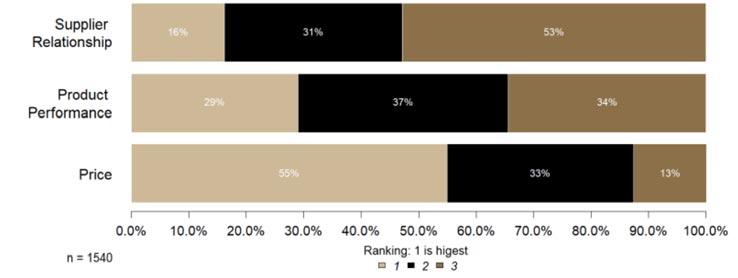
Castro says producers’ perceived level of product differentiation may account for the high score for seed.
“If farmers see variability in seed performance, this may impact the profitability of their crops, making it important for them to place a heavy emphasis on product performance,” he said.
Castro urges suppliers to heed these findings when designing go-to-market strategies. “Because betting on low prices and best quality products are almost always contradictory, companies must make their choice between which option they want to harness,” he says.
For example, most fertilizer companies may offer competitive prices, knowing that’s a key for most producers. Only a select few would be likely to harness the power of differentiation when it comes to fertilizer, even if they don’t usually consider themselves “joiners.”
But seed is a different story. Seed companies would do well to dedicate efforts to underline the attributes that make their
products different from competitors. Some may differentiate according to price . . . but that’s not what make producers tick.
Castro notes that input manufacturers have increasingly presented integrated offers to farmers that combine crop protection and seeds. Both ag retailers and input manufacturers favour these more complete solutions for farmers and like to sell bundles that are frequently positioned as a “package of benefits.”
But he warns against them, given these research findings.
“These bundle offers should be
used with caution when thinking about how different products are perceived by farmers,” he says.
“Taking advantage of a farmer’s loyalty to a seed product to push sales of crop protection or fertilizer in one package may be perceived by farmers as opportunistic and detrimental to trust building.”
Castro saves his final words for seed suppliers. He says they have the greatest challenge displacing well-positioned competitors and must work closely with farmers to show evidence that changing brands will indeed impact success. That may mean offering “try before you buy” initiatives to
catalyze change. After all, it’s performance, not price or loyalty, that drives seed purchases.
Says Castro: “There are certainly opportunities to be sharper in the design of marketing strategies if we can effectively define our target segment and truly understand farmer loyalty to brands, as well as what criteria farmers use to decide on one brand over another.”
Owen Roberts is a past-president of the International Federation of Agricultural Journalists and a communications instructor at the University of Illinois.

MARCH 2023 –– PAGE 11 THE GROWER THE URBAN COWBOY
OWEN ROBERTS
Figure 1: Importance of product attributes - fertilizer
Figure 2: Importance of product attributes - crop protection
Figure 3: Brand loyalty
New meeting format for Ontario muck vegetable growers

After deliberations, the Holland Marsh Horticulture Advisory Committee, is making changes to the annual Muck Vegetable Growers Conference. Beginning in 2023, the two-day conference will now be called Grower Information Days, April 5 and 6. The focus will be strictly on production of muck vegetables through informative talks and discussions. Research results, industry new product releases, and special guest speakers on topics of muck vegetable production will be the emphasis.
The presentations will be now held at the Ontario Crops Research Center-Bradford (formerly called the Muck Crops Research Station). There will be a few specific industry-selected vendors each day. In-person presentations will occur for our local growers and will also be live-streamed for other non-local growers.
Ontario Pavilion to showcase produce and services at CPMA
A special pavilion is being organized for the 2023 Canadian Produce Marketing Association Convention and Trade Show in Toronto for April 26-27. It’s an umbrella for a number of entities. The list includes:
• Ontario Ministry of Agriculture and Rural Affairs, Foodland Ontario Program and Business Development Branch: 1 Stone Road West, Guelph, ON http://omafra.gov.on.ca

• Sandy Shore Farms: 731 Lakeshore Road, Port Burwell, ON https://sandyshore.ca.

• Well Juicery - 377 Olivewood Road Etobicoke, ON www.drinkwell.ca
• Holburne Mushroom Farm (o/o by Red Light Holland): 1337 Holborn Road, Queensville, ON www.holburnemushroom.ca/
• Pfenning’s Organic Farm: 1209 Waterloo St., New Hamburg, ON https://pfenningsfarms.ca/
• Wellington Produce Packaging: 410 Sligo Rd. W. Box 220, Mount Forest, ON www.wellingtonpp.ca/
• Fresh Sprouts International: 21 - 315 Traders Blvd. East Mississauga, ON https://fsprouts.com
• Ontario Produce Marketing Association: 165 The Queensway, Suite 209, Toronto, ON https://theopma.ca/
COMING EVENTS 2023
Mar 2 Ontario Potato Conference & Trade Show, Delta Hotel, Guelph, ON
Mar 2 Ontario Fresh Grape Growers Annual General Meeting, St. Catharines, ON
Mar 3 Foreign Agricultural Resource Management Services Annual General Meeting, VIRTUAL
Mar 6-7 Canadian Federation of Agriculture Annual General Meeting, Delta Ottawa City Centre Hotel, Ottawa, ON
Mar 7 BC Wine Industry Insights Conference, Penticton, BC
Mar 7 BC Cranberry Marketing Commission/BC
Cranberry Growers’ Association Annual General Meeting, VIRTUAL
Mar 7-10 North American Strawberry Growers Association Meeting and Strawberry Symposium, San Luis Obispo, CA
Mar 8
Asparagus Farmers of Ontario Grower Day, German Hall, Delhi, ON
Mar 12-18 Ag Safety Week
Mar 14 – 16 Fruit & Vegetable Growers of Canada Annual General Meeting, Westin Bayshore Vancouver, BC
Mar 21-23 Minor Use Priority Setting Meeting, Gatineau, QC
Mar 21-23 GreenTech Americas, Querétaro Centro de Congresos, QRO México
Mar 21 Ontario Tender Fruit District 3 & 4 Annual General Meeting
Mar 22 Ontario Tender Fruit District 5 Annual General Meeting
Mar 23 Ontario Tender Fruit District 1 & 2 Annual General Meeting
Mar 30 Ontario Processing Vegetable Growers Annual General Meeting, Four Points by Sheraton, London, ON
April 5 Grape Growers of Ontario Annual General Meeting, Club Roma, St. Catharines, ON
April 13 Garlic Production and Pest Management Workshop, 1 Stone Road, Guelph, ON
April 13 Farm & Food Care Ontario Annual General Meeting and Speakers Conference, GrandWay Event Centre, Elora, ON
April 25-27 Canadian Produce Marketing Association Convention & Trade Show, Toronto, ON
June 7 Ontario Produce Marketing Association Annual General Meeting & Summit, Rockway Vineyards, St. Catharines, ON
June 11 Ontario Agricultural Hall of Fame Induction Ceremony, GrandWay Event Centre, Elora, ON
June 13-15 GreenTech, RAI Amsterdam
June 27 – July 3 International Federation of Agricultural Journalists World Congress, Olds, AB
July 23-27 Potato Association of America 107th Annual Meeting, Delta Hotel, Charlottetown, PE
September 6-8 Asia Fruit Logistica, Hong Kong
THE GROWER PAGE 12 –– MARCH 2023
BITS AND BITES
Negotiating a cost increase during a period of food inflation
Food represents a significant portion of our disposable income – 11 per cent in 2022 -- and when prices increase, that’s red meat for news media. This environment of heightened public awareness makes it even more difficult for producers and processors to negotiate cost increases.
It should be easier to negotiate a cost increase. Everyone knows inputs, packaging, labour, energy and many other factors are rising in cost. The problem is, retailers will be blamed for increased prices and they will do their best to slow down the increases and deflect the blame.
Recently, Loblaw was in the news for responding to consumers about rising prices. It was interesting to see Canada’s largest food retailer interacting directly with consumers about food prices and inflation.
Work in advance of the increase
When negotiating a cost increase during a period of inflation, do not assume your increase will be approved. Retailers seem to push back more than ever. You need to do your homework and justify the reason(s) for the increase.
Talking about cost of goods is not usually an enjoyable experience. It is a negotiation and suppliers usually want more and retailers think they should be able to produce for less. Although not always enjoyable, these negotiations need to be done regularly.
Suppliers should be communicating to their customers about the costs they are incurring in their business. A cost increase should never be a surprise. Sharing the details of proposed increases from your packaging suppliers sets the table for the conversation you will need to have at some point. If your cardboard supplier says the cost of your master case is increasing by 12 per cent, let retailers know. If possible, tell them you have bought enough cardboard in advance to offset the need to change your cost for four months.
Wherever possible negotiate with your suppliers. Two benefits: offset an increase and build credibility with your customers. If you can negotiate a delay in an
increase or perhaps switch to another supplier, you can reduce the increase or hold your price for a few more months.
Unfortunately, retailers believe they are the link in the value chain who negotiate the hardest, to keep prices in line for consumers. Whether this is true or not, this is what they perceive.
When you can share some stories about negotiating with your suppliers to delay increases or reduce the impact, retailers will appreciate your efforts and give you more respect.
Your customers are often asking for locked-in prices, in advance of your season. Ask your suppliers for the same commitments. Some will work with you and some will not. If you have enough size to have some leverage, you can negotiate commitments on pricing. It is a volatile market for everyone but guaranteed volume will be good for some of these businesses, just as it can be good for yours.
Negotiating your increase
With this homework behind you, let’s hope you have a smoother negotiation on the increases you propose. Retailers are tired of price increases and they are tired of being blamed for the food inflation issue. They will be ready to push back and they
will really be difficult, if they feel you are trying to take advantage of a market where prices are rising.
You will need to share some information but not too much. One cost component that will never decrease is labour. Usually, the labour market is influenced by minimum wage. When you negotiate costs the percentage increase in minimum wage is a public number and you can let retailers know labour represents 30 per cent of your total cost of goods. A six per cent increase in minimum wage will result in the following change to your cost of goods:
Previous cost of goods $3.50
Labour represents 30% of costs
Minimum wage increased 6%
Previous labour cost 1.05
New labour cost with 6% increase 1.11
Your per unit cost has increased by .06. When discussing labour with retailers remember to get past minimum wage. In some markets we have seen producers have to increase more than the minimum wage just to get people to come to work. You can also factor this in.
Industry averages are a good fact to use in your negotiations. Statistics Canada publishes the consumer price index every
month. This will also include a year over year number which is probably more relevant. The above chart information is available for food.
The consumer price index (CPI) for fresh potatoes was up 8.4 per cent from December 2021 to December 2022. This does not justify an increase if you are in the potato category, but it does illustrate the entire category is up this much. If you can propose an increase slightly below the category CPI, it is more difficult for your customers to negotiate aggressively.
There are components of cost that do not add as much value as others. Logistics for example is required but consumers never know if you ship 200 or 225 on a pallet. If you can find a way to ship 225 for the same pallet price as 200 your price will go down or perhaps you can ship 225 for an increased price but keep your freight cost per unit close to the previous level.
Retailers have been a challenge in fresh departments with regards to more frequent deliveries because they perceived the product to be fresher. This is true for berries but not a storage crop such as onions or potatoes. It is possible to negotiate less frequent deliveries with bigger quantities to reduce freight costs per unit. We see many products in food
Statistics Canada

and beverage changing sizes. Smaller package sizes can reduce the cost per unit. This will change the retail price point to a level the retailer sees as more acceptable to consumers and allows them to maintain their category margin. This is tougher to achieve in commodity markets because all suppliers need to change. Retailers are challenged to manage 350g from one supplier and 425g from another in the same commodity. If the entire commodity shifts it can be beneficial to suppliers and retailers.
Cost increases are never easy
Although input costs are rising, it is tougher than ever to secure the increases required. Include cost in conversations throughout the year, baking in the facts, and sharing anecdotes about the reality of producing nutrient-dense fruits and vegetables.
Peter Chapman is a retail consultant, professional speaker and the author of A la Cart-a suppliers’ guide to retailer’s priorities. Peter is based in Halifax, N.S. where he is the principal at SKUFood. Peter works with producers and processors to help them get their products on the shelf and into the shopping cart.

THE GROWER MARCH 2023 –– PAGE 13 RETAIL NAVIGATOR
PETER CHAPMAN
Source:
Strawberry anthracnose: monitoring tools for early alert and fungicide resistance

KRISTINE WHITE AND ERICA PATE
For the past two seasons, a collaborative project between OMAFRA, led by Erica Pate, and Spornado, a company specializing in air monitoring for crop diseases, has been monitoring the presence of Colletotrichum acutatum. This is the fungal pathogen that causes strawberry anthracnose in Ontario.
The project is funded by the Ontario Agri-Food Research Initiative (OAFRI) and is supported by the Berry Growers of Ontario. The goal of the project is to develop molecular tests for the rapid detection of crop disease pathogens in the air and the molecular identification of fungicide resistance in disease spores.

Strawberry anthracnose fruit rot (Figure 1.) is a serious disease for strawberry growers in Ontario. There are limited fungicides registered for control and fungicide resistance is present, further limiting the tools available to growers. With few options of effective fungicides, saving the most effective fungicides to periods of high risk is important, and understanding the presence of resistance will also help growers make effective decisions as to when and what to apply. Interest in a monitoring system
for this pathogen and the need for rapid identification of fungicide resistance led to the interest in using Spornado samplers to help manage strawberry anthracnose.
To sample for strawberry anthracnose, wind and solarpowered air samplers were installed in three test fields, with two samplers installed at each site. Strawberry anthracnose spores are spread from winddriven and splashing rain, and the samplers were placed at the canopy level to catch splashing spores (Figure 2). Disposable sample collection cassettes were changed out at three- to four-day intervals during the growing season, and then sent overnight to a laboratory for analysis. Results were available within 24 hours of the cassettes being received by the lab.
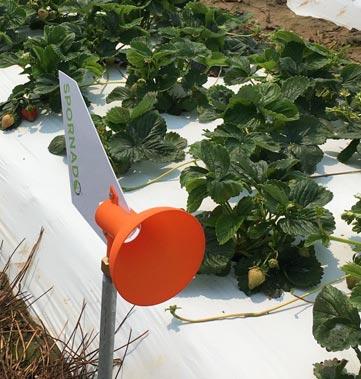
In 2021 monitoring was conducted from July 14th to October 15th. A total of 77 samples were analyzed through molecular analysis and 24 positive results for the presence of strawberry anthracnose were identified. The first detection of anthracnose in an air sample was for the period July 14th to 19th. Through scouting, the first berries with signs of anthracnose were observed on July 26th. For the following season, the research team switched to using air samplers that include a solarpowered fan to increase air flow through the collection cassette.
Preparing to prune
ERICA PATE
Pruning blueberries is an important, time-consuming annual task for blueberry growers. While every grower has different strategies and techniques for pruning, there are a few tips that are important to keep in mind before heading out with your loppers and pruners.

Year 1-2
The goal of pruning new plantings is to establish a healthy, vigorous bush. There should be no fruit production in the first couple of years to allow the bush to establish quickly. Leaving fruit on young bushes takes energy away from the plant growth, and delays establishment.
1) Remove flower buds, the large, thick buds at the tips of laterals. Rub buds off or prune entire shoot tips.
2) Remove dead canes or weak, spindly growth.
Year 3
1) Goal is still to establish the bush and encourage vegetative growth
2) Only allow fruiting on strong shoots
3) Remove all fruit buds on weak plants
Mature plantings
In 2022, strawberry anthracnose monitoring was conducted from May 24th to September 13th. The first air sample detection of anthracnose occurred within the sampling period May 24th to 27th. Over the course of the season, 84 samples were collected from the three different sites. A total of 51 positive results were found throughout the season and each site had positive results. Spornado samplers were able to identify anthracnose, and may be a tool for growers to time fungicide applications. Using these samplers can also provide
As plantings mature and are encouraged to produce larger yields, the goal of pruning shifts to maintaining a balance of vegetative growth and fruit production (Figure 1). Most berries are produced on one-year-old laterals on young canes (2-5 years); these young canes are more efficient producers and produce the best fruit. With regular pruning, older, unproductive wood is removed and replaced with younger, productive cane. New canes should be produced every year. It’s important to maintain a balance of fruit production and new shoots which produce next year’s crop. Pruning also helps manage bush height and shape and removes dead and diseased canes. Pruning and opening up the canopy improves harvest efficiency, and is also beneficial for pest management, including spotted wing drosophila control.
Tips for pruning blueberries:
1) Prune every year
2) Prune out weak, spindly, diseased and dead canes
3) Prune out canes older than six years. These canes are thick with gray, peeling bark (Figure 2).
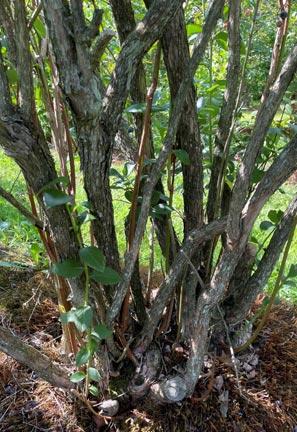
General recommendations are to prune one of every six canes.
4) Thin remaining canes, leaving most
growers a quick method of determining presence of resistance on their farm, and helping growers choose which products to use. Fast and reliable information on the presence of disease and fungicide resistance can help growers make better, more effective fungicide applications. Following the results of this project there are opportunities to expand monitoring to include other pathogens in strawberries, such as powdery mildew, and expand fungicide resistance tests. Spornado has developed tests tests for a number of crop/disease
combinations, including early and late blight in potato and tomato, Botrytis in pepper, apple scab and downy and powdery mildews in grape.
A final report summarizing all results, including the fungicide resistance testing, will be available in spring 2023. If you would like a copy of the report or more information, please contact info@spornadosampler.com
vigorous canes.
5) Cut canes as low as possible.
6) Detail pruning: Remove twiggy growth (unproductive laterals). Berries are produced on one-year-old laterals, and thicker laterals produce bigger berries. Twiggy canes with a lot of weak, small laterals are unproductive.
7) Weaker plants with little vegetative growth need to be heavily pruned to regain the balance of vegetative growth and fruit production.
8) The best time to prune is when plants are fully dormant. Pruning in the fall may stimulate late growth and lead to winter injury on canes that don’t harden off.
THE GROWER PAGE 14 –– MARCH 2023
Kristine White is CEO, Spornado. Erica Pate is fruit specialist, OMAFRA, Simcoe, Ontario.
Figure 1. Balance of fruit and vegetative growth.
Figure 2. Multiple old, thick canes with gray, peeling bark.
Figure 1: strawberry anthracnose
Figure 2: Spornado Sampler
Apple grower named to Ontario Agricultural Hall of Fame
“G’Day” is how Brian Gilroy starts most conversations. The affable voice matches a character in kind. He’s a Meaford, Ontario apple grower and past chair of the Ontario Fruit and Vegetable Growers’ Association (OFVGA).

For his consensus-building skills over a lifetime of organizations, Brian Gilroy has been named as an inductee into the 2023 Ontario Agricultural Hall of Fame. The OFVGA nominated him for induction this year. He’s served the OFVGA board in various capacities since 1990 and was chair from 2010 to 2012.
“Brian’s career has been marked by a lifelong passion for the apple industry and a love of agriculture, people and farming,” says OFVGA executive director Alison Robertson.
“Over the course of more than 30 years of involvement and leadership with farm organizations, Brian’s contributions and legacies are marked by his willingness to do the hard -- and often unnoticed and unappreciated -- work that’s needed to encourage collaboration and bring people together for the greater good of growers and the fruit and vegetable industry.”
In addition, Gilroy has served as president of the Georgian Bay Fruit Growers’ Association, vice chair of the Ontario Apple Marketing Commission, chair of the Ontario Apple Growers’ Steering Committee, chair of the Ontario Apple Growers, president of the Canadian Horticultural Council (now Fruit & Vegetable Growers of Canada), chair of the FVGC Apple Working Group, and chair of Farm & Food Care Ontario. He’s also a long-time director with the Royal Agricultural Winter Fair.
Following the dissolution of the Ontario Apple Marketing Commission in 2001, Gilroy worked tirelessly to ensure Ontario apple growers had an organization to represent their


needs, which ultimately led to the formation of the Ontario Apple Growers as a marketing board with mandatory fees to ensure its financial viability. His efforts at the national level through the Apple Working Group and knack for behind-the-scenes consensus building have helped open international market opportunities for Canadian apples and ensure stable pricing by securing orderly domestic marketing of apples.
Gilroy’s contributions extend beyond the edible horticulture sector as a champion of public trust in the food system. His willingness to volunteer countless hours to consumer outreach as a member of the Farm & Food Care Ontario board of directors has permanently changed Ontario’s public trust landscape for the better.
“We are thrilled that Brian’s accomplishments are being recognized and congratulate him
 on this induction into the Ontario Agricultural Hall of Fame,” adds Robertson.
Gilroy is one of 11 inductees to be honoured at a June11 ceremony at GrandWay Event
on this induction into the Ontario Agricultural Hall of Fame,” adds Robertson.
Gilroy is one of 11 inductees to be honoured at a June11 ceremony at GrandWay Event
TRIBUTE
Centre, Elora, Ontario.
MARCH 2023 –– PAGE 15
THE GROWER
Brian Gilroy (left) is pictured with Ted McMeekin, former Ontario agriculture minister from 2011-2013, at the apple competition at the Royal Agricultural Winter Fair.
Ever volunteering for public trust-building, Brian Gilroy is pictured with Olympic gold-medal women’s hockey winner Cheryl Pounder. She gave an “Apple of my eye” speech to Toronto elementary school children in the fall of 2009. On behalf of the Ontario Apple Growers, he announced the donation of 100,000 apples to Torontoarea schools.
Industry leaders identify top health and safety risks in food manufacturing
JENNIFER COCCIMIGLIO
Ontario is home to North America’s third-largest food manufacturing sector, with meat processing and bakery production leading the way. Yearly sales total more than $34 billion, making it a critical part of Canada’s food supply chain.
It recently became the latest industry to undergo an in-depth risk assessment and root cause analysis facilitated by Workplace Safety and Prevention Services (WSPS). Ontario’s Ministry of Labour, Immigration, Training, and Skills Development (MLITSD) established this methodology as a way to engage industry stakeholders to better understand the top risks to workers’ health and safety and solutions and controls to reduce risk to lost-time injuries. The MLITSD’s methodology focuses on leading indicators, rather than lagging indicators, and leverages the knowledge and insights of front-line workers and managers. This approach has been successfully applied in the transportation, mining, and construction sectors.
Input from industry experts
For food processing, WSPS facilitated the risk assessment workshop in October 2022. Industry experts from across the sector were invited to participate—an even split of workers and employers - representing companies of various sizes and focus, from unionized and non-unionized environments.
Industry associations attended as observers, including Food and Beverage Ontario. “As the professional organization for food and beverage processors across Ontario, we welcome this initiative to identify hazards and their causes,” said Chris Conway,
BITS AND BITES
CEO of Food and Beverage Ontario. “It’s a valuable opportunity to play a vital role in accident prevention and the reduction of harm across our sector. We’ll help to reduce injury and illness any way we can.”
“Companies were enthusiastic about participating and put a lot of thought into the pre-workshop activities,” said Hamish Morgan, manager of consulting services with WSPS. To prepare, each participant identified health and safety hazards in the sector. Collectively, 60 hazardous events were identified in all.”
Rating by likelihood and severity
To determine level of risk, each hazardous event was rated in terms of likelihood and severity of harm. “Representatives of MLITSD and industry associations participated in the discussions; however, only the worker and employer representatives voted in the risk evaluation,” explained Hamish. The votes were recorded anonymously and validated on a one-on-one basis.
What emerged was a top 10 list, with inadequate lockout and tag out—which occurs when energy from equipment is not effectively isolated and blocked from being released while maintenance or other work is performed—in the number one spot. Other risk events included in the top 10 list are bypassing or having inadequate safeguarding on equipment; being struck by or caught in mobile equipment (e.g., lift trucks, electric rider pallet trucks); and slips, trips and falls. Loading/unloading trailers and material handling also made the list, along with issues related to temporary foreign workers and their unfamiliarity with the workplace.
The second phase of this approach—the root cause analysis
Farm tractor sales up in Canada
According to the Association of Equipment Manufacturers’ monthly "Flash Report," the sale of all tractors in Canada during January, 2023 were up seven per cent from the same month last year.
In January 2023, a total of 1,887 tractors were sold which compares to 1,764 sold in 2022.
For the month, two-wheel drive smaller tractors (under 40 HP) were up one per cent from last year, while 40 & under 100 HP were up 12 per cent. Sales of 2-wheel drive 100+ HP were up 19 per cent, while four-wheel
TOP 10
Health and Safety Risks in Food Manufacturing
Inadequate or improper lockout/ tagout of equipment: unexpected activation of equipment or exposure to hazardous energy.
Mobile equipment incidents: substandard operation of powered mobile equipment, lift trucks, motor vehicles, and/or conditions resulting in collisions, impact, lose of load, etc.
Loading/unloading trailers: trailer creep, premature departure, break through trailer floor.

Musculoskeletal Disorder: overexertion (manual material handling), awkward postures.
In October 2022, workers, supervisors and employers from Ontario’s food manufacturing industry identified the top health and safety risks in the sector during a risk assessment workshop facilitated by Workplace Safety & Prevention Services.
Bypassing safeguarding on equipment: caught in or crushed by moving parts, exposure to hazardous energy.
Electric rider pallet truck incidents: stepping off moving equipment, pinched between equipment and stationary structure, impact by, etc.
Slips, trips, and falls.
Inadequate safeguarding of equipment: caught in or crushed by moving parts, exposure to hazardous energy.
Struck By: pedestrian struck by mobile equipment
Temporary workers: incident from unfamiliarity with hazards and protective measures, lack of worker experience.
Looking to create a safer workplace? WSPS can help. Find resources and information, including a wide range of virtual and in-person learning and consulting solutions, at WSPS.CA or call 1-877-494-9777 or email customercare@wsps.ca for assistance.
workshop—will take place in February. The goal will be to uncover the specific factors that contribute to inadequate lockout and tag out. Industry experts will identify and recommend the types of controls needed to address the root causes. These recommenda-
tions, in part, will form the basis of resources and training developed for the industry, which will create safer working conditions for all involved.
For more information and resources visit wsps.ca/foodmfg-risks
drive tractors were up 75 per cent. Combine sales in January totaled 137, up 179 per cent from last year.
For more details, link here: https://bit.ly/3XynInL
THE GROWER PAGE 16 –– MARCH 2023 AGRICULTURAL SAFETY WEEK MARCH 12 - 18, 2023
Jennifer Coccimiglio works with Workplace Safety & Prevention Services
Photo by Glenn Lowson.
Raising awareness of risks, promoting and following safety measures, controls, and procedures help to make workplaces safer. Questions? Connect with us at wsps.ca/food-mfg-risks for more information or call toll free 1-877-494-9777 PINCH POINT. Keep hands clear. Do NOT operate CAUTION ?
BITS AND BITES
CFA
lauds
labour investments
The Canadian Federation of Agriculture (CFA) applauds the announcement by the Minister of Agriculture and Agri-Food, Marie-Claude Bibeau of investment in two critical projects that will help address the chronic labour issues in Canada’s agriculture and food and beverage manufacturing sectors.
The funds are for two projects which will complement the work of the industry-led National Workforce Strategic Framework for Agriculture and Food and Beverage Manufacturing:
• $13.25M for the Canadian Agricultural Human Resource Council’s “Growing the Agriculture Workforce of the Future: Cultivating Canada’s Post-Pandemic Recovery”
• $8.35M for Food Processing Skills Canada’s “Achieving our Workforce Destination: Qualified People, Successful Careers & Competitive Business”.

Labour has been a chronic issue in the agriculture sector for decades. With access to labour becoming a pervasive issue across Canada, these issues are only expected to become worse for producers who have a difficult
time attracting workers due to their location, the seasonal nature of work and the intensity of work required during peak seasons. A lack of labour has hampered the agriculture sector’s growth potential, even as it has been repeatedly identified as a key sector for growth by the Government of Canada.
In a recent survey by
CAHRC, it found that 40 per cent of agriculture employers in 2021 reported not being able to fill vacancies and the industry suffered earning losses of $2.9B in total sales, directly attributable to unfilled vacancies tied to the pandemic. This is nearly double the $1.5B in lost sales estimated in 2014.
“The current trends we’re
seeing, with the labour gap in agriculture increasing yearover-year, are not sustainable and cannot be left to continue,” said Mary Robinson, CFA president.
“Canada has an envious wealth of agricultural natural resources, and as our nation and the world contend with increasingly common erratic weather events, it's imperative that our food
production systems are resilient and secure so that Canada can fulfill its role as a global leader in the supply of quality agriculture products.”
Source: Canadian Federation of Agriculture February 17, 2023 news release
Government of Canada launches Canada Brand refresh for agriculture and agri-food products in international markets

agri-food businesses and associations in global markets. To promote their products to the world, Canadian producers and processors rely on Canada’s solid reputation for quality and sustainability.
The Canada Brand program offers members:
• a new logo, modernized graphics and branded taglines;

Canada’s ag minister MarieClaude Bibeau has unveiled a new refresh of the Canada Brand program, plus a digital toolkit to help Canadian agriculture and agri-food businesses showcase their products in global markets.
More modern, flexible, easy-to-use and optimized for digital platforms, the updated Canada Brand program delivers on industry’s need to respond to new market realities in today’s digitally-driven marketplace.The strategy and tools are free to use, and were developed in collaboration with industry and provincial governments, through focus-testing, research, and consultation meetings.
The Canada Brand for Canadian agriculture and agri-food products was launched in 2006 by Agriculture and AgriFood Canada and has driven the success of hundreds of Canadian
• a revamped marketing toolbox, with:
o video content;
o animated graphics, GIFs and digital stickers;
o refreshed marketing messaging;
o a revitalized photo library; and
o a revamped client portal system (for member registration and access to brand assets).
Export-ready companies can sign up for free for the Canada Brand program to gain access to the revamped marketing toolbox, optimized for today’s digital-first business environment.
Given the rise of protectionism, the impact of geopolitical factors, and the increased risks faced by Canadian agriculture and agri-food businesses, it’s more essential than ever to proactively and deliberately diversify export markets. As outlined in the Indo-Pacific Strategy, stronger
international trade, investment and supply chain resilience are
among Canada’s top strategic objectives.
THE GROWER MARCH 2023 –– PAGE 17
MARKETPLACE
EQUIPMENT
TURBO-MIST - NEW &
USED
STORED INSIDE - 400, 500, 600 GAL IN STOCK
TALL SPRAY TOWERS IN STOCK
SAVE $2,000 - A FEW AT OLD PRICING
Turbo-Mist 400-Teejet electric controls - a nice one! $16,800
Turbo-Mist 500 centrifugal, hydraulic, nice clean $17,900
Turbo-Mist 500 centrifugal, tall spray tower, nice clean $19,750

Turbo-Mist 500 new 2022, used a few hrs, special deal $CALL
Turbo-Mist 600 centrif - good older sprayer with low hrs. $11,700
PERFECT KG220 H.D. flail mower, nice cond. (new $16,800) $8,750
PERFECT KG220 (2021) low, low hours. Mint condition. $11,950
PERFECT ORCHARD MOWERS & FLAIL MULCHERS SALES & LEASING - GOOD CLEAN TRADES NEEDED

DON ARTHUR (519) 599-3058 donarthur3@gmail.com Thornbury, ON
GROW TRAYS
Providing quality apple trees for 40 years.
• Bench graft
• 9 month bench
• KNIP tree
• Call to enquire about the new variety Wild Pink. Call sooner and get what you want with better savings . . . contract work available.


BRIAN VAN BRENK 31760 Erin Line Fingal ON, N0L 1K0 519‐902‐6353 www.vanbrenk.ca brian@vanbrenk.ca
ASPARAGUS ROOTS
Guelph Millennium
Wrightland Farm RR 1 • 1000 Ridge Rd. Harrow, ON N0R 1G0 Keith: 519-738-6120 Fax: 519-738-3358 wrightland@hotmail.ca

WORKS
SEED, NURSERY & ROOTSTOCK


advertising@thegrower.org

866-898-8488 x 221
GLADIOLUS BULBS

Wide variety selection for retail sales and commercial cut flower production. Order online at www.gladbulbs.ca or by phone, fax, email. 813083 Base Line Norwich, ON T: 519-468-2090 F: 519-468-2099 E: lmbolle@execulink.com
APRIL STORAGE, CONTAINERS & PACKAGING
BOOK BY MAR 15 advertising@thegrower.org

scan code to sign up

Plants for Consistent
-Plant sizes-varieties-growing guideswww.ready-set-grow.ca readysetgrow.niagara@gmail.com +1 (905) 658-5363


PAGE 18 –– MARCH 2023
THE GROWER
Ontario Grown Raspberry Long canes & Strawberry Plug
Berry Production
Large quantity of 153 Speedlingtype plug trays and air seeder. Call Bill at 905-689-5471.

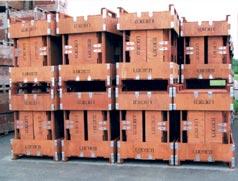


B’s Apiaries specializes in small farm pollination serving Oxford, Elgin and Norfolk counties. Contracts now available for 2023. Contact bees.apiaries@gmail.com.

Frost cloth, 26+ acres, PG40 cover, 28 ft wide, includes reels and hydraulic winder, used 0-2 times. $28,000 will consider all offers. 519-427-4594.
Pneumatic pruning system. Complete with new reels/hoses and Campagnola pruners. Enough for ten workers. Compressor powered by Honda. Strong unit. $10,000/offers. 905-932-8777.
FOR SALE: AGROFROST


Frostguard R30 with Auto start (stationary). Used only few hours <100. Great for frost protection. Runs on propane. This unit is like new with solar battery charger. $10,500. 1-403-795-3931
Two lane Tesso fruit grader, been in storage for years. Two units to choose from, best offer. Rinieri EL 140 power hoe with hydraulic tilt head. Call Ron 905-964-0176

ROWN
MARCH 2023 –– PAGE 19 MARKETPLACE WORKS advertising@thegrower.org 866-898-8488 x 221 LOGISTICS @growernews THE GROWER REFRIGERATION INNOVATION EFFICIENCY PERFORMANCE 519-983-6995 info@heye.ca Premium fruit and vegetable refrigerated cold storages DESIGN - SUPPLY - CONSTRUCT - MAINTAIN @growernews !"##"$%&#'&()*+,(-.(/&#"%"*,/ WITH 15 LOCATIONS 4 LOCATIONS OPEN 24/7 SHIPPING PARTNERS WORLDWIDE IN 150 COUNTRIES HEAD OFFICE – TEL: (905) 673-2222 toronto@rutherfordglobal.com www.rutherfordglobal.com CANADA & U.S. CUSTOMS BROKERS INTERNATIONAL FREIGHT FORWARDERS MAY IRRIGATION & WATER MANAGEMENT BOOK BY APR 14 advertising@thegrower.org CLASSIFIED ADS CONTAINERS & PACKAGING GROWING EQUIPMENT POLLINATION SERVICES We are now taking orders for the 2023 season. Please do not hesitate to contact us.
ROWN BIN & PALLET INC. Office: 519-599-1224 Mike’s cell: 519-270-1145 mike@crownbin.ca Serving Chatham Kent & surrounding areas. Mike & Pamela Davidson 1-226-627-6262 summersgoldhoney@yahoo.com www.summersgoldhoney.ca Bees for pollination

THE GROWER PAGE 20 –– MARCH 2023
Soil health is the mantra for McCain Foods’ Farm of the Future
KAREN DAVIDSON
One in every four French fries in the world is manufactured by McCain Foods. The iconic Canadian company is aiming to hold that laudable achievement in the face of a global supply chain that’s being pressured by more wildly variant weather - not just in one geography but sometimes several in a single growing season.
Despite more inputs, yields have plateaued and even declined in some regions. In point of fact, the Northwest European Potato Growers reported in November 2022 that the year’s production had declined six per cent, year
over year. These worrying trends have prompted McCain Foods to start three Farms of the Future in distinctly different regions of the world by 2025. To date, farms in Canada and South Africa have been announced.

Generally speaking, potato growers are receiving more precipitation in sudden bursts while experiencing more drought, conditions that are challenging soils to absorb and retain water. This means that improving soil resiliency is considered the best way forward for a more sustainable potato industry.

Two years in, the Farm of the Future has years left in its mandate to showcase regenerative techniques until 2030. Yet Yves Leclerc, global director, agriculture
sustainability, McCain Foods, has plenty to share about lessons learned already from the 500 acres near corporate headquarters in Florenceville, New Brunswick.
Enhance crop and ecosystem biodiversity by planting three varieties of potatoes - Russet Burbank, Caribou Russet and Innovator - and 28 species of cover crop.
“It is possible to reduce soil erosion quite quickly through cover cropping,” says Leclerc. “What we’re finding in New Brunswick is that cover cropping is changing the weed complex. When you terminate a cover crop, then you have to prevent regrowth.”
Continued on page B2
MARCH 2023 CELEBRATING 144 YEARS AS CANADA’S PREMIER HORTICULTURAL PUBLICATION B SECTION POTATO PRODUCTION
Volume 73 Number 03 B SECTION $3.00 CDN @growernews
Farm of the Future Canada in Florenceville, New Brunswick has already seen strong yields after its first year. Fertilizer application at the site is already down by nearly 17 per cent compared to typical McCain growers in the area. The reduction is mainly in nitrogen and phosphorous, a cut that helps reduce greenhouse gas emissions by approximately two per cent compared to grower historical average.
FOCUS: POTATO PRODUCTION
Soil health is the mantra for McCain Foods’ Farm of the Future
Downward trend of average potato yields and yet higher costs per ton

Continued from page B1
The farm manager performs a quick thinning of the remaining biomass –severing the roots from stems – and leaving the roots to dry on the soil surface. This minimal tillage disrupts only the top two inches of topsoil. Fall bedding then follows so that the field is ready to plant come spring. Soil temperatures tend to warm up faster in the beds in the spring, allowing an earlier seeding.
The choice of cover crop should be left up to the individual farm operator depending on local conditions. As Leclerc points out, the considerations vary from whether the grower wants to fix more nitrogen, suppress nematodes or address early dying complex. No one recipe fits all.
Armour soils with plants by covering soil with green vegetation for 181 days which helps to prevent soil erosion and increase organic matter over time.
Minimize soil disturbance through controlled-traffic farming on potato fields. This means farm equipment should follow set paths for all field operations, reducing soil compaction.
Reduce agro-chemical impacts by selecting pesticides that are less toxic to humans and the environment and reducing fertilizer application by nearly 17 per cent compared to a typical McCain grower’s farm in the area, helping to reduce greenhouse gas emissions by approximately two per cent compared to grower historical average, while maintaining yields.
Integrate organic and livestock elements by ensuring 28 acres of cattle pasture on the Farm of the Future Canada and developing a rotational grazing schedule with livestock from a neighbouring farm.

To date, total yields from Farm of the Future New Brunswick are averaging between 360-390 cwt/acre depending on varieties and are competitive with other Canadian jurisdictions.
The objective of improving soil organic matter is, admittedly, a long-term goal accomplished over many years. McCain Foods is working closely with Dr. Paul Hebert, Canada Research Chair in Molecular Biodiversity at the University of Guelph. He’s known globally as the father of DNA barcoding, a system that classifies every biological species on earth.
“The next revolution will be
understanding soil biodiversity,” says Leclerc, “and that means understanding the biology of the soil.”
Other partners include the Soil Health Institute in North Carolina and Living Labs, managed by Agriculture and AgriFood Canada. Leclerc expects Innovation Hubs to be set up on U.S. farms in 2023 to help share learnings to date.
The 2023 growing season at the Farm of the Future New Brunswick will represent the third season of tracking results in regenerative practices. Driving all of this ambition is to demonstrate not only environmental benefits but economic gains for farmers.

INSIDE THIS SECTION
Downforce
THE GROWER PAGE B2 –– MARCH 2023
McCain Food’s Farm of the Future at Florenceville, N.B.
Photo: McCain Foods
The Northwestern European Potato Growers (Belgium, Germany, France & The Netherlands) released a graph on November 15, 2022 showing decreases in tons per hectare. Production decreased six per cent in 2022.
tested B3
fertilizer under study B4
boosts plant immunity B5
label updates
2023 B6
for potato processing underway B7
of crop protection B8
outreach on pesticides B10
sprayers have arrived B11
certified to
a drone B12
label
B13
Tensiometers
Smart
Selenium
Pesticide
for
Contracts
Future
Public
Autonomous
Get
operate
Latest
extensions
B14
Amendments to tank mixing statements
B15
AG fungicide comes to market
Tensiometers get to the root of soil’s water-holding capacity

KAREN DAVIDSON
The wring test isn’t enough anymore. For eons, growers have squeezed soil in their hands to assess moisture capacity. Dry enough to start up the irrigation system? Sorry, but you may be a day or two late in turning on the taps when potato plants can best use water at critical growing stages.
“Surprisingly, the target is not necessarily to reduce water use,” says Patrick Dol, sustainability, quality and food safety manager for W.D. Potato Limited, Beeton, Ontario. “We’re looking now at water use efficiency, which considers the positive impacts of irrigation.”
Since 2021, W.D. Potato has been working with Québec-based Hortau for its expertise in tensiometers, soil tension probes that report back to a mobile web app. This real-time field and soil data helps the grower to monitor water and fertilizer movement throughout the soil profile. Then it’s up to the grower to decide


when and how long to irrigate.
As Dol explains, different soils behave differently. With just a 10 per cent clay component, soil’s ability to retain water decreases over time.
The move to more precision technology is driven by both customers and government mandates. In their sustainability promises, they want to reduce water use by 40 per cent by 2030. Those message points are more than government-speak. They are commitments that are trickling down to growers. with the request for data that are measurable, consistent and repeatable.
In 2022, W.D. Potato gathered data from 32 sites in three provinces: Ontario, Québec and Alberta. The Hortau probes measured at six-inch and 12-inch soil depths.
The graphs told a surprising story to some experienced growers. In some instances, they were not starting irrigation early enough or they weren’t getting enough water to the root zone.
“Some farms have wet feet,” explains Dol, “so the graphs
provided support for anecdotal evidence that enough water was available. In these cases, there’s peace of mind in knowing that the tool is confirming experience.”
In the first year of testing in Ontario, the sites ranged from Leamington to New Liskeard. In Alberta, the sites were located in
the Taber area. Québec has been an early adopter of the technology, perhaps naturally so with Hortau headquarters in Saint-Nicolas.
In 2023, W.D. Potato will be focusing its trial efforts in Ontario at 16 sites. Some questions remain as to whether it’s enough to have a six-inch soil
probe or whether there’s advantage in a 12-inch probe as well.
Editor’s note: For a video on how tensiometers work, link to www.hortau.com
MARCH 2023 –– PAGE B3 THE GROWER
FOCUS: POTATO PRODUCTION
Hortau soil probe sensors are pictured near Alliston, Ontario.
“We’re looking now at water use efficiency, which considers the positive impacts of irrigation.”
~ PATRICK DOL
JONATHAN NEILSON
What does a smart fertilizer agricultural system look like for potatoes? That’s a question that’s been tackled by the potato health research group at the Lethbridge Research and Development Center (AAFC).


As a team leader, I bring a research background in plant physiology and big data analysis. Our mandate is to increase potato production while reducing inputs and environmental impact.
During the last year, we have been studying how to minimize
fertilizer inputs to meet Canada’s commitments towards reducing greenhouse gas emissions but also as a response to increasing fertilizer prices. A smart fertilizer agricultural system is one where a minimal amount of fertilizer is applied but is done in such a way as to not limit plant growth and production. To accomplish this, two key technologies need to be in place: a delivery platform and decision-making tools to inform growers on when and how much fertilizer to apply. The team is currently focusing on the biological considerations related
to these decision-making tools. This means researching how plant physiology differs between fields where fertilizer is applied in excess and fields where fertilizer is limiting but applied in spikes over time.
In the Lethbridge greenhouse, our team has set up a dripline system to apply fertilizer at a specific rate directly within the root-zone. Using this system, we set up a nutrient starvation experiment to determine the minimal amount of fertilizer that could be applied and still produce a crop. We found that by micro-
dosing fertilizer into the rootzone we could drop NPK levels down significantly before we saw a decline in tuber yield. It is well known that you can overfertilize
potatoes. When this happens, you get lots of above ground biomass but little tuber production. What our research suggests is that with a fertilizer delivery system that is targeted within the root system and that can release in short, sharp spikes, we can reach this overfertilized state at a much lower absolute fertilizer input. Another explanation is that nutrient-starved plants become more nutrient-use efficient. Plants that acclimated to nutrient-starvation conditions expand root growth and recruit microorganisms that assist in taking up what nutrients are available. When we cycle these plants through rounds of starvation and excess, they are better able to take up and make use of the nutrients provided. Currently, we try to eliminate all input bottlenecks under the assumption that, if we do so, plants will operate at a maximum growth rate. What we are exploring is intentionally stressing the plants such that they have a higher maximum. This is a big change in mindset on how we manage plant physiology through fertilizer application. It is important to keep in mind that not all stress is bad. Distress has a lasting negative effect on an organism, whereas eustress is a beneficial stress.
We are currently collecting more data from greenhouse trials and will be running a field trial at the Vauxhall Research station in 2023 to validate the results. We are also working on sensing platforms to assess the nutrient needs which would be used to determine the fertilizing schedule. These sensing platforms will let us know whether we are moving from a beneficial stress condition to a negative stress condition and track how the plant is recovering from imposed fertilizer stress.
We have given thought to delivery platforms and for the moment have settled on a drip line system. This gives us the fertilizer application and mixing control we need to conduct our experiments but admittedly, it isn’t easy to implement on a large production scale.
PAGE B4 –– MARCH 2023 FOCUS: POTATO PRODUCTION
Jonathan Neilson is a research scientist, Agriculture and Agri-Food Canada, based at the Lethbridge Research and Development Centre. From nuclear to E3 More than 60 private & public varieties 1 800 463-8003 ext. 262
THE GROWER
Micro-dosing fertilizer in the root zone of potatoes may lower costs
Selenium boosts plant immunity against late blight

Agriculture and Agri-Food Canada (AAFC) scientists have been studying late blight for many years to ensure that Canada doesn’t fall victim to the destruction that late blight had in Europe centuries ago. Dr. Bourlaye Fofana is a geneticist with AAFC in Charlottetown, Prince Edward Island (PEI). Most recently he has identified several genes in potatoes that are resistant to another serious disease, common scab. However, his previous research of improving human nutrition through plant products laid the foundation for an important discovery for preventing late blight in potatoes.
In 2014, Dr. Fofana studied how selenium, a micronutrient or mineral that is found in soil, water and some foods, can be boosted in foods such as potatoes, soybean and flax. Selenium is essential to the diets of humans and animals and plays a key role in our metabolism.
Selenium is also an antioxidant, similar to blueberries, which helps reduce the risk of many diseases,” says Dr. Bourlaye Fofana. “I knew that it was possible to increase the health benefit of plants with selenium, but as an antioxidant, can it to boost plant immunity against diseases?"
Dr. Fofana and AAFC plant pathologist, Dr. Rick Peters developed liquid solutions containing various concentrations of selenium and sprayed them onto the leaves of potato plants in the greenhouse at the Harrington Research Farm on PEI.
Following the application of selenium, they injected the plants with late blight disease and then sprayed the plants again with selenium.
What they discovered is significant for farmers. The first spray of selenium solution caused the plant to ready itself to defend against disease and the second spray actually prevented late blight from growing in the potatoes. They got the same results at AAFC’s Charlottetown Research and Development Centre laboratory where selenium stalled the growth of late blight in test tubes.

The results in a controlled greenhouse environment and the lab are remarkable. Due to the risk of the disease spreading, Dr. Fofana could not test this in an outdoor field setting but is confident that the results could be similarily positive for farmers looking to successfully prevent late blight disease in their crops.
"Farmers can use this selenium solution as a preventative measure like they would with a pesticide or herbicide.” Fofana says. “They can spray their crops in the field or greenhouse with the recommended dose of selenium
and that will help the plant to boost its immunity against late blight."
Dr. Fofana recommends applying selenium to crops when there is no rain in the forecast for one to two days to ensure maximum effectiveness against preventing late blight disease. There are additional benefits of farmers applying this solution. In regions such as PEI where selenium levels are low in soil, this will replenish the micro-
nutrient, helping to improve the plant’s nutritional value.
With another important discovery under his belt, Dr. Fofana isn’t ready to close the book on selenium. He and his team identified genes in potatoes that are activated by the selenium treatment, boosting the plant’s immunity and preventing late blight. They also hope to determine whether selenium can prevent other potato diseases after planting.
MARCH 2023 –– PAGE B5 THE GROWER
Source: Agriculture and Agri-Food Canada
FOCUS: POTATO PRODUCTION
FOCUS: POTATO PRODUCTION
Pesticide label updates are in effect for 2023 growing season

The toolbox for protecting potatoes is becoming more limited as Dr. Tracy ShinnersCarnelley outlined at the recent Manitoba Potato Production Days. She’s vice-president, research, quality and sustainability for Peak of the Market Ltd. and is also vice-chair of the crop protection committee for Fruit and Vegetable Growers of Canada. In these roles, she keeps on top of the re-evaluation and special reviews conducted by the Pest Management Regulatory Agency (PMRA).
Over the last few years, four Group M fungicides have undergone re-evaluation. These are: chlorothalonil (Bravo, Echo), mancozeb (Manzate, Dithane), metiram (Polyram) and captan.
“Group M fungicides are the backbone for disease management in potatoes,” says ShinnersCarnelley. “They help in resistance management, offer broad-spectrum protection and are cost-effective options.”

Here’s a status update on these four groups.
Mancozeb (Manzate/Dithane)
PMRA published a final reevaluation decision on November 19, 2020. For potatoes, this means that seed-piece treatments are no longer supported by the manufacturer. The product is restricted to a maximum of eight foliar applications. The re-entry interval (REI) is 0.5 days. Pre-harvest interval (PHI) is three days.

The deadline to implement these label changes was
November 19, 2022 and are in effect for the 2023 growing season.
Chlorothalonil (Bravo/Echo)
The final re-evaluation decision was published May 2018 and included:
• additional measures to mitigate exposure of mixers/loaders/ applicators and post-application workers
• reduced number of applications
– maximum of 3 for potatoes
• increased the re-entry intervals: scouting 3 days, rogueing 19 days, handset irrigation 23 days
• requirements for vegetative filter strips
In February 2022, PMRA published a special review proposed decision, focused on dietary and environmental risks. PMRA’s proposed decision is to maintain use on greenhouse ornamentals and cancel all other uses including potatoes. The Canadian Potato Council submitted a response in May 2022 during the comment period. The industry is waiting for a decision.
Other group Ms
Metiram and captan have been re-evaluated and remain registered, with label modifications. Check with the
registrants regarding availability.
Neonicotinoids
The insecticides imidacloprid, clothianidin and thiamethoxam have been undergoing multiple special reviews over the last few years. The special reviews have focused on pollinators, aquatic invertebrates and squash bees. The final decisions were published in 2021.


These changes are in effect as of March 31, 2023.
Clothianidin (Titan)– in-furrow application has been cancelled Thiamethoxam (Actara) – soil drench application is cancelled but in-furrow application remains on the label.
Imidacloprid (Admire) – soil drench application has been cancelled and foliar application has been reduced to one per season.
Clothianidin and thiamethoxam are currently undergoing reevaluation. Proposed decisions are expected by June 2023.
Lambda-cyhalothrin (Matador/Silencer)
The final decision for this insecticide was to maintain most uses with label amendments, including potatoes. However, livestock feed uses were cancelled. As a result, the registrants are withdrawing the insecticide from the western Canadian market.
Pymetrozine (Fulfill)
This is the active ingredient in the insecticide Fulfill. A special review (potential cancer risk) was conducted. The final decision was to cancel all uses, including potatoes. The last date for use in potatoes will be May 2024.
The Canadian Potato Council and the Fruit and Vegetable Growers of Canada actively monitor these PMRA files and respond on behalf of the industry. Potato-specific details on all these files are available to all provincial potato organizations.
Editor’s note: This is a summary of a powerpoint presentation by Dr. Tracy Shinners-Carnelley, Peak of the Market Ltd.
THE GROWER PAGE B6 –– MARCH 2023
(800) 461-4299 www.thestgeorgeco.com Helmet respirators that give you protection while spraying and handling herbicides and pesticides.
Early blight Colorado potato beetle
Contracts for processing potatoes still in negotiations

VICTORIA STAMPER
With demand for processed potatoes, both potato chips and frozen French fries, outstripping supply this season, it is making for very interesting contract negotiations as we head into planting season. Input costs such as fertilizer and other crop applications as well as fuel and transport have been on the rise since the spring of 2021. So as much as growers are always eager to secure contracts for their potatoes, they also want to ensure it is at the right price to cover a more expensive crop!
As of mid-February 2023, not much can be said about potato processing contracts because four major buyers – McCain, Lamb Weston, Simplot, and Cavendish – are still in negotiations in most areas. In the Columbia Basin, grower contracts were settled last fall. In Ontario, strict February deadlines loom for the chip contracts in that province and negotiations seem to be gong well. In the Midwest most parties are in negotiations now -- making headway -- and some have offers out for vote week of February 13. However, most contract talks in the east have not been started yet. Quiet expansion of processing plants across the U.S. and Canada – such as a new chip plant in Alberta and the purchase of the Heinz/Kraft plant in Ontario -continues to drive demand for raw product across the continent at a time when the pipeline is at its emptiest.
It is unknown today what potato buyers will project for the next year due to several barriers to expansion such as labour shortages, water issues, land costs along with the rest of the increased input costs. Right now, we’re in a very tight market for the second year in a row and the demand for processing potatoes is greater than the current planted acres. Some will continue to be supplied from the fresh sector, however that is not a viable option long term. Overall tightness in the North American market is pushing even the dehy sector to secure contracts early and at price levels not seen in the past in this sector.
If you speak with most potato growers that have been in the business for a long time, they would never have thought that the availability of seed would be a limiting factor to growth.

However, for the first time we are seeing a very tight seed market, regionally and by variety. There was growth in seed sector production when compared to last year, however the demand for certain varieties in certain regions seems to be outstripping this pace of growth.
Growers are already receiving and cutting seed potatoes in
preparation for planting; and seed growers continue to receive calls asking about the availability of more seed.
Although barriers may be different from region to region based on soil type and other growing conditions, the overall sentiment remains the same. Costs are on the rise, labour shortages abound pushing growers and packers to invest more in automation and the processors continue to look for more raw product to fill global demand, particularly frozen fries. With the sharp increases in
input costs last spring, and although the growing season in 2022 was a bit of a roller coaster with Mother Nature, most growers were happy with the crop that came out of the ground and it has been storing very well so far. With demand so evenly matched with supply, and in the case of the processing sector actually surpassing current supply, we have seen stable pricing and good shipments of potatoes since the harvest last fall. Despite inflation, potatoes are still the best value per pound in the grocery store. So even with the current uncertainty about
planting intentions moving forward, all of these factors have combined to make it a very good time to be in potatoes!
MARCH 2023 –– PAGE B7 THE GROWER
Photo courtesy of Stan Wiebe, Beaver Creek Farms, Manitoba
FOCUS: POTATO PRODUCTION
FOCUS: CROP PROTECTION AND SPRAYING
The future of crop protection is about more than a molecule
Expect more formulations with environmental benefits
KAREN DAVIDSON
Where has all the innovation gone? To formulations, says Cornie Thiessen, ADAMA Agricultural Solutions’ Canadian general manager, based in Winnipeg, Manitoba.
ADAMA is an Israeli-headquartered, crop protection supplier that’s betting its future on proprietary formulation.
ADAMA’s insecticide Cormoran is a good example with two active ingredients: acetamiprid and novaluron. The dual-mode insecticide knocks down and provides residual control of codling moth, pear psylla, leafroller and Colorado potato beetle. The label has also been extended for use on spotted wing drosophila, good news for blueberry growers. The product is useful because it specifically targets both the egg and larval stages of this invasive pest. Most importantly, its formulation is an emulsifiable concentrate, making it easy to tank mix with water.
Another product in the ADAMA portfolio is Folpan fungicide with activity on downy and powdery mildew in grapes
says Rob Bahry, product development manager, ADAMA. “This product is currently a granular formulation, but we’re expecting a liquid formulation –much easier to use – in a couple of years.”
ADAMA’s Zivata insecticide is a synthetic pyrethroid formulated with an improved, plant-based solvent that offers fast-acting stomach and contact effects against a broad spectrum of insect pests. It has low volatile organic compounds, properties that improve the user experience.
These products really matter to specialty crops which, by their nature, are grown on acreages that are much smaller than what’s common in Canadian wheat, canola, corn and soybeans. Total Canadian potato acreage, for example, topped out at 387,000 acres in 2022 compared to wheat’s 25 million acres.
Horticultural growers are worried that fewer active ingredients are being registered in Canada by the major crop protection companies. In global ranking of gross sales volumes, they are Syngenta, Bayer CropScience, BASF and Corteva. According to AgroPages, these
Sales of top 9 global agrochemical firms FY2021 (million)
behemoths accounted for 55 per cent of the total global pesticide sales of $72.6 billion in 2021. In seventh place is ADAMA, accounting for about seven per cent of global sales.
For horticulture, the company that’s been part of the global Syngenta Group since 2020 represents an important player in the supply chain. The fate of active ingredients is governed by the formulation, says Dr. Yoav Avidor, vice-president,
innovation, development, research and registration, ADAMA. And those formulations are becoming more important for lessening the environmental footprint. Whether it’s better penetration of plant cuticles, higher levels of rainfastness or more efficient pay loads, these formulations are making a difference to both grower and environmental health.

Beyond the importance of new formulations is the breadth of ADAMA’s manufacturing
capacity across the world with plants in China, Israel and more recently India.
“The frailties of the global supply chain have become clear during the last two challenging years,” says Thiessen. “That’s why the company is investing in manufacturing capacity on several continents.”
Continued on next page
THE GROWER PAGE B8 –– MARCH 2023
FY 2021 (FY2020) Ranking Company FY 2021 (Reported Currency) FY 2020 (Reported Currency) % Change 1 (1) Syngenta Crop Protection 13,301 ($13,301) 11,208 ($11,208) 18.67% 2 (2) Bayer Crop Science 11,436 (€9,669) 9,986 (€8,749) 14.52% 3 (3) BASF 7,713 (€6,521) 7,036 (€6,165) 9.62% 4 (4) Corteva 7,253 ($7,253) 6,451 ($6,451) 12.43% 5 (5) UPL 5,556 (INR 413,900) 4,662 (INR 346,280) 19.02% 6 (6) FMC 5,045 ($5,045) 4,642 ($4,642) 8.22% 7 (7) ADAMA 4,389 ($4,389) 3,738 ($3,738) 17.42% 8 (8) Sumitomo Chemical 3,495 ($3,495) 3,235 ($3,235) 8.04% 9 (9) Nufarm 2,087 (AUD2,777) 1,763 (AUD 2,605) 18.38%
FOCUS: CROP PROTECTION AND SPRAYING
The future of crop protection is about more than a molecule
Continued from page B8
Three complexes exist in China, the biggest in Hubei province, but more recent investments have gone to India and Brazil to complement both R & D and manufacturing facilities in Israel.
“We are still not out of the woods in terms of the supply chain,” explains Thiessen. “Global demand for crop protection products is at historically high levels. While some improvements have happened in ocean transport, there are still problems at ports. The new realities in Europe –inflation, labour disruptions and energy challenges – are affecting different geographies in terms of production.”
It’s not surprising, then, that ADAMA announced rate increases in October 2022 for its product portfolio that ranged from five to 12 per cent.
In the pipeline
Pre-pandemic and pre-Russia’s invasion of Ukraine, major changes in the regulatory and consumer environments were incentivizing crop protection companies such as ADAMA to search for better products. It’s costing an average of USD $500 million to complete the regulatory requirements for a new molecule. So ADAMA’s strategy is to scour the list of crop protection products that have come offpatent and then, with its multidisciplinary team, to develop and patent unique formulations.
This strategy will benefit Canadian blueberry growers with the expected registration of Soratel fungicide (prothioconzaole) for the 2023 growing season. Its formulation contains patented Asorbital technology, a unique mix of solvents and surfactants to increase penetration effectiveness in leaves. This should help both highbush and lowbush blueberry growers with problems such as Septoria leaf spot and mummy berry disease.

The second milestone in 2023 will be expanded use of a packaging facility devoted to water-soluble bags near Tilsonburg, Ontario. This innovation is a benefit to growers by mitigating exposure to pesticides or volatile organic compounds (VOC) which give off distinctive odours.
In the regulatory landscape
In today’s crop protection world, it’s about more than a molecule. As ADAMA has demonstrated, it’s about innovative formulations and packaging. Their future platforms are looking at encapsulation

technology, drift control, humectants, and UV stabile packaging.
Humectants? They’re the opposite of dessicants. When used in a crop protection product, they help keep water in the spray deposit. At best, they can rehydrate spray deposits by drawing on rain or dew or even from moisture in the air. This boosts the product’s efficacy by increasing pesticide uptake into the leaf and insects making contact on the surface.
For all crop protection
companies, it’s a long and winding road to register new products and formulations with the Pest Management Regulatory Agency.
Based in Winnipeg, Manitoba, the ADAMA team has a full bench of Canadian agricultural talent that’s keen to bring solutions for Canadian-specific problems. Expect more investments in the future.
MARCH 2023 –– PAGE B9 THE
GROWER
FOCUS:
AMBER ANDERSON
When asked about their concerns about the food sector, pesticide use remains top of mind for Canadians.
In 2022, the Canadian Centre for Food Integrity (CCFI) surveyed Canadians about food sector concerns, including pesticide use. 41 per cent of those responding agreed they are “personally concerned about the use of pesticides in crop production.”

While this number is up slightly from previous years, CCFI research coordinator Ashely Bruner stated the trend is consistent amongst food-sector concerns they track. “I don’t think that rise in concern is specific to pesticides. Overall we saw a lull in specific food production concerns during COVID. People were much more focused on the pandemic and less on specific food system issues. We are seeing many concerns tick back up, including pesticides after that COVID lull, and now people are tuning back in to the food system and specific issues.”
With a return of attention to the sector as a whole, public trust is vital for the continued operation of the Canadian food system, and a significant component of that trust is to talk about concerns the public has
about how their food is produced. As the CCFI’s 2022 Public Trust Research Reports states, “The long-term growth and success of our food system must be sustainable. A sustainable food system, one that meets the needs of all food system stakeholders while preserving our environment, must be trusted.”
Fortunately, farmers want their non-farming neighbours to know how they do what they do.
Farmers know that pesticide use is highly regulated because they are the ones that take the certifications to apply them properly.
Pesticides, also called crop protection products, are one of the most effective tools available to farmers to keep insects, weeds, and diseases from damaging and destroying fruits, vegetables, and field crops. They also let farmers grow more food on less land, which helps preserve natural forests, wetlands, and other wildlife habitats while ensuring we all have enough to eat.
Growing more food on less land means that more food can be produced at the same time, saving farmers both time and energy. This efficiency also helps with the affordability of food, which is a growing concern that farmers share with all consumers when they go to the grocery store.
“Oftentimes people are not aware of how much research goes
into bringing a new pesticide to market and how rigorous the Canadian regulatory system is,” noted Erin O’Hara, vicepresident of communications with CropLife Canada. “Health Canada carefully reviews every pesticide before it comes to market to ensure it can be safely used. We have one of the safest food supplies in the world, which includes the careful use of pesticides. Canadians can be proud of that.”
Farm & Food Care Ontario
(FFCO) provides the public with information about pesticide use in Canada as part of our efforts to spread agricultural awareness to everyone who has questions about how their food is made. In The Real Dirt on Farming, a publication designed to answer questions about farming in Canada, and at RealDirtonFarming.ca, its accompanying website, the public can find answers to their questions on pesticides.
The CCFI also hosts a website called It’s Good Canada
(itsgoodcanada.ca), which answers questions from the public based on their consumer trust research and provides factual information to those curious about our food system. Both farmers and consumers benefit from the public having access to information that answers their questions and raises agricultural awareness in Canada. Amber Anderson is communications manager for Farm & Food Care Ontario.
For the past three years Stockosorb® has been successfully used in Eastern Canada with various crops. This past summer in the Norfolk Sand Plain, Stockosorb® hydrogel was trialled at six different locations in potato fields. Stockosorb® hydrogel is a soil conditioner that is designed to increase water and nutrient retention in the soil and release that same water and nutrient as the soil drys out. A cycle that repeats itself many times over. Stockosorb® compliments mother nature’s rainfall or manmade irrigation which are both precious resources!
According to Norfolk Soil & Crop Improvement Association Annual Report 2022, rainfall was scattered across the county with dry pockets in the Courtland to Delhi to Waterford area.
“Norfolk’s summer dryness was the perfect situation for maximum Stockosorb® performance in the Delhi area. In fact, we now seem to experience dry spells across Canada every summer which makes the need to capture and release moisture that much more important for crop yields,” says
Marc Richard Agr., President of Eco+.
All six potato fields were irrigated with hard hose reels as best as time, equipment and water supply could offer. The field comparisons were consistent with variety, sunlight, fertilizer and applied moisture. The only difference in the comparison was that 10 lbs per acre of Stockosorb® was added to the planter fertilizer mix by the Ag Retailer. “The Stockosorb® treated land could better utilize the available moisture and nutrition,” says Paul Van den Borre, Ontario Senior Sales Representative for Eco+.
We had nineteen comparison yield digs across the six locations and the results were impressive. The average potato yield increase in the Stockosorb® trials was 9% or 39 cwt/acre and there was even a location that was under the overlap of the irrigation where the potato received almost double the water compared to the rest of the field. The yield increased about 15% with the extra water and the Stockosorb® treatment still had 22 cwt/acre more than the grower
overlap standard. Extra yield gives a great ROI on farmgate cost of +/- $65 per acre for Stockosorb®. Cost is equivalent to one pass of hard hose reel irrigation!
Stockosorb® is CFIA registered and comes in different
particle sizes with each particle size having a purpose for horticulture, grains and oilseeds, and greenhouse crops.
Stockosorb® is safe to use on all crops and soil types and is available at Ag Retailers, ask for it
by name. Contact Eco+ for more information and stocking Ag Retailers. Paul Van den Borre 519-803-4878, paulv@eco-plus.ca or Marc Richard Agr. 450-5841122, mrichard@eco-plus.ca .

THE GROWER PAGE B10 –– MARCH 2023
ADVERTORIAL
CROP PROTECTION AND SPRAYING
Explaining pesticide use is a significant part of public outreach
Stockosorb hydrogel holds and releases moisture many times a year to plants and soil biology
Photo by Glenn Lowson
CROP PROTECTION AND SPRAYING
Autonomous sprayers promise to reduce labour and fuel in orchards
KAREN DAVIDSON
The Ontario apple industry is eagerly anticipating the orchard results of three autonomous sprayers which have been imported by Provide Agro Corp, Beamsville, Ontario. One machine was displayed at the recent Ontario Fruit & Vegetable Convention.
They will be set up for use in three different apple-growing regions: Hayden and Amanda Dooney’s Suncrest Orchard, Simcoe; Steve Bamford’ Bamford Family Farms, Clarksburg and Mike Gibson, Newcastle.
The Agbots arrived in the 2022 growing season for training. “I am confident that we can hit the ground running in the 2023 growing season to further validate the results of this technology,” says Hayden Dooney.

In his view, key benefits will be:
• Lowering inputs with the capacity to spray in ideal conditions, along with targeted tree level applications.
• Reduction in labour/repurposing of labour to other areas of the operation.
• Reduction of fuel usage. This
equipment uses lower engine demands than traditional rigs for spraying, mulching and mowing.
• An opportunity to deploy further sensor-based technology that will take us in the direction of artificial intelligence for managing the orchard in the future and further enhance precision agriculture in the apple orchard.

“The Agbot from AgXeed based in the Netherlands, has multi-uses beyond crop protection,” says Sean Bartlett, business unit manager, Provide Agro Corp. “It can spray, weed spray, mow, flail chop and cultivate.”
According to the manufacturer’s website, AgBot 2.055W3 & CF2000-AB can be used for crop protection, weed control, the application of liquid nutrition and for mowing and shredding prunings. It is also possible to refill the tank in a controlled and unmanned manner. By reading in a task card and issuing commands for the machine, the AgBot 2.055W3 & CF2000-AB exactly knows what to do.
For spraying fungicides and insecticides, a crop protection module is placed behind the machine. That’s the home of the 2000-litre tank, an electrically
driven fan, 16 nozzles (8 on each side) with nozzle holders and nozzles of the grower’s choice. The machine is also equipped with a H.S.S. Control box including GPS module and H.S.S. ISA. Weed control and the application of liquid feed is done with a three-point-supported frame. Two infinitely adjustable spray hoods with three nozzles per side or a double nozzle set including a pump of 150
litres/min per side hang from this. The frame also contains a 120litre tank and a Dosatron dosing pump for agent injection into the spray line. The frame is hydraulically lifting with mechanical width adjustment. The mechanical weed control works on both sides and is mechanically adjustable. The finger weeder has a diameter of 55 cm, has two sets of roller heels with a diameter of the discs of 380 mm. The working width is
+/- 55cm per side.
The AgBot 2.055W3 & CF2000-AB are the result of a collaboration between Hol Spraying Systems (HSS) and AgXeed. H.S.S. is the exclusive distribution partner for the fruit growing sector worldwide.
“I am excited to see this technology evolve through a full season of use in 2023,” Dooney concludes.
MARCH 2023 –– PAGE B11 THE GROWER
FOCUS:
AgBot sprayer is displayed at Suncrest Orchards, Simcoe, Ontario.
FOCUS: CROP PROTECTION AND SPRAYING
Get certified first before buying a spray drone
DR. JASON DEVEAU
In Canada, the use of drones for pesticide application, otherwise known as Remote Piloted Aerial Application Systems (RPAAS), is regulated by two federal departments: Transport Canada establishes regulations for safe operation and Health Canada for the registration and conditions of use of pest control products.
Drones are already used in Canadian agriculture for crop surveillance and livestock management, and they’re being used to apply granular fertilizers, for pollination, and for frost protection. The use of drones for general spraying was cleared by Transport Canada in July 2017. In 2018, Health Canada stipulated that the use of RPAAS for pesticide application is not allowed under the Pest Control Products Act (PCPA) without sufficient data to characterize the hazards or risks associated with this use.

As of October 2022, there were no liquid pest control products registered for application by RPAAS in Canada, although
two restricted-use granular microbials intended for larval mosquito control were expanded to include RPAAS in the fall of 2022.
RPAAS working groups, both industry-oriented and regulatoryoriented, are working collaboratively to assemble the information we need. Many research trials using RPAAS (approved by Health Canada) are planned or on-going as stakeholders determine the safest and most effective way for drones to fit into agricultural pest control.
Certification and registration
Anticipating pesticide label expansions, perhaps you’re planning to buy and fly an RPAAS. Transport Canada requires all pilots with RPAAS more than 250 g to obtain a Pilot Certificate, either for Basic Operations or for Advanced Operations. Pilots only need a Special Flight Operations Certificate (SFOC) when operating outside the rules for Basic or Advanced operations, such as beyond Visual Line-OfSight (VLOS).
Pilots must register their drone (online for a $5 fee) and display
that number on the drone. For more information, the Canadian Aviations Regulations (CARs) covers drones here. It’s a massive document, so jump to the end to find the relevant information under Section IX.
Yes, drones do seem to require a lot of acronyms.
Basic Operations Pilot Certificate
The Basic Operations Certificate allows pilots to operate any drone from 250 g up to and including 25 kg. This allows the pilot to fly:
• Outside controlled airspace
• Over 100 ft above people
• In VLOS (or in contact with someone in VLOS)
• Over 1.8 km from heliports
• Over 5.6 km from airports
If you’d like to explore the requirements, Transport Canada has an online document called TP15263 which describes required knowledge for Basic Operation pilots of small RPAAS. Personally, I took a $100 online course (from a Canada-based drone flight school) to help me prepare for my exam. A good course will supply
what you need to know about the laws, the environment, the aircraft, and your responsibilities as a pilot.
The $5 exam has 35 multiple choice questions. You have 90 minutes to complete it and you need a 65 per cent to pass. It was a surprisingly challenging exam, so don’t be discouraged if you don’t pass on your first try. You can take another swing at it after 24 hours, and you’ll encounter new questions randomly drawn from their database.
Advanced Operations Pilot Certificate
The Advanced Operations Certificate allows pilots to operate any approved RPAAS over 25 kg in VLOS. This allows the pilot to fly:
• Inside controlled airspace
• Above 16.54 ft above people
• Under 16.4 ft horizontally from people
• In VLOS (or in contact with someone in VLOS)
• Within 1.8 km from heliports
• Within 5.6 km from airports
There are two parts to this certification. The $10 exam requires an 80 per cent to pass, covers more topics than the Basic Operations exam, and has the same 24h wait to retry. You must also undergo a Flight Review with a certified trainer, who charges about $200 for the service. Once the exam and flight review are successfully completed, there’s a $25 issuing cost. Lots of nickel-and-diming, here.
Recency
Once you have your Certificate you must carry a copy with you while flying. Technically, it doesn’t expire, but you still have to maintain it. According to CARs 901.56, pilots cannot operate a drone unless they have successfully completed the following within 24 months preceding the flight:
• Testing / Issue of their pilot certificate (Basic or Advanced).
• A Flight Review
• Any of the recurrent training
activities set out in section 921.04 of Standard 921. This is an online questionnaire that has the answers posted right after each question. Don’t ask . . . just comply. Be sure to print it out after you complete it because it doesn’t save the answers.
Just like the Certificate, the pilot must have Proof of Recency with them at all times. Unlike the Certificate, it’s free.
Records
Every owner of a remotely piloted aircraft has to keep certain records. They need to be with you while flying for a certain period of time and all records must be transferred with the system if you sell or give it to a new owner.
• The name of the pilot(s) and crew involved with each flight, noting time and date (keep with you while flying for 12 months).
• Any maintenance, modification or repair of the RPAAS, including precisely who did what and when. This should detail the instructions used to complete the work (keep with you while flying for 24 months).
Final thoughts
Get certified before you buy your RPAAS, and do your research before you commit to a system. Rotor-based RPAAS design is changing rapidly as manufacturers adapt to the demands of North American and European applicators. Be sure you understand what they can and what they cannot do. Only buy from a reputable dealer with practical spraying experience, and not someone with slick advertising that over-promises RPAAS work rate, swath width, reduced drift or improved coverage potential. Ask to see the data.
RPAAS is still finding its niche in Canadian agriculture, and while we’re unsure about their capabilities, we are sure they’re here to stay.

THE GROWER PAGE B12 –– MARCH 2023
Dr. Jason Deveau is application technology specialist, OMAFRA, Simcoe, Ontario.
A demonstration of a spray drone was sponsored by the Holland Marsh Growers’ Association in October, 2021. Photo by Glenn Lowson.
FOCUS: CROP PROTECTION AND SPRAYING
Decree 50 WDG fungicide now labeled to manage botrytis leaf blight on greenhouse onions for transplant
Apply 1.12 kg product per hectare (0.56 kg ai/ha) as a foliar spray. Do not make more than 1 application per crop cycle. Applications can be made when conditions are favorable for disease development. Use sufficient water to obtain thorough coverage Use care in mixing and application to avoid exceeding rates of 1.12 kg product per hectare regardless of the selected spray volume.
JOSH MOSIONDZ
The Pest Management Regulatory Agency (PMRA) recently announced the approval of a minor use label expansion registration for DECREE 50 WDG fungicide for control of botrytis leaf blight on greenhouse onions for transplant in Canada. DECREE 50 WDG fungicide was already labeled for Botrytis management on a wide range of crops in Canada. This minor use proposal was submitted by Agriculture & Agri-Food Canada, Pest Management Centre (AAFC-PMC) as a joint project with the United States
Department of Agriculture (USDA) IR-4 project as a result of minor use priorities established by growers and extension personnel.
The following is provided as an abbreviated, general outline only. Users should be making disease management decisions within a robust integrated disease management program and should consult the complete label before using DECREE® 50 WDG fungicide.

Toxic to aquatic organisms. Observe buffer zones specified under DIRECTIONS for USE. Toxic to small wild mammals. To reduce runoff from treated areas into aquatic habitats avoid
application to areas with a moderate to steep slope, compacted soil or clay. Avoid application of this product when heavy rain is forecast. Contamination of aquatic areas as a result of runoff may be reduced by including a vegetative filter strip between the treated area and the edge of the water body. DO NOT contaminate irrigation or drinking water supplies or aquatic habitats by cleaning of equipment or disposal of wastes. As this product is not registered for the control of pests in aquatic systems, DO NOT use to control aquatic pests. DO NOT allow effluent or runoff from greenhouses containing this product to enter lakes, streams, ponds or other waters.
Chateau WDG herbicide label extended to dry bulb shallots
Apply to transplanted onions and dry bulb shallots between the 2-leaf and 6-leaf stage and on direct seed onions and dry bulb shallots between the 3-leaf and 6-leaf stage prior to emergence of weeds. Use appropriate water volumes to ensure good spray coverage. DO NOT harvest shallot leaves for food consumption.


Follow all other precautions, restrictions, and directions for use on the DECREE 50 WDG fungicide label carefully.
For a copy of the new minor use label contact your local extension specialist, regional supply outlet, or visit the PMRA label site www.hc-sc.gc.ca/cpsspc/pest/registrant-titulaire/toolsoutils/label-etiq-eng.php
JOSH MOSIONDZ
The Pest Management Regulatory Agency (PMRA) recently announced the approval of a minor use label expansion registration for Chateau WDG herbicide for control or suppression of labelled weeds in dry bulb shallots Canada. Chateau WDG herbicide was already labeled for management of weeds on a wide range of crops in Canada. This minor use proposal was submitted by the Ministère de l’Agriculture, des Pêcheries et de l’Alimentation du Québec as a result of minor use priorities established by growers and extension personnel. The following is provided as an abbreviated, general
outline only. Users should be making weed management decisions within a robust integrated weed management program and should consult the complete label before using Chateau WDG herbicide.
This product is toxic to aquatic organisms and nontarget terrestrial plants. Observe buffer zones specified under DIRECTIONS FOR USE. Toxic to small wild mammals. Toxic to certain beneficial insects. Minimize spray drift to reduce harmful effects on beneficial insects in habitats next to the application site such as hedgerows and woodland. To reduce runoff from treated areas into aquatic habitats, avoid application to areas with a moderate to steep slope, compacted soil, or clay. Avoid application when heavy rain is forecast. Contamination of
THE GROWER
aquatic areas as a result of runoff may be reduced by including a vegetative strip between the treated area and the edge of the water body.
Follow all other precautions, restrictions, and directions for use on the Chateau WDG herbicide label carefully.
For a copy of the new minor use label contact your local extension specialist, regional supply outlet, or visit the PMRA label site www.hc-sc.gc.ca/cps-spc/pest/ registrant-titulaire/tools-outils/label-etiq-eng.php
Josh Mosiondz is minor use coordinator, OMAFRA, Guelph, Ontario.
PRINT SOCIAL E-NEWS PODCASTS WEBSITE
Canada’s premier horticultural publication is available 12x/year. First of every month. Always on time.
SUBSCRIBE!
You’ll find our mostread stories on Twitter and Facebook with awardwinning photography. And links to deeper analysis.
@growernews
Every Tuesday a.m., start your day with the most newsworthy stories of the week. Join the service that’s already read by 3K+ subscribers on their cell phones and desktops.
Digging deeper on the month’s cover story, we interview the industry’s leaders. Find The Grower Calling podcasts on our website, Soundcloud and iTunes.
Your onestop source for Canadian horticultural news.
www.thegrower.org
VISIT US!
MARCH 2023 –– PAGE B13 THE GROWER
Crop(s) Target Rate (g product/ ha) Application Information PHI (days) Dry Bulb Shallots Suppression or Control of Labelled Weeds 140
45
Josh Mosiondz is minor use coordinator, OMAFRA, Guelph, Ontario.
Crop(s) Target Rate (kg product/ ha) Application Information PHI (days) Greenhouse onions for transplant Control of botrytis leaf blight 1.12
1
Race on to amend labels with tank mixing statements
label, following review and approval by the Pest Management Regulatory Agency (PMRA). The process took significant resources for all stakeholders to generate tank mix data for each product combination on each individual crop. This came in the form of a label statement on Product X that contained use directions for both Product X and tank mix partner(s), such as Product Y. Labelled tank mixes were often other products marketed by the same company, but not necessarily of competitors.
The ability to apply multiple crop protection products in tank mixtures is an important component of pest management in agriculture, especially for horticultural crops. Compared to field crops, horticultural crops often have more diverse pest complexes which affect them, over a longer period of susceptibility, with a higher cost associated with pest losses due to the increased value of the crop.

All these factors contribute to a greater need generally for crop protection applications in horticultural food crops. Tank mixing provides an important strategy to increase the pest spectrum controlled by a single application, to promote resistance management for one or more active ingredients, and provide time and cost savings to the user.
The benefits of tank mixing are well illustrated with data from the 2022 Ontario processing tomato crop. Producers recorded a total of 2,755 applications to their processing tomato fields in 2022 across a total of 12,394 acres. Each application record consists of one treatment to one field. A little over half (57%) were applications of a single product in the tank. A third (34%) were tank mix applications with two products in the tank. A further eight per cent of applications contained three products in the tank, with four products in the tank making up one per cent of applications. If all tank mix applications were made individually, the number of application passes would have increased by 53 per cent! That’s a lot more trips.
Historically, each specific permitted tank mix combination had to be added to a product
As the number of registered products grew, the potential number of tank mix combinations outpaced the ability of registrants and PMRA to add every desired tank mixture to the product labels. Something had to give.


In October 2009, PMRA issued a memorandum regarding the use of unlabelled tank mixes of commercial class pest control products used for crop production. In that document, PMRA indicated the agency’s position that users of commercial class products for crop production were permitted to use unlabelled tank mixes. This was based on the conditions that the tank mix use was consistent with the directions for use for each of the tank mix partners when used alone. This gave growers the freedom to use tank mixtures, provided they followed the full labels for each of the individual components.
The guidance provided in the 2009 memorandum provided significant flexibility to growers, registrants, and the PMRA permitting tank mixes without the need for a label amendment. This has been embraced by both growers and registrants, as few labels created since include specific tank mixing instructions.
In December 2022, the PMRA issued a new guidance document on tank mix labelling backtracking on the 2009 position that a general policy permitted the use of unlabelled tank mixes. As outlined in the new document, the federal Pest Control Products Act states that no person shall use a pest control product in a way that is inconsistent with the directions on the label. As a result, in the view of PMRA policymakers, if a label contains no guidance related to tank mixing, then tank mixes are not
In the view of PMRA policymakers, if a label contains no guidance related to tank mixing, then tank mixes are not permitted – even if the complete label directions for each of the tank mix partners are followed. New guidance as of December 2022
permitted – even if the complete label directions for each of the tank mix partners are followed. It is worth noting here that this change in view did not result from an identified risk to human health or the environment.
While the importance of tank mixing continues to be acknowledged, for tank mixing to be permitted by PMRA in future, there must be text on the product label that specifically allows for tank mixing. This text may be in one of two forms: a specific mention of the tank mix partners (Product X may be tank mixed with Product Y) or the inclusion of a general label statement that permits tank mixing.
The general statement will
read: “This product may be tank mixed with (a fertilizer, a supplement, or with) registered pest control products, whose labels also allow tank mixing, provided the entirety of both labels, including directions for use, precautions, restrictions, environmental precautions, and spray buffer zones are followed for each product. Which is exactly the same conditions as stated in the 2009 memorandum but instead of publishing this once, PMRA will require the statement be added to each and every product label, if the use of unspecified tank mix partners is to be allowed.
Registrants are now in the process of amending each of the
currently registered product labels with the new statements, if they wish them to be added – I understand most do. That being said, standard review timelines for such a label amendment at PMRA is five months. No question that updating every product label will take some time. Ideally these label updates occur relatively quickly and simultaneously to minimize disruption. But this will be one more change growers will have to look out for in the years ahead.
THE GROWER PAGE B14 –– MARCH 2023 CROP PROTECTION
Chris Duyvelshoff is crop protection advisor, Ontario Fruit & Vegetable Growers’ Association
CHRIS DUYVELSHOFF
Prowl meets Roundup – Photo by Peter Smith, University of Guelph.
CROP PROTECTION
Downforce AG fungicide ready for Canadian market
United Agri Products Canada Inc. (UAP) and Sipcam Agro USA, Inc. are launching Downforce, a new fluazinambased fungicide. It’s available now in Canada to prevent disease from getting into your crop.
Fluazinam is a preventative multi-site contact fungicide that has been used since 1988 and in Canada since 1992 to protect crops. It acts by inhibiting the germination of spores and preventing the development of infectious structures within the plant.
“Downforce is effective preventatively, to be sure, for either ground or aerial application.
Apply Downforce no later than 14 days before harvest in potatoes or after early pod formation in soybeans.” says Willy Gubbels, eastern sales manager with UAP.
Downforce (500g/L fluazinam) is available in convenient 10L jugs, with each jug able to treat 41.5 – 62.5 acres of potatoes or 21.25 – 28.5 acres of soybeans. The liquid
formulation makes mixing easy, and the low rates help save time and money.
“Group 29 fungicides are at a low risk to develop resistance and have strong residuals on your leaves,” says Adam Sheppard, manager of agronomy services with UAP. The recommended spray interval is seven ton10 days for most crops and is recommended for use as part of your Integrated Pest Management program.
The Pest Management Regulatory Agency (PMRA) has approved Downforce for the control of an array of diseases such as white mould, late blight, clubroot and downy mildew on a broad range of crops, including potatoes, soybeans, ginseng, berries, cantaloupe, carrots, cole crops and more. The complete list of diseases controlled and crops protected are here: www.uap.ca.

UAP Canada works with world-class global manufacturers to bring innovative solutions to Canadian agriculture. Through its
comprehensive line of proven crop protection products, including plant nutrients, herbicides, fungicides, insecticides and specialty products, UAP offers choice to Canadian agriculture.

Sipcam Agro is owned by the
FMC website open for grower reviews
Sipcam-Oxon Group, an Italian company recognized worldwide for its formulation and manufacturing expertise. Sipcam Agro uses a distribution-focused marketing strategy to provide traditional chemical and biorational products to the turf,
ornamental and agricultural markets in the U.S. and Mexico. The company is headquartered in Durham, North Carolina.
Source: UAP February 16, 2023 news release
For the first time ever on a Canadian crop protection company website, farmers can rate products, significantly changing how crop producers do research and share knowledge.
“Where better to hear about the effectiveness of a herbicide or insecticide than from a fellow grower who is facing the same pest problems?” asks Krista Henry, marketing communications manager at FMC. “Adding reviews to our website shows our commitment to the customer and our willingness to try new and innovative things to help growers solve problems.”
Whether the review is great, good, or poor, customers will be able to use grower reviews to judge for themselves which FMC products fit best in their situation. Consumers have been relying on unbiased online product reviews for many years to make purchasing decisions, so clearly there is value to hear directly from fellow customers.

“We believe we are the first crop protection company in Canada to offer an online review platform for customers to report on their first-hand experience with an FMC product,” says Henry.
Growers can learn how to optimize pest control from fellow farmers. “Calvin” from Alberta, is an example of a grower who took the time to provide good insight in a product review posted on May 3:
“Focus has become a very effective tool to keep kochia numbers down in Lentils. We did late fall applied Focus this year, so hoping that the minimal amount of snow that melted this spring will help activate the Focus in the drought conditions we are experiencing in South East Alberta. Looking forward to seeing the results this year.”
Each review goes through a minimal moderation filter. Crop protection companies abide by a strict code of conduct set out by the Pest Management Regulatory Agency such as abiding by labeled use patterns.
The review functionality on www.ag.fmc.com/ca/en has been open for about eight months now and the number of growers who have provided reviews is well above expectations.
Source: FMC January 31, 2023 news release
MARCH 2023 –– PAGE B15
THE GROWER

MARCH 2023 –– PAGE B16 THE GROWER
