Borrowing billions: getting bigger or getting better?
KAREN DAVIDSON
Thanks to the adoption of new technology, Canada’s 262,000 farmers are producing more than ever before. The Bank of Montreal (BMO) reports that since the late 1990s, total labour productivity in Canada has increased by 31 per cent, while agriculture has surged 190 per cent over the same period. Aaron Goertzen, senior economist for BMO writes: “Few sectors of the economy can hold a candle to that performance.”
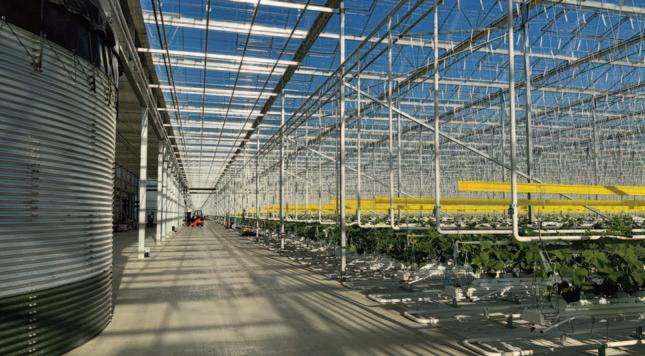
Here's a sample of what growers are investing to produce more per acre. Building a state-of-the art vegetable greenhouse runs $1.2 to $2 million per acre. Planting high-density apples in an orchard comes in at more than $50,000 an acre. And that new potato sprayer with a 120-foot boom: $600,000. For about the same price you can get a new potato harvester. But it’s tempting to add a $30,000 subscription package to optimize your data collection.
All of that new technology – AI, optimized LED lighting, robotics -- is priced at a premium, given that most purchases are in U.S. dollars.
It may be just coincidence that Canada’s $6 billion annual farmgate value for horticulture almost equals Farm Credit Canada’s (FCC) current $6.1 billion horticulture loan portfolio. The sector represents 11 per cent of FCC’s total agricultural lending business, with greenhouse borrowing alone at $2.5 billion.
“We have a reputation as a senior secured lender,” says Justine Hendricks, CEO, Farm Credit Canada, the Crown Corporation mandated since 1959 to provide loans to farmers. Marking two years this month as leader of the Regina-based lender, she shares the FCC strategy rolled out during her cross-country meet-up with owners and employees from all agricultural sectors.
“Be more bold,” Hendricks told the 2,300 employees at 103 branches across the country.
“Be an industry catalyst,” she urged to innovate FCC’s products and services. Highlighting the atmospheric river that flooded the Fraser Valley in November 2021 as an example, she noted that within 48 hours FCC employees reached out to British Columbia blueberry growers with customized solutions such as payment deferrals.
“Be a partner,” she said of FCC’s desire to work with other banking institutions. Practising what she preaches, she presented FCC’s story to a meeting of the Canadian Bankers’ Association. Promoting the idea that today’s capital-intensive farming requires more financing ingenuity, FCC sometimes looks to the re-insurance model of sharing risk with other institutions.
In the real world, the business case for any expansion or adoption of new technology is often made by the grower 12 to 18 months before deployment. Accordingly, growers talk to their bankers on a regular basis, pressure testing how much credit might be available.
Continued on page 3
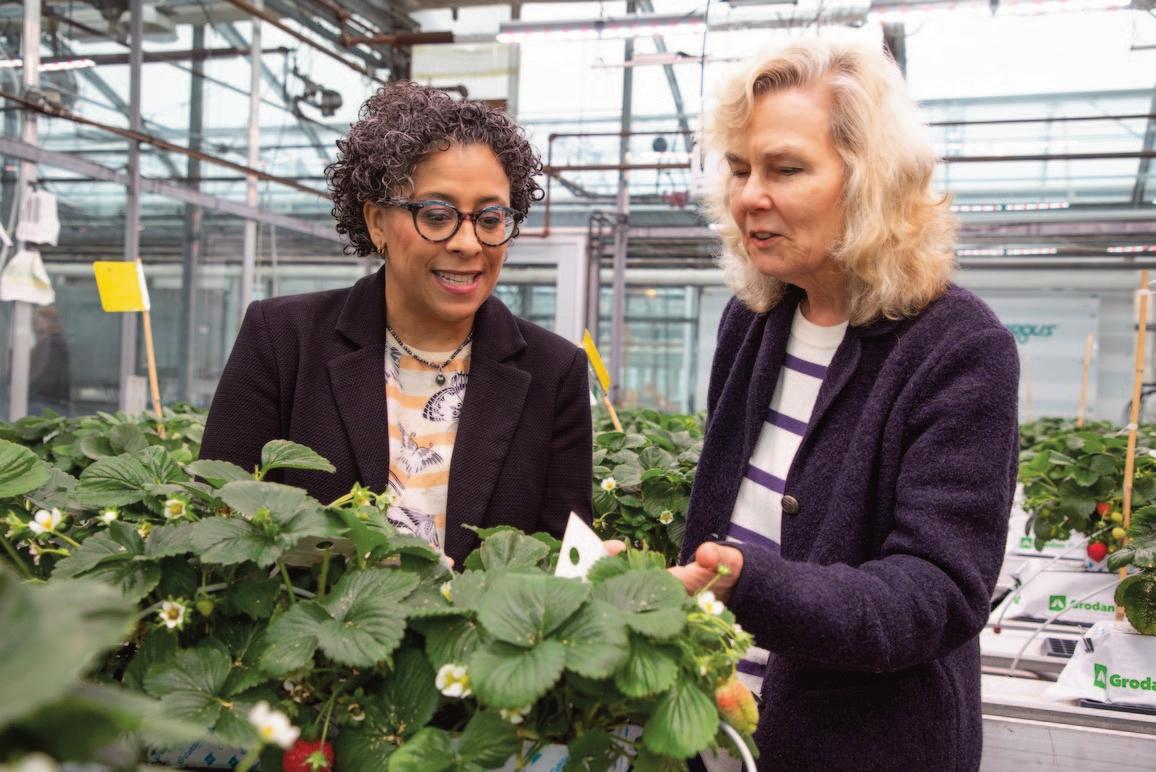
Dr. McDonald has been one of the university’s liaisons with the Ontario government on $373 million research dollars over five years. Those millions are seed money for new technology that’s then commercialized and financed in the billions by Canada’s bankers. Photo by Bruce Sargent.
AT PRESS TIME…
Amendment to the Bankruptcy and Insolvency Act passes in the Senate
The Senate’s passage of Bill C280 on December 10, 2024 is a landmark victory, marking years of advocacy by the horticultural sector. The legislation will establish a deemed trust mechanism for fresh produce growers and sellers in Canada, ensuring payment in the case of buyer bankruptcy.
The Fruit and Vegetable Growers of Canada (FVGC), the Canadian Produce Marketing Association (CPMA), and the Fruit and Vegetable Dispute Resolution Corporation (DRC) are thrilled to see Bill C-280, the Financial Protection for Fresh Fruit and Vegetable Farmers Act, pass at third reading in the Canadian Senate. The vote was 54 in favour, 21 against with two abstentions.
Bill C-280 was introduced in the House of Commons by Member of Parliament Scot Davidson and sponsored in the Senate by the Honourable Michael MacDonald.
“The passage of Bill C-280 has been the result of decades of advocacy by organizations and industry members across the fresh produce supply chain and in the broader agriculture sector,” said CPMA president Ron Lemaire. “We are grateful to all who have supported this work over the years, and greatly appreciative of the efforts of Bill C-280’s sponsors
and Parliamentary champions in moving this important legislation forward.”
“From the farm to the dinner plate, fresh produce sellers make significant contributions to local economies across the country, and provide Canadians with safe, nutritious fruit and vegetable products,” said FVGC executive director Massimo Bergamini.
“The establishment of a deemed trust for all fresh produce sellers will strengthen food security in Canada and help ensure that our sector can continue to fulfill its important roles.”
In addition to its impact on domestic produce sales, the lack of a financial protection mechanism for fresh produce sellers in Canada has meant that Canadian sellers have been unable to utilize the preferential treatment they previously enjoyed under the United States Perishable Agricultural Commodities Act (PACA).
Instead, Canadians selling fresh produce to our biggest trading partner must currently pay double the bond on the shipment to access the PACA dispute resolution mechanism – a cost that is simply untenable for many
Canadian businesses. The establishment of financial protection under Bill C-280 now paves the way for the U.S. Department of Agriculture to restore Canadian produce sellers’ preferential access under PACA.
“The positive impact of Bill C280 on the highly integrated fresh produce industry cannot be overstated,” said DRC president and CEO, Luc Mougeot. “The lack of a financial protection mechanism in Canada has been a pain point in our trading relationship with the United States for many years. We look forward to working with our U.S. counterparts to put in place reciprocal protection and provide stability for produce sellers on both sides of the border.”
In terms of next steps, CPMA is already engaged with USDA to discuss reciprocity.
“Once C-280 has received Royal Assent, we will work with the U.S. to formally reintroduce preferential access to PACA for Canadian exporters,” says Shannon Sommerauer, director, government relations for CPMA.
Source: Fruit and Vegetable Growers of Canada Dec. 11, 2024 news
NEWSMAKERS
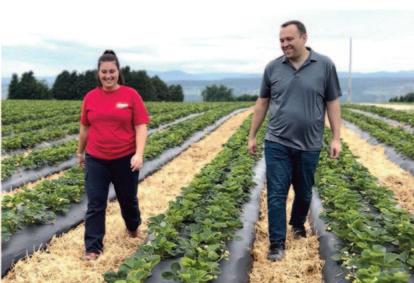
Canada’s Outstanding Young Farmers national event named Gemstone Cattle Company of Gem, Alberta and Polyculture Plante 1987 Inc of Saint-Pétronille, QC as 2024 national winners from seven regional farms. The national event was held in Lethbridge, AB from Nov 27- Dec 1, 2024. Congratulations to berry growers Alison Blouin and Simon Plante
Tim Houston, the re-elected Nova Scotia premier, announced his new Conservative cabinet in early December. The incumbent Greg Morrow (Guysborough-Tracadie) retains his role as minister of agriculture. Formerly a broadcaster, he was first elected in 2021.
The Ontario Potato Board held its annual general meeting on December 4, 2024, naming its 2025 board of directors. Shawn Brenn remains chair, supported by Jamie Lundy, vice-chair. Directors are: Harry Bradley, Steve Bradley, Jacob Vander Zaag, Mike Smalley
Fresh Vegetable Growers of Ontario held its annual general meeting on December 12, 2024. Chair is Norm Charbonneau supported by regional directors as follows: Mark Srokosz (counties of Essex, Kent, Lambton, Middlesex, and Elgin); Jason Ryder, (counties of Oxford, Brant, Haldimand, Norfolk, HamiltonWentworth, Niagara); Quinton Woods (counties of Huron, Perth, Waterloo, Wellington, Bruce, Grey, Dufferin, Simcoe); Joann Chechalk (counties of Halton, Peel, York, Durham); Henk Droogendyk, all remaining counties. Commodity representatives are: Norm Charbonneau, crucifer crops; John Gorzo, low-acreage and specialty crops; Teresa Van Raay, root bulb and leafy vegetables; Raymond Orr, tomatoes and peppers; Morris Gervais, sweet corn, peas and beans. Norm Charbonneau, representative to FARMS; Joann Chechalk mineral soils and Quinton Woods, muck soils representative to Ontario Fruit and Vegetable Growers’ Association.
The Potato Growers of Alberta announce its 2025 board: Alison Davie – North Paddock Farms Ltd.; Tony Kirkland – Sandhills Seed Potatoes Ltd.; Matt Visser – Norbest Farms Ltd.; Delbert Vossebelt – D.V. Farms Ltd.; Lloyd Ypma – Quattro Farms; Brent Bydevaate – Bydevaate Farms; Ryan Jensen – Klearidge Farms Ltd.
British Columbia growers are welcoming Karina Sakalauskas as the new field vegetable specialist. She joined the British Columbia agriculture and food ministry in 2017, holding several roles as specialist in berries, hazelnuts and the organic sector. In early 2024, she served the greenhouse sector.
At the Berry Growers of Ontario, general manager Bernie Solymar has stepped back from the role to become administrative and financial coordinator. Victoria Buma has evolved from her role as research and promotion coordinator to become general manager.
The board of CanAgPlus which oversees the CanadaGAP food safety program has appointed two new members, Lily Indajati and Nirmal Dhaliwal, and six returning members -- Luciana Las Casas Celere, Sara Cook, Adrien Corbiere, Jeff Hall, Stéphanie Levasseur and Quinton Woods -- to the Technical Advisory Committee. One other individual, Kylin Han, is a returning member. Beth Pattillo, a director on the CanAgPlus Board, was reappointed as committee chair.
Eastern Montérégie & Maritime Provinces Marie-Pierre Grimard, P. Tech marie-pierre.grimard@norseco.com 450 261-7468 Western Montérégie Marie-Hélène Monchamp marie-helene.monchamp@norseco.com 514 968-2906 North Shore of Montreal Isabelle Dubé, Agr. isabelle.dube@norseco.com 514 295-7202
Central and Eastern Quebec Stéphanie Gosselin, Agr. stephanie.gosselin@norseco.com 418 254-1469
Central & Eastern Québec Yves Thibault, Agr. yves.thibault@norseco.com 418 660-1498
Kate Helmore is now The Globe and Mail’s agriculture and food policy reporter as of mid-December 2024. She writes in LinkedIn:
“I’ve loved this beat for a long time.
The story of how we make, move and eat food is fascinating stuff. While farming often happens far from the seat of power, distant from the downtown core of any major city, it is nonetheless ever present, in every bite you take, at the grocery store checkout, in the lives of thousands upon thousands of workers across the country and – underneath it all - baked into the history and identity of a nation where a century ago one-third of Canadians lived and survived by working the land.
We’ve changed, and agriculture has too. This change deserves to be covered well – in all its complexity and controversy. If you’re a farmer, innovator, policy maker, I want to hear from you. Email: khelmore@globeandmail.com.
Borrowing billions: getting bigger or getting better?
Numbers are so much bigger these days than in the past and managing the tax obligations and funding associated with this transition can be a significant hurdle.
~ LORNA McKERCHER
Continued from page 1
And as a matter of sound business practice, many growers tender their financial requirements to several banking institutions to ensure lending competitiveness. On the other side, lenders continually assess prospective borrowers using metrics such as credibility, experience, historical data and current financial performance.
As Hendricks confirms, FCC’s assessment of credibility is based not only on repayment schedules, but also on whether the expansion project was completed on time and on budget. Credibility is built over time. There is not only business risk but reputation risk.
In addition, Henricks reveals, “We’re looking at risk mitigation products but it’s too early to announce the details.”
Developing
a credible business plan
A lot of capital is needed to crank the engines of food production. Lorna McKercher, national director, agriculture for Royal Bank of Canada (RBC) oversees a loan portfolio of $952 billion of which $13.2 billion is horticulture.
“I recently attended a conference where Dr. David Kohl from Virginia Tech emphasized how good managers recognize the importance of ‘getting better before getting bigger.’ That’s what we are seeing among producers – they’re focussing on current operations to improve the revenue line through more produce out of the greenhouse, or to decrease expenses through process or technology,” says McKercher.
“A good business plan demonstrates how well you understand your operation’s long-term goals and potential challenges— whether it’s sales contracts, HR issues, production risks, or rising input costs,” McKercher continues.
Dissecting the plan, lenders look closely at historical financial and production performance, favouring accountantprepared, three-year projections to evaluate the financial implications of any proposed changes. Return on investment (ROI) supporting the grower’s debt servicing capabilities is a priority. Sensitivity analyses—scenarios that assess
changes in prices, production levels, or costs—are especially helpful, though RBC says these are seen less frequently.
Maintaining a credit rating
McKercher explains that many factors come into play in obtaining and maintaining a credit rating, noting three key points: management, financial performance and market/competitiveness.
Good management can be seen to monitor production data and financial performance on a regular basis to ensure that important decisions are made in real time. Additionally, an up-to-date, threeyear financial history supporting a grower’s ability to service current and potential debt is also critical to a lender’s decisionmaking. While having less leverage, a lower debt-to-operational cash-flow ratio shows lenders that a grower has more options when making decisions and dealing with risks or challenges.
Last but not least, how an individual grower performs in terms of production within the industry is an important evaluation point. This helps separate the financial results and the production results.
“We look over many years, so if something unexpected happens in the industry – for example, trade tariffs, a significant increase in an input cost, disease, or so on – we give credit to those who are consistently above their peers in terms of kg/sq ft and other production variables,” says McKercher.
Transitioning to the next generation
For every grower, inevitably, one of the farm’s biggest financial challenges becomes the cost of transitioning operations to the next generation, an undertaking in which both bankers and accountants play a significant role. This is one area where borrower credibility can really come to the fore since the financial transaction relies on the credibility of both the seller and the buyer. And this is also where assessments by respected outside professionals can be brought to bear. For many growers contemplating the last harvest, getting better before getting bigger might be best replaced by moving up before moving on.
At the generational crossroads of capital-intensive farming, another transition appears to be under way. Within the banking industry, more and more female bankers are taking charge of major agricultural portfolios. In addition to Justine Hendricks at Farm Credit Corporation and Lorna McKercher at Royal Bank of Canada, there’s also Roxane Lieverse who joined Rabobank in January 2023 as head of Canadian Agricultural Banking based in Calgary. Here’s her wink at Venus versus Mars in her LinkedIn profile: Disruptive Agricultural Banking Lender.
The Grower is “Digging Deeper” with Lorna McKercher, national director, agriculture, Royal Bank of Canada (RBC). She’s an articulate leader for funding the growth of the sector with a
portfolio valued at $13.2 billion, seven per cent of the total ag portfolio. She shares how RBC is responding to these competitive times. This podcast is sponsored by Cohort Wholesale.
horticulture
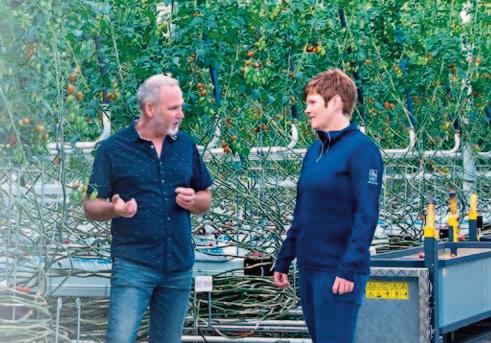
Lorna McKercher, national director, agriculture for the Royal Bank of Canada, visits with Hans van Gellecum, an in-house crop consultant for Hazel Farms Group in Leamington, Ontario.
This new 17-acre greenhouse came on stream in September 2024 in Leamington, Ontario, dedicated to growing cherry tomatoes on the vine. Depending on the technology installed, building costs can range from $1.2 million to $2 million per acre.
CROSS COUNTRY DIGEST
BRITISH COLUMBIA
Lake Country acquires BC Tree Fruits property for $9.1M
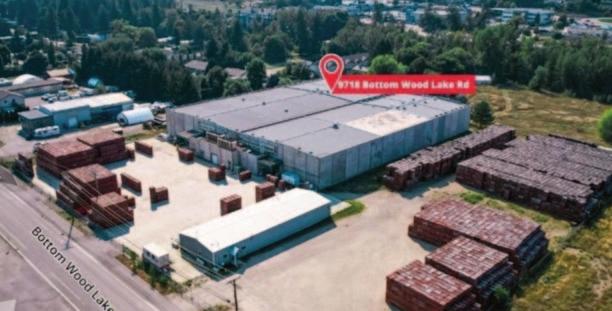
The BC Tree Fruit Cooperative’s transition into receivership in July 2024 presented an opportunity for the acquisition of the 3.4 hectares that BC Tree Fruits property located at 9718 Bottom Wood Lake Road, adjacent to the Winfield Arena. Following a swift court-ordered sale process, the District’s offer of $9.1 million was accepted, with court approval granted on November 27th. The community is located between Kelowna and Vernon.
In response to Lake Country’s growth and the escalating demand for recreational spaces, green space, and public amenities,
PRINCE EDWARD ISLAND
The Plowdown Challenge returned for another season in 2024. It is one of many ways AAFC scientists and farmers are continuously working towards an even more sustainable agricultural sector. Will last years’ winner make it a double-double or does another farmer take the crown?
Once again, the Agriculture and Agri-Food Canada (AAFC) Charlottetown Research and Development Centre challenged Canadian farmers to put their knowledge to the test with the 2024 AAFC Plowdown Challenge.
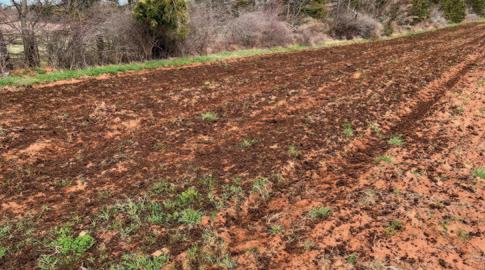
As in 2023, AAFC knowledge transfer specialists Scott Anderson and Roger Henry planted the Mountain Gem potato variety on a field without using traditional fertilizers following a cover crop
the acquisition was deemed timely
Mayor Blair Ireland highlighted the challenge of aligning community priorities with strategic investments, emphasizing the value of seizing such opportunities when they align with available grant funding and reserves. The acquisition is viewed as a long-term benefit to the community, offering potential beyond recreation, including a new site for the RCMP detachment.
An unanswered question is whether the fruits bins still at the site will be sold.
Source: AM 1150 November 29, 2024
of red clover at AAFC’s Harrington Research Farm, located on Prince Edward Island.
In addition to the potential benefits of using leftover nitrogen from the soil and a cover crop, there
was a twist this year – they added manure. Farmers were encouraged to guess the potato yield of these fields.
“Word of mouth spread a bit from last year’s challenge and
Roger used the various meetings and tradeshows throughout this year to garner more than three times the number of guesses compared to last year,” says Scott.
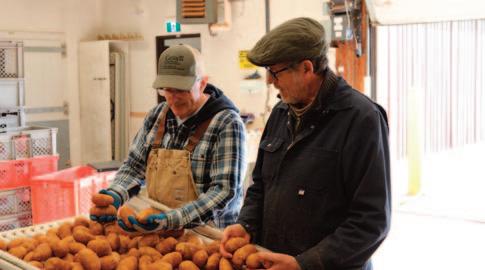
When grading the harvested potatoes was done and dusted, the actual potato yield for this years’ AAFC Plowdown Challenge field was a whopping 293 hundredweight per acre. That compares to 169 hundredweight from the challenge in 2023 when no manure was used. This yield comes close to 2024’s estimated Prince Edward Island average of 304.7 hundredweight per acre for potatoes.
“Adding manure put the potato plant growth into hyper speed when combined with the soil nutrients left over from the previous red clover crop,” says Scott.
“The potatoes were a good size and very uniform which is excellent for table stock and processing into chips or french fries.”
After all of the guesses were tallied, one happy farmer was crowned the 2024 winner of the AAFC Plowdown Challenge. Prince Edward Island organic vegetable farmer Matt Dykerman was the winner of the challenge with the closest guess of 275 hundredweight per acre. Island potato farmer Ashley Ching was the runner-up, with a guess of 269 hundredweight per acre. The average of the overall guesses was 192 hundredweight.
Some farmers may have
underestimated the power of manure along with the nitrogen left in soil from previous crops, but as an organic farmer, Matt knows a thing or two about growing crops without inorganic fertilizer.
“With the outpouring of support for this challenge, we believe that we’ve been able to inform more and more farmers on the benefits of factoring in the leftover nitrogen from the previous crops or cover crops as well as the value of manure as a natural fertilizer,” says Scott.
After two years, what does the future hold for the Plowdown Challenge? Scott and Roger have taken this challenge further than they could have imagined but don’t count them out just yet on cropping up with another idea soon.
The Plowdown Challenge serves as a demonstration of previous AAFC research, with the goal of increasing adoption of these types of beneficial management practices. It is one of the many ways AAFC researchers and farmers are continuing to act as stewards of the land, contributing to an even more sustainable agricultural sector. Considering leftover nutrients in the soil when making decisions on fertilizer-use can be added to the toolbox for farmers along with other AAFCresearched beneficial management practices such manure, cover crops and enhanced efficiency fertilizers.
a new twist – Scott Anderson and Roger Henry applied manure to the fields.
CROSS COUNTRY DIGEST NEWFOUNDLAND
Lingonberry, a shrub native to northern regions of Canada, produces small, tart and slightly sweet berries known for their health benefits. It is a close relative of the blueberry and cranberry, but richer in the healthy antioxidant “anthocyanins.”
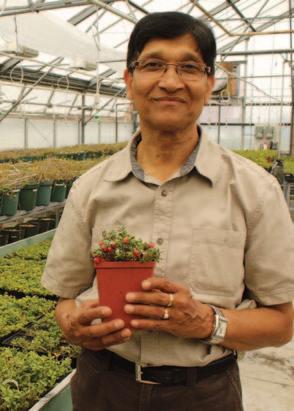
Recent research by Agriculture and Agri-Food Canada (AAFC) shows that eating lingonberries can reduce risk of kidney, liver, and heart disease. This super food could have super potential for Canadian producers. That is why AAFC research scientist Dr. Samir Debnath, from the St. John’s Research and Development Centre in Newfoundland and Labrador, is searching for methods to speed up the development of new lingonberry varieties and increase production of lingonberries suitable for northern agricultural systems.
Big results with micropropagation
Dr. Debnath and his team collected wild lingonberry plants throughout Atlantic Canada, Québec, the United States, and Europe, to create a North American repository for wild lingonberry. He was then able to use antioxidant-rich plant germplasm (hereditary genetic material) to multiply lingonberries yearround in St. John’s, with a modified breeding method he developed. His team produced new plant varieties through micropropagation, a process that uses very small pieces of plant tissue taken
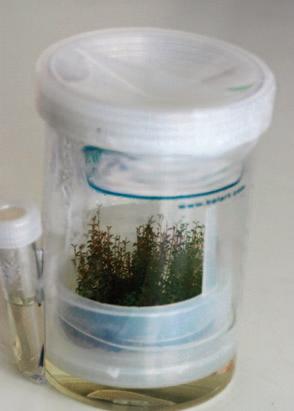
from a mother plant, and then produces new plants grown in a lab. The added twist is that Dr. Debnath also uses bioreactors, which are self-contained, controlled, and sterile environments for rapid plant growth. In these bioreactors that protect native lingonberry plants from disease, leaves and stems are used to produce numerous shoots that can be transplanted to become new lingonberry shrubs. This technology can produce thousands of plants from a single sample of the mother plant.
“Normal multiplication without bioreactor technology would take many years, 16 or more, and many resources,” says Dr. Samir Debnath, research scientist, AAFC. “Using the micropropagation process with bioreactors we could have a thousand plants in a single vessel and speed up development of new berry varieties by 10 years or more.”
Aside from the ability to push the breeding process into hyper-speed, another big advantage of micropropagation is that it preserves the genetic quality of all new plants. This is because new plants produced in this way are genetically identical (perfect clones) to the mother plant, unlike wild lingonberry plants. Micropropagation can also be used for developing new varieties of other berry species such as blueberry, cranberry, strawberry, and raspberry.
Combining the best of two worlds
With this modified breeding process, Dr. Debnath developed hybrid lingonberry varieties that combine the high antioxidant levels of Canadian varieties with the high yield potential of European varieties. These hybrids can also be grown in slightly warmer areas that are more suitable for agricultural production. They are currently being evaluated in farm fields in Newfoundland and Labrador, Manitoba, and Québec by researchers from AAFC, the province of Newfoundland and
Labrador, and local producers.
“Our hybrid varieties combine the best of both worlds,” says Dr. Debnath. “We are expecting to have good results from these research trials in the next few years.”
This research is paving the way to develop high genetic quality berry plants with fruits and leaves of high nutritional and medicinal value, for northern agricultural systems. As Dr. Debnath’s world leading research on new propagation methods advance, lingonberry could one day become an important crop in Canada.
GREENHOUSE GROWER
Protect your workers and your business with these five safety tips
Struck-by injuries are a leading cause of lost-time injuries in greenhouses
Anyone who has worked in greenhouses knows what a hotbed of activity they are.
“Between the workers, machines, and goods, something is always moving in a greenhouse,” says Joshua Paine, specialized consultant, machine and robotic safety, with Workplace Safety and Prevention Services (WSPS). “Anytime you have people working in close proximity to moving equipment, you have a risk of being struck by something.”
Without solid controls in place to mitigate this risk, he explains, the likelihood of injury can be quite high.
Struck-by injuries—when workers are struck by moving machinery, objects, or material— continue to be one of the leading causes of lost-time injuries in the province for greenhouse workers, according to the latest data from the Workplace Safety and Insurance Board (WSIB). These types of injuries also tend to have severe outcomes.
“Powered mobile equipment
and machinery, for example, can cause very serious injuries when contacting a worker,” says Paine.
“Some common sources of struck by-hazards in greenhouses include things such as scissor carts, tote carts, tractors, conveyors, lift trucks, pallet wrappers, etc.. These are all an integral and necessary part of working in a greenhouse.
Implementing reasonable solutions following the hierarchy of controls, paired with education and training on how to safely use and work around this type of equipment becomes critical to preventing struck-by injuries.”
Plus, when you introduce automation and other emerging technologies, you are bringing in new hazards that need to be understood and controlled.
Before you can train your workers on how to safely work around moving equipment, you have to identify what the specific hazards are and where your workers will encounter them.
“Start by going through the tasks that workers perform to pinpoint
how they could get hurt in the process of completing those tasks,” says Paine. Once you have identified the areas where
A BETTER WAY
there is potential for a piece of equipment or material to make contact with a worker, implement controls to prevent it from happening.
For example, if you notice an area that has a high level of forklift or cart traffic with low visibility around a corner, you could create a pedestrian walkway separate from equipment, you could establish a one-way flow of traffic, or you could reorganize the work area to eliminate the low-visibility corner.
“There are several ways to control a hazard. Consider what is most practical and effective for your workplace,” says Paine.
Finally, train your workers so they know how to get the job done safely. “Education and awareness are key,” says Paine. Develop safe work procedures and then provide training on those procedures. It’s important for workers to understand the seriousness of what can happen if procedures are not followed (i.e., life-altering injuries), so include this information in your training.
Five things to remember when implementing controls
1. Remove language barriers. Training and procedures are effective only if they are understood. If you have temporary foreign workers, provide them with training in their first language. Use pictures and videos where possible to communicate how to safely perform a task and have workers demonstrate what they have learned to confirm that they understand.
2. Ensure goods are stored and secured properly. Practise good housekeeping. Do not leave containers or carts in pathways or piled loosely off to the side
somewhere. Plan ahead and designate a proper storage area. Make sure everything is properly secured to prevent something from falling on a worker.
3. Maintain guarding on machinery. When proper guarding is in place, it prevents a worker from making contact with a moving piece of machinery. To protect your workers, ensure adequate machine guarding is in place to prevent access to hazardous motion and workers are trained to recognize them.
4. Separate pedestrians and mobile equipment. More and more greenhouses are trying to maximize space, which often leads to workers and machines sharing space. Assess areas within the workplace where pedestrians may be exposed to mobile equipment hazards. Consider separating work areas and pedestrian walkways from mobile equipment to minimize the risk of contact as much as possible.
5. Stay on top of preventative maintenance. Avoid surprises by scheduling and conducting regular inspections of equipment, machines, and racking to ensure everything is in good working order (e.g., stability of shelving units, safety features on equipment, etc.).
When a worker suffers a critical injury at work, it not only disrupts the lives of the worker and their family members, but it also negatively impacts your business. Protect your workers and your business by taking action to prevent struck-by injuries. Learn how at the Greenhouse Health and Safety Symposium on January 30, 2025.
Source: Workplace Safety & Prevention Services
Signify and UBC announce new goals in lighting research
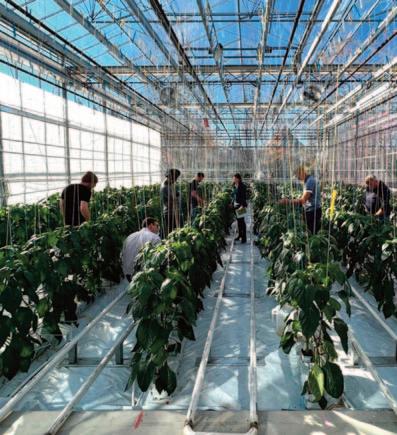
Netherlands-based Signify and the University of British Columbia (UBC) have announced new goals in the fourth year of their pepper production trial. This trial focuses on optimizing dynamic lighting conditions and has delivered insights into how pepper plants respond to artificial l ighting throughout the year. Its goal is to achieve a target production of more than 40 kg/m² of peppers for a full-year cycle with a dynamic light recipe using GreenPower LED toplighting force 2.0 (TLF 2.0).
In 2022, the first trial in UBC was set up to realize a yield of at least 34 kg/m2, with a stable weekly production of at least 0.7 kg/m2 in winter. The trial has continuously evolved to include different varieties and pruning strategies.
In this fourth year, the trial will focus on leveraging TLF 2.0—a cutting-edge, colour-controllable LED light technology designed to fine-tune lighting recipes dynamically across growth stages and raising the production goal to more than 40 kg/m² of peppers for a full-year cycle while improving the pruning strategy and variety selection.
Achieving optimal pepper growth under LED lighting requires a carefully balanced light recipe. However, light
TRADE
is not the only factor influencing plant growth. Environmental conditions, such as temperature, humidity, and CO levels, are equally crucial. This trial integrates expertise from various industry leaders to provide state-ofthe-art support.
Syngenta and RijkZwaan supplied optimized seeds, BEVO Farms handled plant propagation, and Aranet’s sensor technology monitored critical climate conditions. Climate control solutions from Priva and specialized substrates from Grodan further enhance growth environments. The trialed varieties—Gina, Ridona, and Silverstone—were selected specifically for their compatibility with LED lighting; choosing the suitable pepper variety is critical when working with LED lighting.
2025 will mark the culmination of this extensive research project. By synthesizing this knowledge, Signify aims to provide growers with a definitive guide to optimizing pepper production using LED lighting, ensuring that they can continue to improve yields and quality well into the future.
Source: Signify November 11, 2024 news release
American Farm Bureau prefers talk to tariffs
Successful Farming, one of America’s largest farm publications, is reporting that the American Farm Bureau would prefer negotiation rather than tariffs as a first step to resolving disputes with trading partners.
“I think it’s important, when we’re talking about friends like Mexico and Canada, that we talk first,” said Roger Cryan, chief economist, American Farm Bureau. “And think about shooting later.”
President-elect Donald Trump, who started a trade war with China during his first term, has threatened to enact tariffs of 25 per cent on imports from Mexico and Canada and an additional 10 per cent on Chinese imports on his first day in office
unless they reduce illegal immigration and drug smuggling.
He also said the so-called BRICS group of nations would see 100 per cent tariffs if they backed a replacement for the dollar in international trade.
Mexico and Canada, the two largest U.S. export customers and the leading suppliers of food and agricultural imports, account for $4 of every $10 in cross-border trade. U.S. ag export sales shrank six per cent (6%) during Trump’s first-term, Sino-U.S. trade war.
Joe Glauber, senior research fellow of the International Food Policy Research Institute, does not agree with Trump using tariffs as a lever for action on immigration or drugs rather than traditional trade goals, such as
opening markets.
Trade wars cause collateral damage. During Trump’s first term in office, China countered with tariffs on U.S. soybeans, reducing market prices for the oilseed by $1.50 a bushel.
“If we’re really interested in improving the agricultural trade balance,” said Cryan, Congress should revamp the H-2A guestworker program. The formula used to set wages for guestworkers, he said, was “essentially pricing us out of the market.” Horticultural products, such as fruits and vegetables, comprise nearly half of U.S. food and ag imports.
Source: Successful Farming December 4, 2024
GREENHOUSE GROWER
Challenges ahead for Ontario greenhouse vegetable sector
Editor’s note: The Fruit and Vegetable Growers of Canada have granted permission to reprint this feature from HortShorts, November 2024.
In this edition of HortShorts, we’re thrilled to introduce Steve Peters, a passionate advocate for Ontario agriculture and a dedicated leader in the greenhouse vegetable sector. As the new chair of the Ontario Greenhouse Vegetable Growers (OGVG), Steve brings decades of experience in public service, governance, and advocacy. His
Steve’s commitment to supporting growers and ensuring a sustainable future for Ontario’s greenhouse vegetable industry shines through.
We sat down with Steve to learn more about his vision for OGVG, the challenges facing greenhouse growers, and his favourite ways to enjoy Canadian fresh produce.
You have recently taken on a new role as the chair of the Ontario Greenhouse Vegetable Growers What encouraged you to apply for
life in public service, from starting out as a city councillor in St. Thomas to serving as the Mayor, and later as an MPP where I held roles such as Minister of Agriculture and Food, Minister of Labour, and Speaker of the Ontario Legislature. I’ve also had experience on the other side, working for Food and Beverage Ontario and doing advocacy work for the Craft Cider Association. Over the years, I’ve worked with issues from all sides, so I have a lot of experience in governance and understanding the big picture.
as helping to execute decisions and implement the board’s direction, always working closely with our executive director, Richard Lee, who’s built a strong team at OGVG. Together, we’ll work to keep the board’s agenda front and centre across all three levels of government—federal, provincial, and municipal— because there are key issues for greenhouse growers on every front.
I’ve always been excited by the greenhouse industry, which has shown how much agriculture has evolved and how far it can go with the right tools and innovation. The sector has proven its growth potential and economic contributions time and again. I’m thrilled to be part of something so vital to Ontario’s economy, both locally and provincially, helping drive that growth forward.
What do you believe are the top three challenges as it relates to the success of greenhouse vegetable growers in the upcoming years?
In my mind, the first big challenge is our trade dependency. The Ontario greenhouse sector is highly tradedependent with 85 per cent of our production sold to the U.S. We’re producing a high-quality product that consumers recognize and trust, but our trade relies on keeping aligned policies across the Canada-U.S. border.
The greenhouse vegetable sector in Canada is tradedependent. Exports worth $1.5 billion in 2023 continue to be driven by consumer demand for high-quality, year-round fresh fruit and vegetables. Can you talk to us about the North American trade environment, and how certain Canadian policies, such as carbon pricing, might impact the decisions of greenhouse growers to expand their business in the U.S. rather than in Canada?
The second challenge is climate change policies that have adversely impacted our ability to grow affordable greenhouse vegetables. These policies have added costs for our growers that U.S. competitors don’t have to contend with, which cuts into our competitiveness. The U.S. continues to adopt an approach that incentivizes businesses to meet climate change goals where Canada has taken an approach of
The third challenge is infrastructure. Greenhouses need reliable access to electricity, gas, and water, along with roads and wastewater systems to support current and new investments. If we want the industry to grow sustainably, we need government support to build out the necessary infrastructure. Short-term and long-term strategies will be critical, and I’m working with the team at OGVG to make sure we
Sustainable development is also a key focus, which means ensuring support for disease and pest management and exploring opportunities for combined heat and power. While these are three of the biggest challenges, the first priority is definitely the issue of
Trade is essential to the Ontario greenhouse industry, with more than 300 trucks leaving our farms each day, 200 of those bound for the United States. We’re fortunate that consumers on both sides of the border recognize the quality of what we produce, but we need stable, aligned policies to keep this trade going. We need to protect the North American trading block by enforcing an integrated food system that was proven during the pandemic that supports food security. PresidentElect Trump has already pledged to re-negotiate CUSMA and not necessarily undertake a review – I think we need to be ready for that. We need to stress the importance of trade to government and ensure that we have a strong North American trading block. Policies such as carbon pricing add to our members’ costs, impacting our ability to stay competitive with U.S. growers who don’t face the same expenses. Municipal fees, water rates, and development charges here at home add even more to our costs. If policies aren’t designed to support our competitiveness, we risk losing operations to the U.S., which threatens our domestic food security.
Greenhouses play a huge role in producing a safe, healthy product year-round—something Canadians rely on. We need all levels of government to recognize how critical it is to keep greenhouse operations thriving here, not only for jobs and economic growth but to help safeguard a steady, secure supply of fresh food for Canadians.
Addendum: Since this article was published, President-Elect Trump announced his intention to impose 25% tariffs on goods entering the U.S. Steve Peters says that OGVG has reached out to federal and provincial representatives reminding them of how damaging a tariff would be on the greenhouse vegetable sector.
Food Price Report 2025 predicts overall increase of 3 to 5%
Canada’s Food Price Report 2025 forecasts that overall food prices will increase by three to five per cent. The average family of four is expected to spend $16,833.67 on food in 2025, an increase of up to $801 from last year. The current rate is 2.8 per cent. Food prices increased at a slower than anticipated rate in 2024, however food affordability remains a major concern for Canadians.
This is the 15th edition of Canada’s Food Price Report (CFPR), an annual publication produced collaboratively by Dalhousie University, the University of Guelph, the
University of British Columbia, and the University of Saskatchewan. The cross-country research team uses historical data sources, machine learning algorithms, and predictive analytics tools to forecast Canadian food prices.
Increased food insecurity
Although there was a downward trend in inflation in 2024, Canadians are still pinching pennies. In April, Statistics Canada reported that in 2023, 22.9 per cent of people in 10 provinces lived in a food-insecure household. That means 8.7
million people, including 2.1 million children, are struggling to afford the food they need. The highest rates of food insecurity were found in Nova Scotia (28.9%), followed by Prince Edward Island (28.6%).
Contributing factors
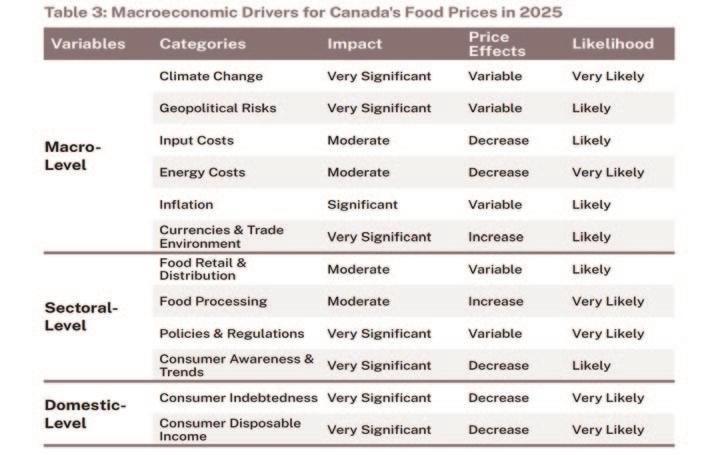
Food prices are influenced by many factors including: climate change, geopolitical conflicts, input and energy costs, inflation,
currencies and the trade environment, food and retail distribution, food processing, policies and regulations, consumer awareness and trends, and consumer debt and disposable income.
The weakening of the Canadian dollar against the American dollar will likely reduce the buying power of Canadian importers in 2025. Currently 60 per cent of our agri-food exports are directed to the U.S.
Americans are purchasing more Canadian food, however this has also deepened our reliance on the U.S. to sustain our growth. The recent re-election of Donald Trump could widen the gap, given his commitment to reducing American farming costs, and rolling back environmental regulations.
Source: Agri-Food Analytics Lab December 5, 2024 news release
Ontario Potato Board considers realignment of districts
A consolidated industry with 91 active growers
SHAWN BRENN
As I travelled across the province throughout November 2024, attending district meetings and listening to grower and councillor reports, the feedback remained consistent: weather patterns continue to be more volatile and extreme, which, unfortunately, is becoming the new normal. Despite these challenges, most regions reported a decent planting season.
Apart from warm temperatures delaying the start of storage, it was a rather cooperative harvest window, it was the “in-between” period that caused undue stress for many growers. The heavy, persistent rains of July evoked memories of last year’s late blight troubles, which again saw growers scrambling for crop protection materials to keep this devastating disease in check. For most, August brought a hot and dry spell, turning what initially seemed like a promising season into an average crop. It serves as a reminder of how swiftly nature can alter the course of our efforts and how many variables must align for a truly exceptional crop.
This highlights the inherent risk that we, as growers, face each year.
Marketing new crop potatoes in August is always a challenge. With more supply seemingly available and competition to sell crop in a predetermined time frame, the result is often significant price pressure. Additionally, August coincides with peak vacation time, meaning fewer shoppers in stores, which only adds to the pressure. This is compounded further by out-ofprovince competition, making it a particularly tough period to market fresh potatoes.
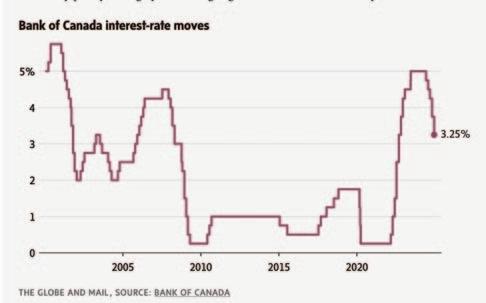
While the perception that our production costs may have softened somewhat this year, particularly regarding fertilizer and diesel, it wasn’t until after planting that we experienced interest rates ease for the first time since April 2020.
Unfortunately, the prices paid to growers this year are lower than last year, and as the business environment becomes increasingly challenging and regulated, growers’ margins are under significant pressure and in a volatile position.
On a positive note, after the
successful completion of contract negotiations for our process growers, the Ontario Potato Board moved forward with another key initiative from our strategic plan: building the Ontario brand and developing a communication strategy through social media. This was a major step toward enhancing our industry’s visibility and reputation—one that we all take great pride in.
The Ontario Potato Board continues to be actively involved at the national level through our engagement with the Canadian Potato Council (CPC) and the United Potato Growers of Canada (UPGC).
At the CPC, much of our work has focused on ensuring a unified voice in support of the “Potato Wart Domestic Long-Term Management Plan.” This is a crucial document for our industry, and we hope our feedback will be seriously considered by the Canadian Food Inspection Agency (CFIA).
Additionally, we are implementing a new strategic plan at CPC, which will help to prioritize our future initiatives. Some of the key topics we are
RUGRAT 100 Day Pumpkin Very uniform in its size and shape, Rugrat fits into the classic slot for pies with its blocky round shape and hearty handle. Lighly ribbed, a selection that has application for painting. IR: Sf
72 Day Broccoli
Appalachian broccoli Description is wrong. Mid-Early maturing with improved holding. It has a compact plant and is especially suited for the crown/short trim markets. This variety is generally very uniform in maturity.
ALBERTA, YUKON, PRINCE EDWARD, ONTARIO (905) 806-7372 aknoop@seedway.com
engaged with include area and crop reports from provinces across Canada, updates on grade standards, pest management concerns, crop protection issues, national research priorities, the Potato Sustainability Alliance, and seed regulations, among others.
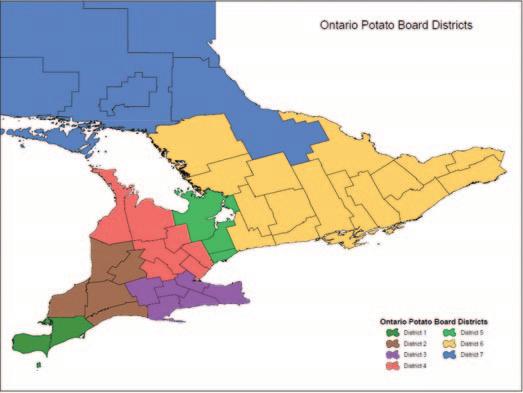
As we look to the future and act on a resolution from last year’s AGM, your board is investigating the pros and cons of district realignment. The purpose of this exercise is to understand if there
are potential improvements to the board’s structure that provide more flexibility to board governance and operations. As the potato sector continues to consolidate, I personally feel the existing structure is becoming more restrictive and inefficient.
Shawn Brenn is chair of the Ontario Potato Board. This is an excerpt from his report at the 49th annual general meeting held in Guelph, Ontario on December 4, 2024.
APPALACHIAN RUGRAT
Washington State University brands Sunflare apple
Sunflare, a new apple from the Washington State University (WSU) breeding program, made its debut at the Northwest Horticulture Expo in Yakima, Washington on December 10, 2024.
“Our breeding program exists to give consumers better apples to eat, and Sunflare checks all our boxes,” said Kate Evans, WSU apple breeder.
A tart, crunchy, juicy cross of Honeycrisp and Cripps Pink— better known as Pink Lady— Sunflare apples will reach grocery stores in 2029. “This name Sunflare hits all those marks,” said Jeremy Tamsen, director of the WSU Office of Commercialization.
“These pinks, oranges, and yellows stand out against all the red apples on the shelf.”
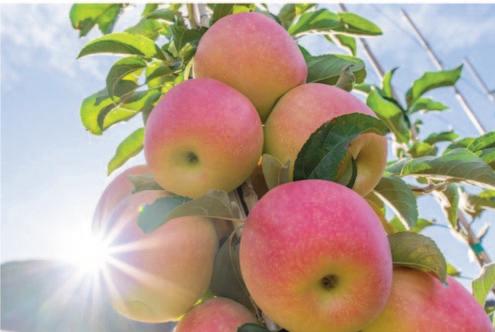
Sunflare is the third apple to emerge from the WSU breeding program, which launched Cosmic Crisp in 2019. Sunflare is a bicoloured apple with a pink blush over a yellow background when ripe, offering a sweet-tart balance and complex flavour.
Scientists bred Sunflare in 1998 by hand-pollinating a Honeycrisp flower with pollen from a Cripps Pink tree at WSU’s Columbia View Research Orchard. “We do what the bees do,” said retired apple breeder Bruce Barritt. “Sunflare resulted from pollination. It’s not engineered or modified in any way.”
WSU holds a patent on WA 64 and has filed trademark applications for the Sunflare™ brand name. International New-Varieties Network LLC will manage sales of licensed WA 64 trees and budwood to growers. A marketing advisory committee will help develop branding for the variety. Royalties from sales of Sunflare will support future WSU apple research.
Development was funded by the Washington Tree Fruit Research Commission, the Washington State Department of Agriculture’s Specialty Crop Block Grant Program, and other sources.
Photos top right: Glinting sunlight illuminates Sunflare apples growing in late summer 2024 at Washington State University’s Sunrise Research Orchard near Wenatchee. These crunchy, tart, juicy apples are expected to reach consumers in 2029.
Photos by Jeremy K. Tamsen.
Source: WSU Insider December 12, 2024 news item
Get hooked on rapid disease control.*
Experience a new level of control with our unique binding action.
Talk about technology you’ll get attached to quickly. Cevya® fungicide uses exclusive binding activity to control biotypes that may be resistant to other fungicides, including Group 3-tolerant strains. This hook-like action delivers fast and continuous control of key diseases in blueberries, grapes, apples, pears, stone fruits, potatoes and vegetables. Visit agsolutions.ca/horticulture to find out what it can do for you.
*Actual technology may not be exactly as shown.
Taking grower concerns to Queen’s Park
The Ontario Fruit & Vegetable Growers’ Association (OFVGA) is an advocacy organization that makes sure growers’ concerns are put in front of decision-makers. Our board and senior staff are in regular contact with provincial government officials. We’re also active federally through the Fruit & Vegetable Growers of Canada, and over the past year, we’ve also started building municipal relationships through participation at events such as the Association of Municipalities of
WEATHER VANE
Ontario and the Rural Ontario Municipal Association annual conferences.
Provincially, however, is where our primary focus lies, and once a year, the OFVGA heads to Queen’s Park for a day of meetings with elected officials and political staff where we highlight concerns facing the industry as well as propose solutions that could be beneficial for both government and our sector.
This year, our slate of meetings included Minister of Agriculture, Food and Agribusiness Rob Flack, as well as Minister of Red Tape Reduction Michael Harris; representatives from the Premier’s Office and Ministries of Energy and Electrification and Environment, Conservation and Parks; and Opposition Leader Marit Stiles and Agriculture Critic John Vanthof.
At the core of our messaging this year are ways to address the barriers to competitiveness and growth our sector is facing. A consolidated grocery sector here in Canada combined with
competition from lower cost producing regions are creating ongoing suppressed prices for growers who in some cases are receiving the same or even less for their produce today than they were several years ago.
At the same time, we’re facing uncontrollable and unprecedented cost increases for core supplies such as fertilizer, diesel and natural gas, and rising regulatory pressures that are driving our expenses up.
Our most significant ask continues to be for an increased investment in Ontario’s Risk Management Program, which includes Self-Directed Risk Management (SDRM) for our sector. The program has been funded at the same $150 million annual level since 2020, but the changing economic environment means it is now critically under-funded, which limits its ability to help growers manage risk.
Together with our non-supply managed Ontario commodity partners, we continue to push for an additional $100 million annual
investment into the program, and are supporting the Minister in getting that message in front of other caucus members.
At our Queen’s Park meetings, we also highlighted the need to make it easier for farmers to invest in the next generation of international farm worker housing by reducing red tape for on-site sewage management systems and introducing consistency to municipal building requirements. Along with that, we discussed the need to introduce an exemption for farms from unreasonable municipal stormwater management fees, enable access to affordable and reliable energy, and modernize the Foodland Ontario program with renewed programming and brand recognition.
Although the one-on-one meetings are excellent, often the best part of the day comes last –and that’s our annual reception. It’s a much more relaxed atmosphere that encourages more informal conversations and networking, and you get the opportunity to meet people you
wouldn’t otherwise have a chance to speak with.
We had an excellent turnout of elected officials and Queen’s Park staff, including speeches from Minister Flack, Opposition agriculture critic John Vanthof, Liberal agriculture critic Ted Hsu, and Green Party Leader Mike Schreiner. We appreciate everyone who took the time to meet with us during the day, attend the reception or engage in conversations.
It’s important that we take the message of edible horticulture to representatives from all parties -not only because we are likely to face a provincial election in the coming year, but also because food is something that matters to everyone. And it helps elevate the entire perception of agriculture if more people understand our sector and appreciate what goes into producing the food on their plates.
Shawn Brenn is a potato grower and chair, Ontario Fruit & Vegetable Growers’ Association.
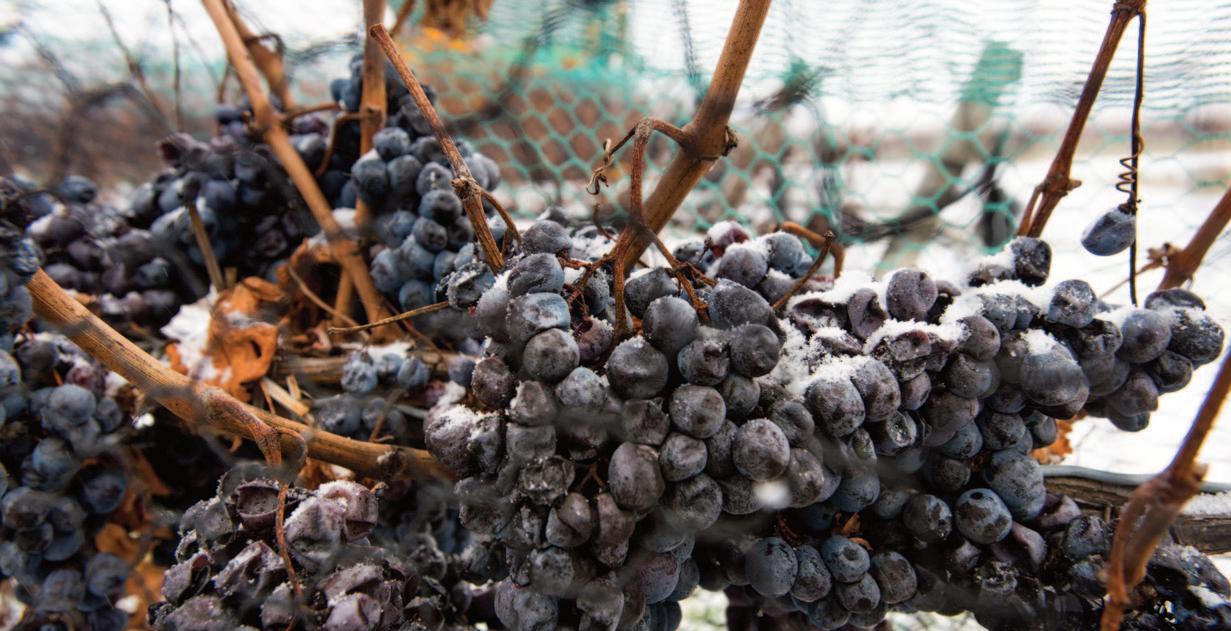
Winter-bitten, these icewine grapes are minutes away from being machine-harvested. Several wineries in the Niagara, Ontario region started harvest on December 12, 2024. What a great way to toast 2025! Photo by Denis Cahill.
SHAWN BRENN
URBAN COWBOY
Groceries, health and generational change
Politically, the entire North American continent is starting 2025 with a generational change in agricultural leadership.
In Canada, three of the four provincial elections last year yielded new ag ministers. British Columbia named Lana Popham while Saskatchewan tapped Daryl Harrison. In New Brunswick, Pat Finnigan now holds the honour. Nova Scotia reinstated Greg Morrow.
In Ontario, a cabinet shake-up put Rob Flack in the ag minister’s seat. Depending on whether an early election is called, more change could be on the horizon. Federally, there’s little doubt that we’ll have a new ag minister when the dust clears on this year’s election, regardless of which party wins.
Change has also occurred in the U.S. Its renewed leadership with President-Elect Donald Trump has yielded a new agriculture secretary, Trump loyalist and conservative lawyer Brooke Rollins. Her mission, says Trump, is to protect American farmers.
Trump also nominated controversial anti-vaxxer Robert F. Kennedy Jr. to join his war table as head of Health and Human Services. Kennedy’s self-appointed mandate is Make America Healthy Again. Sound familiar?
And in the wake of the U.S. election, where Republicans practically swept rural America, the ranking Democrat on the House Agriculture Committee is on his way out as part of a “generational transition” there, too. That could have huge implications for the multi-billiondollar U.S. Farm Bill, which has been mired in political infighting for several years.
Likewise, change is afoot in Mexico, a key signatory in the North America trade agreement. There, new president Claudia Sheinbaum named anti-GMO advocate Julio Berdegué Sacristán her minister of agriculture and rural development.
It’s clear that leadership change is everywhere. All these politicians will have their own priorities, but there’s a common starting point they must consider, no matter where they govern: groceries.
Just ask Trump. Most lately, he’s credited his promise to lower food costs as the main reason he won the U.S. election. He tapped into Americans’ frustration with the cost of living, especially food, and blamed it on Democrats.
Growers everywhere are right in the middle of this generational change. And that’s good, because it might finally be the catalyst needed to increase consumption. The old guard just hasn’t got the job done.
So, let’s take a page from the Trump playbook on groceries, look at where this train is headed and see where we can jump aboard. First, consider the accusation that groceries are expensive. Indeed, many people are struggling at home and abroad to keep their heads above water, and everyone in the agri-food sector needs to be sensitive to that.
But look at the U.S. food basket and you’ll find a whopping 73 per cent of the food supply consists of ultra-processed foods. They’re defined by nutritionists as “industrial formulations typically of five or more ingredients including substances not commonly used in culinary preparations, such as additives whose purpose is to imitate sensory qualities of fresh food.”
Ultra-processed foods aren’t cheap. In some cases, replacing them with fruit and vegetables could save money and create more markets for domestic produce.
Further, in the bigger picture – and this is where Kennedy’s influence comes in – fewer ultra-processed foods and more fruit and vegetables could be instrumental in helping tame America’s obesity crisis and the soaring health costs that go along with it.
The U.S. is not the only country plagued by obesity. Mexico struggles mightily with it too, and so does Canada. But at the same time, each of these countries also has a vibrant horticulture sector and a research community that can be tapped to help provide better alternatives to ultra-processed food.
Imagine them working together more than they already do, really helping address the “groceries” problem instead of slapping together useless, counterproductive agriculture and food tariffs.
That would be great for consumers, for the horticultural sector, and for truly generational change.
Owen Roberts is a past-president of the International Federation of Agricultural Journalists and a communications instructor at the University of Illinois
“
Fewer
ultra-processed foods and more fruits and vegetables could be instrumental in helping tame America’s obesity crisis and the soaring health costs that go along with it.
~ OWEN ROBERTS
Access crop protection insights to grow your most marketable crop.
OWEN ROBERTS
BITS AND BITES
Agriculture sector could benefit from better meeting needs of female farmers
The agri-food industry could realize new growth opportunities if it was better able to serve the needs of a growing segment of its membership – women farmers.
As more Canadian women than ever before are primary or equal decision-makers in farming businesses, a new report delves into their roles and experiences and how those could be leveraged for additional industry growth and strength.
“Until now, there has been a significant knowledge gap in the Canadian agricultural landscape when it comes to data and understanding of female farmers, and their roles have mostly been undocumented,” says study lead Bob Wilbur of Strategic Perspectives. “This means the agriculture industry largely operates with outdated anecdotes and stereotypes that are, for the most part, wrong and these long-held perceptions influence everything from policy and program decisions to skills development, innovation and growth opportunities, and even business decisions.”
The study found that women are making an extraordinary contribution to farming in Canada with a high degree of involvement in virtually every aspect of the operation. This includes accounting, financial planning, analysis and paperwork for farm support programs, business and succession planning, payroll, benefits, and regulatory compliance as well as crop planning, input purchasing, herd and flock management, field work
and more.
The majority of respondents see their personal situation in a positive light with 89 per cent believing their contribution to the farm business is valued by those who matter, and 87 per cent feeling they have the training and skills they need to fulfill their roles on the farm.
They are much less confident in how others perceive them, however. Attempts to bypass women under the assumption that a man makes the decisions, condescending language and stereotyped expectations were all mentioned as challenges in relationships with others.
“Accountants and customers fared relatively well in the survey results, but equipment dealers, other farmers; crop, livestock and poultry suppliers; other service providers, and commodity associations are called out specifically as less supportive of female farmers,” notes Wilbur.
“This suggests that there is plenty of room for improvement – and while there is no one-size-fits-all solution, there is opportunity for the suppliers and service providers who can address or meet this need.”
The report includes the following recommendations:
• Create and enhance programming, development opportunities and resources that specifically address the needs of female farmers, including creating learning and networking opportunities dedicated to expanding their desired skills, and enhancing day care and other
rural community supports for women.
• Dedicate efforts to focus exclusively on supporting women farmers, including creating a national coalition to address the unique challenges and needs of female farmers and more.
• Support gender equity and equality initiatives, including encouraging greater participation of women farmers in agricultural policy and program development.
• Promote communication and interpersonal skills along with business management practices as essential parts of farming.
• Expand existing and conduct new research into the experiences and contributions of female farmers and the factors that influence farm success.
The study, completed in 2023, included 21 one-on-one interviews with female farmers from across Canada, and a national online survey that attracted 1,025 respondents representing all regions, commodities, farm types and demographics.
In addition to Wilbur, the project team included Heather Watson of Farm Management Canada and Maurice Allin of Centric Engine Inc., with support from a nine-member project advisory committee of farm women. More information is available at fmc-gac.com/ programs-services/researchanalysis/#farmwomen.
Source: Farm Management Canada December 3, 2024 news release
COMING EVENTS 2025
Jan 14-15 Potato Expo, Las Vegas, NV
Jan 22-25 Guelph Organic Conference, Guelph, ON
Jan 23-25 Lower Mainland Horticultural Conference, Tradex, Abbotsford, BC
Jan 27-28 2024 Scotia Horticultural Congress, Old Orchard Inn, Greenwich, NS
Jan 28 Québec Apple Growers Annual General Meeting, Centre culturel et communautaire de la PointeValaine, Otterburn Park, QC
Jan 28-30 Manitoba Potato Production Days, Keystone Centre, Brandon, MB
Jan 30 Greenhouse Health and Safety Symposium, Best Western Leamington Hotel and Conference Centre, Leamington, ON
Feb 3-6 North American Strawberry Growers’ Association and North American Raspberry Blackberry Association Annual General Meeting, Outrigger Kona Resort & Spa, Kailua-Kona, Hawaii
Feb 5-7 Fruit Logistica, Berlin, Germany
Feb 11 Canada’s Agriculture Day
Feb 12-13 Southern Interior Horticultural Show, Penticton Trade & Convention Centre, Penticton, BC
Feb 14 British Columbia Cherry Association Annual General Meeting, Trinity Baptist Church, Kelowna, BC
Feb 16-19 International Fruit Tree Association Annual General Meeting, Hyatt Regency, Rochester, NY
Feb 20-21 British Columbia Fruit Growers’ Association Annual General Meeting, Penticton Lakeside Resort and Conference Centre, Penticton, BC
Feb 18 Ontario Fruit & Vegetable Growers’ Association Annual General Meeting, Niagara Falls, ON
Feb 18 Berry Growers of Ontario Annual General Meeting, Niagara Falls, ON
Feb 19-20 Ontario Fruit and Vegetable Convention, Niagara Falls Convention Centre, Niagara Falls, ON
Mar 6 Ontario Potato Conference, Delta Hotel, Guelph, ON
Mar 11-12 Pacific Northwest Cranberry Congress, VIRTUAL 9 am-noon
Mar 11-13 Fruit & Vegetable Growers of Canada Annual General Meeting, Hilton Québec, Québec City, QC
Mar 24 Ontario Processing Vegetable Growers Annual General Meeting, Sheraton Four Points Inn, London, ON
Mar 25-26 Minor Use Priority Setting Meeting, Gatineau, QC
April 8-10 Canadian Produce Marketing Association Convention and Trade Show, Montreal, QC
Oct 16-18 Global Produce & Floral Show, Anaheim, CA
Nov 18-20 Potato Growers of Alberta Annual General Meeting, Red Deer, AB
RETAIL NAVIGATOR
More retail square footage shifting to discount
When was the last time a grocery retailer was named Canada’s Outstanding CEO of the Year? Actually, not so long ago. Metro’s Eric La Flèche took the honours in 2020. At that time, he was lauded for annual sales of more than $16 billion, employing 90,000 Canadians and his knack for analyzing the markets and acting upon his insights. In the words of a Financial Post reporter, “he has transformed the very nature of the customer experience.”
Five years later, La Flèche’s acumen and execution of his team have catapulted the retailer to sales of more than $20.7 billion.
As each of the major retailers have been releasing financial results, they are sharing commentary on the numbers and where they see their business going in 2025 and beyond.
Recently Loblaw and Metro have said they will be focused on discount. As reported in Canadian Grocer Loblaw president Per Bank said, “That’s also why we are building many of the new, small stores in our hard discount, because that resonates so well with our customers,” he said. “They’re performing good and that’s how we provide real value to Canadians, because those stores are much cheaper than the average store.” The majority of Loblaw capital is going into more discount stores.
Metro appears to be following this path. Also reported in Canadian Grocer Metro president Eric La Flèche said, “We see good opportunities in discount, mostly in both provinces,” La Flèche said. “We see opportunities for us to expand our network, grow our market share and grow our tonnage. Food Basics in Ontario is doing really well. It’s been on a very good run for a few years, capturing share, and we see more opportunities. Same with Super C.”
Sobeys appear to be on a slightly different path. As reported by the Canadian Press, CEO Michael Medline did say FreshCo has been a “home run” but added this: “But having said that, we are increasingly confident that full-service is about to come into its day again, and we want to be there for our customers. So we’re looking at ensuring that we’re
going to be taking market share in the next few years, as the economy hopefully improves a little bit.”
There is a case to be made for more discount
Consumers vote with their wallet every week in grocery stores. Retailers work hard to ensure they have a format that is appealing and the best chance to win the biggest percentage of food dollars. Consumers are frustrated with the price of food; they want to reduce their grocery bill. Among the largest Canadian retailers, the best vehicle to accomplish this is the discount format (No Frills, Food Basics, FreshCo, Maxi and Super C). Walmart and Costco already deliver solid value in their existing formats. Consumers want lower prices, which leads retailers to open more discount stores. There are other benefits to retailers. Discount format stores are the cheapest to build. They are smaller, have less expensive fixtures, less refrigeration and service cases. They are also the least complicated to operate. They require fewer people, they have considerably fewer SKUs and more volume is concentrated in fewer items with lower waste. Aside from consumers and costs, there is a third reason -competition. Traditional food and beverage retailers are losing share to Walmart, Costco and dollar stores. They are also concerned about the entry of a discounter from another market such as Aldi or Lidl coming into Canada. We believe there is a low chance of this for many reasons, but it is always a possibility.
What more discount looks like for suppliers
More retail square footage dedicated to discount formats will impact suppliers. Each retailer will have their own strategy. Monitor your customers carefully and consider the following in your business planning:
1. Smaller listing base Discount stores can charge lower prices because they need smaller margins to deliver a profit. Some of this is achieved by reducing the number of items carried, especially the products that do not sell as much. If you know you are supplying the #3 or #4 item in a category or you supply multiple sizes, chances are some of these will not be required in the discount formats. Manage packaging inventory carefully on these items and go in discount stores to see what they do have on the shelf.
2. Bigger volume on the SKUs they do carry. Discount is about efficiencies which translates into
more sales on fewer items. If you do supply the items they do want to carry, you should see increases in volume and perhaps some more efficiencies on freight. You should talk to your customers about volume projections to ensure you have enough product and packaging.
3. Discount stores are often franchised stores. This allows retailers to transfer inventory costs to the franchisee. These stores can have some autonomy in terms of what they carry. You might have to visit some of the stores to ensure your products are on the shelf. It is different than a corporate store environment where retailers can mandate the execution.
4. Promotion and pricing strategies are different in discount. Retailers might be looking for fewer specials but deeper discounts. Monitor your categories in discount formats to see what is happening with the pricing.
5. Retailers manage discount differently. The best discount stores operate as discount stores,
“We see opportunities for us to expand our network, grow our market share and grow our tonnage.”
not conventional stores with fewer items and limited staff. There is a difference. In a good discount chain, the entire business from procurement to merchandising to operations is focused on lower prices. Be prepared to justify your selling price.
It will be interesting to see if the retailers betting on discount grow market share or if Sobeys’ focus on more conventional stores will win with consumers. The format is not the only determining factor. Execution
~ ERIC LA FLÈCHE
will play a role too. Talk to your customers and ask questions. When you are both prepared you have a much better chance of executing properly.
Peter Chapman is a retail consultant, professional speaker and the author of A la Cart-a suppliers’ guide to retailer’s priorities. Peter is based in Halifax, N.S. where he is the principal at SKUFood. Peter works with producers and processors to help them get their products on the shelf and into the shopping cart.
MINDFUL OF MITESPOWDERY MILDEW AND MINDFUL OF MITESPOWDERY MILDEW AND
Magister, offering broad spectrum mite control, along with the advantage of control on Powdery Mildew.
Magister, offering broad spectrum mite control, along with the advantage of control on Powdery Mildew.
PETER CHAPMAN
FOCUS: GRAPES, VINEYARDS & BERRIES
BC grape grower finetuned vineyard management for modest crop
KAREN DAVIDSON
Reto Gebert is a braveheart. While experts said the entire British Columbia grape crop was lost to a freak cold snap in mid-January 2024, the secondgeneration grape grower persisted through the winter, spring and summer at his Kelowna-based Waldhof Vineyard. His optimism paid off in a modest harvest of Riesling and Marechal Foch varietals: 19 tonnes on his 34 acres. That represents 16 per cent of the usual 120 tons.
Those results are telling after the sombre mood of townhall events that sprung up to share the hurt last winter. The news was that everything was dead, no grapevines survived. Advice varied. “Do nothing. Pre-prune low. Or cut above the graft union.”
But encouraged by his parents who had planted vines back in 1984 and bolstered by stories of old-timers who had experienced this kind of cold before, he decided to be proactive. Rather than sit still in despondency, Gebert kept active in the vineyard, sometimes just observing.
“In February, I cut a couple canes, brought them into the house and put them in water,” recalls Gebert. “After eight weeks, there were signs of life. There were buds on the Riesling and Foch, and the odd one on the Pinot Noir.”
In the meantime, Gebert pre-pruned low in the vineyard with a machine that cut between the wires. The technique leaves spurs that look like a set of deer antlers.
April ushered in a cooler spring than normal. By this time, more advice was emerging on
how to handle the unusual situation.
“We were looking around for large growing tubes, but none of the suppliers had anything to stabilize the trunk vines,” recalls Gebert. “Luckily, we talked with other large-scale growers who had ordered custom-made large milk cartons. Minimum orders for them were a full semi-truck. The large vineyards were happy to assist the smaller growers with the large milk cartons. The industry really came together this year, to support one another and openly talk about what each grower was doing/trying out on their vineyard.”
By June, growers were making decisions based on bloom counts or dead plants in the row. For the larger vineyards, owned by wineries, anything more than 25% dead in the block was the trigger to pull the block. Even if the vine
had only two live buds/shoots, the vine was deemed dead. For each grower the decision was different depending on the situation. But for all growers, they will have to wait almost five years with no crop until replanted acres bear fruit.
“These were difficult decisions as to whether to pull the grapevines or retrain them,” says Gebert. “It definitely hurt pulling out 40-year-old vines.”
By July, the first signs of grape clusters appeared in his vineyard. “That was an exciting observation,” says Gebert. “Not all was lost.”
In October, Gebert and his family machine harvested in two days and sent their grapes to Quails” Gate Winery, a grateful recipient in a thin year.
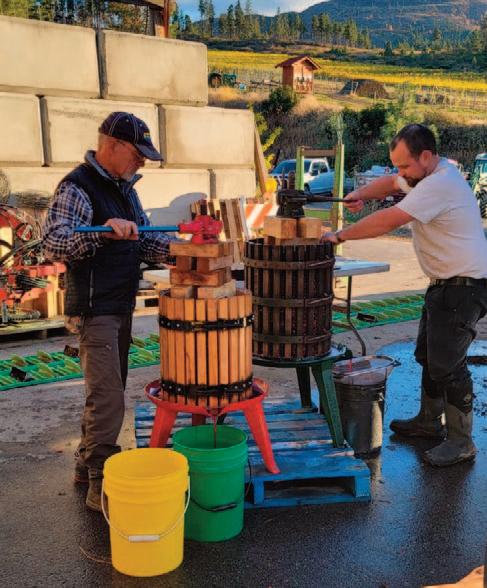
“Our Maréchal Foch had a normal yield, and the Riesling came in with 16 tonnes, about 60 per cent of normal yield. Even with heavy bird and bear damage we still decided, through stubbornness, to pick the Gamay Noir. We ended up with 210 kgs out of the 7.1 acres of Gamay Noir. We went a little old school and pressed the Gamay Noir by hand.”
I’m very excited about 2025,” says Gebert. “The BC wine industry has brought in grapes from not only Washington, Oregon and California but also Ontario. It will be interesting to see what our winemakers will do with these grapes.”
“I’m very excited about the massive replant in the Okanagan Valley.” says Gebert.
He is trying four new varieties: Lemberger, a black-skinned grape with an Austrian heritage; L’Acadie blanc, a Canadian-bred
white grape grown in Nova Scotia; Räuschling, a white variety that can be traced back to Switzerland; Merlot Kanthus, an Italian hybrid; and one of the PiWi grapevines that are not only cold-tolerant but disease-resistant to powdery mildew. The term “PiWi” is an abbreviation of the German phrase Pilzwiderstandsfähige Reben. And so starts the replanting of 10 acres in his vineyard. While the province is providing funds for a replant program, he has found the application process to be arduous. Steeled by experience, Gebert the Braveheart will live for another day.
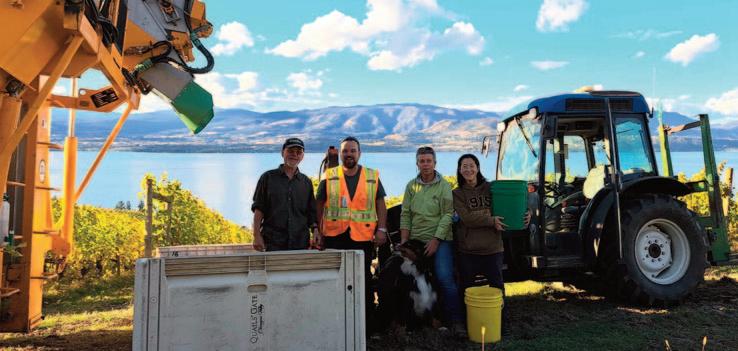
Waldhof Vineyard harvest team
Leo and Reto are pictured hand pressing the Gamay Noir after 48-hour skin contact. This was Leo’s 40th harvest in the vineyard.
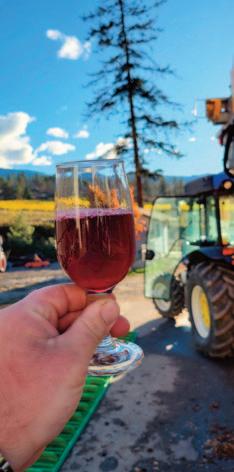
Glass of freshly hand pressed Gamay Noir Rosé. The team is excited for the next season and the new varieties to be planted.
FOCUS: GRAPES, VINEYARDS & BERRIES
More severe weather events weaken the vine
KAREN DAVIDSON
Sudden weather events are wiping out crops, but as Dr. Markus Keller points out, erratic weather trends are weakening grapevines long before these singular crises. As the Washington State University researcher reminded growers in a presentation in August 2024, dormancy is required for cold hardiness. (See Triggs International Premium Vinifera Lecture Series, Penticton, BC, brocku.ca/ccovi/wp-content/ uploads/sites/125/TriggsLecture20 24_BC_ColdDamage_Keller.pdf
For dormancy, buds disconnect from canes and dehydrate to 45 per cent water or less. As they prepare for budbreak in spring, buds reconnect to canes and rehydrate to 80 per cent water or more. The onset of dormancy is usually in early September at about a 13-hour day length, a prerequisite for cold hardiness. Only dormant and post-dormant buds can coldacclimate and deacclimate.
Chilling at cool temperatures between minus 3°C and plus 15°C lifts dormancy in early November. At this point, buds are more temperature-responsive.
But what’s happening is that winters are getting milder and grapevines are acclimating less. Arctic warming weakens the polar jet stream making it “wobblier.” The more extreme weather events are now happening in the mid-latitudes.
For grape growers in varying climates across the country, varieties differ widely in their plant response. Hardier varieties tend to have earlier budbreak, making them more vulnerable to spring frosts.
If vines are damaged by freezing temperatures, recovery depends on the extent of damage which is measured by the proportion of dead primary and secondary buds. Primary buds carry most of the year’s crop but secondary buds can produce a full canopy. Buds may also grow from their latent positions on cordons and trunks after laying dormant for years.
Assess the damage before pruning. If there are fewer than 25 per cent dead buds, prune normally. If 25-75 per cent are dead buds, adjust bud numbers to compensate for the lost buds. If greater than 75 per cent are dead buds, hedge to five or six buds per cane. You may need to delay pruning until after budbreak. If there is no growth, you may cut the vines back to the trunk and retrain suckers for next year.
Roots, as Dr. Keller explains, are the Achilles heel. The roots are concentrated in the top 0.5 to one metre of soil and their growth continues under warm temperatures. The roots of Vitis vinifera can be damaged at minus
6°C. Rootstocks can be damaged at minus 8-10°C. Damaged roots cannot generate root pressure and thus cause uneven budbreak.
With cold damage, avoid early water stress. Root pressure (at soil temperatures greater than 7°C) restores xylem function and removes air bubbles. Water stress leads to erratic budbreak, low vigour, cluster abortion and poor fruit set. Irrigate to avoid water stress, especially in recovering vines. Maintain a spray program, even if there is no crop.
Photo right: Cold damage: faces of injury
GANG UP ON DISEASE.
With three modes of action, it’s the perfect ally for conventional chemistry. Always read and follow label directions.
Why wouldn’t you give yourself an unfair advantage against powdery mildew and botrytis? Serifel® is a highly effective fungicide that just happens to be biological. It complements chemistry-based solutions with three modes of action, to form a protective shield against disease. Learn more at agsolutions.ca/horticulture or follow us on twitter @BASFAgSolutions.
FOCUS:
Clean vines, new wines focus of $2M Ontario research grant
• licensing of new grapevine propagation techniques
• new wine styles
VINO Solutions consists of 11 subprojects under the categories Start Clean, Enhance Resilience, Stay Clean and Stay Competitive. Researchers will use state-of-theart equipment and facilities at Brock’s Research Farm, which recently received funding from the federal and Ontario governments.
“We are trialling low-alcohol wines with locally identified yeasts that divert sugar metabolisms to other wine compounds,” says Inglis. “With fermentation techniques, nutrient additives and processing methods, we hope to produce two new wines: one at 8 per cent alcohol and one with less than 0.5 per cent alcohol. They must be dry wines with great taste for consumer appeal.”
The research teams include:
KAREN DAVIDSON
An injection of new research funding -- $2 million from the Ontario Research Fund (ORF) -will support a multi-institutional project led by Brock University that aims to drive resilience in the province’s grape and wine industry.
The project, “Viticulture Innovation and Next-generation Oenology (VINO) Solutions: Strengthening Ontario’s Grape and Wine Sector for Climate Resilience, Innovation Excellence and Global Economic Leadership,” will develop new growing and fermenting approaches to help the industry
combat threats such as pests, plant viruses and climate change.
“Our proactive, integrative approach of building resiliency into both grape and wine production systems by combining academic expertise and industrial partnerships across the country, will ensure the Ontario grape and wine sector continues to be a leader in cool climate wine production,” says Cool Climate Oenology and Viticulture Institute (CCOVI) director and professor of Biological Sciences Debbie Inglis, principal investigator for VINO Solutions.
“With the advent of a changing climate, we are feeling the impacts of stressors,” says Inglis. “We have to ask whether
we’re growing the right vines for the future. With more weather volatility, we have more disease pressure and potential for vine damage. We really have to drive a resiliency program to stay competitive.”
The project aims to commercialize tools to create:
• disease-free grapevine material for nurseries for further propagation
• testing services for grapevine and yeast identification
• new commercial products for controlling vineyard insect pests
• unique Ontario yeasts to overcome climate-change driven fermentation challenges
• knowledge translation programs
Start Clean will develop cutting-edge techniques, such as microshoot tip tissue culture therapy, green tissue culture grafting and high-throughput sequencing, to produce healthy, virus-free vines while ensuring their genetic identity for the Canadian grapevine clean plant program. Inglis explains that the current practice is to take bud wood and graft it onto rootstock. These new methods could cut the time in half, from two years to one.
Enhance Resilience will assess the suitability of new varieties for the Ontario climate, including their cold tolerance and disease resistance, along with new vine treatments to improve grapevine cold hardiness.
“Soreli and Cabernet Volos are two new varieties from Europe we are investigating for grapevine cold hardiness, fruit quality and wine quality,”says Inglis. “Ontario growers may need to use their wind machines to make sure this variety is adaptable to local conditions.”
Stay Clean will develop artificial intelligence methods to detect grapevine viruses in vines and identify pheromones to disrupt the mating patterns of insect vectors of virus. These activities are part of an integrated pest management program to prevent infection and control spread of virus disease. This project is in conjunction with Simon Fraser University. One part of the research is to look at how to disrupt mating activity. The other is to develop an insect trap.
“If we can find a way to use pheromones with mealybugs, then this technology has the potential to be adapted using other insect-specific pheromones for insect vectors that transmit other virus diseases such as red blotch,” says Inglis.
Stay Competitive will focus on wine quality and flavour research to support the global competitiveness of Ontario wine. The researchers will isolate, identify and characterize unique yeast that can overcome fruit breakdown issues in grapes, enhance wine aroma and reduce alcohol content. They will also assess wine quality from new diseaseresistant varieties and assess their use in low-alcohol wines, a new consumer trend.
• Emily Aubie, Professor of Beverage and Alcohol Sciences at Niagara College (Stay Competitive)
• Charles Després, Professor of Biological Sciences (Enhance Resilience)
• Gerhard Gries, Professor of Biological Sciences at Simon Fraser University (Stay Clean)
• Debbie Inglis, CCOVI Director and Professor of Biological Sciences (Stay Competitive)
• Jennifer Kelly, CCOVI Scientist (Enhance Resilience and Stay Competitive)
• Yifeng Li, Associate Professor of Computer Science and Canada Research Chair in Machine Learning for Biomedical Data Science at Brock University (Stay Clean)
• Ping Liang, Professor of Biological Sciences (Start Clean and Stay Competitive)
• Dave Liscombe, Research Scientist, Vineland Research and Innovation Centre (Enhance Resilience)
• Sudarsana Poojari, CCOVI Principal Scientist (Start Clean and Stay Clean)
• Malkie Spodek, CCOVI Scientist (Stay Clean)
• George van der Merwe, Associate Professor of Molecular and Cellular Biology at the University of Guelph (Stay Competitive)
• Jim Willwerth, CCOVI researcher and Assistant Professor of Biological Sciences (Enhance Resilience and Stay Competitive) Additional research partners include Niagara College, University of Guelph, Vineland Research and Innovation Centre, the Canadian Food Inspection Agency, Ontario Grape and Wine Research Inc., Canadian Grapevine Certification Network, Seeger Vineyards, Schenck Farms and Greenhouses, Illumina, Upper Canada Growers, Cave Springs Vineyard, ABAzyne BioSciences, Synergy Semiochemical Corportation and Stouck Vineyards.
CCOVI’s funding is at an all-time high to tackle these multiple issues. When combined with other funding sources such as the federal government’s Sustainable Canadian Agricultural Partnership, about $7.4 million is pledged to research. The outcomes will benefit the entire Canadian grape and wine industry.
Brock’s Cool Climate Oenology and Viticulture Institute (CCOVI) is leading a multi-institutional project, headed by CCOVI director Debbie Inglis, to develop new grape growing and fermenting approaches that will boost the grape and wine industry. Team members on the wine quality projects include, from left, Biological Sciences master’s student Frédérik Rivard, Inglis, lab manager and technologist Fei Yang, and Biological Sciences master’s student Reid Ball.
FOCUS: GRAPES, VINEYARDS & BERRIES
Frequently asked questions about clean vines
CANADIAN GRAPE CERTIFICATION NETWORK
What does the term “virusfree” grapevines really mean?
The term “virus-free” is not an accurate description of clean grapevine material. A more accurate way to describe this grapevine material is “certified clean” or sourced from “virus tested” mother blocks. We want to avoid using the word “free” because the clean material is not tested against ALL viruses to exist, but rather only tested against the viruses that the specific certification program has deemed economically important. For example, according to CGCN-RCCV’s “Certified Plus” and “Certified” programs, material is tested against at least 25 viruses and other pathogens of concern (details in Appendix 5 of each program). But this isn’t consistent across all grapevine certification systems. The viruses that a certification system is testing against will vary based on the viruses and other pathogens that are deemed economically important in that region. This is why it’s so important to ask your nursery what viruses they are testing for!
What questions should you be asking your nursery when looking to buy clean vines, and what answers should you be looking for?
Please note the following questions and answers before placing your next nursery order:
a) Are these vines certified? If so, by what organization and/or program? Within Canada, you want to ensure your vines are labelled as either “Certified Plus” or “Certified” by CGCN-RCCV, as these are the two highest tiers of certification and the only domestic certification system that exists. Material produced according to CGCN-RCCV’s lowest tier certification called the Verification Program, and
labelled “Verified”, is also acceptable until July 31st, 2029. It is not enough to know that your nursery is a participant in CGCN-RCCV’s programs because many nurseries produce
both certified and non-certified grapevines. Make it clear that the specific varieties you want to purchase are produced according to CGCN-RCCV protocols. When in doubt, check CGCN-
RCCV’s website for lists of participating nurseries in Certification and Verification programming, and contact the nursery directly about your desired varieties.
FOCUS: GRAPES, VINEYARDS & BERRIES
Frequently asked questions about clean vines
Continued from page 19
b) What viruses are these vines certified against? As stated in question #1, the list of viruses that a certification system tests for will vary depending on the region. In a domestic sense, CGCN-RCCV’s two certification programs certify against at least 25 viruses and other pathogens. These include but are not limited to economically important viruses such as grapevine red blotch virus, grapevine leafrollassociated virus-3, grapevine pinot gris virus, grapevine fanleaf virus and all other quarantine pests listed in the CFIA’s Plant Protection Act, such as phytoplasmas. CGCN-RCCV explains symptoms, how it spreads and vineyard management options for common and economically important viruses at www.cgcn-rccv.ca/site/grapevineviruses. Please note that CGCNRCCV’s Verification program tests for grapevine red blotch virus, grapevine leafrollassociated virus-1 & -3, and tomato ringspot virus. When available, it is recommended to purchase CGCN-RCCV “Certified Plus”, or “Certified” vines over “Verified” vines. Furthermore, it is recommended to always source your clean grapevines from within Canada first, if available. If your desired varieties are not available domestically, at the very least, confirm that your imported vines are certified against the economically important viruses
and CFIA quarantine pests listed above.
c) What diagnostic method(s) is used to test the certified propagation blocks?
Detection methods in order of most informative to least:
i) High Throughput Sequencing (HTS): highly sensitive and one test for all viruses(known and unknown).
ii) Quantitative PCR or qRTPCR: virus/pathogen specific and provides information on how much virus is detected in the sample.
iii) Polymerase Chain Reaction (PCR) or Real Time-PCR: virus/pathogen specific and provides a yes or no result.
iv) ELISA (enzyme-linked immunoassay) test: Less sensitive than PCR tests and the availability of antibodies is limited to certain species of viruses.
Is it common for grapevine certification programs to certify against Crown Gall?
No. However, according to CGCN-RCCV’s “Certified Plus” program, grapevines produced and propagated according to the conditions as described within this set of protocols regarding Allorhyzobium vitis (crown gall) may distinguish their material as sourced from Crown Gall tested plants. But no certification for Crown Gall is provided on the final product.
How come vines can never be fully guaranteed clean?
No grapevine certification programs that exist to date, domestically or internationally, can guarantee that the vines are clean from viruses or pathogens. Some viruses and virus-like pathogens are known to be present in grapevines as dormant without showing any symptoms or negative effects on vine growth or fruit quality. Additionally, these new viruses or virus strains may evolve in natural conditions, out of the control of human intervention.
What is the importance of the concept of starting clean, and staying clean? How do I protect my clean vines after they are planted?
“Starting Clean” means purchasing CGCN-RCCV vines from a participating nursery, or if purchasing internationally, vines that are produced according to a CGCN-RCCV recognized certification system. Although domestic Canadian sources of clean grapevine material are always encouraged and promoted over international sources, CGCN-RCCV understands that current demand exceeds the capacity of domestic sources.
“Staying Clean” means implementing precautionary processes at the vineyard level. After planting clean grapevines, it is important to do everything within your control to keep the vines from getting infected with viruses and/or other pathogens by managing populations of insects capable of spreading certain
viruses and other pathogens (such as mealybugs, soft-scale insects and treehoppers). There are a few precautionary processes you can implement at the vineyard level such as field inspections, equipment cleaning, and vector control and applying insecticides as needed. CGCN-RCCV recommends the following:
Field inspections: Monitor the clean plantings for symptoms of viruses and other diseases, especially during the growing season.
Equipment cleaning: Ensure you are thoroughly cleaning your equipment by removing soil from machines with water and sanitizing handheld items if working in a non-certified block and moving to a “certified clean” block. Alternatively, consider working on clean blocks first and non-certified blocks last.
signs of infection, regardless of if the block is “certified clean” or not, TEST THEM and consider removing the positives. The earlier the infection is detected, the better your chances of reducing the spread of virus. And when replanting the areas of removed vines, ALWAYS PLANT “CERTIFED CLEAN” GRAPEVINES. There is no cure once vines are infected. The only way to remove infection is to destroy the vines to manage further spread. What are the benefits of planting certified clean vines?
• GROUP 23 MITICIDE OFFERING A BROAD SPECTRUM OF CONTROL AND STRONG RESIDUAL ACTIVITY AGAINST ALL STAGES OF MITES.
• GREAT IN IPM PROGRAM DUE TO LOW IMPACT ON MANY BENEFICIAL INSECTS.
• CONTROL OF EUROPEAN RED MITE, TWO-SPOTTED AND MCDANIEL SPIDER MITES IN GRAPES AND BLUEBERRY BUD MITE IN BLUEBERRIES
Vector control: Regular treatment schedules, or other pest management strategies, must comply with provincial recommendations and treatments must be applied to control potential virus vectors. Follow integrated pest management practices for your province: British Columbia, Ontario (1. sprays, 2. information resources), Québec, Nova Scotia. If vines are showing common
First and foremost, planting clean vines is the first line of defense against virus-associated economic loss for Canadian grape growers & wineries! Healthy grapevines produce quality fruit for premium Canadian wines. Data from California shows potential annual benefit of approximately USD$90 million associated with testing for grapevine leafroll-associated virus-31.
Additionally, Cornell University estimates a benefits-tocost ratio of 117:1 from using pathogen-tested vines in California and New York.
This article is reproduced courtesy of the Canadian Grape Certification Network from its December 2024 newsletter.
Grapevine leafroll-associated viruses (GLRaV)
Risk management embraces technology and government insurance
KAREN DAVIDSON
Never has an Ontario berry-growing season been so upside down as 2024. Most growers of June-bearing berries were hammered with rain in late June and early July, cutting short the picking season. But there was a silver lining for Morris Gervais, Springwater, Ontario, when his day-neutral berries kept producing to end of October due to an unusually warm fall. This was a bonus for his U-pick operation.
“Climate change is going to be more of an issue in the future,” says Gervais.
To manage late-season risks, he protected his 12 acres of berries from frost in two ways. Firstly, sprinkler irrigation spreads a thin film of water over the berries. When water molecules change state, from liquid to ice, heat is released. The energy created in the freezing action warms the air close to the ground.
Secondly, a portable wind machine can be used on cold clear nights. When there’s a temperature inversion, a layer of warmer air sitting above cooler air, the machine can suck warm air down to the ground. These techniques are valuable in the fall when there’s a need to protect green fruit on the plants. The intervention is enough to keep berries producing far beyond what is a traditional summer fruit.
“Our U-pick customers had a great time picking apples, pumpkins, raspberries and strawberries all at the same time,” says Gervais.
As a director on the board of Ontario Fruit & Vegetable Growers’ Association (OFVGA), Gervais points out how important business risk management programs are to growers as climate risks increase. He and his colleagues participated in an advocacy event at the Ontario legislature on December 2, 2024, lobbying for more funds for Self-Directed Risk Management. OFVGA is a member of the Ontario Agriculture Sustainability Coalition which represents non supply-managed commodities. OASC is asking for $100 million in addition to the $150 million currently set aside, due to the rapid increase in input costs such as labour, fuel and electricity. Besides outright cash, there are other ways for the provincial government to support horticulture. The fruit and vegetable growers are asking to lessen barriers at the municipal level in terms of erecting new housing for
temporary foreign workers. Gervais cites his own personal example where he purchased a neighbouring property with a century-old house. It was a clean and tidy house suitable for summer housing for workers. But when he applied to expand the septic system for a new build on the property, he was denied the permit. The maximum sewage capacity is 10,000 litres for one property. He was forced to pay a planner for a proposal that would accommodate the existing house and a new house.
“We need clarity on the property definition,” says Gervais. “This is not a money ask but a legislative ask.” Growers are stymied to expand businesses by this kind of red tape. It’s cost-prohibitive to abide by many of the municipal regulations.
“Whether we use the term profitability or sustainability, growers have very little room for error,” says Gervais. “We’re looking for a reasonably friendly environment for business. Profitability is not a four-letter word.”
FOCUS: GRAPES, VINEYARDS & BERRIES
Passion and berries are a winning combination
KAREN DAVIDSON
Simon Plante, 35, and Alison Blouin, 26, have partnered in both business and life. So far, the energetic couple are achieving their goals at Polyculture Plante, most recently winning Canada’s Outstanding Young Farmers 2024 award.
Plante had a head start on his family’s farm near Sainte-Pétronille, Québec on l’île d’Orléans. Located about 15 minutes east of Québec City, the island enjoys a micro-climate that’s suitable for berries. At the age of 18, he was responsible for sales while he studied commerce. At 19, he became a stakeholder in the enterprise, farming fulltime while earning his degree at Laval University.
Also a resident of the island, Alison Blouin’s interest in vegetables was sparked at age 14. She completed studies at Laval University, while continuing to work on other island farms. She joined Polyculture Plante three years ago, pooling their strengths. While her husband looks after business development, she looks after day-to-day operations and human resources. The farm grows many crops for both on-farm marketing and off-shore
destinations. Primary crops are strawberries, raspberries and blueberries complemented by apples, sweet corn, tomatoes, onions and squash. The principal crop of strawberries is grown on 132 acres out of a total of 327 acres.
“Québec society is very aware of the impacts on the environment,” explains Blouin. “We have developed several techniques to reduce labour as well as impacts.” The farm does not use fumigation. Electric pumps are used to irrigate. Soil monitors measure what moisture is required and when. Soils are drained when needed. Fields are rotated to mitigate risks of disease and pests.
To benchmark their progress, Plante and Blouin use Logiciel Ufields, a production monitoring program available through the Québec Strawberry and Raspberry Association. Through timesheets and field monitoring, they are able to track yields and cost of production.
Travelling to other countries such as Spain, France, Portugal, Mexico, the United States and Holland, they have observed innovative techniques to increase berry yields. For example, in the last few years, they started growing raspberries and strawberries inside tunnels. They have a choice of varieties, can keep berries off the soil and
produce berries with longer shelf life.
“We find that the risk of disease is much less when the berries are elevated,” says Blouin.
These high-quality berries are featured at their Marché Plante, a major destination for agri-tourists who number about 100,000 per year. Besides their fresh fruits and vegetables, preserves and maple syrup, they produce bread and baked goods.
Since Simon Plante joined the farm, the number of employees has increased from 40 to 140. The average tourist purchase at the store has increased from $12 to $21. The annual sales of fall raspberries have increased from $53,300 to $82,600. Overall, revenue has multiplied by six times during the last 16 years.
“We are very proud of the evolution of our enterprise,” says Simon Plante.
Plans are to increase tunnel production to 40 acres in the next five years. 2025 will be the year for 4.2 acres of strawberries and six acres of raspberries.
“We realize that these projects will take passion, discipline and tireless thirst to learn and finally take action,” concludes Blouin.
• Extended attractiveness of flowering crops for pollinators thanks to Slow-Release Technology™
• Improves crop weight and quality.
• Attracts honeybee, bumblebee, mason bees and other pollinators to flowering crops.
• Dissuades bees from foraging outside of the target crops to other competitive plants.
Alison Blouin and Simon Plante, Sainte-Pétronille, Québec.
Picking raspberries inside a polytunnel.
Raised table-tops
D.a.d.’s berry future
ADAM DALE
Canada is an ideal country for growing berry crops. It has land, large energy resources, and a climate which is suitable for growing them. Many of the berries which are grown commercially are also found in the wild. These vary from blackberries and highbush blueberries in southern Canada to raspberries and strawberries in the south and central regions. Even in the north, cloudberries and arctic raspberries grow wild.
In the 50 years that I’ve researched breeding and production of berry crops, I’ve seen many changes both as a result of research advances, farm innovations and in the market place. When I first started, most berry crops had a one- to twomonth market window, although everbearing raspberries and strawberries were starting to interest the growers.
As I look back at what has happened over the years, I see the future as an exciting one for strawberry and raspberry growers. Breeders have developed
varieties that fruit year-round and new greenhouse and field technologies have enabled these varieties to fruit year-round in Canada.
The first day-neutral strawberries were released in the 1970s by Royce Bringhurst at the University of California, and the strong primocane fruiting raspberries, by Elizabeth Keep at East Malling Research Station in England. Since then, day-neutral strawberries have become popular in field and greenhouse cultivation. Because of improved greenhouse technologies, there are more than 500 acres of strawberries grown in greenhouses in Ontario. Raspberries have moved into greenhouses more slowly, probably because it takes longer for raspberry canes to produce fruit.
More recently, John Clark at the University of Arkansas has developed primocane-fruiting blackberries, but the greenhouse production systems still need to be developed for these.
The basic production systems have been developed for strawberries, and there are both
commercial greenhouse and warehouse systems. However, issues remain around temperature and daylength to maximize production. The strawberry crown needs to be about 18°C to maximize fruit number and size.
I’ve suggested running cold water down a copper pipe above the crowns to maintain that temperature, but it still needs to be tested. When it comes to additional light, the big issue will be the supply and cost of electricity, and whether this will make production in warehouses unprofitable.
With raspberries the production systems have not been solidified. A basic question is which will be more profitable, growing long-cane floricane varieties, and discarding them when they have fruited, or using primocane varieties which will repeatedly fruit. With primocane varieties, the question becomes how do we manage them so we get continual fruit production, and then how do we maximize the light to the lower branches to produce more berries on the lower laterals. It is easy to string a row of lights one to two feet off
the ground to increase light to the lower laterals, but then the question of electricity supply and cost can become an issue.
Finally, for strawberries, there are two further discussion points. The first: strawberries are produced from runner plants and day-neutral varieties produce runners while they flower. So, the best solution to maximize yield would be to breed plants that do not produce runners. Then how do you propagate them? The answer is to produce F1 hybrid, seed-propagated varieties. The plants can be produced from seed over the winter, so do not need to be grown for two years in the field, and would have less disease pressure. There are already F1 hybrid varieties in Europe, and we have been working towards F1 hybrid varieties in Ontario. We have some interesting F1 hybrids, but they are not ready to be released.
The second discussion point is one that excites me: strawberry miniberries. We developed these to be the size of raspberries, and they decap when harvested. Initial tests show that they can be sold for at least the same price as
Berry Growers of Ontario offer new format for 2025 AGM
VICTORIA BUMA
Dinner & AGM
Join us in the evening of Tuesday, February 18th at the Embassy Suites, Niagara Falls, for dinner and entertainment.
The evening will begin at 6 p.m. with a social hour, followed by a buffet dinner featuring roast beef, grilled chicken, and a variety of sides. After dinner, we’ll hold our AGM and present the Award of Merit. Entertainment is provided by the band Doppelganger and the evening will conclude around 9 p.m.
Hospitality Suite
After the Dinner & AGM, please join us at our Hospitality Suite, where members can continue to mix and mingle.
Ontario Fruit & Vegetable Convention Program
This year, we’ve extended the berry program at OFVC to offer an extra ½ day session. That means there will be 1 ½ days of berry sessions. See program and schedule.
February
9:25 am Introduction and Welcome
9:30 am Taylor Farms Muskoka Grower Profile Sarah Shaw and Aaron Shaw, Taylor Farms Muskoka
10 am Optically-Targeted Herbicide Application in Highbush Blueberry
Thierry E. Besançon, Rutgers University
10:30 am Soilborne Disease Management Marvin Pritts, Cornell University
2:00 pm Biological Solutions for Berries Pam Marrone, Invasive Species Corporation
2:30 pm
Anthracnose Resistance Issues and Neopest Management in Strawberry Guido Schnabel, Clemson University
3:00 pm Getting More Ontario Berries into the Shopping Cart Peter Chapman, SKUFood
3:30 pm
Field Release of the Asian Parasitoid, Ganaspis kimorum, for Biological Control Tara Gariepy, AAFC
raspberries, and have produced a lot of interest from consumers, but the systems are not yet in place. We are propagating plants of one selection for a large-scale trial which should be planted in 2026. Growers have shown interest, but we have not been able to put the marketing side together.
However, in the fall of 2023 a guy in marketing contacted me about something else, and I sent him a photo of the miniberries. The phone didn’t stop ringing for two days, and now he has interest from fresh market and processing companies throughout Canada and the U.S.
In conclusion, I see the potential for significant growth in the production and marketing of Canadian-grown berries yearround. From what I hear, the market is there. We just have to get the systems working effectively so we can compete against imports. Then it will be interesting to see whether miniberries can be developed as a new type of berry.
Dr. Adam Dale, Department of Plant Agriculture, University of Guelph.
9:25 am Introduction and Welcome
9:30 am Wilmot Blueberries Grower Profile Courtney Stevens, Wilmot Blueberries
10 am Berry Variety Trials and Breeding Updates from AAFC Beatrice Amyotte, AAFC
10:30 am Employment Standards for Employers
11:00 am Spray Carrier and Coverage
Valerie Henschel, Ministry of Labour, Immigration, Trade, and Skills Development
David Manktelow, Applied Research and Technologies Ltd., New Zealand
11:452:00 Lunch and Visit the Trade Show
For more information and to register for the BGO Dinner & AGM, please contact Victoria Buma at victorialeastman@gmail.com. To register for the OFVC, visit ofvc.ca.
Victoria Buma is general manager, Berry Growers of Ontario.
Naturipe Farms primed to quadruple supplies of greenhouse strawberries
Naturipe Farms has launched its third season of the greenhouse strawberry program. With new investments in expanded acreage, cutting-edge growing techniques, and more flavourful proprietary varieties, the company expects to quadruple its supply of premium greenhouse strawberries during the 2024-2025 season.
Grown in the controlled environment of Naturipe’s greenhouse in Tepatitlán, Jalisco, these strawberries are cultivated using sustainable practices designed to minimize environmental impact. The greenhouse is powered by 100 percent solar energy, ensuring that the entire operation meets the company’s sustainability standards. Additionally, the facility features an advanced temperature-control
system, a closed-circle recycled water system, and a comprehensive fertility program to promote healthy, pesticide-free fruit with minimal resource consumption.
“We are always exploring new ways to improve both product quality and environmental stewardship,” said Jerry Moran, vice president of sales at Naturipe Farms. “The expansion of our greenhouse program is a direct result of our commitment to providing a high-quality product, while also leading the way in sustainable growing practices.
This investment will not only benefit retailers and customers but will help us continue to flourish in the berry industry.”
With limited supply from October to March, greenhouse strawberries provide retailers with
a premium seasonal product to boost sales during the winter months. The clear packaging shows the vibrantly red berries, highlights the “Greenhouse Grown” label, and emphasizes the sweet and flavourful nature of the product, enhancing its appeal on the retail shelf.
The company’s greenhouse strawberry program is a step forward in berry production, providing retailers with an exclusive, high-demand product for the winter months. Retailers looking to take advantage of this premium offering can expect fruit with a longer shelf-life and consistent quality.
Source: Naturipe Farms December 10, 2024 news release
is hereby given that the 166TH Annual Members and Directors’ Meeting of the Ontario Fruit and Vegetable Growers’ Association will be held in person at Hilton Niagara Falls/Fallsview Hotel & Suites on February 18th, 2025
OFVGA is currently accepting nominations for the Industry Award of Merit, which will be presented at the event. The Award recognizes outstanding contributions to the fruit and vegetable industry by an individual, group of individuals or organization. Deadline for submitting nominations is January 12, 2025. More information, including the nomination form, is available on the OFVGA website, OFVGA.ORG
RUBBER BANDS
A year in review for the Minor Use Program
Happy New Year! 2024 was a busy yet successful year for the Minor Use Program. Below is a snapshot on program activities including new label expansions, 2024 Emergency Use Registrations, Joint AAFC-PMCIR-4 program collaborations, the 2024 Summer Minor Use Tour hosted by Ontario, updates on the upcoming 2025 National Priority Setting Workshops, and current and on-going issues for the program.
URMULE registrations
January 2024 to date – all crops: Refer to product labels for full use pattern details.
• Beleaf – Sweet corn*; CG 1307B bushberries*; Greenhouse Chinese cabbage, Bok choy**; Crop Group 25 Herbs* (* - aphids, ** - whiteflies)
• Bioprotec PLUS – Bushberries (CG 13-07B)*; Large Shrub / Tree Berries (CG 13-07C)*; Quinoa** (* - forest tent caterpillar, eastern hemlock looper, white marked tussock moth; ** - corn borer, beet webworm, fall armyworm)
Abnormal and unprecedented demand has been seen on the Emergency Use Registration program in the last three years. PMUCs and industry continue to try to address this demand through the National Priority Setting Workshop, provincial URMULE submissions, and registrant submissions with the goal to reduce demand on the program for the 2025 field season.
2024 AAFC-PMC / IR-4 Program Joint Project Selections
AAFC-PMC is continuing to work with the IR-4 program and the following projects have been finalized to round out the 2024 cohort of research project selections. These join the final ‘A’ selections previously announced in May 2024.
* - IR-4 joining on previously chosen AAFC-PMC priority
** - IR-4 led project
*** - Non-IR-4 project; AAFCPMC reserve-list priority, elevated to ‘A’ priority in March but not chosen in initial capacity analysis
2024 Minor Use Tour
From July 30 – August 1st, 2024, Ontario was host to the 2024 Summer Minor Use Tour. Generally, an annual initiative, each summer a province hosts staff from the Pest Management Regulatory Agency, Agriculture and Agri-Food Canada, and other province’s Minor Use Programs to visit individual grower and / or research sites in the host province to learn about production practices and challenges associated with various minor use crops. Stops in 2024 included those in Brant, Oxford, Norfolk, Niagara, and Wellington counties across a wide range of fruit, vegetable, and specialty crops. Special thanks go to the Ontario Fruit and Vegetable Growers’ Association for sponsoring the tour bus, grower stop hosts, research station staff at the AAFC Jordan and University of Guelph Simcoe Stations,
participating Ontario Ministry of Agriculture, Food, and Agribusiness crops specialists, and 2024 OMAFA summer students for their assistance in carrying out a successful tour!
2025 AAFC-PMC National Priority Setting Workshop Updates:
• Planned to return to an inperson workshop in Gatineau, Quebec from March 25-26, 2025.
• Two-day workshop is planned as seen in March 2024.
Elevations of ALL ‘B’ priorities across disciplines will take place before moving to ‘A’ priorities across all disciplines.
• Capacity analysis evaluation introduced in the 2022 Priority Setting Workshop will continue.
• Number of projects to be accepted, and capacity for each priority discipline unknown at this time.
• PMC is again requesting use patterns be provided with
potential solutions in advance of workshops.
• APWS lines will be accepted this year. Discretion and potential projects to be screened is advised.
• Call for IPM projects is currently open until January 9th for consideration and selection at workshops.
• Copies of the 2024 Workshop report and project selections are available upon request.
Current & On-going Minor Use Issues
• Impact and spread of new invasive species, both known and established (i.e., Spotted Wing Drosophila), and those with the threat of arrival (i.e., Spotted Lanternfly).
• Increased demand on emergency use registration program.
• Impact of recent product re-evaluation decisions, especially broad-spectrum chemistries (i.e.,
• Resistance management issues especially for multiple herbicide group resistance weed species, and resistance to numerous single-site fungicide mode of actions for various pathogens (i.e., FRAC groups 3, 7, 11).
• Policy development in conjunction with PMRA for pesticide use in Vertical Farming operations.
• Lack of effective solutions for difficult-to-control pests (i.e. grubs, stink bugs, Delia spp. Etc.).
• Cost of new products and product development and growing pest control product technology gap
• AAFC-PMC project capacity limits and cuts to number of projects selected at the annual National Priority Setting Workshop.
Josh Mosiondz is minor use coordinator for OMAFA.
UP-Cyde insecticide label expanded to help manage various insects
JOSH MOSIONDZ
The Pest Management Regulatory Agency (PMRA) has approved several minor use label expansion registrations for UPCyde insecticide for control of spotted wing drosophila on peaches and plums to complete the Stone Fruit Crop group (CG12-09); crucifer flea beetle on beets and daïkon radish; aster leafhoppers on carrots; and tarnished plant bug on Brassica head and stem vegetables (CG 5-15) in Canada.
Up-Cyde insecticide was already labeled for management of insects on a wide range of crops in Canada. These minor use proposals were submitted by the Ontario Ministry of Agriculture, Food, and Agribusiness, OMAFA, and the Ministère de l’Agriculture, des Pêcheries et de l’Alimentation
(MAPAQ) as a result of minor use priorities established by growers and extension personnel.
The following is provided as an abbreviated, general outline only. Users should be making insect management decisions within a robust integrated insect management program and should consult the complete label before using UP-Cyde insecticide.
Follow all other precautions, restrictions, and directions for use on the UP-Cyde insecticide label carefully.
For a copy of the new minor use label contact your local crops specialist, local regional supply outlet, or visit the PMRA label site http://www.hc-sc.gc.ca/ cps-spc/pest/registranttitulaire/tools-outils/labeletiq-eng.php
Josh Mosiondz is minor use coordinator, Ontario Ministry of Agriculture, Food and Agribusiness.
CG 12-09 (Stone Fruit) Spotted Wing Drosophila
Beets and oriental radish (daïkon)
Crucifer Flea Beetle
Carrots Aster Leafhopper
Brassica head and stem vegetables (crop group 5-13)*
Tarnished Plant Bug
- 285 Timing of applications should be based on the presence of adult pest (flies) as determined by local monitoring. Do not enter or allow worker entry into treated areas during the REI of 12 hours. Allow a minimum 7 days between treatments. Do not apply more than three treatments. Use sufficient water for thorough coverage
Apply in 100 to 500 L/ha of water when damage or insects are first observed.
Apply in 100 to 500 L/ha of water when damage or insects are first observed. Add AGRAL 90 surfactant at 0.03% v/v (300 mL/1000 L of spray mix). Do not apply to muck soils. 3
Koppert partners with Amoéba to launch innovative biofungicide
Koppert, the world market leader in biological crop protection and Amoéba, an industrial greentech company, plan to introduce an innovative biofungicide to the market.
Amoéba specializes in the development of natural microbiological solutions based on the patented use of amoeba. AXPERA is their innovative biological crop protection solution, an amoeba lysate-based biofungicide for combating fungal diseases. In the next coming weeks, Amoéba expects to receive the final assessment report on its active substance from the
European Food Safety Environment (EFSA), which will pave the way for the use of its product AXPERA in Europe by the end of 2025. U.S. approval for the product AXPERA is expected mid of 2025 (approval for the active substance was granted in 2022).
Over the next five months, the two companies will cooperate in areas such as distribution, production, registration, financing and product (co-) development of AXPERA and new biocontrol products. Koppert and Amoéba will be working together to launch this innovative solution in
the market.
About Amoéba
Founded in 2010, Amoéba is a greentech company based in Chassieu (Lyon, France). Amoéba is currently the only company capable of exploiting the full potential of the Willaertia amoeba on an industrial scale and growing it in sufficient volumes to offer biological solutions that constitute a viable alternative to the chemical products widely used today.
Source: Koppert December 12, 2024 news release
Nine key consumer trends shaping 2025 and beyond
Nourish Food Marketing, a full-service marketing agency specializing in food, beverage, and agricultural clients, has released released its 9th annual Trend Report for 2025. This year’s report reveals nine key trends that will shape the industry and consumer behaviour in the coming year, driven by an increased demand for functionality, experiences, and sustainability in food choices.
The 2025 Trend Report outlines the following influential trends:
• A Return to Intuitive Cooking: As consumers shift away from strict recipes, they’re embracing a more spontaneous,
ingredient-led approach fuelled by social media’s celebration of improvisational cooking. This trend empowers consumers to use creativity in the kitchen while exploring new ingredients and methods.
• Supporting the GLP-1 Journey & Life After Ozempic: With a growing focus on weight management journeys, consumers are seeking nutrient-dense foods that support their health and wellness goals. Brands are innovating to provide solutions that meet specific nutritional needs, especially those transitioning off GLP-1 medications.
• H2O 2.0: Enhanced Hydration: As hydration gains
popularity as part of the wellness movement, consumers want water that offers more—energy, digestion, skin benefits, and other functions. From added minerals to botanical infusions, this category is seeing a new wave of enriched water products that target various health benefits.
• I Wanna Live Forever: Eating for Longevity: Longevityfocused diets are capturing consumer interest, drawing on Blue Zone-inspired eating patterns and functional ingredients aimed at extending healthspan. Foods and beverages are now being marketed to support long-term wellness beyond just immediate nutritional needs.
• Moving Beyond Taste to Multi-Sensory Eating Experiences: Consumers increasingly seek food that engages all five senses, creating a rich, immersive experience. Brands are innovating to bring multi-sensory elements—sight, smell, texture, and sound—into their products to enhance enjoyment and deepen emotional connections.
• Making Eating at Home a Dine-Out-Level Experience: As consumers look to recreate restaurant-quality experiences at home, they seek products that elevate home dining, whether through premium ingredients, semi-prepared meal kits, or elevated frozen options that bring special occasions to their table.
• Plant-Based Finally Finds Its Groove: Plant-based eating is mainstreaming at last, with improved taste, accessibility, and variety. As consumers shift toward reducing meat intake, plant-based products focus on flavour and versatility to appeal to flexitarians and dedicated plant-based eaters alike.
• The Rise & Reinvention of the C-Store Channel: Convenience stores are evolving from simple grab-and-go stops to
mini-grocery destinations offering fresh, quality meal options. This trend reflects consumers’ desire for convenience without sacrificing quality, and C-stores are responding with upgraded, healthier offerings.
• Breakthrough Seed Genetics Science to cope with Climate Change: Advances in seed genetics are setting the stage for resilient agriculture, with crops designed to withstand extreme weather and support food security. These innovations promise to transform agriculture, ensuring crops thrive in a changing climate while meeting consumer demands for sustainable food.
“In 2025, consumers are asking for more from every bite— more functionality, richer experiences, and sustainable choices that align with their values,” Nourish president Jo-Ann McArthur commented. “These trends showcase how food and beverage play a growing role in our lives, challenging brands to innovate thoughtfully and meet these elevated expectations.”