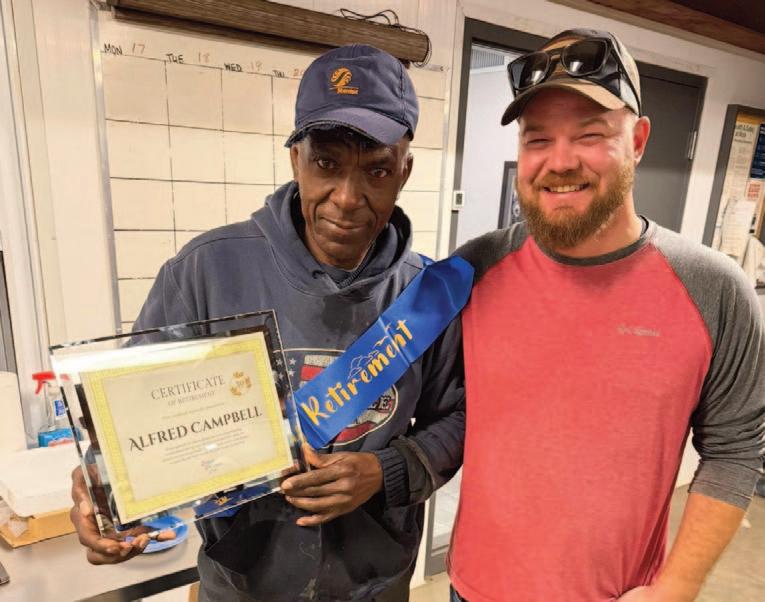
Last year, 70,000 temporary foreign workers (TFWs) voted, with skilled hands, two thumbs up for farming jobs in Canada. Alfred Campbell, who retired in 2025 after 30 years at Streef Produce Ltd, is one such example. His work here contributed to his six children going to university back home in Jamaica.
“Streef Produce was never just a workplace – it was family!” he said. “I loved watching the next generation grow into taking over the operation.”
Brothers Dylan and Nathan Streef, part of that generational change, today support 32 Jamaican TFWs tending to 3,000 acres of potatoes, sweet potatoes, asparagus, green beans and cash crops grown on the family farm near Princeton, Ontario. The operation
routinely uses big iron to plant and harvest, but as Dylan Streef points out, TFWs work hand in hand with this equipment.
“We have invested in an optical potato grader, an optical asparagus grader and roboticized palletizing equipment,” says Streef. “This new technology improves product consistency and operational efficiency while also enhancing workplace safety by reducing physical strain and the risk of injury to our staff.”
Looking to comment on the current state of farm automation, the Royal Bank of Canada (RBC) recently published “The Next Generation of Growth: cultivating a new crop of agricultural talent and innovators.” In discussing the report, Lorna McKercher, RBC director, national agriculture noted that “we predict that one in three jobs in agriculture could be automated in the next decade.”
Dylan Streef agrees, but with a caveat: agriculture relies on a balanced approach to labour and equipment. Asparagus and sweet potatoes, for example, need a lot of manual labour from planting to harvesting. Technology may be well-suited for repetitive, physically demanding tasks, and improving consistency and worker safety, but people remain essential for oversight, decision-making, problem-solving and quality control. Human judgment is still critically needed.
“Once technology is more advanced and goes through a series of bug fixes, I definitely see some farm operations going fully robotic in the future, especially with rising labour and operating costs,” says Streef. “In regards to our own operation, I can say we value our staff and will always need human beings despite automation.”
Continued on page 3
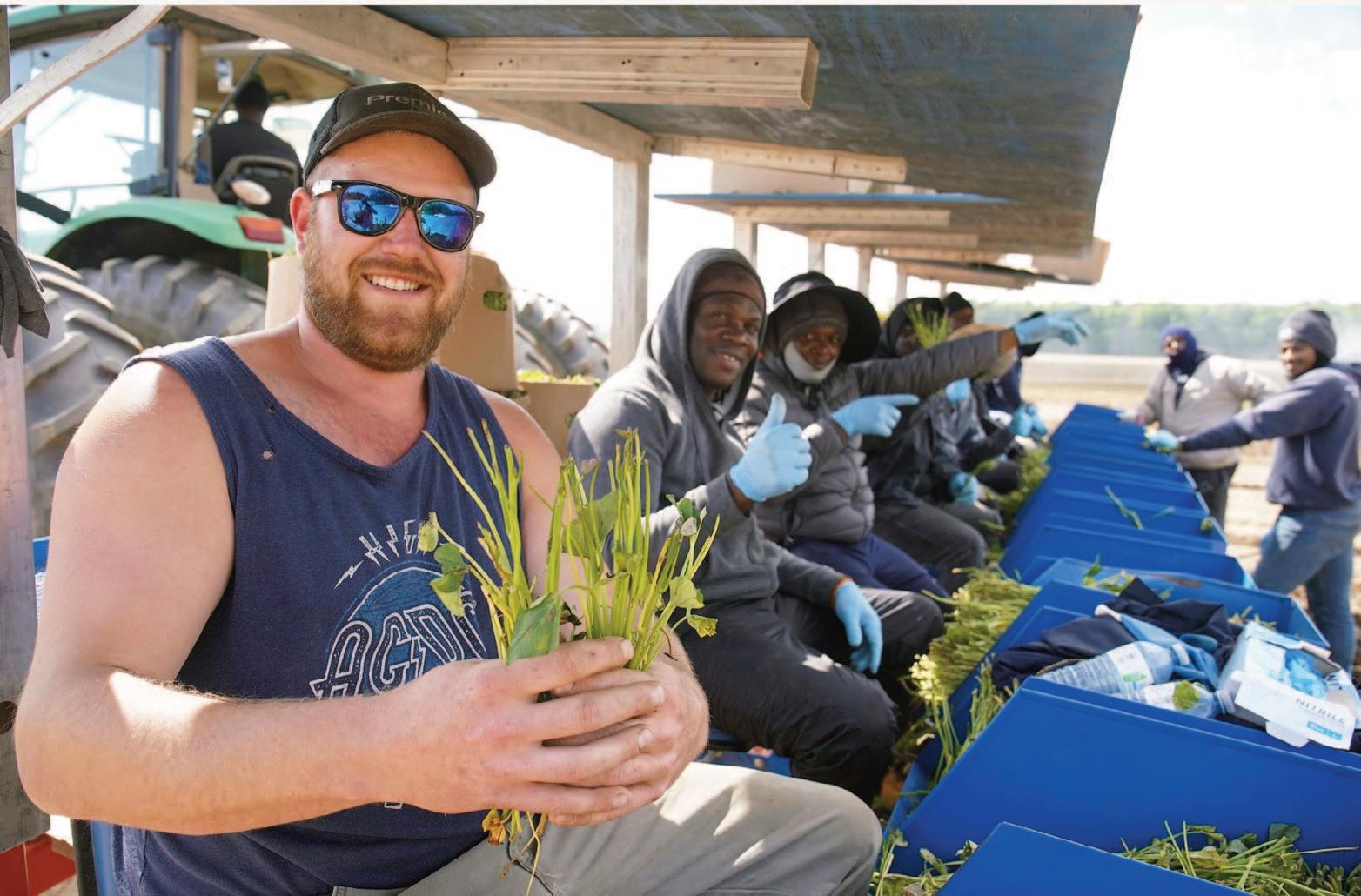
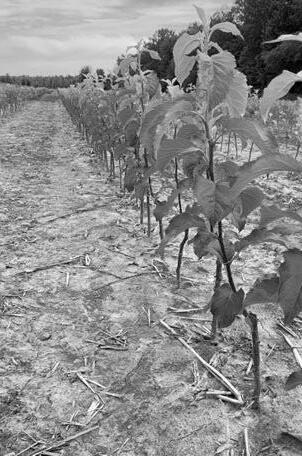
While AI and machine learning are the flavour of the hour, it’s still the case that Canadian horticulture employs about 70,000 temporary foreign workers each year. The reality is that growers need both manual labour and AI-driven equipment in the same field, not necessarily at the same time. As Dylan Streef attests, Streef Produce Ltd. could not grow 3,000 acres of vegetables and cash crops without the devotion of its Jamaican crew. Here, they are planting sweet potato slips near Princeton, Ontario. Photo by Jeff Tribe.
AT PRESS TIME…
Study validates ‘function-first’ approach to sustainable packaging
Environment and Climate Change Canada (ECCC) and Agriculture and Agri-Food Canada (AAFC) have released a new study highlighting the economic impact of replacing fresh produce packaging based on material alone on consumers and the entire supply chain.
The report, “Estimating the Cost Implications of Reducing Plastic Packaging for Fresh Produce,” reinforces the fresh produce industry’s long-held position that sustainable packaging solutions must be evaluated holistically, with food waste prevention as the primary goal.
This costing analysis builds on the findings of a 2024 government study, “Quantifying the Functionality Importance of Plastic Packaging in Fresh Produce from a Needs/Benefit Perspective,” which established an innovative framework to understand the critical role packaging plays in protecting fresh produce.
While the initial study defined why functionality is crucial, this new report quantifies the significant economic consequences of ignoring it.
Canadian Produce Marketing Association (CPMA) applauds the government for investing in this evidence-based research, which highlights the complex trade-offs between packaging materials and their impact on food affordability and accessibility. The findings
strongly validate the principles behind the joint Sustainable Produce Packaging Alignment (SPPA) initiative co-led by CPMA and Western Growers, a U.S.based association, which seeks to create a science-based, functional approach to packaging for the North American fresh produce industry.
Key findings from the Government’s costing study include:
• Significant price increases: Transitioning from a low-cost plastic bag for apples to a cardboard box could result in a retail price increase of approximately 42%. A simpler transition for tomatoes from a plastic clamshell to a fiber tray with a plastic lid could still increase the retail price by 11%.
• The high cost of loose produce: Contrary to popular belief, selling produce loose can be more expensive. The study found loose apples cost consumers 39% more by weight in Canada than pre-packaged options, largely due to operational inefficiencies and increased shrink.
• Consumer resistance to non-transparent packaging: The report highlights that trials of nontransparent packaging have led to significant drops in sales, even
without a price increase, because consumers value the ability to visually inspect produce for freshness and quality.
“Last year, we commended the government for commissioning a study that validated the essential functions of produce packaging,” said Ron Lemaire, president of CPMA. “Today, this new costing data provides the missing pieces of the puzzle. It proves what we have been saying all along: if packaging policy is driven by a narrow focus on materials, it will be Canadians who pay the price at the checkout, all while risking an increase in food waste. This evidence underscores the urgent need for pragmatic, harmonized regulations that reward functionality and demonstrably positive environmental outcomes, rather than penalizing materials without considering the consequences.”
The report underscores how fragmented, material‑ban approaches create inefficiencies and economic burdens for growers and consumers on both sides of the border, reinforcing CPMA’s commitment through the SPPA initiative to lead with science and functionality. This direction aims to create a clear, harmonized roadmap that supports innovation and delivers meaningful, measurable sustainability gains for the entire fresh produce sector.
Link here to the study: agriculture.canada.ca/en/sector/ horticulture/reports/estimating-costimplications-reducing-plastic-packaging-fresh-produce
Source: Canadian Produce Marketing Association Jan19, 2026 news release
NEWSMAKERS
Dr. Julie Callahan has been confirmed by the U.S. senate to the role of chief agriculture negotiator. She has broad experience with the USDA and global trade agreements. Her counterpart in Canada is Matthew Smith. His background includes director of the multilateral trade policy and institutions division of Global Affairs Canada where he supported the Minister of International Trade in meetings of the G7.
Potato Growers of Alberta has announced its 2026 board of directors. Alison Davie remains chair and is supported by vice-chair Tony Kirkland. Directors include: Delbert Vossebelt, Matt Visser, Ryan Jensen, Lloyd Ypma and Brent Bydevaate
Congratulations to Murray Driediger, retired president and CEO, BC Fresh Vegetables, on the Lifetime Achievement Award from the BC Produce Marketing Association. He’s recognized for moving 200 million pounds of produce annually, transforming from an on-farm model to a central distribution network for North America and championing growers and supporting the Greater Vancouver Food Bank.
The Agricultural Adaptation Council has announced its 2026 board of directors, chaired by Sara Wood, Ontario Federation of Agriculture. The horticultural representatives are Tracy Gubbels and Joann Chechalk
Representing 200 growers, the Ontario Apple Growers has announced its 2026 board of directors. Chris Hedges was re-elected to chair for a one-year term. New vice-chair is Jeremy Veens. They are joined by the following directors: Chris Geerts, Crain Van Ymeren, Brian Gilroy, Kyle Ardiel, Robert Shuh, Kara Pate, Charles Stevens and Quinton Gibson
Congratulations to Donald Triggs, Niagara-on-the-Lake, Ontario, appointed an Officer of the Order of Canada. The citation reads: “Donald Triggs’ visionary leadership reshaped Canada’s wine industry, notably growing Vincor International into its largest producer and marketer. His entrepreneurial drive extended to influential roles in industry organizations. Beyond business, he is a committed philanthropist who supports education and the arts with passion and purpose, leaving a lasting impact on multiple sectors.”
The Honourable Robert Black, Senator for Ontario, has been elected deputy leader of the Canadian Senators Group. In the last year, Black has advocated for the Senate Standing Committee on Agriculture and Forestry’s (AGFO) soil health report tabled in June 2024, Critical Ground: Why Soil is Essential to Canada’s Economic, Environmental, Human and Social Health.
Warren Peacock warren.peacock@norseco.com
Congratulations to Tracy Shinners-Carnelley, the new chair of the Potato Sustainability Alliance (PSA). She is vice president of research, quality and sustainability for Winnipeg-based Peak of the Market. PSA has announced new incoming board members for 2026, including Canadian growers JP Claassen, Claassen Farms and Lincoln Neufeld, WJ Siemens Farming Co. Other new members include: Jane Canales, Basic American Foods; Kartika Charan Sysco; Tony Macklin, Walther Farms; and Ariel Wiegard, Pheasants Forever & Quail Forever. The board has appointed Dan Duguay, Canadian Produce Marketing Association to serve in an additional at-large board seat.
Robert Gordon, currently dean of the Ontario Agricultural College at University of Guelph, has been appointed for a three-year term to the Agricultural Research and Innovation Ontario (ARIO). It’s a provincial agency of the Ontario government that oversees and invests in agri-food research infrastructure, owning 14 research properties. His term ends in January 2029.
Dr. Julie Callahan
Donald Triggs
Tracy Shinners-Carnelley
AI lends an extra hand
Continued from page 1
Leadership
RBC’s assessment concludes that innovation in the Canadian agriculture sector will benefit from accessing a more diverse, highly qualified talent pool. It highlights that many in the engineering, business and computer science fields are not yet aware of how their skills apply to robotic farming automation, operating multi-million dollar farming businesses, or soil-health monitoring applications.
The report goes on to say that “Agriculture grads are not landing in increasingly influential professions such as policy, data, trade and finance. These occupation fields have an important role in managing risks for agriculture but less than 1.5 per cent in each field have some form of agriculture-focused post-secondary training.”
RBC’s meta-analysis also includes some sobering statistics on current research and development investment. Despite Agriculture and Agri-Food Canada’s Sustainable Canadian Agriculture Partnership funding, currently projected at $3.5 billion for years 2023-2028, the country’s public investment in R & D is in decline. As a standalone, federal investment in Canadian agricultural science and innovation is in even further decline, projected to be down 12 per cent by 2027.
McKercher says that RBC’s thought leadership paper is intended to be “a mechanism to speak to policy makers, beyond the echo chambers of agriculture.” The goal is to broaden the conversation about skills, innovation and competitiveness – a critical conversation that needs to not only strengthen the resilience and competitiveness of Canadian agriculture but also to advance the country’s broader pro-growth ambitions.
Entrepreneurship
All that said, horticulture’s $6 billion plus in annual farmgate sales in 2025 is not an insignificant contribution to Canada’s economy. The sector can lay claim to numerous examples of innovative entrepreneurship as well. Among them, and as featured in recent issues of The Grower, four STEM women – Karli Barton, Azimove Sulthana, Isabella Nardone and Avery Johnson – have shared their individual career trajectories doing greenhouse vegetable research at Agriculture and Agri-Food Canada’s Harrow station. There’s also Dr. Amir Khajepour, director of the Waterloo Centre for Automotive Research, who thought outside the box to design and build robots that enhance controlled environment crop storage.
Looking forward, University of Waterloo engineering grad Matt Stevens represents a work in progress when it comes to agricultural innovation. Stevens, a grower and an entrepreneur, is on the 80th re-design of a straw-shaped, robotic finger to thin apple fruitlets. Following two years of trials in his own hobby orchard and in a commercial orchard, his perseverance might soon be rewarded as his team gears up for next summer’s commercialization trials.
“We’re at that confluence of technology
that gets me jazzed for the next five years,” says Stevens. “With the cameras available now, for instance, we can build faster.”
Finite Robotics, founded in 2024 by Stevens, his wife Amanda and friend Mike Giannikouris, arose from practical experience acquired on their farm near Simcoe, Ontario, and the realization that farm labour needed to become more efficient. Since both time and money are finite, Stevens decided, why wait.
To be successful, Finite’s robot needed to master four steps: safely navigate through high-density rows, count and size fruitlets on the tree using machine vision, balance crop load by determining the fruitlets that need to be removed, and lastly, remove targeted fruitlets without damaging others in the cluster. Robotic harvesting requires similar learning but with the added step of binning mature apples without bruising.
“It’s a graveyard of global research companies which have tried to develop a robotic apple harvester,” says Stevens. “We think it’s more doable to try thinning before advancing to harvesting. Because these steps have to be done flawlessly.”
Apple growers currently use both chemical and manual thinning to manage crop load, but Stevens believes robotic thinning has a strategic role. Proficient robot thinning can be deployed in any type of weather. When robots are used, re-entry intervals designed to protect human workers during chemical spraying no longer apply. Manual thinning, as a third pass after chemical and robotic thinning, has the potential to significantly reduce the man hours dedicated to this orchard task.
Partnership
Piloting such robotic innovation along side a grower is key. The prototype “showed all the skills” but successful performance in a large, commercial scale orchard was the next step. Enter Gerbe Botden, Blue Mountain Fruit Company, Thornbury, Ontario, who provided a high-density orchard for further trials.
Botden had previously worked with Jenny Lemieux, co-founder and CEO of Vivid Machines, to develop a visioning system capable of scanning each tree and accurately recording fruitlet placement on every tree in an orchard. This data is then available to prioritize deployment of the Finite Robot within an orchard, where it can thin fruitlets as small as seven millimetres.
Having followed robotic harvester R&D for several years, Botden has yet to see a viable product come to market, noting that it’s tough to duplicate the dexterity of a human hand. Industry data estimates that a human worker can pick an apple using a twist-and-lift motion in three seconds, or about 20 apples per minute. A seemingly high bar for a harvester, but perhaps commercially viable thinning is a good place to start.
Back in Simcoe, Matt Stevens is pushing toward the expected arrival of his yet to be named robot thinner. Should 2026 trials go as planned, commercialization will soon follow. No doubt there’s a need, but as every grower knows, technology you can’t buy is technology you can’t use. Over to you, RBC.
Jamaican temporary foreign worker Alfred Campbell retired from Streef Produce Ltd after 30 years at the Princeton, Ontario farm. He was congratulated by Nathan Streef.
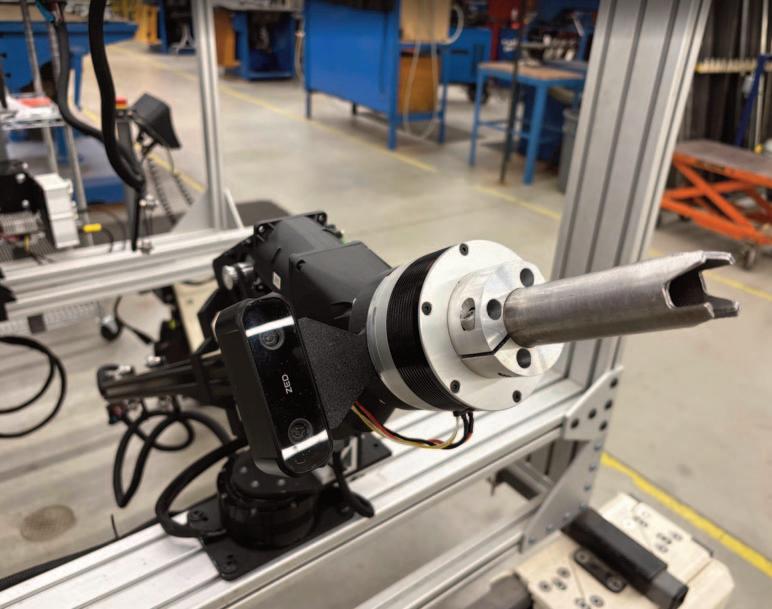
Here is a close-up of the end-effector, Finite Robotics.
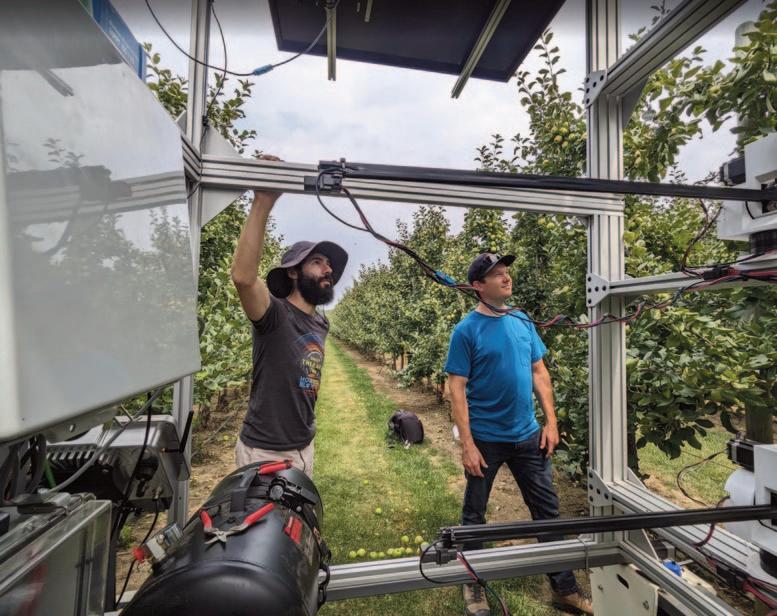
Gerbe Botden, (R) and Mike Giannikouris inspect orchard progress in robotic apple thinning, Blue Mountain Fruit Farm, Thornbury, Ontario.
CROSS COUNTRY DIGEST
BRITISH COLUMBIA
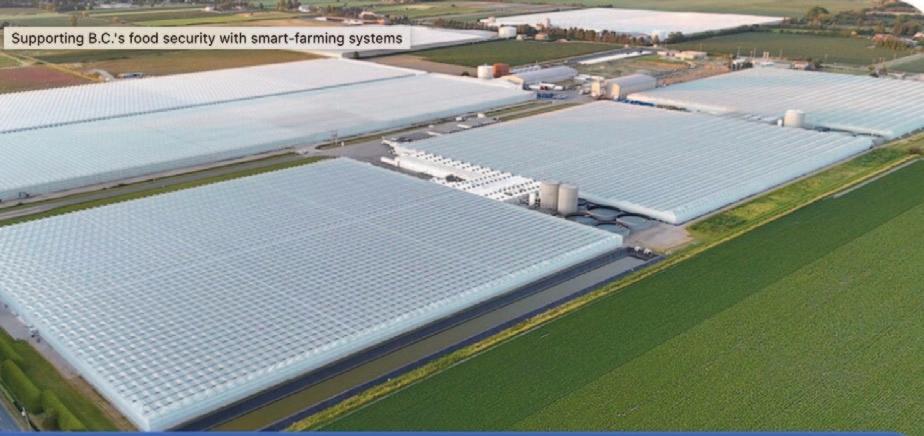
Supporting BC food security with smart-farming systems
Through the B.C. Centre for Agritech Innovation, Delta-based Windset Farms is working with experts to develop, test a smart farming system.
A new smart-farming project in Delta is helping strengthen food security for British Columbians, while two new training programs will ensure more people have the necessary skills to succeed in the growing agritech sector.
“With a changing climate and uncertainty from the U.S., it’s critical that two of British Columbia’s greatest strengths, technology and agriculture, come together to ensure British Columbians can rely on healthy food grown here at home,” said Ravi Kahlon, Minister of Jobs and Economic Growth.
“Through our Look West plan, we are connecting innovators with industry partners to turn made-in-B.C. ideas into realworld solutions that create jobs and drive our economy forward in a sustainable future.”
With support from the B.C. Centre for Agritech Innovation (BCCAI), Delta-based Windset Farms is developing a new smartfarming system that automates decision-making with sensors that monitor plant stress and efficient greenhouse crop management.
By using advanced data analytics and machine learning, the project seeks to improve Windset’s production systems by optimizing:
• climate control
• nutrient uptake
• early disease detection in hydroponic tomatoes
“This partnership helps us develop advanced smart-farming systems that improve real-time greenhouse monitoring, optimize
climate and nutrient management, and detect potential plant disease earlier,” said Tony Kalf, chief technology officer, Windset Farms. “These innovations allow us to make meaningful impacts through job creation, new business opportunities and by ensuring the security and stability of B.C.’s food supply. By optimizing the growing environment, we can create efficiencies while minimizing resource use, allowing us to consistently grow high-quality produce year-round.”
The project is moving forward in partnership with Simon Fraser University (SFU), Koidra, Vivent, and Wageningen University & Research (WUR) in the Netherlands. It emerged from a 2023 letter of intent between SFU and WUR to collaborate on future research programs and tackle agricultural sustainability challenges, such as food production and climate change.
Training to grow more resilient crops
Through Kwantlen Polytechnic University (KPU), a new training program is being developed to support the need to adopt more drought-resilient crop production systems. The program will train participants in dry farming, a method that uses specific agro-ecological measures to cultivate crops with zero or very little additional water. The program is a collaboration between:
• the Ministry of Agriculture and Food’s Regional Extension Program
• KPU’s Institute for Sustainable Food Systems
• local farmers
• industry groups “BCCAI’s support, along with the B.C. Ministry of Agriculture and Food, enables us to establish collaborative dry-farming extension, applied research and demonstration projects on three farms,” said Kent Mullinix, director of KPU’s Institute for Sustainable Food Systems. “We’re engaging dozens of farmers, professionals and students on soil health, agroecology, soil and weather data collection, and advancing drought-resilient farming.”
Training to remove weeds, improve fruit and vegetable production
In addition, a new training opportunity developed by the University of the Fraser Valley (UFV) is demonstrating new robotic-weeding technology. Weeds are a significant challenge for fruit and vegetable producers in B.C. and elsewhere, as they impact productivity by competing for valuable resources, such as moisture, nutrients and sunlight.
This project demonstrates and trains farmers and students on
robotic weeding technologies to:
• reduce labour reliance
• minimize herbicide use
• improve sustainability by efficient resource management
“The partnership with BCCAI enables new opportunities for students on current agricultural issues and shows them the types of skills and work opportunities available in agricultural robotics, such as the robotic-weeder demonstration,” said Renee Prasad, department head, associate professor, agriculture technology, UFV. “BCCAI serves an important role in supporting open dialogue by bringing technology and producers, current and future, together.”
Supporting a strong future in agritech
The three new projects and training programs represent a total investment of approximately $658,000, with $280,000 from BCCAI, $204,000 from industry and an in-kind industry contribution valued at $174,000. These projects are examples of how B.C. is supporting the agritech sector, enabling
University of Saskatchewan researcher lays groundwork for saskatoon berry breeding
MATT OLSON
Dr. Anže Švara is leading research that will give plant scientists and breeders insight into understanding and breeding new types of saskatoon berries in the future.
“We have two key questions: can certain saskatoon berry plants breed with other saskatoon berry plants? And is there diversity that can be utilized to develop new varieties with improved traits?” said Švara, an associate professor with the Department of Plant Sciences at the College of Agriculture and Bioresources and the lead of the USask Fruit Program. USask houses a tremendous number of saskatoon berry genetic varieties collected over the decades — around 2,000, per Švara — and this fruit crop is the leading fruit in terms of production and acreage in
Saskatchewan.
However, Švara said there are some unique challenges when it comes to breeding saskatoon berries. Specifically, a number of historically successful saskatoon berry cultivars have four sets of chromosomes instead of two. This characteristic is associated with plants that produce seedlings that are nearly identical to the parent plants but makes it extremely difficult to breed those plants with others for specific genetic or physical traits.
Švara’s project will categorize saskatoon berry varieties at USask to better understand and identify traits that can potentially be bred and selected for future varieties. He is working withTim Sharbel (PhD) in the College of Agriculture and Bioresources, and Pankaj Bhowmik (PhD) with the National Research Council of Canada on this saskatoon berry research, with the project also receiving support
from the Saskatchewan Fruit Growers’ Association.
As breeding new saskatoon berry cultivars is very rare, the hope for this project is that it can contribute to future innovative berry breeding projects and help bolster growers working with saskatoon berries in the agricultural industry.
“For over 50 years, there has been almost no genetic improvement of saskatoons, no systematic streamlined breeding that has been successfully done because saskatoon berry cultivars ... won’t successfully cross,” Švara said.
“This is a huge obstacle for breeders because you cannot bring in new genetics, new combinations, and we’re trying to overcome that.”
Švara has significant experience as an apple researcher from his previous work as a student and researcher. But according to
companies to commercialize their technologies and create cleaner, more resilient and more productive agriculture, food and seafood industries.
It is anticipated the new project and training opportunities will give more than 350 people advanced training in areas such as horticulture, regenerative agriculture, data management and agri-business management, and create three new jobs and increase business opportunities through commercialization.
“B.C.-developed technology is helping our farmers increase production and make our food supply more resilient to climate change,” said Lana Popham, Minister of Agriculture and Food. “Using the latest tech to monitor plant growth and health, as well as maximize water and nutrient efficiency, is resulting in more sustainably grown, local food being produced for B.C. families and a better bottom line for farmers.”
Source: BC Government January 15, 2026 news release
Švara, there are a number of similarities between saskatoon berries and apples, which has helped him dive into his new role leading the USask Fruit Research and Breeding Program focusing on the locally grown berry.
Švara said he’s come to understand the significance of saskatoon berries to the city and the province he now lives in and hopes to continue strengthening saskatoon berry production now and into the future.
“The support from the ADF is vital for us to succeed, to build a team and to advance the research that hopefully will be impactful for the university and the community. And by community, I mean the people here and globally as well,” he said.
Matt Olson is with Research Profile and Impact, University of Saskatchewan.
CROSS COUNTRY DIGEST
Nova Scotia Loyal will offer 10 per cent discount to CSA subscriptions
Nova Scotians will soon be able to receive a 10 per cent discount to buy fresh, locally grown food directly from local farmers through Nova Scotia Loyal.
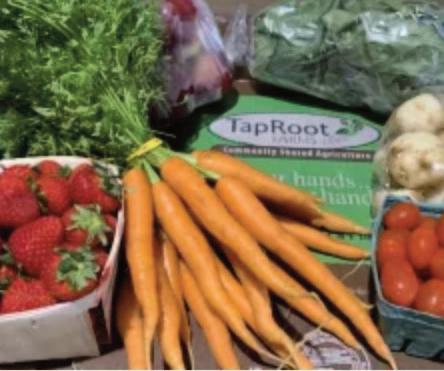
The discount will apply to community-based agriculture subscriptions, also known as farm shares, where people pay for a share of the food the farm produces.
“With this new program, our government is making it more affordable for Nova Scotians to buy from local farmers and producers,” said Colton LeBlanc, Nova Scotia Minister of Growth and Development. “When we buy local, we strengthen our communities, support jobs and
keep more dollars in our provincial economy.”
The new program is called the Nova Scotia Loyal Community Supported Agriculture (CSA) Incentive Pilot Program.
Participating farms will provide the 10 per cent discount to customers and be reimbursed by Nova Scotia Loyal. Farmers can now apply to be in the program, and consumers will see the discount in the 2026 CSA season.
“I am super excited to start a relationship with NS Loyal to promote CSA farms in Nova Scotia,” says Josh Oulton, co-owner, TapRoot Farms. “I feel there is no better way to connect with your food, to get local food and to support local farms than
joining a CSA. With the help of NS Loyal, we can get that message to more people.”
Community supported agriculture is a direct partnership between farmers and consumers. The CSA membership or subscription requires an upfront investment from the consumer, who then receives regular shares of food from the farm over a defined period of time. This model supports the growth of local farm operations by providing predictable revenue and cash flow in the shoulder seasons.
Source: Government of Nova Scotia January 8, 2026 news release
Wild blueberry growers vote for marketing plan but miss 55% threshold
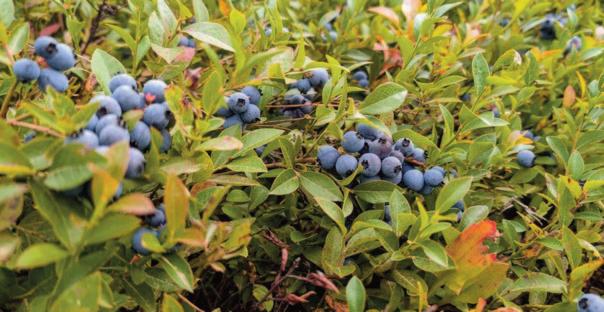
The mail-in ballots have been tallied in Prince Edward Island with 53 per cent in favour of a marketing plan for wild blueberries. However, the vote’s outcome is shy of the PEI Marketing Council’s 55 per cent threshold.
In a January 16, 2026 letter, Harold MacNevin, chair of Council wrote: “A threshold below 55 per cent could create uncertainty, bypassing a change supported by only a small majority that does not reflect strong consensus. This support does not meet the threshold and therefore the Council does not recommend approval of the proposed marketing plan.”
Of 139 registered voters, there were 87 eligible ballots submitted on the question:
• I SUPPORT the proposed Marketing Plan for the creation of a Wild Blueberry Growers Commodity Board circulated with this ballot.
• I DO NOT SUPPORT the proposed Marketing Plan for the creation of a Wild Blueberry Growers Commodity Board circulated with this ballot If the plan had gone forward, buyers would be responsible for collecting the levy at point of sale and remitting it to the PEI Wild Blueberry Growers’ Association. A plebiscite was held three years
ago with different results. At that time, 56 per cent of eligible voters defeated the motion. Provincial authorities recommended changes to the marketing plan. After rethinking the structure and several delays due to postal strikes, the board of directors organized a new vote held on December 5, 2025. Only registered producers and those resident in PEI who grow five acres or more, were eligible to vote.
The plan would have granted the Board several regulatory and advocacy powers. Some of these are: establishing and maintaining a register of producers, requiring buyers to provide information and submit levy remittances, negotiating the price or minimum price that must be paid for wild blueberries sold in PEI, using funds for marketing, research, administration and grower representation at provincial and national levels.
Ideally, the base price would be set before harvest each year, providing predictability and fairness across the sector. JoAnn Pineau, executive director, PEI Wild Blueberry Growers’ Association reports that 21,380,617 pounds of wild blueberries were harvested from an estimated 6,000 acres in 2025.
“The farm gate price can vary significantly between individual growers, depending on their arrangements with their
processors, but the 2025 price was estimated at around $0.90/pound,” says Pineau.
The Board’s authority would only apply within Prince Edward Island. Currently, the growers
have only two buyers: Jasper Wyman & Son Ltd with a plant at Morell, Prince Edward Island and Oxford Frozen Foods, with the nearest plant in Oxford, Nova Scotia.
It’s been an ongoing saga,” says Benny Nabuurs, president, PEI Wild Blueberry Growers’ Association. “The association board of directors will now meet to discuss next steps.”
Access crop protection insights to grow your most marketable crop.
NOVA SCOTIA
KAREN DAVIDSON
PRINCE EDWARD ISLAND
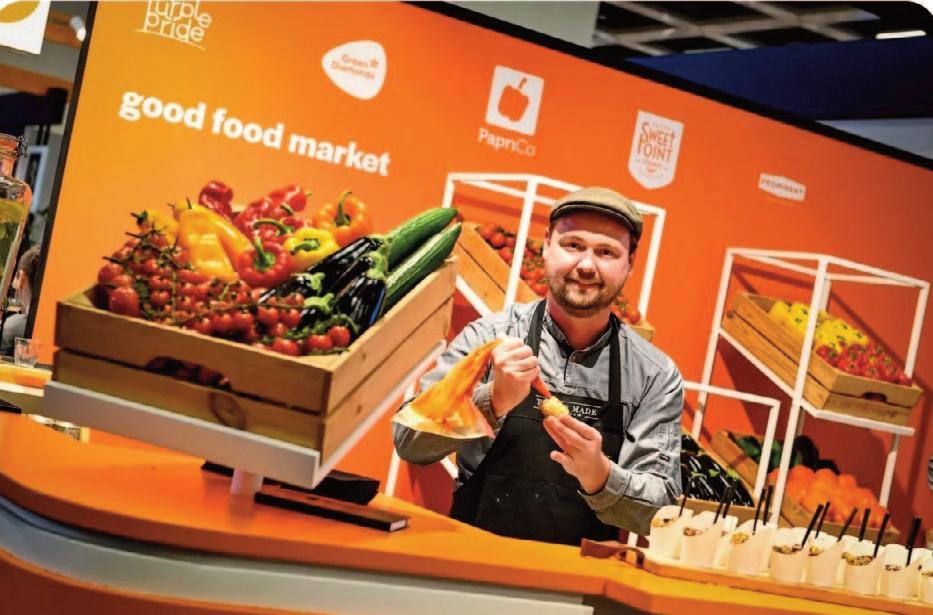
Rooting for a bite-sized cucumber, nominated for Fruit Logistica Innovation Award
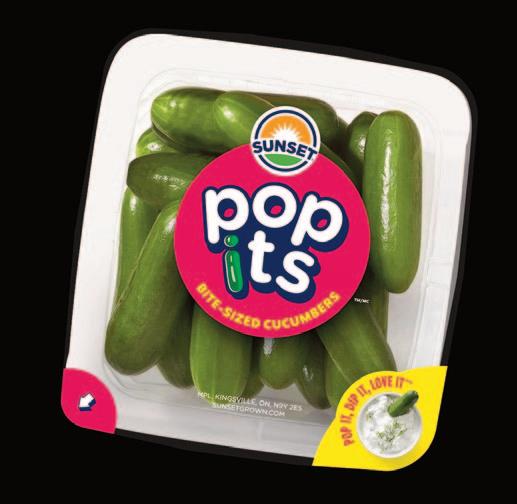
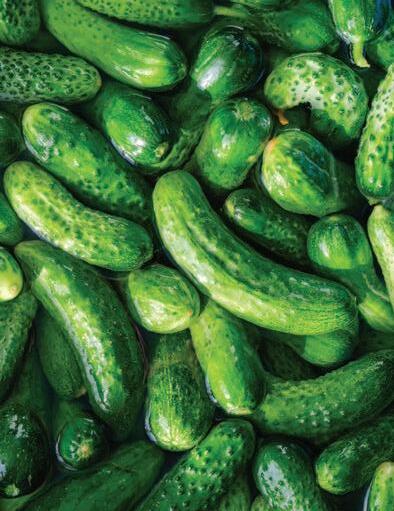
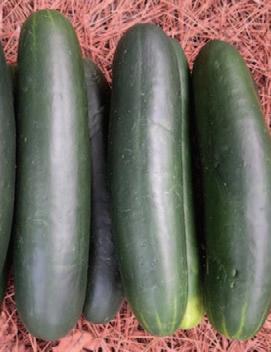
A Canadian product is in the hunt for a 2026 Fruit Logistica Innovation Award. Popits, a bite-sized cucumber developed by an Israeli company and Canadian-based Mastronardi Produce, is one of the nominees in the Fresh Produce category.
The Fresh Produce category spotlights new fruit and vegetable varieties while the Technology category honours technical processes and services that promote efficiency, sustainability, and the future viability of the fruit trade. Here’s an overview of all the nominees.
Fresh Produce Award nominees
Popits (Harmoniz/Mastronrdi) – The Popits snack cucumber is a collaboration between Israeli company Harmoniz and Canadian company Mastronardi Produce. Measuring four to five centimetres in length, it is 1° Brix sweeter than conventional cucumbers and is particularly crisp and perfectly uniform. This new variety promises producers high yields and minimal losses.
Boombites Red Berry Grapes (Bloom Fresh) –Boombites Red Berry Grapes are the result of a collaboration between British company Bloom Fresh and some of the world’s leading table grape producers. Developing this new fruit variety took more than 10 years, and it not only tastes great, but also contains polyphenols, which are known for their antioxidant and anti-i nflammatory properties.
Pompur (Zin) – To ensure that people with allergies do not have to go without apples, German company Züchtungsinitiative Niederelbe (Zin) has developed Pompur. It is the world’s first apple brand to be certified by the European Centre for Allergy Research Foundation (ECARF). As well as being of remarkable quality, it tastes excellent.
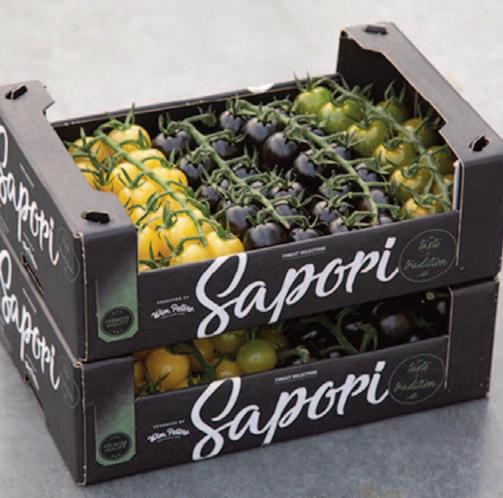
Sapori (Wim Peters Kwekerijen) – Sapori – Finest Selection from Wim Peters Kwekerijen in the Netherlands stands out thanks to its unique flavours and extraordinary colours. This is a particularly fine selection of mini cherry tomatoes. The 1.5kg-selection includes ivory, black and green fruits.
Tribelli Seedless (Enza Zaden) – Tribelli Seedless, from Dutch exhibitor Enza Zaden Beheer BV, is a healthy
snack to enjoy between meals. These sweet, pointed mini peppers are full of flavour, are crunchy and seedless, and require no further preparation. This high-quality fruit is cultivated by dedicated partners across Europe.
Technology Award nominees
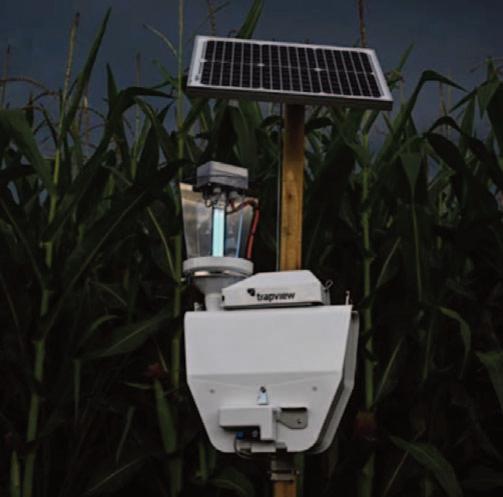
Aura SC (Trapview) –The Slovenian Trapview Group has developed a fully automatic pest monitoring and forecasting solution. Using UV light attraction and an AIcontrolled self-cleaning mechanism, it enables continuous, real-time monitoring of multiple pest species. The collected data is converted into precise forecasts, which can be accessed via the Trapview app. This reduces personnel costs and the use of insecticides.
Circular Cellulose Packaging (Compack) –Compack’s circular cellulose packaging is produced using mushroom waste. The Belgian company manufactures plastic-free boxes from the material on which the mushrooms grew. The boxes are free of harmful substances, compostable, recyclable and PPWRcompliant. This solution uses less paper than conventional fibre packaging.
High-Speed Grafter (TTA-ISO) – The High-Speed Grafter from TTA-ISO in the Netherlands enables precise cuts above the cotyledons, setting a new standard for automatic grafting. Thanks to modern image processing, AI and a carousel system, the scion and rootstock are
aligned perfectly every time, ensuring a seamless, efficient and hygienic process.
L50 Drones (ABZ Innovation) – Precision and performance are the L50 Drone’s key selling points. Europe’s first LiDAR-based agricultural spraying drone with a 50-litre capacity works with great accuracy and precision. It boasts 30 per cent longer flight times and can cover up to 24 hectares per hour.
Solar Solution (Voltiris) – The Solar Solution for lightloving crops from the Swiss company Voltiris was selected by the jury for its beneficial effects on greenhouse crops. Solar filter modules promote vigorous plant growth and high yields. At the same time, light is converted into renewable electricity.
“The international fruit trade is undergoing decisive changes, and the industry itself is providing the answers to these challenges through innovation,” stated organizer Messe Berlin. “Products and technologies that add value, inspire consumers and transform the way value is created are coming into focus.”
During the first two days of the trade fair, visitors are invited to vote for their favourite innovation, thereby sending a clear signal about the future of the fruit trade. The winners will be announced in Berlin on February 6.
Source: Fruit Logistica January 14, 2026 news release
GreenTech Americas is preparing for its 6th edition, set to take place from March 24-26 at the Querétaro Centro de Congresos in Mexico.
Event organizers are expecting 5,800 horticulture professionals and 230 exhibitors. The unique event spotlights the
controlled environment production of high value crops in Latin America, attracting growers, suppliers, investors and other industry experts from across Americas. The three-day program explores innovations, trends, and solutions that drive sustainable and efficient production.
Protected agriculture in Mexico now spans more than 51,850 hectares, producing 1.38 million tonnes of crops valued at USD 3.5 billion. The northeast region alone grew to 6,114 hectares in 2023, adding more than 2,100 hectares year-on-year. In 2024, Mexico exported
fruits and vegetables worth USD 20.25 0billion, including tomatoes, peppers, cucumbers, and lettuce, many grown under protected systems.
Source: GreenTech Americas January 14, 2026 news release
GREENHOUSE GROWER
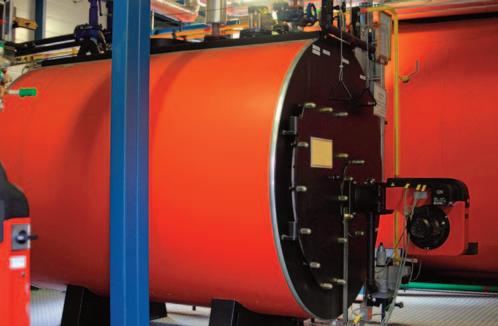
Boiler and pressure vessel regulations for Ontario greenhouses: what growers need to know
Greenhouse growers rely on boilers and pressure vessels (BPVs) to keep temperatures steady and maintain optimal growing conditions for plants. As BPVs help store and regulate steam or hot water under pressure, the potential for pressure build-up and failure can pose serious safety risks.
Ontario greenhouse growers who use BPVs as part of their agricultural operations are required to report their pressure equipment to the Technical Standards and Safety Authority (TSSA).
The lifting of the exemption on agricultural BPVs in July 2021 means that installations of BPVs, fittings, and piping used for agricultural purposes must comply with Ontario Regulation 220/01: Boilers and Pressure Vessels under the Technical Standards and Safety Act, 2000, and the Canadian Standards Association (CSA) B51 Boiler, Pressure Vessel and Pressure Piping Code.
Previously, Ontario was the only province where BPVs used in agricultural operations were exempt from safety laws. While TSSA registered, inspected and certified the manufacturing designs of new BPVs before they were sold, BPVs installed and used in agricultural operations did not fall under TSSA’s jurisdiction until 2021.
Compliance requirements for greenhouse growers
Since the lifting of the exemption, TSSA has been working with agricultural associations across Ontario to ensure operators and owners are fully informed that the installation, operation, maintenance and registration of BPVs, fittings, and pressurized piping used for agricultural
purposes are regulated.
Key compliance requirements for BPVs used in greenhouses include:
• Having a Canadian Registration Number (CRN) issued by TSSA to confirm a BPV design complies with safety standards
• Obtaining a Certificate of Inspection (COI) for regulated pressure equipment
• Undergoing Periodic Inspections: Certified BPVs must be inspected periodically by a qualified inspector. Before a COI expires, owners and operators must request a periodic inspection from their insurer (if the device is insured) or from TSSA (for uninsured equipment).
• Ensuring the company hired to repair or alter BPVs holds a Certificate of Authorization from TSSA
The first step to comply with safety requirements is to report all currently installed BPVs used for agricultural purposes to TSSA by completing an online form. After boilers and pressure equipment have been reported, TSSA will notify agricultural sites of a scheduled site assessment 30 days in advance. During a site assessment, a TSSA inspector will evaluate BPVs for safety compliance.
Tony Gabriele, BPV project lead and regional supervisor with TSSA, says site assessments provide an opportunity for TSSA inspectors to educate owners and operators of agricultural sites that use regulated BPVs and help them understand and comply with the provincial regulations.
Agricultural operators can prepare for the site assessment by reviewing the checklist of what an inspector
will look for and ensure their equipment is accessible and ready for the site assessment. Agricultural sites should inform TSSA before the site assessment if there are any biosecurity protocols related to the site and provide information if there has been a bio-outbreak at the site that could affect the completion of the site assessment.
Gabriele says reporting BPVs used in agricultural operations is “a critical step” in keeping the process moving to ensure BPVs are operating safely. “If you have not yet reported your boiler or pressure vessel equipment to TSSA, please go to TSSA’s website and fill out the online form,” he adds.
For more information, check out the infographic and Boiler and Pressure Vessel Equipment for Agricultural Use on TSSA’s website.
Source: Technical Standards and Safety Authority.
“Flavor That Lasts” campaign receives top honours for Mastronardi Produce
Mastronardi Produce has announced that its “Flavor That Lasts: Celebrating 30 Years of SUNSET Campari Brand Tomatoes” campaign has earned two prestigious advertising industry awards: a Muse Creative Award (Gold) in the Video - Food & Beverage Category, and a Vega Digital Award for Video/Online (Campaign) in Food & Beverage. These wins position Mastronardi alongside leading global brands celebrated across both awards.
The campaign features a trio of emotionally driven 30-second commercials - “Tomato Through Time,” “Transcendent Tomato,” and “Finding Campari.” These shorts explore the connection between flavour and memory, and each commercial is a tribute to the way Campari brand tomatoes
have become woven into the fabric of everyday moments and family traditions. Developed by Mastronardi’s in-house marketing team, the video series garnered more than three million views on YouTube, resonating with audiences across North America.
“These awards are a testament to how deeply people connect food with shared experiences and memories. We’re honored that this campaign, created by our in-house marketing team, has been recognized among such world-class creative talent,” said Geoff Kosar, VP marketing.
Source: Mastronardi Produce January 13, 2026 news release
Planning today for tomorrow’s tax bill: a grower’s estate checklist
MANJEET SETHI
As a former executive director of the Pest Management Centre and now as an Ontario insurance agent, I have spent an enormous amount of time with fruit and vegetable growers. A common theme has emerged: growers are generally asset-rich and cash-poor. You’ve dedicated your lives to cultivating the land, watching its value soar, yet the cash flow from the harvest often goes right back into the operation. This reality makes one unavoidable conversation particularly urgent: estate planning and the looming spectre of the Canada Revenue Agency (CRA) bill upon one’s death.
There is no formal “inheritance tax” in Canada. Instead, CRA deems that one has disposed of all their capital assets—including the farm, buildings, and equipment—immediately before one’s death at their Fair Market Value (FMV). This triggers a hefty capital gains tax that your estate must pay. For a farming family, this can force the sale of the land, undermining your life’s work and your family’s future.
The hidden cost of success: the deemed disposition Ironically, the core pain point for growers is the appreciation of land value. A parcel of farmland purchased decades ago for a moderate price may now be worth millions due to urban sprawl and demand, leading to a massive capital gain.
Case study for illustration/education purposes: the Smith family farm
Let’s look at the fictional case of Russell and Shirley Smith, who own a 100-acre fruit farm near Hamilton, Ontario. The farm is incorporated. See chart.
Essential estate planning strategies to mitigate tax
The good news is that you have tools to manage this tax liability and ensure the farm transfers smoothly to the next generation.
1. Harness the power of the Lifetime Capital Gains Exemption (LCGE)
The LCGE is your best friend. For Qualified Farm Property, you are entitled to an exemption on capital gains, which is more than $1.25 million and indexed annually.
Marital Planning: The most basic and powerful strategy is the spousal rollover. Transferring assets to a surviving spouse upon death is tax-deferred; no capital gains are triggered until the surviving spouse sells the property or passes away. However, it only defers the tax, and upon the second death, the exemption is only available to the survivor.
Triggering the Gain: Sometimes, it makes sense to intentionally trigger a gain while you are alive to use your LCGE now, ensuring a higher Adjusted Cost Base (ACB) for your heirs, which will reduce their future tax bill.
2. The inter-generational rollover (tax deferral)
The tax code allows for a tax-deferred rollover of Qualified Farm Property to your Canadian-resident children, grandchildren, or great-grandchildren. This crucial provision allows the farm to be transferred at an amount between the original cost (ACB) and the FMV, effectively deferring the capital gain until the next generation eventually sells the land. This keeps the farm operating and eliminates the immediate cash crunch.
3. The strategic role of insurance
The role of insurance within a farm’s financial strategy is multi-faceted, addressing not only the eventual estate tax burden but also immediate and long-term health crises. For many asset-rich, and generally cash-poor growers, permanent life insurance is the simplest and most effective solution to cover the eventual CRA bill, especially at the time of deemed disposition.
Addressing the deemed disposition tax burden
A Permanent Life Insurance policy creates immediate liquidity to cover the substantial tax liability (often a six-figure bill) triggered at the second spouse’s death, or
Cost (Adjusted Cost Base - ACB)
In this scenario, the total capital gain upon the deemed disposition is $5,700,000.
Lifetime Capital Gains Exemption (LCGE)
Russell’s Taxable Capital Gain
Shirley’s Taxable Capital Gain
Total Remaining Taxable Capital Gain
Total Taxable Income (Inclusion Rate: 50%)
Estimated CRA Tax Bill (Assuming 50% top marginal rate in Ontario)
$1,250,000
$2,850,000 - $1,250,000 = $1,600,000
From the sale of assets at FMV.
The 2025 LCGE for Qualified Farm Property is indexed annually; Russell and Shirley can each claim it.
Half of the total gain is split between the couple on the estate’s terminal returns.
$2,850,000 - $1,250,000 = $1,600,000 After both use their LCGE.
$3,200,000
$3,200,000 times 50% = $1,600,000
$1,600,000 times 50% = approx. $800,000
Total capital gain less two LCGEs.
Taxable income to be added to the final returns.
The actual rate varies based on other income, but this is a reasonable estimate.
The estimated CRA tax bill is more than $800,000. Without proper planning, this cash bill could require their children to take out a massive mortgage or, worse, sell off a portion of the beloved farmland to satisfy the debt.
sooner upon the owner’s death or emigration (the “deemed disposition”).
Creating immediate liquidity: A permanent life insurance policy provides a tax-free death benefit that flows directly to your estate or named beneficiaries. This provides the necessary cash to pay the tax bill without forcing the sale of the asset (the farm).
Unlike term insurance, the Whole Life (WL) policy builds a Cash Surrender Value (CSV) which grows on a tax-deferred basis. This CSV is a significant asset that can be used during the policyholder’s lifetime, typically by borrowing funds from the policy (which continues to compound) or by assigning the policy as collateral for a loan from a financial institution. This liquidity feature is a key advantage of permanent life insurance over term policies.
Strategy for incorporated farms (WL): For incorporated farms, after maximizing registered investments such as RRSPs and TFSAs for personal retirement savings, the retained earnings should be strategically deployed. These earnings can be used to pay premiums for a Corporate-Owned Whole Life (WL)
policy. This strategy mitigates the financial risks at deemed disposition time because the tax-free death benefit is paid to the corporation and the net proceeds (the death benefit minus the Adjusted Cost Basis (ACB) of the policy) are credited to the corporate Capital Dividend Account (CDA). This credit allows the corporation to pay a tax-free capital dividend to the deceased shareholder’s estate, providing the tax-free cash necessary to cover the final tax liability.
Estate equalization: If not all children are involved in farming, life insurance can be used to provide a fair distribution. For example, the farming child receives the land through a tax-deferred rollover, and the non-farming child receives an equivalent value from the tax-free life insurance payout.
Mitigating health crisis risks
A comprehensive financial plan for your farm must address continuity not just after death, but during a health crisis. The risks you face require robust defensive coverage.
Continued on page 9
Planning today for tomorrow’s tax bill: a grower’s estate checklist
Continued from page 8
Critical Illness (CI) insurance: CI insurance pays a tax-free lump sum upon diagnosis of a covered illness. This vital cash injection is used to immediately hire an interim manager, cover specialized medical costs, or simply ensure the operation doesn’t have to sell equipment to maintain solvency while you recover.
Long-Term Care (LTC) insurance: This coverage protects your equity from the high cost of aging. LTC provides a regular monthly benefit if you require assistance with daily living. By having LTC insurance cover the costs of care, you ensure that your personal savings and the farm’s equity are not depleted but are preserved for your retirement and the intended transfer of the farm.
Corporate Funding for CI and LTC: Corporate retained earnings can be utilized to fund the premiums for CI and LTC coverage. A crucial tax note: While the CI/LTC benefit received by the insured is generally tax-free, the premiums paid by the corporation are typically not a deductible business expense to the company and may, in some cases, be considered a taxable benefit to the shareholder/employee. It is essential to consult with a
tax specialist to structure the corporate ownership of these policies appropriately.
Action plan: what you must do now
Estate planning isn’t just a one-time event; it’s an ongoing process. Don’t let your success be your family’s burden.
1. Get a farm valuation if you don’t have one: Hire an appraiser to determine the current Fair Market Value of your farm and assets. You can’t plan for a tax bill if you don’t know the size of the capital gain.
2. Review your will: Ensure your Will correctly uses the spousal and inter-generational rollovers and specifies how the tax bill will be paid (e.g., through life insurance proceeds). Name a paid executor of your will and estate.
3. Secure the cash: If you don’t have enough non-farm cash reserves to pay a potential six-figure tax bill as seen in the illustration, discuss a life insurance strategy immediately.
Estate planning for a grower isn’t about avoiding the inevitable; it’s about controlling the outcome—whether that control is exercised via a trust, a corporate resolution, or a life insurance policy. By leveraging your full corporate structure and defensive insurance, you eliminate the threat of a cash crunch and ensure your decades of work
translate into a prosperous future for your family. Ensure that when your time comes, the only thing your family inherits is the farm, not a mountain of tax debt. For more information, email: msethi@experiorfinancial.ca
Dr. Manjeet Sethi is a retired senior executive, having served 32 years in the Canadian Public Service. Manjeet was executive director of the Pest Management Centre (PMC-AAFC) from 2009 to 2017. Presently, he is a licensed life insurance agent with Experior Financial Group Inc. Email: msethi@expeeriorfinancial.ca. Phone: 1 613 291 3331
School food investment in Canada creates an opportunity for fruit and vegetable growers
DAN TUKENDORF
A significant increase in federal and provincial investments in school food programs across Canada over the past couple years has the potential to create market opportunities for Canadian fruit and vegetable growers. Canada’s National School Food Program (NSFP) which was announced by the federal government in 2024 with a $1 billion investment over five years (2024-2028) was followed up with a pledge to make the program permanent starting in 2029 with a $216 million yearly commitment. This will provide some much needed stability for school food programs and an opportunity for fruit and vegetable growers to diversify their businesses.
In Canada, school food programs are managed by each province or territory. By early 2025, all the provinces and territories had signed a NSFP funding agreement with the federal government that began the transfer of the first portion of the $1 billion in committed funding. Although significant, that is a small portion of the actual cost to support school food programs in Canada. Most of the funding for school food programs comes from philanthropic, corporate or public donations that are distributed by various organizations such as Breakfast Club of Canada and other local organizations directly to schools.
In addition to being a source of funding for school food programs across Canada, the NSFP has established a set of guiding principles. These were
developed through a series of consultations with Canadians and school food stakeholders across the country including agriculture organizations. On top of providing better health and learning outcomes for children by providing regular access to nutritious snacks and meals at school, the NSFP also aims to create opportunities for Canadian farmers and local economies.
In response to the ongoing trade tensions with the United States, both the federal government and many provinces have recently announced public sector procurement policies that mandate Canadian or provincial producers and products be given priority. These policies have come at the right time as the increased school food funding has started to be rolled out across the country.
Now is a good time for Canadian growers who are interested in developing a new market for their products within the school food sector to begin researching what organizations manage school food in their province or region. Every province manages school food programs independently and procurement models differ based on local needs and resources.
In Ontario, the provincial government increased funding for school food programs by $5 million for the 2025-2026 school year to $37.5 million after signing a three ?? NSFP funding agreement with the federal government. The funds are provided by the Ontario Ministry of Children, Community and Social Services and administered to schools through Student
Nutrition Ontario.
In response to the increased school food funding and the market opportunity for food producers, the Ontario Ministry of Agriculture, Food and Agribusiness in partnership with the Ontario Fruit and Vegetable Growers’ Association and the Ontario Produce Marketing Association will be hosting a panel of school food procurement
experts for a discussion at the Ontario Fruit and Vegetable Convention in Niagara Falls on February 18th. In addition to learning how growers and food producers can get involved in school food programs, the session will also include a moderated speed networking session to meet school food distributors and staff from the 13 lead agencies that coordinate food and logistics to
schools across Ontario.
Dan Tukendorf is program manager, Ontario Fruit & Vegetable Growers’ Association.
Interested? Find out more from the session: “Local School Food Procurement in the Public Sector” on Wednesday, February 18 at 9:30 am in Room 204.
CHAIR’S &
DIRECTOR’S PERSPECTIVE
Working together for Ontario growers
This is the second year that, as chair and as executive director, we are teaming up to provide a joint report – from the leadership of the OFVGA – to you, our members.
Although the board and staff have distinct roles and responsibilities, we work closely together to collaborate and support the work this organization does on behalf of growers.
Strategic planning
We have spent the last year working on a strategic planning initiative to help chart OFVGA’s course for the next several years. We appreciate the many OFVGA members and stakeholders who participated in this process over the past year.
We are proud of how far this organization has come in the past 10 years in terms of our stability, capacity and expertise, and the respect and relationships we’ve been able to establish inside and outside the industry. Our new strategic plan builds on this, amplifying the work we are already doing as well as identifying new opportunities and ways we can have an even stronger presence in four key areas: advocacy, partnerships, governance and member engagement, and communications.
Building and growing government relationships
In 2025, we welcomed Trevor Jones as our new minister of Agriculture, Food and Agribusiness, while his predecessor, Rob Flack moved to Municipal Affairs and Housing. We appreciate the ongoing positive working relationships with both ministers and their
willingness to engage with OFVGA on issues impacting growers.
In November 2025, we hosted our annual advocacy day at Queen’s Park, where we highlighted two major issues in particular: accelerating the rollout of the remaining Risk Management Program/SelfDirected Risk Management (RMP/SDRM) funding and clearing the path for more on-farm worker housing. We welcomed the chance to meet with both Minister Jones and Minister Flack and also received support from the agriculture critics and leaders of opposition parties for issues that matter to growers.
Our advocacy day is an annual, focused opportunity to meet with elected officials and political staff, but we are also in regular contact with government representatives throughout the year as part of our advocacy work for growers.
National issues
Although we are a provincial organization, many of the issues and challenges affecting growers are national so we also often find ourselves ensuring our members’ voices are heard at the federal level. To do that, we actively support the activities of Fruit and Vegetable Growers of Canada (FVGC), but we are also proactive on our own. Highlights from this year include:
• Organizing and attending meetings with staff in the office of Minister of Jobs and Families Patty Hadju, and with Opposition Leader Pierre Poilievre regarding the federal government’s redesign of the Temporary Foreign Worker Program and to advocate strongly for the protection of the Seasonal Agricultural Worker
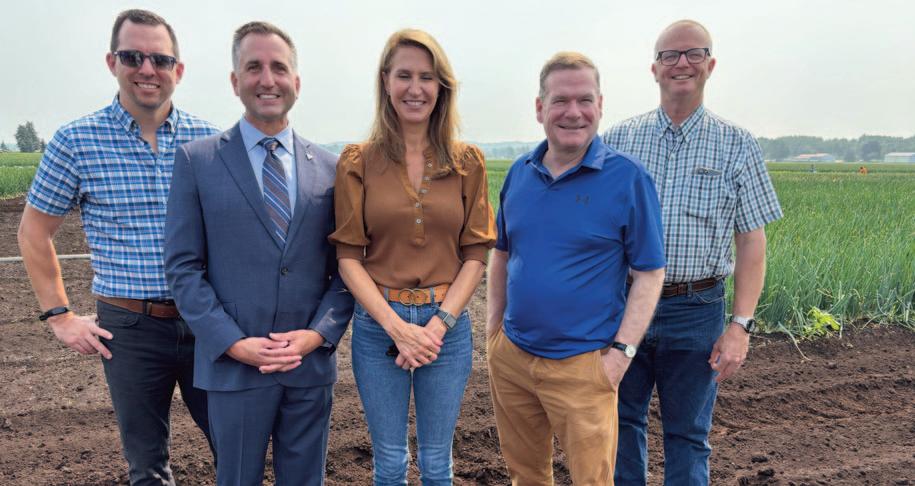
The Ontario Crops Research Station-Bradford hosted several Ontario ministers in August 2025. Pictured here, L-R: Gordon Stock, Senior Policy Advisor and Government Relations, OFVGA; Hon. Trevor Jones, Ontario Minister of Agriculture and Food, Agribusiness; Hon. Caroline Mulroney, President of Ontario Treasury Board; Hon. Todd McCarthy, Minister of Environment; Jan VanderHout, Chair, Environment and Conservation Committee, OFVGA.
Program (Bill George, Stefan Larrass, Shawn Brenn)
• Speaking in front of the House of Commons AGRI committee with grower recommendations on how to build on the new Grocery Code of Conduct (Gordon Stock)
• Presenting to the House of Commons AGRI committee on regulatory reform to make the Canadian Food Inspection Agency and Pest Management Regulatory Agency more predictable and efficient (Chris Duyvelshoff)
• Representing Ontario on the FVGC executive (Alison Robertson and Quinton Woods)
• Chairing FVGC’s transition working group (Alison Robertson)
• Organizing and participating in the annual Minor Use Priority Setting conference (Matt Sheppard, Chris Duyvelshoff, Deanna Vander Zaag)
New national relationships
One of the biggest wins for OFVGA to come out of the past year is stronger working relationships with our peers across Canada. We’ve been able to build solid, collaborative cooperation with other Canadian grower organizations, particularly in Québec and British Columbia, letting us share knowledge and advocacy on key issues. We also continue to work with our peers across North America on the shifting dynamics of relationships between growers and retailers – a strength we didn’t have a year ago.
The power of data in advocacy
In addition to relationships, much of the advocacy we do, whether provincial, federal or municipal, depends on data.
We’ve added a new policy analyst to our team this past year, Rachel Luo, to build out our capacity in this field.
The financial picture
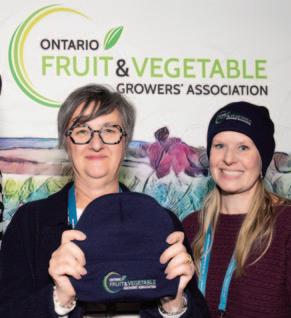
OFVGA continues to remain financially strong. We again paid the Fruit and Vegetable Grower of Canada membership fees on behalf of our members whose growers remit container fees –this amounted to $296,000 this past year. We are fortunate that the container fees continue to cover our expenses; we also earn additional revenue from administering programming such as the Northern Fruit and Vegetable Program, Fresh from the Farm and airport welcome kits for incoming workers.
We have set up a committee to explore how we can develop a fund that would be available to OFVGA members and stakeholders to invest in strategic industry initiatives, while maintaining a high level of transparency and accountability. We welcome input and ideas on this new concept.
Trade and tariffs
No report about 2025 would be complete without a mention of
tariffs and trade. There were a lot of unknowns at this time last year, but we were fortunate that trade and tariffs did not dominate our year the way they could have. Who knows what 2026 will bring, but much of what we are doing to strengthen our organization, whether it’s governance, staffing or resources, is to make us as prepared as possible for the unknown.
Ontario
Foodland
We continue to push for a dramatic refresh of the Foodland Ontario brand and related marketing activities. The past year has highlighted that it is more important than ever that Ontarians know where their food comes from, that we encourage buying local and that we protect our ability to produce as much of our own food as possible right here at home.
Foodland is a brand with strong consumer recognition, and we continue to encourage the provincial government to leverage this asset for the benefit of food consumers and producers.
Shawn Brenn is a potato grower and chair, Ontario Fruit and Vegetable Growers’ Association. Alison Robertson is executive director. Editor’s note: This is a summary of a more detailed report to be presented at the 2026 OFVGA annual general meeting on February 17.
519-763-8728,
The Grower reserves the right to refuse any advertising. Any errors that are the direct result of The Grower will be compensated at our discretion with a correction notice in the next
of the
No compensation will be given after the
is required before
The Ontario Fruit and Vegetable Growers’ Association is the sole owner of The Grower. All editorials and opinions expressed in The Grower are those of the newspaper’s editorial staff and/or contributor, and do not necessarily reflect the view of the association. All rights reserved. The contents of this publication may not be reproduced either whole or in part without the prior written consent of the publisher.
The Grower is printed 12 times a year and sent to all members of the Ontario Fruit and Vegetable Growers’ Association who have paid $30.00 (plus G.S.T.) per year for the paper through their commodity group or container fees. Others may subscribe as follows by
SHAWN BRENN ALISON ROBERTSON
URBAN COWBOY
A bold ingredient list for the ideal new product
Given the geopolitical upheaval our world faces, it’s difficult to look to the future with certainty about almost anything global but food.
One thing we know for sure is that consumers are always looking for something new. And when it comes to developments in the international fruit and vegetable sector, Fruit Logistica has few peers.
Fruit Logistica, considered one of the world’s top five trade shows for produce (along with the Ontario Fruit and Vegetable Convention), takes place this year February 4-6. The event, held annually in bustling Berlin, drew 91,000 industry professionals from 151 countries last year.
I’ve been fortunate to attend Fruit Logistica twice, as a member of the International Forum for Agricultural Journalism. The experience is awesome, verging on overwhelming – imagine 2,500 well-polished, well-organized exhibitors vying for your attention, in hall upon hall of produce and processing and production equipment. It truly requires the event’s full three days to digest it all.
Besides having an up-close look at the eye-popping breadth of produce, Fruit Logistica participants also have access to expert, top-tier market and trend analysts. One such expert is Berlin-based, Mexico native Roberto Hernández, client manager for chain and business development for the Dutch seed giant Rijk Zwaan. His company, which operates in more than 30 countries, produces seed for 30plus different crops and more
than 2,000 varieties.
Hernández is confident that even with the international chaos swirling about, produce consumers will be increasingly discerning about their purchases. And when they do, their focus will be on flavour – a sweeter cucumber, for example -- and nutrition, such as fruit and vegetables with higher vitamin content.
“Snack tomatoes, mini truss varieties, different shapes, onebite cucumbers and colourful peppers are increasingly popular, as people search for produce that feels indulgent without compromising on health,” he says. He believes the ideal new product will combine strong yields, long shelf life, consumer appeal and “an unforgettable eating experience.”
Developing this kind of product will require complex breeding, to find what Hernández describes as the right balance between sweetness, acidity and texture, while ensuring growers get the disease resistance and yields they need. There’s no doubt his company’s research and development team is paying attention to this trend. Rijk Zwaan dedicates an impressive 30 per cent of its annual return to research and development, and to variety development that mirrors regional and global tastes.
“We have been seeing a shift in how we look at varieties,” he says. “In the past it was just about yield and having the best resistance, but now we’re more focused on what consumers want, and that’s a big emphasis on taste and nutrition. It has to not only taste good, but do something for you as well.”
As an example, he notes that some pepper varieties now contain exceptionally high levels of vitamin C, even more than certain citrus fruits. Consumers are unaware of this, which is where communications come in. Helping them recognize such benefits is an important part of bringing new varieties to market.
Consumers know the traits they want, but they won’t necessarily understand that these traits can also be found in unconventional sources. And they
BlackCurrantPlants
might not understand nutritional lingo, such as nutritional units.
“There are many products we can make to impress consumers and meet their different expectations,” Hernández says. Describing taste is both an art and a science; describing
nutrition is still very much in the scientific domain.
But new products are coming, and to help maximize uptake, the industry needs to help educate consumers about benefits and features. Even with global uncertainty, consumers are king.
Federation of Agricultural Journalists.
SALES REPRESENTATIVE Area: Southern Ontario
NORSECO is a proud Quebec-based company that has been active in the agricultural sector for over 90 years and is now one of Canada's leading distributors of seeds, seedlings, and multi-cell trays for vegetables and flowers. The selected candidate will join a team of sales representatives in a pleasant environment.
Reporting to the Sales Manager of Vegetable Division
Main responsibilities and tasks
• Present, promote, and sell Norseco's products and services.
• Analyze customer needs to offer the best choices.
• Conduct research on potential new sectors/customers.
• Monitor new products and experimental varieties in production at customer sites.
• Travel to annual events and participate in exhibitions and conferences. Set up booths at various events to promote our products (approximately 2-3 trade shows per year).
Required qualifications
• College diploma in agricultural technology or relevant experience.
• Experience in field or greenhouse vegetables and/or greenhouse crop management. Ability to work under pressure and achieve goals.
• Excellent communication skills.
• Autonomy, dynamism, interpersonal skills, and initiative.
• Computer skills: Microsoft 365
• Good stress management and good physical fitness.
• Sales experience, an asset.
Job characteristics
• Status: full-time
• Work location: home office and on the road
• Cell phone and vehicle provided, plus expense allowance
• Competitive benefits: group insurance, telemedicine, annual bonus, etc.
• Salary: to be discussed based on experience and qualifications
• Start date: as soon as possible
Please submit your application by email to christian.chartrand@norseco.com
Only the selected candidates will be contacted.
Owen Roberts is a Guelph-based agricultural journalist and a pastpresident of the International
OWEN ROBERTS
USDA announces 2026 Agricultural Outlook Forum and agribusiness trade missions
The United States Department of Agriculture (USDA) will host its 102nd Agricultural Outlook
Forum February 19-20, 2026. The event will be held at the Crystal City Gateway Marriott,
Arlington, Virginia. All sessions will be livestreamed on a virtual platform.
The Forum program will feature the 2026 outlook for the U.S. agricultural economy and trade by USDA chief economist Justin Benavidez, a keynote address by secretary of agriculture Brooke Rollins, and a plenary panel of distinguished speakers who will discuss agricultural trade. The program also includes 22 breakout sessions organized by USDA agencies that will explore a wide range of current issues. More than 80 experts from government, industry, and academia will provide insights on key topics such as commodity and food price forecasts, farm income,
U.S. and global agricultural trade, the future of biofuels, and AI applications in agriculture.
The United States Department of Agriculture (USDA) has announced the 2026 schedule for six trade missions.
• Jakarta, Indonesia: February 2026
• Manila, Philippines: April 2026
• Istanbul, Turkey: May 2026
• Australia and New Zealand: August 2026
• Saudi Arabia: September 2026
• Vietnam: November 2026
Source: USDA January 14, 2026 news release
COMING EVENTS 2026
Feb 4-7 Fruit Logistica, Berlin, Germany
Feb 8-11 International Fruit Tree Association Annual General Meeting, Fresco, CA
Feb 10 Future of Food Conference, Rogers Centre, Ottawa, ON
Feb 11-12 Southern Interior Horticultural Show, Penticton Trade & Convention Centre, Penticton, BC
Feb 17 Ontario Fruit and Vegetable Growers’ Association Annual General Meeting, Hilton Fallsview Hotel & Suites, Niagara Falls, ON
Feb 18-19 Ontario Fruit & Vegetable Convention, Niagara Falls Convention Centre, Niagara Falls, ON
Feb 26 British Columbia Fruit Growers’ Association Annual General Meeting, Ramada Hotel, Kelowna, BC
Feb 26-27 International Potato Technology Expo, Eastlink Centre, Charlottetown, PE
Feb 27 FARMS Annual General Meeting, Delhi, ON
March 5 Ontario Potato Conference, Delta Hotel & Conference Centre, Guelph, ON
March 8-10 Advancing Women Conference West, Hyatt Regency, Calgary, AB
March 9-12 Fruit and Vegetable Growers of Canada Annual General Meeting, The Westin, Ottawa, ON
March 23-25 PMRA Minor Use Priority Setting Meeting, Gatineau, QC
is hereby given that the 167TH Annual Members and Directors’ Meeting of the Ontario Fruit and Vegetable Growers’ Association will be held in person at Hilton Niagara Falls/Fallsview Hotel & Suites on Tuesday, February 17, 2026
March 26 Canadian AgRobotics and AI Summit, The Grove at Western Fair, London, ON
March 30 Ontario Processing Vegetable Growers Annual Meeting, Sheraton Four Points Inn, London, ON
April 9 Farm & Food Care Ontario Annual General Meeting and Conference, Grandway Events Centre, Elora, ON
April 10-11
Maritime Wild Blueberry Growers’ Annual General Meeting, Hotel Beausejour, Moncton, NB
April 22 Garlic Production and Pest Management Workshop, OMAFA building, Conference Rooms 2 & 3, 1 Stone Road West, Guelph ON
April 28-30 Canadian Produce Marketing Association Convention & Trade Show, Toronto, ON
May Census of Agriculture
June 9-11 GreenTech, RAI Amsterdam, NL
WINTER BLUES?
Jakarta, Indonesia
FARM & FOOD CARE ONTARIO
Strengthening the link between fruit and vegetable growers and consumers
JESSICA McCANN
In 2025, through its Platinum Partnership with Farm & Food Care Ontario (FFCO), the Ontario Fruit and Vegetable Growers’ Association (OFVGA) helped reach millions of Ontarians by creating meaningful opportunities to bring farming and non-farming communities together. We answered consumer questions about growing Ontario fruits and vegetables and connected the public directly with farmers and food producers. This strong partnership is further reflected through OFVGA’s nomination of Nicki Scott as second vice chair of the FFCO Board of Directors.
Digital storytelling & reach
The Faces Behind Food project was featured in GO Transit and TTC stations across the Greater Toronto Area, with posters showcasing Canadian farmers and food producers. The campaign connected with an estimated 14.8 million people, amplifying the real people and stories behind the food they eat.
Through @FacesBehindFood on Instagram, Facebook, and TikTok, FFCO shared the stories of 94 individuals from across Canada and answered 30 Ask-aFarmer questions. Ontario’s fruit growers were further featured through Faces Behind Food, with a week-long profile of an Ontario apple grower garnering 34,393 views and an Ontario grape grower reaching 27,011 views.
Farm & Food Care continued expanding the public photo library at FarmPhotos.ca, adding fruit and vegetable imagery such as fresh grapes, pears, peaches, apple blossoms, and field tomatoes. The library remains free for non-commercial use, with thousands of images available for download.
Two new FarmFood360 virtual reality tours filmed at
Ontario fruit and vegetable farms were added to FarmFood360.ca in 2025. One tour takes viewers behind the scenes at Algoma Orchards, showcasing apple production, cider processing, and controlled-atmosphere storage.
The second visits a field tomato farm operated by the Pinsonneault family in ChathamKent, highlighting planting, growing, and harvesting practices. These tours join 27 others on FarmFood360.ca, which attracts more than one million viewers annually.
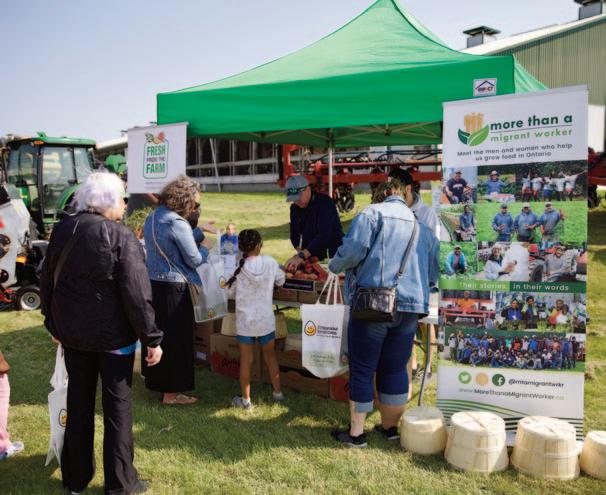
2025 was also a successful year for the More than a Migrant Worker (MTAMW) project, a collaborative initiative between FFCO and OFVGA. FFCO facilitated photo and video shoots at seven farms, completing 25 interviews for the campaign at Huebel Grapes Estates, McGregor’s Produce, Pelee Acres, Shuh Orchards, Tawse Winery, The Fruit Wagon, and Top Meadow Orchards.
As part of the project’s reach, MTAMW representatives and featured farm workers joined an FFCO farm tour in the fall. A full bus of Agriculture and Agri-Food Canada staff visited McGregor’s Produce, gaining firsthand insight into the experiences of seasonal agricultural workers and the impact of related policies and programs.
One guest shared the following reflection:
“One of the most meaningful things I learned at McGregor’s Produce was the genuine care and respect they demonstrate toward their Jamaican workers. Hearing that many return year after year speaks volumes about the McGregor family’s values and the positive environment they’ve cultivated.”
Public engagement & events
FFCO continued collaborating with OFVGA through three highly successful Breakfast on the Farm events in 2025 engaging
more than 6,700 visitors through both on-farm and urban experiences. Beginning in June at Hoenhorst Farms in Innerkip, OFVGA was on site to answer questions and distribute apples to visitors. August events in Norfolk County included an Ontario apple orchard, where OFVGA connected with guests and shared Ontario-grown carrots. Later in the year, FFCO partnered with Kitchener-Waterloo Oktoberfest to bring the farm to the city through FARMtoberfest.
FFCO also spent 10 days at the Royal Agricultural Winter Fair, where the new apple and field tomato FarmFood360 tours premiered. This interactive exhibit allowed thousands of visitors to experience Ontario farms through virtual reality.
Farm tours & education
2025 was a strong year for in-person, immersive farm tours, showcasing Ontario fruit and vegetable farms and the families behind them. These experiences welcomed students from Georgian College to Homestead Orchard, Algonquin College culinary programs to Suntech Greenhouses, and Agriculture and Agri-Food Canada staff to McGregor’s Produce. Survey results showed positive perceptions of Ontario agriculture increased from 59% per cent before the tours to 92 per cent afterward.
FFCO also hosted 12 Virtual Food and Farming Field Trips in 2025, nine delivered in partnership with AgScape. These
tours reached more than 35,600 participants and continue to offer an accessible way to connect directly with farmers.
Training & member support
Alongside outreach efforts, FFCO delivered practical support to members, including:
• 40 presentations and training sessions for industry leaders and first responders
• 15,113 resources distributed to 117 fairs and organizations
• 29,332 copies of The Real Dirt on Farming circulated
• 2,100 digital resource downloads for Local Food Week and Ontario Agriculture Week
• A full-day professional development session for agricultural communicators FFCO also continues to provide opportunities for member connection through quarterly
#OntAg communications calls, Member Forums, and professional development events.
What’s ahead for 2026?
Members such as Ontario Fruit and Vegetable Growers are foundational to FFCO’s success. Together, we continue building momentum for meaningful connections that strengthen public confidence in farming and food.
To learn more visit www.FarmFoodCareON.org and subscribe to the monthly e-newsletter. Questions and comments can be directed to FFCO staff at info@farmfoodcare.org.
Jessica McCann is communications coordinator, Farm & Food Care Ontario.
Navigating Canada’s premier horticultural event
Feb. 17, 7:45 pm – 11 pm
Back Bar
Wyndham Fallsview Hotel, Lower Lobby
Canada’s premier horticultural event welcomes exhibitors and convention attendees the evening before the official opening at the Niagara Falls Convention Centre. This social gathering follows the Ontario Fruit and Vegetable Growers’ Association banquet.
Early bird registration ends February 11 at 5 pm for the two-day package at $130+HST. This includes access to the trade show and all educational sessions. Plus complimentary drink tickets to the Farmers and Friends Reception. To register, link to: www.ofvc.ca
CONNECT with fellow farmers and growers EXPLORE over 3 acres of exhibitors
The annual craft cider competition returns in 2026 with expanded categories: modern cider, fruit and/or botanical cider, hopped/ barrel-aged cider, traditional/heritage cider. Online registration is due February 4. Cider shipping deadline is February 11. Competition is February 17 at 1 pm. The winners will be announced through the social media accounts of Drink Ontario Apples, Ontario Apple Growers and ONcore.
Contact Kelle Neufeld, OAG at 905-6880990 or www.ofvc.ca/ONCraftCider.html
Feb 19, 7:45 am – 9:15 am The
Featured guest is Judy Croon, Canada’s keynote humorist. She’s a motivational speaker, comedian, and former Second City stand-up coach who shows audiences how to lighten up before they burn out. When making your reservation online, add $10 to attend this breakfast event on February 19. The nominal fee is matched by OFVC and donated to an Ontario Food Security agency.
your knowledge from leading industry experts, all in one place
Lounge, 2nd Floor
Navigating Canada’s premier horticultural event
AWARDS AND AGMS
The Ontario Craft Cider Awards will be presented on Feb 18 at 3:30 pm, Room 203. The 2025 Market of the Year Award will be unveiled by Farmers’ Markets Ontario on Feb 18 at 9:30 am in Ballroom A. The association is also having its annual general meeting (AGM) the same day at 11:30 am. Agritourism Ontario is holding its AGM on Feb 18 at 11:30 am in Ballroom D. The Ontario Lavender Association will be hosting its AGM on Feb 18 at 3:30 am in Room 205.
EDUCATIONAL SESSIONS
OFVC has a new planning tool to chart your two days of seminars. Sort by date, track, room and more. Click on a session for an overview and the speaker bio.
TRADE SHOW
POSTER DISPLAY
The Poster Display is a venue for researchers, industry and extension specialists to present new information pertinent to Ontario’s horticultural industry. Posters present results from research trials, including pest management, crop production, new cultivars, and opportunities for marketing Ontario horticulture. Both a regular and student competition will be judged.
For more details, contact chair Cara McCreary at 519-981-2851 or co-chair Denise Beaton at 519-400-3636.
New Varieties for the 2026 Season
Every year, we conduct real-world 昀eld trials at our of昀ce/research farm. These trials allow us to plant, monitor, and harvest vegetables - just as you do. We collect data from these trials so, when you’re ready to order, we can help you make the best decisions. TEXAS
Your family farm legacy is important. We understand that because Rupp Seeds is built on legacy. Grandpa Sylvan, started our company in 1946 and our dad, Roger, started selling vegetable seeds in 1985. Our success depends on your success. Our goal is to help growers produce the best vegetables for success in their market.
Thank you for letting us be a partner in your farm’s legacy.
Philip Rupp & Barry Rupp Brothers - Owners
Horticulture, all under one roof. Follow the red carpet. Exhibitors are waiting to welcome you to
Farmers’ markets make memories…and money
KAREN DAVIDSON
In a chaotic world, the ritual of “going to market” on Saturday morning is calming for consumers seeking fresh, locally produced food. It’s a community space, a sanctuary where it’s possible to bump into friends casually.
Market days are also part of Alex Chesney’s routine. She and her family at Thames River Melons, Innerkip, travel to 20 southwestern Ontario markets in a week, almost every day of the growing season.
“We’ve built brand awareness for more than 30 years,” says Chesney. “In some ways, we’ve done things backwards. We didn’t start our on-farm market until eight years ago.”
The buy-local, buy-Canadian trend is going strong. Chesney plans to return to printed recipe cards for 2026, sensing movement in consumer trends.
“The rising use of artificial intelligence is causing distrust of online content,” Chesney observes. “In response, I think consumers are returning to in-person, tactile experiences.”
While social media has been part of the communications mix, there’s emphasis on Instagram for the 35-and-under generation and Facebook for an older generation. Facebook groups have become popular. One example is Food in the Waterloo Region which features restaurants, recipes, local spots and food-related businesses. It
has 121,000 members.
The farm’s website is still core, updated for easier navigation, specifically on where to find Thames River Melons at markets. The website inspires with favourite ways to eat green garlic as well as recipes for red velvet beetroot brownies and zucchini fritters.
Logistics are key to managing 100 employees in the summer, tracking cargoes and organizing daily market events. The cell phone is overflowing with messages, so as of 2025, staff used Slack, an internal communications tool. It centralizes team communication, direct messages and file sharing. It can also be used for private
direct messages and huddles (audio/video). In real time, employees can share what sales tactics are working to push volume. For example, mix ‘n match sales have become popular so that consumers can bundle their favourites.
Pricing is an art at farmers’ markets.
“It’s not uncommon for our prices to be in the same neighbourhood as grocers,” says Chesney. “The added bonus is that we offer quality and freshness. Labour is the highest cost of our produce, so if a consumer wants a lower price, we invite them to our pick-yourown farm.”
Over the years, connections
have been made with other vendors. Chocolate makers have stirred berries into their concoctions. Bakers have made a savoury tart with asparagus. Gelato makers have used cantaloupe and berries for their “flavour of the week.” And pizza makers have freshened their pizzas with vegetable toppings. Is there anything new under
the sun? Yes, new varieties and new recipes.
Interested? Find out more from Alex Chesney, Thames River Melons, speaking on Thursday, February 19 at 11 am in Ballroom A. Topic: Farm to Farmers’ Market: meeting at the market.
Alex Chesney, her brother Grant, family and team prepare for 20 southwestern Ontario farmers’ markets every week of the growing season.
Alex Chesney, currently chair of Berry Growers of Ontario, has a unique way of displaying berry pies in the midst of the original ingredients at the Thames River Melons stall at farmers’ markets.
Emily Hall presents asparagus.
A pitfall in the pipeline: understanding and managing bitter pit in apples
ERIKA DeBROUWER
Bitter pit remains one of the most challenging physiological disorders in apple production. Characterized by dark, sunken spots near the calyx end of the fruit, bitter pit is often associated with calcium (Ca) deficiency — but the story is far more complex. Recent research shows that bitter pit is influenced by mineral status, hormonal balance, cellular function and orchard practices. Understanding these interactions is essential for prevention and management.
Calcium is a vital secondary nutrient for cell division, elongation, and structural integrity. Unlike mobile nutrients, Ca cannot be stored and is minimally redistributed within the plant. It is an immobile nutrient that moves exclusively through the xylem. The xylem is a one-way transport system dependent on transpiration whose flow is highly dependent on environmental factors. Environmental factors such as temperature, humidity, wind, and soil moisture influence transpiration and, therefore, Ca movement. Not only is Ca uptake (i) limited to one pathway (ii) environmentally driven, but it is also (iii) in competition with leaves. Leaves transpire more than fruit, creating competition for Ca during critical growth stages.
Why bitter pit happens
Bitter pit is a multifactorial disorder, where calcium deficiency is a risk, but is not the sole reason for the presence of bitter pit. While Ca deficiency plays a role, bitter pit is not simply a matter of low soil Ca. Ontario soils generally have adequate Ca due to calcareous parent material. Instead, localized deficiencies occur because of impaired transport
within the tree. Several factors contribute:
• Xylem dysfunction: Xylem dysfunction is the breakdown of the water and nutrient transport system inside the fruit. In Honeycrisp apples, this happens early because the fruit grows so quickly that expanding cells crush the delicate xylem bundles. Once these bundles collapse, calcium can no longer move into the fruit, leaving tissues deficient and increasing bitter pit risk— even when soil calcium is adequate. Loss of vascular function begins as early as five weeks after bloom in Honeycrisp, halting Ca movement to the fruit.
• High vegetative vigour: Large leaf canopies compete for Ca, reducing allocation to fruit during critical uptake periods.
• Nutrient imbalances: High potassium (K) and magnesium (Mg) relative to Ca increase bitter pit risk. Excess nitrogen (N) also promotes vigorous growth contributing to fruit and leaf competition.
• Cultivar and rootstock effects: Honeycrisp is highly susceptible due to rapid fruit growth. Rootstocks influence nutrient uptake and vigour; some increase bitter pit risk by favouring K and N absorption.
• Environmental stress: Drought, fluctuating soil moisture, and heat stress disrupt transpiration and nutrient flow.
Defense against the dark pits
The best defense against bitter pit begins with orchard establishment:
• Soil testing: Assess Ca levels, pH (ideal 6.5 – 7.0), moisture, and nutrient balance before planting. Adjust pH and nutrients well in advance as changes can take a few years to show results.
• Rootstock selection: Choose rootstocks suited to your soil and avoid overly vigorous types that uptake excess K and N. New
York State trials suggest G.969, G.214, and B.10 perform well with Honeycrisp, balancing yield and bitter pit risk. For established orchards, focus on practices that moderate growth and maintain nutrient balance:
• Crop load management: Aim for 6 – 8 fruit per cm² trunk cross-sectional area. Excessive thinning or light crops lead to oversized fruit and higher bitter pit risk, try to minimize biennial bearing through a nibble thinning approach.
• Control vigour: Limit late-season N applications; apply early if needed. Prune to reduce shoot competition for Ca.
• Irrigation: Maintain consistent soil moisture from May to July to support Ca transport, but avoid excess water near harvest.
• Nutrient monitoring: Test soil, leaves, and fruit midseason. Keep K and N levels low, ensure adequate boron, and target Honeycrisp leaf Ca at 2%.
• Foliar calcium sprays: Apply early and regularly if using this approach but note that less than 10% of sprayed Ca reaches the fruit.
Preliminary trials in Michigan indicate that plant growth regulators have potential in mitigating bitter pit by influencing calcium distribution and growth patterns. Auxins, abscisic acid, gibberellin inhibitors, and ethephon demonstrate variable effectiveness in reducing bitter pit incidence. It is important to note that some of these products are not currently registered for use in Canada.
The bottom line
Bitter pit is a multifactorial disorder with no single solution.
Success depends on an integrated approach, starting with soil and rootstock selection, followed by careful crop load management, nutrient monitoring, and vigour control. As research continues, one principle stands firm regarding localized calcium deficiencies:
“It is not due to lack of availability — it is due to lack of transportability.”
For more information, resources and references, check out the latest ONcore Newsletter, on ONfruit.ca
Erika DeBrouwer is OMAFA tree fruit specialist.
Getting to the bottom of grapevine trunk disease
WENDY McFADDEN-SMITH
Grapevine trunk diseases (GTDs) are destructive fungal infections that attack the woody parts of grapevines, causing stunted growth, leaf discoloration (yellowing/scorching), dieback, and eventual vine death, significantly impacting vineyard productivity and sustainability. Whether the vineyard is young or mature, it’s still at risk for these pathogens to enter through pruning wounds, to colonize the wood, and to spread by airborne spores. Management is focused on preventative pruning, wound protection and removal of infected wood.
Dr. Mark Sosnowski will be bringing his expertise to the grape sessions at the OFVC. He is an internationally recognized plant pathologist who leads the Horticulture Pathology subprogram at the South Australian Research and Development Institute (SARDI). After completing his PhD in plant pathology at the University of Adelaide in 2002, he has spent more than two decades researching the management of grapevine trunk diseases, including Eutypa and
Botryosphaeria dieback, across Australia and New Zealand. His collaborative work spans continents, with active partnerships in Europe, North and South America, and biosecurity research with Cornell University in the U.S. Interested? Find out more from Dr. Mark Sosnowski, South Australian Research & Development Institute, speaking on February 18 in Rooms 207 and 208, Second Level at 3:30 pm Topic: Size
matters: the benefits of virtuous pruning on grapevine trunk disease. and Feb 19 at 3:30 in Rooms 207 and 208
Topic: Don’t let er rip! Shoot thinning can impact grapevine trunk disease infection.
The morning after the conference, Friday, February 20, he’ll be demonstrating how pruning can be used to manage grapevine trunk disease from 10 am to noon. This hands-on workshop will be hosted at the
Andrew Peller vineyard at 1364
Concession 6, Niagara-on-theLake, Ontario. Watch for the Grape Tailgate Tour sign! What you will learn:
• recognize dormant vines infected with grapevine trunk disease
• symptoms of different types of trunk disease
• pruning strategies including “virtuous pruning” to reduce infection
• how trunk renewal can be used to manage grapevine trunk
diseases
This post-OFVC event is sponsored by Ontario Grape and Wine Research Inc. through the Marketing Vineyard Improvement Program (MVIP).
Wendy McFadden-Smith is tender fruit and grape IPM specialist for the Ontario Ministry of Agriculture, Food and Agri-business.
For Ontario fruits and vegetables, every season tells a different story
REBECCA METZGER
Agricorp delivers business risk
management programs that help Ontario farmers manage unpredictable weather and market volatility, adding more
financial stability for the fruit and vegetable sectors.
This update offers a snapshot of how business risk management
programs supported edible horticulture farmers through 2025. For vegetable crops, conditions last August and September made for optimal harvesting and reduced disease pressure, resulting in average yields and claims. For fruit crops, most fared well, with average to above-average quality and yields, resulting in a low claim year across the sector.
Business risk management program support
Agricorp delivers business risk management programs that help growers protect their valuable businesses against risk such as large income declines, adverse
weather, lost markets and increased costs.
o Production Insurance: This program provides coverage for yield and quality losses due to weather events, disease, pests, wildlife, or other uncontrollable natural perils.
o AgriStability: This offers protection against significant overall farm income declines.
o Self Directed Risk Management (SDRM): A provincial-only program providing additional support, to help producers manage risks beyond their control.
Continued on page 19
Dr. Mark Sosnowski
Symptoms of grapevine trunk disease
For Ontario fruits and vegetables, every season tells a different story
Continued from page 18
Production Insurance
Production Insurance covers production and quality losses caused by insured perils. Premiums are cost shared by government: the government pays 60 per cent of premium costs and 100 per cent of the administrative costs. Production Insurance is designed to keep premium rates stable and affordable relative to the high value of crops that farmers are currently insuring.
2026 fruit coverage is in place as of January 1 for insured customers. Vegetable growers have until May 10 to apply for or make changes to 2026 coverage. Growers who participated in 2025 will receive renewal packages in early April.
Yield-based coverage for fresh vegetables - 2025 crop stats
Yield-based coverage for fresh vegetables gives growers a guaranteed level of production unique to their farm. Coverage is based on comparing a grower’s actual yields to their average historical yields for each crop. Growers are covered for losses due to adverse weather, disease, pests, wildlife, or other uncontrollable natural perils. Available coverages include unseeded acreage, replant, salvage benefit, and production loss.
Here’s a look at 2025 yieldbased coverage. Agricorp has processed approximately $1.7 million in claims mostly due to dry conditions. Agricorp staff continues to collect yields for these crops and adjudicate claims.
Fresh market vegetablesacreage loss
For acreage loss, growers can insure up to 37 fresh market vegetables on a per acre basis. For this coverage, any losses experienced are compared against predetermined abandonment thresholds. These thresholds are based on the crop yields required to meet average production costs for a typical field of that crop. An abandonment claim may be paid if a customer’s yield falls below the threshold level due to an insured peril.
Under this coverage, growers can select peril-type coverage for losses due to hail only, frost only, hail and frost, or multi-peril. In addition to abandonment coverage, coverage is also available for replant, unseeded acreage and salvage coverage.
Here’s a look at 2025 participation in acreage loss coverage. Agricorp has processed
approximately $5.1 million in claims mostly due to dry conditions, disease and frost. Agricorp staff continues to collect yields for these crops and adjudicate claims.
Production coverage for fruit – 2025 stats
Production Insurance coverage provides fruit growers a guaranteed level of production unique to their farm. Coverage is based on comparing a fruit grower’s actual yields to their average historical yields for each crop. Under this coverage, growers are covered for production and quality losses due to adverse weather, disease, pests, wildlife, or other uncontrollable natural perils.
Here’s a look at 2025 fruit coverage. Agricorp has processed approximately $6.1 million in claims mostly due to poor pollination, frost and hail. Agricorp staff continues to collect yields for these crops and adjudicate claims.
AgriStability
AgriStability provides whole farm coverage that is designed to cover large declines in net income caused by production loss, increased costs, or market conditions. It protects the income of the whole farm instead of one commodity at a time. If a farmer’s program year margin falls below 70 per cent of their average historical net income (reference margin), AgriStability helps to offset the difference.
For 2025 only, the compensation rate has increased from 80 per cent to 90 per cent, meaning higher payments for eligible farmers. 2025 payments are made after the 2025 tax year ends and farmers submit their claim forms. As another way to improve support for farmers in 2025, the current AgriStability payment cap is being doubled from $3 million to $6 million.
Starting in 2025, the provincial and federal governments have introduced a tax-aligned reference margin option, making it easier to participate. You can choose to have a reference margin calculated using the historical income and expenses you file for taxes. Farmers who select this
option can benefit from better payment predictability and less paperwork if they don’t have a claim.
The year end reporting deadline for customer enrolled in the 2025 program is June 30, 2026. For the 2026 program year, farmers have until April 30, 2026 to pay their fee, apply and submit a New Participant form or make changes for existing participants.
SDRM
Self-Directed Risk Management for Edible Horticulture (SDRM), helps producers manage risks beyond their control, such as fluctuating costs and market prices. Growers deposit funds into an SDRM account and it is matched by the Ontario government to help mitigate the risk associated with a farm business.
Eligible growers would have received deposit notices in September 2025. The last day to make a deposit for the 2025 program year is February 1, 2026 or the deadline noted on the
Deposit Notice mailed to you. Interested? Find out more at Agricorp booth
#307.
Rebecca Metzger is senior industry specialist, Agricorp.
A bitter root cause – aster yellows in carrots
DENNIS VAN DYK
Over the past few years, carrot growers have likely noticed an increasing amount of aster yellows in their carrot fields. It’s hard to miss the symptoms -carrot leaves turn red and stand out as you walk through the field (Figure 1). As you get closer, you’ll notice the crown of the plant growing an excessive amount of small new sprouts (Figure 2). If you pull that carrot up, you’ll notice swelled root bases with lots of new hairy root growth (Figure 3). If you’re unfortunate enough to eat that carrot, it will taste horribly bitter and be very brittle. No one wants a bitter carrot in their bag, frozen vegetable medley or soup so here are some ways you can prevent aster yellows in your carrot crop.
First some background, aster yellows is caused by a phytoplasma (Candidatus phytoplasma asteris). This phytoplasma acts like bacteria which multiplies in the phloem (sugar transport) of infected plants and disrupts movement. This stresses the plant which then produces compounds like terpenoids and phenolics which give the carrot a bitter taste and alters hormones causing excessive root and shoot growth.
Since aster yellows can’t survive in seed, it needs help to infect from season to season. The aster leafhopper is what vectors and transmits the aster yellows phytoplasma. Aster leafhoppers are small, greenish blue insects with six spots arranged in pairs on top of the head. Its wings are transparent and heavily veined (Figure 4). The aster leafhopper overwinters as an egg in the leaf tissue of winter grains such as wheat and rye. As the winter grains mature in late May and early June, local first-generation leafhoppers move into vegetable crops.
Leafhopper populations from the U.S. are also carried into Ontario on weather systems. Both
local dispersal and long-distance movement influence the incidence and severity of the aster leafhopper and aster yellows. The host range for aster yellows spread by aster leafhoppers is wide and many vegetable crops are susceptible including potato, onion, celery and lettuce.
Pressure of aster yellows varies from year to year due to two main factors: amount of aster leafhoppers and per cent of aster leafhoppers that are carrying aster yellows (% infectivity). The percentage infectivity over the last few seasons has been quite high, leading to more symptoms showing up in the field. Not all aster leafhoppers carry aster yellows but they can pick it up by feeding on already infected plants. After a few days these leafhoppers can then spread aster yellows through continued feeding on healthy plants.
Carrot varieties have varying tolerances to aster yellows -some varieties are more susceptible/resistant than others. Historically for older carrot varieties, tolerance to aster yellows was screened and publicized but susceptibility data for new varieties is not readily available. Grower experience is important to note varieties that consistently have high aster
yellows incidence. What makes some varieties more or less susceptible to aster yellows is a combination of traits. Some may be more attractive to the aster leafhopper to preferentially feed and there are also differences in the ability of the plant to fight against and prevent the aster yellows infection.
Once a plant is infected, there is no cure so control measures are targeted at the aster leafhopper. You can see a list of registered products by visiting the Ontario Crop Protection Hub (cropprotectionhub.omafra. gov.on.ca). When spraying for aster leafhoppers, it’s important to remember that symptoms of aster yellows do not show up for days (younger plants) to weeks (older plants) after infection. Preventative spraying based on aster leafhopper counts and not on symptoms is most effective. If you are spraying based on symptom development, the flush of aster leafhoppers may have already moved on by the time you spray for them.
This is why scouting is so important and can be done with orange/yellow sticky cards around the edge of the field or by sweep netting. Monitoring for the local population in June is important as those aster leafhoppers leave
winter grains and look for new hosts. Continued monitoring for more population flushes coming up from the U.S. is also important as the carrot continues to be susceptible to aster yellows all season long. Updates on aster leafhopper counts and per cent infectivity can be found throughout the season on the ONvegetables Blog (onvegetables.com) in the weekly
Vegetable Crop Report (VCR). Subscribe so you can receive the emails throughout the growing season with crop, insect, and disease updates across Ontario.
Dennis Van Dyk is a vegetable crop specialist, Ontario Ministry of Agriculture, Food and Agribusiness.
Figure 2. Excessive sprout growth caused by hormone disruption in a carrot infected with aster yellows.
Figure 1. Red leaves of aster yellows infected plants can often be seen while walking through carrot fields.
Figure 3. Swelled root bases and excessive hairy root growth in a carrot infected with aster yellows.
Figure 4. Green/blue aster leafhopper on a sticky trap with distinctive spots on its head.
BITS & BITES
CanadaGAP highlights for 2025
1. CanadaGAP Addendum for Pollinator Health
• CanadaGAP went live with its new Addendum for Pollinator Health in 2025.
o The addendum is benchmarked by the IPM Institute of North America and accepted by Walmart and other major retailers in Canada and the USA.
o Certification to the new addendum was available starting April 1, 2025 for farms needing to meet customer requirements for IPM.
o A new online training unit for auditors was released last November and continues to be offered on demand to new CanadaGAP auditors.
o See more information at: www.canadagap.ca/ audit-checklist/pollinator-health/
2. Certification Bodies
• A choice of five CanadaGAP certification bodies (CBs) was maintained throughout 2025.
o This stability is welcome and gives CanadaGAPcertified companies options to explore a range of ser vice providers. CBs compete in terms of service delivery, availability and location of auditors, and fees charged for CanadaGAP audits.
o CBs offering CanadaGAP audits include: BNQ, Control Union, MSVS, NSF and TSLC. See more information at: www.canadagap.ca/certification/ certification-bodies/
o The number of clients choosing a different CB this year has been growing, demonstrating a gradual redistribution of the client base across CBs.
3. New Appendices
• Two new appendices to the CanadaGAP Food Safety Manuals were published this year.
o These resources provide additional guidance to operations dealing with flood-related disasters and to exporters preparing for future compliance with the US FSMA 204 Traceability Rule.
4. Board Activities: Five-Year Strategic Plan and AGM 2025
• The CanAgPlus Board published its first official strategic plan for the 5-year period covering 2024-2029. A copy of the plan is available at www.canadagap.ca
• The 2025 CanAgPlus AGM is being held in person for the first time since COVID. The meeting will take place December 3 in Calgary, Alberta. Virtual attendance is also offered.
5. Auditor Management
• Auditor Database: CanadaGAP launched its custom Auditor database in 2025 to manage data, approvals, and competency updates for the CanadaGAP auditor pool.
o This development followed the launch of the 2024 database for Operations management. Both databases were deployed after an intensive two-year process to refine CanadaGAP-specific tools.
• Auditor Coordinator: A new CanadaGAP Auditor Coordinator was hired this year, with responsibility for auditor oversight and administrative functions.
• Auditor pool: Fifteen new auditor prospects were presented by CBs this year. Auditor credentials must be reviewed and approved by CanadaGAP. Over half of the candidates successfully demonstrated compliance with auditor qualification requirements.
• Auditor Recognition Award: The Sheri Nielson Auditor Recognition Award, introduced by CanadaGAP three years ago, has become an annual opportunity to honour exceptional CanadaGAP auditors. To date, six recipients have been celebrated. The next award will be presented in conjunction with the CanAgPlus AGM on December 3.
• Refresher testing: Over 100 candidates, including all active CanadaGAP auditors, successfully underwent refresher testing during winter 2025.
• CanadaGAP witness audits: Annually, CanadaGAP observes a subset of auditors to assess their performance during audits, ensure maintenance of competency, and offer further support, calibration and mentoring to promote continuous improvement. Witness audits generally focus on a specific region or regions each year. Numerous auditors in BC and Atlantic Canada were witnessed this year, totaling 15 witness audits completed by CanadaGAP.
• CanadaGAP Auditor Training course: A growing number of training providers continues to expand the annual number of course offerings. Most training now takes place online.
6. GFSI Activities
• CanadaGAP has maintained GFSI recognition uninterrupted since 2009. CanadaGAP must maintain alignment with GFSI requirements whenever the normative documents are revised (CanadaGAP manuals, audit checklist, etc.), as well as each time GFSI updates its benchmarking requirements. Maintenance of recognition also entails an annual internal audit (office visit to CanadaGAP) and remote file reviews of ten files selected by GFSI each year.
• The Executive Director was named a member of the newly reconstituted GFSI Benchmarking and Harmonization Working Group. The working group has a three-year mandate culminating in public consultation and release of the next version of the GFSI Benchmarking Requirements.
What’s Ahead for 2026:
• CanadaGAP is in the process of re-benchmarking the program to new GFSI requirements (Version 2024 of the GFSI Benchmarking Requirements). The process will conclude sometime in 2026.
• In compliance with the Canadian Government Food Safety Recognition Program, CanadaGAP is undergoing its 80-month Maintenance of Recognition Review by the Canadian Food Inspection Agency. This process will conclude in early 2026.
• A new version of the CanadaGAP normative documents will take effect on April 1, 2026. Version 11 will be published prior to the effective date:
o Release of Version 11 the CanadaGAP Food Safety Manuals for Fresh Fruits and Vegetables and for Greenhouse Product is anticipated by late January 2026.
o Publication of Version 11 of the CanadaGAP Audit Checklist is planned for early March 2026.
o Version 11 of the CanadaGAP Program Management Manual will be publicly available on the website by late March 2026. Please contact the CanadaGAP office at info@canadagap.ca with any questions.
CPMA set to host biggest produce show ever in Toronto
Online registration for the 2026 Canadian Produce Marketing Association’s Convention and Trade Show (CPMA 2026), taking place April 28-30, in Toronto, Ontario, is now open.
The CPMA Annual Trade Show is Canada’s largest event dedicated to the fresh fruits and vegetable industry and this year’s edition promises to be the biggest show to date. The event will be held at the Metro Toronto Convention Centre (South Building) and will feature more than 700 booths representing more than 300 companies from around the world including, major growers, packers/shippers, wholesalers, retailers, brokers, importers/ exporters, foodservice operators, and industry professionals throughout the whole produce supply chain.
CPMA is introducing new initiatives this year, including food stations on the trade show floor and extended show hours on opening day, April 29, to help attendees
maximize their networking opportunities, build new connections, and strengthen their business relationships.
“We are delighted to once again bring the industry together in Toronto, Canada’s biggest and most diverse city,” said Ron Lemaire, CPMA president. “With a trade show floor featuring a record number of booths, we expect to welcome our largest group of participants yet. This year’s program is also designed to give attendees more time to expand their professional networks, explore new business opportunities, and socialize to strengthen their business relationships.”
To get the most out of this event, industry members are encouraged to secure full delegate passes, which grant access to a wide range of unique educational and networking opportunities, including the trade show floor, business sessions, and social events such as the Chair’s Welcome Reception, Awards
Brunch, the Delegate Breakfast, and the Annual Banquet.
In addition, early bird full-delegate registrants have a chance of winning a Destination Toronto prize package which includes an access to Toronto’s Iconic CN Tower EdgeWalk, a $250 food and beverage gift card, and a Toronto CityPass that grants admission to Toronto’s top attractions. The lucky winner of this package will be picked randomly after
March 6, the early bird registration deadline.
To register and reserve accommodation for CPMA 2026, visit the CPMA Convention website. Link here: convention.cpma.ca/attendees/ online-registration/
Source: Canadian Produce Marketing Association January 6, 2026 news release
MARCH 2026
BOOK AD SPACE FEBRUARY 10, 2026 advertising@thegrower.org
2025: a year in review
MATT SHEPPARD & CHRIS DUYVELSHOFF
Ongoing concerns continue regarding the funding and capacity of the Pest Management Centre (PMC) of Agriculture and Agri-Food Canada (AAFC) while several policy initiatives were the focus of engagement with the Pest Management Regulatory Agency (PMRA). Advocacy activities in 2025 focused on funding enhancement for PMC and pursuing a mandate change for PMRA.
OFVGA – advocacy
Securing additional funding for the Minor Use Pesticides Program of PMC remains a top priority. Many new crop protection registrations would not happen for fruit and vegetables without the work of the PMC. The program remains under limited capacity with half the average output from a decade ago, reducing the ability of PMC to conduct its critical work facilitating minor use label expansions. Ultimately, fewer projects at PMC means a smaller crop protection toolbox for growers. In support of seeking restored capacity at PMC, OFVGA along with FVGC met with elected officials, engaged with provincial and federal agriculture Minister’s offices, senior AAFC staff, and shared advocacy materials. We will continue working towards a funding enhancement for this critical program.
Expanding the mandate of the PMRA beyond human health and environment to include considerations for impacts to domestic food production and competitiveness has also been a major objective. Similarly, OFVGA along with FVGC engaged at several points throughout the year on this topic with some degree of success. Firstly, this vision was reflected as a campaign commitment in the 2025 federal Liberal platform. Secondly, OFVGA and FVGC along with some member organizations were witnesses for a fall study of the parliamentary Standing Committee on Agriculture and Agri-Food on regulatory reform in the agri-food sector. In December, a report from the committee outlined
several recommendations to government, including to change the mandate of PMRA to include economics, food security and the cost of food in their decisions. We will utilize this initial support to seek meaningful change in 2026.
OFVGA – supporting activities
The annual Canadian Pest Management Priority Setting Workshops held in March are a critical venue to bring together growers, consultants, extension specialists, registrants, regulators, and government to discuss pest management issues and identify potential solutions for minor use crops. Starting with the 2024 meeting, OFVGA and the Fruit & Vegetable Growers of Canada (FVGC) have been cohosting the event with PMC so it can remain in person. Strong sponsor support – including from grower associations – and registration fees enabled the 2025 workshop to be held successfully. Continued funding by grower organizations helps to send a clear message to government that the workshop is an important collaboration to us. We are pleased to be working together again with PMC for the 2026 meeting scheduled for March 23-25th in Gatineau, Quebec.
The OFVGA also began efforts to increase public-facing communications on crop protection topics in 2025, kicking off with an initial series of three sponsored media articles in the fall. These articles promoted the importance of crop protection and the robust systems in place to ensure safety. Further activity is expected in 2026 to continue spreading this message.
PMRA – policy
After a one-year extension, the new tank mixing policy took effect in December 2025. In essence, the policy requires the label of each product in the tank mix to have instructions related to tank mixing for it to be permitted. It is expected this will be subject to compliance in 2026.
The OFVGA and FVGC continue to work towards achieving approval of remotely piloted aircraft systems (i.e. drones) for crop protection use. All indications have been positive for supporting this application method with appropriate
Table 1: Final re-evaluation/special reviews completed by PMRA for edible horticulture crops in 2025.
Type Active Ingredient Product Outcome
Conventional
Re-Evaluation Abamectin
Agri-Mek/Avid Minecto Pro Insecticide
Continued registration acceptable –updated buffer zones and vegetative filter strip now required.
Special Review Pydiflumetofen Miravis Fungicides Continued registration acceptable.
requirements. A policy update is expected in early 2026.
The PMRA consulted on revised procedures for the registration of pesticides for emergency use in 2025 which OFVGA and FVGC provided recommendations to expand the scope of scenarios which qualify and extend the default duration to three years from one. The OFVGA board also approved some dedicated funding to cover Ontario emergency use fees for 2026 on behalf of the membership.
In initial consultations, PMRA also suggested changes to the Pest Control Products Regulations for exemptions and pest control devices. In response, OFVGA and FVGC provided recommendations to expand the scope of exemptions for common substances such as essential oils, along with providing for broader authorization of pest control devices without needing PMRA registration such as UV devices and laser bird control tools.
Finally, PMRA also undertook a pre-consultation of its policy covering label change implementation timelines following re-evaluation and special reviews. The OFVGA and FVGC provided recommendations to extend phaseout timelines for uses with no identified alternatives beyond the current three- to four-year maximum to allow for replacement tools to be developed. Furthermore, we sought to increase industry engagement on determining suitability of alternatives, along with extending a similar policy to registrant-initiated label amendments that cancel uses and products, as seen in 2025 with Matador insecticide and Betamix B herbicide.
Continued registration acceptable.
Spraying potatoes in Alberta.
Two notable proposals from 2024 did not advance in 2025. First, the proposed regulatory amendments to add additional criteria to the environmental risk assessments on cumulative effects were abandoned. Second, proposed increases to annual fees charged to registrants to maintain product registrations have been paused. Both proposals were not favourable for increased product availability in Canada.
PMRA – re-evaluations and special reviews
Three final re-evaluation/ special review decisions were completed by PMRA in 2025 related to edible horticulture crops in Ontario (Table 1). All remain registered for use with label updates required.
OFVGA crop protection committee
The Crop Protection Committee had three meetings in 2025, including a lunch-and-learn on crop protection use data, along with two regular meetings
in July and November. The OFVGA would like to thank committee members who contributed to crop protection efforts this past year.
Collaboration
The OFVGA collaborates with numerous organizations to advocate for crop protection on behalf of edible horticulture in Ontario. We wish to thank our member organizations, FVGC, PMRA, AAFC, OMAFA, and CropLife Canada who continue to work towards making crop protection in Canada better for growers and ensure safe and abundant food for consumers.
Matt Sheppard is chair, OFVGA crop protection committee. Chris Duyvelshoff is OFVGA crop protection advisor.
Editor’s note: This is the Crop Protection Section Report submitted for the Ontario Fruit and Vegetable Growers’ Association annual general meeting, scheduled for February 17, 2026.
THE GROWER
Orondis Advanced potato fungicide launched for late blight and white mould
Syngenta Canada Inc. is introducing Orondis Advanced foliar fungicide for potatoes in 2026.
Orondis Advanced is the only foliar premix with two modes of action for proven, consistent and convenient control of late blight with the additional benefit of white mould protection. It provides Canadian potato growers with an alternative from a Group 40 fungicide, making Orondis Advanced a strong rotation partner for their late blight fungicide program.
“With Orondis Advanced, we’re offering potato growers a new level of confidence in their disease management,” says Janette Stewart, national horticulture marketing lead with Syngenta Canada. “It’s the only foliar premix of its kind in Canada, offering powerful protection against two damaging potato diseases,” “This is innovation growers can trust to
protect their yield, and bottom line, while reducing the risk of late blight resistance.”
Formulated with two modes of action –fluazinam (Group 29) and oxathiapiprolin (Group 49) – Orondis Advanced provides powerful control of late blight, one of the most economically damaging diseases affecting potato crops in Canada. This new fungicide also brings proven white mould control from the activity of fluazinam and simplifies late blight resistance management decisions by giving growers greater flexibility to rotate among fungicide groups, including the Group 40 fungicide Revus.
With an all-in-one jug format, tank-mix compatibility and two modes of action, Orondis Advanced delivers proven and lasting protection to control late blight and protect against white mould. Orondis Advanced will be available for the 2026 growing season and sold in a case
containing 2 x 9.6 L, treating 60 acres at the common rate.
For more information about Orondis Advanced, visit Syngenta.ca/productsdetail/ Orondis-Advanced, contact your local Syngenta Sales Representative, or call the
Source: Syngenta Canada January 6, 2026 news release
Syngenta Canada names David Hoar as head of sales, crop protection
Syngenta Canada has named David Hoar as head of sales, crop protection, effective immediately.
In his new role, Hoar will lead the national sales and account management teams from the company’s office in Calgary, Alberta, and will serve on the organization’s leadership team.
Hoar will be responsible for guiding his team across nine provinces to deliver a best-in-class customer experience and innovative solutions for Canadian growers.
“David is a natural leader, strong communicator, and keeps the customer at the heart of everything he does,” says Shaun
Vey, president, Syngenta Canada. “His strategic mindset, talent for building strong relationships both within the company and with customers, and his commitment to continuous improvement have made him highly effective. These strengths have enabled David to consistently deliver outstanding results while fostering the growth and development of talent for the organization.”
Hoar brings 23 years of dedicated experience with Syngenta to this leadership position. Most recently, he served as Head of Key Accounts, where he was instrumental in shaping
the company’s retail strategy. In this role, he continually sought opportunities for improvement, embraced change to enhance service offerings, and actively listened to customers to ensure their needs were met and exceeded.
“I’m honoured and excited to lead our sales team, with a clear focus on delivering value to our retail partners and farmer customers,” says David Hoar. “I’m committed to continuing to grow and support our talented team through coaching and mentoring and using my voice to advocate for Canadian agriculture.”
Hoar began his career with Syngenta in 2002 as a territory manager in East-Central Alberta. He advanced through the organization with roles in marketing and was later promoted to district sales manager, marking the start of his strong focus on people development, leadership, and sales optimization. He holds a Bachelor of Science Degree in Agricultural Sciences from the University of Alberta.
This appointment follows a recent leadership transition at Syngenta Canada, where Hoar succeeds Shaun Vey, who was appointed president of Syngenta Canada in December 2025 following the retirement of Trevor Heck after a 34-year career with Syngenta and its l egacy companies.
For more information about David Hoar and the Syngenta Canada leadership team, please visit:syngenta.ca/people.
spotted lanternfly are up
significantly in 2025 to 17, up from seven in 2024. The observations were centred in Windsor-Essex and Niagara where thousands of acres of grapevines are planted, one of the insect’s preferred plants on which to feed. The majority of observations were on transport trucks, ferries and lake tankers which had come from infested areas of the United States. Growers in these areas are encouraged to remain vigilant. Source: Grape Growers of Ontario December 19, 2025 newsletter CFIA confirms observations of
In an effort to prevent its introduction and spread into Canada, spotted lanternfly (Lycorma delicatula, Hemiptera: Fulgoridae) has been regulated by
the Canadian Food Inspection Agency (CFIA) since 2018. No established populations are known to be present in Canada, but it poses a significant threat to
the grape, tree fruit, wine and ornamental nursery industries.
The number of observations confirmed by CFIA of spotted lanternfly in Ontario increased
Map of spotted lanternfly observations in the U.S., summer 2025.
Spraying potatoes near Taber, Alberta. Photo by Glenn Lowson.
MARKETPLACE WORKS
Greenhouse/Grower/Retailer For Sale: Grower Retail Garden Center. 10 Acres in Midland, Ontario. Located on major hwy access - zoned agricultural - well water. For full listing information visit www.farms.com/farmreal-estate/ or call 705-526-9610
Pear Trees for sale. Bosc, Golden Russet Bosc, Flemish Beauty and others. For availability and pricing write to, bill@stwilliamsnursery.com