Sweet on diversifying cherry markets abroad … and at home
KAREN DAVIDSON
British Columbia cherries can be purchased in the Big Apple, New York. True or false?
A big cheer, if you answered yes, because they can be found gleaming as brightly as the day they were picked from the tree.
Trade is alive and well with the United States according to Andre Bailey, owner of Global Fruit, headquartered in Creston, British Columbia. He started the marketing company in 2002, and now serves growers who produce on just under 2,000 acres in the Okanagan Valley. The entire British Columbia cherry sector has topped a new record at 15,000 acres.
In the case of Global Fruit’s production, half is exported to the United States, so hungry are Americans for the luscious fruit. That’s a surprising statistic, given that growers in Washington, California and Oregon have
51,500 acres in production. In 2025, the Northwest Horticultural Council reported that the crop was valued at $287 million (USD) and 31 per cent of the crop was exported. The top destination? Canada!
It’s an interesting fact that the U.S. and Canada are each other’s top export market for sweet cherries.
“We’re now into a 10-year period under CUSMA rules, but it’s still business as usual for cherries,” says Bailey. He salutes the goliath, knowing that British Columbia is the last geography in North America to ripen sweet cherries. Canada has what America needs.
BC’s reputation for “export-style” high-brix, firm, flavourful cherries is one that’s recognized by 22 countries around the world. Depending on consumer demand, either Korea or China are the next biggest buyers of BC cherries. And other Asian countries, from Thailand to Taiwan, clamour for the delicacy. This year’s mid-autumn festival falls on September 25, presenting a late-season target for premium sales at the end of BC’s growing
season. That’s where higher elevations and late-maturing varieties come into play. Thanks to breeding efforts at the Summerland Research and Development Centre (SuRDC), those late-maturing, long-stemmed varieties include Staccato, Sovereign and Sentennial, ripening a month after Bing cherries.
Path to success
Export growth is in no small part due to Summerland’s breeders who have focused on extending the growing season so that when the Pacific Northwest is finished picking in early August, British Columbia is still picking for another month or more. In fact, the SuRDC Summerland Cherry Breeding Program turned 90 this year.
Continued on page 3
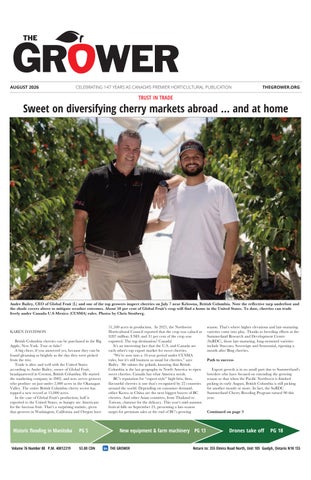
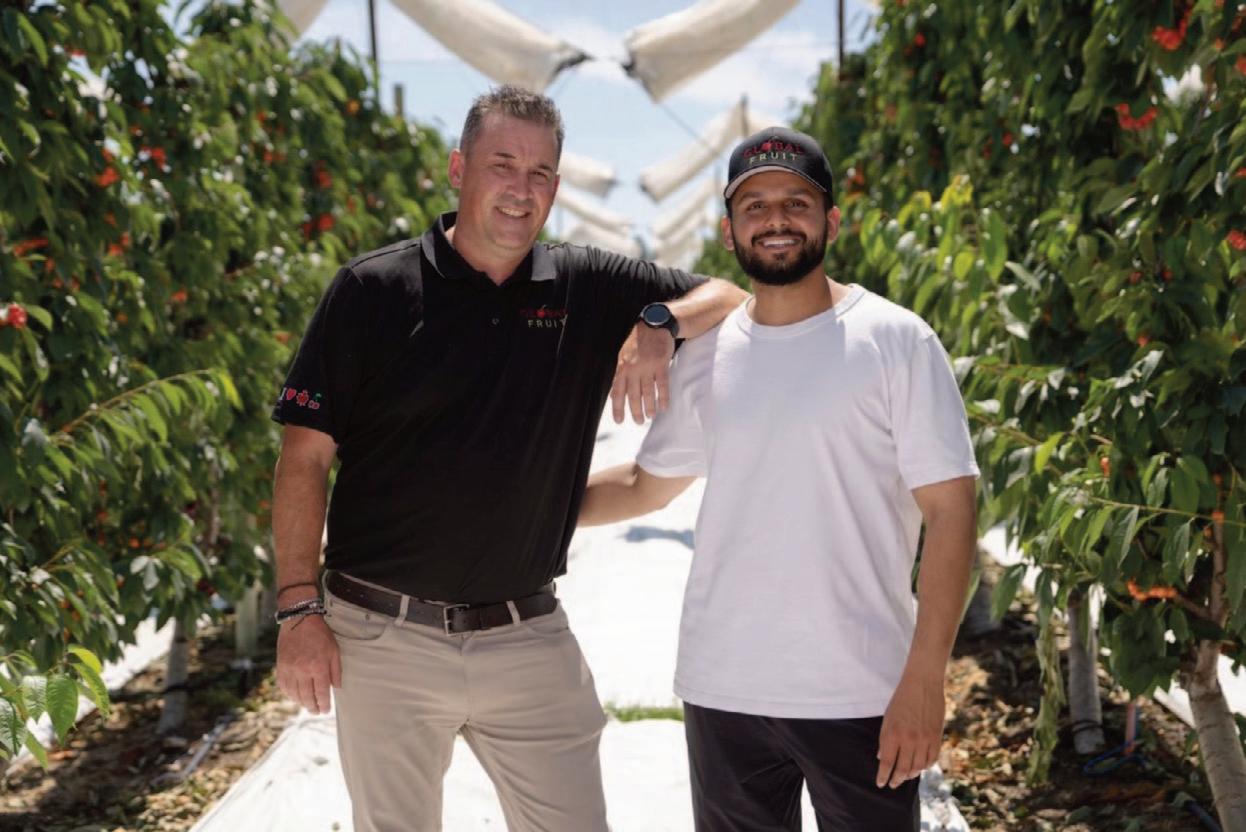
Andre Bailey, CEO of Global Fruit (L) and one of the top growers inspect cherries on July 7 near Kelowna, British Columbia. Note the reflective tarp underfoot and the shade covers above to mitigate weather extremes. About 50 per cent of Global Fruit’s crop will find a home in the United States. To date, cherries can trade freely under Canada-U.S-Mexico (CUSMA) rules. Photos by Chris Stenberg.
AT PRESS TIME…
L-R: MPP Trevor Jones (Ontario Minister of Agriculture); James Maloney-MP for Etobicoke— Lakeshore; Sophie Chatel- Parliamentary Secretary to the Minister of Agriculture and Agri-Food; The Honourable Heath MacDonald, Minister of Agriculture and Agri-Food; The Right Honourable Mark Carney, Prime Minister of Canada, Steve Bamford of Fresh Advancements and past CPMA chair, Quinton Woods of Gwillimdale Produce Ltd.; Jeff Madu of Windset Farm and Dan Martin of EarthFresh Farms.
Ag minister Heath MacDonald named 2026
Produce Champion
The Canadian Produce Marketing Association (CPMA) has recognized Honourable Minister of Agriculture and Agri-Food, Heath MacDonald, as its 2026 Produce Champion.
CPMA’s annual Produce Champion award is presented to a Member of Parliament or Senator who has shown exceptional support for the industry and demonstrated a strong commitment to advancing key priorities on Parliament Hill.
“Heath MacDonald has been a steadfast champion of Canada’s fresh produce sector long before his time as Minister. He has consistently demonstrated a deep understanding of the challenges facing our sector,” said CPMA president Ron Lemaire. “During his tenure as Minister, that commitment has continued— supporting policies that strengthen our supply chains, enhance food security, and ensure the long-term competitiveness of Canadian produce. We are proud to recognize Minister MacDonald as this year’s Produce Champion.”
In June, CPMA was pleased to join Minister MacDonald and Prime Minister Mark Carney in Toronto for the release of the federal government’s National Food Security Strategy, which includes several important commitments in support of the Canadian fresh fruit and vegetable supply chain.
“On behalf of Agriculture and Agri-Food Canada,
thank you to the Canadian Produce Marketing Association for naming me your 2026 Produce Champion. One of the most rewarding parts of my job is travelling across the country and meeting with the farmers, processors, and industry leaders who are driving Canada's agriculture and agri-food sector forward,” said Minister MacDonald. “Since becoming Minister, I've had the opportunity to connect with Canada's fruit and vegetable sector on several occasions, including at CPMA Fresh Week and the launch of Canada's National Food Security Strategy. Each visit has reinforced my appreciation for the dedication, innovation, and leadership that define this industry, and for your commitment to ensuring Canadians have access to fresh, high-quality food.”
“As we work together to seize new opportunities and address the challenges ahead, I'm grateful to collaborate with the producers, processors, industry partners, and department officials whose expertise and commitment help strengthen Canada's fruit and vegetable sector every day. I look forward to continuing that work.”
CPMA congratulates Minister Heath MacDonald on his recognition as 2026 Produce Champion. We look forward to continuing to work with Parliamentarians across all parties in support of Canada’s fresh produce sector.
Source: Canadian Produce Marketing Association July 14, 2026 news release
NEWSMAKERS
The Ontario Fruit and Vegetable Growers’ Association has welcomed Steven West to the newly created role of director, national affairs and labour, effective July 2. Formerly, he was director of the Temporary Foreign Worker Program at Human Resources and Skills Development Canada. He holds a Master’s degree in public policy and public administration from Concordia University. He will work remotely from Ottawa.
Congratulations to University of Guelph researchers affiliated with the McDonald lab and the Department of Plant Agriculture. The Canadian Phytopathological Society (CPS) held its annual general meeting in Halifax June 14-18. The CPS made Dr. Mary Ruth MacDonald a Fellow. Dr. Afsaneh Sedaghatkish was honoured with the Outstanding Young Scientist award and McKenna Campbell won best student presentation. These women excel at teaching and researching plant diseases.
The BC Blueberry Council has announced its 2026 Board of Directors, which comprises:
• Carolyn Teasdale – BC ag ministry representative
The Ontario Ministry of Agriculture, Food and Agribusiness (OMAFA) has appointed Rangasashidar (Ranga) Sirigiri to the role of Ontario fruit crop specialist – berries. He will be on-site in Simcoe, Ontario while Erica Pate is on leave. He has worked on a range of agricultural projects in India, gaining practical experience across diverse cropping systems. Prior to joining OMAFA, he was working as a seed plant manager at Connell Farms, where he was involved in seed production and crop management.
Federal Conservative Leader of the Opposition, Pierre Poilievre announced a refreshed shadow cabinet on June 30, 2026. Some familiar names are on the list. And others have new mandates.
• John Barlow (Foothills), Shadow Minister of Agriculture and Agri-Food
• Jacques Gourde (Lévis-Lotbinière), Associate Shadow Minister of Agriculture and Agri-Food
• Dave Epp (Chatham-Kent-Leamington) Shadow Minister of Rural Development
• Lianne Rood (Middlesex-London) Question Period Coordinator
Sales
Representatives
• Scot Davidson (New Tecumseh-Gwillimbury), Shadow Minister for Red Tape Reduction
• Tamara Kronis (Nanaimo-Ladysmith) Shadow Minister of Supply Chain Issues and Chair, Food Affordability Task Force
Strathroy-based agri-food sector leader Robert Anderson is the new chair of Agricorp’s board of directors. He is the vice-president of operations at Nortera Foods. Agricorp is the Ontario provincial crown agency that delivers risk management programs and financial services to the province's agriculture industry.
FARMS, the Ontario agency that coordinates the Seasonal Agricultural Worker Program, has hired a new executive director, Berenice Vega and new general manager, Karem Minas Spanish-speaking Vega has been with FARMS for three years, liaising closely with the Mexican government. She has been in charge of transitioning 1,300 farm employers from paper to digital LMIAs. Karem Minas started July 20, with a mandate to oversee day-to-day operations. Born in Chile, she has a background in both public and private sectors internationally. Robert Shuh, chair of the FARMS board, thanks Sue Williams for her 32 years of dedicated service as she transitions to retirement.
ONEIDA Dark skin
L-R: McKenna Campbell, Dr. Afsaneh Sedaghatkish, Dr. Mary Ruth MacDonald
Sweet on diversifying cherry markets abroad … and at home
2025 Top 10 Canadian Cherry Export Markets
Source: Statistics Canada
2025
Top 10 American Cherry Export Markets
Source: Northwest Horticultural Council
Continued from page 1
“Its genetics are found in every major cherry growing region of the planet and if you don't find our direct genetics, you'll see it in the parentage of many of the other cultivars developed by others,” says Nick Ibuki, business development manager, Summerland Varieties Corporation. “This year we are excited to see Sansia and Safirah cherries on the market as growers expand into the new, leading genetics. Future goals of the program include the replacement of current cultivars with improved genetics of size, firmness, taste, texture and productivity, and expanded window of earlier to later harvesting cherries.” By 2029, BC cherry growers are anticipating a variety which matures mid-June.
The cherry sector has also adapted to weather challenges, most notably a heat dome in 2021 and crop failure due to early frosts in 2024.
“We’ve made some proactive
changes to mitigate weather extremes with retractable roofs, reflective covers and misting in the orchards to bring temperatures down by 8°C.,” says Bailey. “This year, we’re facing water restrictions in parts of the Okanagan.”
Diversity in geography is also a plus. Harvest starts in the southern reaches of the Okanagan Valley -- Osoyoos and Oliver – and goes as far north as Armstong. Test plantings are in Salmon Arm. In addition, there’s 400 to 500 acres in Creston – the Kootenays -- where cherries mature 10 days later than the Okanagan Valley. Bailey’s home base is here, where he stewards 54 acres.
For Global Fruit, state-of-theart optical sorting and grading at Northern Cherries and Royal Fruit optimize the value of every tree’s bounty. Different sizes can be channelled to different customers, depending on the need.
“We have one-half of one per cent rejection claims on our deliveries,” says Bailey. That’s quite an achievement given the
scope of exports as far away as the Middle East.
Changes in the marketplace
Now in Canada’s sights for more trade, the Middle East presents its own complexities. Turkey is a strong competitor in fruits and vegetables, ranked among the top 10 fruit and vegetable exporters globally. Cherries are one of its signature specialties. Still, BC’s Global Fruit air freights refrigerated cherries to Dubai, the capital of the United Arab Emirates, a niche market.
Since BC gained access to the Chinese market in 2014, experience has been gained in a culture that prizes cherries. However, that market is evolving quickly from wholesalers directly to retailers, spurred by the COVID pandemic. Consumers want the convenience of buying groceries in one place. Global Fruit has an Asian sales director who navigates these changes in retailing, splitting his time between Kelowna and China. “The Chinese economy is
struggling and volumes are down,” says Bailey. “That’s why diversification is so important.”
Currently, Global Fruit sends 50 per cent of its harvest to the United States, 30 per cent to offshore markets and 15 to 20 per cent to Canadians. In eastern Canada, the question is why more BC cherries don’t appear on grocery shelves. The answer, it would seem, is that retailers buy Washington state cherries on lower costs and higher volumes.
It’s a shame that more of those “export-style” BC cherries don’t land in Toronto, Montreal and Halifax.
“We need diversification to be sustainable,” says Bailey, who wisely spots the vulnerabilities of being too exposed in any one market. “The future goal would be to sell 30 per cent of the crop in Canada, 30 per cent in the U.S. and 35 per cent to other countries with a buffer for internal switches.”
The BC Cherry Association, helmed by Sukhpaul Bal, has been aiming to do just that for four years now. Canadian Cherry Month has been proclaimed from
July 15 – August 15. This year’s slogan -- Flip for Canadian cherries -- is a gentle reminder to switch from Washington-state cherries, ubiquitous in eastern Canada. Hello retailers! If only consumers could taste these domestically grown gems.
“Geopolitics is out of our control,” Bailey concludes. “Diversification is the best way to offset that.”
Go abroad
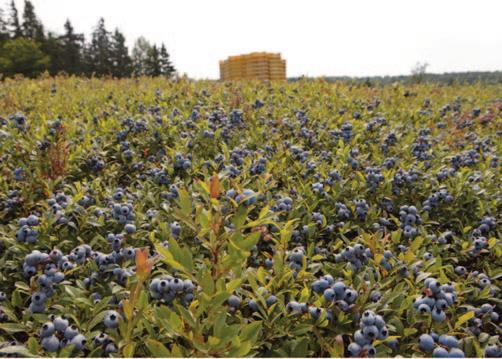
Simultaneously, BC blueberry growers are finding that they are also heavily reliant on the U.S. market. Statistics Canada reports that 2025 production was 162.1 million pounds of which 87 per cent found American buyers. BC Blueberry Council executive director Sudeshna Nambiar is pointing out a need to diversify in the next five years. The challenge? Competitors are implementing the same strategy. The U.S. Highbush Blueberry Association will be taking part in a USDA Agribusiness Trade Mission to Vietnam from November 9-12.
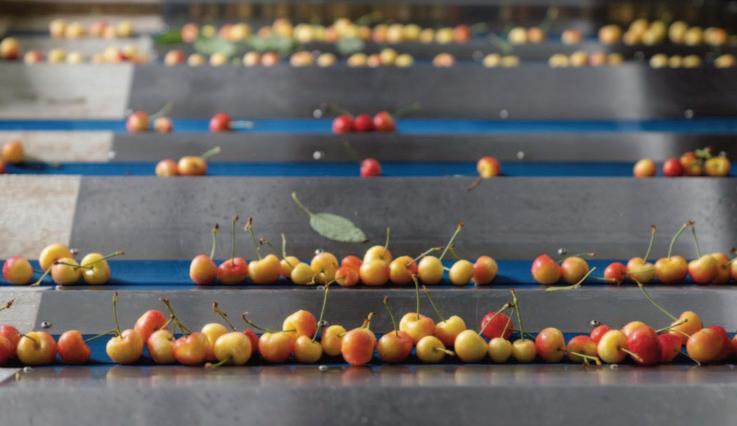
The champagne of cherries, Rainiers, are known for their golden colour with a signature red blush. Here, they are speeding along the grading line.
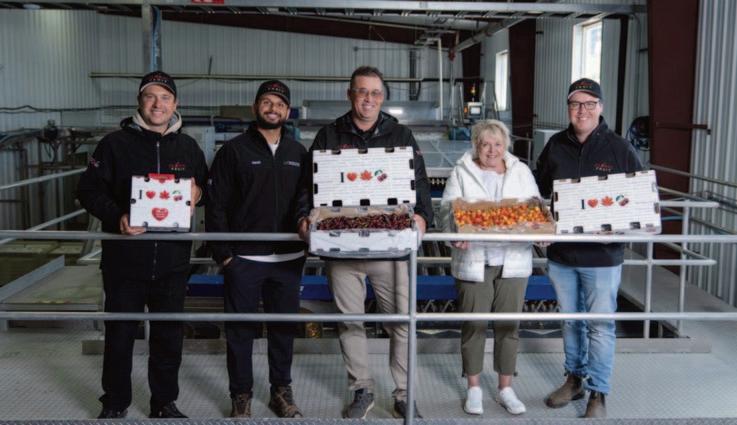
This Global Fruit team showcases cherries that are heading to China, Taiwan, Japan, Thailand and Dubai. L-R: Marcos Bala, one of Global Fruit’s top growers, Andre Bailey, Julie McLachlan, Benjamin Donahue.
CROSS COUNTRY DIGEST
NATIONAL
2026 potato plantings up 5 per cent in Alberta
KAREN DAVIDSON
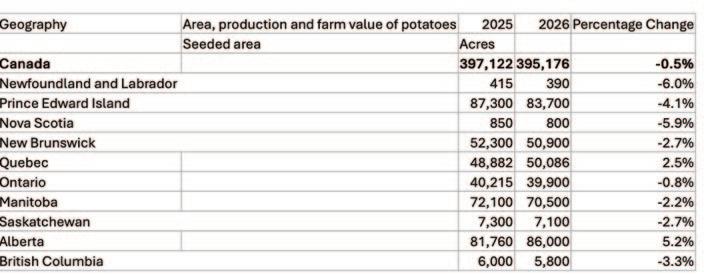
Statistics Canada released the 2026 seeded potato acreage report on July 17, showing that Alberta continues to expand once again, up five per cent from 80,000 acres to an historic 86,000 acres in 2026. Due to crop rotations and access to irrigation in southern Alberta, growers also produce large volumes with averages that range from 380 to 425 cwt/acre.
Victoria Stamper, general manager, United Potato Growers of Canada, provides insight to the statistics. She says that McCain Foods did not utilize as much Alberta crop as planned from the 2025-2026 season, but the company is now reported to be running at capacity at its new Coaldale plant with expectations that more processing crop will be
BRITISH COLUMBIA
BC
required for the upcoming season.
In North America overall, supply has outstripped processing demand. Contracts were down in dollars and volumes for the 20262027 season. There is added pressure on profitability due to rising costs for fertilizer and diesel. That means the 2026 potato crop is the most expensive ever planted.
Each Canadian province has their own reasons for reduced plantings. British Columbia recorded amazing yields in 2025, so due to oversupply, growers trimmed plantings. Seed acres declined as well.
Stamper is puzzled by the Statistics Canada numbers for Saskatchewan. “I am surprised their acres are down that much as I believe the fresh sector continues to grow, especially with Monette Farms planting any-
where from 800 to 1,000 acres.”
Manitoba planting in the fresh sector is down. “They were long in reds this year and I heard some have reduced their early red acres,” says Stamper. “Processing did get volume back, but it would seem growers were very cautious and did not overplant this year.
Ontario’s acreage is stable, with good processing and chip demand.
Québec’s numbers seem to fluctuate depending on the source of information. While Statistics Canada reports 2.5 per cent increase to 50,086 acres, the growers’ association estimates 47,500 acres, just a bit under the previous year’s numbers. Stamper says all indications are that processing acreage will be down at least in frozen product. Fresh and seed sectors are stable.
Heading east, New Brunswick
growers had a reduction in volume from McCain Foods. Prince Edward Island also experienced reductions in Cavendish Farms’ contracts, down almost 10 per cent.
“There is some cautious optimism as stocks, including russets, have declined overall, leaving the pipeline emptier heading into new crop for the first time in a couple of years in Canada but more importantly in the U.S.” says Stamper. “I am not sure the processing sector will correct completely. From what I understand processors are sitting on more frozen inventory compared to last year and exports have continued to soften in the U.S.” Stamper observes, “We are turning a corner on the oversupply of russets out of the U.S. for the fresh market and the complete erosion of pricing on
russets south of the border. As Idaho has moved from the Norkatoh to Burbank variety, crop quality and size profile have changed and we have seen a good improvement in pricing in the carton market for the last two to three weeks. Consumer bags (5 lb poly in the U.S.) are still suffering but have improved from earlier in the year.”
The U.S. acreage is down just over three per cent -- 15,000 acres in Idaho alone-- likely due to cuts in contracts for dehydrated potatoes as well as lower seed acreage. Some acreage may have moved out of fresh russets as well.
Source: United Potato Growers of Canada
Chart source: Statistics Canada
tree fruit and wine grape sectors to coordinate regional labour
A two-year labour coordination initiative has been launched by the BC Fruit Growers’ Association, BC Cherry Association, BC Wine Grape Council and BC Grapegrowers’ Association. Together, they are advancing shared solutions for workforce recruitment, retention and sustainability, with the BC Fruit Growers’ Association (BCFGA) hosting the project on behalf of the partnership.
A dedicated steering committee, with representatives from each organization and extensive experience in labour and workforce issues, will guide the projects’ priorities and implementation. The initiative includes the hiring of a shared regional labour coordinator, marking the
first time the tree fruit and wine grape sectors have formally partnered on coordinated labour workforce planning and policy.
“This project represents a turning point for our industries,” said Rebecca Mikulic, regional labour project committee member.
The project will focus on developing a long-term, region-specific labour strategy for BC Interior horticulture while advancing initiatives to address key challenges, including worker attraction and retention, housing, and workforce coordination. In 2024, the sector partnered with Kwantlen Polytechnic University’s Institute for Sustainable Food Systems
to examine the domestic labour landscape in the Okanagan. That research identified persistent barriers to recruiting and retaining domestic workers and outlined 35 recommendations for industry and government. The new Regional Labour Coordination Project will help turn those recommendations into action.
The regional labour coordinator will be dedicated to driving research-informed policy development and stakeholder engagement to the end of 2027. The role fills a long-identified gap in regional capacity to coordinate labour planning tailored to the Interior Horticulture Sector.
While tree fruit and wine grapes operate on different growing calendars, both
sectors rely on overlapping labour pools and face similar systemic constraints. By working together, industry leaders believe they can increase their collective influence, reduce duplication of effort, and improve outcomes for both employers and workers.
“This collaboration recognizes that labour challenges don’t stop at commodity lines,” said Erin Carlson, regional labour project committee chair. “A coordinated approach gives our sectors a stronger voice and a better chance to create meaningful lasting change.”
Source: BC Fruit Growers’ Association June 29, 2026 news release
Potato growers named Alberta’s Outstanding Young Farmers 2026
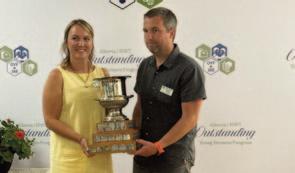
Canada’s Outstanding Young Farmers (COYF) has announced that Alison and Michael Davie of North Paddock Farms Ltd. Taber, as the 2026 Alberta honourees. The regional event was held June 17-18, 2026.
The couple met while studying agriculture and commerce at Lincoln University in New Zealand before returning to Alberta in 2013 to take over the reins of Alison’s family farm. Their diverse, irrigated operation produces a wide range of crops, including potatoes,
cereals, seed canola, pulses, flax, timothy hay and garlic.
Since assuming leadership of the farm, the Davies have dedicated themselves to advancing modern agriculture by implementing innovative crop production practices, expanding their acreage and maximizing operational efficiencies.
“Alison and Michael demonstrate the values our program stands for: excellence, innovation and passion,” said Amy Cronin, president of COYF, who was also in attendance. “They constantly look for new
ways to make their farm better, are dedicated advocates for the industry, consistently finding ways to push agriculture forward through leadership and collaborative models.”
The national winner of Canada’s Outstanding Young Farmers 2026 will be selected during the national competition in Vancouver, BC to be held November 2529, 2026.
Source: Canada’s Outstanding Young Farmers June 22, 2026 news release
Alison and Michael Davie, North Paddock Farms, Taber, have won the regional Outstanding Young Farmers competition.
CROSS COUNTRY DIGEST
MANITOBA
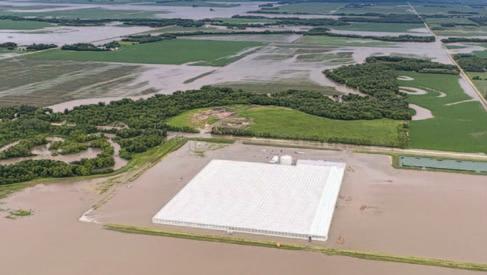
Historic flooding affects various horticultural operations
Vermillion Growers, Dauphin
One Manitoba greenhouse grower hopes that recent flooding is no more than a once-in-a-
century occurrence. In an interview with CBC News, Cormac Foster, vice-president of engineering and development, reported that the entire cropabout 500,000 kilograms of
tomatoes – was lost at Vermillion Growers, Dauphin. The June 30 event affected the entire 12-acre operation including 5,400 cases of produce ready to be shipped to Manitoba and western Canadian grocers.
In Stonewall, north of Winnipeg, a strawberry grower has lost 60 per cent of the 28-acre crop. Danielle Boonstra reports hail damage in June followed by unrelenting rain. In addition, next year’s crop of 70,000 plants has been destroyed.
Vikram Bisht, potato and horticultural crops pathologist, Manitoba Agriculture reports, “in some areas, the rains have flooded the already-wet fields in most of the potato growing areas. Many of these are partially
flooded fields, leading to some rotting. However, there is currently no serious impact on Manitoba potato production.”
Manitoba Agriculture reported variable precipitation during the first week of July 2026. Rains and isolated thunderstorms brought hail, strong winds, intense rain, and possible tornadoes swept through the majority of the province. The largest accumulations occurred in the southwest near Boissevain and Souris, as well as the northwest region in the already waterlogged areas of San Clara, Ethelbert, Dauphin, Minnedosa, and Russell. Overland flooding and overflowing rivers and streams have caused many communities, including the City
of Brandon, to declare local states of emergency. Weekly accumulations ranged from 9 (Sprague) to 188 mm (Boissevain). Tracy Shinners-Carnelley, vice-president of research, quality and sustainability, Peak of the Market, visited growers throughout the region to assess damage.
“It’s hard to put a number (on damage) because only parts of fields may have excess moisture.
Overall, the crop is doing okay.” The Assiniboine River was expected to crest in Brandon on July 13 and reach Portage la Prairie on July 16.
Sources: Manitoba Agriculture, CBC News
Nova Scotia announces drought relief for wild blueberry growers
The province’s wild blueberry industry, with a farmgate value of $121 million, will be receiving some assistance for the impacts of the 2025 drought. The federal and provincial governments are together committing up to $25 million to help livestock and wild blueberry producers.
“Nova Scotia farmers and producers faced an extremely difficult year as a result of last summer’s drought,” said Greg Morrow, minister of agriculture. “We have been working closely with industry and producers throughout this situation, and this funding will help operations
recover and continue contributing to Nova Scotia’s food supply and rural economy.”
The drought was one of the worst in generations, creating significant financial pressures for farms across the province. This new targeted support under the AgriRecovery framework will help address impacts beyond those covered by existing programs.
AgriRecovery is a federalprovincial-territorial disaster relief framework that helps agricultural producers manage the extraordinary costs associated with recovering from disaster
situations and resuming business operations.
Agriculture and Agri-Food Canada will contribute 60 per cent of eligible program costs, up to $15 million, with the province contributing 40 per cent, up to $10 million.
This initiative is one part of the province’s response to the drought and complements existing supports. Producers will be advised when applications open.
Source: Nova Scotia government June 18, 2026 news release
Marginal land next to orchards important for boosting bee diversity
Steve Ells, Nova Scotia Federation of Agriculture
One of the Living Lab projects has focused on managing pollinators in the orchard by including legume enrichment and adjusting mowing practices. This Nova Scotia project was under-
taken by research staff at Agriculture and Agri-Food Canada. Dr. Vicky Lévesque and Dr. Erin Smith have studied orchard laneways to increase carbon sequestration and reduce greenhouse gas emissions.
As part of this research, the AAFC team is looking at the impact of these practices on native pollinators, a key component of any orchard. Through surveys of native bees in both orchards and the surrounding landscape, they found that the health of the bee community in the broader landscape translated to greater abundance and diversity of native bees pollinating apples. Natural and semi-natural land cover and diversity of flowering plants were key drivers of bee abundance and visits to the apples during the bloom period. Importantly, enhancing habitat and floral diversity expanded functional trait
diversity across native bee communities. By supporting native bees with diverse sizes, social behaviors, diets, flight periods and nesting habitats, these landscapes can bolster pollination services and agroecosystem resilience.
These non-crop habitats play a crucial role in supporting native pollinator communities. Therefore, management in the orchard itself may not be the best place to focus activities to support pollinators. Where possible, growers should look to non-crop land or marginal land to focus on increasing diversity of habitat and food sources for native bee communities.
To learn more about this activity in Living Lab – Nova Scotia, visit nsfa-fane.ca/orchardmanagement/.
Source: Nova Scotia Fruit Growers’ Association newsletter
KAREN DAVIDSON
NOVA SCOTIA
NOVA
GREENHOUSE GROWER
Smarter energy use helps modernize legacy greenhouses at Mastronardi
JEANINE MOYER
At Mastronardi's greenhouse operation in Leamington, Ontario, innovation isn't about replacing what exists—it's about finding new ways to make it work better. Over the past several years, the third-generation family business has invested in technologies that improve energy efficiency, optimize growing conditions and support more sustainable production, all while extending the life of existing greenhouse infrastructure.
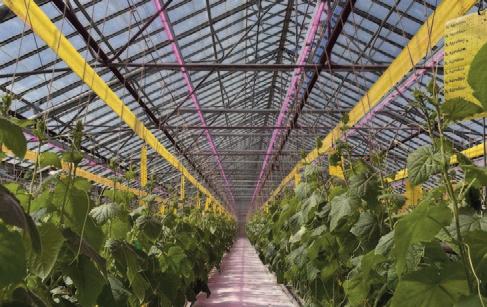
Most recently, the operation upgraded seven older greenhouses with automated energy curtains, complementing recent investments in LED lighting and high-pressure fogging systems. Together, the innovations are helping create a more consistent growing environment for the farm's mini cucumbers while reducing energy use and greenhouse gas emissions.
“We're always looking for ways to improve how we grow,” says Dale Tiessen, greenhouse operations manager. “Together, these technology upgrades have changed our growing strategy completely over the past seven years.”
Modernizing with purpose
Mastronardi grows mini cucumbers for markets across Ontario, Canada and the United States. As consumer demand for convenient, healthy snack-sized vegetables continues to grow,
maintaining consistent production and quality has become increasingly important.
Across the operation, the company manages a mix of greenhouse styles, from modern Venlo structures and poly greenhouses to older, single-pane glass houses that have served the business for more than 50 years. Rather than view those older greenhouses as outdated, the company saw an opportunity to modernize them.
“Our company has always been interested in thinking outside the box,” says Tiessen. “If there's technology that can help us improve production and sustainability, we're interested in exploring it.”
That mindset has led to several significant investments in recent years. LED lighting now supports production during the darker months between November and early April, helping maintain crop
performance through shorter winter days. High-pressure fogging systems use ultra-fine water droplets to cool plants during periods of intense summer heat, reducing stress on the crop while improving environmental control.
The newest addition— automated energy curtains— builds on that strategy by improving conditions inside seven older greenhouse structures covering 1.6 acres. The curtain installation was completed in 2025 with support through the Sustainable Canadian Agricultural Partnership's (Sustainable CAP) Agricultural Stewardship Initiative (ASI). Tiessen says the cost-share funding was key to making the investment feasible, and the improvements in the greenhouse were noticeable almost immediately.
Creating a better growing environment
While the project's primary goal was to improve energy efficiency, Tiessen says the biggest benefit of the energy curtains has been creating a more stable growing environment. The older glass greenhouses offered little insulation, making it difficult to maintain consistent temperatures during the winter while exposing crops to excessive sunlight during the summer months.
Thanks to the new automated curtain system, staff can respond to changing conditions throughout the day by adjusting curtains over the plants. Tiessen explains that, during overcast days and cold nights during the winter, the curtains are partially or completely closed to help retain heat inside the greenhouse, reducing natural gas requirements. During the summer, when periods of intense sunshine can harm the plants, the curtains provide adjustable shade that helps moderate temperatures and reduce stress on the plants.
“The curtains are like a blanket over the little plants,” says Tiessen. “They keep them more comfortable, while creating a more efficient and productive growing environment.” The result is a greenhouse environment that experiences fewer temperature swings while maintaining more consistent heat, humidity and carbon dioxide levels.
“You can feel the difference when you step into the greenhouse,” he says. “The heat and humidity are where they should be within the structure.”
Sustainability and productivity working together
The environmental improvements of the new energy curtains have also delivered benefits beyond energy savings. Tiessen says more consistent growing conditions have helped improve plant performance while reducing pressure from pests and fungal diseases. Healthier plants also mean less reliance on pesticide applications, contributing to the operation's broader sustainability
goals.
Since heating remains one of the largest production costs in greenhouse vegetable growing, reducing natural gas consumption has also provided significant operational benefits. Because the improved environmental controls help retain supplemental carbon dioxide within the greenhouse, less is required to maintain ideal growing conditions, further reducing emissions.
“The plants are growing more efficiently, and we're seeing better quality production,” says Tiessen, pointing out that the technology has also allowed the older greenhouse structures to perform much more like the farm's newer facilities.
“The older greenhouses are now producing as well as any modern greenhouse with the same efficiencies,” he says. “We've taken existing infrastructure and given it a new life.”
Looking ahead
Future investments will continue to focus on improving energy efficiency, enhancing crop quality and creating growing conditions that support both productivity and sustainability.
“We're always looking for ways to improve,” says Tiessen. “When technology helps us produce a better crop, reduce our environmental footprint and make the greenhouse more efficient, it's an investment that benefits the entire operation.”
By combining decades of greenhouse experience with new technologies, Mastronardi is demonstrating that innovation doesn't always require building something new. Sometimes, it simply means finding smarter ways to upgrade to continue production for generations to come.
Jeanine Moyer is an agricultural writer and communications specialist. She has 15 years of experience in agri-food writing, marketing and public relations.
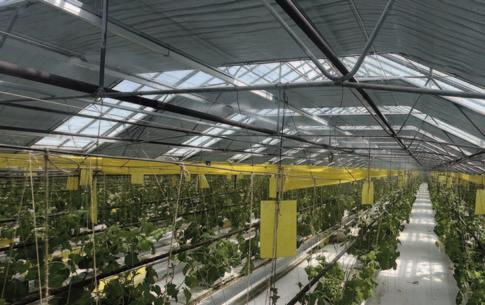
Recently installed LED lighting helps maintain crop performance through shorter winter days.
New automated energy curtains improve energy efficiency while enhancing growing conditions in older greenhouse structures.
GREENHOUSE GROWER
Pure Flavor opens new Michigan Distribution Center
Headquartered in Leamington, Ontario, Pure Flavor marked the official opening of its new, state-of-the-art distribution center in Romulus, Michigan on July 1. The nearly 200,000 sq. ft. facility serves as a central hub for the distribution of the company’s fresh, greenhouse-grown produce and is designed to reduce food miles, improve shipping efficiency, and strengthen service for retail and foodservice customers across the region.
The Romulus facility is strategically located within a 500-mile radius of nearly half the U.S. and Canadian populations, helping streamline logistics, reduce transit times, and support faster, more reliable delivery across key markets. The new hub also strengthens Pure Flavor’s broader supply chain network, supporting continued growth and evolving customer
demand across North America.
“Romulus gives us the expanded capacity and positioning to serve customers faster and more efficiently across the Midwest and beyond,” said Jeff Moracci, president of Pure Flavor. “By optimizing our distribution footprint, we’re improving responsiveness, simplifying logistics, and building the infrastructure needed to support long-term growth.”
The fully refrigerated distribution center supports streamlined receiving, cold storage, and outbound shipping, helping ensure freshness and reliability from greenhouse to customer. With this expanded footprint in Michigan, Pure Flavor continues to invest in a supply chain designed for performance, sustainability, and long-term partnership.
The company expects the Romulus distribution center to play a key role in
supporting customer growth across the region, strengthening day-to-day service levels, and enhancing network efficiency as
California-based Hippo Harvest to grow indoor spinach
Hippo Harvest, a leafy greens grower whose robotics- and machine learningpowered greenhouses produce USDAcertified organic greens, has announced the close of a $30 million Series C funding round led by Cox Farms, North America's largest greenhouse operator. Cox Farms includes Bright Farms and Mucci Farms.
The investment will unlock a 30-acre expansion at a new Hollister, California facility, currently in permitting, and the development of the company's nextgeneration robotic growing system, expanding growing capacity from one acre today and accelerating the commercialization of indoor-grown spinach.
The spinach commercialization marks a significant milestone for Hippo Harvest, which also launched its butter lettuce to retail buyers in early 2026. Together, the two products anchor a growing line of indoor-grown greens built for year-round consistency. Hippo Harvest's hybrid assortment blends greenhouse and organic
field-grown greens to deliver broader variety and reliable supply in a sector increasingly affected by climate volatility.
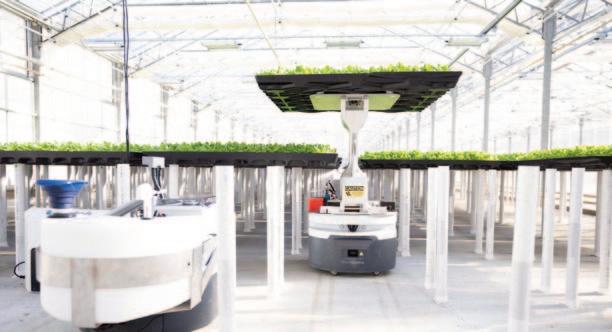
At the center of Hippo Harvest's model is a proprietary robotic growing system that uses Autonomous Mobile Robots (AMRs) and machine learning to monitor, tend, and harvest plants with precision at every stage of growth. The upgraded system uses robotic ‘tractors’ to automatically respace growing modules throughout the growth cycle, maximizing space efficiency and yields at the farm level. The next-generation system funded by this round is designed to increase throughput, reduce cost per unit, and accelerate the company's ability to bring new varieties to market at scale.
“Closing this round and bringing spinach to market in the same moment is a real signal of where Hippo Harvest is headed,” said Eitan Marder-Eppstein, CEO and co-founder of Hippo Harvest.
“We've spent years building a system that can grow certified organic greens
consistently and at a price that works for both retailers and consumers. This investment lets us do that at the next level of scale.”
“Hippo Harvest is doing something genuinely exciting in indoor agriculture, and we’re proud to be part of this next chapter,” said Steve Bradley, president of
Source: Cox Farms July 9, 2026 news release
Pure Flavor continues to scale across North America.
Source: Pure Flavor July 1, 2026 news release
Cox Farms. “Cox Farms actively looks for opportunities to support innovation and new technologies across indoor agriculture. We can’t wait to watch them scale.”
SURPLUS INTO SOLUTIONS
Reducing food loss and waste across the produce supply chain
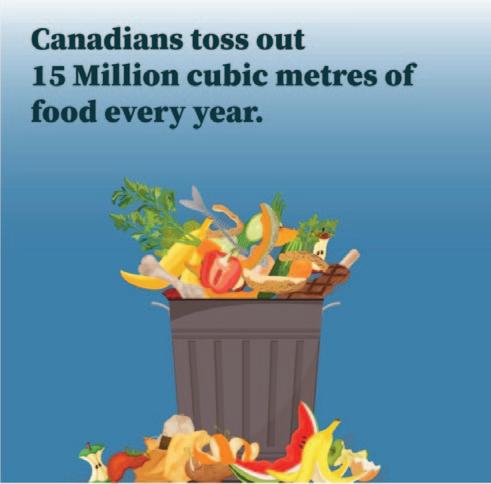
The Canadian Produce Marketing Association (CPMA) is advancing a coordinated, sectorled response to food loss and waste (FLW), focused on practical policy, industry collaboration, and targeted investment to unlock environmental and economic value across Canada’s fresh produce supply chain.
“Food loss and waste is one of the most complex challenges facing our sector—but it is also one of the most important opportunities,” says Ron Lemaire, CPMA President. “By working together across industry and government, we can reduce waste, unlock new value, and strengthen the competitiveness and resilience of Canada’s fresh produce industry.”
Through a series of recent initiatives, CPMA is strengthening the evidence base, showcasing industry leadership, and convening stakeholders to better measure, reduce and recover value from FLW.
In April 2026, CPMA released its member-only report, A Systems Analysis of Food Loss and Waste in Canada’s Produce Sector, examining FLW across the supply chain. The report highlights that nearly half of all food produced in Canada is lost
or wasted annually, with fresh produce particularly impacted and that approximately 41.7% of that loss is potentially edible and recoverable.
“Too often, food loss and waste is viewed only through an environmental lens,” added Lemaire. “Our work clearly shows it is also a system-wide economic inefficiency—one that affects business performance, food affordability, and the long-term sustainability of our sector.”
The analysis identifies key drivers—including perishability, supply chain complexity, cosmetic standards, and consumer behaviour—and highlights priorities such as standardized measurement, cold chain investment, innovation, and improved policy alignment.
To promote best practices, CPMA has launched its first series of Food Loss and Waste Use Cases, highlighting practical solutions already underway, including surplus management, partnerships with food rescue organizations and processors, logistics and packaging investments, shelf-life extension, and development of alternative markets for surplus and “imperfect” produce.
CPMA has also expanded
engagement through the release of its Food Loss and Waste Business Session Podcast from the 2026 Convention and Trade Show in Toronto, which explored the conditions needed to increase the economic value of FLW, including policy and regulatory alignment, operational realities of food rescue and redistribution systems, value-chain economics, and viable markets for surplus produce.
“What we heard clearly from across the value chain is that solutions exist—but they need the right conditions to scale,” noted Lemaire. “That means alignment between policy, infrastructure, and market incentives with the realities of highly perishable products.”
Building on this work, CPMA is calling for greater industrygovernment collaboration to support scalable, impact-driven solutions. Priority areas include standardized measurement and reporting frameworks, investment in cold chain, storage, and logistics infrastructure, enhanced incentives for food donation, redistribution, and value-added processing, harmonized date labelling and consumer education, and policies that recognize the role of packaging
Investments in cold chain, storage, and logistics infrastructure are needed to prevent food losses.
and innovation in reducing loss.
CPMA will continue to work closely with members and partners to expand the collection and share best practices and industry use cases while supporting pilot projects that demonstrate scalable FLW mitigation and value recovery solutions. It will also strengthen
Case study: Peak of the Market Ltd & Harvest Manitoba
Every year, thousands of pounds of perfectly edible Manitoba potatoes and vegetables never make it to store shelves— not because they’re unsafe or unfit, but because they don’t meet the cosmetic grade standards demanded by the fresh market. For most food systems, that’s where the story would end: with good food going to waste in the field or the packing shed.
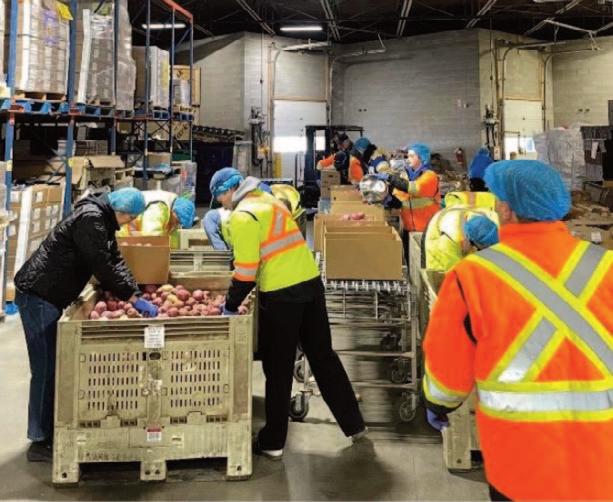
At Peak, this is just the beginning. Driven by a commitment to both sustainability and community, Peak has pioneered a model for off-grade management. Instead of letting off-grade but edible carrots, potatoes, onions, and more fall through the cracks, Peak collects these vegetables from its operations and sends them directly to Harvest Manitoba— turning surplus into sustenance for families across the province.
The result is less waste, more nutrition for Manitobans in need, and a living demonstration of what’s possible when growers and food rescue organizations work together. In 2025 alone, Peak donated 3,068,500 pounds of produce, significantly expanding access to fresh, healthy food across the province.
Peak’s approach didn’t happen by accident. For years, strict grading standards and fragmented supply chains left growers with limited options for produce that fell outside the “perfect” category. With no real market for most cosmetically imperfect vegetables, large amounts of good food were left behind, affecting both the bottom line and the
environment.
Refusing to accept food loss as an unavoidable cost, Peak invested in new processes and forged strong partnerships to keep more food in the system and out of the landfill. Today, partnerships with Harvest Manitoba and other organizations focused on food security are at the heart of Peak’s impact. Regular pickups and close coordination mean that surplus vegetables are quickly distributed to food banks, community kitchens, and meal programs province wide.
Off-grade but perfectly edible produce is sorted and packed for donation, keeping nutritious food in the system and out of landfill.What might be overlooked on store shelves becomes a vital source of fresh food for families when redirected through community partnerships.
It’s a partnership built on trust, clear communication, and a shared goal: turning Manitoba’s agricultural abundance into food security for everyone.
“Our partnership with Peak of the Market shows what’s possible when the food system is designed to work smarter,” said Vince Barletta, Harvest Manitoba president & CEO. “By ensuring that surplus, high-quality produce reaches people instead of going to waste, Peak is helping us expand access to fresh, nutritious food for families across Manitoba. This is an incredible, ongoing partnership that reduces food waste and delivers real impact in communities where it’s needed most.”
Peak’s efforts extend beyond simple
collaboration across industry, government, and solution providers, and advance targeted advocacy efforts to secure the support required to maximize the value of fresh produce surplus.
Source: Canadian Produce Marketing Association June 24, 2026 newsletter
Produce moves along the grading line at Haskett Growers in Winkler, MB. Potatoes that don’t meet cosmetic standards remain fresh and nutritious, playing a key role in reducing food waste.
redistribution. The team uses sorting and handling protocols that help capture and channel as much edible produce as possible, whether that means donation, animal feed, or other uses. Careful measurement and transparent reporting are embedded in the process, creating a culture of transparency and accountability that sets a new standard for the industry. At the same time, Peak is advocating for
policy changes, such as modernized grading standards and tax incentives for donations, to help other growers follow their lead.
Investments in logistics, measurement, and staff training have reduced disposal costs and improved grower returns, all while opening the door to additional tax incentives and a more resilient business model.
CROSSING THE BORDER
The risks of navigating customs without expertise
Navigating customs regulations is one of the most complex and high-risk aspects of global trade, especially in the fresh produce industry, where timing is critical. For businesses importing or exporting goods, even small errors can bring costly delays, penalties, or spoiled shipments. This is why many companies rely on customs brokers to manage documentation and regulatory requirements, helping shipments move quickly across borders.
What a customs broker does
Whether you are new to importing and exporting or operating without a dedicated logistics team, a customs broker can help simplify the process and keep your supply chain running smoothly. Over the years, customs brokers have become more than facilitators in getting commodities across borders. Depending on the level of service required, they may assist with:
• Collecting, reviewing, and assessing documentation.
• Determining taxes, duties, classifications, and valuation.
• Submitting declarations on behalf of the importer.
• Using their experience to help you grow your business. Additionally, customs brokers provide educational services that inform importers and exporters how to import into Canada or the USA. These services include information on INCOTERMS, CFIA and FDA-regulated goods, product classification, and NonResident Importers. For example, Pacific Customs Brokers (PCB) has created an informative learning center with valuable trade resources for businesses, importers, and exporters: https://learningcenter.pcb.ca/. Customs brokers stay up to date on policy and regulatory modifications. They use advanced technology, professional expertise, and customized trade solutions to ensure every shipment is managed and declared in compliance with Customs requirements, minimizing loss or penalties and helping secure passage through Customs.
Why hiring a customs broker makes business sense
In today’s global trade environment, many moving parts are often too complex to manage,
let alone understand, without the proper tools. Customs brokers help businesses stay focused on their core activities by navigating these complexities.
Hiring a customs broker makes excellent business sense, prepares you for the unexpected, and gives you peace of mind to protect your business and prevent a potential trade dispute.
In the words of a customs broker
PCB Global Trade Management (PCB), trusted facilitators of international trade for more than 100 years, has witnessed how trade barriers have multiplied over the last decade.
While trade has become more complicated, expertise and a proactive approach have become more important than ever. For example, licenses, certificates, and other administrative requirements are often evolving, and when they do, they can fundamentally reorient what is needed from a regulatory perspective. What was done one way six months ago may now require a special permit, and the forms you had for your goods up to this point could be entirely irrelevant now. Importers are often surprised to find out that regulatory compliance is, regularly, a moving target, and being early and on the ball is vital to staying ahead of the changes as they come.
Consider imports that require documentation, such as Safe Food for Canadians (SFC) licenses, import permits, organic certifications, and other Canadian Food Inspection Agency regulatory requirements. Importers of food items that require these types of documentation who are ill-prepared may find that their goods must wait in their country of export indefinitely until the proper documentation is obtained. They also may learn too late that the Safe Food for Canadians license currently takes up to 70 business days to be approved once submitted.
Foresight and planning are mandatory when dealing with food imports, and working with an experienced broker who knows what you will need before you ship can be a fundamental difference-maker
and a cost-saver in the long run.
If you are not on top of your documentation, labeling, and paperwork, or working with someone who is, then there is a real possibility that spoilage, carrier wait costs, storage fees, and penalties are on the horizon.
Being prepared for a customs outage
Another example of how foresight and an experienced broker can help is during unforeseen outages.
One of the key things to remember about cross-border trade is that much of it can feel out of your control, and outages are a great example. Border delays are not always tied to missing documents. Sometimes administrative backlogs or system outages can occur without warning,
Even with expert guidance, disputes over quality, payment, or contract terms can sometimes occur. In these situations, the Fruit and Vegetable Dispute Resolution Corporation (DRC) provides industry-specific support to help resolve conflicts and keep your business relationships on
and if you don’t know what to do in that situation, it can be a complication that you and your business can ill afford.
Your broker can be the gatekeeper to accessing options. When hiring your broker, be sure to ask what the plan is in the event of a Customs outage, because working with a broker who has a good plan can turn a nightmare scenario into something manageable.
A good broker during a Customs outage can, if the outage allows, match, review, and pre-prepare data before the system returns. Not only can this give your business breathing room, but it can also be a path forward to alternatives. For some outages, a paper package can be prepared to keep your goods moving.
But all of this is predicated on you working with a trustworthy broker who has
track.
Should you encounter a dispute or need guidance on resolving issues in your fruit and vegetable trade, the DRC can provide trusted support through membership.
Source: DRC July 7, 2026 newsletter
a plan in place and the expertise required to execute it.
In the end, there are two key pillars of preparedness to consider when setting up your import plan.
1. Are you fully leveraging the experience and expertise of your trade partners?
2. How well are they helping to prepare for the hurdles of the future?
How your business prepares for and responds to challenges is of the utmost importance in international trade. Plan ahead and work with experienced, trustworthy people, and you’ll be surprised how often you find the effort being repaid again and again.
How the DRC can help
CHAIR’S PERSPECTIVE
Food security depends on farm competitiveness
For fruit and vegetable growers, the conversation around food security is not new. We live it every day through rising input costs, unpredictable weather, changing markets, labour challenges and growing competition from imported products produced under different cost and regulatory structures.
That is why the federal government’s recent announcement of a National Food Security Strategy is both timely and welcome.
Recognizing food security as a national priority reflects the importance of Canada’s food system at a time of geopolitical uncertainty, trade disruption and
ongoing concerns about food affordability. Our ability to produce food here at home is not only an agricultural or economic issue; it is also increasingly important to Canada’s resilience and national security.
As the strategy moves from announcement to implementation, it will be important to consider the entire food chain — and to recognize that it starts at the farm. Processing, transportation, distribution, retail and consumer access are all essential parts of a strong food system, but none of them can function without farmers who are able to invest in producing food.
For many fruit and vegetable growers, that’s becoming more and more challenging. Costs for fuel, fertilizer, labour, transportation, packaging and other essential inputs have risen significantly. At the same time, many growers are seeing little or no increase in the prices they receive for their crops compared to years past, even as consumers are paying more for food at the store.
A recent study released by Ontario Greenhouse Vegetable Growers highlighted the growing disconnect between retail food prices and farm-level returns.
Although the study focused on greenhouse vegetables, its findings reflect concerns growers across the broader fruit and vegetable sector have been raising for some time.
Our internal analysis shows diesel prices have increased by approximately 53 per cent year over year, while fertilizer costs have risen between 20 and 30 per cent, adding significant pressure on farm profitability.
That means growers are absorbing higher costs while operating in a marketplace where they have limited ability to pass those increases along. As well, they are facing additional fees from buyers, longer payment timelines and pricing arrangements that commit to pricing before they know what production costs or crop yields will be.
Unlike many other businesses, farms cannot simply pause production when costs rise or adjust prices overnight. That’s because crops must be planted, cared for and harvested well in advance of when a harvest will make it to market.
These pressures are compounded by a growing competitiveness gap. We compete directly with imports from
jurisdictions with lower labour costs, different regulatory requirements and significant government support for specialty crop production. The United States, for example, recently announced a $1.6-billion support program for specialty crop producers, following $2.65 billion provided to the sector in 2025.
As growers in Canada, we understand that we operate in a global marketplace, but we need a business environment that gives farms a reasonable opportunity to compete and continue investing in production.
That’s why farm competitiveness must be a central part of the National Food Security Strategy. Government policy has a significant influence on the environment in which farms operate. More responsive business risk management programs can help growers manage increasing weather, production and market risks. Investments in research, innovation and productivity can help farms adapt and adopt new technologies.
Reliable seasonal labour programs must continue to reflect the realities of fruit and vegetable production. Regulatory modernization can reduce unnecessary costs and
administrative burden while maintaining Canada’s strong health and environmental protections. Fair and transparent supply chain practices are also important, so growers have an opportunity to earn a reasonable return on the investment and risk involved in producing food.
Many of these changes do not require entirely new programs. Existing policies and programs can be modified so they better reflect the realities facing growers and support investment and competitiveness.
Food security is not only about whether food is available today. It also depends on whether the farms producing that food remain economically viable and have the confidence to make investments so that food – and what’s needed to produce it – will be available in the future.
As work on the National Food Security Strategy moves forward, primary production must remain a central part of the discussion. A strong food supply chain depends on strong farms, and long-term food security depends on growers being able to continue producing food here at home.
Mike Chromczak, chair, ON Fruit and Vegetable Growers’ Association.
MIKE CHROMCZAK
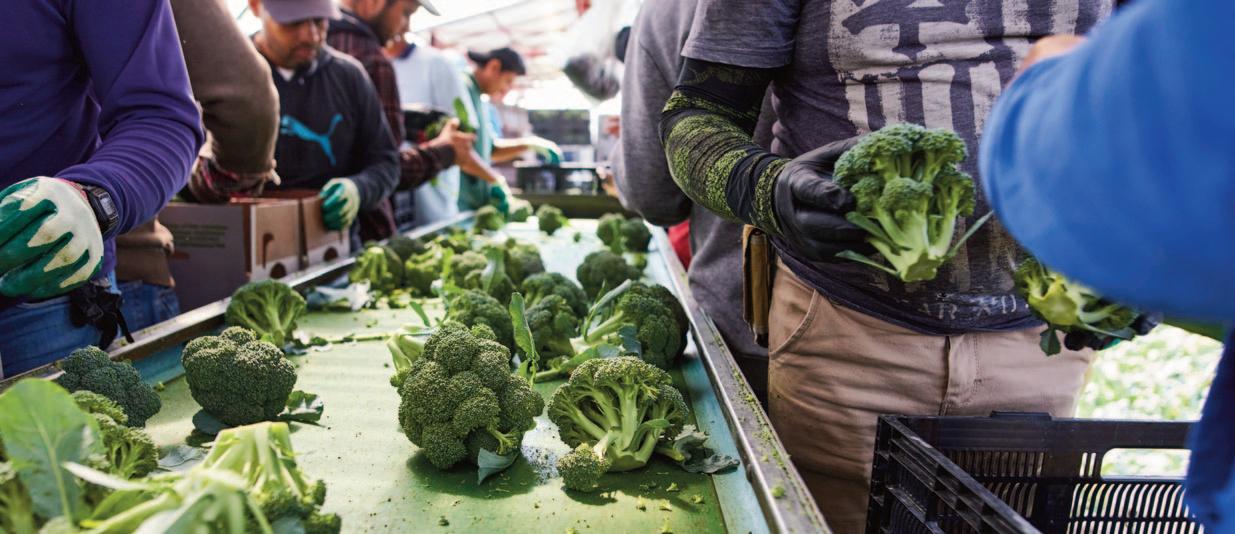
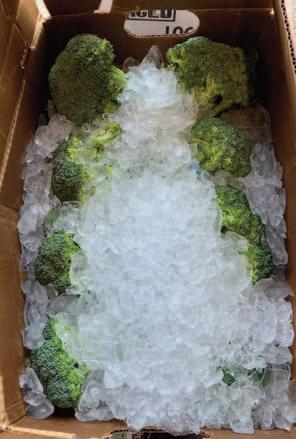
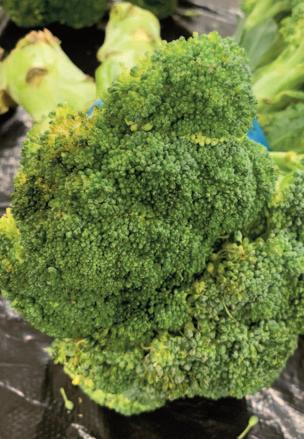
Les Productions Margiric, near Laval, Québec has a meticulously managed operation for packing broccoli in the field. Photo by Michael Abril.
Shorter discovery times, advanced technology key to new chemistries
Regardless of the size of your farm, the pain of waiting years –maybe even decades -- for new chemistry development is real.
But potato producer and articling agrologist Ritu Patel says specialty crop and smaller-acre growers everywhere feel particularly helpless.
“For us, the wait for new chemistry is personal,” she says, based on experiences on her family’s multi-generational potato farm in India and on her field work with growers in Canada.
“Registrations naturally flow to the big-acre crops first, and horticulture can be last in line. Meanwhile, re-evaluations keep retiring the older products we've relied on for years.”
The crop protection development industry is risk adverse because of the millions of dollars of costs and years of research involved in creating a new chemistry. Science had advanced exponentially since early chemistry development, but there’s still a hit-and-miss element to the process that can eat up to 10-15 years of time.
Tony Klemm, CEO of Connecticut-based Enko, says better, earlier scientific decisions in chemical development are vital. Researchers need help screening: identifying stronger, safer, more effective candidates
sooner and eliminating weaker ones faster, he says.
And that’s where AI and other advanced tools come in.
Enko has two advanced herbicide programs, a cell membrane-disrupting herbicide and a novel graminicide, discovered through its trademarked ENKOMPASS platform. The platform combines machine learning, DNA-Encoded Library technology, and computational chemistry.
Klemm says by using the platform, the time to discovery is 75 per cent faster than traditional approaches, and 90 per cent less expensive because of the time saving.
“A set period of time is still required to go through the regulatory process, and we can’t change that,” he says, “but we can reduce the early discovery timeframe appreciably and get the chemistry to regulatory review faster.”
Enko’s two herbicide programs have generated more than four years of field data across 200-plus trials on four continents including North America.
The company is initially focused on major row crops, including cereals, corn and soybeans, where resistant weeds create a significant need for new tools. But Klemm says the underlying chemistry may also have potential across additional crops and geographies. Broader use, including horticultural crops, will depend on continued testing, crop selectivity, regulatory approvals, and future commercialization decisions, he says.
Separately, Klemm says Enko is also advancing a novel insecticide program targeting sucking pests, which has potential applications in horticultural crops where these pests are a significant challenge.
Enko's discovery efforts span all three major areas of crop protection: herbicides, insecticides, and fungicides. Klemm says a key focus across the company’s portfolio is addressing the growing challenge of resistance, including herbicideresistant weeds, insecticideresistant pests and fungicideresistant pathogens.
“By discovering novel modes of action and differentiated small molecules, we aim to provide growers with new tools to manage resistance while improving the performance and sustainability of crop protection,” he says.
It’s still too early to predict when these new chemistries take shape as crop protection products to be launched commercially, according to Klemm. That depends on continued technical success, regulatory approvals and commercialization decisions by Enko and any future partners.
But the commitment appears to be there. Enko employs a team of 40-plus PhD scientists –including computer scientists, crop scientists, chemists and molecular biologists -- working in a cross-disciplinary capacity, at the company’s 89,000-square-foot headquarters in Mystic, Connecticut.
Growers are anxiously awaiting the results of their efforts. Patel says that being asked to fight new disease and resistance pressures with an older, smaller toolbox is frustrating.
“No grower is against rigorous safety review — we want products
we can trust,” she says. “The frustration is the gap between losing a tool and getting its replacement, because that gap is where the grower carries all the risk. That's why anything that shortens discovery time responsibly matters most in horticulture. We simply have the
least room to wait.”
Owen Roberts is a Guelph-based agricultural journalist and a pastpresident of the International Federation of Agricultural Journalists.
OWEN ROBERTS
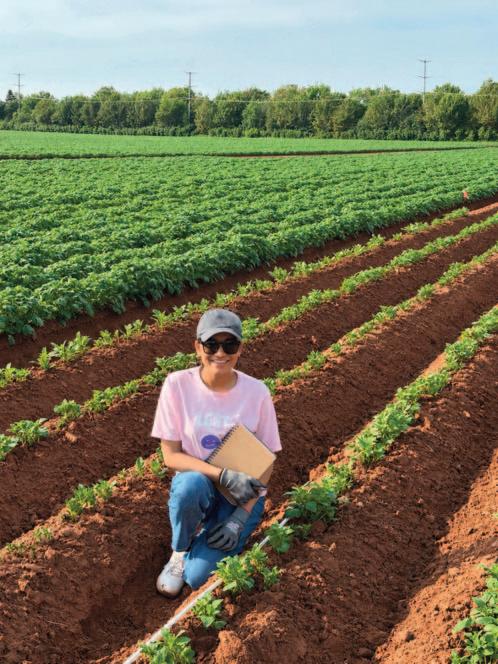
Ritu Patel, pictured here on a PEI potato operation, welcomes new chemistries that will help the horticultural sector and small-acre crops. Photo courtesy of Ritu Patel.
Take your place among Canada’s best at the 2026 Royal Agricultural Winter Fair
Each November, The Royal Agricultural Winter Fair transforms Toronto’s Exhibition Place into a vibrant celebration of Canada’s finest in food and farming. For more than 100 years, it has provided a stage for growers, producers, and agricultural innovators to showcase their passion and expertise.
As the Road To The Royal begins for this year’s fair, the call is out for entries in the best-ofthe-best horticulture and agriculture competitions. Whether you’re a seasoned exhibitor or considering participating for the first time, The Royal offers an unparalleled opportunity to have your work recognized at the highest level, with the chance to be crowned a Royal Champion. In these
competitions, producers are invited to showcase everything from giant vegetables to more niche categories that span over classes such as cabbage, potatoes, carrots, kale, and so much more. Not only does this offer the chance for individual accolades, but it also raises the profile of regional growing practices and highlights excellence in crop management and innovation. Judging panels comprise industry experts who evaluate entries with the utmost care, using up-to-date criteria and standards. Beyond the ribbons and awards, participating in The Royal is a chance to connect with peers, celebrate agricultural heritage, and engage in friendly competition. Many exhibitors return year after year, building lasting relationships and sharing
knowledge that continues to strengthen Canada’s growing communities.
How to enter: If you’ve never entered before, don’t be intimidated. The Royal’s entry system is clear and user-friendly. Detailed competition guides and class descriptions are available at royalfair.org/agriculture.
Entries Open: September 8, 2026 Entries Close: October 30, 2026
Judging: November 4, 2026
Questions: Email entry@ royalfair.org or contact the Agriculture Office at the Royal: 416-263-3418.
Tips for a strong entry:
Read the rules: Each category has specific guidelines regarding size, presentation, and judging criteria. Make sure your entry complies to avoid disqualification.
Document your #RoadToTheRoyal: Many exhibitors love documenting their growing journey, especially on social media. Not only does it highlight the hard work behind your entry, but it also helps build excitement and inspire others to get involved!
Pack carefully: If you’re transporting produce, proper packaging is essential to ensure everything arrives in peak condition.
Engage with the experience: If possible, attend the fair and see some of the horticultural displays. It’s an inspiring atmosphere that celebrates agriculture in all its forms.
Your chance to become a part of Royal history
By entering, you help carry forward a legacy that’s more than 100 years strong. Your participation brings new energy and excitement to the competitions, inspires future growers, and helps The Royal remain the pinnacle of Canadian agricultural achievement. So whether you grow for fun, for food, or for fame, consider submitting your best this year. Join us at the Fair, November 6–15, 2026, as we celebrate another year of agricultural excellence.
Source: Royal Agricultural Winter Fair
COMING EVENTS 2026
Aug 1 Food Day Canada
Aug 5 Nova Scotia Fruit Growers’ Association Summer Orchard Tour, Kentville, NS
Aug 6 Ontario Apple Growers’ Summer Tour, Aylmer & Port Stanley, ON
Aug ?? Georgian Bay Apple Growers’ Golf Tournament, Meaford Golf Course, Meaford, ON
Aug 11-12 North American Strawberry Growers’ Association Summer Tour, Spokane, Washington
Aug 18 Innovation Farms Ontario and AIVA Demo, Bothwell, ON
Aug 19 Potato Research Open Field Day, Elora Research Station, Elora, ON
Aug 19-21 US Apple Outlook Conference, Chicago, IL
Aug 20 Ontario Potato Field Day, HJV Equipment, Alliston, ON
Aug 20-22 Québec Produce Marketing Association Convention, La Malbaie, QC
Aug 22 Budding and Grafting Workshop, USask Horticultural Field Lab, University of Saskatchewan, Saskatoon, SK
Aug 28-30 Winona Peach Festival, Winona, ON
Sept 10-11 Great Lakes Tex Flex, Michigan State University Southwest Research and Extension Center, Benton Harbour, MI
Sept 16 Grape Growers of Ontario Celebrity Luncheon, Roma Club, St. Catharines, ON
Sept 23 Ontario Produce Marketing Association Golf Tournament, Lionhead Golf and Country Club, Brampton, ON
Sept 23-24 GreenTech North America, Philadelphia Convention Center, Philadelphia, PA
Sept 23-24 CPMA Food Safety Conference, Sheraton Vancouver Airport Hotel, Vancouver, BC
Sept 26 Farm & Food Care Ontario’s Breakfast on the Farm, River Valley Cattle Co, Newburgh, ON
Sept 28-Oct 1 Tri-National Agricultural Accord, Calgary, AB
Oct 6-7 Canadian Agri-Food Policy Institute, Exchange Conference, National Arts Centre, Ottawa, ON
Oct 6-7 Public Trust Summit, Westin Toronto Airport Hotel, Toronto, ON
Oct 6-8 Fruit Attraction, IFEMA Trade Fair Centre, Madrid
Oct 7-8
Canadian Greenhouse Conference, Niagara Falls Convention Centre, Niagara Falls, ON
Oct 14-16 International Fresh Produce Association Convention, Orange County Convention Center, Orlando, FL
Oct 20-22 International Forum for Agricultural Robotics (FIRA), Yakima County, Washington State
Oct 26-30 World Potato Congress, Naivasha, Kenya
Nov 6-15 Royal Agricultural Winter Fair, Toronto, ON
Nov 20 Ontario Produce Marketing Association Gala and Awards Ceremony, Venue TBA, ON
UV Boosting gets more traction in Europe
Kubota Corporation is investing more funds in UV Boosting, strengthening a partnership that began in 2024. Founded in 2017 and based in Saint-Nom-la-Bretèche, France, the agtech company has developed a patented technology that uses controlled short wavelengths of UV-C light to stimulate a plant’s natural defense mechanisms.
Rather than directly targeting pathogens, the system triggers the production of salicylic acid and other plant hormones, helping crops better resist diseases, drought stress and frost damage. The technology is already being deployed in vineyards, orchards
and specialty crops. Kubota has recently begun full-scale commercialization through its European distribution network.
As regulatory pressure on chemical crop protection products increases across Europe, Original Equipment Manufacturers (OEMs) are increasingly looking beyond traditional machinery and investing directly in biological, digital and non-chemical crop protection solutions. Kubota has already expanded its agtech investment activity through companies such as Kilter and now appears to be building a broader ecosystem focused on sustainable crop production
Plantis automates transplanting
KAREN DAVIDSON
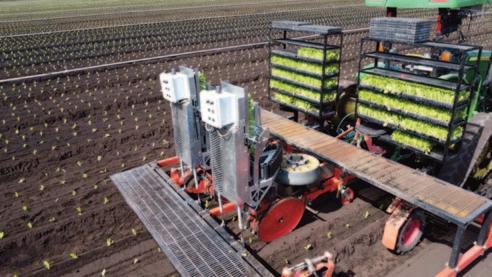
VegTech, based in Sherrington, Québec, has a long history of developing vegetable equipment that’s adapted for black soils. The company exhibited Plantis at the inaugural Canadian AgRobotics & AI Summit in London, Ontario in March 2026. Plantis, patent pending, is a smart automation retrofit system that’s designed to attach to conventional agricultural transplanters. It transforms standard field-planting equipment into high-performance automated machines, reducing labour needs and increasing crop precision.
technologies.
Field trials cited by Kubota indicate that UV Boosting’s technology has achieved up to a 40 per cent reduction in disease incidence and 13 per cent increase in vineyard yields, supporting its potential as a commercially viable complement to conventional crop protection programs.
Kubota’s investment signals a broader strategic shift in which machinery manufacturers are becoming active participants in crop protection innovation. As sustainability requirements tighten and chemical inputs face increasing scrutiny, technologies that strengthen plant resilience
Features:
• Up to 6,000 plants per hour
• Automatic speed adjustment based on planting conditions
• No downtime – instantly switch back to conventional transplanting
• Modular configuration (1 to 12 rows)
• Compatible with multiple tray types (soft and rigid)
• Retrofit on conventional transplanters
• Adjustable ground pressure
• 4G / Ethernet connectivity More information is available at www.vegtech.ca
rather than directly attack pathogens could become an increasingly important part of the future agricultural toolkit.
Source: Kubota Corporation June 24, 2026 news release
FOCUS: FARM EQUIPMENT & MACHINERY
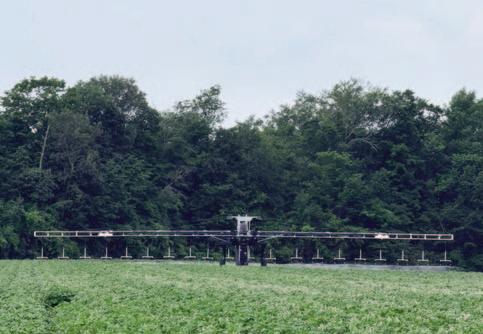
Precise irrigation that’s easy to use
KAREN DAVIDSON
360 Rain is an American company that markets itself as irrigation and nutrient application redefined. Headquartered in Morton, Illinois, it has a deep history going back to the early days of precision planting.
Leap forward, and 360 Rain now has dealerships across Canada: 46 Ag Ltd in Prince Edward Island, Nova Scotia and New Brunswick; Saturn Agriculture, Québec; Grand River Robotics, Ontario; Gaber Distributors, Manitoba; Delta Irrigation Ltd (Alberta and Saskatchewan); and West Coast Robotics (British Columbia).
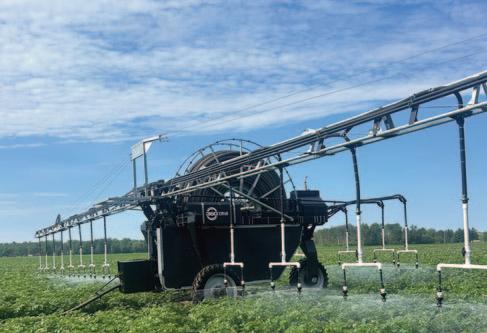
Henry Hutten, sales and marketing manager for Grand River Robotics, the Ontario distributor of 360 Rain, says a total of 15 systems are working in Ontario. After two years of commercialization, there are 30 units working in potatoes worldwide. In summer 2026, there is one 360 Rain irrigation system working in Ontario potatoes, but until there’s a season of experience under the grower’s belt, it’s premature for testimonials.
“The single biggest feature is that 360 Rain requires little
labour to operate,” says Hutten.
“Labour – qualified labour -- is becoming harder to get. And in terms of sizing, the 200 gallon per minute (GPM) minimum suits many sized farms versus the 600 GPM in other systems.”
He adds that with a 150gallon diesel fuel tank, the electric motors can run “remarkably efficiently” with 600 hours of run time.
How it works
For the infrastructure, the grower will need to connect to a well or reservoir delivering 200-
250 gallons per minute. The water pressure needs to be 115 PSI at the well or hydrant. For power, the base station should be located near the edge of the field, requiring 110V AC. The 360 Rain package includes an electrical panel that is pre-wired to power the GPS and cellular network as well as inputs for up to four pressure or flow sensors and up to eight relays for wells, booster pumps and injector pumps.
An injection system (360 Injection Skid) is optional for nutrient application. The 360 Rain path creation starts by
recording the planter pass using the planter tower kit.
In the field
Craig Gilbert, 46Ag Limited, has sold 11 360 Rain units in Prince Edward Island and one in New Brunswick for the 2026 potato season. The 2025 drought was an incentive for growers. They are also interested in the labour efficiencies of the system.
“It’s the ease of use for the operator,” says Gilbert. “We also have a lot of misshapen fields in Prince Edward Island, where water courses dissect fields. So it’s
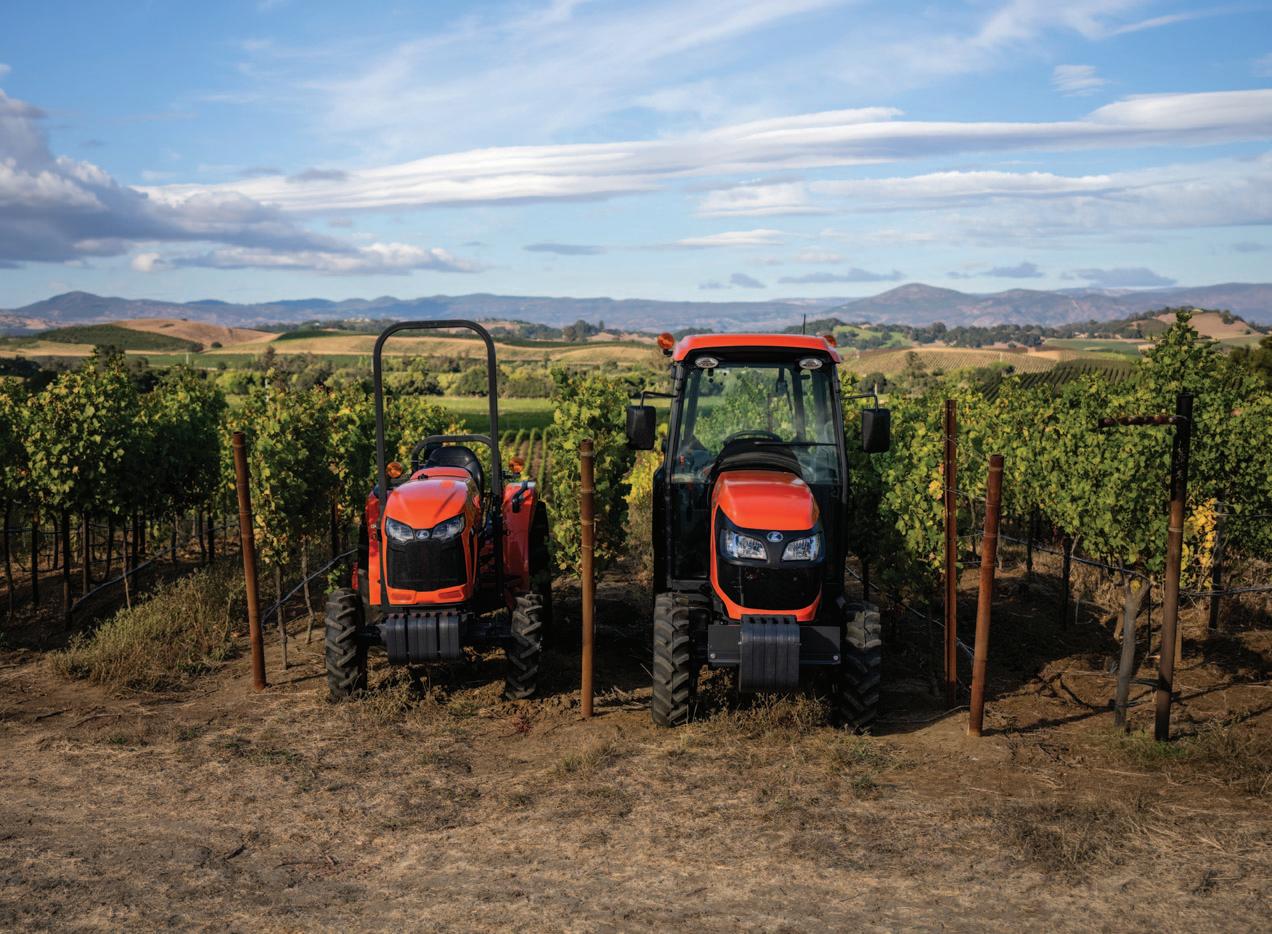
Built narrow for the rows. Built strong for the work.
the adaptiveness of the system that is attractive. We don’t have to take out fence lines like we used to with pivot irrigation.”
When interviewed in mid-July 2026, Gilbert indicated that machines were just starting to supply supplemental water. As the season progresses, he predicted that water droplet size could be controlled to mitigate wind effects. Different sizes of nozzles can be used.
An ag tech field day recently attracted both local and American visitors. “We have a lot of eyes on this new system,” Gilbert concluded.
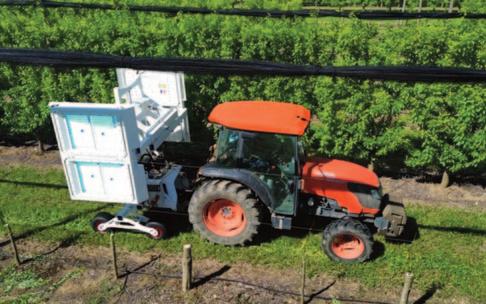
The M4N is made to move confidently through vineyards, orchards, and other tight working environments without giving up the power, hydraulic performance, and durability demanding jobs require. With features like Bi-Speed turning providing a tighter turning radius, Work Cruise delivering constant engine speed during load fluctuations, and a redesigned cab with flat floor and smartly placed controls to maximize operator comfort, it brings serious capability to places where space is limited. The M4N: all the strength of an M-Series tractor, shaped for the narrow way through.
360 Rain system working in potatoes. Photos by Deanna Vander Zaag.
FOCUS: FARM EQUIPMENT & MACHINERY
The right tires can make a difference in lessening soil compaction
KAREN DAVIDSON
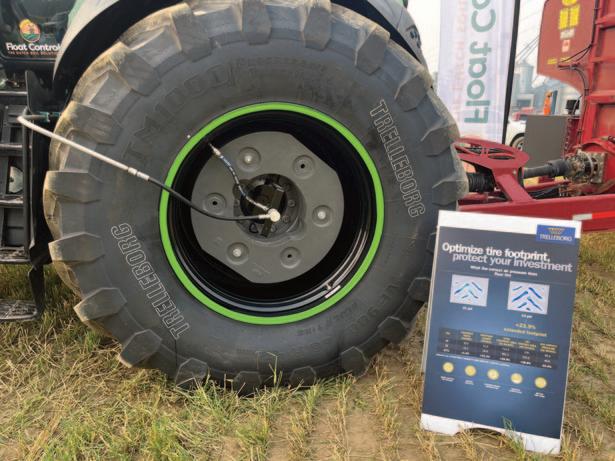
Tires, the workhorse of every farmer, were the focus at a recent “Compaction Day” at Tupling Farms, Shelburne, Ontario. Sponsored by the Georgian Central Soil & Crop Improvement Association, the event was the launch pad for Trelleborg Adaptive Tire Management System (ATMS).
“This was the first debut of a fully integrated automated system on a global level so was a real highlight to showcase in a rural town in Ontario,” says Eric Brubacher, director of sales, OK Tire Elmira.
“Fuel consumption, productivity, tire wear and soil protection are all closely linked to tire performance,” he says. “When tires operate at the right pressure, machines achieve better traction, lower slippage, reduced rolling resistance and more effective power transfer to the ground. The result is less fuel used and lower overall cost per acre.”
How it works
The ATMS provides the data that can optimize tire performance whatever the operating conditions. The system continuously monitors tire and vehicle behaviour through four sensors installed inside each tire. By collecting real-time information on the tire dynamic load and
tractor weight distribution, it provides a complete picture of how the machine is interacting with the ground during operation.
Using these insights, ATMS calculates the recommended tire pressure to achieve the optimal tire footprint. When integrated with a Central Tire Inflation System (CTIS), it adapts tire pressure based on the actual load, terrain and the task being performed.
“One thing this system is unique for is that it has been integrated with a float control air system where both of these systems talk to each other. Tire pressure is adjusted on the go in real time based on the information the tire sensor communicates with the float control air system,” says Brubacher.
Background on Trelleborg
Trelleborg Tires is a global brand specializing in off-highway tires and complete wheel systems for agriculture, forestry, construction and material handling. The company was founded in Sweden and currently operates under Yokohama TWS.
In a YouTube video filmed in the United Kingdom in March 2025, more information is shared on the importance of tire selection. Google “Trelleborg Tires Top Tips.”
“Older tires may be unsuitable due to machinery weight and changes in
The Trelleborg Adaptive Tire Management System (ATMS) had its debut at a “Compaction Day” at Tupling Farms, Shelburne, Ontario.
technology,” says Bruce Lauder, Trelleborg. “Tire size and pressure make for a wider footprint and less soil compaction.”
When purchasing a new tractor, understand the features and benefits of the tires. That means calculating the price of fuel and the savings that could be realized with tires adapted for optimal efficiency.
Tire technology is relevant to all growers, but particularly potato and field vegetable growers who may be dealing with soil compaction issues and weather-related challenges.
Two-spotted spider mites and thrips thrive in hot, dry weather
Minecto Pro 7 day rapid Spider mites Cutworm (Thrips)
Acramite 50 WS 3 day rapid
Oberon Flowable 1 day Slow; control may not be apparent for 2-3 weeks.
Movento 240 1 day Slow; reduction in numbers after 3-4 days
Exirel 1 day Suppression only Aphids (Thrips)
Spider mites
Spider mites
Aphids (Thrips)
Aphids (Thrips)
Harvanta 50SL 1 day
Suppression only
Beleaf SG 0 Thrips stop feeding immediately but it may take several days to see a reduction in numbers.
Malathion 3 day rapid
Thrips Cucumber beetles
Aphids (Thrips)
Thrips TSSM (resistant populations have been confirmed in Ontario)
Apply before populations reach damaging levels following a resistance management program.
Toxic to bees*
Maximum 1 application per year.
Toxic to bees**
Toxic to bees – do not apply this product during crop flowering.
If thrips populations are high, use a registered insecticide with a different mode of action to reduce thrips populations before applying EXIREL insecticide. Toxic to bees*
Toxic to bees*
Apply before populations reach high levels.
Toxic to bees*
Toxic to bees*
*avoid application during bloom period. If applications must be made during the crop blooming period, restrict applications to evening when most bees are not foraging. When using managed bees for pollination services, DO NOT apply Minecto Pro during the crop blooming period.
** May be toxic to bee brood. Bee brood may be exposed to residues on pollen and nectar brought back to the hive by bees foraging on flowering crops and weeds. To minimize potential exposure to bees, avoid application if bees are visiting the treatment area.
(Thrips) indicates that this is not a labelled pest for cucurbit crops, however it is registered for other pests in this crop group and will also provide control of thrips.
Hot, dry weather sometimes leads to problems with twospotted spider mites (TSSM) and thrips in cucurbit crops.
Two-spotted spider mites
TSSM feed by piercing
individual cells with their stylet and sucking out the contents. This often causes a bronzing effect or a generalized yellowing that turns to bronze. They often (but not always) avoid feeding on the veins, which remain green. Damaged plants become stressed and begin to abort young fruit or produce misshapen fruit. TSSM damage can be
confused with nutrient deficiencies such as manganese or magnesium. It is important to determine the actual cause of the damage because, in the case of TSSM, foliar fertilizers may actually make the problem worse. Leaves with dust or sand on them provide a good environment for the mites. If you are seeing leaf symptoms, but can
not find the mites, look at the newer leaves adjacent to the damaged ones. Mites often abandon older leaves for fresh feeding.
Spider mites are incredibly difficult to see and often require a hand lens or microscope. Rainfall and overhead irrigation will help to decrease mites in many crops. Unfortunately, the shape and hairiness of cucurbits provide a lot of hiding places for the mites.
Thrips
Although thrips are larger than TSSM, the younger stages are still very difficult to see with the naked eye. They are yellowish green to brown in colour and long and narrow in shape. The adults are darker and have wings. Thrips feed with rasping-sucking mouthparts. They scape the surface of the leaf and then suck up the fluids. Like TSSM, they feed mainly on the lower leaf surface and avoid the veins. The
rasping damage is initially dark green and then becomes a tan or silvery colour. Interestingly, some thrips species such as the western flower thrips are omnivores and will feed on spider mite eggs. However, feeding on the leaves causes plant stress and leads to fruit abortion and reduced yields. Ensure thorough coverage when applying a miticide or insecticide. Use a high-water volume and nozzles that are oriented forward- and backfacing to achieve coverage of the lower leaf surface as best as possible.
(Thrips) indicates that this is not a labelled pest for cucurbit crops, however it is registered for other pests in this crop group and will also provide control of thrips.
Elaine Roddy is vegetable crop specialist, Ontario Ministry of Agriculture, Food and Agribusiness, based in Ridgetown, Ontario.
ELAINE RODDY
Two-spotted spider mite damage on cucumber leaves
Thrips damage on cucumber leaves.
VEGETABLE
HarvestHold instead of ice for broccoli after harvest
Dr. JENNIFER DeELL
Broccoli is a floral vegetable that is highly perishable and deteriorates quickly after harvest. Rapid yellowing of the flower buds is the major limitation, due to chlorophyll breakdown and increased xanthophyll content. Broccoli respiration rate is high after harvest and this has led to the use of rapid cooling and ice packing to slow deterioration during storage, transport and marketing. The onset of disease is a major concern during storage. Storage at 0°Celsius with 95% relative humidity is generally recommended, which can maintain broccoli quality for two to four weeks.
Exogenous ethylene accelerates the yellowing of broccoli, through both increased sensitivity to ethylene and accelerated ethylene production. Reducing ethylene concentration from 0.1 to <0.005 ppm has been shown to more than double the storage life of broccoli held at 20 and 5°Celsius (Wills et al., 1999). Ethylene in the atmosphere around commercial broccoli containers has been found to range from 0.01 to 0.8 ppm. Therefore, any practice to minimize ethylene in the storage environment or inhibit ethylene action can extend the storage life of broccoli.
1-Methylcyclopropene (1-MCP), a synthetic plant growth regulator that is structurally similar to the natural plant hormone ethylene, inhibits the action of ethylene and delays plant senescence. Apple and floral industries around the world have been using 1-MCP treatments for more than 25 years to extend product storage life and expand marketing opportunities. Postharvest 1-MCP treatment using a typical rapid-release formulation has been shown to reduce respiration, floret yellowing and decay development in broccoli, even in the presence of ethylene (Ku and Will, 1999; Fan and Mattheis, 2000). Increases in broccoli storage life can be up 108% depending on 1-MCP concentration. Recent technology allows for the slow release of 1-MCP and continuous treatment by having 1-MCP embedded into a film, known as HarvestHold (Verdant Technologies, USA). This proprietary humidity-released formulation allows environmental humidity to trigger the HarvestHold Fresh sheet to gradually
release 1-MCP.
HarvestHold is currently registered in Canada for several fruits and vegetables, including bell pepper, broccoli, cantaloupe, cucumber, peach, and tomato. Registration is expected on additional items in the future.
The objective of the following study was to compare HarvestHold with ice for managing broccoli quality during storage.
Methods
Boxes of broccoli were obtained from a local grower on the day of harvest, some of which had been commercially iced at the farm (Figure 1). One HarvestHold Fresh sheet was added to each box without ice (Figure 2) and half of the boxes with ice, and sheets remained there for the duration of the trial. This allowed for three treatments to be compared: 1) Ice, 2) HarvestHold, and 3) Ice plus HarvestHold.
All broccoli was held at 0.5°Celsius with at least 95% relative humidity for five weeks. Boxes with HarvestHold were kept separated from the others, allowing for no movement of 1-MCP to the broccoli with ice only. Ethylene (approximately 3 ppm) was present in the environment throughout the trial, to mimic retail conditions, where mixed produce and ethylene are present.
Broccoli quality was evaluated after two, four, and five weeks of storage. Subjective scales for quality evaluations were used, with a rating of five always being best like at harvest time and three being the limit of marketability.
Conclusions
Results
After two weeks of storage at 0.5° Celsius, all broccoli was still considered marketable (Table 1). However, broccoli with just ice had notably lower values for colour, head compactness, and stem scar quality at this time.
After four and five weeks of storage at 0.5° Celsius, only broccoli that was not iced and treated with HarvestHold was considered marketable (Table 1, Figure 3). Substantial yellowing, floret loosening (compactness), firmness loss, stem scar deterioration, and rot had developed in the broccoli with ice (Figure 4).
* 5 is best like at harvest time and 3 is limit of marketability
HarvestHold can reduce broccoli yellowing, floret loosening, firmness loss, stem scar deterioration, and rot development during postharvest handling and storage. Eliminating ice applications would reduce disease incidence along with safety issues. HarvestHold resulted in superior broccoli quality compared to that packed with ice and therefore, it could be a successful replacement for ice.
Dr. Jennifer DeEll is fresh market quality specialist – hort crops,
Simcoe, Ontario.
OMAFA,
Figure 2. Broccoli with HarvestHold sheet added before storage.
Figure 4. Broccoli with ice only, after 4 weeks of storage at 0.5°Celsius.
Figure 1. Broccoli with ice immediately after harvest.
Figure 3. Broccoli with HarvestHold (no ice), after 4 weeks of storage at 0.5°Celsius.
Table 1. Quality of broccoli with Ice and/or HarvestHold (HH) treatment after 2, 4, and 5 weeks of storage at 0.5°Celsius.
Drone spraying approved in Canada
Canadian farmers finally have joined their colleagues in Australia, Japan, and the United States in having access to aerial drones to apply crop protection products. After several years of scientific deliberation, Health Canada’s Pesticides Regulatory Directorate (PRD) introduced the new policy at the end of June 2026. The update brings Canada into alignment with many other global jurisdictions which already allow crop protection application by drone.
Remotely piloted aircraft systems (RPAS), commonly known as drones, offer access to an aerial application system at a fraction of the cost of a plane or helicopter. Controlled by remote, and largely computer guided, these aircraft are also far simpler to operate compared to those with a human pilot on board. These two factors make the barrier to entry far lower to consider aerial application with drones on many farms.
Health Canada’s updated science policy outlines how labels with existing approved aerial use are sufficient for allowing application by drones. For aerial application to be allowed, crop protection products must include specific instructions for those uses on the label. By following the existing aerial label directions for application with drones, the “value” or effectiveness of the product is expected to behave no differently than if it was applied by plane or helicopter. If the applicator wanted to apply with different parameters than the existing aerial instructions, such as a lower minimum water volume, a different application rate, or an increased frequency of applications, this would require a review from PRD prior to
approval.
For environmental protection, the PRD regularly applies buffer zones for terrestrial and aquatic habitats on product labels. The updated science policy requires drone operators to follow the buffer zones established for rotary aircraft application (i.e. helicopter). However, new studies are suggesting spray drift from drones is more restricted – higher than field sprayers and somewhat similar to airblast sprayers but less than piloted aircraft. The current use of the rotary aircraft buffer zone is therefore conservative and a drone-specific (and smaller) buffer zone is expected to be developed in the near future.
To protect against exposure of the drone operator and supporting crew, the PRD has similarly implemented conservative approaches. Applicators wishing to use drones under the new policy will need to have two individuals, a pilot and a separate individual for mixing and loading of products, as per the current aerial application guidelines in Canada. Yet the personal protective equipment (PPE) required for drone operators is to be the same as the label PPE required for ground application. The ground application PPE would come from the directions for ground boom or airblast sprayer depending on the crop being treated, which already factors in the same individual mixing and loading and doing the application. In the future, PRD acknowledges that separating these roles may not be required.
Drone pilots will also have to comply with Transport Canada regulations. Drones are considered aircraft in Canada and therefore fall under the Canadian Aviation Regulations. Any drones weighing more than 250 g need to be registered to fly in Canada. The pilot will also need to have a valid drone pilot certificate to fly any drones for the purposes of crop protection.
For a spray drone with a takeoff weight from 25 kg up to 150 kg, which would comprise the newer rotary drones on the market, an advanced operations certificate is required. In order to become certified in this category of operations, one must pass an
online exam and then pass a practical flight review from a drone flight school to assess the individual’s ability to operate the drone safely. A drone pilot certificate does not expire once obtained but there are requirements for continued training to remain current.
Although crop protection registration and safety reviews are handled federally in Canada, provincial legislation regulates the sale, purchase, storage, transportation, use and disposal of registered products, along with any requirements for training and certification for applicators. As a result, provincial licensing requirements vary across the country.
Saskatchewan has already created a specific provincial licence category for commercial applicators using drones – but farmers applying crop protection products for their own crops are still exempt from obtaining mandatory licensing in Saskatchewan. In Ontario, commercial applicators for agriculture need to be licensed as an exterminator.
However, farms using crop protection products for their own operations can have individual(s) certified under the Grower Pesticide Safety Course instead. However, this certification does not currently extend to aerial applications, so Ontario farmers wishing to apply crop protection
products by drone, even to their own crops, need to obtain a provincial exterminator license with the aerial application category.
It has been a long process to achieve legalized use of drones for crop spraying in Canada. Though now approved, the responsibilities of the operator remain crucial. That includes following all label directions, obtaining proper certifications, calibrating the equipment correctly and verifying its output, ensuring appropriate conditions during product application, and maintaining required safety precautions for
the pilot and crew.
The current policy addresses drone use for labels that already have an approved aerial registration. It is expected that the process for the addition of drone use to product labels that do not currently include aerial uses will be addressed in the near future.
Ontario Fruit & Vegetable Growers’ Association.
Chris Duyvelshoff is crop protection advisor,
CHRIS DUYVELSHOFF
This drone was demonstrated at an Ontario Hazelnut Association field day near Uxbridge, Ontario.
Captan 480 SC fungicide label temporarily expanded for Ontario field peppers
JOSH MOSIONDZ
The Pesticides Regulatory Directorate (PRD), formerly known as the Pest Management Regulatory Agency (PMRA) recently approved an Emergency Use Registration request effective June 2, 2026, until June 1, 2029, for control of anthracnose on field peppers in Ontario only. Captan 480 SC fungicide was already labeled for disease control on a wide range of crops in Canada. This Emergency Use Registration request was submitted by the Ontario Ministry of Agriculture, Food, and Agribusiness and sponsored by the Ontario Fruit and Vegetable Growers’ Association in response to the urgent need for
management products for this disease. A temporary MRL of up to 1.5 ppm for captan, has been established on field peppers in Canada. Any growers exporting fruit pods out of country should ensure a tolerance is established in the destination country before considering applications in their production systems.
The following is provided as an abbreviated, general outline only. Users should be making disease management decisions within a robust integrated disease management program and should consult the complete label before using Captan 480 SC fungicide.
Follow all other precautions, restrictions, and directions for use on the Captan 480 SC fungicide label carefully.
For a copy of the emergency
Crop(s)
Field Peppers grown in Ontario Control of Anthracnose caused by Colletotrichum spp.
3.73 – 7.05
use label, Ontario growers may contact Josh Mosiondz, provincial minor use coordinator, OMAFA, Guelph (226) 971-3407, Amanda Tracey, vegetable crops specialist, OMAFA, Ridgetown (519) 3507134, or Katie Goldenhar,
Apply in sufficient water for thorough coverage. Apply preventatively, when conditions are favourable to disease development. Apply at a minimum of a 7-day interval. Do not make more than 3 applications per year. Use 3.73 – 5.39 L per hectare on young plants, 5.39 –7.05 L per hectare on mature plants. May be applied by conventional ground equipment. DO NOT use on greenhouse peppers.
horticulture pathologist, OMAFA, Guelph (519) 835-5792. Alternatively, you may contact your regional supply outlet, Adama Agricultural Solutions Canada Inc. (Captan 480 SC®) representatives, or visit the
Allegro 500F fungicide label temporarily expanded to suppress Neopestalotiopsis leaf blight and fruit rot
JOSH MOSIONDZ
The Pesticides Regulatory Directorate (PRD), formerly known as the Pest Management Regulatory Agency (PMRA), recently approved an Emergency Use Registration request effective June 2, 2026, until June 1, 2029 for suppression of Neopestalotiopsis leaf blight and fruit rot on field-grown strawberries in all provinces of Canada (Ontario, British Columbia, Alberta, Quebec, Saskatchewan, Manitoba, New Brunswick, Nova Scotia, Prince Edward Island, and Newfoundland and Labrador).
Allegro 500F agricultural fungicide was already labeled for disease control on a wide range of crops in Canada. This Emergency Use Registration
request was submitted by the Ontario Ministry of Agriculture, Food, and Agribusiness as a result of minor use priorities established by growers and extension personnel and the urgent need for a management product for this newer disease. A temporary MRL of up to 3.5 ppm has been established on strawberries in Canada, however, any growers exporting fruit out of country should ensure a tolerance is established in the destination country before considering applications in their production systems.
The following is provided as an abbreviated, general outline only. Users should be making disease management decisions within a robust integrated disease management program and should consult the complete label before using Allegro 500F agricultural
Crop(s) Target Rate (L of product / ha) Application Information
Field Strawberries Suppression of Neopestalotiopsis Leaf Blight and Fruit Rot (Neopestalotiopsis sp.)
fungicide.
Follow all other precautions, restrictions, and directions for use on the Allegro 500F agricultural fungicide label carefully.
For a copy of the new minor use label, Ontario growers may contact Josh Mosiondz, provincial minor use coordinator, OMAFA, Guelph (226) 971-3407, or Katie Goldenhar, provincial
1.5 Foliar spray, ground applications should begin prior to disease development. Good spray coverage into the canopy is essential for good disease management. Do not apply in greenhouses. Make up to 4 applications per year with a Re-Application interval of 7 days. Restricted entry interval of 24 hours. 7
horticulture pathologist, OMAFA, Guelph (519) 835-5792, or Rangasashidar Sirigiri / Erica Pate, provincial berry specialist, OMAFA, Simcoe (519) 410-0624. Non-Ontario growers from participating provinces may contact their local provincial minor use coordinator or provincial crop specialist(s). Alternatively, you may contact
your regional supply outlet, Syngenta Canada representatives, or visit the PMRA label site PMRA label site
Josh Mosiondz is minor use coordinator, OMAFA.
Veltyma fungicide label expanded for control of late blight in potato
Veltyma, a fungicide that provides broad-spectrum control against key foliar diseases in potatoes, is now registered to control late blight in potato after the Pesticides Regulatory Directorate (PRD) recently approved the label expansion. In addition, Veltyma is now registered for up to three applications per year on potatoes. This label expansion also includes the addition of oats, rye and barley for key leaf diseases.
“Canadian potato growers need solutions that meet challenges head-on all season long to help protect against foliar diseases,” said Chris Vander Kant, corn, soybeans and horticultural crop manager for BASF Agricultural Solutions Canada. “If not properly managed, late blight is a potentially devastating disease. With Veltyma fungicide, farmers get protection against foliar diseases including early blight, black dot, brown spot and now late blight, in addition to Plant Health Benefits.”
Veltyma comes in a liquid formulation and has a wide application window, providing growers application flexibility along with effective disease control.
Veltyma has multiple modes of action to deliver preventative and curative activity:
Pyraclostrobin (Group 11) and Mefentrifluconazole (Group 3).
Pyraclostrobin provides Plant Health Benefits1 for increased growth efficiency, better management of minor stress and greater yield potential2
Mefentrifluconazole, also known as Revysol, is the innovative fungicidal active ingredient from BASF with a flexible molecular structure that adapts to a wide variety of pathogens, providing broader, stronger and longer performance compared to other demethylation inhibitors (DMI).
“The versatility of Veltyma, especially its ability to control resistant biotypes
through Revysol, has made this fungicide a key component of the complete BASF potato portfolio,” said Vander Kant.
“We’re proud to offer solutions for Canadian potato growers to help protect their crop from weeds, diseases and insects at every stage, from seed to harvest.”
Veltyma is also registered for use on multiple crops including corn, wheat and soybeans. For more information on Veltyma, and the BASF portfolio of potato solutions, visit AgSolutions.ca.
¹Plant Health Benefits refer to products that contain the active ingredient pyraclostrobin.
²All comparisons are to untreated unless otherwise stated.
Source: BASF Agricultural Solutions June 25, 2026 news release
PMRA label site
Josh Mosiondz is minor use coordinator, OMAFA.
Photo of late blight courtesy of OMAFA
MARKETPLACE WORKS
Hobby Farm for sale: Grafton area. 24 acres, 3 acres in apples. 905-377-5718
Used Apple Bins and Orchard Equipment available Location Clarksburg Ontario Call or text Tim Robertson at 705-441-5309 For sale: 30 acre cranberry farm in Western Newfoundland. 709634-6456