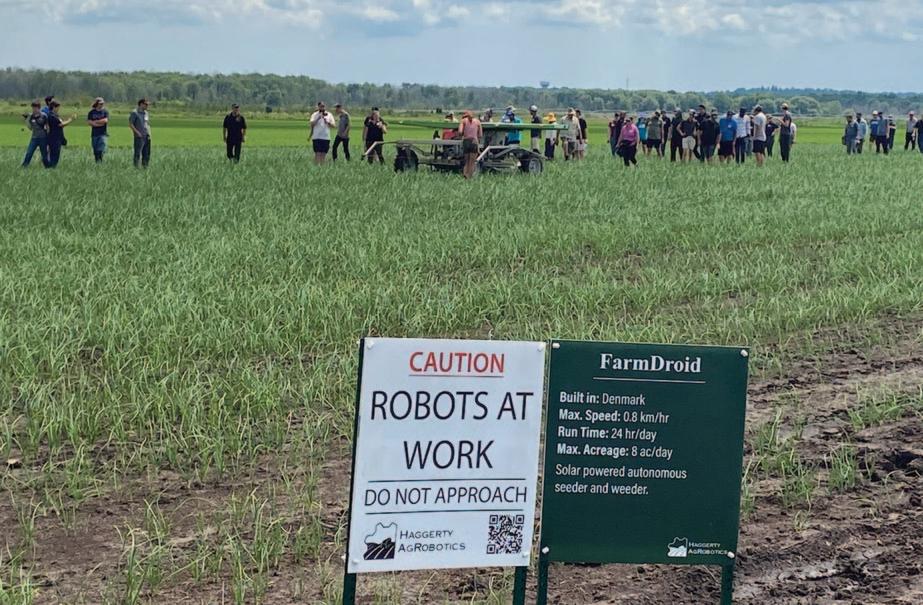
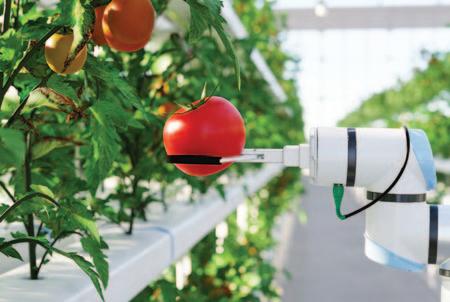
Caution! Robots at work. That’s a safety sign that’s becoming more common in Canadian horticulture.
A multi-disciplinary team of researchers at the University of Prince Edward Island (UPEI) is encouraged by a robot called AgriScout that’s using artificial intelligence to identify potatoes infected with potato virus Y (PVY). This groundbreaking, applied research is jointly funded by potato growers in New Brunswick and Prince Edward Island as well as their provincial governments. PVY causes potato disease which limits the yield and lowers the marketability of potatoes. In worst cases, it can cause necrosis in tubers. Symptoms are sometimes difficult to detect. Trained scouts must walk seed fields to identify and pull out plants that exhibit PVY symptoms – a practice called rogueing.
“It’s tough work,” says Ryan Barrett, research and agronomy specialist with the PEI Potato Board. “It’s hard
to find trained people to rogue seed potatoes and it’s becoming harder to identify the newer PVY strains.”
That’s why growers have turned to UPEI’s Precision Agriculture Research Group for a practical field solution that leverages artificial intelligence to efficiently detect PVY infections.
“Farming is not new to us,” says Aitazaz Farooque, director of the Canadian Centre of Climate Change and Adaptation, UPEI. Aitazaz with his co-investigator -- Dr. Gurjit Randhawa, assistant professor, School of Computer Science, University of Guelph and their Master’s student Charanpreet Singh -- have been tweaking the AgriScout, building the image libraries, creating databases of symptoms, and adding a Starlink service to upload geo-tagged photos from remote areas.
“One of our challenges was that a bright sunny day offers too much contrast to distinguish details of leaf shape and colour,” adds Randhawa. “We’ve added a canopy over the camera’s boom to address that issue and it is working quite well.”
Ryan Barrett was in test fields with the UPEI scientists in early July 2024. Now in the second year of field trials, a database of AI learning contains more than 80,000 labelled photos that are used to identify infected plants with more than 80 per cent accuracy. In one test in early July, the AgriScout surveyed a small field of potatoes known to be planted with about one per cent PVY, geo-tagging suspect plants with a real-time kinematic GPS and creating a map of PVY infections. After the potential infections were identified, the experienced roguers followed the map to verify the PVY infections. Out of 30 randomly flagged plants, 25 were positively identified as PVY, three were suspects and only two were false positives. That translates to an accuracy of 83 per cent.
“We’re still in the learning process,” says Barrett, “and we still need to test the AgriScout with multiple varieties and growth stages. A future step, ideally, is to enable the robot to spray paint the infected plants so that anyone can pull them out.”
Continued on page 3
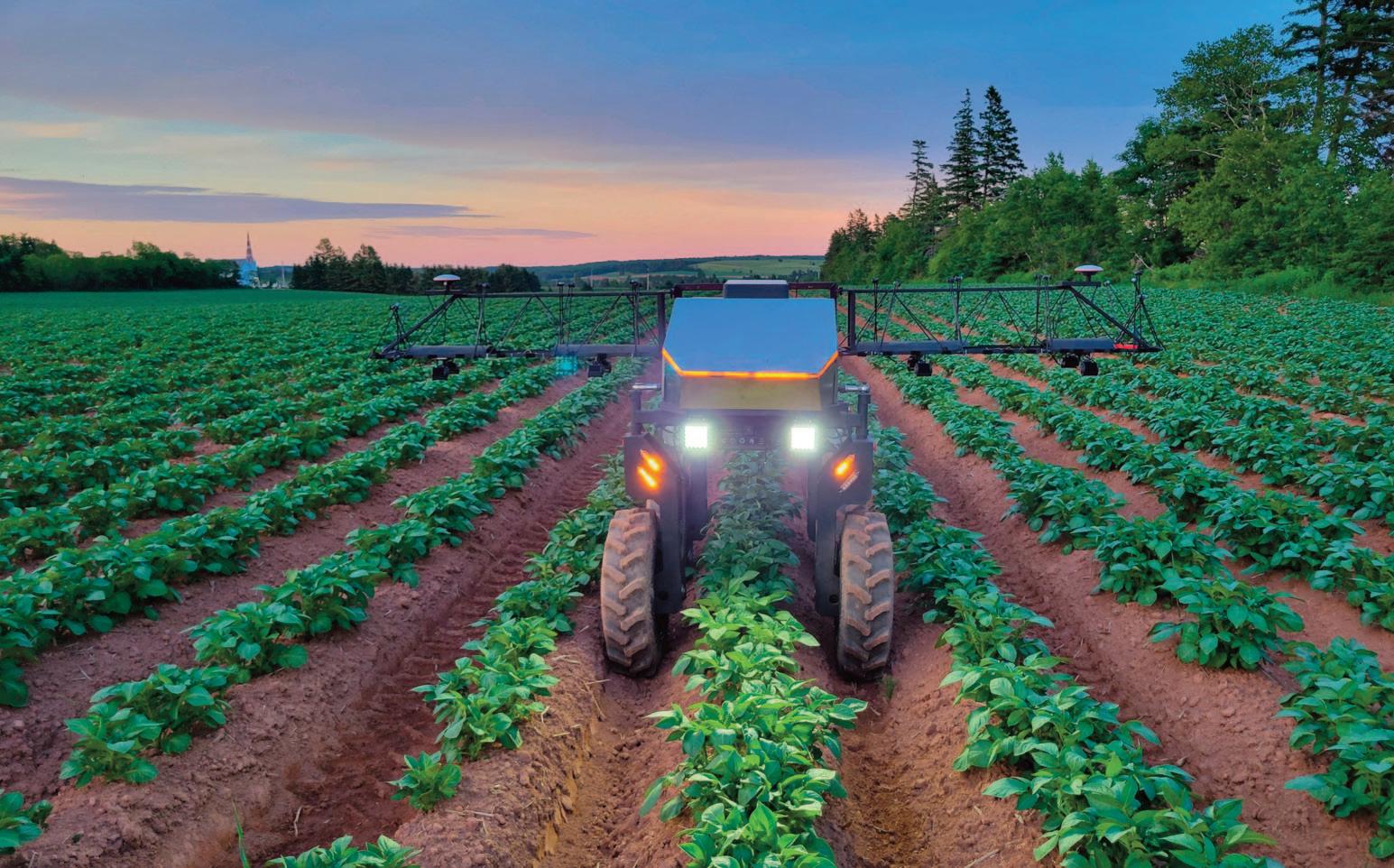
Those headlights might look like two rising moons. But no, that’s a robot that’s moving from the twilight zone into reality. In this photo, a robot operating with artificial intelligence is in the second year of trials scouting PVY virus in Prince Edward Island potato fields. Photo by Charanpreet Singh.
AT PRESS TIME…
Holdouts Costco and Walmart sign on to Grocery Code of Conduct
All aboard! The five major grocery retailers – Loblaw, Sobeys, Metro, Costco and Walmart -- are signing on to the voluntary Grocery Code of Conduct. The news was released at the federal-provincialterritorial (FPT) ministers of agriculture meeting in Whitehorse, Yukon on July 18, 2024.
The code was proposed by FPT Ministers of Agriculture in 2021 to improve transparency, predictability, and respect for the principles of fair dealing within the supplier/retailer relationship.
“We are delighted to finally have the entire food supply chain’s support for this Code,” said Ron Lemaire, CPMA president. “This Code will support industry’s efforts in strengthening our country’s food supply chain and CPMA is looking forward to working with all stakeholders to implement it swiftly.”
Canada’s Grocery Code of Conduct is a set of principles that allows all parties to make informed business decisions, contribute to a thriving and competitive grocery industry, promote reciprocal trust and collaboration amongst grocery value chain partners, and provide an effective, equitable mechanism for resolving commercial disputes. With the support from the government, the Office of the Grocery Sector Code of Conduct hopes to implement the code by
June 2025.
There is still much work to be done, including the development of the processes required to ensure an efficient and effective implementation, the establishment of an operating office, the hiring of an adjudicator, industry education, and much more.
To learn more about Canada’s Grocery Code of Conduct, visit canadacode.org.
Stats Canada reports 2024 potato plantings
Data on the seeded area of potatoes are now available for 2024. Canadian potato farmers planted 393,592 acres (159 281 hectares) of potatoes in 2024, down 0.9 per cent compared with 2023.
Prince Edward Island continues to report the largest seeded area in 2024, at 85,300 acres, followed closely by Manitoba (78,600 acres) and Alberta (75,500 acres).
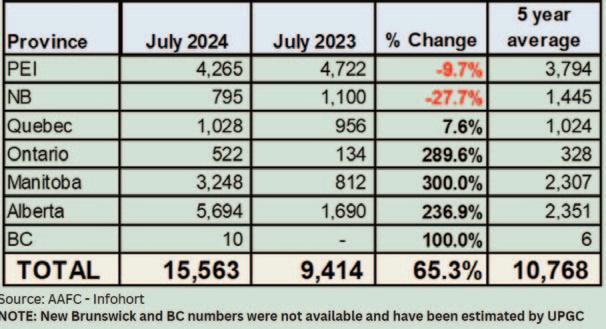
As of July 1, 2024, the total inventory of potatoes in Canada was approximately 15.5 million cwt, just over 6.1 million cwt above July 2023, a whopping 65.3 per cent increase and well above the five-year average for this time of year reports Victoria Stamper, general manager, United Potato Growers of Canada. Only Prince Edward Island and New Brunswick have seen a decrease in July holdings when compared to 2023. All other provinces have shown increases compared to last year, mostly in processing, frozen and chip.
Total holdings Canada (‘000 cwt)
NEWSMAKERS
The Canadian Produce Marketing Association has hired Greg Palmer as its vice president of trade and market development, a newly created role designed to strengthen membership offerings and expand into new markets domestically and beyond Canada. Palmer’s retail experience – in produce procurement, quality control, food safety – will support membership in efforts to build the Canadian marketplace.
On June 25, following the 12th World Potato Congress in Adelaide, Australia, an Industry Award Ceremony was held to recognize individuals who have devoted their life’s work to the potato industry. The nine Global Industry Award winners are: Nelio Campelio, Philippines; Walter Davidson, Canada; Abd-Allah Md DhaifAllah, Yemen; Dr. Paul Horne, Australia; Dr. Liping Jin, China; Dr. Mohinder Singh Kadian, India, Frank Mitolo, Australia; Alan Pye, Australia, Dengshe (Don) Wang, China.
Walter Davidson, one of nine individuals recognized, leads the W.D. Potato company. It is a $120 million, third-generation, family-owned business that has a large storage and transportation facility situated on a 150-acre site located in the heart of Beeton, Ontario. WD Potato Limited has been in the business of potatoes for more than 50 years. Walter Davidson was lauded for his great depth of knowledge and experience in growing, handling, storing, and transporting potatoes for the chip processing industry in both the U.S. and Canada.
Patrick O’Neil has joined the Wild Blueberry Association of North America, bringing 25 years of experience at Ontario Pork. He will be operating from his Fergus, Ontario office.
“I have learned so much about the industry in just a few short weeks,” said O’Neil. “I look forward to working with all of WBANA’s grower and processor members, stakeholders and global partners, while doing my part of let the world know about the many extraordinary health benefits of wild blueberries, and the key role that the wild blueberry industry plays for our country’s economy.”
Neri Vautour, outgoing executive director of New Brunswick, retired at end of June 2024, following more than 20 years successfully directing the association.
Members of the Fruit and Vegetable Dispute Resolution Corporation (DRC) have elected two new directors to the board: Bryan Nickerson of Western Growers and Cara Porter from Loblaw Companies Limited, Members approved a decision to broaden DRC’s jurisdiction beyond products entering commerce in North America. This decision will allow members to resolve disputes regardless of location or where transactions occurred, thus expanding member benefits by increasing its global reach and member services.
& Maritime Provinces Marie-Pierre Grimard, P. Tech marie-pierre.grimard@norseco.com 450 261-7468
Western Montérégie Marie-Hélène Monchamp marie-helene.monchamp@norseco.com 514 968-2906
North Shore of Montreal Isabelle Dubé, Agr. isabelle.dube@norseco.com 514 295-7202
Central and Eastern Quebec Stéphanie Gosselin, Agr. stephanie.gosselin@norseco.com 418 254-1469
Central & Eastern Québec Yves Thibault, Agr. yves.thibault@norseco.com 418 660-1498
Congratulations to MP Lianne Rood, the 2024 Produce Champion – an award by the Canadian Produce Marketing Association recognizing a Member of Parliament or Senator who has been effective at bringing industry issues to the forefront on Parliament Hill. She’s the MP for Lambton-Kent-Middlesex, Ontario. “Since her election in 2019, MP Rood has been actively engaged in issues important to the fresh fruit and vegetable sector and a strong voice holding the government accountable to supporting issues important to our sector,” said CPMA president, Ron Lemaire
Condoences to the family of Bob Chorney, 86, who passed July 14, 2024 in Belleville, Ontario. He was the sparkplug for forming Farmers’ Markets Ontario in 1991, an organization now numbering 180+ members. His wife Catherine Clark is the current executive director. He was also instrumental in forging the partnership between the Niagara Peninsula Fruit & Vegetable Growers’ Association and Horticultural Crops Ontario that evolved to the Ontario Fruit and Vegetable Convention known today.
Greg Palmer
Lianne Rood
Walter Davidson, left, accepts his award from Dr. Peter Vander Zaag, president, World Potato Congress.
Artificial intelligence eyes auto-labour
Continued from page 1
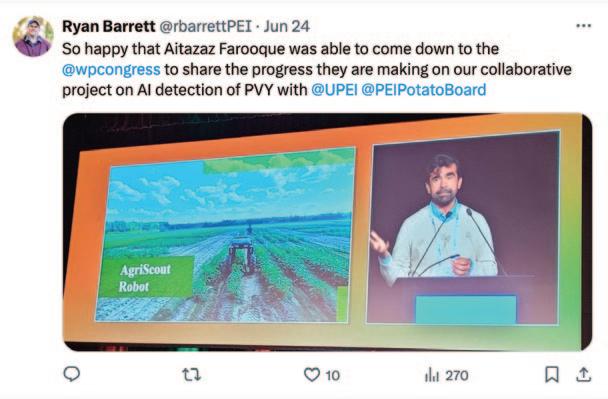
Professor Farooque presented this novel research at the World Potato Congress in Adelaide, Australia in June 2024. He reports that growers gave positive feedback on the results of AgriScout and are looking forward to its commercial version.
Charanpreet Singh is in the field daily, improving and testing the AgriScout robot. In the second year of this research, the team upgraded the sensing and control systems based on the learning from year one.
“Our robot can operate at 3-5 km/hour in potato fields,” says Singh. “That means one acre can be covered in 30 to 40 minutes. The cameras are mounted on the boom, capturing five rows in a single pass, with each camera photo spanning 36 inches of a row. Our camera lenses have been improved to include autofocus and collect stable images.”
“The ground is uneven so sometimes the camera is shaky and prone to vibration,” he adds. “It has to work in a tough environment and we are making sure it does.”
This research team expects another three to five years of trials will be needed to bring the AgriScout to practical field performance. Potato growers are anxious for the AgriScout to be commercialized because rogueing is a thankless job on a hot and muggy day.
Robots on muck soils
While robots working in the distinctive red soils of Prince Edward Island are promising, robots working in muck soils are an entirely different challenge. That’s the experience of brothers Ian and Paul Smith, onion growers in Ontario’s Holland Marsh.
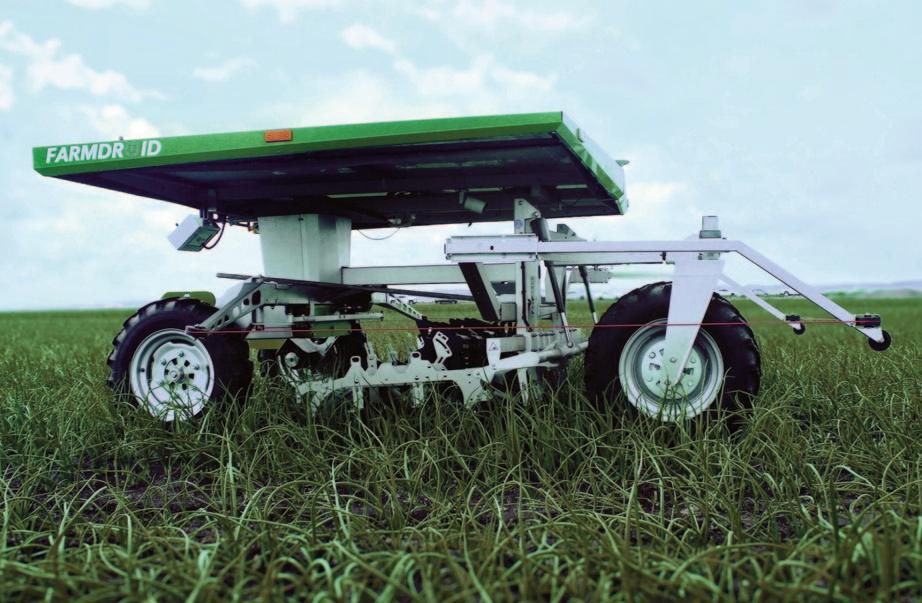
The FarmDroid is one of the robots that’s out for trial by Haggerty AgRobotics Company, Bothwell, Ontario. In 2023, the first year in onions, the trial was a moderate success in seeding and weeding, but frankly, needed improvement in speed and seeding rate.
“This is interesting technology but the return on investment isn’t there yet,” says Ian Smith. “However, we need to put time into developing this, because the cost of alternative equipment to seed and weed is easily $800,000. Bigger is not always better on our spongy soils.”
The lure of the FarmDroid is that at a weight of 800 kilograms, it’s lighter on the soil. If five FarmDroids can be working at the same time, then there’s a benefit over large machinery. What needs to be improved is the robot’s seeding rate if it’s to be commercially useful seeding 320 acres of onions in a window of April 25 – May 10.
“The strength of this robot is its precision in an onion crop that’s susceptible to injury from tillage and pesticide spraying,” explains Chuck Baresich, general manager, Haggerty AgRobotics. “After the 2023 trials, our team modified the equipment to seed in groups of three. The 2024 season was useful in proving that the speed of the FarmDroid can be more than doubled and the weeding tools can operate without damage to the crop.”
These improvements came about with contributions from Geoff Farintosh, Kevin Vander Kooi and Dr. Mary Ruth McDonald from the Ontario Crops Research Centre and an Ontario manufacturer. University of Guelph technicians used a 3-D printer to make the seed discs.
For Smith, the question is reliability.
“I need a foolproof system,” he says, “because Mother Nature is hard enough to deal with. If I can use robots as a backup system, then I’m considering buying a unit for 2025.”
The benefits are multi-fold. It’s a machine that has less compaction on the soil. It has a toolbar that can shallow cultivate at the two-leaf stage of weeds resulting in fewer pesticide sprays.
Growers such as Ian Smith are eager to experiment and to relate the trial results with the farm’s banker. “I tell him that this is more than a feel-good story.”
Heads-up! The collaboration between tech start-ups, AI experts and growers is revolutionizing horticulture in the 2020s.
I am an advanced agricultural robot with AI technology, making labour expenses significantly lower through the automation of routine jobs in the farm. Farmers are guaranteed to do more strategic work as I take control over planting, weeding, and harvesting, thereby doing the monotonous and vigorous work.
The first trial in 2023 with a FarmDroid showed promise in seeding and weeding onions at Smith Gardens, Keswick, Ontario. With a collaborative effort from Haggerty AgRobotics Company, staff at the Ontario Crops Research Centre and an Ontario manufacturer, changes were made for the 2024 crop that resulted in more than doubling the planting speed. Photos by
AgRobotics Company.
The Grower is “Digging Deeper” with Ian Smith, a vegetable grower from Keswick, Ontario. He shares his experience as an early adopter of a FarmDroid robot that seeds and weeds his onions in muck soils. This podcast is sponsored by Cohort Wholesale.
Haggerty
CROSS COUNTRY DIGEST
PRINCE EDWARD ISLAND
Syngenta Canada and Cavendish Farms create pollinator habitats
Syngenta Canada has partnered with Cavendish Farms to establish two large pollinator habitats on Prince Edward Island (PEI) to promote bee health and demonstrate how habitat creation enhances biodiversity on farms and contributes to sustainable agriculture. This initiative is an expansion of “The Bee Project” by Cavendish Farms and is supported by Syngenta’s
QUÉBEC
Operation Pollinator, a longstanding global biodiversity initiative that focuses on research and partnerships to promote the health and well-being of bees and other pollinators.
“We’re proud to collaborate with Cavendish Farms to foster healthy pollinator populations and help raise awareness of the importance of biodiversity,” says Mike Buttenham, sustainability
manager with Syngenta Canada. In July 2023, two 10-acre Operation Pollinator plots were planted at the Cavendish Farms Research Centre in New Annan and its Freetown site with pollinator-friendly seed, including multiple types of clover, birdsfoot trefoil, groundbreaker radish, phacelia, and timothy. The diverse mix ensures a season-long food source for pollinators as the
plants flower from spring through fall. Farms provide great potential to create essential habitat and food sources for a range of bees and other pollinating insects.
“At Cavendish Farms, we are proud of our efforts to protect the environment and deliver value from the farm to the table,” says Robert K. Irving, president of Cavendish Farms. “Creating pollinator plots can help improve crop yields and is a great example of how we are working with our growing partners on PEI to try new and innovative ways to care for the soil and support sustainable agriculture.”
Building on the success of the 2023 initiative, Cavendish Farms plans to plant additional acres of habitat on the Island this year.
This is the second Operation Pollinator initiative that Syngenta has supported in PEI. In 2021 and 2022, Syngenta partnered with the PEI Potato Board to engage farmers to increase biodiversity by planting pollinator-friendly seed mixes on lower productivity land.
Québec names 2024 Outstanding Young Farmers
Félicitations to fruit and vegetable growers, Simon Plante and Alison Blouin of Polyculture Plante, Sainte-Pétronille, Québec. The fruit and vegetable growers are the 2024 winners of the Outstanding Young Farmers
competition selected during summer activities held at La Grange de l’île, Île d’Orléans, on July 3. They will proudly represent Québec at the National Event in Lethbridge, Alberta in November 2024.
Simon Plante, a horticultural producer, joined the Polyculture Plante, a farm founded by his parents, located in SaintePétronille on Île d’Orléans in 2009. He is now the sole shareholder of this farm where his partner, Alison Blouin, as well as his parents and his uncle work.
He joined the farm full-time while completing a technical degree in business management from Collège François-XavierGarneau. At the same time, his brother and sister-in-law also joined the business. The objective became to significantly increase the farm’s income so that it could provide for the needs of four families.
Today, they are cultivating 327 acres, of which 172 are owned. The Polyculture Plante farm produces 100 acres of summer strawberries, 32 acres of fall strawberries, three acres of raspberries under tunnel, two
acres of blueberries, 30 acres of apples, 32 acres of sweet corn, four acres of field tomatoes, one acre of onions, and four acres of squash and pumpkins. The company also operates a maple grove (4,500 taps) that offers maple products and several processed products.
Alison recently joined the farm, after completing a technical degree in agricultural business management and technology and after working 10 years on two other farms.
The vision and actions of Simon and Alison have made it possible to develop a healthy and up-to-date company. They are proud to help feed people, by providing them with healthy and tasty products.
Canada’s Outstanding Young Farmers’ program is an annual competition to recognize farmers that exemplify excellence in their profession and promote the
Québec apple tour attracts stakeholders across Canada
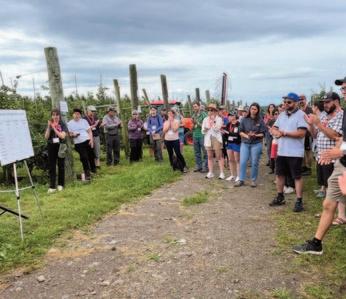
The Québec apple growers, helmed by president Eric Rochon, hosted an orchard tour in mid-July that attracted 130 stakeholders from across Canada.
Celebrating its 50th anniversary, the Québec association organized its tour in the Montérégie region showcasing new equipment and management techniques. Stops included: Verger Petch, Verger Hillspring, Verger Boudreau, Verger IRDA, Verger MJM and Verger Kessler. Agritourism destination Cidérie Milton was included.
courtesy of Kelly Ciceran.
Participants received a provision of high-quality, commercial seed, agronomic advice, and financial assistance to help offset site establishment costs. In total, 52 acres were planted thanks to the efforts of participating farms on the Island.
“Partnering with companies such as Cavendish Farms and organizations such as the PEI Potato Board is critical to the success of Operation Pollinator and its mandate to support activities that enhance biodiversity, habitat and other practical initiatives that can contribute to healthy pollinator populations,” says Erin McGregor, stewardship and policy manager with Syngenta Canada. “We appreciate the shared commitment of industry and farmers to enhance biodiversity and support sustainable agriculture.”
Source: Syngenta and Cavendish Farms June 21, 2024 news release
tremendous contribution of agriculture. Open to participants 18 to 39 years of age, making the majority of income from on-farm sources, participants are selected from seven regions across Canada, with two national winners chosen each year. The program is sponsored nationally by Agriculture and Agri-Food Canada, CIBC, John Deere, Bayer, Sollio Agriculture, Meridian Manufacturing and CN with media sponsors Glacier FarmMedia and WS and video sponsor, Bamboo Shoots. It is supported nationally by BDO. Canada’s Outstanding Young Farmers for 2024 will be chosen at the National event in Lethbridge, Alberta from November 27-Dec 1, 2024.
Source: Canada Outstanding Young Farmers July 12, 2024 news release
Photos
Alison Blouin (L) and Simon Plante
Improving the resilience of Canada’s horticultural sector
The Standing Committee on Agriculture and Agri-Food, chaired by Nova Scotia MP Kody Blois, released a report in June 2024 that aligns with many of the needs of the horticultural sector. The next step is how to move the government to act on “Improving the resilience of Canada’s horticultural sector.”
The committee has made 13 recommendations to the government of Canada that includes testimony from 29 stakeholders.
Recommendation 1
The Committee recommends that the Government of Canada, in cooperation with the provinces and territories and taking into account regional differences in agricultural production, review its Business Risk Management programs before they expire in 2028 to ensure they are timely, responsive, and predictable for producers facing profitability challenges and climate changerelated risks and that it identify and remove gaps in these programs for horticultural producers, including:
• AgriInsurance’s lack of commodity-specific plans at the provincial level for edible horticultural growers;
• AgriStability’s capacity to assist producers experiencing market fluctuations in a timely manner and how changes to the program since 2013 have affected its ability to respond to producers’ needs;
• AgriRecovery’s timeliness, including ensuring that producers receive compensation more quickly in order to make it a tool to respond immediately to extreme weather events;
• increasing permanently the Advance Payment Program’s interest-free cash advance portion to $350,000; and
• examining opportunities to compensate producers for past and present environmental investments in their businesses
and helping them to adopt more sustainable and resilient practices.
Recommendation 2
The Committee recommends that the Government of Canada reverse its requirement forcing farmers to maintain empty houses for temporary foreign workers who choose to live on their own.
Recommendation 3
Recognizing the importance of housing for seasonal workers and to improve cash flow for farmers, the Committee recommends that the Government of Canada introduce a Harmonized Sales Tax (HST) input tax credit for housing provided to farm workers.
Recommendation 4
The Committee recommends that the Government of Canada take the following measures with respect to the Temporary Foreign Worker Program:
• continue to streamline access to the Program for employers who demonstrate long-term compliance with its standards through the Recognized Employer Pilot program;
• coordinate efforts between relevant federal departments to ensure all employers adhere to the Program’s worker protection standards; and
• review the agriculture facility inspection process to ensure that inspections are conducted in person and are administratively reasonable.
Recommendation 5
The Committee recommends that the Government of Canada establish critical support for Canada’s fresh fruit and vegetable sector by encouraging the Senate’s speedy adoption of Bill C-280, the Financial Protection for Fresh Fruit and Vegetable
BOOK AD SPACE AUGUST 15, 2024
AD COPY DUE AUGUST 19, 2024 advertising@thegrower.org
Farmers Act.
Recommendation 6
In the event that the current negotiations fail, the Committee recommends that the federal government lead a consultative process with the provinces and territories, in keeping with their jurisdictions, to implement a voluntary Grocery Code of Conduct.
Recommendation 7
The Committee recommends that the Government of Canada ensure that border officers have the necessary resources to enforce reciprocity standards and recognize non- compliant products.
Recommendation 8
The Committee recommends that the Government of Canada pause its proposed ban on price look-up (PLU) labels and Pollution Prevention Plan Notice for Primary Food Packaging and continue to consult with industry and work with trading partners, notably the United States.
Recommendation 9
The Committee recommends that the Government of Canada work with provinces, territories, and municipalities to support produce industry shifts toward new technologies like compostable and biodegradable materials to replace plastics in Canada’s food chain.
Recommendation 10
The Committee recommends that the Government of Canada work in partnership with the United States and other trusted jurisdictions to share information and scientific evidence in order to make the agricultural product registration process more
efficient while:
• maintaining Canadian expertise;
• upholding high standards;
• maintaining high environmental standards based on science; and
• increasing funding for the Pest Management Regulatory Agency and the Pest Management Centre.
Recommendation 11
The Committee recommends that the Government of Canada maintain the extended test market authorization for nectarines and immediately complete the work of modernizing grade standards for the sector.
Recommendation 12
The Committee recommends that, given the market growth potential of the organics sector, the Government of Canada, in collaboration with the provinces and territories, take the following measures with respect to the organic agriculture sector:
• develop a policy framework for the organic sector to facilitate its growth and increase its competitiveness in the international marketplace;
• prioritize the signing of organic equivalency agreements with other countries;
• continue to resolve non-trade tariff barriers to international trade in organic products; and
• provide complete and permanent funding for the review of the Canadian Organic Standard, which takes place every five years.
Recommendation 13
The Committee recommends that the Government of Canada work with the provinces and territories, in full respect of their jurisdictions, to identify financial and policy mechanisms to encourage new producers to enter the horticultural sector and to help existing small producers to scale up their operations.
For the entire report, link here: https://www.ourcommons.ca/committees/en/AGRI/StudyActivity?st udyActivityId=12441700
Source: Standing Committee on Agriculture and Agri-Food June 19, 2024 news release
MP Kody Blois, chair of the Standing Committee on Agriculture and Agri-Food.
EZ Grow Farms showcases strawberry propagation glasshouse
KAREN DAVIDSON
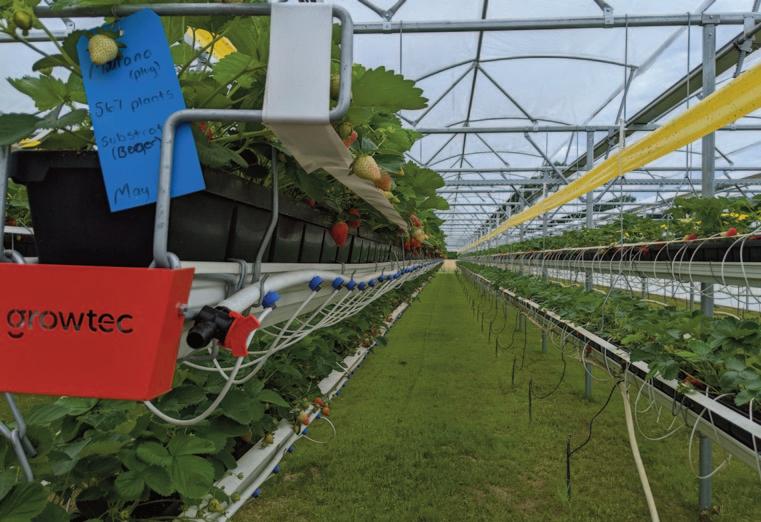
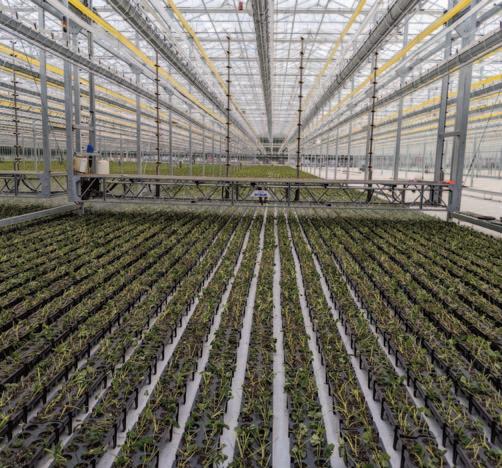
“It’s a dream come true,” says Dusty Zamecnik, general manager, EZ Grow Farms, Langton, Ontario, of the 18.5 acre glasshouse now propagating strawberry plants for greenhouse and high tunnel growers across North America. The capacity is for 15 million-plus plants annually.
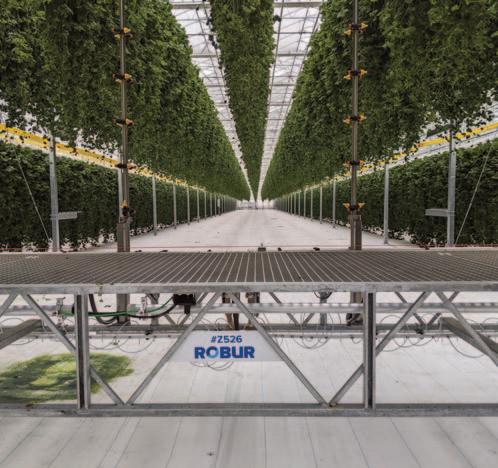
What sets this facility apart is that it is one-of-a-kind in Canada with proximity to the 500 acres of greenhouse strawberries in the Leamington, Ontario area. Built by South Essex Fabricating, it integrates several high-tech features in one facility: the Growtec hoisting gutter system, the Robur robotic boom, and MJ Tech’s high-pressure fogging system. Together these technologies allow for broader
As much as we talk about the high-tech elements, there are still some basic principles. We put plants and people first.
~ DUSTY ZAMECNIK “
delivery window from June to November and flexibility in genetic choices. There are 33 new varieties available.
“Last week it was 36°C outside,” says Zamecnik, “but through our environmental control systems, we were able to keep the temperature at 30°C indoors. Misting lowers the temperatures. We’re keen to keep the plants in a generative state.”
The sprawling facility has 72 zones, each with a Robur robotic boom, for
OCTOBER 9 & 10 NIAGARA FALLS, ON CANADA
precise watering according to need. Sensors detect temperature and humidity, triggering automatic watering for the fledgling daughter plants which grow in a proprietary tray mix.
The glasshouse operation uses about 1.4 million litres of water per day of which 400,000 litres are used for high-pressure fogging. The ozone-treated water ensures there are no pathogens. Water is collected from the roof and stored in a retention
pond before re-use.
Clients keen to source these plants must think about ordering almost one year in advance. It’s a long process from variety choice to delivery. For those wanting a heads-up on taste, the Ed Zamecnik Berry Testing Center showcases three hightunnel types with various gutter positions. Depending on production practices, the final berry may taste different. The Albion variety is still a standard but may be eclipsed by new varieties in time. The testing center pays homage to the grandfather that started it all in the 1930s.
“As much as we talk about the high-tech elements, there are still some basic principles,” says Zamecnik. “We put plants and people first. That’s why we strive to be the trusted source of strawberry propagation plants.”
Goodleaf Farms appoints new CEO
Andy O’Brien has been appointed as GoodLeaf Farms new president and Chief Executive Officer, replacing Barry Murchie, who is transitioning to a role on the company’s Board of Directors. He comes to GoodLeaf with a career in the food industry, most recently as CEO of M&M Food Market. Prior to this he led wellknown consumer brands at General Mills, Campbells, Sunkist, MARS and Cara (as
President of Kelsey’s and Montana’s). He also is on the Advisory Board for Northland Restaurant Properties (Moxies, Chop Steakhouse and Denny’s Canada), as well as the Board of Directors for Bakers
Delight/COBS Canada. Since opening its first indoor vertical farm in Guelph, Ontario, in 2019, GoodLeaf has been in a significant expansion mode, adding farming facilities in Calgary and Montreal to establish itself as Canada’s only national supplier of domestic leafy greens. Mr. Murchie has been guiding that expansion as CEO of GoodLeaf for more than five years and will continue to be a major contributor to the future growth of the business from a Board position.
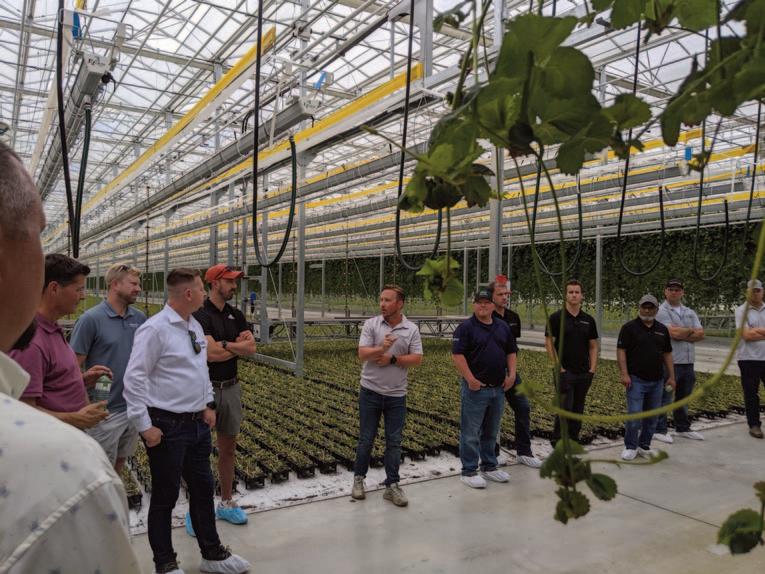
Dusty Zamecnik, centre, explains the benefits of precision watering and misting equipment with robotic booms in the new strawberry propagation facility, EZ Grow Farms, near Langton, Ontario.
Want to taste the berry first? The Ed Zamecnik Berry Testing Center showcases three high-tunnel types with various gutter positions and strawberry genetics.
Rob Kwinten makes a good case for the MJ-Tech highpressure fogging system that cools down the greenhouse crop during different growing seasons. As the business development manager of the companies MJ-Tech, Growtec, and Robur, he presented at the grand opening event of EZ Grow Farms, a strawberry propagation and growing facility, in Langton, Ontario, in late June 2024.
A key observation is how this high-pressure fogging system is combined with other growing parameters such as ventilation, screening, and CO2 dosage.
High-pressure fogging promotes a balanced water uptake, keeping stomata open for both photosynthesis and transpiration. Consequently, both air and plant temperature decrease. This combination of increased humidity and decreased temperature improves water use efficiency, avoids water stress, and enhances photosynthesis. And this system results in reduced screening hours in warm periods due to the lower greenhouse and plant temperature.
It is important to ensure that the moisture evaporates before reaching the plants to minimize the risk of promoting diseases in this controlled environment, Kwinten advises. The optimal environment is achieved by
using small droplet sizes and determining the right start and stop time of the high-pressure fogging unit based on solar radiation (W/m2) and humidity deficit level (g/m3).
“Nevertheless, other risks can occur,” says Kwinten. “For example, if the grower starts fogging too early, that can lead to tip burn.”
Controlling the ventilation rate is crucial to maintaining the perfect balance between greenhouse temperature and humidity. As humidity levels rise, the enthalpy of the greenhouse increases, allowing for a reduction in ventilation rates. This reduces CO2 losses and helps maintain higher CO2 concentrations inside the greenhouse, optimizing photosynthesis.
To optimize misting control, sensors should be installed to monitor solar radiation, plant/leaf temperature, water uptake, air temperature, and relative humidity. These sensors enable the grower to precisely adjust misting setpoints in different climate conditions, greenhouse set-ups, seasons, plant types, and planting dates. High-pressure fogging is beneficial after planting in August/September, as it will create a vegetative climate. That will contribute to creating a well-formed root system from the start.
Temperature control over the 24 hours of a day is critical. If the 24-hour temperature is too high, the fruit size will decrease, and irregular-shaped fruit will occur.
Ensure that day temperatures are controlled so that fruit size and weight are well classed, and to keep the fruit load in balance.
Research has shown that In a greenhouse microclimate, IPM management has never been more important. Beneficials are more effective when the ratio of temperature and humidity are in balance. For example, Phytoseiulus is a predator of spider mites. This species is most effective in a temperature range of 21-27°C. Creating a stable climate with high-pressure fogging will allow better development, and higher hatching and survival rates, which will result in higher population and efficiency of the beneficials.
EZ Grow Farms has installed a high-pressure fogging system to create a vegetative climate for stable tip production. In the propagation phase, fogging is used to stimulate root growth and the settings are adjusted when the tips are well rooted.
Last but not least, the use of a high-pressure fogging system creates a more comfortable working environment, not only for the plants but for the employees as well. That is also important, especially during heatwaves or warm summer days, allowing the workers to safely complete their tasks and maintain high work efficiency.
Rob Kwinten, business development manager for MJ-Tech/Growtec/Robur.
The Robur high-pressure fogging system is installed at the EZ Grow Farms’ strawberry propagation and growing facility, Langton, Ontario.
Working with Minister Flack to address key challenges facing growers
In late spring 2024, Ontario Premier Doug Ford shuffled his cabinet, resulting in a new ministry and a new minister for Ontario agriculture. Rob Flack became head of the newly named Ontario Ministry of Agriculture, Food and Agribusiness (OMAFA), and we warmly welcome him to this role. There have also been staffing changes in the Minister’s office and we are also looking forward to working closely with his new team.
The board and staff of the Ontario Fruit & Vegetable Growers’ Association (OFVGA) have previously worked with Minister Flack during his time as Parliamentary Assistant to his
predecessor Lisa Thompson, as well as while he was serving as Associate Minister of Housing, and we will build on that relationship as our agriculture minister.
Flack comes to OMAFA with a deep and long background in agribusiness, giving him unique perspectives on this diverse sector, its many stakeholders and the key role it plays in Ontario as one of the key drivers of the provincial economy.
With our more than 120 commodities and seasonal labour needs, we are unique in Ontario agriculture with both our diversity and our complexity, and the Minister has stated that he is keen to learn more about the fruit and vegetable sector.
At OFVGA, we’ve already taken steps to make that happen.
The Minister is representing Ontario at the July 2024 federalprovincial-territorial meeting of Canada’s ministers of agriculture and OFVGA took part in a preparatory roundtable meeting to provide our perspectives on provincial issues.
Our sector is facing many challenges as a result of sustained historically high input costs, increasing marketplace pressures,
and mounting government burdens, costs, and red tape, which is causing significant frustration among growers as we urgently seek some support and relief through the provincial government.
At an introductory meeting with Minister Flack, we focussed on how OFVGA can work with him to make progress on two key files for our sector:
• enhancing the Risk Management Program (RMP), including Self-Directed Risk Management (SDRM) for edible horticulture farmers
• clearing a path to reduce burdens for building on-farm worker housing, including municipal costs, red tape and provincial Environmental Compliance Approvals.
Enhancing Self-Directed Risk Management
For the past three years, we’ve been working with our Ontario Agriculture Sustainability Coalition (OASC) partners to advocate for a $100 million increase in provincial government funding for RMP/SDRM.
Growers need additional support to help deal with the
challenges of today’s farm business environment, such as rising costs, increasing regulations and pricing for our crops that are stagnant or even decreasing. This is essential to maintain profitable, competitive and sustainable fruit and vegetable production in Ontario – and help meet OMAFA’s goals under its Grow Ontario Strategy. We continue to push our ask, which includes a phased-in approach to implementation.
Reducing burdens for on-farm worker housing
The Ontario government has stated its goal of making our province the destination of choice for international agriculture workers (IAWs) and OFVGA is fully in support of this goal. To this end, we have developed a strategy that proposes a number of measures that would lead to a greater supply of on-farm housing for IAWs, both improving the experience of IAWs while in Ontario, and alleviating demand pressures on housing in nearby communities.
Growers have been actively working to build new on-farm worker housing that reflects
modern realities of housing standards and comfort, but it’s a process hampered by rising municipal costs, conflicting regulations between jurisdictions and other red tape.
A significant burden is the provincial Environmental Compliance Approval requirement by the Ministry of Environment, Conservation and Parks for worker housing septic systems. These systems are a necessity in rural areas where municipal infrastructure is not available, but the ECA process is a major barrier and OFVGA has been working for more than a year to have this regulatory burden reduced.
Given Minister Flack’s background and experience, we believe he can be the leader to spur the action needed to support growers, move past some of the current challenges, and encourage sector growth – and we look forward to building a meaningful and mutually beneficial working relationship.
Shawn Brenn is a potato grower and chair of the Ontario Fruit & Vegetable Growers’ Association.
The Canadian Agri-food Policy Institute has released the findings of its inaugural Agri-Food Risk Report. The findings of the survey of 550 stakeholders identified policy and regulatory environment, extreme weather, and trade barriers and protectionism as the top three risks threatening the future of the
agri-food sector. The report notes indicate
confidence in the government and private sector to solve these issues. However, 62% indicated that they are optimistic for the future of the agri-food sector in Canada. These
are nodding in agreement. Photo by Glenn Lowson.
SHAWN BRENN
POLICY FOCUS
Government policy cited as top concern in Agri-Food Risk Report
The Canadian Agri-food Policy Institute (CAPI) has released its inaugural Agri-Food Risk Report that identifies policy and regulatory environment, extreme weather and trade barriers and protection as the top three risks.
Stakeholders have concerns about the government and private sector’s ability to find solutions to these key challenges, but recognize opportunities for growth. Policy and regulatory environment. Extreme weather. Trade barriers and protectionism. These three risks were deemed as the most significant threats to the agri-food sector by more than 500 farmers, food processors, government personnel, researchers, industry representatives, conservation groups, and other stakeholders.
Phase 1 of the Agri-Food Risk Report, the first step in a series of work undertaken by The Canadian Agri-Food Policy Institute (CAPI) and supported by the Global Institute for Food Security (GIFS) at the University of Saskatchewan, seeks to identify key risks and recommend policy solutions to solve these challenges to unlock the full potential of the sector.
“Canada is a sustainable producer of safe and nutritious food the world needs. To continue to optimize this role in the face of declining global agriculture productivity, we need to identify key risks and solve challenges innovatively and collaboratively,” says Steve Webb, CEO of GIFS. “Phase 1 of the Agri-Food Risk Report addresses the first step and by working together we can deliver innovative solutions to address these risks.”
In addition to policy, extreme weather, and trade being identified as the top three risks, each was identified as being a problem that we already face today, chronic in nature, and complex risks that will be a challenge to solve. Other risks identified include input affordability, farm income and debt, human resources, and climate change. The data indicates there is concern with the government
and private sector’s ability to reduce or mitigate these risks.
Yet, the news is not all bad.
The majority – 62% – of stakeholders are optimistic about the future. This optimism stems from the opportunity for the Canadian agri-food sector to be increasingly competitive economically and to leverage emerging markets. To achieve this, policy should focus on meeting increasing demand, increasing competitiveness of the sector, adding value to the overall agri-food supply chain, supporting Canada to become a leader in sustainability, and improving the sustainability of the sector.
“The landscape in which Canadian agriculture produces food is increasingly complex, chaotic and conflicted. Now more than ever we need an effective policy landscape that gives the sector tools to manage these risks. And that is what the Agri-Food Risk Report is intended to be,” says Tyler McCann, managing director of CAPI. “It’s a first of its kind initiative, filling an important gap in our sector. It provides critical insights to bring together diverse voices for dialogue and debate about agriculture and food across Canada.”
Read the report here.
The Agri-Food Risk Report Phase 1 is just the beginning. In the coming months, CAPI will convene industry leaders for thoughtful conversation and collaboration, and a second report will follow in the fall.
Data for the Agri-Food Risk Report Phase 1 was collected via an online survey, conducted in partnership with the Angus Reid Institute between April 30 to May 28, 2024, which surveyed farmers, government, industry, and civil society stakeholders from across Canada.
Source: Canadian Agrifood Policy Institute July 16, 2024 news release
In September 2022, Hurricane Fiona caused major wind damage to horticultural crops in the Maritimes. Case in point, here are many downed trees at Blue
Bay Farms, Rustico, Prince Edward Island.
More than a Migrant Worker featured in LCBO magazine
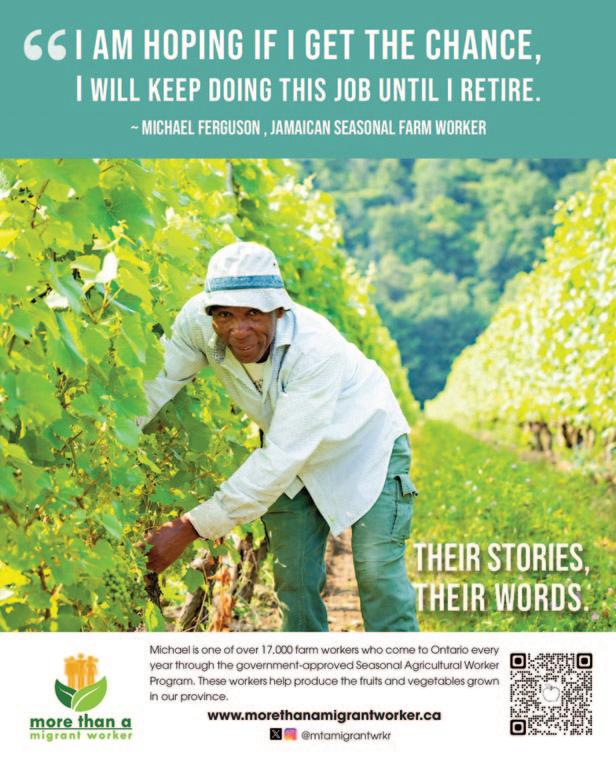
The early summer edition of the LBCO’s popular Food & Drink magazine hit shelves across Ontario in May 2024. The magazine featured a full-page ad highlighting the More than a Migrant Worker (MTAMW) campaign and Michael Ferguson, a seasonal vineyard worker from Jamaica who works at Malivoire Wine Company in Beamsville.
The most recent edition of Food & Drink released in midJune, as the LCBO’s summer issue, featured Delroy Martin, a seasonal apple farm worker from Jamaica who works at Nighthawk Orchards in Meaford. Both the early summer and summer editions are highly sought after by the magazine’s readership.
of these ads by the Ontario Fruit and Vegetable Growers’ Association (in a project partnership with Farm & Food Care Ontario and many OFVGA members) boosts the successful MTAMW campaign. The campaign is aimed at sharing stories of the men and women
Update on OFVGA & FFCO’s public trust work
JESSICA
McCANN
Farm & Food Care Ontario (FFCO) is highlighting some of the public trust work done on behalf of our members in the first half of 2024 – and plans for the coming months. With the support of the Ontario Fruit and Vegetable Growers’ Association (OFVGA) as a Platinum member, FFCO is able to help build strong connections, encourage meaningful conversations and earn the trust of Ontario consumers through proactive, ongoing programs and activities.
Breakfast on the Farm
The first Breakfast-type event of 2024 was in partnership with the Elmira Maple Syrup Festival on April 6. Close-up experiences with livestock, farm equipment and Ontario farm displays provided accurate information on farming, answered guests’ questions, and helped build relationships. Dan Tukendorf and Benjamin Murray of OFVGA were onsite to chat about Ontario fruit and vegetables and handed out more than 5,000 locally grown apples provided by Martin’s Family Fruit Farm.
More Than a Migrant Worker (MTAMW)
FFCO and More Than a Migrant Worker will be collaborating to host food professionals in Ottawa in September 2024. The group will be visiting MacGregor’s Produce in Braeside, touring the farm and
meeting its team of seasonal workers. Staff from OFVGA will join FFCO on the bus to speak with guests about the MTAMW campaign and answer questions.
Virtual Food & Farm Field Trips
Local Food Week saw FFCO working with AgScape and other partners to host three Virtual Food & Farm Field Trips. Nicki Scott of Brenn-B Farms hosted a tour for students to learn about the process of planting, growing and harvesting herbs and onions. This virtual field trip reached more than 4000 viewers.
FarmFood360
FarmFood360 virtual reality farm tour experience has an expanded kiosk to be used at fairs, events and ag-education days. For 2024 FFCO has been able to provide rentals of the FarmFood360 kiosk free of charge to members, the kiosk will be making appearances across the province.
Adding onto the FarmFood360 library of tours, Ontario Ginseng is working with FFCO to develop a virtual reality tour of a ginseng farm. The tour will take visitors through ginseng gardens at different growth stages right through until harvest and drying of the roots.
Farm Tour Program
FFCO’s annual farm tour p rogram supports objectives of providing credible information on food and farming to key target
who grow our food while answering people’s questions about seasonal workers in the fruit and vegetable industry. More photo shoots are planned for the summer months.
Food & Drink is one of
audiences. Each tour is designed to take guests on an educational journey from the process of farm to fork in Ontario.
Later this summer and fall 2024, FFCO will be hosting farm tours for culinary students attending Fanshawe, Lambton, Centennial and Niagara colleges as well as for food professionals in Toronto and Ottawa. Several stops featuring horticultural operations are being planned for the tours.
International Registered Dietitians Tour
Farm & Food Care Ontario was pleased to assist CropLife Canada on June 15 with a farm tour for international Registered Dietitians attending the International Congress of Nutrition and Dietetics in Toronto. Guests, from around the globe, joined FFCO to learn about food production in Ontario.
One of the tour’s featured stops was Beverly Greenhouses in Waterdown, operated by the VanderHout family where they grow English cucumbers in 30 acres of greenhouses. Jan, David and Daniel VanderHout discussed markets for cucumbers, seasonal agricultural labour and the farm’s Integrated Pest Management plan that utilizes the raising of “good bugs” to manage “bad bugs” that threaten the crops.
Jessica McCann is communications coordinator for Farm & Food Care Ontario.
Ontario’s most widely-read magazines, with a total readership of 2,748,000/issue.
Source: Ontario Farm & Food Care July 5, 2024 newsletter
COMING EVENTS 2024
Aug 3 Food Day Canada
Aug 7 Nova Scotia Fruit Growers’ Association Orchard Tour, Kentville, NS
Aug 7 BC Wine Grape Council AGM/Grower Day, Penticton Lakeside Resort & Conference Centre, Penticton, BC
Aug 9 Grape Demo Day, Cave Spring Vineyards, Beamsville, ON
Aug 13-15 North American Strawberry Association Summer Tour, Massachusetts
Aug 15-16 U.S. Apple Outlook Conference, Ritz-Carlton Hotel, Chicago, IL
Aug 17 Lambton County Hazelnut Tour 1-4 pm
Aug 21 Ontario Potato Research Open House, Elora Research Station, Elora, ON
Aug 22 Ontario Potato Field Day, HJV Equipment, Alliston, ON
Sept 10-12 Canada’s Outdoor Farm Show, Woodstock, ON
Sept 18 Grape Growers of Ontario Annual Celebrity Luncheon, St. Catharines, ON
Sept 19-21 Quebec Produce Marketing Association 77th Convention, Fairmont Tremblant, Tremblant, QC
Sept 28 St. George Hazelnut Tour, Brant, ON
Oct 1-5 International Plowing Match & Rural Expo, Lindsay, ON
Oct 8-10 Fruit Attraction, Madrid, Spain
Oct 9-10 Canadian Greenhouse Conference, Niagara Falls Convention Centre, Niagara Falls, ON
Oct 17-19 Global Produce & Floral Show, Atlanta, Georgia
Oct 22-24 Forum of Agricultural Robotics, Woodland, Sacramento, CA
Nov 1-10 Royal Agricultural Winter Fair, Toronto, ON
Nov 18-20 Fall Harvest Advocacy Event, Parliament Hill, Ottawa, ON
Nov 19-21 Alberta Potato Conference and Trade Show, Grey Eagle Resort & Casino, Calgary, AB
Nov 26-27 Ontario Federation of Agriculture Annual General Meeting, Delta Toronto Airport Hotel & Conference Centre, Toronto, ON
Nov 27-Dec 1 Canada’s Outstanding Young Farmer National Event, Sandman Signature Lethbridge Lodge, Lethbridge, AB
Nov 28 Ontario Harvest Gala, Delta Hotel, Guelph, ON
2025
Jan 14-15 Potato Expo, Las Vegas, NV
RETAIL NAVIGATOR
How to deliver to the differing needs of consumers and customers
A recent edition of Canadian Grocer had an intriguing headline: Consumers are turning to grocery retailers as key allies in healthy living. The author’s insights on several trends should trigger an analysis of how to sharpen your delivery to both sets of stakeholders: consumers and customers.
Identifying that middle ground where you can deliver produce consistently to both groups is a worthwhile exercise, especially as that ground continues to shift. Three of the trends – nutrition on a budget, sustainable shopping and food as medicine – are useful to fruit and vegetable growers. These are the consumer trends that your customers are trying to satisfy.
Consumers are the people who use your products. They are the end user who put your products in their shopping cart and take them home to eat and drink.
Customers are the businesses who purchase your products from you. They put your product –fresh, frozen, processed -- on their shelves and usually issue a purchase order as the first step to payment. If you are selling direct, your customers and consumers are one and the same. Our experience has been many food businesses focus a lot more on the consumer. It is usually more rewarding. Retailers and distributors can be challenging to work with. Your business really does need to be set up to do the following:
1. Understand who are your consumers and customers
2. Define the needs of your consumers and customers
3. Measure the job you are doing to satisfy their needs
Understanding your consumers and customers
You should have a good definition of your target market consumer and who your customers are. You need to know both groups better than anyone. Understanding your target market is the foundation of your marketing strategy. You need to know who these people are so you can develop effective promotion strategies. These are the people who should test your packaging and develop creative social media that will resonate with them.
No product appeals to all consumers, not even the big brands. You can learn about your consumers from your online community, watching them in stores and following industry trends.
You also need to understand your customers. Every retailer or distributor is different. They are all selling food and beverage, but they have their own way of doing it. Visit the stores to make sure you are clear on the messages they communicate to consumers. Your products need to support these messages. Visit their websites regularly to see what they are saying as a business. The larger publicly traded retailers put a lot of information on their websites. Visit the investor sections, not the consumer-facing pages. Read trade magazines and most importantly, talk to them. They evolve as people change.
Define what your consumers and customers need
It is great to understand your consumers and customers. The next step is to take this thorough understanding and figure out what they need. Most of the needs will be unique to consumers or customers however some might be similar. When you think about needs consider items such as the following:
Consumers
Locally grown, shelf life at home, sustainable packaging, different sizes, portable packaging, safe food and more.
Customers
Competitive cost of goods, promotional pricing, service level, credit for supporting local, traffic in stores, food safety certification, best-before dates, frequent deliveries to manage inventory cost and more.
We suggest drawing two intersecting circles and charting the needs of your consumers and customers. Put the needs that are unique to each stakeholder in their circle and any that are common belong in the section where the circles intersect.
You can’t do everything. Figure out which needs you are very good at and focus on them. Be relentless in your communication to consumers about the needs you satisfy. This includes social media, mass media and public relations opportunities. Consistency is boring and repetitive for you, but effective as the market is very cluttered. Focus on what you are good at, deliver it consistently and make sure it resonates with your target market.
You should follow a similar strategy with your customers.
Category managers are busy so it might be necessary to report to them every couple of months about service level and the
Measure your consumer and customer satisfaction
The best measurement is sales. If customers like your products they are putting them in their stores and consumers are putting them in their shopping carts. You can also measure service level, shelf life, sustainability (reductions in food waste for example) and other metrics.
Growers are busy getting produce from field to fork. Make
sure you take the time to ensure your business is focused on consumers and customers. They both need to be happy for your business to succeed.
Peter Chapman is a retail consultant, professional speaker and the author of A la Cart-a suppliers’ guide to retailer’s priorities. Peter is based in Halifax, N.S. where he is the principal at SKUFood. Peter works with producers and processors to help them get their products on the shelf and into the shopping cart.
initiatives you took to drive traffic in their stores.
PETER CHAPMAN
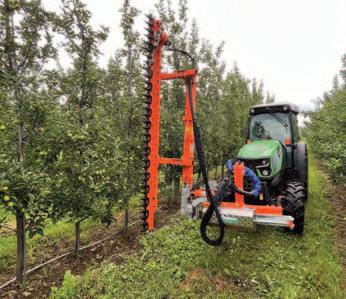
Apple orchard equipment is evolving towards more automation
KAREN DAVIDSON
Trailer for empty bins
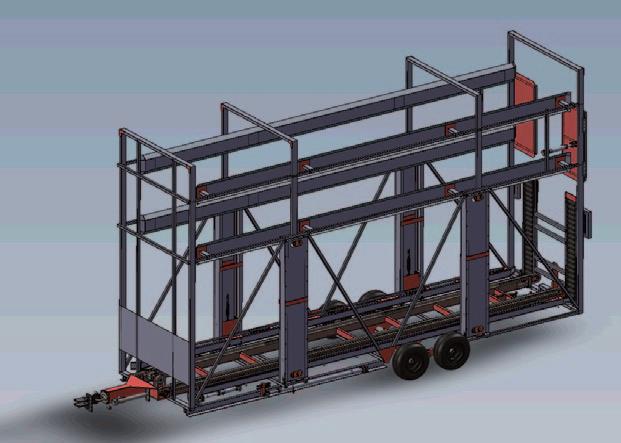
Finding labour is becoming an increasingly futile exercise. That’s why David Knight is looking to automate as much as possible for his 450 acres of apples near Colborne, Ontario. He’s already adopted picking platforms that reduce worker fatigue. Now he’s commissioned Provide Agro to build a trailer that will stack 20 empty bins and unload in the orchard at harvest time.
“For two months of the year, we run two shifts and we’re full out,” says Knight. “If we can eliminate one person, one tractor in the field, then that reduces the carbon footprint.”
Knight saw the idea on a German equipment website.
Rather than import the equipment, he’s asked Provide Agro to build a unit for the 2024 harvest season.
Autonomous sprayer
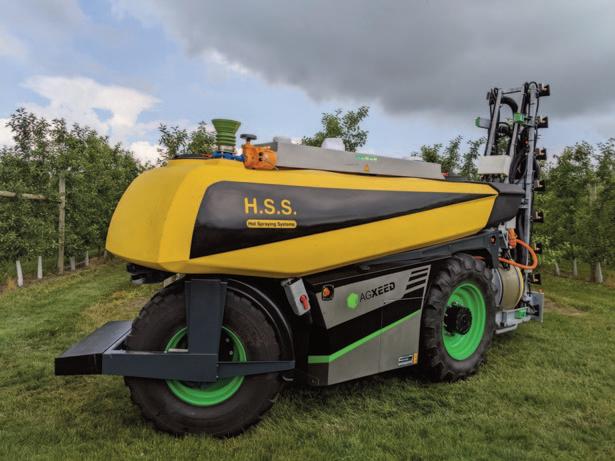
The AgXeed sprayer recorded modest results at three Ontario farms in 2023 reports Sean Bartlett, Provide Agro. Hopes for its success were tempered when the LIDAR proved too sensitive for the architecture of Ontario apple orchards. The system stopped in the face of too-long grass, branches that stuck out and other perceived obstacles.
“We couldn’t put in many hours,” says Bartlett, “so we used
the winter of 2023-24 to program changes that would result in more robust performance in the Ontario environment. Early adopters are definitely going through the growing pains.”
Cor Vissers is one of them at Top Meadow Orchards near Blue Mountains, Ontario. He’s been able to put 500 hours on the machine spraying and mowing in 200 acres in the hilly terrain of the Georgian Bay area.
“I’m really happy with the machine,” says Vissers, co-owner. “If and when the machine sees a potential obstacle, it stops and sends a notice to my phone. Through the camera connection, I can see if it’s a real problem or not and restart the machine. It’s fantastic to see.”
The autonomous sprayer does indeed operate independently,
from 7 am to 11 pm at night. The machine stops only when it runs out of spray material.
Variable rate spraying
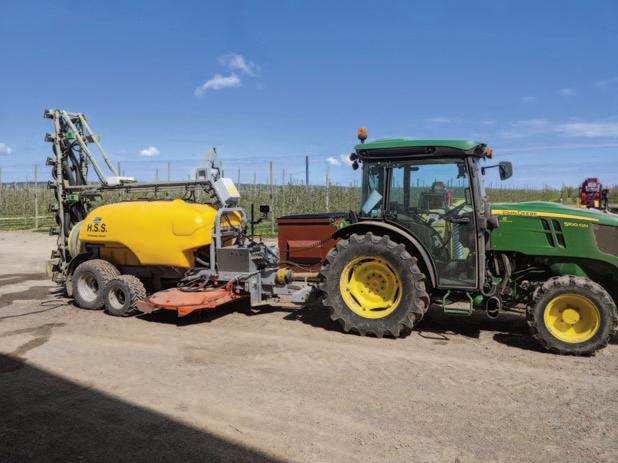
Jenny Lemieux, co-founder and CEO, Vivid Machines is working with Belgian IT company Agromanager on how to integrate data into a sprayer. Her company’s expertise is a camera that can be mounted on any farm vehicle that counts tree fruit blossoms, fruitlets, and fruit and other tree metrics by the tree with GPS precision.
The next step is to precisely align the orchard map with sprayers for variable rate spraying. A 2024 trial with Penn State University was conducted with encouraging results. The control block had no spray, the next
block had full spray and the last block was sprayed using the Vivid Machines/Agromanager fruit task map to control the variable rate sprayer. The result was that 17 per cent less crop protection spray was used while achieving the crop load target.
“We are now working directly with Agromanager and the HSS sprayer team to make sure the integration is seamless,” says Lemieux.
This is an artistic rendering of the trailer.
FOCUS: EQUIPMENT & FARM MACHINERY
New packing line expands local potato production capacity
LILIAN SCHAER
A new state-of-the-art production line is helping an Ontario company get a premium local product to consumers more quickly and efficiently.
EarthFresh Farms Inc. is a Canadian produce company based in Burlington that specializes in growing, packing and distributing potatoes. The company is vertically integrated in all aspects of the potato industry from seed breeding to packing and distribution.
Its customers are retailers, and food service and direct-to-home meal kit companies in Canada and the United States, with a particular focus on exclusive and premium varieties and specialty products such as mini and organic potatoes.
Steadily growing demand was putting pressure on the aging equipment in its Burlington facility to keep pace, which was exacerbated by supply chain delays and inventory issues during the pandemic, resulting in lost production and inefficiencies.
In early 2022, logistics also became an issue when driver shortages caused product delays across North America, resulting in a 40 per cent increase in freight costs.
“Our legacy packing line needed not only more labour hours for maintenance but there were also hours of stagnation where it wasn’t producing at all,” explains Alex Paladino director of operations at EarthFresh Farms. “COVID presented significant operational challenges for us, and we also needed to better insulate ourselves against staffing absence, so the target was to increase throughput, and reduce the operating costs of our plant through a strategic capital purchase.”
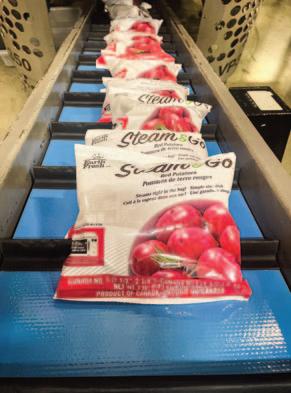
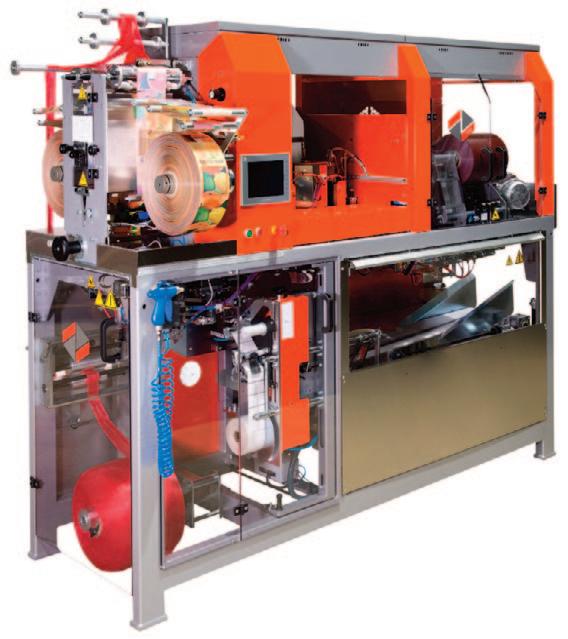
The solution was the installation of a new, state-of-theart packing line for bagging the company’s popular mini potatoes that Paladino says has not just increased the packing rate but eliminated virtually all unplanned downtime.
The company was able to access cost-share funding through the Supply Chain Stability and Adaptability Program to support the procurement and installation of the new system, which has been up and running since summer 2023.
“We’ve seen a 60 per cent increase in uptime, combined with reduced operational expenses associated with maintenance and upkeep,” says Paladino. “As well, the new system will enable us to use a variety of new sustainable and environmentally friendly packaging that we couldn’t do as efficiently and effectively previously.”
Greater packing capacity close
to home also means lower transportation costs and a reduced carbon footprint, as well as greater internal control over supply chain logistics, which lets EarthFresh respond more rapidly to customer requests.
At the same time, this offers greater higher value local market opportunities for Ontario potato growers, who are paid more for growing premium mini potatoes compared to conventional potatoes.
“The potatoes packaged in this facility come largely from
Ontario, so this lets us reduce costs and make Ontario product more competitive by growing and packaging locally,” adds Paladino. “The funding we received through the Supply Chain Stability and Adaptability Program was very important to this project, especially coming off of the tough COVID years, which made it challenging to take capital risks.”
The Supply Chain Stability and Adaptability Program is funded by the government of Ontario to address supply chain
challenges in the agri-food sector. The Agricultural Adaptation Council is delivering the program on behalf of the Ontario Ministry of Agriculture, Food and Agribusiness.
Photo right: Image: Steam & Go potato packs roll off the new state of the art assembly line at EarthFresh Farms. Courtesy of EarthFresh Farms
Lilian Schaer for Agricultural Adaptation Council.
POWER AND PERFORMANCE MEET COMFORT.
The Kubota MX mid-size utility tractor combines power, performance and comfort in an affordable, low-maintenance package. It features a climate controlled cabin with spacious legroom to keep you working comfortably and productively for those long summer days on the job.
FOCUS: EQUIPMENT & FARM MACHINERY
These equipment investments ensure fewer passes and protect soil health
KAREN DAVIDSON
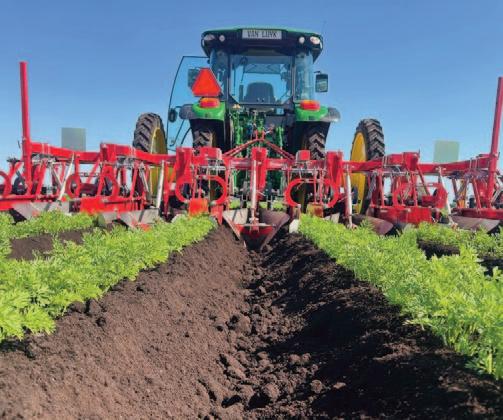
For Doug Van Luyk and his son Bradley, keeping equipment finetuned is a priority for the intensively farmed acreage near Bradford, Ontario. As muck farmers, they are buying equipment with the most efficient motors.
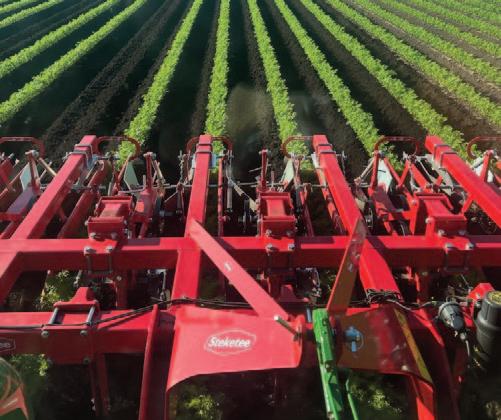
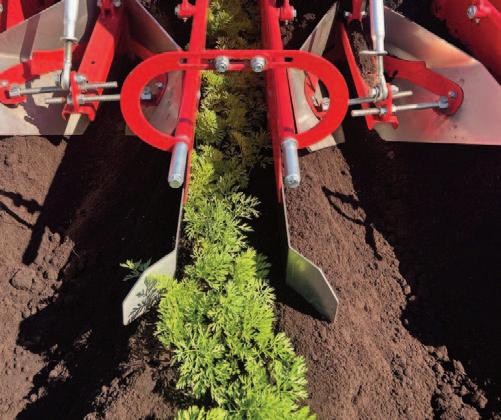
Sourced through Green Tractors John Deere dealership, Nobleton, a Steketee EC-Ridger 9 is designed to hill six carrot rows. It’s now in its second season. “We’re using fewer herbicides as a result,” says Van Luyk.
The EC-Ridger 9 is rear-mounted. According to the manufacturer’s website, it comprises a range of tool
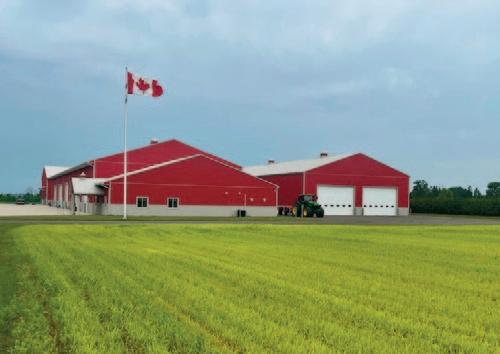
One of the newest additions to Holland Acres is a 15,600-square-foot shed to store the high-value, specialized equipment that now comes fully loaded with electronics. Even the price of tires has doubled in the last few years, so it makes sense to have the entire investment covered when it’s not in use.
modules that can be used to adapt the machine to changing conditions and the various growth stages of the crops. There is a module with hoeing blades for hoeing on ridges and a module with hoeing discs for working in between ridges. Depth control wheels ensure that both elements maintain a precise working depth. Complementary tools in the range include spring tines, ridging discs and ridging
“It’s cheaper to build a 70’ x 220’ storage with concrete floor than it is to buy a 300 horsepower tractor,” says Van Luyk. “With the value of equipment being high, it’s more important to keep it all inside.”
Here’s the line-up of new equipment that’s being used during the 2024 season.
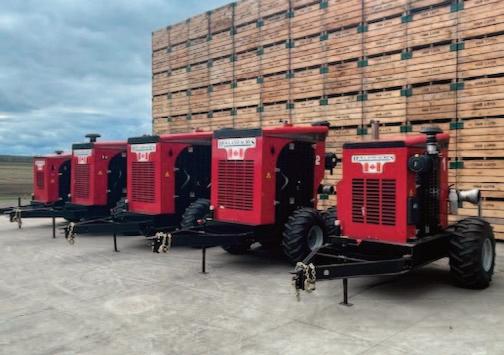
Five Tier-4
pumps ensure the least amount of emissions. Each pump has been selected for specific farm locations to maximize efficiency.
shares. The quick-change system makes replacing the individual elements easy. A subsoiler can be added to the system.
A view from behind the tractor, shows the depth of the Steketee-formed furrow.
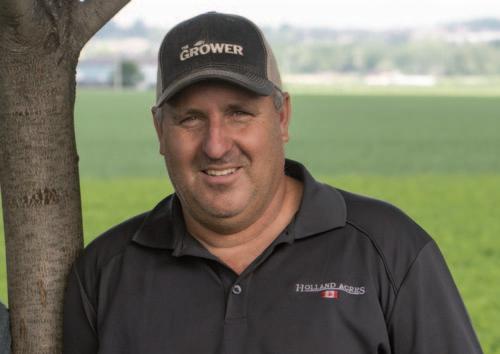
Doug Van Luyk, Holland Acres, Bradford, Ontario.
Photo by Glenn Lowson.
Overview of two-door, 15,600 square-foot equipment shed with cover crop of millet in front.
irrigation
FOCUS: EQUIPMENT & FARM MACHINERY
Canadian and BC governments cost share new equipment costs
B.C. farmers are accessing new technology through federal and provincial government funding to grow their businesses.
“Our farmers work hard every day to grow top-quality products,” said Lawrence MacAulay, federal Minister of Agriculture and Agri-Food. “With investments through the B.C. On-Farm Technology Adoption Program, more of British Columbia’s farmers have been able to make improvements on their farms that will allow them to become more efficient and keep feeding their communities.”
A maximum award for Category A: Automation, Robotics and Innovative On-Farm Growing, Packing or Storage Technologies is the lesser of 65 per cent and $150,000. A maximum award for Category B: Farm Business Management Tools is the lesser of 75 per cent and $5,000. The total maximum funding to be awarded to any one organization is $150,000.
In the Fraser Valley, Van Eekelen Enterprises Ltd. bought a robotic weeder for its field vegetables. The “Robot One” is a machine learning platform that can be taught to differentiate between weeds and crops. The teaching is done by the operator’s input and the machine remembers these inputs. After identifying weeds, the machine can selectively kill the weeds with a variety of tools on the machine. This robotic weeder is helping the Van Eekelens improve profitability, while reducing labour costs and herbicide use.
“The program allowed us to purchase leading-edge technology that has the potential to vastly reduce our labour costs related to weeding,” said Marinus Van Eekelen, operations manager, Van Eekelen Enterprises Ltd. “By being early adopters of technology, we can continue to provide the high-quality produce to consumers in B.C. and elsewhere.”
“Integrating new agritech on farms means farmers can improve how they plant, grow, harvest, pack and store the food they produce, which allows them to grow their businesses and provide for the communities they live in,” said Pam Alexis, B.C.’s Minister of Agriculture and Food. “By helping farmers purchase and install equipment that boosts their efficiency and bottom line, we are strengthening food security and production in B.C.”
Sandhar Farms in Kelowna bought a fruit-picking platform
for its orchard. This technology, rarely seen in British Columbia’s agricultural sector, is setting a new standard for efficiency and safety. By lifting workers to the height of the fruit, it eliminates the need for ladders, significantly enhancing safety and working conditions. Additionally, it
reduces damage to the fruit as apples are placed gently in the bin. Beyond the harvest, it becomes an invaluable year-round asset.
Camirlaney Farms in Delta received funding to upgrade its potato storage with computer panels and digital sensors to
control the storage temperature, which will decrease crop damage and loss from moisture and decay.
VM Van eekelen Farms July 12 604-852-4009
BC Ministry of Agriculture & Food June 13, 2024 news release
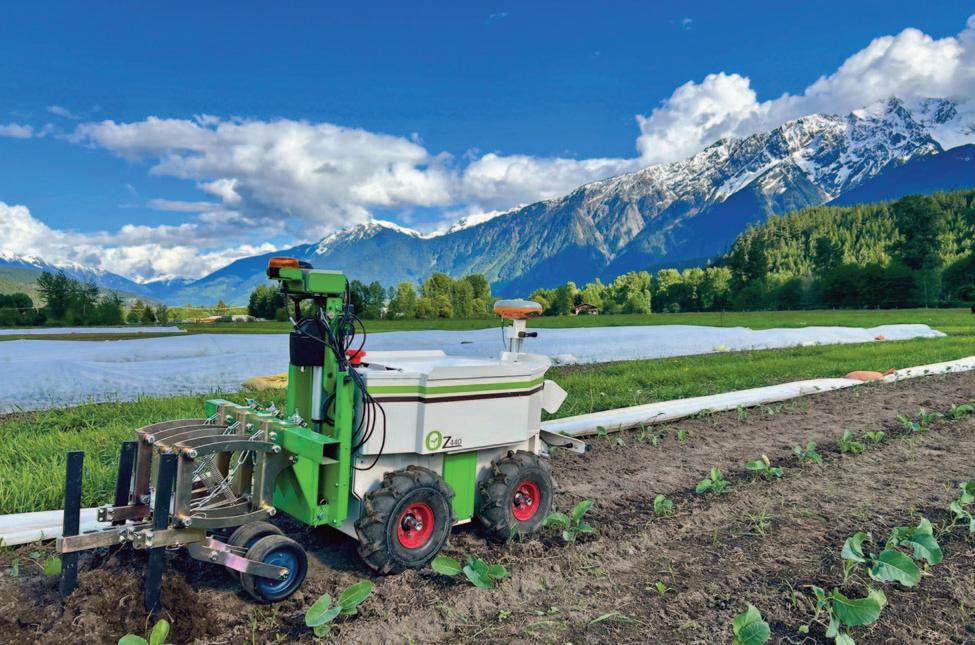
Pemberton, B.C. Photo courtesy of Haggerty AgRobotics
GROWER
Corn earworm control is not an easy task!
The Great Lakes and Maritimes Pest Monitoring Network allows growers and industry representatives to add their trapping and monitoring information into real-time maps that summarize the risk levels for different field crop pests, including corn borer, corn earworm, and western bean cutworm.
ELAINE RODDY
Corn earworm is a tough pest to manage. It is commonly confused with European corn borer. However, the control strategies for the two pests are significantly different.
Corn earworm overwinters in the southern United States. The adult moths are transported into the Great Lakes region via summer storms. Numbers usually increase sporadically in July and August with peak flights occurring in September each year. An early start to hurricane season often means an early start to the corn earworm season too.
Earworm moths are active in corn fields at night. During the day they shelter in grassy areas and fence rows. The females lay individual eggs in the corn silk. Each egg is perfectly round, pale yellow and no larger than the width of a single silk. This makes them almost impossible to scout.
After hatching, the small larvae feed on the silks, entering the protective cover of the husks almost immediately. Newly hatched larvae are very difficult to differentiate from other larvae including corn borer and western bean cutworm. As they grow, a fine double line appears along the length of their backs. The colour of the larvae is quite varied. They can be pinkish, green, yellow, or even brown.
The larvae spend their entire life, protected by the husk, feeding on the kernels. This causes considerable damage, and their presence makes the corn unmarketable. The protection of the husk makes the earworm larvae particularly difficult to control. Timing, product selection and spray coverage are essential when controlling this pest.
Timing: The female moths are attracted to green silks. As soon as silks appear, the plants are
susceptible to infestation. Apply insecticide controls at first silk. The rapid growth of the silks requires a follow-up spray no more than seven days later as new growth will not be covered with insecticide residual. Once the silks dry down, they are no longer attractive to the corn earworm moths. The females will move onto a new planting with fresh silks.
There are several websites that can help track corn earworm activity. www.insectforecast.com tracks the movement of several different pests across the United States, including corn earworm and provides a real-time risk assessment for different regions.
The Great Lakes and Maritimes Pest Monitoring Network allows growers and industry representatives to add their trapping and monitoring information into real-time maps that summarize the risk levels for different field crop pests, including corn borer, corn earworm and western bean cutworm. For more information visit: fieldcropnews.com/2024/ 03/new-link-for-the-great-lakesand-maritimes-pest-monitoringnetwork/
Product Selection: The group 28 insecticides (Coragen and Voliam Xpress) are most effective on corn earworm. There is documented resistance to the group 4 (pyrethroid) insecticides. Control with pyrethroids will be variable at best.
Spray Coverage: The key target for control is the silks. Newly hatched larvae need to be either sprayed directly or consume residual insecticide when they begin to feed on the silk. Drop nozzles aimed directly at the silks will provide the best control. Ensure the water volumes and droplet sizes are appropriate for thorough coverage.
European corn borer
At one time, European corn borer (ECB) was the most significant pest of sweet corn. The plants became susceptible to infestation as the tassel emerged. The borers often left tell-tale signs in the field including large amounts of frass on the leaf axils and broken tassels where they hollowed out the internal stalk tissue.
Over the past two decades, levels of this pest have taken a dramatic decline. This is largely due to the success of the Bt. field corn hybrids. In fact, we often have trouble even finding them in pheromone traps and research fields.
Routine controls for ECB are often unnecessary and, unless the plants are actively silking, will provide no additional benefit for corn earworm control. Corn borer can be easily scouted to determine if they are present in the field before applying any pre-silking insecticides.
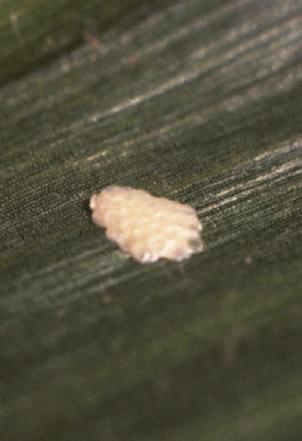
ECB egg masses are easy to identify. They are creamy white and look like overlapping fish scales. The egg mass is approximately the size of a pencil eraser. It is usually found on the underside of the leaf, in the mid-portion of the plant.
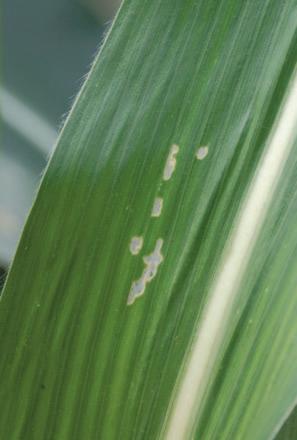
The corn borer larvae feed on the leaf tissue for the first few stages of development. As they grow, they will eventually enter the protection of the stalk becoming hard to control. While scouting for eggs, also look for signs of larval feeding including pinholes, windowpanes and frass. If the fields are scouted regularly, there is a substantial window of opportunity during which controls may be successfully applied.
Insecticides are warranted if more than five per cent of the plants exhibit feeding damage, have egg masses or small larvae. However, it is unusual to find this
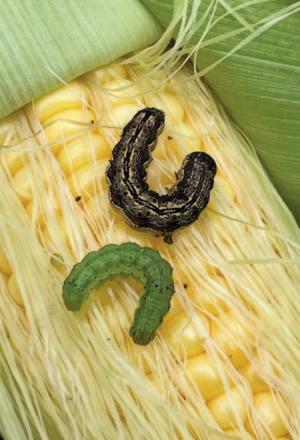
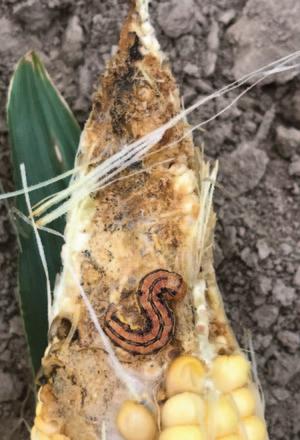
1. Corn earworm larvae. Left – colour differences between two larvae found in the same field. Right – feeding damage on the tip of the ear. Note the double fine line extending down the length of the back.
level of damage in fields anymore.
No one wants worms in their sweet corn. No one! A well-timed spray program that targets the correct pest is the best way to ensure a clean crop. Regular scouting from the mid-whorl stage can help identify leaf feeding caterpillars such as the European corn borer. Insecticide
DID YOU KNOW?
Fresh News from The Grower reaches 3K readers every Tuesday, 7 am. Subscribe now!
applications timed to provide coverage of the silks will ensure clean cobs as the corn earworm moths make their journey into the Great Lakes region.
Elaine Roddy is vegetable crops specialist, OMAFA, Ridgetown, ON.
Figure
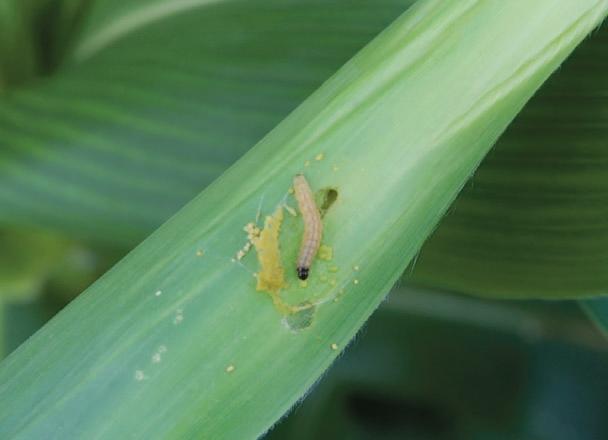
Figure 3. European corn borer larvae are a non-descript beige to translucent colour. They have a black head and no apparent markings on the body.
Figure 2. Left - European corn borer egg mass. Right – window pane feeding damage
MARKETPLACE WORKS
advertising@thegrower.org 866-898-8488 x 221
Center. 10 Acres in Midland, Ontario. Located on major hwy accesszoned agricultural - well water. For full listing information visit https://shorturl.at/hqyCV or call 705- 526-9610
2021 MOBILE HOME 16’ X 80’. Like New Condition. Four bedrooms, two bath. Gas Furnace/Stove. Fridge. Electric Washer & Dryer Call: 905-541-2781
For sale: Seven tandem axle chain drive, apple bin trailers $3500 each. One Orsi selfdriving orchard platform, fourwheel-drive, four-wheel steer, self-levelling. $18,000. Call 905-376-1831 or email davidk@knights-appleden.ca
ROWN ROWN
Changes to pest control regulations can impact growers
Fruit and vegetable growers should be aware of proposed changes to the Pest Control Products Regulations as these changes divert from the important core work of the Pest Management Regulatory Agency (PMRA) and could ultimately impact growers’ ability to access crop protection products.
Health Canada’s PMRA recently announced consultations on proposed amendments to the pest control regulations. The proposed amendments are an unnecessary distraction from the core scientific work of Canada’s pesticide regulator without any benefit to Canadian growers. These changes are being promoted as increasing transparency and sustainability but will in fact increase regulatory
burdens and slow down decision making while not actually having the desired impact.
This follows a concerning trend over the last number of years where we’ve seen the PMRA diverting efforts away from scientific evaluations toward bureaucratic processes and initiatives that needlessly add red tape to the regulatory process.
Canada has one of the most rigorous pesticide regulatory systems in the world when it comes to human and environmental protection, and the PMRA already has full authority to bolster these already robust protections under existing legislation.
The efforts being put into the proposed regulatory changes are draining the agency’s already stretched resources, and if implemented, could have negative unintended consequences. We’ve already seen many of the agency’s scientific experts drawn away from their core scientific work in recent years, which has resulted in a worrying drop in the PMRA’s performance standards.
Of concern there is also no long-term, sustainable funding strategy to support the important and growing work of reviewing and approving pesticides in Canada. To bridge the financial gap, the PMRA has come out
How we got here
The Pest Management Regulatory Agency is conducting a 70-day consultation that ends August 24, 2024. It is responding to a What We Heard report, which documented concerns related to the operation of the pesticide evaluation system in Canada and its transparency:
• The current process to access and inspect confidential test data (CTD) used to support pesticide registration decisions or proposed decisions, is perceived to be cumbersome, a barrier to public participation, and leads to decreased trust in Canada’s pesticide regulatory system.
• Stakeholders have expressed concern regarding a lack of transparency and communication in the PMRA’s decision-making process regarding the establishment of maximum residue limits (MRLs) for pesticides.
• Stakeholders raised that risk
with a punitive cost recovery proposal that would see registrants pay a fee increase of 256 per cent for maintaining existing pesticide registrations. This would put Canada well out of step with the U.S. and will be a significant disincentive for companies to invest in Canada, which could ultimately limit the tools available for Canadian fruit and vegetable growers.
If the PMRA were to re-focus its efforts on its core science work
assessments should be required to fully examine the impact of pest control products on Canada’s at-risk species and to conserve and protect our biodiversity, and that environmental risk assessments should be strengthened with regard to the consideration of cumulative effects on the environment (CEE) and species at risk (SAR).
Health Canada determined that these concerns could be addressed through existing policy and regulatory channels and that amendments to the PCPA were not needed at this time. The PMRA is proposing amendments to the Pest Control Products Regulations (PCPR) to address these issues.
Source: Canada Gazette, Part 1, Volume 158, Number 24.
and streamlining regulatory processes with a view to the needs of growers and the entire agriculture sector, they would not need to pursue such dramatic and damaging approaches to recuperating funds.
The stakes are high: growers are facing new and changing pest pressures relentlessly and if they are going to continue to sustainably grow food for Canadians and the world they are going to need timely access to
new innovations. I encourage readers to learn more about the consultations, reach out to your associations and let your local elected officials know if you have concerns.
Pierre Petelle is president and CEO, CropLife Canada, based in Ottawa, Ontario.
PIERRE PETELLE
Fruit and vegetable grower Mike Chromczak inspects his spray tank near Brownsville, Ontario.
Here’s one example of the insect challenges that apple growers face. This apple show the signs and symptoms of a codling moth larvae infestation.
Switch foliar fungicide granted URMULE registration for many Brassica crops
JOSH MOSIONDZ
The Pest Management Regulatory Agency (PMRA) has approved an URMULE registration for Switch 62.5 foliar fungicide for suppression of Alternaria leaf blight on Crop Group 5-13 as well as control of powdery mildew on Crop Group 4-13B in Canada. Switch 62.5
foliar fungicide was already labeled for use on a number of crops in Canada for control / suppression of several diseases. This minor use proposal was submitted by the Ontario Ministry of Agriculture, Food, and Agribusiness as a result of minor use priorities established by growers and extension personnel.
Crop Group 5-15 includes
CG 5-13 Alternaria Leaf Spot (Suppression)
CG 4-13B Powdery Mildew (Control)
broccoli, Brussels sprouts, cabbage, Napa cabbage, cauliflower and cultivars and/or hybrids of these.
Crop Group 4-13B includes arugula, broccoli raab, abysinnian cabbage, seakale, bok choy, collards, garden cress, upland cress, hanover salad, kale, maca, mizuna, mustard greens, radish leaves, rape greens, wild rocket,
EcoSwing botanical fungicide registered
Gowan Canada Inc. has announced the registration of EcoSwing botanical fungicide, the first commercially available biological product for Gowan in the Canadian horticulture market. On July 5, 2024, the Pest Management Regulatory Agency approved the registration of EcoSwing as a new biological fungicide.
EcoSwing is a liquid formulation that offers activity on diseases such as Mummy berry (Monilinia vaccini-corymbos), apple scab (Venturia inaequalis) and powdery mildew (Golovinomyces orontii). EcoSwing also offers a convenient
GENETICS
Beyond CRISPR:
Scientists at the University of Sydney have developed a gene-editing tool with greater accuracy and flexibility than the industry standard, CRISPR, which has revolutionised genetic engineering in medicine, agriculture and biotechnology.
SeekRNA uses a programmable ribonucleic acid (RNA) strand that can directly identify sites for insertion in genetic sequences, simplifying the editing process and reducing errors.
The new gene-editing tool is being developed by a team led by Dr Sandro Ataide in the School of Life and Environmental Sciences. Their findings have been published in Nature Communications.
“We are tremendously excited by the potential for this technology. SeekRNA’s ability to target selection with precision and flexibility sets the stage for a new era of genetic engineering, surpassing the limitations of current technologies,” Dr Ataide
four-hour re-entry interval (REI) and a 0-day pre-harvest interval (PHI); making it a great option as a part of an integrated pest management (IPM) program.
EcoSwing will be available for Canadian growers throughout the 2025 growing season. For more information about EcoSwing, contact your local Gowan Canada Sales Representative. Always read and follow label directions.
775 – 975
Make the first application when disease first appears. Apply in sufficient water volume to obtain thorough coverage; use a minimum spray volume of 200 L/ha.
Do not exceed 2.9 kg of product per hectare or 3 applications per year.
775 – 975
Make the first application when disease first appears. Apply in sufficient water volume to obtain thorough coverage; use a minimum spray volume of 200 L/ha.
Do not exceed 2.9 kg of product per hectare or 3 applications per year.
shepherd’s purse, turnip greens, watercress and cultivars and/or hybrids of these.
The following is provided as an abbreviated, general outline only. Users should be making pest management decisions within a robust integrated disease management program and should consult the complete label before using Switch 62.5 foliar fungicide.
For a copy of the new minor
use label contact your local crop specialist, regional supply outlet or visit the PMRA label site www.hc-sc.gc.ca/cps-spc/pest/ registrant-titulaire/tools-outils/ label-etiq-eng.php
Josh Mosiondz is minor use coordinator, Ontario Ministry of Agriculture, Food and Agribusiness, Guelph, ON.
seekRNA delivers a new pathway for accurate gene editing
said.
“With CRISPR you need extra components to have a ‘cut-andpaste tool’, whereas the promise of seekRNA is that it is a standalone ‘cut-and-paste tool’ with higher accuracy that can deliver a wide range of DNA sequences.”
CRISPR relies on creating a break in both strands of target DNA, the double-helix genetic code of life, and needs other proteins or the DNA repair machinery to insert the new DNA sequence. This can introduce errors.
Dr Ataide said: “SeekRNA can precisely cleave the target site and insert the new DNA sequence without the use of any other proteins.
“This allows for a much cleaner editing tool with higher accuracy and fewer errors.”
Gene-editing has opened completely new areas of research and application since the development of CRISPR more than 10 years ago. It has led to
improvements in disease resistance in fruit and crops, reduced the cost and speed of human disease detection, helped in the search for a cure for sickle cell disease and allowed for the development of revolutionary cancer treatment known as (CAR) T-cell therapy.
“We are very much in the early days of what gene editing can do. We hope that by
developing this new approach to gene editing, we can contribute to advances in health, agriculture and biotechnology,” said joint author Professor Ruth Hall from the University of Sydney.