Green lighting Canadian agricultural growth
KAREN DAVIDSON
While growth may have eased the last couple years, 2023 numbers for the Canadian greenhouse vegetable sector are still impressive. Reporting last month at the 2024 Fruit and Vegetable Growers of Canada (FVGC) annual general meeting in Ottawa, the Greenhouse Vegetable Working Group, chaired by Linda Delli Santi, tabled some impressive stats. Here are three of the standouts:
• $2.2 billion in farmgate receipts
• $1.4 billion in exports, primarily to the U.S.
• 5,500 acres under glass and poly
Required context here is that last year greenhouse growers produced 36 per cent of the approximately $6 billion total value of Canadian horticultural produce. Given the increasing occurrence of extreme weather events afflicting field growers from coast to coast, the trend to controlled environment agriculture (CEA) will only intensify. With research continuing apace to broaden
the array of economically viable greenhouse produce, will raspberries, blackberries, and spinach soon be tilting the scale even further?
At the provincial level, Ontario leads the greenhouse sector with 3,960 acres, most of which is peppers (1,440), followed by cucumbers (1,098) and tomatoes a close third (1,065). Strawberries have quickly expanded to about 400 acres while lettuce rounds out the balance at approximately 200 acres, a number that includes greenhouse, vertical and alternate CEA-grown produce.
Ontario’s greenhouse vegetable sector was the first to require mandatory independent third-party food safety audits as part of its licensing provisions for members. In 2005 lettuce was granted an exemption by the Ontario Greenhouse Vegetable Growers (OGVG) because risks associated with lettuce-growing practices at that time had the potential to undermine OFVG’s established food safety program. Technology evolves and now, the OGVG will engage in a process that will ultimately lead to asking the Ontario Farm Products Marketing Commission to reverse the original exemption so that lettuce can again be
regulated by OGVG. Significantly, in an unrelated move, the Ontario greenhouse strawberry growers have shown interest in having greenhouse strawberries come under OGVG regulatory authority.
Stats for British Columbia reveal that of the 850 acres in production, about half are in peppers and the rest in tomatoes and cucumbers. Interestingly and as a few shrewd observers predicted, acreage originally targeted to service the cannabis market is now being converted to growing vegetables and in some cases to strawberries. This is positive reinforcement as to the strength and durability of the fruit and vegetable sector.
Québec greenhouse agriculture currently totals about 500 acres producing tomatoes (220), cucumbers (150), lettuce (50), peppers (25), and strawberries (20). Perhaps unsurprisingly, remaining acreage is devoted to herbs, no doubt a value-added nod to the French culinary penchant. While down on the ranch, Alberta greenhouses, predominantly located around Medicine Hat, appear steady at 200 acres.
Continued on page 3

APRIL 2024 CELEBRATING 145 YEARS AS CANADA’S PREMIER HORTICULTURAL PUBLICATION THEGROWER.ORG INNOVATION PUT TO WORK
Volume 74 Number 04 P.M. 40012319 $3.00 CDN @growernews Farmland values rise PG 8 Managing late blight in potatoes PG 10 Storage, containers & packaging PG 16
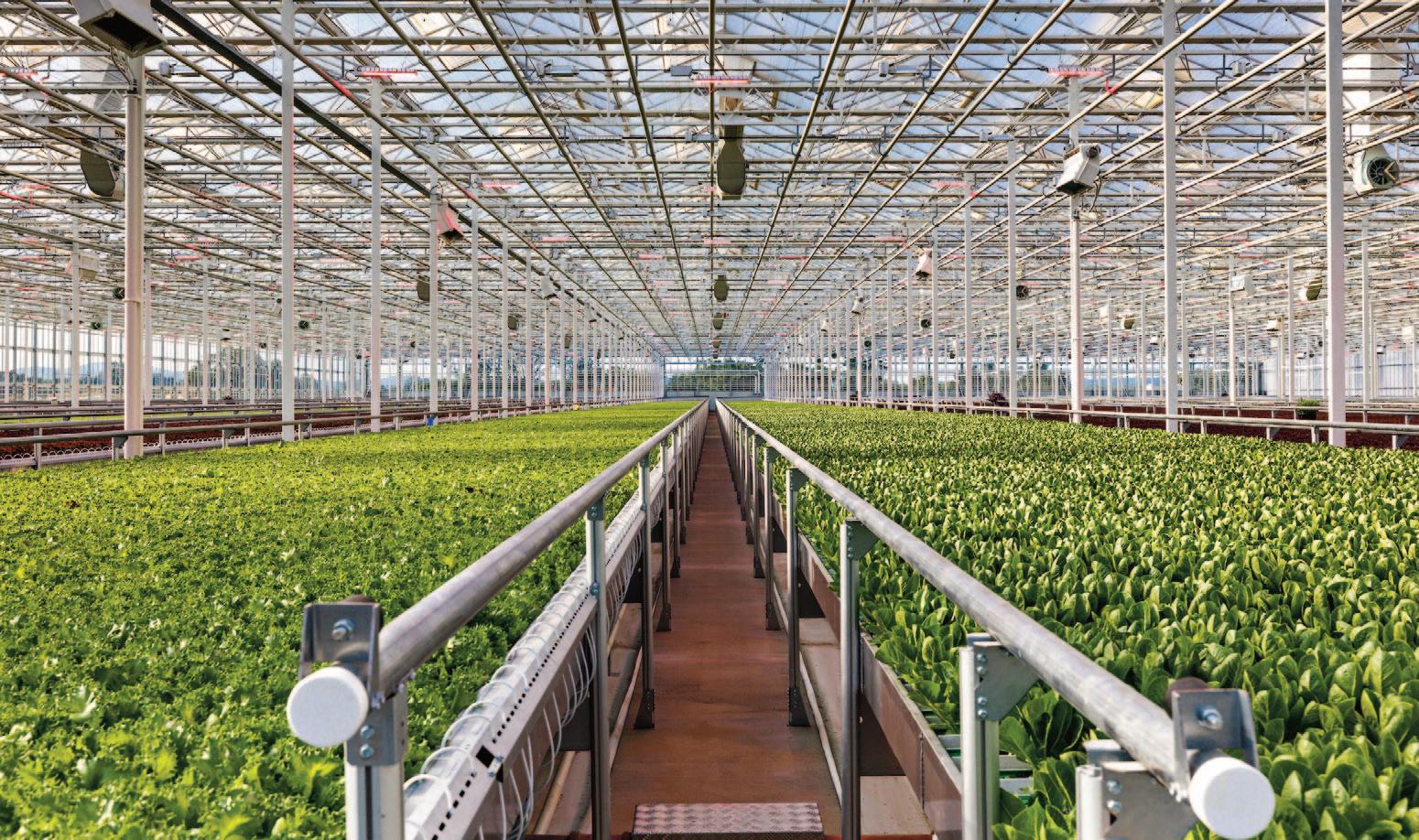
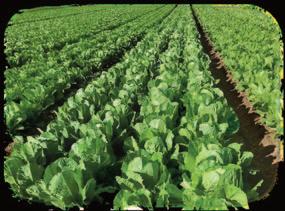
Leaf through this. The farmgate value of greenhouse vegetable production is 36 per cent of the approximately $6 billion of Canadian horticultural produce. Currently, lettuce is a small slice of the greenhouse vegetable sector, but it’s well positioned for rapid growth. In another trend, Canadian growers such as Mastronardi Produce are expanding in the U.S. to take advantage of a more friendly business environment. There’s no better example than this high-tech facility for greenhouse-grown lettuce in Berea, Kentucky. Photo courtesy of Mastronardi Produce.
British Columbia premier announces $70M replant program
British Columbia’s Premier David Eby and provincial ag minister Pam Alexis have acknowledged the devastating effects of a January deep freeze on the grape, cherry AND tree fruit sectors. An historic infusion of $70 million will help growers replant.
“There are few things better than locally grown fruit and locally crafted B.C. wine,” said Premier David Eby. “We’re taking action to support farmers who have been hit hard by a changing climate with a new task force and replant program, which will help about 1,000 more growers revitalize their farms and protect their businesses. The security of our food and our economy depend on the strength and resilience of our farmers.”
A new enhanced replant program will provide as much as $70 million in support to help producers replace damaged, diseased and low-producing vines, plants and trees with climateresilient varieties that produce in-demand, premium fruit.
“Our government is here for B.C. producers who are facing challenges from severe vine and orchard damage from extreme weather, as well as those impacted by pests, plant disease and changing consumer and market demand,” said Pam Alexis, Minister of Agriculture and Food. “This historic investment will help producers

replant for a changing climate with more support than ever before, which will strengthen our economy and ensure people can enjoy B.C. fruit and wine into the future.”
The new funding builds on the $15-million Perennial Crop Renewal Program launched in spring 2023, which has helped more than 200 producers remove diseased and unproductive plants and replace them with higher quality crops.
It is estimated that B.C. berry, grape and tree fruit growers received more than $65 million through crop insurance and AgriStability in 2023.
Source: BC Government March 14, 2024 news release
$3.5M granted for Brock research farm
Brock University’s cuttingedge research that advances Canada’s grape and wine industry is expanding from lab to field to other areas of agriculture thanks to a $3.5-million grant from the Canada Foundation for Innovation (CFI).
The funding supports the Clean Agriculture for Sustainable Production (CASP) Field Infrastructure project, which will include the establishment of a Brock-led research farm where scientists from Brock, other institutions and industry will develop agricultural innovations.
“This investment not only transforms research that supports Canada’s $11.6-billion grape and wine industry but allows industry to have access, through research partnerships, to state-of-the-art facilities to identify and produce elite performing plant material,” says Professor Debbie Inglis, director of Brock’s Cool Climate Oenology and Viticulture Institute (CCOVI) and core CCOVI scientist. “Establishing all the tools necessary to implement a domestic clean plant program while trialing diseaseresistant and climate-resilient varieties will allow industry to become more self-reliant and environmentally friendly.”
Co-leading the multiinstitutional project are CCOVI Principal Scientist Sudarsana Poojari and CCOVI researcher and Assistant Professor of Biological Sciences Jim Willwerth.
The first phase of the project, the Clean Plant Program, builds on initiatives — including the national grapevine germplasm repository, the Canadian Food Inspection Agency partnership CLEANSED, and the Canadian Grapevine Certification Network (CGCN) partnership.
Source: Brock University
NEWSMAKERS
The Fruit and Vegetable Growers of Canada welcomes Marcus Janzen as the new president for 2024. The greenhouse pepper grower is based in Abbotsford, BC. He is joined by Québec vegetable grower, Jocelyn Gibouleau as 1st vice-president and Alberta greenhouse vegetable grower David Hoekstra as 2nd vicepresident. Jan VanderHout is past-president. Directors include: Deep Brar and Jason Smith, British Columbia; Beth Connery, prairies; Quinton Woods and Alison Robertson, Ontario; Pascal Forest, Québec; Patricia Bishop and Gerald Dykerman, Atlantic.
Congratulations to Beth Connery and Brenda Simmons who were recognized with the FVGC Outstanding Achievement Award for their exceptional contributions. Mary Kay Sonier received the Honorary Life Member Award, while Alvin Keenan and Glen Lucas were honoured with the Doug Connery Award, showcasing their unwavering dedication to the sector. FVGC staff member, Bev Appleby, was honoured for her dedication to the association and her steady guidance and support during a time of leadership transition.
On February 24, 2024, Kenneth Knox officially received the Order of Canada. The citation reads: “Kenneth Knox has been a central architect of the culture of innovation approach in Ontario and Canada over the past few decades. He fostered scientific and technological innovation by creating leading-edge leadership programs and modern government agencies, and contributed to raising research capacity, notably in the agricultural sector. He has served in leadership positions of government entities at both the federal and provincial levels, and has worked with various corporations and research groups, including Genome Canada, MaRS Discovery District, and the Vineland Research and Innovation Centre.” More recently, Knox was chair of the Ontario Food Terminal from 2019 until October 26, 2020.

Fruit and Vegetable Growers of Canada announce the hiring of Christina Turi, plant health and crop protection manager, effective March 11. She has a background in agriculture and regulatory affairs, mostly recently working in the cannabis industry.
The North American Strawberry Growers’ Association has elected James Powel, Mayo, Florida as the new president. Sam Erwin, Plymouth Indiana, remains vice-president. New board members include: Austin Wrenn, Zebulon, North Carolina and Esther Kibbe, Alden, New York. Joey Boudreault, Saint-Jean-de-l’Île-d ‘Orléans, Québec is now past president. Kevin Schooley, St. Catharines, Ontario is executive director.
The Canadian Centre for Food Integrity (CCFI) has appointed Lisa Bishop -Spencer as its new executive director, effective March 4th, 2024. With a distinguished career spanning more than 20 years in strategic communications, public relations, and brand management within the food industry, she brings invaluable expertise and leadership to her new role at CCFI.



BC Cherry Association president Sukhpaul Bal presented David Geen, Bertram Farms with the Dr. Karlis Lapin Achievement Award at its annual general meeting. The 2024 board of directors was announced. Sukhpaul Bal, Valley Orchards, continues as president, supported by vice-president David A. Geen, Jealous Fruits. Graem Nelson is secretary. Erin Carlson, Savanna Ridge Orchards and Carcajou Fruit Company, is treasurer. Directors at large include:
• Harman Bahniwal, Krazy Cherry Fruit Company
• Gino Boensch, Consolidated Fruit Packers
• Bill Bokla, Trestle Farm
• Richard Isaacs, Global Fruit
• Harsh Khela, Northern Cherries Inc.
• Neal Vander Helm, Laughing Coyote Orchards
Gary Stordy has left the role of executive director, Canadian Potato Council, to pursue other opportunities. He was in the position one year. The organization is currently embarking on a new strategic plan and now looking for new leadership.
THE GROWER
PAGE 2 –– APRIL 2024
AT PRESS TIME…
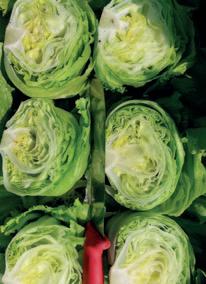
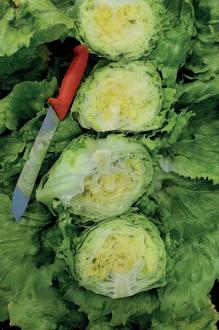
Proud of our roots since 1928 norseco.com norseco_of昀ciel Customer Service order@norseco.com 514 332-2275 | TFN 800 561-9693 450 682-4959 Ontario Warren Peacock warren.peacock@norseco.com 519 427-7239 MB, SK, AB & BC Ben Yurkiw ben.yurkiw@norseco.com 604 830-9295 Eastern Montérégie & Maritime Provinces Marie-Pierre Grimard, P. Tech marie-pierre.grimard@norseco.com 450 261-7468 Western Montérégie Marie-Hélène Monchamp marie-helene.monchamp@norseco.com 514 968-2906 North Shore of Montreal Isabelle Dubé, Agr. isabelle.dube@norseco.com 514 295-7202 Central and Eastern Quebec Stéphanie Gosselin, Agr. stephanie.gosselin@norseco.com 418 254-1469 Central & Eastern Québec Yves Thibault, Agr. yves.thibault@norseco.com 418 660-1498 Organic & Small-Scale Farms Katherine Jouvet, Agr. katherine.jouvet@norseco.com 514 386-0277 Sales Representatives GLENDANA Large-sized Iceberg, very adaptable to hot and cool climates. Dense heart and medium core. Strong against tip burn and bolting. BESMA Besma is very close to the variety “Estival”, but it has the Nasonovia resistance (aphids) in extra. It has very good tolerance to heat, tip burn and bolting. Kenneth Knox
Green lighting Canadian agricultural growth
Continued from page 1
Across the country, greenhouse growers are facing some common obstacles to growth. One such is tomato brown rugose fruit virus (ToBRFV), which continues to challenge growers in British Columbia, Ontario, and Québec. The virus causes misshapen fruit and discolouration. It is difficult to detect and manage because the virus is stable and easily transmitted by mechanical means. Although some ToBRFV-tolerant varieties have become available, growers note deficits in yield, fruit size and flavour.
The “rugose” as it’s referred to, is also causing havoc with international trade. In late 2019, the U.S.-based Animal and Plant Health Inspection Services (APHIS) restricted imports of tomato and pepper seed lots, transplants, and fruit from all countries where the rugose virus exists. There is some hope for change as part of an amended Federal Order in 2024, following the APHIS consultation on its draft Pest Risk Assessment in August 2023. Meanwhile, ToBRFV-related import restrictions continue to delay and interrupt shipments.
As for municipal obstacles, bylaws such
Greenhouse vegetable sales surpass field vegetables for the first time
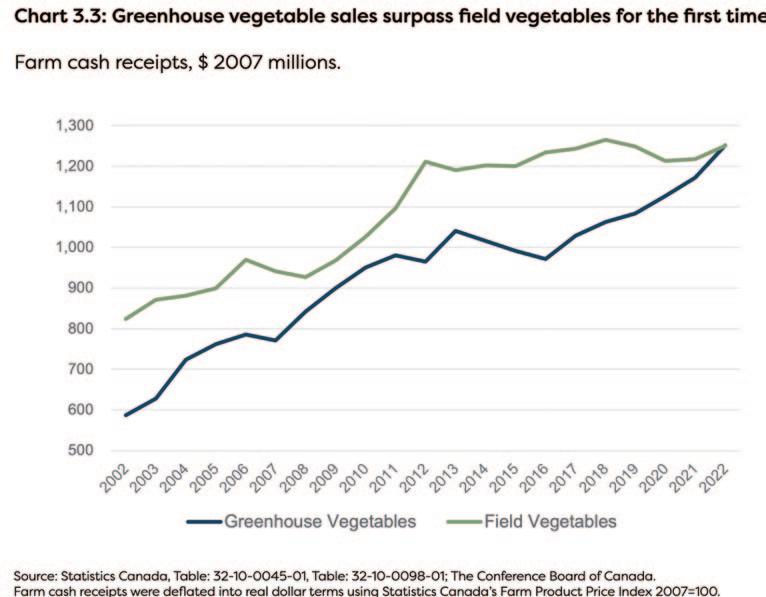
as stormwater taxes, permitting and housing regulations in Ontario are continuing to add tens of thousands of dollars to development and operating costs.
As Richard Lee, executive director,
OGVG, explains, “We now have a new standard established by the Municipality of Chatham-Kent whereby development fees for water and wastewater were adopted by council in mid-March that will cost a
greenhouse grower $179,000 per acre in 2024.” Adding that “These fees will gradually escalate until 2029 at which time it will cost $366,000 per acre before a shovel enters the ground.”
Growers question the viability of future expansion plans without partnerships at the municipal, provincial, and federal level for access to electricity, natural gas, and transportation infrastructure. As one Ontario grower observed, “We are already seeing the flight of investment to the U.S.”
The greenhouse sector continues to advocate for business-friendly policies and support from all levels of government so the industry can maintain the economic contributions it makes to rural communities. Putting weight to words, it has established the Canadian Greenhouse Excellence Network to provide evidencebased guidance for these complex issues.
In fields and greenhouses alike, today’s economic and environmental pressures put agricultural necessities such as water, energy, land, capital, and labour at risk. Strong national and regional associations, voicing concerns in unison on behalf of growers, can help to reduce some of that risk. Because growing more food is not just good for Canadians, it’s good for Canada.
Reckoning with climate change and the business environment
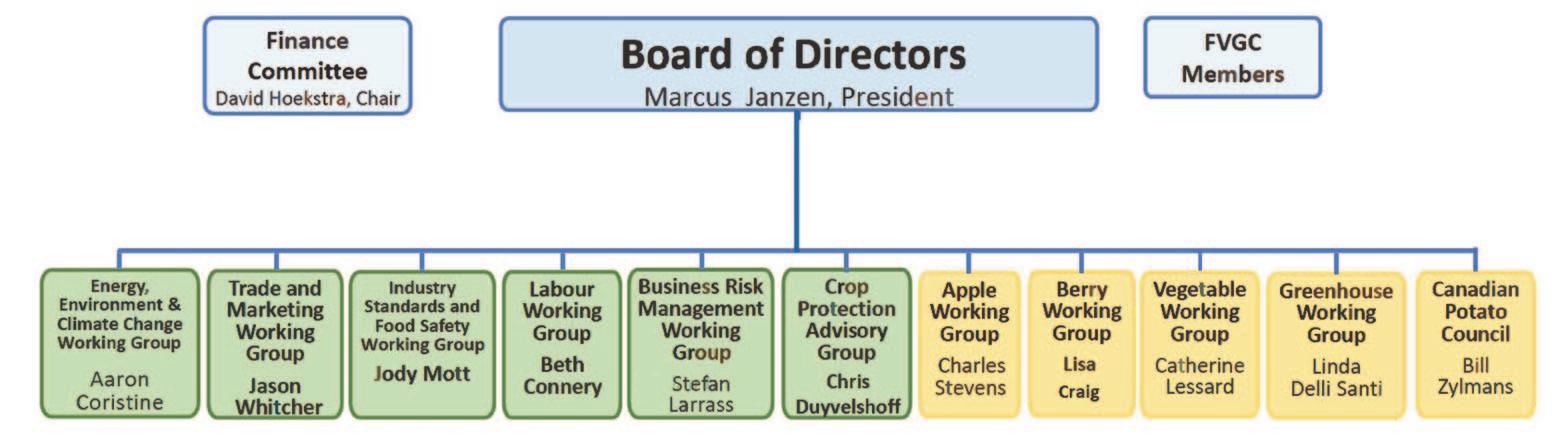
FVGC governance structure

Be it resolved that horticulture needs a more business-friendly climate. The sector, with a farmgate value that’s surpassed $6 billion, is dealing with climate change coast to coast. But it’s also dealing with unprecedented costs of doing business –municipally, provincially and federally. More often than not, these are operational costs of a thousand nicks that bleed away profit.
Many resolutions came forward at the recent annual general meeting of the Fruit and Vegetable Growers of Canada (FVGC) in Ottawa, March 5-7, that asked for more support or at the least the Canadian government’s willingness to understand horticulture. Whether the file is crop protection, labour or trade and marketing, the tone is the same: please give us relief.
No resolution embraces this sentiment better than one under the Energy, Environment and Climate Change file.
“Therefore, be it resolved that FVGC undertake a carbon innovation and efficiency report for all crop types validating carbon capture efficiency, and that FVGC work with the greenhouse sector
and all levels of government to acknowledge organic waste management efforts currently undertaken to minimize emissions and develop an advocacy strategy that would create carbon reduction tools without compromising competitiveness, economic investment and food security, and that FVGC work with government stakeholders to acknowledge edible horticulture and greenhouse producers for being directionally correct in their efforts of achieving net-zero farm operations due to an innate ability to sequester carbon in addition to being leaders in sustainable agriculture.”
Incoming president Marcus Janzen, a greenhouse vegetable grower in Abbotsford, British Columbia, says, “I don’t think Canadian horticulture is unique. Look at the farmer protests in Europe. This is a global issue. In Canada, we are facing an increase in carbon taxes on April 1.”
Janzen has the benefit of being in business for a long time. In fact, he was president of the organization, under its former name Canadian Horticultural Council, in 2006. What he’s observing is
that farmers are spending more time on succession plans than next year’s crop. They are looking for an exit ramp because the business environment is so poor.
Noting the trend to farm consolidation and larger farms, Janzen says that the FVGC will continue to strengthen working relationships with the Canadian Federation of Agriculture and Canadian Produce Marketing Association. A major challenge ahead is to prepare for the federal election in 2025.
In other business, FVGC delegates voted:
• To lobby federal and provincial governments to initiate legislation to make adherence to the Grocery Code of Conduct mandatory – a direct reference to Walmart and Loblaw Companies who want it to be voluntary
• To identify key regulated pests (quarantine and non-quarantine) of concern that would benefit from regulatory alignment for safe movement of plants and plant products between Canada and the U.S.
• To ensure that Bill C-280 An Act to amend the Bankruptcy and Insolvency Act
and the Companies’ Creditors Agreement is passed and implemented
• To encourage FARMS, FERME and WALI and applicable agencies to develop a simpler and faster process to transfer workers from one approved employer to another
Going forward: 2024 board of directors
The newly elected board members include:
• President - Marcus Janzen
• 1st Vice President - Jocelyn Gibouleau
• 2nd Vice President and Finance Chair –David Hoekstra
• Past President - Jan VanderHout
• Director, British Columbia - Deep Brar
• Director, British Columbia - Jason Smith
• Director, Atlantic - Patricia Bishop
• Director, Atlantic - Gerald Dykerman
• Director, Ontario - Alison Robertson
• Director, Ontario - Quinton Woods
• Director, Prairies - Beth Connery
• Director, Québec - Pascal Forest
APRIL 2024–– PAGE 3 THE GROWER COVER STORY
CROSS COUNTRY DIGEST
PRINCE EDWARD ISLAND
PEI potato industry leaders receive national recognition
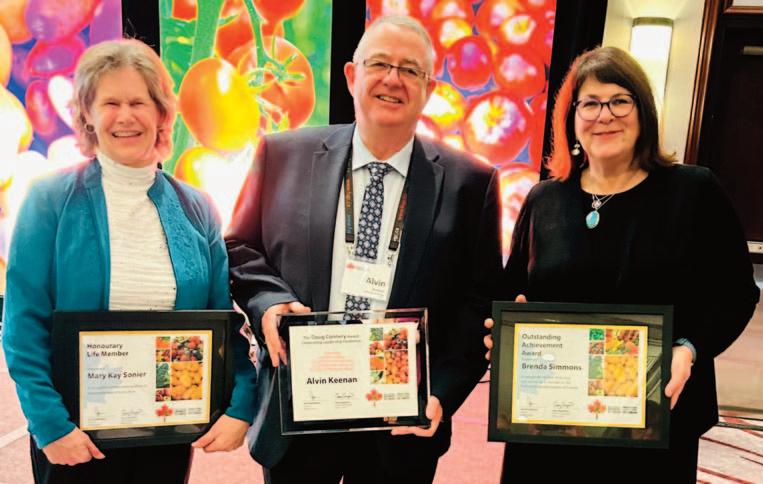
Three deserving Prince Edward Islanders have received recognition on the national agriculture stage. They are Mary Kay Sonier, Alvin Keenan and Brenda Simmons.
They received their awards in person at the Fruit and Vegetable Growers of Canada (FVGC, annual general meeting which was held in Ottawa March 5-7.
ALBERTA
Mary Kay Sonier, the former seed coordinator for the PEI Potato industry was awarded an Honorary Lifetime Member of FVGC. Mary Kay’s deep farming knowledge has played a key role on her involvement on numerous national and international committees and working groups over the years. She has been an active member of the Canadian Potato
Council for many years including a key member of the Research Working Group, Potatoes Canada, and the Seed Potato Sub-Committee, which she served as national vice-chair. She has also been involved with the Seed Certification Section of the Potato Association of America (PAA). Mary Kay played a significant role advocating on behalf of seed potato growers to both provincial and federal governments for the development of programs, policies and regulations that support viable growth of the industry.
Alvin Keenan, co-owner of Rollo Bay Holdings in Rollo Bay, PEI was honoured with one of two Connery Awards, which are presented to those who portray leadership excellence and advancing interests in Canada’s horticulture industry. Alvin has served the farming community in a variety of ways. Notably, he was the Atlantic representative and past president of the Canadian Horticultural Council, a role he valued and made notable progress in. He was president of the PEI Federation of Agriculture, the PEI Farm Practices Review Board, and a former director of the Canadian Federation of Agriculture. He currently sits as president of the Board of the Grain Elevators Corporation in PEI. Alvin has been a key mentor and advisor
Too early to predict final allocation of irrigation water
“Dear irrigators: expect preliminary water allocation of eight inches at the farm gate.” This was the March 15, 2024 report from the St. Mary River Irrigation District (SMRID), the largest irrigation district in Canada. It spans southern Alberta, a key potato-growing region supplying several processing plants. For perspective, there are 2060 kilometres of canals from Lethbridge to Medicine Hat. Last year’s starting

allocation was 15 inches.
“Our latest water supply update, as of March 11, 2024, sourced from Alberta Agriculture and Irrigation indicates that we are on course for a below average water allocation for the 2024


!"#"$%&'()*+,$-.&/0'(&12#
!"#$%&'()$*+,(-+.%+,+"#$#&/+ 012(34350676
!"#"$%&'()*+'$,-.,/#*0"#+12"(&(*$

!"#$%#$%&'()&*+,&-,.*&/,%,*0-1,&.,,23&-045,2&-'&()"& #$$(/0*#($&0$2&,67,"*#.,8 !"#$%$&$'("')"!*+',-(.+-"/-+.$0-,"1(, 23"+4-"#-"561(#4&.+$-7"89:9";<=37" >?$(.@ABC$7"D8"E3F"2F3 GHFF"/AIIJ"K@LMM@;;M@L=2;
to those in the agriculture sector in general not only in PEI, but across the nation and beyond.
Brenda Simmons, the former assistant general manager of the PEI Potato Board was presented with one of two Lifetime Achievement Awards. Brenda played a significant and dedicated role within the FVGC, particularly with the Canadian Potato Council. Her involvement as a director of the CPC for many years and her tenure as vice chair highlights her commitment to the organization. Brenda’s understanding of the agriculture sector positioned her as the go-to person not only for PEI, but across the country. Her ability to navigate complex issues and guide stakeholders through challenging times underscores her leadership and expertise.
Other recipients of awards are Glen Lucas, retiring general manager of the BC Fruit Growers’ Association winning the Connery Award; Bev Appleby, recognized hard-working executive assistant of FVGC and Beth Connery, Riverdale Farms, Portage la Prairie, MB, winning the Lifetime Achievement Award.
Source: PEI Potato Board March 7, 2024 news release
Irrigation Season,” said George Lohues, chair, SMRID. “The Headworks reservoirs comprised of the Waterton, St. Mary and Milk River Ridge reservoirs, have increased slightly since our last update, and now contains a storage level of 147,000 acre-feet. Although snowpack has increased since our last update in February, it is still below average.”
SMRID has been meeting with other water license holders in the province of Alberta to review draft revisions of water sharing Memorandums Of Understanding (MOU) between parties within the Southern Tributaries sub-basin.
All Alberta growers will be looking towards the April 1, 2024 report from the provincial government with more details on water allocation. Terence Hochstein, executive director, Potato Growers of Alberta, offers helpful context: “We expect to be down in potato acres this year, but not because of drought. North America is long in potatoes. We will be shipping old crop potatoes right into September. Growers will pull water from less valuable crops such as cereals and reallocate to potatoes.”
He anticipates that growers of chipping and seed potatoes will be up in acres. Processing acres will be down slightly, but he points out that the expansion of the McCains plant will require supply and buffer any dramatic drop in acres.
Meanwhile, transformational

improvements to irrigation infrastructure and water management continue in southern Alberta. The multi-year project, valued at $933 million, aims to improve efficient delivery of water while reducing water loss. There are currently 1.8 million irrigated acres in Alberta.
PAGE 4 –– APRIL 2024
GROWER
THE
L-R: Mary Kay Sonier, Alvin Keenan and Brenda Simmons
NOVA SCOTIA
Insights from field trials on nematodes in Nova Scotia orchards
MICHELLE CORTENS
In recent years, orchards in Nova Scotia have been replanted extensively with new varieties in high-density systems. In some cases, tree growth was weak and dry weather conditions aggravated the problem. Our investigation revealed symptoms of nematode feeding and confirmed the presence of rootlesion nematodes.
The pressure from root-lesion nematodes is not too surprising, given that management over the years has changed drastically. Broad-spectrum fumigants such as methyl bromide and Telone C-17 were withdrawn from registration and use. Agriculture has emphasized using more environmentally sustainable chemistries and integrated management practices. The new chemistries and management practices are narrow-spectrum and therefore their efficacy should be verified.
Perennia initiated on-farm trials in 2021 and 2022 for ground-truthing new strategies to improve our local knowledge of management practices that reduce root-lesion nematodes. The information is to drive decision-making to maximize productivity for horticulture crops. Trials were monitored and evaluated through to 2023 to assess the resulting crop parasitism associated with the treatments.
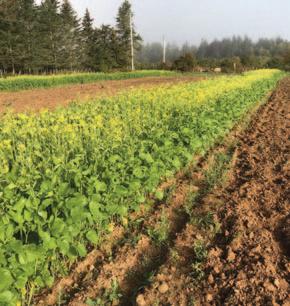
Our trial work included strategies with cover crops and chemical nematicides. To date, our work has shown that brown mustard can unintentionally support root-lesion nematodes. Therefore, brown mustard may not be a straightforward or practical approach to management in orchards if conditions are not carefully monitored to realize the nematicidal benefits during termination.
Pearl millet prior to crop establishment discourages root-lesion presence and multiplication but does not reduce the population in the short term. Chemical nematicides that were investigated did not show clear promising effects for management of root-lesion nematode in young orchards, but the lack of efficacy could have been a distribution or timing issue that could be explored further.
We also conducted sampling to evaluate root-lesion nematode population patterns and fluctuations during the season in Nova Scotia. We identified a natural cycle beginning with small populations in spring influenced by winter die-off, followed by magnification of the population by fall as the parasite thrives on the host plant. We
conclude that spring nematode samples are misrepresentative of the actual carrying capacity of root-lesion nematodes in a horticultural system. Fall soil samples represent the highest population and provide the most valuable information for decision-making.
Funding for this project was provided through the Canadian Agriculture Partnership (CAP) and the Sustainable CAP programs. The apple trial work was part of a larger nematode
project in addressing plant parasitic nematode analysis and extension services in Nova Scotia.
By the conclusion of the project, we have also expanded our expertise and services at the Perennia Plant Health Lab to include nematode analysis services to industry.
We gratefully acknowledge the field work led by research associate Kristen Cue, science recommendations from the nematode advisory committee (NSDA and AAFC representa-
tives) and the incredible support of collaborating farms.
Photo right: A cover crop of brown mustard is evaluated at a pre-plant orchard site in Nova Scotia. Photo by Michelle Cortens.
Michelle Cortens is tree fruit specialist, Perennia Food & Agriculture Corp.

APRIL 2024–– PAGE 5 THE GROWER
CROSS COUNTRY DIGEST
Fighting the pepper weevil with sterile insect techniques
For the first time, researchers in Canada have investigated the use of the sterile insect technique for controlling populations of the pepper weevil, Anthonomus eugenii, an economically significant crop pest in North America.
Gamma irradiation
The paper, published in the SCI journal Pest Management Science, revealed compelling findings on the use of gamma irradiation as a sterilization technique to improve the sustainability and effectiveness of pepper weevil management worldwide. The study was a collaboration between Bruce Power, Nordion Inc., the University of Guelph, Agriculture and Agri-Food Canada, and the Fruit and
Vegetable Growers of Canada. A. eugenii poses a significant challenge to pepper growers across much of North America, causing millions of dollars worth of crop damage annually. The beetle larvae damage the flowers and immature fruit of capsicum plants, with infestations causing yield losses of up to 90%. Managing A. eugenii populations is particularly challenging as the development of beetle larvae takes place in the protective confines of pepper fruits.
Effective strategies
Roselyne Labbe, Greenhouse Entomologist at Agriculture and AgriFood, Canada, and corresponding author of the study, explained the challenges in
identifying effective strategies to manage populations of A. eugenii “In prior research, we found that few conventional, reduced-risk or microbial pesticides could effectively knock down adult populations of the pepper weevil on greenhouse pepper crops. Even assessments of parasitoids (insects which can be used to biologically control pest populations) that attack larval stages of the pepper weevil had limitations, as they sometimes had trouble accessing hosts deep within the pepper fruit cavity,” she said.
The team, led by Jacob Basso, a researcher at the University of Guelph, turned their attention to the sterile insect technique (SIT), a genetic control method where large numbers of sterile insects are released into the wild to reduce the reproductive success of the pest.
Labbe noted, “The sterile insect technique seemed promising as prior research was conducted with this technique for control of the cotton boll weevil (Anthonomus grandis), a congeneric of pepper weevil.”
Key to a successful SIT program is the selection of an appropriate radiation dose for sterilisation of the target species. The authors note, “It is critical to determine the minimum radiation dose at which insects are effectively sterilised but maintain their ability to successfully find and mate with wild individuals”
Gamma radiation doses
An analysis of the effects of different gamma radiation doses on A. eugenii pupae revealed that irradiation of both males and
females at 110 Gy resulted in completely sterile individuals that could not contribute to offspring production if released in field sites.
The researchers noted that the lifespan of the irradiated beetles at this dosage was reduced to under two weeks and therefore recommended that A. eugenii SIT programmes should schedule repeated releases of sterile insects no more than two weeks apart, to compensate for their mortality.
For the sterile insect technique to become a viable A. eugenii management strategy for growers, numerous practical considerations need to be addressed. Labbe noted, “We still need to examine the dispersal capability of irradiated weevils in the field, and, crucially, to evaluate sterile males for their mating competitiveness against non-irradiated male weevils.”
The team now hopes to apply SIT to control other pests of horticultural crops. There is still quite a bit of information lacking with these regards.
“We are for instance interested in applying this strategy for control of lepidopteran pests that routinely invade greenhouse crops,” said Labbe.
Find the complete study at eurekalert.org.
Jacob V Basso, University of Guelph; Roselyne Labbe, Agriculture and Agri-Food Canada; Cynthia Scott-Dupree, University of Guelph
Orange-coloured snacking tomatoes launched with citrus profile

Pure Flavor Farms has launched OMG Tomatoes, a new tomato with a sweet and tangy flavour profile and a golden hue that seems to raise the question: “Are these Orange? Or maybe Gold?” inspiring the name OMG Tomatoes.
The tomatoes were recently awarded the Superior Taste Award from the International Taste Institute (ITI) in Brussels, Belgium. This prestigious award was the result of 200 jury members comprised of head sommeliers and chefs from Michelinstarred restaurants conducted through blind sensory testing.
“As research and development are key to growing categories, we are determined yearly to push the boundaries of flavour, and with this being our third tomato in less than three years receiving global recognition from ITI in Brussels, we are extremely proud of our team in bringing new products to the North American market,” said Matt Mastronardi, executive vice president.
The OMG Tomatoes offer a balance of crispness and juiciness. Their distinctive golden hue distinguishes them from traditional
Sweet S’NAPS enter the snacking pepper category
Eat them raw, dipped, grilled or air-fried
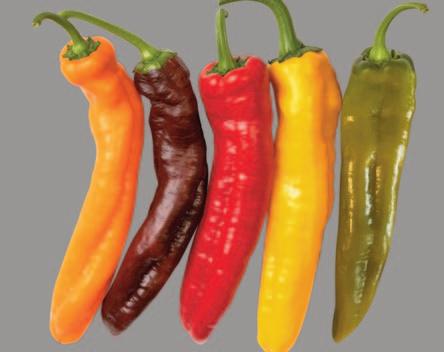

The marketing team at Nature Fresh Farms is taking note of consumer eating trends, astutely promoting the versatility of its latest product launch: Sweet S’NAPS peppers. The snack can be eaten raw, dipped, grilled –and air-fried. Available in spring 2024, the new sweet pepper variety comes in five colours of red, orange, yellow, green and purple/brown.
These peppers received a three-star honour at the 2023
tomatoes, adding a visual allure to culinary creations.
We are extremely excited to bring our customers another awardwinning tomato to their stores and restaurants across North America that will help differentiate and grow business,” said Tiffany Sabelli, senior director of sales. “OMG, snacking tomatoes will continue to broaden our lineup of unique flavours we can offer our industry partners, as well as brighten up the tomato display.”
Source: Pure Flavor March 12, 2024 news release
International Taste Institute for the crispness of a Granny-Smith apple that is also sweet, juicy and snackable.
According to Niels Peter Klapwijk, vice-president of procurement and sales, Nature Fresh Farms, sweet S’NAPS are grown in Leamington, Ontario as well as in Mexico. They will be available in 12 oz. as well as 16 oz. top seal packaging, which consumers will be able to buy year-round.
PAGE 6 –– APRIL 2024 THE GROWER GREENHOUSE GROWER
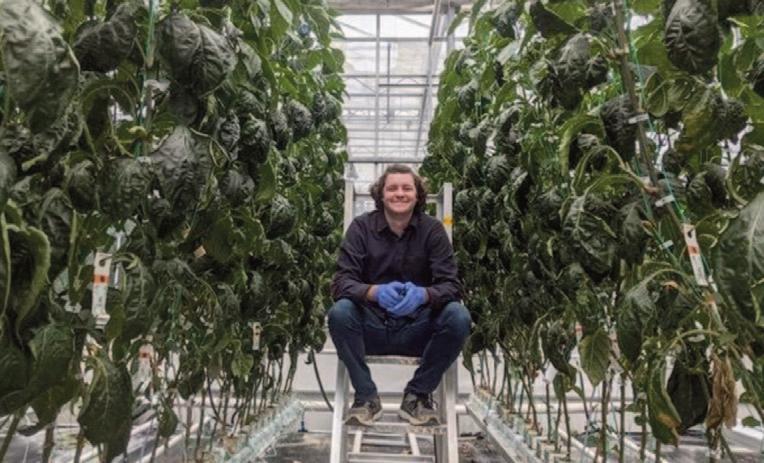
Lead author, Jacob Basso, University of Guelph, at Agriculture and Agri-Food Canada’s Harrow Research and Development Centre, Harrow, Ontario
GREENHOUSE GROWER
Backyard Farms introduces large-format, greenhouse-grown romaine
Mastronardi Produce has launched a large-format, greenhouse-grown romaine lettuce under its Backyard Farms lettuce line. Mastronardi Produce is currently the only greenhouse grower to venture into the large-format romaine segment and produce a high-quality product. Backyard Farms romaine lettuce is already on shelves at select retailers.
“Our greenhouse-grown romaine is a game-changing product in the lettuce category,” said Peppe Bonfiglio, VP of sales at Mastronardi Produce. “We are the first greenhouse grower in North America to successfully cultivate a full and flavourful large-format romaine.”
Mastronardi Produce leverages state-ofthe-art growing technology along with years of breeding and growing experience to produce its Backyard Farms’ lettuce line.
“Large-format romaine is particularly
challenging to grow because it thrives under a narrow threshold of conditions,” explained Peppe. “Our growers use a precise climate control system and monitor the heads multiple times a day to hone in on that perfect band of climate.”
The romaine heads are remarkably full in size and colour with sweet and delicate leaves. Packaged in an elegant poly bag, the lettuce is offered in a resealable two-count and club format under the recognizable branding of Backyard Farms.
“Greenhouse-grown romaine lettuce has been on the wish list of retailers for years,” added Peppe. “We are offering a product that is comparable in size to field-grown romaine but with all the perks of greenhouse-grown produce, including flavour, colour, and consistency. We are excited to make our mark in this category the same way we have revolutionized tomatoes and berries.”
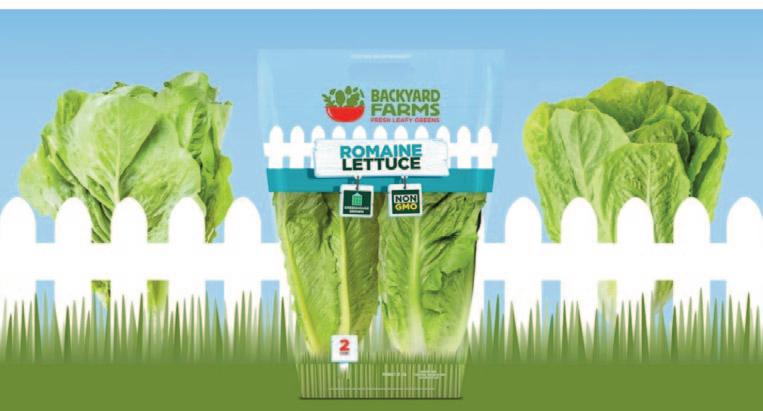
Backyard Farms has a loyal consumer base and long history of providing locally grown, fresh-from-the-vine tomatoes in Maine where “it’s always tomato season.”
The brand launched its lettuce line in the spring of 2023 and now offers a portfolio
of cut leafy greens that are washed and ready-to-eat and high-quality living lettuce.
Source: Mastronardi Produce March 5, 2024 news release
Windset completes 24-acre greenhouse expansion in Delta, BC
A new 24-acre greenhouse facility is being completed in Delta, British Columbia for Windset Farms, a vertically integrated producer and marketer of greenhouse-grown produce, selling and marketing more than 2,500 acres of greenhouse vegetable production.
Following the build of its greenhouse in Santa Maria, California, Windset Farms elected to work with KUBO Greenhouse Projects again for its new Delta LED-lit facility. Using sustainable initiatives, including renewable hydroelectric power and biomass boilers, Windset Farms will produce high-quality tomatoes and cucumbers year-round for western Canada, the U.S. and Asian markets.
KUBO’s work with Windset Farms on the company’s Santa Maria facility involved constructing the company’s Ultra-Clima vegetable greenhouse operation. Ultra-Clima exemplifies KUBO’s dedication to improved production, maximum food safety, minimum energy and water consumption
and reduced CO2 emissions. The UltraClima, in combination with Santa Maria’s unique growing climate, allows Windset Farms to achieve record yields for sustainable non-lit cultivation.
“Thanks to Windset Farms’ exemplary construction team, the entire 24-acre greenhouse structure in Delta, from foundation to roof glazing, was completed in a record 80 days,” says Wouter Kuiper, chief executive officer of KUBO Greenhouse Projects.
With a vision to provide sustainably grown produce for its target markets, Windset Farms enlisted KUBO’s expertise in contracting, engineering, manufacturing and construction of the new facility in Delta, B.C. Sustainability is at the forefront of the new build. Dual climate curtains, Ventilation Jet fans and dimmable LED light fixtures will be pivotal in controlling and reducing energy usage. Thermal screens and full light abatement curtains on the roof and side walls will eliminate light pollution. Reverse
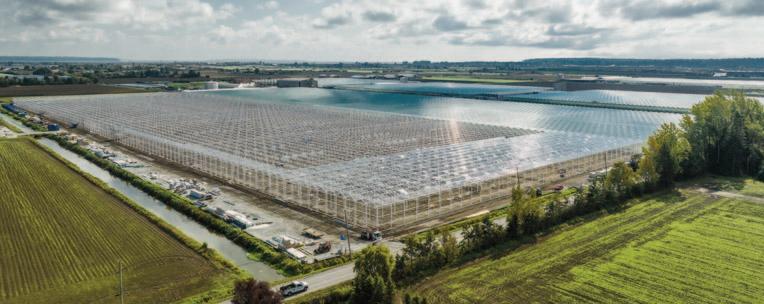
osmosis and ozone systems are also used for water recirculation.
The first planting of the new greenhouse is scheduled for spring 2024 and in turn, consumers will be able to enjoy year-round local produce. The strategic locations of Windset’s production and distribution facilities ensure accessibility to more than 125 million consumers within a 24-hour drive.
“In 2024, our Delta greenhouse facility will become the largest lit greenhouse
vegetable facility in western North America, utilizing renewable hydroelectric power and biomass boilers,” says Steven Newell, CEO of Windset Farms. “Their expertise and commitment to sustainable cultivation have allowed this goal to become a reality. We’re proud to have them as key supply partners on this groundbreaking expansion.”
Source: Windset Farms February 22, 2024 news release
THE GROWER APRIL 2024–– PAGE 7
Canadian farmland values continue to rise
CANADA
Annual % change in cultivated farmland values
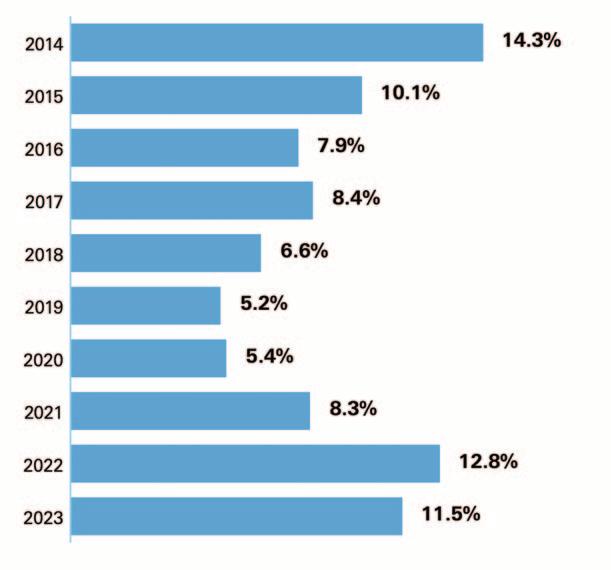
The average value of Canadian farmland continued its steady climb in 2023, increasing by 11.5 per cent, slightly less than the 12.8 per cent increase reported in 2022, according to the latest FCC Farmland Values Report.
In Ontario, average farmland values increased by 10.7 per cent in 2023, following gains of 19.4 per cent in 2022 and 22.2 per cent in 2021.
“Farmland prices have continued to increase at a rapid pace over the last couple of years, even when economic conditions suggested the growth should slow,” said J.P. Gervais, FCC’s chief economist. “A limited

supply of available farmland combined with a robust demand from farm operations is driving that growth.”
The highest average provincial increases in farmland values were observed in Saskatchewan, Quebec, Manitoba and Ontario, with double-digit average increases of 15.7, 13.3, 11.1 and 10.7 per cent, respectively. Four provinces had single-digit average increases and were below the national average at 7.8 per cent in Nova Scotia, 7.4 per cent in Prince Edward Island, 6.5 per cent in Alberta and 5.6 per cent in New Brunswick.

British Columbia recorded an average decline of 3.1 per cent, yet the province has the highest farmland values on average.
The number of farmland transactions in 2023 is estimated to have declined slightly relative to 2022 as farm operations exercised more caution towards investment decisions. “The expectation of weaker farm revenues and elevated borrowing
SPECIALITY TRACTOR




costs and input prices are expected to stretch out this cautious environment for farmland transactions into 2024,” according to Gervais.
BITS & BITES
For more information, visit fcc.ca.
Source: Farm Credit Canada March 12, 2024 news release
CPMA announces 2024 Passion for Produce participants
The Canadian Produce Marketing Association (CPMA) is proud to announce 20 rising stars who will participate in the 2024 Passion for Produce (PFP) program in Vancouver.
As an added value to membership, PFP was created by CPMA in 2010 to provide young professionals in the produce industry with the opportunity to accelerate their professional development through a unique mentoring experience at the CPMA’s Annual Convention and Trade Show.
“We are delighted to see a great interest in this program from young professionals working within our industry,” said Ron Lemaire, CPMA president. “PFP is a program that provides participants with mentorship and education opportunities in a fast-paced but fun setting. This allows them to expand their professional network and their knowledge beyond the scope of their current role within the industry.”
Over the three-day Convention and Trade Show,
PFP participants will be partnered with industry mentors for interactive sessions, networking events, and more to learn all they can about the fresh produce industry in Canada.
PFP participants gain knowledge through first-hand experiences, discussions, and networking that empowers them to return to work with an enriched understanding and renewed enthusiasm for the produce industry. Participants develop lasting relationships with mentors, fellow candidates, and other industry leaders that will guide them through their careers. This year marks the 14th edition of the PFP program. Since 2010, 210 individuals have participated in the program representing more than 90 member companies. The call for applications for the 2025 PFP program will open in fall 2024. Learn more about the program and this year’s participants.
Source: Canadian Produce Marketing Association March 19, 2024 news release
PAGE 8 –– APRIL 2024 THE GROWER FARM EQUITY
Antonio Carraro
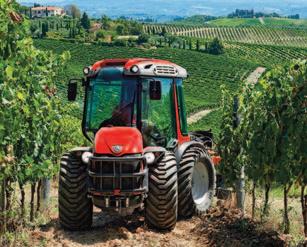
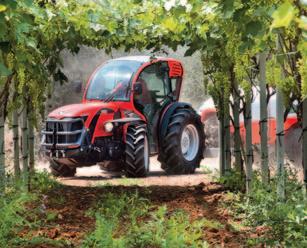
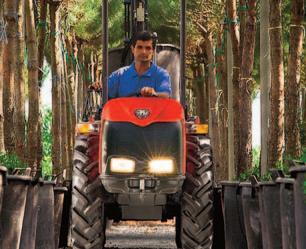
The SRX – R series is an articulated tractor of 75 or 99 HP with a RGS* option. With or less cabin, minimum wide of 42” (1.08m) for narrow application or more wide for others works. It is a low gravity center tractor for deep mountain works. A very useful unit on a forklift usage too.
TGF Series is a low profile tractor cabin (1.74m Height). From 71 to 99 HP. A strong, reliable and powerfull tractor for orchard & vineyard application.
Canada 179 St Laurent West, Maskinonge,
1N0
-819-626-0166
www.antoniocarraro.ca
RGS is the reversible guide system LOOKING FOR DEALERS New Hi clearance SRG 7600
SN & SRX Tora series articulated tractor of 52 & 66 HP, minimum wide of 39” (.980 m) for very narrow use. Rear 3 pts lift capacity of 3800 & 4200 Lbs. A very strong little
Antonio Carraro
QC. J0K
Phone
info@antoniocarraro.ca
*
Vineland evaluates the flavour profiles of microgreens
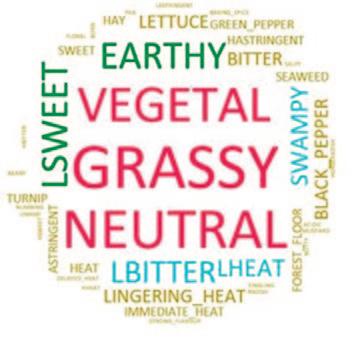
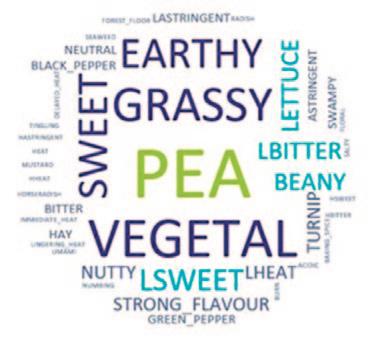
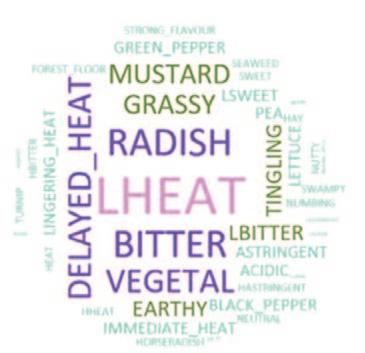
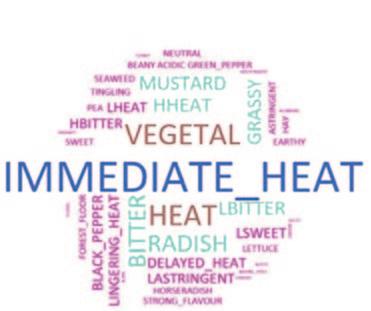
Word clouds of the panelists’ descriptions of the four representative samples. The larger the text, the more times that term was used to describe the sample (L=low; H=high). From left to right: micro broccoli, pea shoots, micro mustard and micro arugula.
Over six sessions in fall 2023, Vineland sensory panel experts evaluated microgreens and baby greens. Microgreens are seedlings of edible vegetables that are harvested seven to 21 days after germination. The objective was to explore this product category and define differences in flavour, taste and texture.
All products were purchased at local grocery retail outlets. Microgreens were selected based on availability, not on how or where they were produced. Over the course of the project, Vineland panelists evaluated 12 micro and baby greens:
1. micro broccoli
2. micro arugula
3. micro sunflower
4. mustard microgreens
5. pea shoots
6. micro radish
7. baby spinach
8. baby kale
9. spicy mustard medley
10. micro bok choy
11. water cress
12. micro kale
Products were all tasted blind in a random order, under red lighting and only identified with a three-digit code to avoid
bias. Extended breaks and rinsing were implemented during tasting to avoid sensory fatigue from spicy and stronglyflavoured samples.
A combination of sensory methods were used to explore the flavour diversity of microgreens and identify representative samples that can be used to define key differences in flavour, taste and texture in the product space.
Four representative samples with distinct flavour profiles were identified that differentiated the microgreens based on flavour, taste and texture characteristics. These profiles are described below with
word clouds.
Understanding and describing the flavour profiles in a product space can be used to differentiate products at point of sale, through microgreen-specific messaging and implemented into a marketing strategy. This can be especially useful for newer product categories, such as microgreens, where consumers may be less familiar with the diversity of the category.
For more information, contact Amy Bownen, PhD, Consumer, Sensory & Market Insights. Email amy.bowen@ vinelandresearch.com, 905-562-0320 x805
THE GROWER APRIL 2024–– PAGE 9 CONSUMER RESEARCH
ONTARIO POTATO CONFERENCE
It’s not too early to plan for late blight in potatoes
Spray often, spray early
KAREN DAVIDSON
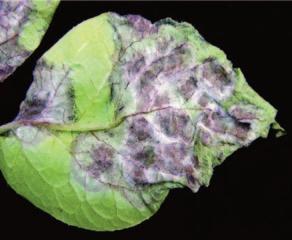
Ontario potato growers experienced a late blight outbreak in 2023 that stands out as one of the most severe in memory, despite advanced management tools. Serious crop losses and quality issues followed.
Mark VanOostrum, supply manager and agronomist with W.D. Potato Limited shared the lessons learned at the Ontario Potato Conference on February 29, 2024.
“The severity of the outbreak raises concerns about the effectiveness of current control measures and the factors contributing to its intensity,” he said. He recalled the circumstances before the outbreak was confirmed on July 17, 2023. Spore traps were negative for late blight spores at the end of June into early July. The traps were close to fields where late blight was found. The traps have not been effective for providing early warning.
“Late blight was likely around a while before that,” VanOostrum said. “Infected seed and volunteers likely played a role.”
A few days following the first confirmation of late blight, many surrounding fields showed a few plants with lesions. By the end of July 2023, late blight was widespread in most Ontario potato regions.
In a late blight alert sent to
growers by Eugenia Banks, Ontario Potato Board consultant, she said that the US 23 strain identified in the Alliston area can be very sneaky. She quoted a Canadian plant pathologist, “I have seen situations where virtually no disease was noted in the foliage, but then a storm carried the spores into the field and the spores washed down and affected the tubers. Make sure you’re still thinking about late blight and managing it as best you can right up to the end of the season.”
After an unusually rainy summer, the sun shone in September, encouraging farmers to start digging. After three weeks of ideal harvesting conditions, a heat wave appeared again at the end of the month. Industry observers estimate that 65 per cent of the storage crop was dug before cooler and wetter weather arrived.
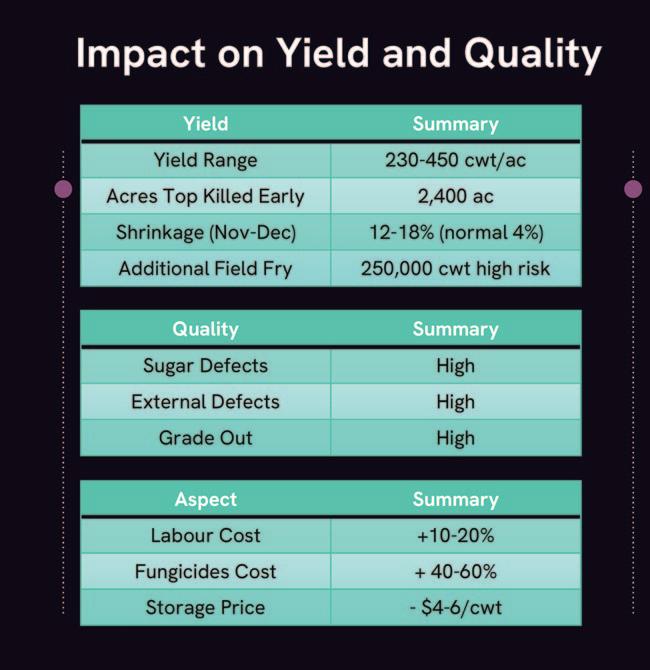
VanOostrum quantified the impact on yield and quantity for the volume under WD Potato contracts with Ontario growers.
(See chart above)

When extra costs were tallied for labour, fungicides and storage, the losses were deep. In his opinion, several disease management tools could have improved the outcome including: resistant varieties, earlier field scouting, better disease models or spore trapping methods, 100% control of suspect seed, destruction of cull piles and volunteers, and improved harvest management techniques.
Lesson #1 for fungicides
Grower surveys confirmed the efficacy and application of Phos Acid and/or Orondis fungicide were responsible for limiting outbreaks. The strategy of ‘spray often, spray early’ emerged as a crucial mantra for disease management and prevention. There were no fields or bins applied with Orondis or Phos Acid that were in the September to December “wildfire” of storage breakdown.
Lesson #2 for pulp temperatures
Maintaining the right pulp temperatures during harvest and post-harvest is crucial to reduce rot incidence and preserve potato quality. On Day 1 of harvest, pulp temperatures ranged from 62-72°F and the bin started to leak in two weeks. On Day 2 of harvest, pulp temperatures ranged from 46-65°F. The day 2 area harvested stored adequately. But from Days 3-10 when pulp temperatures ranged from 5567°F, the bins continued to break down. When risk is high, normal pulp temperature limits need to be stricter and tighter.
Lesson #3 for skin set
Intact skin serves as a barrier, preventing pathogens from accessing inner tuber tissues. Thick, healthy skin lowers susceptibility to mechanical damage that opens up pathways for infection.
Thin-skinned varieties had the most tuber blight. Some of the indeterminate chip varieties require 115-135 days to mature. Most of the issues arose with early vine kill at 100-110 days after planting and adequate skin set was not achieved. Nutrients K and B can play a role in improving skin, along with other field/variety decisions to ensure
full season maturity can occur every year regardless of Mother Nature.
“We need to rethink N rates and soil health when choosing varieties in certain fields,” said VanOostrum. “In some cases the rank vines were a secret hiding spot for late blight spores.”
At W.D Potato, several strategies were used. With a late-blight tolerant variety, no late blight specific products were used and the result was 50 per cent defoliation by late blight. The short-season variety was topkilled early to prevent further disease spread. Despite initial late blight infection, the storage outcome was unexpectedly successful, as good skin set was achieved.
Secondly, many bins faced severe rot issues following harvest due to poor skin,1-2 per cent disease and pulp temperatures in the high ‘60s. After some deliberation the operators made a difficult decision and switched to what ended up being a less risky variety known for its disease resistance properties. They returned to the initial fields 20 days later to finish and applied Phos acid, achieved improved skin set, had cold pulp temperatures which all helped mitigate further disease spread and improved storage conditions.
Next, two employees were directed to inspect each windrow and alert the harvester to avoid digging in suspect areas. They inspected close to 2000 acres in this manner and ended up identifying 27 acres of suspect areas that were harvested separately and sent directly to the wash plant instead of going into storage. These 27 acres showed anywhere from 2-10 per cent of disease infection while washing and 8,000 cwt were field fried that could have ended up in storage, but this strategy saved 120,000 cwt of stored potatoes from spoiling!
Finally, the post-harvest acid application significantly reduced disease spread and breakdown in storage. Comparative analysis showed a clear difference in disease incidence between treated and untreated bins. Proper application of post-harvest acid can lead to improved storage quality and reduced losses.
VanOostrum said that new management strategies are required going forward. Apply Orondis fungicide and/or Phos Acid on risky potato varieties. Make a new plan for managing skin set. Re-assess soil fertility and number of days to harvest after planting. Before harvest, set clear pulp temperature setpoints so that the entire team is on board.
Get ready for managing late blight in 2024.
GROWER PAGE 10 –– APRIL 2024
THE
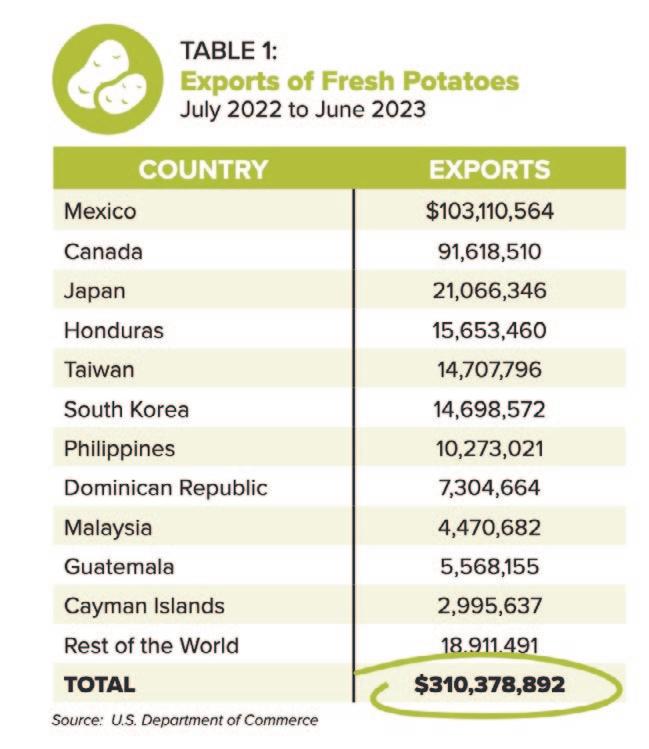
U.S. potato exports to Canada valued at $91.6 million
The U.S. based National Potato Council has released its report on “The Current and Potential Impact of Expanded Potato Exports.” Currently, about 20 per cent of U.S. potato production is exported as fresh or processed product. While exports of fresh and processed potatoes to Canada remain steady, the real growth has come in Mexico.
As the Michigan State University authors report, “For the most part, the major international markets for U.S. potatoes and potato products are developed but retain significant growth opportunities. Growing populations, increased access to markets and a growing global middle class provide opportunities for export growth. The major markets are Canada, Japan, Mexico, South Korea, and the Philippines.
Of these markets, Mexico and the Philippines have the most potential for growth. They have growing populations and growing economies. The populations are also comparatively young; less than six per cent of the Filipino population is aged more than 65 and only eight per cent of the Mexican population is more than 65. If this trend continues, disposable income should
increase as these populations mature, allowing market expansion for potato-derived products to persist well into the future.
While Canada will likely remain a major market for U.S potatoes, growing other markets may require more targeted promotion. In addition to its proximity to the U.S. and similar tastes and preferences in food products, Canada is affluent. Its population is growing, although at a relatively slower rate than many developing markets.
Canada and Mexico are the dominant markets for fresh potatoes. Canada has traditionally been the largest
market at just less than $100 million a year. Exports of fresh potatoes to Canada have slowly been declining.
The biggest rate of growth has been Mexico, where exports to Mexico more than doubled from $49.3 million in 2018/19 to $103.1 million in 2022/23 as full market access was achieved in spring of 2022.
For the report, link here: www.nationalpotatocouncil.org /wp-content/uploads/2024/02/ NPC_Spud_Nation_Exports.pdf
Source: National Potato Council/SpudNation February 26, 2024 report

THE GROWER APRIL 2024–– PAGE 11
INTERNATIONAL
Refocusing on priority issues

The annual general meeting of the Ontario Fruit & Vegetable Growers’ Association (OFVGA) in February and the annual meeting of the Fruit & Vegetable Growers of Canada (FVGC) in March are good occasions to report on the activities and accomplishments of the past year.
At the same time, they let us re-evaluate our priorities for the coming months – and although growers’ attention will be focused on the start of the new growing season, the OFVGA will continue to push forward on the issues that matter to our members.
Many of these files are not new; in fact, sometimes it feels like many issues are ongoing with little progress to show for our efforts. At the same time, we always have to be alert for new challenges on the horizon that we weren’t anticipating.
Last year, for example, responding to the Ontario government’s proposed planning amendments under Bill 97 and the Provincial Policy Statement took considerable effort by OFVGA board and staff throughout late spring and into summer.
What surprises this year will bring is anybody’s guess, but as an organization, we are committed to making sure we have the resources in place to respond effectively on behalf of growers to whatever issues do arise.
We will, for example, be expanding our staff capacity with the addition of another policy advisor position this spring. We’ve also just completed a very thorough governance review that resulted in by-law updates and changes that were presented and passed at the AGM in February. We’ll be putting the finishing touches on that process in the
coming months and are starting to work on the resolutions passed by members at the AGM as well.
OFVGA is also continuing to evolve the More Than A Migrant Worker initiative. What started as a public awareness campaign coming out of the challenges faced by growers and seasonal workers during the COVID-19 pandemic has become an important advocacy tool for the entire sector. That’s why we’ve committed increased funding for this year and are expanding our messaging to new target audiences, including partners from our source countries and more directed and targeted government outreach.
Labour is a priority file for OFVGA and there is activity on many fronts. We continue to explore new source country opportunities, are working to strengthen our relationships with existing partner countries, and are taking an active role in policy discussions affecting international workers wherever possible, particularly around easing the regulatory and cost burden of on-farm housing.
Many OFVGA members rely on the Foodland Ontario brand as part of the marketing and promotion strategy for their commodities. Over the past 12 months or so, we’ve been hearing from our members that the program’s activities are no longer as robust as they had been in the past, so we have been urging the Ontario Ministry of Agriculture, Food and Rural Affairs (OMAFRA) to strategically review Foodland Ontario with the goal of modernizing it for the future.
Since January 2024, we’ve been able to engage in some discussions with OMAFRA staff on the issue and we’re hopeful it will result in some positive outcomes for both growers and this well recognized consumer brand that is such an important tool in promoting local food in our province.
For the past three years, we’ve been working with our Ontario Agriculture Sustainability Coalition (OASC) partners to advocate for a $100 million increase in provincial government funding for the Risk Management Program (RMP)/Self-Directed Risk Management (SDRM) program.
Growers need additional support to help deal with the challenges of today’s farm business environment, such as rising costs, increasing regulations and pricing for our crops that is stagnant or even decreasing.
~ SHAWN BRENN
Growers need additional support to help deal with the challenges of today’s farm business environment, such as rising costs, increasing regulations and pricing for our crops that is stagnant or even decreasing. Unfortunately, we have little progress to report on this file, but we continue to make our case, including suggesting a phased-in approach to the ask.
Another issue that we’ve been working on without resolution is that of Environmental Compliance Approvals impacting storm water runoff for greenhouses, root vegetable wash water in the Holland Marsh, and septic systems for seasonal worker housing. OFVGA was first approached by growers about this
in 2022 and initially, the Ministry of the Environment, Conservation and Parks expressed willingness to collaboratively work on solutions. Unfortunately, there has been little progress from the Ministry on this issue since then, despite ongoing efforts by OFVGA.
Since last summer, plastics reduction has also been on our radar. That’s when the federal government announced its proposal to require 75 per cent of fresh fruits and vegetables be sold in bulk and/or plastic-free packaging by 2026 and 95 per cent by 2028. Many fruit and vegetable crops are too fragile for bulk sales, and OFVGA is working with the Canadian Produce Marketing Association
(CPMA) and FVGC to highlight the potential negative impacts of these policies to the federal and provincial governments.
And finally, I think an issue that will be increasing in importance is Ontario’s infrastructure challenges with respect to electricity, natural gas, broadband internet and even cell coverage. We must have reliable and affordable access to these types of services across Ontario for our sector to stay viable, competitive and able to meet the goals of OMAFRA’s Grow Ontario strategy.
Shawn Brenn is chair, Ontario Fruit & Vegetable Growers’ Association.
PAGE 12 –– APRIL 2024 THE GROWER
CHAIR’S PERSPECTIVE STAFF Publisher: Ontario Fruit and Vegetable Growers’ Association Editor: Karen Davidson, 416-557-6413, editor@thegrower.org Advertising: Carlie Melara 519-763-8728, advertising@thegrower.org The Grower reserves the right to refuse any advertising. Any errors that are the direct result of The Grower will be compensated at our discretion with a correction notice in the next issue. No compensation will be given after the first running of the ad. Client signature is required before insertion. The Ontario Fruit and Vegetable Growers’ Association is the sole owner of The Grower. All editorials and opinions expressed in The Grower are those of the newspaper’s editorial staff and/or contributor, and do not necessarily reflect the view of the association. All rights reserved. The contents of this publication may not be reproduced either whole or in part without the prior written consent of the publisher. OFFICE 355 Elmira Road North, Unit 105 Guelph, Ontario N1K 1S5 CANADA Tel. 519-763-8728 • Fax 519-763-6604 The Grower is printed 12 times a year and sent to all members of the Ontario Fruit and Vegetable Growers’ Association who have paid $30.00 (plus G.S.T.) per year for the paper through their commodity group or container fees. Others may subscribe as follows by writing to the office: $30.00 (+ HST) /year in Canada $40.00/year International Subscribers must submit a claim for missing issues within four months. If the issue is claimed within four months, but not available, The Grower will extend the subscription by one month. No refunds on subscriptions. P.M. 40012319 ONTARIO FRUIT AND VEGETABLE GROWERS’ ASSOCIATION BOARD OF DIRECTORS 2023 MANAGEMENT COMMITTEE Chair Shawn Brenn, Waterdown Vice-chair Mike Chromczak, Brownsville Grapes Matthias Oppenlaender, NOTL Fresh Veg Joann Chechalk, St Anns Small fruit/Berries Morris Gervais, Springwater BOARD OF DIRECTORS Apples Brian Rideout, Chatham-Kent Fresh Veg other Joann Chechalk, St Anns Tender Fruit Dave Enns, Niagara-on-the-Lake Asparagus Mike Chromczak, Brownsville Grape Matthias Oppenlaender Fresh Veg muck Quinton Woods, Cookstown Potato Shawn Brenn, Waterdown Small Fruit/Berries Morris Gervais, Springwater Ginseng Glen Gilvesy, Tillsonburg Greenhouse Jan VanderHout, Dundas Greenhouse George Gilvesy, Tillsonburg Processing Vegetables Tracy Gubbels, Mount Brydges OFVGA SECTION CHAIRS Crop Protection Brian Rideout Environment and Conservation Jan VanderHout Labour Bill George Safety Nets Mike Chromczak Energy, Property, Infrastructure and Food Safety Brian Gilroy WEATHER VANE
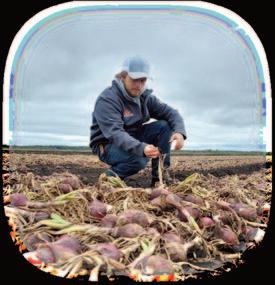
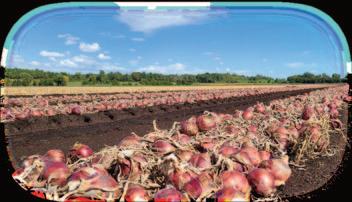
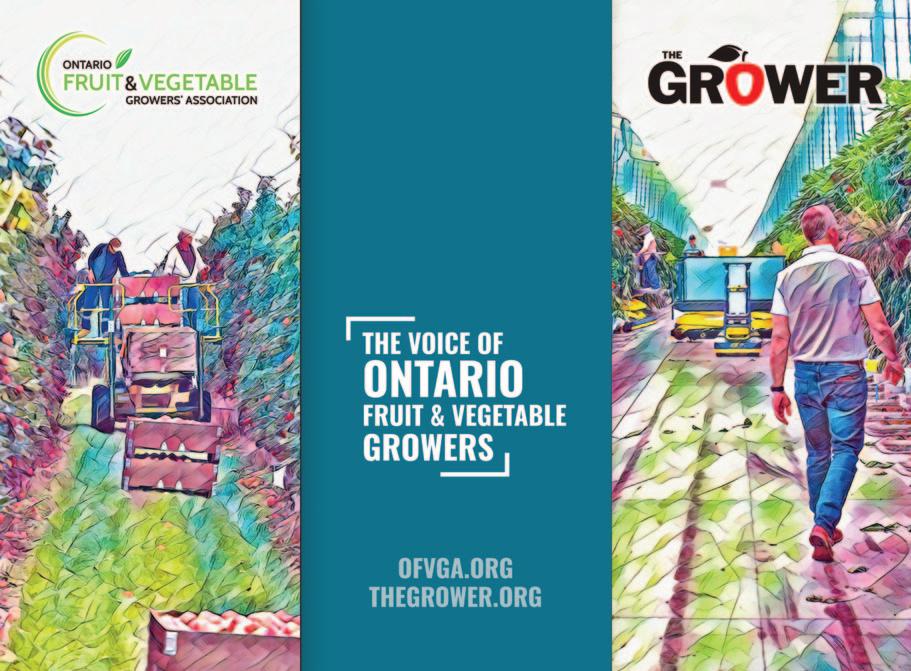
The Ontario Fruit & Vegetable Growers’ Association and its monthly publication, The Grower, launched a new booth in 2024. Using photo filtering technology, graphic designer Carlie Melara transformed two archival photos. On the left are pickers on an autonomous platform in a high-density apple orchard near Thornbury, Ontario. On the right, is a greenhouse grower inspecting high-density peppers near Leamington, Ontario. Note the autonomous picking cart in the background. The message? Innovation is at the forefront in horticulture, using less land to feed more.
SHAWN BRENN
“
European-style farmer protests strike a chord

When calamity arises somewhere in the world, it’s natural to wonder if the same thing could happen here…and if it did, what would we do?
Take farmer protests, for example. Since the early 2020s, citizens in India and more lately, Europe, have gasped at farmers’ growing vitriol over their status quo. They’ve watched frustrated food producers take to civil disobedience, march on their legislatures, clog highways and streets with convoys of slowmoving machinery and garbage -and in some cases, dump what appears to be perfectly good food to underline their anger.
In India, farmers want guaranteed minimum prices. In Europe,
price increases for inputs such as fuel and fertilizer have not been matched by additional payments through the Common Agricultural Policy. EU bureaucrats signed lopsided, politically motivated trade deals that producers say gave away market access to Africa, South America, China and even Russia, but failed to open doors in exchange.
Farmers say the likes of low commodity prices and wavering farm income, high input prices, irrational regulatory policies, stiffening environmental measures, consumer confusion over food prices and government hysteria over climate change is bad enough.
But worse, they say, is the indifference being shown by decision makers and the public over how those factors affect farmers. It’s unfair to make farmers scapegoats for much broader climate problems and economic woes, and they’ve had enough. That frustration has been the catalyst for the wide range of civil disobedience in Germany, France, Belgium and Italy, among other countries. Farmers finally ran out of patience.
And when you look at the causes, all this may sound familiar
to Canadian farmers who feel likewise stymied by events near and far.
For example, in its 2024 Farm Input Market Outlook released in February, Farm Credit Canada warned that an escalation in the war in Gaza and the Red Sea would increase energy and fertilizer prices. It noted that the Red Sea conflict has resulted in vessels being rerouted around Africa, adding up to two to three weeks to a ship’s journey and the potential for global shipping costs to rise as capacity falls.
What are Canadian farmers supposed to do about that? It’s out of their control.
The other causes of frustration that often get cited elsewhere are like a checklist of what’s going on here, too. Low commodity prices, soaring food prices with no one in the off-farm value chain accepting responsibility, and irrational policies – most notable, the muchhated carbon tax – are hardly some other country’s problem.
And sure enough, in a move that was reported to be stimulated by European farmers’ actions, several hundred Québec producers staged a protest rally in Rimouski the second week in March. They circled near the office of their provincial

government member then headed off for the local Ministry of Agriculture, Fisheries and Food office to voice their displeasure with their plight. In media interviews, the beleaguered corps complained that they were “drowning” in red tape and regulations, and not getting fair prices for their products.
Quebec is a major fruit and vegetable producing province. Growers there face problems the rest of Canadian agriculture can identify with, including labour shortages, navigating through government regulations to hire and house temporary foreign workers, and wondering if new trade deals with Europe and other jurisdictions are any good for them.
So, there’s no need to wonder if European-style farm protests could happen here. As the Rimouski incident shows, they already have.
But you can’t help wondering how much farm-related frustration was also seething among participants of the so-called Freedom Convoy, two years ago. In much of rural Canada, the anti-Ottawa sentiment is as palpable now as it was then, and it’s likely to only intensify as the federal election nears.
Owen Roberts is a past-president of the International Federation of Agricultural Journalists and a communications instructor at the University of Illinois

APRIL 2024–– PAGE 13 THE GROWER URBAN COWBOY
OWEN ROBERTS
BITS & BITES
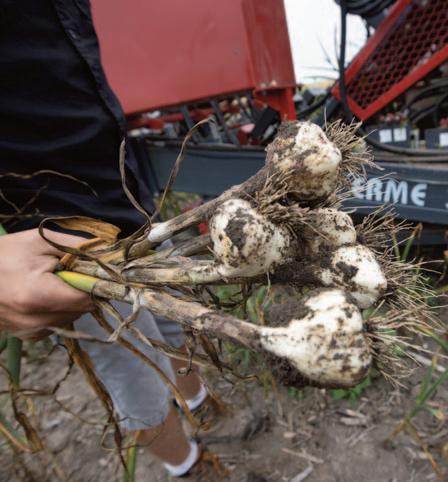
Garlic Grower Association of Ontario is hosting a workshop and field day
The next garlic production and pest management workshop will take place in Guelph on Wednesday, April 24th. Topics include planting stock / cultivar selection, planting density, irrigation, weed control, scaping, mechanization, crop rotation, grading, curing, storage, as well as an in-depth look at insect and disease identification and management. The workshop focuses on information that benefits growers of any acreage or whether you are new to growing garlic or have been growing for a couple decades. The workshop takes place at 1 Stone Road in Guelph, Ontario on Wednesday, April 24th from 9:00-4:30 in conference rooms 1 & 2.
Workshop materials are provided. Registration fee of $25 ($15 for GGAO members) is required at the door by cash or cheque. Pay parking is available at 1 Stone Road ($12/day) and lunch is on your own. Space is limited and registration is required to determine the amount of workshop materials that will need to be printed. To register for the garlic workshop, scan the QR code or call the Agriculture Information Contact Centre at 1-877-424-1300.
The Garlic Growers Association of Ontario is hosting the 2024 field day Saturday, June 1st hosted by Van Raay Farms near Dashwood, Ontario. Equipment from multiple manufacturers will be on display, along with products from fertilizer and pest control product suppliers. The agenda includes a tour of a new garlic curing and storage facility along with a field tour of a cultivar, clean seed, intercropping and planting date trial.
Registration starts at 10 am and the agenda starts at 10:30 am and goes until 3:30 pm. Lunch will be provided. Van Raay Farms is located at 37871 Dashwood Road, Dashwood, Ontario, and all are welcome to join, rain or shine. Please register for the field day by going to www.garlicgrowersof ontario.com or by calling 416-567-7323.
COMING EVENTS 2024
April 3 Grape Growers of Ontario Annual General Meeting, Club Roma, St. Catharines, ON
April 3-4 Grower Information Days, Muck Crops Research Station, Bradford, ON
April 4 Harrow Research & Development Centre Open House, Harrow, ON
April 11 Farm & Food Care Ontario Annual General Meeting, Grandway Events Centre, Elora, ON
April 23-25
Canadian Produce Marketing Association Convention & Trade Show, Vancouver, BC
April 24 Garlic Production and Pest Management Workshop, 1 Stone Road, Guelph, ON
April 26 Canadian Produce Marketing Association Sustainability Summit, Vancouver, BC
May 28-30 Grow your People Unconference, Queen’s Landing Hotel, Niagara-on-the-Lake, ON
May 30 International Potato Day
June 1 Garlic Growers Association of Ontario Field Day, Van Raay Farms, Dashwood, ON
June 11-13 GreenTech Amsterdam, RAI Amsterdam, Netherlands
June 19 Ontario Potato Board Industry Social Golf Tournament, Hockley Valley Golf Resort, Mono, ON
June 23-26 12th World Potato Congress, Adelaide, Australia
August 7 Nova Scotia Fruit Growers’ Association Orchard Tour, Kentville, NS
Aug 15-16 U.S. Apple Outlook Conference, Ritz-Carlton Hotel, Chicago, IL
Sept 19-21 Quebec Produce Marketing Association 77th Convention, Fairmont Tremblant, Tremblant, QC
Oct 1-5 International Plowing Match & Rural Expo, Lindsay, ON
Oct 9-10 Canadian Greenhouse Conference, Niagara Falls Convention Centre, Niagara Falls, ON
Nov 1-10 Royal Agricultural Winter Fair, Toronto, ON

THE GROWER PAGE 14 –– APRIL 2024
SCENE ON LINKEDIN
Managing a packaging change is your responsibility

Packaging is one of the most important components of your marketing program. Many growers do not spend enough time or resources on packaging which serves three purposes: to protect, preserve and promote.
We get focused on other parts of sales and marketing, but when you consider the cost of packaging on a per unit basis, it can be a big number. As a starting point, figure out the cost of packaging as a percentage of the unit’s total value. Undoubtedly, that number will inspire change.
There are many reasons to change packaging:
• Switching to a more sustainable option in response to a regulatory/customer mandate or to differentiate your product in the category
• Managing the increases in packaging costs by finding alternative options
• Reducing rthe size of your product to get the retail price in line with other products in the category
• Purchasing new equipment to provide efficiencies or a different style of packaging.
• Responding to regulatory changes that dictate a different packaging type or size
• Freshening up your brand
What you should do before implementing the change
Talk to your customers in advance. You do not need to show them everything, but you want to get them excited and engaged with the change. If you have a good relationship, talk to them as far out as possible. Be careful because you do not want to share a competitive advantage that they might share with others. They shouldn’t but you have to protect your interests.
When you discuss the changes with your customer, focus on the benefits to them, not you. Remember, if you tell them the packaging is less expensive, they might be looking for you to share some of the benefits with them.
Respect the lead times -- they have to make changes too. It is not as simple as delivering a different size. Retailers have many things set up in their systems to manage inventory and pricing.
Check inventory on existing packaging to manage the change as effectively as possible. It can be very expensive to throw away packaging. It does happen but if you can make a smooth transition without losing obsolete packaging consider it a victory.
If your product is changing sizes, you will need to work closely with your customer to allow them to sell through inventory and avoid the confusion of two different sizes on the shelf at one time. Retailers will look at their business in groups of stores or pricing zones. You might be able to work through inventory on the old size in one zone and ship the new size to another zone.
Often you need to communicate beyond the category manager to the others in the department to manage these transitions. They do the work and they are usually receptive to your messaging.
If the change is a big departure from past packaging, consider educating staff at store level. If this will be a point of differentiation in the category these are the people who deal with your product and consumers 52 weeks of the year.
When you are going through the design phase take the mock-ups to the store. Some packaging can look great on a computer screen but not in a store. People make the decision to buy at the shelf. It has to work there.
Consider giving consumers a sneak peek about the changes. Let them know the positives coming for them.
During the change
When your samples come in, take them to the store to ensure they scan properly. There are stories about people who have printed hundreds of thousands of packages that do not scan.
If the change is major, it might be worth stopping at the warehouse, if you are in the retailer’s network, mention the changes to quality assurance people.
When first orders ship into your customers, follow the inventory through the system to make sure it gets to the shelf. Notice we said shelf, not just the store.
After the change
Once the new packaging is out in the stores, you should follow up your with store contacts and merchandising people. Make sure they see the benefits the same as you do. You also need to confirm it is performing as you had planned.
Share the news with consumers and get them looking for the new offering. If you have communities on social media, share photos of the packaging.
When the change is purpose-
driven, explain the reason for the change and how it benefits them, not you.
Many news outlets are interested in sustainability. If your new packaging will be an improvement for the environment, you might get some free publicity. Let them know where people can buy the product and tell your customers you were trying to promote their local stores.
There are many components to a successful packaging change. It needs to work in your business, but it also needs to work for your customers’ business and for consumers. A properly executed packaging change can bring many benefits including more sales and a better relationship with customers and consumers. It is worth the effort to put the appropriate resources into doing a great job.
Peter Chapman is a retail consultant, professional speaker and the author of A la Cart-a suppliers’ guide to retailer’s priorities. Peter is based in Halifax, N.S. where he is the principal at SKUFood. Peter works with producers and processors to help them get their products on the shelf and into the shopping cart.

APRIL 2024–– PAGE 15 THE GROWER RETAIL NAVIGATOR
PETER CHAPMAN
Photo by Glenn Lowson
FOCUS: STORAGE, CONTAINERS AND PACKAGING
Sustainable packaging trends that protect and preserve
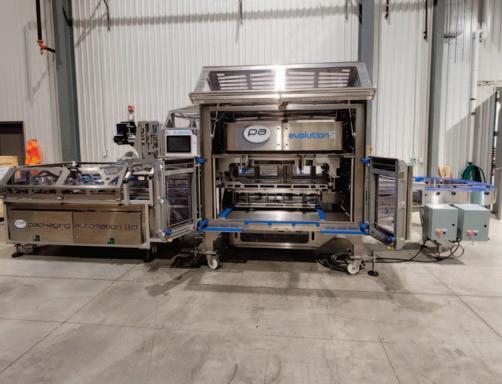
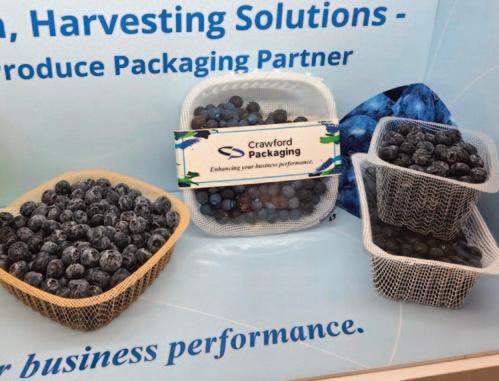
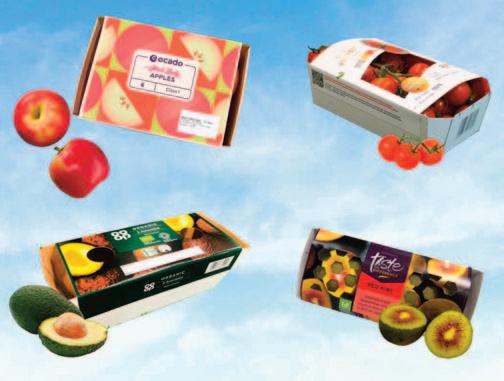 KAREN DAVIDSON
Moving a berry to market is entirely different than a cucumber. All chuckles aside, that comparison demonstrates that there is no one solution for produce. In the rush for sustainability, growers and shippers must weigh the benefits and costs of various packaging formats that will be accepted by retail clients.
Crawford Packaging, a venerable packaging company circa 1963, is working with some
retailers on trialling new concepts. As Doug Crowe, regional sales manager for Crawford Packaging points out, “We bring innovative packaging solutions for produce. These include packaging automation, consumables and retail-ready packaging, a fully integrated solution. Sustainability is part of our DNA.”
Here are several examples of how Crawford Packaging, headquartered in London, Ontario, is partnering with global suppliers to bring innovative and sustainable solutions to market.
Packaging automation
When exploring the potential for packaging automation, the team begins with a comprehensive needs analysis. This involves understanding the customer’s current practices and their short- and long-term goals. There are many options available in the marketplace, but Crawford claims to stand by only proven and best in-class equipment solutions that enhance productivity while reducing operational costs.
Stuart Jackson, Crawford’s vice president for produce
packaging, emphasizes the significance of sustainability in this arena. One example can be found in the fully electric single-lane tray sealer, Evolution S, touted as the fastest in the world.
“The energy savings achieved by this equipment can be up to 50 per cent when compared to conventional twin-lane machines,” Jackson notes. Moreover, the introduction of thinner, fully recyclable tray sealing films – specifically a 31micron film, down from 35 gauge - reduces plastic use, marking a step towards a completely sustainable solution.
Net trays
Net trays available under Crawford’s private brand, GrowPack, are a truly sustainable innovation. Made with up to 50 per cent less plastic compared to conventional rPET trays and offering full recyclability, these mesh trays are available in a variety of formats and sizes. Most importantly, they can be run on standard tray-sealing equipment. There is also an added benefit for berry and tomato processors: these trays can reduce cooling time by 30 per cent, which lowers energy consumption and allows for faster speed to market

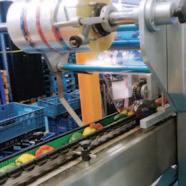
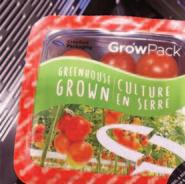
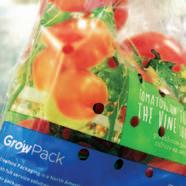
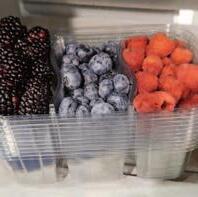
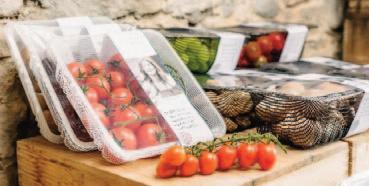
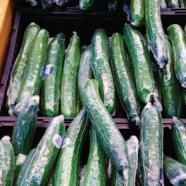
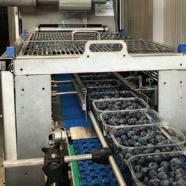
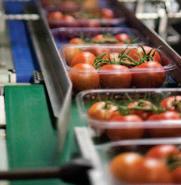
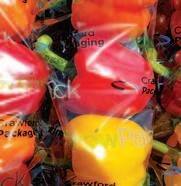
Modified atmosphere packaging
Modified atmosphere packaging (MAP) could be the next breakthrough. With rising food prices and alarming levels of food waste, growers and retailers are looking for shelf-life extending solutions. Functional packaging could be the answer, and MAP offers solutions not only for produce on the go, but also for bulk packaging used for transportation.
The most recent example, as Jackson points out, is iceless broccoli. Traditionally, broccoli grown in places such as Mexico, was shipped to Canada or the U.S. in ice-packed boxes.
“Think about the massive amounts of ice, the weight of these boxes, the labour for packaging, the necessity for
pricier lined boxes, and the increased freight costs due to weight,” Jackson explains. “With MAP for bulk produce, all you need is a cardboard box with a MAP bulk liner in a proper cold chain environment. Just insert the broccoli and tie the top. It not only extends the shelf life but also streamlines the packaging process and reduces costs.”
The Crawford Packaging team, passionate about produce packaging, travels the world to bring innovative solutions to North America. Recently, at a European trade show, they observed a growing shift towards paper packaging. That doesn’t necessarily mean paper is better than plastic. The truth is, North Americans shop differently – less frequently – than Europeans, who shop daily or every other day.
“Paper has had a bad rep,” says Crowe. “Automation is more difficult, but we are seeing how equipment solutions are catching up and how creative design is making the branding more visible and competitive. Water-soluble inks make this possible.”
Paper alternatives
Paper alternatives for tray sealing film, flow wrapping film, and trays are now part of Crawford Packaging’s sustainable, fully recyclable offering.
Another example is the growing adoption of postconsumer recycled (PCR) content in trays, which the food chain is increasingly adopting when possible. The Canada Plastics Pact states that using 30 per cent recycled content in polyethylene films is estimated to reduce energy consumption by a quarter and greenhouse gas emissions by one-third during manufacturing. However, there is a limited quantity of PCR resins available in Canada. The Canada Plastics Pact says its objective is not to eliminate plastic, but to eliminate plastic waste.
Additionally, the demand for fully recyclable cling film is on the rise, with a shift from PVC to PE film increasingly becoming part of customer requirements.
THE GROWER PAGE 16 –– APRIL 2024
The Evolution S tray sealing system is fully automatic. Its claim to fame is the world’s fastest tray sealer.
The GrowPack net tray, using 50 per cent less plastic, can be top sealed and is totally recyclable.
The linerless tray is made possible with the Ravenwood Linerless Label Applicator.
A single assembled partition replaced the multiple parts, reducing labour and inventory management,
~ DAVE BROUWER
KAREN DAVIDSON
In the last two years, the Blue Mountain Fruit Company has worked with Planet Paper Box Inc. on a new display bin for its apples. Foremost, the objective of the Botden family was to address cost and efficiency concerns. Sustainability was a welcomed bonus.
The original design involved an inner and outer sleeve, 48 common board grade, both about 6-7 mm thick. With six different parts for the bin, assembly was a time-consuming job.
Planet Paper’s proposed solution was to replace the two original sleeves with a preprinted triple wall replacement board that has an Edge Crush Strength (ECT) of 100 with an AC flute that’s 9 mm thick. The strength of carton boxes is based on the flute, the material contained between the liner boards of the box.
“A single assembled partition replaced the multiple parts, reducing labour and inventory management,” explains Dave Brouwer, account manager,
“Thanks to Planet Paper Box Inc.’s outsourcing and creativity, we are able to save 35 per cent in costs on the cardboard display bins,” says Gitty Eagles, plant coordinator, Blue Mountain Fruit Company, Thornbury, Ontario. “These savings help to offset the packaging cost increases that our company has faced over the past few years. This new design aligns with Blue Mountain Fruit Company’s sustainability goals, and has helped improve labour assembly costs and warehousing space.”
Planet Paper Box Inc, Concord, Ontario. “The new design reduced SKUs from six to four.” Introduced in 2022, the partitions proved labour and inventory management savings. The TWR100 sleeve was implemented in 2023 with initial orders proving successful.
The sustainability impact was measurable. In fibre reduction, the TWR100 demonstrated a 15 per cent reduction in paper fibre, saving 3,400 pounds on the first order and an expected reduction of 6,800 pounds in 2024. In space reduction, the thinner TWR100 reduced thickness, saving 10 pallets on the first order and 20 for the season, leading to reduced shipping and warehouse space. These cost savings contributed to the overall sustainability of the project.
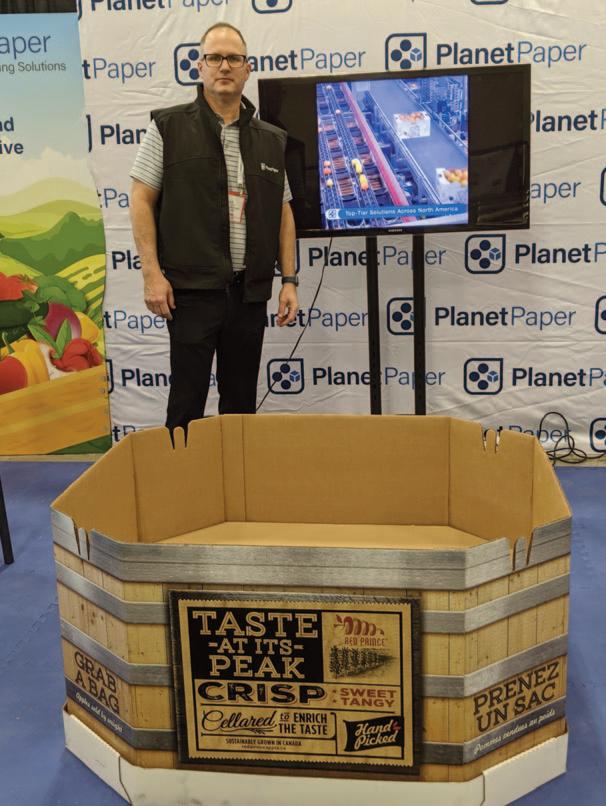

APRIL 2024–– PAGE 17 THE GROWER
Find a collection location near you at cleanfarms.ca LET’S MAKE IT TO 100% info@cleanfarms.ca @cleanfarms When recycling ag containers, every one counts Great job recycling your empty pesticide and fertilizer jugs, drums and totes. Every one you recycle counts toward a more sustainable agricultural community and environment. Thank you. 2024 COLLECTION SITES OPEN APRIL 1. Ask your ag retailer for an ag collection bag, fill it with rinsed, empty jugs and return jugs, drums and totes to a collection site for recycling. Details at cleanfarms.ca NEW! Return empty seed, pesticide and inoculant bags for environmentally safe management.
New display bins cost less and are more sustainable FOCUS: STORAGE, CONTAINERS AND PACKAGING
Planet Paper’s account manager, Dave Brouwer, demonstrates the features and benefits of a display bin now used by the Blue Mountain Fruit Company, Thornbury, Ontario.
“
FOCUS: STORAGE, CONTAINERS AND PACKAGING
The transition from plastic to cardboard clamshells requires packing line investments
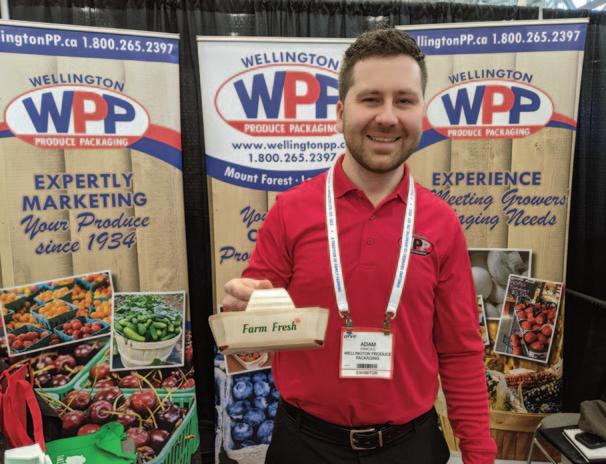
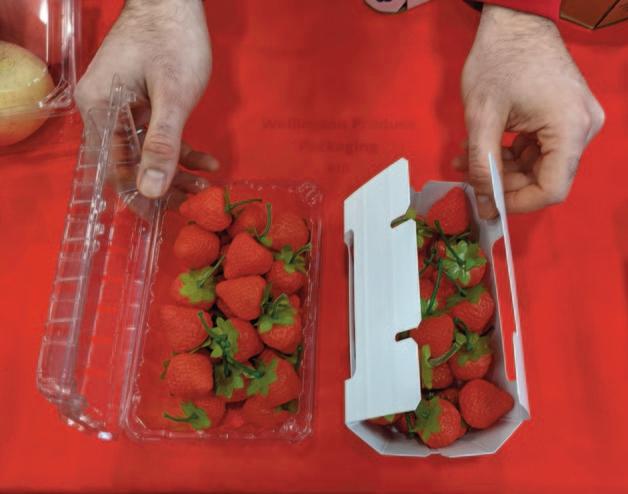
in their distribution centres but also to end consumers. To date, their focus has been on “recyclability” not “plastic reduction” so it remains to be seen on how quickly the chain may pivot.
Much has been documented about the lack of infrastructure and consistent infrastructure across municipalities to recycle at rates that make a difference. According to Environment and Climate Change Canada only nine per cent of all plastic waste is recycled in Canada.
Two strawberry containers –a conventional plastic clamshell and a corrugated cardboard clamshell – are good examples of the conundrum facing growers. The plastic one ensures long shelf life but is not compostable. The cardboard one is compostable, but has a little less resistance to moisture.
That’s exactly what Adam Hincks pointed out to a focus group meeting hosted by Environment and Climate Change Canada (ECCC) on March 4 and 5 in Ottawa. His company Wellington Produce Packaging, headquartered in Mount Forest, Ontario since 1934, was invited to explore the use of plastic in produce
packaging – why it works well, what some alternatives might be and what is possible from a manufacturer’s point of view. The meeting included government representatives, NGOs and various packaging manufacturers across North America.
“We looked at recyclable content and the potential to use it in the manufacturing process,” says Hincks. “We discussed the challenges for the industry to switch away from plastic, in terms of both infrastructure costs and the many benefits that plastic provides for fresh produce.”
Wellington Produce Packaging was invited to present on the company’s new lineup of cardboard clamshells.
“We recognize many customers are looking for plastic alternatives, so we see that our
role is to provide all options to industry and let retailers/growers decide what is best for them –whether it be plastic, cardboard, or fibre,” says Hincks.
To date, the company reports good testing results and customer feedback on the cardboard clamshells.
“Our early testing has shown no degradation in shelf life with Ontario shipping ,” says Hincks. “The cardboard clamshell is price neutral compared to the plastic clamshell. It has been designed to be visible and stackable to fit seamlessly in a retail setting. One other cardboard clamshell is on the market out of California, but it does not offer the breathability, visibility, or price-point that we can due to our careful design.”
Wellington Produce Packaging has targeted three commodities
NNZ spotlights two packaging options
Sustainable produce packaging addresses environmental concerns while maintaining functionality and appeal. Utilizing materials such as recycled cardboard, molded pulp, or compostable plastics, growers and shippers can reduce reliance on single-use plastics and minimize carbon footprint. These materials are often biodegradable, compostable, or recyclable.
Design innovations, such as perforations for ventilation and moisture control, extend shelf life and reduce food waste. Moreover, minimalist designs optimize material usage, further reducing environmental impact. Transparent windows or labeling with eco-friendly ink facilitate product visibility and information sharing, enhancing consumer experience.
Additionally, lightweight packaging minimizes transportation emissions and lowers costs.
Collaborative efforts among producers, retailers, and consumers to adopt and support sustainable packaging practices play a crucial role in fostering a
greener supply chain for produce. Overall, sustainable produce packaging offers a complete approach to environmental stewardship, efficiency, and consumer satisfaction in the agricultural sector. NNZ’s focus has always been to pair “The right sustainable packaging for your business.”
Mesh header bags
Mesh header bags offer several benefits. Firstly, their mesh design provides excellent visibility, allowing consumers to easily identify the contents without opening the bag. Additionally, the breathable mesh material promotes air circulation, ideal for items such as produce or wet goods that need to dry. These bags are durable, capable of withstanding regular use without tearing or stretching. They are also reusable, reducing the environmental impact of singleuse plastic bags. With various sizes and shapes available, mesh header bags are versatile for storing and transporting a wide
for this new container: berries, mushrooms and tomatoes.
The change to cardboard clamshells is not easy, primarily because packing operations are already set up for plastic clamshells. The advantages of plastic have been proven. They extend shelf life, offer visibility of the product to the consumer and are extremely moisture resistant.
As Hincks reports, the cardboard alternative is equal on almost all counts, except for moisture resistance. A coating helps with moisture, but it’s never going to be as good as plastic. Printed with vegetable ink, unbleached cardboard can be composted at home.
The five dominant grocery retailers are the ones communicating to the chain what packaging is desired for handling
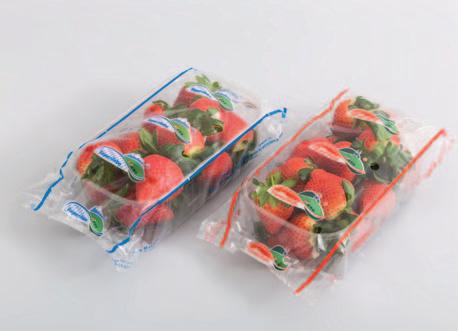
range of items. Lastly, the convenient header design allows for an artistic design or company logo to be either printed directly on the header. Overall, mesh header bags provide practicality, durability, and eco-friendliness for organizing and transporting goods efficiently.
BOPP tray overwrap
Biaxially Oriented Polypropylene (BOPP) is the plastic film stretched in two directions during production to improve the strength. BOPP tray overwrap offers numerous
Back in Mount Forest, Hincks says next steps are to continue trials of cardboard clamshells in stores in 2024. He’s also calling for more funding to aid farmers in transitioning to plastic alternatives. The change requires pack line retooling and new dies.
The Canadian government’s goal to reduce plastic by 75 per cent by 2026 and by 95 per cent by 2028 has been rejected by industry. More time is necessary to give the food chain time to transition.
For more detail on the government’s Pollution Prevention Planning Notice for Primary Food Plastic Packaging, link here:
www.canada.ca/en/environmentclimate-change/corporate/ transparency/consultations/ consultation-pollutionprevention-planning-noticeprimary-food-plasticpackaging.html#toc9
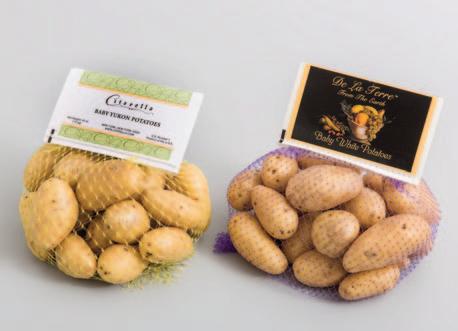
benefits for packaging applications. Firstly, it provides excellent clarity, enhancing product visibility and appeal on store shelves, which can boost sales. Its high tensile strength ensures durability during transportation and handling, reducing the risk of damage to the packaged items. BOPP’s moisture resistance properties help maintain product freshness and extend shelf life, particularly for perishable goods. Additionally, BOPP tray overwrap is lightweight, reducing shipping costs and environmental impact compared to heavier
packaging materials. Its versatility allows for easy customization, enabling brands to be differentiated through various printing and finishing options. Moreover, BOPP is recyclable, contributing to sustainability efforts and meeting consumer demands for eco-friendly packaging solutions. Overall, BOPP tray overwrap offers a combination of visual appeal, protection, sustainability, and cost-effectiveness, making it an ideal choice for a wide range of packaging needs.
KAREN DAVIDSON
GROWER PAGE 18 –– APRIL 2024
THE
L-R: Plastic clamshell beside cardboard clamshell
Adam Hincks, Wellington Produce Packaging
FOCUS: STORAGE, CONTAINERS AND PACKAGING
How to have a productive conversation about sustainability and packaging
KAREN DAVIDSON
Packaging is complex. So complex that grower operators should sit down with a team of experts – internal and external -to assess current packaging and what, if anything, should change to meet retail and consumer demands for sustainability. Invite four or five people. You’ll want your head of food safety or quality assurance. Make sure your marketing/branding guru attends. And for sure, have your packaging supplier at the table.
That’s the advice of Dan Duguay, sustainability specialist, Canadian Produce Marketing Association (CPMA). The CPMA has just spent the last two years conferring with global packaging experts, and with the help of the CPMA’s Packaging Working Group, will release the Sustainable Packaging Guide for Food & Fresh Produce in April 2024.
As part of CPMA’s leadership on sustainability, Duguay is excited about the timing of the web-based Guide as a reference point for the International Sustainability Summit co-hosted by CPMA, the International Federation for Produce Standards and the Global Coalition of Fresh Produce on April 26 in Vancouver. The Guide is a pragmatic toolbox that will help the food supply chain think about packaging in a way that addresses economic, social, and environmental outcomes. The Guide was designed to answer a few simple but key questions: What matters when selecting packaging? What is possible in terms of sustainable packaging options and actions? How does my current packaging compare to alternatives?
“The use cases and the selfassessment tool will help users identify and explore how well current and potential packaging solutions meet the required performance and environmental considerations,” says Duguay.
There’s a dizzying array of packaging options today –ranging from flexible packaging, rigid PET packaging, rigid non-PET packaging, and paper and fibre, to secondary and tertiary packaging. Why? Because each commodity has unique needs.
“If anything, the self-assessment tool will help users identify what they don’t know,” says Duguay. “And that’s valuable in itself, helping team members research and address key knowledge gaps within the company’s current approach to packaging.”
What will be particularly valuable on this web-based Guide are the packaging use cases that are currently happening domestically and globally. Note: they are not case histories. These
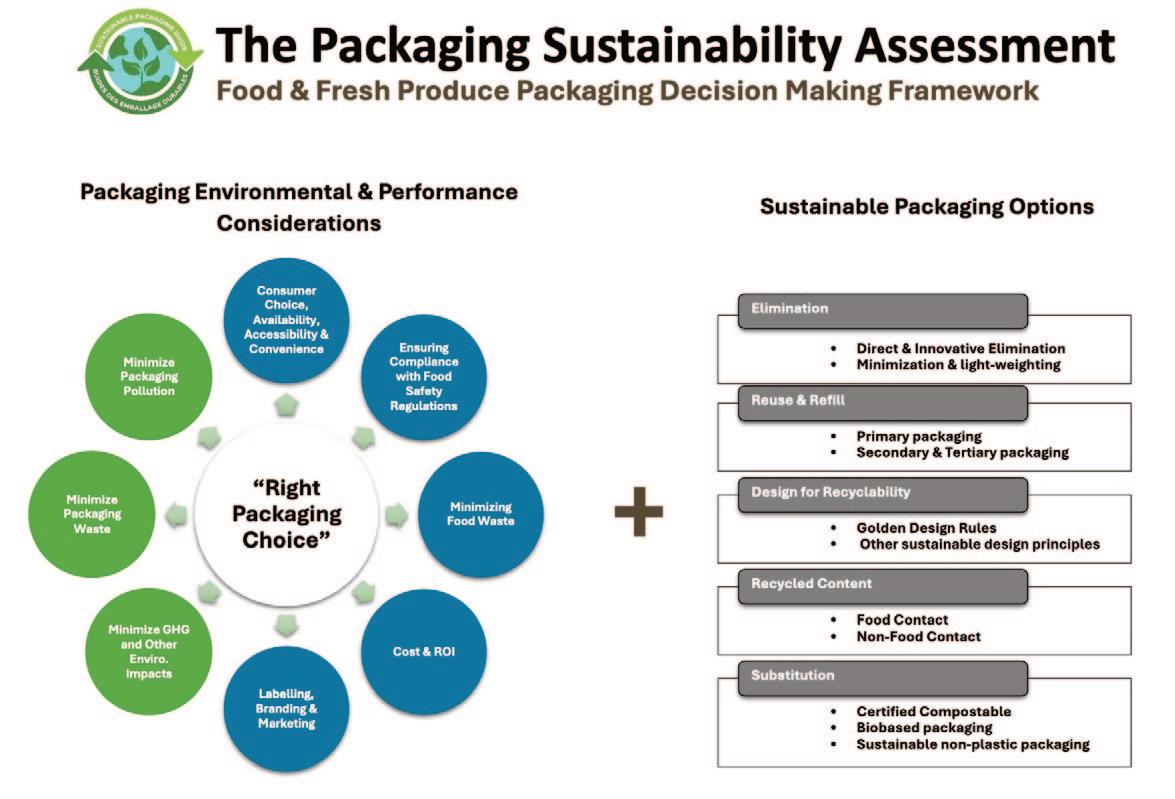
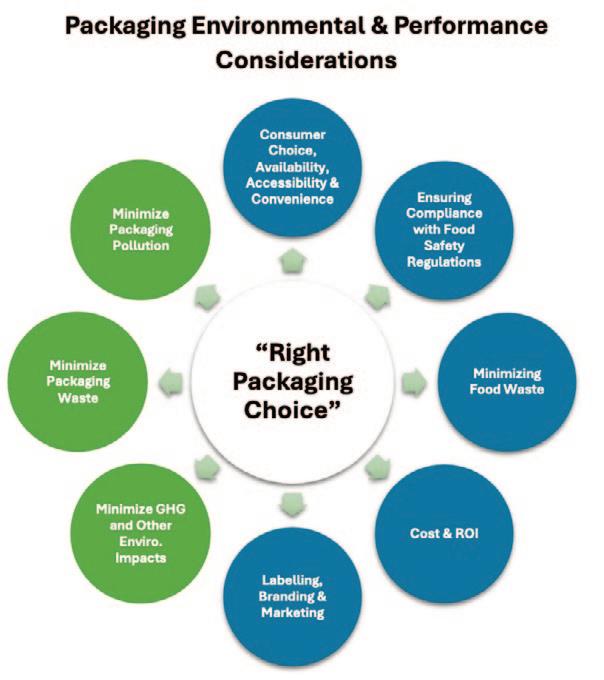
are active, leading-edge examples of packaging in the marketplace, identified by market and commodity type(s), along with a short summary of features. More than 50 use cases are listed, with more being added every month.
If major retailers are your customers, then the CPMA’s Guide can help inform conversations in how to meet their respective packaging guides. For example, compostable packaging might not be compatible with some grocer’s guides, but acceptable for others. These retailer guides are constantly evolving, so the CPMA’s Guide will help support the ever-evolving conversation up and down the entire food chain.
How much longer will sustainable packaging be used as a message and marketing differentiator? That’s not easily answered. A compostable package might be seen as virtuous by some, but not practical in regions where there’s no industrial composter capable of accepting the packaging. There is growing consensus that sustainable packaging is becoming less of a competitive differentiator and more of “just the right thing to do.”
These are complex decisions within an ever-evolving landscape – hence why the Sustainable Packaging Guide was developed.
“Five years ago, the industry was asking what was a good plastic versus a bad plastic,” says Duguay. “The conversation today is how to ensure that the packaging enhances the sustainability of the supply chain.”
As Duguay concludes, “It goes without saying, but warrants repeating: a food and produce
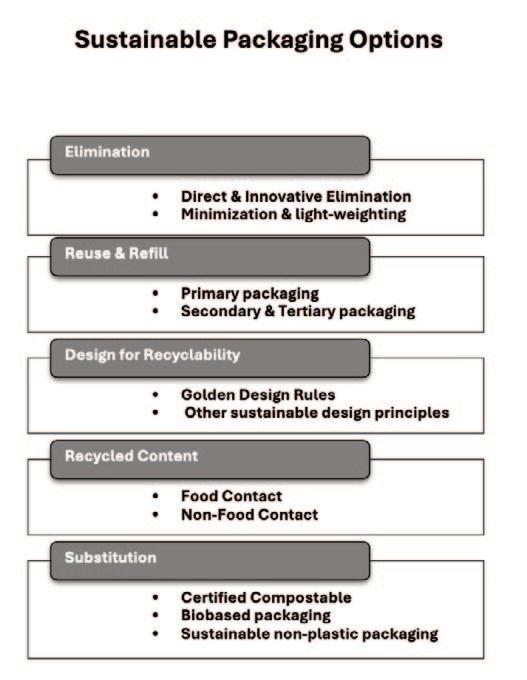
It goes without saying, but warrants repeating: a food and produce packaging decision is a sustainability decision.
~ DAN DUGUAY
packaging decision is a sustainability decision.”
The Sustainability Packaging Guide for Food & Fresh Produce
will be evergreen, constantly updated with new use cases and curated information. Ongoing industry input and feedback are
welcomed. Link to: sustainable-packaging.ca /about/the-sustainabilityassessment/
APRIL 2024–– PAGE 19 THE GROWER
“
Why wooden bins still prevail in apple orchards
Crown Bin & Pallet Inc. is a decades-old business that shouldn’t be taken for granted. Headquartered near Thornbury, Ontario, the manufacturing plant is situated in the heart of the Georgian Bay apple-growing area.
“We are the supplier of wooden bins for the Ontario, Québec and Maritime regions,” says Mike Sheridan, owner, Crown Bin & Pallet. Many growers and packers still prefer wooden bins over plastic. They are manufactured from west coast fir plywood. Hemlock is sourced from Québec and Nova Scotia for the corners, blocks, and runners. Capacity is about 18-20 bushels of fruit which weighs approximately 850 pounds. The bins are assembled in the spring and summer, ready for shipping for the fall harvest season.
Sheridan, an apple grower himself,
likes to use wooden bins for their ease of use. Wood is considered antibacterial, and it has consistently shown the natural ability to halt the growth of harmful bacteria that meets its surface. Also, if a bin gets damaged, replacement parts are available for quick and easy repairs.
Half-bins are also available for growers who have roadside stands or who display various varieties or fruits at farmers’ markets. High-value Honeycrisp apples, for example, can be packed separately in a half-bin and loaded on top of a full bin for display or easy packout.
Longevity of the bins is a key attribute. “I have 25-year-old bins in my own fleet,” says Sheridan.
For more information on bins and replacement part pricing, visit: www.crownbinandpallet.ca. L-R: Mary-Lynn
Extending shelf life on the go
HarvestHold Fresh is an innovative post-harvest technology designed to significantly extend the shelf life and maintain the quality of fruits and vegetables. The core crops are broccoli, cucumbers, tomatoes and peaches. Titan Farms, a large peach grower in South Carolina, is one of the early adopters.
The technology operates
through a unique humidityreleased approach that gradually delivers 1 MCP based on each plant’s natural chemistry. This ensures that every type of produce receives the optimal amount of 1-MCP at the right moment, enhancing its freshness and overall quality.
By doing so, HarvestHold Fresh offers growers, wholesalers, and retailers the advantage of
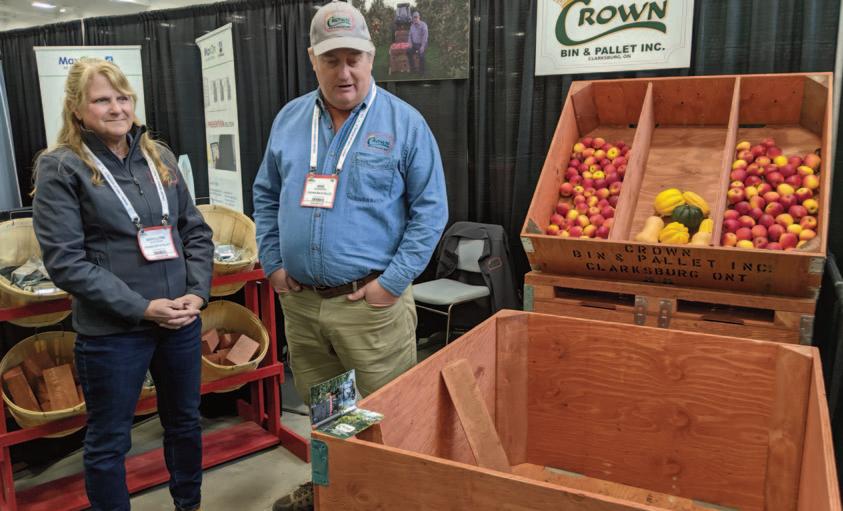
Vegetable
reduced waste, improved storability, and the ability to deliver fresher produce to consumers, ultimately making the entire food supply chain more efficient and sustainable.
Verdant Technologies’
HarvestHold sheets are available in Canada, offering a post-harvest solution for growers and retailers.

Compostable and recyclable potato bag to be launched in Canada
KAREN DAVIDSON
Coderre Packaging Inc., headquartered in Drummondville, Québec, is known for its multi-walled paper bags and flexographic printing machines. A new line of paper bags specifically designed for potatoes, will be available later in 2024, says Steven Coderre, operations manager.
These bags are 100% compostable and recyclable, eliminating the need to remove the net or sewing thread before
disposal. Utilizing a compostable heat-sealable technology, these bags require no sewing thread for closure.
To ensure complete compostability, the company uses an organic type of net that is robust enough to securely hold the potatoes. While a sealable machine is necessary for closure, tests on the machines offered by Coderre have shown that this method is faster than using an automatic sewing machine.
With the assistance of distributor, Warner & Warner, the company has successfully
tested this new technology in the U.S. market for both 3# and 5# sizes.
“We are aiming to launch this product in Canada by the end of the summer of 2024,” says Coderre. “Additionally, we are actively engaged in developing new projects aimed at reducing plastic usage in the packaging industry.”
Since 1930, Coderre Packaging has been committed to pioneering innovative and environmentally friendly products. This new initiative is a prime example of their ongoing efforts.
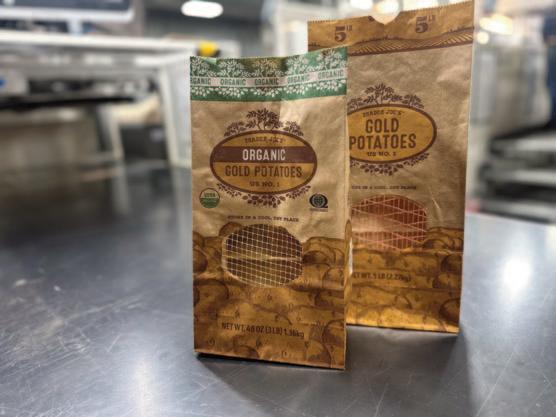
THE GROWER PAGE 20 –– APRIL 2024
FOCUS: STORAGE, CONTAINERS AND PACKAGING
and Mike Sheridan enjoy meeting customers at the 2024 Ontario Fruit &
Convention trade show in Niagara Falls.
FOCUS: STORAGE, CONTAINERS AND PACKAGING
Growers are willing to switch to new packaging suppliers
KAREN DAVIDSON
Canadian-sourced packaging is in demand by Canadian growers. Lonnie Duwyn, Elite Pak, Delhi, Ontario along with a few other large packers trialled some new boxes for asparagus in 2023 confirming, “These plastic corrugated boxes are as good as any sourced from North America or China.”
Laminacorr Industries Inc, based in Cornwall, Ontario, is hoping to supply asparagus growers to meet their needs for strong-walled boxes that also protect the hydro-cooled vegetable for transport. Retailers no longer want waxed corrugated boxes because they are not recyclable. But these plastic corrugated boxes are up to the task of carrying 28 pounds of fresh asparagus.
“With lower cost of production overseas it is hard for any North American company to compete, but I believe that Laminacorr is going to be aggressive and is up for the challenge,” Duwyn says.
The last couple years have been tough on farmers to show a profit with increases in wages and
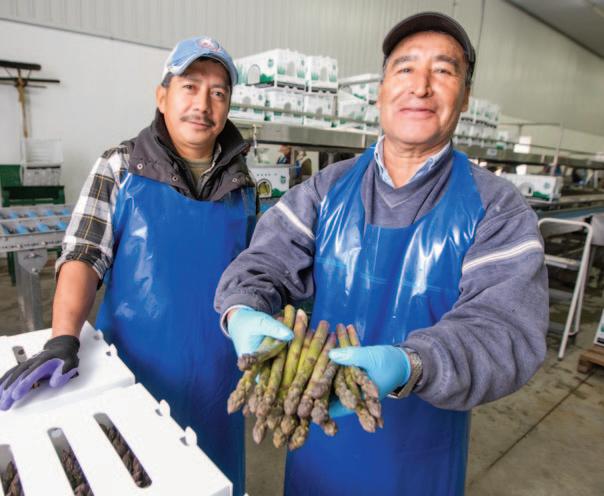
inputs. However Duwyn is optimistic that farmerrs may be at the forefront of a turnaround in the industry. His optimism is fuelled by better opportunities for exporting asparagus to the U.S. in the upcoming season. The Canadian dollar, hovering around $.74 cents, helps in the equation.
The point that’s not often made is that Canadian suppliers are competing against foreign countries with much lower wage
costs. So the entire chain is seeking the best price possible. The pandemic up-ended some of the tried-and-true relationships when deliveries were stranded in ports overseas. It’s not surprising that Canadian growers are excited to see a Canadian supplier come on the scene.
Matthew Michaud, sales representative for Laminacorr, explains that the fully recyclable #5 plastic polypropylene is ideal for hydro-cooled vegetables.
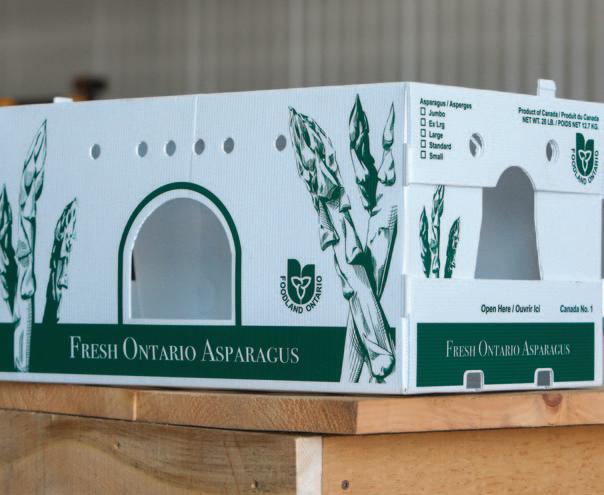
There are pressures to move away from waxed cardboard as it is not recyclable. The goal of Laminacorr is to offer a substitute that’s a fully recyclable, water resistant box made in Canada.
“It’s been a dream of our company owners to enter the agricultural space,” says Michaud. “We’ve had some experience supplying nuc boxes to the apiary industry, but with our entry into the asparagus sector, we think there’s room for
a volume business. And that will help keep prices competitive.”
All boxes are manufactured at the Cornwall, Ontario plant. Plans are to launch boxes suited for rutabaga, corn and broccoli vegetables in the next year.
“If the price is right and the quality is the same than I can’t see why we wouldn’t use a Canadian supplier,” says Duwyn. “It just makes good sense.”
APRIL 2024–– PAGE 21 THE GROWER
Photos by Glenn Lowson
Understanding internal browning development in apples during storage
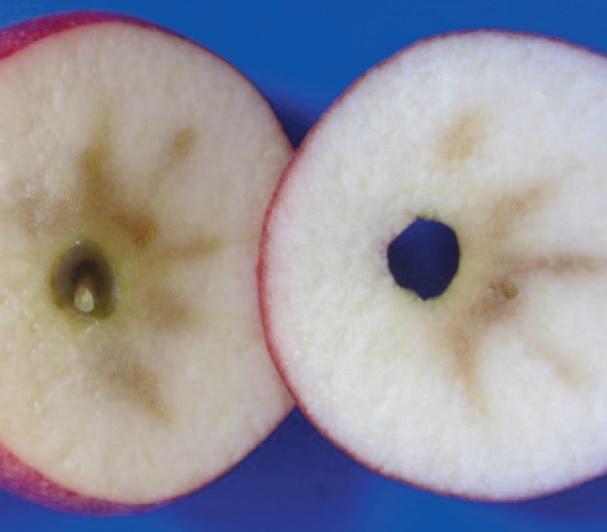

after nine months). Furthermore, internal browning increased with subsequent holding at room temperature.
Slow cooling tends to reduce the development of internal browning. Rapid cooling to 3°C within 24 hours after harvest resulted in more internal browning in ‘Gala’ apples, compared to slow cooling over seven days (DeEll, The Grower, May 2017).
JENNIFER DeELL
More research is needed to focus on cultivar-specific regimes, considering the volume of preharvest and postharvest factors, to better understand browning development and determine the best predictors.
Advancements in controlled atmosphere (CA) storage technology and treatments with 1-methylcyclopropene (1-MCP) have enabled apples to be stored longer than ever before. Unfortunately, keeping apples longer has also allowed for certain storage disorders to become more prevalent. Internal (flesh) browning is one such problem for many apples.
Radial flesh browning near the stem-end (shoulder) of the apple is usually the first sign of internal browning in ‘Gala’ apples (Figure 1). This can progress towards the calyx end of the fruit, eventually becoming the more common internal (flesh) browning that can be found when cutting the apple horizontally across the equator. Full internal browning develops more quickly in other apples, such as ‘Ambrosia’ (Figure 2).
Development of internal browning is affected by both preharvest and postharvest factors, as well as the many interactions. Preharvest factors associated with increased risk of internal browning include large fruit size, light crop load, delayed harvesting, cool temperatures after bloom, and warmer temperatures before harvest. High nitrogen and low calcium have also been associated with increased internal browning, whereas there is conflicting evidence for the effects of phosphorus and potassium.
High incidence of internal browning is typically found when
apples are harvested late, or at advanced maturity stages. Fruit maturity at harvest time is a major factor affecting this disorder and it is something that can be easily corrected. Our research has shown a main effect of harvest time, across several years, with much higher incidence of internal browning in fruit from later harvests (4+ on Cornell starch chart).
For example, ‘Ambrosia’ apples from two orchards were harvested twice, six days apart. Apples were cooled overnight to 0.5°C and treated with 1-MCP (SmartFresh) the following day. CA storage was established four days after harvest, as 1.7% O2 + 1.2% CO2 at 0.5°C. Apples were evaluated for quality after eight months of storage, plus during 14 days at room temperature.
‘Ambrosia’ from the first harvest had significantly less internal browning, compared to those from the later harvest (31 vs 63% incidence, respectively).
This is very important to note, as harvesting only six days later resulted in over double the amount of browning. Similarly, ‘Ambrosia’ apples were stored in ambient air storage at 0.5°C for four months and fruit from the first harvest had significantly less browning than those from the later harvest (8 vs 37% incidence, respectively). Preharvest 1-MCP (Harvista orchard spray) can be very effective at reducing internal browning, as it delays maturity (ripening) at harvest time.
However, rate and timing of application are critical for its efficacy. In contrast, postharvest
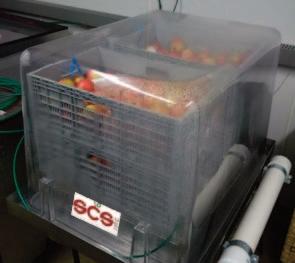
1-MCP treatments do not have consistent effects on internal browning and have been shown to decrease, increase, or have no effect on browning incidence. Ultra-low oxygen storage or dynamic CA with less than 1% oxygen reduces the development of internal browning. Our research found that ‘Gala’ apples stored at 1°C in oxygen as low as 0.4%, using SafePod technology (Storage Control Systems Inc., Michigan) to monitor fruit respiration, had zero internal browning or stem-end browning after eight months. By comparison, there was 17% incidence of browning in CA using 2.5% O2 + 2% CO2 and 6% incidence in 1.5% O2 + 1.1% CO2. Similarly, ‘Ambrosia’
apples held in oxygen as low as 0.7%, using SafePod technology (Figure 3), had less than 1% internal browning after eight months, compared to 20% incidence in CA using 2.5% O2 + 2% CO2 and 8% incidence in 1.7% O2 + 1.2% CO2.
Incidence of internal browning increases with longer storage durations. For example, ‘Gala’ stored in air at 0.5°C had no internal browning after two months, 12% incidence after four months, and 18% after six months. Similarly, ‘Gala’ held in CA using 2.5% O2 + 2.0% CO2 at 1°C had little internal browning through five months of storage, but then the disorder increased significantly with storage time thereafter (up to 59%
Our research showed ‘Gala’ cooled rapidly and stored in CA for eight months at 1°C had up to 59% browning incidence, compared to zero to 11% in fruit cooled slowly. In another study, ‘Ambrosia’ apples were held at 10°C for one week after harvest or cooled immediately to 0.5°C. After seven months of CA storage, internal browning was significantly less in apples held at 10°C initially, with less than 2% incidence versus 13% in those cooled immediately to 0.5°C. There were no significant differences in fruit firmness due to the initial holding at 10°C.
Overall, it is important to remember that there are many factors that influence the development of internal browning in apples. These can range from orchard management, seasonal weather, and fruit maturity at harvest, to postharvest treatments, storage conditions and duration. More research is needed to focus on cultivarspecific regimes, considering the volume of preharvest and postharvest factors, to better understand browning development and determine the best predictors. Cultivar-specific strategies are needed to prevent browning and associated loss, as well as to determine the effects of commercially used practices and products on that cultivar.
Acknowledgements: Thanks to the Ontario Apple Growers, Norfolk Fruit Growers’ Association, Apple Marketers’ Association of Ontario, AgroFresh Inc., Pommes Philip Cassidy Inc., GRB Ag. Technologies Inc., and Storage Control Systems Inc., for their continuous support; as well as Sky Lesage and Younes Mostofi for their technical assistance.
Dr. Jennifer DeEll is fresh market quality specialist, horticultural crops, OMAFRA, based in Simcoe, Ontario.
THE GROWER PAGE 22 –– APRIL 2024 FOCUS:
STORAGE, CONTAINERS AND PACKAGING
Figure 1: Internal stem-end (shoulder) browning in ‘Gala’ apple.
Figure 2: Internal browning in ‘Ambrosia’ apple.
Figure 3. SafePod technology with ‘Ambrosia’ apples stored in less than 1% oxygen.
“
Is sodium bicarbonate (Olsen) extractant for phosphorus inferior on
acidic soils?
TEJENDRA CHAPAGAIN
Most phosphorus in the soil is in compounds containing phosphate. In neutral-to-alkaline soils, phosphate will combine with calcium. In neutral-to-acid soils, it will bind to iron or aluminum. Phosphate also reacts with various clay minerals or organic compounds to form complex combinations, and it may be present in the organic fraction of the soil or the soil biomass. All these forms are available to a greater or lesser degree to plants through a variety of processes, which we try to measure with a single, rapid chemical extraction.
The choice of an extractant is specific to each region, since the most appropriate extractant depends to a large extent on the soils of that region. Soil test extractants for phosphorus can be broadly divided into acidic and alkaline solutions. The acidic solutions, used in the Bray and Mehlich methods, are generally used in areas with acidic soils. In alkaline soils, these extractants underestimate the amount of available phosphorus because the acid is partly neutralized by the free lime in the soil. The alkaline extractants (e.g., sodium bicarbonate, ammonium bicarbonate) give more consistent results over a wide range of soil pH (Bates, 1990).
Sodium Bicarbonate Method (Olsen)
The sodium bicarbonate method (also called the Olsen method) is the one recommended for use in Ontario. OMAFRA’s phosphate fertilizer guidelines have been developed using this method (OSMRSC, 2017) and the Nutrient Management Act requires soil samples for nutrient management plans to be analyzed using this method.
This extracting solution has a pH of 8.5 and so does not suffer from being neutralized in alkaline soils. The sodium bicarbonate is generally considered to be most effective at dissolving the calcium phosphates in the soil as well as some of the organic phosphates. The sodium bicarbonate method will predict the relative available phosphorus in a wide range of soil types. Olsen method is also considered the best P extractant for organic as well as mineral soils. Previous experiments conducted by OMAFRA in Bradford Marsh using a range of extractants did not show any advantage for other extractants over the Olsen method, and Mehlich 3 was considerably worse. Nevertheless, P-extraction method(s) for organic soils is an
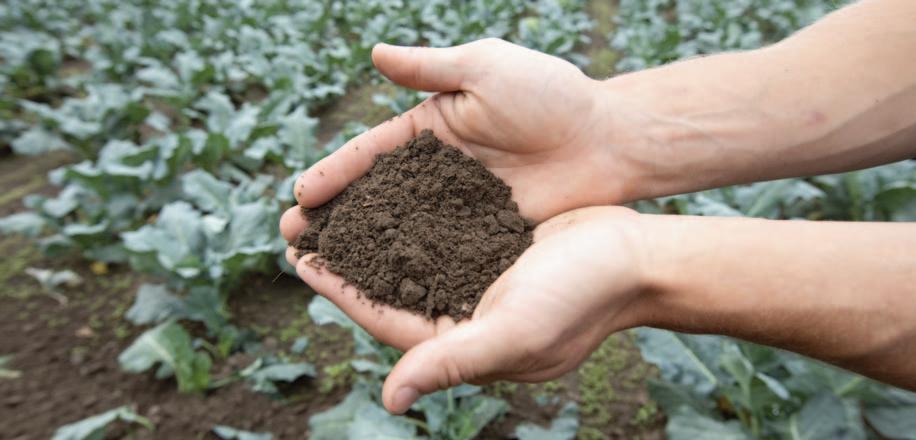
area that would certainly benefit from additional work.
The Olsen method is very sensitive to temperature, pH and shaking times, so that uniform conditions are required throughout the analysis to ensure consistent results. Olsen found that the extractable phosphorus can increase almost 0.5 ppm for a 1°C increase in temperature of the extracting solution between 20°C and 30°C. Also, the extracting solution for the Olsen test is quite viscous; the pH of the solution needs to be checked and adjusted regularly; and the shaking time is 30 minutes instead of 5 minutes for the Mehlich or Bray. The Olsen test is only for P, while the Mehlich-3 extracts can be analyzed for several nutrients. These are some reasons why some labs would find it more efficient to perform something other than the Olsen test.
Bray P1
The Bray test is better for acidic than for alkaline soils. Its extraction solution contains hydrochloric acid and ammonium fluoride, which form an acidic solution. The Bray extractant dissolves phosphorus compounds more aggressively than the sodium bicarbonate method, so the values from the Bray test are usually higher than those from Olsen. At high pH values, the acid nature of the extracting solution may dissolve the calcium phosphates, overestimating the available phosphorus. However, the free lime in the soil may also neutralize the acid in the extracting solution, making it less effective. These two situations indicate that the Bray P1 extraction provides unpredictable and inconsistent results under alkaline conditions, and hence not recommended for Ontario soils.
Mehlich III
The Mehlich III is a multielement extracting solution. It extracts phosphorus with acetic
acid and ammonium fluoride. It extracts potassium, magnesium, sodium and calcium with ammonium nitrate and nitric acid, and extracts zinc, manganese, iron and copper with ethylene diamine tetra-acetic acid (EDTA).
The Mehlich III solution is best suited to acidic soils because of its acidic nature, and is routinely used in Quebec and the Maritimes. A few labs in Ontario
often use this method because of the savings in analysis time. The relatively high acid concentration in this extractant means it will perform adequately in slightly alkaline soils, but inconsistently in soils with high carbonate (free lime) content.
The Mehlich test is not an accredited extraction method in Ontario for two reasons:1) Ontario soils have a much higher proportion of free carbonates, so
the acid extractants may suffer badly, 2) the P recommendation tables are based on values obtained from the Olsen test, and this is a different scale from what you would get with a Mehlich test.
Conclusion
It is a myth that the Olsen extractant is inferior on acidic soils. It is at least as accurate as Bray or Mehlich in acidic soils, and much superior in alkaline soils. Methods other than the Olsen generally result in significantly higher fertilizer recommendations which is often uneconomical and subject to loss.
Dr. Chapagain is soil fertility specialist with Ontario Ministry of Agriculture, Food and Rural Affairs (OMAFRA) based in Guelph. He is also coordinating OMAFRA’s soil lab accreditation program and serving as a coordinator of the soil lab sub-committee of the Ontario Soil Management Committee (OSMC).

APRIL 2024–– PAGE 23 THE GROWER SOIL
HEALTH

How sterile flies replaced Lorsban for two onion growers
In 2018 and 2019, before the phase-out of chlorpyrifos, two growers opted to release sterile flies as their onion maggot management strategy going forward. Over the next few years, populations of onions maggots have decreased and so has the damage observed in the field.
The onion maggot (Delia antiqua) is the larval stage of the onion maggot fly which can cause severe damage to every stage of onion development. In onions, one maggot can kill up to 20 plants early in the season and without a management strategy, onion maggot can reduce plant stands by more than 50 per cent. Later generations of onion maggot can cause distorted growth and open wounds making it easier for pathogens to gain entry and reduce the storage life of the bulb (Figure 1).
Onion maggot management has relied heavily on chlorpyrifos (Lorsban and similar products) and now with the use pattern being phased out in Canada, neonicotinoid seed treatments,
such as Sepresto 75 WS are the primary management strategy for direct-seeded onions. For transplanted onions started in the greenhouse, there are no insecticide drenches currently registered for control.
In Québec, Sterile Insect Technology (SIT) has been used for more than a decade to eliminate the application of chlorpyrifos, and the program is now used for onion maggot management on roughly 2500 acres of onions. Flies are reared in a facility at the Phytodata Research Company in Sherrington, Québec. Pupae are irradiated, dyed pink (to allow them to be distinguished from the wild population on sticky cards) and are shipped to release points where growers allow flies to emerge in emergence boxes and then release them on the edge of onion fields on a weekly basis (Figure 2).
In Ontario, sterile onion maggot flies have been released at two field sites in Scotland (Brant county) and Exeter (Huron county) over five years. Both of these locations had very different onion production systems. At the
Scotland location, onions were transplanted and planted at a rate of 140,000 plants per acre while at the Exeter location, seeds were broadcast at a rate of ~8 million seeds per acre and harvested as onion sets (Figure 3). At both locations, no chlorpyrifos has been applied for the past five years. Sticky cards were monitored weekly and sterile flies could be differentiated from wild flies by the pink dye described above.
At both Ontario locations, onion fields were transplanted or seeded yearly within ~3 km of the previous year’s field. Many years the fields were directly adjacent to the previous year’s field. Populations of wild flies in 2022 and 2023 were lower than all previous years and the number of plants harvested with onion maggot damage has decreased dramatically. At harvest, fewer bulbs are found to be distorted and as a result, there are fewer culls.
In Exeter, fields of onion sets were planted adjacent to one another (500 m or less) year after year from 2018 to 2021 and again in 2022 to 2023 making it

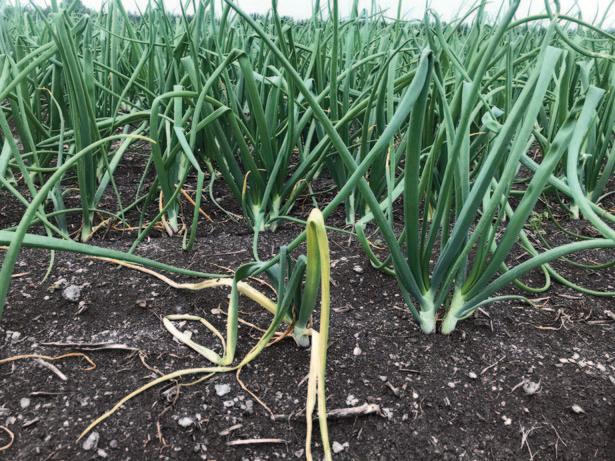
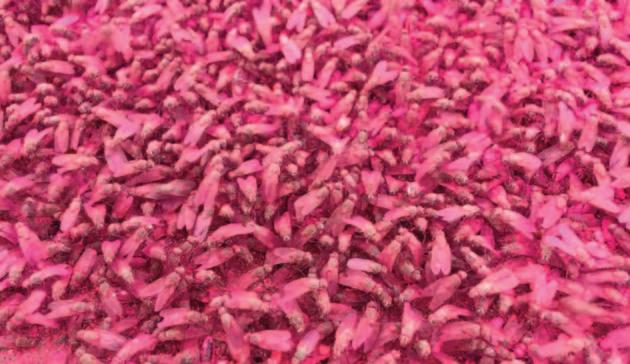
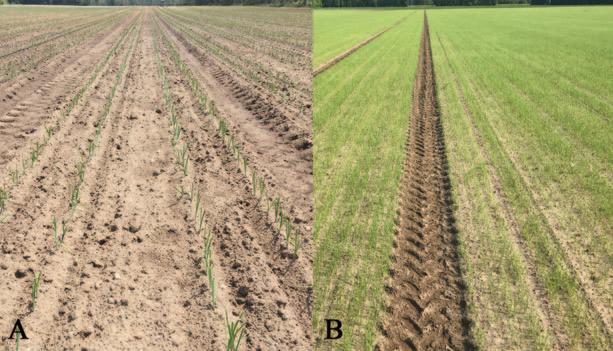
easier for flies to find a suitable crop to lay eggs next to the following spring. The 2022 and 2023 fields were planted ~2 km south of where the 2018-2021 fields were. Despite growing onions in fields adjacent to each other or following a short crop rotation, populations of wild flies did not increase to levels high enough to cause observable damage at the Exeter field site. In 2023, the concentration of sterile flies was halved from an average of ~100 000 flies per hectare per week to ~50 000 flies, yet populations of wild flies remained low.
Sterile flies have replaced Lorsban at both of these locations, and the amount of onion maggot damage has dropped below levels that were observed in the last decade when chlorpyrifos was used.
There are limitations to using sterile flies as the primary onion maggot management strategy. First, both locations are uniquely isolated from other onion fields. Onion maggot flies are
community pests, meaning that even if you manage the insect well in your 30-acre onion field, but your neighbour chooses not to, the wild flies from their field may easily find your field. This is a concern for onions since the majority of cooking onion production in Ontario is concentrated in muck soils with very small distances between fields. The second limitation is that only sterile onion maggot flies are being released. Seedcorn maggot (Delia platura) is sometimes responsible for damage in onion fields, and Phytodata is still working on commercializing SIT for seedcorn maggot.
A full report of the 2023 results is now posted on www.ONvegetables.com. If you are interested in applying this management strategy on your farm, please contact myself at travis.cranmer@ontario.ca, or Anne-Marie Fortier at afortier@phytodata.ca.
THE GROWER
TRAVIS CRANMER
Travis Cranmer is vegetable crop specialist, OMAFRA.
PAGE 24 –– APRIL 2024
Figure 1. Second-generation larvae causing an older plant to wilt.
Figure 2. Sterile onion maggot flies that have been dyed pink prior to their release in the field.
Figure 3. Transplant onions in Scotland planted at a rate of 140,000 plants per acre (A) while seeds were broadcast at the Exeter location at a rate of ~8 million seeds per acre and harvested as onion sets (B).
ONTARIO VEGETABLE
Can shaving fertilizer costs increase profit margins in asparagus?
ELAINE RODDY
The cost of production has been a hot topic at almost every grower meeting this winter. With slim profit margins, people are asking, where can I cut costs? Some growers are re-considering some of their “tried and true” fertilizer practices. Soil fertility is very important for crop health and robust yields. However, the economic cost of over applying fertilizer is just as significant as the risk of applying too little. If it isn’t being used by the crop, then that money is better left in the bank.
Once established, asparagus has a unique status among vegetable crops. Due to its perennial nature, and the relatively low amount of nutrients removed in the harvested crop, it becomes almost self-sufficient. The nutrients in the fern break down and become available in the soil for the following year’s growth. The goal becomes to maintain the health of the crown which allows the crown to produce abundant, healthy spears.
Nutrient removal from the field in harvested product is quite low. Asparagus fields yielding 5,000 to 7,000 lbs per acre will remove 33-47 lbs of nitrogen, 10-14 lbs of phosphate and 25-35 lbs of potassium. Soil fertility rates should balance the amount of nutrient removed by the crop with what is available in the soil. This is where regular soil tests come in handy. They allow growers to keep track of the soil nutrient reserves and let the crops natural recycling do the rest!
OMAFRA conducted an asparagus nutrient survey at 12 commercial asparagus fields from 2015-2017. Across all sites and all years, the average soil phosphorus levels were above 30 parts per million (ppm) with a range of 26165 ppm. An example of this data is seen in Figure 1 (pg 26). 2017 Asparagus Soil Analysis Summary from 12 commercial asparagus fields.
Yield responses are rarely observed in asparagus at soil test levels above 30 ppm P2O5. The levels observed in our study are consistent with the grower practice of amending soil phosphorus levels prior to planting the crop, which is an effective strategy in a perennial, no-till crop. It also demonstrates that there is little benefit to adding additional phosphate fertilizer in an established crop, unless the soil test indicates otherwise.
Looking at the same field survey, the results were quite different for both potassium and magnesium. For both nutrients, more than 50 per cent of the sites tested at levels below the thresholds of 250 ppm for potassium and 100 ppm for magnesium (see Figure 1.). These
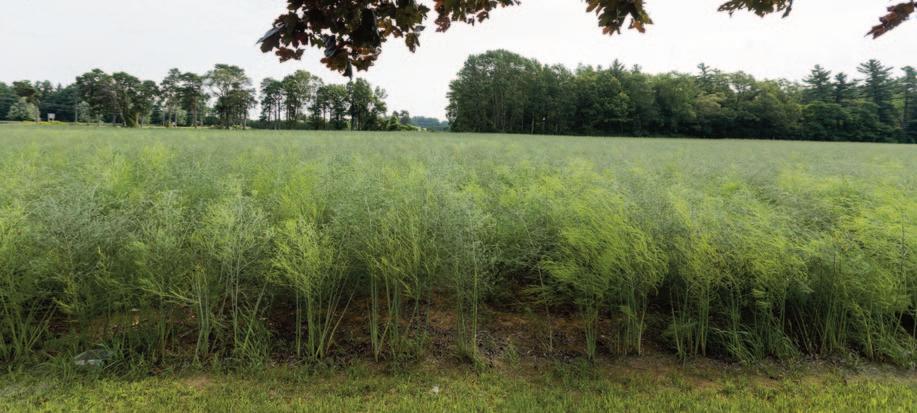
are the levels above which additional yield responses are rarely observed. For at least half the growers in the survey, there would be a benefit to additional potassium and/or magnesium based on the soil test recommendations.
Calcium and lime
What about calcium and lime? In general, Ontario soils have a high calcium content. We can thank the glaciers for that!
Continued on page 26

APRIL 2024 –– PAGE 25 THE GROWER
NEWS
Photo by Glenn Lowson
Can shaving fertilizer costs increase profit margins in asparagus?
Continued from page 25
Some coarse sandy-loam soils are the exception. According to the Michigan Nutrient Management Recommendations for Vegetable Crops, sandy soils testing less than 300 ppm may require additional sources of calcium (usually in the form of lime). To put that into perspective, out of 12 asparagus fields sampled in 2016, only one tested below 300 ppm. The study range was 2531980 ppm with an average of 796.
Unless there is an issue with the pH of the soil, annual lime applications are unlikely to have an impact on crop yields. The one exception is if the magnesium levels require adjustment, then a dolomitic lime application would be a good source of Mg. Note: on a sandy-loam soil, pH levels below 6.1 require adjusting, regardless of the calcium and magnesium soil test level.
Nitrogen
The OMAFRA recommendation for nitrogen on established asparagus is 98 lbs/acre. This is only slightly higher than the rate recommended in Michigan (80 lbs/acre). A well-established crop with a robust storage root system is unlikely to respond to higher rates of nitrogen. Sandy-loam soils commonly used for asparagus production are at high risk of environmental losses of nitrogen due to leaching. Once again, if it isn’t in the crop, it isn’t contributing to the bottom line.
The thing to remember with nutrient management in the field, is that there isn’t an exact recipe. Nutrient management is complicated and at times overwhelming. The amount of field variability is high. So are seasonal variations in both crop yield and nutrient availability, especially with a nutrient such as nitrogen. Environmental conditions, the amount of biomass accumulated in the fern the previous season, and root health all contribute to the amount of nitrogen that will be required. In-season soil and tissue tests can be used to refine the fertility program, but this is also an inexact science.
Then there is the fear of missing out. No one wants the crop to be left short because they have made drastic cuts
BITS & BITES
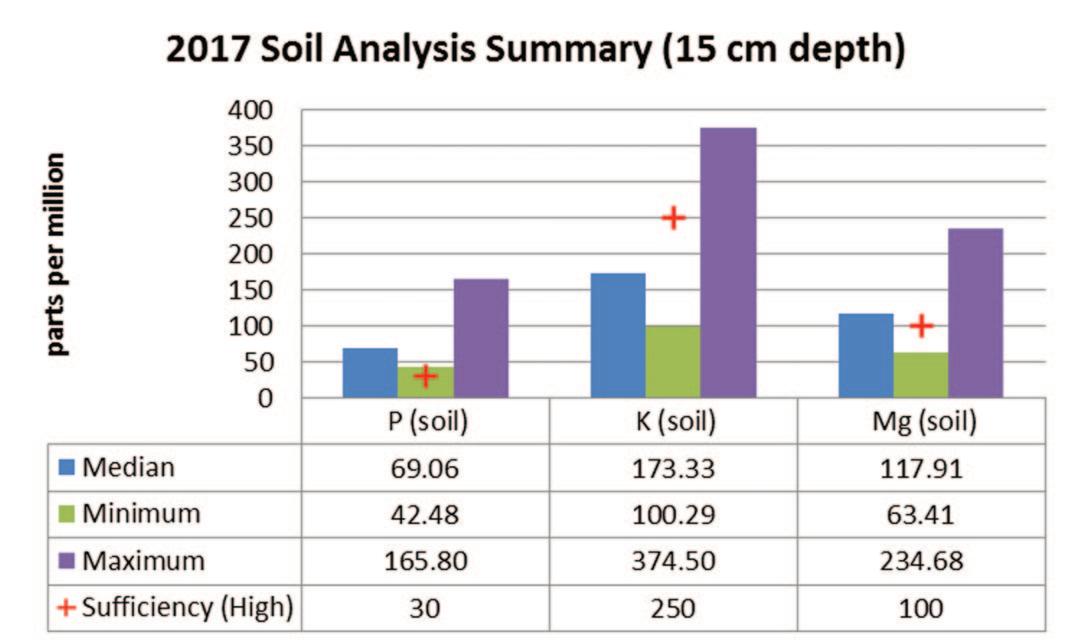
“
A well established crop with a robust root storage system is unlikely to respond to higher levels of nitrogen.
to their fertility program! Changes to existing fertilizer programs do not have to be dramatic. With some knowledge of the crop, soil tests and provincial/state fertility recommendations as guidance, there is the potential to make gradual cuts that may help increase
profitability in a time of narrow margins.
Elaine Roddy is vegetable crops specialist, OMAFRA, based in Ridgetown.
Introducing International Sustainability Summit speakers
The Canadian Produce Marketing Association (CPMA), the International Federation for Produce Standards, and the Global Coalition of Fresh Produce are pleased to introduce the speakers who will lead discussions around sustainability challenges for the produce industry at the upcoming International Sustainability Summit, on Friday, April 26, in Vancouver. They include:
Keynote speakers - A Globally Sustainable Fresh Produce Supply Chain: Challenges, Barriers & Opportunities
• John Anderson, Chairman, CEO & Managing Partner, Oppy
• Garland Perkins, Director, Innovation & Sustainability, Oppy
The State of SustainabilityEfforts Impacting Global Produce Supply Chains
• Dr. Yogendra Chaudry, VP, Professional Services & Environmental, Social and Governance, SSCI/Eco Canada
• Cheryl Sullivan, International
Featured Standards (IFS) & PAC Next Consultant
• Joanna Nathanson, Policy Advisor International Affairs, Sustainability and Communications, Freshfel (European Fresh Produce Association)
Aligning Global Produce Supply Chain Sustainability Practices with UNSDGs –Lessons to date
• Jacob Lawes, Projects Manager, The AgriChain Centre, New Zealand
• Dr. Hans Maurer, Director Strategy & Research, The AgriChain Centre, New Zealand
Plenary Panel Session
Sustainability in ActionProduce sector leaders taking a systems-centric approach to sustainability
• Tom Pierce, National Director of Produce Sourcing & Supplier Development, Sobeys
• Matt Aronson, Chief Revenue Officer, Verdant Technologies
• John Mesko, CEO, Potato Sustainability Alliance
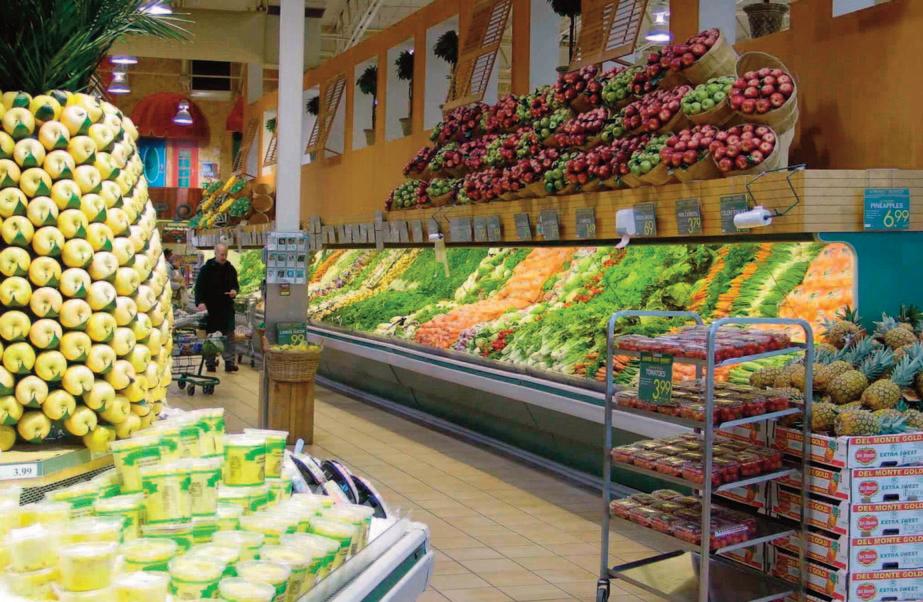
• Gerd Uitdewilligen, Director International Sales, COPELAND
Registration for this event is underway and 50% of the seating is sold out. Industry members are encouraged to register at their earliest convenience as space is limited! CPMA 2024 full delegates get a $100 discount when they register for the International Sustainability Summit. To learn more about the speakers and the program, visit
the CPMA website.
Source: Canadian Produce Marketing Association March 12, 2024 news release
THE GROWER PAGE 26 –– APRIL 2024 ONTARIO VEGETABLE NEWS
Figure 1. 2017 Asparagus Soil Analysis Summary from 12 commercial asparagus fields.
U of Guelph announces tomato-picking robot
At Dr. Medhat Moussa’s laboratory in the University of Guelph’s School of Engineering, a yellow-armed robot stands on a platform facing a model tomato plant. It cranes toward the tomato when the start button is clicked.
The robot examines the plant with embedded cameras, tilting its head as if “thinking” with its machine vision algorithm. It grabs the tomato with finger-like grippers and sets the product perfectly into a bin.
This latest iteration of Guelph Intelligent Greenhouse Automation System (GIGAS), a smart robot developed at The Robotics Institute @ Guelph, harvests tomatoes using AI-powered vision and an innovative gripping system. It uses deep learning and an image database to identify the tomato amidst environmental obstacles and to figure out how to grab it from the vine.
“I would say U of G is ahead in smart robotics for greenhouses and harvesting,” project lead Dr. Moussa says. “We started this project in 2010. Now we’re ahead of other universities and even industry. This is a very challenging problem and you’d be hard pressed to find a robot that’s actually being sold for this application.”
Research associate Cole Tarry stands by to give a demonstration, having worked on this project for several years.
“No other research lab that we know of is working on robotics for beefsteak tomatoes, which are generally the most difficult to work with,” Tarry adds. “The
robots closest to commercialization work with cherry tomatoes or cucumbers.”
There are other applications to the technology being developed in the lab. It could be trained to harvest other vegetables such as peppers and cucumbers. Those are the other two major crops in Leamington, Ontario where this project was first inspired by growers who urged the development of automated solutions.
Other iterations of GIGAS focused on the detection of plant diseases. The technology learns from image datasets that include healthy and diseased leaf shapes to identify a disease and to quantify how severe it is. This could pick up on early signs of diseases, a critical skill in an environment such as tomato greenhouses.
Catching early signs of disease could reduce the cost of treatment and the amount of chemicals used. It could ultimately save other produce from diseases that can spread and destroy entire crops.
GIGAS could also be used in the manufacturing industry one day, especially as two local Guelph automotive plants have used the technology before. In these applications, the GIGAS AI engine helps identify various hard-to-see manufacturing defects or enables robotics to pick and place solutions for fragile and irregular parts.
Moussa and his team hope to bring GIGAS out to greenhouses for long-term field testing next. There, they can collect critical data points needed to strengthen
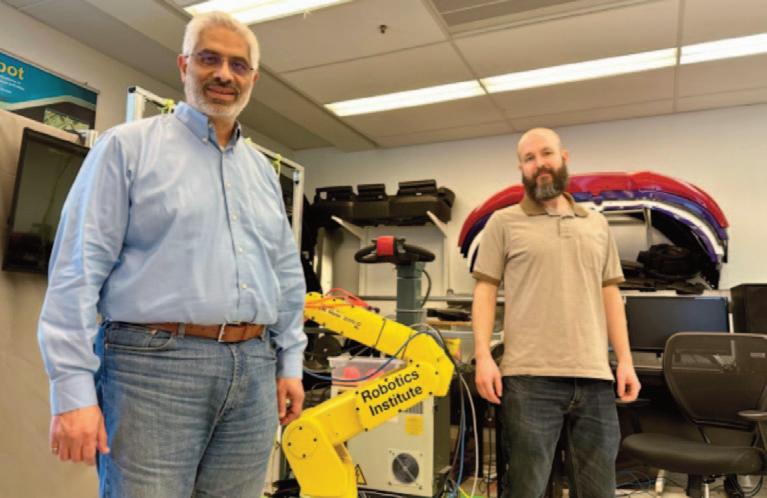
the robot’s AI learning and validate the value proposition, bringing it a step closer to commercialization.
Testing will help them find the sweet spot where GIGAS becomes fast and cheap enough to compete with rising labour costs.
“Humans take four to five seconds to harvest a tomato, whereas GIGAS currently takes 15 seconds,” research associate Cole Tarry says. “We’re hoping to cut that down to eight seconds.
Assuming robots can work longer hours
and you could have multiple robots, that could be game-changing.”
The team did not start with machine learning when developing GIGAS’s vision system. Now, deep learning has sped up the development of the vision algorithm that correctly identifies tomatoes at varying stages of ripeness and in even the most cluttered environments. They no longer have to manually tinker with calculations “pixel by pixel.”
Source: University of Guelph March 12, 2024
APRIL 2024–– PAGE 27
GROWER
BITS & BITES
THE
Guelph Intelligent Greenhouse Automation System (GIGAS) prepares for demonstration with model tomato in the laboratory of Dr. Medhat Moussa. Research associate Cole Tarry stands by.
advertising@thegrower.org
866-898-8488 x 221
GROW TRAYS
Hortiblock® Trays
Vegetable Production for Greenhouse and Field Transplants.

FENCING POSTS
ORDER ONLINE!

CLASSIFIED ADS
$300,000 CAD OBO.
Used ULMA super chic tray wrapper for various size trays, $13,000 (25-30/minute). Email billsr.nightingalefarms @gmail.com or call 519-429-1183.
CLASSIFIED ADS
Carrot grading & packaging equipment for sale. Hedge Hog
Conveyor and frame with cross conveyor. Cyclone Destoner. 1 Bin tipper 60” w x 50” D x 51”
H 2 Ton capacity Jacuzzi with Conveyor. Gooseneck rinse elevator and Newtec Celox optical Grader for carrots 5 cross conveyors and catwalk. 1 tote box filler to match lanes on Celox grader. 1 wet hopper with conveyor to feed Newtec weigher. 1 trimming conveyor for carrots and parsnips.
Conveyors stainless steel: 18” x 29”, 18” x 250”, 24” x 144”. Touch Screen control panel to operate Carrot line. Please contact:Gerald @ 902-393-4805
Einlbock 20’ Tine weeder, c/w gauge wheels, hydraulic adjustment feature that allows you to adjust lines from the cab. $10,000.00. MS Gregson hot water pressure washer electric 575V, 3000 PSI max 5.4 GPM c/w flue. $10,000.00. HOAF Twinsprite propane weed/foliage burner, 4 row unit each row burns 25cm. chrome + Shield protects from wind. Computer controller to control ignition and gas flow. Propane tanks not included $25,000.00. 1 Cold
Max Vacuum Cooler 2 Pallet capacity. Call for price. Please contact Gerald at 902-393-4805 or info@brookfieldgardens.ca
Bare root plants. Nova raspberry, Heritage raspberry, blackberry, elderberry, black current and strawberry plants. $2.00 each.
Quantity discounts are available. Call 519-287-3013 in Glencoe, Ontario.
EQUIPMENT





✅ Compatibility & Retro-fitting: Upgrade your existing units with

✅ New & Refurbished Equipment: Ready for immediate installation! Explore our range of new and refurbished units to suit your needs.
�� Visit chinookwindmachines.com or call us at 1-289 213 6855 to secure your Chinook Wind Machine today! Don’t let frost dictate your harvest –invest in protection, reap the rewards!

AUCTION

PAGE 28 –– APRIL 2024
MARKETPLACE WORKS
THE GROWER
SPRAYER FOR SALE: TURBO-MIST S30P400NSDH - Orchard Head $27,900 S30P400NS - Orchard Head $31,900 S30P500NS - Tower $17,000 S30P500NT - Orchard head. $39,500 S30P600NTSC - Orchard Head $35,000 S30P600NSC - Tower $15,000 200-Gallon Herbicide Sprayers $11,900 Hydraulic Booms Available. More units available. We want your Trade-In! Reach out to us for pricing details. Don’t Forget to Schedule Your Calibration! Unlock 10% or more in savings on chemicals. SMO 200 Starting at $12,500 Hydraulic Booms www.oves.ca sales@oves.ca Mobile 289 213 6855 CHINOOK WIND MACHINES: FROST-FREE FOR ORCHARDS & VINEYARDS!
your
Don’t let frost take a toll on
harvest! Introducing Chinook Wind Machines – your ultimate frost-fighting solution!
✅ Extended Coverage: Our blades generate superior air movement, providing wider coverage for extended periods, resulting in increased protection
Chinook blades for enhanced coverage. Seamless integration for superior frost prevention.
Early Season Discounts: Act now and save! Take
of exclusive
to fortify your orchards and vineyards against frost damage.
✅
advantage
early season discounts
✅ Proven Results: Last year, farmers battled hard losses. Choose prevention over loss – Chinook Wind Machines keep your crops thriving.
www.oves.ca sales@oves.ca Mobile 289 213 6855 2019 Case IH Farmall 75A 4WD 75 HP 12x12 with Power Shift & Creeper Fronts 11.2x24 rears 12.4x38 2 remotes ONLY 538 hrs $38,000 London area 519-775-2670
LIKE NEW . . . except for the Price
Grower Retail Garden Center. 10 Acres in Midland, Ontario. Located on major hwy accesszoned agricultural - well water. For full listing information visit https://shorturl.at/hqyCV or call
kmlaing@orchardhillfarm.ca
PROPERTY FOR SALE:
705- 526-9610 Discovery Blueight Optical Sorter, high resolution cameras designed to inspect fruits and vegetables, like new, huge savings in manpower, see www.cft-group.com/machinecategories/sorting-machine/
TOW & BLOW PORTABLE WIND MACHINE. Protect your crop against frost with a movable, efficient, quiet, effective machine (25HP twin Honda gas engine). Purchased new in 2016. Used less than 85 hours. Stored indoors. Mint condition. $29,000.00 OBO Located in Brant County. Pictures can be emailed on request. Call Peter
or email:
CLASSIFIED ADS 519-763-6160 X 221
@ 1-905-3790735,
pkvanbrugge@gmail.com










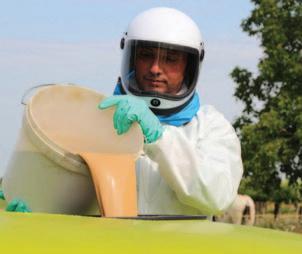
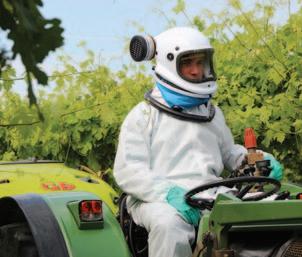
APRIL 2024–– PAGE 29 MARKETPLACE WORKS advertising@thegrower.org 866-898-8488 x 221 CONTAINERS & PACKAGING RESPIRATORS SEED & ROOTSTOCK THE GROWER REFRIGERATION INNOVATION EFFICIENCY PERFORMANCE 519-983-6995 info@heye.ca Premium fruit and vegetable refrigerated cold storages DESIGN - SUPPLY - CONSTRUCT - MAINTAIN Providing quality apple trees for 50 years. • Bench graft • 9 month bench • KNIP tree • Call to enquire about the new variety Wild Pink. Call sooner and get what you want with better savings . . . contract work available. BRIAN VAN BRENK 31760 Erin Line Fingal ON, N0L 1K0 5199026353 www.vanbrenk.ca brian@vanbrenk.ca NOW TAKING ORDERS FOR THE 2024 SEASON. Check out our new website crownbinandpallet.ca ROWN ROWN BIN & PALLET INC. Please, do not hesistate to contact us! Office: 519-599-1224 Mike’s cell: 519-270-1145 mike@crownbin.ca ASPARAGUS ROOTS Guelph Millennium Wrightland Farm RR 1 • 1000 Ridge Rd. Harrow, ON N0R 1G0 Keith: 519-738-6120 Fax: 519-738-3358 wrightland@hotmail.ca CALL US FOR ALL YOUR ORCHARD SUPPLIES & NURSERY NEEDS WARWICK ORCHARDS & NURSERY LTD 7056 Egremont Rd. R.R. #8 Watford, Ontario N0M 2S0 warwickorchards@brktel.on.ca Tel: (519) 849-6730 Toll free: 877-550-7412 Fax: (519) 849-6731 (800) 461-4299 www.thestgeorgeco.com Helmet respirators that give you protection while spraying and handling herbicides and pesticides. SIGN-UP Irrigation & water management advertising@thegrower.org COMING UP @growernews
2023: The year in review


Broader policy activity was again the theme of 2023. There were numerous consultations from the Pest Management Regulatory Agency (PMRA) focused on its Transformation Agenda and other initiatives. Funding continues to be a challenge with the Pest Management Centre (PMC) of Agriculture and Agri-Food Canada and OFVGA had to take an active role in ensuring the Pest Management Priority Setting Workshops (i.e. the minor use meeting) continue to happen in person.
Minor Use Program
The lack of additional funding for the Minor Use Pesticides Program of PMC remains a key concern for the edible horticulture sector. Many new crop protection registrations would not happen for fruit and vegetables without the work of the PMC. The target for PMC over the five-year Canadian Agriculture Partnership (CAP), which ended in March 2023, had been to research a minimum of 40 minor use projects per year. Yet over the past several years, due to budget constraints, the PMC has taken in fewer projects. It is believed, again for 2024, that the number of new projects selected will be around 30. Fewer projects at PMC means fewer label expansions submitted to PMRA and ultimately a smaller crop protection toolbox for growers. Seeking new funding for PMC remains a priority.
The annual Canadian Pest Management Priority Setting Workshops typically held in March are a critical venue to bring together growers, consultants, extension specialists, registrants, regulators, and
government to discuss pest management issues and identify potential solutions for minor use crops. There is no other similar event in Canada. Again because of budget limitations, the PMC was proposing to move this to a virtual format for 2024. However, the Ontario Fruit and Vegetable Growers’ Association (OFVGA) and the Fruit & Vegetable Growers of Canada (FVGC) stepped to help organize the meetings so they could remain in person. With support from numerous sponsors, we are excited to be working together with PMC to provide an inperson priority setting workshop to be held March 18-20th in Gatineau, Québec.
PMRA – Transformation
Several areas of activity continue at PMRA with regards to the ongoing transformation program. In June 2023 the Minister of Health announced that the review of the Pest Control Products Act concluded that the act remained fit for purpose and did not need any substantive changes. Changes were proposed however to the Pest Control Products Regulations to include additional criteria during environmental assessments by PMRA for cumulative environmental effects and for species at risk. Health Canada acknowledged in the proposal that this area of science is not well developed and “all pesticide regulators, including PMRA, are facing challenges with the lack of standard methodologies to assess the cumulative effects of pesticides on species.” Furthermore, OFVGA believes PMRA already has the authority in its mandate to conduct assessments and provide
Table 1: New active ingredients registered on edible horticulture crops with their first label in 2023
Active Ingredient Product Crop(s) / Target Pests
Conventional
Fenazaquin – Gr 21 Insecticide/ Gr 39 Fungicide
Pyrifluquinazon – Gr 9B Insecticide
Magister Berries, cucurbit vegetables, fruiting vegetables, pome fruit, grapes, stone fruit for mites and powdery mildew
Rycar Greenhouse vegetables for aphids and whiteflies
Pyraziflumid – Gr 7 Fungicide Parade Apples for scab and powdery mildew
Florylpicoxamid – Gr 21
Fungicide
Adavelt Sugar beet for Cercospora
Ipflufenoquin – Gr 52 Fungicide* Kinoprol Apples for scab and powdery mildew
Biological
GS-omega/kappa-Hxtx-Hv1a –Gr 32 Insecticide Spear
1-aminocyclopropanecarboxylic acid
Plutella xylostella granulovirus (PlxyGV) isolate GV-0020
protections for species at risk. Considering these realities, OFVGA’s submission did not support these proposed amendments.
Work continues to increase the use of real-world data through the water monitoring program and the pesticide use information pilot. Approximately 1,300 water samples were collected in the first year of the water monitoring program in 2022. PMRA detected no concerns for human health in any of the samples. A very small number of samples exceeded levels of concern for environment and these are being explored further. This data will help during re-evaluation and special reviews to provide real world context. Similarly, PMRA is exploring a pesticide use information pilot which is seeking to survey specific crops in winter of 2024 for crop protection use information to better understand how products are used by growers in the field.
Finally, PMRA is proposing to move to a new model for reviewing active ingredients called the Continuous Oversight approach. This approach represents a significant change from the current process to managing active ingredients based largely on set timelines for initiating reviews (i.e. 15 year
Greenhouse vegetables for mites, thrips, and whiteflies; pome fruit, stone fruit, and brassica vegetables for lepidopteran larvae; cherries, caneberries, and blueberries for SWD
Accede Apples for fruit thinning
Plutex
Brassica vegetables for diamondback moth
re-evaluation cycle). Alternatively the PMRA is proposing to actively monitor active ingredients on a continuous basis for new information that might change the risk assessment – if new data is found that PMRA determines needs to be reviewed closer, a special review may be triggered. PMRA has this option now, but it is largely reactive to decisions in other countries or when active ingredients get reviewed for other purposes (such as label expansions). Potential issues may be identified sooner allowing time for further data to be generated or mitigation measures to be implemented before becoming a larger issue in re-evaluation. Re-evaluation should also have more predictable outcomes (i.e. dramatic shifts in the label should be rarer). On the negative side, if PMRA does not have the resources to follow through on Continuous Oversight thoroughly, we may find active ingredients put “on hold” for further label expansions (such as minor uses) due to lack of resources to review issues identified by Continuous Oversight. A public consultation is expected in early 2024 on this policy and OFVGA will be making a submission. There are many moving parts when it comes to the PMRA
Transformation Agenda. The biggest question mark at this point is funding. The original three-year funding for transformation initiatives ends in March 2024. Will this funding be renewed or what will happen to this agenda if it is not -- those questions remain.
PMRA – Tank mix policy
A new guidance policy on the use of tank mixes of crop protection products was published late in December 2022. For tank mixing to be permitted under the new policy, there must be text on the product label that specifically allows for tank mixing. This updated guidance replaced a previous blanket policy which permitted unlabelled tank mixes unless they were otherwise prohibited on the label.
It was extremely concerning, however, that the initial version of the new policy did not include any transition time for growers to adjust and for labels to be updated by registrants. As it was published, it was immediately in effect and labels without specific tank-mixing statements couldn’t be mixed.
Continued on next page

THE GROWER PAGE 30 –– APRIL 2024 CROP PROTECTION
CHRIS DUYVELSHOFF BRIAN RIDEOUT
2023: The year in review
Continued from page 30
As this was a completely unworkable scenario, OFVGA and FVGC met with PMRA in March 2023 to discuss our concerns. It was agreed that a two-year implementation period be extended to growers, meaning compliance with the new policy on tank mixing will now be required by December 21, 2024.
In discussions with registrants and from monitoring new labels issued in 2023, most
companies have elected to include the general tank-mixing statement on their labels. This provides the most flexibility for growers to continue to tank mix to their preferences, provided the tank-mix partner label(s) allow. Growers will have to be aware of these new tank mixing requirements going into 2025.
PMRA – Re-Evaluations
Re-evaluation decisions in 2023 were generally focused on products other than
synthetic crop protection materials. Decisions were completed for zoxamide (Gavel/Zing), pyrethrins (Pyganic), and 1 methylcyclopropene (SmartFresh). All remain registered for use with updated labels.
PMRA – New crop protection active ingredients
A total of eight new active ingredients to Canada were registered by PMRA on edible horticulture crops with their first
Magister SC miticide new to Canadian market
Gowan Canada is introducing a new miticide to the Canadian market. Magister SC miticide offers a broad spectrum, rapid knockdown and lasting residual control of mites and pear psylla, while also providing reliable control of powdery mildew. Magister is active against rust and bud mites, spider mites and pear psylla in a broad range of crops, which includes grapes, blueberries, strawberries, apples to name a few. It also provides control of eggs by contact and control of immature and adult mites by both contact and ingestion. This works to reduce egg hatch and decrease mite levels in the next generation. Magister also works to provide control of powdery mildew when used as part of a complete Integrated Pest Management program. To ensure optimum

performance, a few key practices should be conducted:
• Application should be timed to coincide with the first signs of mites, prior to exponential mite population growth.
• Coverage is key due to the contact nature of Magister SC. Therefore, the speed of the sprayer should not exceed 2.4km/hr when applying in 500L/ha of water or less. However, if the mite pressure is higher, a greater spray volume is recommended.
• Addition of a spreader/sticker non-ionic surfactant at a concentration of 0.25% v/v may
improve performance.
• Under heavy pressure, apply with an ovicide or additional Mode of Action miticide.
Gowan Canada established its headquarters in Calgary, Alberta in April of 2023, while its global headquarters have been rooted in Yuma, Arizona since 1962. The family-owned, global company prides itself on its “muddy boots” philosophy which emphasizes the continued desire to understand, support and provide the right tools and knowledge to the customer. The passion for agriculture in Gowan expands beyond only crop protection. The
FMC Corporation expands biologicals crop protection platform in Canada
FMC Corporation has announced a collaboration in Canada with Novonesis (formerly Novozymes A/S), a leader in plant biosolutions. The agreement is part of FMC’s strategic plan to grow its biologicals platform in key markets.
Beginning June 1, 2024, FMC Canada will be the exclusive distributor of Novonesis’ leading biosolution products, including proven brands such as TagTeam, Optimize, JumpStart, BioniQ, CellTech, and Nitragin, for the 2025 growing season. Additionally, the companies intend to utilize their respective R&D capabilities to pursue collaborative opportunities for the development of novel biological technology for Canadian farmers.
The partnership will leverage Novonesis’ Plant Biosolutions Manufacturing and Research site in Saskatoon, and FMC’s deep market knowledge and expertise in applying biologicals in an integrated approach with synthetic crop protection chemistry and precision agriculture technology.
“FMC is excited to collaborate with Novonesis to bring Canadian growers effective biological products that complement our biological and synthetic chemistry,” said Dr. Bénédicte Flambard, vice president, FMC Plant Health. “As we continue to invest in and expand our biologicals portfolio, we are committed to aligning with partners who enhance our ability to provide growers around the world with science-backed biological solutions that help sustainably manage crops, protect yields and combat resistance.”
FMC has launched approximately 40 biological products, including Accudobbiostimulant, Provilar biofungicide, and Avodigen seed treatment, in 24
countries over the past five years and is one of the few companies with a fully global presence.
“Novonesis and FMC share a similar goal of bringing differentiated, sustainable solutions to Canadian farmers,” said Devron McLeod, country manager, FMC Canada. “Aligning our technologies and systems to bring new inoculant and biocontrol products to the market will benefit Canadian farmers. This collaboration provides more significant opportunities to bring innovative products to market faster.”
“FMC has a strong presence in Canada with consistent growth, a complementary portfolio, and an organization with proven success in launching innovations that deliver value to Canadian farmers,” said Jason Ward, Novonesis Plant Biosolutions commercial lead for North America. “This expanded relationship between the two companies demonstrates our shared commitment to providing growers with products they can use to improve yield by increasing nutrient availability and enhancing the plants’ natural processes.”
To learn more about Biologicals by FMC, visit fmc.com/biologicals.
Source: FMC Corporation March 12, 2024 news release
label in 2023 (Table 1). In addition, numerous label expansions were completed on existing active ingredients by registrants or through the User Requested Minor Use Label Expansion (URMULE) program by submissions from the PMC, by OMAFRA, or by other provinces.
Chris Duyvelshoff is crop protection advisor, Ontario Fruit & Vegetable Growers’ Association. Brian Rideout is chair,OFVGA crop protection committee.
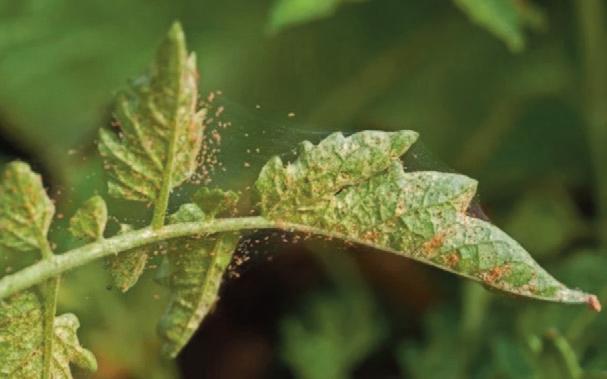
global company is a diverse group of agricultural entities that also includes warehousing, distribution, retail companies, seed, fertilizers and the farming and distribution of Medjool dates. The passion and diversity of contributions to the agriculture industry continues into Canada,
SCENE ON LINKEDIN
offering solutions to significant problems for farmers, including herbicide-resistant weeds, mites and other insects, as well as many of the major diseases across Canada.
Source: Gowan Canada March 7, 2024 news release

APRIL 2024–– PAGE 31 THE GROWER CROP
PROTECTION
Editor’s note: Patty Vandierendonck, group leader for regulatory affairs, has retired after 34 years with BASF Agricultural Solutions. Patty is the perfect example of living out a unique career in agriculture and a woman excelling in the agricultural sciences. She retired February 14, 2024.
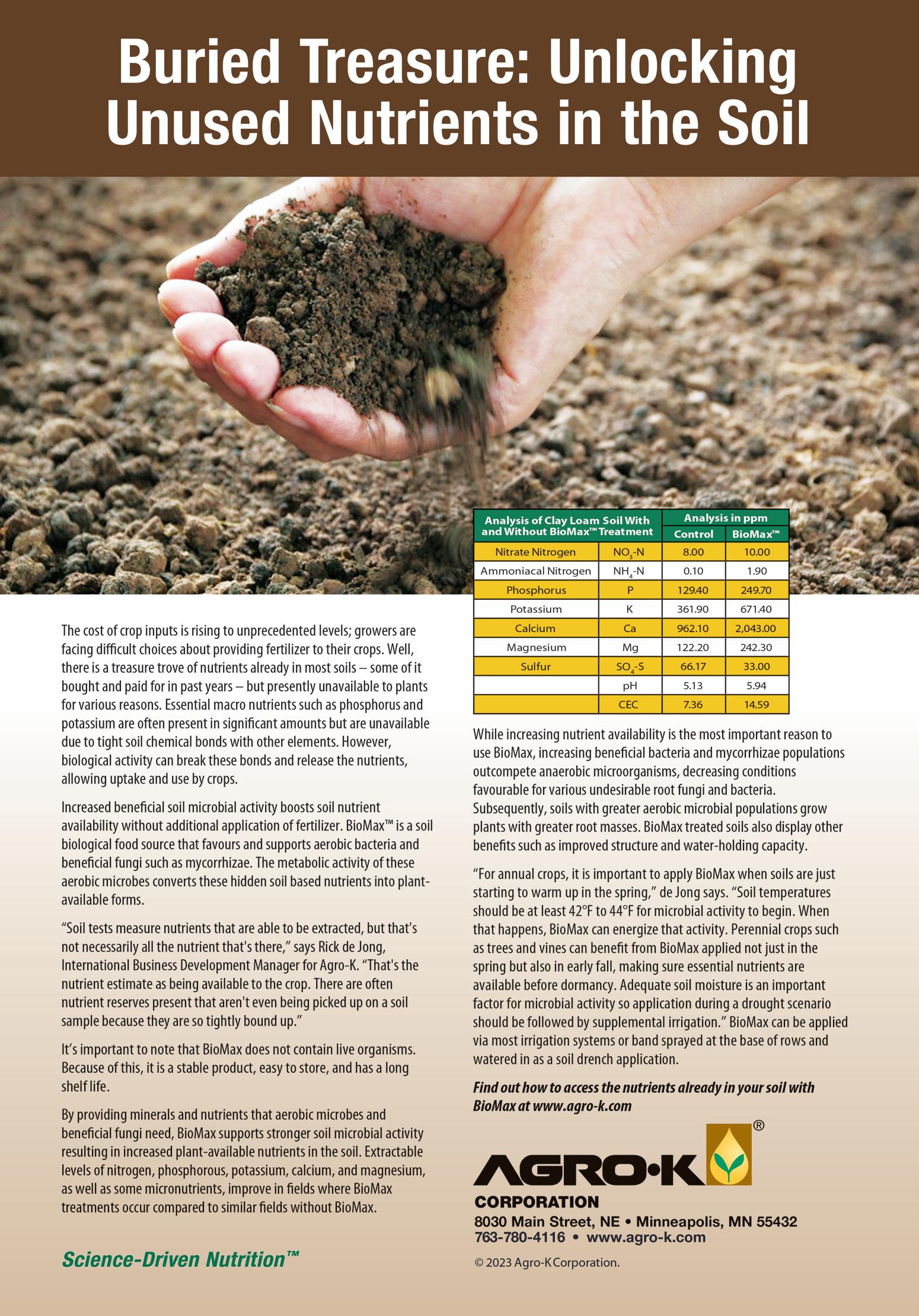
APRIL 2024–– PAGE 32 THE GROWER
