When it comes to productivity, these little things make all the difference.
By Suzanne Winchester
Somerset Maugham once quoted, “The unfortunate thing about this world is that good habits are so much easier to give up than bad ones.” In the process of living with bad habits, your physical and mental health also get compromised along with wasting your time and energy.
In general, habits are difficult to break because they are deeply wired due to constant repetition into your brains. It is clear that bad habits are patterns of behavior and it is the breaking of patterns that are the key to breaking bad habits themselves.
Today, productivity is required in every sphere of life, be it professional or personal. Sitting at your workplace and compulsively doing things (or not doing things at all for that matter) that prevent you from giving your best is certainly a productivity killing spree. Similarly, indulging in activities that give you nothing but momentary pleasure at the expense of your personal relationships is a productivity killing bad habit for sure.
Hence it is important for you to beware of the following bad habits that can hamper your productivity.
Failing to Prioritize
Prioritizing your tasks and attempting them accordingly by strictly sticking to the plan is the shortest route to productivity. However, this is hardly ever done. You must be clear of your priorities and goals. Many people have a notion that having multiple goals is more pragmatic way of ensuring success. In other words, if one idea doesn’t work, so what! There are more in reserve. The fact is goal setting is not a trial and error practice, it needs conviction. The more you will waver in your conviction, the more unproductive you will become. In
order for you to become productive in every sphere in your life, you must have a clear vision for it.
Procrastination
One of the biggest killers of productivity is procrastination. By definition, procrastination is simply delaying or postponing something important. Not only that, it is the practice of doing less urgent tasks in preference to more urgent ones. Procrastination usually results in sorrowful regrets because when work gets piled up it creates a lot of stress, which in turn is a huge hindrance in being productive. Procrastination sets off a vicious cycle – you fail to meet deadlines, which create unbearable stress impacting your productivity severely. Thus, to eliminate procrastination, you need to ask a few questions to yourself:
• What are your urgent tasks that need to be done?
• Why are you doing something that you shouldn’t?
• What are the possible consequences of lack of performance?
Multitasking
If you believe multitasking makes you more productive then you are grossly wrong. On the contrary, it drains your productivity. Many people try to perform multiple tasks at one time feeling as though it is a superhuman effort. But the truth is attempting all those tasks simultaneously increases the possibility of performing all of them poorly because of your divided attention. According to research only 2 percent of people can multitask effectively, while the remaining 98 percent of people are hampering their productivity without even realizing it. The problem with multitasking is you partially focus on a single task, while giving the majority of your focus on switching all these tasks. So it is better to finish one thing at a time and move on to the next one.
Not Avoiding Distractions
Failing to avoid distractions can directly have a negative impact on your productivity and efficiency. Distractions drag you away from your work even if they last for a short period of time, and if you keep getting distracted, your performance gets badly affected. Although it is not easy to always stay on task when you need to work for hours, but staying laser-focused can do the trick for you. So, how to keep distractions at bay? Well, social media is the biggest culprit of all, followed by emails, messages, and smartphones. According to a research conducted by University of California, Irvine, it takes an average of 23 minutes and 15 seconds to get back to a task after being interrupted. So, stopping notifications, staying away from social media, and using your smartphone less often can help you eliminate distractions.
Improper Routine
Following an improper routine is a habit that stays with you for a long time and if unchecked, strips all of your energy away. For example, bad sleeping habits, skipping exercise, snoozing unnecessarily, eating too much junk food, etc. If for some reason you are following a routine of doing whatever you feel like, you are not going to get anywhere. A healthy and proper work routine is essential to getting your mind into productive gear. Instead of rushing around not sure what to do next or what needs to be done, how about setting a up a system to keep track of everything? Setting up a solid daily routine is a little bit art and a little bit science. The science is figuring out what you need to get done; the art is figuring out when to do it.


A common misconception about skin cancer is that, because their skin contains a higher amount of melanin, African-Americans and people with darker skin don’t have to worry about exposure to the sun’s radiation. While it is true that skin cancer is far less prevalent in dark-skinned populations, experts say anybody can be at risk for the disease. Skin cancer among black people makes up only one to two percent of all cases of cancer in the U.S. according to the Skin Cancer Foundation, while Hispanic and other darker-skinned populations represent four to five percent of all cases of cancer. “Everybody is at risk for developing skin cancer,” says Naiara Abreu Fraga Braghiroli, M.D., Ph.D., a dermatologist at Miami Cancer Institute who specializes in skin cancer treatment that uses the latest technology to monitor and diagnose high-risk patients. “Yes, darker skin has more natural protection from higher amounts of melanin – equivalent to an SPF13 sunscreen, essentially – but they are still at risk of developing skin cancers. Dr. Braghiroli says there are five things people of color should know about skin cancer:
1. Practice Self-Exams: Dr. Braghiroli says that 75 percent of skin cancers diagnosed in people of color are in areas that are not exposed to the sun, such as the palms of the hands, nail beds, soles of the feet, inside the mouth and/or the genitalia area. Due to the locations of these skin cancers, there is a higher mortality rate for people of color as diagnosis is often delayed. As such, self-exams are extremely important.
Dr. Braghiroli recommends conducting a self-exam at least once a month. Use a mirror, she says, and have a partner help you, if possible. “Pay close attention to areas not exposed to the sun, looking for new black/ brown areas, asymmetrical moles, open wounds that don’t heal, and old scars that develop open wounds.” In addition to self-examinations, Dr. Braghiroli advises an annual screening by your dermatologist, whose trained eye may catch any spots you might have missed. People with higher risk factors should be screened more often, she says.
2. Always Use Sunscreen: While people of color are less at risk for skin cancer caused by UV radiation, it’s important that they protect their skin nevertheless. Sunscreen use can also protect people of color against hyperpigmentation, according to Dr. Braghiroli. She advises using a mineral-based sunscreen containing zinc oxide and/or titanium dioxide. “Mineral-based sunscreens work like a shield, sitting on the surface of the skin and deflecting the sun’s harmful rays,” she explains. The old mineral sunscreens would appear as a white coating, which could create a chalky appearance on people of color. Dr. Braghiroli says that sunscreen formulations have evolved over the years and that today’s sunscreens are far superior, with some mineral sunscreens even offering a tinted color to match various skin tones. Dr. Braghiroli advises using a sunscreen with a Sun Protection Factor (SPF) of at least 30. “Most people under-apply the correct amount, which is
equivalent of one teaspoon for face, one for the chest/ abdomen, one for the back, one for each arm and two for each leg,” she says. “Consider going with a higher SPF sunscreen and if you’ve been swimming or sweating a lot, make sure you reapply every 80 minutes.
3. Understand the Signs/Symptoms of Melanoma: According to the Skin Cancer Foundation, “the estimated five-year melanoma survival rate for blacks is 67 percent versus 92 percent for Whites.” Additionally, people of color are more at risk for developing Acral Lentiginous Melanoma (ALM), which often appears in hard-to-spot places in the form of black or brown areas. “Early detection is key in curing melanoma,” Dr. Braghiroli says, “so if you do find an unusual spot, changing mole or a wound that doesn’t heal, you want to see your dermatologist right away.”
4. Know Your Risk and Family History Individuals who have 3 or more first-degree relative diagnosed with melanoma are at a higher risk of developing melanoma themselves, according to Dr. Braghiroli. “Know-
ing your family history is very important,” she says . Additional risk factors to be mindful of are having a lot of moles (more than 50), scars from a previous trauma, and chronic/open wounds. “People who have HPV, smokers, has an autoimmune disease or who are immunosuppressed are also at greater risk for developing skin cancer,” she says.
5. Be Sun Smart: With skin cancer the most common type of cancer in the United States, it’s important to take preventative measures to protect your skin when outdoors for any length of time. Dr. Braghiroli says those precautions include avoiding peak sun exposure hours between 10am and 2pm – “Maybe let’s say 4pm here in Miami, where the sun’s rays are so much stronger than in northern latitudes,” she says – and wearing Ultraviolet Protection Factor (UPF) clothing, hats and sunglasses to protect your skin from the sun’s harmful rays.
A SPECIAL NOTE FROM YOUR CHILD
Dear Mom and Dad:
Please remember that my hands are small; do not expect perfection whenever I make a bed, draw a picture, or throw a ball. My legs are short; slow down so that I can keep up with you. My eyes have not seen the world as yours have; let me explore it safely; do not restrict me unnecessarily. Housework will always be there; I am little only for a short time. Take time to explain things to me about this wonderful world, and do so willingly.
Remember that my feelings are tender. Treat me as you would like to be treated.
I am a special gift from God; treasure me as God intended you to do - holding me accountable for my actions, giving me guidelines to live by, and discipline me in a loving manner. I need your encouragement to grow. Go easy on the criticism; remember you can criticize the things I do without criticizing me. Give me the freedom to make decisions concerning myself. Permit me to fail, so that I can learn from my mistakes. Then someday I will be prepared to make the decisions life will require of me. Do not do everything for me; that makes me feel that my efforts did not measure up to your expectations. I know its hard, but don’t compare me with my brother or sister or other children you may know.
Take me to Sunday school and church regularly, setting a good example for me to follow. I enjoy learning more about God. Thank you for loving me and for doing the very best you can.
Reverends
By: Zachary Rinkins
“The father of the righteous will greatly rejoice, and he who begets a wise child will delight in him.”
- Proverbs 23:24 New King James Version
In too many–often stereotypical–instances, the concept of great, present Black fathers can appear elusive. Research from various sources helps develop a more precise portrait of positive Black fatherhood.
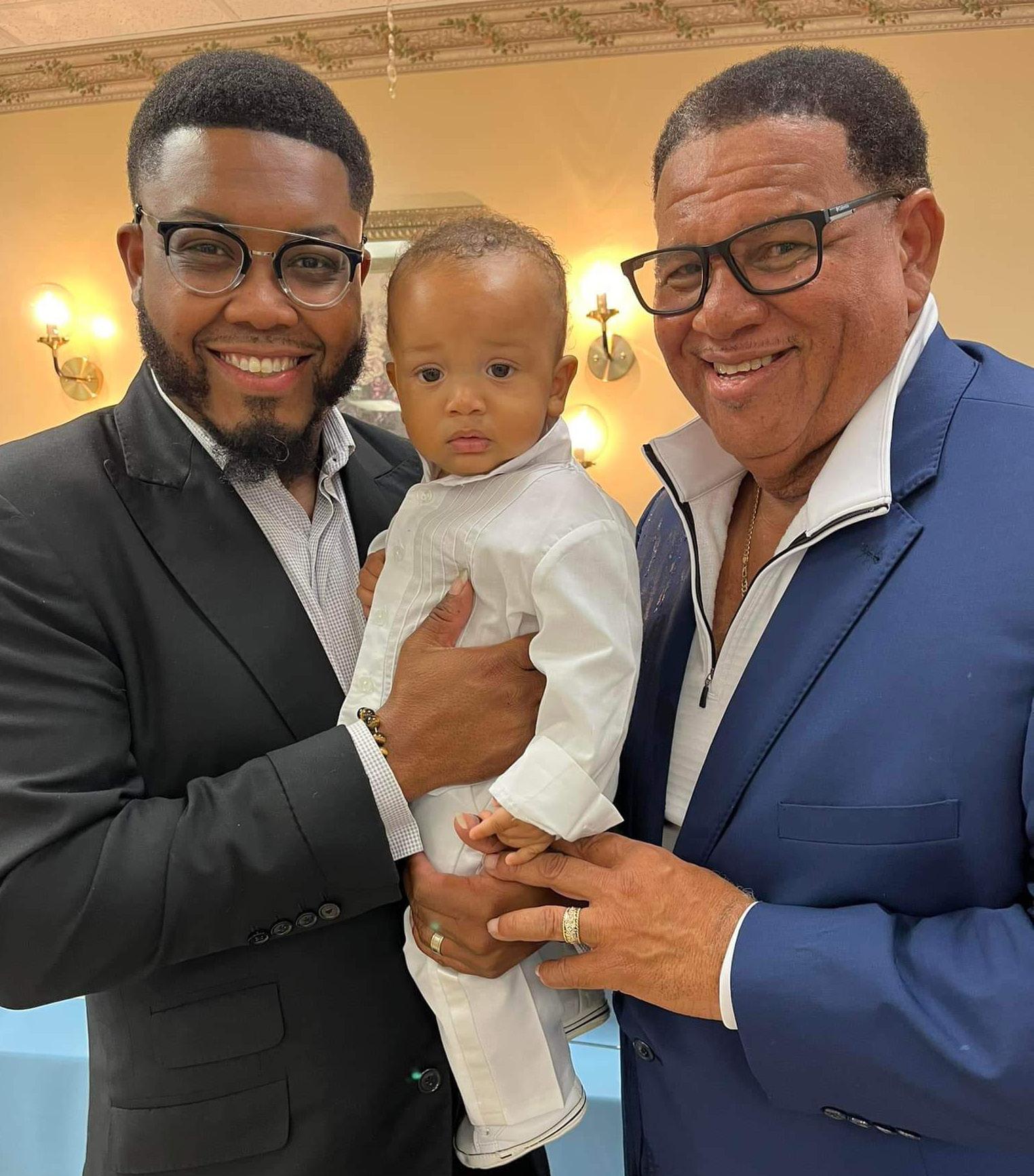
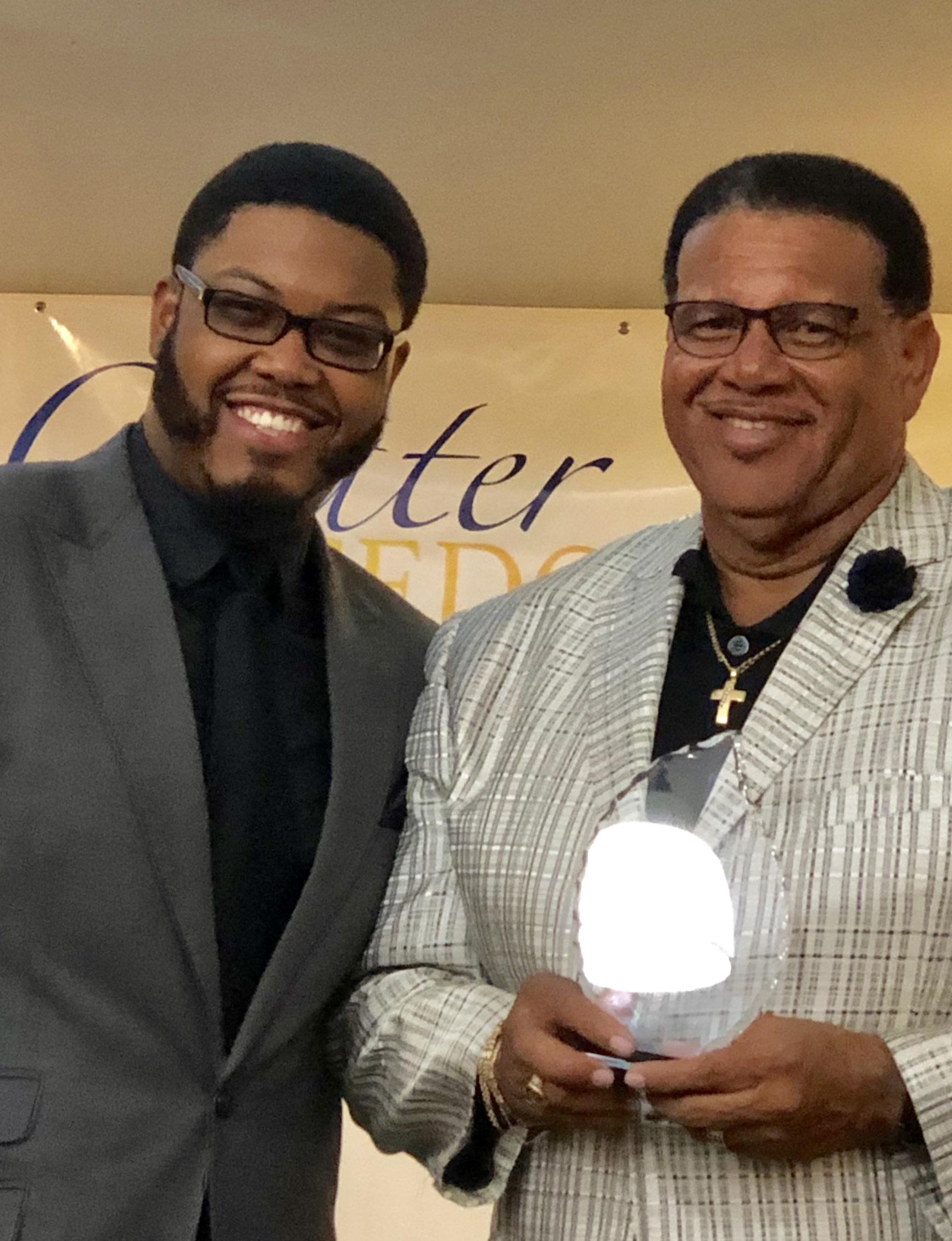
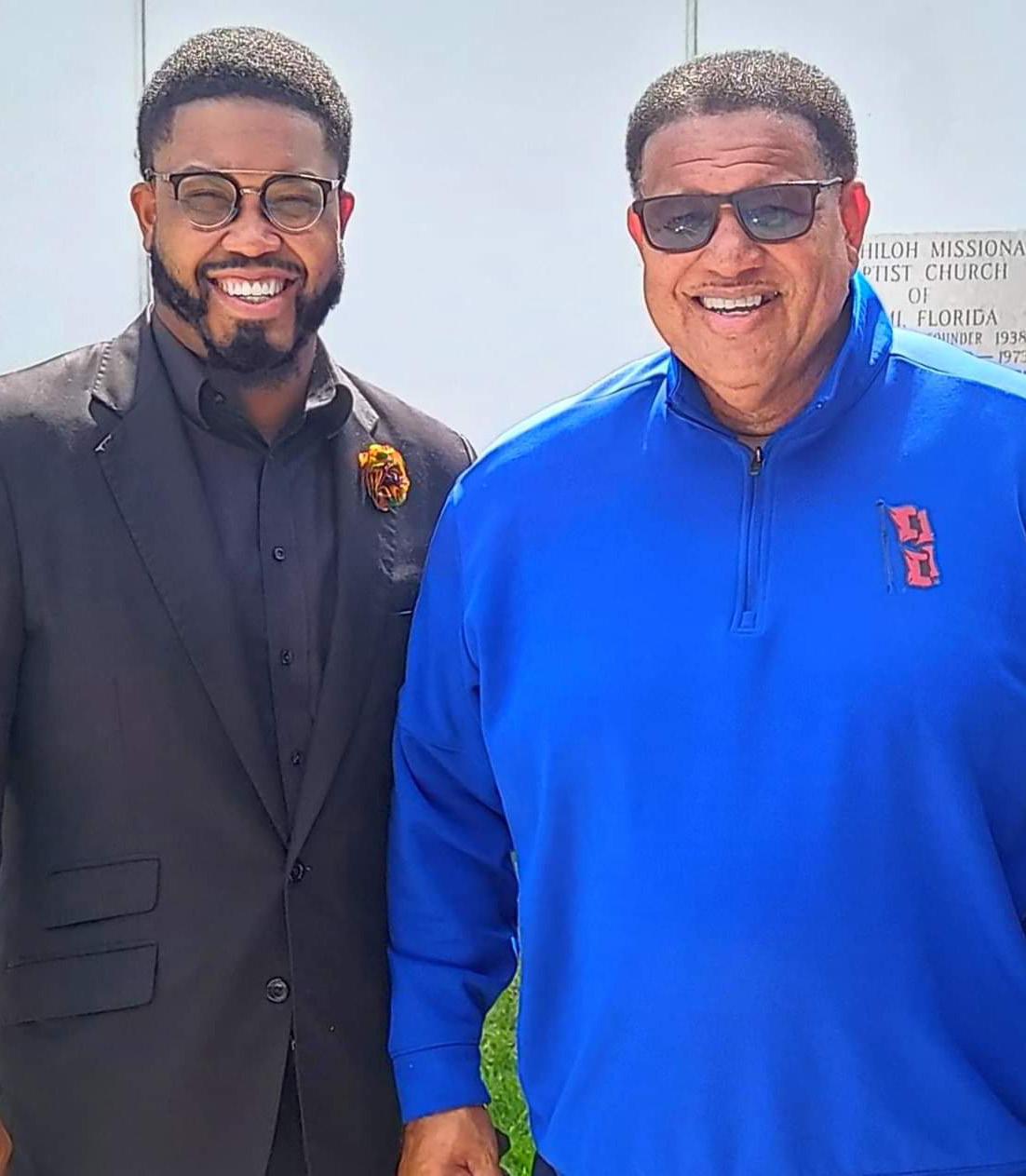
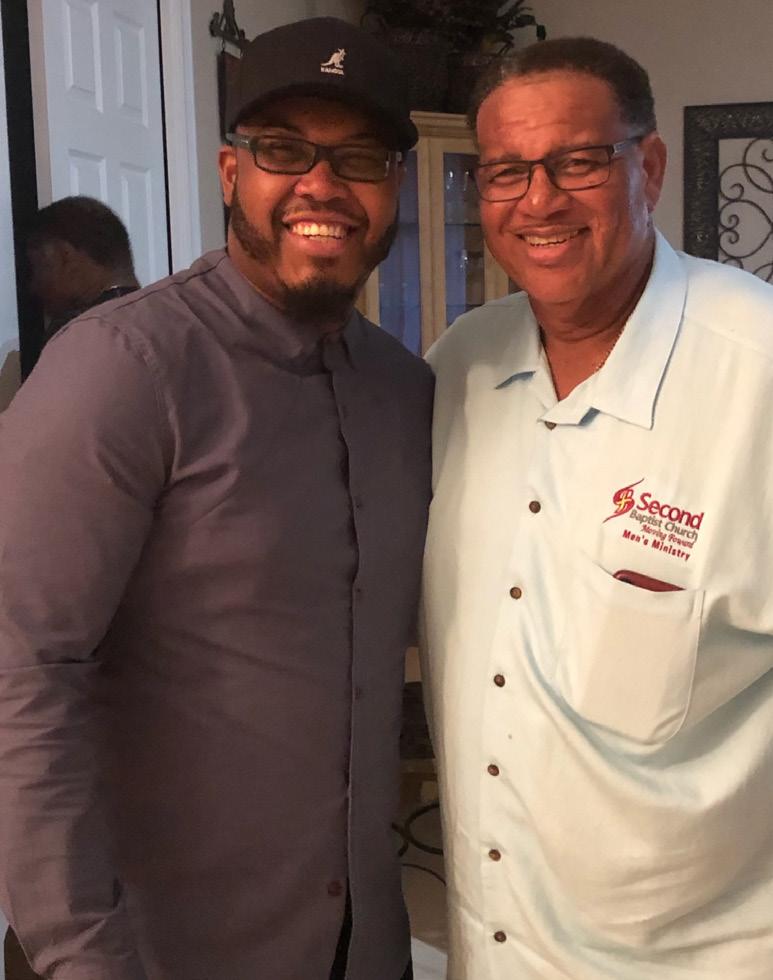
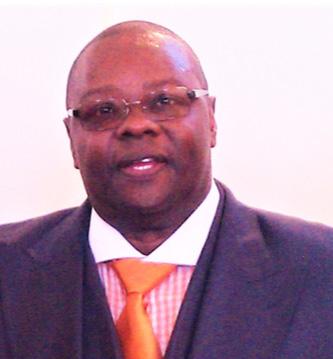
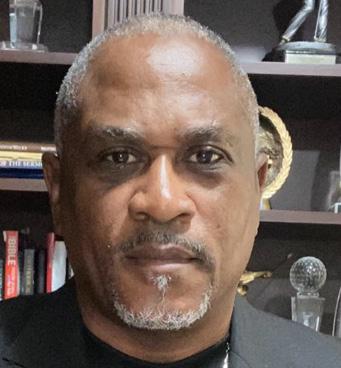
For Alphonso Jackson, Sr., and his namesake, Alphonso, Jr., their relationship enjoys a multi-generational foundation built on an enduring love of Christ, family, and ministry.
“My relationship with my father is public and passionate. I love Alphonso Jackson, Sr.,” beams Alphonso Jackson, Jr., executive pastor of New Shiloh Missionary Baptist Church. “God knows it, the devil knows it, and people know it. My entire life has been trying to be like
him. That’s just how much he means to me.”
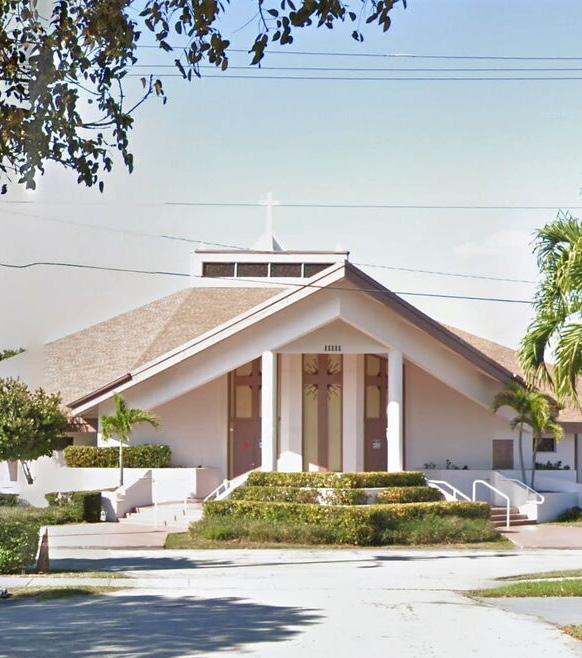
The younger Jackson’s upbringing counters an old, unproductive narrative that says Black fathers aren’t present. Centers for Disease Control and Prevention (CDC) data reveal that the majority (2.5 million) of Black fathers live with their children versus the 1.7 million who do not. The elder Jackson, the senior pastor of Second Baptist Church in Richmond Heights, shares his son’s sentiment.
“I love my son. I’ve never seen a little boy that wanted to be more like his father than that young man,” Jackson, Sr. says. “We have always had the greatest relationship.”
Josh Levs, author of “All In - How Our Work-First Culture Fails Dads, Families, and Businesses--And How We Can Fix It Together” (Harper-
One), wrote a chapter called “How Black Dads Are Doing Best of All (But There’s Still a Crisis)”, to debunk the myth of the absent Black father. Levs shared further CDC data revealing Black fathers (70 percent) were more likely to have bathed, dressed, diapered, or helped their children use the toilet every day than their white (60 percent) and Hispanic (45 percent) counterparts. The Jacksons enjoyed quality at home and in ministry. The elder Jackson fondly recalls, “we were always together.”
“I’ve always wanted to be a preacher, primarily because my dad was a preacher,” Jackson, Jr. says. “As a result, I’ve always been in love with the church as an institution and a body.”
“When I was a kid, my mom could not punish me by taking away sports or TV. The only punishment that would work on me as a kid was to
tell me that I couldn’t go to revival or church.”
The senior Jackson confirms this recollection and concedes that his namesake was the beneficiary of many instances of paternal intervention.
“It is so ironic. Today, they punish kids by making them go to church. But, you punish him by not letting him go to church,” Jackson, Sr. chuckles. “I did not want to take the church away from him.”
He fondly remembers performing ministry and having a regular companion with him.
“He [Alphonso, Jr.] wanted to go everywhere I went. He wanted to go to revivals, trips, workshops, and conventions. He wanted to go, and I would take him,” Jackson, Sr., adds. “His mother would dress him just like me. He had his own little trench coat, just like me. God gave that young man the desires of his heart.”
Transitioning to ministry
Alphonso, Sr., trained as a youth pastor from 1981 to 1984 at New Shiloh M.B. Baptist Church under the leadership of his father, Pastor Arthur Jackson, Jr. He admits that serving under your father can invite criticism.
“It is challenging because some people will automatically cry nepotism. It can hold us back,” Jackson, Sr., notes. “Honestly, my father was concerned. I felt that he was reluctant to use me because of nepotism and what he thought people would say.” “I believe your gift makes room for you.”
The family, including grandfather
Arthur, always acknowledged and supported Junior’s gift. Jackson, Sr. made room for his son as a youth pastor and,eventually, assistant pastor of Second Baptist Church, as his father did for him nearly 30 years before. He committed to himself that he would not suppress his son’s gift.
“When Al Junior was here with me, I poured into him. I tried to help develop him, even though I knew that eventually, it would mean him leaving,” Jackson, Sr. shares. “I’d rather train him and lose him, than not train him and keep him. I’d rather do that than him not being prepared.”
The younger minister found the experience transformative.
“I had the opportunity to experience my father through different lenses. I learned from him how to be a great minister,” Junior recalls. “He allowed me to be close to him and catch the level of excellence he exuded in everything that he did. He cultivated me to be a great servant of Christ, church, and community. I learned a lot from him.”
Leading your child as a parent is a monumental task. Leading them as an employer can be another challenge.
“He was easy to have as an employee,” Jackson, Sr. assures. “He made my job easier. He was a great worker for me. It was easy for me.” Alphonso, Jr. eventually became the senior pastor of Greater New Macedonia Baptist Church. After an eight-year stint, he transitioned to serving as executive pastor of New Shiloh M.B. Church last December.
“To me, my father’s legacy is big on
Christ and big on church. His approach was building the community through the church,” Jackson, Jr. says. “He did that through building affordable housing for seniors and creating programs and opportunities within the church that will meet the needs of the area. He was really big on going out and evangelizing. I hope that will be a part of my legacy as well.”
As the grandson, son, nephew and cousin of pastors, Alphonso, Jr. divulges there are many advantages of being a part of a lineage of preachers.
“Those relationships have benefited me greatly. Because it allows me to see many sides of effective ministry that others may never see. I’m able to see both the performance and also the private,” Jackson, Jr. says. “ I see the thoughts, encounters, struggles, and feelings. I see the proud and painful moments. Seeing that helps me to walk with wisdom and passion.”
His father sees the realization and amalgamation of a family heritage of faith in God and service to others.
“My son is a combination of me, my brother [Arthur Jackson, III, senior pastor of Antioch M.B. Church], and my father,” Jackson, Sr. observes. “He can sing like my dad. He has the mind of my brother. And, he has my heart when he is preaching. He is going to exceed us all, because he’s got all three of us.”
Ultimately family is the first ministry
Research notes that Black fathers are more present in their children’s lives than anytime in the past forty years. The Jacksons also embrace a
legacy of marriage. Pastor and Mrs. Arthur Jackson, Jr. were married for 50 years. Rev. Alphonso, Sr., and his wife, Dewana have been married since 1984. And, Rev. Alphonso, Jr. and his wife Dr. Jamila have been married for eight years and are the parents of two daughters and a son, Alphonso, III.
“I love my family. They look at me as the patriarch at this time. Young men need to have men in their lives,” Jackson,Sr., offers. “A woman can teach a boy how to treat a lady. But, she cannot teach him how to become a man.”
“My son grew up seeing what a real family looks like. He learned how to treat his family, by seeing me loving his mother. He knows I love my children. He is going to continue to be a great father.”
Alphonso, Jr. agrees with his beloved father and hero.
“My father always put his family first. Now that I have my own children, I think about the sacrifices and decisions I have to make. I reflect on my father and the decisions and sacrifices he made when I was growing up,” Jackson, Jr., discloses. “I wonder how he managed every-
thing and was still able to succeed across the board. He really made it look easy.”
When reflecting on his son, the elder Jackson deploys scripture. “It is just like with Christ. In Al Junior, I have a son in whom I am well pleased.”
Log on to www.sbcmiami.org, to explore the ministry at Second Baptist Church. Alphonso Jackson, Jr. serves in ministry at New Shiloh M.B. Church (www.nsmbc.net) under the leadership of senior pastor D.L. Powell.