Birder The Global

November 2025

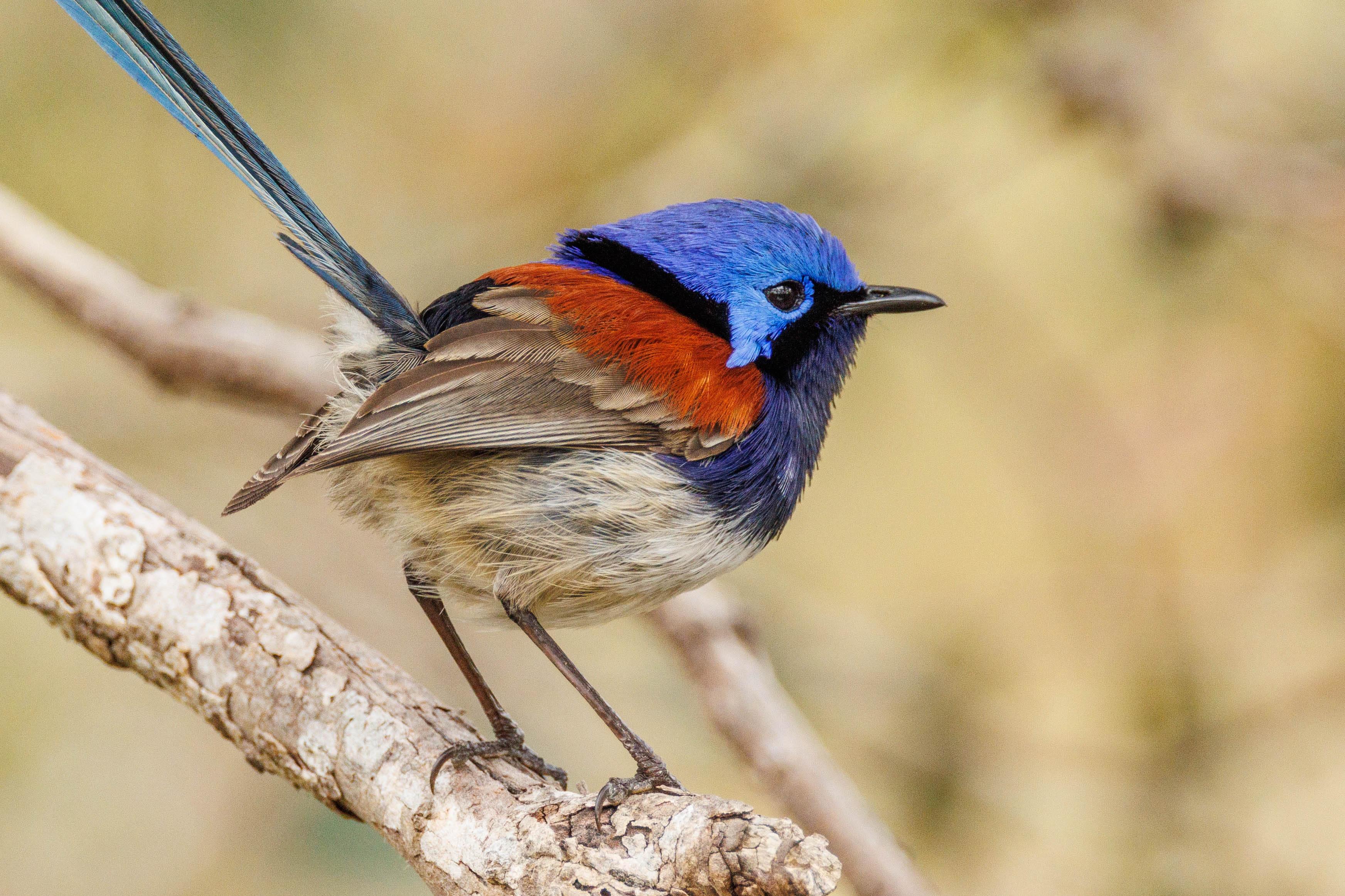
Blue-breasted Fairywren
ISSUE 01 - NOV 2025
November 2025
Blue-breasted Fairywren
ISSUE 01 - NOV 2025
12. ANDY'S ADVENTURES: BIRDING CHILE - PART 01. Exploring Chile’s wild landscapes in search of spectacular Andean birdlife.
26. WHO IS THE GLOBAL BIRDER? Meet the people and passion driving this new birding movement.
37. PELAGIC BIRDING ADVENTURES
Journey far offshore to encounter oceanic wanderers few ever see.
55. FIVE MUST SEE BIRDS IN THE HIMALAYAS From Blood Pheasants to Lammergeiers, discover Himalayan birding’s rarest treasures.
62. PHOTO FEATURE: ANTARCTICA BY JUAN VAN DEN HEEVER
Frozen beauty captured through breathtaking images of Antarctica’s untamed birdlife.
05. Ed'S Letter
12. Bird of The Month.
16. Andy's Adventures.
24. Photography Feature
24. Guest Q&A
24. Kinhorn's Column
24. Gear For Birders
24. Birding Classifieds
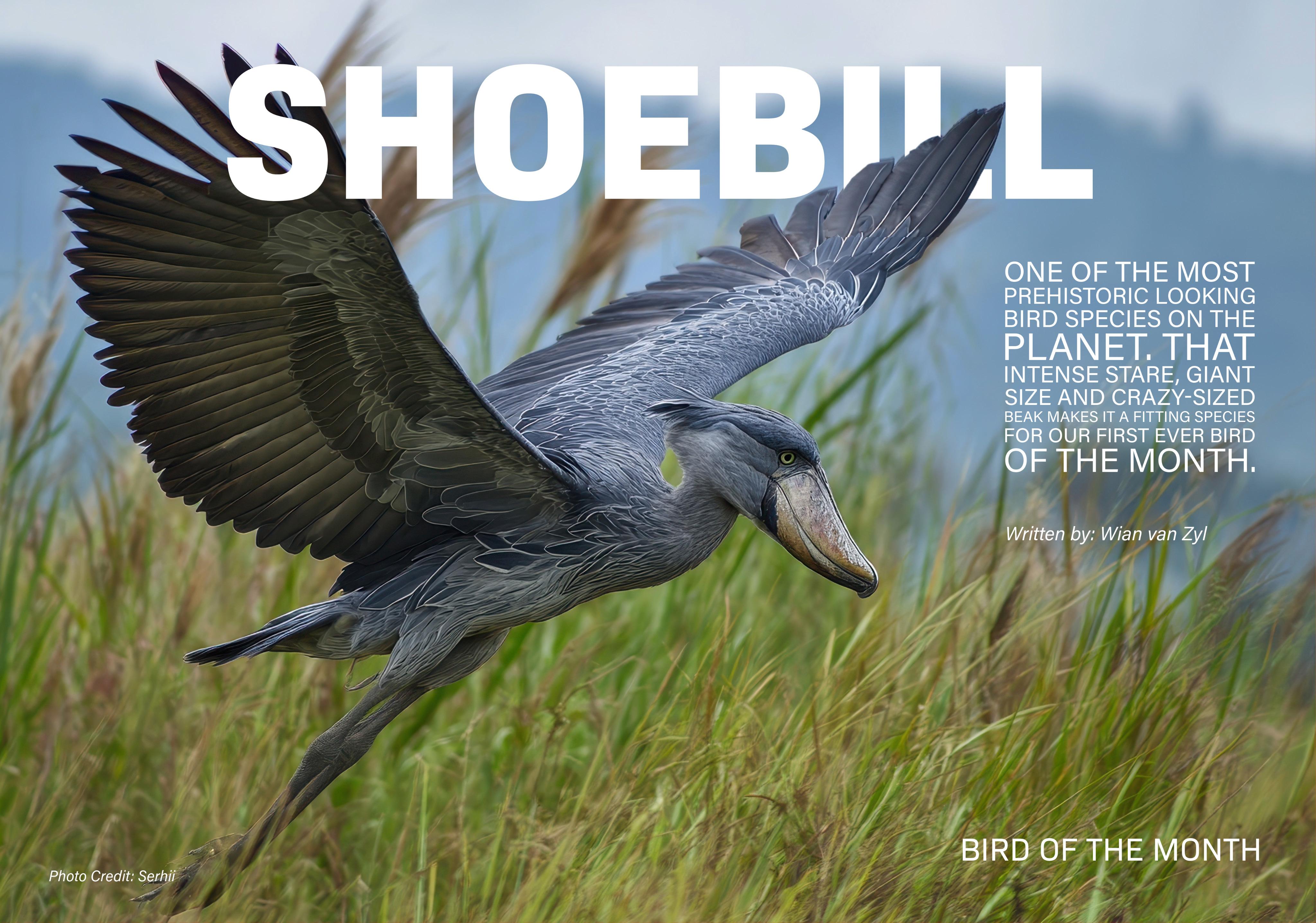
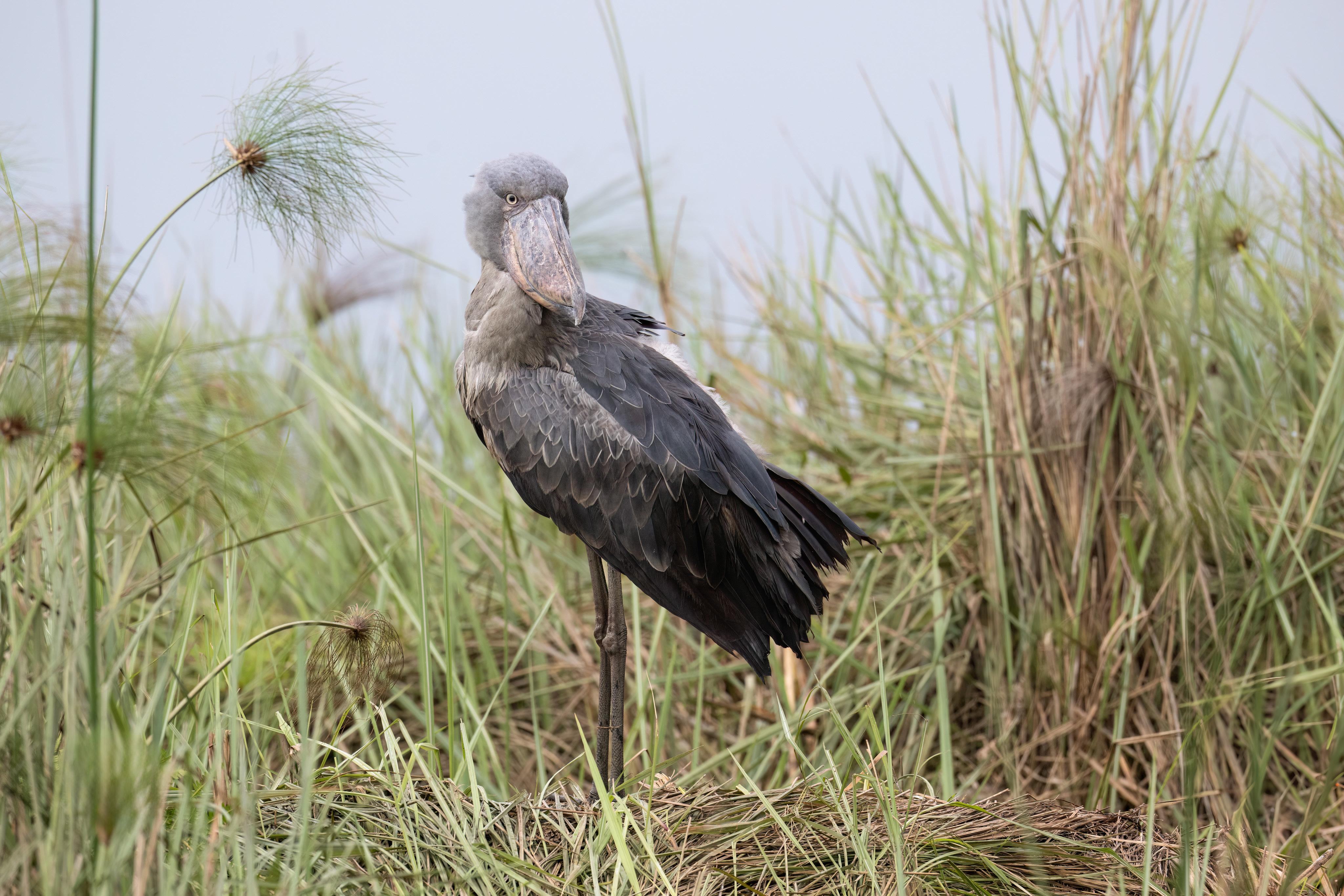
Imagine gliding silently through papyrus swamps in Uganda or Northern Zambia. The air is heavy, dragonflies hover above the reeds, and then you see it: a towering figure, unmoving, with a bill so massive it looks carved from stone. The Shoebill is no ordinary bird. To lock eyes with one is to glimpse something ancient, a living relic that seems pulled straight from the age of dinosaurs.
Common Name: Shoebill
Scientific Name: Balaeniceps rex
Scientific Name Meaning: Balaeniceps = "Whale-headed" rex = "king"
Distribution: South Sudan & SW Ethiopia to Southern DRC and Northern Zambia
Height: 1.1m - 1.4m (3.7ft - 4.7ft)
Wingspan: 2.2m - 2.6m (7.3ft - 8.6ft)
Weight: 4 - 7 kg (8.8 - 15.4 lb)
Status: Vulnerable (VU)
Lifespan: 35 - years (in the wild)
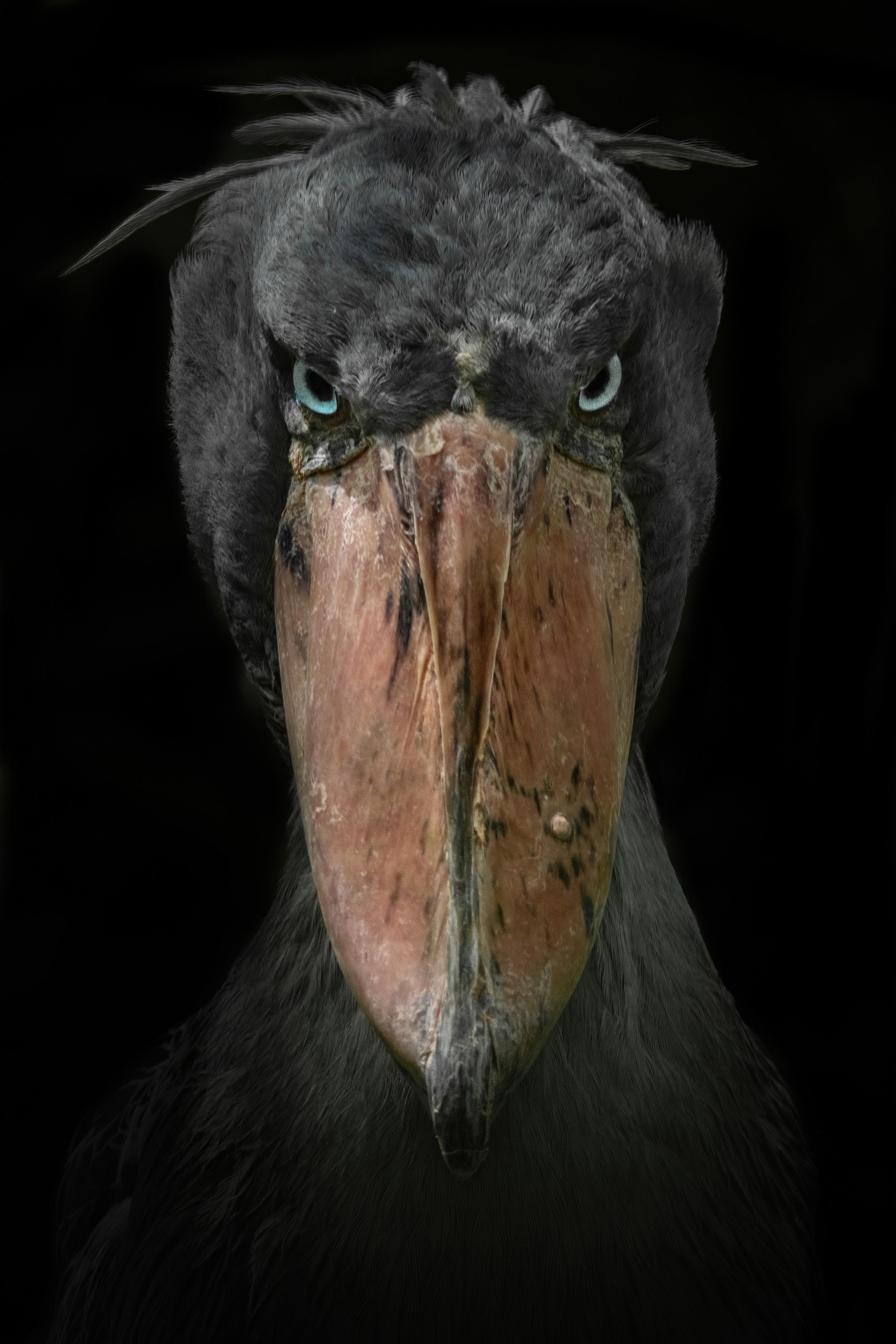
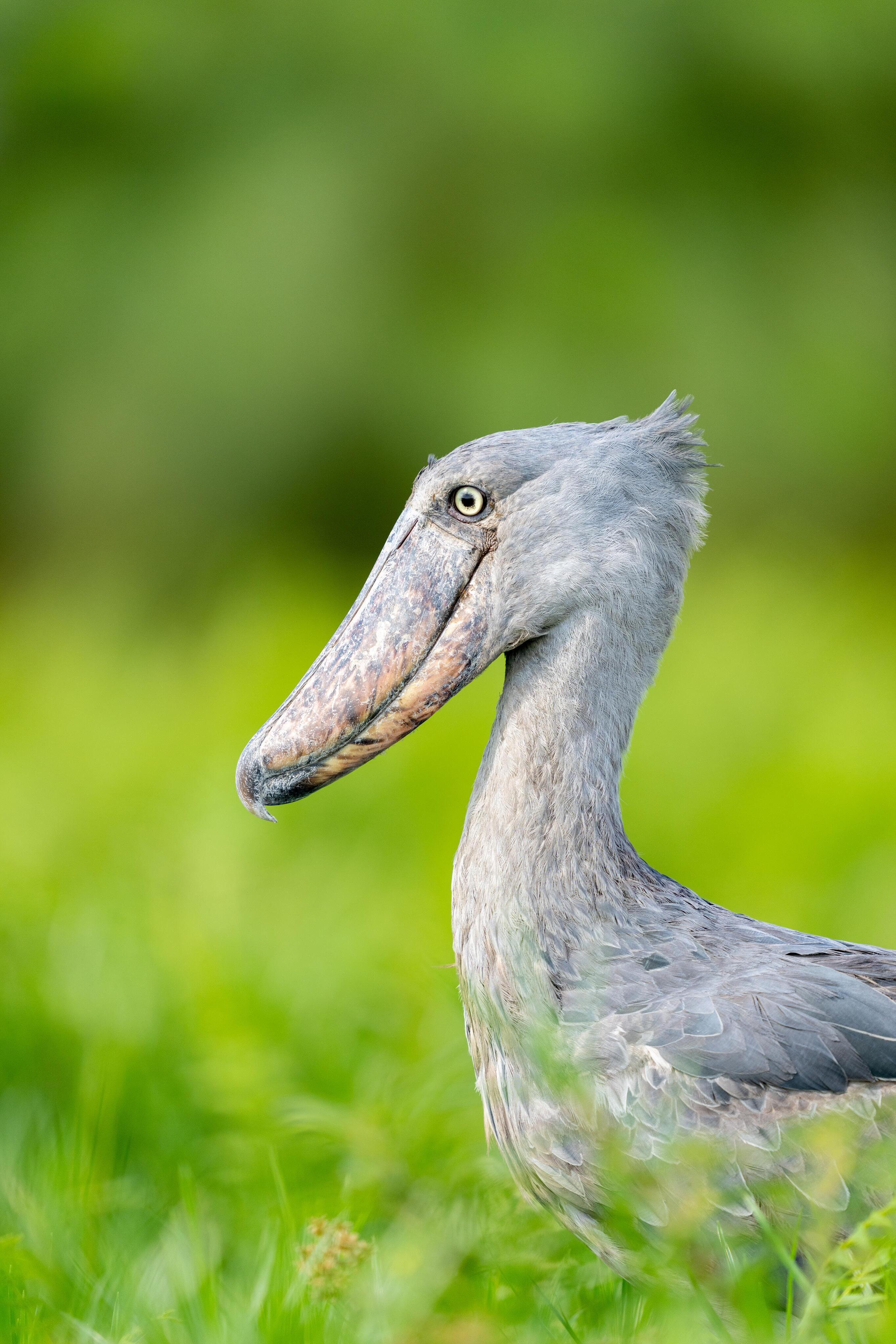
Few birds hold such mythical appeal in the birding world. For many, the Shoebill is the single biggest “target species” in Africa. Birders travel across continents for a chance to see one. Its enormous clog-shaped bill — up to 24 cm long and 20 cm deep — gives it a prehistoric look, somewhere between a stork, a pelican, and a dinosaur.
The Shoebill is also famous for its death-stare. This unblinking gaze, combined with its eerie stillness, makes it seem almost otherworldly. It is not just a bird; it is an encounter, an experience that stays etched in memory.
Shoebills are masters of patience. They stand motionless for hours, waiting for the perfect moment to strike. Their prey of choice is lungfish — but they also take catfish, tilapia, even small reptiles. When the moment comes, they lunge with shocking power, their massive bill collapsing down on the prey.
Despite their size, Shoebills are surprisingly stealthy. Their huge wings
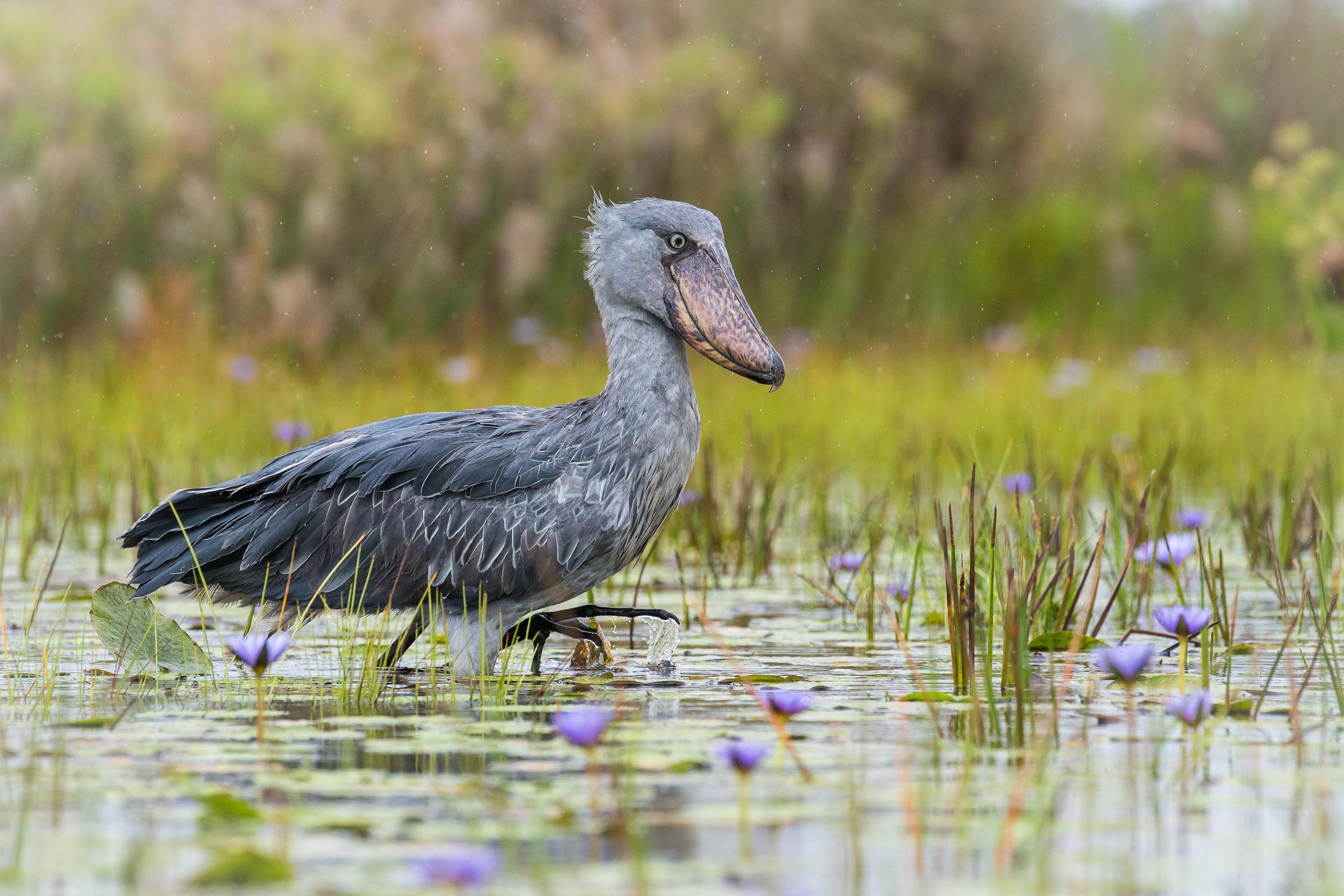
help them glide silently over swamp channels, and their muted grey plumage blends into the papyrus. When breeding, they build large nests on floating vegetation. Typically, two eggs are laid, but only one chick survives; the stronger usually outcompetes its sibling.
A quirky behavior often witnessed is bill clattering — a hollow, echoing sound made when the bird claps its enormous beak together. It serves as a greeting and a display, adding to their mystique.
For all their power and presence, Shoebills are vulnerable. With fewer than 6,000 individuals left in the wild, they face mounting threats. Wetland destruction for agriculture, disturbance by fishermen, and illegal capture for the wildlife trade all chip away at their survival.
In Uganda, the Shoebill has become a flagship species for conservation. Local communities, recognizing the tourism draw, protect the wetlands where they live. Every birder who pays to see a Shoebill helps create value for keeping those habitats intact. Protecting the Shoebill also means protecting entire ecosystems — papyrus swamps that shelter countless other species, filter water, and regulate floods.
The Shoebill is more than just a bird. It is a symbol of wild Africa, of landscapes still untamed and mysterious. To see one is to be reminded that the natural world holds wonders we can’t fully explain — creatures that look both ancient and modern at once.
For birders, the Shoebill isn’t just a tick on a list. It’s a pilgrimage, a moment that defines a lifetime of birdwatching. For conservationists, it is proof that when communities and travelers come together, even the rarest species can be given a fighting chance.
Watching a Shoebill is like standing at the edge of two worlds: the past, where giant birds ruled prehistoric swamps, and the present, where such marvels cling to survival in hidden corners of Africa. As The Global Birder’s first Bird of the Month, the Shoebill embodies exactly why we travel, watch, and care: to connect with the extraordinary, and to make sure it endures for generations to come.