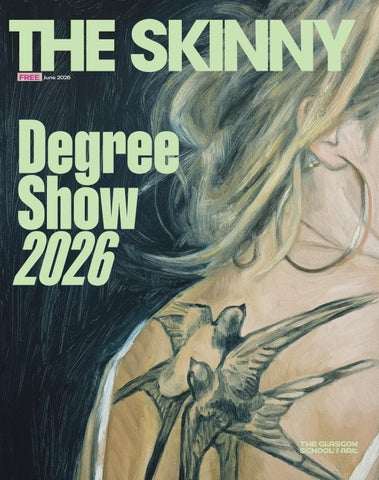
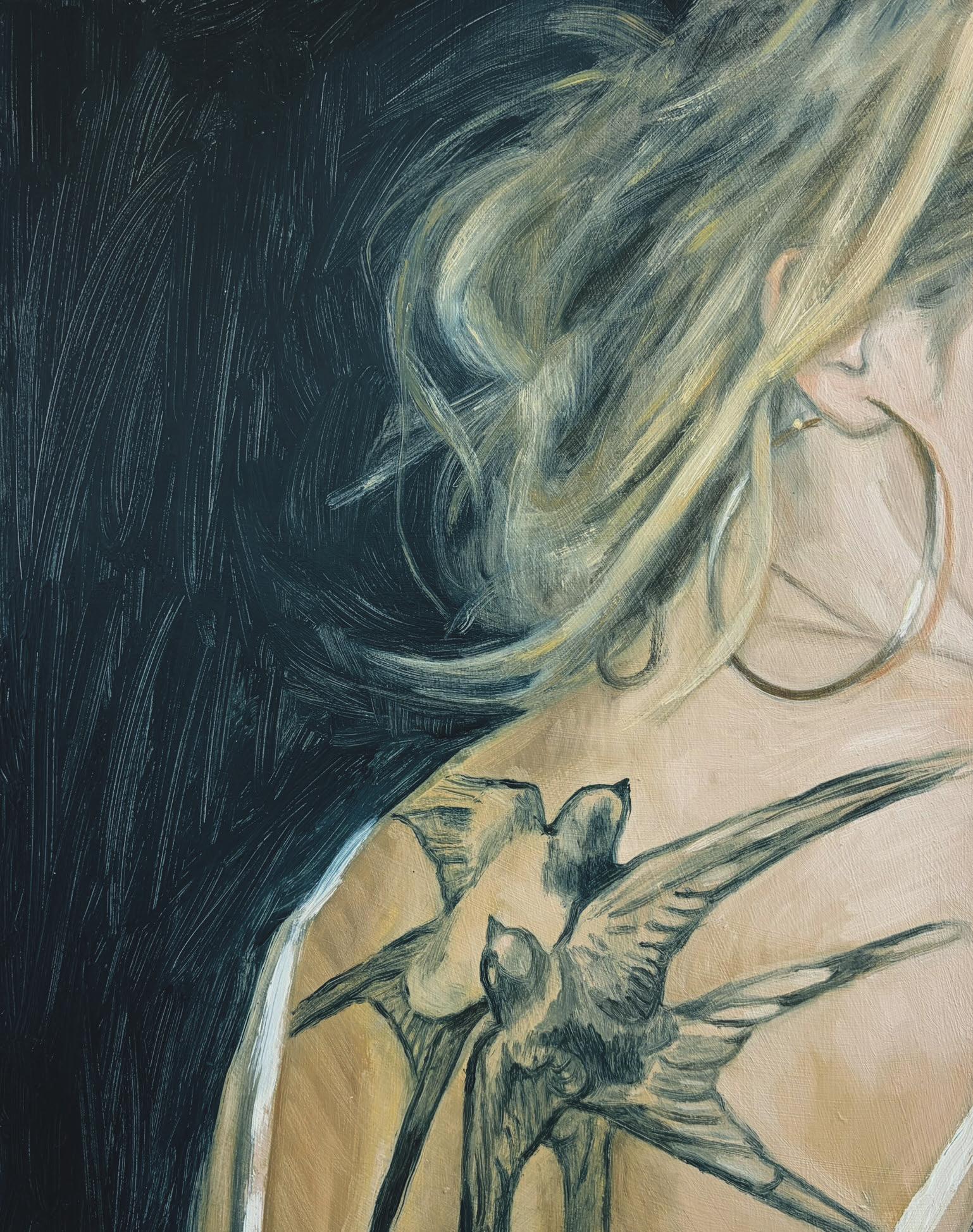
Degree Show 2026
Welcome
At the end of each May, The Glasgow School of Art (GSA) Degree Show stops the city in its tracks. More than just an annual exhibition of graduating students’ work, the Degree Show has become a defining moment in the Scottish arts calendar. For ten days, the studios transform into a huge public gallery of art, design, architecture and innovation and are the meeting point where our emerging talent collides with the city’s makers, industry, gallerists, and the curious public in a unique celebration of Glasgow’s creative DNA.
What truly makes the GSA special, though, is what happens after the lights go down. A large number of GSA graduates choose to stay right here in the city after graduation. They put down roots. They open studios, businesses, start collectives, lead community projects, and quietly drive the city’s cultural engine. The energy you feel at the Degree Show extends well beyond the physical run of the show; it ripples outward for years as these globally connected graduates continue to shape Glasgow’s cultural and creative identity. They ensure the city’s creative network stays dense, engaged and alive.
This student-led supplement of The Skinny is a love letter to the collaboration and creativity which takes shape within the School. It serves as both a survey and a guide to a fraction of the incredible output from the graduating class of the GSA’s four specialist schools: Mackintosh School of Architecture, School of Fine Art, School of Design, and School of Innovation and Technology.
Our writing team, comprising third-year students, brings an insider’s eye to the techniques, the people, and the stories behind the work. What they reveal here are threads that weave between disciplines and through the exhibition: reinvention, material culture, landscape, health and wellbeing, and the sheer power of ideas to inspire, comfort, and challenge. Civic responsibility runs deep through the Show, with a push to amplify marginalised voices and for urgent, creative solutions to the societal challenges we all face. Whether you’re exploring the physical galleries across the Garnethill campus or taking a deep dive into our immersive digital showcase – you’re bound to find something that resonates.
The GSA pulses with energy all summer long, and our Heads Up section will keep you in the loop on upcoming events and exhibitions, including a look at Glasgow International, Open House, and our Summer Show at our campus in the Highlands & Islands.
We hope you enjoy this exclusive glimpse into the work of The Glasgow School of Art Degree Show 2026. If you can, please come along and enjoy the work of the next generation of Glasgow artists, designers, architects, filmmakers, educators, entrepreneurs, makers and leaders.
A massive thank you to our student writers, whose passion and insight made this supplement possible. Congratulations to The Glasgow School of Art’s Class of 2026.
gsa.ac.uk/degreeshow2026 | This supplement was produced in association with The Glasgow School of Art
Eve McLaughlin, Textile Design
4 The School of Fine Art features work with an emphasis on the material and the subjective, across Fine Art Photography, Sculpture & Environmental Art, and Painting & Printmaking.
6 Across a range of design disciplines from Fashion Design to Product Design Engineering, the School of Design proposes thoughtful responses to contemporary life, with a deep interest in materiality and form.
8 Work from the MDes Communication Design cohort questions the best ways to communicate personal, public and political ideas.
9 The School of Innovation and Technology emphasises design and ideas which respond to a range of social and environmental needs utilising technology and innovative ways of working with people.
10 From the Highlands to Copenhagen and back to Glasgow, the Mackintosh School of Architecture investigates how architectural design can adapt to evolving human relationships with the environment and with each other.
13 Work from the Master of Fine Art programme is a boundary pushing showcase which takes over the Stow Building.
14 From summer courses to exhibitions, here’s a Heads Up of what’s happening at the GSA in the next few months.
The student writing team is comprised of Riley Lawless, Sam Riddy, AJ Glover, S arah Kefford, Lynne McKay, Anya Lunny, Phoebe Wells, Omnia Ghanem and Emily Weaver
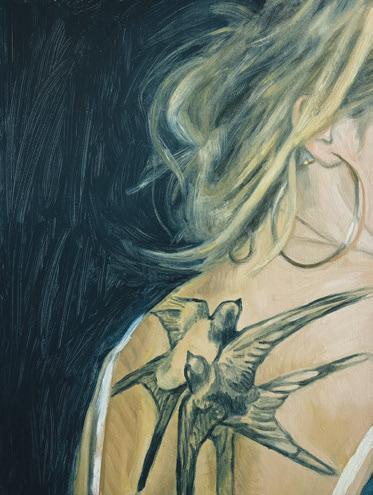
Image Credits: (Top to bottom, left to right) Dylan Hope, Nikola Dzigda; Winnie Wang; Jessica Payne; Daniil Solomou; Finn Robinson; Esmé
Fine Art
Students from the School of Fine Art have explored perception and scale across all degree programmes. Their installations invite immersion across diverse ideas, intentions and forms
Words: Riley Lawless and Sam Riddy
This year’s Painting & Printmaking students show a departure from traditional modes of abstraction and figuration, with interdisciplinary methods and unique material processes featuring prominently.
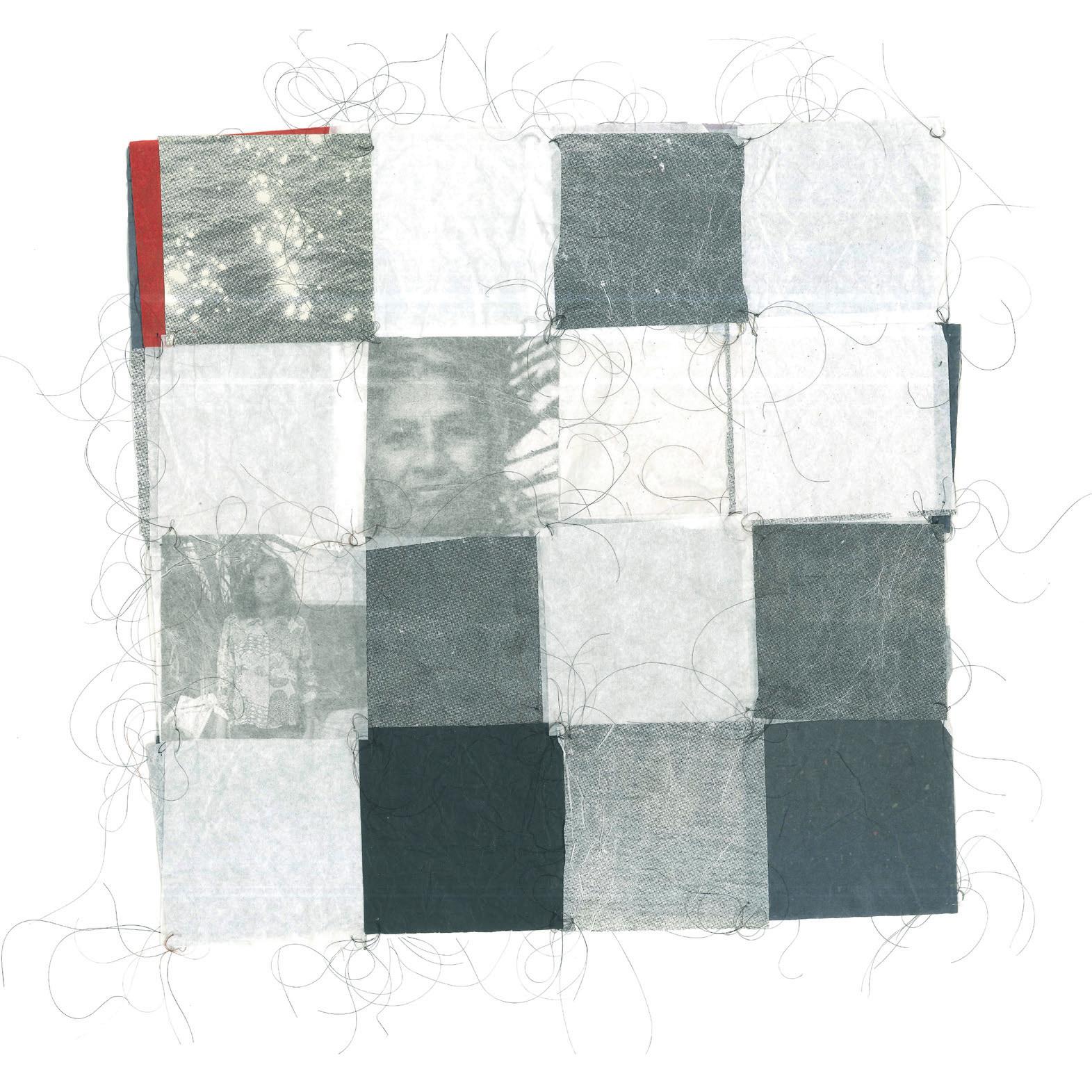
Malak Naseem’s work explores connections between material, heritage, craft and remembrance. Three tapestries on packing paper engulf the viewer, presenting archival images of Maldive newspapers, maternal affection and Dhivehi text. Assembled with strands of Naseem’s own hair, the fragility of these colonial histories is keenly emphasised.
In another departure from traditional painting, Joe Neil has constructed an installation featuring large-scale sculpture, ceramics and reclaimed AI video technology. Its centrepiece is a fossil-like centaur assembled from technological detritus. Suspended above water, the work is ironically framed as a ‘fountain of youth,’ critiquing Silicon Valley’s obsession with immortality.
Connor Draycott takes a similarly interdisciplinary approach, showcasing representational paintings alongside figurative wax sculpture. Draycott’s work investigates UFO sightings in his hometown of Falkirk, examining overlaps between conspiracy and local folklore. This instigates a personal examination of home and identity,
wherein distinctions between the personal, archival, truth and superstition remain ambiguous. Lou Palmer also works figuratively, examining human reactions to loss. Palmer’s graphite drawings are interlaced with wood patterns, shifting her subjects between representational and graphic forms.
Returning to the medium of paint, Maj Olsson engages with painting as a scientific and material process, investigating how substances react and transform autonomously. Layers of muted acrylic wash dissolved rabbit glue primer to produce intricate patterns. Olson’s works depict interiors devoid of human inhabitants, echoing her ceding of human control to her materials.
Finley Highton exhibits three works generated with a pen-plotter machine, opening the boundaries between printing, drawing, and photography. Small errors emerge organically, positioning Highton as a catalyst for autonomous technological processes. As image-making is increasingly shared between the human and non-human, Highton interrogates our definitions of agency and labour. In another use of technology, Angus Hamilton James creates ‘conductive photographs’: intricate systems that combine electricity and light to produce photographic imagery. This work carries photography’s logics
into a strange and mesmerising aesthetic territory. This year’s Fine Art Photography students explore how the camera can alter and challenge perception, moving beyond traditional technical approaches. Jamie King reimagines perception through the layered materiality of his photographs and textual pieces, revealing alternative meanings that recontextualise the ordinary. It provides breathing space to reflect on throwaway phrases like “don’t worry” and the playful accidents of intersecting a banana with a circuit board, reflecting the natural and the absurd, as technology intrudes upon it. There is a continuous perceptual flow within Isabel Bohlman’s installation that draws on a passage of consciousness in phenomenology. These ideas involve the experience of human perception as she technically modifies photographs, both by engaging with and rejecting traditional darkroom techniques, shifting the obvious focal point and mystifying the context. Rita Rogers focuses on militarised landscapes that are hidden in plain sight. The camera becomes a counter-surveillance to the dystopian action of airsoft and the rehearsals of dramatised re-enactments, simulating the proximity of military operations. The photographs present the performance of a war that has not yet happened,
Aminath, Aishath, Malak Naseem, Painting & Printmaking
and rooted in a similar research-based practice, Callum Harrison discovers the critical charge within spatial design. He explores the similar geopolitical power dynamics of the hidden and the apparent, woven into architecture originally designed for military strategy. The installation is materially layered, featuring double-exposed imagery of archival fireworks, thereby heightening the tension between militarised critical theory and its aesthetic reflection.
Betty O’Connell-Rogers’ project was shaped by the study of the innate human act of gossip, and its dismissal through the portrayal of a female-centred performance. The installation challenges idle stereotypes by embedding engraved acrylic sculptures with material and sound. These mixed media sculptures transform the space from human to material, building community through gossip that connects people by sharing perspectives. It reflects on why these acts have been negatively tainted and encourages acceptance of these relatable behaviours.
Jacob Flint Oliver also uses mixed media to transform their installation into an abandoned laboratory, built through a mania of self-created pseudo-scientific systems that reflect the unquantifiable research of a non-binary identity slipping through. The works derived from private performance have undergone systems to obscure readings, to be immersed in public viewing, and even to decode the measurement of 1000 wax spark plugs.
This year’s Sculpture and Environmental Art students have demonstrated a range of approaches to sculptural works, from initial sketches to transformations of largescale construction.
Eve Giltinan Allais’ project has spiralled from her obsession with the throbber – the loading symbol. She has installed vinyl reCAPTCHAs across the hoarding of the Stow car park, making it
instantly recognisable as a space for transient experiences of waiting to load. Eve’s work embodies a throbbing through drawing, offloading information that is displayed alongside video. The projection of liminal time invites us to notice the absurdity of ignoring time’s existence.
Also in video, Jordan MacRae exhibits a 16mm film examining the landscape of Orkney, the home of the poet George Mackay Brown. MacRae’s work engulfs the viewer in atmospheric narration and noise while fragmentary images of the island’s natural beauty circulate. Brown referred to life in Orkney as having a “marvellous simplicity”, and the film pays broader tribute to Orkney as a home for its contemporary and historic populations.
Robyn McCrae has manufactured a conveyor belt of eight cow heads, programmed via an Arduino-controlled motor to move continually back and forth, kissing the cow seated opposite, attached by a red seatbelt stitched into its mouth. Coward is a tongue-in-cheek political reflection on conformity in society, highlighting the behaviour of silence and inaction. The kinetic Mexican wave is a statement that life continues, and nothing changes in the same cycle. It visually performs a kick up the arse.
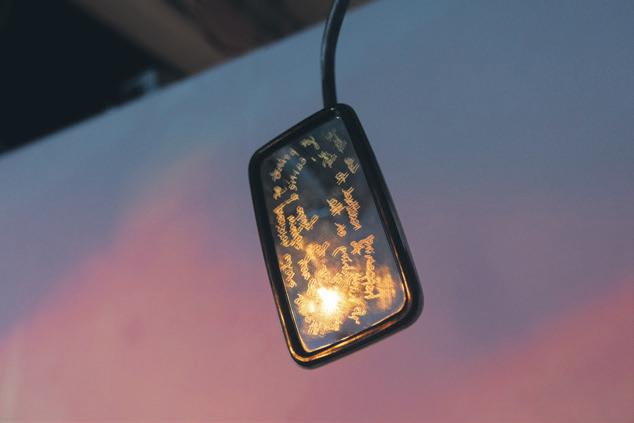
Jess Pickering exhibits a two-part installation engaging with the erasure and exposure of archival information. Archival text is stored in structures mimicking office shelves, then visibly
corroded in acid over the course of the exhibition. Across the room, metal flooring is gradually shaped by the viewer’s footsteps to reveal fragmented text. Together, these works explore how history is uncovered, lost and preserved.
Celeste Knight sets five large ceramic pots on top of sculpted plinths that stage the act of interpreting subtle hints of jest embedded in their structural forms. Her practice is materially driven, with a focus on ceramics and clay. She uses coil building to create scale. The act of making emerges as if it were materially alive and unpredictable.
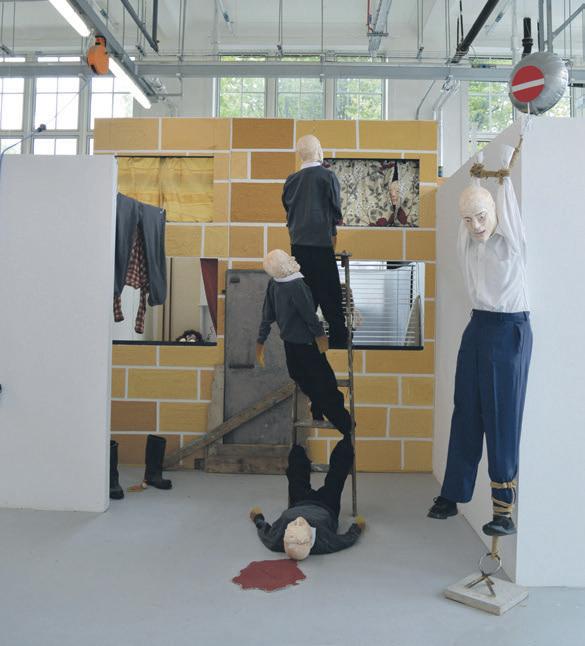
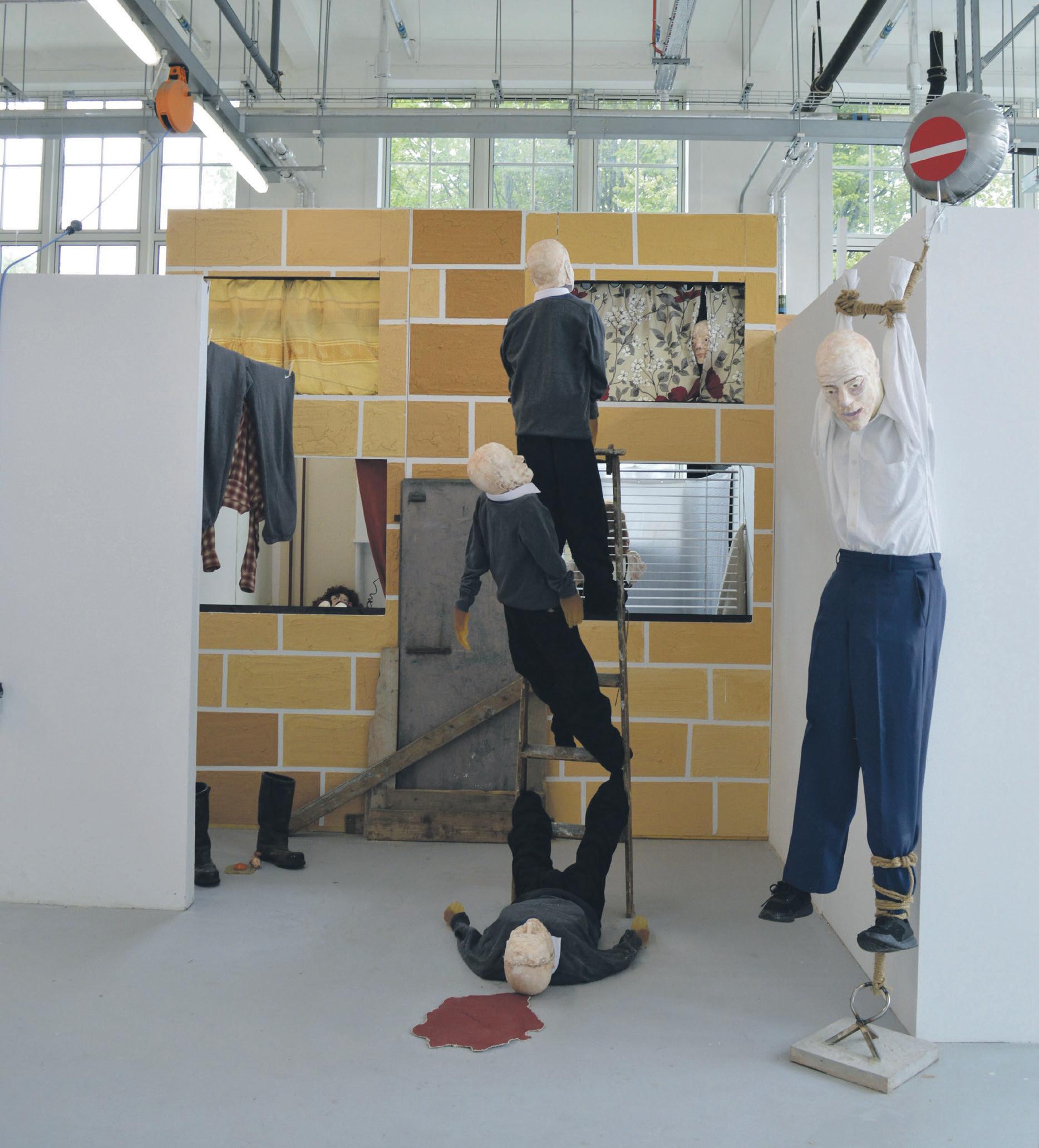
Scale grows within Dylan Hope’s constructed tenement dollhouse. Its inhabitants are handsculpted dolls who animate various human behaviours. The windows invite an onlooker into the absurdity of these recognisable and humorous intricacies. The dolls’ anatomy is built separately and pieced together, fashioned into a state of ‘not quite human’. Viewing them plays with our perception and prompts us to fill in the gaps.
Across the cohort, a shared interest in the esoteric and the reflective quietly emerges. Visitors are invited to slow their gaze and tune into the varied histories, processes, and perceptions that follow.
School of Fine Art, Stow Building, 29 May-7 Jun
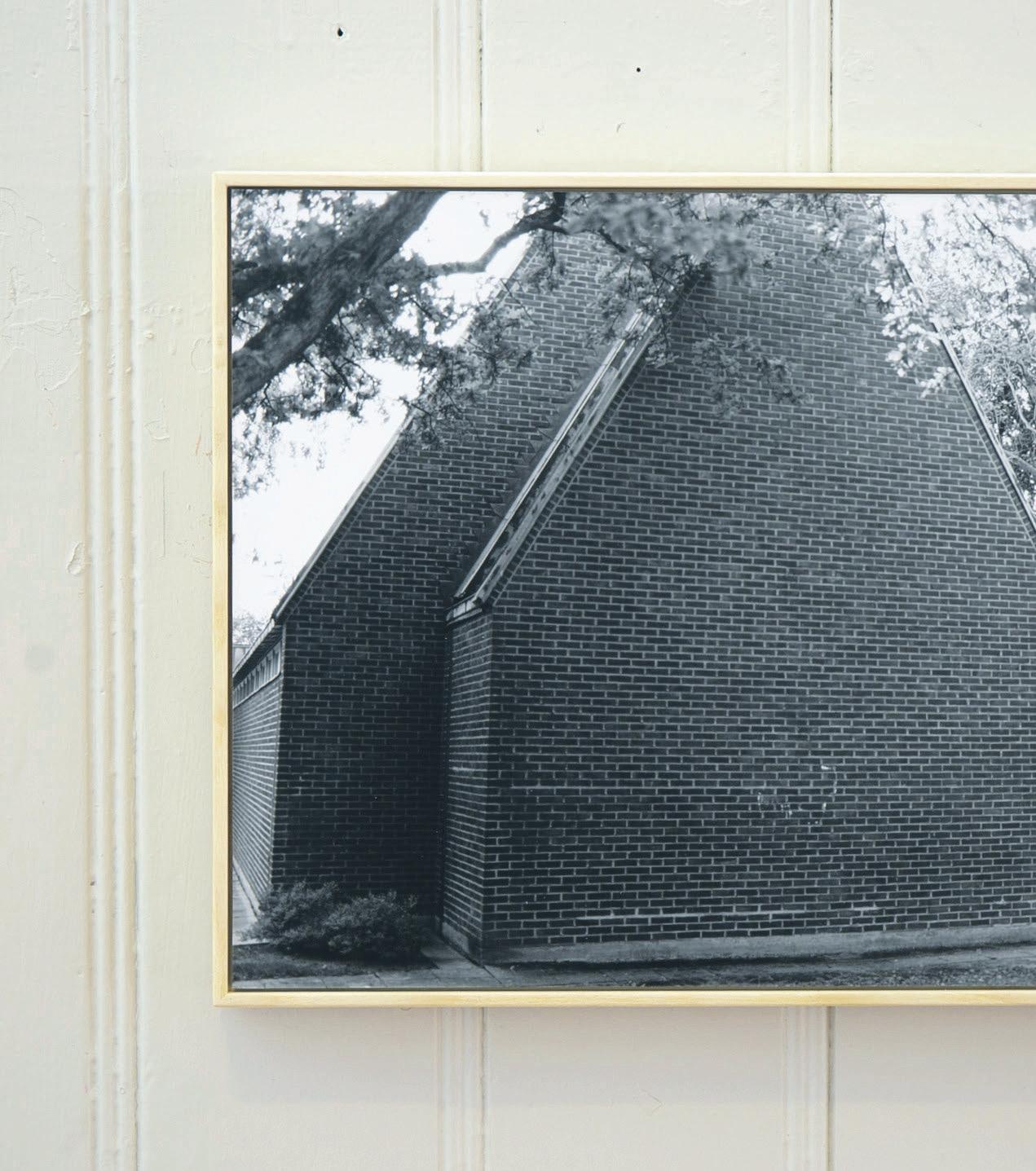
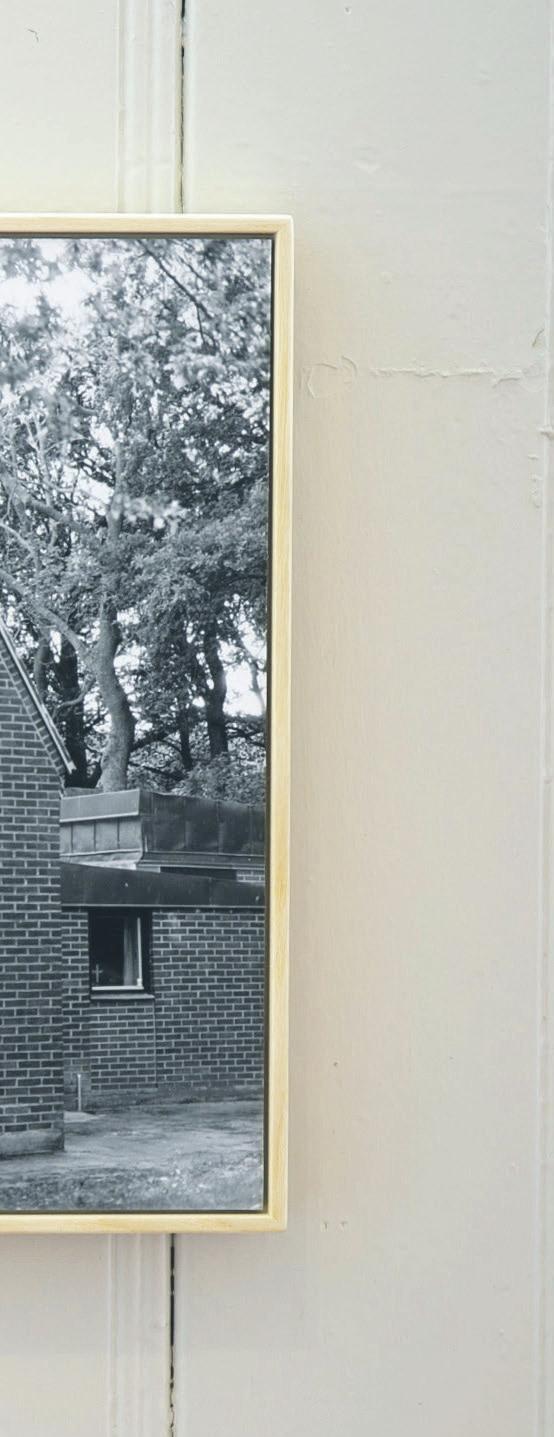
Cave, silver gelatin print, Isabel Bohlman, Fine Art Photography
Tenement, Dylan Hope, Sculpture and Environmental Art
Design
Together, these emerging designers are challenging conventional boundaries while proposing thoughtful responses to contemporary life
Words: AJ Glover and Sarah Kefford
The School of Design’s 2026 graduates showcase an energetic mix of work across disciplines – work spanning Communication Design, Fashion Design, Interaction Design, Interior Design, Product Design Engineering, Silversmithing and Jewellery, and Textile Design. What connects it all is a spirit of experimentation, a sharp sensitivity to materials, and a clear engagement with the world around them.
Maya Randall, a Communication Design student who is graduating from illustration, explores childhood nostalgia through playful and tactile animation. Rooted in the magic of children’s media, her practice foregrounds physical making and human touch, inviting viewers to reconnect with the joy of handmade processes. By revealing the labour behind her work, she builds emotional resonance while encouraging renewed appreciation for creativity in its most tangible form.
Graphic designer Belle Breslin similarly embraces experimentation, blending analogue and digital processes across film, design, and objectmaking. Their surreal imagery and distinctive use of colour draw attention to inner worlds and overlooked details, transforming the mundane into something curious and unexpected. This approach
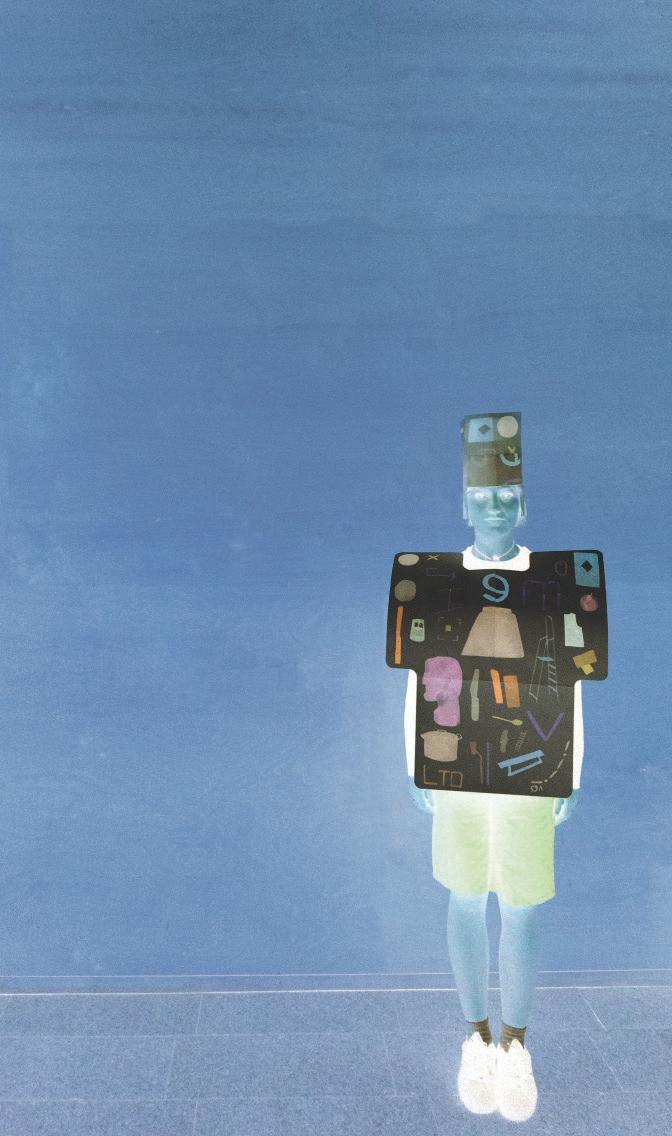
encourages viewers to reconsider everyday objects and find beauty in the unfamiliar.
Themes of intimacy and observation are central to Olivia Proto’s lens-based practice. Working primarily with medium format film, she captures subtle, often overlooked aspects of human experience, such as the cultural and personal significance of hair. Her images evoke warmth and reflection, offering quiet moments that celebrate connection and everyday beauty.
In Interior Design, several projects address the relationship between space, accessibility, and community. Zoe Dowman reimagines Glasgow’s former British Home Stores building as an inclusive music centre, opening it to the street to merge public and creative life. Her proposal seeks to revitalise the city while breaking down social barriers and making music more accessible.
Iona Taylor’s work explores accessibility, inspired by personal experience. Her work reimagines a historic building to show that inclusive spaces can also be beautiful and thoughtfully designed. Aiming to shift perceptions, the work encourages reflection on overlooked barriers while proving accessibility and strong design can coexist seamlessly.
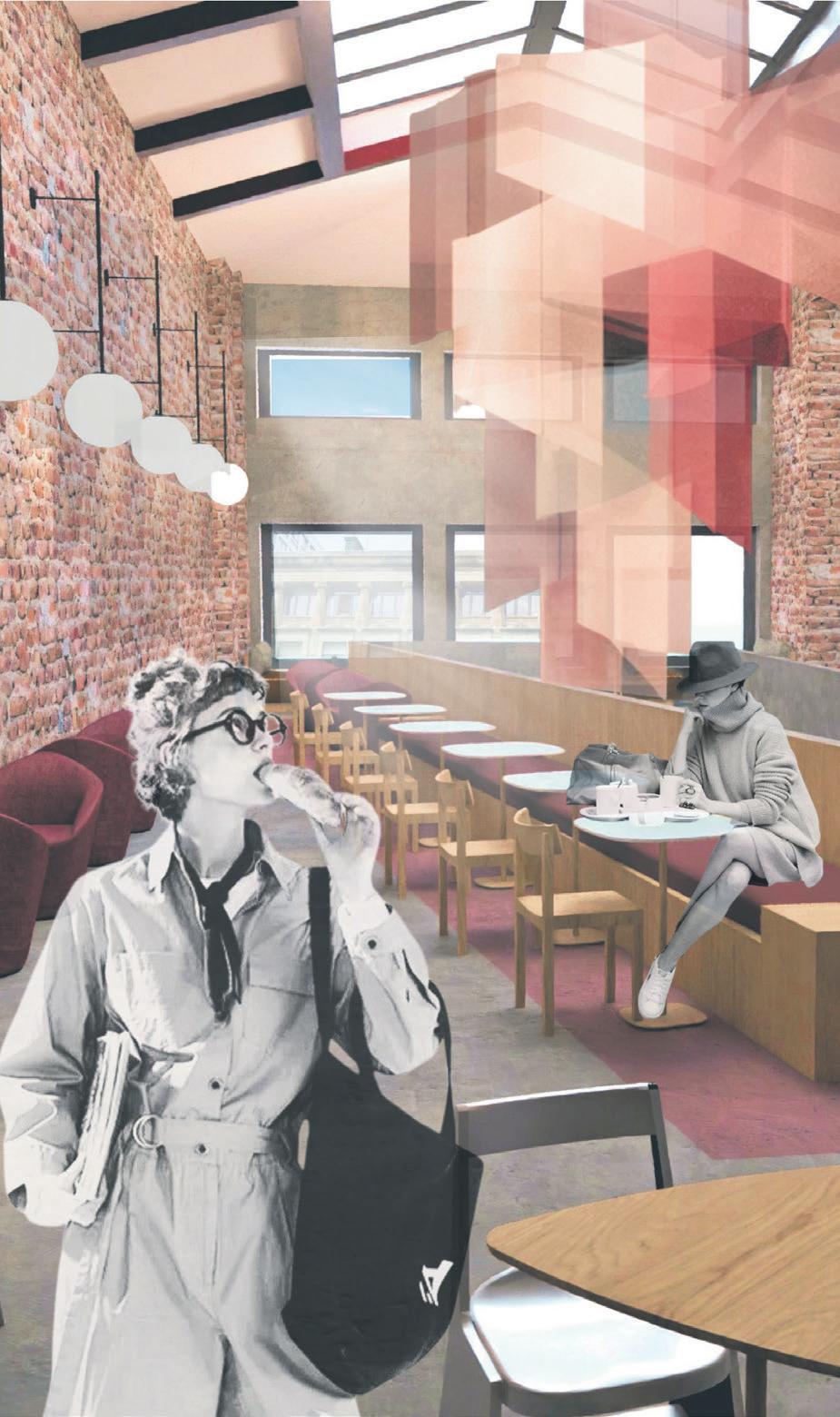
Similarly, Carrie Matossian’s project, The Fold, proposes a safe and supportive environment for women and non-binary individuals in fabrication industries, combining workshop and gallery spaces to encourage participation while confronting systemic exclusion.
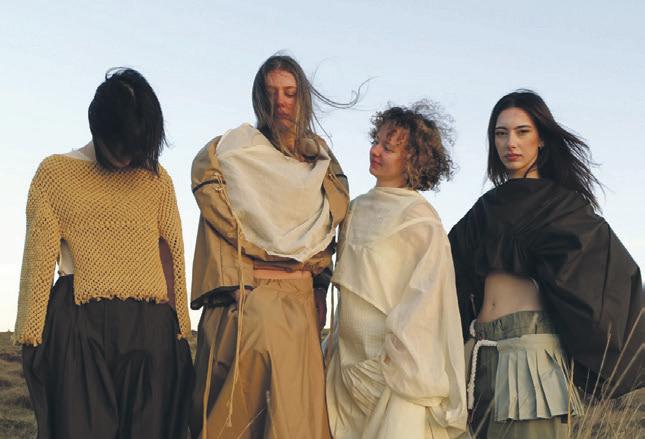
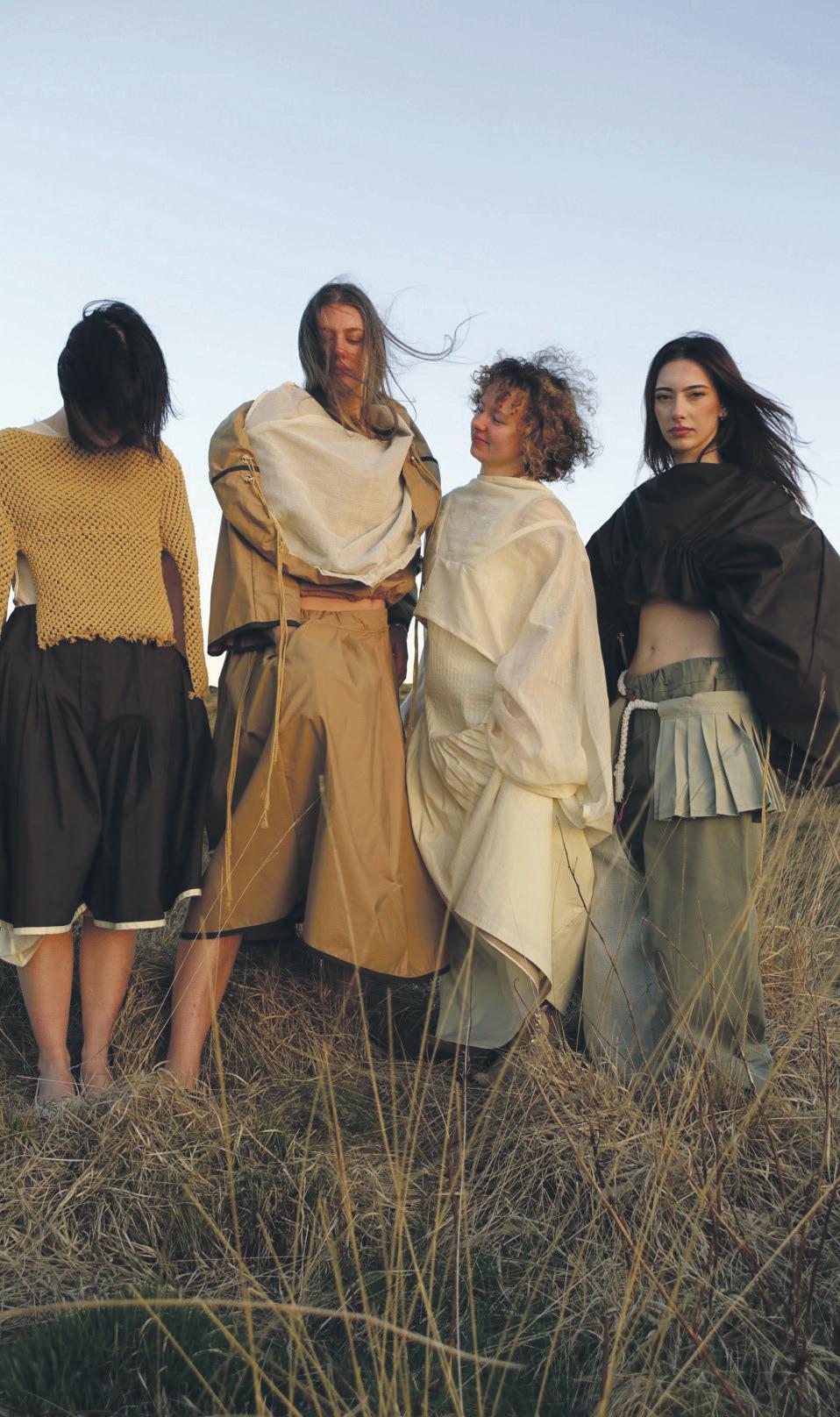
Fashion Design projects explore identity, environment, and representation through material and form. Kristin Wood draws on lesbian history and queer club culture, using fluid silhouettes and unexpected colour palettes in traditional suiting fabrics to challenge norms and celebrate inclusivity. Nikola Dzigda rethinks outerwear by introducing more feminine perspectives into a typically masculine space, utilising sustainable materials such as Ventile to maintain performance while reducing environmental impact. Both designers highlight the potential for fashion to communicate identity while responding to broader cultural and ecological concerns.
Material exploration is also central to Meraud Pengelly’s work, which investigates ‘liminal skins’ through combinations of contrasting textures including acrylic, wool, fur and silk. These pieces blur the boundaries between digital and physical, comfort and unease, prompting viewers
Belle Breslin, Communication Design
Carrie Matossian, Interior Design
Nikola Dzigda, Fashion Design
to question perception and engage emotionally with the work.
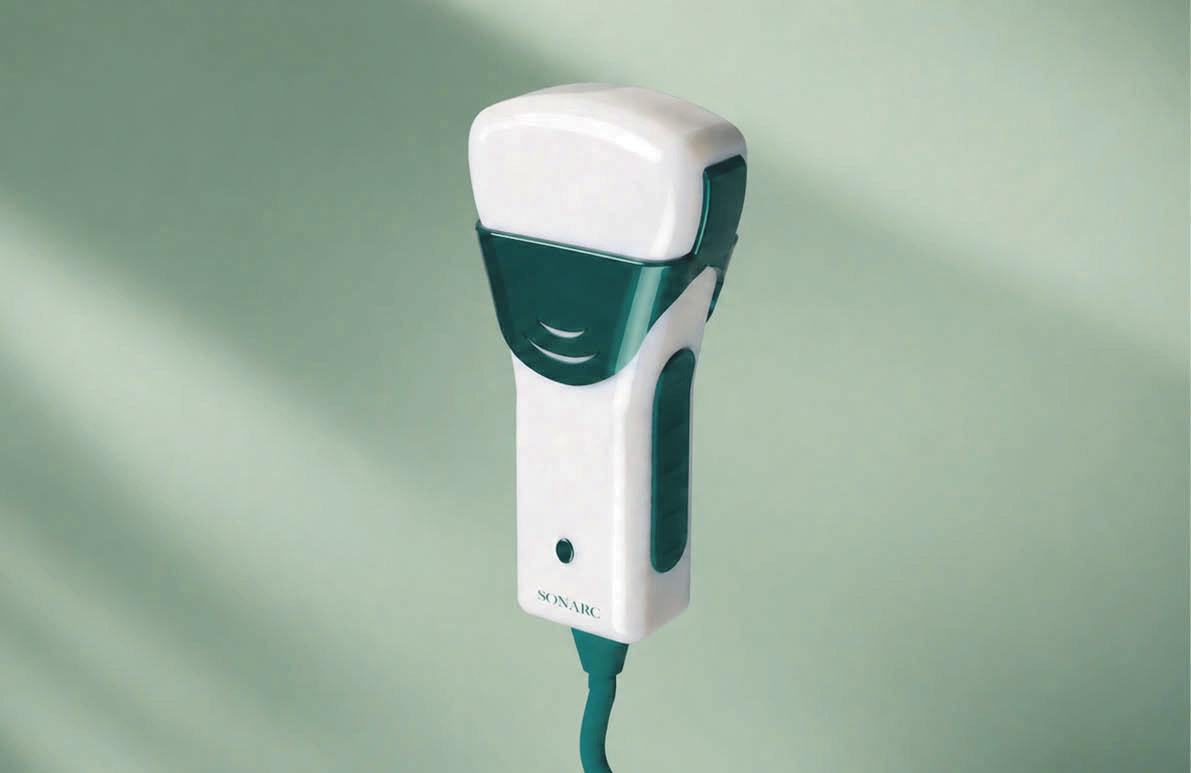
Product Design Engineering projects demonstrate a strong focus on functionality and realworld application. Erin Duffy’s Sonarc is a portable, low-cost ultrasound device designed to improve access to medical imaging in resourcelimited settings. Through a simplified and repairable system, the project balances usability and durability while addressing a critical global need.
AJ Baines takes a similarly analytical approach, developing a rucksack that converts into a sled for winter terrain. By focusing on efficiency and adaptability, the design reduces physical strain and showcases a rigorous, process-driven methodology.
Students across Textile Design explore personal and process-led themes that merge disciplines. Christie Shannon explores the intersection of colour and line with her reversible knitted fabrics. Inspired by the playful distortion of underappreciated architectural forms like railings and staircases, she has created patterns that blend together the real and the transposed. Hand-manipulated techniques and pleating highlight these dual visuals, which work both in a fashion and interior setting.
Nell Burgess explores community-based practice and the ritualistic nature of weave. Interested in sustainability, locality and fibre, she delves into wool production and investigates how process-led slow-crafts can lead to a more intentional way of working. She merges disciplines, using natural dyes to emulate traditional Ikat weaving and creates a strong visual language of blurry-edged shapes and blended hues.
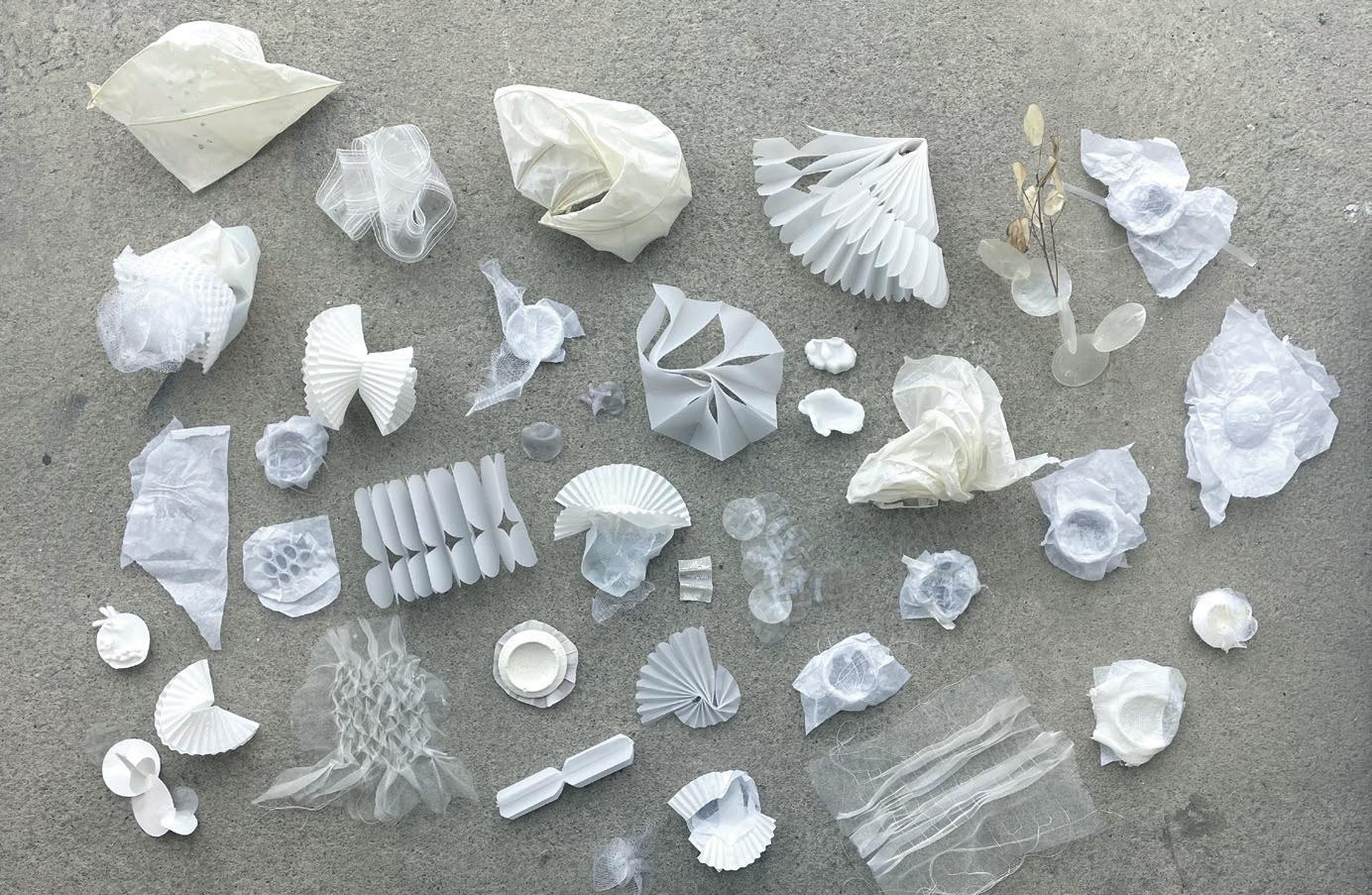
Sustainability is also a key component in Kirsten Harper’s embroidery. Exploring preservation and decay, she uses hand stitching, secondhand materials, and natural dyeing, to create material artefacts that exist within the boundary of the modern day and the distant past. Her work is process-led, using found objects like bones, hair, and metals which emphasise textural qualities to evoke a sensory experience for the wearer.
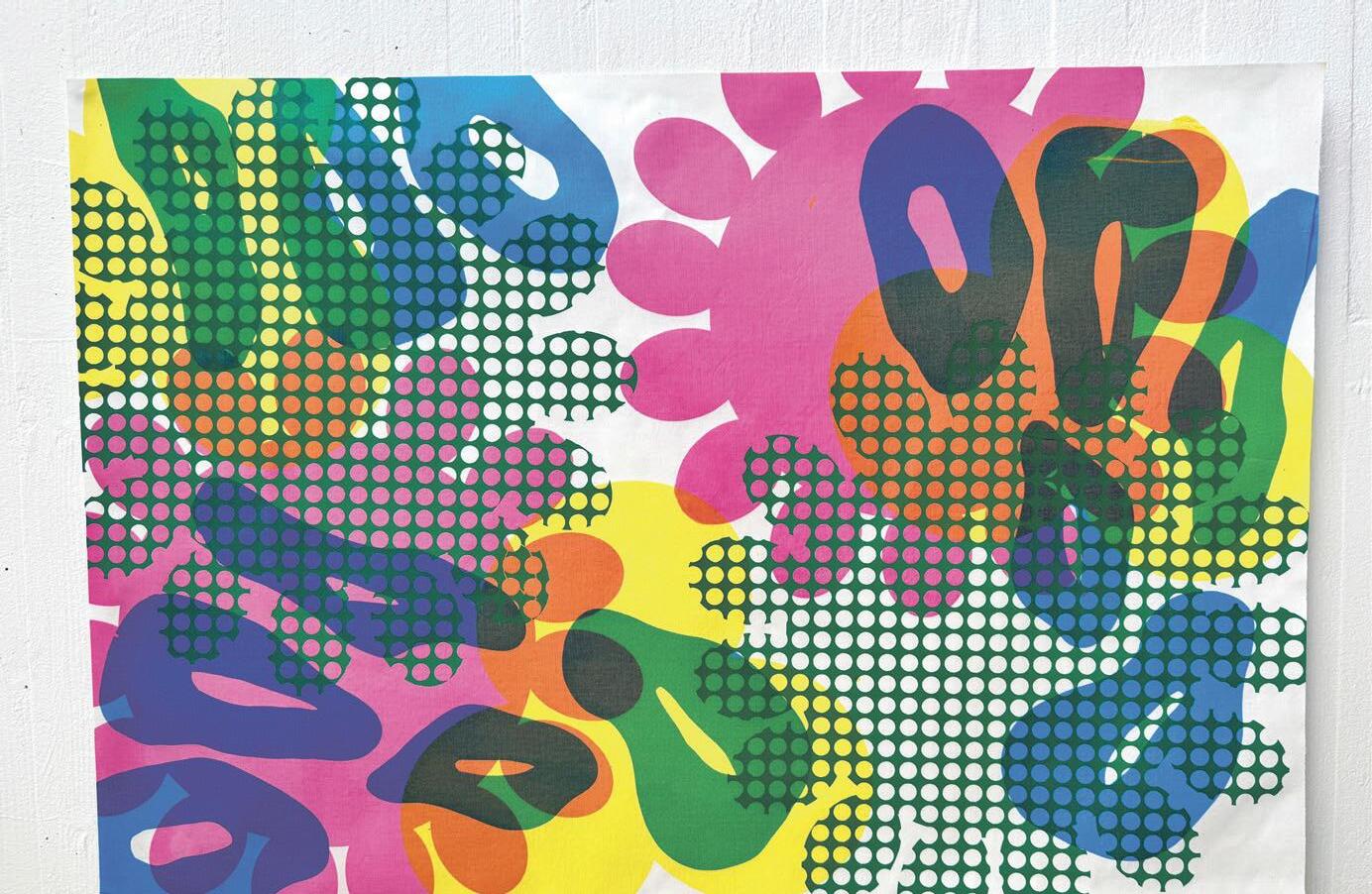
Print student Maia McLaren reimagines botanical forms through a pop-art lens. Inspired by her time spent in Tokyo, she merges traditional Japanese florals with the neon lights of city streets, creating large-scale wall hangings and wallpapers that mirror these urban backdrops. Her work is process-led, using collage and screen printing to create graphic, multi-layered designs.
The Silversmithing and Jewellery cohort explore vessels in dialogue with the wearer. Lani Ward explores narrative jewellery as a tool to portray escapism. Inspired by the intimate nature of the medium, her collection of pendants acts as the physical embodiment of an imaginary world, moulded from the unconscious influence of a lifetime of reading. She is interested in combining textile processes and tactile qualities in her work, which create a sensory experience that brings this story to life through interaction with the wearer, using movement and sound.
Hannah Redpath explores materiality and movement through her monochromatic collection Still in Motion. She is interested in creating sculptural pieces with illusory qualities; static pieces that appear in flight, solid materials made delicate, and valuable materials that imitate paper.
Paper forms are the central theme: intentional tears, thin, airy qualities, and hand-formed textures, and her collection of rings, brooches, and neck pieces appear as lightweight, fluid extensions of the body.
Sophie Izard’s multi-use candlesticks and vases invite you to gather and make connections at the kitchen table. Interested in glorifying everyday items, her designs embrace their hidden beauty and draw you into the space. They function as connecting sets that can be reordered and mismatched, showcasing practical and visually engaging statement kitchenware pieces for the home.
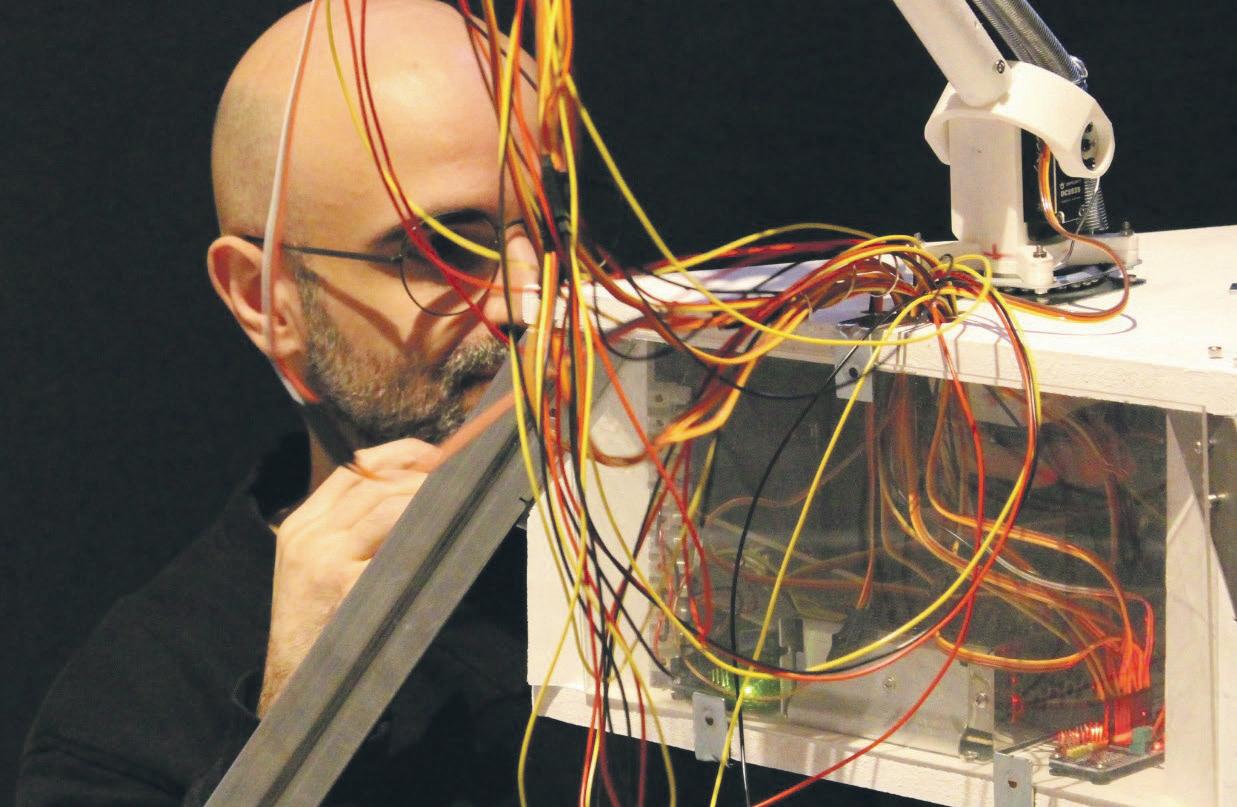
This year Interaction Design showcases a variety of installations that encourage new forms of communication. Marco Azzolina’s custom cybernetic sculpture uses motion sensors to ‘talk back and forth’ with the observer on an anthropomorphic scale. He explores therolinguistics, finding inspiration from animals that live like robots – imagine creatures from the depths of the ocean floor. The installation’s inverted communication dynamic mimics that of a zoo enclosure. Unlike common interactions with a screen or remote knowing you’re in control, here it is the installation that is engaging with you.
The School of Design hosts a diverse group of graduating designers, whose practice is rooted in building narratives and inviting connection. Their innovative approaches towards technology and craft showcase an exciting glimpse into the new wave of design.
School of Design, Reid Building, 29 May-7 Jun
Hannah Redpath, Silversmithing and Jewellery
Marco Azzolina, Interaction Design
Maia McLaren, Textile Design
Erin Duffy, Product Design Engineering
MDes Communication Design
For students on the MDes Communication Design programme this year, location and surroundings appear as a framework exploring how images, narratives and landscapes shape, fix, or unsettle the ways in which people are defined
Words: Lynne McKay
The MDes Communication Design programme brings together graphic, illustrative and lens-based practices, encouraging students to develop their own visual narratives articulated through an engaging and adaptable visual language. This cross-medium approach gives students the space to shape, experiment and communicate their work in varying contexts.
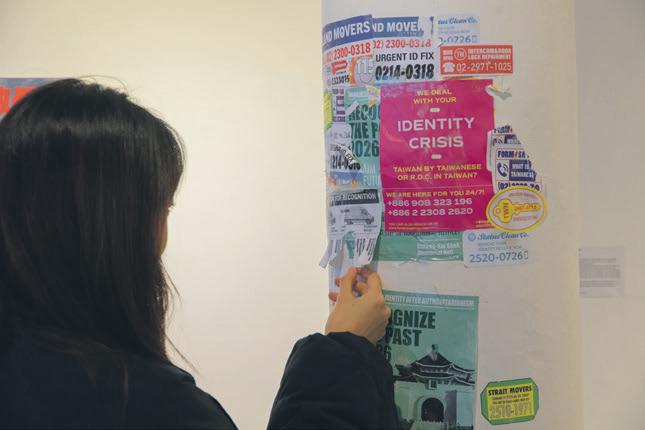
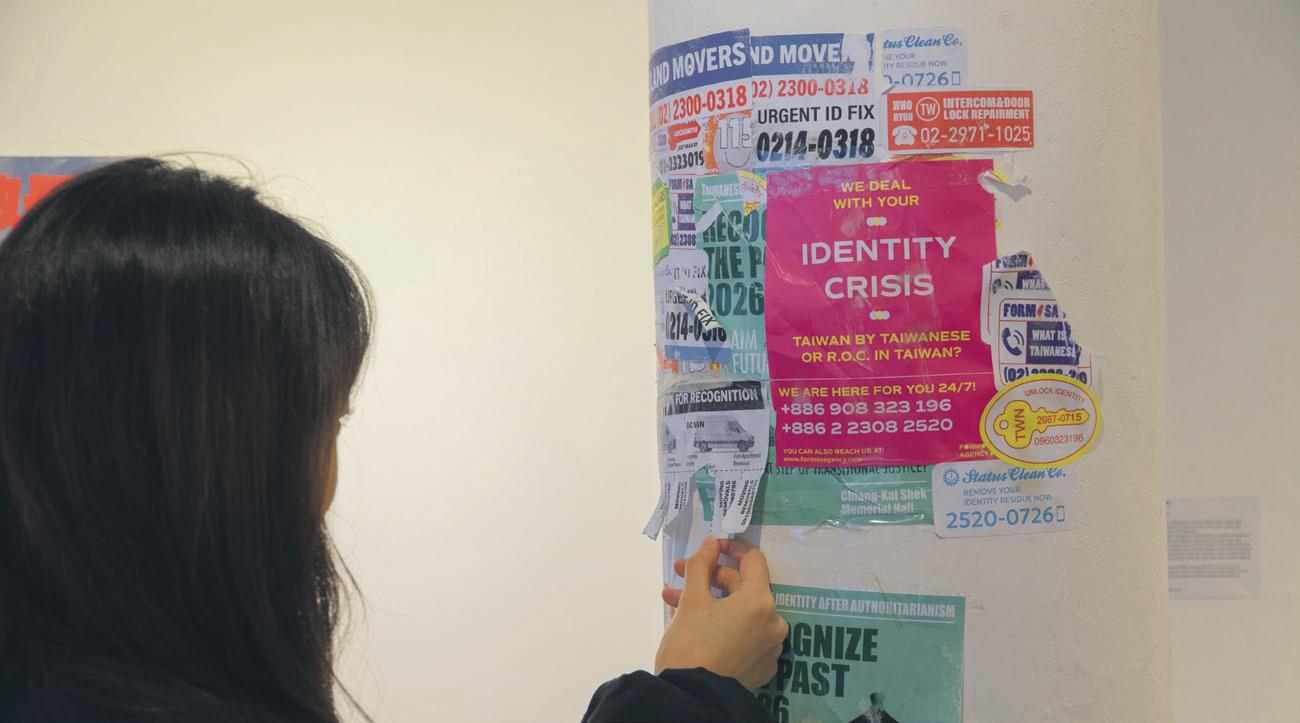
Winnie Wang’s publication Tâi-uân Gín-á is a witty and playful body of work, delving into the identities of Taiwanese children, while engaging with Taiwanese Hokkien. Unfolding over a threepart structure, Wang takes us on a journey tracing her generation’s relationship to national identity and examines how identity is formed. Centring on the ‘Naturally Independent Generation’, Wang’s intention for starting the project was inspired by the Great Recall Movement of 2025. She invites us to consider the question – is Taiwan the Republic of China, or does Taiwan belong to the Taiwanese people? Recontextualisation is at the core of Wang’s approach. Using authentic materials and objects, she introduces humour to offset the seriousness of political issues. Bringing cultural significance and Taiwanese aesthetics into the publication and with a small gesture of wit she remarks, “some still may not know their identity, as the moon blocks are hanging in the air.”
Ó na Cruacha is a pulication by Hannah Grajciar which centres on archival information within the Monoglot Gaeltacht community of the remote Croagh’s region of Tír Chonaill, Donegal. Grajciar, a native of Belvidere, Illinois, was inspired to create this piece through family heritage in Ireland. Offering insight into the rich language and culture that has survived to the present day, Grajciar carefully selected three songs to bring to life through illustration. This includes hundreds of pieces of folklore, collected by folklorist Seán Ó hEochaidh in the mid-twentieth century from Anna Nic an Luain, who lived all of her life in the shadows of the Blue Stack Mountains. Grajciar acknowledges that the mountains are not just a backdrop but are a part of the stories themselves. Celebrating the seanchaí tradition, Grajciar reflects on a time when oral storytelling was a primary means of passing knowledge, values and history between generations.
Blending recorded histories with speculative interpretation is at the heart of this work; in doing
so it resists fixed narratives and instead proposes a more fluid, affective archive, one that centres women’s voices and the living nature of oral cultural tradition in the Croagh’s and beyond. Within the region, identity is carried through language. Grajciar presents to us a foreground of the often underacknowledged role of women as custodians of community memory. This role in the community is influential and rooted in lived experience. Grajciar’s work is a wonderful preservation piece, carrying centuries old traditions, into the present day.
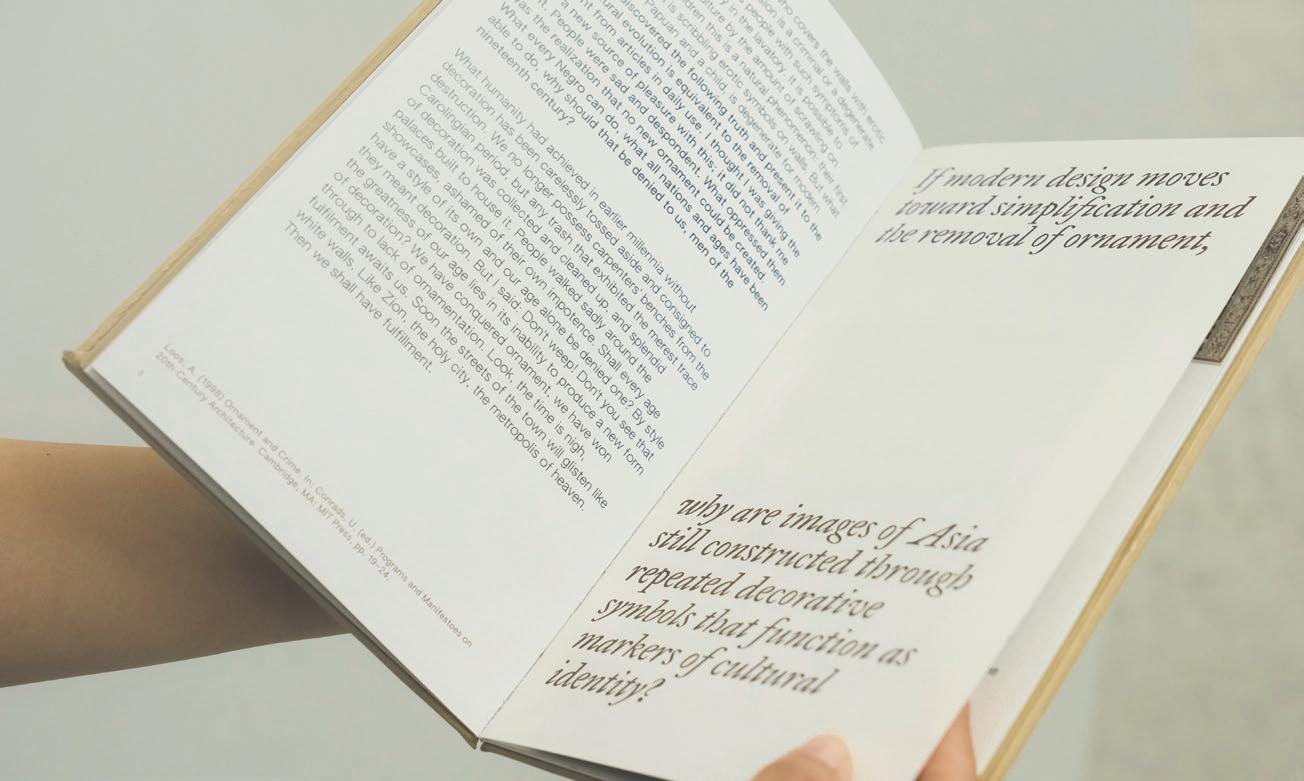
Shuhan Jia presents a two-part publication blending illustration and graphics – Orientalism and the Feminised East: Bodies as Threat, Bodies as Ornament and Orientalism and the Ornamentalism: Signs as a Surface, Signs as Myth. This structure introduces a focus on visual elements. It invites us to consider stereotypes and misrepresentation of Asian women in Western media and film, in parallel with Chinoiserie, where East Asian design features are disproportionately emphasised and presented as ornaments, while misrepresenting the realities of Asian culture. Jia asks the question – “is misrepresentation the only way to design?” Delving into works such as Madama Butterfly, and films such as Memoirs of a Geisha and The Teahouse of the August Moon, Jia chooses not to focus on a sense of victimhood, but questions how visual representations of East Asia inspired design in the West in a way not indicative of real life.
Juntao Yuan’s photographic zine Water of Life is a truly captivating body of work, skilfully produced through the technical discipline of photogram printing. Carefully composed and visually considered, it examines Uisge Beatha, the Water of
Life and the cultural role of Scotch whisky, tracing its shift from medicinal purposes to national spirit. The title foregrounds both the original Scottish Gaelic term and the anglicised evolution – from uisge to usky and eventually whisky. Working from visits to several distilleries, where water is taken from local sources before being transformed through distillation, the publication situates whisky within the material and cultural landscape. The result is a measured, poetic study of a practice deeply embedded in Scotland. Storytelling, music, and film form the basis of work across the cohort, anchoring projects that open up a shared experience of how environments shape meaning. MDes Communication Design, Reid Building, 29 May-7 Jun
Shuhan Jia, MDes Communication Design
Winnie Wang, MDes Communication Design
Innovation and Technology
The work of students at the School of Innovation and Technology embodies the space where future and present overlap, at the intersection of art and technology
Words: Anya Lunny
The School of Innovation and Technology (SIT) develops design skills, focusing on how innovation and technology impact and aid future society. Offering various specialisms and degree pathways, students in SIT showcase a variety of self-initiated projects, reflecting the ethos of understanding and future thinking taught on their programmes. This year, ‘doing good’ is at the forefront of graduating students’ minds, with almost every project sharing a common goal of creating work that instils hope and tackles problems facing societies, especially those within Scotland.
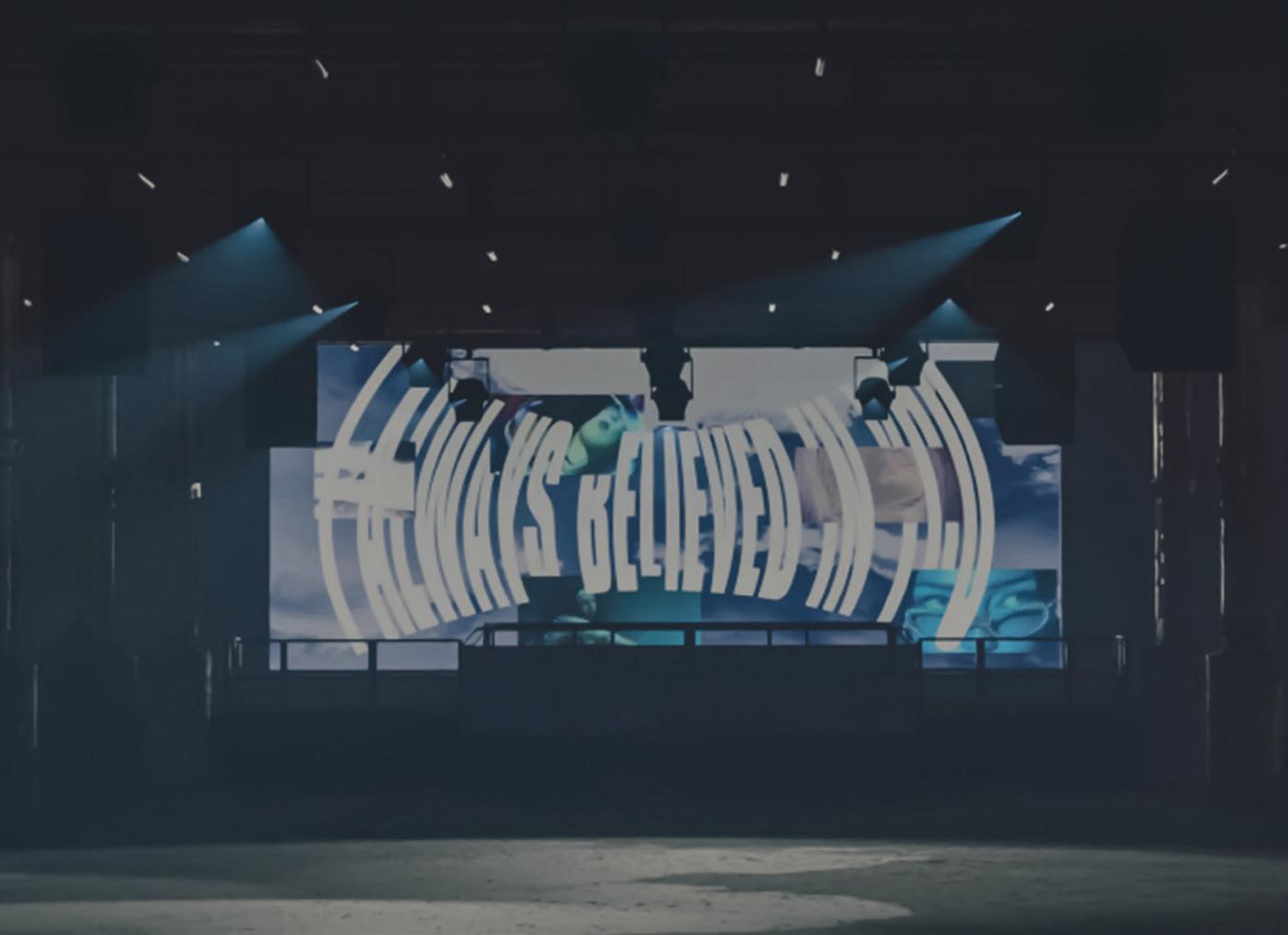
Declan Murphy, a student of Immersive Systems Design – 3D Modelling, and a self-described “generalist in 3D”, showcases a wide variety of projects, each sharing a common lens of interacting with audiences through digital simulation. Murphy delves into a diverse range of aspects within modelling and simulation. With work exploring simulated explosions as they appear in media, Murphy experiments with the physics of 3D explosion simulation and evaluates the interplay and differences of viewer expectation, which has been impacted by the unrealistic exaggeration of film pyrotechnics when compared to real detonations. Elsewhere, investigating the design of club visuals, Murphy also models a 3D environment of Manchester’s Warehouse Project to create visuals designed to play behind the song always believed by sim0ne, a design balancing both the emotional and artistic value of the song with the needs of the space. Finally, exploring heritage on the Isle of Iona, Murphy showcases an XR visualisation of Iona Abbey.
Similarly, exploring heritage and life on the islands and coasts of Scotland, Joseph Hunter, a Product Design student, explores the coastal communities’ relationship with the viable byproducts of scallop shells. Inspired by his own experiences of the Scottish coasts, his project centres on turning byproducts into viable products in three distinct opportunities: personal, industrial, and speculative, proposing circular economies for the life cycle of a material.
The Product Design programme provides students with the opportunity to explore various aspects of design with the aim of developing personal practice and encouraging students to refine their lens and methodology from speculative to system design, often with community and social understanding at the heart.
Cairn, a project by Product Design student Alasdair Haig, aims to foster community connection to woodland restoration through the monitoring and removal of the rhododendron ponticum plant. The project is a multipart system consisting of soil monitoring equipment and an output hub that utilises soundscapes to notify communities of outputs, allowing the care of land to be placed within communities rather than authority bodies.
Maya Lo’s project, How Do You Spell Scotland, deeply investigates the diverse experiences of Scottish identity, more specifically young female Scots. It takes the form of a community exhibition inviting visitors to explore what identity and belonging mean
from different perspectives through reflection and language, with the end goal of facilitating tangible examples of community understanding and seasonally rotating curatorial work.
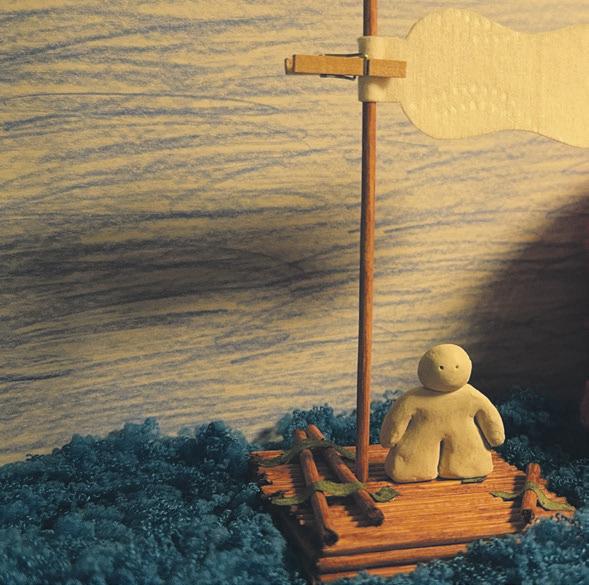
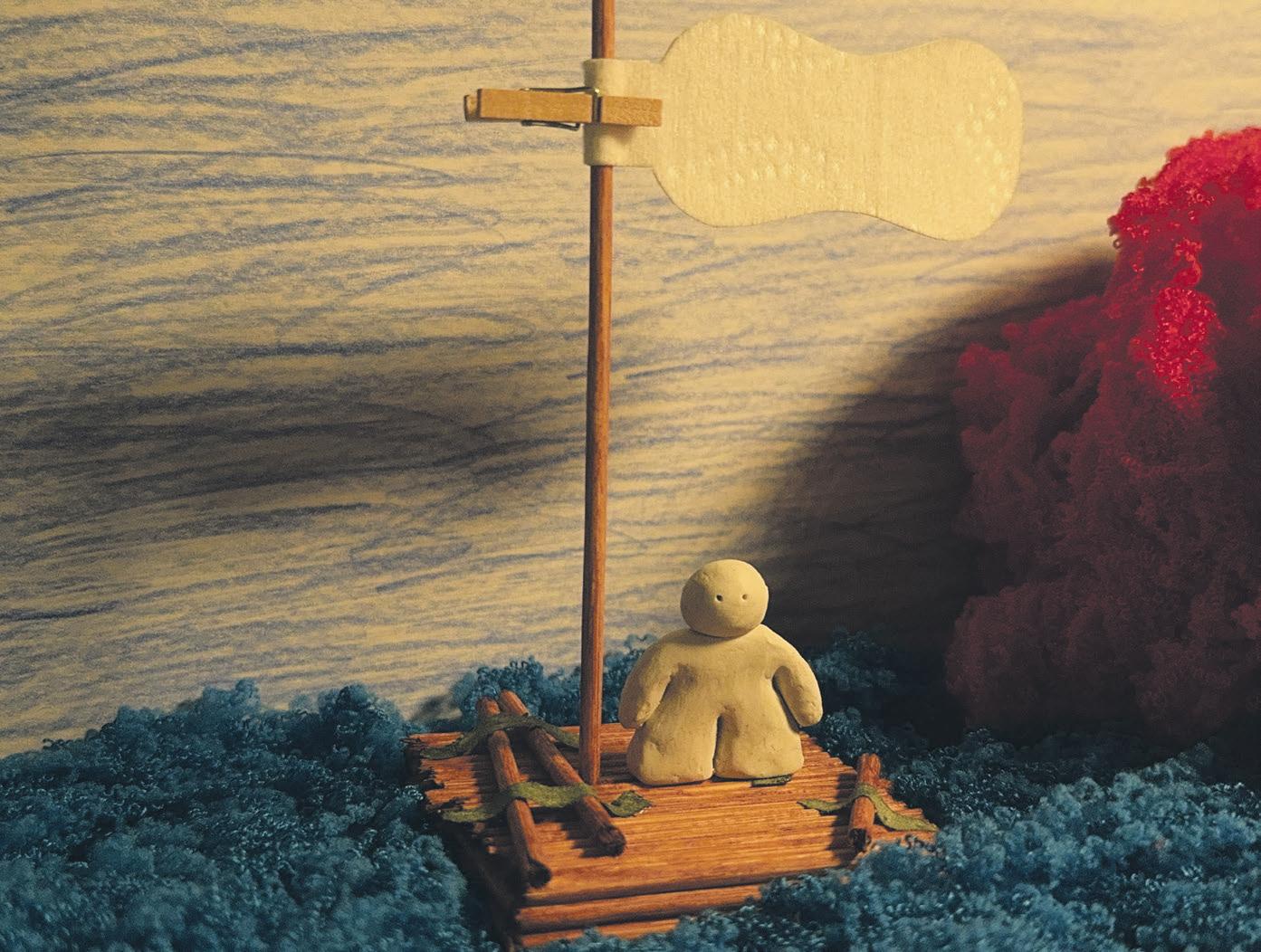
The Sound for the Moving Image programme showcases students working on exploring the relationship between conceptual and technical sound skills, developing its symbiotic nature with various visual outputs. Jessica Payne demonstrates the relationship between sound and emotion, specifically the gender expression surrounding screaming, working with abstract audio-visual works. Payne detaches the emotions of screaming from the human body, investigating the subject through the visual method of clay stop motion, inspired by the works of Kaja Silverman and Anne Carson. Secondly, Payne also presents an eternal loop stop motion film, an allegory for menstrual depression, following a character who wakes up on a beach, attempting to build a raft while a wave resets their progress.
Across the School, whether working through sound, product, simulation or any other approach, there is a wider lens and a common theme of 'doing good'. Through connection with people, land, and heritage, there is an underlying tone of hope in many works across the Degree Show, reflecting on the designers’ personal lenses on practice through their own design pathways.
School of Innovation and Technology, Haldane Building, 29 May-7 Jun
Jessica Payne, Sound for the Moving Image
Declan Murphy, Immersive Systems Design
Architecture
From the conceptual reimagining of the Highlands to an analysis of the city of Copenhagen, the MSA Degree Show covers the breadth of the built environment today
Words: Phoebe Wells and Omnia Ghanem
The Mackintosh School of Architecture Degree Show displays work which examines the social, environmental and cultural forces that shape modern society. The projects in Stages 3, 4 and 5 travel between three different locations including the Scottish Highlands, Glasgow and Copenhagen to investigate how architectural design can adapt to evolving human relationships with their environments and social groups. The research investigates ecology, public interaction, memory, ritual and production to show how architects practice while developing new ways to experience and comprehend their surroundings.
Stage 3’s Semester 2 project centres on an observatory in Lochaber, encouraging alternative engagement with the landscape and ideologies that surround it, offering a varied and critical outlook on a range of perceived issues within the context of the Highlands. From reviving historic vernacular practices to reinvigorating the landscape, Stage 3 invites us to re-examine the romanticised environment at closer proximity.
Iris Lam, inspired by her fascination with biology and biomimicry, investigates some of these challenges, choosing to incorporate an alternative
material in her project: mycelium. She highlights the hidden natural wonders of the Glenfinnan area, focusing on the loss of the temperate rainforest and biofluorescent fauna, often overlooked in the shadow of the famous Glenfinnan Viaduct. Biofluorescent species can be lichen, mosses or fungi and host a secret communication used to manage excess light and attract pollinators by absorbing and then reflecting light. Utilising information gathered by the British Lichen Society, Lam’s project employs a timber rod structure coated in mycelium to facilitate the lichens’ growth. The observatory allows people to shine UV light onto the species to see the fluorescence. The mycelium eventually decomposes into the ground, providing nutrients and neutralising soil acidity to create more favourable growing conditions for both the bioluminescent species, and the genetically distinctive pine. This scheme will allow temperate rainforest to eventually regenerate fully with the bioluminescent species.
In contrasting context from the rural aspects of Scotland, Stage 4’s work turns our attention closer to home, focusing on the city centre of Glasgow. Tasked with creating an urban building
for civic activities in conjunction with housing two familiar offices, Glasgow Institute of Architects (GIA) and Glasgow Building Preservation Trust (GBPT), Arun Bhogal chooses to draw on the city’s rich port history. He aims to “reinstate the frontage of the Clyde and re-establish the relationship that Glasgow has with the river,” recognising the loss of industry, but in addition, the loss of activity in those areas. The monolithic blonde sandstone façade complements the neighbouring category A-listed Clyde Port Authority building. Bhogal conscientiously considered form through iterative practice to ensure generous amounts of light would still reach surrounding areas of the site which has been vacant for a prolonged period. The traditional elevation alludes to an unusual but historic structural system comprising of pretensioned stone columns and beams. The addition of steel rods in the stone composition provides increased stability against bending motion, allowing for longer spans. The building exhibits Mackintosh drawings as well as keepsakes from past GBPT restorations projects, to create ‘a place of memory, dreams and journeys.’ By pairing archives with offices, it aims to ‘keep the building
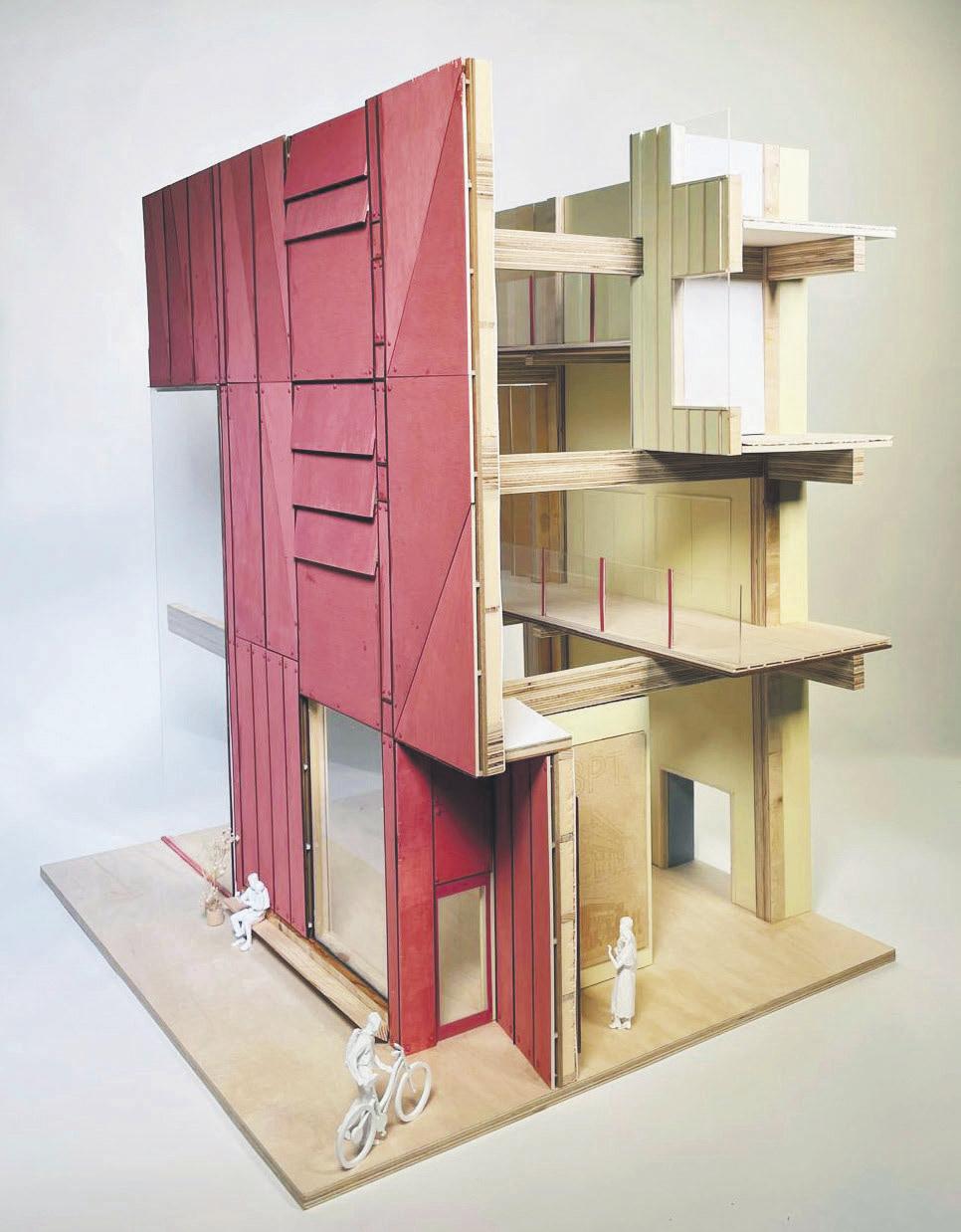
as open as possible,’ to integrate the public into the fabric of the city.
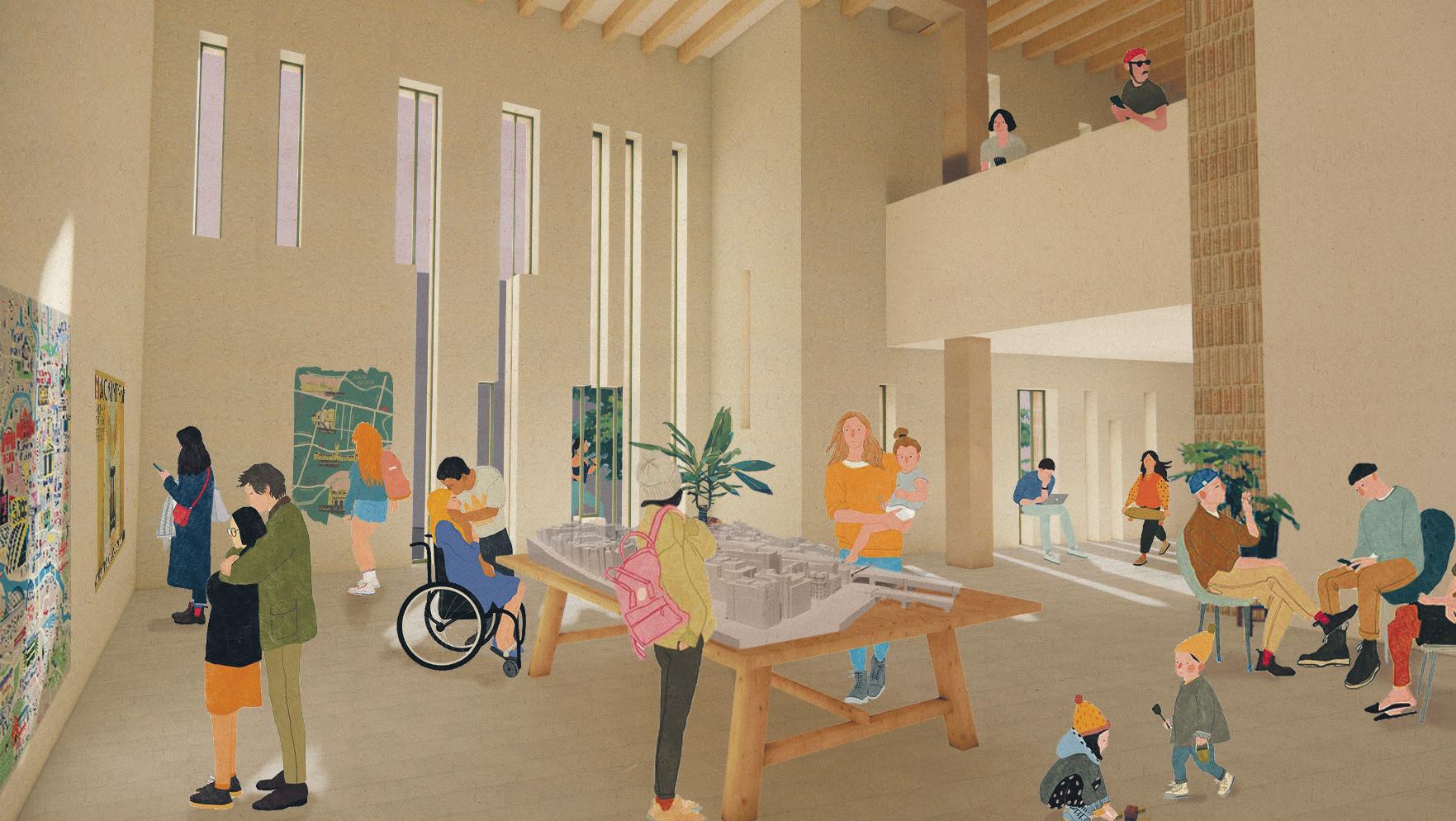
Continuing in the idea of openness and public engagement in this project, Ailsa Hutton explores the fabrication of inclusivity on her site on Mitchell Street. She highlights the disconnected world we live in, asking key questions such as ‘how do you engage local people continually?’ and avoids placing ‘invisible barriers’ in civic spaces. In facilitating a temporary gallery on the ground floor, the space provides an ever-changing environment that people can visit many times with different experiences ‘to re-engage, to learn more and to have conversations.’ The positioning of the circulation route draws the visitor through and up the building, creating a journey of experience in the building and the city, moving through a ‘Glasgow room’ and an ‘urban room’ for education and discussion. In order to address rising concerns regarding adaptability of buildings in the future of cities, Hutton has designed a ‘loose fit’ structural programme of glulam with foldable sliding CLT partitions, allowing spaces to be used for many different purposes as demonstrated in her renders. She shows how the partitions manipulate light and sound for activities such as a ballet or school workshops, ‘leaving the design to the people.’
In a time filled with uncertainty, including climate anxiety, political instability, technological threats and rising concerns about overconsumption, architecture is increasingly expected to do more than just build. This year’s Stage 5 projects address these issues not with fixed solutions but with spatial ideas that connect to how we live, feel and interact. The work moves between care rituals, defence infrastructures and production spaces. It
unfolds as a series of environments that encourage reflection, participation and exchange. In these projects, architecture shifts from being about objects to focusing on experiences. It becomes open, adaptive and responsive to the complexities of modern life.
Anca Iliescu, inspired by the book Religion for Atheists, examines what religion does well for societies, such as support in grief, collective celebration and structured moments of reflection. Iliescu reinterprets these as secular architectural rituals in her Stage 5 thesis project, Temple Without a God. Set in a historic block in central Copenhagen, within one of the most secular societies in the world, the project responds to the gradual loss of religious feeling by proposing a new support system that scaffolds major moments of life. A currently disused, inward facing courtyard is opened, reconnecting two major cultural axes and transforming the block into a public landscape of temples that foster connection, introspection and mutual care rather than worship.
Superimposing a church-like arrangement onto the urban fabric, the site is organised into an Axis of Life, Axis of Grief and Axis of Celebration. A family of secular temples are supported by workshops, support groups and spaces for art-making, learning and gathering, where community becomes a means of alleviating loneliness and supporting people through grief and celebration. The Temple of Grief moves from a heavy, grounded hall of depression to a luminous tower of acceptance that re-engages the city. Through a repetitive arch plinth, reused brick, concrete, pebbles, planting and choreographed light, the project creates a phenomenological, multi-sensory environment,
proposing a non-religious social structure centered on togetherness, reflection and shared experience.
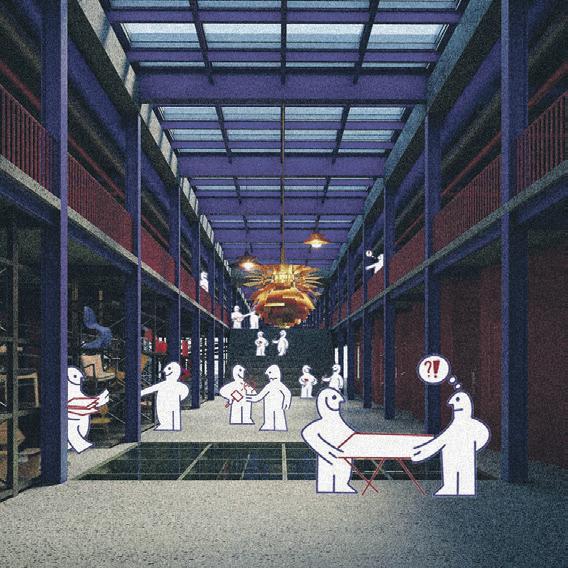
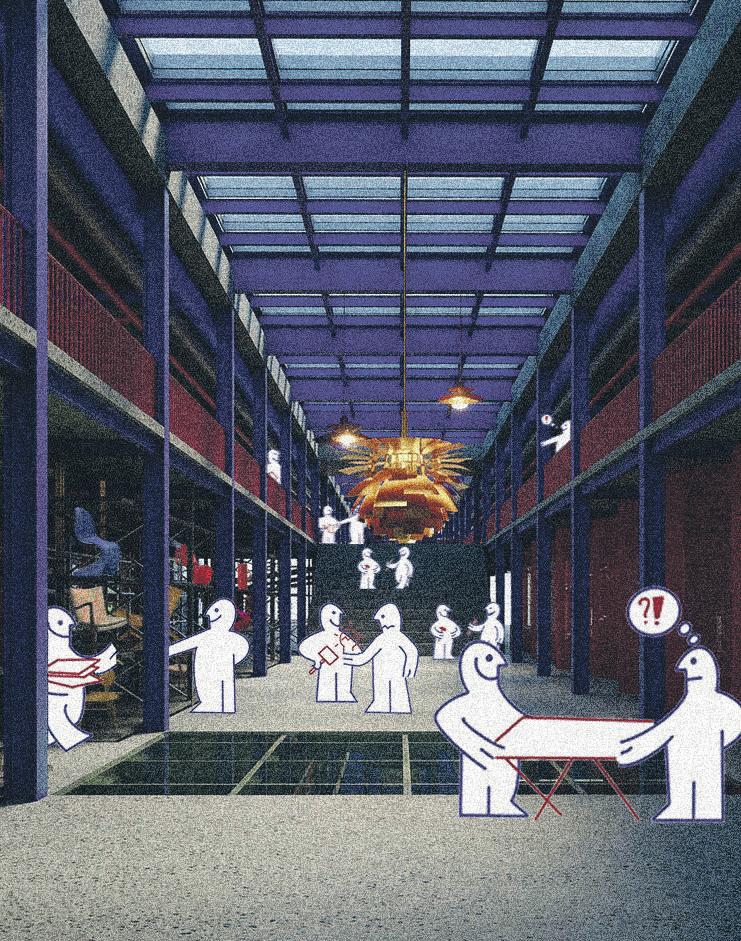
Shifting towards production, Daniil Solomou proposes a large, flexible craft and design infrastructure on an island in Copenhagen, bringing together metalwork, ceramics, textiles and other crafts under one roof. Situated between the Design Museum, the Royal Danish Academy and major design brands, it acts as a mediator between the legacy of Danish mid-century design, future designers and contemporary consumerism, allowing the process of making to become visible and valued. A large steel megastructure organises workshops at ground level with public spaces and a living archive elevated above, accessed by a long, slow ramp that reveals the spectacle of making. Bright blue and red steel, exposed structure, glass roofs and floors, and curtains instead of walls create an atmosphere of transparency and openness. In countering overconsumption, the project promotes durable, meaningful objects and circular systems, while elevating crafts people and positioning mastered craft as a form of interactive art within a public, civic environment.
From the conceptual reimagining of the Highlands to the analysis of Copenhagen, the show covers a multitude of issues in the built environment today. The Mackintosh School of Architecture Degree Show this year demonstrates the scope of critique and questioning with which graduating students are entering the profession, displaying the skills and critical thinking required to create conscientious and meaningful interventions in the future.
Mackintosh School of Architecture, Bourdon Building, 29 May-7 Jun
Daniil Solomou, Stage 5
Ailsa Hutton, Stage 4
Master of Fine Art
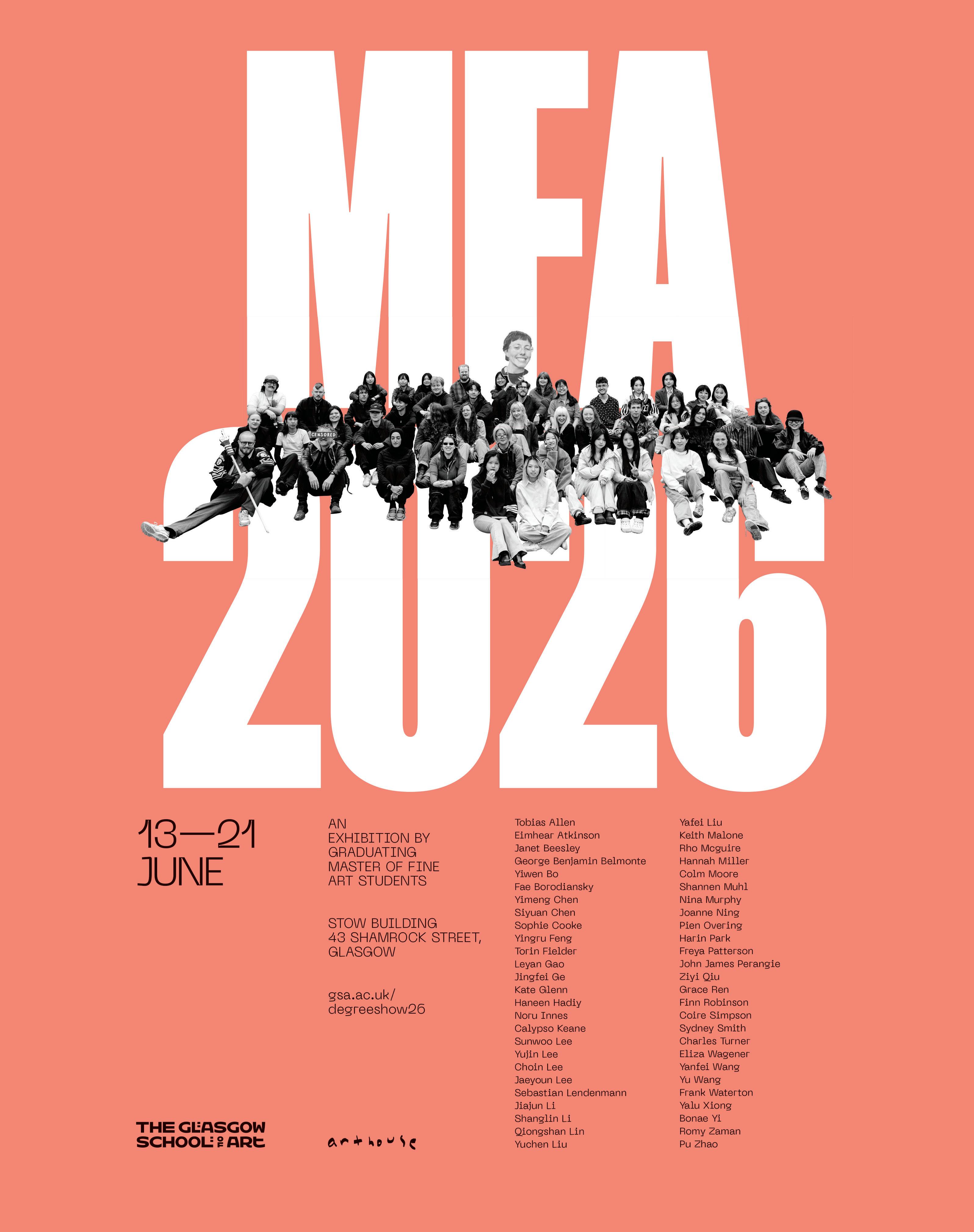
The MFA programme offers an expansive and ambitious cohort of young artists who look primed to push boundaries in Scotland’s creative sphere and beyond
Words: Emily Weaver
This year, the Master of FIne Art Degree Show redefines the relationship between artist and audience by occupying new planes of viewing. Tender sentimentality blend with multi-disciplinarity, producing a breadth of material conversations. Many have reflected on how their own personal history inhabits not only ideas of the self but of how we perceive the world around us. What do we keep and choose to leave behind?
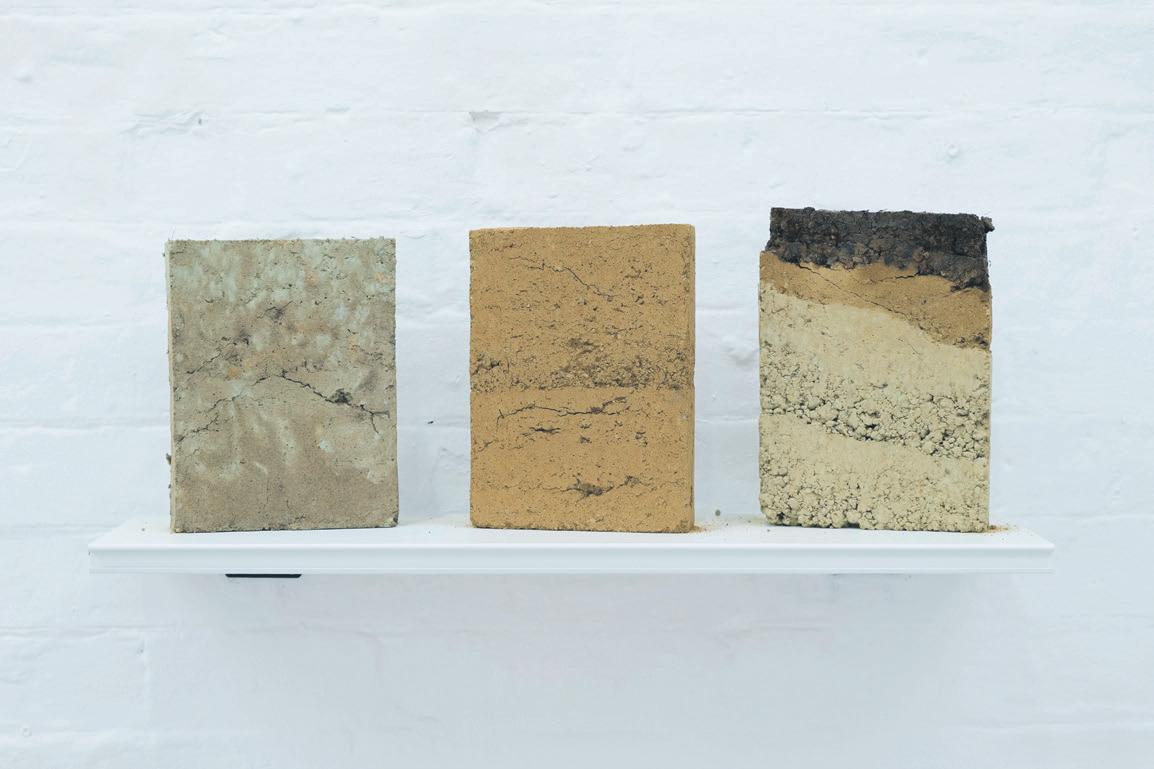
Frank Waterton’s process of ‘journeying’ captures human experience situated within natural spaces through a deliberate walking practice. Raw, organic materials pressed into man-made forms display the relationship between artist and land. These works suggest moments of connection leading us to consider the time they exist within as well as moments lost to them. As the work erodes, the viewer is faced with reflecting on their own role in shaping landscapes.
Choin Lee considers similar environmental sensibilities as the foundation for sculptural explorations of queer identity. Lee’s mixed media installations evoke such sensory reflexes as fogged up lenses, or moisture in the air preceding a storm. Dampness and leaking are key motifs, evoking perspiration, decay and shame. Identity is presented as a damp spot that will never dry, accumulating over time. Sinking
contours and delicate metalwork immersed in material ripplings guide the viewer through a shifting atmosphere.
Movement and transition remain at the forefront as we are invited to stretch into a new state. Rho McGuire disentangles binary movement through bodily exploration and collaboration. With a background in dance, clowning and radio, this cross-pollination results in a practice stressing the importance of co-creation and community. McGuire’s experimental workshops toe the line between improvised and choreographed. Participants are asked to reflect on the freedom of space afforded by the environment, directed with simple prompts or non-verbal environmental instruction encouraging an instinctual physical response. In McGuire’s pilgrimage to feel alive, performance creates ephemeral space, inviting viewers to slow down, enter and transcend.
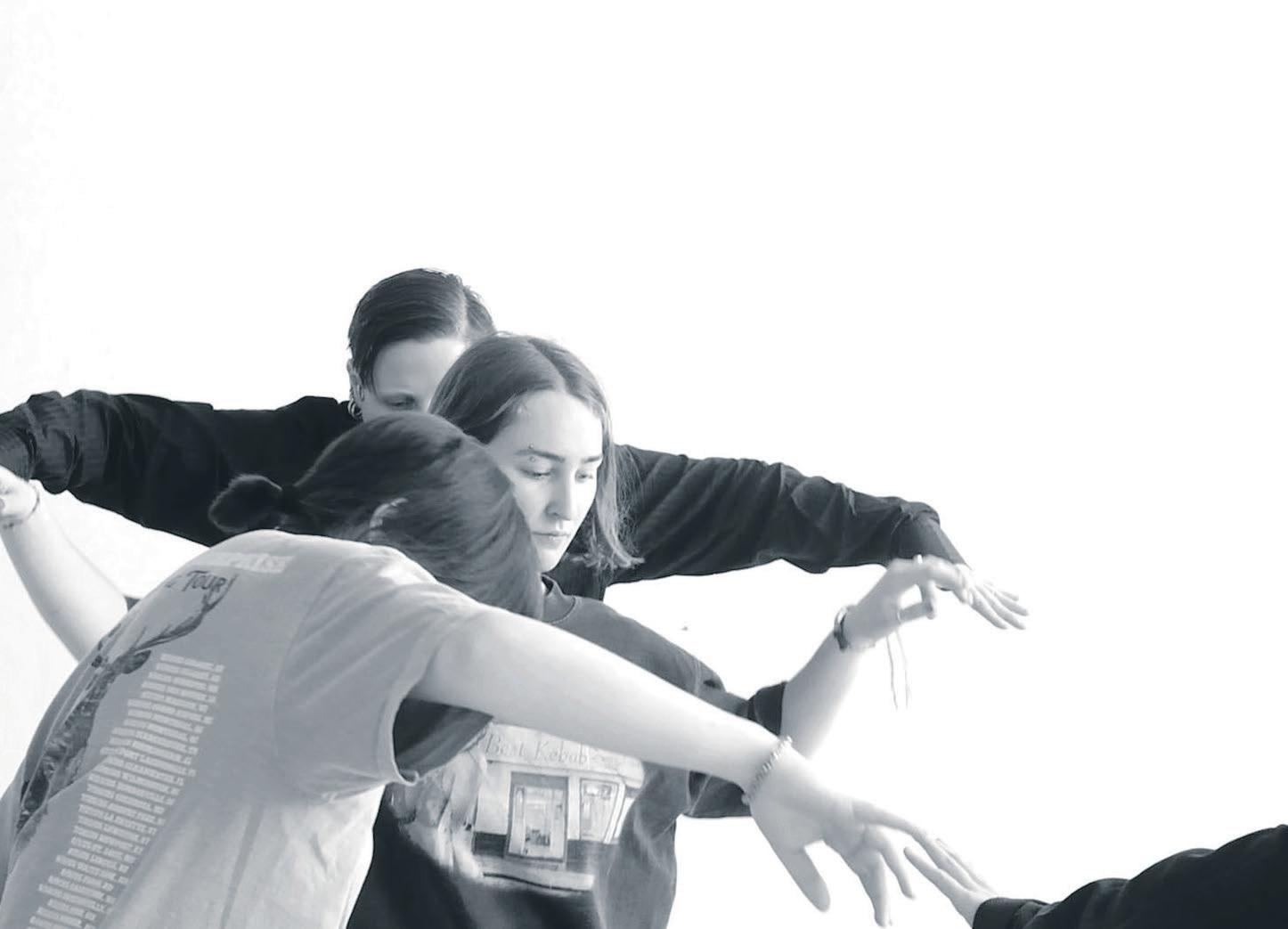
Intangible spaces and shifting perception are expressed in the work of Colm Moore through analogue photography and sculpture. Moore captures tactile space, referencing exposure, duration and physical intervention represented in the material process but also by the tenderness of image creation. Where McGuire’s documentation eliminates physical surroundings, focusing our attention on the space created by the performers, Moore uses natural manipulations of light to focus our attention on the space it creates. Moore’s sculptural work blends environment with image, co-exhibiting darkroom prints with steel structures and drifting soundscapes. The viewer participates in this space, interacting with the palpable surface detail of a beam of light. Kate Glenn captures memory through a series of mirror self portraits. By
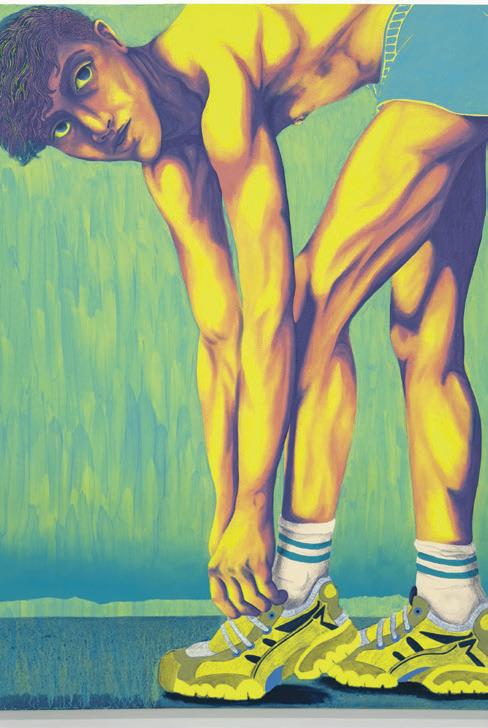
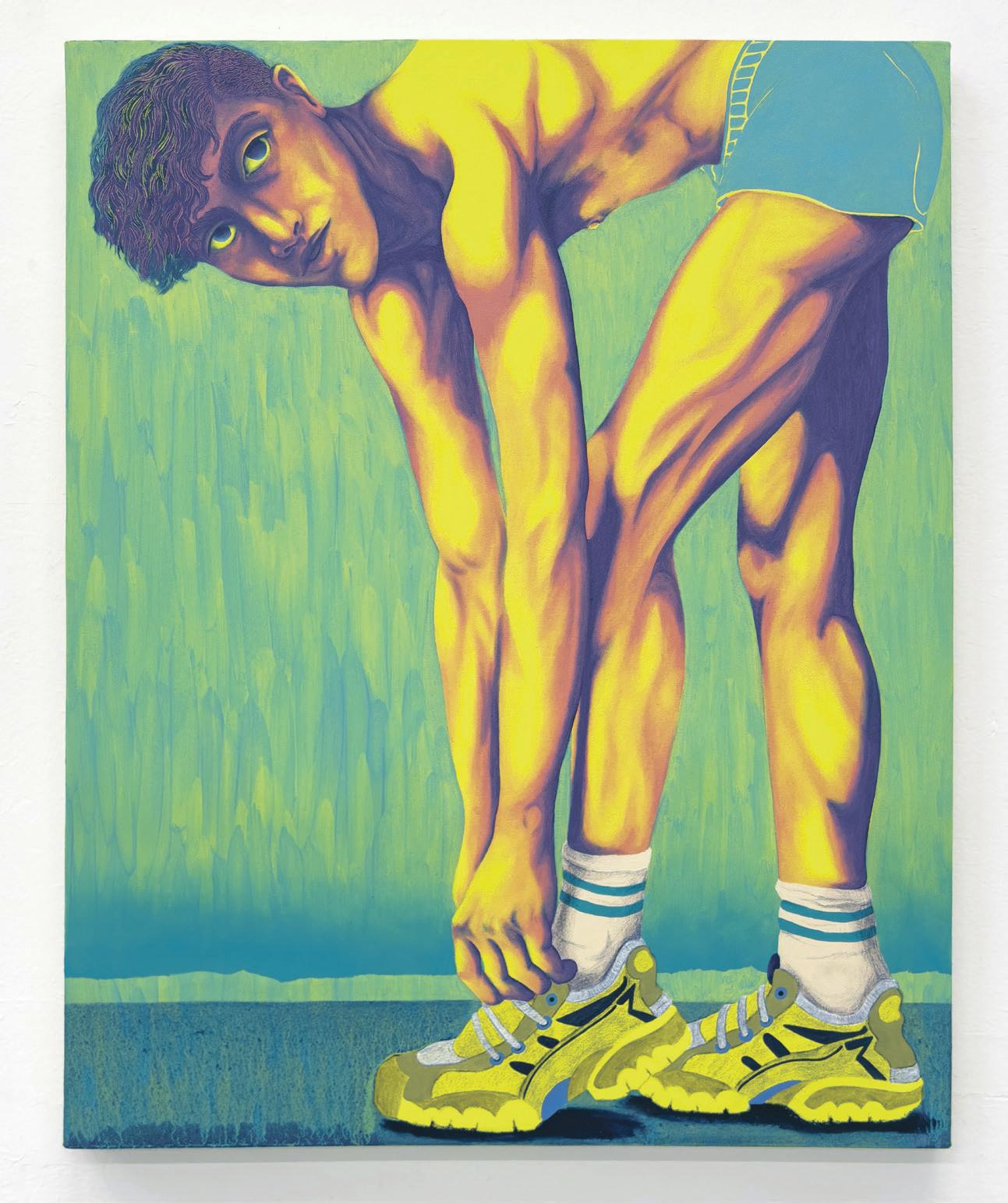
reproducing images of mirror selfies, initially taken as visual journal entries, oil paint marks these memories with a profound sense of time. Glenn challenges us to consider how memory is stored, reinterpreted and reversed. Finn Robinson approaches painting as if setting a stage, directing actors in grandiose compositions, blending a rich colour palette and dreamlike figuration. We are induced to imagine the lives behind the smirks, rippling flesh and sparkling metallic threads of his compositions. Viewers glimpse into fictitious landscapes and private conversations. Both Glenn and Robinson translate the fleeting into a materially dictated, lengthy process. Intimate personal histories are frozen in detail through painting. Viewer becomes archeologist, confronted with deciphering the truths and untruths within the drying paint.
By playing with norms of artistic engagement, these artists represent an expansive and ambitious cohort who look primed to push boundaries in Scotland’s creative sphere and beyond.
Master
Finn Robinson, Master of Fine Art
Frank Waterton, Master of Fine Art
Rho McGuire, Master of Fine Art
Heads Up
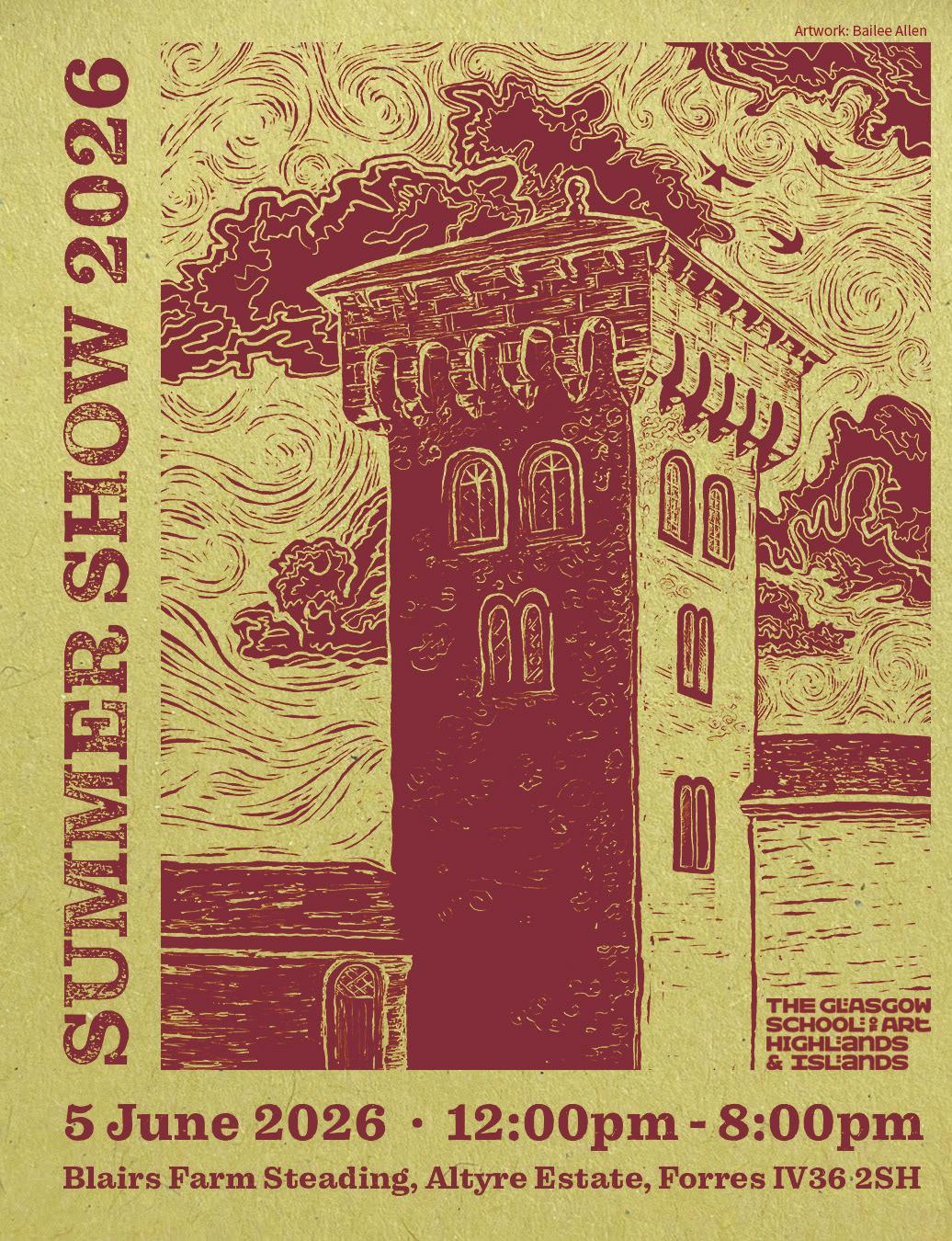
GSA Highlands & Islands Summer Show
Altyre Campus, Blairs Farm Steading Altyre Estate, Moray, IV36 2SH, 5 Jun, 12-8pm
An exhibition showcasing work from the GSA Highlands & Islands campus, generating future opportunities for collaboration across the region in learning, research and knowledge exchange.
GSASA Degree Show After Party 2026: The Last Dance!
The Vic & Assembly Hall, 28 May, 8pm-3am
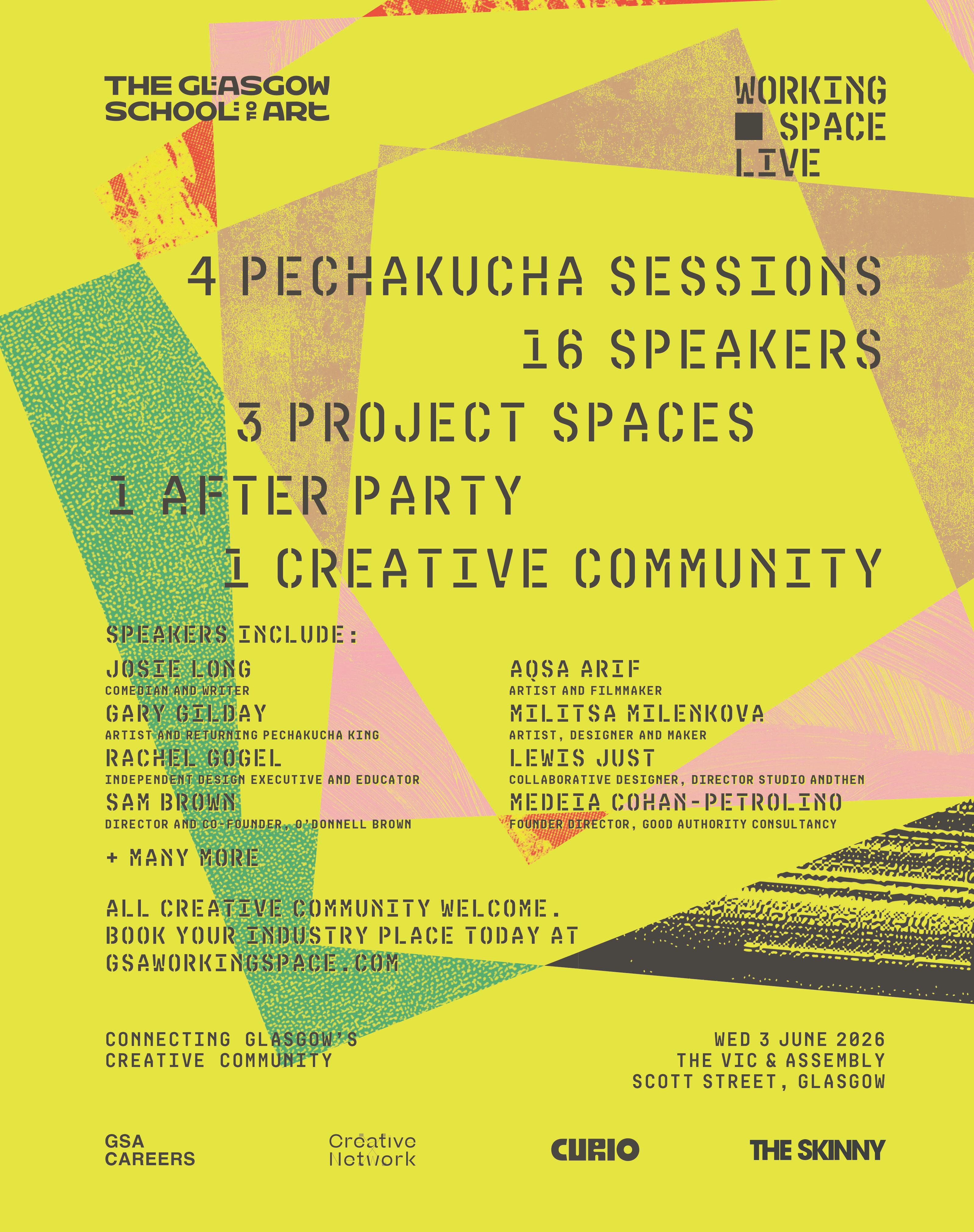
Start the summer strong at 2026’s Degree Show After Party. On Thursday 28 May, we’ll be hosting the party of the year in The Vic & Assembly Hall. From 8pm until very late, you’ll be treated to sets by Butho the Warrior, Corran, Junglehussi, Gamma Knife Machine, RubyD, Viv and Hill52.
Open Studio Summer Exhibition
Fleming House 134 Renfrew Street, 29 May-7 Jun
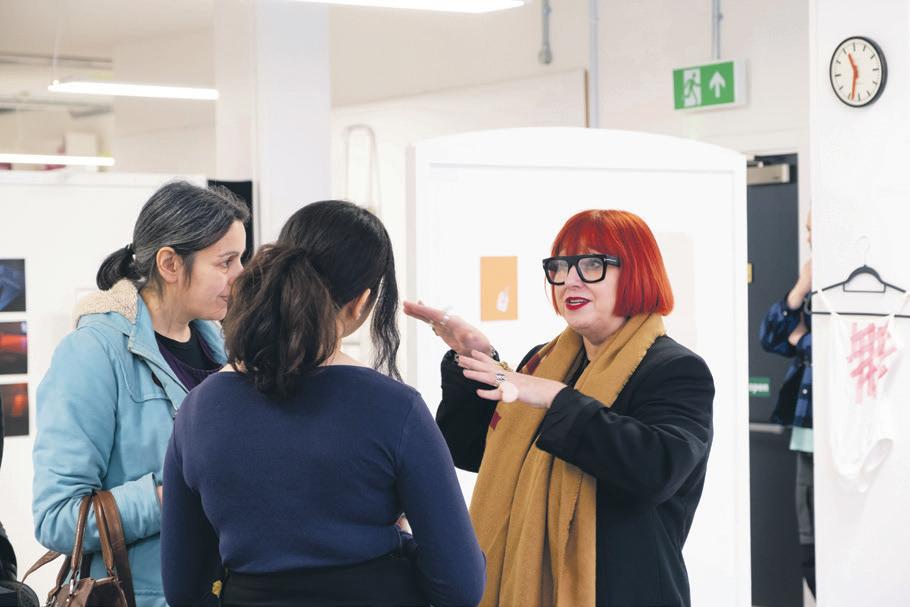
Running as part of the Degree Show, the Open Studio Summer Exhibition features work by young people involved in the Widening Participation programme, Castlehead School of Creativity and the Glasgow Clyde College Associate Student Scheme.
Portfolio Preparation –Creative Practices Course
Courses running from June
The Portfolio Preparation course is a great way to learn about crafting a portfolio in a collaborative and welcoming studio environment. Ideal for those intending on applying to art schools, the course is structured to help you choose an area of art and design to study, and has a track record of getting students places at top art schools across the UK. Visit the Study pages on the GSA website for more information on the course and how to apply.
The Degree Show isn’t the only event to look forward to at the GSA this summer. Here are some events, exhibitions and talks to keep an eye on
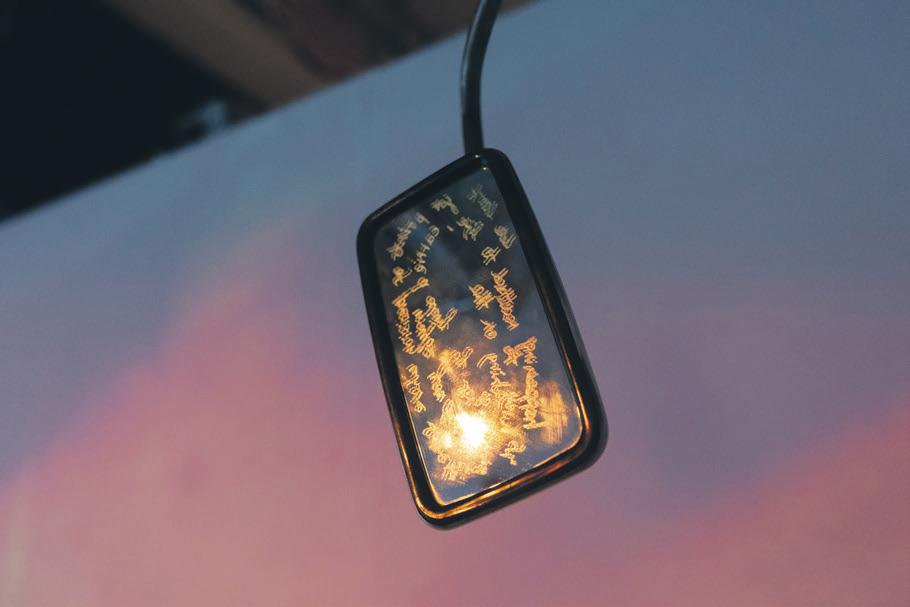

Postgraduate Degree Show 2026 End of summer
Later in the year, you can explore a showcase of work from students on Postgraduate programmes across the GSA. You’ll find innovations in design and technology alongside explorations in sculpture, painting, printmaking and fashion. And just like the undergraduate Degree Show, there is an online showcase which gives you the chance to experience the show beyond exhibition spaces. Visit gsapostgradshowcase.net for more information.
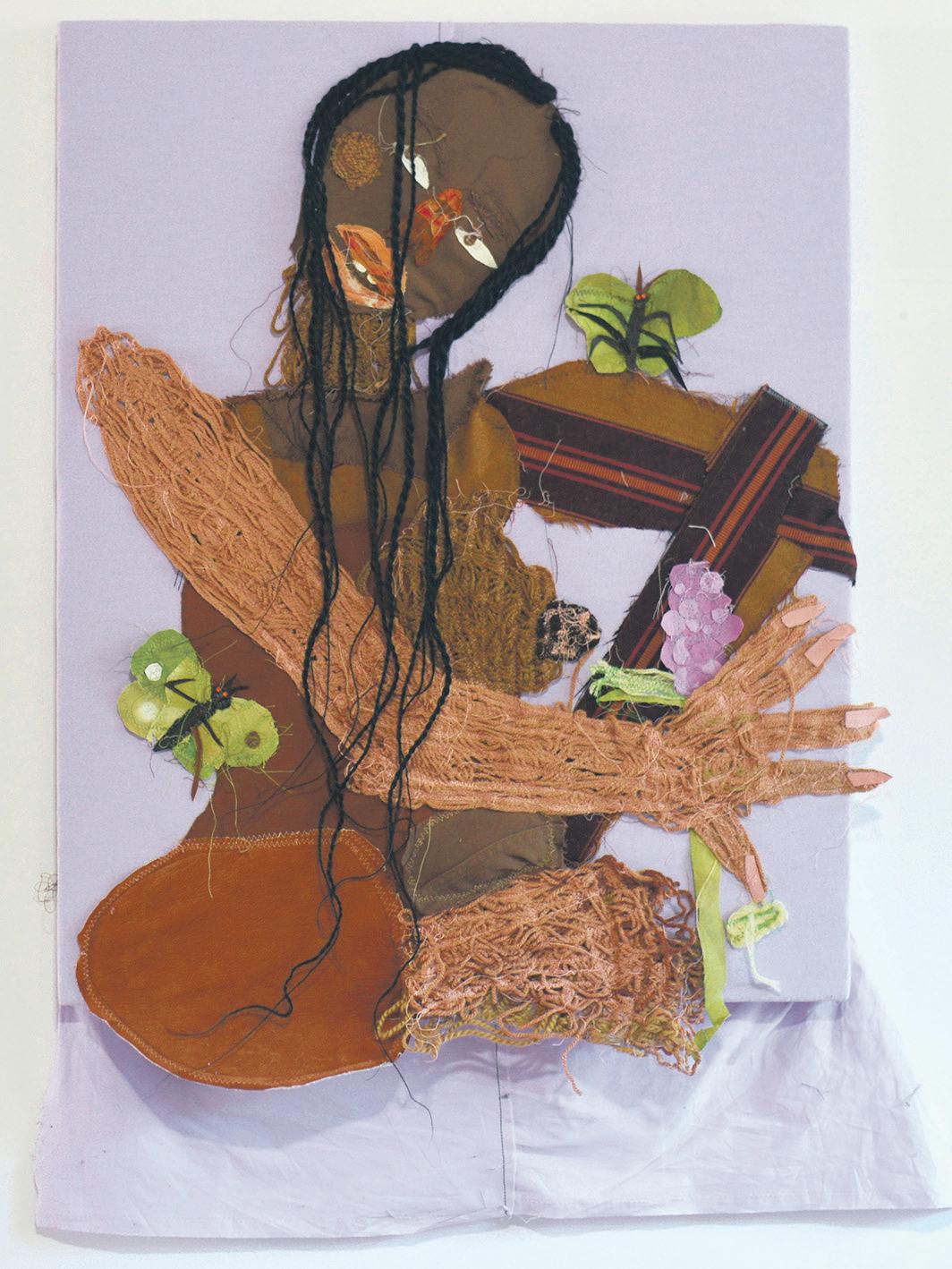
Anya Paintsil – The delight of walking alone
Glasgow International 2026, Burns Street Studios, Glasgow, 5-21 Jun
The delight of walking alone presents the work of Welsh and Ghanaian artist Anya Paintsil. Based in Glyn Ceiriog and London, Anya draws inspiration from her childhood in North Wales and her ancestral Fante tradition of figurative textiles. Anya combines craft practices she was taught as a young child, including rug making, appliqué, and hand embroidery, with afro hairstyling techniques to create large scale portraits. Inspired by North Welsh folklore, since her own return to a small village in North Wales, this new work imagines giantesses, who delight in their freedom in the landscape, swamps and hills.
Afterlives: The Weaver, A Score, An Archipelago Reid Gallery, 10 Jul-8 Aug
Inspired by the Glasgow 2026 Festival theme of ‘social justice’, this group exhibition curated by Alaya Ang brings together artists whose work engages with Southeast Asian legacies of the Commonwealth. Focusing on practices that draw from archival materials and oral histories, the exhibition approaches history as partial, contested and continually reworked, and considers how contemporary artists revisit and reframe inherited narratives to uncover obscured or marginalised histories. The works aim to sensitively deal with routes to a just future through the acknowledgement of individual histories.
GSA Highlands & Islands
Esmé Haddrill Selman, water bugs (MLitt Fine Art Practice, 2025), Postgraduate Degree Show 2025
Anya Paintsil, BUTTERFLY BUDDLEIA 2025
Commonwealth Games Medals at The Glasgow School of Art Window on Heritage, Reid Building, GSA, 10 Jul-8 Aug
Inspired by the Glasgow 2026 Festival theme of ‘celebration’, this exhibition brings the medal design process to life, featuring materials from The Glasgow School of Art Archives & Collections alongside other sources. Medals are the ultimate symbols of sporting excellence, embodying athletes’ dedication and the collective pride of the communities coming together in their support. This excellence in sporting attainment is mirrored by the excellence in design, curation and creative practice taught at GSA.
The Glasgow 2026 medals have been designed by award-winning artist, designer, silversmith and GSA graduate Militsa Milenkova. The exhibition will premiere a short film by BAFTA Scotland–winning filmmaker and GSA graduate Callum Rice, documenting the journey behind the 2026 medal design.
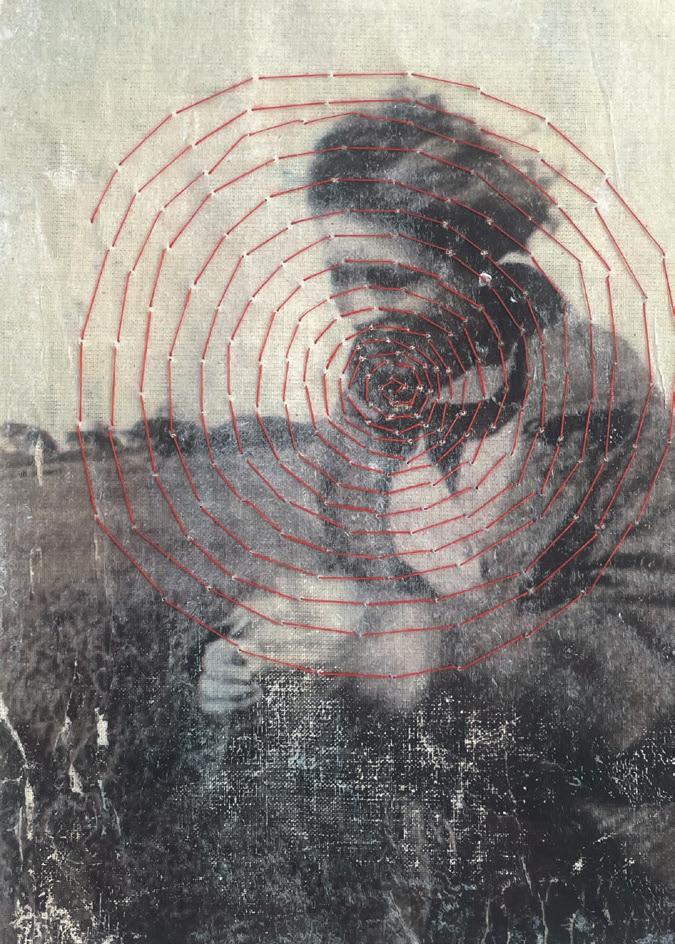

Josie KO & The Jardine Sisters Reid Gallery, 19 Sep–31 Oct Glasgow-based artist Josie KO presents a commission of new work, as part of the programme for RSA200 Celebrating Together which brings together over 70 cultural partners from across Scotland and celebrating 200 years of the Royal Scottish Academy. KO, a 2021 GSA graduate, has been invited to respond to an archive of The Jardine Sisters. Bridget ‘Jet’ Jardine (1881-1964, born Helensburgh) and Aeta Jardine (1886-1969, born Georgetown, Demerara) both studied at GSA in the early 1900s and went on to exhibit their work at the Royal Scottish Academy Exhibition between 1918 and 1929.
The Jardine Sisters grew up between Glasgow and Georgetown, Guyana. Their lifetime work, held in a private family archive, encompasses watercolour landscapes, figurative studies, still lives and illustrations of figures from folklore and mythology such as goblins and fauns. Through their father, the Jardine Sisters were direct descendants, six generations removed, of Scipio Kennedy, the formerly enslaved African who lived at Culzean Castle in Ayrshire c.1700-1774. KO’s commission will respond to the life of Scipio Kennedy, in the format of a sculptural monument and installation. This will be exhibited with selected work by the Jardine sisters.
Sam Ainsley and Alex Dempster –What if it isn’t there… Garnethill Gallery, 4 Jul-8 Aug
This two-person exhibition presents shared interests in natural systems and the Earth’s structures and rhythms. Sam Ainsley (D.Litt., R.S.A.) thinks of her work as a form of “emotional and intellectual mapping” that tries to uncover correspondences and relationships between natural (biological, geographic, geological) phenomena, the human body and the human condition. For this exhibition, she will show a body of new work called ‘bed drawings’, made during a long period of recuperation after being knocked over by a vehicle. Glasgow-born Alex Dempster’s artistic practice is shaped by a lifelong fascination with nature, geology and the branching networks that appear across myriad forms in nature. From the delicate veins of leaves to the intricate patterns of river systems and geological fault lines, these interconnected structures embody the hidden order of the natural world.
Open Studio Summer Courses
Courses running throughout summer
The Glasgow School of Art’s Open Studio offers a range of creative short courses for both adults and young people. Courses for Young Creatives (7-15 years old) will run in week-long blocks between 27 July and 2 August, with classes bookable in morning or afternoon groups each day of the week. Young people can learn about what they like within art while picking up some skills in a range of areas like photography, creative sculpture and ceramics, graphic design and 2D and 3D making.
This year’s summer courses for adults are ideal if you’re looking to hone a new skill or develop your practice within a specialist area. Courses include painting, wood carving, sculpture, graphic design, and jewellery.
Race, Rights & Sovereignty
Established as a partnership between GSA’s Students’ Association (GSASA) and GSA Exhibitions, this public event series explores the relationship between race, place and creative practice. Events in the last year have included public lectures and artist-led talks, events and performances from Sequoia Danielle Barnes and Hardeep Pandhal, Sean Wai Keung and Ebun Sodipo. RRS is programmed by culture writer Eilidh Akilade. You can listen to a GSA Podcast episode about RRS on Spotify, Apple Music and Amazon Music.
GSA OPEN
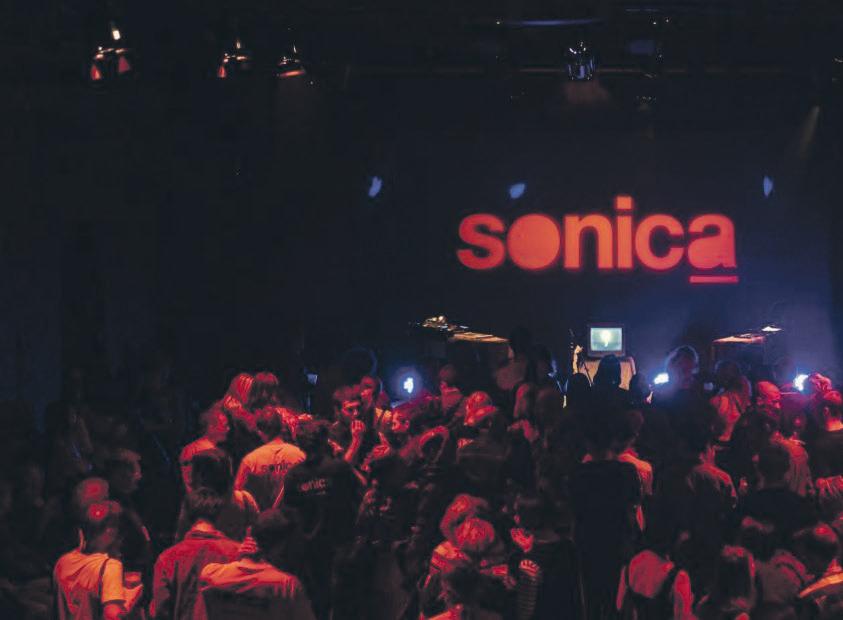
Sonica
24 Sep-4 Oct
The Glasgow School of Art will be taking part in Sonica 2026, an 11-day biennial festival dedicated to world-class audiovisual art and sound. Loved for its adventurous, international programme, the event is an essential part of arts and culture within Glasgow. Visit sonic-a.co.uk for more information.
Whether you’re just starting to consider coming to art school, or you’re almost ready to hit ‘send’ on your application, GSA OPEN offers events to support you at whatever stage you are on your application journey. Our year-long programme encompasses campus open days, online open house events, student-led campus tours, portfolio advice sessions and one-to-one sessions with staff. Find out more on the GSA website.
Sonica Festival
Evamay Lang, WP Summer Exhibition
Commonwealth Games Medals at The Glasgow School of Art