MAKING VISIBLE THE CURTAIN YOU CANNOT SEE
CRITICAL STATEMENT ACT 1 The Island and the Farms ACT 2 The Seaweed ACT 3 The proposal FINAL WORD
BIBLIOGRAPHY
MAKING VISIBLE THE CURTAIN YOU CANNOT SEE
CRITICAL STATEMENT ACT 1 The Island and the Farms ACT 2 The Seaweed ACT 3 The proposal FINAL WORD
BIBLIOGRAPHY
Historically, seaweed sustained life across the Scottish Highlands—used as fertiliser, food, and fuel for industries such as glass and soap production. Its harvesting was essential to coastal communities, particularly those who were displaced during the highland clearances but when imports became more accessible, this practice declined, leaving seaweed an overlooked abundance.
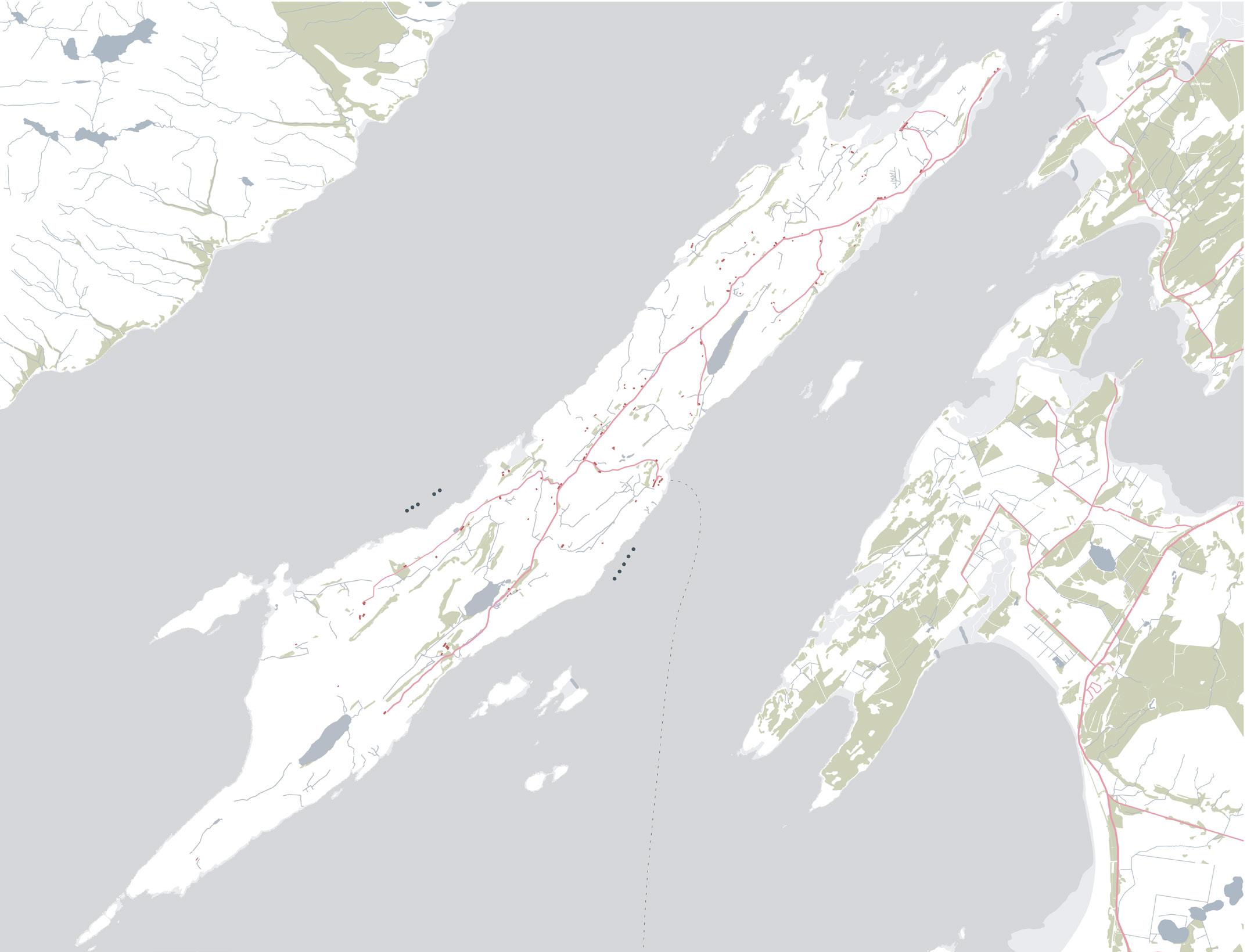
Today, Scotland’s west coast faces new challenges. Industrial agriculture and salmon farming have created extractive systems that degrade ecosystems while offering limited benefit to local communities. This is seen particularly on the island of Lismore, off the coast of Oban, whose surrounding waters hold two salmon farms close to shore. The open net farms pollute the loch leaking excess nutrients and waste into the water, as well as threatening the wild salmon population. Seaweed provides an opportunity to mitigate this, through the active absorption of nitrogen, carbon dioxide and phosphates as well as supporting biodiversity in the loch.
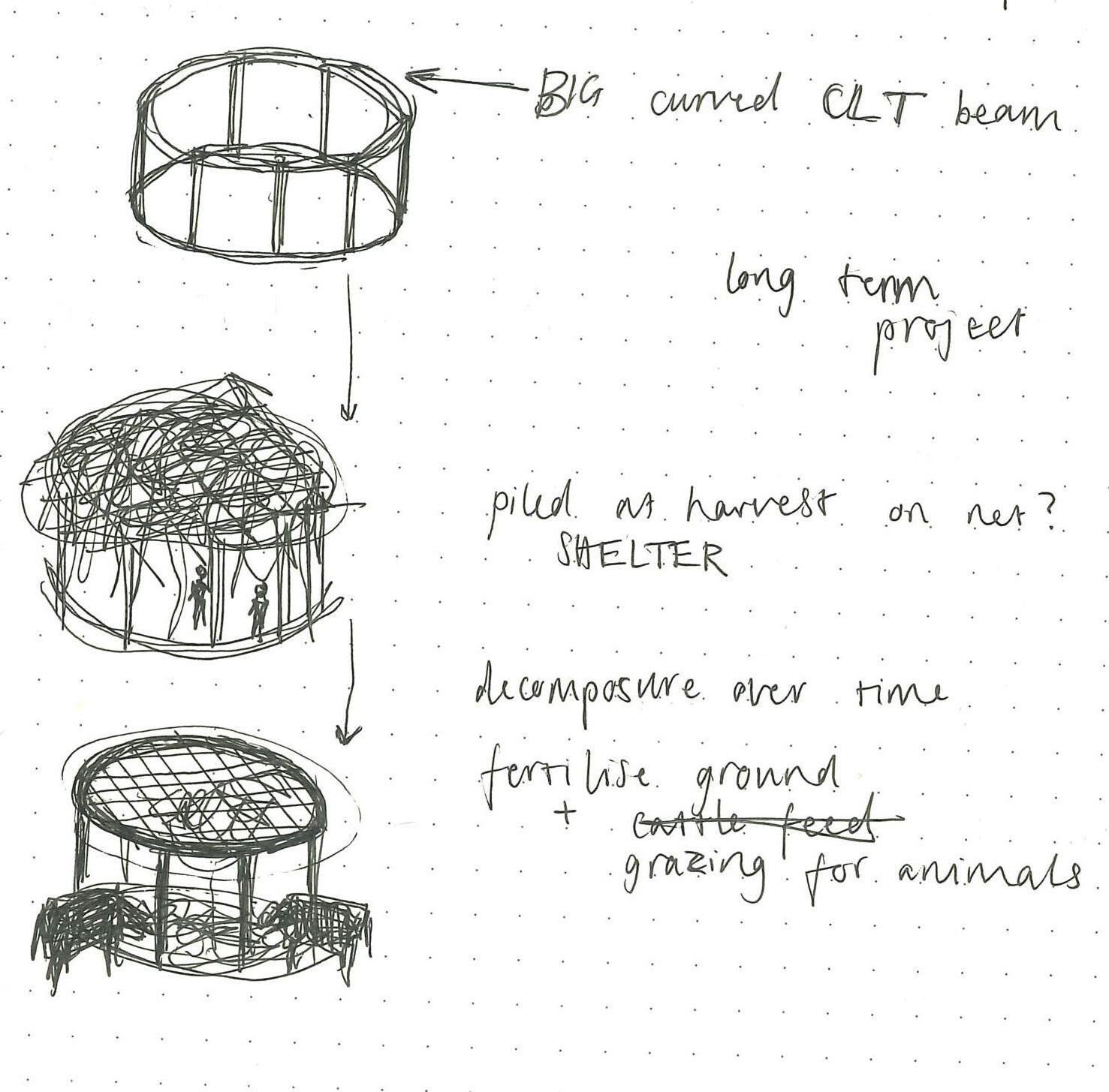
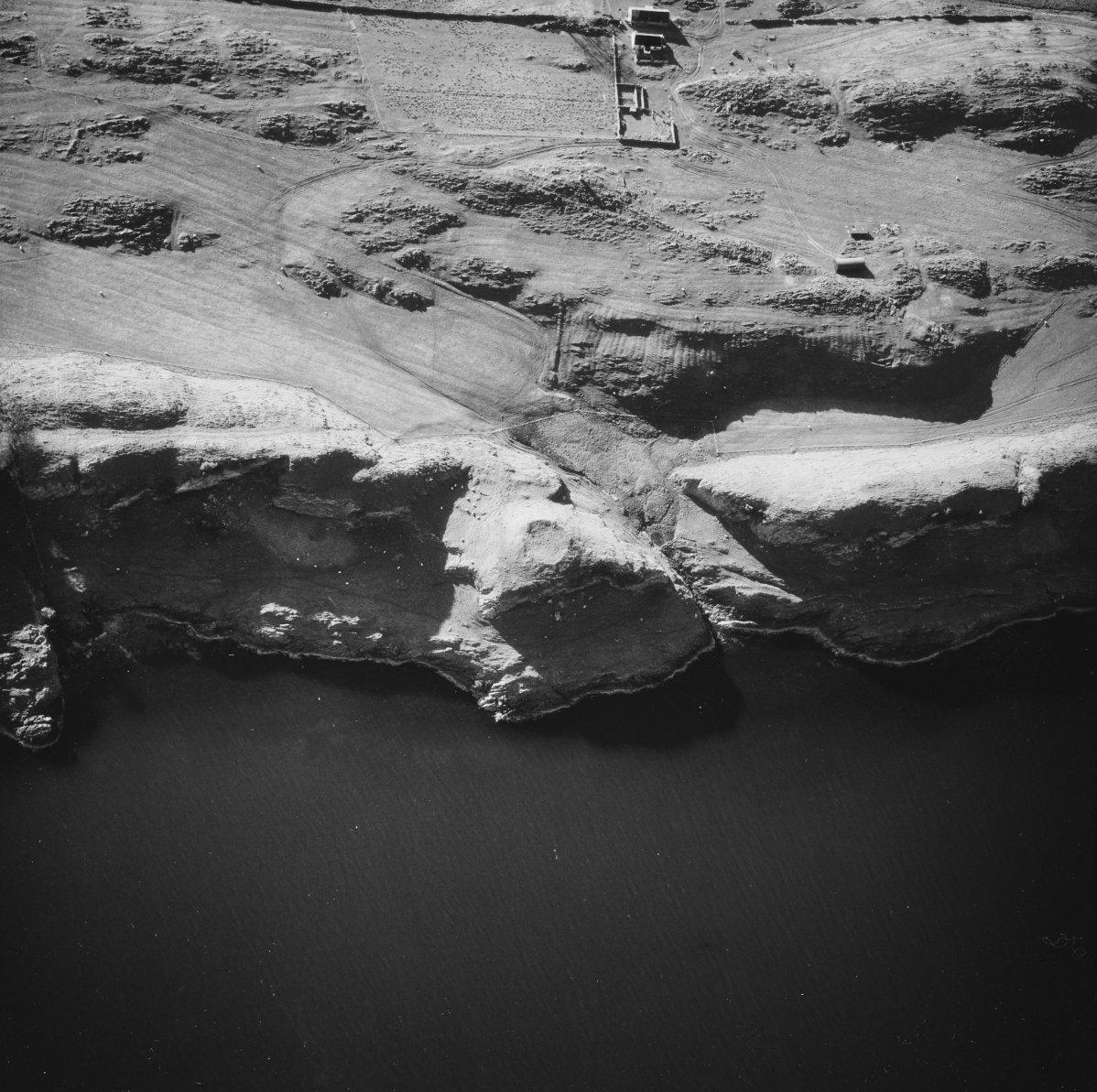
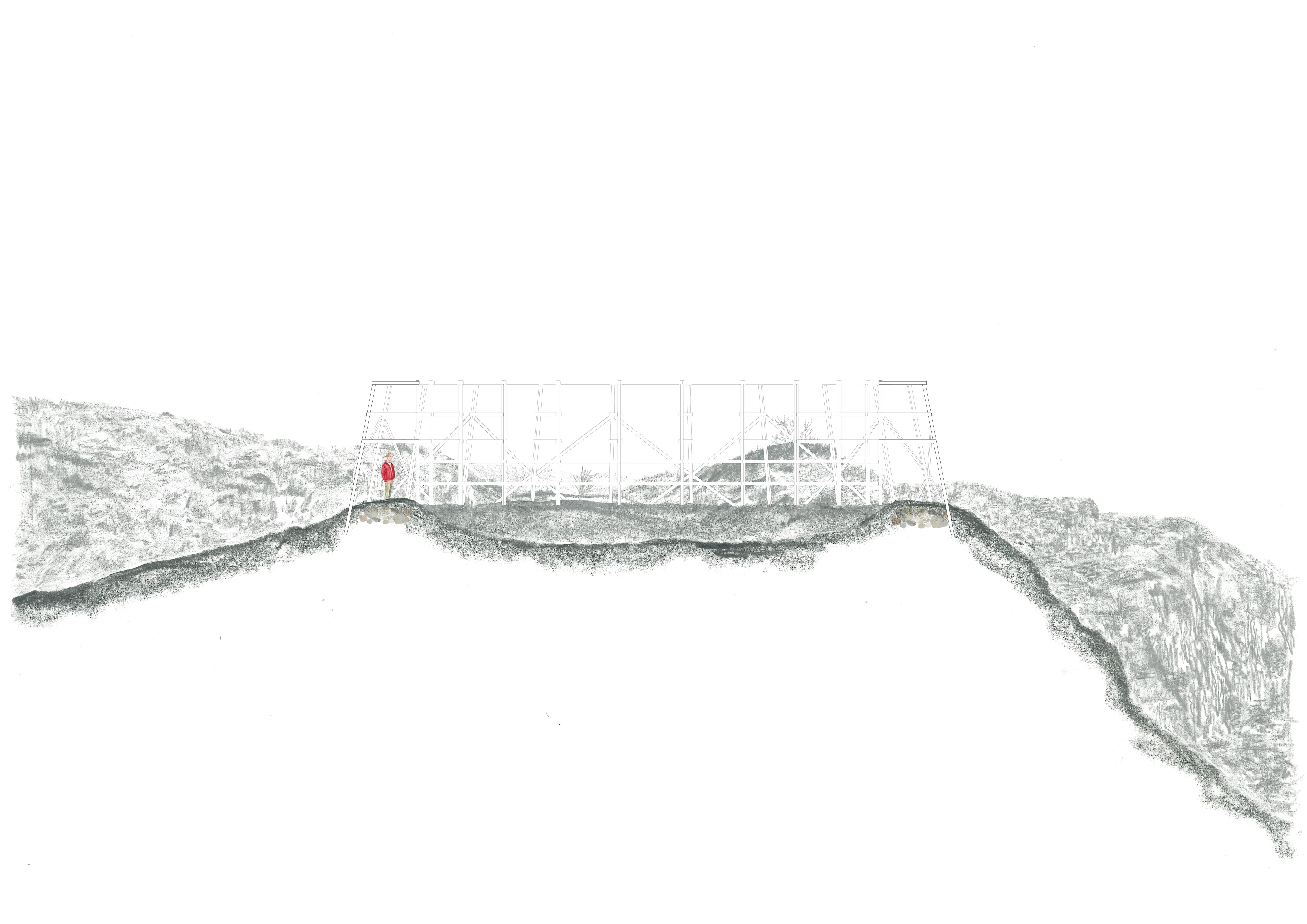
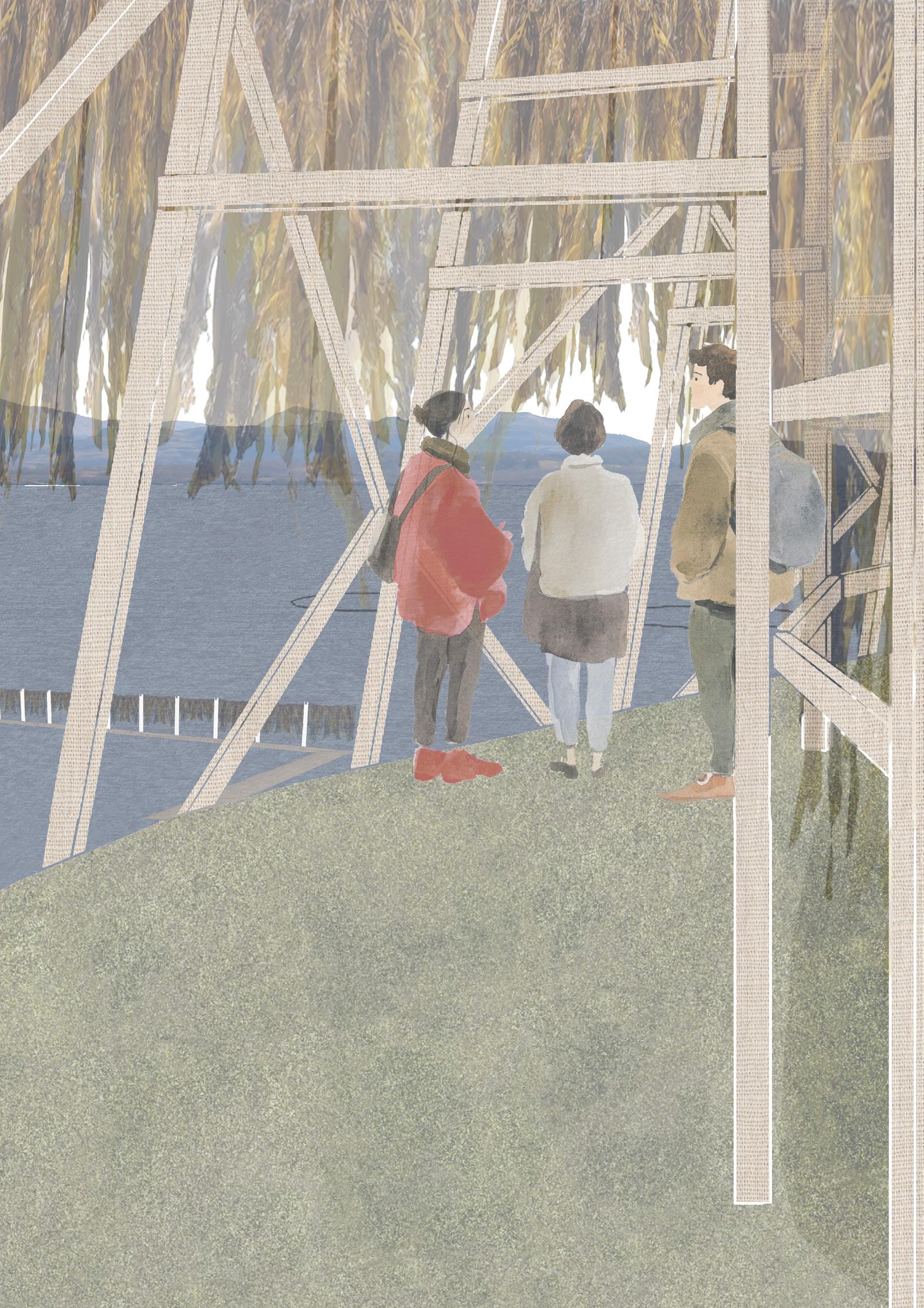
The project is located on the east coast of the island, reactivating the site of a historic dun as a contemporary pavilion, in view of the ferry path and overlooking the nearby salmon farms. Working in partnership with the Scottish association for marine science, young kelp spools are brought to site in the autumn and a pier extends into the water to cultivate seaweed, forming a living curtain between the farm and the island. Over the spring the seaweed grows and as does the pavilion, proposed as a community build project comprised of timber A-frames reminiscent of the historic dun structure. The seaweed is raised from the water to dry, displaying the previously invisible barrier before it is added to the pavilion, creating shelter and exhibiting the material. Over time the seaweed decomposes, returning the nutrients to the land while new growth begins offshore.
Part infrastructure, part protest, this project reminds the area of its historic industry and provides tangible action for the local people to reclaim their coastline against the salmon farms, reconnecting community, ecology, and coastline.
Making visible the curtain you cannot see.
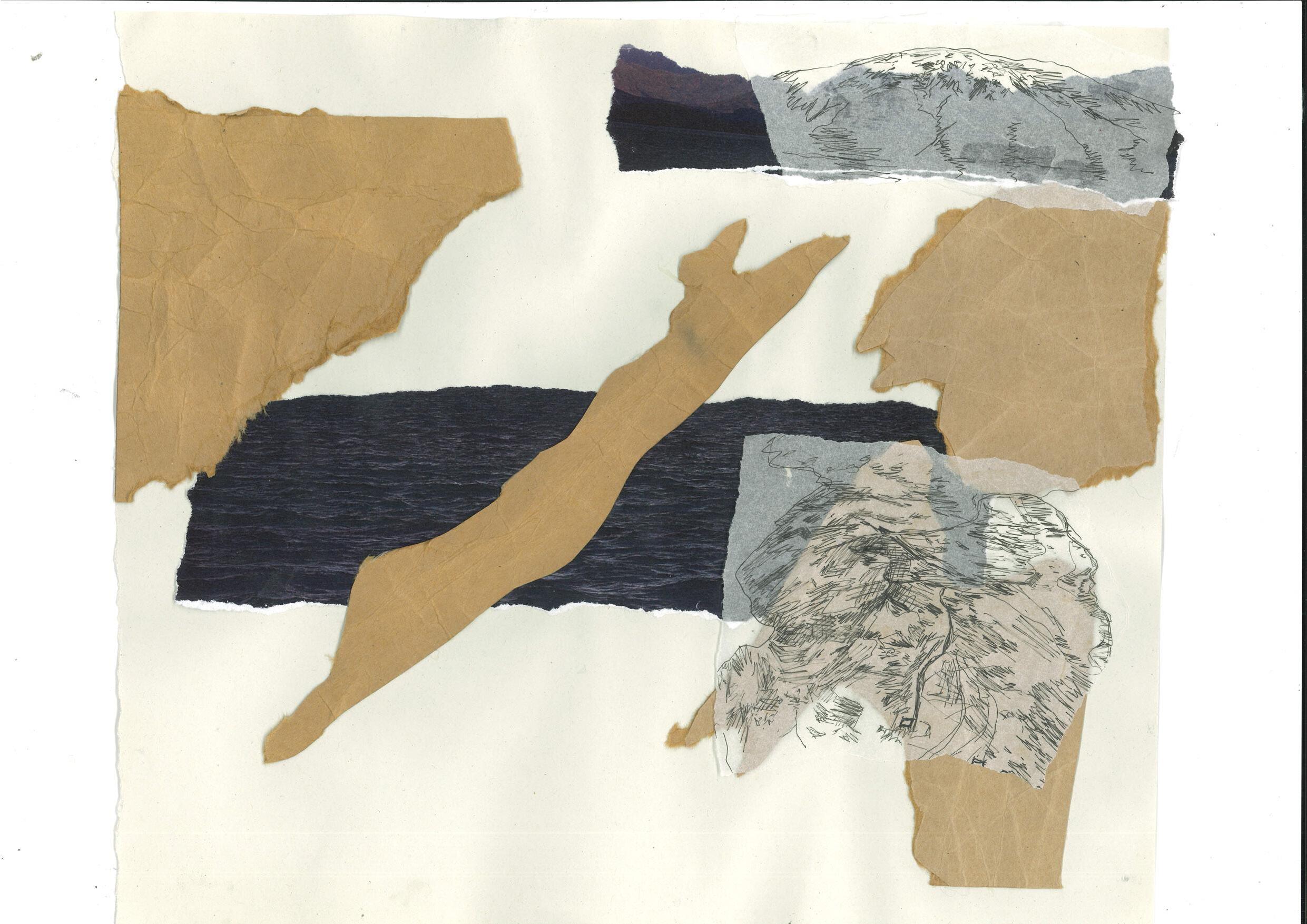
GENIUS LOCI COLLAGE ‘Spirit of place’
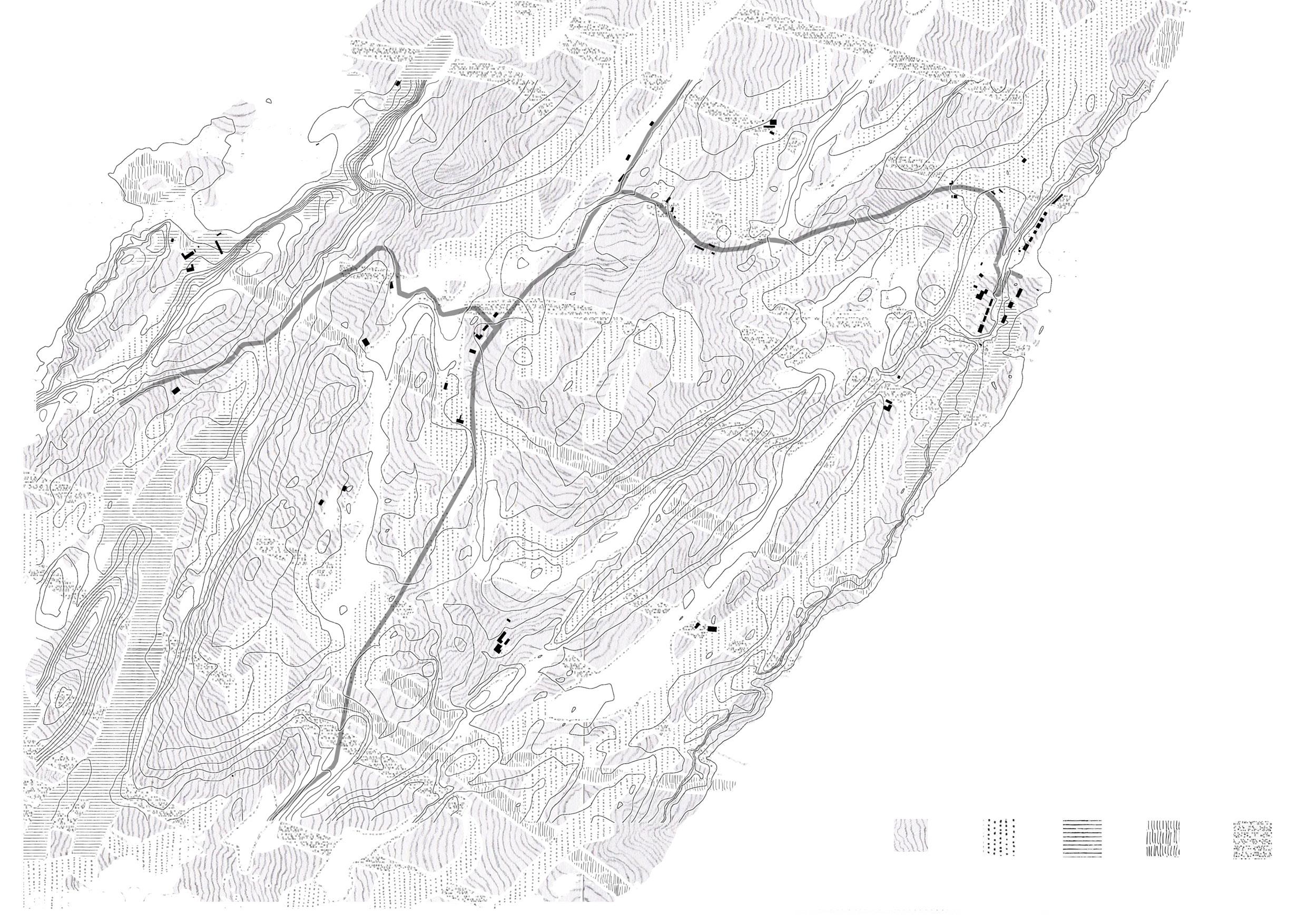

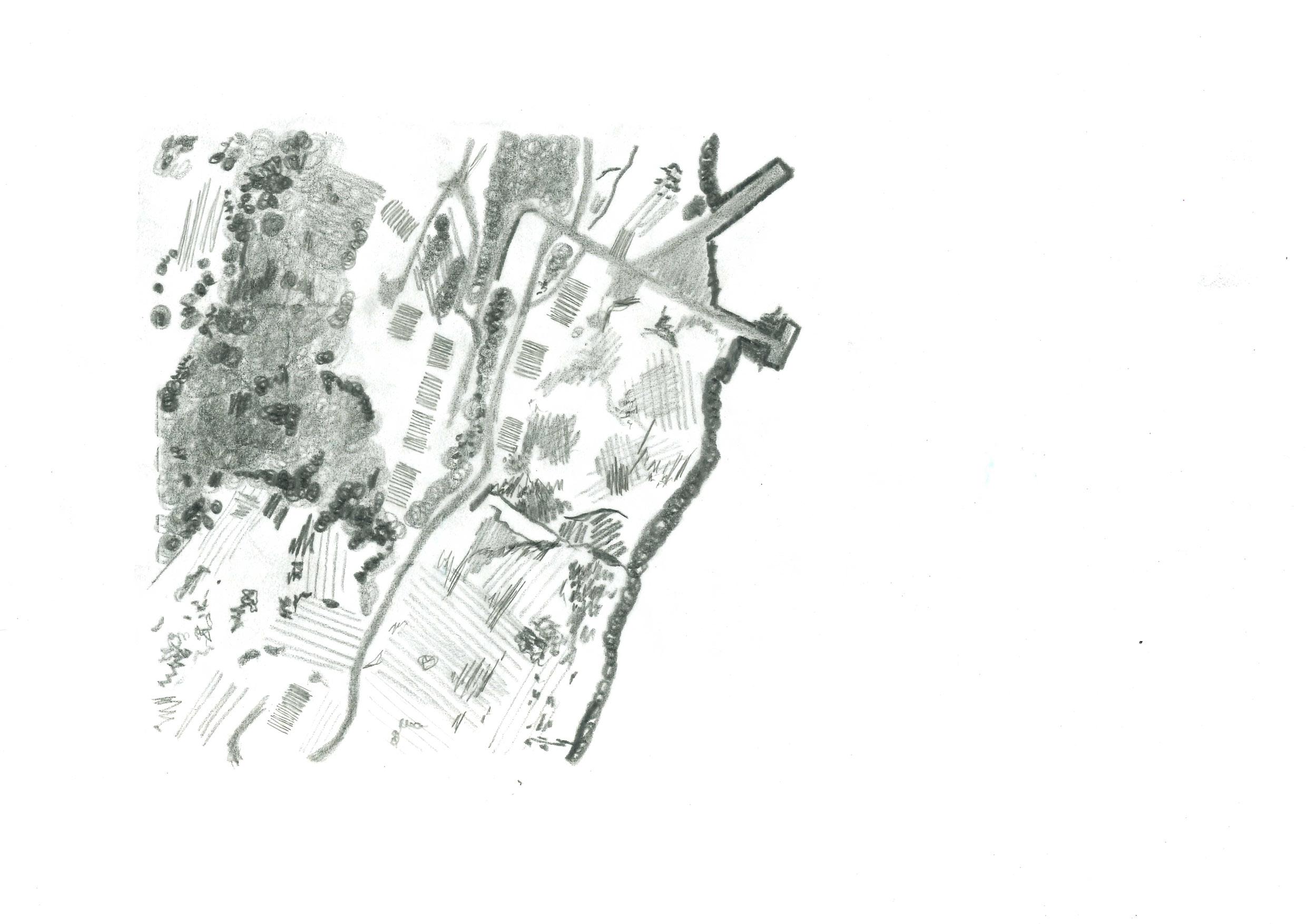
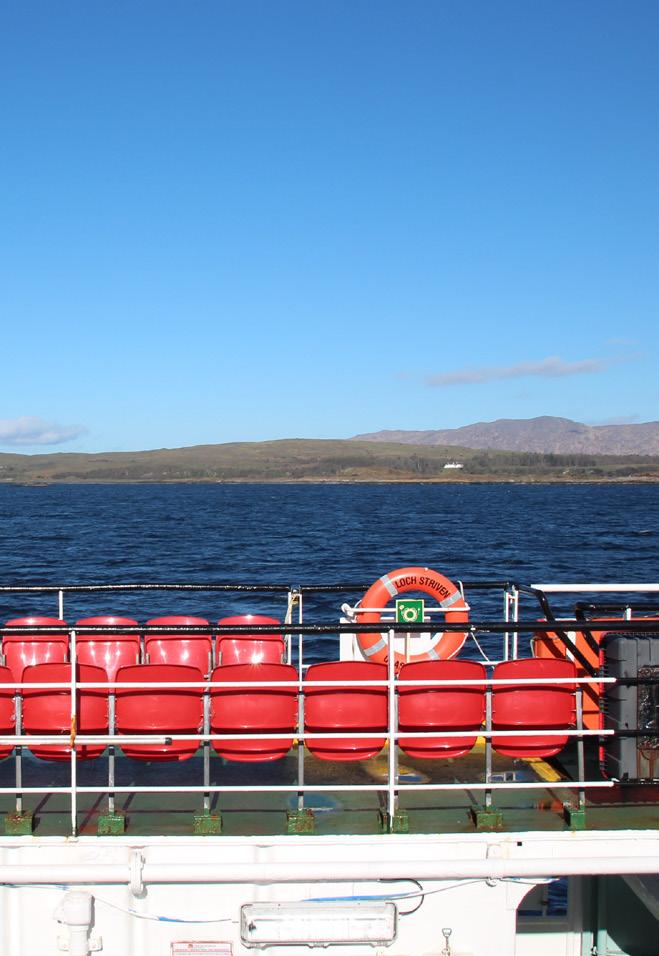
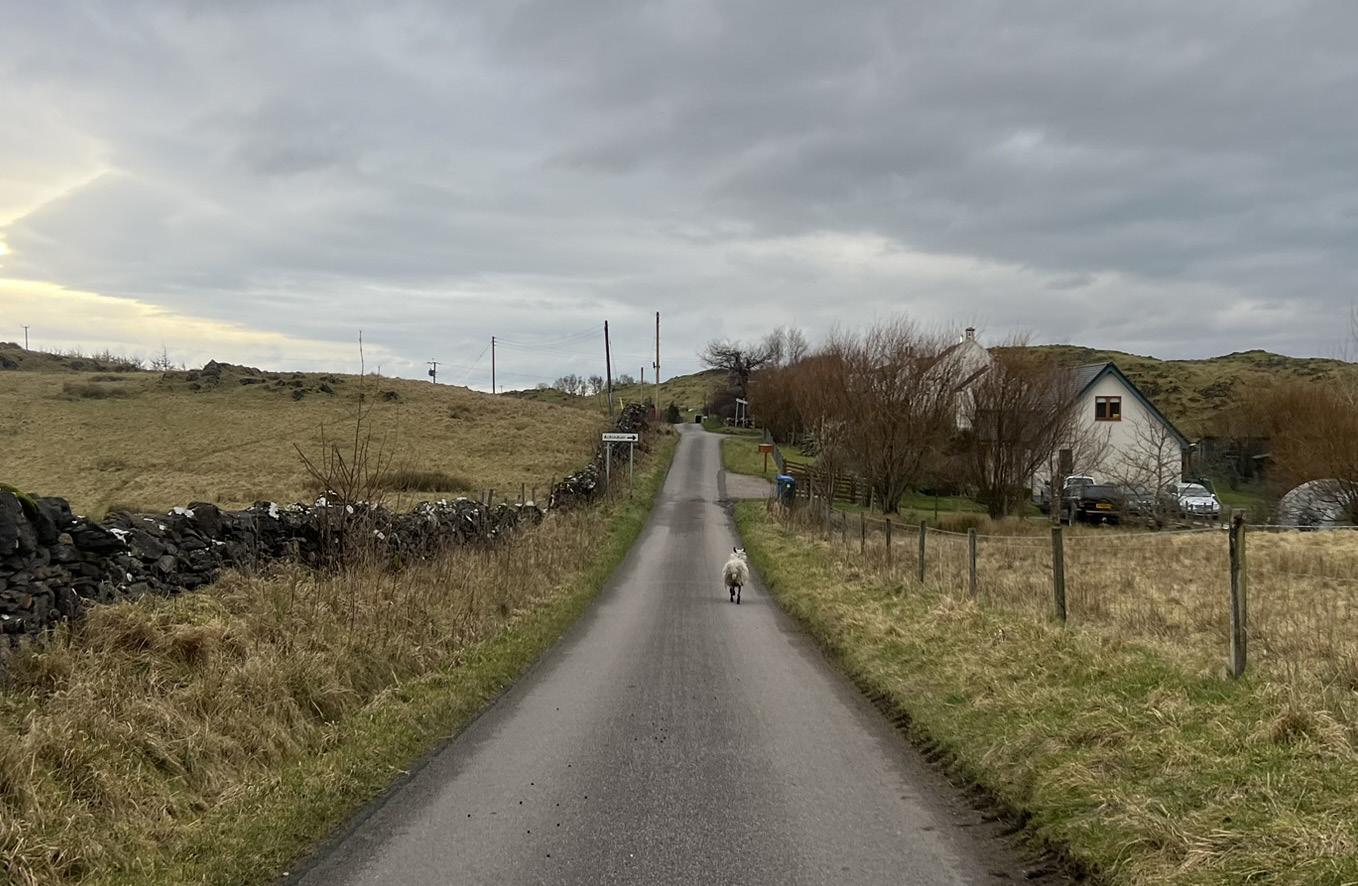
Two perspectives from the island
WHEN DID YOU COME TO THIS ISLAND? WHAT DO YOU REMEMBER ABOUT YOUR FIRST DAYS HERE AND DO YOU FEEL LIKE YOU ARRIVED, FOUND YOUR SPOT IN THE COMMUNITY?
We moved to Lismore in January 2020, and were immediately welcomed by the community. However, it was only a matter of weeks before everywhere was locked down due to the pandemic, so our experience was probably not ‘the norm’ in terms of settling in!
Over a decade ago. Immediately welcomed far more than anticipated
WHAT DO YOU KNOW ABOUT THE ISLANDS (INDUSTRIAL) HERITAGE AND CAN YOU STILL SEE MARKS OR REMNANTS OF THAT IN ITS LANDSCAPE. IS IT TALKED ABOUT AND APPARENT OR NOT RELEVANT TODAY.
The lime kilns and lime works are obviously very evident still.
We sometimes visit a cliff cave that was part of the boat-building industry, but it’s not obvious that’s what it is. There’s plenty of evidence of agricultural history in the form of ‘lazy beds’ and old farming implements used for production and harvest of food crops.
Some of the older farmers talk of the days they grew food crops such as oats – but conditions are no longer suitable for such crops on Lismore.
Port Ramsay and Sailean Limekilns, both still relatively intact. The longest building on the island is the row of cottages in Port Ramsay, built specifically to house the limekiln workers.
Also kelp burning for use in soap and cleaning products, though I know less about this as it does not seem to be talked about in the same way as lime, perhaps because there are no architectural remnants of this industry and therefore no launchpad for conversation. Whilst seaweed and its health benefits are front and centre in the consciousness of many, fears about water quality around the island from the impact of the intensive salmon farming and how it is ruining the inshore waters and seabed, discourage some from this pursuit even for personal consumption. Certainly, many have stopped swimming in the sea anywhere near the fish farms because of all the antibiotics, colourants, etc. they feed the fish.
We know kelp used to be harvested and burnt to create soda ash for making glass and soap and that this industry along with fishing influenced the relocation of tenant crofters to coastal areas to boost the workforce during the first wave of Highland Clearances.
We occasionally use seaweed as a mulch/fertiliser on vegetable beds, as do many other crofters.
We have eaten seaweed products once or twice, but not something we actively seek out/forage for.
See above. Yes, in cooking, though bought through an organic Japanese supplier as opposed to local for the aforementioned reasons.
ARE YOU AWARE OF THE HISTORY OF SEAWEED IN THE HIGHLANDS AND DO YOU UTILISE SEAWEED IN YOUR DAILY LIFE?
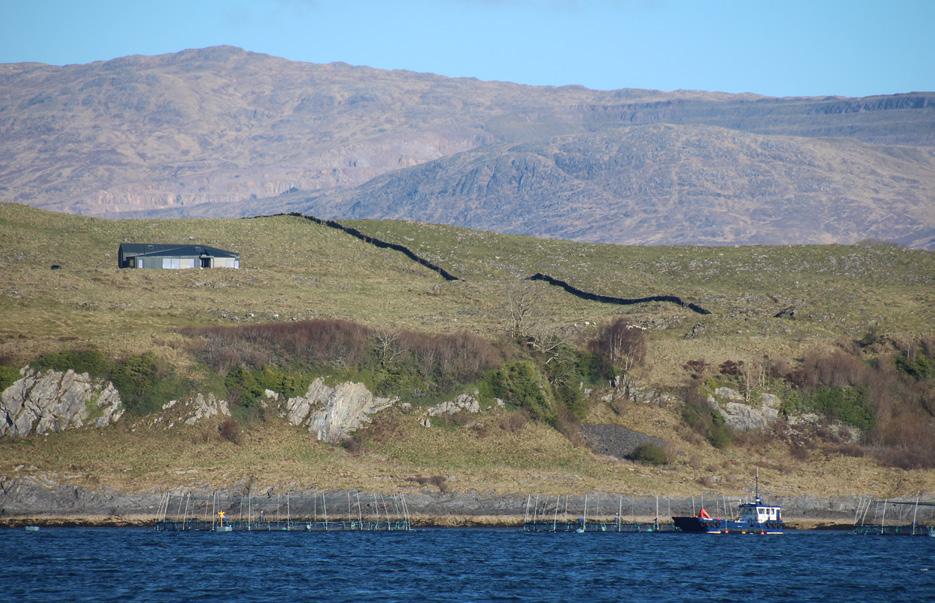
WHAT IS YOUR OPINION ON THE SALMON FARMS THAT SURROUND THE ISLAND AND THEIR EFFECTS? PHYSICAL/NON-PHYSICAL – ECONOMY/VISUAL IMPACT/ ENVIRONMENTAL
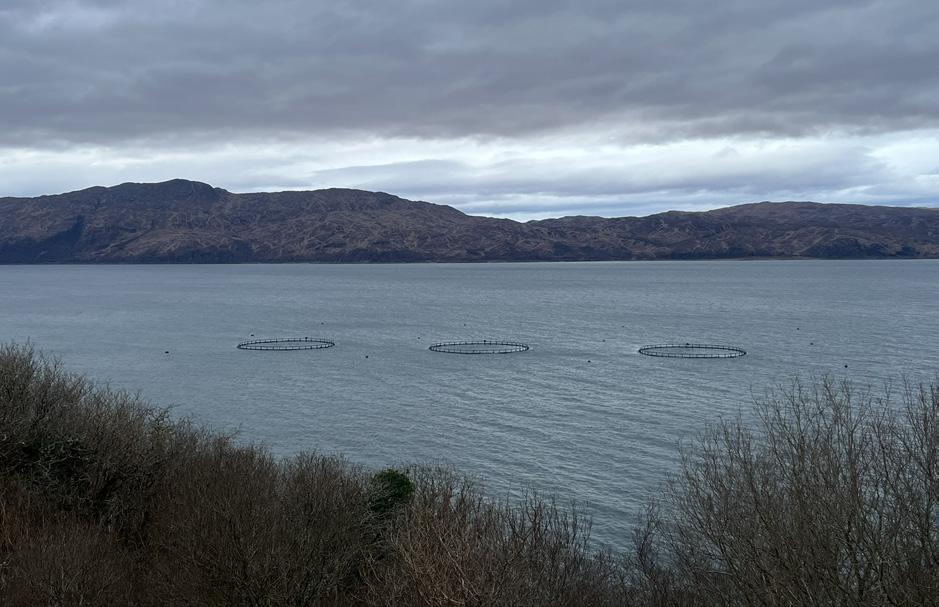
Awful! fish ‘battery farmed’ and kept in conditions that would not be allowed with any other species. High mortality rates, that would have us shut down if the same were to occur with our livestock and poultry. Artificially high parasite loads and other diseases that spread to the surrounding sea life.
Massive build up of nitrates polluting the water and also impacting on the natural diversity of the location. Profits over any other consideration. the biggest factor that impacts us directly is the huge amount of waste that ends up on our shore/ grazing land so also impacts our animals. We have regular beach cleans which helps with the larger items we often find e.g. rope, lost gloves, brooms. Much harder to manage is the thousands of tiny pieces of shredded nylon rope embedded in the sea weed, on the shore, in the grass at the edge of the shore. That will have a permanent effect on the land and is a risk to our grazing livestock.
The entire island of Lismore sits within the Lynn of Lorn National Scenic Area (NSA) and it is astonishing such scars on the landscape are allowed to occur.
They employ some people, but not hundreds or thousands. They are owned by Norwegian billionaires, all set up tax-efficiently for their benefit. They should do far more for the local economy. After all, they have effectively been given free farmland – that’s basically what they have with the sea. It would be a very different situation if the Government just gave large tracts of Scotland to private foreign companies to use for polluting businesses. There would be uproar.
‘We and all other lifeforms exist in an ambiguous space in between rigid categories’
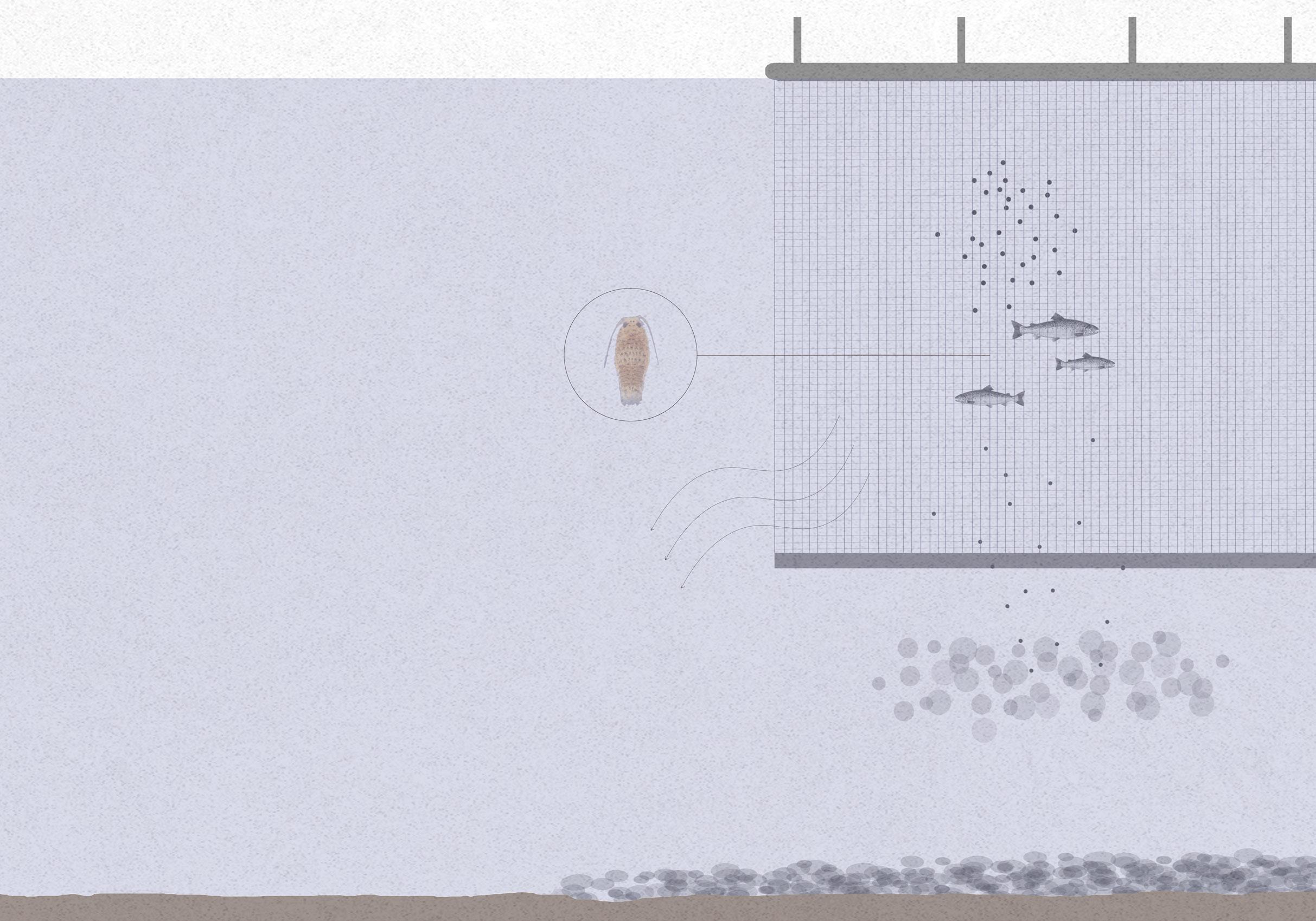
Concentration of salmon waste creates silt on sea bed
Excess nitrates due to uneaten feed
Pesticides and antibiotics released into water
High density pens increase rate of spread of disease
High mortality rates due to conditions
Escapes cause interbreeding with wild salmon and mutations
‘And you may find yourself living in an age of mass extinction...’ Timothy Morton
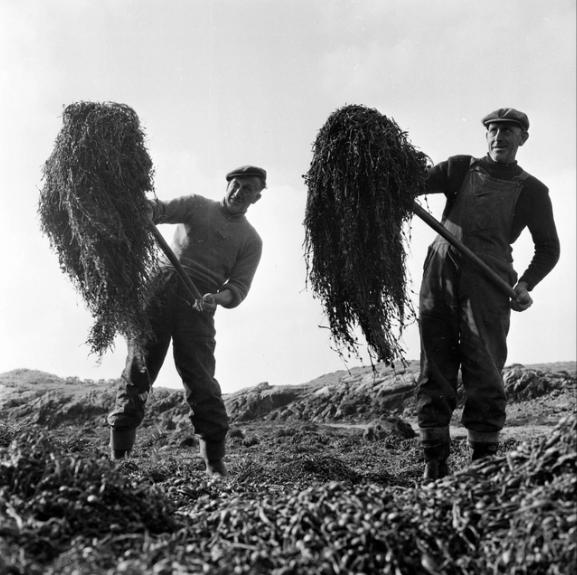
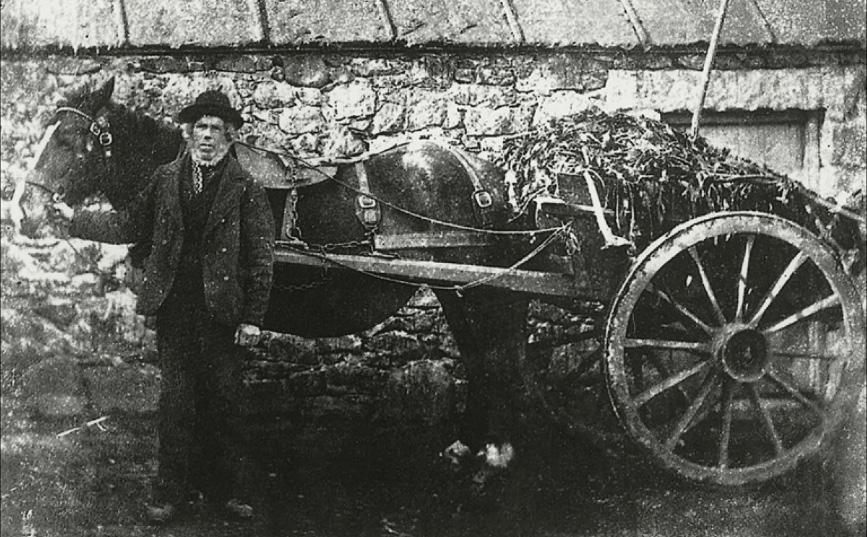
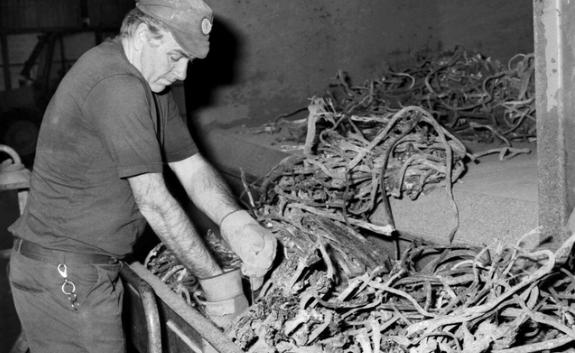
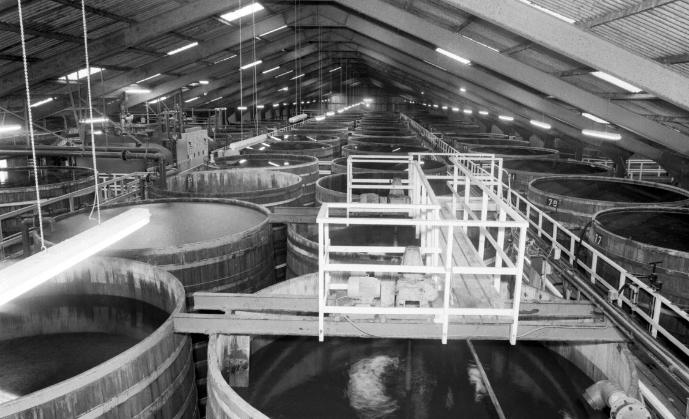
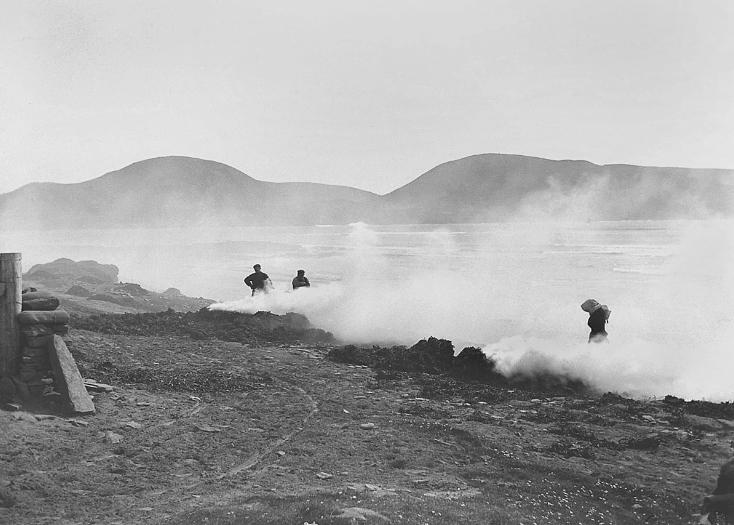
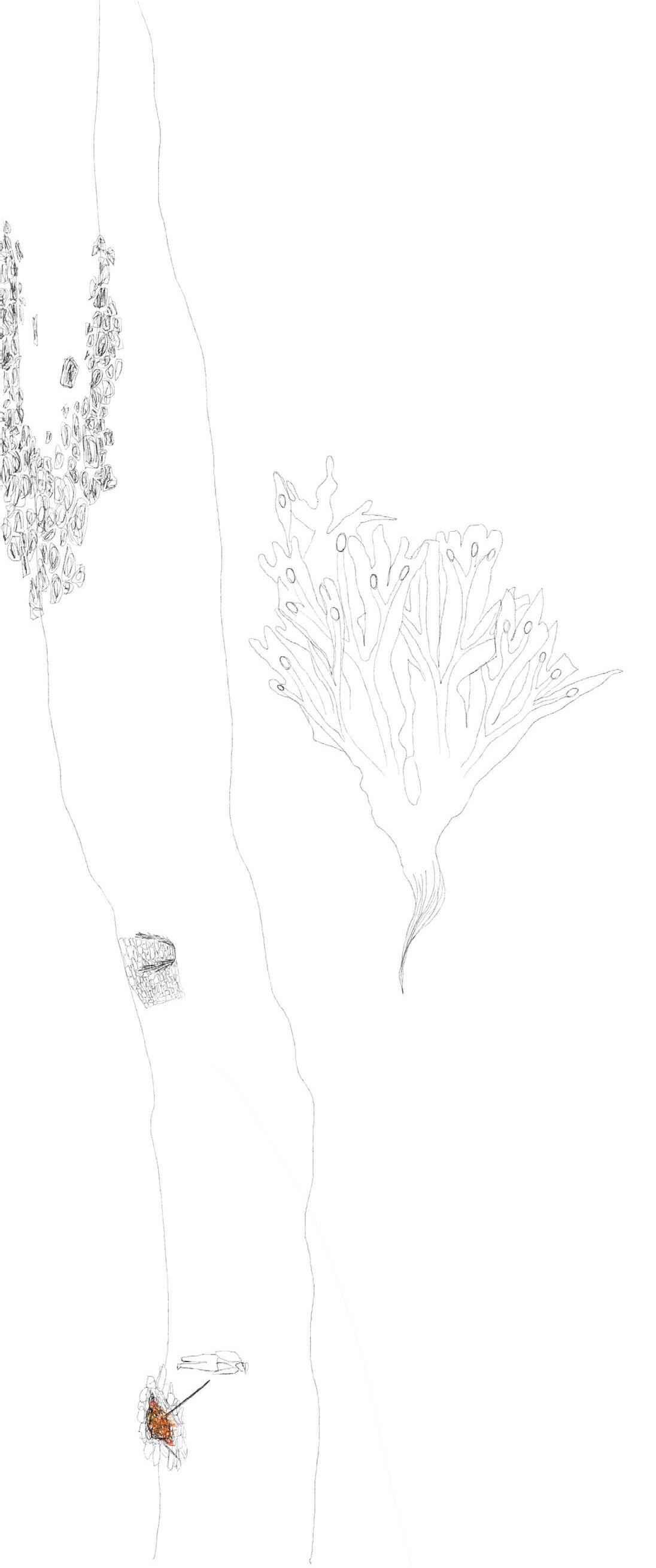
Brown seaweed found on rocky shores and in tidal areas in the UK and North Atlantic. Appearance is olive to dark brown with wide branch-like fronds. Air filled pockets (bladders) in middle of fronds allow the seaweed to float when submerged. Most have a noticeable rib running in centre of frond.
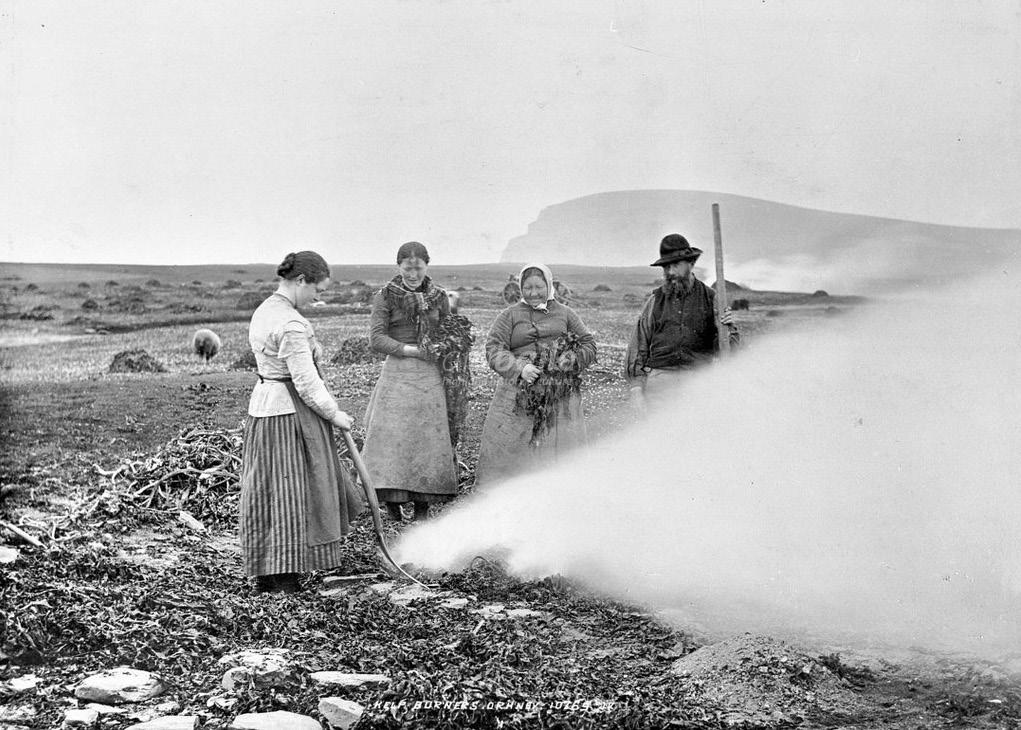
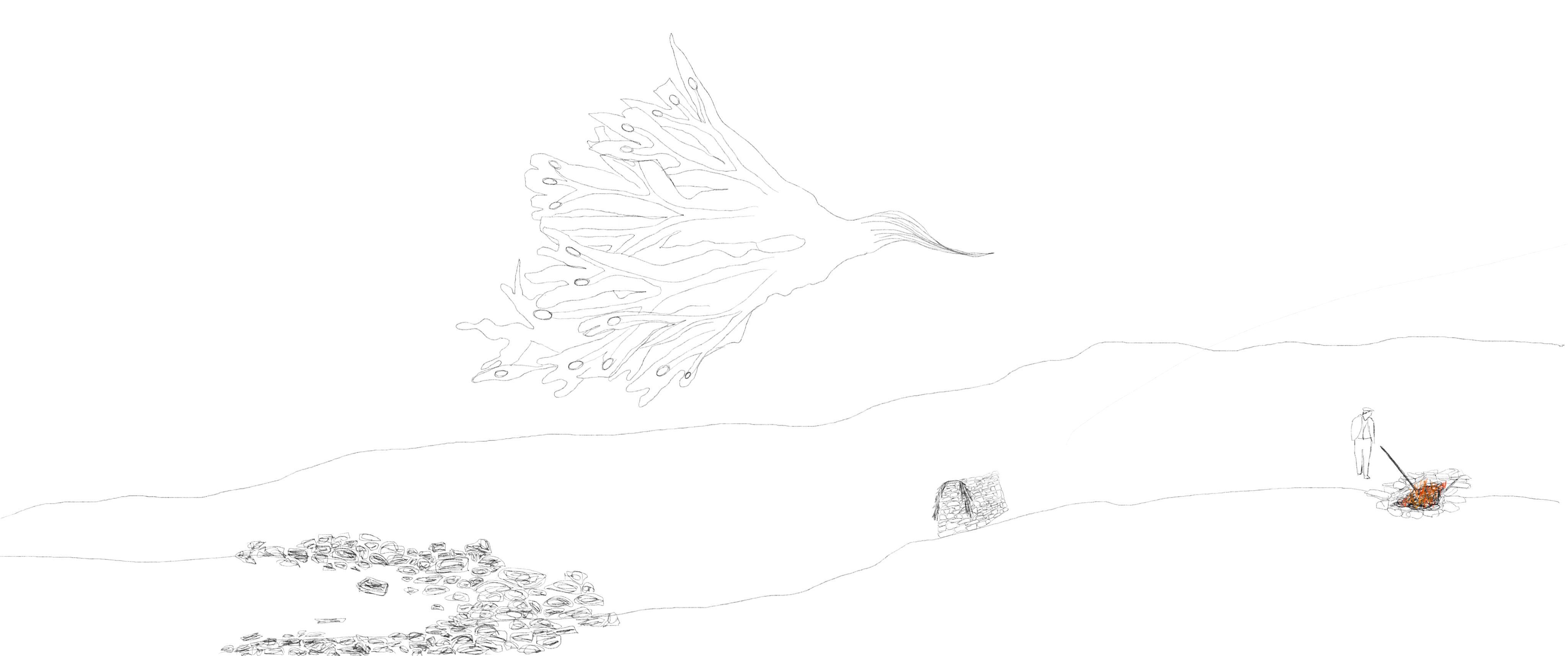
In the 18th century kelp production became popular along the west coast of Scotland, after the highland clearances communities were pushed to the coast and relied on the sea to survive due to limited arable land. The burning of wrack found on the rocks in tidal zones produced sodium ‘kelp’ ash that could go on to be used in glass and soap production. Wrack was also spread on the fields as fertiliser and in some cases eaten.
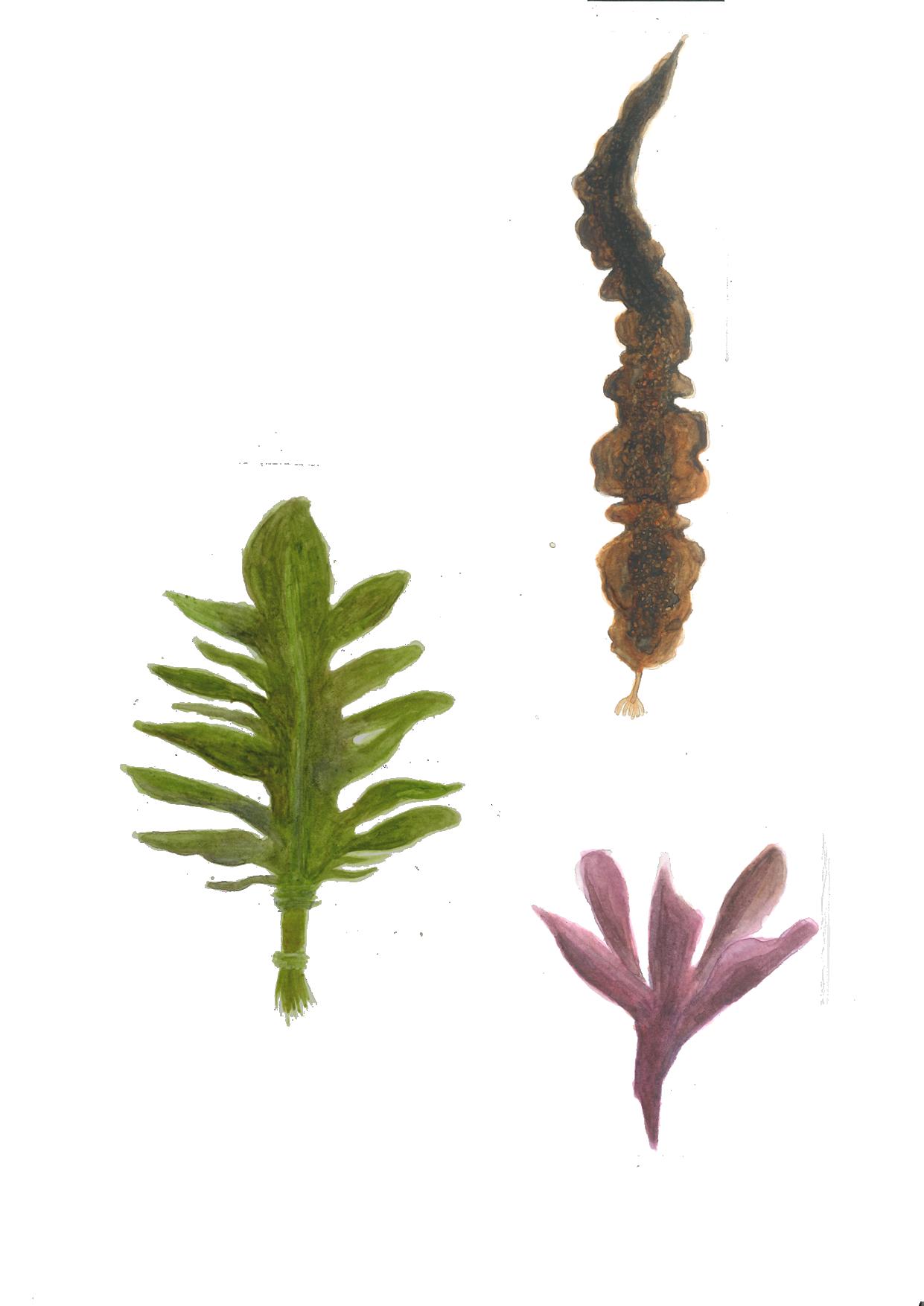
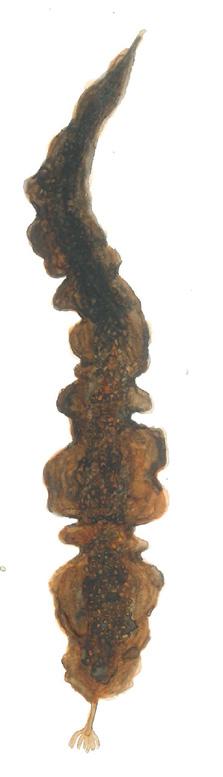
There are three main types of seaweed utilised today - the most popular being sugar kelp
THE LARGEST PRODUCER OF SEAWEED, PARTICULARLY KELP
RESPONSIBLE FOR 58% OF GLOBAL PRODUCTION
CURRENTLY ACTIVE
KERRERA SEAWEED FARMING SCOTLAND
AIRD FADA
RONGCHEN, SHADONG PROVINCE, CHINA
5m x 5m rope grid
Zoomed in by 500 %
Zoomed in by 1000 %
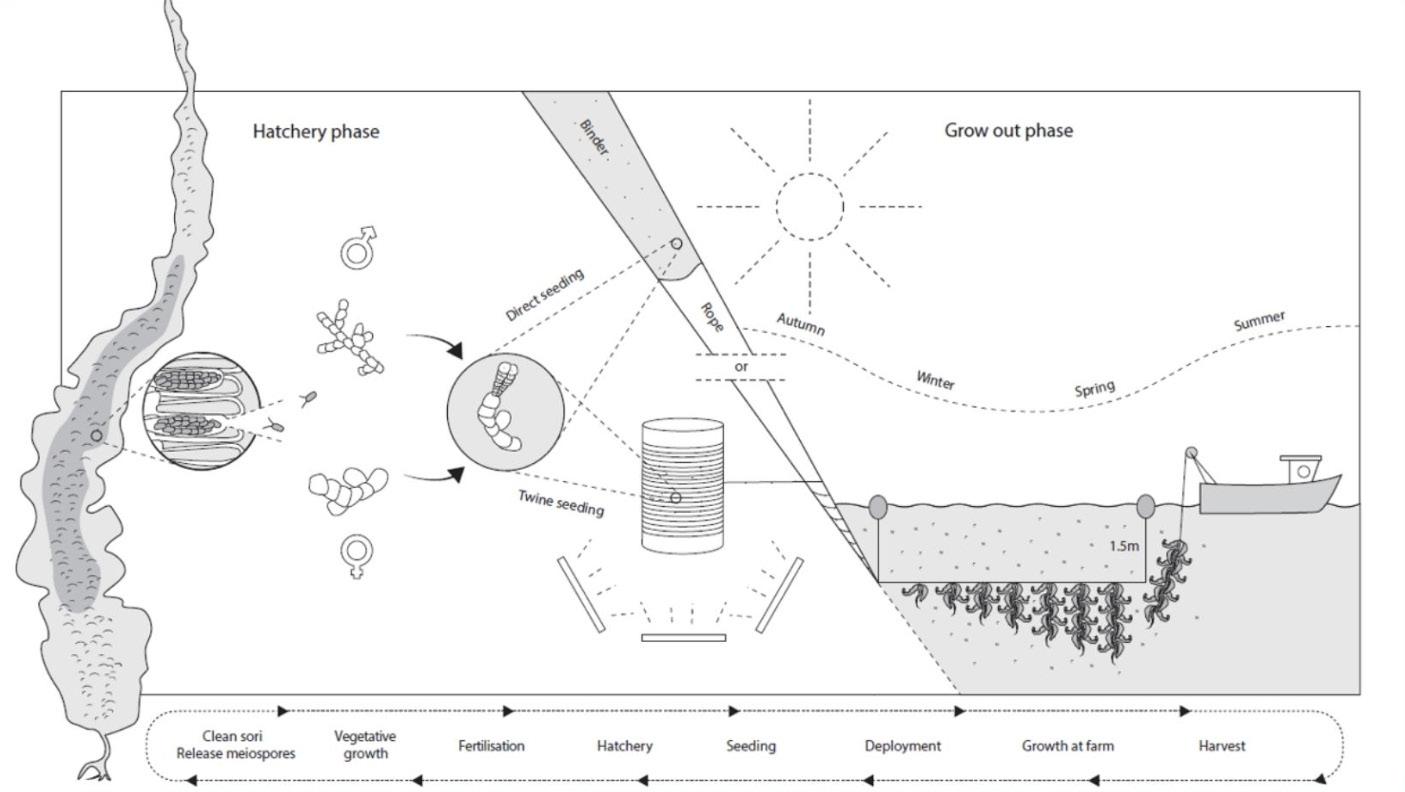
NO FERTILISER NO PESTICIDES NO LAND USE
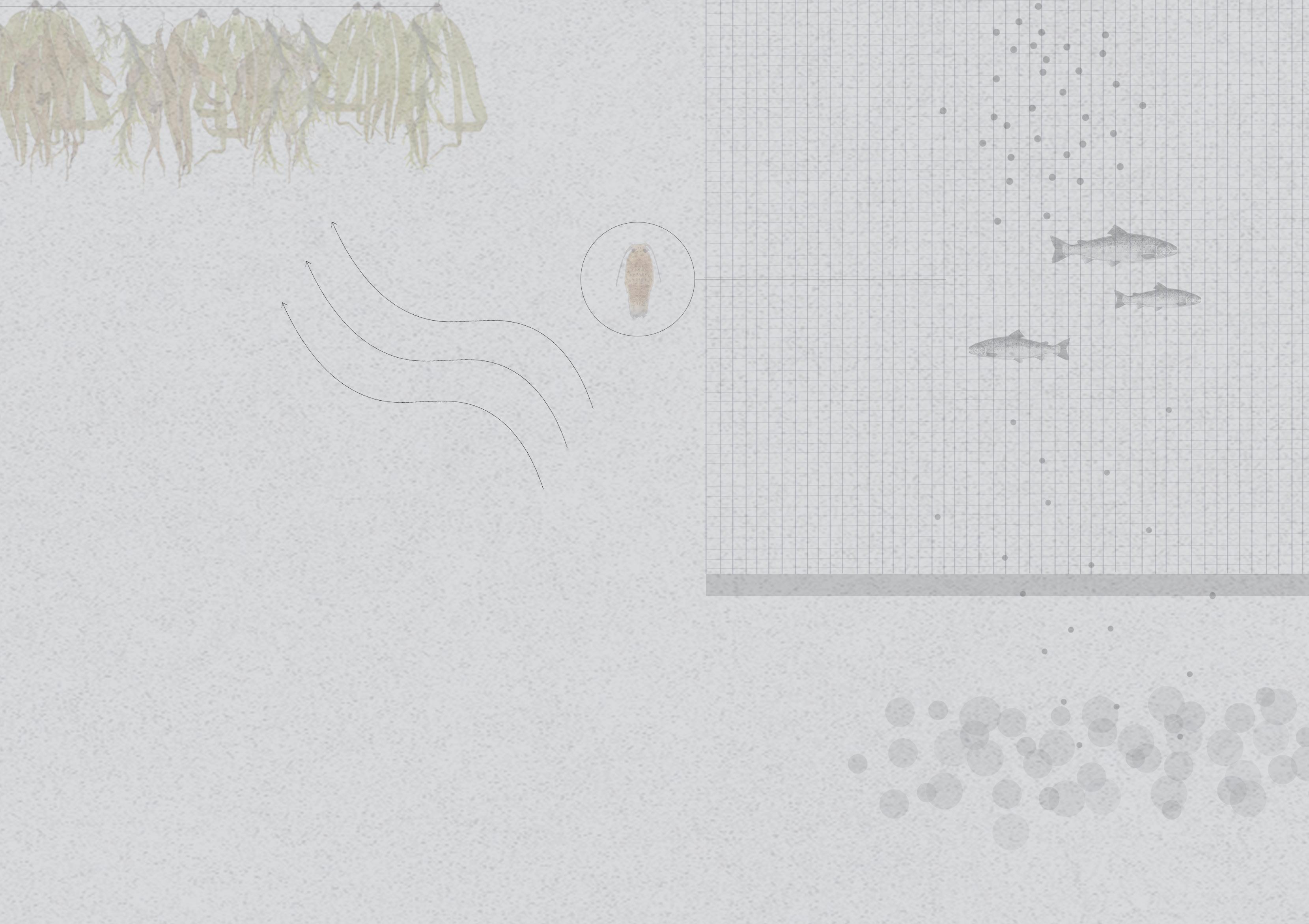
Kelp passively absorbs excess phosphates, nitrates and carbon dioxide from the surrounding water. It can help to mitigate concentration of nutrients created by salmon farming
SEAWEED IN ARCHITECTURE
PRECEDENT STUDY
LUDIKA BIOBUILDING
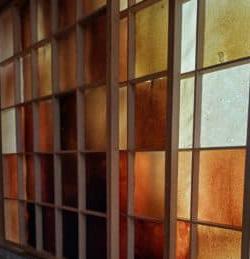
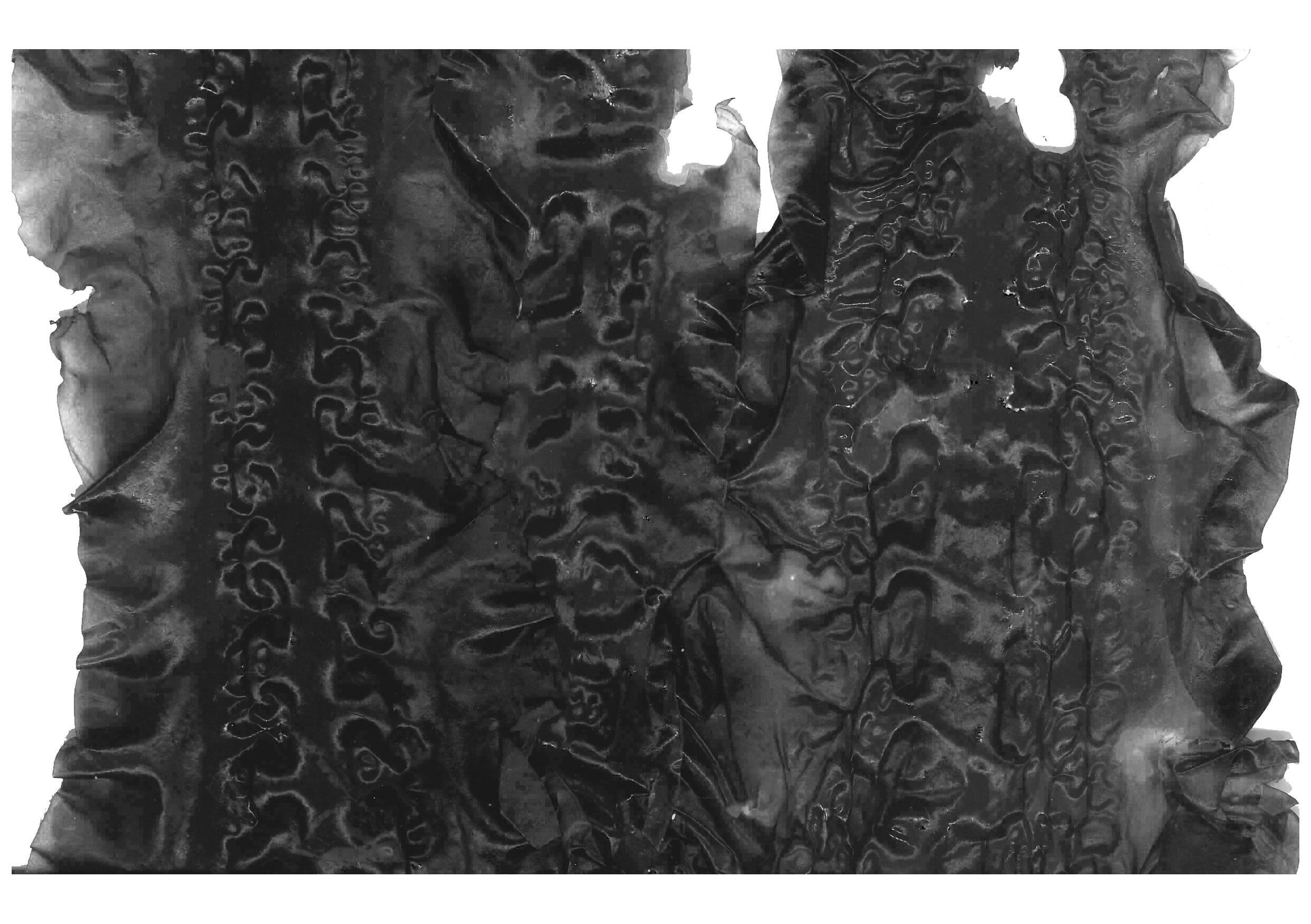
These seaweed screens were created by Alberte Bojeson, she has done a lot of research and experimentation using seaweed in Iceland for various projects. When contacted Ludika reported the ‘In terms of durability the panels are performing well so far in their intended context. We are continuing to observe their ageing and behaviour over time, particularly in relation to moisture and dimensional stability. They do react to changes in humidity, if it gets too dry they are at risk of tearing if they have been fitted too tightly onto the frames. This makes them particularly suitable for use in a hempcrete building, where the hempcrete regulates internal humidity levels.
We have had to replace a few over time as expected seeing as this is a relatively fragile material, but Alberte has managed to improve the material composition in the process.’
BIOMATERIAL EXPERIMENTATION
Using ‘Icelandic Biomaterial Chronicles - Fabricademy Class 22-23’
Emulsify seaweed
250ml water heat
add 15g glycerine
5g agar
130g seaweed
simmer 80 degrees until denser pour and set
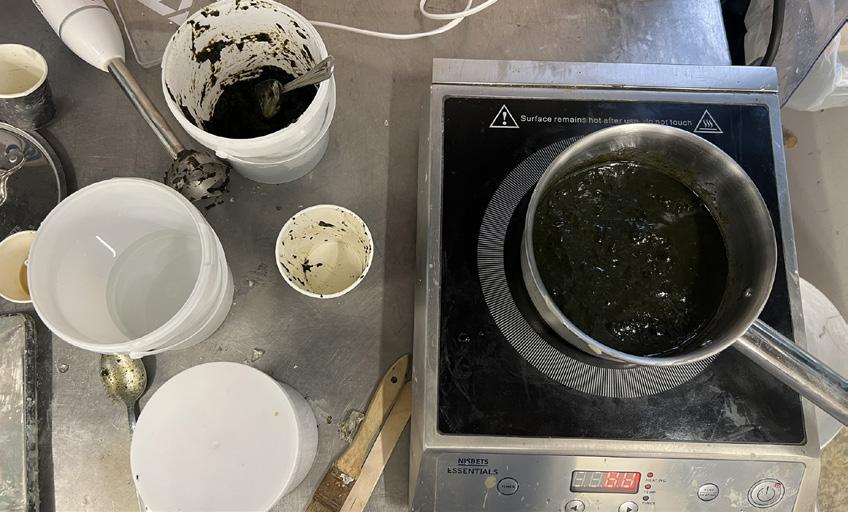
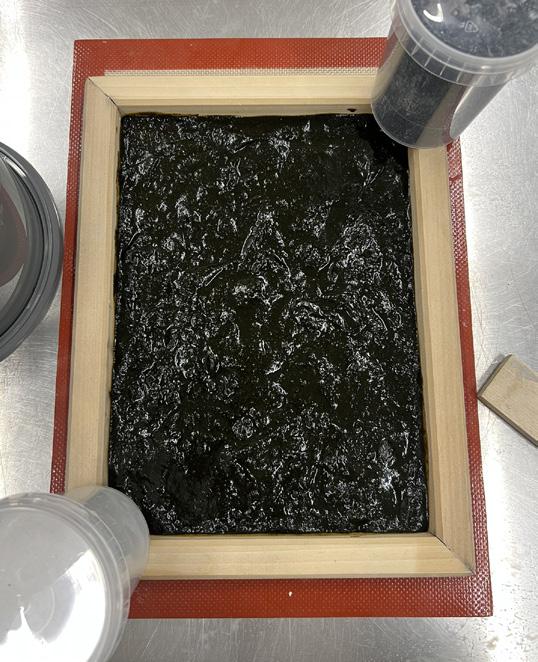
E mulsify seaweed
400ml water heat add 15g glycerine
3g agar
20g gelatine powder
170g seaweed
simmer 80 degrees to honey consistency (40mins)
Positive beginnings !
48 hours setting in frame at room temp
Fragile tough jelly consistency but held shape
Layer of moisture remained on surface
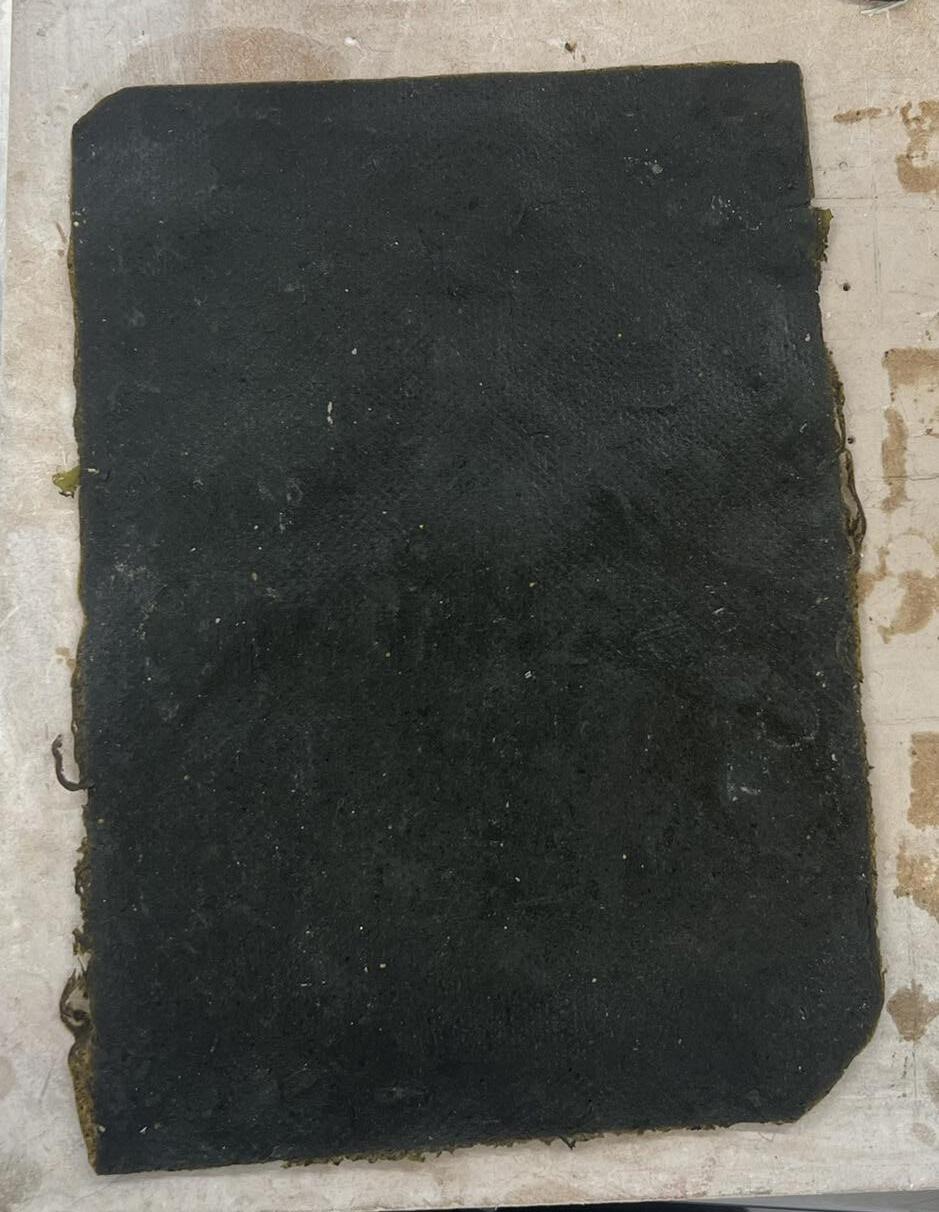
SEAWEED IS NOT A RELIABLE
MATERIAL OUTDOORS PARTICULARLY
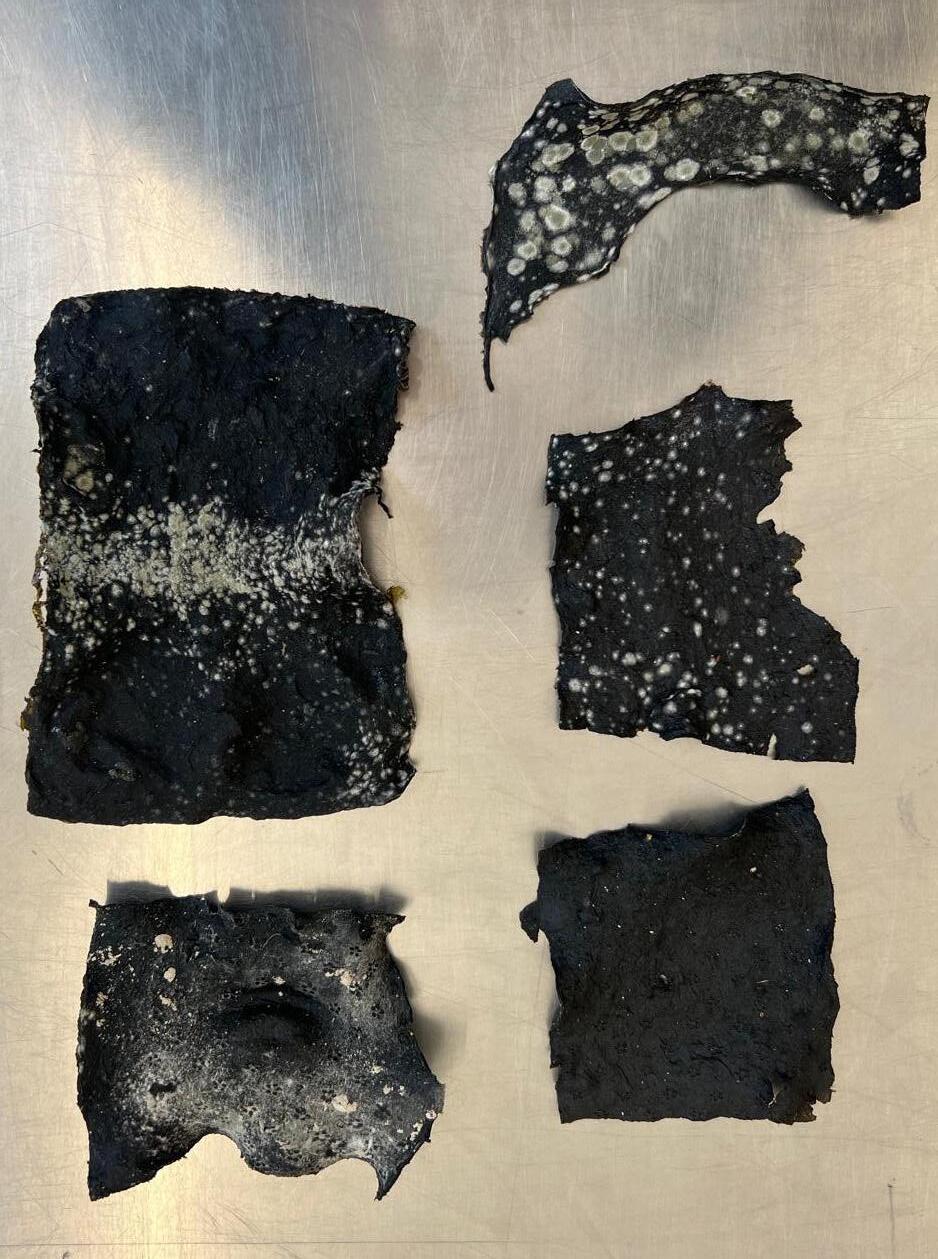
Unfortunate outcomes...
THE PROPOSAL
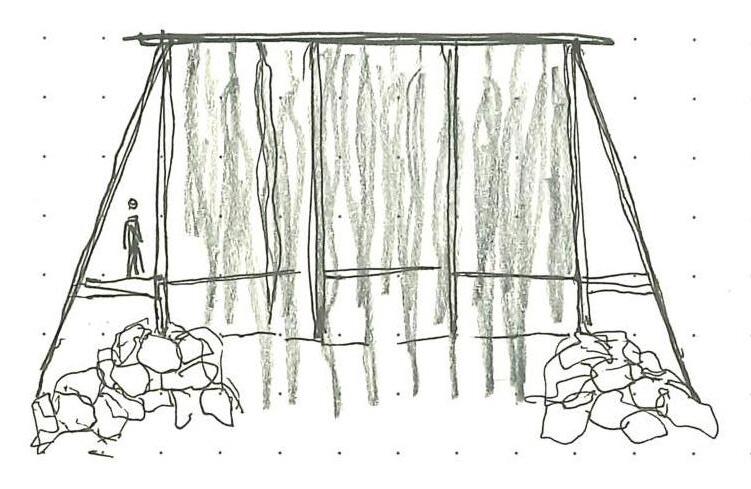
KEY INTENTIONS:
CHALLENGE HISTORY OF EXTRACTIVE ACTIVITY
PUBLIC VISIBILITY
CREATE INTERVENTION FOR CHANGE AGAINST SALMON FARMS SURROUNDING ISLAND
INCORPORATE SEAWEED AS MATERIAL OR FUNCTIONAL PARTICIPANT
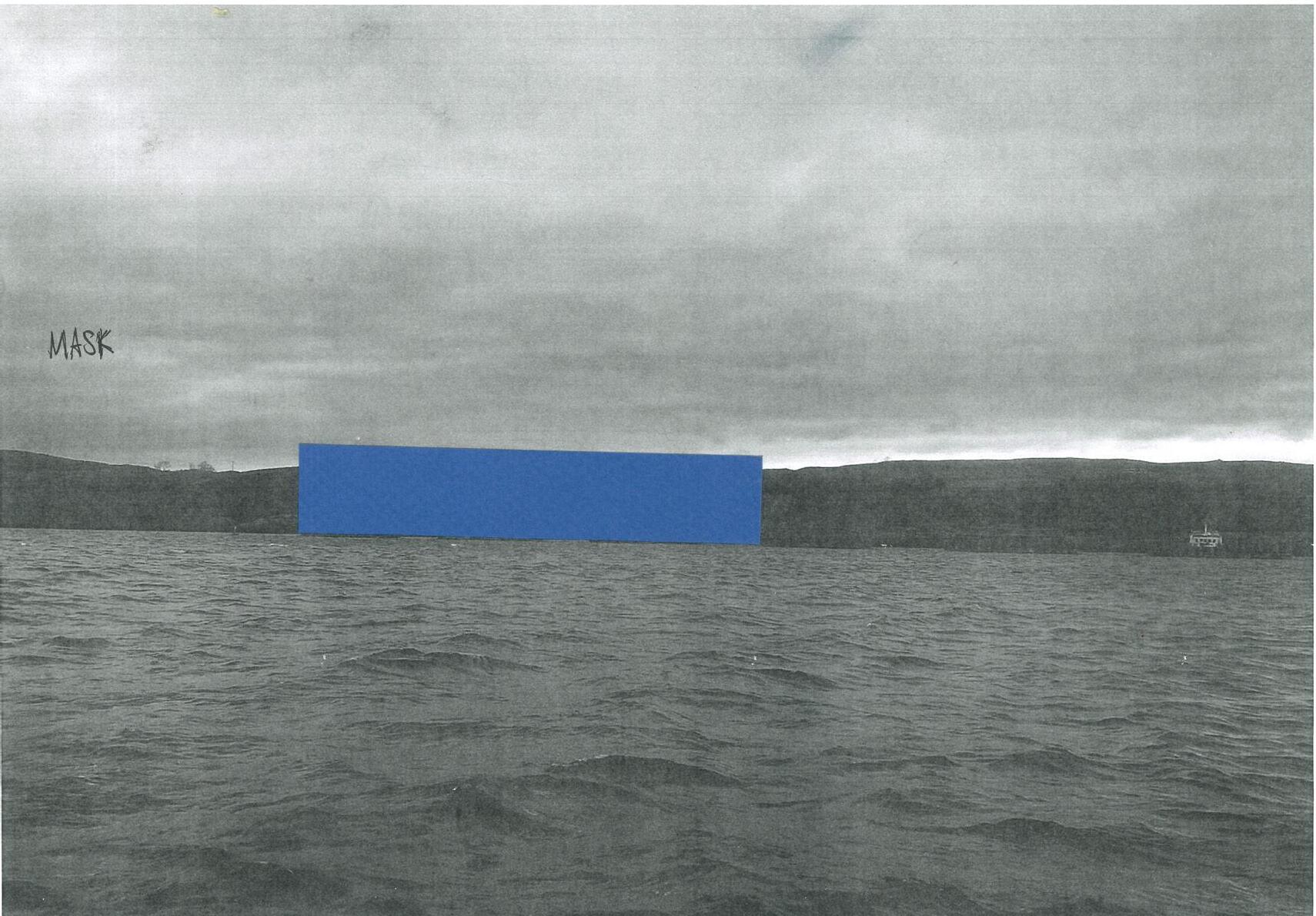
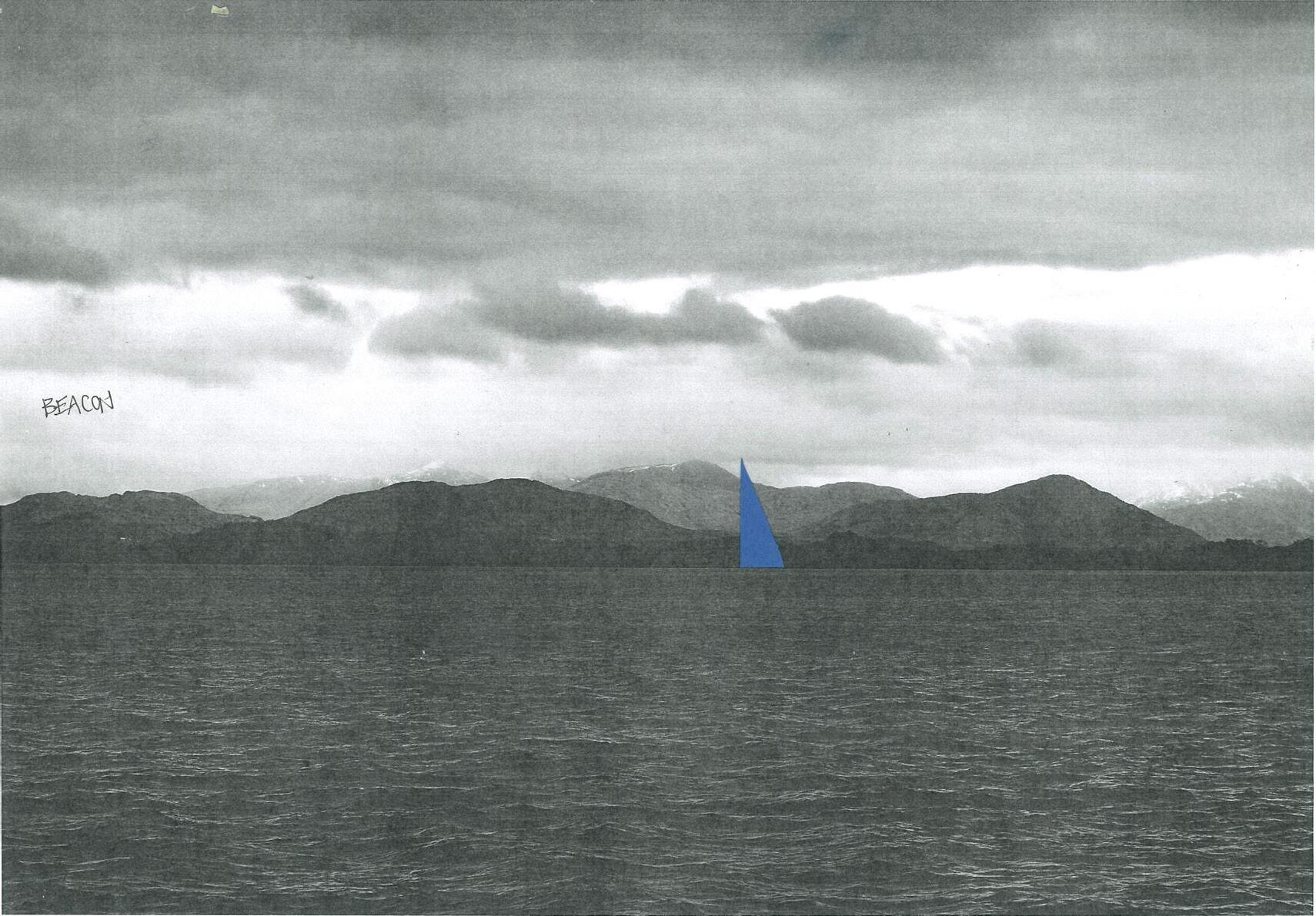
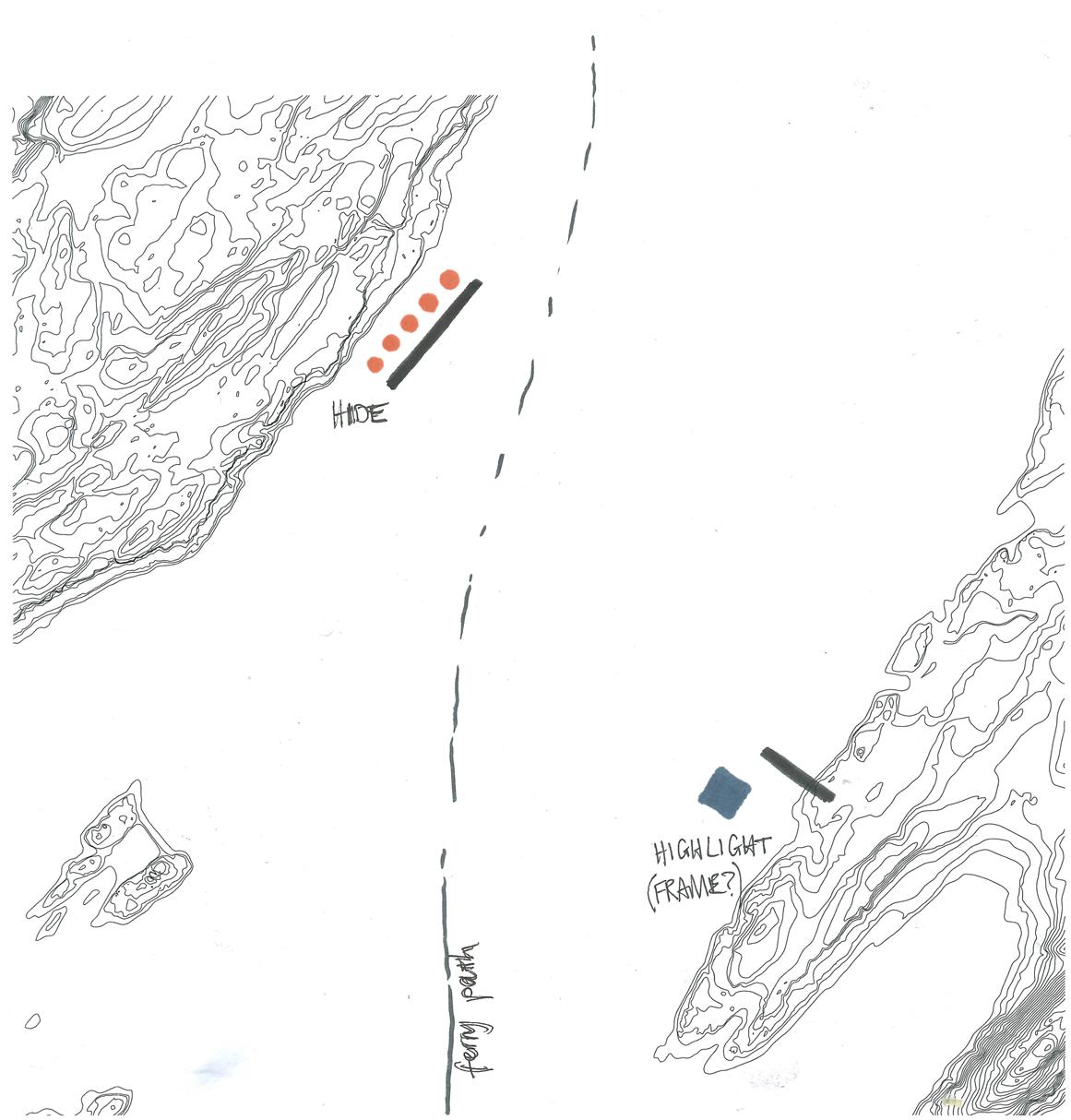
E arly concept development incorporated existing seaweed farm at Port a’ Bhuiltin Highlighting tension between the salmon farm and the seaweed, visible from the commercial ferry path from Oban to Lismore
However this provided no real practical change for the people of the island besides creating ‘a spectacle’
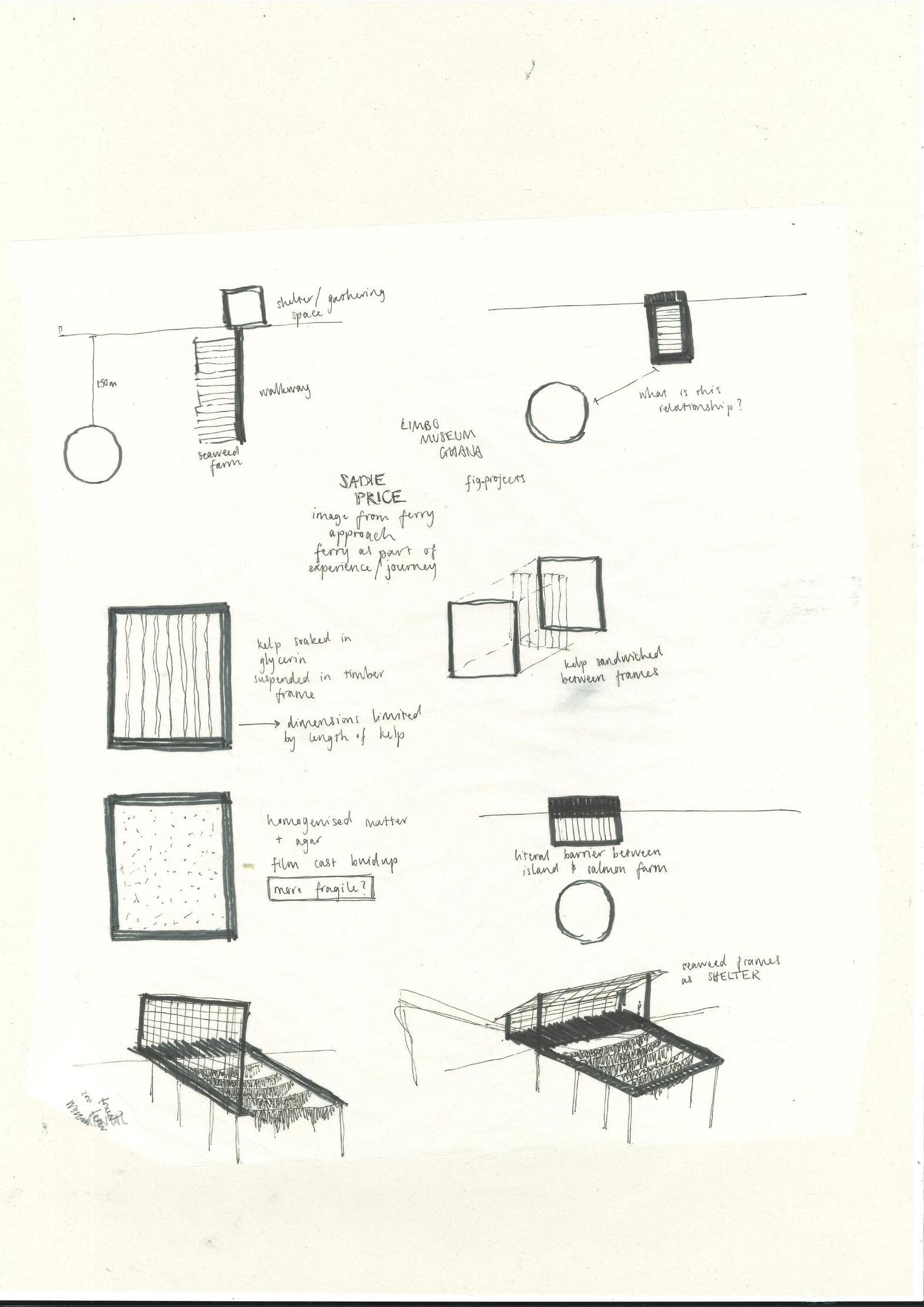
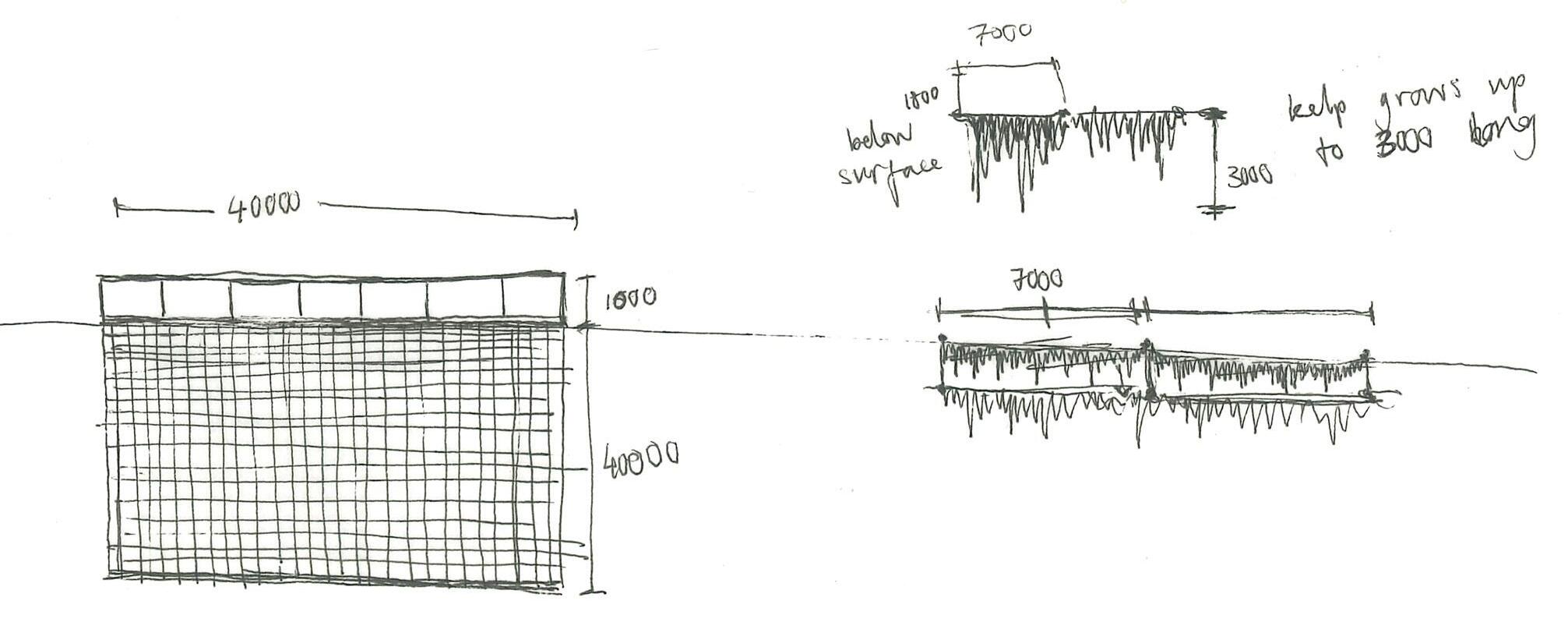
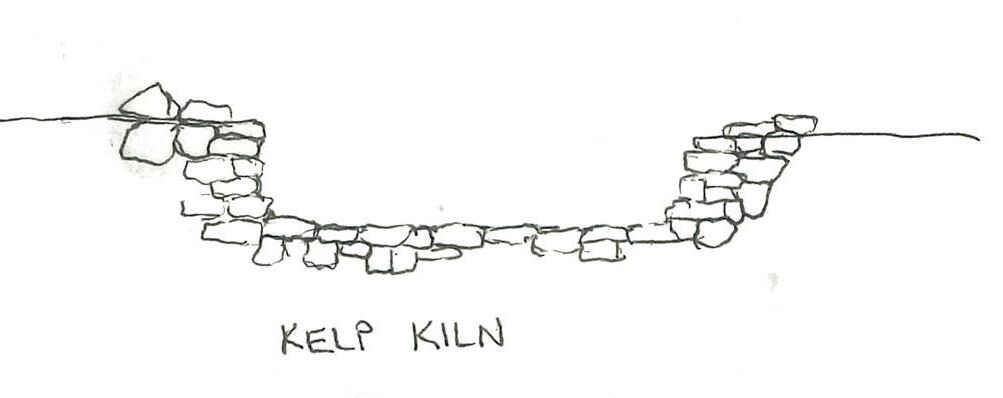
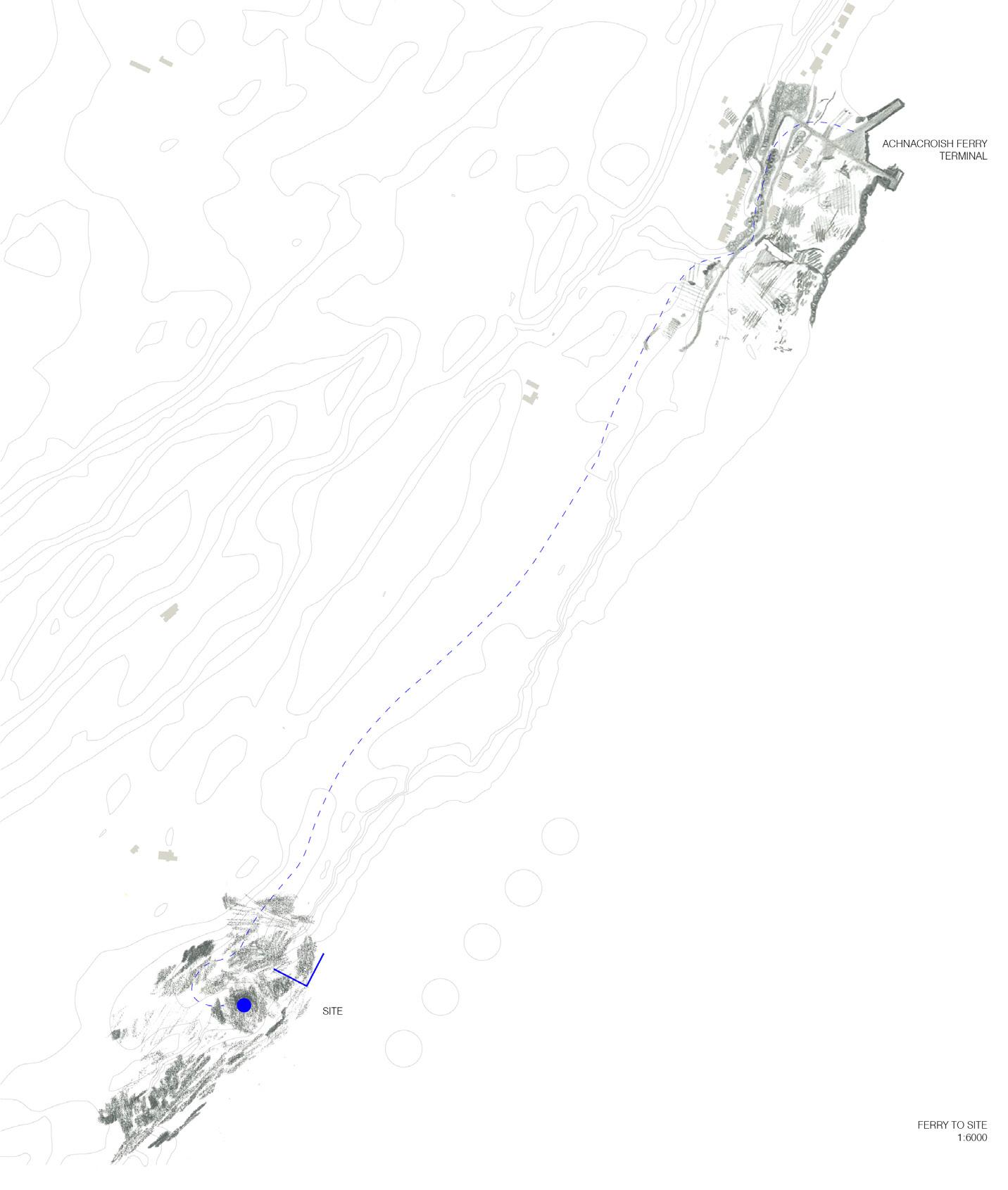
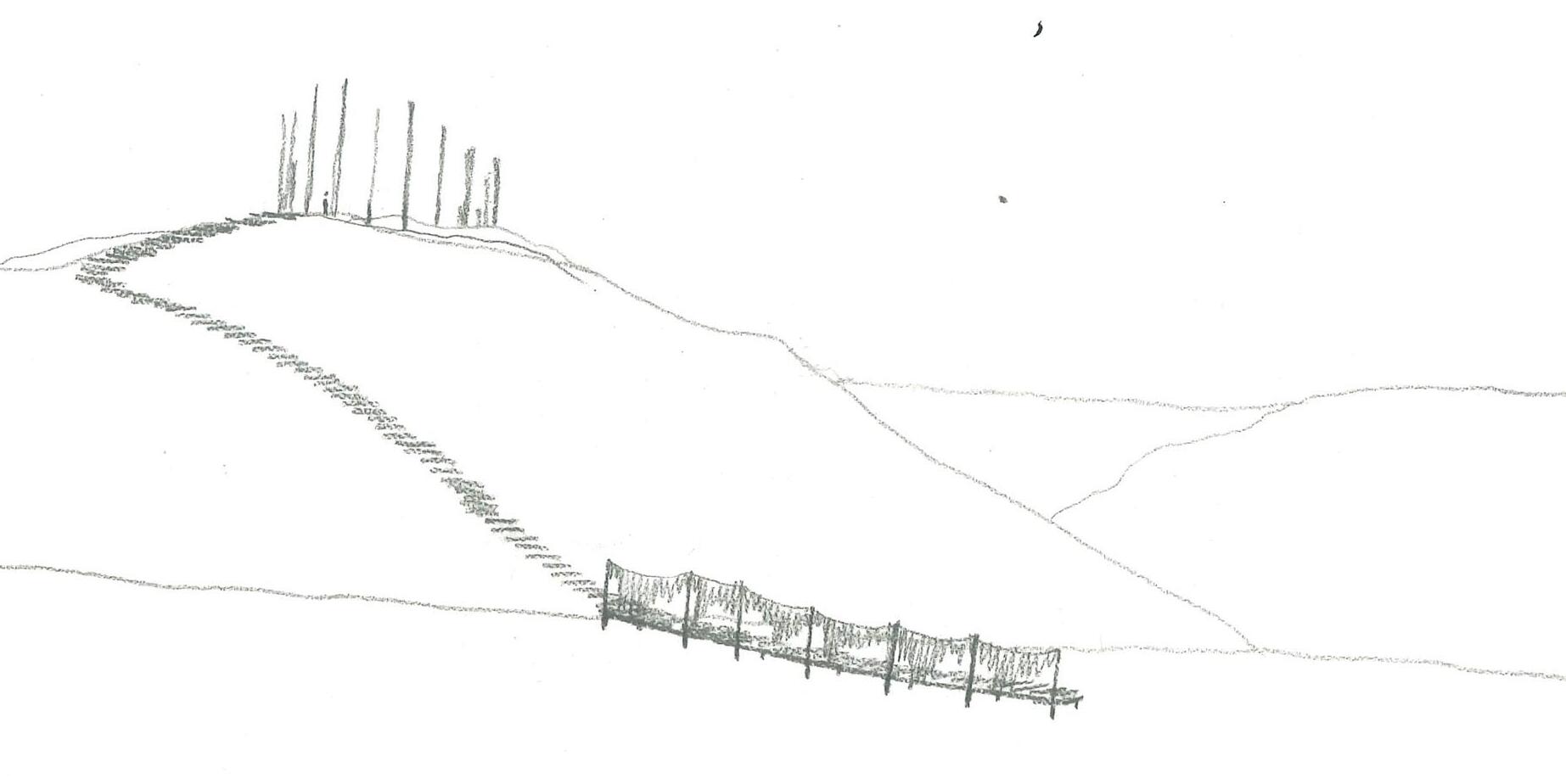
JOURNEY TO SITE
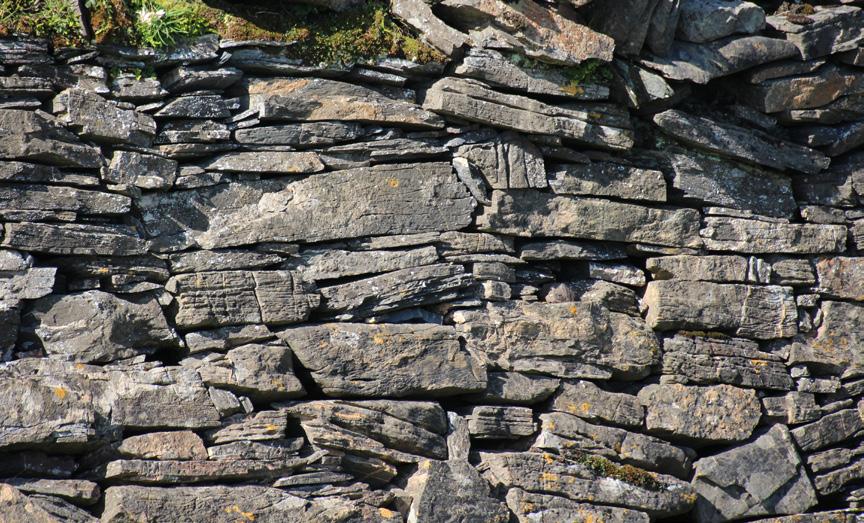
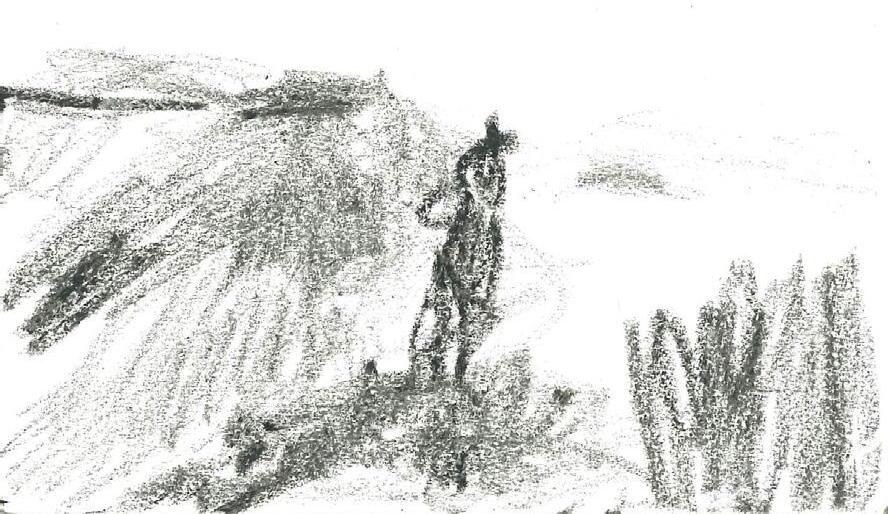
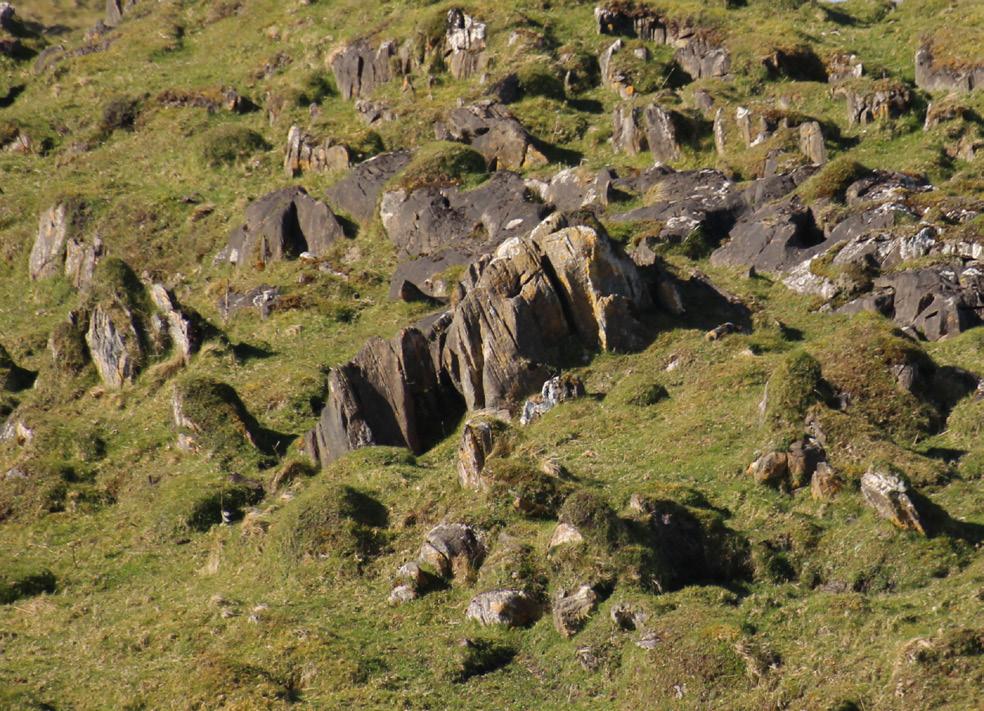
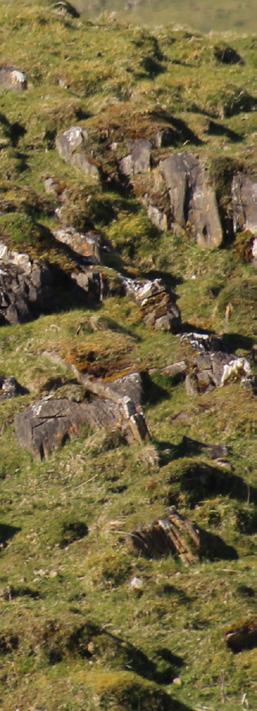
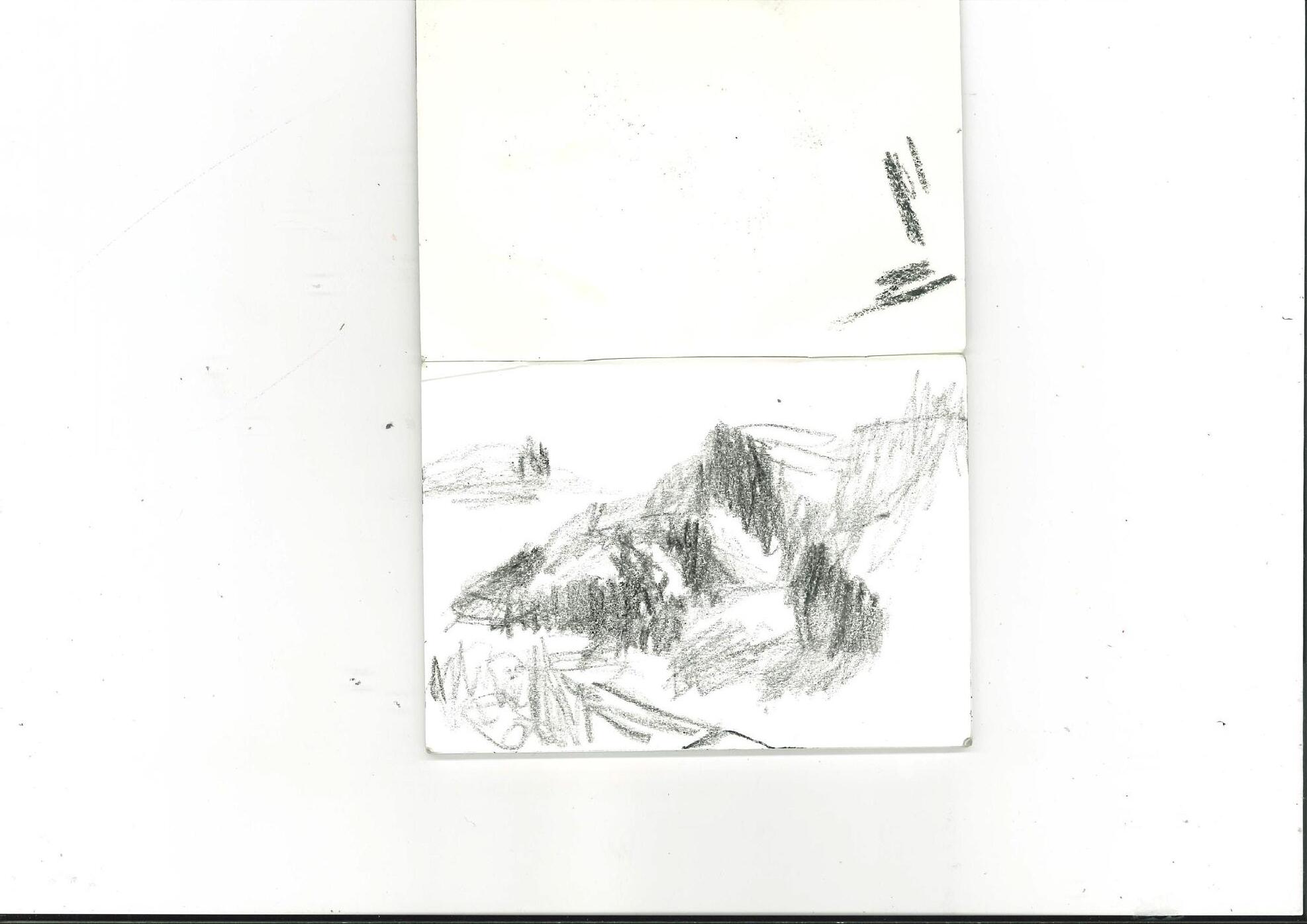
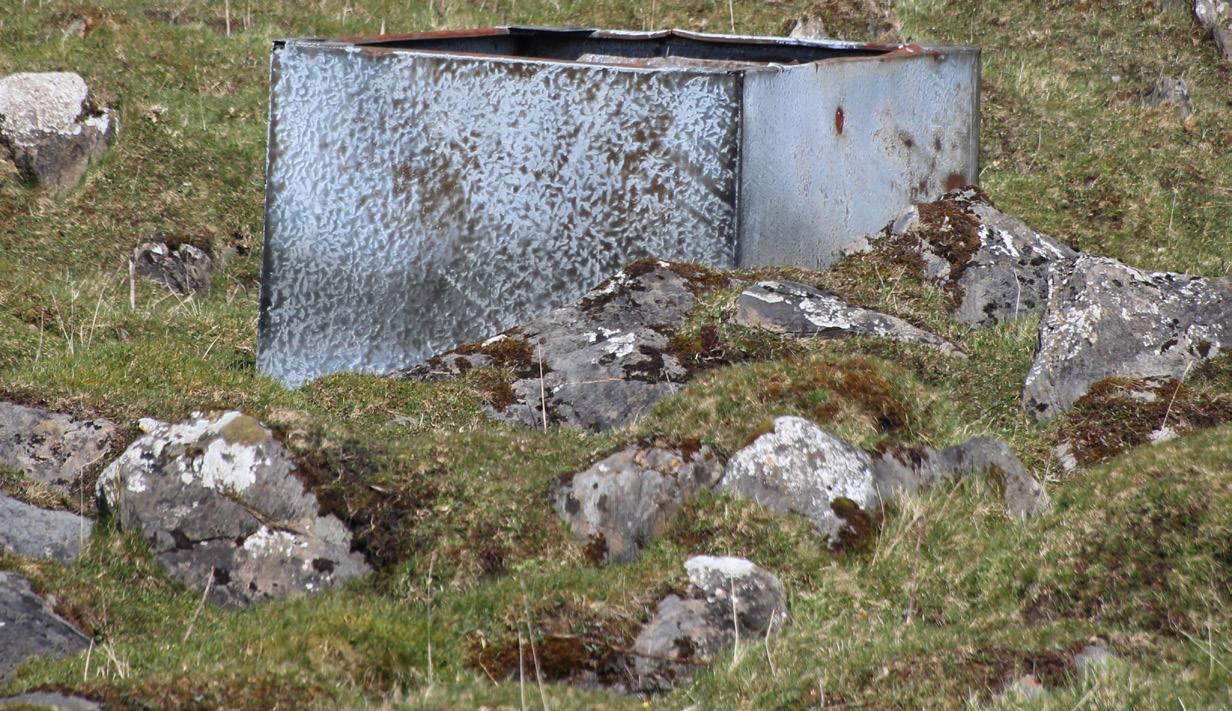
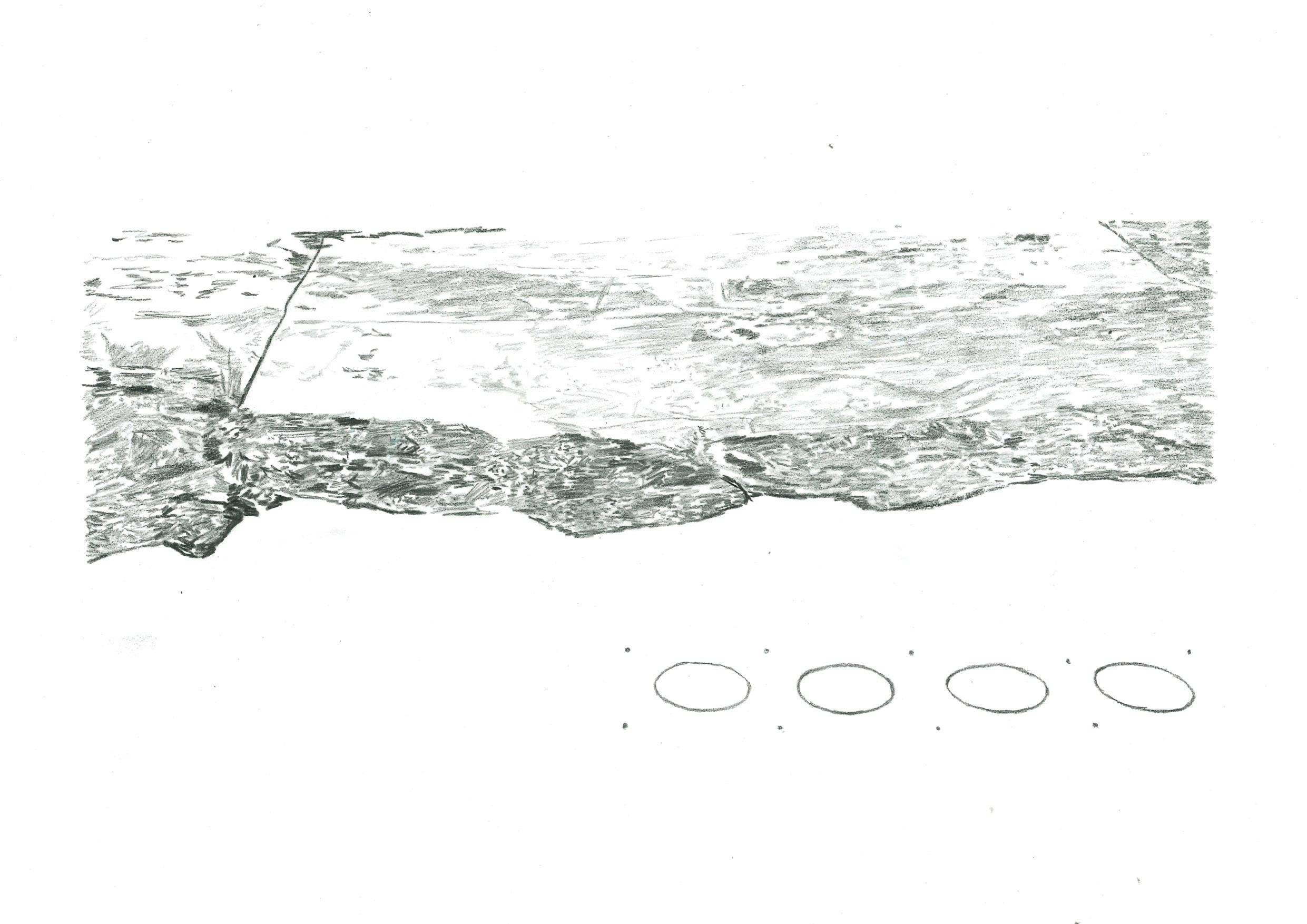
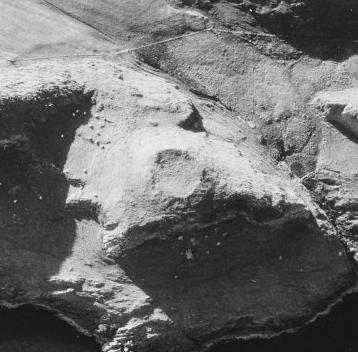
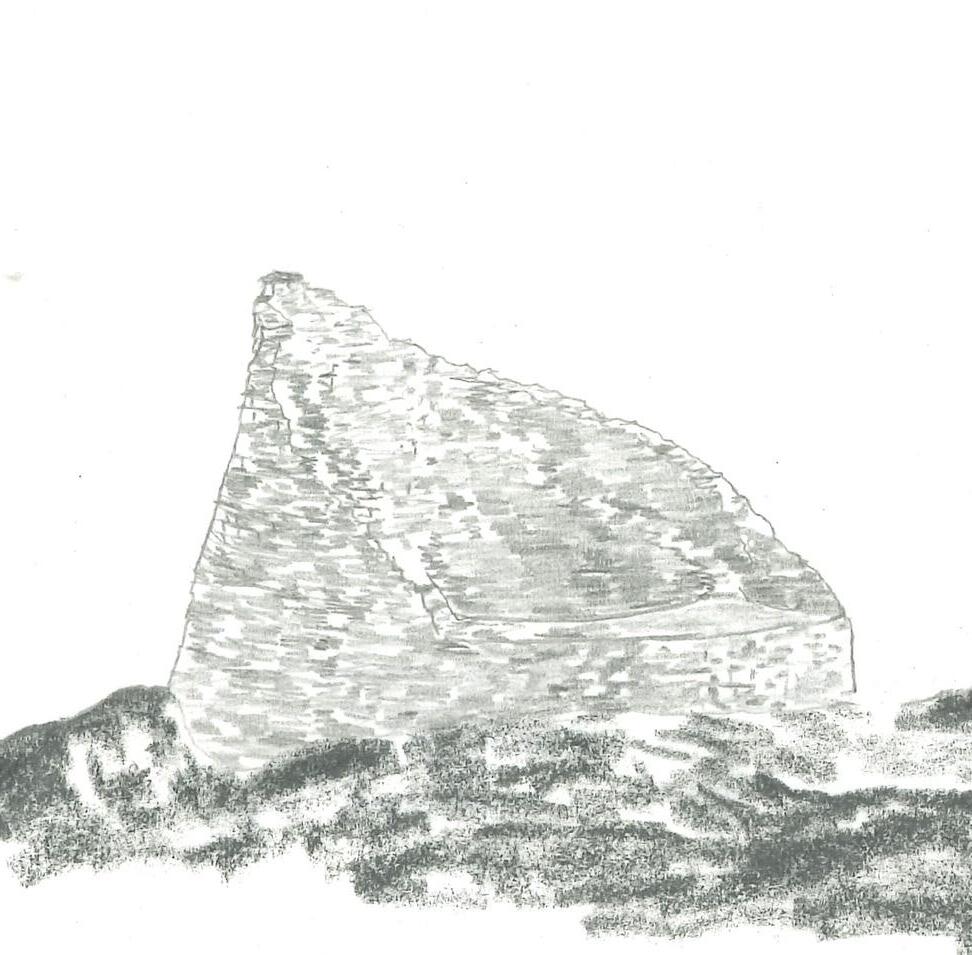
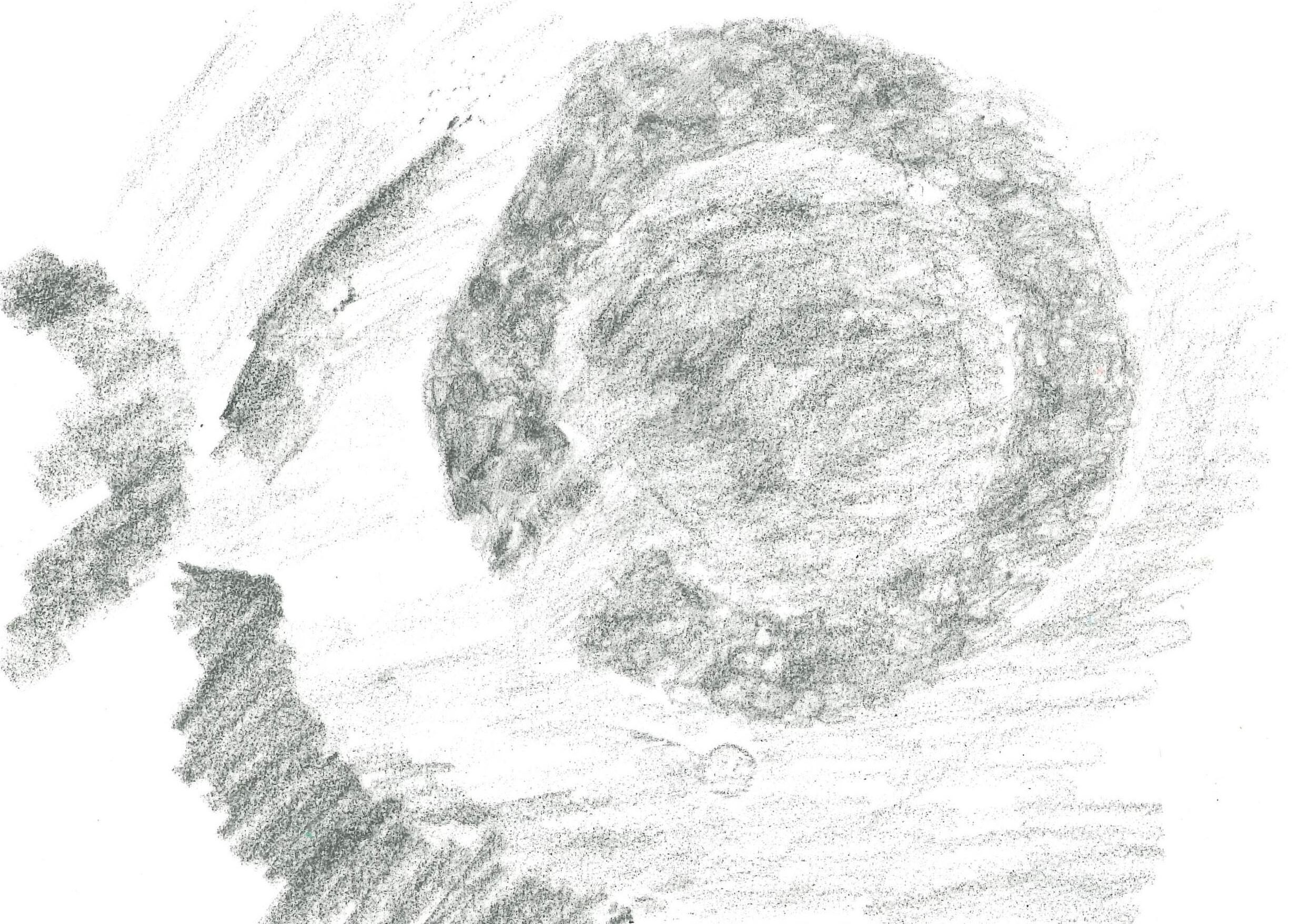

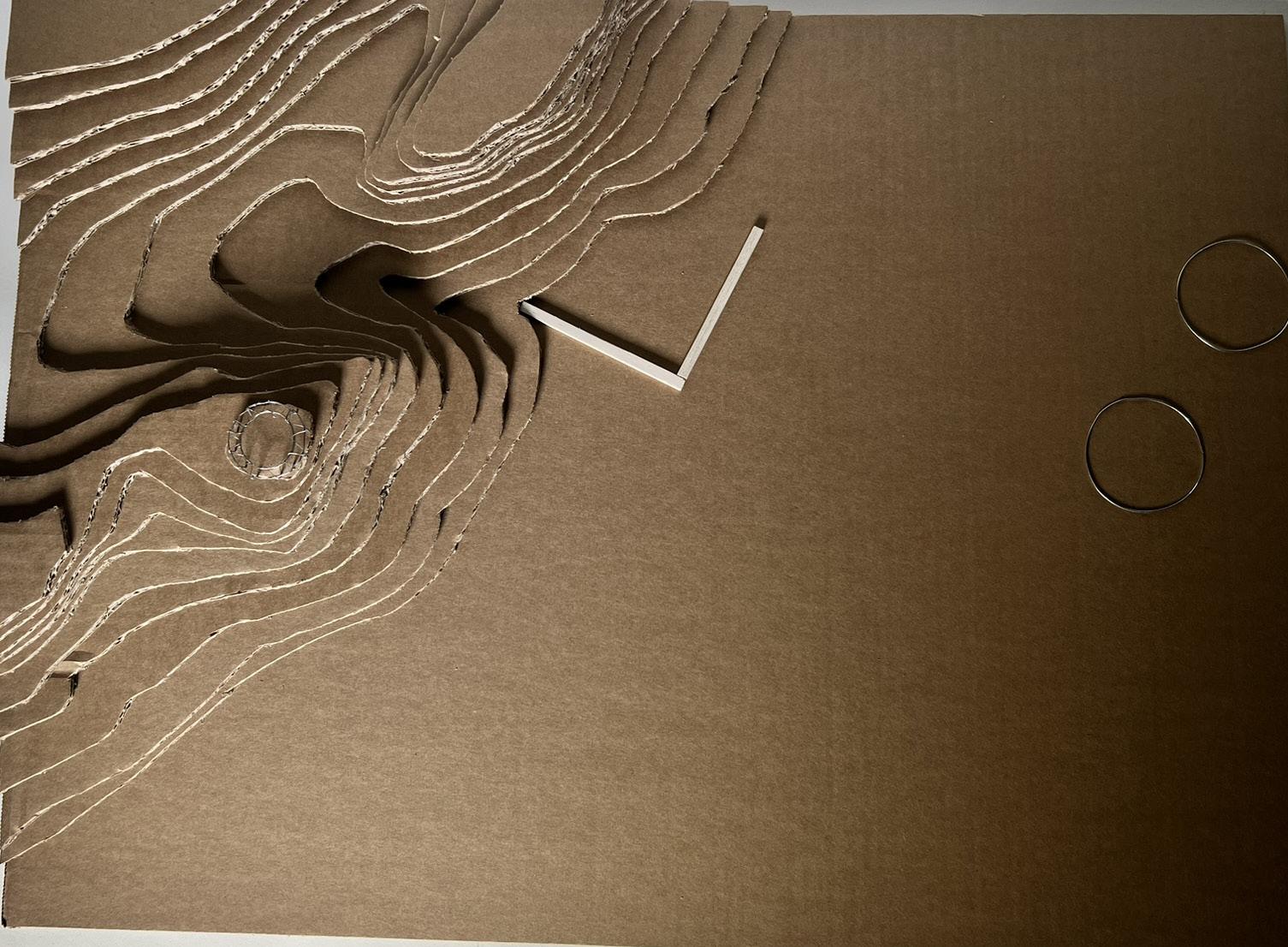
SITE ANALYSIS PLAN VIEW 1:200
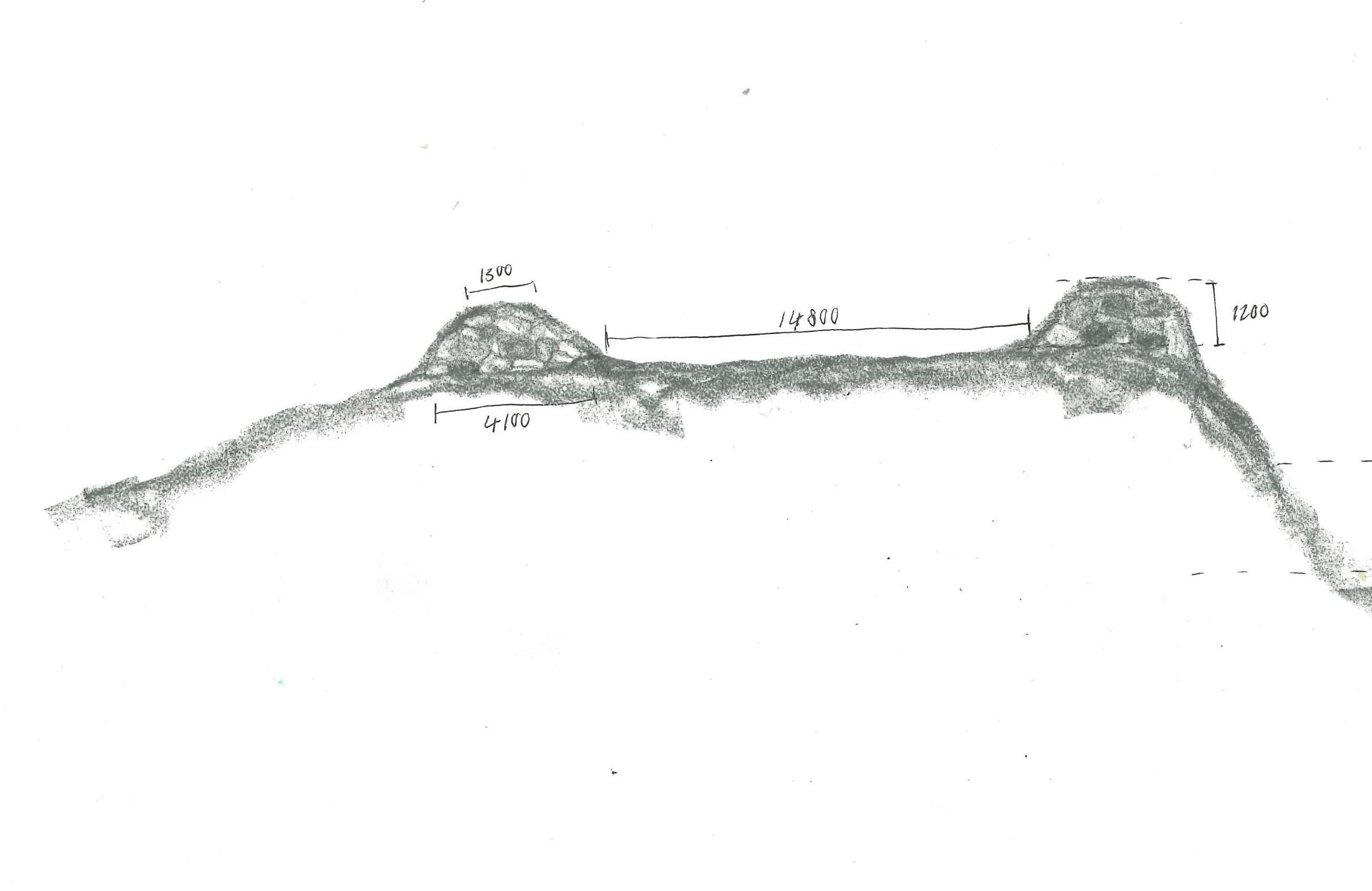
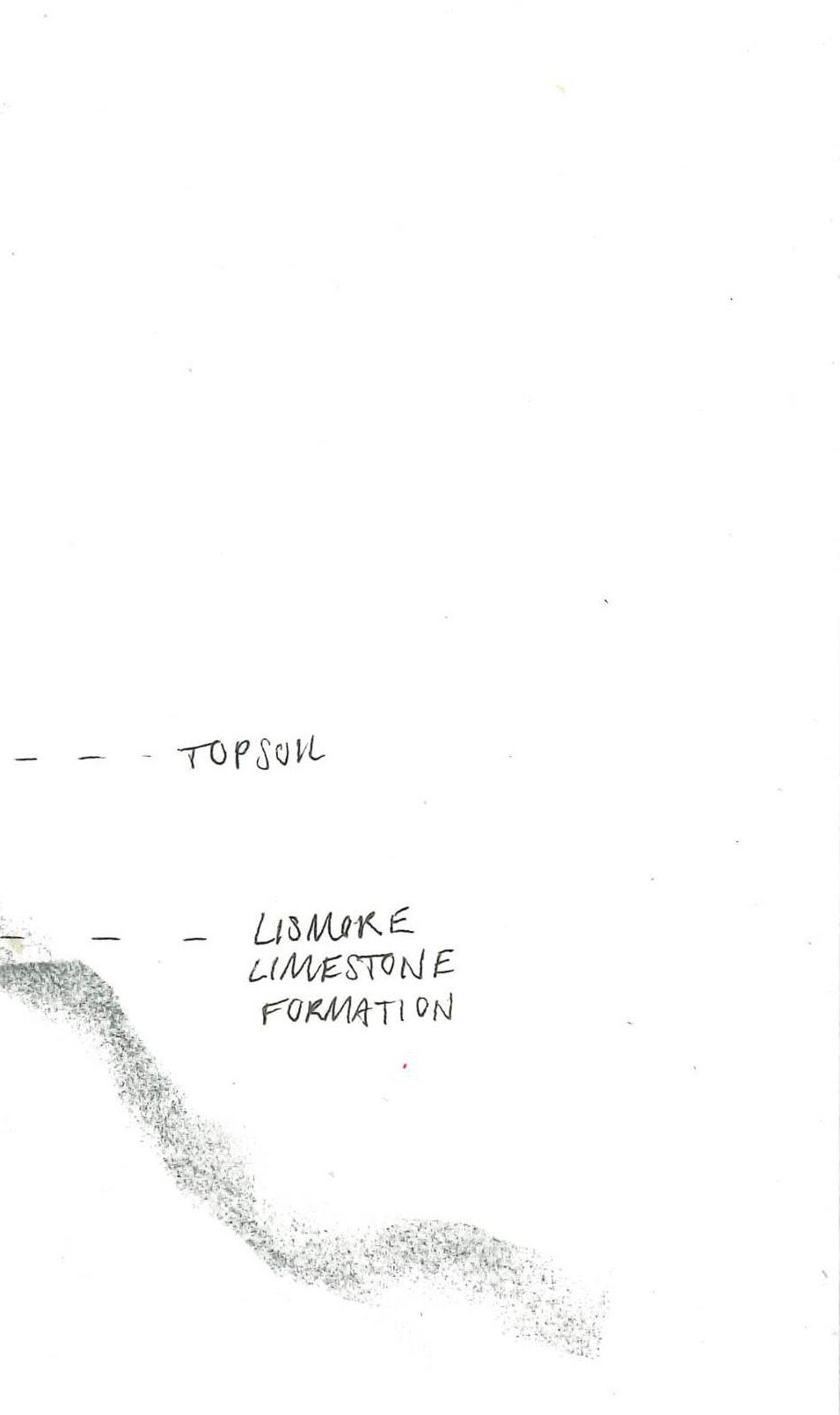
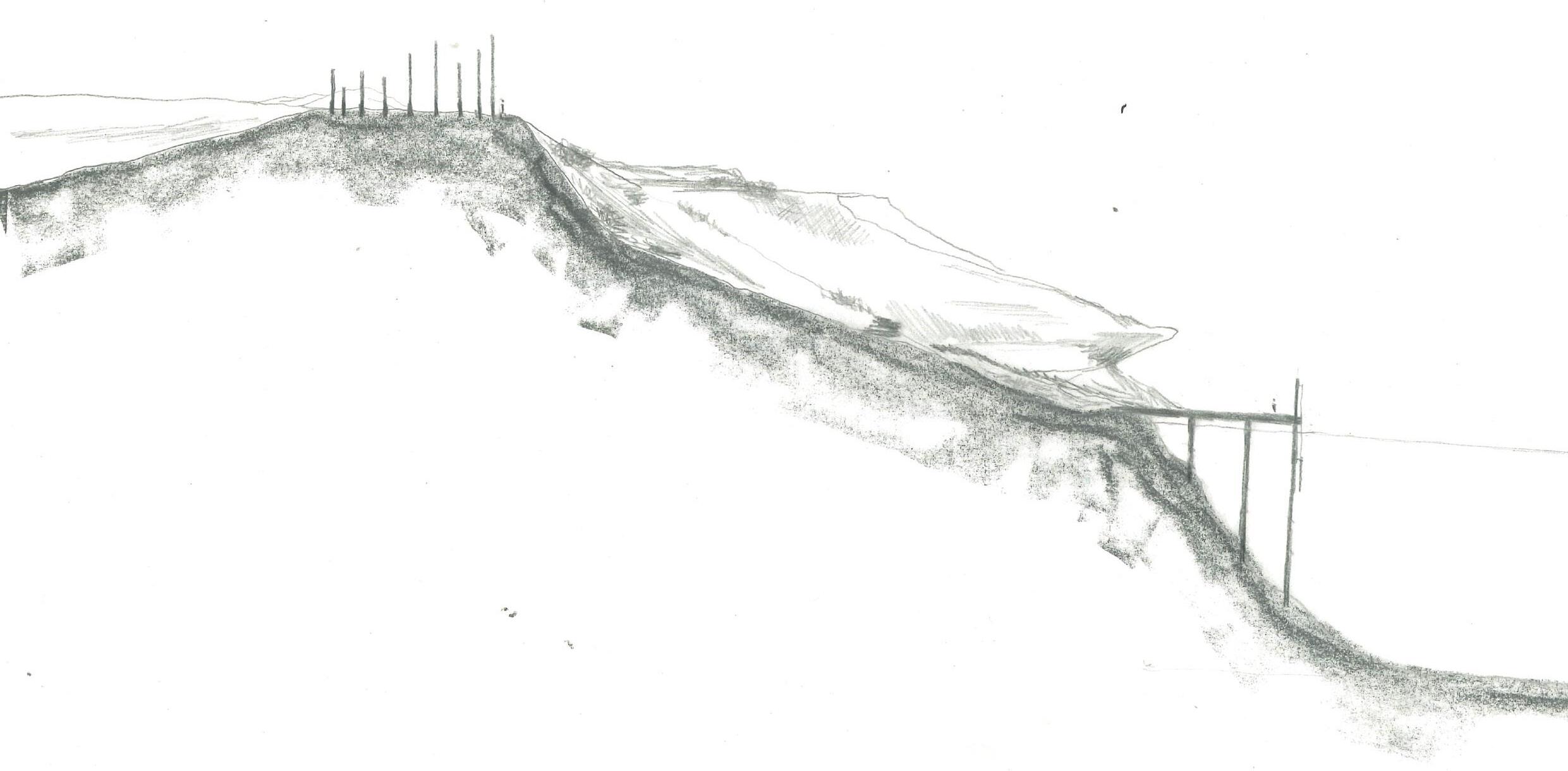
SITE ANALYSIS
SECTION 1:200

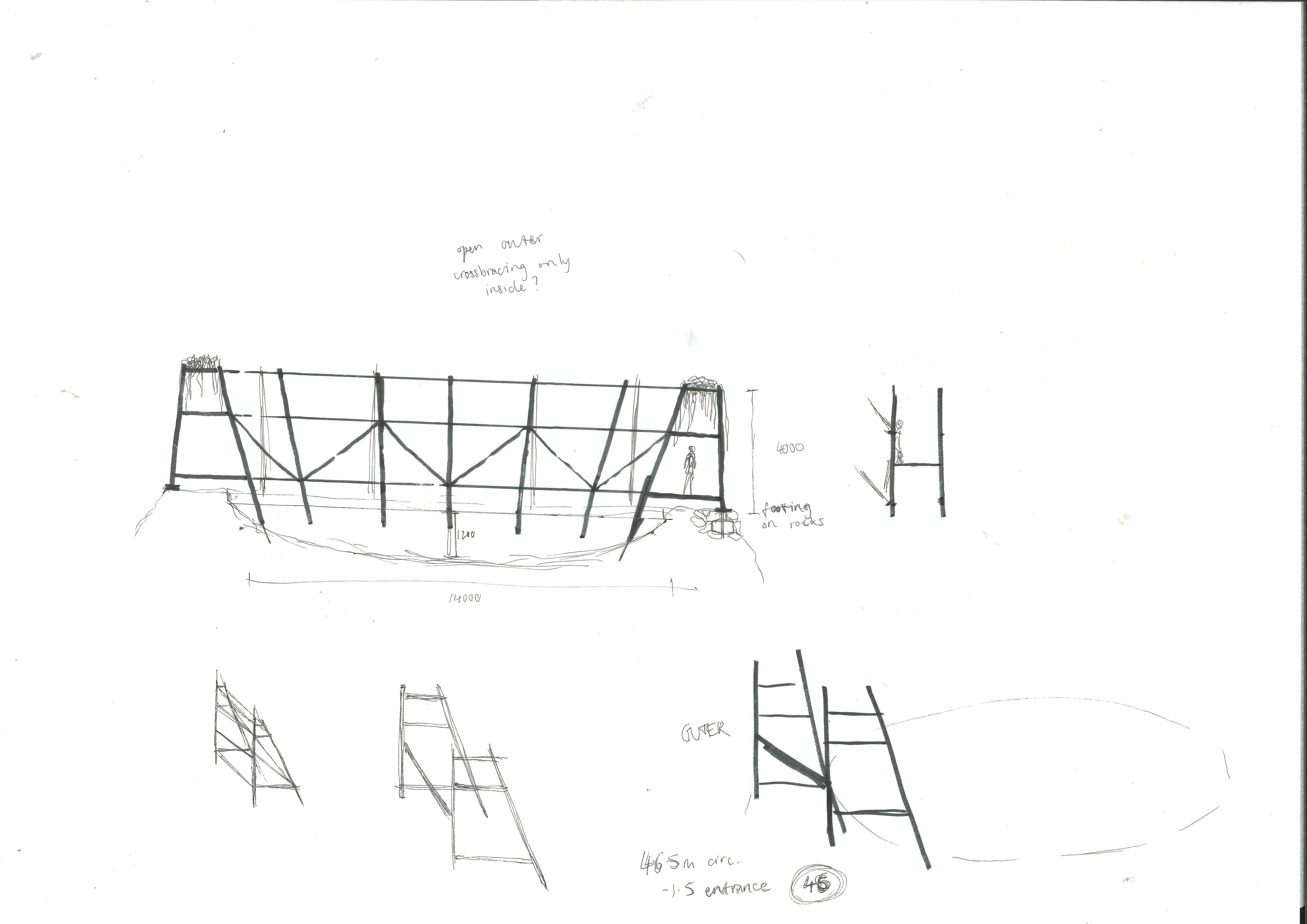
PAVILION KIT OF PARTS
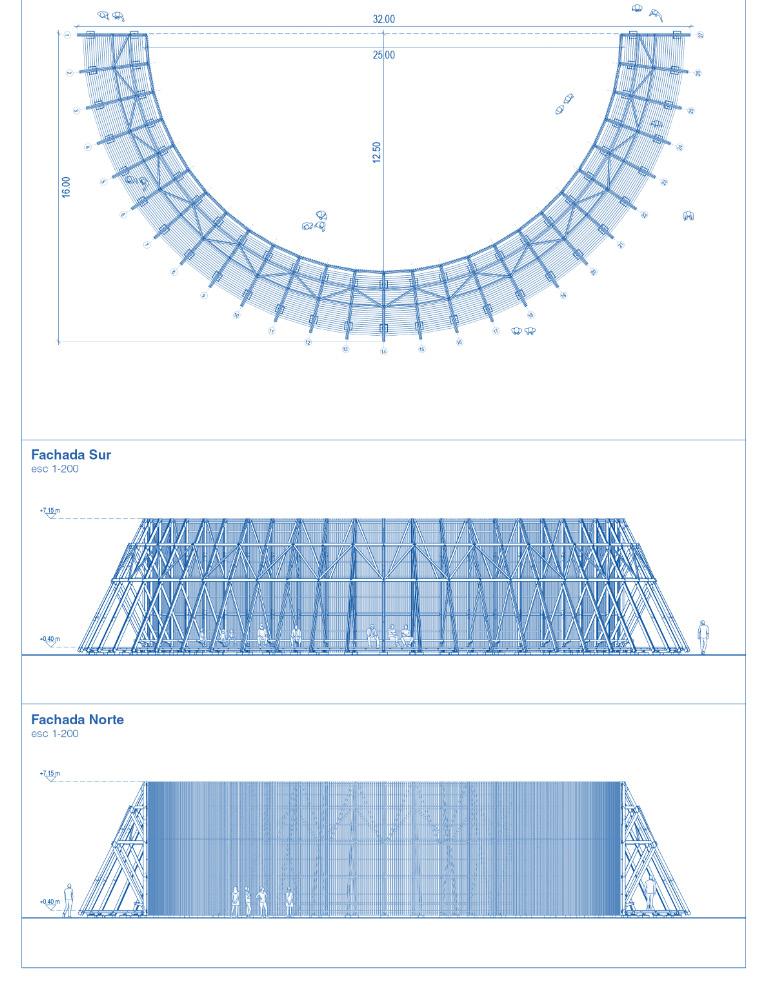
4 x 0.1 x 0.1 2. 5 x 0.1 x 0.1 3. 1.84 x 0.1 x 0.05 4. 1.7 x 0.1 x 0.05 5. 1.5 x 0.1 x 0.05 x23 x23 x46 x46 x46
Pavilion structure designed as self build project, minimising spans and weight to allow for small team to complete safely
Lower beams incorporated to reach upper members
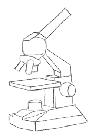
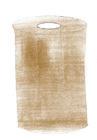
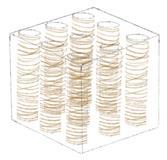
In partnership with Scottish Association for Marine Science, a new seaweed farm is proposed at the site to research the effects seaweed’s presence can have on the issues caused by the salmon farms.
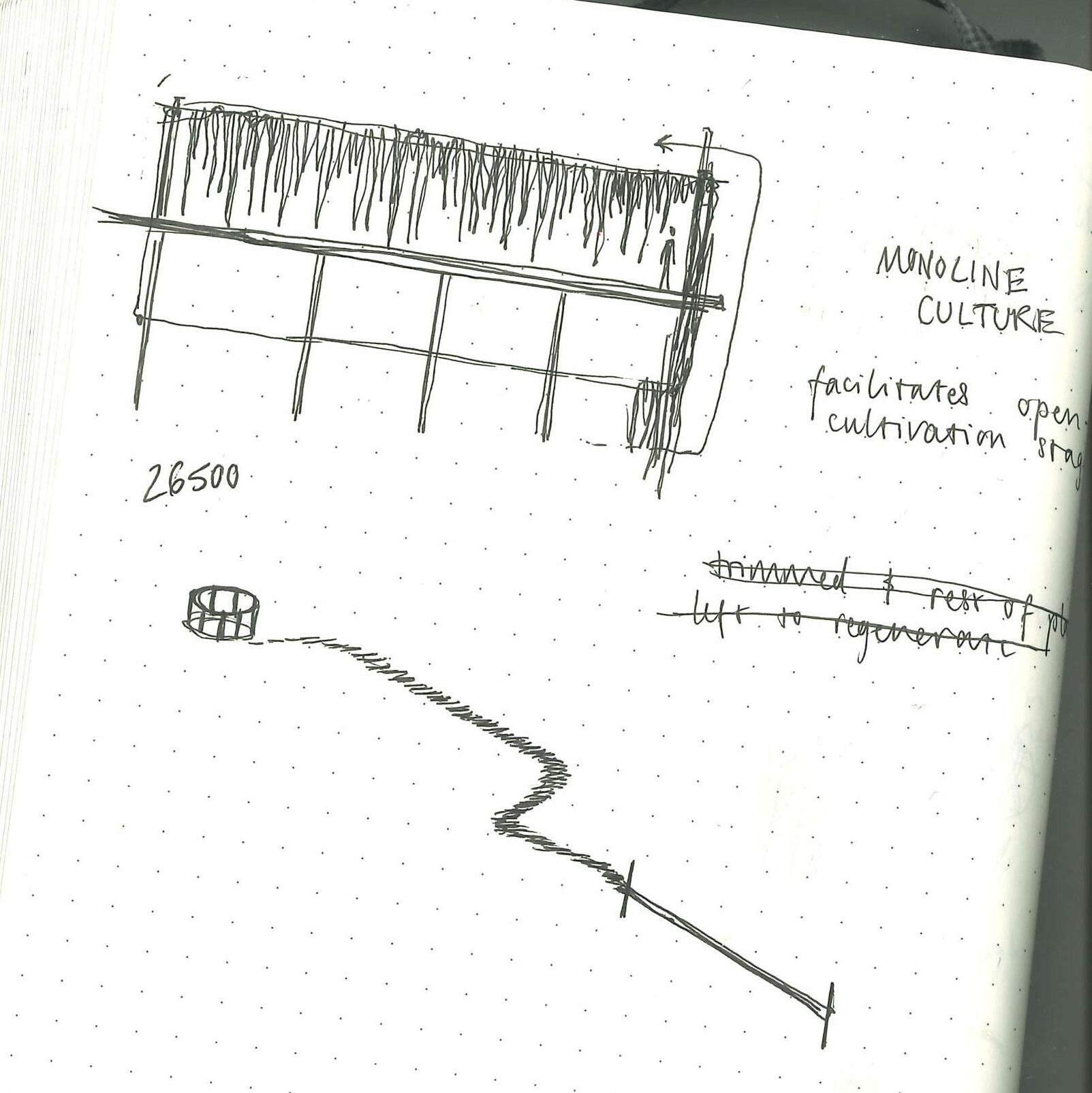
Beginning at SAMS Drunbeg Oban facility, the seaweed is cultivated before being transported to site
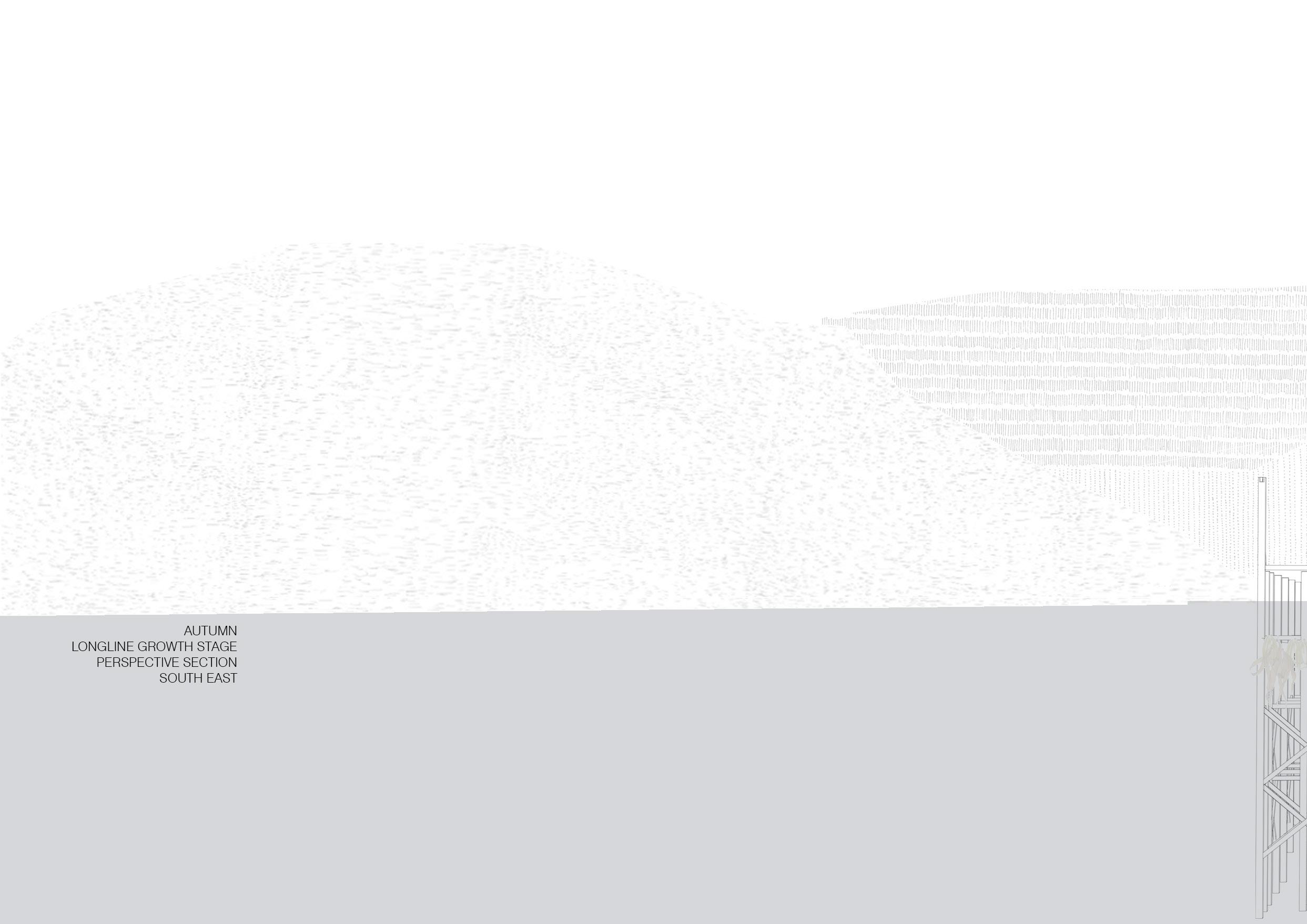
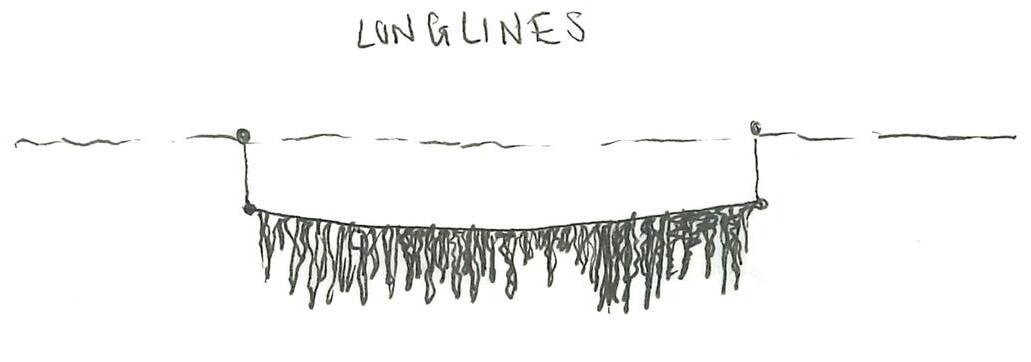
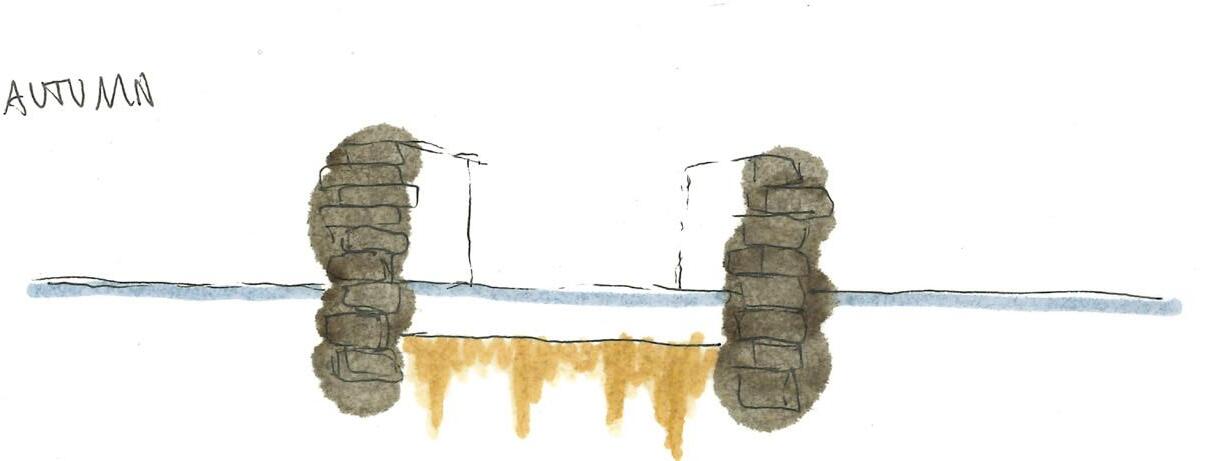
During autumn the juvenile kelp plants are strung from the spool to the longline on the pier to begin a growth phase of 4-6 months, reintroducing seaweed farming to the island through monoline culture
In this period the seaweed absorbs nutrients, CO2 and releases oxygen whilst supporting the biodiversity of the loch
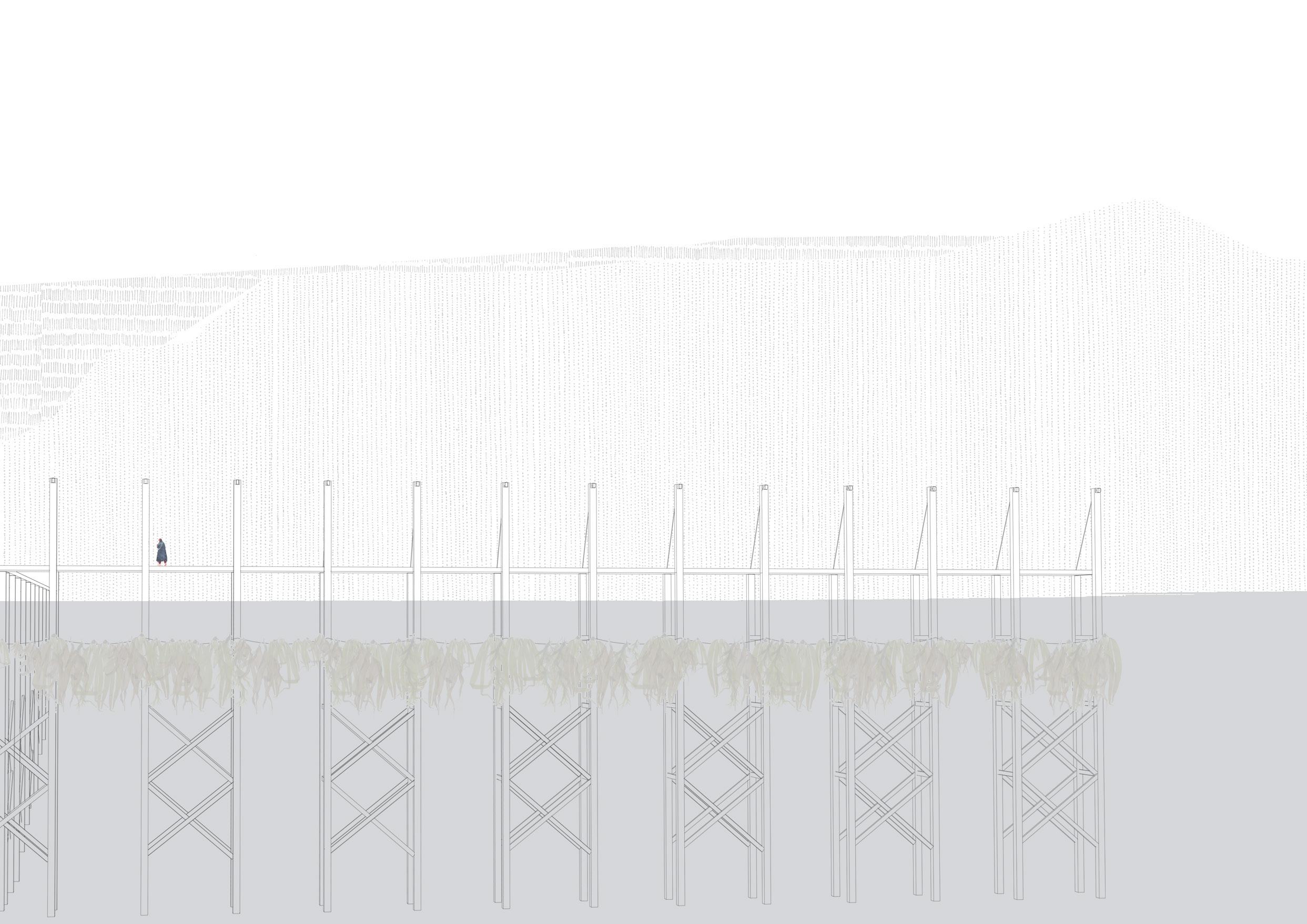
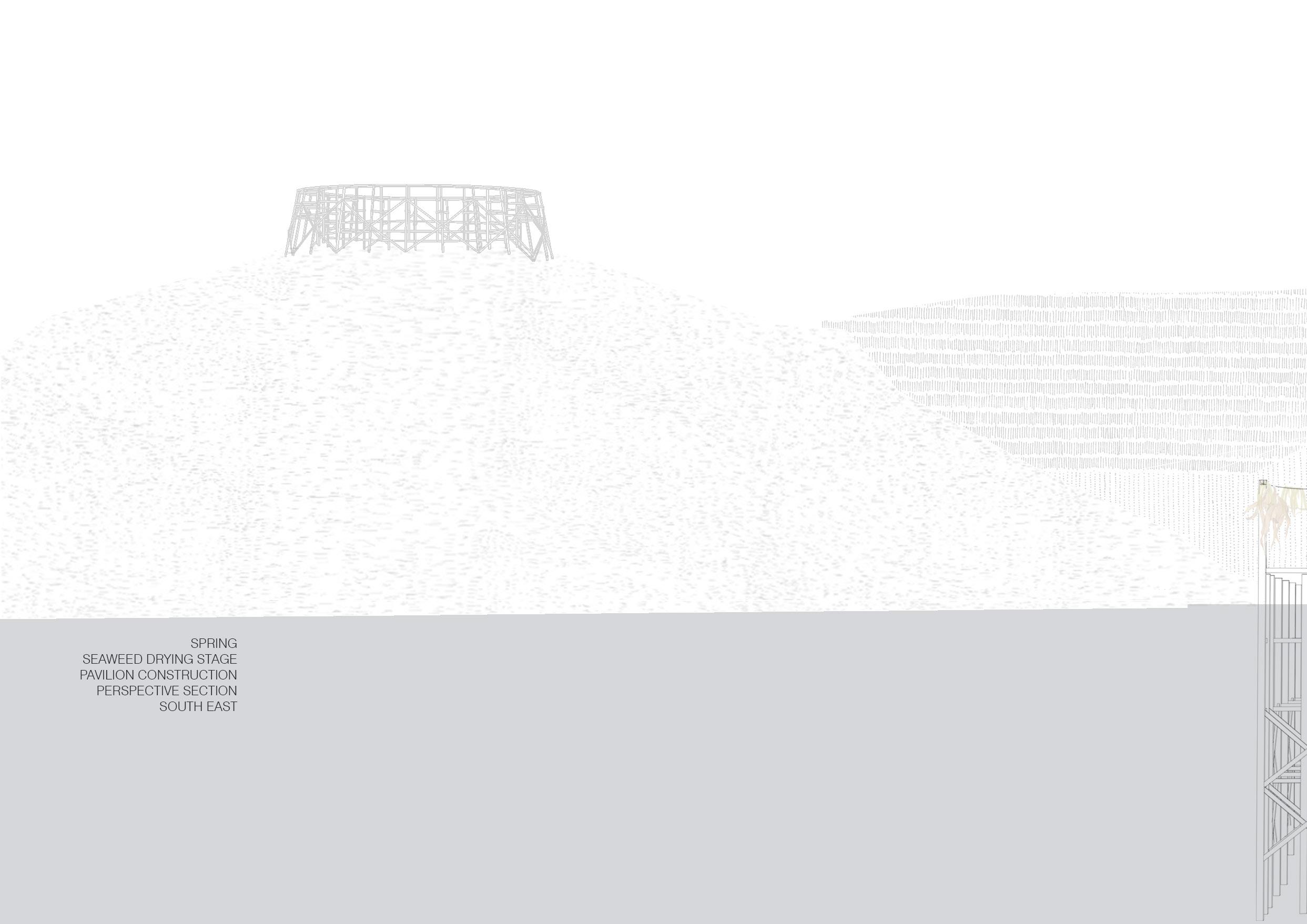
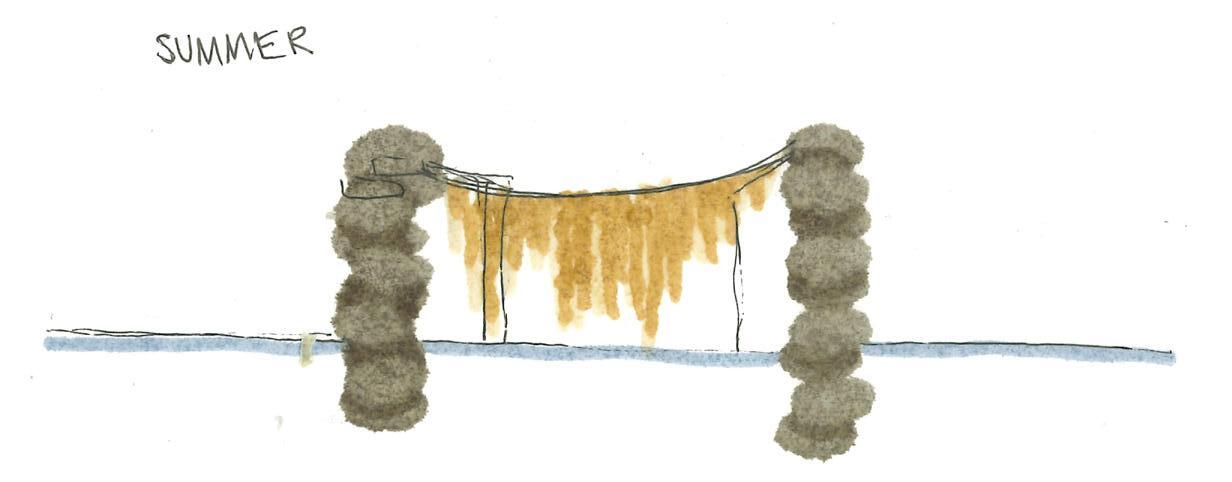
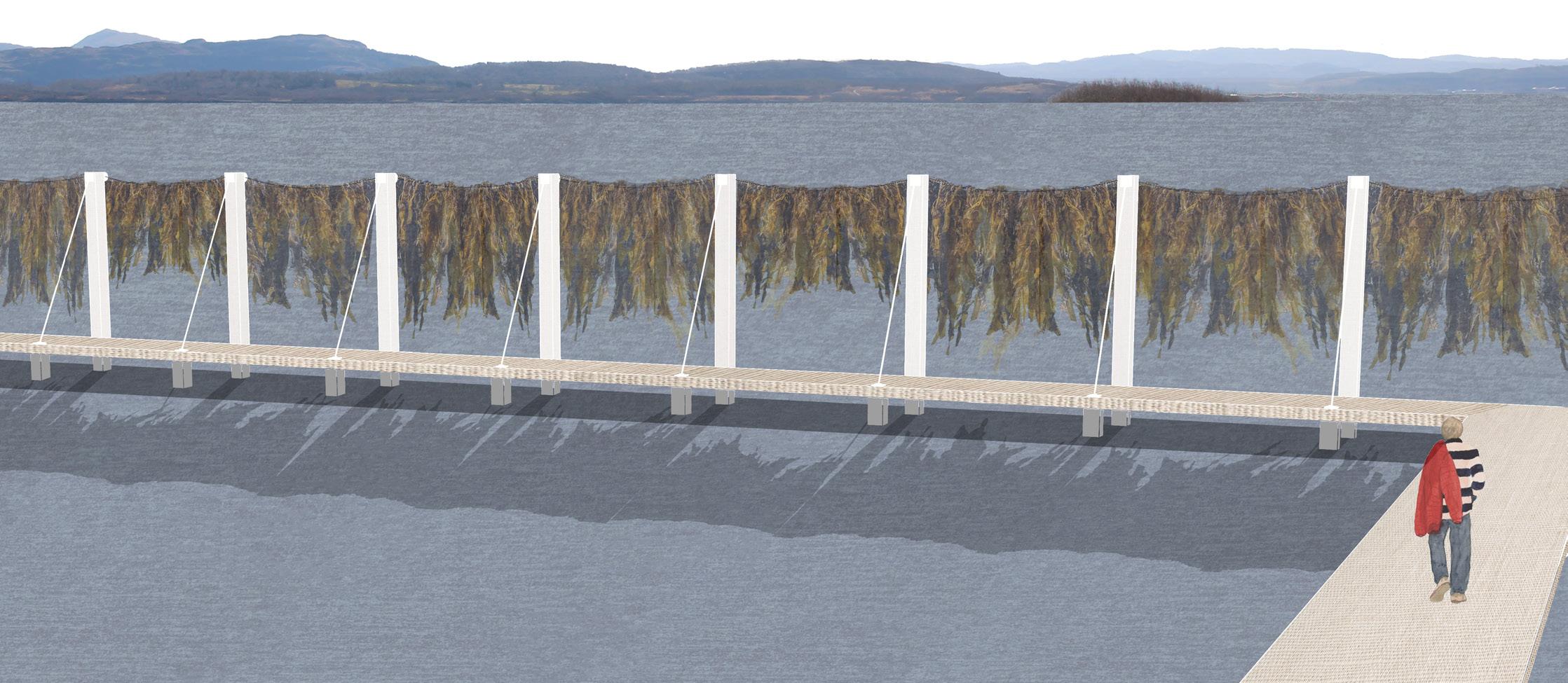
Once fully developed the kelp is pulled from the water to the top of the columns of the pier, making visible the hidden growth and environmental mitigation process
Meanwhile construction begins on the pavilion
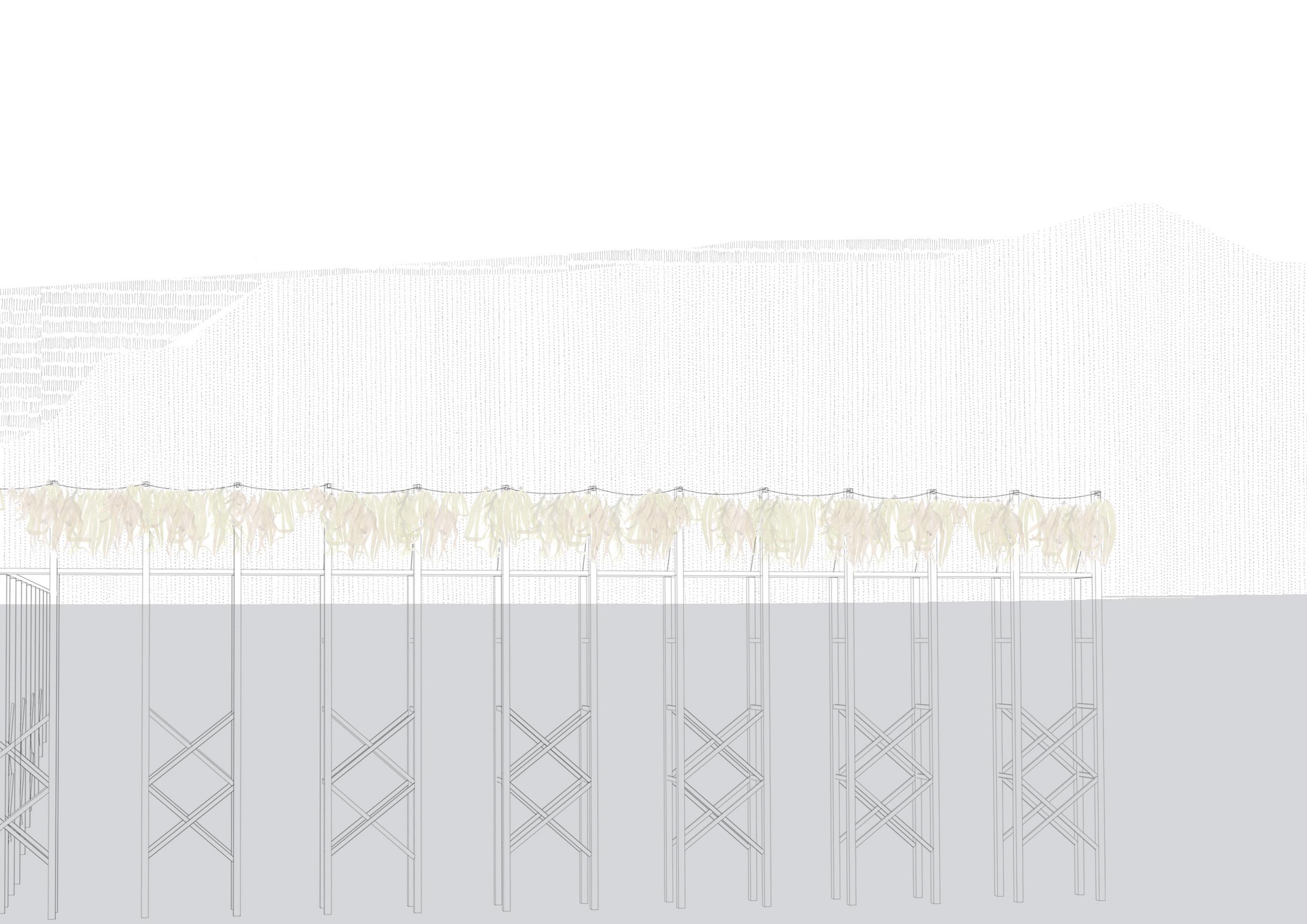
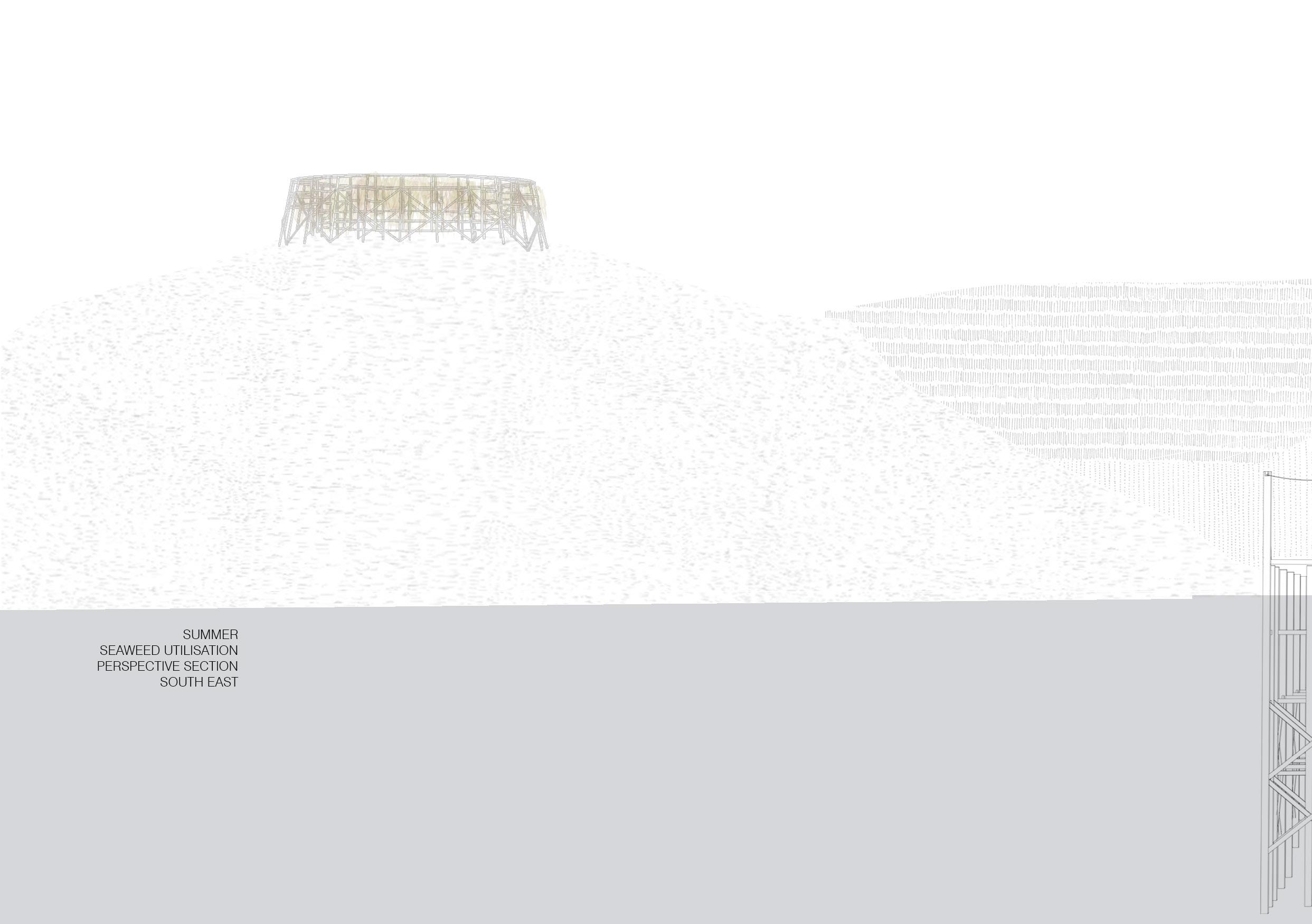
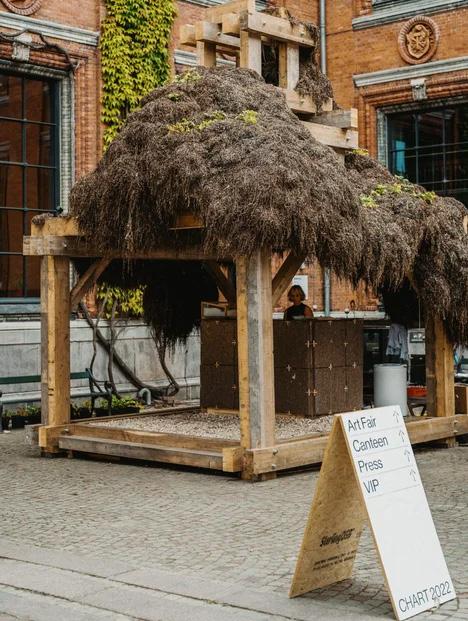
Seaweed removed from longline and added to pavilion, creating a living exhibit and a beacon on the hill
Eventually decomposes into the earth of the island and the cycle begins again
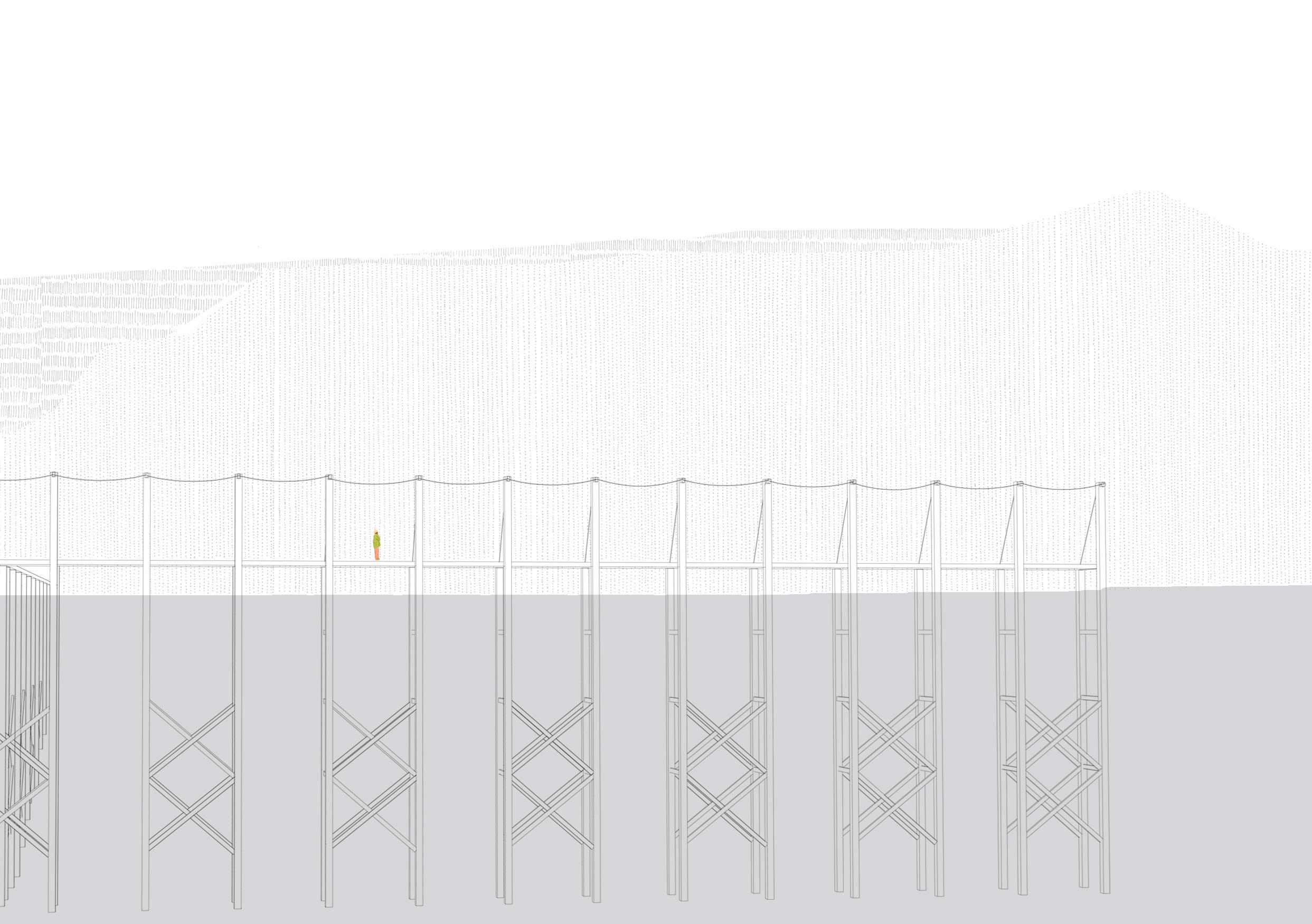
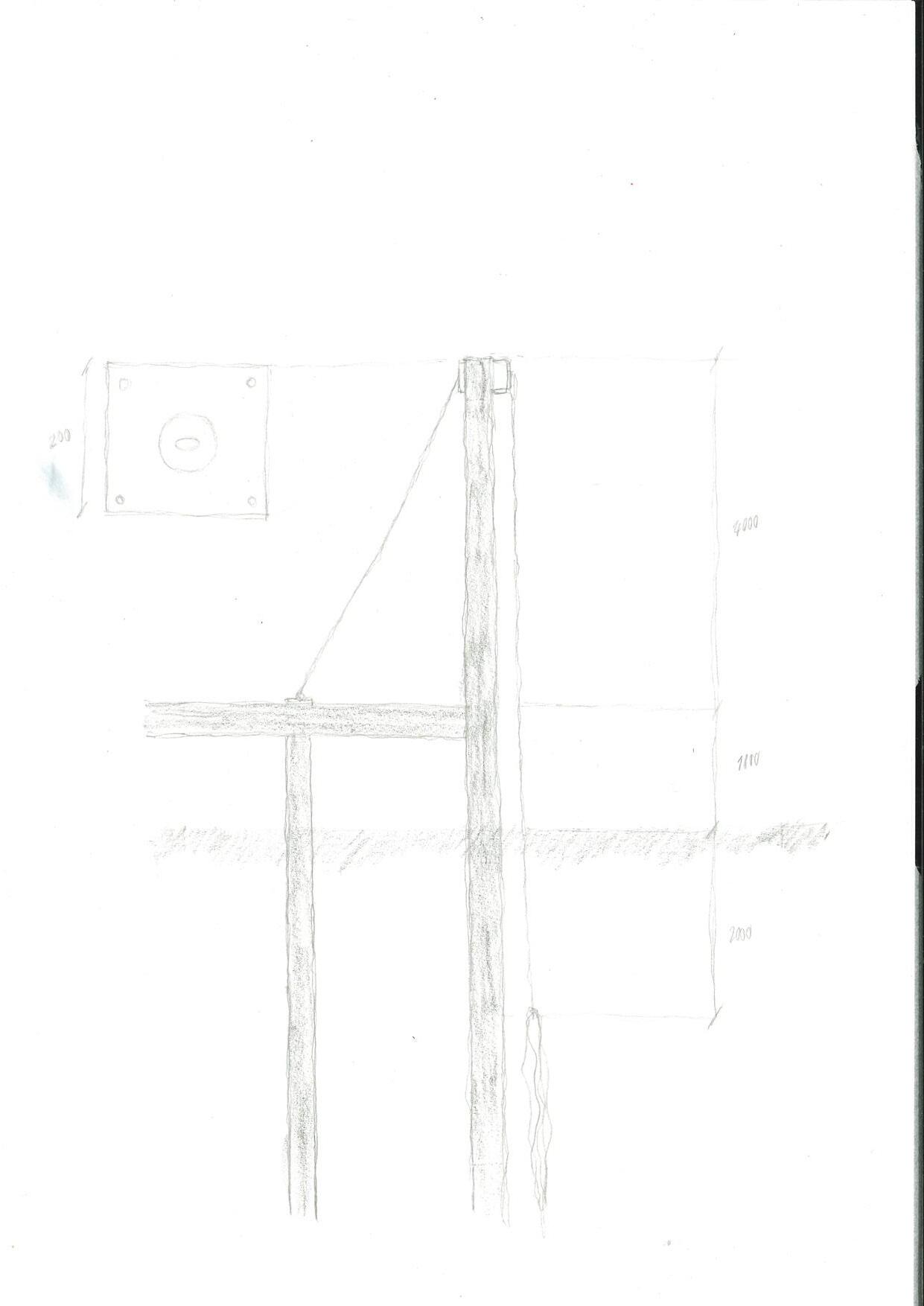
STEEL PLATE FIXING TIMBER COLUMN TO STEEL TENSION ROD
GREEN HEART TIMBER PIER COLUMN 15M DEPTH
PILE-DRIVEN ANCHOR SYSTEM AT SEA BED
SEAWEED CURTAIN LONGLINE 50M LENGTH
SEAWEED ABSORBS EXCESS NITRATES, PHOSPHATES AND CARBON DIOXIDE PRODUCED BY THE SALMON FARMS
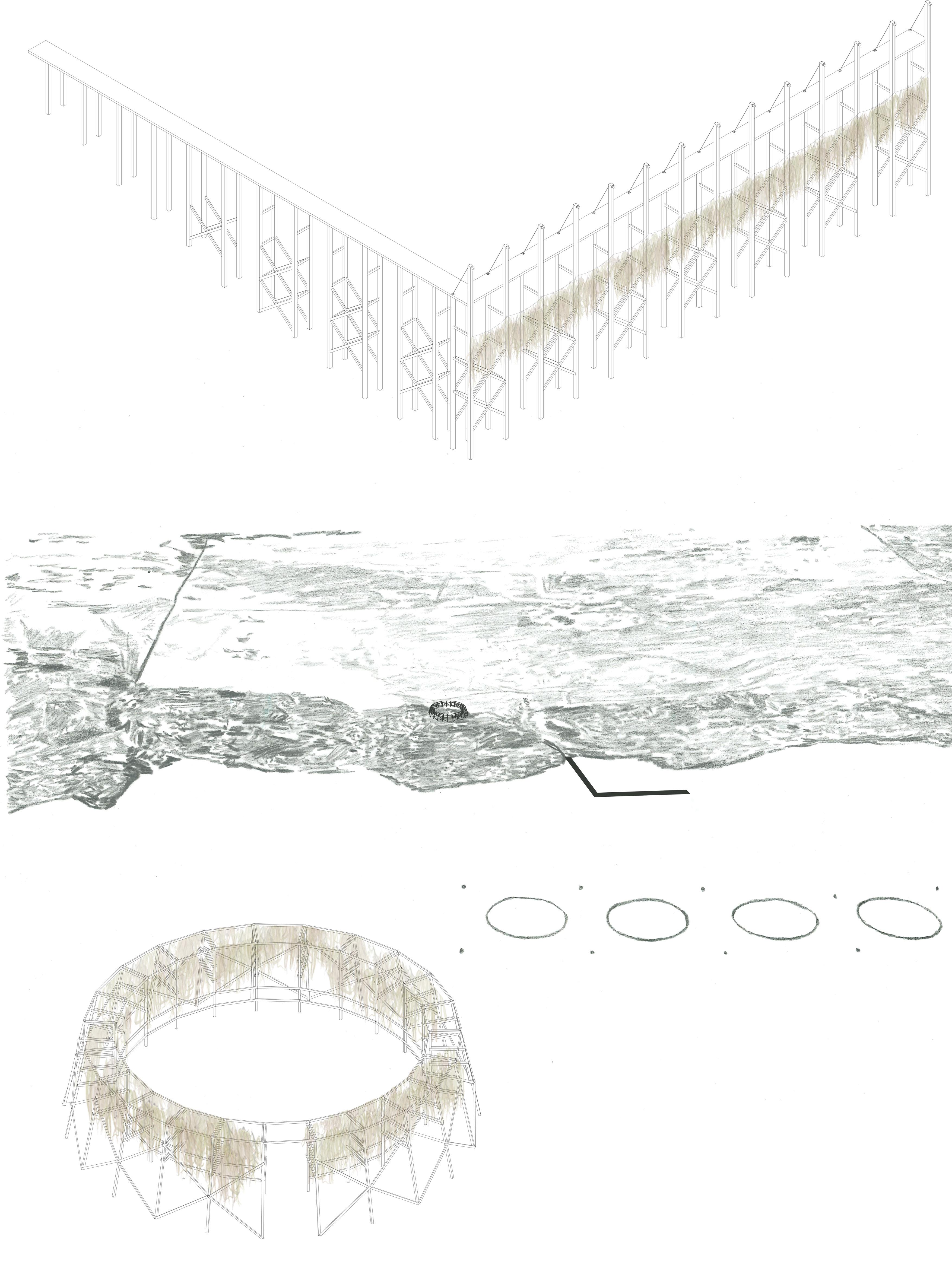


1:50
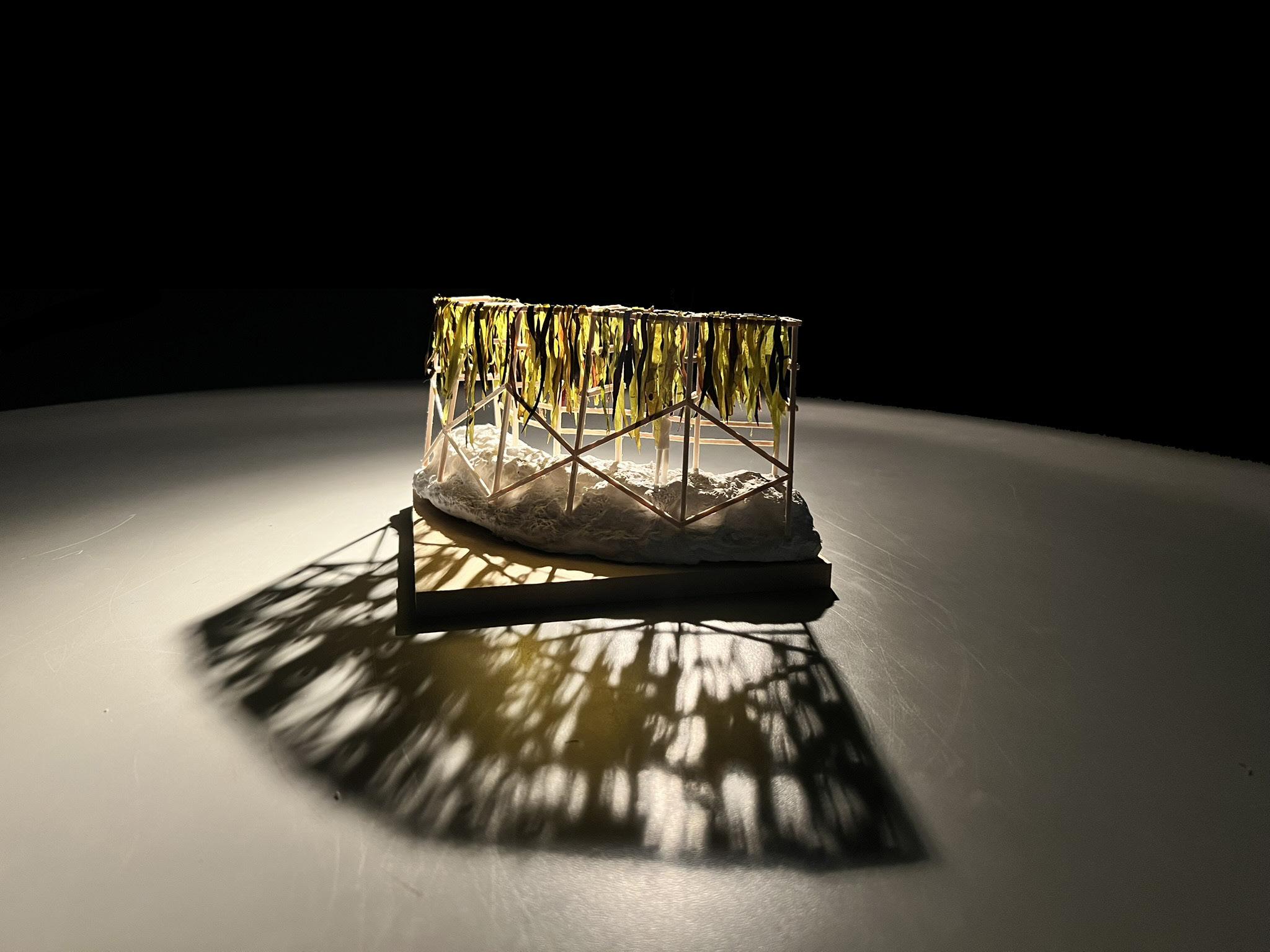
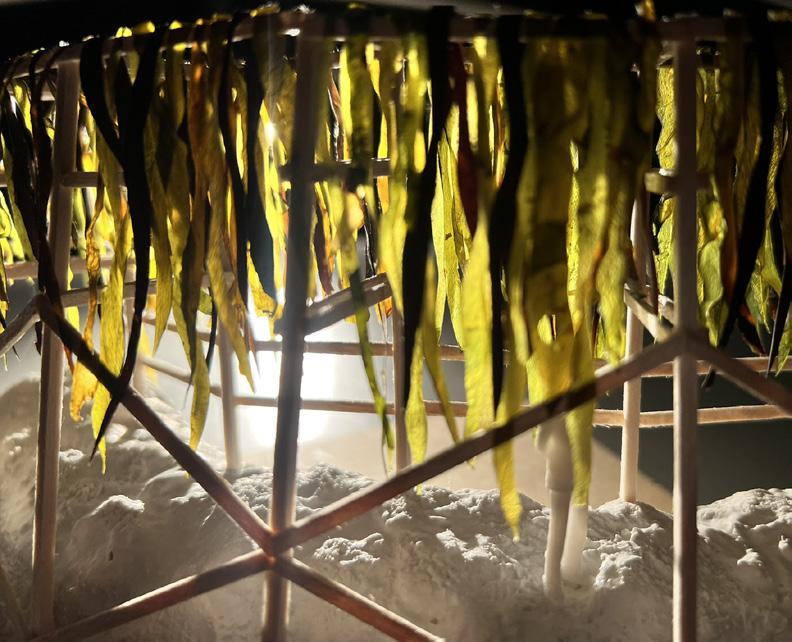
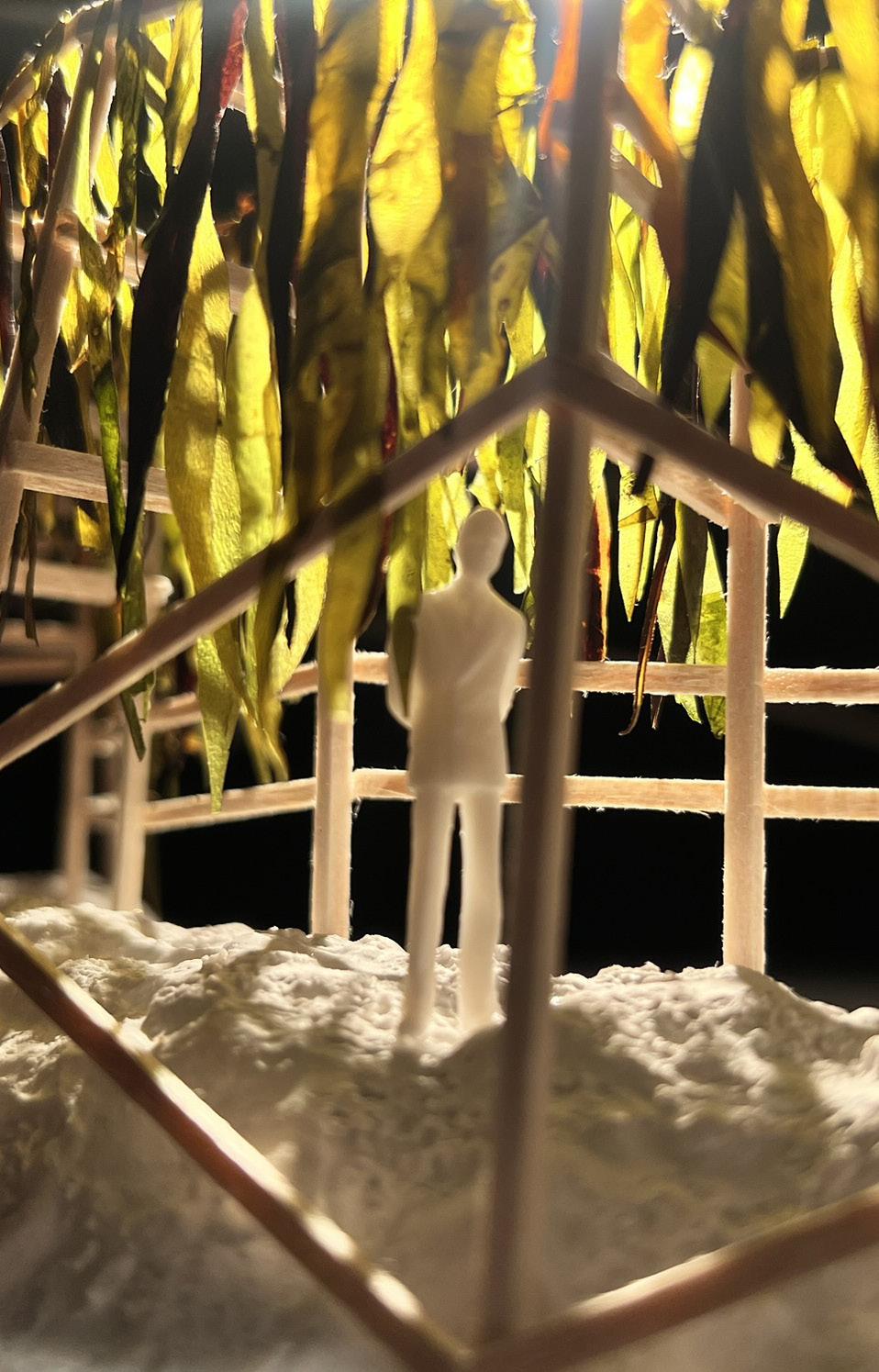
The proposal poses as an environmentally considered intervention of large and small scales, addressing both the local and holistic contexts of the culture in Scotland and current issues. The structure presents a playful and bold statement providing a tangible way for the community of Lismore to protest, reclaim their coastline and waters whilst reflecting and reconnecting with the historic vernacular practice of seaweed useage on the west coast. In the act of building together and growing and harvesting, the phases facilitate events of gathering of people. The use of sustainable materials and a regenerative annual cycle support the action being fulfilled and demonstrate the possibility of an entirely non-extractive farming practice, making visible the curtain you cannot see...
To further the project, a complete multitrophic aquaculture system could be introduced to the area in the future, for example water filtering molluscs such as mussels and oysters to assist the seaweed or sea cucumber to the seabed to directly diminish the silt buildup from the salmon farms.
BIBLIOGRAPHY
Editor. 2023. “Pabellón Rambla: Contemporary Architectural Design Project.” The Best New Architects. December 14, 2023. https://www.thebestnewarchitects.com/pabellon-rambla/.Ghosn, Rania, and El Hadi Jazairy. 2018. Geostories : Another Architecture for the Environment. New York: Actar.“Home — Scottish Association for Marine Science, Oban UK.” n.d. Www.sams.ac.uk. https://www.sams.ac.uk/. ludika biobuilding — lúdika. 2014. “Lúdika.” Lúdika. 2014. https://www.ludika.is/projects/biobuilding.
“Marine and Coastal Conservation of Loch Linnhe | MaCCOLL.” 2026. Maccoll.org.uk. 2026. https://www.maccoll. org.uk/.
Morton, Timothy. 2021. All Art Is Ecological. S.L.: Penguin Books.
“Seaweed Dialogues 2 by Alberte Holmø Bojesen at Southern Sweden Design Days 2024.” 2024. Departmentofseaweed.org. 2024. https://www.departmentofseaweed.org/ projects/seaweed-dialogues-2-by-alberte-holmo-bojesenat-southern-sweden-design-days-2024.“
Seaweed Farming Scotland Ltd.” 2018. Seaweedfarmingscotland.com. 2018. https://www.seaweedfarmingscotland.com/.
“Welcome to Trove.scot | the Key to Scotland’s Past.” 2015. Trove.scot. 2015. https://www.trove.scot/.