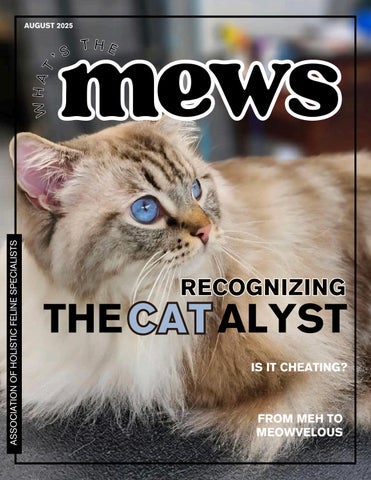
COVER
CRITTER WASH, VIRGINIA
EDITOR
MERCEDES SCHENK


![]()


COVER
CRITTER WASH, VIRGINIA
EDITOR
MERCEDES SCHENK


In the grooming world, few things sting quite like finding out a long-term client went somewhere else. Maybe they don’t rebook, maybe you see their pet on someone else’s Instagram--or maybe they come back after a long period like nothing happened.


And there it is, that sinking feeling The deep belly anxiety that has your mind spiraling into a hundred different questions and emotions. Was it something I did? Were they unhappy? Do they like the new groomer more than me? Are they better than me? What are they saying about me?
The concept of client loyalty (and loss) is something that every groomer has faced, and taking a moment to reflect with honesty and empathy will help reframe that anxiety and frustration
In a recent pet grooming forum, a groomer had come forward asking business advice about how to deal with cheating clients They had communicated that this individual went somewhere else but then had decided to come
back to them, the original groomer They asked, “how do you deal with a cheating client?”
Telling someone it’s not personal is about as comforting as telling someone to just calm down. The fact of the matter, is that it is actually deeply personal As small business owners, the retention of clients can be a direct reflection of our skill, business management, and prices. As much as grooming is a service that we are providing, it is also a form of art. We are providing a hygienic function as well as a visual aesthetic for our clientele If someone doesn’t like it, it’s only natural that we may experience hurt feelings, resentment, and even can become defensive if we think ourselves it is a great job
Over the years, regular clients are what keep our businesses sustainable. The concept of client loyalty from an owner perspective is bred from anxieties regarding our financial stability and therefore our livelihood From a client perspective, their loyalty is bred from trust in that they know what services will be rendered for what price and what result Of course, there’s more intricacies that can follow through within a long term working relationship, but specifically we’re analyzing today exactly what makes a client leave, even temporarily Because even though client loss affects us personally, it’s not in fact personal
Thanks to social media such as Instagram and Tik Tok, even following your current groomer can encourage search engine optimizations and algorithms to show you other groomers.
As a consumer, this is an incredible feature
As a business owner, it can feel a little disheartening which is why some search engine organizations offer purchasable features that will put your business at the top of the list or remove suggested recommendations. That’s not even taking into consideration groomers who purchase advertising through these website It’s important to keep in mind that these purchasable optimization features are how Search Engine companies make money, and another company paying for advertising isn’t something they’re trying to do to you
Many individuals in the grooming industry report feeling somewhat territorial of their area After all, this is a service based industry and more options might feel like less money coming in The fact of the matter, is that there are thousands if not millions of pets in our community and there’s just not enough groomers to go around
It's normal to feel hurt when clients leave, especially when you pour your heart into your work. But it’s also important to remind yourself that you are running a business, and so are they The only real etiquette in place when you’re a groomer who has a new client from another groomer is to not talk poorly about the previous groomer In turn, it can feel really shocking if they come to you once and then promptly return to the previous groomer It can feel like cheating, a huge blow to the ego, and low key mess with your mind.
With great emotional effort and humility, we must try to not see it as betrayal but instead use it as an opportunity for self reflection:
Were they the right clients for my grooming style?
Could expectations or communication have been clearer?
Are there ways I can strengthen my client experience?
Am I priced correctly for the services I’m rendering?
Did I do a good job?
When all of our boxes are checked “Yes” and we offer nothing but Gold Star Status, it can sink us even further into that Big Ick Feel So let’s talk about why clients leave
As a business owner, it can feel a little disheartening which is why some search engine organizations offer purchasable features that will put your business at the top of the list or remove suggested recommendations. That’s not even taking into consideration groomers who purchase advertising through these website It’s important to keep in mind that these purchasable optimization features are how Search Engine companies make money, and another company paying for advertising isn’t something they’re trying to do to you
Many individuals in the grooming industry report feeling somewhat territorial of their area After all, this is a service based industry and more options might feel like less money coming in. The fact of the matter, is that there are thousands if not millions of pets in our community and there’s just not enough groomers to go around
t's normal to feel hurt when clients leave
especially when you pour your heart into your work. But it’s also important to remind yourself that you are running a business, and so are they The only real etiquette in place when you’re a groomer who has a new client from another groomer is to not talk poorly about the previous groomer. In turn, it can feel really shocking if they come to you once and then promptly return to the previous groomer It can feel like cheating, a huge blow to the ego, and low key mess with your mind.
With great emotional effort and humility, we must try to not see it as betrayal but instead use it as an opportunity for self reflection:
Were they the right clients for my grooming style? Could expectations or communication have been clearer? Are there ways I can strengthen my client experience?
Am I priced correctly for the services I’m rendering? Did I do a good job?
When all of our boxes are checked “Yes” and we offer nothing but Gold Star Status, it can sink us even further into that Big Ick Feel. So let’s talk about why clients leave.
As mentioned previously, social media makes it easy to see “what else is out there” A trendy cut, a viral video, or a beautifully edited photo can pique someone’s curiosity. ost groomers have a specialty breed or style that they’re known for, and a client may try another groomer just to see if it’s a better fit or to experience something new.
This does not necessarily mean that they are dissatisfied with your services, sometimes, it’s the groomer equivalent of trying a new restaurant Maybe they say a unique style like Asian Fusion, creative coloring, or a specialty spa treatment that intrigued them. Or maybe the groomer has a big social media presence that made the experience look exciting or luxurious
Curiosity can also be driven by changes in their pet’s needs. If their dog is aging, developing skin issues, or becoming anxious, the client may want to explore different grooming techniques, environments or even personalities to see what works best. They may circle back to you once they realize what they had was already working
Rather than seeing curiosity as a threat, it can be helpful to view it as a part of the modern client journey People have access to more information and inspiration than ever before, and sometimes that leads them to experiment If they leave, stay in touch with kindness and professionalism. Many will return once they realize the relationship, trust, and quality you provide is hard to replace
Let’s face it. Times are tough. Between inflation, tariffs, rising rent, groceries, and vet bills, pet parents are feeling the squeeze We know that grooming is a vital part of a pet’s health and wellbeing but to many clients, it’s a recurring cost that they may start to rethink when budgets get tight It’s not uncommon for someone to shop around for lower rates, even if they’ve been satisfied with the care and results they have received.
From a client’s perspective, they’re just trying to “save a little here and there”, not fully li i g th diff i t i i g d t
THEIR DECISION TO PAUSE OR GO ELSEWHERE IS MORE ABOUT THEIR CIRCUMSTANCES THAN YOUR WORTH.

pay, or the physical toll of the job
It is worth remembering that pricing decisions aren’t always about cutting corners Clients can go through temporary financial hardships or major life changes--job loss, medical bills, new babies, or unexpected expenses. Their decision to pause or go elsewhere is more about their circumstances than your worth That being said, it’s okay to feel disappointed or hurt--especially if you’ve built a relationship with that client and their pet.
Your rates reflect your value, experience, and the quality of care you provide. You’re not here to compete for bargain grooming! You’re here to offer expertise, safety, and compassionate care The clients who return, often retur with a greater appreciation for what they had
As much as a client may love your work and are willing to pay the price, sometimes life just get’s busy The reality is that the majority of people will make choices based off of ease and accessibility, whether it’s the grooming shop that’s open weekends, five minutes later, or has early-morning drop offs.
Sometimes it can be as simple as a more convenient location. This isn’t because it’s necessarily better, but it’s just easier.
Clients are juggling a lot, just like us They have work, kids, errands, traffic, and tight schedules. If another groomer offers walk-ins, online booking, or has more flexible hours it can tip the scales in their favor--especially for those clients who struggle to plan ahead or manage regular appointments.
This doesn't mean you’re doing anything wrong. It’s not about loyalty or quality but about logistics. If Samantha and her chihuahua have been a loyal customer for a year, but suddenly her daughter starts ballet next to another groomer, life may pull her in a different direction. If Kenneth got sick and had to reschedule but now there’s nothing that fits his work schedule, he may need to find temporary support in the interim
Think of it like people who love their local coffee shop but still grab Starbucks in the drive-thru when they’re in a rush It’s a compromise, not a reflection on the coffee.
As groomers, we often form deep, personal connections with our clients and their Petes So when someone drifts away due to something as mundane as parking or traffic, it can feel frustrating or even hurtful. But it’s important to take a step back and recognize that in most cases, it’s not about you--it’s about what fits into their day Clients who leave for convenience often return when things shift again--when their schedules open up, their new spot isn’t quite the same, or they realize that the experience you offer simply isn’t something they can get anywhere else.
We have all had a Kenneth. Someone who reschedules last minute, then forgets to rebook, only to try and request an appointment to realize that you don’t have anything available for a month and a half Sometimes a client books with another groomer not because they were looking to leave, but because they had to

Perhaps their dog was overdue, their cat was too matted to put it off another month and a half, or the days you have available they’re not. These situations aren’t about dissatisfaction, they’re about timing
Believe it or not, the simple power of personal referral can urge a regular client to get a little bit curious Especially if they have an easy going pet with a standard service A trusted friend, coworker, or neighbor might rave about their groomer and curiosity kicks in. They might try a recommended salon just once to see what the buzz was all about These clients often come back. Why? Because the bond you’ve built, the way you know their pet’s quirks, sensitivities, and history those things matter A first-time groomer, no matter how skilled, simply can’t recreate the trust and familiarity that comes from an ongoing relationship. Clients may not realize how valuable that is until they go elsewhere feel the difference
It can sting when a loyal client steps away, even temporarily. But try to approach it with grace and openness. Follow up kindly if you feel it's appropriate, keep the door open, and don’t take it as a reflection of your value More often than not, they’ll remember who made them and their pet feel most cared for.
It’s not cheating It’s life Clients will come and go, and your energy is best spent focusing on the ones who choose you not chasing the ones who don’t. Keep growing. Keep evolving. And most of all, keep grooming with heart Be confident enough to bless and release
Sometimes a client outgrows your business-or you outgrow them. That’s okay. Don’t chase.
Attract

SATURDAY
October25
Learnhowtocreatea5StarExperience foryourclientsandelevateyour business.Inthisonehourlectureand networkingevent,youwillunderstand howtousehospitalitytoreduce complaintsandsetpolicieswith kindnessandclarity.
SUNDAY
October26

Thisfull-dayworkshopisdesignedto supportgroomersinbuildingahealthier, moresustainablecareer.We’llexplore practicalstressmanagementtechniques, recognizingburnoutandcompassion fatigue,andhowtosetboundarieswith clientsandyourcalendar.
MONDAY
October27
Inthishourlonglectureandnetworking event,youwilllearnhowtoposition yourselfasaluxuryfelinegrooming businessbyusingvisualsandpricingto conveyyourquality.Getfeedbackon yourbrandvoiceandconsistencyby otherfelinecatgroomingspecialists.


Step away from the grooming table and into a space designed just for you The Disneyland Cat Groomer Retreat is more than a getaway it’s an intentional pause to reconnect with yourself, your peers, and your purpose in the feline grooming world
Over the course of three inspiring days, join a community of like-minded cat groomers for a one-ofa-kind experience that blends professional enrichment with personal renewal Together, we’ll dive into the topics that matter most: mental wellness in a demanding industry, sustainable business practices, and the evolving future of feline grooming. Whether you’re a solo operator, a shop owner, or a passionate cat advocate, this retreat offers a welcoming space to reflect, learn, and grow
Set against the enchanting backdrop of Disneyland, our mornings will feature optional relaxed, businessfocused sessions designed to spark conversation, encourage collaboration, and provide fresh insights you can bring back to your grooming practice.
In the afternoons, give yourself permission to play explore the parks, rest at your own pace, or share laughs and memories with fellow attendees.
This retreat is about more than sharpening your skills; it’s about filling your cup We believe that taking care of ourselves mentally, emotionally, and socially is the first step in building a long, fulfilling career in grooming. This is your opportunity to invest in your well-being while reigniting your passion for the work you do
Because sometimes, the most professional thing you can do is take a break and what better place to do that than the Happiest Place on Earth?

EXTREME HEAT SAFETY TIP:
Always plan for the worst Save roadside assistance and emergency contacts in your phone and post them inside your unit. Carry extra water for you and your pets, as well as backup power banks. Never leave pets unattended in the van--even for a minute.
Heat can cause hoses to crack and water tanks to warp or leach plastic
Check for leaks, soft spots, and mildew
Your AC is your lifeline! Clean filters weekly, check refrigerant levels, and inspect for airflow issues Always carry backup fans in case of failure
Good insulation keeps your unit cooler and protects equipment. Inspect for soft spots or damage in the walls and ceiling Reflective shades, thermal curtains, and window tint can make a huge difference


Tires degrade faster on hot asphalt Check tread depth, look for dry rot, and monitor tire pressure weekly
Underinflated tires are more likely to blow in extreme heat
Moisture + heat = warping and rot. Ensure your floors are sealed and waterresistant Check for soft areas or bubbling under vinyl, especially around bathing stations
Heavy loads plus rough roads = stress on your axle Inspect for rust, unusual sounds, or uneven tire wear.
Overloading can also affect braking, so balance your weight!
Extreme heat shortens battery life Test your battery monthly and ensure all terminals are clean and tight. Consider carrying a jump box- heat damaged batteries can fail without warning.

Cats are very sensitive creatures who depend on routine and a sense of safety A sudden change in environment with new smells, sounds, and lighting can make them feel unsure or scared The presence of unfamiliar animals, especially barking dogs or hissing cats nearby, can cause anxiety Unfortunately, many boarding facilities that mainly focus on dogs often overlook the needs of cats. In those places, cats are sometimes kept in closet-sized rooms stacked with small cages with little space to move, hide, or explore. Without proper hiding spots or high perches, cats may feel trapped and vulnerable
Too much handling or being forced out of hiding can also increase stress, especially for shy or nervous cats. Loud noises like vacuuming, door slams, or even loud music can easily startle them Strong smells from cleaning products or other animals can overwhelm their sensitive noses. If there’s nothing to do no toys, shelves, or things to watch cats may become bored or even depressed A dirty litter box, or one placed too close to their food, can cause discomfort or bathroom problems. Separation from their owner can also lead to anxiety, even in more independent cats And if a cat isn’t feeling well, stress can make it worse or cause behavior changes that are often misunderstood.
At my boarding facility, I focus completely on the comfort and well-being of cats I’ve created large, open suites where cats can stretch, jump, move freely, and feel at home never confined to a small cage. Each suite includes cozy hiding spots and high perches to help cats feel safe and in control of their space I use calming colors and play gentle, relaxing music throughout the day to create a peaceful atmosphere. The entire facility is quiet, with no barking dogs or overwhelming noise Litter boxes are kept clean and placed in private, comfortable areas, with fresh air and calming scents throughout the space.
To help your cat feel even more at home, I always encourage owners to bring along their cat’s favorite bed, blankets, or toys. Familiar scents and objects can provide comfort and make their stay much easier I also provide toys, climbing options, and quiet enrichment activities that match your cat’s personality and energy level. Most importantly, I offer gentle, patient care tailored to each cat’s needs so they feel safe, understood, and loved every day they’re here.
SYDNEY BEERS CFMG


We have all heard the cliche that cats hate water, but any professional cat groomer will tell you it’s nothing but a tired old trope Mainstream media has promoted cats in our culture as being this villainous creature who shirks human interaction and is so fiercely independent that owners feel not only compelled but comfortable leaving them for days on end while they vacation. We’re told that because cats lick themselves with a textured tongue they’re obviously self cleaners, so the thought of bathing is not only characterized as cruel but unnecessary
And you know...if enough people say it, it must be true Enter eye-roll emoji
So where does this “myth-conception” happen?
Stereotypes are generalized beliefs, often oversimplified and not entirely accurate This stereotype of cat’s not being receptive to grooming is just that: a generalized and oversimplified assumption that is not just inaccurate but negatively impacting the feline species in domestication.
When it comes to cats, there doesn’t seem to be a happy medium It’s either, “Yes I can groom cats” or “Hell no, there’s no way I’m grooming cats.”
First and foremost, I’m an advocate for people staying in their own lane and not challenging themselves beyond what they feel comfortable or capable. Everyone loses in those situations; injury, death, traumatization, you name it--for both the cat and the groomer
There is no better teacher than hands on experience (aka Professor FAFO), and as a Certified Feline Master Groomer and cat exclusive business, I wanted to share with you some key triggers to keep in mind so you set both you and the cat up for success in the salon
It may sound ridiculous or potentially condescending, but I mean it in the most sincerest and supportive way. Whenever I teach a class, I like to take a moment to remind everyone, and have them say out loud: domestication is not a classification
Again, it may sound a bit condescending but there’s actually science behind it Think of it this way, a kindergarten teacher is suddenly asked to substitute a senior high school class. Classroom management, behavioral support, and even teaching methods are going to be widly different The same vice versa If you are a dog groomer who does only a few cats a week, sometimes that mental check is just enough to remind us of who we’re working with Your muscle memory, rationalizations, problem solving modifications are based on heavily trafficked ‘dog neuropathways’. In other words, it’s what you’re used to doing, and here is this other four legged furry pet that is kind of in the same shape, so your mind and body go on autopilot
Mainstream media of course, reinforces this idea culturally Cats are constantly being compared to dogs We take the two species, and say, “dogs are sociable, want attention, beg for food” and are thereby man’s best friends
Because cats do not socialize and seek attention in the same way, rather than recognizing their attributes we claim, “cats are anti-social, independent,“ and they make quiet roommates.
But again--domestication is not a classification They’re their own species, with their own set of temperament triggers, behavioral anomalies, wants/needs, with specific and specialized handling techniques and grooming approaches for them
People stereotype cats as being incredibly fearful and anxious but the truth is they’re just under-socialized Cats do not have a wide point of reference when it comes to the world They’re not a domesticated pet that usually gets invited out of the house.
A well socialized dog would be a dog who responds well to guests, is good for car rides, behaves well in public and doesn’t react negatively to stimuli This is often achieved by purposeful socialization The dog gets to go on car rides--and it could be to go get a pup cup, the park, a party, the vet, to grandmas, to get shots, out to eat, they just don’t know. There’s so many options, that it doesn’t immediately correlate an A to B connection
When a cat goes into the car, it’s usually for something stressful such as a long move or a trip to the vet A well socialized cat is often considered a cat who will approach guests when they come to the house and shows interest.
Most individuals do not take their cats out on leisurely trips so it’s not unrealistic that they get frightened or worried when they see the cat carrier come out
As groomers, we can take this into consideration and set the cat up for success by doing our best to re-frame the mindset that cat’s just can’t to positive re/conditioning
No one would second guess why a doodle hates being groomed if they’re only finally coming to the salon at three years old and severely matted No one would question why a rescue-dog might have some trauma at being touched when they come from an inconclusive back ground
Keep in mind most individuals are getting their cats from rescues or their friend’s neighbor’s brother’s house who had a litter of kittens. Out of the vast majority of clients I help in Arizona, only a minimal percentage are actually purposefully bred
It’s for this reason, I have an extensive intake form whenever I accept a new client, and making sure to ask where they got their cat from can let you know in advance, if you’re working in a situation where the cat may be a little more sensitive or reactive to some situations
Consistency is key to positive conditioning, and even more consistency when reconditioning Advising your client that the more you do this, the faster they’ll acclimate isn’t just going to make your job easier but it’s going to help the cat have an easier time.
When we talk about sensory overload, we’re talking about external stimuli that plays an immediate or long-term effect on the cat This could be anything from barking dogs in the salon, the sound of the generator in a van, loud backfire bangs on the street, or even people walking in and out
Especially for cats who have been rescued or do not live in noisy active homes, this can be particularly distressing Remember--there’s a good chance that they were already upset prior to arriving by being put in the crate and then whatever travel time.
Some ideas for mitigating sensory overload:
Cat only hours: no dogs allowed, limits barking and predator threat
Shortening wait times: groom cats as they arrive so they don’t have time to “stew”) calling families immediately for pick up
Use Happy Hoodies and Air Muzzles to help deafen sound and visual view
Warm almost hot water: Cat’s body temperature runs at 102 degrees This means if you’re washing them hoping to not scald them, if the water is cool to you it is extra cool to them
Using an appropriate nozzle: cats are reactive to sound and you want a stream that is effective but not too forceful, quiet as possible
Don’t spray their face, less pressure when washing sensitive areas
Over or mishandling a cat is the number one way to piss it off
The Touch Threshold is what I like to refer to as the amount of time the cat has before they completely flip out The National Cat Groomer’s Institute refers to this as “The Turkey Timer”, because you can’t unhook a turkey. Once they’re done--they’re done. There’s no going back.
When I say threshold, I’m referring to a boundary; a point at which psychological and or physiological effects begin to occur. When we reach the threshold, we are at a level where the cat is telling us, okay I’m done When we pass this threshold, when we go beyond what the cat is capable of, we are in traumatization territory.
We are not in the business of torturing cats There’s a fine line between I don’t like something and I am afraid for my life. This is not something that I can explain with words, but a palpation technique that is learned through hands on education and experience Instead, what I can offer is things to consider when grooming to make sure you’re using your time efficiently We can support a cat’s threshold by:
Completing the groom quickly and efficiently No grooms should last more than one and a half/ two hours
Do not flip the cat over and around repeatedly
If you are struggling with getting a certain area by yourself, ask for support
No full body holds: cats do not like full body restraints and being held down, especially by multiple people can make them escalate quickly and reach their threshold quicker
Learn the signs of distress vs discomfort by a feline grooming specialist Continuing education is key, just make sure you find someone who actually works with cats at a high volume on a regular basis
Ask about health issues: cats with arthritis may be more sensitive to certain positions and tasks. Many cats don’t get to go to the vet for regular check ups, so keeping the cat’s age in mind can help your handling modifications
We are in a competitive industry where everyone wants to be the best. Everyone wants a “piece of the pie”, and in a niche as small as cat grooming there’s so much room for all of us
So often, I recieve referrals from other groomers and vets on “unworkable” or “untouchable cats” Cats that have had to be fully sedated before they were even able to do a simple sanitary trim. More often than not the cat is reactive due to fear or anxiety Knowing when to refer out is essential It is professional There are some cats that I have attempted to do inside their home as a house call groomer, and they were so incredibly fractious and territorial that I’ve recommended doing them in a van or salon, away from the “Lion’s Den Syndrome”. They have been successful. And vice versa.
Communication with the client is essential in achieving fair and collaborative care. When we begin recognizing certain triggers, we can then work on avoiding them We can focus on positive conditioning and building happier experiences.
When we take on cats who are out of our depth, or label them as unworkable, we’re denying them an opportunity for care and permeating this idea that cat’s hate this or that. It’s simply untrue. Instead we must focus on attaching reactions to triggers, and work within the grooming community around us to help find them the right care. To help educate mainstream media and the clients we have that cat’s do not inherintly hate water, they just need to be trained To experience it in a positive way When a groomer claims that “cats hate the high velocity dryer” because they haven’t found how to do it ethically or appropriately, they insinuate that those who have achieved that skill are immoral for doing so
When we understand what is setting them off, understand the behaviors before us, we can avoid the catalysts that send them over the edge.
Our first and foremost priority as groomers should be the safety and wellfare of the animals in our care. There is no room for pride or ego when it comes to working with live animals There’s no special prize that anyone wins for being the best cat groomer, the groomer that can work with the worst behaved cats
We do ourselves and the cat a disservice when we take on temperaments or cases that are out our skill level. There is no shame in saying, “this is out of my comfort zone” and referring to someone else When I first started, I frequently referred out It shouldn’t feel like losing business, it should feel like gaining trust from your clients

A cat’s coat isn’t just about aesthetics it’s a direct reflection of their internal health.

A cat’s coat isn’t just about aesthetics it’s a direct reflection of their internal health. When properly nourished, a cat’s fur appears soft, glossy, and dense On the other hand, a dull or unkempt coat may signal dietary imbalances or other health issues. Whether at home or in a professional salon setting, understanding the link between nutrition and grooming is essential to keeping cats healthy and comfortable
RELATIONSHIP

Cats are obligate carnivores, meaning they require nutrients found only in animal-based foods Protein is one of the most vital components for coat health. Hair is made primarily of keratin, a protein that needs constant replenishment and without sufficient high-quality protein, cats can experience poor hair growth, increased shedding, and a brittle coat.
Essential fatty acids also play a major role Omega-3s help reduce inflammation and improve coat sheen, while omega-6s are necessary for skin moisture and elasticity. A deficiency in either can lead to dry, flaky skin and a dull, lifeless coatbasically turning your pet from runway-ready to rough and ragged real quick!
It’s important to know that vitamins and minerals complete the picture Vitamin A supports skin regeneration and oil production B vitamins, particularly biotin, are essential for hair strength and texture. Antioxidants like vitamin E protect skin cells, and trace minerals such as zinc and copper help maintain coat color and prevent skin lesions Even hydration influences coat health
cats on dry food diets may experience dehydration, which can manifest as dry or itchy skin, which is why it’s important to always include some wet food in your cat’s diet to ensure they’re getting the hydration they need Cats need vitamins and water to stay healthy just like us!
When cats don’t get the nutrition they need, the consequences often show up in their grooming routines. Cats with nutrient deficiencies may shed excessively, and their coats may tangle or mat more easily The weakened hair shaft breaks and falls out, while skin lacking in natural oils can become flaky or irritated