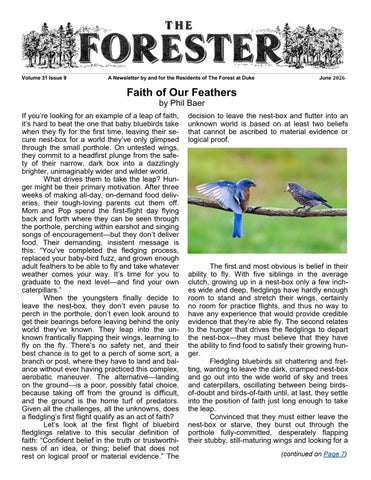

Faith of Our Feathers
by Phil Baer
If you’re looking for an example of a leap of faith, it’s hard to beat the one that baby bluebirds take when they fly for the first time, leaving their secure nest-box for a world they’ve only glimpsed through the small porthole. On untested wings, they commit to a headfirst plunge from the safety of their narrow, dark box into a dazzlingly brighter, unimaginably wider and wilder world.
What drives them to take the leap? Hunger might be their primary motivation. After three weeks of making all-day, on-demand food deliveries, their tough-loving parents cut them off. Mom and Pop spend the first-flight day flying back and forth where they can be seen through the porthole, perching within earshot and singing songs of encouragement but they don’t deliver food. Their demanding, insistent message is this: “You’ve completed the fledging process, replaced your baby-bird fuzz, and grown enough adult feathers to be able to fly and take whatever weather comes your way. It’s time for you to graduate to the next level and find your own caterpillars.”
When the youngsters finally decide to leave the nest-box, they don’t even pause to perch in the porthole, don’t even look around to get their bearings before leaving behind the only world they’ve known. They leap into the unknown frantically flapping their wings, learning to fly on the fly. There’s no safety net, and their best chance is to get to a perch of some sort, a branch or post, where they have to land and balance without ever having practiced this complex, aerobatic maneuver. The alternative landing on the ground is a poor, possibly fatal choice, because taking off from the ground is difficult, and the ground is the home turf of predators. Given all the challenges, all the unknowns, does a fledgling’s first flight qualify as an act of faith?
Let’s look at the first flight of bluebird fledglings relative to this secular definition of faith: “Confident belief in the truth or trustworthiness of an idea, or thing; belief that does not rest on logical proof or material evidence.” The
decision to leave the nest-box and flutter into an unknown world is based on at least two beliefs that cannot be ascribed to material evidence or logical proof.
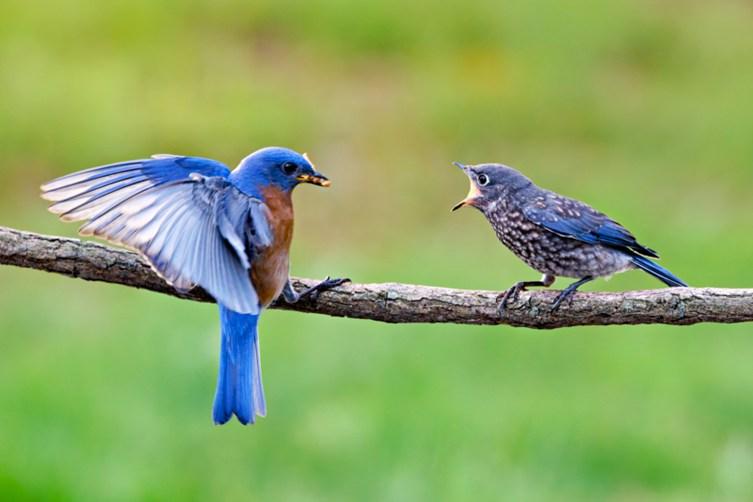
The first and most obvious is belief in their ability to fly. With five siblings in the average clutch, growing up in a nest-box only a few inches wide and deep, fledglings have hardly enough room to stand and stretch their wings, certainly no room for practice flights, and thus no way to have any experience that would provide credible evidence that they’re able fly. The second relates to the hunger that drives the fledglings to depart the nest-box they must believe that they have the ability to find food to satisfy their growing hunger.
Fledgling bluebirds sit chattering and fretting, wanting to leave the dark, cramped nest-box and go out into the wide world of sky and trees and caterpillars, oscillating between being birdsof-doubt and birds-of-faith until, at last, they settle into the position of faith just long enough to take the leap.
Convinced that they must either leave the nest-box or starve, they burst out through the porthole fully-committed, desperately flapping their stubby, still-maturing wings and looking for a
(continued on Page 7)
of The Forest at Duke
The Forester
The newsletter of the Residents’ Association of The Forest at Duke, Inc., 2701 Pickett Rd., Durham NC 27705. Published monthly except July, August, and September by and for the residents.
Lisa Camel, Managing Editor
Beth Timson, Copy Editor
Dave Sloan, Layout Editor
Linda Cushman & Louise Scribner, New-Resident Biographers
Elodie Bentley & Ken Parker, Proofreaders
Sanford Berg, Photographer
Catherine & Sanford Berg, Couriers
Authors, please send submissions to Forestermanager@icloud.com
Views expressed by writers in The Forester are not necessarily the views of the editorial staff.
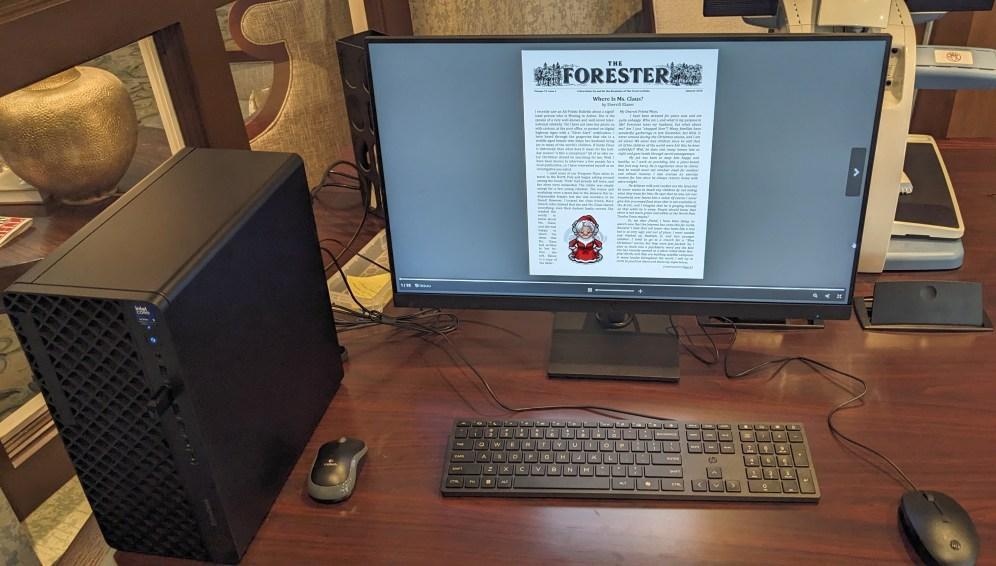
The library computer is for residents to read The Forester online. You can also use it to access Cubigo and the RA website if you have your passwords for those sites. The Forester, Cubigo, and RA website are labeled on the main screen for you to click on.
President’s Podium
by Elizabeth Gillis
Change. That word we love and hate. We as residents have seen many changes in the last few years: the opening of the Cohen Health Center and The Terraces and now a new CEO, Greg Garrett. We say goodbye to Anita who has been at the Forest for twelve years, and we welcome Greg as our new CEO. We wish Anita all the best in retirement. We hope she gets to travel as much as she wants to and that she has time to have fun.
Greg has successfully navigated his first few weeks at The Forest. Now comes the fun of learning residents’ names as well as names of all our staff. Lots and lots of names to learn. As residents we look forward to working with Greg in any way we can be helpful.
As I have often said, The Forest is a great place to live. We strive to be a friendly, considerate community of people who have chosen to live here. We as “old” and ”new” residents are still getting to know each other. It is a work in progress. Everyone who comes here comments on how friendly people are, and we do not want to lose this reputation. At The Forest, none of us is special but each of us is special in what we bring with us as an individual. What can you do to make another person feel welcomed? What can you share with another resident? Do you say hello when you pass in the hall? Do you introduce yourself if you don’t know the person? Do you sit with people you don’t know in the dining room?
These are questions for each of us. New residents tend to sit with people they already know, and the same is true for those of us who have been here for a while. Now is the time to branch out and sit with residents you don’t know. All of this takes time. Eventually we will get to know each other and feel comfortable with each other. Baby steps turn in to big steps.
In Memoriam
Dr. Helga Bessent
Carolyn Brooks
Eunice Grossman
Carol Reese
May 1, 2026
May 4, 2026
May 8, 2026
May 13, 2026
The Forest really is a great place to live. Each of us chose to come here. It is up to each of us to maintain that feeling of friendliness and welcoming. We need to remember to speak respectfully to residents and staff alike. We are one Community. We can and will learn to live together as one community committed to helping each other and to grow as individuals. ⸙
Becoming Earth Again for a Living Future
by Alice Alexander
In recognition of Earth Day at The Forest, we enjoyed an excellent presentation from Steve Lanning. It opened with a profile of Earth Day #1 in April 1970, when ten million people rallied in the streets, propelled by news such as a Cleveland river on fire (six different times), or eagle eggs breaking before chicks could hatch (caused by DDT). Ten million out of a population of two hundred million translates to five percent of the population. For perspective, eight million came out on No Kings Day, out of a population of three hundred forty million.
Rather than focus on metrics of climate change catastrophe, Steve focused on how to get to a “living future.” He examined what colonialism, industrialization, and capitalism have displaced by studying the past. Early human cultures lived embedded in nature, as part of a living sacred earth. Steve profiled several indigenous cultures including the Iroquois Nations’ “seventh generation test” that is, considering the impact of actions on the next seven generations to assure environmental and social responsibility; and that of pre-Christian peoples of earth sharing traditions of human obligation to forest, animals, and water.
In all, the indigenous shared global themes were that
• the earth is alive, relational, and sacred
• humans are not above nature
• we have a responsibility for coming generations
• we need an emphasis on rhythm and regeneration.
And yet, here we are today with such realities as expanded oil and gas leasing which slows im-
plementation of clean-energy tax credits and redirects funds toward fossil expansion; halting of wind farm development; opening old growth forests to increasing logging; repealing limits on toxic pollutants; and more, including the pronouncement of our President calling the climate crisis, “The greatest con job ever perpetrated on the world.”
We are in a human-driven era of mass extinction. The convergence of technological, economic, political, and cultural shifts over centuries encouraged dominance and extraction. Think of empire building, fossil fuels magnifying incentives, capitalism, colonialism, and political systems rewarding short-term gain.
So what is a pathway to a living future? A shift in focus to living regeneratively (such as renewable energy systems, re-designing one-way lifestyles, and farming that doesn’t exhaust the land); re-defining prosperity; supporting life for future generations; and imagining political systems that mirror ecosystems. Individuals can practice regeneration, but individuals cannot make a society regenerative; that can only happen at the community level.
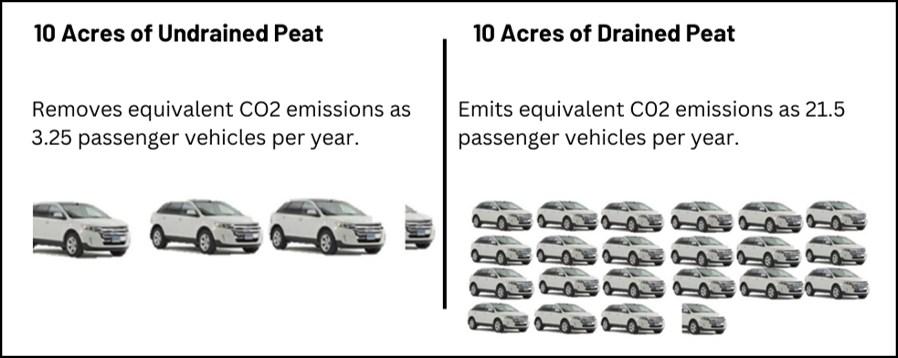
So what can we do? Volunteering as a community has more impact than volunteer work as an individual. Steve provided numerous examples of community action, participating with groups such as the Elders Climate Action, Third Act NC, and others that leverage the respected leadership of elders. For a neighboring example, Carol Woods residents are participating in an effort to re-flood peat bogs in NC in a program led by The Nature Conservancy.
Might the Green Team at The Forest consider climate change action outside our walls?
Terrace resident Susan Martin is working to reinvigorate the Green Team; contact her at susan.f.martin@gmail.com ⸙
The Nature Conservancy is restoring the hydrology of peat soils in coastal North Carolina to combat climate change.
Climate Crisis: Three Graphs that Might Make You Skeptical
by John Staddon
There’s a doomsday view of climate change that goes like this: In a few decades, cataclysmic climate change will decimate civilization Nothing matters more than limiting the rise in temperature. Fortunately this view is wrong. Although climate change will have serious consequences it will not lead to humanity’s demise. (Bill Gates)
Even as Europe slowly sidelines itself by eliminating oil, coal, and natural gas as energy sources, the scientific basis for “net zero” (the complete cessation of fossil-fuel usage) is based more on “general agreement” than hard data. The idea of a carbon-dioxide-induced apocalypse is largely supported by general-circulation (i.e. whole-earth) planetary models (GCMs), but there are many different GCMs, with many different parameters. Their predictions are often just averaged, although an average makes no sense unless you know the error distribution. The science is complicated, but the climate does seem to be getting warmer. Nevertheless, the key policy question is simple: are we responsible? Does our contribution to atmospheric carbon dioxide have a major effect on the temperature of the earth? The standard answer is “yes, of course,” but there are good reasons for doubt.
Popular accounts of the “climate crisis” rarely show quantitative data, though there are widely available graphs that anyone can understand. Here are three graphs which suggest that the answer to the question is probably “no.” It is likely that beyond a certain point, carbon dioxide has a relatively minor effect on planetary temperature.
1. The very long-term historical record
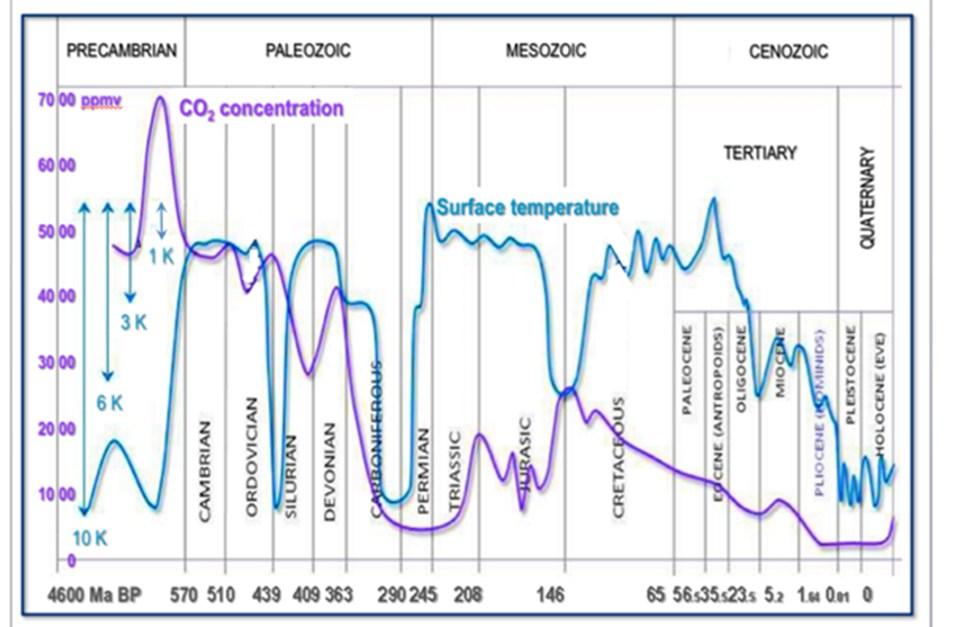
This graph is controversial, simply because estimates of CO2 concentration and temperature through 99.99% of the earth’s history must be estimated indirectly, by proxies such as ice cores, tree rings and isotope measurements. If this graph of global temperature and CO2 concentration over the past 600 million years is approximately valid, it shows two things (Fig. 1):
a. According to one expert, and as the right hand point on the graph shows, “the carbon dioxide content of the atmosphere today
1
is the lowest in Earth history except for a period around 550 million years ago.”
b. There is no correlation between the CO2 level and global temperature: when CO2 is high, temperature may be low, and vice versa. The second conclusion is less certain than the first. But certainly, mammals existed during the Cretaceous, at CO2 concentrations much higher than today’s.
2.
The long-term historical record
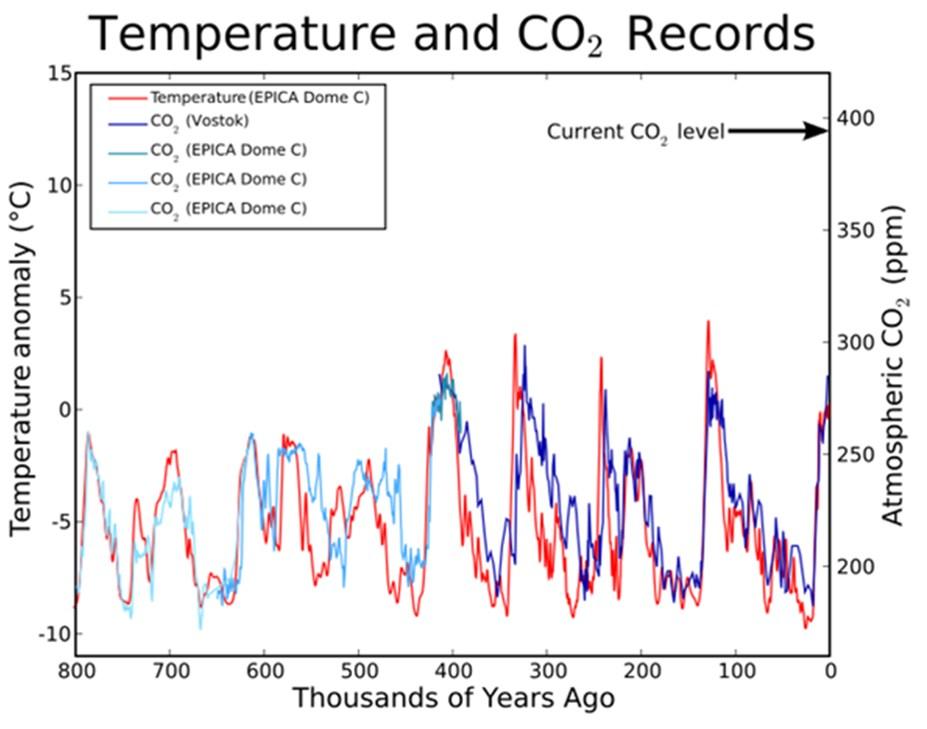
The CO2-temperature correlation is much clearer over a shorter time scale, as in the next graph, which is not at all controversial (Fig 2). The graph shows temperature (red line) and four esti-
2
(continued on Page 5)
Figure
Figure
Climate Crisis
(continued from Page 4)
mates of atmospheric CO2 from Antarctic ice dome studies across an 800,000-year time period.
The two main conclusions from this graph are:
a. At this relatively short time scale, CO2 concentration and temperature are strongly correlated: CO2 and temperature go up and down together.
b. But those CO2 increases reliably lag behind (by 300-800 years) temperature increases. Reason: As oceans heat up, gases, including CO2, are expelled. When they cool, atmospheric CO2 is absorbed; warm water can hold less dissolved gas than cool (most planetary CO2 is stored in the oceans)
The simplest conclusion is that major changes in atmospheric CO2 are caused by changes in planetary temperature, not the other way round.
3. Physics
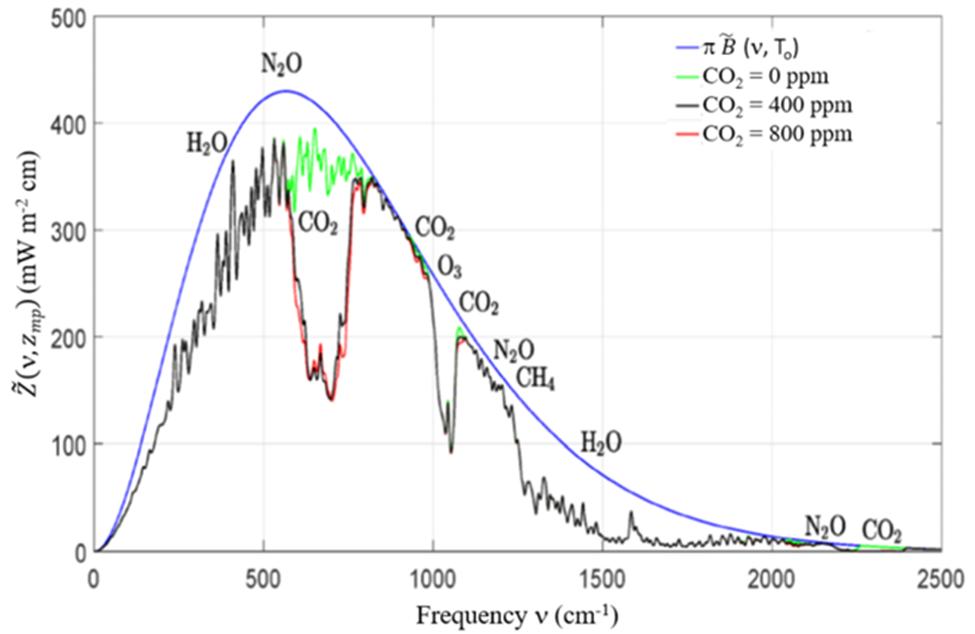
The final graph (Fig. 3) is from a long paper by two physicists, William Wijngaarden (York University, Toronto) and William Happer (Princeton). The article considers the basic physics of the greenhouse effect, given the physical properties of air and the handful of low-concentration greenhouse gases (CO2, nitrous oxide and methane) that it contains.
3
The blue bell-shaped curve shows the amount of solar energy flux (at different wavelengths, x-axis) re-radiated to space from an earth with no atmosphere. Most is in the infrared
region 400-1000 or so. The green line is the flux with an atmosphere with no CO2 but with all other greenhouse gases at their current concentrations. The black line is for all greenhouse gases, CO2 included, at their current concentrations. The red line is for twice the current concentration of CO2 (400 to 800 parts per million, ppm) but with all the other greenhouse gases unchanged. At 400 ppm CO2 does have a greenhouse effect: radiated energy is reduced in the 500-700 frequency range. But an increase to 800 ppm has almost no additional effect: the black and red lines are almost the same. Doubling the standard concentration of CO2 from 400 to 800 ppm has almost no additional greenhouse effect. 4. Conclusion
Taken together, these three bits of data raise doubt that further increases in CO2 are posing an environmental threat. The earth may be warming, but it is unlikely that CO2 plays a major role. There is almost no chance that the warming is life-threatening or even assuming that human activity is probably not responsible that it will continue indefinitely. So, relax; there is no “climate crisis”. ⸙
Figure
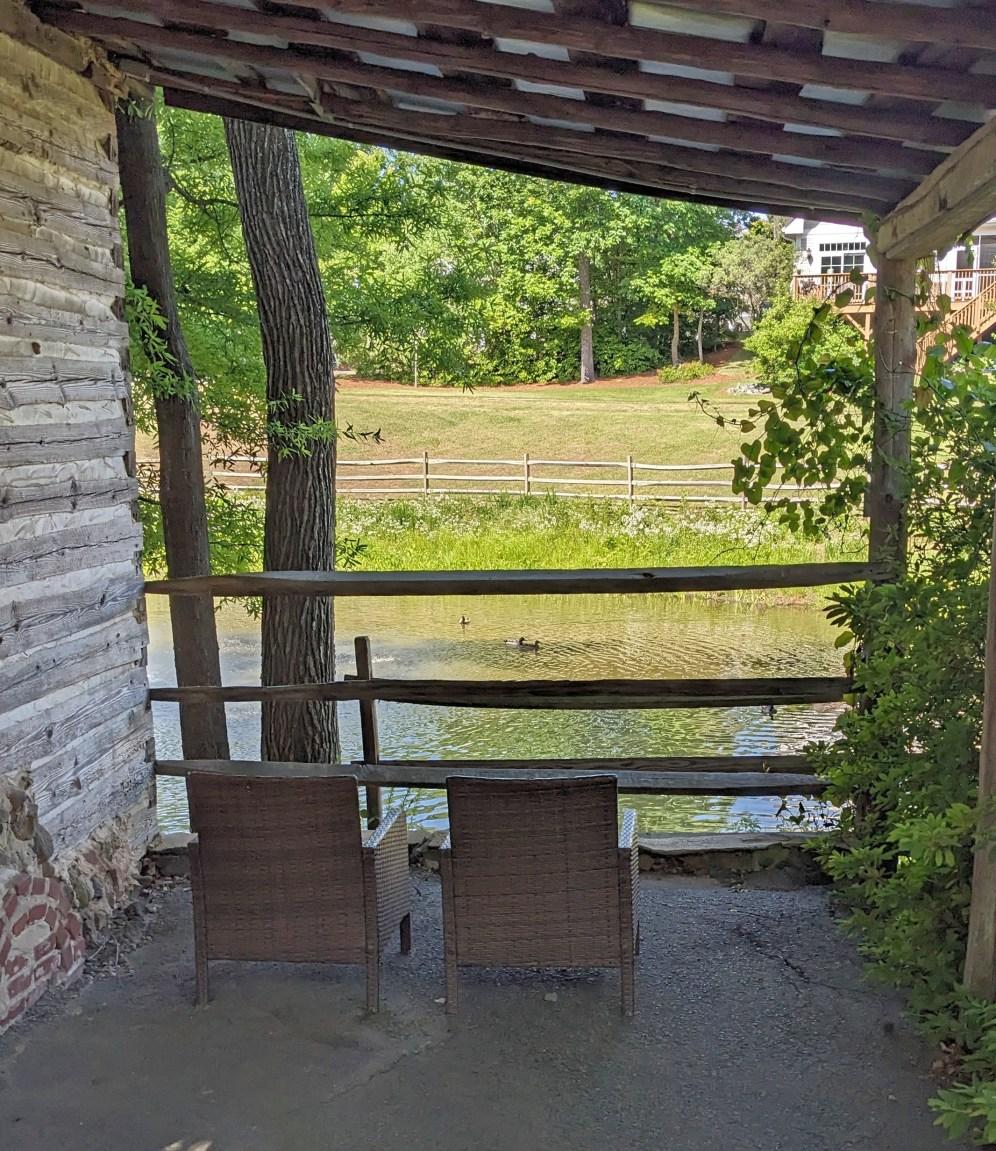
TFAD Pond from Tobacco Barn
Our TFAD Library: An Open Book (and More!)
by Diane Strauss
Sci/Tech Books: A Bit of This, A Bit of That
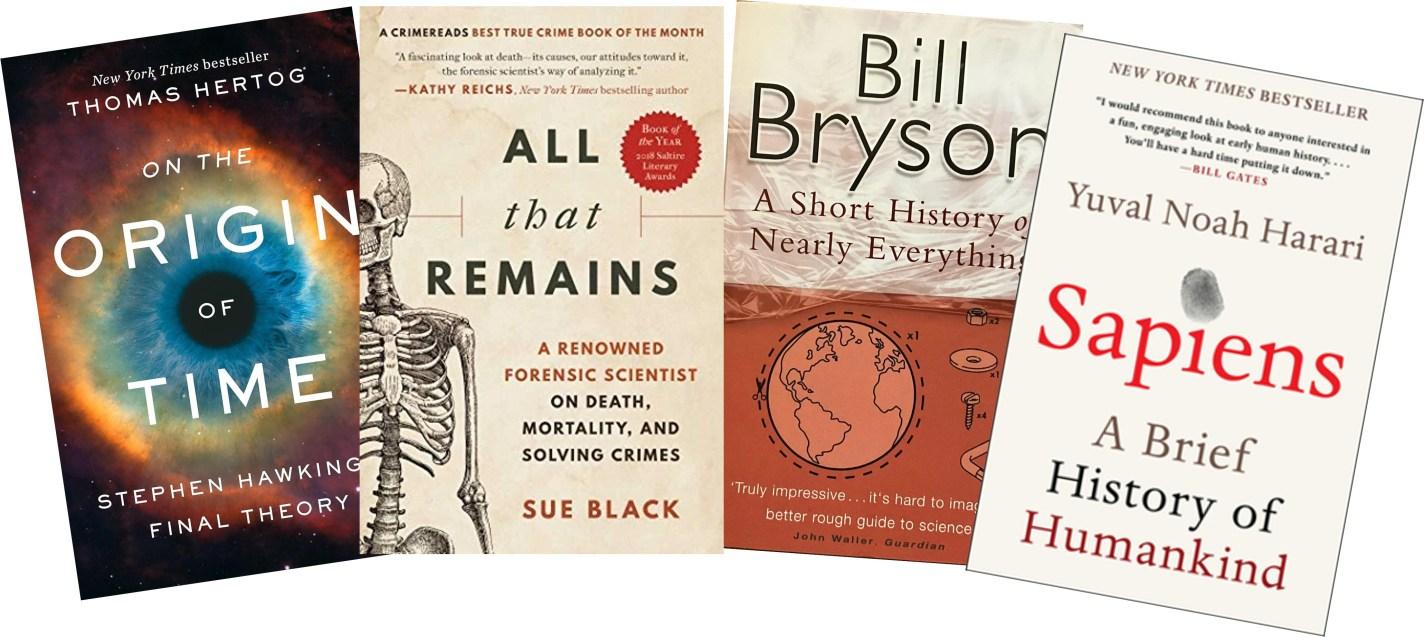
Last month’s library column mentioned that our Acquisitions Group has been assigned the task of revising the library’s collection development policy. One of the significant changes was to include in our Nonfiction Collection interesting and accessible books in the sciences that were represented sparsely, if at all. We placed an order for twenty-nine titles and in early May, they’ve been received. Now they are awaiting library technical processing before being placed on the New Books shelves for two months and then reaching their permanent home in the Nonfiction section. Our goal is to get them on the New Books shelves by the time this issue of The Forester is published. Sneak previews of a few are posted below.
• Susan Black. All That Remains: A Renowned Former Scientist on Death, Mortality, and Solving Crimes.
“Dame Professor Sue Black is an internationally renowned forensic anthropologist and anatomist. She has lived life eye-to-eye with the Grim Reaper, and she writes vividly about her experience in this award-winning book, which is part primer on the basics of identifying human remains, part memoir of a woman whose first paying job as a schoolgirl was an apprenticeship in a butcher shop, and part no-nonsense but deeply human introduction to the reality of death in our lives.”
• Bill Bryson. A Short History of Nearly Everything 2.0.
“A result of Bryson’s quest to understand everything that has happened from Big Bang to the rise of civilization how we get from being nothing at all to the rise of civilization. Fascinating and accessible to anyone with an interest in the world around them. For readers old and new, and of all ages.”
• Jordan Ellenberg. The Hidden Geometry of Information, Biology, Strategy, Democracy, and Everything Else.
“How should a democracy choose its representatives? How can you stop a pandemic from sweeping the world?…Can ancient Greek proportions predict the stock market? (Sorry, no.) What should your kids learn in school if they really want to learn to think? All of these are questions about geometry. For real.”
• Yuval Noah Harari. Sapiens: A Brief History of Humankind.
“One hundred thousand years ago, at least six human species inherited the Earth. Today there is just one of us, Homo Sapiens. How did our species succeed in the battle for dominance?”
• Thomas Hertog. On the Origin of Time: Stephen Hawking’s Final Theory.
“Offers a striking new vision of the universe’s birth that will profoundly transform the way we think about our place in the order of the cosmos and may ultimately prove to be Hawking’s greatest legacy.”
• Michio Kaku. Quantum Supremacy: How the Quantum Computer Revolution Will Change Everything.
“An exhilarating look at humanity’s next great technology revolution—which could solve everything from global warming and world hunger to incurable disease.”
• Sam Kean. The Disappearing Spoon and Other True Stories of Madness, Love, and the History of the World From the Periodic Table of Elements.
“The Periodic Table is a scientific achievement and a treasure trove of adventure, betrayal, and obsession. This book masterly fuses science with classic lore of investing, exploration, and discovery.”
• Katie Mack. The End of Everything (Astrologically Speaking).
“An internationally recognized astrophysicist takes us on a mind-bending tour to five of the cosmos finales: the Big Crunch, Heat Death, Big (continued on Page 7)
Library
(continued from Page 6)
Rip, Vacuum Decay (the one that could happen at any minute) and the Bounce, guiding us with wit and humor through cutting edge science and major concepts in quantum mechanics, string theory and much more”
• Mary Roach. Replaceable You: Adventures in Human Anatomy.
“A fascinating exploration of medical advances in recreating human body parts, from 3D-printed organs to donated hearts.”
• Steven Strogatz. The Joy of X: A Guided , Tour of Math From One to Infinity.
“How math connects to literature, philosophy, law, medicine, art, business-even pop culture in ways we never imagined.”
The Green Team
by Lucy Grant
The Forest’s Green Team has renewed energy and leadership! For those new to The Forest, the first Green Team began February 13, 2015. Its mission was to educate and inform TFAD residents and work with management to benefit the environment.
The Green Team has been energized with the new leadership of Chair Susan Martin. Susan is a resident of the Terraces from Brookline, MA. She was attracted to Durham because one of her sons and his family live here with their two-year-old daughter!
Susan graduated from Wellesley College with a degree in art history and worked for the Museum of Fine Arts in Boston for seven years. Later she stayed home to raise three sons. With sons enrolled in school, she began working for a software company. She and a colleague started a small consulting company in 1992 that was bought out in 2015.
But wait; there’s more! Other titles covering mathematics, chemistry, genetics, DNA, astrophysics, astronomy, exploration, and animal cognition will also be added. And, for you readers and lovers of mysteries, fiction, and nonfiction, no need for hand-wringing. We’ll be adding the best of these to the library as shelving space is freed during our ongoing deaccessioning project. Stay tuned. ⸙
Upon retiring she was an active community leader in Brookline, including chairing a local climate organization, singing with a chorus, supporting her local food pantry, and taking up watercolor and drawing.
The Forest residents can look forward to reading up-to-date information from the Green Committee that will be featured in “Green Team Tips” in upcoming issues of the Forest Forward. The Green Team hopes others will join us in our efforts. To learn more and sign up, contact Susan Martin at susan.f.martin@gmail.com ⸙
Faith of Our Feathers
(continued from Page 1)
landing site and a self-serve meal. Most of them succeed at both flying and finding food their faith is justified and they transition from a state of utter dependence to one of self-reliance. They become one with the natural world, and returning to the nest is not an option bluebirds don’t take their offspring back in if things don’t work out. It’s a one-way, all-or-nothing, no-turningback moment, an instantaneous conversion from dependency to self-sufficiency. Is there anything in human experience that matches the faith in action at the moment of the bluebird’s first flight? ⸙ Pollinator Garden, May 12
Welcome New Resident
John R. Martin Apt. 2117 bulldurhamnc@yahoo.com
919 688-7771
A warm welcome to John, a resident of The Terraces since early March, who is a native of Washington DC and who also lived in Silver Spring MD, St. Joseph MI, and Bethesda MD. A recent resident of Salisbury NC where he helped care for his sister, he decided it was time to seek out a continuing care facility for himself. John received a BA, MA, and PhD in History from Duke University between 1967 and 1978. Besides history, his college interests included politics, English and American literature, and Duke basketball. He was also Chairperson of the Duke Gay
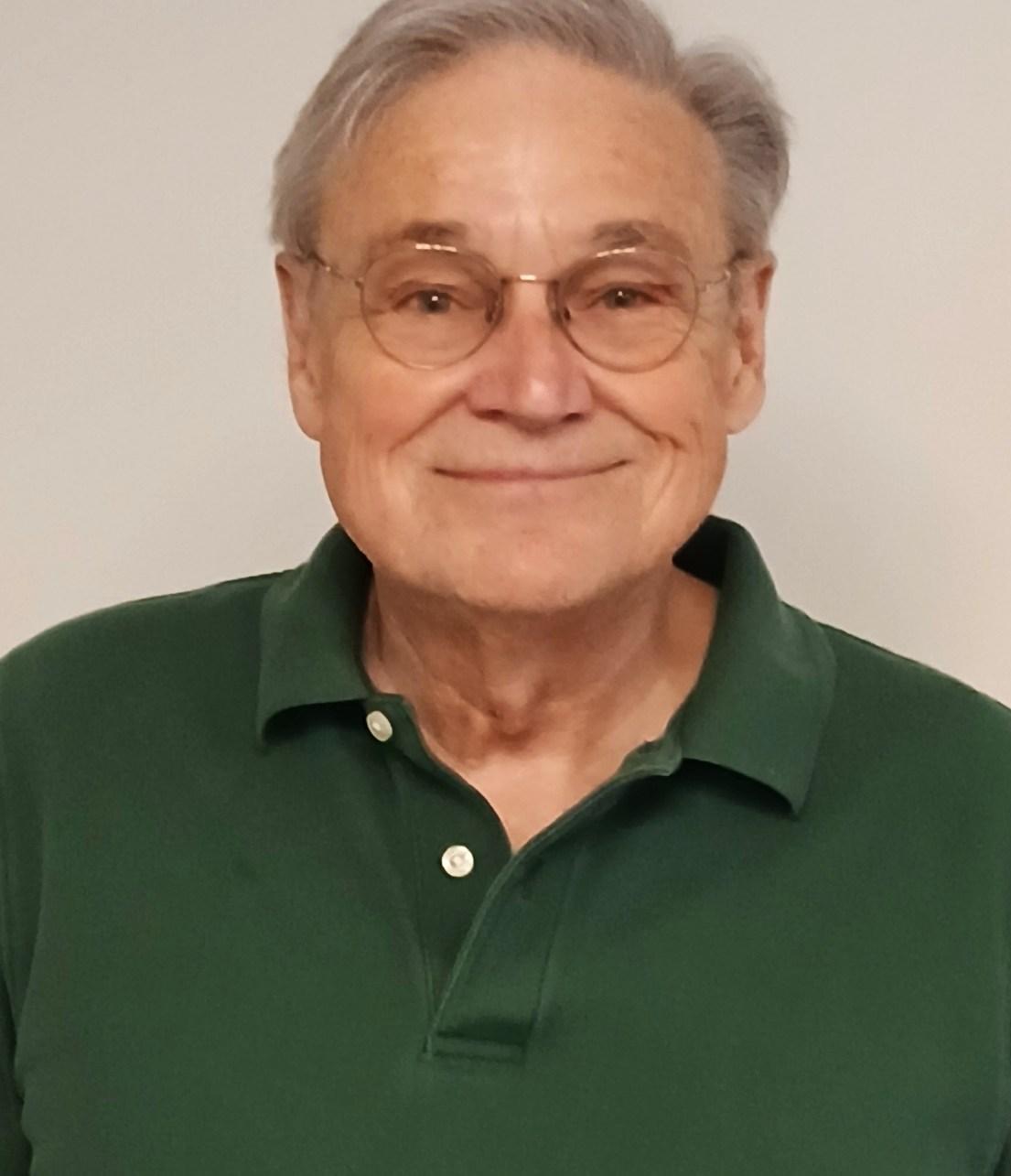
Alliance, founded in 1972, the first lesbian and gay organization on a college campus in North Carolina.
John’s life vocation was as a college history teacher at Durham Technical Community
The Last Hurrah by Judith Adler
Jack and I moved to The Terraces October 27, 2025, having lived previously at Dairy Pond Farm in Durham for five years. We are thrilled to be here, involved with exercise classes, attending lectures, movies, playing bridge, pool (Jack) and reaching out to other new and old residents. The Forest is such a treasure!
Prior to coming to Durham, we lived in Westchester County NY for fifty years, Jack enjoying a career in medicine while I pursued social work and music interests. While there, we explored sailing, biking, skiing, and at the same time grew a family that included four children, and eventually six grandchildren. We feel fortunate to live near son Matthew (Duke, Law) and daughter-in-law Julia (North Carolina State, History.) Our daughters live in California (Sharon, a public health doctor,) Vermont (Anna, a musician -storyteller) and Texas (Danielle, a therapist.)
Our careers began in Chicago where Jack attended medical school and I attended the social work school at the University of Chicago. We also lived in Philadelphia and Oklahoma City, completing work and public health opportunities. It had been at Interlochen Music Camp in Traverse City MI that we first met. Jack was fifteen, from Chicago’s South Side, I was sixteen, from Manhattan. We both had traveled to National Music Camp as pianists, an interest that continues to this day. A Steinway Grand piano lives with us at the The Forest. I play daily and enjoy partnering with two violinists and two pianists. Jack and I occasionally play four-hands onepiano, enjoying Cole Porter and Joplin duets.
Music is definitely the “glue” of our relationship and our relationship with our family. Our four children all played several musical instruments during their childhood, one continuing as a professional storyteller-musician. Our six grandchildren play a variety of instruments, including piano, saxophone, tuba, and bass. Last summer, cellist grandson Spencer gave a concert with friends at The Forest. He intends to return with The New Hope Chamber musicians in August, having completed a Fullbright year in Budapest as a cellist.
(continued on Page 9)
(continued on Page 9)
John R. Martin
(continued from Page 8)
College until his retirement in 2010. His primary courses of instruction were two semesters of History of Western Civilization (nicknamed “Plato to NATO”). He is a Past President of the Durham Inter-Neighborhood Council and spent two terms on the Durham Housing Appeals Board, a position to which he was appointed by the City Council. The Housing Appeals Board hears cases in which the City is enforcing the minimum housing code. John is also a member of the American Historical Association and received the Outstanding Teacher Award from Durham Tech as well as Preservation Awards from Preservation Durham.
An “old house person,” John restored several houses in Durham and a house in Salisbury before moving to The Forest. His other interests include antiques, reading, walking, and classical music. He is getting acquainted with the many programs offered at The Forest and would be interested in both a history club and our book club, as well as lectures and music programs. He also hopes to travel and see more of the world and is interested in hearing about other peoples’ favorite destinations. ⸙
Senior Moment
by Elizabeth P. Dube
(Volume 7, Issue 6, March 2001)
For about a week a bird (a towhee) pecked and flung himself onto my kitchen window. His headache must have been severe as he fought his reflection. The sound was like someone knocking on the door all day.
A female towhee sat in a nearby tree enjoying the ritual.
I had to act. “What am I to do? I need a scarecrow,” I said.
An 8x10 portrait of myself was placed on the windowsill.
The male towhee appeared, took one look, and like the raven before him, said, “NEVERMORE, that’s the worst thing I ever saw,” as he departed forever. Silence is golden around here now. ⸙
Judith & Jack Adler
(continued from Page 8)
When we retired from careers, both Jack and I attended classes at 92NY in New York. It was there that I began to explore an interest in writing poetry and painting, utilizing watercolors. Jack played bridge and enjoyed music classes. Before coming to The Forest, we both completed memoirs that tell more about our history, and they can be found in The Forest’s Library ⸙
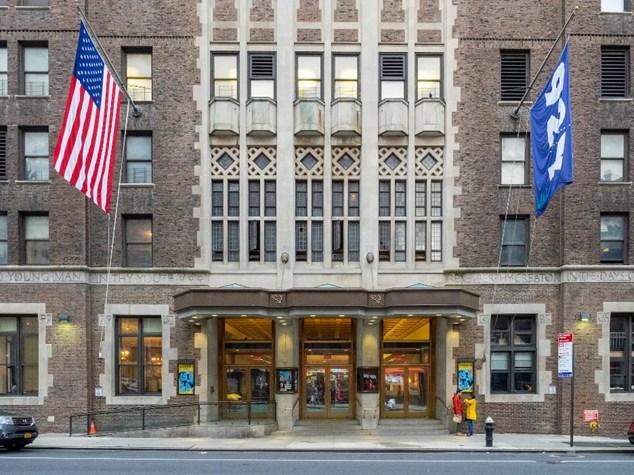
The 92nd Street Y was rebranded as 92NY, an art collective, and kicked off with a $200M redevelopment in 2022.
Readers of The Forester know that we like to introduce new residents to the community with a short biography in this magazine soon after they move into TFAD. With a large group of residents moving into The Terraces at one time, our staff biographers were not able to keep up with this practice. So, we're inviting you, Terraces residents, to help in fully introducing yourselves to the larger community. Write a brief bio for publication in The Forester-300 to 350 words for a single resident or a couple. Tell the community what you would like people to know about you! If you don't want to see your bio in this magazine, why not write one to put into Cubigo: just go to the "Cubigo Biography Instructions" under the "information" tab. Thanks for helping everyone get to know you!
Shamus and the Apple Pie
by Dan Blazer
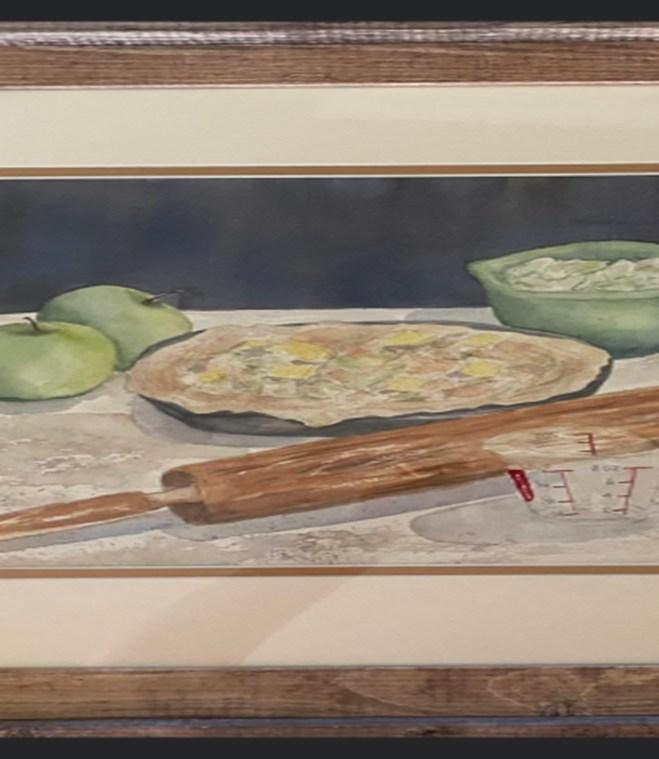
Now Shamus P. O’Toole’s a rogue if what I know is true. Was Boston born, he dressed in green, so Irish through and through. He ate with gusto savory stew, for Colcannon he’d cry. Despite these comfort foods of home, he favored apple pie.
Ms. Jennings lived just down the street and baked a daily pie. She gave them to her neighbors, friends, and needy folks nearby. Yet not a fan of Shamus, he was never on her list. She’d see him walking near her home and shook at him her fist!
Poor Shamus, who would plot and scheme to get a Jennings pie, Was thwarted every step he took, and he did not know why. Most surely, he had all the charm to win this woman’s heart And reap the benefit of praise, beguile was his great art.
He sent a love note to this cook so he could make his case. She was the apple of his eye, not just a cooking ace. Her heart not touched, she knew his schemes to get a tasty slice. Yet she denied him, promised none, whatever be the price.
(continued on Page 11)
Shamus
(continued from Page 10)
He even stooped to manual work and swept her driveway clean. On hand and knee he dug the weeds tween steppingstones he’d seen. He tipped his hat to Jennings after all was spick and span. She tossed to him a tangerine, again to thwart his plan.
Then Shamus had a bright idea, he’d spread a rumor dour. Ms. Jennings’ pies were never sweet but rather sickly sour. The dough was never baked, instead a stringy, tasteless goo. Sweet cinnamon’s not on the crust. What was, he had no clue.
If any rumor, false or true, is spread both far and wide. Some naïve neighbors, bound to heed the buzz, took Shamus’s side.
Ms. Jennings held her overt rage. Instead, she formed a plan. She’d trap that crafty Shamus with a skillet and a pan.
She baked yet one more tasty pie, for which most folks would kill. She opened up her windows wide and placed it near the sill. The sweet aroma caught a breeze as Shamus passed it by And no one watched or guarded the defenseless apple pie.
Sly Shamus crouched beside the window, patient he would hide He planned to snatch that apple pie and crush Ms. Jennings’ pride. The house was quiet, the street unfilled, and Shamus made his move. The crafty guy compared his work to art heists from the Louvre.
So, Shamus quickly grabbed the pie and raced across the grass.
Ms. Jennings watched his every move. He was not in her class. She pulled a rope she’d slyly stretched across the front yard lawn. Poor Shamus’s fate, as she had planned, was long before foregone.
He met the lawn headfirst, arms spread, creating quite a splat. The pie it ended ‘neath his face, its rounded crust now flat. Unhurt, except for wounded pride and shorn of that prized treat, Did Shamas get up to his knees and then upon his feet.
The neighbors, warned by Jennings prior, watch hidden with delight. And on they rushed to Jennings’ yard to witness Shamus’ plight.
Ms. Jennings brought her iPhone documenting this event. And then consoled poor Shamus, now her anger fully spent.
She led him to her kitchen, offered towel and a rag. And then half of a fresh baked pie wrapped neatly in a bag.
“I’ll bake for you each month, my friend, but must you be so sly?”
“Oh yes, for I’m a trickster and my middle name is Pye.”
Navigating the Long Shadow of Alzheimer’s: Tau-based Blood Tests for Alzheimer's Disease
by Howard Goldsweig
For decades, the diagnosis of Alzheimer’s disease has felt less like a clinical certainty and more like an arduous trek through a labyrinth. A patient, noticing the slow fraying of her/his vocabulary or the sudden, jarring anonymity of a familiar street corner, would enter a diagnostic routine ill-equipped for precision. The analytic tools of the old regime the invasive lumbar puncture or the multi-thousand-dollar PET scan were like trying to map a dark cave with a flickering match. They were expensive and often arrived too late to offer anything but a postscript to a life already profoundly altered.
However, with the FDA’s 2025 approval of the first highly specific tau blood test, the walls of that labyrinth have finally begun to turn a bit translucent. We are entering an era of the “tau blood test,” where a single vial of plasma, drawn in a routine primary care visit, can reveal the molecular architecture of a failing memory long before the first word is lost.
The
Tangled Narrative
To appreciate the revolution, one must understand the two villains of the Alzheimer’s story: amyloid plaques and tau tangles. For
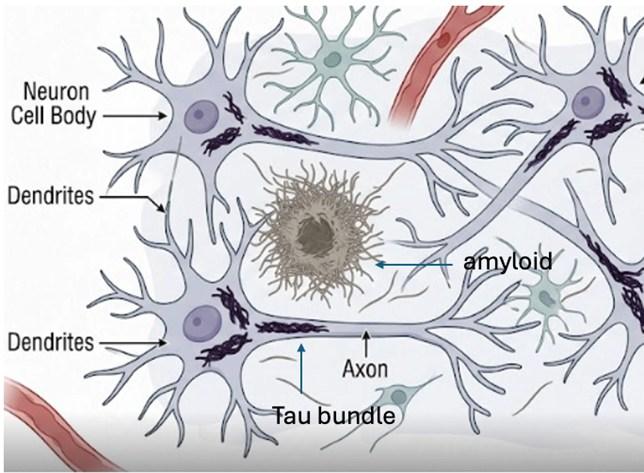
years, amyloid was the focus the sticky buildup between neurons that signaled the disease’s presence. But amyloid is a crude narrator; many people carry it for decades without significant cognitive decline. Tau is different. It is the protein that forms tangles within the neurons themselves, acting as the structural sabotage that
leads directly to neuron death and dementia. Until recently, measuring tau required a needle in the spine or a radioactive scan (PET). The 2025 approval changed the stakes by successfully detecting "phosphorylated tau" (p-tau) in the blood with high accuracy. It is the difference between knowing a storm is somewhere in the Atlantic and seeing the specific coordinates where the rain is starting to fall.
From Mystery to Management
The true impact of this test is not just in the "yes" or "no" of a diagnosis but in the radical improvement of patient management. By assessing the tau level, clinicians can now stage the disease with unprecedented accuracy. This precision allows for:
• Primary Care Integration: No longer a specialized secret of elite memory clinics, the test allows primary care physicians to rule out Alzheimer’s in patients whose "brain fog" might be caused by treatable issues like vitamin deficiencies or depression.
• Early Intervention: New disease-modifying therapies (Leqembi® and Kisunla®) which are most effective in the earliest stages of the disease, can finally be prescribed to the right people at the right time.
• A "Clock" for the Mind: Researchers are now using these blood markers to create a biological "clock," predicting when symptoms might manifest with a median error of only a few years.
The Weight of Knowing
There is, of course, a certain existential dread that accompanies such clarity. To look at a blood report and see the trajectory of one’s own mind is a heavy burden. Yet, for the families who have spent years in the limbo of "possible" Alzheimer's, the blood test offers a different kind of mercy: the power of a plan.
We have not yet found the exit from the Alzheimer labyrinth, but for the first time, we have been given a map. In the hum of a laboratory centrifuge, the mystery of the fading self is being replaced by the manageable data of a chronic condition. Clarity, it turns out, is the first step toward a cure. ⸙
Flowering at TFAD
by Jan Collins-Eaglin
Hello, gardeners and all flower lovers! Walking around The Forest at Duke, you can see that beautiful plants and flowers abound. From balconies to terrace to community gardens and cottage gardens to the multiple landscapes, indoor plants, and cut flowers in the community center, TFAD is a bountiful treasure of beauty.
This proposed monthly column in The Forester will be dedicated to you, our “flowering community,” to share pictures from your garden, balcony, or terrace, from outside or in your living space. The goal of this ongoing effort will be to celebrate the beauty and creativity of our community through your pictures with a description of the flower or plant and to contribute and share other pertinent gardening information for TFAD. Share your tips on what grows well here in NC for newcomers to the area. Let’s connect to each other through your interest or passion about gardens, share your favorite flowers, and give tips on how to maintain plants from indoors to outdoors, from balconies and patios to the Community Garden and the Greenhouse.
A good example was last month’s article and pictures of the Community Garden by Jay Williams, and we want to keep the momentum going. Thanks to Community Affairs for plans to host a garden tour in June that will include indoor and outdoor plants and gardens. Be on the lookout for more information about this tour. Perhaps you will be inspired to plan a trip to some local gardening spots in the Triangle.
We need to hear from residents who want to write about and take pictures of their favorite plants. We hope you'll contribute your pictures and descriptions, as well as your growing knowhow, to this new column. If we get enough good material, we might be able to do a special “summer issue” of The Forester! Please contact Jan Collins Eaglin at jan.collinseaglin@gmail.com for more information, questions, or comments ⸙
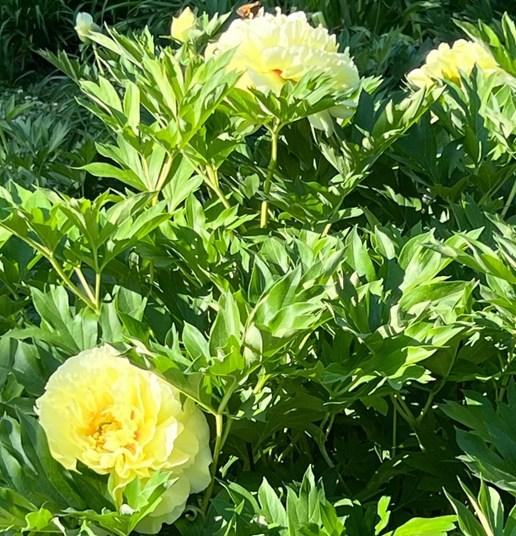
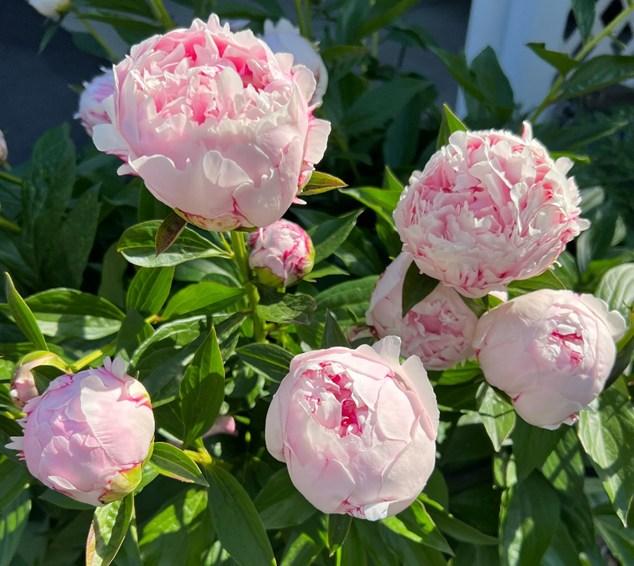
At cottage gardens near the entrance to the Community Garden, peony lovers enjoyed beautiful displays in April! Many of our cottage gardens are abundantly planted with flowers that bring beauty throughout the growing season.
(Photos by Nada Staddon)
(continued on Page 14)
Flowering
(continued from Page 13)
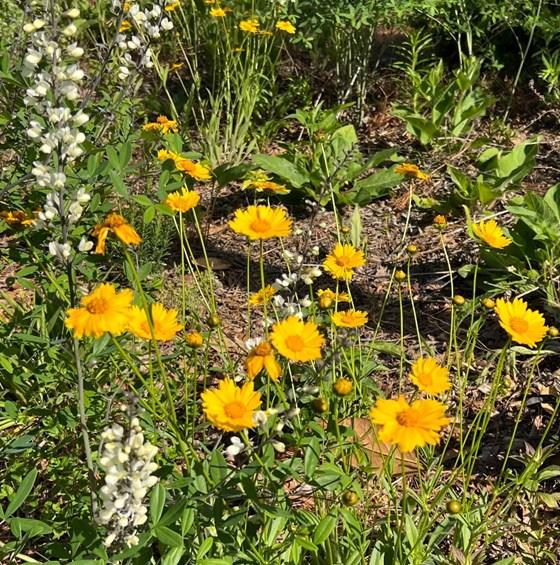
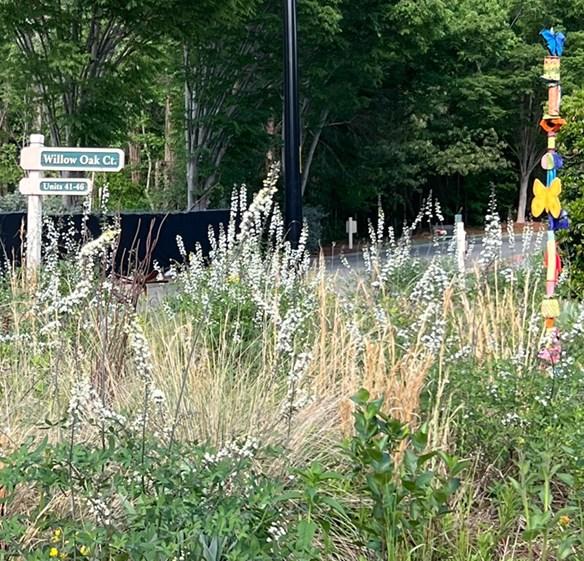
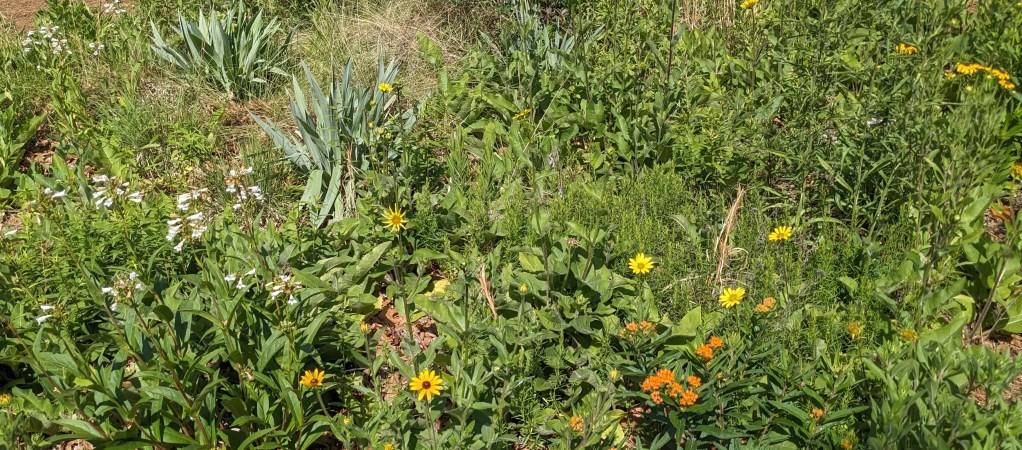
The Pollinator Garden in May shows the early burst of blossoms, soon to be joined by more and more flowers until cold weather stops growth and sends the pollinators into their winter states. Then, the garden shows us its somber but beautiful “bare bones” until spring comes again.
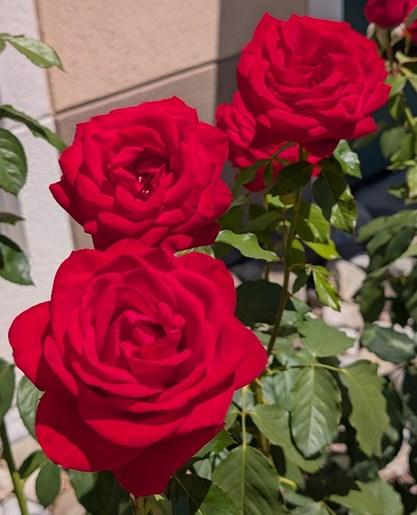
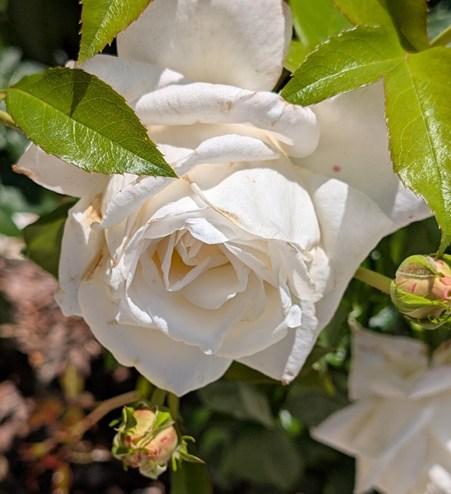
The Rose Garden is at its most beautiful in May, and you can linger in the chairs in the garden or on the Heartwood patio and enjoy displays such as these two tea rose hybrids: Olympiad (red) and Full Sail (white).
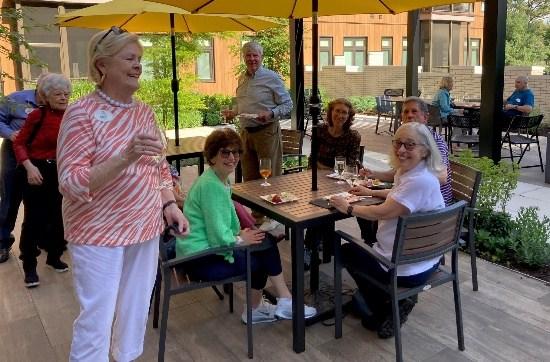
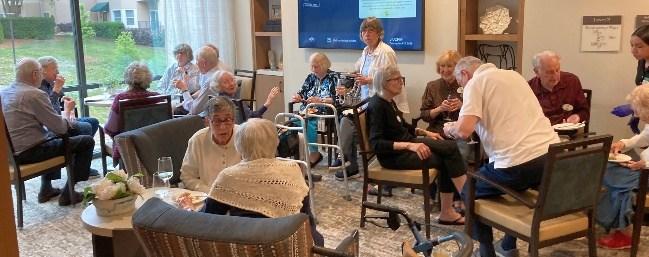
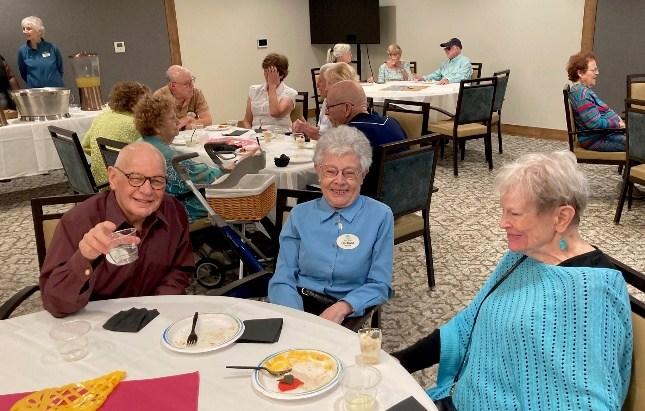
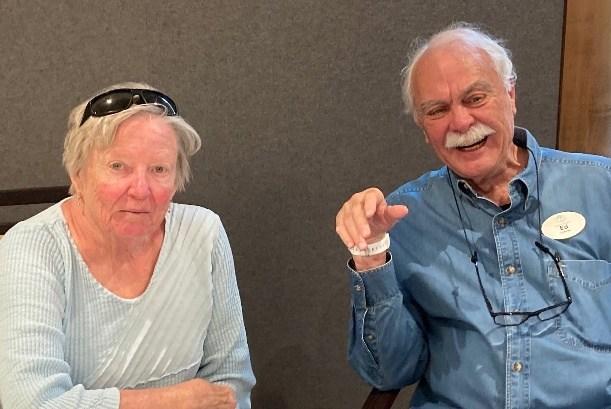
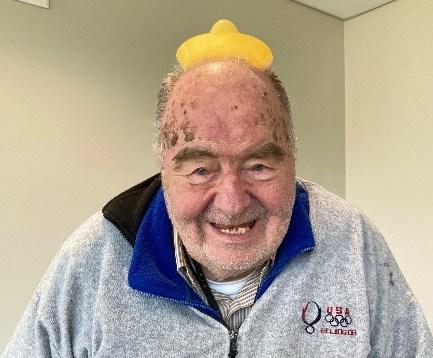
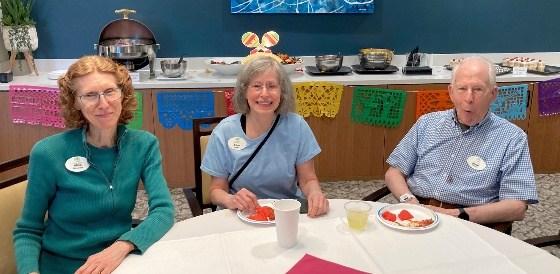
Anita Holt Retirement Party, April 17
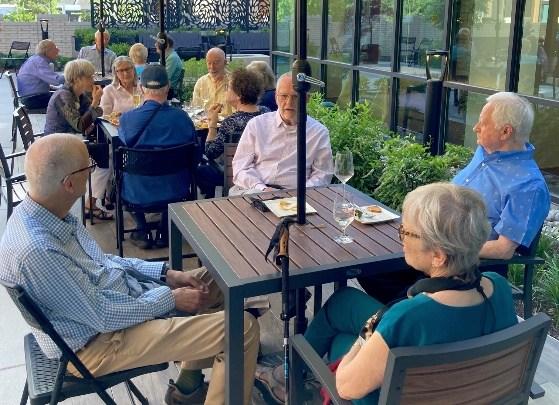
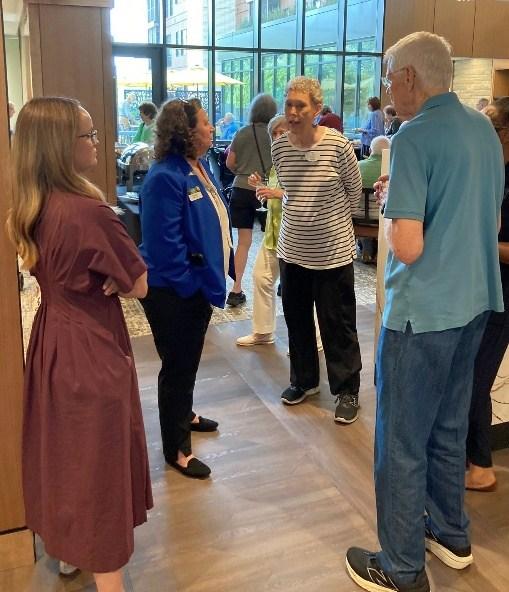
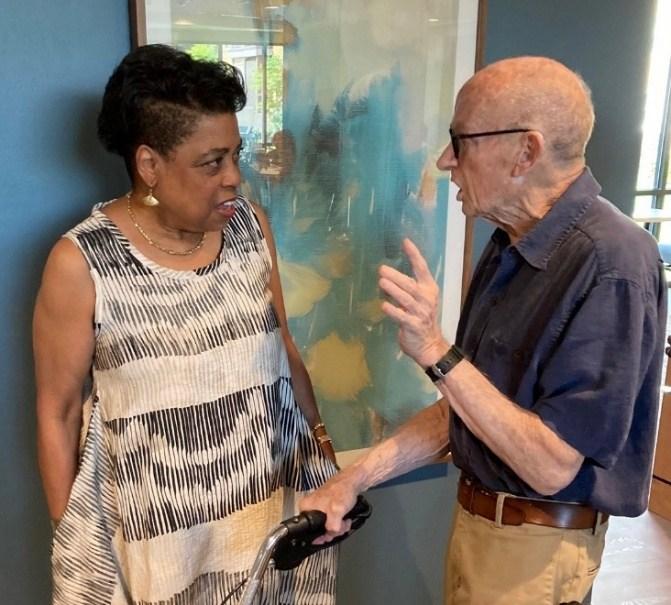
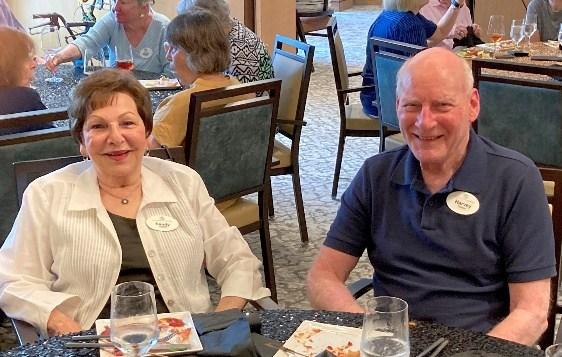
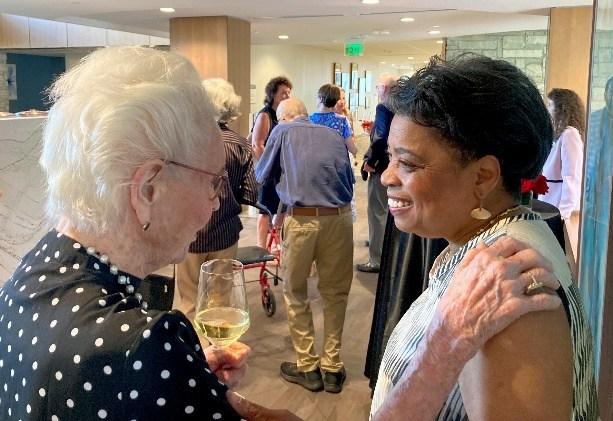
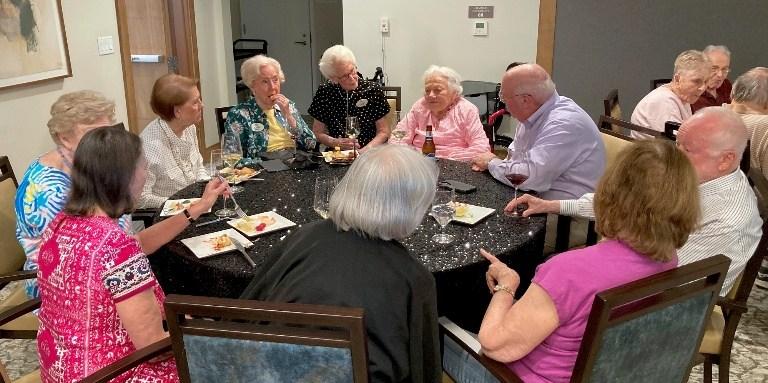
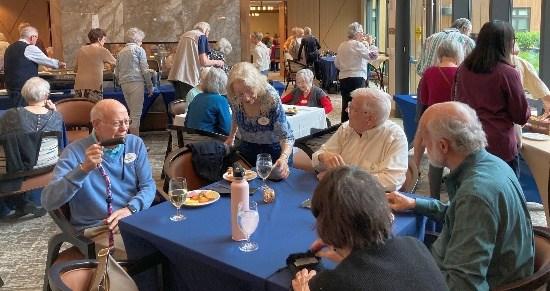
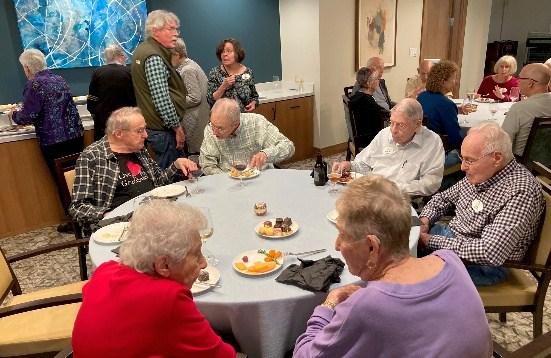
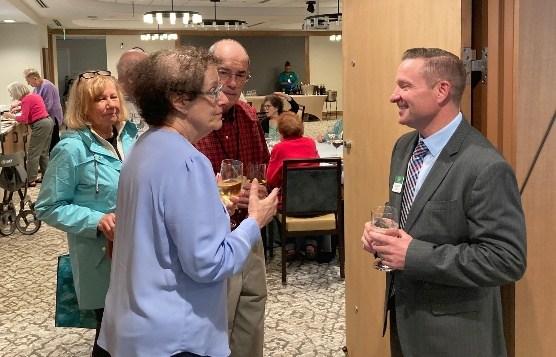
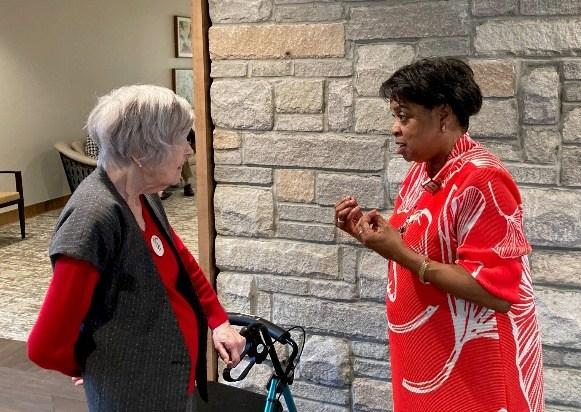
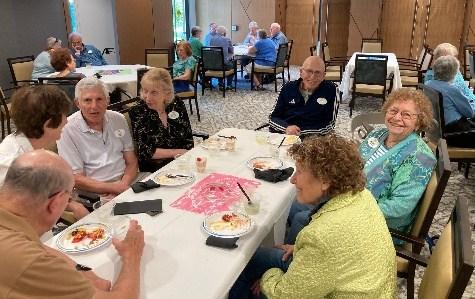
Greg Garrett Welcome Party, April 28
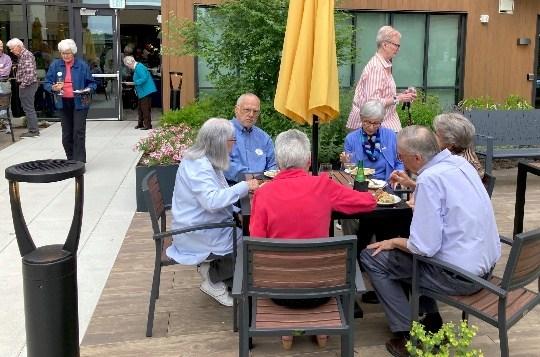
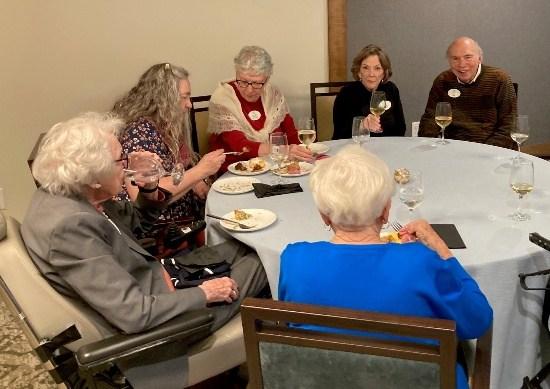
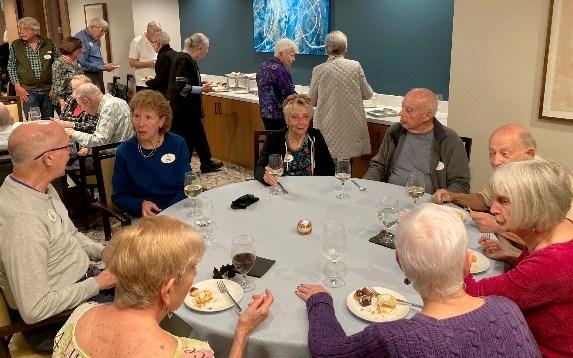
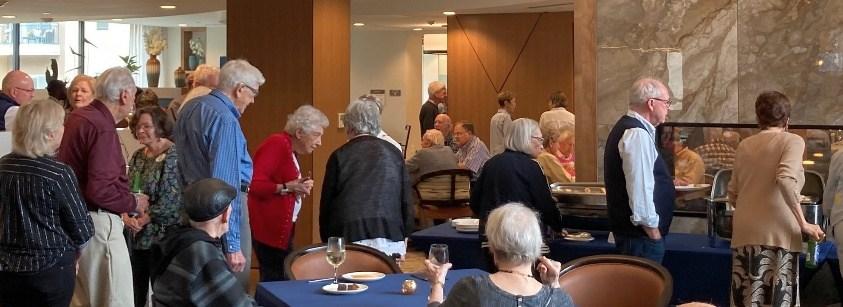
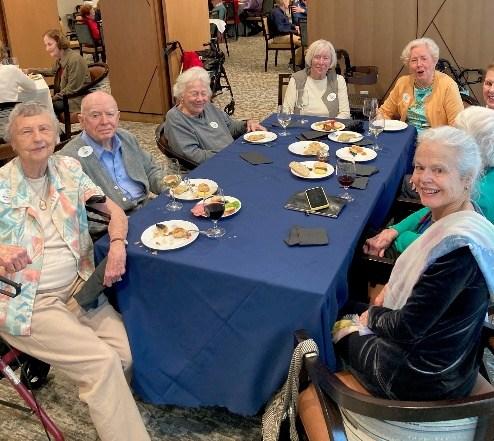
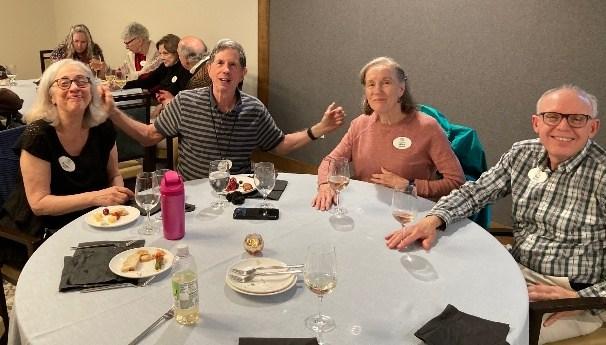
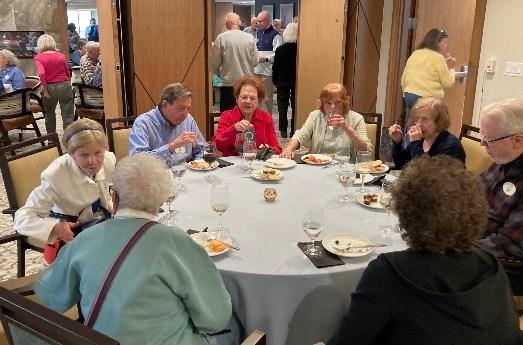
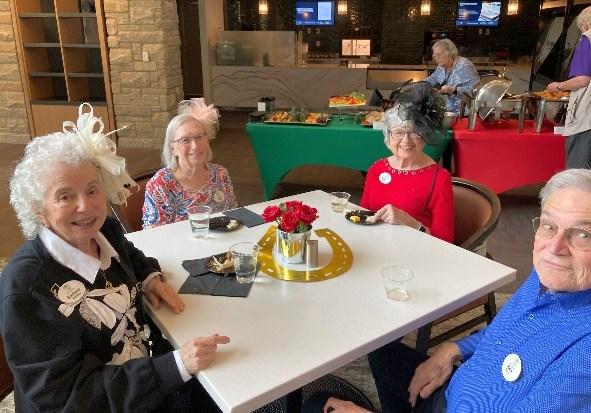
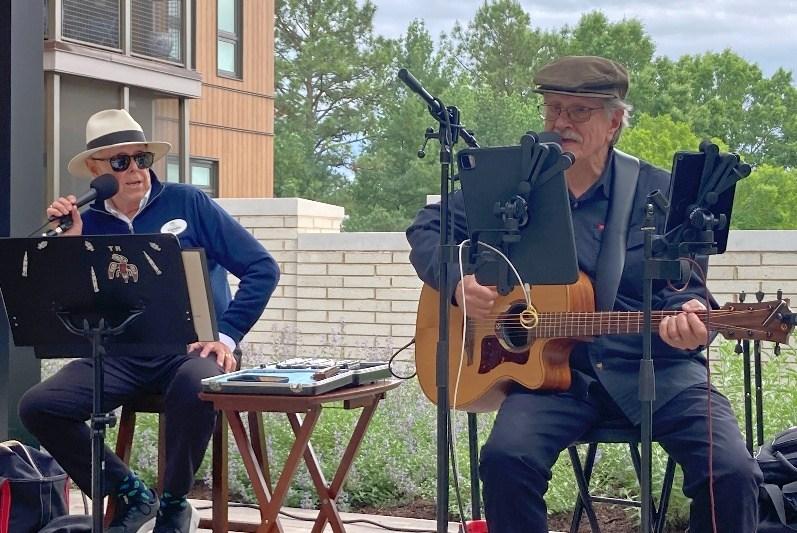
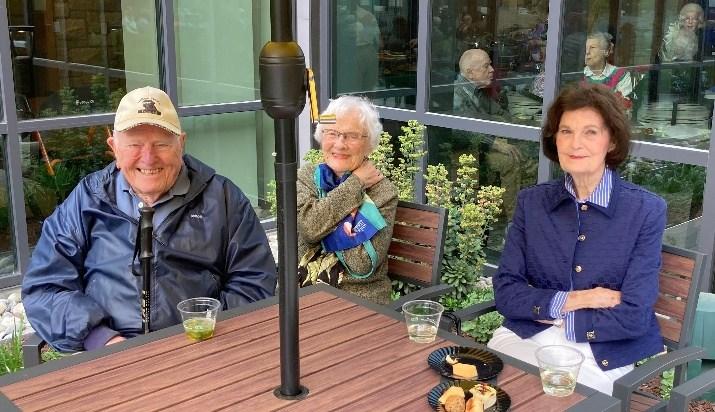
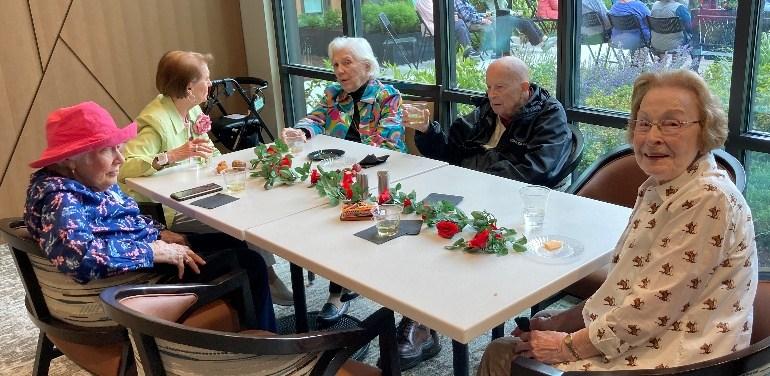
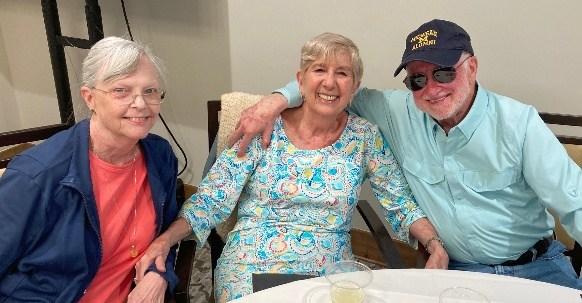
Derby Social Hour, May 1
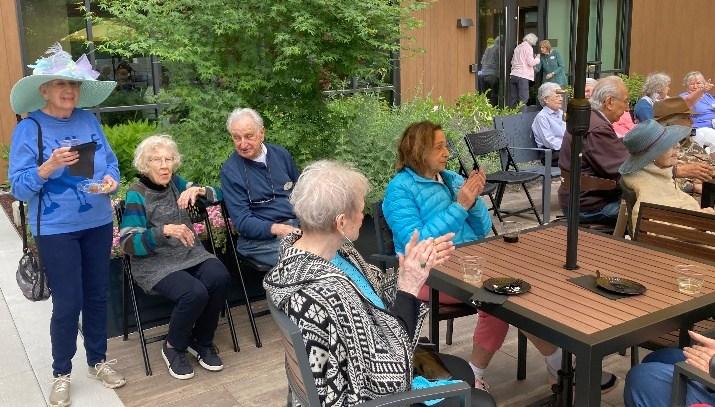
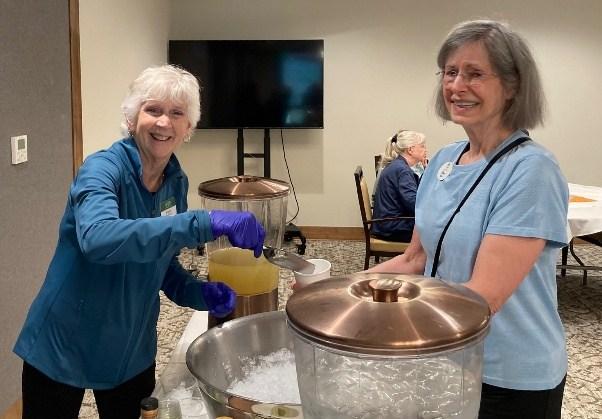
Cinco de Mayo, May 5
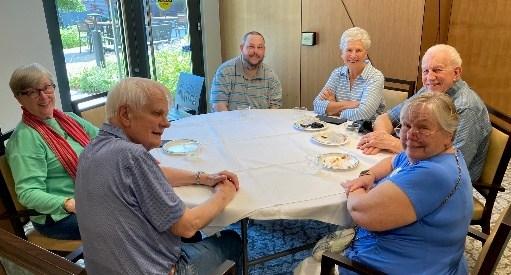
Other Recent Events
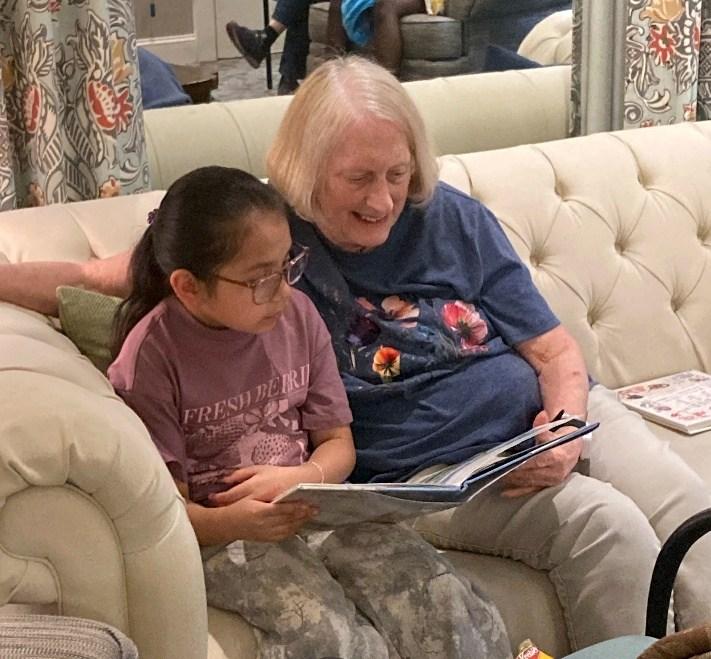
Boys and Girls Club Reading Program, Apr 22
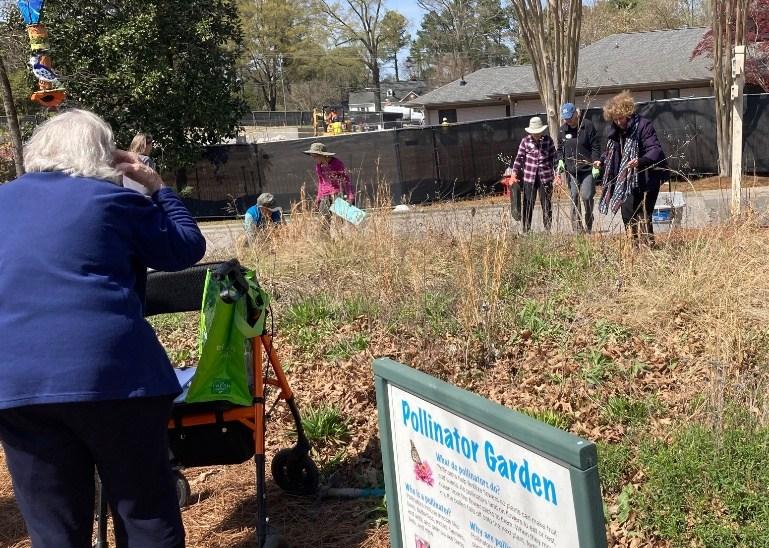
Managing the Pollinator Garden, Mar 25
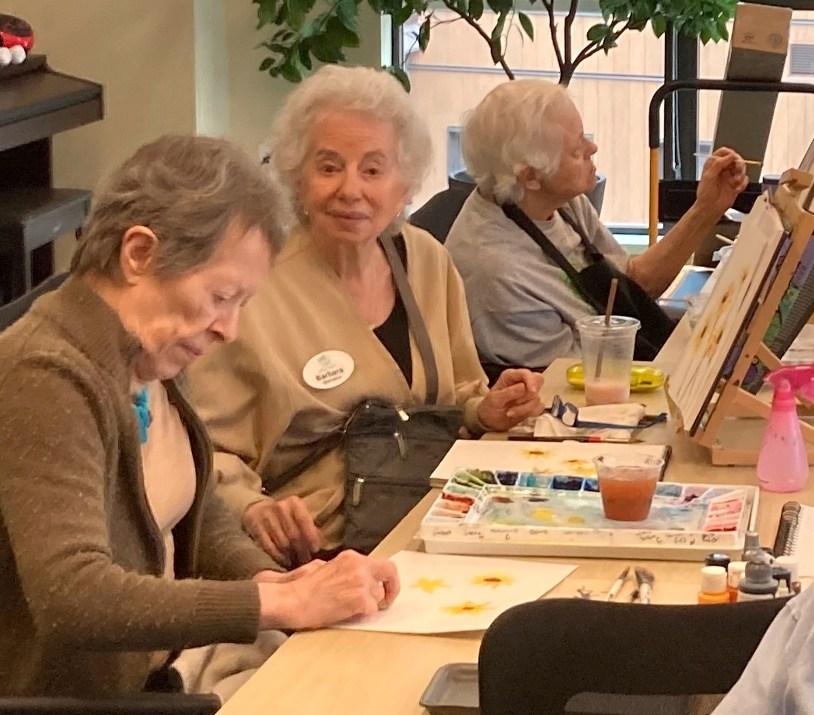
Artists at work, Apr 30
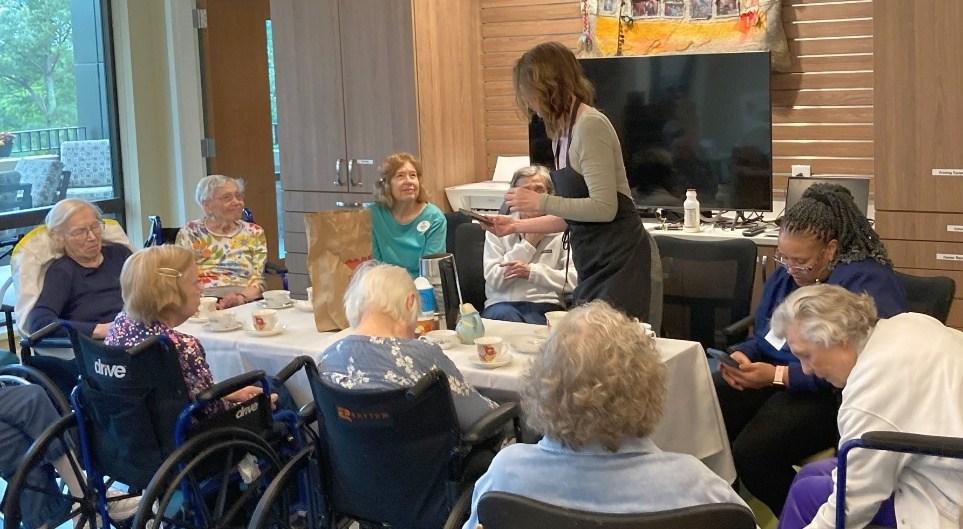
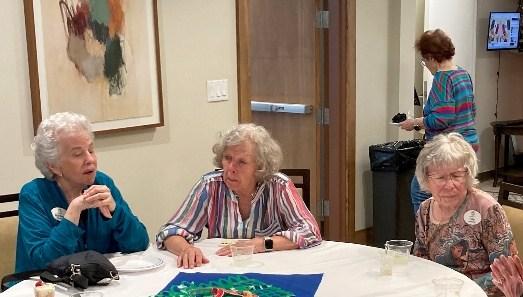
Tea Party at the Health Center, Apr 30
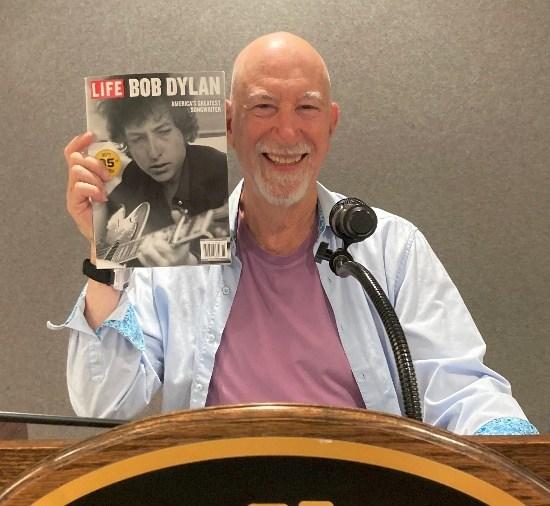
Resident Readers, Jim Lichtenberg, Apr 15
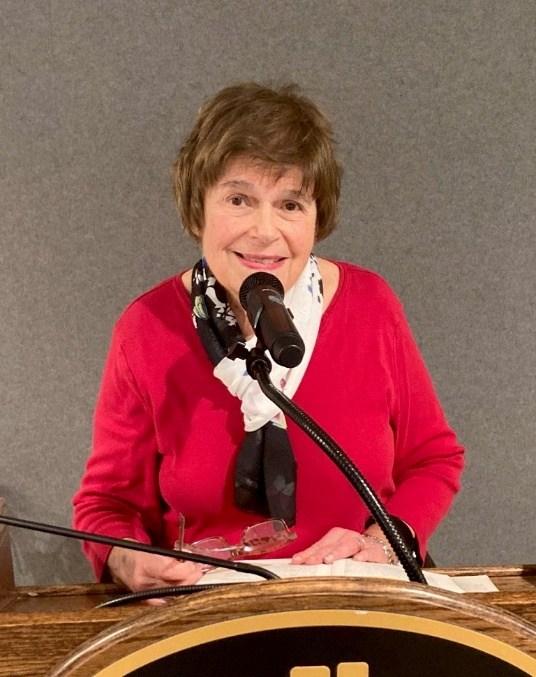
Resident Readers, Judith Siegel, Apr 22
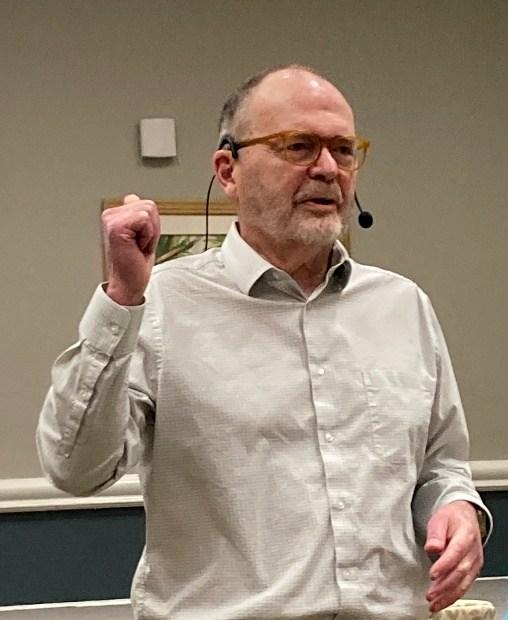
Earth Day Presentation with Steve Lanning, Apr 22
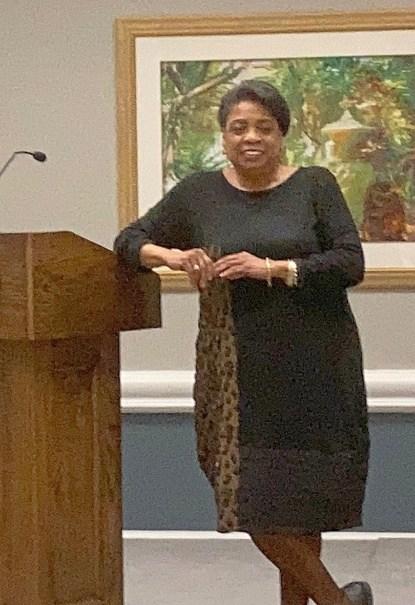
Executive Update, Anita Holt, Apr 21
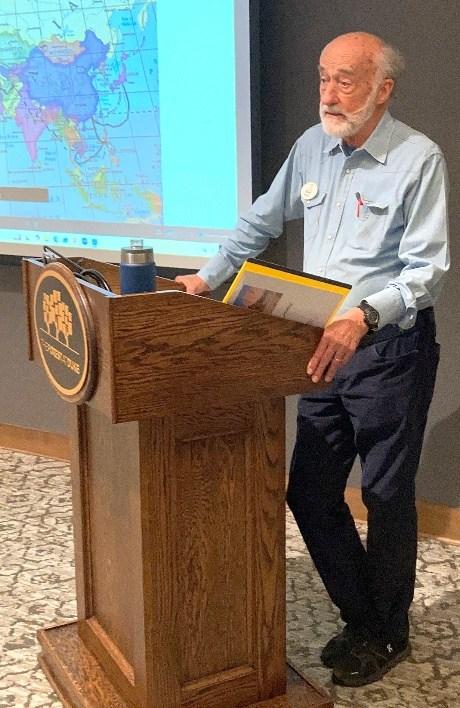
Resident Readers, Stuart Cameron, Apr 29
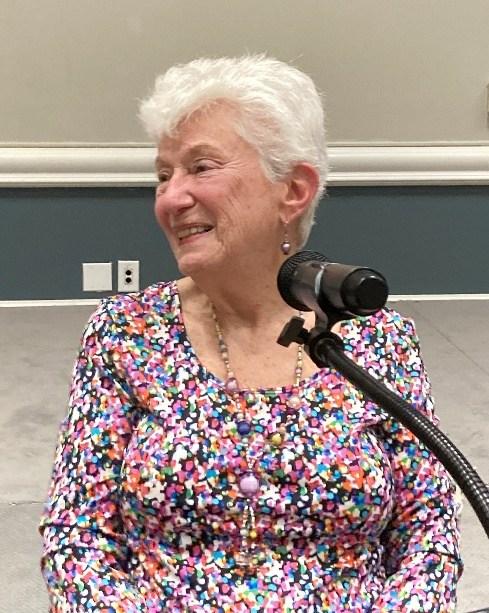
ForestSpeaks with Judith Ruderman, May 4
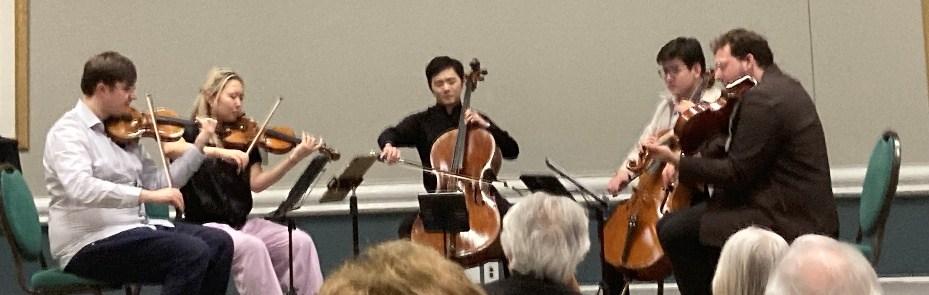
Brandon Cho Cello Concert, with members of the Chamber Orchestra of the Triangle, Apr 30
6
Forest Readers, Bunny Koff, May
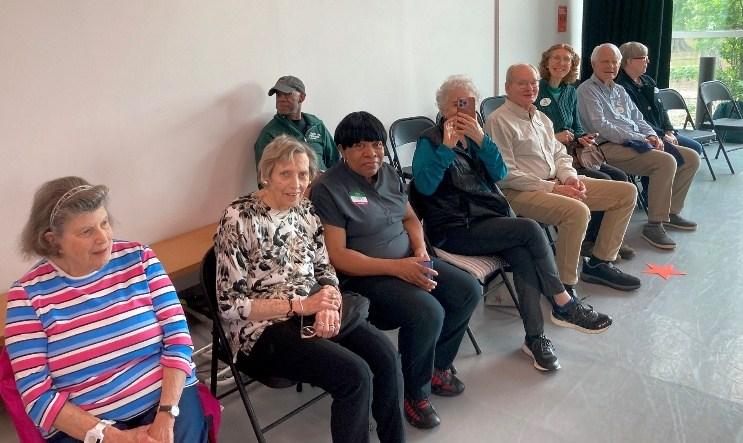
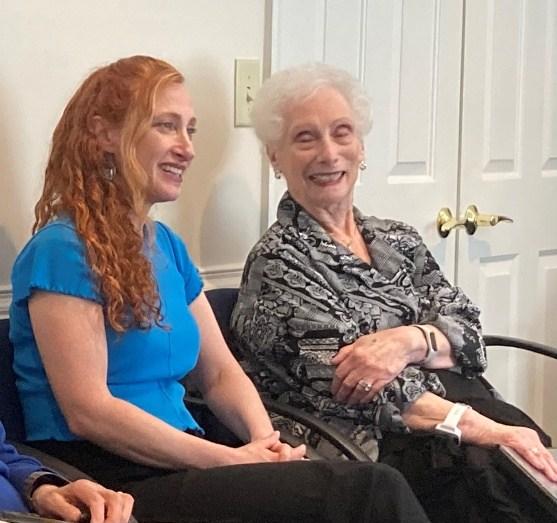
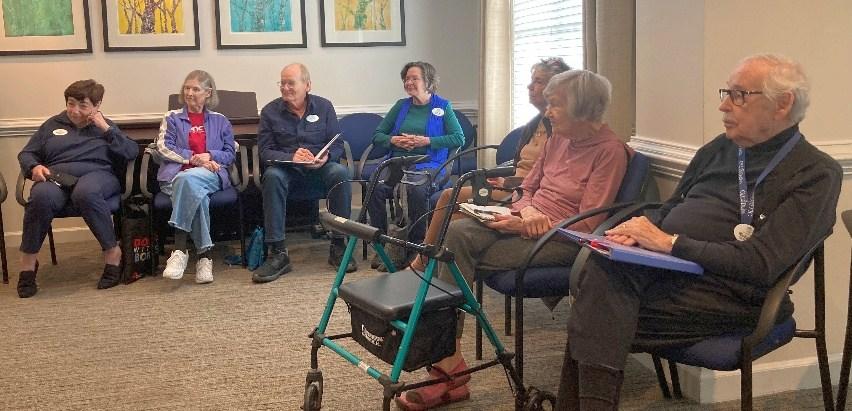
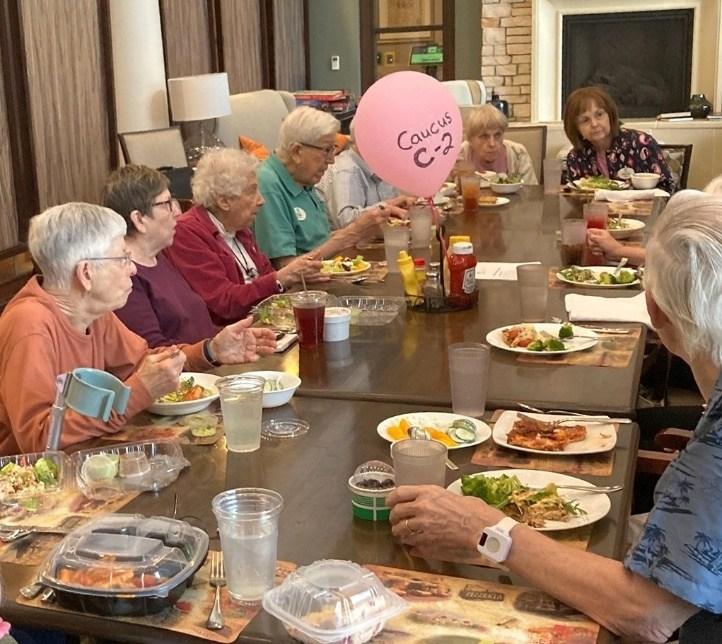
Caucus C-2 Luncheon. Apr 29
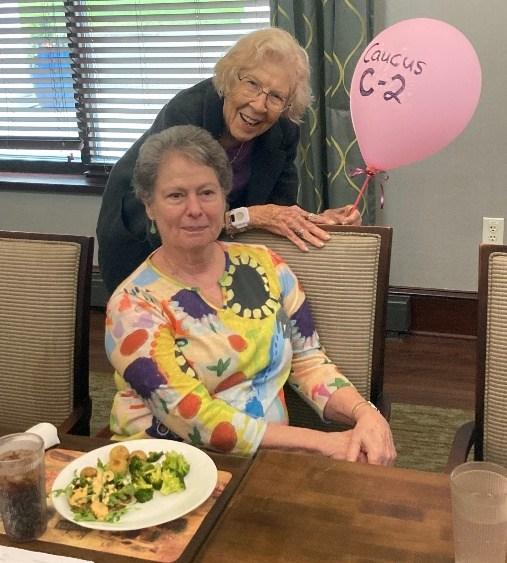
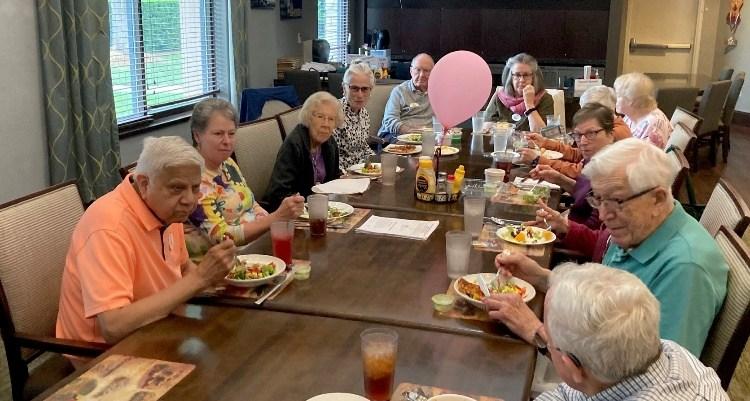
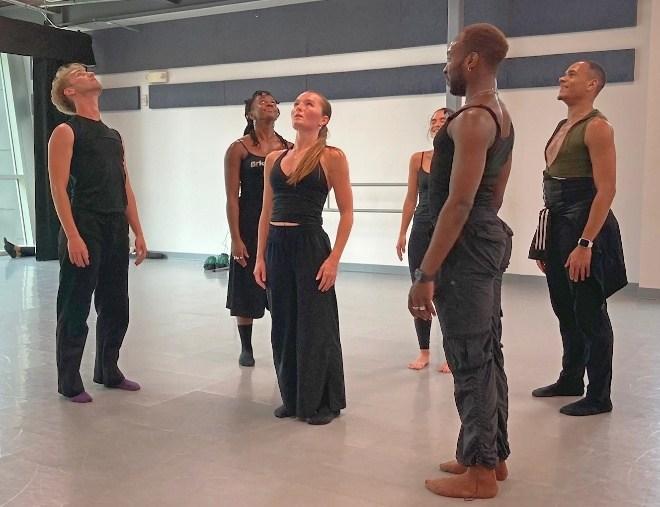
American Dance Festival rehearsal, May 6
Dialect Lesson for Way Off Broadway, May 1
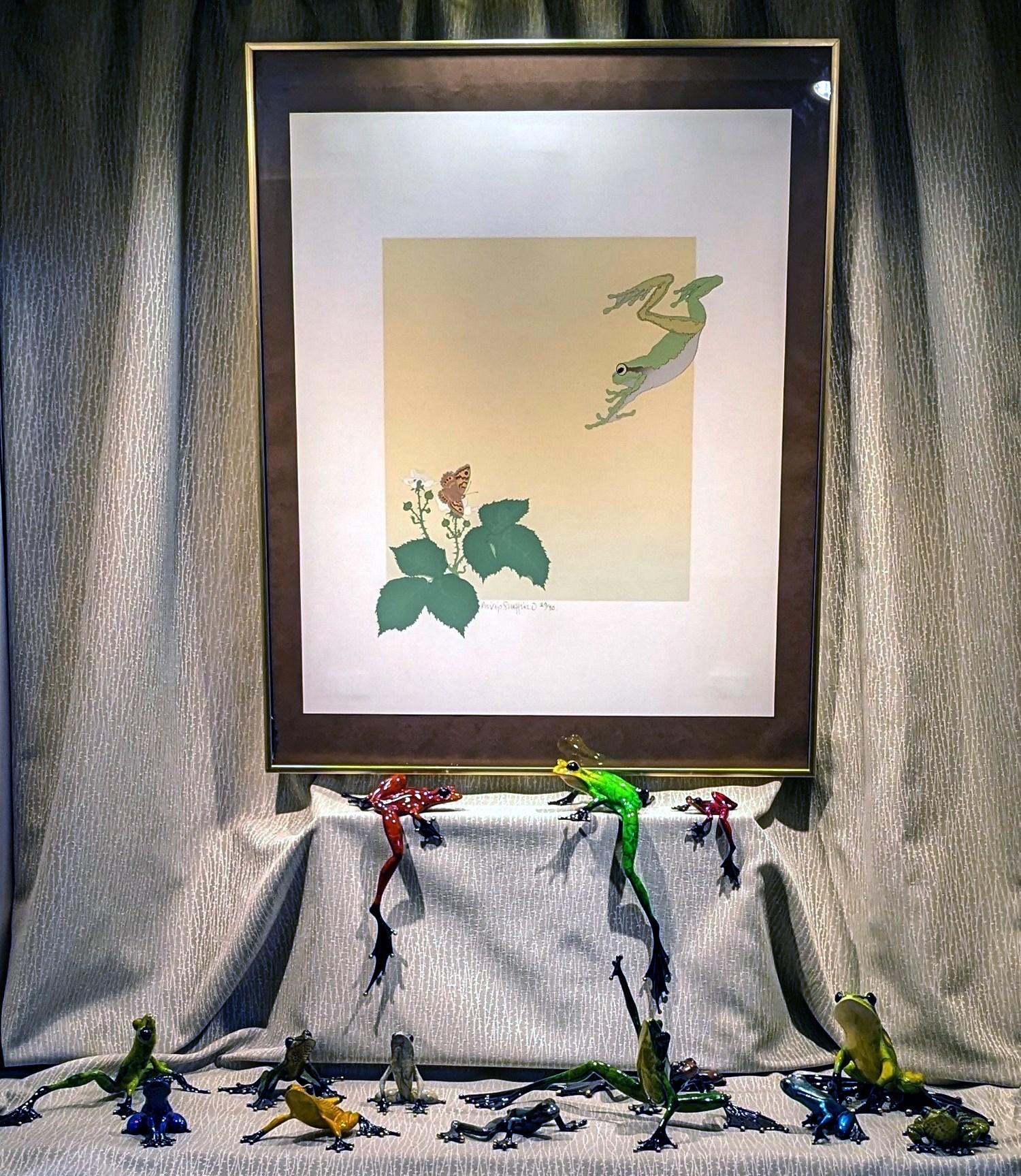
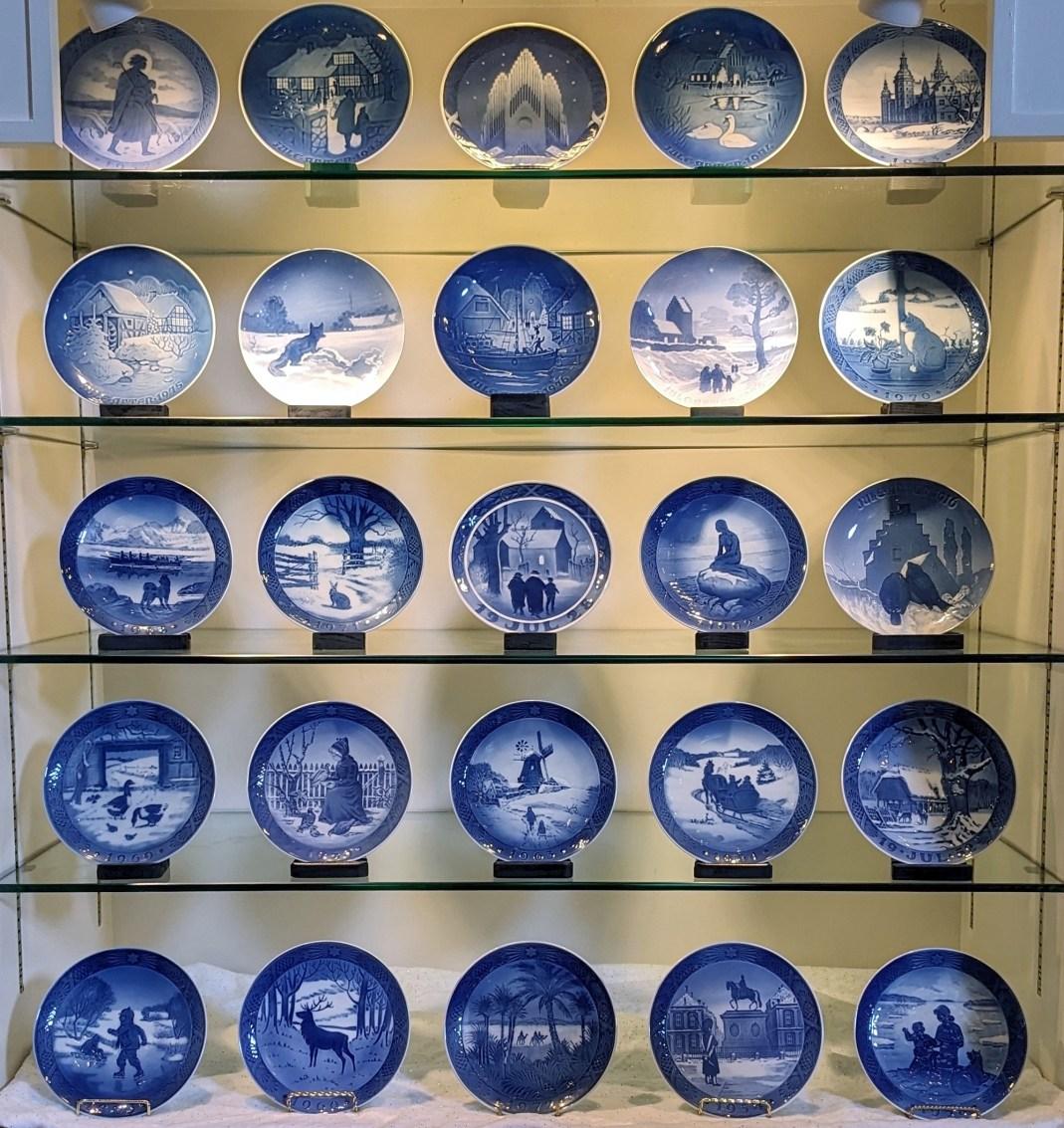
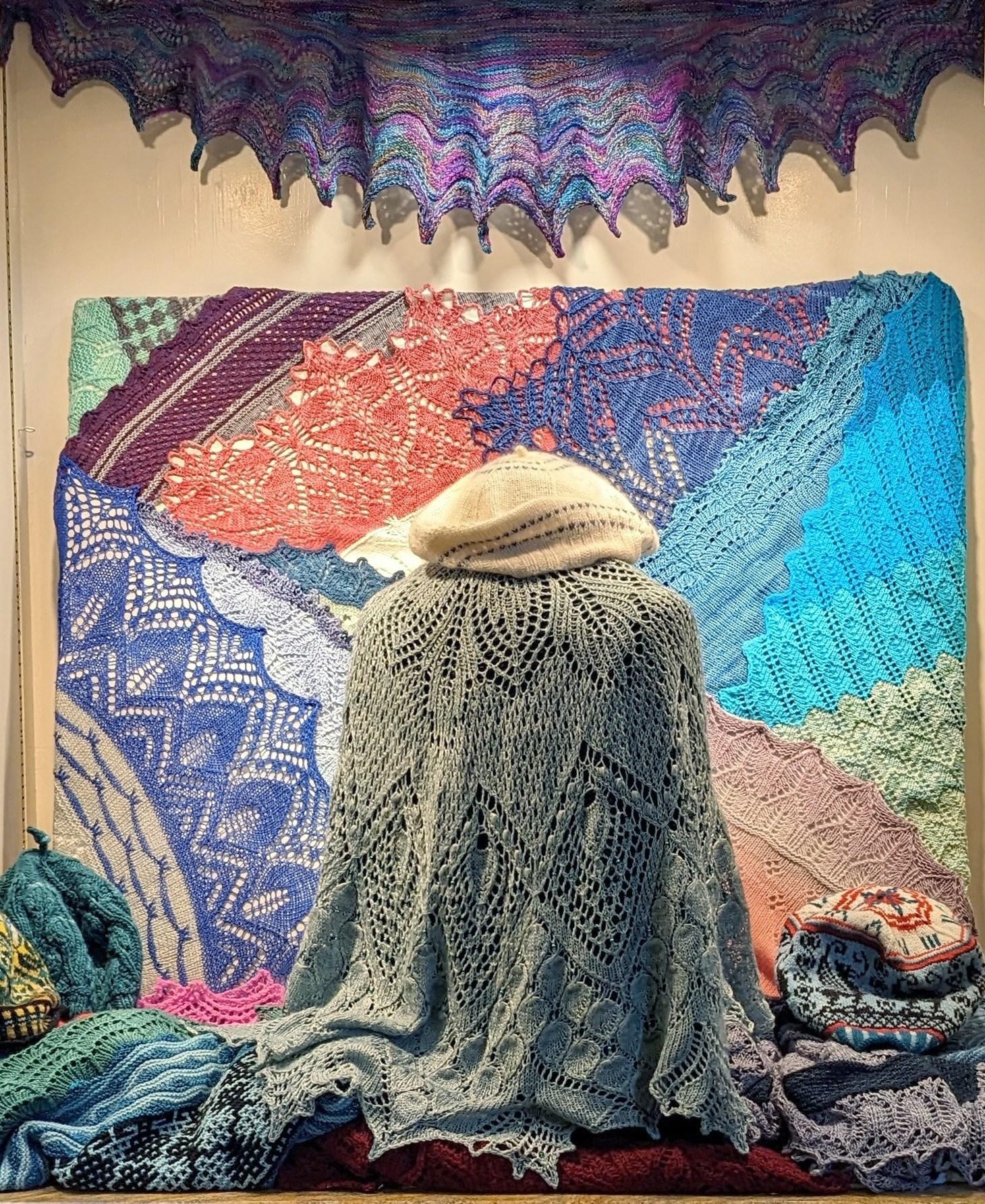
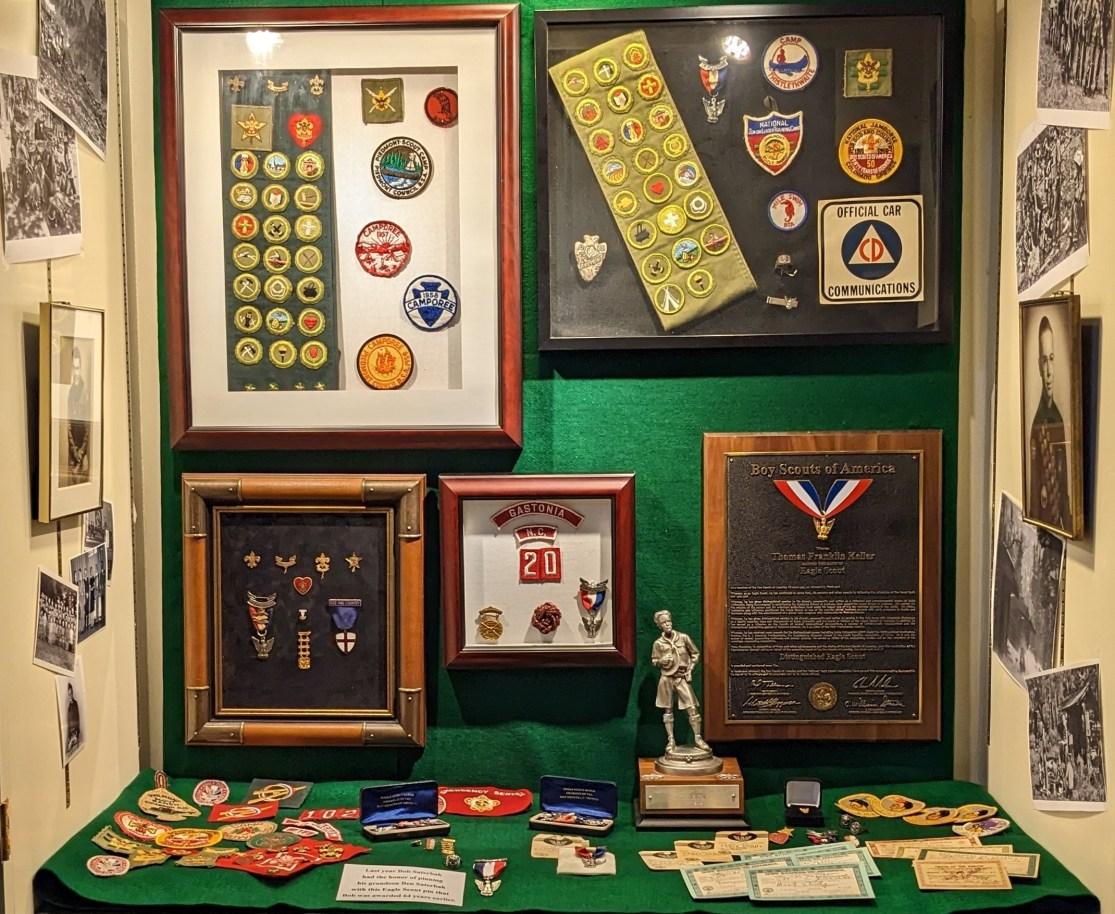
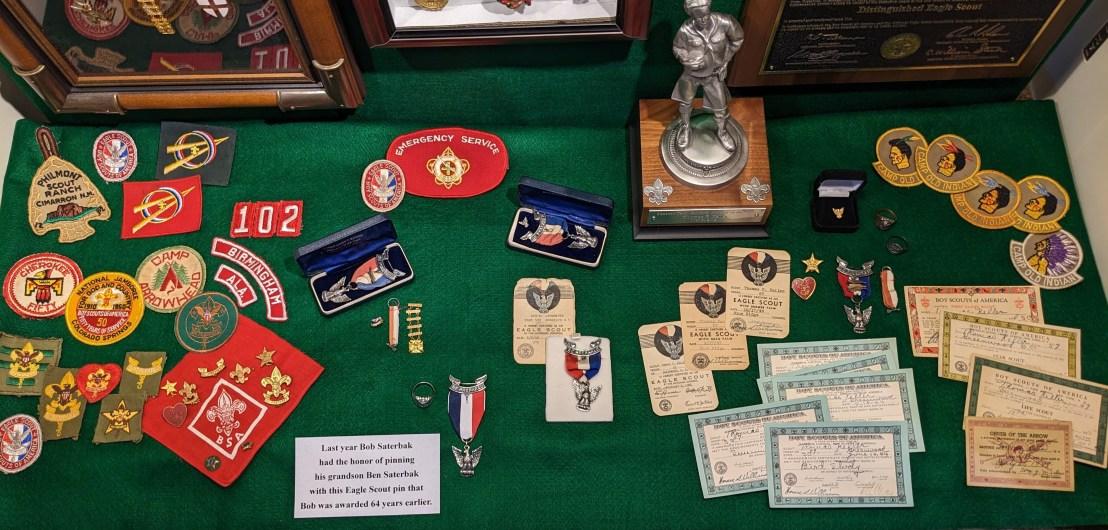
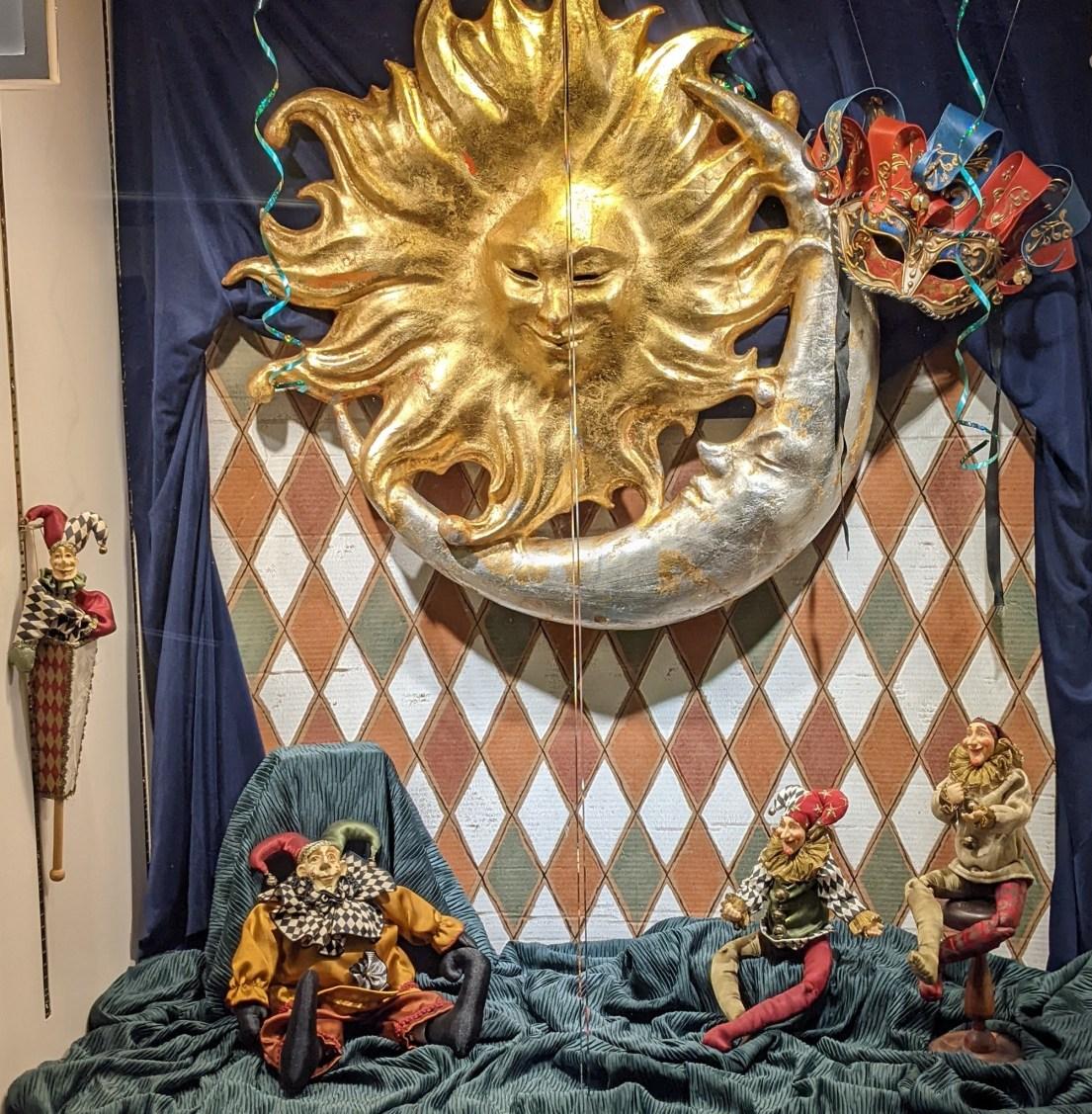
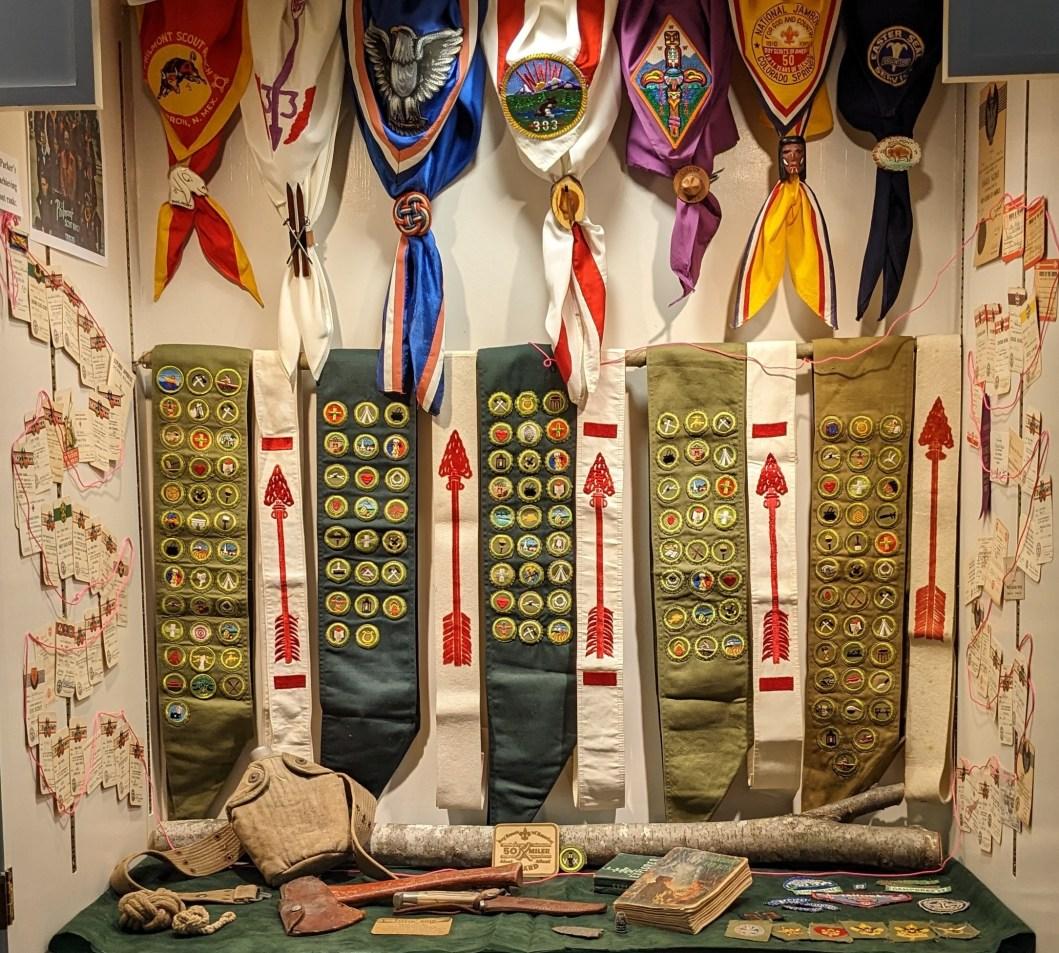
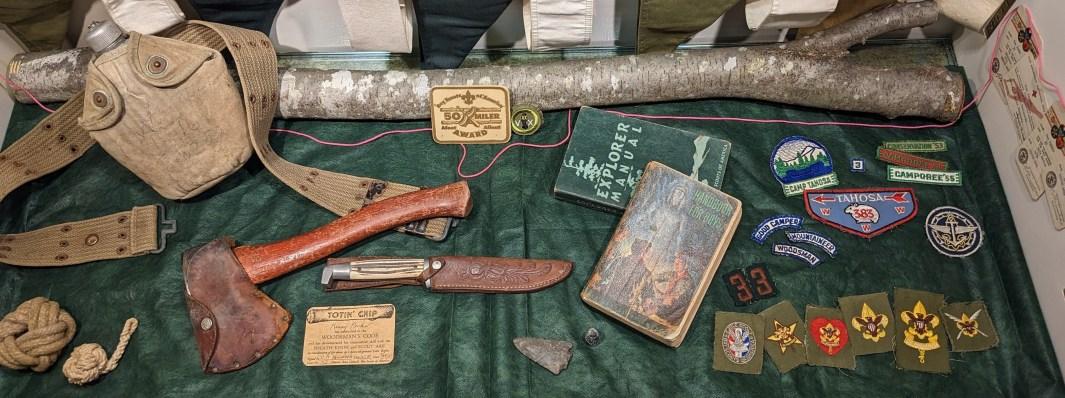
Resident Display Case
Sampling From the Last Five Years
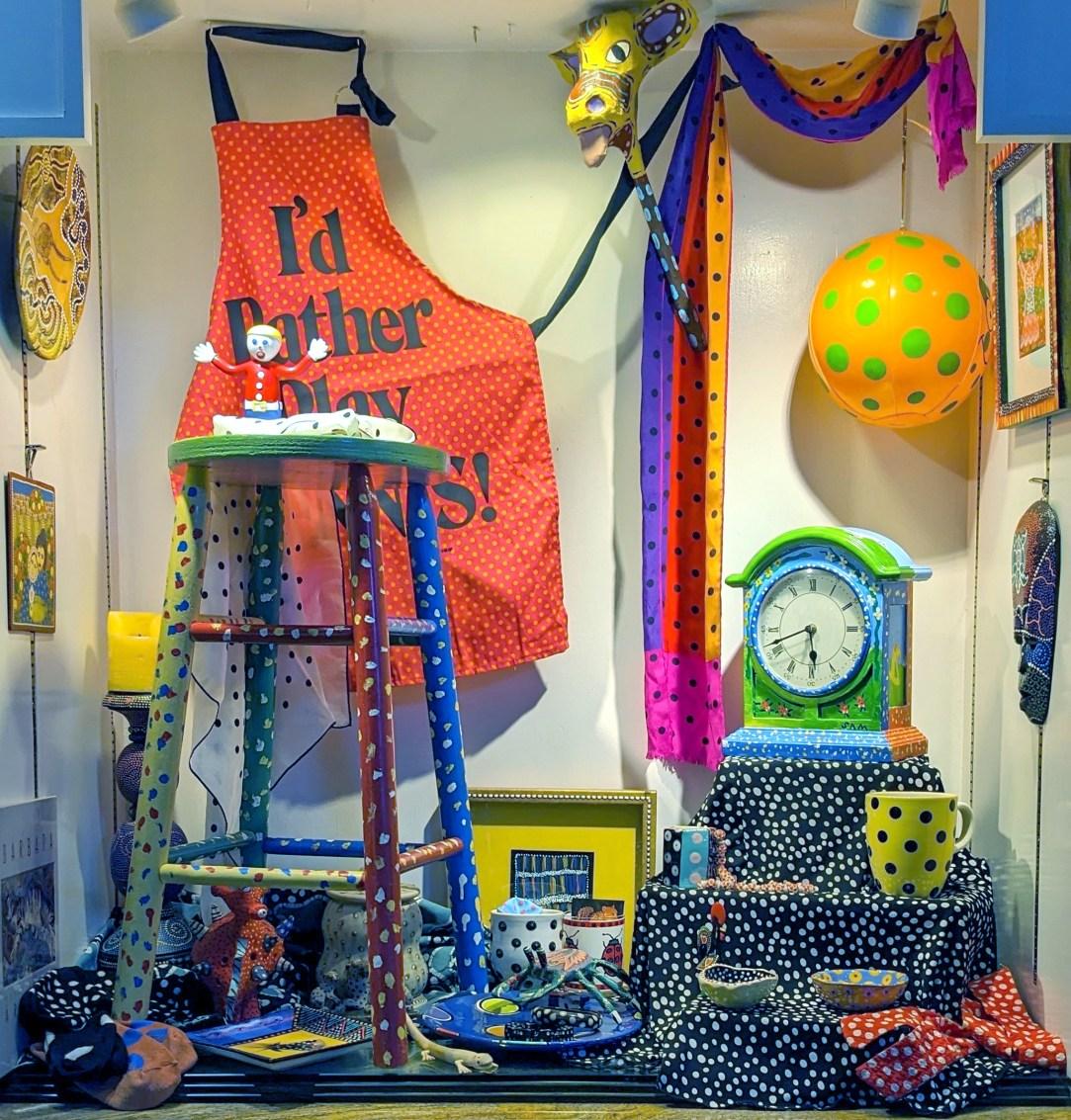
We Are Dotty (multiple contributors)
Royal Copenhagen Christmas Plates, Kay Nelson Frogs, Gene Yonuschot
Hand-Knit Shawls, Astrid Schmidt-Nielsen
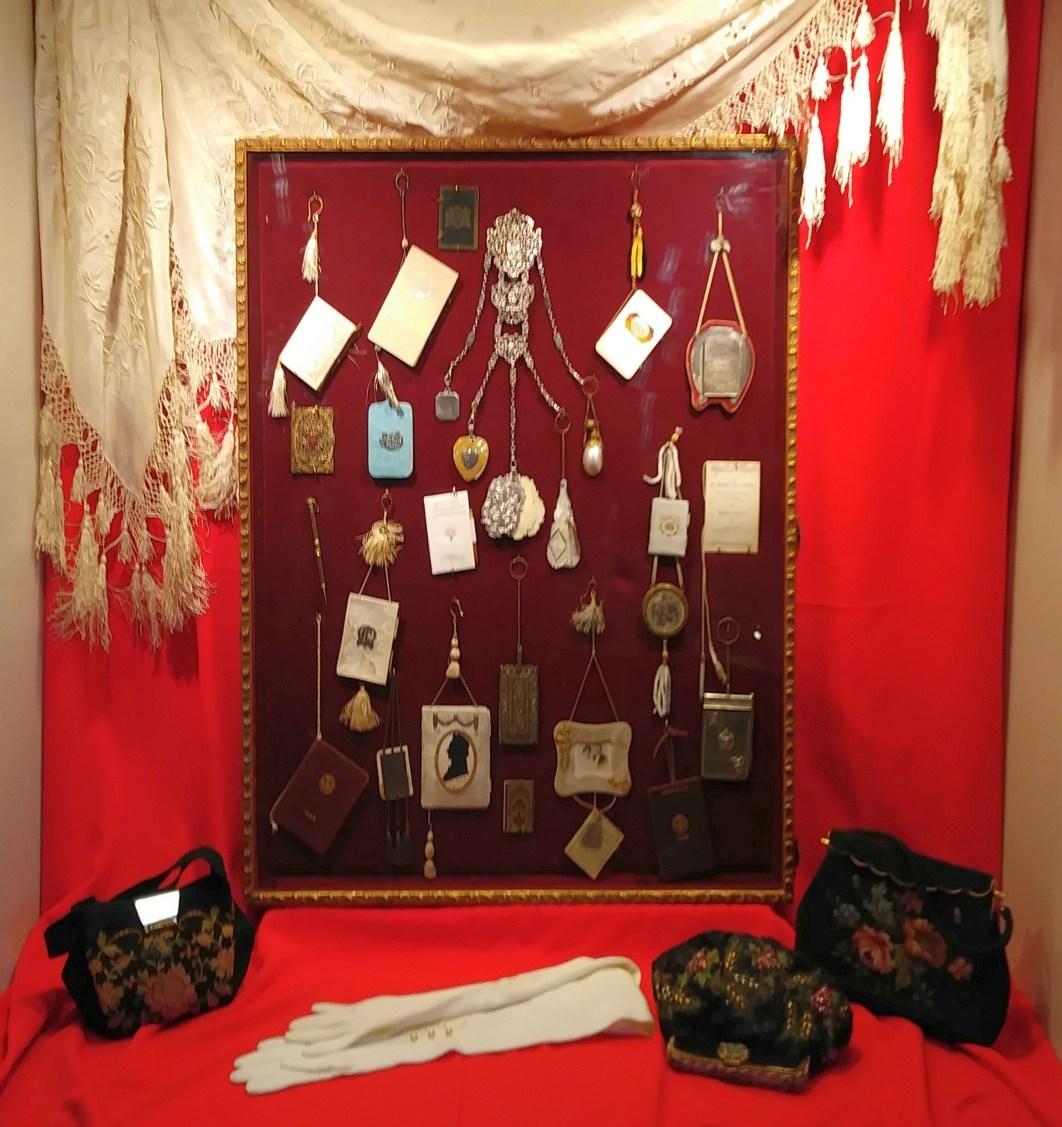
Dance Cards, Ella Bracy
Eagle Scouts, Parker, Barrett, DuBard, Featherstone, Keller, Langmeyer, Saterbak, Shelburne, Steen
Comedia Dell’Arte, Chelly Gutin
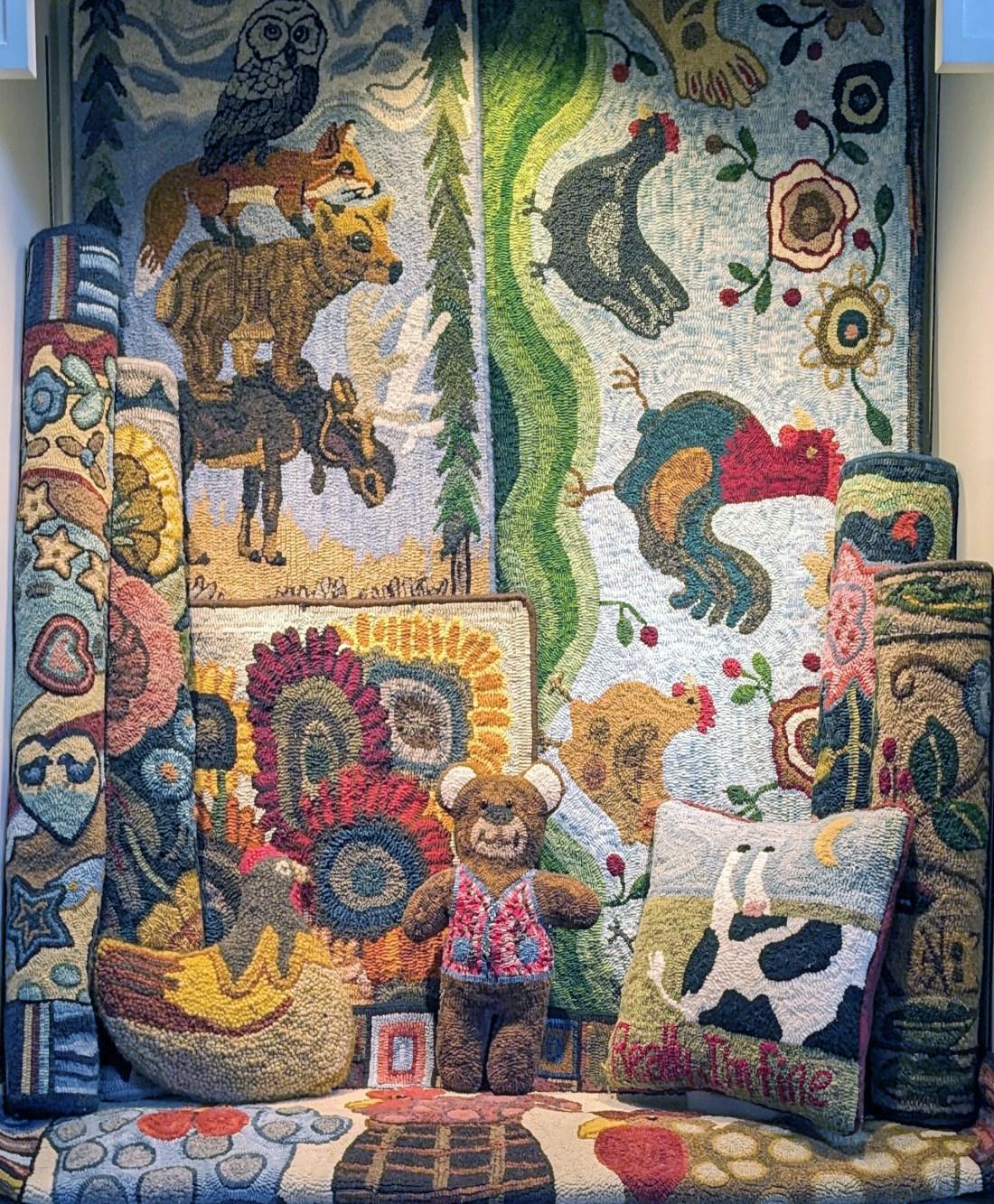
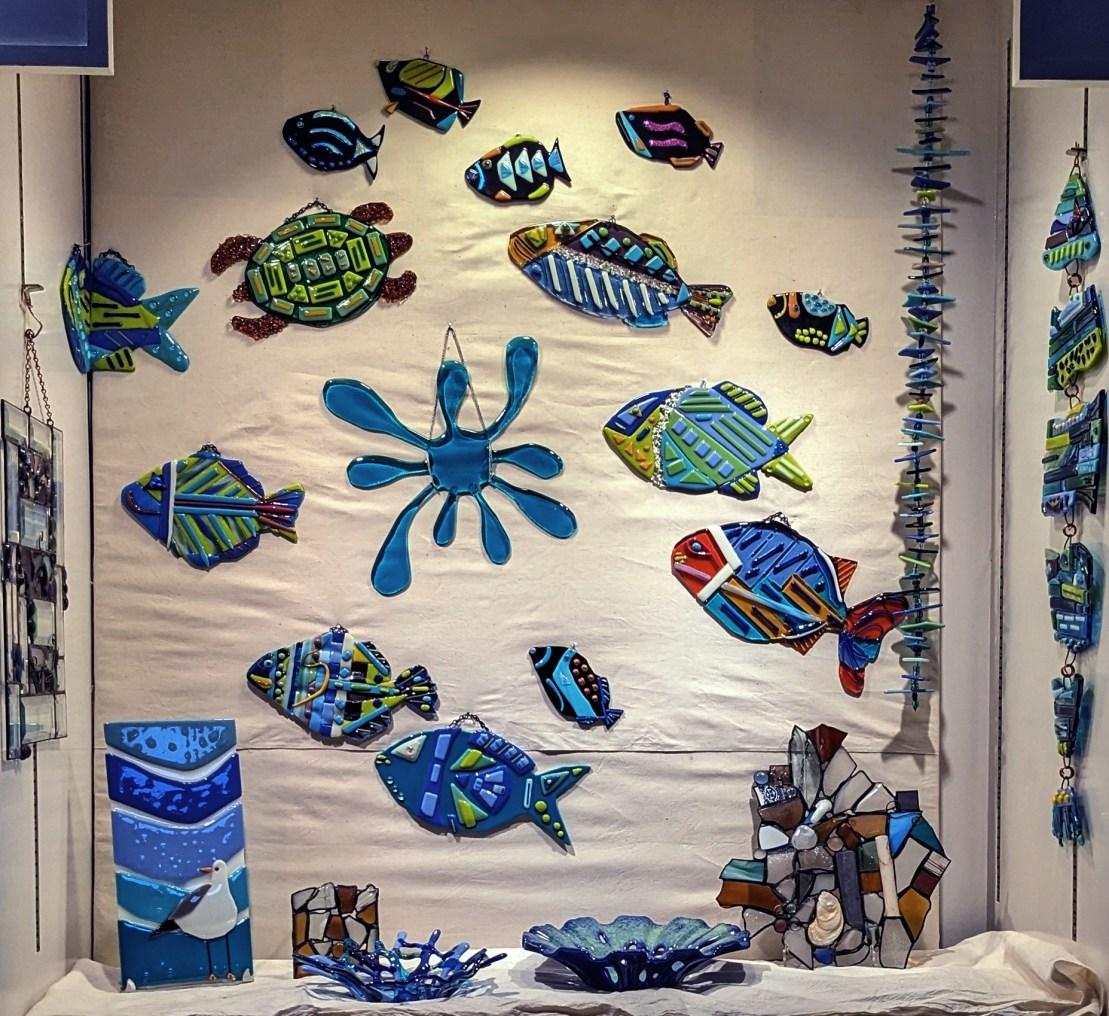
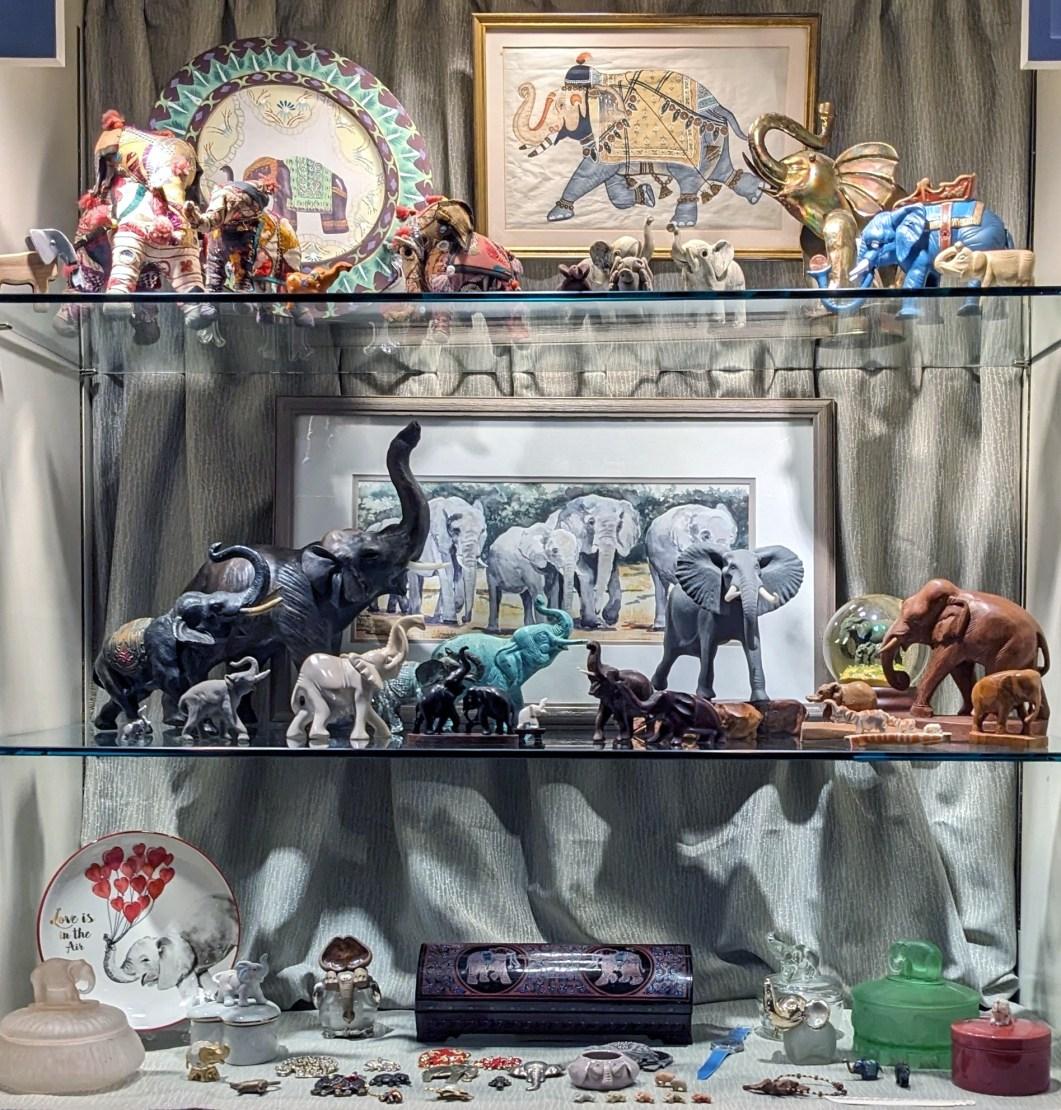
Hooked Rugs, Pat Tourigny
Glass Art, Roni Siegal
Elephants, Jack Gartner
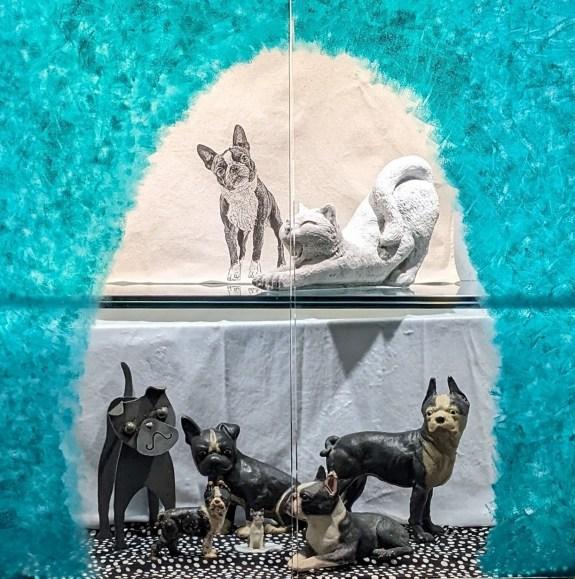
Cast Iron Boston Terriers
Joanie Seiffert
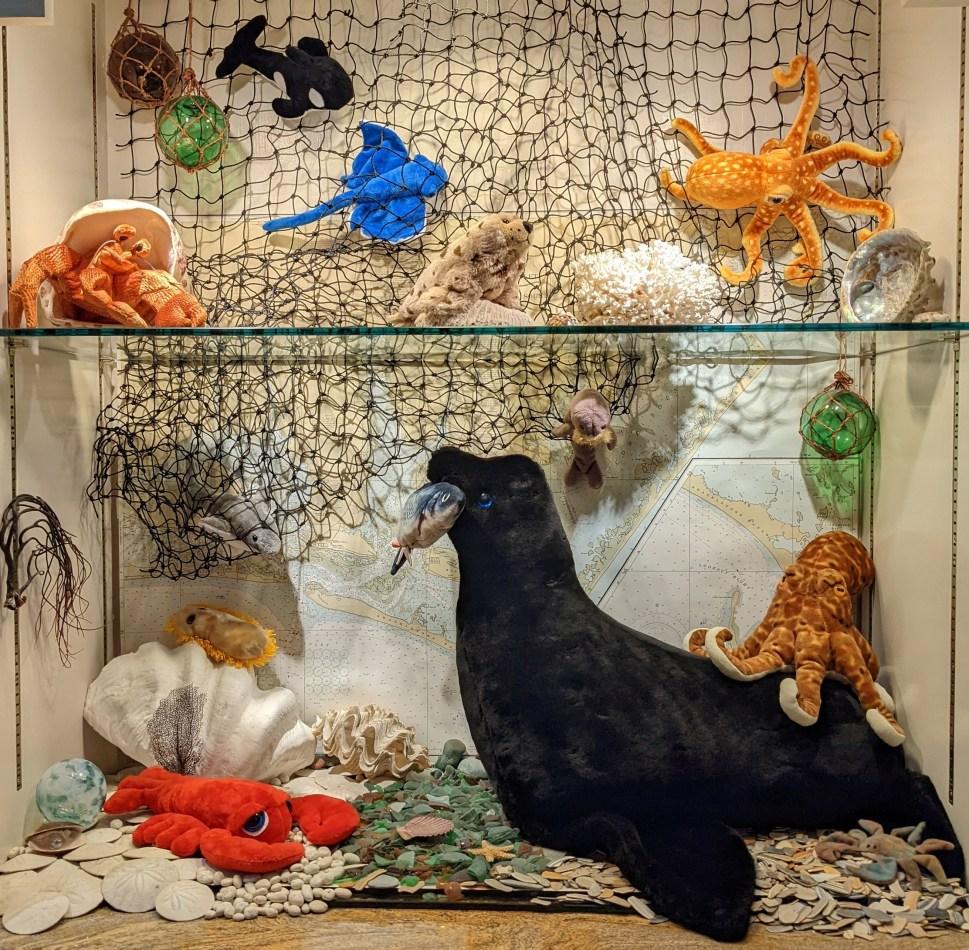
Stuffed Sea Animals, Katherine Shelburne
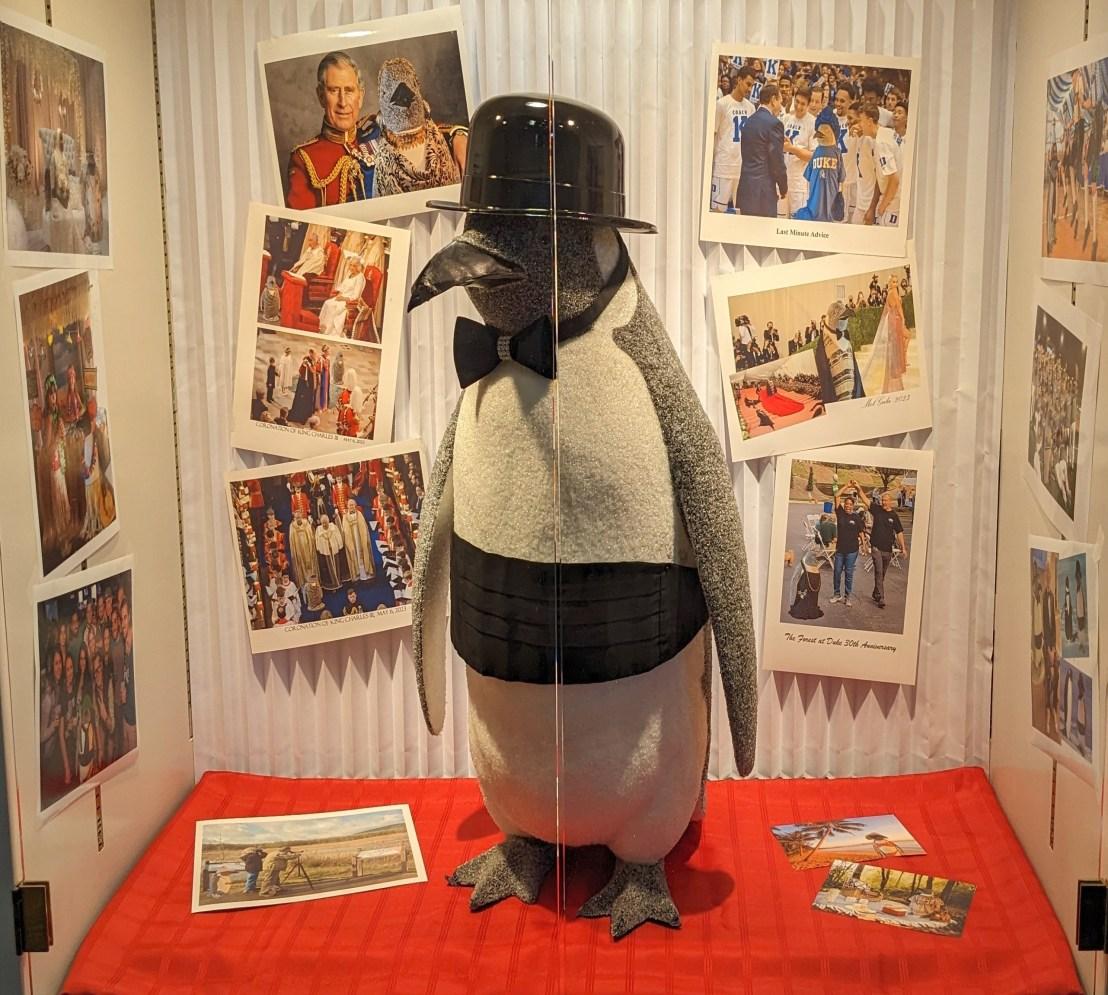
Mr. Waddles, Libby Whitaker
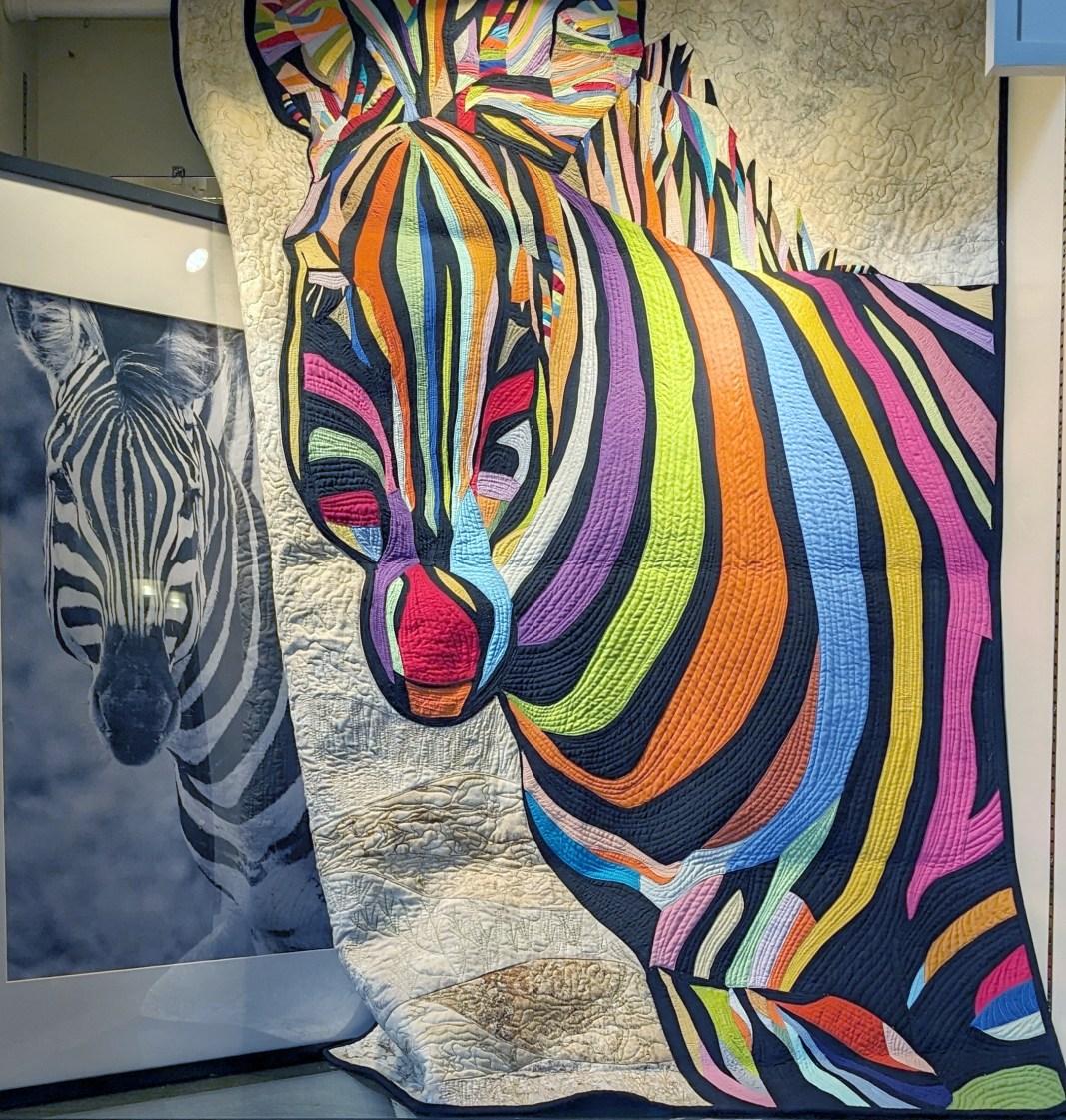
Quilt Quorum, Jane Goetz
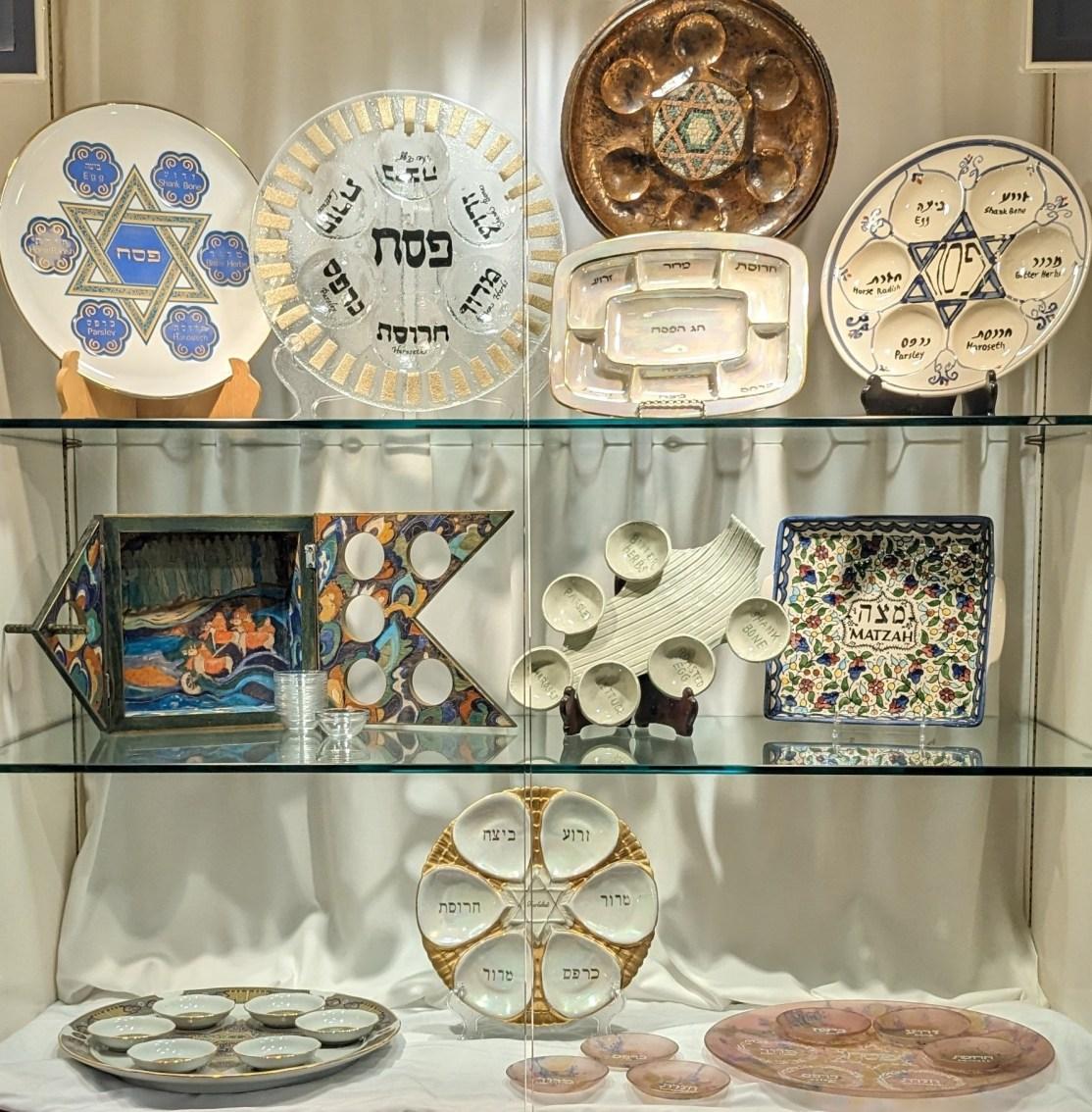
Seder Plates, Goldsmith, Langmeyer, Mills, Boyarsky, Carlson
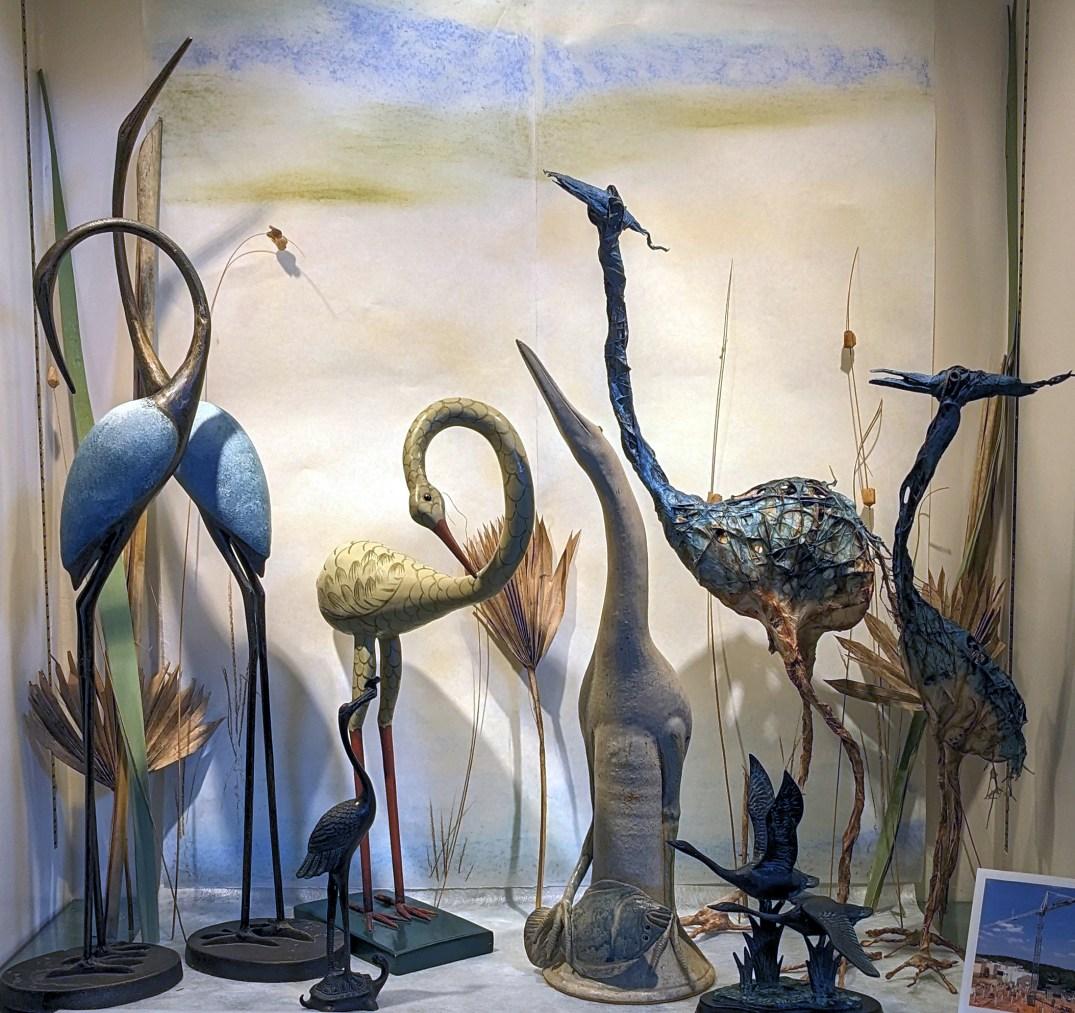
Cranes & Herons, Ashton/Durrett, Dixon, Parker, Saffold, Shelburne