
Reason for Hope
by Ellen Baer
It was the first week in March, and I was feeling bad about the world when Barack Obama said exactly what I was thinking, “We are living at a time when it can be hard to hope.” Then he added, “But we are called to be heralds of change and messengers of hope by making positive change wherever we can.”
His words were very much in line with those of Jane Goodall, whose book Reason for Hope I had just read. She said, “Each one of us matters, has a role to play, and makes a difference. Each one of us must take responsibility for our own lives and, above all, show love and respect for living things, especially each other.” The fact that this book was published in 1999 (and republished with a special epilogue in 2003) just attests to the truth and timelessness of these ideas.
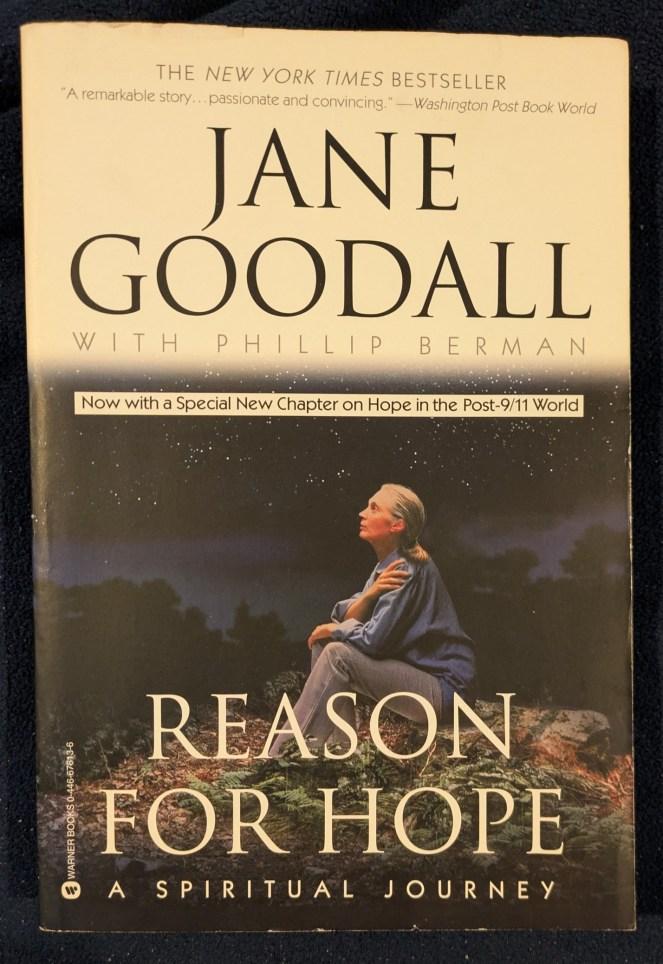
Our Goodall book is the 2003 edition, a gift this past Christmas from our daughterin law who lives in Memphis. It’s inscribed For Ellen and Phil Together we can make this a better world, Jane Goodall. But, wait, Jane died on October 1, 2025, at the age of ninety-one, so...? (I think she would say, so what? If you need a message from the universe, it doesn’t matter how it comes to you.) Here she admitted that the travels and lectures in her later years were often exhausting but insisted that meeting people and signing books gave her energy and inspiration. I like to think that meeting our daughter-in-law and signing this
book was energizing for Jane.
Both memoir and autobiography, it's a successful blend of professional life and personal life: a combination adventure story, research project, and spiritual journey. Along with the wild chimpanzees she studied (and named) in Africa, she writes about her other important relationships—with archaeologist Louis Leakey and research associates on one hand, and close family members including two husbands and one son on the other. Sharing her thoughts and feelings with ease, she makes discoveries that consider the worth and value of every experience, every person, and every animal.
But she doesn’t suffer any delusions about the “noble ape” or the “noble savage.” As a researcher, she witnessed the strong sense of identity that develops among groups of chimps and saw how it made them form in-groups and exclude others. She understood that our instincts for aggression and domination are rooted in the ancient past and so are our instincts for caring and altruistic behaviors topics for other books. (She wrote thirty-two and contributed to many more.)
In this one, she tells us that the questions most often asked by people all over the world are about hope: “Jane, do you think there is hope?… for the rainforests of Africa? for the chimpanzees?…for the planet?...for us and our children and grandchildren?” She shares signs of hope in terms of specific actions and decisions made by people and corporations and nations coming together. Always believing in the resilience of nature and the power of courageous individuals, she says, “We don’t have much time…It’s up to us to save the world for tomorrow,” and then, “We must be ready for peace when it comes.”
But, oh my, that was in the early 2000s! We have even less time now, and many of those signs of progress have been extinguished. Nevertheless, her answer to all those questions
(continued on Page
2
The Forester
The newsletter of the Residents’ Association of The Forest at Duke, Inc., 2701 Pickett Rd., Durham NC 27705. Published monthly except July, August, and September by and for the residents.
Lisa Camel, ManagingEditor
Beth Timson, Copy Editor
Dave Sloan, LayoutEditor
Linda Cushman & Louise Scribner, New-Resident Biographers
Elodie Bentley & Ken Parker, Proofreaders
Stephen Koff, Sanford Berg, Photographers
Catherine & Sanford Berg, Couriers
Authors, please sendsubmissions to Forestermanager@icloud.com
President’s Podium
by Elizabeth Gillis
Are you curious how Pickett Road got its name? Did you ever wonder why The Forest at Duke is located where it is?
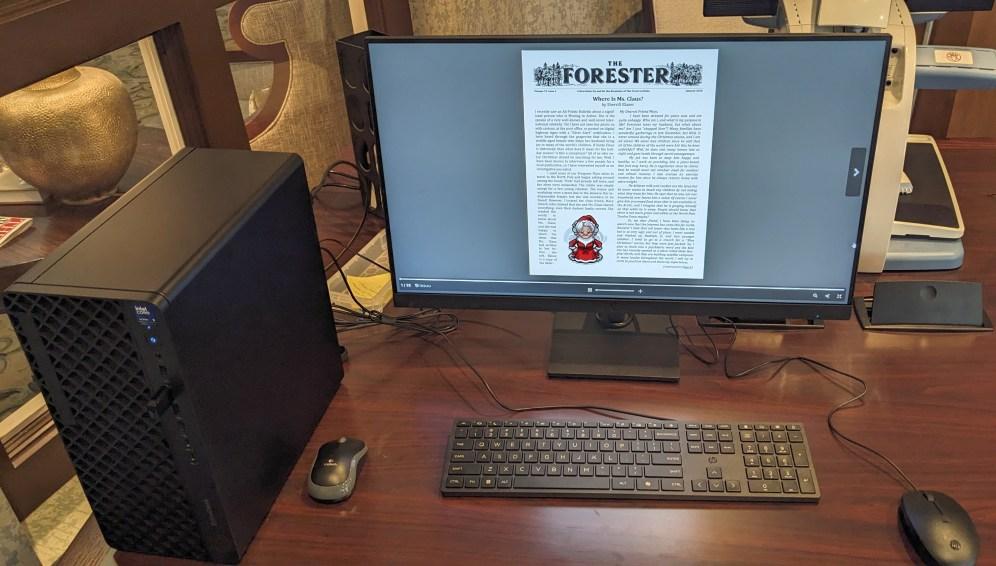
The library computer is for residents to read The Forester online. You can also use it to access Cubigo and the RA website if you have your passwords for those sites. The Forester, Cubigo, and RA website are labeled on the main screen for you to click on. Want to have The Forester stories read to you? Click HERE.
Carol Durham March 31, 2026
Raymond Phillips April 7, 2026
Originally all the property on both Pickett and Cornwallis Roads was populated by members of the Pickett family. Jim Washington Pickett and his wife Lizzie May Teer Pickett owned the land that is now The Forest at Duke. If you exit the main gate of The Forest and turn left onto Pickett Road, you see a cluster of tall oaks about two hundred yards down on the left. Jim and Lizzie Pickett’s farm house once stood nestled within those trees. Behind the house was a meat house and several tobacco curing barns. Two of those barns and the pond were retained when The Forest was built. At that time it was a working farm, and one of its major crops was tobacco. Along with two sisters, Ruth Pickett, one of Jim’s relatives, owned the land where the present-day Fountain View Lane homes are situated. Jim Pickett died at age eighty-two. Lizzie continued to live on the property, although she no longer farmed the land. She eventually moved to town and sold the property to developers for a short-lived condominium project which was abandoned in the 1970s. After that the old Pickett land went untouched for years.
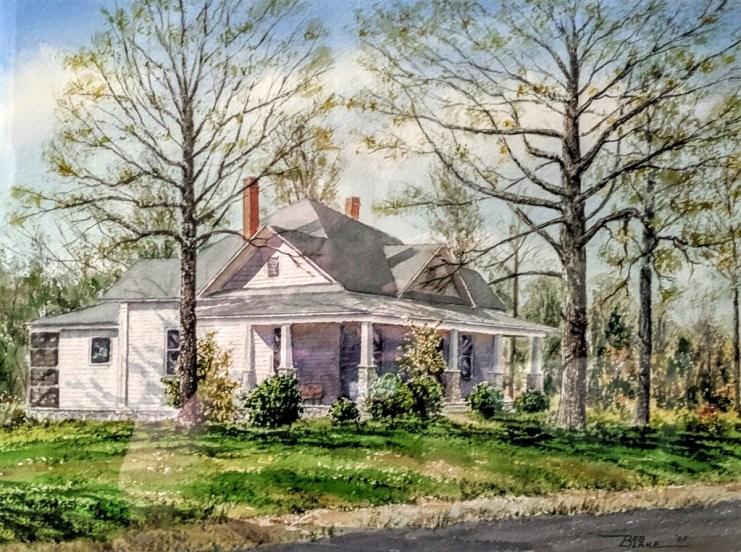
Jim and Lizzie Pickett’s farm house, painted by late Forest resident Bob Blake
There were several other ideas for use of the land but nothing substantial until several families who lived in Duke Forest started talking about a retirement community. The Crapos and several others began buying parts of the old Pickett farm property, but it took about ten years to acquire all the land. During that time they designed their dream for the groundbreaking of The Forest.
Our TFAD Library: An Open Book (and More!)
by Diane Strauss
Bragging Rights, All Around
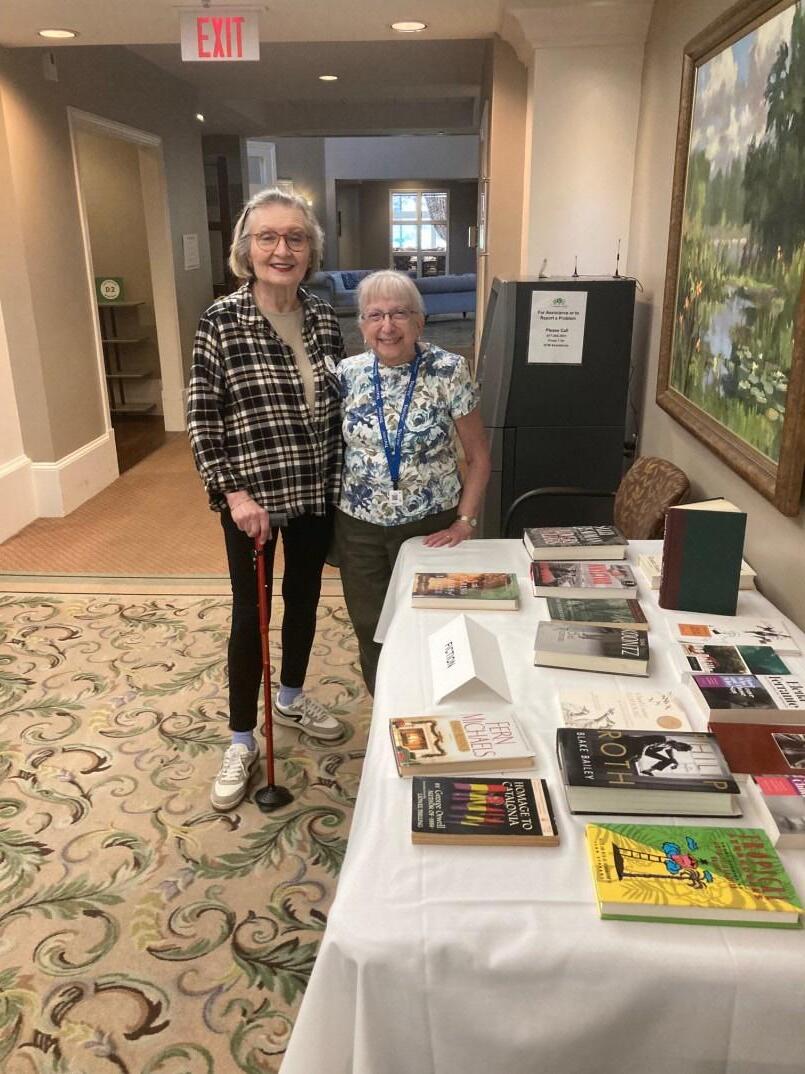
Thanks to you, the Library’s April 14th sale was a huge success, raising $565.00 for the purchase of books, puzzles, and other items. Well deserved credit goes to many: our generous donors; those who shopped and bought; and library volunteers who spent hours sorting through and processing donations and preparing for, working at, and cleaning up after the sale. None of it would have been possible without the assistance of the Community Life staff. Its director, Emma Quick, as well as Amari Pettiford and Ajia Rutherford prepared signage and arranged publicity, while Glenn Arrington brought over and assembled the long tables for display and did all the heavy lifting. It takes a village. Kudos, y’all!
Suggestions Welcomed
Recently, we received two resident suggestions proposing that the In-House Authors collection be moved to a more prominent location in the library. A great idea, worthy of implementation. As this goes to press, we are ordering a bookcase to accommodate it, to be placed so that it will be visible upon entry. These distinguished contributions deserve a place of honor. We anticipate they will increase library circulation, inspire additional writers to donate copies of their books, and even serve as a marketing tool to demonstrate to prospective residents what a talented, multi-faceted lot we are.
Four retirees a physician, a publisher, and two librarians walk into a bar and oops! That’s not right. Instead, the same four constitute a recently formed Library Acquisitions Group, charged with selecting new books for the Library. Recent efforts have focused on identifying prospective purchases in the sciences, particularly those needing better representation, such as math, physics, astronomy, and medicine.
We’re not including textbooks but instead considering titles accessible to the curious layperson. As always, your suggestions for subjects, authors, or specific titles are much appreciated. One of the group’s goals is to compile a
survey much as was done recently relating to use of the IL and Health Center art facilities soliciting your input regarding the library’s collections, suggestions for purchase (titles, authors, subjects), and any other library issues you care to raise. We hope to distribute it not too long after this issue of The Forester is published. Even More Good News
For some time, our magnifier has not worked, understandably frustrating to those who need it. A replacement was ordered and has now been received. It should be in place by the time you read this. Glad tidings, all. ⸙
Reason for Hope
(continued from Page 1)
about hope was yes even after 9/11, which caused her to add a thoughtful and wide-ranging Epilogue to a new edition. In it she deplores the attack and the resulting Islamophobia and even the war on Iraq, and it’s not just commentary from afar. She was in New York City on September 11! It was a stopover on her way to give a lecture in Oregon. Her personal account of those days in that place makes these pages glow with truth and grace, and ultimately hope.
The fourteen page Epilogue continues into 2003, and includes a March visit to Nebraska for the annual migration of Sandhill Cranes. Again, it’s a stopover, this time on her way to give a talk in Colorado, but because a snowstorm closed the Denver airport, she got an extra day on the Platte River, a day that became a gift of hope and healing.
The scene as she described it was wonderful beyond her words, so much so that it even gave me hope. This quotation did too (a fan gave it to Jane at a book signing): “If you look back through human history you find that every evil regime is eventually overcome by good.” That’s Mahatma Gandhi, and, since I probably won’t ever get to see migrating Sandhill Cranes, I’ll hold onto his words instead and thank Jane for the way they came to me. ⸙
What A Character
by Phil Baer
Fictional characters, whether in plays, novels, movies, or television series, require some fleshing out to be believable and to make their behaviors understandable, especially extreme characters whose actions and responses fall outside our expectations of normalcy. Readers and viewers need to know not only what the character does but also why the character responds in the way he or she does, especially when the situation doesn’t appear to justify the response. For as long as there have been writers creating fictional characters, there have been various artistic devices for them to use to give their audiences the information they need in order to accept the characters as created and portrayed, and to accept the characters’ behaviors as consistent and in keeping with their view of the world.
Breaking the fourth wall is one such device, probably the oldest and certainly the simplest. It’s most commonly used in plays and movies: a character faces the audience or looks into the camera to deliver an aside. Essential to the success of this device is the fiction that the aside is heard only by the audience and not by the other characters. The lines reveal the particulars of a situation, relationship, or some past experiences that a character has had. It provides the audience with information that cannot be delivered by the that character, in the play’s regular dialogue, by telling the audience what it needs to know, rather than showing it.
Since performances of plays and movies have to be completed in a few hours at most, asides are also an essential time-saving device. In Shakespeare’s plays, asides were often delivered by the fool or the jester, the speaker of truth who was charged with keeping the audience clued in and the action comprehensible. In the movie Annie Hall, it was Alvy Singer, stepping out of a scene, looking straight into the camera and speaking directly to the viewers, disclosing in comedic terms those traumas real and imagined that explain his character’s excessive and compulsive behaviors.
Flashbacks are another characterrevealing device, common in novels and movies. They are usually announced by giving the audi-
ence a date or time that alerts them to the nonlinear temporal sequence ahead. Unlike the aside, in a flashback characters don’t step out of either character or scene. Instead, the writer simply repositions the character in a new scene set at a prior time; and the experience of the character in that scene provides the audience with a new understanding of the character in the present time. Again unlike the aside, the flashback, rather than telling, shows the audience what it needs to see to comprehend the character.

In The Sound and the Fury, described by one reviewer as “one of Faulkner's more accessible works once you get past the abrupt, unannounced time shifts,” Faulkner shuffled time frames as adroitly as a Las Vegas blackjack dealer shuffles cards. As a totally bewildered college freshman, I read this opus twice without ever realizing that out-of-order dates were embedded in the fancy scrollwork at the top of each chapter heading, and thus I did not find the work “accessible.” Flashbacks are a useful device but can be confusing if the reader or viewer fails to realize that the time frame has been shifted.
Television series have made the backstory a major modern mode of character revelation. In series that run for several seasons, multiple episodes may be devoted to any character who proves particularly popular with audiences. In Lost over the course of its six seasons, detailed backstories were provided for several major characters, as audiences clamored to learn more about Jack Shephard, troubled surgeon; Kate Austin, sexy fugitive and my personal favorite; and the increasingly mysterious John Locke. Although similar in being set at an earlier time, backstories are more complex than flashbacks and (continued on Page 5)
What A Character
(continued from Page 4)
may even develop into parallel plots. Particularly intriguing for audiences are backstories that reveal prior encounters between characters, creating tensions that define their present-time relationships.
The personal essay blends asides, flashbacks, and backstories into a hybrid form of selfrevelation, with the writer as narrator and the narrator as writer and both as the character who is gradually revealed for the reader to come to know and understand. As the essayist sifts through a lifetime of memories, the sweet and bitter, the uplifting and crushing, and chooses the words that capture and convey the feelings embedded in them, the essence of the person who became the narrator comes onto the page.
Readers who come to the essay with the belief that they already know the writer may find in the revealed character of the narrator a complexity and a richness of life experience they didn’t know existed. Readers who are family or friends may revisit situations they shared with the narrator, but then find that what they experienced, what they remember as important, and how they interpreted the shared situation are completely at odds with the experience, memory, and interpretation of the narrator they thought they knew so well.
Based on my own experience, it’s also possible for the essay writer to find even himself or herself surprised by the narrator’s version of what happened and why, of who was to blame, or who deserved the credit. It’s even possible to find one’s very own self. Through writing personal essays over the years, I have finally found my answer to this perplexing question: Who amI? ⸙

President’s Podium
(continued from Page 2)
In 1989 the original logo was created, the first sales counselors joined the marketing team (which was working from a site on University Drive), and The Forest was declared a 501(c)(3) tax exempt organization. Architects Calloway Johnson Moore, PA, presented final building floor plans to more than 240 priority depositors. In July 1989, 250 people gathered under yellowstriped tents for the ground-breaking ceremony and a celebration. Construction began on August 20,1990, with clearing and grading and the making of necessary roadways. Particular care was taken to save as many of the trees as possible, plus the two tobacco barns. The work was expected to be finished within seven hundred days of its beginning. Financing was furnished through the sale of tax-exempt bonds provided by the North Carolina Medical Care Commission. At the end of October 1990, about $53 million of these bonds went on sale. At the time it was the largest bond issue ever authorized by the NCMCC for such a project.
Just a few weeks after the project started, sales had reached the 90% mark. Of that first group of incoming residents, about 38% were Durham natives, and 25% were from other parts of the Triangle. Still another 37% made their way to North Carolina from twenty-five states across the country
Meanwhile, the project landscape architect Doug Stimmel was hard at work to “create a lasting natural environment, conducive to gracious retirement living.” He added a variety of trees, shrubs, and hedges to bring year-round color to the community. He planted a rose garden adjacent to the dining area and created walking paths throughout the grounds. Today we live in a beautiful community much larger than the original plan, with the addition of the Harvey Cohen Health Center and The Terraces apartments.
Living here is full circle for me. When we lived here in the 1980s, I tried to convince my parents also to take a look at The Forest. They said no thanks, that they preferred to stay in their own home. I have lived here since 2018 and as I always say, “The Forest is a great place to live.”
Durham’s Housing Crisis: Its History and Current Challenges
by Diane Sasson
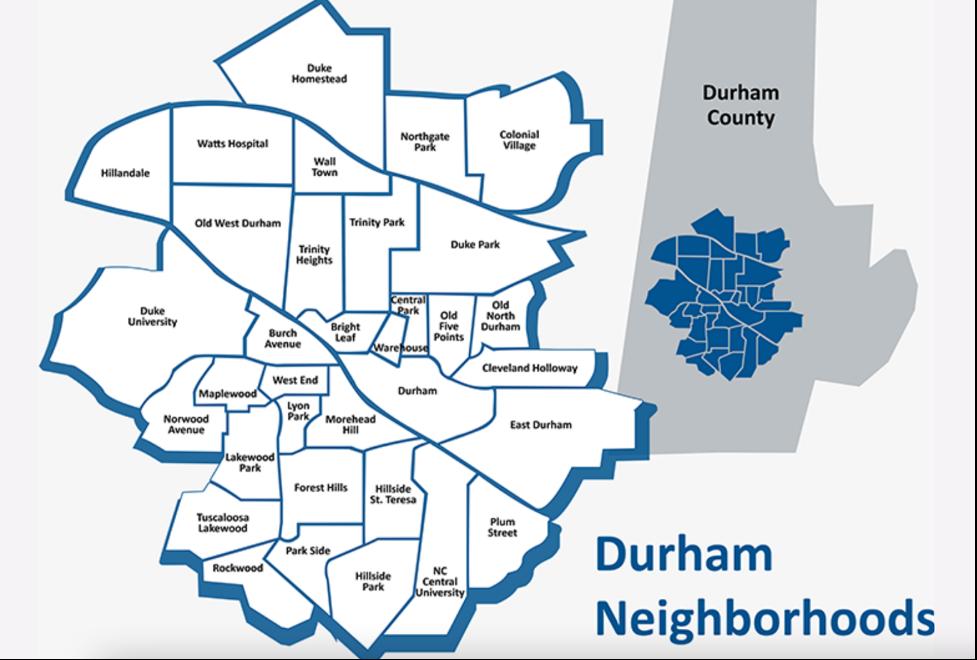
Since COVID, Durham has attracted many new young residents, contributing to a vibrant quality of life that makes it a great place to live for people our age as well. But the impact of these changes has increased concerns about housing affordability and the issues raised by rapid development.
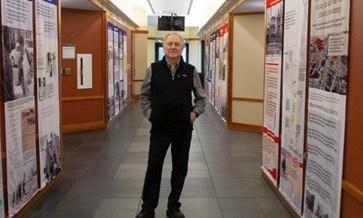
For its May speaker, Triangle Thinkers and Doers has invited Dr. Robert Korstad, Professor Emeritus at the Duke Sanford School, to help us ground our understanding of the current situation in our history. Dr Korstad was the faculty Director of “Uneven Ground,” an exhibit that tells the history of housing and land in Durham from the time of colonial settlers through the 1960s. Created in 2019 to celebrate the 150th anniversary of Durham’s founding, the project was funded by Duke University’s Samuel DuBois Cooke Center for Social Equality and the Sanford Institute of Public Policy.
“Uneven Ground” will be on display right here at TFAD from May 4 - May 18. It will give us the chance to absorb that history before Dr Korstad joins us on May 18 to talk about where we are today – and how we got here.
Much has changed in the 150 years since the city’s beginnings as a depot on the railroad between Raleigh and Hillsborough. Today, Durham is a midsize Southern city on the rise. Located in one of the fastest growing regions in the country, it is staking out its place as a hotspot in the new economy. But many are not benefiting from Durham’s renaissance, especially when it comes to housing. Gentrification is rapidly displacing historic working-class communities, Durham County has the highest eviction rate in the state, and wages are failing to keep up with quickly rising housing costs. By nearly every measure, housing inequality exists, and in many ways, is deepening. Durham has made real progress, but the pressing need for affordable housing continues.
We hope that you will take some time to view the exhibit prior to Dr Korstad’s talk and be ready to think about the hopes and challenges of housing and land equity in Durham today. ⸙
Professor Robert Korstad with exhibit “Uneven Ground”
Goodbye, Tehran
by Bill Thompson
Tehran is in the news these days. I used to work there.
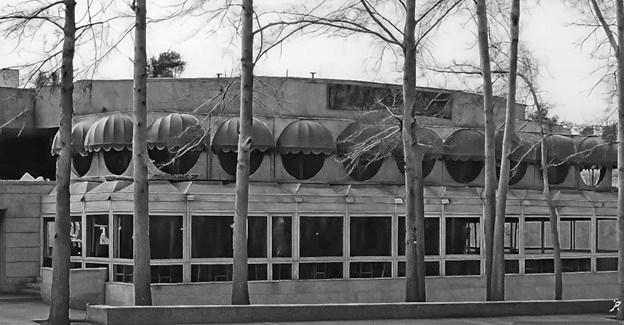
Back in the mid-1970s it seemed to be a pretty good place for someone interested in an overseas assignment. In the summer of 1976, I brought Pat and our three children to Tehran so they could experience the country where I had been working. The children loved the Chattanooga Restaurant on Pahlavi Boulevard with its eight-page dessert menu. My son and I played tennis at a club where young men were employed to pick up the ball after each point. Pick-
I was discharged after eleven days of Heparin therapy and cleared to fly home, with one provision: someone had to accompany me who could inject a drug to counteract Heparin in case we lost cabin pressure. Neither my friend, Jim (nor journalist Barbara Walters who had recently interviewed the Shah and was sitting across the aisle) would have been able to handle it. I just bet on Pan Am. This untimely departure ended up looking a little more timely when the Iranian Revolution began on January 7, 1978.
ing up your own ball was considered an insult. Then that month several American defense contractors were ambushed in their car.
My own departure from Tehran in 1977 was unplanned and, for my company, untimely. It all started with a leg injury playing basketball. The company doctor prescribed pain meds, bed rest, and heat. The pain got worse every day, and I had no plan for what to do about it. An American nurse saved me. She was in Tehran as a “trailing spouse” and had taken a job supervising the housekeeping staff in the apartment building where I lived. Her staff told her one of the residents was sick in bed, so she stopped by to talk. The next day she arranged an appointment at the Tehran Clinic with Dr. Tabib, who spoke fluent English and had received his medical training in the US. The blood clot was described as dangerous, but there was no chance of flying to a US hospital.
My work took me to many places outside Tehran, such as Isfahan and Kharg Island, much in the news these days. But my thoughts are about the people I left, important people I will probably never see again. Matt was my principal contact in the Iran government, which had sent him to Stanford for a Master’s Degree. Matt invited me to his home during holidays, and we spent long hours after dinner talking about the similarities and differences between our cultures. How does such a person protect his family and survive a revolution? And that nurse. I think she knew exactly what the problem was and who should treat it. Did she know how it all turned out? In my rush to get to medical treatment at home, all I left behind was an empty apartment. ⸙
Challenge: write a paragraph without using the letter "e." Here is an example. by Robyn Sloan Lumpy gravy is my downfall. Though good cooks can mix from scratch a smooth fusion of pan drippings and flour, my approach only brings forth a blobby mass. Try as I might, I cannot form a tasty liquid fat to accompany fowl consumption. Do you know how to pacify a longing for smooth gravy? I must find a way to accomplish this task if only to say I did. ⸙
The Chattanooga Restaurant in Tehran in the late 1970s
Why I am Proud to be an American
by Stuart Cameron
I think I was born proud to be an American. I remember reading about the pioneers, pushing west, and I bought into all their hero stories about defeating the “savages” and “civilizing” the west. That faulty perception remained unexamined in my lazy thinking for far too long. It was there as I flew across the Pacific Ocean to my first full time job in Japan. Arriving in Tokyo, I expected to find confirmation of my bias that Americans do everything better.
The first crack in that image came with the incredible kindness and helpfulness of the Japanese people. My awakening reality check continued when I tried to find a nursing home for the kids in the youth group to visit, perhaps as a service project. Here we were, in what was then the largest city in the world, and I could not find a nursing home within less than a two hour train ride from the church. Rather than stack away the elderly in institutions, a common practice in America, in Japan the elders are honored and cared for in their homes.
Out of all the times I was the recipient of extraordinary kindness, it was hard to decide which story to pick for the second example. I settled on a simple story but one that touched me. I was in Nagasaki, being a tourist. You may remember, America dropped its second nuclear bomb on this city, bringing horrific destruction to the civilian population. It is estimated that the bomb killed as many as 80,000 civilians, and only
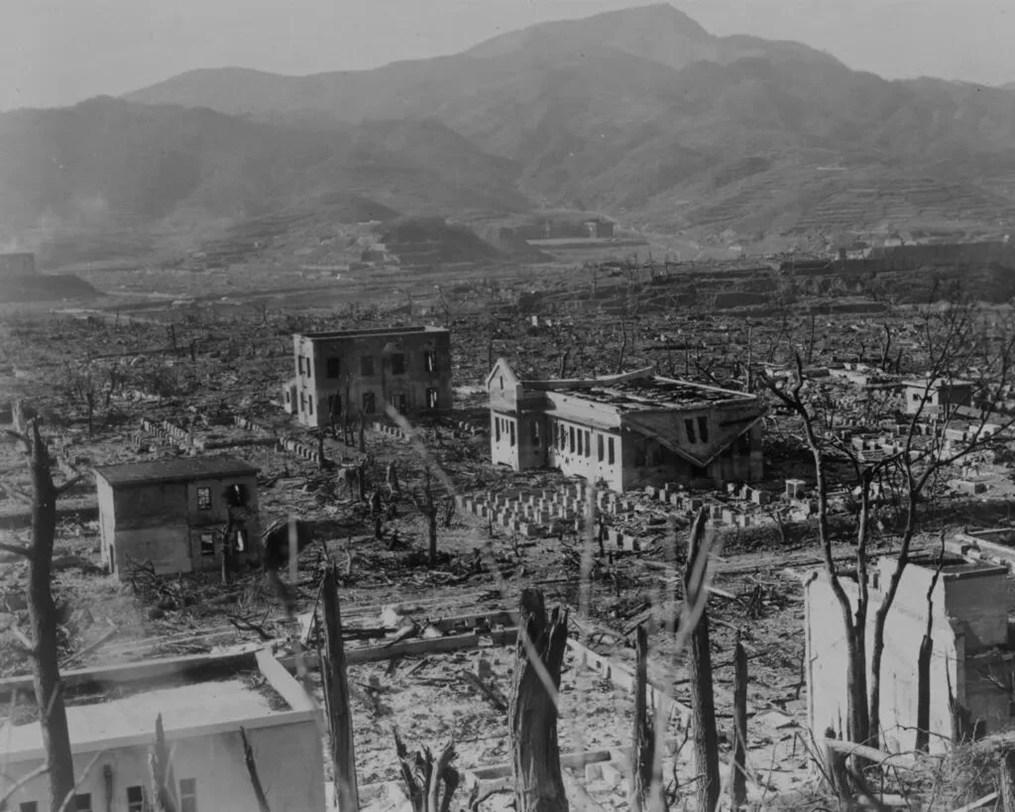
150 soldiers. With this backdrop, I was nervous about touring Nagasaki, located on the southern island of Kyushu. But while visiting, I was struck by how friendly and helpful people were, this only twenty-two years after the bombing.
One event still stands out: I inquired about visiting the communal baths, and had a hard time understanding the answer, because Kyushu residents spoke a different dialect from Tokyo. Recognizing my dilemma, (and being able to understand my halting Tokyo accent) a young woman came out from behind the reception desk and led the way two or three city blocks away to the bath house. She then made sure I understood the process before returning to the inn where she was working.

That experience taught me that my vision of proud America was the result of a false vision, and Japan was the dawning of a more realistic view of what I can be proud of in America. But that reality, which might have dawned hard, has been tempered by examples of and introductions to ordinary Americans doing extraordinary service to humankind, often in the most difficult of situations.
In the years since then I have had many experiences where I have seen Americans working to help sisters and brothers in many corners of the world. Both through state sponsored AID projects and international aid organizations, efforts to alleviate hunger, re-establish life after war’s decimation, and bring health care to the
(continued on Page 9)
Nagasaki in 1948
Nagasaki in 2010
Proud American
(continued from Page 8)
margins of our world have lifted my spirit and inspired me to do more for others.
I have seen Americans devoting their lives to the health care of the Nepalese, of Indians (from India), in Mexico, with “Indians”(Native Americans) in Arizona and South Dakota, and in more places than I can now recall. I have met many Americans who have done wonderful work around the world and are now back in the US, trying to raise both consciousness of the need and funding for the work that is to go on. It is these Americans that today make me proud to be an American.
History has been a harsh instructor, stripping me of much of the mythology of America that was a basis for my pride. We have a tendency to
romanticize war, but in fact it is brutal and ugly and has too many unintended consequences to be a source for pride. Inevitably civilians will die in times of major conflict, but the numbers over the last decade are pretty consistent: 90% of the fatalities in modern warfare are civilians.
I can no longer say that America’s military successes are a source of pride for me. It may be that the military is needed as a deterrent to the ambitions of other countries, but that work must be recognized as brutal, often involving what is euphemistically called collateral damage. Now when I see my countrymen continuing in service to all humanity, that it what makes me proud. ⸙
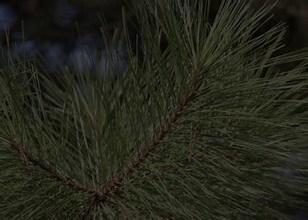
North Carolina Loblollies
by Judith Adler
I fell in love with the bark, the height, and the reddish color of these omnipresent North Carolina trees, never seen anything like them before they overpower the landscape and they lift my spirit as the heat drowns us, they provide a cover of cool leaves, swaying limbs, almost a breeze.
I swoon whenever I am in the Duke Forest, and then yesterday we stopped to get water after a long bike ride and began chatting with other cyclists likewise cooling down “How come you moved here?” asked one COVID and the marvelous loblolly tree forest that covers the landscape.
“Loblollies?”
Remarked the thin cyclist from Greensboro, “You mean the trees that get cut down and end up at IKEA!”
YIPES
Unlikely Friendships
by Jay Williams
With 120 people joining our TFAD community, I often find myself meeting new people. On such occasions, I usually think, “Nice person. We have a lot in common. There’s potential for this to become a closer friendship.” But occasionally my thought is, “Nice person, but we have little in common.” On such occasions, I have to remind myself that some of the deepest friendships are between people with little in common.
A case in point: my mother and her best friend, Muriel. My mother and Muriel met as sorority sisters who both loved to play bridge. But that’s where the similarities ended. Our family consisted of two parents and two sons. We were so quintessentially middle class, midwestern, WASP, that our friends called us “The Cleavers.” Muriel and her Czech-American husband Tony, on the other hand, were wealthy with a second home in Portugal, childless except for their two Scottish Terriers, and devout Catholics. Muriel was eccentric and opinionated. Tony was kind and soft-spoken. They were each other's yin and yang, a pairing that appeared unlikely, but it worked.
Tony was fond of my brother Jerry and me and we of him. Perhaps he was drawn to us because he had no children of his own. One occasion that I recall was especially illustrative of Tony’s kindness. Jerry and I were nine and eleven, and my family was spending the weekend at the Ozark resort that Muriel’s family
gluttony was to throw up in the car all the way home.
Not long after that, Tony became ill with leukemia and died. I was shaken by his death, not only because of my fondness for him but also because I hadn’t allowed myself to believe that people my parents’ age could die.
After Tony’s death, Muriel became a part of our family. She was always included in holiday celebrations and Sunday dinners. One of Muriel’s many idiosyncrasies was unselfconsciously scratching her ample bosom at the dinner table. The adults didn’t seem to notice, or politely pretended not to. But Jerry and I, adolescent boys that we were, found this, well, titillating, and we dared not make eye contact with one another lest we burst into giggles. Only recently did I learn that Muriel’s scratching was due to shingles. It was a revelation that gave me pause for thought about being so quick to judge others’ behavior as weird. Muriel loved to travel, and after Tony died, she travelled frequently with a group of Catholic priests. Over time, Father Bill became Muriel’s close friend and regular bridge partner, though the life circumstances of a wealthy widow and a Catholic priest could not have been more different. Muriel and Father Bill were in our home often. My parents became close friends with Father Bill, or just “Bill,” as we called him. When my father died, we chose to have Father Bill conduct his Protestant funeral service.
owned. Tony was indulging us by toasting marshmallows for us–as many as we could eat. The price we paid for Tony’s indulgence and our
Another of Muriel's longest and closest relationships, within the constraints of structural racism, was with her yard man Henry (think Driving Miss Daisy). When Muriel was aging, she shared with Henry her intention to be buried in her full-length mink coat. Henry’s caring response was, “Oh, Miss Muriel, you don’t want to do that. Those grave diggers will dig you up!”
It’s now been years since my parents and Muriel passed away. But I like to think that Muriel lies undisturbed in her grave, snug in her full-length mink coat. Most of all, I like to think that up in heaven, an unlikely foursome of my parents, Muriel, and Father Bill is enjoying a good game of bridge. ⸙
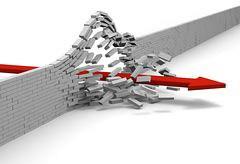
Breakthrough: Why the World is Holding Its Breath Over Helium
By Howard Goldsweig
If you have ever inhaled the air from a party balloon and spent the next thirty seconds sounding like an over-caffeinated chipmunk, you have had a personal encounter with the second most abundant element in the universe. But lately, the news about helium has been considerably less uplifting. While most of us associate the gas with birthday festivities and parade floats, a geopolitical squeeze play thousands of miles away has turned this "noble gas” into a very common headache.
The current culprit is the blockage of the Strait of Hormuz. For those of us who haven't dusted off our globes recently, this narrow waterway is one of the world’s most sensitive maritime chokepoints. While headlines usually focus on the flow of oil, the strait is also the exit ramp for about one -third of the world’s helium supply, primarily from Qatar. Because helium is a byproduct of Liquefied Natural Gas (LNG) production, any disruption to the gas plants at Ras Laffan whether by missile strikes or the simple inability to get tankers through the strait effectively puts the world’s high-tech industries on a starvation diet.
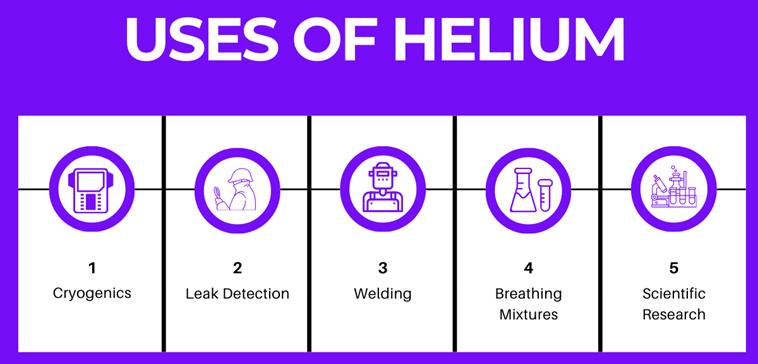
the magnets would heat up, the superconductivity would vanish, and your local hospital’s hightech diagnostic capabilities would go dark. Outside the hospital, helium plays a silent but critical role in our digital lives. During the manufacturing of semiconductor chips for our smartphones, helium provides the ultra-cool, stable environment necessary to prevent microscopic defects. It is also used to help "grow" the glass fibers for the cables that carry our internet
But how did the Middle East end up with so much of the stuff to begin with? It turns out that helium is the ultimate "slow-cooked" resource. Unlike hydrogen, which is everywhere, or oxygen, which we breathe, terrestrial helium is a gift from the deep past. It is the result of the slow, patient radioactive decay of uranium and thorium buried deep in the Earth’s crust. Over hundreds of millions of years, these heavy elements spit out "alpha particles" which are just naked helium nuclei that eventually pick up a couple of electrons and settle into pockets of natural gas. When we drill for gas, we are essentially harvesting the radioactive exhaust of the Paleozoic era.
Helium is vital to the world economy because it is a substance of extremes. Its most famous trick is its boiling point: a chilling -452 degrees Fahrenheit. It is the coldest liquid in existence. This makes it the only substance capable of cooling the superconducting magnets in MRI machines. Without a steady bath of liquid helium,
data around the world. Because helium atoms are so incredibly small and chemically inert meaning they don't react with anything— engineers use the gas to sniff out microscopic leaks in spacecraft fuel lines that are too tiny for any other substance to find. It even acts as a protective shield during the welding of specialized metals, keeping the process perfectly clean and free of contaminants.
Physics has made helium a bit of a loner. As a noble gas, it refuses to bond with other elements, and it is so light that once it escapes into the atmosphere, it doesn't just hang around it literally floats off into space, leaving Earth forever. We are, quite literally, running out of a resource that is constantly making its own Great Escape. So, the next time you see a balloon bobbing against the ceiling, remember that it contains a non-renewable remnant of Earth’s radioactive history a history that is currently stuck behind a naval blockade. It is a serious reminder that in our interconnected world, even the lightest of gases can carry a very heavy price. ⸙
Triangle Thinkers and Doers: The Future of Medicare
by Jack Gartner and Alice Alexander
Medicare, the US health program for adults sixtyfive and over, is familiar to all of us at The Forest at Duke. But many of us find the range of different options and coverages confusing. We turned to Gina Upchurch, Founder and Senior Executive of Senior PharmAssist, a Durham-based organization that helps seniors with medication management and provides Medicare counseling, to clarify these issues for us.
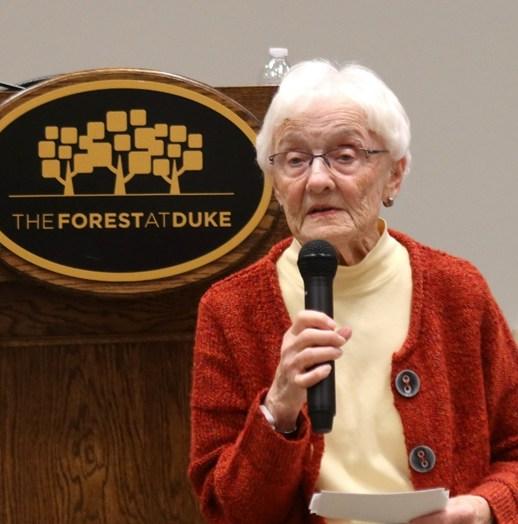
Magaret Keller, a past board member of Senior PharmAssist, introduced Gina Upchurch; TFAD is a community partner of Senior PharmAssist.
In her talk on March 16 for The Forest’s Triangle Thinkers and Doers Speaker Series. Upchurch presented a comprehensive review of the many elements of Medicare—Parts A, B, and D, Medicare Supplements, Medicare Advantage, and Long Term Care Insurance—and provided answers to many questions on how these programs are funded and work today. Among her numerous appointments, Upchurch serves on the Medicare Payment Advisory Commission, a non-partisan Commission that advises the U.S. Congress on Medicare policy.
It is clear from Upchurch’s review of the myriad elements included in Medicare, that it has
become, in her words, “a patchwork quilt of underfunded and complex operations with no end in sight.” The Advisory Commission on which she serves has provided two reports to Congress, the latest this month on payment policy, which noted that provider consolidation has been increasing, potentially leading to higher Medicare payment rates through a lack of competition. As a result, Medicare draws on an increasing share of the country’s tax revenues, and when Medicare spending increases, beneficiaries’ costs also increase. Despite concerns over the future of Medicare, there does not seem to be any interest in tackling these issues in Congress.
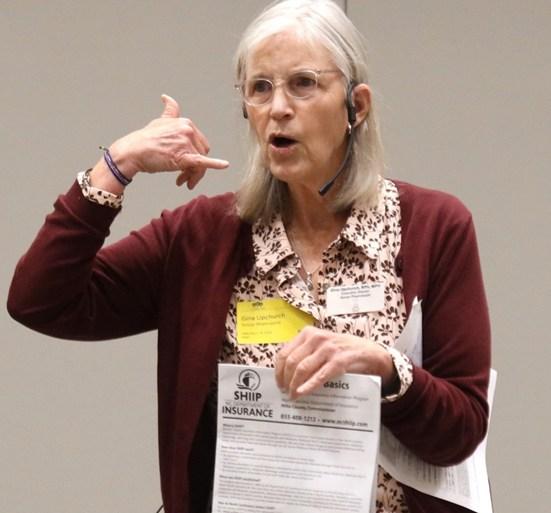
Presenter Gina Upchurch warned residents about Medicare scams via phone calls
Upchurch also provided the latest SHIIP (Senior Health Insurance Information Program) paper outlining Medicare Basics, plus information on how to make appointments with Senior PharmAssist for personal counseling (919-688-4772). Senior PharmAssist has been a community Partner with TFAD for many years. As to the Future of Medicare? It is still to be determined. ⸙
Recent Events
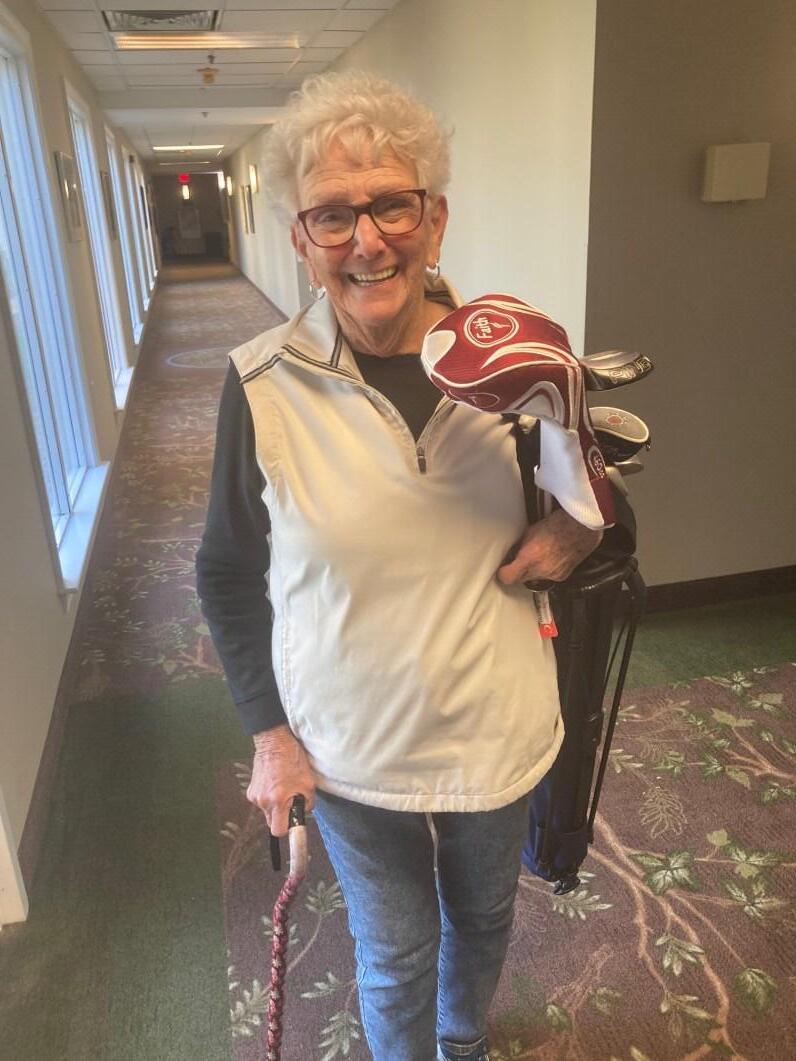
After the Driving Range, Mar 29
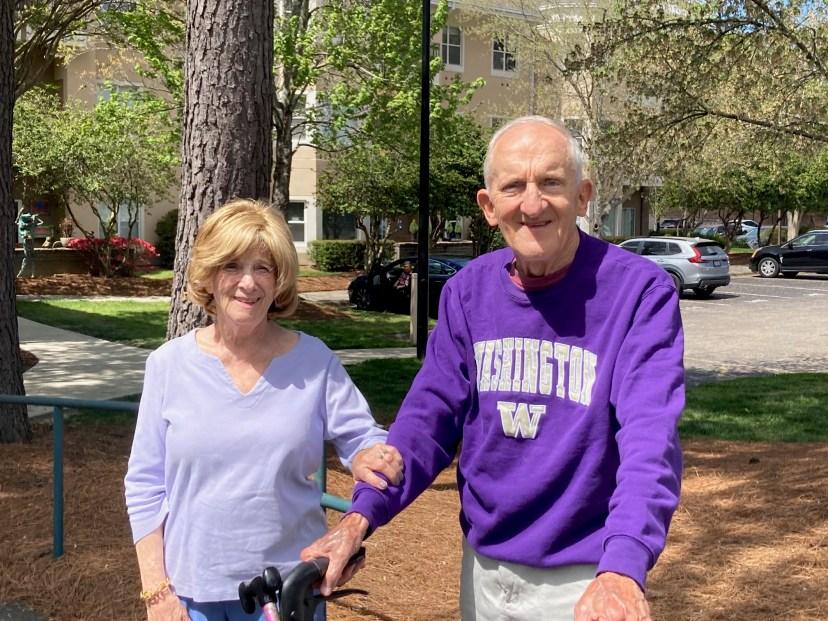
The Carlsons on a walk, Apr 3
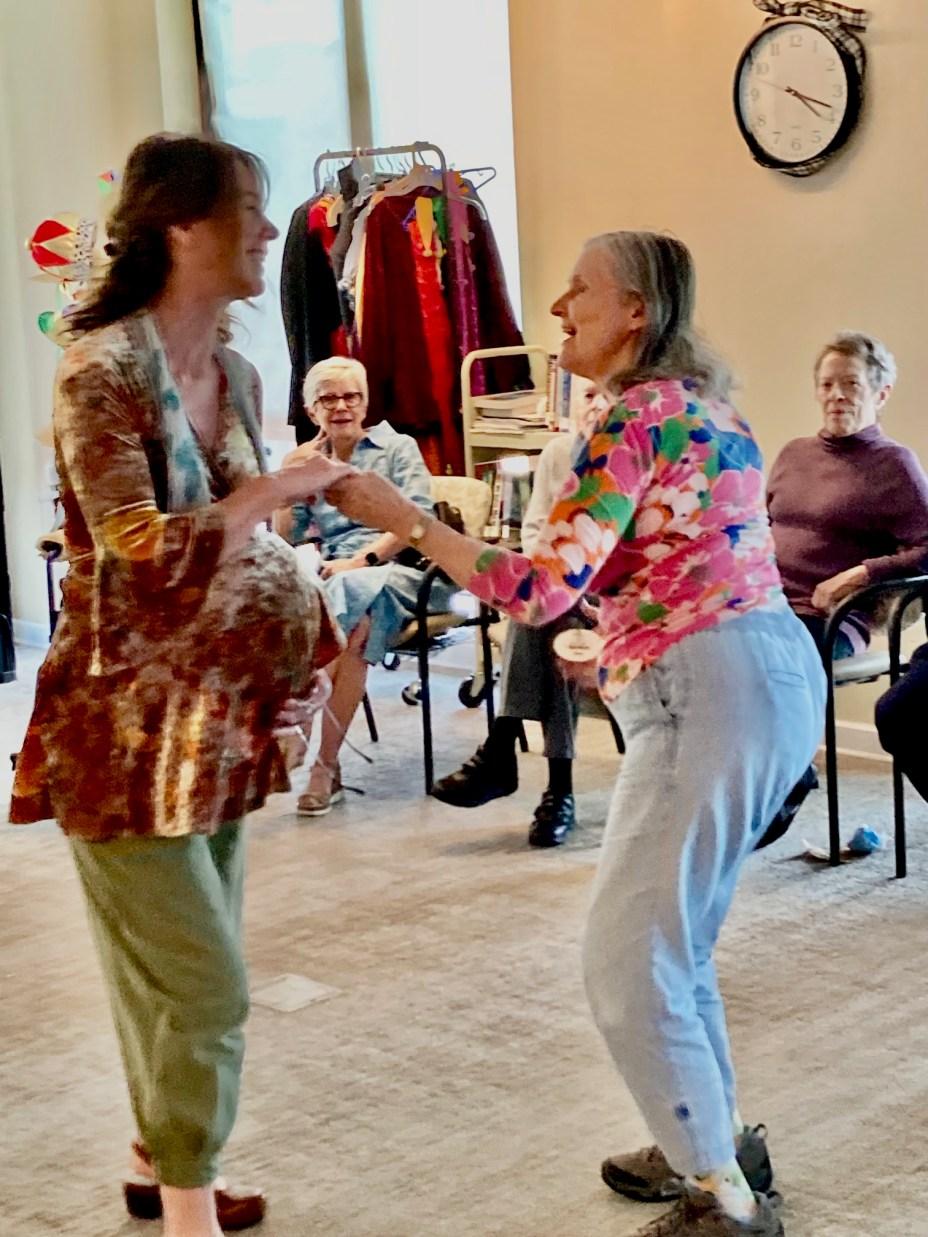
Frolicking in the Health Center, Apr 2
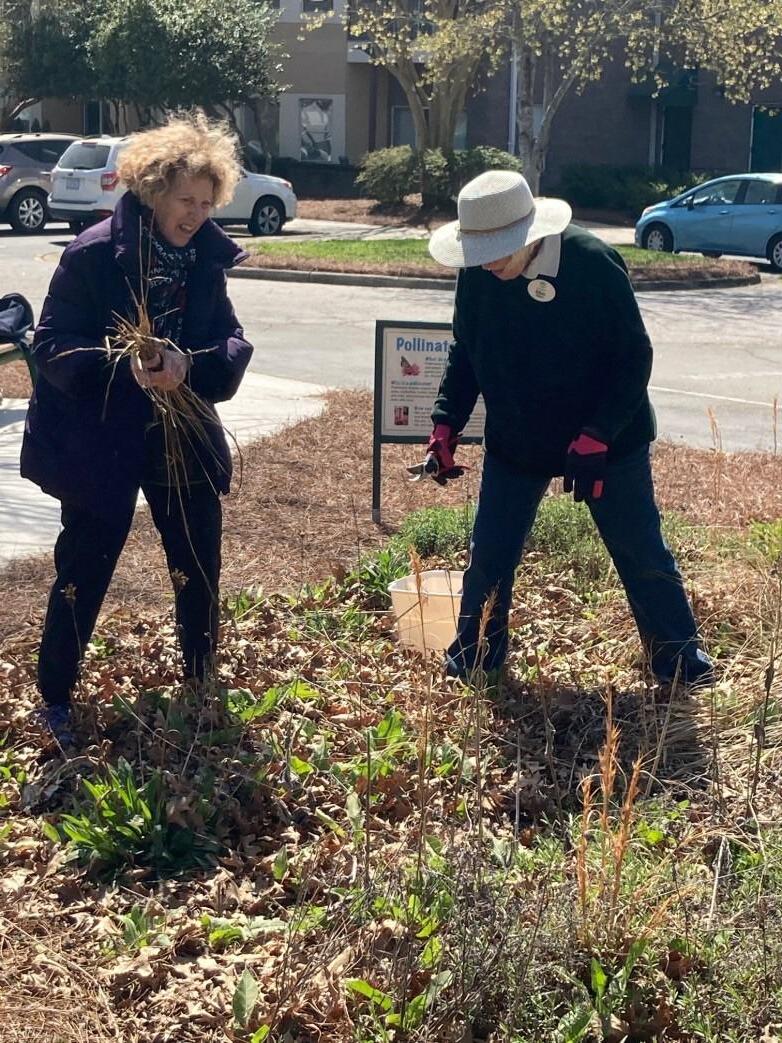
Managing the Pollinator Garden, Mar 25
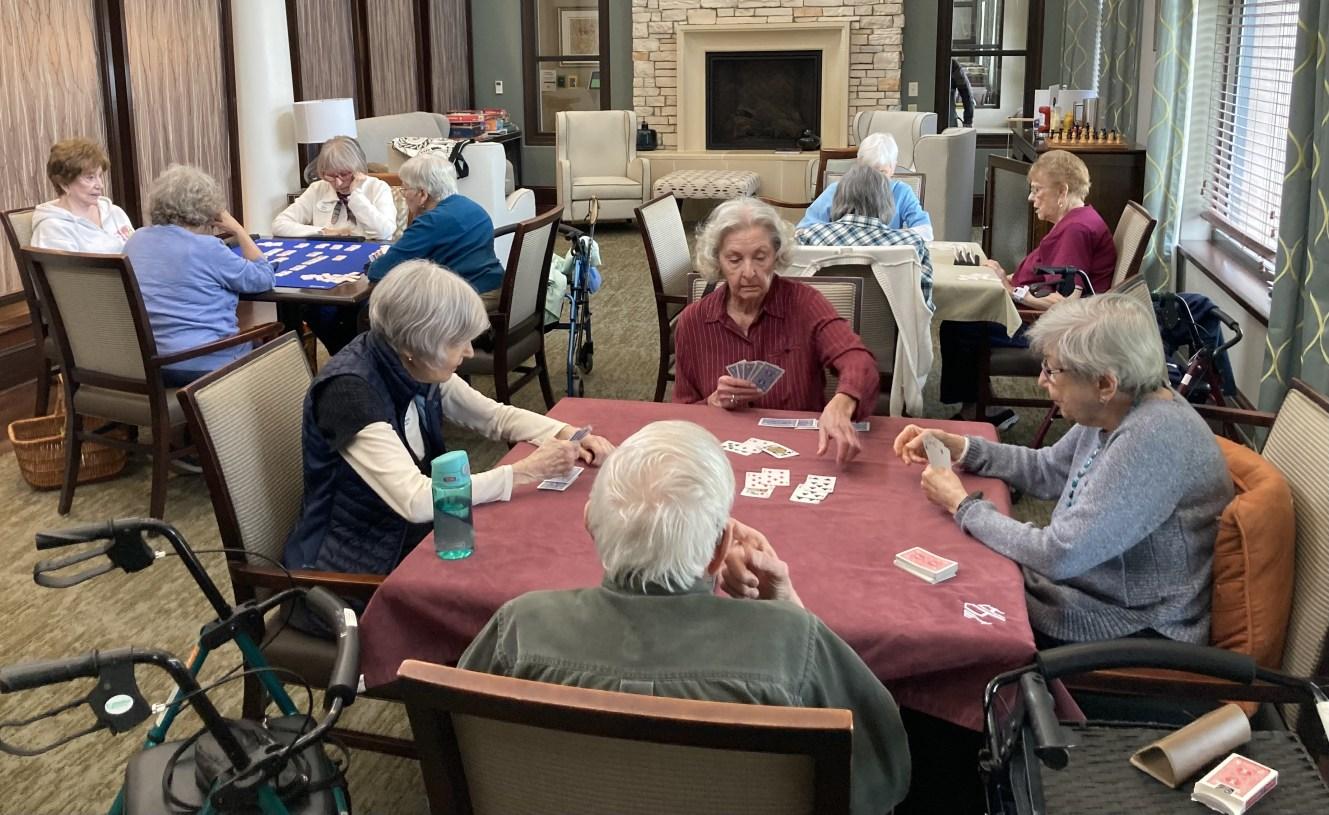
Playing Together, Apr 7
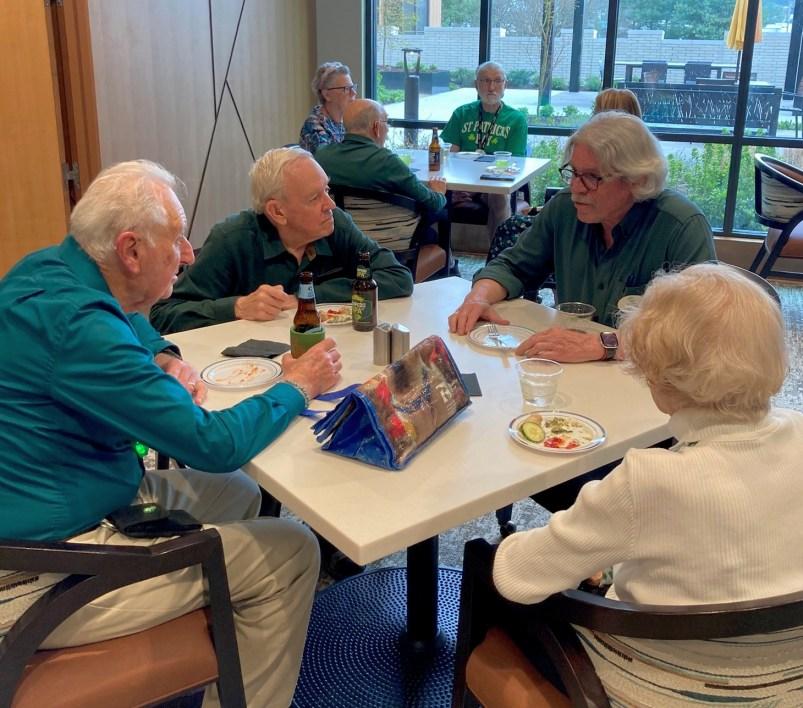
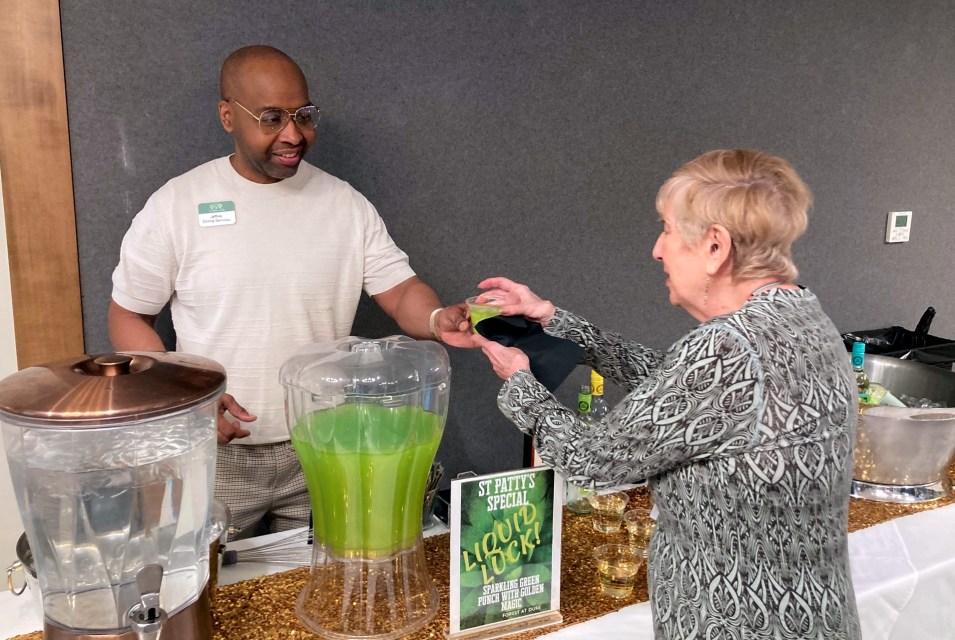
St Patrick’s Day Social Hour, Mar 20
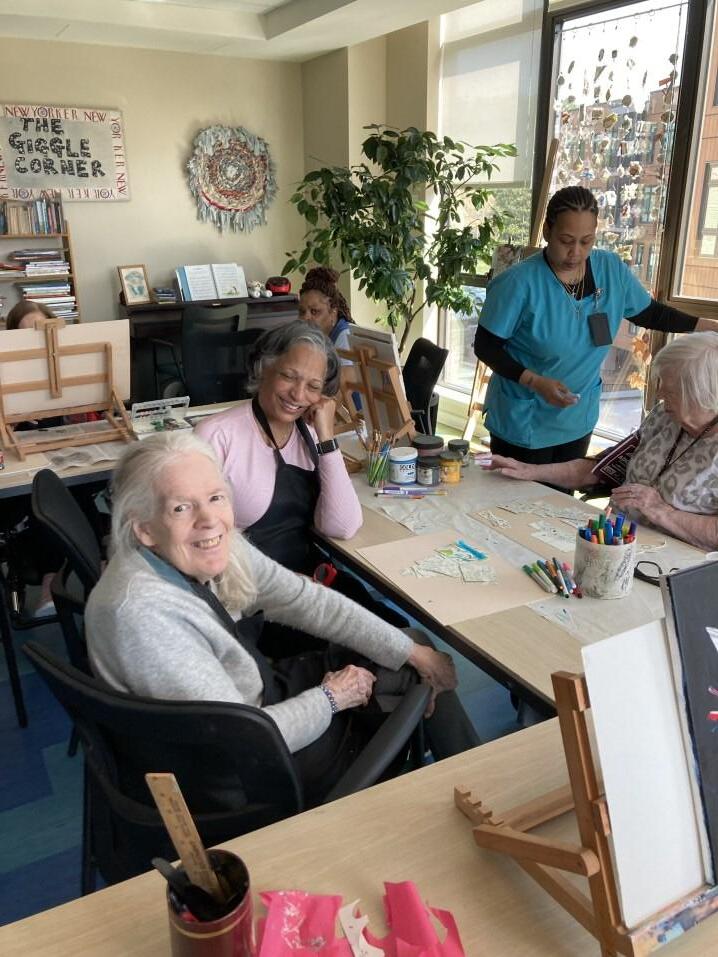
Health Center, Art for the Pollinator Garden. Mar 31
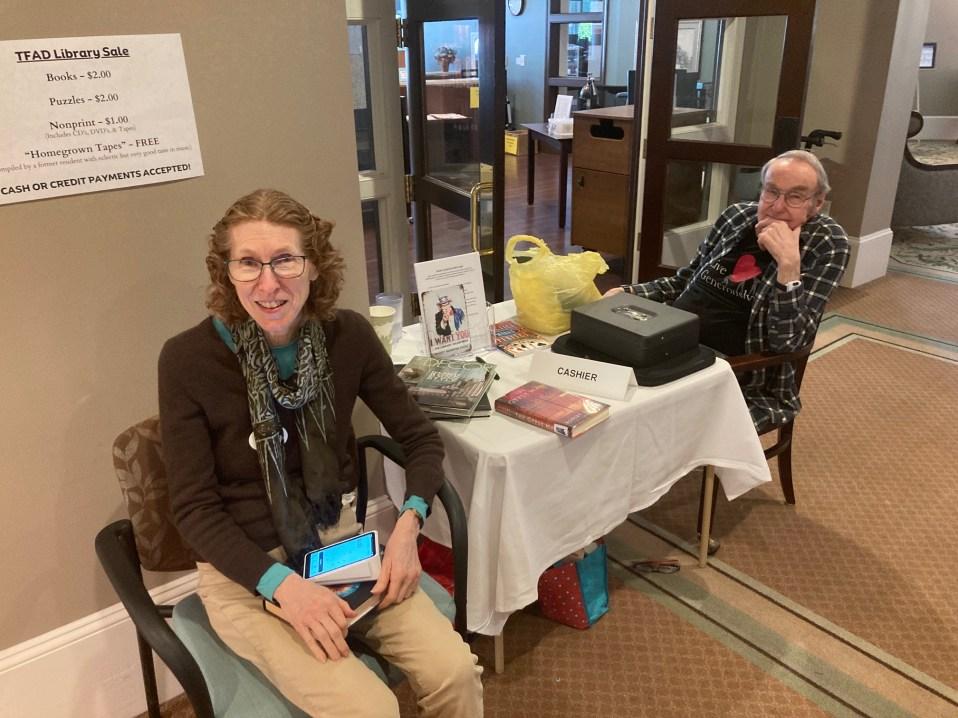
End of the Book Sale, Apr 10
Health Center, Art for the Pollinator Garden. Mar 31
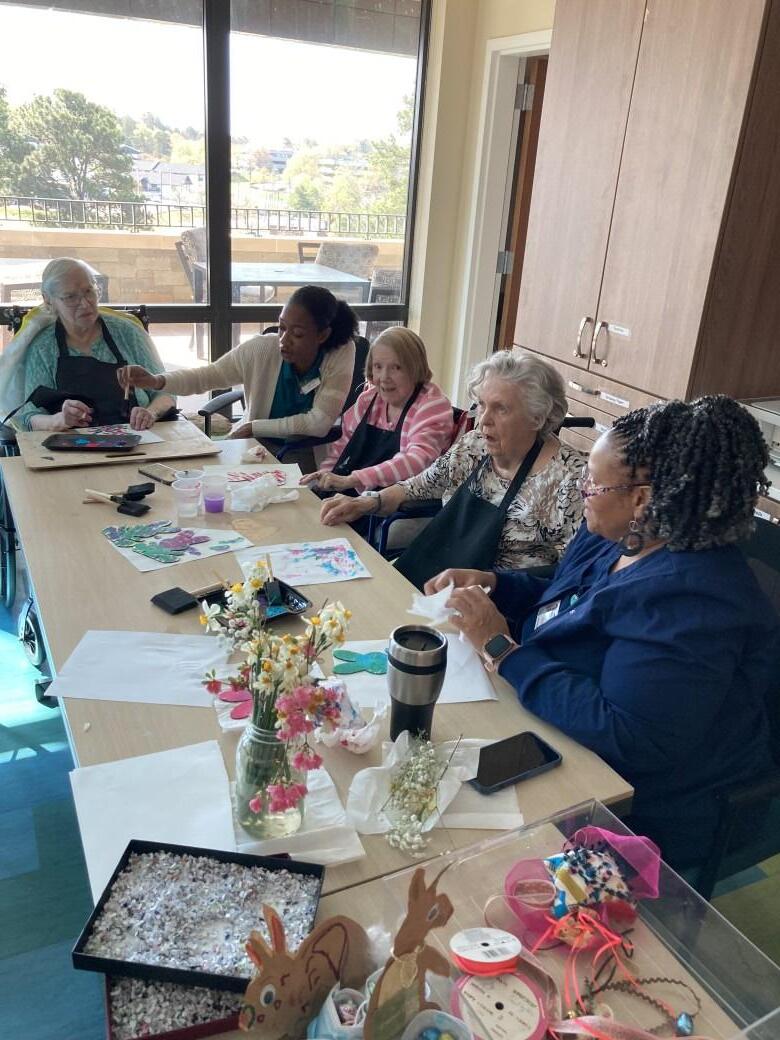
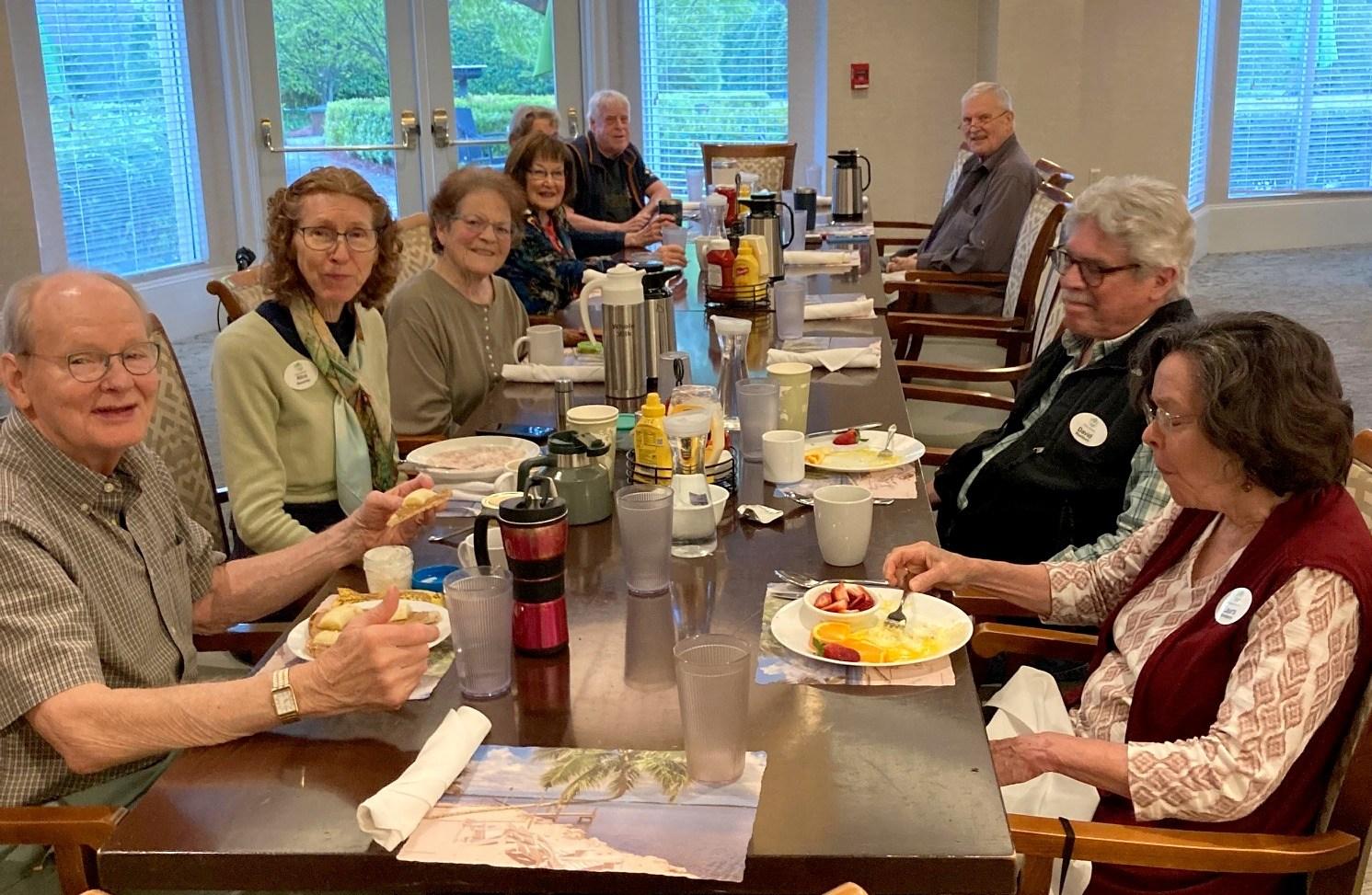
The Breakfast Club, Apr 7
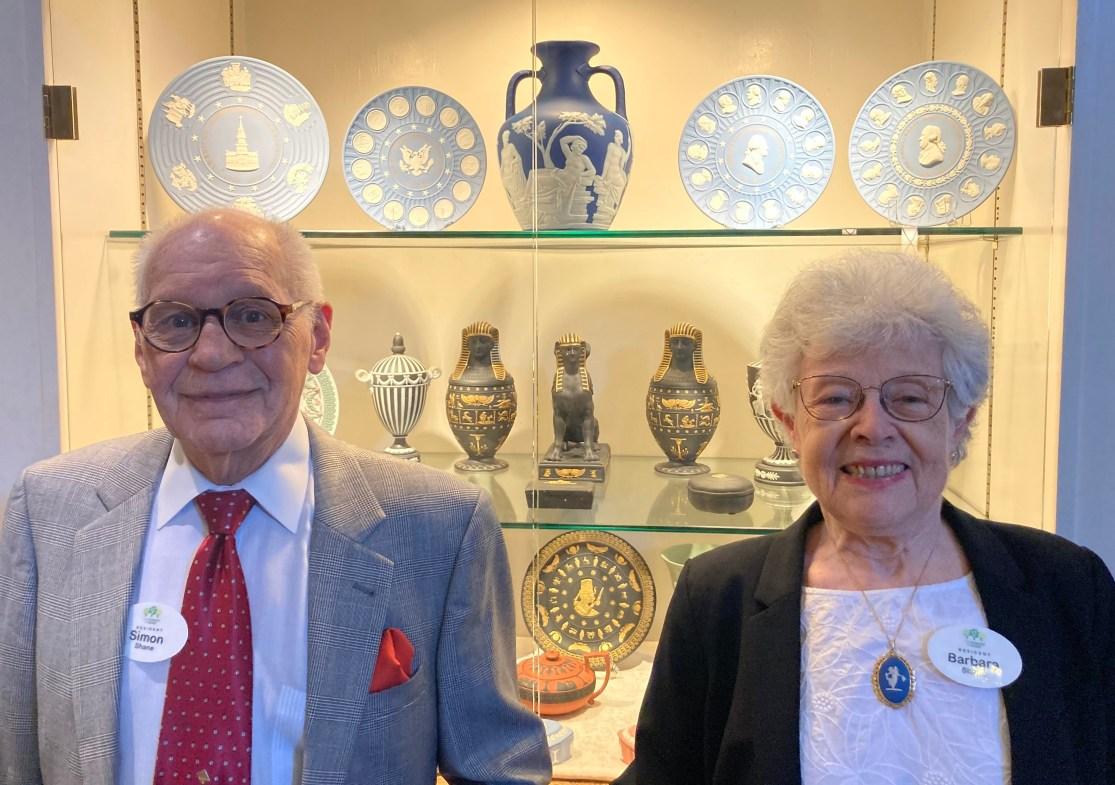
Resident Readers: John Staddon, Kathleen Gould, Vikram Rao, Simon & Barbara Shane