
Beyond Romeo and Juliet
byDonaldChand
At a Self-Realization session here at The Forest, I received a sheet summarizing Swami Paramananda'swordsonlove.Insteadoffilingitaway,Ileftit onmydiningtable.Thenextday,itremindedmeof aconversationwithmywifeShirinonourwedding day in 1966, and I felt drawn to explore that memory.Whatbeganasasimplerecollectiongrew intosomethinglarger.TheclassicalGreekwords eros, storge, philia, and agape once only academic terms,becamekeystounderstandinghowweconnect with one another and with the world. First, I recalled a conversationonour wedding day. Second, I'll share how remembered incidents became a dialogue years later.

Part I: A Wedding Day Revelation
July 25, 1966. The Methodist Church in Faizabad, India
Wehadjustbeenmarried.Asthecarpulled away, the minister's words from Corinthians lingeredinthehumidair:
Love is patient, love is kind.
It does not envy, it does not boast, it is not proud. Anditendswith:
It always protects, always trusts, always hopes, always perseveres. Rainhammeredtheroofof our car. Lightning split the dark sky. I heard Paul's words as if spoken directly to me, telling me how to behave as a husband. "When one loves someone," I said aloud, almost to myself, "everything Paul wrote about love seemsredundant."
Shirin turned to me with a knowing smile. "The way you're applying Paul's words is too narrow."
"Whatdoyoumean?"Iasked.
"YouneedtolookbeyondRomeoandJuliet." Her words startled me. "Romeo and Juliet's love was an overwhelming force! When you're in love like that, everything Paul says happens naturally."
Her eyes glinted. "That overwhelming force ledtodevastatingconsequences."
Her words hit me hard. "What? What did yousay?"
She stayed quiet, letting the weight of her observationsettle.Outside,thestormragedon.Inside,herwordscreatedtheirownweather.
Iwrestledwithwhatshemeant.Romeoand Juliet'sloveendedintragedy youngliveslost,violence renewed. Their passion was genuine, but blind to everything beyond itself. It could not heal generationsoffamilyhatred.
Was Shirin suggesting that Paul's words pointedtosomethingverydifferentfromromance? But what could be broader than the love between husband and wife? The question lingered, unfinished.Therainwouldstop,butherchallengewould staywithmeforyears.
Part II: What Agape Looks Like
September 25, 2011. Waltham, Massachusetts
We sat in our living room, sunlight slanting across teacups. After forty-five years, our silences had grown warm and comfortable. But that afternoon, I needed to return to her words from our weddingday.
"Your words on our wedding day never left me,"Isaid."YoutoldmetolookbeyondRomeoand Juliet.I'vewrestledwiththatfordecades.Whatdid
(Continued on Page 7)
The Forester
The newsletter of the Residents’ Association of The Forest at Duke, Inc., 2701 Pickett Rd., Durham NC 27705. Published monthly except July,August,and Septemberbyandfortheresidents.
LisaCamel, Managing Editor
BethTimson, Copy Editor
DaveSloan, Layout Editor
LindaCushman&LouiseScribner, New-Resident Biographers
ElodieBentley&KenParker, Proofreaders
RichardEllmanandStephenKoff, Photographers
Catherine&SanfordBerg, Couriers
Publish in The Forester
This monthly magazine is by and for the residents of The Forest at Duke. The editors welcome original contributions from all TFAD residents: stories, memoir pieces, essays, poetry, illustrations, cartoons, short videos, and photos. Past pieces have ranged widely in theme and style, though we do discourage pieces with determined opinions on religion and politics. Photos, graphics, and eyecatching illustrations can add interest and clarity to your written words so include them if you have them. Aim forabout750wordsperpiece.
The editors can provide advice and suggestions.Submissionsshouldbesentasdigital files (ideally in Word format) attached to email addressed to Managing Editor, Lisa Camel, at Forestermanager@icloud.com. Due to space constraints, not every submission may see print immediately, but we will do our best to bring as muchtoourreadershipaswecan.
The Forester is also looking for interested residentstoworkonourstaff. Ifyouliketowrite, edit,orproofread,justcontactLisa we’dloveto meetyou. ⸙
In Memoriam
Dr.MadisonSpach
JoAnne“Jo”Mooney
Nella“Nell”Barlow
JohnLeBar
September25,2025
October2,2025
October10,2025
October17,2025
President’s Podium

byJamesFreedman
My first posting to the Forester’s President’s Podium was in the December 2023 issue, the first monthofmytwoyeartermasyourResidents’AssociationPresident.IexplainedthatIhadaccepted thepositionasaformofinsurance,toassureTFAD continued to satisfy my changing needs and requirements.Iacknowledgedthefactthatmyneeds had changed from when I came to The Forest in 2014andrecognizedthefactmyneedsandviewof the world would be quite different in 2025, when comparedto2023.
That “prediction” has come true. The world around us has dramatically changed over the past two years, as well as our overall capabilities, and I’vepersonallyexperiencedanoticeableshiftinmy needs and desires. Fortunately, The Forest has changedaswell,andin apositiveway,toallowall of us to not only exist but to enjoy or at least embrace the changes we have experienced. Your Associationhasplayedamajorroleinaffectingthose changes.
Construction had just started in 2015, not long after my arrival at The Forest, with the renovation of the Community Center. After just a short respite, construction of the newly-named Cohen Health Center was initiated and was completed and populated shortly after the start of my term. The demolition of the old Health Center and the construction of The Terraces commenced almost immediatelyandhasbeenadominantfactorinour lives up to the present. The Residents’ Association has continued to play a key role in providing the resident views, needs, and interests over the past two years to the Administration as it has implemented changes that will define the future of The Forest. The good news is the new construction is now over. The bad news is that some work is still required. We can still expect renovation and repairs to be implemented for a considerable time thatwillhaveanimpactonourdailyroutines.
President’s Podium
(Continued from Page 2)
Your Association’s emphasis under my tenure has been on continued open communications between residentsandAdministration and onsuccessful integration of The Terraces into the TFAD community, and I feel that positive progress has beenmadeinbothareas:
• Communications have improved over the past twoyears,withtheincreaseduseoftechnology. AsummaryreportofmonthlyassociationactivitieshasbeenmadeavailableontheCubigoand RA websites, shortly after each board meeting, thatannounceskeyhighlightsandchangescovered by each Association committee, keeping residents up to date. Assistance was provided to field test Cubigo to help optimize its usability.
• Earlyplanningmeetingswereheldbetweenthe RA board and the administrative executive team to define and address issues that would affect the smooth introduction of The Terraces residents as well as the lives of current residents. Assignments were then given to individualassociationcommitteestoassisttheadministration in addressing those issues. Work is stillongoingwithmentoring,theestablishment of caucus committees, and community integration efforts; and work will continue until all issues and problems are addressed. This could nothavebeendonewithoutthetime,effortand commitment of your board and the many volunteers on the committees and subcommittees thatdefinetheResidents’Association. It has been a pleasure working with so many talented and dedicated people, and one I have enjoyedthoroughly.Iwouldalsoliketoacknowledge the open and frank dialogue that was established withAnitaHoltandherexecutiveteam,sincecommunication is a two-way street. As a result I feel The Forest is in a strong position to meet not only my needs, but all our needs, as we continue to move forward. Is the job finished? Not at all, but thereisastrongteaminplacetocontinuetorepresent and advocate for the community and a strong administrativeteamtomanagethecorporation.All indicationsarethatweareinastrongfinancialposition as we move forward. More importantly, we
have preserved one of the major attractions of The Forest, itssenseofcommunityandopenness,while expandingourpopulationbyalmost25%.
As I’ve often stated, I urge all residents, both newcomers and more established residents, to get involvedinyourAssociation.Itfulfillsanimportant role in protecting your future. After all, the Residents’Associationisyou. ⸙
Drumming for Peace
byEllenBaer
Drums in the auditorium and a dragon! It was quite a show that took place on October 10, at the end of Active Aging Week, making all of us feel younger and more connected to the rest of the world.TakumiKatoandhisfamilyareonamission to spread peace by giving one thousand performancesin allfifty statesin five years. He’snot just anordinarydadwholikestoplaythedrums:he’sa worldchampiondrummerwhohaswonmoreprizesthanIcanlistandplayedbeforemoreluminaries than Icanname, includingemperorsandempresses, crown princes and prime ministers. It’s clear that as an audience we were in exceptionally good company.
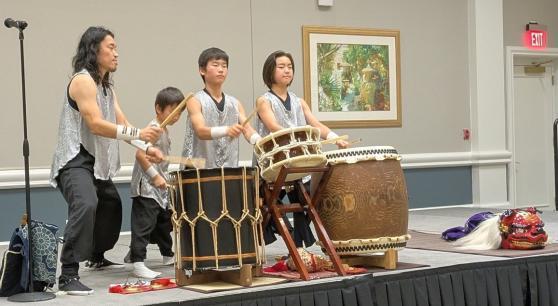
The tradition of taiko drumming goes back more than a thousand years in Japan, and Takumi, borninJapanin1981,hasspentalifetimetraining andperforming.Healsoplaysthefluteandtheviolin andin 2020 hewas atorch runnerand musical composerfortheTokyoOlympics.Athomehewas busytoo,teachinghisthreesonstoplaythedrums
(Continued on Page 14)
Sun Days
byCarolynConeWeaver
People shake their heads when they learn I once taught sailing. You? Indeed. My first real job. Really tough duty: I walked ten minutes to work through our tree-lined neighborhood, wore shorts and boat shoes, and smelled like the baby oil we slathered over ourselves to get that nice even tan. I worked regular hours, unlike babysitting. I got paid more, too,thoughnotmuch eveninmid-1950sdollars.
OurvillagewassituatedonabayoffLongIsland Sound. On bright, breezy summer days, generations from toddlers to grandparents andall ages between gathered at the dock on the rocky beach to play, swim, and sail. My family had a nineteen-foot Lightning-class sailboat a Firefly. We were “Lightning Bugs”afterall.Andbecausewelivedjustfourblocks from the dock, I spentmygrowing-up summer days onorinthewater.
andboys. Eachtookaturnatthetiller,tendingthe sheets, learning the difference between comingabout and jibing and how and when to tack. Serious,in-the-momentexercises,nottobetakenlightly by either campers or counselors. Every day every minute we were responsible for these youngpeople’slives.
Thecampersalsohadtolearnhowtobringthe boat to a stop alongside the float at the end of the dock, a teeth-gritting feat in the best of circumstances. The day my little group practiced the maneuver for the first time we were in my family’s Firefly instead of a Jay. I demonstrated how to approach the float at a ninety degree angle, push the tiller hard to starboard, and turn the bow into the wind. Done correctly, we’d stop dead in the water withourstarboardsidelinedupagainstthefloat.
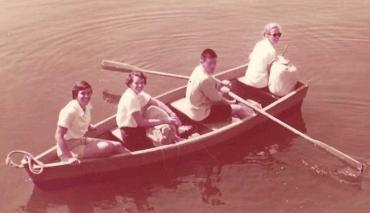
The local sailing club always needed camp counselors, and I had the experience. Sofortwoofmy summersduring college, they hired me along with three friends to lead the nine-to-twelve-year-old group. The club providedBlueJays,14-footboatsmooredinthebay, for our lessons. Every morning my friends and I rowed out to the Blue Jays and towed them back to the dock, two counselors per rowboat, towing two Jayseach.Atoughpullevenonacalmdaybutwhen the wind kicked up and we had to row through the chop,therowboatbuckedlikeacoin-operatedbronco.
Weconductedouron-shorelessons rulesofthe road,navigation,knot-tying onthedockandactual sailing lessons on the bay. Rough weather was the only thing that kept us ashore. Most days were dazzling. Each morning the campers helped rig and raise the mainsails and jibs, white as the clouds above us. Each boat carried three or four campers plus a counselor. Once under sail, the four boats’ bows cut through water spangled blue reflected fromthesky.Sunsparkledinourwake.
We rotated the job of skipper among the girls
We were contending with a brisk northerly breeze, so to turn into the wind we had to sail towardthe swimmers’ float. Ordinarily that wouldn’t be a problem.But as one of mycampers rehearsed the exercise, a little girl, too far away from the swimmers’float,poppedupinthewaterjustahead of us, and the Firefly was going fast. To miss the child I had to make a split-second decision: crash head-onintotheboatfloatorcrashatanangleinto the ramp next to the dock? I grabbed the tiller and steered for the narrow gap. “Get down!” I shouted to the children in the boat, and “Look out!” to the swimmers.
People on the dock above us gaped as the Firefly’s forestay crashed into the ramp. We caromed backwards, heeling to starboard. The mast hit the dock. The boom swung over the campers cowering inthecockpit.Allofthem thelittlegirlinthewater,mycampers weresafe.TheFireflyhadminor damage. As for me, my heart had crawled up into my throat during that minute, but I was otherwise fine.
Now,notonlydoIhavetalestotelldisbelieving acquaintances,Ihavelastingsouvenirsofthosesun days seventy-plus years ago. As the dermatologist removes another basal cell carcinoma seven, so far he asks: “Have you spent much time in the sun?”
“Itaughtsailing,”Isay. ⸙
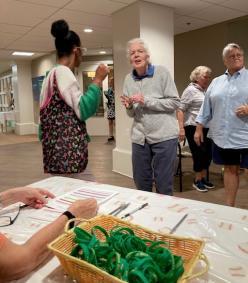
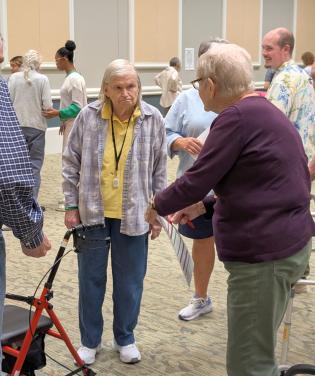
Senior Games, October 6
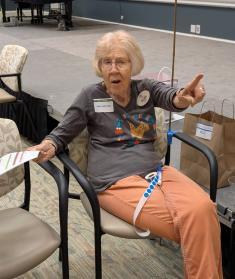
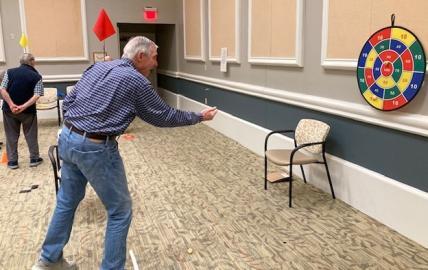
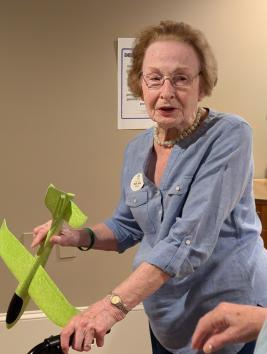
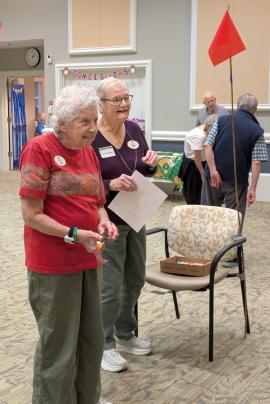
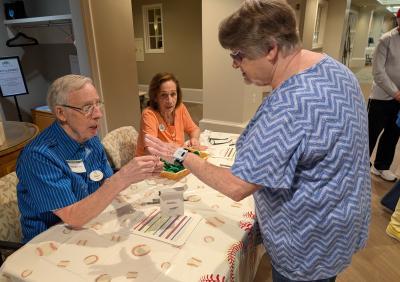
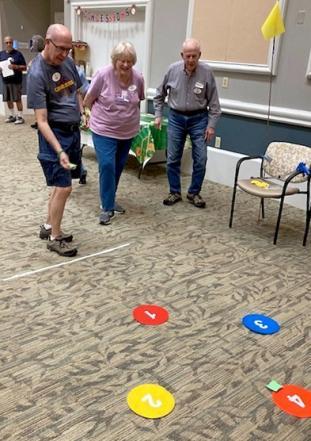
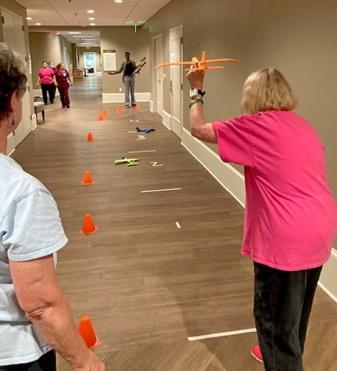
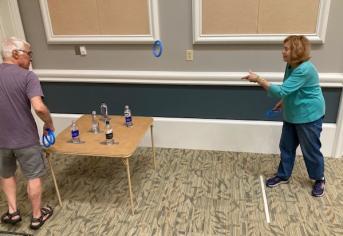
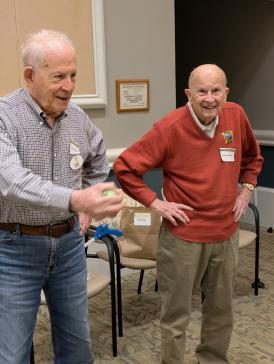
Welcome New Residents
Norma S. Gindes Apt.4046 201951-5140 normagindes@gmail.com
WelcometoNorma, whomovedintoTheForestin May of this year and brings to us a strong background of volunteerism and excellence in healthcare leadership. Norma was born in New York City; she grew up in Queens and lived and worked in Manhattan in her early twenties. After
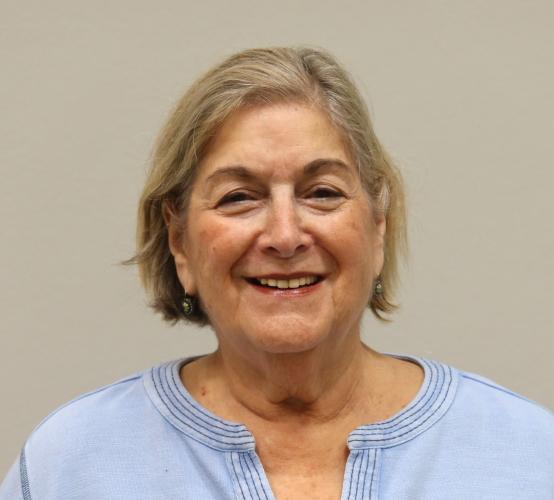
graduating from the State University of New York atOswego,herfirstjobwasasacopyeditorforthe Journal of Cell Biology at Rockefeller University. She wentontoworkinpublishingfortenyearsatAmphoto, a photography publisher; Springer-Verlag; and McGraw Hill, before settling down with her husband Bob and beginning a family. They bought a house in Teaneck NJ and had two energetic sons who have grown into incredible loving men, wonderful husbands, and fathers of a total of five children allofthemlivinginDurham!
Norma returned to school to pursue a career in Social Work and earned an MSW from the Wurzweiler School of Social Work at Yeshiva University.Itwasthenthatshebeganacareerinnonprofit healthcare management, working at a number of nonprofits including Beth Abraham Center for Rehabilitation and Nursing, United Hospital Fund,andBergenVolunteerMedicalInitiative all
withamissionofimprovinghealthcarefortheunderservedinNewYorkandNewJersey. In tandem with her career in healthcare, Norma served as a volunteer in organizations in New York and New Jersey. She was President of theNorthernNewJerseyRegionofHadassahand wentontoserveontheNationalBoardoftheorganization andontheHadassahMedicalBoardin Israel. She has served in a leadership role in the Association for Volunteer Administrators in New York,andin2001sheservedonthecommitteeto celebrate the International Year of the Volunteer in New York City, including the official opening of the IYV by UN Secretary-General Kofi Annan in November2000.
NormaandBobmovedtoDurhamin2014 to be closer to their children and grandchildren. Adapting to the slower pace of the Triangle, they stillfoundlotsofopportunitiestovolunteer,meet new friends, and spend valuable time with their grandkids. When you see Norma at The Forest, please say hello and introduce yourself she is interested in meeting new residents and learning moreaboutyou! ⸙
youmean?"
Beyond Romeo and Juliet
(continued from Page 1)
Shirinsetdownherteacup."DoyourememberwhatPaulactuallywrote?Hewasn'tdescribing romanticloveat all. HewastellingtheCorinthians how to treat everyone strangers, difficult people, evenenemies."
"Butsurelyhemeant "
"Hemeantexactlywhathesaid.TheGreeks had different words for love: Eros romantic passion. Storge theaffectionwithinfamilies. Philia thebondoffriendshipandloyalty."
"Theyallsoundlikelovetome,"Isaid.
"They are. But they're all loves we feel toward people already close to us. Paul was describing agape, which is a love we enact, often toward peoplewedon'tknowatall.Itreachesbeyondour circle."
Somethingshiftedinme."SowhenIthought Paul's words would naturally flow from being in lovewithyou..."
Shirininterruptedme."Youwerethinkingof eros.But agape isn'tafeelingthatsweepsoveryou. Itmanifestsitselfindeliberateactsofcaring acts that often requireskill orcourage, usuallyfor people outside our closest circle." She let the thought hangintheair,asthoughwaitingformetoremember.
I thought of my cousin Camila, in hospicecare in Canada. "Every time we visited, her nails were beautifully painted. A local nail technician came every Saturday to give free manicures to patients."
Shirin nodded. "That's agape. She didn't knowthem,butweekafterweek,sheshowedup."
"And at your mother's assisted living facility," I added, "her friend came every Sunday with a hymnal, just to sing. Over time, half the residents joinedin."
"Another act of agape. A gift of presence, freelygiven."
"There are so many others," I continued. "Doctors volunteering abroad. Strangers stopping tohelpinsnowstorms."
"Or those who give part of themselves," she added, "like people who donate kidneys to save someonethey'llnevermeet."Thenshepaused."Do
yourememberFontainebleau,France, thecherries?"
That memory was sharp. While eating cherries, a pit slid down Shirin's breathing channel. She began choking. I froze, paralyzed by fear. Butour daughter Renukarushedin, wrappedher arms around her mother, and used the Heimlich maneuver to dislodge the pit and saveherlife.
"Her action was effective because she had both knowledge and courage," Shirin said softly. "That's what sets agape apart. It is more than feeling compassion. You need skill and preparation." She went on:
"Remember what Renuka did afterward. Cherry pitters for every household.CPRtrainingforthefamily.Sheturned afrighteningmomentintolastingpreparation."
Isaidwithwonder:"Agape actswithinfrastructure! “Still, something puzzled me. "Why do we call agape a form of love? Aren't agape acts simplygooddeeds?"
Shirinconsideredthiscarefully."That'sthe crucial question. Think about Jesus's parables. The shepherd who leaves ninety-nine sheep to search for the one that's lost and the Samaritan who stops for a wounded stranger when others passed by. What makes these stories about love ratherthanjustdutyorkindness?"
"I'mnotsure."
"Theshepherdisthe owner ofthosesheep, not just a hired hand. His search is driven by the conviction that every sheep matters. He doesn't think, 'I have ninety-nine others.' He thinks, 'This
(Continued on Page 8)
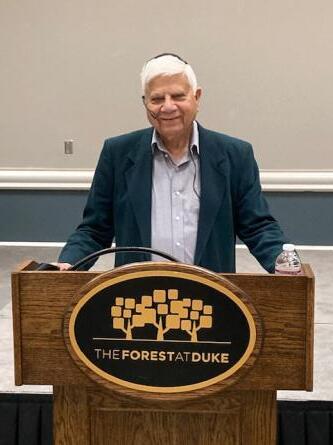
DonChandatResidentReaders, Oct.1
(photobySanfordBerg)
Beyond Romeo and Juliet
(continued from Page 7)
oneismysheep,andIwillnotabandonit.'TheSamaritan seesthestranger'ssufferingasmattering to him personally, even though they shared nothing neitherethnicitynorpriorfriendship.”
I thought about the nail technician returning week after week to the hospice. "Is her act called love because it sees the person, not just the need?"
"Exactly. Kindness can become a habit, almostmechanical.Youcanbekindwhileremaining distant. But agape creates connection. However short the moment, it says: You matter not because I know you, not because helping you benefits me, but because your humanity demands my attention."
Ileanedback, finallyunderstanding. Agape is love put into action. It is practical, caring, and honorsthehumanityofothers.Itexpandsbeyond our private circle and grows stronger the more widelyitisshared.
Part III: From Drops to Rivers
August 25, 2025. Durham, North Carolina
Shirin has been gone for three years now, butherinsightsliveon.Hangingonmywallisour weddingpicture.Lookingatherface,IreadSwami Paramananda'swordsaloud.
Love cannot be forced—it must come freely.
But if you lack this rare gift, both in its human and divine forms, what do you truly have?
Without love, you are missing everything that gives life meaning."
Why do we love? Because we have allowed ourselves to become channels through which love can flow.
IimaginedShirin'sresponse,asthoughshe werebesidemeoncemore.
"The Swami spoke of love in 'human and divineforms,'"shewouldhavesaid."Thatreminds meof bhakti aSanskritwordfordevotionallove, the kind of love a devotee feels for God. In bhakti, the relationship between devotee and divine is deeply personal. It shares qualities with eros, storge, and philia.Theyallarelovesrootedinclose
relationships."
"So, bhakti is another felt love?" I might haveasked.
"Yes.Buthere'sthequestion:Can bhakti inspire agape? When devotional love overflows into service to strangers, when love for God spills into love for God's creation which includes all people then felt love becomes training for enacted love."
I remembered Shirin's visit to Gomukh, the glacierwheretheGangesbegins."TheGangastarts so silently you could miss it," she once told me. "Drops seeping from the glacier, catching the mountain light. Just below, those drops unite into theBhagirathi clear,cold,strongenoughtocarve valleys."

Now,sittingbeforeherphotograph,Iunderstoodmoredeeply.Individualactsof agape arelike those first drops. The nail technician's Saturday visits. The church friend's hymns. Renuka's Heimlichmaneuver. Eachoneprecious, eachone necessary.Butalone,theyremainscatteredgestures.
"If each act of agape is like those first drops,"Iaskedaloud,"whatcarriesthemintoariver?"
I could imagine her pause. "Society's infrastructurebecomesthechannel."
"Infrastructure?Youmeanorganizations?"
"Yes.OrganizationslikeHabitatforHumanity,theCarterCenter,DoctorsWithoutBorders.But also,schools,religioustraditionslikeSikh langar the communal kitchens that feed anyone who
(Continued on Page 9)
GomukhGlacier
Beyond Romeo and Juliet
(continued from Page 8)
comes. Laws that protect the vulnerable. International agreements on human rights. These are the channels that gather individual drops of compassionandsustainthemasriversofcare."
This was the truth I had been moving toward for decades. Individual compassion matters deeply itisthewateritself.Butwithoutchannels, that water evaporates. We need Institutions to multiply the power of individual compassion. I thought of our own community. Even here at The Forest,asTheTerracesopen,I'veseencommittees workingformonthstowelcomenewresidents.Individuals offering invitations. Volunteers giving time. Committees planning behind the scenes. Togetherwithstaff,theyformariverofcare.
Individual acts of agape need intentional structures to become rivers of love. At their best, institutionssustaincompassionandcarryitwhere it is needed most. Looking at Shirin's face in our wedding photograph, I understood her meaning. Shehadaskedmetolookbeyondromance,toward alovethatseestheworthofeveryperson.
TodayIunderstandthatactsof agape,when sustained by communities and institutions, gather strength like drops forming rivers. And here'swhat that understanding asks of us: each act of compassion we offer whether to a new neighbor, a strugglingfriend,orastrangerinneed becomesadrop inthatriver.Andwhenwebuildstructuresthatsustainthat care committees,programs,traditionsof welcome we become the channels that carry those drops forward. This is Shirin's gift to me: not just understanding what agape means, but seeing how it flows through our lives, gathering force, shapingthelandscapeofoursharedhumanity. ⸙

Who Demands This Much Choice?
byPhilBaer
That title comes from a Calvin and Hobbes comic strip,inwhichCalvin’sfather,groceryshopping,is confronted by the peanut butter display. The strip begins with him saying: “Look at all this peanut butter!Theremustbethreesizesoffivebrandsof four consistencies! Who demands this much choice? Iknow!I’llquitmyjobanddevotemylifetochoosing peanut butter! Is “CHUNKY” chunky enough? Or do I need EXTRA CHUNKY?” At the end of the strip, Calvin looks in the bag and asks: “Hey, where’sthepeanutbutter?!”
As a twice-weekly grocery store shopper for thepastsixtyyears,I’vewatchedthismultitudeof choices balloon in every aisle over that time. I’ve often played the part of Calvin’s father, and watched countless others do the same, muttering some version of “Who demands this much choice?” while trying to choose that special container of whatever. I’ve decided the answer must be “Well, all of us. ”

If you want to experience an overwhelming multitudeofchoices,Isuggestyougototheyogurt cooler. The first time I ever ate yogurt, or even heard of it, was in 1962. I was studying in France, spending a weekend at the home of a French ami, andheaskedhis mère ifwecouldrundowntothe corner epicerie to buy his favorite dessert, somethinghecalled“ yow-urt”.Ididn’thateit,butitcertainlydidn’tqualifyasdessert.Now,decadeslater, I’ve learned to tolerate it, and Ellen likes it, so at the nearby supermarket where I shop I regularly find myself searching and cursing the display of
(Continued on Page 12)
Centenarians at the Forest: Rose Boyarsky
bySherrillBlazer
ManyofourTFADCentenarianswerebornasWWI began, or soon thereafter when Germany was recovering from a humiliating loss from the First WorldWar.ThiswasfertilegroundforAdolfHitler to rise to power. Rose Boyarsky, child of Jewish parents, was born during this time, in March of 1924,inJerseyCity,NJ.Shehadoneyoungersister, and her parents were American-born citizens. Her father was a businessman who constructed window and door screens with wooden frames, and her mother was the bookkeeper. Her childhood years were normal. She lived in a multi-ethnic neighborhood.
At age thirteen she witnessed an event that changed the course of aviation. It was a time of many advances in air travel which included airships,suchastheHindenburg.Ithadalreadymade tentripstotheUnitedStates,soitwasnotunusual for Rose to witness these fascinating ships in the air and one flew so close to her window that she feltthatshecouldtouchit.OnMay6,1937,nothing seemedunusual,exceptathunderstorm,andthisis when the airship met its fate. There were many conspiracy theories, including sabotage, but it was finallydeterminedthatlightninghadstrucktheanchorropesandignitedtheveryexplosivehydrogen whichfilledtheship.Heliumwaslessexplosivebut itwastooexpensivetouse.Thirty-sixtouristswere killed, ending the period of airship travel. Similar events are etched in the memories of The Forest residents,suchastheshootingofJFKandthetragedyof9/11.
LaterRose’sfamilybecamea“sanctuary” home formanyfriendsandfamilymembers.Evenbefore the Nazi regime was full-blown, there were tensions in Germany and other European countries. Hitler blamed the Jews for most problems that his country experienced; hatred was growing. Many emigrated to other countries including the United States. Rose’s family housed up to twenty-eight people during the 1930’s. Those who lived with them helped in many ways to keep the household runningsmoothly.Assoonasresidentsbecameindependentinsometypeofcareer,theymovedout, makingroomforothers.Rosereportslittletension
within her family during that time, the ultimate of hospitality.
In a few years, Rose would become the first in her family to attend college. However, she watched many of her Gentile friends accepted at colleges of their choosing while she was skipped. Many schools had a cap of 10% for Jewishstudents, her first experience of antisemitism.ButRosedidnotgiveup.TheUniversity of Vermont accepted her and since she loved the sciences, she majored in chemistry, an unusual field for women at that time. She later studied at ColumbiaUniversity. Herchoicewouldleadto another form of discrimination: few women got jobs inamale-dominatedfield.Auniversityofficialtold Roseandothers,“Youwomenbetterbehaveyourselves; the only reason you are here is because thereisawarandwecannotfindenoughmen.”
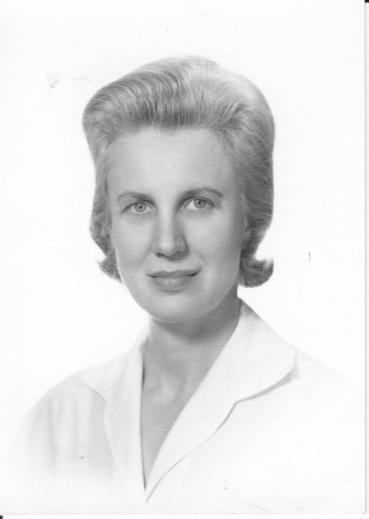
Rose met Saul Boyarsky in college, and they marriedin1945.Theyhadthreechildren,Bill,Gail, and Terry. She stayed home for eighteen years as she raised these young ones while the family movedtomanyplaces.First,Nuremberg,Germany, when Saul was in the US Medical Corps, then to DukeUniversityforaresidencyinUrology,thento New York, then back to Durham, to St. Louis, and backagain toDurhamwhentheybegantheirtime atTFAD.
Theyweremarriedforseventy-threeyearsbefore Saul passed away in 2018. While Saul was working and their children had left home, Rose
(Continued on Page 11)
Rose Boyarsky
(Continued from Page 10)
pursued a career in Clinical Psychology and workedwithMastersandJohnson,pioneersin“ sex research.” Later she began her own clinical practice.
Roseretired,theyreturnedtoDurham,andshe volunteered at Duke Gardens. You will find her name online as a long-time friend on the Sarah P. DukeGardenswebsite.Youcanalsoseefunphotos ofherthere,onelookinghappyandcontentsitting onabenchherchildrendonatedinherhonor.She is also a member of Judea Reform Synagogue and hasvolunteeredthere.
After interviewing Rose and researching her and the times of her life, I just continued to think “here,there,everywhereandallatonce.”Irecently sawaposterwiththewords,“Whensomeonedoes not give up, it is very difficult to compete against them.” To me, that captures Rose’s life. Thanks to Rose for such a wonderful example for the rest of us! ⸙
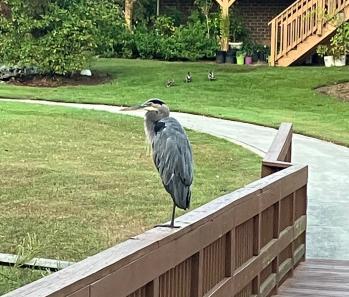
(photo by Bob Shaw)

Our TFAD Library: An Open Book
(and More!)
byDianeStrauss
No, But I Read the Book…
It’scommonknowledgethatsuchfilmclassicsas Gone With the Wind and To Kill a Mockingbird wereadaptedfrompopularnovels.Nowsuch adaptationsarealsostandardfareforTVnetworksandstreamingservices.Wanttocompare thevideototheprint?Irecentlycompiledalistof 100fictionandnonfictiontitlesthatfallintothese categoriesandthencheckedthemagainstourlibrary’sholdings.Wehadseventeen.Nosurprise there.Oursmallcollectionconsistsprimarilyof donateditems;wecan’taffordeverybestseller madeintomovies.Curiousaboutsomethatwedo have?Here’sapartiallist,including Killers of the Flower Moon, Little Fires Everywhere, Caste, and The Thursday Murder Club.
Help Us if You Can
I’veattributedthepaucityofcurrenttitles inourcollectiontoourmodestbudget.Wedopurchasesomecurrenttitles,reflectingourcommitmenttosupplytheBookClubwithatleastone copyofthetitlestheyselect goodreadsall and someofyouhavealsobeenkindenoughtodonate newbiesafteryou’vefinishedthem.Budgetsize, though,isn’ttheonlyorevenmostimportantfactor.SinceTFADfirstopened,itsresidentshavedonatedbookstheynolongerneeded,wanted,or lackedsufficientspacetostore. Mostlibrary shelvesarefilledtocapacity,containingbooksthat haven’tcirculatedforatleastfiveortenyears.We havelittleroomtogrow;thecollectionneedstobe weeded.Wedesperatelyneedadditionalvolunteerstosharethecurrentworkloadandhelpwith thisforthcomingproject.Mosthoursareflexible, andtherestofuswhovolunteerherewillbemost grateful.Pleaseconsiderjoiningus.
Dropanoteortextmeifyou’reinterestedorhave anyquestionsatTFADmailbox#3001or(919) 614-7559. ⸙
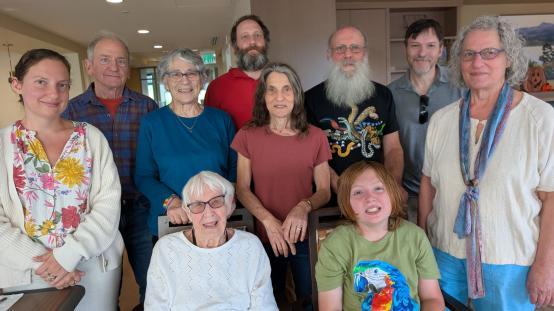
BoyarskyFamily
Phil Baer
(Continued from Page 9)
Lord-only-knows how many choices of “ yow-urt.” It’s about 400 choices, stocked six shelves high in eight double-door cabinets, four-and-a-half feet wide,aboutfiftychoiceseach,givingusthethirtysix-footlongwallofyogurtshowninthephoto.My choiceisGreekyogurt,no-fat.Ellen’schoiceisnon -dairy, made from coconut milk plus twelve other ingredients,allnatural,ofcourse.
Foodchoicesarebrokendownintobrands, flavors,sizes,andpackaging,followedbytextures, additives, dairy/gluten/GMO-free, organic, and a host of other individual health and life-style requirements.Andasaresultofourdesireforthese individualpreferences,theAmericansupermarket has evolved over my lifetime from small, simple storesintotheenormitieswenowface.Ifmemory serves,whenIbegangroceryshopping,therewere only three peanut butter brands, in two or three sizes I don’t think crunchy was an option. If yogurt was in the dairy case, I wasn’t aware of it closestthingtoitwascottagecheese,onesize,one kind. Life was simple, food choices few. Now, according to the Food Marketing Institute (https:// www.fmi.org/our-research/food-industry-facts) the average supermarket carries 31,795 items.

Thinkaboutthat thenexttimeyougoshopping you’refaced with31,795choices. And, ifyouhave one of thoseintrepid, high-speed workers filling a cart for your on-line, pick-up order they have to findthespecificitemsyouchoosefromanarrayof 31,795.
WhenIgoshoppingnow,findingtherightitem is the first challenge, but reaching it is often the second. I’ve only lost about an inch in height over mysixtyyearsofshopping,butshelvinghasgrown aboutthreefeettaller,andI’veoftenhadtoaskfor help toget somethingoffthetop shelves.Stocking higher and higher is the only way to get all those 31,795 items into the stores, because they’ve already reached an average size of 50,000 square feet, about as big as most shoppers want to navigate.
It’s too much, it’s ridiculous, but what made it possible? I blame bar codes. Before bar codes, supermarket checkers were the only choice for checking out, and they had to remember code numberstopunchin.Theywerehuman,andthere was a limitto their memory. Now, with bar codes, nobody has to remember anything. We can even self-check, just scan and bag, and that has become the preferred way. Checkers are vanishing from the workforce, early casualties of artificial intelligence.WithAI,wewillhaveunlimitedchoicesand possibly starve in the store, leaving aisles full of skeletons of human versions of Buridan’s donkey, that hungry beast who couldn’t decide which of twohaybalestoeatfirst. ⸙
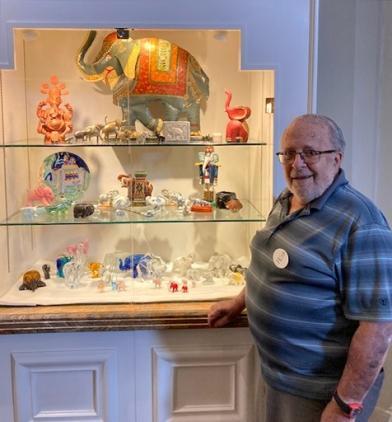
JackGartnerwithhisElephantsDisplay CuratedbyRobynSloan (photo by Sanford Berg)
Getting to Know You
byRalphNelson
Orientation
A person moving from one community to another often participates in an orientation to introduce the newcomer to the members, facilities, rules, andcustoms ofthenewcommunity. It helps the newcomer learn about the physical and social environment within which she or he will now be living. The objective is to facilitate efficient, effective, and enjoyable communication for the newcomer.AtTheForest,wewantourrelationshipsto be deeper than saying "Hello,” "Please pass the salt,”and"Doyouthinkitwillraintoday?"
Orientation for people moving into Independent Living (IL) at The Forest involves four programs:
1. A mentor educates the newcomer about local activitiesandstores.
2. LifeattheForesttalksarepresentedbyadministratorstoinformthenewcomeraboutdining, housekeeping, building maintenance, finances, healthcare,etc.
3. A neighborhood caucus welcomes a newcomer initsareatoitsoccasionalsocialgathering.
4. Campus-wide events are created by the Activities Committee to facilitate social interactions betweenresidentsandteammembers. Newcomersarealsohelpedbyfriendsmetthrough diningandtheactivitiesinwhichtheyparticipate. Orientation for people moving into the Health Center (HC) and their responsible partners (family or friends) may be delayed until a serious medical condition or a move-in schedule has abated. During that time, help in understanding options,costs,andproceduresisprovidedbyaSocial WorkerandtheResidentNavigator. Thenewcomer may encounter complex feelings. Many valued features of life furnishings, memorabilia, daily schedule, pain management, medications, clothing, dining companions, food, group activities, daily tasks, future plans, image in the community are altered. Time once used for home chores and leisure activities is now used for medical visits and rehabilitation.
HC caretaker visitors (medical personnel, HC team members) and even the newcomer's own children cannot provide orientation because they don't have time for long conversations and have not experienced the world as the new HC resident has. An experienced HC resident can serve as a mentortohelpthenewcomerworkwithinthenew environment. Small House team members help the newcomer navigate dining and cleaning activities, while HC Activities team members help the newcomer participate in group activities. Fellow residents,eitherfromtheHCorfromIL,canempathize with the complex feelings of move-in, understand the full (historic) life of the new HC resident, and takethetimetodevelopactiveengagement.
How Has the HC Changed ?
In February of 2023 all HC residents moved fromwingsintheoldHealthandWellnessbuilding to nine Small Houses in the new Health Center. Construction of The Terraces destroyed the short walkway that gave easy access for friends in IL to visit HC residents, so social isolation increased in the HC. Food preparation was disrupted, so new procedures were developed to provide nutritious andattractivemealitems.Therecentcompletionof The Terraces has provided a new walkway, which shouldincreasevisitationandmenuchoices. The Forest is now accepting some "outside newcomers" directly into the Health Center. A video with an abbreviated version of the Life at The Forest series helps them and their responsible partnersunderstandhowTheForestoperates.
The Small House Concept
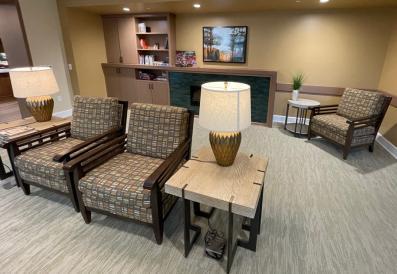
Thisconceptsuggeststhattheresidentsofa ten-bedroom unit should form mutual friendships which go beyond politeness to cordial relations more relaxed and comfortable interactions in whichtwopeoplemighttalkaboutphysicalexperiences(involvingfear,exhilaration,orsurprise),but possiblynotabouthighlyemotionalexperiences. The residents of a single Small House may
Getting to Know You
(Continued from Page 13)
varyconsiderablyin cognitiveengagement, soit is hard to duplicate such Independent Living activitiesascaucusmeetingsandthe"communitytable" for group chatting at meals. Instead, the HC has dailyactivitiesopentoallHCresidents.Someactivitiesarepresentationsmeanttobeenjoyedsilently (exercise,musicians)orasgroupresponders(singalongs). Some activities focus on engagement (puzzles,cardgames,karaoke,discussions).
Small House team members and interactive Small House residents can act to befriend lessinteractive residents
Guided Group Chats
All of us have been young, all of us have learned life lessons that help us cope with life's troubles,andallofuscanenjoyspendingsometime chatting with others instead of worrying about our own issues of pain, separation, andanxiety. A guided group chat can help people share experiences and discover items of mutual interest. This encouragesparticipantstostartlaterone-with-oneconversationsandtobecomestrongerfriends.
TheguidecouldbeanHCteammemberora resident volunteer. In either case, the guide should receive suitable training for starting a group chat, encouragingalltoparticipate,maintainingthefocus and continuity of the conversation, and avoiding personalquestionsorfamilysituations.
At present there are several guided group chat programs in the Health Center. The primary chat guide is Kaidy Lewis, Artist-in-Residence. The participants are primarily HC residents, with a few IL residents and family members. I have been attending these, and I like the wide participation, HC residentcommentsbasedonmanydecadesofexperience, andthe sharing of memories that the whole groupcanunderstandandenjoy. ⸙
Drumming for Peace
(Continued from Page 3)
anduseotherpercussionistinstrumentslikecymbals,rainsticks,conchshells,andhandbells.
TakumiandhiswifeIzuna(whosewstheir costumes)movedthefamilytotheUnitedStatesin 2022 and settled in Pennsylvania, where they began their musical quest for peace. The family ensemble calls itself “Peaceful Forest,” so of course theyhadtocometoTheForestatDuke!
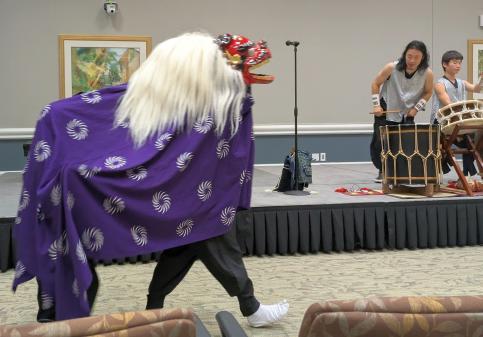
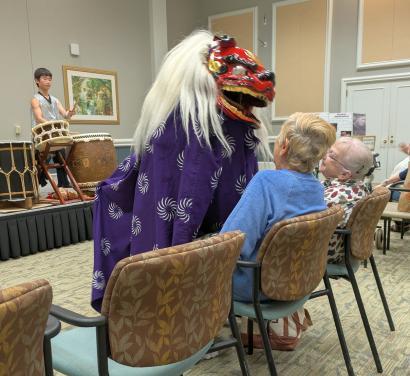
This performance was their 575th, the numberproudlydeclaredonaposteronthestage. Takumi and his children, ages 13, 12, and 8, all played like champions, with an extraordinary combination of skill and joy. The 12-year-old also recited the names of the forty states where they haveperformed,andheneverstumbledanddidn’t use any notes! In addition, the two youngest playedthepartofthedragonthatroamedthrough theaudienceatonepointduringtheperformance. So, if having a dragon put its mouth around your head brings good fortune, several of our residents are surely in for some luck. ⸙
Recent Events on Campus
PhotosbySanfordBerg
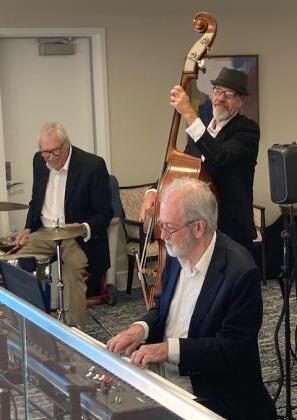
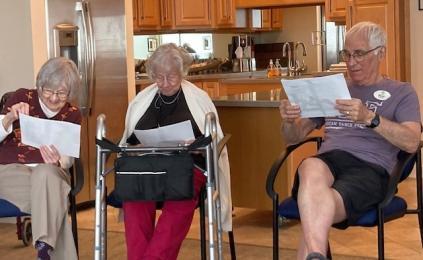
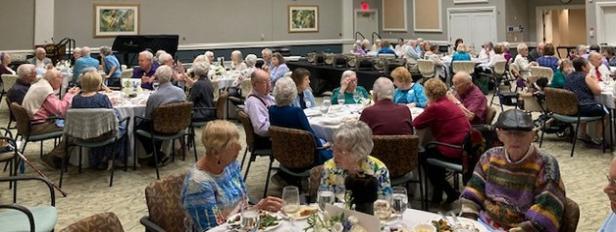
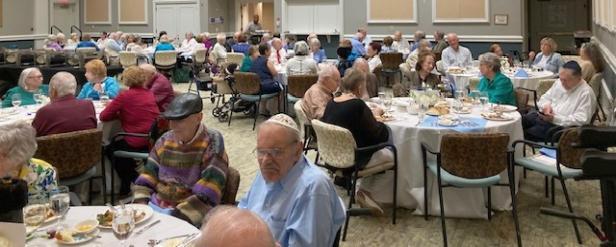
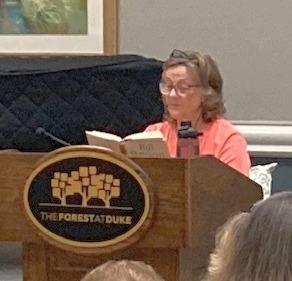
RobynSloan,ForestReaders,Sept17
FridaySocialHour Sept19
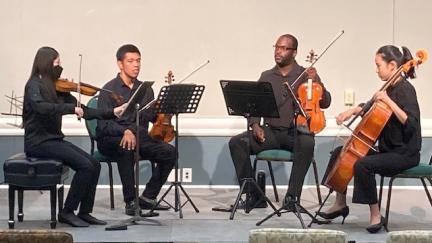
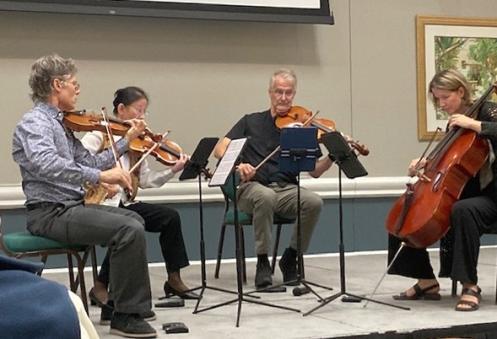
DurhamFellowsStringQuartet,Sept23
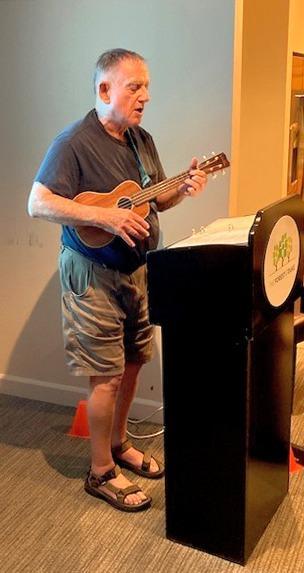
LastSaturdaySingalong, Friday,Sept26
CelebratingRoshHashanah,Sept25
CiompiQuartet,Sept26
WayoffBroadwaypracticefortheNov19 Show,Sept20
Recent Events
(continued from Page 15)
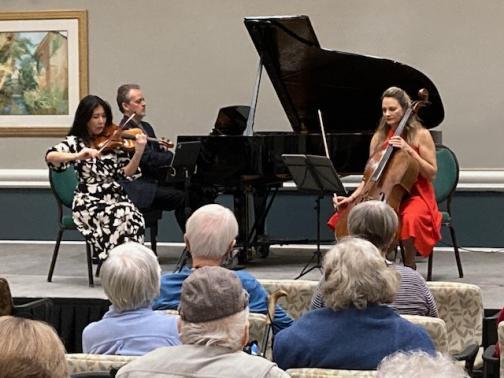
SummitPianoTrio,Oct14
Rummy,Oct5
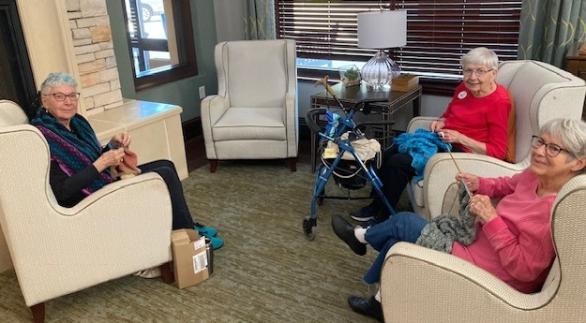
HandworkGathering,Oct5
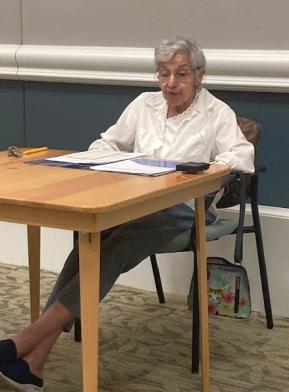
LynnLangmeyer,ForestReaders,Oct8
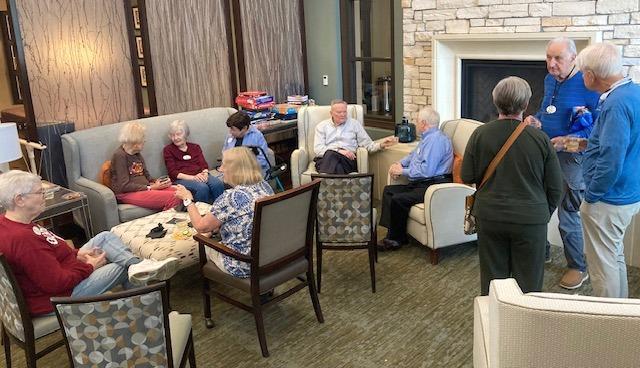
SocialHour,Oct10
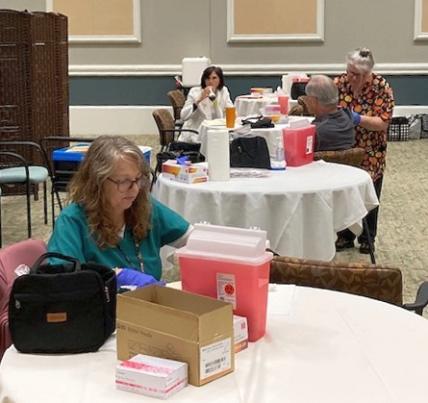
COVID&FluShots,Oct13
Recent Events
(continued from Page 16)
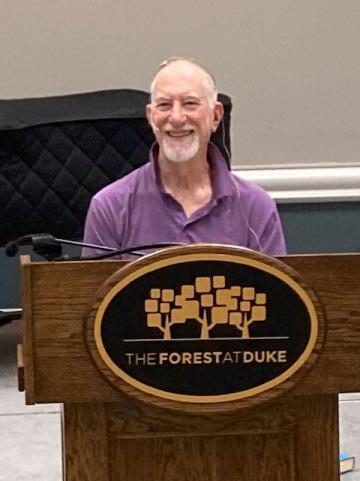

JimLichtenberg,ResidentReaders, Oct14
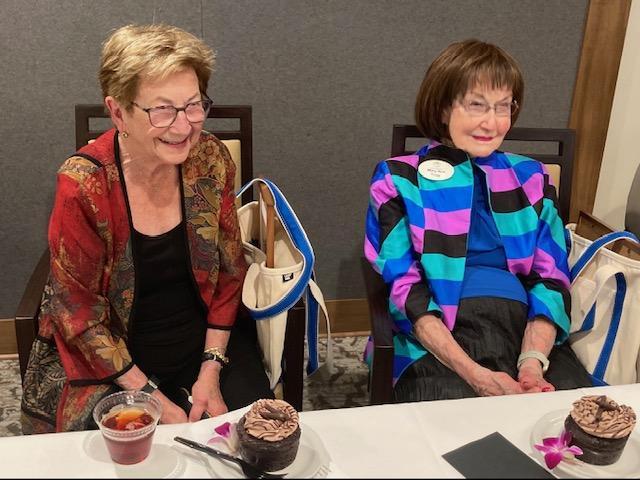
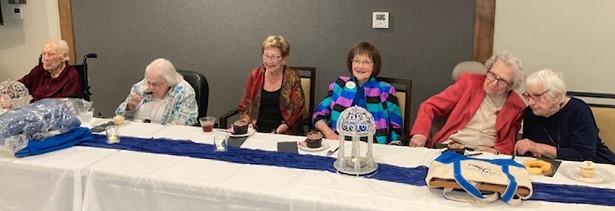
CentenarianCelebration,Oct16
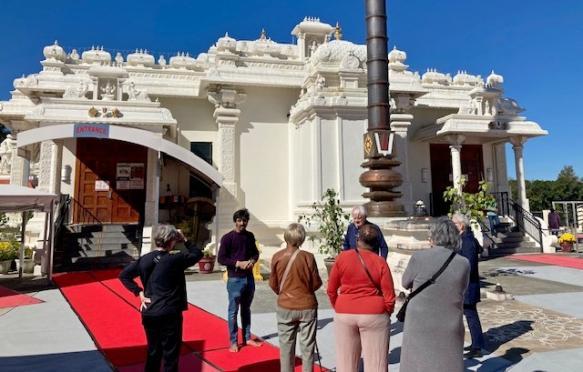
SriVenkateswaraTempleGuidedTour,Oct16
Recent Events
(continued from Page 17)
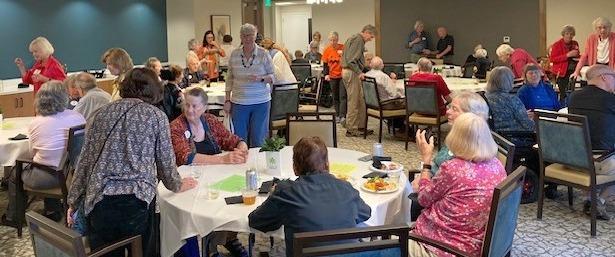
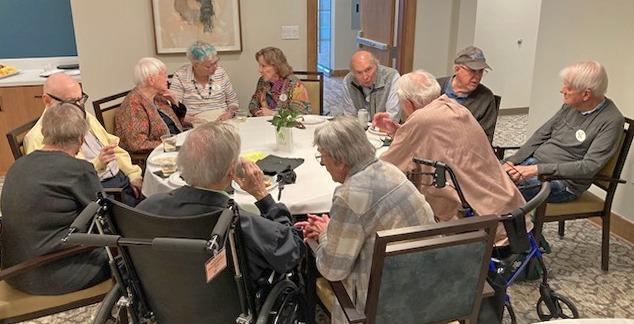
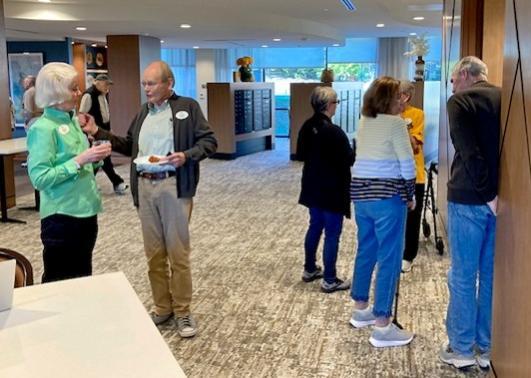
Meet & Greet Social Hour, Oct 14
Recent Events
(continued from Page 18)
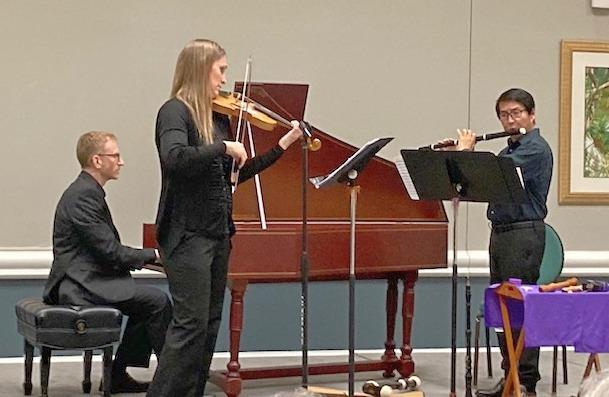
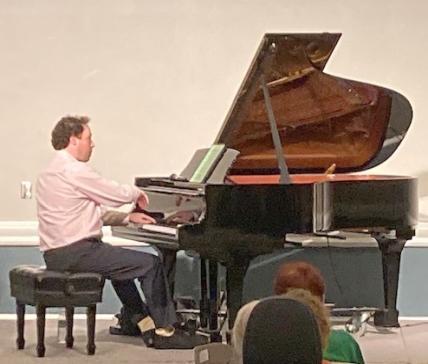
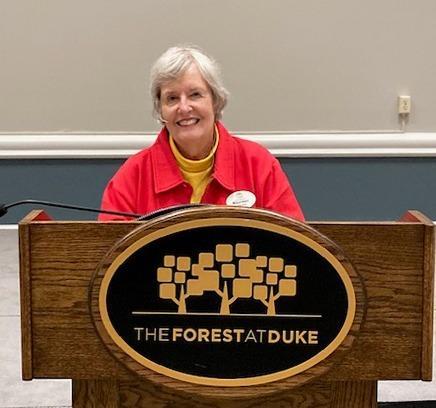
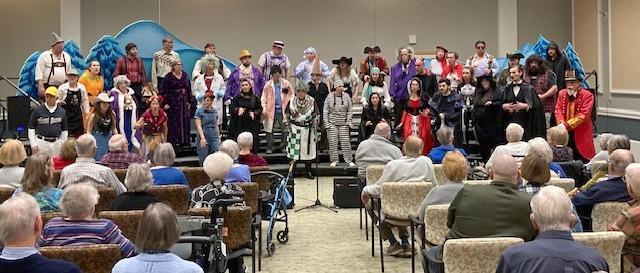
SolomonEichner,Oct21
MaureenJohnson,ResidentReaders, Oct22 Bats,Beasts,&Broomsticks,Oct21
HeartofCarolinaACappella ZombieJamboree,Oct23
Recent Events
(continued from Page 19)
Social Hour with Brother Dan and Tommy Raven, Oct 24