A DECADE OF IMPACT

A Multi-Level Analysis Of WiSPP’s Impact On Individuals, Institutions, & The Scientific Community
Authors: Melissa A. Wheeler, Alice Tinning, & Sarah Russell
A Multi-Level Analysis Of WiSPP’s Impact On Individuals, Institutions, & The Scientific Community
Authors: Melissa A. Wheeler, Alice Tinning, & Sarah Russell
Women in Science Parkville Precinct (WiSPP) brought together five of Victoria’s largest Medical Research Institutes, to work collectively to enable people to thrive in research. The initial five Institutes included, Walter and Eliza Hall Institute of Medical Research (WEHI), Peter MacCallum Cancer Centre (Peter Mac), Murdoch Children’s Research Institute (MCRI), Doherty Institute, and The Florey. The University of Melbourne joined WiSPP in 2022 and 2023.
Working together since 2014, WiSPP was driven by grassroots representatives and supported by leadership. WiSPP promoted equity through individual development programs, cultural change programs, and system reform initiatives. WiSPP worked passionately to improve workplaces and transform the systems that limit the diversity of leadership in medical research.
We acknowledge the Wurundjuri people of the Kulin Nations as the traditional custodians of the land on which we work and pay our respects to the elders past and present. We celebrate Indigenous women and men as the first scientists of this land and respect their sophisticated knowledge systems and care for the world we all live in. We acknowledge that the sovereignty of this land was never ceded. Always was, always will be Aboriginal land.

This work is licensed under CC BY-NC-ND 4.0
Authors: Melissa A. Wheeler, Alice Tinning, and Sarah Russell
DOI:10.60836/467h-dj22
Publisher: RMIT University

Date of Publication: October 2025
Recommended Citation: Wheeler, M. A., Tinning, A. & Russell, S. (2024). A Decade Of Impact: A MultiLevel Analysis Of WiSPP’s Impact On Individuals, Institutions, & The Scientific Community. RMIT University, Melbourne. https://doi.org/10.60836/467h-dj22
Image credits: All images sourced from Pexels (pexels.com) and Unsplash (unsplash.com).
Design: Mojo Design Co


Over the past decade, the Women in Science Parkville Precinct (WiSPP) has driven transformative efforts to advance equity in medical research in Australia. Despite substantive progress, there is still much to do, and a major reason for producing this report is to motivate others towards a bigger, broader coordinated effort. We learnt a huge amount during the process, and as new equity efforts sprout over the next phase, we hope our lessons will help.
This report reflects the strength of collective effort: institutes joining forces, staff sharing knowledge across organisational boundaries, and individuals stepping up as allies and advocates for change. At the heart of WiSPP’s approach is the recognition that genuine progress comes not from top-down mandates alone, but from sustained collaboration across all levels of the research community.
A key strength of WiSPP has been its commitment to embedding lived experience into the way we understand the problem of inequity—and therefore how we design solutions. By elevating the voices of those most affected by structural barriers, WiSPP has helped reshape what leadership, excellence, and success can look like in our sector. This grounding in real-world experience has made the work not only relevant, but deeply resonant.
Another key strength of WiSPP was our engagement right from the start with leadership – in institutes, government, peak bodies, and funding bodies. Ensuring leadership had skin in the game, and enabling dialogue between leaders and grassroots members, was essential to making change. Importantly, WiSPP’s grassroot foundations didn’t just complement formal policy and institutional reforms—they challenged, inspired, and strengthened them. By fostering collaboration, sharing practical strategies, and drawing on lived experience, WiSPP contributed to shaping policies and helped institutes translate equity goals into meaningful action.
It is an encouraging sign of progress that the “W” in our title (decided just over a decade ago), would no longer be acceptable in any new equity initiative. At the beginning we debated passionately on whether to focus on women, and the disheartening belief from most around the table was that our chances of making a
difference, slim at best, might be made more difficult by broadening the focus. As WiSPP evolved, so did our thinking. With increasing confidence in our power to make change, we could no longer justify focusing only on gender. This led us to shift our advocacy towards creating the Equity in Medical Research Alliance, to make sure diverse voices are heard across all levels and at decision-making tables across the sector.
As WiSPP concludes its work, we do so with immense pride in what has been achieved and deep optimism for what will come next. The seeds of collective action and collaboration that have been planted over the past decade now live on in the practices, policies, and people we’ve worked alongside. We hope the values and momentum WiSPP helped cultivate will continue to grow—informing future efforts, inspiring new leaders, and strengthening future collective efforts towards equity in medical research
What began as a grassroots initiative evolved into a powerful network of collaborators, allies, and advocates with a shared vision for a more equitable and inclusive medical research sector.
This impact report is both a celebration and a call to action. It honours the many individuals and institutions that have contributed to WiSPP’s efforts—and reminds us that lasting cultural change requires not only commitment, but collective responsibility.

Prof Sarah Russell Founding Member and Executive Committee Member, WiSPP

Alice Tinning Program Manager, WiSPP
Impact is the significant and lasting change, the result of a change program or intervention, that can be measured and evaluated beyond the immediate outcomes. When programs, such as those targeted at gender equality, are conceptualised, designed, and implemented, there is often a skewed
Impact is a big, somewhat ethereal concept and can be difficult to measure. When a change is introduced and positive or negative outcomes occur after the change, we are often unable to definitively say that this outcome was the direct result of this change: cause and effect. Causality is difficult to demonstrate outside of a lab, where all other factors can be tightly controlled.
The real world is messy, with exogenous shocks such as the pandemic, policy changes that affect funding, changes of leadership in an organisation, or even personal circumstances that affect the individuals participating in change programs or initiatives. We, therefore, look
focus on the what (the deliverables) and the how (the process), and even the why (purpose, need). But, if we stop there, how can we speak to the effectiveness of the outcomes of a program or to its lasting impact?
– not for ‘hard’ proof that the intervention caused an outcome – but for evidence to support the effectiveness and the observable impact of the program. We rely on the experiences of those at the grassroots of the change, of those who participated in the initiatives, and of those who observed and felt the flow-on effects.
Impact can occur at multiple levels: impact for individuals, for teams or groups, for organisations and institutions, for communities, and for society, more broadly. Individuals can experience personal growth, increased motivation and focus, or a sense of belonging. Organisations can be impacted by
• Clients
• Families
• Communities
• Funders
• Government
• Society
• Environment
increased efficiency, cultural shifts, and uplifted reputations. Communities can reap the benefits of social cohesion, shared goals, and reciprocal support. Change initiatives and programs can target one or multiple levels, and impact can spillover from one to another.
WHAT WE DO AND FOR WHOM
Changes in:
• Knowledge
• Attitudes
• Values
• Behaviours
• Conditions
While there are measurement challenges, impact reports, such as this, are vital to demonstrate the attainment of set goals, to efficiently distribute resources, and,
Figure 1. Outcome Types. This figure was first published in Ramia et al. (2021)
most importantly, to encourage others to progress the program of work and continue to promote growth.
Medical research in Australia has a gender equality problem. Consider the following figure, based on baseline data collected by WiSPP in 2019 as part of the Metrics Project, from five medical research institutes in Melbourne (see p19 for more details).
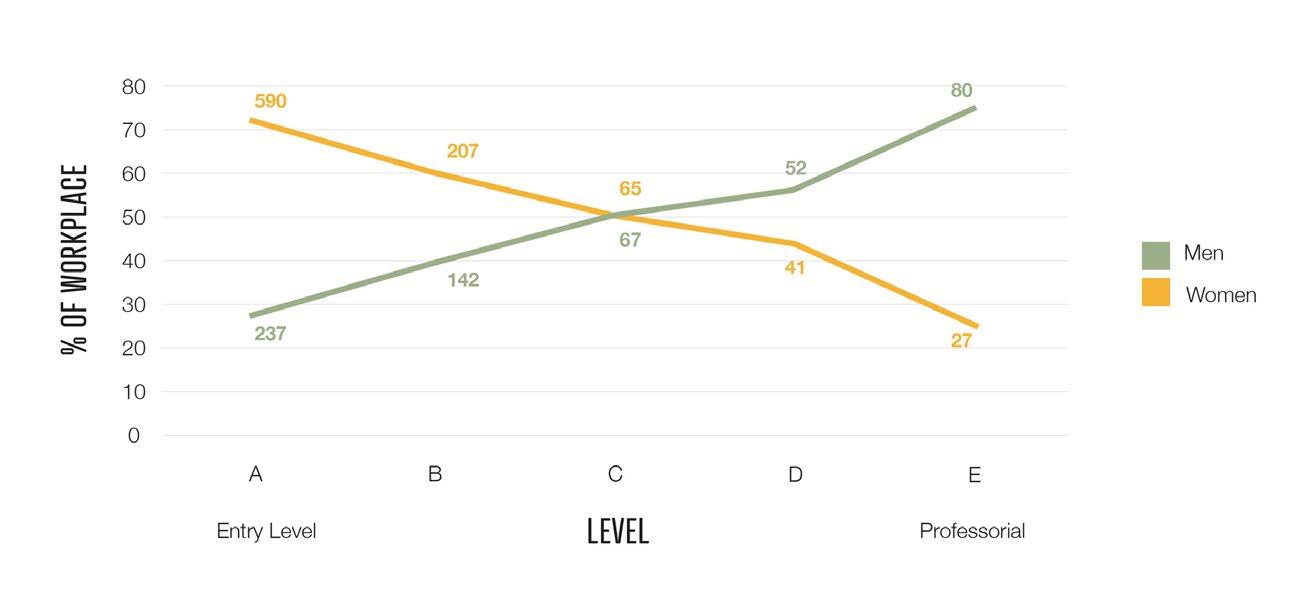
A few questions come to mind: why are women so over-represented at the early career stage (Level A) and yet so underrepresented at the senior, professorial level (Level E)?
There is no shortage of women attaining PhDs and entering medical research. However, differences in the rates of
retention and promotion between men and women result in this classic “scissor plot”, which resembles representation in academia more broadly (Thong et al., 2023).
The reasons are complex, but some explanations are:

A lack of role models, inequitable access to mentoring and support, sponsorship, and other drivers of career progression in medical research.

Unconscious bias and normalised discriminatory behaviours affect access to collaboration, publication, and funding opportunities.

Pressures of balancing family and carer responsibilities with competitive access to opportunities for research and career progression.
A lack of women in senior roles means that women do not have a seat at the table where current and future decisions are made.
WiSPP was formed in 2014 to address gender inequity among five of Australia’s largest medical research institutes (MRIs) in Parkville. WiSPP uses a collective impact strategy to secure the commitment of multiple groups in different sectors towards a shared goal of resolving the issue of gender inequity in medical research.
For collective impact, leaders come together to address change and all parts of the continuum simultaneously, not just fixing one program or problem at a time. Focusing on just one element may not make a big difference, and one single organisation or institution cannot accomplish this alone (Kania & Kramer, 2011).
“‘Why aren’t you doing more?’ was a challenge thrown at all of us attending a meeting about gender equity. It made me think about what could be done beyond my personal efforts and Institute efforts for change in this complex space. By chance, I’d been introduced to the concept of Collective Impact from Stanford in a different context, and the lightbulb went on. The Collective Impact Framework helps tackle deeply entrenched and complex social problems. It seemed perfect for the problems facing women in medical research. With seed backing from The Trust Company, WiSPP was born”
- Professor Julie Bernhardt, Deputy Director, Florey Institute of Mental Health and Neuroscience
WiSPP is grassroots driven, but institutionally championed and facilitated. Researchers and professional staff across all levels work together to identify and find solutions to barriers to the retention and advancement of women in their precinct.
1. Social change comes from strong partnerships and cross-sector coordination rather than from individual organisations working in isolation.
2. Cultural change requires a new kind of leadership. In the new model, individuals embedded in the communities form collectives that collaborate with the traditional hierarchical leadership to drive change
3. Creating sustainable change requires working across multiple levels for impact
Advancing gender equity and diversity in science and forging a culture where more peoples can thrive.
Development opportunities designed to advance gender equity
Collect data to track progress and design targeted initiatives
Promote inclusive leadership practices through policy development and cultural change
Compliment institute GE activities, align efforts, and share learning across the precinct
Identify drivers of gender inequity and enrol key stakeholders to influence reform
Advance research and translation
To design and deliver its programs, WiSPP relied on grassroots working groups with representatives from across Victoria, including medical research institutes, universities, and healthcare providers undertaking advocacy together.
Over 10 years of working this way, they built a community of advocates with the skills and influence to lead and support cultural change in medical research — bringing together more than 100 volunteers from the five WiSPP institutes,
as well as from across the sector nationally, to design and deliver programs and change initiatives.
To broaden their collective impact, WiSPP championed the efforts of other initiatives that are driven by goals of inclusivity, such as STEM Sisters and QueersinScience.
Over the past 10 years, WiSPP organised and implemented an array of initiatives to advance gender equity, inclusion, and belonging in the medical research community, from those designed for individuals, those that target institutions, and those aimed at the community.
While there are too many to name in this report, we would like to highlight a selection of impactful ones. In the following pages, initiatives will be presented based on different kinds of development: developing people, developing knowledge, and developing community.
“WiSPP has empowered underrepresented groups through tailored programs, support networks, and resources that foster career advancement. Its activities have created vital spaces for mentorship, knowledge exchange, and belonging, effectively addressing systemic barriers and promoting equity. With a focus on inclusivity, engagement, and partnerships, WiSPP has delivered meaningful outcomes and tangible progress.”
- Ruwangi Fernando from STEM Sisters
Medical research sees strong participation by women at entry levels— but not in senior roles. A key barrier to progression is unequal access to research funding. In 2019, WiSPP data showed that women made just over a third of grant submissions across the five institutes, despite representing more than half the workforce. This reflected national trends, with men receiving twice the funding awarded to women in the NHMRC Investigator Grant scheme that year ($241 million vs $122 million). WiSPP’s Intensive Grant Support Program was developed in direct response to these disparities.
In 2021, WiSPP was awarded a Women’s Leadership and Development grant (Prime Minster & Cabinet, n.d.) of $365,000 that enabled them to work in collaboration with Swinburne University to
deliver this program. This program empowered over 200 early- and mid-career women and nonbinary medical researchers to build the skills, confidence, and strategic insight needed to navigate the competitive grant landscape. Through intensive workshops, expert mentoring, and peer collaboration, participants reported increased grant submission rates, greater confidence in articulating research value, and enhanced professional networks. This initiative demonstrated a scalable, crossorganisational model for addressing systemic barriers to leadership in medical research and advancing gender equity in research funding.
“The skills I obtained throughout this program helped me gain my next position as a group leader. I am grateful for the experiences and recommend this program to anyone wanting to define their research and expand their network with some amazing people.”
- Participant in 2022 Program
“I loved the support and the lift it gave me to hear and see other women in very different research areas and stage of career supporting each other and hopefully improving our submissions. It is a hard road and the sharing that happened in the sessions was really supportive.”
- Participant in 2023 Program
“The grant mentoring program had large reach, built inter-institute support networks and had tangible outcomes for a large number of WiSPP members”.
- Dr Lynette Beatie, WiSPP Executive Committee
In 2022, I had the privilege of serving as a mentor for the Intensive Grant Support program, which turned out to be a transformative experience. Through the program, I met Dr Hyun Ko, an expert in cancer imaging. Hyun already had a keen interest in cancer cachexia, and we quickly realised our shared passion for the field. Connecting through the grant mentoring project was just the beginning—we forged a genuine friendship and went on to co-author several reviews, commentaries, and book chapters.
This year, Hyun became a Chief Investigator with me on an Ideas Grant, which was successfully funded. One of the standout comments during the review process was the strength of our team, highlighting the authentic collaboration between clinicians and scientists. I owe this success to the invaluable connections fostered through the WiSPP’s program.

The Inclusive Leadership Program was a research and training initiative funded by an Australian Government Women in STEM and Entrepreneurship Grant. Developed in collaboration with the Centre for Ethical Leadership (CEL), the program was tailored for teams working in medical research institutes (MRIs). Five organisations each nominated six teams, resulting in 30 teams (220 staff) participating in the pilot.
Grounded in the belief that inclusive leadership drives productivity, retention, and innovation, the program included two modules: one exploring concepts
like unconscious bias and privilege, and another focused on building practical leadership skills to foster inclusive team cultures.
Participants reported stronger engagement with inclusive leadership principles and reported behavioural changes in their workplaces. These included improvements in team communication, fairer delegation of growth opportunities (such as stakeholder engagement), and increased openness to feedback.
“For me, the Inclusive Leadership program exemplifies the strengths of a successful grassroots organisation: identifying gaps, designing innovative responses, securing funding, and uniting diverse stakeholders to deliver long-term initiatives. It produced valuable data, drove impactful outcomes, and showed a strong commitment to reflection and continual improvement.”.
- Dr Jo Hildebrand, WiSPP Executive Committee
Launched in 2016, this cross-sector initiative paired 15 senior managers from National Australia Bank (NAB) with emerging researchers and research support staff from the five WiSPP Institutes. The program offered participants valuable perspectives beyond their own sectors, with many citing the experience as transformative for their personal and professional development.
This program aimed to strengthen leadership pathways for women in health and medical research. Five senior leaders from participating institutes were matched with mentors from Deloitte’s Executive Leadership team, gaining critical leadership insights and strategies to support the development of future leaders in the sector.
“The mentoring program helped me to cut through the business of the everyday to achieve clarity of vision for my priorities and next steps. This has resulted in in two big grant wins - a $2.5 million NHMRC Centre of Research Excellence called SPECTRUM (Supporting Participatory Evidence generation for Control of Transmissible diseases in our Region Using Modelling) and a $3 million regional development grant from the Department of Foreign Affairs and Trade Indo Pacific Centre for Health Security, called SPARK (Supporting Preparedness in the Asia-Pacific Region through Knowledge)”
- Professor Jodie McVernon, Director of Doherty Epidemiology
Creating and sustaining change is challenging. It requires not only recognising the need for change but also providing clear, actionable steps. Robust data is critical to this process.
In 2016, WiSPP developed a metrics framework, collected baseline data, and surveyed staff across the five partner institutes to assess the representation and utilisation of women at all levels. This data informed the design of targeted interventions to address the individual, institutional, and systemic barriers to women’s career progression in medical research.
Follow-up data collected in 2019 and 2022 shows that all five Parkville institutes are making slow but positive progress— mirroring national trends reported by Science in Australia Gender Equity (SAGE, 2022) and the Association of Australian Medical Research Institutes (AAMRI, 2025).
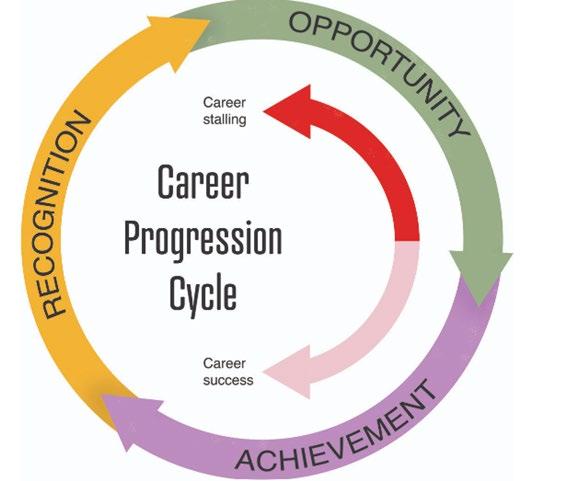
WiSPP’s metrics framework is informed by the concept of a virtuous— or vicious—career cycle, where opportunities lead to achievements, achievements lead to recognition, and recognition creates further opportunities.
“Data provides valuable insights and has the power to change perspectives and track progress. WiSPP collects essential data that reveals where the gender gaps are in the precinct and uses it to design programs with the view of making significant progress towards equality.”
- Associate Professor Alicia Oshlack, Head of Bioinformatics, Murdoch Children’s Research Institute
“Being part of WiSPP has enabled us to keep (gender) equity firmly on the radar at our Institute. The metrics project has been invaluable in enabling us to take a deeper dive into what is really going on at our Institute. It has also been a huge benefit to have the WiSPP network as a backup to ensure that equity issues are not ignored, and that we are able to leverage progress and approaches at other WiSPP institutes.”
- Impact Survey Participant, Anonymous
“I believe that a huge aspect of improving equity in the medical research sector is taking stock of the level of inequity present in the first place. In this way, the surveys that WiSPP have circulated to institutes in the precinct have been instrumental in quantifying this inequity at not only an institute level, but a precinct-level. This information could be the foundation for policy change, through lobbying ministers and/or institute leaders, affecting every student and staff member in the precinct.”
- Impact Survey Participant, Anonymous
The Respect in Research Project began in June 2018, when former Sex Discrimination Commissioner Kate Jenkins launched the National Inquiry into Sexual Harassment in Australian Workplaces. Early in the process, Jenkins engaged with leaders from the five WiSPP member institutes at a roundtable hosted by WiSPP. This session formed an early data point for the Respect@Work Report, the landmark outcome of the national inquiry.
In 2021 WiSPP partnered with the Association of Australian Medical Research Institutes (AAMRI) to develop the Respect in Research Project. The goal was to support medical research
institutes to prevent gendered and sexual harassment and to foster safer, more inclusive workplaces.
Supported by the Victorian Government, the project produced a practical, expert-informed report launched by Sex Discrimination Commissioner Dr Anna Cody at the AAMRI National Conference in November 2023.
This collaboration not only provides a foundation for sector-wide change but also strengthened WiSPP’s national profile as a trusted leader in advancing gender equity and respectful workplace culture.
“Firstly, it [The Respect in Work Project] addresses a really important but difficult and thorny issue which affects the careers of many people in research. Secondly, the partnership with AAMRI was a fantastic way to bring a broader range of people to the thinking on this issue and the advisory group captured the input from a really wide range of people. Thirdly, it has produced a report,…a fantastic strategic document which is cross-referenced, researched, and reflective of the wide consultation that went into it. Due to all of the above, this is a hugely influential document which can guide and influence responses for many years to come. A huge legacy.”
- Impact Survey Participant, Anonymous




WiSPP has played a key role in building a strong community of allies for gender equity across the Parkville medical research precinct. By partnering with People and Culture teams and Equity and Diversity Committees across its member institutes, WiSPP aligned its work with local priorities and strengthened institutional commitment to equity. Through its committees, working groups,
and task forces, it created a precinctwide network of advocates equipped with the skills, confidence, and practical experience needed to lead cultural change. This collaborative approach fostered cross-institute problem solving and a deeper understanding of what works to advance gender equity in science and medical research.
In 2020, WiSPP received seed funding from the Victorian Government to begin establishing the Equity in Medical Research Alliance (EMRA). This enabled the formation of a volunteer Working Group drawn from across the Victorian medical research sector. The group coordinated submissions, proposals, and reports focused on workplace culture and equity, including a significant contribution to the Victorian Health and Medical
Research Workforce Project, informing the development of the Victorian Health and Medical Research Strategy 2022–2023.
WiSPP’s national collaboration with AAMRI on the Respect in Research project further expanded its reach and strengthened a national network of allies for cultural change in medical research.
In describing the personal and/or professional impact of WiSPP, one participant stated he had:
“developed new knowledge, opened my views further into the experience of others in the workplace and how I can be a more effective messenger of change and ally (I’m a middle-aged white male in a leadership position)”.
- Dr Neil Cunningham, Respect in Research Advisory Group Member


Support women and underrepresented groups to thrive and excel in medical research.
Ensure Diversity, Equity, and Inclusion is leadership priority in our MRIs and drive strategic action by leadership (collaborate, compliment, and amplify).
Activate and enable grassroots action to drive cultural and systems change.
At the individual level, WiSPP’s goal was to support women and underrepresented groups to thrive and excel in medical research.
WiSPP’s Individual Development Programs were not about “fixing women” – they were about supporting women in systems that are currently not designed to allow them to thrive at equal rates to
men. Programs aimed to foster a positive culture, where all careers were supported and celebrated. Programs offered range from science communication, CV and career interruption statement writing, career pathways, leadership awards, cross-sectorial mentoring programs, grant support programs, and resilience workshops in the 2020/2021 lockdowns.
Career Disruption Workshop - February 2015
Grant and Fellowship Workshop - December 2015
Women Who Code workshop - 2016
Diversity in Science Public Lecture - June 2016
Leadership Development Day - August 2016
WiSPP Perfect Pitch Science Communication Competition - October 2016
NAB Cross Sectorial Mentoring Program - 2016
Future Leaders Awards - 2017
Regional Girls Innovation Challenge - 2018
Grant Peer Mentoring Program - 2018 and 2019
Deloitte Cross Sectorial Mentoring Program - 2018 – 2019
Career Disruption Workshop - December 2017
Social Media Workshop by The Social Science - October 2017
Women who Code - August 2017
Career Pathways Workshop Series (Career Showcase, Career Confidence, Resilience and CV Writing) - 2018
Self-Managed Career Workshop Series (Career Showcase, Network, Resilience,
Strategic use of Social Media) - 2019
Resilience Workshop Series x 3 - 2020
Intensive Grant Support Program - 2021-2023
“WiSPP contributed significantly to increase my self-confidence. Coming from abroad, I was really impressed when I discovered that there was an organisation like WiSPP to support women in science and I wanted to be a part of it. During almost 3 years I participated in two different working groups, and the experience was incredibly rewarding. Until I joined WiSPP I had not felt a sense of belonging to a community. The support that I found in WiSPP helped me professionally, since I started to believe more in myself and my abilities to transition to the next step of my career to become a group leader.”
- Impact Survey Participants, Anonymous
WiSPP “helped to build my confidence and make me feel less alone in the issues I was struggling with at the time as an early career researcher”.
- Impact Survey Participants, Anonymous
While WiSPP has made a profound impact, reaching over 2500 researchers over the years, from those who make up the executive team, those employed in the five medical research institutes in Parkville, and those who participated in various programs run by WiSPP, let’s shine a spotlight on two. We interviewed two individuals who participated in one or more WiSPP initiatives over the past years and developed case studies to examine WiSPP’s impact.
In this section, you will meet Dr Joanne Hilebrand and Dr Winnie Tan. Each has identified outcomes after participating in WiSPP initiatives, but more deeply, they were able to share with us the impact WiSPP has had on their careers.
When Jo moved from the Western suburbs of Melbourne to the city to commence her undergraduate studies, she was initially more worried about class barriers. She wondered how she would fit in with the private school graduates and if she would be perceived by them as working class, based on where she grew up. Of course, there are more ways to be minoritised than class alone.
As Jo progressed in her scientific studies, she noted a lack of women role models. Whilst she had wonderful supervisors as an undergraduate, she didn’t really have any women to look up to, other than a couple of lecturers that she admired from a distance. This disparity would become more obvious to Jo as she advanced in her career.
After completing her PhD and landing a research position at WEHI, like many in their early careers, she became a mother. There was never really a question of who would pause their career to care for their children. Jo and her partner, also a scientist, fell into the traditional roles, with Jo spending years in part-time work after two periods of maternity leave and her partner returning to full-time work.
Jo could feel the impact of this on her career and could see other women were experiencing the same. She felt like she needed to get out there, to learn more, and to do something.
Jo heard about and attended a career development event run by WISPP; she then got involved in the WiSPP

Committee. In the beginning Jo felt a little out of her depth, but as she participated in the Committee and contributed to the development of the initiative, her confidence grew.
As part of the WiSPP Executive Committee, Jo gained experience and confidence in forming relationships and communicating across different departments and at all levels of her institute, including at the most senior levels. She has also had the opportunity to participate in consultation with key stakeholders, including government agencies and members of parliament. She has been exposed to different approaches to working and communicating that empowered and strengthened her work as a scientist. She has learnt that she is good at winning people over and influencing them when it’s something that she really believes in.
Since her undergrad days, Jo has always wished for a mentor or sponsor, that person in your professional life who really wants you to succeed and will help you to do it.
Jo believes that the personal and scientific mentorship she received from her WiSPP Executive colleagues boosted her confidence and powered her career, resulting in her winning two significant research grants. To pay it forward, Jo now plays the role of mentor to other women researchers.
Dr Joanne Hildebrand is a cell biologist by training, completing her PhD at the University of Melbourne and Bio21 Institute in 2008, and post-doctoral training at the University of Iowa, USA. Dr Hildebrand has been a senior research officer and senior scientist at The Walter and Eliza Hall Institute since 2012, specializing in cellular signaling and inflammatory disease.
Winnie first participated in a WiSPP program in 2021, when she attended the Intensive Grant Support Workshop Series. This small group program aimed to support early and mid-career women and non-binary researchers to secure research funding and support their career progression. The program was designed to increase their knowledge of the grant writing process and build their capacity in a range of grant development and writing skills.
As an attendee, Winnie enjoyed meeting other women researchers with similar career tracks and receiving grant feedback from fellow program participants. Although other participants were from different research fields, she obtained helpful feedback with diverse perspectives, as well as input from scientific experts and program

facilitators, all of which contributed to shaping the narrative of her grant. After her successful 2023 NHMRC submission, Winnie was asked to return to the WiSPP program - but this time - as a workshop facilitator to support other researchers through the grant writing process.
Following participation in the WiSPP program, Winnie felt empowered after hearing how many other women have faced similar challenges to herself and how they overcome them. She feels more confident sharing her grant ideas and believes the program allowed her to have a profound impact on a wider audience. As a facilitator of the program, she also learned how to better facilitate scientific workshops to effectively support others.
Dr Winnie Tan is a senior postdoctoral researcher at the Walter and Eliza Hall Institute of Medical Research. She uses cryo-electron microscopy, advanced imaging and mass spectrometry methods to study why certain genes cause cancer to drive development of treatment.
“WiSPP has helped us look carefully at the root causes and effects of gender equity in our precinct. They have facilitated essential conversations and built our capabilities to lead and support cultural change. WiSPP has built a strong foundation to bring the sector together to address the complex challenges of inequity in the medical research sector.”
- Professor Kathryn North, Director Murdoch Children’s Research Institute (taken from WiSPP’s Five Year Progress Report)
WiSPP has played a catalytic role in advancing gender equity across the Parkville medical research precinct, complementing and amplifying the significant equity and inclusion efforts already underway within its partner institutes.
WiSPP’s cross-institute model enabled the formation of a strong collective committed to cultural change. By connecting and supporting staff across institutes—many of whom were already working to improve equity—WiSPP helped to consolidate efforts, build critical mass, and elevate the visibility of this work. As one executive committee member reflected,
“WiSPP helped to provide a critical mass,” making equity initiatives more coordinated, credible, and sustainable. Through close collaboration with People and Culture teams and Equity and Diversity Committees, WiSPP aligned its programs with institutional priorities and helped bring shared challenges into precinct-wide focus. The initiative reinforced and accelerated institutional action by offering practical frameworks, peer learning, and access to resources that could be adapted to each organisation’s context.
Data collection via an Impact Survey indicates that WiSPP’s collaborative approach supported a range of institutional impacts, including:
• the establishment and strengthening of gender equity, diversity, and inclusion (GEDI) committees
• more systematic collection and use of diversity and inclusion metrics
• improved consideration of career interruptions and caring responsibilities
• policy changes around recruitment, promotion, and parental leave
• normalisation of inclusive practices, such as flexible meeting times and visible equity commitments
Importantly, WiSPP did not act in isolation—it worked in partnership with committed leaders, equity advocates, and staff across each institute. Together, they contributed to an environment where gender equity is increasingly embedded in institutional culture, structures, and decision-making processes.
“[WiSPP] has boosted leadership capabilities of senior female leaders. [It] has led to policy changes relating to diversity and inclusion and the metrics by which we measure success.”
- Impact Survey Participants, Anonymous
“In general I can see that gender equality has become more accepted as something to pursue across the two WISPP organisations that I have worked in over this time. Policies have been put in place or defined more clearly in areas such as recruitment, promotion and parental leave.”
- Impact Survey Participants, Anonymous
“Things we think as normal now were ideas that were championed by WiSPP. As just one example, gender representation across all levels of our organisation is openly discussed, as are barriers that impact on this. We still have a long way to go, but I see that WISPP is a champion of these conversations and practices that are not yet ‘normal’.”
- Impact Survey Participants, Anonymous
As one of Australia’s leading cancer research centres, Peter MacCallum Cancer Centre has played a pivotal role in WiSPP’s journey—and WiSPP has, in turn, shaped how Peter Mac approaches equity, governance, and cultural change. The impact of this partnership shows how embedding grassroots efforts into governance, supported by data and mentoring, can transform both culture and careers.
Participation in a collective enabled WiSPP partners to share learning and align efforts. By connecting Equity and Diversity Committee representatives across the precinct, WiSPP strengthened institutional initiatives. At Peter Mac, this led to structural changes through its Gender Equity and Diversity Committee, closely aligned with WiSPP’s programs and goals.

“WiSPP has played a very important role in the development and implementation of Peter Mac’s gender equity strategy and ensuring that our policies are aligned with our precinct partners. WiSPP has also provided a critical, independent source of advice to aid in both GE strategy development and in our executive response to some challenging situations.”
- Prof Ricky Johnstone, Executive Director Cancer Research, and Prof Rick Pearson, Associate Director Laboratory Research, Peter Mac
Peter Mac embedded WiSPP into its governance by appointing a representative to the People & Culture Sub-Committee of the Board, ensuring equity issues were visible at the highest decision-making level. This exemplified WiSPP’s model of grassroots advocacy partnering with senior leadership to embed sustainable change.
Through WiSPP’s Metrics Project, Peter Mac systematically examined workforce gender equity, identifying priority focus areas in publications, grants, and career interruptions. WiSPP data also underpinned affirmative action initiatives such as the Lea Medals and Endurance Grants.
“The metrics assessment of how well Peter Mac is doing in terms of gender equity has helped improve gender equity at Peter Mac. It raised awareness and prompted more conversations about this.”
WiSPP’s cross-sector mentoring and grant programs, built skills, confidence, and delivered tangible career outcomes.
“The metrics project and mentoring opportunities provided by WiSPP gave me confidence at a pivotal time in my career.”
“The skills I obtained through the Grant Mentoring Program helped me gain my next position as a group leader. I am grateful for the experiences and recommend this program to anyone wanting to define their research and expand their network.”
Peter Mac became an early leader in addressing sexual harassment. With WiSPP’s support—beginning soon after the #MeToo movement and including a key roundtable with Kate Jenkins—the institute gained tools and sector-wide alignment through the Respect in Research project (with AAMRI). This work led to the adoption of “Stopline,” an anonymous reporting system, and ongoing policy reform through RGEDI and People & Culture committees, including a harassment and bullying working group.

To demonstrate WiSPP’s influence and impact across the scientific and medical research sectors, the following testimonials capture direct feedback from individuals and organisations who have worked with, benefited from, or observed WiSPP’s work since its inception.
These perspectives highlight WiSPP’s reach—both within medical research and across the broader STEM ecosystem— and its contribution to lasting cultural change. Additional testimonials can be found in the Initiatives section of this report
“WiSPP’s support in both applying for grants and developing an evaluation framework reflected their commitment to empowering women in science and public policy. These efforts contributed to the sustainability and growth of STEM Sisters, allowing us to make a lasting impact in promoting gender equity and inclusion in STEM fields.”
- Ruwangi Fernando, STEM Sisters
“WiSPP provided key advice and assistance at a time when we were growing our organisation, including support with grant applications. I’m not sure QueersInScience would be where we are without WiSPP.”
- Sarah Gordon, QueersInScience
“I participated in mentoring initiatives with high-school girls through WiSPP, which were amazing for addressing the under-representation of women in STEM careers. Inviting them to our institute and sharing our research showed them the range of possibilities in STEM. Many of the girls, especially from remote areas, told us they were inspired and saw new opportunities they hadn’t considered before.”
- Anonymous, Impact Survey Participant
Since its inception in 2014, WiSPP has emerged as a respected and influential leader in gender equity within the STEM and medical research sectors. During a period when equity and inclusion have become core policy priorities for both state and federal governments, WiSPP has established itself as a trusted convenor—bringing together researchers, institutes, policymakers, and advocates to collectively address the systemic drivers of gender inequity.


WiSPP’s impact extends well beyond its founding partner institutes. Through its grassroots advocacy approach, it has helped shape sector-wide reforms and policy development—ensuring the lived experiences of researchers inform structural change.
WiSPP has worked closely with the Victorian Government’s Office of Medical Research to influence key funding and policy initiatives. Its advocacy contributed to equity-focused criteria in the Victorian Medical Research Acceleration Fund and informed the design of Veski’s Career Recovery Grants. WiSPP also helped shape the Victorian Health and Medical Research Strategy 2022–2023 through active consultation.
At the national level, WiSPP co-led the Respect in Research project with AAMRI, producing the first sector-wide policy report on preventing sexual and gendered harassment in medical research. Launched by the Sex Discrimination Commissioner in 2023, the report is now a key resource driving national action. In 2021, WiSPP co-hosted Reboot STEM with the Australian Academy of Science, a national forum that challenged traditional success measures in science and promoted more inclusive, equityfocused research cultures.


For those leading for the cause (founders, committee members), there is a benefit in being in the ‘sweet spot’ of seniority. Those too senior (as in directors of institutions) may experience conflicting priorities, needing to put their institute over the needs of the cause; those who are more junior may not have the resources, networks, or capital to see
the change through. Those in the middle can relate with both upper management and earlier career-stage colleagues. Those in the sweet spot can navigate challenges and advocate for change in both directions and bring out the best in more senior or junior colleagues.
In negotiating priorities and working with diverse stakeholders, finding common ground can be tough. If you start using language like, “they just don’t understand” or “they’ll never listen”, you are probably facing a lack of shared understanding. First, identify who you mean by “they”, then invite them to the table. When you begin problem-solving together and shift the language to “we” statements — such as “we need to develop…”, — you foster stronger
engagement and reduce tension between previously conflicting priorities.
Reflecting on WiSPP’s journey, committee members highlight both the early challenges of fostering collaboration in a competitive research environment and the evolution towards becoming a trusted leader in equity-focused culture change.
“Key to the success of the genesis of WISPP was identifying mutually beneficial outcomes for all partners. This was initially challenging to navigate due to the fierce competition that exists between Medical Research Institutes for limited government funding. As a result of this competition, it is not commonplace for research institutes to work collaboratively. A great challenge for the initial stages of the project was getting people in the same room - we did this by building trust and engaging with Reos Partners, experts in working with social and systemic change. While leadership buy in was critical initially, building a community of advocates sustained the work and impact of WISPP.”
- Dr Emma Burrows, WiSPP Committee Member
“As WiSPP and the entire Diversity & Inclusion sector became more experienced and sophisticated in its approach (moving away from the ‘lean in’, deficit model to evidence backed culture change initiatives), our reliance on others waned, and WiSPP became the respected experts and authorities in the space. I strongly believe that WiSPPs assistance of other grass-roots organisations has been much more gracious, constructive, and very much in the spirit of cooperation and alliance rather than competition – because WiSPP was/is there at the grass roots. With several institutes involved, decision making is much more communal, and less influenced by issues of power imbalance/conflict of interest.”
- Dr Jo Hildebrand, WiSPP Executive Committee
Over time, equity and inclusion work has moved beyond the old “fix the individual” approach, recognising that it’s the systems and structures that need to change. Yet in WiSPP’s early years, some of that individual development work — creating spaces for people to connect, share experiences, and support each other in the face of systemic barriers — became the glue that held the collaboration together. This shared activity provided immediate, practical support while building the trust and relationships that made collective impact possible.
WiSPP’s goal was always to target systemic change: to fix systems, not individuals. However, as more people — particularly women in the sector — asked for programs and training to help them build skills, confidence, and networks, WiSPP adapted. While recognising that individuals are not the problem, they responded to what their community wanted. By offering opportunities for personal and professional development, they not only supported individuals but also grew the number of people advocating for systemic change.
“WiSPP raised awareness about the challenges faced by women and underrepresented minorities in medical research. By highlighting these issues, they initiated conversations, promoted understanding, and encouraged action to address systemic barriers.”
- Impact Survey Participant, Anonymous
One male Impact Survey participant encapsulated the impact of inclusivity, sharing that he, “developed new knowledge. [WiSPP] opened my views further into the experience of others in the workplace and how I can be a more effective messenger of change and ally”.
“... By working together, we really have made positive change happen at local (institute) but also sector, government, policy level, raising awareness of inequity and assisting/inspiring other groups to create collective impact action…This has been incredible to witness... - all from the idea of working together strategically!”
- Prof. Julie Bernhardt – Founding Member of WiSPP
SECURED $1,230,000 of philanthropic and government support.

Over 60 volunteers from the five WiSPP institutes have participated in the design of our programs and change initiatives.

Linked 110 women with grant mentors to enable them to get their ideas on paper to attract big funding.
Our programs have reached over 2500 researchers.

Provided 30 research teams with Inclusive Leadership training designed by the Centre for Ethical Leadership.
Connected 20 emerging and established leaders to NAB and Deloitte executives, providing high-level leadership and innovation training.
Brought together 30 diverse staff to work on Taskforces to identify causes of and potential actions to resolve gender inequity in medical research.

Facilitated workshops for over 1,500 staff in coding, social media, science communication, CV and career interruption statement writing, career pathways, confidence and resilience.

The lasting impact of WiSPP shines through each page of this report. For others who want to respond to WiSPP’s call to action, to take up the baton and continue to advance equality in the medical research community, you won’t need to start from scratch.
What we know from WiSPP’s experiences in this space:
A grassroots approach is still needed.
“This provides the opportunity for all to be involved, increasing engagement and support for the overarching aim of WiSPP. It empowers people to feel they can contribute.”
- Dr Lynette Beatie, WiSPP Executive Committee
“Driving change from the grassroots. Being the voice of a collective of people who haven’t always had a voice or whose voice isn’t heard/listened to. Making evident the power of collective action.”
- Impact Survey Participant, Anonymous
But support from the top is also a must.
“Working from the grassroots up is a complementary approach to top-down initiatives. Either alone won’t be able to create the change needed in a genuine and sustainable way. Top-down initiatives need to be informed by what’s going on ‘in the real world’, engaging with people who are passionate and motivated to see things improve. It is important that the people who are living the experience are involved in developing the solutions!”
- Dr Miranda Smith, WiSPP Executive Committee
It’s time to get more inclusive.
“For sustainability, more intersectional cross-institute relationships should be fostered, bringing in perspectives of neurodivergent and disabled folk, LGBTIQA+, Aboriginal and Torres Strait Islander and other people of colour. Many of the issues of exclusion and discrimination are similar, and by addressing things with a wider lens, it will benefit a broader range of people and create a culture where more people are empowered to succeed.”
- Dr Miranda Smith, WiSPP Executive Committee
Over ten years ago, a collection of individuals and institutions in the Parkville Precinct of Melbourne came together to strategically impact gender inequality in the medical and scientific research community. Over time, the work has expanded beyond a sole focus on gender to take a more intersectional approach — recognising that people’s experiences are shaped by multiple, overlapping forms of inequality and that lasting change must address these interconnected barriers.As this report has detailed, WiSPP has demonstrated a solid collective impact over this time, at the level of individuals, of institutions, and of the scientific community, more broadly.
For genuine collective impact to occur, multiple groups in different sectors need to commit to working towards a shared goal.
WiSPP facilitated collective impact by taking a grassroots approach by bringing together researchers and professional staff and to securing champions in its five medical research institutes.
They broadened their collective by supporting and empowering others in their community, outside of the initial medical research institutes. Together, they worked from bottom up and top down with people across all levels to identify and find solutions for the retention and advancement of women and other underrepresented groups in their precinct.
While the collective impact evidenced throughout these pages has been profound, with ripples of positive change coursing through the community, the work is not yet complete.
But a strong foundation has been laid.
To the readers of this report, we encourage you to continue to advance equality in medical and scientific research and to build on the strategic collective impact that WiSPP has embarked on. By using your own resources and position, you can enact the change you want to see together with others who are doing the same.
Since 2024 WiSPP has been made possible through the support of:
• The Trust Company (which subsequently merged with Perpetual)
• Perpetual’s IMPACT Philanthropy Program
• The Australian Department of Industry, Science and Resources through a Women in Science and Entrepreneurship (WISE) grant
• The Department of Prime Minister and Cabinet through a Women’s Leadership and Development Grant
• The Victorian Department of Jobs, Precinct and Regions through the Office for Health and Medical Research
• Partnerships with Association of Australian Medical Research Institutes (AAMRI)
• And support from our five member institutes
Dr Lynette Beatie
Professor Julie Bernhardt
Dr Kiymet Bozaoglu
Dr Emma Burrows
Dr Marguerite Evans-Galea AM
Dr Joanne Hildebrand
Professor Vera Ignjatovic
Professor Misty Jenkins
Professor Alicia Oshlack
Associate Professor Sarah Londrigan
Professor Sarah Russell
Dr Lorey Smith
Dr Miranda Smith
Professor James Vince
Professor Alicia Spittle
Dr Lucy Sullivan
Professor Katherine Kedzierska
Professor Justin Boddey
Professor Tim Silk
Professor Jhodie Duncan
Professor Sheena Reilly
AAMRI. (2025). Accessed on 28 July 2025 from https://aamri.org.au/.
AAMRI & WiSPP. (2023). Respect in Research. Melbourne, Victoria: AAMRI & WiSPP. https://aamri.org.au/advocacy/gender-equity-diversity-and-inclusion/respect-inresearch-project/
Department of Jobs, Skills, Industry and Regions. (2024). Victorian Medical Research Acceleration Fund. Accessed on 10 July 2024 from https://djsir.vic.gov.au/medicalresearch/sector-support/Victorian-Medical-Research-Acceleration-Fund
Fox C. (2017). Stop Fixing Women: Why Building Fairer Workplaces Is Everybody’s Business. Montgomery, AL: NewSouth.
Kania, J., & Kramer, M. (2011). Collective Impact. Stanford Social Innovation Review, 9(1), 36–41.
NHMRC. (n.d). Research Policy. Accessed on 10 July 2024 from https://www.nhmrc.gov.au/research-policy/gender-equity
Ramia, I., Powell, A., Stratton, K., Stokes, C., Meltzer, A., Muir, K. (2021). Roadmap to outcomes measurement. Your step-by-step guide to planning, measuring and communicating social impact. Centre for Social Impact.
Ryan, M. K., & Morgenroth, T. (2024). Why we should stop trying to fix women: how context shapes and constrains women’s career trajectories. Annual Review of Psychology, 75(1), 555-572.
Prime Minister & Cabinet. (n.d). Accessed on 8 July 2024 from https://www.pmc.gov.au/office-women/working-for-women-program
SAGE. (2022). Accessed on 28 July 2025 from https://sciencegenderequity.org.au/ Thong, C., Wheeler, M. A., Mackelprang, J. L., Shafiei, M., Scheepers, H., & Kilborn, V. (2023). A tale of three associate professors: A grassroots approach to supporting women in higher education. Australian Journal of Management, 48(4), 769-779.
Veski. (n.d). Career Recovery Grants. Accessed on 10 July 2024 from https://www.veski.org.au/career-recovery-grants/