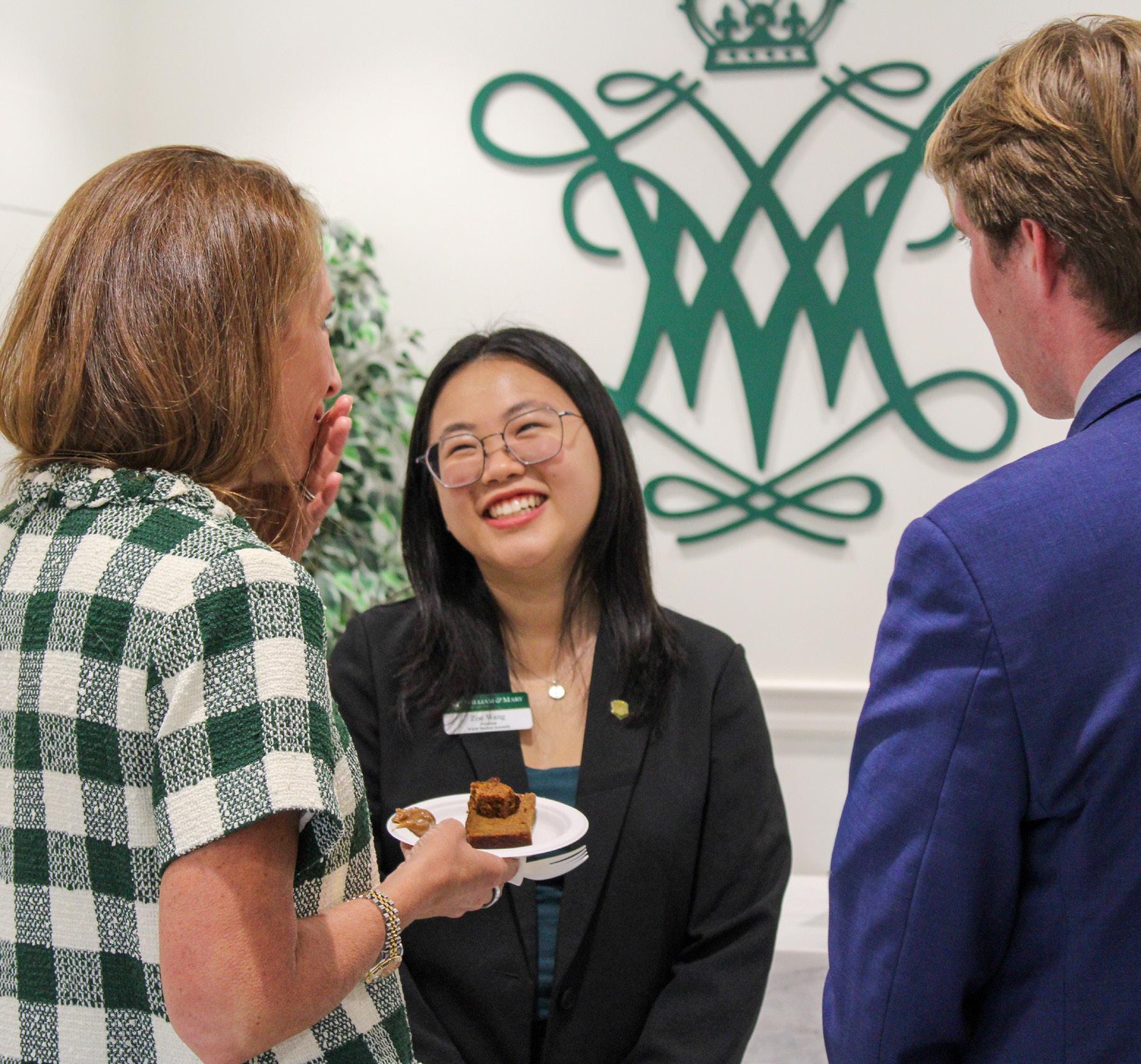
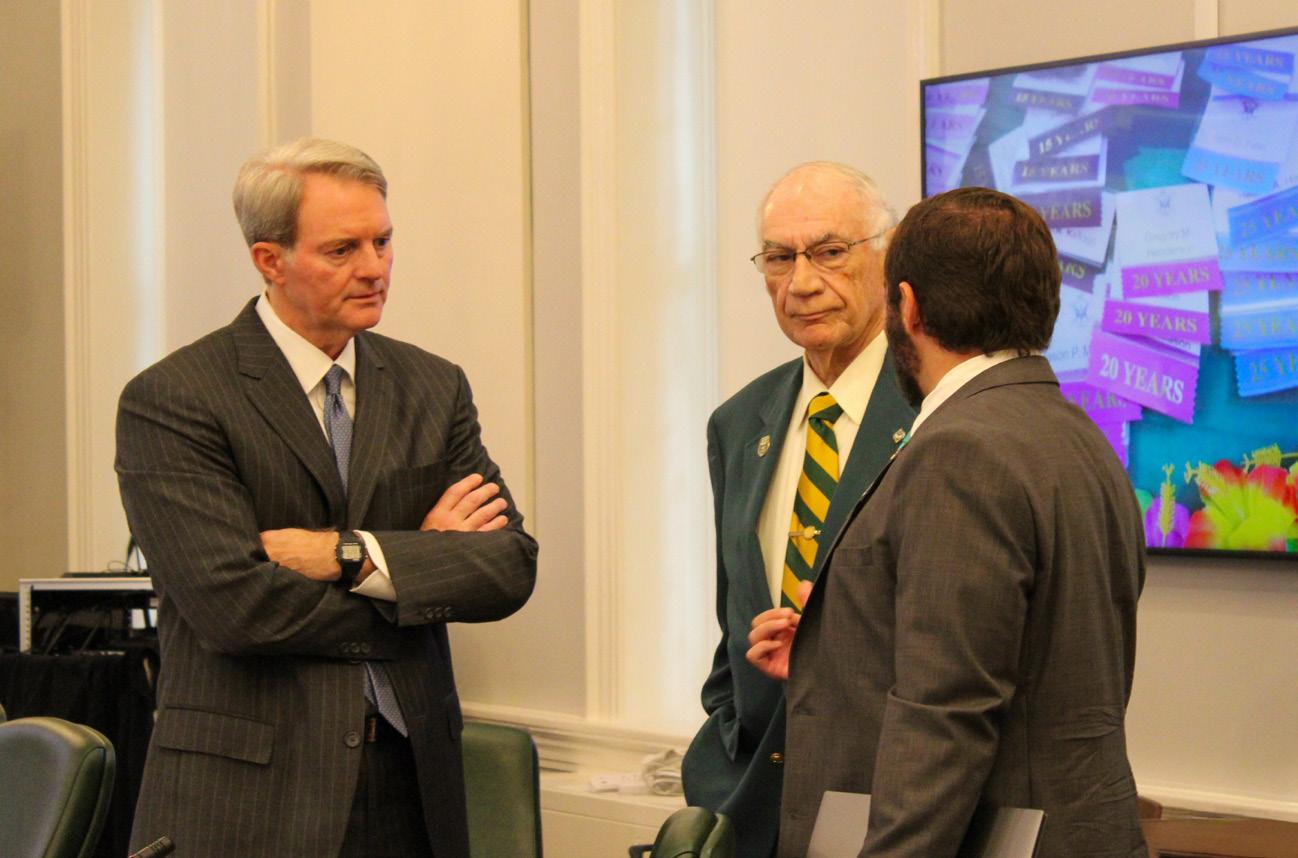
Board of Visitors approves campus comprehensive plan, creates three new masters programs
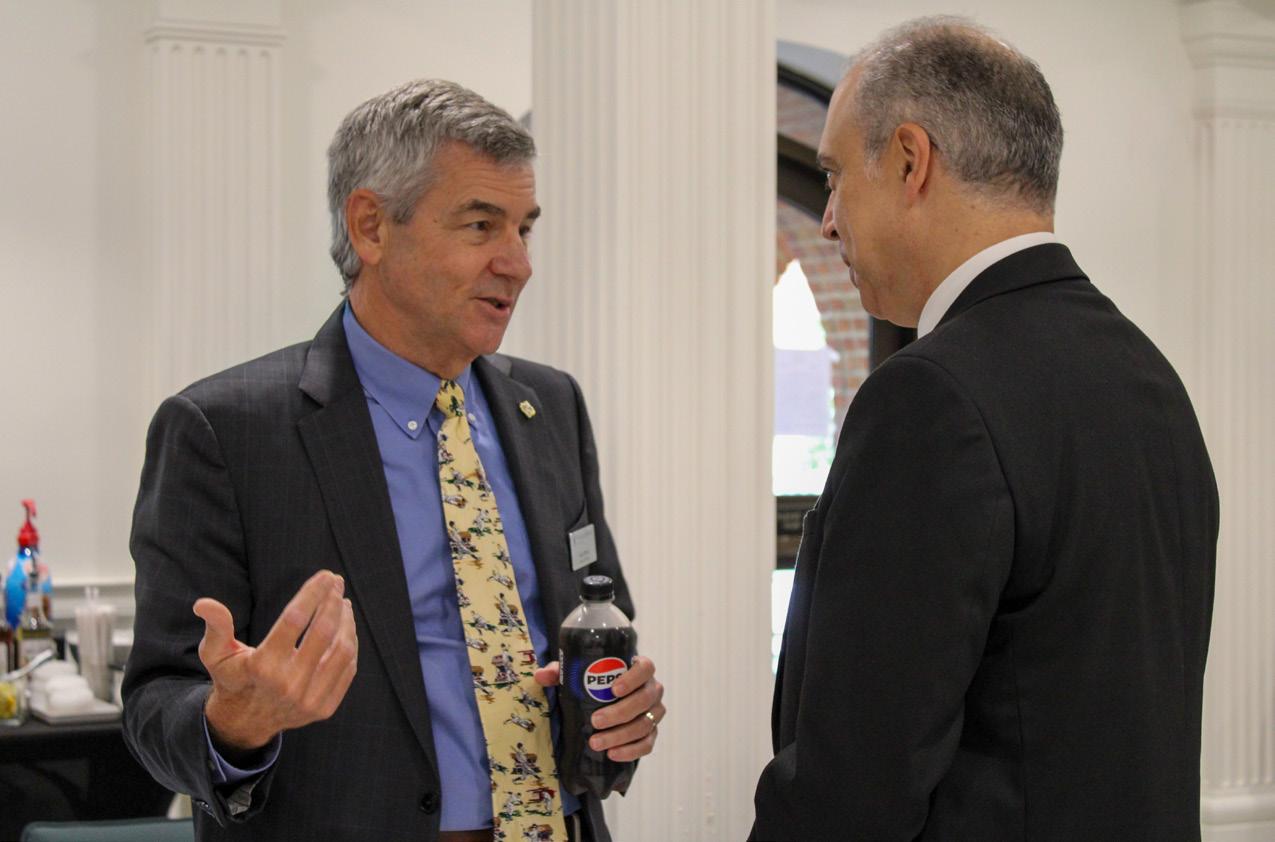
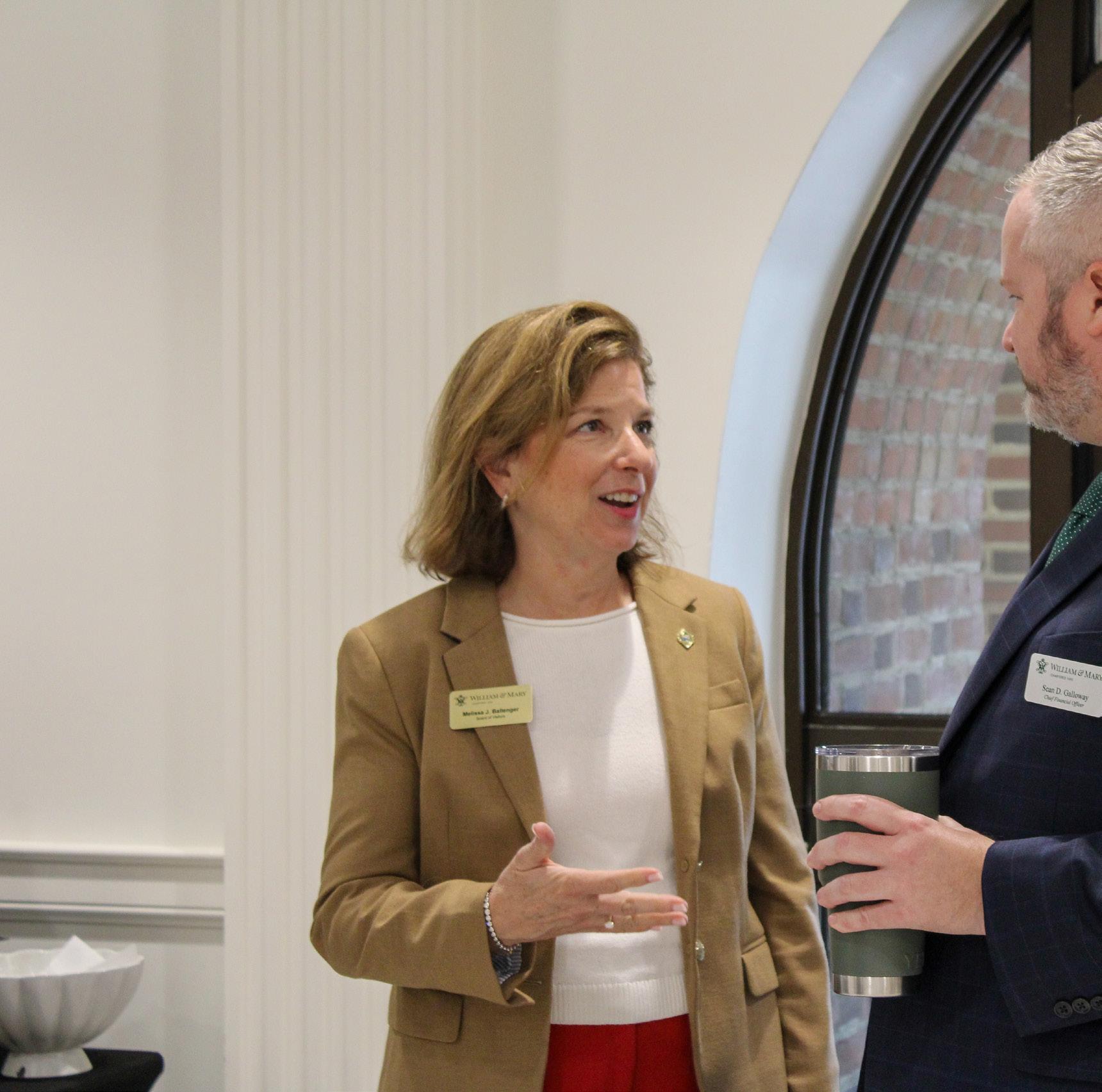
Wednesday, Sept. 24 to Friday, Sept. 26, the College of William and Mary’s board of visitors met in Blow Memorial Hall for its first meeting of the 2025-26 academic year. All eight committees conducted separate sessions before convening as a full board, passing some resolutions independently and waiting to debate others Friday morning.
The board officially approved the campus comprehensive plan, created three new master’s degree programs, evaluated admissions data and brainstormed institutional strategy steps as Vision 2026 nears a close and a new strategic plan emerges.
National preeminence and the 2026 U.S. News and World Report rankings undergirded each committee’s operational priorities as it relates to the College’s future, with all committees working against the backdrop of a shifting federal policy landscape, institutional reaccreditation this spring and the “demographic cliff” expected to lower application numbers starting in 2026. Cross-committee collaboration on civic engagement among undergraduates also figured heavily in discussions ahead of the College’s Year of Civic Leadership in 2026 and the United States’ semiquincentennial.
Thursday, Sept. 25, the Committee on Academic Affairs convened to approve the addition of two new master’s degrees in nonprofit management and data science. Members also reviewed key performance indicators for faculty performance, considered revamping the COLL curriculum and evaluated class of 2029 admissions data.
Academic affairs chair Laura Keehner Rigas ’01 opened the meeting with a contextualization of the College’s 2025-26 academic goals in light of institutional reaccreditation this spring and ongoing
ACADEMICS
collaboration with the State Council of Higher Education for Virginia.
Among these progress points was the 2024 update of the faculty handbook, which Rigas celebrated as a much-needed step for the College’s future.
“Last year, this committee delivered on the extraordinary task of reviewing and making long-needed updates on the faculty handbook,” Rigas said. “I’m extraordinarily grateful to all those who worked on that.”
Vice Chairman Annemaria DeSalva ’90 was absent from the meeting, but Rigas referenced her recent lecture on the importance of the humanities in the emergent artificial intelligence era. DeSalva’s comments came as the College aims to ramp up its academic offerings related to artificial intelligence, from the School of Computing, Data Sciences and Physics’ AI minor to the College’s “ChatGPT Edu” partnership with OpenAI announced Oct. 1.
“She had a brilliant lecture a few weeks ago where she laid out the argument that enhanced humanities are needed today more than ever,” Rigas. “And for people to think critically and make good decisions, applying wisdom in a technical age.”
In line with the evolving higher education landscape, Rigas addressed a possible update of the COLL curriculum to better align with students’ most pressing needs.
“It’s been about ten years since the COLL curriculum has been reviewed, so I’d like the provost and team to think about ways we can approach that in a similar way as we did for the faculty handbook,” Rigas said. “Getting the right people together to think about how the
EDITORS
skill sets and expectations for graduates have changed.”
Provost Peggy Agouris then introduced Alyson Wilson, the College’s new vice provost for research, who she said has been a “great addition to the team” since starting in July, and whom she expects to help advance the College’s academic goals.
Agouris also detailed the 600-page self-study report that the College submitted to the Southern Association of Colleges and Schools Commission on College as a prerequisite for reaccreditation. Assistant Provost for Institutional Accreditation and Effectiveness Matt Smith finalized the report Sept. 2, which now awaits feedback from an off-site review committee by late November.
Following Agouris’ update, the College’s new Vice President for Enrollment Strategy Lisa Keegan delivered a presentation on class of 2029 enrollment data. Keegan shared that admissions numbers remained largely similar to the previous year, with slightly more deposit-enrolled withdrawals and 1% fewer first-generation students than in 2024. The College also enrolled 1.5% more undergraduate students in 2025.
Keegan emphasized her long-term goal of boosting the College’s total undergraduate application count to 20,000 students without drastically changing enrollment numbers, resulting in a more competitive acceptance rate. She said the College can accomplish this by increasing its enrollment yield over time, which dipped 1% since 2024.
Mixed reactions over ChatGPT Edu launch, students raise environmental concerns ChatGPT Edu to provide access to more OpenAI resources, students worried about learning outcomes
SUSANNAH POTEET
CHIEF STAFF WRITER
Wednesday, Oct. 1, the College of William and Mary announced the pilot launch of ChatGPT Edu. This comes amid the College’s broader push towards arti cial intelligence development, as the College announced an AI minor in August and plans to additionally expand its bachelor's and graduate opportunities in AI. The rollout of ChatGPT Edu also reveals divisions at the college over the use of AI. For many students and faculty, the development raises academic and environmental concerns.
Chat GPT Edu will provide select faculty with more OpenAI resources—higher message limits than Chat GPT’s free version, data analytics, web browsing and document summarization. This initiative is sponsored by the School of Computing, Data Sciences and Physics, Information Technology, William and Mary Libraries and the Mason School of Business.
In an interview with University Communications, Chief Information Officer Ed Aractingi imagined the launch as an
improvement that will provide access to AI through a central and secure platform. Many administrators characterize the initiative as a marker of the College’s leadership in higher education innovation.
“We are creating opportunities to apply the technological power of AI to diverse domains, sparking new ideas, challenging assumptions and integrating a wide range of perspectives,” Dean of CDSP Douglas Schmidt ’84, M.A. ’86 stated in a quote to University Communications.
For physics major Julia Larmee ’28, the program reflects how AI has been integrated into all of her classes and research. She uses it for code-checking, but doesn’t always view it as a driver of innovation.
“It’s a really great tool because in my research lab, we use it to code—my graduate student uses it to debug his code and x his code,” Larmee said. “But you can’t use it for everything. We have to be aware of how we’re using it, and double-checking its work.”
In the physics department, several of Larmee’s professors have sparked discussions on the bias and ethical uses of AI.
“What sources is the AI actually pulling
from? Is it actually getting the right things?”
Larmee said.“If you’re feeding the bot specific studies, how are you avoiding that bias?”
A tenet of ChatGPT Edu is that it doesn’t use institutional data from universities to train its models.
“To my knowledge, I haven’t seen one like this, because AI has to be getting the information from somewhere to function,” Larmee said. “I was not aware that a model could work like that.”
Larmee emphasized the need to learn the fundamental concepts before turning to AI.
“In my coding class, it’s really hard to be taught how to code without using AI,” Larmee said. “AI isn’t always right, and so if I’m not learning how to code but AI doesn't know the right way — that’s an issue.”
Students and faculty also have expressed concerns over the college’s push towards AI development and the lack of clarity surrounding disciplinary policies on AI.
Although the addition of ChatGPT Edu was not sponsored by the College of Arts and Sciences, the move comes amid continued support for the inclusion of AI at the university level, impacting all
departments of the College.
Associate professor of religious studies
Andrew Tobolowsky expressed his concerns about the impact of AI on the learning environment at the College.
“What you see is declining critical thinking skills, what you see is a declining ability to read and understand information,” Tobolowsky said. “This is not me saying that AI has no uses anywhere, but it has no uses in the humanities classroom.”
Tobolowsky emphasized that the important part of the humanities is being able to synthesize evidence, gather evidence and turn it into an argument.
“The more you involve AI in the process, the less you develop those skills,” Tobolowsky said.
Tobolowsky notes in his syllabus that AI usage is plagiarism, but the enforcement of that is di cult to implement.
“I’ve had students who clearly did use AI. I asked them to rewrite the paper, and they do it again,” Tobolowsky said. “What am I supposed to do?”
Tobolowsky also admitted that the lack of a clear AI policy at the College is challenging when it comes to enacting disciplinary measures, and that the
inclusion of ChatGPT Edu could only encourage the dishonest use of AI in completing assignments.
“The university doesn’t have a clear plan for what will constitute demonstrated AI use if you’re referring them to the Honor Council. It doesn’t have a clear plan for the consequences,” Tobolowsky said. “And now the university is providing them with this technology.”
Tobolowsky remarked that much of the College’s push towards AI has highlighted the positive aspects of the technology, not creating a full picture.
“A lot of people have this idea that if you have a technology, you can find a way to make people use it in only the best ways, and itʼs just not true.”
For Tobolowsky and other professors, those pushing AI development as increasingly valuable to education are missing the scope of the problem.
If talking to ChatGPT about the lessons meant that you understood the lessons better, you wouldnʼt be hearing these complaints from humanities professors,” Tobolowsky said.
See ACADEMICS page 4
SAM BELMAR AND MOLLY MARTIN // FLAT HAT NEWS
KYLIE TOTTEN / THE FLAT HAT
news insight
“ “
If authenticity is to survive, it wonʼt be something that can b e left to chance. People will have to decide it matters enough to fight for it as human possibility.
̶ Scott Noel
Monday, Oct. 8, the College of William and Mary announced that it received a $2.8 million grant from the U.S. Department of Education, the largest award given to an institution of higher education under the American History and Civics Education National Activities‒Seminars for Americaʼs Semiquincentennial program.
The three-year grant will launch the program, “We the Teachers: Preparing the Next Generation Through History & Civics.” This national program will train teachers just in time for the celebration of the 250th anniversary of the signing of the Declaration of Independence to better educate students in the nationʼs history, civics and democracy.
At the center of this program is the Congress of Educators, an annual seminar that will invite 100 teachers from all 50 states. The first congress will be held in July 2026 in the Historic Triangle ‒ Williamsburg, Jamestown and Yorktown. The two successive Congress sessions will be held in Denver and Minneapolis.
Congress participants will be exposed to primary sources and modern scholarship about the Declaration of Independence, the Constitution and the Bill of Rights. These documents will help the teachers improve their abilities to better teach in areas like primary source analysis and evidence-based argumentation.
Jesse Jenkins shares stories from military service, close bonds with students at College
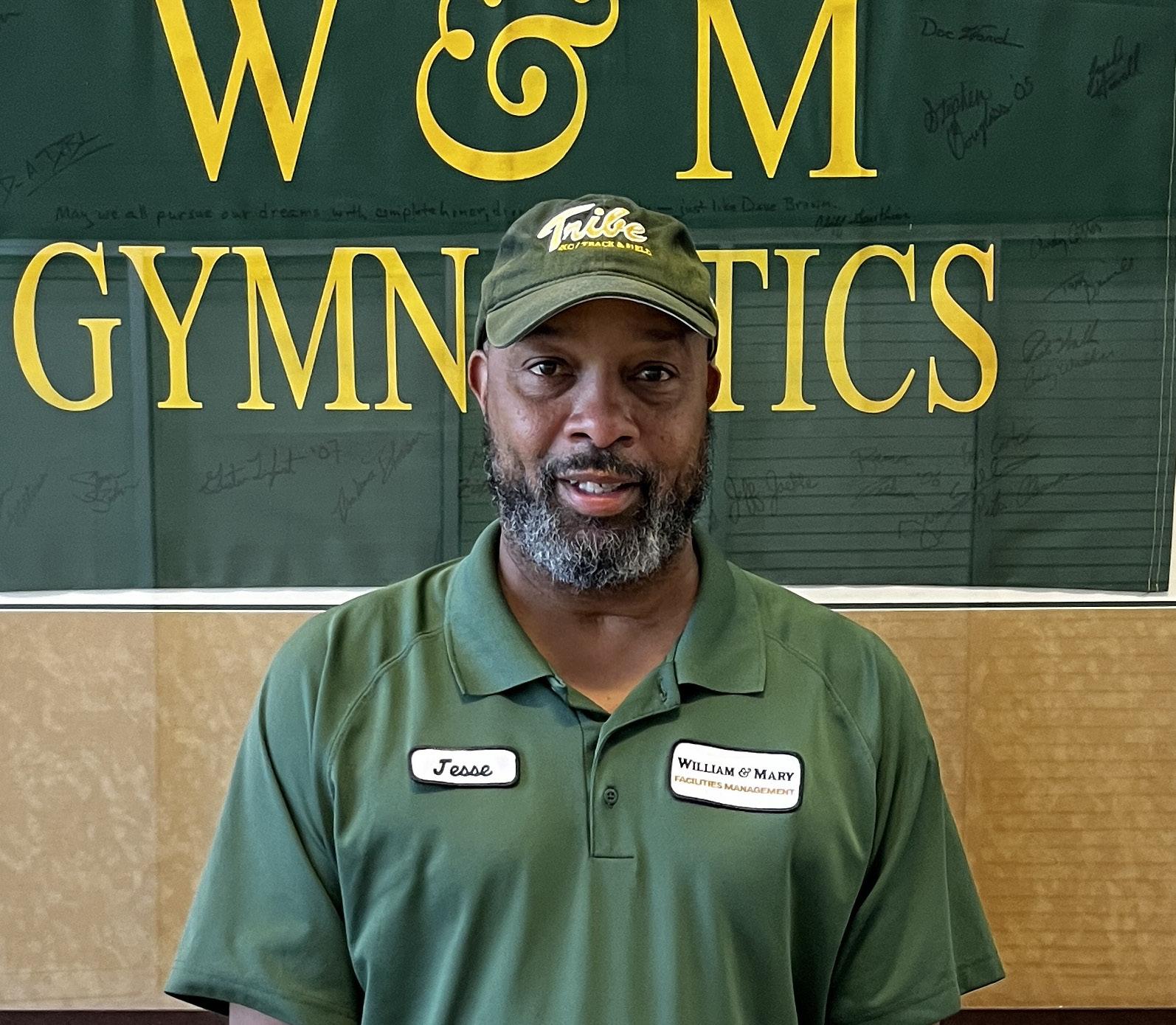
June 6, 1994, on the 50th anniversary of D-Day, United States Army Infantryman Jesse Jenkins soared thousands of feet above the Panama Canal, preparing to jump out of a moving airplane. What seemed to be thousands of spectators from his vantage point awaited his arrival on the ground, cheering him on. It was a ritual Jenkins had executed countless times throughout his 24-year military career, spanning deployments in Korea, Panama, New York’s Fort Drum and Virginia’s Fort Eustis.
But this time was much di erent from the others.
“We had some guys that did the actual jump in Normandy, they came and jumped with us,” Jenkins said. “It was pretty fun, those guys were very motivated.”
Jenkins’s career trajectory eventually carried him to the College of William and Mary, where he has worked as a facilities manager for exactly four years as of Friday, Oct. 10.
Although Jenkins didn’t originally intend on lacing up his work shoes again — he had just retired from working on Virginia-class submarines as a pipe tter at the Newport News Shipyard after nine years — he decided to give the old College a try.
“My wife decided she wanted to move to Williamsburg, and I didn’t know anybody,” Jenkins said. “And I just felt like my house was getting small on me, so I had to nd something to do because I was bored. So I said, ‘let me try William and Mary.’”
Since 2021, Jenkins has grown to love the College, which he said he was familiar with growing up in Norfolk, but had never visited before then. First assigned to the Green and Gold Village, Jenkins soon moved to Fraternity Row on Ukrop Way. It was there that Jenkins started to form close bonds with students whom he saw daily.
“I liked the brotherhood,” Jenkins said. “We were real close, and they were real close with me. I would sit down and talk to a lot of the guys. !ey respected me, I respected them. And there’s much love.”
Jenkins said he has deeply enjoyed watching the students he’s grown close with develop over the years, especially those who started at the College the same year as him. Showing up to support them at last May’s graduation ceremony was a given.
“I had seen a lot of the guys grow from being a teenager to being a grown man,” he said. “I was really proud of them.”
After graduating from Oscar Smith High School in 1988, having played on both the basketball and football teams — sports he still enjoys watching today — Jenkins enrolled directly into the army, where he served for 24 years. As an 18-year-old fresh o graduation, Jenkins said he felt obligated to make that bold decision for his future.
“For one, discipline,” Jenkins said. “I didn’t have any discipline, I was kind of a wild dude, a hard guy. It taught me more about life.”
Jenkins’s time in the military featured way more airplane jumps than he could ever remember today, he said. But the anticipation he felt during the 50th anniversary D-Day leap into the Panama Canal closely rivaled another
occasion from the year before, when his 11 Bravo unit was deactivating from Panama and took on a nal challenge.
“We did a water jump in Panama, and it was canalled o into the number one breeding grounds for the hammerhead shark,” he said. “It was kind of like, ‘Yo, are we going to do this for real?’ We did it, and nobody got hurt, so it was pretty good.”
Jenkins said he sees a parallel between his time in the military and his time working on Fraternity Row at the College.
“It’s just like being in the frats, it’s a brotherhood,” he said. “We serve together, we sleep together, we walk together, we run together, we do everything together. It’s a bond.”
Jenkins’ 50th anniversary D-Day jump earned him a certi cate of achievement award from the army, something he only discovered again recently while sifting through old paperwork. He said he was amazed at the retired D-Day soldiers’ tenacity on that day, referencing their willingness to take on a task that even active soldiers didn’t nd easy.
“!ey had more energy than the young guys did,” Jenkins said. “I’m like, he’s still got it!”
Jenkins currently works at the Kaplan Arena after the College moved his assignment there last year. While he misses having daily interactions with the fraternity brothers, Jenkins still stops to chat with them whenever he has a chance — or they come to nd him at his new location. However, Jenkins’ time at Kaplan has enabled him to build relationships with a new group on campus: the D1 basketball team.
“I know all the guys,” he said. “I guess you would call me a people person. I speak with them, talk to them, laugh with them.”
Jenkins’ daily interactions with those guys remind him of his high school basketball days at Oscar Smith, where he vividly remembers successfully landing an in-game dunk.
“I mean, I could get up there, but I had only dunked once in the game,” he said.
Among the conversation topics that arise most often between Jenkins and his students, fear of growing up takes the cake. He shared the advice he has given to countless students who have opened up to him about being afraid to step into the real world.
“My experience being around the students was that they were scared to grow up,” Jenkins said. “So I heard a lot of them say that. And I said, ‘You’ve got to grow up one day. !ere’s no Mom and Dad; it’s you paying bills now.’ But I told them, ‘It’s not as bad as you think it is.’”
In his free time, Jenkins enjoys rooting for the Dallas Cowboys and logging on to play NBA 2K or MLB !e Show after work. His love for Dallas stems from a jersey that his dad bought him when he was growing up. While Tribe Football has certainly become a staple at the Jenkins household, he admitted that another unnamed team also captures his fandom.
“If I say my college team, a couple people might be mad around here,” Jenkins said.
MONA GARIMELLA / THE FLAT HAT
SAM BELMAR // FLAT HAT NEWS EDITOR
FLAT HAT NEWS BRIEF
SAM BELMAR / THE FLAT HAT
Jenkins was a U.S. Army Infrantryman and jumped out of a moving airplane over the Panama Canal on the 50th anniversary of D-Day.
Jenkins draws parellels from his military service career to his work as a facilities manager
U.S Department of Education awards 3-year grant to the College
Francis Fukuyama talks delegation, bureaucratic competence at GRI
Fukuyama identifies erosion of American governance standards, policy delegation to underqualified actors
Thursday, Oct. 2, Francis Fukuyama, political scientist and philosopher widely known for his book “The End of History and the Last Man,” delivered a talk on the importance of bureaucratic delegation in modern society at the College of William and Mary in Washington Hall.
Hosted by the Global Research Institute and Lettie Pate Evans Professor of Government Stephen Hanson, Fukuyama’s talk began at 5 p.m., lasting an hour. Hanson asked him questions throughout and audience questions from students followed. Some students stayed afterwards to take pictures with Fukuyama, while others could not get into the room, which had reached capacity.
Nico Giro-Martin ’27, who had not been able to make it into the talk because the room was full, attested to this overcrowding.
“I was told by my professor, ‘Oh, come, it’s for a participation grade,’” he said. “And I thought, even if it wasn’t a participation, it would be great to hear a leading IR theorist. I arrived late and couldn’t get in, with a plethora of students.”
The opening of his lecture focused on the concept of principal-agent theory, which holds that leaders must delegate to their subordinates to properly execute their
BOARD OF VISITORS
wishes. He cited literature dating back to the 1930s in fields such as economics, as well as real-world examples such as Toyota’s car-manufacturing process and the World Bank’s financial aid programs.
Dr. Fukuyama argued that a successful modern government depends on leaders being able to successfully entrust decision-making to lower-ranking experts who can successfully carry out their policy agenda. He emphasized that leaders also need to ensure some degree of control through formal and informal mechanisms.
Within this line of thinking, Fukuyama argued that the “attack on the administrative state” by Donald Trump’s administration, exemplified by Elon Musk’s Department of Government Efficiency’s mass firings of federal workers, threatens the foundations of American governance because it delegates leadership and power to people lacking in specific expertise within their domains.
“I want to convince people that it’s important to have a modern, competent state and there’s a lot of threats to that right now,” Fukuyama said.
Jeremiah Harkless ’29 shared his reaction to the talk.
“I thought it was very enlightening,” Harkless said. “I was not very familiar with Fukuyama’s political theories, but I will check out The End of History. I thought his theories on bureaucracy were very eye-opening.”
Similarly, Charlotte Zoeller ’27 had positive things to say about Fukuyama’s lecture.
“I loved it. I thought it was great. It was really great to have someone this prominent. I thought it was really relevant, the agents-principals discussion, and it will hopefully inform a lot of our generation as we go into these public service roles,” Zoeller said.
Isabel Spielberger ’26 reflected on Fukuyama’s point about delegation and governance playing out in the current political climate.
“I had never really thought about the way delegation can have such a drastic impact on our government’s functioning, and given the current political climate, I thought it was a very enlightening lecture,” Spielberger said.
A handful of professors were also in attendance, and seemed to appreciate Fukuyama’s arguments. George and Mary Hylton Professor of International Relations and Director of the Global Research Institute Michael Tierney shared his reaction on major takeaways Fukuyama left students with, prompting further research and reflection into the contemporary moment.
“I thought he gave everyone in the room a lot to think about and follow up on,” Tierney said. “I thought it was a bit of an appetizer, and he invited us to think harder and read more deeply.”
Board of visitors discusses plans to revamp COLL curriculum for future admits
Projected additions to VIMS campus, 100-year landscape plan to renovate campus roads, adding parking spots
BOARD OF VISITORS from page 1
“That is where we’ll be putting our time, energy, effort and resources,” Keegan said.
Assistant Dean for Academic and Faculty Affairs and Professor of the Practice of Law Iria Giuffrida then presented key performance indicators on post-graduation outcomes, faculty impact, enrollment and transfers. Giuffrida shared that Pell-eligible students’ graduation rate has generally oscillated more than that of other students, revealing the potential need for more tailored administrative assistance.
“Looking ahead, we may think about targeted academic support, maybe more financial support, and maybe more community-based support for students that may fare less well at William and Mary,” Giuffrida said.
Giuffrida highlighted that College graduates have a higher median salary in entry-level jobs than the national average. She also commented on the College’s ability to maintain a 47% approval rating in 2025 for federal research grants from the National Science Foundation and the National Institutes of Health, despite federal research funding cuts.
“This is a mic-drop situation, it’s incredible,” Giuffrida said. “The average
[approval rating] in Virginia for the NSF is 24%, and for the NIH, it’s 15%.”
Finally, the committee passed resolutions to create master’s degrees in non-profit management and data science, as well as reclassify the master’s in computational operational research under Computational and Applied Mathematics and Statistics, which was previously a concentration within the Computer Sciences department.
The Committee on Administration, Buildings and Grounds convened Thursday to approve the College’s new campus comprehensive plan, which outlines infrastructural projects for the “next decade and beyond.” Members also evaluated the enterprise software Workday’s initial months of use, which replaced parts of Banner in July.
Chief Business Officer Sean Hughes explained that the plan has three components: housing and dining facilities, learning spaces and landscape. He also highlighted community outreach efforts in advance of the plan’s finalization to incorporate feedback.
One focus area is the Boswell site, which includes reconstructing Boswell and Jones Halls, as well as adding new pedestrian walking spaces. Additionally, the College will
demolish the Campus Center, developing a new multi-use building in its place and constructing a 246-space parking lot. Redevelopment of the Green and Gold Village and Botetourt Complex will also begin in the next few years.
The 100-year landscape plan aims to restructure several on-campus roads to become more pedestrian-friendly, develop four new “parking cores” on the edges of campus, renovate the Sunken Garden for greater accessibility and revamp the Central Woods.
Finally, the plan envisions additions to the Batten School for Coastal Marine Sciences at the Virginia Institute of Marine Science, including several new academic and administrative buildings, an amphitheater and a river walk. Hughes underscored that sea level rise directly threatens the Gloucester Point campus as it stands today, stating that all the infrastructure will be elevated above the projected inundation levels by 2040.
The Committee on Student Experience met Thursday morning to introduce two new faculty members and evaluate the College’s core student values, such as belonging and civic engagement, through live feedback from
student representatives. Members did not pass any new resolutions during the session.
Senior Vice President for Student Affairs and Public Safety Ginger Ambler ’88, Ph.D. ’06 welcomed the College’s new Associate Vice President for Public Safety Cliff Everton ’96.
“After 26 years in my previous career in federal law enforcement, I never would have imagined coming to higher education, much less my alma mater,” Everton said. “But that’s the journey I’m currently on and it’s wonderful.”
Everton addressed his desire to instill a community policing model that collaborates with student leaders and builds a strong connection with students around shared concerns.
“We’re working hard to bridge gaps if there are any,” Everton said. “And to communicate clearly and effectively on what we’re doing to support the students.”
Ambler also introduced new Associate Vice President for Health and Wellness Christopher Renjilian ’05, who previously specialized in adolescent medicine and development.
Ambler highlighted students’ increased engagement with academic support and health and wellness resources between 2022 and 2025, which she said has grown threefold.
Painter Scott Noel reflects on urgency, ambition, imperfection in campus art lecture
Students share their thoughts on Noelʼs work, citing technique, authenticity, imagination as secret to paintings
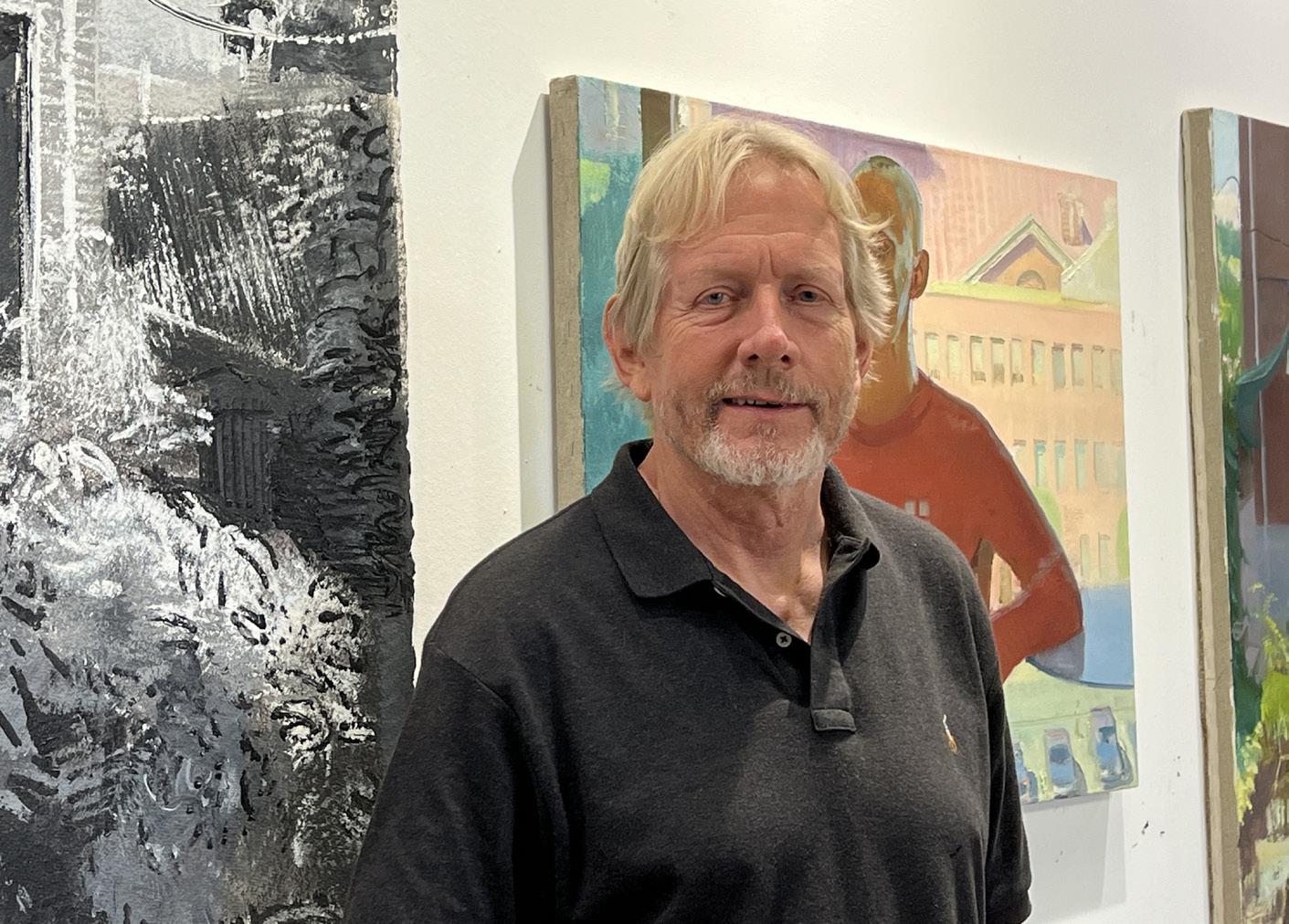
Thursday, Oct. 2, the College of William and Mary’s department of art and art history hosted Philadelphiabased painter Scott Noel for a lecture and exhibit in Andrews Hall, part of the department’s visiting artist series supported by Jean Berger Estes ’75, P ’06 and Rob Estes ’74, P ’06. Noel has exhibited in over 40 solo shows nationwide and taught for decades at the Pennsylvania Academy of the Fine Arts, where he mentored current College faculty members teaching professor of art Dave Campbell and associate professor of art John Lee. Introduced by Lee as a dynamic teacher whose mentorship was life-changing, Noel reflected on his
long-standing connection to the College, tracing it back to 1989, when his work was first exhibited on campus.
“I taught here for a couple of weeks in 1997, and now, two of my most delightful students are professors here,” Noel said. “That’s a real thrill. It reflects the kind of change and continuity that art itself embodies — it’s like a river, bigger than the people who find themselves in it.”
One of the most striking moments of Noel’s lecture came during a slide of “Rosie Adams,” a nude portrait painted over two sweltering summer days.
“This is Rosie Adams. I only got to paint her once,” Noel said. “She was a friend of Patrice, whom you saw earlier in the slideshow, and
said she wanted to try modeling. So I said, ‘Sure, come out and we’ll paint.’ But when she arrived in late August, basically 100 degrees, she told me she was moving to New Orleans in a couple days.”
Noel painted for two full days, pushing to finish the six-foot canvas before she left.
“You can see the sweat on Rosie,” he said. “I kind of like the pressure of that kind of situation. It forces me to get it done. And I think you can feel that urgency in the final painting.”
Among the students in attendance was Hannah Nieman ’26, a studio art and accounting major, who was struck by the way Noel spoke about his models as collaborators, not passive subjects whose presence shaped the rhythm and feel of a painting.
“One thing I took away was his relationship with his models,” Nieman said. “It made me think differently about how those relationships could be more like friendships.”
She suggested that a painting’s emotional quality may emerge more from trust than technique.
Noel also discussed his alla prima technique, Italian for “all at once,” which is a wet-on-wet approach that demands speed and decisiveness.
“It means I complete a section of a painting in one go, wet-on-wet,” Noel said. “It’s like fresco — you have to finish before the surface dries. That immediacy brings energy to the work.”
Katelyn Workman ’27, a studio art major, appreciated how Noel framed still life as a dynamic problemsolving space.
“Noel’s discussion around using still life as a laboratory to figure out painting problems was something that has stuck with me,” Workman said. “He talked about simplifying core color relationships to bring poetry and musicality as a unifying pull through the painting.”
For students outside the studio arts, the talk offered a rare glimpse into the layered thinking and technical rigor behind representational painting. Haram
Kim ’26, a neuroscience major, said he was struck by the mythological themes and weightless compositions in Noel’s work.
“The floating people and objects fascinated me,” Kim said. “It felt believable and beautiful.”
He noted that while seemingly different, parallels do exist between art and neuroscience.
“Learning art gives us a language that neuroscience may one day catch up to,” Kim said.
In a conversation after the event, Noel offered a reflection on what sets painting apart from digital creation.
“AI is ones and zeros,” Noel said. “Painting is layered — this on top of this on top of this. Even the thinnest skin of oil paint has space in it. You can’t flatten that.”
He likened 3-D printing to slicing bread: an external replication of form without any sense of internal energy. What makes painting meaningful, he argued, is its resistance to perfection.
“Machines don’t struggle, but a painter does,” he said. “It’s the imperfections that make us whole.” Noel added that artistic
authenticity cannot endure on its own. People must take active measures to preserve a human touch when it comes to creating art.
“But if authenticity is to survive, it won’t be something that can be left to chance,” Noel said. “People will have to decide it matters enough to fight for it as a human possibility.”
For Caroline Cha ’26, a neuroscience and studio art double major, Noel’s emphasis on ambition and artistic risk-taking struck a personal chord.
“Scott [Noel] pointed us toward a higher aim in art: to work with a high level of ambition, even if there’s no call for it,” Cha said. “Even though we live in a time where the world might be pleased with pretty, selfsatisfied pictures, it is still worth it, as an artist, to push ourselves to the very limit of our sensibilities.”
She described his work as a model for asking deeper questions: about space, perception and the feeling of being inside an environment.
“It made me excited to pick up that thread and continue it in my own way,” she said. “He reminded me these questions may take a lifetime to explore.”
In an email to the Flat Hat, John Lee, associate chair and professor of art and art history, wrote that inviting Noel back was about renewing the campus’s connection to visual meaning-making.
“Art is an aesthetically imaginative experience with deep meaning in its own right,” Lee wrote. “A world beyond themes and ideas — but no less vital to our sense of what it means to be human.”
CARSON BURCH THE FLAT HAT
New Senators inducted, Senate passes Hispanic Heritage Celebration Act
SUSANNAH
CHIEF STAFF WRITER
Tuesday, Sept. 30, the newly elected class of 2029 and 2026 senators were inducted into the Student Assembly Senate.
Daria Lesmerises ’29 is the class of 2029 President, and Neha Baskar ’29, Riya Budhrani ’29, Rhys Runnels ’29 and Jenny Wang ’29 were sworn in as the senators for the class of 2029.
After the spring 2025 election, three seats for the class of 2026 remained vacant due to a lack of candidates running.
Isha Alaina Tubera ’26, Elie Bide ’26 and Nicholas DeSante ’26 were inducted as senators for the class of 2026.
Sydney Manlove ’24 M.Ed. ‘26 was confirmed as a representative to the Honor System Advisory Committee.
Manlove previously served as the senator for the College of
BOARD OF VISITORS
William and Mary School of Education during the 2024-2025 academic year.
The senate passed the Latine/Hispanic Heritage Celebration Act sponsored by Class President Nico Giro-Martin ’27 and Sen. Cheryl Dao ’27. The act confirms SA funding for a Latine/ Hispanic Heritage Celebration, which will be held Oct. 15, 2025, at 6 p.m.
The goal of this bill is to celebrate Latine/Hispanic Heritage month, which spans from Sept. 15 until Oct. 15. The event will feature catered cultural food and decorations, with the hope of fostering appreciation for Latine/Hispanic culture and resilience.
Sen. Cheryl Dao ’27 introduced the Fall Frenzy Campus Carving Act III to the senate. The bill is also sponsored by Class of 2027 President Nico Giro-Martin ’27.
If passed, the act will fund an event featuring free pumpkin
carving, apple cider and other autumnal snacks.
Some senators expressed concern over the budget of the bill, which allocates $1,157.06 for food and drinks.
“Last week we had a finance meeting and talked about saving our reserves and legacy bills,” said Devaughn Henry ’28, commenting on a presentation by Chair of Finance and Sen. Ryan Silien ’28 that emphasized the limits of SA active funding.
“So I was wondering if you would be open to removing one of the snacks,” Henry said.
The bill will be voted on at the next senate session, and the budget for food may be decreased to represent a growing push towards responsible and sustainable funding in the senate.
The executive members congratulated the new senators of classes of 2026 and 2029.
Board centers civic engagement initiatives, renames classics department
Lambert stresses need to further bolster philanthropy, national preeminence benefits from ranking boo st
BOARD OF VISITORS from page 3
“There’s an increase in case management plans, and that suggests that students are receiving more structured, personalized interventions,” Ambler said. “For us, this aligns with the evolving complexity of student needs that we see, and highlights the importance of continuing to invest in that area.”
Before introducing the committee’s student representatives, Ambler mentioned the continuation of the better arguments framework in partnership with the Office of Conflict Resolution and Education, as well as a new civic scorecard for students. Both initiatives seek to strengthen civic leadership skills in advance of the nation’s semiquincentennial celebration.
Rigas suggested collaboration with the academic affairs committee on conflict resolution initiatives, referencing conservative political activist Charlie Kirk’s assassination last month on a Utah college campus.
“Whatever we can do to be supportive, we’re all in,” Rigas said. “Especially in light of what happened two weeks ago on a college campus, we need to have more dialogue and more discussion rather than less.”
William Henderson ’26 shared his takeaways from serving as an orientation area director this fall, which he said bolsters students’ sense of belonging and community.
“Orientation is the time for students to really find their way, find their path,” Henderson said. “And also find the resources that can help them find their path.”
Liam Palumbo ’28 works as an inaugural student specialist in the Office of Conflict Resolution and Education. He reflected on the College’s work to mitigate student conflicts through the new office, which opened in spring 2024.
“A lot of people believe sometimes that [conflict] doesn’t happen or that we can avoid it, or that we can kind of step away and believe it isn’t there, but it is there,” Palumbo said. “But there’s a good conflict, and that’s when you learn to handle it well and engage with each other well.”
Thursday, Sept. 25, the committee on institutional advancement covered the College’s trajectory toward national preeminence, results leading into the final year of Vision 2026 and overarching priorities for the next strategic plan to be enacted in 2027.
Secretary Kendrick F. Ashton, Jr. ’98 opened with remarks on what he called a “productive” summer board retreat in July for strategic planning. He also addressed the U.S. News and World Report’s rankings released Sept. 23, which saw the College move up three spots in the national standings from the previous year, attaining
the 51st spot.
“It’s incredibly gratifying to see that U.S. News and World Report saw a significant improvement in William and Mary’s rankings,” Ashton said. “And that is due, in no small measure, to our improvement in our national peer score. That is a direct reflection of our national reputation.”
College President Katherine Rowe then delivered a presentation on institutional strategy, outlining the key factors that she sees as essential to elevating the College’s stature on the national stage.
“What drives student demand is a complex ecosystem of brand awareness and philanthropy that creates a cycle of visibility that underscores William and Mary’s credibility to deliver what we say we’re going to deliver for those who come to learn here,” Rowe said.
Rowe addressed the College’s preparations for the anticipated 2026 demographic cliff, which estimates fewer undergraduate applications through 2041 due to consistently declining national birth rates since the Great Recession of 2007. However, she believes the College’s yield will experience far less turbulence than the national average based on positioning studies conducted in 2019 — the next studies will be carried out in 2026.
“We’ve completed multiple rounds of positioning studies to track the interests of prospective students,” Rowe said. “Vision 2026 strategically elevated the strengths that spoke to those interests.”
Senior Vice President of University Advancement Matthew T. Lambert ’99 presented four key performance indicators for institutional strategy, highlighting an increase in alumni engagement, undergraduate internships and philanthropy in the past few years.
He mentioned that 2024 was the single highest year of philanthropy since the College’s founding in 1693, totalling $240 million and representing 16% of the 2025 budget. Lambert views continued philanthropy gains as paramount to institutional development.
“The last view of this is really around the number of donors across the university and the retention rate of those donors,” Lambert said. “And we have an aspiration to have that retention rate much higher.”
Friday, Sept. 26, the Committee on Financial Affairs met to review and approve the College and the Virginia Institute of Marine Science’s six-year financial plans that will cover from 2026-32.
Every two years, the College is required to submit a six-year plan to the Virginia state government, which is meant to align the budget of the College with its longterm goals, while ensuring it meets the requirements of the state of Virginia.
The College’s plan includes a proposal to grow the population of Pell-eligible students, increase investment in computational and data sciences and modernize campus infrastructure.
The presentation further included a request to continue to fund the Community Law Clinic, which supplies over 10,000 hours of pro bono legal service to low-income residents in the Hampton Roads region.
The VIMS six-year plan outlined its priorities for the coming years by emphasizing a budget that would allow it to more proactively assist the state in handling emerging environmental issues.
“With the right investment, we are poised to be a national leader in forecasting key aspects of life in coastal communities, and we’re prepared to help the Commonwealth more effectively and efficiently address the existential challenges they face,” the resolution said.
It also includes major capital investments, such as completing the Marine Operations Headquarters and the Fisheries Science Building, which will expand research and operational capacity on campus.
Friday, Sept. 26, the full board met to summarize the work the individual committees conducted over the previous two days, as well as vote on multiple proposed resolutions.
Rowe opened the meeting, outlining the position the College is in at the start of its 332nd academic year, and how she hopes the College will continue to progress.
“We are evolving to position William and Mary as the preeminent public liberal arts and sciences university for the 21st century,” Rowe said.
Rowe continued to highlight the College’s goal of achieving national preeminence, noting that the results of these efforts are already starting to work, with the College climbing 3 spots in the U.S. News and World Report rankings. This progress comes nearly two years after the College dropped 12 spots in the same ranking back in 2023.
“National preeminence matters,” Rowe said. “We saw William and Mary climb three spots in U.S. News and World Report. We made the largest gains in peer reputation, peer assessment, which is really powerful.”
The board awarded emeriti status to three faculty members for their combined 79 years of service to the College. This honorific designation is awarded to retiring faculty who have demonstrated sustained dedication to the academic community at the College. Two professors of marine science, Carl Friedrichs and Richard Snyder, and associate dean and professor of the practice of law Robert Kaplan were all approved to receive this title.
The board further voted to approve the creation of a nonprofit management degree
program to be administered as a master’s of science. Board member Laura Keehner Rigas ’01 noted that this development came in response to popular demand from students at the College.
“46 percent of current William and Mary undergraduates indicated interest in enrolling in this program,” Rigas said. “That’s pretty outstanding.”
The full board debated a resolution to rename the department of classical studies. This resolution would change the title to the Department of Ancient Mediterranean Studies. Suzanne Raitt, dean of the College of Arts and Sciences, explained the proposal and took questions from the board members as to the benefits of the name change.
Raitt deferred to the judgment of the leadership of the classics department, noting that they felt this name change best reflected the geographical scope of the degree, while also implying that the department, in recent years, has adopted a more interdisciplinary approach to its instruction.
“In recent years, we have brought it out to material culture,” Raitt said. “We have a large archaeology program in classical studies, and the department decided that this new name reflected better the interdisciplinary focus as the department evolves and grows.” Raitt further explained that this switch is not completely out of the ordinary. When contemplating this change, faculty in the classics department noted that institutions across the country were in the process of renaming their own departments to fit the increasingly interdisciplinary nature of the field.
“It feels like a name out of left field, and that we recognize when they were planning this change, they did a lot of research around the country because they already knew that other departments were changing their names,” Raitt said. “They wanted to see, ‘Is everybody doing it?’”
Members of the board worried that this name change would confuse prospective students when locating information about the College’s classical studies. However, Raitt noted that only the name of the department would change — the title of the degree would remain the same.
Rowe expressed her support for this name change, noting that she feels it should be up to the judgment of the experts in the field.
“On balance, my inclination would be to trust the experts here and say this is the general direction of the field, where we’ve seen wonderful diversification of the kinds of work that happened there,” Rowe said.
The resolution ultimately passed with two members of the board voting against the proposed change.
The board will meet again in Blow Memorial Hall from Wednesday, Nov. 19 to Friday, Nov. 21.
Swem library incorporates ChatGPT Edu for AI literacy project
Students in environmental studies worry about depletion of water supplies in vulnerable communities
from page 1
William and Mary Libraries, one of the sponsors of the ChatGPT Edu initiative, have incorporated AI literacy into their research and developed an AI task force.
William and Mary Libraries AI task force hosted “16 AI things in 93 days” – a program meant to familiarize students, faculty and staff with AI tools, and the ways they should and should not be applied. ChatGPT Edu will augment the tools the library already uses.
“Our overarching framework is information literacy. How do
we help students navigate the information ecosystem and help evaluate sources?” said Head of Research Candace Benjes-Small.
“AI literacy is almost a perfect fit into that, we already had that way of approaching the topic.”
In research, William and Mary Libraries use tools like SCITE – an AI database solely based on research literature, not the internet at large.
Part of the AI literacy programming is emphasizing the importance of fact-checking and human-centered thinking.
“That was the start of our AI literacy, AI creates these fake
citations because it strings words that look like they would answer your question, whether or not they actually lead anywhere,” said Benjes-Small.
Instruction and Research
Librarian Camille Andrews stressed the importance of students thinking carefully about the choices they make involving AI.
“Having that literacy of knowing, here’s what AI does well, in some certain circumstances, here’s what they don’t do so well,” said Andrews.
Students also express concerns about the environmental damage AI causes — especially in regards
to its water usage. AI requires data centers to run, which in turn use significant amounts of water to self-regulate and function. For many areas across the United States which house data centers, the significant water depletion required to regulate AI has caused a depleted local water supply and lack of access to clean and running water. Charlotte Muller ’28, a student studying Economics and Environmental Policy, expressed concern over the College’s lack of response towards AI’s impact on the environment.
“Right now, we’re not thinking
about the short-term impact that pulling up that water and damaging the environment is having on local communities,” Muller said.
Muller remarked that although exposure to AI could advance education at the College, its negative environmental impacts are too important to disregard.
“Even if it might be helpful in the long-term to use AI, it is not beneficial in the shortterm for these communities or for the environment, especially if we’re not actively mitigating the negative effects that we’re causing,” Muller said.
ACADEMICS
POTEET
GUEST COLUMN
Thoughts on male loneliness
I’m not going to lie, as a man, the concept of a male loneliness epidemic really confuses me. If you’re unaware, this is a concept being vocalized with increasing fervor, especially in online platforms such as Twitter, about how men are facing a brand of loneliness that it's our collective job to figure out. My first response to this was: Is this even true? Are men particularly lonely in a way that no one else is? And my second response was: Is this something pressing that warrants me thinking about it? For the first question, the answer is: kind of. For the second, the answer is: definitely. Let’s get into it. Everyone, especially in our day and age (and doubly so for my fellow members of Generation Z), is lonely. We’re all aware of the effect of the digital revolution, leaving us overstimulated and isolated, and we’re all participants in a society that really isn’t designed for genuine human connection. It really is not surprising that anyone is particularly lonely. So that would lead us to think that men don’t deserve a special moniker so grave as the “male loneliness epidemic.” But would we apply this logic to a member of a marginalized class? If I caught wind of, say, a queer or Black loneliness epidemic, I’d take the idea and run. And the astute among you could probably articulate how being one of those identities or something alike can be an isolating experience, but therein lies the problem: you can articulate the how and why of it all.
If you look closely, you’ll notice that the people who voice these sorts of opinions often have
COMIC
some warped views on gender, and either have some sort of preoccupation with masculinity and how men should perform it properly, speak about women in overly restrictive ways or both. In other words, they strongly identify with gender roles. The emotional frameworks that develop in the mind of someone who is raised with the kinds of ideas that men are generally expected to hold are not frameworks that empower strong, fulfilling friendships. I mean, of course, these people don’t have friends; that’s what they’ve been screaming from the rooftops. But the typical “male loneliness” complainers are actually the canary in the coal mine for a much deeper and complex problem that men face as individuals.
A brief intermission. You will have noticed that I, as a man, am talking about men somewhat as an outsider. But I’m not, really. I actually do somewhat understand what these people are talking about with regard to the problem. My experience with masculinity, however, is one where I fell just on its periphery. I didn’t really have a lot of good friendships with guys growing up, and throughout my teenage years, I felt like something about me was different, preventing me from connecting with a lot of my male friends in a meaningful way. But I think that the friendships I developed instead — friendships with women — allowed me to develop the sensitivity that I had already had — and that I believe almost every child has, regardless of gender — and with it robust working models of my own feelings and how to process them, and how to
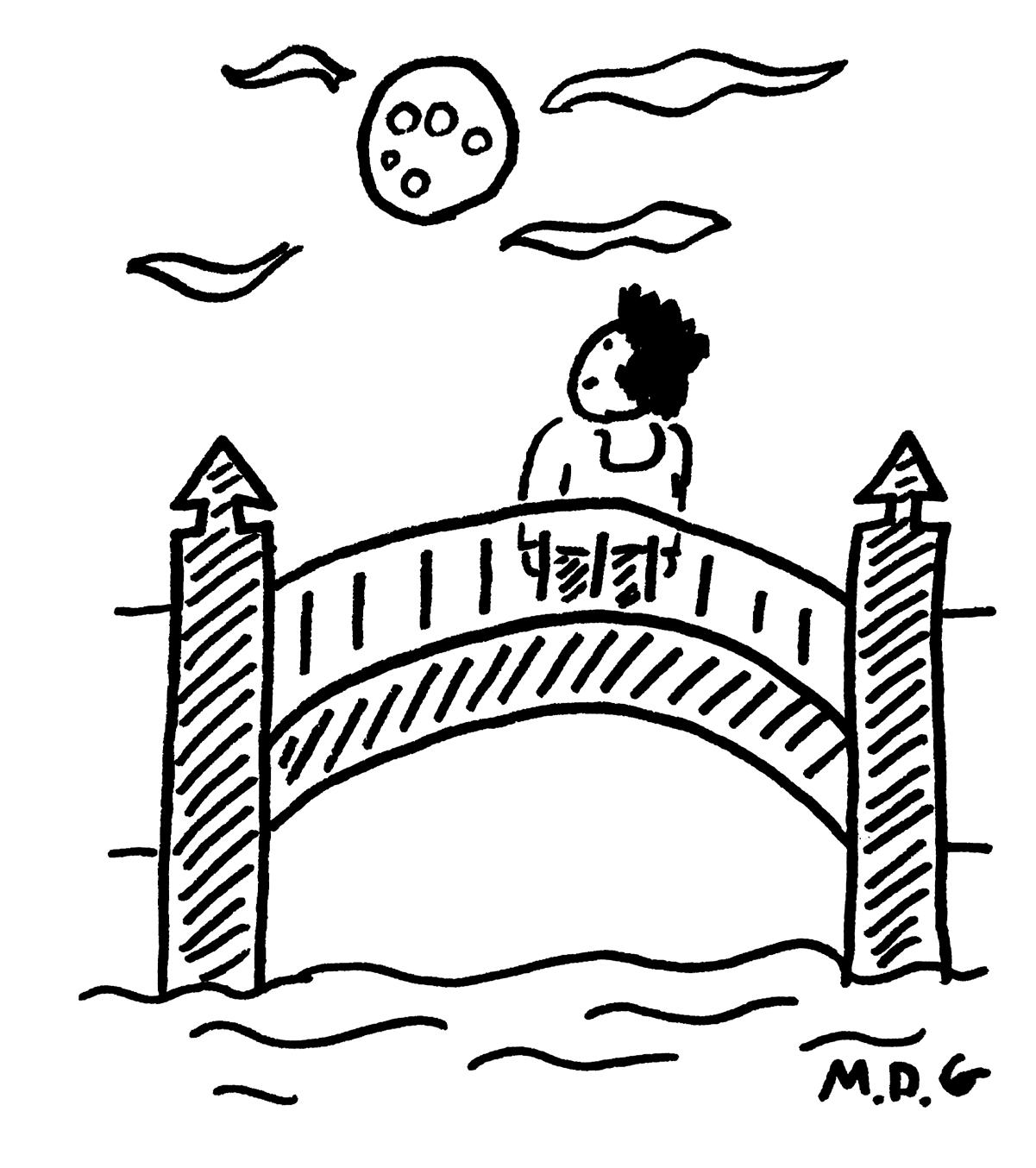
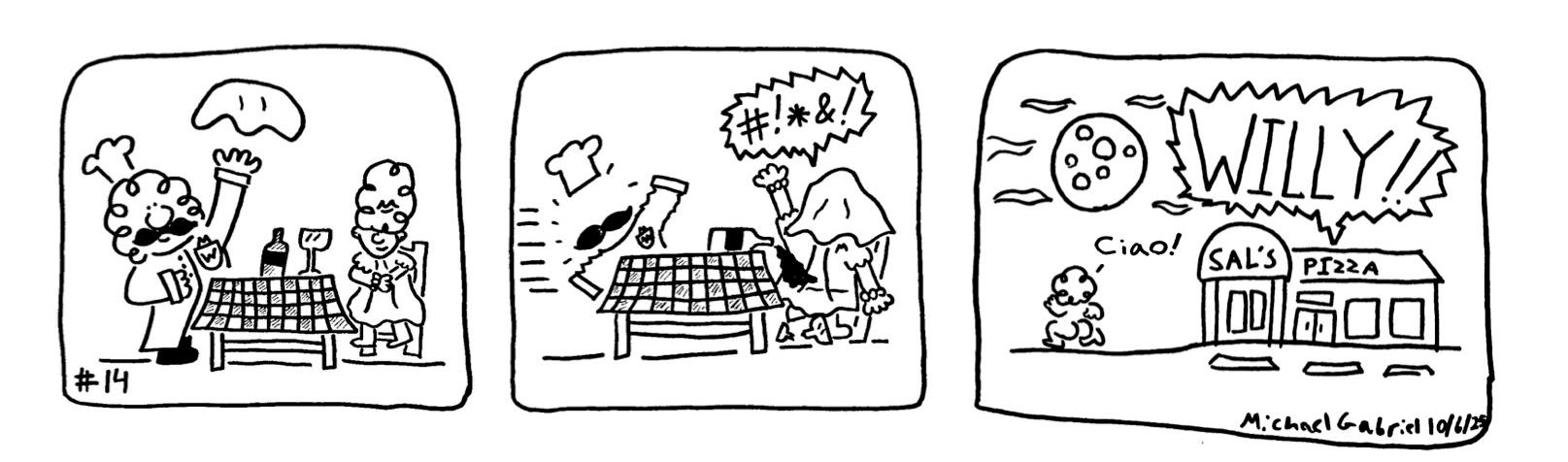
Willy and Mary #14
COMIC
BY
MICHAEL GABRIEL / THE FLAT HAT
share them with others.
And that’s really what I think the problem is here — and what we can learn from those voicing concerns about the male loneliness epidemic. These people, because of the socialization that a lot of men undergo, don’t have access to the emotions that are very much there. They suppress them, they view them as not worth voicing, as not worth exploring. Not only that, they view them as an active detriment to anything productive and as a distraction best left to women. They certainly don’t view them as something worth sharing with trusted friends, and they punish themselves for ever feeling these emotions. These people have learned to completely dissociate themselves from a large swath of their emotions — besides certain ones, like anger, which they rather readily over-identify with — and they don’t have the tools to respond to their own emotional experiences.
While this certainly doesn’t hold for every typical male relationship, many of those I have seen both online and in my personal life talk about this problem, and do not share their lives beyond work, dating and the occasional activity like a sport or hobby. They often don’t feel comfortable having relationships with women outside of romantic ones. This state, the state of their status quo being completely bereft of emotional understanding for themselves and others, has left them completely unequipped to handle the absurdity and alienation that every single working-class person experiences on a day-to-day basis. It leads them to be unable to understand the very real feelings of dissatisfaction that arise from the thorough isolation that many of us undergo as the hyperindividualist philosophy of American culture seeps into the very nature of our social fabric, and it has left them, just like everyone else, yearning for community and to simply be understood and cared for. They are, just as they have said, utterly, totally and completely lonely.
And as a man, the even bigger tragedy is that we have done it to ourselves. This is a horrid state of affairs for any group to live in, and the fact that this is not only possible, but necessary in our capitalist patriarchal society is actually a pitiful condition for a supposedly dominant class to have. For all the power we wield as a group, we are humans before anything else; humans with a very real need for care and tenderness and affection and belonging, and no amount of societal power can change that.
READ MORE AT FLATHATNEWS .COM Shalom Akolatse ’26 is a math majorandchemistryminor.Heis InternalVicePresidentforPiKappa Alpha.Rumorhasitthathecanbe caughtnappinginhislab’scouchin theISC.Contacthimatscakolatse@ wm.edu
Changing eroticism drives society toward perfection
In our current society, there is a certain quality of despair to be some form of perfection. It could be easily known as the “It Girl.” Social media platforms such as TikTok or Instagram add gasoline to this already massive fire. Exposure to content being promoted by influencers doesn’t help this case, either. The “morning shed” of overnight beauty treatments. Buy this, not that. Counting calories. How to achieve a flat stomach. Don’t eat that! It causes bloating and inflammation. Instead ... try this remedy with my subscription! This trend causes people, particularly women, to dive into a deep ocean of insecurities which causes a perpetual, destructive cycle of seeking perfection that’ll never exist.
Eroticism is defined as the quality or character of being erotic. With this quality, it excites whoever is washed with these feelings and creates the environment of sensuality. It has been seen in numerous forms of media: books, magazines, movies, photography, music. When it is represented in these variations, it is because of the humanistic qualities which appear. It wasn’t constructed to be perfect in any way, it would be considered ‘imperfect’ now, but it is beautiful because of the realness that is presented on a screen or a cover of a magazine.
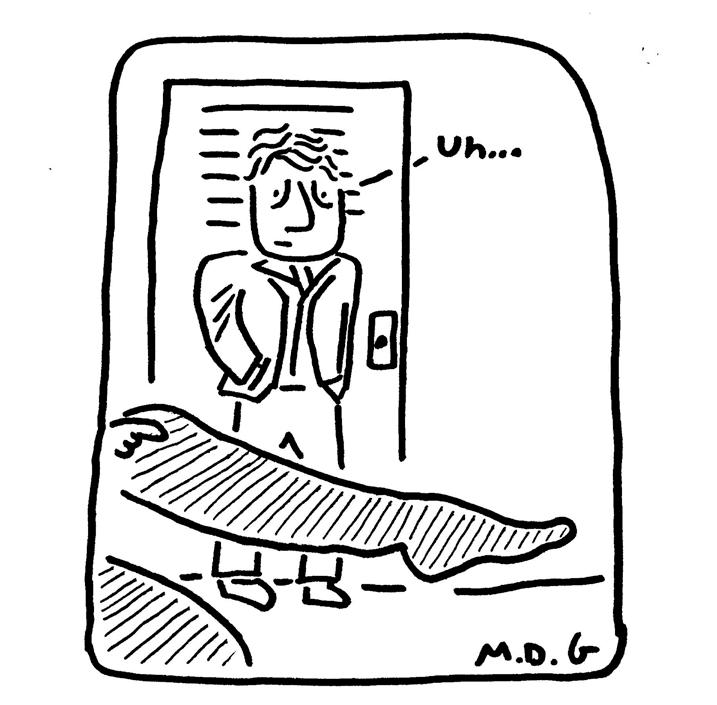
A perfect example of this is the 1967 film “The Graduate.” Anne Bancroft plays Mrs. Robinson, an older woman whose aura is alluring and commanding. One of the release posters showcases her leg, which she’s putting a stocking on, in front of the existential, confused Benjamin Braddock. The allure to viewers wondering what was going on and/or why she’s doing this. In the movie, she tells Benjamin, “I am not trying to seduce you. Would you like me to seduce you? Is that what you’re trying to tell me?” Both examples are so simple, yet compelling. When it was released, and even now, her assertiveness in these questions and simple action of putting on a stocking fuels the eroticism which Mrs. Robinson embodies.
In photoshoots, the main photographs capture eroticism in just one still shot. Although they are frozen in time and in the lens which presents itself to an audience, they invoke jealousy to those who cannot achieve it and bring excitement to those who find pleasure in it. Marie Devereux, photographed as a village girl in promotion for “The Brides of Dracula,” represents this well. In the fall 1994 show for Vivienne Westwood, there are many photographs
which capture that exact feeling in many different perspectives. Kate Moss, a model, also embodies this definition.
In our modern age, how have we distanced ourselves from the textbook definition of eroticism? Have we become so desensitized to media forms which seemed so revolutionary (and even controversial), not even 20-30 years ago? Has social media made us become so obsessed with ourselves that we aren’t even embracing humanistic qualities?
Eroticism dies in perfectionism while searching for something quick and obvious. Although hookup culture is in a demise period where Gen Z is having less sex than ever, it can be accredited to the shift in definition in eroticism. Hookups and one night stands are quick acts to get temporary satisfaction out of oneself (as the name suggests). When the act of sex is taken in this route, it usually has no way of being intentional or tantalizing. It is not an intensity which follows someone through heavy romantic feelings such that when you interact with the person for a moment it quite literally possesses you, but it’s a finite feeling.
The flood gates of ‘being the next It Girl’ have also dramatically shifted the definition of the word. As mentioned earlier, one of the qualities of either eroticism or being erotic comes with a form of humanistic qualities, and not appearing perfect all of the time. Of course, humans do care to some extent on how we look, but social media manipulates the care into obsession. Think of the begrudging everything shower: wash hair, hair mask, deep condition, exfoliate, shave/wax/ tweezer, self-tan, gua-sha, face mask, blow dry hair, put rollers in etc. It is so extensive, and even looking at it, outright ridiculous in some cases. After this task list of looking perfect, one might feel drained, but perfect for any event out on the town. Another phenomenon is when wives used to get up early to look ‘perfect’ for their husbands sleeping beside them. This obsession diminishes embracing qualities which make us human, and seeking what will never be found. You’ll never be erotic if you’re chasing after TikTok’s microtrends on beauty.
There has been a shift in the word, but is there anything we can do about it? Are there solutions over time people can take to define the word rightfully? Or even embrace it? Personally, finding individuality is key to this. No, you won’t be rightfully defining eroticism or erotic by following microtrends or being superficial in connections. Although we will never be in the era of seeing minimal forms of media which portray eroticism ever again, nor be in this world where everything is sensually human, we can embrace it in our own, individualistic ways.
Thelma Kestner ’29 is a internationalrelationsmajorandhistoryminor.SheisinvolvedinYoung Independents,VinylTap,WCWM, TheodoreRooseveltSociety,andPhi Mu.Contactherattekestner@wm.edu
GUEST COLUMN
THE FLAT HAT
Thelma Kestner
GRAPHIC BY MICHAEL GABRIEL / THE FLAT HAT
THE FLAT HAT
Shalom Akolatse
GRAPHIC BY MICHAEL GABRIEL / THE FLAT HAT
Retrospective on TACO
Carson Burch THE FLAT HAT
Of all the political memes over the summer, one of the most shared memes — especially in the political world — was TACO. This acronym, coined as a means of criticizing perceived indecisiveness from President Donald Trump on tariffs, was widely shared and discussed; however, the core assumptions motivating it were wrong, and the consequences of the tariff threats becoming real are potentially catastrophic.
For those who did not hear about this, TACO is an acronym coined by Financial Times journalist Robert Armstrong meaning “Trump Always Chickens Out.” Motivating this acronym was an assumption that Trump is a coward who will always back down from decisions he makes due to any sort of pressure he faces. The phrase was coined to describe Trump’s tendency to make massive tariff threats but then fail to follow through. It was seized upon by the commentariat as well as Trump critics online as a way to lampoon his decision to back down from the most extreme parts of “Liberation Day” — Trump’s decision to announce a number of sweeping tariffs on every nation on Earth. Everyone had a lot of fun posting AI edits of him and attaching the term to him as a nickname, especially because the mere mention of the phrase made him angry. The Democrats even rented a taco truck near the White House to join in before the meme died.
However, the more time goes on, the more it seems that the White House is intent upon implementing its tariffs. The “trade deals” with foreign places like the United Kingdom, European Union and Japan imposed baseline tariff amounts of at least 10%, and new tariffs on other nations such as India and Brazil range
even higher. This is despite legal challenges to the tariffs (an appeals court even ruled many of them to be unconstitutional) and anxieties about whether or not they will cause inflation.
If TACO was correct, none of this would be happening. After all, the entire premise of the acronym was that he would back down from such policies easily because he is afraid of blowback and negative market reactions. So why is this happening?
The simple answer is that the only pressure Trump perceives is the pressure on him to act. Markets haven’t melted down like they did last time, which removes any pressure on the White House to act differently. Furthermore, the one thing Trump hates more than anything else is the appearance of looking weak, and all of the sneering about how he “always chickens out” is something that he almost certainly perceives as making him appear to be weak. Since he cannot mentally stand that thought, he will now probably stay the course of protectionism and dig in solely to spite all of the people who lampooned him as “TACO Trump” after he backed off from the tariffs.
While I’m not an economist (though I am taking Intro to Microeconomics), it seems to me like the economic revitalization that the Trump administration promised is not going to happen. The jobs reports show that the economy is weaker than previously suspected, and inflation is still not to pre-COVID-19 levels. While prices have not yet increased as dramatically as some predictions expected, they may yet still do so. In any event, the economic effects of this could easily turn out to be very, very bad. Tariff levels are already at the highest point since the implementation of the 1929 Smoot-Hawley Act, and that law is traditionally viewed by historians and economists as a key factor in helping exacerbate the Great Depression.
Although the temptation among some will be to post memes about how Trump and his supporters ruined the country on the false expectation that life would be more affordable if he were elected, we should probably all avoid doing so. A recession impacts everyone, and the pain it will cause already-hurting rural Americans who rallied behind him is pain his college-educated critics may find they also get to share in. The millennials were not saved from the pain of the Great Recession by having degrees, and I don’t think Gen Z should assume the same.
I’m not so sure we should all be posting memes about that.
We are simply girls who love matcha, so when our friend showed us a post that said, “Do you know any good matcha places around town? Btw I love Clairo,” we were overjoyed.
“What did people reply?” we asked, eager for some new cafes to try — Clairo seemed like an excellent vibe for them, after all.
We were immensely disappointed by the lack of matcha recommendations in the comments. Instead, YikYakers announced, “I love Lana Del Ray and I can play guitar,” and “Virginia Woolf inspires me. DMs are open.”
Somehow, this serious matcha question was ... a joke?
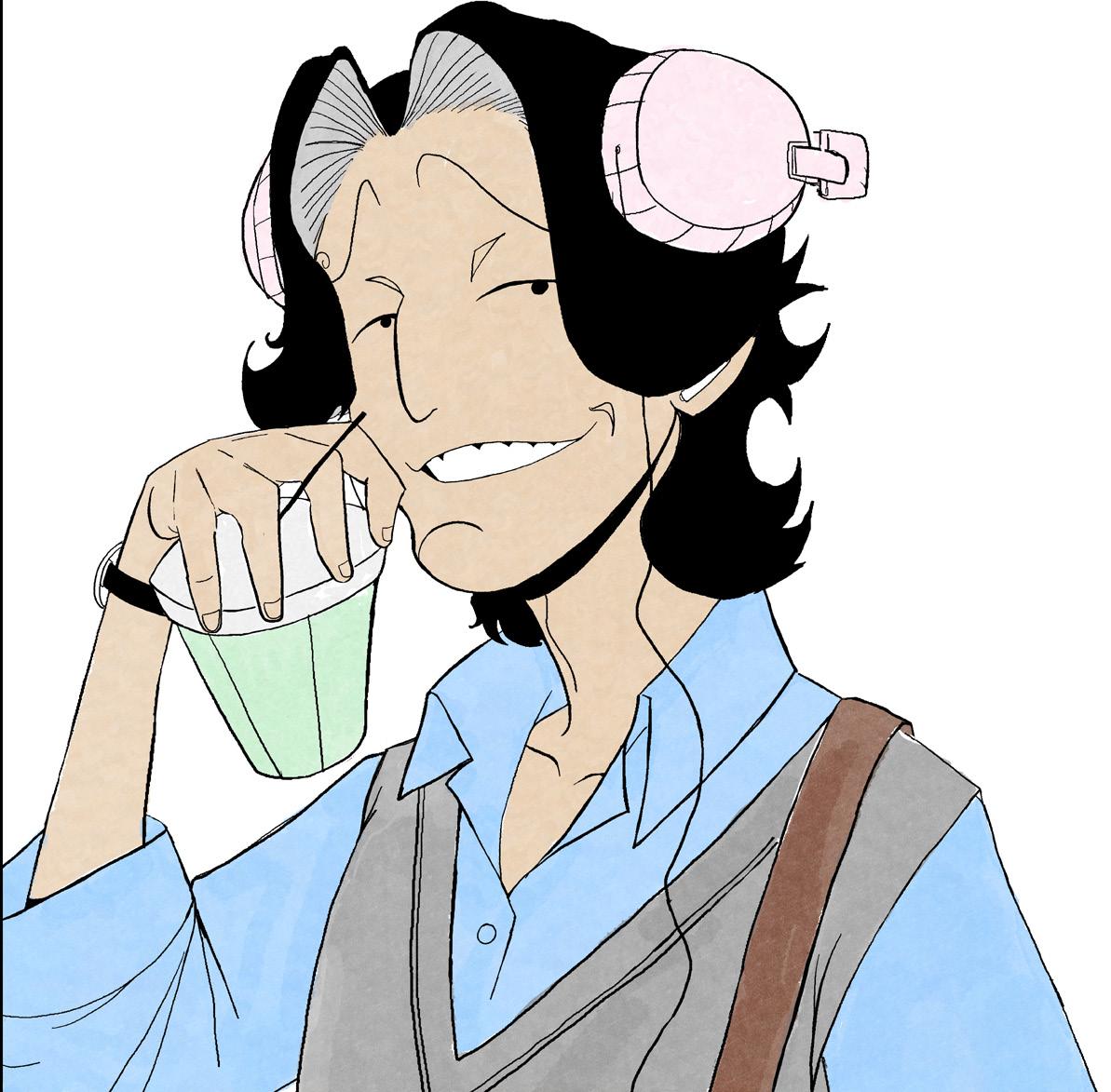
This YikYaker wasn’t a real matcha lover. He was a performative man.
Given the rigorous journalistic credibility of this article, our dear readers most certainly are neither YikYak doomscrollers nor performative themselves. Thus, we generously offer you the opportunity to step into the faux leather loafers of the performative man. Allow us to set the stage (Get it? Because you’re performing?):
You walk down Colonial Williamsburg’s Prince George Street, the echo of your aforementioned “leather” loafers matching the beat playing through your wired headphones ... is that “Glue Song” by beabadoobee?
The strap of your Trader Joe’s tote digs into your leather jacket-clad shoulder, and you move your Labubu keychain aside to pull out a copy of “We Should All Be Feminists.” You cannot recall ever having read it, but the carefully color-coded annotations sprouting from every page say otherwise. It must’ve been life-changing. You open Instagram to follow Chimamanda Ngozi Adichie and pre-order her next work. You notice that your bio reads: “ceo of child-like wonder,” and you take a moment to reflect on all the women who inspired you as a child — you will journal about this later. Seeing that you’ve posted a story, you click it open: “The Future is Female”
shines back at you in bold, unwavering letters. One person has liked it, so you immediately DM her a book recommendation and some accompanying mood music.
But how did you come to be this way? Why are those girls you pass by pointing and laughing at you? What does your presence say about culture and society?
Well, we’re glad you asked. That’s just why we, your friendly performative analysts, are writing to you today.
To start, the performative man has a singular goal: to steal women’s hearts. The green drink, the baggy pants and, of course, the soulful guitar all are part of an orchestrated act to attract. The performative man is also known for his display of emotional intelligence (He’s a feminist due to his deep empathy for women.) and vulnerability (He bravely shares that sad girl guitar solo.) The performative man paints himself as exposed, connected and heartfelt, but it is deliberately counterfeit. Of course, this sort of script for catching and reeling lovers is nothing new, but the performative man becomes the butt of the joke because of it.
Interestingly, the cultural and behavioral elements performative men are infamous for are, in general, considered feminine. These individuals listen to artists that are more popular amongst women, consume media about women’s empowerment and communicate their feelings (something we know no man can do).
That bit in parentheses, beloved reader, was beautifully composed semi-sarcasm, but it brings up a larger looming question. Even if the performative man’s use of fraudulent identity to secure a lover plays an active role in the patriarchal system, what are we doing by labeling support of women’s rights and emotional intelligence as inherently feminine? Why are these qualities jeered at as mere performance in men? We already have a problem with stigma around emotion and vulnerability in men, seen, for example, in
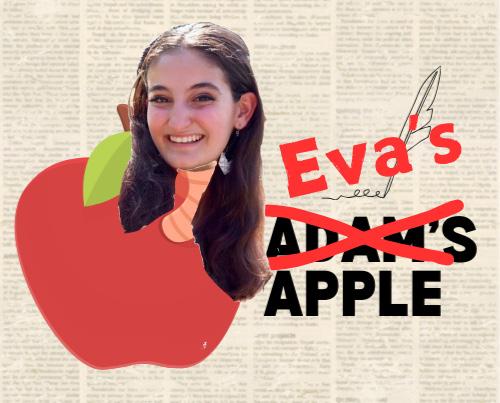
Eva’s Apple #10: My DMs are open
Today, we’re celebrating one whole decade of this satire advice column! I’m lying — this is just my tenth issue. To celebrate such a milestone, I’m doing something a little crazy. I didn’t write today’s column; you did.
WHATTTTT?!?!?!? You heard me right. If you follow me on Instagram or TikTok, you were given an early opportunity to answer the question of the week ... which is as follows:
“hi eva how do u get someone to like u back”
See, if I were writing this on my own today, I would tear the grammar of this question apart. But today isn’t about me ... so we’re just gonna move on.
You might be wondering why I’m outsourcing my insight for today’s column. I think my bimonthly nuggets of advice are really something special. But, relationships are a two-player game, and getting someone to like you back takes more than being epic. You have to make someone else feel like they’re epic. Even if you’re lying. With that, I embark on my journey to platform your diverse perspectives to make you, my readers, feel epic. Whether I really believe that or not is a far more complicated question — one for another day.
The way our tenth issue celebration is going to work is I am going to group some of the most interesting answers into thematic families and rank them from my least favorite to my most favorite.
Bronze medal: It’s wholesome I hate it
“Show that you care about their interests”
“Talk to them! They have to know you to like you!” Piss off. People should fall in love with me on sight.
Brass medal: We’re getting desperate
“girl tell me when u find out”
“Say PLS PLS PLS PLS PLS”
“girl idk but lemme know if u figure it out”
That’s what I’m trying to do. Let me cook, and I’ll bring you the food in a bit
Silver medal: A lil twisted
“Invite them to a harshly lit dinner at the dining hall (obvi it’s ur treat so swipe them in)”
“Throw a rock at their face”
“Plant banana peels outside their door. They slip, and experience minor injury. Use this as an opportunity to show off your incredibly attractive first aid competence.”
To my pre-health divas out there, take heed of that third one!
Stainless steel medal: Dog or dawg?
More than you ever wanted to know
Alex
Hill and Julia Peavey THE FLAT HAT
men’s underrepresentation in therapy. The performative label of these qualities seems to perpetuate these stereotypical and limited views of gender.
But why are we so fixated on categorizing what is performative and what is genuine in the first place?
Beneath the mockery, parody and cultural obsession with calling out the performative man lies a deeper frustration. It begins with the woeful modern realities of looking for romantic connection — perhaps the 6 foot 7 inch tall environmental engineer who enjoys cooking, journaling and floral arranging was indeed too good to be true. But this frustration of finding what we desire to be merely a pretty, perhaps even meticulously targeted, mirage, extends far beyond the pitfalls of the modern dating scene. Our fear of being deceived by a mere performance extends to every aspect of identity expression.
And performative men aren’t the only ones whose identities have become more performative. The algorithmic curation which dictates our daily media consumption means that gone are the days of hearing a song
from an artist who we’ve never previously listened to, of going to see a movie without having read a single snarky Letterboxd review of it, of opening this article without first seeing the wonderful Flat Hat social media team’s compelling Instagram post promoting it. Without considerable effort to stay offline or cultivate disconnection, we lose the experience of discovering music, fashion and relationships without prior expectations or the influence of what others enjoy. In other words, there is a widening gap between our personal aesthetic and our genuine personal connection to that aesthetic. That gap is, as the accusatory language of our paranoia dictates, performance.
And yet we have a distaste for this naturally occurring performance so much so that guilty pleasures are in fact guilty. We have heinously betrayed our curated aesthetic when we switch our playlist from Marietta and American Football to Taylor Swift’s new album, thus making our Midwest emo-loving identity slightly less genuine.
But why, you may ask, does this brief capitulation to the algorithmic tide
“Chase them on all fours and bark every time you see them!”
“ask them if they like dogs then bark and wear a collar”
Weird, but even weirder that it came up twice.
Gold medal: Freaky, funky, fresh.
“Big fan of a thirst trap — make sure feet are in it as well to diversify the audience”
“if you ever embarrass yourself you can blame it on the twin”
“get a mohawk and learn karate”
“Pay a witch on Etsy to curse them”
These freaks stole my writer’s voice. I’m hiring a private investigator, and you’ll be hearing from my lawyer. Unrelated, but do you know any pre-law students who would litigate for free?
Sidebar: I’m running out of metals for my medals.
Platinum medal: Confident divas
“realize you’re actually too good for them”
“Be sexy like me”
“you don’t CHASE you ATTRACT” SPEAK ON ITTT! We’ve got our winners. Good things come to those who wait. With that being said, I personally am done waiting. Does anyone remember my subtle hint that I’m single from “Eva’s Apple #2?” Ring a bell? Clearly not. I’m still single.
If you’re nice, read books and would laugh at my jokes, I might be your soulmate. If you’re all of those things, but don’t think you’re cut out for being a satire advice columnist’s trophy boo, I’ll hook you up with one of my readers who helped out with today’s column. Just toss me the bouquet at y’all’s wedding.
See you in two weeks (or in my DMs). Mwah!. EvaJaber‘28(she/her)isaprospectiveEnglishorinternationalrelationsmajor.Sheisamemberofthe Cleftomaniacs,anacappellagroup, anESLtutorandhopestoencourage peace-mindedadvocacyoncampus. Contactheratehjaber@wm.edu.
matter? In a world of hypercommodified aesthetics and interests, “you are what you like” has never seemed more true. To like popular media makes us basic. To like matcha and Clairo makes us performative. To like nerdily correcting the professor, stargazing at Botedock and streaking Sunken makes us a twamp.
The interests of performative men, with their wired headphones, vinyls and books (ancient relics, we know), reflect a trend affecting Gen Z as a whole: the aesthetic of nostalgia. As an acquaintance mildly put it prior to the Internet sensation of the performative man, “People are walking around with f—ing Walkmans these days.”
Interestingly, Gen Z often yearns nostalgically for times it doesn’t even remember. Rather than simply mourning the loss or celebrating the greatness of our past, we borrow from the past of generations prior. We watch “Stranger Things” and miss the 80s ... but we never lived them.
In essence, this nostalgia emerges less from connection with the past and more from a sense of disconnection to the present. Gen Z of America knows an artificial world, where phones become walls between strangers, Instagram feeds become judged covers and loneliness thrives.
The prospect of another reality — one of connection, spontaneity and authenticity — lures us to wired headphones and Laufey’s jazz-like albums. Yet, as in the case of performative men, this attempt at nostalgia becomes another hollow Internet trend and ends up reinforcing the emptiness Gen Z feels. The attempt to disconnect oneself from the modern mediascape ultimately entangles a person within it.
Essentially, although performative men undeniably make funny TikToks, they also speak to a larger culture of regressive ideas of femininity, anxiety around genuineness and dissatisfaction with the modern day.
But enough of this philosophical genius ... The truth is, we need more
funny TikToks in this world! We need more performative men. In advance, you’re welcome: we dreamed up some great ideas for the College to implement more performance as a campus. Everyone waiting for the shuttle to Woodlands? Well, why don’t y’all play guitar? We want to see competing Clairo solos on our way to the dining hall, thank you. And to the people reading just one meager book on Sunken, shame on you. Yes, that’s right. You should be reading two or more books, simultaneously, at all times. Additionally, we suggest that our student body drinks so much matcha that a national shortage results, as that is the only marker of true success. Soon, Aromas will have no Grinchcolored drinks left!
And if you still aren’t feeling the performative spirit strongly enough, here’s another way to level up: the future of performance is — you heard it here first! — pseudo-intellectual analyses of performance.
“But wait,” you say. “Isn’t that what this article was all along?” Well, we always knew we had smart readers. We proudly state that while writing this article, we daintily sipped matcha (with oat milk due to the dairy industry’s evils), sang our prose to the sound of our guitar shredding and informed ourselves with tomes of feminist literature. And yes, dear reader, our DMs are open. AlexandraHill’28isaprospectiveEnglishmajorandcreativewritingminor.Shedoesresearchatthe IICConservationGISlabandisa memberofVox.Whenshe’snotsubmittinghercolumnslate,youcanfind heryapping,daydreaming,ordancing reallybadly.Contactheratabhill@ wm.edu. JuliaPeavey‘28isaneuroscience majorfromSanDiego,California. Sheenjoyseditingand(occasionally)writingforTheFlatHatand lovestowatchmovies.Contactherat jjpeavey@wm.edu.
STAFF COLUMN
COURTESY IMAGE / WIKIMEDIA COMMONS
Eva Jaber FLAT HAT OPINIONS ASSOC.
GRAPHIC BY MICHAEL GABRIEL / THE FLAT HAT
GRAPHIC BY DAVID OMITOGUN / THE FLAT HAT
Welcome to LASU milia
Latin American Student Union celebrates culture, wraps up Latin è Heritage Month
If you think you have not seen the Latin American Student Union around campus, you have. Maybe you sampled their involvement in the Taste of Latine event at Sadler, where the dining hall was overtaken with delicious Latin American dishes. Or, perhaps you witnessed the Carnaval on the Sunken Garden, where they honored food and festivities from Brazil and different Caribbean countries.
LASU provides a space to represent the less than 10% of students of Hispanic and Latinè origin at the College of William and Mary, and to fundraise for causes that affect Latin Americans as well as the Williamsburg community. Their mission kick-started in 2009 when the student founders observed a lack of community among Latinè students at the College. Now, the “LASUmilia” has more than 180 dues-paying members and even more who attend weekly meetings on Thursdays at 7 p.m.
In its constitution, LASU defines its goals as engaging with community service, uplifting Latin American identity via fine arts and increasing awareness about contemporary issues affecting Latin Americans or Latinos in the United States.
“LASU has come a long way from a much more divided community to a place that hopefully is a home for all,”
Vice President Brenda Cardona-Hernandez ’27 said.
The organization’s goals are progressing with their weekly immersive campus events for Latinè Heritage Month, spanning Sept. 15 to Oct. 15. Some of these events include Norteña Night, Colors of Carnaval, Taste of Latinè and History of Masa. These were educational, artistic and cultural celebratory events where members could learn about traditional folk dancing, the biggest Brazilian festival of the year and centuries-old Latin cooking techniques.
“I personally worked hard with my Co-President, Carlos Juarez, to get History of Masa done,” Co-President Nico Giro-Martin ’27 said. “That required researching culinary history within Latin America, as well as organizing cooking
DEVYANI THAKARE // THE FLAT HAT
groups and ensuring our final product is something worth giving to our audience. The rest of our events were spearheaded by different members of our exec team. This requires trust and understanding that we are all also students, who have other things in our lives, but at the end of the day, we want the best for LASU.”
LASU organized the notable Taste of Latinè event at Sadler, collaborating with the Student Center for Inclusive Excellence, Political Latinxs United For Movement And Action in Society, Association of Latino Professionals for America, Society of Hispanic Professional Engineers and Hermandad de Sigma Iota Alpha.
“For the most part, with these other organizations, what we try to do is just not copy off of each other,” Juarez said. “And so, when there are events, they’re kind of larger scale, and they want to collaborate through certain things.”
Being on the executive board for a large-scale cultural organization on campus, especially during Latinè Heritage Month, requires efficient time management and communication.
“Everyone on exec is very open and communicative about what they need and what type of things they need help with, if that makes sense,” Juarez said. “So, it’s nice with that atmosphere.”
For many members of the executive board, LASU is dear to their hearts, and they deem it a home away from home.
“I’m a first-generation student, so I’m the first one in my family to attend college,” Juarez said. “I came, and LASU just became my second home. LASU has provided me [with] such great opportunities and mentorship. I remember telling one of my best friends freshman year, I was like, ‘I’m going to become president of this org one day,’ and here I am now, the co-president of LASU.”
The first goal stated in the organization’s constitution is its commitment to serving the community, and they plan frequent fundraisers to achieve this goal. In the past month, LASU collaborated with Vox: Planned Parenthood Generation Action to raise money for the National Latina Institute for Reproductive Justice.
“VOX graciously came to us with the opportunity to fundraise for this cause, in a way to find their place in Latinè Heritage Month,” Giro-Martin said. “We were so excited for the opportunity and to connect more with our service roots. Reproductive justice is such a hotbutton topic, as well as the mere existence of being Latinè in this country. It’s important not only to have these conversations but also to help in any way.”
The National Latina Institute for Reproductive Justice’s goal is to build activist bases around the country to fight for reproductive rights in the United States, and it has found its way to Latinè activists here in Williamsburg. LASU decided to take on this subject, not only to commit
to community service, but also to educate its members on contemporary issues disproportionately affecting Latin Americans.
“Although LASU is a very social organization, we try our best to tap into the philanthropy side of it whenever possible,” Juarez said. “Vox, they baked brownies and muffins, [and] we sold a lot of those. I’m very, very happy with that, because Vox has always been a good connection we’ve had in the past.”
LASU has also held events that combine its social and philanthropic nature. They recently ran a blanket-making social, where members could create blankets together to donate to a local family resource group in Williamsburg.
Cardona-Hernandez works with this resource group, which provides a monthly educational discussion for Latinè moms while volunteers entertain their children. Last year, LASU and PLUMAS held a fundraiser for this group and raised about $840.
“With those $840, we bought so many toys and gifts for these children, and it was a beautiful event that we had last year,” Juarez said. “It took up all my energy, but it was more than worth it.”
Though Latinè Heritage Month is coming to an end, LASU’s plans are not. They still have many exciting events coming up, including big-little pairings.
“Bigs and littles is one of our most impactful projects of the year,” Giro-Martin said. “It further connects our general body members and offers not-as-active members a family.”
Additionally, Itty Bitty Mart, in partnership with International Mini-Mart, will be a pop-up event highlighting popular Latin American snacks and drinks. The event will run Tuesday, Oct. 7, from 11 a.m. to 3 p.m. in the Student Center for Inclusive Excellence. This is a new event for LASU where members can share what GiroMartin called their unique confectionery culture.
“We’re excited because it’s new, it’s never been done before, and so we would love to just highlight different snacks and drinks from different countries,” Juarez said.
Penne For Your Thoughts: Opus 9 Steakhouse
Ethan Qin ’26 hates seafood. Clare Gifford ’26 recently became vegetarian. These are the kinds of details you only learn after spending time with people. This was the kind of time I was lucky enough to have a few weeks ago when my boss and colleague from The Flat Hat joined me for lunch. This article is a collaboration with Clare. She will be sharing her experiences with the appetizers and deserts, and I will touch on the main course and general ambiance of the restaurant.
Opus 9, a steakhouse off-campus in New Town, was not an accidental choice. I already knew that Ethan was a steak fanatic — the kind of person who can tell you the difference between a ribeye and a strip just by the marbling. I knew he was a meat expert when he gave me a lecture on how to determine a good steak during our most recent Costco trip. So, I wanted to watch him in his natural habitat.
Clare’s invite was a different story. I invited her because I’ve heard that she was an incredible writer, and I thought this lunch would be a good excuse to pick her brain and, perhaps, get some ideas on writing. Only later did I realize that she no longer ate meat. But instead of the meal being awkward, this gave me a new perspective on a steakhouse meal from a vegetarian’s point of view.
We showed up in smart casual attire, slightly overdressed for the time of day, but we were reassured in our clothing choices upon seeing the servers clad in collared shirts and black ties. The dining room struck me as old-money and classy. Clean lines, dark wood and a soft hush that tells you the place is serious about dinner. Though, it feels important to reiterate that we were there at around noon and the open windows across from our table revealed a parking lot. Nevertheless, Opus 9 seemed built for milestones, and I recommend it to students looking to bring their parents for a celebration, families wanting to bond or couples on a second or third date looking to impress. Lunch was pleasant, but it is clear that dinner is where this restaurant thrives.
Our server Anna was the kind of professional who makes a meal better just by being there. She guided us through the menu with a cool confidence, listening to my wants and needs before guiding me toward choices I might have overlooked. At first, I was paralyzed by the options on the appetizer menu, but Anna pointed us toward the sliced ahi tuna and jumbo barbeque shrimp laid on a toasted slice of baguette.
The shrimp arrived first; it was a small dish that smelled like butter and white wine, with toasted baguette slices that held the shrimp above the rich sauce like a raft. It was creamy yet bright, simple yet satisfying. Our sashimistyle tuna dish followed. The bright red innards and flame-charged skin did exactly what an appetizer should do for the palate.
options on the menu. Both steaks were cooked to medium-rare,
though not with the best technique. I would note that if you come to Opus 9 expecting topquality cuts, you may leave disappointed. The staff checked in often to make sure everything was to our liking, but the steaks were ultimately poorly cooked. The meat itself did not match the service and appetizers.
Alas, time for dessert — a molten lava cake with a scoop of vanilla ice cream on the side, and the undeniable star of the meal: a bananas foster, which was kindly given to us on the house. The lava cake leaned traditional, with a thick fudgy inside and a crisp brownie outside. Its symphony of sweetness was light enough to justify one more bite even after a full steak. The ice cream atop the lava cake far exceeded our expectations for a steakhouse, too. The dish was cold, creamy and undeniably comforting after the unpleasant, tough texture of the steaks. Then out came the bananas foster on fire, which I would say was the restaurant’s highlight of confidence. This dish turned the table into a theater. Our server brought it with majestic confidence; the butter and sugar were already
sizzling, filling the air with the smell of caramel. When the rum hit the plate, flames shot up in a flash of blue-orange fire, and, for a brief moment, we were all wide-eyed kids at a magic show. Ever the critic, Clare found that the taste of lighter fuel overwhelmed the caramelized bananas upon her first bite.
It was clear now that we had reached the end of our meal. Ethan was looking at his watch, already running late for another meeting. So, we shoveled spoonfuls of lava cake and flamed bananas into our mouth at near record speed, which made the dessert taste even better, and sped out the door. There was something joyful about racing against the clock. It was like stealing one last bite before the curtain fell. Opus 9 Steakhouse delivers the kind of meal that feels like a small occasion. The service elevates the whole experience, and the bananas foster is worth ordering just for the fire show. Next time, I will make a dinner reservation, slow down and let the meal unfold at the pace it deserves. But even in a rush, Opus managed to turn a weekend lunch into something memorable. Most importantly, thank you Ethan and Clare for making my lunch less lonely.
Ethan ordered the ribeye, I went with the filet mignon and Clare opted for the caprese salad — one of the only non-meat
On Friday, Oct. 3, e Hart Gallery at the College of William and Mary’s Sadler Center held its opening reception for its gallery “Roots.” Along with the new artwork, a speaker played music, and food and drinks rested on tables outside of the room. e event ran from about 5:00-7:00 p.m.
Gibran Adnan ’27, one of the two student curators for the Hart Gallery, described what the theme “Roots” meant to him.
“We wanted to make it about community, about family, about nature,” Adnan said.
Rebecca Graber ’27, the other student curator, mentioned the ongoing Family Weekend as an in uence on the gallery topic with students’ families visit campus.
“I suggested the theme ‘Roots’ because I thought it would relate to family and the year of the environment in a really nice way that ties everything together,” Graber said.
Student curators worked with supervisor Jenna Venable to put the theme together. Graber listed a series of steps to developing the gallery showcase: determining the showcase’s themes and duration, asking for and selecting submissions, displaying pieces and advertising with yers.
Graber’s interest in the gallery developed after submitting her art last year, and she was offered a curator role when it became vacant.
“I thought it would just be a really good, interesting experience,” Graber said.
Adnan described the curator’s responsibilities with the gallery’s art pieces.
“We frame them, put them up, write all the labels for it and speak to all the artists just to get to know them and their pieces as well,” Adnan said.
Each piece in the gallery is labeled with the student’s name and class year, the medium (or media) of the work and the title of the piece.
When asked to summarize his job in one sentence, Adnan emphasized visibility.
“I would say, helping promote non-art students’ artwork and other artistic endeavors,” Adnan said.
e pieces selected for the Gallery re ect both aspects of “Roots” — human connections, and nature. An ink piece by Kara Park ’26 titled “Captured” depicted two owls $ghting, one beneath the other, their talons close. A work by Lydia omas ’27 entitled “Mother Nature on Canvas” included media such as acrylic and shell. Andre Adams ’26 submitted a piece called “A Moment from when Father Tom Baptized Me in the Local Swimming Pool. I Did Not Go Willingly.” “Cinco Minutos: a collection” by Elijah Glassford ’28 consisted of three photographs set in black frames. e uppermost photo depicted an international telephone that, for $1.00, would give you a $ve-minute call to Mexico.
Both curators discussed how they chose pieces for the “Roots” showcase, indicating how many pieces made it in and the thought process behind the decisions.
“When we were selecting the pieces, we kind of were going about it in a way of, okay, does it adhere to the theme in a way that we think works, and does it pair well with another piece that we want to include?” Graber said.
Adnan noted that most of the pieces that were submitted were put on display, the only ones excluded being non-student art.
Multiple showcased artists attended the gallery opening, including Bhavya Devarsu M.S. ’27, who created the painting “Kuchipudi, Echoes of Telugu Tradition”. Her family also arrived with her to the gallery.
Devarsu, who is working towards a masters in computer science, explained what art means to her. She has experience with and enjoys oil painting, the medium she chose for this piece.
“Art is like my hobby,” Devarsu said. “It has been for my whole life.”
She decided to submit her piece to the Hart Gallery to try out the experience of a showcase. Her painting, $lled with golds, oranges and reds, depicts a Kuchipudi dancer, a form of traditional South
Indian dance.
“So the prompt was Roots, like something connected to your background, and I just thought that doing a painting about Kuchipudi would be good because I’m Telugu, so I also did Kuchipudi for 10 years when I was little,” Devarsu said.
Graber had photographs from an in-class critique on display in the gallery.
“I made that kind of just to explore myself creatively, $gure out what kind of photos I wanted to take,” Graber said. “I picked a theme involving death and rebirth, speci$cally regarding humans and nature and our relationship with it.”
Graber’s piece included three photographs, all black and white, each featuring owers.
“I thought it would be most thematic, but I just like the visual motif of owers against humans and comparing them,” Graber said. As for the medium she chose, Graber admires $lm photography for its e ort and lack of immediacy, both of which she believes teach deliberation that can also aid in digital photography.
“I like $lm photography because you can’t review it in the moment. It feels very $nal, so it makes you consider the composition a lot more carefully,” Graber said.
According to Adnan, the showcase will be up until Oct. 26. Find the Hart Gallery on the second floor of the Sadler Center at the front of the Slice.
Creating space for student production
Blank
AAMNAH MALIK // THE FLAT HAT
Blank Space Creatives is a student organization that puts its own creative spin on what a typical club looks like on campus. Composed of a team of talented student photographers and videographers, Blank Space works as a student-run production team that can be hired out by other organizations on the College of William and Mary’s campus and in the greater Williamsburg community.
President Nate Boyle ’27 and Vice President Mayer Taw$k ’27 originally came up with the idea their freshman year after realizing that the College was a missing space for creatives in the photography and videography space.
“So I came up with my own work and made that process happen with a couple other people,” Boyle said.
By creating a collective of artists for hire, Blank Space has given young creatives a new opportunity to broadcast their work and gain connections that can be the stepping stones for their future creative successes.
Since the group’s founding in spring 2024, Boyle and Tawfik have built up an exclusive group of students who have honed their craft.
“We see people with talent, we reach out and say, ‘Hey, you’re pretty good, would you want to work with us?’” Boyle said.
With Blank Space acting as the platform for artists to promote and share their work, students can be hired out for gigs that require
smaller production crews.
“We just try to do gigs individually, but those are also under the umbrella of Blank Space Creatives,” Boyle said.
Professionalism and highquality projects are at the forefront of the work that Blank Space puts out. While they tried the weekly general body meeting format in their first year, they realized that the format was not conducive to the creative space they wanted to provide for fellow artists.
“My original vision for Blank Space Creatives, and that still holds true, is creative expression, putting our name out there, building a brand and building a stylistic production team for hire,” Taw$k said.
While they are eager to be able to host club-centered events in the future, the collective is currently focused on establishing their presence on campus.
“Coming up, we have Stompfest, we’re covering that, taking pictures for [Black Student Organization],” Boyle said. “Just generally graduation pictures, birthday pictures, chapter pictures, all that kind of stu .”
Through working with clubs like BSO as well as Syndicate Hip Hop Dance Team, and working with the Student Center for Inclusive Excellence to produce its 50th anniversary video, the group is already hard at work in their second year.
“Right now we are working on building up our brand, building up our reputation and building up awareness of us,” Boyle said.
“Hopefully, we could pivot to also including more community-wide
events, like showcases where we could elevate other artists.”
In the meantime, the collective is working on a fashion project that would allow them to have full creative control.
“We’re super in touch with the fashion scene in the area, a bunch of di erent designers and stu like that,” Boyle said. “It is going to be a Blank Space-central body of work, whereas a lot of the other work we do is for the orgs that hire us.”
Members are drawn by the exclusivity of the collective, which allows them to provide a marketable service that is entirely run by students.
“Actually, I think just like I’m excited to be more of this businessforward organization where we’re here to serve other organizations and clubs,” club member Lukas Richardson ’28 said. Richardson is a videographer and photographer for the collective who shares Tawfik and Boyle’s vision about the outlet that Blank Space can provide. His time in the club has already been fruitful. He shared how the collective helped him get connected with the greater campus community.
“Later, with the opportunity to shoot fashion and all the other clubs and groups that we might run into, just exposure to every corner of student life that I alone would not have the chance to reach is my favorite aspect,” Richardson said.
While the club prides itself on its professionalism and prefers to have a production team of videographers and photographers with established portfolios, they are open to teaching
those who have an interest in pursuing their creativity.
Further, Blank Space never wants the cost of hiring their services to be a barrier to creativity on campus.
“If people have an idea and it’s creative and they necessarily don’t have the funds, they could reach out anyways,” Taw$k said. “If we have photographers who have time and are willing and are interested in the project, money is not a barrier to that. But sometimes art is like that, you don’t have the money to do art, and that’s okay.”
Echoing this sentiment, Boyle said Blank Space, at its core, is a space where creatives come together and $nd community.
“We love when people come to us with these creative ideas,” Boyle said. “For example, I would say a personal favorite project that I’ve worked on is a promotion video for the [Orientation Area Directors] where they’re pretending to be like the sharks from Shark Tank. So we love when people come to us with these wacky ideas, and then we’re able to kind of put that out there and make that real. I’d say that is kind of our goal as a club.”
Beyond being a collective, Blank Space serves as a jumpingoff point for creative expression, for both organizations on campus and the photographers and videographers working on these projects themselves. To reach out for hiring inquiries and to support Blank Space events, check them out on Instagram (@ blankspacecreativeswm).
Space Creatives provides platform for photographers, videographers
ABIGAIL
sports
Defensive Player of the Week Tribe overcomes de cit to win high-scoring matchup
Banbury shines on
defense,
named
CAA
Less than three minutes remained on the clock, and William and Mary (3-3, 2-1 CAA) was in trouble.
Trailing by four points, North Carolina Agricultural and Technical (1-5, 1-2 CAA) had mounted a methodical, clockchewing drive that consumed over half of the fourth quarter. Slowly but surely, the Aggies marched down the field, making progress with every play until they found themselves deep in Tribe territory. A scramble from redshirt sophomore quarterback Kevin White brought NC A&T to the William and Mary nine-yard line, giving the Aggies four downs to punch the ball into the end zone for a potentially decisive touchdown.
As the NC A&T offense continued its advance, calling three consecutive run plays that brought it to the Tribe’s three-yard line, William and Mary needed to make a stand.
Facing fourth and goal, White rolled to his left, expecting to find an open receiver. However, he was met with nothing but a wall of Tribe defenders. The wall chased White out of the pocket and up the sideline, where graduate student linebacker Luke Banbury launched him onto the Zable Stadium track, securing William and Mary’s 38-34 victory over the Aggies Saturday, Oct. 4 in Williamsburg, Va.
“We were saying after that third down amongst ourselves on the field, like, this is it right here,” Banbury, who was named the Coastal Athletic Association Defensive Player of the Week, said. “How bad do you want it?”
According to head coach Mike London, the Tribe was down eight starters thanks to a menagerie of injuries. At one point during the third quarter, ESPN Analytics estimated the Green and Gold’s win probability to be less than 11%. Despite facing a number of setbacks, William and Mary overcame a mountain of adversity and completed a 13-point comeback that thrilled the Family Weekend crowd.
“What a game, but also what a turnaround in terms of the events of what happened in the first half, first quarter,” London said. “[We] came into the locker room at a deficit. But I told these guys afterwards, ‘The grit and the resiliency of this team is pretty special.’ And when you come in and you hold each other accountable, responsible, you find out what you can do to make things right. And that’s what happens.”
As the teams prepared for kickoff on a cool, breezy day at William and Mary — the Tribe’s first home game of 2025 to be unmarred by rain — the Zable Stadium stands began to fill with both programs’ colors. Tribe fans hoped to see their squad knock off a team it beat 45-7 in 2024, while NC A&T supporters cheered on their bunch as it tried to score its first CAA road win in program history.
The first half was all Aggies. William and Mary gained 46 yards in the opening quarter and converted just two first downs. After a first drive that went nowhere, sophomore quarterback Noah Brannock briefly entered the game for junior quarterback Tyler Hughes but promptly tossed an interception. NC A&T accumulated 106 yards, converting a fourth down deep in Tribe territory to set up a touchdown from redshirt senior running back Wesley Graves. William and Mary managed to respond thanks to a botched Aggies punt that gifted Junior linebacker Clayton Dobler a fumble return touchdown. However, the quarter ended with NC A&T amidst another promising drive.
Graves wasted no time finding the end zone as the second quarter began, with a 1-yard run making the score 14-7 in favor of the visitors. It was then the Tribe made a special teams blunder of its own: a William and Mary punt was wrecked by a low snap that gave the Aggies possession at the Green and Gold’s 18-yard line. The Tribe’s defense held steady, limiting NC A&T to a field goal, but the home team was in desperate need of a spark.
Enter graduate student running back Rashad Raymond. With 4 minutes, 13 seconds left in the half, William and Mary’s leading rusher ripped off his longest run of the season, doubling the Tribe’s total yardage with a 67-yard rumble that brought the Green and Gold to the edge of the red zone. In the following play, junior tight end Sean McElwain found a crease in the middle of the field and strolled into the end zone untouched.
According to Hughes, the specific play that got McElwain open was set up by Raymond, whose run forced the Aggie defense to pay more attention to William and Mary’s ground game.
“If you’re able to run the ball, you’re able to do anything,” Hughes said. “Play action, drop back. If you are able to vertically
Even after a slow start, the Tribe managed to gain 405 yards on the day from a variety of contributors, outgaining the Aggies
displace the opposition, you should be able to do anything that you want to do.”
Hughes also said explosiveness in the running game was a point of emphasis for the Tribe in practice after it averaged just 3.2 yards per carry in a loss to Villanova (3-2, 2-1 CAA) last week.
“That’s been the emphasis all week,” Hughes said. “I mean, all year we’ve been really trying to improve on the run game on first and second down, and it was good to see all that work come into fruition this game. We really needed it.”
Although NC A&T scored another touchdown to secure a 24-14 advantage at the halftime break, William and Mary had demonstrated proof of concept on offense, as well as an ability to generate explosive plays. The Green and Gold expanded on that foundation during the first drive of the second half. Redshirt freshman receiver Armon Wright, who doubles as a member of the Tribe track team, received a pass from Hughes and sped down the sideline, leaving Aggie defenders in the dust as he raced to a 75yard touchdown.
However, the Tribe continued to commit self-inflicted errors that handicapped its chances of reclaiming the lead. A short punt gave NC A&T pristine field position, which the Aggies leveraged into seven points. Less than a minute later, William and Mary went back to Wright, who fumbled at the Tribe’s 25yard line. For the second time in 20 minutes, the Green and Gold’s defense effectively controlled the damage done by a turnover, holding NC A&T to a field goal, but the hosts found themselves down 34-21 with 5 minutes, 27 seconds left in the third quarter.
It was then that William and Mary began doing everything right. The offense kept generating explosive plays: Hughes sprinted for a 66-yard touchdown to cut the deficit to 34-28. The defense forced the Aggies to do damage control of their own, with junior defensive back Bryce Barnes dislodging an NC A&T fumble that led to a Tribe field goal. The run game continued to establish the long ball. McElwain again took a pass up the middle, tearing off a 40-yard gain that set up a Raymond touchdown.
With 11 minutes, 15 seconds left in the game, William and Mary had roared into a 38-34 advantage it would not relinquish. The visitors failed to score a single point in the fourth quarter, a fact Banbury attributed to the Tribe defense’s heightened attention to detail.
“I think it was just that we were making mistakes on our own half,” Banbury said. “You know, it’s not offensive execution, it’s defensive misexecution and making mistakes. So, it was really just us making mistakes, and during halftime, when we were talking to the coaches, we kinda got our heads on straight and figured out what we were making mistakes in. Just simple things. Once we figured that out, it’s pretty simple from there to just shut them out.”
The Aggies’ final drive was long and arduous, lasting over eight minutes and putting the Tribe’s back against the wall. However,
Hughes said his trust in William and Mary’s defense never wavered.
“I didn’t lose faith in those boys,” Hughes said. “Man, they work really hard, and what was endured through the whole entire game — I mean, it sucked, but it’s all about the next play. That drive, they were down and [NC A&T was] driving, but they didn’t waver. I love those guys. Very great unit, and I’m not surprised that they got a stop. At all.”
Entering the afternoon, William and Mary was among the 20 worst teams in the country at stopping fourth down conversions, but the Tribe walled up when it mattered most. On the day, NC A&T moved the sticks on just one of its three fourth-down attempts. In discussing William and Mary’s fourth-down performance, Banbury again mentioned improved communication.
“I think it was just sort of playing as one defense,” Banbury said. “Communicating and kind of knowing your responsibility of doing that, to come 100% physical with violence. Sometimes, there was miscommunication earlier in the season, and we worked on that in practice, communicating, getting aligned to funky formations and just making sure you know what your job is and executing that job when it comes down to the line, like fourth and short.”
Banbury finished the game with a career-high 17 tackles, 3.5 tackles for loss and 2.0 sacks. He now ranks second in the Football Championship Subdivision with 75 total tackles.
On the other side of the ball, Hughes completed seven of 14 passes for 157 yards while rushing for 88 yards and a touchdown. Raymond turned in his best performance of the season, accumulating 124 rushing yards and a touchdown. Wright’s single reception went for 75 yards and a touchdown, while McElwain hauled in three passes for 73 yards and a touchdown. As a unit, William and Mary outgained NC A&T 405 to 382 despite running over 30 fewer plays than its opponent.
The Tribe improved on several aspects of its performance from the Villanova game — most notably, it performed well on early downs after struggling mightily on first and second downs against the Wildcats.
“We approached first and second down differently all week,” Hughes said.
”Immediately after playing [Villanova] last week, after the tough loss, all we could talk about was first and second downs. Those are the things that, when you’re behind the sticks, it’s harder to move the football. And there weren’t a lot of things that Villanova was doing to stop us from advancing the ball. It was just execution, just buying into that. [Offensive coordinator Winston] October said if we’re able to improve on these things, the sky’s the limit for us.”
William and Mary faces an upcoming bye week, after which it hopes its assortment of injured starters will be rested and recovered. The Tribe returns to Zable Stadium Saturday, Oct. 18, when it will take on conference leader Elon (4-2, 2-0 CAA) in a crucial matchup during homecoming weekend.
surge earns Green and Gold rst CAA win over UNCW
William and Mary pulls off upset at home, gains momentum as CAA play heats up Second-half
If you want to know how much your fortunes can change in just three weeks, you would be wise to ask head coach Chris Norris ’95 and his William and Mary men’s soccer team (2-6-3, 1-3-1 CAA).
Sept. 13, the Tribe battled with North Carolina Wilmington on the road, returning home having suffered a deflating 5-0 defeat that dropped it to 0-32 and 0-2-0 in Coastal Athletic Association action. However, the story could not have been more different Saturday night at Martin Family Stadium in Williamsburg, Va. Behind an electric second-half performance, the Tribe picked up its first conference victory and its second win in a row, getting revenge over the visiting Seahawks (3-5-2, 2-2-0 CAA) with a 2-0 triumph.
After a balanced first period in which freshman forward Max Cooper and senior midfielder/forward Webb Kosich forced UNCW redshirt sophomore
goalkeeper Trey Smiley to make two crucial saves, neither side could find a way through and the score remained locked at zero.
The Tribe’s pressure finally paid off in the 67th minute, when Smiley denied senior forward Sam Delgado’s shot but could not stop Kosich’s followup effort. The senior’s goal gave William and Mary a hard-fought 1-0 advantage.
For Norris, the goal was evidence of the growth he has seen from Kosich throughout the season.
“He’s been progressively getting better throughout the season, and it’s really showing in matches right now,” Norris said.
Even after netting a crucial opening goal, the Tribe’s attackers continued to push. In the 75th minute, Delgado and sophomore midfielder Thor Sigurjonsson prompted Smiley to make two more important saves.
As the game moved into its final stages, the backand-forth action that defined its first 75 minutes turned into one-way traffic as UNCW threw bodies
forward in search of an equalizer. However, junior goalkeeper Ryan Eapen and the Tribe defense managed to repel each of the Seahawks’ efforts, including an 81st-minute set piece that dribbled just inches past the right post.
William and Mary’s defensive effort has been the driving force behind the Tribe’s two-game winning streak, with Norris becoming increasingly happy with what he’s seen from his goalkeeper and backline.
“The defense has just been, over the last couple of games, really tuned in, really sticking to a plan,” Norris said.
With the Seahawks committing seven and eight players to their attack, they left themselves vulnerable at the back, turning every Tribe long ball into a dangerous chance. As the clock ticked into the final 90 seconds, William and Mary exploited the UNCW pressure. Cooper rounded Smiley at midfield before calmly slotting the ball into the empty net, scoring the Tribe’s second goal and racing off to celebrate with his teammates.
Cooper chased after seemingly every long ball that got behind the Seahawks’ defense. His tenacity did not go unnoticed by his coach.
“When you’re under a little bit of pressure and holding a lead ... having some guys that can break the other team’s line and get behind is critical,” Norris said.
With the Tribe achieving its first stretch of consecutive wins this season, Norris acknowledged the result’s importance for the team’s confidence.
“Knowing that we have the ability to shut teams out and to get goals is huge for this group,” Norris said.
A crucial match awaits William and Mary Saturday, Oct. 11, at Martin Family Stadium in Williamsburg, Va., against current CAA South Division leader Campbell (5-2-4, 2-0-2 CAA). The Tribe currently sits at fifth place in the division, needing to finish in the top three to qualify for the CAA tournament. A win against the Camels would catapult the Green and Gold into contention.
JACOB TOBMAN THE FLAT HAT
JONAH PETERS / THE FLAT HAT
despite running 30 fewer plays.
sports
Colin Ndaw plays it forward with grassroots foundation
Tribe guard connects Senegalese youth with educational, athletic opportunities
game while making 40% of his three-point attempts.
At just 19 years old, sophomore guard Colin Ndaw has accumulated more life experiences than most people triple his age.
Ndaw has not only navigated William and Mary’s strenuous academic and athletic landscapes; before he was old enough to vote, he lived in five nations, moved across the Atlantic Ocean and established his own foundation.
Ndaw’s journey to the United States began at age 13. After receiving a scholarship to IMG Academy, a sports-oriented high school, he moved to Bradenton, Fla., from his home country of Senegal. Ndaw’s adjustment to the U.S. took some time, as the country’s individualistic culture initially surprised him, but he eventually adapted.
“The community back home is very close,” Ndaw said. “So everybody says hi to each other when they walk by someone, everybody eats together. Everybody kind of does everything together, and you kind of know everybody because it is a small community. However, in the U.S., it’s a little bit different. Everybody’s more independent. Everybody kind of is doing their own thing. So at the beginning, it was a little bit tough for me, but I’ve adjusted, and I’ve kind of tried to bring a little bit of my Senegalese culture into other people’s lives, and then also taking that U.S. culture from people of all different backgrounds and bringing that into my life.”
Despite the jarring change, Ndaw described the experience of playing for IMG as “amazing,” and by his senior year, he was averaging 14.1 points per
His performance caught William and Mary’s attention, and the school captured his admiration. According to Ndaw, he joined the Tribe after visiting campus and meeting members of the men’s basketball program.
“I chose William and Mary because I really liked the coaches and the teammates that I saw on my visit, as well,” Ndaw said. “I think it is a tough school for sure, but I am getting adjusted to it, and there is a good community around it. It’s definitely been a journey, but I got a good supporting system around me.”
Ndaw’s transition to William and Mary has not always been the smoothest, and he did not see the floor during his freshman year. He identified the extended college three-point line as the foremost on-court challenge he’s been working to overcome.
“I think it is a little bit of an adjustment, but it is also the physicality and the pace of the game,” Ndaw said. “Kind of makes you rush your shot a little bit, depth perception, there is a lot that goes into it, but at the end of the day, I think it all comes down to confidence.”
Nevertheless, Ndaw said he’s been working hard to make necessary adjustments while still enjoying his William and Mary experience.
“It was definitely an adjustment, and it still is an adjustment, but I am enjoying the process,” Ndaw said. “I love my teammates, my coaches are super good to me, they take care of me.”
Despite now being well-established in the U.S., Ndaw maintains strong connections with his home, a bond forged in large part by the time he spent representing Senegal as a member of its under-18
national basketball team. The experience was exceedingly meaningful to Ndaw and his family. Not only did it helped shape his on-court play style, it also instilled in him a heightened sense of national pride. After arriving at IMG, Ndaw began considering ways he could connect the sport he loves to the country he loves.
“I got to meet so many people [at IMG],” Ndaw said. “It got me to kind of think about basketball as something that can kind of connect people, not only for my own benefit, but for [the benefit of] others.”
While thinking of ways to make a difference, Ndaw drew inspiration from two people: former Norfolk State basketball player Yoro Sidibe and his older brother Hans. When Ndaw was young, he attended basketball camps in Senegal hosted by Sidibe. The clinics, which Ndaw describes as “lifechanging,” eventually gave him the opportunity to compete on the country’s national team. Hans, on the other hand, taught Ndaw “the importance of sports” and “how it can connect to everybody, no matter what color, socioeconomics, where [they’re] at in life.”
With these perspectives in mind, Ndaw created the Ndaw Foundation in 2022, which he runs with his sister Dieynaba. The organization is intended to connect children in Senegal with athletic and academic opportunities and “bridge the gap between opportunity and talent.”
“These kids already have all the tools to succeed except the opportunity,” Ndaw said. “So we kind of try to bridge that gap. So what we do is basically, we set up clinics, camps, we kind of connect coaches with others, and we try to impact their youth, putting them
through drills, camps, get them connected to each other, but also kind of give them a guide on how they should work out, how they should value their studies.”
Ndaw describes Senegal as a nation full of young people with goals of excelling both athletically and academically, and his ultimate goal is to be the “driving change” in making that happen.
“We have a lot of people who are motivated,” Ndaw said. “We have a very young population. So I think what is the driving force is just our culture of working hard. Like, a lot of kids get up at 6 a.m. and work out until 2 p.m. Just like, a lot of people are willing to achieve their goals, and they see everyone in America doing well in sports, and they want to be one of those people, too.”
According to Ndaw, the foundation’s guiding principle is that “the youth can eventually change the world.” He does not want to stop at clinics — in his vision, the organization will eventually create brick-and-mortar “academies, orphanages and schools” that promote opportunities not just in basketball but in sports like soccer, tennis and track. With the help of Dieynaba, a former Duke soccer player who now competes professionally, Ndaw also wants to let young women know that sports can present opportunities to them, too, a fact he says is currently not widely accepted in Senegalese culture. For Ndaw, basketball is a way to show gratitude to his roots and to help the next generation achieve its dreams.
“Our problems are important, but people are facing bigger problems,” Ndaw said. “Let’s just enjoy our experience all in all, and let’s just be grateful for everything we have.”
Senior forward Ivey Crain scored her first goal in nearly a month, freshman goalkeeper Gwen Doughty turned in a clean sheet and William and Mary women’s soccer (4-5-4, 2-1-2 CAA) defeated conference foe Charleston (7-5-1, 3-2-0 CAA) 1-0 Sunday, Oct. 5, at Martin Family Stadium in Williamsburg, Va. The Tribe’s victory marked its first over the Cougars since 2021.
Entering the afternoon, Charleston sported a 3-1-0 conference record and sat second in the Coastal Athletic Association’s South Division, two spots ahead of William and Mary. Although the Cougars — which dealt the Tribe a home loss in 2024 — presented the Green and Gold with a formidable challenge, William and Mary head coach Julie Shackford ’88 said her squad was primarily motivated by its 1-0 defeat at Campbell (4-5-3, 2-2-1 CAA). Despite outshooting the Camels 13-7, the Tribe lost that game Oct. 2, thanks to an 88thminute own goal.
“Well, I think we had a really disappointing game against Campbell,” Shackford said. “We outshot them, we outplayed them, we scored an own goal, so I think the kids were pretty motivated today. I think it’s a group that’s super resilient, and they don’t mind doing the hard stuff.”
William and Mary’s resilience was immediately tested as Charleston found the Tribe’s crossbar in the game’s eighth, 21st and 31st minutes. Shackford’s bunch cleared the ball on all three occasions, benefitting from an offside call against the Cougars on the third, and the teams ultimately entered the break tied at zero. However, Charleston attempted 12 shots in the opening period and came close to breaking the deadlock several times.
Tensions escalated in the 33rd minute, when a streaking Crain was denied a free kick after colliding with a Charleston defender at the penalty spot. Frustrated, Crain threw her hands up in protest, and the William and Mary sideline echoed its striker’s sentiments. A red card was soon issued against a member of the Tribe’s coaching staff.
Nevertheless, the Green and Gold managed to escape a half Shackford described as “very emotional” without conceding a goal, an accomplishment the Tribe coach credited to the steadiness of Doughty and the team’s seniors.
“I think our senior leadership, really, all of them,” Shackford said. “Ivey, [senior forward] Sheridan [Brummett], [senior midfielder] Madison Moon. I thought Gwen, our keeper, was super composed, and that helps a lot when your keeper is just really calm, and it was just a great overall team effort. That sounds so cliché, but it was.”
After another extended stretch of back-and-
forth action, William and Mary finally broke through in the 73rd minute. Crain — the allconference forward who hadn’t found the back of the net since Sept. 7 — positioned herself deep in Charleston territory, controlled a deflection and fired the ball past Charleston sophomore goalkeeper Ainsley Chunn, giving the Tribe a lead it wouldn’t relinquish.
“[We] knew it was probably going to come down to one quality chance,” Shackford said. “You know, Ivey hasn’t scored in a while, and I could just see how much she wanted it today, right? And she loves to put the team on her back, and she did.” Crain’s goal induced catharsis on the excited Tribe sideline, but the battle wasn’t over yet. Charleston responded with a barrage of shots, launching five in the game’s final 12 minutes; at one point, the Cougars forced the Tribe to repel four charges in quick succession, and it seemed certain they would score.
However, William and Mary’s defense held strong. As the Tribe bled out the clock in Charleston’s corner, the Green and Gold began celebrating perhaps its hardest-fought victory of the campaign.
Shackford lauded her team’s back line, which bent but never broke.
“[We] still knew they were going to be dangerous because they’ve got a couple Power Four transfers who can just move, you know?” Shackford said. “So
they’re always still going to have another chance, you know? That’s the law of soccer, but we held them off, and I thought our backs did an outstanding job kind of keeping them in check, and a lot of game management in the corner, and we were able to pull it off.”
The Tribe coach also praised Doughty, whose composure she described as “crazy.” In her debut season, the keeper has started 12 games in goal, posting three shutouts on the year. Doughty’s mother and sister both played for the Tribe. According to Shackford, the freshman is poised to be next in a line of decorated William and Mary soccer alumnae.
“I think [Doughty] managed the game well,” Shackford said. “She kept it away from their dangerous players. She kicked it when she thought [she should], she held onto it at times, which was great. She played out of the back when it was appropriate. So she just read it really well.” William and Mary will enjoy a five-day break before it returns to the field Saturday, Oct. 11, to take on North Carolina Wilmington (8-3-2, 4-0-1 CAA) at UNCW Soccer Stadium in Wilmington, N.C. Although the Seahawks are division leaders, Shackford believes the Tribe, emboldened by its win over Charleston, will not be cowed.
“I think we know we can play with anybody,” Shackford said.
MAHALEY WISE AND SYDNEY WITWER THE FLAT HAT
COURTESY IMAGE / COLIN NDAW
At 17 years of age, William and Mary sophomore guard Colin Ndaw started the Ndaw Foundation with his sister Dieynaba. The orga nization provides youth in his home country of Senegal with edu cational and athletic opportunities.