Sora Vigorito describes family separation, experiments
MONA GARIMELLA FLAT HAT EDITOR-IN-CHIEF
Sunday, March 1, the College of William and Mary’s chapter of Chabad hosted Sora Vigorito, the youngest known survivor of Dr. Joseph Mengele’s twin studies during the Holocaust. Vigorito was one of 89 pairs of twins who underwent Mengele’s pseudoscientific studies at Auschwitz.
Mengele, also known as the "Angel of Death,” was a German physician during the Holocaust who conducted experiments on prisoners at the Auschwitz II-Birkenau concentration camp. At the time, these experiments were rationalized by Nazi ideology.
The event began with Andrew Finkelstein ’26, student association president of Chabad, who described the rare opportunity to hear directly from a Holocaust survivor.
“We are living in one of the last generations where there is a chance to hear directly from Holocaust survivors, to sit in the same room as them, to listen to their voices, feel their emotions,” he said. “As much as history textbooks are great crucial tools, a living testimony uniquely provides a window into the story. We will be exposed to fear, tragedy, resilience and so much more I do not have the words to describe.”
Finkelstein then introduced Vigorito.
“Tonight, we will get a glimpse into one of the worst chapters of humanity. A chapter in which Joseph Mengele was put in a position of power, this so-called doctor that experimented on human beings in the Auschwitz concentration camp,” Finkelstein said. “Among his victims were several thousand children and sets of twins. Very few survived, and Sora, thank God, is here.”
After Chabad campus advisor Rabbi Mendy Heber expressed gratitude for the organizations involved in arranging the event, Vigorito began her talk.
“My goal during these talks is not just to recite over and over again the horrors of the Holocaust,” Vigorito said. “My goal is to share my experience from the heart and soul with trauma and disaster and the knowledge I gained from it to help my fellow human beings increase an understanding within themselves and gain self-confidence and courage to stand up for who we are and what we believe.”
Staff organizes for collective bargaining rights, hopes to improve wages, hours
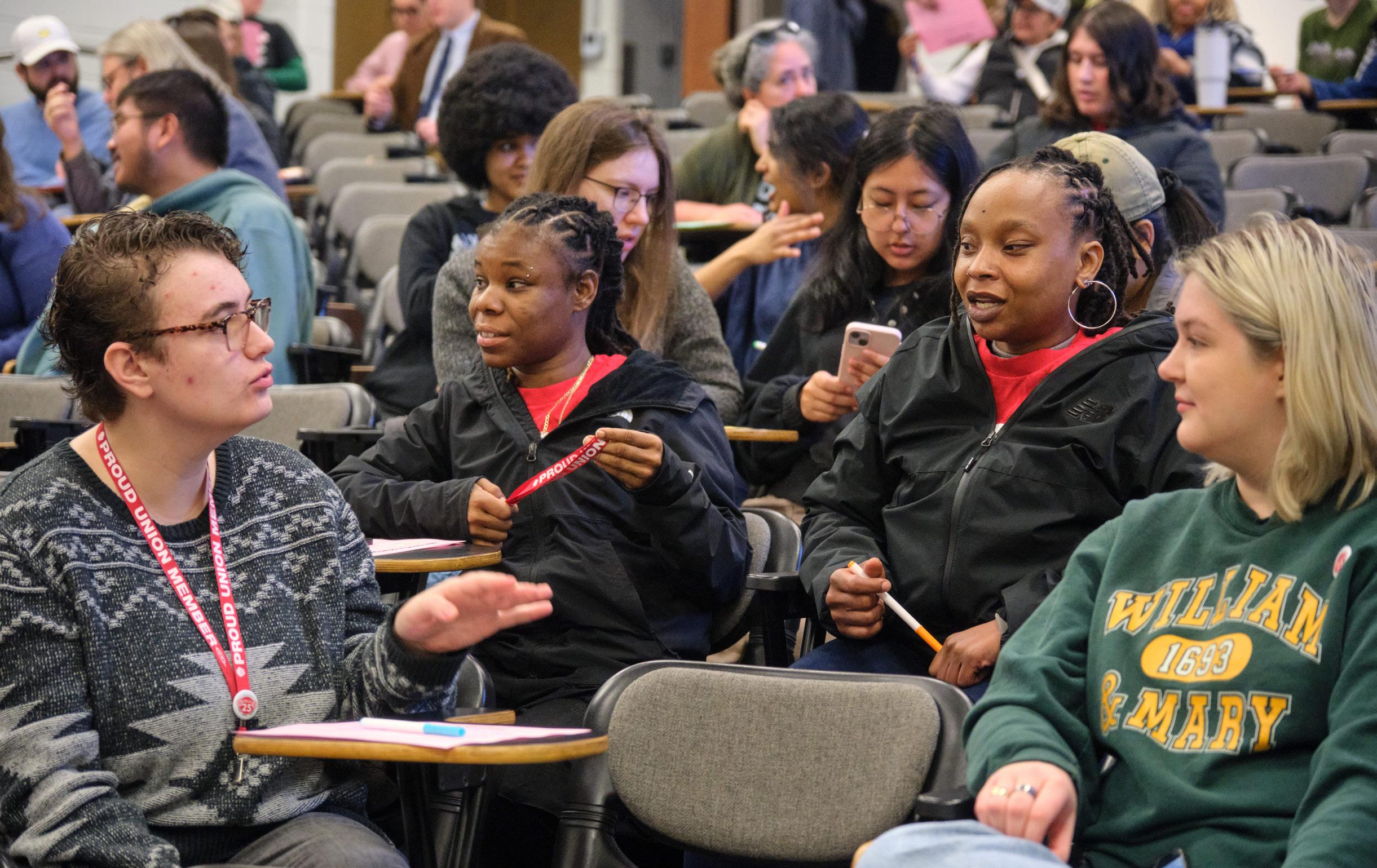
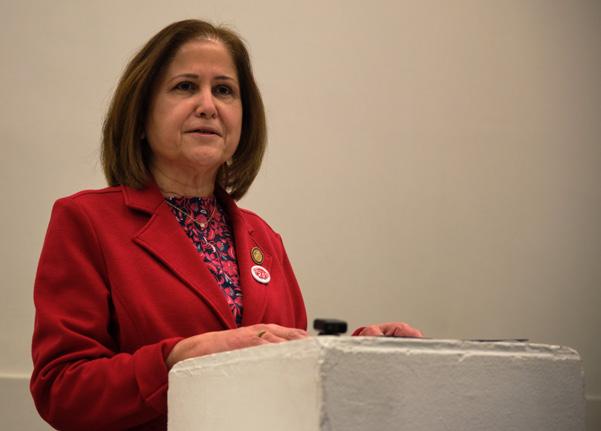
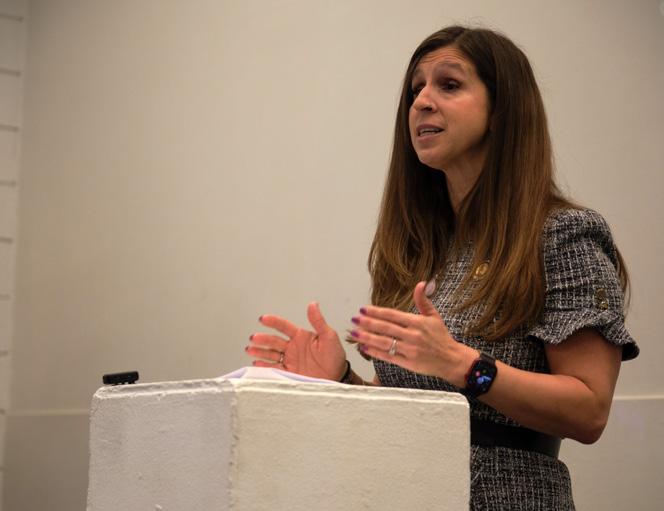
Saturday, Feb. 28, students, faculty and staff from the College of William and Mary and Christopher Newport University gathered in Andrews Hall to advocate in favor of collective bargaining rights for campus and home care workers.
The American Association of University Professors, United Campus Workers of Virginia and UNITE HERE Local 25 helped host the town hall. Speakers included Virginia Delegate Jessica Anderson and Lt. Gov. Ghazala Hashmi.
The event related to bills currently making their way through the Virginia General Assembly that would afford Virginia public sector workers the right to collectively bargain. At the town hall, the main source of contention was whether campus and home care workers would be included in the final version of this legislation.
“The power of the union is us coming together as workers and as a community to put our heads together and solve problems,”
said Brian Liston, a lead organizer for UNITE HERE Local 25.
Campus workers were removed from the bill on this issue in the Virginia House of Delegates, per event organizers. Home care workers were removed from a similar bill in the Virginia Senate.
Several university presidents oppose and have lobbied against the legislature giving graduate workers, university faculty and staff the right to collectively bargain.
The College declined to comment on whether it supports extending the bills to graduate workers, university faculty and staff.
Despite winning their union with former dining provider Sodexo in fall 2022, campus employees, particularly the cleaning staff, have expressed dissatisfaction with their hours, wages and lack of equipment, dining employee Melanie Edwards said.
“They need to get what they deserve,” Edwards said. “They’re overworked.”
Allen Walker, a Colonial Williamsburg employee who previously worked part-time at the College, said he has seen little change for campus staff since leaving his position there 20 years ago.
“I see that there are buildings being built, I see that they are bringing in more revenue, but they’re not taking care of the workers,” Walker said.
Anderson emphasized the importance of campus employees.
“If someone is not cleaning up behind you and picking up your trash, if someone is not vacuuming that building, if someone is not making sure that food is being served to our students and our professors and our other staff, these buildings would cease to exist,” she said. Hashmi highlighted collective bargaining as a means for change, referencing a 2022 national survey conducted by Hanover Research.
Democratic response to Trump's address held in Capitol building,
Tuesday, Feb. 24, Virginia
Governor Abigail Spanberger
D.P.S. ’26 delivered the Democratic Party’s response to President Donald Trump’s State of the Union address at the Capitol building in Colonial Williamsburg.
The Colonial Williamsburg Foundation announced this event several days prior in an online statement. The foundation, as well as CW President and CEO Cliff Fleet '91, M.A. '93, J.D. '95, M.B.A. '95, emphasized that this was a nonpartisan historic and civic event.
“As an educational organization dedicated to teaching about America’s founding, Colonial Williamsburg proudly advances this American legacy by encouraging civic engagement and hosting leaders from all sides of the political spectrum,” Fleet said.
A statement released by the governor’s office also cited Williamsburg’s significance in American history as a primary
reason for its selection. Spanberger believes that the city represents the importance of democratic governance and civic engagement.
“Since the people of the Virginia Colony first gathered to take on the extraordinary task of governing themselves, Williamsburg has served as a testament to the power of ordinary citizens to shape the future of our nation, demand better from our government, and pursue a more perfect union for all,” Spanberger said in the statement.
Spanberger opened by noting the significance of her choice of location.
“We are gathered here in the chambers of the House of Burgesses. In 1705, the people of the Virginia Colony gathered here to take on the extraordinary task of governing themselves.
Before there was a Declaration of Independence, a Constitution or a Bill of Rights, there were people in this room,” Spanberger said. “I can think of no better place to speak to you as we reflect on the current state of our union.”
A select group of students from
Manosphere masculinity is a fraud
Carson Burch '27 examines masculinity throughout history, critiques influencer
Andrew Tate's toxicity page 6
the College of William and Mary were invited to attend Spanberger’s speech in person.
Adrian Ryan ’27, president of the College’s Young Democrats organization, said he received an invitation from the governor’s office to attend the address.
“It was a really cool opportunity, and it was really great to see everybody there and to hear the governor speak,” Ryan said.
Some student attendees were also invited to speak with members of the Democratic Party and present government officials.
“The event last night was a really great opportunity for students to interact with local Democrats and local organizers in our area, with cabinet members in the governor's administration, including the Secretary of Education, the Attorney General, the Lieutenant Governor, with just members of the community who we wouldn't otherwise have a chance to talk to or network with,” Ryan said.
Ryan reflected on the speech’s content, particularly in relation to Trump’s address.

“I think the governor touched on a couple key themes, principally that the president isn't doing enough for the American people. Notably, the president did not discuss many of the controversies that are going on at the moment,” Ryan said. “The Spanberger speech or the governor really brought back a lot of those themes into the view of the American people.”
Class of 1935 Professor of Government John McGlennon commented on the political value of juxtaposing Spanberger and Trump.
“I think that Spanberger's choice was a reflection of the idea that the voters are really looking for change from the current administration,” McGlennon said. “The ways in which she has addressed issues that really matter and are likely to be central to the 2026 election campaign gave Democrats a feeling that she'd be able to marshal the arguments and the way of presenting them that would be most effective.”
McGlennon noted the historical significance of Williamsburg’s House of Burgesses as the location.
invited to attend
“I think she was trying to draw a direct line to the founding of democracy in America, and since for a lot of voters, the question of whether democracy is being undermined or whether there's been some backsliding on democracy is a really key one,” McGlennon said. “This was a way of reinforcing the notion that we were founded around democratic principles and that she wants to remind people that there are fundamental aspects of our system that need to be reinforced.” Ryan reflected on the excitement of attending such a high-profile, nationally impactful event within Williamsburg.
“It was such a historical experience, in such a historic time, because this was the response to the State of the Union on the 250th anniversary of this country,” Ryan said. “For it to be held in Williamsburg in the House of Burgesses in the first legislature ever in the Western Hemisphere was really symbolic and really a special event to be a part of.”
Universities, public institutions, private institutions, they all do better if everyone is at the table working together. It benefits everyone if people feel like theyʼre supported.
-- Virginia Delegate Mark Downey
Tuesday, Feb. 17, Ian Chen ʼ28 took seat in the Maryland House of Delegates to testify before lawmakers following a multi-count case he filed against Tamieka Goode, who was accused of squatting in a neighboring $2.3 million mansion in Bethesda, Md.
Goode posed as a financial advisor while secretly relying on food stamps and income earned by her 16-yearold daughter, who was working instead of attending school. She was ultimately convicted of breaking and entering and trespassing and sentenced to 90 days at the Montgomery County Detention Center. Chen spent several months documenting Goodeʼs activities and compiling evidence for his case. After her initial arrest, he alerted police when she was seen attempting to remove belongings from the home.
The case prompted Chen to pursue broader legislative change. He urged lawmakers to strengthen penalties related to fraudulent occupancy, advocating for the falsification of documents used for illegitimate property claims to be classified as a felony offense. Chen argued before the Maryland House that such cases represent a serious concern for the wider community and warrant stricter criminal consequences.
A THOUSAND WORDS

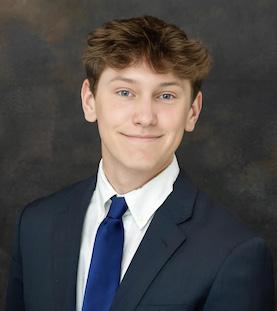
Co-founder of AI Club Tucker Peters ’28 discusses future of organization, AI as resource in education
ʻSTABILITAS ET FIDESʼ | ESTABLISHED OCT. 3, 1911 Org #101 P.O. Box 8795, Williamsburg, VA 23187 Editor flathat.editor@gmail.com Managing flathat.managing@gmail.com Executive flathat.executive@gmail.com
In recent years, many have watched the rise of artifcial intelligence with a combination of dread and alarm. However, fnance and government major Tucker Peters ’28 embraces what lies ahead.
Peters is the president and co-founder of the AI Club at the College of William and Mary, which ofcially launched last April.
Upon his arrival at the College, Peters hit the ground running and began preparations for the club in the fall. He started by contacting Douglas Schmidt ’84 M.A. ’86, the dean of the College’s new School of Computing, Data Sciences and Physics.
Te club now meets Wednesdays at 7 p.m. in the new Integrated Science Center 4. While Peters estimates the student organization has 50 or 60 active members, attendance often depends on the meeting. Tere is a general body meeting once a month, but other gatherings are more specialized.
Meetings range from educational talks to competitions and AI workshops. Earlier in the semester, Davison Douglas Professor of Law Margaret Hu hosted a debate between a College student and a Georgetown University student to discuss the value of a liberal arts education in the age of AI. On another occasion, the club hosted an AI Case-a-thon, in which around 30 students competed for a total of $13,000 in prize money.
The club is currently developing two projects with the College’s Raymond A. Mason School of Business. One is a premajor and major advising dashboard designed to help students plan their academic paths, allowing them to explore majors and potential schedules independently of their busy advisors.
“They usually advise 60 or more people at a time. It’s hard,” Peters said.
Faculty have experimented with the dashboard, which Peters hopes students will test next month.
Te second project is an AI research database intended to help students navigate research opportunities without sending hundreds of emails.
“It’s super inefcient,” Peters said. “Imagine if you could just go onto a website, see all the professors’ listings for research and just upload a resume, answer some questions and apply.”
In addition to running AI Club, Peters is a portfolio manager for an investment fund, a freelance software developer and the creator of GenEdu, an AI study tool. He also built the club’s website — using AI, of course.
“Everything’s AI,” he said. “I don’t do anything without AI.”
While Peters explores a variety of models, he primarily uses Claude.
Peters has spent most of his life interested in government, fnance
and macroeconomics. Before graduating from high school, however, Peters had not taken a single computer science course and was on the road to Wall Street and a career in investment banking. He still hopes to have a future in those felds, but AI has become an essential part of his path.
“I’ve always been a big advocate for teaching myself,” he said.
Peters said he has always recognized AI’s potential.
“I think that one of the coolest things about AI in general is the fact that it democratizes knowledge.”
Peters described how skills that would have taken him years to learn can now be picked up in months or weeks.
“I just started asking a lot of questions,” he said. “And it sucked at first, but as it got better, I was able to get better.”
Peters identified AI’s risks, particularly in education.
“I think it’s one of those technologies that’s gonna change how we operate mentally for generations,” he said. “With any technological advancement, there’s risk, but instead of shutting it down, we should be thinking about how to mitigate those risks.”
The club has also assembled a policy team, which hopes to help professors develop their own AI policies. For some professors, that means teaching students how to use AI tools in their work.
“If you don’t learn how to use AI, it’s actually going to hurt you,” Peters said. “If you don’t use AI for coding now, you’re not going to get hired at Amazon or Google.”
For some other subjects, such as philosophy courses, the policy team has recommended limiting computer use and assigning blue-book exams to prevent cheating.
Peters is also eager to explore risks outside of education through the AI Club.
Wednesday, March 18, the AI Club will host a talk from the Machine Intelligence Research Institute, a nonprofit research institute that argues advanced AI could ultimately lead to human extinction. While Peters does not share this belief, he is excited to hear as many perspectives as possible.
“Do your research, create your own philosophies based on that and don’t back down,” he said. “I think that’s one thing that the AI Club wants to do.”
While AI will continue evolving at a rapid pace, Peter believes the goals of the club will stay the same.
“I think if a school club can say that it has some sort of tangible impact on professors or students or William and Mary at large, that’s a very special thing,” Peters said. “So, I’m just very excited to see some sort of positive change.”
Global Research Institute hosts war powers conversation, discusses escalating military action by United States
MONA GARIMELLA EDITOR-IN-CHIEF
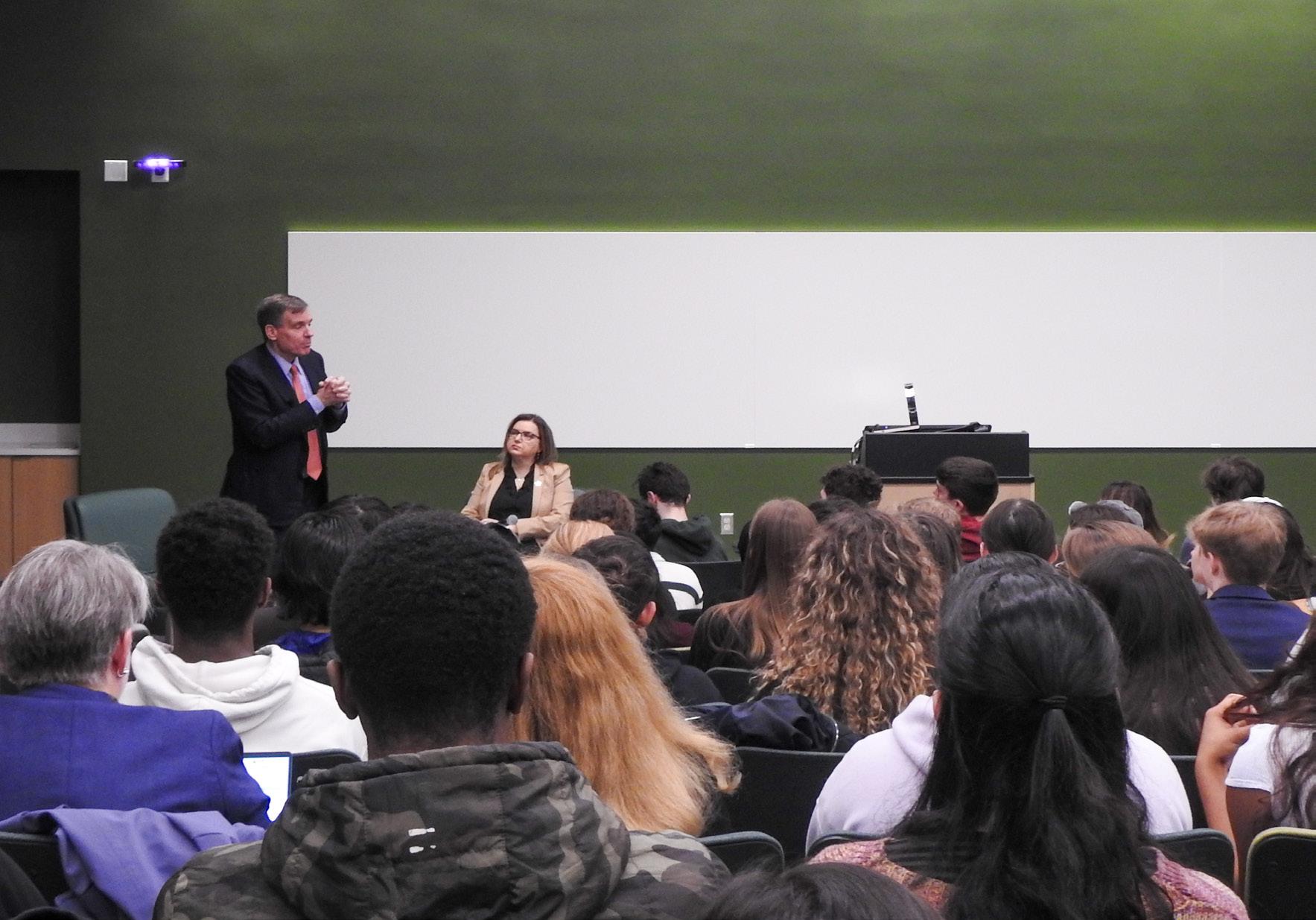
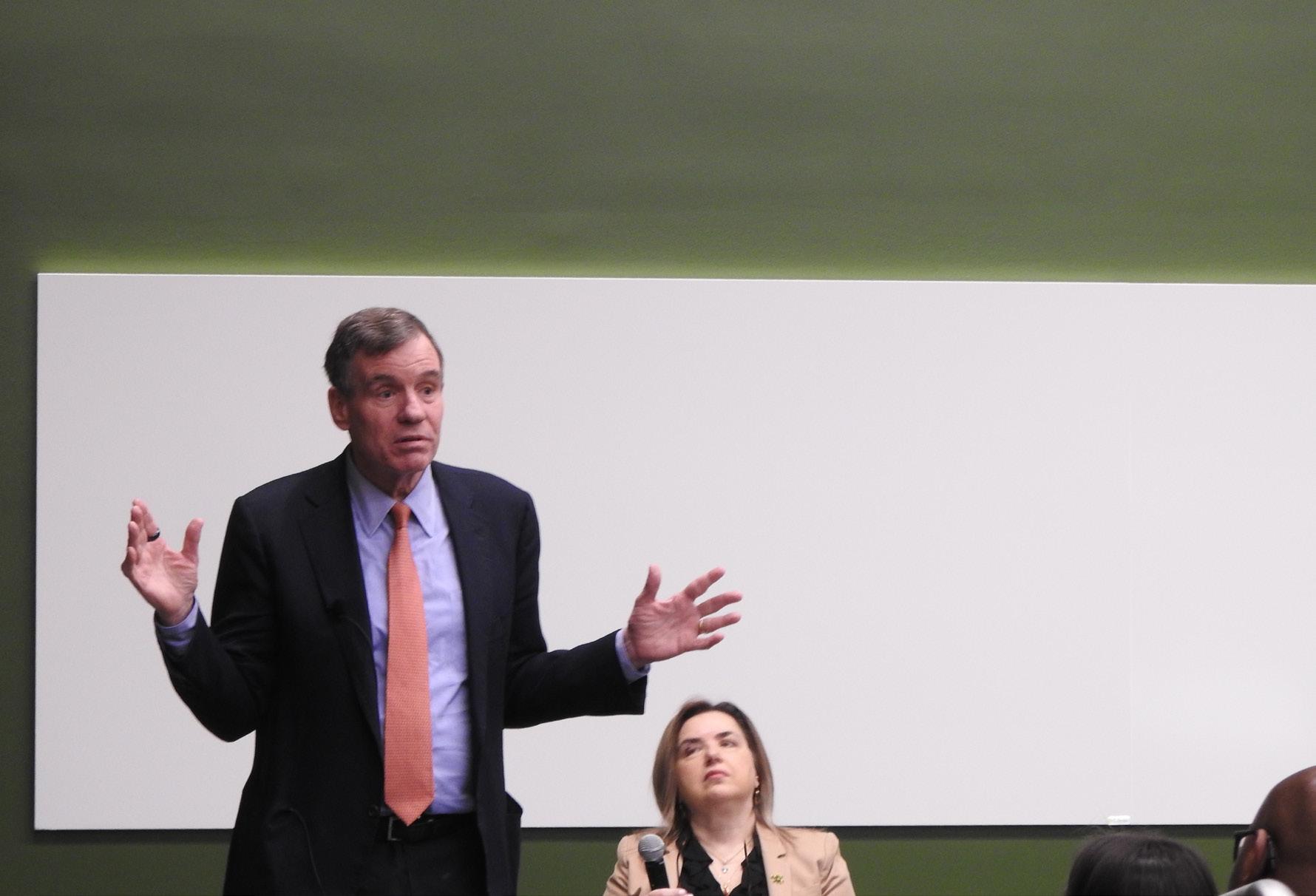
Monday, March 2, the Global Research Institute and School of Computing, Data Sciences and Physics welcomed Sen. Mark Warner to the College of William and Mary’s Integrated Science Center 4 auditorium for a conversation on war powers, artifcial intelligence and the future of national security. Provost Peggy Agouris moderated the talk.
Currently serving as Vice Chairman of the Senate Select Committee on Intelligence, Warner began by addressing escalating U.S. military action against Iran, criticizing President Donald Trump’s decision to authorize strikes without what he described as an imminent threat to the United States.
“I guess I should start with the war,” he said. “We’ve followed the circumstances in Iran for ages, and let me acknowledge on the front end, I think the Iranian regime is brutal, was brutal.”
Despite the brutality of the regime, Warner called the action a “war of choice,” arguing that the Constitution requires congressional authorization before initiating such a confict.
Te Constitution is extraordinarily clear,” he said. “If there is a war of choice, the president can’t arbitrarily start it. Te president has to come to Congress and to the American people and make the case.”
Warner emphasized that the administration had ofered shifting justifcations — from dismantling nuclear capabilities to targeting missile programs to pursuing regime change — without presenting a clear, consistent objective to Congress or to the American public.
While condemning the Iranian regime, Warner expressed concern about the lack of a long-term strategy.
“I shed no tears that the supreme leader and some of the Iranian military leadership has been killed,” he said. “But we have so little visibility about what’s next.”
Warner also criticized Trump’s earlier foreign policy decisions, particularly his focus on Venezuela. In January, he argued, the administration lacked sufcient military positioning in the Middle East because resources were diverted elsewhere.
“We literally had 20% of our feet of the coast of Venezuela,” he said, calling it “another Donald Trump folly.” Tat misalignment, he suggested, limited U.S. options when unrest surged in Iran earlier in the year.
Warner announced his intention to support a War Powers Resolution requiring a cessation of hostilities unless Congress formally authorizes continued military action. Agouris then shifted the conversation to technology and national security.
“You have said in the past that national
security is a technology race against China,” Agouris said. “I’m going to take one step further and say it’s a race against tech firms and technology itself, which sometimes might align and sometimes might not align with the interests of our democracy. So, how can our students contribute to creating a better environment for sharpening the truth, for avoiding conflict and being misinformed in situations like this?”
Warner framed modern national security as fundamentally technological.
“My view of national security is not simply who has the most tanks and guns and ships and planes,” he said. “It’s who’s going to win the technology competition.”
He compared the U.S. and China, describing the latter as “our near peer on the overall economic basis” and a formidable rival in AI, quantum computing and telecommunications.
However, he emphasized that American strength depends not only on innovation, but also on alliances and immigration.
“Our secret sauce in our country has not only been innovation in great universities, but the fact that we attract talent from around the world,” he said.
Warner then expressed concern about concentrating advanced AI tools within government agencies without adequate ethical guardrails.
“We turn over the AI tools to a defense department where there’s not somebody with good moral judgment,” he said. “And we have the ability to look at all of your personal information or create these weapons without any human input. We’re talking about scary stuf.”
He then pointed to domestic surveillance concerns, referencing a recent case involving the Department of Homeland Security. Warner referenced a woman in Minnesota who was denied a Global Entry pass after DHS identifed a photo of her attending a protest.
Tis is not the way America should work,” he said. “I could care less whether you’re a Democrat, Republican, independent, libertarian, vegetarian — this has got to shape you into activism. Tis has got to shape you into activity.”
Social media, he argued, also offers a cautionary tale.
“One of the great mistakes we made was not putting some guardrails on social media,” he said.
Without early regulation, platforms developed in ways that harmed young users and amplifed misinformation. Compared to AI, however, he described social media as “tiny” in scale and consequence.
Warner described himself as “long AI,” emphasizing that he believes AI will ultimately create new jobs and drive economic growth. But
he cautioned that the short-term impact could be severe, particularly for college graduates.
“For the next five to seven years, I think AI is going to be a massive job killer,” he said. “And the jobs it’s going to kill … it’s going to be college graduates.”
With recent college graduate unemployment already elevated, he warned that the fgure could spike dramatically if companies automate entrylevel roles in fnance, consulting and law.
Throughout the session, Warner repeatedly returned to the role of students. He urged students to remain civically engaged and informed about the intersection of technology and democratic accountability.
“You guys, this has got to shape you into activism,” he said. “We can’t let this kind of process go along without raising our voices.”
Josie Binkley ’26 initially attended the talk for extra credit, but she found Warner’s comments on AI and Iran to be interesting.
“I did want the extra credit, but I also thought it would be interesting to hear what someone from Congress thinks about everything that’s going on right now,” Binkley said.
Binkley shared her reactions to AI’s efect on employment rates, per Warner.
“I thought that the mention of unemployment rates going up in the next few years was pretty jarring,” she said. “He mentioned that the fgures companies are putting out to the public are inaccurate when compared to the ones the companies are sharing with Congress and personally projects 30% college graduate unemployment in the next fve years. Tat defnitely stood out to me.”
Adrian Ryan ’27, president of the College’s Young Democrats organization, also recalled Warner’s comments about AI’s efect on the job market.
“His notes on AI and employment possibilities for recent college graduates were most striking,” Ryan wrote in a statement to Te Flat Hat. “Te senator mentioned that roughly 9% of recent college graduates are currently unemployed, a number he expects to reach 30% as a direct result of AI integration in the workforce. Senator Warner stated that it is the duty of Congress and other lawmakers to address this issue to maintain the strength of the domestic economy and ensure that investments in college education continue to prove worthwhile.”
Ryan learned of the event from Warner’s team directly.
“I heard about the event from one of Senator Warner’s staffers, who requested that I share it with the W&M Young Democrats’ membership,” he wrote.
He wanted to attend the event because he thought it was a unique opportunity to hear from a senator on current issues.
“It is always a privilege to hear from any United States Senator,” Ryan wrote. “With recent American strikes on Iran, capture of the former Venezuelan president, and other recent rises in international tensions, it is crucial to hear from leaders like Senator Warner who are privy to the most sensitive information regarding our country’s positions in these afairs.”
Ryan commented on how it is important to hold leaders like Warner accountable, as Warner begins his reelection campaign this fall.
Tough the President uniquely authorized the Iranian and Venezuelan operations — not Congress, as is mandated by the U.S. Constitution — the Senator still plays a signifcant role in what America’s next steps will be,” he wrote. “As Americans, it is further our duty to hold leaders like the senator, President, and others to account for their work and decision-making.”
Binkley also referenced Warner’s comments on Iran.
“I was not surprised at the Iran discussion, since it is such a relevant thing,” Binkley said. “I think he gave a pretty good statement that communicated the issue with how Trump went about it without taking a clear stance on if we should be at war or not. I think not being overly partisan could be a big strength when there’s so much polarization across the country and disrespect for our country’s legal systems from Trump.”
Associate Director of the GRI David Trichler described the planning behind the event, which was originally intended for last fall.
“Senator Warner’s staf reached out to William and Mary in the fall, expressing the senator’s interest in engaging directly with our students,” Trichler said. “While we originally planned to host him then, the fall government shutdown required a postponement.”
Trichler emphasized that the event refected the senator’s unique position at the intersection of national security and technology, making it a natural ft for an interdisciplinary audience.
“This was a cross-campus effort,” he said. “Because the senator sits at the intersection of national security and tech, there was a natural synergy between the Global Research Institute and the School of Computing, Data Sciences and Physics.”
Trichler also connected the event to the College’s Year of Civic Leadership.
“As part of the university’s Year of Civic Leadership, GRI is an active participant in W&M’s eforts to be a public square that engages voices across society,” he said. “Te audience included students researching the ethical and strategic implications of these technologies in classes and research labs on campus.”
MELANIA
Wednesday, Feb. 25, the College of William and Mary’s chapter of Remote Area Medical hosted Dr. Ryan Feldman, an emergency medicine pharmacist and clinical toxicologist. Te meeting consisted of an interview with Feldman and a live Q&A session.
Caroline Clinton ’27, the president of the College’s RAM chapter, explained how the group works to provide services to underserved areas through volunteering, social events and pop-up clinics.
“We function as a sort of partner organization to a national nonproft called Remote Area Medical,” Clinton said. “Tey do pop-up clinics around the country for people who are uninsured, undocumented and just that don’t have access to medical care in general.”
Te event was designed to give students insight into Feldman’s work
as an emergency medicine pharmacist and clinical toxicologist. Feldman spoke about his education, residency work and other medical pursuits throughout his career.
Grayson Carnall ’28 is the outreach chair for RAM. Carnall discovered Feldman’s work through “Te Poison Lab,” a podcast.
“More than a few people mentioned that they were interested in pharmacy, and we hadn’t really expressed that path before,” Carnall said. “I wanted to bring someone with quite a background in pharmacy so that they could talk about it.”
Feldman described his journey to a career in emergency medicine pharmacy, which began at the University of Wisconsin-Milwaukee.
“I then went to the University of Wisconsin-Madison for their school of pharmacy, the four-year doctoral pharmacy program,” Feldman said. “It’s three years of didactic in-classroom work and then approximately one year
of dedicated clinicals for all of your learnings in a hospital or in a clinic or in a pharmacy.”
Feldman explained how the path to a career in pharmacy can difer from other medical felds.
“You do not have to fnish your undergraduate degree [for applying to pharmacy school],” he said. “You can often do it in as early as two years.”
Feldman addressed a common misconception that pharmacists only work in retail pharmacies. He explained how this false belief hides many available career options for pre-medical students, such as his feld.
“I think pharmacy has a little bit of an iceberg problem where we have one group of our profession that’s very, very, very visible,” Feldman said.
Feldman’s work as an emergency medicine pharmacist is entirely separate from the world of retail pharmacy. In the emergency room, he would be a pharmacist present at the bedside of
patients to identify proper medications for treatment.
“For any given drug, you know you’ve got any given disease, you identify diferent drugs that treat it,” Feldman said. “And what we do is pretty much optimize the pharmacotherapy for the drug treatment side.”
In addition to his position as an emergency medicine pharmacist, Feldman is also a clinical toxicologist. In this role, he has worked with hotlines, in ambulances, at poison centers and at marathons to provide frst aid and respond to poisonings.
“I also give medical advice to the public for the management of a million diferent poisonings,” Feldman said.
One of his specialties includes poisonous mushrooms. He mentioned how he recently received a mushroom identifcation certifcation.
A student asked Feldman whether he had any advice for undergraduates interested in health
care professions. Feldman said that shadowing opportunities are one of the most important parts of a medical school application.
As a part of the admissions team for the Medical College of Wisconsin School of Pharmacy, Feldman has seen frsthand how clinical exposure is useful for students.
“Get out and volunteer or fnd some clinical shadow that you can do somewhere nearby,” he said. “If you’re interested in pharmacy, maybe try to work in a pharmacy or pharmacy feld.”
Emily McLaughlin ’28, RAM’s vice president, explained how the club’s social nature helps ease the competitiveness of the pre-health experience. McLaughlin highlighted the sense of community she sees in bringing a diverse group of prehealth students together to volunteer and learn more about possible careers.
“Even the little things we do in the community really do add up,” McLaughlin said.
Talk emphasizes importance of remembering Holocaust, commemorating stories, lives of victims
EVENTS from page 1
Vigorito began to narrate her early life; she was born in Berlin, Germany, in 1941. Her family was in hiding at the time of her birth.
“To give you a little background, I was born in a very dark era of time,” she said. “Not dark like night, just dark as far as spirit and soul. I was not born in a hospital, and I’m not certain of the date or the exact place.”
Vigorito’s family consisted of her mother Emma, grandmother, grandfather, older sister Haley and twin sister Hanna. Her father was imprisoned in a concentration camp before she was born.
When Vigorito was born, Adolf Hitler had already risen to power and enacted his extermination plans.
“In 1941, trains were rolling steadily,” she said. “For Jewish women to give birth at the time was the destiny of gas chambers. However, twins were directed to a different plan.”
Soon after, Vigorito’s mother and older sister were arrested and taken to Auschwitz. She would never see them again.
“They were taken by the Gestapo, and these are the facts told to me by my Bubbe, my grandmother,” Vigorito said. “She was actually the only mother I only knew. I never knew my mother or my older sister. Many years later, my father was told they were arrested by the Gestapo, and my mother was serving the pleasures of the Nazis. This was the Nazi way.”
About a year after her mother’s arrest, the twins went to live with their grandmother in East Germany.
“Our birth had never been registered to protect us, and till date, I don’t have a birth certificate,” she said. “But the U.S. government gave me citizenship anyway, with a handwritten document stating I was born.”
The twins enjoyed the few weeks there, attempting to build a brief routine.
“We found ways to entertain ourselves and to distract ourselves with the ever-presence of fear,” she said. “We only knew fear in those days. I had no sense of any other emotions.”
Eventually, the Gestapo took the twins and their grandmother
to Auschwitz in 1944.
“When they came, their voices were abrupt,” Vigorito recalled. “We shook with terror and huddled in a corner. They shouted, ‘Raus! Raus!’ which meant ‘out.’”
They were loaded into cattle cars, and there were no bathrooms, water or food.
“Some people often said that Jews acted like animals,” Vigorito said. “But we acted as human beings under such conditions when our rights were stripped away. We were made to look like foul animals. That was the Nazi way.”
When the trains stopped, they were then herded to the selection line, where the twins would eventually be separated from their grandmother. In selection lines, the Nazis picked out those who looked capable of work. Children and pregnant mothers were exterminated immediately.
And then, there were the twins.
“Bubbe whispered to us, ‘Hold onto my legs, don’t let the big man see you,’” Vigorito said. “Suddenly, Hanna stumbled, and a guard grabbed her and shouted, ‘Twins!’”
Vigorito recalled the exact moment Mengele laid his eyes on her.
“Joseph Mengele took me in his arms and looked at his assistant, who held on to Hanna. I remember the piercing, dark eyes. He turned towards Hanna, looked at me and had an indescribable, strange smile on his face, like ‘I got what I wanted.’”
This was the last time Vigorito’s grandmother saw Hanna.
“Before he handed me over to his assistant, we started screaming, but in vain, as we were taken away from our Bubbe, who stood pleading with tears in her eyes,” Vigorito said.
Vigorito and her sister were then taken to a hospital, where Mengele conducted his psuedo-experiments. They were placed together in a wooden cage.
“This became our home until the end, and it became Hanna’s deathbed,” Vigorito said.
There, the twins received injections, mostly spinal injections, blood draws and skin samples. They caused third-degree burns.
One day after the injections, Hanna began to have seizures.
“She shook all over her body and quivered,” Vigorito said. “It happened several times. Ten, she became still. I knew she was gone.”
Vigorito refused to let Hanna’s body go, and she slapped Mengele’s face when he tried to take her away. He later returned and smashed four fingers of her right hand, breaking all the bones and cutting off her middle finger.
“Shortly after I lost Hanna, I thought, ‘How do I go on?’ We were like one. I lost my other half. We were always together. And her getting torn away from me tore everything away. I didn’t feel anything anymore,” Vigorito said.
In those days after Hanna’s death, the only thing that kept Vigorito going was a song she heard while still in the cage. She sat directly above the long lines of prisoners going to the gas chambers, and they sang a hymn as they approached their death.
“I didn’t know the song, just the melody,” Vigorito said. “But the very nature of the song was a lullaby to me. It made me calm down. I would fall asleep and wake up and still hear the streams of people below me on the way to the gas chamber. That [melody] was ‘Ani Ma’amin’ [‘I Believe’].”
The melody, Vigorito said, is attributed to Azriel David Fastag. He wrote the song in a cattle car while being taken to Treblinka. Dozens of Jews sang the song as they marched to the gas chambers in the Nazi death camps. Today, it has become one of the most famous hymns in Jewish culture.
One day, Vigorito noticed people starting to leave. Then, a woman came to the cage to free Vigorito.
“She lifted me and carried me out. I don’t know if she was a prisoner or someone else,” she said.
After the war, Vigorito was taken to a hospital, where she reunited with her grandmother.
“I don’t know how she survived the war, and how she found me, but she did,” Vigorito said. “My grandmother walked in one day, she saw me and I was placed in her arms. We both cried, and we seemed to already know — both of us — that Hanna was gone.”
Giro-Martin addresses concerns around committee language, Wyckoff
Tuesday, Feb. 24, Associate Vice President for Health and Wellness Chris Renjilian ’05 met with the Student Assembly Senate to discuss his department’s initiatives.
Renjilian explained the four offices of Health and Wellness to the senate: the Student Health Center, the Counseling Center, Campus Recreation and the Office of Health Promotion.
Renjilian highlighted the important relationship he sees between the senate and his office. He listed the senate funding that helps support the Period Project, which supplies free menstrual products around campus, and subsidized pricing for Plan B through his office as examples.
“Our partnership with Student Assembly and its various branches has been critical,” he said.
Sen. Danny Otten ’23 Ph.D. ’27 asked Renjilian whether he had any new initiatives in mind for Health and Wellness.
Renjilian mentioned the University of Virginia’s Connection Project. This is an intervention-based project designed to address the loneliness epidemic by empowering young people to build connections.
“It’s interventions like that that are happening in spaces that we can participate in, that speak to developmental aspects, that really get me excited,” Renjilian said.
Secretary of Health and Safety Jashwanth Puvvadi ’26 and Undersecretaries of Health and Safety Aeman Malik ’27 and Raiha Javaid ’26 also spoke before the senate.
Malik and Javaid proposed an idea for a wellness-focused on-campus vending machine that would provide essential health products, such as menstrual supplies, hygiene kits and emergency contraceptives at below pharmacy prices. They said that the kiosk would likely operate from Earl Gregg Swem Library’s 24-hour study lounge for privacy and accessibility.
The vending machine would allow students to pay with student ID, Apple Pay or card, according to the proposal. It is uncertain whether student insurance will help cover the prices of these products.
“We think that students should have private and affordable access to these products, so we think this could help remove some of the barriers to getting these items,” Malik said.
Malik and Javaid hope to receive funding from the senate, Health and Wellness and possibly the College of William and Mary itself.
The vendor of the machine, SimpliChek, will charge a total of around $9,000 for a 12-month contract. Costs include initial stocking, delivery, installation of the kiosk, inventory monitoring, automated reordering and restocking, sales tax collection, reporting, maintenance and warranty coverage.
Although SimpliChek provides products,
Javaid suggested that SA-funded wellness products could be put into the machines to balance the price.
Several senators expressed concern around the cost of a one-year trial for the vending machines, especially considering how SA already finances the Period Project and subsidized STI testing.
“I don’t really see how this is filling a gap because we already currently fund all those initiatives,” Sen. Mackenna Wyckoff ’28 said. “It seems like this would just be paying additional costs for us to fund the same products that we already do.”
In response, Javaid emphasized the kiosk’s accessibility.
“Our main objective with this machine is that it’s available all the time,” she said. “The vending machines also have the benefit of being confidential. You don’t have to go face-to-face with someone to get an emergency contraceptive or an STI test or a pregnancy test.”
Sen. Jason Zheng ’26 introduced the Bolstering Ethics of Election Fairness Act Part IV, also sponsored by Sen. Quinn Clancey ’27. The bill includes emergency and spring referendums into SA rules around posting campaign materials, Zheng explained.
Wyckoff introduced the Reallocation of Fall LDOC Beer Garden Funding Act, with Sen. Jenny Wang ’29 and Class of 2029 President Daria Lesmerises ’29 also sponsoring the bill.
The bill would allocate $5,000 toward the Royal Ball. Its funding will come from the $12,000 set aside for this year’s beer gardens, which went partially unused after SA decided not to host a fall event.
Wyckoff proposed the Earth Yay Act Part IV, also sponsored by Sen. Nicholas DeSante ’26. In collaboration with the Office of Sustainability, the bill would fund furniture, a live band, succulent planting and stickers for the annual Earth Day Bash on April 17 at the Crim Dell Meadow.
The senate passed the Period Act Part VII, which allocates up to $600 from SA reserves for the purchase of single-use and sustainable menstrual products. The bill tasks its sponsors, Sen. Nina Argel ’28, Lesmerises, Sen. Neha Baskar ’29 and Sen. Riya Budhrani ’29, to work alongside Facilities Operations and other departments for assessing the availability and need for menstrual products in campus dispensers.
Argel noted the significant price decrease for menstrual products compared to the past. She said that the bill’s sponsors are creating a QR code and form that would notify Facilities Operations when products need to be restocked in specific locations.
Lesmerises highlighted the importance of tabling to raise awareness about the initiative.
Clark
describes her time studying at the College, outlines educational research experience
MADIGAN WEBB
CHIEF STAFF WRITER
Wednesday, Feb. 25, the William and Mary Public Policy Club hosted guest speaker Constance Clark ’08 to discuss her journey as an alumna of the College of William and Mary to her career as a qualitative research manager at the Joseph C. Cornwall Center for Metropolitan Studies. Clark opened by explaining what drew her to the public policy major.
“I really liked public policy because it was interdisciplinary,” Clark said. “I got to change between classes like government and sociology. You kind of build your own major.”
Clark noted enjoying Isabelle and Jerome E. Hyman Distinguished University Professor of Government Paul Manna’s education policy seminar.
“It really sets you up for a graduate course,” Clark said. “It gave students a lot of diferent perspectives for the diferent paths you could take within public policy.” Clark’s time at the College also sparked her interest in research through her senior thesis.
“It’s a really great experience if you want to learn about research,” Clark said. “It was my introduction to the formal research process. I kept going
back to the project for fve or six years and presented it at various conferences.”
After graduating from the College with a degree in public policy, Clark received her master’s from the University of Texas at Austin and began working for a nonprofit out of Washington, D.C.
“I got advice to get work experience before applying for Ph.D. programs because a lot of these programs that have a focus on education want people who have experience in educational policy,” she said. “I got very lucky and got paired with a nonprofit that blended policy with research, and I learned a lot and got to publish policy pieces.”
Clark then pursued a Ph.D. at Columbia University’s Teachers College, where she focused on educational tracking.
“I was always very interested in the disparities between rich and poor and black and white in education,” Clark said. “Students are physically put onto different tracks, and there’s a correlation between that track and the people that are put on that track.” Clark explained the history of educational tracking.
“Educational tracking began
after Brown v. Board,” Clark said. “Once schools were desegregated, they still looked for ways to separate students, so they created these tracks. That’s why it’s called second-generation segregation, and it just stayed that way.”
While completing her Ph.D., Clark also worked at an advocacy organization in North Carolina to push an automatic enrollment policy. This policy would automatically enroll students with higher scores in advanced math courses as a method of reducing race and wealth discrepancies in higher education.
“North Carolina has its tricky history with segregation, desegregation and resegregation,” Clark said. “It’s majority Republican, and for them to be the first state to try detracking was interesting. I realized I found my dissertation there as a qualitative study, asking legislatures, community organizers and nonprofits how the policy came about and what they thought about it.”
When asking this question to policymakers, Clark encountered a challenge she didn’t account for: Educational policymakers were
uninformed about tracking despite creating legislation surrounding the issue. This experience informed Clark’s dissertation, focusing on the politics of the automatic enrollment policy and its implications for the future of education.
One of the ways educational tracking occurs is through opportunity hoarding, where privileged groups maintain their socioeconomic advantage through acquiring limited resources.
“Some parents spend thousands of dollars to privately test their child to get them into the advanced courses,” Clark said. “There are all of these hidden bars and insider information about how to get what’s best for your child that keeps these structures in place. Detracking is implementing different initiatives to undo that.”
Clark also joined the American Educational Research Association under the Access, Detracking, and Tracking Special Interest Group and is chair of a subgroup focused on member participation. “I joined when I was a graduate student where I could be appointed for positions, but I couldn’t run for anything,”
Clark said. “So the minute I got my Ph.D., I ran for chair.”
As a graduate student, Clark worked on a research project about collective impact initiatives. Thus, when she saw a collective impact initiative looking for an education policy consultant to help with social and economic mobility in Memphis, Tenn., she applied.
“I really wanted that opportunity to work with the community,” Clark said. “It was also very policy-focused. My job was to facilitate the development of public policy but rooted in what the community wanted for education policy. It was very gratifying.”
Clark explained that she chose her current role at the Cornwall Center due to its inclusion of community in research.
“Policies don’t mean much unless they are rooted in the community by the people who the policy will have the most impact on, so those connections are important,” Clark said.
When asked why she chose to study public policy, Clark said the field needs researchers who center community voices in shaping policy decisions.
STAFF COLUMN
Wherever you go, there you are: Realizations from study abroad

Would you like to experience the lifestyle others live? Visit various places that you have yet to see? Explore other parts of yourself that you didn’t know existed? Such are the promises we often make to ourselves when thinking of studying abroad. I suppose the idea is so romanticized that we hardly ever think about the hard parts of moving away. Whether going for only a semester or moving forever, the same rose-tinted glasses are worn by everyone about to step into a new life. Somehow, the grass always seems greener on the other side. But having now lived in three countries, studying abroad has made me realize that unbeknownst to us, places, even those that we are anxious to leave behind, often become something we cannot wait to come back to.
Having looked forward to this semester, I thought once I got here, everything would right itself. For some reason it seemed to me that my problems were tied to a place and not to myself as a person. A change of scenery, a change of subjects, a change of language ... it made sense to me that these things would bring with them some clarity as to what I was doing with my life. I would work on my language skills, immerse myself in a different culture, I would visit new countries on my list, I would be living in a city once again ... it was almost as if I tried to will things to be right upon coming to study elsewhere for a semester. My struggles with what I was doing, the career I was pursuing, the way I think about my life, relationships, myself — it had to be because I was in the wrong place, right? Everything would be different somewhere else.
The reality of bringing myself with me wherever I go couldn’t
have hit harder. The fact that now I was away from the campus where I’ve lived for two and a half years, that I was now doing a long distance relationship, that I wouldn’t see my friends who are about to graduate this year ... The first few weeks brought with them many sobering thoughts that, stupidly enough, I hadn’t considered in the anticipation of the next few months. Why did I feel the same?
Why did I still doubt my choices?
The clarity I was waiting for the entirety of last semester continued to evade me in the few weeks after my plane landed. Where were the answers I was so intently looking for?
I suppose I’d be lying if I didn’t say the sun coming out for the first time in weeks didn’t change the way I looked at things. You’d be surprised just how much the weather can affect your mood. But putting that aside, being abroad and living in yet another country has made me realize that home can be made in the most unexpected places. And perhaps more importantly, that we appreciate just how good of a home we have made in those places only once we leave them behind.
This is different from saying ‘the grass is always greener,’ though, because after the initial shock of my problems not being magically fixed by being somewhere else, I’ve started enjoying my new life. Walking down the streets I can now navigate, recognizing people that work in the stores by my house on my way to university, ordering things in a different language that I lack fluency in; going to other cities now brings excitement, both to go somewhere else, but also to come back to this new home I’ve made for myself.
I don’t see many people saying this, but studying abroad can be hard. Just like moving countries forever. Part of me thinks myself foolish for expecting problems to disappear in the blink of an eye, for thinking I wouldn’t miss the familiarity of the College of William and Mary campus… for thinking the College hadn’t already grown on me as much as my old home had. But I also know that once I leave this place, I will miss it, too. So every day, despite missing my friends, my boyfriend and my second home, at least once a day I think to myself, “I can’t believe I’m actually here.” Your problems may follow you wherever you go, and things may not magically change when you move away, study abroad, graduate or get into that school you really dreamt about ... but you learn to deal with them, bit by bit. The fact that I’m studying abroad at all, that I’m speaking a different language every single day, improving without even noticing it — somehow, the problems that once seemed so daunting now feel like things I can deal with. My roommate this semester told me a phrase: “Wherever you go, there you are.” It simply means you can’t run from yourself or your problems, that changing your address won’t make everything right. But realizing this gets you closer to actually facing what you once thought was insurmountable and enjoying your whereabouts more than ever before. So that’s the phrase I leave you with, too, in hopes that it helps you live life a little more fully. Because truly, wherever you go,thereyouare
Lana Altunashvili ’27 is a prospective international relations major. She is a James Monroe Scholar and a member of Club Tennis. Contact her at laltunashvili@wm.edu.
MAEVE MEYER
STAFF COLUMN
As spring break approaches at the College of William and Mary, and midterm season is in full swing, many students’ conversations revolve around upcoming exams, homework and all the work that they have to complete. Spring break still feels distant, like a period out of reach and overshadowed by stress, and for many, it’s a marker of survival. Yet, even during late-night study sessions at Earl Gregg Swem Library, the idea of break lingers quietly in the back of many students’ minds. The anticipation and the subtle pressure to have plans is also there.
At the College, where many students are accustomed to keeping busy, doing nothing during break feels strangely uncomfortable. For many, they feel a certain pressure for their week to be memorable, productive or at least interesting enough to share with others.
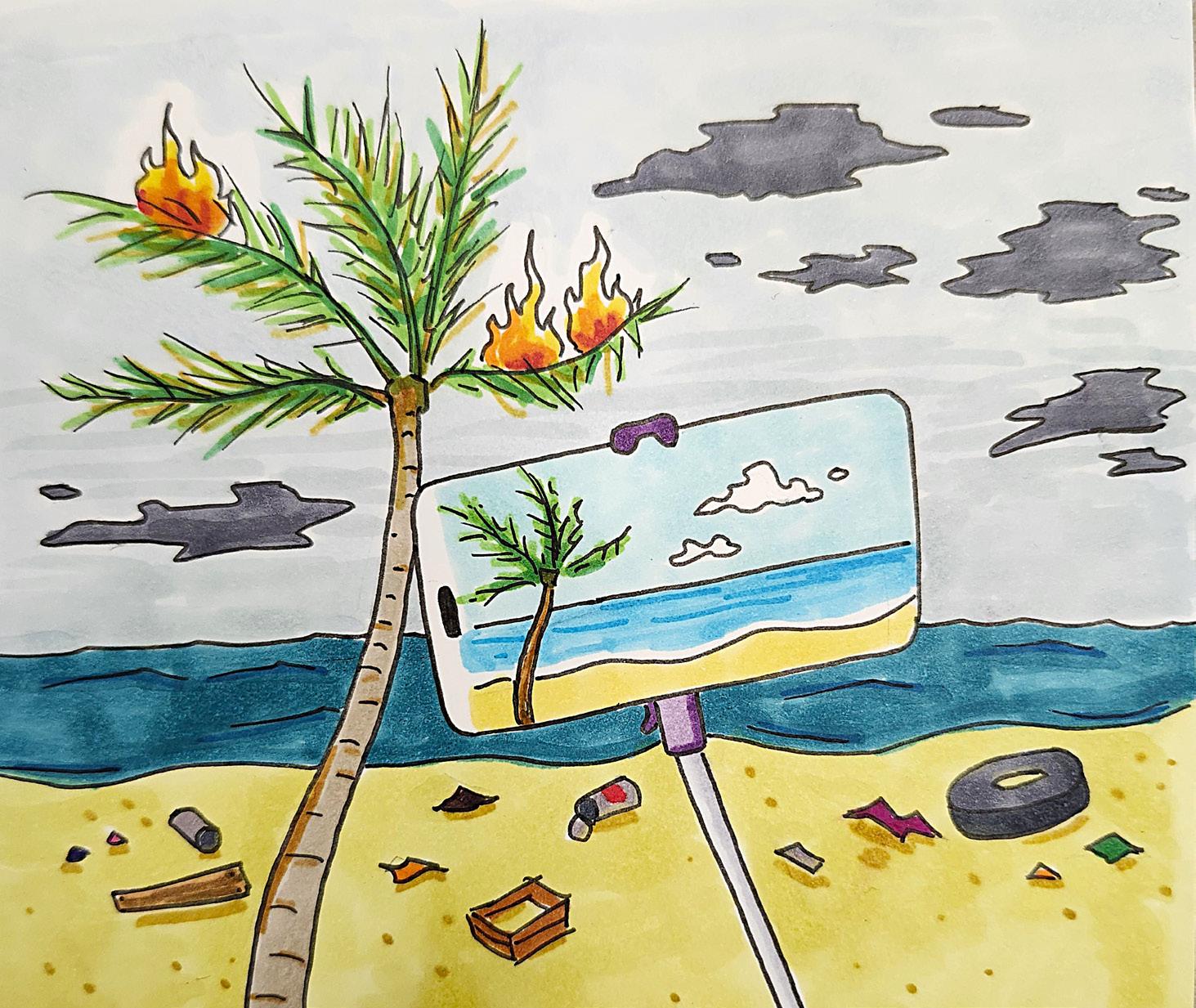
Especially in a world shaped by social media, many often feel like they have to document their trip for others to see just how much ‘fun’ they are having as they enjoy drinks (nonalcoholic, of course), tan on the beach, swim in the ocean, photograph the sunset and get all dressed up for dinner. It’s hard not to be jealous of those people and feel as if you are missing out when your feed fills with ocean views and group photos that make the trip look perfect. Yet, social media does not capture the budgeting debates, travel stress or planning behind the scenes.
It also takes a lot of coordination to get a trip in motion. It’s one thing to casually talk about it while grabbing lunch in Sadler Center with friends, but it’s another thing to actually make the trip happen. A destination has to be decided, parents need to give the go-ahead, and suddenly you are comparing flight prices, booking hotels or Airbnbs and realizing just how quickly the cost of food and excursions adds up. Then comes packing, often last-minute if you are like me, and maybe even buying a new bathing suit or two and some new summer clothes. Don’t forget to wear sunscreen, or else you are going to be upset if you burn easily like me. Ultimately, the planning is far less glamorous than the photos that will follow, but despite the chaos, it becomes a memorable part.
Then comes the complexity of group travel. Planning with friends seems easy enough, but it often involves lots of compromises and negotiations. While one person envisions just lying on the beach and tanning all day, another wants to do some shopping, someone wants adventure
like hiking to a waterfall and one is just excited for the local food.
Speaking of great food, this year, my twin sister and I, along with two of her friends, have decided to go to Mexico. Now, many of you are probably reading this questioning the safety with recent news about how the Mexican cartel leader of the Jalisco New Generation Cartel, Oseguera Cervantes (known as “El Mencho”) was shot dead during a military raid in Tapalpa, Sunday, Feb. 22. Sadly, it’s looking to be a bit precarious whether we will or will not make it to Mexico. While Cancún is far from Jalisco, news of Mexico’s most wanted drug lord being killed sparked wide-spread unrest, with vehicles and businesses being set on fire and even more deaths. My thoughts are with everyone in Mexico affected by the unrest, and I hope the situation calms down soon. As of now, airports are running smoothly, security presence has increased and Cancún seems mostly unaffected as it is no longer in a shelter-in-place.
Although I’m not an internal security expert, just a student hoping to enjoy a break after midterms, I certainly do not underestimate the seriousness of the situation. But I yearn for the sun, palm trees, crystal-clear water, snorkeling and the local Mexican cuisine. As one article even notes, “If it was my family, I sure as heck wouldn’t want them in Puerto Vallarta or Guadalajara in the near term. But I wouldn’t cancel a spring break trip to Cancún.” So, let’s hope I make it to Mexico. Regardless of whether this trip happens, this experience has already challenged my idea of what spring break is supposed to look like. Behind every seemingly perfect getaway are uncertainties we cannot control, no matter how much we try. Even though travel feels like an escape, it cannot remove uncertainty or real-world problems, no matter how perfect we try to make our trips appear. Ava Gravina ’28 is a psychology and English major at William and Mary. She swims with Club Swim and writes for the school’s pop culture magazine, The DoG StreetJournal.SheisfromoutsideBostonand enjoys spending time with friends, baking, readingpsychologicalthrillersandwatching rom-coms. You can contact her at acgravina@wm.edu.
Carson Burch FLAT HAT OPINIONS ASSOC.
Thisarticlediscussessexualassault.
Every now and again, I find myself going to Google to ask the same question: “Is Andrew Tate in prison yet?”
For those who have yet to have the misfortune of knowing who Tate is, he’s a manosphere influencer who is currently facing legal challenges and investigations in Romania, the United Kingdom and the United States for accusations of rape and human trafficking. Despite his wrongdoing, he retains a vocal fanbase which supports him in his criminality.
This view of aggressively macho masculinity is one which he is not alone in promoting; an entire ecosystem of influencers called the ‘manosphere’ have emerged to endorse it. However, the idea of manhood they promote is not just wrong but dangerous, and the consequences are disastrous for society.
The worldview of the manosphere is, at its core, built around hostility towards women. A UN webpage on this phenomenon notes that incels, pick-up artists and Men Going Their Own Way have their own unique set of beliefs which all go back to claims that modern society is rigged against men and that the assertion of masculinity is essential to reclaiming man’s rightful place in the world. This easily turns into a support of unrestrained masculinity and entitlement toward sex, which itself leads to the kind of criminality that Tate embodies.
To justify this worldview, manosphere supporters often mobilize a particular vision of masculinity which they claim was once dominant: hegemonic, powerful, “high-testosterone” and notably devoid of accountability or responsibility. Tate talks often about how women are “given to the man and belong to the man” and was even once banned from Twitter for saying that they “bear responsibility” for being sexually assaulted, but to my knowledge, has never once said that men have any obligations toward women or to do anything for anyone that may impede their own personal desires.
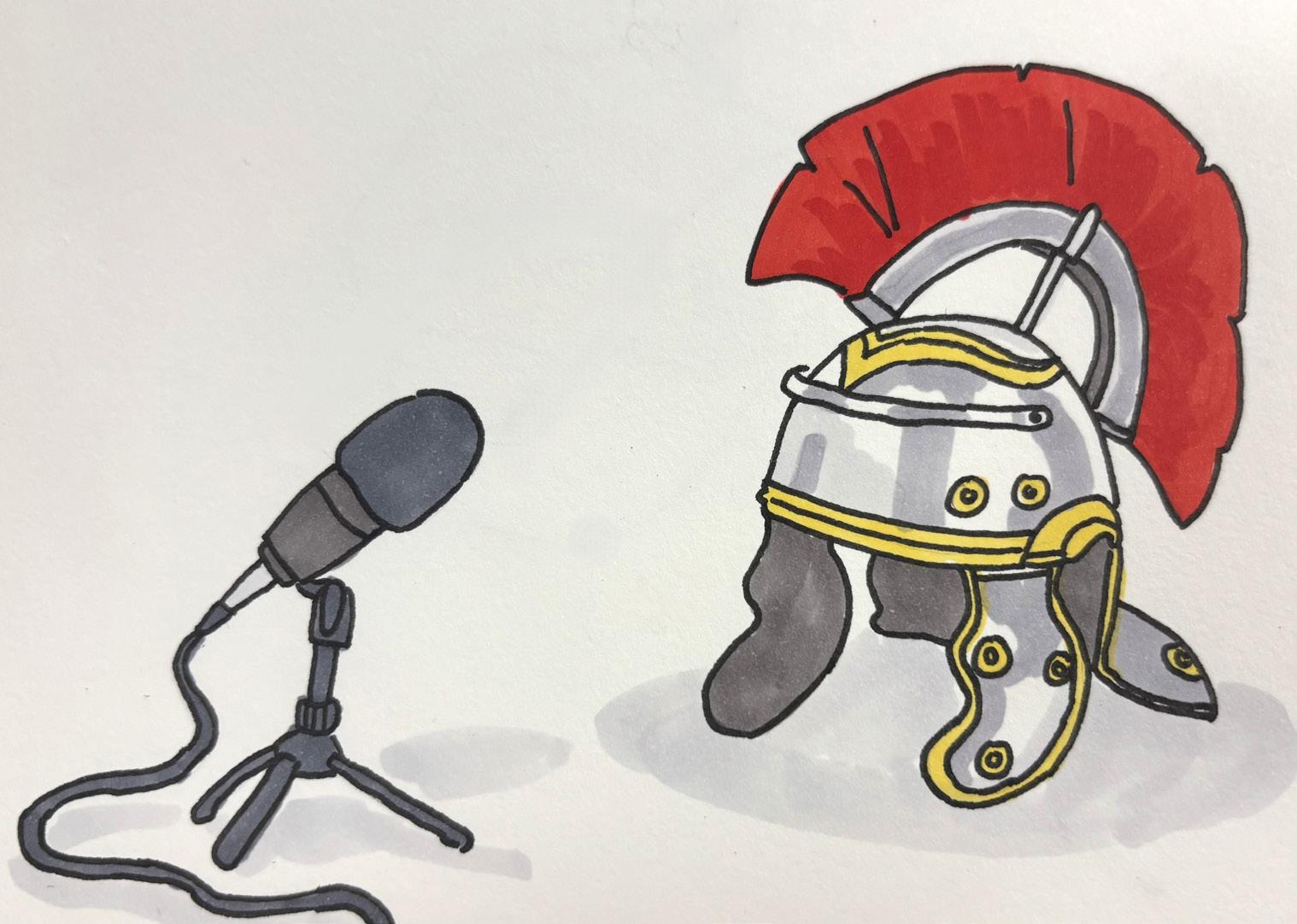
This vision of masculinity stands in marked contrast with how such constructs were perceived even in patriarchal societies. The historian Bret Devereaux notes that, in many ways, the Romans perceived masculinity as being quite the opposite: ambition, courage and drive were all extolled in Roman culture, but only so long as they were constrained through the cultivation of proper virtues and individual discipline. Other societies emphasized similar ideas: In our own country, older generations of men were taught the importance of opening doors for women and generally conducting themselves as gentlemen (values my
own parents instilled in me).
While I don’t want to praise patriarchy and the social norms that uphold it, I do think this ideology stands in marked contrast with that of Tate and his ideological cousins. One value set was undeniably regressive, but it at least emphasized individual responsibility and good personal conduct that men today could learn from (although, they must understand the failings of the societies which espoused them), while today’s manosphere emphasizes the “glory” to come from throwing away such norms and embracing individual satisfaction at the expense of all decency.
A society built on manosphere masculinity has never and could never exist because the underlying values are simply toxic and destructive. The inevitable consequence is to destroy the social bonds between men and women, leaving both isolated and alone. We can see this playing out in the present: Following the 2024 election, the neo-Nazi Nick Fuentes and his fanbase harassed many women with the slogan “your body, my choice.” In response, online interest grew in the South Korean “4B” movement, which holds that women should avoid as many intimate interactions with men as possible. While an understandable response to such nastiness, it only plays further into the
‘loneliness epidemic’ plaguing our society and dissolves essential social bonds.
The only way to combat this is through adopting a new value set. So, to all the guys my age reading this, I would like to give my own two cents countering what may be told on social media (and unlike Tate, I give my advice for free rather than selling it for a $50-a-month pyramid scheme):
“No” means “no.” Getting rejected sucks (I speak from a wealth of personal experience), but it will happen, and being able to accept it is the mark of a real man. If you really feel anything toward a woman, other than animalistic lust, you’ll be able to respect her agency and her decisions. Also, while I’m not an expert in dating, I advise that you don’t emulate clowns like Tate and engage in asinine behavior, as it seems to me that will make you less attractive rather than more so. If you post “your body, my choice” all over the internet, you can expect to remain a statistic in the male loneliness epidemic and have only your own decisions to blame.
There are many problems faced by men today, but con-men don’t hold the answer. The cultivation of real virtues, however, does.
CarsonBurch’27isconsideringagovernmentmajor.Helikesreadingabouthistoricalandcurrentevents,aswellasdinosaurs. Contacthimatceburch@wm.edu.fan.
If you walk down Duke of Gloucester Street when the weather is nice, you’ll often see a lot of older couples walking around. This is their retirement. Their work, career and family wise, is done, so now they can just sit back and relax. That said, you’ve got to think that they all have a decent amount of regrets in their life, whether it be about wasted time or opportunities they didn’t take.
In that sense, I’m sure we’ll all be in the same boat once we are old and retired (hopefully), but will we? I started to think about what wasting time meant for them. Skipping class to play pick-up basketball with their hall mates? Reading a book or going to the movies instead of studying for an important exam? Just hanging out with their friends on a Tuesday night? I’m not saying we don’t do any of these things today, but for us these are actually productive uses of our time, not wastes.
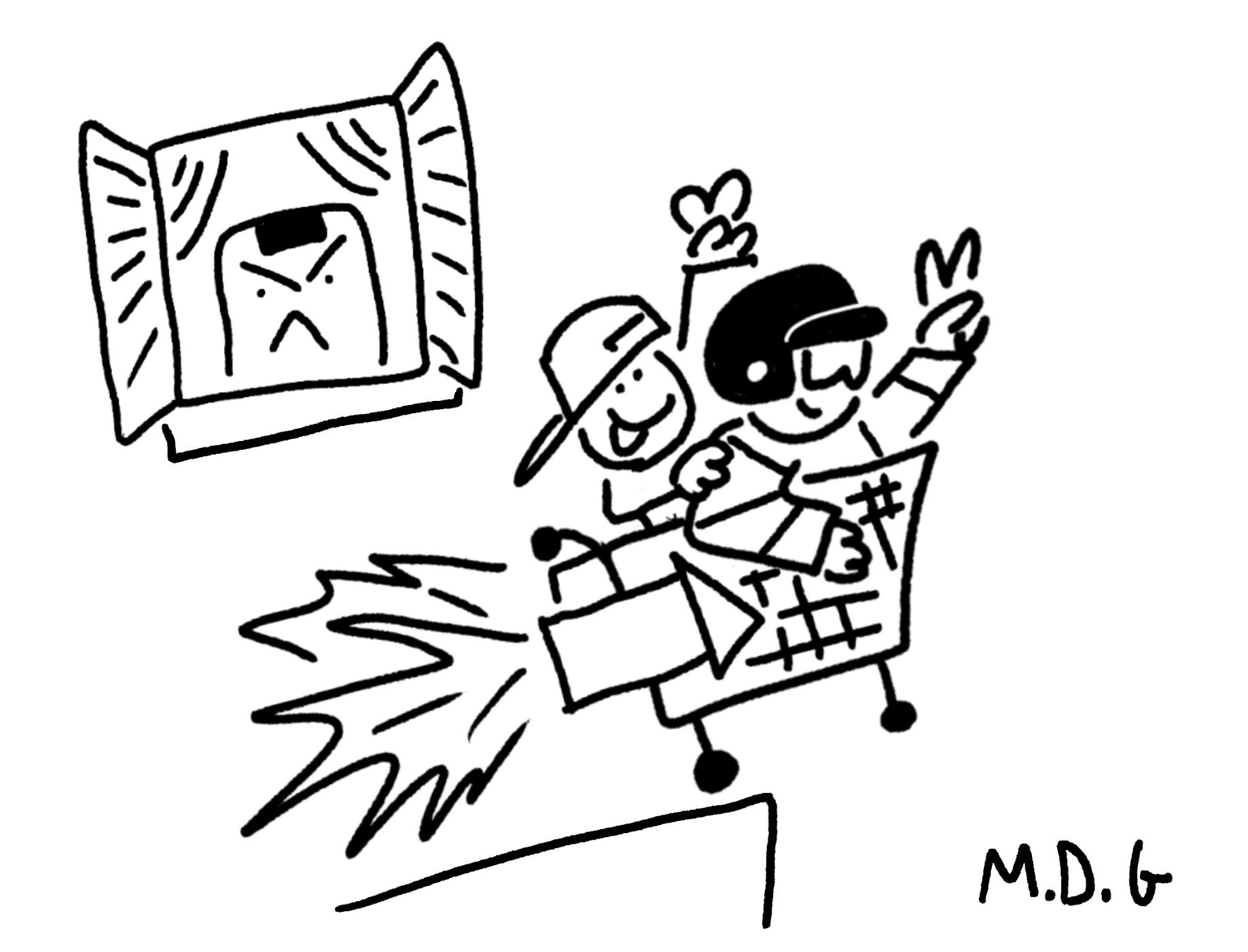
There are days when I just find myself doomscrolling or constantly swiping through Instagram stories for hours. In the moment, nothing seems too bad, but those hours rack up, and I would argue they compound over time. We think we’re having fun
when, in reality, we’re just hooked. These phones and their social media platforms are literally engineered to keep us all glued to their screens. In fact, while writing this little paragraph, I’ve checked my phone a solid 10 times for no real reason at all. It’s bad.
Doomscrolling is the main culprit, but the problem makes itself known in other ways. How many people have their headphones on during their two-minute walk across the Sunken Garden? How many people go straight to their phone when they’re in line for food at Commons Dining Hall? And for the love of God, can you really not take a s— without having your phone on you? We feel the need to fill any void of silence and boredom with constant entertainment. Can you even remember the last TikTok, reel, etc. you watched? The answer is no. It is alright to just sit with your own thoughts sometimes.
There is also just an information overload. Imagine you’re in a football stadium. There are some hundred thousand people there. You look to your left and right, and you can clearly make out the faces of people for a good 10 seats, but then you look across
Lana
Associate Opinions Editor
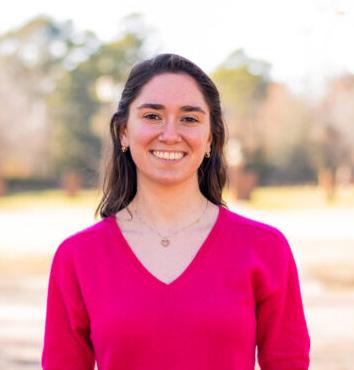
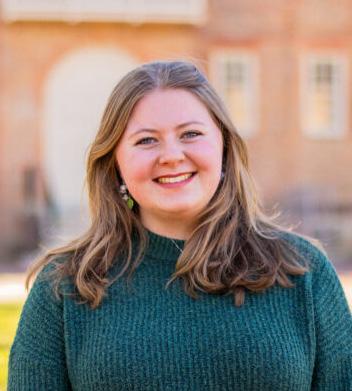
“I’m currently doing my study abroad but my boyfriend will be visiting me during that week so I’ll be showing him around!”
to the other side of the stadium, and people just become blobs of color. Imagine if you could see exactly what every single person was doing in that stadium? You’d be overwhelmed, right? That is what social media allows us to do. You’re able to see exactly what everyone else is doing at any moment. That shouldn’t be possible. Our brains aren’t wired for that much information.
Then there is the pressure to contribute to it all by creating posts or stories for others to see. So much of our mental energy then becomes tied to how others interact with our posts or stories when, in the end, none of it really matters.
Once again, I think about how much time and energy we spend with our phones and social media, and I wonder how I’ll look back at that time and energy spent when I’m old. It is literal days worth of time that I can never get back.
What’s ironic is that my mom would always lecture my sister and I about how bad smart phones were for us, and I would just shrug it off as her overreacting. I think she may have had a point. Part of me wants to just get rid of my phone entirely, but in today’s world that really isn’t feasible unless everyone does the same.
Since this little opinion piece can’t convince everyone to do that, I’m just going to leave you all off with a suggestion: One day this week or next, try to leave your phone in your dorm and go out. I know your anxiety might go through the roof, but it doesn’t have to be for the entire day. You could just leave it for an hour or two. See what happens. Maybe it’ll change the way you see things. I just can’t emphasize enough how valuable your time is. If you’re going to waste it, at least have a cool story to tell after you do. MichaelGabriel’28isahistory major.Besideswritingandediting opinionpieces,hecontributesanissue ofhisWillyandMarycomicalmost everyedition.Heisabigbaseballfan, likestheoutdoorsandisalwayshappy totalktoanyoneaboutanything. Contacthimatmdgabriel@wm.edu.
Managing Editor
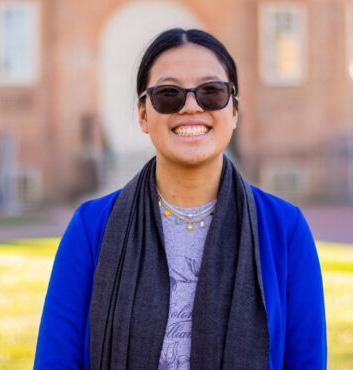
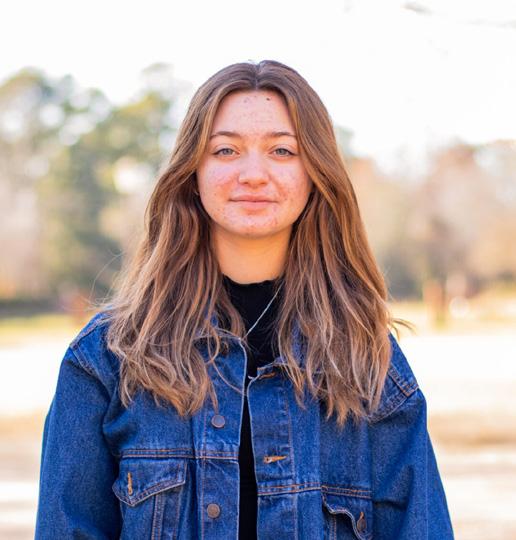
“I will be visiting Flat Hat Operations Coordinator Molly Martin in Madrid for a week!”
In the wake of a busy Black History Month, leaders of the College of William and Mary’s Black Student Organization reflected on how their organization has provided and cultivated an important community for Black students on campus.
BSO aims to provide a jumping-off point for students who want to find more places on campus to get involved and establish a community. For members and non-members alike, President Elie Bide ’26 hopes that BSO and its events can help educate while also increasing the happiness of students.
“I feel everyone should be able to come out of every event or interaction feeling happier than they were before, and I want the borders that keep people divided to be erased more and more, as much as we possibly can,” Bide said.
Tech chair William Henderson ’26 echoed this sentiment. Henderson joined his freshman fall, and his positive experiences with welcoming upperclassmen led to his continued involvement with the organization. He added what he hopes non-members of the organization can gain from BSO events.
“I think it’s a great space to learn about different members of the community. I think it’s always great to hear about experiences, Black happiness, Black struggle and then everything that comes in between,” Henderson said.
For students from marginalized backgrounds, especially at a predominantly white institution like the College, organizations like BSO are vital as points of connection.
“It’s hard to be a student when you don’t see a lot of yourself in the faculty or sometimes in the staff or in administration,” Henderson said. “So it’s a place for you to find that ground to maybe unwind, release, be comfortable and also learn from each other because I think the Black experience is very broad.”
Outreach coordinator Clarity Johnson ’28 emphasized this sentiment by sharing why she thinks a strong Black community has persisted on campus throughout her time at the College.
“I think something that has maintained the strength of our community is conversation,” Johnson said. “I always find that the best way to move forward and grow as a group is through communication. If no one knows you have a problem, then how will it be resolved?”
In February, BSO held its annual Sankofa Ball in collaboration with Student Assembly. Despite concerns from SA about
that BSO continues to improve outreach efforts.
“When it comes to looking for ways to bolster attendance, we need to increase our confidence in reaching out to nonBlack organizations to help us advertise,” Bide said.
Henderson agreed, discussing BSO’s openness to collaboration as a way to facilitate increased engagement on campus.
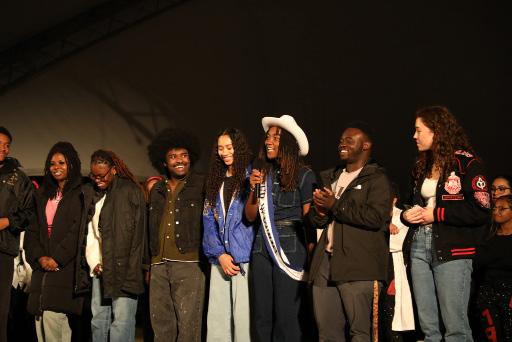
funding the event due to low attendance in the past, this year’s gala turned out to be a success with increased attendance from previous years.
“I think the biggest thing I took away from Sankofa was the power of community,” Johnson said. “Once word got out about funding being cut from Sankofa, members from all the other Black student organizations on campus rallied around the event to prevent the event from being taken away. It was a grand celebration, and I nearly teared up seeing the Black community come together and celebrate.”
For future iterations, Bide hopes
“We’re always open to collaborate, to host and do things. We’re also one of the largest MCOs on campus, so we have a lot of amazing resources, access to people and access to many members that do want to connect,” Henderson said.
Beyond Black History Month, BSO keeps its calendar busy with events. The club prioritizes showcasing other Black organizations on campus to its own members and to the greater College community.
“I think one of the best things that we do as an organization is highlighting other Black orgs,” Henderson said. “And I think it’s always interesting to hear, showcase and let light on that and then collaborate, especially with StompFest. I think that’s one of the coolest events, and we have over 1,000 participants.”
Despite the many successful events that BSO has hosted and continues to plan, it still shares common obstacles with other multicultural organizations.
“I think a struggle for any MCO, specifically the BSO, is just the idea of when it is time to open ourselves up to the greater community and when is it time to close it and keep it a safe space,” Henderson said.
BSO has grown since its founding and will continue to develop with its new generations of membership. Henderson mentioned one recent development for BSO: a shift toward highlighting other Black organizations and individuals on campus for their specific talents.
“I think facilitation is kind of the direction the Black community is going, and being able to include all different types of people within the diaspora,” Henderson said.
As the halfway point of the spring semester approaches, BSO has more fun events in store for its members and allies. The club continues to encourage all to attend so its community can be an open space for inclusivity.
Bide said that after the major events of Sankofa and StompFest in the spring, BSO hosts more spontaneous get-togethers and casual favorites like their end-ofyear cookout.
“That’s honestly what I really love: the sort of events that just practically appear out of thin air for us to put on,” Bide said.
To keep up with BSO and its upcoming events, make sure to check out its Instagram, @wmbso.
StompFest, the step competition show that BSO hosts with the Divine Nine, the historically Black Greek Life organizations on campus, is one of BSO’s largest events of the year. The show also highlights BSO’s commitment to creating partnerships with other organizations.
Mock Trial team helps prospective law students, actors gain coutroom experience
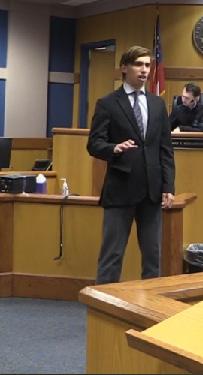
The College of William and Mary’s collegiate mock trial team is a space for future law students, those with debate and speech experience and even students with a flair for theater to learn the flow of a courtroom while competing up and down the East Coast.
The current team has 24 members split into A, B and C teams, but that number is not set in stone. Tryouts are composed of two parts — a speech about a topic of your choice and an improvisation piece. Although a portion of club members were in high school debate or speech, prior experience is not necessarily an indicator of success in college mock trial.
“Some of us did mock trial in
high school, but, genuinely, some of the best people I know just started in college,” Mock Trial
president Miriam Antony ’26 said.
“It’s really just, can you speak?
Can you speak well, and can you learn to speak?”
Each team has captains who lead the other members through the process and offer guidance.
For club member Matthew Lee ’29, his captains were great mentors and helped show him that being successful in mock trial is about specific traits that can be learned and practiced.
“Skills that I can tell pay off for the good attorneys and witnesses are confidence in yourself and your answers,” Lee said. “You can be saying the complete wrong thing, but as long as you’re pretty confident, the judge is going to side with you most of the time.”
Lee added other qualities that captains like to see in competitors.
“I would say grit. It’s a lot sometimes, but it’s worth it, you know, of course it’s worth it,” Lee said. “They want to see that you can be loud and quiet, that you can, I guess at times, not be embarrassed. Because if you’re a witness, sometimes you’re asked to do funny characters.”
Competitions are set up in the style of a courtroom. Members have different roles during competitions, such as attorneys and witnesses, that require specific performance skill sets.
“You have expert witnesses that are there to break down complex subject matters. So a doctor, for example, might take the stand and explain how the person in the piece died; they died due to a heart attack, or x-y-z,” Mock Trial member Timmy Tasler ’26
said. “Then you have your more sympathetic witnesses that are designed to make the general courtroom very sad, just cry, tug at their heart strings and that’s the emotional appeal they bring. In each witness archetype, there is a lot of acting that goes into it.”
Dedication to the craft and hard work to memorize lines is an important part of Mock Trial, but levity can also be found in the courtroom. Being able to embody different personalities is an integral trait that the club looks for in members.
“I think theater kids really do thrive when they apply for Mock Trial, get in and and they’re like ‘Wait a minute, I can just go on the stage, crack jokes and be this really funny character?’ It’s like, yeah, that’s a lot of what Mock Trial is, believe it or not,” Tasler said.
The fall semester serves as a time for new members to learn the ins and outs of mock trial while seniors perfect their craft. The club switches up teams temporarily in a “trial by fire” challenge before the competitive season, which starts after winter break.
“Everyone’s roles get mixed up and you do a tournament in a shorter turnaround than any of your other tournaments, just to try new things. And then spring season, we restack, our teams get reshuffled, new captains, new roles, et cetera. And those are your competitive teams,” Antony said.
Two teams from the College recently finished competing at the American Mock Trial Association Regional Tournament, which was hosted here on campus. The teams are now preparing for the Opening
Round Championship Series, the next level of the competitive spring season. Competitions at other schools happen over the course of a weekend, and, outside the structure of four rounds in two days, provide lots of quality bonding time for the teams.
“Typically, we leave Friday evening, spend the night in an Airbnb with the entire team and get team dinner. It’s a fun time,” Antony said.
During the competitive season, all teams around the country work on the same case distributed by AMTA. While studying the same facts as peers nationwide forges connections with students from other schools, working with the same content for months at a time presents its own set of unique challenges.
“In addition to the four rounds you do in a weekend, you’re probably doing scrimmages with your team. You’re probably practicing the script itself, your scripts alone. And so, fatigue can be a real thing where if you’re playing the same role over, over and over again, it can be hard to do that,” Tasler said. “It can be hard for a judge if a judge is like, ‘Oh my God, I’ve already heard this case.’ But especially as a competitor to stay fresh.”
Despite the hours of work that go into preparing cases, Lee has developed a sense of teamwork from his first semesters on the team.
“Mock Trial is a club that’s like, for you to be good, your teammate has to be really good. Witnesses and your other attorneys all have to work together to make a coherent flow. So teamwork and building team cultures is something that’s
really important,” Lee said.
Regardless of conflicts that inevitably arise from going through high-stress experiences, team culture is an underrated benefit that Lee experienced from going through rounds with other students. The relationships made with teammates have proven to be just as valuable as the competition experience.
“For me, this was a bit more than a club; it was a group of people who are friends that I just did something really hard with,” Lee said. “But as long as you treat it like that, if you understand the culture of mock trial, you know it’s competitive, it’s really hard, but you are meant to build people up alongside you.”
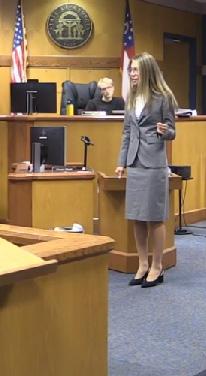
Te Chinese Student Organization hosted its biannual culture showcase this Sunday, March 1, in Commonwealth Auditorium. CSO is an active student-run group on campus, hosting a plethora of events and bringing together students who want to celebrate or learn more about Chinese culture.
With the recent occurrence of Chinese Lunar New Year, their showcase told the tale of the New Year beast, Nian. Teir show used a witty retelling of an age-old classic, “Beauty and the Beast,” to educate the audience in an attention-grabbing manner.
Fans of “Beauty and the Beast” recognized the beginning of the show. Audiences saw the prince hosting a ball when an enchantress came and cursed him to be a beast until his heart was pure. However, instead of becoming the furry beast we are all familiar with in the classic fairytale, he became Nian, the New Year beast, a large lion-like monster covered with armored scales and armed with sharp horns and claws. Ryan Malcolm ’28 played the beast: his frst time performing. Malcolm was very excited to be asked to perform with CSO. He described the complexities of his character.
“Obviously, he’s a guy who has a lot of character faws, a lot of which has to do, and for this show, lines up with the values of Lunar New Year,” Malcolm said.
After asking him about the most challenging aspect of pulling the showcase together, he noted long rehearsals and the time spent learning his lines.
“I think it was getting everybody on the same page and making sure we’re expressing the emotions that those characters are meant to show,” Malcolm said.
All CSO members got invested in their characters and performances, making the show an exciting experience for everyone in the audience.
Te show followed its characters into the village of Beijing, where we met Bei-la, played by Alex Anderson ’27, Gao-ston, played by Richard Shi ’29, La-Foo, played by Ariel Wang ’26 and several townspeople. Tey introduced the audience to the play’s setting and set up the storyline for the rest of the show. CSO interspersed many familiar plotlines into the showcase, with Gao-ston trying to win Beila’s heart and Nian capturing Bei-la’s dad. Once Beila traded places with her dad and stayed trapped in Nian’s castle, several of the cursed castle servants from the fairytale taught Bei-la about the castle and Nian’s curse. Bei-la committed to helping the beast fx his ways and stop terrorizing her village by teaching him the importance of a fresh start in the new year.
While the play was humorous and lighthearted, it also taught the audience about several important cultural traditions and what the Spring Festival represents. Many people may not be aware of the Lunar New Year or everything that the holiday entails, and the inviting atmosphere that CSO created
was a great opportunity to learn more.
“I think that CSO is extremely welcoming, whether you’re Chinese or not,” CSO culture chair and stage manager Teri Yu ’28 said. “But again, it’s one of the least cliquey, most welcoming organizations that I’ve ever had the pleasure of working with, and I really hope that everybody can learn a thing or two about Chinese culture.”
Te holiday is rooted in the Legend of Nian, a beast who lives in the mountains and emerges annually on the new year to terrorize villages, eat their villagers and destroy their crops. In the legend, an old man discovered the secrets to defeating Nian after he did not fee his village, and learned that the beast is terrifed of the color red, loud noises and fre. Tis legend impacts the traditions of the New Year still to this day, with houses decorated with red lanterns, families wearing all red and exchanging red envelopes, celebrations using gongs and drums and frecrackers and lanterns being lit all around.
Te spring festival lasts 15 days, beginning on Chinese New Year’s Eve and ending with the Lantern Festival; this year, the festival started Feb. 17. Tis holiday is the most important annual holiday in China, and the members of CSO noted their happiness with being able to celebrate and come together for their showcase to tell this story to more people.
Te show featured traditional performances, including dances and music. Te frst was the Lion Dance, a classical Chinese traditional dance, with live drumming along with the dance. Tis performance incorporated both tradition and fun, with the dancers taking the stage by storm and getting the audience energized and laughing, as well as including interactions with other cast members.
The next was an umbrella dance, with dancers gracefully holding their bright umbrellas as they created dynamic poses using both their bodies and their umbrellas. There was also a performance using the pi-pa, a traditional four-stringed instrument plucked along to a song. Act two opened with a fashion show, where several CSO members got to strut the stage and show off an array of traditional Ch inese clothing.
There were two more dances in the second act. The first was the face-changing dance, where a dancer adorned with several vivid masks made astonishing hidden moves to change their masks and the emotions they were portraying. The second was a watersleeves dance, with the dancers wearing long white and pink sleeves that extended their movements and created a mesmerizing flow across the stage. These performances added another layer to the showcase that portrayed cultural
arts that many audience members had never seen before. Tis made some of the symbolism of the show more accessible, as these performances took the story and made it real.
With two shows each year, CSO’s fall showcase focuses on the Harvest Moon Festival, and their spring showcase centers on Lunar New Year, as the showcase falls right after the festival has ended. Te cast and crew worked hard for over a month, rehearsing and learning their lines to make this show come together. Yu and fellow stage manager and culture chair Michelle Wiant ’28 started working on their script over winter break, choosing which show they would parody and how they would incorporate cultural elements into their retelling.
“‘How can we incorporate cultural elements into this?’ And then we just kind of go through the thick and thin of writing the whole script and then recruiting actors, recruiting performers and dancers and taking it from an idea to a stage play,” Wiant said.
Once CSO reaches the process of dress rehearsals, they also incorporate costumes, sounds and lighting.
“I think the biggest thing is that I’m working with AV to make this possible,” Yu said. “At first, I was really nervous, but I realized that we’ve done this before, and if anything could go wrong, it would have happened already. As the show came closer and closer, I realized that it’s really coming together.”
The members of CSO dedicate a lot of time, efort and hard work into coming up with ideas for cultural elements, performances, costumes and perfecting their acts, and it is very clear when it all comes together on the stage. Te love that the actors have for sharing their talents radiated into
the auditorium and had everyone laughing and cheering along with them.
At the end of the show, the eforts of the main cast came to fruition when Nian shifted his perspective, had a positive attitude, avoided confict and cleaned his temple. Malcom noted the signifcance of the character’s transformation.
“Te whole point of it is to show that if you go through the traditions of the Lunar New Year, then you can grow as a person and maybe fnd something hidden within yourself,” Malcolm said.

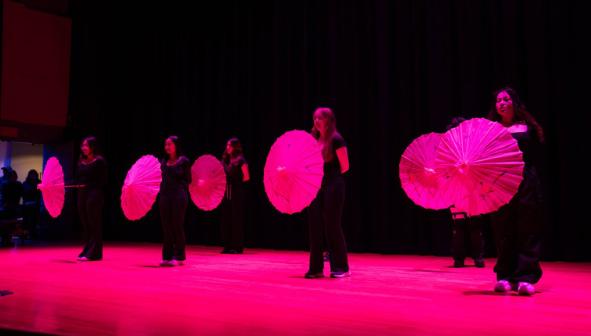
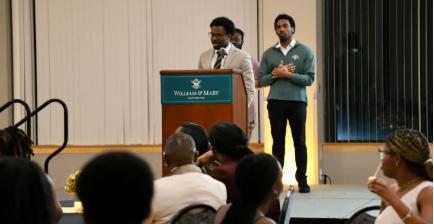
Friday, Feb. 20, communal em -
braces, line dances and black-tie att ire took center stage in Sadler Center’s Chesapeake Room. Sankofa is an annual celebration of Black faculty, students and staff of the College of William and Mary, hosted by the College’s Black Student Organization, African Cultural Society and Student Assembly. Sankofa is a night to celebrate the achievements of the Black community and the tradition of Black Excellence.
In opening remarks, Student Assembly Sen. Tyson Liverman ’27, described Sankofa as a reflection and celebration of Black achievement. Liverman pushed for the Sankofa gala to get funding from SA.
“Sankofa is a verb orig inated by the people of Ghana meaning, go back and get it,” Liverman said. “Sankofa teaches us that history is not a burden, but a gift. It reminds us that the resilience, brilliance,
creativity and sacrifice of our ancestors are not just stories we inherit, but responsibilities we carry.”
In the introductory keynote speech, Steve Prince, Director o f Engagement and artist-in-residence at the Muscarelle Museum of Art, described Sankofa as an opportunity to celebrate the achievements of individuals in the Black community and honor Black heritage.
Prince is the sculptor of the College’s Sankofa Seed sculpture, a memorial to the first Black students to atte nd the College. Prince describes Sankofa as a living legacy to these first students.
“Riley, Brown and Eli, those women were the first to come to Jefferson Hall, and they have created a space for all of us to be here”, Prince said. “So I say to you, the Sankofa is to help us remember who we were, who we are and who we are becoming.”
Te Ebony Expressions Gospel Choir then performed an a cappella rendition of “How Excellent.”
Te second keynote speaker, Director of Student Inclusive Excellence
Monique Williams, elaborated on Sankofa’s signifcance as a commitment to service in the Black community.
“One day you will become the elders in the room, you will someday become the old kids, the Uncles and the Aunties, and you will be leading the next generations for kids like my son, my nieces and my nephews.” Williams said. “How will you show up for each other?”
Williams’ speech featured a call to action: to embrace your neighbor. In the crowd, individuals went around the room embracing beloved members of their personal circle, and even complete strangers.
“Wherever you are, turn to a neighbor. ‘I see you, I need you, I will lift you up, and I will reach back to carry you forward,’” Williams said. “And to each of you I say to you, ‘I see you, I need you, I will lift you up, and I will always reach back to carry you forward.’”
To conclude the speakers, Dr. Carlos Pinkerton, executive director of Planning and Strategy at the College spoke and outlined the significance of Sankofa.
“It is the image of a bird reaching backward to retrieve an egg on its back,” Pinkerton said. “It reminds us that as we move forward, we must retrieve what is necessary from our past to sustain our future.”
Pinkerton detailed the importance of building intentional community support within underrepres ented communities. He reminded attendees of their role in creating and preserving Black history.
“Shared identity does not auto -
matically create shared responsibility. That work is intentional. At times where our identity is at times contested, Sankofa is urgent, becau se what is not retrieved can be forgotten. What is forgotten can be distorted,” Pinkerton said. Next, the BSO Honors, a series of awards honoring Black achievement on campus, were presented to students and faculty. The first awards recognized students for their on-campus involvements inside and outside the classroom. These awards for an outstanding member of each class year went to Madison Marshall ’29, Jackson Webb ’28, Jordyn Jackson ’27 and Allison Robinson-Wilson ’26. The next round of awards were given to students and faculty who stood out for their exemplary performance in extracurricular activities and leadership roles. Winners included Nya Pictori ’28 for Excellence in Leadership, Clarity Johnson ’28 for Excellence in Service, Talia Anderson ’26 for Outstanding Female Athlete, Justin Puzan ’26 for Outstanding Male Athlete, William Henderson ’26 for Tribe Involvement and Monique Williams for Outstanding Faculty. To close out the night, the community came together for one last line dance. 120 people danced alongside one another, a physical embodiment of their commitment: doing life with one another.
Class of 2028 President and BSO organizer Devaughn Henry ’28 mirrored the sentiments of the keynote s peakers on Sankofa as a motivation for service.
“Sankofa means being there for your community, and giving back to people when they need it,” Henry said.
Allison Robinson-Wilson ’26, fourtime attendee, and BSO Senior Legacy award recipient emphasized the importance of celebrating the Black community on campus because of historical adversity.
“It’s nice looking back at the history of William and Mary and seeing how far we’ve come because of how many doors were sh ut in the faces of people like my grandparents,” Robinson-Wilson said.
Mlumbeni Nkhoma ’29, another attendee, emphasized the encouragement and strong sense of community Sankofa represents.
“A s a young student that is just starting her journey at William and Mary, it’s been such a joy to be able to look back on all the works of previous students and reflect on what I can do to better improve the campus for all students of minorities,” Khoma said.
Williams summarized how the concept of Sankofa connects to the College’s complicated history and current community.
“Sankofa’s not just about looking back, it’s about deciding what and who you are willing to carry as yo u move forward,” Williams said. “This instituti on, like our nation, was shaped by complex realities, including indigenous land dispossession, and the neighbor of enslaved Africans. Acknowledging this does not diminish us, it strengthens us as we move together. Here we are not as victims of history, but evidence of survival.”
That’s Sankofa. It’s remembering why you build; it’s choosing to return even when you’re tired.
While balancing athletics and academics would seemingly leave little time for other campus activities, sophomore running back Jack Zamer, junior golfer Samantha Skinner and sophomore punter Carter Boyd have taken it upon themselves to build an on-campus organization from the ground up.
Zamer is a licensed real estate agent in Washington, D.C., Maryland and Virginia. He came to William and Mary hoping to learn more about the profession.
Growing up, Zamer gravitated toward the real estate field. After receiving his license and gaining assistance from his father who works in commercial real estate, Zamer was eager to enhance his skills and truly dive into the profession.
However, when he arrived at William and Mary, his expectations fell short.
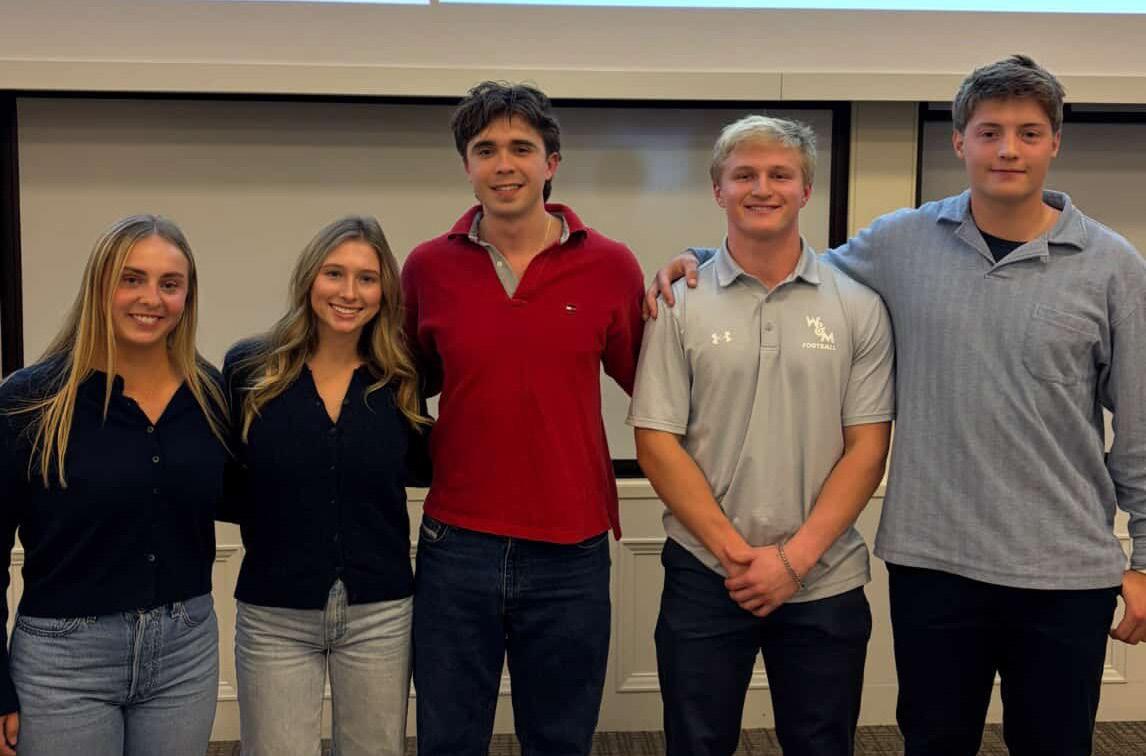
“I came to this school with the hopes of learning more about real estate, but when I got here, there were only two classes offered on real estate in the entire business school,” Zamer said. “One of the courses was a one-credit elective that I couldn’t take due to conflict with the football season, since the class was only offered over a five-day period, and the other was only offered for graduate students.”
With limited resources, Zamer took it upon himself to fuel his passion for real estate in a different way.
“I was like, ‘Okay, if they don’t already have it, I will just make my
own real estate resources at this school,’” he said.
Zamer enrolled in Assistant Provost for Entrepreneurship Graham Henshaw’s innovation and entrepreneurship course. It was there that he met senior Frederick Parse, and they sparked the idea to develop a real estate club on campus.
“Graham Henshaw was very helpful in the beginning,” Zamer said. “We basically took what we learned in that class and met with him outside, and he gave us a launching pad point of getting the club started.”
After developing the foundation for Real Estate Investment Club, Zamer and Parse discovered a team of other passionate entrepreneurs. Skinner, Boyd and junior pole vaulter Jordan Kinkead were quick to join Zamer’s mission, despite their respective athletic commitments.
At its core, Real Estate Investment Club provides anyone interested in pursuing a career in real estate or simply learning more about the field with the necessary education, network and practical experience.
“You don’t have to know much about real estate to get involved; you can just attend meetings and feel free to talk,” Skinner said. “You can learn a lot about the field, which can benefit you in the future and help you make a lot of money.”
As an athlete, however, Boyd struggled to find time to help run the organization.
“Football is a very large commitment, even out of season,” Boyd said. “Between meetings, lifts and practice, it takes up a huge portion of our day.”
Between the season, spring and summer practices and fall camp, the lack of a true off-season for football is another challenge Boyd has navigated.
“When I first got here, I struggled to manage football, academics and extracurriculars,” Boyd said. “I managed to train my brain and manage my time and was able to balance it all and get in a rhythm where all three commitments worked together.”
Skinner faced a similar challenge with striking a balance between academics and her busy golf schedule.
“Golf is two seasons, so I am pretty much always in season and constantly have things going on,” she said.
Skinner said that through organization and planning, she created a routine that made her commitments more feasible.
“I found that finding things outside of your sport to take your mind off of it is really important,” Skinner said. “That is why this club is good, because it allows me to do something different without overexerting myself.”
While still searching for an advisor, the stunt leaders have focused on networking and building connections with other on-campus
organizations. They have found major support from the Boehly Center for Excellence in Finance and the Student Marketing Association, along with coaches and the athletic community as a whole.
“We’ve talked with our coaches about giving presentations and trying to get the football team more involved with real estate,” Boyd said.
Boyd also noted the assumptions that many on the football team have about the field of real estate.
“A lot of our teammates think it is really difficult to get into and that it can be a scary topic,” Boyd said.
Still, both Zamer and Boyd feel supported by their coaches and teammates.
“We’re planning an off-campus event at Brickhouse Tavern, and our coaches have been helping us with logistics and getting it set up,” Zamer said.
Zamer also hopes that Real Estate Investment Club can serve as a blueprint for others looking to start their own organizations.
“There is this concept called MVP, minimum viable product, and you kind of have to just jump in the fire,” Zamer said. “Everybody wants when they start something entrepreneurial to have it be perfect and everything, but you really need to get an MVP out there. As soon as you can get something
While the club is still in its early stages, its leaders are proud of their progress.
“I started talking about this last summer, and here I am eight months later,” Zamer said.
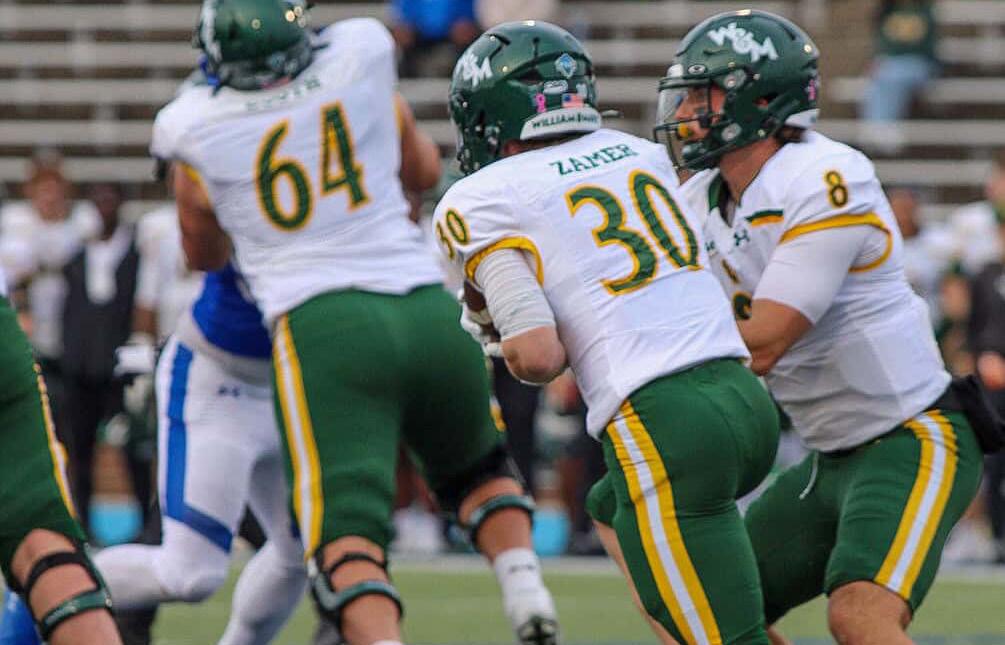
The rise of the transfer portal in the National Collegiate Athletic Association has created a new reality for programs across the country — a reality that William and Mary football was forced to face head-on this off-season.
After four years in the program, starting junior quarterback Tyler Hughes entered the transfer portal, taking with him 3,000 allpurpose yards and 31 total touchdowns from the 2025 season.
In an attempt to fill the gap left by Hughes’ departure, both on the field and in terms of leadership, the Tribe recruited junior Towson transfer quarterback Winston Watkins.
Watkins plans to take his next steps in his football career in ways he felt were not possible at Towson, where he played in only 11 games across two seasons.
“I was used just for my running ability, but I’m a quarterback who can start at this level and can play,” Watkins said.
Watkins’ desire to prove people wrong and show his full potential as a quarterback originated from his high school recruitment process.

“I wasn’t very heavily recruited out of high school. There [were not] many teams involved in my recruitment,” Watkins said. “Towson was the main college to push for me.”
Despite being under-recruited out of Mount Saint Joseph’s High School in Baltimore, Md., Watkins remained confident that he would ultimately end up at the Division I level.
“I always had high aspirations for myself,” he said. “I have always had the mentality to take it as far as I can.”
Following his decision to leave Towson after two seasons, William and Mary immediately made Watkins a priority for its winter transfer portal activity.
“They were the most in touch and most in contact college when it came to me being in the portal,” Watkins said. “The people definitely played a huge part in my decision to come here.”
Despite only enrolling ahead of the spring semester, Watkins has already felt the community that brought him to William and Mary in the first place.
“Everybody knows each other, it’s very closeknit, everybody is caring for each other,” he said.
Looking to take on a much larger role compared to his time at Towson, Watkins has set his sights on mastering his footwork, as it is important to any successful quarterback.
Watkins understands the role and responsibility that come with being a quarterback for any team, especially the Tribe.
“If you play quarterback, you are thrown into the leadership position whether you like it or not,” he said. “You have to be a person that can step up into that role when everybody is looking to you.”
Watkins also sees his role as a leader extending beyond just the field or the locker room.
“When it comes to being in the community, being in the classroom, it is more than just football when it comes to being a leader,” he said.
Watkins said he is impressed by the talent on the Tribe offense and has prioritized building relationships with his fellow offensive unit. This will be key if the Tribe looks to replicate or even improve upon its offense that ranked No. 4 in the Coastal Athletic Association in 2025 at 29.5 points per game.
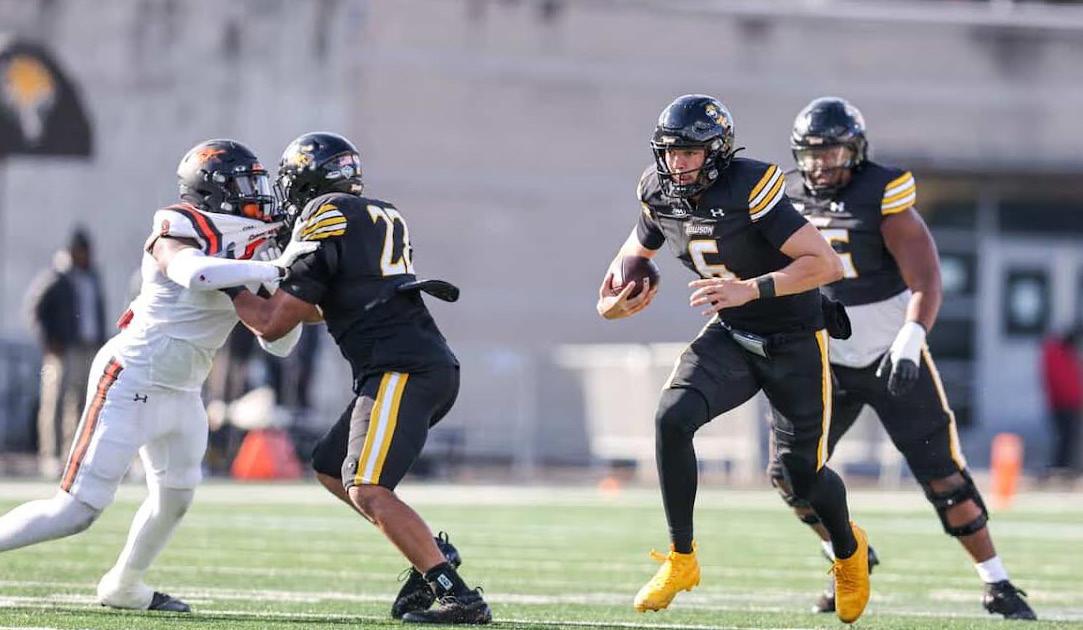
“There are a bunch of dudes on this team who can do crazy things with the ball in their hands,” Watkins said. “It has definitely been great continuing to build chemistry and working with them each and every day.”
While Watkins views himself as a good fit for the Tribe’s offense, he has shied away from setting any personal goals for himself, focusing on the team as a whole and the dayto-day journey.
“I feel like a lot of times, you can get caught
looking into the future, and you can’t focus on the things you need to work on,” he said.
Throughout his entire football journey — from being ranked No. 1,591 nationally by 247 Sports in the class of 2024 to only attempting six passes during his time at Towson to finally ending up at William and Mary — Watkins has established a determined mindset.
“There are going to be a lot of peaks, a lot of valleys, but when it comes to your demeanor, you have to stay level-headed, you have to stay resilient,” Watkins said.
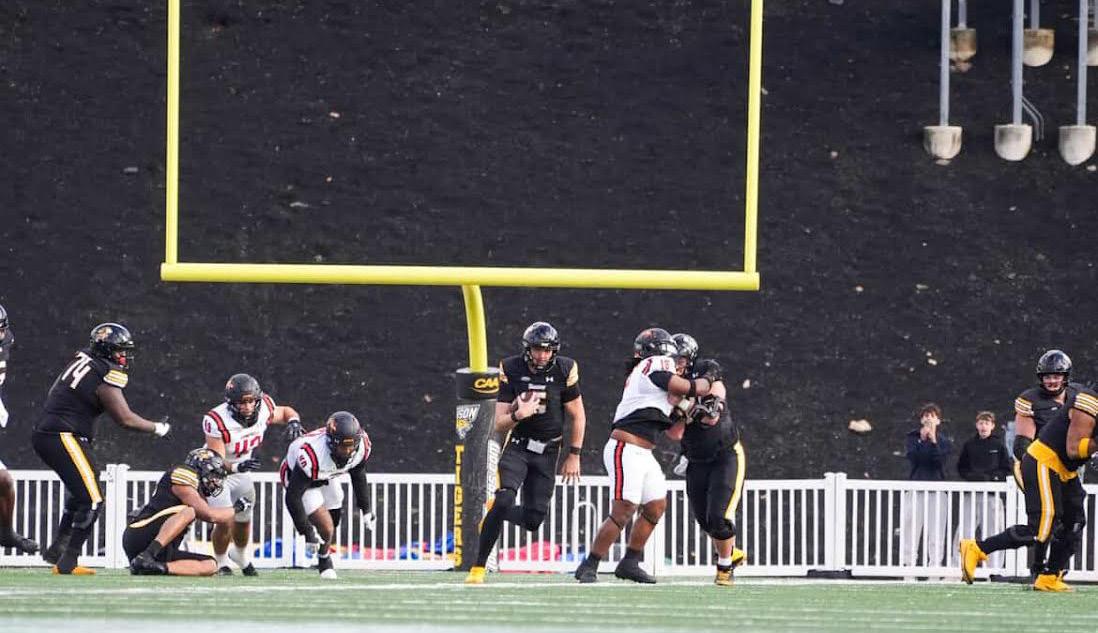
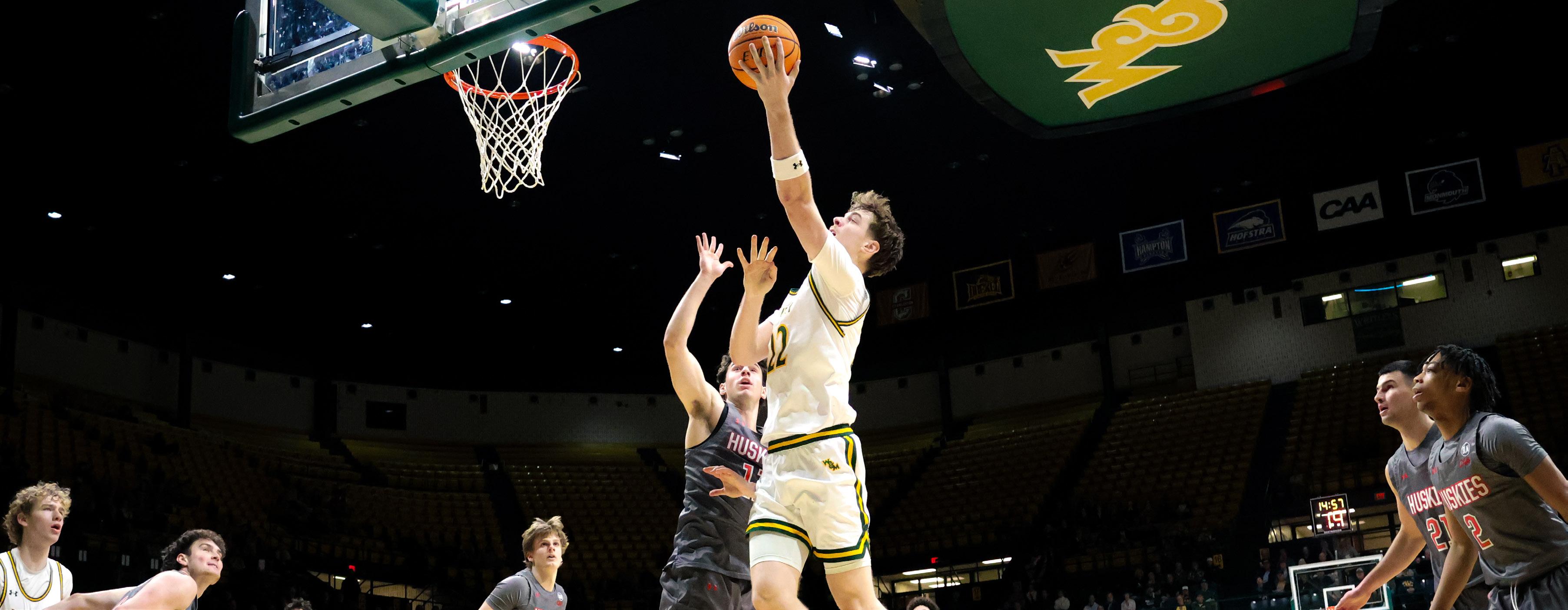
continued to find responses of their own to keep the game within only a few possessions.
Thursday Feb. 26 and Saturday, Feb. 28, William and Mary men’s basketball (18-11, 9-8 CAA) pulled off a crucial set of victories, first defeating Northeastern (6-22, 2-15 CAA) 84-77 at Kaplan Arena in Williamsburg, Va., before holding off North Carolina A&T (11-17, 4-13 CAA) 91-88 at the Corbett Sports Center in Greensboro, N.C.
After consecutive last-second defeats to Elon (14-16, 6-11 CAA) and Campbell (13-17, 7-10 CAA), the Tribe needed a positive response to retain any chance of securing a doublebye for the upcoming Coastal Athletic Association tournament in Washington, D.C., next week.
Having defeated Northeastern 94-67 two weeks ago in Boston — a game in which the Tribe shot 55% from the field and hit 12 three-pointers — Thursday night’s rematch played out in a far different manner.
While William and Mary’s defense started the game, forcing Northeastern into numerous turnovers and difficult shots at the end of the shot clock, the Tribe’s offense sputtered out of the gates. Despite its inefficiency from the field in the opening stages of the game, the Tribe found success attacking the Huskies inside and getting to the free-throw line.
At the same time, Northeastern sophomore guard Ryan Williams filled the gap left by the absence of leading scorer and junior guard William Kermoury, scoring 13 points early on. Struggling offensively, the Tribe turned to a weapon it has relied on extensively this season: the bench. The Tribe got 17 of its 35 first-half points off the bench, led by junior guard Reese Miller, who carried over his strong play from the previous week.
At halftime, the two teams were neck-and-neck. While the Tribe only shot 2-13 from the three, its 14 fast-break points from 13 Huskies turnovers and a 78.6% clip from the free-throw line provided a slight advantage.
In the teams’ first encounter this season, the Tribe used a second-half run to put the game away for good, something that Northeastern was determined to avoid this time. After junior forward Kilian Brockhoff started the second half brightly, scoring the Tribe’s first six points, the Huskies
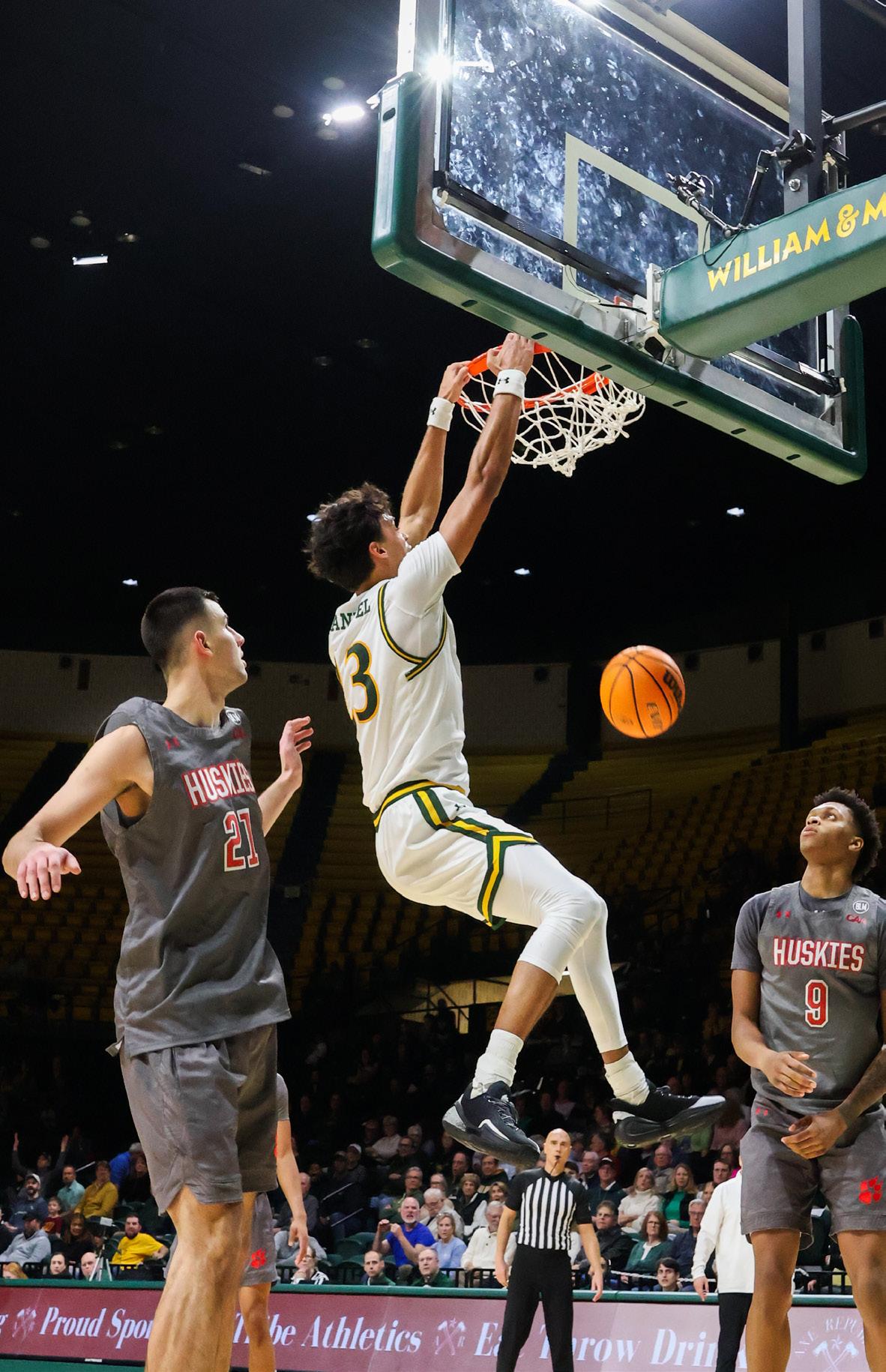
Even with the 22 turnovers from the Huskies on the night — nearly double their average of 11.4 per game — Northeastern found success on offense, shooting 50% from the field and hitting 11 three-pointers.
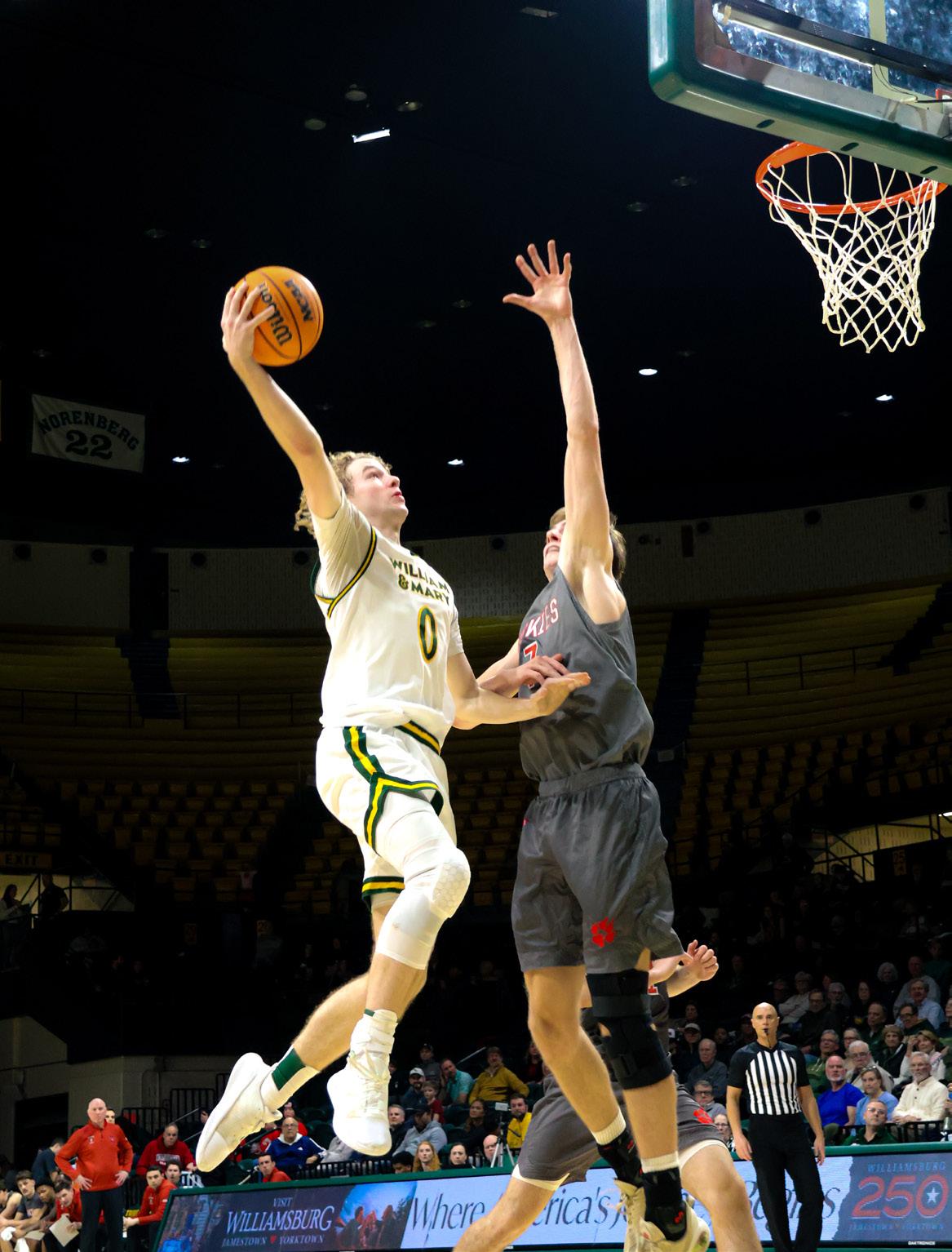
Williams continued his hot shooting from the first period, and after two consecutive three-pointers, the Tribe’s lead was cut to only two points.
After the game, head coach Brian Earl was especially candid about what the home team expected from the Huskies’ guard.
“He’s not necessarily top of the scouting report,” Earl said. “Sometimes, guys get their chance, and he took advantage.”
After that 6-0 spurt from Williams, the Tribe tried to pull away. A Brockhoff three-point play took the Tribe’s lead up to nine.
Aside from Brockhoff’s strong second half, in which he scored 18 of his 21 points, graduate student forward Jo’el Emanuel’s second-half contributions epitomized the Tribe’s performance on the night.
Eight of Emanuel’s 12 second-half points came from the free-throw line, the product of his relentlessness attacking the rim despite the size and length offered by the Huskies down low. Defensively, Emanuel led the Tribe’s press and made it difficult for Northeastern to advance the ball into the frontcourt.
“He changed the feel of the game,” Earl said.
In the final minutes of the matchup, Williams tried to will the Huskies back through another pair of three-pointers, but it was Emanuel who landed the final dagger.
A three-point play with one minute remaining gave the Tribe a nine-point lead, eliminating any chance of a Huskies miracle.
Picking apart the pieces after a seven-point victory — a far cry from the 27-point margin that separated the teams the first time around — Earl saw the game’s pace as a key point.
“I felt like we were on defense for 80% of the game,” Earl said, also complimenting the Huskies’ plan to make the Tribe play good defense for the full 30 seconds.
However, it was not just the pace of play that helped Northeastern put up a far tougher fight, but also the lack of clarity around who would be available for the Huskies.
“It was hard, they were not the team we thought was going to show up because of injury, [and] as coaches, you have to pivot,” Earl said.
William and Mary started Saturday’s game much like Thursday night, scoring its first four points of the game at the free-throw line and forcing five Aggies turnovers within the opening five minutes.
The return of graduate student guard Jhei-R Jones, who made his first appearance since Jan. 24 and contributed eight points off the bench in only 19 minutes, also aided the Tribe. Similar to Thursday night, the Tribe looked to its bench to provide a much-needed spark, with 24 of its 46 first-half points coming from the second unit led once again by Miller. Earl hailed the effort from his bench, particularly praising its lack of ego and ability to change the game.
N.C. A&T redshirt sophomore forward Zamoku WelucheUme caused the Tribe problems throughout the first half, scoring 13 points and knocking down two three-pointers.
Despite taking a nine-point lead into the locker room at halftime, the Tribe once again found itself struggling from behind the arc, shooting only 3-15 in the first half.
Immediately after the second half’s start, the game opened for both teams.
Aggies redshirt freshman forward Lewis Walker, who scored 33 points in the first meeting between the teams on Jan. 15, scored 20 of his 27 points in the second half on an efficient 8-10 shooting from the field. Earl acknowledged the challenge of stopping a player like Walker, who has a uniquely strong mid-range game for the college level.
The Tribe’s lead reached its peak at 13 early in the second half. However, the hosts continued narrowing the gap and took the lead with 10 minutes, 38 seconds remaining in the game.
While the Tribe regained the lead, N.C. A&T stayed within striking distance, setting up a tense final four minutes.
The Tribe and Aggies exchanged baskets in the final minute before junior forward Tunde Vahlberg Fasasi was fouled with the shot clock expiring, bringing the Tribe’s lead back to four.
N.C. A&T had one last chance to force overtime but failed to get a shot off as senior guard Chase Lowe forced a turnover before launching the ball down the court.
Although the Tribe forced 18 N.C. A&T turnovers, which turned into 20 fast-break points, the Aggies shot over 76% from inside the three-point line — a similar story to Thursday night.
Moving on to the regular season finale on Tuesday, March 2, against Hampton (13-17, 7-10 CAA) at Kaplan Arena, the Tribe remains alive in the running for a double-bye at the CAA tournament.