
Physics, computing, applied science faculty celebrate new facilities and interdisciplinary opportunities
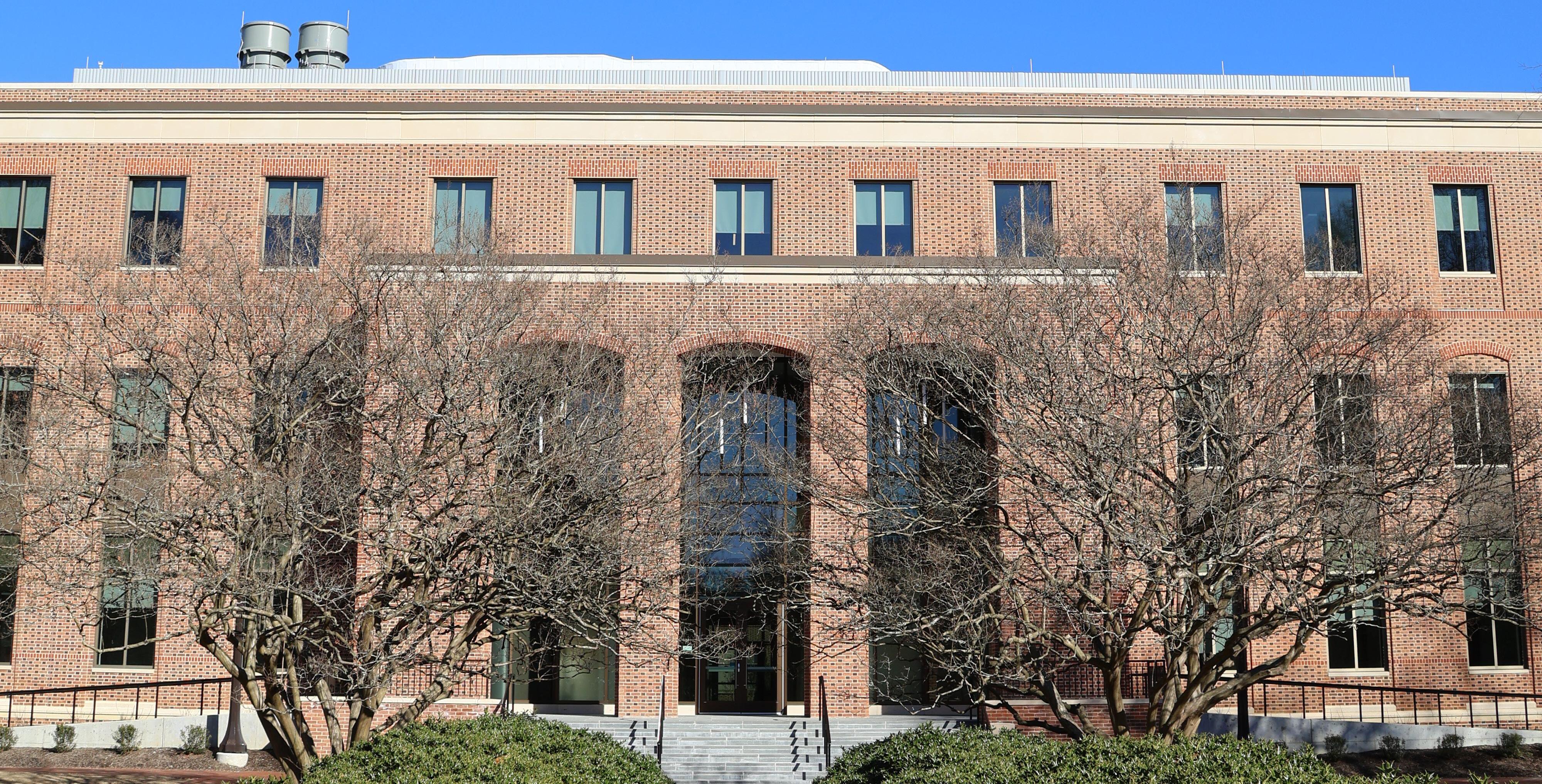
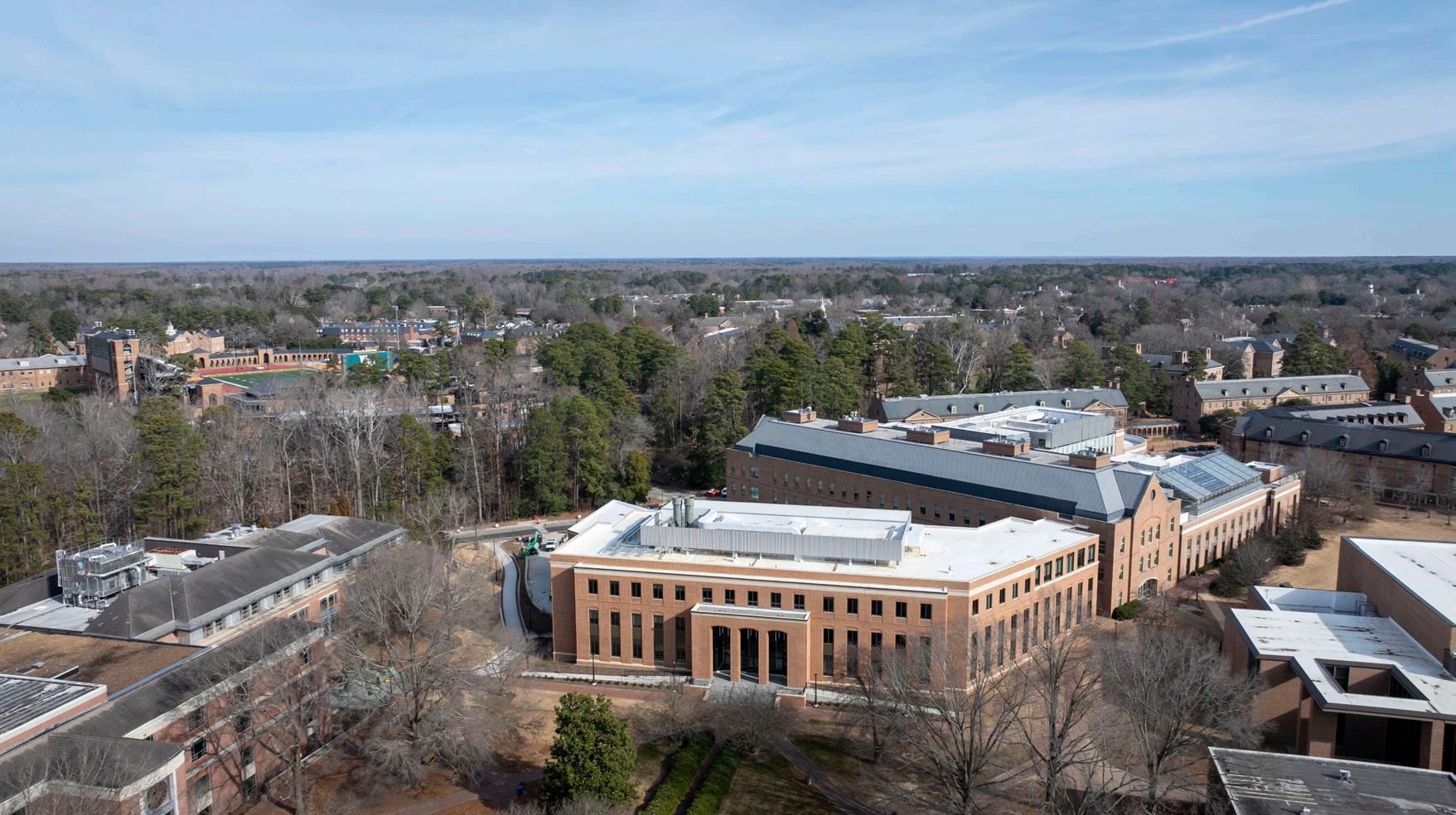
Thursday, Jan. 22, Director of Communications and Marketing at the College of William and Mary’s School of Computing, Data Sciences and Physics Randy Ready led The Flat Hat and other local publications on a tour of the new Integrated Science Center 4 construction. Ready was joined by Department of Applied Science chair Eric Bradley, who has led the planning of the four ISC phases. This addition is the College’s first new school in over 50 years.
Ready explained that while the building is new to the College, the disciplines being housed there are not.
“While the school itself is new, we have four departments, and they are not new,” Ready said. “So you have computer science, data science, physics and applied science, the four departments. They’ve been around, some of them for a long time — physics like 200 years. So they’re well established.
Ready continued by explaining the layout of ISC 4.
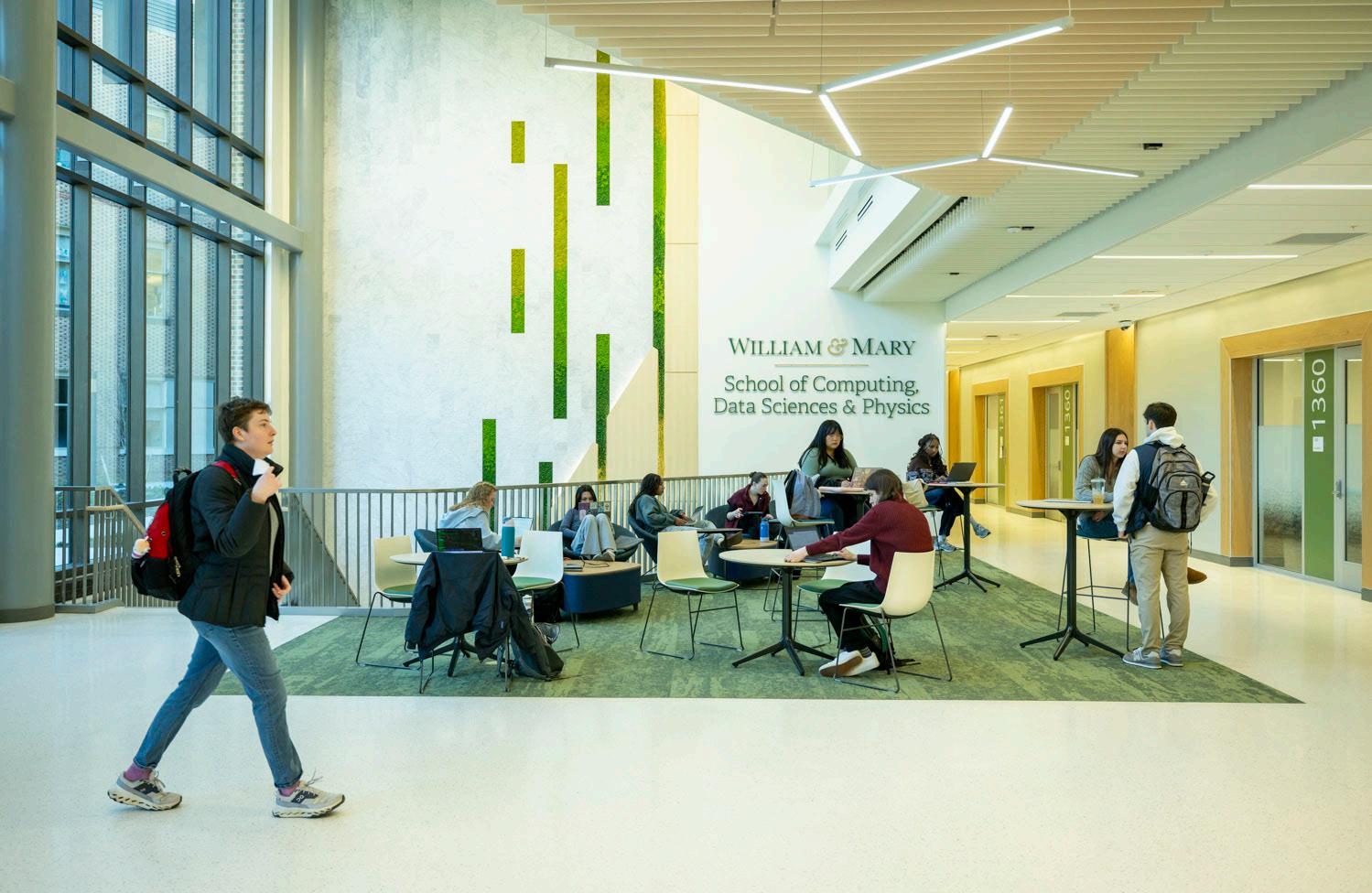
“This building hosts the School of Computing, Data Sciences and Physics Dean’s office, as well as our computer science
department, which is kind of split up between this floor and the second floor,” he said. “The data science department is on the third floor.”
Ready went on to highlight the collaboration opportunities within the new school.
“It’s just been an opportunity to bring in a lot of the science departments or other departments under one building versus kind of spread out throughout campus,” he said. “And that really helps bring in the interdisciplinary part of it and collaboration versus the stove pipes, or, you know, trying to create more opportunities for that interdisciplinary research and learning, which is a big thing here at William and Mary.”
Bradley noted the reason for the new construction in relation to this interdisciplinary learning goal.
“We just can’t do STEM at all, no matter where it is, or any of the social sciences, and even some of the humanities, without a fair amount of interface with big data and computation,” he said. “Digital humanities is a real thing, and it’s actually very, very important. So, to accommodate that growing demand and
trying to stay ahead of the curve for training our undergraduate students to take a place, our new provost decided that we would try to center the people who do really computationally heavy material together in an integrated system.”
He continued to reflect on the goals for this collaborative STEM building, emphasizing the vision of the College’s science disciplines all under one roof.
“This notion of integration is a non-trivial thing,” Bradley said. “This is really important. We found too much ‘siloing’ in the past, and that’s university-wide, but also U.S.-wide. Buildings with people in them that don’t walk across campus to interact in a way that is meaningful because it’s too much work. So the idea was here to try to integrate most of STEM.”
While there were some challenges to this integration, Bradley depicted how this was still an improvement for the College.
“Now, there’s some STEM that couldn’t integrate because of the facilities,” Bradley said. “So geology is not in here, and physics is across the quad from us because of its size and
the magnitude of it. But everything else has been now, with this building, truly integrated. So, except for having to get up from your desk, all you have to do is walk someplace within this four-building facility, and we’re really finally having this objective of integration that has been a transition over many years.”
The tour moved to assistant professor of applied science Geoffrey Zahn’s wet lab. He introduced his TIDAL research lab’s efforts in genomic data science, working with microbiomes.
“We try to design microbial communities that make plants healthier,” Zahn said. “We could do it for humans, but we need a med school and a lot of paperwork. And so if we can learn it in plants, we can actually transfer what we learn to any of the programs in there. This room is all about kind of the molecular side of things, and growing bacteria and fungi, and then extracting their DNA to get genomes, which we upload to the supercomputer and analyze from our bedrooms or wherever we are, so this is kind of the wet lab space.”
Prizes highlight student, faculty achievement in leadership, research, civic engagement
Friday, Jan. 30, the College of William and Mary celebrated the recipients of the Thomas Jefferson Awards, the James Monroe Prize and the Plumeri Awards. This annual event recognizes those who embody the College’s values.
Rich Thompson, a dedicated staff member of Civic and Community Engagement, commented on the broader significance of the event.
“It’s really talking about the leadership that the William and Mary community is all about — how each of us can make a difference with our skills and how we can push ourselves to be more of who and what we are for the betterment of others,” Thompson said.
Jason Zheng ’26 received the James Monroe Prize in Civic Leadership for his community commitment. His work on campus is characterized by a passion for student rights and basic needs.
Zheng serves as a senior senator for Student Assembly and chair of the
University Policy and Student Rights committee. He leads the Student Assembly Food for All initiative, which focuses on restocking the Sadler food pantry and ensuring access to nutritious foods.
“My parents own a restaurant, so for me, that’s kind of always been a priority,” Zheng said. “I think what’s really great about Food for All and that food pantry that we have is it’s available to students, faculty, administrators, just people who work at William and Mary.”
After graduation, Zheng plans to continue practicing civic leadership by pursuing a Master of Public Policy or attending law school with a focus on supporting rural communities.
The Thomas Jefferson Prize in Natural Philosophy was awarded to Kate Carline ’26. As the director of the Geopolitics of Technology Initiative and a researcher in professor Margaret Saha’s bacteriophage lab, Carline has made it her mission to bridge the gap between science and policy.
Carline recalled her time in the phage lab when she extracted her
first strand of DNA and discovered the passion that would define her time at the College.
“I was looking at it and imagining, wow, that is our DNA, that is the code to life, and it is here, and I can see it,” she said. “I think it really just connects the work you’re doing to almost be bigger than yourself and more meaningful to change the world, and it’s really hard to not feel passionate about that.”
One of her most impactful experiences was serving on the iGEM team, where she helped develop a synthetic biology project addressing an issue at the local or global scale. This work took her to Paris, where the team ranked in the top 10 internationally.
This spring, Carline will graduate as a Churchill Scholar, heading to the University of Cambridge to study public policy with a focus on science policy.
Carline said this award was particularly special because she did not apply for it. Instead, she was nominated by faculty mentors.
“It means that not only have I
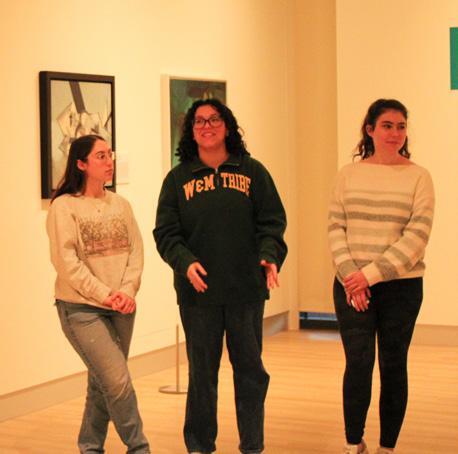
worked hard enough for me,” she said. “But I’ve worked hard enough that people I look up to can really believe in me in that way and believe in me to put me up for this moment.”
The Thomas Jefferson Award is given each year to a member of the College community for significant service through their personal activities, influence and leadership.
This year’s recipient was biology professor Dr. Randolph “Randy” Chambers. He serves as director of the Environmental Science and Policy Program, associate chair of biology and director of the biology graduate program. Chambers has additionally conducted extensive research that has influenced aquatic restoration and climaterelated environmental planning.
Chambers shared that friends from both high school and college reached out after the award announcement, saying it captured him perfectly.
“For my high school friends, that was 40 years ago,” Chambers said. “They said, ‘That’s who you were 40 years ago, and that’s who you are now.’”
Professor Jennifer Lorden in the English department received the Thomas Jefferson Teaching Award. Her students appreciate her engaging lecture style and passion for medieval English.
The Plumeri Awards recognize nine exceptional faculty members annually who have taught at the College for at least five years. Those awarded receive a $20,000 prize to be spent over three years to further their teaching and research impact in the community. The faculty chosen for 2026 were associate business professor Igna Carboni, associate health sciences professor Carrie Dolan, government and public policy professor Chris Howard, geology professor Rowan Lockwood, classical studies professor Vassiliki Panoussi, associate computer science professor Bin Ren, assistant athletics director Jasmine Perkins, associate physics professor Justin Stevens, associate religious studies professor Kevin Vose and marine science professor Joseph Zhang.

The work that weʼve done here with William and Mary and the stu dents, I donʼt want you to think that thereʼs something you canʼt do. If you just know how to speak, and you donʼt even hav e to put the nouns and the verbs in the right place, you just have to get an audience and be heard.
-- Let Freedom Ring Foundation President Connie Matthews Harshaw
Following a series of continuances, the 78-year-old George Thomas West is set to go before a grand jury March 18, 2026. The Gloucester County manʼs case was moved from the Williamsburg/James City County General District Court to the Williamsburg/James City Circuit Court Jan. 20, 2026, as is required of felony cases in the state of Virginia. At the grand jury, the prosecution will present evidence, and a jury will determine whether there is probable cause to proceed to trial. West faces 11 counts of nonconsensual filming of a nude person, three counts of nonconsensual filming of a nude minor, one count of possession of obscene material for sale and one count of obscene material sale with more than two offenses: a combined 12 class one misdemeanors and four class six felonies. Original police evidence had suggested Westʼs crimes occurred over 29 years; however, the oldest offense date listed in the charges is Jan. 1, 2018. Should the grand jury find probable cause, Westʼs case will go to trial, where he could face up to 12 months in prison for each misdemeanor and up to five years for each class six felony, and an additional five to 20 years for each count of nonconsensual filming of a minor. The exact sentence West faces if found guilty will depend on the discretion of the judge, among other factors.
Te Flat Hat wishes to correct any fact printed incorrectly. Corrections may be submitted in email to the editor of the section in which the incorrect information was printed. Requests for corrections will be accepted at any time.
HE F LAT H AT
ʻSTABILITAS ET FIDESʼ | ESTABLISHED OCT. 3, 1911
Org #101 P.O. Box 8795, Williamsburg, VA 23187 Editor flathat.editor@gmail.com Managing flathat.managing@gmail.com Executive flathat.executive@gmail.com Magazine editor@flathatmagazine.com News fhnews@gmail.com Sports flathatsports@gmail.com
M ADIGAN WEBB // FLAT HAT NEWS EDITOR
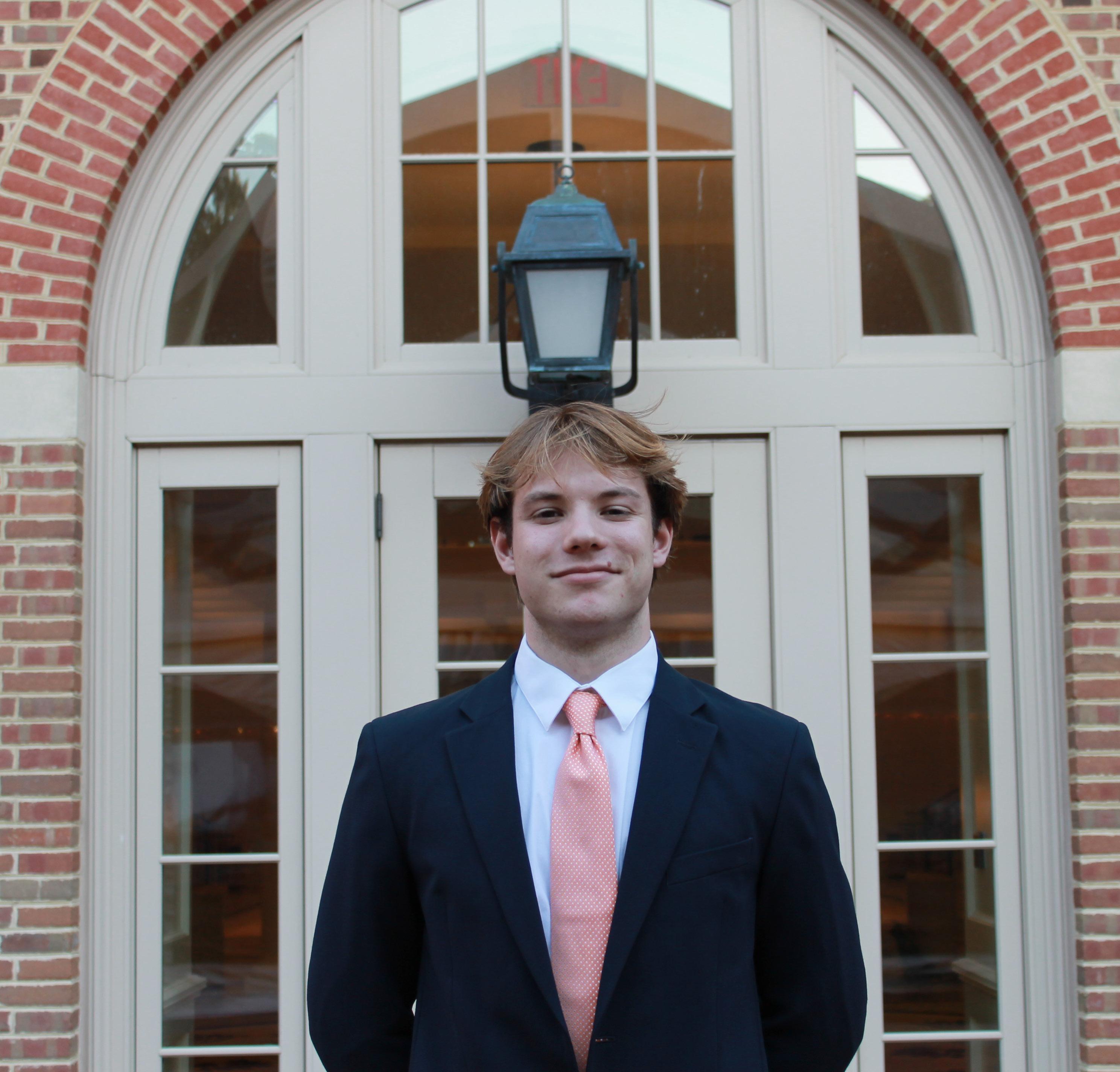
Environmental science and finance major Davey Mazur ’28 argues that environmental protection begins not with persuasion, but with exposure. His proposal to build a permanent outdoor classroom echoes this sentiment, fostering student connection to nature simply by making the environment an everyday part of academic life.
The idea came to Mazur during his ecotherapy class last spring, where he learned about how humans evolved in tandem with the natural world, creating a close bond between the two. However, as the distance between humans and nature grows, so do the issues humans face.
“With modernization and technology, we’re thrust into this context which we’re not evolved to deal with,” Mazur said. “And that’s where we’re getting a lot of mental health issues. The stress and the anxiety our generation is dealing with is because our brains physically aren’t designed to handle all these new inputs.”
Ecotherapy focuses on curing these ailments through reinserting humans back into their natural context: the outdoors. Thus, the class was taught exclusively outside, a concept that appealed to Mazur.
“We were sitting on the grass behind DuPont [Hall], and I remember thinking that with such a beautiful campus, we should have a designated outdoor classroom space,” Mazur said.
An outdoor classroom would not only help students reconnect with nature, but it could also help their education by combating mental health issues. The College of William and Mary’s Parks and Ecotherapy Research Lab, led by teaching professor Dorothy C. Ibes, found that outdoor classrooms can bolster student engagement and retention.
While Mazur believed in the benefits of an outdoor classroom, his goal seemed out of reach until he explained it in an interview rushing the business fraternity Alpha Kappa Psi.
“They asked me what project I would do to better the campus,” Mazur said. “And this is what I was talking about. It was just a crazy idea in my head, but then talking through it, I realized this could actually work.”
Mazur quickly went to work planning the project. He decided that the woods by the Crim Dell Meadow would be an ideal spot for the classroom because of its proximity to the Sunken Garden, which professors already use as an outdoor learning space. The preliminary classroom design would host up to about 30 students for any class in any department.
“The whole idea is that it’s just another classroom that teachers can reserve and schedule their class to meet there,” Mazur said. “There’s already a demand for outdoor classrooms. We just need to give them the appropriate space.”
More specifics regarding the classroom construction plan unraveled as Mazur worked on the grounds crew for Associate Director of Grounds and Gardens Tony Orband.
“He has this cool program he’s starting up, where every tree that they take down on campus, they then mill up and use as lumber towards other projects on campus,” Mazur said. “This keeps the carbon sequestered and creates a renewable source of building materials. I was explaining to him that it would be really cool if we could use all the wood from the campus to build an outdoor classroom here.”
Mazur hopes to finance the project through the College’s Green Fee initiative, where students apply to receive grants for sustainability projects. He is applying for the spring round of funding.
“I’m just trying to put together the best proposal that I can to show that I’ve done my homework,” Mazur said. “I’ve already talked to a couple people on the Green Fee team that administer the proposals. They’re loving it so far, so we’ll see how many details I can hit.”
This is not Mazur’s first time taking advantage of the Green Fee program. Last year, he worked with Madeleine Fernandez ’27 to remove invasive Japanese privet from the College’s woods, replacing it with over 40 native species.
“I’m looking to do a similar thing around the outdoor classroom, because the whole point is for it to be a place where students can connect with nature,” Mazur said. “But it helps if nature is in its ideal form. If it’s all native species, then all the pollinators will come back. If all the pollinators come back, then the birds will come back.”
As students spend more time outside in the classroom, Mazur hopes they care more about environmental conservation.
“The whole idea is to make a really beautiful little sanctuary space back there where you can see what the world was like and what the world could be like,” Mazur said. “You just have to put them there, out in nature, and then you don’t have to do anything. Nature’s gonna do the work.”
He explained that environmental action is accomplished through three primary methods: policy, financial means and promoting human connection to nature. During his time at the College, he is focusing on the last one.
“People don’t want to conserve and protect what they don’t know and love,” Mazur said. “So that’s the route that I feel like I can kind of take as a student here. I can try to help other people see the benefit in nature and the outdoors, and the outdoor classroom is one way of trying to do that.”
Mazur — who grew up playing outside and working on a farm in Massachusetts — said it is difficult to imagine other students not having a special relationship with nature.
“I’ve always just loved being outside,” he said. “As a kid, the go-toactivity was just going and playing in the woods for a while.”
Four organizations collaborate to create cross-discipline conversation about future of artificial intelligence
Tursday, Jan. 29, the College of William and Mary Law School hosted an event titled “Te Next 250: Navigating the AI Revolution and the Future of Democracy.” Te event both celebrated 2026 as the 250th birthday of the nation and featured conversations about what the next 250 years will look like regarding AI and its potential relationship with democracy.
Te event’s planners, which included the College’s Digital Democracy Lab, the Institute of Bill of Rights Law, Election Law Society, Data Privacy and Cybersecurity Legal Society and the Military and Veterans Law Society, sought to create a cross-section of disciplines to both look toward the future of the AI revolution and the past of the American Revolution. Tis event also had goals of building trust and community through these conversations about what success has looked like in the United States’ past, and what it will look like in the future.
Vice Provost for Research Alyson Wilson moderated the conversation, which featured panelists Chiraag Bains, Tim Carroll and Sunita Patel, experts in policymaking, research and technology.
This breadth of involvement brings a variety of perspectives to the topic, which was among
its highlights.
“Te interdisciplinary studies that I did while I was at William and Mary and the focus of it trained my brain to connect disparate topics that, once you get to the root of it, are not as diferent as you think,” Carroll said.
Patel works in product security at Micron, a company focusing on memory and storage technology. She also worked at the White House Ofce of the National Cyber Director and other government agencies.
Similarly, Bains works with Brookings Metro to advance fairness and opportunities through artificial intelligence, democracy and government programs.
“I’m interested in the potential of AI to create shared prosperity and close equity gaps to make this a better country for everyone,” Bains said.
Attendee Raymond J. Bisczat is one of many who found themselves at this event, despite being from a discipline unrelated to government or technology.
“I’m an executive partner at the [Raymond A. Mason School of Business], and I was just interested in the topic,” Bisczat said.
However, considering the vast scope of AI usage today, Bisczat believes it remains relevant to the feld of business and many others.
“I do some consulting work as well as being
an executive partner, and I use AI quite a bit for research,” Bisczat said.
Tese varying ideas and industries gave the event nuance. AI is a swiftly progressing technology that conjures up diverse opinions; introducing questions about its implications for the future of democracy brings forth another scope of dialogue.
Te panel began with introductions of each speaker and questions asked by Wilson on the use of AI in our current world.
“AI systems are increasingly infuencing what people see, what they buy, what they believe. And so, who truly holds power? Governments? Companies? Te public? Algorithms?” Wilson asked.
“We are at this moment, right now, where nobody really understands where the power lies,” Carroll said.
Te panelists went on to discuss where this power should lie in the future.
“We the people should be the ones deciding and writing the rules about what impact AI has in our lives and the future of this nation,” Bains said. “But it’s, I think, worth saying, because I feel very much in this field that there is a tendency to treat the coming of AI and what it will do to society as outside of our power to control — as an inevitable force.”
Te next topic discussed was the regulation
of artifcial intelligence, and how these rules are lagging behind AI’s development.
“Te challenge with AI is that it’s not just that it will impact every human on the planet, but the ability for somebody to introduce some new technology that is, touching, somehow touching, directly or indirectly, every human on the planet within days or weeks is still going to move faster than any policy that we would have to keep up with it,” Carroll said. “So we need to continue to look at history, not to repeat it, but at the same time we need to understand when we are in uncharted waters.”
Most of the audience’s questions following the panel’s discussion were focused on the negative consequences of AI that are already arising. Despite this, Bains is still optimistic about AI-related issues, such as the creation of synthetic explicit materials, being solved in the near future.
“You’re right to point out some of the risks, and we’re seeing some of those harms right now,” Bains said. “Regulation could functionally outlaw non-consensual intimate imagery, synthetic CSAM ... I think those are solvable problems.”
Generally, the event refected both the excitement at AI’s potential as an emerging technology and the worries that many have about its impact on democracy and society in the future.
CAMPUS from page 1
Zahn continued to introduce the lab space and what opportunities it opens for him and his researchers.
“I can’t do anything in my research without this space,” he said. “So we can go and use other people’s data, the genomes that already exist online, but all of those are kind of old news. So we’re discovering new fungi in the ocean, for example, there’s a brand new genome species that has never been described by science. I’m trying to fgure out what proteins they’re making, what cool biological technology you can get from them. We have to have this space for that; it’s a requirement.”
Professor of applied science Margaret Saha explained the benefts of the new lab space that will house her International Genetically Engineered Machine and Phage undergraduate research teams.
said. “And I think it started with Phage Lab because we have that double — if you do the wet lab in the fall and the bioinformatics in the spring, but then also at iGEM, it’s like [Saha] always picks a really great team where everyone has totally diferent backgrounds and interests. So you end up learning a lot from the students around you, and I think that’s a sort of invaluable experience you get from the lab here. I’m really excited, actually, now that we’re in the applied science space, because I think we’ll get that interdisciplinary sense even more in this building.”
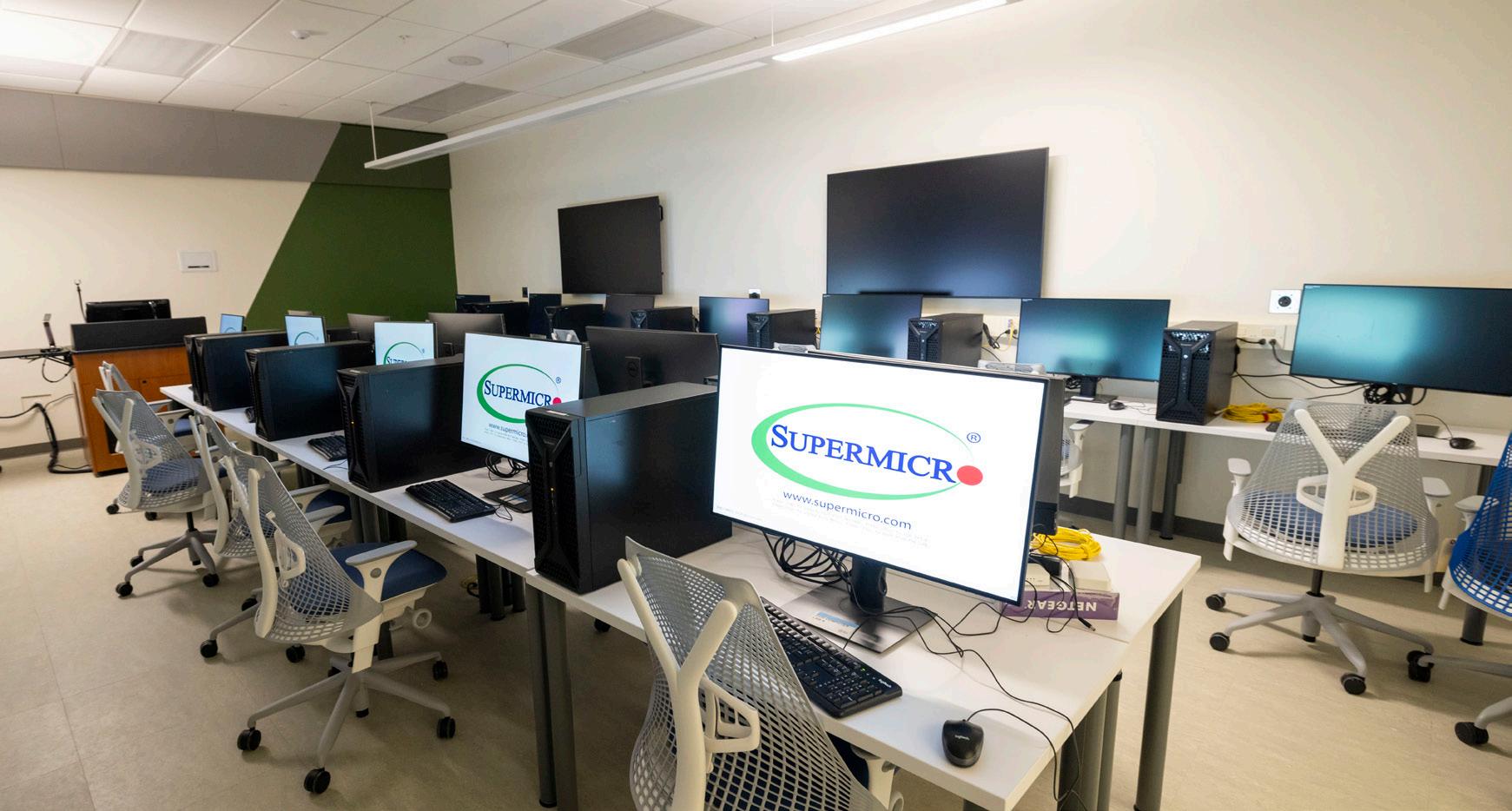
Te second and third foors of the building support the data sciences and computer science departments. Tere are 35 computer labs, called dry labs, on these foors to sustain these disciplines.
Ready outlined the funding that the School of Computing, Data Sciences and Physics receives each year.
“Te school, not all William and Mary, but just our four departments, brings in a little over $10 million
“It’s really cool to be in this building because half of our work is bioinformatics, data science and computer science,” Saha said. “And now with the AI tools that are available, we have two foors of experts here who are able to help with this and help us collaborate. We, who do all the wet lab work and the sequencing, could do amazing things and discover patterns in biological data so much more easily and quickly, accurately and efectively. So when I hear the words AI, I don’t think, ‘Oh my god, we’re losing our society, undergraduates won’t learn how to write or think.’ I think, ‘Wow, look at what we could do with this to solve problems in our environment and to address human health.’”
Kate Carline ’26, an undergraduate researcher in Saha’s lab, explained her connection to the College’s science programs.
“I’ve really been able to grow in this lab,” Carline
each year in external funds for research,” he said. “A lot of that is from the Department of Energy with physics, the National Science Foundation, the Department of Defense [and the] National Institutes of Health. So a lot of that external funding that comes in for research, and it’s hitting a lot of our departments for sure.”
Bradley continued to outline the novelties of the building and what it ofers to students. One of the new spaces is an interactive classroom with grouped tables instead of a lecture hall setup.
Tis is our frst interactive classroom that was on campus, and we hope that more and more faculty will engage in that type of teaching,” he said. “If you remember when you were students, you probably showed up unprepared for the topic, and you listened and you wrote stuf down. And then, hopefully at some point in time, you went back over and studied and got
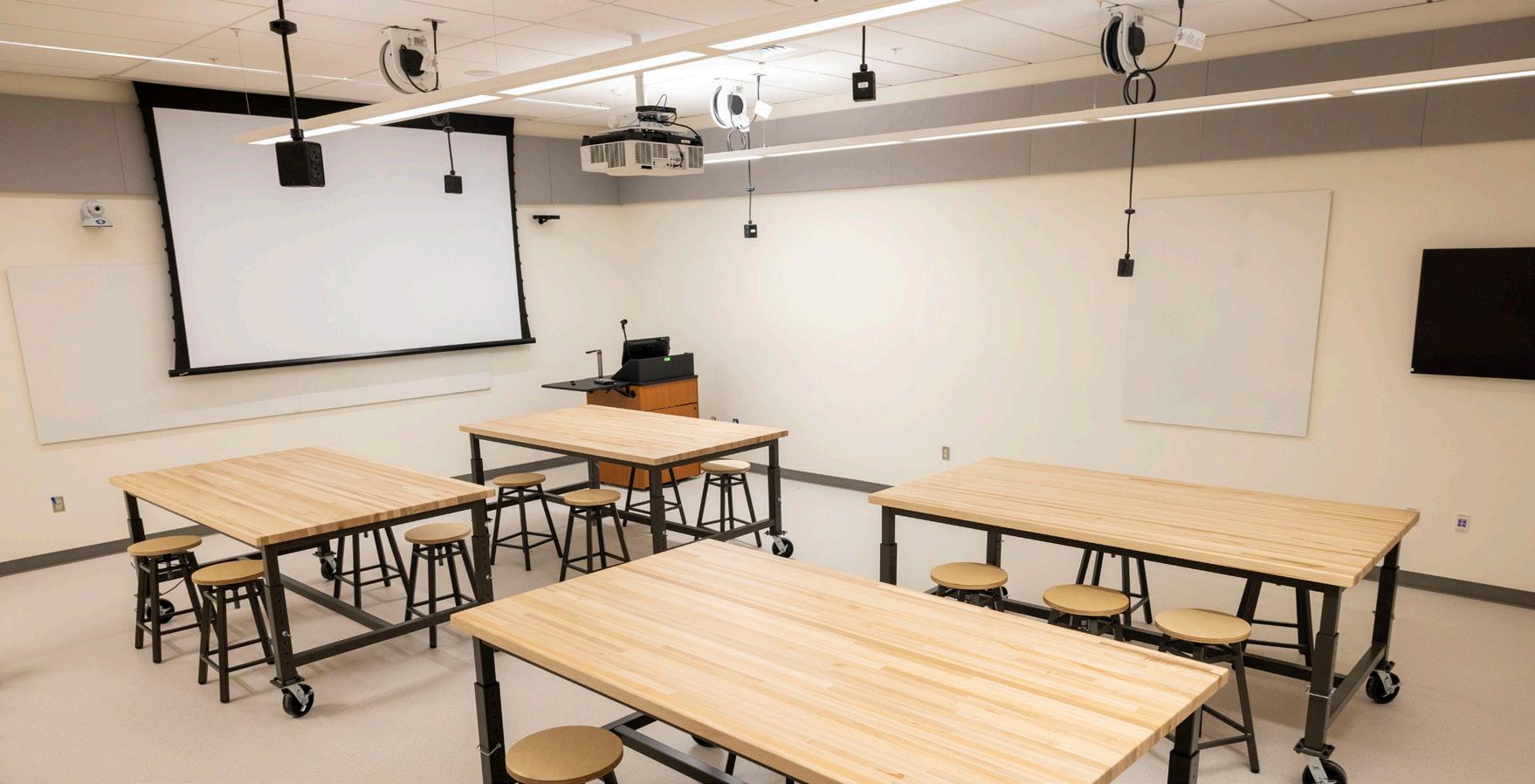
ready for a test. Te fip part of this type of interacting thing is that you come prepared. You’ve already listened to the thing. You’ve already read the assignment. You come, and then you do it here. And if you’re not doing it, you’re not going to get the grade that you want.”
Bradley cited the improved quality of learning that he expects with these classroom formats.
“It’s a much more efective way of teaching, particularly in STEM, where if you don’t understand the basics, you don’t understand the terminology, it’s pretty hard to understand the concept,” Bradley said. “So this is really a breakthrough for us in the STEM disciplines to have this.”
Te ground foor houses the Applied Research Center, where primarily graduate students and undergraduate summer interns will continue their research using the advanced technology in this new space.
Bradley commented on the goals for this new research center.
to collaborations with the Department of Defense, and lab space dedicated to the new bioengineering major, whose confrmation is still pending a board of visitors vote.
Te Makerspace was the tour’s fnal destination. Spanning 8,000 square feet, the collaborative center includes sewing machines, welding rooms, spray paint studios and 3D printers.
Makerspace director Jonathan Frey detailed the space’s layout.
Tis area here will be a design studio, so there’ll be a dozen or so of those wood top benches out here, and that’s where we’ll have small hand tools, portable machines like sewing machines, things of that nature,” he said. “And then as we go down the line, we have a laser-cutting facility down there, a hot work room for welding, plasma-cutting, kiln works, things like that, a metal shop, a wood shop. 3D printing and electronics in the next room down, and then a walk-in spray booth.”
Tis is where we’re going to be doing lots of development of things that have proprietary interest,” he said. “So in other words, we’re going to be developing things that we could patent, not only fnding solutions to problems.”
Bradley explained further who the proprietors are and what type of work is being done.
Tere’s a lot of work going on now for both the Department of Defense and the Department of Energy, making new materials that will hold charges for a long time, in other words: improving batteries, as an example — materials that will hold up in space in a better way,” Bradley said. “A lot of our collaboration historically has been with [the National Aeronautics and Space Administration] Langley. We hope to continue with that.”
Te remainder of the ground foor includes a 152-student lecture hall, a high-performance computing center that will be highly restricted due
Frey continued by speaking about the goals for the space.
“And the goal is not to get students to be experts,” Frey said. “It’s about how to use it without hurting themselves and without hurting the equipment, so that they can get the experience and carry that into whatever feld they’re in.”
He expanded on the Makerspace’s potential impact on the community.
“Te goal is to eventually have summer programs for all ages, have winter programs, to open it up and really get the programming established and out there,” Frey said. “And then maybe even follow through on a lofty goal that I have, which is to sync up the entire peninsula from us up to Charlottesville. Tere should be a corridor of hands-on experiential stuf that is synchronized.” READ MORE AT FLATHATNEWS.COM
with a book until I brought those books,” she said.
Friday, Jan. 30, the Lions Club chapter at the College of William and Mary hosted community advocate Meta Chambers to speak at Tucker Hall.
Lions Club International is a global service organization focused on supporting humanitarian projects in communities around the world. According to its website, there are nearly 1.5 million members and 50,000 diferent chapters. Te service group aids over 200 countries and regions.
Chambers came from the Norfolk Ocean View Lions Club chapter. She began by discussing an experience she had in a Kenyan village that shaped her drive for service.
“I was [in the village] holding hands with a lady whose eyes were crusted over,” Chambers said. “[She had] what I believe to be cataracts.” Chambers explained how cataracts are curable with the correct
medical treatment, but because this woman was in an impoverished village, she was left alone to sufer.
Chambers marked this experience as an important moment in her life, as it helped her realize that many humanitarian issues around the world remain unaddressed due to a lack of action.
Tat was one of the pivotal points in my life that changed me, wired me to drive harder, to go further, to do more [and] to turn my passion and compassion into responsibility,” she said.
Chambers then spoke about the Norfolk Ocean View Lions Club, which has 27 members.
“We’re growing, [and] we support through service and fnances over 31 diferent organizations,” she said.
Chambers transitioned to discussing some of the humanitarian service projects she has completed with Lions, starting with bringing school supplies and children’s books to Kenya.
“It broke my heart to know that these kids never had time to spend

Chambers said the kids did not want to leave the books, so she gave some to each child.
Chambers discussed a fundraising initiative for other African communities in need of humanitarian assistance. She flled backpacks with Jenga blocks, providing the children with toys.
“For a $5 donation, [the donors] could write an action verb [on a Jenga block],” she said. “Tat gives the kids an opportunity to practice language and have fun because there’s no toys over there.”
Chambers said the Lions Club shipped over 1,000 books to a school in Nairobi, helping them create a library.
Chambers also outlined a Lions-funded hospital initiative in which the organization provided roughly 6,000 free cataract surgeries per year. To ensure that rural communities were included, the Lions traveled to these areas to conduct surgeries.
She mentioned other Lions Club projects, including starting recycling drives for orthopedic glasses, supporting an orphanage and donating sewing machines.
Chambers concluded her talk with a call to action.
“And so my challenge to you all is to change,” she said. “You don’t have to graduate to be a leader. You’re already a leader.”
After the event, Phoenix Smith ’28, president of the Lions Club chapter at the College, discussed the group’s service projects. Initiatives include making blankets for a children’s hospital and co-hosting a charity event with the College’s Chapter of Circle K International.
Smith also mentioned the club’s future plans, such as arranging kits for the Hampton Roads homeless community.
Smith expressed gratitude for Chambers and encouraged other community members to consider joining Lions.
“I hope anyone who’s really invested in service and leadership and making a real change in their community on campus joins the Lions Club,” he said.
Mack Stevens is a member of the Lions Clubs of Virginia. His job is to help launch new Lions chapters across the state.
“Phoenix and all of the students are very excited about getting going and starting new projects and fnding out how they can help their community,” he said.
As a school teacher in Virginia Beach, Va., Stevens enjoys seeing youth participation in Lions.
Tis is an opportunity where you meet some great people, and you network with professionals,” he said.
PROFILE from page 2
Since Mazur’s parents are teachers, his family would go on road trips during summer breaks and explore national parks in the West.
“We would just load up in our 2006 Chrysler Town and Country,” Mazur said. “It was just the best. That’s really what made me have a connection to nature.”
Aside from his outdoor classroom initiative, Mazur tries to encourage student connection to the outdoors through his roles as a Tribe Adventure Program trip leader and an EcoRep. In the future, he hopes to use finance to encourage positive environmental action.
“You can always count on people to do what is right financially for themselves,” Mazur said. “So if you’re able to find solutions that are economically feasible to environmental problems, and market them well, then people will be conserving the environment just by living their daily life.”
Mazur’s interest in environmental finance stems from his high school capstone project. He examined beavers as a tool for ecosystem restoration, making conservation economically viable.
“The big problem with conservation is
that ecosystem services aren’t evaluated financially,” Mazur said. “If they’re not quantified, they can’t be monetized.”
The capstone project involved sampling soil from beaver sites to measure carbon storage and researching ways to bundle multiple ecosystem services into a profitable model. Mazur explained that beavers are particularly promising, as they provide several environmental benefits at once.
Instead of relying on individual landowners, the project ultimately focused on insurance companies, which already assess flood and fire risk — two issues beavers naturally mitigate.
“The capstone project is what sent me down the rabbit hole of environmental finance,” Mazur said. “Because it’s really money that encourages things. If it’s financially viable, it will stick.”
After this realization, Mazur decided to double major in finance as well as environmental science. He described finance as one of the better “levers to pull” to encourage conservation. Thus, he rushed Alpha Kappa Psi last fall.
Mazur said he was drawn to the business fraternity’s community.
“They’re all really passionate and really
driven. They want each other to succeed, and that’s just the best,” Mazur said. “You have to surround yourself with those kinds of people so then you become one of them.”
While joining Alpha Kappa Psi was recent, Mazur’s entrepreneurial spirit began freshman year, when he started a woodworking business called Scraps Woodshop. Woodworking started as a solution to giving bad Christmas presents but eventually became something he enjoyed.
“It’s a good attention-to-detail kind of activity,” he said. “I sometimes like focusing on the big picture, so the smaller details can escape me. I like having an activity where I can practice not doing that.”
Mazur asked people in Colonial Williamsburg for their scrap wood and used the sculpture studio in Andrews Hall to turn it into cutting boards or utensils. He sold his creations at Williamsburg’s Second Sundays.
“I liked taking something that isn’t all that usable in its one form and making it something nice again while still preserving that carbon,” Mazur said. “You get that environmentally friendly buzzword, but it’s not really a buzzword to me, it’s just the best way to do things. There’s so much beauty lying around
that you wouldn’t otherwise see unless you take the time to give it a little bit of help.”
When Mazur is not spending time in nature, he is reading about it. He casually described studies about mycorrhizal fungi networks and the usage of gas chromatography to explain how individual plants do not compete against one another for sunlight; rather, they work as a unit to survive.
“The scientific approach is always about evolutionary fitness and species outcompeting one another for the chance to survive,” Mazur said. “But forests really don’t abide by that at all, which I think is beautiful. And you can kind of just sense that if you spend an hour just sitting outside. You get that feeling that comes over you.”
The outdoor classroom would not only get students out in nature to experience the feeling Mazur described, but also demonstrate to other environmentally-conscious students what is possible when they take a risk.
“All these crazy ideas, if you go out and actually do them, they become so much less crazy,” Mazur said. “It’s just about taking that first step. If one of them gets done, like the outdoor classroom, then it shows what’s possible.”
Saturday, Jan. 31, the College of William and Mary hosted the Martin Luther King Jr. Commemoration Summit to honor King’s enduring legacy. The Student Center for Inclusive Excellence and the Virginia Center for Inclusive Communities welcomed Let Freedom Ring Foundation President Connie Matthews Harshaw as the event’s keynote speaker.
The summit featured multiple guest speakers and a variety of breakout conversation sessions, encouraging discussion.
Monique Williams, The Student Center’s director, spoke to the reasoning for the new approach.
The Ebony Expressions Gospel Choir, originally known as the Black Student Organization Choir, commenced the event with a hymn.
Directed by professor Mark Helms, the group collaborated with The Student Center as part of its greater mission to foster spiritual revival through song.
Williams emphasized the importance of celebrating King.
“Dr. King understood something essential, that progress is rarely linear, and unity does not require uniformity,” she said. “What it does require is a commitment, a willingness to stay engaged, to remain accountable to one another and to move forward together, even when the work is difficult.”
Harshaw then took the stage to deliver the keynote address.
Harshaw began her public service career with the U.S. Navy at the Newport News Shipyard in 1972.
After 30 years in the Senior Executive Service, she retired in 2004. Her final role was COO at the National Capital Planning Commission, where she
“Historically, our campus has come together for reflection addresses, marches and community gatherings that invite us to pause and to remember,” Williams said. “It is my hope that we will carry this on this day with us, not just within this room, but outside of these walls and into our relationships, into our organizations and into our William and Mary community and beyond.”
served as the first Black SES member. Harshaw holds a bachelor’s degree in business management and a Master of Business Administration from the University of Maryland.
“I understand that the focus on this subject is not to have you sit here and hear me, but to also call you to action,” Harshaw said. “Dr. King, his work, challenges all of us to move beyond words and into action that creates meaningful change.”
Harshaw said she was five years old when she first heard King preach, recounting the ways his message has impacted her life.
“That voice was a voice I heard over and over and over again. This voice was somehow distinct,” Harshaw said. “I knew that he was talking to me because he kept saying, ‘What are we gonna do?’”
Harshaw also reflected on the many ways she has seen former students advocate and lead after their time at the College. She delivered motivational remarks to attendees.
“The work that we’ve done here with William and Mary and the students,
I don’t want you to think that there’s something you can’t do,” she said. “If you just know how to speak, and you don’t even have to put the nouns and the verbs in the right place, you just have to get an audience and be heard.”
Attendees were given a selection of seminar-style breakout panels to attend following the keynote address. Campus staff from the the School of Education, the Department of Civic and Community Engagement and Student Accountability and Restorative Practices led the sessions.
Nya Tefferi ’27, who attended
“Building a Bigger Table: From Ally to Accomplice,” said she learned about the distinction between allies and accomplices and how to effectively expand organizations.
“I really appreciated the layout of the conversation,” Tefferi said. “That was really touching to see what ways work and what ways we should continue to grow on.”
Director of Hampton Roads Programs at the Virginia Center for Inclusive Communities Meagan Starks concluded the afternoon with a plenary
session, exploring how inclusive leadership practices foster belonging, strengthen community and support collaboration across differences. Alexandra Krasilovsky ’27 reflected on her experience in the plenary session and her conversations.
“I definitely think that I can do some reframing of the way that I speak about issues or reframing of the way that I approach issues,” Krasilovsky said. “Sometimes, it’s good to have that check within you that understands that not everyone is from the same background and not everyone is coming in with the same perspective.”
Harshaw left attendees with a message and question.
“I’m going to close with a powerful quote from Dr. King. ‘Everybody can be great, because anybody can serve. You don’t have to have a college degree to serve, you don’t have to make your subject and verb agree to serve, you only need a heart full of grace and a soul generated by love,’” she said. “Whose life will you change, and how?”
EDITOR-IN-CHIEF Ethan Qin
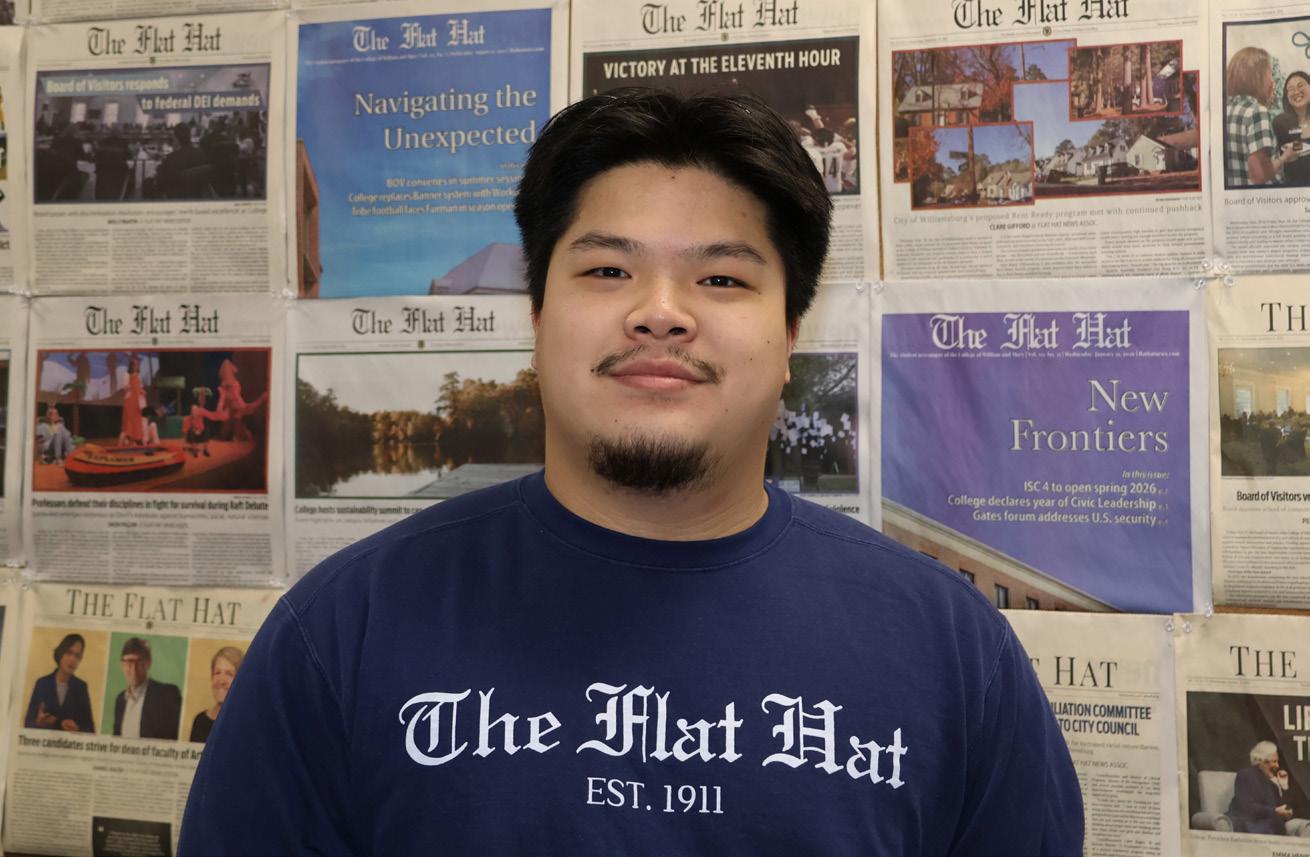
It seems quite difficult to take an entire year of reporting, editing and unforgettable memories, and endeavor to condense it into a farewell piece. Yet, here I am Sunday night before production staring at the blank Google doc in front of me (as I’ve done almost every time I’ve written in my four years on staff) to hopefully do that very thing.
As I stare down the daunting task of writing my last ever article as Editorin-Chief of The Flat Hat, I can’t help but reminisce on my term this past year. Lulu Dawes ’23, one of the past Editors-in-Chief I served under, stated in her farewell that during her term, she often thought about what she’d write in her own outgoing piece. I can’t say the same for myself — it feels like almost yesterday when I was reading my predecessor, Anna Arnsberger’s ’25 farewell article in my first production as EiC exactly a year ago.
For me, I suppose that's a sign of how much I loved being EiC. Between the long production nights, texting my editors, media council meetings and asking “how much is the kerning at?” (far too much), I never really got the opportunity to think about it ending. I almost prefer it that way — enjoying the role until the very last day.
“Life is nothing but a series of choices” is a notion I think about a lot, because there was a moment in Nov. 2022 where everything could have gone differently.
Before I get to that, some context is important. The student newspaper at my high school, The Hawk Talk, was a revelation for me at that time. I became enthralled with journalism and creating page layouts in InDesign. I was addicted. As the years went by, my interest only grew and the natural next step was to become EiC my senior year. At the same time, I was applying for colleges, and Northwestern University’s Medill School of Journalism became my dream. As I visited their campus the summer before senior year, I fell in love with the school and began to imagine my life there.
Well, first off, I didn’t get picked for one of the five EiC positions. Shortly after, I also got rejected from Northwestern. In what felt like my world ending, it seemed as if my dreams of pursuing journalism just weren’t meant to be. So, I pivoted.
The College of William and Mary was one of the only schools that accepted me, and upon that first semester I realized what a home this school became. At the Student Organizations and Activities Fair during orientation, I stumbled upon The Flat Hat’s table. I put my name on the email list and went to an info session.
I’m thankful for Lulu and her kindness that first semester — she looked out for me because we went to the same high school.
As an intern, I was quite unsure of whether I actually wanted to join staff. The events that transpired during my senior year of high school left a bad taste around my feelings toward journalism. This certainly played a part in my general indifference toward doing the three intern projects.
Flash forward to Nov. 2022, just a couple days before the deadline to submit intern projects — I still needed to do two. I remember thinking it could be so easy to blow this off and just not do it. I mean,
KIMBERLY MCCANN / THE FLAT HAT
what would I be missing? Did I even like journalism anymore?
I eventually mustered up the effort to text Jake Forbes ’24, who was the sports editor at the time, and inform him of my predicament. Without hesitation, he told me to meet him at Kaplan Arena that evening so we could cover a basketball game. I remember the whole experience vividly and thinking at the time what a cool experience this was: sitting courtside at a game, and even having the chance to interview players and coaches at the end.
Walking away from that game, I knew with absolute certainty that I wanted to join the staff, and I became one of the sports editors next year.
It seems like a lifetime ago that I was sports editor.
As I spent more time on staff, I think my motivations and perceptions of what we do at The Flat Hat changed greatly. When I was a freshman, I was just happy with the opportunity to go to sports games, sit courtside and get some free food at the media suite. However, the more I wrote, my mentality toward the paper changed. My first significant piece was profiling a new club on campus called the Black Student-Athlete Alliance. While writing this, I began to realize that what we report on matters.
As 113th EiC Molly Parks ’24 wrote in her farewell piece, The Flat Hat has the ability to affect individuals’ lives, document the history of this campus and tell the real stories of those who affect change at the College. It may seem obvious that a student newspaper’s purpose is to uplift the voices of students, but it’s important that we remind ourselves of that. Because through scrutiny and fallback, it sometimes may be unclear the reason that we do all of this. Institutional memory is somewhat cyclical in that, every four years, new students will arrive on campus unaware of what happened before them. The Flat Hat serves in that all-important role of record keeping, holding the school accountable and starting difficult conversations. And in my eyes, there’s truly no one better for this job than the people at The Flat Hat. It is one of the most special things to be a part of a group of people aligned under the same mission.
The past EiCs I served under in Anna, Molly and Lulu deserve so much credit in shaping the person and leader I am today. Anna taught me so much about the hard work and care that goes into being EiC. I’m so grateful for her mentorship and am lucky to have her as my friend. Molly, thank you for your kindness and support in my time on staff. I still crack up thinking about our random trips to Trader Joe’s and the basketball game. Lulu, thank you so much for your advice and picking up random midnight FaceTime calls during production night about invisible boxes on InDesign. I truly could not have done this without you all.
As I end this chapter in my college experience, I’m incredibly proud to follow Mona Garimella ’27 in her journey as the 116th Editor-in-Chief of The Flat Hat. Mona has already proven to be a very thoughtful and compassionate leader as managing editor, and will continue to provide a creative and warm energy to leading the paper. She is infinitely qualified and I can’t wait to see what she accomplishes. Mona’s exec team is full of passionate and hard working individuals. Maddie Mohamadi ’27 will serve as managing editor. Maddie is truly one of the most driven people I know and was a phenomenal operations coordinator last year. I’m certain she will bring her proven
reliability and work ethic to her new role in managing. Megan Rudacille ’27 will return as executive editor, coming off of a fantastic year in the role. I will be following her as she continues to innovate the variety and opinion sections. Both Maddie and Megan were hugely important members of my exec this past year and I’m so happy that they will be there to support Mona this year. Molly Martin ’27 and Ben McLoughlin ’28 will serve as co-operations coordinators. Molly is one of the brightest people I know, and I have no doubt her work ethic and dependability will shine throughout the intern program. Ben is one of the most charismatic people I’ve met, and his ability to strike up a conversation with anyone will be an incredible addition to the operations coordinator position. Digital media editor Kylie Totten ’28 has been a super photos editor and I have no doubt she'll bring creativity and dedication to her new role. Copy chief Nate Ross ’28 will serve in the role, which is part of exec for the first time, and I’m confident he’ll find success in the role with his light-hearted personality and commitment to the paper.
Liam Glavin ’27, Robin Perdue ’28 and Naman Mishra ’29 will serve as an effective team of news editors this year. Liam and Robin will carry over their good work done as associate editors, while Naman will bring a fresh perspective just finishing the intern program. Chief staff writer Madigan Webb ’28 will serve as an integral piece to the section, lending her wealth of writing experience to the team.
The sports desk will see two fresh faces in Cara King ’29 and Jacob Tobman ’29. Both editors have recently arrived from the intern program, and I have no doubt they will continue their amazing work as sports editors. Chief sports writer Westley Jacanin ’27 will provide a boost in writing production following a promising year as an associate editor.
Andrew Henrickson ’27 will serve as the sole data editor. I’m excited to follow his work this year — I’m certain he’ll build on his already promising resume of data articles.
Abby Borgeson ’28 returns as variety editor and is joined by newcomer DevYani Thakare ’28. Abby has impressed everyone with her incredible work ethic and ability to finish her page in a remarkably quick fashion. DevYani will bring a fresh perspective and diligence to the variety editor position, and I’m excited to see what she accomplishes this year. Abby Furcy ’27 will serve as chief features writer, and I’m confident she’ll continue her history of producing thought-provoking and well-written articles in this new role.
The opinions section will host two new editors in Michael Gabriel ’28 and Ava Gravina ’28. Michael arrives from the graphics section in an unorthodox move. However, if you’re lucky enough to know Michael, then it makes perfect sense. Ava is fresh from the intern program and will utilize her creativity and passion for opinions. Chief opinions writer Nora Yoon ’27 writes some of the most interesting and eloquently written opinion pieces I’ve read. I look forward to reading more of their work this upcoming year.
The newly formed audio/visual section will have three editors in Liam McMahon ’27, Eric Sohn ’27 and Kenza Houhou ’28. Each of them are returning staff members and will bring a wealth of experience to the section. This trio are all incredibly talented in their own right and will help The Flat Hat become more immersed in digital media journalism.
Kimberly McCann ’28 returns as the sole photos editor. She has impressed everyone with her dedication and commitment to the role. Photos is sometimes a thankless job, and she carries it out with grace. Filling out the rest of our digital media sections are a few brand new section editors: social media editors Betty Yemane ’28 and Evie Corr ’29, graphics editors Isabel Volden ’28 and Gretta Anderson ’28, as well as our newest added position to staff — games editor Maeve Meyer ’29. Each

Feb. 19, 2025, author Ta-Nehisi Coates, alongside Angela Davis, gave a talk at the University of Michigan. The event was to commemorate the release of Coates’ new book, “The Message.”
While speaking to the audience, Coates gave his diagnosis of the state of the Democratic Party, following its disastrous 2024 election loss.
He said, “We are at a moment right now where people are asking themselves why can’t the Democratic Party defend this assault on democracy ... and I would submit to you that if you can’t draw the line at genocide, you probably can’t draw the line at democracy.”
Since the start of his second term, Donald Trump has taken it upon himself to send Immigrant and Customs Enforcement into cities to terrorize local communities. This Gestapo force has now gone so far as to summarily execute two American citizens: Renée Good and Alex Jeffrey Pretti.
Where is the Democratic Party in the midst of all of this? What are they doing to protect our constitutional rights? The short answer is nothing.
In the U.S. House of Representatives, Democrats are preoccupied with voting to fund Trump’s murderous ICE regime. They are busy voting in support of a resolution thanking the immigration enforcement officers who kidnap and kill our neighbors.
Other Democrats continue to show their cowardice. House Democratic Leader Hakeem Jeffries refuses to whip voters against ICE funding. Minnesota Gov. Tim Walz pleaded to President Trump, as if there’s nothing Walz can even try to do to protect his citizens.
Senate Democratic Leader Chuck Schumer refused, only until recently, to use the appropriations process to rein in ICE. (While finally using this funding process as leverage is a step in the right direction, Democrats do have a track record of caving on spending fights, so it wouldn’t surprise me if they somehow “magically” come up with the votes required to vote with Republicans and keep the government open.) New Jersey Sen. Cory Booker claims that the issue with ICE is simply a lack of training, not its very existence as a terrorizing entity.
It goes on and on and on. This is what we get under our two-party system. We get a fascist party intent on destroying our republic, and another party of pathetic and cowardly losers who will do nothing when faced with this collapse.
of these editors will bring a fresh perspective to the table and I’m excited to see what they accomplish this year. I also want to take the time to shout out our copy editors. A good copy team is the backbone of any good newspaper and we have one of the best. Copy editors Emma Newill ’27, Adelyn Skerik ’28, Clare Pacella ’28, Eden Leavey ’28, Elise Whitfield ’28, Irene Straw ’28, Jonathan Larkin ’28, Julia Peavey ’28, Lorelei Kelley ’28, Sophia Paradowski ’28, Kelsea Smith ’29, Kreilys Garcia Flores ’29, Lindsay Luberecki ’29 and Ruby Trainor ’29 will make up this all star team.
Ombudsman Ethan Auclair ’28 will help Mona deal with whatever may come up this year. Following his work as an associate the previous year, I’m confident Ethan will continue his diligent watch of the paper. James Abruzzo ’28 will serve as business manager and look to help the paper with bringing in advertisements. Sam Harrington ’27 returns as webmaster. Sam was a huge help this past year with all things website related. I know he’ll be a useful resource to Mona in the future.
This 2026 staff is full of promising student journalists who I know are eager to make their mark on this paper. I have the utmost confidence in their ability and I’m so incredibly excited to follow along in each of their journeys. With that being said, I’d like to take the time to show appreciation
I can’t say that I’m surprised about any of this. To the point of Coates, why would a party that wouldn’t stand against helping to fund and facilitate the genocide in Gaza care enough to stop this bloodshed?
Israel bombed hospitals. They’ve withheld aid to starving children. They’ve butchered families, conducting a genocide against a captive Palestinian population. None of this violence would be possible, at least on its current scale, without our unconditional and bipartisan support for Israel’s war crimes.
In the occupied West Bank, Israel continues its militant violence in enforcing its illegal, settler-colonial, racist Apartheid regime. Of course, Israeli forces deploy vicious tactics on Palestinians, similar to what ICE has been doing in our own cities.
Does the Democratic Party draw the line at these crimes against humanity? Absolutely not. Our leaders continue to take money from Israel’s lobbying arm: AIPAC. They continue to offer unconditional support to Israel, voting to send billions of dollars in military and economic aid to the country.
Wake up. There is nothing stopping the Trump administration from surging ICE agents into the commonwealth of Virginia and onto our college campuses. There is nothing preventing the federal government from occupying our cities here in Virginia, or coming onto our campus, kidnapping and murdering our neighbors.
The Democratic Party has shown no interest in protecting us. It’s shown zero interest in being a party that fights to stop violence against civilians. When Democratic Party leaders cannot stop themselves from enabling inhumane violence abroad, it should come as no surprise when this cruelty boomerangs back to us. Ultimately, what we do have is each other. We have our shared community. When our institutions and elected leaders fail to protect us, we can protect ourselves.
We are already seeing this kind of community protection in Minneapolis. Mutual aid networks have sprung up to help those in need. Community watch groups operate 24/7 to monitor the locations of federal agents. Whistles are now a potent tool, alerting local community members to ICE officers.
If Williamsburg, Richmond or any other city in Virginia were to come under a federal occupation similar to Minneapolis, I don’t doubt that we’d all come together in a similar vein to look out for one another. What I encourage everyone to do, though, is not wait. Prepare before they come. Make a plan. Reach out to loved ones, neighbors and friends. Familiarize yourself with local community aid organizations. Help do the work now required to protect ourselves, so that we’re not left scrambling when it’s too late.
LiamGlavin‘27(he/him)isagovernmentmajorfromFallsChurch,Va.He lovesrunning,readingandspending timewithfriendsandhopestoinstill valuesofpoliticalandcivicengagement acrossthecommunity.Contacthim at ljglavin@wm.edu.
for those staff members also entering retirement with me this semester.
Thank you to Alexandra Nakamitsu ’26 for her tenure as digital media editor last year. Alex has done so much in progressing the paper’s production in digital media and has left a definitive legacy for those next up to follow. More importantly, she is a close friend that I’m glad to have as we both end our time on staff. Another staff member who more than deserves her flowers is Alisha Khodabocus ’26, whose tenure as copy chief will be one to remember. She handled a sizable copy team and oversaw the training of copy editors for fact checking. Alisha is a dedicated professional, and I’m so grateful to have worked with her this past year. Former business manager Daniel Choi ’26 is one of the most genuine people I’ve ever met. I think it’s truly special for someone to come into an organization and touch the hearts of everyone in it, but he makes it look easy. His hard work in the role will be remembered, and I look forward to hitting the links with him soon.
READ MORE AT FLATHATNEWS.COM
EthanQin’26istheoutgoing115th Editor-in-ChiefofTheFlatHat.Heapologizesinadvancetothereaderforhisverymuch ‘streamofconsciousness’farewellpiece;he isonadeadlineafterall.He’sgratefulforthe opportunitytoserveasEditor-in-Chiefand willbeaforeverreaderofTheFlatHat.
Four months ago, I got perhaps the weirdest, loftiest question that has ever been sent in to this satire advice column. I often wonder which issue of Eva’s Apple is my magnum opus. I’m frequently asked which issue is my favorite, and I can definitively say that “Eva’s Apple #8” is the one that I’m proudest of. My runt-ofthe-litter older brother likes to remind me that nothing I’ve written has ever or will ever beat “Eva’s Apple #2.” For those who are unfamiliar, at the end of my second Apple, I propose a plan to get over your last situationship that involves letting seven Canada geese loose in your quasi-ex’s dorm room and implementing a foolproof psychological warfare plan to condition them to fear the wrath of an eighth, nonexistent goose. I think it’s that sort of deranged creativity that earns me my (I’m trying to find a way to put this nicely) utterly-friendless, entirely-charmless
brother’s admiration and respect. So, when I got the aforementioned strange question four months ago, I knew that it would allow just the type of loose-screw generativeness that appeals to my greatest critic. This question is an opportunity to write my genetic comrade’s new favorite Apple. It’s only right for me to warn you, however, that this issue is not my magnum opus. In six weeks’ time, I will release an Apple that will blow your freaking mind. I have never created, nor will I ever create, anything else like it. The time will come for that. Until then, we’ll preoccupy ourselves with an odd and arguably unanswerable question from four months ago.
The question of the week is as follows:
“If God is real, then why does he let suffering occur? Also, is God real?”
Need I remind you that The Flat Hat is the official student voice of the Alma Mater of the Nation. This satire advice column is a deeply secular entity. This university is an institution meant to teach you how to think, not what to think. In the same spirit, as your trusted advice columnist, it’s my job to tell you what you should do, not what you should believe.
Still, dear reader, I will give you a nugget of wisdom for you to dip in a dollop of smarty-pants sauce and chew upon until the ridges of your brain have deepened and your neurons start to fire in a peculiar rhythm that sounds like “dah-di-di-di-dit dah-dah-di-di-dit” (which is “six seven” in morse code if anyone’s curious). I may not give you the answer you think you want,
‘Trumpland’: Nixon all over again
but I am going to give you the one I know you need. You’re welcome in advance.
I’m a kind and gracious advice columnist. I don’t just want you to listen to me; I want you to understand me. Thus, I’m going to walk you through my thought process here as we both seek spiritual clarity.
I was recently reading this book called “Why Poetry Matters” by Jay Parini, and two particular quotes that he highlighted caught my attention. The first was a Percy Bysshe Shelley quote that reads, “Poets are the unacknowledged legislators of the world.” The second is a George Oppen quote that claims, “Poets are the legislators of the unacknowledged world.” See how this slight change completely transforms what we think we understand, what we thought we understood? I aim to do the same thing that Oppen did to Shelley’s quote to this week’s question. The only difference is that I am, and I say this with the utmost humility, going to do it better. Now, the original question is asking me to confirm or deny the existence of God. A common characteristic of many religions is that they each illustrate a unique conception of meaning beyond death, whether that be heaven, reincarnation or another possibility. What I am really seeing here is that this question-asker wants me to weigh in on whether there is some sort of grace, some kind of love, within and beyond life. In other words, the question that is really being asked is as follows:
“Do you believe in love after life?”
As promised, I will flip this still-

Over winter break, I managed to start reading my newest book: Rick Perlstein’s “Nixonland.” The book details the political history of the United States from the mid-tolate 1960s to early 1970s, and as I read it, I realized something: while there are key differences from our own political era, there are also many similarities, and applying the lessons of history may help us better understand and navigate our current historical moment.
The main similarity would be political polarization. The fact that America is a deeply divided nation is known to everyone these days, and it was also so in the 1960s. During that era, the counterculture which emerged in opposition to the Vietnam War, and which supported values such as free love, found itself opposed by older, ex-GI Americans who saw this mentality as a threat to traditional American values. Much like today, this counterculture also manifested itself in acts of political violence; today we see such instances as the grotesque spectacles of Jan. 6, 2021 or Charlie Kirk’s assassination, while 1968 alone saw the killings of Martin Luther King Jr. and Robert F. Kennedy, and campus uprisings and rioting outside the Democratic National Convention in Chicago.
The division of the American body politic also enabled a new class of politicians to take power by playing to the resentment of squares against hippies. Perlstein refers to this as the division between Franklins (upper/upper-middle class professionals educated at elite colleges) and Orthogonians (the non-college-educated working and middle class) after the main social groupings at Nixon’s Whittier College, with the latter disdaining all of the social change supported by the former and electing Nixon due to their resentments.
This too can be seen in our politics today, with the gap between the college-educated and the non-college educated rapidly becoming a key predictor of political affiliation. This trend has helped define the Trump era and is key to understanding his political success.
Once in office, both Trump and Nixon defined their administrations by lawlessness. Today there is much talk about lawfare and the Department of Justice’s efforts to prosecute Trump enemies such as former director of the Federal Bureau of Investigation (and William and Mary alum!) James Comey ’82 or New York Attorney General Letitia James. Nixon also made use of the federal bureaucracy to attack his opponents; he threatened to have the IRS audit them and had intelligence agencies spy on New Left groups at home.
Even the way these presidents sometimes justified their lawlessness is similar, too. When asked by David Frost in an interview about the legality of his actions undertaken to protect national security, Nixon replied, “When the President does it, that means that it is not illegal.” Trump has made similar statements, posting on his social media feed that “he who saves his country does not violate any law” — a quote attributed to Napoleon Bonaparte.
What can these parallels teach us about our own era? The Vietnam War era is certainly not the same as today. For one thing, news diets at that time consisted largely of newspapers and four TV networks, while today’s more fragmented media ecosystem helps shield politicians from accountability by guaranteeing that their bases can live in alternate realities (something like the fallout of the Watergate scandal could not hap-
pen in today’s world). However, I personally arrived at three core takeaways that I believe this history can teach us.
The first is that, while things can improve, that process will take time and dedication. Although our country did eventually put the chaos of the late ’60s and ’70s behind it, there was still a two-decade period where many Americans felt the country was “going to hell in a handbasket” (my mother remembers my grandfather constantly using that phrase around that time) for reasons both valid (like anxiety about rising crime) and invalid (like hatred for integration). Putting this cultural epoch behind us will require dedication. If anything, it will require more since the issues which define our time (such as polarization) can arguably be traced back to the tensions of the ‘60s which were exacerbated in subsequent decades.
The second lesson is that hatred is a far more powerful mover of political behavior than it may at first seem — and has deleterious social consequences. Contempt for “the other side” played a big role in mobilizing the political movements which defined the Nixon years, to the point where many Americans said that the students shot at Kent State deserved it. In our time, our culture’s epidemic of political violence is the natural conclusion of similar resentments, and it has reached heights not seen since the days when movements like the Weather Underground dominated the news with acts of domestic terrorism.
The final lesson is that there will be no return to the way things were before all this chaos. The 1960s permanently shattered the New Deal coalition and the American consensus that previously existed in Washington, paving the way for the rise of Reaganite conservatism. I similarly suspect that the movements which are coming to dominate our time, such as democratic socialism or Trumpism, will leave a lasting influence, for better or for worse. The New Left and the New Right did much the same.
READ MORE AT FLATHATNEWS.COM
Carson Burch ’27 is consideringagovernmentmajor. Helikesreadingabouthistoricalandcurrentevents,as well as dinosaurs. Contact himatceburch@wm.edu.
unanswerable question on its head. I am about to crack this case right open. Our new and improved question, then, becomes this:
“Do you believe in life after love?”
This, my friends, is a famous Cher lyric, whom many have referred to as the “Goddess of Pop,” so don’t go saying I’ve lost the plot by abandoning the religious nature of the original question. It’s still very much there; you just aren’t reading deeply enough to see it. That’s a skill issue, not my fault. I spent the week leading up to this issue polling my friends to glean whether they believe in life after love. I approached this endeavor with an advanced methodology that involved ambushing them with the question during inopportune times, such as yelling after my friend as they rushed to a class or begging for my roommate’s input right before she drifted off to sleep. These tactics were, of course, to maximize my chances of getting a genuine answer from my test subjects. Haters might complain that I loudly booed survey participants when they offered an answer contrary to my desired result, to which I reply that I wasn’t upset because they disagreed with me; I was upset because they were objectively wrong. I got some definitive yeses, and some passionate nos, but the most generative answers I got were definitionally contingent. What is life? Is it simply living or is life defined by how wholly it’s lived? What is love? Platonic? Romantic?
Familial? My friend Julia thinks that love
can morph into something new, that a life after love doesn’t exist because there is no life without loving something. My friend Mia thinks that love follows a sort of law of conservation of mass — that love cannot be created nor destroyed. So, then, there is no life after love to believe in because there cannot be life without it. I choose to come at this question from a different angle. I am a woman of empiricism. The ads that I put out in “Eva’s Apple #2” and “Eva’s Apple #10” for a lifelong companion were utterly ineffective, so it’s high time I try something new. My DMs are no longer open, but applications are! If you want to test out whether life after love exists, you can apply to fall madly in love with me (you’re probably already almost there; fan behavior) and then have your heart subsequently (and perhaps irreparably) broken. After that, how about you tell me whether you believe in life after love. The deadline to apply is in six weeks’ time! After that I’ll be preoccupied with more important things than your feelings. Due to the high volume of applications my team is anticipating, I will only be reaching out if I am interested. Best of luck!! What’s coming in six weeks? God only knows. Oh, and me. I know too. Not to brag, or anything.
EvaJaber‘28(she/her)isaprospective Englishorinternationalrelationsmajor. SheisamemberoftheCleftomaniacs,an acappellagroup,anESLtutorandhopes toencouragepeace-mindedadvocacyon campus.Contactheratehjaber@wm.edu.
Over winter break, the amount of news, and the weight of it, has been overwhelming. In January alone (as I write this), the United States has seized Venezuela, captured President Nicolás Maduro and is attempting to take Greenland. Immigration and Customs Enforcement is brutalizing Minnesota, terrorizing American citizens and even killing them. Plus, to end the month, we got a batch of Epstein Files which are truly horrendous. For me, and I think for numerous other people, seeing a “breaking news” notification from a news source is followed with a loud sigh. Another event happening? And it’s only January?
Of course, access to the news is easier than ever; with our devices, we can stay up-to-date and educated on what’s happening in the world. What a doubleedged sword. Quickly, in the technological age, one can become engulfed in the waves of breaking news. This also doesn’t account for the misinformation spread or the battleground some comment sections become if news, or opinions on the news, are posted. Yet, life has its gray areas; finding equilibrium for your consumption of the news and political content is one of them.
With this gray area existing, there is one thing here for clarification. As mentioned above, access to the news is just a click or search away, and it quickly becomes daunting. However, being willfully ignorant, proclaiming “Oh, I don’t do politics” is a reflection of yourself, of your compliance in tumultuous times. Being involved, whether it be continuously educating yourself and others on situations actively happening, joining a political group on campus or both are methods to avoid the extreme sides of the blissful ignorance and constant consumption of doom.
The best remedy for not becoming swamped in the immediate, perpetual, mostly unfortunate breaking news is taking a break from letting yourself actively consume the news when it comes through as a notification. This is subjective on how you perceive ‘taking a break,’ whether it be putting your phone on Do Not Disturb, only consuming the news a couple of times a day or even just turning off your
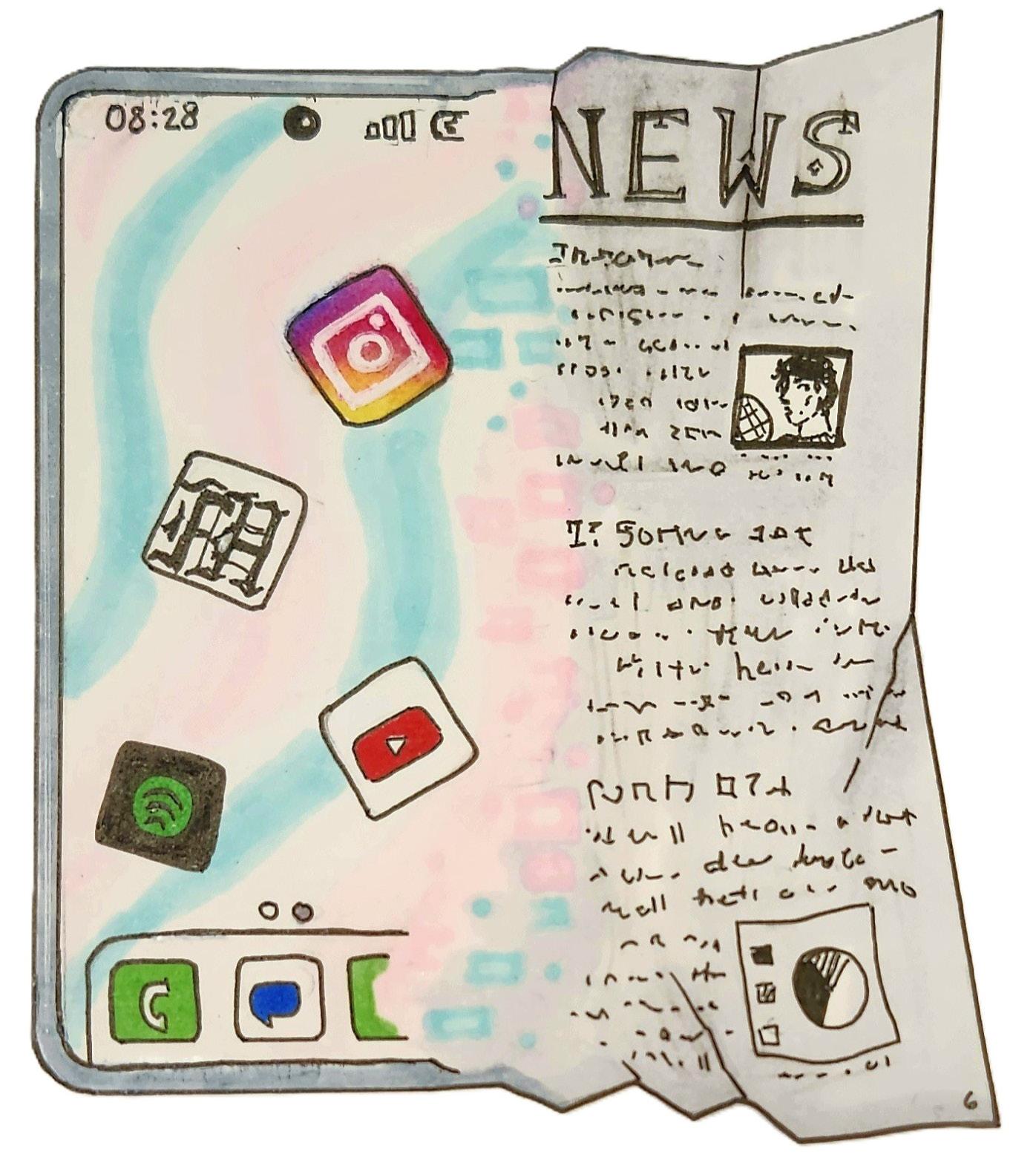
phone completely. But this isn’t always a viable option, for example, if you’re in a class which recommends keeping up with the news. Adjusting your focus onto different classes for their assignments, readings or projects is not only utilizing your energy better (try this along with avoiding The Washington Post or other news sources and use this throughout the semester), but also helps the news consumption burnout.
Another method of disconnecting from constant consumption is to interact with your surrounding environment (in this case, campus). Getting involved in organizations, being around your friends, revisiting old hobbies or the classic response of going outside and touching grass are ways to pull your head out of the digital world. Some of my favorite methods are going with my friends to Commons Dining Hall for dinner, walking around campus or Colonial Williamsburg, journaling or participating in a weekly club meeting for a change of pace. Interacting with the environment around you not only gives you the ability to touch grass, but also alleviates the whole dooming feeling that occurs when the only thing being consumed is hell.
Taking care of yourself in these times is extremely important. Getting off your devices or turning on Do Not Disturb are approaches to self-care. Making some form
of routine, which doesn’t have to be extensive, can be a way to let yourself decompress at the end of the day from school, stress and what this piece is about, the constant stream of news coming in at all times. Something small, such as writing about your day in a physical or digital journal, going to the gym a couple of times per week, creating a skincare routine, meditating, along with so many more forms of self care. In uncertainty, showing up for yourself first is not only important for being able to function properly as a student, but also as an advocate for others.
Overall, your sanity is important to maintain as the days seem to somehow get more insane. Finding a balance between how much you allow yourself to not only consume, but react to, is essential when news comes in quick, continuous notifications. I hope all of you reading this are practicing something to find your personal equilibrium between the madness, and know it’s okay to put away the devices for a while if need be. Once a notification alert is out there, providing information, it’s out there. Put your phone on Do Not Disturb, it’ll be there in your notification center when you turn it off.
ThelmaKestner’29isan internationalrelationsmajorand historyminor.Sheisinvolvedin YoungIndependents,VinylTap, WCWM,TheodoreRoosevelt SocietyandPhiMu.Contacther attekestner@wm.edu.
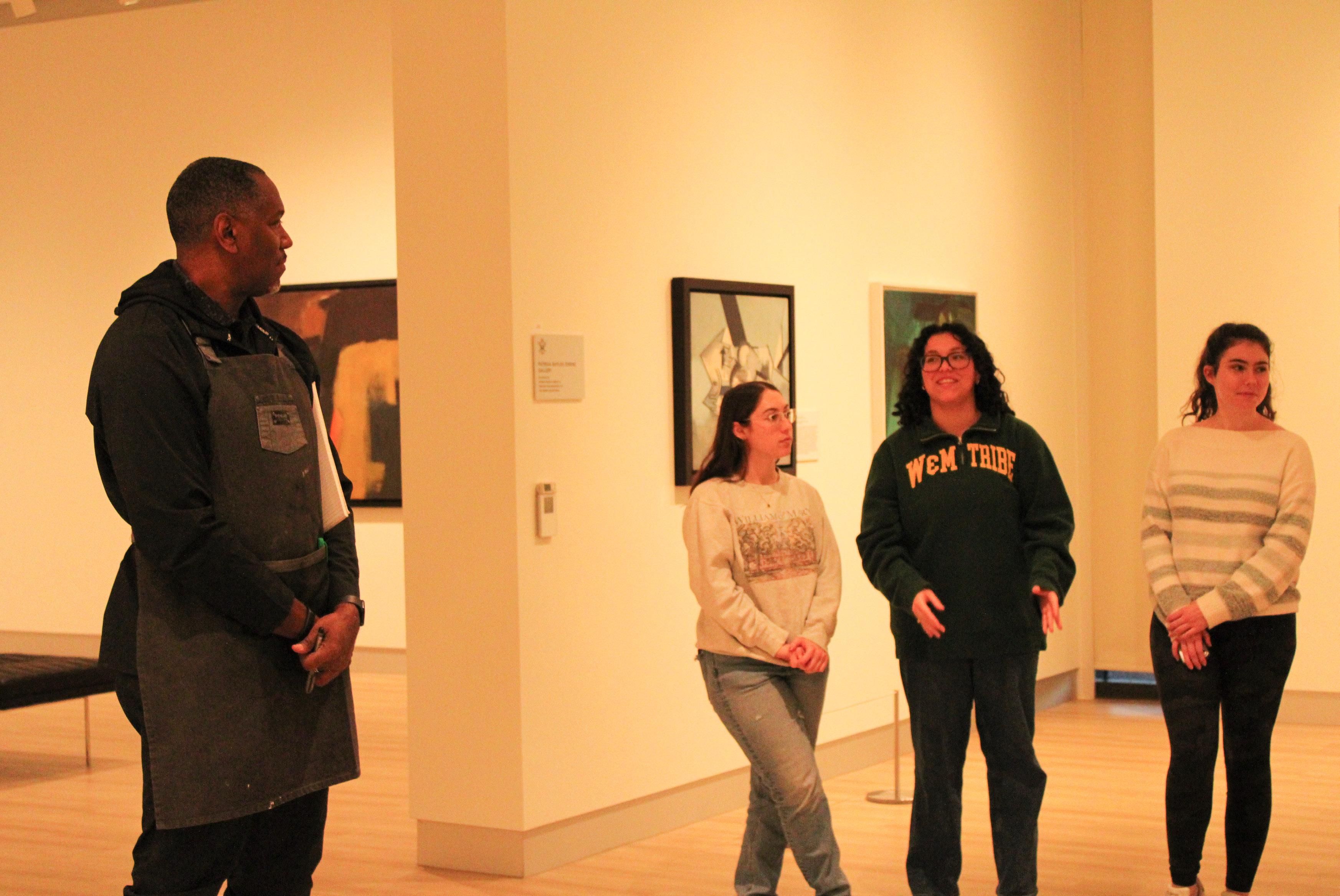
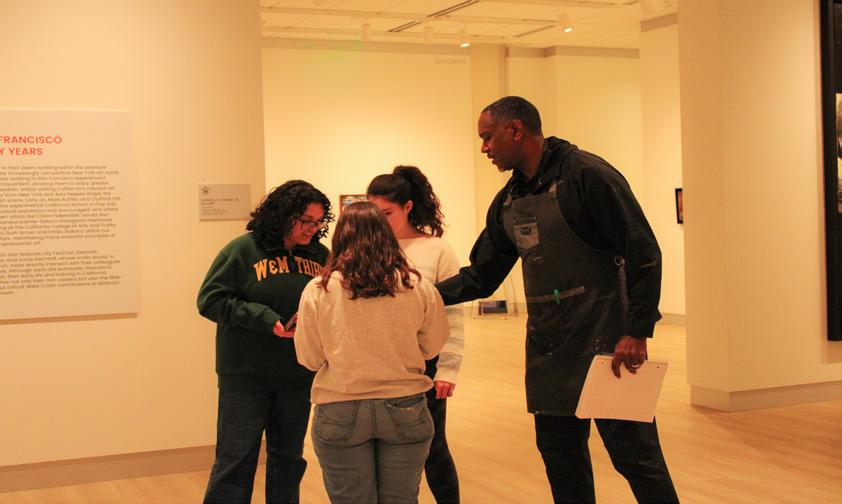
As the spring semester gets into full swing and students adjust back into academic routines following the recent snow days, many are seeking ways to step away from screens and coursework. Across campus, students have shown an increasing interest in active hobbies and hands-on creative activities to relieve stress instead of consuming digital content.
Wednesday, Jan. 28, the Muscarelle Museum of Art followed this trend and hosted “Art After Hours: Abstract Watercolor Monotypes and Stranger Things.” The event was a three-hour immersive workshop designed for students at the College of William and Mary not pursuing a studio art major. The event invited undergraduate and graduate students of other majors to engage directly with abstract art through guided discussion and printmaking.
Steve Prince, Director of Engagement and Distinguished Artist in Residence at the Muscarelle Museum of Art, led the workshop, which was part of a broader initiative to make creative spaces more accessible to students across academic backgrounds.
“We got funding from the Estes family so that we can create a series of classes for non-art students,” Prince said. “The impetus of it is to show and reveal the importance of the arts in our everyday lives.”
Prince emphasized that the goal of the program was to foster a lowpressure environment.
“This is not designed to turn everyone into artists,” Prince said. “It’s about creating a safe space for people to allow themselves to think creatively and to do something that is very different from what they’ve done in their academic career.”
Ava Passehl ’26 described the workshop as a change of pace from her regular academic routine.
“I learned a lot from the museum tour, and I think it was a good stress reliever from my traditional coursework,” Passehl said.
The evening began with extended introductions, during which Prince asked students about their backgrounds, interests and reasons for attending. Prince said these conversations were intentional, aimed at fostering connection before engaging with the artwork.
“By creating a space like this, I’m not
looking at you through the lens of your ethnic background,” Prince said. “I’m looking at you because you’re a human being. A creative human being. You come from someplace.”
Prince said understanding students as individuals was uniquely important.
“That’s why I asked all the students, where are you from? What’s your origin? What are you here for? What are you doing? What are you learning? Who are your friends?” Prince said. “I want to know all of them, because that’s what true community building is all about.”
Following the introductions, participants toured the museum’s newly opened exhibition, “Abstract Expressionists: The Women.” Prince guided students through the gallery, discussing abstract expressionism and encouraging students to engage with the work without the expectation of technical expertise.
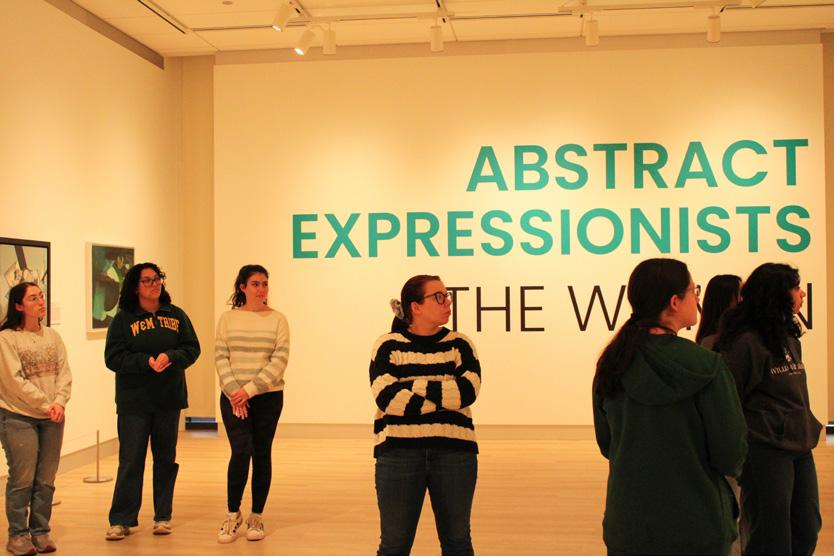
Passehl said the tour helped reframe how she viewed abstract art.
“We learned how to read abstract art and not to just see it as dots on a page, and then we created our own art with a printmaker,” Passehl said.
Prince said abstraction can often feel intimidating to those unfamiliar with art history, making hands-on engagement especially important.
“My idea was to try to get people to understand a little bit more, and be a little bit more sensitive to the arts,” Prince said.
After the gallery tour, students transitioned into the printmaking portion of the workshop. Prince demonstrated acrylic watercolor monotype techniques, guiding participants through cutting, layering and pressing color onto new paper. The process emphasized experimentation and visual decision-making.
“I chose this particular medium because I thought it lent itself very well with the new exhibition that opened up, which is women and abstraction,” Prince said. “I was trying to make sure that I did a program that was directly alignable with what’s on display at the museum.”
Passehl said the workshop paralleled broader cultural shifts toward creative production and physical hobbies.
“I’m trying to do the ‘create more than you consume’ trend, which is obviously a
social media trend, and I consumed that, but I’m trying to get better at it,” Passehl said. “I think that people have always had physical hobbies; it just has become more popular and more cool to have them.”
Prince said the Muscarelle aims to function as more than a traditional museum space.
“I don’t want the museum to just be a space where we look at the art,” Prince said. “It’s also a space where we can make art, and also about the community.”
He emphasized collaboration as central to the museum’s programming.
“It’s about coming together and making together,” Prince said. “That’s what I’m always trying to facilitate.”
Prince said the Art After Hours program has grown steadily since its inception. He added that the workshops attract a diverse demographic of students.
“I’m trying to create a space where students can come, and they’ll be able to take a break from the monotony of their lives,” Prince said. “I’m getting athletes that are coming here doing these workshops, and getting people who are in the Law School, the Business School, grad students and undergrad students. It’s open for all of them.”
Prince connected the museum’s new approach of collaborative, inclusive programming to his own philosophy about creating art.
“I don’t want the museum to just be a space where we look at the art. It’s also a space where we can make art, and also about the community.”
“One thing that I’ve been trying to do with my artwork is, in essence, create a semblance of the kitchen table,” Prince said. “If I can create more spaces where we come into the kitchen, we break bread together, we make art together, we share stories together, we grow together, then I think that we can do things in this creative space that counteract the destruction we see all around us in this world.”
Prince said art has long been a tool for addressing social harm.
“That destruction we’re seeing with what’s happening across our nation, people of immigrant populations are being scooped up,” Prince said. “How can we use
our imagination and our creativity? How can we use those voices, and cry out for those who are disenfranchised?”
Prince spoke further on the importance of art as activism.
“That’s what art has done for centuries,” Prince said. “Art has enabled us to speak for those who have been dispossessed, those who have been pushed to recesses.” Prince said creative expression carries lasting significance, and its influence cannot be ignored.
“It is helping us to remember, to remember,” Prince said. “That’s the power of the artist.”
These are the messages Prince and the museum hope to share with more students through programs like Art After Hours. For students like Passehl, participating in the workshop made the museum feel more approachable.
“Museums can be intimidating to a lot of students,” Passehl said. “But I think that if you go into it with the lens of, ‘I’m here to learn something new,’ or ‘I’m here to create something alongside what’s already here,’ I think that can really empower people.”
This mindset is what Prince felt was central to the workshop’s purpose.
“Let’s do this together,” Prince said. “That’s the kind of spirit that is going to change things in this world.”
Prince said he hopes this space the museum has been creating will extend beyond the workshop itself.
“That’s what I want to deposit, because I have the ability to leave something that has the potential to outlive me,” Prince said. “That’s what we have.”
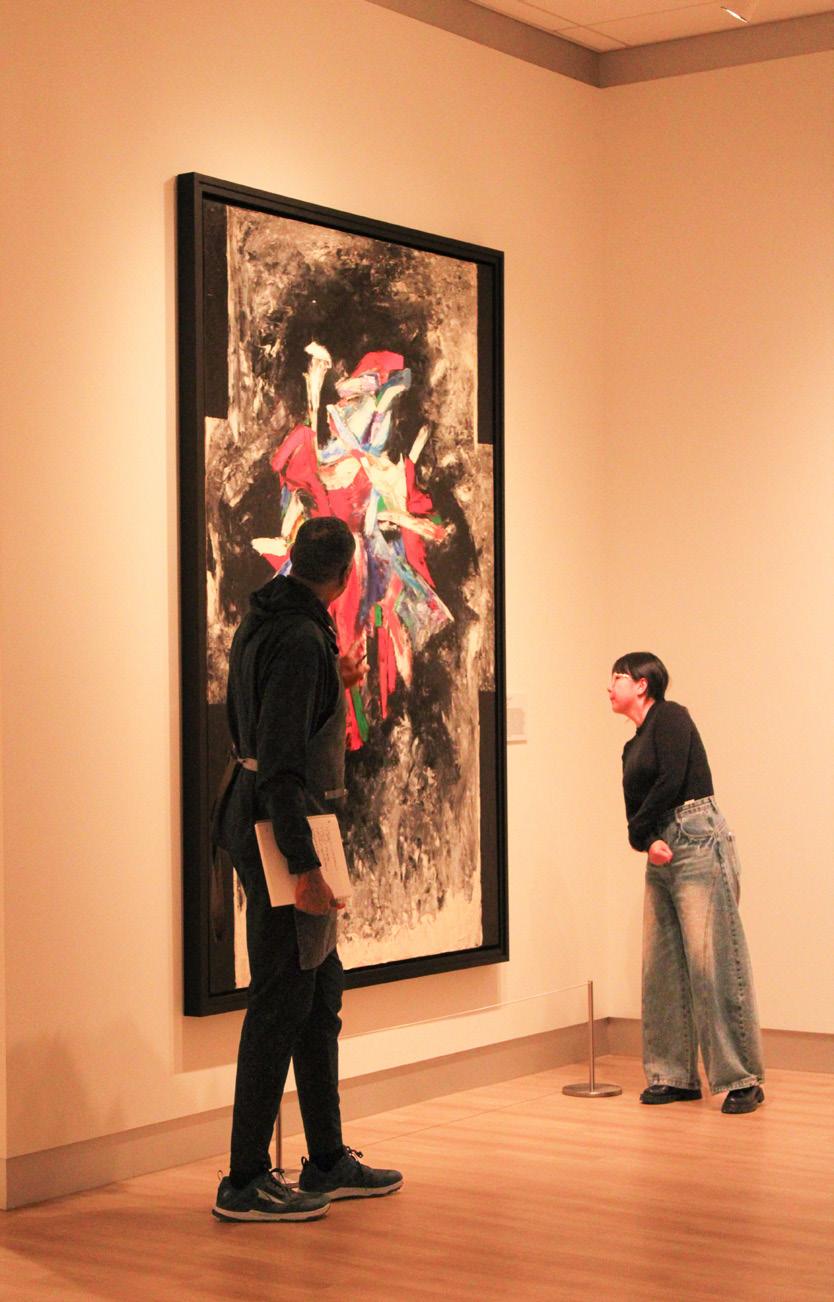
Formed in the fall of 2023, the WeMake Filmmakers club is a place for students of all experience levels at the College of William and Mary to explore their interests in screenwriting, directing, editing, acting and other aspects of filmmaking. Despite the organization being a newer hatch at the College, its members have already produced about fifteen short films posted on their YouTube and website, some of which have won awards at Noetica’s Creative Competition, Amor Film Festival and Ampersand International Arts Festival.
In the fall, the club holds informational meetings teaching new members the basics of filmmaking, from preproduction to postproduction efforts, letting new members test out their skills on camera. WeMake’s president, Reagan Pyle ’26, said that giving related exercises with the club’s lectures provides valuable hands-on experience.
“For instance, for our cinematography lecture, we have the members split into groups to film their own scenes that include different required shot sizes and camera movements so they can learn how different shots and movements flow together,” Pyle said in a message to The Flat Hat.
Along with in-depth cinematography training, WeMake has interactive meeting activities to get members familiar and comfortable with the filmmaking process. For example, the One Scene Challenge is exactly what it sounds like: the members must portray a story in just one short scene with examples ranging from 1560 seconds. Another activity is the Two-Shot Cinematography Challenge, where a video can only show two camera perspectives, yet still tells a comprehensible story. The club also runs a Valentine’s Day Rom-Com Challenge, where members filmed comedic, sometimes bizarre stories (like an alien love story) with a romantic plot point. Students with limited experience making short films have an opportunity to test out different modes or genres of storytelling with these challenges, including silent films, drama, horror and comedy.
These active learning lectures set up members for endeavors in the spring, when short film production actually begins and finished projects have the opportunity to be screened at the Ampersand festival hosted by the City of Williamsburg. Additionally, the club holds a script showcase in the fall, where screenwriters and directors pitch script ideas that club members vote on. The selected few are screened at the festival if successfully executed.
Pyle said WeMake is on track to produce six short films this spring.
“This is always the most chaotic part of the semester, but it’s also the most exciting since the members finally get the chance to put their skills and knowledge to the test and make their films,” Pyle said in a message to The Flat Hat.
One of the most formative and essential steps of the filmmaking process is crafting an engaging, intelligible and achievable script.
For WeMake, the script showcase is a helpful platform for screenwriters and directors to see their imaginative concepts come to fruition in the spring. Members of the club describe the scriptwriting process for short films as a particularly unique type of storytelling, with some saying it is an easier process than full-length, and others saying it requires a lot more flexibility.
“Writing for short films is different because you can often just go straight ahead and with little planning, whereas with feature length, you need much more planning, reading, how the film is structured. But once the script is written, it is up to the director, whether that is you or another person, to interpret the written words in whichever way they want,” Activities Director Lana Tobiczyk ’27 said.
On the art of short filmmaking, Pyle noted the challenges of condensing a meaningful story and operating on a limited budget.
“I think the short film medium is greatly underappreciated. It’s definitely a lot harder than it seems. It’s already difficult to make a strong story in 90-120 pages; it’s so much harder when you are limited to 10. Short filmmaking, especially low-budget filmmaking, comes with a very unique set of challenges, but that’s part of what makes it so fun. You have to be flexible and innovative to come up with creative solutions to accomplish your goal,” Pyle said in a message to The Flat Hat.
In an age when remakes, biopics and live-action reimaginings are more common than ever in the movie-making industry, writing an original story requires a stroke of creativity and inspiration. For a few creatives in the club, scripts come to them while doing ordinary things like taking a walk or sitting in class. They sometimes reach revelations while sleeping.
WeMake’s productions are highly individualized, with little influence of the club entity in the process unless directly involved with editing, writing or crew work.
“Last year, I put my skills to the test and wrote a short film for the Ampersand International Arts Festival. This comedic story was called ‘Second Chance,’ and it followed a college student, Miles, who gets stuck in a time loop until he passes his math exam,” Connor
Gaga and Tate McRae. It also featured the reunion of iconic 1990s rock band Oasis, tour announcements from Bruno Mars and Harry Styles, an exciting Super Bowl performance by Kendrick Lamar, and memorable
Murray ’28 said. “The idea came to me after receiving a poor exam grade and wishing to myself to replay the day. And just like that, I had my story, and the fact that I was able to collaborate with so many amazing filmmakers on this project to get it on the big screen has been a life long goal.”
Pyle added that filmmaking has made her a more observational person, seeking inspiration from everyday life to include in a future project.
“It’s amazing how easily a simple event or joke can spiral into something so much more. For instance, the film that I am working on right now, ‘Breaking and Entering,’ was actually initially inspired by my nasty habit of sleeping through my alarms,” she said in a message to the Flat Hat.
Many productions from WeMake members touch on topics that the average young adult, especially in college, could relate to. For example, “Bedrot,” a short film written by Jarius Alexander ’25 and directed by Kornel Tyler ’25, follows a teenager who is heartbroken after misinterpreting that their partner ended things, and copes by bed-rotting, except their limbs are literally rotting away to the bone. The short film was an award winner at WWNoetica’s Film Competition run by the Noetica Journal of Global Premodern Studies. Another film, “Forever A Never,” had several festival placements and was written and directed by Tatiana Coleman ’25, the club’s founder.
“I was the primary editor on the film with the director, Tatiana Coleman,” Tobiczyk said. “It was incredibly fun to have everybody so dedicated to a film whether the actors, PAs and any other members of the crew.”
It has only been two years since WeMake Filmmakers’ inception, and they are always on the lookout for new talent to rely on. Pyle hopes to see the training meetings include skill-building beyond directing, writing and editing and to include crew roles like lighting or sound design, which filmmakers count on for higher level productions. Despite its limited time around, the organization has made a name for itself at film festivals and creative competitions, and we can only anticipate a brighter future for them this spring.
“For anyone who enjoys film, this club is for you. Each member of the club is unique in their own talents and strengths, and it allows for great collaboration and learning opportunities that you will never regret,” Murray said.
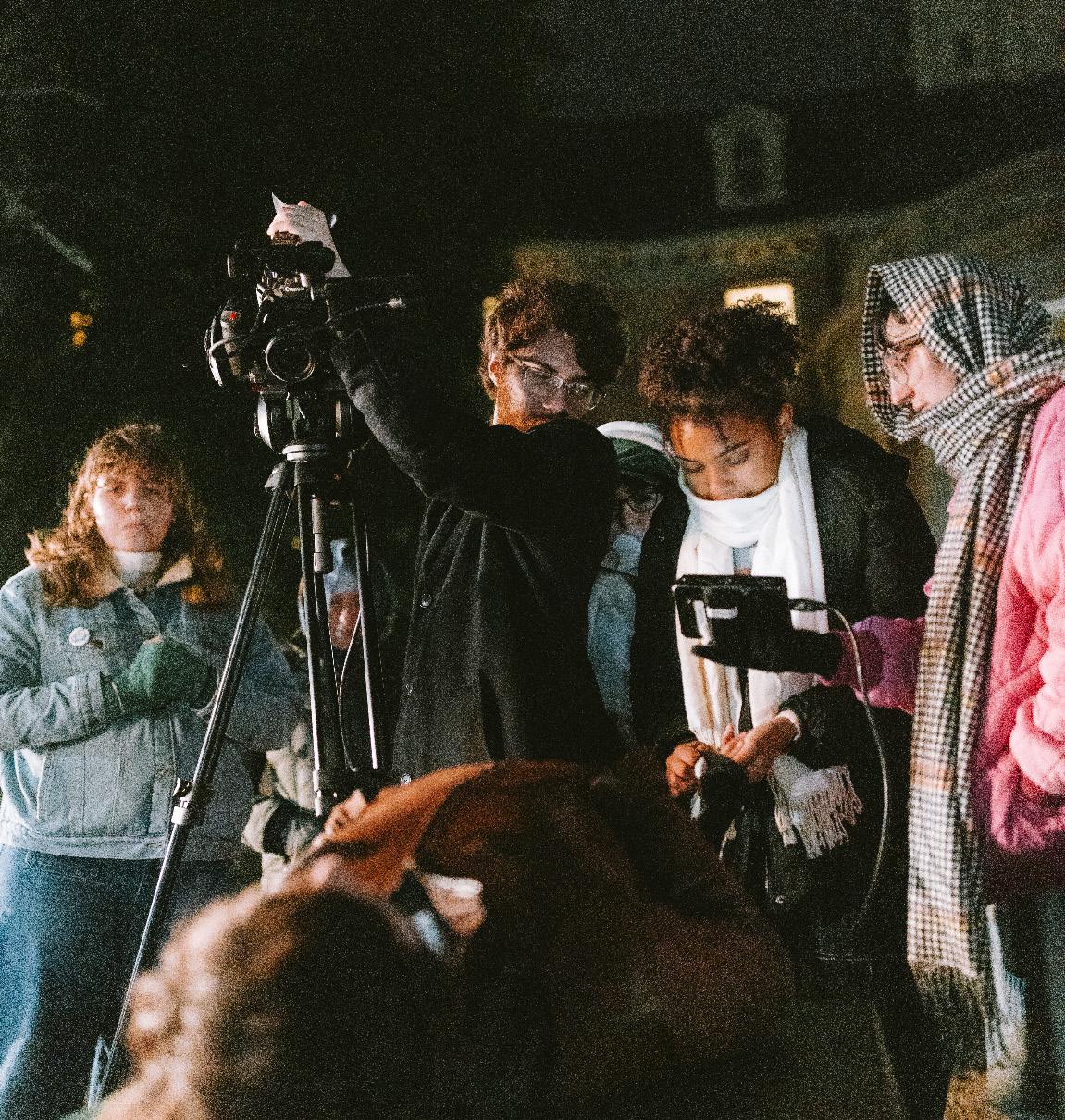
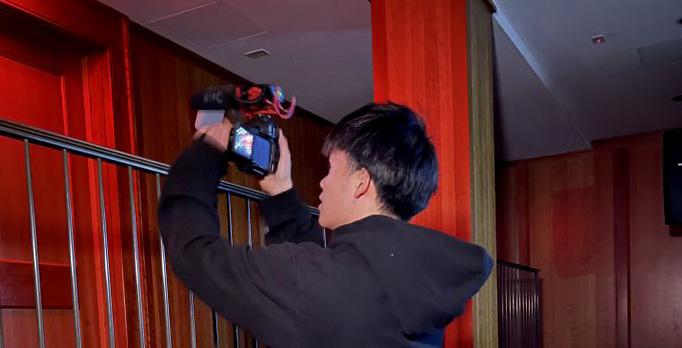
concerts by Beyoncé, Coldplay, Ed Sheeran and Billie Eilish.
Sabrina Carpenter was one of the first artists to take the stage at the Grammys. Her elaborate, airport-themed performance of her hit song “Manchild” was a welcome opening to the ceremony, bringing energy and excitement and setting the lively tone for the night. Carpenter set the bar high for the other live performers, achieving a level of audience captivation and precise execution few can match.
Icon Queen Latifah and rising star Doechii then presented the award for Best Rap Album. Out of a competitive pool of nominees, including Tyler, The Creator and GloRilla, the award went to Kendrick Lamar for his album “GNX.” In his acceptance speech, Lamar praised the art of hip hop and its omnipresence in modern society. Lamar’s win is deserved, and he has capitalized on his new popularity achieved after his 2025 Super Bowl performance. Next came an exciting series of performances by the Best New Artist nominees. Among them included a calming and rhythmic presentation by The Marías on a blue-hued stage, Addison Rae’s dynamic performance of her popular song “Fame is a Gun” and a hypnotic dance composed by KATSEYE.
Leon Thomas also showed off his exceptional guitar skills, followed by Alex Warren’s moving rendition of “Ordinary” and a lively, jazzy performance of Olivia Dean’s “Man I Need.”
Chappell Roan presented the award for Best New Artist. Roan won the award in 2025. The award de -
servedly went to Olivia Dean, whose career took off with the release of her album “The Art of Loving.” Upon accepting her award, Dean expressed gratitude for her team and emphasized the importance of her family’s story of immigration, deeming herself a product of their bravery.
Predictably, 2026 Super Bowl performer Bad Bunny then took home the award for Best Música Urbana, building the anticipation for his upcoming halftime performance. Bad Bunny’s moving speech emphasized the importance of valuing love over hate in today’s tumultuous political climate.
Following Bad Bunny’s win, generational legend and seven-time nominee Lady Gaga stunned the audience with her powerful and elaborate performance of her single, “Abracadabra,” where she sang, danced and played the keyboard simultaneously. Gaga subsequently took home the award for Best Vocal Pop Album, a heartwarming sight to see.
Continuing on in the ceremony, renowned American singer-songwriter Carole King presented the Song of the Year award to Billie Eilish for “Wildflower.” Despite the competitive pool of nominees, Eilish was undoubtedly deserving of the win. Her dedication and passion for her craft, coupled with her commitment to political activism and equality, truly make her one of a kind. Te night only got more exciting from there with the explosive performance by Tyler, the Creator, jam-packed with special efects and complex choreography. His performance efectively showcased his immense talent and was one of the most exciting of the night, undoubtedly earning him some new fans.
On top of this achievement, he also took home the award for Best Album Cover. With two categories left, and the end of the ceremony fast approaching, Cher presented the award for Record of the Year to Kendrick Lamar and SZA for their collaboration on the record “luther.” Immense amounts of effort and time went into its creation, making it deserving of the award for audio production.
Lastly, and in one of the most anticipated moments of the night, Harry Styles returned from his musical hiatus following his “Love on Tour” concert to present the award for Album of the Year. Te announcement of Styles’ new album, “Kiss All the Time. Disco, Occasionally,” and subsequent tour generated mass excitement among fans and built up the anticipation for this moment. Styles was not seen on the red carpet or in the venue until he arrived to present the award; thus, the energy in the room following his entrance was palpable. Te Album of the Year award went to Bad Bunny for his album “WDeBÍ TiRAR MáS FOToS.” Bad Bunny was a humble and well-deserving recipient, and he was visibly moved upon receiving the award.
Overall, the 68th Grammy Awards were a success. A wide array of performers and genres were honored throughout the night, and there were no obvious upsets in any of the categories. Te event was well-orchestrated and displayed the powerful impact that music has on the world. Te importance of optimism in the face of adversity was stressed by many of the event’s attendants, as was music’s power to uplift and unite. Tese ideas must remain present in the music industry and beyond.
Friday, Jan. 30, and Sunday, Feb. 1, William and Mary women’s basketball (11-9, 4-5 CAA) split a pair of contests at Kaplan Arena, falling to Campbell (14-8, 7-2 CAA) 63-54 before defeating North Carolina Wilmington (5-16, 1-9 CAA) 79-68. It was a tale of two games for the Tribe, which looked fatigued against the Camels and resilient against the Seahawks.
Earlier in the season, William and Mary dropped a nail-biter to Campbell that featured nine lead changes and saw a last-minute three-pointer by junior guard Cassidy Geddes fall just short. However, the Tribe quickly recovered from the heartbreaking loss, picking up consecutive wins against Northeastern and Hofstra. Entering Friday’s rematch, William and Mary boasted significant defensive momentum, having just held Hofstra to 37 points, the lowest total posted by a Division I opponent of the Tribe since 2016. The energy in Kaplan Arena was electric, with an announced crowd of 1,265 on site.
The matchup started in a back-and-forth manner reminiscent of the teams’ first meeting. While the Tribe trailed 21-18 at the end of the first quarter, it was either squad’s game to win. At the end of the period, Geddes hit a buzzer-beating layup to give William and Mary momentum.
Then the second quarter hit. The Tribe started the quarter with a five-minute scoring drought, unable to generate offensive momentum. A run sparked by junior guard Kyah Smith briefly got the Tribe back in the game, but Campbell responded with a run of its own, catalyzed by a transition bucket from sophomore guard Ciara Alexander.
The Tribe entered halftime down 33-23, with 21 of its points coming from just three players: Geddes, Smith and senior guard Alexa Mikeska.
“
“You know, losing a couple of games after winning so many in a row — they never quit. They never folded, and they could have.
- Head coach Erin Dickerson Davis
”
“We did not score the ball well in the second quarter because we got a little fatigued,” William and Mary head coach Erin Dickerson Davis said. “We got a little casual, I think, defensively, and we just don’t score well that way.”
William and Mary emerged from halftime with a revised approach to try to put some pressure on the Fighting Camels. Rather than force the ball to the team’s leading post scorers, junior forward Tika Sallman and sophomore forward Natalie Fox, the Tribe looked to avoid turnovers and be more patient with the ball. This strategy was effective on the offensive end; however, William and Mary lacked an answer for Campbell senior guard Gianni Boone, who was dominant in the paint. The Tribe ended the third quarter down nine and in need of a momentum shift.
With seven minutes remaining in the contest, the Tribe went on a 14-0 run to find itself back in the game. Geddes drained a three to bring the Tribe back within a possession for the first time in the second half, and by the four minute, 39 second mark, the game was tied up. Junior guard Monet Dance hit a three-pointer to give the Tribe a lead.
However, the Fighting Camels ultimately pulled back ahead with a 7-0 run of its own to finish the game, ending the Green and Gold’s dream of a repeat of last March, when William and Mary defeated Campbell in the finals of the Coastal Athletic Association Tournament.
While the outcome was not what the Tribe hoped for, Dickerson Davis was optimistic about using the game as a way to illustrate priorities for future matchups.
“[There is] still some room for growth, but I think we got to take it step-by-step, and we can’t get down on ourselves,” Dickerson Davis said. “There’s a lot of basketball left to play.”
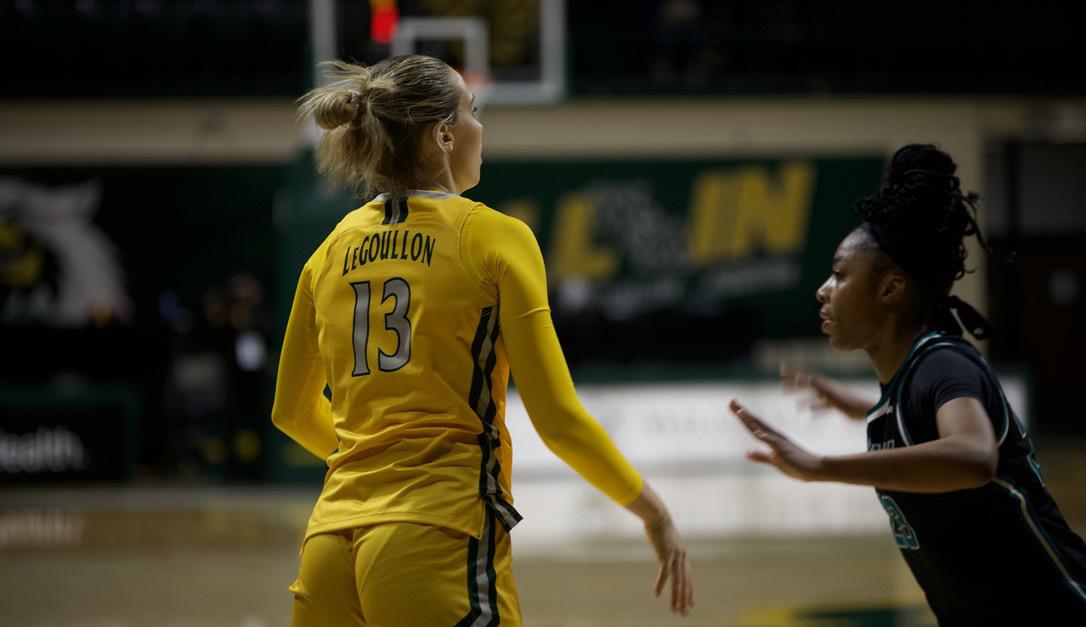
Dickerson Davis also noted that William and Mary improved its turnover performance as the game progressed. This emphasis on taking care of the ball would carry over into Sunday’s game against UNCW, when the Tribe committed only 12 turnovers after committing 22 against Campbell.
Ball security proved crucial against the Seahawks. Although UNCW entered the contest at the bottom of the CAA standings, its defense was not to be dismissed, as the visitors applied relentless pressure to the William and Mary backcourt and deployed a zone that initially flummoxed the Tribe. The Green and Gold attempted 21 field goals in the first quarter and connected on just six of them, clinging to a 14-13 lead by virtue of a significant turnover advantage. It did not take long for William and Mary to find its rhythm. Against Campbell, the Tribe fell apart in the second quarter, when it scored a measly five points to the Camels’ 12. Against UNCW, on the other hand, William and Mary posted 20 second-quarter points, led by the efforts of guards Dance and Mikeska. With its post players unable to find success against the zone — Sallman and Fox combined to go one-for-11 from the floor in the first half — the Tribe turned to its backcourt.
“We just had to stay confident,” Mikeska said, who scored nine points in the first half. “They were in kind of a funky 3-2 zone. So, just finding the middle and then letting our guards work from there, whether that was a drive-and-kick or just taking the shot by ourselves. We did a really good job about that.”
Behind eight assists on 14 made field goals, William and Mary began chipping away at the UNCW zone with crisp passing and improved shooting. The Tribe wasn’t able to drop the visitors, entering halftime leading at just 34-30, but its level of effort was satisfactory to Dickerson Davis. Although the William and Mary coach could not identify exactly why her players looked more energized than they did against Campbell, she was encouraged by the Tribe’s persistence.
“We do have that extra gear,” Dickerson Davis said. “And I think that we showed ourselves that today in being able to press, being able to sprint and get out in transition for easy baskets. And, you know, we have a young team, and so you have to see to believe sometimes.”
William and Mary plays more players than the average CAA team, which Dickerson Davis pointed to as a reason for the Tribe’s steady legs. This lack of fatigue became apparent in the third quarter, when UNCW mounted a run that nearly catapulted it into the lead. Instead of giving in to exhaustion, William and Mary pushed the pace, rattling off seven consecutive fast-break points that made the score 55-42.
Just like that, UNCW was finished. The Seahawks’ deficit remained larger than 10 until the game’s waning moments; at one point, William and Mary’s lead ballooned to 20. Nine fourth-quarter points from Geddes put the final nail in the visitors’ coffin.
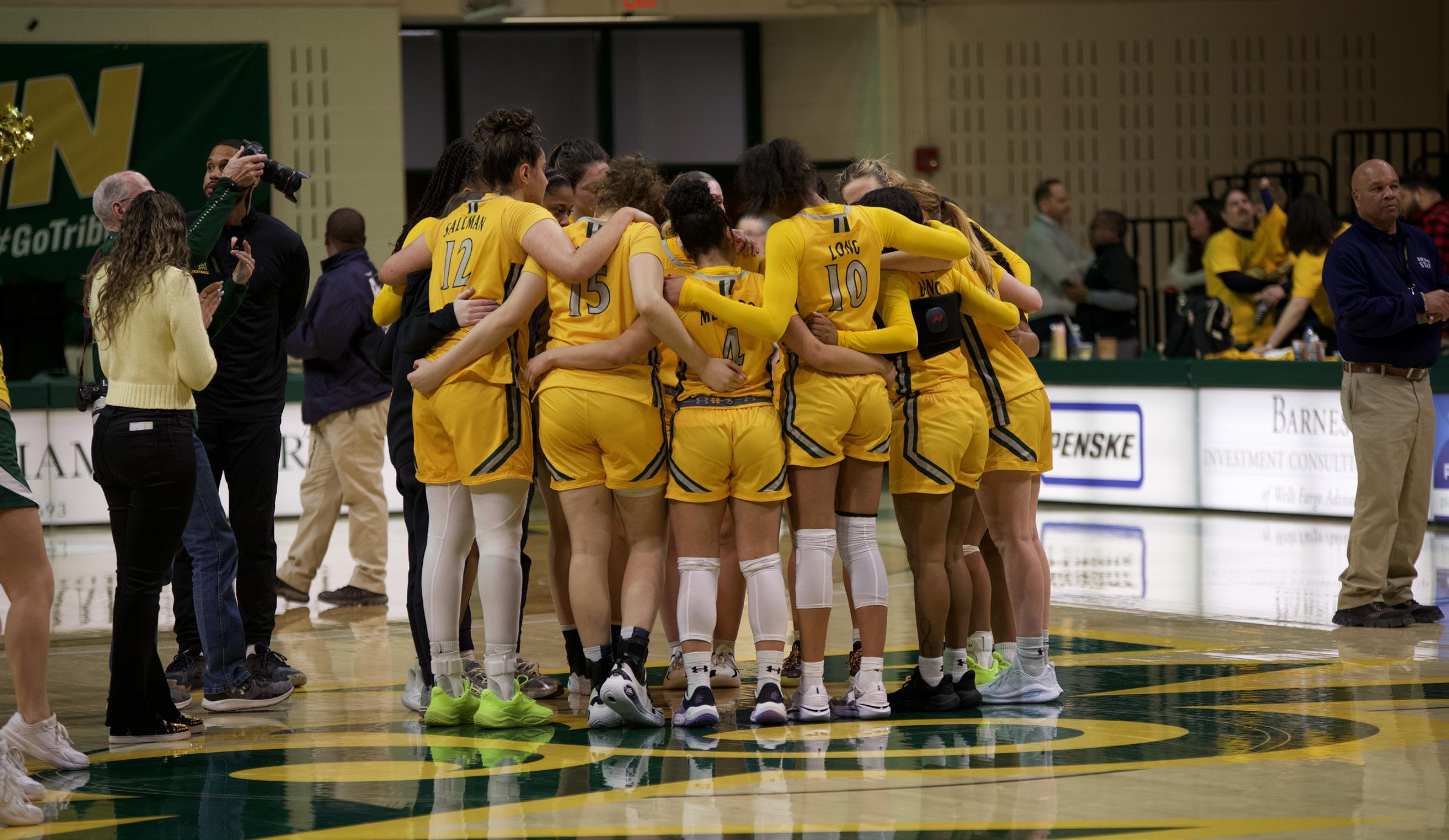
William and Mary’s up-tempo surge was fueled by Mikeska, whose six second-half defensive rebounds helped the Tribe flow seamlessly into transition.
“I think when our guards rebound, we have a way better shot of just getting it out and going,” Mikeska said. “And I think that’s what we did [in the] third and fourth quarter. Like, me or Kyah [Smith], we would get a rebound, chuck it down the court, Cass[idy Geddes] would be there, even Tika [Sallman] would be there sometimes and we were able to get pretty good points off of that.”
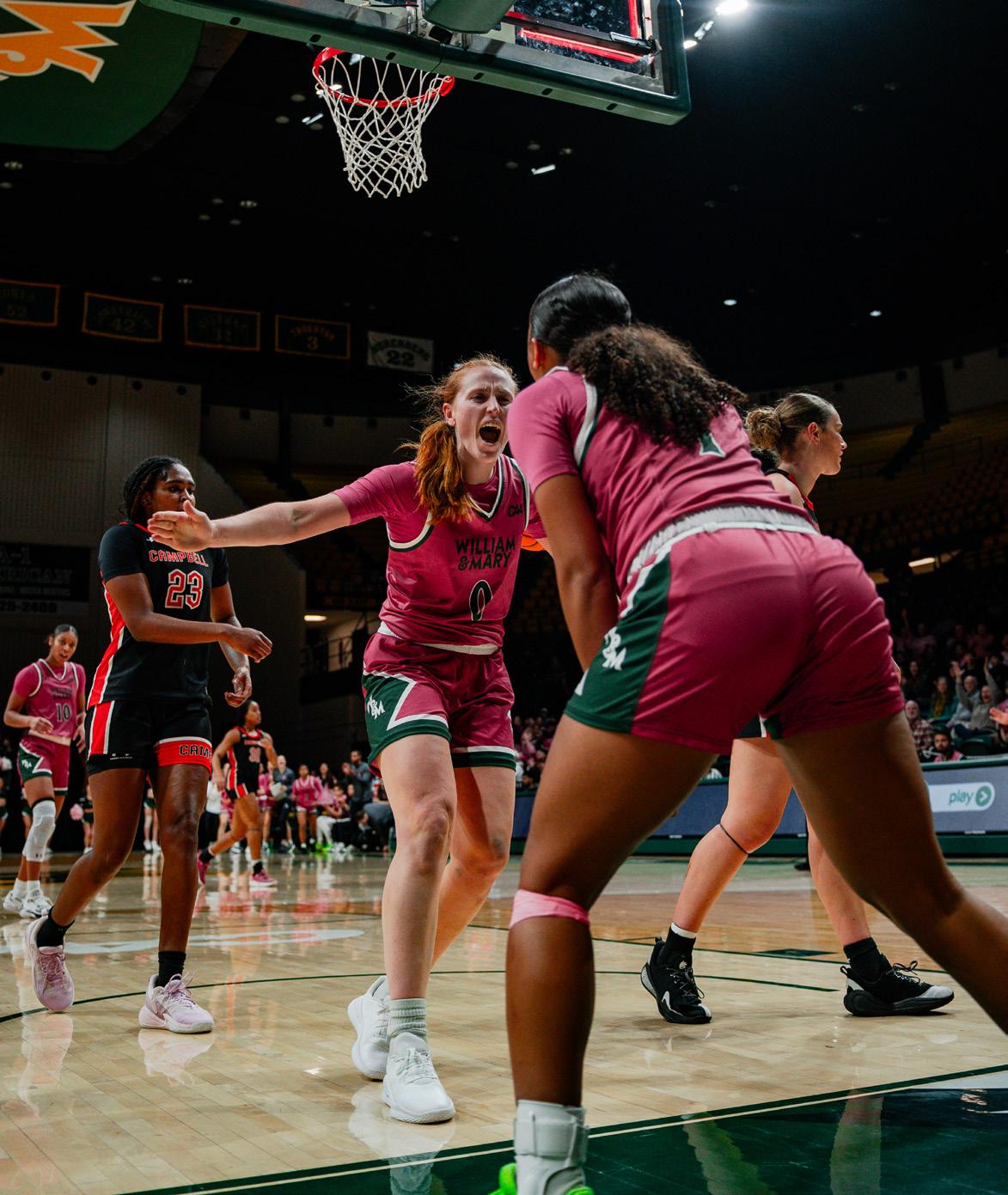
In the afternoon, Mikeska posted 16 points, a team-high nine rebounds and a team-high six assists.
Mikeska was not the only William and Mary guard to record an impressive statline: Geddes, Dance and Smith combined for 47 points, 12 assists and 11 rebounds. Despite being hounded by the Seahawks all game long, the quartet turned it over just six times while swiping seven steals of their own. Dickerson Davis lauded the ballhandling skills of her backcourt, which she described as a group with four members capable of playing the point guard position.
“I think that helps us kind of lower those turnovers,” Dickerson Davis said.
On the other side of the ball, Dickerson Davis credited Smith, a former Navy transfer who once told the Tribe’s coaching staff that she was a bad defender, with beginning to become impactful on the defensive end.
“Kyah is an athlete,” Dickerson Davis said. “She’s got great size. If she can just learn angles, she’s going to be a really good defender. And I think that’s what she’s learning right now is that she actually can be a good defender. She has the intensity to do so, and when she does it, we’re a really good team.”
Mikeska also praised her teammate’s defense.
“Credit to her defense, because she doesn’t think it’s her strong suit, and she has really picked it up and turned it up, and it’s really helping us out right now,” Mikeska said.
The road ahead will not be an easy one for William and Mary. Needing a top-four seed to secure a double bye at the CAA tournament, the Tribe sits under .500 in conference play and eighth on the league leaderboard. Dickerson Davis’ squad is preparing to depart on a road trip before it returns home to take on Monmouth and Drexel, two of the CAA’s top squads.
Still, the weekend’s results gave Dickerson Davis confidence. After following up a seven-game non-conference winning streak with a four-game conference losing streak, William and Mary has at last regained momentum, having won three of its last four contests.
“What I can say more than anything is that I’m proud of everybody else for their resilience,” Dickerson Davis said. “You know, losing a couple of games after winning so many in a row — they never quit. They never folded, and they could have.” William and
With students now back on campus for the spring semester, the William and Mary winter sports season is officially in full swing — and it is no different for the men’s gymnastics team. The team has been practicing nonstop and preparing for competition Feb. 1 at Springfield. Many gymnasts have made significant contributions to the team, including sophmore all-around gymnast Luke Tully.
As a freshman, Tully led the Tribe to the USA Gymnastics Collegiate Nationals in 2024-25 and hopes to continue being a key asset for the team this year. At the personal level, Tully won All-American honors by placing fourth all-around at the USAG Collegiate Nationals and earned Rookie of the Week honors and top titles on high bar.
While his freshman season brought many wins and accolades, Tully had to learn to deal with setbacks, especially during competition season.
“At the first meet that I had last season, I fell on every single event — all six events in a row — and I didn’t know what to do from that point on, and then I had two rough weeks at practice,” Tully said.
It was during this difficult moment, however, that one of his teammates approached him and gave him advice that ended up altering his mindset for the rest of the season.
“He told me to think about when things are or when everything was going well for [me] and then before [I] salute [the] team, just think of the feeling that [I] used to have once [I] hit a good set, and that’s what helped me to leave the falling on every event in the past and move forward,” Tully said.
Tully explained how having a changed mindset allowed him to keep his love for the sport alive despite the tough transition from the junior to the collegiate level.
Coming from a family of gymnasts where all nine of his siblings competed at the Junior Olympics level, Tully felt nothing but support from his family and a passion for gymnastics at a young age.
“I have three older sisters who all did gymnastics growing up, and by the time I was four, I essentially thought it didn’t look that hard for them to do it, so I might as well do it as well,” Tully said.
He attributed the majority of his desire to compete at a collegiate level to his family, despite going into the process with what felt like limited options.
“There are only 14 colleges that have men’s gymnastics, so I didn’t really know what William and Mary was until I started looking at the colleges that I wanted to get into, and then once I visited on the official visit, I clicked with a lot of the guys on the team, and we just all got along so well, and so I could tell that I would fit in very well here,” he said.
For Tully, the men’s gymnastics team felt like the perfect fit since day one. His coaches have supported him since the beginning of his time on campus and constantly check in on his physical and mental health.
“If something is hurting during practice or if you are having an off day, the coaches will come and sit down with the athletes to ask what is wrong or if individuals are feeling okay,” Tully said.
Tully appreciates his coaches’ understanding nature, especially given his workload as a finance major at William and Mary.
“We essentially always have to have morning classes because our practice time is 1:30-5 p.m. Monday, Wednesday and Friday and 2-5 p.m. on Tuesday and Thursday,” Tully said. “So for the most part, I have early classes, but even on Wednesdays, I have a 3:30 class, and the coaches work with me, and I can go train early. They’ll just always work around your schedule because they, of course, are going to put school first.”
It is not just athletics and school that Tully has been trying to balance, however. He still finds time to practice both mental and physical well-being.
“I definitely balance the mental aspect of it through devotion,” Tully said. “I’ve been doing it with my sisters on a weekly basis, where we’ll just call each other and we’ll just read one chapter out of the Bible, and that’s what kind of kept me grounded for a long time.”
To keep his body in top shape, Tully has found that his best way to recover is in the sauna and through scheduled breaks. For student-athletes, it is important for them to listen to their bodies to prevent strains or injuries. This season, Tribe
men’s gymnastics has faced minor setbacks with injuries and illnesses, which have hindered its ability to break the 300-point level. Yet, the athletes hope to make the NCAA Tournament as a team like they did last year. Tully was out of Sunday’s competition due to the flu, marking the first college meet that he’s missed. Despite this, he cheered on his team from the sidelines since they have shown him nothing but support.
While Tully might be the first in his family to compete at the collegiate level, his younger brother is following close in his footsteps. Tully revealed that his younger brother will be attending William and Mary in the fall to compete on the men’s gymnastics team. He hopes to be a mentor for his younger brother as he navigates this new milestone and the new challenges that come with it.
“I definitely want to teach him everything that I have learned from competing, experience-wise, because it is such a different level competing in college compared to competing at the junior level.”
Tully said that collegiate competitions tend to be louder, and fans will chirp and show support in ways that are different from high school.
“I’ll definitely teach him or at least tell him what to expect, going into all of the meets so that it’s not as much of a surprise for him as it was for me,” Tully said.
Looking ahead this season, Tully is expected to be a top contender in the all-around and high bar. He hopes to build on his success and overall learning experiences from last season while keeping his fanbase and family as close as possible.
Saturday, Jan. 31, William and Mary men’s basketball (14-8, 5-5 CAA) fell to the Campbell Camels (10-13, 4-6 CAA) 104-96 at Kaplan Arena in Williamsburg, Va.
leading by 25 points in the first half alone. Campbell graduate student guard D.J. Smith
the CAA’s leading scorer — set the tone, racking up 12 of his season-high 39 points within the first 12 minutes of play.
Tribe head coach Brian Earl complimented Smith’s performance.
“He’s a shotmaker, he’s very quick, he can shoot them from deep,” Earl said.
The Camels markedly outperformed their season averages in the first half, shooting 54.3% from the field and 43.8% from the three compared to 45.5% and 32.7% on the season.
The Tribe, averaging only 10.9 turnovers per game during CAA play, managed eight in the first half alone. This led to a 35-22 shot discrepancy, and the Camels recorded a 17-point lead at the half.
It was not just the turnovers that marked an atypical first 20 minutes, however. The Tribe only attempted two first-half threepointers — a far cry from the over 27 they previously shot per game.
Earl pinpointed Campbell’s physicality as key to his team’s poor first half.
“They were up in us,” Earl said. “We sort of decided to make it one-on-one, which happens when people are in your space.”
At the start of the second half, the Camels failed to keep the floodgates closed for long.
With a 25-3 run spanning over seven minutes, the Green and Gold trimmed a 22-point deficit to just two.
“In the second half, I thought we started cutting, and all of a sudden, we’re in the double bonus with 15 to play,” Earl said.
plans,
The Tribe earned itself 23 second-half free throws. The home crowd waved off three Campbell players after the visitors picked up
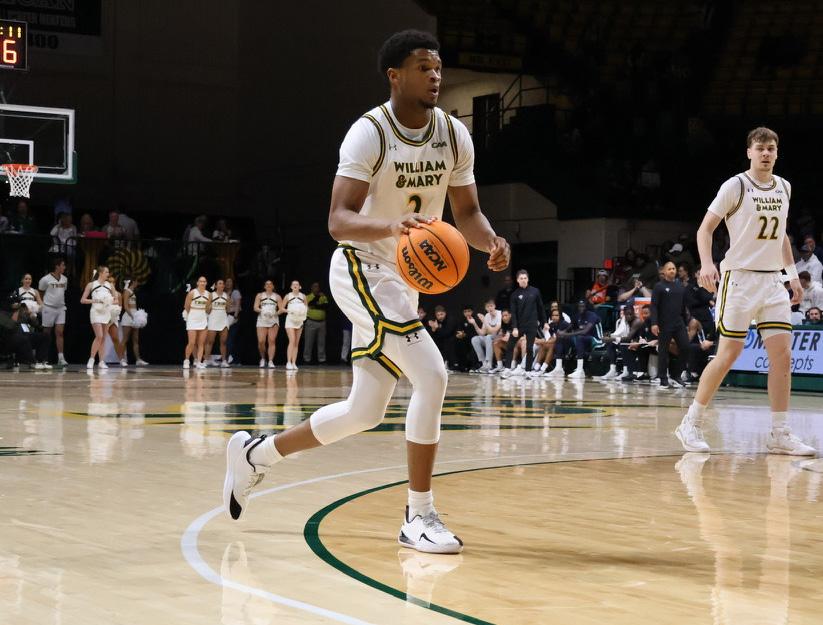
their fifth foul.
After junior guard Reese Miller put the Tribe within two points at 75-73, Smith converted a three-point play, regaining momentum with six minutes, 47 seconds on the clock. With two crucial layups, junior forward Chris Fields Jr. sealed the game for the Camels, handing the Tribe its first home loss of the season.
Despite the defeat, the home team’s secondhalf performance gave Earl confidence about
its upcoming visit to Campbell.
“I think we finally figured out the formula a little bit,” he said. “We started cutting, and then that opened up a few more three-pointers.” After back-to-back losses and three consecutive road games on the horizon, Earl and his team find themselves at a key juncture. Thursday, Feb. 5,
around its 0-4