The F lat Hat







College athletics is at one of the great inflection points in its long history, and the College of William and Mary is not insulated from the tides of change. In the coming months and years, the university’s administration will be forced to make several momentous decisions that will shape the future of Tribe athletics.
For over a century, the philosophical framework underlying college sports was defined by the National Collegiate Athletic Association, an organization that has governed intercollegiate athletic competition since 1906. From its earliest days, the NCAA made clear that its primary mission was to establish and propagate the principle of amateurism. College athletics should be for those who participate “in competitive physical sports only for the pleasure, and the physical, mental, moral, and social benefits directly derived therefrom,” the NCAA said in 1916.
The next 105 years of college athletics were shaped according to that dogma. Student-athletes were prevented from monetizing their name, image and likeness in any form, meaning they forfeited their right to do things like appear in commercials or accept endorsement deals. Scholarships and grants marked the extent of the compensation they were allowed to receive for their athletic efforts.
The bedrock of amateurism wholly disintegrated in 2021 when the Supreme Court ruled that the NCAA’s restrictions on athlete compensation violated antitrust law. A cascade of further legal defeats battered the NCAA over the following years, wresting away much of its enforcement power and blurring the line between college and professional sports — to the point that
many claim the two are now indistinguishable.
College athletes are now permitted to accept gifts from donors, endorse brands and more. As schools still are not allowed to directly pay their athletes, many of these opportunities are funneled through third-party NIL collectives, which attempt to lure transfers to their affiliated schools with promises of paydays. Athletes are permitted to transfer schools between seasons with essentially no restrictions, and the NCAA’s ability to enforce its eligibility rules is in question. Some players who have technically exhausted their eligibility still enter the transfer portal in the hopes that a court case will allow them to compete again.
However, the most monumental change of all — one that William and Mary has already begun reckoning with — is still impending.
The House v. NCAA case, perhaps the most consequential lawsuit in the history of college athletics, was brought against the NCAA, the Power Four conferences and the Pac-12 in 2020 by four then-current college athletes.
“The House legal claims say two things,” Mit Winter ’01, a prominent attorney specializing in sports law and NIL law, said. “One, that some former and current college athletes are owed back damages because they were not able to monetize their name, image and likeness before July 1, 2021. The argument is that the rule that restricted college athletes from being able to monetize their NIL violated the antitrust law. So that’s the backwards-looking part of the case.”
The parties agreed to settle the case in May 2024, and the terms of the settlement were preliminarily approved in October
result of the COVID-19 pandemic.
Monday, March 24, Gov. Glenn Youngkin D.P.S. ’22 signed the Hunger-Free Campus Act into law, allocating $500,000 to Virginia colleges and universities to combat food insecurity. The law establishes the Hunger-Free Campus Food Pantry Grant Program.
Both public and private institutions are now eligible to apply for grants through the State Council of Higher Education for Virginia that will support existing campus food pantries.
The bill’s passage into law follows months of advocacy from student groups focused on addressing food insecurity on college campuses. In a 2020 study, the United States Government Accountability Office found that 23% of all college students experience food insecurity, amounting to 3.8 million students nationwide. Experts believe these numbers have worsened in recent years as a
The College of William and Mary’s Food for All organization has been at the forefront of advocacy efforts for the Hunger-Free Campus Act. Former Food for All President Allisyn Lam ’25 spoke at a Virginia Assembly press conference in January to advocate for its passage.
“Many students are missing key nutritional requirements from their diets, even becoming anemic, underweight or exhibiting signs of disordered eating,” Lam said. “Some students lack the energy to attend class or complete exams without worrying that their stomachs will be heard rumbling amongst their classmates.”
As a student-run club, Food for All manages two food pantries in the campus area that are open to all students, faculty and staff in need. Its main location is in the basement of the Wesley Campus Ministry, and it opened a new satellite location in Sadler 157.
Food for All Co-president Bennett Snyder ’25 celebrated the new law. He explained that
2024. If approved, the proposed settlement will require its defendants to distribute $2.8 billion in damages to current and former college athletes who were not able to monetize their NIL dating back to 2016. The NCAA intends to raise most of the money by reducing the revenue it distributes to all of its member institutions.
There is a forward-looking part of the case, which Winter explained to The Flat Hat.
“NCAA rules that prohibit schools from paying NIL compensation to athletes violate antitrust law,” Winter said. “That part of the case is seeking to change the rules to allow schools, conferences and even the NCAA to just directly pay NIL compensation to athletes.”
If approved, the proposed settlement will create a system in which schools and conferences can directly share revenue with athletes, distributing it across athletic programs however they see fit. Schools would be held under a $20.5 million annual “salary cap” that would increase by 4% every year. These rules would go into effect at the start of the 2025-2026 academic year.
The NCAA allowed its member institutions to opt out of the settlement but required them to submit their decisions by March 1, 2025, over a month before the release of the final terms of the settlement. The final approval hearing took place in front of federal judge Claudia Wilken Monday, April 7. Wilken is tasked with determining whether or not the settlement is fair, and she is unlikely to make her decision for days or weeks.
See COMMENTARY page 4
while data on food insecurity at the College is scarce, other state institutions provide data that contextualizes the need for well-stocked food exchanges at the College.
“For William and Mary, we don’t really have the data on food insecurity on campus,” Snyder said. “For a lot of other schools in Virginia, you can basically look up ‘UVA food insecurity’ or ‘VCU food insecurity’ and be able to find a number. And those numbers range from a quarter of students to a third of students, so it’s a pretty prevalent issue across campuses in Virginia.”
The regular emptying of Food for All’s shelves is an unmistakable sign of student need.
“We do see a lot of movement of what we put on our shelves in our food exchanges,” Snyder said. “So I think it’s pretty clear that there is an issue.”
Associate Vice President of Student Engagement and Leadership Michael Patterson serves as the cochair of the College’s Basic Needs Coalition, which was formed this semester to address both food and
housing insecurity among students.
Food for All, along with several student organizations and university departments, is represented on the committee, which has met once a month since January. Patterson outlined the nascent coalition’s goal of centralizing all of the College’s resources and streamlining access to essential resources for students.
“In student affairs broadly, we noticed that there wasn’t really a lot of cross-communication in terms of what was happening,” Patterson said. “There came to be an awareness that it would be helpful to put all of the different people across campus together.”
In advance of the Hunger-Free Campus Act, Patterson described the coalition’s work this semester to meet students’ needs and identify gaps in administrative support. See POLITICS page 4
We do a really good job of celebrating our students in the culmination of their academic journey when they graduate, but we donʼt really do anything in the middle.
̶ Assistant Dean Shelly Laurenzo
Wednesday, April 2, the Virginia General Assembly accepted Gov. Glenn Youngkinʼs D.P.S. ʼ22 amendment to establish a nine-member board of visitors at Richard Bland College July 1, 2025. Till now, RBC operated under the College of William and Maryʼs board of visitors.
RBCʼs President Debbie Sydow described her excitement for the new board.
“After years of planning and preparation, we stand ready to welcome this board with open arms,” Sydow said. “William & Mary (W&M) board leadership has been supportive every step of the way and I expect a smooth governance transition.”
Sydow also described the importance of this bill in supporting RBCʼs independent governance.
“Understanding the importance of RBC as an industry partner and economic engine in the Petersburg and Virginia Gateway region, bill patrons Senator Mamie Locke (D-District 23) and Delegate Betsy Carr (D-District 78) were fierce champions for independent governance, and RBC is deeply grateful for their leadership,” Sydow said.
The Collegeʼs Rector, Charles E. Poston J.D. ʼ74, P ʼ02, ʼ06, also looks forward to the new board.
“The William & Mary Board of Visitors has governed Richard Bland College since its founding,” Poston said. “This has been a privilege and together with former presidents of RBC and President Sydow, positive and transformational change has taken place. This has especially been the case at RBC over the last decade under the leadership of President Sydow. We look forward to working with RBC during the transition to a new board and we are highly confident that this progress will continue.”
In 2023, delegates attempted to send a similar bill granting RBC its own governing board to the Governorʼs desk, but it did not pass through. Looking ahead to July, Youngkin will appoint members of the nine-member board, and RBCʼs accreditor, the Southern Association of Colleges and Schools Commission on Colleges, will review this change.
READ MORE AT FLATHATNEWS.COM MONA GARIMELLA / MANAGING EDITOR A THOUSAND WORDS
ʻSTABILITAS ET FIDESʼ | ESTABLISHED OCT. 3, 1911 Org #101 P.O. Box 8795, Williamsburg, VA 23187 Editor flathat.editor@gmail.com
flathat.managing@gmail.com
flathat.executive@gmail.com

Nina Appicello ’26 awarded prestigious language scholarship, will spend summer in Dushanbe, Tajikistan
Nina Appicello ’26 recently became the first student from the College of William and Mary to be awarded the prestigious Critical Language Scholarship for Persian/ Farsi. Through this program run by the State Department, Appicello will spend her summer in Dushanbe, Tajikistan, learning Farsi alongside thirty other American students in her cohort. At the end of her time overseas, she will complete a test proving her proficiency to receive a job offer at the State Department.
This will not be Appicello’s first experience living abroad. In fact, she was drawn to the College because of its extraordinary study abroad opportunities. As someone who grew up in rural Virginia and did not travel much as a child, Appicello knew that when she went to college, she wanted to take advantage of every opportunity to explore new places and cultures.
“I had only been to like two states at that point before I came here, and I knew that William and Mary has one of the best study abroad programs ever in the country so obviously I’m going to do everything I can to like get the scholarships to get on a plane to go somewhere else,” she said.
Appicello spent the entirety of her sophomore year in Rome, learning Italian and exploring the historic city, falling in love with its architecture in the process.
“There’s a phrase in Italian that basically translates to, ‘Rome is made to the measure of men,’” she said. “Truly, the streets were made without even thinking about cars or parking. The streets are the size of you, the doors are the size of you, and the buildings are the size of you. It’s such a different way of life than we have here in the United States.”
While in Rome, Appicello worked at the European Union Gulf Cooperation Council, an organization that facilitates relations between the EU and the Arabian Gulf. During her time there, she met the former minister of Afghanistan, who was hiding in Rome following the Taliban’s return to power. She noted that her conversations with him sparked her interest in learning Farsi.
“When I was in Rome, I was working at a EUGCC center, the European Union Gulf Cooperation Council, which is like the EU for the Arabic Gulf. And when I was there, I had met the former minister of Afghanistan, who was currently hiding out in Rome because of the Taliban. But essentially, he had just talked up Persian so much,” she said.
Those conversations, along with her broader experiences working at the EUGCC, deepened her interest in foreign relations and diplomacy. When she returned to college, Appicello felt inspired to explore these topics further, joining the College’s NukeLab undergraduate research group. Alongside her research partner, Appicello is investigating how the use of technology impacts women’s abilities to negotiate effectively in diplomatic contexts.
“[My partner and I] are doing our independent research project in the NukeLab on women in diplomacy, specifically the use of technology as a result of outcomes,” she said. “How does technology in negotiation affect the outcomes for women?”
Appicello’s research through the NukeLab deepened her interest in Middle Eastern foreign relations, reinforcing her commitment to firsthand global experience. Driven by her passion for immersive learning, she pursued the Critical Language Scholarship for Farsi. She believes true language learning happens through full immersion—an approach she will embrace during her time in Tajikistan.
“It’s so much easier to learn languages when you’re actually there, and that is what drove me to this program because it’s seriously fully immersive, especially the cities that they have offered. They are not quite tourist cities in the sense that you will be accommodated as an American,” Appicello said.
Unlike her previous study abroad experience in Rome, where it was common to find people who spoke English, this program demands a full adaptation to a non-Westernized setting. She explained that she will be surrounded by people who do not speak any English, like the host family she will live with. Appicello expects that she will be forced to adapt quickly to the language around her. Although she anticipates this will be challenging at first, she sees the experience as essential to her advancement in the language.
“This is not a place where they’re accommodating to Americans, and so it really is buckle down time to learn this language, no matter what,” she said.
For Appicello, Tajikistan is not a common travel destination for many Americans. When she received her acceptance, the State Department told Applicello her work was not done – she still needs to go through rounds of intensive interviews at the Tajikistan consulate in Washington, D.C., to obtain her student visa to live in Tajikistan this summer.
“You have to have everything, like proof of enrollment, like proof of undergraduate education, just everything. They do a whole background check on you just to make sure that you’re a good person to go abroad. Certainly, I did not have to do all that when I went to Rome,” she said.
Appicello will spend two days traveling to Dushanbe, as its airport only has a few flights arriving each week. While Appicello admitted it is intimidating to leave all the familiarity and comfort of the life she leads in America, she is overall excited for this unique opportunity.
“I told my mom, if I call you crying saying ‘I wanna come home,’ you have to say ‘you wanted this’ and ‘do not let me come home,’” she said.
She anticipates that the first few days will be an adjustment, but in the end, she hopes she will enjoy her time in Dushanbe.
ALEX NAKAMITSU
Tuesday, April 1, the College of William and Mary’s Student Assembly Senate met and voted on the annual budget, along with two additional bills. The chamber also introduced a bill to affirm the preservation of Diversity, Equity and Inclusion initiatives at the College.
Chair of the Independent Elections Commission Sophie Hoffman ’26 addressed the SA Senate, providing a report on the recent elections. Students voted Thursday, March 27 for Student Assembly President, Vice President and class senators.
This year, 28% of the entire student population voted, which, according to Hoffman, was very high.
“I was just obviously really surprised that that many people voted,” Hoffman said.
The Independent Elections Commission had no reports of campaign violations during the campaign period, and Senate information sessions, mandatory for all students running for a position, were well attended.
The chamber also voted on the annual budget for the fiscal year 2026. The annual budget is funded by the student activities fee, which every full-time undergraduate and graduate student pays as a part of the College’s tuition.
For 2026, the total revenue from the student activities fee is $783,432. $135,000 will be allocated to student government and $150,000 will be allocated to Alma Mater Productions. $176,055 will be allocated for the Organization Budget Allocation Process, which funds all other Recognized Student Organizations on campus.
The You Belong Resolution
Chair of the Senate Sen. Hazel Vineet ’25, Class of 2028 President Devaughn Henry ’28 and Sen. Tyson Liverman ’27 introduced the You Belong Resolution. The
bill, if passed, calls for the Board of Visitors to continue to affirm the programs that foster Diversity, Equity and Inclusion at the College. This includes the Office of Diversity and Inclusion and the Lemon Project, both of which the Board of Visitors have supported in the past. This comes after mounting pressure from the federal and state government on dismantling Diversity, Equity and Inclusion in academia.
“Cooperation with the guidance set forth by the Commonwealth of Virginia undermines the programs, statements, and advocacy efforts, and the success of these efforts, previously established by the Board of Visitors, reversing progress made by both the Board and the broader William & Mary community,” the bill states.
Furthermore, the bill calls for the Board of Visitors to provide a rationale if they ever elect to dissolve DEI programs, similar to the recent moves by administrators at the University of Virginia and Virginia Commonwealth University, among other Virginia state schools.
Vice President Oscar Lazo ’25 spoke on behalf of the resolution.
“It is a resolution that is calling for collective bargaining. It is not a resolution that is condemning the Board of Visitors,” Lazo said.
The JAM Act
Sen. Matt Swenson ’26 and Sen. Debbie Ho ’26 introduced The JAM Act. The bill aims to allocate $7,410 for a Music and Art Bash, which will be held at the Muscarelle Museum of Art. The event will feature student bands and art vendors, along with activities for attendees.
“It is the responsibility of the Student Assembly to uplift and promote all recognized student organizations, including the Visual and Performing Arts, which form an integral part of our campus community,” the bill states.
Let my Senators Go (Abroad) Act
After standing on the floor for three weeks, the chamber passed The Let my Senators Go (Abroad) Act, sponsored by Sen. Ryan Silien ’28. Senators currently abroad may now run and hold office in SA. However, they may not hold office for more than 30 days abroad. The change in the Code and Constitution of the Student Assembly would allow for students away during the spring semester to run and be elected and serve the first month of their term in April from abroad, and return in the fall semester and serve in person.
This bill was contentious among members of the Senate. The original bill allowed for senators to serve for an entire semester remotely but was later revised after heavy pushback. During the final debate April 1, many senators seemed optimistic about the bill.
“Originally, I was anti-this bill, but with the amendment, I actually really like how it is,” Sen. Yasmin Kudrati-Plummer ’28 said.
The bill passed with two abstentions and two nays.
The LDOC Beer Garden Act III
Sponsored by Vineet, Class President Matthew Hwang ’25, Sen. Jeffrey Gu ’25 and Sen. Kyle Lewis-Johnson ’25, the LDOC Beer Garden Act III aims to fund the celebratory event for the third semester in a row. The LDOC Beer Garden, spearheaded by previous class president Mia Tilman ’24 and Sen. Daniel Bess ’24, is an event sponsored by SA that provides an on-campus alternative to Last Day of Classes celebrations.
The event was originally conceived in response to fears of increased police presence and arrests of students.
“Students want to enjoy and celebrate LDOC with friends and classmates without fear of arrest and attending an event that is shut down,” the bill states.
Students over the age of 21 will be able to purchase alcohol at the event on Sunken Garden May 2. The estimated cost of the event is $8,565.
ELLIE
will change to reflect quantitative disciplines within degree, coursework remains constant
This past fall, the State Council of Higher Education for Virginia approved a code switch for the economics program at the College of William and Mary. This decision changes the economics degree from a social science to a Science, Technology, Engineering and Mathematics Classification of Instructional Program.
The new designation, already in effect, will not change the coursework or graduation requirements for an economics major. Instead, it will indicate a mathematical focus in the economics department, something not reflected
previously in the general social science CIP code.
Economics department chair Peter McHenry emphasized that the change aligns with the work of the discipline.
“It just reflected what we’re doing already as a field because economics is very quantitative and mathematical and has been for decades,” McHenry said.
Quantitative coursework is reflected in many aspects of the economics major, including base-level prerequisite courses, higher-level theoretical courses and electives. McHenry expanded on the mathematics required for the degree.
“We have math requirements, students all take calculus as part of the economics
degree, and the theory courses, in particular, apply mathematical modeling and ideas to economic issues,” he said.
“We also do a lot of statistics and data work that includes a lot of math and scientific and engineering-type thinking.”
This coursework was taken into consideration when proposing the change to a STEM CIP. Director of Academic Program
Authorization Rachel Gable, who helped enact the change, recalls this process.
“I asked the department chair to run an analysis on the required coursework to determine whether we really were offering a quantitative heavy degree program within the B.A. in economics, and he made the case that yes indeed we were,”
Gable said.
This change has implications for economics graduates entering the job market. The STEM CIP will allow employers to identify students with a specific range of quantitative skill sets, making the major more marketable.
“Changing from a general economics CIP code to a quantitative economic CIP code will allow future employers to more easily understand that William and Mary grads from the economics degree program have the quantitative skills required for certain kinds of jobs that they would not automatically assume students would have with a general economics degree,” Gable said.
Food for All program leaders comment on Youngkin signing act to streamline studentsʼ essential resources
“We’ve had a couple meetings so far to make sure everybody knows the level of services that currently exists, so that way we can identify gaps and make recommendations for what action items might be in the future,” Patterson said. “We are looking at basic needs more broadly, not just food insecurity. So that is housing insecurity, clothing insecurities and other support services that might need to be required.”
Snyder addressed the layers of challenges students face when trying to access resources at the College, from stigmatization to connecting with offices quickly. He stressed that the Basic Needs Coalition intends to make these
steps less daunting.
“One, you’re gathering the courage to tell your story and advocate for yourself and say that ‘I actually need these resources,’”
Snyder said. “And two, you have to do it to multiple people, kind of on your own. I think it’s a really difficult bureaucratic process for a lot of these students to get the resources that we have for them to use.”
While Snyder is happy with Food for All’s progress in assisting food-insecure students, he acknowledged that other state institutions are much further along than the College.
“I would say that William and Mary is like five years behind a lot of these schools in the development of these pantry

programs,” Snyder said. “VCU and JMU have really excellent resources for students. At William and Mary, it’s a group of students that has grown from six students to 15 students working to run a food pantry. We get some assistance from the school, but really it’s the students doing all the work.”
To be considered for state funding under the new food pantry grant program, colleges and universities will have to submit applications to SCHEV soon.
The College is still waiting for details on the application timeline, which is expected to be released once revisions to Virginia’s budget for fiscal year 2026 are finalized. Lawmakers are currently debating the details of the state budget in the General Assembly.
“We are eagerly looking at what that application process looks like,” Patterson said. “SCHEV will have to make that announcement.”
Patterson specified that the application may consider the College’s percentage of Pell Grant eligible students as a major criteria for approval.
“We intend to apply when it becomes available,” Patterson said. “The question is whether we will get selected. And that might be a determination of how many Pell eligible we have compared to other institutions that apply. So we’ll have to navigate that as it comes out.”
As a recognized student organization, Food for All receives funding from the Organization Budget Allocation Process in
the same manner as other clubs.
However, Food for All depends largely on external donations for its food pantries.
“A year ago, we had a bill through student assembly that got us some funding for food items,” Snyder said. “But most of our support comes from outside donors, especially churches in the area, community foundations, individuals. Plus, people donate goods, and we run food drives.”
Patterson highlighted that many students receive federal SNAP benefits, which they can use at campus exchange stores. While students at the College have not been affected, Republican lawmakers at Trump’s behest are considering ways to decrease agricultural expenses nationwide, including SNAP benefits, by $230 billion over the next ten years.
“Every institution has a requirement to manage and make sure our students are aware of SNAP benefits,” Patterson said. “The store downstairs in Sadler takes SNAP benefits, so students can use their SNAP benefits here on campus.” Patterson touched on the College’s responses to student housing insecurity. While the College already provides emergency housing, the Basic Needs Coalition hopes to expand access for students who need housing over summer, winter and spring breaks, as well as collaborate with local partners.
“Our housing partners and
Residence Life will need to answer some of those questions,” Patterson said. “We’re still very entry-level in figuring out what those best recommendations are and how to move forward.”
The College had initially reached out to the Williamsburg House of Mercy regarding collaboration on housing insecurity. However, the House of Mercy lost federal funding for housing accommodations last month and was forced to end its program. In a community statement last month, Executive Director of WHOM, Liz Buckley, explained the organization’s tough decision.
“Without a continuation of Housing Trust Funds, we cannot fulfill that promise of stability, and we recognize it would not be sustainable to continue the program,” Buckley said.
Snyder expressed his desire to see the Basic Needs Coalition and Food for All continue growing their support systems for students, along with increased administrative backing.
“One thing I want to emphasize in the context of the Basic Needs Coalition is that we’re doing it in a time when trying to expand these resources and getting access to these resources is going to be really difficult,” he said. “But that’s what makes this work all the more important. William and Mary really needs to work towards making sure that these resources, as best as they can be, are being provided to the students.”
Students gather on Sadler Terrace to celebrate their declarations, receive free merchandise
ROBIN PERDUE
FLAT HAT NEWS ASSOC.
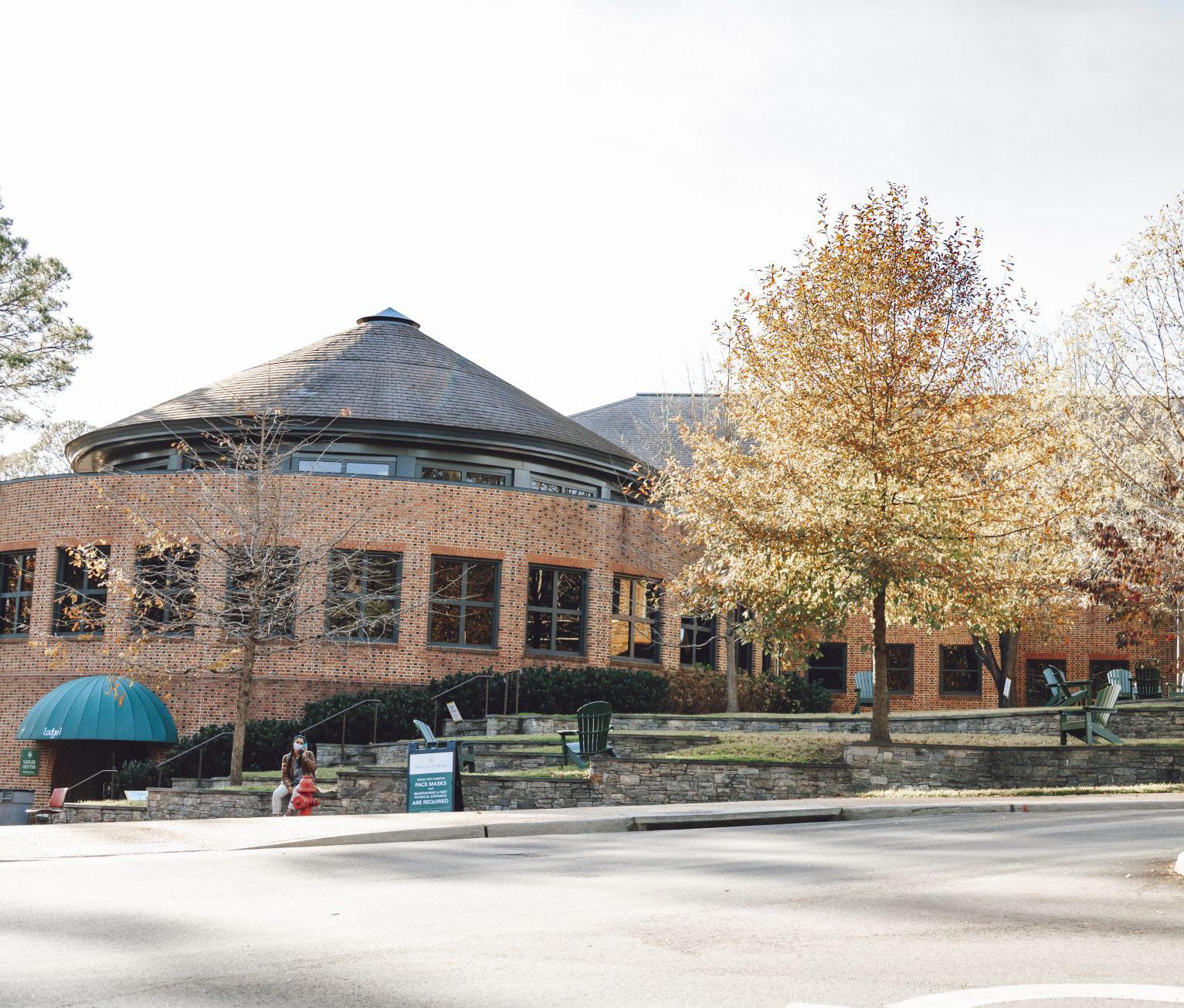
Friday, April 4, the College of William and Mary hosted a celebratory pop-up on Sadler Terrace from 11:00 a.m. to 2:00 p.m. to congratulate students’ major declarations. The event was a part of the College’s Declaration Week, a multi-day event hosted in collaboration by the Office of Undergraduate Affairs, Arts and Sciences and Student Transition Engagement Programs dedicated to recognizing undergraduate students as they finish navigating their major declaration process.
In addition to the pop-up, the week consisted of several workshops, symposiums and engagement opportunities to guide and celebrate students in the process of making this decision. Assistant Dean for Undergraduate Education Shelly Laurenzo shared the College’s goals in hosting this celebration.
“We do a really good job of celebrating our students in the culmination of their academic journey when they graduate, but we don’t really do anything in the middle,” Laurenzo said. “You have orientation, convocation, then commencement, so the idea was we want something along the way to celebrate when a student actually declares their major which is a really big part of their academic journey.”
The celebration pop-up included a variety of free T-shirts, tote bags, hats and other trinkets commemorating the decision.
Organizers also set up a photo booth for students to pose with their friends and show off their newly chosen majors. Attendees swarmed to hold up signs displaying their decision and to grab a quick snapshot to commemorate the moment.
Several students and staff involved in the event organization attended to show their support and cheer on the students. Many attendees left the tables already sporting their new major declaration merchandise, outwardly celebrating this milestone decision.
Some of the attendees shared their opinions on the event.
Katalina Li-Kroeger ’25 declared her international relations major during her freshman year. She shared her insights on the benefits of the event.
“I think this is really cool,” Li-Kroeger said. “We didn’t have this my freshman year, so it’s really nice to see it. I think having, especially around PATH registration, more of an understanding before registration hits of what people are doing is really important, especially for underclassmen before they start such a scary process.”
Economics major Samirah Habib ’26 shared positive feedback about the event.
“I think it makes for a bigger celebration, like it’s not something that’s supposed to be stressful,” Habib said. “It’s something to be happy about.”
Laurenzo shared advice to students beginning the major declaration process.
“I think it’s okay to take your time,” Laurenzo said. “It’s good to explore, and it’s also okay if you change your mind, too. The major you declare does not dictate your future in any way, shape or form, it just opens doors for you.”
Josie Binkley ’26 provided some personal insight into the process as well.
“I think that you should explore options before choosing it,” Binkley said. “I did research in neuroscience before I declared neuroscience as my major because it’s hard to switch once you’re in it, so let yourself do other things and then decide rather than just come in and say I have to do this.”
Habib shared her experience as well.
“I took my first economics class back in freshman year, and I just really loved my professor,” she said. “I think when I came here, I had a specific goal in mind, and then everything changed, so I didn’t really know what I was going to do. Just knowing that big decision was made was kind of comforting. Don’t stress. It’s a big commitment, but also just have fun
with it.”
Li-Kroeger offered some advice to students undergoing this process in the future.
“Plan ahead,” she said. “Ask in advance. Ask a professor that you have a relationship with if at all possible.”
Laurenzo gave some closing remarks at the event.
“I think specifically, just bringing awareness that this is a big decision-making point for students, and that it’s not always easy and that sometimes we change our minds and that’s all okay too,” Laurenzo said. “So just recognizing that this is a big process and we at the institution celebrate you wherever you are in that process.”
Graduating with a STEM degree will also benefit international students. All international students studying in the United States receive an F-1 visa, allowing them to maintain enrollment at an accredited university. Graduating with a STEM degree designates international students eligible to apply for an additional Optional Practical Training year to stay in the United States and gain experience in their field of study.
“I remember hearing a story, a student said ‘I’m not going to major in economics even though I really like economics. I’m going to major in something else because that something else is a STEM degree, and that will get me the
extra OPT year.’ And if that’s one anecdote, there are probably others,” McHenry said.
Now that the economics degree has moved to a STEM CIP code, graduating students have the opportunity to extend their visas.
“With this CIP code designation, our international undergraduates, when they graduate, can apply for one extra year of an extended visa as a part of a privilege that they are given because they have a database degree program that’s considered a value in the United States,” Gable said.
This benefit was crucial to the department’s decision to advocate for the code change.
“The designation really makes a difference for international students on visas and graduates with a STEM degree, and so that
was just a clear win for a group of students we value, of course,” McHenry said.
The code switch is in alignment with the College’s Vision 2026 initiative, which focuses on both data and careers. The plan works to integrate the computational methodology of data into the liberal arts curriculum and prepare students for the dynamic job market.
“It clarifies that an existing degree program helps our students to be very focused on specific types of careers and also specific ways of interacting with data and championing database decision making,” Gable said.
Data is an important pillar of the economics field, and the STEM designation emphasizes William and Mary’s dedication to prioritizing data work.
“We have been using data in economics for decades,” McHenry said. “We economists invented a lot of the methods that people used to make imprints from data. We love data, and so we participate wholeheartedly in the data environment at William and Mary.”
Prospective economic students and declared economic majors alike are excited about this change, believing it will open new opportunities for graduating students.
Economics student Winston Hughes ’28 shared positive sentiments about the decision.
“I think overall the code switch is a really good designation, and it does help a lot in terms of getting more people encouraged to do economics if they now know they can get a STEM degree,” he said.
College awards grants to three Global Research Projects in line with Vision 2026 strategic plan ACADEMICS
e College of William and Mary recently announced the recipients of the 2025-26 Applied Research & Innovation Initiative awards, designating one twoyear $170,000 research award and two one-year $14,000 exploratory grants. e grants support multidisciplinary applied research aligned with the College’s Vision 2026 strategic plan.
This year’s winning projects are led by faculty-student research teams and their international partner organizations that unite a broad range of disciplines from data science and kinesiology to economics, theatre and conservation.
e College awarded the twoyear research grant to the “A DataDriven Decision Intelligence Approach to Enhance Community and Environmental Health Resilience in Kenya” project. e project utilizes arti cial intelligence to analyze and improve vaccine distribution, nutrition and climate resilience among rural communities in Narok County, Kenya. It is led by a team from data science, kinesiology and conservation.
Team faculty members include assistant professor of data science and project lead Haipeng Chen and Director of Research at the Institute for Integrative Conservation Erica Garroutte, as well as members of the Global Research Institute’s Ignite Lab associate professor of kinesiology Carrie Dolan and assistant professor of kinesiology Julius Odhiambo.
e project previously received the 2024-25 ARII exploratory grant. Yaqi Liu ’25 presented their work at the ARII Research Showcase last October, and Jimmy Bach ’26 worked with partner
organization Community Health Partners in Kenya last summer to develop vaccine datasets.
One of the exploratory grants was presented to the “Promises and Pathways: Examining the Integration of Afghan Migrants to the United States Through the Special Immigrant Visa Program” project.
The project, which integrates economics, law and sociology, examines U.S. immigration policy and the Special Immigrant Visa program with a focus on the integration experiences of Afghan migrants. The project provides public policy recommendations to bolster socioeconomic conditions for recent migrants.
Adjunct lecturer of economics Nara Sritharan leads the team, which also includes members of the GRI international development research lab, AidData and the Immigration Clinic at the College of William and Mary Law School. Other faculty include AidData Senior Research Scientist Rodney Knight, professor of the practice of law J. Nicole Medved J.D. ’18, clinical associate professor of law, Director of the Immigration Clinic Stacy KernScheerer, and professor and chair of sociology Jennifer Bickham-Mendez.
e College awarded the second exploratory grant to “Balancing Progress and Preservation: Examining the Trade-o$s Between Economic Development, Cultural Preservation, and Conservation in Nepal’s Riparian Indigenous & Marginalized Communities,” a project that incorporates conservation, economics, religious studies and theatre.
The project addresses public policy issues in addition to producing a theatrical performance to advocate
for sustainable infrastructure development, conservation and the rights of Nepal’s Indigenous Majhi communities. IIC Geospatial Data Scientist Sapana Lohani leads the team, which also includes professor Sritharan, associate professor of religious studies Patton Burchett, and assistant professor of theatre Sarah Hart.
Last year’s awards included a research grant for a project on AI and democracy based in Tanzania and an exploratory grant for a sustainability project centered on exploring the use of diatom exoskeletons as a replacement for synthetic materials in nanomaterial technology.
VMEC professor of applied science Hannes Schniepp, who collaborated with applied science graduate student Aidan Lucas on the diatom project, partnered with professor of marine science B.K. Song to incorporate his research on nutrient-dependent carbon capture with Breegan O’Hearn ’25.
Lucas described his experience on procuring funding for the diatom project as a balancing act.
“It gets tricky because we’re not industry people,” Lucas said. “So there’s only so much we know about that end, so we kind of have to do an educated guess as to what is going to be reasonably a$ordable or cheap to start testing with.”
Schniepp explained that students take a lead in the research.
“I mean, the advisor usually kind of conceives the project at some point and then also nds the funding for it to pay the student,” Schneipp said. “And the student is really the person who does all the hard work.”
e ARII is a ve-year pilot program funded by alumni Michael Foradas ’78 and Valerie Foradas HON ’21
and co-sponsored by the Global Research Institute, the IIC and the Whole of Government Center of Excellence, with additional support for undergraduate involvement from the O ce of Career Development & Professional Engagement. e program is designed to facilitate collaborative research, experiential learning and undergraduate research involvement through projects that incorporate at least two of four initiatives listed in the College’s Vision 2026 strategic plan: data, water, democracy and careers. e Vision 2026 plan objectives underscore increased global citizenship, promoting democracy, revision of liberal arts and professional education curriculum, enhanced nancial and environmental sustainability and creating professional opportunities for students.
Programs such as the ARII, alongside the College’s recent designation as an
R1 research institution and a recent $100 million endowment to establish the Batten School of Coastal & Marine Sciences at VIMS, align with the Vision 2026 plan and provide relief from financial constraints often faced by research project teams, who often look to alternative sources of funding to further the work. These endowments likewise reflect the advancement of research and global partnerships at the College.
Song discussed the importance of the grant.
is research requires quite a bit of personnel,” Song said. “Like, undergraduate is working great, but on the other hand, we’re going further deep, extending the project. Either I need to have a graduate student or even a postdoc and much bigger budget to do. So, right now, AL2 provides seed money to study with it. But after that, we should look for the bigger grant.”

GUEST COLUMN
Patrick Feagin
THE FLAT HAT
In this Lenten time of penance, I find it to be an opportune time to call fellow Christians to accountability and self-reflection.
Recently, one of my friends showed me the article “A World Turned Upside Down” by the Wren Journal’s Eduard Holland-Farres. The article explores the consequences of societal secularization, criticizing women in particular for “immodest dress.” Beyond the thinly veiled misogyny of such critique, it also contradicts Scripture. In 1 Samuel 16:7, God tells Samuel:
“Do not look on his appearance or on the height of his stature, because I have rejected him. For the Lord sees not as man sees: man looks on the outward appearance, but the Lord looks on the heart.”
Furthermore, when the Pharisees brought the adulteress before Christ, hoping he would condemn her, He responded in John 8:7:
“Let him who is without sin among you be the first to throw a stone at her.”
No man but Christ is without sin; therefore, we should heed His warning, and not condemn others without self-reflection into our own sin.
Holland-Farres justifies his critique by arguing that immodest dress is an expression of pride—a serious sin. Yet I find this deeply ironic, as the act of publicly condemning others out of a misplaced zeal is the very sin of pride and self-righteousness. Too often, Christians become so zealous in asserting Christ’s message that they forget their place, a sin I know all too well. In John 7:24, Christ commands us:
“Judge not according to appearance, but judge righteous judgment.”
Christians must be mindful of their own pride, for we, too, are vulnerable to its grasp. Even Satan, once the greatest of God’s angels, fell to his own pride.
Holland-Farres also condemns “tight
clothing that accentuates the most intimate parts of the body,” implying that such attire serves as a sexual distraction. Yet, Christ never commanded women to cover themselves to curtail the lust of men. Rather, He made it clear that individuals are responsible for their own lust. In Matthew 5:28, He declares:
“But I say to you that everyone who looks at a woman with lustful intent has already committed adultery with her in his heart.”
And in Matthew 18:9, He goes even further:
“And if your eye causes you to sin, gouge it out and throw it away. It’s better to enter eternal life with only one eye than to have two eyes and be thrown into the fire of hell.”
Christ clearly illustrates that it is on the individual to curtail their lust. It is not the responsibility of others — especially not women — to regulate someone else’s purity via their sartorial choices.
But unfortunately, this seems to be an all too common pattern for the Wren Journal’s publications. Another Wren Journal article, “Student Senate funds $3,225 Pridefest, $400 Drag Queen. Petitions School for D.E.I., ” condemns the Student Assembly for its recent “Pride Month Act,” which establishes an LGBTQ+ Pride celebration (“Pridefest”) on campus in April. The authors (who remain anonymous, being published under the “Wren Journal Board”) claim that April was deliberately chosen to coincide with Easter, declaring an intentional attack on Christianity.
Not only is this claim utterly unfounded, it’s frankly embarrassing that the Wren Journal asserts this. April was chosen because it is the last month before final exams — not as an act of hostility toward Christians. Suggesting otherwise fosters unnecessary division that Christ would not approve of.
More importantly, the LGBTQ+ community is not an adversary to Christianity. It is a historically and contemporaneously marginalized set of groups that, only in recent years, have been able to express themselves openly. To imply that the celebration of the LGBTQ+ community is inherently antiChristian is to imply that LGBTQ+ people are not worthy of the gospel or God’s love. It also denies the validity of millions of Christians who are LGBTQ+, many of them deacons, priests and bishops. It is imperative that Christians remember that Christ’s sacrifice at Calvary was for that of all humanity, lest we forget his command to Love thy neighbor.
But in the spirit of good debate, let’s assume that the Wren Journal’s premise that the Pride Month Act is an intentional attack on Christianity is true. How should we, as Christians, respond? Christ provides us with the answer in Matthew 5:39:
“But I tell you, do not resist an evil person. If anyone slaps you on the right cheek, turn to them the other cheek also.”
Christ Himself, when beaten, tortured and crucified, did not resist, even though he was perfectly innocent. He never lifted a hand against His persecutors. He asked that they be forgiven. If Christians feel that the world is against them, they must remember it was against Christ first, and their response should not be outrage, condemnation or self-victimization. Instead, they should follow Christ’s example of humility, grace and love. Romans 12:18 reminds us:
“If possible, so far as it depends on you, live peaceably with all.”
In closing, I beseech not only the Wren Journal Board but all Christians to use this Lent as an opportunity for self-reflection. Pride and self-righteousness are insidious sins, ones that can blind us to the very teachings of Christ we claim to follow. Before we fall into misplaced zeal, let us remember God’s most powerful attribute, love, and apply it to everyone we meet, as Christ did in Galilee and Judea.
As a final testament of self-reflection, I leave you with Christ’s warning in Matthew 7:21-23: “Not everyone who says to me, ‘Lord, Lord,’ will enter the kingdom of heaven, but the one who does the will of my Father who is in heaven. On that day many will say to me, ‘Lord, Lord, did we not prophesy in your name, and cast out demons in your name, and do many mighty works in your name?’ And then will I declare to them, ‘I never knew you; depart from me, you workers of lawlessness.’”
PatrickFeagin‘27isanInternational Relationsmajor.Heisaproudmember of the William and Mary Fencing Team and is active in the WM Chapter of the Alexander Hamilton Society. He is obsessed with fountain pens and loves reading about theology and history. Contacthimat pwfeagin@wm.edu

When I was a freshman, and it’s been a minute since that was the case, I wrote an article that said students who lived in Lemon Hall should have to switch with students who lived in other dorms — all in the name of fairness, of course (and a little schadenfreude, I lived in the Green and Gold Village). I’m not naive. I know that will never happen, but with all the brand new dorms about to open I thought it might be worth it for all of the very fortunate incoming freshmen (and even some rising sophomores) to know what they’re missing out on. The lack of A/C. You have no idea how many times I prayed for A/C as a freshman. We were supposed to have it in our lounge, but I swear that was broken too. And it’s not even that. When I was a sophomore I thought, “oh, it will be better now” and in some ways it was. We had a radiator in our room that blew freezing or boiling air at any given time — except for when it seemed to stop working — and we had tons of windows and a great view — that we needed to climb three flights of stairs for, which doesn’t sound like a big deal until you try to carry a footlocker up those three flights of stairs.
They will also probably never know the pain of having to time your laundry to the weather. Your only free time this week? Too bad. Unless you want to carry your clothes through a thunderstorm, you’re gonna have to wait to do it (to be fair, I never waited, but sometimes I wish I did.) 19th and 20th century people and college students: the only two groups who need to think about the weather when they want to wash their clothes. And now, we’re going to get a whole new class of students who have literally no idea the hell we all went through. The
100-person-deep housing waitlist, praying that you got a room literally anywhere because you weren’t going to have a car and all the spots in Midtown were gone. I’m all for improvements to the campus and dorms. I’m not so petty that I think that all the freshmen that come in need to suffer the way I did (which, to be fair, wasn’t all bad), but I think we’re losing a major cultural landmark here. We’re running out of generations of students that are going to remember the interesting presents sometimes left in the GGV ceilings, or whatever happened in the Botetourt Complex (besides complaining about how far away they lived from everything). I mean, trauma bonding is a cliche that is in my opinion a little overused, but those sh—y dorms do offer a chance for connection, not always necessarily with the people you live with, but with the school as a whole. You knew that there were generations before you who had b—ed about living in GGV, and you knew that there would be generations after you who would b—h about it, and maybe that gave you a little sense about being part of a whole — or you rationalized it like that, who knows. And to be fair, those dorms aren’t completely gone yet, but they’re quickly being outnumbered. When I was a freshman, the vast majority of us were in shitty dorms. Now with all the remodeling, they won’t be. We were subjected to the dregs of housing. We were subjected to the construction and the housing shortage. Now we don’t even get to enjoy the products of that construction, freshmen will get to instead. And that can’t be fair, can it?
Let’s be clear, I’m mostly still jealous of the incoming freshmen who will live in the new dorms (if only because they know that all their stuff will be clean) but I also kind of feel a little bad for them. There’s something to be said for growth through suffering, and we all suffered plenty. We will be the last group of students who really get it, and as happy as I am to see GGV and the rest of them go (and I am — if I could lay the dynamite myself, I would, because it was really gross sometimes), it’s still an ending, and I don’t do super well with those.
Mollie Shiflett ’26 is a double major in history and linguistics, not that she knows what to do with that. She plays on Women’s Club Soccer Gold for the College of William and Mary and is an avid fan of most sports — except golf. Email Mollie at mrshiflett@wm.edu

Can I just say something? I am disappointed in my readers. Not a single one of you has asked me a question that starts with my name. You just get right to the point. Where is the chivalry? The courtesy? The kindness? Whatever. Here’s the question of the week: What is your advice for locking in?
You may be surprised that I didn’t begin with a whimsical anecdote. This question is about productivity, something that you all have clearly mastered when it comes to formatting the shortest, coldest questions possible. This is your warning. If you don’t start using my name in your questions, my column will go from satire to slander real quick. But, in the meantime, let’s work on translating the excessive productivity you exemplify in your question-asking skills to other spheres of life. Many would argue that the best way to lock in is to remove distractions. These people are trying to deceive you. They don’t want you to achieve maxi-
Why
Eva Jaber FLAT HAT OPINIONS ASSOC.
mum productivity. If you really want to focus, the key is to trap yourself in a confined space surrounded by deterrents that preoccupy the stress side of your brain so the rest of you can do your work with ease. The technical term, of course, is “multitasking.” However, there are many ways you can go about this. By many, I mean three. So, without further ado, I present the three best (and only) types of multitasking that are guaranteed to produce consistent results.
1) Mall-titasking. Smell is not a sense that is necessary to get your work done. Scientific studies actually show that our sense of smell distracts us from important tasks because it focuses energy on our noses instead of our noggins. In order to overcome this, we must overwhelm our senses. The best way to do this is to go to the mall and set up shop inside the perfume section of a busy retail store. You won’t even need those little paper slips people use to sample scents. Just spray every test perfume bottle on the book you were assigned to read and let the studying begin. If you get a headache, that’s just how it feels when the brain power usually directed toward your nose is rerouted for productivity. You’re welcome.
2) Meal-titasking. Little is more stressful than when you’re trying to heat up a sandwich so you stick it in a toaster oven but, unbeknownst to you, the hot rods at the top are touching the bread and your food gets set on fire. That energy when you have accidentally set something ablaze, that chaotic, panicked energy, is what we need to channel when getting stuff done. The solution is not just to get into the mindset of a kitchen crisis. No. From what I have seen through your striking lack of empathy in how you address me as a satire advice columnist, it is clear that you must be placed in a real situation with very high stakes to feel even an ounce of genuine emotion. So, what
Nora Yoon FLAT HAT OPINIONS EDITOR
Once called the “21st Century’s Poet Laureate of Young People” by NPR, Mitski has shored up various titles, viral songs and even some conspiracy theories (that her father is a CIA operative and that she moonlights as a human trafficker). All this to say, at least some people, mostly young women and queer people, will have a strong reaction to hearing a Mitski song — or even just hearing her mentioned. But what about Mitski earns her this cult following that has people writing fervent opinion articles about her? Simply her dedication and discipline to what she, as an artist, creates: her music.
This is predictable enough, but what endures in Mitski’s discography, what makes her music impossible to get tired of is that every song is as full as an emotion, impossible to summarize. The core of her songs exact meaningful moments for every second they continue, part of the reason they’re so short. In a profile for Vulture, Alex Jung writes that “a Mitski song lasts about as long as it takes to poach an egg.” I have musically-inclined friends who have told me that Mitski’s instrumentation is not innovative enough or that her chord progressions are too simple, but I think that to understand Mitski is to apply a different lens than glancing over the music and only giving it serious attention later. Her production is not boring. Every album’s sound is distinct and coherent, but it is true that only close attention to Mitski’s lyrics and melody will reveal the totality of her prowess as an artist. One can casually enjoy Mitski, only hearing a few lines and enjoying other elements of the music, but they miss so much. Mitski songs can seem simple because they do not strain to be difficult; that is how they evoke feeling, how they remain as strange and ephemeral as moments when we really feel human. Giving Mitski’s music that respect yields admiration and close awareness of our own emotions. She has said herself: the lyrics and melody are the essential medium of her music, and hearing these two elements alone (in live recordings or demos) reveals how nothing else is really necessary to any of her songs.
But what makes her songs, these modern kinds of lyric poems, so powerful, even without bleeding-edge production or arrangement? While Spotify casually features her in a “Sapphic” playlist, there is a deeper connection between the lyric poet Sappho and Mitski than meets the eye. In Sappho’s fragments that survive today, we read “here (once again) Muses leaving the gold.” Here (once again) Sappho cuts an insight from her words that continue to refract her experience, offering perspective into our own lives. Mitski songs function similarly, after all is said and done, because her music is not comparable, and there are no tricks of rhetoric to really underscore what it means for her to tenderly sing lines such as:
“I haven’t told anyone / Just like we promised / Have you? / Every time I drive through the city where you’re from / I squeeze a little”.
Even in the small space above, the lyrics

are enhanced by the small but futile hopefulness of the song infused in its melody, in the dramatic abandon that Mitski makes use of with her voice. “Old Friend” is a good example of how much is made of the little time that her songs use, capturing the strange experience of seeing someone you once loved, held under circumstantial restraint. It begins with the lines:
“We nearly drowned / For such a silly thing / Someone who loves me now / Better than you”.
We immediately receive the undercurrent of jealousy and dissatisfaction that remains after the narrator’s relationship with the person she’s addressing, underscored by how she reluctantly sings the next two lines of the song (especially the latter), almost spitting them out:
“And that pretty friend is / Finally yours and”.
— then comes the core of the song, the plea to see this person again, an exercise in appearing casual but sounding more and more frantic as the song continues, eventually demanding what it once suggested. Mitski repeats in the last chorus, interrupting herself, “Meet me at blue diner / I’ll take coffee and talk about nothing baby / Blue diner I’ll take / Coffee and talk about nothing / Baby”.
It is her willingness to reveal herself that makes her music strikingly powerful, absent of ego in design. If she is righteous, then it is an accurate and vulnerable righteousness, never heroic, but always honest. Mitski’s emotional appeal is unfailingly earnest. She provides an important and healing voice for the modern senselessness of our lives with a commitment to a balance between simplicity and truth: something proven over and over again by every song in her discography. Despite a lack of flashiness or saturation, the subtlety of her music makes the case for contemporary lyric poets, giving us deep flashes of insight into emotion as Mitski transmutes her experiences into a condensed lyric and melody, a stream of darkness imparting love.
NoraYoon’27isachemistrymajor.They enjoywritingpoetryforthecampusliterary magazine,TheGalleryandreadingwhateverbookshaveagoodvibetothem.They alsolikesittingbylargebodiesofwater, drinkinglotsofcoffeeandoverthinking movies,songsandthingsingeneral.Contact thematgiyoon@wm.edu.
you need to do is purchase one of those toaster ovens with a little glass door and place an abnormally tall inverted sandwich inside it. Inverted sandwich? Yes, dear reader. You need to put the lettuce on the outside and the bread on the inside so it takes longer to catch fire. Once you turn the toaster oven on, you cannot touch it until all your work is done. There’s a burning lettuce smell? Do your work faster. The fire alarm is going off? Good ambient study music. Your roommate has sought counsel because it’s your fifth time pulling this stunt and she doesn’t know how to get you to stop? You’ve got yourself an audience of lawyers to watch you turn in your paper. On the off chance that this doesn’t work for you, do not fear. I’ve got some other inverted sandwiches roasting in the toaster oven that is my brain.
3) Mole-titasking. This entire point depended on moles being rodents so I could say that if you don’t have a large population of moles in your area then squirrels would work fine as substitutes. From my quick Google search, I learned two things. One, moles are so scary looking. Two, moles are not rodents but instead insectivores. Gimme a second. Let me restart.
3 (for real this time)) Maul-titasking. It is only a matter of time before I get mauled by a campus squirrel. I was literally walking by Sadler a few days ago and a squirrel catapulted out of a nearby trash can, nearly taking me out. On this campus, the squirrels consider me public enemy number one. I clocked the hostility immediately upon my arrival, and I began surveilling them. I am ready to reveal all the secrets I know about the campus squirrels. I just need the right question. But, going back to the task at hand, many of the videos in my camera roll are of campus squirrels packing the dirt with their cute little
paws to hide acorns. Have you ever watched a squirrel bury an acorn and wondered what they would do if you walked over, dug it back up and ate the acorn in front of them? Because I have. And if you really want to focus, I know what you have to do. First, keep tabs on where campus squirrels have been hiding their acorns. Next, dig them all up, shuck the outer layer of every acorn and keep the insides. Once you have a tupperware full of readyto-eat acorns, purchase a wide-brimmed hat and tape each acorn on the underside of the flap so any squirrels who dare to challenge you must come very close to your face. Then, go on a walk alongside a nice row of campus trees while holding a portable device to work on an assignment. Every minute and a half, you must eat an acorn while making direct eye contact with one of your fuzzy foes. You are not, under any circumstances, allowed to go inside until your schoolwork is done. The squirrels will try to take back what is theirs. Outrun them. Outthink them. Outsmart them. Imagine me right now sitting next to a flaming sandwich, crying in a Bath and Body Works or psyching out a bunch of campus squirrels while wearing a sunhat bedazzled with their poorly-hidden acorns. Would you believe me if I said I wrote this in six minutes? That’s the power of locking in. I could very well be lying to you. In fact, I probably am. But you’ve wasted enough time reading this to spend longer questioning my integrity. For heaven’s sake, go do your work. Eva Jaber ‘28 (she/her) is a prospective English or international relations major. She is a member of theCleftomaniacs,anacappellagroup,anESLtutor and hopes to encourage peace-minded advocacy on campus.Contactheratehjaber@wm.edu.
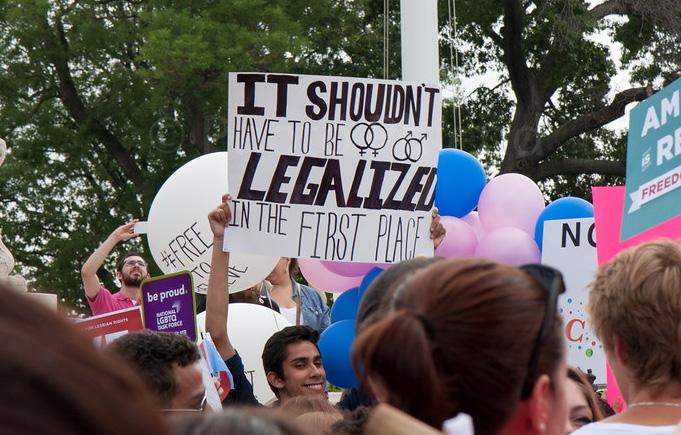
In 2015, the U.S. Supreme Court case Obergefell v. Hodges gave same-sex couples the right to marry, but now several states are pushing for this decision to be overturned. Gay marriage rights could be taken away again, yet this is not the central problem we should be protesting. The real problem is the institution of marriage itself and the way that those outside of it are discriminated against.
Gay marriage rights fall into the domain of respectability politics. According to Margot Dazey, respectability politics is “the process by which privileged members of marginalized groups comply with dominant social norms to advance their group’s condition.” With roots in 20th century Black women’s movements, respectability politics are often realized as a contentious issue within marginalized groups: certain group members will advocate for conformity and respectability in order to refute negative stereotypes, but other group members counter this practice, arguing that conformity reinforces the systems of oppression.
The latter argument is analogous to points made by author bell hooks about feminism. hooks brings to light the flaws of so-called radical genderequalizing reforms, and stresses that true feminism is “necessarily a struggle to eradicate the ideology of domination that permeates Western culture on various levels, as well as a commitment to reorganizing society so that the selfdevelopment of people can take precedence over imperialism, economic expansion, and material desires.” hooks calls for us to bring down the system itself rather than trying to achieve parity within hierarchies because such respectability politics retains the dominant oppressive structure. Moreover, the ability to participate in respectability politics is afforded only to those most privileged within a marginalized group while the multiply marginalized may never be seen as respectable and are continually excluded from any reform within an existing oppressive structure. The institution of marriage is an example of one such oppressive socio-cultural structure and rather than trying to gain equal rights for upward mobility within it, we should be tearing down the hierarchically oppressive system as a whole.
“Oh, but what’s so wrong about marriage and how is it an oppressive system?” For starters, the cultural phenomenon of marriage is not what I am objecting to here — that is a whole other ball game — but rather the institution of marriage, the state-enforced system of privileges and discrimination defining marriage as a legal phenomenon. The institution of marriage privileges
those within it and discriminates against those who are not. Being legally married invites tax breaks, insurance discounts and other state benefits. Most of all, marriage grants a sense of respectability to those who abide in it. Lori Jo Marso “having the state accord legitimacy to some kinds of intimate relationships and consensual sex, but not others, goes against basic ideas of feminist freedom” and “the state should not also be linking our benefits and rights as citizens to our sexual and intimate choices.” Those who are single, divorced or cohabiting without marriage or polygamous/polyamorous are disadvantaged by the state and positioned as second-class citizens with fewer rights and opportunities. Marriage as an institution also discriminates against people with disabilities; some may be restricted from participating in the institution at all, costing them the upward mobility it affords, and others, who may rely on state or federal disability benefits, can only participate at the cost of their income.
“So, marriage is a problematic institution, but does Obergefell v. Hodges not still represent some amount of progress?” Well, while this Supreme Court case was progressive in the movement for equality in civil rights, equality in civil rights should not be the goal. Civil rights are the product of a system that normalizes the allocation of resources and respect according to the classification of some humans as deserving and others as not. But don’t all humans deserve basic respect and equality in the opportunity to attain resources? Granting marriage rights to same-sex couples further reinforces marriage as ideal, increasingly designating those who cannot participate or choose different paths as less respectable. With Obergefell v. Hodges possibly returning to the courts for reconsideration, it is understandable to feel a sense of mourning.
After all, this push signifies a concerning shift in peoples’ attitudes
toward the LGBTQ+ community, but it is important to remember that the civil equality we attained was through privilege and at the expense of those who remained oppressed.
Simultaneously, while I have discussed the privilege associated with being able to take part in the institution of marriage and the benefits and respectability bestowed by it, there is also privilege in being able to reject the institution. Some members of the queer community cannot afford not to take part in institutional marriage as they may rely on the tax breaks, insurance discounts and other state leniences that come with it to maintain their livelihood. In this way, the potential reconsideration of Obergefell v. Hodges is a great loss nevertheless. So, gay marriage rights are representative of a larger oppressive system of institutional marriage and the possible Supreme Court reconsideration would be a great loss but is ultimately not the main issue. “Where should we focus our protest efforts then?” I am so glad you asked. We should fight to dismantle the problematic system itself, to decouple state benefits and the conferral of respectability from institutional marriage! No one’s relationship status should be dictated by a need for resources and opportunities. Our right to healthcare, welfare, financial concessions, and estate planning should not be based on the choices we make about lifestyle or relationships. Everyone — single, divorced, monogamous, polygamous/polyamorous, cohabiting, disabled, etc. — should have the same rights and opportunities!
KendraGriessel‘25isapsychologymajorwithaninterestinLGBTQIA+ topics.Theyarecurrentlyworkingon anhonorsthesisaboutcompulsory heterosexuality.Whentheyarenot workingontheirthesis,Kendraenjoys knittingandlongwalksinnature wheresheregularlyconsidersbecomingonewiththemoss.Contactthemat
Students offer perspectives on favorite places to lock in,
For the rare few who may not know, Earl Gregg Swem Library is our wonderful library here on campus. This building has housed many of us during this ongoing second wave of midterms and many more will soon fill its countless nooks and crannies as finals season rapidly approaches. However, with so many different areas of Swem to choose from, how would a newcomer to the Swem studying arena know the best place to lock in and hunker down for weeks on end? The Read and Relax area provides the studier with a much different experience than the stacks of the third floor or the Botetourt Gallery, so what is truly the best study spot?
To answer this question, I knew there was no better place to look than Swem itself. The answers from polled students didn’t vary too widely considering the wide variety of study spaces available to us. However, this will mean more competition for our favorite seats during finals season, so you may want to start thinking of a way to protect your study spot now!
The noise level seemed to be a common theme in student’s answers — some love the hustle and bustle whereas others despise it. Read and Relax on the first floor provides a comfortable and chatty space and is perfect for those group projects that are impossible to schedule a meeting time for. Meanwhile, the third floor requires complete silence to stop any distractions, including any snack breaks you may have thought about taking.
Some students noted their fondness for the laughter of the welcoming first floor, such as Marin Reeds ’28 whose favorite study spot is Read and Relax. However, others find the space to be too busy, such as Luke Mertes ’28.
“My least favorite is the first floor where people talk a lot and yell, and it’s very distracting,” Mertes said.
Other students feel drawn to their study space based on how closed off from the outside world they can be. Some love to look out of a window and see the sun and the trees.
Some enjoy people watching, gazing at students walking by who aren’t studying like you’re supposed to be.
“My favorite study spot is the second floor by the windows facing behind Swem,” Sarah Matyja ’28 said. “I like the sun on me while studying, and I lock in best.”

My personal favorite study spot is on the first floor to the left of the desktops at a hightop table facing out of a window, or the corner of the second floor with two big whiteboards and two windows. Being able to see nature but keep my back to the people around me helps me to really focus on my work, and a whiteboard is always a plus for those last minute brain dumps before a big exam.
Comfort is another big factor in many of our studying selections, whether environmental or physical. For some of
us, the discomfort can be very motivating and help us to get our work done faster. For others it ruins the whole studying experience and prohibits getting anything done.
Helen Murphy ’28 explained her favorite study spot is on the second floor by the windows in one of the armchairs.
“It’s comfortable but also really quiet,” Murphy said.
Getting cozy in an armchair and being able to watch the sunset through a window can feel like the perfect end to a long day of classes, and it provides a very calming Swem experience — maybe too calming, as I never seem to get work done when I take this route.
The environment of your study space can also create a wide variety of productivity levels. If it’s too quiet, students may feel uncomfortable and unable to work due to their fear of having the whole library know it was them who opened that bag of chips. For Rosalyn Connor ’28, a too-quiet space is not the right fit.
“My least favorite is the 24-hour study place, because I just don’t like the vibes
College Socialists amplifies student voices, challenges administration
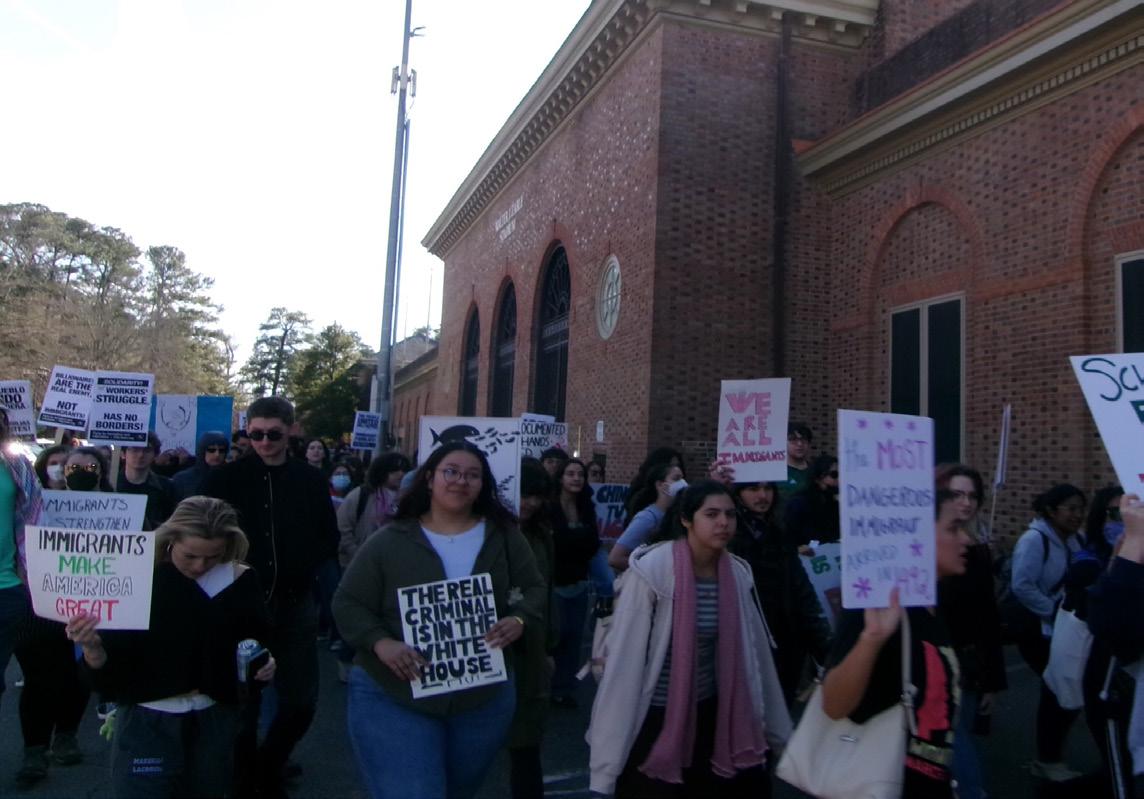
The College Socialists at the College of William and Mary are a leftist organization that aims to amplify student voices, teaching socialist theory and engaging in community organizing. The organization breaks socialism down into three main ideas: individuals should reap the benefits of the wealth they produce, people over profits and rule by informed democracy rather than oligarchy.
The College Socialists advocate on a wide variety of issues from workers’ rights to imperialism. They also educate the student body and help individuals explore their organizing power. Most recently, the club organized a walkout protesting President Donald Trump’s federal funding cuts as well as recent attacks on Gaza. Earlier in the semester, they held a demonstration against ICE.
“There’s not really an issue that we don’t involve ourselves with, because we see that most of the issues that affect students at William and Mary and the workers in Williamsburg are just the consequence of capitalism,” College Socialists member Adam Malinowski-Liu ’25 said.
Last year, the College Socialists formed a Coalition for the Defense of Democracy with over 50 student organizations which requested that the College continue to back student rights, like having police abide by habeas corpus. The College did not recognize the coalition or publicly state that they would continue to uphold these rights. Administration also did not adhere to the terms of the Student Assembly referendum to divest from Israel and audit the College’s investment portfolio. About a quarter of the student body, 2,036 students, voted in favor of the referendum.
“This is a blatant representation of how William and Mary runs this corporation and how they will claim to uphold values of democracy, inclusivity and diversity, but when it comes to student voices that cut into their profits, especially student voices of color, they will very easily ignore those requests,” Malinowski-Liu said.
The College Socialists not only seek to champion the rights of students, but faculty and staff as well, and they hope to address concerns related
to fair wages.

“It recently came out that the William and Mary administration is strategically underpaying William and Mary professors and faculty in a pretty extreme way compared to most Virginia universities,” College Socialists member Peter Lyon Huff ’27 said.
The College Socialists also partnered with Food For All on a campaign that unionized the mostly black workforce of cafeteria workers. In response, the College ended the contract with the previous caterer and did not provide the benefits or pay that the workers requested.
“The fact that William and Mary is predominantly run by wealthy, white elites and they are exploiting actively every day a predominantly black workforce really puts into question the gestures that they have made to make up for their history of slavery, of genocide,” Malinowski-Liu said. “A lot of students on campus would wonder what the purpose of the Hearth Memorial is.”
College Socialist members question the values of the College administration. They argue that the College recognizes its racist history without addressing current problems that people of color face on campus.
“The College of William and Mary was founded through colonialism and genocide and slavery, and it continues to uphold these values to this day, and we see this most explicitly in its refusal to divest from Israel as well as its promotion of war criminals like our chancellor Robert Gates,” College Socialists member Abby Carlsmith ’26 said.
Malinowski-Liu added his specific critique of the College’s handling of the divestment referendum and the Israel-Palestine conflict.
“Israel is a genocidal apartheid state, and for the last 80 years has been conducting a genocide against the Palestinian people, as well as constantly seeking out offensive conflict with every other country in that part of the world,” Malinowski-Liu said. “It is through William and Mary’s refusal to divest from Israel and all compa-
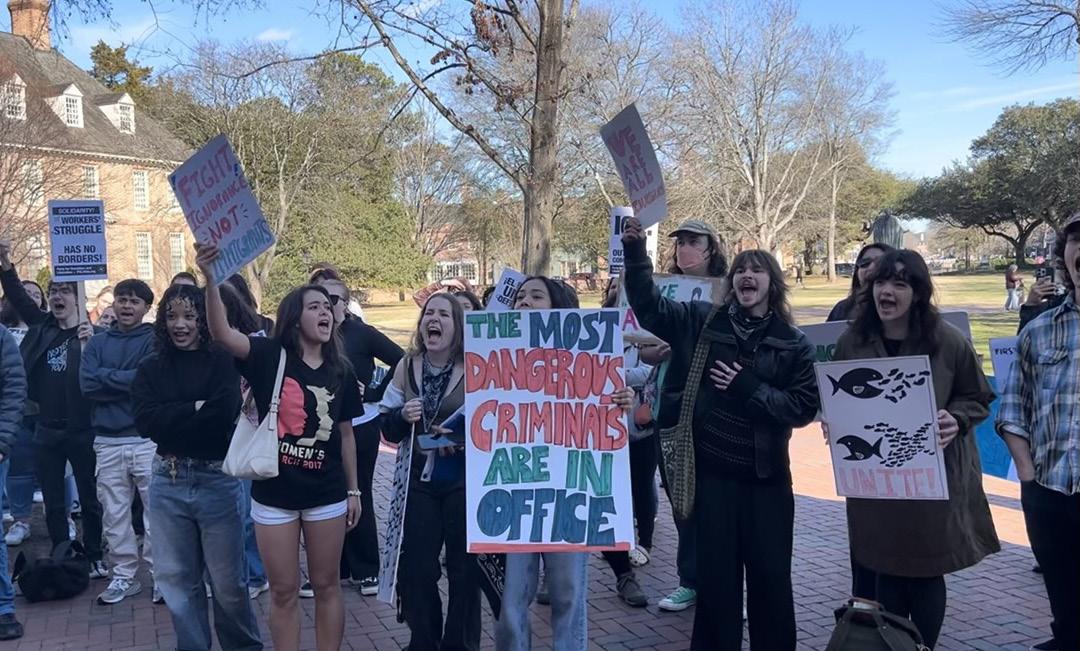
nies that have operations in Israel that they have clearly put themselves on the side of genocide and the side of genocide denial.”
The club also hosts a weekly book club that covers socialist theory, ranging from foundational theorists, like Hegel, Marx and Lenin, to more modern and diverse authors. For the rest of the semester, Carlsmith said the book club would focus on black and female socialists.
Huff explained how a student recently came to the book club to discuss their concerns about funding cuts to research and worries about their future career opportunities, which ultimately led to the idea for the recent student walkout.
“We listened to the student, we gave her three hours of time and we built a structured plan of organizing how to mobilize her ideas in a practical way,” Huff said.
College Socialists members highlighted the importance of community organizing and student power in achieving political progress.
“Student power was instrumental in building the enslaved peoples memorials on campus and the recontextualization of places of campus, removing colonial and confederate monuments and changing the symbols on the William and Mary scepter,” Huff said.
Members said that historically, the College’s administration has stood in opposition to progress, and students have been the driving force behind anti-racist movements on campus.
“Student solidarity in the ’60s was instrumental in desegregating the College, which happened with the publication of spontaneous articles in The Flat Hat which were against the system of segregation in the south,” Huff said. “People were fired from The Flat Hat at the time for expressing such views.”
College Socialists members specifically argued that the role of students is to advocate for progress and push the administration, particularly when it comes to issues that students of color face.
“Students who are people of color at William and Mary have historically felt very unwelcome.
You could look at basically every political period over the last 60 years and William and Mary has been historically very conservative and inflexible and self-contradicting of their claims to uphold democracy plurality and egalitarianism when they have promoted white supremacy time after time,” Malinowski-Liu said.
The organization is also concerned about student rights to protest and express their freedom of speech on campus.
“Student activism on campus is heavily policed, and student organizations like Jewish Voices for Peace and the pro-Palestine groups have been threatened with deregistration if they continue to engage in vocal forms of protest,” Huff said.
Though seeking to empower student voices, the club does not wish to invoke harm upon the College administration.
“We want to have an empathetic, good faith dialogue with the administration, and in the past we’ve had that, and I think that is the legacy of the memorials and the previous decade of student work,” Huff explained.
The College Socialists’ goal is to fight for the dignity and rights of everyone in the Williamsburg community, with an emphasis on openness to students of all backgrounds, faiths and political beliefs. The club welcomes any student interested in becoming more politically active and aspires to unite the College’s diverse student body.
“We would highly encourage people to come to College Socialist meetings just to understand the work that we do, but we would more broadly encourage students to join any social, cultural or political organization for the sake of uniting more of the community and the student body so that we can look out for each other,” Malinowski-Liu said.
College Socialists meets every Monday at 6 p.m. in Blow Hall, Room 322 and hosts book club Saturdays at 3 p.m. in Blair Hall, Room 219. Interested students can find information on the club’s Instagram (@collegesocialists) and by joining the GroupMe linked in their bio.
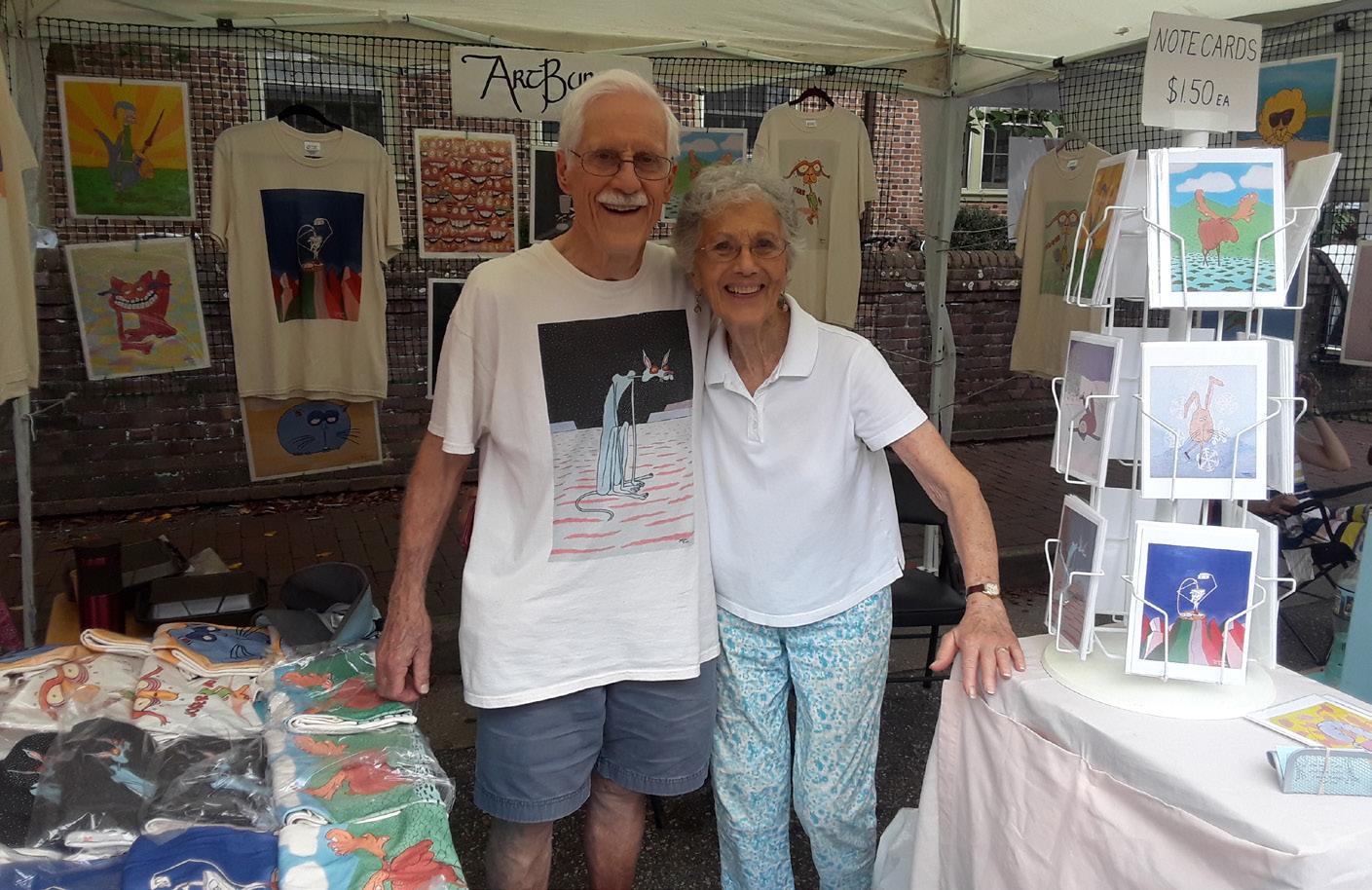
For Gary Curtin, creating art was a way to express his creativity and encourage others to do the same. The local Williamsburg art vendor passed away this winter after over a decade selling his designs to the community.
After moving to Williamsburg in 2006, Curtin began selling original prints, T-shirts and greeting cards at Second Sundays, Williamsburg’s monthly street festival, in 2011. His creations, known collectively as ArtBurn, are loved by students at the College of William and Mary and Williamsburg community members alike.
Originally from Denver, Colo., Curtin worked as a geochemist and drew maps of mineral resources across the Western United States. His daughter, Molly de Marcellus, remembers watching her father’s love of art express itself since she was young.
“He was not professionally trained, although as an adult he did take a few classes to branch out into painting. But really he was an illustrator. He just has his own style and it was hard to get away from that,” de Marcellus said.
De Marcellus went on to explain the unique style that characterized Curtin’s art.
“When I was a kid growing up, he
did some of the outlines that he has now in the bright colors,” de Marcellus said. “He originally would take magic markers and he would draw the line drawing of the figure and then he would trace the outline going around the inside with different colors. There was a lot to look at, a lot of color. He was just always doodling when he came home from work.”
As a regular vendor at Second Sundays, Curtin was able to engage with members of the Williamsburg community and enjoyed talking to them to hear their stories. He also got to know the other regular vendors, like his long-time booth neighbors Matt and Rhonda Starcher from MaD Seasonings.
“He loved connecting with people. He was very curious, very intellectually curious, and he just loved meeting with people and asking them about their lives,” de Marcellus said. “I think for him, it was just the enjoyment of being at Second Sundays and interacting with people. He absolutely loved the students from William and Mary, and there were some regulars and other people who lived in the community who would come by.”
Curtin made an effort to connect with those who frequently visited his booth, and was extremely flattered to learn that one woman got a tattoo
of one of his illustrations.
Curtin especially loved seeing students from the College, and he loved remembering their names, majors and even graduation years.
Apart from ArtBurn, Curtin was also an active member of Saint Bede Catholic Church. He volunteered with Special Olympics, Meals on Wheels and Williamsburg House of Mercy.
“He was just a person who cared a lot about the underdogs and invested a lot in folks who needed it,” de Marcellus said.
Curtin’s art reflected his own creativity and created a community of those who fell in love with his bright colors and playful designs. When asked what inspired his illustrations, Curtin would reply that they were portraits of family and friends.
“I’m just glad that he didn’t try to conform to anything else or anyone’s expectations,” de Marcellus said.
An all-around creative person, Curtin loved to restore antiques, such as a square grand piano from the 1880s, and dreamed of creating illustrations for children’s books.
“He was not a conventional thinker,” de Marcellus said.
De Marcellus hopes to eventually move her father’s designs to an online platform where they can continue to be appreciated by the public.
“It was not, for my dad, a big money maker,” de Marcellus said.
“I wouldn’t expect it to be a big money maker, but it just brings me joy. And, at least among his fan club, it seemed to bring a lot of joy, and I just feel like the world needs that, especially these days.”
The last of Curtin’s physical inventory will be sold April 13 at Second Sundays. This final booth will serve as a reminder of Curtin’s lasting impact on the Williamsburg community through his ability to connect with strangers and express their shared love of art.
“I’m very proud of him, I have to say,” de Marcellus said. “Proud of his art and just proud of who he was as a person. Just a really great person.”
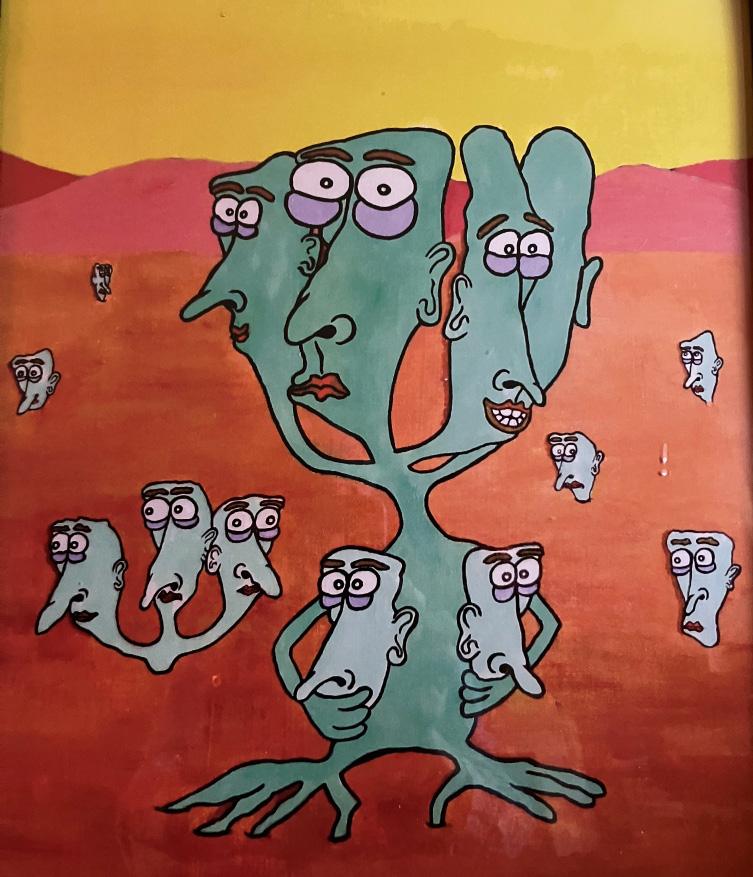



comes only from good sourcing and better searing. The burger was bold, beefy and just the right level of indulgent. A layer of lacquered bacon added smokiness and crunch, while white cheddar brought a creamy, clean sharpness that never overpowered.

Then there was the caramelized onion jam, a slow-cooked whisper of sweetness. The herb mustard aioli (an impressive ingredient offering) nudged in with a touch of tang, tying together the richness with a little herbal lift. Nestled in Reckon Acres’ bibb lettuce and a glossy bun, it was a burger
with soul, perhaps the Southern soul, as satisfying as it was smart.
Let’s not forget the hand-cut fries. Crispy and golden, with just the right kind of irregularity that tells you they were peeled, sliced and fried with care in the kitchen. They did not need anything but the housemade ketchup, which had a nice acidic snap. To drink? The passionate recommendation made by the staff, the “Petting Zoo” mocktail, was a quiet surprise. Ginger, mint, lime and club soda — four ingredients you have probably seen before, maybe at a
WOMENʼS TENNIS
strong
from Gurholt,
even the score at 6-6.
Saturday, April 5, William and Mary women’s tennis (133, 4-0 CAA) lost 5-2 to Richmond (10-6, 2-2 A-10) at Mackesy Tennis Center at the Millie West Courts in Williamsburg, Va.
While the Green and Gold cruised to a 6-1 victory over the Spiders in 2024, the story of this season’s showdown proved to be different. Saturday’s loss broke the home team’s sevenmatch winning streak, with the Green and Gold losing the doubles point 2-1 and dropping four of six singles matches.
Before play began, William and Mary held a ceremony to celebrate seniors Hedda Gurholt, Ine Stange, Alessandra Anghel and Emma Fernald, a class that proved instrumental in powering the team to three consecutive CAA Championships from 2022 to 2024.
The Spiders set the tone early in doubles play. Seeded No. 1, Gurholt and Stange fell to Richmond junior Lara Bakhaya and graduate student Andrea Campodonico.
On the second court, sophomore Francesca Davis and Anghel responded with a 6-3 win, marking the duo’s fifth consecutive doubles victory. Davis and Anghel now boast an impressive 14-2 record on the season, having fallen only to Temple (6-12, 0-0 AAC) during the dual season.
Seeded No. 3, Fernald and freshman Mira Kernagis fought tooth and nail against Spiders graduate student Claire Le Du and sophomore Lainey O’Neil. While Fernald and Kernagis claimed an early advantage, the Richmond duo managed to
MENʼS TENNIS
During an intense tiebreaker, Fernald and Kernagis surged ahead early, but Le Du and O’Neil found their rhythm and battled back. As the momentum shifted in the Spiders’ direction, the Tribe struggled to regain control. Despite mounting a comeback to level the score at 6-6, Fernald and Kernagis ultimately fell 7-6 (6), allowing the Spiders to clinch the doubles point.
Following the hotly-contested doubles matches, the singles portion of the day featured all four William and Mary seniors in action. Of these upperclassmen, Gurholt and Fernald were able to secure points for the Tribe.
At the No. 1 spot, Gurholt defeated freshman Sofia Barbulescu in straight sets by a score of 7-5, 6-4. The singles victory marked the 89th of her career, pushing her into the program’s all-time top 15 in that category.
On the sixth court, Fernald fought past freshman Abby Lee in three sets, taking the third set super tiebreaker by a score of 10-5. The win marked her seventh singles victory in a row.
However, the Spiders picked up wins in the other four games, securing the overall match victory. At No. 4, Davis fought a tough match against Le Du and went down 6-4, 6-1. A setback on the fifth court followed, as junior Elizabeth Novak claimed a 6-1, 6-3 victory against Kernagis.
At the No. 3 spot, Stange started strong, taking the opening set 6–3 against junior Lara Bakhaya. Bakhaya soon stormed back, dominating the next two sets 6–2, 6–1 to clinch the visitors’ third singles point. The Spiders extended their lead
to 4–2 on the second court, where senior Alessandra Anghel rebounded from a 6–1 first-set loss to take the second set against Campodonico. However, she could not maintain her momentum, ultimately falling 6–3 in the deciding set.
Tribe women’s tennis will return to the courts Saturday, April 12, when it travels to Charlotte, N.C. for an away contest against No. 40 Charlotte (18-4, 4-1 AAC).
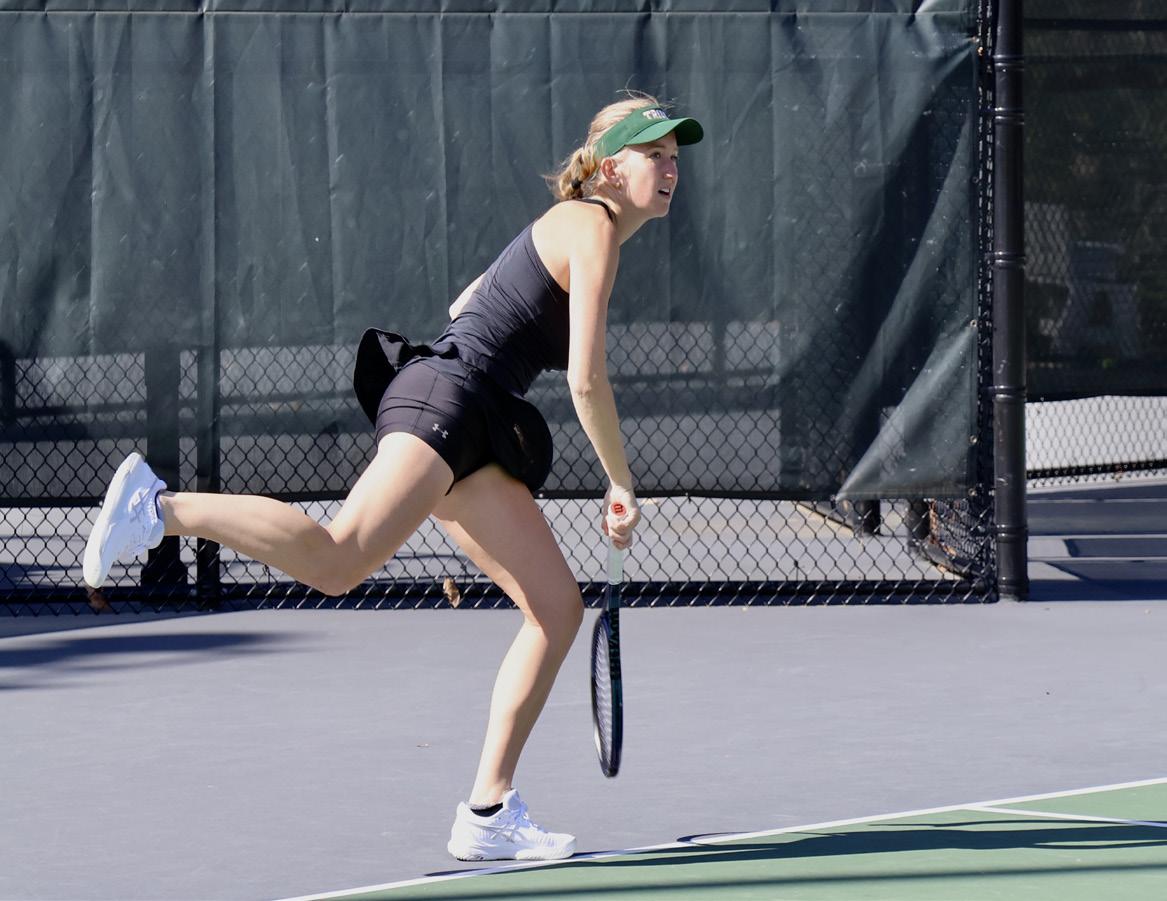
Saturday, April 5, William and Mary men’s tennis (5-11, 2-4 CAA) was outmatched at home, falling to a Coastal Athletic Association foe, Delaware (12-6, 3-0 CAA) 6-1 at the Mackesy Tennis Center in Williamsburg, Va. Although the Tribe entered the afternoon having won two of its previous three matches, the Green and Gold couldn’t overcome the Blue Hens, who had won five of their last six.
Before play began, the Green and Gold honored its outgoing seniors for their contributions to the team, recognizing players Alexander Karman,Sean Joseph and manager Viet Nguyen.
The day started with doubles matches. Sophomore Nikita Bortnichek and freshman Raz Katz headlined on the No. 1 court, Joseph and freshman Gur Trakhtenberg on the No. 2 court and sophomore Oliver Hague and junior Albert Hansen on the No. 3 court.
In the first doubles match, Bortnichek and Katz were outclassed from beginning to end, falling to the Blue Hens’ No. 1 team 6-1 in seven quick games. Hague and Hansen also fell short in their match, losing 6-2 in a similarly rapid fashion. Joseph and Trakhtenberg’s match went unfinished, as Delaware had clinched the doubles point.
The Tribe’s struggles continued in the singles portion of the afternoon. On the No. 1 court, Trakhtenberg lost a hard-fought battle against Delaware freshman Piotr Siekanowicz in three sets. After dropping the first set 6-3, Trakhtenberg fought back in the second, winning 6-3 as a result of his craftsmanship with slices, dropshots and serve-volleys. However, Siekanowicz used aggressive baseline tactics to win the final set 6-4.
The match on the No. 2 court was a different story, as Hague defeated Delaware senior Karol Malirz in a three-set thriller. After dropping the first set 6-4, Hague mounted an inspired comeback, winning the second set 6-3 and the third set 6-4. It would stand as
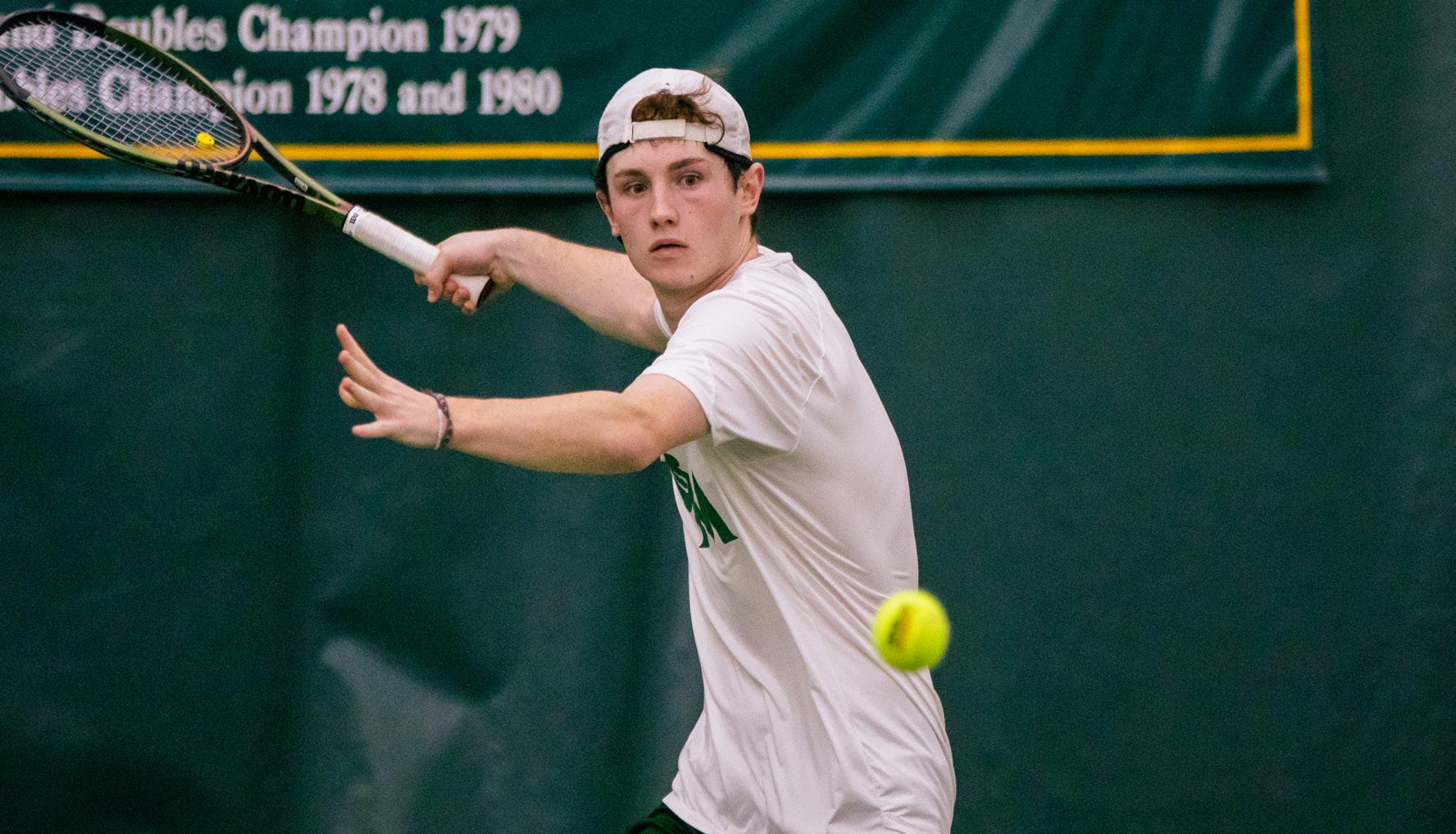
William and Mary’s lone victory of the day.
The No. 3 match marked another tough loss for the Tribe, as Delaware junior Tobey Lock defeated Bortnichek in three sets. Bortnichek started strong, with his consistent shot placement and fast movement across the court securing him the first set by a score of 6-3. Unfortunately, his momentum would soon fade. Lock emerged victorious in the second set, winning 6-1, before taking the third by a score of 6-2.
The No. 4 match featured an impressive display of endurance, as both Hansen and Delaware junior Euan Mackenzie battled through several long rallies. However, Hansen eventually fell in three intense sets.
Hansen started strong, taking the first set by a score of 6-4 due to his high levels of energy and clever shot placement. With the score even at 4-4 in the second set, Mackenzie found his rhythm and secured two consecutive points to capture the set. The final set was less competitive, with Mackenzie taking it 6-1.
The No. 5 match saw Delaware senior Alexandre Gluck beat Joseph in straight sets. Although Joseph stayed within striking distance thanks to his heavy top-spin forehand and powerful serve, it was not enough to overcome Gluck, who beat Joseph 6-3, 6-4.
The No. 6 match, which featured Katz and Delaware freshmen Itamar Tapiro, again did not go the way of the Tribe. Tapiro came out on top of a hard-fought first set, winning 6-4. Having gained momentum, he proceeded to shut out Katz 6-0 in the second set, wrapping up Delaware’s dominant match victory.
In the wake of its struggles, William and Mary looked to turn the corner Sunday, April 6, when the Green and Gold traveled to face Virginia Commonwealth University (9-9, 2-1 A10) at the Thalhimer Tennis Center in Richmond, Va. Despite its best efforts, the Green and Gold was overpowered again, losing 6-1 for the second day in a row.
Bortnichek and Katz again started off the Tribe’s day in the No. 1 doubles match. Despite
winning a second game this time around, the pair was defeated by a score of 6-2.
In the second doubles match, Joseph and Trakhtenberg picked up the Tribe’s only doubles victory of the weekend, defeating the Rams’ team of freshmen Nicolo Consonni and Gevorg Mnatsakanyan 6-4. After a backand-forth first couple of games, the Tribe duo outplayed its VCU counterpart, pulling ahead to win the match by two.
The third doubles match was a hotlycontested battle between the Tribe team of Hague and Hansen and Rams team of junior Alfred Almasi and freshman Leon Zaorski. Both teams traded games as the match began, but the VCU pair ultimately pulled ahead to win 6-4 and secure their team the doubles point.
The Green and Gold hoped to turn its fortunes around in the singles portion of the match but again came up short.
After losing the first set in the No. 1 singles match, Trakhtenberg appeared to begin mounting a comeback in the second set, but VCU senior German Samofalov eventually dispatched Trakhtenberg 6-2, 6-4. Hague suffered a similar fate in the second singles match, losing 6-3, 6-1 to Consonni. On the No. 3 court, Bortnichek also lost in straight sets, falling 6-1, 6-3 to Almasi. Neither Katz nor Karmen managed to win a set on the No. 5 or No. 6 court, and VCU cruised to a lopsided match victory.
William and Mary’s lone bright spot came on the No. 4 court when Hansen defeated VCU freshman Kostiantyn Mantach 7-6 (5), 4-3. After Mantach retired midway through the second set, the result of the match was already decided. Hansen’s sole win marked his eighth of the season in the No. 4 singles slot and earned the Tribe its only points of the day in Richmond.
Following its disappointing weekend, the Green and Gold will look to bounce back Friday, April 11, when it travels to College Park, Md. to take on Georgetown (6-12, 2-4 Big East) at the Junior Tennis Center.
Saturday, April 5, William and Mary women’s lacrosse (5-7, 1-4 CAA) fell to Towson (6-5, 2-2 CAA) 15-10 at Tiger Field in Towson, Md. The result marked the Tribe’s fourth loss in its last five Coastal Athletic Association contests. The game was competitive for the first period. While the Tigers struck first, thanks to a goal from Towson junior midfielder Valerie Thompson, the
Tribe quickly responded. Tribe senior Margaret Mooney found the net after a Towson foul led to a free-position shot, and senior Ainsley Huizenga scored less than two minutes later, gaining a slight edge of 2-1. After further backand-forth scoring, the first period ended with the Tribe leading 4-2. However, the Tigers went on to score ten unanswered goals, a figure that proved too daunting for the Tribe to overcome. Tigers senior Milana Zazakovic, a three-time all-
conference selection, turned in an outstanding performance, tallying six goals and an assist as her team outshot the Tribe 40-33.
After the dominant Tigers scoring streak, the Tribe managed to marginally reduce its deficit, rattling off a 6-2 run. Huizenga had a hat trick in addition to an assist, and Tribe senior midfielder Paige Gilbert achieved a hat trick of her own in only four shots. Defensively, sophomore Anna Armstrong led the way with two
forced turnovers, two ground balls won, and a ground control. Junior goalie Marin Wilhelm also achieved her career high in saves, stopping 14 of the Tigers’ shots. With the loss, the Tribe falls to seventh place on the CAA leaderboard, with only four games remaining in the regular season. Tribe lacrosse returns to action on Sunday, April 13, when it will face Elon (6-5, 3-1 CAA) at Martin Family Field in Williamsburg, Va.
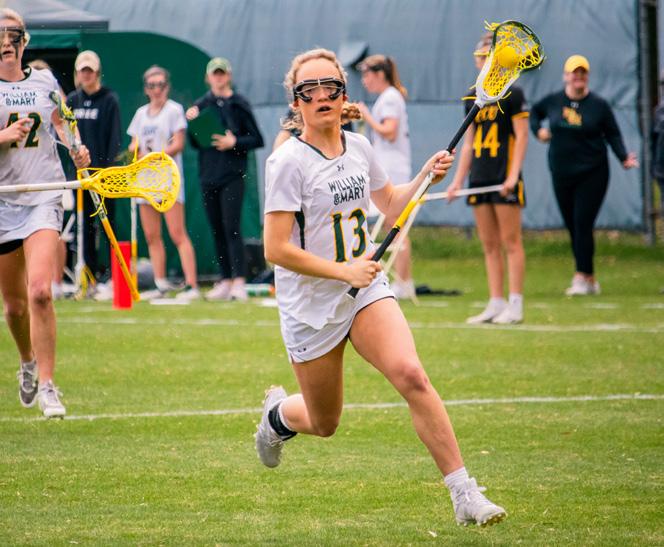
Over the weekend, William and Mary baseball (12-19, 6-3 CAA) won its second consecutive Coastal Athletic Association series, taking two out of three games against Elon (11-20, 3-6 CAA) at Plumeri Park in Williamsburg, Va.
The Tribe, which recorded just one victory from Feb. 25 to March 15, has steadily built momentum over the last two weeks, winning five of its last six conference matchups. Following the weekend’s results, the Green and Gold sit second in the CAA standings.
Friday, March 28 to Sunday, March 30, William and Mary swept Hofstra (12-20, 3-6, CAA) after pulling out three consecutive one-run wins. The series sparked the Tribe’s hot streak and served as a benchmark of progress in the eyes of head coach Rob McCoy, who praised the team’s offensive performance.
“That’s who we are,” McCoy said. “That’s who we have to be. This year, with the injuries, and the people out of position, and the pitching that we’ve had, that’s just what we have to do.”
Although the Tribe gave up 27 runs and committed six errors during the series against the Pride, continuing its season-long pitching and defensive woes, it scored a total of 30 runs and manufactured clutch RBIs in each of its wins.
“We still made some of the mistakes, or a lot of the mistakes, that we’ve been making on the mound and in the field,” McCoy said. “But our hitters are being less and less affected by it. The ability to go out there and fight each inning, regardless of what happened in the top half, especially at home, is the mark of a strong offense. I think we showed that last weekend.”
McCoy hoped his team would continue its streak of strong home performances against Elon, a team he cautioned was more talented than its record.
“[They’re a] dangerous team,” McCoy said. “Even though they haven’t had a good first two weekends, they can get you. They’ve got strong starting pitching, they compete at the plate and play pretty solid defense. It’s just like any other conference [series]. I think the tougher team is going to win. We’re just going to have to out-tough them, and it’s nice to have them at home instead of their place. We’re counting on that.”
The Tribe’s Friday, April 4 opener against Elon provided a welcome respite from the heart-stopping action of the Hofstra series. The Green and Gold took a substantial lead in the fifth inning and never looked back en route to an 8-4 victory.
The opening frames were low-scoring. Senior outfielder Lucas Carmichael and graduate student outfielder Ben Parker each recorded singles that extended their respective hitting streaks to 15 games each, but the Tribe offense could not mount a threat against Elon junior starting pitcher Justin Mitrovich. Over the game’s first four innings, the Green and Gold managed three hits, all of them singles.
The Phoenix found just as little luck against William and Mary sophomore pitcher Chad Yates, who held the visitors to one hit through three innings. A walk and a single put runners on the corners in the top of the third, but junior catcher Jerry Barnes III caught Elon junior catcher Alex Duffey stealing to end the threat.
However, a William and Mary defensive miscue soon allowed the Phoenix to surge into the lead. Sophomore center fielder Vince Fattore eked out an infield single to open the
fourth inning before senior outfielder Kenny Mallory Jr. drew a walk. Graduate student infielder Will Vergantino proceeded to test the Tribe’s defense, dropping down a bunt that trickled up the left field line.
Tribe freshman infielder Jamie Laskofski corralled the ball and attempted a running throw that flew under the glove of sophomore first baseman Anthony Greco. By the time senior right fielder Christian Rush recovered the ball, Fattore and Mallory had already scored.
Vergantino, who reached third base following his successful bunt, was promptly singled home by junior outfielder Tank Yaghoubi. With the scoreboard reading 3-0 in favor of Elon, Yates was replaced by freshman pitcher Zach Boyd. Boyd retired the side before holding the Phoenix scoreless during the top of the fifth.
Mitrovich, still on the mound in the bottom of the fifth, quickly retired junior outfielder Charlie Iriotakis and Barnes. Needing just one out to escape the inning, Mitrovich hit graduate student infielder Owen Wilson with a pitch, walked Parker and gave up an RBI single to Carmichael, who promptly stole second base. With two runners in scoring position, Rush scratched out an infield single that made the score 3-2, Elon.
Greco drew a walk to load the bases, and Mitrovich hit graduate student utilityman Derek Holmes, tying the game. Laskofski, who committed the fourth-inning throwing error that led to three Elon runs, put on display the offensive approach McCoy had praised before the game — unbothered even after making mistakes. The red-hot Laskofski, who batted .462 during the Hofstra series, dropped a two-RBI double into left field, making the score 5-3, William and Mary.
Iriotakis proceeded to slash a single into left field, driving in Holmes and Laskofski and prompting Mitrovich’s removal. William and Mary emerged from the inning with a 7-3 lead.
“Really, it’s about the process,” William and Mary assistant coach Caleb Lang said. “Continually putting pressure on the pitching staff and on the defense. They made some plays early. We had two outs in the fifth, nobody on base. Owen Wilson, our nine-hole, was able to get on base, and then we got ten straight guys on. Never giving an at-bat away, you never know which inning it’s going to be — these guys are really nice and [do] a good job at doing that.”
The remainder of the game was uneventful, with Boyd, freshman pitcher Jack Weight, sophomore pitcher Daniel Lingle and freshman pitcher Tyler Kelly holding Elon to one earned run over the final six innings. An eighth-inning Rush RBI single accounted for the game’s final run, and William and Mary cruised to an 8-4 victory.
Rush recorded two hits and two RBIs on the day, while Carmichael recorded two hits and one RBI. Parker reached base three times, recording one hit and drawing two walks, while Iriotakis finished the game one-for-four with two RBIs. Holmes’s only hit drove in a run.
Although the Green and Gold’s defense committed a costly error, its other Achilles’ heel — its pitching — turned in perhaps its best performance of the year. The William and Mary staff held Elon to just three hits, the fewest allowed by the Tribe all season.
Saturday, April 5, William and Mary defeated Elon 13-12 in a high-scoring, back-and-forth game much more typical of the Tribe’s style. Both William and Mary senior starting pitcher Nick Lottchea and Elon junior starter Nolan Straniero struggled, giving up seven runs over 3.2 innings and six runs

over 4.0 innings, respectively.
An Iriotakis RBI single put William and Mary in front early, but a grand slam from Elon junior infielder Jackson Alford capped off a six-run third inning for the Phoenix. After Parker singled, advanced to second on a wild pitch and stole third, Rush and Greco hit back-to-back home runs that brought the Tribe within striking distance. With his team leading 6-4 in the top of the fourth, Elon senior outfielder Charlie Granatell slashed an RBI single that drove Lottchea out of the game.

With the score now 7-4, Elon gifted William and Mary a run after Phoenix junior first baseman Troy McGirt misplayed a Rush pop-up, allowing it to fall for an RBI double. The visitors responded by parlaying a walk and a wild pitch from junior reliever Noah Hertzler into a two-run fifth inning.
Laskofski opened the home frame by hitting his first triple of the season, sneaking a ball down the first base line and into the right field corner. Elon’s Straniero was removed from the game in favor of sophomore pitcher Carson Wehner, who promptly gave up back-to-back home runs to Iriotakis and junior catcher Witt Scafidi, making the score 9-8.
A scoreless frame from junior pitcher Connor Kolarov followed. The Tribe then used three consecutive RBI singles to take its first lead since the second inning. A seventh-inning Carmichael double was followed by a Rush triple and a Greco sacrifice fly, and the host’s lead had grown to 13-9 entering the ninth inning.
“Six runs is not going to beat us recently, especially not here,” McCoy said. “We’re starting to get used to the types of games we’re playing. It is resiliency. Guys aren’t being bothered by being down, but at the same time, we also know what we’re capable of doing. So if the game is going in that direction, it’s just another setback, and we’re going to come back out still swinging and still putting up runs.”
With Boyd, who had relieved Kolarov during the top of the seventh, on the mound, it initially seemed as though the Tribe wouldn’t have trouble protecting its four-run lead. Although a Holmes error allowed Alford to reach base to begin the frame, Boyd proceeded to strike out Fattore on four pitches. Vergantino ripped a single into center field, but Boyd coaxed a flyout from Mallory, and Elon found itself down to its last out.
Kelly took the place of Boyd, who was taken out of the game after throwing 41 pitches. Vergantino reached second base on defensive indifference, putting him right behind Alford, who had scampered to third base following Mallory’s flyout. Kelly then walked junior infielder Justin Szestowicki on four pitches. With the bases loaded, Elon junior outfielder Alec Welshans pinch hit for Yaghoubi. After seeing three pitches from Kelly, Welshans attempted to check his swing but instead hit a bouncer past Kelly towards second base. Wilson, playing shortstop, gloved the ball but fired his throw past Greco. Alford and Vergantino both crossed the plate, making the score 1311. The Tribe’s second error of the game and 73rd of the season put the game’s result in jeopardy. Runners now on the corners, Granatell stepped to the plate, representing the go-ahead run. With the count 1-1, he hammered a Kelly pitch into left field, scoring Szestowicki. Freshman outfielder Nathan Wingenroth, who had replaced Welshans on the bases, whirled home, attempting to even the score. Carmichael fired a throw into the infield. It was relayed to the plate, and Scafidi tagged out Wingenroth, ending the game and sending the Tribe dugout into a frenzy.
COMMENTARY from page 1
Although most expect Wilken to approve the settlement, no outcome is guaranteed.
“There’s still a notinsignificant chance that she denies it,” Winter said. “She did already preliminarily approve it back in October, but there have been a lot of objections filed since that time. It is really hard to predict how those objections have or have not swayed the
judge’s decision-making process and whether she thinks the settlement’s fair or not.”
If Wilken denies the settlement, it could be revised, face more litigation or even go to trial, an outcome which could potentially bankrupt the NCAA. No matter what happens, further lawsuits challenging the terms of the settlement are also expected. For these reasons and others, College President Katherine Rowe and Director of Athletics
Brian Mann decided to put off the opt-in decision by a year. Until at least 2026, William and Mary will not participate in revenue sharing.
“We want definitive clarity on the financial and other aspects of the settlement and what it means for our student-athletes,” Mann wrote in an email to The Flat Hat. “There have been an overwhelming number of comments and objections filed since preliminary approval was
granted last fall, and there is simply too much uncertainty at this time. We are ready to opt-in in 2026 pending the final details of the settlement.”
William and Mary’s choice made it the only Coastal Athletic Association school to go against the wishes of the league’s Board of Directors, which voted that all members of the conference would opt into the settlement by the NCAA’s deadline of March 1. Why did William and Mary
seemingly act with more caution than its peers regarding the potential terms of the settlement? Why did the university decline the option to directly pay its players, potentially putting itself at a competitive disadvantage?
William and Mary believes its teams can remain competitive during the 2025-2026 academic year, even without the option of revenue sharing.