across from Bruton Parish Church, reveals secrets on 18th-century life
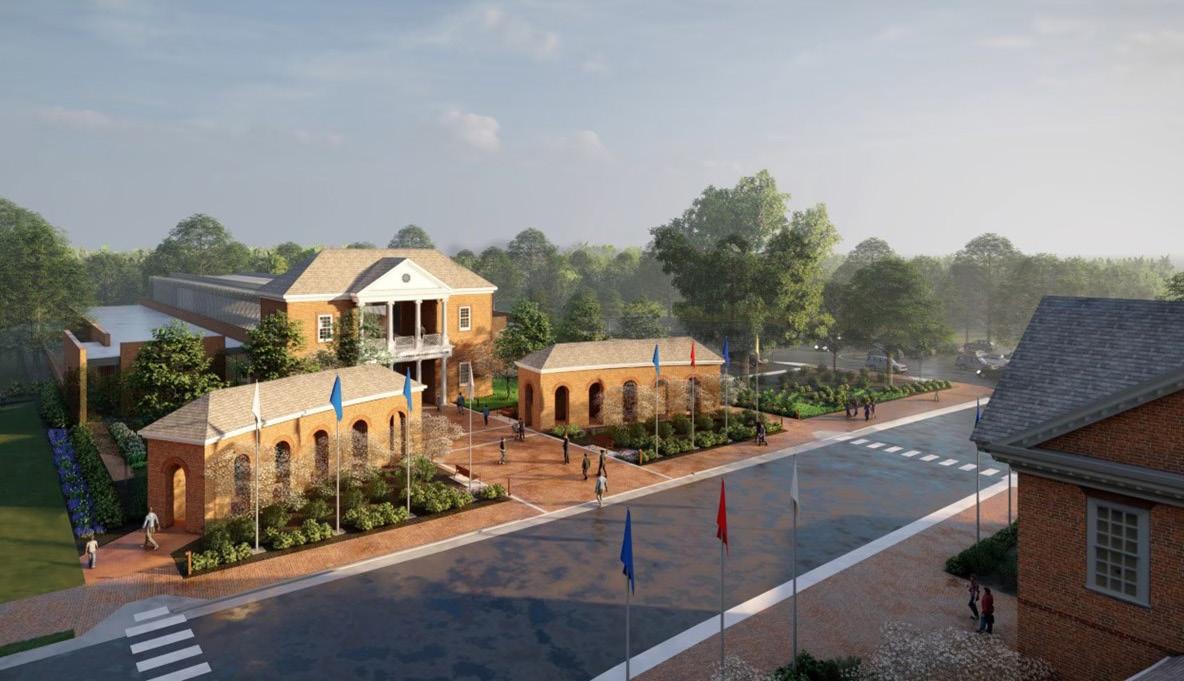
The Colonial Williamsburg Foundation will open the Colin G. and Nancy N. Campbell Archaeology Center in 2026, allowing visitors to see firsthand the archaeological process in the lab. The new center will also offer a never-before-seen view of the most significant artifacts discovered since archaeologists broke ground in Williamsburg nearly 100 years ago.
Director of Archaeology at the Colonial Williamsburg Foundation Jack Gary ’00 emphasized the uniqueness of the center in what it offers to the public and contains as a functioning archaeological laboratory.
“The building is literally transparent. There's windows into our labs,” Gary said. This aspect of the center differentiates it from a typical museum, as it encourages visitors to view and engage with laboratory processes. These include x-rays, cleaning and analyzing found artifacts.
“Whereas a museum, yes, people work
Friday, March 28, the Muscarelle Museum of Art at the Martha Wren Briggs Center for the Visual Arts hosted its first installment of a new lecture series, Art in Conversation, aimed at bringing professors together to discuss how their research connects to the arts.
John & Audrey Leslie Associate Professor of Music and Latin American Studies Michael Iyanaga and associate professor of biology Jennifer Bestman offered insights on their work in ethnomusicology and neuroscience.
The talk was organized by the museum’s newest student group, Museum University Student Engagement, which intends to increase student interest in the visual arts by hosting events for students of all backgrounds. Muscarelle interns and MUSE co-founders Max Belmar ’25 and Sierra Manja ’26 moderated the discussion.
Each professor began with an
there, but they're behind the scenes,” Gary said. “Ours is the actual workspace. You will see people in the lab.”
The new lab inside of the center will offer many changes to the storage and display of artifacts excavated from Colonial Williamsburg.
After excavation, artifacts may start to degrade and oxidize. Iron artifacts are particularly susceptible to this process. The new laboratory in the archaeology center will feature a low-humidity room dedicated to storing metal artifacts so that they do not degrade.
The heart of the center will be the study collection, containing the most significant artifacts from the past 100 years of excavation.
“It's the materials that really help us to recreate and understand Colonial Williamsburg,” Gary said. “And they will be in a central room, all glass. You'll be able to see these things in the exhibit space all along
introduction to the group. Bestman explained that her neuroscience background gives her a more scientific perspective on how the brain processes sound waves before perceiving them as music.
“When I think about music, I think about sound and how sound makes our sense organ, our ear and our cochlea work,” Bestman said. “I think about sound waves and the way the tympanic membrane and how hair cells can transduce.
How do cells encode things in our environment? How does a sound wave make a neuron make an action potential?”
Bestman explained that all kinds of organisms are neurologically attuned to rhythm.
“Neurons love rhythm, brains love rhythm,” she said. “Insects are rhythmic animals and they communicate through rhythm.
Our cells like to oscillate and have high periods and low periods. Not knowing anything about how the brain turns that into something emotional. I would think that we
it. So, yeah, we're showing off.”
The new center will not limit visitors to only viewing artifacts and the lab process; the public will be able to engage in archaeology themselves through hands-on activities.
One of these hands-on experiences could potentially be washing and cleaning small artifacts, like animal teeth, that have newly arrived at the lab.
“The first step in the process for this thing when it comes to the lab is to be washed,” Gary said. “We may start inviting people to do those simple processes.”
The center will also offer a new educational experience for visitors to Colonial Williamsburg.
However, for current students at the College of William and Mary, there are currently multiple other ways to become involved with archaeology in Williamsburg.
The college offers the National Institute of American History and Democracy certificate
are built for rhythm.”
Iyanaga specializes in the study of Latin American music and wrote his dissertation on Brazilian music tradition. He outlined the focus of ethnomusicology, which considers music as a culturallyconstructed phenomenon.
“Ethno comes from ethnography or ethnos, it comes from people,” Iyanaga said. “And musicology comes from the study of music. What the discipline suggests, and what I actually do believe, is that music is made up by people. In other words, nothing is inherently music.”
Iyanaga elaborated that the definition of music shifts based on cultural context.
“There are cultures in which music is defined very specifically,” he said. “The chanting or singing of the Quran, for instance, is not music in that particular context because music is secular. It’s something else. All sound could or could not be music depending on how you’re defining music from the outset.”
Bestman talked about her current
program in Public History and Material Culture. The program works with the Colonial Williamsburg Foundation to offer both field work experiences and internships.
“We currently teach three classes in the anthropology department for William and Mary,” Gary said. “And we do a summer field school, so you can come, and you can dig alongside us for six credits.”
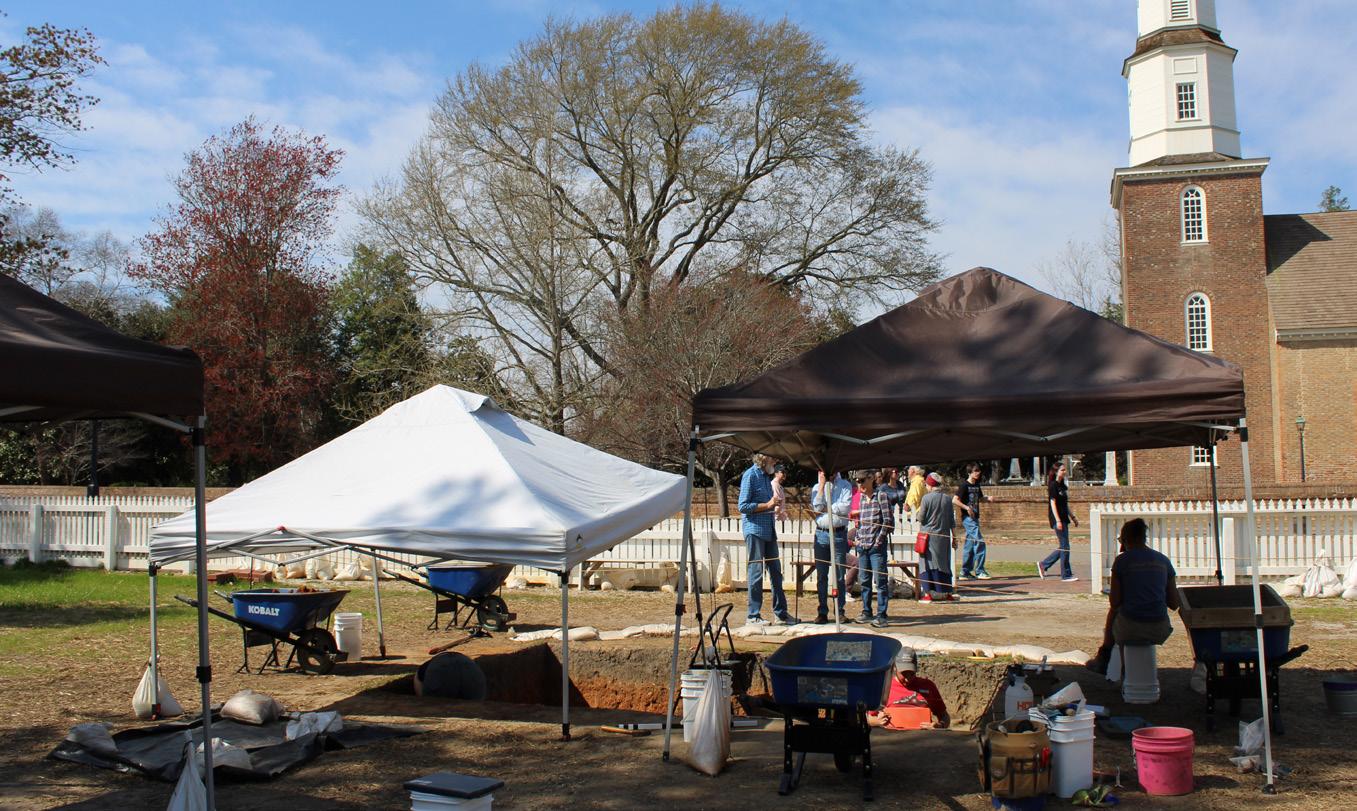
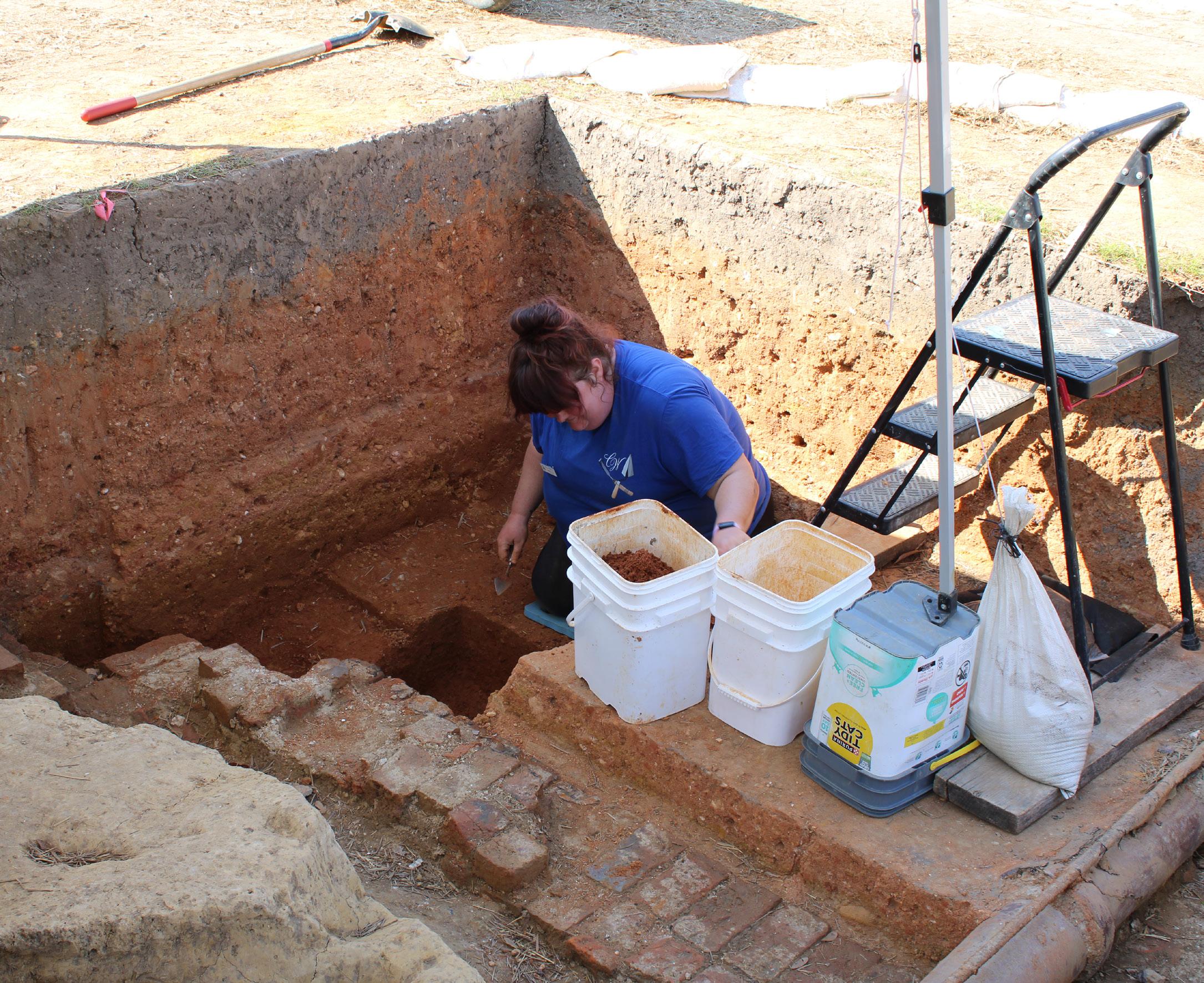
One of the active dig sites is the Peter Scott site. Peter Scott was a prominent cabinet and furniture maker in 18th-century Williamsburg, and his finished works appear in the Colonial Williamsburg Art Museum. First excavated in 1958, archaeologists returned to the site in January 2025 to further understand unanswered questions that the 1958 team left.
One of those new focuses is the role of enslaved laborers at the Peter Scott site.
research in neurodevelopment and the mechanisms which drive the creation of 86 billion neurons. She described the beauty of her observations at the cellular level, which she saw as a form of natural art.
“I think my cells are beautiful, they’re fluorescent, they have sparkly things that move inside them,” Bestman said. “When I show my data to the world, I’m not going to show you the ugly ones, I’m going to show you the beautiful cells that represent my work. There are choices that I make in order to tell my story to scientists.”
Iyanaga touched on the intuitive emotional response to artistic creations that his ethnomusicology research has uncovered.
“What makes something beautiful is that you can’t describe it,” he said. "It makes you feel something. If you tried to analyze the thing, you’d go, ‘I like the way it makes me feel.' What’s most exciting is when you’re drawn to something intuition-wise.”
Iyanaga’s research on Brazilian
music focuses on the social phenomenon of collective singing, where communities create music for enjoyment rather than as a commercial product. He shared that these forms of music are rarely considered art.
“What I think is most interesting is people who make music who don’t call themselves musicians,” Iyanaga said. “And no one else would either. That’s fun to me.”
Bestman recalled a similar experience she had in an undergraduate art history course where she learned about traditional quilt-making. The course expanded her perspective on what should be considered artistic creation in a modern world.
“Why do we admire modern art and abstract painting when women have been creating similar things out of pieces of cloth for generations? It’s a practice that we should admire as much as any fancy painter,” Bestman said.
SUSANNAH POTEET // CHIEF STAFF WRITER
Peter Scott site,
Colin G. and Nancy N. Campbell Archaeology Center will fea ture
the
news insight
“What makes something beautiful is that you canʼt describe it. It makes you feel
“ “
something.
If you tried to analyze the thing, youʼd go, ʻI like the way it makes me feel.ʼ Whatʼs most exciting is when youʼre drawn to something intuition-wise.”
̶
Professor Michael Iyanaga
Monday, March 31, the College of William and Mary announced its new associate vice president for public safety, Cliff Everton ʼ96. Everton is currently executive assistant director of global and Atlantic operations at the Naval Criminal Investigative Service.
The AVP position is new, and the College administration created the role to connect different offices dedicated to safety on campus, such as the campus police, emergency management, risk management and threat assessment teams. In the role, Everton will also collaborate with the Student Affairs office in preventative efforts related to student mental health crises and acts of sexual violence.
Senior Vice President for Student Affairs and Public Safety Ginger Ambler ʼ88, Ph.D. ʼ06 spoke on Evertonʼs strong fit for the new role, particularly given his over 25 years of law enforcement experience.
“Everton brings an exceptional breadth and depth of experience from his career at NCIS, and our community will also benefit from the years heʼs spent developing strong partnerships with regional intelligence and law enforcement agencies,” Ambler said. “A values-driven executive leader, his professional portfolio reflects his commitment to excellence, integrity, compassion and service to others. I am delighted to welcome him back to his alma mater and to my senior leadership team.”
Everton will start as associate vice president for public safety June 10, when he will begin serving as the senior safety and security official for the College. He shared his excitement to start at his alma mater.
“I never imagined my journey would lead me back to William & Mary so many years after graduating,” Everton said. “Yet, I can think of no higher purpose than working every day to ensure the safety and security of all who teach, learn, live and work together at William & Mary. I canʼt wait to get started.” A THOUSAND WORDS
Matt Swenson ’26 re ects on time in Student Assembly post election win, strengths he brings to new position
Swenson
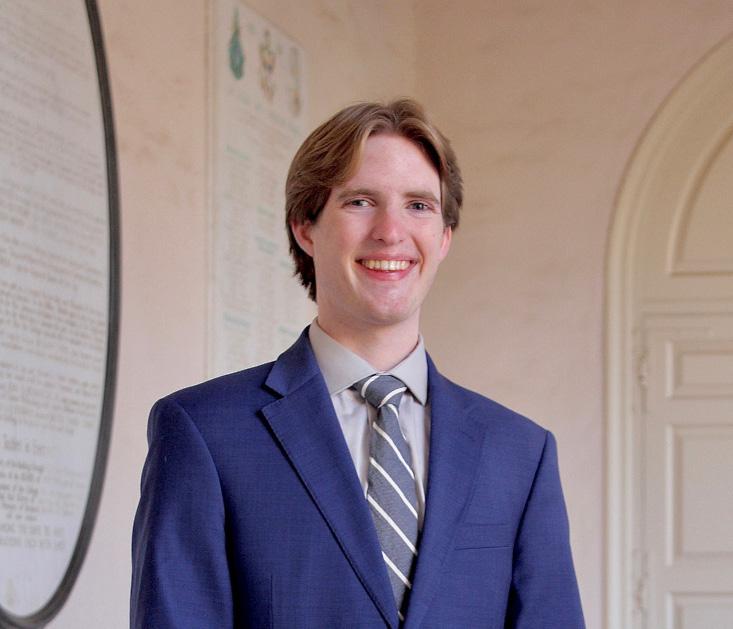
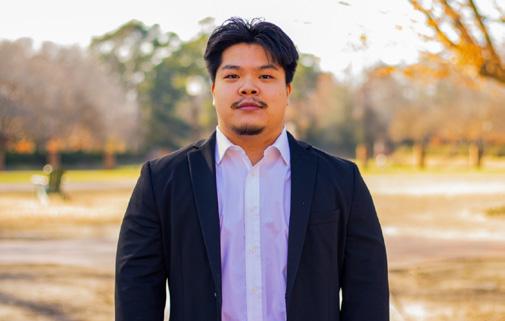
Sen. Matt Swenson ’26 spontaneously ran for Student Assembly Senate during his freshman year at the College of William and Mary. To his surprise, as an out-of-state student who knew no one at the College, he won. After years of dedication to the Senate, Swenson will become its chair as the next SA vice president, serving alongside class of 2026 President Zoe Wang ’25 MPP ’26, SA’s new president.
Swenson grew up in a small town in New Hampshire, with only 20 people in his high school graduating class. During the tough times his family faced in his childhood, he remembers the immense support his tight-knit community provided, which he notes was essential to his growth into his current self.
“I’m very appreciative of places that shape your identity because I was in that town my whole life, and that shaped my viewpoint of the whole world,” Swenson said. “I think that knowing where people come from is a very important part of identities that we don’t always talk about. So that’s really something that shapes how I approach everything that I do now.”
make sure that people in Senate are getting their work done and also connecting the Senate with the Cabinet because sometimes they can feel very disconnected, even though we want them to have the same overarching goals towards the same missions. But, sometimes, that doesn’t always happen. So I really want to use my role as vice president to kind of be like the glue to make sure that everyone’s working together collaboratively,” he said.
When Swenson decided to run for vice president alongside Wang, he had prior experience campaigning to bring to the table. Through projects in his public policy classes and volunteer work, he felt prepared to take on the challenge of this election. He highlighted his canvassing efforts this past November for the Historic Triangle Democrats.
is opportunity took him outside of the College’s “bubble” and gave him experience listening to issues that matter to people outside of the campus community.
ʻSTABILITAS ET FIDESʼ | ESTABLISHED OCT. 3, 1911
Org #101 P.O. Box 8795, Williamsburg, VA 23187 Editor flathat.editor@gmail.com
Swenson serves as the Senate’s Finance Committee Chair, helping manage budgetary requests and complications. Swenson never considered himself a financial expert, but he learned to love the detail-oriented work the position brought.
“I did not think I was like a money kind of nance person, but I am someone who can really look through the noise and see the rules,” he said. “ at’s what nance needs to do in Student Assembly because we’re all very passionate, and a lot of the initiatives we see are very good ideas, but it’s also about making sure that we’re consistent and fair with them.”
Swenson’s time as committee chair in uenced a key part of his and Wang’s campaign – reforming the Organization Budget Allocation Process – which he noted is often complicated and confusing for student groups to navigate.
“We really focused on making sure that the OBAC process is something that students understand, that it works for them and that it’s here to help them, not to hurt them, because a lot of students are very frustrated by the process. And, having been through it for three years on nance, I kind of understand the nitty-gritty of why students are upset and what we can do to x that,” he said. is collaborative and compassionate energy is a pillar of Swenson’s personality. He enjoys openly communicating with his peers to work through issues and thinks this aspect has bene ted his work in the Senate.
“I like to sit down with people and talk things through. I think that’s a skill set I really like to bring to a deliberative body like the Senate,” he said.
Swenson hopes that this will shine through in his new role. He acknowledges that as the Senate’s leader, this open dialogue will be even more important. He wants to use his keen communication skills to facilitate more conversations between the Senate and the Cabinet.
“I see myself as vice president as a mediator. I want to
“I’m very passionate about making sure that college students aren’t stuck in that kind of ivory tower, and that’s what I enjoyed about being able to canvas around Williamsburg,” Swenson said.
Swenson was also involved in Ayanna Williams’ ’26 successful campaign for a seat on the Williamsburg City Council. Swenson and Williams worked together on the Senate’s nance committee, and when Williams asked Swenson to join her campaign team, he could not refuse the unique opportunity.
“I was really glad to help her because she’s an amazing candidate, and I know a lot of people appreciate the voice that she brings to city council now, and students are really looking forward to her representation there,” Swenson said.
Swenson gained valuable lessons from the campaign, including the importance of trusting himself — something he’ll carry into his own upcoming term.
“I learned to be more sure of myself and kind of be more assertive because you’re always gonna nd people who question you. And again, like I was talking about, how I nd it di cult to kind of sell myself to others and get them to like me. So that was very di cult, but I’ve learned some people are just not gonna be huge fans of you. But for every one person like that, there are gonna be a few others who really stand by you and really believe in you, and that’s what gives me the energy to keep going,” Swenson said.
While Swenson knows he wants to work in politics after graduation, he is open to exploring all areas — he just wants a position where he feels he can make a di erence in the world, where he can advocate for those whose economic situation he feels is not adequately represented in government.
“We’ll see where I go from here. I’m de nitely interested in politics, just where in politics I end up, I’m not sure. I just know that whatever I want to do, like going back to my professional motivations on making the economy fair for everyone, whatever I feel is the best way I can do that is what I’ll end up in,” Swenson said.
COURTESY IMAGE / KYLEE LEDFORD
College alumnus chosen as new associate vice president of public safety
MOLLY MARTIN // FLAT HAT NEWS EDITOR
FLAT HAT NEWS BRIEF
COURTESY IMAGE / MATT SWENSON
Matt Swenson won the vice president position in recent Student Assembly election and shared insight on past SA committee role s.
MONA GARIMELLA /
DOGE cuts affect students in public service, including College alumna Students lose summer internships in various federal agencies, l eft scrambling for job prospects
LIAM
Monday, Jan. 20, President Trump signed an executive order establishing the Department of Government Efficiency. DOGE has significantly cut the federal government’s budget under the Trump administration.
Many of these funding and workforce cuts have impacted students’ ability at the College of William and Mary to get internships and jobs in public service.
Ryan Silien ’28 described having his USAID-funded internship rescinded due to DOGE cuts to the agency.
“It was devastating,” Silien said. “Personally, because I’m still in a state where I don’t really know what I’m doing this summer.”
Silien’s internship was through the Freeman Intern Fellowship program at the College’s Reves Center for International Studies. His project focused on supporting democratic governance in the Philippines, but the Trump administration canceled all of its USAID funds under its DOGE efforts.
“[The Philippines has] faced a lot of democratic erosion and backsliding recently,” Silien said. “And so, a project like this seemed to me like an amazing way to make an impact and also learn some incredible things, and then before I knew it, it was gone.”
Silien encouraged others going through a similar experience to speak out.
“I don’t think everyone needs to be an activist, but I think especially nowadays, the people impacted by this, maybe have a bit of an obligation to perform activism in some way,” Silien said. “Maybe that’s getting involved in a campaign, but recognizing that there’s a reason why this happened, and if you can, trying to find ways to make things better in the future.”
Aashni Jain ’24 recently graduated from the College and found a job with EnCompass LLC, a USAID-contracted consulting company. Unfortunately, Jain lost her job, and she
wrote an online LinkedIn post explaining her situation.
“Unfortunately, like hundreds of others in the industry, I have found myself among those who have been furloughed from their positions tied to USAID contracts because of Stop Work Orders and the federal funding freeze,” Jain said.
Jain went on to express empathy with anyone else who might be in a similar position.
“To anyone else going through this, I’m so sorry,” Jain said. “Sending love and the hope that we will be able to go on with this work soon, even if we are in different roles.”
Mei Mei Mon ’27 also had her environmental consulting internship rescinded due to DOGE cuts.
The job was under The Cloudburst Group, which ensures that construction projects receiving federal funding from the Department of Housing and Urban Development do not damage the environment.
“I was more frustrated with my family for the way that they voted,” Mon said. “The funny thing is that I got the internship because it was through the same company that my father works for, and he also voted for Trump.”
Mon believes her internship was especially important because of climate change.
“Climate change is a really big part of making buildings. You have to adjust for higher temperatures and higher storm rates, especially if you’re by the coast, and those were all of the things blatantly being targeted by the cuts,” she said.
Harriman Professor of Government and Public Policy Chris Howard specializes in social policy. He believes these DOGE cuts are a concerted effort by the Trump administration to weaken the federal government.
“I think there’s a broad scale effort to damage the federal government’s ability to function [with the Trump administration] trying to move as quickly as possible to break as many parts of government as possible before Congress and the courts can stop them,” Howard said. “Students are looking at pain just like millions of other Americans, and it’s going to be dislocating
not only for them but also for many of their parents.”
Howard shared that he’s encouraged students looking for jobs in public service to consider state and local government.
“Some of us have encouraged students, even before this year, to think about getting jobs in state and local government because there are more of them, and they’ve been growing more rapidly than at the national government level,” Howard said. “Oftentimes in those smaller settings, students can get more responsibility sooner than they would working in a larger federal agency.”
Howard had advice for students who might be struggling with internships or jobs.
“I’ve had a number of students over the years who’ve had good success working with the career center, so I would suggest going to them for help,” Howard said. “I think it’s also worthwhile to be casting a wide net in the types of jobs that you’d be interested in.”
Howard added that he recommends students continue doing what they can to find work after college, even if it’s not what they directly want.
“I encourage almost all of my seniors to think about working after college rather than going to grad school right away,” Howard said. “You may not be able to find the job right after college that you’re going to stick with for years, but it’s a start, and it’s a beginning, and it’ll sort of give you an opportunity to look around for something better or something different.”
Howard also sympathizes with students who might be going through a lot right now.
“My heart goes out to any number of people these days, and I know that students are not only thinking about jobs and careers but also financial aid and immigration status,” he said. Mon agrees that students are especially feeling the impacts of these cuts right now.
“I really hate the argument that, oh, well, it doesn’t directly affect me, but it does. It affects everybody. Everyone is a target, and to say that it doesn’t affect you is just ignorant,” Mon said.
SA meets with VIMS dean, passes new Sexual Violence Prevention Act
Members present proposed OBAC budget allocations, highlight upcoming student events
SUSANNAH POTEET CHIEF STAFF WRITER
Tuesday, March 25, Dean of the Virginia Institute for Marine Science
Derek Aday spoke to the Student Assembly Senate about the Year of the Environment and the College of William and Mary’s continued efforts in advancing sustainability.
Aday highlighted key upcoming events that are sponsored by the Year of the Environment, including the April 22 presentation of “Ocean Soul” by Brian Skerry. To further celebrate , new merchandise featuring the Year of the Environment logo will soon be available. Aday emphasized the importance of student involvement in the Year of the Environment and sponsored events and initiatives.
“The more student involvement we have, I think that’s directly correlated to the success of the year
AROUND THE ʻBURG
itself,” Aday said.
Secretary of Sustainability Aayla Kastning ’26 also serves on the Year of the Environment committee and will work to ensure a consistent communication process between the committee and the Student Assembly.
Newly and currently elected students in the Masters in Business Association also introduced themselves to the Senate. Vedant Singh MBA ’25, the current representative for the Raymond A. Mason School of Business graduate program, led the discussion of potential connections between business graduate student groups and undergraduate students and clubs.
The Senate also presented the Annual Budget Presentation, outlining the budget for the 2025-2026 academic year.
The budget detailed general allocations, such as OBAC allocations and contracted organizations allocations, including Alma Mater Productions, Media Council and Alpha Phi Omega. The budget also
detailed specific event and project expenditures that occur annually.
Class President Matthew Hwang ’25, Sen. Jeffrey Gu ’25, Sen. Hazel Vineet ’25 and Sen. Kyle Lewis-Johnson ’25 introduced The LDOC Beer Garden Act III. If passed, this bill would establish a Beer Garden event on the last day of classes, Friday, May 2. The bill would allow students 21 and older to participate in the Sunken Garden social event, which would feature a DJ.
The chamber passed the Democratic Integrity Restoration Act, amending the constitutional requirements for a bill to pass from a simple majority of a quorum to a simple majority of all senators.
The chamber tabled the Mental Health Journal Act, citing concerns regarding the efficiency of journal distribution and usage.
The chamber passed the Sexual Violence Tertiary Prevention Act II, which will provide funding for flyers
and business cards raising awareness about resources for survivors of sexual violence. These resources include on-campus resources such as The Haven, the student health center, the counseling center, campus police and the Title IX office. The resources also include off-campus resources such as the Avalon Center, Timely Care and the Callisto Vault.
Sen. Yasmin Kudrati-Plummer ’28, who introduced the bill, celebrated the legislation’s impact.
“It speaks for itself, it’s supposed to get the word out for survivors,” KudratiPlummer said. “It’s not too expensive, but it does a lot.”
The chamber also passed the Let my Senators Go (Abroad) Act, which allows senators to study abroad during their term. + However, the act mandates that senators cannot serve more than 30 days of their term abroad.
SA President Terra Sloane ’25 spoke on SA’s upcoming events.
The Colonial Relays field day, cosponsored with the Student Athletics Association, and the Literary Arts Event will both take place Friday, April 4.
Sloane highlighted the upcoming pride events in April, as well as events for Sexual Assault Awareness Month, including a Title IX town hall April 23.
Secretary of Academic A airs Josiah DeSarro-Raynal ’25 provided updates on upcoming events involving the department.
“It is the second week of the Arts and Democracy series hosted by Reves,” DeSarro-Raynal said. “We’ve got this group, Art Lords, which is from Afghanistan. They’re painting a mural that was a recreation of a mural they painted in Kabul.”
DeSarro-Raynal also highlighted the upcoming major declaration week and SA’s partnership with the STEP office to provide major-specific merchandise to declaring students.
Project will utilize new technologies to examine artifacts, plant remains
Students encouraged to take advantage of historical, archaeological resources Foundation boasts
AROUND THE ʻBURG from page 1
“We do have to recognize that Peter Scott enslaved two men, we know that, who were helping him in his furniture making business,” Gary said. “When we find things that are related to him making furniture, whether it’s artifacts, maybe it’s tools, maybe some of the hardware that might have been used on the furniture, we have to recognize that it’s not just Peter Scott in those spaces.” In a way, you can almost say that all this stuff informs us about the labor and I’d say probably the skill too of these enslaved men.”
The return to the site also entails the arrival of archaeological technology that did not exist 60 years ago. Although the systematic style of digging has continued, many of the tools used to find and analyze artifacts have evolved.
“We can go down to the microscopic level, and we do analysis on plant remains,” Gary said. “So we can get pollen grains that are trapped in the soil, extract them, and see what kind of plants are in an area to help us reconstruct the environment that was here. It’s changed the basics of excavating, gritting things out, separating layers.”
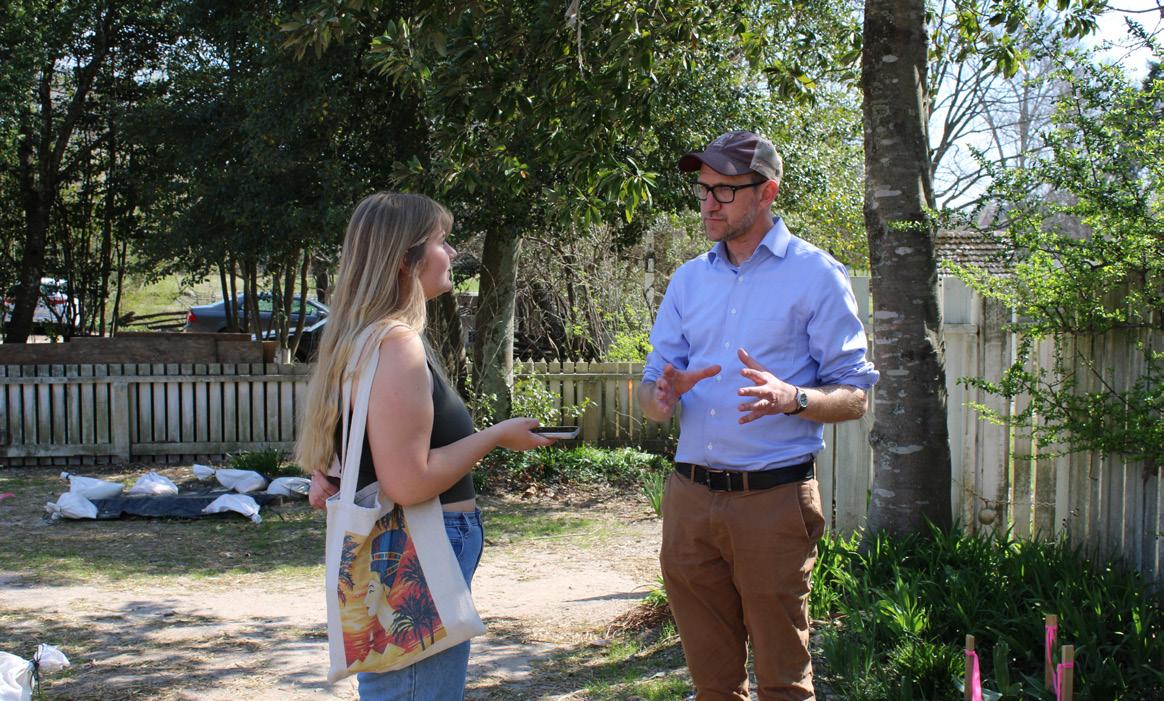
Archaeology field technician Atticus Woodruff spoke on how simple artifacts, like pottery or glass shards, can reveal many things about 18th-century life.
“Based on the way that they’re manufactured and decorated, we’re
able to date the layer that it came from,” Woodruff said. “We’re able to understand how these layers interact with each other and how the site was used.”
The site is in the beginning stages of a minimum 12-month project, and much of the early archaeological process is looking for indicators of significant dig locations. Cheyenne Johnson, another archaeology field technician, remarked on key signs the team has pinpointed at the site, such as bricks and soil marks of a foundation.
“Who put them here? Why are they here? Those are good indicators for us that something is continuing to happen here and to investigate,” Johnson said.
Over 5,000 people have visited the Peter Scott site since its opening to the public March 1. The site is located directly across from the Bruton Parish Church.
The Colonial Williamsburg Foundation has over 60 million artifacts in its collection, o ering an invaluable resource for scholars interested in 17th through early 19thcentury history and material culture.
“We treat the collection as a resource, not just for ourselves, but for others,” Gary said. “So outside scholars can come look at it, William and Mary students, it is there as a resource for anybody. If they’ve got research questions that can be answered by our collection, we welcome research into it.”
Sadlerʼs most popular spaces: where students spend most time
Student Unions and Engagement provides data on most used spaces, peak times of spaces
ANDREW HENRICKSON
Built in 2022 as an addition to the Sadler Center, the “Slice” is a 53,000-square-foot addition to the College of William and Mary’s central campus center. The space is intended to provide an “open and airy” work and social gathering space for students.
Vice President for Student A airs Ginger Ambler ’88, Ph.D. ’06 commented on the renovations in a 2022 interview with W&M News. “We know students have a remarkable educational experience at William & Mary, and now we have facilities that can really add to that,” Ambler said. “It is a dream come true in so many ways. Both of us [Ambler and Sam Sadler] just had this feeling of deep satisfaction that our students are getting a building and resources that they deserve for the most amazing student experience.”
Kimberly L. Weatherly, assistant dean and director of the Center for Student Diversity, described how the addition was informed by the suggestion of students as well.
“Student feedback was sought in selecting new furniture in common areas,” Weatherly said. “They sampled items in Sadler’s atrium and voted for their favorites via QR codes.”
In addition to being a space for study and socialization, the Slice allows departments such as the Center for Student Diversity and Student Leader
Development to be directly accessible to students.
“This is prime real estate,” Weatherly said. “Students really thought we were living on the moon before.”
With students being the main focus of the space, we can now ask the question: How was the addition received, and how have students used it since its opening?
Student Unions and Engagement provided the data for this article. Marisa MacDonald ’27 works for SUE and regularly manages the front desk at Sadler. She explained how the data were collected.
“Every hour, one of the people working at the front desk will go around to pretty much every part of Sadler and count the number of people in each spot (area),” MacDonald said.
Assistant Director of Operations of Student Unions and Engagement Chandler Agett shared that he [Student Unions and Engagement] sees the Slice as both a social and academic space.
“It can get kind of eerie when it is completely silent, that is more what Swem is for,” he said.
Nate Kim ’25 frequently spends time at the Slice. Before its opening, Kim spent a lot of time doing work in his dorm or at Swem.
“It was de nitely less crowded [the Slice], and it was in a more central location, it’s nice that you can meet up with your friends there and then get lunch,” Kim said. “I would get lunch and then we would all huddle into a study room. We would hang out there for the day, or spend the entire afternoon in those study rooms or out in the main area.”
Kim mentioned another major convenience of the Slice as a multipurpose space on campus.
“Being able to get to the dining hall super quickly is very nice,” Kim said. “You can just step down and eat then come back.”
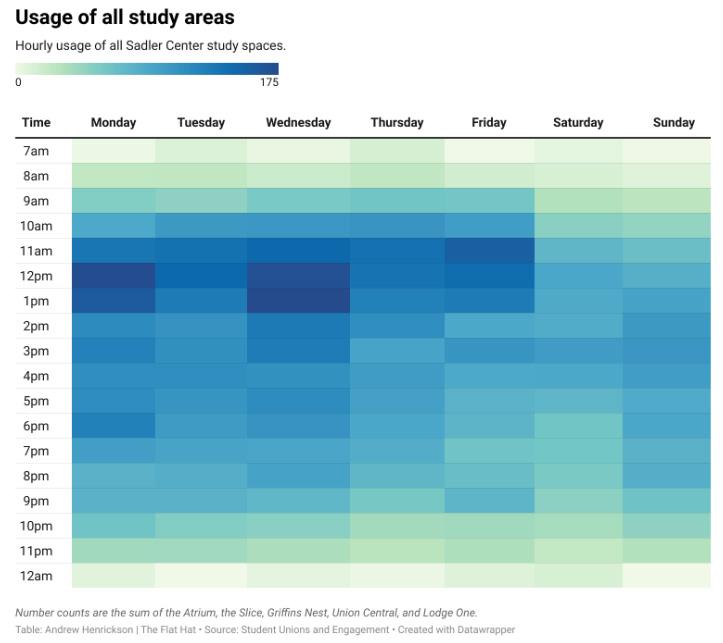
Sadler’s main study areas can generally be split into four main areas. The Slice, the Atrium, the Gri n Nest, Union Central and Lodge One. The table below displays the average number of people across the four main areas of Sadler by day and time.Sadler sees a spike in usage around noon on Mondays and Wednesdays, presumably from the noon lunch rush from Monday, Wednesday and Friday classes. Noon on Tuesdays and Thursdays sees fewer people comparatively. Sadler also sees spikes towards dinner time and sees more people on Sundays compared to Saturdays.
Sadler sees a spike in usage around noon on Mondays and Wednesdays, presumably from the noon lunch rush from Monday, Wednesday and Friday classes. Noon on Tuesdays and Thursdays sees fewer people comparatively. Sadler also sees spikes towards dinner time and sees more people on Sundays compared to Saturdays.
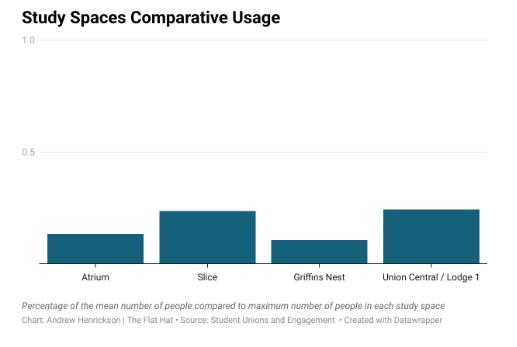
As for Sadler’s individual spaces, the following tables represent the average usage of each respective area.
The trends of each space seem to replicate the trends of the entire building. Weekdays around noon generally see a spike in people, with a steady decline throughout the rest of the day until around six. Sundays across each area see a spike in people as well, presumably due to students wanting to get work done in preparation for the week ahead.
The Slice and Union Central appear to be used more. However, the lower Atrium bar could be a misrepresentation of the true usage of the space. This is because the maximum recorded value could have been during a large event, such as sororities chapter meetings every Monday. MacDonald talked more about her experience of utilizing Sadler outside of her work.
“The general atmosphere of Swem is intense, and that’s not always what I am feeling or what my work needs,” MacDonald said.
Students attend Cycling, Bodypump, Pilates classes most often, Step classes least often Finding your fit: most popular Fitwell classes to try at Rec Center
Given the wide array of wellness classes the College of William and Mary o ers, it can be daunting to decide which to take.
To address this, The Flat Hat conducted an anonymous survey analyzing which Fitwell classes students enjoy and what makes some stand out more than others.
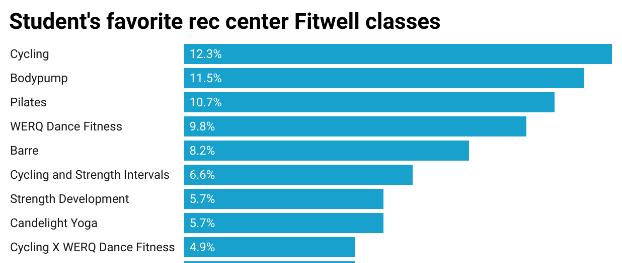
The survey found that Cycling, Body Pump, Pilates and WERQ Dance Fitness are the most popular Fitwell classes among students. The classes in the Student Recreation Center focus more on resistance, strength and cardio training. These workouts are typically more intense and focus on toning and building muscle.
Respondents said that what makes these classes an enjoyable experience is often the instructors. Respondents listed that they value “the enthusiasm and support from the instructors,” how they are “always very positive and keep [them] motivated” and “make [them] feel inspired” by fostering an
inclusive community.
In a statement to The Flat Hat, Abhaya Tyrka ’27, a barre instructor at the Rec, stated the positive energy that comes with an often full Pilates or Barre class.
“It is definitely exciting that classes are usually completely filled because it creates such an energetic and supportive environment for everyone there!” she wrote.
Tyrka also described her joy in seeing students devote time to their wellness.
“I also am just so happy that students are taking the time to focus on their wellness during such a busy time of the year,” she said.
Our survey also found that students enjoy the WERQ Dance Fitness and Cardio Dance classes because of the class’ unique workout experience.
“I love to dance, but I’m not as interested in going to the gym, nor do I have a good idea of how to exercise properly on my own,” one survey respondent said. “Cardio Dance is a great way for me to follow along and exercise, and the choreography and songs make it so much more interesting and enjoyable.”
Another respondent mentioned the fun nature of
the class.
“It’s a super fun way to get a workout in without feeling like a workout,” they said.
Another factor that makes these classes stand out to students is how rewarding they can be.
“I always feel like I have had a well-rounded
Parking pressures: data shows limited student parking access
Construction, allocation shifts cause student frustration with parking, trouble finding spaces
In recent years, parking demands have emerged in response to changes on campus, such as construction. Students that live o -campus or frequently leave campus are required to get approval for parking permits and choose from limited parking spaces on campus. Data provided by the College of William and Mary’s Parking and Transportation Services breaks down the di erent patterns in the past few years of oncampus parking.
losses at the Yates Hall Lot and Tribe Square and additions at the School of Education and Compton Lot.
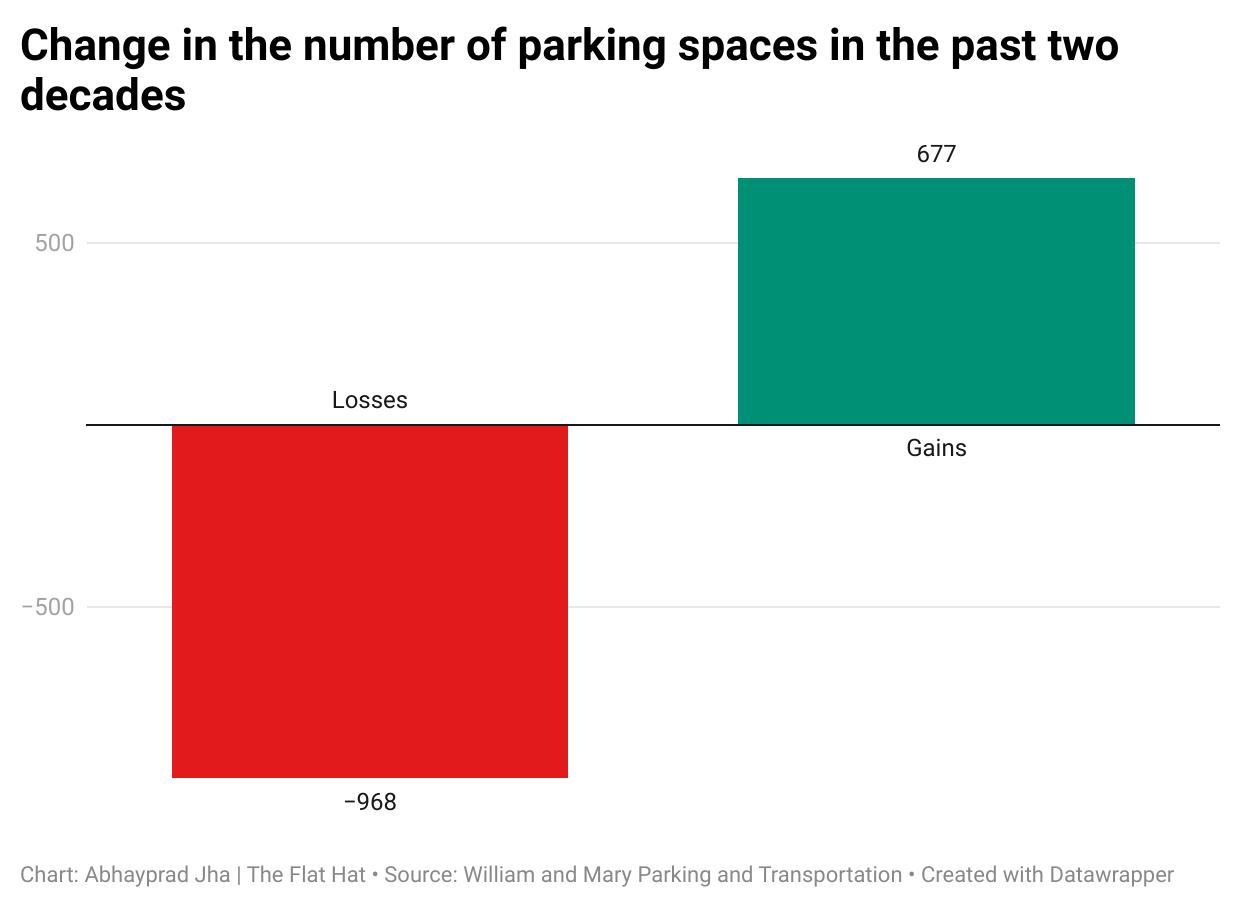
A report from Parking and Transportation Services showed a net reduction in available spaces over the past two decades. Between 2005 and 2024, the College saw a reduction in 968 parking spaces due to construction projects and renovations while adding back 677 spaces through new developments and rezoning efforts. These shifts include major
Some students have noted that these structural changes have affected where and how often they can find parking.
Elsa Hendrix ’25 described how she maneuvers her parking depending on the day of the week.
“I typically park behind One Tribe Place but also move my car to Landrum Drive on weekends. Everyone’s scrambling for parking after a lot of upperclassmen moved off campus,” she said.
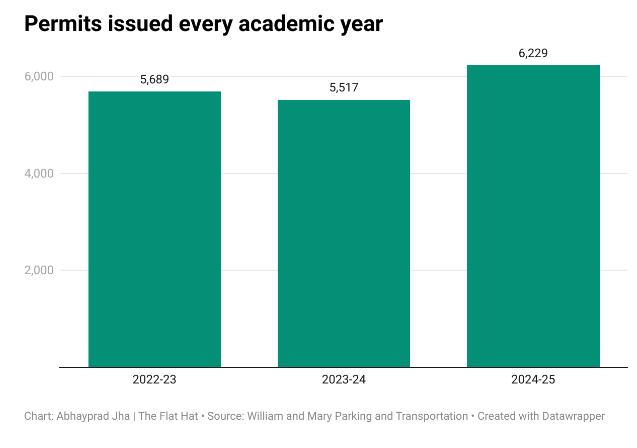
Data on permits issued in the past three years shows that a majority of available parking is allocated to faculty and staff. As of fall 2024, there were 2,128 faculty/staff permits issued, compared to 1,540 for commuter students and 1,174 for resident students. There are a total of 5,331 spaces available on campus.
Molly Trull ’26, who began using campus parking in Spring 2024, described difficulty finding spots near academic buildings during the morning.
“There’s way too few spots for students in comparison to staff. Even in the two student spots that we have, there’s such a lack of parking depending on what time you get there,” she said.
She also noted that Kaplan, the largest lot, was the most convenient to park in.
“I’d say every day, I cannot park in the
exercise of both my body and brain,” one respondent said.
In an interview with The Flat Hat, Liyana Astafa ’27 noted her love for the WERQ Dance class.
MIRA DENI
/
Abhaya Tyrka ʻ27
GUEST COLUMN
Losing focus: The death of the modern attention span
Catherine Storke
Whether I’m taking a seat at the very back of a 200-person lecture in the Integrated Science Center, or circling up with my small Shakespeare seminar, I can’t help but notice one glaring commonality in many of my classes. Glancing over the sea of hunched shoulders and glowing laptops, I can always bet that half of the screens in my view are displaying class notes, and the other half are displaying anything else.
I’m no stranger to this phenomenon, of course. I complete my fair share of Wordles, Quordles and Octordles over the course of a week (it’s probably the most use I get out of my English degree.) The New York Times crossword is a popular distraction as well. Glancing at nearby laptops, I’ve watched impressive runs on 2048, Minecraft and even Papa’s Pizzeria. We appear to be united across academic disciplines by our love for silly little games. Of course, these minor distractions on their own are not anything nefarious. Getting bored in class is an ageold problem, and the occasional zoneout is just a part of life. Yet more and more it seems that we can’t focus on what’s in front of us. All too often I will sit down to write a short paper for class and end up wasting multiple hours simply because I could not focus for more than 10-15 minutes at a time. My attention is lured away by iMessage conversations and social media notifications. Even in their absence, I restlessly anticipate them. Before I know it, I’ve completed one assignment in the time it could’ve taken to complete five. And this experience is not unique to me. It’s become the staple pastime of many college students. We live in a culture of endless options and snap decisions. If something on our feed can’t provide the instant dopamine hit we’re looking for, we’ve been conditioned to scroll and move on until we find something that does. We jump from post to post, from app to app, from screen to screen to find the things that pique our interest, at least for a few seconds. There’s no need to search, wait or work for things to marvel at in this era of algorithms. The payoff is instant, and the process is intoxicating.
But this frenzied approach to digital entertainment does not translate well to real life. What happens when it's time to sit down and grind out a paper or read an entire book? Or later in life, when we will have to attend prolonged work meetings or concentrate on unavoidable projects? These tasks have become unnecessarily daunting for a lot of students simply because of their ongoing struggle to focus. Not only do I feel half as efficient, but the enjoyment I used to derive from my favorite pastimes feels stilted and inaccessible. Worst of all, many students see this struggle as hopeless and irreversible.
Are we gradually losing our ability to consume long-form media or complete extended tasks? Insight from rising ADHD diagnostic rates, social media usage and concerned teachers of inattentive classrooms seem to suggest so.
I fear we are witnessing the slow death of the modern attention span — a demise which hits college students especially hard and has concerning implications for our future.
It’s clear that most of us recognize this wider cultural phenomenon. In many ways we’ve come to accept our ever-waning concentration as a gen-
STAFF COLUMN
Be less romantic: Love is not a fantasy
erational quirk or as some inevitable consequence of our tech-obsessed society. We joke about doomscrolling or needing multiple screens of entertainment to complete assignments (insert Subway Surfers gameplay here). We give and receive exhortations to “lock in” and commiserate with each other when we fail to do so.
The problem snowballs when it starts to impair our overall time management and we fall victim to chronic procrastination. When we perceive the difficulty of truly engaging with our tasks, it becomes much easier to put them off. I know firsthand that pit of dread that forms in your stomach before a looming deadline. I’m caught between the common sense solution of starting my essay early and the anxiety of knowing how agonizing the process can be. So, I put it off until the last possible minute and effectively continue the vicious cycle.
It’s discouraging to think how much potential we waste because we simply can’t focus on the things we’re passionate about. As college students, we have the unique privilege of dedicated learning — consistently and intensely studying the areas that represent our deepest values and interests. Yet many of us have become caught in habits of distraction that undercut our ability to do these things.
I know for me, I miss the version of myself who used to finish books in one sitting or spend hours at the piano, the version of me who could be truly engrossed in something. College is the time to be engrossed in things! And so I think it is in the best interest of every student facing a shrinking attention span to fight this growing norm.
Fortunately, science tells us that we are not doomed! Barbara Shinn-Cunningham, director of the Neuroscience Institute at Carnegie Mellon University, told TIME Magazine that it is not our actual psychological ability to focus that is being lost, but rather how we abuse our distractions — namely, technology — that accounts for much of our dwindling focus. We have become accustomed to the constant presence of our devices, tuning in to every buzz, message and notification. Adjusting the way we consume media can help us change how we allocate our focus.
I’m not going to sit here and tell you that flipping on your phone’s Do Not Disturb button is the solution to all your attention span problems. The issue runs much deeper than that. But I do think that it's worthwhile to consider the avenues through which we get sucked into distraction and to figure out the right times to close them.
Maybe paper notes are a feasible alternative to using your laptop in that one particularly monotonous lecture. Maybe it’s time to take a break from addictive short-form content like Instagram Reels or TikToks. Maybe it’s just a matter of committing to get more sleep to ensure our brains can function at their best.
Fighting to reclaim your attention span is not a battle that is instant or easy, but the payoff makes life so much more enriching. Of course, there’s always a time and place for momentary distractions when life gets hard. But ultimately, I think we owe it to ourselves to recuperate that vital asset that is our undivided attention. And if you made it through this article in one sitting — congrats! You’re on the right track.
CatherineStorke‘25isanEnglishmajor from King George, Va. She enjoys coffee, writingandhighly-curatedSpotifyplaylists. On campus, she’s involved with Flat Hat Graphics and W&M’s Baptist Collegiate Ministry.Contactheratcastorke@wm.edu.
Pema Chödrön, the Buddhist nun, wrote that “Only to the extent that we expose ourselves over and over to annihilation can that which is indestructible in us be found.” While this is a pretty extreme example to apply to modern dating, I think it’s valuable advice. Even the cliche of a “movie love story” has become cliche, and what are we left with as a generation to define love with? The only thing really mysterious enough we feel safe to call love are situations that are the ones that we understand the least. “Down so bad I prayed to God about him” reads one tweet. Other people on the internet describe intense, soul bond type connections that were never even explicitly romantic. People are no doubt experiencing love (and writing beautiful poems and songs about it), but why is there such a cultural draw to loving someone who you are not in a relationship with? What is up with the situationship?
I think for many people, the only way for love to be both an escapist fantasy and everyday reality is to project impossible standards of beauty onto someone who they know, ultimately, they are not supposed to be with. Tying one’s wildest fantasies to someone who does not exist has a kind of safety to it. As much as love stories in the past presented an escape from the material ugliness of ourselves and our lives, a situationship presents a contemporary solution to being hyper-exposed to relationships beginning and ending, and beginning and ending. Rather than risk and invest in someone who you know to be flawed, even the people who are more ready to commit, who condemn others for having “commitment issues,” avoid the responsibility and deep necessity of love by dispensing it onto people who will probably reject it.
“Love needs reality” — thus wrote philosopher and mystic Simone Weil. In our world of overwhelming tragic and astonishing news, packaged frozen meals, post-industrial, postmodern deconstructivist nonsense world, there is a sort of disgust with the world that we feel a deep need to escape: isolation, loneliness, lack of purpose. Human connection shows us the possibilities of our lives, that we are able to feel (as when we are in love) overwhelming joy at being alive, an astonishing hope and promise of fulfillment. But it is an error to actually believe that a single person, just because they are an object of affection, will give this quality to our lives. Romance is an addicting drug, and ambiguity opens the door to let us romanticize situations until we get silly with hope and warmth.
The alternative to an intense and overly-serious situationship might be using dating apps with a secret hope of finding someone whom you connect viscerally with, or just to gain the experience of hooking up with someone. Swiping along people who are attractive enough who might find you attrac-
tive enough. But I think this too gets to be depressing and isolating. Even when you match with someone you thought was attractive, it rarely leads to fulfilling or sustaining connections. I think dating apps, especially for college-age people, are a desperate substitute for the real stakes and pain of human relationships. But I think that’s part of the apps’ value: deeply unsatisfying experiences don’t leave you with the desire to pursue them again. They simply become a failed experiment, something you mature past. You learn that pressing your lips against the lips of someone whom you find physically attractive does not constitute love, and does not lessen existential dread.
To quote one last serious text, Nietzsche in his philosophical narrative Thus Spoke Zarathustra wrote that “What is perfect teaches hope.” Our lives are incredibly rich, fascinating experiences, and being in love — with the idea of someone, with someone, whatever you want to call it — is a valuable part of the whole experience. But so is disillusionment with romanticism. Real love and fulfilling relationships come with commitment and directness, a spirit of honesty that is fundamentally lacking in situationships or in the way most people use dating apps. But instead of blaming the other people within their situationships or on their dating apps, people seem to forget that you can just stop participating. Be interested in the other people in your life, the reality of love between friends and family, and stop romanticizing: the people you have crushes on will not save your life and give you purpose. That pressure will implode the potential of any romantic connection you might hope to gain.
I don’t think romantic connection is bad, either. I think that people making a shared commitment to live their lives together is beautiful, but I think imagining this with someone who you’re not even dating is setting yourself up for immense disappointment. If you are interested in someone, then tell them directly; ambiguity, the ability to romanticize a connection, is not actually inherent to love, though romantic stories tend to perpetuate this idea. Just talk to people you find attractive, and be interested in who they really are, not who you imagine they could be.
At the beginning of the semester, I told a friend that I had feelings for him, and he was, in the end, extremely fair about it. And while it was disappointing and sort of awkward, I was correct in my intuition that clearing up the ambiguity, preventing a heavy, painful misunderstanding between us would allow something more true and real to grow between us. And I was surprised to find that a lot of the things I adored about him romantically: his intellectual depth, subtle sensitivity and sense of humor, are things that I enjoyed in equal measure with other friends who I am decidedly not attracted to. The hardest thing, whether it’s clearing up an ambiguity or committing to someone who doesn’t live up to your impossible standards, is letting go of the fantasy. The reward is caring about someone real.
NoraYoon’27isachemistrymajor. Theyenjoywritingpoetryforthecampusliterarymagazine,TheGalleryand reading whatever books have a good vibe to them. They also like sitting by large bodies of water, drinking lots of coffeeandoverthinkingmovies,songs and things in general. Contact them atgiyoon@wm.edu.
Be more romantic: Love is not a game
Dating in our generation has become less about genuine connection and more about swipes, likes and late-night texts. Somewhere along the way, the pursuit of romance turned into a chaotic game of who can care less. Call it the age of casual hookups, ghosting and commitment-phobia — whatever the name, it’s clear that something in our dating culture is fundamentally broken.
Our generation has become masters of emotional detachment. We fear vulnerability because it means relinquishing control and risking rejection. No one ever approaches their class crush or tries to talk to that one person they’ve been Instagram stalking for months. Instead, we hide behind screens, send vague texts and avoid meaningful conversations. The rise of situationships — those undefined, commitment-free relationships — further reflects our unwillingness to confront our feelings. You can spend months “talking” to someone just to have it end almost as abruptly as it started. Ironically, we all hate it. We so desperately want that happily ever after, that long-lasting relationship that ends our single Saturday nights, but we just can't make it happen. And the biggest culprit is the game. With the swipe of a finger, we have thousands of potential partners at our disposal. Apps like Tinder, Bumble and Hinge promise convenience, but they’ve also commodified dating. We shop for people the same way we browse for shoes online — evaluating profiles in seconds and quickly discarding anyone who doesn’t meet our impossible standards. It’s all just too distracting. The possibility that someone out there may meet our standards is better than that cute girl that sits next to you in your art history class or that one guy that dares to ask you out on a date. It’s all just too easy. The result? Shallow connections and an endless cycle of dissatisfaction. Now, don't get me wrong; there are exceptions. Some people manage to break free from the game, find genuine connections and build relationships that withstand the constant temptation to look elsewhere. But these cases are becoming rare. Many of us are left navigating the murky waters of modern dating, holding our breath in hopes that the next swipe will be the one that changes everything. And then there’s the fear of labels. It seems like no one wants to define the relationship anymore. Instead, we’re stuck in an ambiguous gray area, afraid to ask, “What are we?” for fear of scaring the other person away. Emotional investment is seen as a weakness, and caring too much is met with suspicion. It’s a twisted paradox: we crave intimacy but reject the very vulnerability it requires.
Yet, amidst the chaos, there is hope. Real, lasting connections are still possible, but they require intentionality. We need to be willing to put down our phones, have honest conversations and embrace the vulnerability that comes with caring about someone. Love, after all, was never meant to be easy. It demands effort, compromise and courage. And maybe, just maybe, if we choose to reject the game and face the discomfort head-on, we can rediscover what it means to truly connect.
So, the next time you find yourself endlessly swiping or debating whether to double-text, ask yourself: Is this really how you want to approach love? Or is it time to step away from the game and take a chance on something real? The choice is yours. And who knows? You might just find that genuine connection you’ve been searching for all along. Destroying dating culture doesn’t mean swearing off relationships altogether. It means rejecting the toxic behaviors that have become commonplace. Our generation has the opportunity to build a healthier, more compassionate dating landscape — but only if we choose to do so. Love, after all, was never meant to be a game.
The White Lotus: “Have you ever wanted to see two brothers make out?” - Molly Martin ‘27
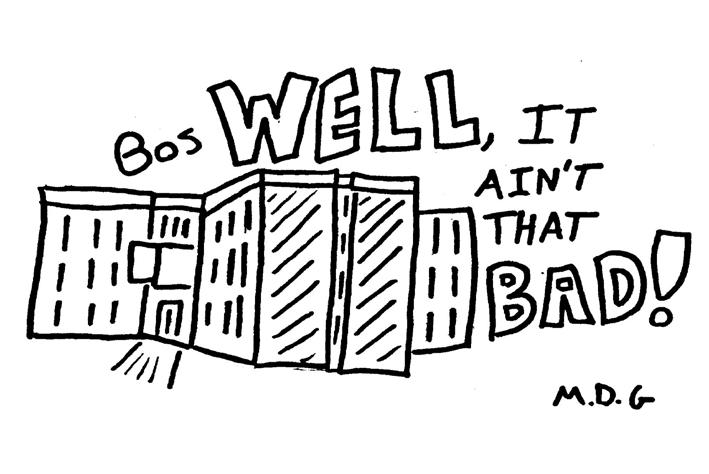
In defense of Boswell Hall
Michael Gabriel FLAT HAT GRAPHICS EDITOR
Ok, ok, I’ll admit it. Boswell Hall
isn’t the most inspirational place to take a class on this campus but, like every building here, I think it has its own character, and that is important.
When I first arrived on campus this past fall, it was hard not to notice all the construction going on. New buildings were being constructed from scratch, and other buildings were being gutted and renovated. That’s awesome, I thought. All these new buildings are going to be done in time for my sophomore year. In the meantime, I can just explore the rest of the buildings on campus.
Of course, the Wren building is the main attraction. Obviously, it’s the oldest building on campus, but it’s not going anywhere. In fact, the school is in the process of restoring it as I write this. All the other buildings around the Sunken Garden are old, but they have that preppy college look to them, and some of them, like Chancellors, are completely modern on the inside. I think it’s safe to say that they aren’t going anywhere either.
The whole Integrated Science Center complex is constantly evolving and growing. The Raymond A. Mason School of Business, the Sadler Center and Phi Beta Kappa Memorial Hall, plus the attached Music Arts Center, are all on the newer side. Earl Gregg Swem Library, Kaplan Arena and the Student Recreation Center have all been updated and/or expanded since they were first constructed. That leaves a couple outliers: Jones Hall, Andrews Hall and, you guessed it, Boswell.
Okay, do I enjoy the environment of my classes in these buildings? No. Are the bathroom stalls a regular height? No. Are the chairs comfortable? No. Am I inspired to change the world while I sit in those uncomfortable chairs? No. But does it make me
appreciate the more scenic locations on campus? Yes! Listen, I’m relatively new here. I’m sure some people have had some awful experiences in some of the older buildings on campus. However, I am of the belief that you need the bad and the mediocre to make the good look good. I’m being a tad bit satirical, of course. Obviously, if the school has the funding to construct a new building, they should by all means go for it, but a nice sunny day on Sunken is 100 times better after you’ve been stuck in Boswell the entire day.
It seems that as time progresses, the buildings on this campus will further diverge into two groups: the really old and the really new. The fate of everything that’s left in between is uncertain.
If everything is just really old and new, we don’t get a complete picture of the school’s history. We miss the stepping stones that got us from the Wren to the ISC. While Boswell isn’t the best-looking or most functional building, it gives us a look into what a state-of-the-art college facility was like in the ’70s.
There are also little details in these buildings from the ’60s and ’70s that are just neat to notice. If you walk through the basement of Jones, for instance, you’ll find an old telephone booth. There is not a payphone there anymore, but the actual booth is still there. I find that cool.
Maybe that’s just me.
In an ideal world, I think it would be nice for the College to strike a balance and try to fix up these middleaged buildings, bringing them up to modern educational standards while still maintaining their unique character and charm. I understand that that is probably not the most financially or logistically smart thing to do, but in a semester where I spend most of my time between Boswell, Jones and Andrews, I have learned to look past their cramped chairs, cinder block walls and often questionable smells. I’ve learned to just appreciate the buildings for what they are: educational spaces.
Boswell may not be the Wren, but the Wren is not Boswell either. What does that mean? I’ll leave it up to you. Michael Gabriel ‘28 is currently undecided on his major, but he enjoys history and the sciences. Here at The Flat Hat, he is one of the Graphics Editors and contributes an issue of his Willy and Mary comic almost every edition. He is a big baseball fan, likes the outdoors and is always happy to talk to anyone about anything. Contact him at mdgabriel@wm.edu.
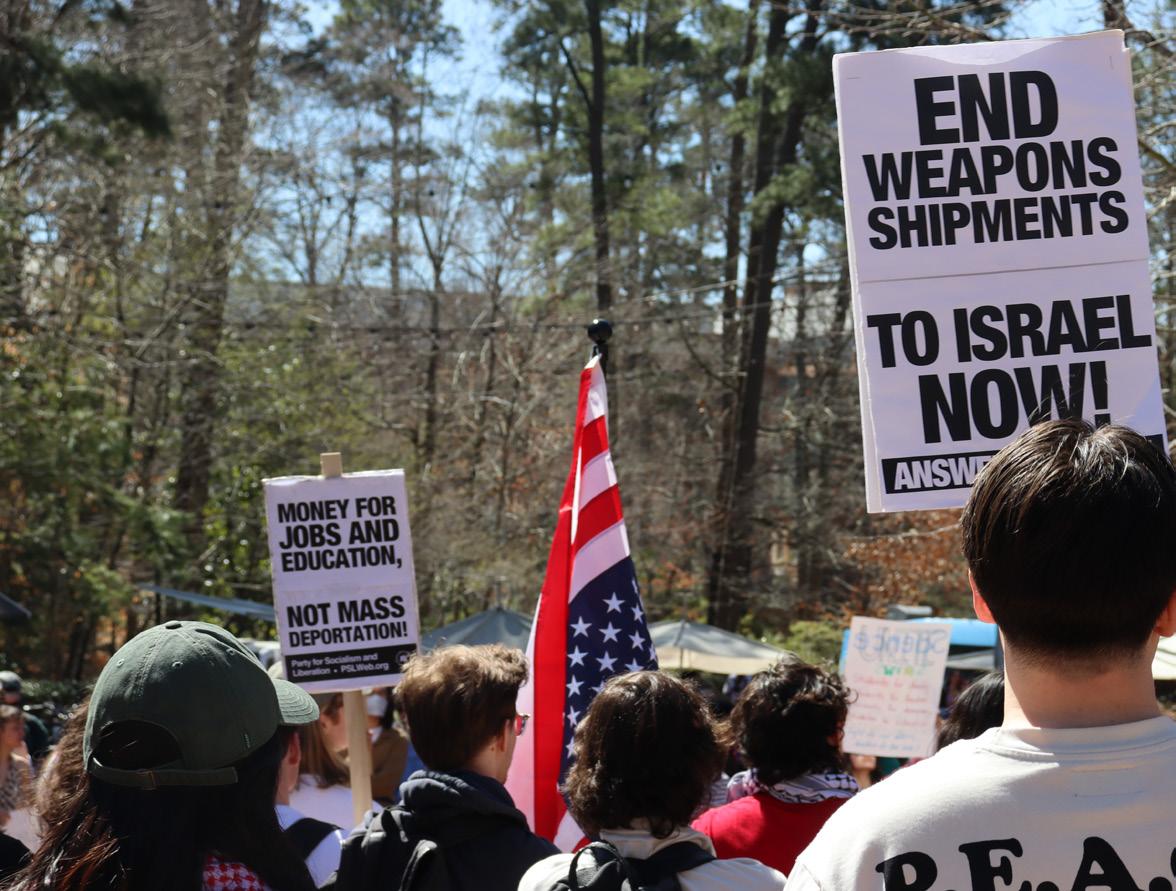
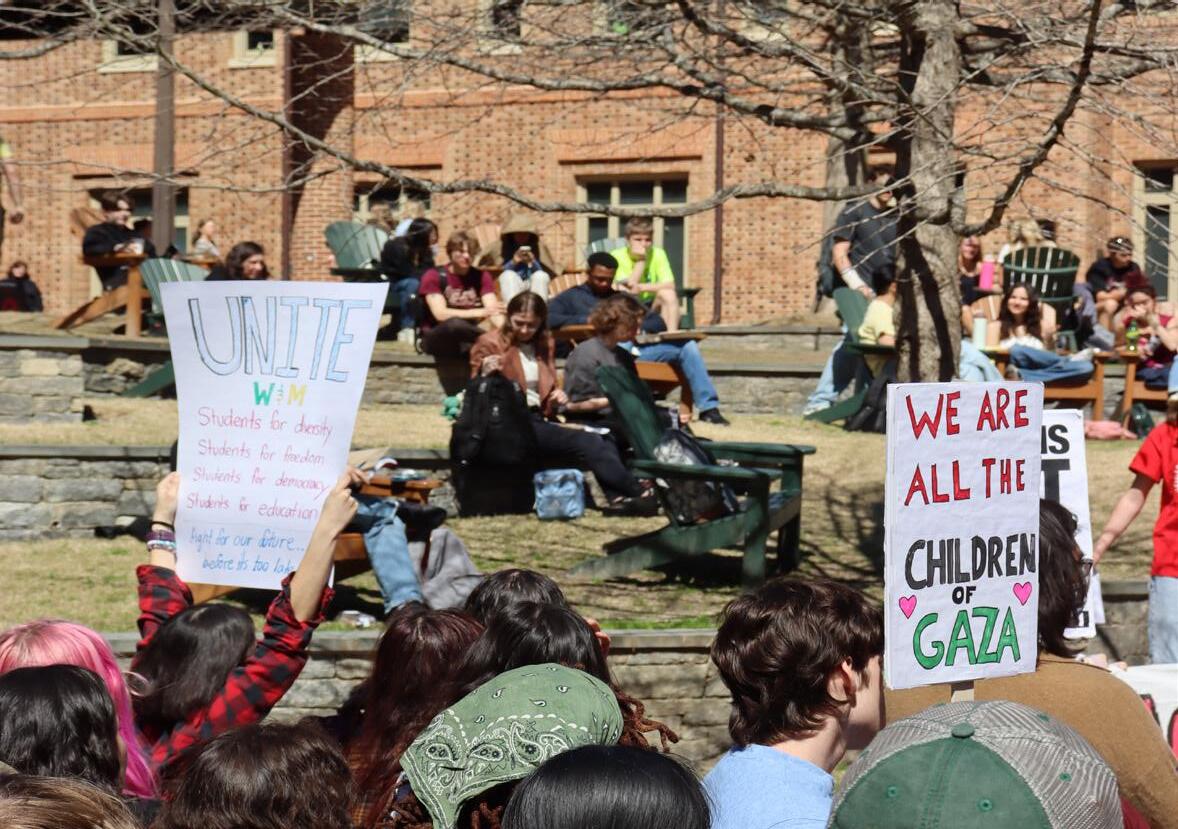
Wednesday, March 19, a walkout was held on the Terrace of the Sadler Center. This walkout was originally intended to protest the dismantling of diversity, equity and inclusion programs at universities, most notably the recent Board of Visitors vote at the University of Virginia to close their DEI office. While student protests can be an effective way of sending a message to college administration, walkouts are far too often plagued by a variety of issues natural to a college environment. Alternatives would be a far better subject of our attention.
The first question we asked ourselves about the recent walkout was what was the message? At the height of the protest, signs with messaging for DEI were obstructed by people hold -
ing Palestinian flags, the use of anti-Trump rhetoric and anticapitalist chants. For a protest to be effective, it needs to bring attention to a specific issue and inhibit its continuation in some way. For this recent walkout, the original message — that administrators need to stand in opposition to DEI cuts — was obstructed by a variety of other students using the provided publicity to protest issues as far removed from the original matter as the genocide in Palestine. While ongoing matters like the conflict in Palestine 1000% deserve student representation in the form of protest, a conglomerate presentation of raging emotions on all different kinds of issues does not help to demonstrate any meaningful message.
The overwhelming vision
Eva’s Apple #4: The best winter arc
Let me tell you a story. Feb. 2, our favorite lil rodent, Punxsutawney Phil, crawled out of his hole in the dirt and looked at our big, beautiful, crumbling world. Our lil man (I will not call him a groundhog, because that is mean. He is not a hog. If anything, he is a grounddawg.) opened his uncomfortably wide-set eyes to check for his shadow, and in that moment he determined the fate of Eva’s Apple #4. I know I haven’t finished my story yet, but I’m stopping here for a second. “I’m confused,” you say. “Is Eva being experimental?” Yes, dear reader, I am. This is a special stream of consciousness edition of Eva’s Apple, because I’ve decided that this campus doesn’t get nearly enough insight into my thoughts. It was at this moment in my writing process that I decided to watch the video of our grounddawg seeing his shadow, so I could describe it with charming accuracy. Instead, however, I got bored and decided to watch a video that had a more clickbait-y thumbnail with the words “The legend of the immortal Punxsutawney Phil” pasted over an image of some dude holding our buddy, Phil, up like Simba. This video, with only 7,000 views and a whopping nine likes at the moment I write, pops fun text onto the screen to bouncy piano music while simultaneously alleging that Punxsutawney Phil is a 125-year-old rodent who drinks a special groundhog elixir that adds seven years onto his life with every sip. Such a striking lie brings up memories of my own experience with whimsical deceit.
Flashback time. When I was a young girl, I had a tadpole that I called Apple and my brother called Freddy and my sister also called Apple, which made my brother an Orwellian minority of one and thus insane. Apple unfortunately passed away, but my
mom, a master of deception, told me she brought him to a pond near our house where he could swim with his froggy friends. And, you know what? I believed her. Just like all these Pennsylvanians living in and around Punxsutawney probably believe the Punxsutawney Groundhog Club and the lies they tell about the mortality of Phil. And, you know what else? It is my conviction that we have the right to believe these lies of service. It is a privilege to be the recipient of benevolent disinformation. I fondly remembered Apple throughout my childhood. Apple lived on because I believed he did.
And, legitimately, only as I reread this part to determine whether I should cut it for word count do I realize that this flashback to my brief stint as a tadpole guardian foreshadowed my mortal purpose: the Eva’s Apple advice column. Thus, this column now has a title with a triple entendre. It always bothered me that “double entendre” is a commonly used phrase when entendre has three syllables and therefore does not phonetically illustrate the modifying adjective of “double.”
I’ve fixed it now. In one sense, the name of this column is a biblical allusion to the fruit of knowledge. In another sense, it refers to an anatomical feature of the thyroid cartilage that protects our vocal cords because you know your girl is partial to a monologue. In a newly-unlocked third sense, it commemorates my late tadpole, Apple, whose untimely end taught me the beauty of imagination. I carry on his legacy through my column, hoping to give you all a glimpse of a more imaginative world through my memories and with my words.
Are you crying? I bet you’re crying. Whoop whoop. Someone give me a Pulitzer.
Walkouts aren’t enough
created by a variety of student groups is not a one-off case at this protest; rather, it is a symptom of modern walkouts. Given the nature of a college campus and the variety of groups we have at the College of William and Mary, organizations will always use the available publicity of such a movement to make their own voices heard. Again, these messages usually have merit, but a movement trying to protest hundreds of different issues is ineffective at opposing any.
In addition, the messaging behind walkouts doesn’t do nearly what students believe it does. None of the rich, old, predominantly white people, largely appointed by Gov. Glenn Youngkin, on the Board of Visitors truly care that students are skipping their class at noon to stand outside and protest for an hour — about anything. The persuasion that donors and politicians have over these officials far outweigh any emotional appeal that a student walkout or protest could have. Point being, it is hard to gain any respect or legitimacy as a college student in the face of bureaucratic bullcrap. Walkouts especially fail to distinguish the voice of students.
While someone could argue that these walkouts allow students to come together as a community, encouraging further support for whatever cause, walkouts —which in theory tend to precede further action — often
never actually lead to further action. Yes, walkouts are a joyous symbol of unity among community members that want to be heard. But where do their voices go? The Board of Visitors isn’t listening, Trump isn’t, and, believe it or not, lots of people on this campus are not listening either. On top of the minimal impact a form of protest like a walkout has, it is hard to sustain walkout efforts over the long term. Again, yes, it is important that students retain the right to gather and protest. However, we feel that there is a lot more personal interest in the act of protesting, due to its ease, than in continuing the messaging of the protest. A walkout will happen, students will pat themselves on the back for “doing their part” and continue on with their day. Haphazard participation like this is not meaningful protest, It is clout chasing to prove to yourself that you are a good person.
Unfortunately, we find that one of the biggest problems with walkouts on this campus is how forgettable they are. There is no energy or momentum backing these protests on a campus wide level. You are either the kind of student that participates in the protest, or you don’t, and either passively support the act or dismiss it entirely as just another protest. Given this insignificance and the inability of walkouts to make any sort of effective emotional appeal, what are the
I appreciate the vulnerability, but please cut the waterworks so we can get back to the task at hand. I haven’t even given you the question for this week yet, which is as follows:
What is the best winter arc?
I had to read up on what a winter arc was before selecting this as my question for the sake of proving an important point. From what I understand, this is a term that emerged last year to describe a sort of melodramatic, gym-oriented New Year’s resolution, except it’s confined to the winter time. Perhaps you’re disappointed in my lack of internet knowledge. I admit that, while I am chronically online, I really only run in circles that deal with “Shark Tank” and the “Love is Blind” universe. Out of a little insecurity and an impressive amount of wit, I decided to answer this question with the groundhog story. Because you see, dear question-asker, when Punxatawney Phil emerged on Groundhog’s Day, the dude saw his own shadow. And EVEN WITH SIX MORE WEEKS OF WINTER, the frickin’ season ended March 20. Your question was sent in March 21. You are wasting my time with ill-timed seasonal garbage. I am not answering your question. Try again next winter. In other news, I am now a licensed reseller of groundhog elixir on campus! Venmo me a couple thousand dollars, and I’ll take you to Wawa to show you where you can purchase your very own bottle. Coming in flavors like Glacier Freeze, Riptide Rush and Lemon Lime, the pursuit of immortality has never been so refreshing! To the skeptics out there, it might look like Gatorade, but it’s not. Every time a person stops believing, one of the complete fakers that the Punxatawney Phil Groundhog Club claims is the real guy sheds a tear for your jaded soul. My business is very much real and absolutely thriving. It was not established to take advantage of my peers or to practice how much profit margin I can make on a bottle of Gatorade in preparation for my inevitable “Shark Tank” side quest. I am the real deal. The big G on the front stands for grounddawg. EvaJaber‘28(she/her)isaprospectiveEnglishorinternationalrelationsmajor.Sheisamemberofthe Cleftomaniacs,anacappellagroup, anESLtutorandhopestoencourage peace-mindedadvocacyoncampus. Contactheratehjaber@wm.edu.
alternatives? If walkouts don’t work, what can? Well, given that the messaging behind student walkouts and a passionate show of emotions are not going to persuade administrators, monetary protests are the natural conclusion. Students writing to alumni, attempting to convince them to continue donations only under the condition that the needs of our students are met, would do far more to help administration grasp how pressing issues such as DEI cuts really are. Another possible alternative is to inform incoming students, who only are aware of what has been spoonfed from tours and administration, of the real problems happening on this campus. Deterring students from applying to the College unless the desires of the current student body are accepted would also pressure administration to
listen to student voices. We completely agree that student protests are important. In fact, it is probably a waste of your four years if you don’t use this relatively free period of time in your life to protest anything. However, given the urgency of issues such as DEI spending cuts and the ineffectiveness of walkouts, maybe it is time to reconsider how we as students organize.
Avi Joshi ’26 is an English major. He is a member of the AlphaTauOmegafraternityand consistentlyhitchhikesonthe spirit highway. Contact him at asjoshi@wm.edu. Liam McMahon ’27 is an international relations major. He contributes to the video section of The Flat Hat and is a member of theAlpha Tau Omega fraternity. Contact him at ltmcmahon@wm.edu
Avi Joshi and Liam McMahon THE FLAT HAT
GRAPHIC BY MICHAEL GABRIEL / THE FLAT HAT
Eva Jaber FLAT HAT OPINIONS ASSOC.
GRAPHIC BY MICHAEL GABRIEL / THE FLAT HAT
JONAH PETERS / THE FLAT HAT
JONAH PETERS / THE FLAT HAT
variety
BEHIND THE BRICK WALLS: LOVE LETTER TO CAMPUS CENTER
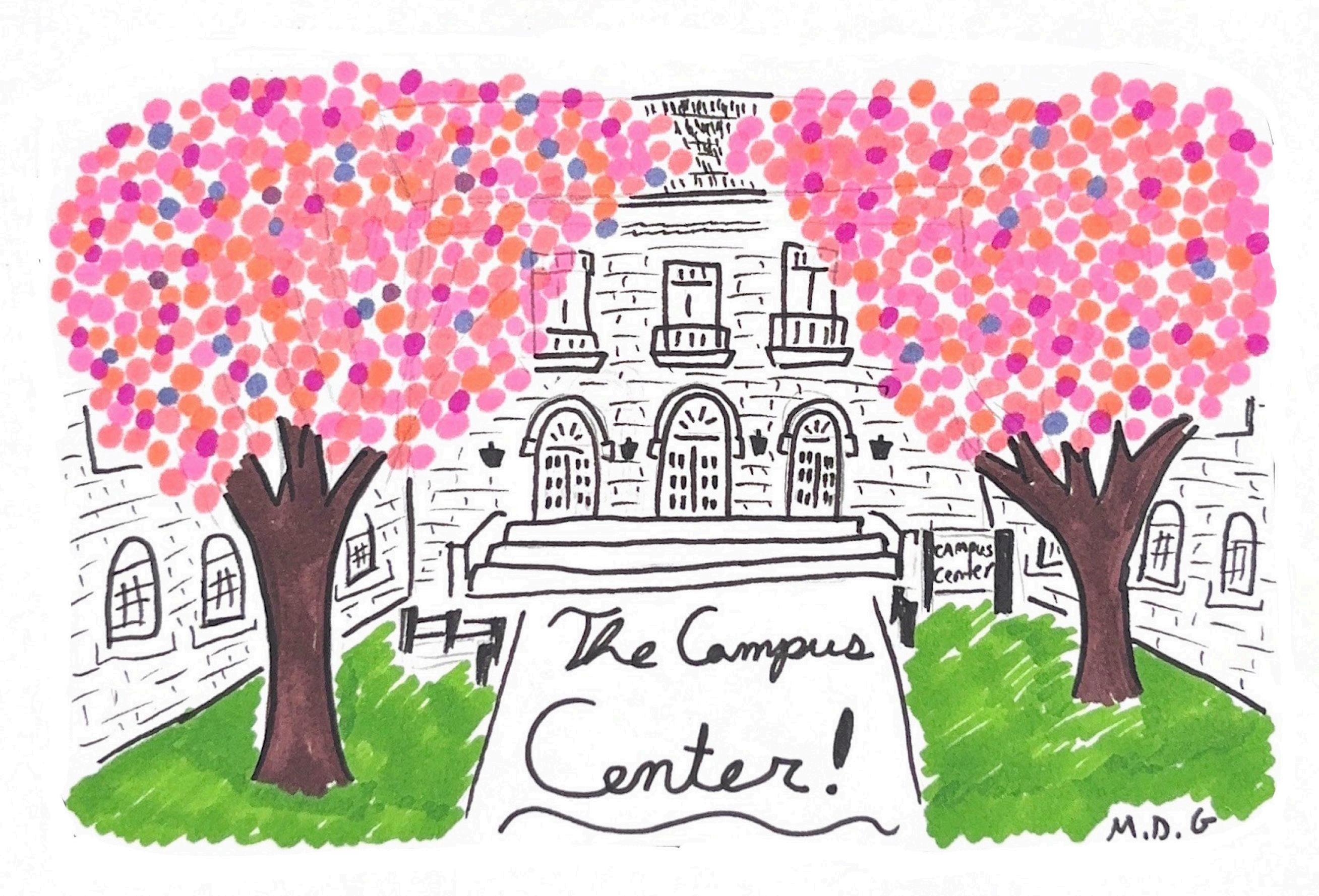
No one building at the College of William and Mary better exemplifies the state of forgotten purgatory that comes with fast-moving modernity than the Campus Center, a relic that remains frozen in time as it teeters on the edge of abandonment. Its outdated nature is unmissable from the moment you enter its doors, whether you focus on the gutted phone booths that line the walls or the 1970s elevator that takes what feels like a full minute to bring you up one floor.
I, for one, cannot get enough of this old building.
I first discovered the Campus Center after a tip from an upperclassman friend who described it as a perfect playground for the amateur explorer thanks to its mysterious emptiness and series of maze-like hallways that never seem to take you where you want to be. After hours of wandering eerie halls and stumbling upon room after room full of ancient-looking equipment and out-of-use filing cabinets, I couldn’t help but fall in love. Each descending floor became slightly more peculiar than the last, with rooms that seemed destitute in purpose.
After that first exploratory session, I’ve returned to the Campus Center consistently throughout the semester as I chase that same high of knowing a little secret that nobody else seems to know. It’s become my clandestine study space, one of the only spots on campus where I can be secure in the knowledge that no one else could possibly disrupt my lock-in session, since I’ll be the only one there for hours. My personal favorite room, the second floor Student Organization Suite, is oddly reminiscent of a ’90s sitcom set thanks to the small standalone cubicle rooms strewn about a larger, ballroom-like space and the set of cushioned arm chairs off to the side that seem just out of place enough to fit right in. There’s no better area on campus to live out my “Seinfeld” dreams while studying for a microeconomics exam.
today. After its expansion in the ’80s and up until the opening of Sadler Center West in 2022, the Campus Center was home to student media groups like WCWM Radio and The Flat Hat, both of which have since moved to Sadler’s Student Media Suite. Back then, Market Place was still a bustling dining center thanks to the use of meal swipes. For a time, the Campus Center even hosted couples’ dancing in Unity Hall, formerly known as Trinkle Hall.
Today, I regularly find the remaining artifacts of the Campus Center’s glory days littered throughout the building: They serve
into the woodwork. Even Market Place’s empty chairs and tables remain in neat rows as if they’re awaiting the return of the students they once served.
Exploring the Campus Center gives me the rare chance to not only find a peaceful haven away from the hustle and bustle of the rest of campus, but also to remember just how small I am in the grand scheme of the College’s history. As I stroll through the desolate floors, I try to imagine what it must have looked like fifty, thirty or even ten years ago earlier and the tens of thousands of students who once used it daily. It keeps me grounded and reminds me that nothing is truly permanent.
It is strange, though, to remember that the Campus Center wasn’t always the deserted fun house I’m so familiar with
as reminders of the students who used to populate it. The old WCWM room’s door is plastered with stickers, most of which date back to concerts and albums from the ’90s or earlier. The former The Flat Hat office still has the paper’s past logos decorating its walls and signatures of previous editors carved
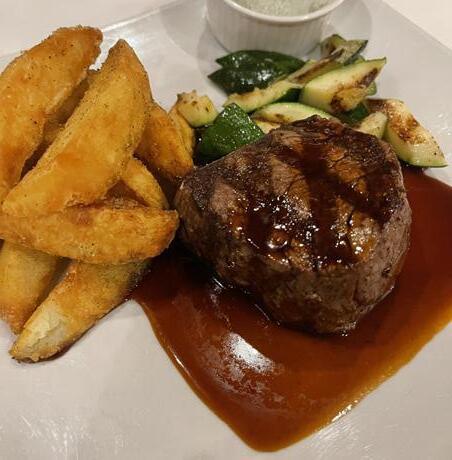
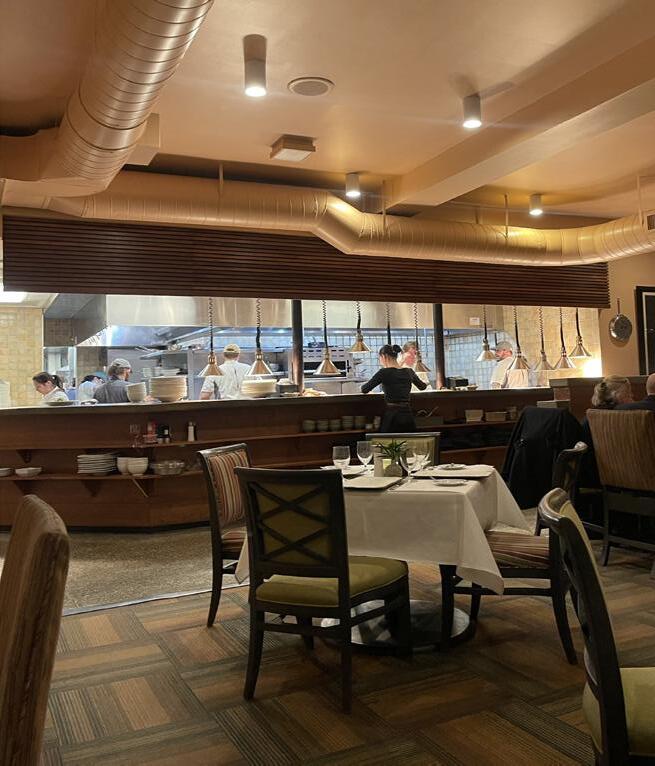
Spring has arrived. That also means our appetites return after a long, cold winter. My friend and I decided to visit a historic restaurant we felt was worth trying on a sunny Saturday afternoon. We found ourselves tucked into the heart of Colonial Williamsburg at Fat Canary, a spot as charming as it is storied. Warm light spilled from the open kitchen like late afternoon sun, and the clinking of silverware played in harmony with the gentle rustle of linen napkins and the occasional satisfied “mmm” from nearby tables. We could tell right away that this is a place that takes its food seriously. The atmosphere, the attentive staff and the overall vibe created the perfect setting for a date night, a moment of connection or simply a meal steeped in flavors.
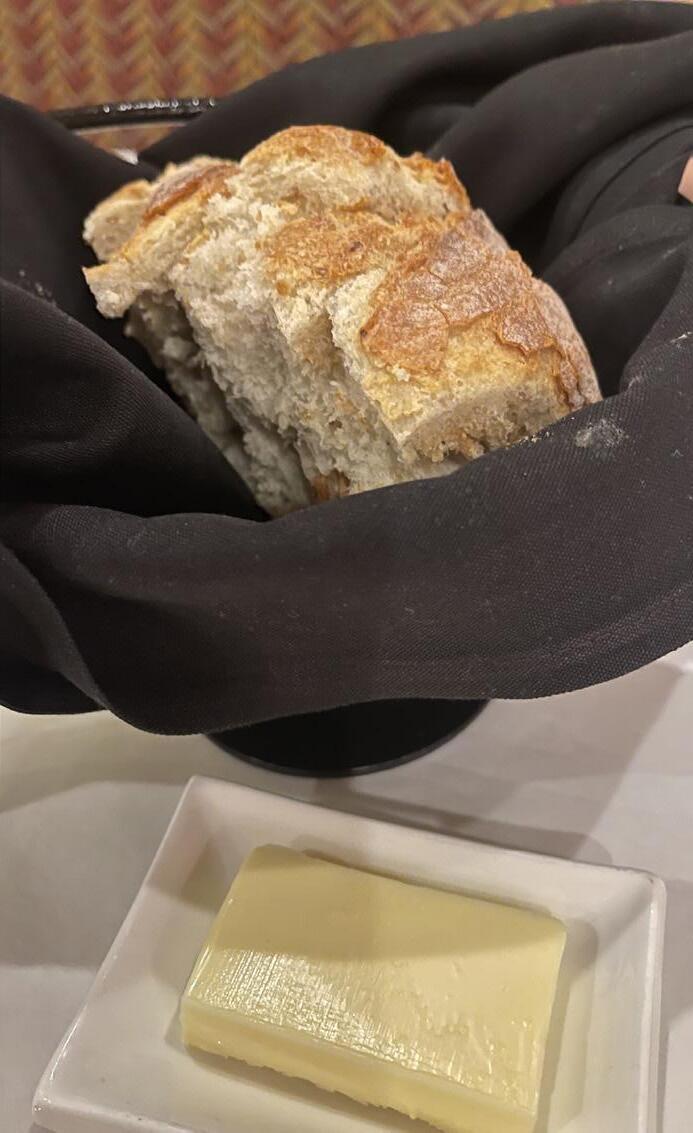
The meal began with the breadbasket arriving like a quiet prelude, wrapped in black cloth like a wellkept secret. It was surely a secret basket, because it held crusty, rustic slices, golden at the edges and soft within so that I had already begun the meal even before appetizers came. The bread came with a thick plank of cold, unsalted butter, firm enough to resist the knife just a little—the kind of butter that makes you sit up straighter. You know what I mean.
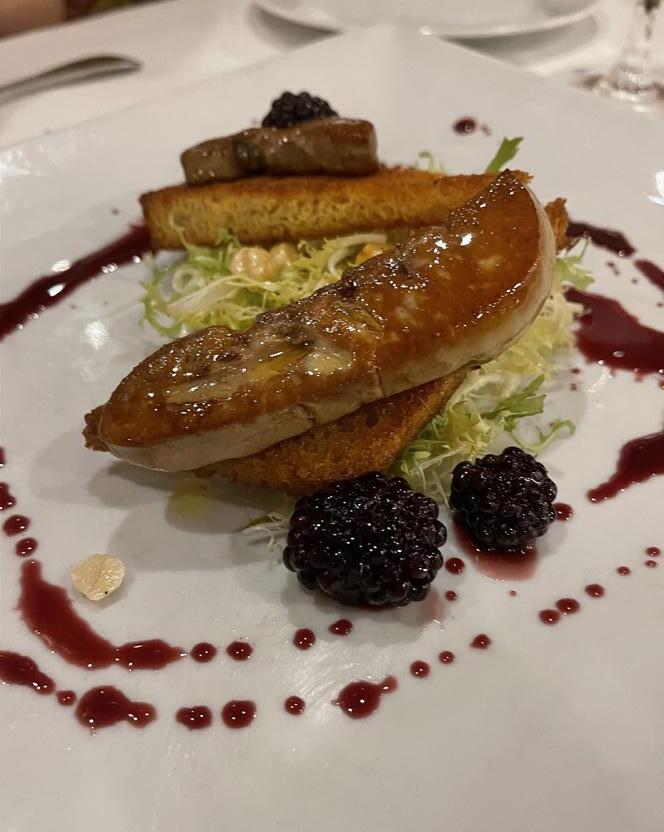
Then came the opening act: a recommendation from the chef, seared foie gras on hazelnut toast. If you have never had liver that tastes like velvet melted into sugar and smoke, here’s your chance. The toast was crisp enough to crunch but never overshadowed the foie; it was a true supporting actor. Dotted around the plate, blackberries and a drizzle of berry reduction played the bright, zingy chorus. One bite, and I was a believer. Sure, the dishes are a little pricey considering we are college students, but the prices are surely worth it. If you want to impress a date, well, this is the perfect place to do so.
Unfortunately for both myself and the small set of fellow Campus Center enthusiasts, nothing good can truly last. Campus Center will be redeveloped in Phase Two of the school’s 10-year Housing & Dining Comprehensive Facilities Plan. Though the building’s actual fate is unclear, I can’t help but assume that its treasure trove of history will be lost in the process.
To me, Campus Center embodies the distinct uniqueness that can only be found at the College. It is a perfect representation of the College’s past, a shadow of the many groups that have filtered in and out over the course of decades. Though I completely recognize the need to modernize the building and bring it into the 21st-century, it’s hard not to mourn its charmingly outdated quirks and the lingering reminders of the past that occupy each empty space within.
To those reading, take advantage of Campus Center while you still can! I promise you will be surprised by whatever gold mine of long lost memories you discover. Or, find your own forgotten nook on campus. As I discovered through my own Campus Center adventures, you’ll never know exactly what you’re missing out on until you seek it out for yourself.
I ordered the grilled Atlantic salmon as my main course, and, let’s just say, it understood the assignment. The fish had seared skin with just enough snap and flesh that flaked like happiness. Underneath? A bed of fregola pasta with plump pearls of chewy joy nestled among golden raisins, capers and roasted eggplant. The dish was sweet, salty, briny and earthy. The whole dish swam in roasted garlic butter, which could frankly be bottled and sold as a lifestyle choice. My dining companion ordered a beef tenderloin. It made bold promises and delivered a positive dining experience. The beef was perfectly medium-rare and tender enough that the knife just sighed through it. Crispy rosemary steak fries brought the crunch, while grilled asparagus kept things grounded. The blue cheese butter? A creamy little mic drop.
What I love about Fat Canary is that it doesn’t just serve food. It tells a story, one that feels uniquely personal to each diner. For me, it was a sophisticated, dynamic narrative — like a fireworks show unfolding dish by dish, each course was its own burst of flavor and beauty, building toward a dazzling finale. The restaurant provided an enjoyable atmosphere with a passion for food; there was a quiet confidence in every plate, a sense of family legacy in the flavors and a playful touch in the presentation. Fat Canary is the kind of place where a blackberry isn’t just a garnish: It’s punctuation. Just like the College of William and Mary, where we take pride in being
EMMA BEELNER // FLAT HAT VARIETY ASSOC.
GRAPHIC BY MICHAEL GABRIEL / THE FLAT HAT
DANIEL
Fostering Friendships, Inclusivity
Best Buddies connects students to individuals with IDDs
The Best Buddies club creates one-toone friendships between college students and members of the greater Williamsburg area with intellectual and developmental disabilities. The organization also provides opportunities for individuals with IDDs to connect with the College community while broadening the perspectives of students at
the College of William and Mary and creating a more inclusive campus environment.
“I tried out a Best Buddies event, and I just remember having the most fun time getting to talk with the buddies and getting to hear their life stories and how much joy they have,” Best Buddies President Kate Kibiloski ’25 said. “I just felt welcomed immediately and knew I wanted to play a part in creating those events and fostering those friendships.”
As members of Best Buddies, students can choose to take on different levels of involvement. Some members take a buddy who they meet one-on-one with, while others prefer to participate in the monthly events hosted by the club.
Emma Smith ’28 volunteered with individuals with disabilities in high school and decided to join Best Buddies after seeing their table at the activities fair. Smith connects with her buddy Annie through phone calls, texting and in-person meet ups.
“I have a younger brother with special needs and so I’ve always kind of been around people with intellectual disabilities,” Smith said. “However, I feel like I have genuinely fostered a serious friendship with someone. My buddy was telling me she’s been involved for years, but I’m her favorite. It just has helped me feel like I’m more involved on campus and given me more of a sense of belonging in the club. I’m going to be friends with her for years. I can already tell.”
Smith has also enjoyed hearing the experiences of other students as they continue to expand their perspectives.
High Tea, High Hats, High Spirits
The Women’s Network hosts tea party networking event with students, staff, alumni
Friday, March 28, the College of William and Mary’s chapter of The Women’s Network hosted its second annual High Tea and Hats event in collaboration with the Society of 1918 and the Center for Student Diversity. The event was an opportunity for non-male identifying students, faculty and alumni to mingle and network. The mood in the Alumni House was set with classical instrumentals, individualized tea cups at each seat and an elaborate buffet of high tea finger foods, such as cucumber sandwiches and a variety of biscuits.
TWN Vice President of DEI Rachel Oduntan ’25 originated the idea of a tea party as a networking event.
“Everybody dressed up nicely in their little Sunday best, wear a little fascinator, if they have one, and just come and mingle with students, faculty, alumni,” Oduntan said. “Because I think students may feel intimidated to just casually interact with faculty.”
TWN President Catherine Bare ’25 shared how the organization was able to build upon their relationship with the Society of 1918, a group committed to growing the leadership and philanthropy of the College’s women and an avenue for alumni engagement. The Society was able to help pay for the event through a grant dedicated to activities that engage alumni.
“They’re a very involved alumni women’s organization, so we knew they kind of already had that piece of wanting to give back to
the William and Mary community and help students,” Bare said. “They were a really great choice for us to be able to grow our alumni connections and be able to provide that to students where there’s a lot of hoops sometimes to jump through.”
TWN’s mission is to create a supportive, non-competitive networking community. However, creating such a network can be difficult because approaching conversations with alumni and faculty is a daunting task for many students.
“You’ll have the odd student who’ll be comfortable just talking to anybody, but a lot of people are a bit shy and reserved, and made me feel like, when would be the appropriate time to actually engage with these members of our community,” Oduntan said. “So I thought this was a great way to just bring everyone together.”
To further inclusivity, the CSD joined this year’s event as a collaborator. This addition was particularly helpful in allowing the team to market to a wider audience and generate a larger attendance than the previous year.
Organizing an event with so many collaborators and moving parts made planning a year-long process. The team brainstormed ideas in the fall and ran the event in the spring to coincide with Women’s History Month.
Brainstorming included discussing the student performance section of the event, which celebrates non-male students’
“They realize that with certain people with different types of disabilities, you have to be more patient and take more time to listen and try to include them in activities,” Smith said.
Best Buddies Secretary Morgan CookSather ’25 also recognized the impact the club has had on her implicit biases.
“I think a lot of times people’s experiences with disabilities aren’t told by themselves, but by other people who don’t understand the experience,” CookSather said. “Being in Best Buddies and interacting with all the buddies is an important way to get over or check oneself on problems of bias and stigmatization.”
Cook-Sather joined Best Buddies her sophomore year after volunteering at a camp for blind and visually impaired children in middle and high school.
“As someone who has a visual impairment which affects my navigation on campus, I have really appreciated being in this community that’s so inviting and discusses issues of diversity and disability with our students, while also getting to diversify my own understanding and education on various disabilities that are different from mine,” Cook-Sather said.
Similarly, Vice President Ryan McGhee ’25 has enjoyed the opportunity to expand his own experiences since joining the club his sophomore year.
“I thought it was an exciting opportunity to try something new and to broaden my own perspective,” McGhee said. “I really loved the experience and really connected with
my buddy, and really enjoyed being in this environment full of other individuals who want to foster inclusivity and community.”
Kerri Chimento ’25 joined Best Buddies her freshman year. Chimento had done some work with people with nonverbal learning disabilities in high school, but learned different styles of communication and relationship building by spending time with her buddy with cerebral palsy. Chimento has learned a lot about her own passions through the club.
“It’s something that I have turned into what my career will be,” Chimento said. “I’m going into rehabilitation counseling, and working with people with intellectual developmental disabilities is what I plan to do in the future, so it’s been great to be able to form connections and communicate with people with a wide range of ability.”
contributions on campus. This year, acapella groups Passing Notes and Tribetones were able to perform after the opening speech as a prelude to the rest of the afternoon.
Tierra Key ’25 attended the event and performed her own poetry during last year’s event. Key shared how she felt empowered by the chance to share her art, and her appreciation for the event as a returning attendee.
“When I saw that it was coming up again in the emails and everything, I was like, I’m definitely going because it’s such a cute event,” Key said. “It’s so dainty and girly and I love that.”
With the circular seating arrangements and elegantly spread decor, the environment provided an atmosphere to encourage conversation starters and bring students, faculty and alumni together under the common experience of high tea. To further facilitate conversation, organizers laid out icebreaker activities such as bingo cards for attendees to learn about each other, both professionally and personally, in a lowstress environment.
Raffle tickets were also distributed for participants to enter to win self-care goodie bags and CSD swag bags.
Lela Davis ’26 spoke on her thoughts as a returning attendee and a casual member of TWN at the closing of the event.
“I’ve been following The Women’s Network for a while, so I was excited to join
again,” Davis said. “It was lovely — great networking opportunities, everyone was very nice, delicious food.”
Approachability and accessibility were both key factors in making this event successful, and in the framework of TWN as a whole.
“We’re a very entry level organization that anyone can join: any academic major, any career interest,” Bare said. “We don’t have dues, and so we try to really remove all barriers to entry to the organization so that you can show up to one event, you can show up to five.”
Professional development is a strength that the College advertises heavily, boasting its strong alumni network and encouraging students to take advantage of the careerbuilding opportunities on campus. TWN hopes to continue working to make that ideal a reality.
“We just want to be a resource to everyone on campus, no matter what field they’re in, to be able to develop professionally and build that community during their time here,” Bare said. “I think we recognize that some people just come in with a natural advantage, and some people come in a natural disadvantage for professional development. So, removing any of those barriers is super important to helping everyone get on the right footing to move on to succeed professionally however they want to.”
CAROLYN REID / THE FLAT HAT
sports
Ninth-seeded Tribe pulls three upsets en route to conference title
Led by Nascimento, William and Mary knocks off top-seeded N.C. A&T among others
Thursday, March 20, and Saturday, March 22, No. 16 William and Mary women’s basketball (16-19, 8-10 CAA) competed in its first-ever National Collegiate Athletic Association Tournament at the Moody Center in Austin, Texas.
The Tribe defeated 16th-seeded High Point (21-12, 13-3 Big South) 69-63 in a First Four play-in game on Thursday, earning them the right to play top-seeded Texas (34-3, 15-1 SEC) in the tournament’s first round. The triumph over the Panthers proved tightly contested.
“Only people on the outside felt we couldn’t win these games,” head coach Erin Dickerson Davis said after the victory. “We know that we were built for this, and I’m just glad that we were able to show everyone that we can fight, and we can be resilient.”
High Point senior guard Aaliyah Collins kicked off the game with back-to-back layups, but Tribe senior guard Bella Nascimento drained a free throw in response. Collins proceeded to convert a jump shot, but freshman forward Natalie Fox nailed one of her own, thanks to an assist from sophomore guard Cassidy Geddes.
Both teams exchanged baskets for the remainder of the quarter, with Nascimento sinking another free throw and a jumper from outside the paint. In the 10th minute, sophomore guard Monet Dance capped off the period with a three-pointer that stretched the Tribe’s lead to 17-15. During the first quarter, the Green and Gold shot 3-for-4 from beyond the arc, while the Panthers missed all five of their three-point attempts.
Although High Point responded to the Tribe’s baskets with a few of their own, William and Mary maintained its lead throughout the second quarter. In the 16th minute, Geddes hit a three-pointer, extending the Green and Gold’s advantage to 29-21. Assisted by senior forward Anahi-Lee Cauley, Dance converted another three to further widen the gap.
The Panthers picked up momentum in the 18th minute. Senior guard Lauren Scott nailed a three-pointer that was followed by a layup from senior guard Jaleesa Lawrence. With High Point chipping away at the Tribe’s lead, Geddes
WOMENʼS TENNIS
hit a jumper to make the score 34-28 in favor of the Green and Gold going into halftime.
Both teams returned from the locker room with intensity. With 3:27 left in the third quarter, a layup from High Point senior guard Shakira Baskerville narrowed William and Mary’s lead to just two points. After converting a layup and a free throw, Collins put the Panthers ahead for the first time in the third quarter. By the end of the period, however, strong performances from Nascimento and Geddes had helped the Green and Gold regain a 47-46 advantage.
The lead continued to change hands in the fourth quarter. Fox was a key contributor down the stretch, securing multiple offensive rebounds and racking up six points for the Tribe in the period alone. Ultimately, Fox posted a career-high 12 points.
“We just play together, we have each other’s backs,” Fox said.
With 7:41 left on the game clock, Collins made a layup, propelling High Point into the lead at 48-47. Nascimento put William and Mary in front again with a layup of her own, but the Panthers reclaimed the advantage with a three-point jumper from Scott.
However, two 36th-minute free throws from Fox gave the Green and Gold a lead it wouldn’t relinquish. Consecutive jumpers from junior forward Kayla Rolph and Fox further inflated the Tribe’s margin, and Dance sealed William and Mary’s first-ever March Madness victory with two late free throws.
The Tribe went on to lose to Texas 105-61, but it was a game that capped off a historic season for William and Mary.
“I want to thank this team for believing in me and the vision for this program, and most importantly, believing and not giving up on each other,” Dickerson Davis said following the loss.
Dickerson Davis, Geddes and Nascimento emphasized the vital role of fan support in their success. Hundreds of Tribe fans watched Saturday’s game at Kaplan Arena in Williamsburg, Va., while others attended viewing parties across the country.
“They came out to see us play, they came out to see me play, they came out to see every single one of us on the court,” Nascimento said. “That was just incredible.”
Heading into Saturday’s matchup, Dickerson Davis
acknowledged Texas’ strengths.
“We’re about to play against a team that, respectfully to every other basketball coach, should get to the Final Four,” Dickerson Davis said. “It’s just going to be such a fun time, a fun environment, and to be able to have that kind of experience, how could you be mad?”
The Green and Gold fought hard in the first quarter, going seven-for-12 from the field and shooting 75% from the free-throw line.
“We just believed in one another,” Geddes said. “We knew ball screens were going to be good for us, we wanted to be confident in our shots, confident going to the basket.”
After Texas opened the scoring with a free throw and a layup, Geddes answered with a layup of her own, set up by a crisp assist from Dance. After four minutes of back-and-forth action, Dance sank a jump shot that tied the score at 10-10.
The Longhorns began to pull away behind the efforts of senior guard Rori Harmon, who recorded four points and an assist to stretch her team’s lead to 18-13. Despite buckets from Geddes, Cauley and graduate center Kayla Beckwith, the Green and Gold failed to substantially cut into its deficit. The hosts closed the first quarter with a 2318 advantage.
The Tribe began losing momentum in the second quarter as Texas started to fire on all cylinders, rattling off a ninepoint scoring run — their longest of the game — that was capped off by a jumper from Harmon. With 8 minutes, 2 seconds left in the first half, Nascimento converted a layup, narrowing Texas’ lead to 29-20. The top-seeded team continued dominating, however, and parlayed an impressive performance from All-American sophomore center Madison Booker into a 50-33 halftime lead.
Texas held the upper hand for the remainder of the matchup, at one point stretching its advantage to 45 points. As the clock ticked down, junior guard Ndjakalenga Mwenentanda nailed a jump shot to push the Longhorns past the 100-point mark.
Cauley answered with a layup, followed by a jumper from Nascimento, solidifying the Tribe’s final score at 61 points.
READ MORE AT FLATHATNEWS.COM
Red-hot Tribe women’s tennis dominates VCU at home
Green and Gold picks up 6-1 victory to extend winning streak to seven matches
Friday, March 28, William and Mary women’s tennis (13-2, 4-0 CAA) defeated Virginia Commonwealth (7-8, 1-1 A10) 6-1 at Mackesy Tennis Center at the Millie West Courts in Williamsburg, Va. The victory extended the Tribe’s winning streak to seven. Head coach Jessica Giuggioli’s squad has gone undefeated since it fell to Wake Forest (13-8, 3-5 ACC) Feb. 23.
The Green and Gold now sports a 4414 all-time record against VCU and is 24-4 against the Rams at home, marks inflated by a 27-match winning streak William and Mary rattled off from 1970 to 2000. The series has become more competitive in recent years, but the Tribe has nevertheless won six of the programs’ last nine meetings.
The doubles portion of the afternoon began
on court two, where senior Alessandra Anghel and sophomore Francesca Davis scored an authoritative 6-2 victory over VCU freshmen Sofia Jane Thorne and Lea Malazdra. Anghel and Davis have now won 13 of their 15 doubles matches on the season, nine of their last ten and four in a row.
The Rams responded with a win on the first court, taking down William and Mary seniors Hedda Gurholt and Ine Stange 6-3, but freshman Mira Kernagis and senior Emma Fernald authored a thrilling comeback victory on the third court. Down 5-1 during the firstto-seven tiebreaker, the pair won seven of the match’s final eight points to defeat VCU senior Yelizaveta Karlova and freshman Andrea Magallanes 7-6 (6).
Kernagis and Fernald, named last week’s Coastal Athletic Association Doubles Team of the Week following wins over Fordham and
Charleston, continued their run of hot play, winning their sixth consecutive match and improving to 12-6 on the season. The pair trails Anghel and Davis for the team lead in doubles victories by just one.
With the doubles point clinched, the Tribe moved on to the singles portion of the dual, dispatching the Rams dominantly.
VCU picked up a win on the first court when Gurholt retired after going down 6-1, 2-2.
However, William and Mary would go on to take each of the remaining matchups in straight sets.
On the second court, Anghel cruised by VCU sophomore Mariam Ibrahim 6-3, 6-0.
On the fifth court, Kernagis again knocked off Karlova 6-3, 6-4. On court four, Davis again defeated Malazdra 7-5, 6-1, a win that secured the Tribe’s overall team victory. Fernald and Stange wrapped up the day’s slate, taking
down Magallanes and VCU freshman Sara Alba on the sixth and third courts, respectively. With her victory, Davis improved to a team-best 22-6 in singles, with almost all of her dual wins coming on the fifth court. Anghel pushed her record to 20-8 on the year and 12-3 on the second court. Kernagis, who typically plays at number six, won only her second career game on the fifth court, while Fernald improved to 10-2 overall and 4-0 on the sixth court.
Stange now sits at 17-10. Gurholt, the two-time defending Coastal Athletic Association Player of the Year, sits at 16-13, with all of her games having come on the first court.
The Tribe will host its final home match Saturday, April 5, against Richmond (8-6, 2-2 CAA) at Mackesy Tennis Center at the Millie West Courts in Williamsburg, Va.
Barrow wins vault national title as Tribe begins postseason
who scored 74.000.
Over the weekend, William and Mary men’s gymnastics began its postseason slate in Annapolis, Md., as it competed at the USA Gymnastics Collegiate National Championships. The Tribe finished fourth in the meet’s team standings, sent eight gymnasts to the individual event finals and saw four gymnasts take home All-American accolades, with freshman Connor Barrow winning an individual national championship in vault.
Held annually since 1983, the USAG Collegiate Nationals are separate from the National Collegiate Athletic Association National Championships and provide a postseason competition for “military academies and fouryear Division I, II or III institutions that sponsor gymnastics as a
varsity sport and provide two or fewer full scholarships.” The 2025 field consisted of William and Mary, Simpson College, Springfield College, the U.S. Air Force Academy, the U.S. Military Academy and the U.S. Naval Academy.
Friday, March 28 saw the Tribe take on the individual event preliminaries, the team finals and the all-around finals. Eight of the Tribe’s 12 gymnasts advanced to the individual event finals: Barrow and graduate student Sam Lee on vault, freshman Luke Tully and junior Ricky Pizem on high bar, junior Mark Fu on rings, sophomore Gavin Zborowski on pommel horse, sophomore Niko Greenly and sophomore Evan Wilkins on parallel bars and Wilkins on floor. Wilkins and Greenly both set career highs on the parallel bars, scoring 13.6 and 13.1 respectively, while Zborowski posted a season-
high score of 12.85 on pommel horse. In the team competition, the Tribe finished fourth with a score of 310.100, putting the team behind Navy (320.700), Army (315.050) and Air Force (313.050) but ahead of Springfield (308.450) and Simpson (300.800). William and Mary’s point total was bolstered by Lee’s thirdplace vault score and Wilkins’ meethigh floor score and strong parallel bars score.
The all-around event required participants to compete on all six apparatuses: floor, rings, high bar, parallel bars, pommel horse and vault. Tully, the only Tribe gymnast to participate in all-around, finished fourth with a score of 74.700, earning him All-American honors. Impressive showings in vault and high bars propelled him past Springfield sophomore Kaleb Palacio, who scored 74.600, and Simpson freshman Brian Rollison,
Saturday, March 29 saw William and Mary compete in the individual event finals. The day was underscored by Barrow, who scored a 14.25 on vault, to sneak past Lee who scored a 14.100, for a national championship victory. The former improved his score by .500 points from the preliminary round, while the latter improved his score by .100 points. Both gymnasts received AllAmerican honors.
Barrow’s victory gave William and Mary its first USAG Collegiate Nationals individual title since former Tribe gymnast Peter Makey ’19 won the rings at the 2018 edition of the meet. The freshman continued his outstanding debut season, which saw him post a program-recordtying vault score of 14.5 during a Feb. 16 meet against Springfield.
The performance put him fourth on the national leaderboard for
the event and earned him National Specialist of the Week awards from the College Gymnastics Association and the NCAA.
Two other Tribe gymnasts made the podium: Pizem and Tully, who finished second and third on high bar, respectively. Both received AllAmerican honors, marking Tully’s second All-American selection of the meet.
To round out the Green and Gold’s efforts, Fu placed seventh on rings, Zborowski placed seventh on pommel horse, Wilkins placed seventh on floor and Wilkins and Greenly tied for eighth on parallel bars.
The Tribe will continue its postseason Saturday, April 5, when it travels to the Eastern College Athletic Conference Championship hosted by Simpson College at Cowles Fieldhouse in Indianola, Iowa.
MADDIE MOHAMADI FLAT HAT OPERATIONS COORDINATOR
CHARLES VAUGHAN FLAT HAT SPORTS EDITOR
CHARLES VAUGHAN FLAT HAT SPORTS EDITOR
sports
Over the weekend, William and Mary baseball (10-17, 4-2 CAA) secured its first series victory in over a month, beating conference foe Hofstra (1017, 2-4 CAA) three times in three days at Plumeri Park in Williamsburg, Va. The sweep broke the Tribe’s three-series losing streak that began after a March 7 defeat at the hands of Kansas State (19-8, 8-1 Big 12). After losing 12 of its 13 games from Feb. 25 to March 15, William and Mary has now won four of its last five.
The wins over the Pride, all of which were decided by one run, launched the Green and Gold into a four-way tie for second in the Coastal Athletic Association standings.
Friday, March 28, William and Mary opened the series with senior starting pitcher Nick Lottchea on the mound. After a scoreless first inning that saw Lottchea pick off two Pride players, the visitors drew first blood in the second frame when Hofstra sophomore infielder Mike Sweeney singled home senior infielder Sean Lane, who reached base on a double that fell out of Tribe senior outfielder Christian Rush’s glove. Lottchea struck out freshman catcher Nick Biddle to limit the damage, but Hofstra claimed a 1-0 lead.
Senior outfielder Lucas Carmichael singled to open the home half of the second, extending his ten-game hitting streak to 11. Junior outfielder Charlie Iriotakis moved Carmichael into scoring position with another single, and Hofstra junior starter pitcher Jackson Bauer hit Rush in the leg to load the bases with no outs.
With the Tribe in position to break the game open, freshman infielder Jamie Laskofski snuck a
ball under the glove of diving Hofstra sophomore infielder second baseman Michael Brown, driving home two runs and advancing Rush to third base. Laskofski then stole second base, setting up a pair of sacrifice flies from junior catcher Jerry Barnes III and graduate student infielder Owen Wilson that made the score 4-1 in favor of the Green and Gold.
The third inning saw neither team record any hits, as Lottchea racked up two strikeouts. He was replaced by freshman reliever Tyler Kelly in the top of the fourth, who uneventfully dispatched the middle of the Pride order. The home half of the frame featured similarly little action. Bauer induced fly-outs from Laskofski and graduate student outfielder Ben Parker and a pop-up from Wilson to keep the score 4-1.
It was the top of the fifth where the Tribe’s longstanding pitching woes began to rear their heads. Kelly, who pitched a scoreless fourth, was unable to replicate the feat in the following inning. The freshman gave up a ringing single to Sweeney before allowing Biddle to hit an opposite-field single that put runners on the corners.
A sacrifice fly from Hofstra junior utilityman Dylan Palmer cut the Pride deficit to two. With one man on first and one out, Brown bounced a grounder to Wilson, who made a spectacular stop but failed to transfer the ball to his throwing hand. All runners reached base safely. Hofstra subsequently took a 6-4 lead after a walk, a wild pitch and a three-run home run by Hofstra redshirt junior outfielder Tyler Cox, a sequence that ended Kelly’s day.
William and Mary could not progress in the bottom of the fifth and gave up another run in the top of the sixth, but a Rush home run made the score 7-5. Hofstra strung together two more runs
against freshman reliever Jack Weight in the seventh frame. However, a spurt from the Tribe offense kept the Green and Gold within striking distance. Parker doubled, sophomore first baseman Anthony Greco walked and both players stole the base in front of them. Their advanced positioning allowed them to be brought home on a two-run double from graduate student utilityman Derek Holmes.
Carmichael proceeded to lash his second single of the day, moving Holmes to third base. Carmichael was promptly tagged out during a rundown, but with the defense’s attention on his teammate, Holmes scampered across the plate and made the score 9-8 in favor of the Pride.
With the Tribe trailing by one in the top of the eighth, senior reliever Carter Lovasz entered the game and diced up the top of the Pride lineup, coaxing swinging strikeouts from Palmer and Brown.
“For my entire career here, that’s the situation that I’ve loved,” Lovasz said. “Being able to come in with the game on the line and know that I’m coming in in the top of the eighth, that I have six outs that I can go get, give it everything I have for six outs.”
“I really just tried to simplify the game last night, just kind of take it one pitch at a time, and simplify it down to ‘I hear the pitch, I throw the pitch to that spot and just trust that everything else is going to work out and our defense is going to make their plays,’” he said.
Laskofski legged out a single to spark the Tribe’s eighth-inning rally, advancing to second on a Barnes sacrifice bunt.
“Even though it was a left-on-left matchup, he just battles,” Tribe head coach Rob McCoy said of Laskofski. “He has a knack for getting the barrel on the ball, and being left-handed, which — we love left-handed hitters that can run, because he puts the ball in play, the shortstop made a great play to even get it and get rid of it, but Jamie’s fast. He beat it out, and that was what we needed to get us started.”
Wilson flew out, but Parker smashed a twoout line drive single into center field, bringing in Laskofski and evening the score at 9-9. Hofstra freshman reliever Brayden Gregg balked Parker over to second base before allowing Greco to muscle a go-ahead single through the right side of the infield.
With the Tribe ahead 10-9, Lovasz returned to the mound in the final frame and struck out three Hofstra batters on ten pitches, securing the Green and Gold’s victory.
“Obviously, give all the credit to our offense because we were down one run and they scrapped in the bottom of the eighth and put together two runs for us to give me a chance to go in and end the game in the top of the ninth,” Lovasz said. Lovasz described the feeling of performing well at the base.
“It was pretty awesome, but it was one of those where in the moment, you’re not thinking about that,” he added. “You don’t realize what’s going on, you don’t realize that until someone tells you after the game. And I think that’s when you play your best baseball, when you’re not focused on that kind of stuff, you’re just competing one pitch at a time.”
Parker led the way for William and Mary with three hits, a double and an RBI. Holmes only recorded one hit, but it was his pivotal seventh-
inning two-run double. Greco went two-for-four with a game-winning single, while Laskofski went two-for-four with two RBIs. Lottchea gave up just one run over 3.0 innings pitched, sophomore pitcher Daniel Lingle posted 1.2 innings of onerun ball in relief of Kelly and Lovasz recorded five strikeouts in a dominant two-inning outing.
“Lottchea came in and did a great job to start,” said McCoy. “Then we went with a freshman in Tyler Kelly. It was a little rough, so we had to bridge. It was a little dicey when we went to Lovasz. We knew he was going to shut it down, but ultimately it came down to us trusting our offense. We kind of knew when we got to their ‘pen we’d put up some more runs.”
“So, it was just a matter of getting Carter [Lovasz] in there and letting him shut it down and give us a chance to catch up,” he said. “You know, our offense is going to speed teams up. I could tell that — we could tell, in our dugout, that they knew we were going to make some runs offensively. So we just needed to lock down the pitching and defense as much as we could to give ourselves a chance to do that.”
Saturday, March 29, the two teams played a game with a much different pace. William and Mary freshman starter Zach Boyd tossed 3.0 scoreless innings, while his counterpart, Pride starting Hofstra graduate student pitcher Tristan Nemjo, gave up just three runs over 6.1 frames.
Carmichael hit his third home run of the previous four games to put the Tribe up 1-0 in the second inning, and Rush dropped an RBI single into center field to extend his team’s lead to 2-0 in the third inning. Two scoreless frames followed, but they were not without action. Sophomore reliever Chad Yates got into trouble in the fifth, loading the bases with no outs and prompting his removal in favor of Lingle.
Hofstra’s Palmer smashed Lingle’s first pitch to the third baseman Laskofski, but the freshman made a heads-up play, firing the ball to home to force out the lead runner and keep the Pride off the board. Brown then grounded into a double play, ending the visitors’ threat.
The Tribe extended its lead in the bottom of the sixth when Holmes hit a double and was brought home by a fly-out from Iriotakis and an RBI sacrifice fly from Laskofski. However, Hofstra jumped on typically sturdy Tribe junior reliever Owen Pierce for three seventh-inning runs, tying the game. Senior reliever Reed Interdonato recorded the final out of the frame for him.
Over his last two appearances, Pierce’s ERA jumped from 1.80 to 4.44. He suffered through a career-worst outing March 22 as North Carolina Agricultural and Technical hammered him for nine hits and six earned runs over 3.2 innings. It marked not only Pierce’s worst outing of the season but the worst outing of his career. Never before had he given up more than five runs in a single appearance. His performance against Hofstra was similarly contrary to his standards.
However, Greco immediately picked up Pierce. After Wilson and Parker reached base with two outs, the sophomore first baseman bounced a single up the middle that brought Wilson home, making the score 4-3 and recording his second clutch go-ahead RBI in as many games.
READ MORE AT FLATHATNEWS.COM
William and Mary men’s tennis (5-8, 2-2 CAA) split a pair of conference matches over the weekend, defeating Campbell (6-11, 0-3 CAA) 4-3 on the road before falling 5-2 at Elon (7-6, 1-0 CAA). The Tribe, which lost seven consecutive matches from Feb. 21 to March 17, has now emerged victorious in two of its last three outings.
Friday, March 28, the Green and Gold knocked off Campbell at the Nisbet Tennis Center in Buies Creek, N.C. The Tribe started the day with a convincing doubles win on the second court.
Senior Sean Joseph and freshman Gur Trakhtenberg beat Campbell freshman Alex Fragasso and Campbell sophomore Luke Tollenaar 6-2. Although Joseph and Trakhtenberg lost the first two matches they played together this season, the win over Fragasso and Tollenaar marked their fifth
consecutive victory.
William and Mary continued its hot start on the third court, where sophomore Oliver Hague and junior Albert Hansen scored
their first-ever win as a duo after they took down Campbell freshmen Adi Dagan and Aleksandar Hudjec 6-4. With the Green and Gold having clinched the doubles point, the first court match between the William and Mary pair of sophomore Nikita Bortnichek and freshman Raz Katz and the Campbell pair of junior Thomas Drapeau and sophomore Matias Lofink was left unfinished.
The doubles point would ultimately prove to be crucial in determining the winner of the match, as the singles portion of the dual was hotly contested.
The Camels won the first two singles points of the afternoon in straight sets: Drapeau defeated Trakhtenberg 6-3, 6-4 on the first court, and Fragasso got the better of Hansen 6-2, 6-3 on the fourth court. It was only Trakhtenberg’s second first-court dual loss of the season, while Hansen fell to 7-12 overall and 2-4 on court four. With the Green and Gold
finding itself down 2-0, it was up to the players on the highernumbered courts to spark a William and Mary comeback. Katz did just that, taking down Lofink 6-3, 6-3 on the sixth court before Joseph scored a 6-2, 2-6, 6-2 fifth-court victory over Hudjec. It was both players’ 11th singles win of the season, putting them in a tie for third-most on the team.
After Tollenaar beat Hague 3-6, 6-3, 6-1, the match came down to Bortnichek versus Dagan on the third court, with the score even at 3-3. Dagan took the first set 6-3 and took the second set to tiebreakers, putting the Camels within sight of the finish line, but Bortnichek rescued the Tribe from the jaws of defeat by pulling out a 7-5 set win. He went on to defeat Dagan 6-2 in the final set, securing a 4-3 William and Mary victory. Sunday, March 30, the Tribe’s two-match winning streak was snapped against Elon at the Jimmy Powell Tennis Center in
Elon, N.C. The duo of Joseph and Trakhtenberg again opened the contest for William and Mary, but they were unable to replicate the success they found against Campbell. Elon sophomore Jack Curtis and Elon freshman Rafael Ymer snapped their opponents’ five-match winning streak, defeating them 6-3. Nevertheless, the Green and Gold battled back to take the doubles point. Hague and Hansen extended their winning streak to two, defeating Elon freshman Charles Pilet and Elon senior Juan Sengariz 6-4 on the second court, and Katz and Bortnichek improved their season record to 3-7 with a highly competitive 7-5 victory over Elon juniors Veljko Krstic and Oskar Antinheimo on court one. However, William and Mary was not able to overcome a sluggish start to the singles portion of the day. Of the Green and Gold’s six competitors, all but Hague lost their opening sets, a
setback that significantly hurt the Tribe’s chances at a match victory. Krstic dispatched Trakhtenberg 6-3, 6-2 on the first court, handing the freshman his second consecutive singles loss and dropping his team-leading singles record to 15-10. Antinheimo beat Bortnichek 6-2, 6-0 on the third court, Sengariz beat Katz 6-4, 6-1 on the sixth court and Curtis beat Hansen 6-2, 6-4 on the fourth court, giving the Phoenix the four points required for a win. Despite taking an early lead, Hague lost to Ymer 2-6, 6-4, 0-1 (8) on the second court.
Joseph scratched out a 4-6, 6-2, 7-6 (4) fifth-court win over Pilet, but his efforts didn’t prove to be enough. William and Mary lost the singles portion of the event 5-1 and the overall event 5-2. The Tribe will return to play Saturday, April 5, when it takes on Delaware (11-5, 2-0 CAA) at the Mackesy Tennis Center at the Millie West Courts in Williamsburg, Va.
CHARLES VAUGHAN FLAT HAT SPORTS EDITOR
KYLIE TOTTEN / THE FLAT HAT
Offense led the way for the Tribe in the home series against Hofstra. The Green and Gold holds a share of second place in the CAA and will see action on Tuesday against VCU.