FLAT HAT MAGAZINE
FLAT HAT MAGAZINE
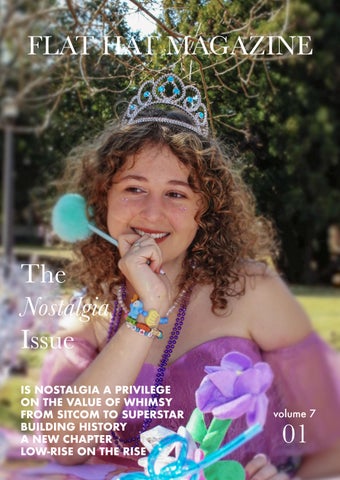
Letter from the Editors
Recently, it seems that the world has become hyperfixated in the past. Maybe it’s because when we look back in time colors seem brighter and things feel easier. Maybe it’s because of our innate desire to explain the complex patterns of today. But either way, what really lies at the root of these memories? What is the true meaning of nostalgia?
The Nostalgia Issue highlights the bittersweetness of the times gone by. Memories of popular childhood media — such as Disney and American Girl — are discussed with fondness. Still, the rose-colored glasses are acknowledged through conversations with friends and reflections on history. Nostalgia explores how we see the past through the lens of today.
Through our photoshoots, we seek to use core childhood memories to convey lessons about how to live our lives to the fullest. “Once Upon a Time” emphasizes the value of imagination and highlights the magic that exists all around us, even if we don’t always see it. “Flat Hat Magazine’s Gone Fancy” embraces individuality through the use of bold outfits and colorful props. Lastly, “Recess” reminds us to take a break and let ourselves feel free to explore the world around us.
None of this would have been possible without our dedicated staff. We can’t thank them enough for the time and effort they put into producing this issue. We’d especially like to thank our wonderful executive board: Clare Pacella, Mali Bucher, Amalia Lewis, Nate Ross, Julia Peavey, Sophia BretasKaisermann, and Eden Leavey. Last, but certainly not least, we’d like to recognize our Editor Emeriti, Grace Ki Rivera and Portia Dai, who provided us with an incredible amount of guidance throughout this entire process.
This issue inspires recollection and reminiscence within us. We hope it does the same for you.
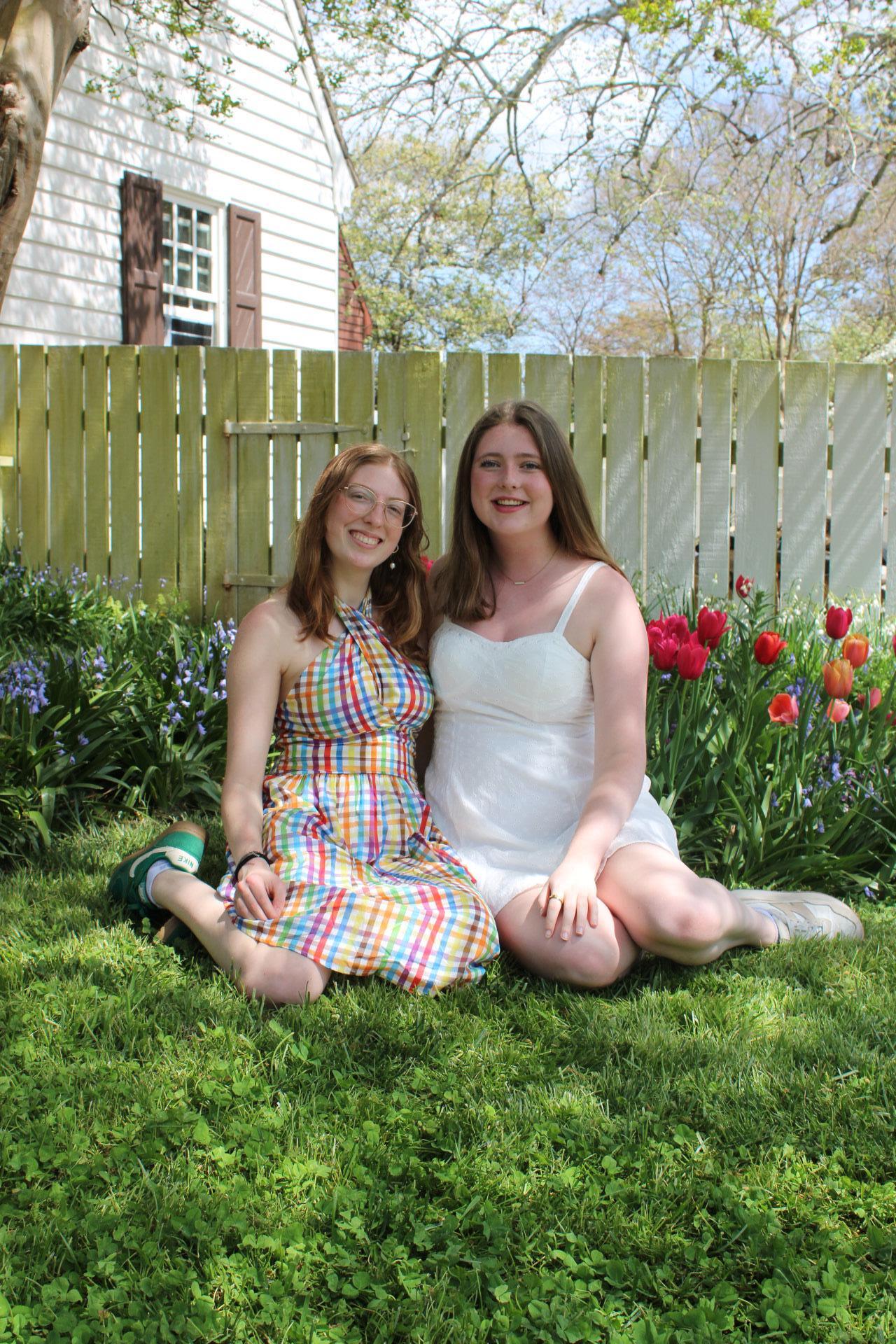
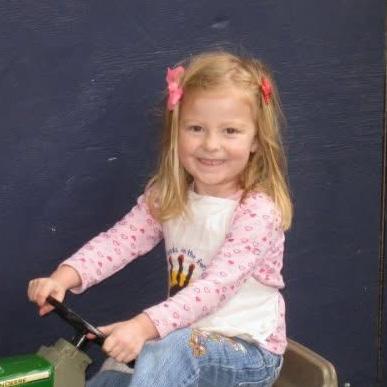
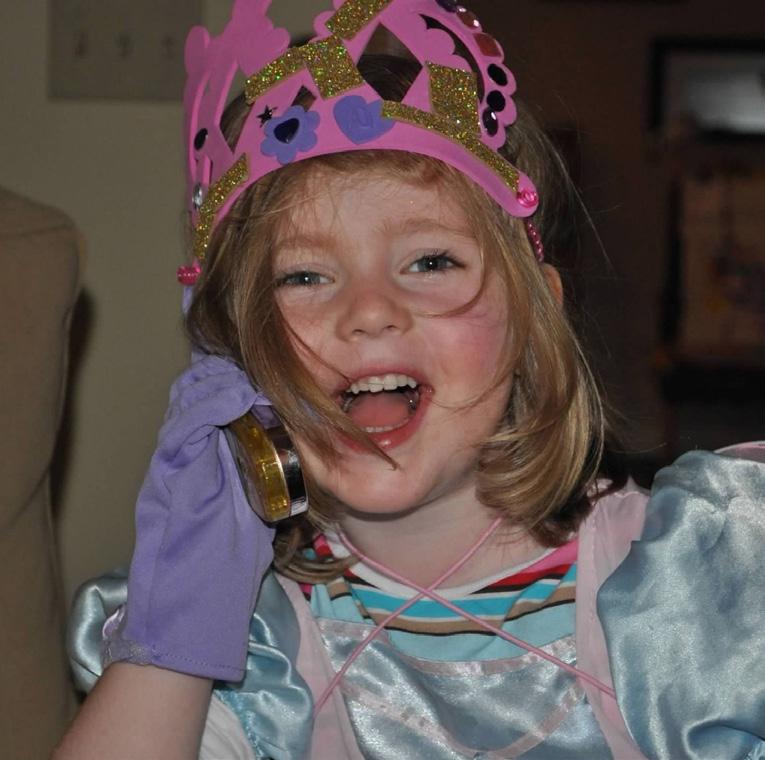
Leah Kohler and Anna Dehmer Editors-In-Chief
Is Nostalgia a Privilege?: Another Conversation Between Friends
Story by Grace Ki Rivera ’26
Design by Mali Bucher ’29
Some undergraduate seniors leave their alma mater with certainty. Grace Ki Rivera ’26 leaves with curiosity.
Is
nostalgia a privilege?
It’s a little past 11:30 a.m. on a Sunday morning in March 2026, and my name is called. We are trying to grab brunch at First Watch in Williamsburg, Va. The four of us dodge and weave our way through the church crowd spilling in from the street. We each make a beeline to the corner table, tucked away by the window. I’m the first to sit, and by the time we are all in our chairs, we are laughing like we just won the lottery.
Over the last three years, we’ve spent so much time together, I don’t think I will ever be able to count the minutes, the hours. We have dinner together almost every night. We have new shows to watch and discuss, new restaurants to try, and new conversations to stretch across multiple days and multiple places. Some of these conversations continued at this very same First Watch, moving from table to table.
Sitting here, I know just how rare it is to have people like this in your life. People whose presence feels effortless. Being together is routine in a way that doesn’t really feel like one. Something that feels so much like second nature that you don’t even think about it — until you have to. This is the last time we will all be together for a while.
They’re a year out of college, and I’m in my last, one of the many reminders of just how fast time moves. At this point in the semester, I know I am supposed to write this article you’re reading now — Hey, Reader! — but in all honesty, I was clueless on where to start. So, naturally, I turned to the people whose opinions I trust most. I bring up a quote I found in my research between bites of a chocolate chip pancake and sips of iced coffee: “Nostalgia is proof that we’ve lived a life worth living. What a privilege it is to yearn for your own memories.” I look at my friends before asking, “What do you guys think?”
They each take a turn:
“I think it can be a privilege to look back on your fond memories and remember the feeling of being in those moments,” Eloise Griffin ’25 says.
Erin Bronlow ’25 shrugs,“Nostalgia goes hand-inhand with grief. Like in that Taylor Swift song ... ‘Nostalgia is a mind’s trick / If I’d been there, I’d hate it.’”
Sanjoli Jain ’25 shakes her head slightly and reaches for her fork. “Nostalgia’s a fickle thing,” she says, half to herself.
We all laugh a little — partly at the word “fickle,” and partly at how quickly we all recognize the truth in it.
After a beat, Eloise pipes up once more, “You can feel nostalgic for moments that haven’t even passed.”
At this moment, I can’t quite place it, but I recognize the feeling. I know that none of this will feel the same again. It’s not quite doom, but there’s a fatalistic weight to it — not excitement, but a strange sense of opportunity in the awareness that time is slipping. I want to remember every detail. I want to remember what Erin ordered because I secretly wished I had ordered it. I want to remember the chatter of people who sat next to us. Some things have already started to fade: whether or not Sanjoli ordered juice, what we wore, and who was the last to get up from the table.
Writing this now — Hey, again! — I keep going back to that table, wondering what it would have felt like if I hadn’t known it was ending. What would I have been feeling? Why did I feel the need to hold onto the moment before it was over? Why did I need to archive it, replay it, and return to it later? To turn it into something I can look back on, something I can understand better in hindsight?
Is it a privilege to feel this way, to have something worth returning to? Or is it just a reminder that moments don’t stay long enough for us to fully live inside them?
It’s a little past 11:30 a.m. on a Friday morning in late August 2022, and I remember the heat. I remember the exhaustion, the music everywhere, and the seemingly never-ending energy from our hall’s Orientation Aides. Steve Lacy’s “Bad Habit” loops on my OAs’ shared speaker. My new friend, Gigi, introduced everyone in our hall to “Kitchen” by Kid Cudi. (I’m forever in her debt.) The first time stepping into Kaplan Arena and feeling small in the best possible way. Everything was new. Everything demanded my attention.
New Student Orientation was about learning the campus and getting a sense of the place that would
be our home for the next four years, but it was also when I met some of the friends who have stayed with me ever since.
Even now, when I hear “Bad Habit” on the radio, I am back with my friends in the Yates Hall lounge. I grab coffee or lunch with Gigi and we reminisce on our first year of undergrad. Suddenly, it’s one of the scorching end-of-summer days and I’m walking up the hill that leads to our hall (also known as the “Yill”).
I didn’t realize it at the time, but the moment I was dropped in my dorm room, those five days that followed were already fleeting. My freshman self wasn’t thinking about a future me wanting to remember every moment from this handful of days; I was just trying to take it all in, to absorb every detail, every sound and laugh, every name and face.
The feeling of nostalgia is the same, and yet, I don’t remember orientation the same way I remember that brunch in March. This was the feeling I hoped to create for others and recreate for myself when I decided I wanted to be an Orientation Aide.
When I found out that I had gotten the coveted position a little past noon on that early April Friday in 2023, to say I was excited would be an understatement. Suddenly, I was going to be a part
of the magic that had welcomed me into the campus just a few months before.
Now, when I see the old hat tucked away or the neon shirts folded on the shelf in my closet, I’m immediately transported back to those five days in 2023. The friendship bracelets scattered in my drawer remind me of those afternoons in the lounge, making them for one another. And whenever I hear “Take On Me” by A-ha or “Dance the Night” by Dua Lipa, I can’t help but remember “Cheers To Your First Year,” dances performed under the Zable Stadium lights and the looks on the students’ faces.
Maybe the privilege of nostalgia is the ability to miss and yearn for a time that we didn’t even know was important? Or maybe it’s noticing what mattered only after it’s gone?
Sitting at that First Watch table three years later, I think I understood something I didn’t back then. Not completely, but enough to recognize it while it was happening.
That’s the closest thing I have to an answer: the privilege of nostalgia is not just looking back; it’s knowing how to be present while we’re still here.
The Year of
Story and Design by Leah Kohler ’28
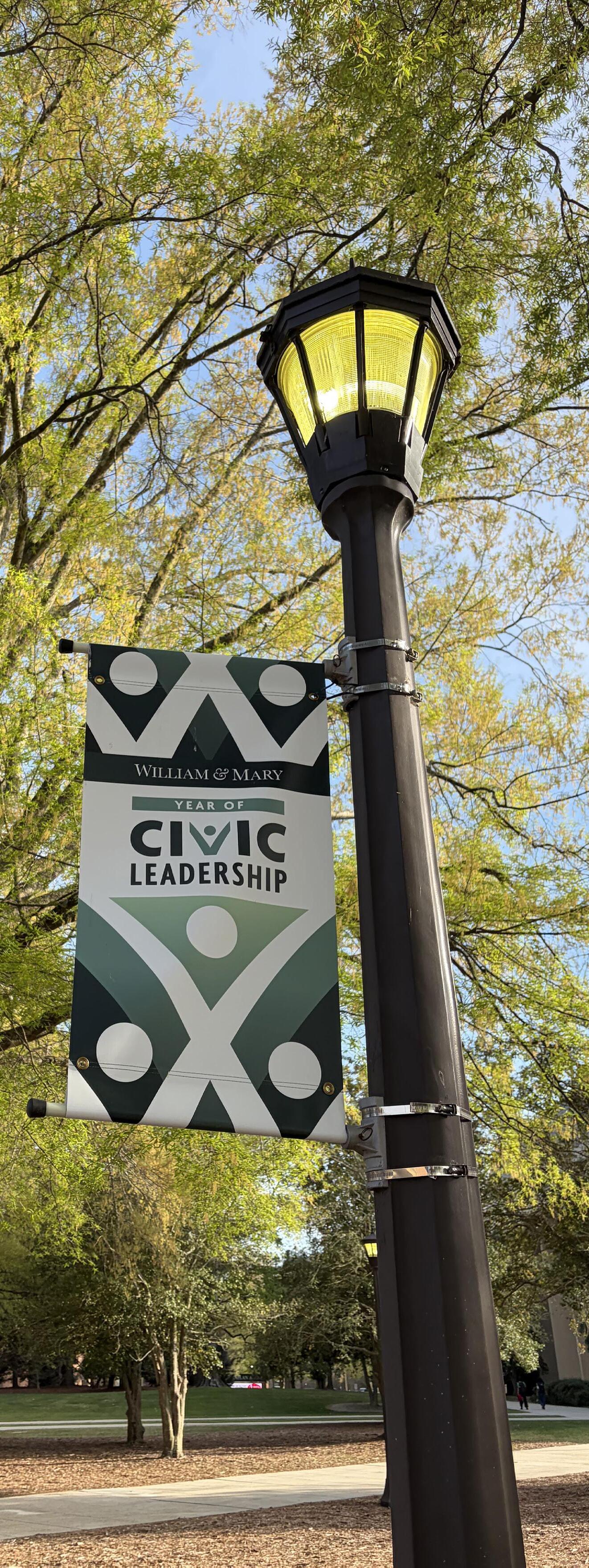
Friday, Feb. 6, 2026, the College of William and Mary celebrated its 333rd Charter Day and officially initiated the Year of Civic Leadership. The designation is especially fitting, given the fact that the United States celebrates the Quarter Millennium this year.
Since its founding in 1693, the College has been central in the development of our country and the education of its leaders. There is no question as to why it is dubbed the Alma Mater of the Nation. However, now more than ever, it is important to recognize what makes a leader and how individuals can get involved in the betterment of society as a whole.
Most often, civic leadership is associated with the students who aspire to work on Capitol Hill or in public offices across the country. While those students certainly are a great example of civic leaders, this year’s theme strives to emphasize that direct involvement in government is not a leadership requirement. There are countless individuals pioneering scientific advancements, teaching the next generation, and dedicating their time and efforts to community outreach. They are just as much leaders as those who sign policies into action. On the broadest scale, civic leadership is working to make a difference that goes beyond oneself. In her Charter Day address, Gov. Abigail Spanberger stated that “[civic leadership] rests on a simple but powerful conviction that knowledge carries responsibility and that wisdom must be placed in service to the common good, that civic leaders listen across differences, reason with care, and act with integrity.”
Spanberger also addressed the current divisive political climate. She expressed that facing division “takes engaged, informed citizens choosing service to one another over self-interest, everyday Americans choosing community over chaos and division. People, neighbors, community leaders choosing the pursuit of our common good. We all have a role to play in shaping our communities and our collective future.” That responsibility isn’t limited to humanities majors. It is the responsibility of each and every student who has a vision for the future, as it is a goal only attainable through collaboration and community involvement.
“We all have a role to play in shaping our communities and our collective future.”
-Governor Abigail Spanberger
Assistant Provost for Leadership and Academic Engagement Roxane Adler Hickey M.Ed. ’02, Ed.D. ’23 is the chair of the committee for the Year of
Civic Leadership. The committee is composed of representatives from numerous departments, the student body, and the alumni population to ensure that programming is designed to best suit the needs of all members of the College community. As they work to develop events and resources, they keep a few key questions at the forefront of their minds.
“How can we talk to each other? How can we build community across difference so that it feels like as a university, we are celebrating our commitment to civic leadership, our commitment to dialogue across difference, and our commitment to continuing to educate leaders for all time coming?” Adler Hickey said.
There are many opportunities for students to get involved on campus, in greater Williamsburg, and beyond. These opportunities are highlighted on the College’s website for the Year of Civic Leadership.
One example is the Better Arguments Project, a national initiative that encourages communication and engagement across different groups. In today’s world, where things might not always feel hopeful, it is important to have difficult conversations that illuminate different perspectives and encourage collaboration towards a common good. Many students have already been exposed to the Better Arguments Project via an orientation seminar; however, its central principles are not something that a person can listen to once and then move on from. Taking these principles and applying them to daily life is what allows for productive conversations that will pave the way for real change.
Furthermore, there are online courses available for all interested students, faculty, and community members. Modern Leadership: Reflections and Tools for the Values-Based Leadership is offered through the Washington Center and the Studio for Teaching and Learning Innovation. Participants can register individually and begin at any point. The goal of the course is to “challenge participants to move beyond the basics of management into a deeper understanding of modern leadership, where wisdom, emotional intelligence, and principled action define success.”
In addition to these highlighted online programs, there is a lot students can learn about leadership through in-person participation in on-campus organizations. With over 475 registered student
organizations, there are over 475 opportunities to get involved within the campus and Williamsburg communities. Of those organizations, over 60 are community-service oriented. According to recent data collected by the Princeton Review, 70% of the student body participates in at least one. That places the College within the top 20 colleges for students looking to make a difference. No matter your social class, it is never too late to try something that you are passionate about, to meet a new group of people, and to become a leader.
The College is also ranked as the No. 1 public university in the nation for study abroad participation. Over the last 17 years, the College has received that designation 12 times. Students are dedicated to expanding their knowledge beyond the campus bounds. Through both university-run and third-party programs, students get the opportunity to partici pate in internships, take classes, and do research that not only interests them, but provides a once-in-a-lifetime chance to see the world from a new perspective.
Even if studying abroad is not feasible, there are other ways to gain a global perspective. On-campus seminars with experts in various fields are a valuable avenue to viewing current events through a different lens. March 6, 2026, less than a week after the initial military strike on Iran, the Global Research Institute hosted “War in Iran: A Panel Discussion with W&M Faculty,” featuring assistant professor of history and international relations Peyman Jafari, assistant professor of government and co-principal investigator of the Arab Elections project Ameni Mehrez, and associate professor of government and Director of NukeLab Jeffrey Kaplow. The largest lecture hall on campus, Integrated Science Center 1221, was packed with students, faculty, and community members who had questions about the topic. That is civic leadership.
Students of the College are not strangers to the multitude of opportunities that are available to them; however, sometimes it is easy to forget that what they are already participating in has future implications. By choosing to put themselves out there and get involved, students are shaping the person and the leader that they are becoming.
The emphasis on civic leadership might be larger this year, but it has always been present, providing the foundation upon which the College was built. Many students chose to attend the College because
of this leadership foundation. Adler Hickey, among others, hopes that the Year of Civic Leadership continues to draw students with similar leadership aspirations.
“Our dream for William and Mary is to be known as the place where leaders go, that on the front end, when students apply to the college, they know they’re going to be thinking about leadership and rolling up their sleeves and getting involved in civic leadership,” Adler Hickey said.
“Our dream for William and Mary is to be known as the place where leaders go, that on the front end, when students apply to the college, they know they’re going to be thinking about leadership and rolling up their sleeves and getting involved in civic leadership.”
-Roxane Adler Hickey
This year, students are encouraged to look beyond their comfort zone, to try something new, to get involved in a way they would not have expected to be involved. In his Charter Day address, Ken Burns gave students a piece of advice:
“It could be the look in the eye of a child raised with love. Or in this simple garden you tend,” he said. “But above all, do something that will last and be beautiful.”

We are looking for writers, page designers, copy editors, videographers, graphic artists, style editors, web designers, models, business editors, photographers, and more! If you’re interested in joining our team, email fhmagazine. chiefofstaff@gmail.com for more information about how to get involved for our Fall 2026 issue.
On the Value of
WHIMSY
Story and Design by Alina Yang ’29
Life felt slower as a kid, and every small thing seemed to spark joy. Going to the park and getting a SpongeBob popsicle, or even just a really cool rock, made the day great. Then we grew older, and the days started to mush together. What did we have as kids that we are missing now? It might be our perspective, no longer looking at life with childlike wonder but rather with the cynical lens we adopt as we grow up and realize that life isn’t just about SpongeBob popsicles and cool rocks. But do we benefit from this perspective, or do we need to bring some of that childhood mentality back? Do we perhaps need to rediscover our “whimsy”?




The Oxford English Dictionary defines whimsy as “playfully quaint or fanciful behavior or humor,” but the casual usage of the word has evolved, especially in recent years. Creators on social media take to trying to find “whimsy” after school or work. We might respond to a particularly overcritical comment with “Where’s your sense of whimsy?” The modernday definition seems to more closely relate to finding something interesting or fun in our everyday lives.
According to the article “The Science of Novelty” by Alane Daugherty, finding this novelty directly triggers dopamine in our brain and increases concentration. In fact, finding novelty or “whimsy” can keep our brains healthy and reduce levels of anxiety and depression.
So, what exactly does it mean to have “whimsy”?
For students at the College of William and Mary, the idea of “whimsy” slightly varies, but holds a common theme of trying to find joy and adventure in the ordinary.
“I feel like often we try to take things so seriously, and I think being whimsical is the opposite of that,” Eren Rumfelt ’29 said.
Others, like Ren Evans ’29, interpret whimsy as an exploration of life experiences.
“I’ve always defined my whimsy as kind of like a jack-of-all-trades sort of thing,” Evans said. “Like being able to take enjoyment in a plethora of different activities and [not] putting yourself in a box.”
Whimsy can also be freedom and finding happiness in the ordinary, like for Addison Carpenter ’29.
“It’s very freeing. It’s ... carefree,” Carpenter said. “It’s knowing yourself in a way and being content with that. And definitely enjoying [and] finding joy in everything, even the little things.”
While “whimsy” can be open to interpretation, assistant teaching professor of philosophy Jonah Goldwater thinks of the term more concretely.
“I joke, as a philosopher, sometimes people will say, ‘Oh, philosophers overthink things.’ [I] say, there’s no such thing as overthinking something. But that’s probably not true. So, it’s something to aspire to. [Whimsy] is to try to not overthink things and not be anxious about things and just do things that are fun.”
So, if people actively try to pursue whimsy, is it really going about life on a “whim”? Especially in the era of “performative males” and social media constantly turning daily life into content, are people who strive to find whimsy genuinely finding it?
Carpenter, when asked if she constantly cultivates whimsy or if it’s a part of who she is, gave insight into both ideas.

“I honestly think that it’s a little bit of both,” Carpenter said. “I think that everybody has whimsy inside of them, but it takes [effort] to bring it out, and really embrace the whimsy.”
“It’s a mindset sort of. It’s just appreciating things in a certain way,” Rumfelt said.
For Evans, there is a point at which one can overdo whimsy.
“I feel there’s a fine line between whimsical and manic pixie dream girl. If you try to force it, then it slips over that line,” she said. “[Being] whimsical is more of just allowing yourself to have fun and being expressive and trying different things.”
Goldwater echoed the sentiment that true whimsy cannot be forced.
“There’s this irony, where if you try [to be whimsical] you can’t do [it]. Sometimes people think happiness is like that.” Goldwater said. “The way that you become happy is not by trying to be happy; it’s just by trying to do something that’s rewarding or engaging, and then you just become happy as a result.”
“I often think of things etymologically, so I assume that whimsy is related to whim, which is like an impulse or something capricious. Sometimes I find myself wanting to just do more things just on an impulse and not think so much,” Goldwater said.

Whimsy is not just how people are or how they behave; objects, media, and celebrities can be perceived as whimsical as well. Rumfelt explained his favorite whimsical piece of media.

“There’s a painting that I really like called Night Party in Versailles that is the epitome of whimsy,” he


said. “It’s a couple on a boat in a fountain; it’s where you can feel the music. It’s actually huge in person, and you absolutely just feel like you’re a part of this really intimate moment.”
For Evans, her whimsical piece of media is the album Something to Give Each Other by Troye Sivan.
“That album puts you in, like, such a fun mood. I always get so happy whenever I hear those songs playing. I feel like anything that really sparks joy is [whimsical].”
Individual songs can also spark whimsy. Carpenter mentioned “Girls Just Wanna Have Fun” by Cindi Lauper and “Dancing in the Moonlight” by Toploader, saying that the songs are “very freeing.”
People can also be “whimsical icons,” whether they be certain celebrities who feel genuine or content creators who dress in fun styles. Rumfelt explained that creators who make art for the sake of art, not just to make profit or conform to the mainstream, seem especially whimsical.
“I love Björk. She’s like a whimsical icon in the sense that she just does everything for the joy of it, rather than a performative aspect. She’s known to dress weird and make strange music,” Rumfelt said. “Some of her albums were completely lost to time because she made them because she wanted to, not because that’s what was being demanded. She feels very disconnected from other people’s opinions.”
“I have, like, a top three,” Evans said. “It’s got to be Helena Bonham Carter, Will Ferrell and then Kelly from The Office. She’s so silly. She’s so self-serving, but in the best way. I loved the episode when they filmed the music video inside the office. Like, the ‘Male Prima Donna’ music video.”
The people whom Carpenter finds whimsical are those she looks towards for outfit inspiration.
“There are a few outfit people who I follow on Instagram and TikTok. I think they’re pretty whimsical,” she said. “There’s a girl, Victoria West, [and] she’s so whimsical I love her. She’s such an inspiration, and it’s really cool to me to see how her style has evolved.”
But students here do not have to turn to the internet to find whimsical inspiration or style influencers. From Marvin the Crim Dell otter to Jaden Grant ’28, the illustrious unicycle guy, whimsical figures all around campus bring some novelty to what can be monotonous school days. On a warm sunny day, you can find many students roaming around the Sunken Garden playing spikeball, jamming out on instruments, or crocheting, perhaps participating in various whimsical acts.
“My favorite things are seeing people that are doing stuff that might be considered weird or odd, and just it makes me happy. Like the guitar guy [and] the unicycle dude. It’s just odd things that you notice, and you’re like, ‘That’s a little strange; that’s wonderful,’” Rumfelt said.
Carpenter noticed the whimsy on campus as well.
“Everyone has whimsy inside of them. And I think that most of the people that I see here really do seem to be in touch with that, really seem to project their whimsicalness.”
With a variety of wildlife, every native tree in each of the 50 states, and the oldest college building in the United States still standing on campus, the scenery at the College also lends itself to whimsy.
“It is very easy to be whimsical here. If you just stand somewhere long enough, you’re like, “This is kind of great.’ But at the same time, it’s like you have to be whimsical to make the campus whimsical,” Rumfelt said.
Carpenter had similar thoughts. “I think it’s so whimsical, [but] I do think that you have to be able to stop and really appreciate those things.”
Goldwater considers the age of the campus and when it was built, as well as its modern-day appearance, when discussing whimsy at the College.
“I don’t know that if I were going to characterize the 1690s, [...] as a whimsical time in history. But it’s certainly a forum, in which people can express themselves and, I mean, to some extent that’s up to the students, I suppose. Although, maybe the professors should be facilitating it. But there’s no


It’s a lovely place. It’s a scenic place. We got some official arboretum standing. So you think flowers, meadows, trees, right? Isn’t that an opportunity to be joyful and spirited?”
However, as an academic institution at its core, it can be hard for students to fully relax and destress.
“[Students] can be very worried, very calculating. You know, ‘Should I major in this?’ You know, ‘Should I take this class? Should I join this group?” Goldwater said.
Some students say that finding whimsy or novelty during the school day definitely helps with those worries. Evans recalled feeling nervous and stressed about her midterm when she noticed something strange on the way to her exam.
“I’m like, ‘What’s that on the Sunken Gardens? Are those dogs? No! It’s goats and pigs and donkeys,’” Evans said. “I don’t know any other school that would have that. I thought that was really cool and fun, and it made me feel a lot better.”
Not only did the College have a pop-up petting zoo, but its architecture can be grounding for students.
“People often have a very long-term [mindset] because they’re worried about the future, which is understandable. But there’s also a problem. Sometimes the idea is if you’re always deferring for the future and you don’t look for the present, then one day you wake up and you’re old and you’ve missed everything,” he said, “Doing things in the present because they’re fun in the present is a good thing. Fun is a valuable thing. Laughing is a valuable thing. It’s valuable to have impulses, or ‘whimsy’ as you say.”
And maybe that’s the concept we had so concretely as children, but often lack now. With increased responsibilities and knowledge of the nuances of reality, we can get caught up in what we have to get done and what the future holds for us. But there is value in taking a break, maybe to go find a good set of swings and a SpongeBob popsicle.
“[Be] spontaneous and be whimsical and have fun and laugh and all the rest of it. So I’m in favor of [whimsy],” Goldwater said with a thumbs up.
With whimsy in mind, find ways to make your own adventures, like you did as a kid.
“Especially in an academic environment, it’s really easy to get super focused on what you have to get done,” Carpenter said. “Like, just focusing on school and forgetting to look around and be like ‘Wow, [the] Crim Dell just looks so beautiful this morning.’ I think that in terms of scenery, I think it’s very whimsical. We just have to be able to look around and really take it in.”
Whimsy can be an important tool for finding joy in the mundane or stressful situations.
“That’s the only thing that’s getting me through this school year. The moment that I start letting go of what makes me happy, which is what I think whimsy kind of is, I start getting really sad and really depressed. Sometimes it makes things tolerable, really not great things tolerable,” Rumfelt said.
“One of the best ways to reintroduce a bit of joy is trying different things,” Evans said. “If you’re someone that’s bed rotting for eight hours in your dorm, you’re probably not going to feel very whimsical and silly. Even if you can just take an hour out of your normal routine and try something new, I think that’s really extremely helpful. Life is to be lived.”
“Whimsy is one of the most valuable things that you can have,” Carpenter said. “I think it’s one of the most beautiful things about life. I think that, to find whimsy, you just have to be able to stop and take a moment and really appreciate the beauty in things.”

Looking at life on a larger scale, Goldwater added that zooming one’s perspective too far out can
Perhaps that is part of what we are missing when we are nostalgic for our childhoods: the adventure in our ordinary lives, not caring what other people think. The joy we had for a snow day, the rock we kicked back home from school, and drawing with sidewalk chalk, letting our imaginations be our entertainment. We might not be kids anymore, but let’s bring back whimsy.


The Adaptation Epidemic

Story
Elizabeth
Whenever I crave a distraction from my academic workload, or simply need something to do during the weekend, I turn to the movie theater. With its large screen, comfortable seats, and overpriced sugary concessions, the movies have long been a relatively cheap way to escape the never-ending problems and responsibilities of the world for a few hours.
by
Ray ’29 Design by Victoria Polites ’27
Lately though, this escape rarely pans out for me. When I go to buy tickets, I never find anything remotely interesting to watch. A majority of the time, the only films playing are part of preexisting intellectual property or rehashes of ideas that have already been done. The annual Disney live-action remake has become so predictable that it might as well become a drinking game (which would certainly give you an escape if you consider alcohol poisoning to be one).
While Disney is the worst offender by far, it is certainly not the only studio responsible for fueling the remake trend. Over the past several years, rehashes and reboots have come to dominate the box office across nearly every genre. Classic animated franchises like Despicable Me and Toy Story have been stretched into multiple installments, sometimes reaching four or even five films.
Animation has been converted into live-action with movies like How to Train Your Dragon (2025) and the seemingly endless stream of Disney remakes. Chick flicks of the 2000s are being revived with sequels featuring their original casts, as seen with Freakier Friday (2025) and The Devil Wears Prada 2 (2026). These classics have even been rebooted, to controversial results; properties such as Gossip Girl (2007-2012), Legally Blonde (2001), and Heathers (1988) have all been remade with entirely new casts for modern audiences, despite those audiences often preferring the original material. This doesn’t even mention the spread of remakes to Broadway. Recent examples include movie-to-musical adaptations like Girls (2004) and Beetlejuice (2019), book-to-musical adaptations like The Great Gatsby (2024), and musical-to-movie adaptations like Dear Evan Hansen (2021) and Cats (2019) — the latter of which I prefer to erase from my memory.
and Cinderella (2015) — performed incredibly well at the box office. At the time, the concept of live-action remakes was still relatively new. Their success sent a clear message that audiences wanted more of these films and, initially, that message was accurate.
Millennials now had a reason to pay for a nostalgic experience built around the Disney movies they had grown up with, only now they were modernized.
Some franchises were also built from the start to sustain many installments and large amounts of content. Series such as Star Wars and Harry Potter thrived for years by expanding their stories through sequels and spin-offs. Because of successes like these, it’s important to remember that franchise expansions were not always viewed negatively; in their early stages, many were received quite positively by both critics and audiences.
So, why have our opinions about these remakes changed? If audiences loved the original material, why are these new versions so loudly disliked? There are two primary reasons for this: the quality in which many of these remakes are executed and the broader impact of these remakes on the box office landscape.
This not-so-short laundry list of remakes has probably already exhausted you — and you’re not alone. Over the years, public reception towards these remakes has grown increasingly negative. However, this wasn’t always the case. The idea of adapting existing IP isn’t new, and theaters have long featured remakes and adaptations for audiences to enjoy.
To use Disney as an example, the first wave of liveaction remakes — such as Alice In Wonderland (2010)
First, we must acknowledge the inherent lower quality of most remakes being released today. Remakes from large studios are typically greenlit with the intention of generating immense profit through pure nostalgia bait, which means that they don’t have to work nearly as hard to generate the same amount of revenue. The allure of creating an adaptation is the ability to add something new to the existing source material — after all, if the new film is simply a replica of the original, why shell out $15 for a ticket? However, because these remakes are produced from a monetary angle, they rarely take advantage of the opportunity to improve an existing story that has already proven to be successful at the box office.
Disney’s live-action remakes are arguably the biggest offenders of this “low risk, high reward” mentality. Many are nearly shot-for-shot reproductions of the original films, leaving little reason to watch them over the animated versions (especially when audiences likely already have access to those classics through streaming). Characters are frequently “reimagined,” yet there is often little consideration for how their original animated designs translate to
live action. As a result, figures created for fantasy worlds end up looking strangely unsettling in realistic settings. When whimsical characters like Sebastian in The Little Mermaid (2023) or King Louie in The Jungle Book (2016) look like they belong in a zoo instead of a storybook, it is easy for audiences to lose the personal connection they once had with them.
Additionally, the music in these remakes adds nothing valuable to the narrative. Classic Disney films follow a traditional musical structure in which dialogue, song, and choreography flow naturally into one another. In many of the live-action adaptations, however, that rhythm feels disrupted. Songs appear abruptly rather than emerging organically from the narrative, making for awkward beats in the storyline. New songs are frequently added to flesh out characters or expand their roles, but these additions can feel awkward within a story that functioned well without them. Disney seems to be attempting to reinvent its classic stories, but these musical changes serve no clear purpose. As a result, most remakes have the worst of both worlds, as they neither faithfully represent the original material nor introduce anything new and meaningful.
Not only are many remakes unimaginative and uninspired, but the worst offenders end up undermining the very aim of the original source material. The recent Mean Girls (2024) remake is an unfortunate example of studios missing the mark when it comes to their storytelling. In the original 2004 film, the costuming of the Plastics was deliberate. Their outfits were coordinated reflecting their conformity to the “queen bee” of the group, Regina George. They were also aspirational, featuring luxury and name-brand pieces that set them apart visually from their peers. In other words, the Plastics were portrayed as trend setters, not trend followers. Compare this to the 2024 remake of the same name, and it feels as though the new creative directors dressed the main trio blindfolded. The outfits appear cheap and overtly “trendy,” the kind of fast-fashion looks likely to fall out of style within a few months. This makes sense, as many of the pieces resemble popular dupes from the fastfashion retailer Shein. The film even partnered with Walmart for a promotional collaboration. This marketing strategy was obviously done to boost profits, but it directly contradicts the Plastics’ original aura of exclusivity and unattainable wealth. As a result, the visual cues of the remake diverge so much from its source material that it feels almost
unrecognizable, and it does a great disservice to the plot of the original movie.
As much as recent adaptations generally miss their mark, it is important to note the few recent exceptions that have improved upon their original source material. A good example of this is Sony Animation’s Spider-Verse franchise which has successfully reimagined the character of SpiderMan to fit a modern audience. Rather than simply rehashing the Peter Parker storyline, Sony focused on Miles Morales to bring a different perspective to the story. This approach allowed the franchise to broaden representation while still respecting the established canon. It’s also impossible to ignore the groundbreaking animation style of these films. Sony was willing to take creative risks and invest significant time and money into the project, and it paid off. Despite these films being expensive to produce and requiring significant downtime between installments, fans still line up eagerly for each new release. The success of the Spider-Verse franchise ultimately boils down to Sony’s willingness to invest resources into innovation instead of churning out yet another derivative remake.

Greta Gerwig’s 2019 film Little Women is a subtler example of adapting through reinvention. Gerwig’s adaptation uses the same source material as many previous versions, but presents it in a reimagined way through a non-linear narrative. By using a past-and-present story structure, the film is able to create direct and intentional foreshadowing of the events in the narrative. Gerwig also distinguishes her adaptation from its predecessors by introducing a significantly more explicit feminist perspective, notably through Amy March’s monologue. Improvised on set by Florence Pugh, the character uses the film’s platform to call out the limited ways women can earn money and secure independence in society. While the film may not be as stylistically revolutionary as SpiderVerse, it demonstrates that an adaptation can still bring new meaning to an existing property through reinterpretion of a work’s themes and storytelling approach.
Aside from the often lackluster quality of many recent adaptations, their prevalence has also dulled audiences’ appetite for them. The main reason remakes continue to be churned out year after year is that they are considered a safe and profitable investment. Studios know that familiar franchises
are far more likely to generate reliable revenue than original ideas, which are a gamble considering they may or may not resonate with audiences. Moreover, using existing IP also cuts down on certain development costs. Executives can avoid paying for entirely new concepts, storyboards, and extensive early-stage experimentation, and they minimize the risk of having to scrap a project that fails to come together. Companies like Disney are therefore able to rely on recognizable properties while framing the strategy as a way of keeping the Disney “magic” alive.
Part of this problem stems from the fact that original ideas are generally struggling to succeed at the box office. Because live-action adaptations and remakes follow a nearly guaranteed formula of profitability, original projects now face immense pressure from corporate studios to perform extremely well. The result has been a decline in creative experimentation. Stories are now crafted to appeal to the broadest audience possible, rather than reflecting the visions of animators and storytellers.
This “play it safe” mentality has also led to a rise in corporate censorship, impacting releases such as Pixar’s Elio (2025). The film’s protagonist was initially queer-coded, reflecting the personal experiences of the film’s original director, Adrian Molina. However, concerns about the character’s portrayal reportedly caused a production shake-up that replaced Molina with directors Domee Shi and Madeline Sharafian. As a result, Elio became more distanced from the perspective of the person who originally created the story, weakening the film’s personal and artistic foundation. In many ways, Disney wants to have its cake and eat it too. It wishes to benefit from the public image of holding progressive values, yet it is also careful not to alienate more conservative audiences if doing so would threaten profits.
In this conversation about remakes, it is also important to recognize the role audiences play in shaping what gets released. Going to the movies is expensive, with the average ticket in Williamsburg being around $13-$16 without accounting for concessions. Combined with the abundance of streaming services that offer on-demand movies and TV shows, it is no wonder that people are far more selective about what they choose to see in theaters. If a new idea doesn’t seem worth the price of admission — which is now often the cost of a full meal — many people simply skip it. Naturally, this
discourages companies like Disney from investing in more original films since their potential benefits rarely outweigh their costs. At the same time, audiences are naturally drawn to the nostalgia and comfort of revisiting stories they already know they enjoy. Disney remakes offer many people the chance to switch off their daily lives for a few hours and reconnect with their childhood (even if that childhood didn’t originally include Will Smith as the Genie in Aladdin).
Despite this, people are still hungry for new ideas and are quick to latch onto “good” releases. Arguably the biggest example as of late is Netflix’s animated film Kpop Demon Hunters. The movie introduces an entirely original concept, blending modern K-pop fandom culture with traditional Korean myths and folklore. Similarly to Spider-Verse, Kpop Demon Hunters pairs innovative animation with contemporary cultural elements, making it both visually distinctive and relatable to a wide audience. The film also benefited from debuting on the streaming platform Netflix rather than through a traditional theatrical release. Because it was included with a Netflix subscription, viewers didn’t face the usual hurdle of deciding whether the film was worth the price of a movie ticket. This accessibility helped the movie significantly; not only did it perform well in terms of views, profits, and awards, but it also developed an intense online following. It was an internet phenomenon in a summer that otherwise lacked a common cultural moment.
After talking about the business decisions of large studios like Disney, it may feel like your options at the box office are set in stone. In reality, you have more influence than you might think. One way you can shape what you see in theaters is by simply choosing where to spend your money. If remakes dominate theaters because they are profitable, then refusing to pay for them sends a clear signal to studios to stop producing the same product. You can also actively support originality by buying tickets for stories that do take creative risks. Independent films in particular rely heavily on audience support, so choosing to see them helps ensure that new and original stories continue to make it to the screen.
And if you’re still feeling particularly nostalgic and want to see the latest remake, there’s always another option: just wait a few weeks until it inevitably arrives on streaming.
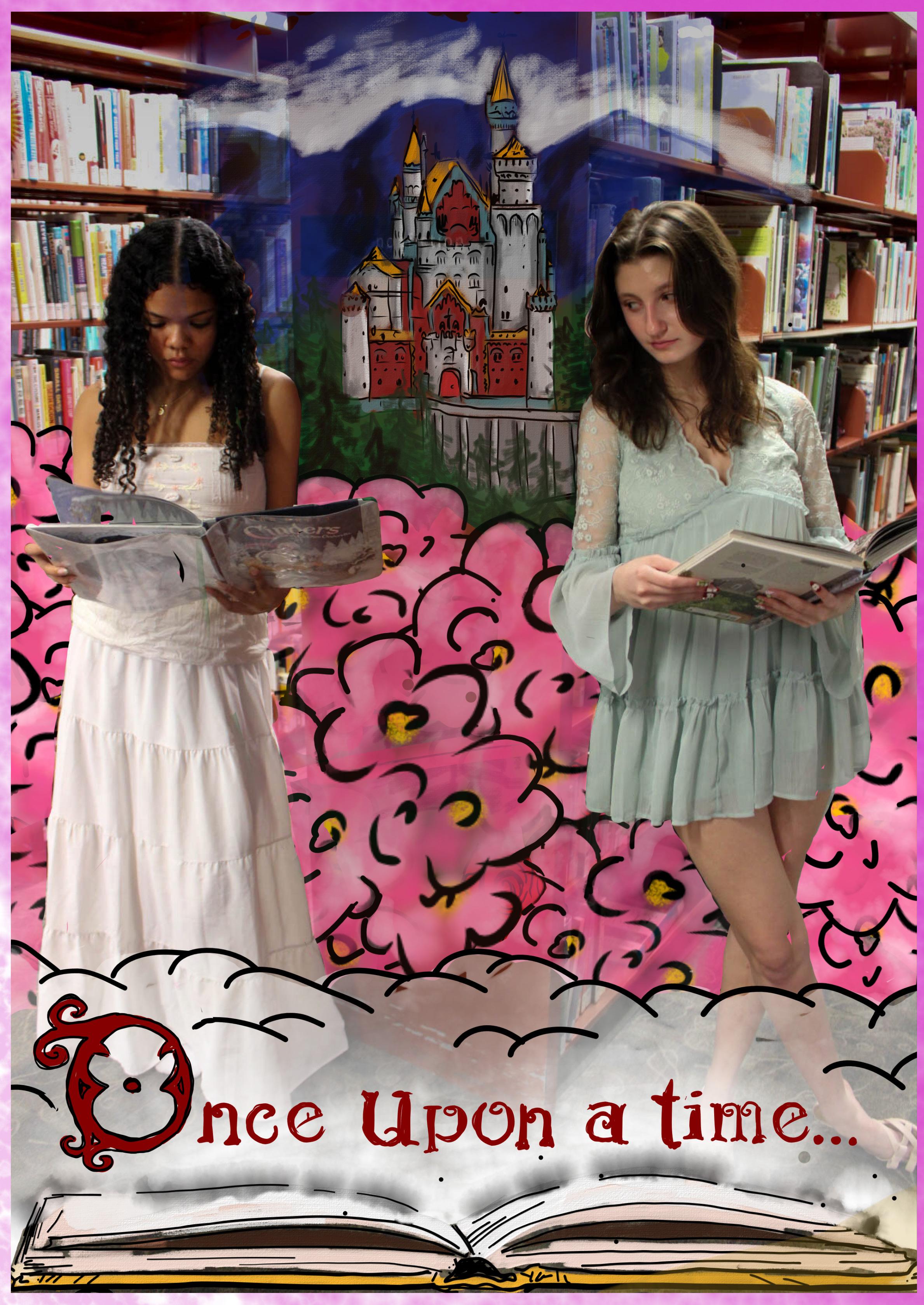
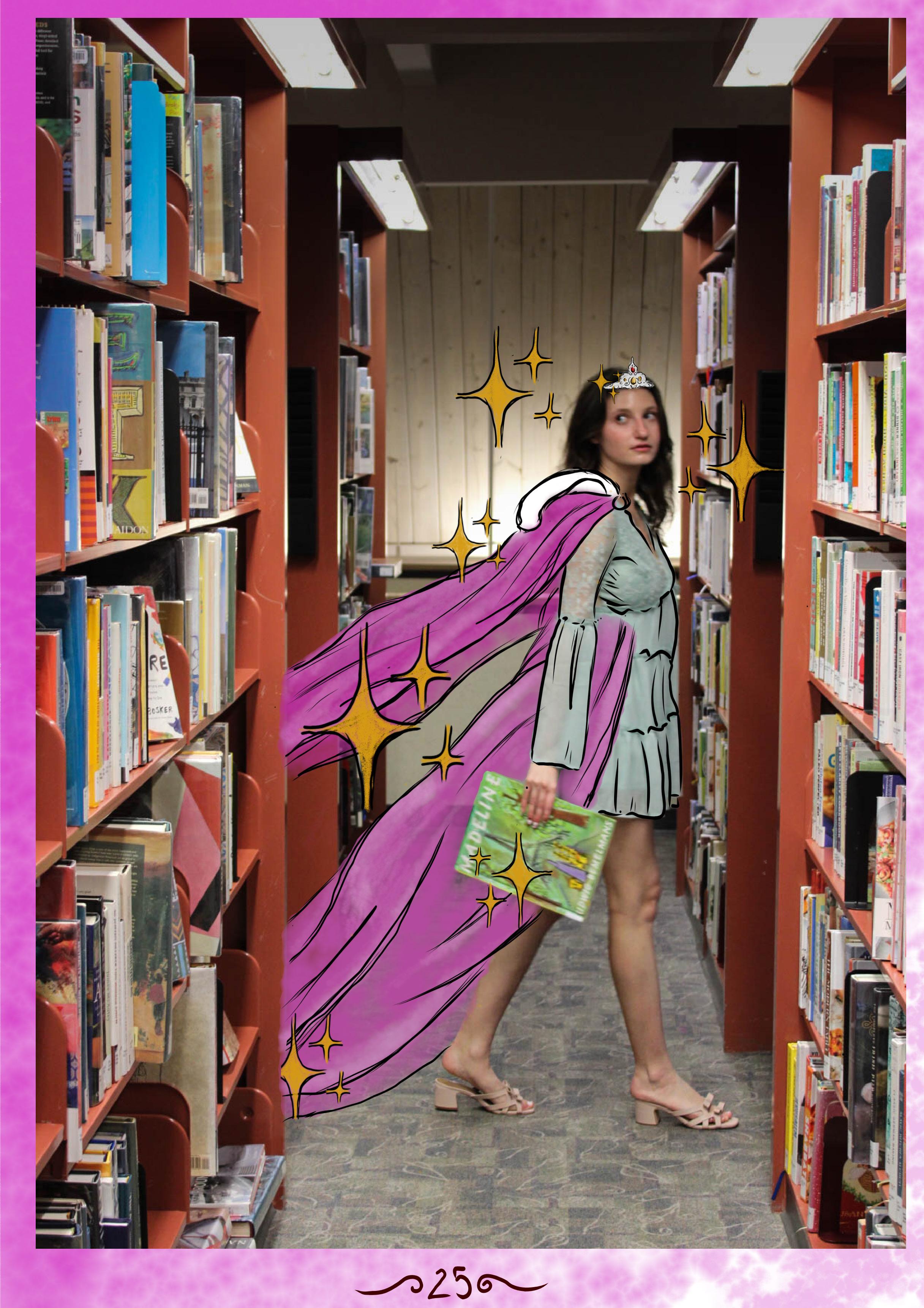
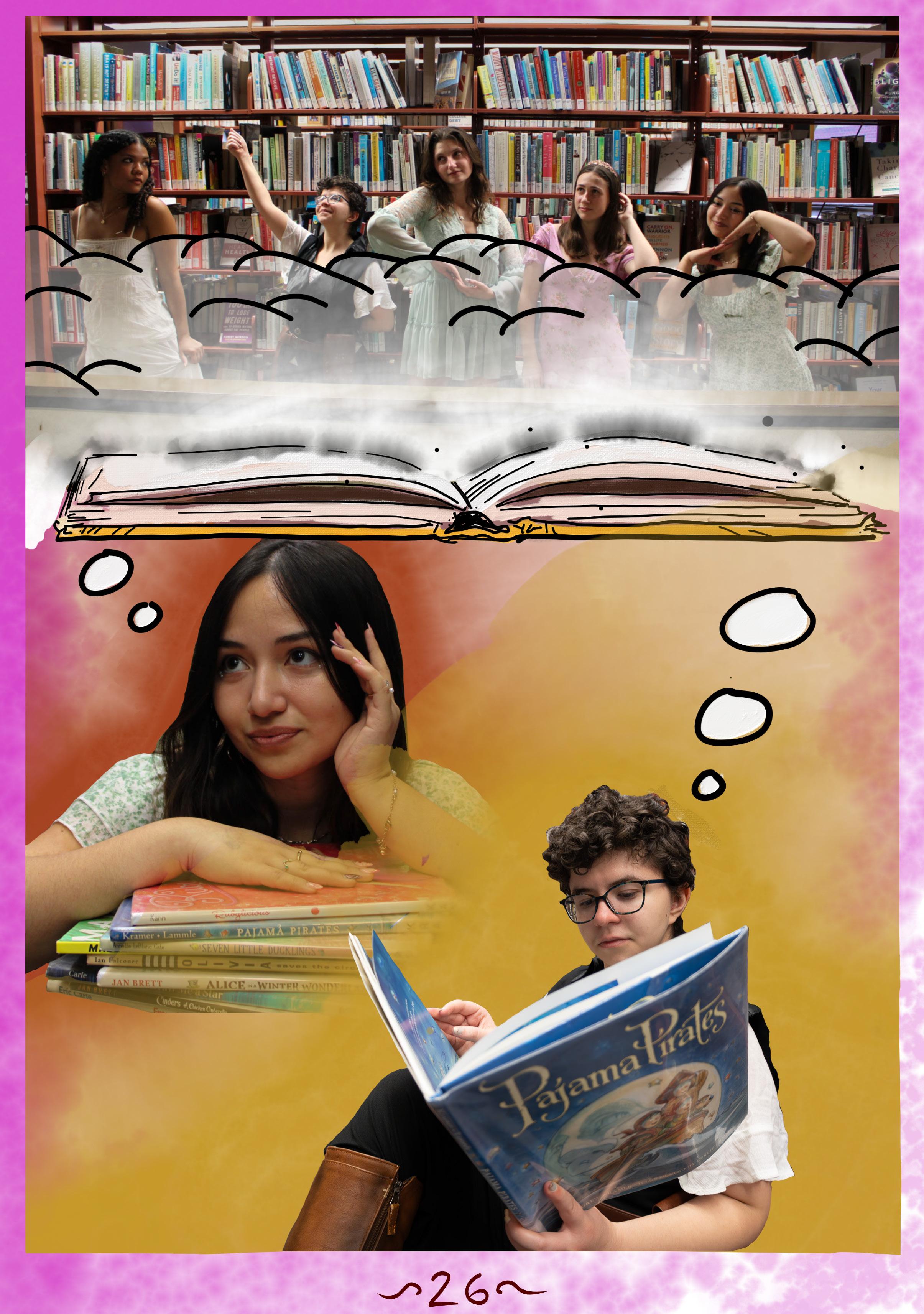
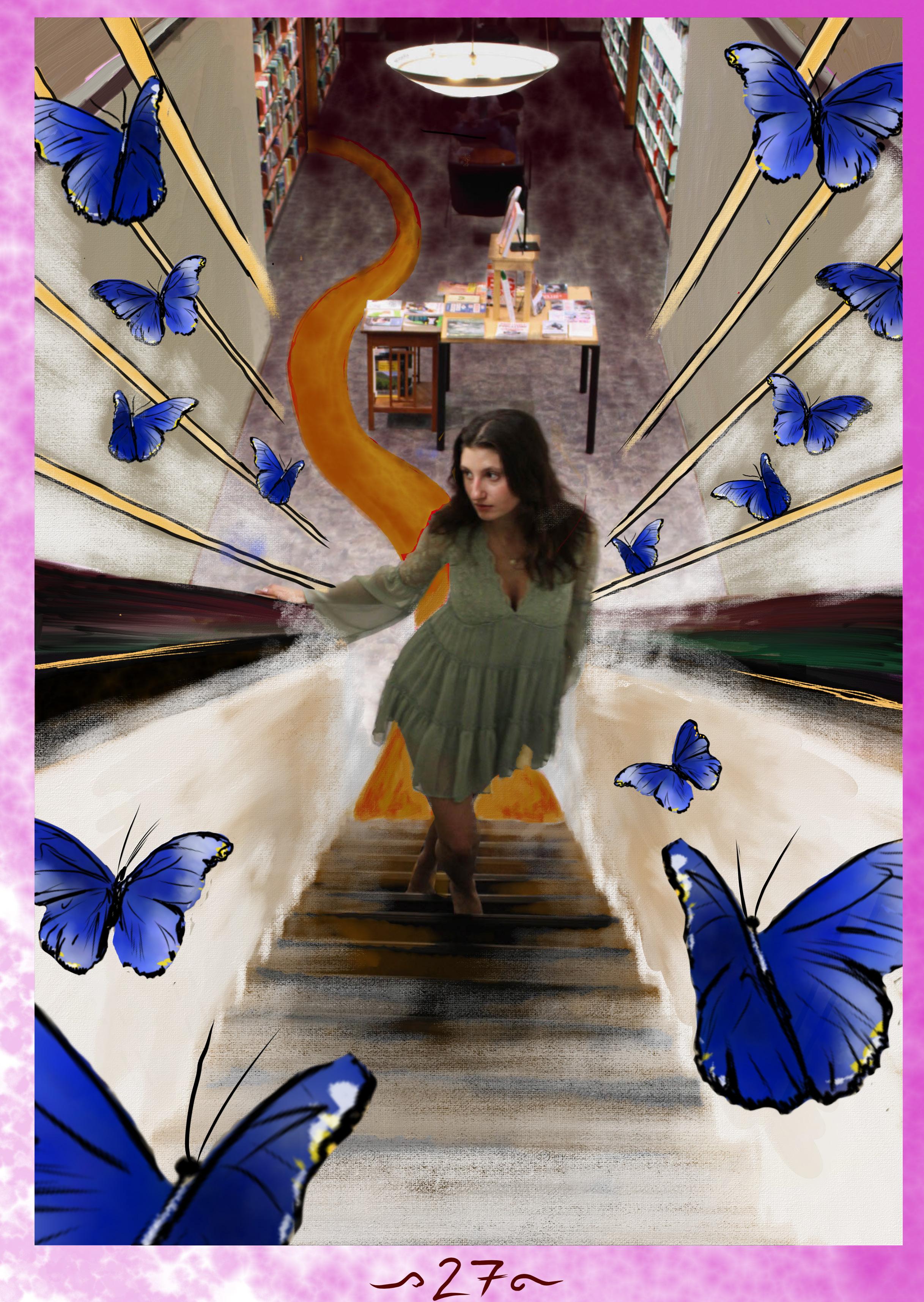

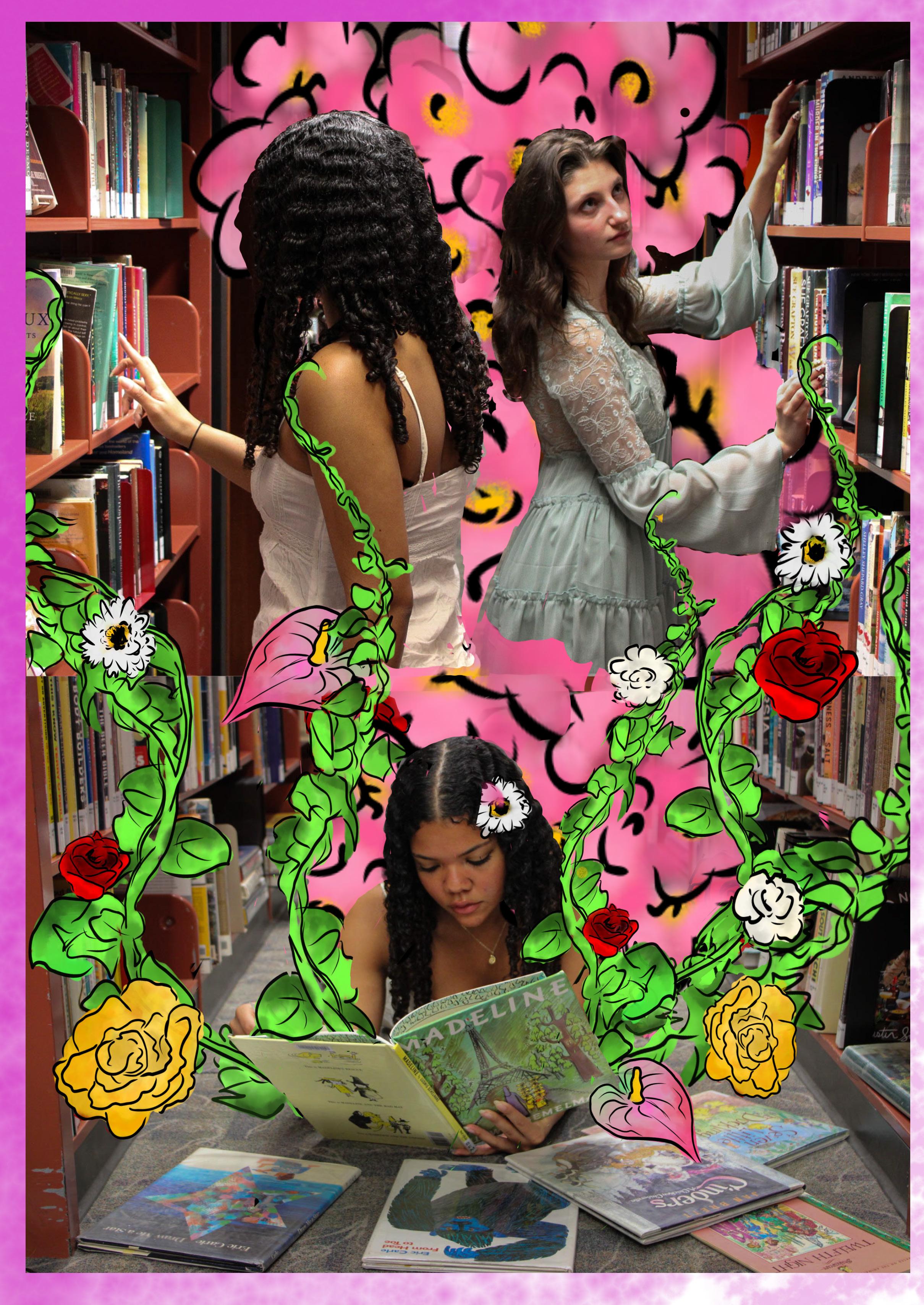
Photos by Amalia Lewis ’28, Victoria Polites ’27 and Ava Shafer ’28 Graphics and Design by Henry Holt ’28
Modeled by Bianca Caballero ’26, Mercedes Carter ’29, Maria Cromer ’28, Juliet Josselyn ’29, and Sophia Welland ’27
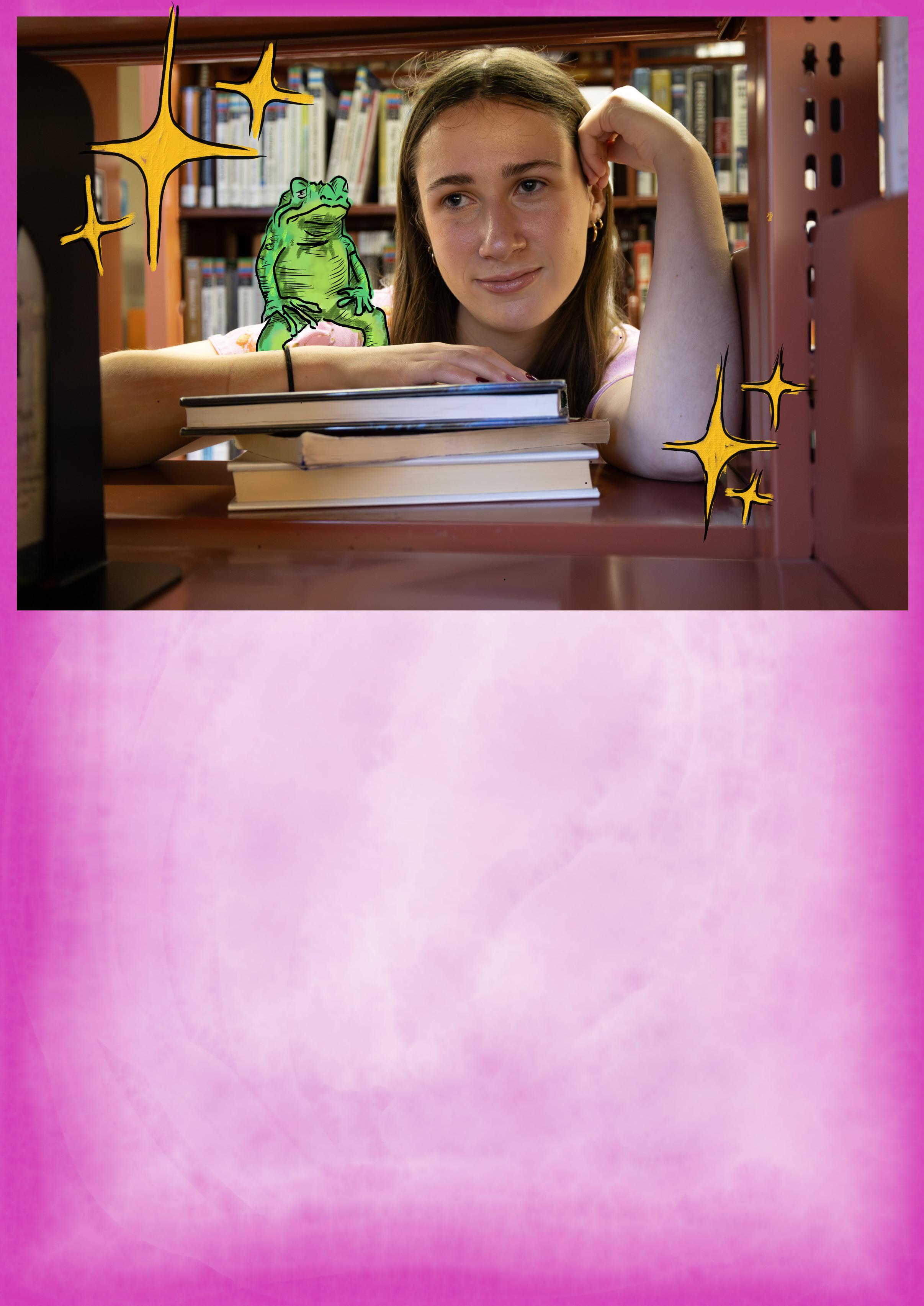
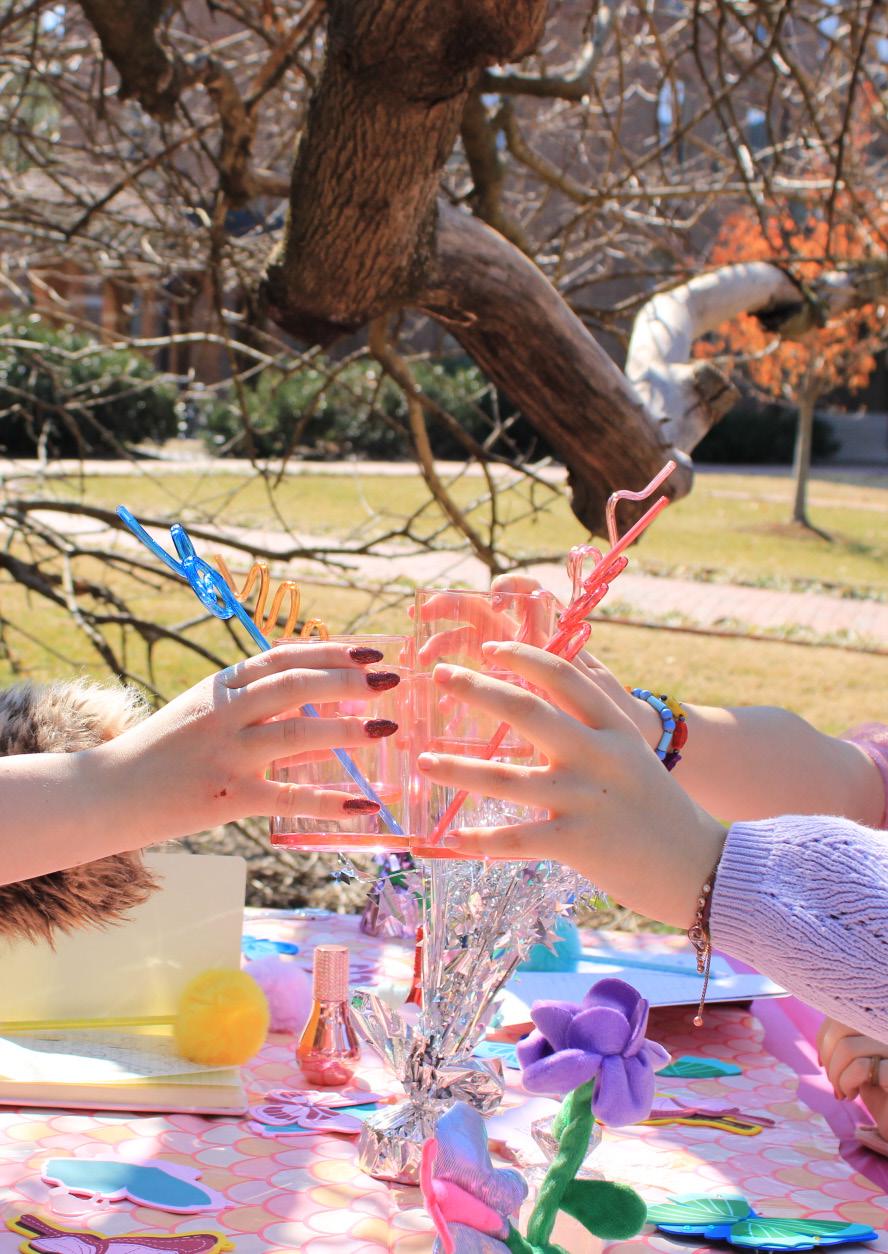
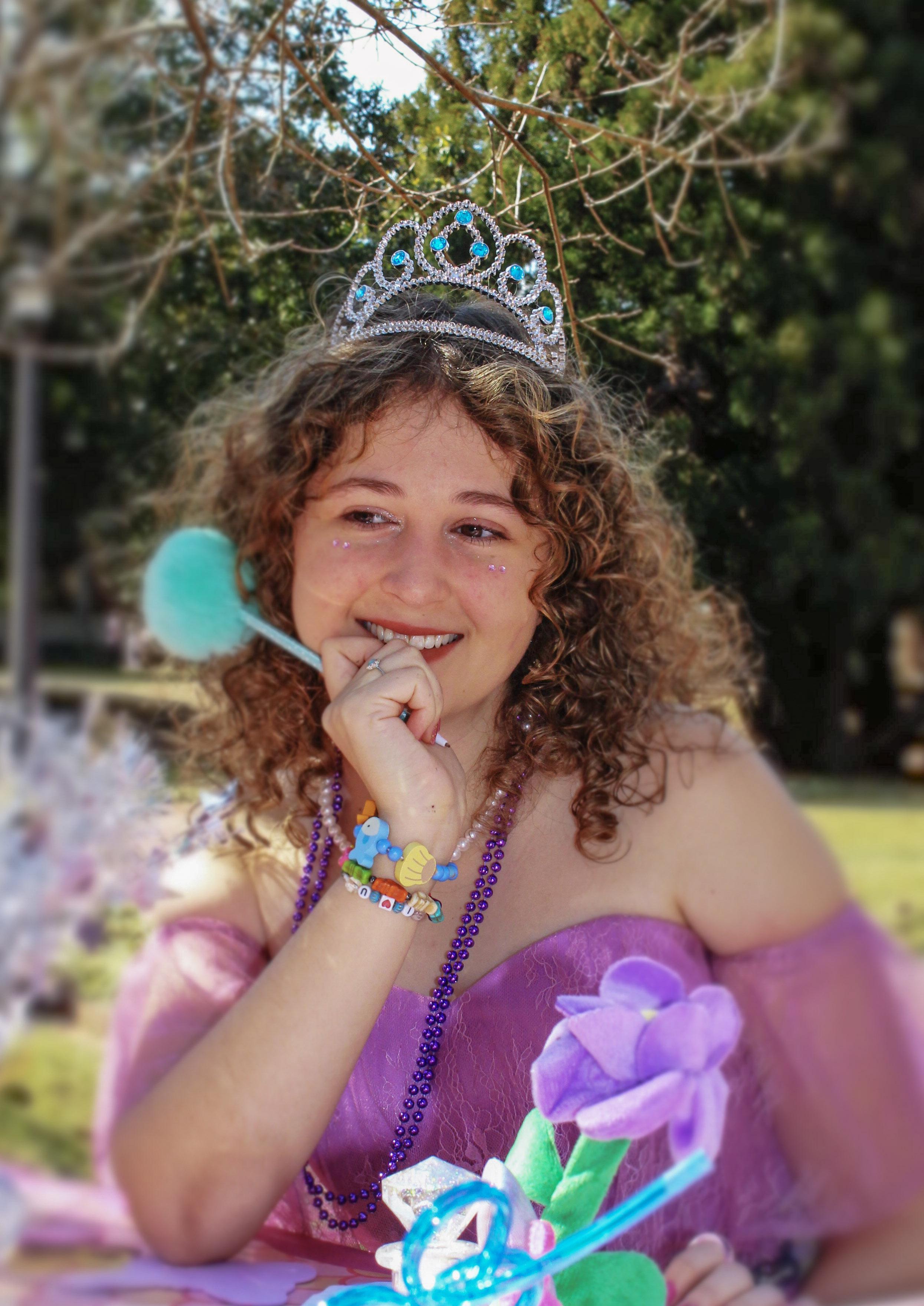
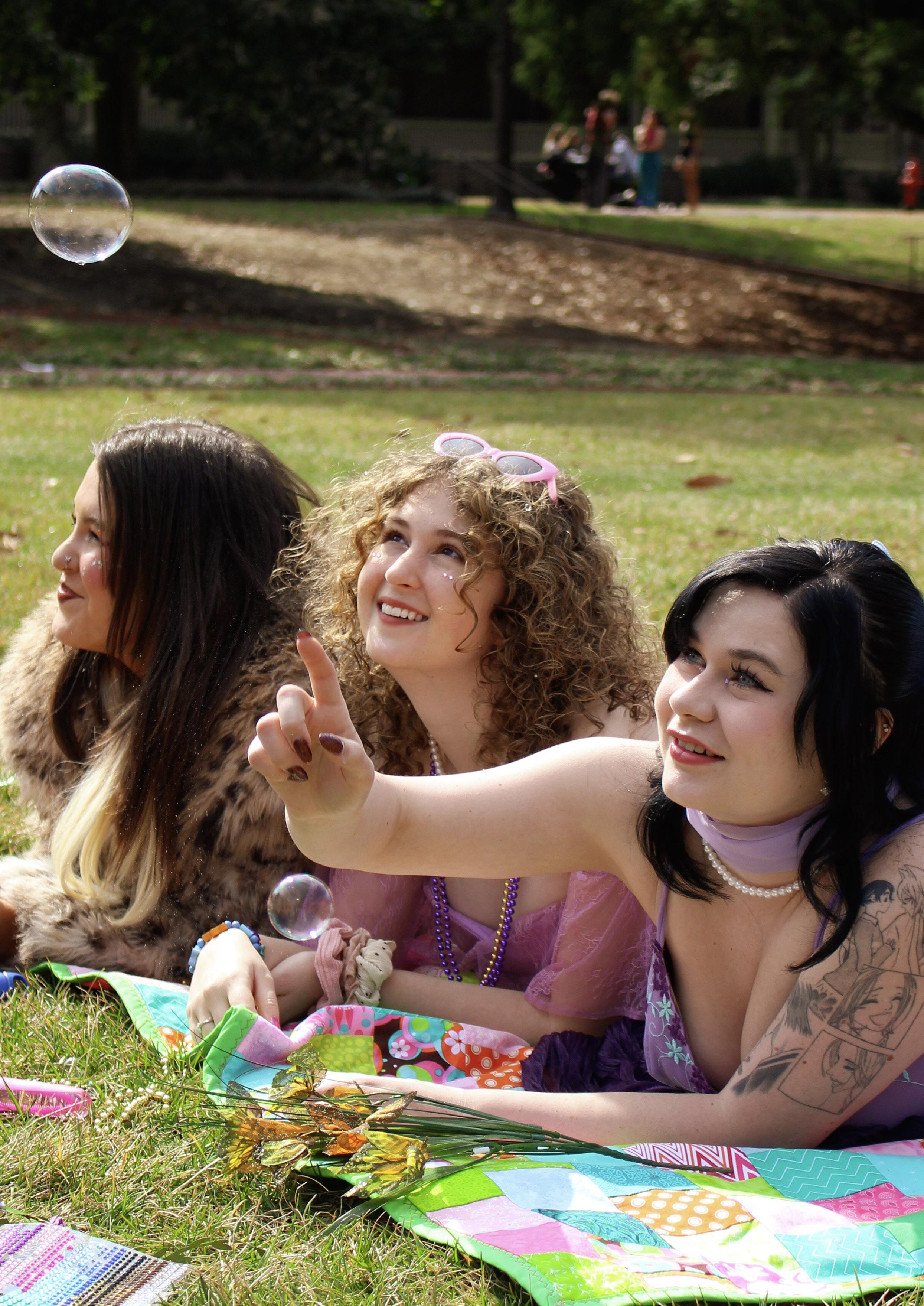
Everyone has books that have shaped their impressionable, young minds, and we wanted to emulate that make-believe origin by stepping back into the pages of some childhood favorites that first taught us how to imagine. We wanted to capture the feeling of being a part of the story, rather than just reading it. Flowing princess gowns, pirate coats, and other fairytale details helped bring that sense of wonder to life. - Amalia Lewis ’28
Building
History
the Tribe Builds Historic Campus From the Ground Up With Lego Bricks
Story, Photos, and Design by
Clare Pacella ’28
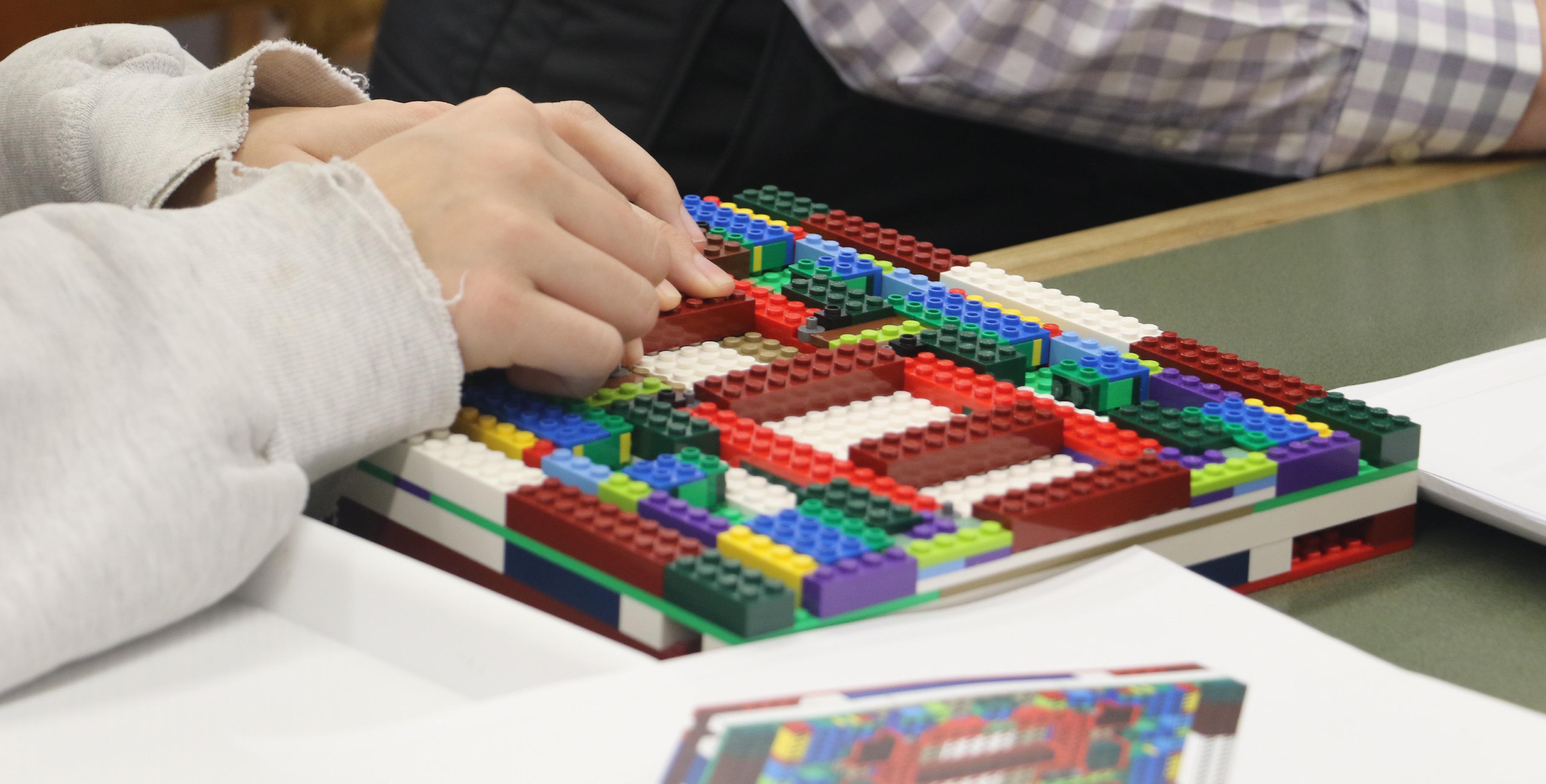
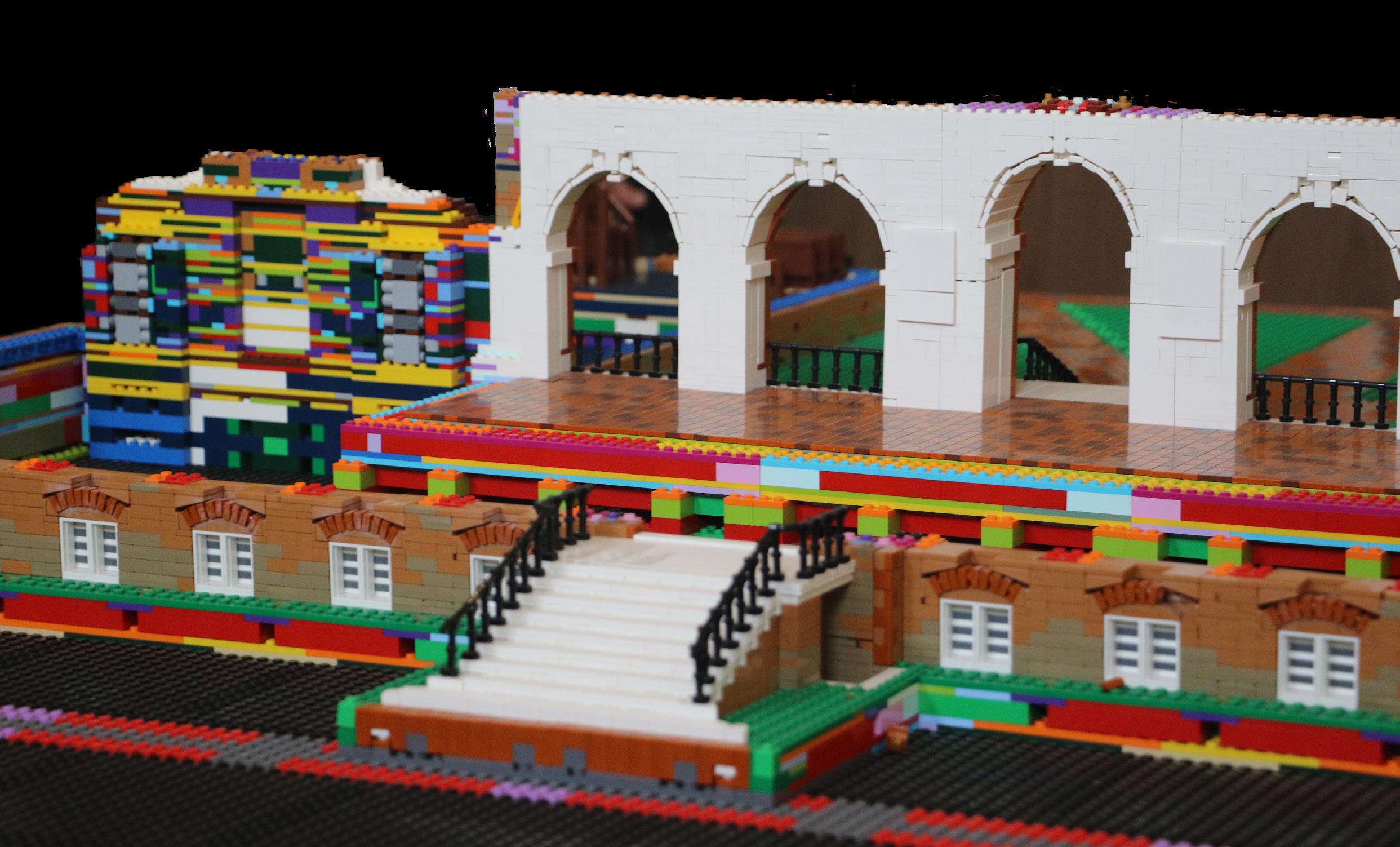
Using 230,000 Lego bricks, members of the Tribe construct a 64-square-foot model of historic campus, featuring the Sir Christopher Wren Building, the President’s House, and the Brafferton. Clare Pacella ’28 talks with Director of Wren Operations and Events Charles Fulcher ’99 about the project.
One February night, Malaya Garza ’28 sat on the Legobrick-covered floor of her dorm room. The Lego Mineral Collection box stood in the center as Garza assembled the amethyst. Next to the piece count on the bottom of the sleek, black box stood a surprising age rating: 18 and up. Not 14, not even 16, but 18.
The current Lego bricks launched in 1958, and the Lego Group is still going strong in 2026. But gone are the days
of bright yellow boxes and Lego City sets. In recent years, the company has been targeting a new audience: adults. Using an appeal to nostalgia, Lego has successfully produced many lines of 18-and-up sets that span a range of interests, from Star Wars to Pokémon to the botanical series.
The College of William and Mary is not immune to this phenomenon of sensational Lego sentimentality. Beginning in 2025, the College’s community joined together to complete an enormous project: a 64-square-foot model of historic campus — built out of about 235,000 Lego bricks. Funded by Bruce Christian ’73, the model will feature the Sir Christopher Wren Building, the President’s House, and the Brafferton Building.
Director of Wren Operations and Events Charles Fulcher ’99 facilitates the project.
To plan and execute the massive model, Fulcher works closely with Sensational Bricks Limited — a firm in the United Kingdom specializing in largescale Lego construction — and the model’s designer, Romão Santos. Fulcher explained the process of the materials’ journey from Europe to the College.
After Santos does the design work, Sensational Bricks Limited assesses the pieces it has in stock and what the build requires. The company then collects and packages the necessary materials before shipping them overseas to the College. The pieces arrive in bulk, leaving Fulcher and volunteers to transform bags of chaos into organized sets of each block type. Fulcher receives the instruction manuals as PDFs, which he then downloads and prints.
Upon receiving each shipment of materials, Fulcher and a team of volunteers spread them across the tables in the Wren Building’s Great Hall before counting and sorting the bricks into individual module kits. The project is made up of these modules, which are then put together to create the final product. Once the modules are prepared, they are ready to be built by students, faculty, alumni, and community members through facilitated builds in the Earl Gregg Swem Library or at events such as Women’s Weekend, Family Weekend, and Homecoming Weekend.
“What we’re basically doing is making a kit, just like you would buy Lego off the shelf at a store. You’ve got bags and parts and instructions. We do that,” Fulcher said. “We just will make several hundred of those over the course of this model.”
Though the build was intended to be completed by July 2026, the time-consuming nature of sorting thousands of pieces has delayed this projection.
“At the rate we’re currently going, it will take several years,” Fulcher said. “This is speculation. I don’t know, but [we hope to be] finding opportunities to distribute more of these so that everybody can keep building going, because then you’ve got simultaneous building, and we can make a lot more progress. So, could be a couple more years, but I’d like to pick up the pace.”
Fulcher has three main goals for the project. One aim of the project is that the completed model will serve as an educational tool to be used in the welcome center of the Wren Building. When the model is finished, the roofs of the Great Hall and the Chapel will be removable to allow visitors to view the inside details, such as a winding staircase, rows of pews, and paintings of former U.S. presidents. So far, the model has become especially helpful when helping visitors visualize the Wren Building underneath its current curtain of construction and renovations. For example, while the piazza falls beneath a veil, the model allows visitors to see what the area typically looks like. Additionally, the model makes it easier for guests to understand the whole of the building, and it provides an easy way to display the building’s originally planned quadrangle structure.
The second aim is to become an incentive for people — whether it be current students, prospective families, or tourists — to visit the Wren Building; the model serves as another way to engage the public in the College’s history. Lastly, the construction process creates a meeting point for all members of the Tribe to come together and create something.
“Building bridges, making connections, really means a lot to me, and all the goals of this project fall in line with that,” Fulcher said. “It’s using this model as an educational tool. It’s surprising people, and I think sometimes when you can surprise people out in their expectations, they might be open to seeing the whole site in a new way. It’s really important to me that the
Wren is not just an antique tucked behind glass; it’s an active, living, breathing part of our community. As the Tribe comes together, snapping bricks into place as it builds history from the ground up, people share stories, memories, and a love for Lego, no matter the age. Builders and sorters reminisce about playing with Lego as a child, or playing with Lego with their own children. Some express an ongoing love for Lego in their adult lives.
“There’s this current interest; it feels like a Lego renaissance,” Fulcher said. “But I don’t think it’s ever really gone away. It just continues to build and grow.”
In addition to its original lines, The Lego Group continues to release branded and co-licensed products to fill any niche interest, whether it’s Pokémon, Star Wars, Peanuts, or architecture. Fulcher explained how these expansions help to gain the attention of customers outside of the typical Lego fandom, especially adults.
“Some of the lines adults could love to build, and kids could love to build. I mean, everybody can love to build every one of these things,” he said. “But when the box and the packaging design is this slick black, very refined — like the architecture series, amazing buildings — the boxes look grown up. Yeah, clearly marketed towards adults.”
can remember, explained one of the reasons that she still builds with Lego bricks today.
“As a 20-year-old, Lego appeals to me today primarily for the experience of building the set. It scratches an itch in my brain and calms my anxiety in a similar manner to adult coloring books,” Perlman said. “I think that other adults are drawn to Lego for similar reasons to me: the experience of building is a calming escape in an increasingly stressful world.”
Drawing from his experience observing students and staff, Fulcher provided insight into why adults like Garza and Perlman find Lego so appealing even after all of these years. In the adult world, it is very rare to have something so simple as following instructions. When a person sits down to build with Lego bricks, whether it’s a bouquet of flowers or the Wren Building, they create a calm, orderly moment in the midst of a life that can often feel chaotic.
“You get older, you’ve got kids, you’ve got jobs, you’ve got bills. They’re all these kinds of things, these pressures, or these push and pull in different parts of our lives,” he said. “But to sit down with Lego and at pieces available for you, and have step 12 that says, ‘Put this piece here’ and then ‘Put this piece here’ and so on. There’s something, there’s a sense of order. There’s structure. You can turn off part of your brain that is maybe flailing in the
Story by Emma Carmichael ’26
Design by Catherine Power ’28 and Anna Dehmer ’28

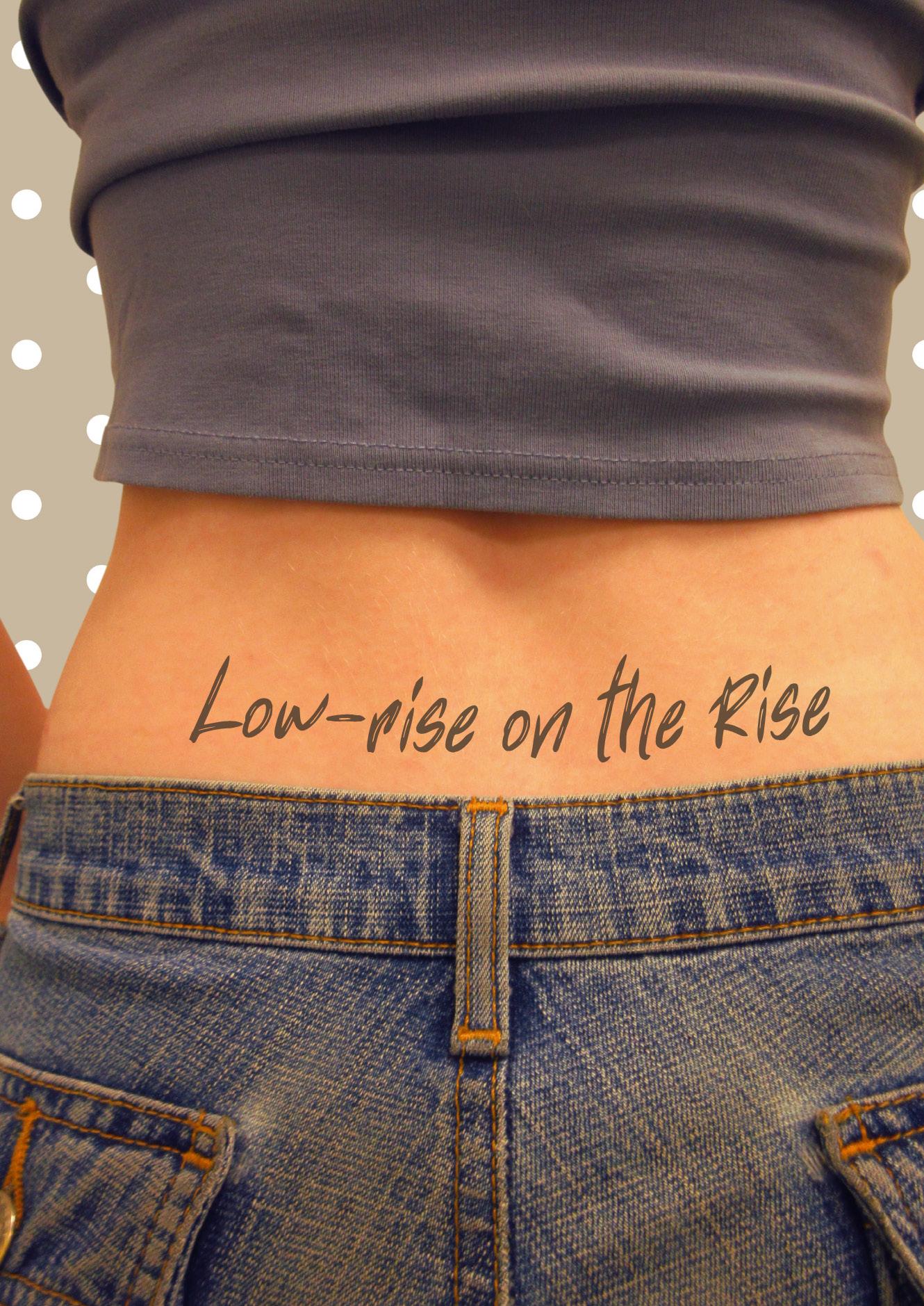
Contrary to “Say No to Low Rise Jeans,” Britney did, in fact, pull off the denim silhouette.
A troubling, yet underlying truth about jeans is that they reflect society’s standards for women’s bodies in the United States. When low-rise denim became popular in the early 2000s, the fashion industry was fresh off the “heroin chic” era, championed by supermodel Kate Moss, romanticizing extremely slender body types. In the 2010s, millennials saw a shift toward appreciation for a fuller hourglass figure, endorsed by Kim Kardashian, which led to mid- to high-rise denim’s comeback. Body standards surrounding the ideal female silhouette had changed; therefore, the ideal denim cut had as well.
Yet, when examining the history of denim, it tells an entirely different story. In the early 20th century, jeans were almost exclusively used as workwear. In fact, during World War II, jeans were considered essential to military personnel and were not sold commercially. Denim material was hardly considered something that could even be marketed towards women until Marilyn Monroe wore it. Ever since, jean cuts have reflected the body standards set for women, highlighting the ever-present, ever-moving benchmark of female beauty. Yet, jeans were not sexualized when men wore them. It leaves you to wonder, why do women care so much about flattering their bodies with clothes?
In fall 2020, Flat Hat Magazine published an article by Alyssa Slovin ’22, “Say No to Low Rise Jeans.” In her article, Slovin posits that low-rise jeans are undeniably unflattering, much to the dismay of her biology teacher. Slovin says that “Some people think that they could come back in style this year, but I choose to think that society has reached a point where we know what suits our body types and what does not.” She argues that low-rise jeans make women look bad, in the simplest terms.
Ironically, Slovin admits that she does not think lowrise jeans will ever return to the limelight. The jean cut has persisted throughout the years, however the current resurgence might indicate a troubling truth about society’s tolerance of women’s bodies. But now, more than ever, it is possible to liberate women from the idea of “flattering” jeans and create a bodyneutral environment that has not existed in the past.
Now, in the mid 2020s, America’s youth has a strange identity paralysis. Despite online communities striving for body neutrality, it seems that every time a young woman opens her phone, she is inundated with one of the greatest tennis players of all time, Serena Williams, in a GLP-1 ad. The body neutrality movement’s core tenet is to focus on the functionality of one’s body, rather than the appearance. So rather than modeling one’s ideal body after Kate Moss or Kim Kardashian, followers tend to focus on what their body can do: run a mile, lift a certain weight, or hike a challenging trail. The majority of people are considered plus-size in America, so now, more than ever, women need a new wave of body neutrality.
But now, more than ever, it is possible to liberate women from the idea of “flattering” jeans and create a body-neutral environment that has not existed in the past.
With the new push of oral GLP-1s, the pressure to change our bodies is greater than ever. While GLP-1s can greatly improve the lives of diabetics, ads targeting young women promote them as a get-skinny-fast drug; a few even, including Willow GLP-1, state that one should get a diagnosis for wanting to lose 10 pounds before an event. Is it not practically the same as when women would try crash diets in Vogue? In the early 2000s, when weight loss was worshiped, low-rise pants showed off one’s flat stomach. It’s time to embrace the fact that no one type of pants flatters every body type. By extending the principles of body neutrality to clothing, women can break the undeniable link between clothing and body trends.
The solution is not that everyone should go to Gap and pick up low-rise jeans and a T-shirt that says “F— the Patriarchy.” I reserve Slovin’s right not to wear low-rise jeans, as I reserve my right to never pick up another pair of ultra-high-rise jeggings. But the claim that leads Slovin’s article is one I take great issue with: “Even Britney couldn’t pull them off.” She then claims that Spears’ denim causes her issues with sitting or bending over. Spears makes
no comment. In fact, I have only found her saying positive things about her past fashion choices. So, it leaves me to believe that Slovin’s leading line is simply her opinion about how Spears’s jeans make her look. It is a tired and regressive claim that women should not wear items that do not flatter them. What even is considered flattering? As already established, the idyllic body is an entirely shifty concept in the American mind.
Instead of viewing clothing as something to make a woman desirable, perhaps we can view them as functional, something that can communicate one’s personality, or something that keeps you warm in winter.
While some people appreciate the lower-back support of a pair of high-rise pants, others may dislike the tight coverage of their stomach. While
high-rise pants may be better suited to everyday outfits for some, others may prefer the baggier silhouette of low-rise jeans. I know that for myself, a pair of high-rise skinny jeans on Thanksgiving is equivalent to the innermost ring of Dante’s Inferno. Instead of viewing clothing as something to make a woman desirable, perhaps we can view them as functional, something that can communicate one’s personality, or something that keeps you warm in winter.
The simple truth is that low-rise jeans coming back may, in fact, be an indicator that we are falling back into a fatphobic society and that people’s tolerance for normal, healthy weight gain is draining. But do not blame the low-rise jeans. Anyone can wear them and look good, as long as they like them. Simply, by sorting women’s clothing into categories of flattering and unflattering, a person becomes a lawyer, judge, and jury for not just clothing, but also body types. Low-rise jeans are a reflection of people’s attitudes and desire to police how women present themselves. If women were never told that their bodies were not enough, they simply would put on their jeans and go about their lives. Slovin’s article is interesting because it focuses on what is considered a flattering silhouette for women. But here is the thing: no one’s body exists for another’s viewing pleasure.


A cornerstone of my experience as a kid in the 2000s and 2010s was coming home after a long day of school and switching on the television to binge-watch Disney Channel sitcoms. Disney Channel became largely popular with young audiences because its shows featured memorable one-liners, comically far-fetched situations, and catchy theme songs. Years after these shows stopped airing new episodes, they continue to be part of cultural conversations and a source of nostalgia for the generations that grew up watching them.
For old times’ sake, I decided to rank some of my favorite sitcoms based on several important criteria: overall humor, longevity, cast, and cultural impact.
5.Good Luck Charlie 2o1o-14 )
Good Luck Charlie follows the Duncan family as it adjusts to the surprise arrival of its fourth child, Charlie, and eventually their fifth child, Toby. Teddy, one of three older siblings, records video diaries for her younger sister featuring daily happenings in the family and usually a life lesson. She ends each video diary with the words “Good luck, Charlie.”
This show was so lovable because it was relatable, humorous, family-centered, and appealed to all ages. And of course, who didn’t love the dad, Bob Duncan?
Good Luck Charlie’s cast had a significant cultural impact. Bridgit Mendler in particular, who portrayed Teddy, is still relevant today. Not only is she a talented actress and singer (I still love “Hurricane” and the Lemonade Mouth soundtrack), but she later went on to study at Harvard University and the Massachusetts Institute of Technology to start up a space satellite company.
4.Jessie 2o11-15 )
Jessie, starring Debbie Ryan, follows the adventures of Jessie Prescott, a young girl from a Texas military base who leaves to pursue acting in New York City. Upon her arrival, she accepts a job as a nanny for the wealthy Ross children, Emma, Luke, Ravi, and Zuri, who live in a multi-million dollar penthouse apartment. Other important characters include Bertram, the grouchy butler, Ravi’s seven-foot Asian Water Monitor pet lizard named Mrs. Kipling, and Tony, the doorman and Jessie’s main love interest.
This show stands out because of the kids’ vastly different personalities and the mayhem that ensues in their luxurious penthouse. In terms of pop-cultural impact, both Kevin Chamberlain, who played Bertram, and Debbie Ryan are frequently featured in media to this day.

3.The Suite Life of Zack & Cody 2oo5-o8
)
The Suite Life of Zack & Cody centers on teenage twin boys, Zack and Cody, causing mischief in the swanky Tipton Hotel where they live with their mother, along with their friends London and Maddie. This show was so well received by young audiences that it was followed by a spin-off series, The Suite Life on Deck, which aired from 2008-11 and took place on a luxurious cruise ship, the S.S. Tipton.
A bit I found especially funny in this show was the boys and their friends constantly antagonizing Mr. Moseby, the hotel manager. An especially memorable scene was when Mr. Moseby was teaching London how to drive a car, and she referred to the gear shift as the PRNDL (pronounced phonetically, “prindle”).
Cole and Dylan Sprouse, who played the twins, went on to become successful actors. A core Disney Channel memory of mine is thinking I would be picked to win $10,000 and a chance to meet the twins if I ate enough Danimals yogurt.
2.Hannah Montana 2oo6-11 )
Sweet niblets! Hannah Montana follows the secret double life of Miley Stewart, a normal teenage girl by day and a famous pop star by night. Hannah Montana is conveniently disguised by a blonde wig, so it would not occur to anyone that she was actually Miley. Her father, Robby Ray, raises Miley and manages Hannah Montana.
Hannah Montana helped launch Miley Cyrus’s music career into what it is today, with some help from her dad, Billy Ray Cyrus, who is also in the music scene and a star in the sitcom.
I was obsessed with Hannah Montana as a kid. I would listen to and sing along with the soundtracks, which I owned as CDs, daily. I even had Hannah Montana on plates. My favorite Hannah song was “He Could Be the One,” and my favorite Miley song was “The Climb” from Hannah Montana: The Movie (2009). Another classic was “Butterfly Fly Away,” performed as a duet between Miley and her dad. This song encapsulates the heart of the show: just a girl and her dad.
1.Wizards of Waverly
Place
2oo7-12 )
Wizards of Waverly Place, starring Selena Gomez, is a fantasy sitcom about Alex Russo and her brothers, who learn magic in secret from their wizard parents while balancing normal teenage lives and running their family’s New York sandwich shop.
Against her parents’ guidance, Alex frequently attempts to use magic in her everyday life. However, as a wizard in training, she regularly performs imperfect magic, leading to comical situations she has to fix.
Wizards of Waverly Place is often considered to be Disney’s best sitcom due to the combination of fantasy, humor, and relatable characters.
The show premiered in 2024 as a spin-off and featured some of the original cast. It was received with much excitement, even 12 years after the original stopped airing.
Selena Gomez went on to have an astronomically successful singing, acting, and entrepreneurial career, amassing hundreds of millions of streams on her music and launching her makeup line, Rare Beauty.
Future Nostalgia?
I am interested to see what media kids today will remember fondly in their 20s and if it creates a similar cultural impact to the shows aforementioned. As technology evolves and Disney becomes an even larger corporation than ever before, more and more entertainment is at our fingertips. This just makes it harder than ever to predict what will stick and what will not.
On the bright side, the shift from cable TV to streaming means we can access any episode of these shows on Disney+ whenever we please. Even if streaming is the future of television, nostalgia will remain alive.

Throwback
Story by Flat Hat Magazine Staff Design by Anna
Dehmer ’28

Your Mom
-Eva Kalajian ’22 M.S. ’24
Ph.D. ’26
SLAY!!!!!!!!!!!!!
-Anna Dehmer ’28

Referring to attractive people as dreamboats!
-Elizabeth Ray ’29


Stop I could’ve dropped my croissant!
-Tilley Lie-Nielsen ’28
Bring the Dab Back
-Catherine Power ’28
Get a load of this guy -Elijah Clark ’28

Calling things “Gucci” -Mali Bucher ’29
21, much better than 67
-Leah Kohler ’28 and Nate Ross ’28

We need to bring back saying Women in STEM out of context.
-Sophia Kaisermann ’27



YOLO -Clare Pacella ’28
Cool beans. -Julia Peavey ’28


Somebody toucha my spaget -Harrison Kuehl ’27


DABBING!!! -Kelsea Smith ’29
D--- Daniel! -Alisha Khodabocus ’26
I LOVE ’90s sayings! “Word” is a personal favorite and I use it! -Grace Ki Rivera ’26
Shakespearian Insults -Alina Yang ’29
Six Seven -Peerawut Ruangsawasdi ’26

Dabbing -Juliana Nelson ’28

Totally Tubular -Rachel Robbins ’28
Yeet -Melania Frye ’29

Lit -Emma Carmichael ’26
What are those?! -Amalia Lewis ’28
Campus is Always Under Construction.
But this time, one man is doing it block by block



Story by Peerawut Ruangsawasdi ’26
Design by Keira McDowell ’29
Photos by Noah Tomlinson ’27
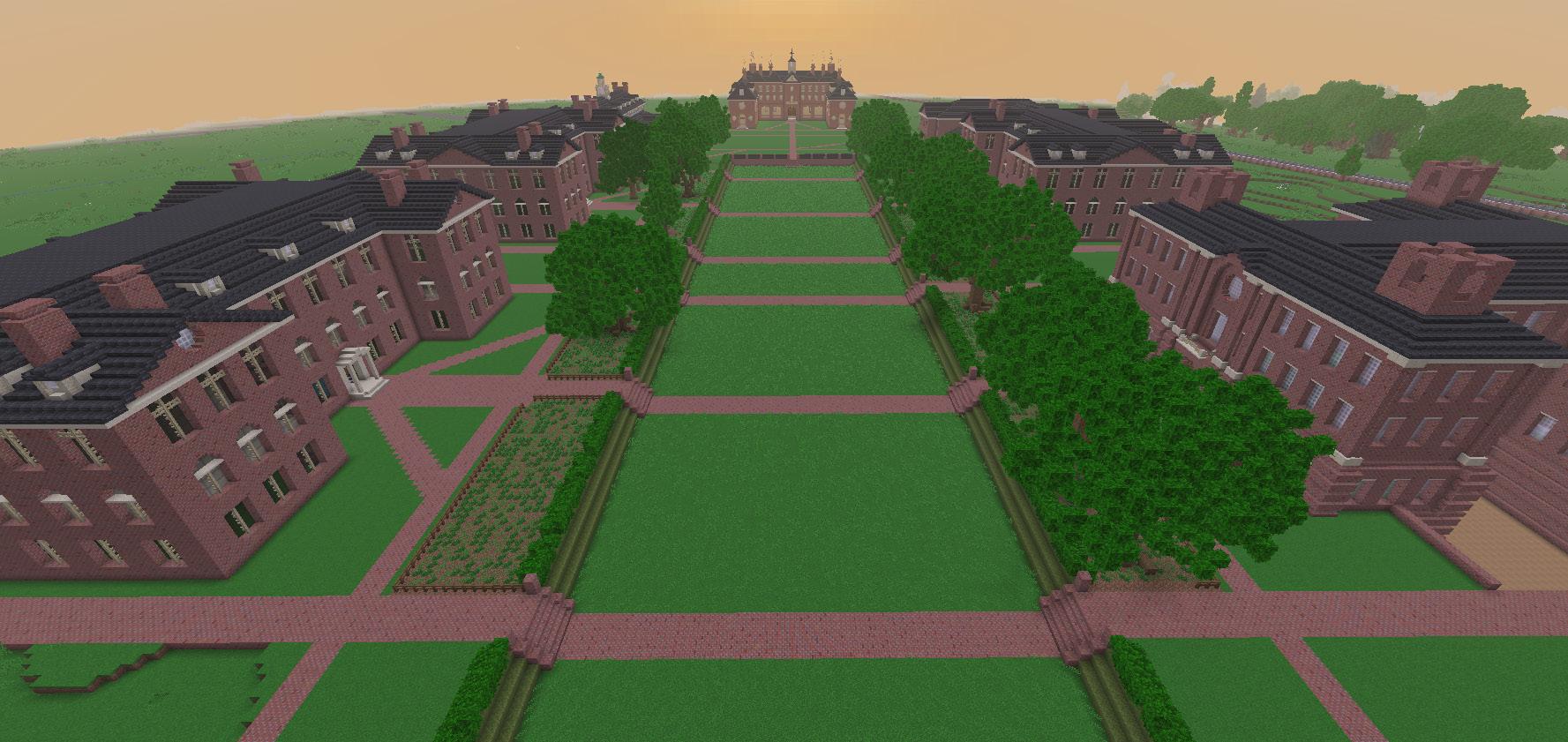
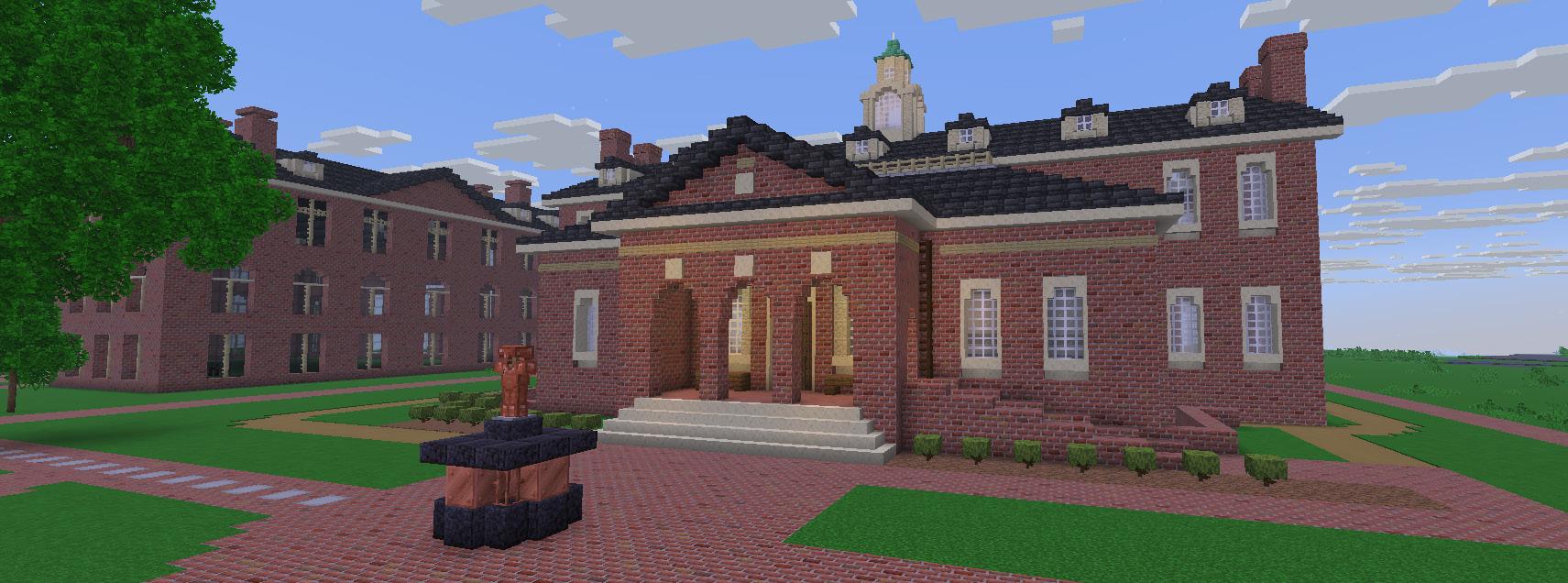
The College of William and Mary’s historic campus seems to always be under construction. West Woods Dining Hall is still being built, the Randolph Complex is still being demolished, and the Sir Christopher Wren Building is still under renovation. It’s always nostalgic to look at photos of the campus of old before all of this. But this is not the only way our community is reimagining our humble abode. Last spring, the College invited the community to build the ancient campus brick by brick with Lego. And now, block by block, Noah Tomlinson ’27 — also known as the “W&M in Minecraft Yik Yak guy” — is building the campus in Minecraft.
Few pieces of media have captured the hearts and minds of this generation more than this sandbox block game. Countless YouTube videos, parody songs, minigames, spinoffs, and even a feature film have been made to celebrate this phenomenon. Growing up, Minecraft was a constant in Tomlinson’s life.
“As far back as I can remember, ever since I was young, I loved Minecraft,” Tomlinson said. “I mean, I watched Minecraft YouTubers, like DanTDM and all that. And I would play it all the time, I mean, my parents had to pry me off of our Xbox; every weekend I would just sit in front of it for hours.”
Having lived abroad in Egypt and the Philippines, Tomlinson kept playing Minecraft with his friends in the Philippines after relocating back to the United States throughout the pandemic.
“All my friends, we decided to just keep playing on Minecraft throughout that entire period. So it’s definitely had a big impact on me,” Tomlinson added.
With the game being so ingrained in his identity, Tomlinson would often look at a building and
wonder how he could remake it in Minecraft. He recounts enjoying the experience with his siblings.
“I used to play all the time with my siblings. We played on my Xbox, so we did like the split screen thing where us two would play at the same time. But I played on servers as well with my friends. Yeah, I really, I mean, I would mix it up. I’d play online, you know, I do like Bedwars on like Hypixel and whatnot, or I’d play on servers with my friends,” Tomlinson added. “But I also do enjoy just building on my own, you know, either, like, doing it in survival or creative. I love all aspects of the game.”
One day, as he was scrolling on the anonymous campus social media app YikYak, he stumbled upon a post of somebody’s Wren building they had made in Minecraft Pocket Edition.
“I was like, ‘Oh, that’s really cool, like I would love to try that.’ And their Yik Yak post had like 1,000 upvotes. I thought, ‘There’s clearly people [who] like, find this cool,’” Tomlinson said. “I decided to go, you know, on just one of my worlds, like create a new flat world.”
Tomlinson would later befriend the original creator of that post, Nya Folk ’28.
“I got to shout her out because she’s a good friend of mine,” Tomlinson said. “Every time I talk to her, she gives me so much cr— about how I was the one who started the Instagram account and is getting all the attention. But she’s the OG.”

Tomlinson said he never expected to gain this much traction from the account.
“When I made the original post, I really wasn’t sure if people were going to like it or not. I’m going to be completely honest with you, there were a couple of things that I missed in my original post,” Tomlinson added. “I think I left out the chimneys on the Wren, and I thought for sure people are going to roast me in the comments.”
However, the response was immediate — people kept appreciating his content. The first post on his
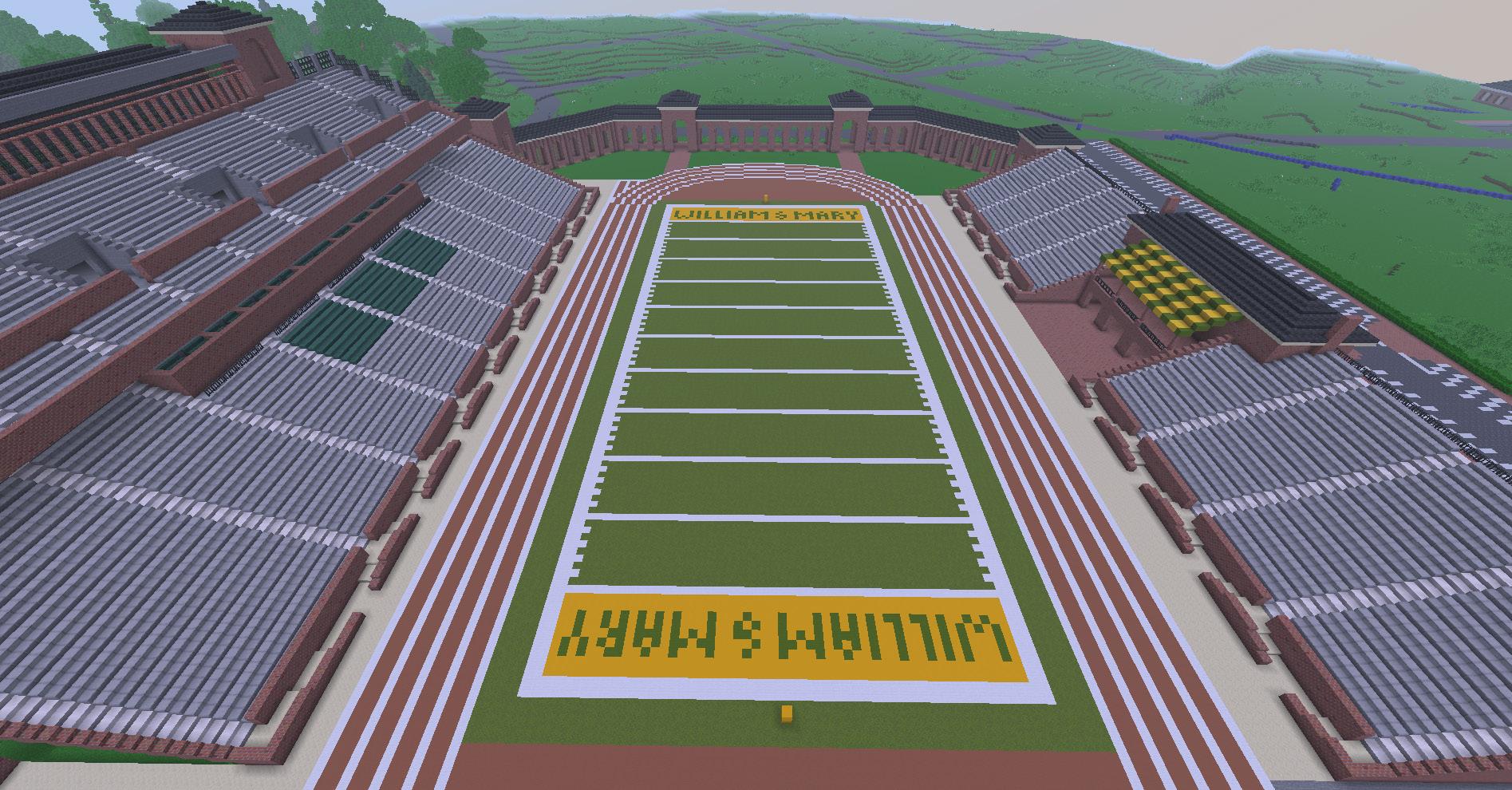
Instagram account — @wm_in_mc_guy — reached approximately 70,000 views and over 3,000 likes, and the account grew to about a thousand followers during the first month.
With his academic workload and other commitments, Tomlinson has had to step away from building a little bit, though he hopes to start again soon.
“Yeah, it’s been a little while since I’ve posted and I’ve had quite a few people come up to me and be like, ‘Hey, when are you gonna make the next post?’” Tomlinson, who is planning to join the United States Army after graduation, said. “The problem is I just got really busy out of nowhere last semester. Because, like I said, I mean, last semester was the first semester that I was in the ROTC program, and it’s definitely demanding on top of schoolwork.”
“So it just got to a point where I was like, ‘I don’t have any time to do this,’” Tomlinson added. “I mean, I would love to keep going. I’m really hoping that this semester I can make more time, kind of manage my workload better, and it looks like I’ll be able to, but I’d love to pick up again and potentially expand too if I have the time to do that.”
Initially, Tomlinson decided to keep his identity separate from the account. But after some people saw that the account only followed the university and himself on Instagram, they started to put two and
two together.
“I would have people come up to me, and they’d be like, ‘Hey, are you the Minecraft guy?’” Tomlinson shared. “And it would take me back sometimes where I’d be like, ‘Oh, shoot. I didn’t realize that people were looking into it like that and recognizing me out of nowhere.’ But, of course, I was always happy to meet people and talk to people about it.”
Tomlinson went on to describe the reception he has received for the project.
“It’s been amazing. It’s really cool to meet people who are passionate about this,” Tomlinson said. “Typically, it is usually build requests. People are like, ‘When are you going to build my dorm?’ Or, ‘When are you going to build, you know, the bars or, you know, some like old building?’ — which I love. I love that people are like passionate about it and they want to see more about it. It’s definitely a lot for one person to build the whole campus, which is why I’m thinking about maybe expanding a little bit.”
Tomlinson’s process combines creativity with careful observation. While some Minecraft builds rely on imagination alone, his project requires a more methodical approach. Early in the building process, he relied largely on memory and photographs to replicate buildings, but as the scale of the undertaking grew, he began using tools like Google Earth to study terrain and building layouts. He also walks around campus taking photos and videos of
structures to capture architectural details.
“One thing I’ve noticed is that a lot of the buildings on campus are very similar,” Tomlinson said. “So I think it’s James Blair, Chancellors, and Washington, they are all technically the same building. If you look up pictures of them from when they were originally built, you can’t tell the difference between them. I know that because I have all the pictures saved on my computer, and I forgot to label them, and I was going through, and I could not tell you which one was which.”
As far as the rest of the process goes, Tomlinson uses a Mac mini to play Minecraft, record, and edit the footage. Initially, he utilized QuickTime to record but found it to be glitchy. He then switched to the Replay mod, which allows him to record the process and sets up different camera angles in timelapses. While the editing process takes a bit longer than he would like, just because of how slow his computer is, it usually turns out to his liking.
“I’d say typically a build from start to finish will take anywhere from three to four hours, and that includes recording and editing and getting that process done,” Tomlinson shared. “I just throw in like a movie and I just start building and I enter like a flow state. I can just knock out buildings really quickly. It’s the editing part that I’m not the best at.”
The Wren Building is his favorite build, having served as the starting point for this journey. Earl Gregg Swem Library, however, is his least favorite. Not because he did not enjoy making it, but because it took a lot of time.
“It is such a big building compared to the other buildings that I had built previously,” Tomlinson said. “And so like getting the scale right, there were so many times where like, because it’s kind of broken up into like three parts where you have like Special Collections and then like the middle part with all the student seating and then the big part with the glass windows. I don’t know how to describe it, but it’s three big distinct portions. I’d build one and then I’d start building the second one and I’d realize that the first part was way too small. I’d have to go back and make it bigger and then I’d go to the second part and then I’d realize, ‘Oh cr—, that’s too big.’”
Going forward, he hopes to open the project up to other builders from the community.
“One of the ideas that I had was building the dorms on campus and then letting people just like on their own build their own dorm rooms and then send me like the picture of it or like the file for it and then actually putting it in the dorm buildings that I build,” Tomlinson said. “So that way, hopefully, if the world is ever put out as a download or as a server, people could go into those buildings and be like, ‘Hey, this is my dorm room that I built.’ So I think it’d be really cool to incorporate to get more people in.”
Beyond the campus itself, Tomlinson has also considered extending the project into nearby Colonial Williamsburg, whose historic streets sit adjacent to campus. He has already built the Governor’s Palace. For now, however, his primary goal remains completing the digital campus — one building at a time. The primary thing he hopes people will take away from his project — appreciating the small details around campus, and in life.
“One of the examples that comes to mind is when I built Wawa, I incorporated that desired path. You know, the path on the grass, and people commented about that,” Tomlinson said. “And there was part of me when I was building it that was like, ‘Do I incorporate it into the build or not?’ I wasn’t really sure if it was necessary, but I was like, come on, it’s the desired path, like everybody knows the desired path. Yeah, so those little details, you know, like something as simple as a desired path.”
Tomlinson is grateful that he has had the opportunity to enjoy walking around campus more often.
“And with the weather, you know, clearing up and it being really nice out now, I would highly encourage people to go for walks and just look at the buildings on campus,” Tomlinson said. “Look at the little, you know, details that you might brush off anyways. I think that’s a really good way to go about just living your life, you know, because it’s these small details that really, you know, differentiates any building from another. And I think there’s joy in that.”
Story by Tilley Lie-Nielsen ’28
Design by Keira McDowell ’29
Historical characters are a staple of the American Girl doll brand. Kids of the 2000s grew up with Felicity Merriman, a Williamsburg local during the Revolutionary War, Kit Kittredge, an aspiring journalist during the Great Depression, and many others. Tilley Lie-Nielsen ’28 imagines the doll that in 20 years, might stand beside the historical characters children already know and love.
Meet Eva Marie — the American Girl Doll of 2016! Eva embodies the vibrant pop culture of her time, living as an influencer in Los Angeles. Although she is young, she is inspired by the online creators she grew up watching, and decided to make her mark by starting her own YouTube channel.
Get to Know Eva Marie: Read Eva’s Story:
Nickname: Her YouTube handle, EvaVlogs123
Favorite foods: Acai bowls and avocado toast
Hobbies: Vlogging, learning musical.ly dances, making DIY crafts, finding iconic backgrounds for Instagram photoshoots
Style: A wide mix of indie, athleisure, bright pastels, and general whimsy
Furry friend: Her pomeranian, Gracie, who makes appearances in her vlogs! (Sold separately: $20)
What’s included: This 18-inch doll has green eyes that open and close, brown hair swept into Dutch braids, and freckles across her face. Eva arrives in a cropped graphic tee, a green bomber jacket, skinny blue jeans, and Adidas Superstar sneakers. Additionally, the doll comes with a paperback book telling the story of her journey as an influencer.
Eva Marie lives in 2016, the height of bright pop culture. To step into Eva’s time period, imagine the following: life is simpler and there is less of a “doomsday” feel in the air. A time often looked back on through rose-colored glasses, not only because of nostalgia, but also because of the pastel Instagram filters used during this time period. Social media is fun and lighthearted, with Snapchat dog filters, aesthetic Tumblr posts, musical.ly dances, vines, YouTube vlogs, and viral trends like the Mannequin Challenge. Top hits on the radio include “Closer” by The Chainsmokers, “Sorry” by Justin Bieber, and “One Dance” by Drake. The trending styles are laidback, with bomber jackets, skinny jeans, and chokers taking the reins. Makeup is caked on thick, with sharp contour, winged eyeliner, filled-in brows, and a matte lip.
Was 2016 really simpler than 2026? It’s important to remember the year beyond just its social media presence — encompassing Donald Trump’s first election, the United Kingdom’s Brexit, the Zika Virus, Harambe, the Rio Summer Olympics, among others. Was 2016 really that special, or was it just that Generation Z, who were kids during this time period, are remembering their youth fondly? Maybe 2016 is just an embodiment of youthfulness. It seems there was something different in the air back then.

Eva’s DIY set: Perfect for making tutorial videos on the trendiest, Tumblr-inspired crafts. Includes a pretend slime-making kit & a miniature geometric wall art project. ($25)
However, Eva Marie’s story includes the good and the bad of 2016. The young tween Eva Marie moves from the East Coast to L.A., and is forced to move to a new school where she doesn’t know anyone. She finds solace through watching her favorite YouTubers, and inspired by the thriving presence of influencers she sees in L.A., decides to create her own channel. Eva begins to gain a following on YouTube, making lifestyle videos ranging from day-in-the-life vlogs to DIY tutorials. Additionally, Eva makes a friend, Addy, at her new school, and the two bond over their shared interests in the influencer lifestyle.
Addy helps Eva become acquainted with the area, and the two explore the exciting city of L.A. together. They collaborate on video ideas, visit trendy food spots, make slime, and take Instagram photoshoots with iconic city backdrops. As Eva’s channel gains popularity, she struggles to balance school, friends, and the increasing demand to produce content.

Additionally, Eva’s parents are skeptical about her going under the public eye at such a young age, especially because the influencers she watches are significantly older than her.
Through her hardships, Eva experiences personal growth, and eventually learns to differentiate between her private and public life. She creates boundaries around what she is willing to post and how often. Eva learns to let herself be a kid, and not become consumed by the pressure to fit the L.A. aesthetic, or to have a high subscriber count. Additionally, she discovers new hobbies beyond social media, such as hiking around mountains in the surrounding area. These hikes allow Eva to immerse herself in nature, spend time with her friends, and once in a while, get an aesthetic picture for the ’gram.
In an increasingly digital and publicized world, Eva learns that she can still be present and enjoy her life behind the scenes. Although 2016 is now a bottledup aesthetic, and an elixir of sorts that people long for, Eva’s character embodies the challenges associated with trying to fit these aesthetics. While she deeply enjoys the pop culture of her time, it becomes necessary for her to find her sense of self in the midst of this. Eva Marie learns to find balance, knowing that she does not need to be defined by the title of “influencer,” and that it is only one of the many aspects of who she is.



Experience Eva’s World:
Eva’s accessory kit: A black felt choker, baseball cap, and miniature Starbucks cup. ($24)
Eva’s Coachella outfit: The outfit is just as important as the event itself. Includes a flower crown, a layered statement necklace, round sunglasses, a white fringe top, and denim shorts. ($30)
Eva’s athleisure outfit: Perfect for school or a chill day editing videos. Includes black athletic leggings, an off-the-shoulder PINK hoodie, and tan UGG boots. ($24)
Eva’s Get Ready with Me kit: The essentials for filming GRWM vlogs, and a great way to score brand deals. Includes a matte lip kit, beauty blender, winged eyeliner pen, eyeshadow palette, and faux hair straightener. ($36)
Eva’s influencer set: The essentials for content creation — including a miniature ring light, tripod, and camera. ($36)
Eva’s bedroom set: The perfect brightly colored, aesthetic backdrop for filming. Includes a daybed with pastel pink bedding, neon wall art, fairy lights, and a faux plant. ($55)
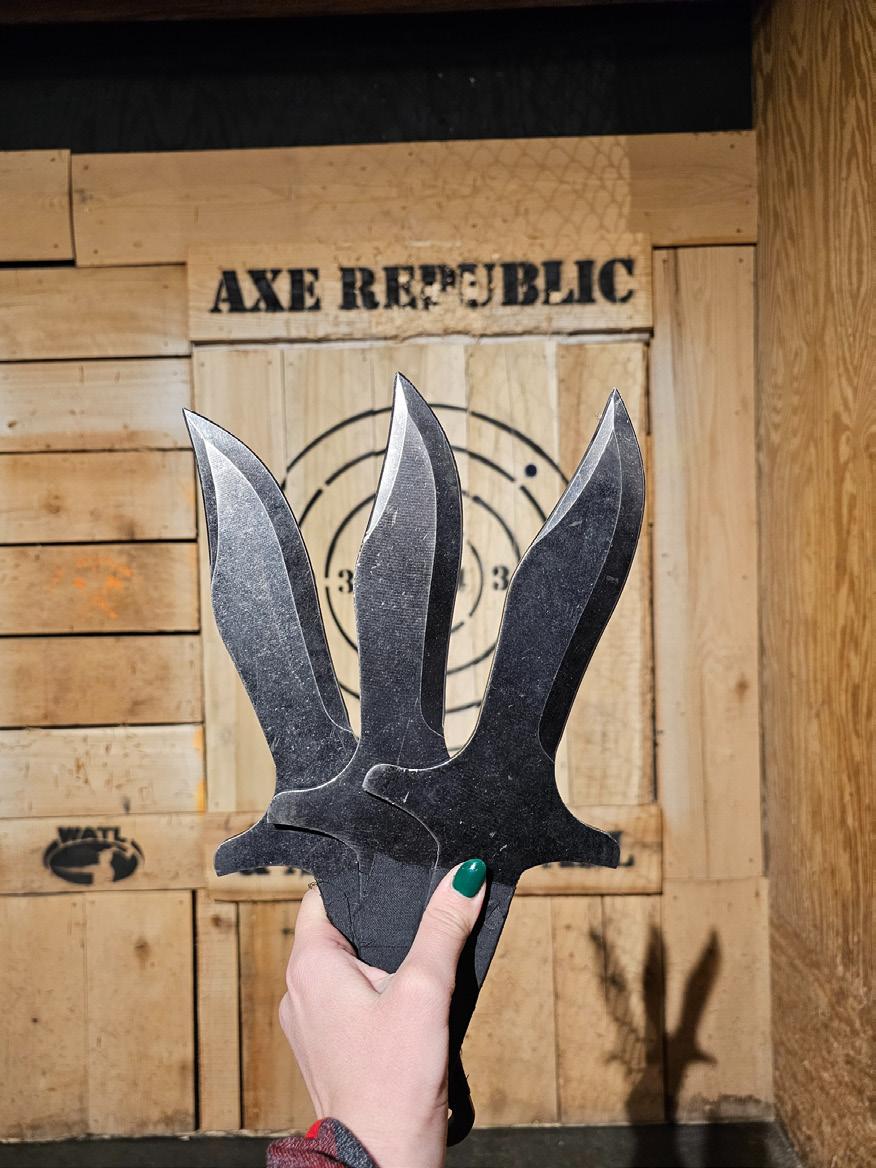
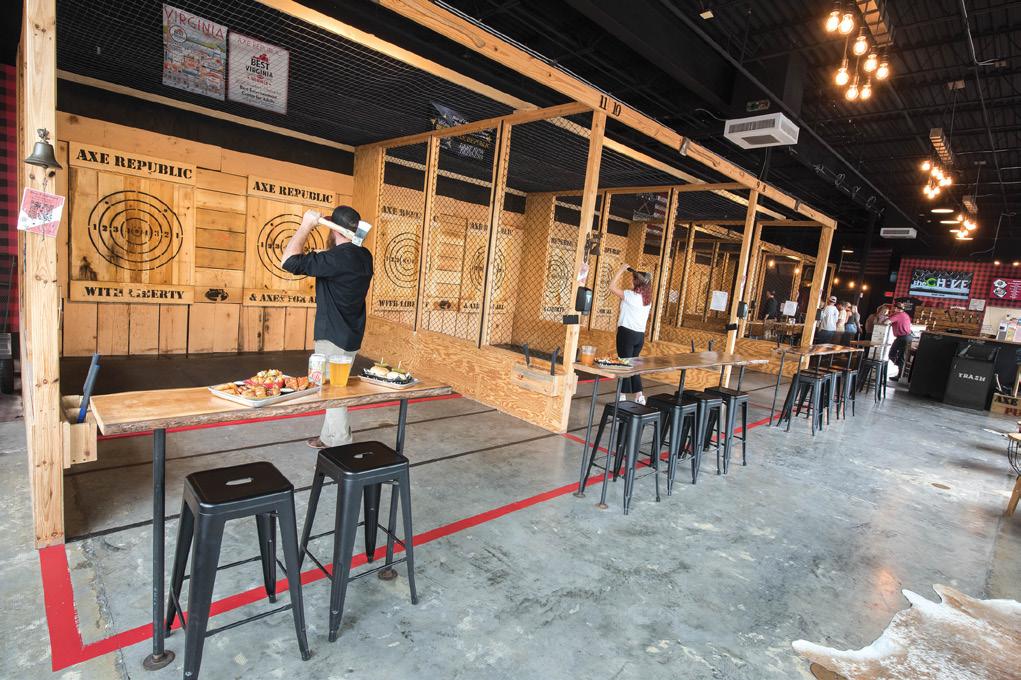

Our Axepert staff is here to teach you the art of Axe throwing and help you sharpen your skills in the range. Safety briefing and throwing tutorial included in all packages DISCOVER THE
College Night Thursdays at Axe Republic show your Student ID for 15% off Throwing and Free Appetizer
EXPERIENCE AXE THROWING PROUD SPONSOR OF TRIBE ATHLETICS

Axe Republic has blown us away yet again! Located in New Town, it lets you throw anything from axes to knives to even shurikens! The atmosphere was exactly what a college student would want: good music, a relaxed vibe, and a place to kick back and release some steam during a stressful midterm season. In addition, the food and staff were amazing! The pretzel bites outclassed any bar food I have had, and our Axepert Ian was extremely helpful and hilarious! A 10/10 experience, Axe Republic is the perfect place for a day off!
Story by Harrison Kuehl ’27
Photo by Flat Hat Staff
Graphic by Clare Pacella ’28
Story by Nate Ross ’28, Catherine Power ’28, and Clare Pacella ’28
Design by Leah Kohler ’28 and Anna Dehmer ’28
F H M My Eye Spies...
-a token from the ocean -a sphere that sets a party into motion
-money from a faraway land -three games you play with your hands
-rubble from a dorm laid to rest
-a card with The College's crest
-five mini ducks -a tiny car, not a truck -a souvenir from orientation -a salty snack before cremation -an Editor in Chief back from the dead -an accessory for your head
Story by Rachel Robbins ’28
Design by Catherine Power ’28 and Anna Dehmer ’28
The College of William and Mary has been accumulating objects, buildings, and memorials for more than 300 years. What can we learn from them in the modern day?
I first learned about the College of William and Mary on a family visit to Colonial Williamsburg when I was 12. After touring the Sir Christopher Wren Building, I assumed that the College was merely a set of preserved buildings rather than an active university. Though I enjoyed history, I couldn’t imagine attending an institution that seemed so stuck in the past.
Of course, fate has a sense of humor. Six years later, I ended up enrolling, and what I found here in Williamsburg bears little resemblance to the static museum piece I had imagined. At the same time, I’ve gained a deeper appreciation for how the College chooses to incorporate many parts of its long history, especially as it goes beyond the rose-tinted Revolutionary period portrayed in Colonial Williamsburg. As a historic institution, the College would be doing itself a disservice to ignore its past as it plows ahead into the future.
When I met with Charles Fulcher ’99, the director of Wren operations and events, he took me upstairs to the Blue Room, which was originally used for college officials to meet with students to discuss their academic performance or conduct. As he described student experiences on their way to the room, I found their trepidation deeply relatable. These types of disciplinary meetings still occur at the College today, and knowing that students 300 years ago had similar experiences allowed me
to feel more connected to the Wren Building’s long history.
“I describe it as a living, breathing place,” said Fulcher. “It is not an antique tucked behind glass. That is a huge benefit to us as we engage the public in this space ... It’s not a place where you have to imagine students having class 200 years ago. Students are doing it right now.”
I was also curious to see how the Wren Building approaches more difficult historical truths, especially in the wake of national shifts regarding how that history is portrayed. After all, the Wren Building itself was built by enslaved people, and many early students at the College brought enslaved children with them to serve as valets.
“To me, it’s really important that the complicated history is really just the fuller story,” Fulcher said. “And as the fuller story, it’s important that it’s just shared as a matter of course ... It’s not like we’re giving a tour, and we say ‘now is the part of the tour when we talk about the dark stories of our past’ and everything stops. I think it fills out the story and keeps things more related when it’s just folded into everything else.”
One way by which the College examines the fuller picture of its history is through the Lemon Project, which “researches the lives of Africans and African Americans from the 17th century to the present and shares this knowledge on and off campus,” among other goals. Upon speaking with Interim Director Jajuan Johnson about how the Lemon Project engages the public in its work, he said that he frequently meets with representatives of other universities to discuss the research process regarding the Hearth Memorial.
“What was our process like? How are we inclusive in that process? How do we go about the research? How were the decisions made for that site to be chosen, and what’s the sustainability of it? ... There’s been so much buy-in at every level, from students, faculty, and community members,” he said.
What resonated with me was the intentionality behind creating a physical addition to the landscape of the College, especially in such proximity to the Wren Building. Johnson also walked me through the Lemon Project’s exhibition near Read and Relax in Earl Gregg Swem Library. By adding physical reminders of the 170 years during which the College relied on the labor of enslaved people and its subsequent participation in racial segregation, the Lemon Project is filling in the historic narrative for the future.
“We still have much work to do, and that’s what this journey is about,” said Johnson. “The project is called The Lemon Project: A Journey of Reconciliation. And the reconciliation is not always a destination.”
On the same floor as the Lemon Project’s exhibition lies Special Collections, in which archivists work to ensure that future students will remember the College of today. Rick Mikulski is an instruction librarian at Swem and an interim archivist. When I met with him, I was surprised to learn that he actively introduces new objects representing student life to the archives, such as student publications and performance recordings. The rigorous process that the archivists go through to add these pieces signifies the high regard in which they hold them.
“When a student group gives us materials, we sit with them for maybe half an hour and go through the items, so that when we do put the official description in, we put in the right materials and identify the right people,” he said. “If we need to explain what the event was, we make sure that we have that information down. The big thing is partnering with the organization that created the materials to make sure that the context is correct.”
These conversations revealed that the College’s greatest strength may be its relationship with the tangible. Abstract learning is central to any university, but William and Mary offers something rarer: physical traces of the lives lived here, both in the past and present. The Wren Building, the Hearth Memorial, and objects donated from student organizations don’t just preserve the past — they allow it to connect with people in the present.
“Downstairs, we have one of the old desks that was in the Wren Building 100 years ago that students sat in, and there’s scribbles on it and graffiti and carvings,” Mikulski said. “And I think that materiality really connects you to the past in a way that supplements other forms of academic learning. Seeing the desk where students sat and got bored in class and carved their names into it in 1805. There’s a connection there that you just don’t get from reading one of the excellent histories of the College.”


The Disney Channel Pipeline

Story by Elizabeth Ray ’29
Design by Alina Yang ’29



It may surprise you how many of today’s biggest celebrities got their start working for Disney Channel. Although the network’s influence has changed in recent years, throughout the 2000s, it functioned as one of the most powerful entry points into the entertainment industry for aspiring performers. Through its television shows, original movies, music partnerships, and extensive marketing networks, Disney transformed relatively unknown young actors into household names almost overnight. As a result, the network developed a reputation as a kind of talent pipeline, launching the careers of many performers who would later become major figures in popular culture. Let’s take a look back at the trajectory of Disney Channel stars and examine the “magic” behind their rises to fame.




Although many child stars achieved their big break through Disney Channel, it was rarely the starting point of their careers. In fact, most already had significant acting experience under their belt prior to joining the network. Participating in television, commercials, and children’s programming helped many aspiring actors develop the skills and industry connections needed for a Disney role. Selena Gomez’s first gig was appearing on the children’s Barney & Friends and others even had early ties to The Walt Disney Company, such as Britney Spears and her stint on The AllNew Mickey Mouse Club. However, this kind of industry connection was not the norm. Thus, while Disney Channel was what eventually propelled young actors to widespread fame, many arrived at the network with significant experience in the entertainment industry.

While many child actors found work on the Disney Channel, only a few secured breakout roles that established them as true Disney stars. Typically, this meant starring as the central character in a new television series or movie.
For instance, Hilary Duff found her breakthrough portraying Lizzie McGuire in the Disney Channel series Lizzie McGuire, which centered around her character. In some cases, a successful breakout role even opened the door to additional opportunities within the network. A prime example of this is Raven-Symoné, who rose to prominence as Raven Baxter on That’s So Raven. The success of the show led to her taking on other Disney projects like The Cheetah Girls movies and the later spin-off to That’s So Raven, Raven’s Home.
to their Disney persona. Miley Cyrus, for instance, released music closely tied to her on-screen alter ego Hannah Montana, blurring the line between fiction and her real-life career. Similarly, Demi Lovato built a strong musical presence through projects like Camp Rock and Sonny with a Chance. For others, though, music functioned more as a side job. Artists like Selena Gomez and Sabrina Carpenter initially released pop music that maintained a clean image but remained separate from their Disney roles, allowing them to develop identities beyond their characters.


After locking down a breakout role, many Disney stars used their newfound visibility to expand their brands. This often included launching music careers through Hollywood Records, releasing albums and touring, and starring in Disney Channel Original Movies. Music in particular was a common thread in many Disney stars’ careers. For some, it was central
As they began to age out of the roles that initially brought them fame, every Disney star had to eventually separate from the network. This put pressure on many to reshape their public image to reflect their new adult identity. The way in which they approached this reinvention was often one of the most defining and challenging phases of their careers.
Former Disney Channel stars typically took one of two approaches to rebranding after leaving the network. The first was a gradual transition, which allowed their public image to mature slowly through increasingly adult roles. Stars like Zendaya and Sofia Carson exemplify this strategy. Zendaya, for example, first took on PG-leaning roles such as
Left Sabrina Carpenter Photo Courtesy of Raph_PH via Wikipedia Commons CC 2.0 (https://creativecommons.org/licenses/by/2.0/) Modifications: Removed Background/Color Filter
Right Sabrina Carpenter Photo Courtesy of Raph_PH via Wikipedia Commons CC 4.0 (https://creativecommons.org/licenses/by/4.0/) Modifications: Removed Background/Color Filterww
MJ in the Spider-Man films before pivoting to more mature projects like HBO series Euphoria and Luca Guadagnino’s 2024 film Challengers. However, this trajectory is often overshadowed by the far more dramatic strategy: a rapid, visible break from the Disney image. The most famous example of this is Miley Cyrus. After Hannah Montana ended, Cyrus rebranded herself in the early 2010s to emphasize the separation between her adult self and her child star persona. Her controversial performance at the MTV Video Music Awards and 2013 album Bangerz both signaled a clear departure from her squeakyclean image. Sabrina Carpenter also followed this method of explicit rebranding. After leaving Girl Meets World, Carpenter pivoted her public persona to embrace playful sexual references and a more risqué image. Together, these two approaches — gradual maturation and abrupt reinvention — highlight the challenges many Disney stars faced when trying to redefine themselves outside of the network.
The long-term careers of Disney Channel stars vary widely. For some, their post-Disney success became so significant that audiences often forget where they started. Stars like Zendaya, Sabrina Carpenter, and Olivia Rodrigo fall into this category. Others achieved major success while still remaining closely associated with their Disney past. Performers like Sofia Carson, Dove Cameron, and Peyton List continue to thrive professionally, yet their Disney
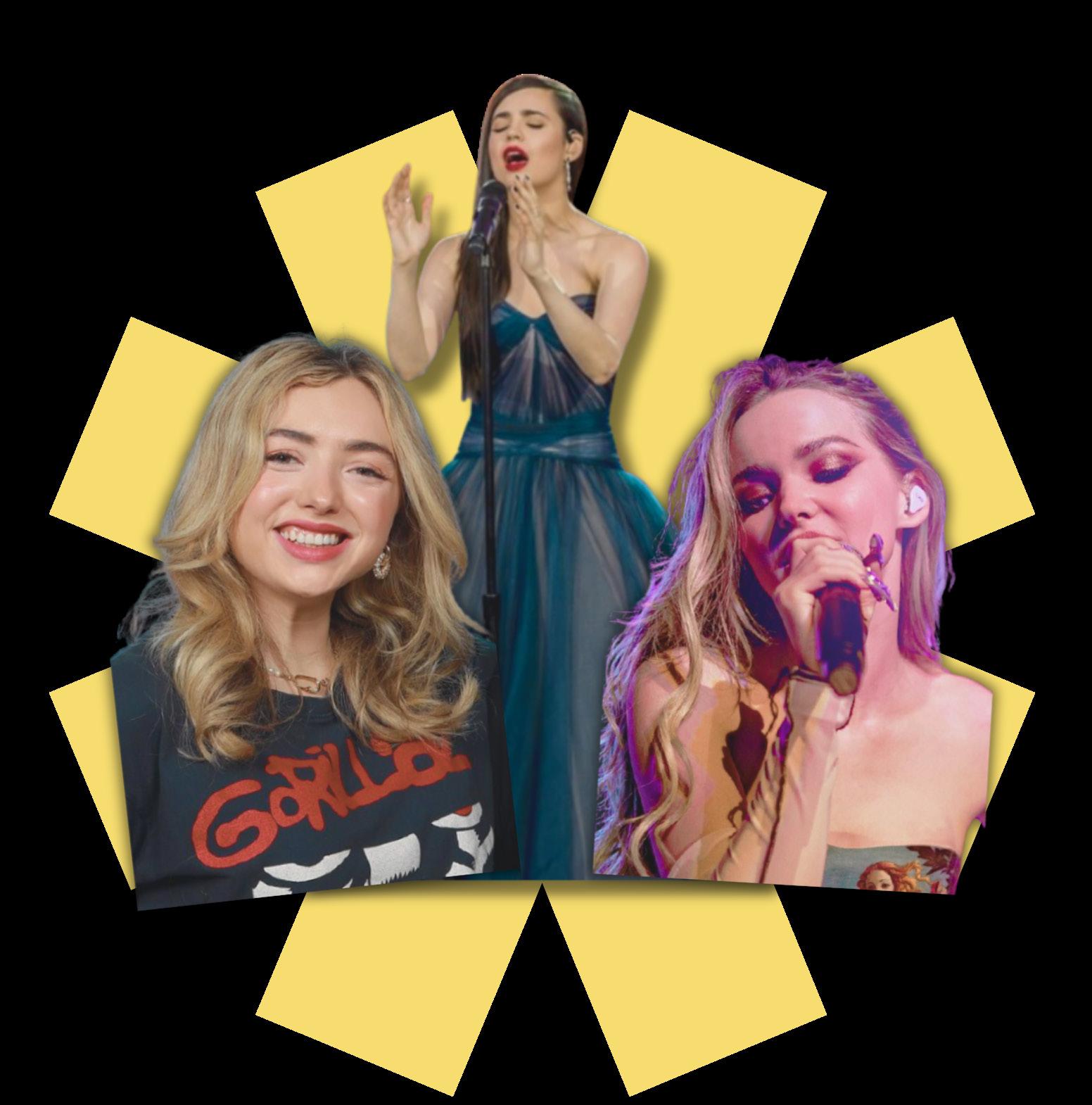
For some, the transition proved more difficult. Bella Thorne and Demi Lovato have both spoken openly about mental health struggles after leaving the network.
Others chose to step away from entertainment entirely. Perhaps the most notable example is Bridgit Mendler, who, after starring in the Disney Channel series Good Luck Charlie, shifted her focus toward education and entrepreneurship. All of these examples show that while Disney provided a powerful push into the entertainment industry, the long-term outcomes for its stars were anything but predictable.
Over the past decade, the traditional Disney star pipeline has faced growing competition. As television viewership has declined with the introduction of streaming platforms like Netflix and Hulu, Disney Channel has lost some of its cultural influence. At the same time, social media has transformed how new talent is discovered. Platforms like YouTube and TikTok have made it possible for aspiring performers to build an audience independently through song covers and original music. In many cases, this online virality leads directly to record deals, management opportunities, and acting roles, allowing potential stars to bypass children’s television altogether. Still, Disney’s pull in the industry has not disappeared entirely. Recent Disney stars Olivia Rodrigo and Sabrina Carpenter have both benefited from developing significant performance skills and early fan bases through the network. Thus, while Disney is no longer pumping out child stars like it did in the 2000s and 2010s, it certainly still plays a role in the talent emerging today.
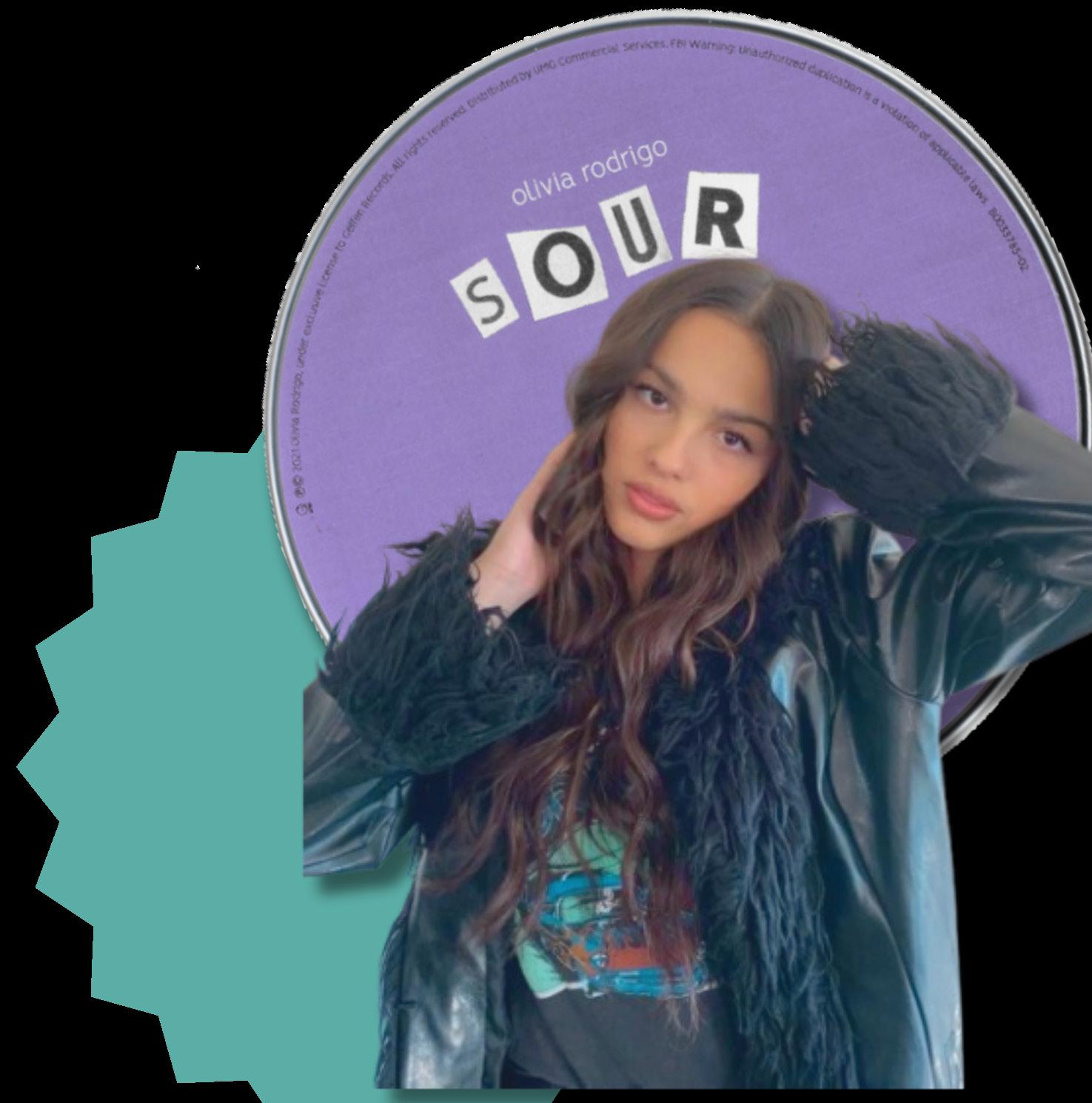

Dove Cameron Photo Courtesy of Justin Higuchi via Wikipedia Commons
2.0
Which
Story by Flat Hat Magazine Staff Design by Anna Dehmer ’28
Frog and Toad. I had every single book. I love frogs and it was comforting and easy to read with my momma!
-Eva Kalajian ’22 M.S. ’24 Ph.D. ’26
The Giving Tree was the saddest book I read as a kid, but also the most heartwarming.
-Nate Ross ’28
The Goosebumps series started my love for all things spooky, making me into the chronic horror fan I am today.
-Amalia Lewis ’28
The Doll People by Ann M. Martin and Laura Godwin because I wonder about what goes on in the world that I just can’t see.
-Alina Yang ’29
Island of the Blue Dolphins, and Sadako and the Thousand Paper Cranes.
-Grace Ki Rivera ’26
A Snicker of Magic by Natalie Lloyd. It was so whimsical and I read it over 15 times!
-Anna Dehmer ’28
Magic Tree House inspired my love of learning about history and natural events, and definitely sparked my sense of adventure as a kid!
-Juliana Nelson ’28
Knuffle Bunny developed my fear of losing my favorite stuffed animal in the laundry machine.
-Clare Pacella ’28
Tuck Everlasting was the first book to make me think philosophically and sixth grade me was really into pondering mortality.
-Sophia Kaisermann ’27
The End of History and the Last Man is instrumental to my worldview.
-Peerawut Ruangsawasdi ’26

The Giving Tree taught me to be selfless.
-Kaitlynn Thomson ’28
The National Geographic “Weird but True” books gave me lots of random facts that I somehow still remember.
-Melania Frye ’29
The Mercy Watson Series has always given me such a warm, fuzzy feeling and brought back of memories of my mom reading to me.
-Leah Kohler ’28
-Henry Holt ’28
The Hunger Games because the main character, Katniss, was my biggest female role model.
-Mali Bucher ’29
Olivia by Ian Falconer. I learned to read by reading this book with my grandmother, sitting in her big armchair!
-Elizabeth Ray ’29
The Percy Jackson Series made me a nerd!
-Catherine Power ’28
Watership Down, I could never look at Thumper the same way again.
-Julia Peavey ’28
My favorite was the I Survived series.
-Harrison Kuehl ’27

Junie B. Jones shaped the inner copy editor in me (her kindergartner-style grammar always irked me.) I loved her chaotic and carefree spirit though!
-Alisha Khodabocus ’26
To Kill a Mockingbird ... I mean, just look at Atticus Finch.
-Elijah Clark ’28
The Magic Tree House Series started my love for reading!
-Kelsea Smith ’29
Hans Christian Andersen’s Fairy Tales taught me the structure of good stories!
-Rachel Robbins ’28
Story by Emma Carmichael ’26 and Kaitlynn Thomson ’28
Design by Catherine Power ’28 and Anna Dehmer ’28
It’s a beautiful 2016 morning. You rise from bed and throw your hair into a messy bun. The outfit you picked out for the day is Pinterest-inspired: black skinny jeans, a knitted sweater, boots, and a choker to accessorize. As you head outside to wait for the bus, you plug your earbuds into your brand new iPhone 7 Plus and hit play on “Closer” by The Chainsmokers.
Social media seems fun; people are posting dance videos and flipping water bottles, a guy named Daniel has some pretty nice white Vans, and the Snapchat dog filter makes for a cute selfie.
That evening, you head downstairs to tell your parents goodnight. They’re watching the news – how boring! The world seems like it’s headed in a more accepting direction. Your last thought before shutting your eyes for the night — come tomorrow, I will no longer have to dream about seeing the first female president.
2016 has seemingly re-entered the collective American consciousness. This nostalgia could be attributed to a young adult’s desire for stability as they leave adolescence, but it begs the question: What is there to miss about 2016?
2016 was indisputably one of the largest years in contemporary American politics, delivering a political upset where socialite Donald Trump narrowly beat Hillary Clinton in the presidential election. Along with the already established conservative majorities in the Senate and the House of Representatives, the election cemented a strong conservative presence for the following years. Yet despite this devastating blow for American progressives, the vast majority of 2016 was a seemingly hopeful year. A common refrain among progressive women was pure excitement to finally vote for a female president, and to have one right
after the first African-American president felt like America had finally gotten it right.
Now, a decade later, America has been subjected to a full year of Trump’s second term, halting any sense of progression in terms of political representation for marginalized groups and fanning the flame of alt-right conservatism. Additionally, in the past decade, wars have placed direct threats on displacing American life, leading many Americans to feel the instability of war reverberate in their own homes. Though 2016 planted the seeds for what became a political mess, the vast majority of the year was spent in anticipation of the feminine bliss that has yet to come.
Similar to the “Girlboss” era of politics, media conglomerates such as BuzzFeed offered videos which embraced progressive sentiments, such as: “Weird Things Women Do Before Sex,” “Women’s Ideal Body Types Through History,” or even “The Try Guys Try Labor Pain Simulator.” Through BuzzFeed’s videos, they would simultaneously entertain the viewer, discuss progressive ideas, and, in a meta way, sell young Americans on a dream that they could be just like them. There are hundreds of videos from former BuzzFeed workers who discuss how they got their job, as if it were a truly mythic feat, rather than a place you clock in from 9-5.
However, just as quickly, people were making videos about leaving the business, inferring issues such as the loss of their intellectual property, corporate layoffs, long hours, and low wages. The cracks in its idyllic workplace began to show, which instigated the resurfacing of a clip from 2016, which features employees allegedly drinking their own urine. Currently, America is facing a labor crisis, with many large profit-driven companies displaying mass layoffs, and recent labor reports making the market look extremely dismal for new graduates. Though
compared to today, 2016 seemed like the golden age of employment, there were still terrible working conditions that were romanticized and never truly addressed, manifesting a decade later with record low entry-level job openings.
The pop culture landscape has drastically changed over the past 10 years due to the accessibility of virtually all forms of media, the addictive nature of algorithms, and the rapid evolution of technology.
Everyone’s favorite movies, shows, music, and internet content are all available on demand in 2026. Streaming services were just beginning to kick off in 2016. Brooklyn Nine-Nine, black-ish, and The Good Place were popular, as were older sitcoms, such as Friends and The Office. To this day, these sitcoms are well-loved and enjoyable rewatches. However, in 2026, the 22-episode-per-season sitcom has largely disappeared, with major entertainment companies such as Netflix opting for shorter eight-episode “artsy” shows that may be critically acclaimed, but are not the type of shows people return to for comfort or happiness. Streaming services also cost more than they did 10 years ago, with the quality of shows not necessarily meeting the increased demand.
Instagram and TikTok both utilize short-form content designed to keep users scrolling for hours, or “doomscrolling” by way of a predictive algorithm, which is tailored to each individual user. The collective internet is engaged in a new “microtrend” every few weeks. Trends become tiring quickly due to how frequently we are exposed to them through our algorithms.
While addiction to technology was still prevalent in 2016, particularly among adolescents, YouTube vlogs and other long-form content were the fad of the time. Studies continue to show a link between increased time spent on social media and reduced mental health, which may be contributing to why we remember 2016 to be a happier time.
Since 2016, the internet has shifted from primarily content originated by its users to an AI-dominated space, a term referred to as the “Dead Internet Theory.” Over time, human thought and interactions online shifted to mediation by these nonhuman entities to advertise products or propagate political theories. In 2016, everyone thought photo filters were revolutionary. It was hard to imagine that in only 10 years, artificial intelligence could perform
robotic surgery, generate creative work, and even translate thought by interpreting neural signals into text. There is a possibility that we are headed in a direction where artificial intelligence could entirely surpass human intelligence. …
It’s a beautiful 2026 morning. The first thing you do while lying in bed is grab your phone. You open Facebook thinking, I wonder what my family is up to while I’m away at college, and quickly close the app after discovering that your mom has reposted several AI-generated videos that she was unaware were not real.
You dress in a polka dot top, low-waisted jeans, and flats. Olivia Dean plays in your headphones as you walk to class.
That night, you’re doomscrolling in bed. Since the start of the new year, your social media timeline has been all 2016 nostalgia. Your last thought before shutting your eyes for the night — I wonder if life was truly better in 2016.
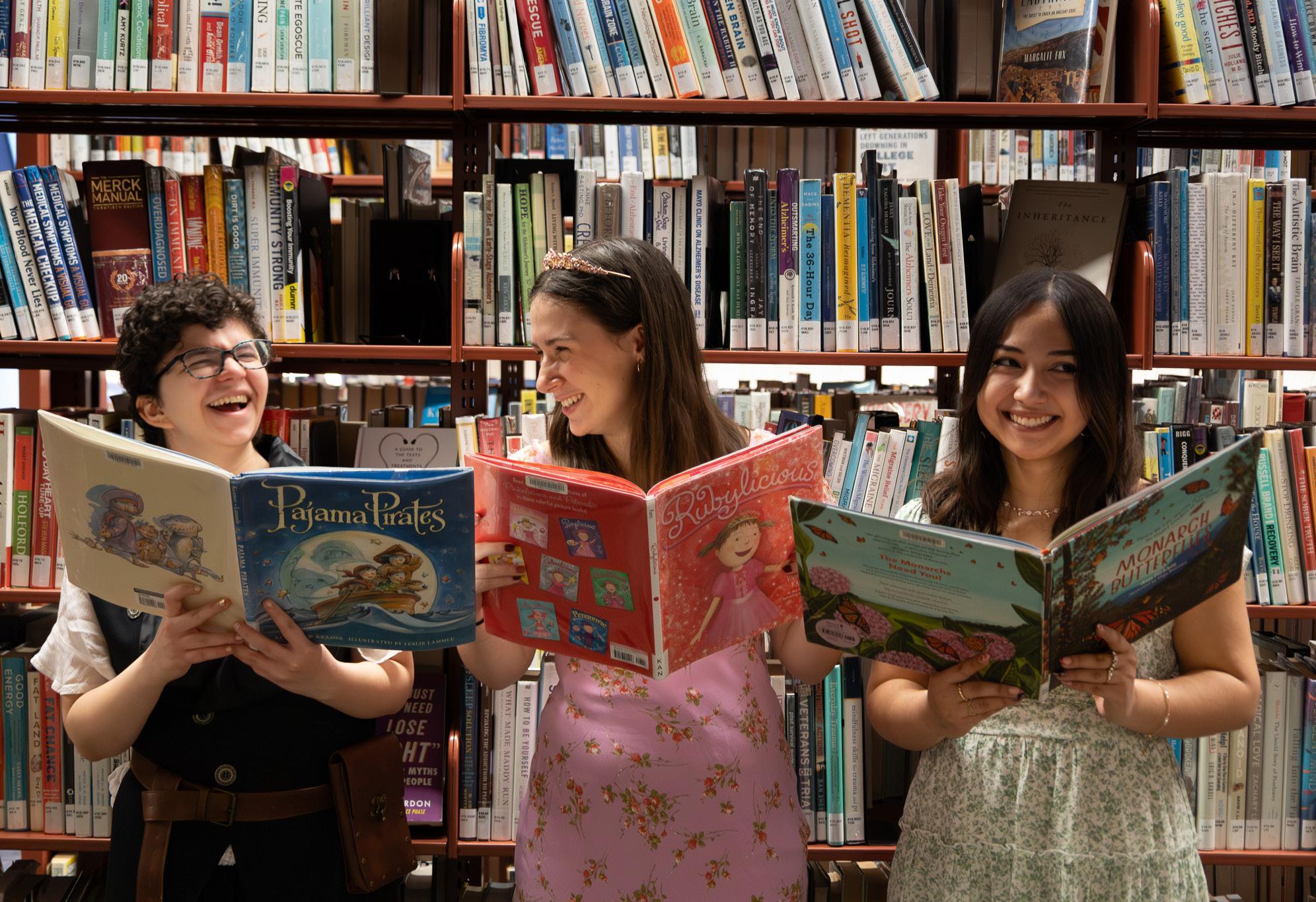

Is looking for models... Could it be you?
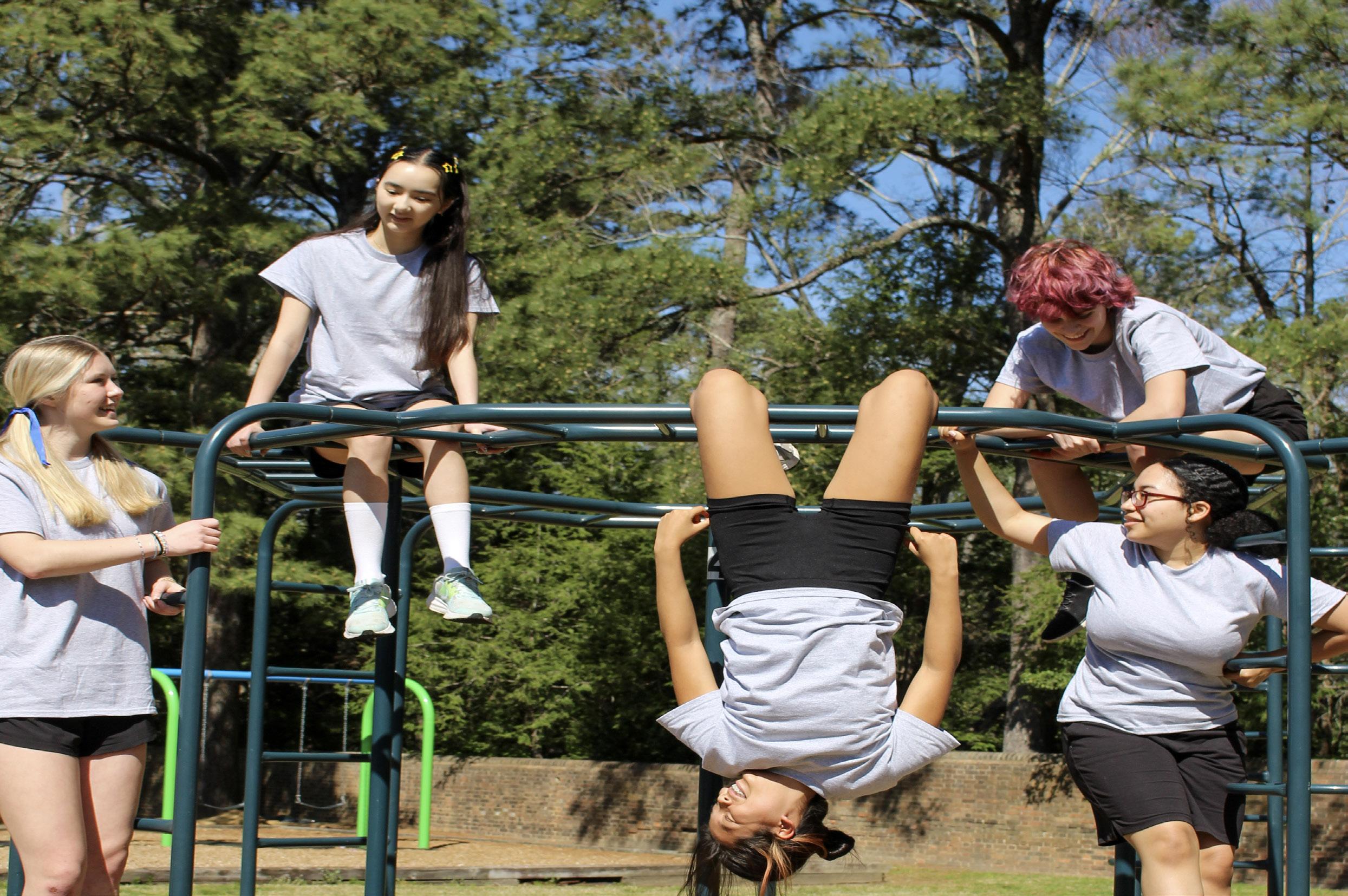
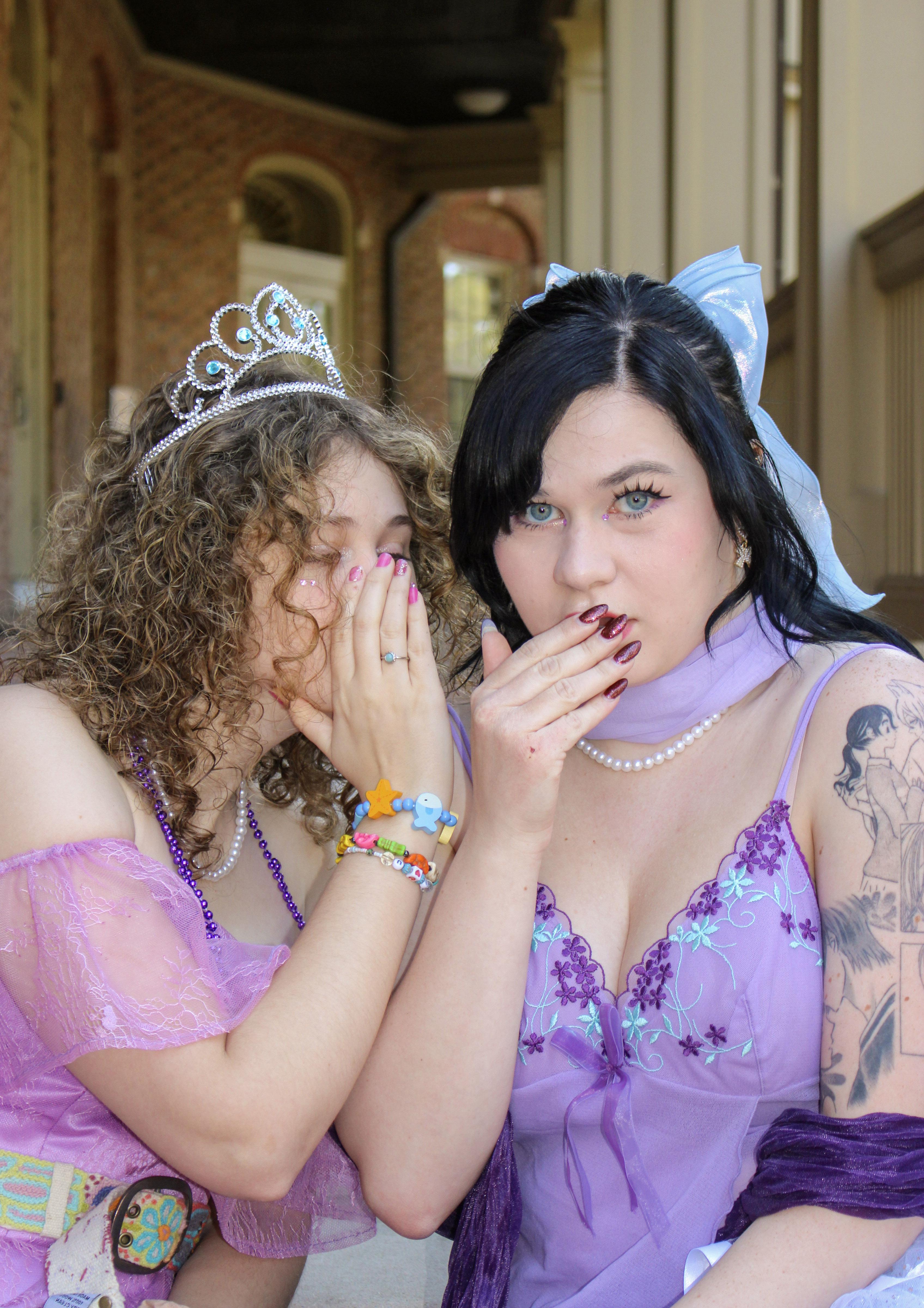
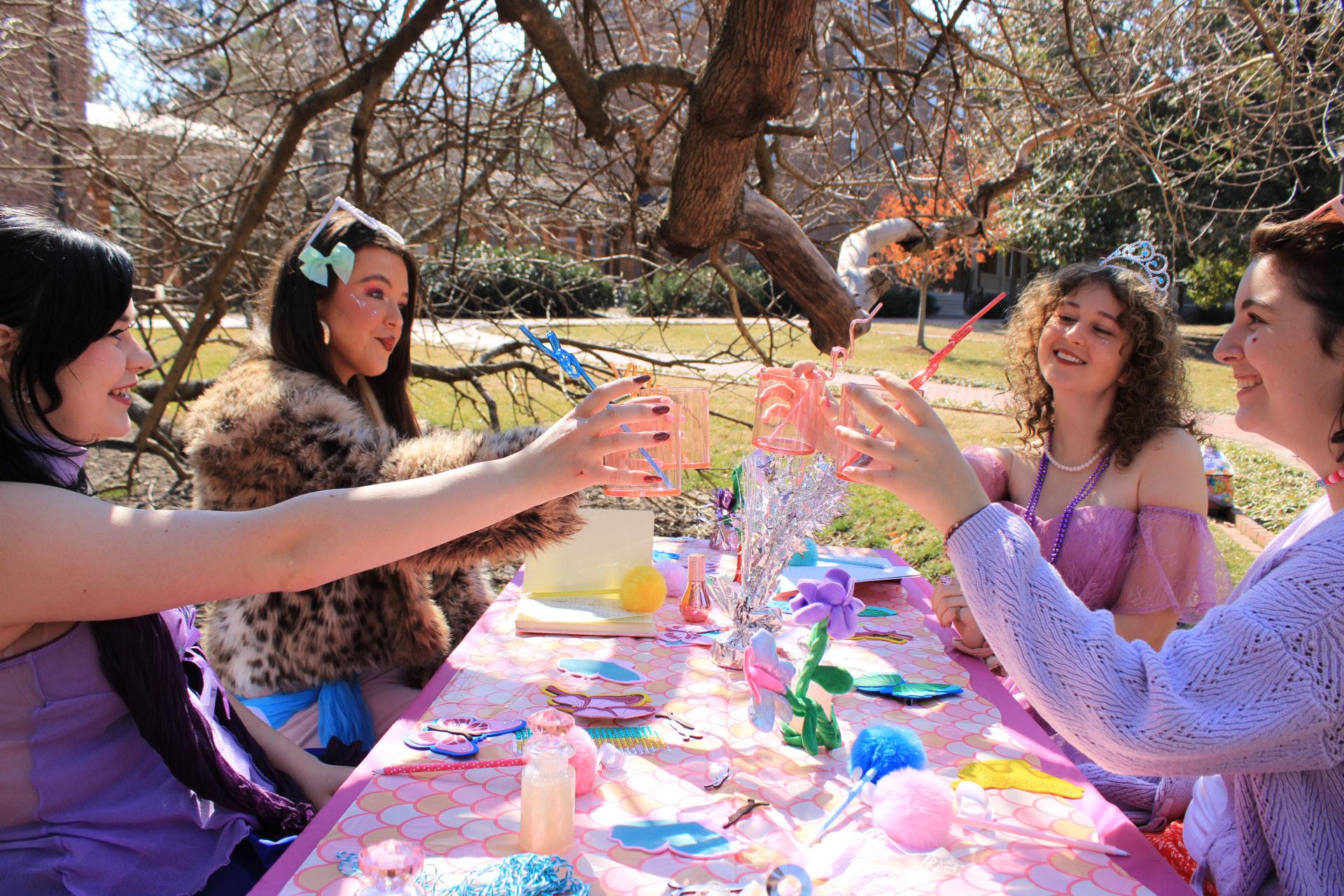
Flat Hat Magazine’s Gone


Photos by Amalia Lewis ’28, Ava Shafer ’28, Isabelle Padgett ’29, and Victoria Polites ’27
Design by Anna Dehmer ’28 and Leah Kohler ’28
Modeled by Arlie Johnston ’29, Lauren Cook ’26, Helen Tiffin ’26, and Samantha Clark ’28
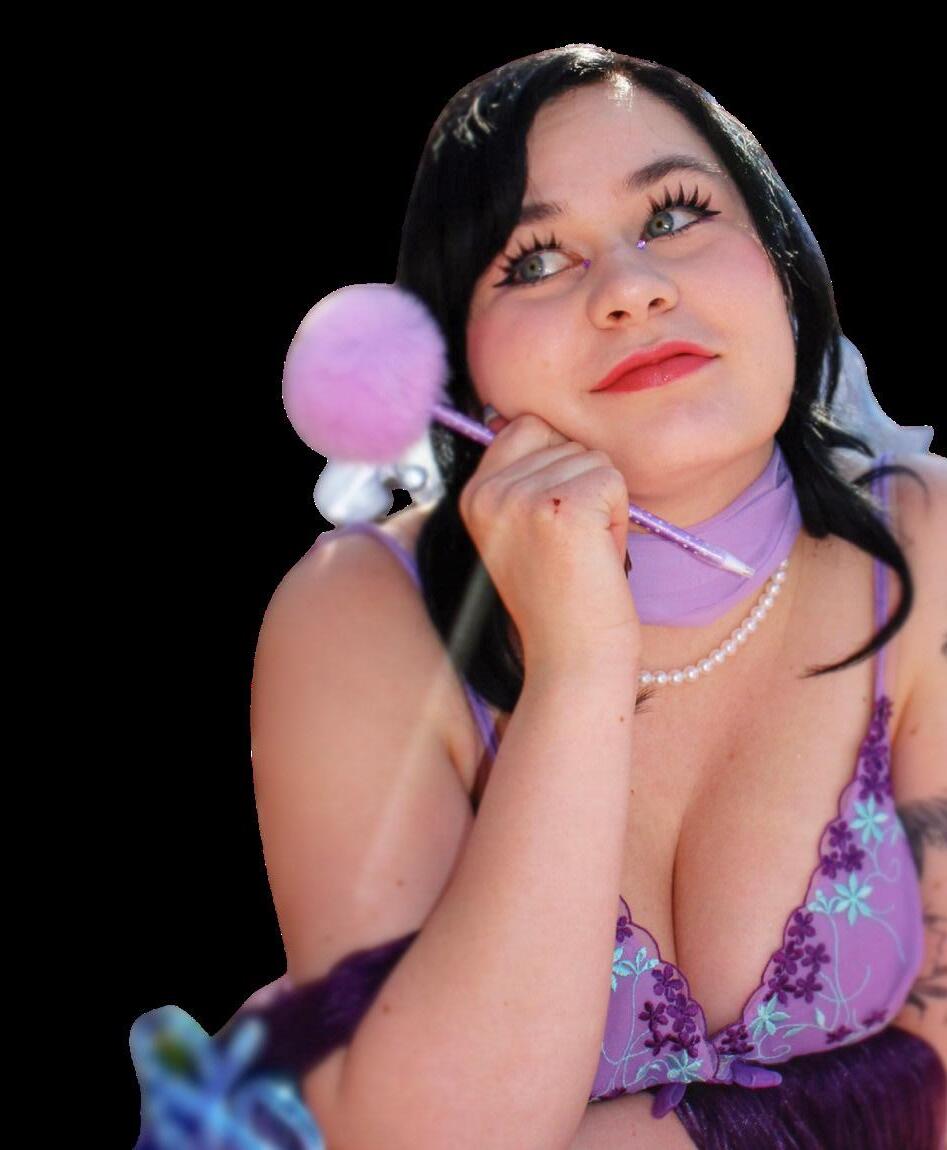
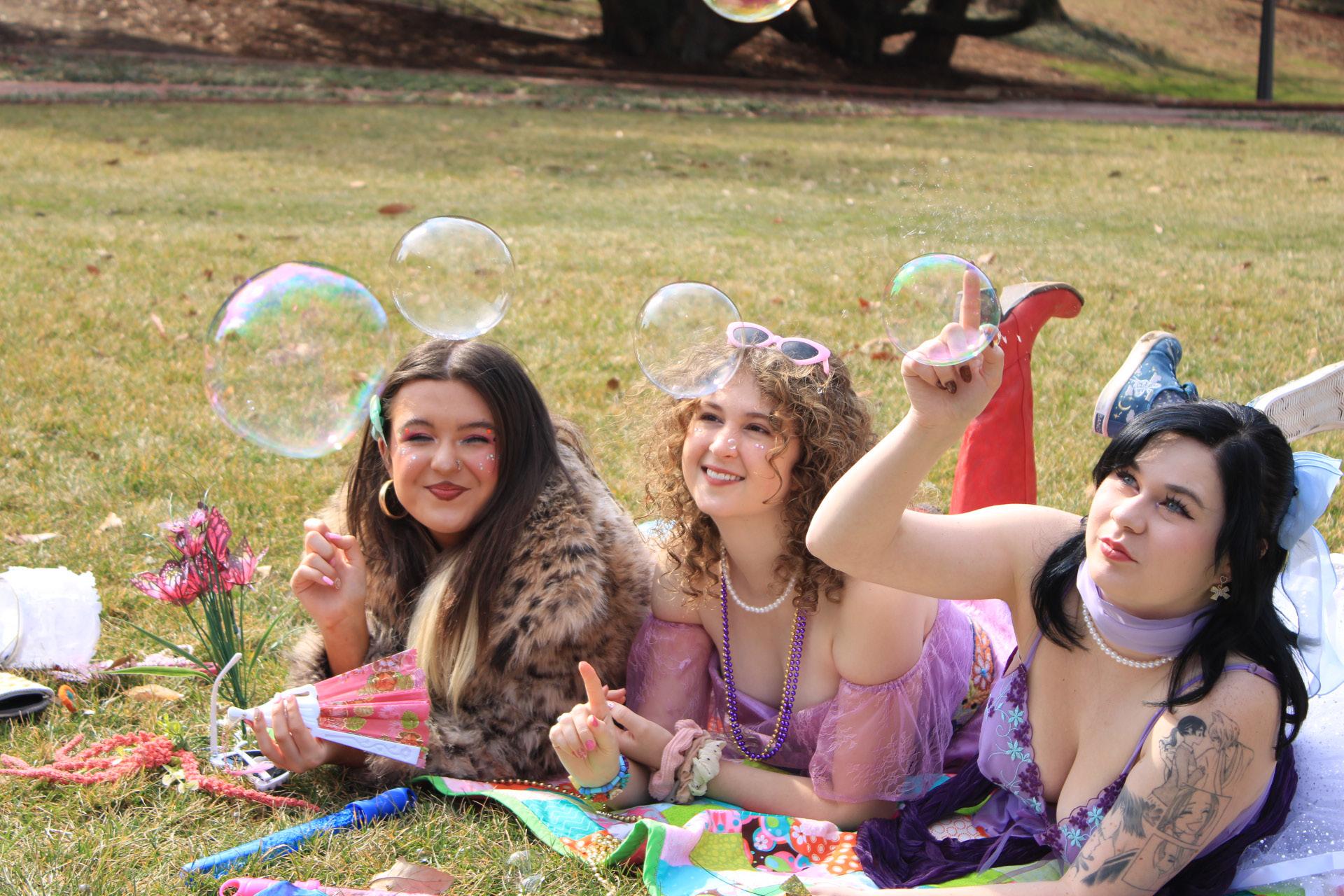
We’re really never too old to play dress-up, and who better to model that concept than the queen of dress-up herself, Fancy Nancy? The incorporation of bubbles and crafts helped to cultivate a carefree, fun environment. We tried to incorporate as much whimsy and color as possible into this shoot, embracing the beauty of bright patterns, unapologetically over-the-top accessories, and all things fancy.
Love, Amalia Lewis ’28
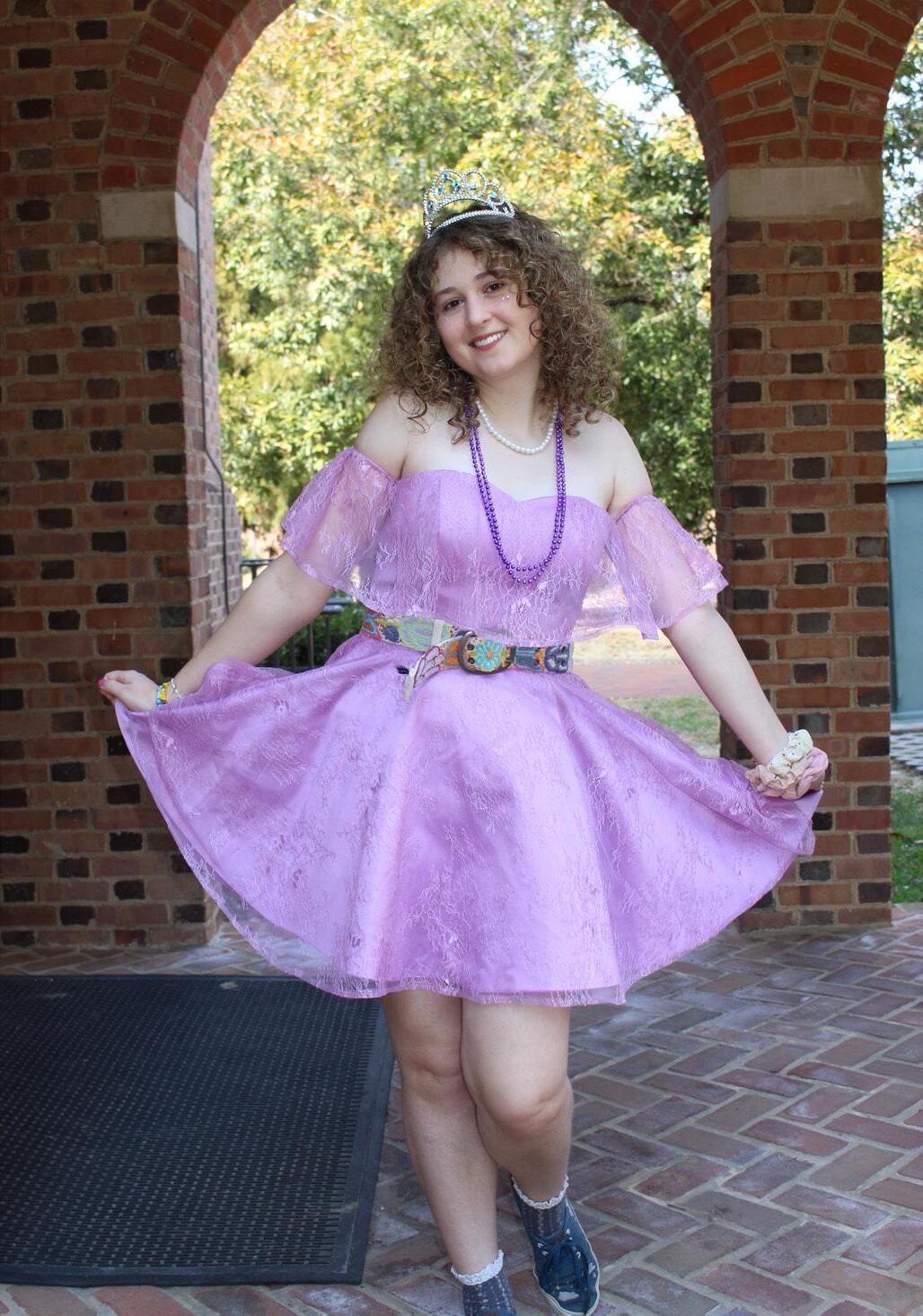

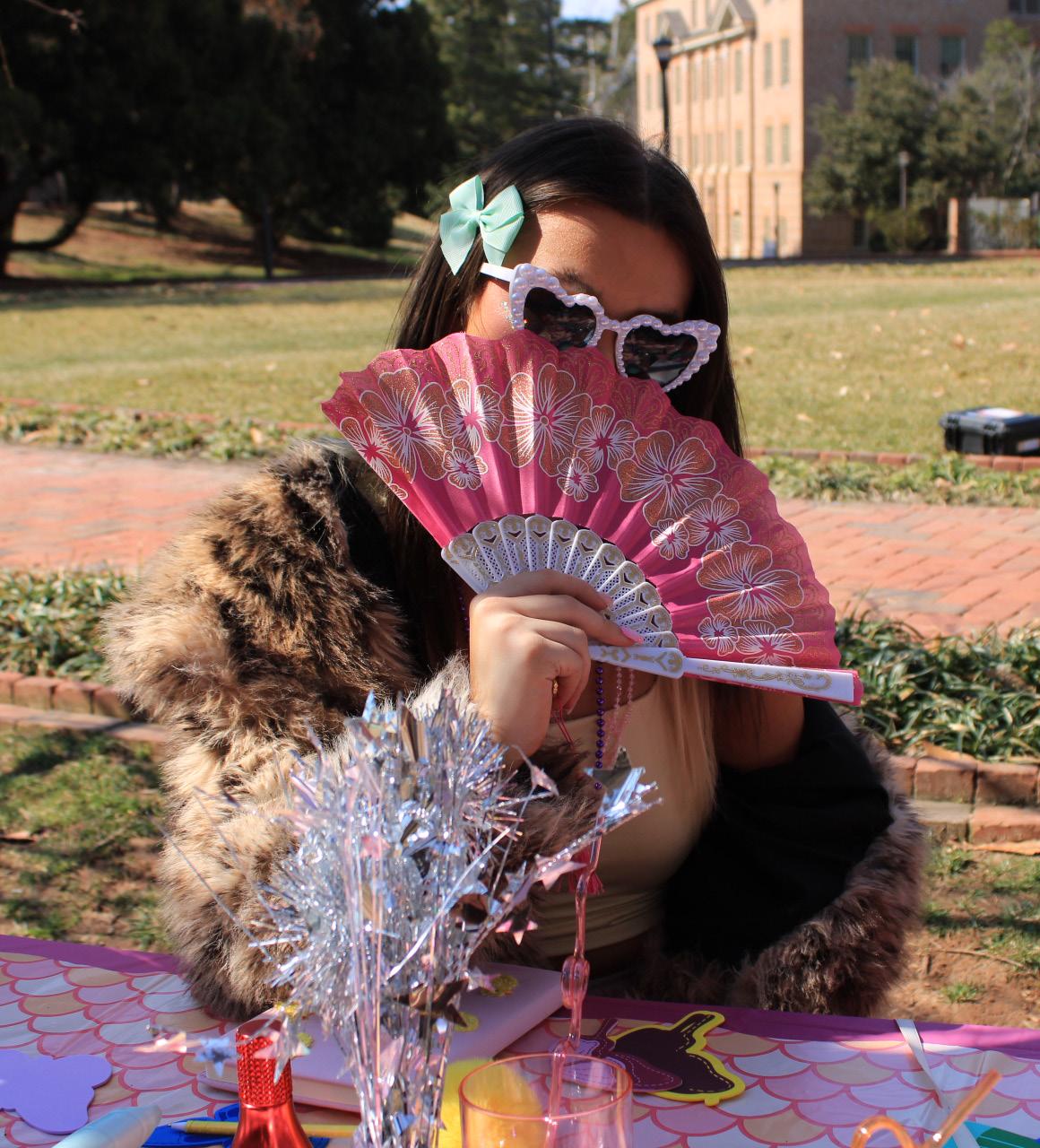
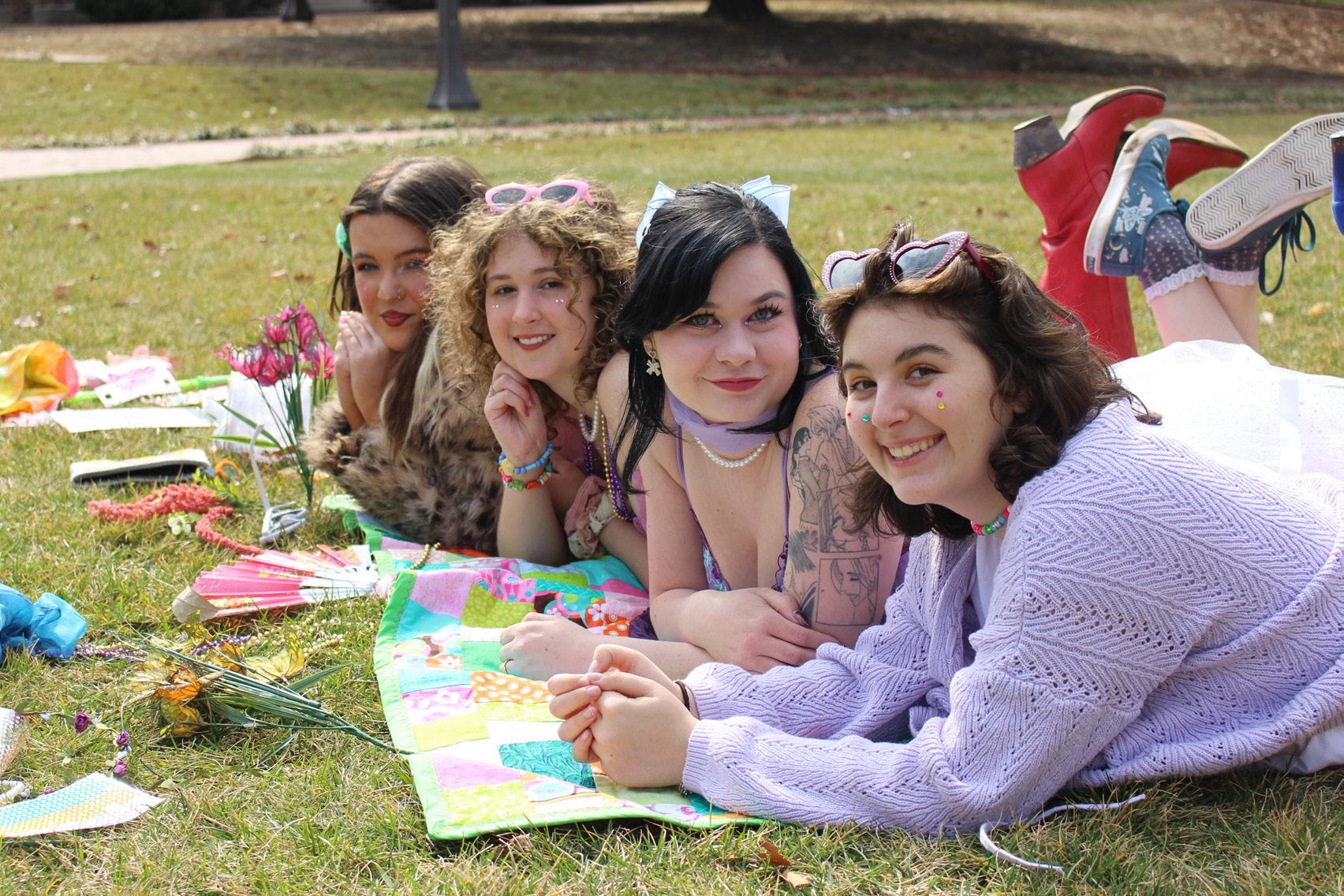



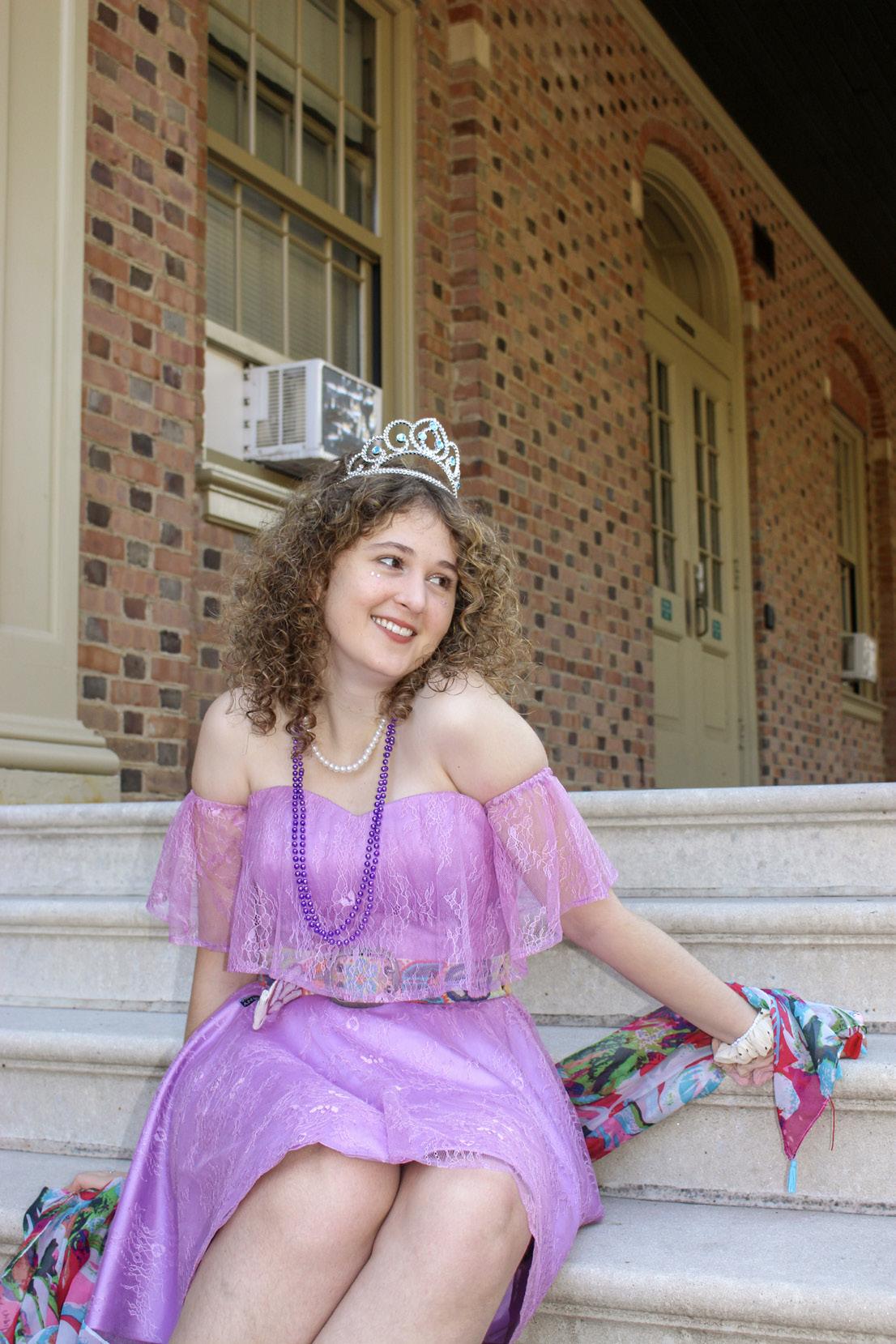

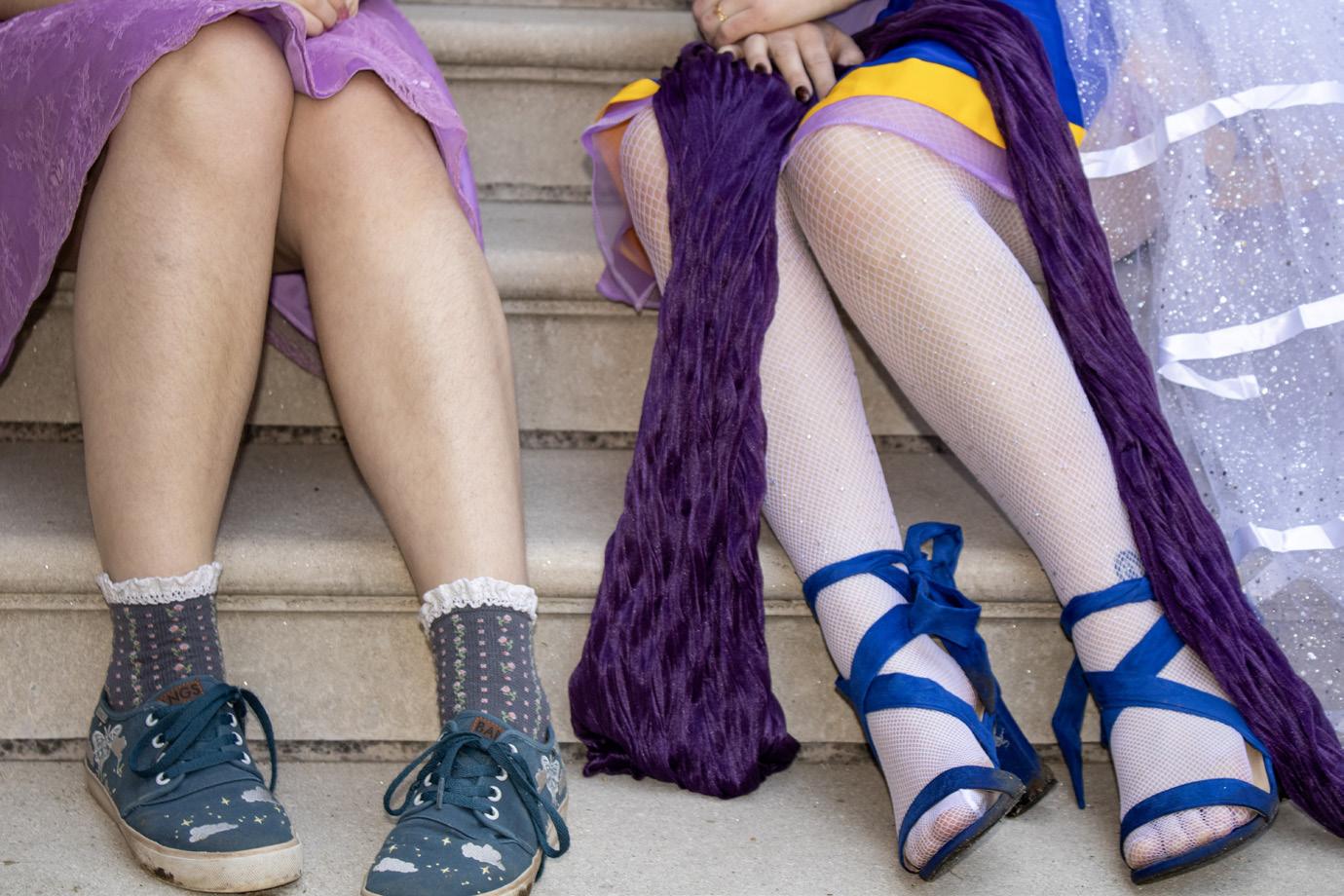

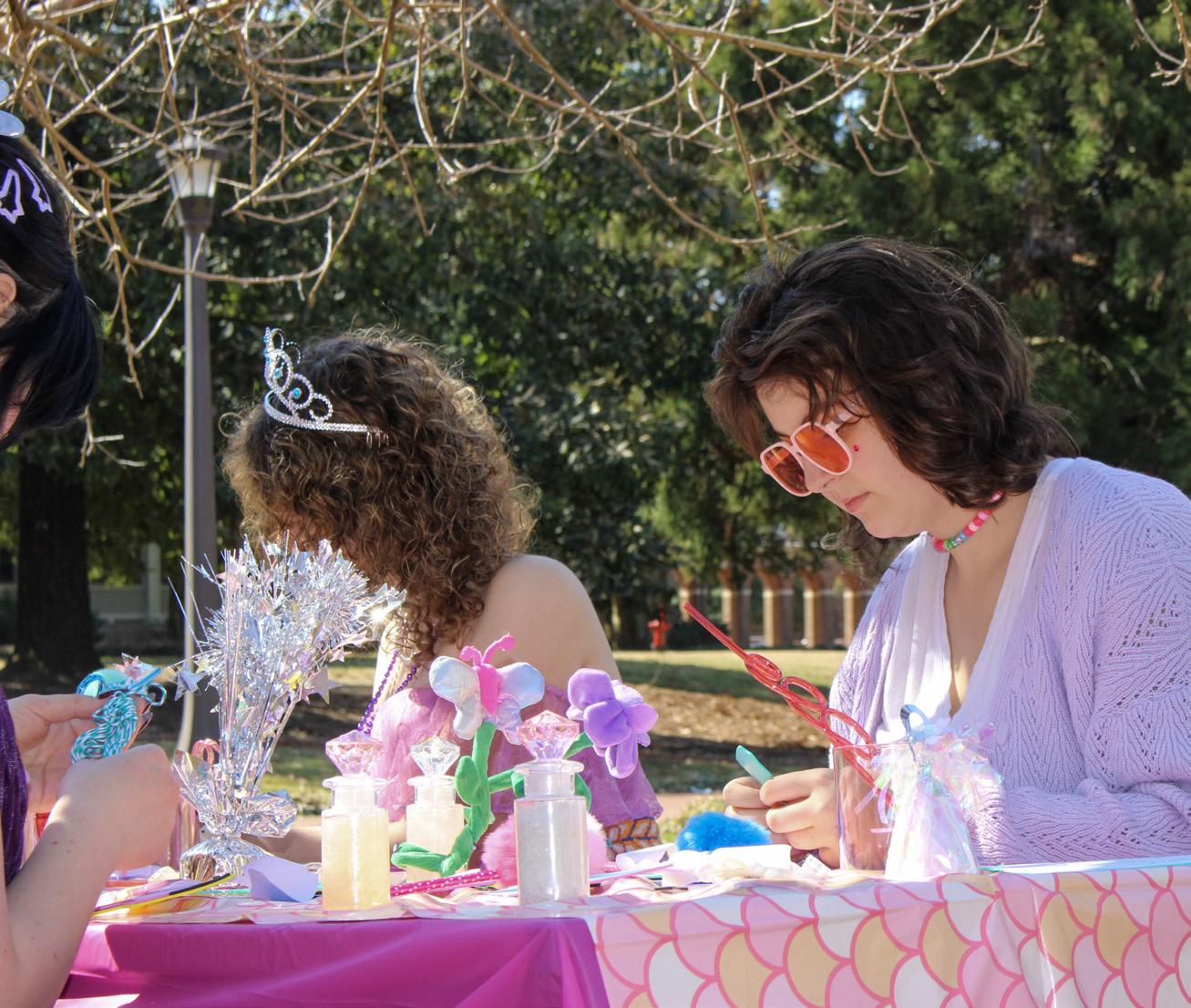
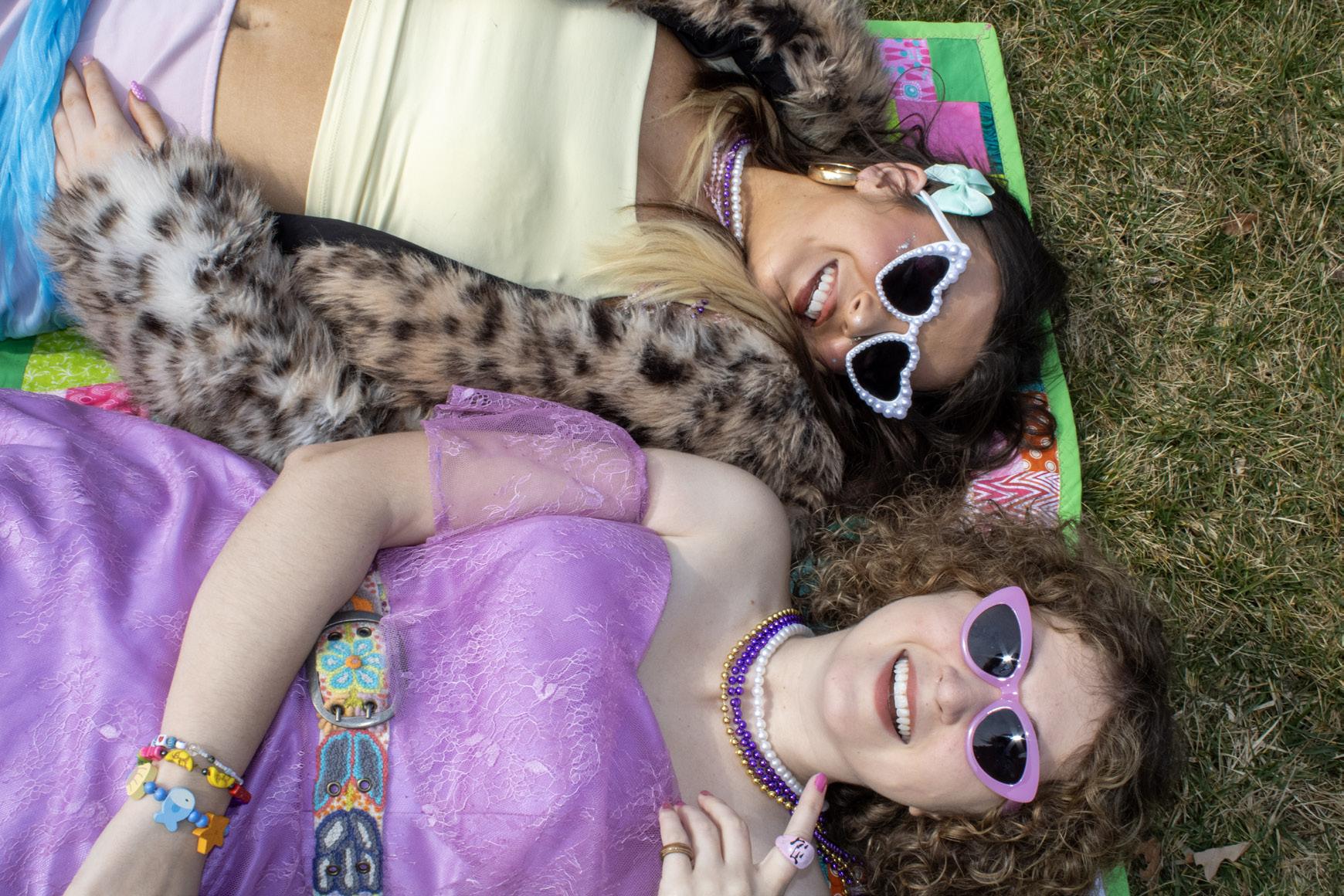


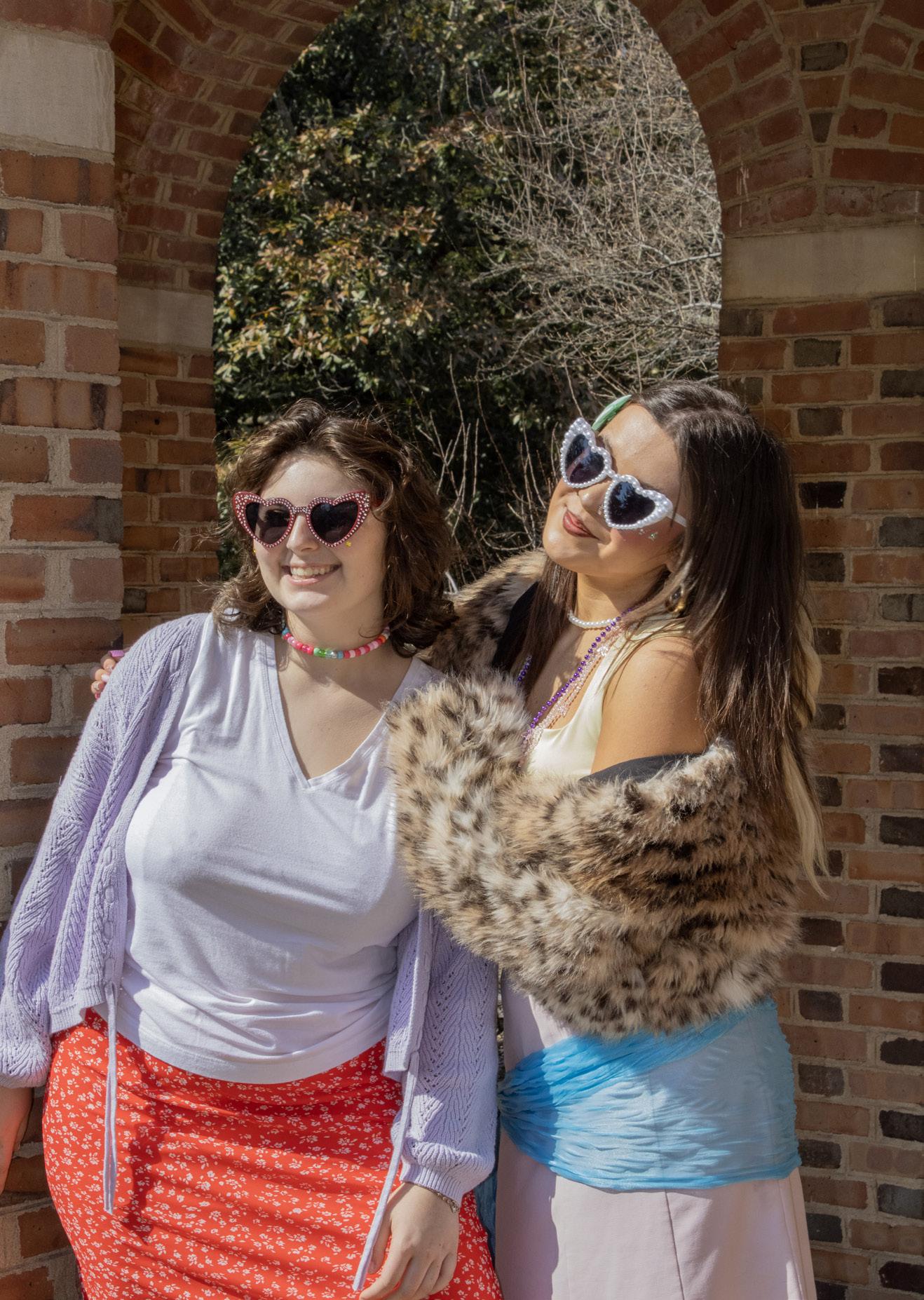


anemoia
Can You Have Nostalgia for a Time You’ve Never Lived?
Story by Melania Frye ’29 Design by Anna Dehmer ’28
I keep little metal tins of mementos stored away in my desk. They hold items linked to specific memories of mine, like the plastic sunflower a friend gave to me over a decade ago, or the beads from my mother’s work desk. This isn’t an uncommon practice, as most of us know that looking into the past and finding things that make you nostalgic feels good, especially when you connect to others who shared those moments or experiences with you.
While nostalgic things can bring back those memories and elicit these feelings, some people find that certain parts of the past that they haven’t lived in give them a similar experience. This is anemoia, or feeling nostalgic for a time you’ve never known. According to Jeffrey Green, Associate Professor of Psychology at Virginia Commonwealth University, scientists largely agree that anemoia has little psychological backing. Yet, if this is the case, why do so many people seem to experience this phenomenon?
In an email to Flat Hat Magazine, Green wrote that nostalgia is usually a melancholic emotional response to one’s past lived experiences.
“In general, we adopt dictionary definitions that emphasize the emotional recollection of our personal past. It’s often described as bittersweet because there are mixed emotions,” Green said.
Based on this definition, anemoia cannot be a real form of nostalgia, given that it does not rely on recollection of our past, but rather an imagined state that is not based on someone’s own experiences.
“Strictly speaking, [anemoia] is not nostalgia. It’s misusing the word, but at the same time, we know what we mean. There is a ‘wistful longing’ [in anemoia] which is part of the dictionary definition of nostalgia sometimes. But nostalgia has to be about one’s personal memories,” Green said.
“Strictly speaking, [anemoia] is not nostalgia. It’s misusing the word, but at the same time, we know what we mean. There is a ‘wistful longing’ [in anemoia] which is part of the dictionary definition of nostalgia sometimes. But nostalgia has to be about one’s personal memories,” Green said.
In his article “Nostalgia Reimagined,” Felipe De Brigard, a professor of philosophy, psychology, and neuroscience at Duke University, counters this conclusion, by arguing that since memory and imagination are linked processes, the function of longing for an imaginary situation and the past would be largely the same.
“Although memory and imagination are usually thought of as different, a number of critical findings in the past three decades have challenged this view. In 1985, the psychologist Endel Tulving in Toronto observed that his amnesic patient ‘N N’ not only had difficulty remembering his past: he also had trouble imagining possible future events,” De Brigard said.
Remembering things and imagining them are not entirely separate. Therefore, scientists like De Brigard find that imagination-based anemoia is truly a real sensation, and it functions the same as reality-based nostalgia. Whether or not you find anemoia to be real nostalgia depends on how you categorize memories — can they be figments of your imagination or must they be wholly rooted in reality?
While some argue that the formal definition of nostalgia relies on personal memories and that anemoia does not align with that, there are some similarities in that both of them hinge on the imagination of “a better time” or “the good old days” which may provide someone with solace, regardless of whether or not those are lived memories. The idea that nostalgia can provide the bereaved with comfort and positive emotions might be part of the explanation for why some people wish to be nostalgic for the past, regardless of whether or not they were there for it.
Green explained that negative psychological states are commonly correlated with upticks in nostalgia.
“Experiments have revealed this to be true for states including boredom, loneliness, and social rejection. Even some physical states like feeling cold. The mechanism appears to be the fact that feeling nostalgic enhances our feelings of social connection. We’re recalling, usually, past momentous events that also involve friends and family,” Green said.
Alongside negative feelings, such as loneliness and social rejection, exists grief. Oftentimes, the feelings of social connection that you get from feeling nostalgic can ease the emotional weight of being without the person or animal that’s been lost.
Since nostalgia can offer a respite for people who are dealing with mental illness or sadness, it would make sense that similar effects from anemoia are present, which explains why some people take refuge in the past.
Anemoia seems to pervade social media right now. From fashion to politics to lifestyle choices, there are many ways in which people long for times long gone. Some people joke that they were “born in the wrong generation” while others simply find joy in recreating historical settings in their daily lives. Regardless of someone’s individual interactions with this feeling, these ideas of yearning for a time you haven’t lived in are capable of shaping our lives today.
Lots of people go to renaissance fairs or love midcentury garb or enjoy records and CDs, and these are all part of our modern culture and aesthetics. These fascinations with the past dictate current consumption patterns, and recycling trends from the past is a common business tactic within fast fashion and other industries. When people view the past through rose-colored lenses and wish to bring back products and experiences from other eras, it makes it easy for companies to profit from those tendencies.
Anemoia exists both in an individual sense of one person’s specific relationship to history, but also in politics and collective nostalgia. Green wrote that populism today is largely centered around national nostalgia, which is made possible partly by social media’s representations of the past as a glorified, better alternative to today.
“People long for a time that they didn’t personally experience — and importantly, that possibly NEVER actually existed. In today’s social media climate when people spend more time looking at posts and videos than living their lives in the real world, it’s not surprising that some people get huge exposure to a time period they never lived through. They only see the positive parts of that period, and they long for it,” Green wrote.
Politicians can use anemoia and this romanticization of the past to create slogans and campaigns that allude to pasts that seem rosier than the present.
“In the past few years, we’ve seen a resurgence of nationalistic political movements that have gained traction by way of promoting a return to the ‘good old days’: ‘Make America Great Again’ in the US, or ‘We Want Our Country Back’ in the UK. These politics of nostalgia promote the implementation of policies that, supposedly, would return nations to times in which people were better off,” De Brigard said.
“In the past few years, we’ve seen a resurgence of nationalistic political movements that have gained traction by way of promoting a return to the ‘good old days’: ‘Make America Great Again’ in the US, or ‘We Want Our Country Back’ in the UK. These politics of nostalgia promote the implementation of policies that, supposedly, would return nations to times in which people were better off,” De Brigard said.
Social media, politics, and the fashion industry are all a part of why so many people seem to be experiencing so much nostalgia, even if it’s not for their own lives. With representations of the past being inaccurate and fantastical, it is unsurprising that people would feel a wistful longing for times that have come and gone. Regardless of whether anemoia is truly a part of nostalgia or not, the impacts of fantasies about a time that is better than what we currently have are real. This yearning for the past, imagined or not, is an extension of us wanting to feel social connections and comfort from shared nostalgic emotions.
Therefore, people will continue to vote to bring back eras that they don’t truly understand, and we will see more and more people indulging in things like physical media and music from before their time. This is all because this aspect of imagination, anemoia, has the potential to bring us closer together — just like nostalgia.

There'sNo PlaceLikeHome:

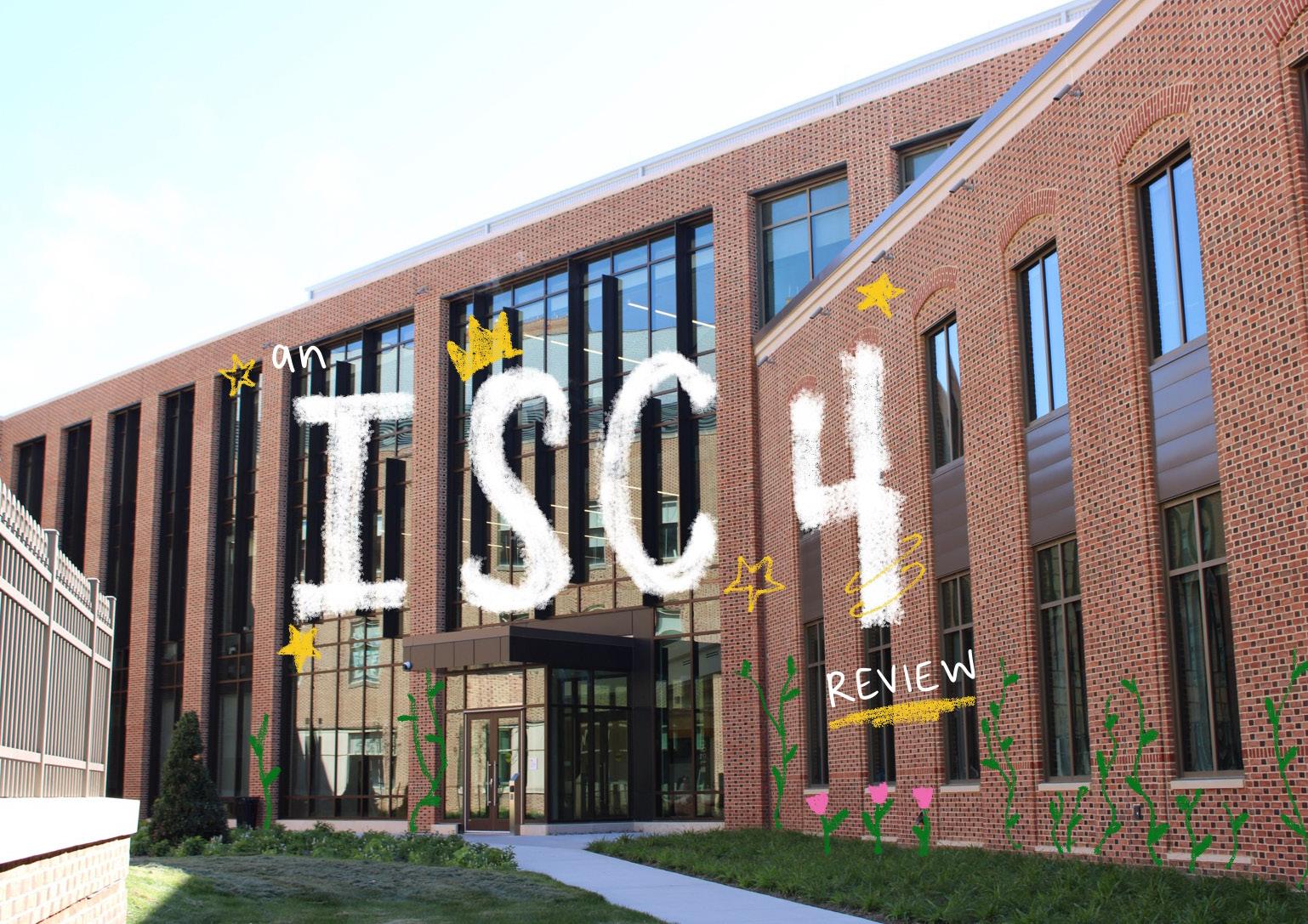

After years of watching the construction of the Integrated Science Center’s newest addition from afar, graduating senior and data science major Alisha Khodabocus ’26 takes a tour and gives her perspective of the new ISC4.
There’s a certain irony that comes with spending hours at a sink when the place you’ve been dreaming of is taking shape right outside. During the 2024-25 academic year, I worked as a chemistry department assistant, meaning my Friday mornings were routinely spent elbow-deep in soapy water, scrubbing away at glassware. It was mundane work, but what kept me going was that I could look up from that sink, through a hard-water-stained window, and see the construction of Integrated Science Center IV. Week after week, I watched the building grow from a metal skeleton, to brick and drywall, to the glassy, modern building I yearned to enter one day.
I realize that sounds a touch dramatic. It’s just a building, after all. For context, I’m a data science major — the kind who proudly dons an “I Love Data” sticker from Earl Gregg Swem Library’s Love Data Week, and who physically jumps for joy when her code runs without errors.
The announcement of ISC4, and the rapid growth of the data science program that followed, resulted in major excitement from many students, including myself. I had been eyeing ISC4 since its construction began February 2023, and in the meantime, excitement only grew. In July 2024, the State Council of Higher Education for Virginia approved the School for Computing, Data Science and Physics — the College of William and Mary’s newest school in over 50 years — and was shortly followed by the board of visitors’ approval of the data science department that November. Although originally intended to open fall 2025, the ISC4 ultimately opened its doors January 2026, just in time for the spring semester.
The first time I entered ISC4, however, was October 2025 — months before the
Story by Alisha Khodabocus ’26 Design by Clare Pacella ’28

building’s official opening. For Homecoming Weekend, the School of CDSP arranged “sneak peek” tours of ISC4, and I eagerly joined one.
The moment I stepped inside, I was greeted by natural light spilling through tall windows into the atrium. Because the building was unfurnished at the time, the open space felt even larger. Pristine white tile and geometric wall decorations created a sleek, modern atmosphere, but accents of color and pine balanced it with warmth. I wandered empty hallways, and peered diligently into the classrooms and labs I knew I’d never enter again as a graduating senior. My favorite moment was on the staircase to the ground floor, when I gazed all the way up to the mezzanine of the third floor — the future data science department floor — and imagined what it might feel like once the space became officially open and lively with student chatter.
By the time the First Day of Classes rolled around and I had the chance to enter a fully-functioning ISC4, one could only imagine the anticipation brewing within me. I stepped inside, and it felt almost magical, like an urban legend finally brought to life. ISC4 carried that sense of shininess that only exists in a building’s first few weeks. But as the initial novelty began to wear off, a strange feeling settled in. I found myself missing Boswell Hall.

I realized that, while ISC4 is a source of pride, it doesn’t feel as homey to me as the windowless labs of old ISC, the drafty hallways of Jones Hall, or (dare I say) the “brutalist” atmosphere of Boswell. There is an unspoken bond formed when you and your peers are huddled in a space that is slightly falling apart. The kind of camaraderie that doesn’t always happen in a building where everything looks perfect and works perfectly. Walking through the halls of ISC4 made me nostalgic for the less-thanperfect spaces that allowed me to call the College and the data science department my home over the past four years.
Take the new seating, for example: modern, with blue and green accents, but also thoughtfully designed, with soft cushioning and outlets tucked into the side tables. One of my favorite spots is the study nook off of the second-floor atrium, overlooking the sundial and greenery surrounding Swem. A massive, funky yellow couch is positioned against the wall of windows, offering the perfect mix of openness and privacy. One Sunday morning in February, I brought my roommates to ISC4 to show them around, and they immediately gravitated towards it. We soon found ourselves smushed together on said couch watching the Winter Olympics, with our “oohs” and “aahs” filling the silence of the empty second floor.
But as cozy as that yellow couch is, it isn’t quite as memorable to me as my other study seating choices. I once spent an afternoon in an armchair in Read and Relax, engrossed in a machine learning assignment, only to realize I was seated on a pile of ants. I had to run outside and beat my bag against the brick building to shake the ants off. It was chaotic and objectively terrible. Yet, it’s the kind of “only at the College” memory that I find myself clinging to. ISC4 offers a lovely, ant-free place to study, and I certainly gravitate there over Swem on most days. But I never go long without returning to the dusty, well-loved corners of campus because they feel more like home.
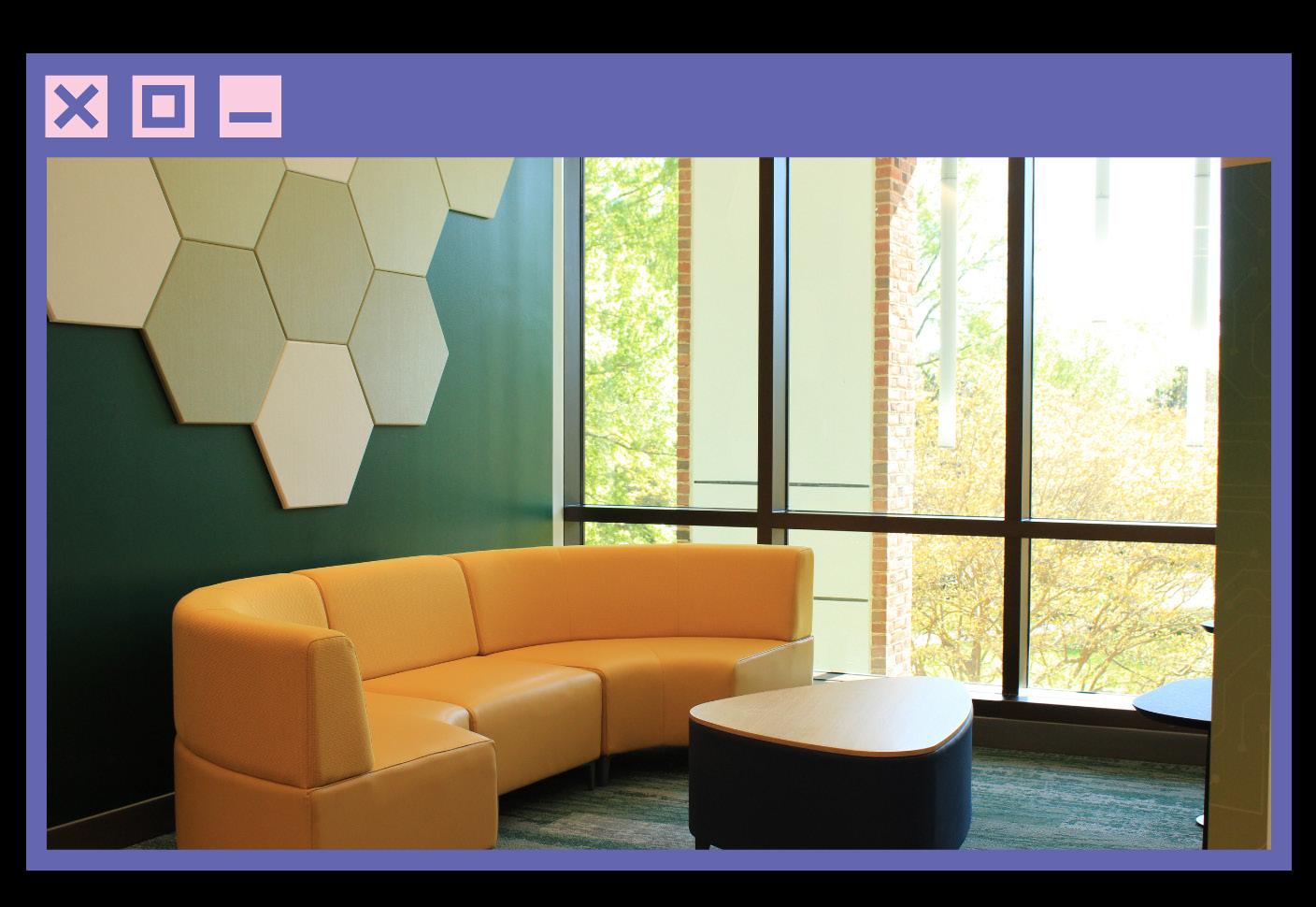


The same tension exists on the ground floor of ISC4, where the new Makerspace is set to open this spring. The massive 8,000-square-foot space will house large 3D printers and laser cutters, as well as multiple workstations for students to build and experiment. The space is open for all to see through walls of glass, allowing passersby to peek inside and feel inspired to innovate.
I often pass the Makerspace on my way out of
ISC4, and each time I’m reminded of the first time I used the old Makerspace in Swem two years ago. I had signed up to be trained on one of their elaborate sewing machines to embroider a sweatshirt as a holiday gift. Instead, the machine tangled and subsequently ate the embroidery thread, while the Makerspace employee was nearly in tears (from both laughter and frustration) trying to troubleshoot it. Eventually, the machine became inoperable, and we had to stop. When I think of the Makerspace, that silly afternoon makes me smile — the nervous laughter, the uncertainty of whether something will work, and the realization that it absolutely won’t. Does having a shiny, new Makerspace remove that part of the process? Not necessarily, but these shared human experiences may require more effort to create in a space where everything functions without flaw.

(I had originally intended to end this here — a bittersweet acknowledgment that, while the new building is impressive, it’s not quite home. I was content with that conclusion, until new data presented itself.)
ISC4 is also home to an array of new classrooms which, like much of the building, are defined by floor-to-ceiling glass. As a graduating senior, I haven’t taken a class there, but I do slow down whenever I pass a class in session — like programming fundamentals or applied math — and peer in at the students and the sleek interior. In doing so, I’m reminded of how different this is from where I first took those same classes, hidden away in Boswell or Jones rather than a glass fortress of a data science floor.
I think back to DATA 201, the first class I took with the department (before it was a department), held in ISC 1127. ISC 1127 is everything ISC4 is not: windowless, slightly dusty, constantly oscillating between freezing and sauna. Yet it was there that I fell in love with data science. My professor had a way of making things feel discoverable — every concept sparked a sense of “I can do this” and left me curious about what I could build if I tried. I was heartbroken when she left the College shortly after that semester.
Regardless, I often smiled in that dingy lecture hall, for DATA 201 and later classes that shaped me. It holds a warmth that, to me, ISC4 cannot replicate. My best learning happened in the imperfect spaces, not in the shiny new classrooms. So, I sometimes feel like I’m still looking in at ISC4 from outside the glass, from the window above the sink, waiting to break in.
Remember how I said the professor of the beloved DATA 201 class left the College two years ago? She returned to campus for a Q&A and lunch with us this March. We learned about it only one day before, but when we arrived in the ISC4 classroom, it was packed full of seniors wearing our department t-shirts with pride. We forgot about the shiny building we were in — what mattered was sharing gratitude and excitement for the person who helped us survive the early years of the department.

Afterwards, a group of us migrated to the data science floor and did something the architects probably didn’t plan for: we squeezed around a table and played cards. For an hour, the sound of our laughter and teasing echoed off the walls. The pristine “new building” smell vanished, and it was replaced by the familiar, warm energy of ISC 1127 — where we’d all taken DATA 201 together years ago.
In that moment, ISC4 felt like ours. We were leaving our mark for future students, making the space feel lived in. I’m graduating soon, and leaving the window above the chemistry sink behind, but for the first time, I feel at home inside the new ISC4.

Story and Design by
Tilley Lie-Nielsen ’28
Certain smells seem to have the power to instantly transport us to past moments. Moreover, wafts of random, seemingly unrelated scents can become connected to oddly specific moments. The smell of a particular hand sanitizer, for example, brings me back to the feeling of sitting in my first-grade classroom. But why is scent so powerful, and what does this tell us

It appears scent is especially potent when it comes to evoking childhood memories. Childhood memories are often hazy, yet at the same time visceral. The distance from these youthful memories is often filled in by bits and pieces of sensory information. Smell can act as a conduit for these unclear memories, bringing about the specific feeling from a moment, rather than a play-by-play recollection. Smell, like childhood, focuses on the whimsical and artful rather than the discrete. As a child, the world is seen through a more vibrant, exciting lens as everything is new. Sensory information is eagerly grasped and held onto, whereas with age, the mind becomes accustomed to such information and often lacks the same attention
In the article “The Lasting Cognitive Effect of Smell on Memory” by the Cognitive Neuroscience Society, the Limbic, Old, Vivid, Emotional, and Rare model is stated to describe how “odors often cue memories that are emotionally significant, linked to childhood, recalled with great vividness, and that occur infrequently.” This description supports the idea that smells are most often tied to childhood memories rather than recent ones. Additionally, the Rare aspect of the model accounts for why seemingly arbitrary scents can evoke such vivid memories. The article also mentions how the presence of an odor alters neural activity, creating a “lingering brain state” that might “shape memory in ways we might not even notice.” The presence of smells in certain situations creates a varied mental state compared to those without notable odors. This differing state may allow memories to become strongly attached to specific
I could create a map of my childhood through smells alone. Smells could represent certain places. Elementary school smelled like Styrofoam lunch containers, Bath and Body Works’ Winter Candy Apple lotion, hand sanitizer, and fresh mulch. Home smelled of hardwood floors, Suave Kids green apple soap, and bacon on a Saturday morning. Gran’s house was a cozy mixture of warmth, old rugs, reed diffusers, hairspray, and freshly cooked food. The smell of Gran’s house was so potent and particular that it would linger on Nay Nay, the stuffed horse I slept with every night, for several days after we had left. My best friend’s house smelled of warmth — I think it was a mixture of coffee and musty old house (but in a good way), paired with loud laughter.

Smells could represent seasons. Summer smelled like warm hosewater and grass, watermelon, Neutrogena sunscreen, humidity lingering on outdoor furniture, and rain on hot pavement. Fall smelled like wet leaves, and a sweet crispness in the air that would make me excited for Halloween. Winter smelled like the must from the attic lingering on Christmas decorations that had been sitting in their box for too long, as well as the specific smell that would radiate through the house when the heat came on, which also became associated in my mind with Christmas.
Smells could represent people. I remember thinking that my twin brother’s hair smelled like carrots (he is ginger.) My mom smelled like powdered blush and the warm aromas of freshly blow-dried hair. My Aunt Kathy smelled strongly of a particular perfume that would radiate throughout her whole house. My cousin smelled like the Fructis leave-in conditioner that my aunt would put in our hair after spending the day in the ocean together.
Not only does smell play a role in many of my childhood memories, it also plays a role in those of most other people as well. Upon asking several people to list scents reminding them of childhood, I noticed the relative ease with which these smells were recalled, as well as the specificity of the scents. Smells, just like memories, are highly personal and shaped by individual perception.
I was surprised and a little perplexed by some of the descriptions, and struggled to understand where his mind was coming from. At the same time, I felt like I could envision some of them directly — such as the piles of orange peels he would always leave around the house. I was prompted to think about how the perceptions of our childhood differed as well as in what ways they were the same.
My mom responded to the question, too: “Almond cherry Jergen’s lotion reminds me of my grandaddy’s house, but I don’t know why. Chantilly perfume reminds me of my grandmother. The smell of flowers and springtime plants to this day reminds me of Easter as a kid. The scent of hay reminds me of the years I spent horseback riding, and I have many positive associations with the scent.”
I noticed once again the presence of somewhat random scents, such as the almond lotion, being connected to certain places or people. Additionally, many of the smells were associated with positive memories. Perhaps sensory processes such as smell are heightened during positive situations. Or, maybe it’s just that lots of childhood memories are looked back at fondly, with a bittersweet nostalgia that lends itself towards thinking in terms of smell.
I was also curious to see how the connection between smell and memory would differ across generations. My 82-year-old grandfather provided this description of smells from his childhood: “One smell is of freshly turned Earth when walking barefoot in the furrow of a mule-drawn plow. The other strong sensory memory is the smell of warm, fresh milk when milking anywhere between one and four cows every morning, seven days a week.”
free and play as a kid. Certain smells are a privilege, and we can acknowledge both the hardships we have gone through as well as the things we are grateful for through smell.
Lastly, I asked two friends of mine to list some smells from their childhood.
Kaitlynn Thomson ’28 said: “Brownies, the salty smell of the ocean, Auntie Anne’s pretzels, rubber bouncy balls from playing kickball in P.E., crayons, textbooks, and Play-Doh.”
Grayson Stanley of Elon University said: “Laundry, wet dog, Victoria’s Secret perfume, grass, musty smell of an old church.”
I couldn’t help but notice how my friends who had grown up during the same time and under similar circumstances as me shared parallels with me in the smells that they had recalled. Their lists, too, had to do with school, food, free time, and toiletries. Although I didn’t ask Thomson or Stanley to describe the importance of each of the smells in detail, I felt I could relate my own experiences to each of them and conjure up ideas of the memories they had been envisioning. While the scents my friends had listed were more alike to mine than my grandfather’s had been, I was still prompted to think about the differences between our childhoods and the differences in the smells that had resonated with us.
Other smells he recalled also related to his upbringing. The scents my grandfather recalled were literal and directly tied to life on the farm where he was raised. They seemed less fanciful and less based around childlike wonder. This made me reflect on how the smells we remember can paint a picture of the conditions of our upbringing. My grandfather was forced to grow up quickly and work from a young age, and was not given the same luxuries to be
Scents are vastly interwoven with memories — especially those from our childhood. However, the association between memory and scent is an elusive, mysterious process. Why do certain smells remain in our memory while others don’t? What can scents tell us about our childhood? Although it may seem somewhat arbitrary, recalling scents from one’s childhood can be a good starting point for fostering more gratitude. Oftentimes, smells can bring back fond, nostalgic memories, prompting moments of reflection. Though memories can often be obscured by time and the complexities of life, scent can be the key to unlocking these long-past memories, connecting to our inner child, and fostering an appreciation for our lived experiences.
Every semester, hundreds of students at the College of William and Mary add Intro to Creative Writing to their carts. Motivations vary; some genuinely want to improve as writers, while others just want to fulfill their ARTS proficiency. Whatever the reason, Intro to Creative Writing certainly seems to be one of the hardest-to-get courses at the College. Despite the popularity of its flagship course, the English Department’s Creative Writing Program currently only offers a minor. Thanks to demand from students and professors, this may soon change.
Story by Rachel Robbins ’28
Design by Leah Kohler ’28


Director of the Creative Writing Program Brian Castleberry has been an advocate for offering this major since he arrived at the College 16 years ago.
“[The College] is one of the oldest liberal arts colleges, so it was strange to me when I first got here that there wasn’t a creative writing major here,” Castleberry said. “Of all places, this seemed like a place where that would happen, especially given that so many of our students are just incredibly driven and creative.”
At the moment, many students at the College who are interested in pursuing careers as writers choose to major in English. Indeed, the English department’s website has glowing testimonials from journalists, literary agents, and producers. However, Castleberry emphasized the difference between the two disciplines in his thought process behind offering a separate creative writing major.
in front of people, you’re workshopping with other people, and you’re getting comfortable with respectful criticism. I think those skills are really important to any workplace that you’re going to.”


“The fields share a lot, but they have this kind of dividing line where literature students love theory and argument and meaning, whereas creative writing students often are more interested in the craft, the techniques being used, and how they can learn from it as writers.”
Virginia Cheung ’26 gave insight into some of the other benefits of taking creative writing. Many English classes tend to be focused on specific genres or writers, so voices from similar perspectives are often placed together. The comparative variety of voices one hears in creative writing workshops, both from classmates and from assigned readings, makes for a wider breadth of stories told.
“In CRWR465, we’ve been reading this memoir called Speak Okinawa... Even though I was dabbling as a Japanese studies minor, I’d never really heard about Okinawa’s history at all. In fact, it’s pretty much erased in Japan’s culture today as well. I feel like in this culture in creative writing, I’ve been learning a lot about important social justice issues and experiencing a lot of empathy.”

Meghan Allmond ’26 experienced this gap between the two fields firsthand; she was initially an English minor, but switched to creative writing because of the greater freedom in literary focus it offered. She emphasized how the skills she has gained from her creative writing classes have translated to her government major.

“I think that [the creative writing minor] has allowed me to get a lot more creative and to broaden my horizon when thinking about mundane topics. Because I’ve had this experience where I’ve been able to broaden my horizon and broaden my thinking, I’ve been able to put more thought and push the limits of my government assignments.” Allmond also mentioned how the workshop format of the College’s creative writing classes, which centers around discussion of student work, has helped her to become more adept at incorporating peer feedback.
Cheung also expressed that the future major should require at least one course centered around the history of writing and how marginalized people have expressed their voices over time. The current English major requires at least one course that fulfills Constructions of Race, so there is a framework in place from which the Creative Writing Program could take inspiration.
“A lot of the beauty in creative writing readings is that they’re a lot more experimental and contemporary, and a lot more diverse in subject matter, who the writer is, and what the writer is writing about,” Cheung said. “If you’re reading about these things anyways, which I really hope every course reads about, then you kind of have to acknowledge it.”

“I truly do think that being able to articulate your words and articulate things about yourself and putting it onto a piece of paper is a huge life skill. And [in creative writing classes] you’re reading
In addition to professional skills and increased empathy, the study of creative writing also offers less quantifiable benefits. Jon Pineda is an associate professor of English and has been the intermittent head of the Creative Writing Department. Rather than tying creative writing to specific professional skills, Pineda offered a more poetic perspective regarding the value of the major.
“We, as writers, sometimes just have to be willing to situate ourselves in the temporal spaces of unknowing. It’s not easy, I know. That said, the world sometimes seems to be hellbent on reducing a great deal of our thinking into quantifiable efficiency. I can see how that is useful in some disciplines. I can also see how that inherently limits how we understand the complexity of humanity.”
Indeed, literature has long been a lens through which people understand each other. For most of human history, stories were passed down through recitations without ever being written down. While written stories existed as early as ancient Sumer, access to written material increased dramatically after the advent of the printing press. As literacy rates have grown around the world, reading has brought countless children and adults to greater understanding of differing perspectives.
Despite its profound impact on the world, creative writing as an academic field has only arisen relatively recently. In his book The Program Era: Postwar Fiction and the Rise of Creative Writing, Dr. Mark McGurl cited the temperamental gap between “scholars” and “writers” that was perceived by members of both fields up until World War II.
While creative writing’s recognition as an academic discipline has had to overcome more barriers than other courses of study, it is certainly an established field today. According to McGurl, the number of creative writing programs in the United States has grown from 52 in 1975 to over 350 today.
To suit its relative newness, the current minor at the College is structured with a great amount of flexibility. Students must take two 300- or 400level literature courses, and can fulfill the remaining credits needed with any offered creative writing courses. In addition to designing the major, the creative writing department has been considering how a larger department might allow for a change in the requirements for the minor.
“Originally, we were so kind of threadbare that the initial idea was ‘We better just let them take whichever classes so that we can guarantee they’ll get
to take the classes,’” said Castleberry. “One of the things we’re working on now is to give the minor just a little more structure — to say something like ‘You have to take two of the 300-level genre courses’ — just to broaden your sense of things, and to learn from that other genre about the genre you want to work in.”
In her experience with the creative writing minor, Allmond found that taking mid-level courses in poetry and fiction allowed her to hone her writing skills outside of her creative non-fiction comfort zone.
“Taking fiction allowed me to have so much more appreciation for fiction writers, because that is really hard. I’m not that creative, but everybody else in my class was making these beautiful stories. And poetry allowed me to write about a situation that I had gone through in a way that was less intimidating to face.” Cheung also commented that increased focus on multidisciplinary writing would improve the College’s current class offerings.
“Right now, you don’t really get to explore a lot of the multi-genre-ing. It’s very black and white. Some of the professors have been trying to experiment a little with this, where, like, you examine, like, what one aspect of the craft is actually doing, or like looking at a piece of creative writing and analyzing what it’s doing. But I would like more of that.”
It can be hard to pin down creative writing. Some people consider it a form of art that cannot be taught, whereas others view it as an academic pursuit with clear rules. The truth lies somewhere in the middle, and the mix of these two ideas is part of what makes creative writing uniquely enchanting both as a growing program at the College and as a broader field.



“We can study craft — and I strongly encourage those to do so — but there’s also something about the mystery of the writing process that brings each of us to the empty page,” said Pineda. “I suppose I’m just trying to take care that I don’t extinguish that in myself and in others.”




Looking Through A Glass Onion
Story by Elijah Clark ’28 Design by Vivien Leithead ’28
Even as our technology thrusts us faster and faster into the future, we remain paradoxically surrounded by imagery of a rose-tinted past. Modern trends and political culture call back to an idealized narrative, romanticizing a lost character who has been cast aside in favor of modern convenience. Whether it be the right-wing view of traditional culture that drives many American evangelical political positions or the traditional nostalgia for a state of natural beauty common to many leftwing idealists, the romanticization of times long gone is a common symptom of political unhappiness. This vision of the past rarely reflects objective reality, but it is important to dissect it nonetheless. If we do not know which aspects of the past are worth having, we will be unable to notice when changes in the world today have done more harm than good.
It is easiest to begin at the leaves of the problem, and work our way slowly to its root. With the landslide victory of Ronald Reagan in the 1981 presidential election, the idealized American culture boomed. Often cited as the highest quality of living, the Reagan Administration appears in popular culture as a depiction of the ideal society. This depiction is traditionally associated with the political right and is echoed in modern positions that invoke nostalgia for a day gone by. This position usually neglects the great crises that occurred during the period, including the AIDS and crack cocaine epidemics, discounting the massive damage done to marginalized groups. As political parties use a warped view of the past to draw others into the fold, this cycle of discounting the flaws of the time repeats itself. You cannot have your cake and eat it too, and to view the world from this perspective is to deny the plagues that continue to afflict us.
Yet in the modern context, with the political landscape as it is, nostalgic views of the past become a form of escapism to dwell in an idealized world amid a tumultuous one. They provide a sense of comfort and serve as a North Star amid
the encroachment of the outside world. Though they are an escape, they deny many of the issues of the previous system and lead to many of the societal problems we face today. Given the flaws in these views, how can we determine which ideas are worth taking and which are worth leaving behind? The benefits of economic growth, a sense of security, and a sense of self-expression are worth aspiring to, and focusing on such issues can bring overwhelming benefits if accessible to the entire population. But nostalgia for a past time often does not include the groups excluded from Ronald Reagan’s America. This “I got mine” mentality is echoed among those who recall the time fondly, and the question of disparity does not seem to be mentioned in any of these recollections.
The development of a more productive, more personalized society means we are more willing to give up some of the securities that made nostalgic
views of culture possible. Are we willing to give up personal autonomy for a romanticized, nostalgic past, despite the longterm harm that relinquishing these ideas could do? The right to privacy and the right to exclusive ownership have been repeatedly encroached upon over time. With “features” such as artificial intelligence age verification, the rise of AI-generated content, and the growth of rent culture, the ideal American dream seems further and further away as we accept the modern conveniences of the digital age. With these rising concerns, the words of Ida Auken at the 2016 World Economic Forum come to mind: “You will own nothing and be happy.”
So what can be done?
With aggressive changes to America’s current political structure, the future seems uncertain, and threats to personal liberties persist. The most important thing is to hold on to the values you believe in. Though the conveniences of ChatGPT and personalized advertising are appealing, the cost is your information, in one form or another. Furthermore, every company records information it can pull from your online usage, and, with companies like Palantir developing AI-surveillance and recognition systems, the privacy we once benefited from seems to be getting more and more estranged from reality.
The companies that offer this efficiency are not expected to behave amicably, nor have they proven they will. Recent social security data breaches in the United States and government ID data breaches in the United Kingdom show that even trusted public and private figures do not act in the best interest of the public they are set to serve. The information collected about each of us is equally available to both good-faith actors and malicious parties. With these issues piling up, we must accept that the nostalgic view of the past that we may have is not accurate to what is true.
In spite of this, we must not accept any alternatives to whatever we may view as our ideal society. To accept that these ailments are simply the cost of operating the governmental system both is misguided and demands no positive change. We must work as if the changes we desire to see are attainable and continue to fight for those futures. Whether we like it or
not, we cannot return to the past that we idealize. The best route forward will always be to accept the modern political world as it is, and dedicate yourself to serving the people you care about now, in your daily life. Volunteer for causes you care about. Reach out to friends who care about you. Inconvenience yourself to care about others, to go out of your way to improve the lives of those around you. It is these interactions that make up what was worth yearning for in that rosy view of the past. These changes are slow and hard, but they are necessary to bring about the change that we desire to see.
As the world around us becomes more tumultuous, it is more important than ever not to fall into the alluring appeal of nostalgia. Nostalgia is often used as a mask for those who wish to profit from your wishes for a better world. You must temper yourself to the world around them and always strive to be more than you are today. The same must be said of your expectations of those around you. The world will never be as it once was. But through the slow and steady effort of those who care about the world, we may make a future that is worth inhabiting.
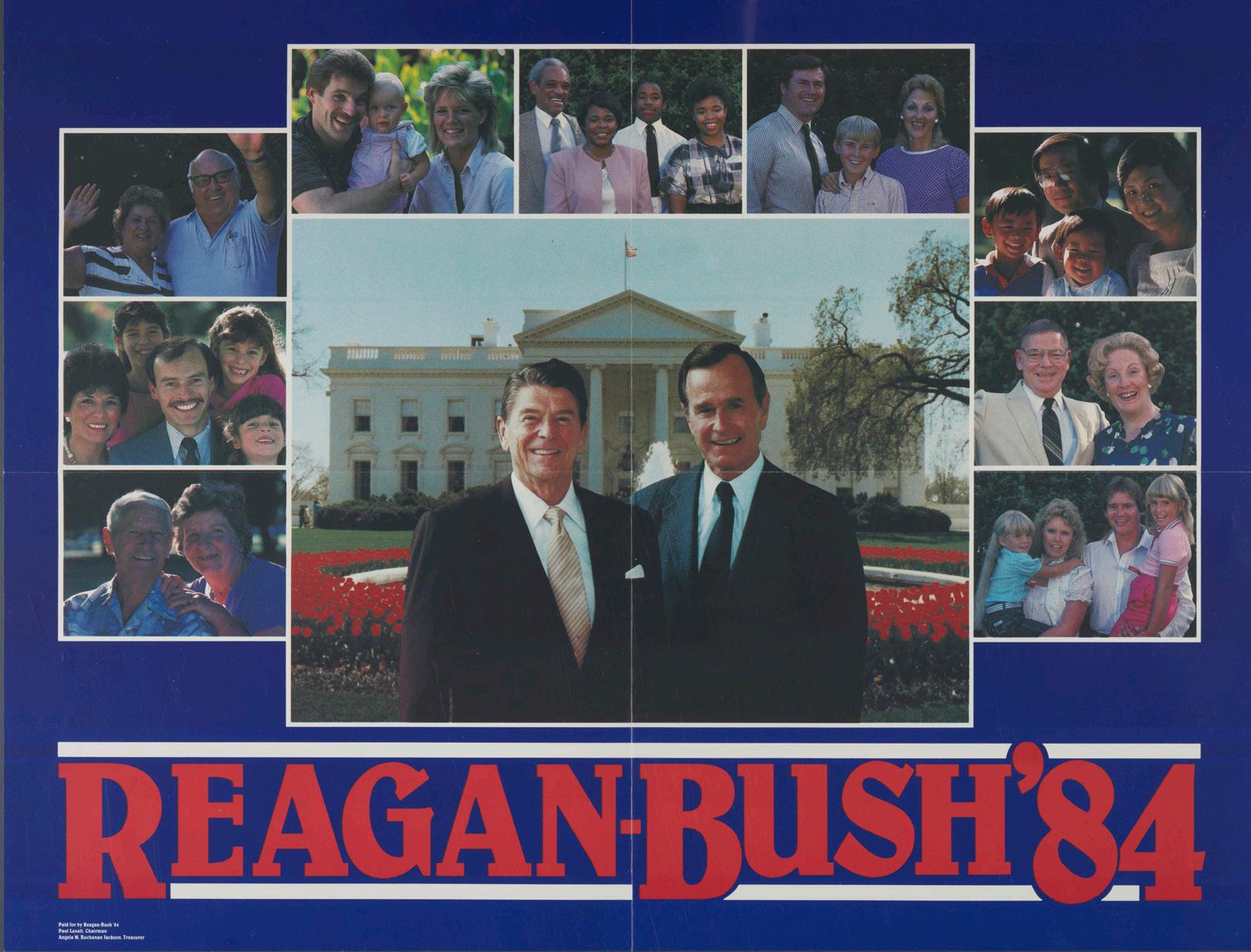
We Call the
New Dining Hall? What Should
The staff answered ...
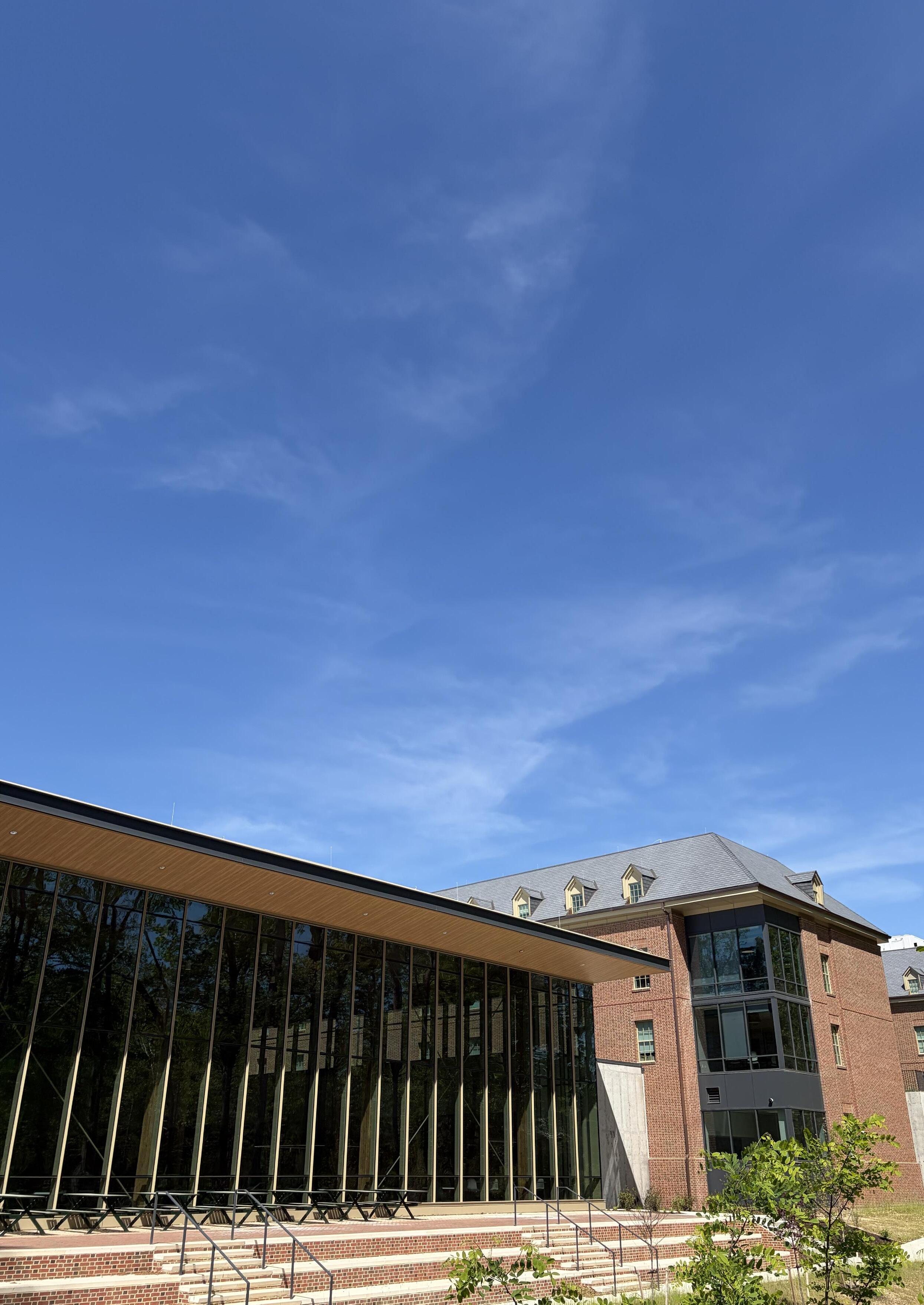
Story by Flat Hat Magazine Staff Design by Leah Kohler ’28
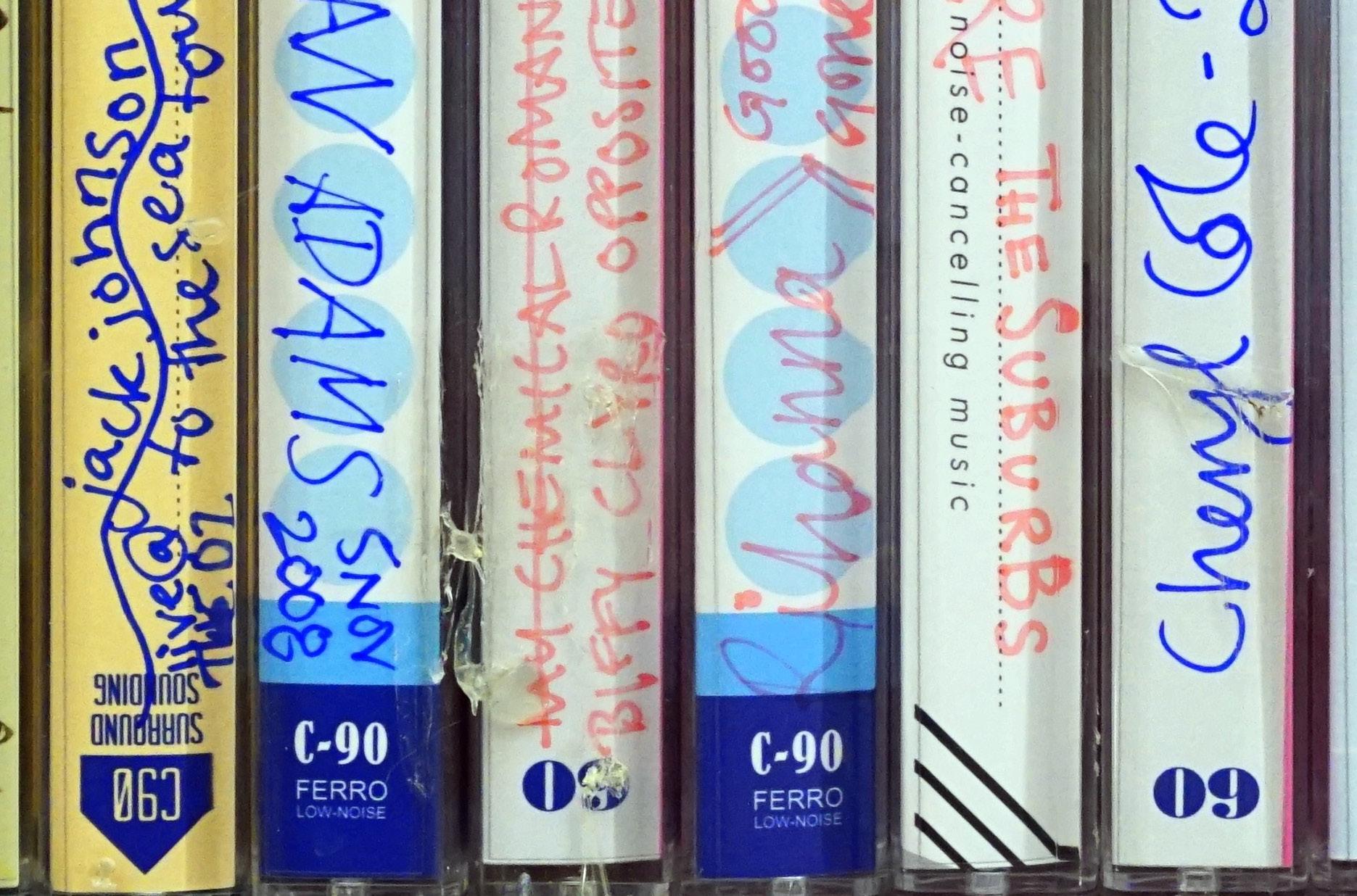
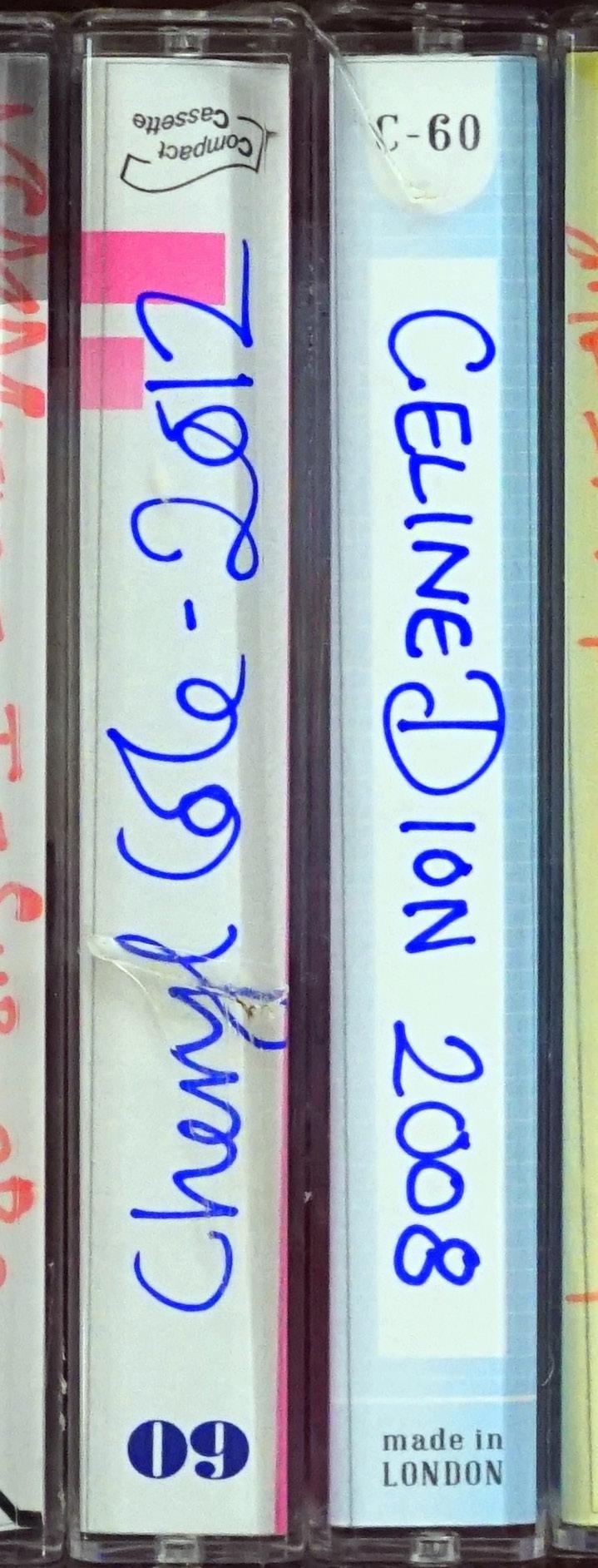
Psychology of Nostalgia
Story by Juliana Nelson ’28
Design by Vivien Leithead ’28
As I was driving home from school for spring break, “Steal My Girl” by One Direction came blaring through my car’s speakers. With the sun streaming in bright and warm through the windshield, my backpack at my feet, and my mom beside me, I was taken back to the warm early fall days of 2014 when the song was first released. In a second, I remembered dancing to their newest album in my room with my sister, wearing matching One Direction nightgowns and shouting into our inflatable microphones. Now, as I’m approaching 20 and my college life has brought countless changes, I feel disappointed to be driving home for only one week to spend with my siblings. But this memory came in just like the sun through the windshield, and I was comforted by the simplicity of childhood connection.
Everyone has experienced a feeling like this at some point in their life. Maybe it was triggered by an old song or the smell of a candle. But, no matter what triggered it, it’s all the same feeling — nostalgia.
Christopher Ball, an associate professor of psychology, has research interests in memory, cognitive psychology, and the connection between memory and psychopathology. In an interview with Flat Hat Magazine, he discussed concepts related to nostalgia, autobiographical memory, and the history of memory research. Ball was not always interested in psychology. In fact, he did not even major in the field during his undergraduate career, instead studying computer science, engineering, and mathematics. After college, he got a job writing software for psychology experiments and started to study psychology part-time before eventually earning another degree in the field and, later, a doctorate in cognitive psychology. He has conducted research in memory and teaches a class at the College on autobiographical memory, making nostalgia a key point of his interest and expertise.
Nostalgia itself is a complex and often misunderstood emotion with a complicated history in the field of psychology. It is now often defined as a sentimental, often bittersweet, remembrance of the past, according to David Ludden at Psychology Today. However, the term was first introduced in
1688 by medical student Johannes Hoffer, who defined the feeling as what we know today as homesickness — not nostalgia. Homesickness is an anxiety-ridden emotion that creeps in when we are separated from people, places, or circumstances that are familiar to us.
Ball described how the line between nostalgia and homesickness has not always been distinct.
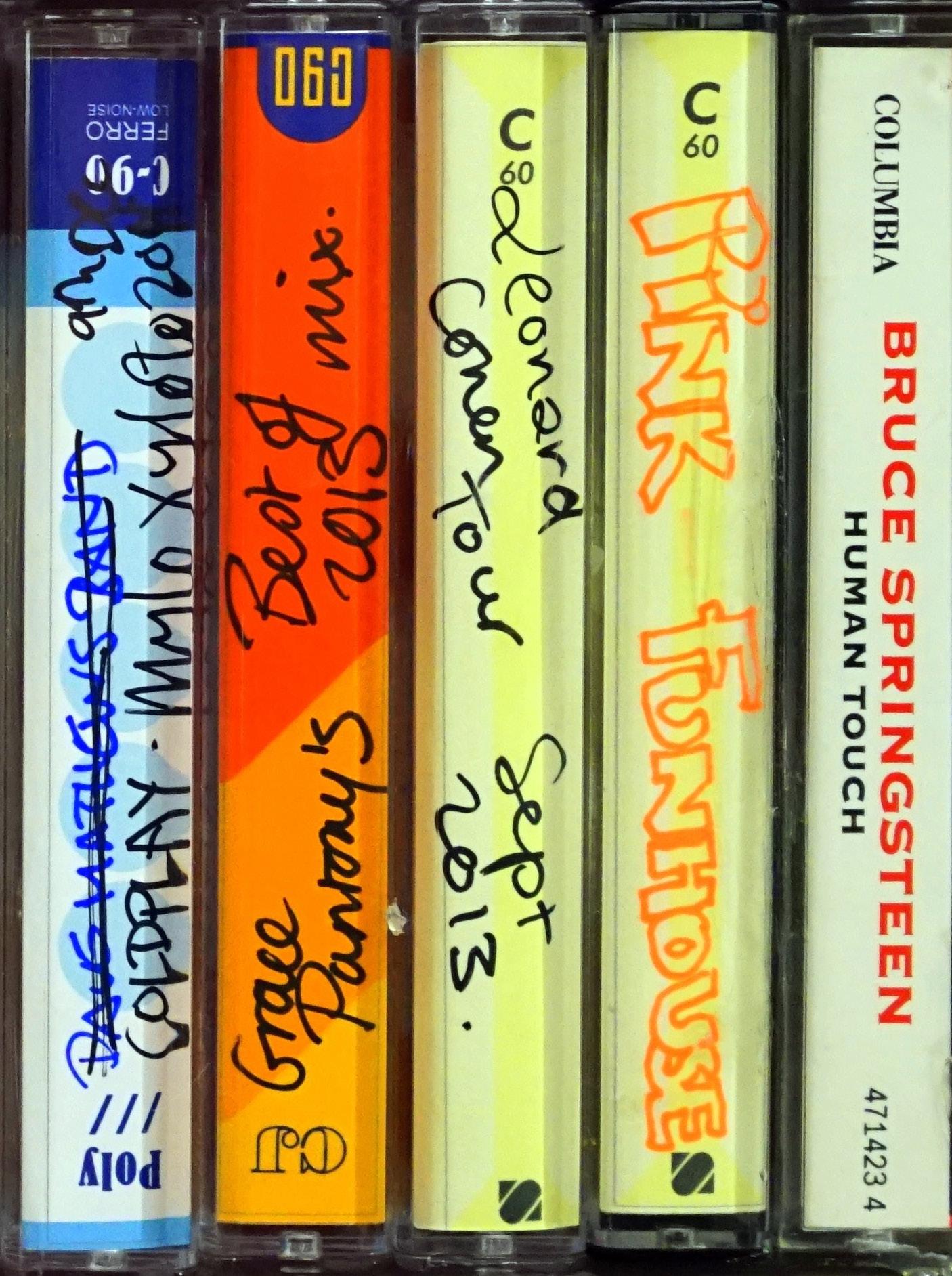
“A lot of [Hoffer’s] research had come from soldiers, Swedish soldiers,” he shared. “And it seemed like what he was describing was more homesickness, which is kind of similar, but different from nostalgia. It got lumped into this kind of, you know, being obsessed with the past, ruminating about it, losing touch with the present, having this negative kind of cycle.”
This historical lack of separation between the concepts of nostalgia and homesickness has complicated how nostalgia is studied and defined. For many years, nostalgia has been mislabeled as a longing to return to the past, or dwelling too much on our past experiences. This is now understood to be wrong, and we have learned that nostalgia is actually a very future-oriented experience, as addressed in a paper titled, “Is Nostalgia a Past or Future-Oriented Experience? Affective, Behavioral, Social Cognitive, and Neuroscientific Evidence” by
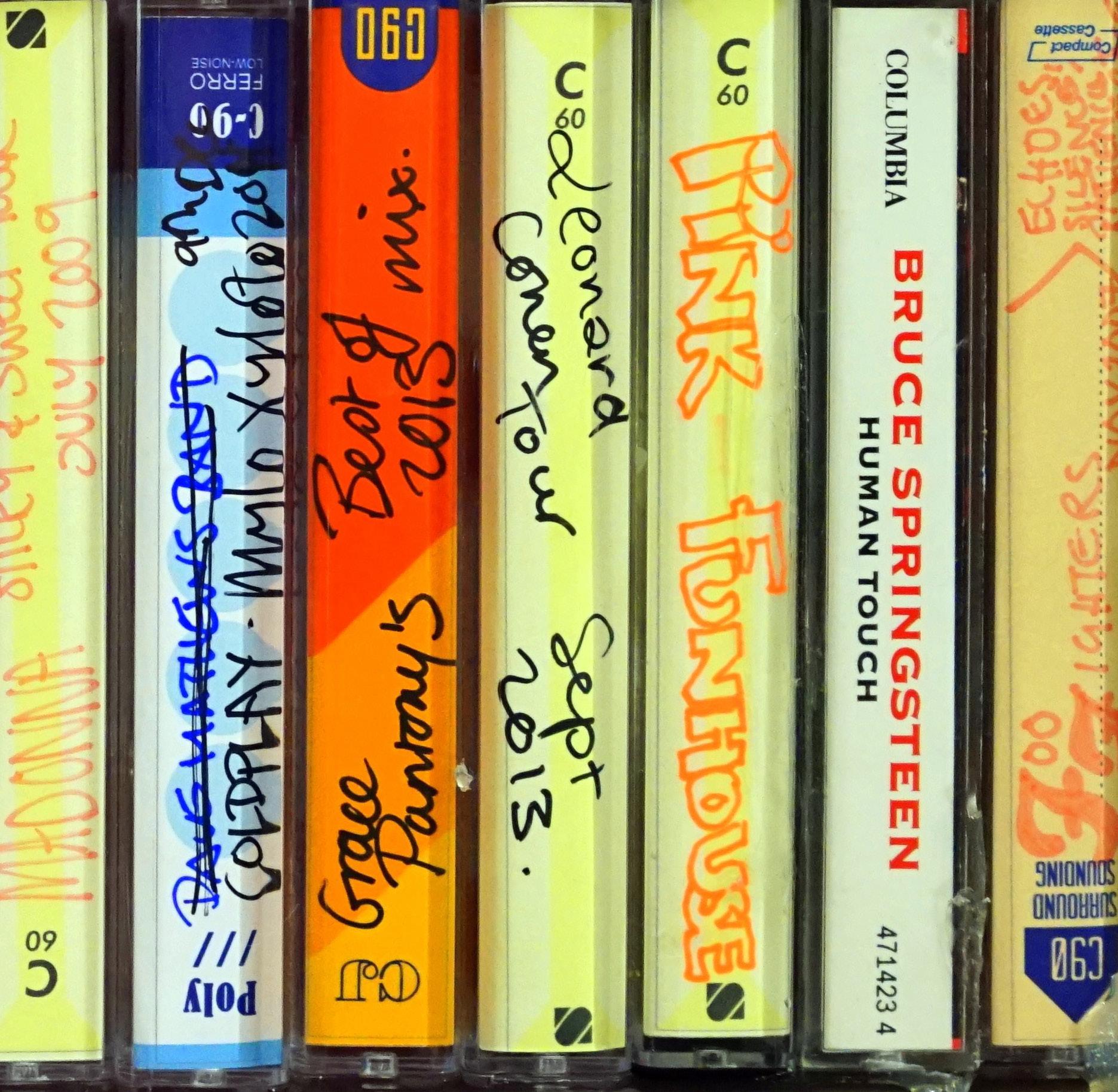
“They know that their time of life is coming near an end, so they want to focus on the positive aspects of the past.”
Taylor FioRito and Clay Routledge for Frontiers in Psychology.
Nostalgia is triggered by a number of different things. It can be brought out by external stimuli, such as scents, tastes, colors, scenes, or music, as noted by Ball. However, it can also be prompted by our emotional state. Whereas researchers initially believed that nostalgia was tied to negative emotions because our focus on the past made us sad and disappointed, it turns out that it is the other way around. When people experience large life transitions, a loss of something constant, or symptoms of anxiety and depression, nostalgia can be a very helpful tool, as discussed in an article from David Webb on All About Psychology. When we feel lonely, sad, unsure, or like we have lost our purpose, remembering a time from our past can help us to reconcile these feelings and come out of the experience feeling much better.
Think about the types of memories that your brain calls forward when you’re feeling nostalgic: they are most likely associated with times when you were happy, fulfilled, and connecting with other people. The types of memories that make us feel nostalgic are key to understanding nostalgia’s purpose. When we are sad, we think about a time that we were happy; when we are moving to a new stage of life, we reminisce on a past stage; when we feel lonely, we remember good times with our friends and family. Nostalgia deploys these positive memories to boost our mood in times of need. By providing us with reminders of happy times and positive connections, nostalgia helps us recover from feeling down in the dumps. The common occurrence of memories revolving around a connection with a friend, coworker, or family member has brought us to an understanding that nostalgia helps us to feel socially competent, connected, and capable, therefore also boosting our self-confidence, which was discussed in a podcast by the American Psychological Association, with an interview from Krystine Batcho. With our memories keeping us connected to people
and events in our past, nostalgia also acts as a measure of both continuity and change across our lives. For example, as I watch my sister start packing for college, I remember when we were kids and she needed me to walk to school with her every morning, and I feel nostalgic for those times. However, though I feel sad to see her moving to this new part of her life, I’m now proud of how far she’s come and what she is going to accomplish in her next stage of life. Reflecting on memories like these allows us to see that not everything in our lives is lost or changing — we are still the same person, and things may be different but they will always work out.
Ball shared that the positive effects of nostalgia are particularly present in older populations, who experience high amounts of nostalgia.
“For one thing, people who are older, elderly people, are more likely to retrieve positive memories than negative memories, which is kind of counterintuitive, but it’s called the positivity bias,” Ball said. “The argument being that they know that their time of life is coming near an end, so they want to focus on the positive aspects of the past.”
No matter what age you are, nostalgia shows us the good parts of our past to help us be happier with where we are now. In Ball’s class on autobiographical memory, students discuss the intrinsic link between nostalgia and aging.
“We look at childhood amnesia, we look at autobiographical memories through infant time. And then we look at the reminiscence bump, which is the fact that most older adults retrieve memories from the ages of 15 to 30.” Ball said.
But while we have learned more about nostalgia, there is still a large body of knowledge missing that prevents us from fully understanding the phenomenon. What happens in our brain and body when we feel nostalgic? Why do we recall the specific memories that we do?
Ball discussed his hypothesis regarding the second question.
“So these are two questions that have plagued me in my whole career: Why that memory, and why that memory now?” he said. “My feeling about that is that memories are constantly being activated, but for the most part, they’re inhibited from being recalled. And so, some memories are closer to activation than others. And then when we do want to recall a memory, that one is the one that we recall.”
The activation pathways of memories involve numerous parts of our brains, a variety of sensory receptors and neurotransmitters, and further processes of memory formation, storage, and consolidation. Unfortunately, these pathways are not fully understood, and Ball’s two questions have no concrete answer or consensus in the field of psychology. With so much information missing or misunderstood within the current body of research, how can we move forward? Psychology has experienced a boom in interest regarding memory and nostalgia in recent years, which has led to significant discoveries including findings of its positive effect and its connections to age.
be exploited by governments when they define the “good times” of the past in harmful ways, or idealize past situations to appeal to people’s emotions, allowing for powerful officials to gain more support.
Another approach is the current influence that social media has on nostalgia. Does it make us more or less nostalgic? How does it impact memory recall when we are experiencing nostalgia?
Why that memory, and why that memory now?
That being said, studying nostalgia is incredibly tricky. This is in part because everyone experiences memory recall at different times from different triggers, and everyone rates their experience of a memory’s vividness, effect, and nostalgic factors very differently and subjectively. A common method of studying nostalgia is asking subjects to keep a diary where they note when, where, and how they experienced nostalgia, though this comes with a lot of issues for bias or personal differences, as Ball discussed in his interview. Researchers also cannot force participants to have nostalgic memories on the spot. However, there are many interesting directions for the future of nostalgia research.
One new avenue being explored is the concept of collective nostalgia. Ball defined the study of collective nostalgia as “nostalgia at a national or a cultural level and how that can be a positive, but also it can be a negative thing.” So, collective nostalgia can allow for a large group of individuals to feel connected and understood, however, it can also
Increased documentation of the past, a hallmark of the social media era, is one way that Ball considers may change the way we experience nostalgia.
“[There’s] only two photos of me as a child, where there’s probably 2,000 photos of you as a child,” Ball said.
Though it has a long history, there is still so much that is unknown about nostalgia. While we have grown to learn and appreciate the positive effects of nostalgia, we must also not let those feelings slip into their negative counterpart, homesickness. In college, we learn from so many changes and new experiences, and it’s incredibly common to feel nostalgic. However, our professors, parents, and grandparents all experience nostalgia, too. The future of understanding nostalgia research is very bright, and will lead to a lot of important findings on how our brains and memories work. In the meantime, I’m going to keep listening to my One Direction CDs and letting nostalgia lift me up.
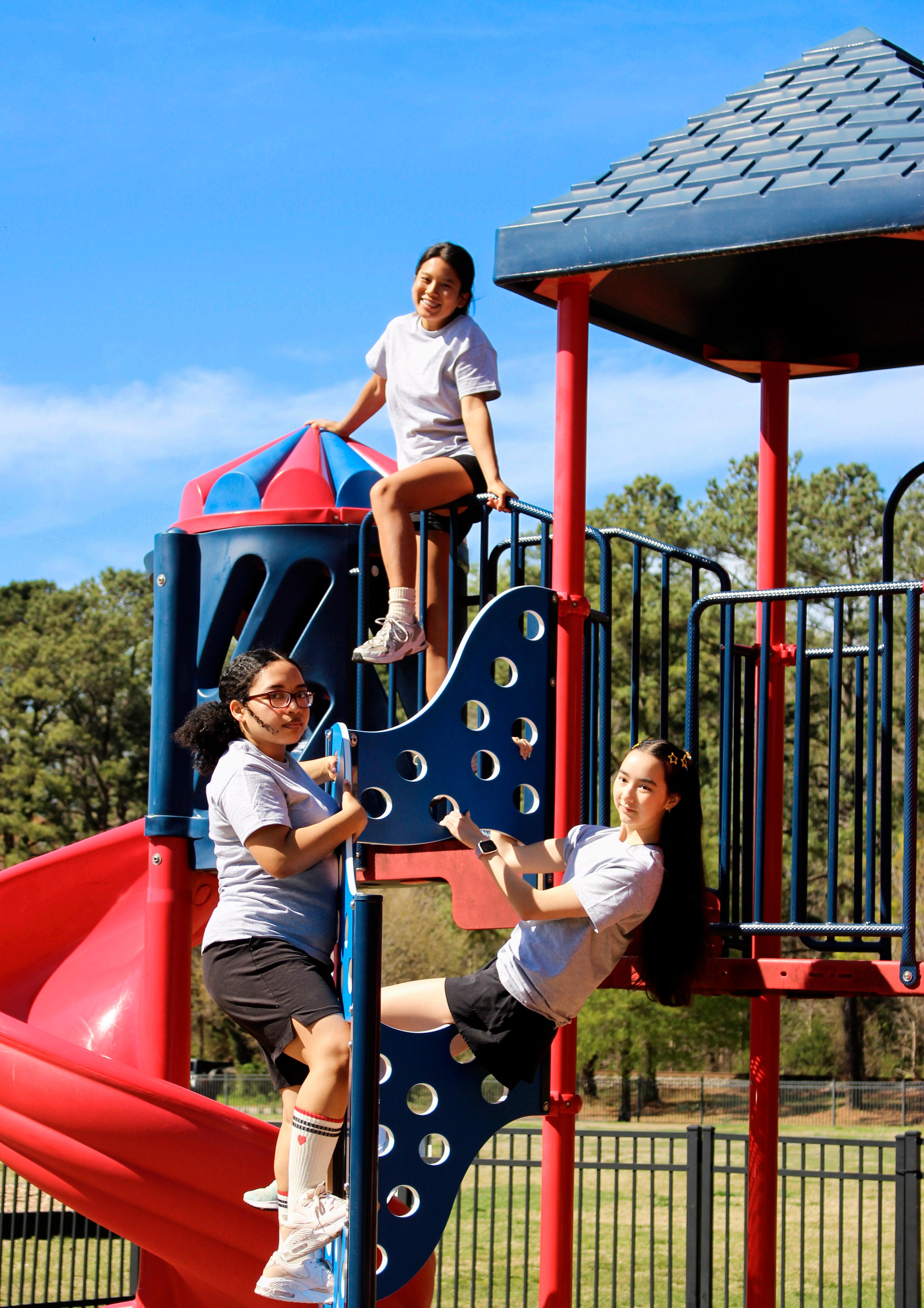
Photos by Amalia Lewis ’28 and Ava Shafer ’28
Design by Mali Bucher ’29
Modeled by Alexandria Brown ’27, Victoria Fekete ’28, Eleanor Jack ’29, Athena Lee ’26, Ainsley Tyler ’29, and Loki Vita ’28
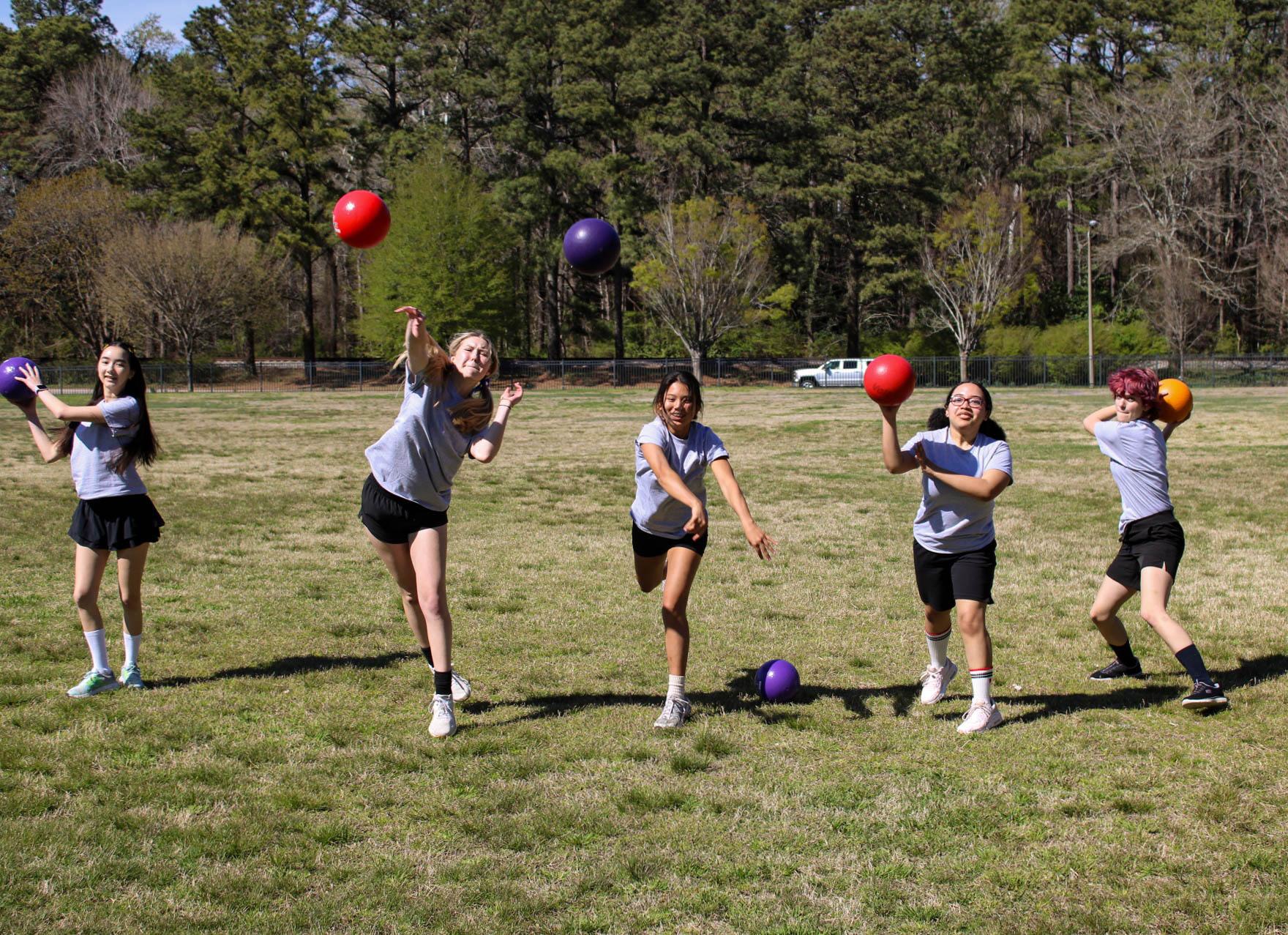
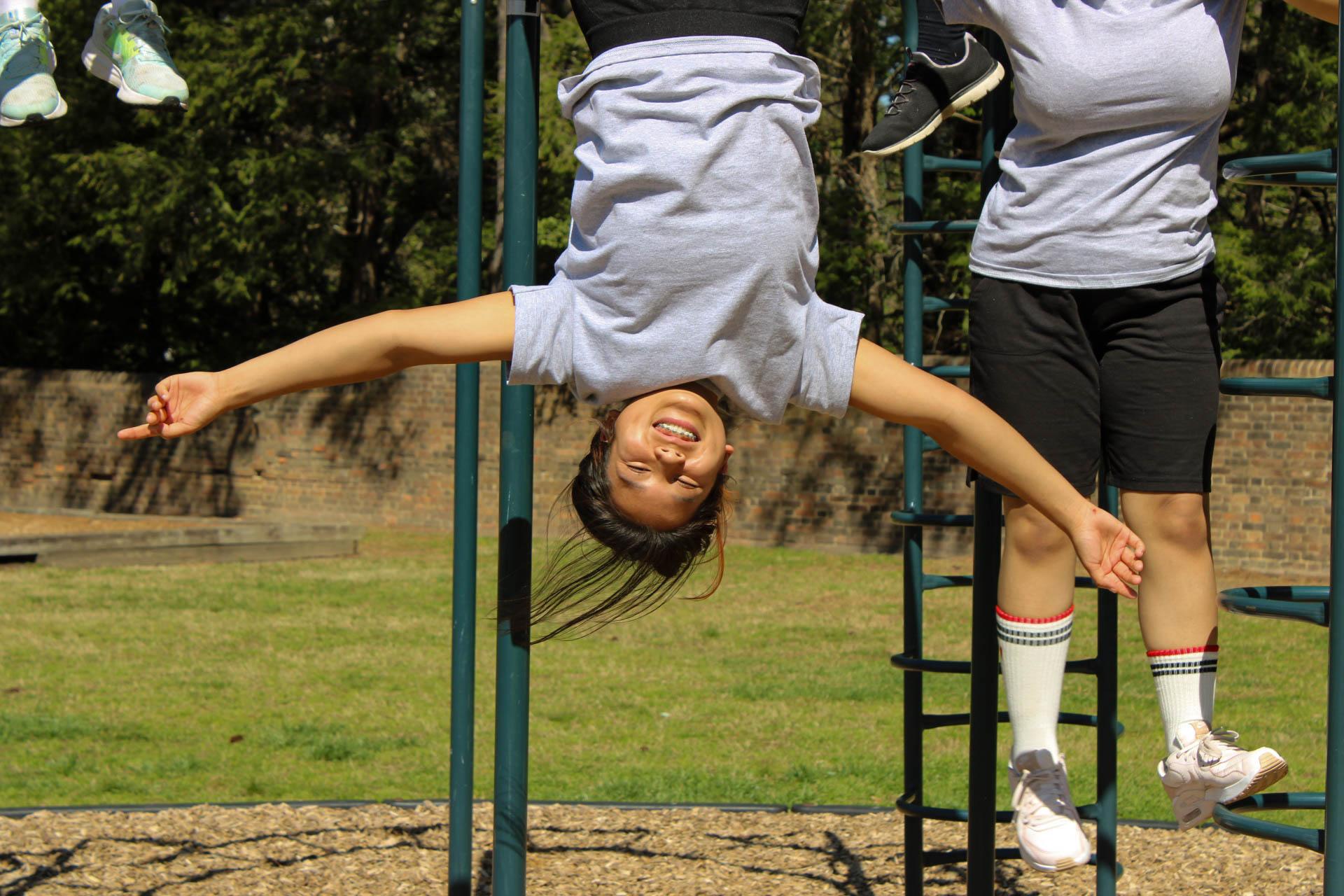
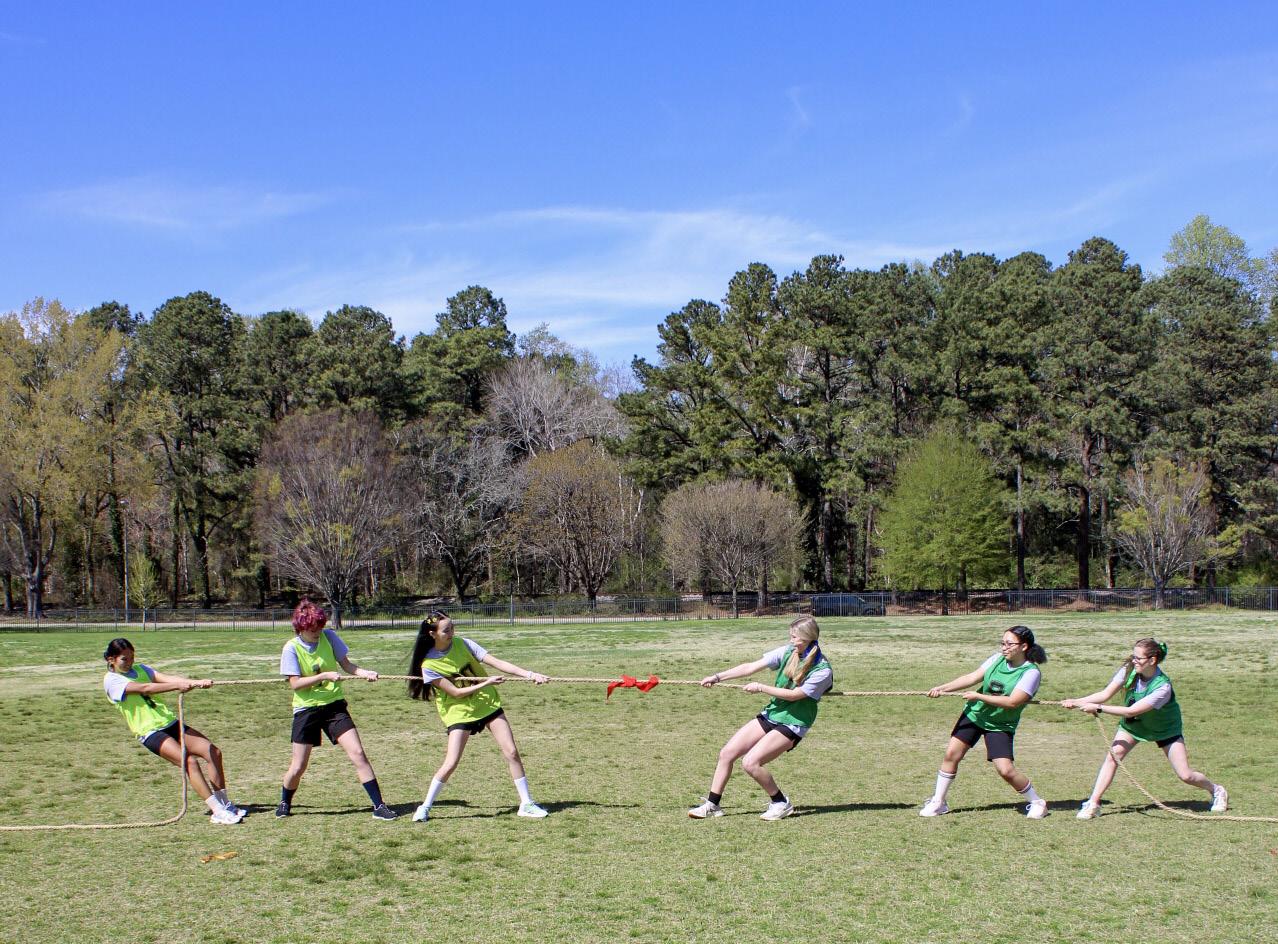
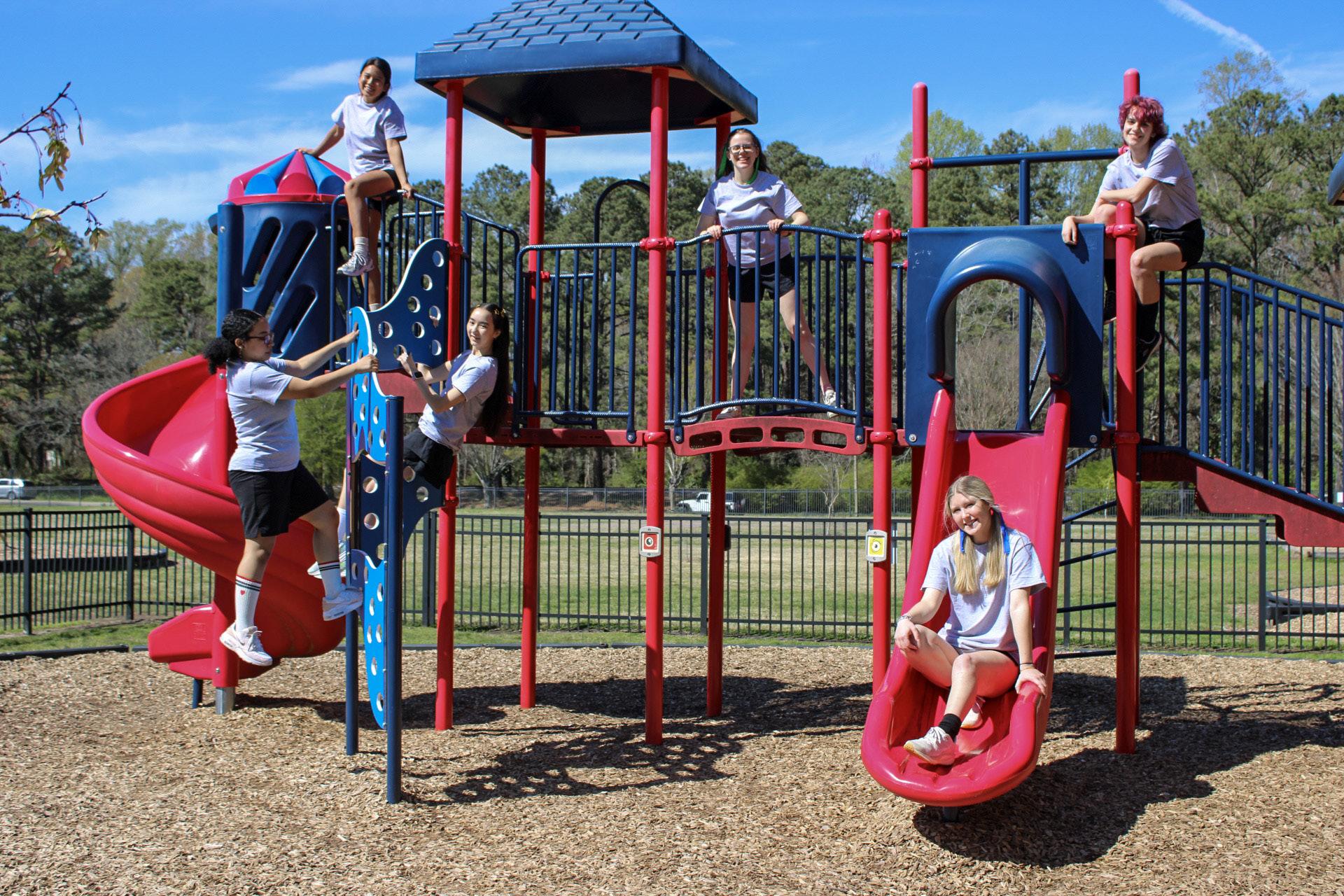
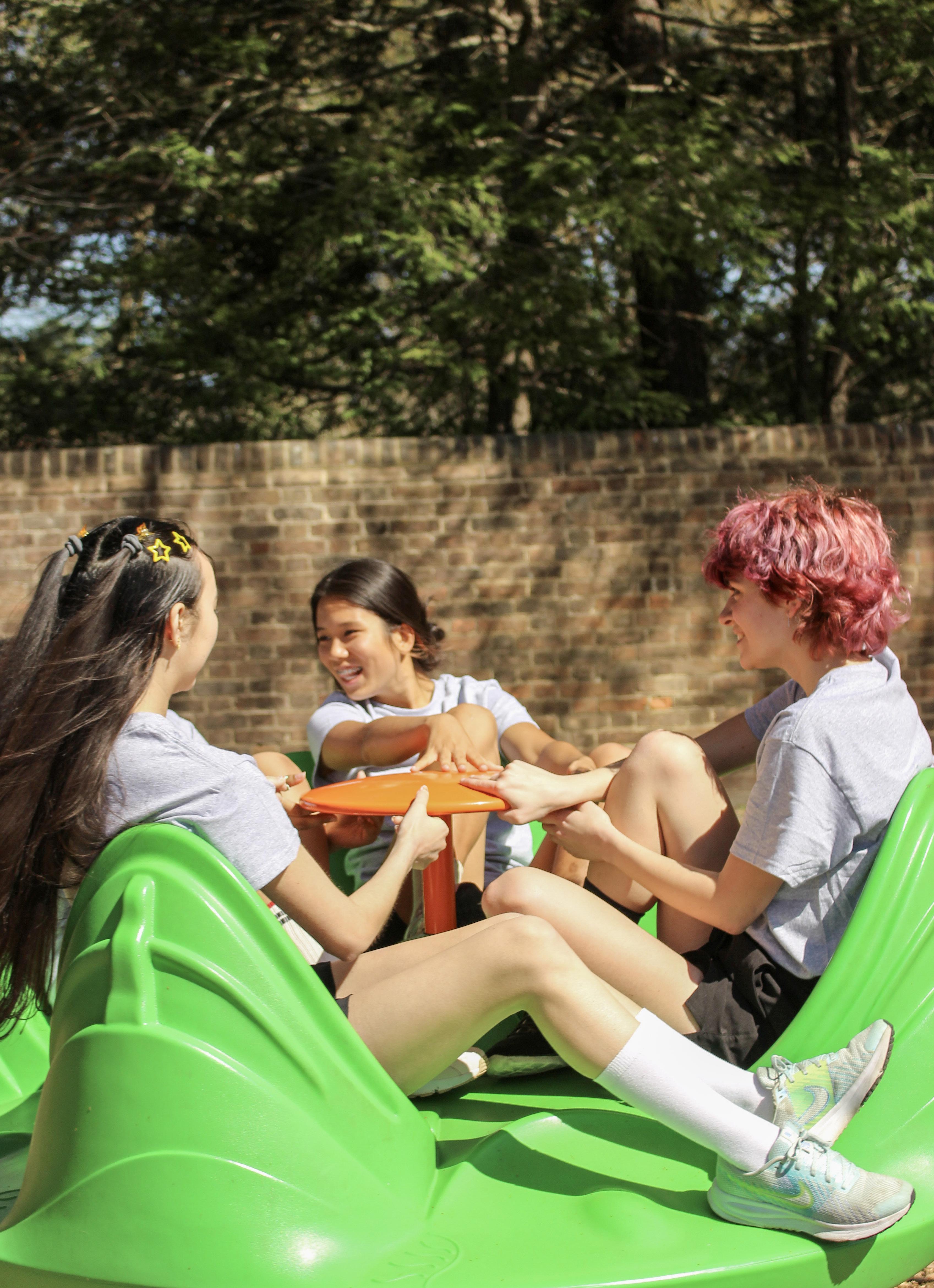
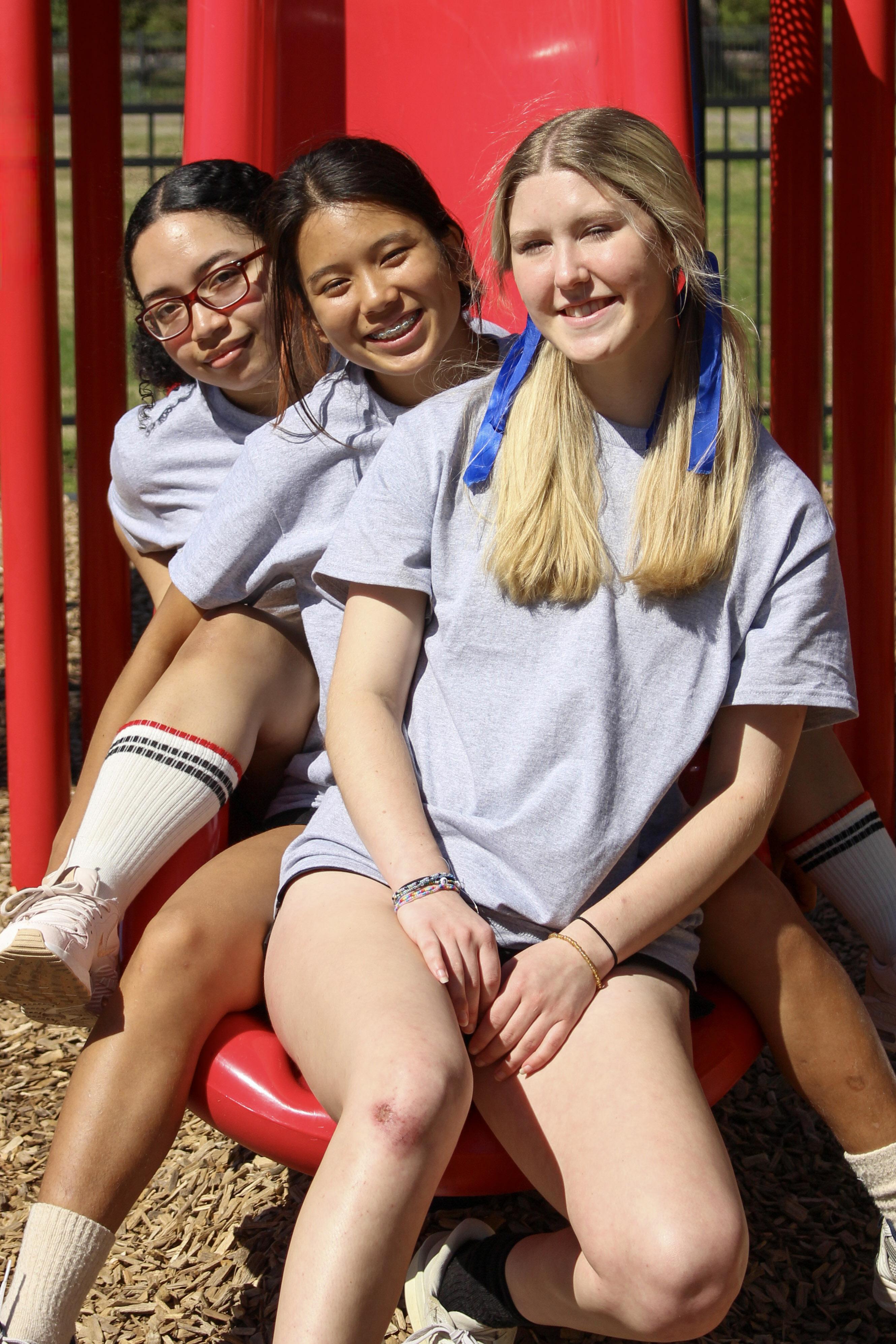
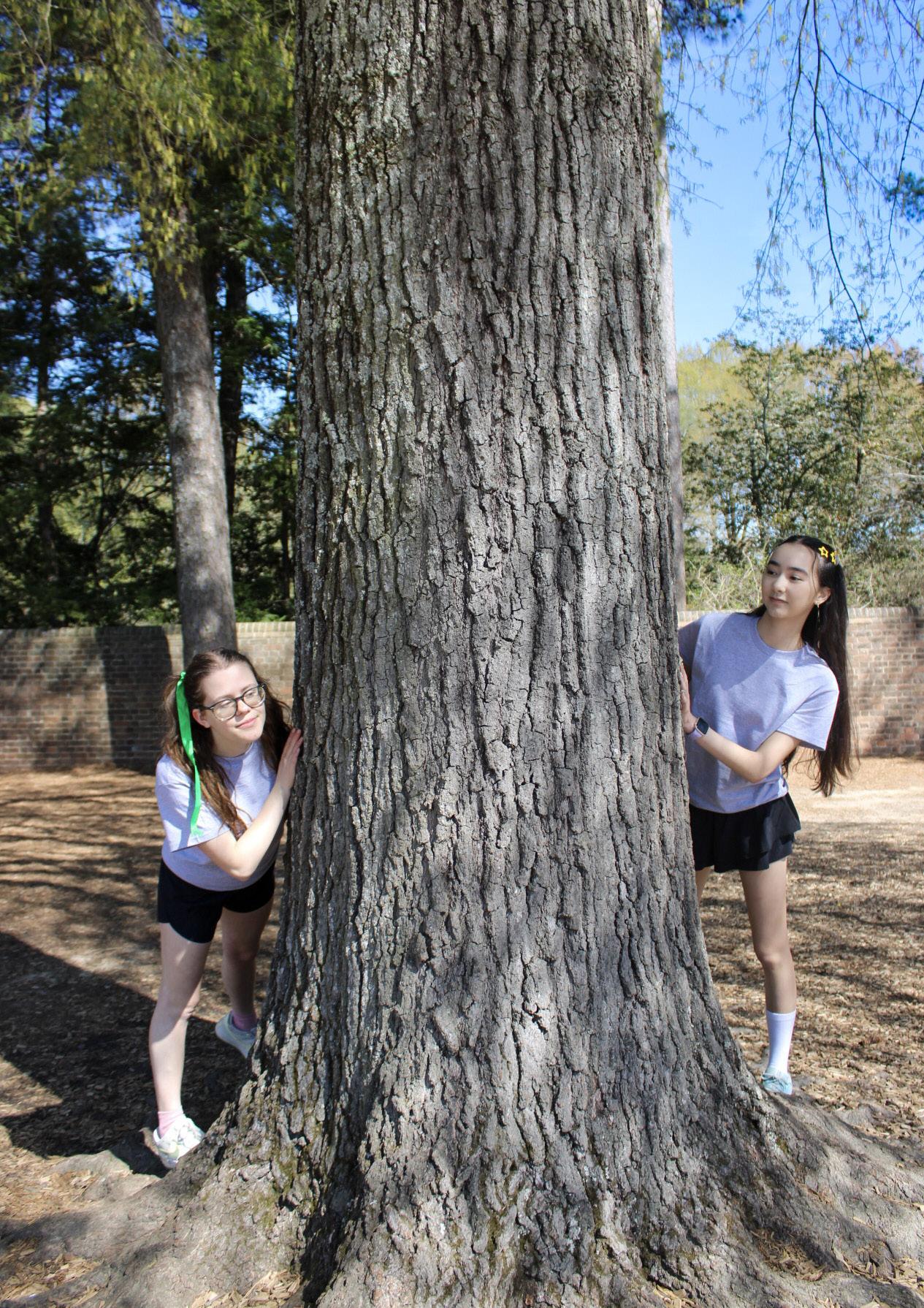
This shoot reminisced on the good old days, when a small break in the school day served as an outlet to release all of our excitement and energy. We let the models roam free, gliding down bright red plastic slides and hanging off monkey bars to the point of near dizziness. We also wanted to capture a gym class vibe, bringing back classic sports, like tug-of-war and dodgeball, for some authentic competitive playtime. - Amalia Lewis ’28

American Girl Recipes

For years, Food Network was my favorite TV channel. I watched hours of Kids Baking Championship, thinking that, in another life, maybe that could have been me. Instead of cooking in a professional kitchen, making gorgeous desserts look easy, I was making a mess at home, struggling to follow a recipe without missing a step or two along the way. Nonetheless, I loved baking — and I especially loved the results.
Coffee Cake Muffins
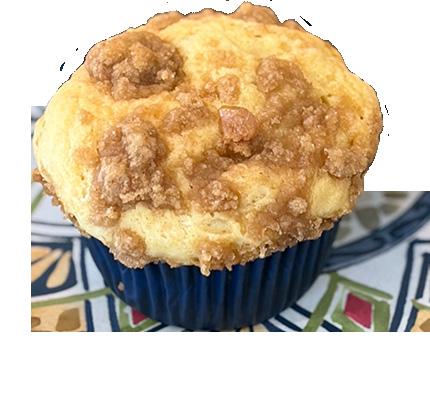
Story and Photo by Leah Kohler ’28
Designed
by Ava Shafer ’28
Some of my favorite recipes were courtesy of Amercan Girl. I was an avid reader of their bimonthly magazine and the many books in collaboration with William Sonoma. My physical copies have been lost over the years, but through Internet Archive and online library cards, I was able to find what I needed to replicate the recipes of my childhood. In the end, I chose five recipes to try, coming from American Girl Breakfast & Brunch, American Girl Tea Parties, and the July 2016 issue of American Girl Magazine.
American Girl Breakfast and Brunch
Every time I visit my grandparents’ house, without fail, there is some form of a breakfast baked good, such as muffins or coffee cake. This recipe combines the two into a delicious treat that definitely met my grandfather’s approval when I brought it over for him to try. The muffin has a simple base, a jam filling, and a coffee cake crumble topping. The filling did make it difficult to tell if they were done in the oven, but the timing on the recipe ended up being just right. Even though they aren’t the prettiest of muffins, I would definitely make them again.
Ease: 8/10|Taste: 8/10|Aesthetic: 5/10|Nostalgia Factor: 7/10
Strawberry Lime Soda
American Girl Magazine (July/August 2016)
I am, and always have been, a lover of fun drinks. While not a traditional baked good, I knew I wanted to include one in this review. There is something so special about drinking a fizzy drink out of a fancy glass with a swirly straw (which is exactly how I drank this one). The majority of the time spent making this recipe is over the stove, waiting for sugar, water, lime juice, and strawberry slices to boil. After that, all you have to do is let the syrup cool and add it to sparkling water. It wasn’t too sweet, and there was more than enough to make multiple drinks.
Ease: 8/10|Taste: 8/10|Aesthetic: 7/10|Nostalgia Factor: 8/10
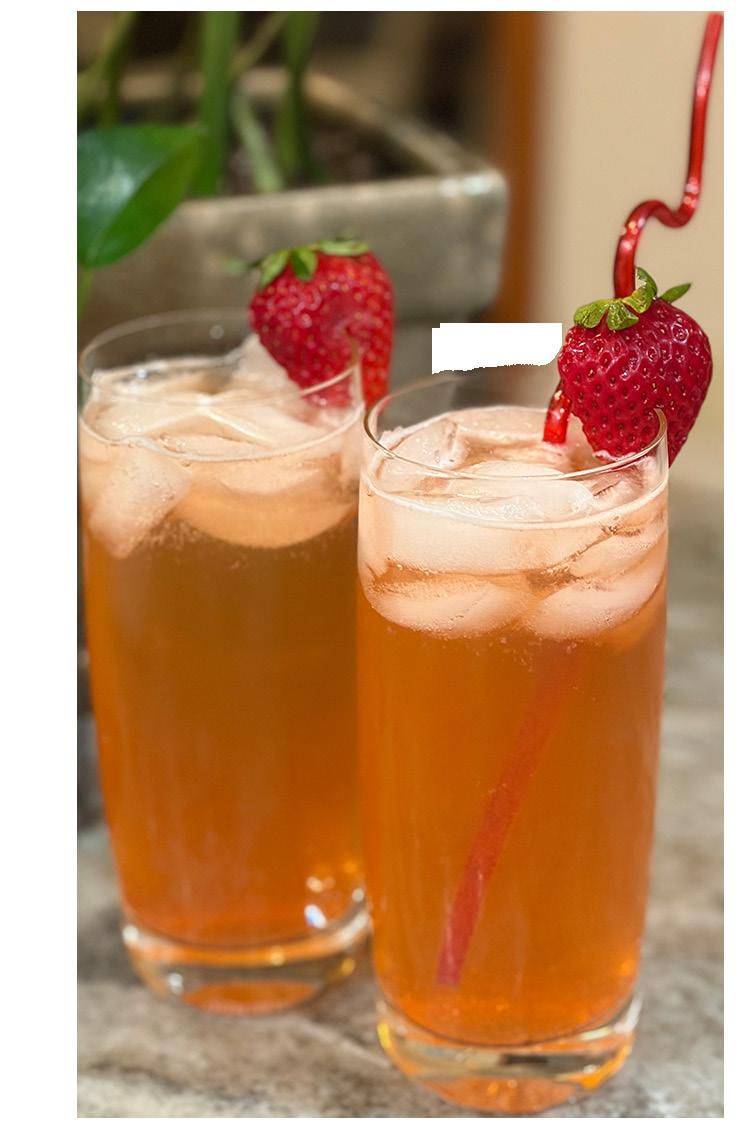
Scones
American Girl Tea Parties
Out of all five recipes, this was the first one I decided on trying, not necessarily for the taste, but for the nostalgia factor. When Prince William married Kate Middleton in 2011, my mom and I had a tea party with scones in celebration. Now, every time I eat them, I think of that day and the fun we had dressing up, eating our British snacks, and feeling like members of high society. Now, on to the actual recipe: It only required a few ingredients, but the dough was difficult to knead, and it yielded 5.5 scones instead of the promised 10. I did, however, enjoy the end result, which I ate with raspberry jam and whipped cream. I would definitely make this again with an increase in water, which would likely help with kneading.
Ease: 4/10 |Taste: 7/10|Aesthetic: 5/10|Nostalgia Factor:
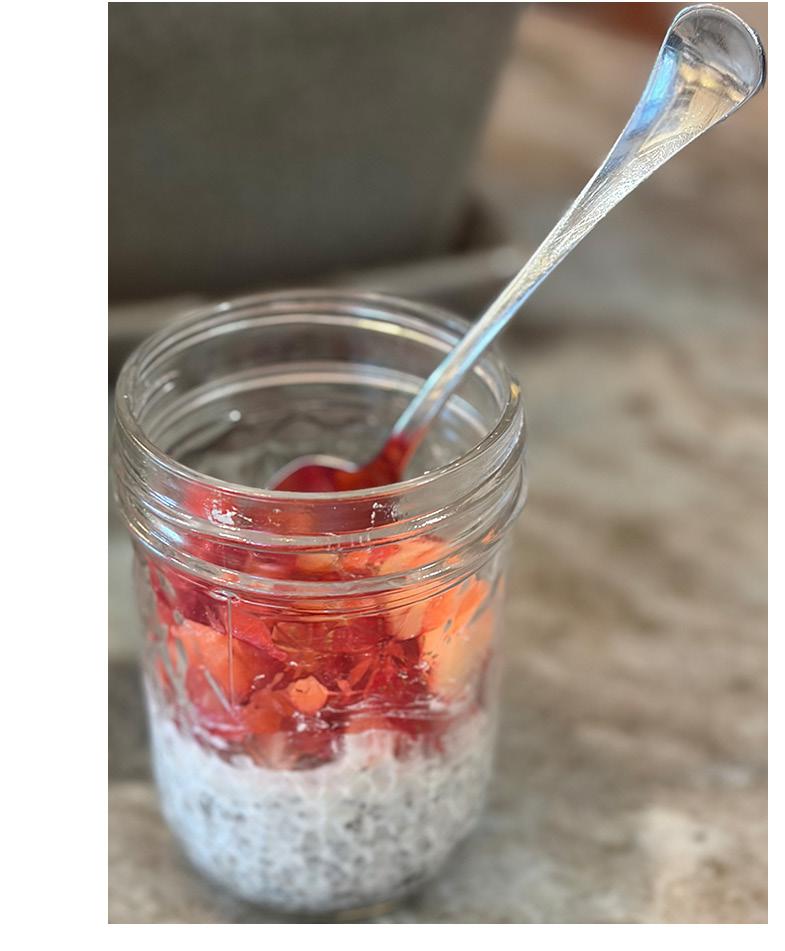
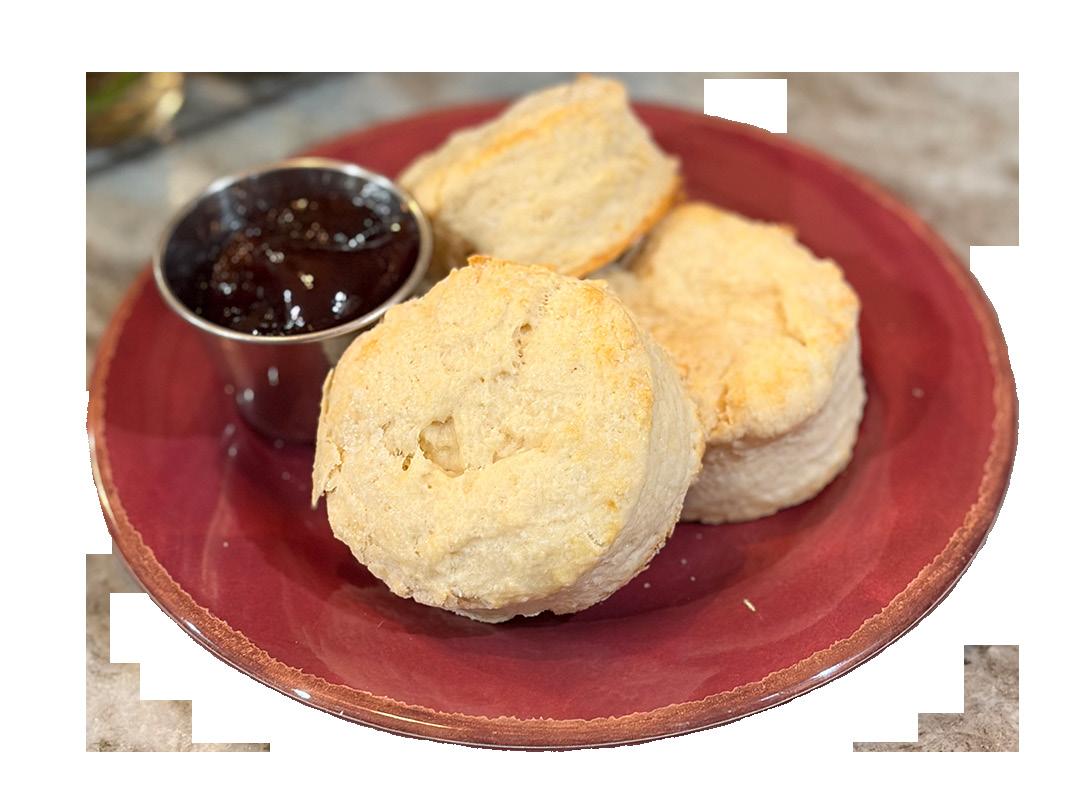
Chia Seed Pudding Jars
American Girl Breakfast and Brunch
This recipe is a little different from the others. It doesn’t necessarily evoke any feelings of nostalgia, but it does appeal to me as a college student who is often in need of a quick breakfast before class. It feels like a full-circle moment to be using my childhood cookbooks to fuel me for my 8 a.m. calculus labs. The actual jars are easy to make, but they do require preparation in advance. Once you mix the ingredients, they have to sit in the refrigerator for at least four hours. However, once they are there, they become a grab-and-go option for the remainder of the week. The other big positive is that they do not require any kitchen appliances or utensils, making them convenient for dorm living
Ease: 9/10|Taste: 8/10|Aesthetic: 7/10|Nostalgia Factor: 2/10
Lemon Quick Bread
American Girl Breakfast and Brunch
The majority of what I baked as a kid was lemon-flavored. Lemon cookies, lemon cupcakes, lemon bars, the list goes on. I would even request a lemon cake for my birthday — in October. I was drawn not only to the taste, but also the bright, summery feeling. This lemon cake was simple and reminded me of the lemon desserts that I used to make. I will say, though, I didn’t follow this recipe exactly. The glaze the recipe recommended was lemon juice and granulated sugar melted on the stovetop. I decided to switch it up and go with a more traditional milk and powdered sugar glaze with a splash of lemon juice. I think that was the right choice, as it made the baking process a little easier and didn’t take away from any of the lemon flavor.
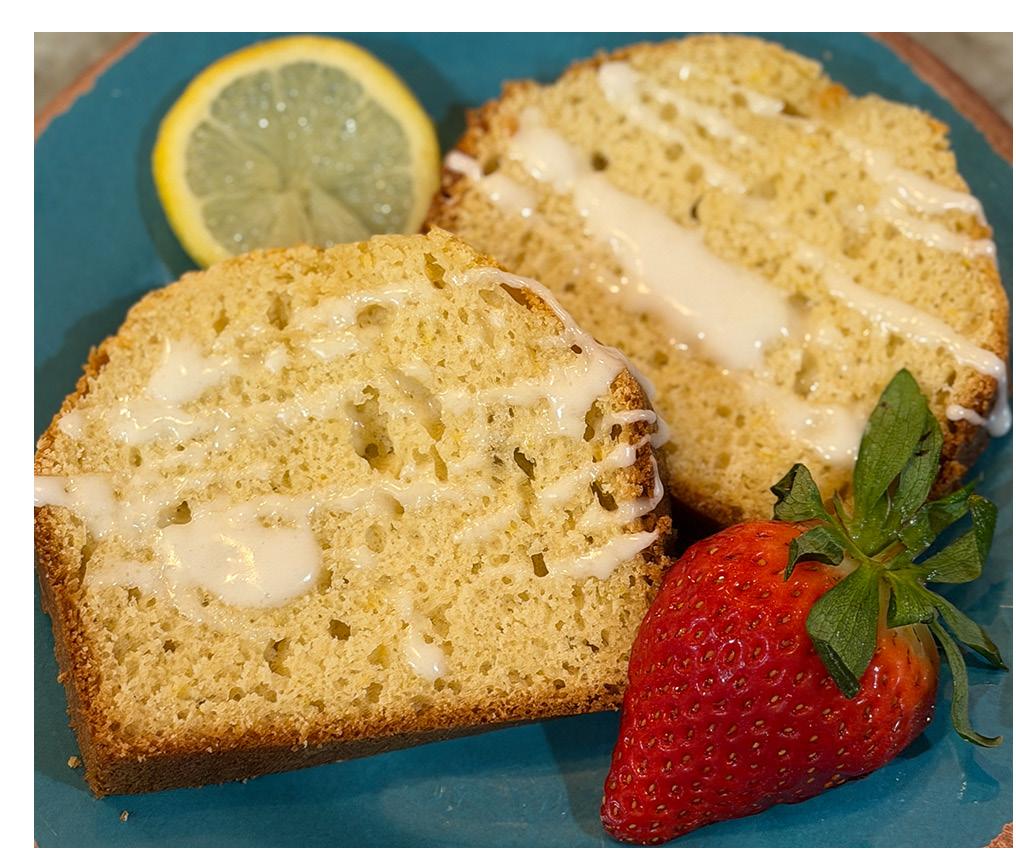
Ease: 10/10|Taste: 7/10|Aesthetic: 6/10|Nostalgia Factor: 8/10
What’s for lunch?
Chocolate milk. -Peerawut Ruangsawasdi ’26
Crackers! -Kelsea Smith ’29
Cheez-Its Gripz. -Clare Pacella ’28
I was always jealous of the kids that had Fruit RollUps, specifically the ones with the tongue tattoos.
-Leah Kohler ’28
Fruit snacks. -Melania Frye ’29
I was always jealous of the kids who bought popsicles in the lunch line
-Mali Bucher ’29
Colored Goldfish. -Nate Ross ’28
-Henry Holt ’28
JELLO or those fancy gummy bears.
-Anna Dehmer ’28
Oreos. -Emma Carmichael ’26
Definitely Oreos. -Elizabeth Ray ’29
I loved Scooby Doo fruit snacks, especially the blue ones. -Tilley Lie-Nielsen ’28
Double-Stuff
Rice Krispies.
Goldfish
Mini Pretzels. -Julia Peavey ’28
What was your favorite lunchbox snack?
What did you always wish you had?
Flat Hat Magazine answers:
Story by Flat Hat Magazine Staff
Design by Mali Bucher ’29
I loved all of the fruit leather-esque snacks, like Fruit Roll-Ups and Fruit by the Foot. And Gushers!
-Alisha Khodabocus ’26
I always had Go-GURTs!
-Grace Ki Rivera ’26
Peach yogurt was my fave.
-Eva Kalajian ’26
Fruit Roll-Ups with tongue tattoos.
-Amalia Lewis ’28
I always had PB&J in my lunch but I was always jealous of the kids who got candy in theirs.
-Elijah Clark ’28
Vegan sushi.
-Catherine Power ’28 YoCrunch Oreo yogurt cups!
-Rachel Robbins ’28
Fruit by the Foot.
-Juliana Nelson ’28
Fruit Roll-Ups. -Harrison Kuehl ’27
Fruit Roll-Ups and I would be jealous of the kids with the tattoo version.
-Alina Yang ’29
Little Bites.
-Kaitlynn Thomson ’28
I loved these Kellogg’s chocolate granola bars but they were tragically discontinued. So back to grapes for me.
-Sophia Kaisermann ’27
s m a l l b i t e s ,
b i g s m i l e s
Story and Design by Victoria Polites ’27 and Ava Shafer ’28
As the beginning of spring arrives, we are greeted by warmer weather, a new Bridgerton season, and an astronomically large line outside of Sadler Center. The way this line trails all the way to the parking lot, you may think it’s a freebie giveaway. Alas, students walk away with their arms full of $5-a-box cookies. Suddenly, your mission of grabbing a bland Sadler dinner has changed — you are here for cookies. That’s right, Girl Scout Cookie season is back and better than ever.
Each year, the College of William and Mary’s chapter of the Kappa Delta sorority hosts Girl Scout Cookie sales on Sadler Terrace for two weeks from the end of February to the beginning of March.
As members of Kappa Delta, this year we had the privilege of volunteering at one of these cookie sales. We witnessed students strategizing on how to carry back all their boxes, Girl Scouts pitching their favorite cookies to customers, and a community brought together by a mutual love of the cookies. Classic picks such as Trefoils, Toffee-tastics, Do-sidos, Tagalongs, Samoas, Adventurefuls, Lemon-Ups, and Thin Mints returned, along with a new rocky road-inspired cookie called Exploramores.
Did we order nine boxes of Girl Scout Cookies? Yes, yes we did. And we’re here to give you a breakdown of all of them.
exploremores
This rocky-road flavored sandwich cookie was brought to the Girl Scout inventory in 2026. We were very excited to try this new cookie, and it did not disappoint. It took us on an adventure in its combination of the familiar chocolate, marshmallow, and nutty flavor, all in one. We felt that it was reminiscent of the flavor of a dirt cake.
do-si-dos

This cookie is like the expensive version of Lance’s ToastChee crackers — how is that for nostalgia? When we think of Girl Scout cookies, we usually think of sweet, sugary treats that we can indulge in once a year. These cookies are not that. Do-si-dos are a PERFECT snack for those who claim to “hate sweets.” For a dessert it is meh, but for a snack cookie, it is good.
adventurefuls
If you were expecting a soft cookie because of Adventurefuls’ brownie base and caramel center, this cookie will come with quite a surprise crunch. However, these cookies fell short of expectations, tasting blander than we had hoped.


trefoils
Trefoils are inspired by the original Girl Scout Cookie and feature the iconic Girl Scout symbol, making it an undeniable classic. Surprisingly, this was our first time trying this cookie because it was never on our radar before. The design is very cute, very Girl Scout, and very recognizable. Without this detail, the cookie would not be the same. That being said, the taste was average, just a plain shortbread cookie. It is not super sweet or flavorful, but that might be the appeal.
lemon-ups
Lemon-Ups are a popular flavor amongst the Girl Scouts themselves, who often pitched it to customers asking for a recommendation. The lemon cookie base comes stamped with an empowering message on the top and lemon glaze on the bottom. This cookie has a very sweet lemon flavor, making it easy to see why it earns such high kidapproval ratings. So, if you have an extra-sweet sweet tooth, this one is sure to hit the spot.

samoas
Your experience with Samoas is highly dependent on whether you like coconut. Setting that debate aside, this cookie is objectively good! The outside has a beautiful chocolate drizzle, the coconut and caramel give the perfect chew, and the cookie base adds a nice crunch. The balance of texture is phenomenal. While coconut haters may disagree, for all the normal people, Samoas are easily one of the most iconic cookies.

tagalongs
These cookies are very nostalgic for both of us. Tagalongs are essentially the Girl Scout version of Reese’s, but arguably better. The balance of peanut butter and chocolate is nearly perfect, and the crunch of the actual cookie part is simply divine. The combination of a chocolatey, peanut buttery, and crunchy bite is something that Reese’s simply doesn’t have. For all the non-peanut-free folks, this should be a definite go-to next cookie season.

toffee-tastic
It is common knowledge that gluten-free alternatives tend to taste significantly worse than normal gluten foods. However, this cookie is an outlier in this trend. While the actual cookie was a bit dry and crumbly, the toffee pieces were so delish. If you ignore the cookie base, the experience was basically eating a toffee candy. For that reason, it’s pretty impressive for a gluten-free option.

thin mints
We came to the consensus that out of all the Girl Scout cookies, Thin Mints are the tried and true classic. The cookie has a perfect balance of chocolate to mint without being overly sweet — no notes. The sales speak for themselves — Thin Mints boxes definitely disappeared the fastest. When shopping for the perfect Girl Scout cookie, you can’t go wrong with Thin Mints.
With shrinking budgets and growing prices becoming the norm, a decent meal out can become a luxury purchase for any student. To save money on these Sadlerless days, it becomes a necessity to turn back the clock and revisit the culinary glory days of our youth ... the kids menu. For less than the price of one adult entree, students can get the whole package: a meal, a drink, a side, and sometimes even a dessert or toy. Anna Dehmer ’28 found a few options for a quick, cheap, and nostalgic bite in Williamsburg!
Chipotle
Chipotle leans into the build-your-own concept for its kids meals, but with a different format. Instead of a bowl, the kids menu offers either the Kid’s Tacos for $5.60 or the Kid’s Quesadilla for $4.95. Both options allow for a choice of protein and additional toppings! Each meal also comes with chips or a clementine on the side and an unlimited drink.
While the portions end up smaller than Chipotle’s famously large burritos, the meals are still filling and nutrient-dense, making it ideal for those trying to stretch their budget while still getting the standard Chipotle flavors.
Chick-fil- A
One of the biggest disappointments about the oncampus Chick-fil-A is the lack of a kids meal, but if you ever find yourself famished during a Target run, you can pick up the kids meal at the Chick-fil-A next door.
The kids meal has three entree options: fried nuggets, grilled nuggets, and chicken strips. These portions are smaller than the on-campus portions, but they are fresher and cheaper! The difference is most noticeable in the sides, as the fries are always in stock, hot, and salted. Similarly to on campus, other sides are available, such as mac and cheese or a salad, but this requires an upcharge consistent with Chick-fil-A’s normal pricing. Likewise, the drinks are not self-serve, meaning your serving of lemonade will be downed in one singular gulp. To make up for these pitfalls, however, each kid’s meal comes with your choice of a prize or an ice cream cone, adding a bit of nostalgic fun to the experience!
Story
and Design
by Anna Dehmer ’28
CAVA
If you’re trying to eat healthier and Sadler Dining Hall’s rotation of pizza and French fries isn’t cutting it, look no further than CAVA! For $7.45 at the Williamsburg, Va. location, you can build your own bowl that includes one grain, one main, one dip, one dressing, and three toppings. The meal also comes with a drink and a choice between a side of pita chips or half of a pita. The unlimited drink station is an added bonus, so don’t worry about having to ask for “light ice” in order to maximize value.
While the Cava kids meal is on the pricier side compared to some options, the healthy balance and customization options can make it worth it. Overall, Cava’s kids meal is a great option for students looking for a more “grown-up” meal while still saving a couple of dollars.
First Watch
In a town full of pancake houses, a chain restaurant may not be your first choice for breakfast, but First Watch’s incredible kids meal may make it a place worth travelling to. The kids menu includes options such as french toast and granola, but the best deal by far is the pancake meal. For a discounted price, students can get a pancake bigger than their face with a side of bacon!
Interestingly, this same order is available on the adult menu for a steeper price, making the kids version an obvious value deal. The First Watch breakfast is hard to beat for students wanting to save some money while going out to breakfast with friends.
Super Chix
Although less well-known than other entries on this list, Super Chix kids meal may reign supreme for its seriously adult-sized portions. Although the price is high at $10, the meal is worth it.
Students have the choice between a chicken slider, two chicken tenders, or a grilled cheese as the entree. While that may sound modest, each tender is nearly the size of two from Chick-fil-A! The entrees are accompanied with fries (with your choice of seasoning), an unlimited drink refill, and a scoop of custard. Altogether, the generous portions and included dessert justify the steep price, making this kids meal one of the best options in Williamsburg.
While kids menus are typically designed for a younger crowd, they can become an amazing option for college students trying to save money. Whether it’s for a quick lunch after shopping or a nice breakfast with friends, the bundled meals and lower prices can offer a way to eat out without completely breaking the bank!
My Life
From Blind Dreaming to Campus Biker on Two Wheels
Story and Design by Sophia Kaisermann ’27
As I picked spider webs and cleared the dust off my dormant bike on a scorching day in mid-July, it never once crossed my mind that I would be unable to complete the quick journey from my house to the library and back. It didn’t seem possible for a 16-year-old to be unable to do it, even though I knew I lacked the athletic gene. What I didn’t know yet was that I also have low-blood pressure.
What was supposed to be a simple, summery moment of enjoying a ride under the sun and clear blue sky

up in Rio de Janeiro. I remember my dad starting the day by removing one training wheel and both of us fearing I would add a Hello Kitty bike-shaped dent to one of our neighbors’ cars. Eventually, I got the hang of it, the remaining training wheel came off, and I was ready to take on the trail by the lagoon and my grandma’s condo. On that dear pink bike, I felt invincible, like I could go anywhere if I just pedaled for long enough.
When we moved to the United States, cycling became an even more important part of my life. My mom doesn’t drive, so she, my sister, and I would bike up and down Mt. Diablo Boulevard in Lafayette, Calif. Even when we weren’t going anywhere, I used to cycle my days away around our condo. We became so known for biking that my mom’s bike was stolen one night, leaving our cycle-heavy days behind us.
We were able to take my same pink bike from California with us when we moved to Pennsylvania. And with it, I would loop our neighborhood over and over again, imagining that I was a decorated biker — after all, I was my family’s reigning cycling champion on Wii Sports Resort.
Those late afternoons of just my two wheels and I became rarer and rarer. A growth spurt made riding my Californian companion go from difficult to impossible, and school obligations kept me busy. Biking became a hobby of long ago.
Six years later, on that fateful day when I realized just how little athletic skill I have, I yearned for a taste of my childhood. There is nothing that says summer quite like a sunny bike ride, and in the midst of writing my Common Application essay, I wanted to feel as free and empowered as that little girl on her Hello Kitty bike.
inspected his fleet of two-wheelers as if he were deciding which wand would choose this witch. He offered me a rusty cream bike with a black basket. It was love at first sight.
The disappointment of that day was something I carried with me during any active outdoor activity. Instead of empowered, I felt weak; instead of connected with my child self, I felt that part of me was gone for good. My success on two wheels would remain on the Wii.

Excited by all the study abroad opportunities the College offers, I began my research freshman year and quickly decided to go to Copenhagen, Denmark. I knew very little about the Danish capital at the time, but one quick Google search and you find that if there is one thing Danes love, it’s cycling. There are more bikes than people in Copenhagen, and the infrastructure is the best in the world.
The bike ride home was exhilarating. As I made my way across Lille Langebro and over the sparkling, cerulean canal for the first time on the cycling lane instead of the pedestrian walkway. I couldn’t believe that I was doing what I had thought impossible. I finally had my summer bike ride.
After many more summer rides by the water, autumn rides to class, chilly winter rides when it was dark at 2 p.m., and a surreal Lime Bike ride to catch my train on time in Lisbon, biking has once again become a part of who I am. So, as I moved back to Williamsburg, but off-campus this time, I thought what better way to get around than a bike.
For $100, I got my new two-wheeled companion at the Williamsburg Bicycle Co-Op, where you can buy repaired second-hand bikes for a discounted price. She is a rose gold beach cruiser with gears and a cup-holder. I love her.
Sometimes when I ride my bike up and down Richmond Road, I feel that I am in Copenhagen, biking from Juno the Bakery to Tivoli Gardens, passing by the lakes on the way. Sometimes I’m on the endless loop of my suburban neighborhood, the captain of my imaginary cycling team. Now that it is getting warmer, I find myself in Rio, following my dad’s lead around the lagoon. And when I’m late to class, there is no question that I am in Lisbon, slipping on Portuguese limestones and praying for a delayed departure.
But maybe what I love most about biking around campus is that many years from now, wherever I may be biking, I might feel that I am in

PRODUCTIONS!



2023 24 Speed
“Green is the New Orange”
2024 24 Speed
“Bret”
2024 24 Speed
“Real Estate QVC”

MAG LIBS THE TRIATHLON
(measurement of time)
Today is the day! I have been waiting _______________, but I am finally attempting the triathlon! My friends, __________ ____________and _______________ ___________, and I have been talking about doing it ever since our early days at our freshman dorm, _________ Hall.
(Greek letter) (food) (building on campus) (noun)
(time of day)
(body part) (another body part)
(color) (holiday)
(verb, past tense)
(same Greek letter) (height)
(same building on campus) (body part)
(same Greek letter) (verb, past tense)
(same building on campus) (verb denoting damage with -ing) (noun)
“__________________,” they said _____________.
(exclamation when seeing the food in the dining hall) (adverb)
(adverb) (action verb)
It’s __________, so we set off to the first task: hopping the wall of the Governor’s Palace. The three of us were covered from ____________ to ____________ in ________ camouflage, so as to not be seen by the ____________ crowds. Hiding from the reenactors, we ___________ until we reached the wall. ____________ is ______, so ________________ and I took turns getting on their _________ to hoist ourselves up and over the wall. ____________ then __________ their way over and fell on top of ___ _____________, potentially ____________________ their ____________.
But there is no time to lose! We __________ __________ back to campus for our next challenge: streaking up and down the Sunken Garden. We strip, throw our clothes in _____________________, and let out our battle cry!
(best hiding spot on campus)
“____________________________________!”
(exclamation you would hear in Williamsburg, Va. in 1772)
We begin ______________ our way across the Sunken Garden, when all of a sudden Story and Design by Sophia Kaisermann ’27
(dance move with -ing)
we see flashlights. It’s _________________ here to stop our mission!
(group on campus)
“____________________________,” we hear them say.
(what you would yell out to find your lost pet) (number) (measurement of speed) (verb)
We pick up our pace, now at _____ _______________. We finish our lap just in time to get dressed and _________ before they catch us. With that, only one challenge left: swimming in the Crim Dell. ______________ is apprehensive about going in because of the _____ of invasive ______________ that live in the pond. But I tell them not to worry.
(same building name) (number) (plural animals)
“__________________________________________,” I tell them, ____________.
Holding each other’s _____________, we plunge in together. The water is as we splash around singing our favorite song: _________________________. Just as we get to the chorus, someone falls into the Crim Dell from the bridge. It seems -cutie has been replaced by ____________-cutie after all.
(saying that might be printed on a t-shirt) (adverb) (plural body parts) (temperature) (nostalgic song) (major) (another major) (restaurant in Williamsburg) (food) (adjective) (adjective) (movie quote)
To celebrate our victory, we head to _____________________ and order our favorite _____________. Feeling accomplished, we are the ___________ and the __________ at William and Mary, truly embodying the school’s motto: _______________________
Lessons Only Time Can Teach: Sometimes Less is More

Story by Eva Kalajian ’22 M.S. ’24 Ph.D. ’26
Design by Mali Bucher ’29
Looking back on the past 10 years, Eva Kalajian ’22 M.S. ’24 Ph.D. ’26 has a conversation with her younger self. She addresses her personal accomplishments and lessons she has learned in her journey through college and graduate study.
2016 — Dear Future Self,
I wish I was cool.
I don’t think I’ll ever be popular. Sometimes I wish I weren’t so book smart. I wish I wasn’t a choir kid. Maybe then the girls with perfect hair and effortless confidence would talk to me. Maybe if my braces were off. If I were prettier. Funnier. More outgoing. More athletic. Maybe if I had Instagram and Snapchat.
I want to be good at everything.
If I fail — if I don’t stand out — I feel like I’ve lost. But I’m also scared that if I work too hard, people will think I’m obsessive. Vain. Too much. It feels like a lose-lose situation.
I’m afraid of being fat. I’m afraid of getting a B. I’m afraid of not getting the lead in the spring musical. I’m afraid of being average.
So I count every calorie. No sweets. Ever. I study until I physically cannot stay awake. I read the textbooks cover to cover — I know my classmates aren’t doing that. I take voice lessons every Wednesday. After track practice, I run more on the treadmill.
If I am not stressed, uncomfortable, and depleted, I am not doing enough.
College is next. I enjoy my biology and psychology classes. My parents admire Ben Carson; he’s a neurosurgeon. Maybe neuroscience would blend my love for biology with my interest in abnormal psychology? “She majored in neuroscience” sounds ... impressive. So, I guess I’ll do that.
I have no idea what college will be like. I’ve never partied in my life, so I hope I can make friends.
I hope by 2026 you’ve won.
2026 – Dear Younger Self,
Winning has a whole new meaning than it did 10 years ago. It’s not a tangible award.
You’ve won because you’ve learned your worth and achieved peace.
Your first year at the College of William and Mary, you forced yourself into a relationship that wasn’t right from the start. You stayed for four years, clinging to it because independence felt scarier than unhappiness. Letting go hurt — not because love was gone, but because you had never learned to stand on your own.
You gained weight ... in the best way possible. You dabbled in CrossFit and Olympic weightlifting and even competed in a national competition. You built muscle and filled out your once fragile frame.
Though you looked much healthier than before, the mindset hadn’t yet changed.
You pushed through overuse injuries. You trained through pain. You still believed stress was proof of success. Athletic achievement became the priority, even when your mental health quietly eroded. You lost yourself in sport. Found yourself. Lost yourself again. Clean-and-jerking 200 pounds felt thrilling — briefly — but your body ached constantly. If you didn’t sleep enough or eat enough protein, you spiraled.
You graduated in 2022 and re-enrolled for a doctorate with absolutely no idea what that meant.
You cried. A LOT. You would get to campus before sunrise, spend hours in a windowless lab, and skip lunch because your experiments needed to be attended to. No peers. Minimal guidance. A lot of solitude. You cried over failed patch-clamp recordings. Many days you left the lab with no data and felt like the day was wasted.
You were extremely uncertain about what you were doing, but continued to show up every day anyways.
You still believed discomfort was a sign of success. Until 2025.
In 2025, you finally stepped back and looked at your endeavors from a much broader perspective. A shift in mindset saved you from hitting rock bottom.
• More is not better. Better is better. Burnout is not a badge of honor. Injury is not proof of discipline. Anxiety is not ambition. Peace is not laziness.
• Appreciate the process.
When you stopped tying your identity to output, everything shifted. You still trained — but to be strong and healthy, not to punish yourself. You still did research — but to learn, not to prove. You became intentional.
• Most progress is made when no one is watching.
The squats, the strict presses, the accessory exercises. The troubleshooting, the quiet persistence in an empty lab.
The discipline remained. The obsession softened. And ironically, that’s when the work flourished.
You earned grants. You spoke at conferences. You discovered your love for scientific storytelling and found your voice beyond the bench.
The next chapter of your life is about to begin. It’s scary. But this time, you feel ready.
You nurtured friendships. Traveled. Rested. Laughed. You met your forever partner. You continued showing up for yourself, and now you are one month away from earning your doctorate.
You may not spend as much time in the gym or the lab as you used to, but you’ve achieved a balance that leaves you feeling fulfilled.
You didn’t win in the way you imagined at 16.
You did something better. You became whole.
The challenges you faced — obsession, frustration, solitude, questioning — prepared you to handle whatever life throws at you next.


Story by Morgan Davis ’28
Design by Mali Bucher ’29
We all have them. The sensory experiences that transport us back in time and envelop us in the warm embrace of reminiscence. The taste of a family recipe, the smell of an old perfume, the ballad of a first love — happy memories are conjured in an instant. But is this sentimental recollection the only power of nostalgia? Or might this distinct yet universal experience actually have something to teach us about the present?
The other day, I heard the Sex and the City song for the first time in months. After just a couple of the iconic opening’s groovy piano notes, clock hands felt as if they were whirling backwards. By the final xylophone run, I could practically see myself sitting on the couch in my family’s den last summer, planted in front of the TV for hours on end with my mother as she watched (and slept) her way through chemotherapy.
What chemo drained from her soul, City rejuvenated. Carrie Bradshaw’s comedic commentary on the privileged problems of her cosmopolitan wonderland allowed us to forget our frightening reality. It felt nice to laugh together, to pretend our greatest care in the world, like Carrie, was a daylight robbery of our favorite Manolo Blahnik strappy sandals. Even though it made my weary heart overjoyed merely to see my mom (sick as she was) smile, I could never shake off a state of constant restlessness. I was consumed with the need to get to the next show, the next season, the next infusion. When my mom was lucky
reached the final episode in a long season and “life”

What I did not expect was that I would ever look back on that summer with wistful fondness. Sure, good times and valuable lessons were certainly interspersed throughout such a trying experience, but I fully anticipated and planned to pack away the intense fear, uncertainty, and stress of my mother’s

disposed to cherry-pick the good from the present day. Rather, I see myself (and many others) filled with a continual focus on the “nexts” — the next exam, the next semester, the next step — and the obstacles blocking our attainment of these “nexts.” Nostalgia thus becomes a great cruelty: we are too preoccupied with the future to enjoy the present, so we instead rely on retrospection for quasi-enjoyment of the past.
Carrie Bradshaw, lovable as she is, is rarely the paragon of a healthy mental state. Yet she might actually give us the answer to this nostalgia-induced heartbreak. When not consumed with reminiscing about her on-again-off-again relationship with the infamous Mr. Big, Carrie similarly searches for “nexts” — the next Vogue catalogue, next party, next Manolo Blahniks. Her character is, in part, likable through her Bridget Jones-esque mirroring of relatable human cognitive traps.
In each episode, though, Carrie narrates her fictional newspaper column explaining the events of the show in the context of a particular theme. In doing so, Carrie presses pause on her natural drive for “nexts,” and instead looks at the life she is leading in the current day. While Carrie’s takeaways are not always positive or wise, the practice of taking time to stop and smell the roses, as the conventional phrase goes, seems to represent the antidote to nostalgia. If our memory has the ability to select the bright moments from the darkness, perhaps by following Carrie’s lead we can learn to apply this skill in the present.
If I had stopped to consider, as I sat on the couch watching Carrie strut through Manhattan, what I might look back on with familiar warmth and fuzzies, maybe I would not have been so focused on getting to the “next” thing. I think instead I would have noticed how the sun filled the den with a warm radiance; how calm those days were beneath the fear; how funny Carrie Bradshaw is and how hard we laughed at her narration; how connected it felt to hold another person’s suffering in my heart so tightly; and how the opportunity to spend so much time with a loved one is priceless, even under the circumstances. I might have noticed these things then, so that I did not have to yearn for them now.
As the semester whirlwind kicks up and I begin to gravitate once more towards “nexts” (hailing the almighty To-Do List), I find myself remembering the lesson I learned, grounding in the little moments of the present that one day will transport me back in time: the woodsy smell of Tidewater Virginia, the taste of a Cheese Shop grilled cheese sandwich, the sound of a little biplane humming over campus. Just as characters and TV shows do not last forever (Carrie eventually bought her last pair of Manolo Blahniks), it never hurts to remember that people and times in our lives will not always be there either. Sex and the City taught me to savor life as I live it, instead of constantly seeking the “nexts” and relying on nostalgia to enjoy our fleeting existence in the rearview.
CONTRIBUTORS
EDITORS-IN-CHIEF
Anna Dehmer
Leah Kohler
CHIEF-OF-STAFF
Clare Pacella
CREATIVE DIRECTION
Mali Bucher
MANAGING EDITOR
Julia Peavey
DEPUTY EDITOR
Sophia Bretas Kaisermann
COPY CHIEF
Nate Ross
STANDARDS & PRACTICES
EDITOR
Eden Leavey
DIGITAL DIRECTION
Sophia Bretas Kaisermann
STYLE DIRECTION
Amalia Lewis
BUSINESS MANAGER
Harrison Kuehl
COPY EDITORS
Alisha Khodabocus
Elizabeth Ray
Ragan Tankard
DESIGN EDITORS
Henry Holt
Vivien Leithead
Keira McDowell
Victoria Polites
Catherine Power
Ava Shafer
Alina Yang
STYLE EDITORS
Isabelle Padgett
Victoria Polites
Ava Shafer
WRITERS
Katira Ahmed
Emma Carmichael
Elijah Clark
Morgan Davis
Melania Frye
Eva Kalajian
Tilley Lie-Nielsen
Juliana Nelson
Rachel Robbins
Peerawut Ruangsawasdi
Kaitlynn Thomson
EDITOR EMERITUS
Grace Ki Rivera