April 2026 - 247 The Fishing Paper and Hunting News
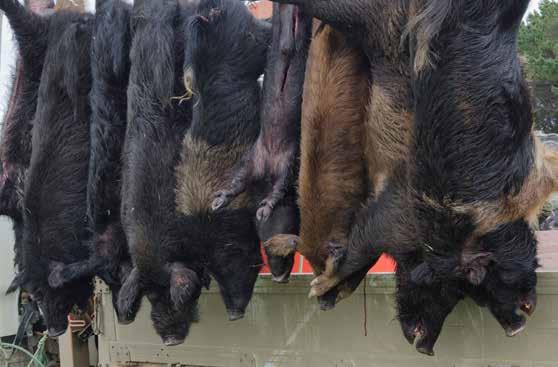
I know they come and go. They know I come and go too. They feed on acorns just a hundred metres from our dog kennels, teasing then leaving. I put game cameras out to establish their routes, routines and population dynamics. They showed random swine visiting at random times - sometimes coming and sometimes going – never using the same route twice.
It was the ‘going’ snaps which depicted how cagey our fourlegged trespassers were. Pigs departing in various states of flight. Bodies long and low, snouts and tails outstretched. Some were no more than a partial blur - they obviously bolted at any hint of danger.
Releasing the kennel-boundhounds would seem an obvious response, but we have neighbours nearby, a busy backcountry road on one boundary, and the river with its precipitous blu s on the other boundary.
Usually, I’d not risk endangering my canine companions, but one night my resolve weakened. I crept quietly into the dark and slipped Nugget onto a leash. With a tracking collar on him and a receiver on me, we ghosted downwind of the oaks and snuck along the road verge to a beaten pig track.
At the same instant I unclipped Nugget’s leash I heard the distinctive clicketty-clack of pig hooves on tar-seal. Dammit, we’d been sprung already.
Worse, Nugget’s toenails audibly clicking in pursuit were followed by a second pair, smaller and lighter. Boston, the Jack Russel terrier, had stealthily followed me, out of sight and mind till the moment Nugget set sail. Boston had his big boy pants on, and he was determined to join the big boy fun.
The elusive porker rapidly accrued a sizable lead before a sharp left-hand turn; here it entered a neighbour’s property and led a merry chase.
My Future - My Past
Thankfully Nugget quickly realised he’d been well beaten and quitthe tiny flashing light on his collar getting ever closer as he trotted back down the centre of the road.
Moments later an almighty bail sounded above us. Tiny Boston, knee high to a grasshopper, had just bested the big pig dog. Or had he?
Suspicious, I quickly slipped Nugget back on lead.
The bail stopped.
Conscious that it was midnight and that Boston was trespassing, I called him back as quietly as I could. He did not come.
Every time I spoke the wee dog responded with a flurry of his biggest baddest barks. He did not move one jot.
Other dogs residing at various homes nearby, added their support, barking up a storm. Oh, bloody yay, now everyone in the neighbourhood would be on poacher alert.
Embarrassed, I quickly hurried homewards. Here I hushed our pig dogs, kennelled Nugget and put away my redundant rifle.
Up on the hill Boston sensed Nugget and I had deserted him. He
The Fishing Paper & Hunting News
Editor: editor@thefishingpaper.co.nz
Sub-Editor:
Mike Brown
All Enquiries: Nicola Morris 0224 503 403 admin@thefishingpaper.co.nz
Printer: Inkwise
Advertising Enquiries:
Lynda Balfour North Island
Lynda@thefishingpaper.co.nz 027 710 1510
Phil Claude South Island Phil@thefishingpaper.co.nz 021 242 4202
began howling mournfully. At home I’d grabbed the spotlight before jogging back down the road. When I was directly below Boston’s remarkably loud howls I shone the light’s beam towards the source. There. Dog eyes reflecting!
The bright beam revealed more, too. Gorse, blackberry, hawthorn and broom all entwined in old man’s beard vines. A gigantic patch of impenetrable shite with a tiny white dog hunkered down, unwilling to navigate his own way out.
After the initial surge of adrenalin, when he’d remained hot on Nugget’s heels, Boston now realised he was alone – and lostand that it was dark.
He sensed that there were big scary creatures roaming in the dark. One of those big scary creatures was me. Not surprisingly, my language was no longer friendly and encouraging. If I called. Boston barked loudly. If I went silent. Boston howled loudly.
I relented, eventually. On hands and knees, I tunnelled under the shite, forcing my way upwards through the thorny vegetation. It was not the happiest of reunions, no hugs or high-fives.
An hour after setting out I returned to my bed - angry, bleeding and with prickles in my hands and scalp. The elusive anonymous pig won that round.
Two years later, Dearly Beloved popped out after breakfast to run his dogs around our multi-hectare yard. My dogs, still kennelled, were unusually verbal about being left behind. I ignored them only as long as I could tolerate the din.
Opening the back door to utter empty threats, my puppy, let’s call him Future, bolted inside and hid.
Somewhere behind the kennels there were unusual noises that I could not quite hear. What was going on out there?
Aaah, there we go. When my barking dogs were quietened, I heard Dearly Beloved shouting ‘bring a knife’, along with sounds I associate with a pig being held tight.
I scurried indoors to find a sharp knife - the pup hovering about my heels, trying in vain to hide in the folds of my night gown. He had been with Dearest’s dogs when they caught the unfortunate pig but then made record time back across the paddock, tail between his legs, coming home to Mama.
Well, well, my Future doesn’t have much piggin’ potential!
Dearly Beloved was next to arrive - his tail too short to hold between his legs - galloping like a gum booted Clydesdale. He thundered across the porch, grabbed the pro ered knife and wheeled o without a backwards glance. My dogs were beside themselves; they desperately wanted to join the pig stretching party. A whistle and “wayleggo” didn’t cut through their dawn chorus.
I went to the kennels to quieten the mayhem in person. Nugget and Pip were break dancing. Fat old Pearl stood atop her kennel. Her bark had petered out; she was hoarse and whispering ‘whu s’ while wagging her tail. And Chop?
Dear old Chop, the most amazing dog I’ve had the pleasure of hunting with his eyes now clouded blue and his hearing dulled – he could not hear the pig’s squeal. The wimpy pup may be my uncertain Future, but Chop, dear Chop stands looking in the wrong direction – his past, and therefore mine, is now behind him.
Kim Swan
Variety is the Spice of life
Weather wise, its been a pretty tough year and warm, with unusually stable water temperatures that hasn’t helped the fishing. But, that doesn’t mean that there aren’t good fish to be had. Heading out with the lads, I hoped for a feed but expected little.
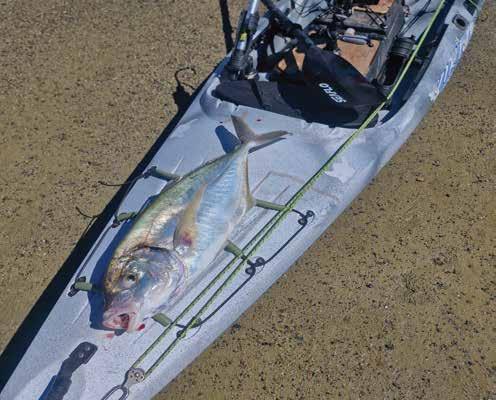
I was trying something new –anchoring up – and I must admit I am really not sold on the whole sitting still gig. As I sat there feeling increasingly restless –the fellas took to lobbing verbal volleys back and forth. While entertaining, it was all “what is said on the water, stays on the water” stu – meanwhile I quietly worked my microjig – from Kaveman Tackle of course. While they continued their brotherly banter, I got a few good hits on my jig so paused for a few seconds – next thing, a good bend on the rod and some decent weight behind it. As they continued to wind each other up, I was quietly winding myself then having my fish alternate between having seizures and diving back down to the floor. Although it was taking a good while, I resisted the urge to crank my drag up . It was just five meters below the surface and visible on the sounder when one of the blokes finally noticed I had a fish! A nice healthy looking trevally popped up a short time later. The lads did say it was a good sized one but, not having caught many trev's before,
Yolande Jeffares
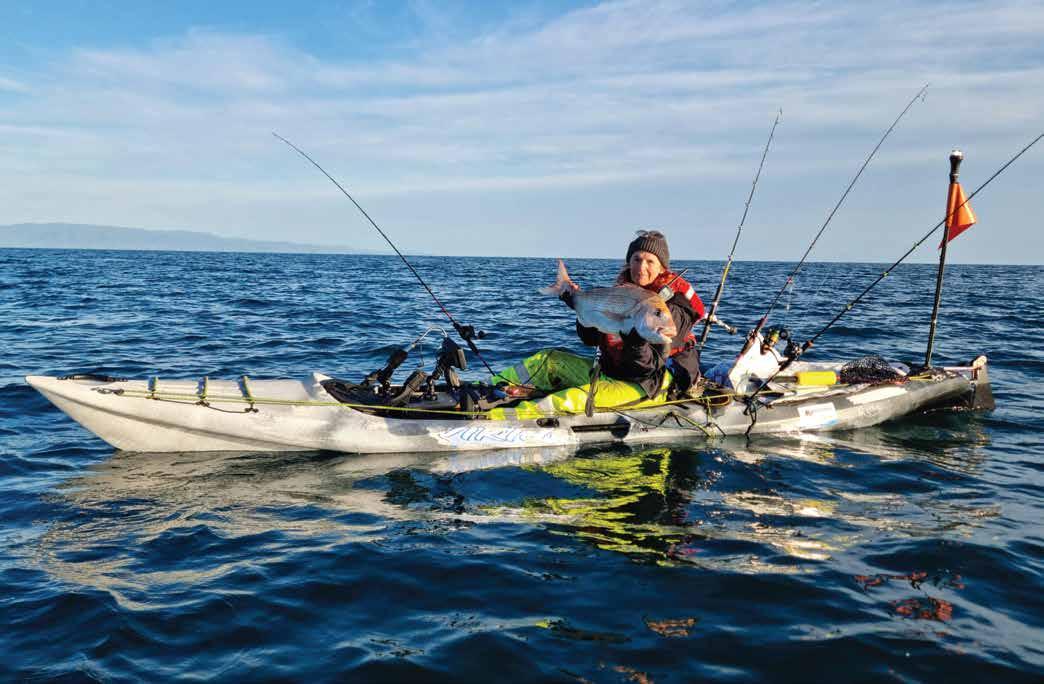
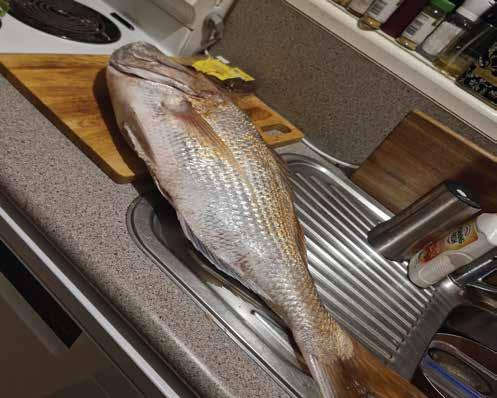
I thought they were – well – being “supportive” … hence only taking a photo on the bow of the yak. I was far more successful at getting my snapper to the surface without anyone noticing, despite being considerably larger (68cm)
– perhaps because I was on the drift rather than anchored up – he hit hard, put in some really good runs, battled like a trooper and came up well and truly done. The couta showed up in numbers so we decided to head in closer, I
quietly toodled my way in trolling a lure on the sand, hoping the couta wouldn’t notice.
I didn’t see it myself but, the couta did notice – and apparently absolutely smashed me , much to the delight of one of my paddle buddies. Good fun and not a target species but, I decided to keep him for bait when surfcasting/ wharf fishing with my daughter and granddaughter.
My final and biggest fish was definitely not a keeper – casting into bust ups of kahawhai, I felt my bobbing kabura get hit – twice –then the rod bent over with some serious but not overly enthusiastic weight. This wasn’t a battle of wits but rather, a test of strength – and disconcertingly, by the time I had this one up and had it under control, it had pulled me into the reserve. A lovely healthy looking thresher, hooked at the pointy end, I decided it best to play it safe and do a two person release. One of the fellas wound in and paddled in to give me a hand – which didn’t go quite as smoothly as it ought but he did eventually swim o . While the take was modest, the company was great, the weather awesome and the fishing was both challenging and entertaining.
Fishy times and tight lines!
That Kayak Fishing Chick https://www.facebook.com/That. kayak.fishing.chick
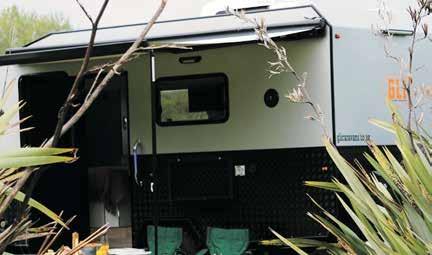
The world's your oyster when you venture out with GLI.
Their range of semi off-road and full off-road caravans and camper trailers means you can escape the maddening crowd and still live with all the creature comforts.
Designed to tackle New Zealand's most rugged environments,loaded with mod cons and backed by over 25 years experience.
Buy a lift top or hard top caravan or a camper trailer and on top of great prices you'll get a *$1000 Hunting and Fishing gift card!
Spaced Out
Daryl Sykes
Rock lobster industry commentator Daryl Sykes highlights the pressures placed on all legitimate fishing sectors when active management of fishing is deemed to be too hard and the simplest solutions are applied.
Spatial closures – bans or restrictions on fishing in particular areas – are often presented as a simple, clean solution to coastal problems. Shut the gate on fishing, the thinking goes, and we will automatically get healthier ecosystems, better local abundance and happier communities.
But for people who actually go to sea –whether to earn a living, put fresh fish on the table, or uphold customary responsibilities – the reality is more complex.
Spatial closures are not cost-free tools. They can be necessary as a last gasp measure in some circumstances, but without a joined-up view of their cumulative e ects, New Zealand risks eroding fishing opportunity, undermining settlement commitments and creating new sustainability problems in the very areas still left open to fish.
resource consents for coastal development, even special legislation. Each decision might look reasonable in isolation. Each is usually focused on a narrow purpose: protecting a patch of reef, supporting customary harvest, enabling aquaculture, or safeguarding a seabed cable. What is missing is a serious look at how all these measures add up at sea, and what that means for everyone who fishes there: commercial operators, local whānau, and weekend fishers alike.
For people on the water, what matters is not how many provisions sit in a statute book, but how much usable water is left. The cumulative e ect of overlapping decisions is that all sectors are being squeezed into smaller, more marginal spaces. On paper, a commercial quota owner may still have the same tonnage. In practice, a growing slice of that stock sits behind lines that cannot be crossed. A recreational fisher might still see the same daily bag limit on the sign at
practical access – not always obvious on any one map, but very obvious in people’s lived experience.
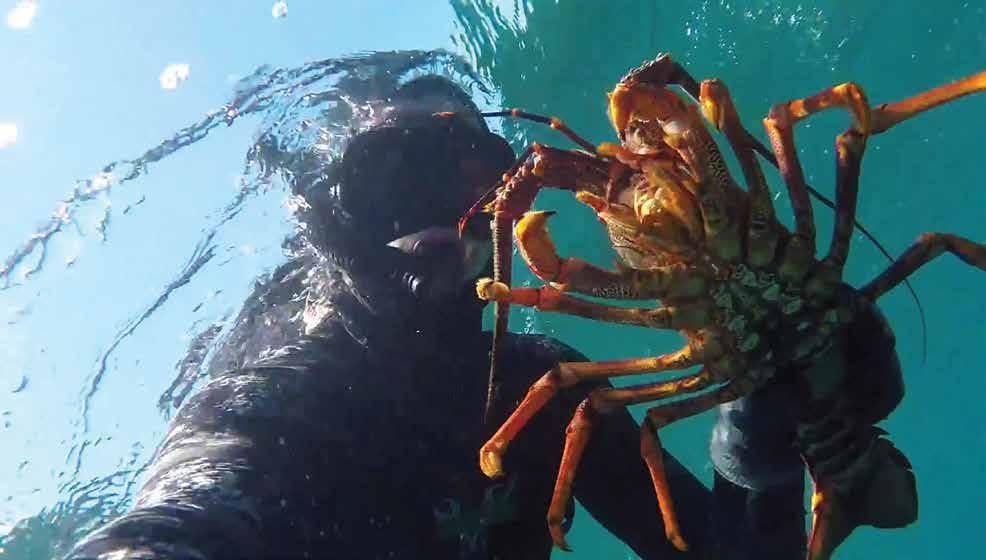
The pressure is most intense on species strongly tied to particular stretches of coast. Pāua and rock lobster are prime examples. These fisheries depend on specific reef systems; you cannot simply steam a few extra miles, drop a pot or a diver, and expect to find interchangeable grounds. In many areas, pāua divers, crayfishers, local kaitiaki and recreational potters now operate in a maze of restrictions.
Customary mātaitai or taiāpure can set aside areas for non-commercial use or limit particular methods. Temporary closures may be put in place to rebuild local abundance. Method bans and other sustainability measures can cut out further patches. Add in non-fisheries closures for marine reserves, aquaculture, cables and coastal infrastructure, and a once-continuous
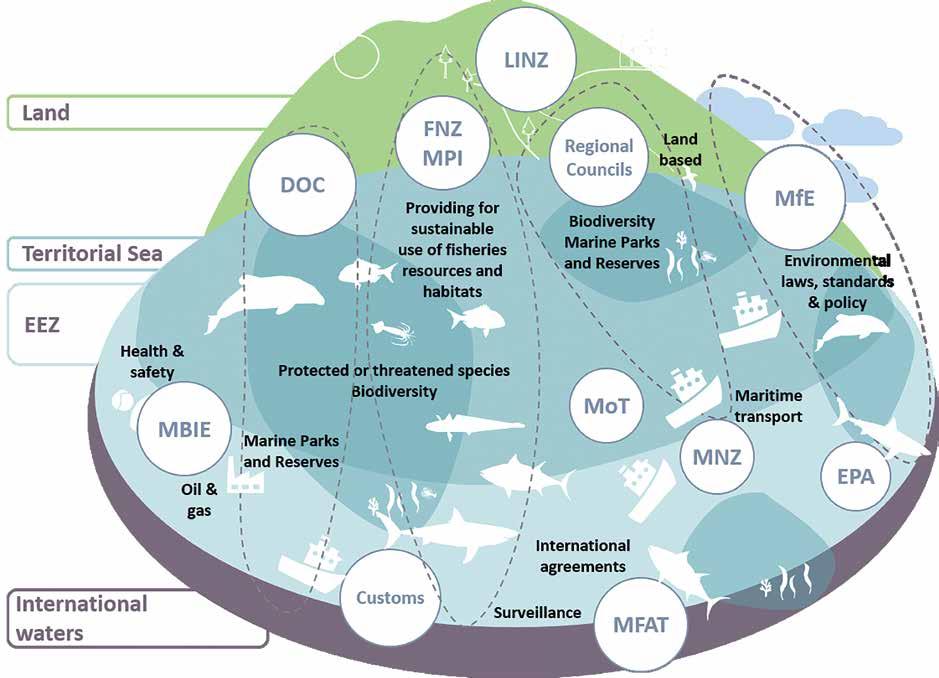
Around the New Zealand coastline, fishing grounds are increasingly being carved up by a patchwork of exclusions and restrictions. Some are driven by the Fisheries Act, using sustainability measures or customary tools. Others come from di erent laws altogether –marine reserves, marine farms, ports and cables,
the boat ramp, but the nearby spots where that limit used to be achievable are now tied up in closures and reserves. Customary rights may be recognised on paper, but local hapū can find that areas outside their rohe moana are under such pressure they feel forced to keep pushing for new restrictions. The result is a slow loss of
stretch of habitat can become a series of narrow channels and isolated pockets where any given group is still allowed to fish.
On the chart, each closure might look small: a line tucked around a reef here, a no-take zone there, a marine farm boundary hugging a sheltered bay. But the e ect is cumulative.
Spaced Out cont: Daryl Sykes
As these areas multiply, e ort is pushed onto the remaining open reefs, and onto the same ramps, beaches and anchorages. The same amount of catch – or close to it – is being taken from a shrinking footprint. That is when localised depletion starts to creep in, not inside the reserves, but in the last few places where everyone is still allowed to fish. Ironically, closures intended to protect local abundance can end up shifting pressure onto neighbouring spots, creating new hotspots of depletion and new complaints from other users who suddenly see “too many boats” or “too many divers” in their favourite bay. This displacement has direct consequences for all sectors. When long-used grounds become o -limits, commercial fishers face longer steaming and higher fuel bills; recreational boaties burn more fuel and time to reach a decent snapper mark; customary gatherers may travel further from their home marae to collect kaimoana. Catch rates can drop as people are pushed into less productive or more exposed areas. Species mixes change, a ecting the value of a commercial trip and the satisfaction of a family fishing day. Competition intensifies on what remains of the best ground, increasing gear conflict, crowded anchorages and pressure at popular launching sites. For some commercial operators, this becomes real financial stress. For some communities, it means the easy, local access they once had to kaimoana and a feed of fish is gradually lost. On top of this, there is a growing problem of uncertainty. Because cumulative spatial e ects are rarely confronted head-on, none of the sectors has a clear picture of what future access will look like. If a commercial fisher cannot be reasonably sure they will still be able to use core grounds in ten years, it becomes harder to justify investing in a new boat or gear. If a recreational club does not know how many of its traditional spots might be a ected by new reserves or structures, long-term planning becomes guesswork. If coastal hapū see piecemeal processes where the first few customary tools are approved and later ones struggle because “too much is now closed”, confidence in the system su ers and the hapu might feel they need to make an application to protect their interests. This uncertainty can sap the willingness of all groups to work together on local research, habitat projects or co-management, because the future use of the space they care about is constantly in question. Rising pressure in the remaining open areas inevitably increases interaction between sectors. Commercial boats find themselves working closer to popular recreational grounds. Recreational fishers see more pots, longlines or set nets near their favourite spots and may feel that “the commercials” are crowding them out.
Customary kaitiaki see more pressure just outside their mātaitai or taiāpure and may feel that the gains inside their boundaries are being cancelled out. If cumulative spatial exclusions undermine the ability to exercise customary rights in practice – by contributing to localised depletion outside customary areas, or by favouring “first cab o the rank” applications while later hapū miss out because the cumulative e ect has finally been noticed – then the spirit of the Treaty Settlement is weakened. At the same time, if the commercial component of the settlement is eroded not by transparent decisions to reallocate, but by a slow shrinking of usable fishing space, then its value to iwi and hapū is chipped away in a way that ultimately a ects the whole system’s fairness and legitimacy.
Instead of building shared solutions to shared problems – such as degraded habitats, land-based pollution or climate impacts – energy gets absorbed in complaint and counter-complaint, as each new closure or restriction is seen as either a victory or a threat, rather than part of a coordinated plan. None of this is an argument against closures per se. There are situations where closing an area to certain methods or to all fishing is the most e ective way to protect vulnerable habitats, rebuild local stocks, or recognise cultural values. Most fishers, regardless of sector, understand that some places and times need extra protection. The problem is that closures have become a go-to response in many di erent policy silos, without enough attention to whether they are the right tool for the job, whether they are designed as tightly as they could be, and how they interact with all the other lines already drawn on the chart. In plenty of cases, less blunt instruments could achieve the same or better outcomes with a smaller hit to fishing opportunity for everyone. In fact, closures represent management failure- because steps have not been taken to manage before closure becomes necessary. Alternative approaches already exist and can be expanded. Instead of shutting down an area entirely, managers and communities can work together to set local catch limits at a finer scale, or to tune e ort controls in hotspots of concern. If a particular gear type is causing the problem, banning or modifying that method in the a ected zone may do the job, while still allowing lower-impact fishing by other methods and sectors to continue.
In cases where genuine protection is needed over a wider area, thought can be given to making the closure no larger than necessary, and to adjusting total catch limits so that displaced e ort does not quietly create new sustainability risks somewhere else. Customary and recreational aspirations can be considered
at a regional scale, rather than one bay at a time, so that rights and expectations are shared more fairly across hapū and communities.
When non-fishing uses are involved – such as aquaculture, o shore energy, or other coastal developments – there are clear opportunities to plan sites in ways that minimise overlap with the most productive and most important fishing grounds. Developers can be required to sit down with a ected fishers, clubs and Iwi to negotiate fair arrangements and, where appropriate, compensation or practical mitigation. The law already expects cumulative e ects on people and communities to be considered in coastal planning decisions; the challenge is to make sure that the real, practical impacts on all forms of fishing are fully understood and weighed alongside the benefits of the new activity.
What ties all of this together is the need for a more coherent, strategic approach to space in the sea. Instead of treating each closure in a vacuum, New Zealand needs marine management that consistently asks a few simple questions. What problem are we actually solving here? Is a closure the most e ective and least disruptive way to solve it? How much access has already been lost in this area or fishery, and what will this new measure do to that balance for commercial, recreational and customary fishers? Where will displaced e ort go, and what does that mean for sustainability, for di erent fishing communities, and for Treaty commitments? Only when those questions are answered honestly can decision-makers weigh up whether the benefits of a proposed closure truly outweigh the costs.
For readers of a fishing and hunting paper, the story is not that closures are always wrong, or that nothing should ever change. The story is that space is becoming the new currency in our coastal waters, and that the way we make decisions about that space has consequences for everyone who values the sea. Every new line drawn on the chart has ripple e ects, especially when added to dozens of others that came before.
Spatial closures are powerful tools, but they are not cost-free. Used sparingly, with clear objectives and a careful eye on cumulative impacts, they can help protect the very resources that all fishers depend on. Used casually, or without an overall plan, they risk hollowing out fishing opportunity, fraying relationships between sectors, and shifting pressure in ways that make both fish and fishers worse o in the long run. Closures should be a last resort, and not an alternative to management.
My Bucket Runneth Over
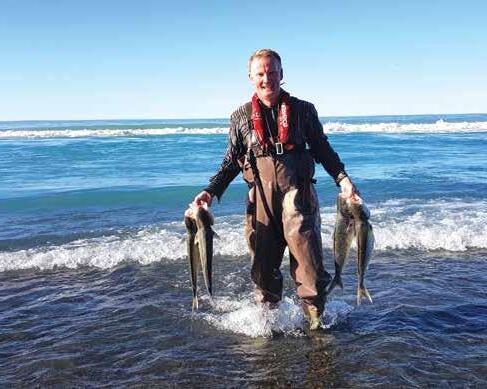
The mouth of Te Whanga Lagoon is in plain sight, and the tang of peat-infused waters is borne upon the gentle o shore breeze. Here aboard Flynny we rock gently just fourteen metres above the sea floor. It would be an idyllic scene if it weren’t for the constant flurry of human activity.
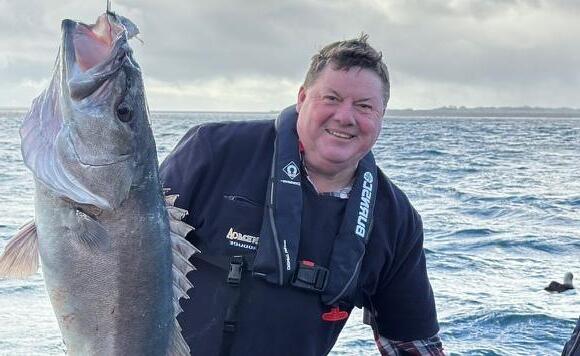
Four of us each have handlines overboard – rope lines, two traces, circle hooks and huge baits – and it’s rare to have a hefty sinker touch the bottom for longer than a moment before fishin’ action sees us hauling enormous blue cod towards the surface. With a limit of just five fish per person, we choose carefully which piscatorial prize stays, and which is returned to Neptune’s lair.
Strong strikes followed by a significant weight alert me to the possibility of a groper – they’ve been caught here before.
Hand over hand, looping line onto Flynny’s deck, my eyes search for the first flash of colour. What have I caught?
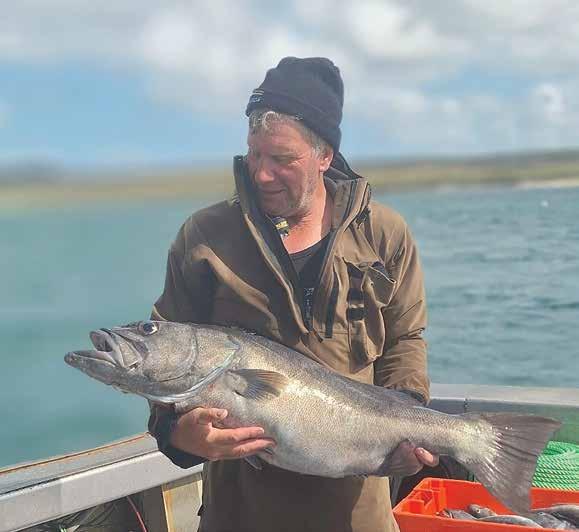
There! Groper! He’s hooked by the skin of his lip, a tiny silver sliver is all that connects he and I. Heart pounding, I pull the big fella nearer to the boat. He is expertly manhandled aboard, and I have my dream fish in hand. Done.
Day two on my bucket list location – Chatham Islands – and I am beyond happy. I’d always thought the Island was too far, too hard, beyond my organising skills and simply out of reach for the likes of me. But here I am, literally out here and doing it.
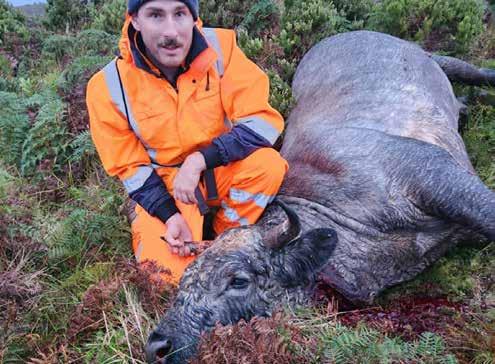
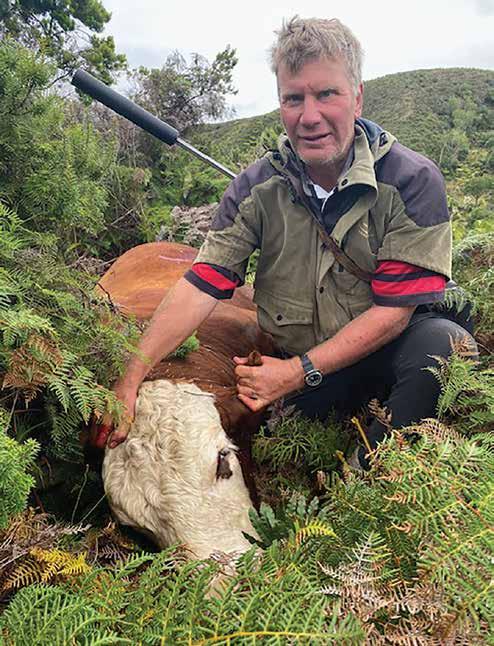
The following day I give my binoculars a workout from the deck of the spectacular Kopi Lodge while my host is busy elsewhere. Far across the plateau I see a small mob of wild cattle mooch from cover. My eye is drawn to a huge red bull with T-bar horns –now there’s another ‘chuck it in the bucket’ item, another dream species and a trophy too.
Host John returns and he needs no persuasion to shoulder his 300mag rifle, strap on a knife and say, “come with me”.
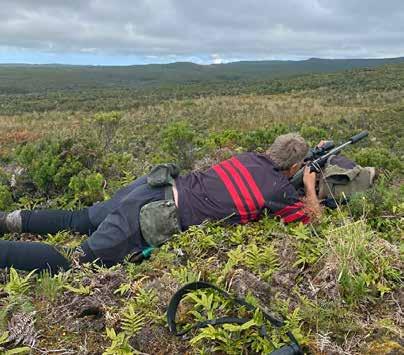
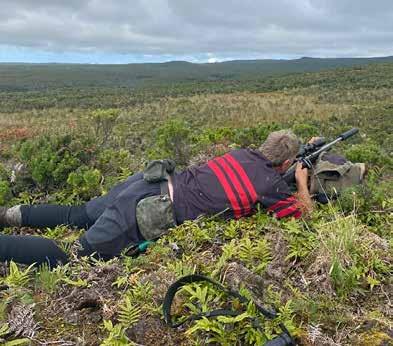
A short while later I’m laying flat on my belly in the knee-high fern, John’s rifle tucked into my shoulder, waiting for a kill shot opportunity. It never comes, a sixth sense warns the old master that danger is near and he slides silently away.
We press on, quietly covering ground. Low-set ridges lead into green-grassed clearings drained by narrow creeks. Tarahina, manuka and ponga ferns provide cover for small mobs of cattle as wild as any deer back home on the mainland. The style of stalking is familiar to me, but the thick-skinned and heavy shouldered targets are vastly di erent.
There! Another master bull, without horns – and with an apprentice bull and a family group of cows and calves. We edge closer, the breeze in our favour. Adrenalin levels escalating until John gives the signal to shoot.
Despite the heavy calibre and well-placed chest shot the huge animal doesn’t go down without follow-up. The consequences of a wounding need no explanation.
Kim Swan
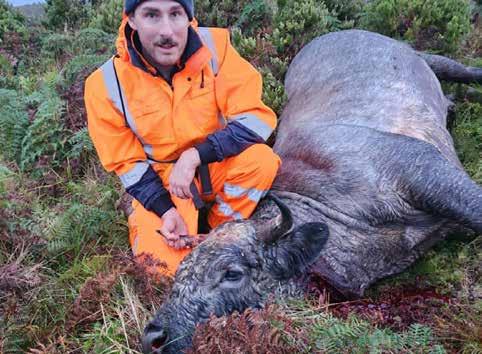
The cows call their o spring to heel and bolt, but the young bull stands staunch. He has failed to sight or scent us, so he waits, undecided between flight or fight. John whispers to me to take him out of the population too. One good shot and he drops to the ground, motionless.
A seasoned cattle hunter, John
sits tight and we wait for a full five minutes before giving away our position.
I’m well down the ridge and oblivious to the young bull’s change of status from presumed dead to alive and angry. Worse, he has seen me and he’s coming my way. I hear John’s shout, his voice crackling with panic – “shoot it!”. A moment later the young bull comes charging into view, neck pumped, eyes bulging, mouth frothing and tail high. His intentions are very clear.
He’s just twenty metres o me when I get the rifle to my shoulder and send a heavy slug into his skull. Wow, what a buzz.
Day after day these outdoor adventure activities and outcomes come at me – and all in this amazing place and amongst these amazing people. Good, downto-earth people who take me in and treat me like family. I share in their everyday and in their exceptional days. Full immersion, no exceptions.
All too soon its time to pack my bags and share one last phenomenal meal with the team at Kopi Bush Retreat. Leaving, just like arriving and everything in between, is all done for me. I thought coming to the Chathams was in the too hard basket, but this all-inclusive trip was about buckets not baskets – and, truly, my bucket runneth over.
Wild food recipes with Marcus
Spiced venison lettuce cups
Here’s a real winner for all that venison mince.
Clean and aromatic flavours best paired with a nice hazy and a good yarn.
Ingredients
Venison Mince
Chilli Oil
Fried Shallots
Original Smoke and Spice
Seasoning
Garlic
Ka r Lime leaves
Olive oil
Fresh Limes
Lettuce
Mung Bean sprouts
Method
Fry mince in hot pan with a tablespoon of chilli oil and all ingredients until browned.
Spoon onto lettuce cups filled with bean sprouts,shock dose with lashings of lime juice.
Now let it slide down with a cold beer next to the fire life is good
Cheers and Enjoy
Marcus
Int’l Kiwi Chef
Quite good with rod and gun
Blue Light 'Kids Gone Fishin Day' Coastlines
Ivan Wilson
Kids Gone Fishin’ day was another Police Blue Light community event in Greymouth.
The event was held in good weather, from 10am - 2pm on a Saturday in February and was put on completely free to one and all.
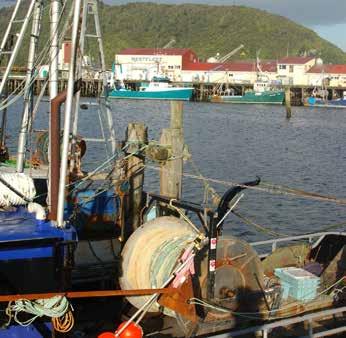
At the start of the year, thought was given by Police, as to what sort of community activities would be good to run in Greymouth and fishing became a focus. The venue was the wharf along the front of the Westfleet building, with that company also helpfully making their sta room available for the event.
It turned out to be a real family day and even in the early stages, there was a hundred plus people lining the wharf, fishing or supervising their o spring.
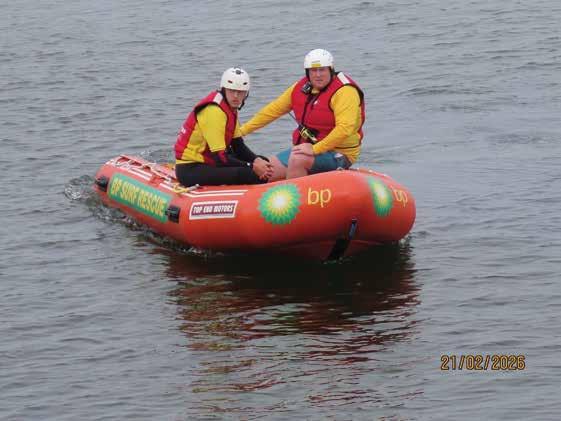
Safety was paramount so Kotuku Surf Lifesavers patrolled the venue
in their orange inflatable, ensuring the well-being of all present.
The initiative was in partnership with Westfleet Seafoods, Community Patrol, Ministry of Fisheries, Surf Lifesaving, plus product sponsored by local sports store Wild Outdoorsman and Countdown.
There was ice cream and co ee available, with Police operating a BBQ, grilling hundreds of Countdown sausages.
Also a member of the public, Lyall Tait kindly dropped o 300 chocolate fish which were given out as spot prizes.
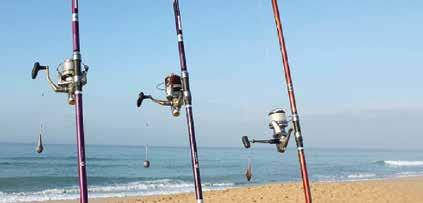
Kids brought their own rods and those without gear were supplied with the means to catch a fish.
So what was caught? While I was there and talking to organisers, I saw a monstrous eel hauled up, dehooked and returned to the water, plus herrings and many other nautical finds.
Organisers say it was gratifying to see how many families turned up for the event, to spend time fishing with their children. They also say the event will continue as an important element in their community outreach.
There has been a continued push to tighten restrictions on our rights. During the submissions in Wellington, there were comments about ensuring that no one uses a firearm to harm others.
I take issue with that line of thinking, particularly in how it may shape the new Act.
I fully support firearm safety. I spend many hours training and helping others improve, always with safety as the top priority. This matters not only for those present but also for the future, as there are always people watching and expecting us to make mistakes.
When you consider how many hours are spent and how many rounds are fired across the country every week, whether on ranges
Too much pāua, possession of nearly 30kg of pāua mince, illegal set nets, selling snapper attract big fines
A range of fishers have been fined thousands of dollars for taking too much pāua, possessing a large about of pāua mince, using an illegal set net and selling snapper.
“People who choose to ignore the fishing rules need to know there will be consequences. Our job is to protect fishing resources so that everyone can enjoy the opportunity to put fresh kaimoana on the dinner the table,” says Fisheries New Zealand’s Acting Director of Fisheries Compliance, Phil Tasker.
Over the past two months, these are some of the main cases before the courts.
A 49-year-old Taranaki man was fined $2,750 in the Hawera District Court for a range of recreational fishing o ences. The man and two others were stopped by Fishery O cers in October 2024 at Ōpunake’s Te Namu Bay where it is closed to taking all shellfish, except for gathering crayfish. He was fined $500 for being in possession of 21 pāua, and a further $750 because 20 of the pāua were undersize, along with being in possession of two crab and two kina. He was also fined $1500 for failing to comply with the Fishery O cer's orders. The daily limit per person for taking pāua in the area is five per person at a minimum size of 85mm. A 24-yearold Taranaki woman was fined $2250 for her part in the o ending, and a 25-year-old man is still to appear before the court.
A 58-year- old Patea man was
Restrictions
or while hunting, you have to ask: if firearms owners were so dangerous, why aren’t there more incidents? Why are we treated so poorly? The number of licence holders who face criminal charges for arms matters is extremely low, significantly lower than many other groups. I once read a line that stuck with me:
“There is no gun crime, only criminals who use guns.”
The vast majority of firearms in New Zealand are used responsibly, not by gangs or criminals.
Farmers rely on them for animal welfare and pest control, both of which are essential for our country.
For others, like myself, shooting is a sport. I have competed at both national and international levels, and many of us pass on what we’ve learned to new shooters. This is
how clubs continue to operate and grow. One of the strengths of shooting sports is that improvement is always possible, and age is less of a barrier than in many other sports.
However, the licence renewal process is ridiculous. The requirements for renewal are nearly identical to those for a first-time application. After 10 years, we are expected to go through the entire process again. Why is this necessary? It feels excessive and discouraging.
As a result, some people are choosing to give up their licences altogether, I know several who have already done this. This is not a positive outcome. In my view, having more licensed firearm owners is better for everyone. It benefits both the Firearms Safety
Prosecutions Round-up
fined $1700 in the Hawera District Court for taking 44 pāua of which 35 were undersize. The man was stopped in January last year by Fishery O cers patrolling the Pihama area in South Taranaki. The daily limit per person is 5 pāua with a minimum size in that area of 85mm.
A 68-year-old Marlborough commercial fisher was fined $2,750 at the Blenheim District Court for setting two nets in the Kaiuma Bay area in October 2024. The nets were in excess of one quarter of the width of the arm of the sea – or basically covering about 40% of the width of the Bay. Commercial fishing regulations state a set net cannot extend more than one quarter and this rule has been in place for many years.
Authority and the Police when people remain within the system, but I’m not convinced that is reflected in current policies.
PISTOL SHOOTING
The process for renewing a firearms licence, particularly when compared to renewing a driver’s licence, appears disproportionate. The requirements are extensive, especially given that vehiclerelated accidents far outnumber firearm incidents. Stay safe out there.
A 26-year-old Christchurch man was placed on five months community detention by the Christchurch District Court for his part in taking 486 pāua. The man and one other who is still before the court were diving near Kaikoura in September 2023 and were stopped by fishery o cers. 159 of the pāua were undersize. The fishery o cers believed the pāua was being gathered so to be sold illegally. It is illegal to sell recreationally caught fish.
A 43-year-old Hastings man has been ordered to do 80 hours community work by the Hastings District Court. The man had 203 pāua of which 176 were undersize when he was stopped by Fishery O cers in 2024 after being at Blackhead beach. The daily limit in the area is five pāua per person at a minimum legal length of 125mm.
A 52-year-old Auckland man was fined $1500 in the Manukau District Court for selling recreationally caught snapper. The man was investigated by Fishery O cers in 2023 and sold between eight and 10 snapper for between $20 and $40 each. It is illegal to sell or trade fish caught recreationally. Only fishers with a commercial license can do so.
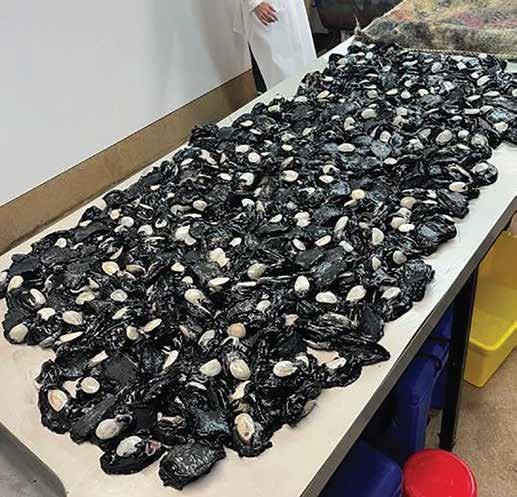
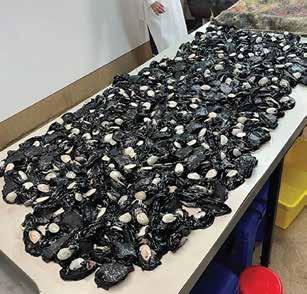
A 33-year-old Christchurch man was fined $5000 in the Christchurch District Court for being in possession of 27.79kg of minced pāua. Police were conducting a search warrant in 2024 and discovered the pāua. They contacted Fishery O cers. In total the man was in possession of 37 times the legal accumulation limit.
“If you’re unsure of the fishing rules in the area you plan to fish, get the most up-to-date fishing rules by downloading the free NZ Fishing Rules mobile app. It will also work if you’re fishing in an area with limited mobile coverage,” says Mr Tasker.
Fisheries New Zealand encourages people to report suspected illegal activity to the ministry's 0800 4 POACHER number (0800 476 224).
Brian Bishop
Exceptional Ute & Station Wagon Fit-outs
Whether you’re a skilled tradesperson, a DIY enthusiast, or just a fan of utes, our custom fit-outs are tailor-made to elevate your road transport experience. Our fit-outs not only meet but often exceed expectations in terms of quality and aesthetics.
We take pride in collaborating with you to design the perfect deck or canopy, whether it’s transforming your hand-drawn vision into reality or utilising our cutting-edge SolidWorks design system to bring your ideas to life.
Our fit-out solutions include toolboxes, fold-down sides,
hydraulic lifts, H-frames, slide out drawers and more to make the most of the space in your vehicle. We’re your one-stop solution for all your transportation needs.
Precise fit-outs, even before your Ute
Arrives
If you haven’t taken delivery of your ute yet, we can still get to work. With just the make and model information, we can now digitally import the specifications and design the perfect canopy in consultation with you. Our advanced technology allows us to create a vivid image, o ering you a clear preview of the final result. We meticulously check
tolerances to ensure a seamless fit between the body and cab while optimising wheel travel. When your ute finally arrives, we can e ortlessly install the canopy, making your vehicle road-ready in no time.
Rely on Aluminium Excellence
Our fit-outs are crafted from premium aluminium, the ideal material for utes. We utilise heavygauge aluminium to withstand the toughest challenges and work life. Lightweight yet incredibly robust, our fit-outs are built to last and engineered for their intended purpose. Moreover, aluminium is corrosion-resistant, ensuring that your fit-out remains impervious to various loads.
Wagons
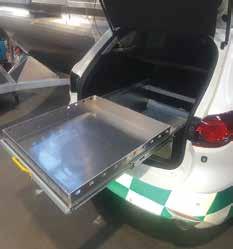
If a custom high quality sliding drawer for your wagon is what you’re after, we can do this for a side or back opening door. We use sturdy, customised parts so your drawer glides with ease, to make the most of hard to reach places. Game changer.
An example we’re very proud of is the drawers in a fleet of ambulance First-Responder utes to make access to key materials easier for paramedics.
Choose our fit-outs to enhance the functionality and durability of your ute. Contact us today to discuss your specific requirements and take your road transport to the next level.
Long retired commercial fisherman Norm Hawler has been reading fisheries reports and media releases.
Another month has rolled by down here in the Bay and the weather has been idyllic other than for a few rainy days and nights. I have spent more time than I wanted having to fend o all the smart arse comments from mates who read “Norms Dream” in the last issue of this illustrious paper and I do have to concede that I was somewhat under the influence when I penned that, whilst promising never to do it again. The dream quite quickly became my nightmare.
It's a Numbers Game Retired Fisherman Norm Hawler
by 2022–23, this had fallen to an estimated 1,122,588 trips—about 62% of the earlier level. The report summarises this as “more than 1 million” marine recreational fishing trips per year in the latest survey.
Recent LegaSea material summarised NPS 2022–23 results by highlighting that recreational fishers land about 5,500 tonnes of finfish annually and that catch and participation have declined over the last decade. Earlier LegaSea commentary around the 2011–12 NPS sometimes paraphrased that survey’s finding of about 595,000 New Zealand residents participating in marine recreational fishing.
So let’s just go with what we have on record - somewhere around
At first glance it looks good doesn’t it? Certainly shows the recreational sector in a good light. Or does it?
A 6% non-compliance rate is not great – extrapolated across the NPS survey data that represents 60,000 fishing trips where rules were flaunted. It represents a possible 300 tonnes of catch not legally obtained or not in a legal state. It represents about 35,000 recreational fishers who routinely don’t abide by the rules.
MPI Compliance has obvious limitations of manpower and resources, but their reported 13,000 catch inspections sounds impressive – but is it in real terms?
The northeast North Island, from North Cape to East Cape (Fisheries Management Area 1),
fishers received warnings and more than 85 infringements were issued. Fishery o cers are still making enquiries into more than 25 cases”.
Recent events in the politics of fishing have caught my attention, but a small media release by MPI earlier in March really got me thinking about my old adage that a dead fish is a dead fish no matter who killed it.
The latest National Panel Survey (NPS) report of recreational fishing in New Zealand released in September 2024 measured “fishing events” as individual trips. In 2017–18, marine recreational fishers took almost 2 million trips;
500,000 recreational fishers in New Zealand doing about one million trips in a year and landing somewhere close to 5,000 tonnes of fish and shellfish.
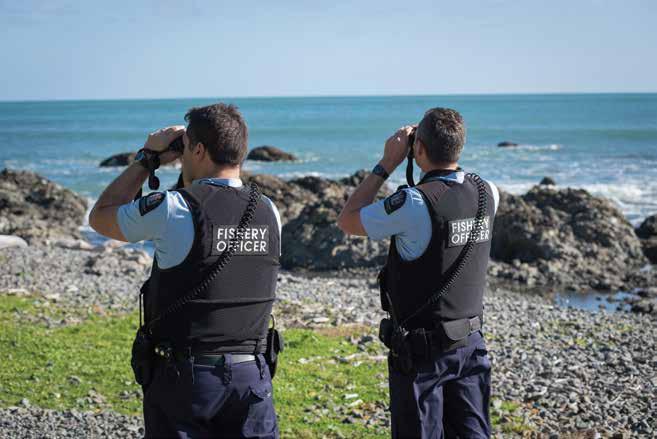
In March 2026 the Ministry for Fisheries Compliance team put out a press release that caught my eye. Fishery o cers throughout New Zealand did almost 13,000 recreational catch inspections over summer and found most people followed the rules, “with compliance at about 94% across the country”.
accounts for roughly half of all marine recreational fishing activity, especially for inshore finfish such as snapper and kahawai – so roughly 500,000 fishing events in a year.
In the Auckland region, fishery o cers did 5,806 inspections between December 2025 and the end of February 2026 – about 1.16% of the total number of NPS fishing events. O cers found 361 instances of non-compliance with the rules. Right there is the 6% non-compliance estimate. “Many
The MPI Compliance media release came a week or so before the massive social media campaign directed at Minister Shane Jones and proposed amendments to the Fisheries Act. The vitriol directed at the Minister and the commercial trawl and setnet fisheries was astounding and accusations of deceitful and illegal commercial behaviour were flowing freely in the metaverse. I was immediately reminded of the wisdom of my grandfather, who regularly exclaimed that “people in glass houses should not throw stones”. The recreational fishing industry shows an increasing propensity to insist that we should all do as they say, not as they do. Accountability for fishing behaviour extends across all extractive user groups. Or at least it should do …
Northland rock lobster closure and catch limit changes come into force
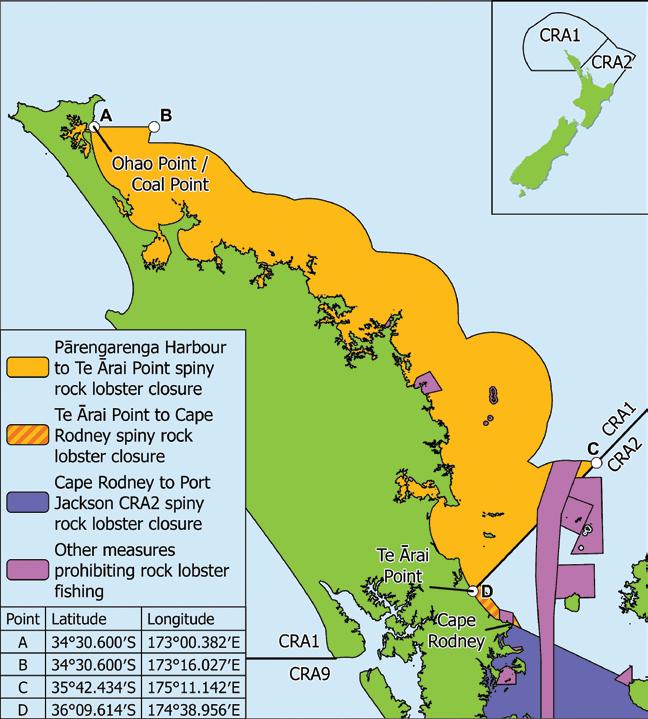
A new closure for the eastern portion of Northland’s spiny rock lobster fishery (CRA 1) and parts of the Auckland fishery (CRA 2) takes e ect from 1 April 2026.
The closure bans both commercial and recreational harvest of spiny rock lobster from Ohao Point, including Pārengarenga Harbour, to the Hauraki Gulf at Cape Rodney says Fisheries New Zealand regional manager north, Andre Espinoza.
“Along with existing closures introduced in early 2025, this provides protection for spiny rock lobsters along the east coast of the North Island from Northland to the northern tip of the Coromandel at Port Jackson, including the inner the Hauraki Gulf,” says Andre Espinoza.
Andre Espinoza says the daily recreational catch limits for spiny rock lobster in the Northland fishery and packhorse rock lobster around the country also reduce from 1 April 2026.
The new daily bag limits mean fishers can take:
two spiny rock lobster per person in the open areas of the CRA 1 fishery, and three packhorse rock lobster per person nationwide (PHC 1).
“Fishery O cers will be checking peoples’ catch and anyone caught breaking the rules could face a fine of up to $100,000. They also risk having any items used in the o ending seized, including vehicles for more serious o ences.
“Fishing rules can change often so it’s important that anyone heading out for a spot of fishing
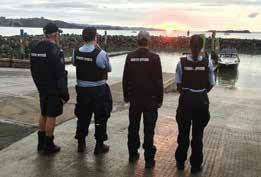
Fishery o cers throughout New Zealand did almost 13,000 recreational catch inspections over summer and found most people followed the rules, with compliance at about 94% across the country. In the Auckland region, fishery o cers did 5,806 inspections between December and the end of February, finding 361 instances of non-compliance with the rules. Many fishers received warnings and more than 85 infringements were issued. Fishery o cers are still making enquiries into more than 25 cases.
Fisheries New Zealand director of fisheries compliance, Steve Ham says most problems people ran into with the rules – such as undersize or excess fish – when minor breaches
checks rules before they go. Even if you fish regularly the rules could have changed since you last went out.
“The easiest way to keep on top of rule changes is to check your NZ Fishing Rules app every time. If you don’t have the app, download
were found, education was provided.
"In saying that we will prosecute when required. For example, we recently prosecuted an Auckland man for selling recreational fish. This man was banned by the court from all fishing for 3 years."
Mr Ham says set nets remain a focus for fishery o cers.
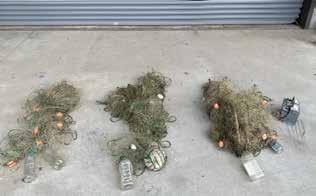
"We are confiscating illegal set nets regularly. Recently we found 3 set nets tied together, covering 160 metres in length.
"Some fishers are just blatantly breaking the rules and while most people will face a $250 fine, in more serious situations, the courts can issue more severe fines."
Fishery o cers also find nets without markings or buoys
it and make it a part of your fishing toolkit,” says Andre Espinoza.
More about these changes and how to download the free NZ Fishing Rules app can be found on MPI’s website: https://fisheries. govt.nz/rules
displaying contact details, which are also a hazard to other water users.
Some of the seizures by fishery o cers included finding a car battery being used as an anchor for a set net, which is environmentally irresponsible, a decoy duck used to hide a set net, and staked set nets leaving fish dead and out of the water.
Anyone who sees any suspected illegal fishing should report it to Fisheries New Zealand by phoning 0800 4 POACHER (0800 476 224) or email poacher@mpi.govt.nz
In the Wellington region, 2,435 recreational inspections were done, with 192 instances of noncompliance. Most problems occurred with people taking too much or undersize pāua and crayfish. While a number of cases are still under enquiry, fishery o cers also issued about 100 infringement notices. Continued on page 14
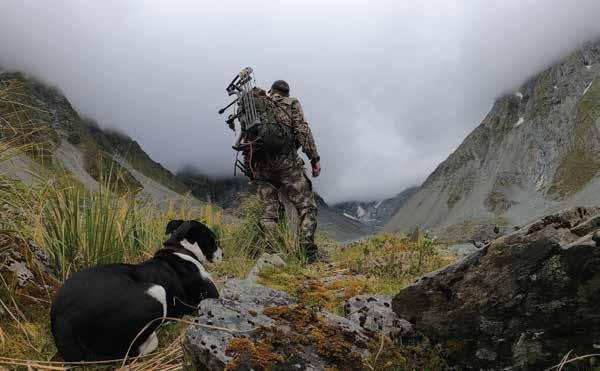
I’ve been trying to make a point of hunting new areas for the last few years, and while this well-known South Canterbury valley is not new to me, I haven’t hunted there for 25 years, and that time I was using a rifle, so it still counts to me.
The feeling of being unarmed or less dangerous carrying a bow instead of a rifle has faded enough that I thought it’s time I had a proper crack at a tahr before I get too old. I’d shot a young bull on a Wallaby hunt a couple of years ago, but it wasn’t really what I’d consider tahr country.
So with a small weather window and favourable river levels, the dog and I headed south and inland. We bumped into a couple of keen young blokes from Southland who were walking out as we headed onto the riverbed; they’d drowned their quad in the river, lost and broken a heap of gear, carried on hunting anyway, and had an awesome trip , shooting some good bulls , only to find their quad missing when they returned. They’d seen plenty of animals, so things were looking up for me anyway. After negotiating the riverbed for a few hours and testing some of my recovery equipment, I reached the first area I wanted to hunt. After 30 or 40 seconds of glassing from the truck, I’d spotted my first group of bulls for the trip, fairly low down the hill. This theme continued for the rest of the day. Even while I was transferring my gear into the hut, I could see tahr feeding on the face a few hundred meters above. Things were looking good!
After my usual relaxed start the next morning, I headed up the nearest gully, then cut out of the creek towards a set of blu s above the hut. About halfway up, I started to see a few tahr here and there, so I climbed higher to get myself in a position to make a move on a small group of bulls that looked approachable; they were feeding on a spur between two large screes, I had to wait for them to move lower and then avoid spooking a large group of nannies on the opposite face two hundred metres away. Half an hour later, I was peeking over the spur where I’d last seen the bulls, only to see that they’d moved across the next scree and were now relaxing in the sun 125 metres away. I watched them for a while, hoping they might decide to feed back towards me again once the sun went down. They didn’t. So with the wind picking up and snow flurries blowing through, I headed back to the hut.
The next couple of days were
A trip down memory lane
Stephen Michael
spent in the hut with strong winds, heavy rain, and snow down to low levels. As the cloud moved in and out, I was spotting good numbers of tahr moving lower as the rough weather continued, much the same behaviour as their cousin, the feral goat.
Once the weather had eased and the creek had dropped enough for me to cross, I headed up the hill again. There was still light rain and sleet passing , and the mist was moving through now and then, but I could see enough. It wasn’t long, and I was above the tahr I’d seen from the hut that morning, which were now bedded out of the weather among the blu s below me, like they’d been doing for the last few days. I spotted three young nannies bedded in the first gut I looked into, and immediately thought, “ Meat” I made a careful 32 metre shot, before I’d had time to think about why my arrow had barely grazed the now departing “Meat” the gut below me erupted with .ahr going in all directions.
A bull stopped below looking back from less than 20 metres, I aimed for his spine , knowing my arrow would pass through into his heart, and drop him on the spot. Seeing my arrow impact 2 inches left of where I’d aimed was
more than a little confusing. While still a fatal shot, I now had to watch as my prize flew down the gut across a scree, to die on top of a blu out of my reach.
The next morning, after a bit of tinkering, I found the culprit behind my random left-right misses, and we were back on track. I’d seen a bull, further up the valley, several days earlier, that I wanted to shoot, so I headed his way for the arvo. I spotted a group of bulls in the same area and started a fairly intense two-hour stalk up an open face to get into range. Halfway through the stalk, the bull that I was looking for appeared above me and started carefully making his way down in my direction. Unlike his mates, who were casually feeding, this guy would stand and stare for ten minutes between short periods of eating speargrass flowers. It wasn’t till near dark that he started to relax, and I was able to close the gap, just in time as they were starting to move back into the blu s for the night. I pu ed and wheezed up the last little pinch to see him 60 metres above me on a little spur, I drew back settled my pin on his shoulder and he stepped over the spur out of sight, more pu ng and wheezing and I was creeping over
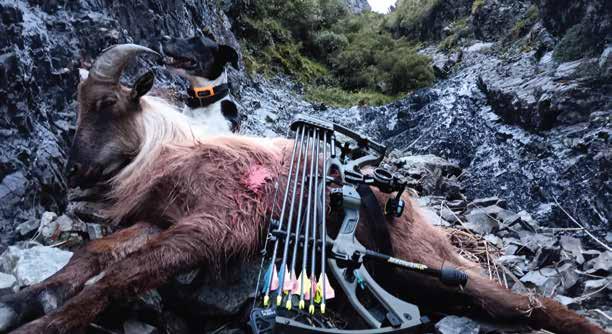
the spur where I’d last seen him, with my bow at full draw, expecting to see him at less than ten meters away. I was surprised to see him walking into a gut 40 metres o , I let down, quickly ranged where I thought he would step out, set my sight for 40, he stepped out on cue and stopped to eat his last mountain daisy. Deep breath, draw, anchor, settle the pin, forget the last shot you missed, pull through the shot and watch the arrow disappear just above his elbow, with a textbook pop sound of a good hit coming back to me. I watched him fall into a steep little gutter, followed by a loud thump, as he landed at the bottom. It was nearly dark. I quickly raced over to retrieve my arrow, which, with some help from my dog, was pretty easy, then back down the hill to find a way in to where my bull was lying, a short climb down a small blu and I had my bull, with enough light for a couple of glory pics and some butchery, I was on my way back to camp in the twilight.
As I was plodding back down the hill, trying to avoid falling into the abundant speargrass, it dawned on me that this was gonna be the first New Year that I’d seen in for a long time, and I couldn’t think of a better place I’d rather start 2026.
"While compliance was generally good, our fishery o cers are still catching people breaking particularly the pāua rules. While our o cers do a lot of education work with people on the rules, in some cases, where people are deliberately taking too much pāua, they can expect a fine. Or, if it’s more serious, such as selling it, we will put the matter before the court," Mr Ham says.
In the South Island, fishery o cers did 4,488 recreational inspections during summer, recording 261 instances of noncompliance. Many of these resulted in warnings, and 93 infringements were issued. Fishery o cers are still making enquiries into about 25 cases.
"Fishery o cers worked extremely hard throughout summer and while they provided education to a lot of people on rules, they still found too many people with too much pāua, crayfish, and undersize blue cod or blue cod being landed in an illegal state," Mr Ham says.
"Blue cod should always be landed whole or gutted, or in some areas headed and gutted, and it should never be used as bait, which we have found is still the case in both Southland and Otago from time to time. This behaviour threatens the sustainability of the blue cod fisheries.
"There is plenty of information available so that everyone can easily familiarise themselves with the rules.
"One of the best things you can do before going fishing is to download the free NZ Fishing Rules mobile app because it will provide you with the latest rules for the area you intend to fish – including closures and gear restrictions. This should be as essential to your fishing kit as your physical gear," Mr Ham says.
We encourage people to report any suspected illegal activity through the Ministry for Primary Industries’ 0800 4 POACHER line (0800 476 224).
HUNT LIKE A PRO
Made in Europe
Chosen by professionals
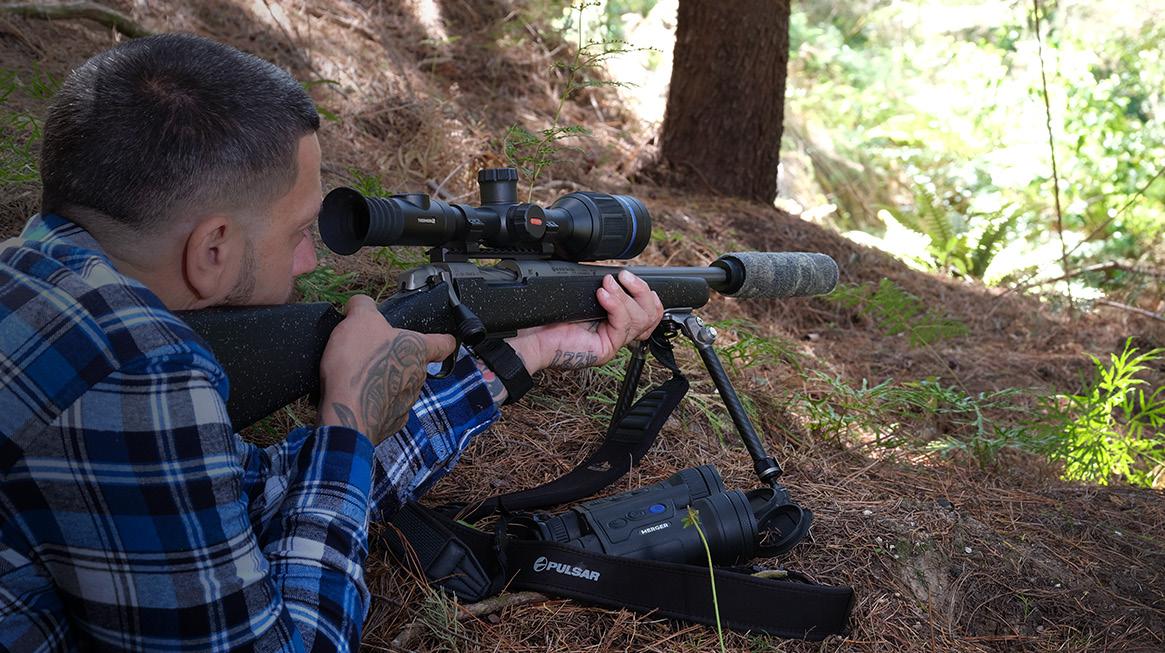
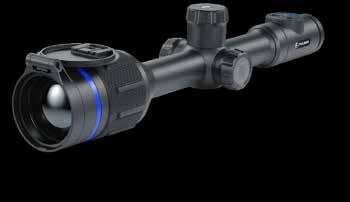
Pulsar thermals are the first choice amongst professionals.
Our great range starts at $2599, representing great value for high quality, proven, European made thermal optics with advanced Lynred sensors.
HAND-HELD THERMALS
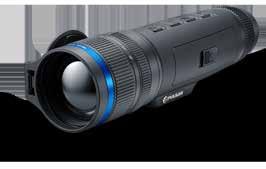
PULSAR AXION COMPACT
Lightweight, quick-change battery, robust and outstanding performance. Perfect for bush-stalking, forestry and general use. Great value.
Choice of 384x288 or 640x480 sensors.
From $2599.00
PULSAR TELOS
Outstanding performance at long and short distance.
High capacity quick-change battery very lightweight. Available with 1000m laser rangefinder.
Choice of 384x288, 640x480 or 1024x768 sensors.
From $3999.00
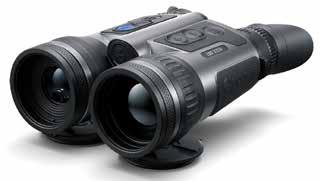
PULSAR MERGER LRF
Immersive, comfortable viewing experience, up to 1500m laser rangefinder, high capacity quick-change battery with internal back-up, delivers the very best performance.
Choice of 640x480 or 1280x1024 sensors.
From $6799.00
THERMALS RIFLESCOPES
PULSAR THERMION
Professionals favourite. Quick-change battery with internal back-up, 30mm tube and integrates with Stream Vision Ballistics for reliable shot placement. Available with 1000m laser rangefinder.
Choice of 384x288, 640x480 or 1024x768 sensors.
From $5399.00
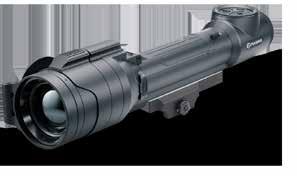
PULSAR TALION
Compact, quick-change battery, QD mount and integrates with Stream Vision Ballistics for reliable shot placement.