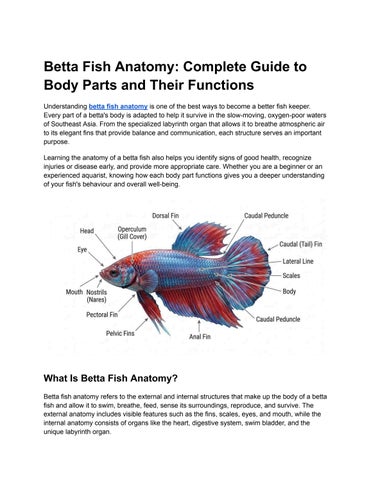
Betta Fish Anatomy: Complete Guide to Body Parts and Their Functions Understanding betta fish anatomy is one of the best ways to become a better fish keeper. Every part of a betta's body is adapted to help it survive in the slow-moving, oxygen-poor waters of Southeast Asia. From the specialized labyrinth organ that allows it to breathe atmospheric air to its elegant fins that provide balance and communication, each structure serves an important purpose. Learning the anatomy of a betta fish also helps you identify signs of good health, recognize injuries or disease early, and provide more appropriate care. Whether you are a beginner or an experienced aquarist, knowing how each body part functions gives you a deeper understanding of your fish's behaviour and overall well-being.
What Is Betta Fish Anatomy? Betta fish anatomy refers to the external and internal structures that make up the body of a betta fish and allow it to swim, breathe, feed, sense its surroundings, reproduce, and survive. The external anatomy includes visible features such as the fins, scales, eyes, and mouth, while the internal anatomy consists of organs like the heart, digestive system, swim bladder, and the unique labyrinth organ.