A monthly update covering people, events, research, and key developments
Editor’s Note:
This month you'll find we have published two articles about rules and regulations. The first speaks about a new OMB rule threatening science while the second comes from our archives and details the 2017-2018 Brussels Declaration. At the beginning of this issue we have a piece that speaks to the blind spots in modern epidemiology and provides fertile ground for discussion among yourselves. Finally we have a reader submission titled "How Sensitivity and Specificity Can Be Related to Prevalence".
With the end of the academic year come celebrations and honors and this month's Notes on People highlights many of your peers who have been honored recently along with others who have accepted new appointments.
BOOKS
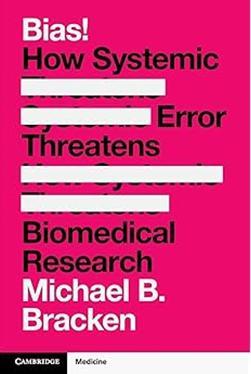
This month our resource section is dedicated to a new publication from Yale professor Michael Bracken titled: "BIAS! How Systemic Error Threatens Biomedical Research". Published by Cambridge University Press, this looks like a wonderful addition to your summer reading list.
Do you have a bookshelf to clear but you absolutely don't want to toss the books that cost you dearly into the trash? Let us know and we'll list them for you in the hopes of finding a home for them. Just email us at michele@epimonitor.net and we'll talk you through the logistics of the program.
We are starting to hear from many of you with articles that you'd like us to consider publishing. We are always interested in your offerings and are finding your peers are really enjoying them. Please also consider nominating people for our profile series, writing a review of a book, or letting us know about individuals whose accomplishment should be added to our monthly Notes on People feature.
As always, we continue to provide you with our popular monthly word game feature, Notes on People, an overview of what we are reading from the public media, and a listing of near term upcoming events. Ask us about the sponsorship opportunities for these standard monthly featuresit offers you great exposure for your event, institution, book or other item of interest to our readers!
Until next month - stay safe and busy!
In This Issue
-3- The Blind Spots in Modern Epidemiology
-7- New OMB Rule Could Break Science in the United States
-12- How Sensitivity and Specificity Can Be Related to Prevalence
-15- From the Archives - The Brussels Declaration & Critique 2018 -19- Resources: New BookBIAS! How Systemic Error Threatens Biomedical Research -20- Monthly Word Game -21- What We're Reading -23- Notes on People
Near Term Event Calendar -32- Newly Listed Public Health Jobs -39- Marketplace - Sponsored Jobs & Events
Did you miss last month’s issue? Read it here: https://tinyurl.com/2wt3227j or here: https://tinyurl.com/mwnjdnka
The Blind Spots in Modern Epidemiology
Why do tuberculosis and malaria inspire global action while millions of deaths from pollution and toxic chemicals are accepted as the cost of modern life?
Author: Bruce Lanphear, MD, MPH
NOTE: This article was originally published on June 16, 2026 by Plagues, Pollution & Poverty on Substack.
“It’s criminal not to solve tuberculosis.” Bill Gates
Why do some preventable deaths spark a global response while others barely register?
It is a question that has bothered me for years. When tuberculosis kills a child in Africa, governments mobilize. Foundations invest billions. Scientists race to develop better
diagnostics, drugs, and vaccines. When malaria surges, public health agencies track every case. When HIV emerged, the world eventually launched one of the largest public health campaigns in history.
But when lead poisoning contributes to millions of deaths, when air pollution shortens lives in every city on Earth, or when toxic chemicals increase the risk of cancer, heart disease, and developmental disorders, the response is strikingly different. Why?
The answer may lie in a distinction that epidemiologist Elizabeth Barrett-Connor challenged nearly fifty years ago.
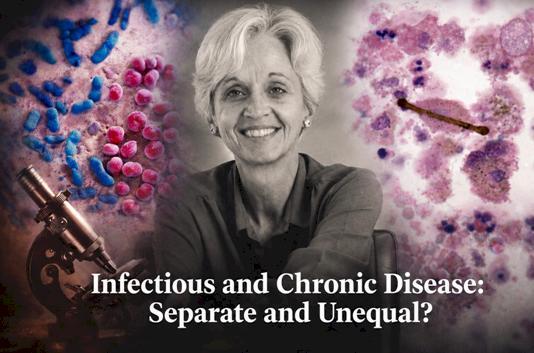
In 1979, Barrett-Connor published an essay with the provocative title Infectious and Chronic Disease Epidemiology: Separate and Unequal? She argued that the divide between infectious and chronic disease was largely artificial. Infectious diseases were assumed to be acute and caused by germs. Chronic diseases were assumed to develop slowly and arise from lifestyle, aging, or unknown causes. But Barrett-Connor pointed out that many infectious diseases were chronic, many chronic diseases might someday prove to be infectious, and all diseases involved interactions between biology, environment, and behavior. The separation, she argued, was not only arbitrary it was holding epidemiology back.
History has been kind to her argument.
Since Barrett-Connor wrote those words, researchers have discovered that many diseases once considered purely chronic are caused, at least in part, by pathogens. Human papillomavirus causes most cervical cancers. Hepatitis B and C infections cause many liver cancers. Helicobacter pylori causes stomach ulcers and stomach cancer. Epstein-Barr virus is linked to several cancers and is now considered a major contributor to multiple sclerosis.
In one sense, Barrett-Connor won.
The wall between infectious and chronic disease has largely collapsed.
Today, few physicians would argue that cervical cancer is simply a chronic disease. We recognize it as a preventable consequence of infection. We vaccinate children against HPV. We screen for hepatitis. We treat infections before they lead to cancer. The discovery of a microbial cause transformed how we think about prevention.
Yet something curious happened along the way. We accepted Barrett-Connor’s argument when the culprit was a pathogen. We have been far less willing to accept it when the culprit is a toxic chemical or pollutant.
Consider the language we use.
Bill Gates argued that “it’s criminal not to solve TB” and extended the same reasoning to HIV and malaria. Few people would disagree.
Tuberculosis kills more than a million people each year. It is preventable. It is treatable. To ignore it would be morally indefensible.
But what about lead poisoning?
Lead exposure kills between 3.5 and 5.5 million deaths annually, primarily through cardiovascular disease. Air pollution contributes millions more. Add in occupational exposures, contaminated water, pesticides, asbestos, and other toxic pollutants, and the toll becomes staggering.
The Lancet Commission on Pollution and Health estimated that pollution contributes to roughly nine million deaths each year worldwide. If newer estimates of lead-related mortality are accurate, the total burden from toxic chemicals and pollutants approach one in five deaths globally.
One in five.
Pause for a moment and imagine a new infectious disease that killed one in five people.
- Blind Spots cont'd on page 5
There would be emergency declarations. Daily news coverage. International summits. Massive investments in research. Politicians would compete to be seen taking action.
Instead, these deaths occur quietly.
A heart attack here. A stroke there. A diagnosis of lung cancer. A child struggling in school because of lead exposure. A premature birth linked to air pollution.
No epidemic curve appears on television screens. No nightly death count scrolls across the bottom of the news. The victims are scattered. The causes are invisible. The outrage dissipates.
And so we have created two different categories of preventable death. When a child dies from malaria, we ask how to prevent the next death. When a child loses IQ points from lead exposure, we ask how to help them cope. When tuberculosis spreads, we search for the source. When pollution spreads, we often debate whether the evidence is sufficient to justify action.
This distinction would have puzzled BarrettConnor.
Her central insight was that epidemiology should focus on causes rather than labels. A disease caused by a bacterium and a disease caused by a toxic chemical are both environmental diseases. Both arise from conditions outside the body. Both can be studied. Both can be prevented.
The difference is not scientific. It is political.
Tuberculosis has no lobbyists. Malaria does not fund public relations campaigns. Viruses do not hire lawyers to challenge regulations.
Lead, asbestos, PFAS, pesticides, tobacco, and fossil fuels do.
For decades, industries associated with these hazards have questioned the evidence, emphasized uncertainty, delayed regulation, and shifted responsibility onto individuals. The result is not merely confusion. It is a profound distortion of our moral priorities.
We have come to regard infectious diseases as preventable and chronic diseases as inevitable.
Yet many of the leading chronic diseases are no more inevitable than tuberculosis.
The decline in childhood lead poisoning demonstrates this. Removing lead from gasoline reduced deaths from heart attacks. Air pollution regulations have extended life expectancy. Smoking restrictions have prevented millions of premature deaths. These are among the greatest public health successes of the last century.
But we rarely describe them that way.
We celebrate vaccines. We celebrate antibiotics. We celebrate the eradication of smallpox.
We are less likely to celebrate the elimination of lead from gasoline, even though it has prevented millions of deaths and improved the lives of hundreds of millions of children.
Perhaps that is because one victory fits comfortably within our traditional understanding of disease while the other challenges it.
- Blind Spots cont'd on page 6
The irony is that Barrett-Connor saw this coming.
She argued that epidemiologists should stop dividing themselves into camps and simply call themselves epidemiologists. Acute diseases and chronic diseases, she wrote, are not separate species. Neither are the scientists who study them.
Nearly fifty years later, we may need to take her argument one step further.
The challenge is no longer to erase the boundary between infectious and chronic disease. The challenge is to erase the boundary between the preventable deaths we take
seriously and the preventable deaths we have learned to tolerate.
Bill Gates is right. It is criminal not to solve tuberculosis.
But if millions of deaths from toxic chemicals and pollutants are also preventable, the more uncomfortable question is this:
Why don’t we treat those deaths the same way?
■
To read more content like this please subscribe to Plagues, Pollution & Poverty on Substack.
New OMB Rule Could Break Science in the United States
Author: Elizabeth Marnik, PhD
Editor's Note: This article was originally printed in Your Local Epidemiologist on June 10, 2026. To read more content from this source subscribe to Your Local Epidemiologist (YLE): https://tinyurl.com/32pd2a8r
more time. None of it was inevitable. It required a system built to operate outside politics and sustained over decades, because science doesn’t operate on the timeline of a politician.
That system is now under direct threat.
The drug that saved your mother. The treatment your doctor recommended. The clinical trial that bought someone you love
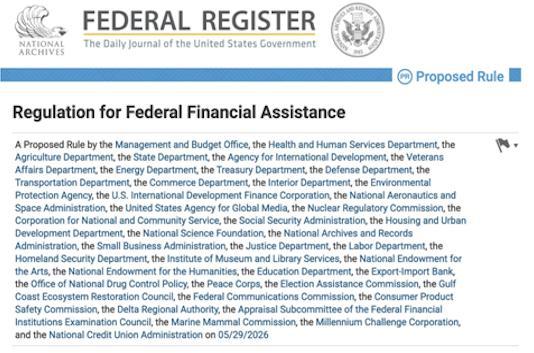
The Office of Management and Budget (OMB) has proposed a new rule to regulate all federal grants, not just science, but housing, education, defense, NASA and everything in between, that would fundamentally change how research is conducted in the United States.
The proposed rule posted on the Federal Register
There have been a lot of fires in the past 16 months, and if everything is an emergency, nothing is an emergency. But this is a very big deal. These rules would strip away the independence that has kept science from becoming a political tool.
The good news is there’s still something we can all do.
How the grant system was designed to work
When I was a new faculty member, I was full of millions of ideas, so I sat down and wrote an NIH proposal. I worked on it for months and thought it was so good. Then I sent it to my mentor.
It came back covered in comments. Places where my reasoning wasn’t as airtight as I’d thought, methods that could be stronger, gaps in my thinking that I had been too close to the work to see. It stung, as honest feedback always does, but peer review almost always makes the work better. In fact, it’s the backbone of how American science has functioned for generations.
At NIH, submitted proposals go to a panel of scientists who have experience in the field. These are the people who can read research methods and spot their weaknesses, who understand when an experiment is designed well and when it isn’t. Applications are scored rigorously, and often only the top 3-20% of proposals receive funding. The people making funding decisions are required to justify them based on these reviews.
To be clear: this is not a perfect system, and good science still goes unfunded more often than any of us would like due to limited resources. There is also criticism that peer review may undervalue bold ideas that are risky
but could have high payoffs.
But the peer review system is nonetheless a meaningful part of the grant selection process. While thoughtful and careful changes could improve the system, the changes being proposed by OMB will not make things better.
The rule that could change everything
Through this OMB proposal, the system that helps decide what gets funded is being dismantled.
There are many troubling elements buried in this proposal, but three provisions stand out in particular. Each would be damaging alone. Together, they would change what kind of science gets done in America, and who it serves.
1. Political appointees would decide which science gets funded, and peer review would be explicitly sidelined or ignored.
The guidelines your doctor follows, the standards that determine what’s in your air and water, the drugs that get approved for your family: all of it starts with a funding decision. Right now, that decision is made by scientists who can evaluate whether the work is actually sound and whether it could move the needle forward. Under this proposal, funding decisions could be made by political appointees.
The careful, expertise-driven review process that shapes grant funding would be effectively sidelined. That means that a poorly designed study could get funded simply because someone in a political office liked the sound of it, while rigorous, important work doesn’t get funded because it no longer aligns with the administration’s priorities. In other words,
critical work that benefits all of us could now be missed just because it has become politically inconvenient.
2. Grants could be canceled at any point, without warning, in the middle of ongoing work.
Say your tax dollars have been paying for a cancer study for two years. The grant was awarded for five years, so the team is midexperiment. There are three additional years’ worth of answers that could change how the disease is treated for hundreds of thousands of people. With this new rule, the federal government could cancel the remaining funding tomorrow, walk away from the commitment it made with your money, and have no legal obligation to finish what it started.
This is a huge waste of money. There are rarely other sources of funding for this work, which means the team, the graduate students, postdocs, and research staff who have dedicated years of their careers to this project could lose their jobs. Patients who have contributed their time to studies may not see it turn into useful learnings for others. Every hour of work already completed could result in nothing useful.
Science can take decades to get to tangible outcomes. It needs a stable funding system to flourish.
3. Researchers would have a harder time communicating their findings without preapproval from the federal government.
There is a saying from Sir Mark Walport: “Science isn’t finished until it’s communicated.” Science is no use to anyone if it is kept locked away in the labs that produced the data.
The proposed rule could make communicating research findings harder in a number of ways:
Make it harder for scientists to widely share their findings in scientific journals. Publication costs, including journal fees that allow for broad public access, could not be paid for by federal funds which is often how scientists pay these costs.
Restrict researchers from engaging publicly about how their findings should inform policy or public health guidelines. This would restrict scientists from doing the work that transforms years of lab work into decisions that actually affect people’s lives.
Make it harder for scientists to attend conferences. Conferences would now need to be approved by the federal agency at the time of grant award. This disadvantages conferences or publications that are not politically aligned. Conferences are a key way in which scientists learn about work happening in their field so they can collaborate and build on each other’s findings.
What good is science with a muzzle?
The long-term impact
These changes could (and hopefully would) be reversed under the next administration. But by then, damage has been done. Once projects are halted or denied funding by political appointees, people leave their science careers for other paths or even leave the country to do their amazing science elsewhere.
- OMB cont'd on page 10
You cannot pause a scientific study the way you pause a subscription you decided isn’t useful anymore. You cannot freeze a research team that depends on salaries to feed their families, causing a scramble for replacement funding that, in most cases, simply does not exist. When the money stops, everything stops, and all the work in progress and its potential are lost.
Despite all of the language about reducing waste, fraud, and abuse, this new proposed rule increases the administrative burden tremendously.
Every researcher watching this unfold will make a rational decision: don’t start anything that will take a decade to finish. This includes not building a team around funding that could vanish, or asking the big questions that need patience and stability to answer. The most consequential science, the kind that produces the treatments and the breakthroughs that reach your doctor’s office twenty years from now, is exactly the science that would be abandoned first.
This is still a proposal, so we can all do something
Some worry this rule is already a done deal. But by law, OMB is required to open a public comment period. Those comments matter because they inform members of Congress, they can be used in litigation, and they create a public record.
So here’s what you can do:
1.Submit a public comment. The public comment period on this proposed change is open until July 13. Anyone can submit a comment, and OMB is required to respond to substantial ones. Each comment must be
different to count as distinct; identical comments will be counted only once. Comment as an individual, not on behalf of your organization. Here’s a full resource to help you, with useful examples, but in general:
1. Share a story about how science or federal funding has benefited you or is involved in your work. Are you or someone you loved a cancer survivor? Do you know someone with Alzheimer’s? Have you received NIH/NSF or other federal funding? All of these can be stories you use to highlight why you care.
2. Explain why you’re worried about these proposed changes. You can use the wording found here or in other resources to help you.
3. Ask them to withdraw this proposed rule.
2. Contact your elected representatives. Congress allocates money to federal agencies to spend, and it has oversight of how that process works. You can let your representatives know this proposed change concerns you and ask them to intervene. There are levers they can push that can help at this moment.
3. Let others know why federal funding matters. This isn’t just about science, but ALL federal grants, including for education systems, defense projects, and more. The process, including the importance of federal funding, is invisible to many. We can all make it more visible by sharing how science benefits us and why we value it. You can also share this article, or any of the resources linked here, to help spread awareness!
Bottom line
We are quickly losing ground in scientific research in the U.S. More changes, like the proposed rule by OMB, would decimate our ability to conduct research here, leaving us all worse off: fewer treatments for pancreatic cancer, less research on pollution impacts, fewer answers for patients with rare disease, and more unaddressed health needs. The
impact will be very real for all of us, regardless of where we stand politically.
Using our voices for science is more important than ever. ■
For more content like this please find YLE on Substack: https://tinyurl.com/vhmbuyka
Dr. Liz Marnik, PhD, is Executive Director of The Evidence Collective at YLE and a science communicator and immunologist working at the intersection of public trust, science, and public health. You can find her on Substack, LinkedIn, Instagram and Threads.
YLE can be found here: https://yourlocalepidemiologist.substack.com/
Your Local Epidemiologist (YLE) is founded and operated by Dr. Katelyn Jetelina, MPH PhD an epidemiologist, wife, and mom of two little girls. YLE reaches more than 305,000 people in over 132 countries with one goal: “Translate” the ever-evolving public health science so that people will be well-equipped to make evidence-based decisions. This newsletter is free to everyone, thanks to the generous support of fellow YLE community members.
To support the effort, subscribe or upgrade your existing subscription: https://yourlocalepidemiologist.substack.com/
A Graphical Representation of How Sensitivity and Specificity Can Be Related to Prevalence
Author: Lawrence H. Moulton
Professor Emeritus Johns Hopkins Bloomberg School of Public Health
Abstract
In introductory epidemiology classes and textbooks, the concepts of sensitivity, specificity, prevalence, and predictive values are introduced. It is common to see it stated that sensitivity and specificity are functions of the diagnostic test which is employed, and are not related to the prevalence of disease. Using plots of bivariate normal distributions, we provide a straightforward demonstration of the general incorrectness of this statement, and how easily a departure from this phenomenon can arise.
Introduction
In the textbook Gordis Epidemiology1, we find: “Unlike the sensitivity and specificity of the test, which can be considered characteristic of the test being used, the PPV is affected by two factors: the prevalence of the disease in the population…” ChatGPT tells us “In epidemiology, sensitivity and specificity are generally considered to be independent of prevalence…” (accessed 4 November 2024). While these expositions are fine for a first course, students pursuing more advanced training soon discover there is a literature devoted to the situations where this is not the case. Perhaps the first publication was by Ransohoff & Feinstein2 , which noted sensitivity and specificity can depend on the severity of disease and on comorbid conditions. Subsequently, the phenomenon sometimes has been referred to as “spectrum bias.” Early statistical treatments were given by Brenner & Gefeller3 and Choi4 ,
followed by Hilden5, and publications explaining the nature of the problem continue to appear6 . However, an easily apprehended description of how sensitivity and specificity can be related to prevalence has been lacking.
Demonstration of how sensitivity and specificity can be related to prevalence
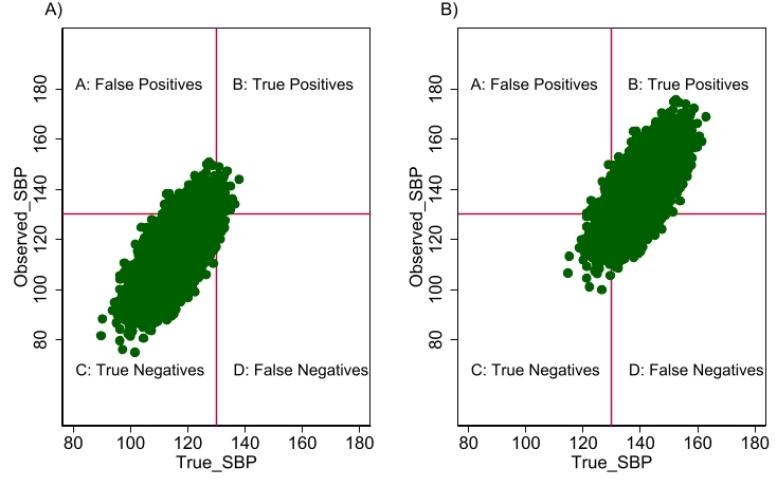
Consider a population with a distribution of “true” systolic blood pressures (SBP) with mean 115 mm Hg and standard deviation (SD) 6 (Figure 1A). Suppose their blood pressures are then measured with some specified instrument, adding variability so that the SD of the observed measures is 10, but with the same mean of 115, and that the correlation of their true and observed SBP is 0.7. If SBP is defined as being above 130 mm Hg, we can delineate the familiar four areas of Figure 1A as those comprised of A:False Negatives, B:True Positives, C:True Negatives, and D:False Positives. Thus, sensitivity here is given by B/(B+D), and specificity by C/(A+C), where the letters designate the proportion of all the people in each designated area, with A+B+C+D=1.
Sensitivity and specificity can be calculated exactly using the bivariate normal function (or approximately using simulation) as 73.8% and 93.7%, respectively.
Now suppose we come across a second population (Figure 1B), configured like the first population except now their true mean SBP is 140. We can see that the population is shifted from Figure 1a to 1b by moving the point cloud up and to the right. This results in sensitivity
- Prevalence cont'd on page 13
and specificity of 87.0% and 72.5%, respectively. Of particular interest is that this change in the parameters has been effected by changing the true prevalence, B+D, of high blood pressure in the first population from 0.6% to 97.7% in the second population.
In the days of transparencies and overhead projectors, this was easily demonstrated by moving two transparencies around on top of each other, one having the point cloud, the other the cutoff axes. Table 1 effectively does this, giving the values of sensitivity and specificity according to different prevalences and standard deviations. As might be expected, the positive and negative predictive values are more strongly associated with prevalence than are sensitivity and specificity.
A student might, at this point, ask “When are sensitivity and specificity not related to prevalence?” This can occur when the underlying condition is purely dichotomous, e.g. when a person either carries a gene or does not. Readers are invited to construct a corresponding graph, where individuals have only one of two values on an X-axis; changing the proportions with one or the other values will not affect the sensitivity and specificity of a specified test, even if the test results have a continuous distribution.
Data were generated and graphed with Stata 17 (College Station, TX).
2. Ransohoff DF, Feinstein AR. Problems of spectrum and bias in evaluating the efficacy of diagnostic tests. N Engl J Med. 1978;299:926-930.
3. Brenner H, Gefeller O. Variation of sensitivity, specificity, likelihood ratios and predictive values with disease prevalence. Stat Med. 1997;16:981-991.
4. Choi BC. Causal modeling to estimate sensitivity and specificity of a test when prevalence changes. Epidemiology. 1997;8:80-86.
5. Hilden J. Prevalence-free utility-respecting summary indices of diagnostic power do not exist. Stat Med. 2000;19:431-440.
6. Fierz W. Diagnostic sensitivity, specificity, and likelihood ratio dependent on prevalence of disease-underlying cause. Arch Microbio Immuno 2023;7:96-110.
- Prevalence cont'd on page 14
Figure 1. Simulated systolic blood pressures (SBP), 10,000 in each panel. Red lines indicate the cutoff of 130 mm Hg as designating high blood pressure. A) True mean of 115, B) true mean of 140.
Table 1. Test Characteristics Associated with Varying True Mean Systolic Blood Pressures (SBP) and Standard Deviations (SD).
From the Archives
The Brussels Declaration
Editor's Note:
In the summer of 2018 the EpiMonitor reported on the Brussels Declaration which was a set of 20 guiding principles for global science-led policy making. The document was created by private entities in Europe and the US. It was
The
Brussels Declaration
The 20 Principles of the Brussels Declaration
Section 1: Science and policy – a crucial relationship
1. Science is a fundamental pillar of knowledgebased societies
2. Science can help provide the evidence base for public policy
3. Sound public policy is crucial for the direction and priorities of science
4. The dialogue between science and policy is never straight-forward
Section 2: What we expect from the scientific community
5. The integrity of science needs to be clear and the integrity of scientists providing advice must be unimpeachable
6. The full range of scientific disciplines should be included; notably, the social sciences can play a key role in improving how the public may react or adapt
7. Scientists must learn to use established communication channels for providing policy
adopted at the annual meeting of the American Association for the Advancement of Science. Given the changes worldwide over the eight intervening years, perhaps it is time to revisit this effort.
[Reprinted here from the website EuroScientist]
7. Scientists must learn to use established communication channels for providing policy advice more effectively and be less aloof and perhaps less arrogant
8. Scientists must listen and respond to criticism
Section 3: What we expect from the policy-making community
9. Policy-makers must listen, consult and be held accountable
10. Ethical consideration of the impact of policy decisions is crucial
11. Policy-makers have to challenge science to deliver on public investment
12. Policy-makers should be willing to justify decisions, particularly where they deviate from independent scientific advice
13. Policy-makers should acknowledge the potential for bias and vested interests contrary to the scientific consensus
- Brussels cont'd on page 16
Section 4: what we expect from the public, media, industry and interest groups
14. The public plays a critical role in influencing policy and must be included in the decisionmaking process
15. Industry is an investor in knowledge generation and science and has every right to have its voice heard
16. Interest groups similarly have every right to have their voice heard as guardians of the common good or legitimate sectoral interests
17. Advice from any source to policy-making must acknowledge possible bias
Section 5:
What needs to change: how scientific advice & greater inclusivity need to be integrated more effectively
18. Scientific advice must be more involved in all stages of the policy-making process
19. Policy-making must learn to cope with the speed of scientific development and include greater foresight and policy anticipation
20. Societal investment in science will always require priority-setting; nevertheless, advances in public health deserve special attention
Brussels Declaration: 20 Principles To Help Govern Evidence-Based Decision Making (EBDM)
Statement Criticized For Lacking Safeguards Against Corporate Interests
The Brussels Declaration, a set of 20 principles, is the culmination in 2017 of an independent 5year initiative questioning the robustness of science-led policymaking around the world.
The private group responsible for the initiative believes that bad government policies, presumably not evidence-based, are causing public harm. To help ameliorate this situation, a text was adopted during a symposium at the annual meeting of the American Association for the Advancement of Science. It articulated 20 principles to help improve the process of evidence based decision making. These 20 principles are the core of the Brussels Declaration (See below).
Purpose
In a statement on EuroScientist where the
declaration was published, the authors assert that the sole purpose of the declaration “…is to boost understanding of how power operates and to explain why evidence plus dialogue rarely equals (as one might expect) good decisions and laws. Above all, we make a case for a broad, multi-stakeholder and multidisciplinary approach promoting greater integrity and accountability. Our main recommendation for promoting public dialogue and better understanding is not only greater transparency and scrutiny, but genuine inclusivity.”
Positive Elements
The Brussels Declaration contains many sound ideas that should shape the conduct of
scientists and others involved in the attempts to make good use of science in developing public policy. For example, one of the principles is that policy makers should be willing to justify decisions particularly when they deviate from independent scientific advice. Mainstream science groups have appeared in support of the Declaration, however, several epidemiologists involved with policy have said they were unaware of it.
The positive elements of the Declaration have not dissuaded a group of British scientists from calling into question the real intent of the Declaration. For example, one of the principles that has raised concern states “Industry is an investor in knowledge generation and science and has every right to have its voice heard”.
In a paper in Tobacco Control Jim McCambridge at York University and his colleagues Mike Daube and Martin McKee have asked skeptically in their title “Brussels Declaration: a vehicle for the advancement of tobacco and alcohol industry interests at the science/policy interface?”
Based on an analysis of the Declaration and the process used to create it, McCambridge and colleagues became suspicious that the real intent of the document might not be what it seems and that it could be part of a global strategy by industry, especially the tobacco and alcohol industries, to shape the making of science policy and the governance of research more generally. They list five issues which raise concern about how seriously the Declaration should be taken.
Five Issues
First, they question the process for developing the Declaration such as how the participants were selected, who actually attended the events
leading up to the Declaration, how much involvement they had in the final Declaration, and how the costs of development were met.
Second, because the Declaration calls for inclusivity, it has the potential to be appealing in a democratic context. However, a call for inclusivity undermines the Framework Convention on Tobacco Control which excludes tobacco companies from involvement in public health policy making.
Third, there is a need to better understand the “corporate determinants of health”. Scientists should be vigilant when they interact with industry personnel at meetings and other events lest their names and reputations be misused.
Fourth, other recent developments, such as the substantial investment by Phillip Morris International in a ‘Foundation for a Smoke-Free World, have called into question how industry may be operating in the research and science policy arenas to satisfy its global political strategies.
Fifth, the Declaration should be examined to determine how much it ultimately succeeds as “an instrument of influence” on conflicts of interest, on the evaluation of science, and on public health and science policies.
Conclusions
In the abstract to their paper, McCambridge and colleagues say “The case for policies to be based on evidence appeared to gain a major boost with the publication of the Brussels Declaration, apparently with support from many leading scientists and institutions…there are major concerns about how it was -
developed, and in particular, the extensive involvement of tobacco and alcohol industry actors…The process of developing the Declaration successfully involved science advisors, other senior officials in governments and politicians in its preparation. Despite this, the final Declaration fails to address the need for safeguards to protect the integrity of science or policy from corporate interests…the
Declaration offers potential to serve as a vehicle for advancing the vested interests of corporate sectors in public policymaking…”
To view the full Declaration, including the Preamble, visit:
https://tinyurl.com/593hypd6 ■
Resources
BIAS! How Systemic Error Threatens Biomedical Research
Editor's Note:
This month we are pleased to present a new book titled "BIAS! How Systemic Error Threatens Biomedical Research" by Yale professor Michael Bracken. This looks like a great addition to your summer reading list.
We are hoping to present more lists of free books in the coming months. If you are cleaning out your bookshelves please let us know so we can help you direct the excess to someone who the books.
We are also interested in publishing book reviews. If you have a new book that you have read or written that you believes deserves to be seen by a wider audience please send us the information you have on it. If you're interested in reviewing books for the EpiMonitor, just drop us a line and we'll start a discussion to see what we can work out.
Professor Michael Bracken's new book has just been published by Cambridge University Press: "BIAS! How Systemic Error Threatens Biomedical Research" The book is described by CUP: "An intricate landscape of bias permeates biomedical research. In this groundbreaking exploration the myriad sources of bias shaping research outcomes, from cognitive biases inherent in researchers to the selection of study subjects and data interpretation, are examined in detail. With a focus on randomized controlled trials, pharmacologic studies, genetic research, animal studies, and pandemic analyses, it illuminates how bias distorts the quest for scientific truth. Historical and contemporary examples vividly illustrate the impact of biases across research domains. Offering insights on recognizing and mitigating bias, this comprehensive work equips scientists and research teams with tools to navigate the complex terrain of biased research practices. A must-read for anyone seeking a deeper understanding of the critical role biases play in shaping the reliability and reproducibility of biomedical research."
Michael Bracken Professor Emeritus Yale University
Epi
As You Were Reading
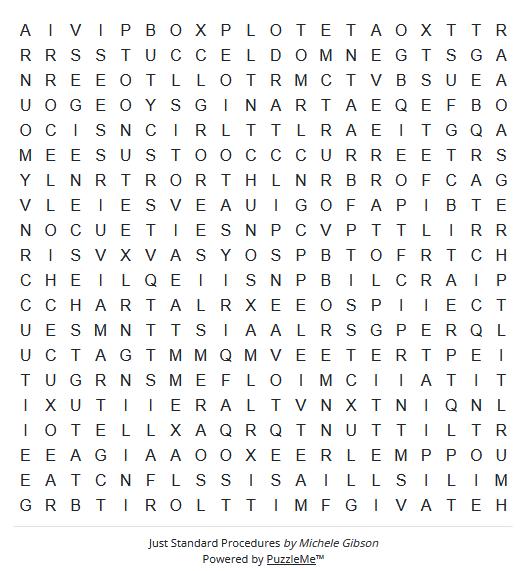
This month's puzzle spotlights words from articles in this month's issue That should make it easy for you to work the puzzle. Good luck - don't let the puzzle frustrate you!
For an interactive online version go to: https://tinyurl.com/mrcdfmmy
Words to find:
1. Blind Spots 2. Brussels 3. Congress 4. EuroScientist
5. False Negative 6. False Positive
7. Federal Register
8. Impact
9. Liz Marnik
10. Moulton
11. OMB Rule
12. Political 13. Prevalence
14. Public Content
15. Scientific Study
16. Sensitivity
17. Specificity
18. Systemic Error
What We're Reading This Month
Editor's Note: All of us are confronted with more material than we can possibly hope to digest each month. However, that doesn't mean that we should miss some of the articles that appear in the public media on topics of interest to the epi community. The EpiMonitor curates a monthly list of some of the best articles we've encountered in the past month. See something you think others would like to read? Please send us a link at info@epimonitor.net and we'll include it in the next month
Ebola
♦ Ebola Outbreak is Three Times Bigger Than Previous Outbreaks at Four Weeks
https://tinyurl.com/bdwv86rp
♦ Emory epidemiologist on why this Ebola strain is harder to treat (WABE)
https://tinyurl.com/y4txsx2j
♦ Epidemiologist answers 3 frequently asked questions about the Ebola outbreak (Medical News Today)
♦ All 4 siblings develop the same disease then they test the dog (Newsweek)
https://tinyurl.com/35vxh7an
♦ Ticks infect 500,000 Americans with Lyme disease every year but we can beat them (VOX)
https://tinyurl.com/2t37sjj4
Cancer
♦ Scientists found a lung cancer clue in the fine particles people breathe during haze season (Earth.com)
https://tinyurl.com/32hwbbem
♦ New Immune System Discovery Could Help Beat a Sneaky Cancer Cell Trick (ScienceAlert)
https://tinyurl.com/4h6x2573
- Reading cont'd on page 22
What We're Reading This Month
[Type a quote from the document or the summary of an interesting point. You can position the text box anywhere in the document. Use the Text Box Tools tab to change the formatting of the pull quote text box.]
- con't from page 26
Cancer, cont.
♦ Cervical cancer deaths have plummeted thanks to HPV vaccine (New Scientist)
https://tinyurl.com/mr48eth9
Public Health Topics
♦ WH reclassifies federal epidemiologists as at will employees (Scientific American)
https://tinyurl.com/7m7392h6
♦ Buildings may soon have immune systems (NYT - Gift Article)
https://tinyurl.com/56dn9ee3
♦ How one state became America's measles hot spot (Wired via AppleNews)
https://tinyurl.com/yc54kpwe
♦ Berkeley death from rat-linked infection serves as 'wake-up call' expert says (SF Gate)
https://tinyurl.com/mrxn8jxp
♦ When seasonal structure dominates: rethinking causal attribution in environmental epidemiology (Frontiers)
https://tinyurl.com/4r6x5pad
♦ Brazil Leads South-South Cooperation Initiative with Africa CDC to Strengthen Field Epidemiology Training and Epidemic Intelligence (PAHO)
https://tinyurl.com/2jz45a9n
♦ Have We Learned Anything from the Tuskegee Experiment? (National Review via AppleNews)
https://tinyurl.com/h363tez7
♦ Forecasting virus evolution by integrating genotype–phenotype–epidemiology (Nature)
https://tinyurl.com/mrxaucsd
♦ There may finally be a breakthrough for treating long COVID — but it's controversial (Wired via AppleNews)
https://tinyurl.com/ycy8ccbh
Notes on People
Do you have news about yourself, a colleague, or a student?
Please help The Epidemiology Monitor keep the community informed by sending relevant news to us at this address for inclusion in our next issue. michele@epimonitor.net
Honored: CSTE has announced that Linda Bell, MD has won this year's Pumphandle Award. Bell’s three decade long tenure as state epidemiologist included leading the state’s COVID-19 response, as well as its more recent measles outbreak. The award recognizes an individual who exemplifies extraordinary contributions in the field of applied epidemiology.
Honored: At this year's annual conference CSTE has awarded Alabama state epidemiologist Sherri Davidson, PhD, MPH, with its Distinguished Leader Award. This award recognizes a subcommittee chair, liaison, or consultant who has provided exceptional guidance and leadership.
Honored: Dr. Hannah Cranford, the Virgin Islands Department of Health epidemiologist and data scientist received the CSTE Rising Leader award at this year's annual conference. The award is given to the individual who has demonstrated exceptional leadership, innovation, and has impacted the field of epidemiology. Dr. Cranford earned her PhD in oncology epidemiology at the University of Miami.
Honored: George Mason University social epidemiologist Jhumka Gupta has received the 2026 Senior Investigator Award from the Health Equity Interest Group of AcademyHealth. A professor of global and community health in the College of Public Health, Gupta focuses her research on gender-based and intimate partner violence against women and girls, refugee and immigrant populations, reproductive health, and the health impacts of conflict and forced displacement.
Notes on People, con’t
from page 23
Do you have news about yourself, a colleague, or a student?
Please help The Epidemiology Monitor keep the community informed by sending relevant news to us at this address for inclusion in our next issue. michele@epimonitor.net
Honored: Indiana University - Bloomington, SPH faculty member Ricky Camplain, was awarded the Outstanding Junior Faculty Member prize for shedding light on health disparities across the country with a goal towards better health equity is a passion project. Camplain made headlines last year working with her twin sister and SPH-B faculty member Carly Camplain on researching health equity issues in tribal jails on the Hualapai Reservation in Peach Springs, AZ.
Honored: The Editors and Editorial Board of EPIDEMIOLOGY are pleased to announce the selection of Julianne Skarha as the winner of this year’s Rothman Epidemiology Prize. This award is given annually for the best paper published in the journal in the preceding year. Dr. Skarha’s winning paper, titled “Cold-related Mortality in US State and Private Prisons: A Case-Crossover Analysis,” appeared in our March 2025 issue. Using mortality data from US prisons, 2001-2019, and a case-crossover design, they found that cold temperatures were associated with an increased risk of death in prisons, with noteworthy increases in suicides
Honored: Former Johns Hopkins Department of Biostatistics faculty member Kung-Yee Liang, PhD, has been awarded a Johns Hopkins Bloomberg School of Public Health Dean's Medal, in recognition of his contributions to public health, medical research, and education around the world. Established by Bloomberg School Dean Emeritus D.A. Henderson (1928–2016), the Dean’s Medal is the highest honor awarded by the Dean of the Bloomberg School and is reserved for outstanding leaders in public health.
Honored: Dr. Marc Suchard a professor in the UCLA Fielding School of Public Health’s Department of Biostatistics has received the 2026 Outstanding Impact Award and Lectureship from the Western North American Region of the International Biometric Society. The award spotlights the importance of foundational research into improving how statistical analysis is used to improve how public health agencies respond in times of crisis.
Do you have news about yourself, a colleague, or a student?
Please help The Epidemiology Monitor keep the community informed by sending relevant news to us at this address for inclusion in our next issue. michele@epimonitor.net
Honored: UC Irvine Joe C. Wen School of Population & Public Health founding dean and professor Bernadette Boden-Albala DrPH, MPH, has been recognized in Research.com's Best Medicine Scientists Ranking. An internationally recognized public health leader, researcher, and academic administrator with more than 30 years of experience, she serves in several leadership roles within the field of public health, at UC Irvine, and across the University of California system.
Honored: UC Irvine UC Irvine Joe C. Wen School of Population & Public Health chair and distinguished professor of epidemiology & biostatistics Simin Liu MD, ScD, has been recognized in Research.com's Best Medicine Scientists Ranking. His work spans from the fundamental investigation of the genetic basis for cardiometabolic diseases to clinical epidemiology, risk modeling, and interventions in diverse populations, ultimately developing what he coins the G6P framework integrating data from diverse platforms and sources for causal inference.
Honored: UC Irvine UC Irvine Joe C. Wen School of Population & Public Health adjunct professor of epidemiology & biostatistics Nathan Wong PhD, has been recognized in Research.com's Best Medicine Scientists Ranking. His research has focused on cardiovascular epidemiology and prevention.
Appointed: Dr. Onyebuchi “Onyi” Arah, professor in the UCLA Fielding School of Public Health’s Department of Epidemiology for more than 15 years, will serve as interim chair of the department beginning July 1, 2026. Arah, also a professor in UCLA’s Department of Statistics and Data Science and co-director of the university’s Practical Causal Inference Lab, will succeed Dr. Zuo-Feng Zhang, the current department chair, who will step down after five years of exemplary service and transition full time to his role as distinguished professor of epidemiology.
Do you have news about yourself, a colleague, or a student?
Please help The Epidemiology Monitor keep the community informed by sending relevant news to us at this address for inclusion in our next issue. michele@epimonitor.net
Appointed: Briya, the healthtech AI company enabling evidence-driven discovery for life sciences and medical research, today announced it has appointed leading pulmonary physician and epidemiologist Professor Jonathan M. Samet, MD, MS, as Chief Epidemiologist. Prof. Samet brings over 40 years of experience in clinical practice and research. He is Professor of Epidemiology and Occupational and Environmental Health, and former Dean of the Colorado School of Public Health. He has also held senior leadership positions at the Johns Hopkins Bloomberg School of Public Health and the University of Southern California. Samet was awarded the 2025 Calderone Prize in recognition of his contributions to the field of public health.
Elected: Vanderbilt faculty member, Andrew Spieker, PhD, Associate Professor of Biostatistics and Director of Graduate Studies, has been elected to serve as the 2027 chair-elect of the American Statistical Association (ASA) Biometrics Section. Spieker earned a bachelor’s degree in mathematics at Northeastern University in 2011 and a PhD in biostatistics at the University of Washington in 2016 before undertaking postdoctoral research at the University of Pennsylvania. He joined Vanderbilt in 2018.
Elected: Vanderbilt University faculty member, Simon Vandekar, PhD, Associate Professor of Biostatistics and Director of Graduate Recruitment, has been elected to serve as the 2027 chair-elect of the ASA Statistics in Imaging Section, established in 2012.
Vandekar earned a bachelor’s degree in neuroscience at Pennsylvania State University in 2009 and a PhD in biostatistics at the University of Pennsylvania in 2018. He joined Vanderbilt in 2018.
Do you have news about yourself, a colleague, or a student?
Please help The Epidemiology Monitor keep the community informed by sending relevant news to us at this address for inclusion in our next issue. michele@epimonitor.net
Passed: Carl Shy, PhD, expert in environmental and occupational epidemiology and emeritus professor of epidemiology at the UNC Gillings School of Global Public Health, died on May 3, 2026. Shy was a former chair of the Department of Epidemiology at the Gillings School. His teaching and research had a major impact on both the field of environmental epidemiology and his students, who now continue his legacy around the world.
Shy’s scientific contributions were broad, spanning air pollution to asthma to cancer, the results of which contributed to protections for cleaner air and safer work environments. His research while at the Environmental Protection Agency (EPA) on health impacts of nitrogen dioxide on school children’s health was used to set air pollution standards. These standards led to control of air pollution emissions from cars and the addition of catalytic converters. These catalytic converters required unleaded gas, thereby reducing major lead contamination across the entire United States.
Passed: Elaine Zawacki Dempsey, 69, passed away peacefully at her home on June 13, 2026 Elaine earned a Bachelor of Science degree in Mathematics from North Carolina Central University and enjoyed a distinguished career as a biostatistician. Learning the SAS language while working for that company, she then dedicated more than 30 years toward that profession and was highly respected. Elaine also served as a past chairperson of the Pharmacology SAS Users Group (PharmaSUG), where she contributed her expertise and leadership to the field.
https://tinyurl.com/yc7xyxhn
Near Term Epidemiology Event Calendar
Every December The Epidemiology Monitor dedicates that issue to a calendar of events for the upcoming year. However that often means we don't have full information for events later in the upcoming year. Thus an online copy exists on our website that is updated regularly. To view the full year please go to: http://www.epimonitor.net/Events The events that we are aware of for the next month follow below.
July 2-9
Title: CMMSE
Type: Short Course
July 2026
Sponsor: University of Bristol Location: Virtual
July 6-7
Type: Short Course
Title: Further Survival Analysis
Sponsor: University of Bristol Location: Virtual
July 12-16
Type: Conference
Title: 33rd Annual Biometric Conference
Web: http://tinyurl.com/26sm9fs8
Web: http://tinyurl.com/26sm9fs8
Web: https://tinyurl.com/bddvj2m6
Sponsor: International Biometric Society Location: Seoul, Korea
July 12-17
Type: Conference
Web: https://tinyurl.com/ytv4hdvf
Title: 12th International Conference on Teaching Statistics
Sponsor: Multiple Location: Brisbane, Australia
July 12-22
Type: Summer Program Web: https://tinyurl.com/tbxyha4r
Title: Summer Institute of Advanced Epidemiology & Preventive Medicine
Sponsor: Tel Aviv University Location: Tel Aviv, Israel
Title: 9th International Conference on Public Health (ICOPH 2026)
Sponsor: Multiple Location: Bali, Indonesia
Near Term Epidemiology Event Calendar
August 30 - Sept 2 Type: Conference
August 2026
Web: https://tinyurl.com/5cvba6e3
Title: International Society of Environmental Epidemiology 37th Annual Conference
Sponsor: ISEE Location: Munich, Germany
August TBD Type: Summer Program Web: https://tinyurl.com/mtpbw2kn
Title: Erasmus Summer Program
Sponsor: Erasmus MC Location: Rotterdam, The Netherlands
Your Ad Should Be Here
Do you have a job, course, conference, book or other resource of interest to the epidemiology community? Advertise with The Epidemiology Monitor and reach 35,000 epidemiologists, biostatisticians, and public health professionals monthly.
Advertising opportunities exist in this digital publication, on our website and social media pages, and in our Epi-Gram emails. For more information please contact:
Open Public Health Positions
What it means and why it matters
The list below has been compiled by Public Health Hiring Help the new Substack column that has been created to help individuals in the public health community find positions in the midst of the chaos that is now impacting governmental agencies and grant recipients. This list represents the most current positions PHHH has been able to identify. We thank PHHH for their permission to reprint these listings.
Decision Point, Health Business Analyst (PT) (Atlanta, GA)
Public Health Alignment: EPI, HPM, GH, Bachelor’s, Master’s, Grad
ProPharma, On-Site Study Coordinator (PT) (Multiple Locations)
Public Health Alignment: EPI, HPM, Bachelor’s, Grad, Master’s
University of PA, Research Assistant (CT) (Philadelphia, PA)
Public Health Alignment: EPI, Undergrad, Grad, Bachelor’s, Master’s
RWJBarnabasHealth, Program Coordinator (PT) (Long Branch, NJ)
Public Health Alignment: BSHES, HPM, Bachelor’s, Grad, Master’s
Univ of WI, Research Specialist (PT) (Madison, WI)
Public Health Alignment: BSHES, EPI, Bachelor’s, Master’s
State of VT, Public Health Analyst II (CT) (Waterbury, VT)
Public Health Alignment: EPI, Bachelor’s, Master’s
PA State University, GIS Research Assistant (PT) (University Park, PA)
Public Health Alignment: GH, EH, EPI, Undergrad, Grad, Bachelor’s, Master’s
Keep AI Safe Foundation, Research Assistant (PT) (Boston, MA)
Public Health Alignment: RMACH, BSHES, HPM, Bachelor’s, Master’s, Grad
Denver Health, Sexual and Reproductive Health Educator (PT) (Denver, CO)
Public Health Alignment: RMACH, BSHES, Bachelor’s, Grad, Master’s
For Full Information on jobs: http://www.epimonitor.net/JobBank
The EpiMonitor offers a variety of plans for you to advertise your job opening, event or other item of interest to our readers. The basic advertising options are:
Web Only
This provides you with a full page on our website along with banner ads in appropriate places for what you are advertising (e.g. our Job Bank or Events pages). In addition, these ads are also featured in our monthly email blast. Web ads normally appear on our site within 2-3 hours of your order.
Web + Digital Print
This option provides either a full or half page digital print ad in this publication monthly along with all of the services included in the "Web Only" option.
Social Media
We also have social media add-on options for our web and print advertising programs.
Your Ad Should Be Here
Do you have a job, course, conference, book or other resource of interest to the epidemiology community? Advertise with The Epidemiology Monitor and reach 35,000 epidemiologists, biostatisticians, and public health professionals monthly.
Advertising opportunities exist in this digital publication, on our website and social media pages, and in our Epi-Gram emails.
For more information please contact: Michele Gibson / 770.309.7937 / michele@epimonitor.net
Director, Data Coordinating Center, Clinical Trial Epidemiologist
The Department of Epidemiology and Public Health (EPH) at the University of Maryland School of Medicine (UMSOM) is recruiting a full-timeAssociate Professor or Professor specializing in clinical trial epidemiology to serve as the Inaugural Director of the Data Coordinating Center (DCC). EPH is home to strong innovative research programs in biostatistics and bioinformatics, gerontology and aging, cancer epidemiology, genomic and infectious disease epidemiology, maternal and child health, preventive medicine, and population health. EPH has a long, successful record of leading important clinical trials funded by federal agencies, private foundations, and industry sponsors. Given the growing demand for clinical trial expertise (design, coordination, and management) at UMSOM, the Inaugural Director will have the opportunity to shape the future of clinical trial infrastructure within one of the nation’s leading academic medical centers. The position reflects a strategic institutional investment in expanding clinical trials infrastructure and multidisciplinary research collaboration across the School of Medicine.
This position will lead the development of the newly established DCC, designed to unify and expand existing clinical research coordination, data management, and quantitative support activities currently distributed across EPH, the School of Medicine, and the broader University. The DCC will serve as an institutional resource and collaborative hub that brings together expertise and infrastructure to provide integrated, scalable support for clinical trials and translational research initiatives across campus, and to support multisite clinical trials and collaborative data science activities.
Applicants must hold a doctoral degree (PhD, MD) or equivalent in epidemiology, biostatistics, or a related field. The successful candidate will have experience in epidemiologic study design and quantitative analyses and will have demonstrated the ability to establish an independent, successful research program or data coordinating center and to develop multidisciplinary collaborative research programs. Experience working in or managing a data coordinating center and seeking extramural support are essential. The position offers opportunities to participate in teaching programs, including student mentoring and course leadership, for graduate and medical students.
Responsibilities will include providing scientific and operational leadership for DCC activities and supervising multidisciplinary teams of trialists, biostatisticians, data analysts, and research staff; planning and executing clinical trials and clinical and translational research studies; collaborating with UMSOM faculty to design trials of promising interventions; and disseminating scientific findings through peer-reviewed publications, sponsor reporting, presentations, and collaborative scientific engagement. The successful candidate will be expected to develop and sustain a nationally competitive, extramurally funded research and data coordination program, with active leadership in grant development and collaborative proposal submission.
The expected rank for this position will beAssociate Professor or higher; however, the final rank and tenure status will be commensurate with the selected candidate’s experience.
Expected Salary Range: $157,000 – $391,294. The referenced salary range reflects base pay, which is determined by faculty rank and years in rank. This salary range does not include all components of the departmental faculty compensation program or pay from participation in departmental variable compensation programs. Therefore, the actual compensation paid to the selected candidate may vary from the salary range stated herein. The referenced salary range represents the minimum and maximum salaries for this position and is based on UMSOM’s good-faith belief at the time of posting. Not all candidates will be eligible for the upper end of the salary range. The actual compensation offered to the selected candidate may vary and ultimately depends on multiple factors, including the successful candidate's geographic location, skills, work experience, internal equity, market conditions, education/training, and other factors, as reasonably determined by the University.
UMB offers a comprehensive benefits package that prioritizes wellness, work/life balance, and professional development. This position offers a retirement program that must be selected and is effective on your date of hire. Faculty receive a generous leave package that includes over 4 weeks of vacation accrued each year, paid holidays, personal leave, unlimited accrual of sick time, comprehensive health insurance, professional learning and development programs, and tuition remission for employees and their dependents at any University System of Maryland school.
For immediate consideration, qualified applicants should submit a single PDF file containing a short cover letter, a detailed curriculum vitae, contact information for three or more references, up to three reprints of representative publication(s), and a description of future research, teaching, and scientific interests to the following link: https://www.umaryland.edu/hr/careers-at-umb/ Search for job number #260000AZ. For additional questions, please email Erin Walton at Erin.Walton@som.umaryland.edu
UMB is an equal opportunity employer. All qualified applicants will receive consideration for employment without regard to sex, gender identity, sexual orientation, race, color, religion, national origin, disability, protected Veteran status, age, or any other characteristic protected by law or policy. If you need a reasonable accommodation for a disability for any part of the employment process, please submit an online request or contact HRDiversity@umaryland.edu Please note that only inquiries concerning a request for reasonable accommodation will be responded to from this email address.
The Division of Biostatistics and Bioinformatics within the Department of Epidemiology and Public Health (EPH) at the University of Maryland School of Medicine is recruiting two full-time, non-tenure track/tenure trackAssistant or Associate Professor with interests in analysis with real-world data, high-dimensional data, causal inference, innovative clinical trials analysis, and/or machine learning (ML)/artificial intelligence (AI) to join our thriving research environment.
The successful candidate will hold a primary appointment in the Division of Biostatistics and Bioinformatics within EPH at the University of Maryland School of Medicine.Applicants must have a Ph.D. or equivalent in Biostatistics, Statistics, Computer Science, or Applied Mathematics. Generous and competitive salary and start-up packages commensurate with career stage and experience will be provided.
The Department of Epidemiology and Public Health is home to strong and innovative research programs in biostatistics and bioinformatics, gerontology, cancer epidemiology, genomic and infectious disease epidemiology, translational toxicology, preventive medicine, and population health.
The Division of Biostatistics and Bioinformatics hosts multidisciplinary research projects that span topics such as hip fracture recovery, cognitive functioning and dementia, vaccine efficacy and effectiveness, mental health interventions, target trial emulation, neuroimaging, -omics data analysis and coordination, transportation statistics, and administrative claims and electronic health record data analysis. Collaboration with other faculty in the department, across the School of Medicine, University of Maryland Campuses is encouraged. Within the division, there is ample opportunity to teach, train, and mentor the next generation of scientists (pre- and post-doctoral), medical students, and students in other professional schools.
Preference will be given to individuals who have demonstrated a record of supporting team science grants, establishing their own cutting-edge research, securing external peer-reviewed funding, and developing and teaching biostatistics courses in topics such as probability, inference, advanced inference, or advanced linear models. The University of Maryland, Baltimore offers a rich research environment and venue to impact epidemiology and biomedical research through methodological innovation. Essential qualities of the successful candidate include the ability to professionally and conscientiously support and manage complex data analysis projects in collaborative settings across teams of researchers and demonstrated excellence in teaching. Desired qualities include: 1) clinical trial expertise, 2) experience with team science grants and 3) a record of cutting-edge research in biostatistics and ML/AI. In sum, the ideal candidate will be collaborative, an outstanding educator, and have methodological versatility, with an interest in the intersection of clinical trials, biostatistics and ML/AI as applied to epidemiology and biomedical research.
Expected rank for this position will beAssistant Professor or higher, however, final rank and tenure status will be commensurate with selected candidate’s experience.
Expected Salary Range: $110,000-$228,000. The referenced salary range reflects base pay, which is based on faculty rank and years in rank. This salary range does not include all components of the departmental faculty compensation program or pay from participation in departmental variable compensation programs. Therefore, the actual compensation paid to the selected candidate may vary from the salary range stated herein. For more information, please contact the hiring department. The referenced salary range represents the minimum and maximum salaries for this position and is based on the University of Maryland School of Medicine’s good faith belief at the time of posting. Not all candidates will be eligible for the upper end of the salary range. The actual compensation offered to the selected candidate mayvaryand will ultimately depend on multiple factors, which mayinclude the successful candidate's geographic location, skills, work experience, internal equity, market conditions, education/training and other factors, as reasonably determined by the University.
UMB offers a comprehensive benefits package that prioritizes wellness, work/life balance, and professional development. This position offers a retirement program that must be selected and is effective on your date of hire. Facultyreceive a generous leave package that includes over 4 weeks of vacation accrued each year, paid holidays, personal leave, unlimited accrual of sick time, and comprehensive health insurance; professional learning and development programs; tuition remission for employees and their dependents at anyUniversity System of Maryland school.
For immediate consideration, qualified applicants should submit a single PDF file containing a short cover letter, a detailed curriculum vitae, contact information for three or more references, up to three reprints of representative publication(s), and a description of future research, teaching, and scientific interests to the following link https://www.umaryland.edu/hr/careers-atumb/ Search for job number #260000B2.
For additional questions after application, please emailAlesha Dobos at Adobos@umaryland.edu
(2) Assistant / Associate Professors -
Gerontology
The Division of Gerontology within the Department of Epidemiology and Public Health (EPH) at the University of Maryland School of Medicine is recruiting two full-time, non-tenure track/tenure track Assistant or Associate Professor with interests in transdisciplinary research in aging, epidemiology, population health, and related areas.
The successful candidate will hold a primary appointment in the Division of Gerontology within EPH at the University of Maryland School of Medicine. Applicants must have a Ph.D. and/or M.D. (or equivalent doctoral degree) with experience collaborating in interdisciplinary research setting, background in epidemiology, population health, and/or gerontology or related area. Arecord of extramural research funding is required. Due to the diverse nature of the work of the division and department, we welcome those with non-traditional career pathways to apply.
The Department of Epidemiology and Public Health is home to strong and innovative research programs in gerontology, cancer epidemiology, genomic and infectious disease epidemiology, translational toxicology, biostatistics and bioinformatics, preventive medicine, andpopulationhealth.
The Division of Gerontology hosts multidisciplinary research projects that span topics such as hip fracture recovery, cognitive functioning, Parkinson’s Disease, HIV and aging, chronic care and disease management, trauma and emergency care, knee osteoarthritis, gero-science informed omics, and global aging. The Division also has strong foundations in community-based participatoryresearch, innovative applications of biostatistical methodology to real-world epidemiological problems, clinicaltrials design, implementation science, mixed methods, intervention development, and methods for studying older persons. The Division of Gerontology offers unique opportunities through the university-wide Center for Research on Aging, which promotes interdisciplinary collaboration and research training in gerontology among faculty at the University's six professional schools (medicine, nursing, pharmacy, dentistry, social work, and law), and other aging-focused investigators across Maryland. In addition, the Center for Research on Aging is the administrative home to the Claude D. Pepper Older Americans Independence Center, in partnership with the Department of Medicine’s Division of Gerontology, Geriatrics, and Palliative Medicine, and the Geriatrics Research Education and Clinical Center in the adjoining Baltimore VAMedical Center. Within the Division, there is ample opportunity to teach, train, and mentor the next generation of scientists (pre- and post-doctoral) across the fields of epidemiology, gerontology, and health care policy; medical students; and students in other professional schools. The Division is also home to a National Institute onAging Training Grant in the Epidemiology of Aging
The Division is seeking new facultymembers who are committed to building an inclusive and supportive academic environment. Successfulcandidates will demonstrate astrong interest in collaborative, transdisciplinary, and / or community-based approaches to gerontology and epidemiological research in aging, with the goal of building an independent and innovativeresearch program to advance the studyof aging.
Expected rank for this position will beAssistant Professor or higher, however, final rank and tenure status will be commensurate with selected candidate’s experience.
Expected Salary Range: $115,000 - $229,000. The referenced salary range reflects base pay, which is based on faculty rank and years in rank. This salary range does not include all components of the departmental faculty compensation program or pay from participation in departmental variable compensation programs. Therefore, the actual compensation paid to the selected candidate may vary from the salary range stated herein. For more information, please contact the hiring department. The referenced salary range represents the minimum and maximum salaries for this position and is based on the University of Maryland School of Medicine’s good faith belief at the time of posting. Not all candidates will be eligible for the upper end of the salary range. The actual compensation offered to the selected candidate mayvary and will ultimately depend on multiple factors, which may include the successful candidate's geographic location, skills, work experience, internal equity, market conditions, education/training and other factors, as reasonably determined by the University.
UMB offers a comprehensive benefits package that prioritizes wellness, work/life balance, and professional development. This position offers a retirement program that must be selected and is effective on your date of hire. Facultyreceive a generous leave package that includes over 4 weeks of vacation accrued each year, paid holidays, personal leave, unlimited accrual of sick time, and comprehensive health insurance; professional learning and development programs; tuition remission for employees and their dependents at anyUniversity System of Maryland school.
For immediate consideration, qualified applicants should submit a single PDF file containing a short cover letter, a detailed curriculum vitae, contact information for three or more references, up to three reprints of representative publication(s), and a description of future research, teaching, and scientific interests to the following link https://www.umaryland.edu/hr/careers-atumb/ Search for job number # 260000B1.
For additional questions after application, please emailAlesha Dobos at Adobos@som.umaryland.edu
MULTIDISCIPLINARY TRAINING PROGRAM - (T32) IN CARDIOVASCULAR EPIDEMIOLOGY
The Boston University Section of Preventive Medicine and Epidemiology is seeking postdoctoral candidates for its T32 Training Program in Cardiovascular Epidemiology awarded by the National Heart, Lung, and Blood Institute. Scholars will focus their training on the epidemiology of cardiovascular disease such as coronary heart disease, stroke, heart failure, and other forms of vascular disease, following one of the training pathways: statistical genetics and genomics, computational biology and bioinformatics, or clinical epidemiology. Please visit https://www.bumc.bu.edu/preventive-med/education/t32-multidisciplinarytraining-program-in-cardiovascular-epidemiology/ for additional program information.
The successful candidate will participate in training activities including pathway-specific coursework and workshops, as well as individual professional development workshops, one-on-one professional counseling and career planning, grant writing workshops, research seminars, journal internships, and working on research projects with a Boston University senior investigator on longitudinal epidemiological studies such as the Framingham Heart Study, Long Life Family Study, Risk Underlying Rural Longitudinal study, and other cohort studies. All trainees will be supervised by their assigned faculty mentor as well as by the program’s co-directors for progress evaluation.
Earliest Training Program Start Date: April 1, 2026 (Rolling Admission)
Required Qualifications:
1. US Citizen or green card holder
2. Ph.D. degree in Biostatistics, Epidemiology, Computational Biology, Bioinformatics, Genetics/Genomics or related field or M.D. degree
3 Programming skills (SAS and/or R) preferred
This position is a postdoctoral training opportunity which provides a bi-monthly stipend. The successful individual will be engaged in a 2-year period of mentored advanced training and professional development following completion of a doctoral degree program. Boston University provides benefits for employee postdocs (Postdoctoral Associate NRSA). Please visit Office of the Provost Graduate Affairs: Postdoctoral Affairs for details.
Interested candidates may:
Initiate New Submission: T32 Multidisciplinary Training Program in Cardiovascular Epidemiology – 2026.
Once the request is approved, candidates will be invited to submit the application materials listed below.
Cover letter indicating reason for applying to this training program
Curriculum vitae
2 recommendation letters
Please contact Dr. Vanessa Xanthakis, Principal Investigator for additional information.
Vanessa Xanthakis, PhD FAHA
Associate Professor of Medicine and Biostatistics
Director of Research Training, Section of Preventive Medicine and Epidemiology
e-mail: vanessax@bu.edu
Boston University is an equal opportunity employer. Under-represented groups are strongly encouraged to apply. For more information, please contact Donna Gibson ( dgibson@bu.edu ).
Open Rank Faculty Positions, Cancer Prevention and Control (CPC) Research Program
The Houston Methodist Dr. Mary and Ron Neal Cancer Center (HMNCC) is seeking faculty candidates at the rank of Assistant, Associate, and Full Professor. The ideal candidates will have expertise in one of the following broad CPC-focused research areas: (i) genomics/genetic and environmental epidemiology, (ii) data science/artificial intelligence, (iii) biological/social/ancestral drivers of cancer development and progression, (iv) health policy, behavioral interventions, and cancer survivorship, and (v) implementation science.
The successful candidate will have the opportunity to be a part of a rapidly expanding Cancer Prevention and Control (CPC) research program at the HMNCC, driven by robust institutional investment in addressing the local catchment area cancer burdens. A history of successful external funding (e.g., NIH/NCI, DOD, ACS, RWJF, NSF) is expected, consistent with career stage. The faculty member will conduct novel research that aligns with the CPC programmatic vision and the HMNCC strategic plan, with efforts to dramatically reduce the disproportionate burden of cancer among high-risk subgroups.
The CPC research program is responsible for conducting cancer research that alleviates the disease burden across the demographically diverse HMNCC 8-county catchment area, with an emphasis on multiple priority cancers including, but not limited to: breast, prostate, lung, liver, cervical, colon/rectal, brain and hematological malignancies. Risk factors of particular importance to our region include cancer screening rates, obesity, environmental carcinogens, persistent poverty, tobacco use, and climate vulnerability. The Greater Houston metropolitan region continues to grow in population size, with significant increases in racial and ethnic diversity projected into the next decade, making it an ideal setting for conducting cohort studies that contribute to generating a knowledge base around cancer etiology that will benefit Texas and the U.S., and particularly the medically underserved.
KEY RESPONSIBILITIES:
The selected faculty members will be expected to help support the development of the HMNCC CPC program and should have the following attributes:
♦ Strong expertise in epidemiologic research design & methodology.
♦ An ability to identify research gaps and anticipate new research directions and opportunities.
♦ Dedication for research that addresses the disproportionate cancer burden across the cancer continuum.
♦ Translational research expertise in at least one of the following areas: environmental epidemiology, biological and social drivers of cancer burden, genetic and -omics epidemiologic research, bioinformatics, population cancer analytics, and/or geospatial mapping.
♦ Demonstrated ability to collaborate with an interdisciplinary team.
♦ Exceptional mentorship skills of early career faculty, trainees, and/or staff.
♦ Ability to obtain peer-reviewed federal funding.
PROFESSIONAL EXPERIENCE/QUALIFICATIONS:
Successful applicants must have:
♦ A professional degree (PhD, MD, DrPH, or ScD) in a discipline related to epidemiology, population sciences, environmental health sciences, or other strongly related disciplines.
♦ Consistent with career stage (Assistant/Associate/Full Professor), successful applicants must also have:
(i) Evidence of extramural, federal research funding
(ii) Successful track record of publications in professional journals, including high impact for those being considered at Associate/Full Professor (iii) Record of collaborative and team science approaches in cancer research (iv) Roles in educational training programs and mentorship of early-career scientists
Strong consideration will be given to those with experience in building diverse patient cohorts, use of publicly available cancer datasets, geospatial modeling, and those dedicating themselves to alleviating the cancer burden for high-risk sub-groups.
COMMUNITY:
Houston is a vibrant city comprised of diverse communities that reflect global influences, who enjoy a great variety of cultural amenities, world-class restaurants and an affordable cost of living. Houston Methodist is based in the heart of the Texas Medical Center, the largest medical center in the U.S. just a short walk from the city’s museum and arts district, zoo and midtown attractions, and a few miles from Houston’s downtown and sports arenas.
PROCEDURE AND CANDIDACY:
Applications should include a detailed curriculum vitae (CV) describing funding and research interests, along with a cover letter highlighting accomplishments and research interests. To ensure full consideration, inquiries, nominations, and applications should be submitted electronically, in confidence, to JCULLEN@HOUSTONMETHODIST.ORG
The Houston Methodist Dr. Mary and Ron Neal Cancer Center (HMNCC) is seeking faculty candidates at the rank of Associate or Full Professor with demonstrated expertise in environmental cancer epidemiology, including leadership roles on federally funded studies that examine individual and/or combined effects of social, economic, lifestyle, nutritional, neighborhood, climate, and environmental exposures on cancer development, cancer progression, and cancer-specific outcomes.
The successful candidate will have the opportunity to be a part of a rapidly expanding Cancer Prevention and Control (CPC) research program at the HMNCC, driven by robust institutional investment in addressing the local HMNCC catchment area cancer burdens. A history of successful external funding (e.g., NIH/NCI, DOD, ACS, RWJF, NSF) is expected, consistent with career stage. The faculty member will conduct novel research that aligns with the CPC program’s vision and the HMNCC strategic plan, with efforts to dramatically reduce the disproportionate burden of cancer on high-risk subgroups.
The CPC research program is responsible for conducting cancer research that alleviates the disease burden across the demographically diverse HMNCC 8-county catchment area, with an emphasis on multiple priority cancers including, but not limited to: breast, prostate, lung, liver, cervical, colon/rectal, brain and hematological malignancies. Risk factors of particular importance to our region include cancer screening rates, obesity, environmental carcinogens, persistent poverty, tobacco use, and climate vulnerability. The Greater Houston metropolitan region continues to grow in population size, with significant increases in racial and ethnic diversity projected into the next decade, making it an ideal setting for conducting cohort studies that contribute to generating a knowledge base around cancer etiology that will benefit Texas and the U.S., and particularly the medically underserved.
KEY RESPONSIBILITIES:
The selected faculty member will be expected to help support the development of the HMNCC CPC program and should have the following attributes:
♦ Strong expertise in epidemiologic research design & methodology.
♦ An ability to identify research gaps and anticipate new research directions and opportunities.
♦ Dedication for research that addresses the disproportionate cancer burden across the cancer continuum.
♦ Translational research expertise in at least one of the following areas: environmental epidemiology, biological and social drivers of cancer burden, genetic and -omics epidemiologic research, bioinformatics, population cancer analytics, and/or geospatial mapping.
♦ Demonstrated ability to collaborate with an interdisciplinary team.
♦ Exceptional mentorship skills of early career faculty, trainees, and/or staff.
♦ Ability to obtain peer-reviewed federal funding.
PROFESSIONAL EXPERIENCE/QUALIFICATIONS:
Successful applicants must have:
♦ A professional degree (PhD, MD, DrPH, or ScD) in a discipline related to epidemiology, population sciences, environmental health sciences, or other strongly related disciplines.
♦ Consistent with career stage (Associate/Full Professor), successful applicants must also have: (i) Strong evidence of extramural, federal research funding (ii) Publications in high impact scientific journals (iii) Strong record of collaborative and team science approaches in cancer research (iv) Leadership roles in educational training programs and mentorship of early-career scientists
Strong consideration will be given to those with experience in building diverse patient cohorts, use of publicly available cancer datasets, geospatial modeling, and those dedicating themselves to alleviating the cancer burden for high-risk sub-groups.
COMMUNITY:
Houston is a vibrant city comprised of diverse communities that reflect global influences and who enjoy a great variety of cultural amenities, world-class restaurants and an affordable cost of living. Houston Methodist is based in the heart of the Texas Medical Center, the largest medical center in the U.S. just a short walk from the city’s museum and arts district, zoo and midtown attractions, and a few miles from Houston’s downtown and sports arenas.
PROCEDURE AND CANDIDACY:
Applications should include a detailed curriculum vitae (CV) describing funding and research interests, along with a cover letter highlighting accomplishments and research interests. To ensure full consideration, inquiries, nominations, and applications should be submitted electronically, in confidence, to: JCULLEN@HOUSTONMETHODIST.ORG
YLE can be found here: https://yourlocalepidemiologist.substack.com/
Your Local Epidemiologist (YLE) is founded and operated by Dr. Katelyn Jetelina, MPH PhD—an epidemiologist, wife, and mom of two little girls. YLE reaches more than 305,000 people in over 132 countries with one goal: “Translate” the ever-evolving public health science so that people will be well-equipped to make evidence-based decisions. This newsletter is free to everyone, thanks to the generous support of fellow YLE community members.
To support the effort, subscribe or upgrade your existing subscription: https://yourlocalepidemiologist.substack.com/
The Epidemiology Monitor ISSN (2833-1710) is published monthly by Monitor Publishing & Communications, Inc.
All material in this publication is subject to copyright. For possible reprint permission please contact us at michele@epimonitor.net
Advertising options include but are not limited to:
Website only ads or website ads combined with digital print ads in this publication. Sponsorship for features in this newsletter or for the newsletter issue itself
Ads are accepted for open positions, events, programs, books, merchandise and other items of interest to our readers.
Subscriptions to this publication are free. Go to http://epimonitor.net/Subscribe.htm