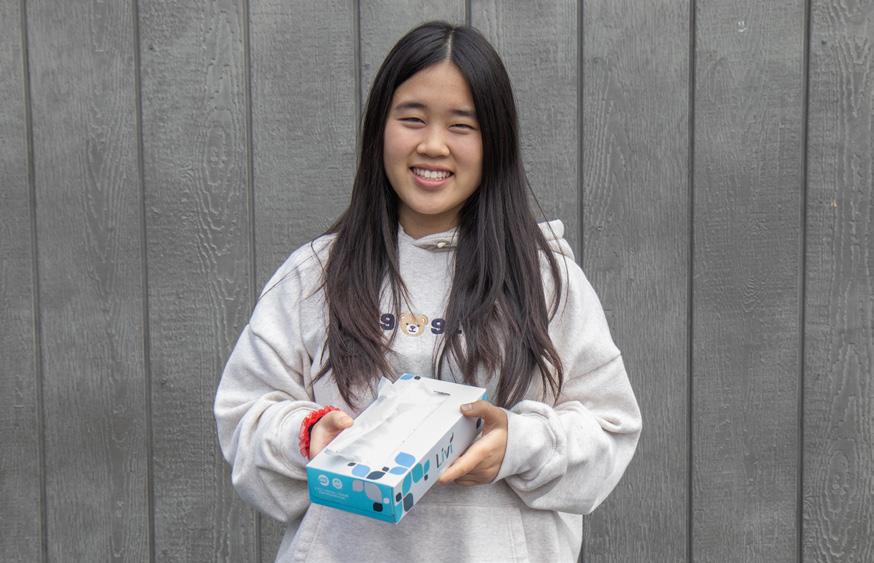
As the days stretch longer and summer break draws closer, we welcome you to Issue 7 of the Epic!
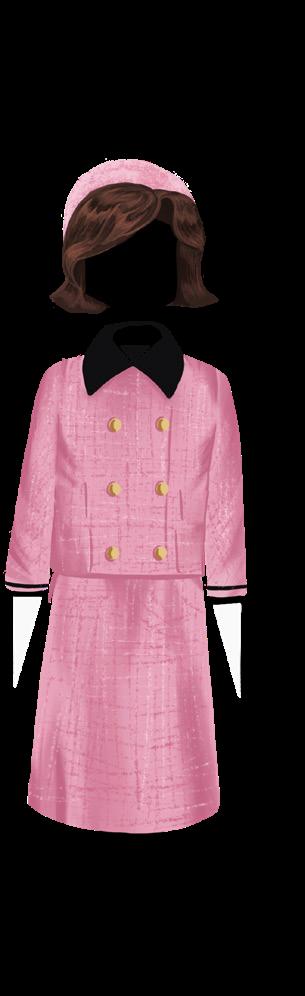
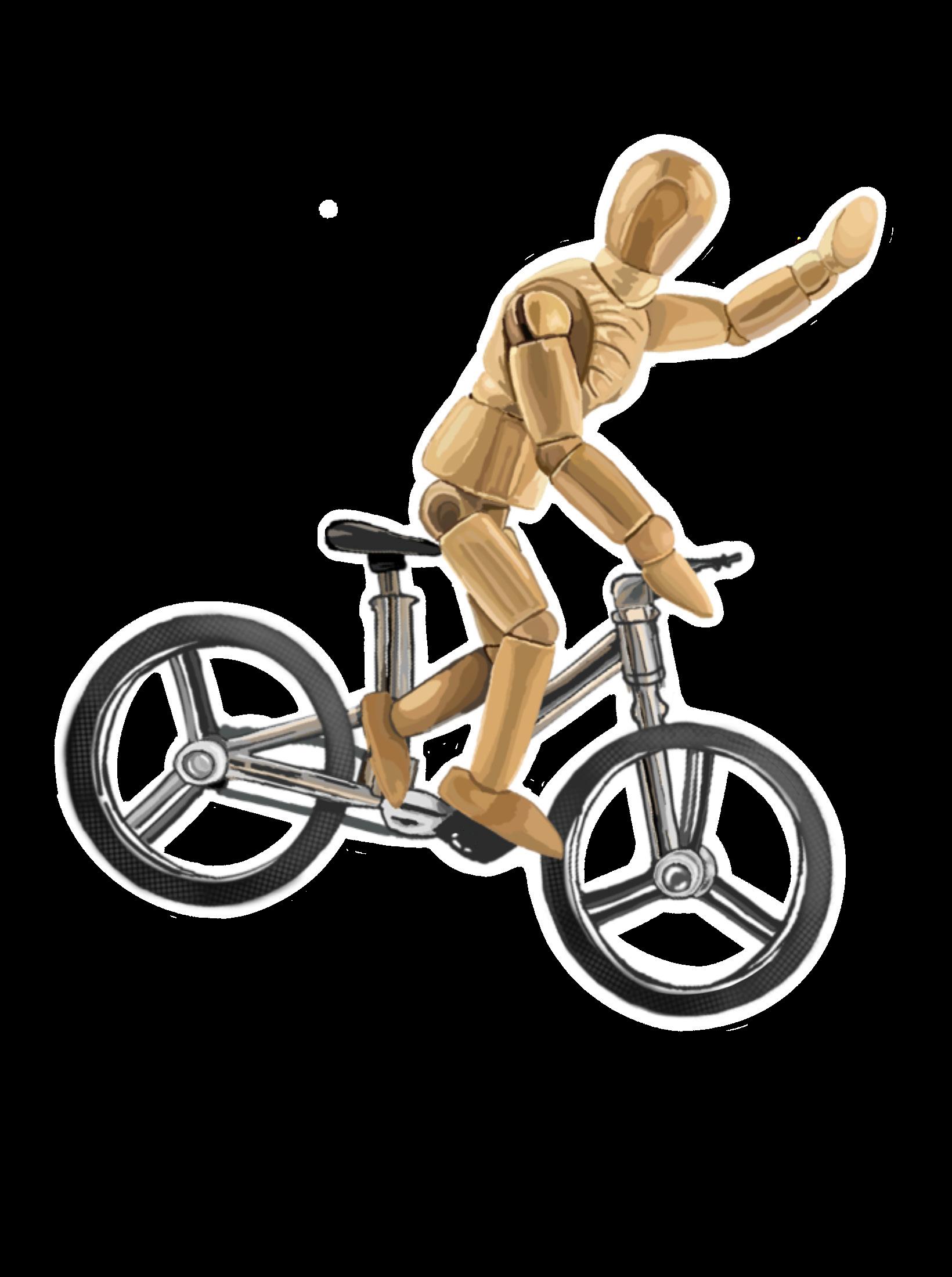
In News, bask in Mock Trial’s historical victory as they represent California at nationals before reading our perspective on the recent wave of FUHSD phishing scams in Opinion — then tune in to the music careers of juniors Sushanth Nayak and Sriram Upadhyayula in Features. Finally, examine the crossroads of fashion and politics in In-Depth and the shadow of performance-enhancing drugs on student athletes in Sports. For webexclusive content, like staffers’ thoughts on BTS’ frst post-hiatus project “Arirang,” visit lhsepic.com.
Although we know these upcoming weeks will be flled with late-night cramming and one too many energy drinks, we hope you treat this issue as a breath of fresh air to brighten your day.
Good luck on your AP exams!
Olivia
Yuan & Crystal Zhu
Editors-in-Chief
Campus, community and world events
BY AKASH ANAND
The Class of 2028 and Class of 2029 offcers collaborated to host a trampoline park event at the San José Sky Zone on April 26. Attendees paid a discounted price of $22 — seven dollars less than the regular ticket price of $29. The offcers worked together to pay the remaining difference from their class budgets. The event was planned originally for Feb. 22, but due to low ticket sales, it was postponed to April 26.
“We chose to host a trampoline event because we think people would rather do something more fun and active, like bouncing around,” Class of 2028 president Kayla Hwang said.
School Community National International
Artemis II, NASA’s 10-day crewed mission to the moon, launched into orbit on April 1. The astronauts few in the Orion spacecraft in a nearly 700,000-mile journey to the moon, protected by the ship’s thermal protection system. They traveled at about 35 times the speed of sound as they reentered Earth’s orbit, and they fnally descended to Earth on April 9.
Artemis II is the frst mission in more than 50 years to send astronauts around the moon. NASA plans to launch the Artemis III mission in 2027, and aims to land a ship on the moon by 2028 for the frst time since 1972’s Apollo 17.
On March 28, Bay Area residents held around 60 “No Kings” demonstrations in protest against the current presidential administration. Organized by groups like the American Civil Liberties Union and MoveOn, protestors came together in cities like San Francisco, Oakland and Hollister. One of the frst events of the day took place in Benicia, where a crowd of 50 protestors grew to over 150 within an hour. Many of the protestors wore yellow garments in national solidarity. Alongside those participating in marches, some cars passing by honked in support of the opposition.
Following months of speculation regarding the position of transgender athletes in the Olympics, the International Olympic Committee announced that they will exclude transgender women athletes from competing in any gender group, starting July 14, 2028. This applies to both team and individual sports in the Olympics, and a screening for the SRY gene — a non-invasive system for determining biological sex — will determine whether someone can participate in a women’s sport. Although only 0.001% of Olympic athletes identify as transgender as of 2025, the rule applies to all athletes competing in women’s sports.
Student Board Member Advisory Council to aid district representation
BY ALYSSA LIN
With the support of the FUHSD Board of Trustees, the FUHSD Student Board Member Advisory Council has recently launched to bolster student representation, diversify input and better support the student board representative. Senior and student board representative Amy Tang spearheaded the initiative after the community requested more student input during district board meetings.
The new council, led by the student board representative, will consist of members from each of the fve FUHSD schools. It also aims to include students from De Anza Middle College.
in particular, the candidates that have been put forth by their schools to be considered for student board rep are very strong,” Assistant Superintendent Paula Robinson said. “One idea some students and Intra-District Council representatives suggested is that the people who have been selected or elected by their schools to be interviewed for the student board rep position could be selected for the council.”
district staff. As the student board representative, Tang is responsible for keeping in touch with all campuses to represent them during district board meetings. She does this by receiving reports from each school’s IDC.
“Because IDC also plans events and other things on campus with their ASB teams, they don’t necessarily have the bandwidth to put as much time into the student board report,” Tang said. “It is just really hard for me, personally, to speak upon all fve school sites with not as much support, so I decided that the council would be a good idea.”
continuing to receive reports from IDC to help inform board meetings and decisions. Additionally, the new council aims to recruit students from underrepresented groups.
“We’re really trying to reach out to students who might not typically be serving in leadership positions,” Tang said. “In ASB, it’s often the same students getting leadership positions or the same students who have their voices heard for a lot of ongoing decisions. That’s not necessarily the point of the council. It’s really just to understand different student perspectives and hear from
Tang frst discussed her ideas with district staff, including Robinson and Superintendent Graham Clark. Though they initially considered simply increasing the number of student board representatives, the idea was turned down as it would have required a board policy change — a more intensive, rigorous process.
The district is still discussing the specifcs surrounding the operations of the council, such as the number of members, the roles of each member and plans for
one student from the entire district serves as a student board representative for the Board of Trustees. A new student is selected for the role every year after being nominated by their school and passing an interview with
“We have over 9,000 students in the district,” Clark said. “The council will be a way for the student board member to get input from a greater variety of
Photo from Corey Seeman/Flickr
Photo by Claire Guo
Photo from Keegan Barber/NASA
Photo from Ted Eytan/Flickr
Photos by Amy Yuan Graphic illustration by Brian Lee
Principal’s Coffee webinar stars sleep scientist Cheri Mah
BY SAMANVI BANDUGULA
On March 31, Principal Janice Chen hosted a Principal’s Coffee webinar starring Cheri D. Mah, M.D., M.S.. Principal’s Coffee is a series of events hosted by Chen that invites community members to learn about schoolwide updates and ask questions. Mah, a sleep physician and performance specialist, discussed the importance of sleep in balancing academics and extracurricular activities for students. The webinar was sponsored by Lynbrook Excellence in Education.
“At LEXE, we believe ‘excellence’ takes many forms,” LEXE president Jayant Kolhe said.
“By sponsoring everything from CPR training to college workshops, we are interested in bringing diverse speakers and activities to campus that
empower every Lynbrook student to succeed.”
Mah specializes in optimizing performance through sleep for professional athletes and worked with teams like the Golden State Warriors and the Seahawks. According to the webinar, the same habits she incorporated into their routines are effective for teens.
“Sleep is such an important topic for both adults and students,” Executive Assistant to the Principal Calvin Wong said. “Dr. Mah has worked with professional athletes, which gives her more credibility to our students because they are seeing real-life data of how sleep applies to
sophomores and juniors. This year, the administration wanted to expand the event to include all grade levels, creating the webinar in addition to a sleep talk for sophomores on March 4.
Upcoming Viking Events
Munch Madness, April 29
Watch or participate in ASB Community Link’s frst ever foodthemed competition in the quad during lunch!
Night of the Arts, May 1
The planning process for the event began two months earlier. Chen and Wong reached out to Mah, who worked with them to craft the presentation and a presurvey to tailor the talk toward students’ concerns. Additionally, a student panel from ASB Recognition selected gradelevel specifc questions that community members submitted before the meeting. The questions primarily focused on how to improve sleep quality and the impact of sleep on learning and memory.
“Try to shift your mindset,” Mah said. “Sleep is not the end of today — it is the beginning of tomorrow. How you invest in your sleep tonight will impact every aspect of your next day, from how you feel when you wake up, interact with others, your ability to learn and overall function in your day.”
The event drew an attendance of around 35 people. The administration hopes to make this a recurring event where each grade hears the presentation at least once during high school.
“Learning about how much Andre Iguodala from the Golden State Warriors was able to improve his performance by simply getting enough sleep helped me realize how big of a difference a small change can make,” junior and student panelist Srinikash Venkatasalapathi said.
Stroll through the quad this evening and appreciate the work by art groups around campus.
AP Testing, May 4-15
Good luck to those who are taking the College Board’s AP exams!
Film Fest, May 15
Come to the theater to enjoy the second annual flm fest and support budding flmmakers.
Senior Prom, May 16
Seniors, celebrate the end of your high school years on a yacht in San Francisco!
Photo by Amy Yuan
Reporting by Stuti Jain and Amy Yuan
Mock Trial heads to Nationals a er 33 years
BY SUNNIE WU
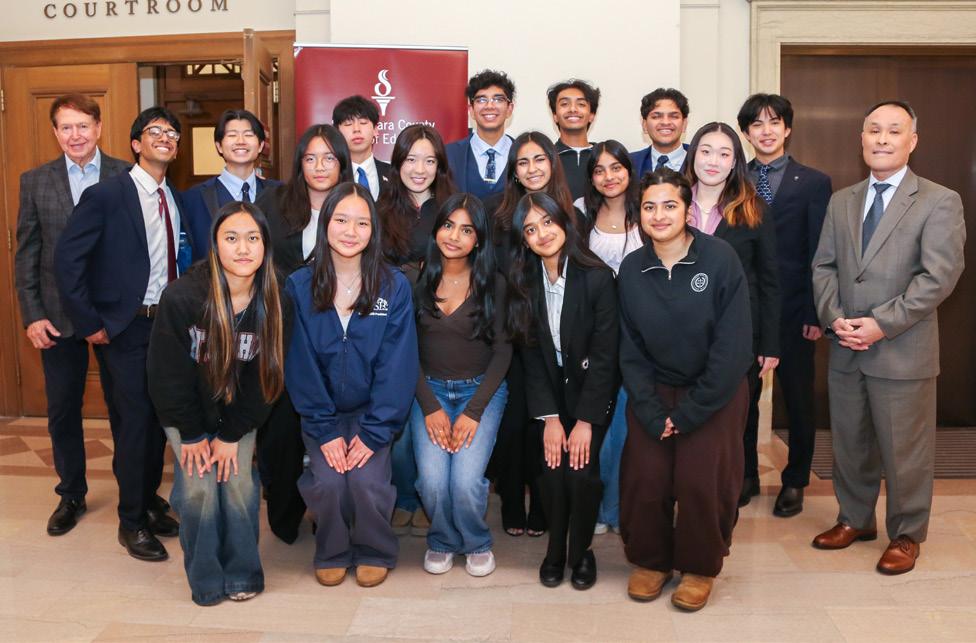
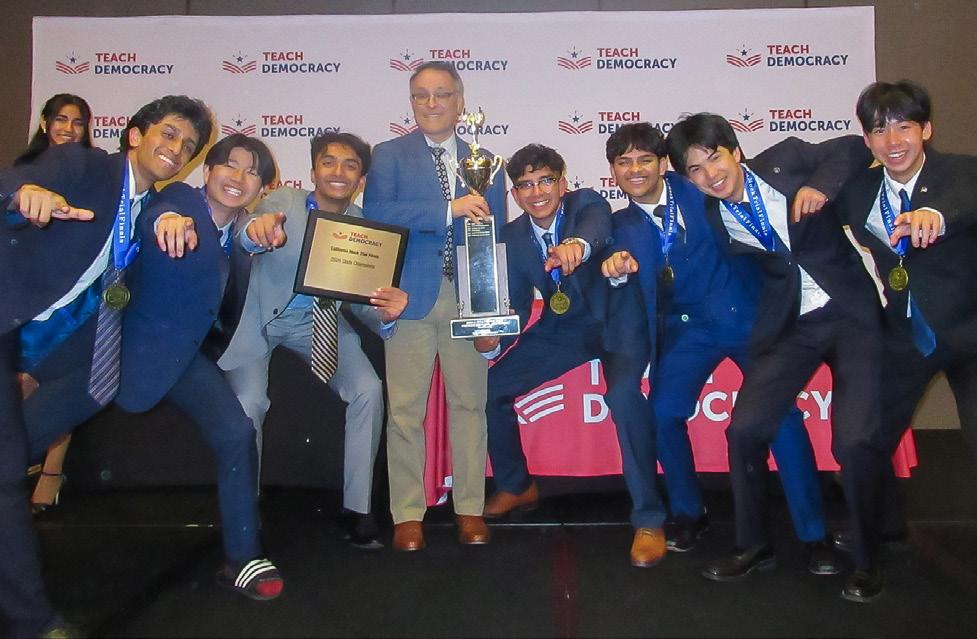
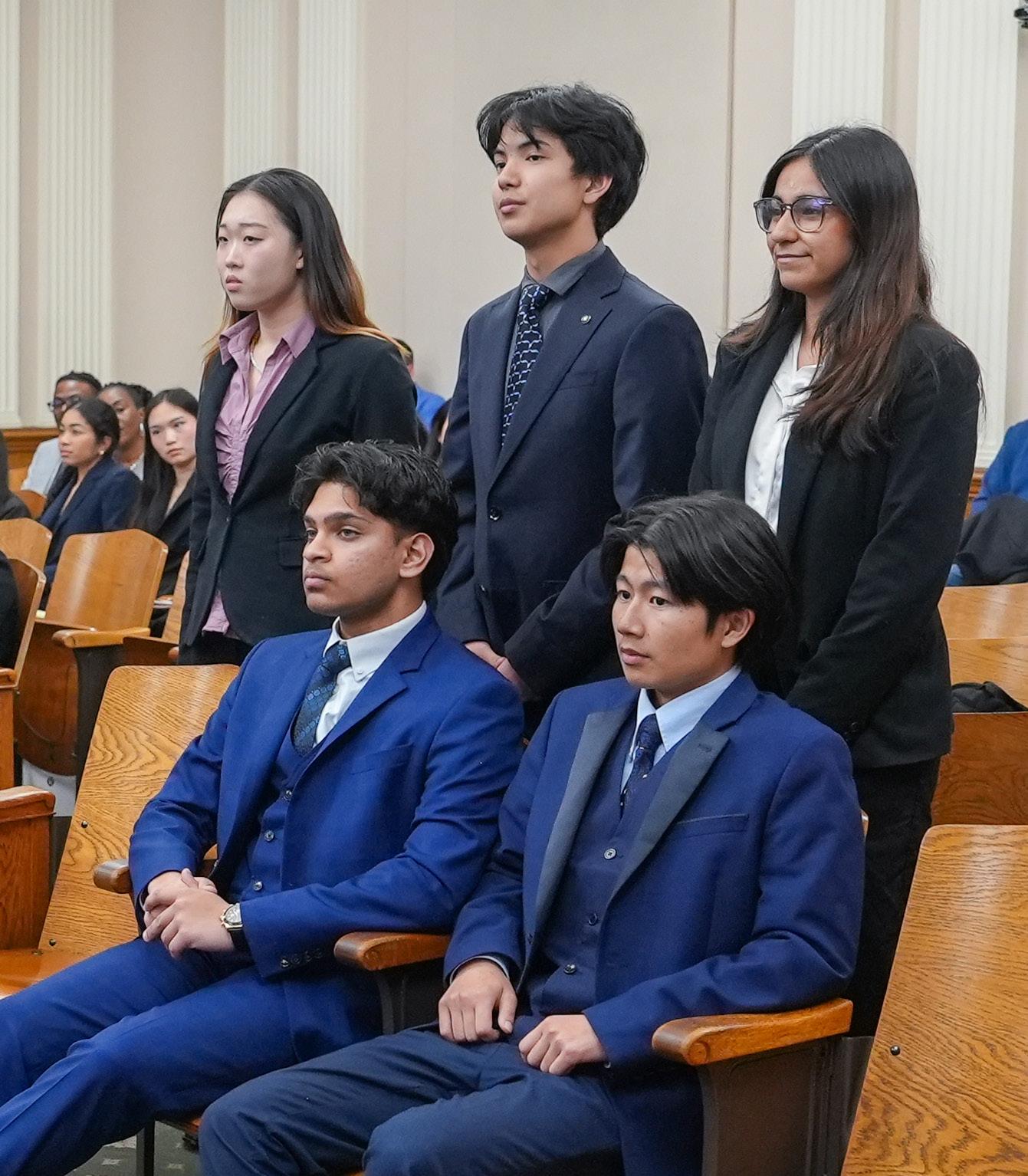
In their 2025-26 season, Mock Trial made school history by becoming the frst Lynbrook team to reach the state fnal round, then again as the frst to win the California State Championship. The team competed in the state competition in Oakland from March 20–22, earning them the honor of representing California at the National Mock Trial Championship in May. The announcement left the team in excitement.
“We started jumping around,” senior and Mock Trial president Samay Sikri said. “We were picking up our coach and running around. It was a mixture of shock and happiness.”
Going into nationals, we just want to do as well as we can, especially for our coach. If we work hard enough, we can accomplish anything.
Ashwath Anoop Senior and Mock Trial vice president
Mock Trial is a nationwide academic competition in which students argue a fctional legal case before a panel of judges. Each school yields a prosecution and defense team that compete in separate rounds. Teams compete at the county level, with winners advancing to state fnals. Previously, the team’s best state fnish was third place in 2010. For the past two years, the team has placed among the top 20 to 30.
As champions of the Santa Clara County High School Mock Trial Tournament for the third consecutive
year, Lynbrook was one of 33 teams competing in the California State Championship fnals. The tournament schedule — one round on Friday and three on Saturday, each lasting two to three hours — tested the team’s endurance, with the defense team competing in all three Saturday rounds without rotation due to the bracket placement. Still, the Vikings pushed onward, defeating Moreau Catholic High School in the fnal round.
“A good percentage of the team, including myself, had never been to the state tournament,” sophomore Brinda Paladugu said. “We got a lot of preparation from the older members of our team, and a lot of motivation to compete at our best abilities.”
Preparation for the state tournament began in October and included weekly practices, weekend scrimmages against other schools and sessions with Mock Trial alumni. The team entered the competition with modest expectations, hoping to fnish in the top eight.
“For a public school with limited resources, just getting there and competing was the most telling demonstration of our students’ abilities,” Mock Trial coach Mark Shem said.
From May 7–9, nationals in Des Moines, Iowa will
present an entirely new challenge. After their statewide victory, the team only had a month to prepare, a sizable decrease compared to the six months they had for the state competition. As California has fnished in the top 10 in recent years, the team will continue to draw on guidance from past California representatives as well as support from Lynbrook alumni.
For the team’s seniors, nationals will mark their fnal competition with Lynbrook before graduating. Many have been involved in Mock Trial for multiple years, and hope to leave behind a strong legacy for the underclassmen who will carry the program forward.
“Going into nationals, we just want to do as well as we can, especially for our coach,” senior and Mock Trial vice president Ashwath Anoop said. “If we work hard enough, we can accomplish anything.”
A. Mock Trial poses for a group photo.
B. The team shows of their winning plaque and trophy.
C. A few members prepare amid trial proceedings. Photos used with permission from Santa Clara County
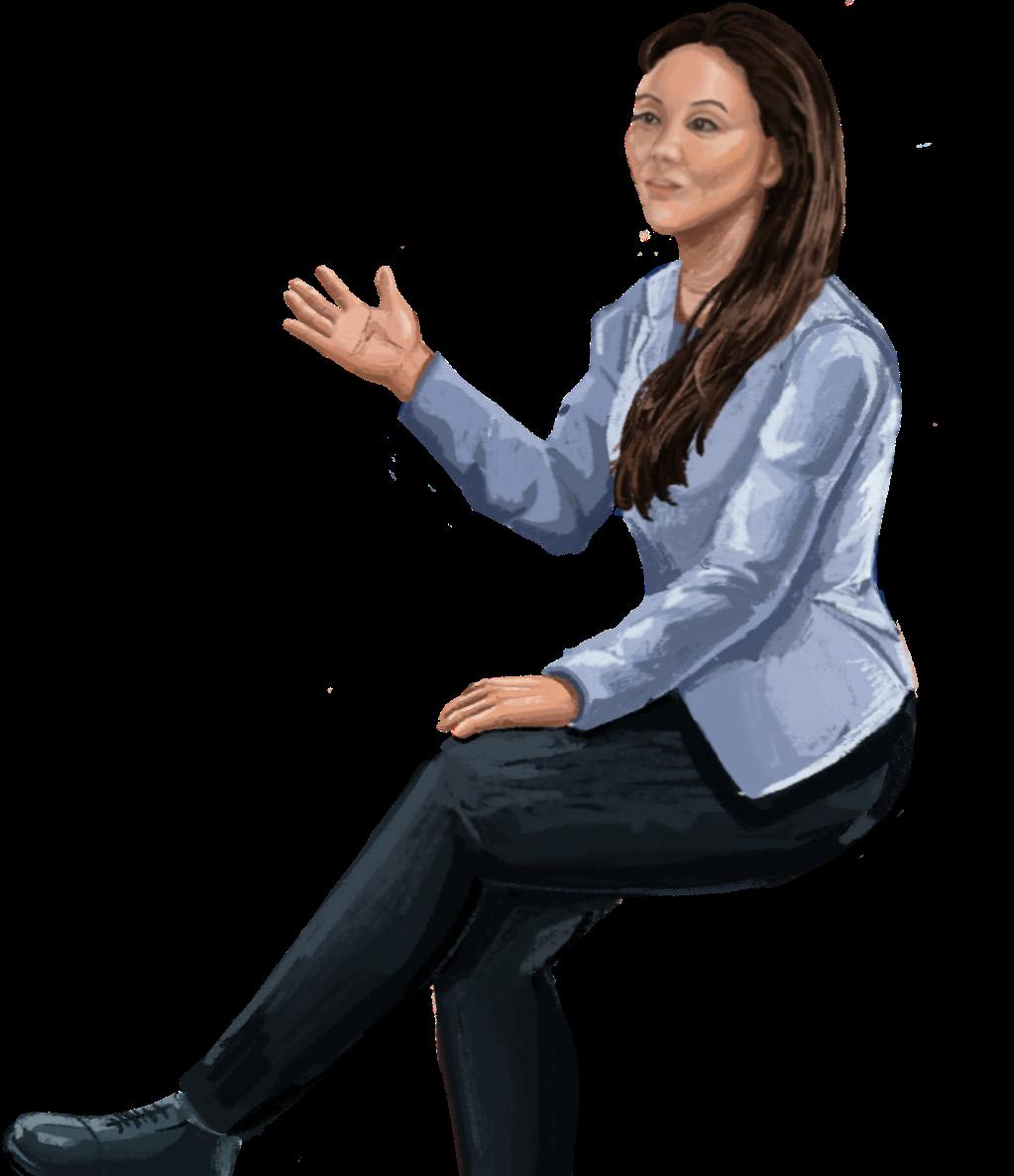
Mah (left) chats with Chen (right).
Graphic illustration by Catherine Yang and Vanessa Yap
Math Honor Society jumpstarts tutoring system
BY CATHERINE YANG
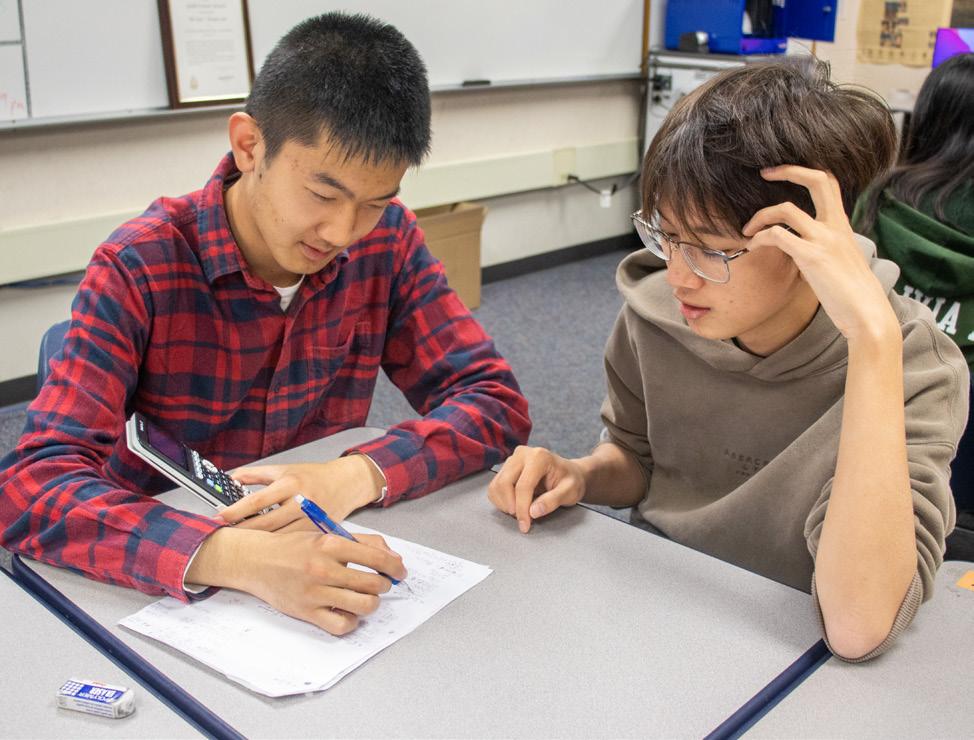
Starting in October 2025, Math Honor Society implemented a member-led math tutoring program.
The tutoring sessions take place during block day tutorials in the classrooms of math teachers Chris Baugh, Vivian Frazita, Sarah Kraemer, Michele Quindipan and Norman Tsai.
Members of MHS sign up to tutor via a spreadsheet to gain member points.
“We wanted the program so students can get help that is much more casual and easier to obtain,” junior and MHS co-president Benjamin Zhang said. “For example, STTAR Tutoring has a much more rigorous process.”
MHS offcers created this program with the goal to lessen the workload of teachers who already have many students lining up to ask questions during tutorials — an
issue teachers brought up during staff meetings.
overwhelmed during tutorials.
‘‘Creating the system required thorough planning, including considerations for how students would sign up, which classrooms they would go to and how to achieve suffcient coverage. To start, MHS offcers reached out to all math teachers to see if they were interested.
“I was really excited,” Kraemer said. “I felt so busy during tutorial taking care of logistical things like inputting grades, so it was hard for me to help students one-on-one.”
They received permission from their club adviser and science teacher Anshul Agarwal within the span of two months. Agarwal hopes to help students improve at topics they struggle with and provide a welcoming community.
“Its defnitely helping,” Kraemer said. “No one else can help with entering grades or giving test retakes, so it’s nice that students are still feeling like they can get their questions answered.”
I was really excited. I felt so busy during tutorial taking care of logistical things like inputting grades, so it was hard for me to help students one-onone.
‘‘
Since the tutoring system has only begun this school year, the system required constant optimization from the offcers. Sophomore and MHS treasurer Tianlin Liu, who is the primary coordinator of the system, has continued working to fnd better methods of communication. Currently, multiple sign-up methods have caused slight traffc in the sign-up system.
“We want students to know that MHS is an inclusive place,” Agarwal said. “Its not just for students to go to math contests and competitions, but a place where students can mingle together and just be curious about math.”
The offcers encouraged members to participate in the program during meetings. Currently, around ten members regularly sign up.
“Helping others helps you get better at math,” sophomore and MHS member Jasmine Lien said. “When I tutor others, I can study for upcoming tests while helping others understand new concepts better.”
Some math teachers have reported feeling less
“Sometimes the process is a little complicated because students like to sign up for classrooms both in person and online, and it’s harder to keep track of,” Liu said. “It causes a bit of a delay, so we would like to improve that.”
MHS plans to continue this tutoring program in the future and promote it to new members. Both MHS offcers and Agarwal hope to see the system continue for years to come, and they plan to make the system mandatory for members who wish to gain points in MHS if the program continues to work out well. Furthermore, they aspire to refne their system and gain more student interest.
“I’m hoping that next year, when we roll it out in a more systematic and streamlined manner, it’s going to gain traction,” Agarwal said.
Aeronautics Club launches model rockets
BY KATIE SHANG
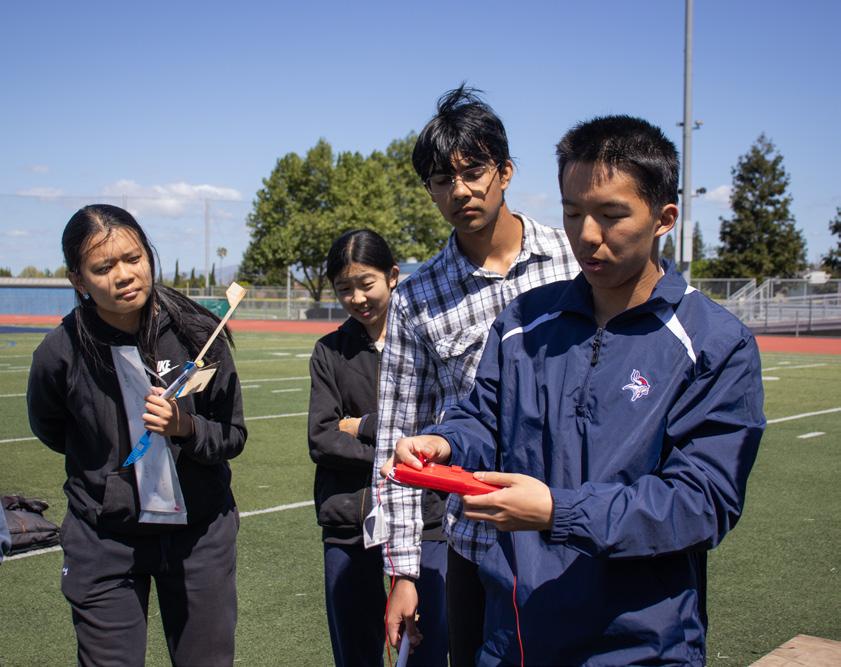
The Aeronautics Club launched six model rockets on April 2. The end-of-semester project took place over three weeks from late January to midFebruary. During this period, members crafted model rockets and attended launch-preparation workshops every Thursday lunch.
“We wanted a workshop where all the members could participate in building their own rocket,” senior and Aeronautics Club president Richard Li said. “I felt like it would be a lot more fun and come with more action.”
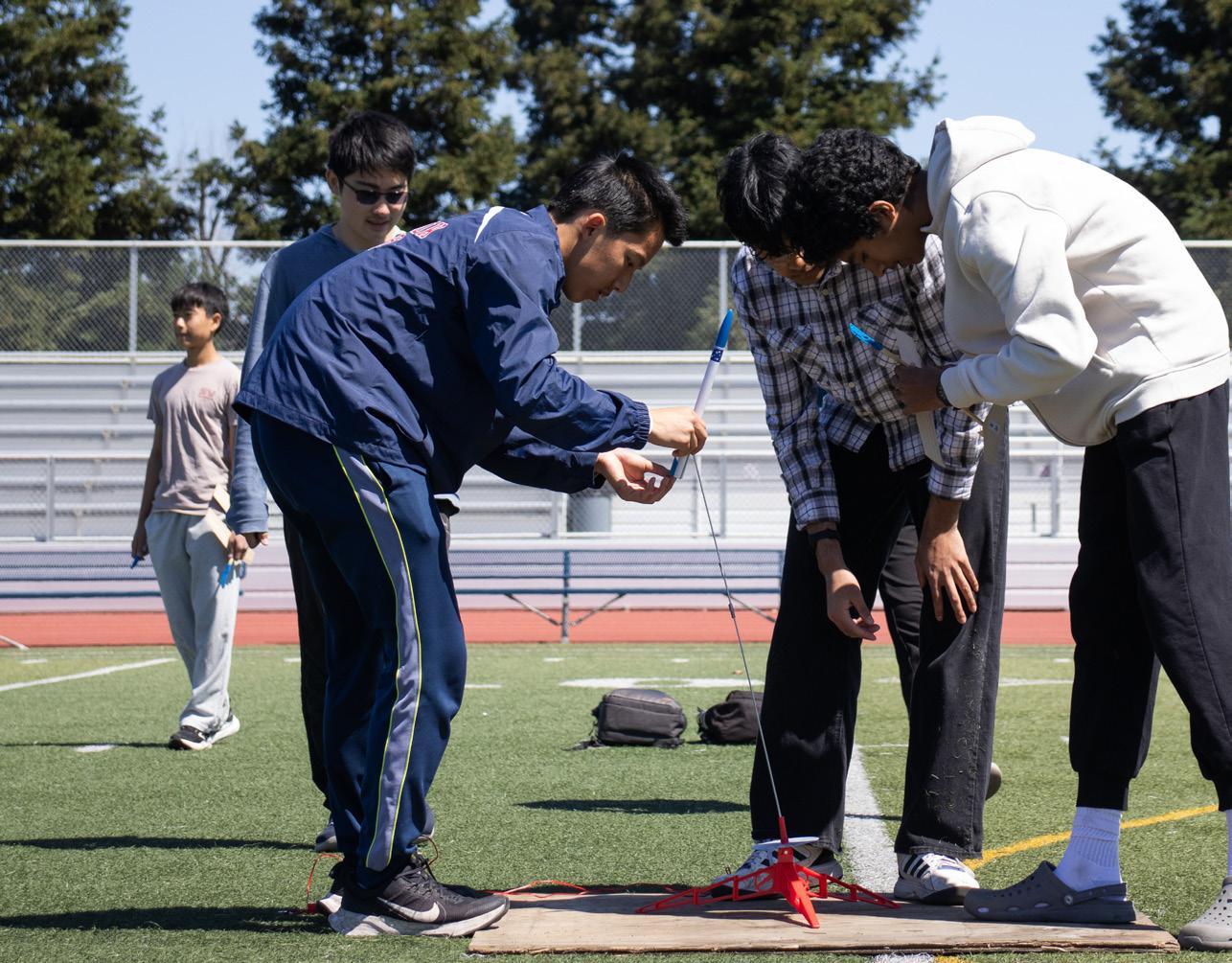
‘On launch day, the club moved to the football feld under the supervision of Assistant Principal Tara Grande. Members placed their rockets on a cardboard mat and connected them to a remote. Out of the six rockets built, fve launched successfully, with some travelling up to 150 feet in the air.
In previous years, the club ran a similar annual event showcasing a single handmade rocket crafted outside of school, then later launched by the offcers. This year’s launch provided all club members with a chance to take part.
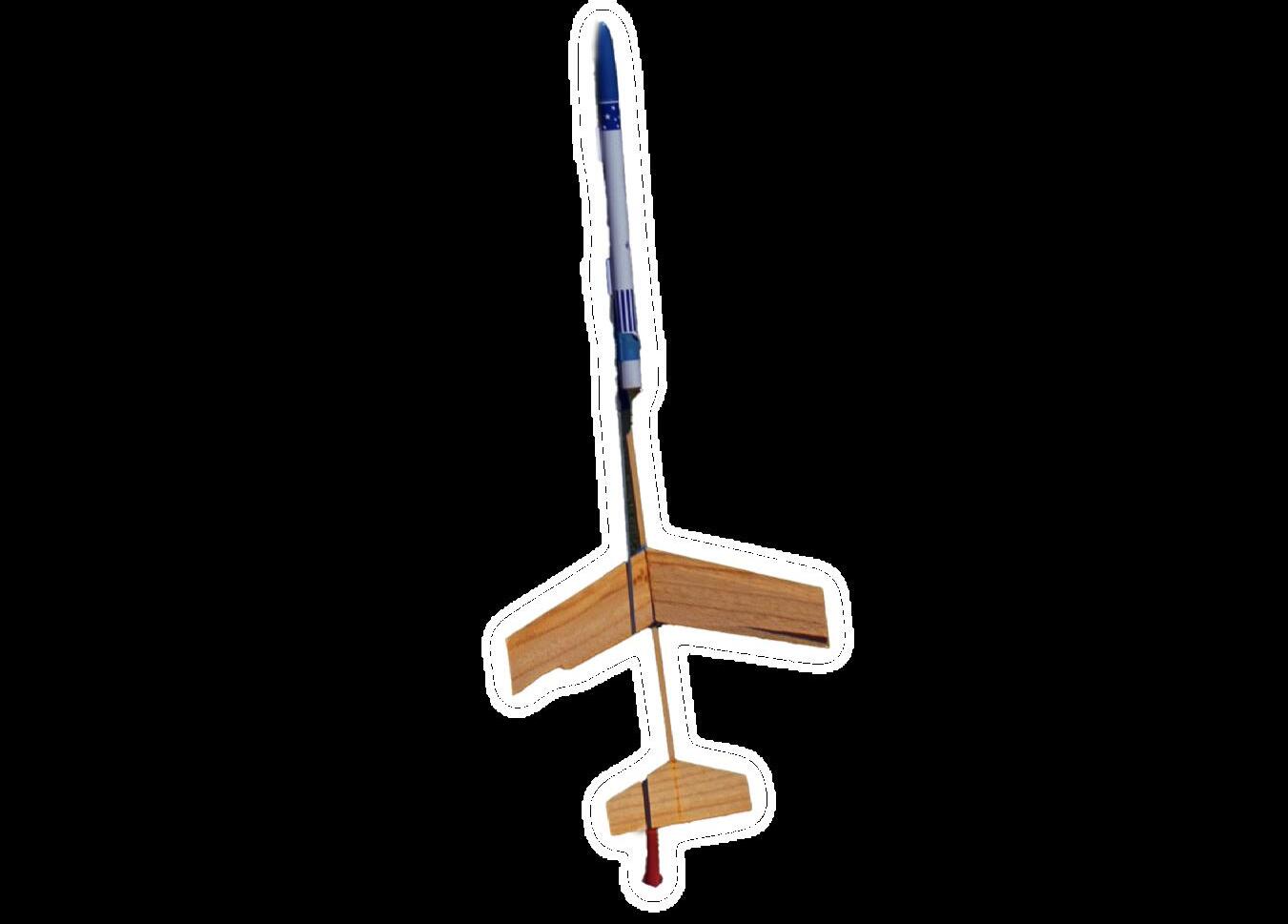
Offcers led all workshops, assisting members in six teams. Each team built one rocket, following printed instructions and using plastic Condor Boost Glider kits and model rocket engines. The kits come with components for a rocket pod and glider, a wooden base, wings and adhesive to glue the glider together.
However, some members found the instructions unclear. Groups also struggled to separate their rocket components from those of other groups.
“Things got mixed up a lot, even if we had our names on them,” sophomore and club member Catherine Jian said. “Another challenge was the glue; the Super Glue either dried out too fast or didn’t dry at all.”
The club also organized one team for the American Rocketry Competition to plan and assemble a separate rocket, which can fy up to 1,000 feet. While they usually collaborate with Engineering Club for the annual contest,
this year, 10 selected members worked on the club’s individual entry. Ultimately, they were only 100 feet short of the cutoff to advance to nationals.
“Honestly, since a lot of us were frst-years in TARC, we didn’t have a lot of expectations,” junior, secretary and TARC co-captain Miro Maeda said. “It was the frst year for
A. Students set up a rocket.
B. Li clips a launch device.
C. Aeronautics Club poses with a rocket.
D. Students adjust their rocket.
E. Members watch Li explain the device.
Sarah Kraemer Math teacher
B. C.
E. D.
Photos by Katie Shang Graphic illustration by Stuti Jain
Zhang tutors a student in AP Calculus BC.
Photo by Catherine Yang
A.
Americans should rethink their view of meat consumption
BY SAAVAN SARAF
“They’re eating the dogs, they’re eating the cats” was President Donald Trump’s declaration in the 2024 presidential debate that perpetuated false rumors about Haitian immigrants. Immediately, it sparked outrage: dogs and cats occupy a protected moral category in Western culture, and the idea of consuming them is abhorrent. However, that reaction reveals a deeper inconsistency. The same society that recoils at the thought of eating dogs and cats routinely accepts the slaughter of pigs, cows and other animals for food, without the same moral considerations.
use body language to signal their emotions and have even been shown to actively seek out playtime. In fact, research shows pigs outperform dogs in many cases of cognition and memory.
‘‘
Nothing about which animals we eat is biological. It’s all cultural.
Ken Albala
University of the Pacifc food culture professor
Justifying disdain for foreign meat cultures by citing emotional or moral care for animals is entirely contradictory. Cows are often separated from their children at birth and milked until they have trouble walking, then shot between the eyes with bolt guns as soon as they stop producing milk. Pigs experience brutal castration, tailcutting without anesthesia and are squeezed in tight holding chambers for most of their lives, never to see sunlight.
‘‘
There is little to justify this double standard. The boundary between “pet” and “food” is not grounded in biology, but in social convention. We are taught to love and cherish certain animals, and to completely disregard others, creating an uneven moral belief system. If Americans want to be critical of foreign food cultures, they should apply the same moral scrutiny to their own.
“There are other areas of the world where animals are consumed that typical Americans would never consider eating,” culinary arts teacher Megan Miller said. “Does that make that wrong? No, that’s just a cultural difference.”
The Western view of meat consumption is based on a misconception — that dogs and cats have more emotional intelligence than livestock animals, therefore making them more valuable. However, research suggests cows and pigs actually experience a wide range of emotions, from fear to anxiety to sadness. They can recognize each other’s faces,
editors-in-chief — olivia yuan, crystal zhu
managing editor
— claire guo
copy editor — david zhu
design editors
— amanda jin, rohan kakhandiki
adviser
— josh miller
‘‘
“We like to distance ourselves from our food,” University of the Pacifc food culture professor Ken Albala said. “We don’t want to know what it comes from. We don’t want to know how it’s raised. But we do unspeakable things to animals, so to criticize people because they eat differently from us is absurd.”
While it’s normal for cultures to differ in their tradition and cuisine, drawing hard lines about which animals can and can’t be abused is a draconian framework that enables selective outrage, making it easier to condemn others while ignoring abusive practices in our own country.
to the test. She founded a fake company called “Elwood’s Organic Dog Meat.” Elwood did her best to make things believable — an address, phone number and an offcial website outftted with photos of smiling dogs frolicking in meadows, similar to how farms often depict cows and pigs.
What followed was a wave of backlash and even death threats from all over the country by people who were disgusted by the idea of a dog meat farm. One reader wrote, “I have dogs and would never eat them, but a deer, chicken or cow — that’s different.”
The modern, Western view of meat consumption couldn’t be more narrow. In West Africa and Asia, bushmeat from antelope has sustained populations for generations. Horse meat is consumed in France and Kazakhstan, even as a Japanese raw delicacy called basashi. Dog meat was a staple of some Native American diets. Almost all of these traditions operate on a much much smaller and less gruesome scale than the American factory farming industry. Demonizing them based on an us versus them mentality rather than on consistent standards of humane treatment upholds a skewed moral standard, and is an excuse for Americans to ignore the conditions in their own food system.
There are other areas of the world where animals are consumed that we would never consider eating. Does that make that wrong? No, that’s just a cultural difference.
Megan Miller Culinary arts teacher
In 2024, writer Molly Elwood took this double standard
news editor — brian lee
opinion editors — maddy chang, saavan saraf
features editor — isabella chiu
sports editor
web editors in-depth editor
— alexandra wu
— anna cen
— akash anand, cecilia wu
business/pr manager
— jenny suh
social media manager — ethan wong
stafers
samanvi bandugula
audrey cabaltica
rebecca cai
emily cheah
joanna chen
‘‘
nicolas cheng
david dai
anushka deshmukh
ashley hein
stuti jain
eunice leung
“In Japan, I’ve eaten foods like sea urchin sashimi, sea cucumber and tartare,” sophomore Emily Mashimo said. “It’s important to be accepting of other cultures.”
So the next time you hear a story about a dog being eaten in a foreign country, remember that in that same second ten cows were killed. And ask yourself: what’s the difference between those cows and a golden retriever? Why does one get to play fetch, and the other slaughtered?
alyssa lin
tristan lo rachel martin
prisha pulastya katie shang
olivia tu
sunnie wu
catherine yang
vanessa yap amy yuan
Graphic illustration by Audrey Cabaltica, Maddy Chang and Sunnie Wu
Photo by Saavan Saraf
The pursuit of cleanliness
BY ISABELLA CHIU // IN MY OPINION
My favorite smell is rubbing alcohol. When I shared that rather unique fact during an icebreaker at a Link Crew training, someone told me that alcohol reminded them of hospitals and death. But if you really think about it, isn’t that pungent, medicinal odor such a beautiful reminder of cleanliness? Perhaps its smell isn’t exactly everyone’s
cup of tea (or alcohol), but no one can deny its potency as a disinfectant. Contrary to my family’s belief, I’m not a psychopath, but I suppose I look like one when I pull out my alcohol spray bottle and a few tissues to, rather ineffciently, clean the sofa after my mother invites her friends over.
I wasn’t always like this. As a big-backed 8-year-old in Saturday Chinese school, I distinctly remember dropping my pork foss bun on the black, concrete foor during recess, picking it up and going straight back to eating it without hesitation. How do I remember this intriguing experience? Well, how can I forget when my family brings it up every time I go on a crazed cleaning spree? They constantly compare my current “germophobic” self to pre-COVID-19 Isabella, a being that “even a pig would kick out of its own sty.”
Postpandemic, I switched extremes. I went from having no concept of cleanliness to an obsession with alcohol spray bottles and an elaborate fve-tier cleanliness standard. Adopting a precautionary lifestyle during COVID-19, the girl who once ate a pork foss bun from the ground began to fervently wipe all the groceries that came into the house and double-mask even while running Mile Club in middle school.
BY CECILIA WU
“Being polite to AI feels unnecessary. It’s not a real person, so there’s no reason to treat it like one. If you’re adding extra prompts — like saying ‘please’ and ‘thank you’ — it just makes the prompt longer and uses more energy, which is wasteful. Being more direct also helps you get more honest answers and clearer results. It’s better to just get straight to the point and use AI as a tool instead of treating it like a human.”
“For the sake of convenience, it’s probably best not to be polite, because I’m usually just looking for something quick — like a Google search answer. I don’t really feel the need to be polite in that situation. For example, when I Google something, I don’t say, ‘Could I please have the recipe for chocolate chip cookies?’ I just type ‘recipe for chocolate chip cookies,’ and I feel like with AI, it’s kind of the same thing. It’s more about efciency than manners. For me, it’s mostly just about getting the information quickly.”
“I think it’s important to be polite to AI. Not just because of the whole idea of AI running our systems one day in the future, but also because chatbots and things like that learn a lot from past conversations with other users. When you think about it, these are the same systems that are being used now to hire people and look at college applications. So if you’re polite to AI, you might be improving it for users in general.”
Over time, some part of me realized that maybe — just maybe — dousing everything in alcohol couldn’t have been much better for my health than interfacing with just a few more germs. Half of the cleanliness procedures I undertook were simply placebos, idiosyncrasies that I kept up for my own comfort. Biology was one of my strongest subjects. I understood infectious agents and their transmission, but I couldn’t manage to let go of these ritualistic habits.
In the years since COVID-19, I’ve relaxed these rules to a more reasonable degree. Still, some part of me will always do a surgeon scrub before touching my contact lenses. Some part of me will always wipe my phone after coming home from school. Some part of me will always scan through a foreign bathroom for paper towels, automatic sinks, trash can locations — planning it all out in my head to make it out of the bathroom without directly touching the terribly unsanitary door handle.
Maybe, like double-masking, these core habits will all disappear one day. Maybe they’ll always stay. Either way, some part of me is dedicated to maintaining a healthy environment — a challenge that may entail putting down that lethal alcohol spray bottle.
Stop falling for the phishing bait
You’ve probably seen the emails — a suspicious request from an FUHSD domain, then hours later, a serious email from the district saying, “If you clicked on this, reset your password immediately.” Over the past year, FUHSD students and staff have had their accounts hacked after clicking on links in sketchy emails and forms. This can sometimes lead to stolen money and personal data landing in the wrong hands. Birthdays, passwords and other information are now possessed by a stranger. Phishing is everywhere, but students can easily avoid getting scammed by avoiding suspicious links and taking responsibility for their safety online.
Apple watches for half their retail price, the email was fake, and all items were listed with the intention to scam buyers out of hundreds to thousands of dollars.
The district sent a warning instructing those who interacted with the post to reset their password in the likelihood that their accounts were hacked. Although the emails were sent from supposedly safe FUHSD staff accounts, students shouldn’t trust accounts posting information unrelated to education.
Google Docs and Forms are inherently okay to open just because it’s harder to embed viruses in them. But you should not be downloading all the documents and fles that you receive unless you know who they’re from.
Allen Chan Network and computer support specialist
Phishing, in its most common form as an email, “fshes” for identifcation information. Often using apparently harmless Google Docs or Forms, phishing typically involves bait, such as a lucrative internship opportunity or an email seemingly sent by a trusted authority fgure. But the enticing hyperlink can lead to malware downloads. Malware and viruses compromise the account by stealing login credentials, monitoring user activity or stealing session cookies. They can also grant hackers remote access to devices. This can lead to the account being disabled or locked and user information becoming easily accessible to phishers. Although the consequences of a misclick may seem extreme, online safety is fairly straightforward.
‘‘ ‘‘
“Sometimes it’s too good to be true,” school network and computer support specialist Toan Phuong said.
“The value of the product that you see is expensive, but they offer you a substantial discount. Usually our staff doesn’t sell stuff, so that’s something we have to be aware of.”
and showing examples of suspiciouslooking emails could be an effective implementation.”
Students often fall for scams simply because they underestimate the consequences of their actions in the face of various online traps. Something as simple as clicking a link from an email could lead to a student’s information being stolen. Students need to be more cautious and critical about everything they do online.
Junior Aditi Satish learned this the hard way. Seeking to purchase tickets to Taylor Swift’s Eras Tours in the summer of 2023, Satish had found an X user selling rare foor tickets at retail price to Swift’s concert in Los Angeles. After sending an initial down payment of $60, Satish never received the tickets and continuously followed up with the sellers, who eventually ghosted and blocked her.
“After I got scammed, I was so sad because it was so embarrassing,” Satish said. “My biggest takeaway was to not trust people on the internet and to be safer when I’m shopping online.”
“I don’t think people have to say ‘please’ or ‘thank you’ to AI, but it is a good habit to practice. If you get used to being aggressive or demanding just to get answers, that mindset can carry over into reallife conversations. Being polite, even with AI, can be good practice for better communication overall.”
“Google Docs and Forms are inherently okay to open just because it’s harder to embed viruses within them,” school network and computer support specialist Allen Chan said. “But you should not be downloading all the documents and fles that you receive unless you know who they’re from.”
Recently, an account in the FUHSD domain sent convincing scam emails claiming to be selling a staff member’s late husband’s possessions, including old cars, electronics and even a kayak. Despite many tempting deals, such as brand-new
In light of recent scams and phishing, FUHSD student vigilance has become more important than ever to stay protected. Cybersecurity education should be implemented to be accessible to all students. For example, an advisory lesson could show students common forms of phishing and how to spot them. In addition, FUHSD should teach students the proper course of action after getting scammed or having information stolen as a proactive measure.
“Cybersecurity education has value for all of us,” computer science teacher Mark Kwong said. “Having this discussion
Staf Editorial // The voice of the Epic
Graphic illustration by Audrey Cabaltica
the Epic staff voted 35-0 in favor of this stance with 2 abstaining.
Gauresh Srivastava (12)
Jacey Tseng (11)
Shripriya Kalbhavi (11)
Ray Hsu (9)
Remember the movement, not the figureheads
BY DAVID ZHU
Over a decade ago, Debra Rojas, the daughter of labor rights activists, made a now-deleted post on a Facebook page for United Farm Worker veterans preparing to celebrate Cesar Chavez Day: “Wake up, people. This man u march for every year molested me and many, many other young girls.” Her message was immediately drowned out by a wave of people accusing her of tarnishing the reputation of their entire movement. It took many years — when a New York Times investigation detailed Chavez’s abuse of multiple women this March — for the horrors that Rojas and other women endured at the hands of Chavez to fnally be exposed.
The public’s lionization of Chavez sheltered him from criticism and prevented sooner investigation of his actions. His legacy proves that social movements should not be built around a single person when so many people are involved. Instead, all contributions must be valued.
Chavez was masked by a facade of global recognition that elevated him as the face of the farmworkers’ movement.
As the co-founder of the United Farm Workers labor union, he was remembered for organizing nonviolent boycotts to advocate for the rights of farmworkers. Former president Bill Clinton awarded him a Presidential Medal of Freedom, and his name is proudly plastered on street signs and in history textbooks.
“Prior to hearing about the sexual abuse, I recognized him as someone who made a good change,” senior and Spanish Honor Society president Alessandra Wong said. “He had a really big infuence on the Hispanic community because he gave them a voice, and he showed that Hispanic leaders can rise up and that the Latino population as a whole is stronger together than apart.”
Although Chavez was not the sole founder of United Farm Workers, the union’s power dynamics revolved around him, which attracted positive media coverage and hid his horrifc acts. Many victims say they were pressured to remain silent for decades to preserve his public image. Labor leader Dolores Huerta co-founded the organization yet was not awarded nearly the same level of recognition. In centering a movement around one fgure, the contributions of everyone fail to be honored.
“In anything, especially a social movement, it takes a village,” said Angelica Esquivel, professor of Chicanx and Latinx studies at De Anza College. “Recognizing all of those pieces just reminds us of the humanity of everyone who was involved. My hope for the future is that we have those recognitions written in textbooks.”
In fact, thousands of people dedicated themselves to improving the lives of farmworkers. Huerta negotiated the frst-ever bargaining agreement with an agricultural business to secure better working conditions for farmworkers. Other female activists, like Jessica Govea and Elaine Elinson, fought sexism within unions and managed boycotts that helped deliver the frst contracts for farmworkers. Filipino labor rights activist
Larry Itliong led over 1,500 Filipino farmworkers to demand higher wages and better working conditions. Unfortunately, Chavez’s celebrity status has caused the contributions of these people and thousands of others to be forgotten or never learned about.
‘‘
“There are so many local fgures that are central to the stories of the farmworkers movement,” said Dr. Ella Diaz, professor of Chicana and Chicano studies at San José State University. “When we step back from the hero, we see hundreds and thousands of people that are moving this important social justice movement forward. Hopefully, we’re understanding that it’s not so much that we need to plug in a new fgure, but maybe we need to start telling the larger stories and using other sources to multiply and create a space of people where there has only been an individual.”
It’s important for these social fgures to be brought back down to earth and to humanize them and make sure that they don’t have an excessive amount of power.
historical trend of heroizing imperfect — often male — leaders. Founding father Thomas Jefferson famously penned “all men are created equal” in the Declaration of Independence, yet owned more than 600 slaves in his lifetime. A federal holiday commemorates explorer Christopher Columbus’ arrival in the Americas, yet he sanctioned brutal violence against indigenous populations. Idolizing fgures who have done harm is an injustice to the victims they’ve hurt.
Alessandra Wong Senior and Spanish Honor Society president
Chavez is a prominent example of the troubling
“It’s important for these social fgures to be brought back down to earth and to humanize them,” Wong said.
‘‘
Holding infuential fgures accountable does not have to negate the positive contributions they’ve made. Chavez’s advocacy undoubtedly brought about lasting changes for farmworkers. Although it is reasonable to look up to someone that embodies the values of a movement, the problem lies in using them as a fgurehead for that entire movement.
“This is a movement that is a lot bigger than one man, and you can easily talk about this movement without even mentioning his name,” Spanish teacher Michael Esquivel said.
“This is a good time to bring up names of people who aren’t household names. Cesar Chavez is a household name, but what about all the other people that did make this movement happen?”
For centuries, the Latin phrase “e pluribus unum,” meaning “out of many, one,” has remained the motto of the United States. It represents the ideal of combining multiple backgrounds and perspectives to tell a unifed tale. Across generations and cultures, powerful stories within the farmworkers movement were shaped by workers, journalists, students, teachers and organizers who envisioned a better future and gave their all to achieve it. They are told through the experiences of resilient people who refused to give up their fght to better the lives of peers and generations to come. Their voices mold together to tell something beyond the scope of one man.
“Maybe it’s not about falling silent about the historical fgure that has been positioned as shorthand for an entire movement, and maybe it’s not about simply replacing one with another,” Diaz said. “Maybe it’s about rethinking this approach altogether. How can we tell these histories in a more collective, more people’s way? I would argue that’s incredibly American. How can we take the multiple voices and create, instead of a singular heroic memory, this much richer multi-vocal experience?”
BY RACHEL MARTIN // IN MY OPINION
When I look in the mirror, I see a girl with dark brown hair and eyes. Pretty normal, right? I’ve always felt a bit like the default character in a video game because of my ordinary appearance — still, I think of my identity as somewhat
eclectic. I am an amalgamation of everything and everyone I’ve ever met. My race is a clear example of this: it is literally a mix.
I’ve now heard other opinions on what I look like (including East Asian, but also Mexican and Russian), but when I was younger, I hated looking mostly white. I had a friend who was also mixed and defnitely looked more East Asian than me. Through passive-aggressive comments and backhanded compliments, she made sure I knew it. This, along with my predominantly Asian classmates and failure to speak an Asian language, created a big insecurity. I felt like I had to prove that I was mixed when people asked about my race. Even my Asian side, which I desperately wanted to embrace, was diffcult to place.
I am half-white and half-Taiwanese. Many people automatically equate Taiwan with China because of the genocide of the aboriginal Taiwanese people and forced cultural adoption of Chinese customs, imposed by the Kuomintang. After growing up under KMT rule in the mid-20th century, my own grandmother didn’t want me to learn Taiwanese because she thought Mandarin would be more useful, widening the gap between me and my Taiwanese roots.
In middle school, people became increasingly and strangely fascinated by my race. Of the many conversations I’ve had, two still stand out. The frst time, a classmate asked if I was “American.” Aren’t we all American? It felt like he was trying to use a euphemism for white, which seems to have a negative connotation at Lynbrook. The second time, a different classmate told me that he thought I was fully white, but he made sure to specify, “Not in an offensive way!” By the time I got to high school, I realized through my family that everyone has identity struggles of their own, including my adopted father and immigrant mother. I also realized that I have built a Taiwanese identity through my grandparents: by eating their food, listening to their language and celebrating their holidays. I found other mixed friends who are comfortable with their identity, white side and all. Similarly, I found support from friends who, though not mixed themselves, understood what I was working through. These connections helped me to heal and realize that, though I don’t look exactly like my peers, I shouldn’t feel ashamed of my appearance, even if I feel like a non-player character. Besides, I get to experience two cultures rather than just one!
Finding a whole person from two halves
Photo by Savaan Saraf
Graphic illustration by Anushka Deshmukh
Chancie Chou stitches seams and dreams
BY ALEXANDRA WU
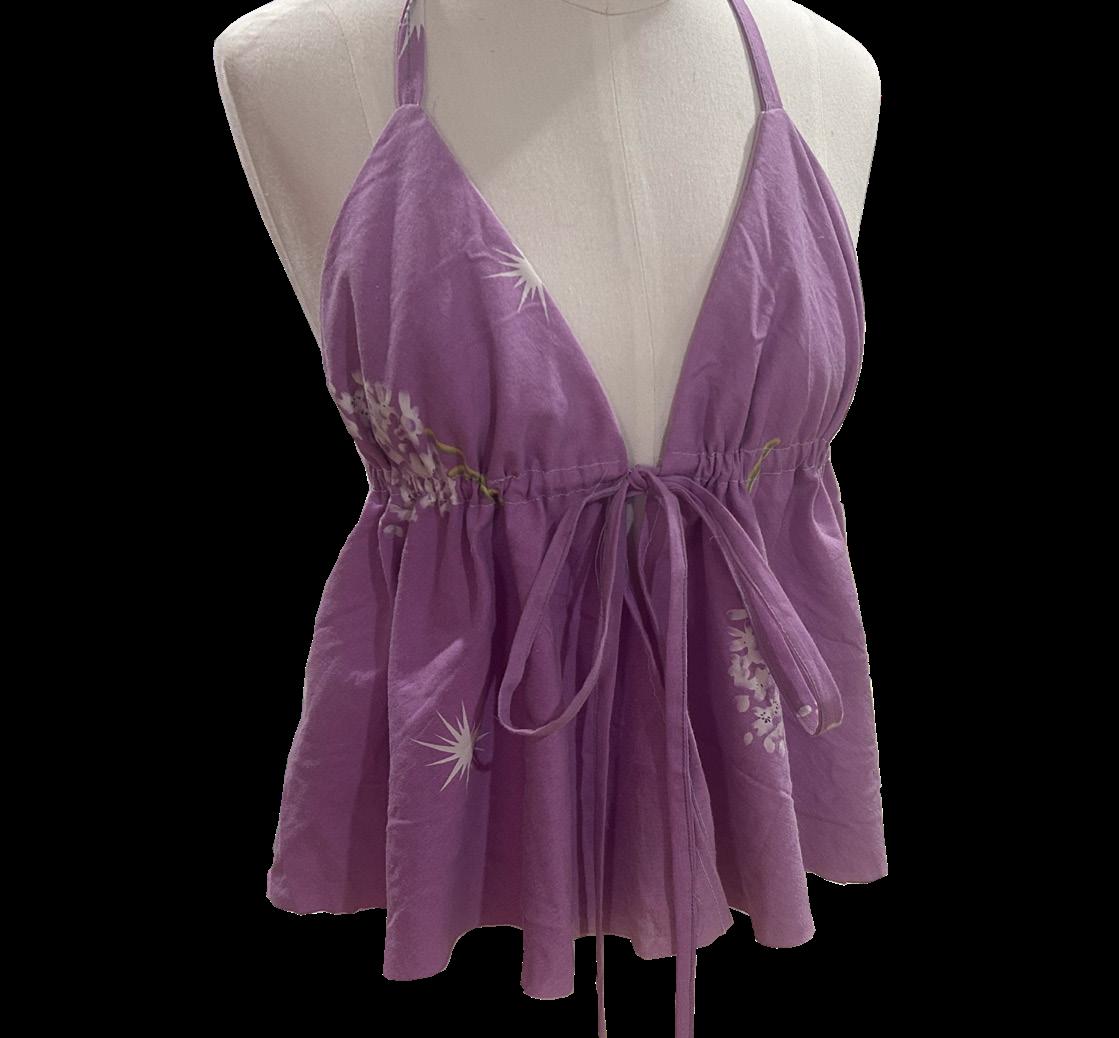
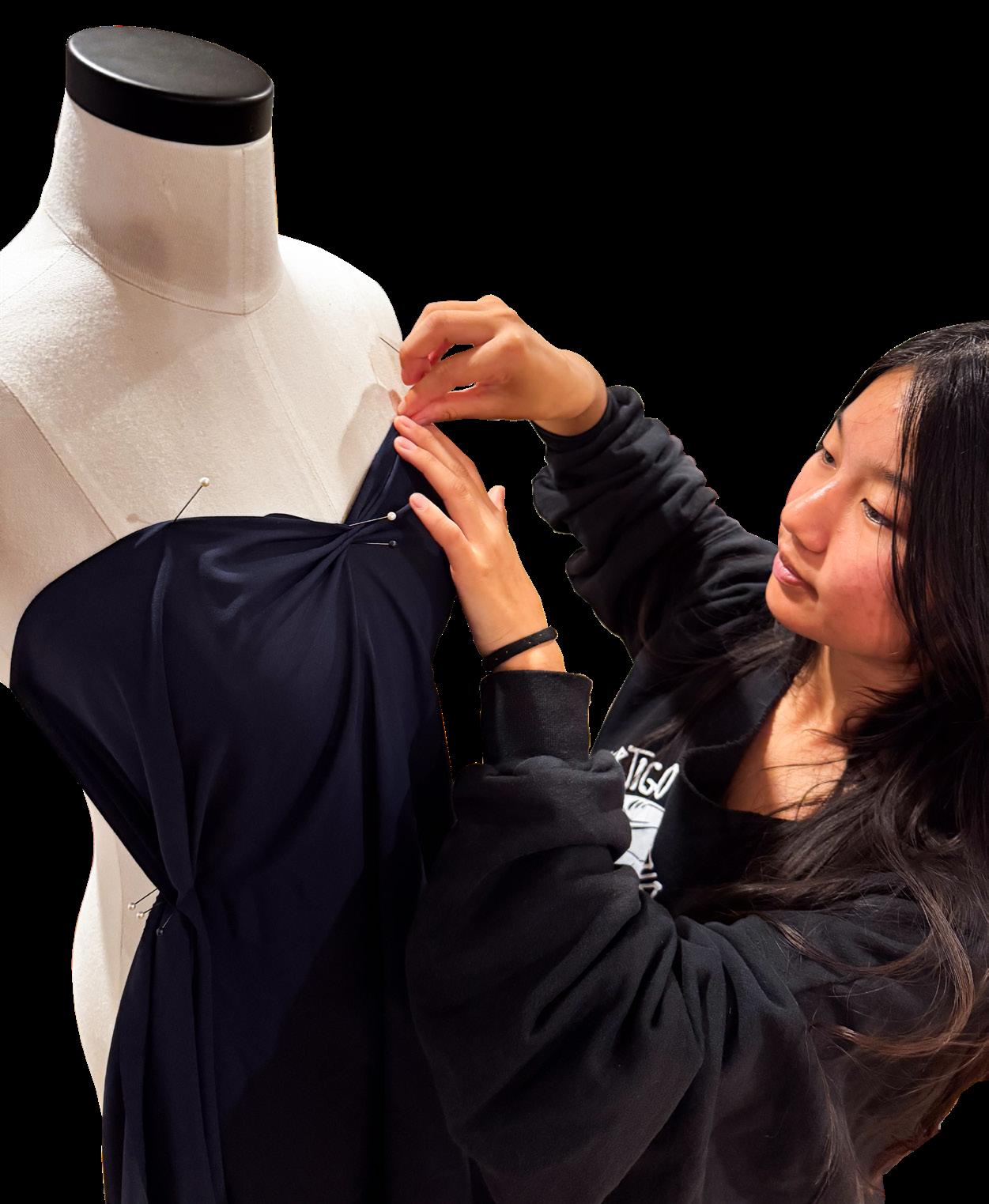
The steady hum of a sewing machine flls the room. Senior Chancie Chou works, guiding fabric beneath the needle, hands steady while she adjusts the hem of her new babydoll top. What began as a do-it-yourself approach and a love for cloth-working is now a clothing business she manages alongside school.
Chou’s interest in sewing was frst piqued when she watched her mother weave the needle in and out of fabric. Her early exposure to sewing came from seeing her family create and mend clothes.
“My family has a really DIY mindset,” Chou said. “If we can make it ourselves, why spend money?”
Chou also inherited that infuence from her grandmother, who worked as a seamstress in Taiwan. Through her, Chou learned about the craft frsthand, developing the practical skill to fx loose seams and alter clothes. Over time, she began experimenting with her own designs, sketching out tops and learning about different fabrics.
“When I frst started sewing, I had to be really resourceful,” Chou said. “I was cutting up a lot of old T-shirts and remaking them into bags or handkerchiefs. I still have that habit — if I see an old bedsheet or something I can upcycle, I would rather use what I already have than go buy new fabric.”
As Chou continued to breathe life into previously discarded materials, she realized she was producing more than she could actually wear. People around her began to take notice of her pieces. Her work now focuses largely on tailoring and custom alterations, often for school events and dances. Chou also continues to create original pieces from scratch.
Whether working from an idea or adjusting an existing garment, her process typically involves drawing the design out to make a pattern or pinning fabric directly onto a mannequin. Many times, a piece may not turn out the way she expected, which calls for resourceful pivots like splitting a full-body dress into a top and a skirt.
When Chou started taking in clients, it was mostly for tailoring jobs — altering a
sewing is a way for me to relax and still be creative.”
Through sewing and designing, Chou has developed skills that extend far beyond technical ability.
“I learned to be a lot more patient,” Chou said. “It’s okay to start over. Sometimes I’ll sew something, not like how it looks, take all the thread out and restart the entire process.”
Looking ahead, Chou hopes to continue
remains focused on the present, building her clientele through mutual trust and a passion for creating.
“Every stitch feels small until you see the whole piece,” Chou said.
“At the end, it’s like all the work was worth it.”
Inside Eileen Zhao’s dubia roach breeding project
BY AMY YUAN
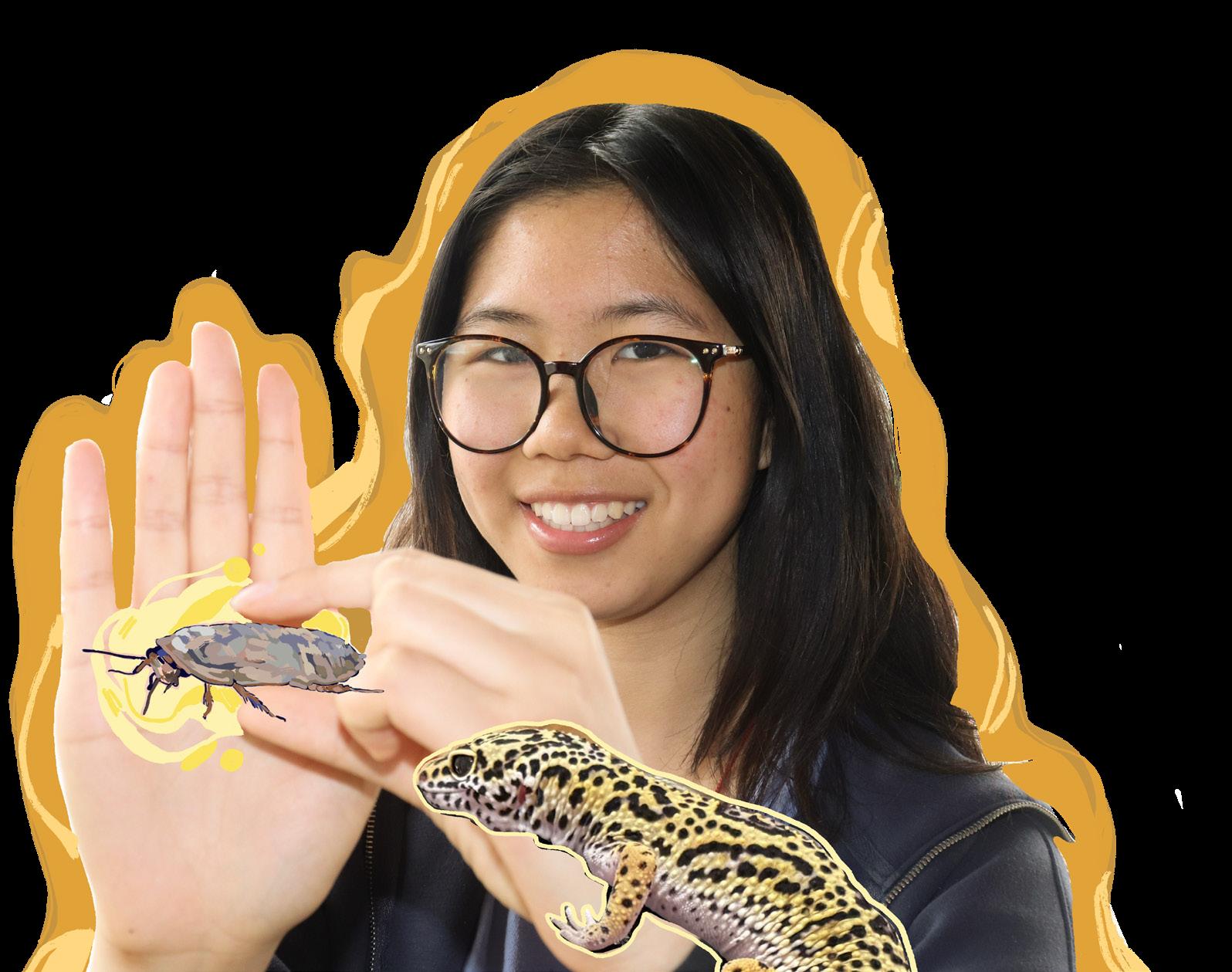
Shock, disgust and fear are common reactions when seeing a nest of roaches, but these creatures are a regular sight for junior Eileen Zhao. Zhao’s pet leopard gecko eats dubia roaches, but instead of simply buying roaches for him, she breeds them herself in her bedroom.
In December 2025, Zhao bought a leopard gecko and named him Oatmeal after the many oat-dwelling insects that geckos eat. She had been interested in owning a reptile ever since she saw them in videos and decided to raise a beginner-friendly leopard gecko.
At frst, Oatmeal’s diet consisted of wax moth caterpillars. While easily digestible for Oatmeal, Zhao thought that they were too fatty and started researching alternatives, soon stumbling across the dubia roach.
Dubia roaches are known as the best feeder insects for reptiles, with high protein and low fat. However, such nutritious insects come at a hefty price tag for a longterm feeding solution.
“Dubia roaches are really expensive, so breeding them
‘‘
high-quality roaches online. Yet those roaches’ long two-month maturation period meant that she didn’t have enough baby roaches to feed Oatmeal; she had to buy more.
Along with fve dubia roaches, Zhao feeds Oatmeal two mealworms per day, breeding them in a separate container flled with oats. To prevent cannibalization between stages, Zhao also has to separate the various stages of mealworm development.
“I think it's a really interesting and awesome way to feed pets live food,” senior and friend Aidan Tung said. “The breeding project itself is really interesting because you have to fgure out the conditions for them to reproduce, but not escape.”
A lot of people think that it's really disgusting and roaches are just dirty, but I actually fnd them pretty fascinating.
Eileen Zhao Junior
that roaches require. She feeds them fruits and vegetables, including apples and carrots, rotating foods so they maintain a nutritious diet.
Despite her now-productive roach breeding, Zhao bumped into some obstacles getting started. At frst, Zhao bought roaches from Petco, but she couldn’t start a breeding colony due to their poor quality. Thus, she bought
‘‘
Despite all the work that Zhao puts into breeding Oatmeal’s food, she fnds it worthwhile to enjoy moments with Oatmeal.
“I was super proud of him when I saw him shedding for the frst time,” Zhao said. “It was just a really cool process.”
Zhao’s friends and relatives were not so pleased when she started breeding insects. Her family, especially her grandparents, refused to go into her room once the roach setup was in place. Zhao, on the other hand, was always comfortable with insects.
“When I was younger, I'd go home with rolly-pollies,” Zhao said. “I was never shocked about having insects.”
In the future, she plans to study biology and fnds her roach breeding to be a valuable experience.
“I think a lot of people think that it's really disgusting and roaches are just dirty, but I actually fnd them pretty fascinating, and I think it's a really cool experience,” Zhao said.
Photo by Amy Yuan
Graphic illustrations by Ashley Hein
Eileen Zhao holds a dubia roach in her hand; her pet gecko Oatmeal stares at it intently.
Chancie Chou carefully pins a black dress onto her manniquin.
Photos used with permission from Chancie Chou
Graphic illustrations by Olivia Tu
Students redefne commutes to campus
BY EMILY CHEAH AND SAAVAN SARAF
Oscar Chung coasts through his commute on a skateboard
The rhythmic click-clack of wheels gliding over asphalt flls the air as sophomore Oscar Chung pushes off the pavement, his skateboard rolling smoothly beneath him. With a few quick turns and gentle swerves down neighborhood streets, he makes his way to school.
For Chung, getting to school has never been limited to a single routine. On some days, he walks, bikes or gets dropped off. But on others, skateboarding makes his normal commute relaxed and personal, breaking away from the struggles of more common transportation.
“Biking feels stressful, walking feels slow and driving is a little bit boring,” Chung said. “So I thought it would be fun to try skateboarding.”
Skateboarding has always been a part of Chung’s life. Whether it was a longboard or a regular skateboard, he grew familiar with riding one from when his father taught him to skate at eight years old. More recently, he bought a Surf Skate online, a specialized board originally designed to help surfers train on land by mimicking the feeling of riding waves. With unique trucks — which control steering — that allow for more fuid turns, the board makes the ride feel natural for Chung.
Chung started skateboarding to school in March. At frst, he was hesitant, unsure of how others might react. However, students showed little surprise and quickly accepted it as a part of his routine.
“I didn’t want people to think I was a poser,” Chung said.
Still, skateboarding to school requires caution, as smaller streets and backroads can be safer than larger roads. When dealing with steep inclines or areas heavy with bikes and cars, safety remains a priority. Chung is fexible with his commute options and doesn’t choose skateboarding on days he wakes up late or tired.
Outside of transportation, skateboarding has grown into a hobby that Chung enjoys in his free time. On days when he feels relaxed or has extra energy, he rides up and down the street, practicing turns and developing his skills.
“I can do basic pumping and bottom turns,” Chung said. “I’d really like to be able to slide and do cutbacks in the future.”
from 15 to 25 miles per hour — faster than most bikers.
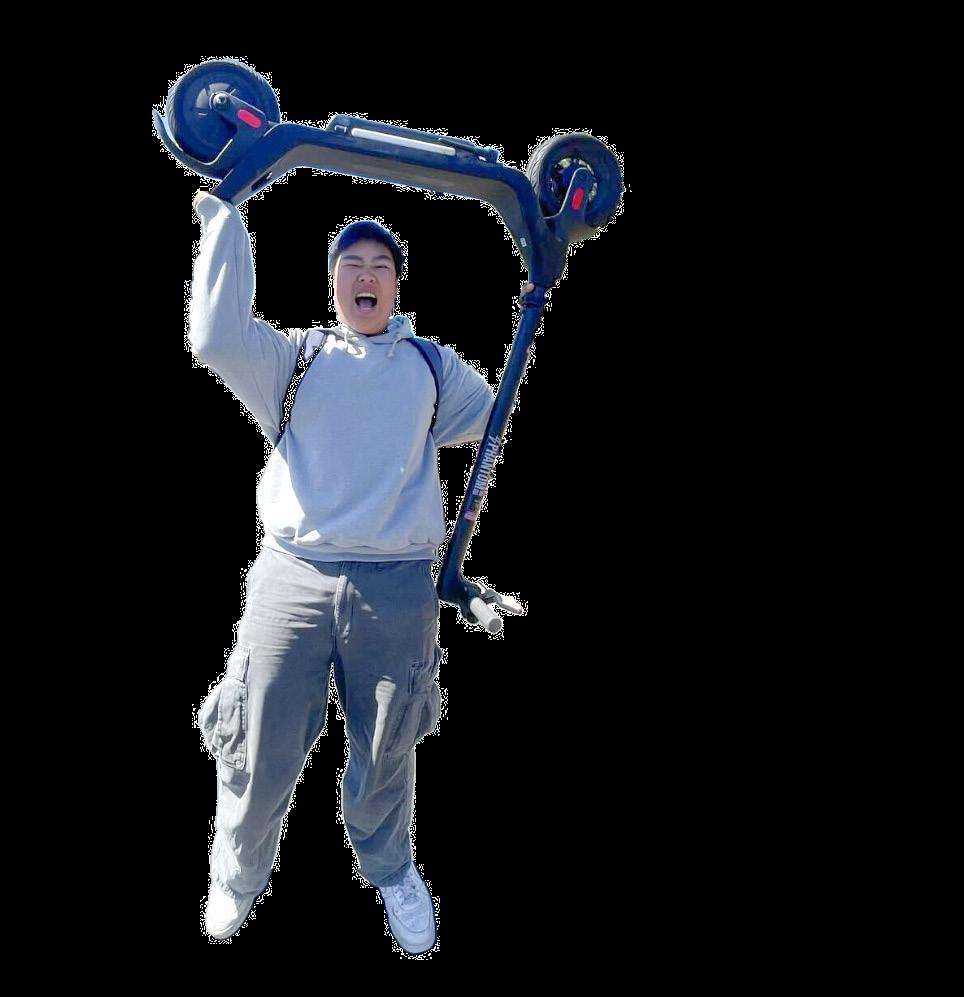
Zhou’s older brother introduced him to e-scooters three years ago. The frst time he stepped on, the sudden acceleration and smooth glide were exhilarating. He quickly started using it instead of biking. Why tire himself out when he could effortlessly glide past bikers and pedestrians with no
“After using the e-scooter a few times, biking just seemed unnecessarily tiring,” Zhou said. ‘It didn’t
For Zhou, using an e-scooter now is primarily about convenience, but that initial thrill hasn’t entirely faded. The scooter is smaller and more agile than a bike. Zhou can easily build momentum and slip ahead clusters of students, avoiding traffc bottlenecks that can form right before school starts. Even through the noise and congestion, the ride feels controlled.
T“I don’t have to worry as much about slow riders or running late,” Zhou said. “It honestly feels pretty
“It’s great to ride it around for fun if you like being
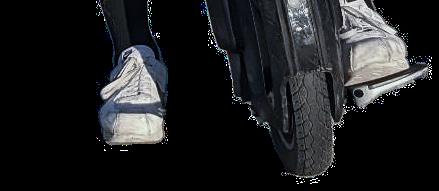
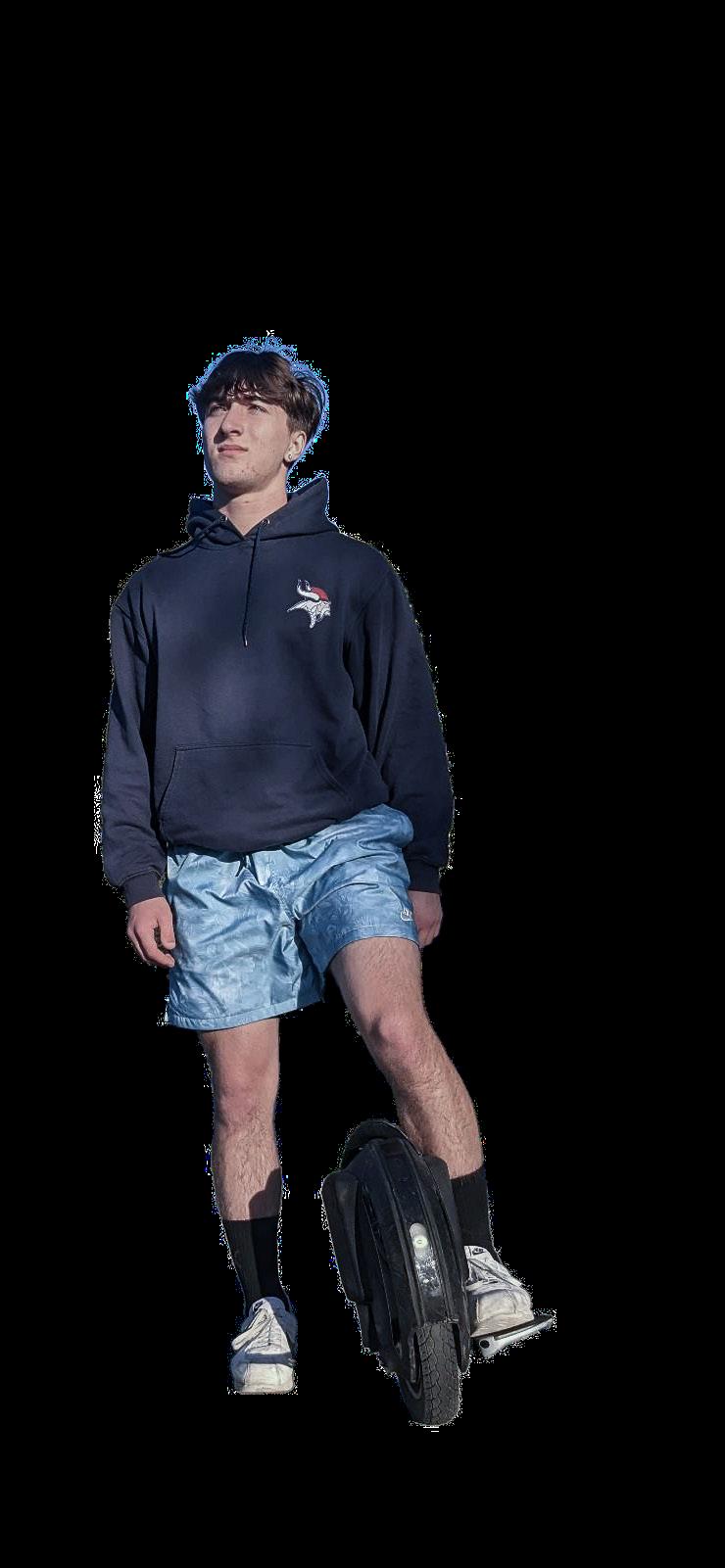
he frst time sophomore Aerik Turkal rode to school on a onewheeled electric board, heads turned. Students watched him glide down the street, balancing effortlessly among a sea of cars and bikes.
Turkal rides a OneWheel, a motorized skateboard with a single large wheel in the center. Turkal stands on either side of the wheel, leaning forward or back to move and control his speed. The board can reach faster speeds than a bike, making it a convenient and unique way to travel.
Turkal’s mother taught him how to use the OneWheel last year, and he learned naturally with little practice. Riding the OneWheel gives Turkal a small spark of excitement in an otherwise ordinary routine.
“I liked the looks that I got from people,” Turkal said. “It’s like, ‘Oh my god, what is that?’”
Students frequently stop Turkal to ask questions about how the OneWheel works, or if they can try it themselves. He typically declines, both for their safety and to avoid potentially damaging the board.
Despite these concerns, Turkal continues to use the OneWheel — even if just in his neighborhood — and fnds other ways to get to school, such as biking. Considering his experience with non-traditional modes of transportation, Turkal encourages other students to also try something different for their commute.
“It would probably reduce your carbon footprint since you're not driving to school,” Turkal said. “You would defnitely get people to see it, and maybe you could start a fad.”
The only downside of an e-scooter that Zhou identifes is having to charge it, something he doesn’t always remember to do. Still, most brands are reliable when low on battery, and the e-scooter remains a convenient way to get outside for Zhou, whether it’s for going to school, traveling to friends’ houses or
Aerik Turkal finds balance on a wheel
Photos used with permission from Oscar Chung, Aerik Turkal and Daniel Zhou Graphic Illustrations by Ashley Hein and Katie Shang
Daniel Zhou raises his e-scooter above his head.
Oscar Chung swerves on his skateboard.
Aerik Turkal poses with his OneWheel.
Student producers craft compositions
by nicolas cheng
sush
sushanth navak
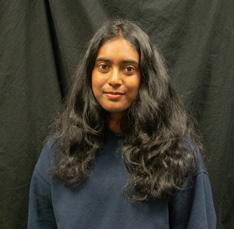
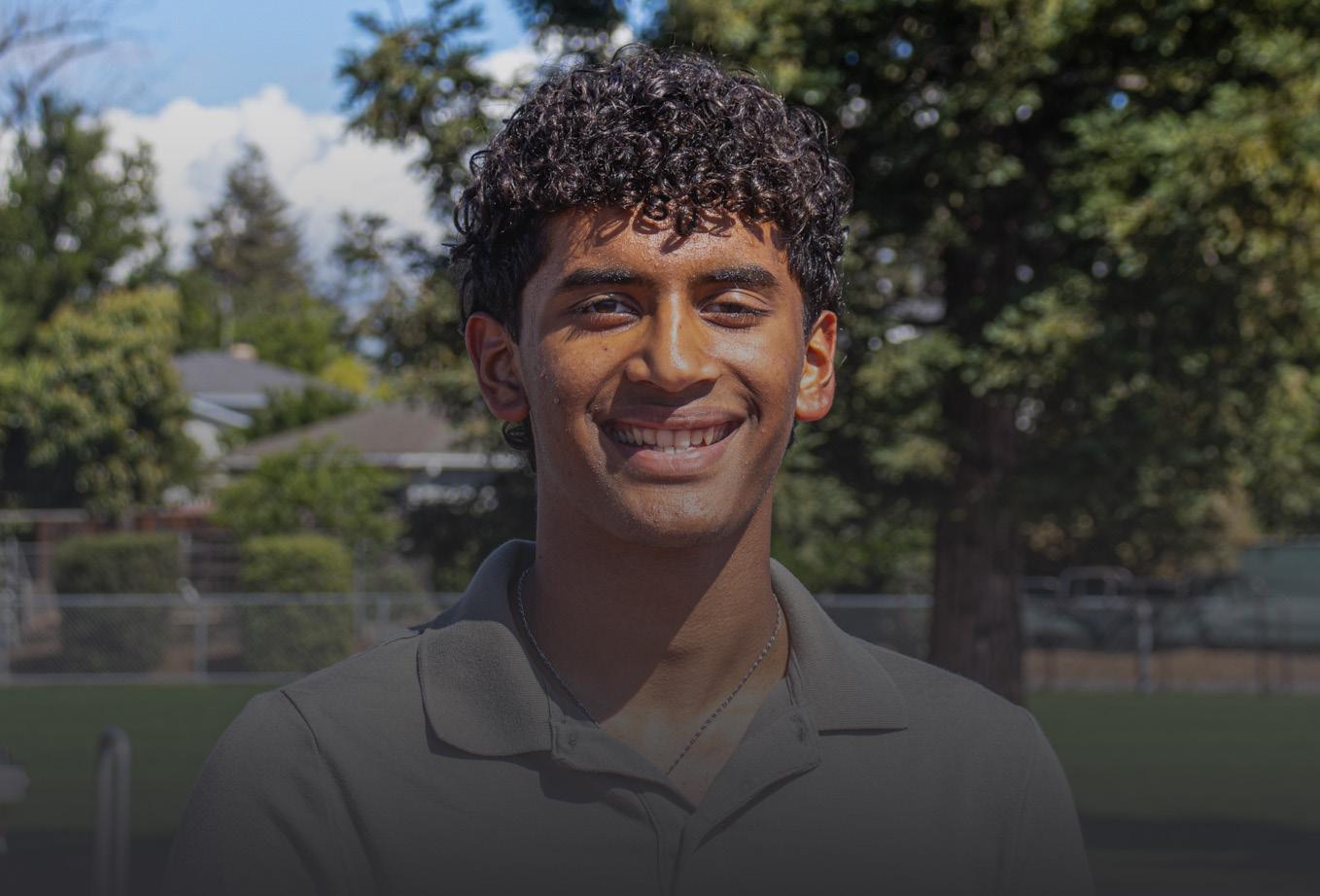
Junior Sushanth Nayak, known by his stage name Sush, started making music the way most people start solving puzzles — by taking something apart to see how it worked. Four years ago, driven by a curiosity for musical mechanics, Nayak began dissecting songs he admired to understand their composition. But replication soon lost its charm, and he wanted to build something original.
“I slowly started getting more creative and making my own music,” Nayak said. “Since then, I stopped remaking songs, and I’ve just been focusing on making my own.”
Nayak was working privately when he discovered his close friend, junior Sriram Upadhyayula, was independently creating music as well. The coincidence reframed their friendship, uniting two students chasing the same creative dream.
He has no fxed formula; songs can start from a melody, drum pattern or emotion. He built a network beyond Lynbrook through Discord and online music communities, trading feedback with independent artists. Friends like juniors Pranav Saharan, Arjun Rana and Yash Yoganandth point to “arrangements” — a syncopated, Afrobeat-infuenced track Nayak produced for Upadhyayula — as a standout.
“It was defnitely really rewarding to hear my work being enjoyed by a lot of people,” Nayak said. “Being able to see other people enjoying something that you care so much about — that’s always rewarding.”
Driven by this wave of public support, Nayak found the motivation to move past his early anxiety. Where he once felt pressure to ensure every release was perfectly polished and well-received, he now operates with a mindset of making music he truly enjoys frst.
“I’d rather just make music that I enjoy and put it out there, regardless of whether other people are going to listen or whether other people are going to enjoy it,” Nayak said.
While the future remains open, Nayak is driven by the immediate thrill of creation.
“I do intend to keep it as a hobby for as long as possible,” Nayak said. “I would love to continue to grow and get bigger as an artist and start working with some new people as well.”
faygo
sriram upadhyayula
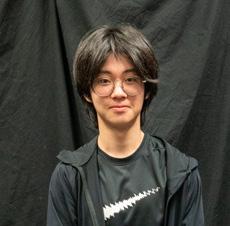
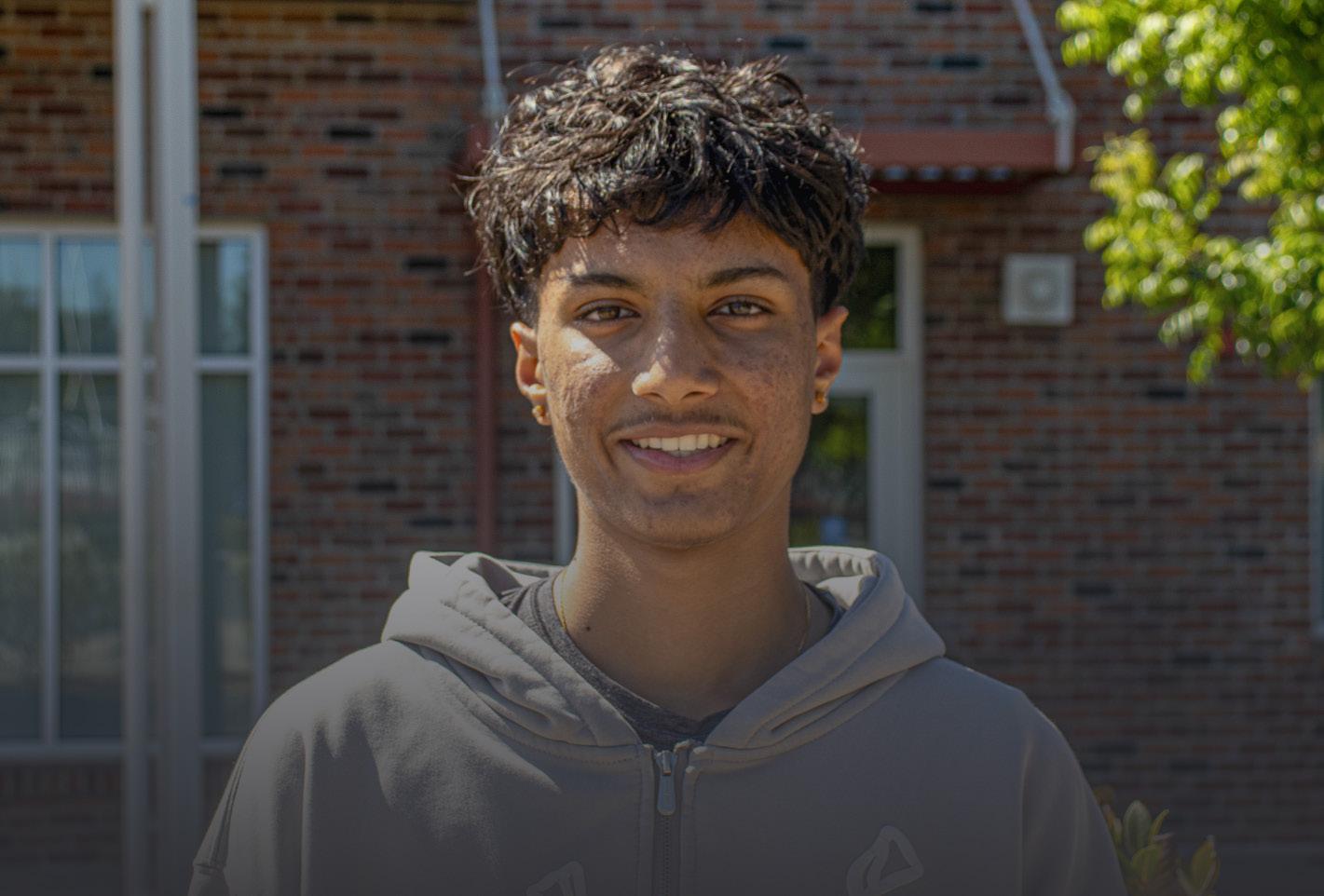
Atrack dropped at Junior Prom, and the room went wild. Students fooded the dance foor, moving to music made in a bedroom studio by someone standing right there in the crowd. That night, junior Sriram Updahyayula, known by his stage name Faygo, heard his songs playing on the DJ’s queue all night.
“It was a super unreal experience for me,” Upadhyayula said. “Having everyone listen to my music, give me feedback, tell me they loved it — it was a night that I cannot forget.”
Upadhyayula spent fve years building up to that moment. Prior to the COVID-19 pandemic, he was drawn to producing music by the novelty of recording his own voice. Two people shaped that foundation early on. His childhood singing teacher spent nearly a decade teaching him Indian classical music and the technical grounding for singing, while his grandmother sat through lessons and pushed him to keep going.
From there, curiosity took over. He built a home recording setup and taught himself to use Logic Pro, a digital music production platform, drawing inspiration from R&B artists like Drake, Kanye West and PartyNextDoor. His releases on Spotify built an active following at Lynbrook through social media and word of mouth.
Fellow junior Sushanth Nayak became his closest partner. The two have been trading music since seventh grade. Upadhyayula creates a draft; Nayak responds with notes. When collaboration requires more than sharing fles, Upadhyayula hosts recording sessions at his house.
“A lot of times, Sushanth sends me a beat and asks me to do vocals,” Upadhyayula said. “I send him a draft, then it goes from there. We keep progressing, giving each other ideas.”
The music quickly found its audience among students. Junior Pranav Saharan added the songs to his playlist, initially surprised that a classmate made them. Others praised the sound: junior Yashwanth Yoganandth called it melodic and emotionally grounded, while junior Arjun Rana praised the blend of Upadhyayula’s R&B, breathy vocals and Nayak’s production.
Upadhyayula is currently fnishing his album, “Cloud Nine.” The single dropped March 29, with 6 more new tracks rolling in on April 20.
“You just have to open up a project, start recording, see where it takes you,” Upadhyayula said. “Don’t be scared to post online. Feedback is always good.”
“NEVER FOREVER” single by Sush
“MP<3” by Sush
“arrangements” by Faygo “Trust” by Faygo
Photos by Nicolas Cheng and used witih permission from Sushanth Navak and Sriram Upadhyayula
Graphic illustrations by Olivia Tu
Follow your favorite school lunches from farm to cafeteria
BY ALYSSA LIN AND RACHEL MARTIN
Students march through the lunch line daily, most often giving no thought to how the food is made. Feeding a large student population is no easy feat, and cafeteria workers spend a signifcant amount of time and effort preparing menu items. The ingredients for school lunches and fruits often come from local farms; the district prioritizes domestic commodities to ensure freshness. Still, each school must frst follow federal nutrition standards set by the Food and Nutrition Service of the United States Department of Agriculture.
Cafeteria workers start their days by arriving early in the mornings to begin preparing for the long day ahead.
Preparations vary depending on the food being served.
“Some days are busier than others, with Mondays, Wednesdays and Fridays being the busiest,” cafeteria cook Santy Arroyo said.
Morning preparations include organizing cooking stations and restocking side items including sauce packets and plastic utensils. Daily produce deliveries from suppliers such as Cisco and Gold Star are stored in the dry storage for easy access for when the cooks and student workers need to use them.
“Student workers are a major part of what we do, as preparations would be very diffcult without their help,” school food and service manager Tom Fernandez said. “They do a lot of the minutia prep work, like getting plates ready, getting containers ready and stocking milk and stuff like that. They’re integral in the process.”
Served every Wednesday and Friday, the cinnamon rolls are one of the most popular brunch menu items. Like many other foods served in the cafeteria, their preparations begin one day in advance. Cafeteria workers frst place the frozen rolls onto large metal pans, spacing them out evenly. When the cafeteria cook, Lara Santiago, arrives the next morning, she frst sets the trays into the warmer for half an hour for the dough to proof. Afterwards, they are headed into the oven for 10 minutes at 350 degrees.
While the kitchen oversees the cooking of most offered food items, decisions regarding menu and nutrition are carefully curated by Divya Puri, FUHSD’s manager of food services and certifed nutritionist. Puri sends recipes and preparation instructions to all school food service managers, including Fernandez, who orders the required ingredients for the menu, ensuring the quality of cafeteria food.
When the timer signals the end of the baking process, the cinnamon rolls are taken out and placed onto prepared plates with a few fnishing touches.
“The cinnamon rolls are cooled down for a bit, and then we start putting the glaze on top,” Arroyo said. “It’s plain sugar, that’s why the students love it.”
Lunch for students is an anticipated moment in the school day. Nachos, served on Fridays, are a favorite option for many. A zoom into the nachos’ preparation reveals their building blocks: chips, cheese, meat, pico de gallo and beans to substitute the meat for vegetarians.
A variety of ingredients are incorporated in the nachos to meet state nutritional guidelines. The Food and Nutrition Service of the U.S. Department of Agriculture has strict requirements on what goes into school lunch foods, including sodium and vitamin limitations, as well as calorie and protein requirements. High schoolers are required to have fve servings of fruits and veggies and fve cups of fuid milk.
To make menus that follow these guidelines, a multi-step process is followed. On the federal level, the USDA must research healthy eating patterns that they can then make into nutritional meal standards. Then, the state provides money and training to the school. Finally, FUHSD food services managers weigh their available resources, student preferences and local food availability to fnalize their menus.
Getting the required nutrients to students is always a priority. The cooks and managers work hard to make sure that the food remains appetizing
“I think nachos taste good,” sophomore Dashiel Smoler said. “It’s one of the better lunch options that we have.”
Preparation starts the day before, putting the chips on trays, then into a warmer to keep them crunchy. Beans are seasoned, and early the next
The work that goes on to prepare one bowl of nachos applies to all school cafeteria food, something that the cooks are proud of.
Covers all sections of
• Multiple schedules from which to
One-on-one sessions tailored to your strengths
Targeted strategies for Reading/Writing and Math
tracking with diagnostics & practice tests
Graphic illustrations by Eunice Leung and Alexandra Wu.
Photos by Alyssa Lin and Rachel Martin,
THE LANGUAGE OF POLITICAL STYLE
BY ANNA CEN AND ANUSHKA
“Fashion is the visual language that we all speak with the clothes we wear,” West Valley College lead fashion instructor Tony Murray said.
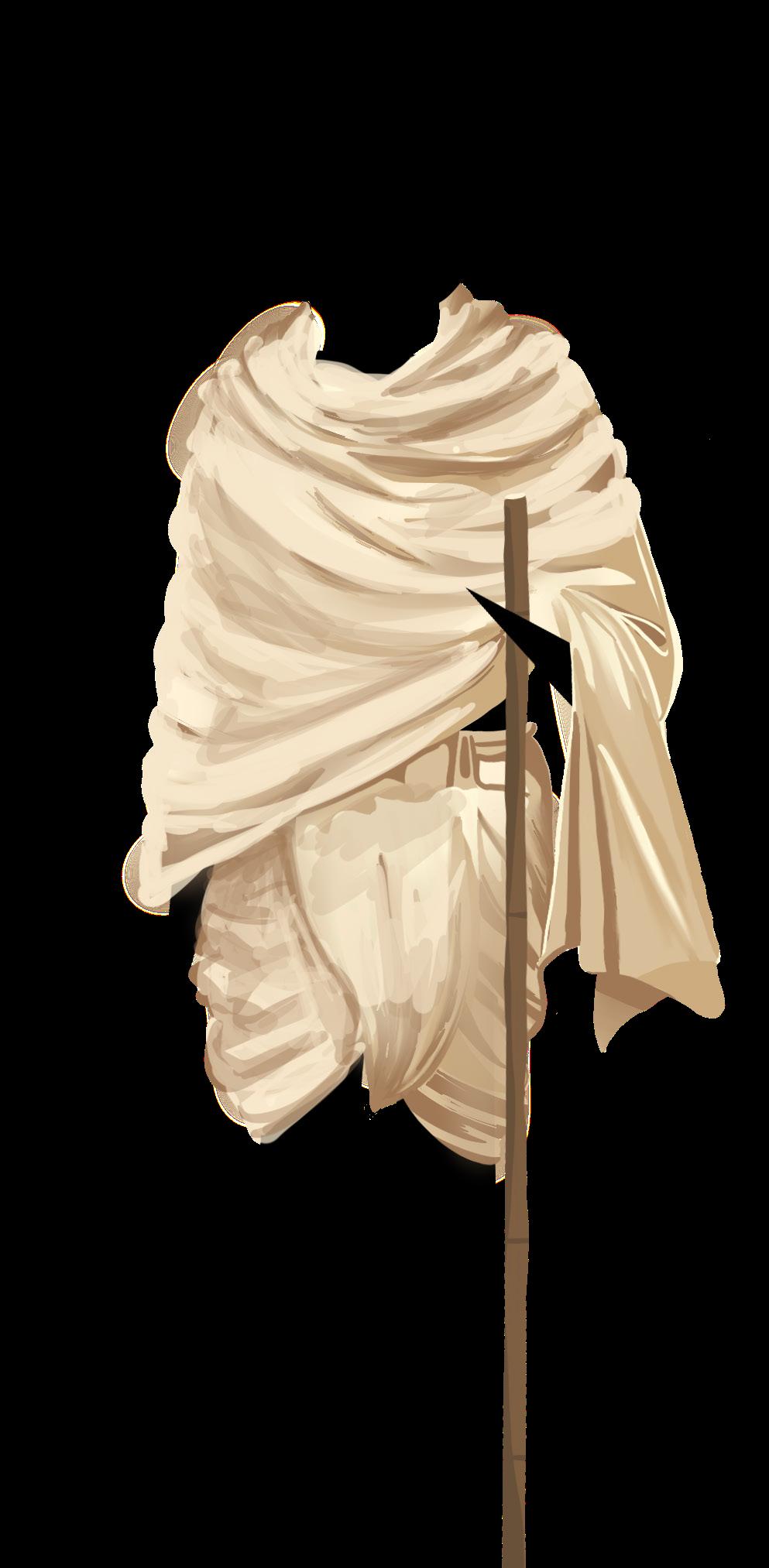
Throughout history, fashion has refected political resistance. During opposition to British colonial rule in India, hand-spun textile, khadi, became a symbol of self-suffciency through the Swadeshi movement. The material was then popularized by social activist Mahatma Gandhi.
Meanwhile, the Civil Rights Movement used fashion as a propellant of social change. Crafting a sleek and elegant image, African Americans often wore pristinely tailored suits and dresses. In the 1970s, the focus of the Civil Rights Movement turned to Black power:
natural hair in the form of afros was a symbol of cultural celebration.
Just as clothing can convey solidarity, it can be used to discriminate. In the 1940s, the Nazi regime forced Jewish people to wear a yellow Star of David to isolate and control them. On the other hand, the Nazi paramilitary wing Sturmabteilung wore brown shirts and ties to create a visual uniformity. Eliminating individuality reinforced the “us vs. them” mentality that is often used in dictatorships. It helps that people tend to avoid clothing items associated with movements they don’t want to be caught supporting.
“It’s the opposite of the halo effect,” Murray said. “People who might not be in agreement with someone’s political position might now have a negative view toward something as simple as what they wore.”
The rise of television in the mid20th century drove fashion’s role in political communication.
During the 1960 presidential election between John F. Kennedy and
Richard Nixon, televised debates emphasized visual presentation; Kennedy’s youthful image became popular among many voters.
“The way that a candidate presents themselves can affect how people perceive them,” said Chelsea Guo, senior, Politics Club president and Indesign co-president. “There’s a reason why we always see politicians in full suit and tie, even when they’re not actively on the campaign trail or in offce. You’ll often see them dressed well because we want our public offcials to give off the image that they are capable.”
In the widely-publicized 2026 mayoral election in New York City, candidate Zohran Mamdani’s wife, artist Rama Duwaji, drew attention for stylistic choices that highlight independent designers and cultural identity. Notably, at Mamdani’s mayoral inauguration, Duwaji donned a coat created by PalestinianLebanese designer Cynthia Merhej.
Highly-publicized haute couture events like New York City’s annual Met Gala take designers’ and public fgures’ political statements onto the runway. The 2025 theme, “Superfne: Tailoring Black Style,” referred
to African American tailoring traditions used as resistance in the Civil Rights movement. Other attempts to send political signals take shape in makeup and fashion trends. Balancing traditional gender roles and professionalism, some conservative public fgures favor modest silhouettes. For instance, former South Carolina governor Nikki Haley wore skirts often interpreted as an expression of traditional femininity.
Clothing can also function as a widely recognizable symbol. Most notably, President Donald Trump’s red hats bear the slogan “Make America Great Again” and have become markers of his conservative viewpoints.
“Like anybody else, politicians are trying to build a brand,” Guo said. “When they identify themselves through specifc colors, styles or trademarks, people will fock to that.”
Fashion functions as a visual language within politics. From coordinated uniforms to individual style choices, clothing continues to signal identity and affliation, shaping both personal expression and the values of an era.
In Suzanne Collins’ novel “The Hunger Games,” the gaudy outfts worn by people in the Capitol, such as Effe Trinket, critique classism and overconsumption.
American
to combat racist stereotypes of unprofessionalism during nonviolent protests.
DESHMUKH
Graphic illustrations by Emily Cheah, Eunice Leung and Alexandra Wu
African
activists wore their “Sunday best”
Story continued from front page.
American women broke societal constraints in the 1920s by wearing short dresses that allowed movement. These fapper skirts were often paired with short haircuts.
BY CLAIRE GUO AND OLIVIA TU
SWinchester Mystery House
The Winchester Mystery House is often described as one of the most haunted places in the world. Sarah Winchester, the widow of William Winchester — owner of the Repeating Arms Company — was left with a vast fortune when he passed. She used her riches to buy a farmhouse, which she expanded continuously over 36 years into an ornate 160-room mansion to appease, according to local folklore, the spirits of those killed by Winchester rifes.
The house includes numerous unconventional features, such as staircases ending at the ceiling and doors that open to walls. Repeating motifs like spiderweb patterns and the number 13 appear throughout the structure, which has operated as a tourist attraction since 1923.
“The house is a Queen Anne Victorian style and has a builtin storage, which was a luxury in those times,” tour manager Susan Delance said. “I love the way the stained glass windows cast rainbows around the house and how a seemingly disorganized house is actually pretty organized.”
an José, nestled in the heart of Silicon Valley, is widely recognized as a center for technological innovation. Yet aside from its reputation for startups, the city is also home to a variety of popular tourist attractions — from eccentric mansions to picturesque gardens. Together, they offer a glimpse into San José’s rich history and culture.
Rosicrucian Egyptian Museum
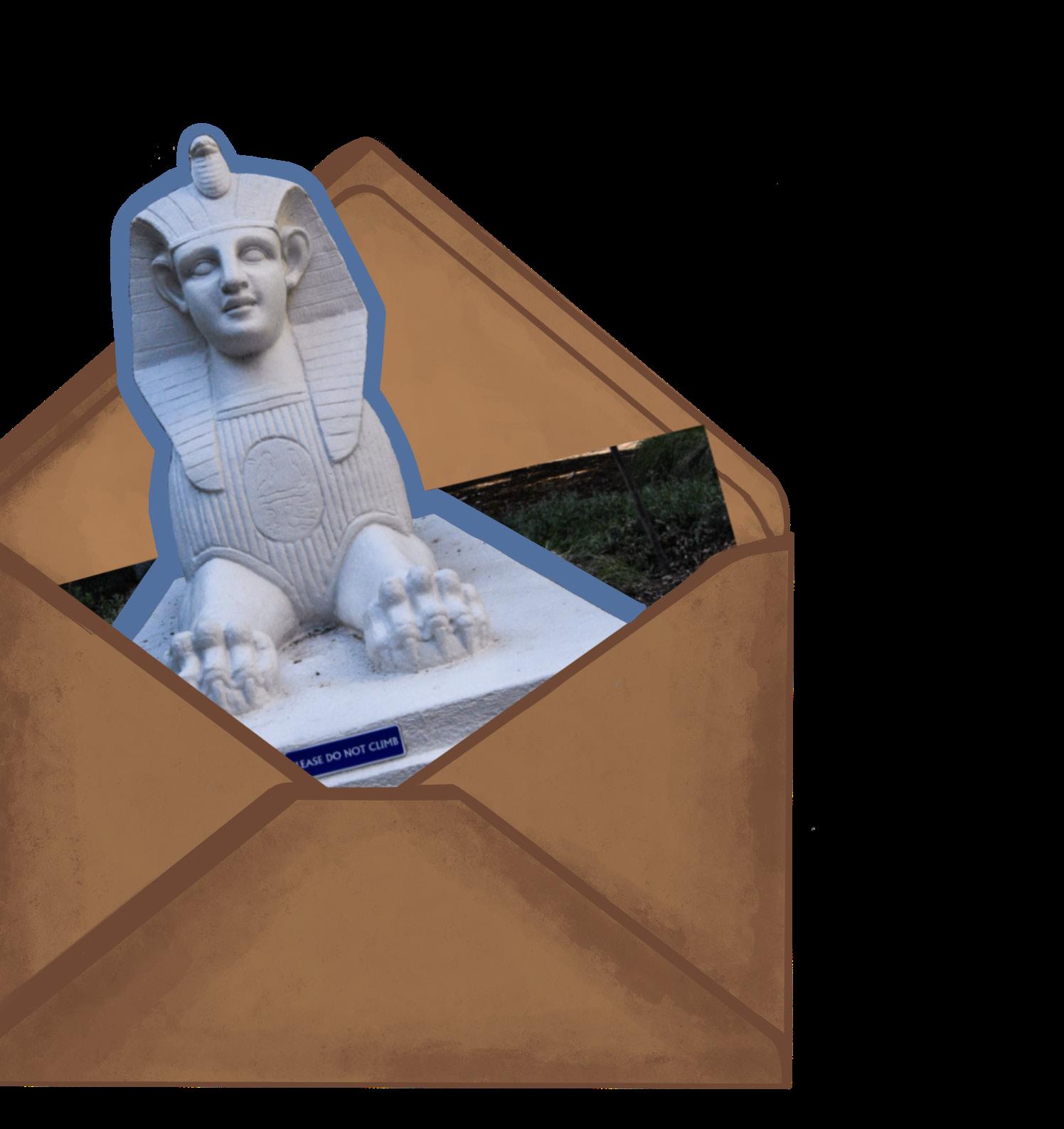
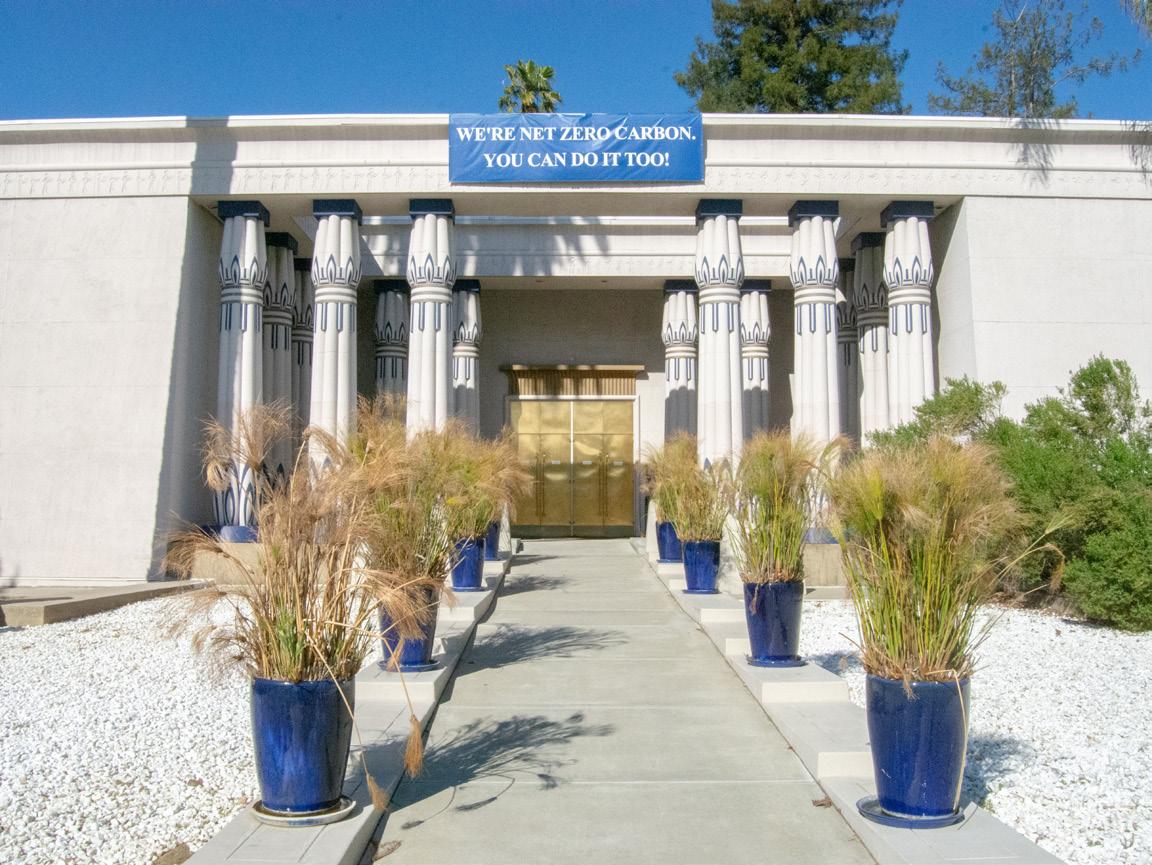
The Rosicrucian Egyptian Museum, modeled after the Temple of AmunRe in Luxor, Egypt, features majestic columns and eight sphinxes lining the walkway. It was established by Spencer Lewis, founder of the Ancient Mystical Order Rosae Crucis, a philosophical organization based on ancient Egypt.
After relocating to San José in the early 20th century, the organization expanded its collection through donations and excavations. The museum now houses over 4,000 artifacts including sculptures, sarcophagi and everyday objects.
One of the most notable features is a reconstructed underground tomb based on the Beni Hasan burial sites. Today, the museum serves as an educational institution for students and attracts thousands of visitors annually.
“Our hope is that guests can feel what it might have been like to live in such a different time and culture,” museum executive director Julie Scott said. “We hope they may be inspired to explore the spiritual beliefs of ancient Egyptians, especially their connection with nature and the cosmos.”
Japanese Friendship Garden
The Japanese Friendship Garden was established in October 1965 by the San José City Council as part of a sister-city relationship with Okayama, Japan. The six-acre site refects Okayama’s Korakuen Garden. It houses interconnected ponds with Japanese-imported koi. The garden has experienced challenges, including a fsh virus in 2009 and food damage in 2017, but has since been restored.
Designers arranged features using traditional Japanese landscaping principles, blending harmoniously with the natural scenery.
“This reminds me of Okinawa,” retired Air Force veteran Pam Taylor said. “I was stationed there for three years. I live in Texas now, and we don’t have fowers. We have a lot of brown so this greenery is great.”
The garden is open daily and free to the public, providing daily accessible green space.
“I really enjoy the landscaping, koi pond and the natural arrangement of plants and rocks,” Class of 2025 alumna
Photos by Eunice Leung Graphic illustrations by Rebecca
Cai, Emily Cheah and Alexandra Wu
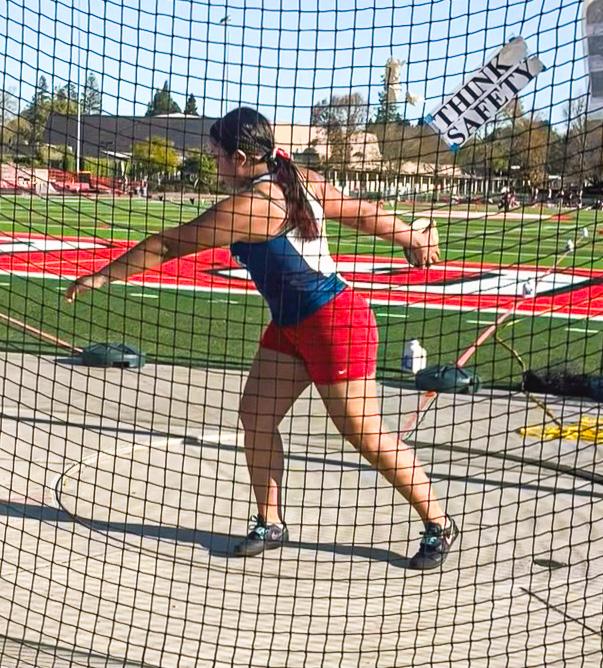
Chanelle Aragones aims for improvement in shot put and discus throw
BY AUDREY CABALTICA
Junior Chanelle Aragones swings her arm around her body, her fngers frmly wrapped around the discus.
Building momentum, she spins over her shoulder twice before hurling it far into the sky. With four years of experience in discus throw and shot put, Aragones’ passion for track and feld has led her to win multiple medals. As the only girl at Lynbrook participating in shot put this year, she continues to push herself toward improvement.
Aragones’ enthusiasm began in eighth grade when her PE teacher encouraged her to join her middle school’s track and feld team. Discus throw and shot put piqued Aragones’ interest as an opportunity to build strength.
meters.
“I was shocked when I got these medals because I didn’t expect to place,” Aragones said. “They helped me realize how much my hard work was paying off and I was happy seeing improvement.”
Being the only girl representing Lynbrook in shot put was a challenge, putting pressure on Aragones to succeed. When feeling unmotivated, she reminds herself that the harder she works, the better her results will be.
They helped me realize how much my hard work was paying off, and I was happy seeing improvement.
“I tried them out because they seemed like fun events,” Aragones said. “I knew I was going to get strong from it because you had to consistently throw.”
After her frst season of track and feld, Aragones began to go to the gym with her dad to improve her throws. Eventually, she took the initiative to go on her own.
“I wanted to continue throwing because I wanted to keep improving,” Aragones said. “I knew that if I put extra work in, it would make a big difference in my performance.”
Aragones has won multiple awards, including two frst place medals for discus throw and three frst place medals for shot put. She earned her frst medal for discus throw as a freshman at the RustBuster Invitational. This season, she’s topped both of her personal records, with her discus throw currently at 32.51 meters and her shot put at 9.73
‘
“At frst, it was challenging because I stood out, but I used that as motivation,” Aragones said. “I focused on my work ethic and performance instead of trying to ft in, and once my results spoke for themselves, I felt more confdent in my place on the team.” Aragones fnds joy in the discipline required for track and feld. When competing, she’s able to clear her mind and focus purely on her technique.
“From ninth to eleventh grade, I’ve seen Chanelle’s passion for track grow so much,” junior and track and feld throwing captain William Li said. “She’s incredibly dedicated and hardworking, and puts her all into everything she does.”
Aragones plans to keep improving her throws in her senior year. After high school, she foresees continuing to practice her events, even if she doesn’t compete in college.
“Every throw is a chance to improve, and every
challenge is a chance to grow,” Aragones said. “Continue to push yourself, trust your training and enjoy every moment because your hard work and consistency make the biggest difference.”
The hidden flaws of modern workout culture
BY TRISTAN LO
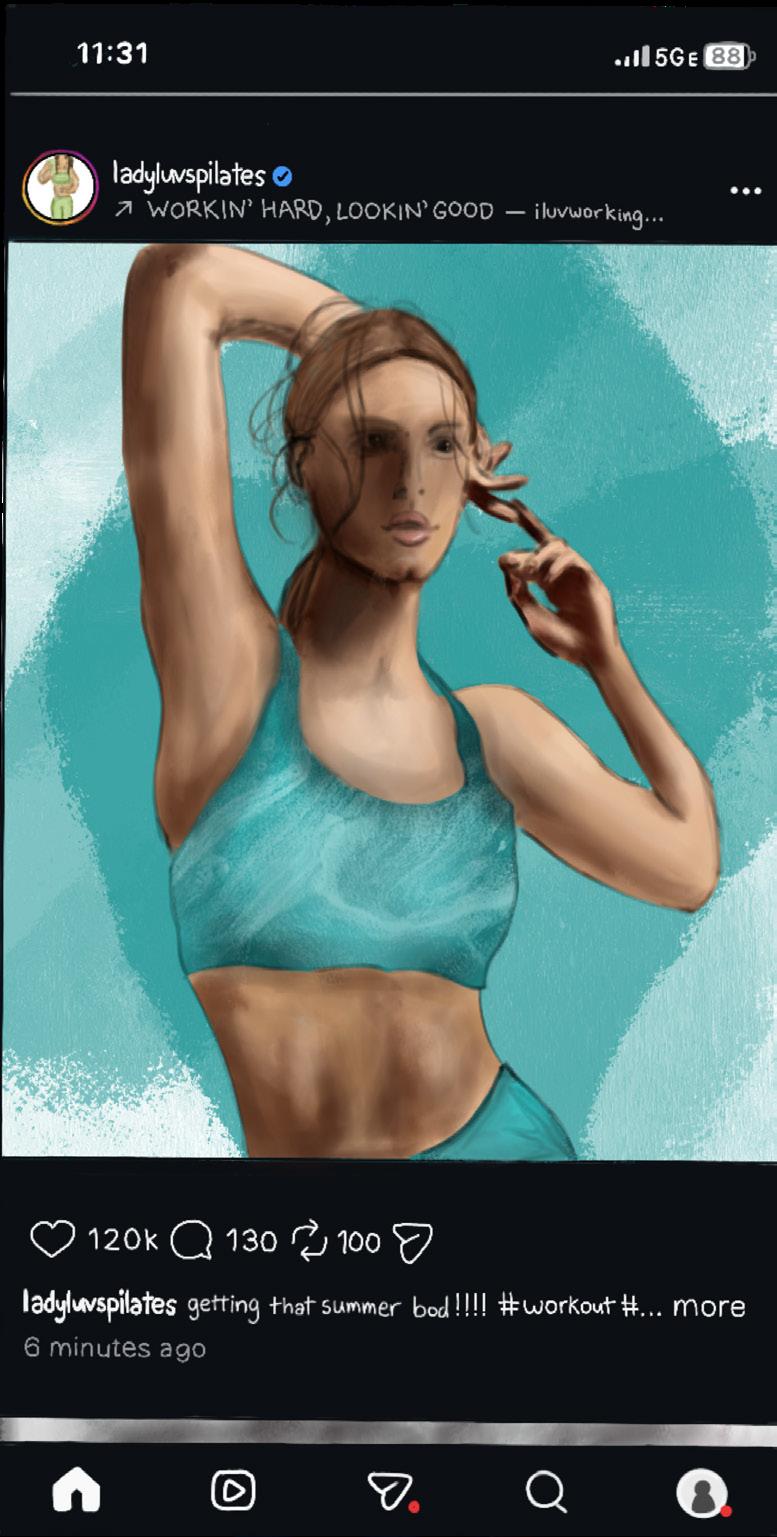
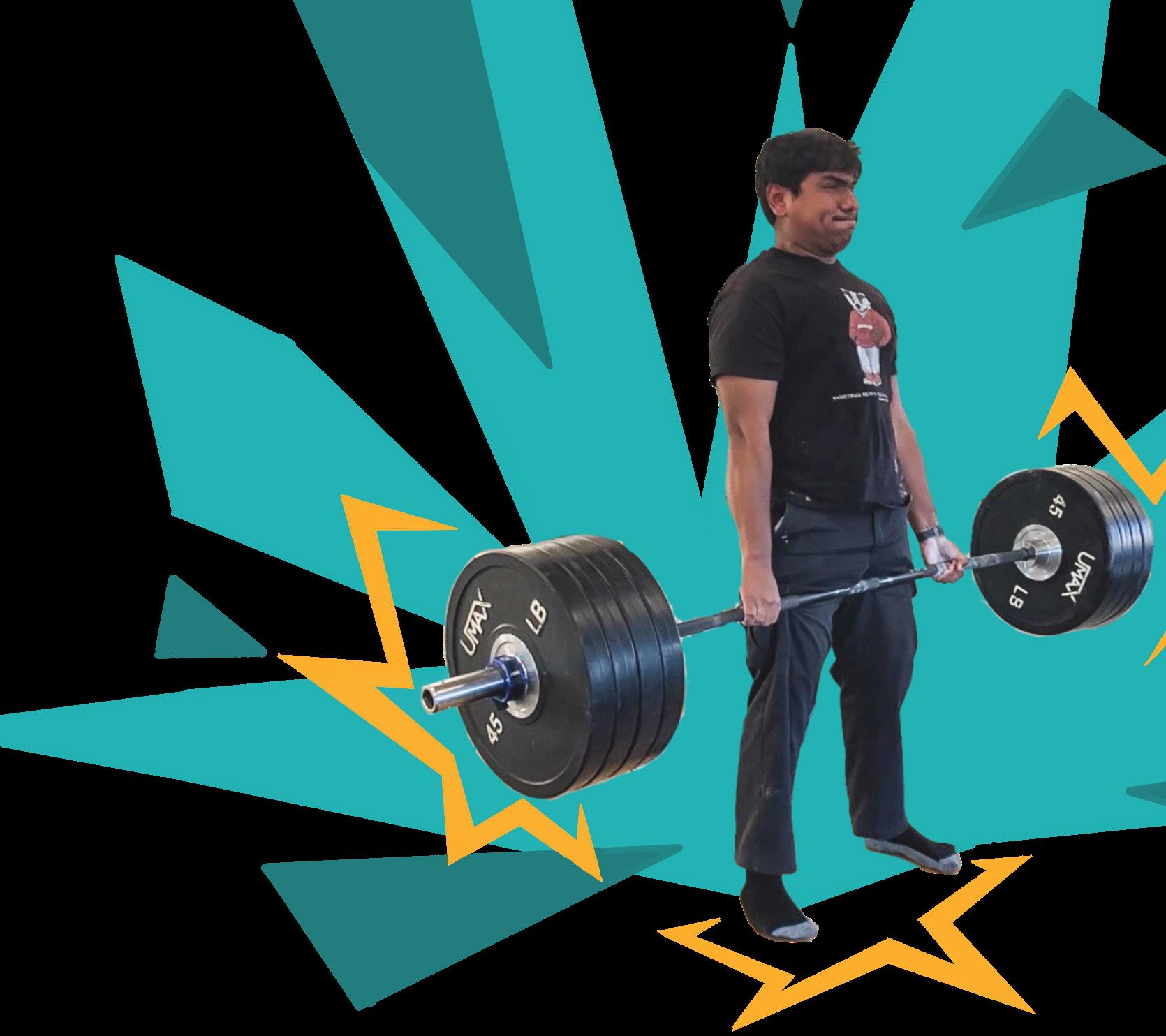
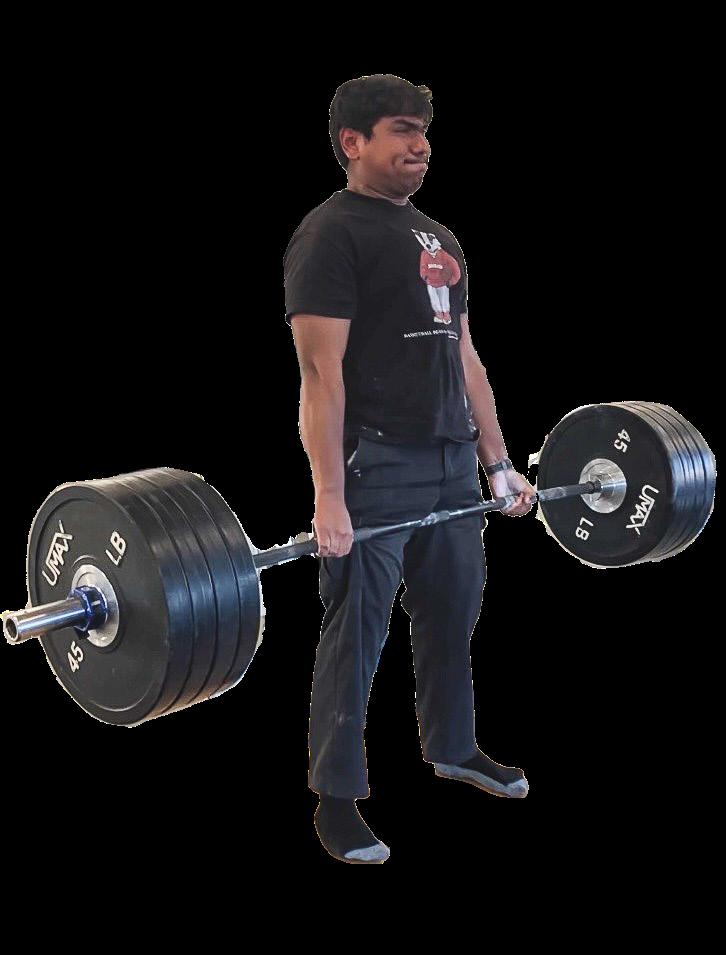
As summertime rapidly approaches, many students see their social media feed flled with content about ftness and achieving the perfect “summer bod.” Immediately, they feel compelled to hit the gym — not for their personal well-being, but to achieve a specifc body shape. Modern workout culture has become synonymous with
harmful social media trends.
Regular exercise is crucial for physical and mental health. Studies have shown that intense workouts dramatically increase the production of endorphins, a hormone that acts as a natural painkiller and stress reliever. However, social media has tainted how people perceive going to the gym — and how they perceive themselves.
“We have things like Instagram and TikTok pushing unrealistic body standards towards a lot of students,” weight training teacher Joseph Luo said. “However, there’s a lot more information online — if they take the time to understand that, there’s a lot more sciencebased workouts for them to use.”
Thousands of social media users now follow content purely about attaining certain physiques, such as sculpted abs or larger biceps. Infuencers push short-form videos that focus purely on the aesthetics of working out. Although promoting ftness through social
media isn’t inherently bad, the way people perceive social media content has revealed the dark side of following ftness infuencers.
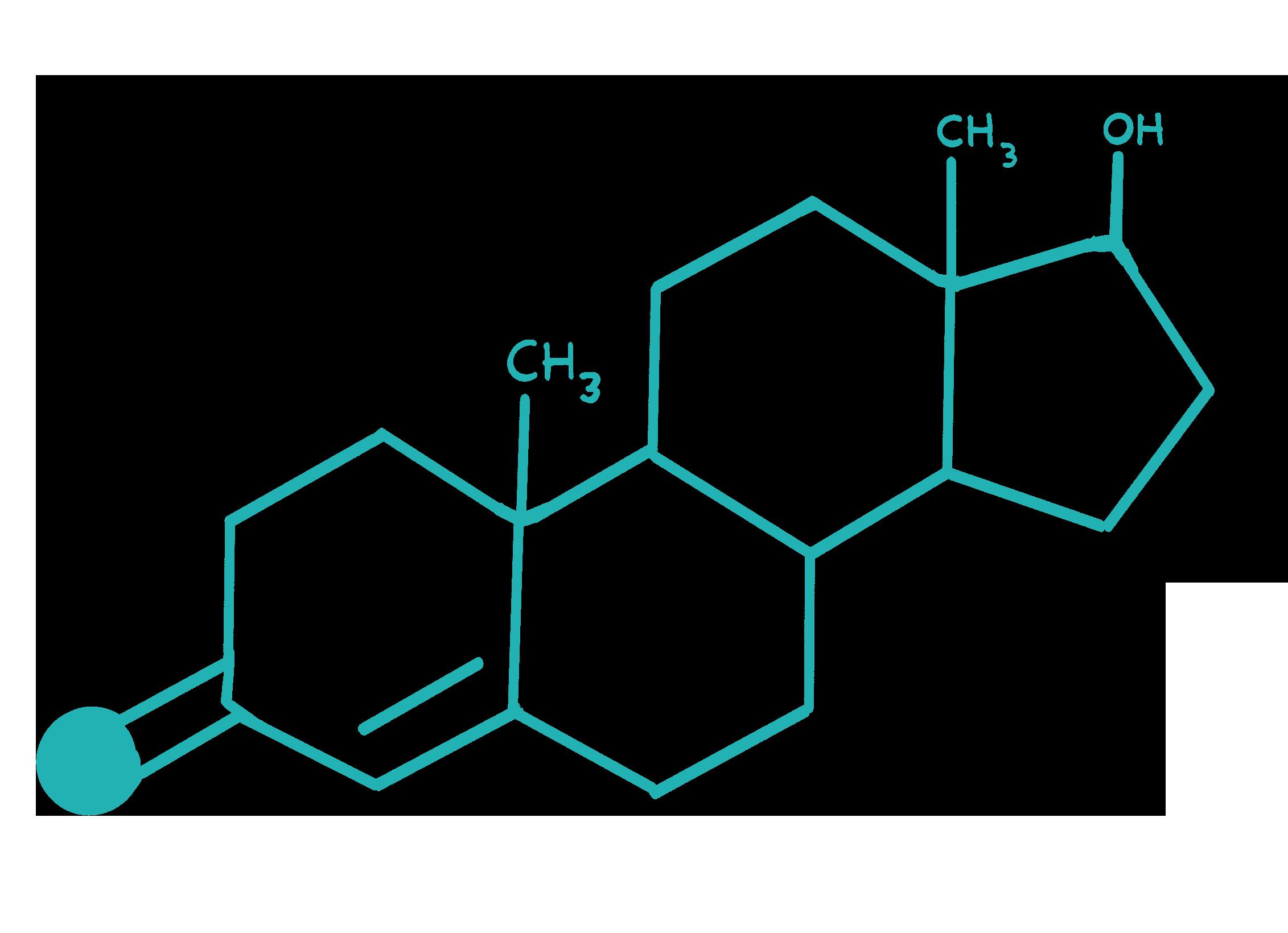
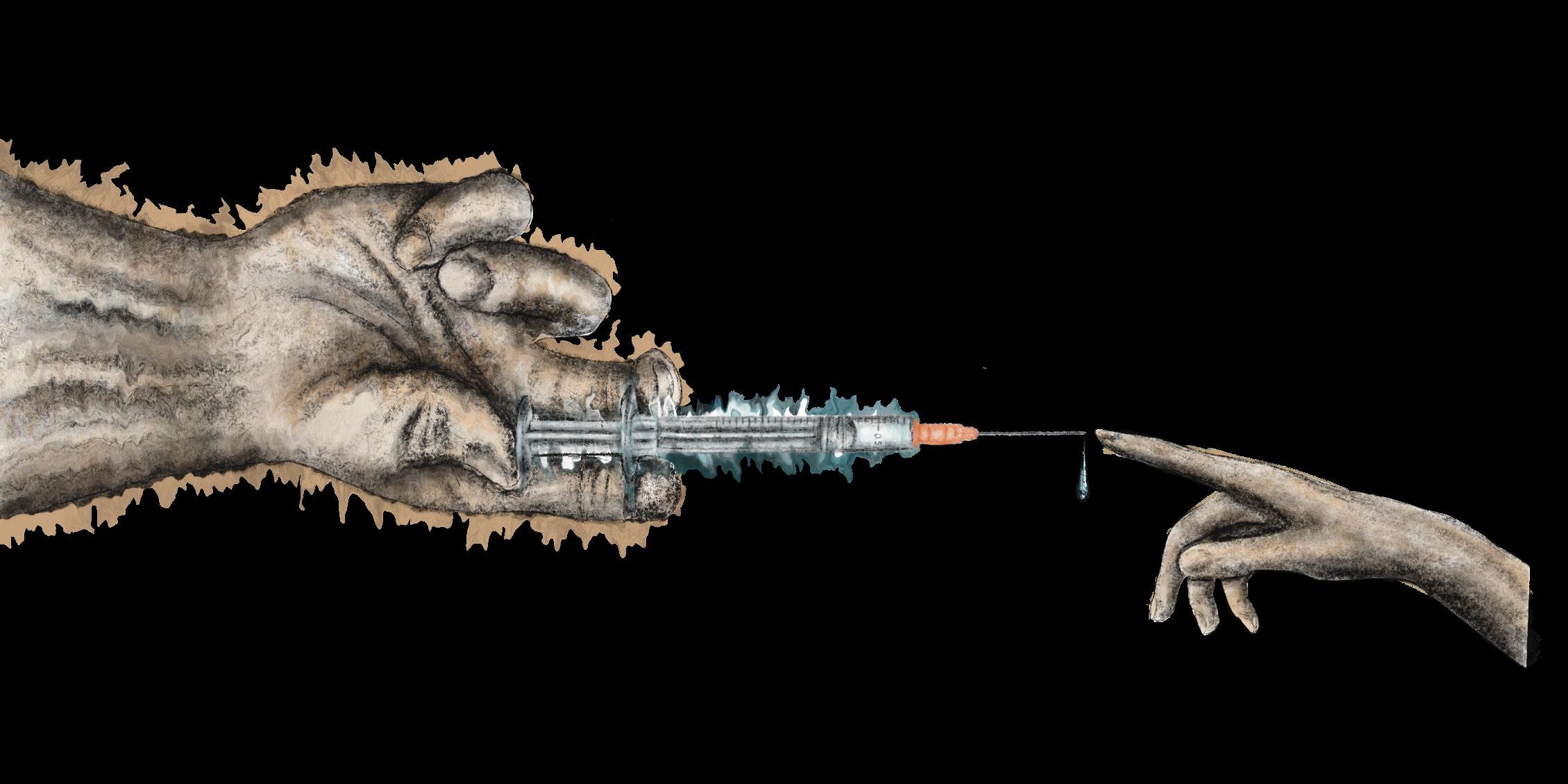
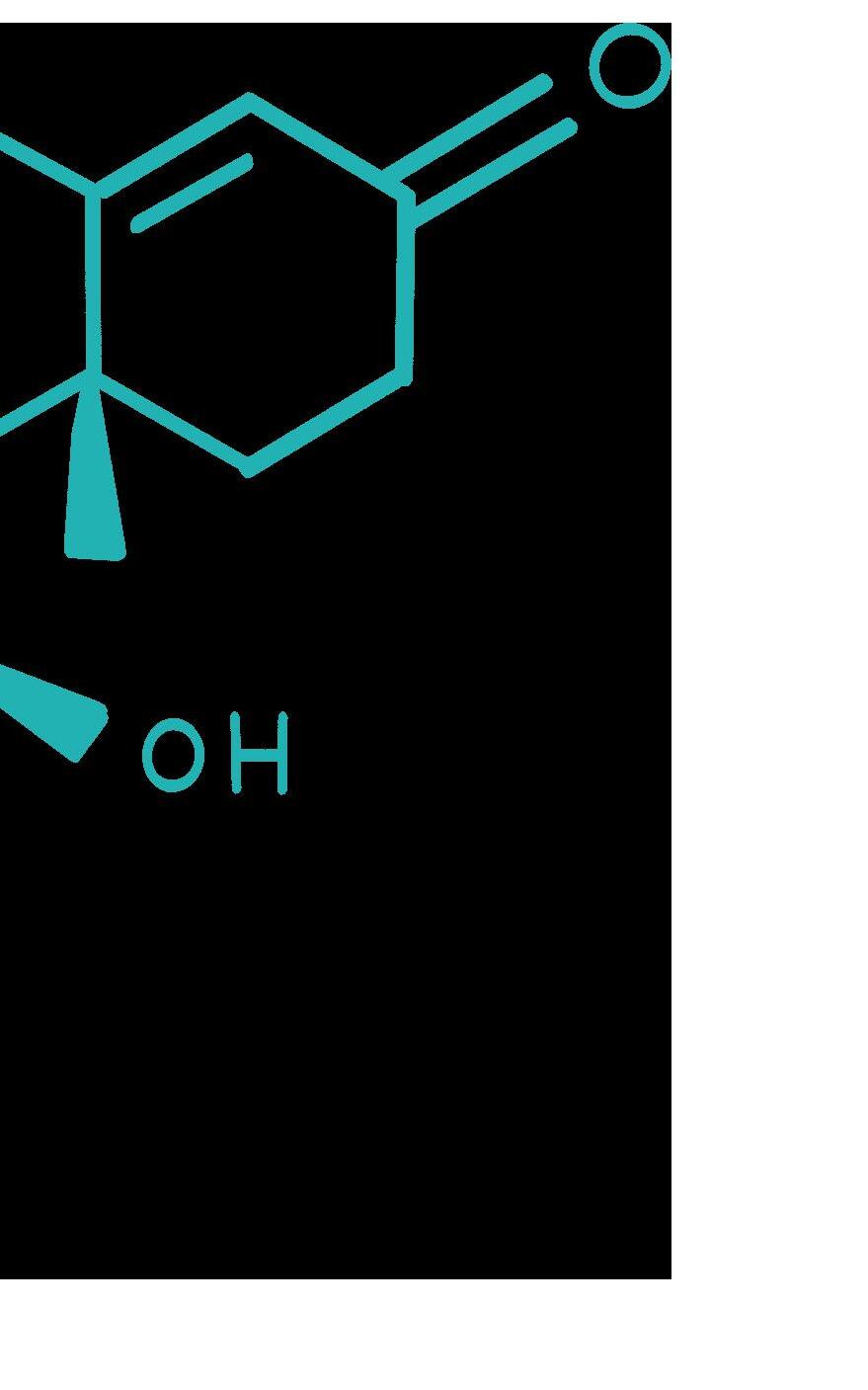
“I follow some social media ftness infuencers and they help motivate me to workout,” junior Owen Huang said. “However, the goals they set may not be realistic because of the external factors that they have, such as genetics and supplements they use, could harm someone else, which is a toxic effect of using social media.”
‘‘
“I have friends that went through troubles with body dysmorphia,” sophomore Emma Ha said. “When they started working out, like most, initially it would be for the health, but it would shift over to the aesthetics.”
We have things like Instagram and TikTok pushing unrealistic body standards towards a lot of students.Feroritat molorpore
Joseph Luo Physical education teacher
Some argue that social media provides a positive infuence by motivating people to stay active. It is true that most ftness infuencers don’t intend to cause harm. However, the culture of constant comparison highlights insecurities and harms mental health. Social media constantly reaffrms the notion of a “correct” body type, which completely misses the point of why one should work out in the frst place: for wellness and health. When people’s motivations are misguided, their actions will follow suit.
‘‘
Social media has created a selfcritical workout culture where people exercise for all the wrong reasons. Instead of being infuenced by online workout content, people should tailor their workout routines to their own bodies, lifestyles and goals. Being knowledgeable about exercise should be a priority, as it ensures that one can maintain overall health over a trendy body type.
“Everyone’s different, but what I do want students to do is understand how to work out,” Luo said. “I want them to know how to create a workout program, how to create a food plan and track macros; it’s not just about getting stronger. I believe these skills are very important in helping build longevity for your health.”
Chanelle Aragones Junior
Photos used with permission from Chanelle Aragones. Graphic illustrations by Anna Cen and Nicolas Cheng.
Graphic illustrations by Vanessa Yap
A. Aragones throws a discus.
B. Aragones tosses a shot put.
A.
B.
Alumnus Hong Chen builds community through martial arts
BY PRISHA PULASTYA
For Class of 2016 alumnus Hong Chen, martial arts has always provided a sense of unwavering direction: a practice that evokes discipline, confdence and respect — both internally and externally. Since he frst stepped onto the mat, Chen has pursued the feld with dedication, culminating in his current role as the owner of Saratoga Martial Arts Academy.
After moving from Oakland to Cupertino in third grade, Chen felt isolated. The culturally foreign atmosphere pressured him to remold his identity in order to feel accepted.
“Coming into a community where many families were well-established and academics were a strong priority felt completely different.” Chen said.
Being the sole Asian student at his school, he faced racial discrimination. After being physically assaulted by older students, Chen drew upon this incident as motivation to learn self-defense. Naturally, he was drawn to martial arts; he wanted to stand up for himself. Chen decided to pursue taekwondo at the same academy he would go on to lead.
“Over time, it became less about motivation and more about discipline, showing up and staying consistent,” Chen said. “It was one of the few areas in
life where I didn’t feel like I had to be anyone but myself.”
Chen’s passion blossomed through the years, inspiring him to expand his training to boxing, muay thai and Brazilian jiu-jitsu.
After graduating in 2016, Chen left his familiar role at the academy behind. He found himself at a turning point. Given that he had limited fnancial resources, Chen quickly became self-reliant. He became an executive assistant for a real estate developer, supporting his own education. Chen attended De Anza College, Point Loma Nazarene University and later San José State University, simultaneously training in kickboxing.
“Looking back, that period taught me how to be independent and accountable,” Chen said. “It wasn’t traditional, but it played a major role in shaping who I am today.”
Still, he stayed connected to the academy. He found enjoyment in teaching part-time. Then, Chen found himself with an offer: academy founder Soojin Lee presented him with the opportunity to take over the studio.
“It’s a business that has been part of the community for over 40 years,” Chen said. “Stepping into that role was an honor.”
overseeing instruction, curriculum development and general operations. He focuses on mentoring instructors, working with families and fostering a supportive environment.
Chen also works with current Lynbrook students at the academy. For example, senior Joyce Cheung serves as a lead instructor at the academy. Cheung enjoys working with students of all ages, teaching skills she too once struggled with.
“I am grateful for the opportunity to work with Master Hong,” Cheung said. “He’s constant in supporting me as both a Taekwondo student and instructor.”
As director, Chen hopes to build the next generation of passionate martial artists. He encourages his students to explore various styles.
“I’m proud of every one of my students,” Chen said. “My goal is to create an environment where they can
Yashraj Choudhary pushes limits through weightli ing
BY ETHAN WONG
For sophomore Yashraj Choudhary, the rhythm of reps in the gym is routine, but his weightlifting journey is far from ordinary. What started as a goal to lose weight has since then evolved into a refection of his identity, as he approaches the gym with continued discipline and consistency.
Before stepping in the gym, Choudhary didn’t always feel confdent about how others perceived him. He weighed about 255 pounds when he frst began weightlifting at the start of freshman year.
bench press to cutting down his body weight to 200 pounds. After more than one year of consistent dedication in the gym, Choudhary’s combined bench press, deadlift and squat exceeded 1000 pounds on April 10, offcially making him the frst sophomore in Lynbrook history to enter the 1000-pound club. Reaching the 1000-pound club is widely recognized as a benchmark of well-rounded and advanced strength.
I realized that to acomplish something big, you have to change a lot in your life.
“You get treated worse, and people laugh at you because there is this preconception of you being fat,” Choudhary said. “It’s the frst thing someone sees when they look at you.”
For him, motivation became personal because he wanted to be respected. Beyond changing his appearance, he also wanted to test his limits in the weight room. However, Choudhary didn’t have a clear idea on where to start.
“I didn’t know what I was doing,” Choudhary said. “I would just go to the school gym and do bench press or something.”
Over time, he began setting concrete goals, such as increasing his maximum
But even as his numbers climbed, a different challenge began to take shape. Choudhary realized that the biggest challenge wasn’t physical, but mental. Staying consistent day after day proved to be the hardest part.
‘‘
“Motivation is temporary,” Choudhary said. “You can feel motivated, but actually putting in the work consistently is different.”
For Choudhary, visible changes came slowly. Because he saw himself every day, it was diffcult to notice progress. It wasn’t until eight months into weightlifting that Choudhary fnally began to notice physical changes, like loose skin and clothes that became too big for him. Those tangible differences made his progress feel real and reinforced that his effort was paying off.
unnecessary snacks.
Choudhary managed to cut his body fat percentage from 36% down to 27% while doing cardio and aims to lower it to 20% in the near future.
Beyond the physical transformation, Choudhary said the most meaningful change has been his mindset. Weightlifting has forced him to reevaluate his habits and take control of his daily life.
“I realized that to accomplish something big, you have to change a lot in your life,” Choudhary said.
During his weight loss phase, he focused on simple habits, such as walking 10,000 steps every day and cutting out
Yashraj Choudhary Sophomore
Graphic illustration by David Dai Photo used with permission from Yashraj Choudhary
Photos used with permission from Saratoga Martial Arts Academy
Graphic illustrations by Anna Cen
Student athletes are pressured to turn to performance-enhancing drugs
BY ASHLEY HEIN AND JENNY SUH
Performance-enhancing drugs aren’t restricted to professional athletes. From synthetic human growth hormones and blood doping to seemingly unassuming sports gels and supplements, the drive to perform better — or the desire to look the part — is intense among teen athletes. In the Bay Area, where competition defnes sports as well as academics, this pressure can push young athletes toward risky behaviors. PEDs are defned as substances taken to improve athletic or physical performance beyond normal training and nutrition, according to the U.S. Food and Drug Administration. Recent data suggest that the use of PEDs is not limited to a small subset of athletes. One type of widespread PED is anabolic-androgenic steroids, synthetic drugs designed to imitate testosterone, the primary male sex hormone. A 2022 analysis of United States Risk Behavior Survey data reports that about 3% of U.S. high school students have used anabolic-androgenic steroids at least once in their lifetime, a percentage
similar to that of students who have tried drugs like cocaine, methamphetamine or heroin. In another survey released by the Partnership for Drug-Free Kids in 2025, one in fve teens reported that they knew at least one friend who used steroids.
The growing popularity of PEDs can be traced to a mix of cultural and environmental pressures, particularly in competitive regions like the Bay Area. As expectations for both academic and athletic success continue to rise, many students feel tempted to seek any possible advantage. Sometimes, this means turning to steroids.
“On school teams, there’s this unspoken pressure to perform,” senior and Athletic Senate lead Chloe Chung said.
‘‘
like a big jump when people start considering stronger options.”
When everyone around you is pushing their limits and competing for the same spots, it can feel like you have to do whatever it takes just to keep up.
‘‘
Performance-enhancing substances are often disguised as trends. One example is PRIME energy drinks, promoted aggressively online by infuencers Logan Paul and KSI. Quickly growing over 1.2 billion dollars in global sales within its frst year of release, PRIME became extremely popular among middle and high school students. However, these drinks contain caffeine levels high enough to trigger calls for an FDA investigation and school bans. Similarly, protein powders and gels for runners have gained traction. Some contain synthetic stimulants or hormone analogs, which can raise heart rate, raise blood pressure and interfere with normal growth in adolescents.
“When everyone around you is pushing their limits and competing for the same spots, it can feel like you have to do whatever it takes just to keep up, even if that means taking things or doing things you normally wouldn’t.”
At the same time, it is increasingly diffcult to distinguish between clearly illegal drugs and widely accepted supplements that are growing in cultural popularity. This blurred line is evident in the widespread use of legal supplements such as protein powders, pre-workout formulas, creatine and sports drinks. An analysis of FDA warnings from 2007-2016 found that 776 dietary supplements, primarily for weight loss or muscle building, contained unapproved pharmaceutical ingredients, commonly synthetic steroids or steroid-like substances.
“A lot of swimmers don’t think of supplements as risky at all,” senior, varsity swimmer and swim team manager Yuka Miyamoto said. “It usually starts with things like protein or pre-workout formulas, and because that feels normal, it doesn’t seem
In the Bay Area, the BALCO scandal is one of the most notorious doping cases, where a seemingly legitimate sports nutrition company was exposed as a manufacturer of anabolic steroids and other PEDs for professional athletes. These examples reinforce a larger pattern: performance-enhancing substances are often introduced as tools for improvement, but carry unforeseen consequences.
While often associated with athletic performance, PEDs are also used to enhance physical appearance, particularly in environments where unrealistic body standards are constantly reinforced. On the internet, students are not only comparing themselves to their peers and teammates. They are also being constantly bombarded with idealized, algorithm-approved bodies on TikTok, Instagram and YouTube. Additionally, many actors use PEDs to tailor their appearance for a role that they are playing, with famous fgures such as Superman actor Frank Grillo coming forward to reveal the widespread steroid use in Hollywood.
“It’s an evolving problem,” sports psychiatrist Francesco Dandekar said. “If you look at Batman in 1970 or 1980, you’ve got a normal dude. Same with James Bond. Now, Batman and James Bond are just shredded. A lot of these actors are using PEDs to achieve that, and there are all these graphic representations of what athletic people are supposed to look like.”
High school is a time of intense pressure for most student athletes, leading to the rise and abuse of PEDs among youth. Though sometimes through clearly illicit substances, this growth is just as harmful when hidden behind trendy drinks and supplements.
Chloe Chung Atheletic Senate Lead
Graphic illustrations by Anna Cen and Nicolas Cheng