
Volume 59 Issue 7 | April 29, 2024

A walk down lockdown lane: quarantine memories pg. 8
Sharing childhood stories to look back upon pg. 10
Nostalgia in media: walking the line between modernized and contrived pg. 11
The chemistry of nostalgia pg. 11

Nostalgia’s journey from disorder to emotion
Hailing from the Greek words nostos, or homecoming, and algos, meaning longing, nostalgia offers us an opportunity to relive the past. Although it is generally accepted as an emotional phenomenon that brings about pleasant feelings, nostalgia was previously believed to be a psychiatric disorder, much less a warming experience.
In the late 17th century, Johannes Hofer, a medical student at the University of Basel, noticed a strange illness affecting Swiss mercenaries serving abroad. He saw them struggle with fatigue, insomnia, irregular heartbeat, indigestion
and fever, sometimes leading to death. The symptoms were so strong that soldiers were often discharged and sent home. Hofer later realized that the cause was an intense yearning for their mountain homeland in Switzerland.
At first, nostalgia was considered to be an exclusively Swiss “affliction.” Doctors theorized that the constant sound of cowbells in the Alps caused trauma to the brain and eardrums.
Because of the unfamiliarity of these feelings, people misidentified a combination of PTSD, neurosis and fatigue caused by the war as nostalgia. To avoid nostalgia, commanders forbade soldiers from singing traditional Swiss songs, fearing that they would experience
desertion or commit suicide.
“It was ideal for a doctor to say that a nostalgic person is experiencing mental illness because it serves the interests of the nation that is at war,” said Steve Nava, chair of the sociology department at DeAnza College. “The classification is a justification for violence.”
The 17th century was largely characterized by a culture of conformity; thus, many people were discouraged from confronting the status quo, especially leading figures, like scientists, who believed nostalgia was a disease. People didn’t think to question the phenomena due to the fear of standing out.
Lynbrook High School, 1280 Johnson Ave., San Jose, CA 95129 Social Media Follow our Instagram @lhs.epic for breaking news, sports and event coverage Website Find exclusive content and all archived stories at www.lhsepic.com Editors’ Picks FUHSD Climate Collective hosts frst Earth Day event pg. 3 Campus sustainability should not stop with students pg. 4 Chickens and ducks by Alicia and Felicia pg. 8 A historical refection on America and communism pg. 12 Softball keeps on swinging and lights up the feld pg. 15 GRAPHIC ILLUSTRATION BY VALERIE SHU
story continues on pg. 9 || centerspread where past
present
BY ANUSHKA ANAND AND APURVA KRISHNAMURTHY
meets
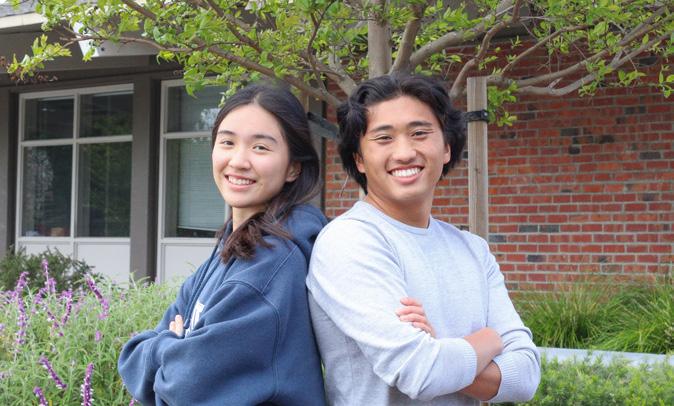 PHOTO BY TAEK KIM
Letter from the Editors
Hey Vikings!
We’re Myles and Susanna, your Editors-in-Chief, and welcome to the Epic’s Issue 7!
In our second centerspread of the year, explore the depths of nostalgia, from the media’s portrayal of nostalgic “Barbie” to student life at Lynbrook back in the 90s.
Don’t forget to check out our usual content! In News, experience the district-wide Earth Day fair; in Opinion, investigate initiatives toward campus sustainability; in Features, enjoy the heartwarming stories of students with unusual pets; in In-Depth, uncover the looming modern-day presence of genocide; in Sports, bask in the winning streak of the softball team; in Web, read a staffer’s review of Dev Patel’s “Monkey Man.”
With just one issue left to go We hope your epic memories show A fondness for nostalgic reads Of Legos, sweets and fluffy sheep
Stay Epic, Myles Kim & Susanna Tang
Editors in Chief
Equity Task Force speaker event sheds light on non-STEM jobs
BY VIDUSHI UPADHYAY
The Equity Task Force hosted its first speaker event, featuring professionals in non-STEM fields from April 2-4.
The event gave students the opportunity to learn from the experiences of a recruiter at Meta, an artist and a human resources professional from Guidewire Software.
ETF is an organization that consists of parents, students and school staff who work toward building an equitable and harmonious environment at Lynbrook.
Founded in 2020 by Vice Principal David Erwin, the group is largely led by students. They gather data through school-wide surveys and equity studies. Using direct feedback and critiques, ETF identifies problems that impact our student population and brainstorms solutions to present to administration.
Once these plans are approved, they are able to move forward and bring change to the school.
“This event stemmed from us wanting to give students access to resources and opportunities to explore jobs and fields that they may not be familiar with,” junior and ETF member Irene Chung said.
When choosing speakers, the committee made certain that the guests had a good amount of experience to draw from. The three speakers chosen were Robert Nepomuceno, Karen Tseng and Joyce Quindipan.
Nepomuceno is a senior recruiter at Meta. After acquiring a Bachelor of Arts in architecture from UC Berkeley, he made a career switch and shifted to managerial positions.

With eight years of work experience, he became a senior recruiter at Meta and working alongside a team of global recruiters, he finds qualified candidates for open positions at the company.
Tseng has always been interested in pursuing art, but her masters of business administration from University of San Francisco added to her credentials and allowed her to explore other job options. In 2006, she found her place in CUSD and has been working there ever since.
“I think it’s important to give kids a wider perspective on what their future can look like.”
Irene Chung Junior and ETF Member
Tseng is an artist as well as an art educator in the Cupertino Union School District. She had previously worked as a research assistant and an account executive while continuing her art on the side. Having acquired a Bachelor of Arts in art history and Asian studies,
As a part of HR in Guidewire Software, Quindipan is in charge of global talent attraction enablement. She graduated from Boston University with a Bachelor of Science in mass communication and then went to Boston College to pursue a Master of Science in business administration and management.
ETF feels that the event was a success because the number of attendees exceeded their expectations. Thoughtful questions and active participation from students demonstrated the interest and appreciation they had for this event. ETF hopes to continue hosting informative events like this in the future.
“I think it’s important to give kids a wider perspective on what their future can look like,” Chung said. “Hearing directly from people who have achieved success in less common fields will hopefully encourage them to think through their options.”
irteen Speech and Debate members compete in national tournament
BY CLAIRE GUO
After a season of competition, 13 Speech and Debate students qualified for and competed in the Tournament of Champions, which is considered the most prestigious high school debate tournament in the United States. The tournament took place in Lexington, Kentucky from April 20-22. This was the largest group of students to ever represent Lynbrook, consisting of seniors Vansh Mathur and Rohan Patel; juniors Aadharsh Rajkumar, Anish Bhethanabotla, Nina Pan and Sagar Bhatia; sophomores Aadi Loonawat, Bolang Zhu, Om Modi, Rebecca Cai and Vihaan Patel and freshmen Rohin Saharoy and Rucha Kore.
After a weekend of competition, senior and captain of the speech team Mathur placed first overall in Original Oratory. In Speaker Awards of the gold Public Forum category, out of 234 debaters, Rajkumar placed 37th and Pan, captain of the debate team, placed 38th.
“TOC is definitely a step up from other tournaments; most debaters spend their entire seasons trying to qualify to attend,” Rajkumar said. “And with that in mind, I think my partner, Nina, and I did pretty well in our event. We both placed in the top 40, so that is something to be proud of.”
Lynbrook Speech and Debate often competes at regional and national levels. In speech events, students are judged on
a presentation, which can either be a speech written by the student before or during the event, or a performance of a published material. In debate events, students, individually or in teams, work to convince a judge to favor their side of an argument or resolution.
Lynbrook students compete in multiple different speech and debate events, including Dramatic Interpretation, Impromptu Speech, Public Forum and Lincoln-Douglas.
“Public Forum gives you a way to think and understand real world problems. It helps you connect in teams, because you can play with your strengths and weaknesses,” Pan said. “My partner and I can build off of each other and create a flow that gets better throughout the entire season.”
To compete at TOC, competitors must receive two bids from tournaments throughout the regular season. For example, advancing to the finals or achieving top two status at a finals bid tournament would earn the team or student a bid; in a similar fashion, becoming semifinalist at a semifinal bid tournament would also grant the team or student a bid. Depending on the tournament, bids could be given to a range of
octofinalists to finalists.
The two biggest local regular season tournaments to receive bids are Stanford Invitational and California Invitational UC Berkeley. At Stanford this year, Mathur placed first in Original Oratory, receiving a bid, and fifth in Dramatic Interpretation. At Berkeley, he placed second in Original Oratory, receiving his second bid to qualify for TOC. Overall, he is proud of the speech team for their efforts.
“I think we’re really doing a great job at having a speech comeback,” Mathur said. “A lot of the speech and debate programs around the nation got much smaller during the pandemic, just because it was so difficult to sustain a team environment through distance learning. Last year we pretty much had three students in speech. But this year, we’re in the 20s, and we’re already sending three people to TOC.”
At TOC, the competitors learned a lot, not just from their experience, but also from other debaters.
“I got to watch a lot of high level rounds. There are a lot of top debaters in the nation at this tournament, people who I’ve only seen on YouTube before,” Rajkumar said. “I got to meet them all for the first time. We learned about how they approach debate technically, and how they talk, and saw their skills. Just observing them was probably one of the best learning experiences from the tournament.”
02 NEWS
the Epic
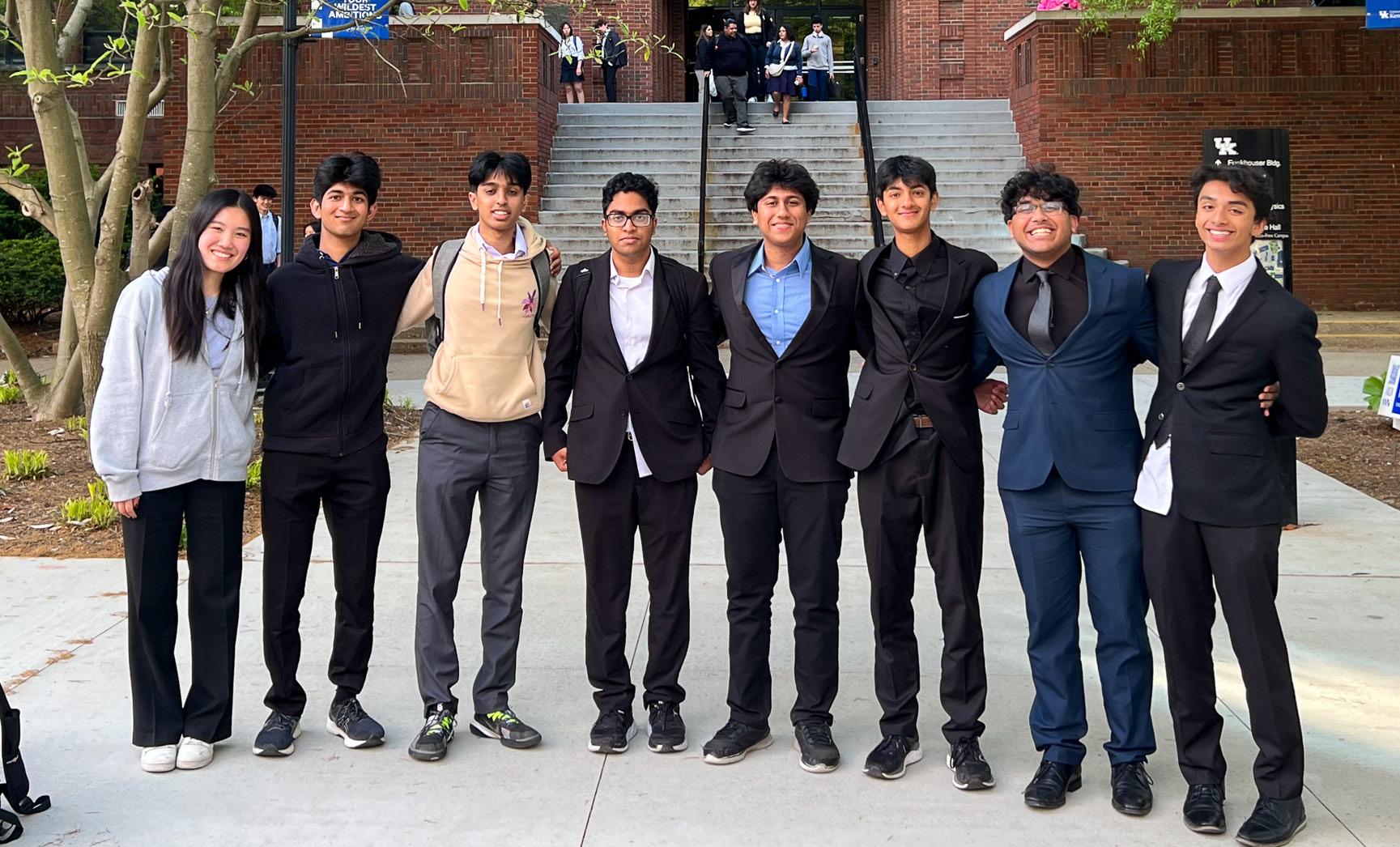
Members of the Public Forum debate team pose in front of the Funkhouser building at the Univesity of Kentucky (Left to Right, Front to Back: Nina Pan, Rohan Patel, Anish Bethanabotla, Aadharsh Rajkumar, Aadi Loonawat, Vihaan Patel, Sagar Bhatia, Rohin Saharoy)
USED
PERMISSION FROM NINA PAN
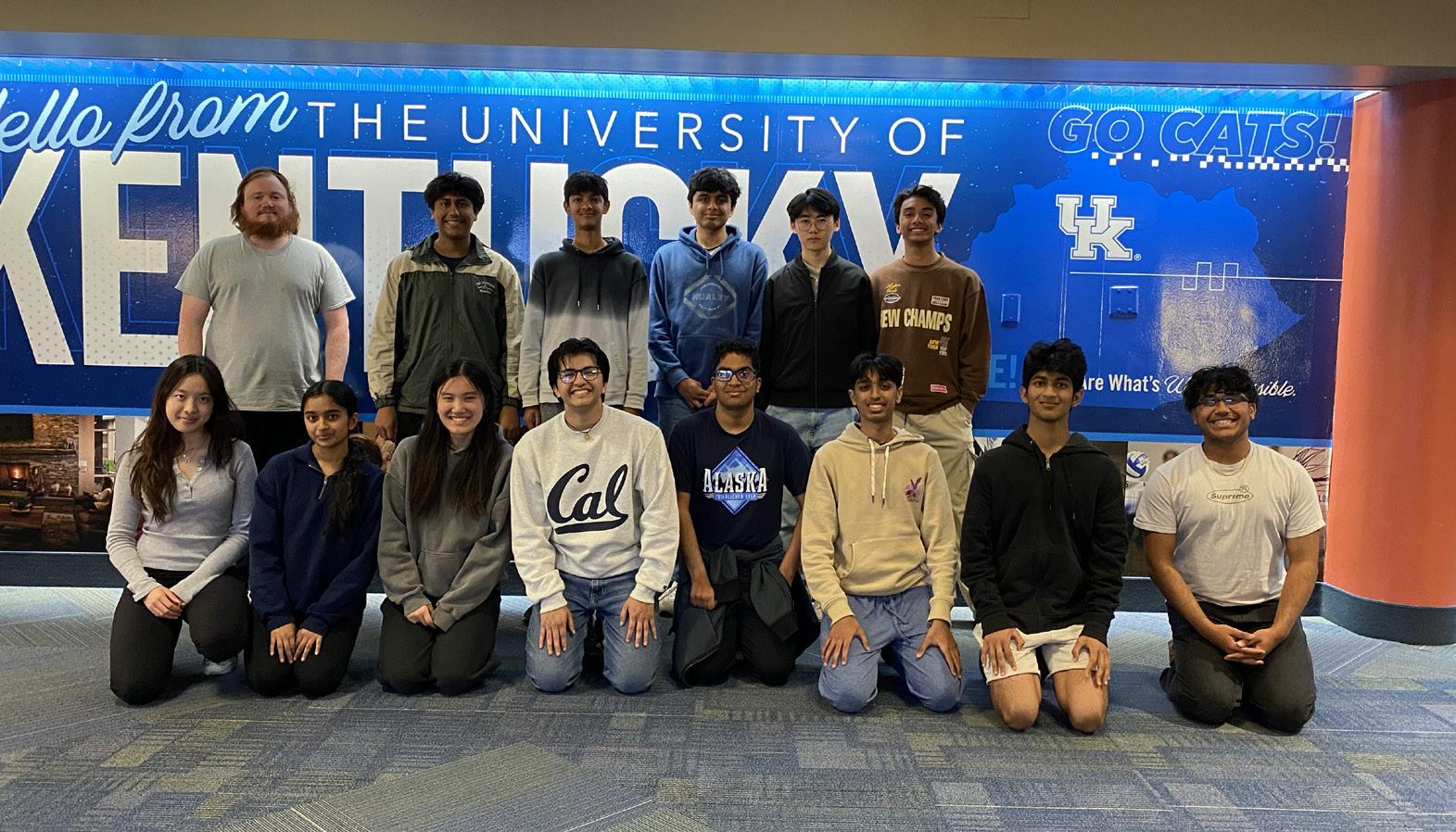
Members of the Speech and Debate team pose in front of a banner at the Ketucky LEX airport that reads University of Kentucky, the venue of the Tournament of Champions national tournament. (Left to Right, Front to Back: Rebecca Cai, Rucha Kore, Nina Pan, Vansh Mathur, Aadharsh Rajkumar, Anish Bhethanabotla, Rohan Patel, Sagar Bhatia, Michael Harris, Aadi Loonawat, Vihaan Patel, Om Modi, Bolang Zhu, Rohin Saharoy)
WITH
USED WITH PERMISSION FROM NINA PAN
Equity Task Force logo.
FUHSD Climate Collective hosts rst Earth Day event
BY GARY PAN
FUHSD hosted its first district-wide Earth Day fair at the Computer History Museum in Mountain View from 5-8 p.m. on April 11, showcasing booths focused on different environmental and sustainability issues presented by student organizations, students and district teachers. The event was organized by the FUHSD Climate Collective and students and staff across the district with the purpose of promoting sustainability and celebrating Earth Day. Guest speakers, such as District 17 representative Ro Khanna, spoke both virtually and in-person, where they discussed the different aspects and importance of environmental sustainability.
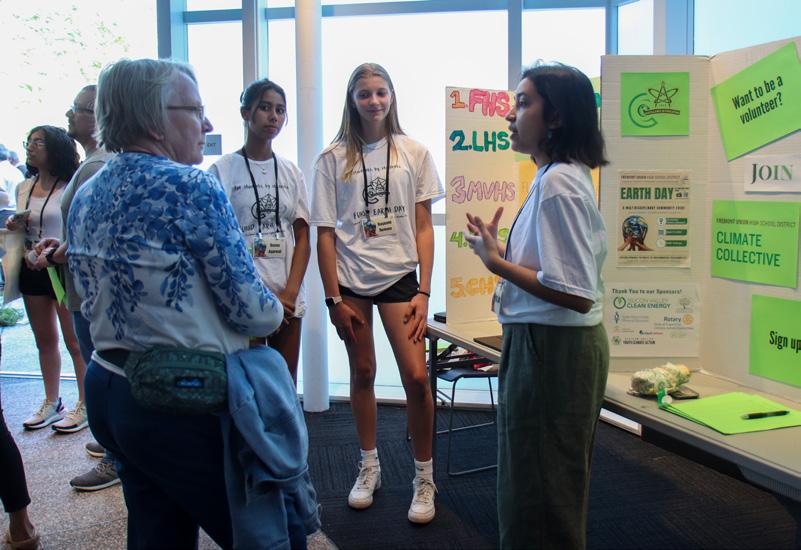
“The point of the event was to build publicity so more people will get involved,” Cupertino High School biology and AP Environmental Science teacher Andrew Goldenkranz said. “It was also to recruit kids from all grade levels to join the Climate Collective to have a pipeline of leadership, because in a school district the adults stick around for a while but kids come and go.”
The event kicked off with an opportunity
hour at 5 p.m., a time when students showed off climate conscious projects and environmental companies spoke about future careers and prospects in the industry. Clubs such as Lynbrook's Interact Club sold charms made out of recycled plastic, while companies like QuitCarbon encouraged guests to switch from gas to electric power in their homes.
“Sponsors help fund our initiative,”
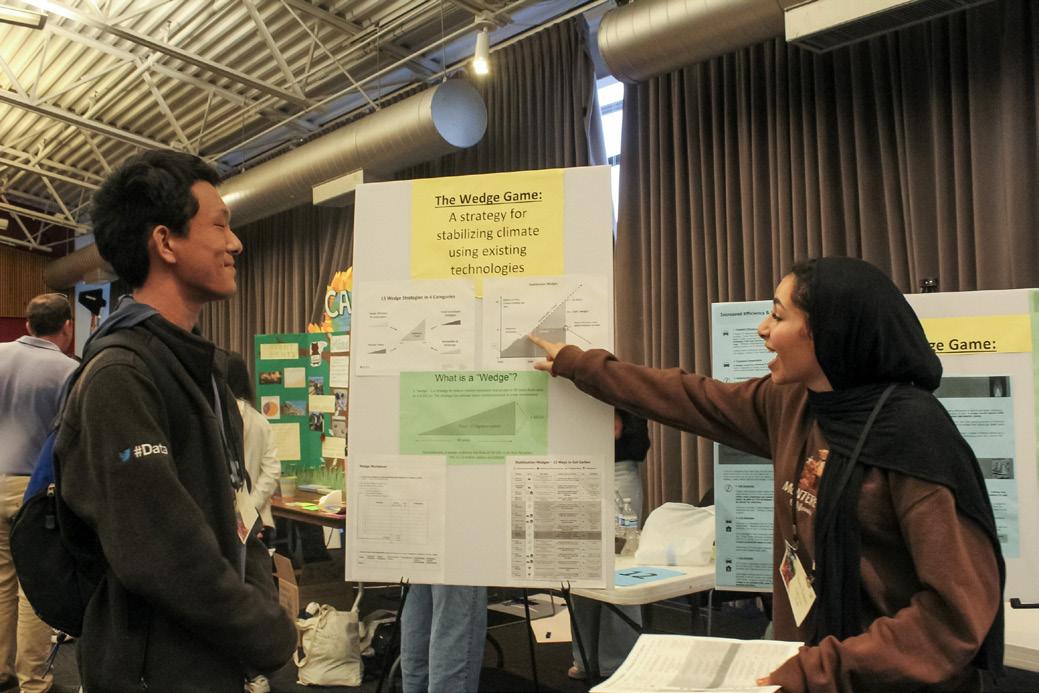
6:45 p.m., in which students and teachers gathered at their booths to educate onlookers on their own efforts to combat climate change and discuss a variety of topics from oil spills to recyclability of

Homestead High School senior and, Climate Collective student lead Elisa Floyd said. “They aren’t involved in the planning process, but they help us to tackle the issue of climate literacy and creating positive climate impacts.”


“There is a dark narrative around the climate situation,”
"I think the collaborative efort was really great and it showed that we should work together as a district to improve sustainability.”
Daphne Zhu, Junior and CAA ofcer
During the seated program at 6 p.m., Monta Vista High School students and emcees junior Lemon Liu and senior Amy Zhang began the ceremony by introducing the staff, guests and groups that would be presenting. The Monta Vista choir was the first group to present, singing “The Famine Song,” a song inspired by the Sudanese famine. While singing, the choir presented a slideshow that explored topics ranging from the definition of famines to how famines are gaining prevalence due to the changing climate, demonstrating examples from the past.
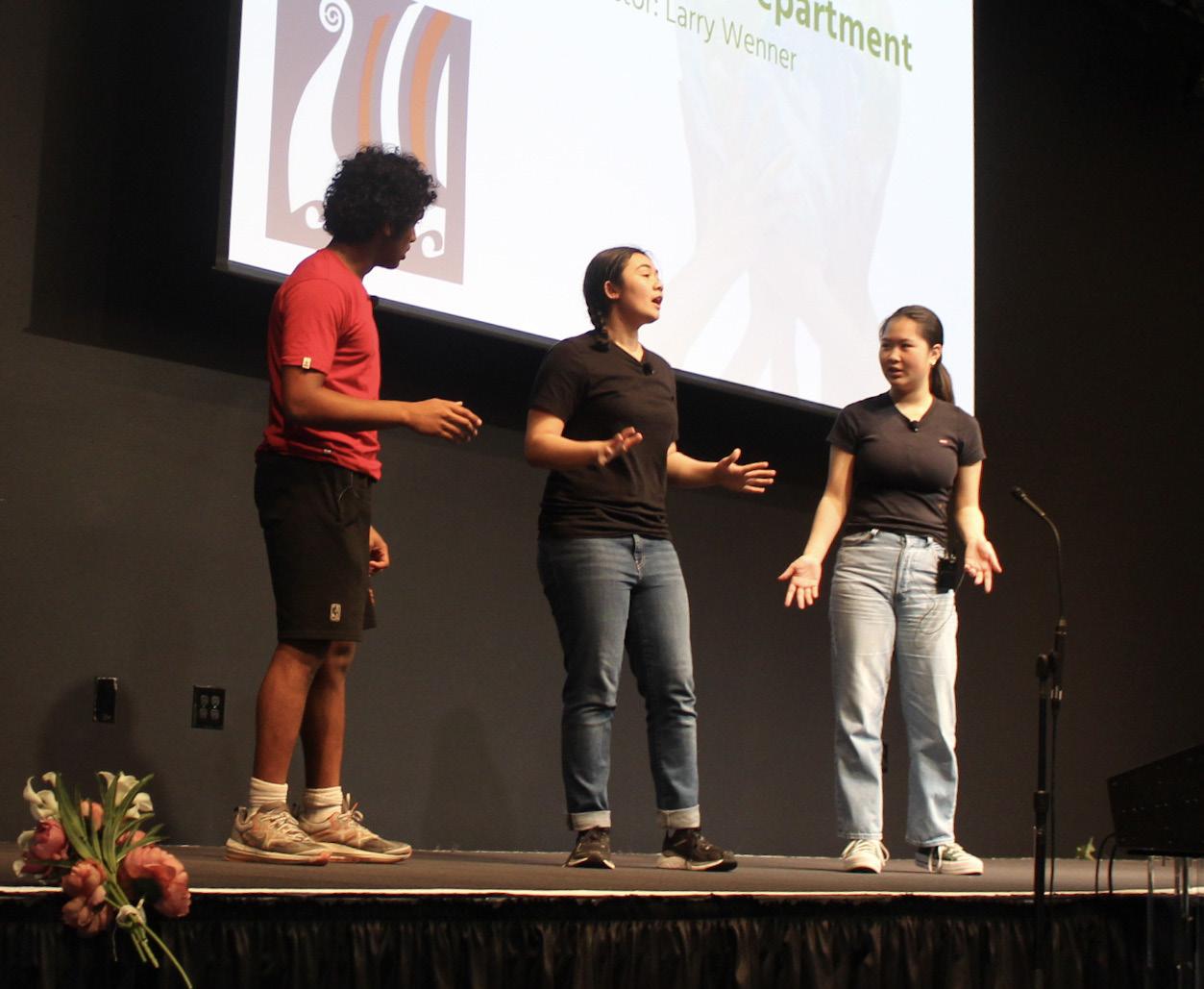
Connecting through Zoom from Washington D.C., Khanna praised the efforts of high school students in combating climate change. Lynbrook Drama then presented a comical skit that highlighted the dangers of rare metal harvesting through the lens of a criminal gang. Finally, National Geographic oceanographer Katlin Bowman, conservation scientist Rachel Engstrand and Symbiote.co co-founder Bill Gray discussed their jobs’ role in the fight against climate change.
“The guest speakers from National Geographic were contacted by the Collective’s teachers,” district Superintendent Graham Clark said. “The board members contacted Ro Khanna because he is our congressman and we’ve seen him speak at different events before.”
The final portion of the event commenced at
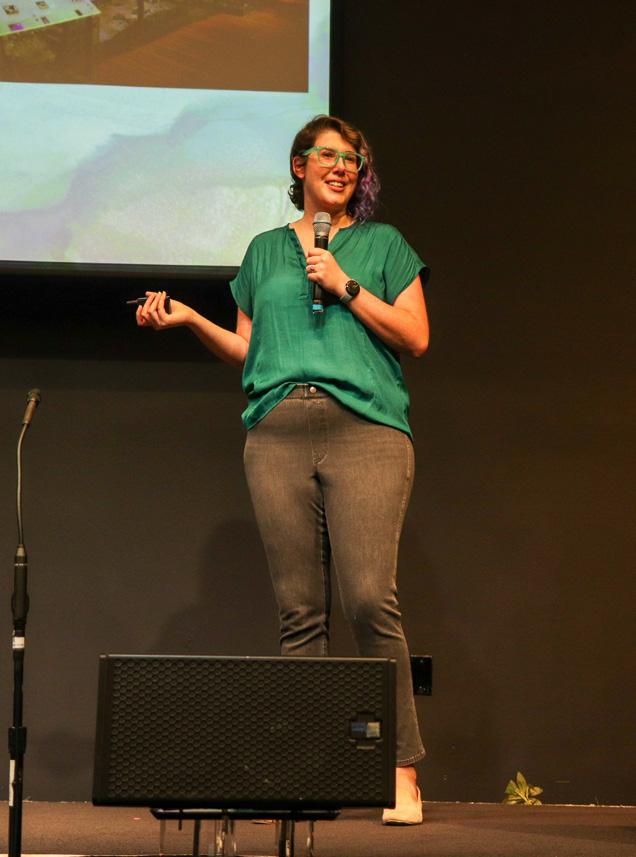
Gray said. “I think it's true that there's some difficult issues out there, but the important thing for me is helping people see that there are real things that can be done to move the needle and to create positive futures.”
Earth Day festivals were first hosted individually in 2023 at each of the five high schools in the district. Last year, Lynbrook’s Earth Day festival was organized by CAA, and featured similar speakers and booths. During the summer of 2023, to make further progress toward sustainability, FUHSD Superintendent Graham Clark instituted the Climate Collective, uniting all five school festivals. The district decided to unite all FUHSD Earth Day festivals to attract a higher attendance rate and draw more attention to environmental issues, choosing the Computer History Museum for its large size and affordability.
“The primary point was to bring together the whole district,” junior and CAA officer Daphne Zhu said. “And I think it reached a lot more people. While having it at individual schools can be more accessible, I think the collaborative effort was really great and it showed that we should work together as a district to improve sustainability.”

Upcoming Viking Events
Valkyries Spring Show, May 3
Tickets will be available on the GoFan app. The Valkyries will be performing all their competition pieces from the United Spirit Association Nationals.
Sports and Activities Information Night, May 6
Board Meeting, May 7
All community members are welcome to offer their perspectives and opinions at the FUHSD Board’s first meeting for the month of May.
Last day to withdraw from a class with a “W” in second semester, May 10
FUHSD Centennial Celebration, May 11
The commemoration will include a dedication to a war memorial at Fremont High School, demonstrations of new classes at the Adult School and refreshments.
AP Testing, May 6-24
Best of luck to all students who have signed up to take the College Board’s AP exams!

03 NEWS April 29, 2024
Photo by Taek Kim.
Reporting by Olivia Yuan.
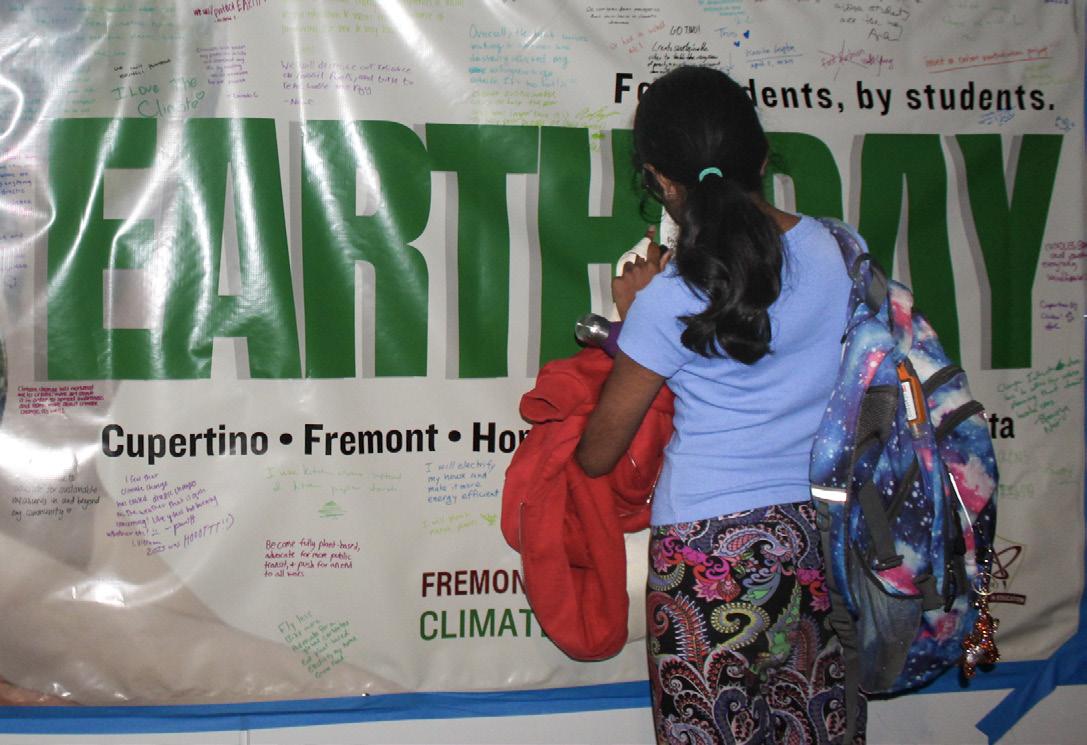
The seated program featured a performance from the Lynbrook Drama Department and guest speakers from National Geographic. Organizations and students also educated attendees on various eforts. As they exited the event, attendees were able to sign a banner with personal environmental resolutions.
PHOTOS BY APURVA KRISHNAMURTHY AND GARY PAN
the Epic
Campus sustainability should not stop with students
From anti-waste measures in FUHSD food service to the district Climate Collective’s recycling initiative, numerous endeavors from FUHSD and student groups have made strides toward greener campuses in recent years. Nonetheless, progress requires more than one-sided action — students should also match existing efforts and maintain a higher degree of commitment to campus sustainability.
The district’s ongoing efforts have integrated sustainability into multiple aspects of campus, including many that often go unnoticed. Their commitment has earned them national recognition; in 2023, FUHSD received its firstever U.S. Department of Education Green Ribbon competition’s silver award for promoting green practices.
Their focus on energy conservation has led to a revamping of outdated energy-inefficient HVAC systems. Additional plans are also in place to install more charging stations for electric vehicles in parking lots, encouraging students and staff to drive EVs. Newly-built and remodeled buildings will meet higher environmental standards, with rooftop solar panels and clerestory windows, which promotes natural light usage.
Staf Editorial The
disrupting existing norms and expectations.
“We don’t want students to miss out on the Lynbrook experience, but it’s also about how much we can actually sacrifice for the greater good of the environment,” sophomore and ASB Sustainability Commission member Shreya Somani said. “We’re trying to find a good balance.”
Despite administrative efforts like food share bins in the cafeteria, food waste and litter continue to plague Lynbrook’s campus today. Half-eaten lunches and untouched fruit remain a common sight.
“We could be making a huge impact in the little choices we make every single day by putting organics in the compost instead of the landfill,”
Miller Middle School teacher and campus sustainability leader Ana Reed said.
day lives. Environmental literacy entails understanding the reasoning and methods behind the push for sustainability, including staying informed on local progress.
“There’s minimal education about the depth of the issue as well as the solutions students can get involved in,” junior, and CAA and Climate Collective member Daphne Zhu said. “Increasing environmental literacy, which can translate into environmental action, is very important.”
Sustainability may seem like a burdensome afterthought that pales in importance and achievability to other issues and responsibilities. However, minor decisions and habits can be easily implemented, wheras consequences of negligence are much harder to reverse. Simple actions such as utilizing natural light to conserve energy, turning off the air conditioning when possible and walking, biking or carpooling greatly benefit the environment.
“It’s those little things that all add up,” Miller social studies teacher and campus sustainability leader Nicole Gasparik said. “We need to take personal responsibility; we can feel empowered that our choices make a difference to our community and our world.”
Measures taken by adminstrators and student groups prove that significant strides toward sustainability are well within reach. However, their efficacy is severely limited by the general student body’s lack of awareness and interest. Active participation from all sides is crucial to progress. Students should be supportive of continuous efforts from the administration and student groups, while also taking personal initiative by adjusting their mindsets and habits.
“We have had notable achievements as a district, such as receiving the GRS Silver award last year,” Zhu said. “We should acknowledge what we’ve accomplished, but there’s still so much more that we can do.”
Waste management is another major focus of the district, as arrangements for the installation of campus-wide compost bins are in the works. However, this is not a new area of attention; currently, all FUHSD schools use solely compostable materials in food service, even though they are generally more expensive and less readily available than their standard counterparts.
Since 2020, cafeteria staff have made weekly or biweekly donations of all leftover food to the Peninsula Food Runners, a local nonprofit organization that distributes the food to various groups in need — a testament to the district’s unique use of sustainability to benefit not only the environment but also local communities.
“I keep an average of how many students come in on different days because every day is different,” food service manager Tom Fernandez said. “Ideally, we’ll run out of all the food that we need to produce, then we’ll have backups. I try to cut the number of servings as close as possible to the number that we expect.”
Many student-based district and school-wide groups are also taking action. The FUHSD Climate Collective, formed in 2020, launched a student-led Paper Recycling Initiative across FUHSD classrooms and the first-ever FUHSD Earth Day event on April 11, which sought to educate students on the importance of environmental awareness. Along the same lines, the Conservation Action Association has hosted an Earth Day Festival in 2023 and its second Walk or Bike to School Day on April 24.
“I think that just spreading awareness in school is one huge step toward promoting more sustainable practices in classrooms and within our community,” junior and CAA officer Medha Nalakonda said.
CAA’s Earth Day Festival was planned with support from the ASB Sustainability Commission, which was formed in November 2022. As a whole, ASB has also made efforts to mitigate waste by hosting two balloonfree rallies and scaling down large posters. Future plans include experimenting with water dispensers in place of plastic water bottles at events. Their actions prove that it is possible to make changes for sustainability without

editors-in-chief — myles kim, susanna tang
managing editor
— anushka anand
copy editors — katie chin, surya saraf
design editors
— chelsea lee, valerie shu
adviser
— josh miller
The issue of recycling contamination also remains. When students mistakenly place food and drinks into recycling bins or throw recyclable items into trash cans headed for landfills, they contribute to waste and pollution.
“I do see some laziness when it comes to reducing waste in general,” junior Jackson Qu said. “All suggestions are useless unless students actually try to commit to them.”
Lynbrook has installed both blue recycling bins and black landfill bins on campus, and the Climate Collective has placed labels above many classroom recycling bins that clarify where materials belong. Even so, plastic water bottles and paper plates are a common sight across campus. This is a result of often subconscious decisions by students that can be easily revised.
There needs to be students involved in helping come up with what sustainability will look like on our campus because the students know how they act,” Assistant Principal Tara Grande said.
Becoming environmentally literate allows students to consistently make educated, environmentally conscious decisions in their day-to-

news editor — apurva krishnamurthy
opinion editors — alyssa wang, lilly wu
sports editor
web editors in-depth editor
— eileen zhu
business/pr manager features editor — emily pedroza
— ashley huang
— daeun chung, qianzi loo
— deeksha raj
social media manager — riki murase
stafers
alexandra wu alex cotterel
amanda jin
audrey sun
charlotte bolay
claire guo
the Epic staff voted 39-0 in favor of this stance.
crystal zhu
david zhu erin fitzpatrick
gary pan
inaaya yousuf
irene hwang
valued contributors: Soo Yeon Choi and Lisa Liu
meadow shen nicole ge robert yu rohan kakhandiki
sarah zhang
taek kim
vidushi upadhyay vihaan patel olivia yuan
yvonne wu
Voice of the Epic small print: the Epic is the official newspaper of Lynbrook High School and is a student-run open forum not subject to prior review, as protected under the California Education Code. Views expressed in the Epic do not necessarily reflect or represent those of the administration or faculty of this school or district. Letters to the Editor, guest columns and other materials to be considered for publication are welcome. Visit lhsepic.com/submissions for the guidelines and submission form.
04 OPINION
PHOTO BY GARY PAN
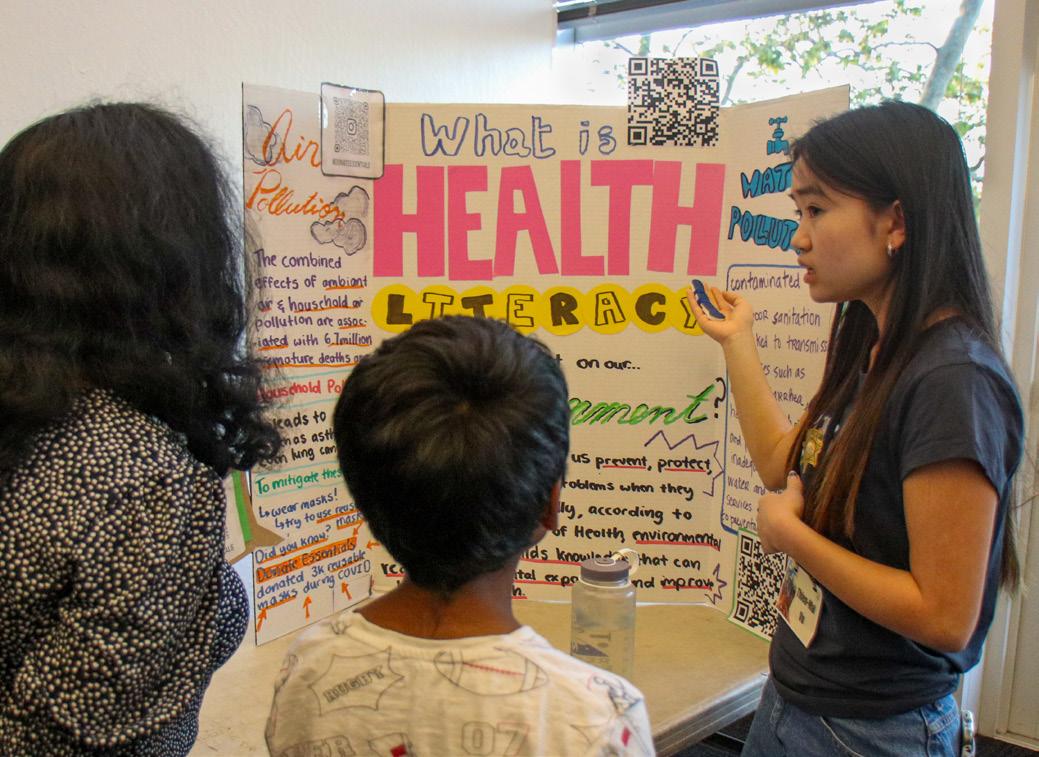
At the FUHSD Earth Day Event, students taught one another about environmental and health literacy and emphasized campus sustainability.
GRAPHIC ILLUSTRATION BY ANUSHKA ANAND, VIHAAN PATEL, CRYSTAL ZHU AND DAVID ZHU
Controversial writing communicates powerful messages
BY ROHAN KAKHANDIKI AND TAEK KIM
Lynbrook Drama’s spring play, “The Laramie Project,” stood out and prompted debate due to its mature subject matter. The play is based on the story of Matthew Shepard, a gay man who was beaten and killed in what was considered a hate-crime in 1988, committed by a homophobic gang in Laramie, Wyoming. The play depicts violent and hateful language, including multiple instances of the homophobic f-slur. Due to the violent actions depicted in the play, the use of slurs could be seen by some as too extreme for certain audiences. Despite these concerns, the use of derogatory language in this play and other literature curricula only elevates the underlying themes and messages and allows readers to better experience the past, providing accurate portrayals of past experiences and struggles.
Including words like slurs ensures that literature stays true to the story’s narrative. In the case of the play specifically, “The Laramie Project” describes real-life experiences of the time period. Simply filtering out the slurs and replacing them with politically correct terms in the current day would make these experiences less meaningful than a more powerful and accurate portrayal.
“Although the use of slurs might be
offensive to some audiences, it brought the interviews that were conducted in Laramie to life,” said sophomore Alden James, a cast member on “The Laramie Project.” “I believe it was necessary to provide that atmosphere for the entire audience.”
Over the past decade, controversy over the inclusion of racial slurs and derogatory language in literature has, in some cases, resulted in book bans and the overhauling of English curriculums. For instance, the novel “Adventures of Huckleberry Finn” by Mark Twain is well known for its dedication to the historical period of the 1830s, characterized by a bitter national debate over the morality of slavery. To paint a more accurate picture of this divisive landscape, the book includes 219 instances of racial slurs. Because of this, many schools have banned the book from their English curricula. Though “Adventures of Huckleberry Finn” is a work of fiction, Twain intended to cohesively convey the slurs and stereotypes of African Americans that were prominent during his time. These slurs and stereotypes are meant to portray the times of the past realistically and are used as part of the author’s overarching efforts to satirize and reflect on racism.
“In ‘Adventures of Huckleberry Finn’, there is a Black character named Jim who is often referred to in racial slurs and stereotypes,” junior and AP Language and Composition student Daniel Wan said. “However, Jim exhibits traits that go against those slurs and stereotypes, showing Twain’s intention to weaken the merits of those slurs and stereotypes.”
Twain was a progressive thinker for his time who sympathized with political and social equality for African Americans. His intention to use racial slurs in his novel served to reveal the moral contradiction that Southern slave society utilized to maintain slavery.
While reading texts like “Adventures of Huckleberry Finn,” it is not necessary for students to read the slurs aloud to learn from them, as FUHSD policy states that those words should not be read out loud or reproduced in student writing. This is out of respect for audiences who find the use of slurs discomforting due to their derogatory nature. To prevent inappropriate use of these slurs inside and outside of the classroom, teachers commonly begin with a discussion on guidelines for how to approach slurs displayed in the literature or media used in the class before teaching the material.
The choice to reproduce slurs in media, literature and theater, while controversial, elevates literature by providing meaningful context and sparking conversations around the harm that these slurs have created.
“I have faced racism my whole life, and if there was a book that contained racial slurs of my own people, I’m all for it because it shows how much we are suffering,” AP Language and Composition teacher Andrew
Seike said. “A good author will find ways to articulate that these slurs are wrong, but simply censoring the slurs is the equivalent of disregarding the bad things that have happened.”
Huckleberry Finn

e downsides of Meta’s political content feature
BY NICOLE GE AND DAVID ZHU
In a controversial move, Meta announced in a blog post on Feb. 9 that they would implement a feature limiting the amount of recommended political content to users worldwide on Facebook, Instagram and Threads. While the new feature aims to curb the amount of misinformation and
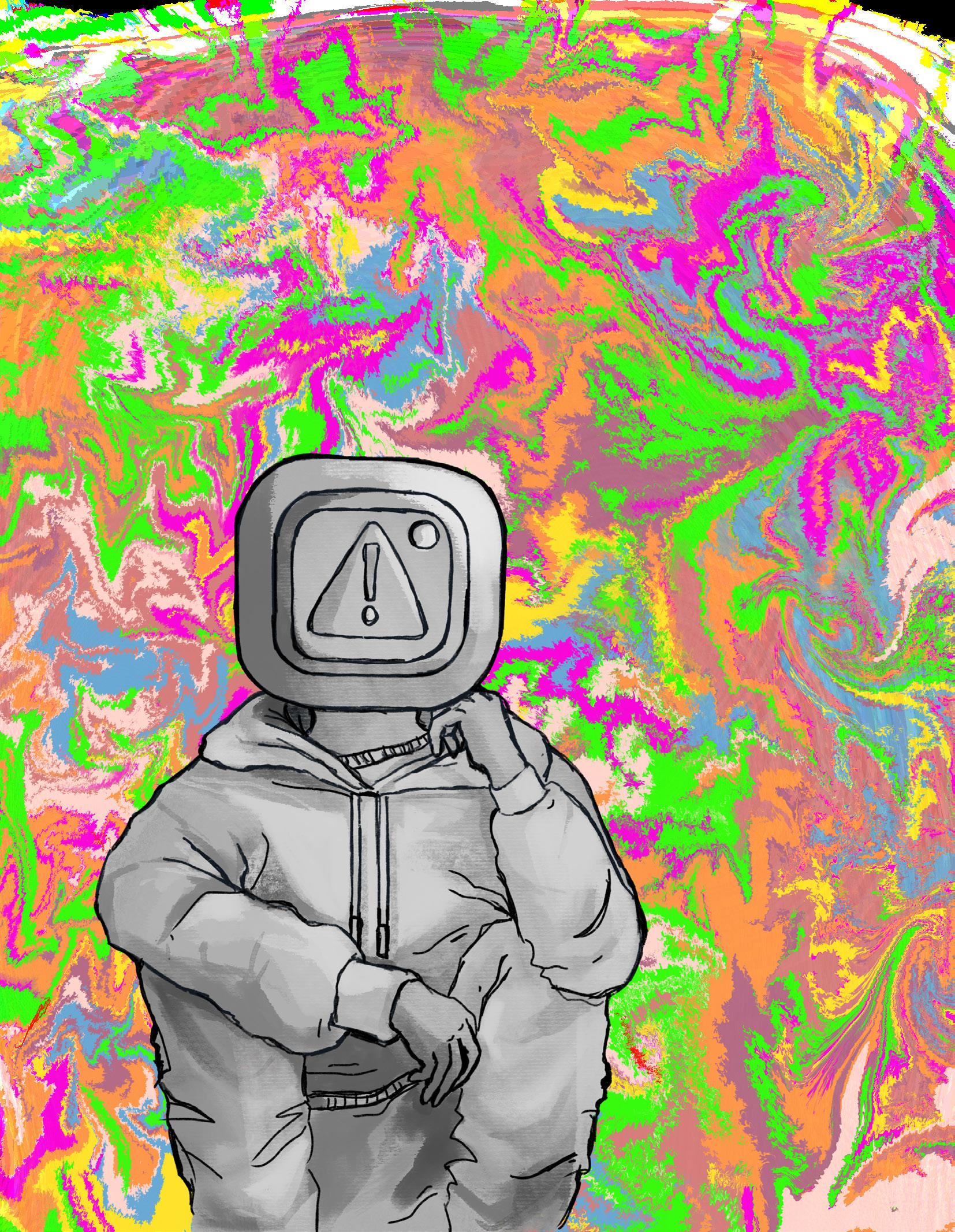
makes it difficult for users to know whether the content they post will be flagged, and allows Meta to algorithmically promote content which they find more friendly to advertisers, in the place of content perceived as overly political. Ultimately, the ambiguity of the feature threatens the transparency of social media platforms because it is impossible for users to know what specific content is being limited to them and why it is defined by Meta as “political
“Because Meta defines what information can be considered political, they could in example, from being defined as political,” senior Sandhana Siva said. “Additionally, legislatures across the country, so online content will continue to promote whoever
“The feature creates an echo chamber where you hear what you want to hear,” Brown said. “You’re not going to be exposed to a diversity of perspectives.”
“Meta’s political content feature creates an echo chamber where you hear what you want to hear.”
The lack of transparency from Meta in implementing this feature is harmful and unhelpful to their goal of combating the spread of misinformation. While Meta does offer users the choice to opt out of using the feature, their decision to announce the feature in a relatively obscure blog post meant that not many would be aware of it. Their actions intentionally created an environment where fewer people would be able to make an informed decision on whether to disable the feature or not. Instead, they should have alerted all users about the new implementation with a notification.
Étienne Brown, Assistant Professor in the Department of Philosophy at SJSU
Meta’s other efforts to limit the spread of misinformation are commendable, and other social media giants should follow in their footsteps. However, the decision to remove recommended political content from feeds altogether has a net negative impact on how users end up interacting on Meta’s platforms. Instead, Meta should invest more heavily into content moderation efforts by hiring more workers to be part of its content review teams so that workers can identify and take down misinformation as accurately as possible. The company currently employs people full-time to be a part of its content review teams, which detects, reviews and removes violating content. Unfortunately, Meta has a history of facilitating poor working conditions for its content moderators. Thus, in addition to investing more into content moderation, the company should also provide support for the mental health of their content moderation workers and create better working conditions for them.
“There are laws against false advertising in the United States, which are used to ensure that people can make good decisions on what to buy,” Brown said. “Similar logic can be applied to social media to protect users online.”
“Transparency is very important in content moderation,” said Étienne Brown, an assistant professor in the Department of Philosophy at San Jose State University. “Some users pay close attention to what’s happening in the tech world, while most will think that nothing has changed without clear
Limiting recommended political content and only showing content from followed accounts to users exacerbates confirmation bias, which occurs when users are exposed only to information that supports their preconceived views and beliefs. This practice therefore amplifies misinformation instead of limiting it, and leads to greater political polarization, making it harder for users to form a more educated perspective on issues. This leaves more users susceptible to believing false or misleading information.
While Meta’s feature to limit recommended political content has good intentions, it is largely unproductive and even harmful to users. The wide range of problems caused by the feature demonstrate the importance for social media giants to prioritize transparency and establish clear guidelines. Political content on social media is not always misinformation, and given the upcoming election year, political content can be very beneficial for users to stay updated with politics and election outcomes. Many newspapers also use social media to give updates about current events and new articles, which is why many people have easy access to news through social media. Nonetheless, there is always going to be some level of misinformation circulating on social media. Social media users should fact check the information they receive to ensure sources are reliable and also do their own research on the topic so they are not misinformed.
“Social media companies have to be extra careful when they’re censoring political speech,” Brown said. “Ideally, social media should be a place where political content circulates freely, while misinformation and hate speech are moderated with transparency.”
OPINION April 29, 2024
05
GRAPHIC ILLUSTRATION BY CRYSTAL ZHU
GRAPHIC ILLUSTRATION BY GARY PAN AND CRYSTAL ZHU
the Epic
Juniors foster fantastic tales through Circus of Dreams
BY CHARLOTTE BOLAY
With passion flowing in each brush stroke, junior Rachana Dandamudi paints a picture of a dramatic battle between witches and goblins, surrounding herself with the excitement of a fantasy world as junior Inaaya Yousuf intertwines pictures and words through creative writing. With their self-illustrated children’s book, “Circus of Dreams”, Dandamudi and Yousuf hope to help readers of all ages explore the fantasy genre and escape from daily stressors.
When Dandamudi and Yousuf were children, they often read books with similar styles to “Circus of Dreams” such as “Dork Diaries” and “Magic Tree House.” Though their plots were simple and lighthearted, they influenced Dandamudi and Yousuf to create a story of their own.
“Whenever I read, I immerse myself in the book, its plot and its illustrations,” Dandamudi said. “I hope readers can do the
same with ‘Circus of Dreams.’”
Inspired by the “A To Z Mysteries” series written by Ron Roy and illustrated by John Steven Gurney, Dandamudi designed “Circus of Dreams” to have large, captivating pictures alongside a fantasy storyline.
Dandamudi began bringing the idea to life through Procreate, an app used for digital illustrations and animating. This was Dandamudi’s first time experimenting with a digital medium.
“I was very excited to use Procreate and finally try digital art,” Dandamudi said.
“Though it is more complex than paper because of the large amount of tools available, it is easier to fix mistakes and is less time consuming than traditional art.”
“Circus of Dreams” follows four friends who stumble upon a magic circus, and are transported to a maze where they have many fantastic encounters. They face challenges and formidable foes, and learn life lessons as a result.
Dandamudi and Yousuf were both in their junior
year, considered by many to be the most demanding year of high school, when they worked to write, illustrate and publish the book.
“It was hard to meet up sometimes due to our schedules; it took us longer than predicted to publish our book,” Dandamudi said.
To overcome time management issues, they decided to jointly schedule specific times dedicated to making progress on the story — an important life lesson. Dandamudi also learned skills specific to illustrating, such as making sure the story has a set plot before diving into drawing the pictures.
integrate art and writing, which is something we aimed to do with our book,” Dandamudi said.
Dandamudi and Yousuf believe that stories are an essential part of childhood development, stimulating children’s imaginations and creativity. They hope that their work will be inspiring for children, and they plan to host readings of the book in local libraries such as Cupertino Library or Calabazas Branch Library and possibly elementary schools to promote “Circus of Dreams” to a larger audience.
“I hope that our book will inspire children to write or illustrate their own books, just like we were inspired from our

“I hope that our book will inspire children to write or illustrate their own books, just like we were inspired from our childhood books.”
Rachana Dandamudi, Junior


Aaditya Jain’s journey to DECA state leadership
BY AUDREY SUN
As the spotlight finds junior Aaditya Jain, he hears his name called and strides forward, waving to the audience. The crowd quickly erupts into cheers and applause as he’s declared the California Vice President of DECA.
Jain’s journey with DECA began in his freshman year when his older sister introduced him to the club. Watching her compete in the International Career Development Conference, Jain became fascinated by the events and decided to join.
“Because I didn’t have a CTE course my freshman year, my sophomore year was the first year that I was able to actively compete and go to conferences,” Jain said.
Jain’s sophomore year was his first year of actively competing in DECA and where he was able to see some success. He won first place at districts for his event and was able to qualify for the ICDC.
After heavily competing and participating in DECA for a year, Jain wanted to increase his involvement and decided to take on the role of director of principles. This position involved working closely with first-year members, guiding them as they prepared for conferences.
“I had two students who placed first and second and a lot of overall finalists, ” Jain said. “I was really happy. It’s great to see that they had a lot of success.”
After witnessing former Lynbrook DECA officers apply for state and chapter positions, Jain was inspired to do the same.
“I think what really attracted me to that role was the ability to be able to give back those same leadership development opportunities that I was really fortunate to receive from DECA and ASB,” Jain said.
To be eligible to apply for this position, Jain had to first take a test about California DECA and its history. At the district conference, he had to partake in an interview, which allowed him to move on to the next round of the application process. Finally, Jain had to create a 36-page portfolio filled with letters of recommendations, goals, plans and qualifications.

activities at conferences. Currently, Jain is actively involved in several projects, including managing a scholarship program that supports DECA members who face financial barriers to competition and organizing fundraising efforts to support them. He also creates “Impact awards”, which are informal recognitions for California DECA members and are often spotlighted through blogs.
“I had to make sure my portfolio also had unique segments that showed off my personality,” Jain said.


“I’m really grateful that I will be able to serve this term, and I’m excited to make a diference within California DECA.”
Aaditya Jain, Junior
In addition to the portfolio, Jain had to create a campaign booth to demonstrate his interactions with members, a crucial aspect of being an approachable state officer.
“They want someone that DECA members will reach out to if they want help with something,” Jain said.
As a state officer, Jain’s responsibilities include participating in district conferences and attending leadership development conferences such as the Emerging Leaders summit or Western Region Leadership conference. At these conferences, Jain is a representative for California DECA to showcase what they do and what they teach.
Jain plays a crucial role in the state officer team by leading creative and innovative initiatives, particularly in the creation of new events and planning
“These are different kinds of activities that aren’t exactly given a DECA glass or an award onstage, but they are noticeable achievements that we want to recognize for these people in chapters,” Jain said.
A focus for Jain this year is launching a new membership campaign. Because DECA’s past approach of promoting their club in November resulted in less membership, Jain plans to initiate a member advocacy campaign earlier this year. By doing so, Jain hopes to increase visibility and attract students who may not have previously considered joining DECA.
One of Jain’s favorite aspects of serving as a DECA state officer is the opportunity to connect with like-minded peers who want to make similar changes in their community and bring forward the same goals. Aside from his team, Jain also has the opportunity to meet with the State Board of Education and connect with California state leaders.
“I’m really excited to be invited to these opportunities, and not only be allowed to present, but also to learn at these conferences and connect with others,” Jain said.
For Jain, the most challenging part of being a state officer is the expectation that can be placed on him to constantly be a role model.
“It can be difficult sometimes to keep up with the expectation to always be a star student,” Jain said. “But I think it’s good and that it pushes me to do better, be better and be someone that California DECA members can look up to.”
Throughout Jain’s time as a state officer, he hopes to attain three overarching goals: increasing membership, helping more people build their leadership skills and providing a more memorable DECA experience.
“I’m really grateful that I will be able to serve this term,” Jain said. “And I’m excited to make a difference within California DECA.”
USED WITH PERMISSION
Aaditya Jain strides in unison with his fellow state DECA ofcers.
FROM AADITYA JAIN
Juniors Rachana Dandamudi and Inaaya Yousuf blend engaging illustration and narrative to craft a story they hope children will love.
06 FEATURES
GRAPHIC ILLUSTRATION USED WITH PERMISSION FROM RACHANA DANDAMUDI
Student journeys with their uncommon pets
BY VIHAAN PATEL
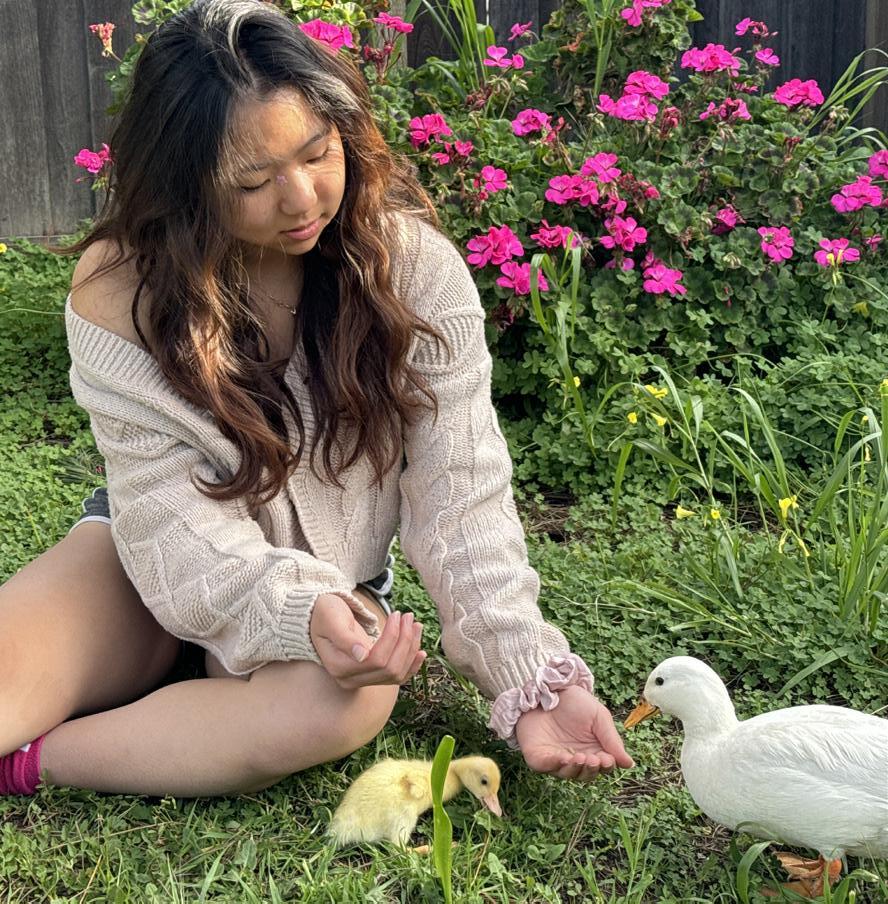
On a few special afternoons on campus, junior Felicia Huang can be seen with one of her ducks in the palm of her hand, introducing her duck to students and staff. While Huang walks around campus, her duck absorbs the change in environment, frequently quacking in excitement.
“The ducks I have are very cute and also social,” Huang said. “Whenever I go out to feed them, they start following me around and nibble my fingers to explore.”
Over quarantine, Huang started to research the process of incubating ducks and was interested in hatching eggs herself. She knew it would be a difficult task, but she was up for the challenge and decided to ask her parents for permission. Since she had previous experience taking care of animals, specifically a dog and a fish, her parents consented.
a few eggs and an incubator. Simultaneously, she started researching how to perform the incubating process herself.
“You get to see the egg develop from being an embryo to a little duckling,” Huang said. “You get to see the duck pushing its way out of the egg and into the world.”
The hatching process went well, and Huang was blessed with two ducklings.
Nowadays, Huang takes great care of her ducks, letting them out of their enclosure in the morning and feeding them in the evening. In addition, she cleans the ducks’ pond in her backyard twice a week. Despite Huang’s research of ducks beforehand, there was one thing that she could not have prepared for: poop.
“I didn’t expect the ducks to poop so much,” Huang said. “Their enclosure often gets stinky, so I have to change it almost every other day.”
Having ducks for the past two years has not only taught Huang all about ducks, but also has allowed her to grow as an individual. Throughout Huang’s journey with her ducks, she has adapted her lifestyle

to ensure her ducks are happy. sacrifices she makes for her ducks have also taught her to make certain sacrifices in life in order to make others happier.
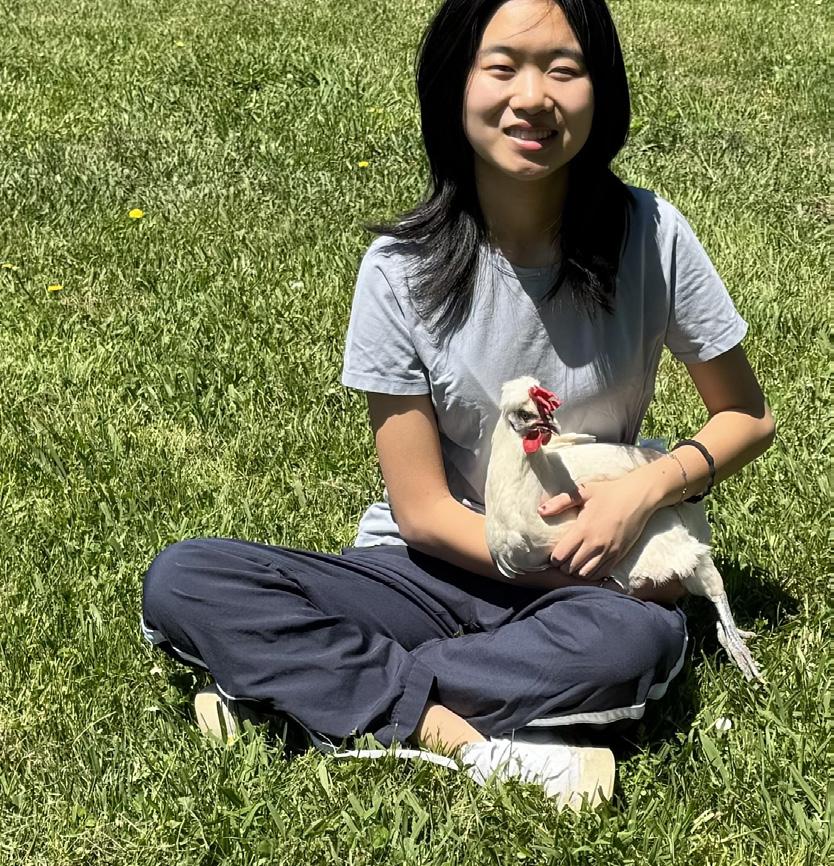
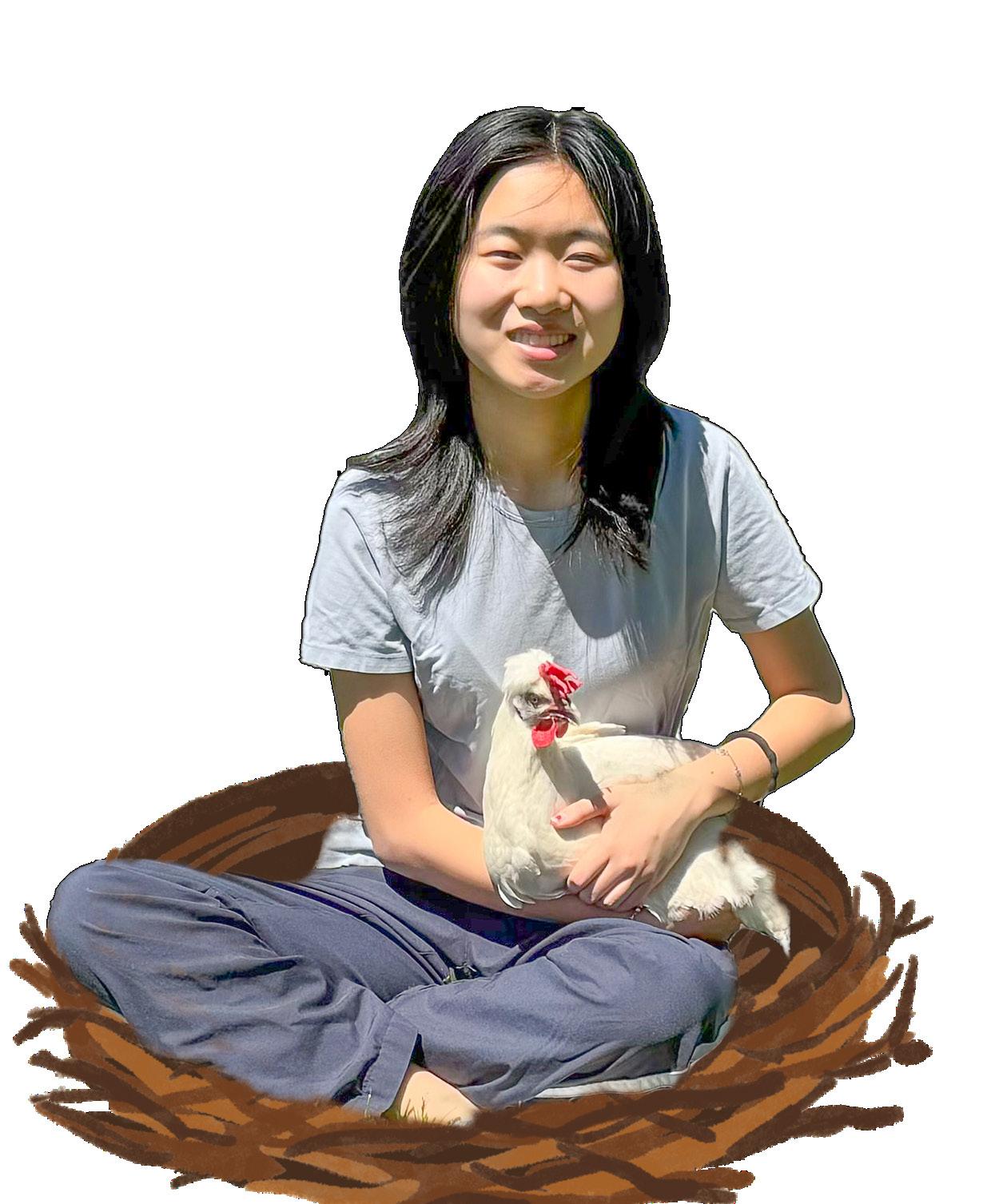
Waking up to sun rays shining on her bed, senior Alicia Cho gets up in the morning and listens to the clucks of her chickens that live in her backyard. As soon as the sun rises, the chickens can see the bright light and feel the warmth of the sun, and start pressing up against their coop in excitement. For Cho, that means going to her backyard every morning and unlocking the coop for her chickens, even if that means getting up a little bit earlier than she would like.
“I think chickens are very underappreciated animals,” Cho said. “Many people don’t think of them when getting pets, but they’re sweet and fun to have around.”
Cho initially got her chickens in elementary school from her dad’s coworker, who had a few chickens but did not want to keep them. In elementary school, she had always been a dog person, and the thought of having chickens never crossed her mind. However,
she did not have any pets at the time, and decided that she would give the chickens a try.

r e e c o n s u l t a t i o n &
O n e - s t o p d e n t a l c a r e f o r a l l y o u r f a m i l y


a s y t o u n d e r s t a n d t r e a
“If I hadn’t gotten chickens, I definitely would still be a hard-core dog person,” Cho said. “When I got chickens, my perspective of animals shifted, and I realized that all animals are friendly — not just dogs or other popular pets.”
For Cho, taking care of chickens is relatively easy, but also proved to be difficult at times. Each one of Cho’s chickens has a unique personality, and Cho takes care to treat each one differently based on their characteristics. For example, Cho noticed that one of her chickens, a rooster, fights other chickens for space and is very territorial. On the other hand, the chickens that Cho used to have were more affectionate, so she and her dad would sometimes sit down in their backyard and cuddle with them while talking.
“Once you get to know your pets, you start to find differences in the way they act,” Cho said. “I almost immediately noticed that one of my chickens was social, while a couple others were shy. I learned that they all have something about them that makes them unique.”



D
i
C o l l e g e o f D e n t a l M e d i c i n e B
r i
g , U o f I l l i n o i s a t U r b a n a - C h a m p a i g n G
f o r D r K i m a n d t h e s t a f f s F
y w i t h D r . J o s e p h K i m 1 0 4 4 0 S . D e A n z a B l v d . D 1 , C u p e r t i n o , C A 9 5 0 1 4 ( 4 0 8 ) 6 4 2 1 7 7 5 S h o r t c h a i r t i m e t h a n k s t o d i g i t a l i z a t i o n F
s t t u r n a r o u n d t i m e w i t h a f f i l i a t e d d i g i t a l d e n t
l l
E
t
e n t p l a n s t h r o u g h v i s u a l i z a t i o n D
i z a t i o n s a v e s y o u t i m e a n d m o n e y W i s d o m T o o t h S p e c i a l * R e f e r t o t h i s a d f o r 5 % O F F D e n t a l I m p l a n t O n e o f t h e m o s t e x p e r i e n c e d d e n t i s t s i n t h e B a y A r e a w w w s m i l e p l a n t d e n t a l c o m O r t h o d o n t i c s I n v i s a l i g n c e r t i f i e d p r o v i d e r
D S , C o l u m b i a U n i v e r s
t y
S , C o m p u t e r E n g i n e e
n
o o g l e 5 - s t a r r e v i e w s
X - R a
a
a
a b
m
i g i t a l
07 FEATURES April 29, 2024
Felicia Huang’s ducks
Alicia Cho’s chickens
PHOTO USED WITH PERMISSION FROM ALICIA CHO
PHOTO USED WITH PERMISSION FROM FELICIA HUANG GRAPHIC ILLUSTRATION BY CLAIRE GUO AND VIDUSHI UPADHYAY
A walk down lockdown lane: quarantine memories
When pajamas, a bag of chips and a blanket were school-day staples, Zoom screens were dominated by various angles of student faces and laggy voices emerging from computer speakers. These were common sights in the homes of millions of American students during the COVID-19 lockdown, where public health mandates required citizens to stay home and stay six feet apart due to the looming threat of the virus. In those days, streets remained empty, students jumped out of bed five minutes before school and spent their copious amounts of free time following online workouts or learning TikTok dances. Despite the ticking toll of infections from the virus and abundant boredom, four years later, many may find themselves yearning for those uieter times, as there seems to always be room for lockdown nostalgia amid frantic days.
As the months dragged on, however, many began to feel the effects of “pandemic fatigue" — a weariness of following protective measures and public health recommendations from officials. ockdown nostalgia grew from that period onward; people began longing for an idyllic version of the pandemic that most became exhausted living in.
“What I think has happened is that we as a community have processed our grief from that time. We’ve largely come to not only just acceptance, but finding meaning in it, school
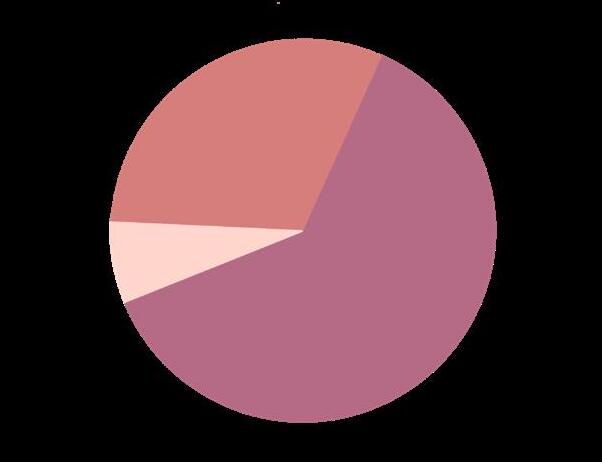
60% of Lynbrook students reported having experienced “lockown nostalgia”
pandemic led to the popularization of various TikTok dances, trends and content creators.
“My classmates and I talk about how fondly recalling a time when people were struggling feels strange. For middle and elementary schoolers, distance learning was sort of an ideal period of time,” freshman Ceira Motoyama said. The pandemic produced mixed feelings for Motoyama, who recalls parents checking in during the day and feeling less isolated from family members compared to in-person school.
mental health, which is for feeling nostalgic about
According to leading researcher study Kristine Batcho on Psychological Association, means to “keep track of progress through life.”
“Something I’m nostalgic the fun conversations with talk to as much pre-COVID-19, chatting, playing truth or against each other on Discord lexis uo said.
ockdown nostalgia consists of a longing for memoriesand habits experienced during the pandemic, usually in its early stages. Camaraderie persevered even when classmates were separated through Zoom screens and neighbors through their fences. Whether it was digitally hanging out with peers through apps like House Party and Among Us or taking socially distanced walks, many teenagers found their free time accompanied by friends. The excess of free time also cultivated new at-home hobbies, including crocheting, learning a new instrument or following new internetviral recipes. Making sourdough bread was especially popular and whipped coffee became a daily beverage for those who partook in viral food recipes. A rise in internet use during the
A sense of interconnectedness persisted throughout lockdown despite the isolation. Simple acts of kindness such as drafting letters for frontline workers and donations to local charities brought community service to the limelight — especially among students who had more time on their hands.
“I was able to really be tightly connected to a small core group of people, which is so different from the way most of us lead our modern lives,” Stevens said. “That is something I know people have nostalgia for as well as the ability to have self reflection and think about hobbies you wanted to pursue. It forced people to become very creative with the limited resources that were available.”
Nostalgia is generally associated with positive memories, but it doesn’t always have to be a phenomenon of “rose-tinted glasses,” meaning a romanticization of the past. Finding a silver lining even amid the darkest moments is an optimistic human nature that can benefit
The pandemic was a self-awareness for many. since busy schedules began middle school, many were to slow down and build person they wanted to become, whether it was starting study habits or starting affirmations.
“I was a sports athlete before the pandemic, so to keep myself moving while it happened,” sophomore Ariel Kuo said. “I had to have at-home workouts. remember getting up and the neighborhood and sometimes backyard.”
Kuo also got her first Guaca and Mole, which helped responsible caretaker. psychologist Brittany Stevens said. “That’s really the most transcendent way to process grief: to think about what was maybe a positive or a lesson from it.”

 BY ANUSHKA ANAND AND APURVA KRISHNAMURTHY
Story continued from front page.
“I
n a state of conformism, it's hard to question medical thinking and other official ways of psychiatric thinking,” Nava said. “And I think that's one reason why it becomes pretty biased towards those that do control knowledge.”
Nostalgia eventually became officially classified as a disease during the last quarter of the 18th century and was used to diagnose the soldiers in the French army during the Revolution and Napoleonic Wars. However, when the wars people no longer classified nostalgia among soldiers as a disorder, and nostalgia became stigmatized. However, it was still diagnosed disease around the world in other contexts.
“Dispelling the myths of war being a moral could have been a transitional point,” Nava said. “The discursive shift from medicalizing an emotion like nostalgia shifts the perspective to it being natural and organic emotion.”
As migration increased worldwide, various groups were more aware of their nostalgia due the exposure and understanding of the concept.
As more people started discussing psychology natural human behavior, people started to agree that the term refers to anyone who was separated from their homeland for a long time.
By the early 20th century, professionals no longer viewed nostalgia as a neurological disease, but as a normal human tendency. Psychologists
Nostalgia’s
journey
T ZHU N I N ZHU
mix of positive & negative positive neutral or negative 4.8% 63.5% 63.5%

a possible explanation about quarantine. researcher on nostalgia on the American Association, nostalgia can be a things” and “monitor nostalgic about is having with people I didn’t pre-COVID-19, and staying up or dare and competing Discord bots,” junior time for reflection and many. For the first time began in were able on the become, new daily athlete I had while sophomore workouts. I and running around sometimes in my two pets, ducks named helped her grow as a
Pandemic nostalgia has been especially present across social media platofrms, with creators posting pictures of empty streets and the intimacy of home spaces at the height of the pandemic. Looking back at photos of mask art and family members embracing across sheets of plastic, a sense of peaceful solitude emanates from what otherwise might have been painful reminders of a briefly-dystopian world.
In school, the effects of lockdown nostalgia are easy to spot. Returning to a typical inperson high school can be overwhelming after one and a half years of receiving lessons virtually.
how we structure our schools which would allow teachers planning time with the trust that work is going to get done.”
The experience of the pandemic has changed not only aspects of life but of people as well. According to the World Health Organization, there was a 25% increase of anxiety and depression. Decreasing mental health may prompt more people to relive the happier of their pandemic memories.
“The pandemic makes me feel happy and sad at the same time, because I missed school for a year, and some of my older friends, for example, missed the Yosemite trip in eighth grade,” sophomore Amishi Arya said.
“My classmates and I talk about how fondly recalling a time when people were struggling feels strange.”
Ceira Motoyama, Freshman
“There were some fun activities that I had my sophomores do that did really build community among them and their breakout rooms,” English teacher Jessica Dunlap said.
During the pandemic, there was no need for waking up early at 7 a.m. to prepare for school. Almost all homework was done virtually, while homecooked meals could be enjoyed between class periods. These aspects of a more flexible home schedule were extended to both students and teachers.
Like other forms of nostalgia, pandemic nostalgia is subjective. The emotions and memories later transformed into nostalgia for some can hold negative connotations for others. Being unable to talk face-to-face with friends, the constant fear of sickness and grief of family passings are all from a period that most would not wish to return to. However, that doesn’t mean nostalgic habits of the pandemic need to stay in the past or remain associated with suffocating isolation. Slowing down despite a busy schedule — crocheting, making coffee — are all ways to find peaceful times.
of Lynbrook students reported either not or being unsure of having experienced “lockdown nostalgia” according to a survey with 147 responses
“We can’t go back to it, but finding a positive in a hard or shocking or traumatic time, it is a really beautiful human trait,” Stevens said.
journey from disorder to emotion where past meets present
“The thing that I miss is the asynchronous Wednesdays,” English teacher Jane Gilmore said. “There was an opportunity to rethink question ways “And
strongly disagree

—

that it represented difficulties in letting go of childhood or a longing to return to one’s fetal state.
“It could be a coping mechanism,” Nava said. “There’s always a bit of uncertainty in the present moment, especially during times of change so nostalgia just reminds us of a simpler, less intense time.”
During the following decades, the general interpretation of nostalgia shifted in two major ways. Firstly, the definition expanded from general homesickness to a greater longing for the past. Some started believing it to be a generally poignant, more pleasant experience rather than a disease. One infamous case captured these exact sentiments; it followed the behavior of French author, Marcel Proust. In his novel “À La Recherche du Temps Perdu," or "Remembrance of Things Past," he described that eating a madeleine cake, which he had not tasted since childhood, triggered
a cascade of warm sensory
“When I think of nostalgia,
generally accepted views of nostalgia was advancements in science. Psychologists began relying on empirical and systematic observations rather than pure theory; they began to understand that experiencing negative emotions was correlated with nostalgia rather than a direct effect of it. In fact, they began to realize that although it has been linked with negative symptoms, such as sentiments of sadness and loneliness, nostalgia generally does not put people in a long-term negative mental state, like depression. Instead, the phenomenon allows people to memorialize meaningful experiences, boosting one’s psychological well-being.
“I view nostalgia as a way to escape from the present, whether the present is good or bad,” Gardette said.
Through observational studies, scientists began to realize that nostalgia in fact boosted self esteem, psychological growth, charitable behavior and social belonging. Nostalgia has
become a restorative method to cope with distress and restore well being. According to the Human Flourishing Lab, in a survey of more than 2,000 American adults, 84% agreed that nostalgic memories serve as reminders of what is most important in their lives. In addition, 77% believe that, when life is uncertain or difficult, nostalgic memories are a source of comfort and 72% use them as inspiration in their daily life.
This is partly the reason why nostalgia has become a powerful marketing tool in the media. By reliving past experiences, viewers not only feel good about themselves but they understand that their lives have purpose and they can tackle current and future challenges.
“In our own emotional lives, we should reflect on our nostalgia with a critical lens, but also one in which we welcome it as a natural emotion,” Nava said.

pretty
became less as a
emotion being a various due to concept. psychology and agree separated no disease, Psychologists
so
knowledge.” classified 18th soldiers and ended, among
moral act said.
5
22.5% 4 — 44.4% 3 — 23.2%
40%
1
GRAPHIC ILLUSTRATION BY VALERIE SHU SCAN ME Read more at lhsepic.com
Since X Year
BY EMILY PEDROZA AND ROBERT YU
After being prompted to share what they miss the most from their past, students and staff share various ideas: from warm sands to striking home runs. Here they uncover the memories they hold closest to their hearts.
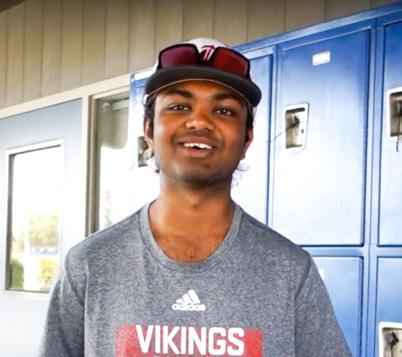
In a state of pinpoint focus, junior Monesh Ponduri steps up to the batter’s box, fingers knurled around the rubber grip of a bat.
In a split second, the tides of the game were turned with the swing of Ponduri’s bat, striking a home run to remember for years to come. Today, Ponduri carries this memory along with his school colors, reminiscing and cherishing every hit.
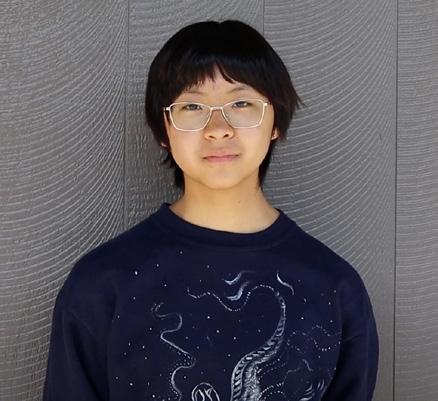
Eyes adjusting to the swathing bright kitchen light, freshman Ceria Motoyama stood beside her blurry mother, aproned, who picked shells from grains of rice and soon after modeled the action. The two pressed the egg firmly against the kitchen counter, then latched their thumbs through the indent.
Soon came a sputtering wok, chopsticks wet with the just-mixed egg mixture and a vibrant blend of vegetables that soon blended to create the perfect breakfast — a recipe she continues to call on today.
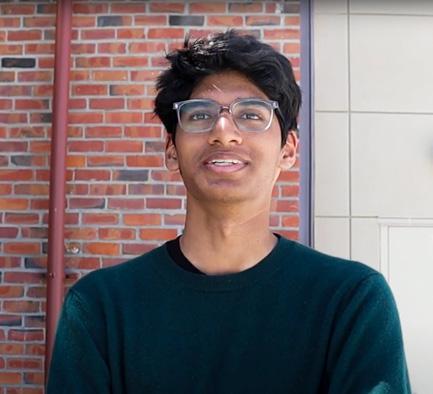
Palms perched onto a sleek keyboard, junior Kiriti Kotapali forges memories in the form of comedy. During his free time, Kotapali watches humorous skits from comedians like Kevin Hart, Chris Rock, and Dave Chapelle. Memories of laughter have allowed him to cherish the humorous moments of his life, despite being segregated behind a screen.

Shoes dusted with warm sand, senior Nidhi Prasav found herself drawn again and again to a bookstore tucked by the edge of La Jolla Shores beach, a cranny where gentle waves could still be heard rolling and the sweet scent of salt tucked itself into the moist air.
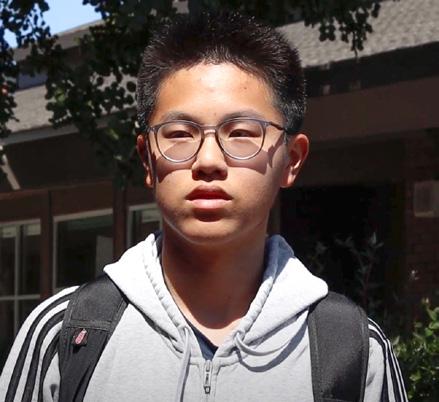
Flicking a pen and guiding it onto lined paper, junior Galen Han finds solace in studies while listening to Chinese pop music. Tunes from artists like Jay Chou, G.E.M , and J.J Lin, have provided Han with deep inspiration. Today, Han is continually discovering new Chinese music to listen to while partaking in hobbies like writing SciFi novels, running, and playing video games.
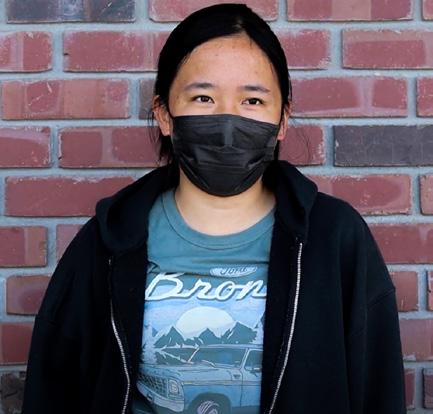
Seeking shade from the summer-thickened air, sophomore Charlotta Dai and her friends formed circles under tree leaves between the breaks of their summer camp activities: small hands threading clear and colored beads through clear strings, bracelets and lanyards lacing into shape — memorials of both each other and youth — ones they still keep.
Sharing childhood stories from Lynbrook students
BY AMANDA JIN
Tucked in and curled up beneath the covers, a child eagerly awaits for their parent to sit down and begin telling a story. As time passes, these once cherished stories become less prominent, fading with the influx of new experiences in life. Yet, in periods of nostalgia, these memories resurface as fond memories that something brings new perspectives.
Many of the stories told to young children are often simplified explanations of important life lessons intertwined with fun aspects to keep them engaged. One such instance was a narration about the concept of karma told to junior Sanya Badhe when she was young, passed on through generations of her family.
There were two businessmen, Good Person and Bad Person, who were very good friends despite drastic differences between their work ethics. Good Person was always fair, consistently performing good deeds for others, while Bad Person was cheating people, and taking advantage of them.
One day, they were hiking in a lush forest and the sun was starting to set. Good Person suddenly pricked his foot on a thorn on the ground, causing a small wound to form. Then, Bad Person suddenly stumbled across a box hidden beneath the undergrowth of the forest.
“He was surprised because there was a gold coin, with a lot of coal surrounding the singular coin,” Badhe said.
Bad Person began bragging to the Good Person, stating how he did so many good deeds, yet he wasn’t able to get a gold coin. They began discussing this odd occurrence and decided to ask a guru for more insight about the situation. The guru told them that this was due to their actions in a previous life. Good person used to have horrible actions, and was sentenced to a hanging. Bad Person originally helped out a lot of people in need.
“Bad Person was supposed to get a box full of gold coins in his life,” Badhe said. “However, his actions in this life turned all but one of the gold coins into coal. Good person had a lot of good deeds this life, which helped reduce his punishment to merely a
is Ali Baba and the Forty Thieves, originally in Arabic, but translated to many other languages and slightly altered among different cultures. This version of the story that sophomore Abhigya Bandugula is familiar with opens up with Ali Baba working in the forest, where he suddenly overheard a group of 40 thieves who are heading to their treasure stash.
He was able to determine how to open up the cave where the thieves stored their treasure, and once the thieves had left, he stated the words “Open, Sesame!” opening the cave. Ali Baba took a lot of gold and silver, and left the cave after closing the door by stating “Close, Sesame!”
Ali Baba brought these riches home, however, the thieves realized someone had stolen from their cave and set out to kill whoever had done so. While they were looking around, they discovered that one man, who once lived in poverty, was now in possession of incredible amounts of treasure.
“The thieves find and investigate Ali Baba,” Bandugula said. “Once they find his house, the thieves put a little ‘X’ on his door.”
Additionally, the thieves had kidnapped Ali Baba’s brother as revenge, killing him in the process. Ali Baba received this news and was devastated, and this act gave him a reason to kill the thieves. So, one day when Ali Baba was throwing a large party, the thieves snuck into his home in large oil pots, planning to ambush him.
“Ali Baba found out and told his servant to boil up a ton of oil,” Bandugula said. “He poured in the hot oil and the 40 thieves came out screaming and in pain. As the thieves were discovered, they were put into jail for life. In the end, even though Ali Baba is rich, his brother had passed, so he is left at a loss.”
Even with all the different variations of this story, there is still a common message that Ali Baba and the 40 Thieves shares: one should not bow down to greed. In this case, due to Ali Baba’s greed, he ended up losing his own brother.
“I associate this story with happy memories, especially the fuzzy feeling from when my dad is tucking me in to sleep, since he would always tell this story,” Bandugula said.
These stories can also give explanation and background to certain phenomena or how certain aspects of one’s culture works. The Chinese culture, there is a calendar system that has 12 separate animals representing a certain year in a 12 year cycle. In his early years of school, sophomore Cameron Chao was taught a folk tale about how this system was implemented.
Long ago, there was a competition announced to all the animals about a race that would determine a system of time measurment for humans. In order to win, the animals must cross a large river to reach the other shore, which would secure them a position in the zodiac.
The first animals to come were the rat and the ox. The rat couldn’t swim across the vast water body, so it asked fro a ride from the ox, promising to give the ox first place in exchange.
“The ox agreed to carry the rat across,” Chao said. “But the rat was sly, and at the last minute, the rat jumped off the ox’s back and took first place.”
The tiger had also followed the rat and the ox, coming in third. The rabbit had been hopping from stone to stone, attempting to cross, but slipped. However, the rabbit was able to grab onto a log, floating to the finish line with random puff of air pushing it. The dragon, who could fly, hadn’t come in first like many had expected, as it was kind hearted and had stopped to help multiple people along the way. The puff of air the the rabbit had felt was from the dragon who had seen it struggling on the log, and the dragon ultimately came in fifth.
The horse galloped towards the finish line, but the snake had suddenly appeared, scaring the horse and stealing sixth place. The horse was still able to grasp seventh place.
“Then, the sheep, monkey and the rooster came and decided to help each other,” Chao said. “ They built a raft and together all paddled across the river, finishing eighth, ninth and 10th.”
For the final couple of animals, they had been caught up in other activities before finally claiming their place. The dog, who was very good at swimming, ended up distracted and was playing along the shores until it finally remembered its goal. The pig had felt hungry along the race, and stopped to eat, falling asleep. Once the pig finally rose, it was able to finish, becoming the 12th and final animal in the zodiac.

It's important to Chinese culture and it affects the names of each year and how this sort of system was formed.” Chao said. “Also, the part where the sheep, monkey and rooster work together to paddle was a cool moment. It shows their personality well.”
Stories that were told in one’s childhood could hold emotional significance, associated with the fun and comforting moments from the past. Senior Zayan Azom’s grandmother told him a story that fills this position.
Scan the QR code on page 9 to read more.
April 29, 2024 CENTERSPSREAD 10
GRAPHIC ILLUSTRATION BY AMANDA JIN
Nostalgia in media: Toeing the line between modernized and contrived

 BY VALERIE SHU AND ALYSSA WANG
Abright-orange jukebox, references to popular childhood arcade games like PacMan and Wreck-it-Ralph and YMCA by the Village People — all of these are popular images of the past, which many film companies are incorporating in their TV shows and movies to connect with older audiences and evoke feelings of positive emotion. Rather than using these marketing strategies to purely exploit their audience’s love for meaningful symbols from their childhood for profit, media companies should utilize these strategies to pay homage to past eras and build on promising stories with tasteful modern commentary.
Nostalgic marketing leverages sentimental emotions associated with elements of the past such as aesthetics, themes or characters. It has had a resurgence in film and TV in recent years: in 2023, 21 out of the top 25 domestic box office films were sequels, remakes or reboots of various forms, as opposed to just 16% in 1981. These attempts to capitalize on viewers’ gravitation toward familiar media have the potential for creating powerful emotional hooks, as nostalgic experiences can feel uniquely personal to each viewer.
“They are appealing to people who remember what they’re referring to and targeting a somewhat older audience,” said Dennis Irwin, a film and TV production instructor at De Anza College. “But, there are also a lot of younger people who find nostalgic references appealing in the same way that people can be interested in music that came before their time. Nostalgic
marketing has such a broad appeal which makes it so successful.”
As evidenced by the numbers, movie makers’ preferences for remaining faithful to the tried and true pays off. The highest grossing productions of 2023 included films such as the latest installations of franchises like “Spider-Man: Across the Spider-Verse” from Marvel, and adaptations like “The Little Mermaid” — a live action reimagining of the 1989 film released during Disney’s so-called “Renaissance” era, a time period lauded for producing some of the company’s most classic and successful films to date. Representing less financial risk for companies, media relying on the nostalgia at their core have the advantage of coming with pre-established audiences who translate to the guarantee of higher ticket sales or streaming subscriptions.
“While starting from scratch with a brand new marketing angle would seem to be a more inventive approach, exploiting a pre-existing connection is an almost surefire way to invoke emotions in the target demographic and benefit financially,” said William Clay, a film professor at West Valley College.
Beyond lukewarmly received movies that are simply flashier, CGI-heavy remakes with few structural changes — such as 2019’s “The Lion King” — often attempt to justify revivals through the thematic and visual modernization of media, imposing modern tropes or social commentary on these nostalgic stories. For example, in the 2018 live-action reboot of “Robin Hood,” director Otto Bathurst sought to create a darker, more politically charged and provocative twist on the classic British myth
but simply ended with a convoluted jumble of commentary that was as contradictory as it was irrelevant. Overwhelmingly negative reviews from both critics and audiences reflected this, highlighting the film’s failed execution of portraying modern themes, such as corrupt governments and religion, into an originally lighthearted folk legend. When such commentary is injected into nostalgic stories without full regard or understanding of their depth, it can not only clash with the original story but be reductive or dismissive of inherently complex topics and issues.
Similarly, the 2020 live-action reboot of Disney’s “Mulan” attempted to adopt a darker tone, but did so at the expense of the animated version’s humor, music and, most damningly, character development. Aimed at the film’s audience who had aged alongside the 1998 original, the remake’s increased focus on an empowering, feminist angle had the opposite of its intended effect, lending illogicality and contrivance to the plot while robbing the story of its charm and appeal. It is no surprise, then, that fans and critics have been dismissing Disney live-action reboots like Mulan as cash grabs and millennial nostalgia-bait that rarely hold up to the craftsmanship of the original animated films, according to an article published by Forbes.
The latest in this slew of reboots, the upcoming 2025 release of the “Snow White” live-action remake received heavy backlash due to its casting choices.
Scan the QR code on page 9 to read more.
Explaining the scienti c phenomenon of nostalgia
BY DAEUN CHUNG AND QIANZI LOO
The smell of freshly baked cookies that filled Grandma’s kitchen on Thanksgiving, reminding us of the old fairy tale stories she told us at night. The taste of homemade lemonade on a hot summer day, triggering memories of when we were filled with nonsense business plans and recruited our best friends. The sound of a magic wand on Disney Channel or the laughter with friends from Dilworth, a reminder of when everything around us seemed so big.
“Nostalgia is a sentimental yearning for a past period or a state of being,” school-based therapist Jenna Starnes said. “There are several factors that can trigger nostalgia and it can be anything sensory: particular smells, sounds, objects or conversations with friends.”
In the neuroscientific aspect, there are four identified components that work together to generate the feeling of nostalgia: self-reflection, autobiographical memory, emotion regulation and reward. Because the phenomenon of nostalgia originates from memories that the self considers important or meaningful to the present circumstances, the individual is “the central and defining character of nostalgia.” Two key brain regions involved in the process of self-reflection are the medial prefrontal cortex — which requires individuals to contemplate how the external stimuli align with their personal thoughts like goals and traits — and the posterior cingulate cortex — which is related to self-reflection and self-consciousness.
These brain regions, along with those in the hippocampus, are mainly involved in autobiographical memory processing. More broadly, the reward network including the striatum substantia nigra, ventral tegmental area and ventromedial prefrontal cortex collectively generate a sense of nostalgia. Autobiographical memory involves recalling past events and experiences in an effort to relive them. Similar to nostalgia, rumination — repeatedly focusing on negative feelings and experiences from the past without taking any action to change them — and counterfactual thinking — imagining “what-if” outcomes of past events — all utilize autobiographical memory.
However, nostalgia is unique in its strong association with positive feelings about the self and social relations and is weakly associated with feelings of bitterness or past experiences in which an individual feels they have been wronged.
“Generally, nostalgia is thought of as a pleasant emotion, but it’s a balance of happiness and sadness,” Starnes said. “You’re thinking about something positive and enjoyable, yet there’s often a wistfulness because it’s no longer present in your life. It is fascinating that nostalgia holds two emotions at once but is generally experienced as a good, enjoyable
experience.”
Despite nostalgia’s ambivalent, bittersweet nature, nostalgia can serve as a form of emotional regulation to consume any negativity with its predominantly positive associations. More specifically, people are highly likely to remember nostalgic memories in a positive light even if the actual experiences were not entirely enjoyable. By positively reframing certain memories, nostalgia smoothes emotional conflicts. In this way, nostalgia can potentially serve as a coping mechanism to combat discomfort as it evokes memories that are upbeat, social and meaningful. Several brain regions, including the anterior cingulate cortex and mPFC, are well-known to initiate emotion regulation.
“Certain foods and TV shows on Disney Channel like ‘Phineas and Ferb’ trigger feelings of nostalgia for me,” said senior and Society of Psychology and Sociology treasurer Siri Ratnam. “Nostalgia is very much about what I experienced as a younger child, especially between 2009 and 2014, and revisiting those memories.”
Specifically, for younger teens or high school students, nostalgia can serve as a way to maintain emotional stability as they navigate some of their most difficult years of schooling. By reflecting on positive experiences, they can ground themselves during periods of stress or uncertainty. Similarly, for adults, nostalgia can be an avenue to escape from the pressure of their work environment as they think back to their childhood.
“When I talk to my grandparents, their view on nostalgia is more influenced by their experience living through the post-war period, so it tends to be very patriotic,” Ratnam said. “But for my parents, they talk more about their college days and gaining independence.”
On another front, in psychology, nostalgia has the capacity to foster a social approach and connectedness with others. Because nostalgia’s ability to supply social connectedness can be interpersonally transferred, it can increase physical closeness, help-seeking, empathy, and prosocial behavior while decreasing prejudice, or negative attitudes toward others. In the case of romantic relationships, nostalgia can increase commitment to and feelings of closeness with one’s romantic partner, as well as love and relationship satisfaction.
Although nostalgia is defined as a past-focused affective experience, increasingly more studies have demonstrated that nostalgia can have a positive influence on present behavior and future-oriented actions. Referencing their childhood memories can remind individuals of how it feels to be young and loved, and it ultimately prompts
them to seek future-oriented behaviors like caring for their physical, social and mental health.
Furthermore, nostalgia may help Alzheimer’s patients recall past events and enhance neurological functions. Nostalgic memories are encoded as long-term memory, which typically makes them more difficult to forget. Utilizing the event reflection task, which makes experiment participants reflect on nostalgic events or ordinary events from their past, a 2018 study in the Journal of Alzheimer’s Disease found that people with mild or moderate dementia demonstrated improved self-continuity, optimism and self-esteem.
Nostalgia can also guide people toward finding their identity, especially if they have relocated throughout their childhood.
Scan the QR code on page 9 to read more.
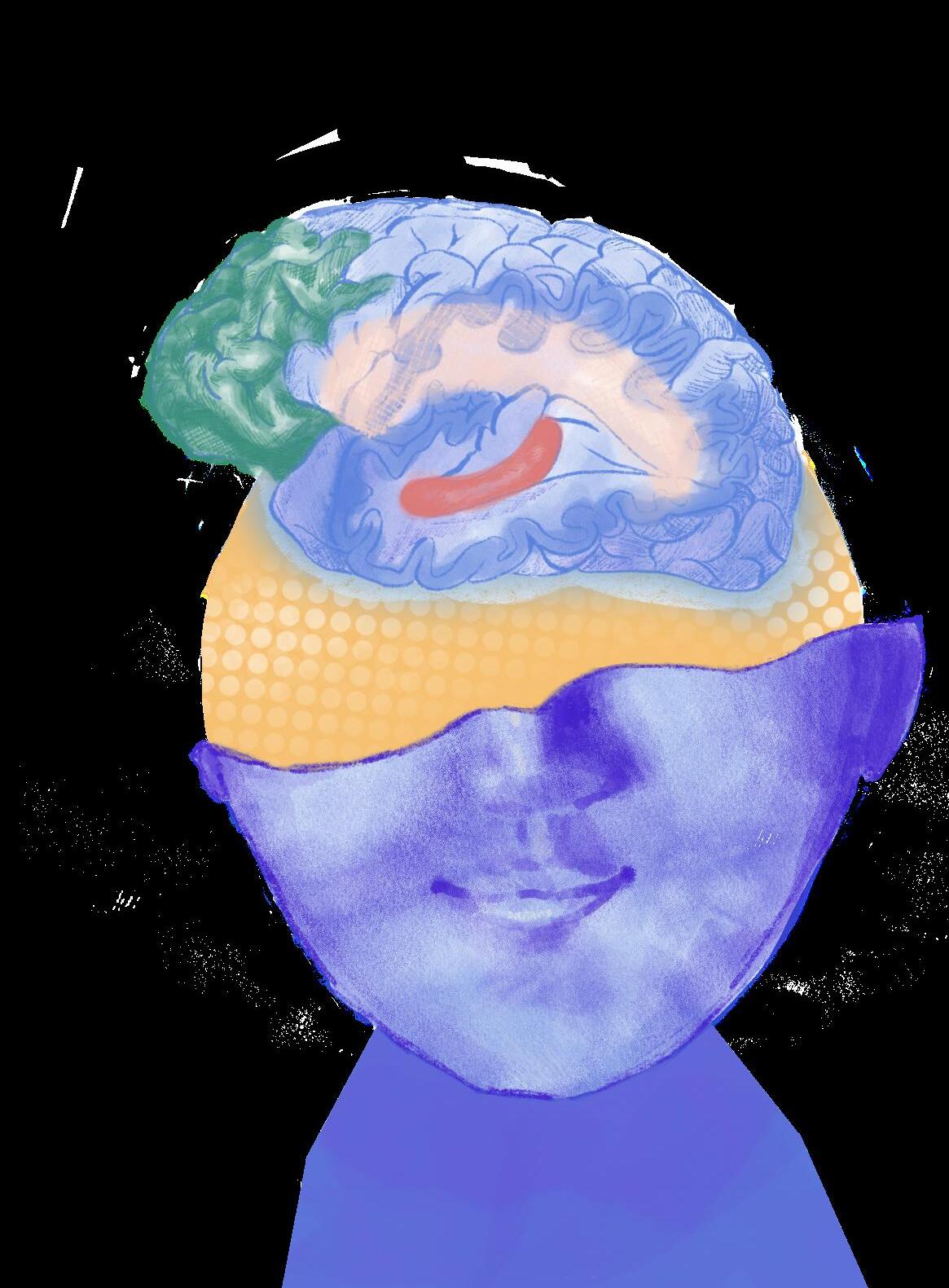
CENTERSPREAD April 29, 2024
11
GRAPHIC ILLUSTRATION BY SARAH ZHANG
A historical reflection on communism and America
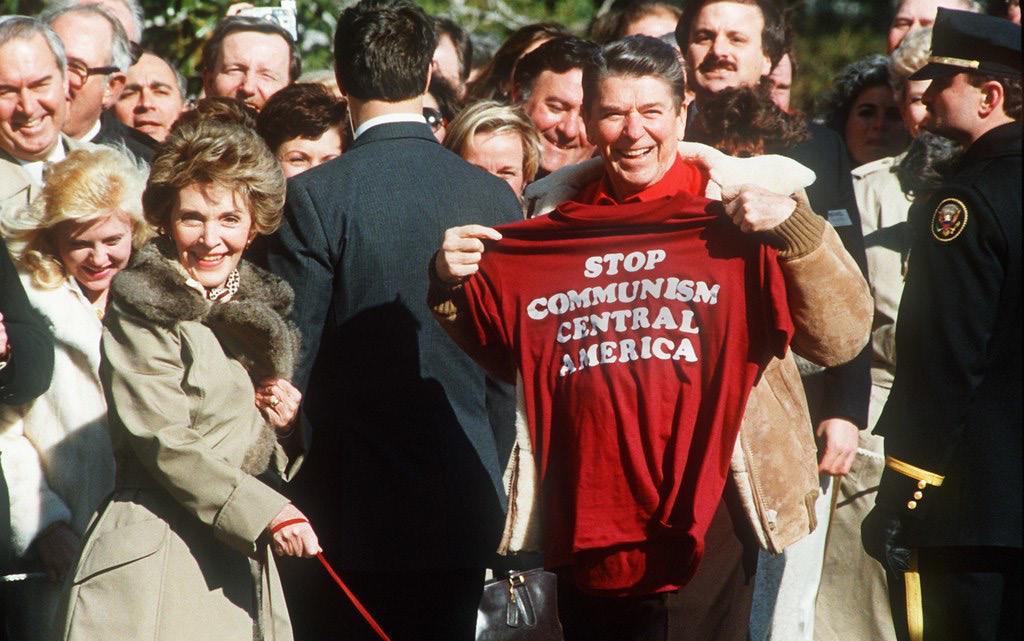

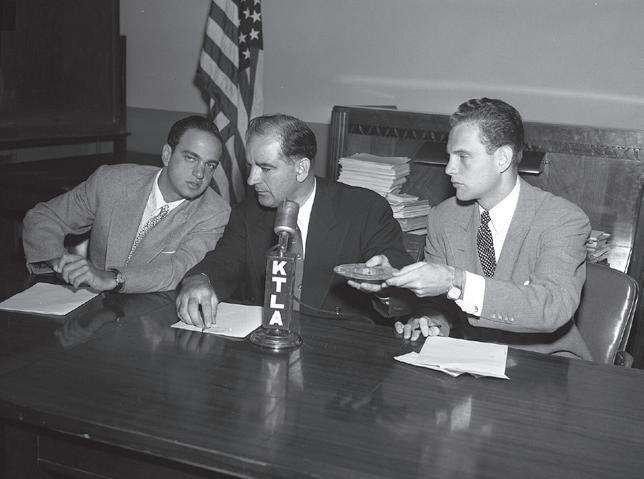




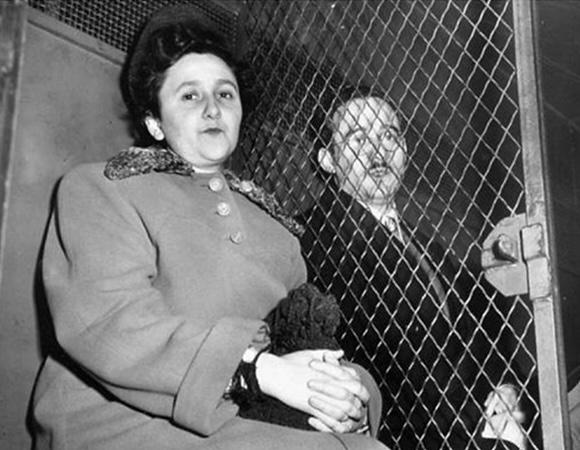


many countries.
The Cuban Missile Crisis, a 13-day standoff between the U.S. and Cuba, escalated military tensions between both parties. During the Vietnam War, the U.S. publicized its attack on communism, emphasizing its military victories to the American public in its effort to defeat North Vietnam.
“There was an intense hatred of communism in the past caused by the fear and competition with the Soviet Union,” West Valley Political Science instructor Jamilya Ukudeeva said.



TikTok CEO Shou Zi Chew and Sen. Tom Cotton recently engaged in a viral exchange regarding the app’s — and the CEO’s — suspected relationship to the Chinese Communist Party. Owned by the Chinese firm ByteDance, TikTok has raised suspicion among some United States lawmakers who worry that users’ personal information may be accessed freely by the Chinese government. Cotton’s rhetoric serves as a prime example of American animosity toward communism, deeply controversial since its beginning.
Animosity toward communism — often described as “modern-day McCarthyism” — is only a small part of America’s tumultuous relationship with the controversial ideology.
“Some people might view communism as the worst governing structure imaginable,” Junior State of America officer and sophomore Vikrant Vadathavoor said. “Personally, I think that while communism has had its failures, it isn’t an unredeemable structure.”
American support for anti-communism was at its height during the Cold War, manifesting most prominently through proxy wars — American intervention in a foreign country’s wars or democratic processes. In the 45-year stand-off between the Soviet Union and the U.S., the Cold War marked a tense period where both nations used tactics like espionage, propaganda and economic aid to war-torn countries to support their respective interests. The U.S. subsequently made efforts to keep communism at bay —exercising “containment” — fearing its potential influence on American citizens, and its evolution into dictatorships in
With deep-seated hatred for communism on the home front, anticommunists like Sen. Joseph McCarthy persecuted government officials and accused them of being communist sympathizers, bringing about an era known as “McCarthyism.” As a result of charges against these groups, unemployment and imprisonment ran rampant, and more than 2,000 government employees lost their jobs. Furthermore, social minority groups were often associated with communists, and many argued that the existence and growth of minority groups acted as a threat to the currently existing American ideals. These notions contributed to phenomena such as The Lavender Scare in 1947, a mass hysteria surrounding the LGBTQ+ community, conflating their sexuality and communism. Proponents alleged that these groups could not be trusted with government secrets, labeling them as security risks. Nevertheless, communist, socialist and similar leftist movements have existed throughout American history, albeit rarely mainstream.
Patterns of support for the establishment of a communist government have primarily emerged in interims of American history when the working class faced severe inequalities. During the late 19th century, German immigrants spread communist philosophies to America, contributing to the formation of the Communist Party USA in 1919. Though the party was never substantially popular, it spiked in support during periods of disillusionment with capitalism. Civil rights activist and communist WEB Du Bois advocated for social change and Black liberation during the 1920s Harlem Renaissance, with a vision of equity for all. Subsequently, in the late 1930s, many Americans joined the Communist Party following the desperation they faced as a result of the Great Depression.
“The Communist Party had a lot of recruits in the 1930s and many of those people did wind up infiltrating aspects of government and social organizations,” said Andrew Busch, a professor of Government at Claremont McKenna College.
Modern-day philosophies of the American Democratic Party have often been interpreted as socially democratic, socialist or even communist in nature; the group tends to support issues such as minority and LGBTQ+ rights, political freedom, voting rights and universal healthcare. According to the Pew Research Center, 36% of U.S. adults said that they viewed socialism somewhat or very positively in 2022. Some Americans deem
the modern initiatives taken by the American government for public education, aid organizations and the advocacy of free healthcare as communist, championing equal opportunity. However, political scientists widely argue that communist views could not be more different.
“Communism as Marxism-Leninism is not an accurate portrayal of the American Democratic Party, given that one aspect of this government is the state ownership of the means of production,” Busch said. “Socialism itself also has multiple interpretations and sects — even the Nazis, as we often forget, were a socialist party. I would say the term ‘socially democratic’ is most closely aligned with the Democrats today.”
In any case, the implementation of systems like free healthcare and public education in America involves free markets — characteristic of capitalism — where the tax on goods and services are funneled toward universal needs.
Nevertheless, due to growing economic inequality, there has been a rapid expansion of support for socialist and communist movements among younger Americans. A 2020 survey conducted by Victims of Communism Memorial Foundation, found an increase in favorability of the term “socialism” among Generation Z compared to 2019 with the values jumping from 40% to 49%. Furthermore, 35% of Millennials and 31% of Gen Z support a gradual elimination of capitalism in favor of a more socialist government.
“Nowadays, people are not feeling as threatened by communism, partly because the Soviet Union, the main threat, no longer exists,” Ukudeeva said. “When I talk to my students, they say what concerns them most is homelessness, unemployment, economic inequality and inability to access healthcare.”
However, these sentiments are not common among many Americans. Older generations, such as Generation X, often still harbor a lingering fear and resentment toward communism, having lived through the Cold War and an era of extreme American anti-communist views.
The issue of principle versus practice also affects Western perceptions of communism, as communist regimes do not often follow fundamental communist principles. Modern-day so-called communist regimes in China, Cuba, Russia and North Korea inevitably differ from fundamental communism principles, given that communism itself, experts argue, is often too idealistic to execute in its fundamental form. Communism requires a society to be immensely disciplined, and it is easy for those in power to abuse their position; thus, many governments are now communist-turned totalitarian. In these instances, the emergence of communism lies in revolution, violence and the removal of the rich because private property cannot exist.
“Communism only works on a small scale; the people must be a homogenous group,” Ukudeeva said. “You are more likely to share with people who are like you. You are less likely to share with people who are different from you.”
It is for this reason that American political scientists are often skeptical of a reality in which society thrives under communism.
“Communism goes completely against American values,” Ukudeeva said. “That’s why you don’t find many people who support it. Overall, we often agree that socialism is more balanced, a middle ground.”
 BY SURYA SARAF AND YVONNE WU
IN-DEPTH 12 the Epic
Former U.S. President Ronald Reagan holds up an anti-communism T-shirt, 1986.
A lithograph depicts former Chairman of the People’s Republic of China Mao Zedong as the Red Sun, 1968.
Julius and Ethel Rosenberg are separated by a wire screen after being found guilty for relaying classifed information to the Soviet Union, 1951.
A portrait of Karl Marx, author of political works such as “The Communisft Manifesto” 1875.
IMAGE COURTESY OF THE LOS ANGELES TIMES
IMAGE COURTESY OF WIKIMEDIA COMMONS
PHOTO BY JOHN JABEZ EDWIN MAYALL. IMAGE COURTESY OF WIKIMEDIA COMMONS
PHOTO BY ROGER HIGGENS. IMAGE COURTESY OF THE LIBRARY OF CONGRESS A propaganda poster illustrates the Soviet Union’s achievements under communism, 1920s.
POSTER BY DEMYAN BEDNY, BOLSHEVIK PROPAGANDIST AND SATIRIST
Sen. Joseph McCarthy discusses with HUAC chief counsel Roy Cohn and G. David Schine during the questioning of William Taylor, 1954.
PHOTO BY DON RYPKA. IMAGE COURTESY OF GETTY IMAGES
GRAPHIC ILLUSTRATION BY ERIN FITZPATRICK, RIKI MURASE AND EILEEN ZHU
Genocide is not a thing of the past: Recognizing it in modern day
BY ALEX COTTEREL AND INAAYA YOUSUF
The term “genocide” was coined in 1944 by Rafael Lemkin as “acts committed with intent to destroy, in whole or in part, a national, ethnical, racial or religious group.” Despite the creation of the word being attributed to 1944, many acts of genocide occurred before, and many have happened since. Research on the topic has since grown, expanding the understanding of the many forms a genocide can take and the warning signs often present before one occurs.
Although genocide does not have a singular definition, the crime can be broken down into eight different stages: classification, symbolization, dehumanization, organization, polarization, preparation, extermination and denial. Other breakdowns and patterns can be recognized throughout historical genocides, and various scholars have broken genocide into seven stages, ten stages or entirely different formats.
Even within these stages, the process is subjective and does not always follow an exact order, but these stages provide a structure for understanding how and when a genocide unfolds.
a Turkic ethnic group in China. Since 2014, the Uyghur population has endured mass detentions, forced labor and cultural suppression, among other atrocities.
Targeted by the Chinese government for following the religion of Islam, Uyghurs found practicing the religion to any extent are subject to arrest, detention or death. On Jan. 19, 2021, the United States declared the situation a genocide. Since then, the legislatures of several countries such as Canada, the Netherlands, United Kingdom, Lithuania and France have passed nonbinding motions that describe China’s treatment of the Uyghurs as genocide. Evolving technology has provided new ways for the Chinese Communist Party to classify and identify their targeted group. The CCP has also weaponized artificial intelligence facial recognition, among other forms of identification, to track, control and target the Uyghurs. These actions display one way the classification stage can look in the modern day.
German — being more genetically pure than any other. This worldview positioned Jewish people at the lowest level of humanity, often depicting them with overexaggerated and stereotypical characteristics. Infamous propaganda depicted Jewish people as demonic or vermin, creating conditions for wide-spread acceptance of violent acts committed against a population portrayed as unworthy of human empathy. The intentional destruction of culture is also an aspect of dehumanizing the targeted group and is a consistent part of genocide.
The eight stages:
1
Classifcation
People are classifed based on distinct aspects of their identities — from nationality, ethnicity, race or religion to gender identity.
2 Symbolization
Classifcations are named and symbols are created to represent diferent sides, forming a physical manifestation of societal divide.
3
Dehumanization
The targeted group’s humanity is diminished with consistent referral to the group as less than human or undeserving of humane treatment.
4
Organization
Depriving people of their life, of their possession, of their rights, can be an act of genocide.”
“Many people think of genocide only as the killing of group members, but, in reality, it could just be just psychological harm, physical harm or, even to some extent, it could be all of those things plus economic harm,” history teacher Nhat Nguyen said. “Depriving people of their life, of their possession, of their rights can be an act of genocide.”
Nhat Nguyen, History Teacher
Today, it is far from the case that genocides are something of the past, only existing in history textbooks. In the past ten years, numerous accounts of genocide and ethnic cleansing have occurred.
One of the most commonly recognized genocides is the Holocaust from 1933 to 1945. Perpetrated by Adolf Hitler and the Nazis, more than 6 million European Jews and members of many other marginalized groups were systematically persecuted and killed. The Nazis capitalized on pre-existing hostility toward Jewish people that was prevalent throughout history, exemplifying the first stage of genocide: classification. This stage relies on creating an “us versus them” mentality in society, classifying people based on an aspect of their identity — from nationality, ethnicity, race or religion to gender identity. This divide between groups leads to an environment where the majority group manufactures the necessary support needed from the general public to commit a genocide.
“During the Holocaust, many German people were actually excited about war and wiping out people who were part of what they viewed as an impure group,” sophomore Ishana Subrahmanyan said. “They viewed them as a threat to Hitler’s regime and their own group based on the classifications that had been fed to them.”
As the Nazis began implementing distinct classifications, Jewish people were forced to carry physical identification to identify them as Jewish. In the modern day, this stage can take different forms, as is the case in the ongoing persecution of Uyghurs,


Supporters of this extreme surveillance argue that it is useful to prevent risks such as violent crime, burglary and terrorist threats. However, others argue that the technology is prone to errors.
“AI is incredibly biased because the people who make it have their own biases,” senior Sadhana Siva said. “There are definitely instances in which governments use AI that inherently criminalize people who are marginalized in society; AI is inherently biased because it mimics the discriminatory ideologies that already exist.”
The next stage of genocide is symbolization. In this stage, names are given to the classifications, and symbols are created to represent different sides. For example, during the Holocaust, Jews were forced to wear a yellow star-shaped badge to ensure they could be recognized as such, and the swastika was adopted to identify the Nazi party. This stage aims to create a smoother transition to the dehumanization stage. On its surface this stage appears similar to classification; but this stage is important for further embedding the “us versus them” mentality into a society. Symbols create a physical manifestation of the societal divide, making prejudice and classification inescapable and further separating the targeted group from the rest of society.
“Humans have an innate need to categorize, and those categorizations can be used to say that, if you belong to this group, you are innately bad or inferior,” Nguyen said. “Symbolization taps into something very primal in the human brain. Reducing these differences to very basic symbolism allows for even children and the uneducated to understand and participate in discrimination.”
The dehumanization stage of genocide involves diminishing the humanity of the identified group and consistently referring to the group as less than human or undeserving of humane treatment. This stage further allows the masses to feel accepting of future prosecution toward the targeted group. The Nazis promoted the idea of an Aryan race — the blonde, blue-eyed
In recent months, the public has heatedly debated whether events in Gaza fall under the definition of genocide. In December 2023, South Africa filed a claim to the International Court of Justice highlighting the dehumanizing language used to refer to Palestinians to argue that Israel’s acts are “intended to bring about the destruction of a substantial part of the Palestinian national, racial and ethnical group.” The document cites statements made by top Israeli government officials who referred to Palestinians as “human animals” and “children of darkness” labeled Gazans as terrorists, saying that “[t]here are no innocents in Gaza” and “without exception, they are all terrorists, sons of dogs. They must be exterminated, all of them killed.” Israeli officials have made statements claiming that these comments are a result of trauma induced by acts committed on Oct. 7, 2023, when the radical militant group Hamas killed an estimated 1,200 Israelis. Conversely, South African lawyers argue that no matter the emotions Israeli officials and media figures may have been experiencing when spreading this rhetoric, these words express genocidal intent.
As animosity toward an identified group grows, so do organized attacks and targeting of the group by a governmental entity or another powerful party; this is the organizational stage. Special army units are often used to target the group, and plans are made for genocidal killings.
The polarization stage occurs when extremists’ actions divide groups further, laws are enacted to limit the targeted groups’ interactions with others and governmental organizations decline to recognize the targeted group’s existence. Often, political moderates and human rights organizations are targeted. During the Rwandan Civil War, a war between the Rwandan Armed Forces and the rebel Rwandan Patriotic Front in 1994, members of the Tutsi — an ethnic group of the African Great Lakes region — were the targets of mass rape and death.
Organized attacks and targeting of the group by the state government or other powerful parties become more frequent.
5
Polarization
Laws limit the targeted group’s interactions with others. Political moderates and human rights organizations are often targeted.
6
Preparation
Planning becomes more direct and systematic. Internment camps may be built to hold the targeted group.
7
Extermination
Efcient mass killings begin. Victims are treated as sub-human without inherent dignity and are considered disposable.
8
Denial
The perpetrators and those who supported them deny that the genocide happened or the extent of the harm that the genocidal campaign caused.
13 IN-DEPTH April 29, 2024
GRAPHIC ILLUSTRATION BY ALEX COTTEREL SCAN ME Read the rest at lhsepic.com
SPORTS the Epic
How sustainability is shaping the future of sports
BY ASHLEY HUANG AND LILLY WU
Parallel to the arena of sports, there’s a second game being played — one that aims to safeguard the planet. As awareness of environmental issues increases, sports play a crucial role in promoting sustainability. Through various methods both in and out of the game, there are many methods in which the sports industry can and have been working toward a greener world.
Hydration through habitual reusage Walking and biking toward sustainability
Water is a vital aspect of performance, safety and overall health in sports. Athletes, from casual joggers to Olympic competitors, understand the importance of staying hydrated to maintain their physical condition and support their bodies. The universal need for water across all sports provides a significant opportunity for sustainability, especially in the types of containers used.

53% of Americans own a reusable, BPAfree water bottle, according to Gitnux

There has been a prominent increase in the usage of reusable water bottles. The value of the reusable water bottle market has grown from 8.1 billion dollars in 2018 to 9.8 billion dollars in 2023, according to Statista. The estimated market value in 2025 is 10.6 billion dollars.
The global reusable water bottle market is expected to grow at a compound annual growth rate of 4.4% over the next six years. This shift away from the convenience of grabbing a single-use plastic water bottle before a game is noteworthy in contributing to environmental conservation efforts.
Despite the recyclability of these bottles, around 60 million plastic bottles end up in landfills every day in the United States, where they take up to 450 years to decompose, slowly breaking down into microplastics that pollute ecosystems. This pollution harms natural habitats, in turn affecting wildlife and food chains. Reusable water bottles in the sports community has not only minimized the amount of plastic waste finding its way into landfills and oceans but has also encouraged others to take on this habit as well.
I think that reusable water bottles are great because not only do they reduce plastic waste and reduce exposures and harms, but they are more efficient than their plastic alternatives,” junior and Conservation Action Association officer Medha Nalakonda said.

Lynbrook’s suburban neighborhood provides the perfect opportunity for adopting more sustainable modes of transportation like walking, running or biking. These practices have not only been proven to contribute to one’s physical and mental health but also significantly reduce carbon emissions.
According to the Environmental Protection Agency, transportation accounts for about 29% of greenhouse gas emissions in the U.S., with personal vehicles being a significant contributor. Switching short car trips under five miles to walking or biking can save about two kilograms of carbon dioxide emissions per trip.
Increasingly, Lynbrook has also promoted these sustainable practices on campus. Prior to COVID-19, PTSA had hosted the annual Walk or Bike to School Day event, which is now organized by CAA.
“Many of us already have bikes, so there is basically no environmental impact in biking

29% of greenhouse gas emissions in the U.S. are caused by transportation, according to the EPA
Organic materials in sportswear
When purchasing athletic wear, there are many different options of materials for these products. However, not all materials are eco-friendly and plastic-free. Plastic-based materials such as polyester and spandex are not biodegradable and would further contribute to environmental pollution. While exercising, these synthetic materials also may not be as breathable or comfortable.
Instead, clothing made with natural materials, skin safe dyes and plastic-free packaging are healthier and better for the environment. Some examples of such brands include Asquith, which makes their products out of bamboo and organic cotton, as well as Cottonique, which is certified by the Global Organic Textile Standard and is free of spandex and latex. Furthermore, natural athletic wear is also more durable and could last for a longer duration.
A55% of consumers are willing to pay more for eco-friendly brands, according to The Round Up


side from these already common strategies of conserving the environment, there are various other methods that can be used. Donating old gear and equipment that an athlete has grown out of rather than simply throwing it away finds ways to repurpose. When attending sporting events, digital rather than paper tickets help avoid unnecessary paper waste. Eco-friendly facilities offer benefits from energy efficiency to environmental conservation. Regardless of the strategies being used, everyone can take actions to help save our planet.
“Right now we are going through a crisis with global warming, climate change and more,” Nalakonda said. “Although we should have started sustainable practices much earlier, it’s never too late to start. Even just by toning down the pollution a little bit, we can make an impact and make the world a better place.”
Be par t of something great! 14
GRAPHICILLUSTRATIONSBY AMANDA J I N
Halie Yung strikes her line into Smith College
BY IRENE HWANG
With hopes of continuing field hockey beyond her high school career, senior Halie Yung has committed to Smith College.
Yung spent the first half of the season in her freshman year on the JV team. She was then moved up to varsity by her coach. Sophomore year was Yung’s first year back in person at Lynbrook and she had to navigate her classes, friendships and field hockey all at once. In her junior year, Yung became heavily involved with the team, gaining a newfound sense of pride for the team.
“Junior year was the year that the team started to become my own; it was when I started to really fall in love with the sport,” Yung said.
Her passion and dedication has inspired many on the field, notably, her teammates.
“Halie is not only passionate about field hockey, but she’s also very teamfocused,” field hockey coach Juney
Lee said. “She wants to improve on her individual skills and her play, but she’s also always looking out for her teammates and is a good role model for the underclassmen.”
Yung made the decision to play at the collegiate level in the beginning of her senior year — later than many other collegiate athletes. Typically, students who plan on playing a sport on a college team start their recruitment process during freshman or sophomore year. However, most students who join the field hockey team have no prior experience before high school and Yung was no exception, resulting in her decision being made later, in senior year.
In her college recruiting search, Yung slowly fell in love with Smith College, after visiting the campus during her sister’s college trip. Although she was reluctant to attend a women’s college, as she made her decision to play field hockey in college, Smith’s strong team stood out to her. She contacted Smith’s coach first and
participated in a field hockey camp, introducing herself to the coach.
“I have a tendency to always strive for more,” Yung said. “But at the same time, I doubt my abilities to perform or meet expectations. It quite literally became Smith or nothing.”
As a devout Christian, Yung also strives to not let the competitiveness of field hockey cause her to deviate from her faith.
“My faith is a big part of who I am and so is field hockey; being able to find a balance between the two has been my biggest struggle,” Yung said.
Yung looks forward to many things: exploring and joining clubs, experiencing college life and living with her roommate.
“I’m anticipating having a sense of independence and responsibility,” Yung said.
Read the full story at lhsepic.com

Softball keeps on swinging and lights up the eld
BY ERIN FITZPATRICK
Under the bright afternoon sun, the first pitch slices through the air, setting the stage for a game that would showcase the unwavering passion the Lynbrook softball team has for the sport. The crowd cheers as players kick up dust with each crack of their bat, sending the ball flying. The ball lands, signaling to the players to start running their bases and complete an entire run.
“During games, we start well,” senior and co-captain Sonali Goel said. “Once we get to the third inning, we lose our steam, which seems to be the biggest hurdle for our team as of now.”
Last year, the team was unfortunately unable to win any games. In a softball game, there are nine players on the field, each with a distinct role to fulfill. The main position in a game is the pitcher, who pitches the ball from the pitcher’s


mound. The remaining players are positioned in the infield or outfield. Last year, the team was extremely low on players, with the entire team consisting of 11 people. Many of these players had started their softball careers in high school or had limited experience before joining the team.
“Weather often makes it hard to practice,” senior Siri Ratnam said. “Lynbrook has a dirt field, meaning when it rains, it becomes nearly impossible to play. Many of our games and practices are canceled due to weather.”
Due to the reduced number of practices, softball players had fewer opportunities to improve themselves and work on their skills as a team. With many of the players being inexperienced, games were often “mercy-ruled,” a term used by athletes to describe when a game has ended because one competitor had a large scoring lead over the other.
“As
them in day-to-day practices to create a solid foundation for the skills of the players. Practice starts with warming up, followed by drills for fielding and batting. Pitchers and catchers then branch off into their specific practices. Near the end of training, players come together to scrimmage. Returning players are first-hand witnesses to the ongoing improvement of the team, observing new players develop into stronger and more skilled athletes. Moreover, they play crucial roles in building up the talent and potential of their newer teammates.
a senior, I’ve put so much time into the team, but haven’t seen the results I wanted to. Now, we have the chance to do something great, and it’s inspiring to see that so many people came out to help us succeed.”
Players took it as an experience to learn from and catalyze growth. They implemented new approaches to their practice, like focusing more on outfield and catching “fly balls” — balls that reach the outfield — whereas last year they focused more on hitting and infield balls. With this new practice routine under coaches Jerome Holloway and Colleen Fleming, players have shown remarkable improvement, allowing them to win four out of the ten games they’ve played.
Sonali Goel, Senior Softball Player
This year, the coaches have implemented many changes to help players reach their full potential, using
Players were most excited for their win against the San Jose High School softball team. Last year, they suffered an immense loss of 29-11. This year, going into the match, many players expected to suffer the same fate. The team pulled through, starting off the first inning with nine runs, continuing on their streak to take home the win. Before they went up to bat, the coaches assisted players by guiding how to improve their batting skills and increase their chances of success.
The team has shown tremendous growth over the course of a year, and many upperclassmen are excited to see the team bring in more people with the same love and enthusiasm for the sport.
“As a senior, I’ve put so much time into the team, but haven’t seen the results I wanted to,” Goel said. “Now, we have the chance to do something great, and it’s inspiring to see that so many people came out to help us succeed.”
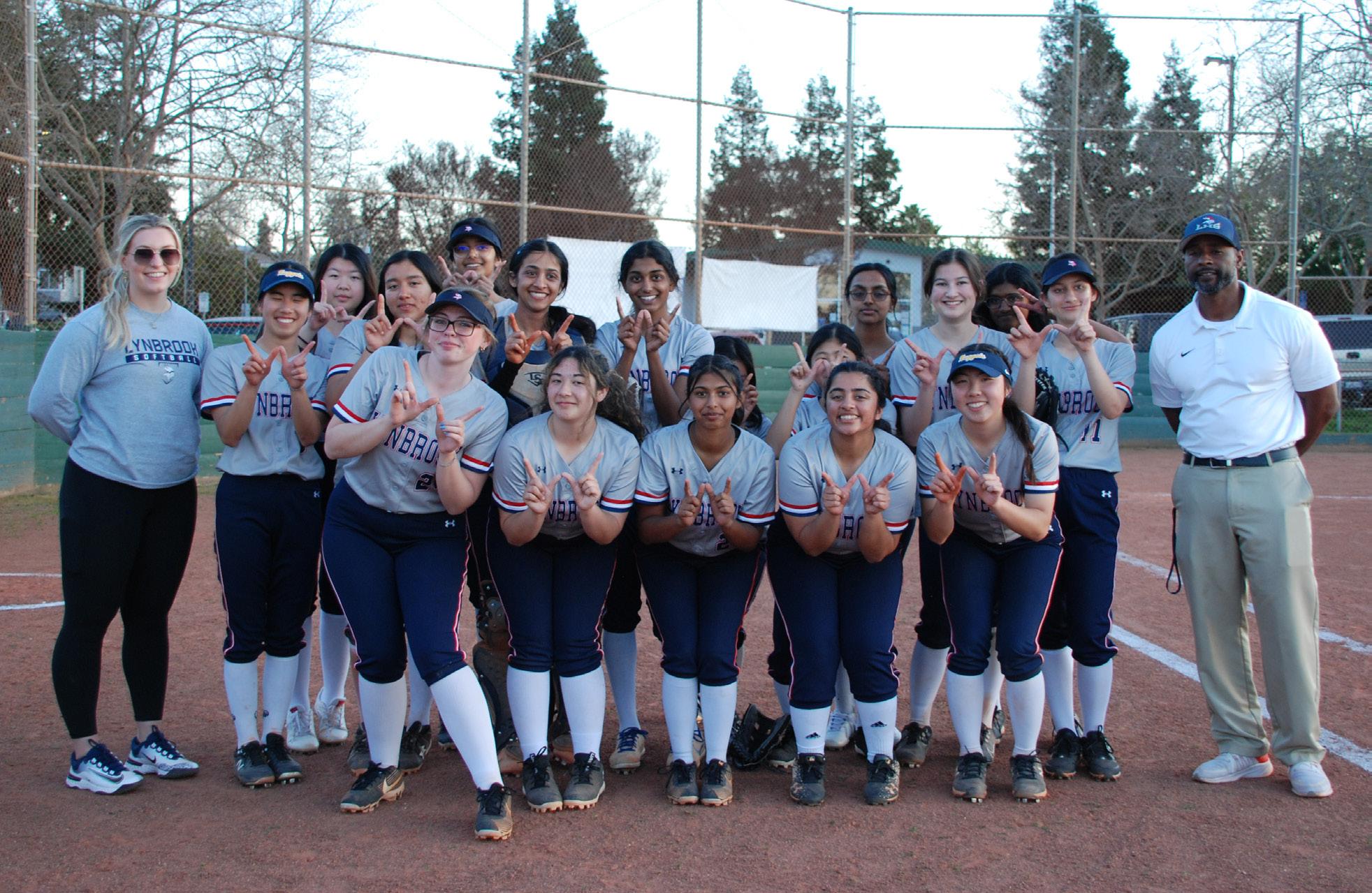
15 SPORTS April 29, 2024 COMMITTEd
A. Freshman Tia Sommader performs an underhand pitch. B. Softball player steps up to the batter’s box and takes a swing C. Team photo of the
2023-24 softball team.
B.
A.
PHOTO BY AMANDA JIN
PHOTO BY AMANDA JIN
PHOTO USED WITH PERMISSION FROM HALIE YUNG
C. PHOTO USED WITH PERMISSION FROM PEGGY YAO
Approaching 60 years of history: Lynbrook back in the day
BY CHELSEA LEE AND RIKI MURASE
Technology
The use of computers in the home was just beginning in the early 90s. Each family might have had just one home computer used for word-processing tasks like typing a report. To access the Internet, one would have to make a landline connection, but if another person picked up a phone on the home’s landline system, the Internet would disconnect.
In classrooms, teachers would use chalkboards or overhead projectors. The projector was a light box that projected a printed image from transparencies, a type of transparent sheet, onto a magnifying glass, that would reflect off a mirror onto the wall. Movies and films in the 90s were shown with VHS tapes or LaserDiscs — which looked like 12-inch CDs. Before this, films were shown with reel-to-reel films.

Communication with friends
Contacting friends virtually was done through landline home phones, where anyone at one’s home might pick up when the friend was not home. Pagers were also used as mobile devices, where one would either only be notified that someone was trying to contact them, or students would use numbers to code messages.
For instance, 07734 spelled “HELLO” as it resembled the greeting when viewed upside down. Without technology, some even threw pebbles at their friends’ bedroom windows to get their attention or wrote and left each other paper notes wedged in the gaps between a classroom desk’s tabletop and legs.
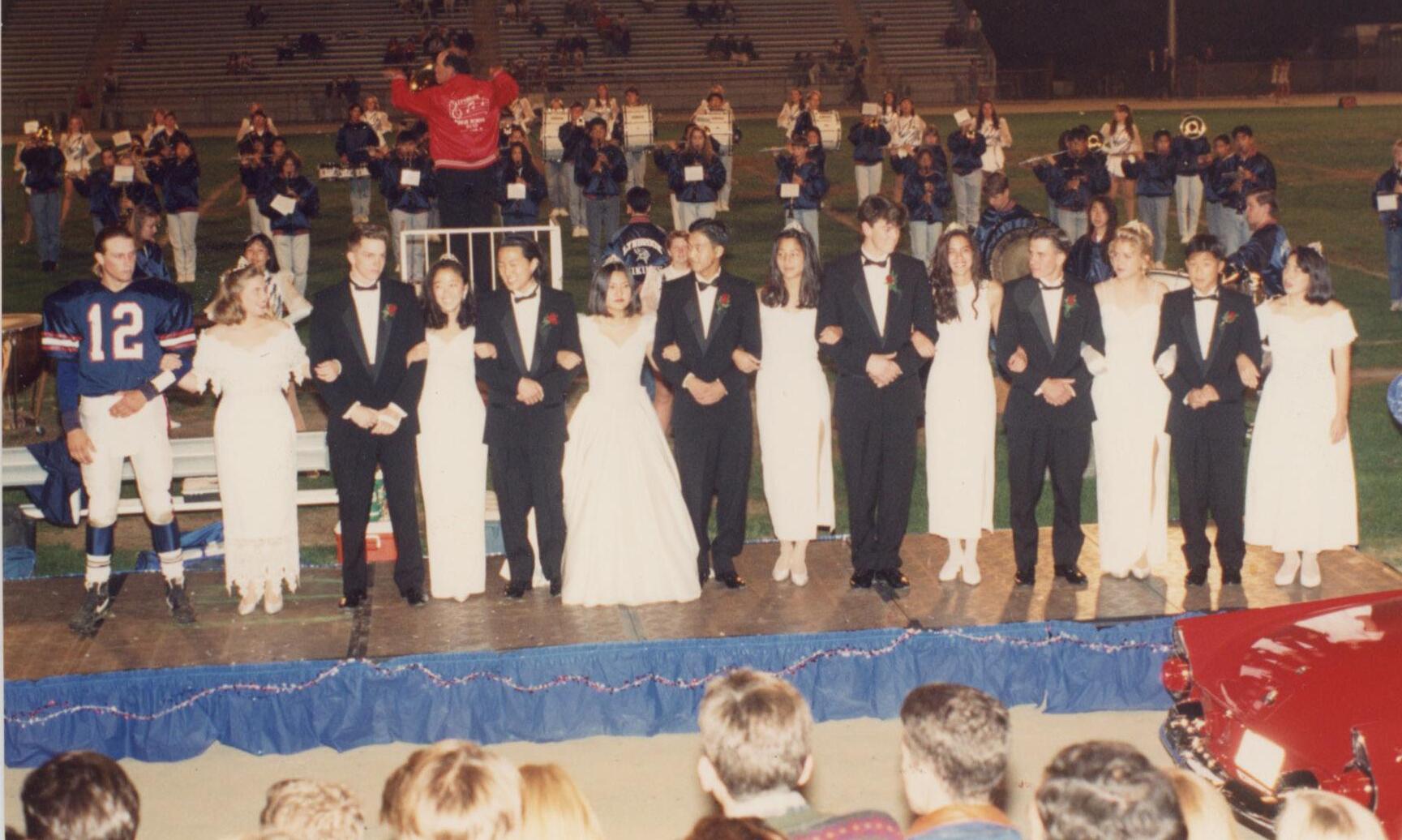
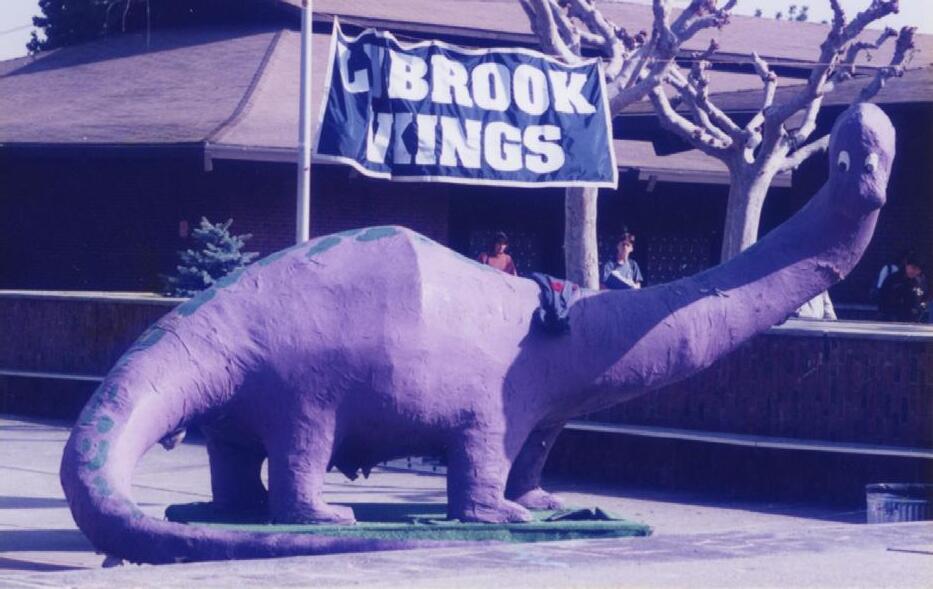
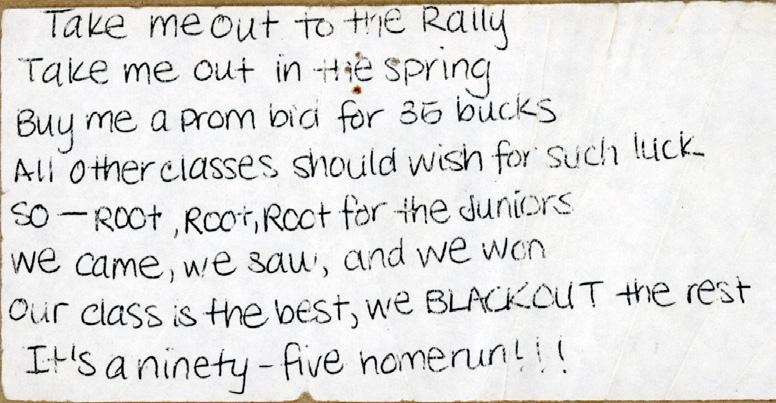


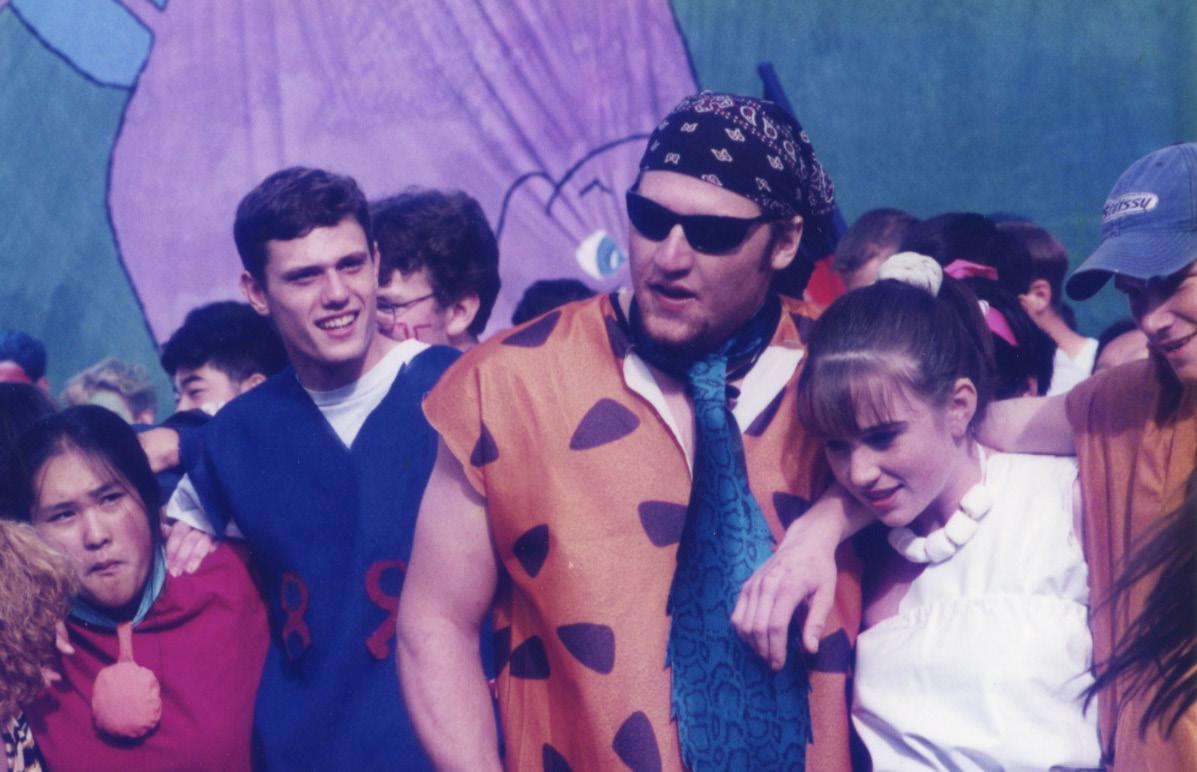
Homecoming and formal dances
Lynbrook homecoming in the 90s is similar to today’s, but what differs is that the evening dance was casual as it took place right after the football game, rather than being semi-formal on the night following the game. Rallies had no thunder sticks and cowbells. Instead, classes made chants shared on slips of paper.
In addition to the dances still held annually, Lynbrook also had a Sadie Hawkins dance where, to reverse tradition, girls would ask boys to the dance, and attend in matching outfits.
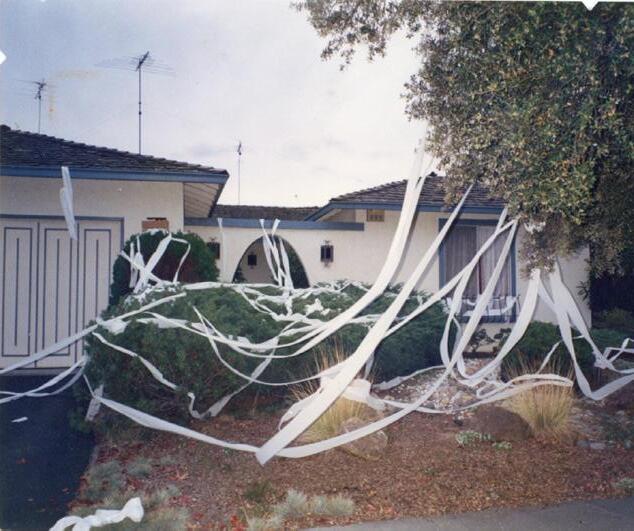
A time capsule for the graduating class
A farewell activity for the Class of 1995 was creating a time capsule with letters to their future selves. The idea came when a large capsule was handed down from a previous graduating class. After having it in a class officer’s garage for nearly 20 years, the class of 1995 came back together for a reunion and read their high school predictions for the future. The capsule has now been handed over to the Class of 2024, who will carry on the activity and fill the capsule at Senior Sunset.

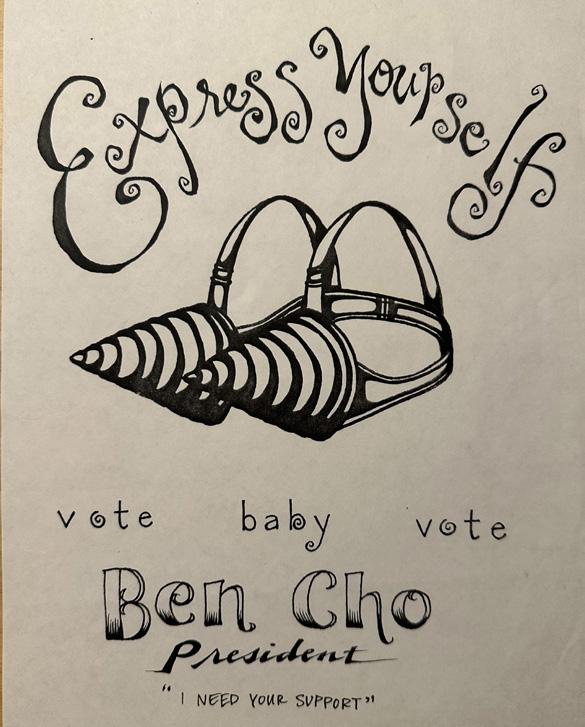
Campaigning for class office
Class office candidates in recent years use online design programs such as Canva to create promotional graphics and videos to reach voters through Instagram. However, since the use of the Internet was just beginning to rise in the early 90s, campaigns back then looked simpler, like the black-and-white “Express yourself” poster by Ben Cho, who ran for president for the Class of 1995.
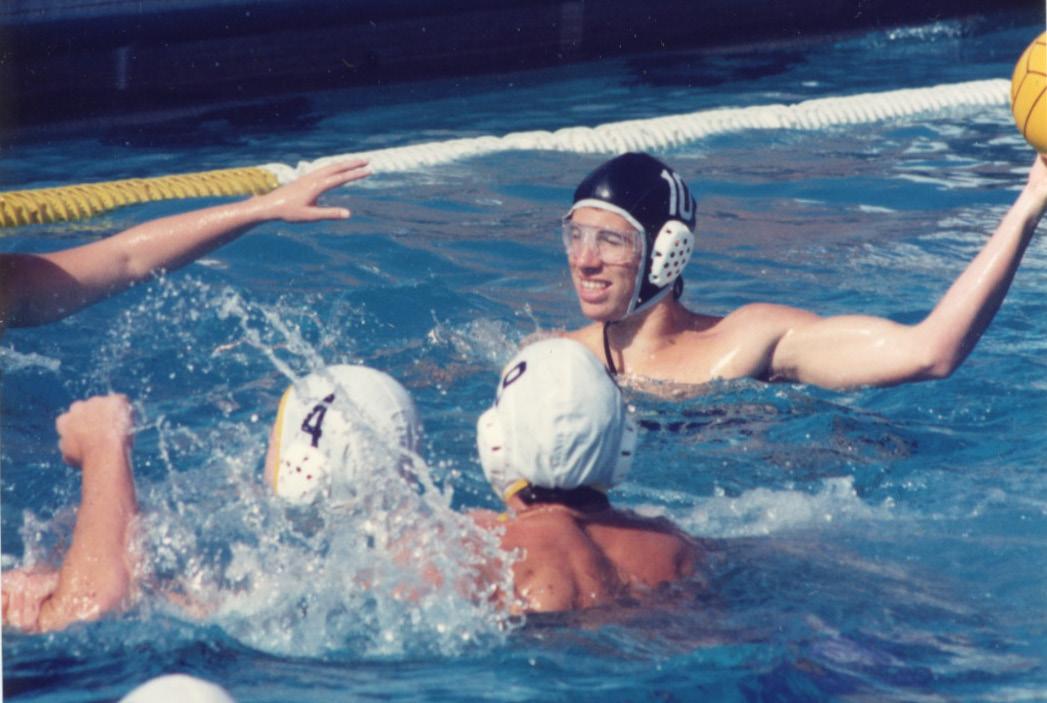
Vikepound origin
As student athletes, teacher Jeffrey Bale — who graduated in the Class of 2000 — and his friends were troubled by the low levels of student support for them and their peers’ sports games. Inspired by the name of the Cleveland Browns’ fan base, the Dogpound, they started a T-shirt design they called the Vikepound to unite students under the purpose of bringing more spirit to Lynbrook’s sporting events. Beginning without school affiliation, Bale worked with his friends to produce and distribute these shirts among his classmates, quickly gaining popularity and gathering large, spirited groups of students to support sports at both home and away games. The following year, the group successfully sold hundreds of shirts independently, gathering momentum for their movement through which students could unite and express their school spirit.
“We filled a void that people didn’t know was there,” Bale said.
After Bale graduated, Lynbrook continued with the tradition by taking over the management and production of Vikepound T-shirts, leaving behind a legacy of spirit that still endures today.
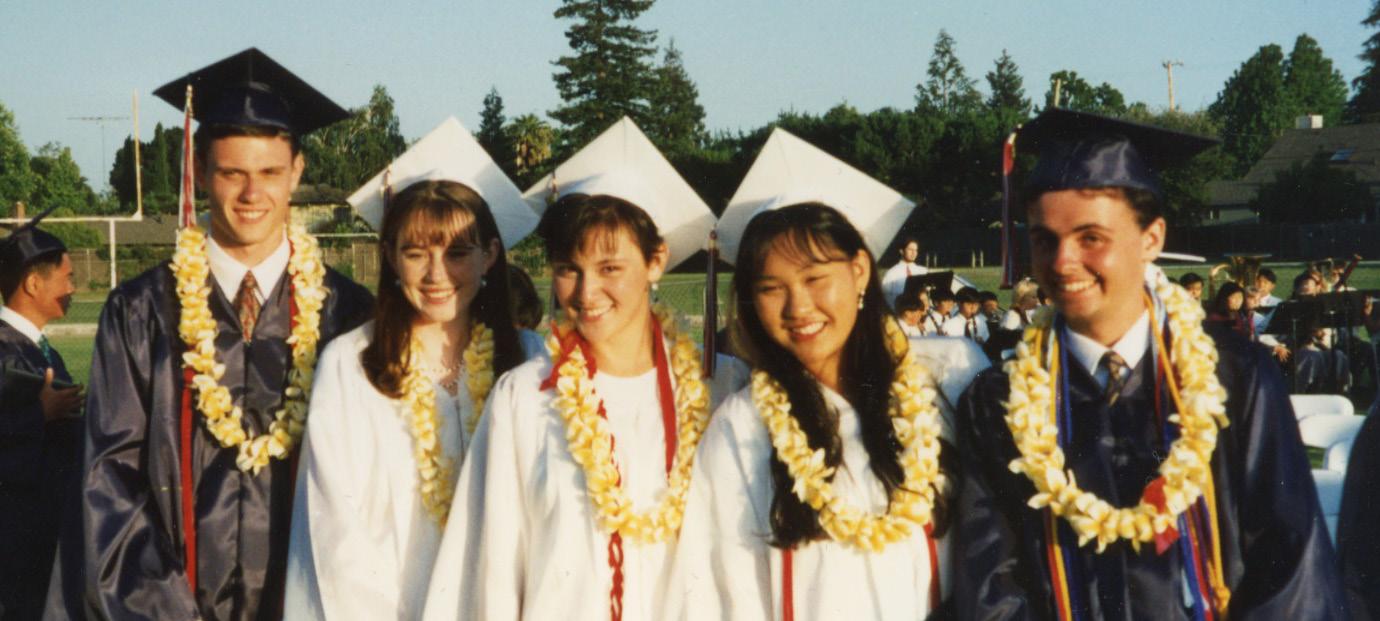
College applications
Before the highly digitized process college applicants have now, students applied with paper forms mailed to their institutions of choice. Research of college programs was limited to the section of the school library with brochures for each school. Some students with supplemental materials like art portfolios also drove their pieces to the institution and made the journey a road trip with their friends.
All photos are from the early 90s. A. A student flms with a video camera. This was one of the smaller video cameras used in school. B. A student dials a number on a landline phone. C. Homecoming court lines up to be recognized for their dedication to homecoming. At the time, girls wore white dresses and boys wore tuxedos, contrasting the present where all homecoming court members wear black formal wear. D. A large paper mâché dinosaur stands as one of the homecoming decorations for “The Flintstones theme. The dinosaaur was pre-existing and inherited from another class. E. Students pose dressed as Flintstones characters. F. One of the Class of 1995’s rally chants. G. Teacher and Class of 2010 graduate Kyle Howden plays water polo. H. Class of 1995 graduates pose for a photo. At the time, girls wre white gowns and boys wore black gowns, contrasting the present where all graduates wear navy blue gowns. I. Teacher David Pugh teaches in his classroom when it had a chalkboard instead of the present day white board. J. A toilet-papered home prank that a student pulled as part of their prom asking. K. Candidate Ben Cho’s campaign “Express yourself” poster featuring a drawing of Jean Paul Gaultier’s cone bra for Madonna. L. At their class reunion, Class of 1995 graduates Flora Shih Nihan (left) and David T. Wang (right) reopen the letters to their future selves. M. The Class of 1995’s time capsule opened and displayed at their reunion.
SCAN ME

Read more and see the full archive of photos from the early 90s at lhsepic.com
April 29, 2024 CENTERSPREAD 16
A. B. C. G. D. E. I. J. K. A. H. L. M. F.
Teacher Kyle Howden, Class of 2010
Homecoming court
The Flintstones homecoming
Teacher David Pugh Prom proposal
