


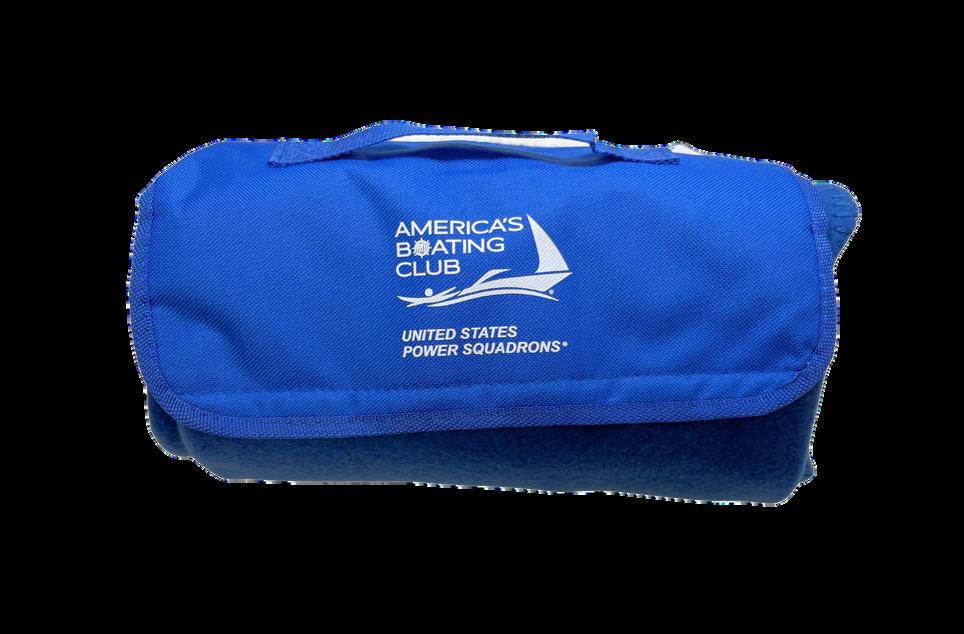
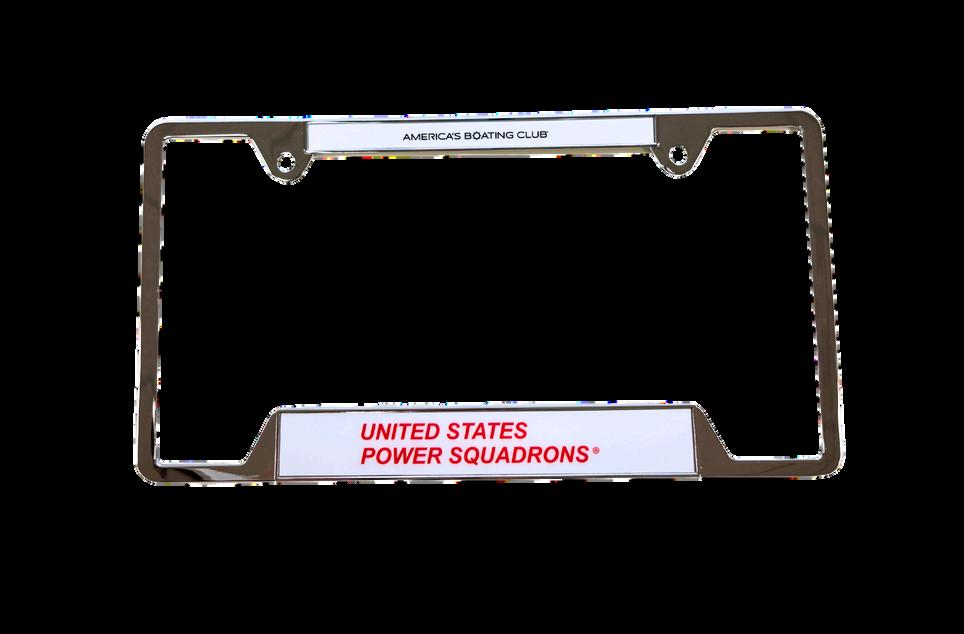
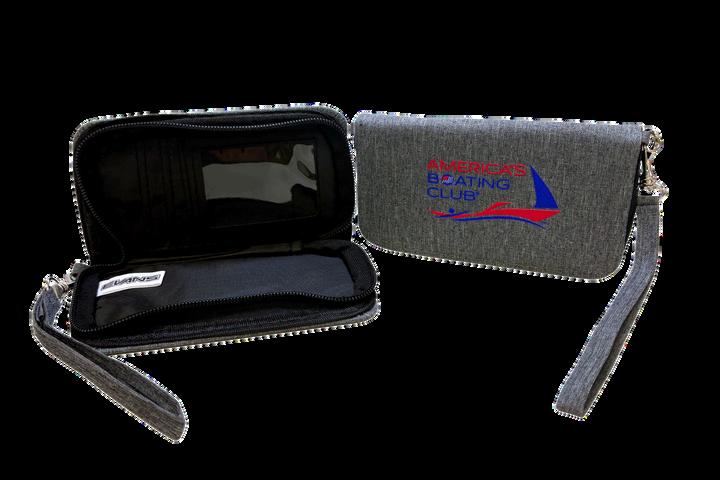
BPromoteAmerica’s oatingClubwithour afreshswag!Newitems readdedperiodically. 8Orderbycalling 88-367-8777x221.


BY LARRY COLE
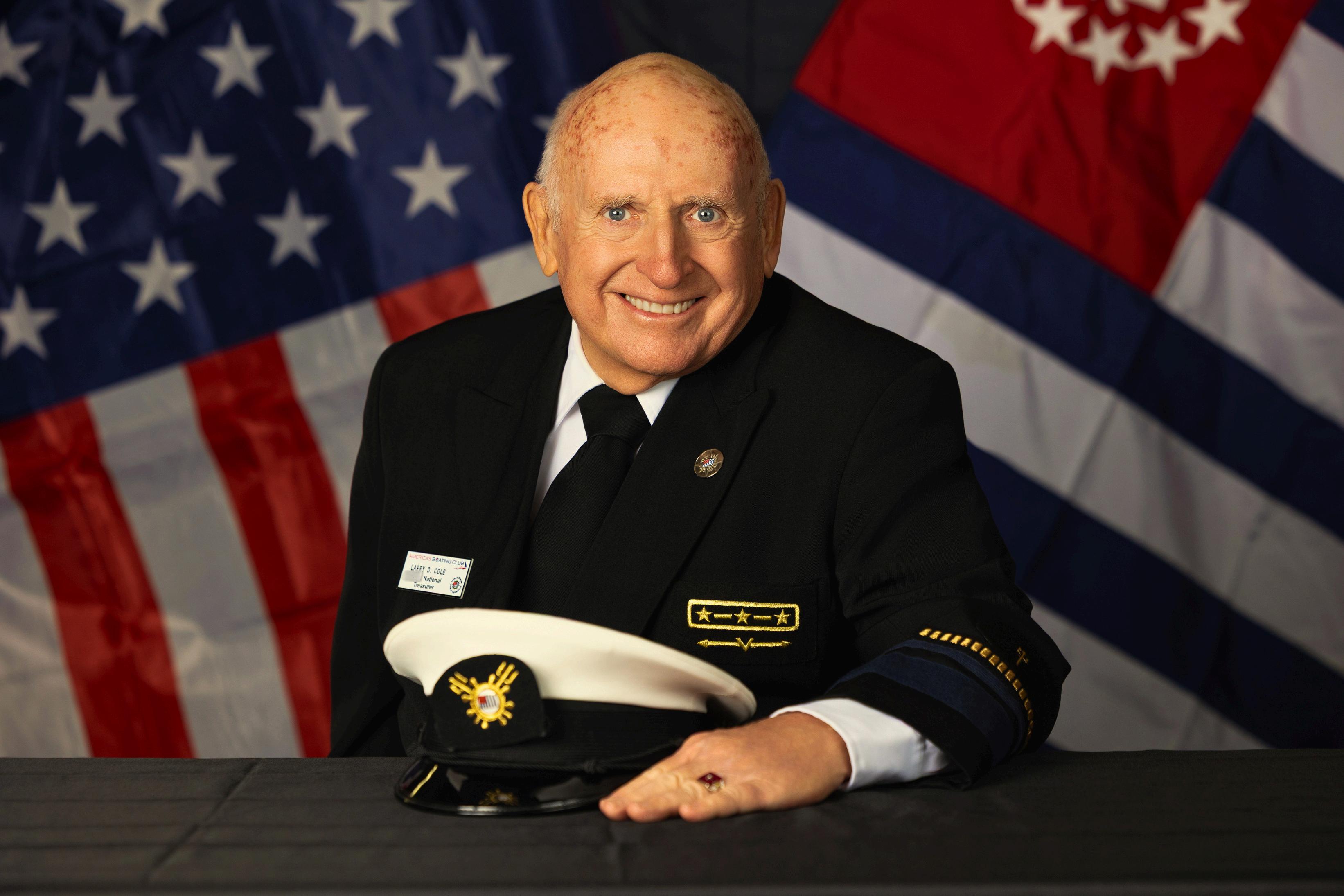
► A national meeting of America’s Boating Club | United States Power Squadrons isn’t just a business requirement it’s the heartbeat of our organization, where we celebrate our shared love for the water and chart the course for the year ahead Whether you are a seasoned member or new to the fleet, here is a look at what makes this event a mustattend on the boating calendar
Why we gather: The benefits of attending National meetings are more than just a series of committee reports; they are a multilayered experience designed to support your local district and squadron as well as your personal growth as a member.
+ Forge lifelong connections: You’ll meet fellow members from across the country These aren’t just networking opportunities; they’re chances to swap stories, share local cruising tips and build a nationwide community of friends + Direct access to leadership: This is your chance to interact directly with the national leadership You gain firsthand insight into the organization’s financial health, educational advancements and the strategic vision that keeps us relevant in a changing recreational boating marketplace. + Professional development: Between seminars and workshops, you can sharpen your skills in everything from new navigation technology to squadron administrative best practices. You’ll return home with fresh ideas to invigorate your local club. →
+ Celebrating excellence: From educational achievement awards to the prestigious Change of Watch ceremony, we take the time to honor the volunteers whose dedication keeps us afloat.
+ The intangible ROI: When you weigh the costs, consider the return on investment The knowledge you bring back regarding management, membership recruitment and educational tools often saves your local squadron far more than the cost of a plane ticket
We strive to make national meetings as accessible as possible, ensuring that every dollar spent translates into value for you and your squadron
While specific pricing varies based on the host city and venue, here is how the typical national meeting cost structure breaks down:
A base fee that covers administrative costs, meeting space and access to general sessions.
Optional luncheons, themed dinners (like the Change of Watch) and social excursions.
We negotiate group rates at the host hotel to ensure you’re in the center of the action for a competitive price.
Variable based on your home squadron’s location. Many members carpool or use airline reward points to offset these costs.
Pro-tip: Many squadrons and districts offer partial subsidies or travel stipends for their delegates Check with your commander to see if funds are available to help represent your squadron or district at a national meeting. →
“Our goal remains the same: to strengthen our bond and ensure that America’s Boating Club continues to be the premier resource for boaters everywhere.
→ The national organization reimburses rear commanders, district commanders and district educational officers up to $300 to attend the meeting in their official capacity, if they choose to apply for it This cost is paid by the members’ annual national dues assessment.
These amounts are not part of the National Meetings Committee budget but are accounted for in each national department’s annual budget approved by the Governing Board Our Bylaws prohibit us from charging to attend the Saturday Governing Board meeting, so these expenses, along with the required headquarters staff attendance cost, are also borne by the organization and paid for by your national dues assessment.
As we move toward our next major meetings including the 2026 Governing Board Meeting in Cary, North Carolina, Sept. 20–27 it’s never too early to start planning. Whether we are meeting in the Piedmont Crescent of North Carolina or the heart of a maritime hub in Florida, our goal remains the same: to strengthen our bond and ensure that America’s Boating Club | United States Power Squadrons continues to be the premier resource for boaters everywhere
See you at the next meeting! ■
Larry Cole joined the Toledo Sail & Power Squadron in 2003, becoming commander in 2009 and then district commander in 2013 and 2014. On the national level, he has served as rear commander on the Budget Committee, staff commander on the Finance Committee, and member of the Squadron Development Committee. He has taught most classes and seminars offered by America’s Boating Club | United States Power Squadrons and enjoys power boating on the Great Lakes
► Every boater remembers the moment they first felt truly at ease at the helm, the quiet confidence that comes not from luck or instinct but from knowledge. In San Diego Sail & Power Squadron/13, we’ve seen that transformation time and again. The more you learn about seamanship and navigation, the more capable you become and the more deeply you enjoy every minute on the water.
Boating is one of life’s great pleasures, but it’s even better when you know exactly what you’re doing.
Understanding how your vessel responds, how to read the water and weather, how to navigate safely and efficiently these skills turn uncertainty into assurance
When you’ve studied the fundamentals of seamanship, you don’t just hope you’re making the right decision You know you are That confidence shows in every maneuver, every docking, every passage you plan.
There’s a special kind of joy that comes from being fully present on the water, feeling the breeze, watching the horizon, and sharing the experience with friends and family. But it’s hard to relax when you’re unsure of your skills.
Education changes that With each new concept you master, boating becomes less stressful and more rewarding You start to anticipate conditions instead of reacting to them You handle challenges with calm competence You discover that the water feels friendlier when you understand its language
One of the greatest strengths of our squadron is that we learn together. When members take classes, they don’t just improve their own skills. →
The more you learn, the more you love the water
BY STEVEN BAKALIS
EMAIL THE EDITOR READERS CAN SUBMIT LETTERS, ARTICLES AND NEWSLETTERS TO ENSIGN@HQUSPSORG ARTICLES WILL BE EDITED FOR LENGTH AND CLARITY
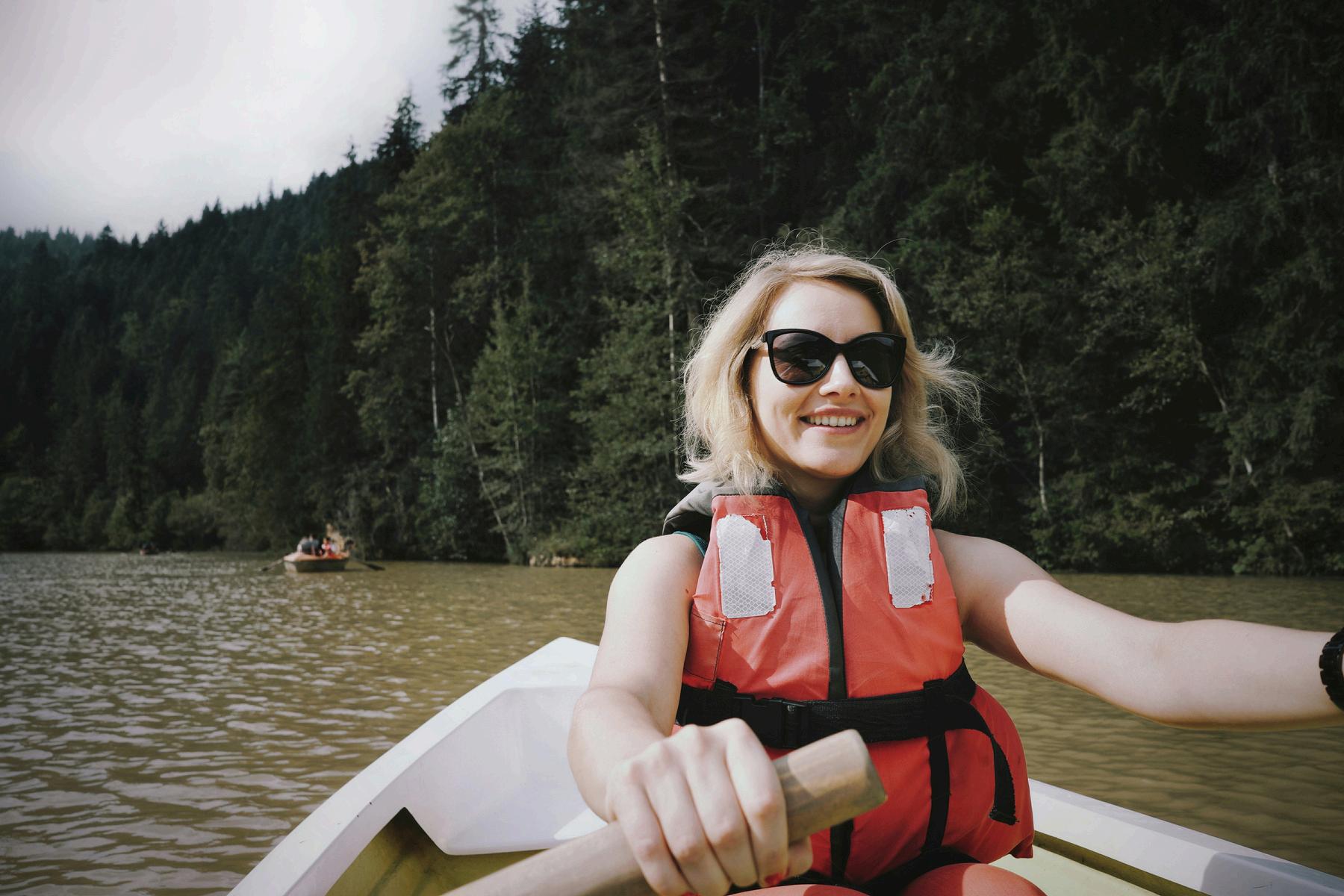
→ They also strengthen the entire boating community. Knowledge shared is safety multiplied
And as your confidence grows, so does your ability to help others Many of our finest instructors began as students who simply wanted to become better boaters They found that teaching was not only a way to give back but a way to deepen their own understanding
Whether you’re new to boating or have decades of experience, there is always more to learn and enjoy. Our courses in seamanship, navigation, boat handling and marine systems are designed to meet you where you are and take you further than you thought possible.
If you want to feel more confident at the helm ...
If you want to enjoy your time on the water even more
If you want to be part of a community that grows together
Then make this the season you invest in your skills
The ocean rewards those who respect it, study it and learn to work with it. Let’s keep learning so we can keep enjoying every moment we spend on the water. ■
THE PHOTO CONTEST SUBMISSION DEADLINE IS DEC. 31, 2026. SCAN QR CODE OR GO TO THEENSIGN.ORG/PHOTOCONTEST FOR HOW TO SUBMIT.
Sep 20–27
Governing Board
Cary, NC
Feb 7–14
Annual Meeting
Tampa, Fla
Nov 9–13
BOD Meeting
Raleigh, NC
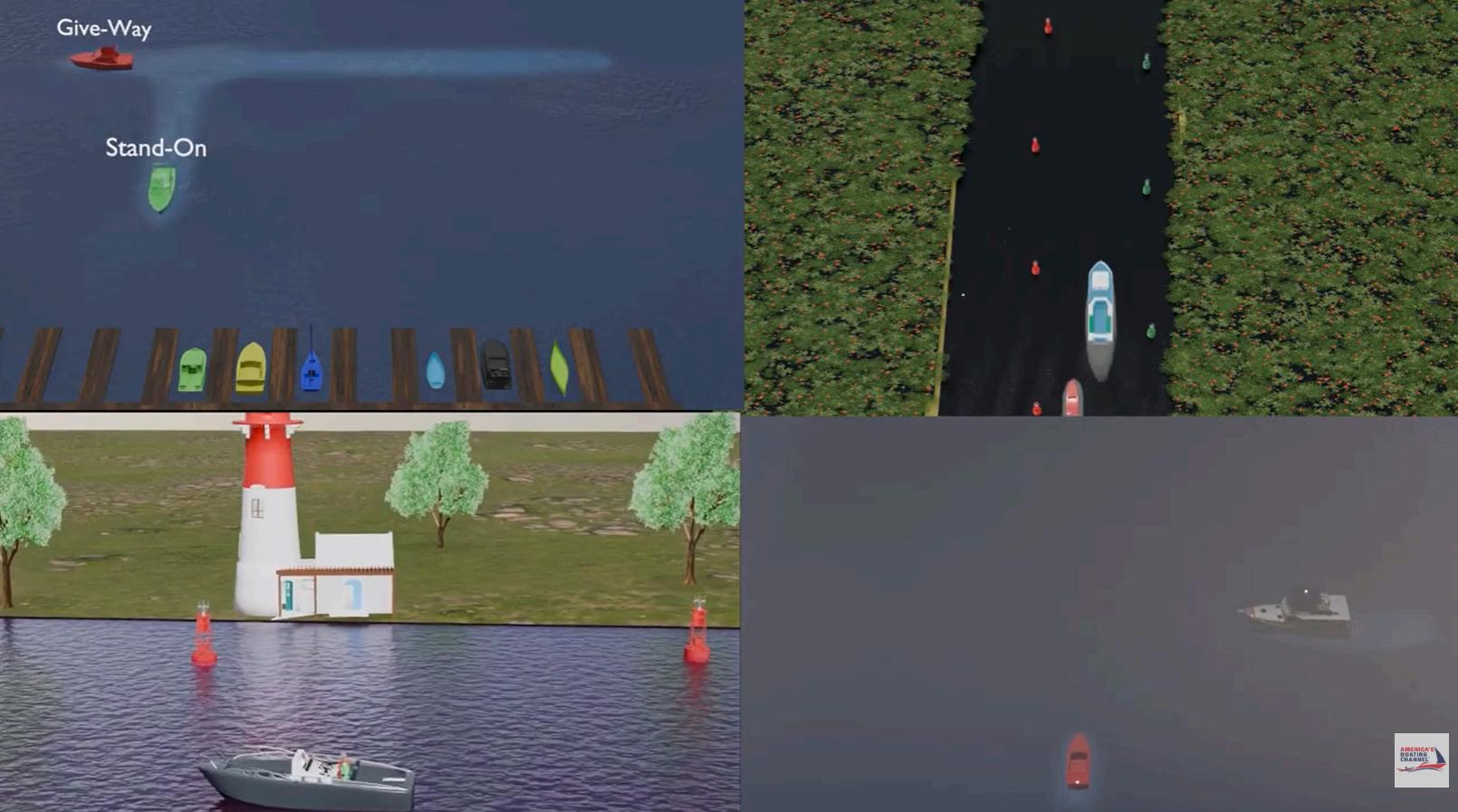
► America’s Boating Channel has released a new educational video to help recreational boaters better understand navigation rules governing give-way and stand-on vessels, an essential component of safe boating practices
The video explains how operators should respond when encountering other vessels on the water, including crossing, meeting and overtaking situations. Viewers learn which vessel is required to maneuver and which vessel should maintain course and speed under the Navigation Rules. →
In case you missed it, here’s what’s been happening with our clubs and squadrons on social media.
America’s Boating Club Lake Murray/26 held a CPR training class People of all ages attended Members and volunteers also held a beach cleanup of Goat Island Nautical Boat Club loaned a pontoon boat for the cleanup.
America’s Boating Club SanibelCaptiva/22 partnered with SanibelCaptiva Conservation Foundation to plant more than 700 mangroves as part of a restoration effort.
America’s Boating Club of Cape Coral/22 set up a booth at the weekly farmers market to promote an upcoming America’s Boating Course class
America’s Boating Club Atlanta/17 held its May membership meeting at Lake Lanier with guest speakers Capt. Jonathan Barton and the Hall County Fire Rescue crew.
→ “Understanding give-way and stand-on responsibilities is fundamental to collision avoidance and safe navigation,” said John O’Reilly, executive director of America’s Boating Channel “This video provides boaters with an easy-to-understand overview of rules that every operator should know before getting underway”
O’Reilly assumed the role of executive director of America’s Boating Channel after Marty Lafferty’s passing in 2024.
The video is intended for both new and experienced boaters and complements America’s Boating Channel’s growing library of online boating safety and education content
You can watch the video for free at America’s Boating Channel YouTube Channel or on the free on-demand app on Roku or FireTV ■
SUBSCRIBE TO OUR EMAIL LIST TO RECEIVE UPDATES ON OUR PUBLICATIONS AND MORE FROM AMERICA’S BOATING CLUB | UNITED STATES POWER SQUADRONS.
BY JIM GREENHALGH
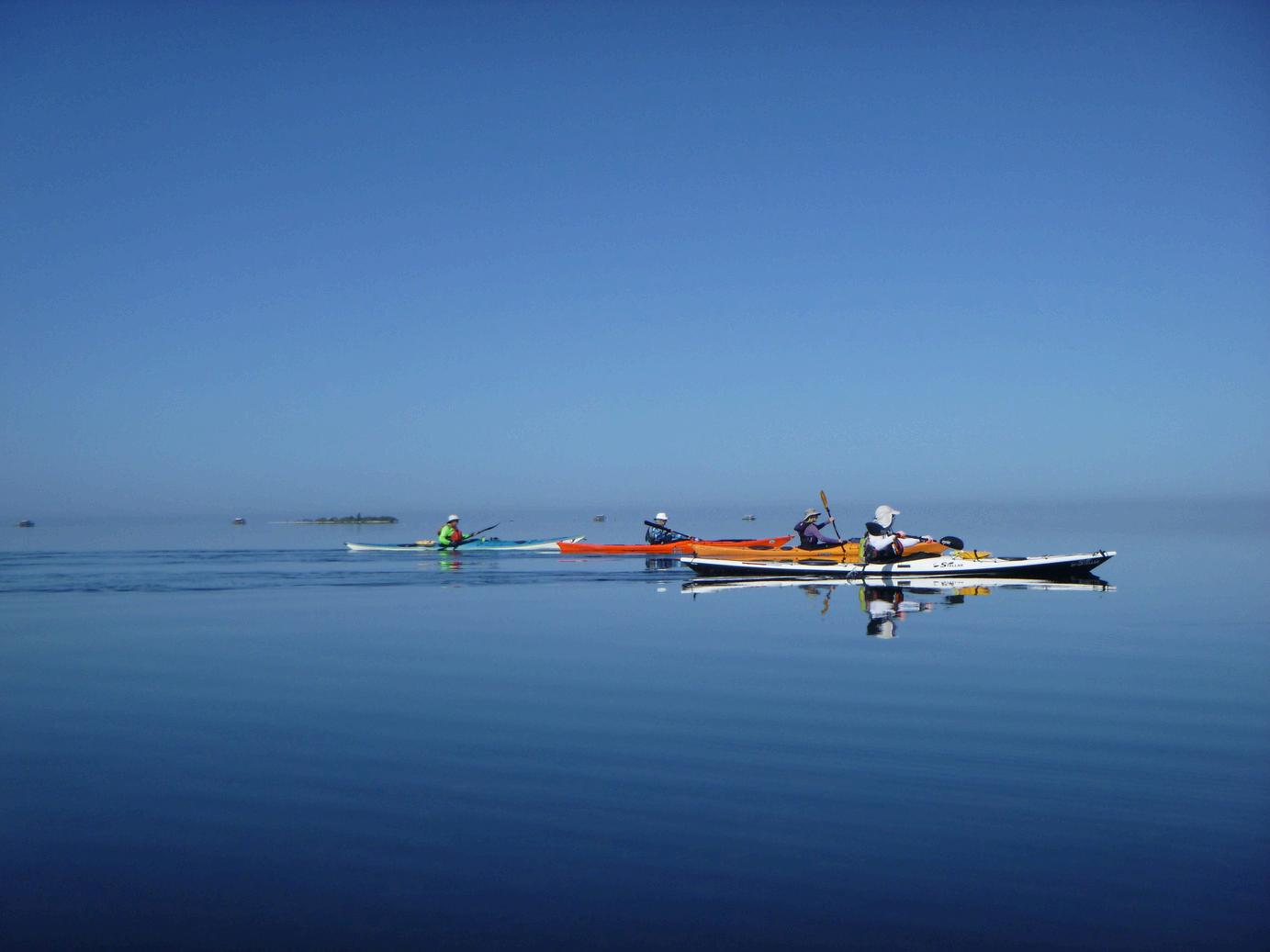
▲ SUMMER PADDLING WITH NO WIND
+ SPECIAL THANKS TO J. DAVID HADDOX FOR HIS ASSISTANCE WITH THIS ARTICLE
► In August 2011, I went on a kayak trip with Tampa Bay Sea Kayakers. We launched in the morning at Sunset Beach in Tarpon Springs. It was one of our usual trips to Anclote Key, a 3-nautical-mile openwater crossing. We planned to paddle around the southern point and up the west coast for a stop on the beach. After swimming, rescue practice and a snack break, we would return for a round trip of approximately 8 nautical miles.
This was a typically hot summer day in Florida with sunny skies, temperatures in the mid-90s, a light westerly breeze of less than 5 knots and water temperature in the high 80s The trip over into the wind was pleasant, and we reached our destination in about an hour and a half
After loafing on the beach and in the water, we loaded up and started our return trip just after noon. We paddled south down the Anclote coast with a light wind on our beam, but as we turned around the point to the east, the conditions changed drastically. We were now paddling with the wind, so the apparent wind for us was virtually zero. A line of thunderstorms was also building along the mainland coast, our destination, about 3 nautical miles ahead →
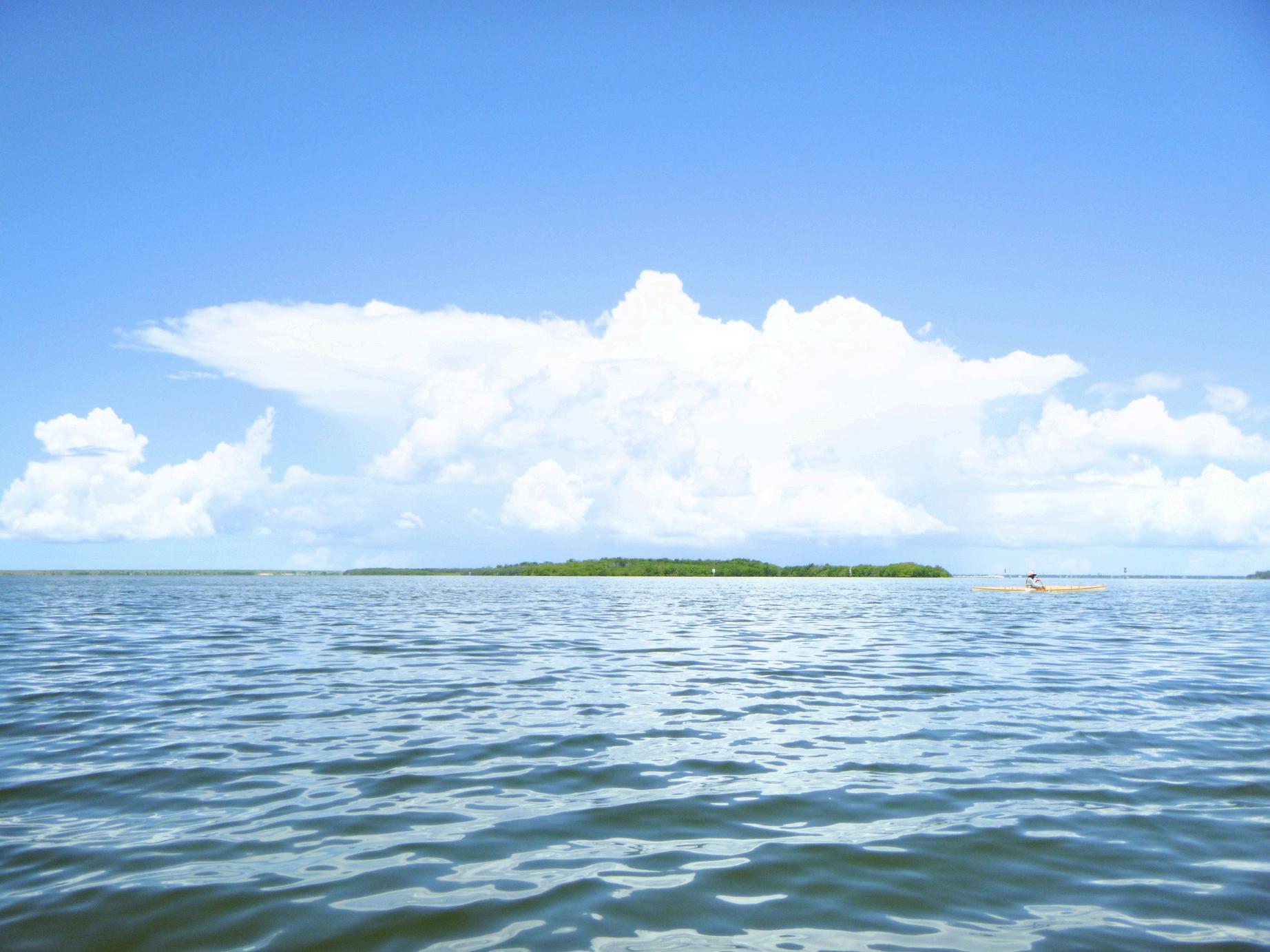
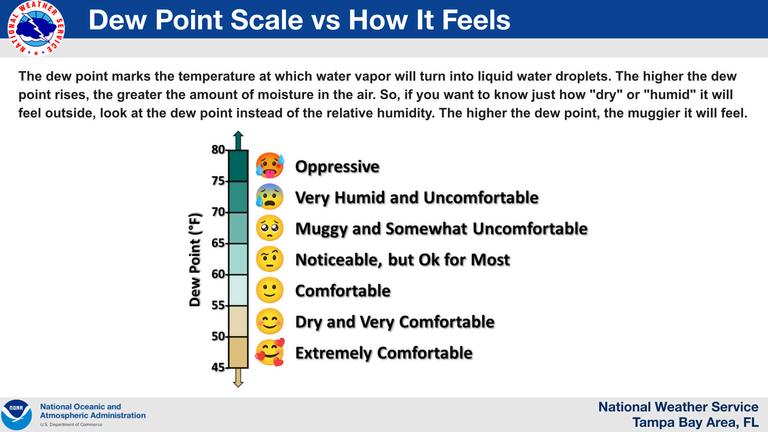
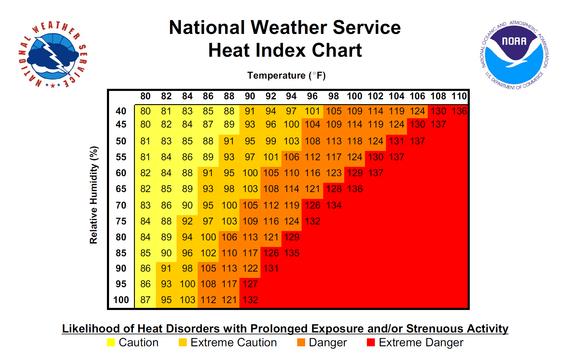
→ Now we all felt intense oppressive humidity, and after about a mile of paddling, several paddlers, including me, started feeling the effects of heat stress The snacks we had eaten on the island provided sufficient electrolytes while maintaining plenty of hydration throughout; however, the heat and humidity were preventing the normal evaporation of sweat Later study of the weather factors and heat index tables indicated the “feels like” temperature may have been near 113 degrees Fahrenheit!
I realized that I was generating more heat than my body could dissipate. I had plenty of water and was sweating profusely, yet I still felt that I was overheating. I felt slightly headachy, and fellow paddlers told me that my forehead and face were red. I asked another paddler to let me do a “bow dip,” in which I held onto the bow of his boat and rolled over into the water. As I lay in the warm water, I remember thinking that this was like trying to cool off in a hot tub Subsequent bow dips in the warm water provided little relief for anyone in our group This became a serious concern as we had about 2 more miles to cover, which at normal cruising speed would be over 40 minutes of continued paddling in these conditions →
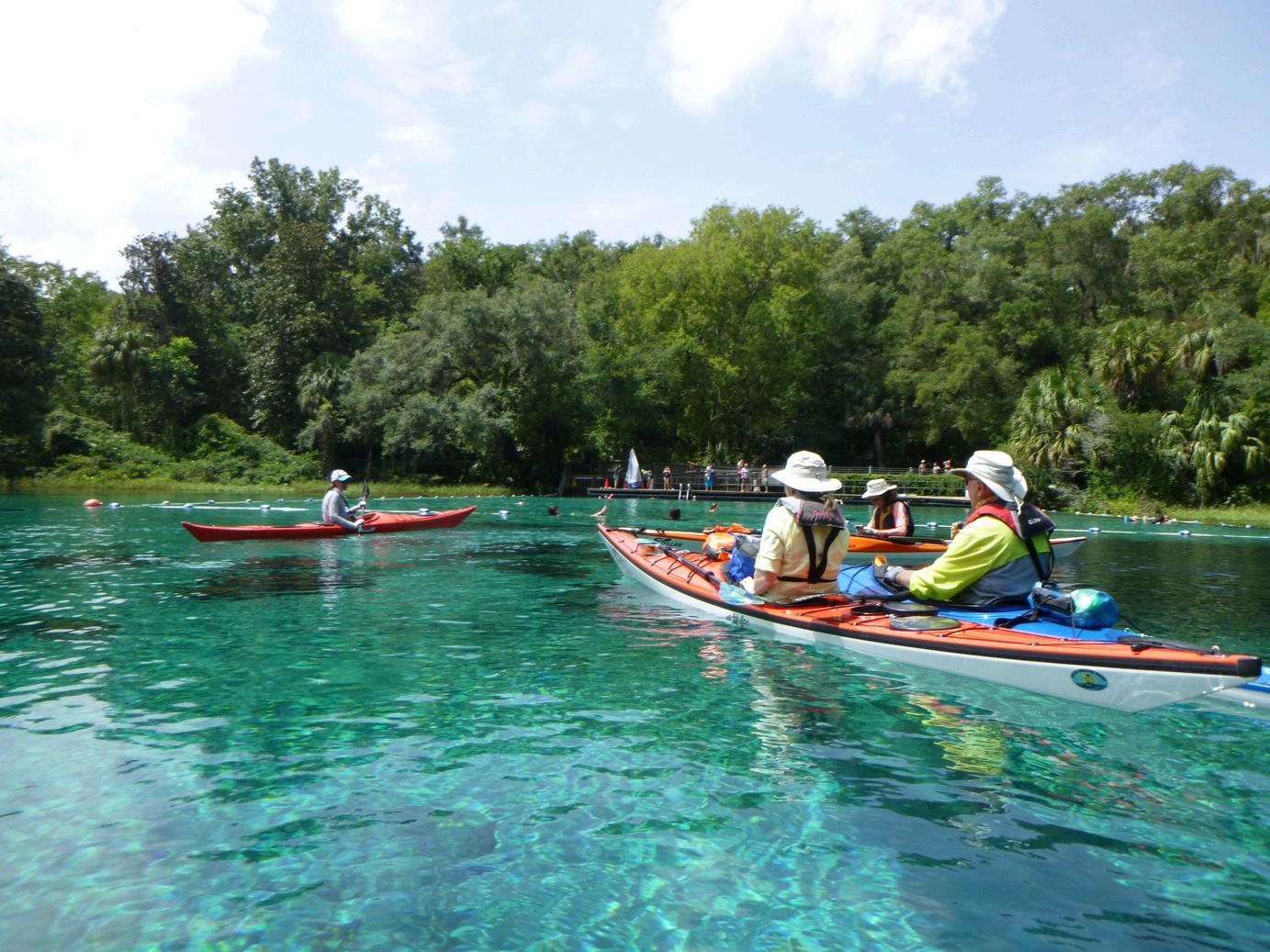
PADDLING RAINBOW RIVER, WHERE THE WATER TEMPERATURE AVERAGES 72 DEGREES YEAR-ROUND
→ Our group decreased paddle speed to a slow pace, continued drinking plenty of water and occasionally stopped for a bow dip When we finally got to the beach, about half the group were experiencing symptoms of heat stress, a couple of paddlers had run out of water and one person appeared in serious shape. We got them under a beach shower immediately, and soon we all took turns trying to cool off under the shower. Fortunately, we were able to cool down in time, and no one experienced any long-term effects from this incident, but we all learned some serious lessons about paddling in heat.
Each summer we see incidents in which young athletes succumb to heat illness while practicing football or other strenuous school sports As a result, there’s a lot of research regarding the signs and symptoms of heat stress, how to avoid it and how to treat it Unfortunately, there is little comparable research focused on heat stress while on the water In most cases, one can simply get into the water to cool off, but what happens when a paddler starts to overheat, the water is very warm and they are in a remote location? →
→ Research reveals that the human body vents heat through three mechanisms: breathing, sweating and blood flow to the body surface. Maintaining proper hydration is important to allow for sweating. Sweating cools the body through evaporation, which carries off the heat transported by blood flow. However, as humidity increases and wind decreases, evaporation is progressively hindered, reducing the body’s ability to vent heat and cool itself During high heat and humidity, despite adequate hydration and electrolytes, the body heat generated through exertion (paddling) can quickly overwhelm the body’s cooling capacity Similar to an automobile engine, if the body is producing more heat than the cooling system can effectively dissipate, then the body is on its way to breakdown in the form of heat illness This may involve a number of heat stress disorders such as heat exhaustion and heat stroke.
Some initial symptoms of the onset of heat illness are heavy sweating, headache, nausea, dizziness, weakness, increased body temperature and pulse rate. Paddlers noticing these symptoms should take immediate action to prevent a possibly life-threatening situation. For more detailed information regarding types of heat disorders, symptoms, first aid, prevention and safety tips, go to NOAA-NWS Heat →
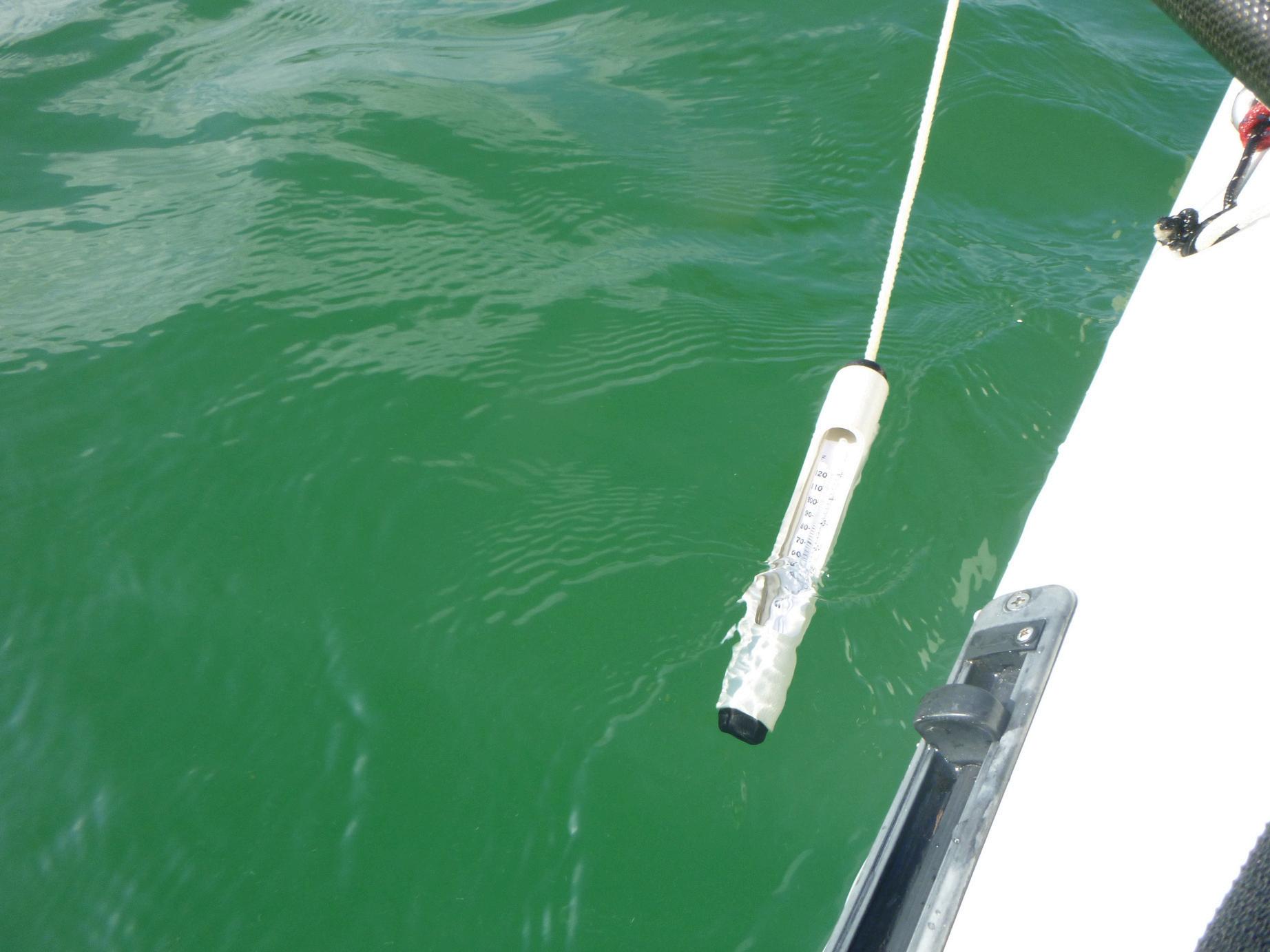
USING A POOL THERMOMETER TO GAUGE WATER TEMPERATURE FROM A KAYAK
NOAA/NATIONALWEATHERSERVICE
Once a paddler starts to experience symptoms of heat stress, the exertion should be terminated immediately, and steps must be taken to cool the body before it escalates into more serious heat illness This means stopping the paddle and preferably getting the person into cool water. Rescue is easy if paddling on a shady flowing river or inland water where water temperatures remain in the low 80s or below and land is nearby. For example, Florida’s spring-fed Rainbow River averages 72 degrees year-round and is a popular place for water sports during the summer. Suffering the effects of heat stress is not likely in this environment.
In the incident described earlier, we were in open warm water with no shade and far from land The average human body temperature is around 986 degrees, so as water temperature warms to body temperature, its ability to cool an individual displaying symptoms of heat stress lessens Trying to tow an individual suffering from heat stress to safety would also subject the rescuers to dangerous overheating If a situation escalated to a point of serious danger in open water, the only viable option would be to make a distress call on marine VHF radio.
The best way to avoid heat stress while paddling is to avoid the conditions that could cause a problem →
→Duetotheincidentdescribedearlier,Inolongerrunopen-water tripsduringthesummerwherethereisapossibilityof encounteringweatherconditionscausingahighheatindexthat couldbecomedangerous
Frommyexperience,Inowconsiderfourfactorstohelpmakethe go/no-godecisiononapaddletripduringhotweather Ifallfour factorsarepresentorcouldoccurduringatrip,thereispotential forpaddlerstoencounterheatstressthatcouldbecome dangerous:
+ highairtemperature(high80sandabove)
+ highhumidity(dewpointof65andabove)
+lowwindorapparentwind(5knotsorless)
+ highwatertemperature(high80sorabove)
Paddlersshouldtakeprecautionswhenpaddlinginhotweather:
+Carryanduseadequatehydrationandelectrolytedrinks.
+ Plantripstostartearlierinthemorningandendbeforethe middayheat
+Reducetripdistanceandpaddlespeed
+Avoidlongdownwindlegsonatrip
+Avoidthe“doldrums”typicallyfoundadjacenttobuildingstorms andduringthetransitionperiodbetweenamorningbreezeand theafternoonseabreeze
+Avoidgettingcaughtinopenwaterorremotelocationswhere rescueofapaddlerexperiencingheatillnesswouldbedifficult.
Muchresearchhasbeendoneoncold-waterimmersionandthe effectsofhypothermia,whichhascausedmanyboaterfatalities overtheyears.Paddlerswhopaddleinwarmclimesalsoneedto bewareoftheeffectsofhyperthermia,whichposesaserious,even fatal,threattothehealthandsafetyofpaddlers.Understanding theissueandtakingproperprecautionscanleadtosafepaddling tripsinwarmweather.■
PADDLERS CAN OBTAIN CURRENT INFORMATION ON EACH FACTOR AT THE FOLLOWING LINKS:
+ WEATHER UNDERGROUND
+ NOAA NATIONAL WEATHER SERVICE
+ NOAA MARINE WEATHER
JimGreenhalghofSt PetersburgSail&PowerSquadron/22isaseniornavigator,vessel examiner,andinstructor,havingtaughtboatingsafetyandnavigationsince1991 Hedraws onhisvastexperienceasalifelongboaterandavidseakayaker JimleadstripsfortheKayak AdventureGroup,aseakayakingclubbasedonFlorida’swestcoastthathecofounded.He alsowroteNavigationRulesforPaddlecraft,amust-readforallpaddlers.
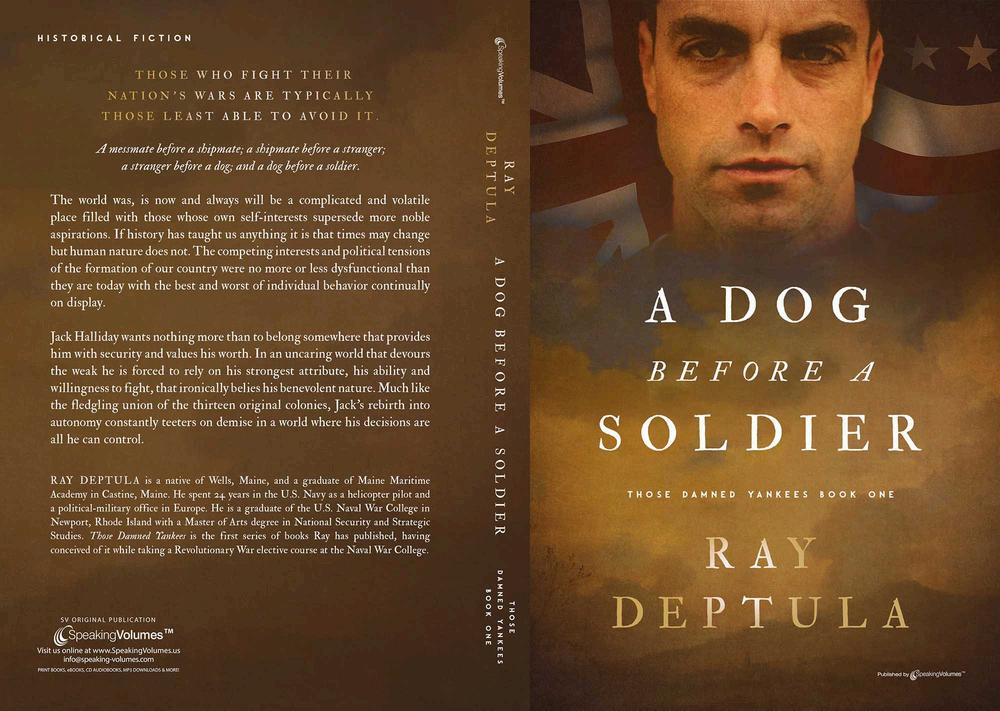
► Set during the Revolutionary War, “A Dog Before a Soldier” follows British soldier Jack Halliday to colonial America as part of the effort to combat a growing rebellion The reader gets a detailed history of the war, including what led to the original colonies’ decision to separate from Britain and the internal strife over what actions should be taken.
Author Ray Deptula crafts what could have been a dry historical account into an informative, interesting tale. The first three chapters delve into Jack’s background and explain what led him to join the British Army, but I think they could have been discarded without damaging the excellent writing or plot
The first in a series, this book sets up its sequel to further explore the human cost of war –C Henry Depew
“A DOG BEFORE A SOLDIER” BY RAY DEPTULA
BY JILL POWELL
+ THIS ARTICLE ORIGINALLY APPEARED IN THE AMERICA’S BOATING CLUB OCEANSIDE/13 NEWSLETTER, THE MARINER’S NEEDLE
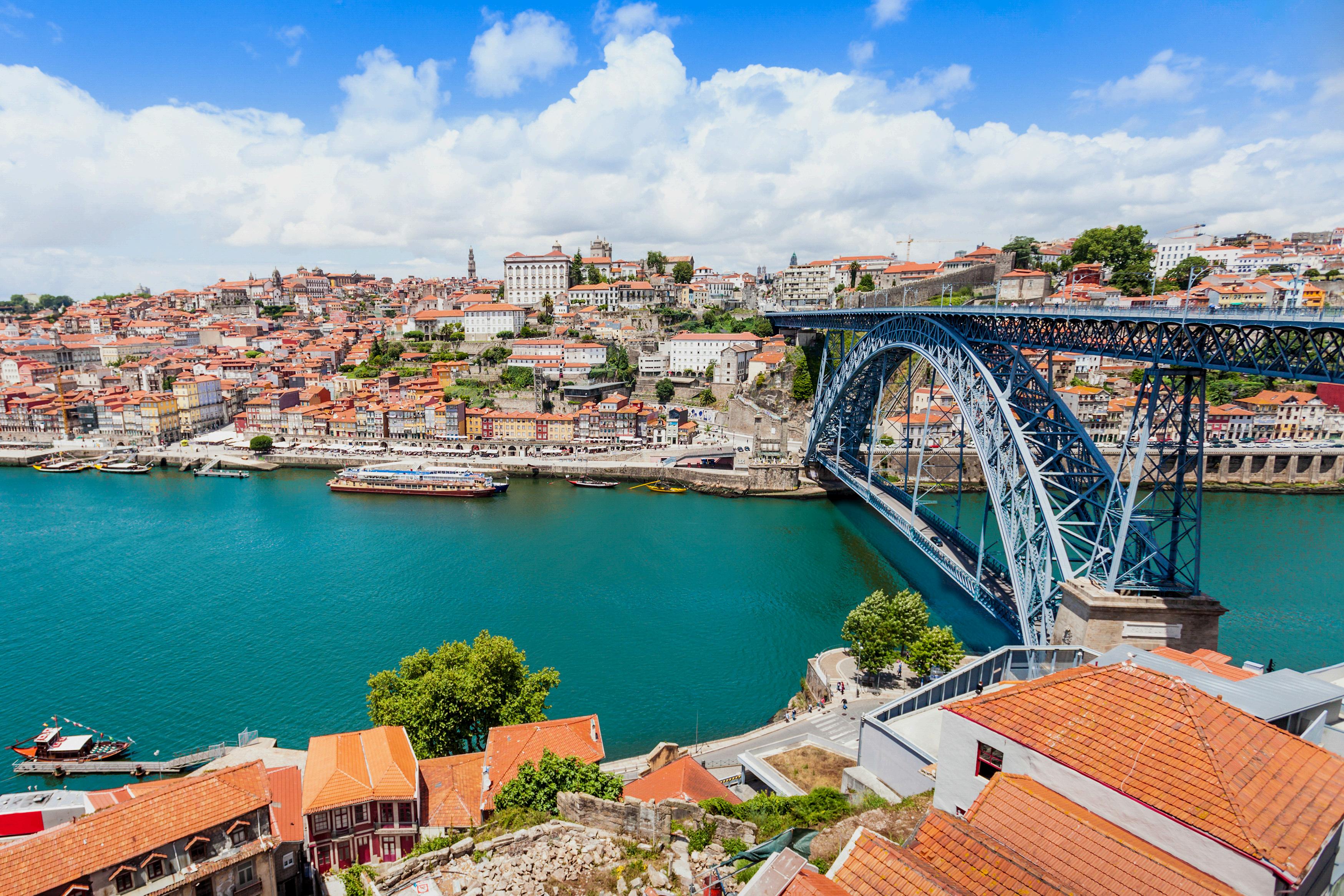
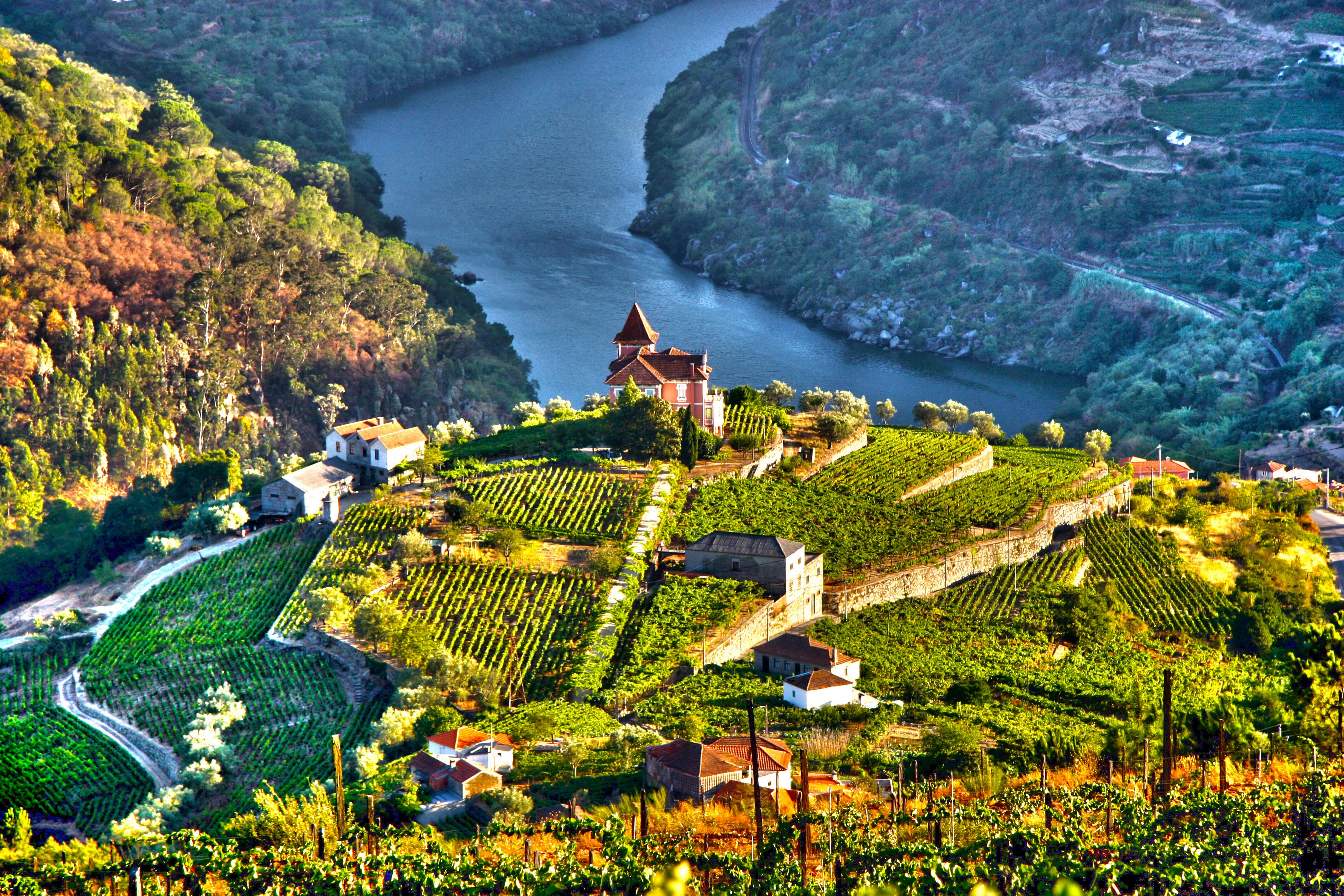
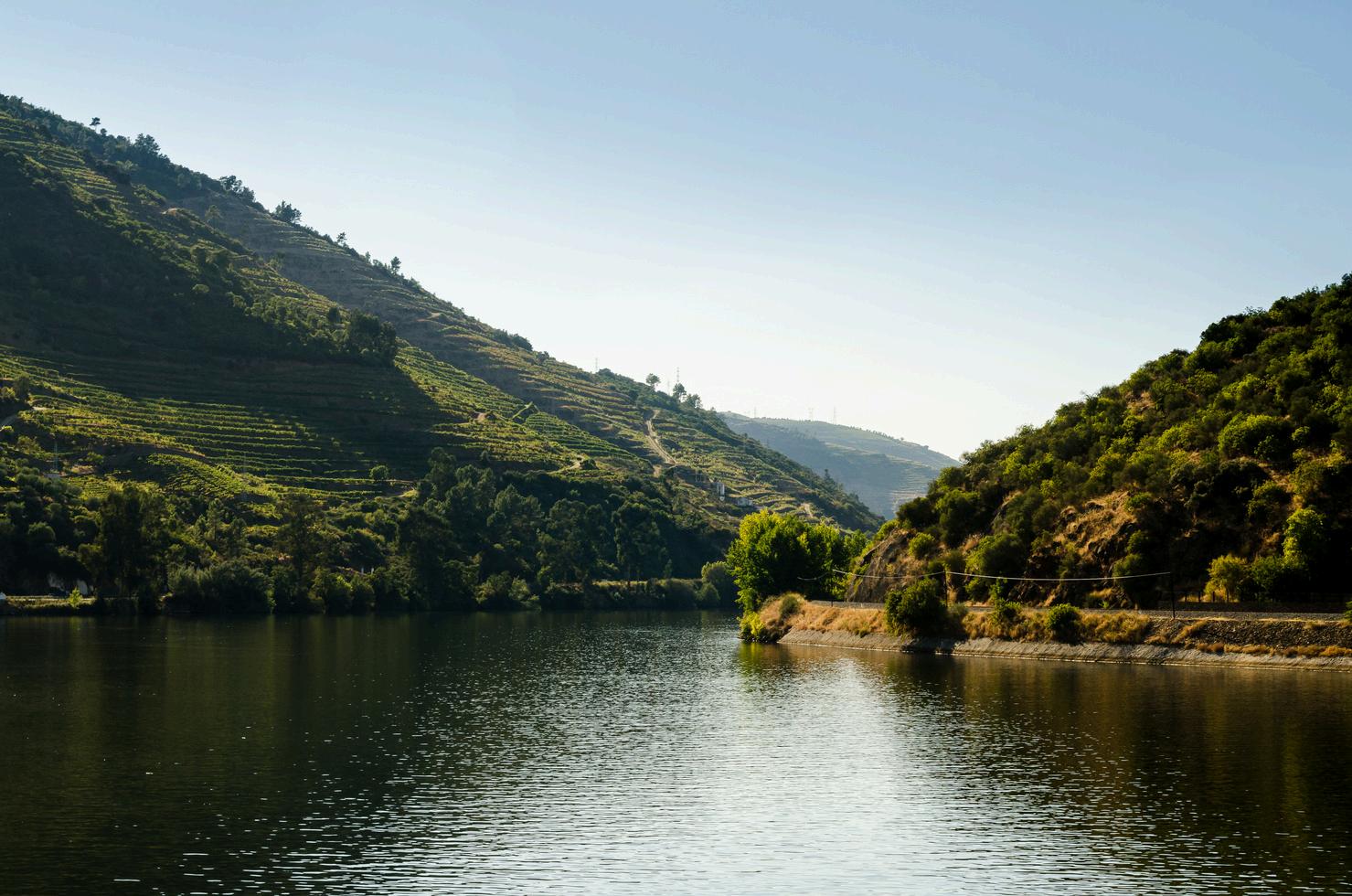
► In May 2025, 12 friends from districts 22 and 28 traveled to Madrid for a once-in-a-lifetime cruise on Portugal’s Douro River
After a three-day stay at the hotel NH Collection Madrid Paseo del Prado, we climbed aboard AmaWaterways’ motorcoach, which would bring us to the 260-foot AmaVida. We were to board at Vega de Terron, but river conditions forced the ship to be redirected to Pinhão two locks downstream. Boarding after 6 p.m., we enjoyed the renowned Sip & Sail cruise while the crew brought our luggage to our staterooms
The next morning, Capt Fabio Noguiera motored the AmaVida upstream to Vega de Terron, where we overnighted on board The following morning, the “official” cruise began from the mooring where it should have been 24 hours earlier Then, it was catch-up time on the river.
We spent seven glorious days on the AmaVida, dining on exquisitely presented delicacies, with champagne breakfasts and free-flowing local wine at lunch and dinner. Local port wines were abundant. →
→ District 28 brought a 1,000-piece jigsaw puzzle depicting Portugal’s wine and port regions. Cruise manager Gabriel Ramos gave up his desk so the group could work on the puzzle. With help from the crew, who pitched in while we were on excursions, we finished it four days later with one piece missing After the final piece turned up in the vacuum cleaner bag, I presented the finished puzzle to the ship for mounting and framing Ship hotel manager Ana Sousa and Gabriel were thrilled
While on board the group participated in a “duck hunting” adventure Each morning, one person would hide a rubber duck, and the member who found it would bring it to dinner to claim a prize. And then that lucky member would hide the duck the following day, and so the game continued. →
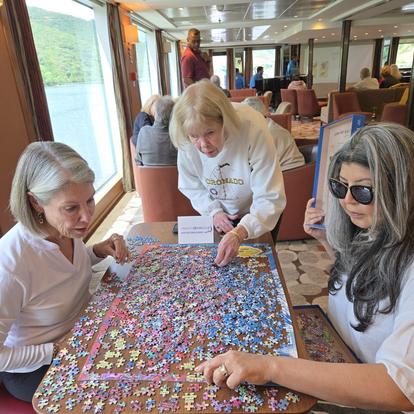
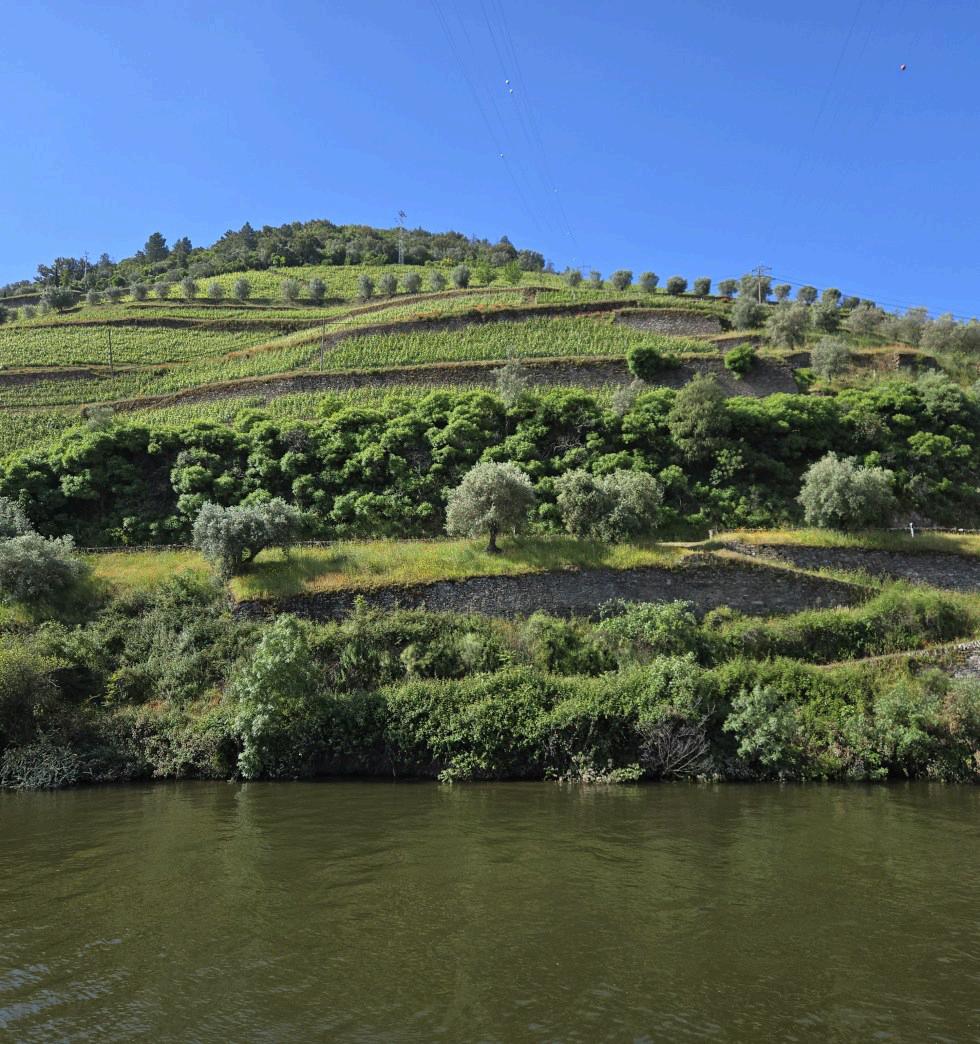
TOP: THE VINEYARDS OF DOURO VALLEY ARE A UNESCO WORLD HERITAGE SITE
BOTTOM: MARY PAIGE ABBOTT, CAROLE HALLOCK AND LETY RUIZ WORK ON THE PUZZLE.
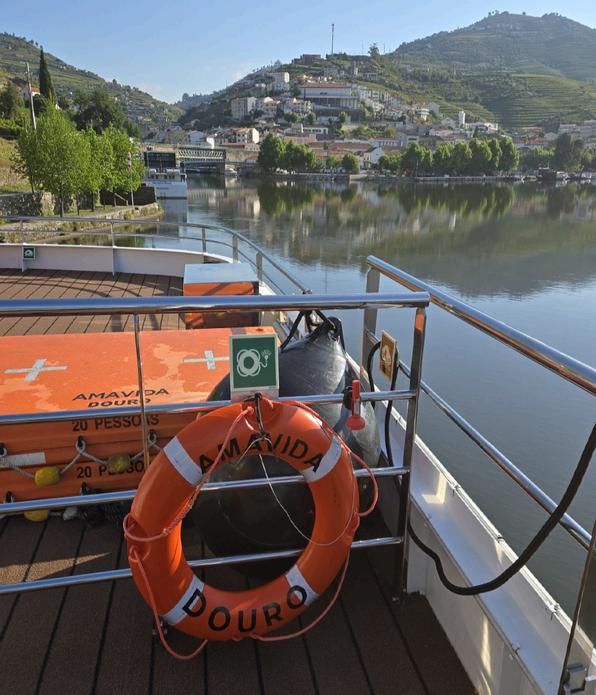
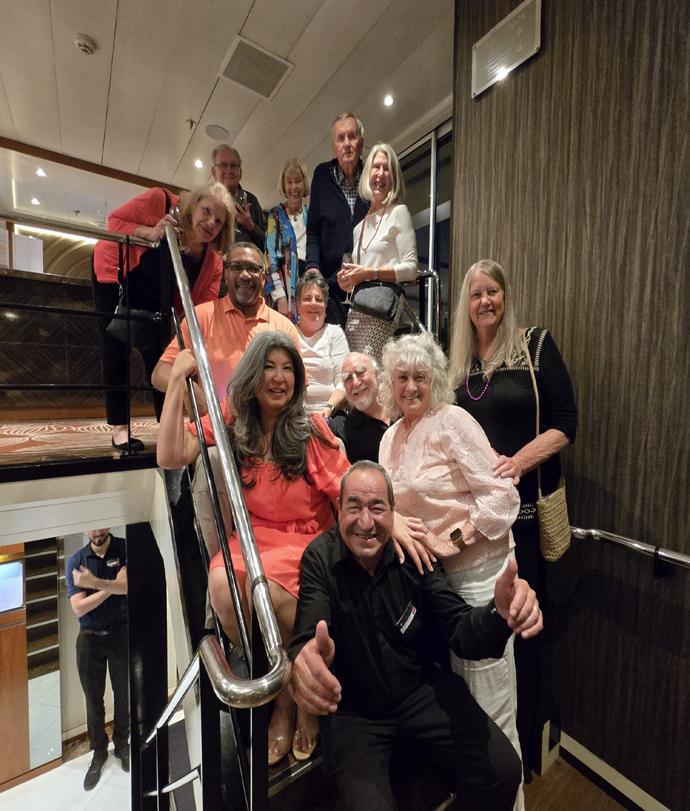
→ On the last evening in Porto, Capt. Noguiera took us for an Illuminations Cruise, a one-hour evening cruise showcasing the city’s historic Ribeira district and Vila Nova de Gaia. The six bridges of Porto were lit up, and the reflections were marvelous. We arrived in Lisbon on the eve of Portugal’s match for the soccer league crown: Sporting Lisbon vs. Vitória.
After the cruise, we stayed another three nights at Sofitel Lisbon Liberdade, a luxury hotel on an upscale shopping boulevard in Lisbon ■
BornandraisedinTasmania,Australia,JillPowellmovedtoCaliforniainher20s.Sheandher husbandhavetraveledtheworld,andtheypassedtheirwanderlustgenesontotheirthree sons JillhasbeenamemberofAmerica’sBoatingClub|UnitedStatesPowerSquadrons since2010andhas18meritmarks AscreatorandpublisheroftheOceansideSquadron newsletter,JillplanstotakeoverdutiesfortheDistrict13newsletter.Herinterestintravelled hertoconductandescortanannualcruiseforthenow-defunctDistrict28.
BY RICK GORDON
+ THIS ARTICLE ORIGINALLY APPEARED IN THE AMERICA’S BOATING CLUB OF GAINESVILLE/22 NEWSLETTER, THE LEARNED LAMP
► In 1992, I headed north for the summer aboard my sailboat, SMAY After traversing the Chesapeake & Delaware Canal, I emerged into the top of Delaware Bay It was too late to make it down to my destination, Cape May, New Jersey, and the weather forecast was deteriorating So, I turned off the bay into the mouth of the Cohansey River on the New Jersey side Protected by a bluff on the northern shore, I spent a comfortable night on the calm river, undisturbed by minor wind ripples.
When I got up the following morning, the weather forecast had worsened, but the northwest wind angle, 12-knot winds and a favorable tide were perfect for a fast run down the bay. I pulled anchor and headed out. Conditions were good in the lee of the New Jersey shore. I put up the sails and started down the bay.
The first third of the trip went well I was protected in the lee of the shore, which calmed the bay’s chop, and the strong wind at a favorable 120-degree sail angle powered SMAY along
But then I sailed into the center of the bay Delaware Bay’s shape amplifies stormy weather and unique “square” waves The waves weren’t an issue since I was traveling downwind, but increasing wind forced me to reef the sails. Even reefed, SMAY was up and running, the knot meter showing 8-plus knots. →
→ When a gust powered the boat up to surf a wave, the speed increased to 12-plus knots with rooster tails forming in the stern’s wakes. By the time I reached the bottom third of the bay, the infamous square waves were white-topping, and the wind sensor on top of the mast was registering gusts over 40 knots. Dressed in foul-weather gear, I huddled in the captain’s chair, its solid back protecting me against the wind and spray.
On one of my brief tours around the cockpit, I noticed the dinghy had water in it; the spray was blowing on board hard enough to fill the boat faster than its open drain could empty it If one of the davits failed, dropping one side of the dinghy into the wake, this could turn into a big and expensive problem I decided to monitor the dinghy and try to make it to my only viable port in the storm: the Cape May Canal, which crosses the base of New Jersey.
As fast as I was sailing, I could soon see the entrance buoy. Fortunately, I had arrived a little north of the entrance. This allowed me the time and space to run off and wind up the already reduced jib. Rather than climbing up to lower the main in the bouncy sea conditions of the lower bay, I used the reefed main to sail between the foaming stone jetties into the canal and up to the ferry turning basin The weather was bad enough that the ferries were tied in their slips
In the basin’s calm water, I took down the main The effort took multiple trips: I would motor up to the windward shore of the basin, jump up to the boom and reduce the mainsail while the boat drifted down to the leeward shore Then I would repeat the process until I finally got the sail lashed down.
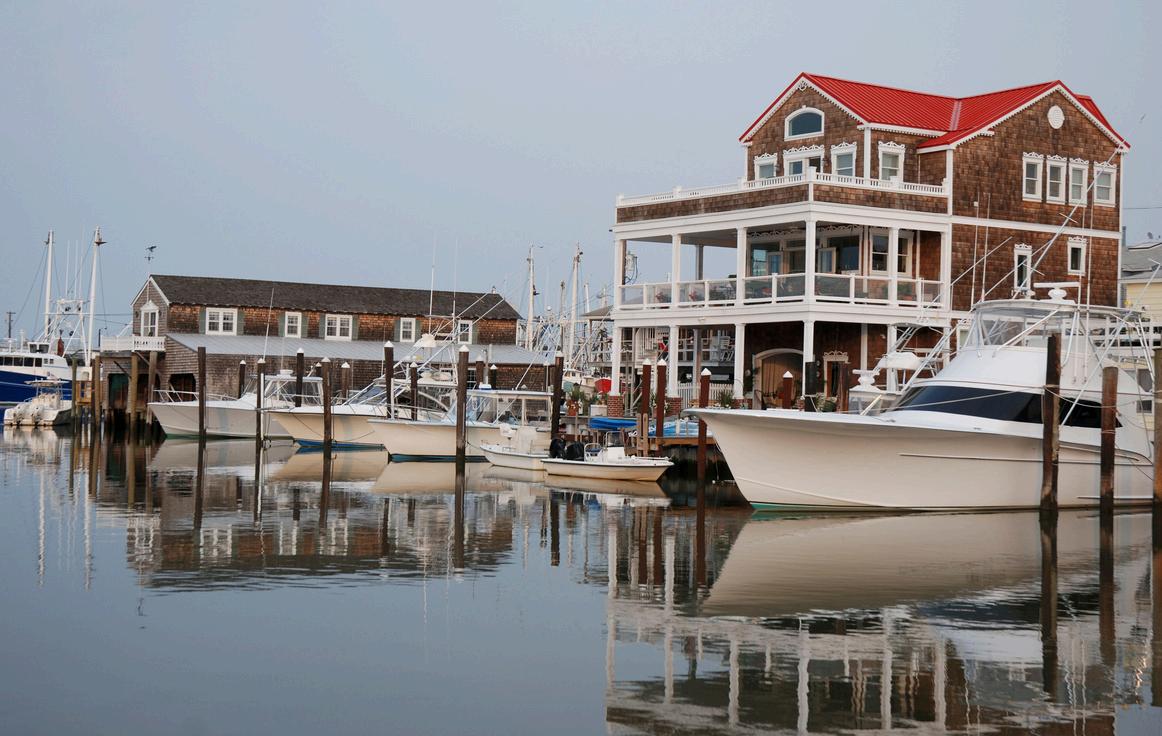
Fromthe turning basin, I motored through the canal to Cape May Harbor, a well-regarded stormrefuge. It was full of commercial fishing boats and yachts sheltering fromthe storm. I utilized my shallowdraft to motor through the fleet to drop anchor at the windward head of the crowd. I put down my biggest anchor and took a wrap of the line around the anchor cleat →
”
Dressed in foulweather gear, I huddled in the captain’s chair, its solid back protecting me against the wind and spray.
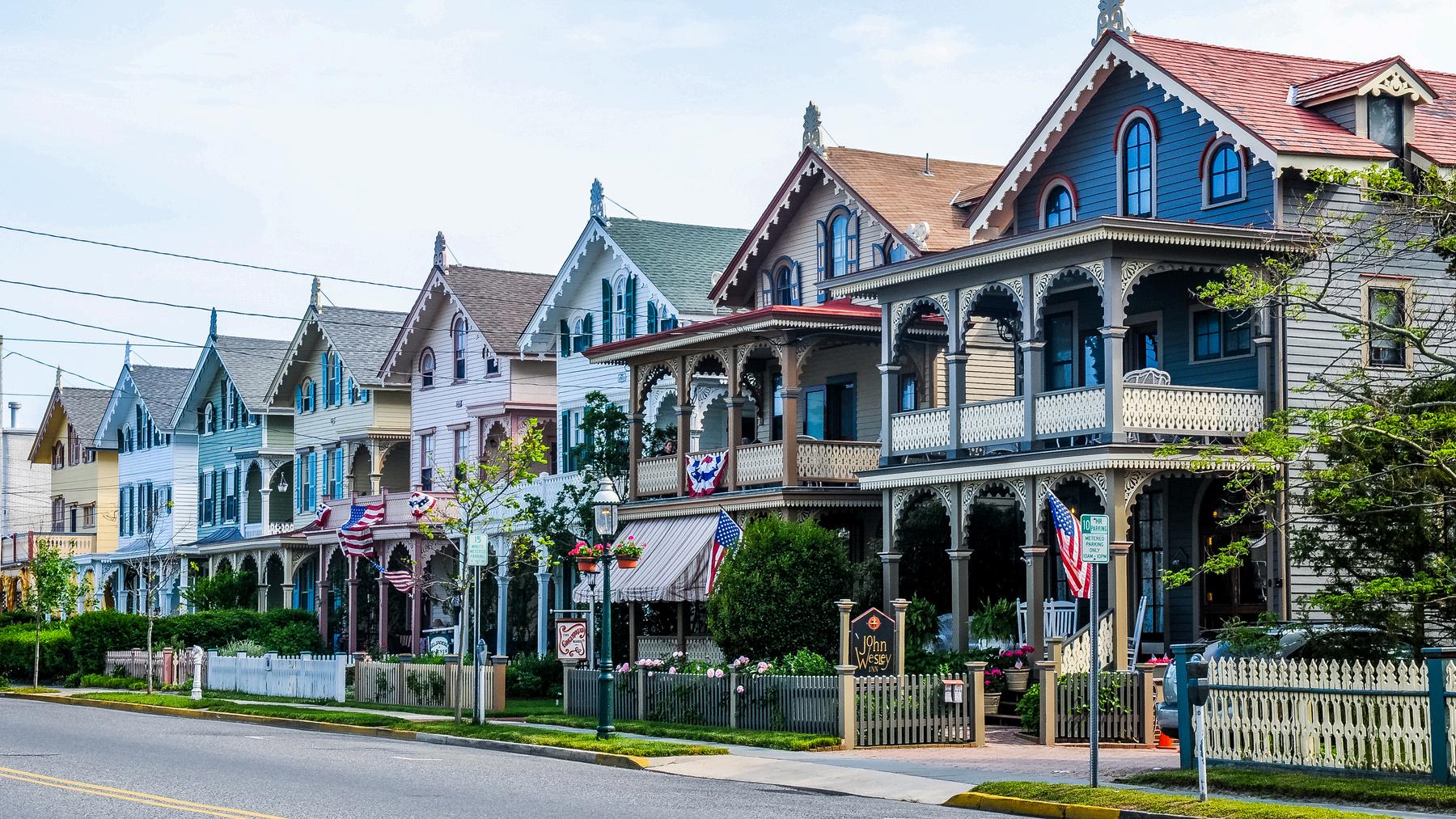
HISTORICAL HOMES IN CAPE MAY
→ The much more moderate harbor wind blew the boat back, and the anchor grabbed with a satisfactory jerk I rigged an anchor bridle and turned on the anchor light Then I went below to escape the wind and spitting rain
That evening, the rain pitter-pattered on the hatch above my bunk. The wind gusts pushed SMAY back, and the anchor line pulled it forward, creating a gentle rocking motion that lulled me to sleep like a baby.
My “weather eye” judgment might have been distracted by thoughts of a pleasurable provisioning stop in Cape May: a good grocery store, an ice cream shop, a seafood restaurant meal and streets lined with lovely antique homes painted in intricate traditional schemes But the weather in the bay had deteriorated much worse than I anticipated; in hindsight, I should have waited in the Cohansey River I didn’t notice any other boats on the water while sailing down the bay
Two days later, the gale finally subsided Once the wind dropped below 20 knots, the crowd of boats emptied, and I could move into the Canyon Club Marina From there, I walked past the lovely historic homes into town and resupplied ■
Rick Gordon has been a member of America’s Boating Club of Gainesville/22 since 1987. He lived on his catamaran SMAY for nine years, sailing north in the summer and south during winter. Family responsibilities forced him to sell the boat and buy a pickup truck.
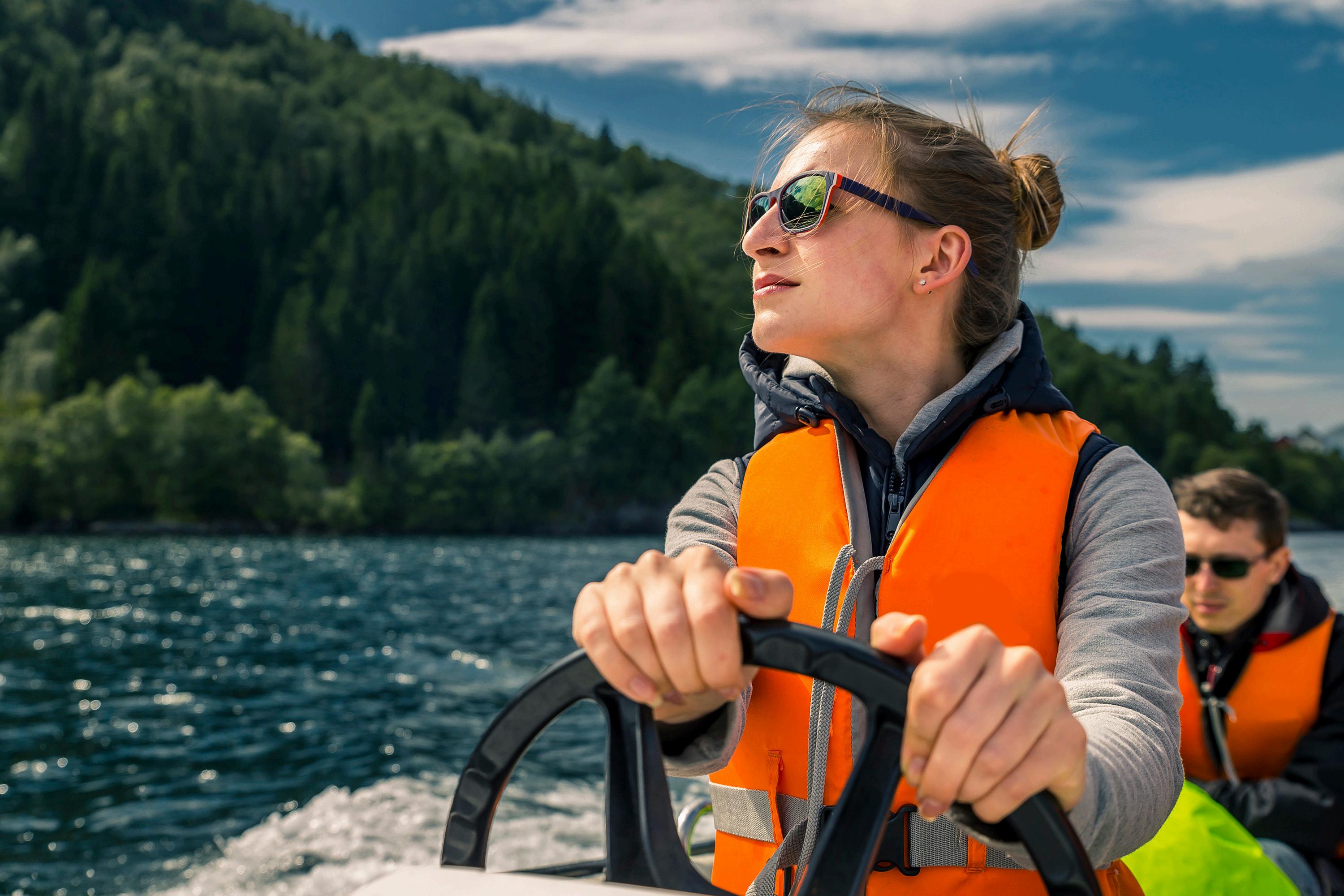
► According to data collected by the market research firm Info-Link, men outnumber women 7-to-1 when it comes to registered boat owners. What about boats that are co-owned by a husband and wife? Who’s in command? It’s much harder to find data for this, but according to the article “Women at the Helm” in Pontoon and Deck Boat magazine, “Only 23 percent of women ever put themselves in the captain position on their own boat.”
This is actually a well-documented pattern in recreational boating Anecdotally, I hear husbands bemoan the fact that their wives aren’t willing to learn more about operating the boat I also had a neighbor tell me that he’d like to get a boat, but he didn’t know who would help him with the boat as he only has daughters Yikes!
Not only are women missing out on a wonderful, healthy and rewarding activity, but it’s a whole lot safer if more than one person knows how to drive, dock the boat, use the radio and GPS, and navigate back home.
So why aren’t more women taking the helm? The reasons have less to do with ability or interest than with how boating roles are established and reinforced over time. →
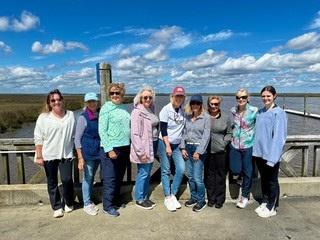
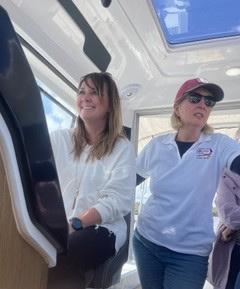
→ In many couples, the first few boating trips set the pattern:
+ One partner (often the husband) already has experience.
+ He naturally takes the helm “to get everyone out safely.”
+ The other partner takes on supportive roles (lines, fenders, lookout).
Once those roles are established, they tend to persist Competence as a first mate is reinforced and praised while helm skills remain undeveloped Over time, switching roles feels awkward rather than natural The result is that women often step back from the helm not because they can’t operate the boat but because the conditions for learning never truly existed
America’s Boating Club Golden Isles/26 developed its Women in Boating program to remove these barriers Our students range from brand-new boaters to women who have spent years aboard family boats but rarely had the chance to operate them. →
→ Some are partners of longtime boat owners; others are solo boaters or women preparing to boat independently for the first time
It provides a low-pressure learning environment, hands-on helm time, permission to make mistakes and recover, and instruction from trained educators, not spouses
To be clear, our women-only program means that we only take women as students. It does not mean that we only rely on female instructors.
All our instructors supporting this program understand that the goal is confidence and independence, that students are there to run the boat themselves, and that taking the helm away undermines the program. Our participants respond well to instructors who coach rather than captain This mindset matters more than gender
We use the seminar portion of the program to talk through scenarios in advance:
+ docking attempts
+ missed approaches
+ wind or current impacts
+ slow, awkward maneuvers
We also use the time to encourage peer support, create camaraderie and reduce intimidation. By the time participants step aboard, they already feel like a team and are motivated to take the helm.
Programs like Women in Boating are significantly easier to market and generate interest for than generic boating classes For one thing, the name alone identifies a clear and understandable value proposition →
” Our participants respond well to instructors who coach rather than captain. This mindset matters more than gender.
We want women to be more confident at the helm. When that happens, boating becomes safer, more enjoyable and more empowering for everyone aboard.
→ “Women in Boating” communicates:
+ who it’s for (women)
+ what they’ll gain (confidence, skills, command)
+ why it’s different (supportive, hands-on, empowering)
Our club placed a colorful eye-catching print ad in the local newspaper to promote the program. We also took advantage of the cooperative advertising program to recoup half the ad’s cost. As a result of the ad, the newspaper’s editor was intrigued by the program and wrote an article about the program, which appeared in the paper a week later
The program is aligned with our club’s mission and is making a difference We are still fine-tuning it and our marketing approach We expect to run the program twice a year in two locations across our region and plan to expand into advanced courses and specialty clinics in the future.
Our goal is simple. We want women to be more confident at the helm. When that happens, boating becomes safer, more enjoyable and more empowering for everyone aboard. ■
Note from National Education Officer Jan Wright: This program is a powerful reminder that confidence grows through experience, encouragement, and time at the helm We invite you to take advantage of our onwater training programs from basic skills to advanced instruction, and from individual coaching to small group training Our trainers can help you sharpen your boat handling skills and expand your boating horizons To learn more, reach out to our On-Water Training & Certification team at owtccom@uspsorg
Cynthia Lamb currently serves as commander of America’s Boating Club Golden Isles/26. A certified on-the-water instructor and 2025 Chapman Award recipient, she enjoys power boating out of St. Simons Island, Georgia, and helping others gain confidence on the water.
How to stop worrying and learn to live with
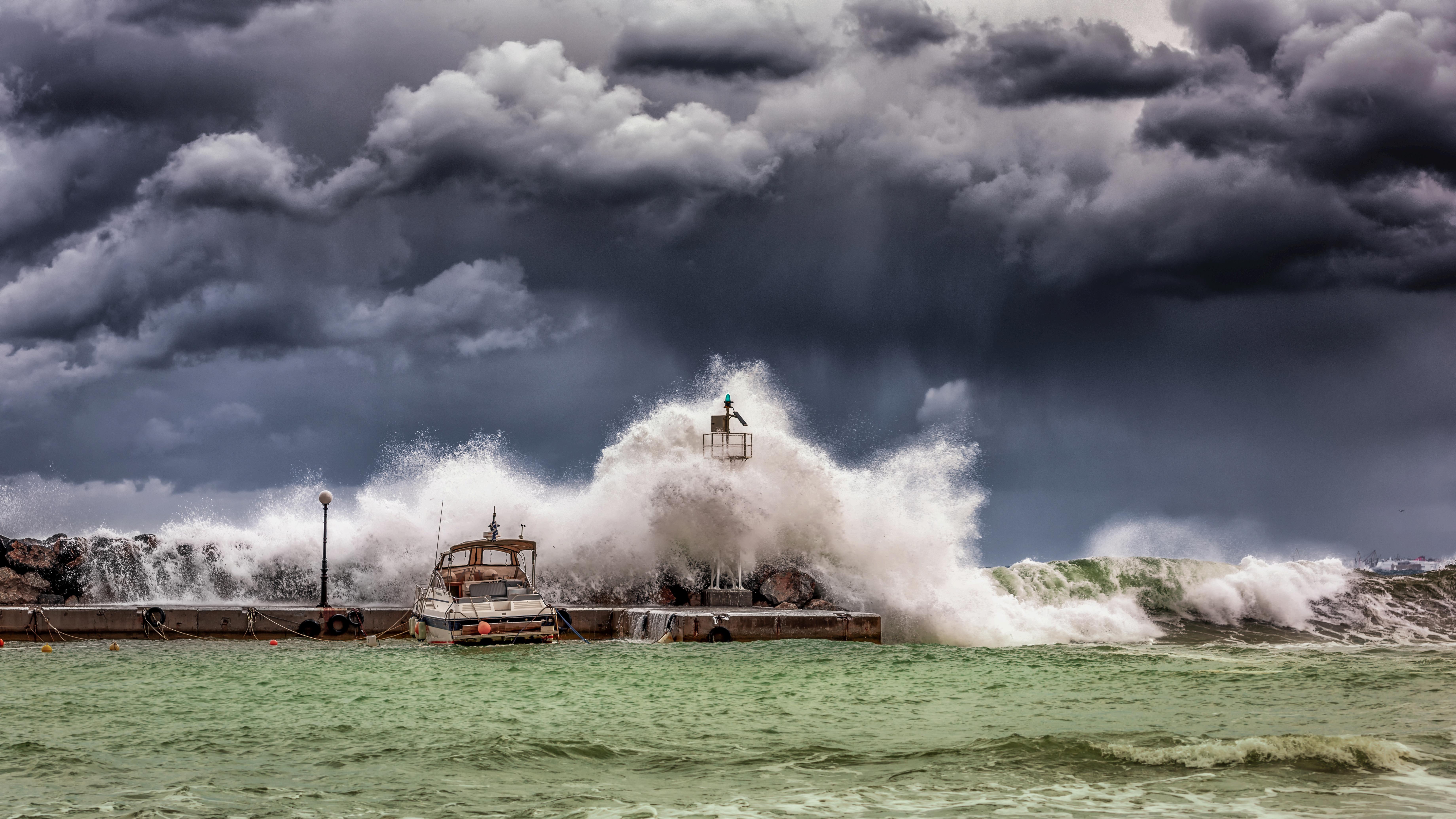
► Growing up in the Midwest, I didn’t think about hurricanes That changed in October 2005 during a conference I attended at The Breakers resort in Palm Beach, Florida, when Hurricane Wilma stopped by for a visit
Wilma made landfall near Cape Romano on the Gulf Coast as a Category 3 storm and crossed the state as a Category 2. Palm Beach was in its path. As my first hurricane, Wilma provided the full experience: wind, rain and even the eerie calm of the storm’s eye. Let’s just say it left a lasting impression.
Wilma caused an estimated $19 billion in damage and 30 deaths in Florida. When I finally made it back home, I swore I’d never get caught in another hurricane.
Twelve years later, in 2017, I retired to southwest Florida You should never say “never” We made an offer on a home on Aug 17 13 days before Hurricane Irma formed and we closed on the house eight days after it made landfall in Marco Island Our new home was OK, but we lost landscaping →
BY THOMAS E. DAWSON OF AMERICA’S BOATING CLUB CAPE CORAL
▲ TED DAWSON AND CARL MCGRATH IN THE CLASSROOM
key
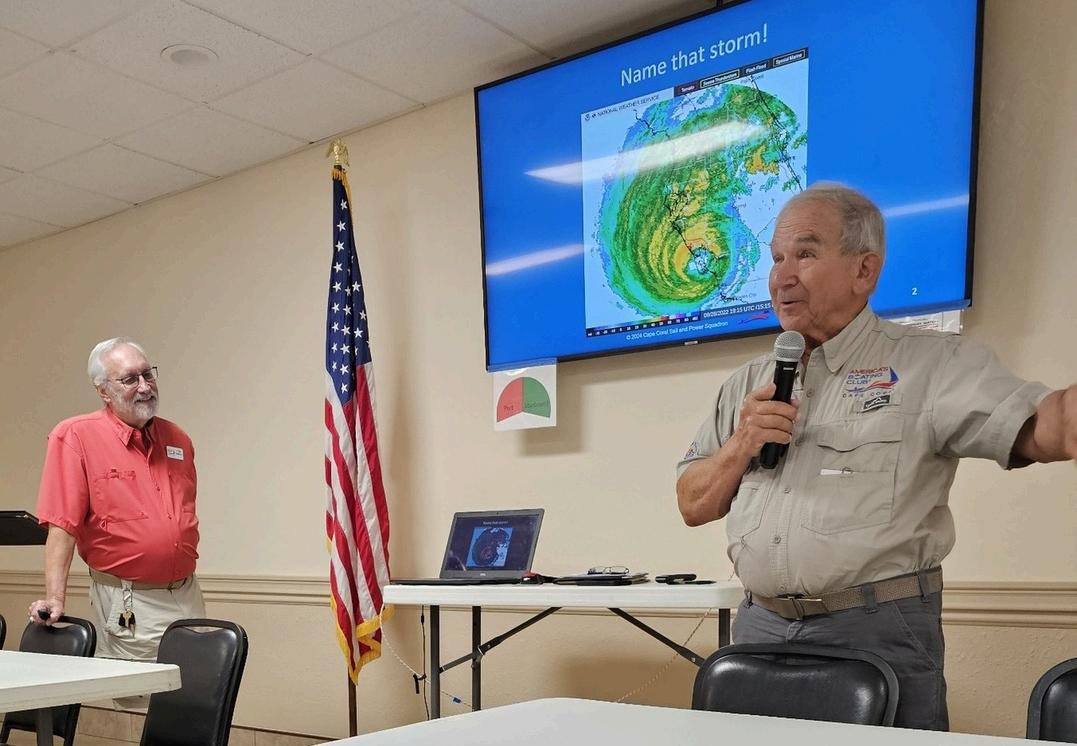
That year, I joined Cape Coral Sail & Power Squadron/22, having been recruited to instruct America’s Boating Course In addition to teaching that class with Ted Dawson and Bill Harris, I volunteered to help Carl McGrath update materials for the squadron’s annual hurricane seminar
Carl, a longtime Florida resident, has lived through plenty of hurricanes. For the seminar, Carl used material from the “Hurricanes and Boats” seminar developed by Wilbur Hugli and Capt. Robert Turpin from Escambia County in the western Panhandle.
The material was great; however, as Carl had learned, the key to hurricane preparation is understanding local conditions For instance, in Lee County, where Cape Coral is located, you won’t find any “hurricane holes,” and anchoring is an issue as there aren’t many places that an anchor will hold in a storm
Instead, Cape Coral has many canal communities located off the Caloosahatchee River The city has nearly 400 miles of canals, of which only 200 have access to the Gulf via the Caloosahatchee on the east and Matlacha Pass on the west. The other 200 are in a closed system with its fair share of vessels. This makes the city a big marina as thousands of boats are stored on lifts in residents’ backyards.
Since the city gets new residents each year, we added a hurricane primer to our seminar. We introduced basics like the “dirty side” of the storm and how the direction of approach and storm path determine why some storms flood the canals while others drain them
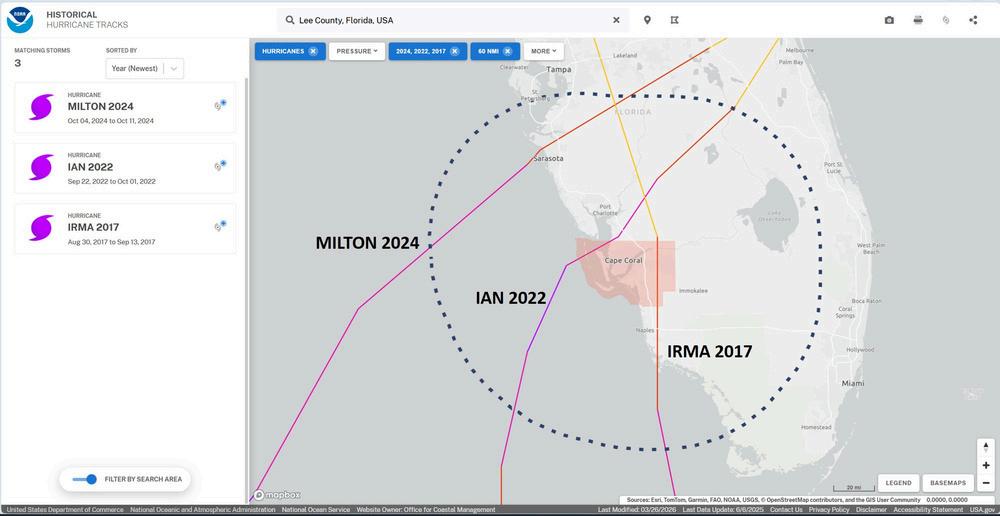
For instance, Hurricane Irma made landfall near Marco Island and headed north, passing east of Lee County →
→ This pushed the water in the Caloosahatchee River and the canals out toward the Gulf, draining the canals, leaving boats sitting on the bottom and collapsing sea walls
Five years later, Hurricane Ian made landfall on Caya Costa and caused a storm surge that averaged over 7 feet in most of Lee County. Docks were destroyed and boats left scattered; many sank
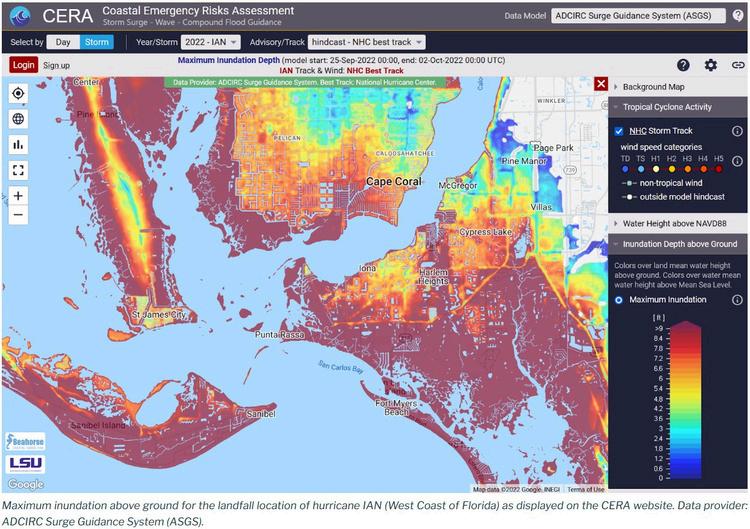
Two years after Ian, Hurricane Milton landed on Long Boat Key about 50 miles north of Lee County, leaving residents to face an average storm surge close to 4 feet
Each storm presented new challenges to residents, and every time Carl updated the seminar with the new lessons learned
In 2025, weather forecasters predicted an average Atlantic hurricane season. They called for 13 to 19 named storms, and we had 13. Then they said there would be six to 10 hurricanes and three to five major hurricanes. Sure enough, there were five hurricanes and four major hurricanes, but none of those storms made landfall in the U.S. The last time that had happened was 2015 Why had the prognosticators failed to see that?
Perhaps they don’t have enough data NOAA has a database of hurricanes going back to 1851 called “Historical Hurricane Tracks.” Looking closely, you will find the early data only captures storms that made landfall. So, they don’t have much information about hurricanes that wandered the Atlantic and didn’t make landfall. →
→ This makes sense, as aircraft reconnaissance didn’t start until the 1940s and satellites didn’t cover the Atlantic until the 1980s
That means today’s forecasters rely on just a few decades of solid data for the Atlantic storm season Limited data plus wrong assumptions can sometimes give us forecasts that miss the mark
What does that mean for us? Forecasting will keep evolving as more and better data is captured, but uncertainty isn’t going anywhere. What doesn’t change is our need to prepare.
Preparation starts with a visit to the National Hurricane Center website. It has educational articles, videos and realtime tracking. Tropical weather outlooks for the Atlantic hurricane season start each year in mid-May.
This year NHC has updated how it shows storm paths It dropped the “forecasted track line,” which could be misleading, and now only shows a cone with the most likely path The further out in time, the wider the cone as the track will likely shift If you’re inside the cone, expect impacts; if you’re just outside the cone, you still need to pay attention as the storm could move in your direction NHC has also changed how it displays inland watches and warnings; these are now color-coded to make them easier to read at a glance. →
From my first encounter in 2005 to now, I’ve learned one thing: Hurricanes are serious business If you live in, or are moving to, a hurricane-prone area, you need to understand the impact these tropical storms can have on you and your community.
All boating is local, so you should learn about your local conditions and the best practices used by boaters in your community for protecting your boat. Many America’s Boating Club | United States Power Squadrons clubs offer a hurricane prep seminar; if yours doesn’t, think about starting one. It’s a great way to reach out and help others in your community You can also take it online
Stay safe on the water, and prepare early when a storm approaches! ■
BELOW ARE WEBSITES OUR LOCAL MEMBERS HAVE FOUND HELPFUL EACH OFFERS A DIFFERENT SET OF DATA THAT CAN BE USED TO HELP YOU ADJUST YOUR PLANS:
+ CERA DELIVERS STORM SURGE AND WAVE GUIDANCE FOR IMPENDING OR ACTIVE TROPICAL CYCLONES IN THE UNITED STATES
+ CYCLOCANE IS A GOOD SOURCE FOR INFORMATION ON GLOBAL STORMS AND KEEPS YOU UP TO DATE ON THE GLOBAL SPAGHETTI MODELS
+ HURRICANE CITY COVERS STORMS IN PROGRESS AND HAS HISTORICAL HURRICANE DATA FOR 139 LOCATIONS
ThomasE DawsonisaformerinstructoratCapeCoralSail&PowerSquadron/22andcreator oftheclub’s“SouthwestFloridaBoatingSeminar”IfyouplanonvisitingLeeCounty,Florida, checkoutDawson’sbooks,“SafeBoatinginSouthwestFlorida:CapeCoralEdition”and “BarretBonden’sLocalKnowledgeRecommended:ThingsYouWishSomeoneHadToldYou AboutBoatingHere!”BothbooksareavailableonAmazon.
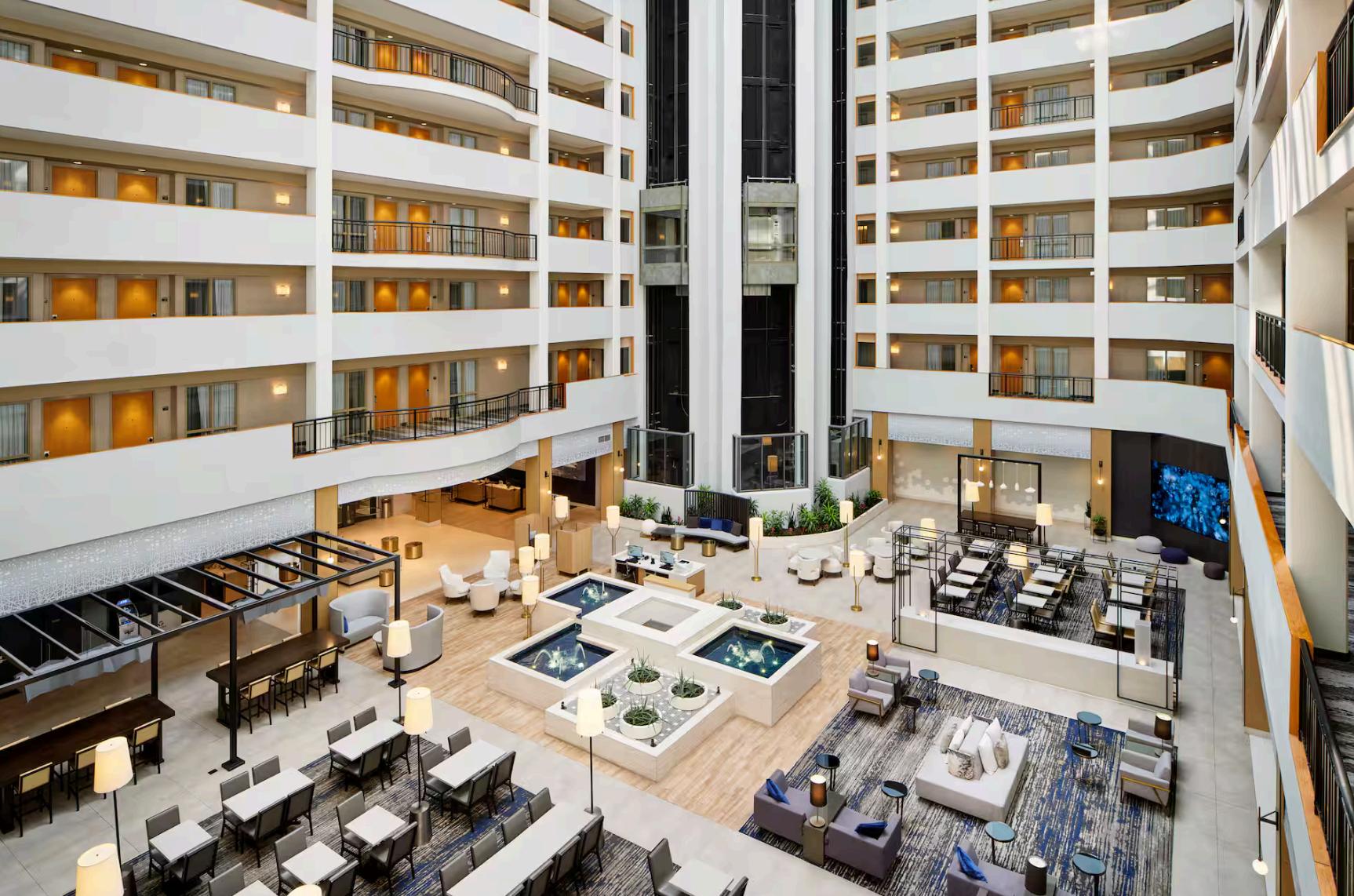
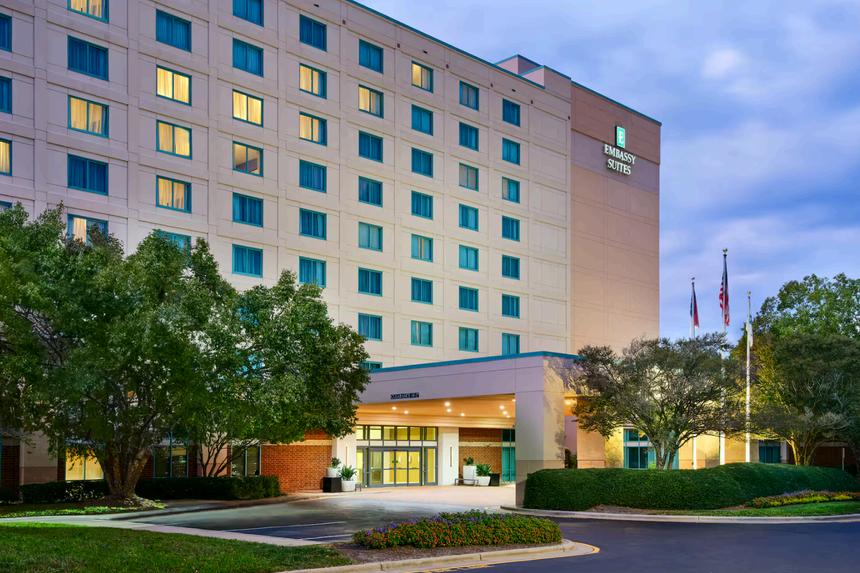
This year’s Governing Board is in Cary, North Carolina—only 10 minutes from our Raleigh headquarters!
Planning to attend? Make sure you swing by HQ to say hello and take a tour of the facilities, including the Chapman Library, between seminars and social events
Reserve your room
If you haven’t done so already, book your accommodations for the 2026 Governing Board by Aug 20 to get our group rate of $164 per night at Embassy Suites by Hilton at 201 Harrison Oaks Blvd in Cary That price includes free shuttle transportation to and from the airport, 50% off daily selfparking, free breakfast and a complimentary cocktail party. Plus, every room is a suite!
Plan your stay
Check out all the fun activities we have planned, from a NC Courage soccer game to a ghost tour of the State Capitol.

BY JERRY LAMB
+ THIS ARTICLE WAS ORIGINALLY PUBLISHED IN AMERICA’S BOATING CLUB GOLDEN ISLES/26 NEWSLETTER, THE PORTHOLE
► It’s a lovely summer day, and you’re pining to go on a longer journey than your usual casual afternoon boating outing You want to spend the weekend miles away from your home port The local TV weather forecast calls for a 40% chance of bad weather Do you go or not?
Someone once said that the most dangerous thing on a boat is a schedule The first time I went boating and shouldn’t have was a Labor Day weekend trip from Groton, Connecticut, to the “fishtail” eastern end of Long Island, where it splits into the north and south forks. We had a fun weekend, but the kids all 13 of them on our four-boat flotilla had to be back in school the next day. Even though the NOAA weather forecast was questionable, we took our chances. This was before chart plotters, GPS, tablets and 24-hour weather channels.
It wasn’t a good idea We had to go through the Race, a watery gap between the North Fork and Fishers Island where the current can reach 6 knots as all the water rushes in and out of Long Island Sound The wind came out of the north, which was unfortunately the direction that we wanted to go It soon became clear that we would not make it back before dark, if at all →
→ Discretion or something being the better part of valor, we headed for the shelter of Greenport Harbor on Orient Point, New York
Off the wind, our 23-foot sailboat’s 6-horsepower outboard could make headway, and we relaxed but unfortunately too soon The outboard faltered, and we could only keep it going by hand-pumping the bulb to feed it gas. That became the kids’ job. As a friend passed us, the first mate cried out, “We’re all going to die!” Thankfully, we survived, taking the ferry home to get the children to school. We went back for the boats the next weekend.
Even seasoned cruisers are not immune to uncertainty about the weather On my Intracoastal Waterway blog, boaters ask nearly daily if they should attempt such-andsuch bay with winds from this or that direction
How do you make a good decision? First, you can be fairly confident in the short-range forecast They are accurate for about three days, and meteorologists almost always get big storms and weather fronts right, if not always the timing.
However, remember that most televised forecasts do not address the specific needs of boaters. NOAA radio and web pages are the first refuge of a wary heart, giving weeklong forecasts and expected wind and sea conditions.
Nowadays we have tablets and phones that have navigation apps with embedded weather information, and we also have weather apps that give more detail Researching them for my planned boating apps seminar, I learned a lot
Among apps designed for nonboating audiences, my favorite is MyRadar Oriented toward airplane pilots, it provides a wind map and a detailed forecast for anyplace you move the map. The forecast includes the next two hours, an hourly forecast for the next 24, and a weekly forecast for temperatures, precipitation, wind and cloud cover. →
” Nowadays we have tablets and phones that have navigation apps with embedded weather information, and we also have weather apps that give more detail.
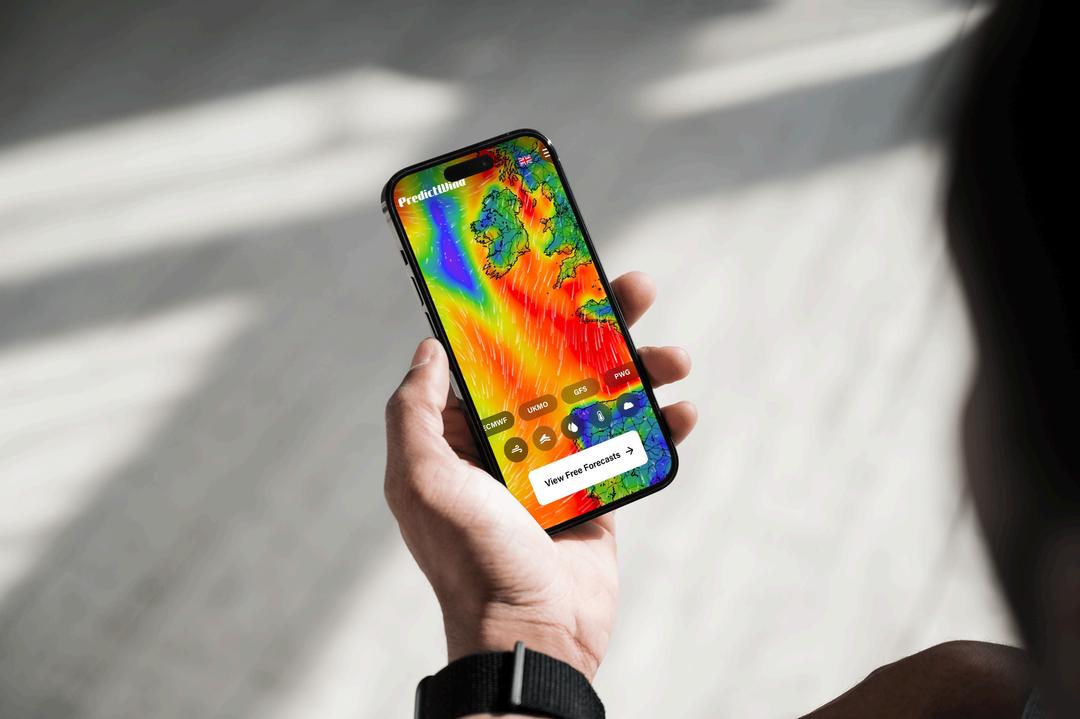
→ My favorite weather app is the paid version of PredictWind. This app has wind direction, speed and gusts using 10 different weather models for each hour for up to 14 days, cloud cover, temperature, barometric pressure, precipitation, moon phase, wave direction and height. There is also a daily briefing page for your location, animated maps, graphs, global weather patterns, sun and lunar charts, real-time observations and more It also offers sail and power passage routings that change depending on your appetite for waves and wind
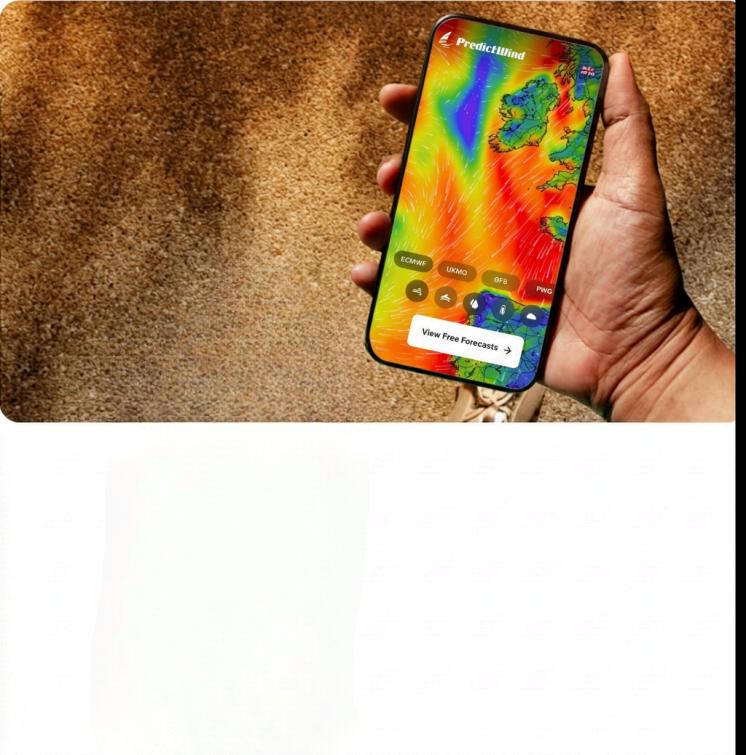
No matter how good, no weather app can make us immune to pressures that might lead us astray I said earlier that the most dangerous thing to a boater is a schedule. However, using some of these apps might just help you make a better go or no-go decision. ■
Jerry Lamb is past commander of America’s Boating Club Golden Isles/26 and is currently squadron educational officer He has extensive experience sailing in southeastern New England and has been boating in the Golden Isles since 2018.

► Calculated risk is the process of evaluating potential losses and rewards to make an informed decision When a task is challenging, calculated risk can bring success
An example of calculated risk leading to a successful outcome is Capt Chesley Sullenberger safely landing a plane on the Hudson River after bird strikes disabled both engines following takeoff.
Determining a safe amount of risk is partially subjective, but experience often helps. However, experience can also result in unwise risk-taking due to confirmation bias, which is the psychological tendency to favor information that confirms existing beliefs. If a previous risky situation had a successful outcome, the experience could be interpreted as confirmation that the dangerous behavior was acceptable Repeated success in similar situations can bias a person or group to feel comfortable even when the situation is dangerous Even worse, this can justify more extreme risk-taking, creating increasingly dangerous behavior For example, say you accelerate through a yellow light rather than stopping Soon you’re ignoring yellow lights and accelerating through red lights. Your successes confirm that your behavior is acceptable. →
BY JOE MUCZYNSKI
Calculated risk is a worthy method to achieve success in dangerous situations, but confirmation bias while boating can sway you to make bad decisions.
→ You perform well and rationalize that your skills justify your behavior
Sadly, the Columbia space shuttle disaster occurred due to an unfounded comfort with repeated thermal tile damage Engineers had warned loudly that space shuttle solid rocket O-rings were not designed for extremely cold temperatures, but the warnings were ignored because of past success and the desire to achieve goals on time
Structural failure of the OceanGate Titan submersible’s experimental carbon fiber hull caused its catastrophic implosion. Investigations cited critically flawed safety practices, inadequate testing, and ignored warnings about hull deterioration. In each dive case, prior success made the next risk feel more acceptable, despite ongoing concerns expressed by knowledgeable experts. Previous successful outcomes can teach the wrong lesson about risky endeavors The danger is not only the risk itself but also the false confidence created by earlier success in similar situations
Calculated risk is a worthy method to achieve success in dangerous situations, but confirmation bias while boating can sway you to make bad decisions Understanding and respecting the danger of confirmation bias can help you make better decisions that may not achieve all goals but avoid tragic failure. Vessel safety checks are a great way to avoid unnecessary risk-taking.
Will you choose to wait until a tragic situation occurs on your watch and suffer the uncomfortable consequences? Or will you heed the lessons about the perils of confirmation bias and sacrifice some goals to avoid tragedy? ■
Joe Muczynski has a wealth of sailing experience and certifications under his belt He helped a friend start a J/24 charter business in the Finger Lakes Currently, he owns a Beneteau 321 and contributes safety articles to the St. Petersburg Sailing & Power Squadron/22 newsletter.
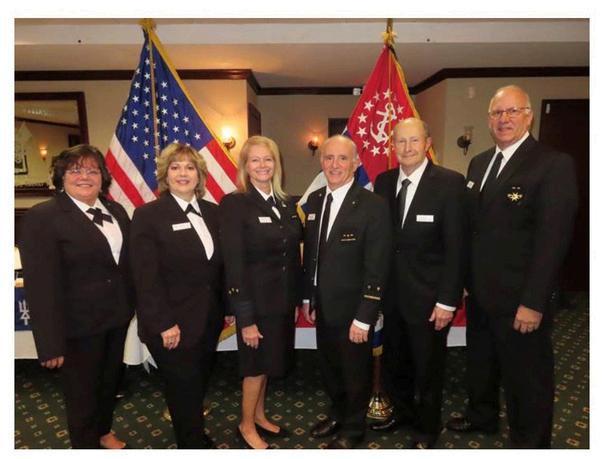
AMERICA’S BOATING CLUB OF GREAT SOUTH BAY/3 INSTALLED ITS NEW BRIDGE AT ITS CHANGE OF WATCH CEREMONY IN MARCH MORE THAN 85 MEMBERS ATTENDED THE CEREMONY FROM LEFT: COMMANDER JEANNE BRAUN, EXECUTIVE OFFICER MARIE WALLACH, ADMINISTRATIVE OFFICER DIANE BOLAND, EDUCATIONAL OFFICER MICHAEL BOLAND, TREASURER STEVE POTESTIO AND SECRETARY ALAN SIEGEL
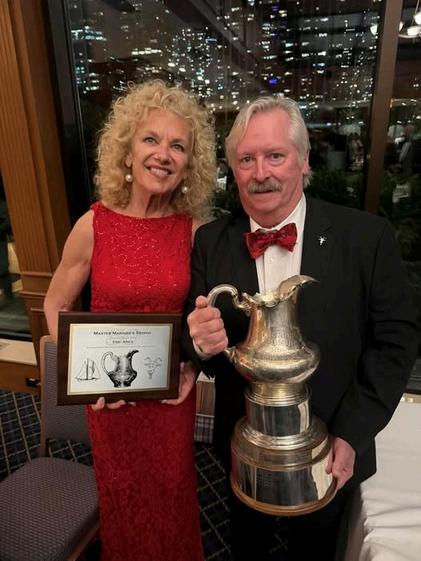
AMERICA’S BOATING CLUB MILWAUKEE/10’S NEWEST MEMBERS CHERI KENT AND MASTER MARINER ERIC JONES JOINED THE CLUB AFTER TAKING AMERICA’S BOATING COURSE, TAUGHT BY CHIEF COMMANDER MIKE WIEDEL IN FEBRUARY ERIC AND CHERI OWN A 305FOOT ETCHELLS CLASS SAILBOAT, AND ERIC HAS 50 CHICAGO TO MACKINAC RACES UNDER HIS BELT.
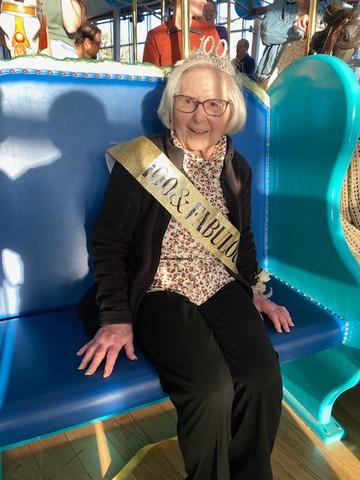
STAMFORD SAIL & POWER SQUADRON/2 MEMBER ANNE PESKIN CELEBRATED HER 100TH BIRTHDAY ON MAY 3 WITH SEVERAL HUNDRED FAMILY AND CLOSE FRIENDS AT HER FAVORITE VENUE, THE MILL RIVER PARK CAROUSEL PAVILION. A MEMBER SINCE 1982, ANNE REMAINS ACTIVE IN THE SQUADRON, ATTENDING WEEKLY LUNCHES AND ALL SOCIAL EVENTS SHE AND LATE HUSBAND BERNARD TAUGHT PILOTING AND ADVANCED PILOTING FROM THEIR HOME FOR YEARS
MERIT MARKS
SENIOR MEMBER, 5 MERIT MARKS
LIFE MEMBER, 25 MERIT MARKS
EMERITUS MEMBER, 50 MERIT MARKS HOW TO SUBMIT
FAMILY, SQUADRON COMMANDERS OR OTHER AUTHORIZED REPRESENTATIVES MAY SUBMIT REPORTS OF MEMBERS WHO HAVE CROSSED THE BAR
SUBMIT ONLINE + INDICATES ONLINE OBITUARY
P/D/C Ralph Borriello, AP
Meriden (CT) Squadron/1
Emeritus Member, 65 mm
P/C Bobby Bray, AP Daytona Beach (FL) Squadron/23 Life Member, 31 mm
P/C Roger Breunig, AP Meriden (CT) Squadron/1 Emeritus Member, 51 mm
Sandra Breunig, AP Meriden (CT) Squadron/1 2 mm
P/R/C George A. Bruner Jr., AP + Richmond (VA) Squadron/5
Emeritus Member, 50 mm
P/C Curtis Campbell, AP Lansing (MI) Squadron/9 Life Member, 30 mm
Alfred C. Cody, P Cyber Squadron/50 Life Member, 41 mm
P/C Howard Gasaway Sr., P Potomac River (VA) Squadron/5 Senior Member, 24 mm
N/F/Lt Angelo V. Giovanniello, SN Great South Bay (NY) Squadron/3 Life Member, 42 mm
P/Lt/C Pat Gray Manatee (FL) Squadron/22 Senior Member, 9 mm
Jill W. Kelly, P Cape Fear (NC) Squadron/27
John P. Kelly, JN Cape Fear (NC) Squadron/27 Senior Member, 20 mm
P/D/C Michael D. McCulley, JN
Cape Lookout (NC) Squadron/27
Senior Member, 15 mm
P/F/Lt Carmyn Molaro, AP Great South Bay (NY) Squadron/3 Life Member, 41 mm
David Mullenix Fort Myers (FL) Squadron/22
Jewel M. Myers Fort Macon (NC) Squadron/27 Senior Member, 12 mm
P/C Ricardo S. Rodriguez, SN + Stark County (OH) Squadron/7 Life Member, 34 mm
P/C M. Melvin Shralow, JN Delaware River (PA) Squadron/5 Senior Member, 17 mm
Alan J. Stennett Akron (OH) Squadron/7
P/R/C Shirley Y. Van Rhee, JN Kalamazoo (MI) Squadron/9 Life Member, 25 mm
P/C Irving Van Slyke Jr., AP Cape Lookout (NC) Squadron/27 Senior Member, 16 mm
P/C Delius E. Wilson, JN City Island (NY) Squadron/4 Life Member, 31 mm
P/C Margaret Ann Zitnik, JN Berea (OH) Squadron/7 Senior Member, 16 mm


BY ROBERT A. BUCHANAN
► In the movie “Dances with Wolves,” one of Kevin Costner’s best lines is arguably “Bad wolf, go home!” This sentiment also applies to the unwelcome invasive aquatic species in the Great Lakes In particular, three species pose significant threats to the Great Lakes ecosystem: alewives, lampreys and zebra mussels
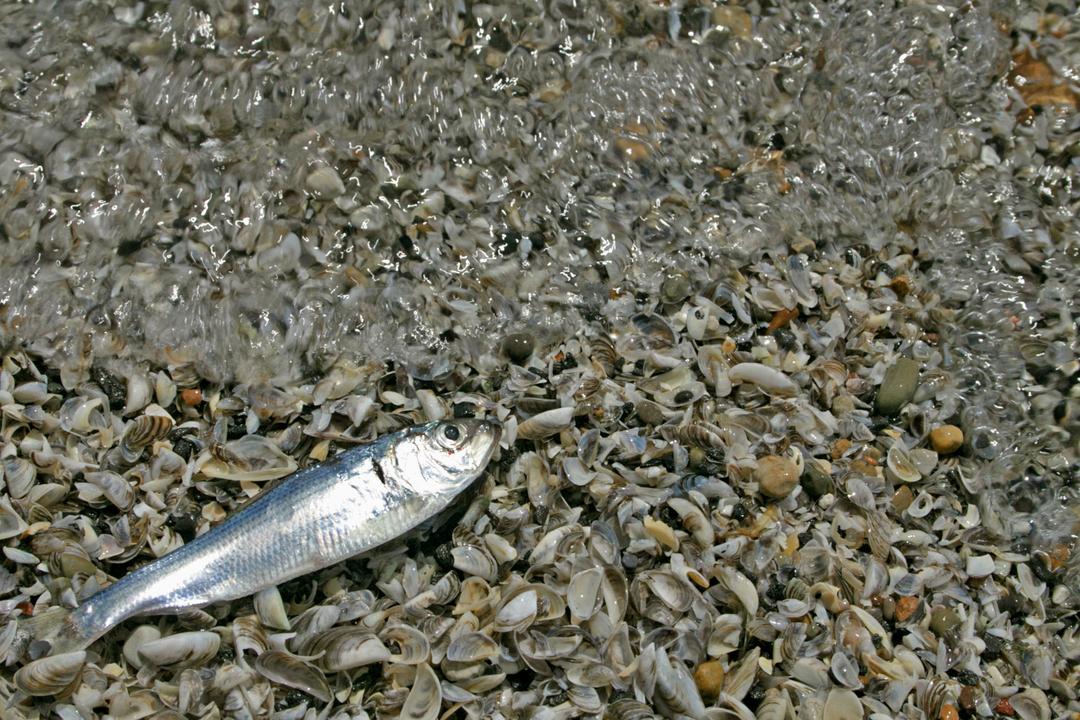
Native to Lake Ontario, alewives spread to lakes Huron and Michigan after the Welland Canal opened. These members of the herring family spawn in early spring as the waters warm and then die en masse, littering Lake Michigan beaches with their carcasses Although they stink, dead alewives do not carry disease
To combat the problem, the Michigan Department of Natural Resources stocked Lake Michigan with Coho and Chinook salmon, which feed on alewife offspring The alewife population declined, and the salmon population exploded. A thriving sportfishing industry emerged, especially along the eastern upper shores of Lake Michigan. On warm summer evenings, fishing boat lights illuminate the lake almost to the horizon. →
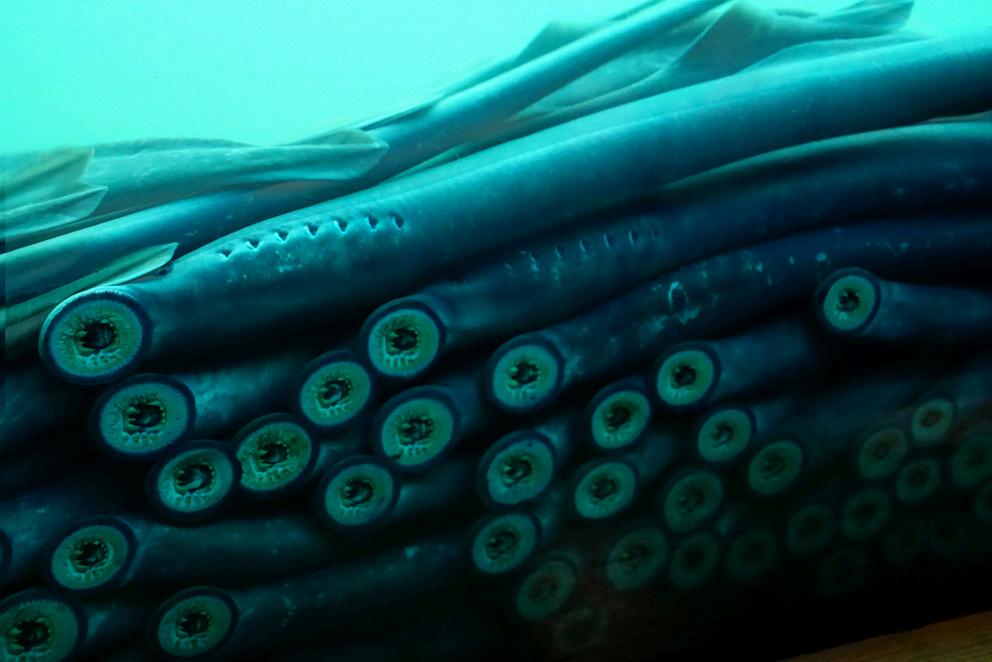
The lamprey’s name is likely derived from the Latin lampetra, meaning “stone licker,” though this etymology is uncertain. Lampreys resemble eels but lack a true mouth. Instead, they attach to fish such as trout with sharp teeth, sucking blood and bodily fluids and ultimately killing their hosts. These parasitic creatures, which also entered the Great Lakes via the Welland Canal, devastated sportfishing, particularly in Lake Huron.
Lamprey control involves constructing weirs or dams below their breeding grounds and applying lampricides chemicals designed to target lamprey larvae in river systems before they mature TFM (3trifluoromethyl-4-nitrophenol) is used in the Great Lakes and is selective for lampreys, posing no harm to other fish, swimmers or the water supply While lampreys may never be completely eradicated, these measures have significantly reduced their impact, allowing sportfishing to return.
Zebra mussels arrived in the Great Lakes in the 1980s, likely transported in the ballast water of oceangoing ships Named for the striped pattern on their shells, zebra mussels are about the size of a fingernail →
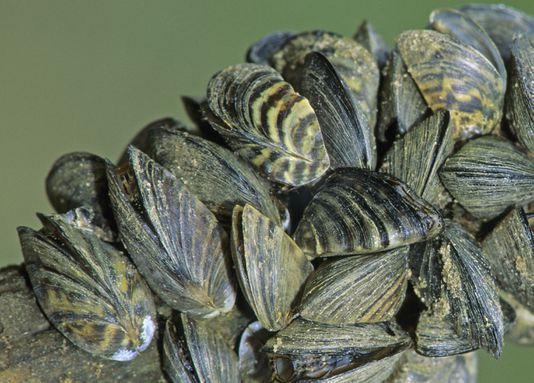
→ Each mussel can filter approximately a quarter gallon of water each day, improving water clarity by removing pollutants This improvement has been noticeable in Lake St Clair over the past two decades
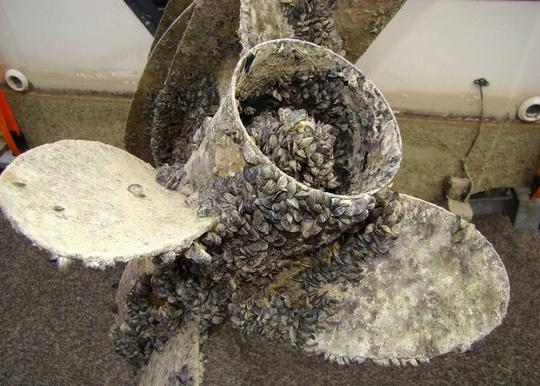
While submerged, zebra mussels open their shells to filter all kinds of pollutants. Their sharp shells can cut the feet of swimmers, making water shoes necessary in affected areas. Since colonizing the Great Lakes, zebra mussels have covered the undersides of docks and boats. They can grow so densely that they block pipelines and clog water intakes. However, they do not cling to surfaces coated with copper or nickel, so these materials are often used to prevent their growth.
Zebra mussels commonly spread when boats are transported from infested lakes like Lake Michigan to clean lakes For example, Crystal Lake near Frankfort, Michigan, is heavily infested, while Higgins Lake remains clear Thoroughly washing the hull before moving from one lake to another is essential to prevent the spread of zebra mussels
Although we wish that “bad fish” would “go home,” effective control measures are our best defense. ■
Robert Buchanan of Ann Arbor Sail & Power Squadron/9 has sailed the Great Lakes and Caribbean for years Prior to departure, he reviews the man overboard procedure along with other safety checks and insists that everyone wear their PFD while making passage.
THE PHOTO CONTEST SUBMISSION DEADLINE IS DEC. 31, 2026. SCAN QR CODE OR GO TO THEENSIGN.ORG/PHOTOCONTEST FOR HOW TO SUBMIT.
THE ENSIGN MAGAZINE
Deputy Communications Director
Amy Townsend townsenda@hq.usps.org ensign@hq.usps.org
Regular Contributors
Robert Buchanan, Thomas Dawson, C Henry Depew, Bridget Doerner, Jim Greenhalgh, Peter Hames, Richard McCandless, Beth Schwab, John Schwab
M–Th 8 a.m.–4:30 p.m. ET Call 888-367-8777 919-821-0281 contactme@hq.usps.org
Mailing address PO Box 30423 Raleigh, NC 27622
Shipping address 1504 Blue Ridge Road Raleigh, NC 27607
General information contactme@hq.usps.org ext. 230
Help desk help@usps.org
Headquarters Director Lena Padro padrol@hq.usps.org
Administrative Assistant
Stephanie Ford fords@hquspsorg
Accounting Supervisor
Karen Neuman jeffersonk@hquspsorg
Communications Director Yvonne Hill hilly@hq.usps.org
Education education@hq.usps.org
Membership Supervisor
Deliah Holloway hollowayd@hquspsorg
Membership and Education
Lynnda Stevens stevensl@hquspsorg
Shipping and Warehouse shipping@hq.usps.org
America’s Boating Club americasboatingclub.org
USPS member website usps.org
USPS Ship’s Store store.shopusps.org
Boat Live 365 boatlive365org
America’s Boating Channel americasboatingchannelcom
EDUCATION
America’s Boating Course online americasboatingcourse.com
All other online courses, seminars and webinars uspsonlineenrolmartcom
SUPPORT OUR MISSION
General Fund portal.americasboatingclub .org
USPS Endowment Fund Inc. uspsendowment fund
Educational Fund wwwuspsorg/national/ edfund/mainhtm
Visit your Member Portal at portal americasboatingclub org
+ Renew your membership
+ Sign up for autopay
+ Make a contribution
+ Change or add additional addresses, phone numbers and other personal information
+ More features coming online soon!
The Ensign theensignorg
America’s Boating Compass boatingcompassorg
o O n l i n e
Learn how to plan your route and follow it for a fun, safe journey with Marine Navigation from America’s Boating Club
. This online course teaches you how to chart and follow a course on the water. You’ll learn about electronic navigation using OpenCPN, paper chart navigation, and navigating coastal and inland waterways. You’ll also get a handy student guide and an online exam.