





Todd

Todd
By Todd Ware, President & Chief Executive Officer

The Energy Cooperative has over 68,900 members residing in 15 counties. Our values have not changed since Licking Rural Electrification lit up rural central Ohio. We have a solid foundation built on those values, but we keep our eyes on the future and your needs as they continue to change. We hope you share our pride in the Energy Cooperative’s history and its growth as we have been serving our member-owners since 1936.
While we move into 2022, I must take the time to reflect on the progress of 2021. Overall, this year has been one of growth. From increasing members numbers to employee retirements, many new beginnings are taking place here at the Energy Cooperative. We are grateful to move into another year full of tremendous opportunities.
Safety remains and will always be at the top of our priorities. We work hard to deliver your energy reliably while keeping employees and members safe. We continue to participate in national safety review programs for electric and natural gas and are considered leaders within those programs. As a result, our safety metrics continue to be significantly better than both state and national industry averages. Our electric cooperative has gone over twenty-two years without a lost-time injury.
Consolidated financial results for the year were excellent as we reported a positive net margin of over $9.3 million. This number was slightly better than the budget and was driven by higher sales/margins and lower expenses. In addition, consolidated comprehensive income was $9.6 million, which was over the budget. These results raised our equity position to almost twenty-two percent.
The natural gas cooperative continues to experience significant new growth as we added 729 new residential members. Over twenty-five miles of pipe were replaced or added, including upgrading aging infrastructure. The replacement of this aging infrastructure and our focus on
leak repair has reduced our unaccounted-for gas to .35%. This percentage decreased by almost 44% from 2020. In addition, the natural gas cooperative is just shy of completing its automated metering infrastructure (AMI) upgrades.
The electric division makes system reliability and outage times a top priority. Our commitment to reliability is evident with over $12 million dollars spent on capital improvement projects. From the Palmyra Substation upgrades to total distribution line rebuilds, our electric division will continue to strive toward the lowest outage percentages possible. The AMI meter project was completed with a read rate of 99.4%. We will consider AMI enhancements to increase member benefits as they are available.
The Energy Cooperative feels strong about our members receiving the best service possible. In 2021, ACSI scores for both natural gas and electric were, like the previous year, at 83 and 89. However, the retention percentage decreased by a few points, bringing the linear score relatively flat for 2021.
The cooperative will continue seeking and reviewing opportunities to provide you with the best service. Our commitment to you is to work hard in 2022 to meet your service expectations.
The future is bright here at the Energy Cooperative. Between massive growth opportunities and challenges, 2022 will be an eventful year. Leading this team is truly a humbling experience. We continue to retain and attract the most bright, talented employees who directly impact our bottom line. Their high level of loyalty and dedication to the cooperative and its principles is evident. In addition, I’m grateful for a Board of Directors who continues to provide excellent leadership and support to the Energy Cooperative family. Big things are coming for our communities in 2022, and we cannot wait to be a part of it.

help offset our fixed costs and benefits all our members.” -Todd Ware
Ware concluded his remarks by thanking cooperative employees, Directors, and members for their support throughout the year.
The Board’s attorney, Joe Boeckman, announced the results of the Director elections. Boeckman is a partner in the BakerHostetler law firm.
The results of the 2021 election are District 3, Brad Patton; District 7, Dustin Buckingham; and District 4, Mike Pettit. Retiring Directors Jack Schmidt and Dan Dupps were honored for their years of service to the cooperative.


"We continue to retain and attract the most bright, talented employees who directly impact our bottom line. Their high level of loyalty and dedication to the cooperative and its principles is evident."
-Todd Ware, President & CEO


By Josh Filler, Vice President & Chief Operating Officer - Electric Operations

May is a month that many outdoor work activities pick up, such as farming, construction and spring cleaning. Many of these tasks involve working around power lines. May also happens to be National Electrical Safety Month, and we wanted to emphasize safety around power lines. Overhead distribution power lines aren't insulated and can carry enough energy to cause serious injury or death. Secondary services are insulated but can still have locations in the drop that can have exposed and energized conductors. In fact, contact with overhead power lines is a leading cause of electrical-related fatalities. Before beginning work in any area, it's important

The federal Occupational Safety and Health Administration (OSHA) and many states require minimum distances when working near power lines. OSHA regulations call for a distance of at least 10 feet from all power lines, while some state regulations require distances of up to 25 feet.
Contact your state job safety program for information about any state-specific requirements, and follow these safety guidelines when working near power lines:
• Check for power lines before doing any work
• Call 911 immediately if you see a downed power line
• Maintain a distance of at least 10 feet
• Call OHIO811 before digging
• Keep all equipment away from power lines
• Familiarize yourself with local and state laws
Aluminum ladders conduct electricity and even non-metallic fiberglass ladders can conduct electricity if they're dirty or wet. When working with a ladder, keep it at least 10 feet away from power lines. When carrying a ladder, keep it level to avoid hitting a power line.
Construction workers using scaffolding must follow National Institute for Occupational Safety and Health (NIOSH) guidelines for minimum clearances between scaffolding and power lines—three feet for power lines of less than 300 volts, and 10 feet for those with 300 volts or more.
A worker should be appointed to ensure the clearance is being maintained. If minimum clearance can't be maintained, NIOSH recommends contacting your utility company to de-energize the power lines or provide adequate insulation before beginning any work.
Underground power lines pose the same hazards as overhead lines. Ohio requires you to call OHIO811 at least 48 working hours in advance of any excavating, boring, pile driving, blasting or hand digging, so that underground utility lines can be located and marked.
Once marked, use appropriate equipment to maintain the required clearance from the power lines. Place barricades and warning devices around excavations with exposed cables or pipes. Don't try to repair damaged cables or lines.
Follow these tips to stay safe:
• Avoid downed power lines
• Refrain from attaching anything to energized power lines or electrical equipment
• Never climb power poles or other electrical equipment
• Don't attempt to remove objects tangled in power lines
• Never touch someone who has come into contact with a power line
• Avoid working in stormy, icy or rainy weather
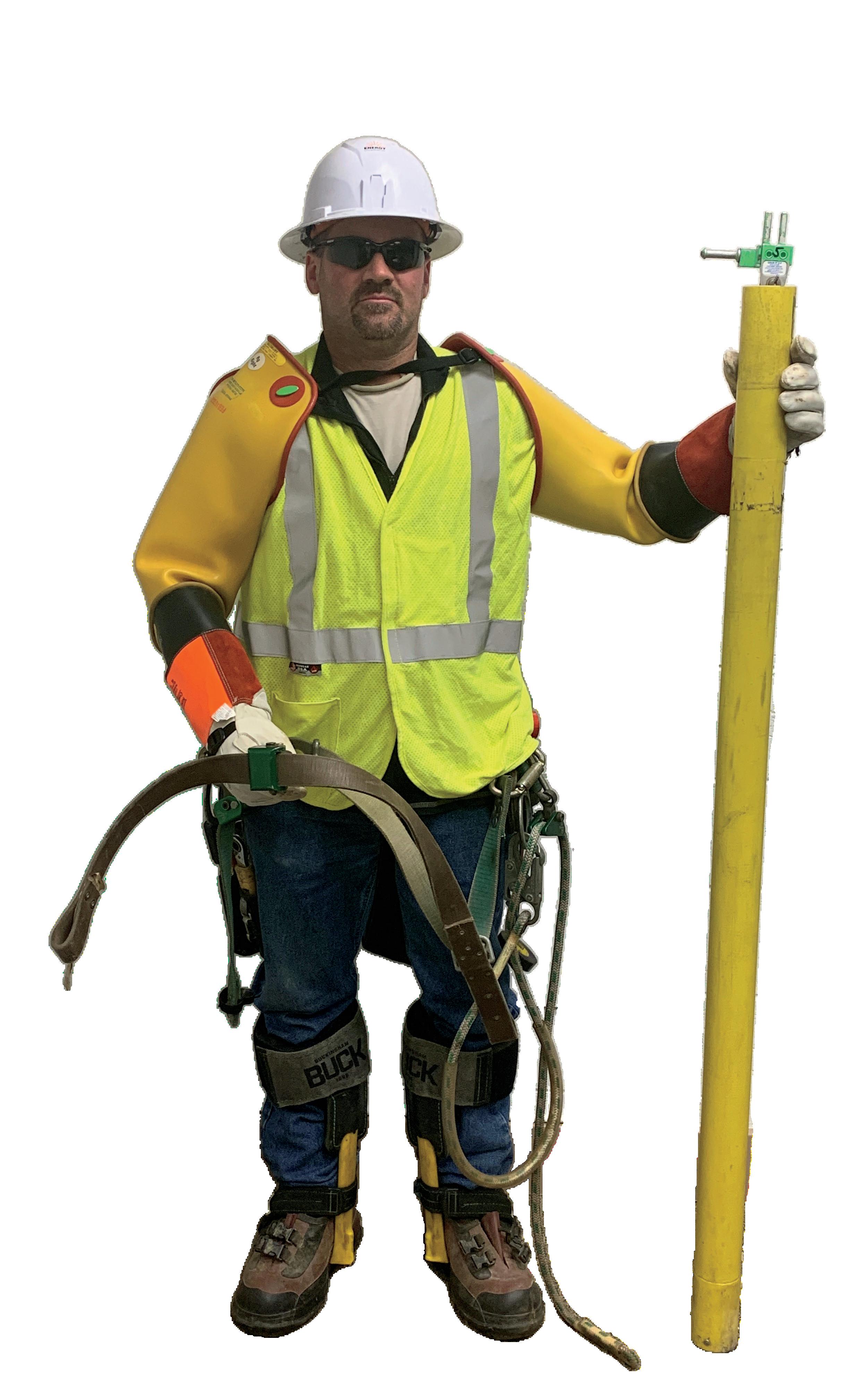
• Wear proper gear when working with electricity
One of the Energy Cooperative's top priorities is the safety of our members and employees.
hard hat
Safety glasses
extendo stick
flame retardant
traffic vest
flame retardant
shirt
rubber sleeves
rubber gloves
rubber glove protectors
body belt
hand tools
flame retardant
trousers
secondary lanyard climber pads
lineworker boots
wood pole fall
restrict device
pole climbers
dielectric overshoes
The

John Klauder,

BLC, DGC,
For the year ended December 31, 2021, the Board of Directors engaged bhm cpa group, inc. to perform an audit of the cooperatives’ books and records. The bhm group has extensive experience in auditing both utilities and cooperatives. On March 18, 2022, bhm issued the audit report for the year ended December 31, 2021. The audit report contained an unmodified opinion, which in accounting terms is a clean opinion from the auditor.
In 2021, total revenues for the cooperatives were approximately $128.9 million and patronage capital received from other cooperatives was $2.2 million. Total operating expenses for the year were $121.4 million of which $66.2 million was for purchased energy. The net margin for the consolidated group was $9.4 million for 2021.
Consolidated comprehensive income for 2021 was $9.6 million. Comprehensive income is calculated by adding net margin and unrealized gains/losses on post retirement benefits plans.
Comprehensive income by entity for 2021 are as follows:
• Licking Rural Electric - $4,900,000
• National Gas & Oil - $4,000,000
• NGO Transmission - $618,000
• NGO Development – ($412,000)
• NGO Propane - $494,000
• As of December 31, 2021, your cooperative had total assets of $328.2 million, which includes $259.2 million in net plant assets. The cooperatives invested $24.1 million in new plant assets in 2021. At the end of 2021, the company had $41 million of patronage capital in other cooperatives, including Buckeye Power and Cooperative Finance Corporation (CFC). Included in total assets was over $1.3 million in cash and short-term investments. Total liabilities were $256.3 million as of yearend.
The cooperative has equity of $71.9 million as of the end of 2021. Equity for the combined entities has grown to 21.91 percent.
As of December 31, 2021, The Energy Cooperative serves approximately 68,900 members. During 2021, we paid out approximately $7.5 million in taxes and retired over $75,000 in patronage capital credits to estates.

By Connie Hogue, Director of Human Resources and Safety

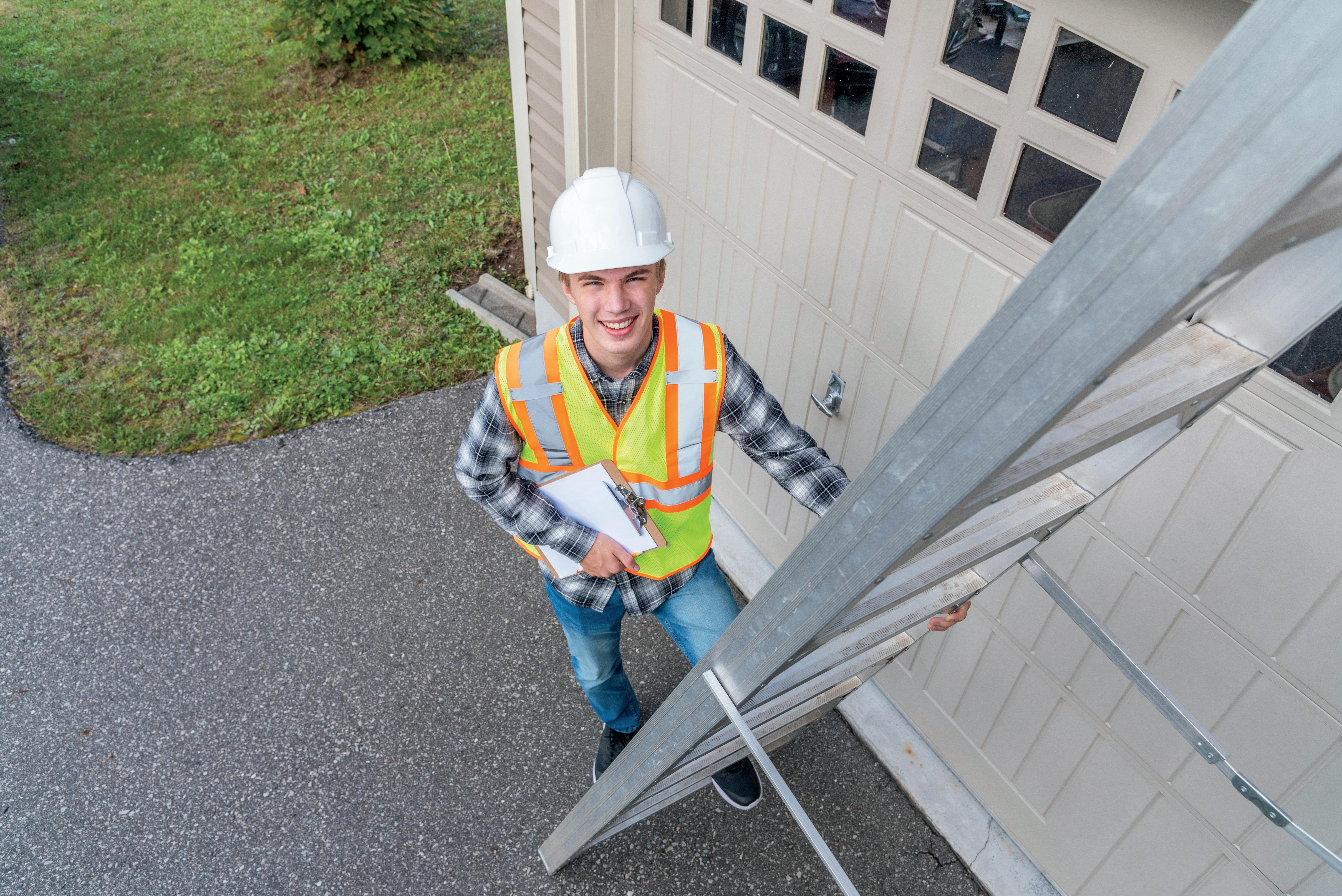
Spring and summer are the perfect times to tackle home improvement projects. When making home repairs a ladder is one of the most commonly used tools. Each step you take toward the top should be a safe one, but regular ladder users can be more likely to cut corners when it comes to safety.
Not all ladders are created equal, and different styles are designed to keep you safe in different situations and conditions. Here are a few tips to help you choose the right ladder for any job.
• Select the right ladder style. Choosing the correct ladder will help you stay safe when climbing or standing to perform a specific task.
• Pick the right material. Aluminum ladders are lightweight and durable but are not weather-resistant or nonconductive. Fiberglass ladders are weather-resistant and have non-conductive side rails which make them a safe choice around electrical components.
• Make sure the height is correct. Pick the ladder height that’s correct for the job. Extension ladders should be 7 to 10-feet longer than your highest support point.
• Make sure you choose a ladder that provides ample reach. A safe reach height is no more than 4 feet from the top of the ladder.
• Check ladder duty ratings or maximum load capacity before purchase. Light duty ladders typically hold 200 lbs., medium duty and painter’s and handyman ladders hold about 225 lbs. Heavy duty, heavy duty industrial ladders and special duty ladders can hold 250 to 375 lbs.
Once you’ve selected the right ladder for the job, it’s time to get to work. Use these safety tips to protect yourself.
• Before using, always check and inspect to make sure your ladder is in tip-top shape.
• Clean your ladder regularly.
• Check to make sure all moving parts work properly and are secured in place.
• Face the ladder and keep three points of contact when climbing. Two hands and one foot or one hand and two feet is considered safe.
• Make sure your ladder’s feet are firmly and securely on the ground.
• Use the rungs as grips. Keep your body centered on the ladder.
Never climb with your back to the ladder.
Ladder levelers. These level the ladder on uneven surfaces. Ladder stabilizers. Great for high up or hard-to-reach work. Ladder stabilizers are often used by painters to tackle second story trim since they can straddle windows.
• Project trays. There are a variety of purpose-specific or general project trays that connect right to your ladder.
For every 4 feet you climb up a ladder, you should move the ladder 1 foot away from the wall or vertical surface on which it's placed. If you climb 8 feet up a ladder, for example, you should move it 2 feet away from the wall or vertical surface.
• Ladders should be set on firm, level ground. Never use bricks or boards to level your ladder.
• Never carry any tool or equipment up a ladder that might cause you to lose your balance. Heavy tools and equipment should be raised using a rope or lift.
• If you are working at height from a ladder, make sure you lean your leg or hip into the ladder to maintain balance and contact with the ladder.
• The most important rule of ladder use is to keep your body between the side rails. Never overreach. If you can't reach something without leaning outside of the side rails, climb down and move the ladder over.
















By Dan McVey, Vice President & Chief Operating Officer — Gas Operations


Did you know we store natural gas underground for future consumption? Storage fields (or depleted gas reservoirs) are the most prominent and common form of underground storage. They are typically natural gas wells that have produced all their economically recoverable gas and are readily capable of holding injected natural gas.
Using depleted production wells has proven to be economically attractive because start-up cost is lower when taking advantage of existing associated infrastructure such as pipeline systems and equipment. Depleted reservoirs are also attractive because their geological and physical characteristics are well known.
The Energy Cooperative uses three on-system storage fields to balance the seasonal requirements of natural gas for our members. The three storage fields are Perry, Zane and Muskie. Their capacity is 2 bcf (billion cubic feet) which can supply up to one-half of our system needs on a cold winter day. Our Zane and Perry fields were developed in the mid 1950’s primarily to meet the seasonal needs of our increased residential load during that time.
Residential and commercial natural gas use continued to grow through the 60’s and 70’s and contributed to the need for the Muskie storage field beginning in 1973. The cooperative’s three gas storage fields are close to our pipeline infrastructure which also helps control the cost of transporting the product to our members.
Typically, these facilities run on a single annual cycle; natural gas is injected during the off-peak summer months when demand is low and is withdrawn during the winter months of peak demand. This cycle allows us to buy natural gas when it when it is in low demand securing both the supply and price for our members.
We closely monitor our withdrawal and injection cycles year-round to provide our members with reliable natural gas supply.
In accordance with Federal Pipeline Safety Regulations 49 CFR, Part 192.16, the Energy Cooperative is required to inform members that the member shall be responsible for their gas service lines.
The member is responsible for the maintenance and repair of all gas piping from the gas meter to all gas appliances.
The member is responsible for the repair/replacement of the gas service line located on the member’s property from the buried curb valve to the inlet of the gas meter. Buried gas piping that is not maintained may be subject to the potential hazards of corrosion and leakage.
For your safety, all buried pipe should be periodically inspected for leaks. If the buried piping is metallic, it should also be periodically inspected for corrosion. If an unsafe condition is found, the gas piping will need to be promptly repaired.
When digging near buried gas piping, the piping should be located in advance and the excavation done by hand. As a reminder, any time you are excavating, OHIO811 should be called by simply dialing 811 or 1-800-362-2764 at least 48 hours prior to digging. OHIO811 will notify various utility companies to locate utilities lines in the area.
Plumbing and heating contractors can assist in locating, inspecting, and repairing the member’s buried piping. The Federal Department of Transportation (DOT) requires that a DOT-qualified plumbing contractor must be used to repair or replace a member’s buried piping upstream of the meter, including the gas riser attached to the meter set. While this is not required for piping downstream of the meter, the Energy Cooperative strongly recommends a DOT-qualified plumber be used for all buried gas piping.
Energy Cooperative is committed to providing safe and reliable energy to our members with highly responsive service consistent with Cooperative principles.
If you suspect a gas leak, walk away.
Leave the area immediately. Call 911. Then contact Energy Cooperative immediately at 1-800-255-6815.
• Don’t try to stop or repair the leak yourself or use anything that might create a spark.
• Avoid using potential ignition sources such as cell phones, doorbells, electric switches or motor vehicles.
• Never try to extinguish a gas fire or operate any pipeline valves.
Be prepared for gas leaks in the home.
• Practice safety drills for getting your family out of the house at night before an emergency occurs.
• Don’t turn lights on or off.
• Don’t light matches or cigarette lighters.
• Don’t use a flashlight or cell phone because an electric spark might ignite the gas.
• Plan what you’re going to do and move slowly and carefully.
The natural gas transmission, gathering and distribution pipelines we operate and maintain are mostly not visible to the public. The pipelines are buried below ground in our right-of-way. The approximate locations of our pipelines are identified by pipeline markers that are placed within the right-of-way. In accordance with federal regulations,
our pipelines are patrolled on a regular basis to inspect for any leakage, corrosion problems, encroachment, etc. Some segments along our pipelines have been designated as “high consequence areas.” We have developed supplemental assessments and prevention plans for these highly populated areas that are near our pipelines’ right-of-way.
Our transmission pipelines are located within four Ohio counties – Licking, Muskingum, Noble and Perry. The pipelines are a safe and reliable source of moving natural gas within our system. The pipelines are not visible because they are buried within our right-of-way. The pipelines are patrolled and surveyed on a routine basis for leakage, corrosion and encroachment problems, etc. To view our transmission pipeline system go to https://npms.phmsa.dot.gov.

Sunday, June 26
Noon to 4:00 p.m.
Join us for music, games, bounce houses, crafts, refreshments and more for children of all ages!
This event is FREE and open only to members of the Energy Cooperative and their families. Please bring a copy of your bill for free family admission! The Works will be open for this special event being held in appreciation of the members of the Energy Cooperative and their families.

The Operation Round Up Foundation awarded $52,408 in April To the following community organizations:
Dan Emmett Elementary for classroom equipment and supplies
Hope Now Furniture Bank to purchase box springs and mattresses
Newton Township Fire for a ventilation fan
Licking Township Fire Department for handheld lights
Hospice of Knox County for art therapy
Freedom Center to purchase a new property
New Directions to cover relocation expenses
The Woodlands to replace security fence
Perry Elementary Preschool for classroom equipment and supplies
Learning 4 Life Farm to help with alpaca therapy barn plumbing expenses
Because of the generosity of our members rounding up their bills to the next whole dollar amount each month, the Energy Cooperative's Operation Round Up Foundation has donated more than $3.5 million to community organizations. To learn more about Operation Round Up Foundation or to apply for a grant, visit myenergycoop.com/operation-roundup.
After you complete this activity, color the items with crayons or colored pencils.
1
2
3
4
When combined, electricity and common items that seem harmless can create dangerous situations. Look at the items grouped below, then circle the two items that (when combined) create an electrical hazard. Check your work in the answer key.
1500 Granville Road
P.O. Box 4970
Newark, Ohio 43058-4970
1.800.255.6815
myenergycoop.com
The Energy Cooperative’s business hours are Monday through Friday from 7:30am to 4:30pm. We respond to outages and emergencies 24/7/365. Call if you need us. Our crews are on call and ready to respond.
• If you smell rotten eggs or suspect a gas leak, leave the area immediately. Call 911. Then call us at 1.800.255.6815.
• If you see a downed power line or other electrical hazard call 911. Then call our outage line at 1.888.535.5732
• Assume every downed power line is energized and dangerous. Consider any object touching lines energized