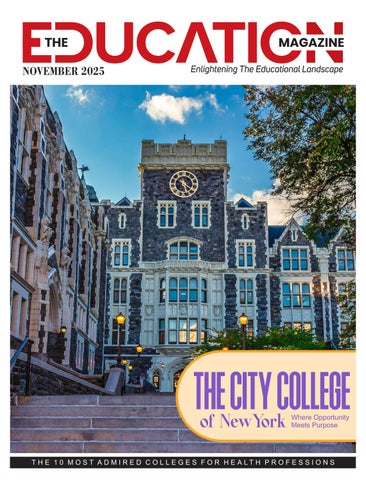
of NewYork
Where Opportunity Meets Purpose
T H E 1 0 M O S T A D M I R E D C O L L E G E S F O R H E A LT H P R O F E S S I O N S
Educating the Healers of Tomorrow! Dear Readers, Healthcare education is entering a defining era. Advances in medical technology, shifting population health needs, and the growing emphasis on preventive and patient-centered care are reshaping how health professionals are trained. Today’s institutions are expected to do far more than confer degrees—they must develop clinicians, researchers, and leaders who are adaptable, ethically grounded, and ready to perform in high-pressure, real-world environments. Innovation, accessibility, and workforce relevance have become the cornerstones of health professions education. In this edition of The Education Magazine (The 10 Most Admired Colleges for Health Professions), we recognize institutions that are responding to this challenge with purpose and foresight. These colleges are strengthening healthcare systems by combining rigorous academics with experiential learning, interdisciplinary collaboration, and a deep commitment to service. Their impact extends beyond campuses, shaping healthier communities and more resilient healthcare ecosystems across the globe. Our cover story, The City College of New York (CCNY), reflects what is possible when access and excellence move forward together. What began as a small academic institution gradually became the cornerstone of the City University of New York—now the largest urban university system in the United States. Over generations, CCNY has produced groundbreaking thinkers, Nobel laureates, and influential leaders, but its true distinction lies in its unwavering belief that education should elevate potential, regardless of background. That philosophy continues to define CCNY today. The college remains a gateway for ambitious learners from diverse communities, united by a drive to contribute meaningfully to society. In the field of health professions, this inclusive approach has proven transformative—opening pathways for future practitioners who bring both skill and empathy into their work. CCNY stands as a reminder that when institutions commit to opportunity, they shape not only careers, but the future of care itself. Alongside CCNY, this edition features Saint Camillus International University of Health and Medical Sciences, Westminster University, American College of Healthcare Sciences, and The University of the Free State—each admired for advancing healthcare education through innovation, global perspective, and social responsibility. Happy Reading!
Parag Ahire Project Editor
From The Editor’s Desk People Behind This Issue Publisher: Archana Ghule Editor–in–Chief: Vikram Suryawanshi Managing Editor: Pankaj Gholap Project Editor: Parag Ahire Sales & Marketing
Art Director: Priyanka Patil Graphic Designer: Tejaswini Tandale Marketing Head: Robert Smith Research Team: Daisy, Rahul, Maranda, Rocky
Project Head: Aakash Mahajan Sales Co-ordinators: Maria Smith Swati Kumari Project Manager: Francis Dummini Pravin Shinde Nehal Nagpure The Education Magazine is published by Pericles Ventures Pvt Ltd. This magazine contains material protected under International and Federal Copyright Laws and Treaties. You may not publish, display, disclose, rent, lease, modify, loan, distribute, or create derivative works based on the magazine contents or any part thereof, whether by yourself or as a consultant, employee, partner or in any other role unless authorised in writing by the creator/publisher of the article/, video, audio or any content contained herein. We, the team of The Education Magazine put all the efforts to keep up with the content accuracy. The publisher assumes no responsibility of any part of the content of any advertisement in this publication, including any errors or omissions therein. All rights reserved by Pericles Ventures Pvt Ltd.
Cover Story
10 CITY COLLEGE OF NEW YORK
CONTENT PROFILES 20
American College of Healthcare Sciences
32
Saint Camillus International University
44
The University of the Free State
54
Westminster University
ARTICLES 28
Kid Entrepreneurs: 10 Young Innovators Shaping the Future
36
The ONLY Humanoid Robots Guide You Need to Know as of Today
48
Top 10 EdTech Startups Revolutionizing Learning Worldwide
The City College of New York (CCNY)
American College of Healthcare Sciences
www.ccny.cuny.edu
www.achs.edu
Kettering College www.kc.edu
Saint Camillus International University of Health and Medical Sciences
The University of Newcastle
The University of the Free State
www.newcastle.edu.au
www.ufs.ac.za
University of Pittsburgh School of Nursing
University of San Francisco
www.nursing.pitt.edu
www.usfca.edu/nursing
Webster Vienna Private University
Westminster University
www.webster.ac.at
www.unicamillus.org
www.westminster.ac.uk
Cover Story
10 | NOVEMBER 2025
THE EDUCATION MAGAZINE | 11
I
n every great city, there stands an institution that reflects its heartbeat, a place where ambition, diversity, and perseverance come together. In New York City, that place is The City College of New York. Set high above Harlem, this historic college has long been a gateway for dreamers and doers seeking more than an education. They come in search of a chance. Founded in 1847 by Townsend Harris, CCNY began as an audacious idea: to offer free higher education to the children of immigrants and the poor, based purely on academic merit. It was the first of its kind in the United States, a bold experiment in equality and access. Nearly 180 years later, that vision continues to shape not only the college but the very fabric of public education in America. From its modest beginnings, CCNY grew into the foundation of what would become the City University of New York, the largest urban university system in the nation. Along the way, it produced ten Nobel laureates and countless leaders who carried forward the spirit of innovation and resilience that defines the college. Yet beyond the accolades, what truly stands out is its enduring mission to remain a beacon for those who rise above circumstance through learning. Today, CCNY’s legacy is not only preserved but actively lived. It continues to welcome students from all walks of life, individuals driven by a tenacious desire to learn, lead, and create meaningful change. In a time when access to education still defines opportunity, The City College of New York stands as living proof that when doors are opened wide, greatness walks in. An Academic Ecosystem Built for Real-World Impact At The City College of New York, education is not confined to classrooms or textbooks. It is deeply connected to the pulse of the city, reflecting the challenges and opportunities of an ever-changing world. CCNY’s academic structure is designed to blend rigorous scholarship with real-world application, making its programs both distinctive and accessible. 12 | NOVEMBER 2025
The college’s strengths shine through in areas such as architecture, engineering, and biomedical sciences, where innovation meets purpose. Its seven-year B.S./M.D. program, for example, offers a seamless path for aspiring physicians committed to serving diverse communities. The Bernard and Anne Spitzer School of Architecture sets itself apart by integrating practical design-build experiences in masonry, grounding creativity in hands-on expertise. CCNY’s commitment to lifelong learning extends through the Division of Interdisciplinary Studies at the Center for Worker Education, which serves working adults through flexible programs, including the master’s in the Study of the Americas. The Branding + Integrated Communications (BIC) master’s program further highlights the college’s forward-thinking approach, combining strategy, creativity, and technology into a career-ready curriculum. Beyond academics, undergraduate students engage in research, publish findings, and present alongside faculty. This early exposure to discovery and collaboration exemplifies CCNY’s mission, which is to educate, empower, and elevate.
Cover Story Guided by Visionary Leadership Strong leadership has always shaped The City College of New York’s direction and purpose. At the helm stands Dr. Vincent G. Boudreau, the college’s 13th president, appointed in December 2017. Before leading CCNY, he served as the founding dean of the Colin Powell School for Civic and Global Leadership, where he helped connect academic study with civic action. His background as a scholar of social movements, particularly in Southeast Asia, gives him a global perspective rooted in community engagement and social responsibility. Dr. Boudreau’s vision for CCNY is clear: to attract students who embody resilience, curiosity, and a desire to serve the greater good. He believes education should not only open doors to opportunity but also inspire a commitment to improving the world beyond campus walls. His leadership continues to strengthen CCNY’s legacy as a hub for equity, diversity, and intellectual discovery. Supporting this mission is Provost Tony Liss, an internationally recognized physicist whose research at the world’s highest energy accelerators has advanced scientific understanding on a global scale. Together, Dr. Boudreau and Dr. Liss embodies the spirit of CCNY, which values academic excellence, integrity, and the courage to make a meaningful impact. Opening Doors Through Opportunity and Access The College has always stood for educational access rooted in merit and equity. Its admissions process reflects that founding principle, ensuring that opportunity is not limited by background or circumstance. Through the CUNY application system, prospective students can easily apply to CCNY’s undergraduate and graduate programs, simplifying the first step toward higher education. The college follows a holistic admissions process that looks beyond grades alone. While academic performance remains an important factor, applicants are also evaluated on recommendation letters, portfolios, and program-specific requirements. This approach allows CCNY to recognize potential in many forms, valuing creativity, leadership, and perseverance alongside traditional measures of achievement. THE EDUCATION MAGAZINE | 13
College leaders emphasize that this surge in enrollment is not simply about expanding headcounts. It signifies CCNY’s continued success in opening its doors wider to students who have historically been underrepresented in higher education, all while upholding its strong academic standards. The growth mirrors the college’s commitment to providing a high-quality education that remains accessible, diverse, and forward-looking, true to the legacy that has defined CCNY for nearly two centuries. Celebrating Diversity Through Inclusive Learning To support students from economically disadvantaged backgrounds, CCNY has established initiatives like SEEK (Search for Education, Elevation, and Knowledge) and ASAP (Accelerated Study in Associate Programs). Both are designed to help students thrive academically and personally through dedicated advising, career development, and financial assistance that covers tuition, textbooks, and even transportation. By combining accessibility with strong academic standards, CCNY ensures that every student, no matter their starting point, has the resources, guidance, and encouragement to succeed. In doing so, it keeps alive its original promise: to make higher education a pathway for all. A Growing Community of Diverse Learners Enrollment at CCNY continues to reflect the growing appeal of its mission and academic excellence. In the Fall 2025 semester, the College reached an enrollment of 16,600 students, a remarkable 9 percent increase from the previous year and the largest student body since 2017. This growth includes both new and continuing students, showing a steady rise in confidence and commitment among those who choose to study at the college. Among the total student population of 16,600, there are 8,502 women, accounting for 51.2%, and 8,098 men, making up 48.8 %. These figures represent more than just numbers; they illustrate a vibrant and balanced academic community focused on opportunity and inclusion.
14 | NOVEMBER 2025
Diversity is not just a characteristic of The City College of New York; it is its greatest strength. With students representing more than 150 countries, CCNY stands as one of the most culturally rich campuses in the nation. This global mix of perspectives shapes both the learning environment and the sense of community that defines the college. To ensure every student thrives, CCNY embraces inclusive teaching practices that honor different learning styles and experiences. Faculty members use a range of approaches, from lectures and collaborative projects to experiential learning opportunities that connect theory with real-world application. This flexibility allows students to engage deeply, no matter how they learn best. Support for student success extends beyond the classroom. The college provides robust academic advising, tutoring centers, writing labs, and mental health counseling, all designed to help students stay on track and feel supported. Cultural programs and student organizations further enhance campus life, hosting events that celebrate heritage, dialogue, and connection. CCNY also invests in faculty excellence and diversity. With more than 95 percent of faculty holding terminal degrees, the college places a strong focus on culturally responsive teaching and mentorship. The result is an environment where every student feels seen, supported, and inspired to achieve their potential.
Cover Story A Campus Alive with Energy and Opportunity Life at CCNY extends far beyond the classroom. The campus buzzes with energy, offering students countless ways to learn, connect, and grow outside their academic pursuits. Whether through athletics, arts, or student organizations, the College provides an environment where engagement and exploration are part of everyday life. The College proudly fields 14 varsity teams that compete in NCAA Division III, giving student-athletes the chance to showcase their talent while balancing academics. For those who prefer recreation over competition, CCNY offers first-class fitness and sports facilities that encourage health and wellness across campus. Beyond athletics, more than 200 student-run clubs and organizations bring together one of the most diverse student bodies in the country. These groups represent a wide range of interests, from cultural associations and professional societies to performing arts and community service initiatives. Students also enjoy access to discount passes for local plays and movies, ensuring that culture and creativity remain an integral part of campus life. Overseeing it all is the Department of Student Life and Leadership Development, which coordinates extracurricular and co-curricular programs designed to complement each student’s academic experience. At CCNY, learning continues in every conversation, collaboration, and shared moment on campus.
Scott Gurba, Senior Vice President and Chief Operating Officer, ensures the smooth day-to-day functioning of the college, while Stephen O’Brien, Interim Dean of Science and Professor, provides academic leadership within the sciences. Together, these accomplished individuals maintain CCNY’s standing among the nation’s top public colleges, as recognized by U.S. News & World Report, and continue to strengthen its reputation for quality, diversity, and opportunity. A Commitment to Diversity, Equity, and Inclusion At The City College of New York, diversity is more than representation; it is a guiding principle that shapes every part of campus life. Through its Office of Compliance and Diversity, CCNY upholds a strong commitment to equal opportunity in both education and employment. The college ensures that every student, faculty member, and staff member can thrive in an environment that values fairness, respect, and belonging. CCNY’s policies reflect this deep dedication. The institution actively recruits, hires, retains, and promotes employees without bias, while also guaranteeing equal access to educational programs and services for all students. By maintaining a campus culture that is inclusive and free from discrimination, CCNY continues to build a community where differences are celebrated and every individual is empowered to succeed. This unwavering focus on equity is central to its mission and a defining part of what makes CCNY truly exceptional.
Leadership That Drives Excellence Behind CCNY’s continued success is a leadership team dedicated to academic integrity, innovation, and student achievement. President Vincent G. Boudreau and Provost Tony M. Liss guide the college’s strategic vision and uphold its mission of access and excellence. Supporting them are key leaders such as Dee Dee Mozeleski, Senior Vice President for Institutional Advancement, Communications, and External Relations, who also serves as Executive Director of the Foundation for City College and Senior Advisor to the President.
THE EDUCATION MAGAZINE | 15
Supporting Students Every Step of the Way At CCNY, student success is more than a goal; it is a shared commitment. The college’s Student Support Services Program (SSSP) stands at the heart of that mission, helping undergraduates stay on course toward earning their degrees and discovering their potential. Whether a student needs help choosing a major, improving grades, or planning for graduate school, CCNY ensures that guidance is always within reach. Eligible students in the program may receive up to $1,000 in grant aid, offering both encouragement and financial relief. The college also celebrates excellence through awards such as the $5,000 Zitrin Scholarship for outstanding academic performance and the $500 Zitrin Tutor-Mentor Award, which recognizes peer leaders who uplift others. Alongside advising, counseling, and mentoring, these programs create a supportive community where every student can grow with confidence and purpose. Shaping the Future of Health and Education Looking ahead, The City College of New York is deepening its focus on preparing the next generation of health professionals and researchers. Within the Division of Science, health professions education has become a central priority, driven by the need for a skilled and diverse workforce in medicine, pharmacy, physician assistant studies, public health, biomedical research, and biotechnology. CCNY is expanding its health-professions pipeline through several new initiatives that create multiple pathways to success. These include enhanced academic advising, flexible majors, post-baccalaureate programs, and allied-health certificate options in fields such as medical assisting and technician training. By combining these efforts with early STEM outreach and data-informed guidance, the college ensures that students are well-prepared to meet the demands of an evolving healthcare landscape. Each of these steps reflects CCNY’s broader mission to advance health equity, expand opportunity, and continue shaping education that serves the greater good.
16 | NOVEMBER 2025
Cover Story
“
We’re the City College of yesterday, today and tomorrow. See yourself here. City College. THE EDUCATION MAGAZINE | 17
American College of Healthcare Sciences Developing Careers in Holistic Healthcare
B
ased in Portland, Oregon, the American College of Healthcare Sciences (ACHS) is a worldrenowned accredited college specializing in online holistic health distance education. Founded in a New Zealand garden shed in 1978, the college opened its doors in the United States in 1989. ACHS was the first state-licensed college in the USA offering distance learning programs in complementary and integrative medicine. Emphasizing sustainability and putting people and the planet over the profit, ACHS continues to make positive local and global impacts in the communities it serves. Some of these contributions include achieving Oregon Tilth Certified Organic Certification, Green American Gold Certified Business status, and Top 100 Best Green Workplaces in Oregon rankings. The college also received certification as a Certified B Corporation and has a proven track record of holding suppliers to the highest standards in sustainability for ACHS students and customers. With accreditation by the Distance Education Accrediting Commission (DEAC) and the authorization from the Oregon Office of Degree Authorization, ACHS demonstrates a commitment to quality and accessibility in higher education. ACHS students earn industry-recognized credentials and have access to a wide range of funding support, including tuition assistance and financial aid programs for those who qualify.
20 | NOVEMBER 2025
THE EDUCATION MAGAZINE | 21
The 'Students first' Motto
ACHS include:
ACHS was founded by Dorene Petersen (Founder, President, and CEO) with a firm commitment to the lifechanging benefits of education and integrative health coupled with the flexibility provided by distance learning. Accessible education for everyone and holistic wellness were the cornerstones of Dorene's passion. She always wanted to serve students like herself—struggling, the first to go to university in their family, and with no financial aid or assistance—and had an innate desire to work towards a finer future for all.
•
HERB 101 (Basics of Herbalism), HERB 201 (Herbal Studies)
Herbs connect people with nature, and connection with nature has health-promoting effects. Students learn to formulate herbal remedies to support wellness and enhance the optimal function of the body. •
AROMA 101
For 43 years, ACHS has provided global access to integrative health modalities training via traditional distance and online studies. “We are always guided by the 'students first' motto and our ACHS mission and vision to foster competence, professionalism, and cooperation in holistic healthcare, and preserve and share knowledge in natural medicine with a commitment to sustainable practices and principles,” asserts Dorene.
Students pursuing this course learn aromatherapy and the connection between senses and complete practical assignments that provide hands-on learning and enhance learning about common diseases and ailments.
Exclusive Academic Programs
This certificate offers training and preparation for students who wish to work in the fitness industry, whether full or part-time, in an athletic club, ski resort, or sports medicine facility. They learn to evaluate each client's fitness level and create an appropriate fitness and nutrition plan to meet the client's individual fitness goals. Moreover, students gain skills and knowledge to promote their services, establish trainer-client relationships, and work in accordance with relevant professional codes of ethics.
Today, ACHS remains one of the few accredited colleges specializing in online holistic health education, offering undergraduate and graduate certificates, diploma and degree programs, and professional continuing education through micro-credentials. Areas of study at ACHS include Aromatherapy, Holistic Nutrition, Herbal Medicine, Integrative Health, Sustainable Business, and more. ACHS courses are online and available to students worldwide at an affordable cost. Some of the most popular courses offered at
22 | NOVEMBER 2025
•
Integrative Health and Fitness Training Certificate
Persistent Student Support ACHS's online undergraduate programs offer practical hands-on learning that allows students to explore various holistic health modalities in depth. The college's online graduate programs offer up-to-date research and science-based curriculum for those interested in expanding their professional pathway, making a career change, or adding to current professional credentials. Moreover, a typical student at ACHS balances academics with non-academic commitments such as working, raising a family, or starting a holistic health business. ACHS students are typically involved in extracurricular activities in their local communities that speak to their professional goals. Each student at ACHS is assigned a Student Success Coach dedicated to supporting students holistically throughout their studies. Students are encouraged to be active participants in learning communities within the Canvas Student Success Center and a private Facebook 'Coaching for Success' group. In the Student Success Center, students have access to robust career support services like resume and cover letter writing, career monitoring, and networking with peers. ACHS experts also host numerous professional development webinars throughout the year that help alumni, faculty, and professionals within their community. Additionally, the college maintains an extensive student library accessible online 24/7.
learning styles and their wellbeing. ACHS makes holistic health and wellness education accessible to a diverse community around the world, including healthcare professionals, military students, stay-at-home parents, and lifelong learners. For instance, the college ensures its website and Learning Management System (LMS) meet or exceed ADA requirements. ACHS highlights opportunities for students to connect with alumni through inspiring blog posts featuring alumni success stories. ACHS graduates lead the wellness revolution with sustainable values combined with cutting-edge, science-based holistic health education and experience. Graduates build a firm foundation to launch or enhance their wellness careers. By approaching each student as an individual through a holistic lens, the college demonstrates a commitment to bringing its mission, vision, and values to life regardless of the background, race, religion, socioeconomic status, or location.
A Community of One ACHS bridges the gap between traditional holistic health protocols and modern science. With a global mindset, the college communicates health within the context of viewing the socio-cultural impacts, values, and the meaning and experience of health among community members. ACHS applies this holistic perspective to support individual student
“ACHS is a community of learners who are innovative, solution-driven, communityfirst, and eco-warriors. We are all people. We are from all backgrounds and faiths. We are anti-racism; we are free thinkers. We are you. Together, we are a Community of One,” says Dorene.
‘‘
At ACHS, we believe that quality education is the best investment in the future and strive to provide you with the best education for your money.
THE EDUCATION MAGAZINE | 23
LEADERSHIP IN HOLISTIC HEALTH EDUCATION
24 | NOVEMBER 2025
THE EDUCATION MAGAZINE | 25
‘‘ ACHS's Center of Excellence in Teaching, Technology, and Assessment continuously reviews new technologies for adaptation which keeps the college at the forefront of online learning. Last year, the college invested in a new curriculum development tool that illustrates how its institutional learning objectives can be aligned to specific course-level outcomes. Moreover, ACHS has migrated to a new student information system with modern automation so staff can spend more time working with and supporting students and less time on routine procedures. The new student information system also increases our students' autonomy to complete tasks and access important documents.
leveraged their education to start a holistic health business, while some upgraded their pre-pandemic business models to provide telehealth services, virtual classes, and wellness self-health services that have helped communities thrive. Furthermore, the recognition for the importance of knowledge and access to dietary supplements has been continuously growing since the pandemic. Catering to the growing demand for trained integrative healthcare and dietary supplement professionals, ACHS is launching a new online, on-demand micro-credential—the Certified Dietary Supplement Professional (CDSP)™ Exam Preparation Program. “This program is the first in the country to prepare graduates for national certification as a Certified Dietary Supplement Professional™ through the National Association of Nutrition Professionals,” adds Dorene.
Meeting the Changing Demands
Choosing the Ideal Institution
Over the past year, ACHS witnessed growth and innovations in the integrative health and wellness sector. The demand for integrative health services and products increased significantly in 2020. Telehealth services, for instance, have emerged as a viable healthcare option as well as an in-demand, accessible, and cost-effective way to provide access to a wide range of healthcare services, including integrative health and wellness services.
Choosing the institution is the primary and one of the most essential steps for a student to succeed in life. Dorene believes that firstly, students should select an institution that has the values, mission, and curriculum that cater to their requirements. Moreover, that institution should offer tuition options designed with the students' financial wellness in mind. Lastly, Dorene adds that students should choose an institution that provides advising and coaching, helps them identify their goals, and offers the best program to help achieve those goals.
Improving the Students' Learning Experience
During the pandemic crisis, some of the ACHS graduates 26 | NOVEMBER 2025
Kid Entrepreneurs K
id entrepreneurs are not simply younger versions of adult founders. They represent a fundamental shift in how learning, creativity, and leadership are developing in the modern world. With early access to technology, online learning platforms, and global information, children today learn by doing. They experiment, test ideas, fail early, and improve often outside traditional classrooms. Entrepreneurship becomes an extension of education rather than a separate career choice. What makes kid entrepreneurs especially important is their ability to connect learning with real-world impact. Whether through technology, sustainability, digital media, or education itself, these young innovators show how problem-solving, curiosity, and responsibility can develop at an early age. Their journeys offer valuable insights into how future-ready education systems can nurture skills that matter beyond exams and degrees.
How This List of Kid Entrepreneurs Was Curated This list of kid entrepreneurs was curated using strict editorial and educational criteria aligned with global education journalism standards. Each individual featured meets the following benchmarks:
28 | NOVEMBER 2025
•
Age relevance: All entrepreneurs are under 18 and belong to today’s generation
3. Shubham Banerjee (USA) – Inventor of Braigo
•
Verifiable recognition: Covered or acknowledged by credible media, education, or innovation platforms
•
Educational value: Their journeys demonstrate applied learning, critical thinking, creativity, or social impact
At just 12 years old, Shubham Banerjee learned that most Braille printers cost thousands of dollars, making them inaccessible to many visually impaired people worldwide.
•
Global balance: Representation across regions, including India and major innovation hubs
This article prioritizes learning outcomes and leadership development over popularity alone.
Using a Lego Mindstorms kit, he built a low-cost Braille printer called Braigo. His innovation attracted global attention and funding support from major technology leaders.
Here Are the 10 Kid Entrepreneurs Shaping the Future 1. Mikaila Ulmer (USA) – Founder of Me & the Bees Lemonade Mikaila Ulmer was just 4 years old when she was stung by two bees in the same week. Instead of developing fear, she developed curiosity. With help from her grandmother, she researched bees and learned about their importance to the ecosystem and how endangered they’ve become in the present times. Using her great-grandmother’s flaxseed lemonade recipe, she started selling lemonade sweetened with honey instead of sugar. A portion of the profits went toward saving bees. What began as a small neighborhood stand grew into Me & the Bees Lemonade, a brand now sold in major U.S. retailers. Mikaila gained national recognition after appearing on Shark Tank and receiving mentorship from business leaders. Her journey shows that entrepreneurship doesn’t have to start with profit; it can start with purpose. Mikaila’s success lies in connecting a simple product to a meaningful cause.
Shubham’s work focuses not on disruption for profit, but accessibility through innovation. His story shows how problem-solving skills taught in classrooms can translate into lifechanging technology when students are encouraged to think beyond grades. 4. Ryan Kaji (USA) – Creator of Ryan’s World Ryan Kaji started reviewing toys on YouTube at the age of 4, guided by his parents. What began as simple videos grew into Ryan’s World, one of the most influential child-led media brands globally.
2. Alina Morse (USA) – Founder of Zollipops Alina Morse was 7 years old when she attended a bank event and was offered candy, followed by a reminder from her parents about sugar and dental health. Instead of accepting this contradiction, she asked a simple question: Why can’t candy be good for your teeth? That question led to the creation of Zollipops, sugar-free lollipops that help reduce acidity in the mouth. With guidance from her parents and dentists, Alina developed a product now sold in thousands of stores. Zollipops are also used in schools and hospitals, making Alina one of the youngest entrepreneurs to blend health, education, and business successfully. Her journey proves that curiosity paired with guidance can turn everyday observations into impactful ventures.
Beyond entertainment, Ryan’s brand now includes educational toys, books, science kits, and learning-based content for children. While Ryan does not manage the business alone, his role as a creator highlights a new form of entrepreneurship, content-driven digital enterprises. His journey reflects how creativity, when structured responsibly, can become a powerful educational and business platform. THE EDUCATION MAGAZINE | 29
5. Moziah Bridges (USA) – Founder of Mo’s Bows Moziah Bridges learned to sew bow ties from his grandmother at the age of 9. When he couldn’t find bow ties he liked, he made his own and began selling them. Mo’s Bows soon became a fashion brand worn by celebrities and featured in major retail outlets. Moziah appeared on Shark Tank and secured mentorship rather than immediate funding, focusing on learning the business. His journey emphasizes craftsmanship, branding, and patience, qualities often overlooked in fast-scaling startup culture. 6. Samaira Mehta (USA) – Founder of CoderBunnyz
Her story reinforces that entrepreneurship does not require choosing between education and enterprise; they can grow together.
Samaira Mehta was introduced to coding at a young age and quickly recognized that many children find programming intimidating. To solve this, she created CoderBunnyz, a board game that teaches coding concepts through play.
8. Nick Dobroshinsky (USA) – Teen AI Entrepreneur Nick began exploring artificial intelligence at 16, driven by a desire to make learning more interactive and personalized for students. He co-founded a platform that uses AI tools to help students grasp complex concepts in math and science.
The game is now used in schools and learning programs, making STEM education more accessible and enjoyable.
His initiative has received recognition from major technology publications and educational forums, highlighting the growing role of teenagers in EdTech innovation.
Her work highlights how education innovation doesn’t always require screens; it requires understanding how children learn best.
Nick’s journey demonstrates how technical curiosity, when combined with mentorship and practical application, can create solutions that impact learning at scale. His work reflects that age is no barrier to contributing meaningfully to technology and education.
7. Isabella Rose Taylor (USA) – Founder of Isabella Rose Taylor Brand
9. Raghav Arora (USA) – Co-Founder, Teen AI Startup
Isabella Rose Taylor launched her fashion brand at 12 years old, blending design, entrepreneurship, and education. Her work was showcased at New York Fashion Week, and she continued her education while building her brand. Isabella’s journey reflects the balance between creative ambition and academic grounding. 30 | NOVEMBER 2025
At 17, Raghav Arora co-founded a startup that applies machine learning to personalize student learning experiences. By analyzing learning patterns, his platform helps students improve at their own pace, making education more effective and engaging. Raghav has been featured in credible tech and education publications, earning recognition for applying AI to real-world educational challenges. His journey underscores how modern learning is becoming interdisciplinary, blending coding, data science, and pedagogy. Raghav’s work shows that teen entrepreneurs can innovate solutions with both social and educational impact.
10. Alby Churven (Australia) – Founder of Teen AI Initiative
1. Practical application accelerates learning more than theory alone
Alby Churven, at just 14 years old, launched a youth-led initiative to teach AI and coding fundamentals to school students. His program focuses on hands-on projects that make technology accessible and fun for peers, bridging gaps in traditional classroom learning.
Kid entrepreneurs learn faster because they apply ideas immediately, whether through building products, managing money, or communicating with customers. This shows that education becomes more effective when knowledge is used, not just memorized.
The initiative has been acknowledged by educational journals and technology platforms for its innovative approach to peer-to-peer learning.
2. Early access to resources shapes capability, not age
Alby’s story illustrates how leadership, collaboration, and purpose-driven innovation can develop in children when they are given the right tools and autonomy. His work highlights that young innovators can meaningfully contribute to shaping the future of education.
These stories demonstrate that when children are given access to tools, mentorship, and learning opportunities early, they develop advanced skills regardless of their age. Exposure, not maturity, is often the deciding factor. 3. Modern learning is inherently interdisciplinary
Trending Now: Eco Wala: Young Founders Impress Business Leaders Recently highlighted by Harsh Goenka on Twitter, Eco Wala, founded by three Indian teenagers, is creating sustainable solutions for waste management and environmental awareness. Their work integrates science, design, and community impact, making them an inspiring addition to the world of kid entrepreneurs.
Kid entrepreneurs rarely work within a single subject. Their journeys combine technology, creativity, communication, and basic economics, highlighting the need for education systems that encourage cross-disciplinary thinking. 4. Ownership builds confidence and leadership naturally
Eco Wala shows that even current school projects can evolve into impactful ventures, reinforcing how learning, creativity, and social responsibility intersect in modern youth entrepreneurship.
Running initiatives or businesses teaches children responsibility and decision-making. When learners are trusted with ownership, leadership skills develop organically rather than through instruction alone.
Key Takeaways: What Kid Entrepreneurs Reveal About Modern Education
5. Purpose-driven learning creates deeper engagement Many kid entrepreneurs are motivated by solving meaningful problems, health, sustainability, or education. Purpose gives learning direction, making children more focused, motivated, and invested in long-term outcomes. Final Note As education systems worldwide continue to evolve, kid entrepreneurs offer valuable insight into the future of learning and leadership. Their journeys demonstrate that when children are given access, autonomy, and encouragement, they do not merely prepare for the future; they begin shaping it - Shadab Mestri THE EDUCATION MAGAZINE | 31
32 | NOVEMBER 2025
T
oday, education in healthcare has become paramount. Several educational institutions across the globe are currently offering healthcare-related education to build a generation with advanced medical knowledge. Moreover, various universities and colleges are incorporating advanced research and discoveries in healthcare for supporting students along with providing a promising future in healthcare. One such university in Italy offering prominent healthcare education is the Saint Camillus International University of Health and Medical Sciences (UniCamillus International Medical University). Internationally Recognized Inception Located in Rome, UniCamillus was established in 2018 with an increasing number of international students. Dedicated to medical sciences, the university has expanded worldwide with a strong international profile. UniCamillus issues the same qualifications as other European universities which are in accordance with Directive 2005/36/CE and of Directive 2013/55/UE and are valid throughout the European Union. THE EDUCATION MAGAZINE | 33
UniCamillus welcomes and trains students from all over the world to become versatile health professionals and physicians who should also focus on diseases of underprivileged countries. The university is addressed to students who demonstrate a humanitarian, scientific and professional interest in the health problems affecting especially the Developing countries.
Educational and Cultural Benefits on Campus Following a trend of persistent and constant efforts, UniCamillus offers services that approach the requirements of study and learning. These include state-of-the-art equipment at laboratories, multimedia classrooms, libraries, and conference halls that can host a large number of conferences and seminars.
As a leading university, UniCamillus has been listed in the world directory of Medical Schools, a joint venture between the World Federation for Medical Education (WFME) and the Foundation for Advancement of International Medical Education and Research (FAIMER). As a result, students and graduates will be able to apply for the Educational Commission for Foreign Medical Graduate certification when the review process by ECFMG will be completed.
In addition, the university campus is well connected to the center of Rome and other parts of the city via public transport. As Rome is known for its traditions and cultural history, opting for studying in the city gives students the advantages of exploring the modern and vibrant European capital. Being located at the center of Italy, the city constantly welcomes new students and allows them to explore its various parts.
In terms of quality assurance, the university implements a set of processes to promote the efforts taken to improve the quality of higher education while respecting the responsibility of the University towards society. The quality analysis (QA) is achieved through the management of coordinated actions that include planning, management, monitoring, and self-assessment and aims to guide and control the processes.
UniCamillus’s efforts at ensuring maximum student engagement are reflected through its teacher-student ratio (which is 1:5). For every student’s need, teachers are available to help them at any time. Students can visit tutors to avail help in any degree course through a front office, a welcome office, and a psychological counseling office (the University has a 1:24 staff-student ratio), especially for international students.
Mission of Health
Ensuring Growth in Civic Engagement
UniCamillus is specialized in medical and healthcare sciences and currently undergoing development. Since its establishment, in the four years span, the university’s enriched educational offer includes 2 six-year degree courses in Medicine and Surgery and Dentistry and 5 three-year degree courses in Nursing, Midwifery, Biomedical Laboratory Techniques, Radiology, Diagnostic Imaging, and Radiotherapy Techniques, and Physiotherapy. They also include a master’s degree course in Human Nutrition Sciences and several masters and postgraduate specialization courses, taught in English.
UniCamillus implements a social volunteering program with numerous activities that aim to increase the civic engagement of existing and future students. It proposes an active citizenship approach to all its students which is also included in the social strategies of the university. These include cleaning and redevelopment of green areas, parks, and municipal zones as well as delivery of meals in foster homes, to homeless people and refugees. Participating in recreational activities such as theater exhibitions, musicals, and football games are also incorporated in the strategies that promote integration and socialization among the young generation.
Today, UniCamillus is considered a vital and dynamic institution supported by a vocation based on necessities that will not decrease for a long period. The pandemic has emphasized the thought of reconsidering the entire healthcare sector and increased demand for highly trained medical professionals. Through these courses, the university wants to train the professionals ensuring that they understand the importance of this profession and consider it as a mission. It wishes that the students must be capable of working at an international level also. 34 | NOVEMBER 2025
In countries that face structural and infrastructural problems, UniCamillus organizes Task Forces of groups of Professors. Despite the restrictions of the pandemic, the task force accomplished its first mission in Cameroon. The aim of the forces was to start academic cooperation with hospitals and assess the possibility for UniCamillus to join in the management of a local hospital, providing the expertise of qualified professionals in favor of the Cameroonian community.
UniCamillus also supports sports activities at the campus for the students. It has signed several agreements with different sports facilities in surrounding areas to ease the access of students to sports practice. The university truly believes that physical activity is a necessary tool for the health and training of the younger generation and it is important in building social relationships and intercultural integration. Recruitment Assurance To fulfill the modern employer requirements, UniCamillus provides a superior education in medical and healthcare to its students. It provides classroom learning and internships at hospitals in the metropolitan areas of Rome. UniCamillus accompanies its graduates in the labor market, supporting them in the job placement, in order to favor the match between demand and supply of stages/jobs, creating consultation and support networks with companies and organizations which might welcome UniCamillus undergraduates. Additionally, UniCamillus has an agreement with Randstad Health that offers new graduates permanent employment contracts to help them in their careers.
Successful Online Networks The pandemic has affected millions of lives worldwide and emphasized the importance of healthcare and education at the same time. In response to this unexpected and unpredictable time, UniCamillus started an online platform for video lessons that enabled students to complete their education from home. Due to the use of information networks, it conducted the exam sessions on time. Most degree courses in Italian systems cannot be accessed for free and are subject to passing an entrance test. However, UniCamillus was the first university to organize and perform online entry tests in the Lazio region. Broadening Research and Development In the upcoming sessions, UniCamillus plans to emphasize research that represents the core of the university. Along with the pathologies from developing countries such as neglected tropical diseases, the university researchers are working to broaden the fields of investigation on issues such as Translational Medicine and Precision Medicine. UniCamillus also plans to establish well-equipped laboratories in the biological and chemical fields and this innovative research center will be a high technology hub of the campus. Additionally, UniCamillus has planned several seminars and conferences for the year 2022-23, along with several scientific-cultural events that will be hosted in the new Scientific Congress and Didactic center. THE EDUCATION MAGAZINE | 35
The ONLY
HUMANOID ROBOTS
Guide You Need to Know as of Today
W
● This typically includes a torso, a head, two arms, and ow, 2026! This is the year, isn’t it? We’re two legs. finally seeing humanoid robots jump straight out of sci-fi labs and into the real world. Think ● This design choice isn’t just to look cool (though it does!). factories, warehouses, and even peeking into our homes. It’s driven by a core principle: the “human-centric environment” thesis. But this isn’t just about cool mechanics. It’s a massive shift. What’s driving it? ● Think about it: our world is built for humans. We have stairs, doorknobs, tools, and all sorts of objects. A ● Mind-blowing AI, especially those Vision-Language human-like form is just inherently better for navigating and Models (V-LMs). interacting with all of it. ● Smart new market dynamics, like big ● This ability to operate in environments designed for people corporate realignments. is exactly what makes humanoids so crucial for “general-purpose” robotics. ● The emergence of models that are actually cost-effective. It’s all happening so fast! In this guide, we’re going to break ● While early robots like ASIMO showed off basic walking (which was amazing back then!), today’s AI-driven down the “how,” “who,” “what,” and “why” behind this humanoids, like Boston Dynamics’ Atlas, are showcasing incredible humanoid robots revolution. We want to give you mind-bending athletic maneuvers like backflips. This marks total clarity and sharp insights, whether you’re a student or a massive evolution in their capabilities. just pumped about the future unfolding right in front of us. Let’s Explore Humanoid Robots 1. What Are Humanoid Robots? (The Student Fundamentals)
2. The Anatomy of a Humanoid (The “Expertise” Deep Dive) A. The “Mind” (The AI Brain)
● So, what are these things, really? At their core, humanoid ● Humanoid robots have to integrate super-sophisticated AI to process all the information and control their incredibly robots are machines engineered to emulate the human complex movements. form factor.
36 | NOVEMBER 2025
THE EDUCATION MAGAZINE | 37
● Perception: How do they “see”? Robots perceive their surroundings using a whole array of sensors. This includes cameras, LiDAR, and depth sensors. These systems generate “point clouds” of the environment, which allows the robot to see and understand its spatial context. ● The “AI Engine”: This goes way beyond simple programming. Humanoid robots use really advanced AI techniques: - Reinforcement Learning: This is a method that lets robots improve task performance through experience. They learn the best strategies for walking, balancing, and interacting with their environment. - Imitation Learning: This is so cool. By observing human demonstrations, robots can quickly acquire new skills. This allows for rapid task acquisition without someone having to manually program every single step. - Vision-Language Models (VLMs): This is the real breakthrough. VLMs allow robots to understand natural language commands (like you talking to it!) and reason about the visual world. For example, a VLM can interpret a command like “pick up that trash.” It can then identify the object, its location, and all the necessary actions to complete the task. This shows a much higher level of cognitive understanding and adaptability. B. The “Body” (The Hardware) ● The physical structure of a humanoid robot is every bit as crucial as its AI. It features specialized components all designed for human-like mobility and manipulation. ● Actuators (The Muscles): The choice of actuators is a huge debate in humanoid robotics. - Hydraulic: You might remember older versions of robots like Atlas using hydraulic systems. They offered immense power, which was impressive. However, these systems are typically bulky, noisy, and less precise. They often even required a tether for power. 38 | NOVEMBER 2025
- Electric: This is the new wave. Newer humanoids, including the latest Atlas and Tesla’s Optimus, are transitioning to fully electric actuators. Why? They provide greater precision, much quieter operation, and better energy efficiency. This makes them way more suitable for varied environments and for working closely with humans. The custom high-powered electric actuators in the new Atlas, for instance, deliver power comparable to elite human athletes while keeping precise control. Incredible! ● End-Effectors (The Hands): Honestly, developing dexterous hands is one of the most challenging parts of all this. Human hands are just so complex, capable of fine manipulation and sensing. Robot hands need multiple degrees of freedom and tactile sensors to grasp and interact with objects safely and effectively. ● Locomotion (The Legs): Bipedal locomotion—just walking on two legs—is inherently unstable. This makes balance a massive engineering challenge. - Dynamic Bipedal Locomotion: This fancy term refers to the robot’s ability to maintain balance while moving. It’s constantly adjusting its center of mass. - Zero Moment Point (ZMP): ZMP is a common concept used in humanoid robot control. It’s used to define the point on the ground where the total moment of all forces acting on the robot is zero. This is what ensures stability during walking. 3. Trending Now: The 2026 Humanoid Robot News Desk 1. Figure AI’s New Path ● Get this: Figure AI has announced plans to deploy humanoid robots by late 2025. Their stated goal? To replace human workers in physical labor jobs.
● The CEO, Brett Adcock, stated back in July 2025 that their robot, Figure 01, would be capable of handling complex real-world tasks by the end of this year.
● Just so you know, that powerful AI5 chip will be manufactured by both Samsung in Texas and TSMC. 3. Boston Dynamics’ Electric Atlas
● They’ve already partnered with heavy-hitters like BMW to get their “AI Employees” into industrial supply chains. ● Here’s the proof: As of March 2025, a single Figure 02 robot was already working at BMW’s Spartanburg plant. ● Its job? Repetitive tasks, like retrieving metal sheet parts and placing them onto a fixture for welding. ● Now, this is still a commercial pilot stage, not a full-scale operation just yet. ● But, Brett Adcock recently claimed that one of their humanoid robots has been running on the BMW X3 body shop production line for five months straight, operating 10 hours a day. That’s some serious runtime! 2. Tesla’s Optimus ● Tesla’s big ambition is to develop a general-purpose, bi-pedal, autonomous humanoid robot. The idea is for it to perform all those unsafe, repetitive, or just plain boring tasks. ● To pull this off, they need to build massive software stacks for balance, navigation, perception, and interacting with the physical world. A huge undertaking! ● They’re even developing their own AI inference chips, known as AI5. These are set to power their Full Self-Driving software and, eventually, be deployed in the Optimus robots.
● You’ve all seen Atlas, right? It’s the leading humanoid platform from Boston Dynamics. Well, it’s had a massive upgrade. ● It has officially transitioned from that loud hydraulic-powered system to a brand-new, all-electric version, which they unveiled in April 2024. ● This new generation is just... wow. It features custom electric actuators, titanium and aluminum 3D printed components, and has seriously enhanced strength and flexibility. ● They’re developing next-gen capabilities through strategic partnerships. A key one is with Toyota Research Institute (TRI) to develop Large Behavior Models (LBMs) for general-purpose humanoid applications. ● And it’s working! On August 20, 2025, Boston Dynamics and TRI showed off an LBM powering the Atlas robot. ● It was performing continuous sequences of complex tasks, involving both object manipulation and locomotion. ● What’s so impressive? This LBM provides direct control of the entire robot. It treats the hands and feet almost identically! This is a huge departure from previous approaches that separated low-level control from arm manipulation. ● The plan? Boston Dynamics plans to begin pilot testing Atlas at Hyundai facilities in early 2025, with broader commercial deployment coming through select partnerships. 4. 1X Technologies’ Neo
● This AI5 chip is slated for production in 2026 and is designed to power every Tesla vehicle.
● 1X Technologies is in the game, developing consumer-facing robots like Neo.
● Here’s the number that made everyone talk: Tesla’s expectation was for Optimus deliveries to begin in 2025, with an anticipated starting price of $200,000.
● Their models often use a really interesting “human-in-the-loop” approach.
● However (and this is a big update), Tesla has reportedly abandoned its 2025 production target of 5,000 Optimus robots.
● This means they combine autonomous functions with teleoperation, where a human can take over for more complex or unpredictable scenarios. Smart, right? THE EDUCATION MAGAZINE | 39
● While the specific deployment details for Neo are still emerging, its design definitely points towards applications that need human-like interaction and adaptability in varied environments. 5. Agility’s Digit ● Meet Digit, from Agility Robotics. It’s a bipedal humanoid robot designed specifically for logistics and warehouse operations. ● It has already seen scaled deployment in Amazon warehouses. Yes, those Amazon warehouses. ● Its job is to move and handle totes and other items. ● Digit is developed to automate tasks in environments that were designed for humans, showcasing its amazing ability to navigate obstacles and work right alongside human employees. 4. Meet the Titans: A 2025 Humanoid Robot Comparison
5. Real-World Applications (The “Experience” Proof) ● This isn’t just theory. Humanoid robots are increasingly moving beyond the research labs and into practical, real-world applications. They are demonstrating their versatility and potential impact right now. ● Manufacturing: We talked about Figure AI’s Figure 01 robot. It’s currently deployed at BMW’s Spartanburg plant. There, it performs tasks like retrieving metal sheet parts from a logistics container and placing them onto a fixture for welding. This deployment really highlights a humanoid’s potential in automating repetitive and physically demanding tasks in automotive production. Tesla also envisions its Optimus robot significantly enhancing manufacturing automation within its own facilities. ● Logistics: Agility Robotics’ Digit is being used in Amazon warehouses. It’s handling various tasks, including moving totes and other items, which shows it can navigate complex logistical environments. Apptronik’s Apollo is also targeting similar roles, aiming to streamline warehouse operations.
Robot
Company
Key AI Model
Primary Application
Optimus
Tesla
AI-powered neural networks, AI5 chip
Manufacturing, GeneralPurpose
Figure 01
Figure AI
Proprietary AI models
Manufacturing (BMW)
Atlas
Boston Dynamics
Large Behavior Models (LBMs)
R&D, Complex Manipulation
Digit
Agility Robotics
Advanced control algorithms
Logistics, Warehouse
Apollo
Apptronik
Human-centered AI
Logistics, Manufacturing
Neo
1X Technologies
Human-in-the-loop, AIdriven
Consumer, Service
Ameca
Engineered Arts
Advanced human-like expression
R&D, Human-Robot Interaction
Unitree H1
Unitree Robotics
Basic locomotion, perception
Research, Education
40 | NOVEMBER 2025
● Consumer/Home: 1X Technologies’ Neo is designed with consumer-facing applications in mind. It often incorporates that “human-in-the-loop” model, where operators can teleoperate the robot for tasks that need nuanced human judgment or for unpredictable domestic settings. ● R&D / Interaction: Some robots, like Ameca by Engineered Arts, are primarily used for research and human-robot interaction studies. They focus on super-realistic facial expressions and gestures to explore the nuances of human-like communication. ● Future: Looking ahead, the promise is immense. Humanoid robots could be huge in healthcare, assisting with patient care and support. They could be used in space exploration, performing tasks in hazardous environments. And in disaster response, their human-like form would allow them to navigate and interact with infrastructure that was designed for humans. 6. The Great Debate: Challenges & Ethics (The “Trustworthiness” Pillar)
● Economic Impact: The “Job Displacement” Question ○ This is the big one. The deployment of humanoid robots raises serious concerns about job displacement. ○ While some people envision robots replacing humans in manufacturing, warehousing, and retail, others see them augmenting human capabilities. ○ This shift may lead to job redefinition. It will likely require retraining for higher-skill roles that involve robot oversight, maintenance, and programming. ○ Here’s a key statistic: The U.S. manufacturing sector faces a projected shortage of 3.8 million workers by 2034. This suggests humanoids could actually be used to address labor gaps, rather than only replacing existing jobs. ● Technical Barriers (How to Overcome)
● Okay, let’s get real. The rise of humanoid robots brings both massive opportunities and some pretty significant challenges. We must have a balanced and critical examination of their impact.
○ Challenge: Battery Life & Power Efficiency. Humanoid robots need a ton of power for dynamic movements. THE EDUCATION MAGAZINE | 41
○ We must ensure robot behavior is predictable, controllable, and does not pose a threat to humans. This requires sophisticated AI safety research, including fail-safe mechanisms and clear human override protocols. ● Social Impact: The “Uncanny Valley” ○ Have you heard of this? The “Uncanny Valley” refers to that unsettling, creepy feeling people get when they encounter robots that look almost human, but not quite. ○ This psychological phenomenon, which is often observed with highly realistic robots like Ameca, can seriously hinder social acceptance and effective human-robot interaction. ○ Overcome: Advancements in battery technology are key. Plus, that shift to more energy-efficient electric actuators (like in Boston Dynamics' Atlas) is crucial for getting extended operational hours. ○ Challenge: Cost & Scalability. The high cost of today’s humanoid robots limits widespread adoption. ○ Overcome: Mass production strategies are the answer. Look at Tesla’s ambitious goal of a $20,000 Optimus. Also, the emergence of lower-cost models from companies like Unitree is essential for making humanoids economically viable. ○ Challenge: The Hands (Dexterity). We touched on this, but achieving human-level dexterity in robotic hands remains an incredibly complex technical hurdle. ○ Overcome: We need continued research in advanced tactile sensors, AI-driven grasping algorithms, and multi-fingered end-effectors. This will improve a robot’s ability to handle diverse objects with precision and adaptability. ● AI Safety & Ethics ○ Asimov’s Laws of Robotics are, of course, fictional. But real-world safety protocols are absolutely paramount for these physically powerful robots. ○ The concern about a 150lb robot operating autonomously in human environments is very real. It necessitates robust risk assessments and safety standards. 42 | NOVEMBER 2025
○ Addressing this requires careful design choices that consider cultural perceptions and, frankly, the psychological comfort of human users. 7. The Future: Importance & Our New Robotic World ● So, here we are in 2025. The coming together of advanced AI (especially those V-LMs) and increasingly capable hardware (like electric actuators) represents a genuine catalyst for the humanoid robotics revolution. ● Manufacturing and logistics are just the initial proving grounds. Make no mistake, the long-term impact on the service and care economies will be transformative. ● This shift could honestly lead to an “iPhone Moment” for robotics. We could see these machines integrated into daily life in ways we previously only imagined.
● It also raises a profound question the field is actively exploring: Is a physical body, like that of humanoid robots, required for an Artificial General Intelligence (AGI) to truly understand and interact with our complex physical world? ● Elon Musk envisions an “Abundance Economy.” In this future, physical labor is largely managed by robots, freeing humans for other pursuits. ● This future, where humanoids contribute to a society of abundance, is exciting. But it absolutely requires careful navigation of all the technical, ethical, and societal implications. My Opinion The year 2025 truly marks a critical inflection point. We are witnessing a powerful convergence of advanced AI, especially Vision-Language Models, with incredibly robust electric actuation hardware. This isn’t just a minor step; it’s a synergy that’s allowing humanoid robots to move beyond simple pre-programmed tasks. We’re now seeing genuinely intelligent, adaptive behavior. While their initial deployments in manufacturing are grabbing headlines and signaling a clear path to economic viability, the true societal transformation is still to come. This will unfold as humanoids inevitably enter the service and care economies. This expansion won’t just be a technical challenge. It will demand a deep, profound understanding of human-robot interaction and a serious grappling with ethical considerations, shaping a future where these machines become truly integral to our daily lives.
Here Are Some Tips for the Future ● Focus on ‘Interaction, ‘Not Just’ Automation’: The real future of humanoid robotics isn’t just about replacing tasks. It hinges on seamless Human-Robot Interaction (HRI). Understanding how humans and robots can collaborate effectively is the crucial next step. ● The ‘Software’ is the Robot: The hardware is impressive, no doubt. But the long-term differentiating factor for future humanoids will be their software. Mastering AI, simulation, and data pipeline skills will become far more valuable than purely mechanical engineering. ● Look Beyond Engineering: Study Ethics & Policy: As humanoids get more capable and pop up everywhere, the ethical questions, regulatory frameworks, and societal impacts will be central to their successful integration. A multidisciplinary approach isn’t just nice; it’s vital. ● Watch the Hands: Dexterity is the Final Hardware Frontier: The ability to manipulate all kinds of objects with human-like dexterity is still a massive, formidable challenge. Keep a close eye on innovations in end-effectors and tactile sensing—these are the key indicators of real progress. ● The ‘Data Engine’ is Everything: This is the secret sauce. Companies that can collect, process, and leverage vast amounts of real-world interaction data (think Tesla with its car fleet, or 1X with its teleoperation model) will have a massive advantage in training more capable AI models. This revolution is going to impact every single life on Earth. If this guide gave you extraordinary value and helped you see what’s coming, please share it with a friend, a student, or a colleague. Help them understand the incredible future we are all building, together, today. - Simran Khan THE EDUCATION MAGAZINE | 43
44 | NOVEMBER 2025
THE EDUCATION MAGAZINE | 45
46 | NOVEMBER 2025
info@ufs.ac.za
THE EDUCATION MAGAZINE | 47
E
ducation is evolving faster than ever. In today’s world, where technology shapes almost every aspect of life, traditional classrooms alone can’t keep up with the pace of learning needs. Students, educators, and institutions are searching for solutions that are adaptive, interactive, and scalable.
But what exactly makes a startup a “startup” in today’s world? For this article, we focus on companies that are: ● In the active growth stage, showing rapid adoption or funding ● Driving technological innovation, especially in AI and adaptive learning ● Creating measurable impact for learners or educators
Enter EdTech startups: young companies leveraging AI, cloud technology, and innovative methods to reshape the way we learn.
● Recognized in credible industry sources (TIME, Statista, EdTech Wire)
Unlike older platforms, these startups are agile, experimental, and focused on creating measurable impact for learners and educators alike.
These EdTech startups are not just small apps or niche products; they are shaping global education trends, from K–12 to lifelong learning, and even career-focused upskilling.
Quick Comparison of the Top 5 Edtech Startups (INFOGRAPHICS)
The EdTech startups listed above have been featured or referenced in global education and technology reports by organizations such as TIME, Statista, Business Insider, and UNESCO. 48 | NOVEMBER 2025
THE EDUCATION MAGAZINE | 49
Deep Dive Profiles 1. Riiid (South Korea) Riiid is a pioneer among AI-powered EdTech startups, providing adaptive learning solutions that personalize education at scale. Founded in 2014, this education technology startup leverages machine learning to analyze student behavior, predict weaknesses, and create customized study paths. Originally focused on test preparation, the platform now serves millions of learners globally across various subjects, placing it among AI-powered personalized learning leaders. Key Features: ● Real-time AI assessment that adapts lessons to each student ● Predictive analytics for test scores and learning outcomes ● Integration with institutional learning management systems Impact & Adoption: Riiids technology has shown measurable improvements in student performance. Many schools and tutoring centers globally now use its platform to enhance outcomes efficiently. Why It Matters: By blending AI with pedagogy, Riiid transforms the learning process from a static curriculum to a dynamic, student-centered experience, making education more efficient and engaging. 2. Sana Labs (Sweden) Founded in 2016, Sana Labs specializes in personalized learning solutions for institutions and enterprises. Its AI analyzes learning behavior to optimize content delivery, making every student's learning journey unique. Key Features: ● Adaptive content creation for both academic and corporate settings 50 | NOVEMBER 2025
● Performance tracking and learning analytics dashboards ● Seamless integration with existing educational tools Global Impact: Sana Labs partners with universities and companies across Europe and North America. Institutions report increased engagement and faster mastery of complex topics, highlighting AI’s potential beyond K–12 education. Why It Matters: Sana Labs demonstrates how AI can scale personalized learning across large groups, proving that adaptive education isn’t just for elite students but is accessible to all.
Impact & Adoption: Sqirrel AI has grown rapidly in China and is expanding internationally. Its unicorn valuation reflects both its scale and innovation. Students using the platform report higher test scores and a deeper understanding of subjects. Why It Matters: It proves that combining AI and traditional teaching can dramatically improve learning outcomes, making education more personal and effective at scale. 4. Quizizz (USA) Quizizz is a widely adopted EdTech startup offering interactive learning and assessment tools used by teachers and students worldwide. Founded in 2015, it combines gamification with data-driven insights to make learning engaging and measurable. Key Features: ● Gamified quizzes and assignments for real-time learning ● AI-assisted question generation and performance insights ● Seamless use in classrooms, homework, and remote learning 3. Squirrel AI (China)
Impact & Adoption:
Squirrel AI combines AI and human teaching expertise to create K–12 personalized learning programs with adaptive learning paths for every student and real-time feedback mechanisms. It has positioned itself as one of the leaders in AI-integrated education.
Quizizz is used by millions of teachers and students across K–12 and higher education globally. Schools report higher student engagement and improved retention due to their interactive approach.
Key Features:
Why It Matters: Quizizz shows that learning doesn’t have to be passive. By combining assessment with fun and analytics, it helps teachers understand student progress while keeping learners motivated.
● Adaptive learning paths for every student 5. GoStudent (Europe) ● Real-time feedback and AI-driven tutoring ● Integration of teacher oversight for a hybrid learning approach
GoStudent is a global online tutoring platform that connects students with qualified tutors for personalized learning. Founded in 2016, it blends human teaching with technology-driven insights. THE EDUCATION MAGAZINE | 51
Key Features:
Thematic Analysis
● One-on-one and small group online tutoring ● AI-assisted tutor matching and progress tracking
Ai in EdTech: Adaptive learning, personalized content, predictive analytics, many of the tools highlighted here share principles with practical AI tools for students that assist learning in daily study routines.
● Coverage across school subjects and exam preparation
● STEAM and Coding: Prepares students for future jobs, fosters problem-solving
Impact & Adoption:
● Peer & collaborative learning: Knowunity emphasizes social learning
GoStudent operates across multiple European countries and beyond, supporting students from school-level learning to exam readiness. Parents report improved confidence and academic performance in learners. Why It Matters: GoStudent highlights the importance of human interaction in education while using technology to scale personalized support effectively.
52 | NOVEMBER 2025
● Global reach: Startups from Asia, Europe, India, and the USA show EdTech is worldwide Startups vs Established Platforms While platforms like Coursera, Duolingo, and Khan Academy are widely used, they are no longer startups. The 10 EdTech startups listed here are in active innovation and growth stages, making them more agile and experimental, often piloting features that older platforms may adopt years later.
Choosing the Right EdTech Startup ● Students: Look for platforms that match your learning style and goal ● Teachers: Tools that reduce admin tasks while improving outcomes ● Institutions: Scalable, measurable, and integrable solutions
4. Collaboration and Community Learning Enhance Engagement ● Peer-to-peer learning platforms foster knowledge sharing, discussion, and retention. ● Actionable tip: Encourage students to participate in study groups, forums, and collaborative projects to reinforce understanding.
Key Takeaways: Lessons from the Top EdTech Startups 1. AI-Driven Personalization Transforms Learning ● Adaptive learning ensures students progress at their own pace and addresses individual weaknesses. ● Actionable tip: Choose platforms that offer personalized study paths and real-time feedback to maximize learning outcomes. 2. STEAM and Career-Focused Skills Are Essential ● Startups emphasize coding, robotics, and creative problem-solving to prepare learners for future opportunities.
5. Data, Accessibility, and Global Reach Drive Impact ● Successful EdTech startups leverage analytics to track progress, ensure inclusion, and scale globally. ● Actionable tip: Look for platforms that provide performance analytics, inclusive content, and adaptable features for diverse learners.
● Actionable tip: Integrate STEAM and skill-based programs early to build analytical and creative thinking. 3. Empowering Teachers Improves Student Success
Bottom Line:
● Successful EdTech platforms use technology to support both academic delivery and instructor workflows, enabling broader access to learning opportunities.
Top EdTech startups succeed by combining innovation, personalization, teacher support, collaboration, and measurable impact. By learning from these trends, students and educators can make informed choices that maximize learning effectiveness worldwide.
● Actionable tip: Educators should adopt tools that streamline grading, attendance, and lesson planning, allowing focus on teaching.
Bookmark this guide and share it with peers, educators, or students looking for innovative EdTech solutions. Stay updated on emerging startups shaping the future of learning worldwide. - Shadab Mestri THE EDUCATION MAGAZINE | 53
54 | NOVEMBER 2025
THE EDUCATION MAGAZINE | 55
56 | NOVEMBER 2025